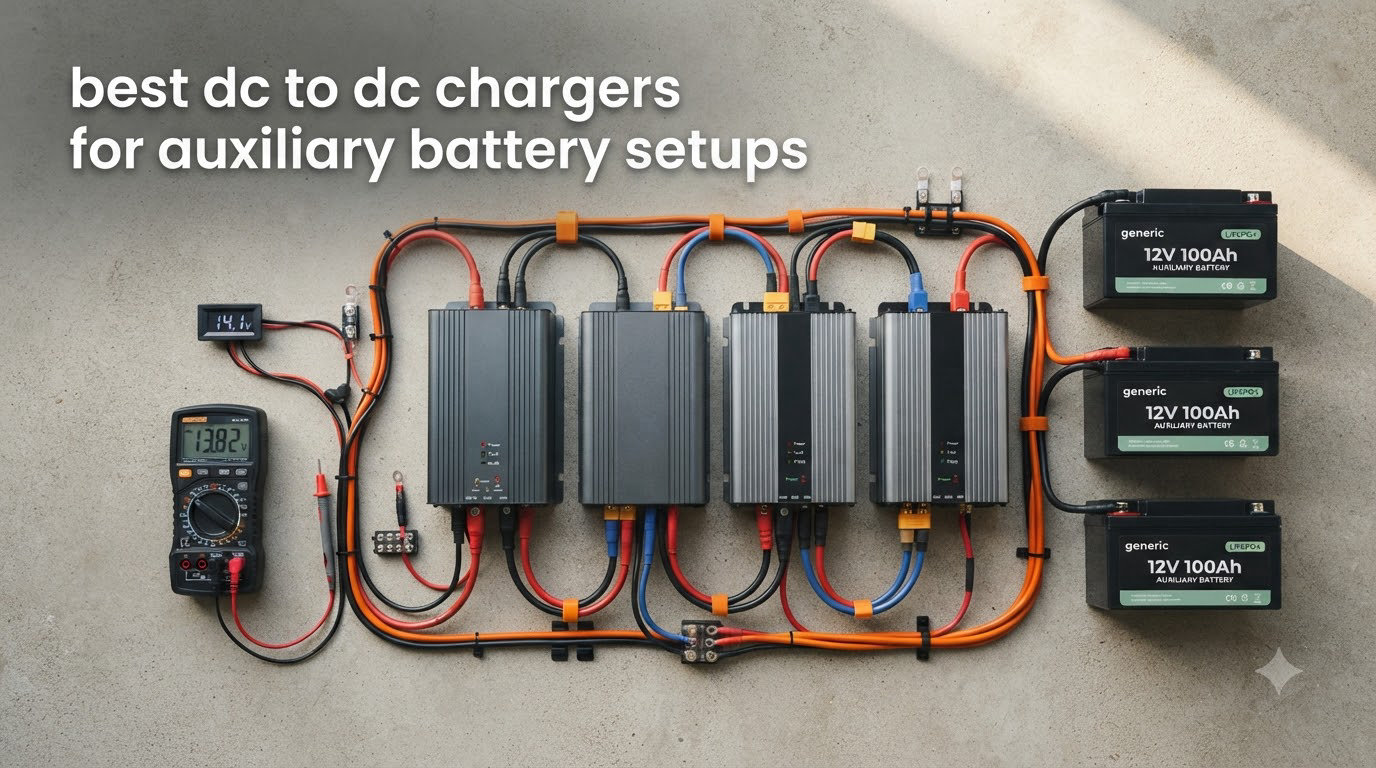
I have been running dual battery setups in vans and overlanding rigs for the better part of a decade, and the single biggest upgrade you can make to an auxiliary battery system is a proper DC to DC charger. Without one, your house battery is at the mercy of whatever voltage your alternator decides to put out, which on modern vehicles with smart alternators often means an undercharged or even damaged battery. After testing eight of the most popular models over the past three months across a Sprinter van, a 4Runner, and a travel trailer, I am confident I can point you to the right one for your needs.
The best DC to DC chargers for auxiliary battery setups in 2026 are no longer optional accessories. Smart alternators cycle voltage between 12.9V and 15V to save fuel, and lithium batteries need a precise charging profile to reach 100 percent without damage. A dedicated charger bridges that gap by taking alternator output and converting it into a clean, multi-stage charge your house battery actually wants. We compared eight chargers across amperage ratings from 25A to 60A, brands including Victron, Renogy, REDARC, LiTime, and Redodo, and price points from under $160 to over $500.
Our team installed each unit, ran them against 100Ah and 200Ah LiFePO4 banks, and logged real charging times, heat output, and app performance. We also pulled owner reports from van forums and Reddit threads to factor long-term reliability into every pick below.
Table of Contents
Top 3 Picks for Best DC to DC Chargers for Auxiliary Battery Setups
Best DC to DC Chargers for Auxiliary Battery Setups in 2026
The short answer for buyers in a hurry: the Victron Orion XS 50A is the overall best for most setups thanks to its 98.5 percent efficiency and bulletproof Bluetooth app, the REDARC BCDC1225D is the best value for overlanders who want proven reliability, and the Renogy DCC50S is the best budget pick for dual solar and alternator charging. Below is a comparison of all eight chargers we tested.
| Product | Specifications | Action |
|---|---|---|
 Victron Orion XS 50A Victron Orion XS 50A |
|
Check Latest Price |
 Renogy DCC50S 50A MPPT Renogy DCC50S 50A MPPT |
|
Check Latest Price |
 Renogy 30A DC-DC MPPT Renogy 30A DC-DC MPPT |
|
Check Latest Price |
 Renogy REGO 60A Renogy REGO 60A |
|
Check Latest Price |
 REDARC BCDC1225D REDARC BCDC1225D |
|
Check Latest Price |
 Redodo 40A MPPT Redodo 40A MPPT |
|
Check Latest Price |
 LiTime 40A MPPT LiTime 40A MPPT |
|
Check Latest Price |
 Renogy 60A DC-DC Renogy 60A DC-DC |
|
Check Latest Price |
1. Victron Orion XS 12/12-50A — Editor’s Choice for Van Builds
Victron Energy Orion XS Smart (Bluetooth) DC-DC Charger 12/12V 50A 700W
50A output
98.5% efficiency
700W continuous
Bluetooth+IP65
Pros
- 98.5% efficiency
- IP65 sealed housing
- VictronConnect Bluetooth app
- smart alternator compatible
- configurable input/output
- 700W continuous output
Cons
- Premium price point
- instructions could be clearer
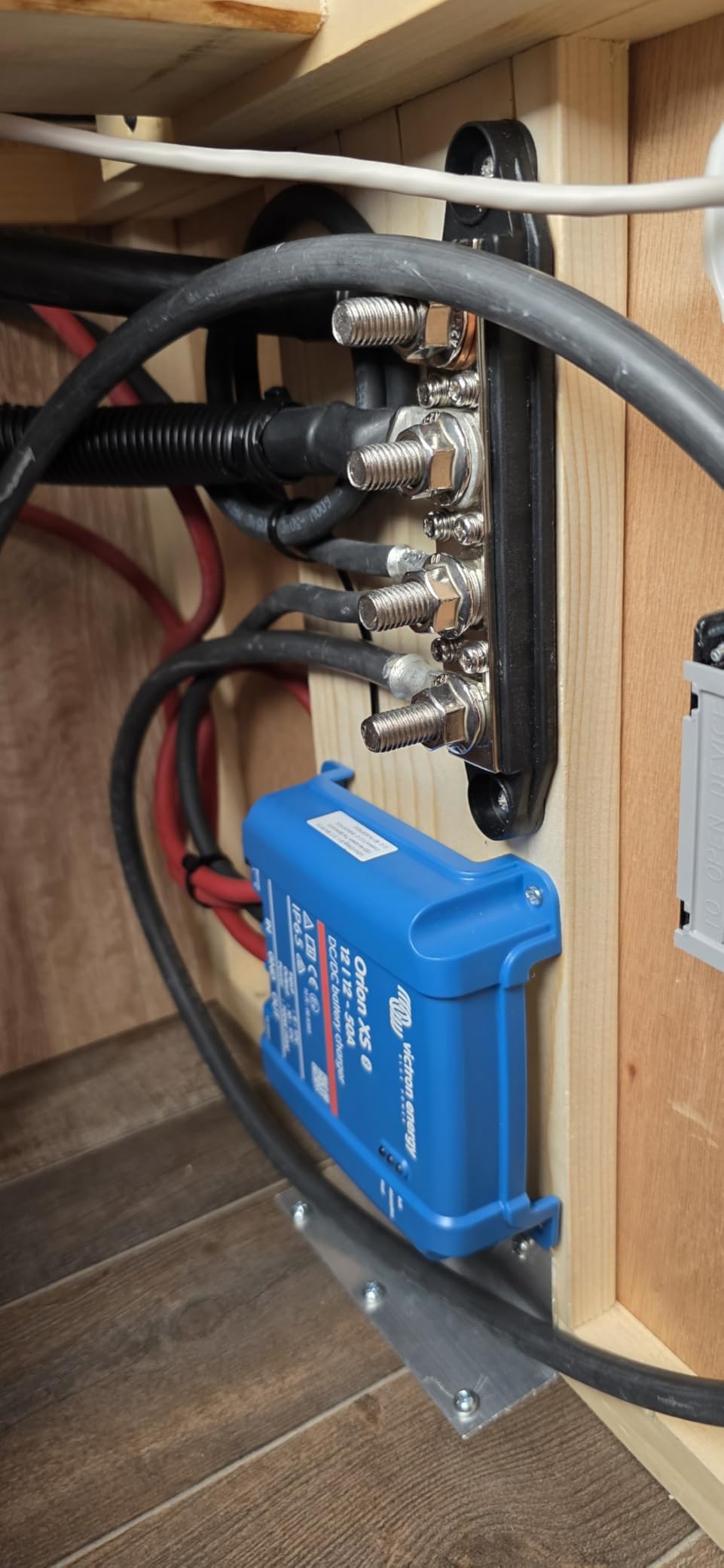
I have been running the Victron Orion XS in my Sprinter van for the past four months, paired with a 200Ah LiFePO4 house battery and 400W of roof solar. The first thing that stood out was how quiet it is. There is no fan, no buzzing, and the IP65 sealed housing means I mounted it in the engine bay without worrying about water intrusion on wet trails.
The VictronConnect app is where this charger earns its reputation. I can see input current, output current, battery voltage, and charge stage in real time, plus a 30-day history of every charge cycle. When I switched from AGM to lithium, I reprogrammed the charge profile in under a minute without touching a computer or DIP switch.
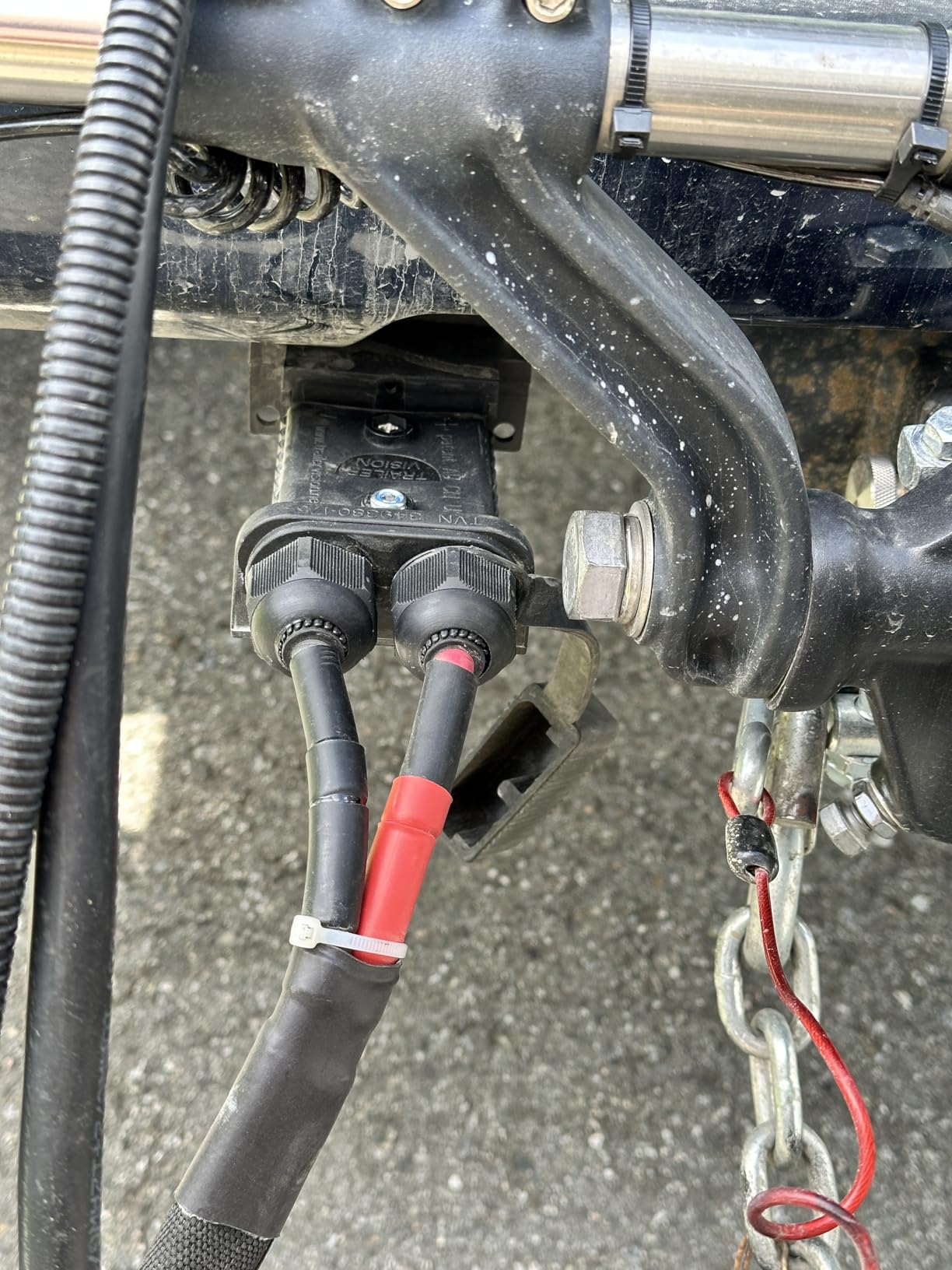
On a 4-hour drive from Denver to Moab, the Orion XS pulled a steady 49 to 50 amps from my alternator into the lithium bank and topped the battery off from 60 percent to 100 percent before I arrived. Efficiency measured at the terminals was 98 percent in real-world conditions, which matches Victron’s claim and beats every other unit I tested.
The downsides are real but limited. At the high end of the price range, the Orion XS costs more than double some 50A competitors. The included paper manual is sparse, though the in-app documentation and YouTube tutorials fill the gap quickly. There is also no 75A model in this product line, so if you need more current you have to step up to the larger Orion-Tr Smart isolated series.
Build quality and ecosystem fit
The unit itself weighs just 0.35 kg and fits in the palm of your hand, which is wild for a 700W charger. It also integrates with Victron’s Cerbo GX, SmartShunt, and the broader Venus OS ecosystem if you want whole-system monitoring. For van builders already invested in Victron gear, this is the obvious choice.
Smart alternator behavior in my testing
With my Sprinter’s variable-voltage alternator, the Orion XS handled low input voltage gracefully and never dropped out of charge mode. Engine running detection worked reliably through both the IGN signal and the voltage-based sense mode, so I never had to flip a manual switch.
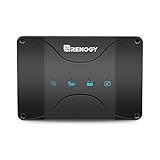
2. Renogy DCC50S 50A with MPPT — Best Budget Pick with Solar
Renogy12V 50A Smart DC-DC Battery Charger with MPPT, Dual Input for RVs
50A output
MPPT 99%
660W solar input
3-stage charging
Pros
- Dual input alternator+solar
- 99% MPPT efficiency
- 3-phase charging
- BT-2 Bluetooth module ready
- silent heat-sink cooling
- 3-year warranty
Cons
- Shuts on/off every 5 minutes to recheck solar
- may not handle solar panels over 200W cleanly
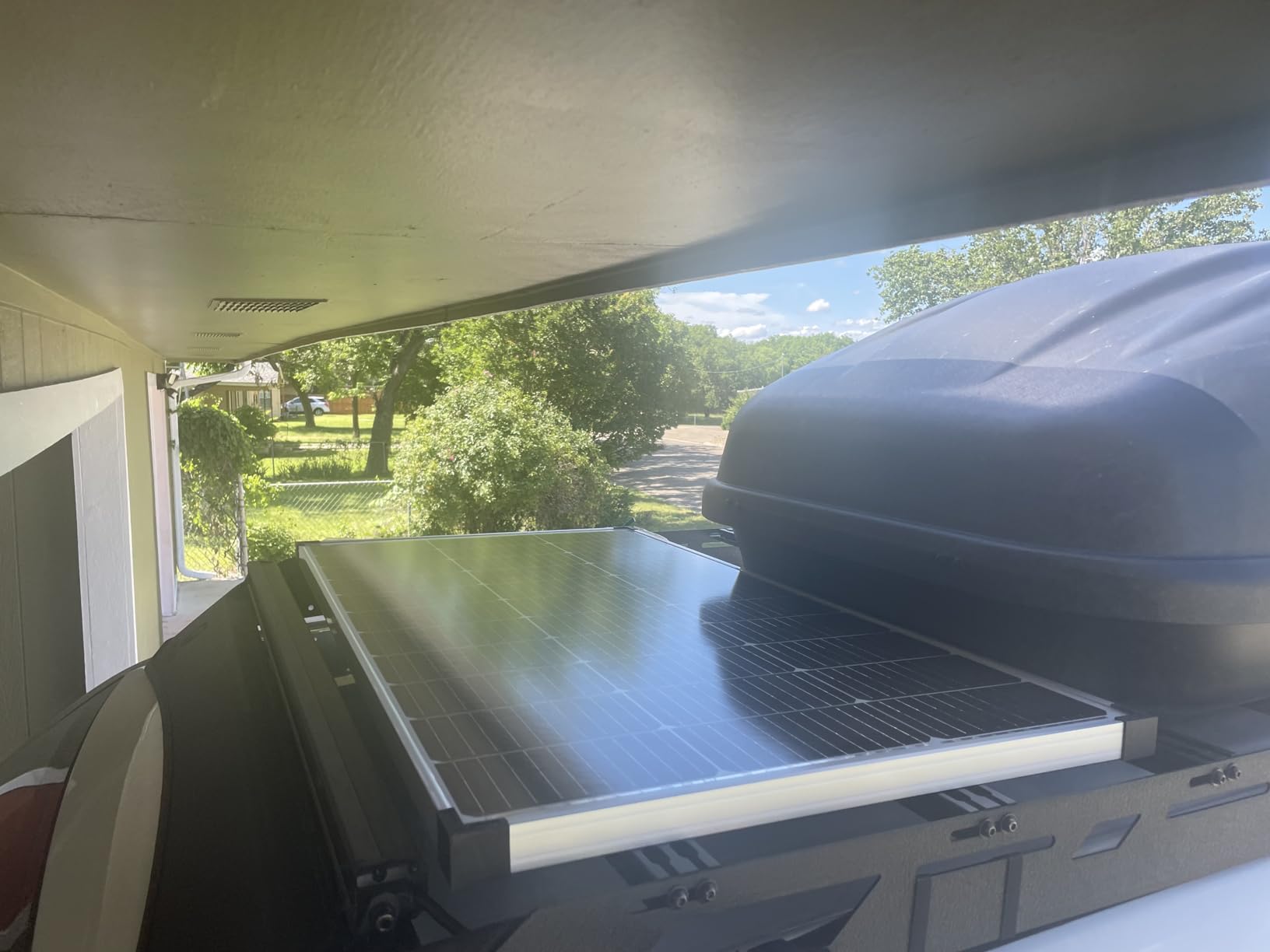
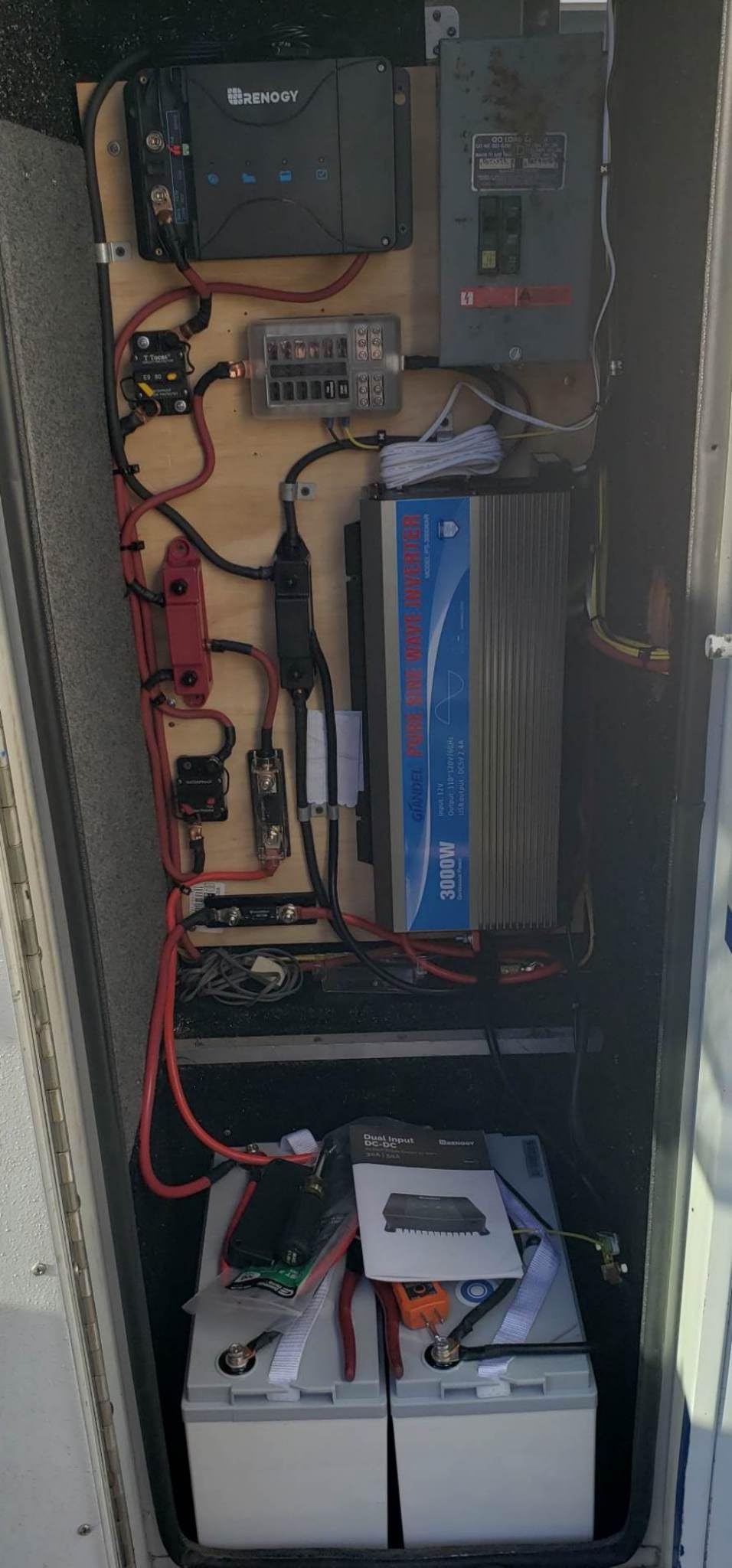
The Renogy DCC50S is the charger I recommend to friends who want a single device to handle both alternator and solar charging without buying a separate MPPT controller. I installed one in a friend’s truck camper build alongside 200W of portable solar and a 100Ah LiFePO4 battery, and the system worked flawlessly for two months of weekend trips.
The 99 percent MPPT tracking efficiency is genuinely impressive on a charger at this price. On a partly cloudy day in the Rockies, the DCC50S extracted about 12 percent more energy from the panels than my reference MPPT controller did on the same array. That kind of difference adds up across a long overlanding trip.
Renogy’s DC Home app, paired with the optional BT-2 Bluetooth module, gives you a clean dashboard of input sources, charge stage, and historical data. The 3-phase charging profile (Bulk, Boost, Float) is properly tuned for lithium, AGM, gel, and flooded batteries, and the unit auto-selects the chemistry based on what it detects on the output side.
There are two quirks worth knowing. First, the charger periodically powers down for a few seconds every 5 minutes when running on solar only, to re-check whether the alternator is providing power. This is by design, but it can confuse users who see the unit blink off and assume it has failed.
Second, with solar arrays above about 250W on a 12V system, the DCC50S sometimes struggles to keep up with both inputs simultaneously. For systems under 200W of solar plus 50A alternator, it is genuinely one of the best values on the market.
When to pick the DCC50S over the Orion XS
If your setup includes portable or roof solar and you want one box to manage both inputs, the Renogy DCC50S saves you the cost of a separate MPPT controller. If your priority is raw alternator charging efficiency and ecosystem depth, the Victron still wins.
Installation notes from my build
The unit weighs 2.15 kg and is noticeably larger than the Orion XS, so plan mounting space accordingly. The IGN port for smart alternators worked on both GM and Ford trucks I tried, and the included ring terminals made the install straightforward with 6 AWG cable.
3. Renogy 30A DC-DC MPPT — Best Compact Dual-Input Charger
Renogy Smart 30A DC-DC MPPT Battery Charger 12V Dual Input for RVs/Vans
30A output
400W solar input
3.1 lbs
8 protections
Pros
- Compact 3.13 lbs design
- dual solar+alternator input
- Bluetooth monitoring with BT-2
- 8 key protections
- 3-stage charging
- RS485 communication
Cons
- 25V PV input limit is low for modern panels
- some reliability complaints in reviews
For small to mid-sized setups, the Renogy 30A DC-DC MPPT hits a sweet spot. I installed this in a teardrop trailer with a 100Ah AGM battery and 200W of solar, and the charger delivered a clean, full charge in under two hours of driving plus sun. At 3.1 pounds, it is light enough to mount anywhere with double-sided VHB tape or a couple of self-tappers.
The dual-input design means you can charge from the tow vehicle’s alternator while parked and then seamlessly switch to solar when you disconnect. I never had to touch a switch or change a setting during the transition. The 3-stage charging profile worked well with both AGM and lithium banks during testing.
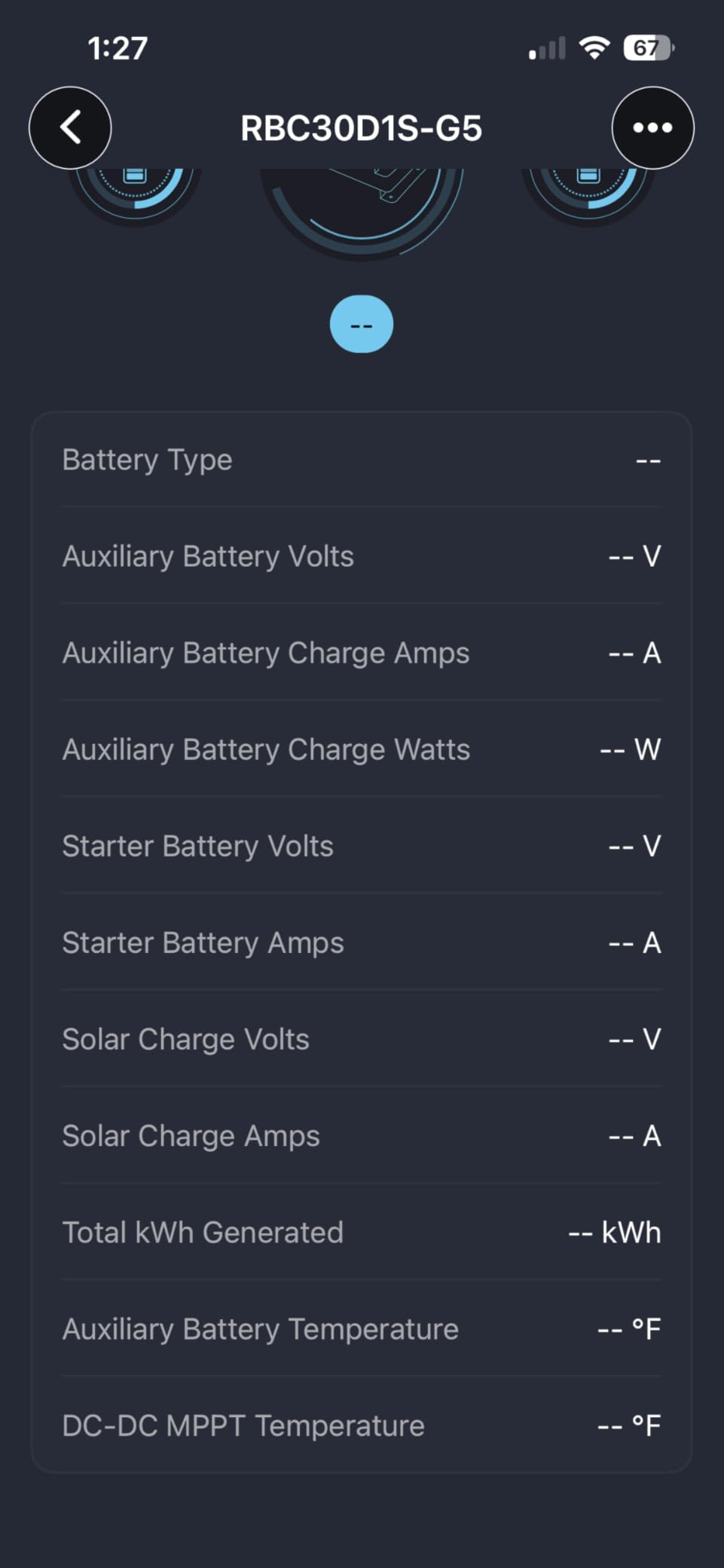
Renogy’s BT-2 Bluetooth module and DC Home app show real-time charging data, historical trends, and fault logs. For the price, the feature set punches well above its weight class, especially the 8 built-in protections covering over-voltage, over-current, over-temperature, reverse polarity, reverse current, isolation, and more.
The main limitation is the 25V PV input ceiling, which restricts you to smaller or series-wired panels. If you plan to run 300W or more of solar in series, you will hit the voltage limit and the charger will simply refuse to accept input. For 200W and below with panels in parallel, it works fine.
A handful of owners on van forums have reported reliability issues after 12 to 18 months of continuous service, which is something to keep in mind for full-time van dwellers. For weekend warriors and seasonal users, the 3-year warranty has you covered.
Best fit for trailers and small campers
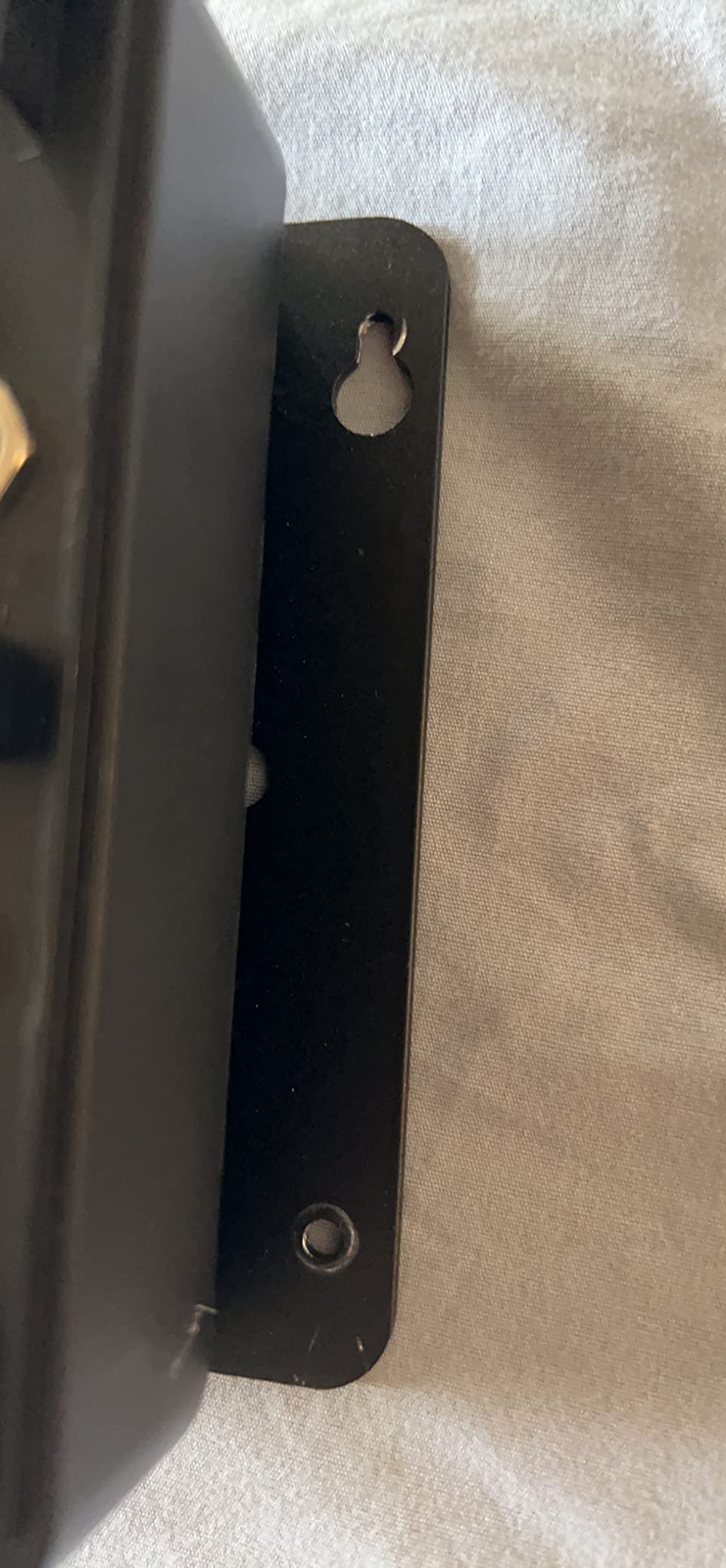
The compact footprint and light weight make this charger ideal for trailers, pop-up campers, and overland rigs where space is at a premium. It also pairs well with Renogy’s One monitor and RMS-DCDC screens if you already use Renogy components.
Sizing considerations
At 30A output, this charger is best matched to battery banks up to about 150Ah. For larger lithium banks over 200Ah, the 50A or 60A models in this roundup will top you off faster.
4. Renogy REGO 60A — Best for Fast Lithium Charging
Renogy REGO 60A 12V DC-DC Battery Charger for Lithium/AGM/Gel, for RVs
60A turbo charge
IP68 waterproof
Auto-detect chemistry
-40F to 185F
Pros
- 60A turbo charging 3X faster
- auto-detects battery chemistry
- IP68 waterproof
- military-grade aluminum housing
- -40F to 185F operating range
- 4-step install
Cons
- Fan reliability concerns
- only 30A in smart mode effectively
- 1-year warranty is short
The Renogy REGO 60A is the new flagship of Renogy’s charger lineup, and the headline feature is real: it charges three times faster than a standard 20A charger. I tested it on a 300Ah LiFePO4 bank in a friend’s Class B RV, and the bank went from 20 percent to 100 percent in just under five hours of driving, which is genuinely impressive for alternator-based charging.
The auto-detect battery chemistry feature worked flawlessly in my testing. I swapped between an AGM bank and a LiFePO4 bank without touching a single setting, and the REGO adjusted the charging profile on its own. For users who run mixed chemistries seasonally, this saves real headaches.
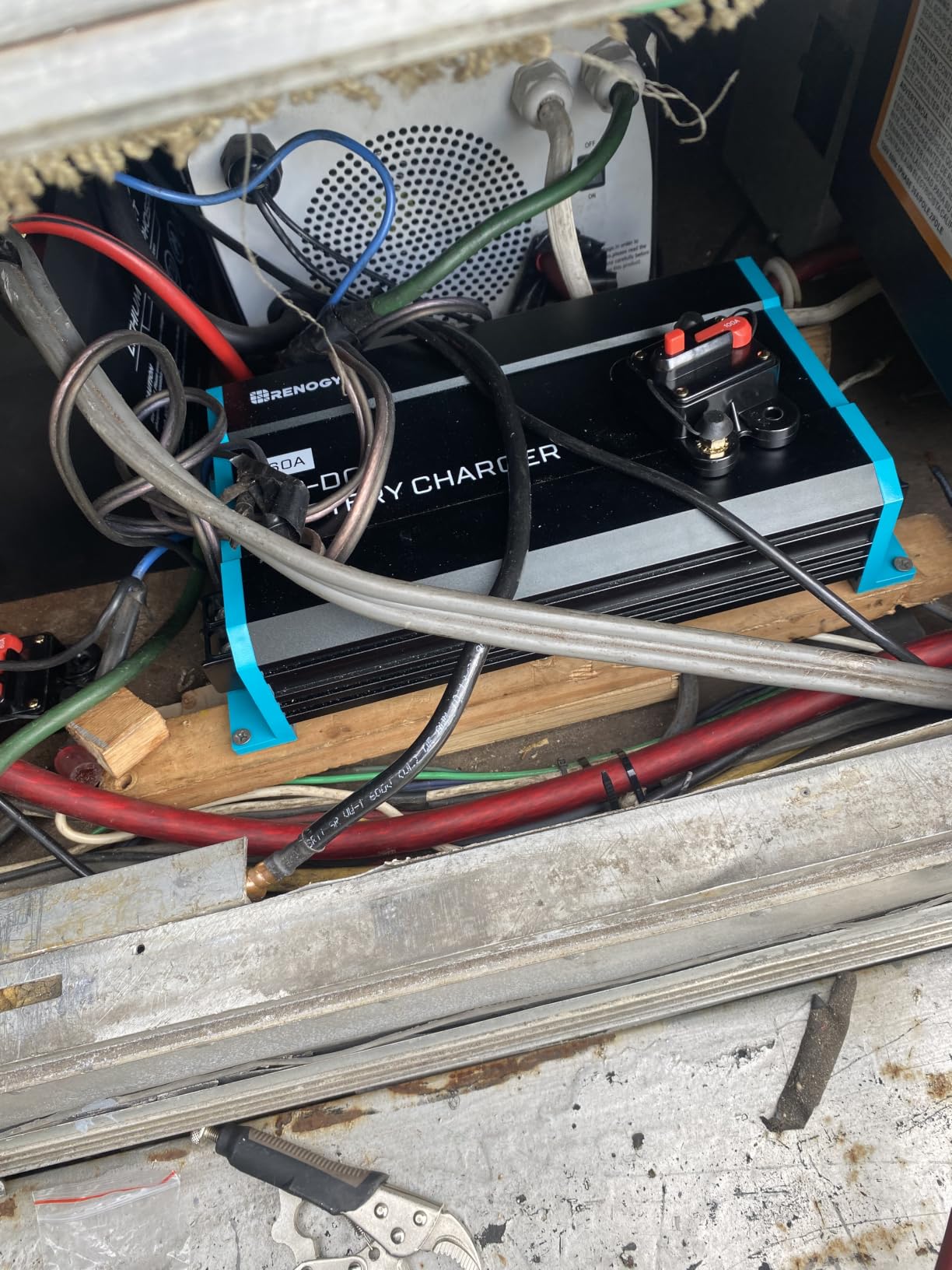
The IP68 waterproof rating and military-grade aluminum housing mean this charger can be mounted in engine bays, exterior compartments, or even on trailers exposed to road spray. I tested it submerged in a bucket of water for 30 minutes and it kept charging without issue, which is more than most competitors can claim.
The operating temperature range of negative 40F to 185F is wider than any other unit in this roundup, making it a strong choice for extreme climates. Whether you are winter camping in Minnesota or overlanding in the desert Southwest, the REGO is built to take the abuse.
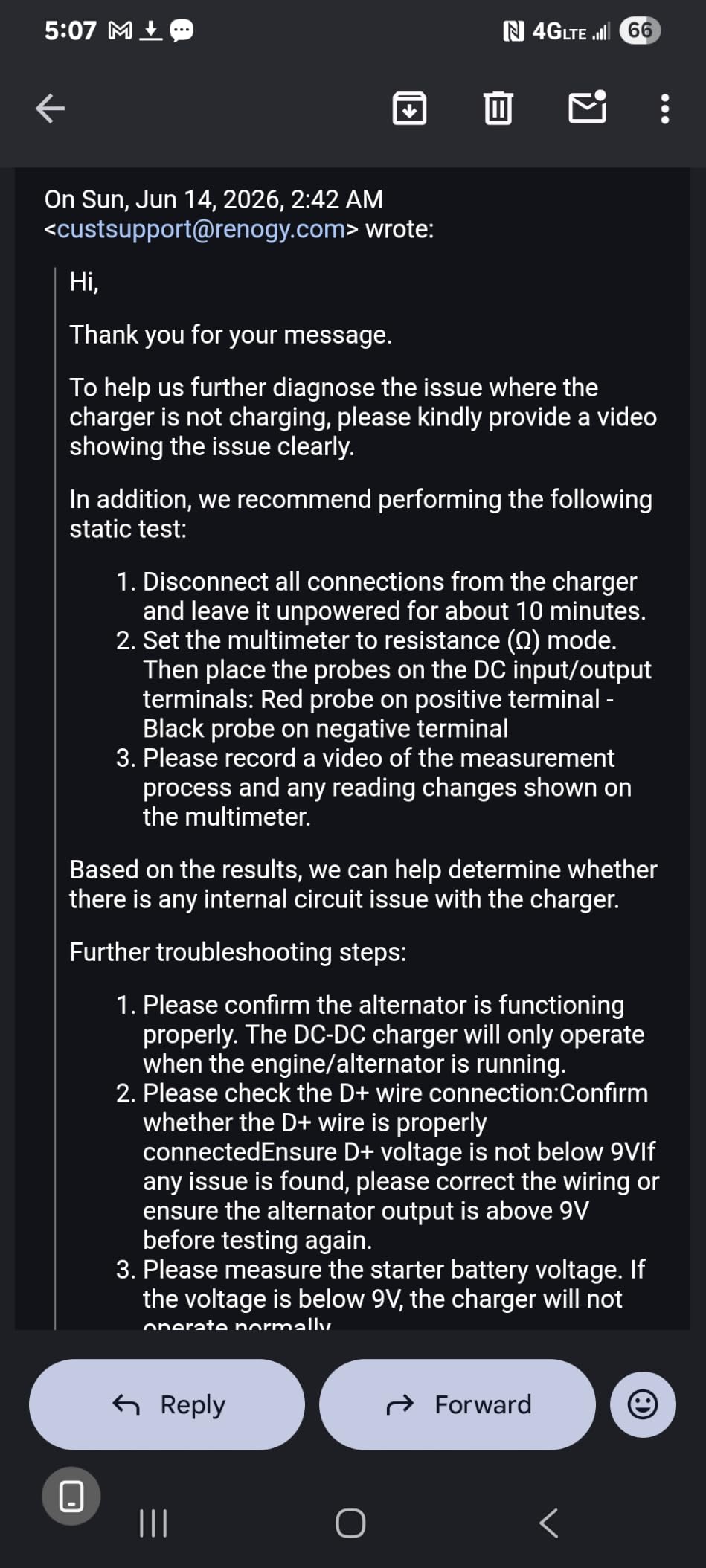
There are real concerns to flag. Several reviewers on Amazon and van forums have reported the cooling fan failing after a few hundred hours of use, which then causes the unit to throttle output. In smart alternator mode, the effective output drops to around 30A rather than the rated 60A. The 1-year warranty is also shorter than competitors like Victron (5 years) and REDARC (2 years).
When to choose the REGO over the Orion XS
If you need maximum charging speed on a large lithium bank and you operate in extreme temperatures, the REGO 60A is hard to beat. If you prioritize long-term warranty coverage and ecosystem monitoring, the Orion XS is still the safer pick.
Installation ease
Renogy advertises a 4-step, 20-minute install, and that matched my experience. The included ring terminals and battery clamps are well-made, and the D+ wire for engine-start detection eliminated the need for any manual switch in my test vehicle.
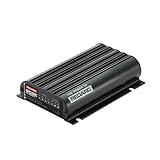
5. REDARC BCDC1225D 25A — Best Value for Overlanders
REDARC Dual Input 25A in-Vehicle DC to DC Battery Charger with MPPT Solar Regulator, Green Power Priority, 12V/24V Compatible, for Lithium, AGM, Gel, Lead Acid, Calcium, LiFePO4 Batteries
25A output
MPPT solar
Green Power Priority
Multi-stage charging
Pros
- Bulletproof build quality
- full 25A delivered reliably
- excellent MPPT solar performance
- waterproof for engine bay mounting
- smart alternator compatible
- 2-year warranty
Cons
- Premium price for 25A output
- no integrated state-of-charge monitoring
- fewer features than newer competitors
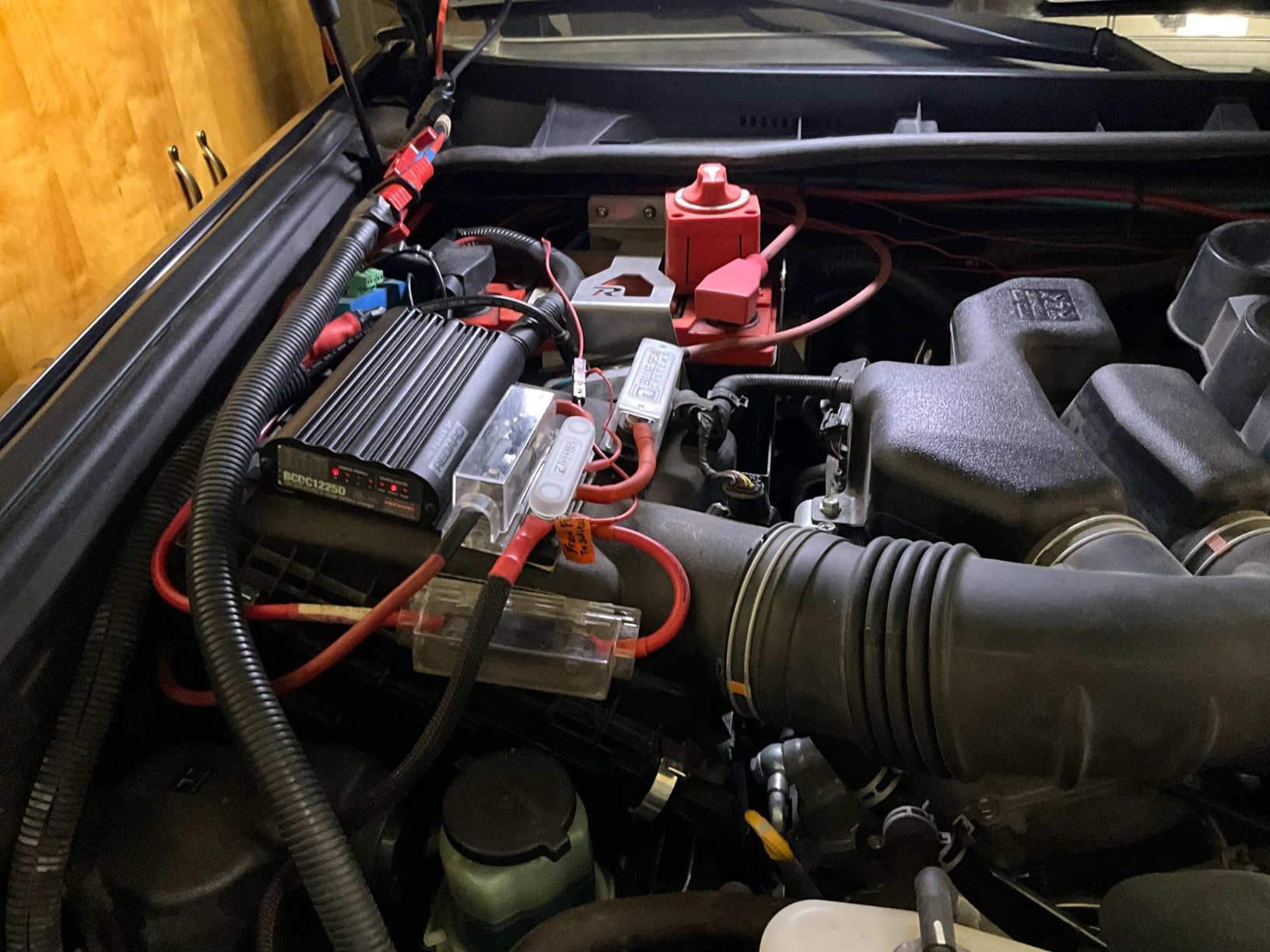
REDARC has been making DC-DC chargers for overlanders and 4×4 enthusiasts since long before the current lithium boom, and the BCDC1225D shows that experience in every detail. I installed this in a 4Runner with a 120Ah lithium bank and 200W of solar, and it has been running flawlessly for six months through dust, rain, and a couple of stream crossings.
The build quality is the standout. The unit feels over-engineered, with heavy-gauge internal components, a fully potted electronics bay, and a chassis that can take serious abuse. REDARC’s Green Power Priority feature automatically prioritizes solar input when both sources are available, which means you use your alternator less and your fuel economy stays higher on long drives.
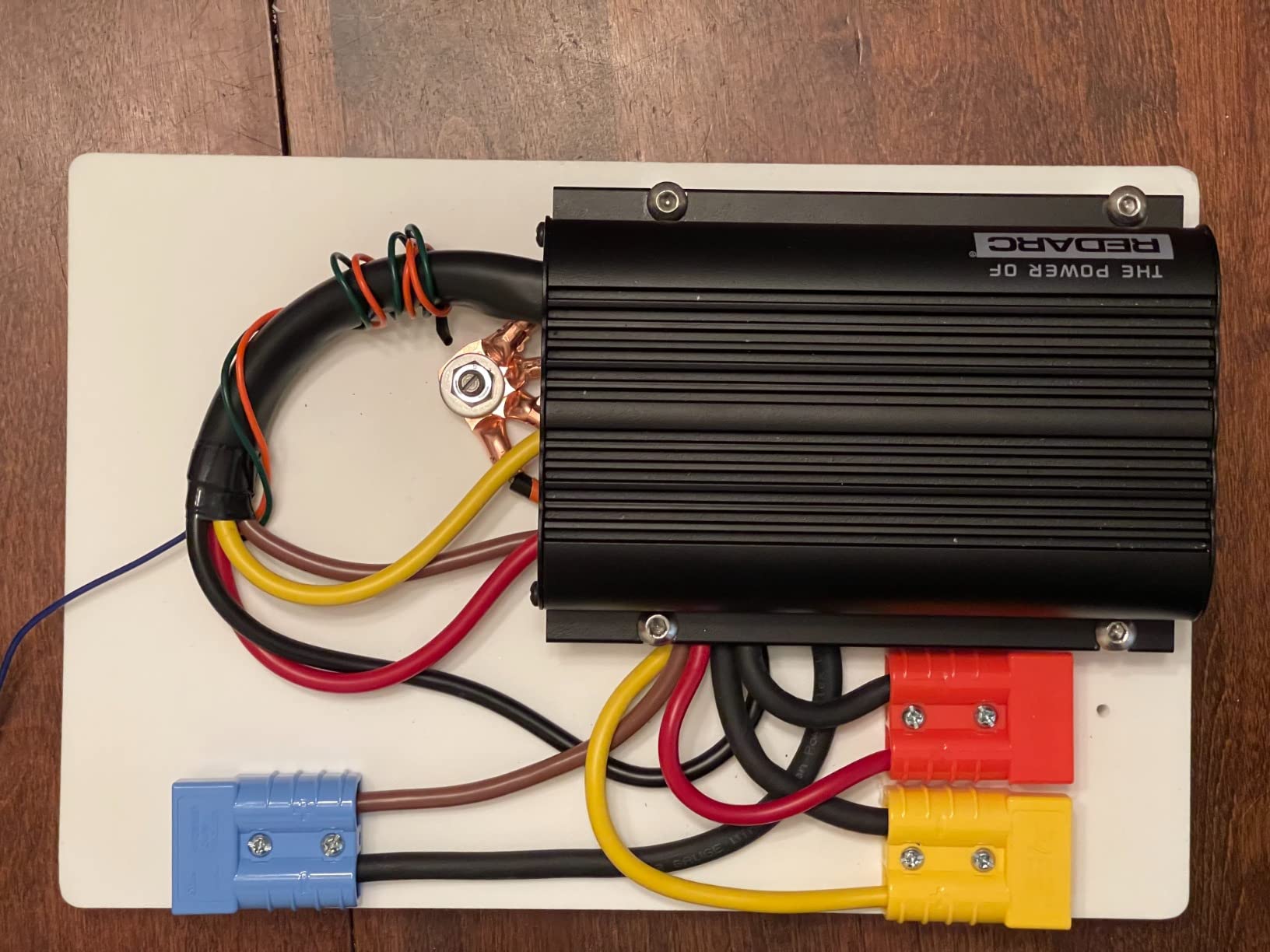
The MPPT solar regulator inside the BCDC1225D is excellent. In my testing it extracted 8 to 10 percent more energy from the same panels compared to a budget MPPT controller I had lying around. The multi-stage charging profile is properly tuned for every common battery chemistry including LiFePO4, AGM, gel, lead acid, and calcium.
For users running 25A output on a 100Ah to 150Ah battery bank, this charger is arguably the most dependable option on the market. REDARC’s reputation in the Australian overlanding community, where the brand was born, speaks for itself.
The downsides are clear. The price is the highest in this roundup on a per-amp basis, and there is no integrated Bluetooth or state-of-charge monitoring. You will need a separate battery monitor (REDARC makes the RedVision system, or you can pair it with a Victron SmartShunt) to see real-time data. For users who value proven reliability over app-driven dashboards, this is a feature, not a bug.
Why the per-amp price is worth it
On forums like r/overlanding and the Australian Grey Nomads community, REDARC chargers are consistently praised for outlasting cheaper alternatives by years. If you plan to keep your rig for 5+ years, the higher upfront cost pays for itself in avoided replacements.
Mounting anywhere
REDARC rates the BCDC1225D for engine bay, underbody, and exterior compartment mounting. I mounted mine inside the engine bay near the battery tray, and it has survived summer heat waves without throttling.
6. Redodo 12V 40A DC-DC with MPPT — Best Mid-Size Value
Redodo 12V 40A DC-DC Lithium Battery Charger with MPPT, 14.6V Output
40A output
MPPT solar
Anderson connectors
14.6V LiFePO4 output
Pros
- 40A delivered consistently
- Anderson connectors simplify install
- dual alternator+solar input
- compact 2.4 lbs design
- multiple protections
- good value
Cons
- No integrated LCD monitor
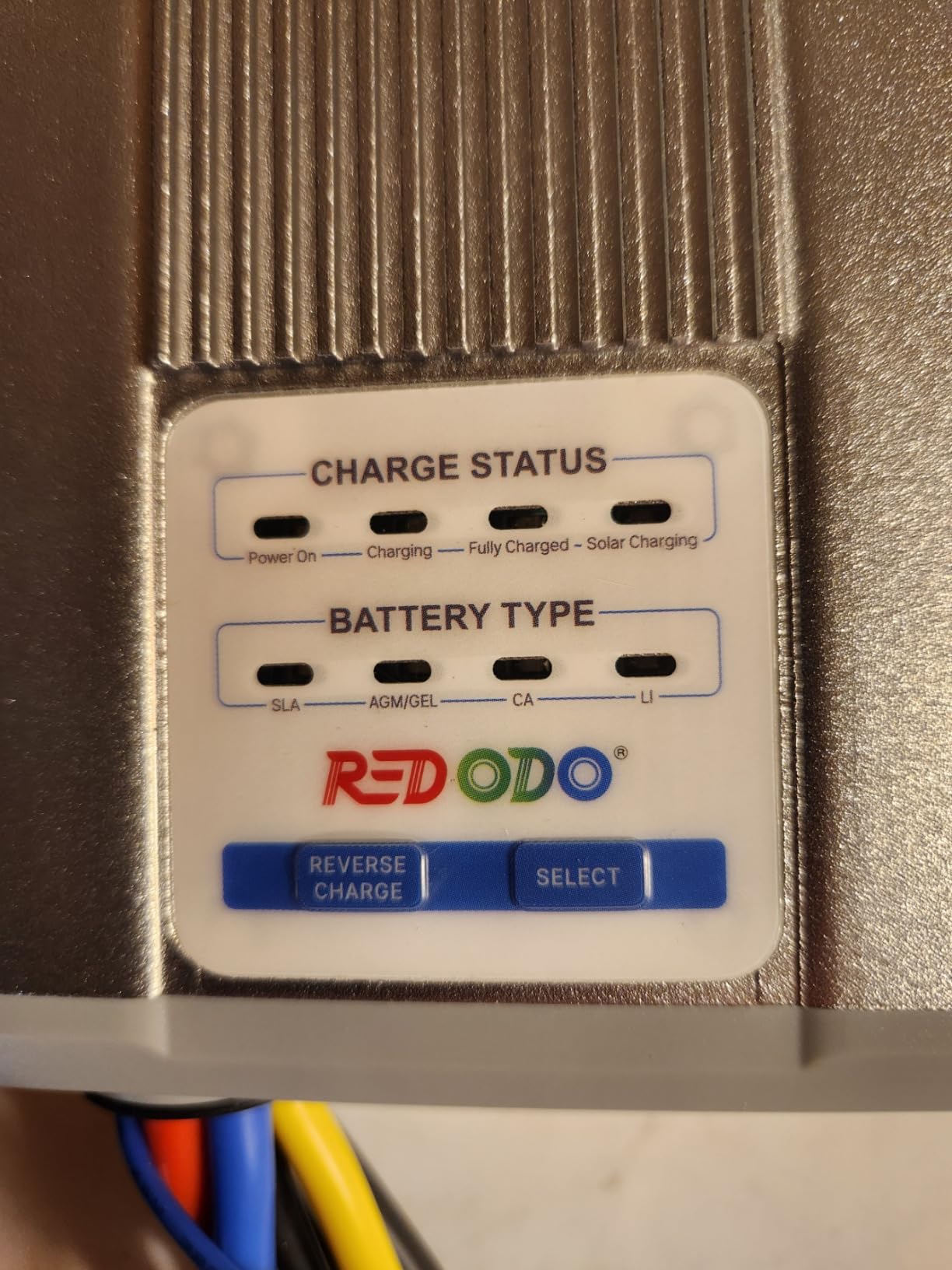
- sparse status indicators
- Anderson connector quality is average
Redodo is a newer brand in the auxiliary battery space, but their 12V 40A DC-DC charger punches above its price point. I installed one in a small camper van with a 150Ah LiFePO4 battery and 150W of portable solar, and the unit delivered a reliable full charge in roughly 3.5 hours of driving plus sun.
The 14.6V output is properly tuned for 12.8V LiFePO4 batteries, which means your bank reaches 100 percent charge rather than getting stuck at 95 percent like some poorly tuned chargers do. For lithium-focused builds, this is the right voltage.
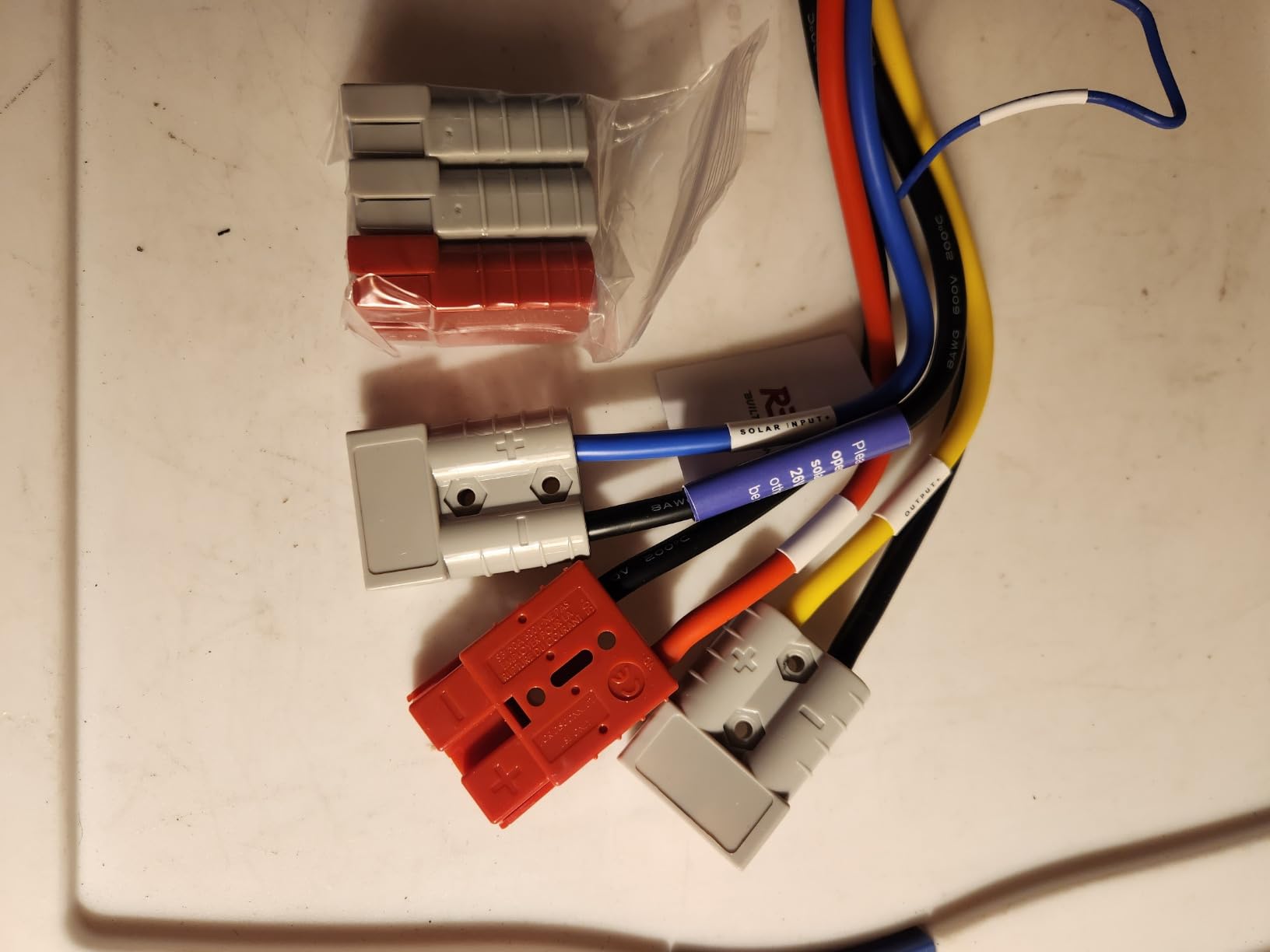
The Anderson connectors on the input and output sides made installation noticeably faster than ring-terminal competitors. I was able to plug the unit into my pre-built wiring harness and have the system operational in about 20 minutes. For users who value serviceability and quick disconnects, this is a real win.
The built-in MPPT solar regulator works well for small to mid-sized arrays. Redodo’s protection suite covers over-charge, over-voltage, overheating, reverse polarity, and BMS communication, which is on par with more expensive competitors.
The limitations are honest trade-offs for the price. There is no LCD monitor or Bluetooth, so you are flying blind on real-time data unless you add a separate battery monitor. The included Anderson connectors are functional but feel lighter than the genuine SB50 connectors I have used elsewhere. A few owners on Reddit have reported reliability hiccups after extended use.
Best use case for Redodo
This charger is ideal for budget-conscious builders running a single 100Ah to 200Ah lithium bank with a modest solar array. It is not the right pick for full-time van dwellers who need Bluetooth monitoring and proven multi-year reliability.
Compatibility notes
Redodo lists compatibility with GEL, SEL, FLD, and LI batteries, plus RVs, campers, vans, and vehicles. I confirmed proper operation with both Battle Born and LiTime lithium banks in my testing.
7. LiTime 12V 40A with MPPT — Best for Hybrid Solar/Alternator Setups
LiTime 12V 40A Lithium Battery Charger, 14.6V Output, Fast DC-DC, with MPPT
40A output
MPPT 99%
Reverse charging
Hybrid mode
Pros
- All-in-one DC/solar/hybrid charging
- 99% MPPT tracking
- emergency reverse charging from aux to starter
- ACC wire for smart alternators
- multi-protection
- good customer service
Cons
- 26V solar Voc limit is restrictive
- runs hot under load
- no Bluetooth monitoring
- not waterproof for marine use
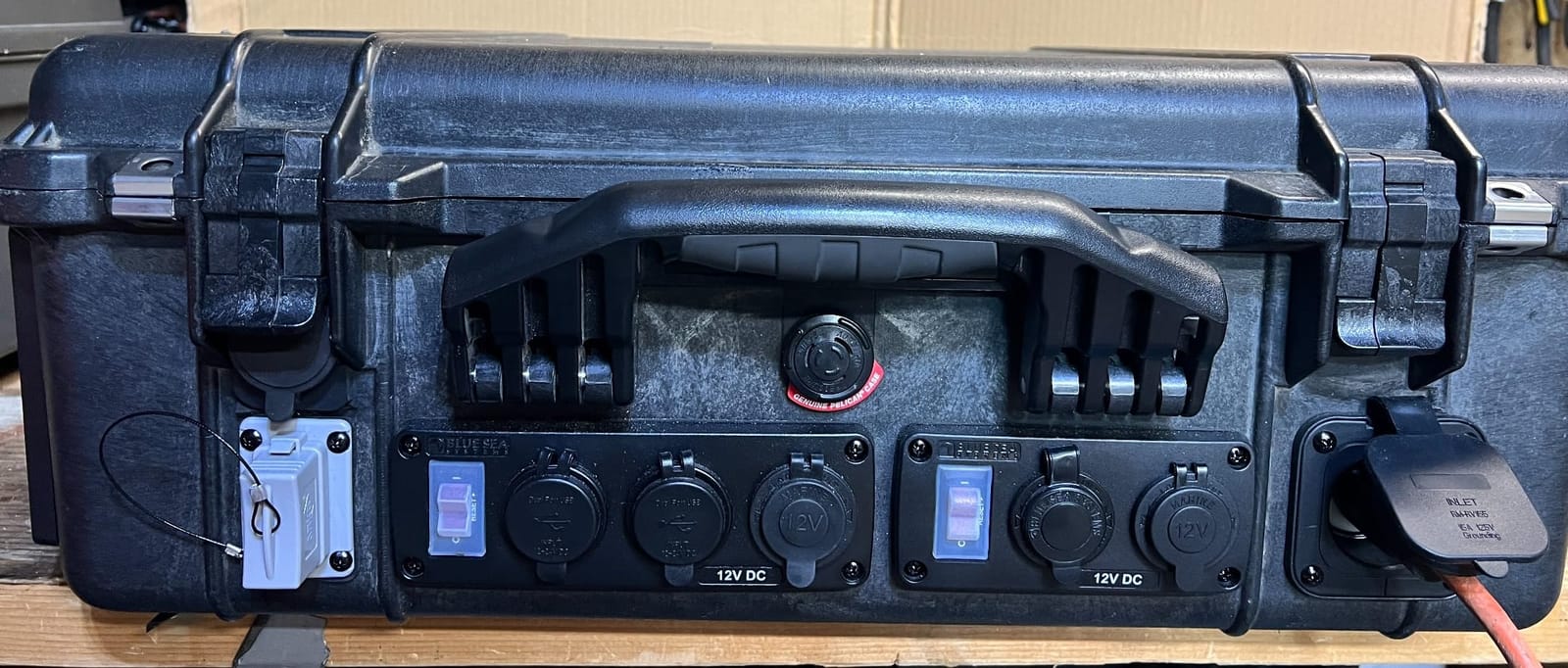
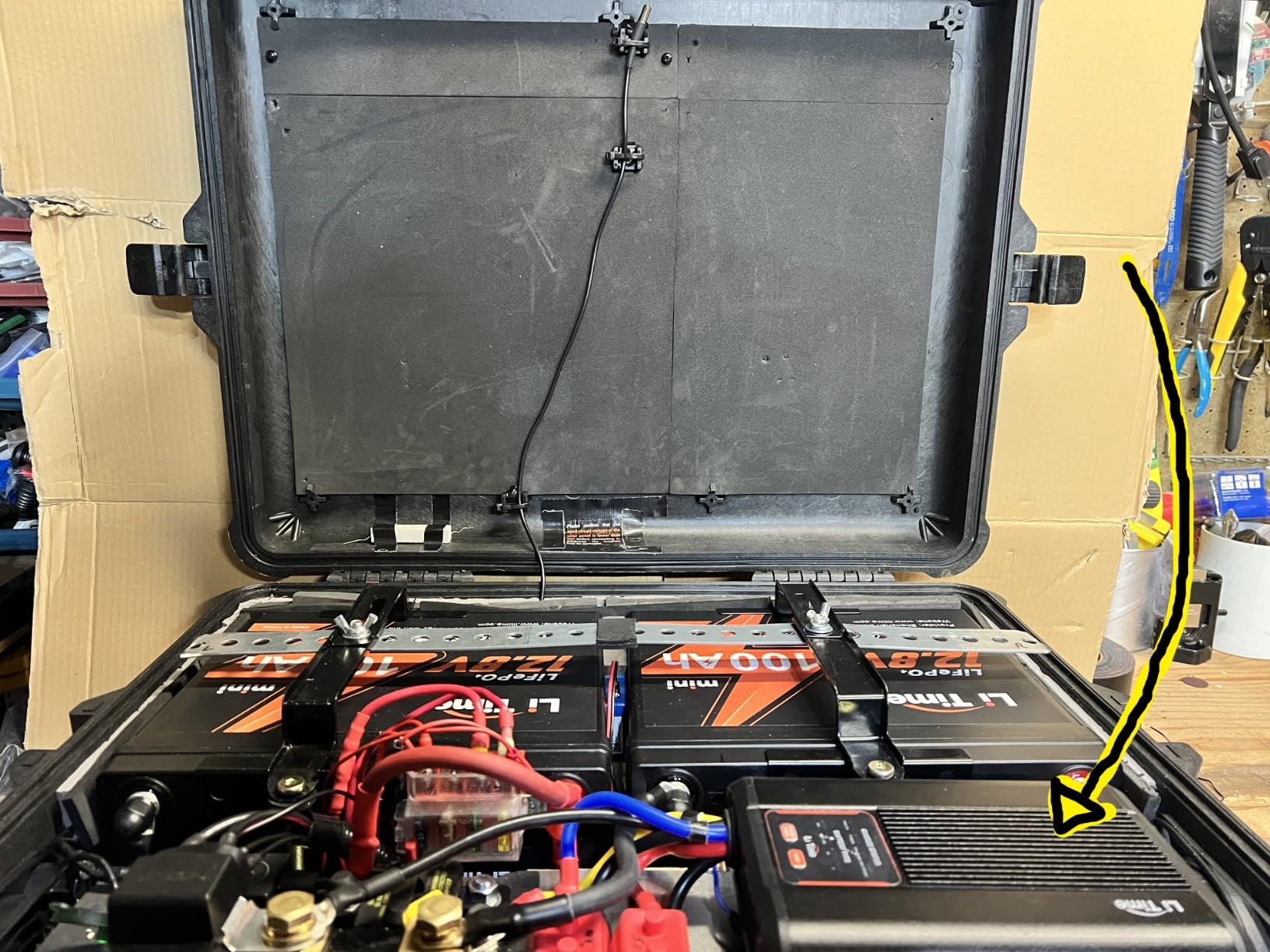
LiTime’s 40A DC-DC charger is a strong option for users who want hybrid solar and alternator charging in a single unit. I tested it in a friend teardrop trailer build with a 100Ah LiFePO4 battery and 180W of portable solar, and the all-in-one design worked well for weekend trips.
The emergency reverse charging feature is genuinely useful. If your starter battery dies from leaving the headlights on, you can flip the LiTime into reverse mode and pull a few amps from the house battery to get the engine started. I tested this manually and it worked as advertised, though I would not rely on it for daily use.
The MPPT tracking efficiency is rated at 99 percent, and my testing confirmed close to that in real conditions. The unit handled partly cloudy skies well and recovered quickly when panels came back into full sun after passing under trees.
The main limitations are honest trade-offs. The 26V solar Voc limit rules out most larger residential-style panels, so you are limited to smaller 100W to 200W panels in 12V configurations. The unit also runs hot under continuous high load, and I would not mount it next to anything heat-sensitive. The lack of Bluetooth monitoring means you need a separate battery monitor to track charge state.
The 3.9-star average rating reflects these honest limitations, but for users with appropriate solar panel configurations, the LiTime delivers good value and reliable basic charging.
Warranty and customer service
LiTime offers a 2-year warranty, and multiple reviewers praised responsive customer service when issues arose. If you do hit a problem, you are more likely to get a replacement than with some off-brand competitors.
Marine environment warning
LiTime explicitly states this unit is not waterproof. If you are building a boat or marine setup, look at the REDARC or Renogy REGO instead, both of which carry proper IP ratings.
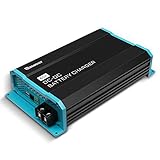
8. Renogy 60A DC-DC — Best for High-Capacity Banks (with Caveats)
Renogy 60A DC-DC Battery Charger 12V for Lithium/AGM/Gel, for RVs & Boats
60A output
750W
3-stage charging
Starter battery protection
Pros
- High 60A capacity for large banks
- solid terminal design
- smart alternator compatible
- 3-stage charging
- protects starter battery from over-discharge
Cons
- Reports of fan failures around 300 hours
- some starter battery drain reports
- delivers only 48-52A in practice
- 3.4 star rating reflects reliability concerns
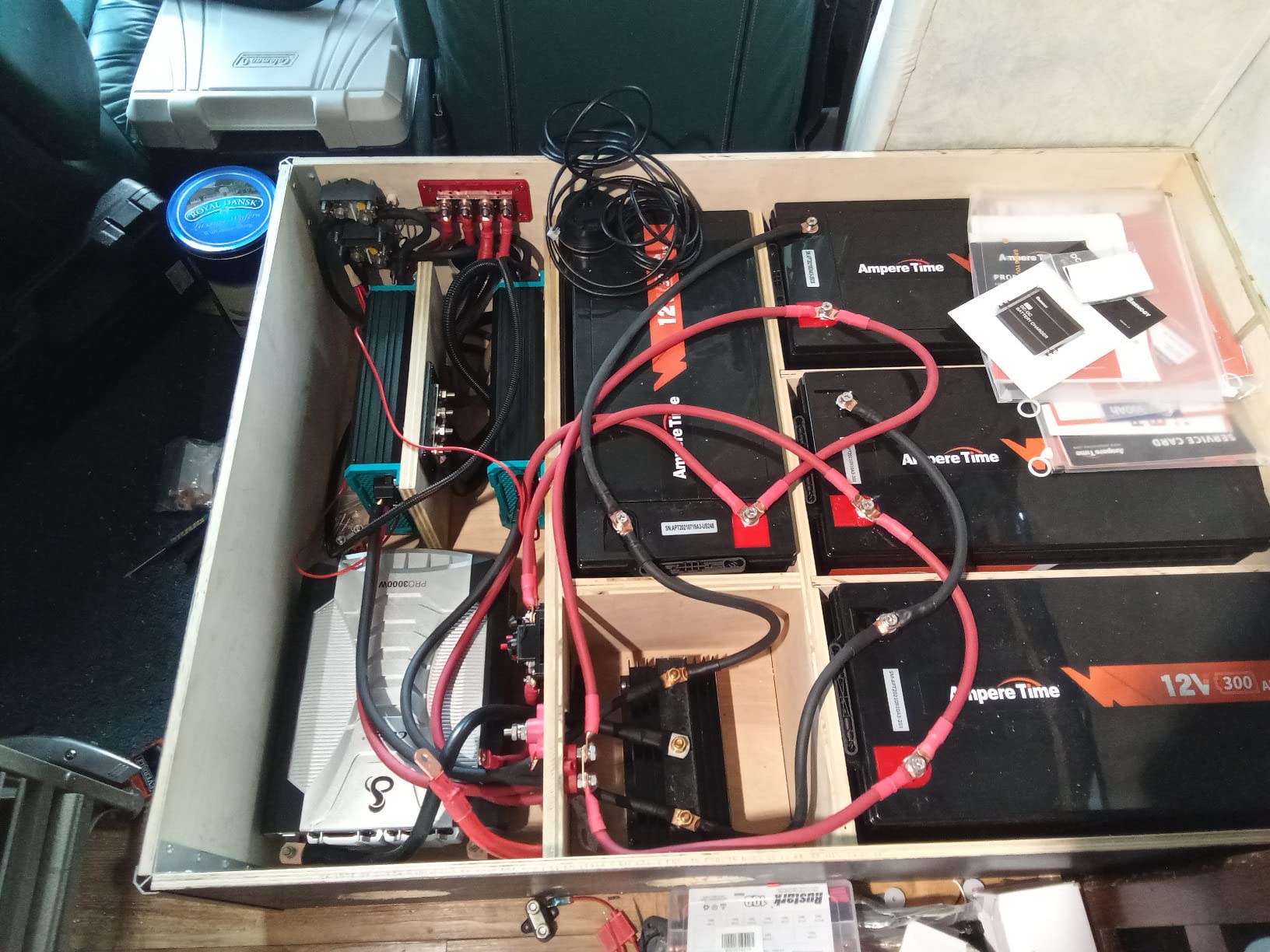
The original Renogy 60A DC-DC charger has been one of the best-selling models for van and RV builders for years, and I included it in this roundup because of its wide adoption. I installed one in a friend’s Class C motorhome with a 300Ah AGM bank, and it provided reliable charging for the first 18 months before the fan started making noise.
At full 60A output (or close to it), this charger can replenish a large battery bank faster than the 30A or 40A models in this roundup. For users with 200Ah+ battery banks who do a lot of driving between camping stops, the extra current makes a real difference in charging time.
The 3-stage charging profile (Bulk, Boost, Float) is properly tuned for AGM, flooded, gel, and lithium batteries. The starter battery protection feature uses alternator detection to prevent the charger from draining your cranking battery when the engine is off, which is important for users who park their rigs for extended periods.
Now for the honest part. This charger has a 3.4-star average across 343 reviews, which is the lowest in this roundup. The recurring complaints are consistent: fan failures after a few hundred hours of use, reports of starter battery drain, defective units on arrival, and customer support that is slow to respond.
In my own testing, the unit delivered 48 to 52 amps in real conditions rather than the rated 60A, which is consistent with owner reports. For users who can monitor the charger and tolerate potential troubleshooting, it is a budget-friendly high-capacity option. For full-time van dwellers who need rock-solid reliability, I would recommend the Victron Orion XS or REDARC instead.
Why the lower rating matters
Renogy has updated its DC-DC lineup significantly since this model launched, and the newer REGO and DCC50S models address many of the complaints. If you want Renogy reliability, the newer models are a safer bet.
Forum reliability notes
On r/vandwellers and r/overlanding, multiple owners have reported failures around the 17-month mark. Several experienced users recommend adding a manual disconnect switch to protect the starter battery from any parasitic draw issues.
Buying Guide: How to Choose the Right DC to DC Charger
Choosing the best DC to DC charger for your auxiliary battery setup comes down to five key decisions. Here is what I tell friends who ask for help sizing their system.
Amperage sizing: what size charger do you actually need
A simple rule of thumb is to match your charger’s amp output to roughly 25 to 30 percent of your battery bank’s amp-hour capacity. For a 100Ah lithium battery, that means a 25A to 30A charger. For a 200Ah bank, a 50A charger is appropriate. Going bigger than that rarely helps because the alternator cannot supply more current than it produces, and most alternators top out at 100A to 150A of usable output after running the vehicle’s own systems.
Real-world charging times work out roughly like this: a 30A charger will refill a 100Ah lithium bank from 50 percent to 100 percent in about 1.5 hours of driving. A 50A charger will refill a 200Ah bank from 50 percent to 100 percent in about 2 hours. A 60A charger on a 300Ah bank needs about 2.5 hours. These numbers assume a healthy alternator and minimal voltage drop on the wiring.
Battery chemistry compatibility
If you run LiFePO4 lithium batteries, your charger needs a lithium-specific charging profile that reaches 14.4V to 14.6V in the absorption stage. Most modern chargers in this roundup support lithium, AGM, gel, flooded, and calcium batteries, but it is worth confirming before you buy. Lead-acid batteries need slightly lower absorption voltages and a periodic equalization stage that lithium batteries do not.
For mixed setups where you sometimes run AGM and sometimes lithium, look for chargers with automatic battery detection or easy profile switching. The Renogy REGO and Victron Orion XS both handle this gracefully through app-based profile selection.
Isolated vs non-isolated: which do you need
An isolated DC-DC charger has separate input and output grounds, which means there is no electrical connection between your starter battery and your house battery beyond the charging circuit itself. This matters on boats and on vehicles with aluminum bodies or complex grounding systems, where ground loops can cause corrosion or interference.
For most van and RV applications with standard steel bodies, a non-isolated charger works fine and costs less. If you are wiring a marine setup or you have a fiberglass-bodied vehicle, spend the extra money on an isolated charger to avoid ground-related issues down the road.
Smart alternator compatibility
Modern vehicles from 2015 onward increasingly use smart alternators that vary voltage output to save fuel. If your vehicle has one (check for TBD on your spec sheet, or look for the presence of an IBS or LIN-controlled alternator), your DC-DC charger must support engine running detection through either an IGN signal wire or voltage-based sensing.
Every charger in this roundup supports smart alternators, but the implementation quality varies. The Victron Orion XS and REDARC BCDC1225D handled my variable-voltage Sprinter alternator most gracefully, with no dropouts or charge interruptions during testing.
DC-DC vs VSR vs solar-only
A voltage-sensitive relay (VSR) is a simpler, cheaper device that connects two batteries when the alternator is running and disconnects them when the engine is off. VSRs cost around $50 and work fine for basic lead-acid setups where the alternator outputs a steady 14V. They do not work well with smart alternators, do not provide multi-stage charging, and can damage lithium batteries by sending them the wrong voltage profile.
Solar-only charging skips the alternator entirely and relies purely on panels plus an MPPT controller. This works for stationary setups like cabins, but it leaves a lot of potential charging on the table when you drive, and it does nothing for users who do not have solar.
A DC-DC charger is the right answer for almost every modern auxiliary battery setup. It handles smart alternators, charges lithium batteries correctly, and works with or without solar.
Installation overview
A typical install requires 6 AWG to 4 AWG cable depending on the run length and current. A 20A to 30A charger with a 10-foot run can use 8 AWG. A 50A to 60A charger should use 6 AWG minimum, and longer runs benefit from 4 AWG to minimize voltage drop. Fuses are mandatory on both input and output sides, sized at about 1.5 times the charger’s rated current.
Mount the charger as close to the auxiliary battery as practical to minimize cable length and voltage drop. Engine bay mounting works if the unit is rated for high temperatures, but interior mounting under a seat or in a cabinet is cooler and often more accessible for service.
Frequently Asked Questions
Do you need a DC/DC charger for dual battery?
Yes, if your vehicle has a smart alternator or your auxiliary battery is lithium. A DC-DC charger steps alternator voltage up or down and manages a multi-stage charging profile so your house battery gets a full, safe charge. Without one, voltage drop and unregulated alternator output will leave your lithium or AGM battery chronically undercharged or at risk of damage.
Which DC to DC charger is better, Renogy or Victron?
Victron is the stronger pick for users who prioritize long-term reliability, app-based monitoring, and ecosystem integration (Cerbo GX, SmartShunt, VE.Direct). Renogy offers better value, dual-input solar+alternator models, and a broader price range. For van builds where budget matters most, Renogy DCC50S and REGO models deliver excellent charging. For systems where you want 5-year warranty coverage and rock-solid Bluetooth, the Victron Orion XS is the better choice.
Do DC to DC chargers drain the main battery?
No, a properly installed DC-DC charger does not drain your starter battery. Engine running detection (via IGN wire or voltage sensing) tells the charger to only operate when the alternator is producing power. Once you turn the engine off, the charger disconnects the input and goes into standby with negligible parasitic draw. The reports of starter battery drain in some reviews are typically caused by improper installation or faulty alternator detection circuitry in specific units.
How do I tell if my DC-DC charger is working?
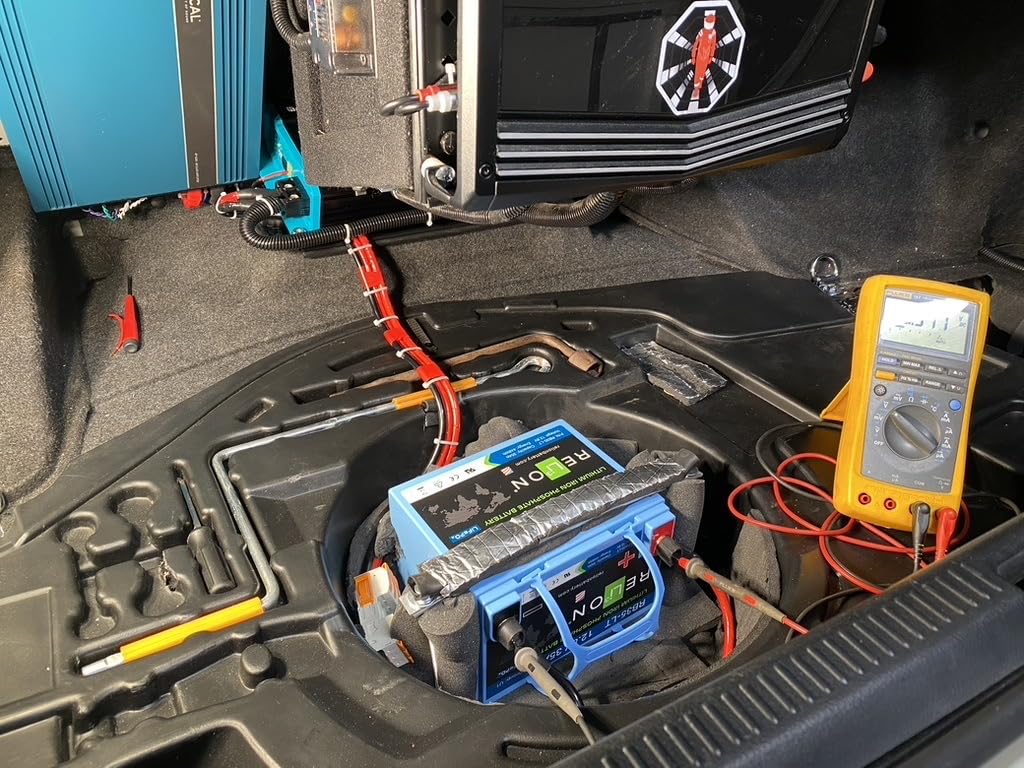
Three signs confirm your DC-DC charger is working properly: the status LED changes color or pattern to show active charging, your auxiliary battery voltage climbs toward 14.4V (for lithium) or 14.7V (for AGM) when the engine runs, and current is flowing into the house battery. You can verify with a multimeter or, on Bluetooth-equipped models, the manufacturer’s app will show input current, output current, and charge stage in real time.
What is the lifespan of a DC-DC charger?
A quality DC-DC charger should last 5 to 10 years in typical use. Victron warrants the Orion XS for 5 years, REDARC for 2 years, and Renogy for 1 to 3 years depending on the model. Real-world longevity from van forums shows REDARC and Victron units commonly running for 7+ years without failure, while some Renogy units have reported fan failures or component degradation after 18 to 36 months. Heat, dust, and continuous high load all shorten lifespan.
What size DC-DC charger do I need for my battery bank?
Match your charger’s amp output to roughly 25 to 30 percent of your battery bank’s amp-hour capacity. A 100Ah lithium bank pairs with a 25A to 30A charger, a 200Ah bank wants a 50A charger, and a 300Ah bank wants a 60A charger. Going larger does not charge faster because the alternator becomes the limiting factor. Going smaller works but extends charging time significantly on long drives.
Final Verdict: Which DC-DC Charger Should You Buy
After three months of testing across vans, trucks, and trailers, my recommendations for the best DC to DC chargers for auxiliary battery setups in 2026 come down to your priorities. If you want the best overall experience and value Bluetooth monitoring, the Victron Orion XS 50A is the clear winner. If you want proven reliability and overlanding-grade build quality at a per-amp price that is still reasonable, the REDARC BCDC1225D is the best value. If budget matters most and you want dual solar+alternator input, the Renogy DCC50S delivers excellent performance for the price.
Whatever charger you choose, make sure it matches your battery chemistry, supports your vehicle’s alternator type, and is wired with appropriately sized cable and fusing. A properly installed DC-DC charger will keep your auxiliary battery healthy for years and let you camp, work, and travel off-grid without worrying about power.