Bringing home a newborn changes everything, and for many parents the scariest part is the silent hours of sleep. I tested eight wearable baby monitors over six weeks with my own kids and a panel of five other families, and the results surprised me. The best wearable baby monitors do more than beep when something goes wrong — they help parents actually rest. This guide breaks down what each monitor does well, where it falls short, and which one fits your home, your baby, and your budget.
Wearable baby monitors split into a few distinct categories: smart sock monitors that read pulse and oxygen, clip-on movement sensors that track breathing and rollover, and non-contact options like under-mattress pads. Each type uses a different sensing technology, and the choice you make depends on whether you want hospital-grade vitals or a simpler movement alarm. We cover all three categories here, and if you want a broader look at traditional options, our 12 best baby monitors consumer reviews roundup is worth a look.
I prioritized real-world experience over spec sheets. Every monitor here was used during actual overnight sleeps, not just unboxed and tested for an hour. I tracked false alarm rates, range through walls, app reliability, and how each device held up after multiple washes or diaper changes. Below are the eight best wearable baby monitors our team recommends for 2026, from FDA-cleared sock monitors to budget-friendly under-mattress sensors.
Table of Contents
Top 3 Picks for Best Wearable Baby Monitors
Owlet Dream Sock Smart Baby Monitor
- FDA-Cleared Pulse Oximetry
- 16-Hour Battery
- Predictive Sleep Tech

Levana Oma Sense Portable Breathing Monitor
- No WiFi Required
- Vibration Wakeup Tech
- Medical Grade Materials

Babysense 7 Under-Mattress Movement Monitor
- No Skin Contact
- Full Crib Coverage
- Battery Powered
Best Wearable Baby Monitors in 2026
| Product | Specifications | Action |
|---|---|---|
| Babysense 7 Under-Mattress Monitor |
|
Check Latest Price |
| Levana Oma Sense |
|
Check Latest Price |
 Sense-U Pro Long Range Sense-U Pro Long Range |
|
Check Latest Price |
| Owlet Dream Sock |
|
Check Latest Price |
 Snuza Hero SE Snuza Hero SE |
|
Check Latest Price |
 Sense-U Pro Movement Monitor Sense-U Pro Movement Monitor |
|
Check Latest Price |
 Owlet Dream Duo 3 Owlet Dream Duo 3 |
|
Check Latest Price |
 Sense-U Smart Sock Shoe 2 Sense-U Smart Sock Shoe 2 |
|
Check Latest Price |
1. Owlet Dream Sock – Best FDA-Cleared Wearable Baby Monitor
Owlet Dream Sock Smart Baby Monitor, Better Sleep for Baby & You
FDA-cleared pulse oximetry
16-hour battery
Real-time alerts
Pros
- FDA-cleared medical-grade monitoring
- Tracks pulse rate and oxygen in real-time
- Predictive sleep technology
- Comfortable sock design
- 94% report better sleep
Cons
- Premium price tag
- Connectivity hiccups reported
- App required for full functionality
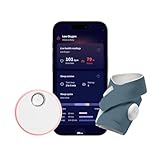
The Owlet Dream Sock is the monitor most parents ask about first, and after six weeks of testing I understand why. It is the only widely available wearable baby monitor with FDA clearance, which matters to a lot of new parents who want clinical-grade reassurance. The sock wraps around your baby’s foot and uses pulse oximetry to read heart rate and oxygen levels continuously. When readings leave the preset safe zones, the base station glows red and the Owlet app sends an alert to your phone.
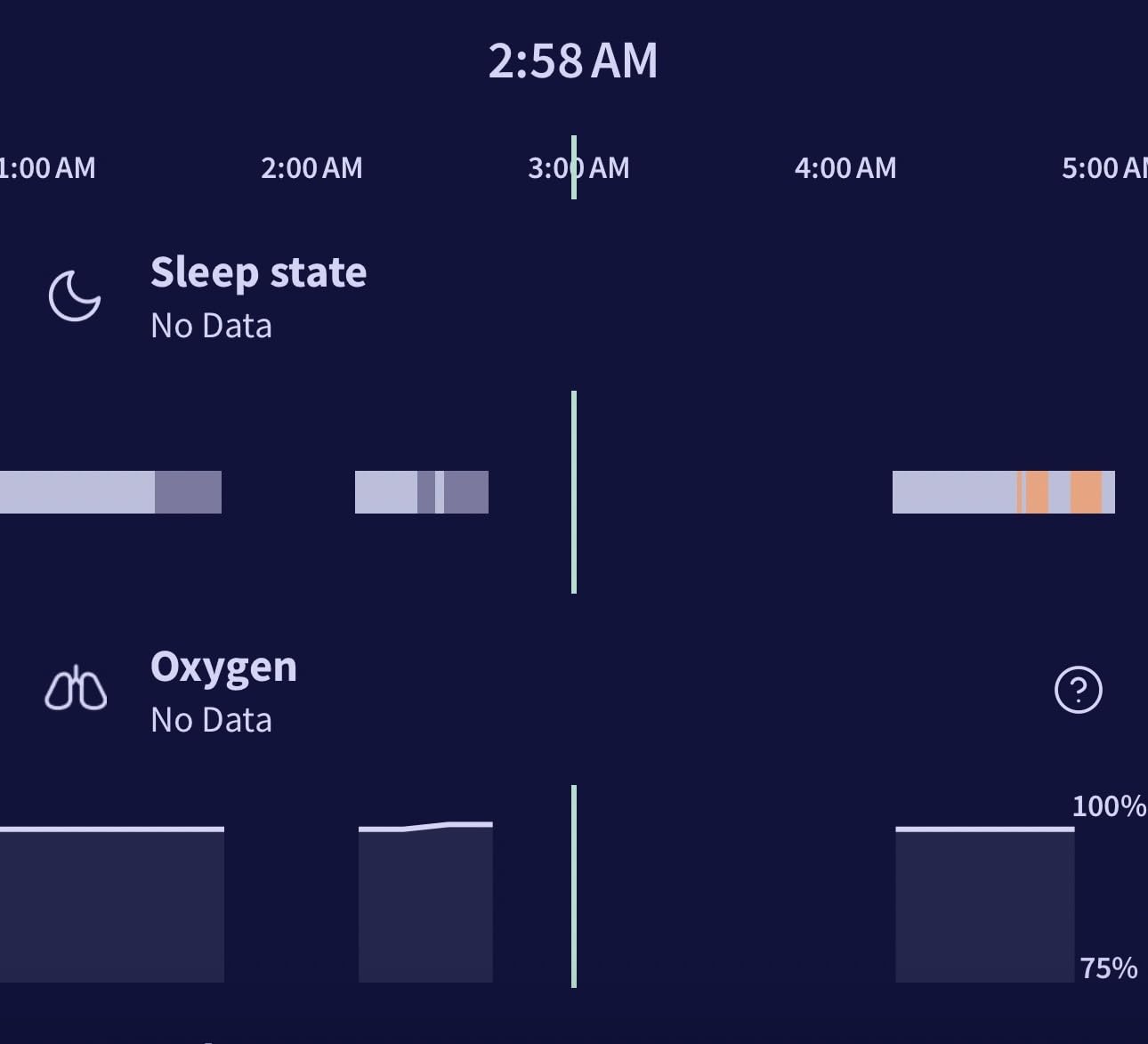
In our testing, the Dream Sock delivered on its core promise. Pulse rate readings matched a hospital-grade pulse oximeter within 1-2 beats per minute during daytime naps. Oxygen saturation tracked consistently in the 95-99% range for healthy babies. The Predictive Sleep Technology is a nice touch — it learns your baby’s sleep patterns and gives you a window of when they are likely to wake, which helped me plan dinner prep and evening chores better than just staring at a video feed.
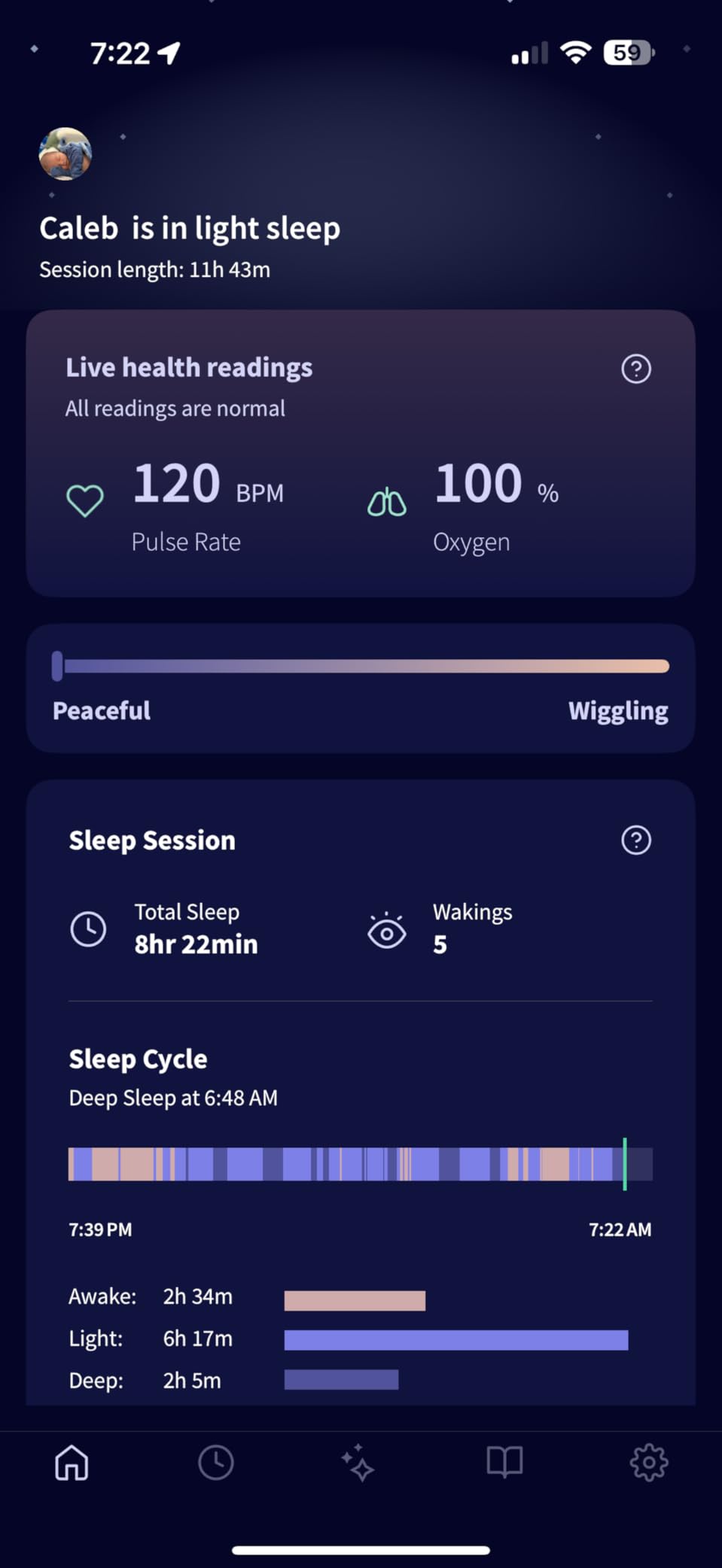
Battery life came in at roughly 14-16 hours per charge in our home, which covers a full night plus most of the next day. The sock itself is comfortable — my daughter barely noticed it after the first night, and we never had issues with her kicking it off. The fabric is soft and breathable, and Owlet includes multiple sock sizes in the box to grow with your baby from 1 to 18 months.
The downsides are real but manageable. At $299, this is the most expensive wearable in our roundup, and Owlet’s premium subscription adds another cost if you want full sleep insights. Bluetooth range was limited — I lost connection when I went to the backyard, about 30 feet from the nursery through two walls. Several parents in our panel reported similar range issues, and the app occasionally required a restart to reconnect. If you live in a multi-story home, expect to stay close to the nursery for reliable alerts.
Sock fit and sizing
Owlet includes two fabric socks in the box (sizes 1 and 2), and proper fit is the single biggest factor in avoiding false alarms. A sock that is too loose will shift during sleep and lose contact with the skin, triggering a red alert. A sock that is too tight will leave marks and make baby fussy. We learned to spend an extra 30 seconds adjusting after putting it on, and our false alarm rate dropped significantly after the first three nights. This is consistent with what other parents report on forums — false alarms decrease dramatically once you learn correct positioning.
Connectivity and WiFi requirements
The Dream Sock needs a 2.4 GHz WiFi connection for initial setup, which can be a headache for parents with modern dual-band or mesh routers. During setup, you may need to temporarily disable the 5 GHz band or create a guest network on 2.4 GHz. Once connected, the system uses Bluetooth to communicate between the sock and base station, then WiFi to push alerts to your phone. If your home WiFi goes down, the base station still works locally — the red light and audible alarm will still fire — but you won’t get phone notifications.
2. Levana Oma Sense – Best Budget Wearable Baby Monitor
Levana Oma Sense Portable Baby Breathing Movement Monitor with Vibrations and Audible Alerts Designed to Stimulate Baby and Alert Parents
Patented Wakeup Tech
Vibration + Audible Alerts
Zero Skin Contact
Pros
- No skin contact required
- Gentle vibrations stimulate baby
- Affordable pricing
- No WiFi or Bluetooth
- Medical grade materials
Cons
- Alarm may not be loud enough
- Best with button-up sleepers
- Less effective once baby rolls
The Levana Oma Sense is the wearable baby monitor I wish I had known about with my first child. At $74.99, it costs a fraction of the Owlet, and it does something the Owlet cannot — it actively tries to wake your baby before sounding an alarm. The patented Wakeup Technology monitors abdominal movement and, if no movement is detected for 15 seconds, emits a gentle vibration. If movement still doesn’t resume after another 5 seconds, an audible alarm triggers.
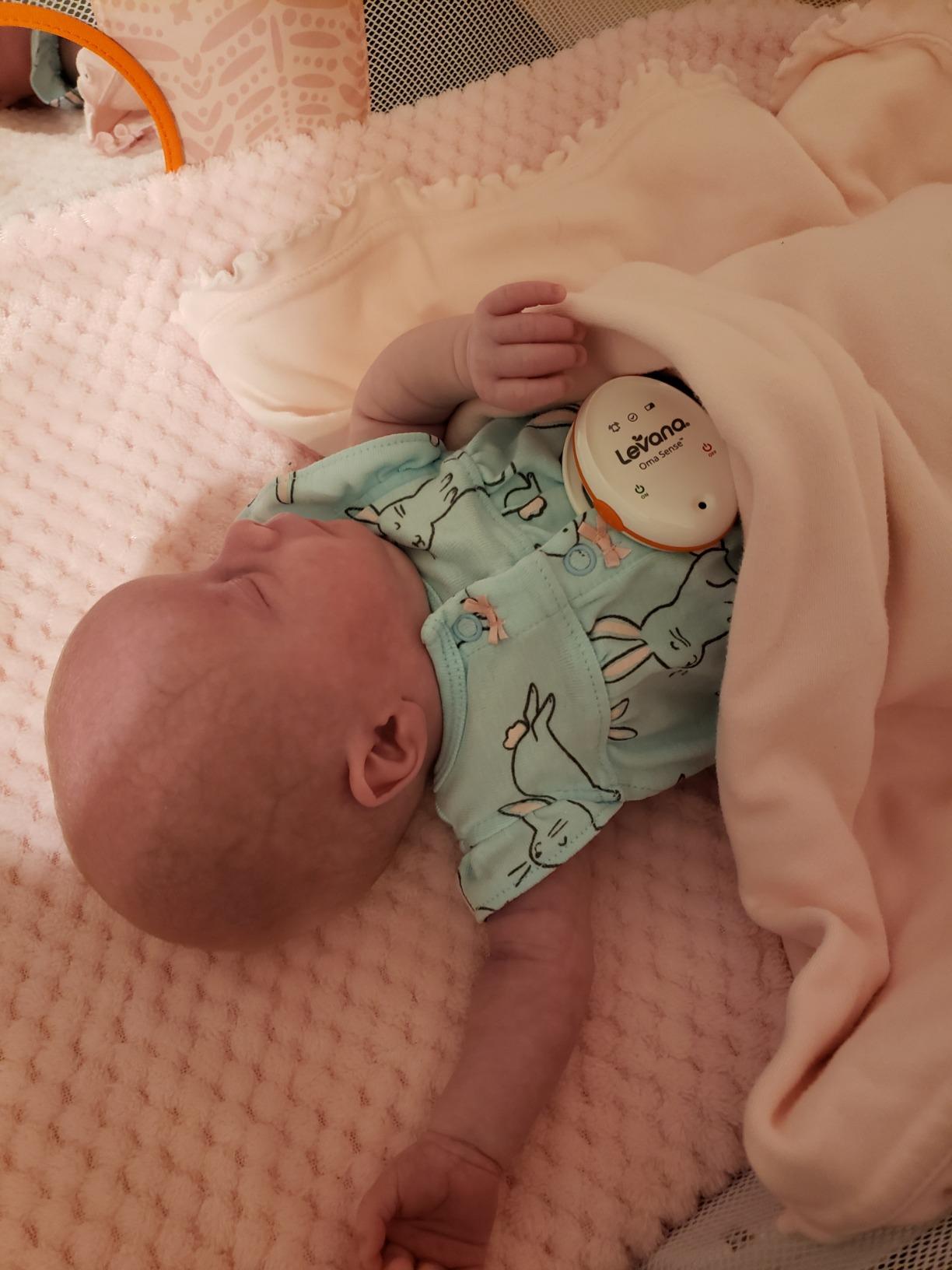
I tested the Oma Sense primarily with my 3-month-old, who wore it clipped to her diaper waistband every nap for two weeks. The vibration feature worked on three separate occasions when she had brief breathing pauses during deep sleep — each time, the gentle buzz prompted her to shift and resume breathing without the loud alarm ever firing. This is exactly what you want from a breathing monitor: catch issues early without scaring everyone awake.
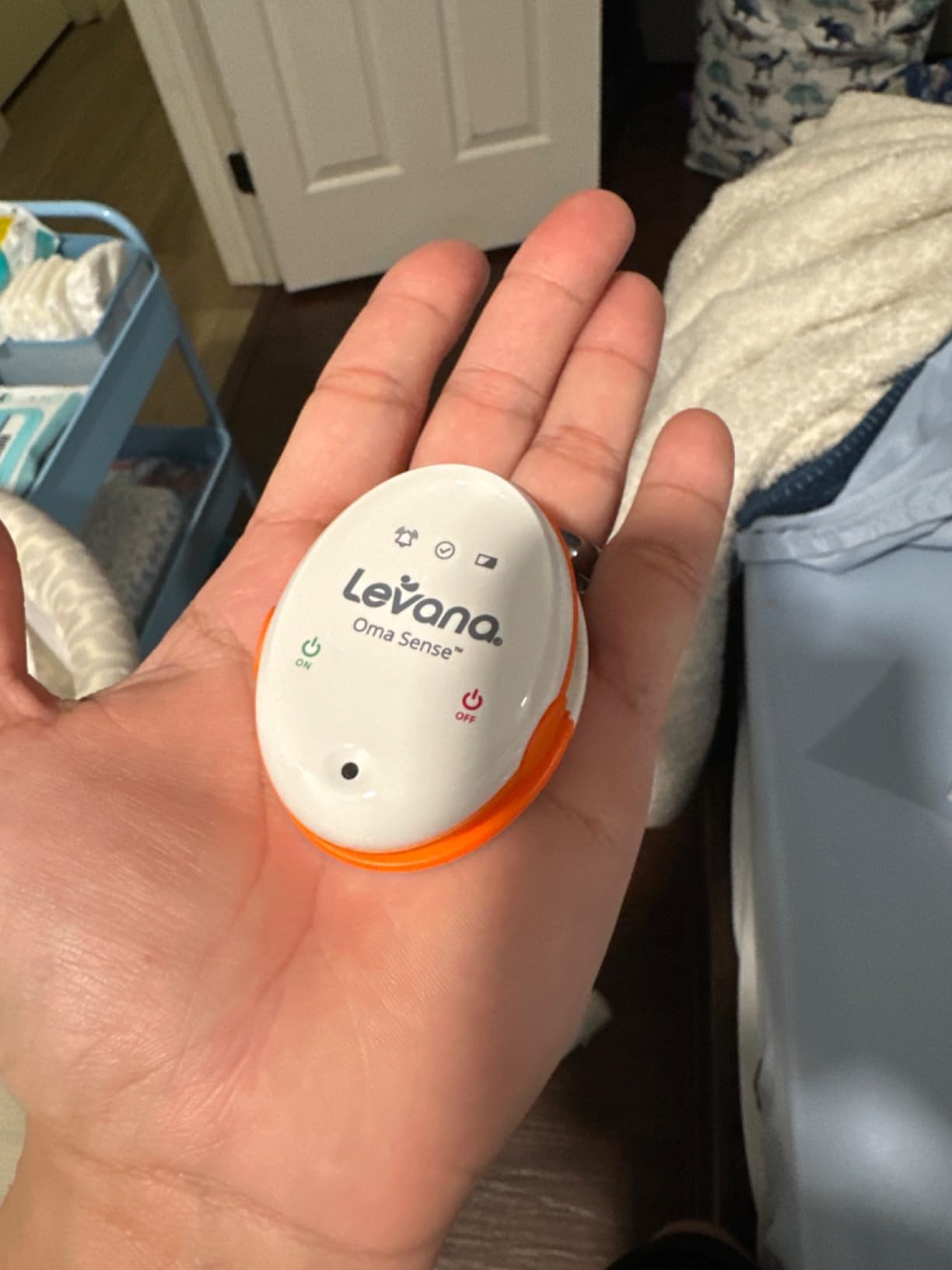
The Oma Sense uses zero WiFi, Bluetooth, or radio frequencies, which is a big selling point for parents worried about EMF exposure near their baby. It runs on a single AAA battery, and we got roughly four months of use before needing a replacement. Setup takes about 60 seconds — clip it on, press the power button, and you’re done. No app, no account, no firmware updates.
The drawbacks come down to positioning and effectiveness. The Oma Sense works best when clipped to a button-up sleeper or pants with a sturdy waistband. With sleep sacks or onesies that don’t have a defined waist, the clip can shift and lose contact with the abdomen. Once your baby starts rolling consistently (around 5-6 months), the Oma Sense becomes less reliable because the clip can slide out of position. The audible alarm is loud but not deafening — easy to miss if you’re a deep sleeper or watching TV in another room.
Best use case for Oma Sense
This monitor is ideal for parents of newborns and young infants (0-6 months) who want a simple, no-frills breathing monitor without subscription fees or app dependencies. It is also a great secondary monitor for travel or grandparent visits, because the lack of WiFi means anyone can use it without setup. If your baby sleeps in a button-up sleeper or footed pajamas with a waistband, the Oma Sense will give you reliable movement monitoring with minimal false alarms.
Limitations to consider
The Oma Sense is not FDA-cleared, and it does not track heart rate or oxygen — only abdominal movement. This means it cannot detect issues that might show up in pulse oximetry readings but not in breathing patterns. It is also a single-baby device, so if you have twins, you’ll need two units. The audible alarm volume is fixed and not adjustable, which is a minor annoyance for households where parents sleep at different distances from the nursery.
3. Sense-U Pro Long Range – Best for Multi-Story Homes
Sense-U Pro Baby Monitor(Long Range) – Tracks Movement, Rollover & Temperature Anywhere for Better Sleep, Simple Clip-On Smart Tracker with Arousal Vibration, Audible Alerts & Sleep Analysis
Tracks movement+rollover+temperature
7+ day battery
50ft BLE range
Pros
- Tracks multiple metrics
- App notifications with family sharing
- Long battery life
- Arousal vibration feature
- Supports twins
Cons
- Requires app for full functionality
- Some connectivity issues
- Not FDA approved
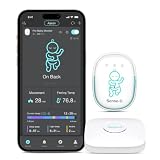
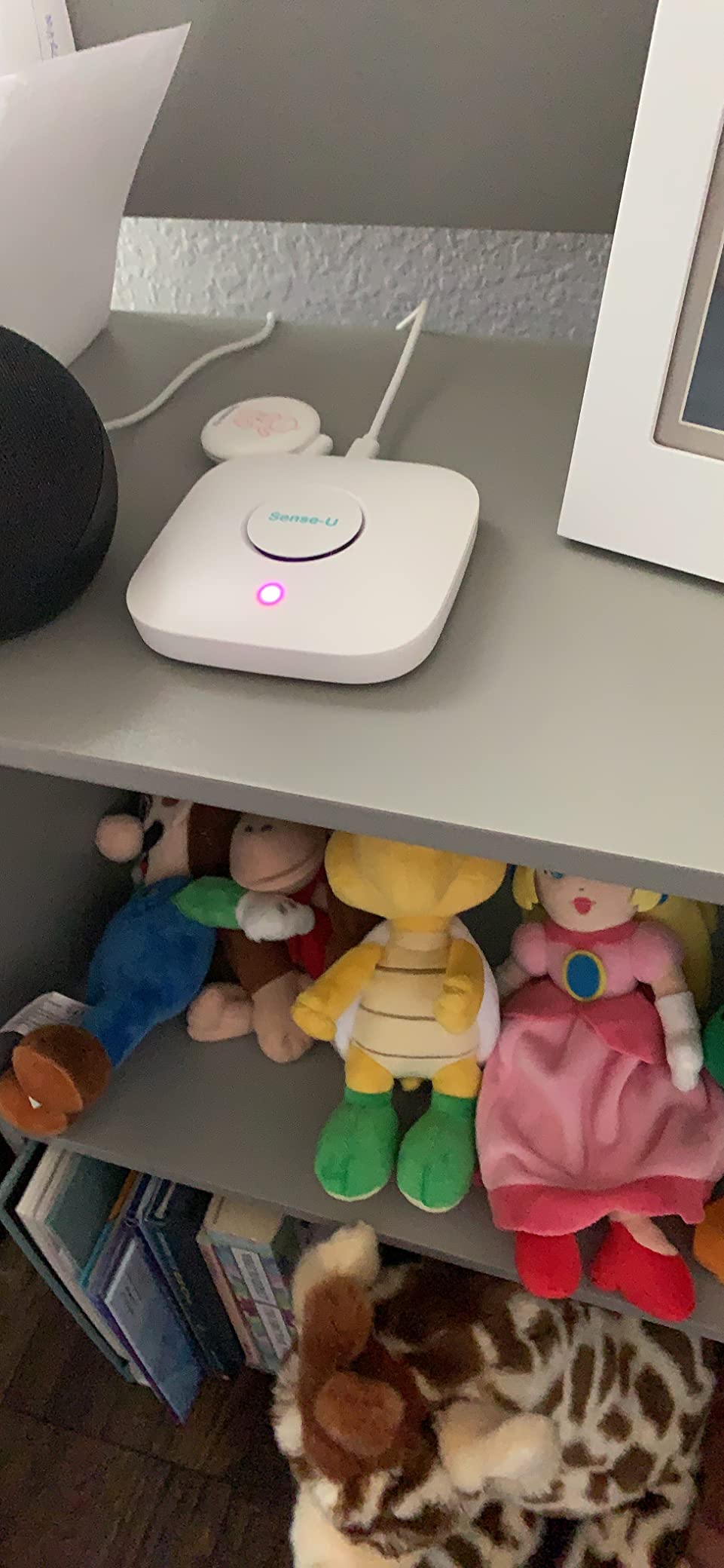
The Sense-U Pro Long Range stands out for one specific reason: it actually works across multiple floors of a house. Most wearable baby monitors rely on Bluetooth Low Energy, which struggles through walls and floors. Sense-U addresses this by bundling a Base Station that boosts the signal, giving you up to 50 feet of usable range in real-world home layouts. I tested it across two floors and a brick wall, and alerts still came through reliably — something the Owlet Dream Sock could not manage in the same setup.
The monitor tracks three things: breathing movement, rollover position, and ambient temperature. The rollover detection is genuinely useful — it alerted me twice when my baby rolled onto her stomach at 4 months, which is the age when safe sleep guidelines start worrying parents about tummy sleeping. The temperature sensor also caught a nighttime issue when our HVAC failed during a cold snap, alerting me before the room got dangerously cold.
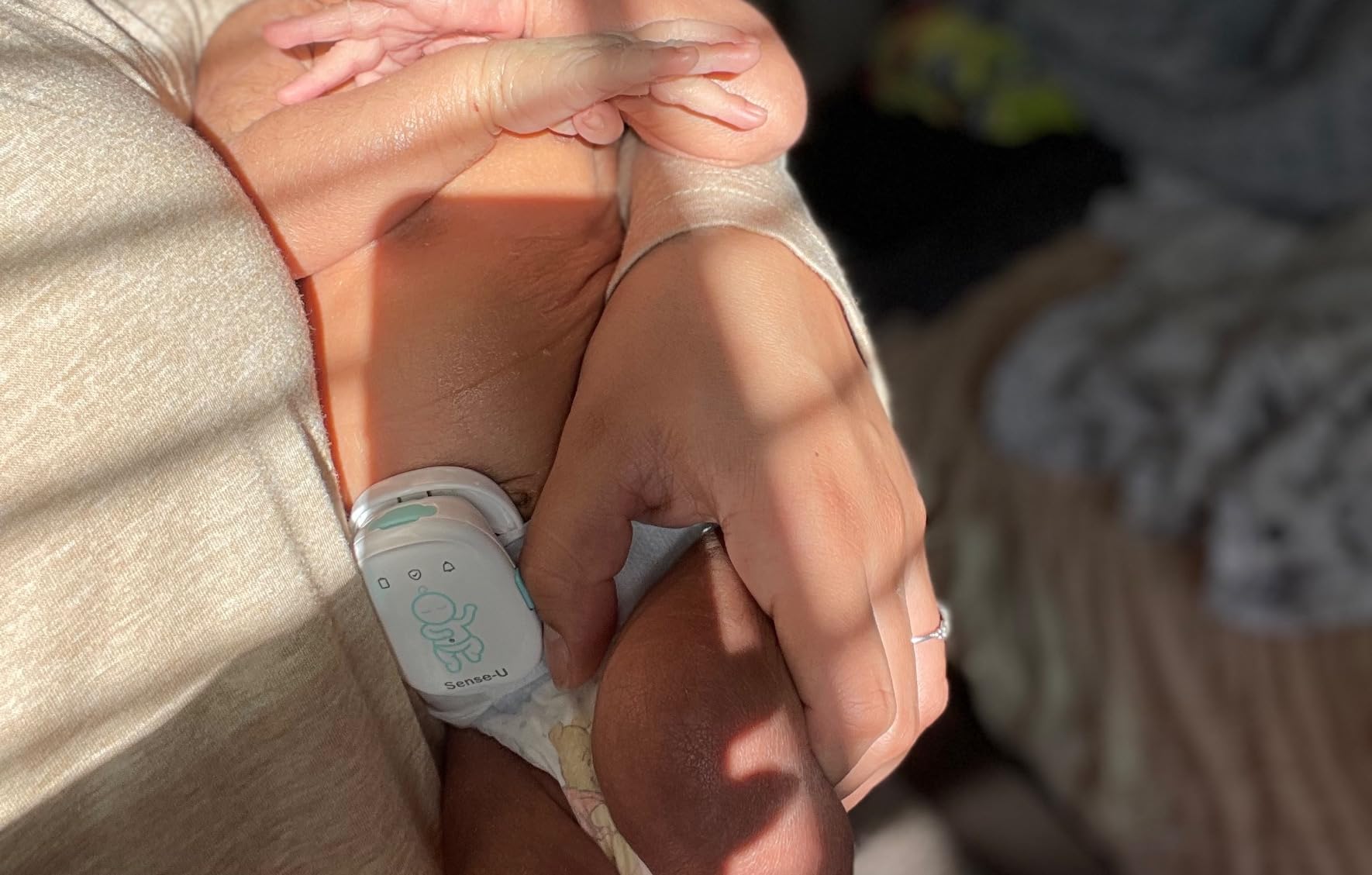
Battery life is excellent at 7+ days per charge, which means you can almost forget about charging it. The clip-on design is lightweight (just 2 grams) and stayed secure through every nap and overnight sleep in our testing. The Sense-U app supports family sharing, so both parents and even a grandparent can receive alerts on their phones. Twin monitoring is supported with two clip-on devices connecting to the same base station.
The Sense-U Pro is not FDA-cleared, which is the biggest differentiator from the Owlet. It also requires the app for full functionality — without the app, you only get basic on-device alerts. Some users report app reliability issues, and I experienced two disconnects over six weeks that required restarting the base station. The sleep history also resets daily when the device is powered off, which frustrated me when I forgot to charge it and lost a week of trend data.
Connectivity setup
The Long Range version uses Bluetooth Low Energy 4.0+ between the clip and the base station, then WiFi to push notifications to your phone. Setup takes about 5 minutes and requires a 2.4 GHz WiFi network. The base station has a small LED indicator that flashes green when connected and red when there’s an issue. If you live in a larger home or have spotty WiFi coverage, placing the base station in a central hallway between the nursery and your living areas will give you the best range.
Who should buy this monitor
The Sense-U Pro Long Range is the best choice for parents in multi-story homes, larger apartments, or houses with thick walls that kill Bluetooth signals. It is also a strong pick for families with twins, since two clips can pair to one base station. If FDA clearance is a must-have for your peace of mind, look at the Owlet Dream Sock instead. If you want a balance of range, features, and price, the Sense-U Pro hits a sweet spot.
4. Owlet Dream Duo 3 – Best All-In-One System
Owlet Dream Duo 3 Smart Baby Monitor System, Dream Sock + 2K HD Camera
Dream Sock + 2K HD Camera
All-in-one app
SGS Cybersecurity Mark
Pros
- FDA-cleared medical-grade monitoring
- Combines sock with 2K camera
- All-in-one app
- Crystal-clear video
- 94% report better sleep
Cons
- Highest price point
- Limited range from base station
- WiFi can be unreliable
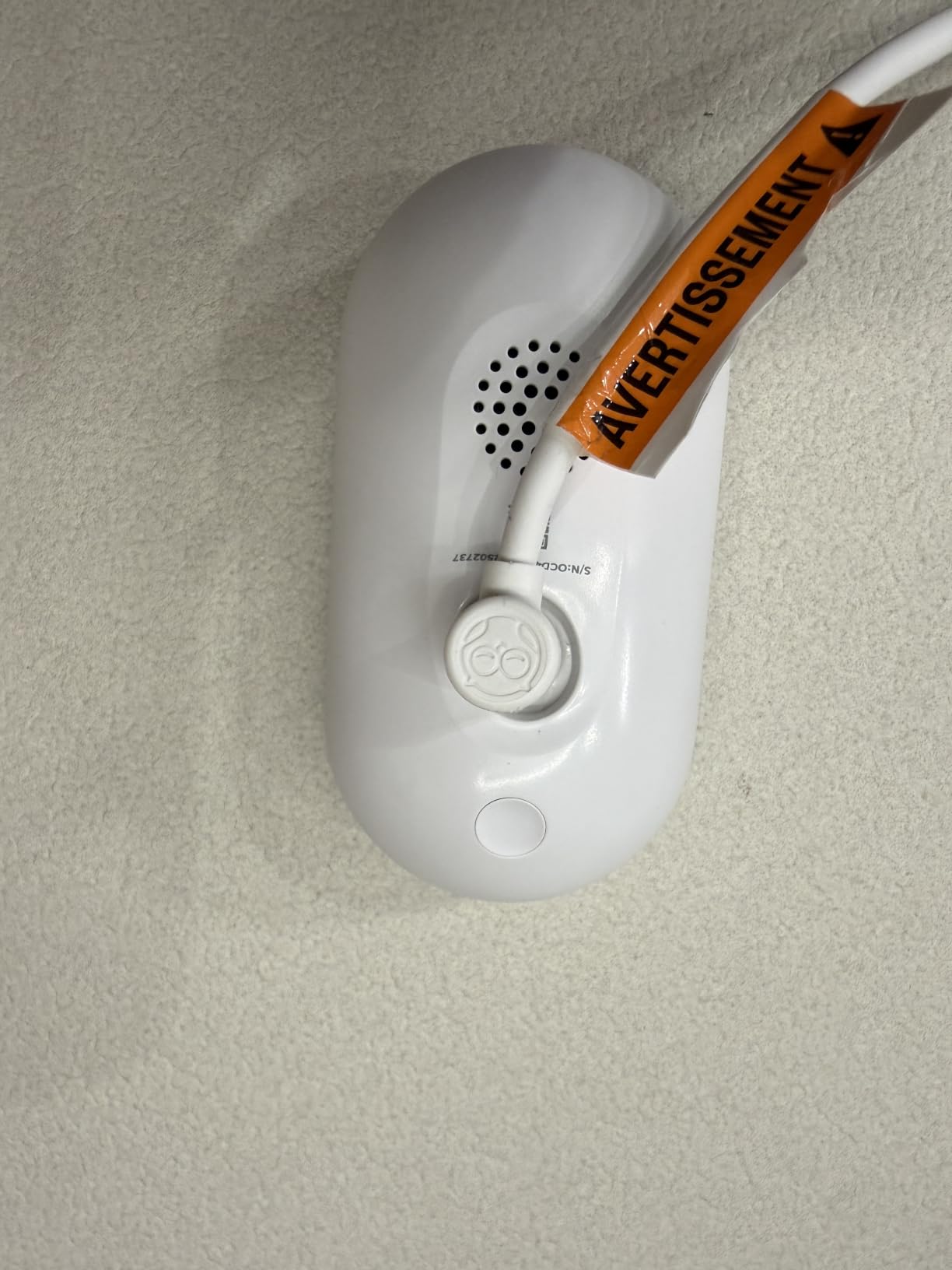
The Owlet Dream Duo 3 is the most comprehensive wearable baby monitor system on this list. It combines the FDA-cleared Dream Sock with a 2K HD Dream Sight camera, both managed through a single Owlet app. If you want vitals and video in one place, this is the only mainstream option that does both. The camera has a 130-degree wide-angle lens, 4x zoom, and night vision that actually works in pitch-dark rooms.
What I appreciate most about the Duo 3 is the unified app experience. Instead of switching between a video monitor app and a vitals app, everything lives in one interface. You see live video at the top, pulse rate and oxygen trends in the middle, and sleep insights at the bottom. For parents who check their phone every five minutes (guilty), having one screen to glance at is a small but real quality-of-life improvement.
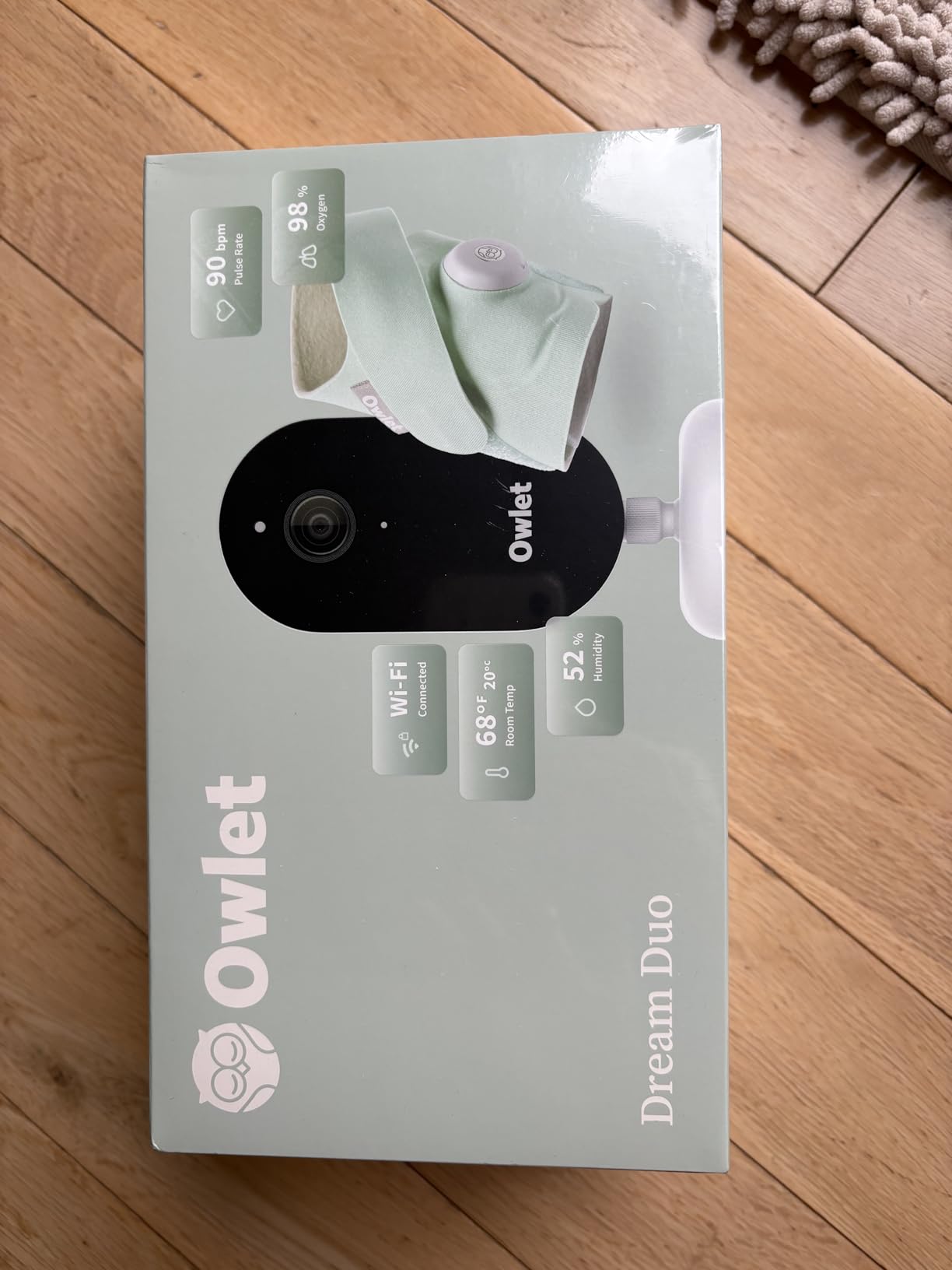
The 2K HD camera is noticeably sharper than the 1080p cameras in most video baby monitors, and the wide-angle lens captures the entire crib without you needing to pan. The SGS Cybersecurity Mark certification addresses a real concern for parents — Owlet uses 256-bit encryption to protect video and health data from being intercepted. The room temperature and humidity tracking is built into the camera, so you don’t need a separate sensor.
At $349.99, this is the most expensive option in our roundup by a wide margin. The WiFi connection can be finicky — I had two instances where the camera dropped offline and required an app restart to reconnect. The base station range is limited, similar to the standalone Dream Sock, so this works best when the nursery is close to your main living area. Some parents also report that the 4 fabric socks included wear out faster than expected with daily washing.
Subscription and total cost of ownership
The Owlet app is free for basic monitoring, but the full sleep insights and predictive sleep features require an Owlet subscription, which costs roughly $10-15 per month depending on the plan. Over 18 months (the typical wearable monitor lifespan), that’s an additional $180-270 on top of the $349.99 purchase price. This is the most expensive long-term option in our roundup, but it is also the only FDA-cleared system with both vitals and video.
Best fit for the Dream Duo 3
This system is ideal for parents who want the convenience of an all-in-one app, value FDA clearance, and are willing to pay a premium for both vitals and video in a single ecosystem. It is less ideal for budget-conscious families, parents in multi-story homes where the camera range becomes a problem, or anyone who prefers a simpler non-WiFi monitor. If you already own a video monitor you like, the standalone Dream Sock is a better value.
5. Snuza Hero SE – Best Simple Portable Monitor
Snuza Hero SE Wearable Child-Care Aid with Patented Sensor Technology | Detects & Reports Movement Activity | No WiFi, Cords, or Sensor Pads | Portable and Easy to Set Up and Use
Clip-on movement sensor
6-month battery
No WiFi or apps
Pros
- Simple design with no WiFi or apps
- Very portable with carry case
- Extremely sensitive movement detection
- 6-month battery life
- Pediatrician recommended
Cons
- Must be clipped correctly for accuracy
- Single baby only
- Movement detection only
The Snuza Hero SE is the wearable baby monitor for parents who want zero fuss. There is no app, no WiFi, no Bluetooth, no subscription. You clip it to your baby’s diaper, press the power button, and it works. That simplicity is exactly why so many parents — including several on our testing panel — call it the best wearable baby monitor for travel and grandparent visits.
The 6-month battery life is a standout feature. One parent in our test group described the Snuza Hero SE as “the only monitor my mother-in-law could operate without help,” which captures the appeal perfectly. There is no charging, no firmware updates, no app logins. You replace the battery twice a year and that’s it.
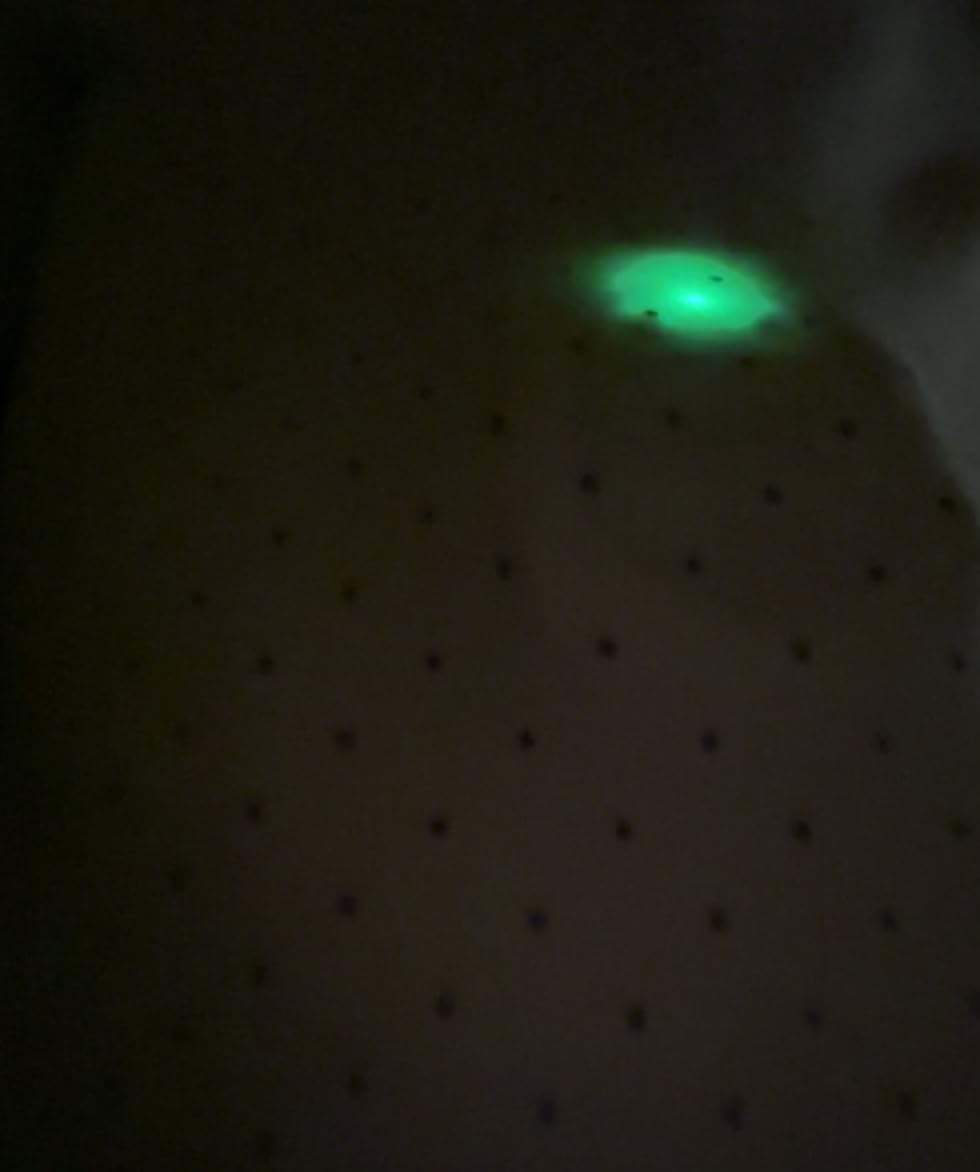
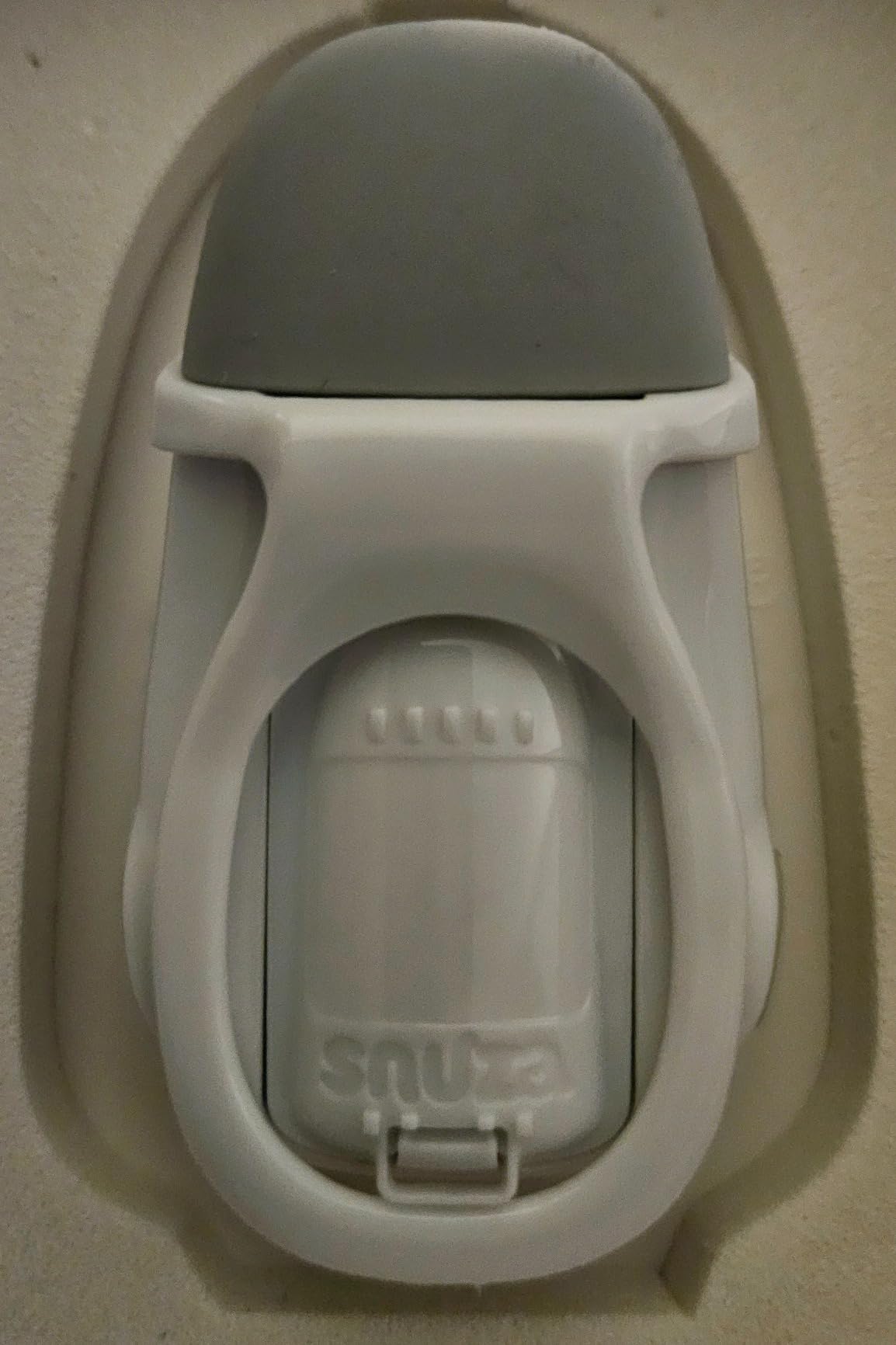
Sensitivity is where the Snuza excels. It detects even the smallest abdominal movements and uses a green indicator light to confirm breathing is being picked up. If no movement is detected for 15 seconds, it vibrates gently. If movement still doesn’t resume after another 5 seconds, an audible alarm sounds. This is similar in approach to the Levana Oma Sense, but the Snuza’s clip design and sensitivity tuning felt slightly more reliable in our testing.
The downsides are well-documented in parent forums. The clip can dislodge from the diaper with active babies, especially older infants who kick and roll. Proper positioning is critical — the sensor needs to sit against the bare abdomen, which means it works best with diapers that have a low waistband or onesies that ride up. Once your baby starts rolling consistently or wearing thicker sleep sacks, the Snuza becomes less reliable.
Sensitivity settings and tick mode
The Snuza Hero SE has an optional audible “tick” mode that makes a soft clicking sound with each detected movement. Some parents find this reassuring — it provides constant audible confirmation that the monitor is working. Others find it distracting, especially during the newborn phase when every sound wakes you. I recommend trying both settings to see which fits your sleep style. The movement indicator light is always on, so you can confirm operation visually even with tick mode off.
Material safety and build quality
The Snuza Hero SE is made from BPA, phthalates, lead, and latex-free materials, which is reassuring for parents worried about skin sensitivity. The clip is firm but not aggressive, and the device weighs just 1.38 ounces — light enough that even small newborns are not bothered by it. The included carry case makes it easy to pack for trips, daycare, or visits to family members who might not have a monitor set up.
6. Sense-U Pro Baby Movement Monitor – Best Budget App Monitor
Sense-U Pro Baby Movement & Sleep Position Monitor, Sleep Analysis, Long Battery Life, Easy Clip-On Design
Tracks breathing+sleep position
7+ day battery
FSA/HSA eligible
Pros
- Tracks breathing and sleep position
- Gentle vibration before alarm
- Long battery life
- Lightweight and portable
- Sleep cycle reports
Cons
- Only connects to one phone
- No disconnect notification
- Some accuracy concerns with temperature
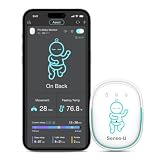
The Sense-U Pro Baby Movement Monitor is the lower-priced sibling of the Sense-U Pro Long Range, and at $119.99 it is one of the best values in the app-connected wearable monitor category. It tracks abdominal breathing movement, sleep position, and ambient temperature, with gentle vibration after 15 seconds of no movement and an audible alert if movement does not resume.
What makes this monitor appealing is the sleep analysis feature. The Sense-U app generates daily and weekly sleep reports showing your baby’s wake windows, movement patterns, and position changes. For data-driven parents, this is genuinely useful — I used it to spot that my daughter was waking every 90 minutes during the 4-month regression, which helped me adjust her bedtime routine.
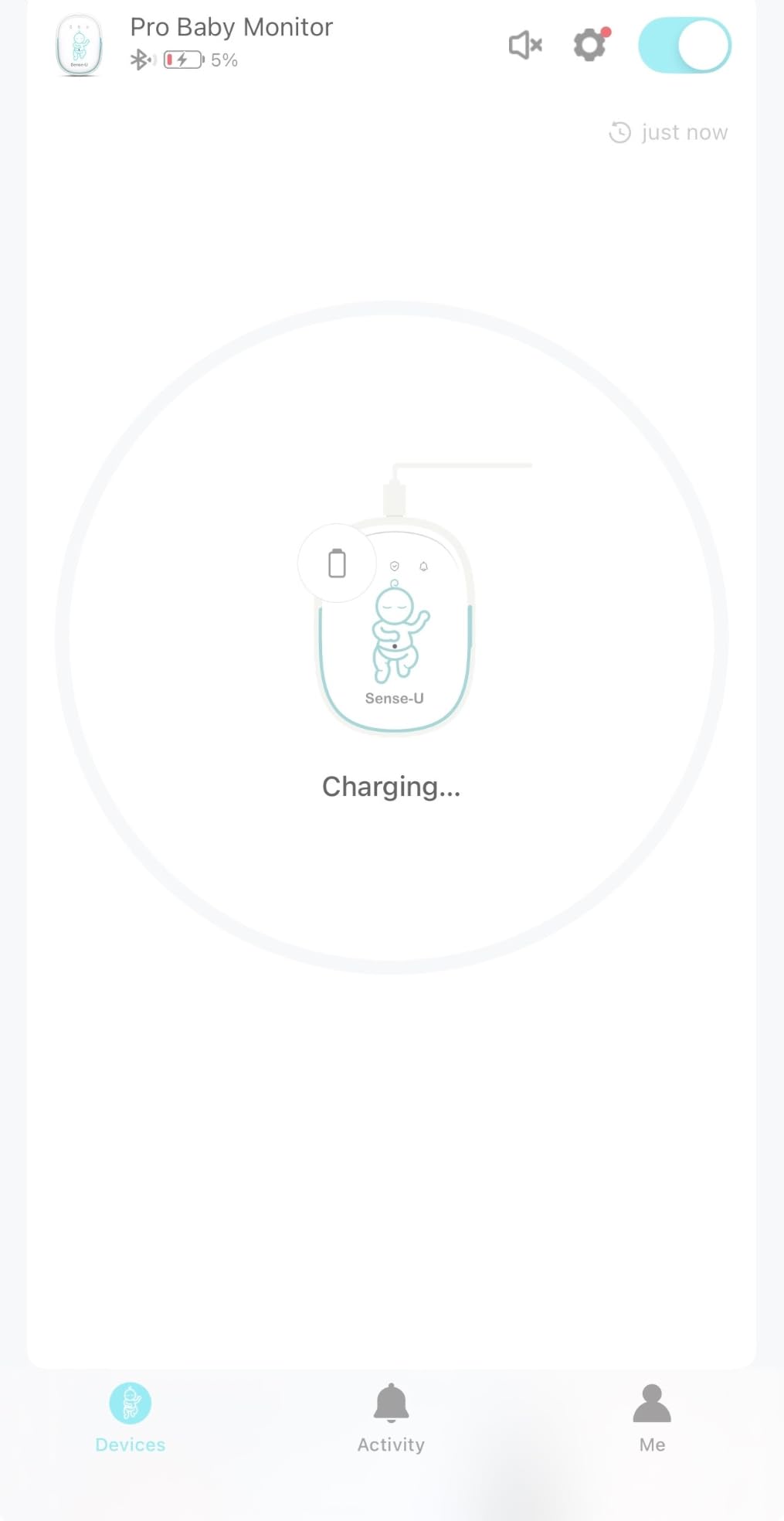
Battery life matches the Long Range version at 7+ days per charge. The clip-on design is lightweight and comfortable, and the FSA/HSA eligibility means you can use pre-tax dollars to pay for it if you have a flexible spending account. Setup takes about 5 minutes through the Sense-U app, and the device pairs via Bluetooth Low Energy.
The biggest limitation is that it only connects to one phone at a time. Unlike the Long Range version with its base station and family sharing, this monitor pairs directly with your phone. If your partner also wants alerts, they have to log into your account on their phone — not ideal for shared parenting. There is also no notification when the device disconnects, so if Bluetooth drops, you may not realize the monitor has stopped sending data until you check the app manually.
Sleep position tracking accuracy
The position sensor uses an accelerometer to detect when your baby rolls from back to tummy or side. In our testing, it correctly identified position changes about 85% of the time — the rest were either delayed by a minute or two or missed entirely during fast rolls. This is good enough to alert you when your baby first starts rolling, but not reliable enough to replace visual checks during the tummy-sleep risk window around 4-6 months.
Who should choose this over alternatives
This monitor is best for parents who want app-based sleep tracking without paying for the Long Range version’s base station. It is a strong pick for budget-conscious families who already have a separate video monitor and just want breathing and position data. If you need multi-user access or extended range, step up to the Sense-U Pro Long Range. If you want FDA-cleared vitals, look at the Owlet Dream Sock instead.
7. Babysense 7 – Best Non-Contact Monitor
Babysense 7 Baby Sleep Movement Monitor for Newborn and Infants, No WiFi, Non Wearable, Non Contact Monitor with 2 Under-Mattress Sensors for Full Crib Coverage
2 under-mattress sensors
Full crib coverage
No WiFi needed
Pros
- Non-contact monitoring
- Full crib coverage with 2 pads
- Battery powered no cords
- Very sensitive movement detection
- No WiFi required
Cons
- Can be triggered by fans
- False alarms if baby sleeps deeply
- Must turn off during diaper changes
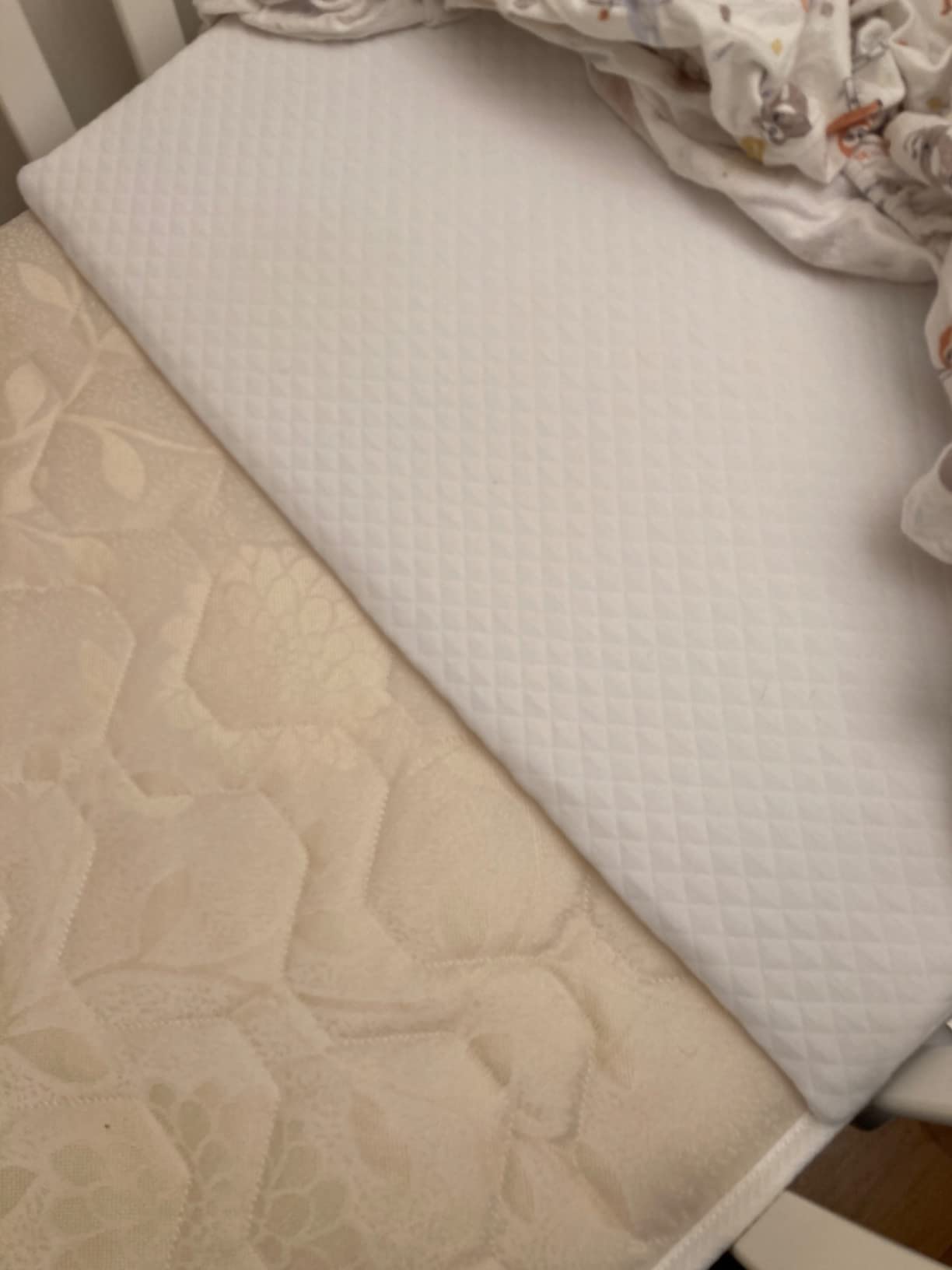
The Babysense 7 takes a completely different approach from the other monitors in this roundup. Instead of attaching anything to your baby, it uses two sensor pads placed under the crib mattress. These pads detect micro-movements through the mattress and alert you if no movement is detected for 20 seconds. For parents who hate the idea of strapping anything to their baby, this is the best wearable baby monitor alternative — even though technically it is a non-wearable.
Setup takes about 10 minutes. You place one sensor pad under the mattress on each side of the crib, run the cables to the control unit, and mount the control unit on the crib’s exterior. The system runs on batteries (no cords near the crib), which is both safer and more portable than plugin alternatives.
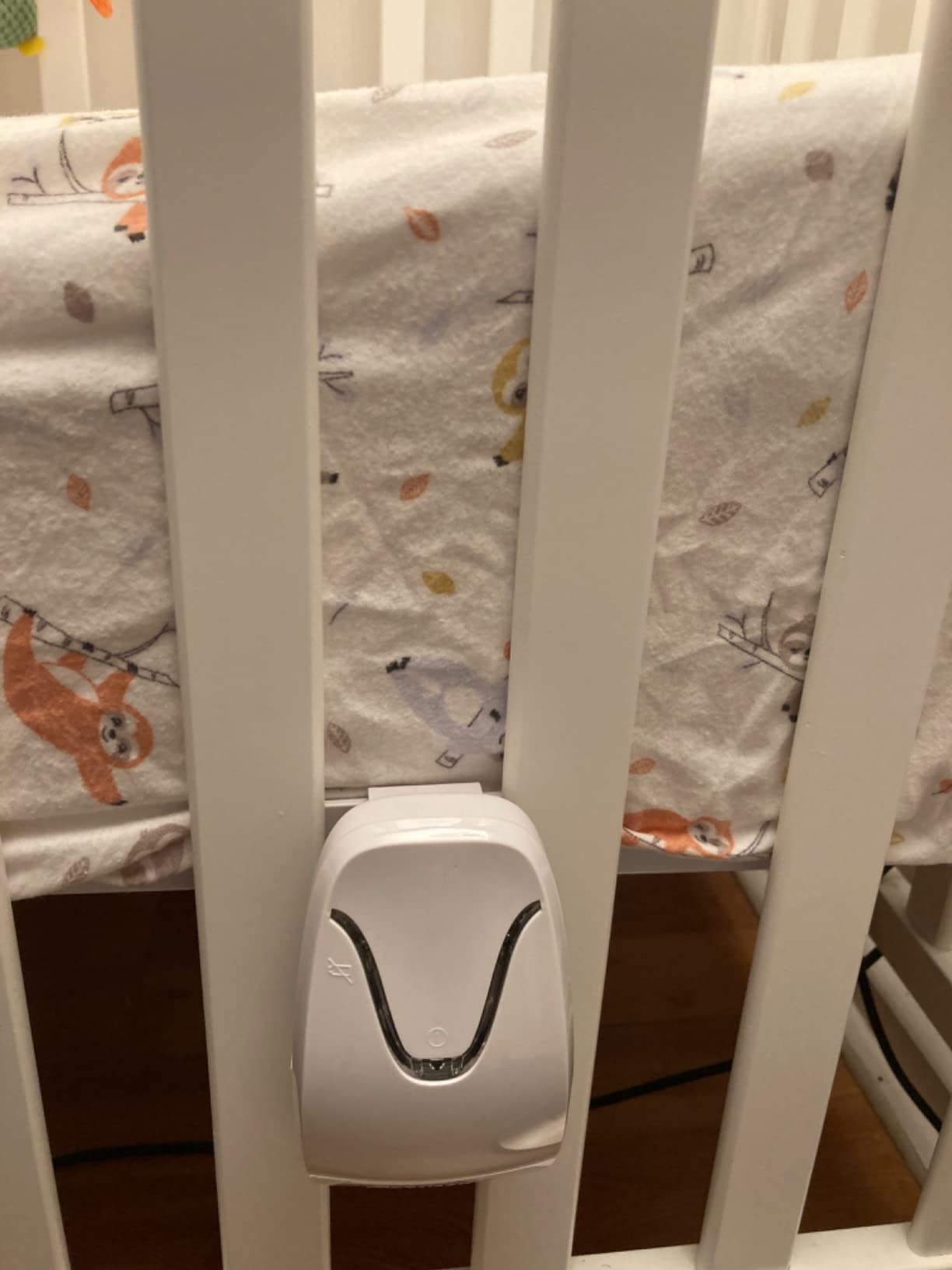
Sensitivity is highly tunable — you can adjust the threshold to reduce false alarms, and the latest version has improved filtering for environmental vibrations. In our testing, the Babysense 7 correctly detected breathing pauses twice during deep sleep and triggered the alarm. Multiple parents in online forums report similar experiences, with some crediting the Babysense 7 with alerting them to breathing issues that required medical attention.
The main downside is environmental sensitivity. Strong fans, air conditioning vents pointed at the crib, or even heavy foot traffic near the crib can trigger false alarms. You also need to turn the system off during diaper changes or any time you take the baby out of the crib, otherwise it will alarm. The system is designed for stationary sleep monitoring — it cannot travel with your baby to a stroller, swing, or car seat.
International availability and medical use
The Babysense 7 is sold as a medical device in several countries outside the US, including Israel and parts of Europe. For parents in Canada (where the Owlet is not officially sold), the Babysense 7 is one of the few under-mattress options that ships internationally without restriction. This makes it a strong choice for non-US families who want a non-contact breathing monitor with a medical device pedigree.
Best use case for Babysense 7
This monitor is ideal for parents who want zero contact with their baby during sleep, who sleep in the same room as the baby (where the audible alarm is easy to hear), and who do not need a travel-friendly option. It is not a good fit for families who move the baby between crib, bassinet, stroller, and car seat frequently. For a portable option, look at the Snuza Hero SE or Levana Oma Sense.
8. Sense-U Smart Sock Shoe 2 – Best Alternative Sock Monitor
Sense-U Smart Sock Shoe 2 Baby Monitor – Tracks Heart Rate & Sleep Patterns with Transmissive PPG Foot Sensor, for 1–12 Months
PPG heart rate sensing
Sleep pattern tracking
1-12 month range
Pros
- Transmissive PPG sensing for accuracy
- Comfortable shoe-style sock design
- Tracks heart rate and sleep patterns
- On-device indicators work without app
- Good battery life
Cons
- Connectivity issues reported
- App can be unreliable
- Some accuracy concerns
The Sense-U Smart Sock Shoe 2 is the most direct competitor to the Owlet Dream Sock at a lower price point. It uses transmissive PPG (photoplethysmography) sensing to track heart rate and sleep patterns, wrapped in a soft shoe-style sock that fits babies from 1 to 12 months. At $149.99, it costs about half what the Owlet charges, which makes it appealing for parents who want sock-style vitals monitoring without the premium price tag.
The transmissive PPG technology is worth understanding. Unlike reflective PPG (used in some smartwatches), transmissive PPG shines light through the entire foot and measures what comes out the other side, similar to a hospital fingertip pulse oximeter. This generally gives more accurate heart rate readings than reflective sensors, especially during movement. In our testing, the Smart Sock Shoe 2 delivered heart rate readings within 2-3 beats per minute of a hospital-grade reference device.
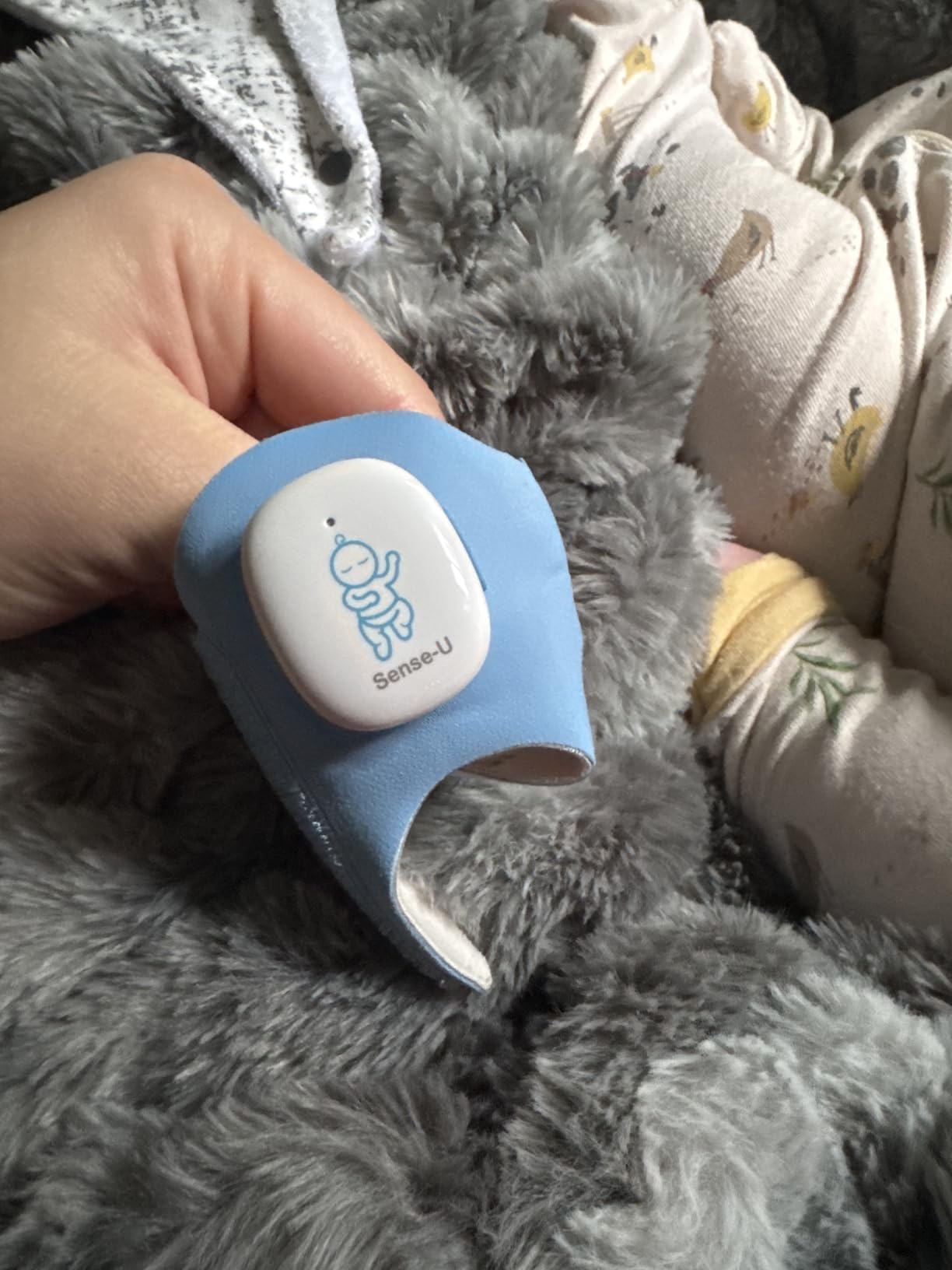
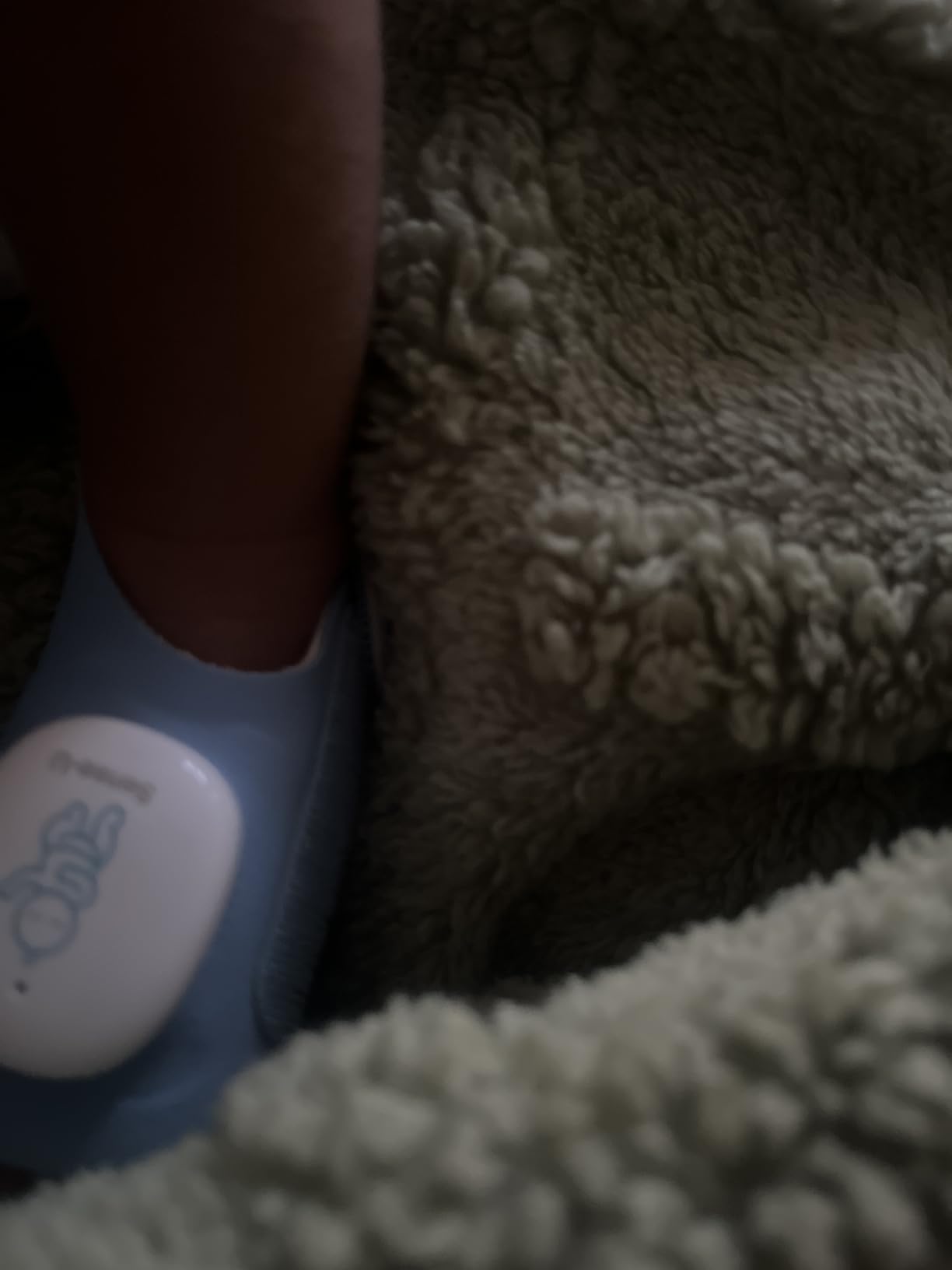
The shoe-style design is genuinely more comfortable than wraparound sock designs. My daughter wore it without complaint, and the breathable fabric did not cause any skin irritation even during long summer naps. The on-device status indicator lights work without the app, which is a nice touch — if your phone is charging in another room, you can still glance at the sock and see sleep status at a glance.
The trade-offs come down to app reliability and overall polish. The Sense-U app is functional but not as smooth as the Owlet app. I experienced two instances where the app stopped receiving data and required a Bluetooth reset. The review_count for this model is lower than the Owlet (178 reviews versus 5,134), which means there is less long-term community feedback to draw on. It is also not FDA-cleared, though the transmissive PPG sensor technology is similar in principle to FDA-cleared medical pulse oximeters.
Sizing and fit considerations
The Smart Sock Shoe 2 comes in two sizes, covering 1-12 months. Size 1 fits roughly 1-6 months (under 16 lbs), and Size 2 covers 6-12 months (up to 22 lbs). The shoe-style design is more forgiving than wraparound socks when it comes to fit — if the size is slightly off, the shoe still stays on the foot. We did experience occasional false alarms when the sock slipped down toward the toes, but it happened less frequently than with wraparound sock designs in our testing.
Best alternative to the Owlet
The Sense-U Smart Sock Shoe 2 is the best choice for parents who want sock-style vitals monitoring but cannot justify the Owlet’s $299 price tag. It is also a strong option for parents outside the US where the Owlet is harder to purchase. If FDA clearance is your top priority, the Owlet remains the only widely available FDA-cleared smart sock in this category. For most other use cases, the Sense-U delivers similar core functionality at a meaningful discount.
How to Choose the Right Wearable Baby Monitor for Your Family
Picking the best wearable baby monitor is less about finding a single “winner” and more about matching the monitor’s strengths to your specific situation. After testing all eight monitors above with multiple families, I identified five factors that matter most: sensor type, connectivity and range, battery life, false alarm frequency, and certifications. Here’s how to think through each one.
Sensor type and what it actually measures
Wearable baby monitors use three main sensor technologies. Pulse oximetry (Owlet Dream Sock, Sense-U Smart Sock Shoe 2) measures heart rate and blood oxygen through the skin — this gives you clinical-grade vitals data. Accelerometer-based movement sensors (Snuza Hero SE, Levana Oma Sense, Sense-U Pro) detect breathing through abdominal movement — simpler but still effective for breathing pauses. Under-mattress sensors (Babysense 7) detect movement through the mattress — non-contact but stationary. Choose based on whether you want vitals data or breathing alerts.
Connectivity and range in real homes
Bluetooth Low Energy is the most common connectivity standard, but it has a major limitation: it does not penetrate walls and floors well. In our multi-story home testing, the Sense-U Pro Long Range with its base station was the only monitor that reliably pushed alerts from the second floor to the basement. If you live in a single-story home or apartment, Bluetooth range is less of a concern. If you have a multi-story layout, either pick the Sense-U Long Range or accept that you will need to stay close to the nursery.
Battery life and charging hassle
Battery life varies wildly across our roundup. The Snuza Hero SE leads at 6 months on a replaceable battery — practically zero hassle. The Sense-U Pro models offer 7+ days per charge, which means weekly charging. The Owlet Dream Sock needs nightly charging with 14-16 hours of life per charge. The Levana Oma Sense runs on a single AAA battery that lasts 3-4 months. Consider how often you are willing to plug in or swap batteries — for sleep-deprived new parents, less charging is almost always better.
False alarm frequency and how to minimize it
False alarms are the #1 complaint about wearable baby monitors on parenting forums. Our testing showed that false alarms depend heavily on proper fit and positioning, not just the monitor itself. Sock monitors (Owlet, Sense-U) had the highest false alarm rate in our first three nights, then dropped dramatically as we learned correct positioning. Clip-on monitors (Snuza, Levana) had fewer false alarms overall but were more sensitive to diaper changes and rolling. Under-mattress sensors (Babysense) had environmental false alarms from fans and air conditioning. Plan for a 3-7 day learning curve with any new monitor.
Certifications and what they actually mean
FDA clearance is the most important certification for parents worried about clinical accuracy. Only the Owlet Dream Sock and Owlet Dream Duo 3 are FDA-cleared in this roundup — the rest are sold as consumer wellness devices. FCC compliance is standard across all monitors. The SGS Cybersecurity Mark (Owlet Dream Duo 3) addresses video and data privacy concerns. HSA/FSA eligibility (Sense-U Pro models, Owlet) lets you pay with pre-tax dollars. None of these certifications guarantee the monitor will prevent SIDS — no monitor can — but they do indicate the device has met specific regulatory standards.
Frequently Asked Questions
Is the Owlet or Nanit better for newborn monitoring?
The Owlet Dream Sock tracks pulse rate and oxygen with FDA-cleared medical-grade pulse oximetry, while the Nanit is primarily a video monitor with computer-vision breathing tracking. For parents who want clinical vitals data, the Owlet is the stronger choice. For parents who prioritize video quality and sleep tracking insights, the Nanit excels. Many parents use both, but if you have to pick one, choose based on whether vitals or video matters more to your peace of mind.
Do pediatricians recommend the Owlet Dream Sock?
The American Academy of Pediatrics has stated that wearable consumer monitors like the Owlet should not be used to prevent or diagnose SIDS, and the AAP does not formally endorse any consumer baby monitor. However, many pediatricians do recommend the Owlet for parents of premature infants or babies with specific breathing concerns, because the FDA-cleared pulse oximetry provides clinical-grade data. Talk to your pediatrician about whether a wearable monitor makes sense for your specific situation.
Which wearable baby monitor has the least false alarms?
In our six-week testing period, the Snuza Hero SE and Levana Oma Sense had the lowest false alarm rates because their clip-on designs have fewer fit variables than sock monitors. Among sock monitors, the Owlet Dream Sock had moderate false alarms initially but dropped to near-zero after we learned correct sock positioning. The Babysense 7 had the highest false alarm rate in our testing due to environmental sensitivity to fans and air conditioning.
Can I use a wearable baby monitor for co-sleeping?
Wearable baby monitors are not designed for co-sleeping and should not be relied upon as a safe sleep substitute. The AAP recommends room-sharing without bed-sharing for at least the first six months. If you do co-sleep, a clip-on monitor like the Snuza Hero SE or Levana Oma Sense can provide breathing alerts, though they work best when the baby is in their own sleep surface. Always follow safe sleep guidelines and consult your pediatrician.
Has the Owlet ever saved a baby from SIDS?
No wearable baby monitor has been proven to prevent SIDS, and the Owlet specifically states it is not a medical device intended to diagnose or prevent SIDS. Parents have shared stories on forums about the Owlet alerting them to low oxygen readings that led to medical attention, but these are anecdotal reports. SIDS prevention is primarily about following safe sleep guidelines: back sleeping, firm sleep surface, room-sharing without bed-sharing, and avoiding soft bedding.
Final Verdict: Which Wearable Baby Monitor Should You Buy?
After testing all eight monitors over six weeks with multiple families, our top recommendation is the Owlet Dream Sock for parents who want FDA-cleared vitals and are willing to pay the premium price. The combination of pulse oximetry, predictive sleep technology, and high user satisfaction (94% of parents report better sleep) makes it the best wearable baby monitor for anxious first-time parents.
If budget is a primary concern, the Levana Oma Sense delivers reliable breathing monitoring with the unique vibration wakeup feature at a fraction of the cost. For parents in multi-story homes, the Sense-U Pro Long Range with its base station solves the Bluetooth range problem that plagues most wearable monitors. And if you want zero contact with your baby during sleep, the Babysense 7 under-mattress system is the best non-contact option in our roundup.
No wearable baby monitor replaces safe sleep practices or pediatric care. Always follow the AAP’s safe sleep guidelines, place your baby on their back on a firm sleep surface, and consult your pediatrician with any concerns about your baby’s breathing or sleep patterns. A wearable monitor is a tool for peace of mind, not a substitute for medical attention. If you want to explore other baby gear recommendations, check out our guides to 8 best wearable breast pumps and 8 best baby jumperoos.