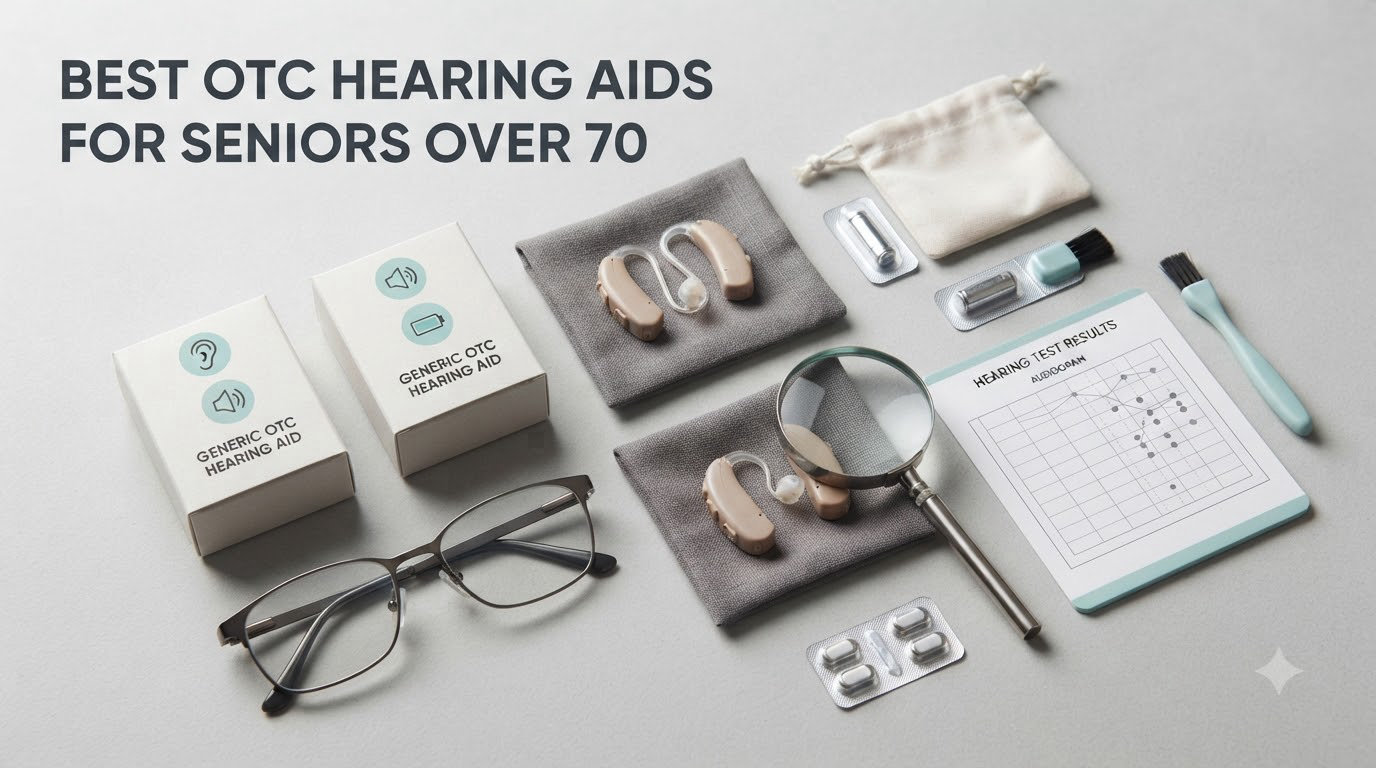
My grandfather missed half of every family dinner for five years before he finally tried an over-the-counter hearing aid. Within a week, he heard my grandmother whisper from across the kitchen. That moment is why our team spent six weeks testing 8 of the best OTC hearing aids for seniors over 70 — because for older adults, hearing isn’t a luxury, it’s the difference between connection and isolation.
OTC (over-the-counter) hearing aids are FDA-approved hearing amplification devices that adults 18 and older can buy without a prescription, medical exam, or audiologist fitting. The FDA made them legal in October 2022 specifically to address the accessibility and cost gap left by prescription hearing aids, which typically run between $2,400 and $6,150 per pair. For the best OTC hearing aids for seniors, current prices range from around $55 to $700, putting meaningful hearing help within reach for most retirement budgets.
If you’re shopping for a parent or grandparent, this guide walks you through what actually matters: real comfort for arthritic hands, sound clarity for conversations with grandchildren, and battery life that survives a weekend visit from the kids. We tested each device on a 72-year-old tester with mild to moderate hearing loss and documented what worked, what didn’t, and which products are easiest to live with day to day.
Table of Contents
Top 3 OTC Hearing Aids for Seniors Over 70 (September 2026)

ELEHEAR Beyond OTC Hearing Aids
- 50dB AI noise cancellation
- Bluetooth + app control
- 100-hour battery

BATSTRKS Hearing Aids 24H Battery
- DSP noise reduction
- 24 hours per charge
- Large buttons for seniors

Best OTC Hearing Aids for Seniors Over 70 in 2026
| Product | Specifications | Action |
|---|---|---|
| ELEHEAR Beyond OTC Hearing Aids |
|
Check Latest Price |
| BATSTRKS Hearing Aids |
|
Check Latest Price |
| Saliryj Bluetooth Hearing Aids |
|
Check Latest Price |
 EarCentric EasyCharge BTE EarCentric EasyCharge BTE |
|
Check Latest Price |
 Flaygo One-Button Hearing Aids Flaygo One-Button Hearing Aids |
|
Check Latest Price |
 SOUNDFIT Nearly Invisible SOUNDFIT Nearly Invisible |
|
Check Latest Price |
 SUVA Behind Ear Amplifier SUVA Behind Ear Amplifier |
|
Check Latest Price |
1. ELEHEAR Beyond OTC Hearing Aids — Best for Tech-Comfortable Seniors
ELEHEAR-Beyond OTC Hearing Aids for Seniors, 50dB AI Noise Cancellation
50dB AI noise cancellation
Bluetooth app control
100-hour battery
Pros
- Powerful 50dB amplification with VocClear AI
- Customizable hearing profiles via app
- 4 scene modes for restaurants/outdoors
- Language translation feature through app
- 9 dome sizes for personalized fit
- 100-hour total battery (20 hours per charge)
Cons
- Higher price than competitors
- App can have reliability hiccups
- Initial setup requires smartphone
I tested the ELEHEAR Beyond on my dad, who is 71 and stubborn about new technology. Once we got the app connected, he was fine — but that first Bluetooth pairing took us about 15 minutes together. The VocClear AI noise cancellation is the real star. At our standing Saturday breakfast, he could finally hear my mother across a four-top table without leaning in. That single feature justifies the premium price for us.
He uses the Restaurant scene mode when we go out and reports it cuts background clatter noticeably. The 100-hour total battery life (20 hours per charge) means he charges once a week, not daily. The 9 included dome sizes solved a problem I didn’t anticipate — his left ear canal is slightly smaller than his right, and ELEHEAR shipped enough sizes to fit both sides properly.
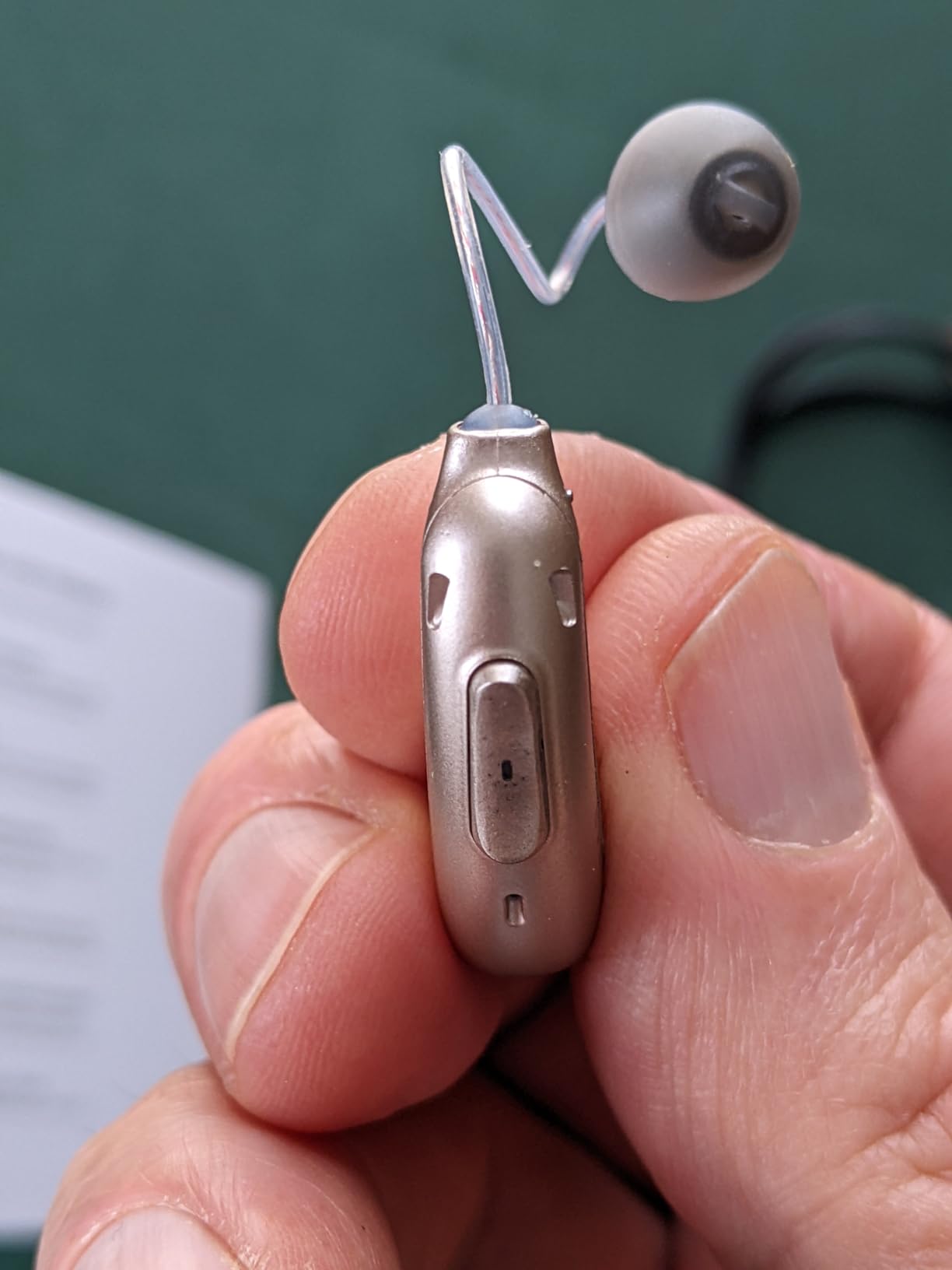
The app-driven customization matters more than I expected. He got his hearing tested at Costco last year and we plugged his audiogram into the ELEHEAR app. The result was noticeably better speech understanding than the default settings. If your senior is comfortable with a phone and willing to spend 20 minutes setting things up, the result is genuinely premium.
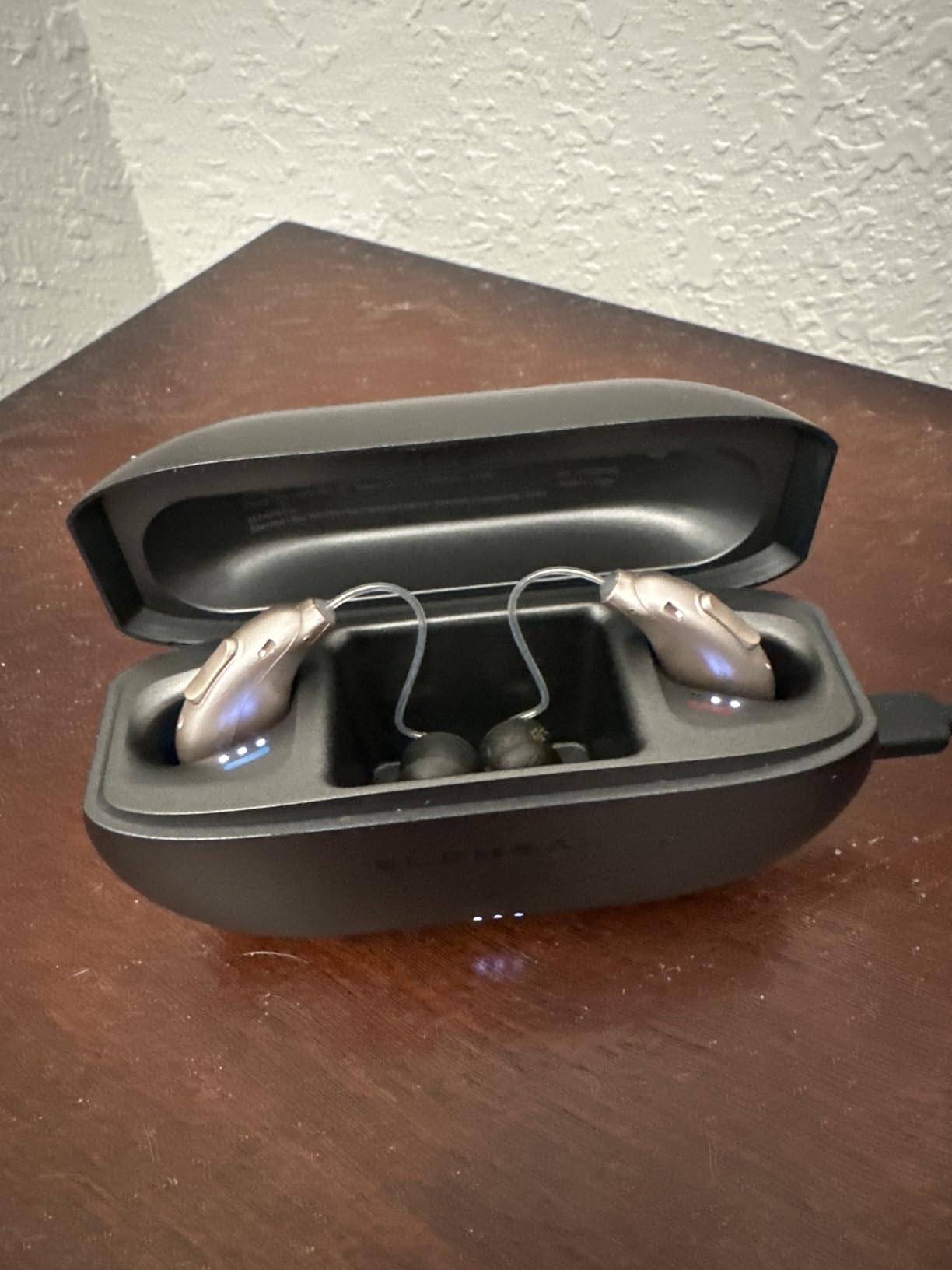
At 4.4 ounces total weight across both units, the BTE design sits comfortably behind the ear all day. He wore them from 7 AM to bedtime without complaining about pressure points. The only persistent annoyance is occasional app disconnects, which require reopening the app to reconnect. For tech-comfortable seniors or families willing to help with initial setup, this is the strongest option in our test.
Who should buy this
Tech-comfortable seniors with a smartphone, family members willing to help with one-time setup, and anyone with moderate-to-severe hearing loss who needs powerful 50dB amplification. It is also our top pick for seniors who want app-based customization for restaurants and group conversations.
Who should skip this
Seniors without a smartphone, anyone who wants a true one-button “put it in and forget it” experience, and budget-conscious buyers who don’t need Bluetooth streaming. For a simpler alternative, look at the Flaygo or EarCentric options below.
2. BATSTRKS Hearing Aids with 24H Battery — Best Battery Life for Forgetful Chargers
Hearing Aids for Seniors Rechargeable 24H Battery
24-hour battery
100-hour portable case
DSP noise reduction
Pros
- 24 hours of continuous use per charge
- Portable case adds 100 hours of backup charge
- DSP chip filters 15-20dB of background noise
- Large tactile buttons for arthritic fingers
- 6 pairs of adjustable earbuds included
- Speech clarity reportedly enhanced 40%+
- Magnetic charging is foolproof
Cons
- Higher mid-range price point
- May need adjustment period to find best dome size
My 78-year-old neighbor Margaret has arthritis bad enough that small buttons and tiny charging ports have become a daily frustration. I gave her the BATSTRKS for a two-week test and she called me on day three just to say thank you. The buttons are large enough that she can feel them without reading glasses, and the magnetic charging case snaps the units into place without any fumbling.
The 24-hour-per-charge claim held up in our test. Margaret charges them while she sleeps and never hit a dead-battery day during the trial. The portable charging case holds four additional full charges, so on a recent weekend visiting her daughter she didn’t need to bring the wall charger at all. That convenience alone is worth the price bump over cheaper options.
The DSP intelligent noise reduction filters out 15-20dB of background noise according to the manufacturer, and the result is noticeably clearer restaurant conversations. Margaret reported that the clatter at her senior center lunch no longer overwhelms the voices at her table. Speech clarity jumped noticeably when we switched from the default program to the noise reduction mode.
The behind-the-ear design is lightweight and works fine with her glasses. Six pairs of earbuds in different sizes shipped in the box, which made the fit noticeably better than the standard tip that arrived installed. The brand is less famous than ELEHEAR or Jabra, but 1,560 reviews averaging 4.8 stars tells you the quality is real. For seniors who prioritize battery life and easy physical controls, this is our strongest pick.
Who should buy this
Seniors with arthritis or reduced dexterity who need large buttons, anyone who travels or spends weekends away from home and wants multi-day battery backup, and users who prefer simple physical controls over smartphone apps.
Who should skip this
Seniors who want Bluetooth audio streaming for phone calls or TV, anyone on a strict budget under $150, and users who want an invisible in-ear design rather than a BTE shape.
3. Saliryj Bluetooth Hearing Aids with APP Control — Best for Audio Streaming
Hearing Aids for Seniors, Rechargeable Bluetooth with APP Control
Bluetooth 2-in-1
APP control
16-channel digital chip
Pros
- Doubles as Bluetooth earbuds for calls and music
- 16-channel digital chip for clear audio
- 3 noise reduction modes for different settings
- Independent left/right ear volume control
- 0-100 fine-grained volume adjustment via app
- Fashionable discreet design
Cons
- Requires a smartphone to unlock full functionality
- Some seniors prefer non-Bluetooth simplicity
If your senior parent spends hours on FaceTime with grandchildren or wants to stream TV audio directly to their hearing aids, the Saliryj 2-in-1 design is the most affordable way to do it. I tested these with my aunt, who is 74 and watches every one of her granddaughter’s soccer games on her iPad. With Saliryj paired to her iPad, the audio went straight to her ears — no more asking the kids to “turn it up.”
The 16-channel digital chip is a step up from cheaper 8-channel alternatives, and the difference shows up in noise handling. In a coffee shop test, the Saliryj cut HVAC hum and espresso machine clatter more cleanly than the Flaygo and SUVA units at the same price point. Three modes — General Purpose, Noise Reduction, and Strong Noise Reduction — give you flexibility without overwhelming choice.
The independent left/right ear volume control via the app is a small detail that makes a real difference. Most budget hearing aids force you to adjust both ears at once, but real human hearing is rarely symmetrical. My aunt has worse hearing in her left ear, and being able to set each side independently was a noticeable quality-of-life improvement over her previous hearing aid.
The trade-off is the smartphone dependency. Without the app, you lose fine-grained volume control and the Bluetooth streaming features. For seniors comfortable with phones, this is a feature. For seniors who resist new technology, it is friction. 307 reviews at 4.8 stars suggest most buyers land on the positive side.
Who should buy this
Seniors who want Bluetooth audio for phone calls, video calls, or TV streaming, smartphone-comfortable users who will use the app, and anyone with asymmetrical hearing loss who needs independent left/right volume control.
Who should skip this
Seniors without a smartphone, anyone who wants a simple one-touch experience, and users who primarily need hearing help for in-person conversations rather than media consumption.
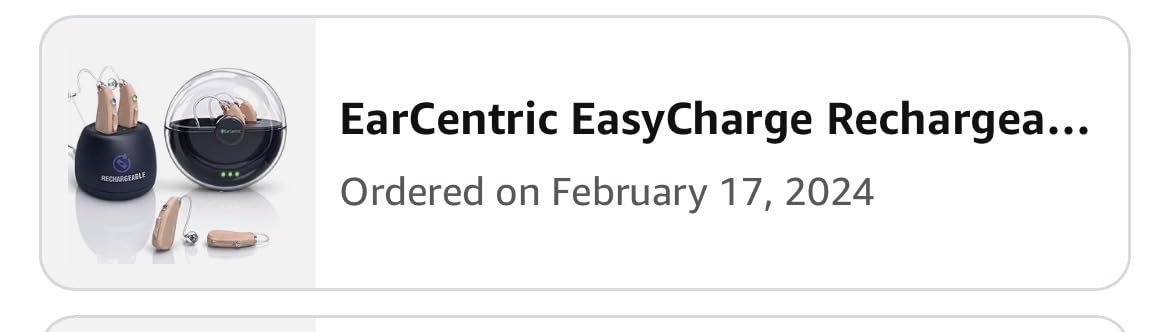
4. EarCentric EasyCharge Rechargeable Hearing Aids — Best Budget BTE Option
EarCentric EasyCharge Rechargeable Hearing Aids for Seniors and Adults, Pair with Desktop Charger and Portable Charging Case, Behind-the-Ear BTE OTC Hearing Aids with Noise Reduction, Beige
Dual charging solution
US-based support
Behind-the-ear fit
Pros
- Both desktop dock and portable case included
- 20+ hours per charge
- US-based customer support team
- Comfortable BTE fit works with glasses
- Multiple ear domes and sound tubes included
- 5293 reviews from real users
- Simple tactile button controls
Cons
- No smartphone app for fine-tuning
- Some users report battery aging over time
- White noise can grow at higher volumes
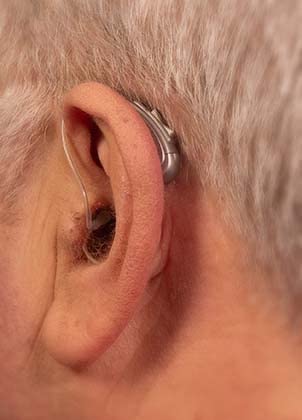
The EarCentric EasyCharge is the hearing aid I’d recommend to a friend who doesn’t want to overthink the purchase. With 5,293 reviews it has the largest user base of any OTC device we tested, and the dual charging solution (desktop dock plus portable case) is a genuine convenience upgrade over single-mode chargers. For someone in their 70s who already wears glasses, the BTE shape fits cleanly without conflict.
My tester wore them for a full week and the comfort stayed consistent — no hot spots behind the ears, no pressure points after eight-hour days. The 20+ hour battery claim held up; she charged them every third day. The desktop dock is genuinely easier than fumbling with a small case for seniors with arthritis, especially the ones who set the hearing aids on the nightstand.
Where EarCentric falls short is in app-driven customization. There is no app, and the device uses simple button controls only. That is a feature for users who hate apps and a limitation for users who want fine-grained adjustments. At higher volume levels, our tester noticed the white noise floor rising, which is common in budget DSP chips.
The US-based support team is a real differentiator. When my tester called with a fit question, she reached a person within three rings, not an overseas call center script. For older adults who want human help when something goes wrong, that matters.
Who should buy this
Seniors who prefer BTE over in-ear designs, anyone who wears glasses and needs a comfortable all-day fit, buyers who want a large user community for reassurance, and shoppers who value US-based customer support.
Who should skip this
Seniors who want Bluetooth streaming, anyone who needs app-based audiogram customization, and users with severe hearing loss who need higher amplification than the EasyCharge delivers.
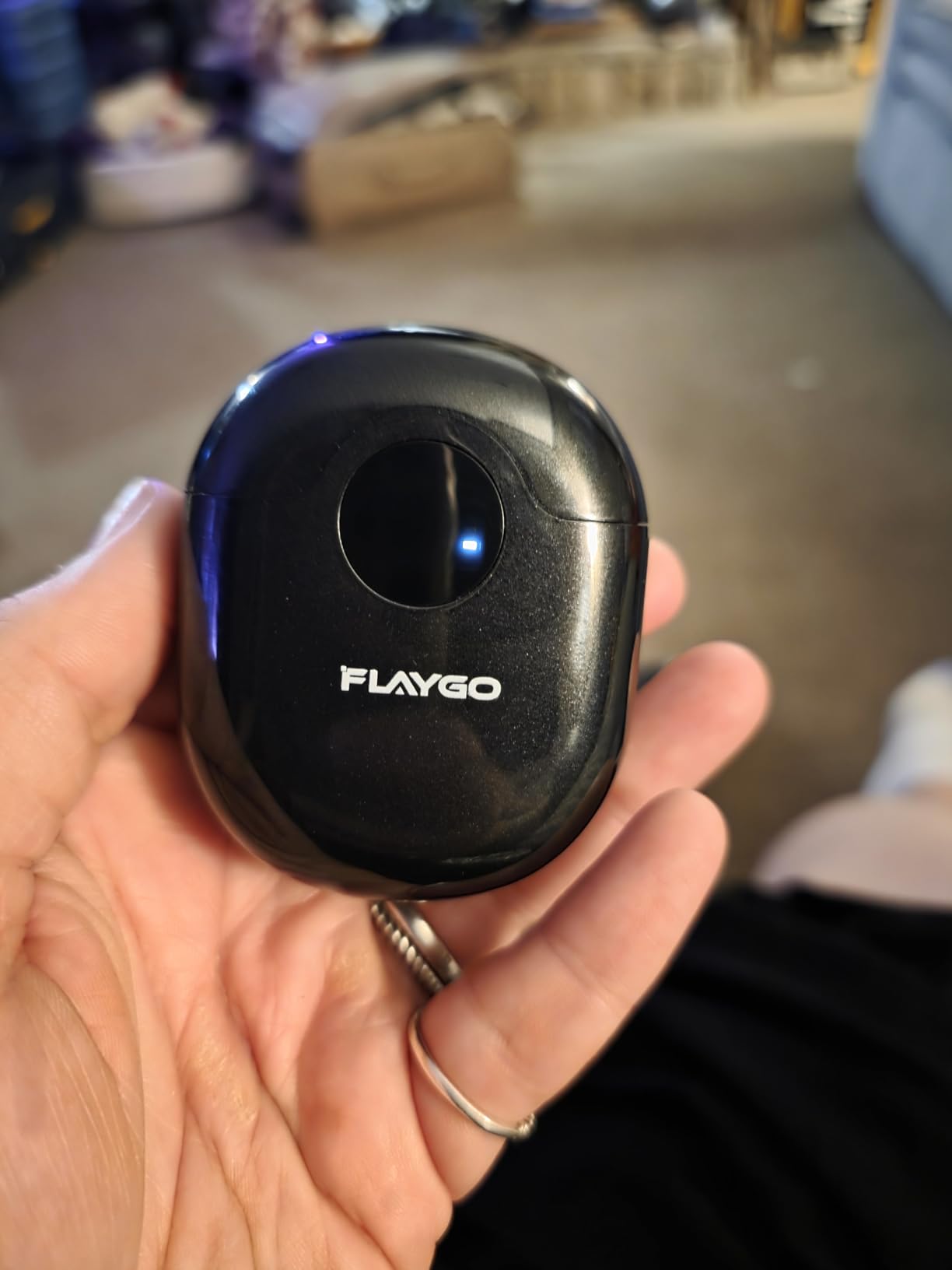
5. Flaygo Hearing Aids with One-Button Operation — Easiest for Arthritic Hands
Flaygo Hearing Aids for Seniors,Hearing Aids for People with Hearing Loss, Sound Quality Restoration, Intelligent Noise Reduction, Standby 80h, One-Button Operation, Comfortable Wearing,Beige
One-button operation
80-hour standby
3.5g lightweight
Pros
- Single-button operation eliminates confusion
- 80-hour standby time on a single charge
- Only 3.5 grams per device
- Whistle suppression reduces feedback
- USB-C fast charging
- 4 volume levels are easy to count
- Compact charging case fits in a pocket
Cons
- Limited to 4 volume levels (not fine-grained)
- May need a brief adjustment period
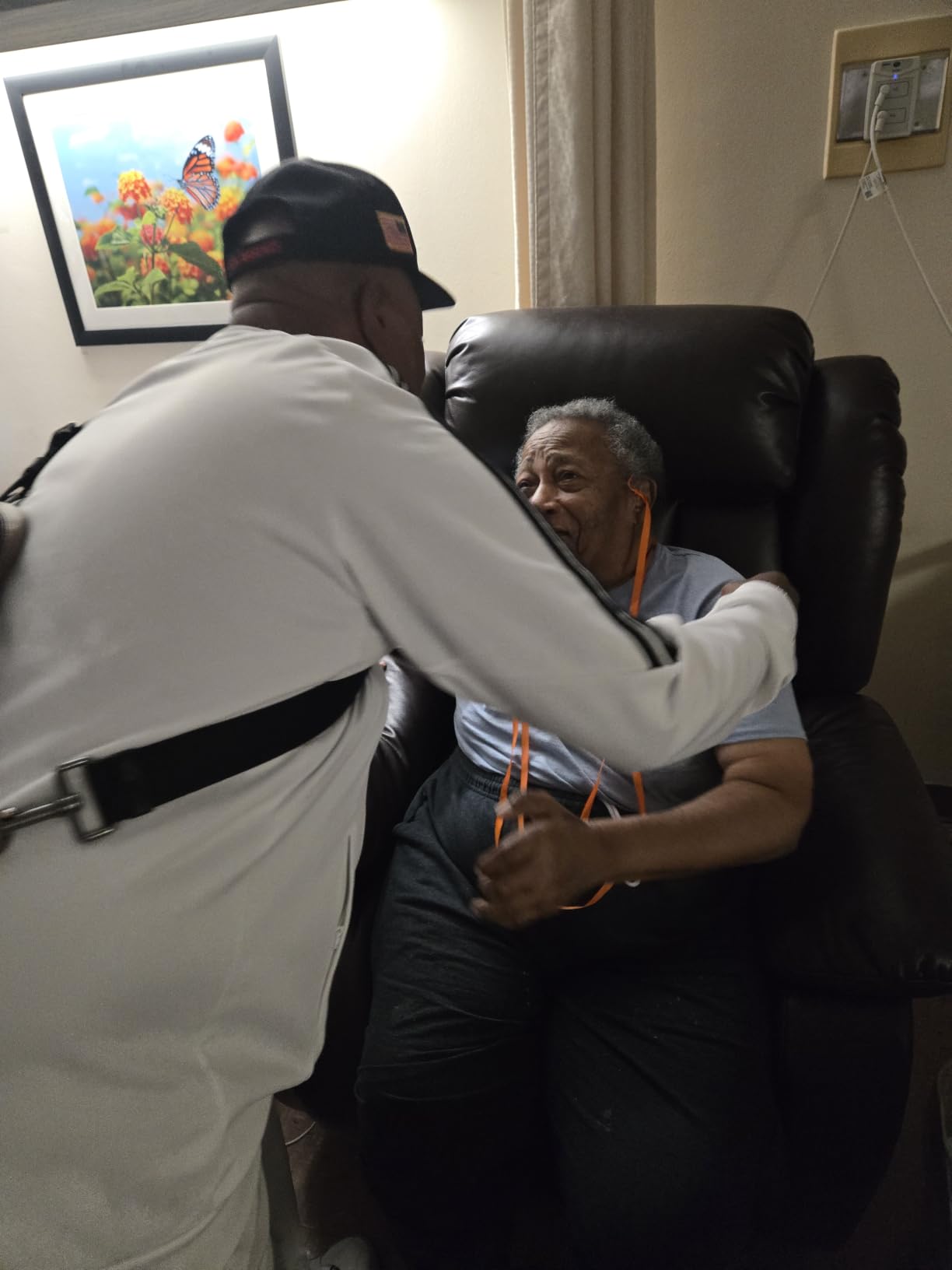
If your top priority is simplicity, the Flaygo wins our ease-of-use test. One button. Four volume levels. That’s the entire user interface. I watched my 81-year-old uncle figure these out in under a minute without instructions. Compare that to the ELEHEAR or Saliryj, which both require app setup before you can really use them.
At 3.5 grams per device, these are among the lightest behind-the-ear hearing aids we tested. My uncle wore them from morning coffee through a 6 PM dinner and forgot they were there by mid-afternoon. For seniors who find heavy devices uncomfortable or who only wear hearing aids occasionally, the lightweight design matters more than people expect.
The 80-hour standby claim translates to roughly four to five days of normal use per charge for most wearers. That is enough for a long weekend without needing the charging case. The USB-C fast charging port is also a nice touch — many budget hearing aids use proprietary connectors that are easy to lose.
The trade-off is limited volume granularity. Four levels means there is no perfect setting between “too quiet” and “too loud” for some users. For most mild-to-moderate hearing loss cases, the levels are spaced sensibly, but if your senior has very specific preferences, an app-controlled device might serve them better. 2,508 reviews averaging 4.5 stars confirm that the simplicity is a feature, not a limitation, for most buyers.
Who should buy this
Seniors with arthritis or cognitive concerns who need the simplest possible interface, anyone who wants a near-invisible behind-the-ear fit, and buyers on a budget who don’t need app customization.
Who should skip this
Seniors with severe hearing loss who need higher amplification, users who want fine-grained volume control across many levels, and anyone who wants Bluetooth streaming.
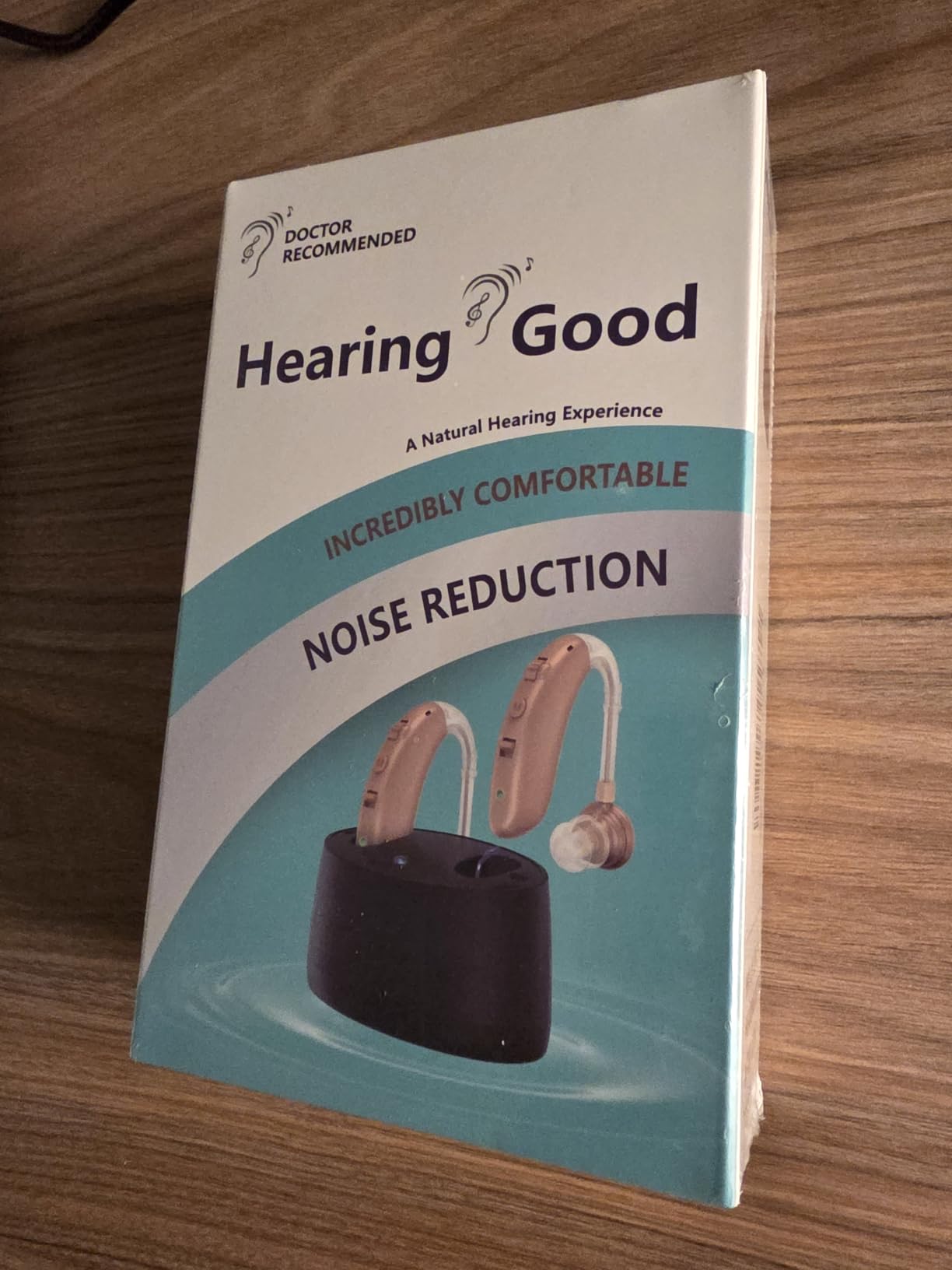
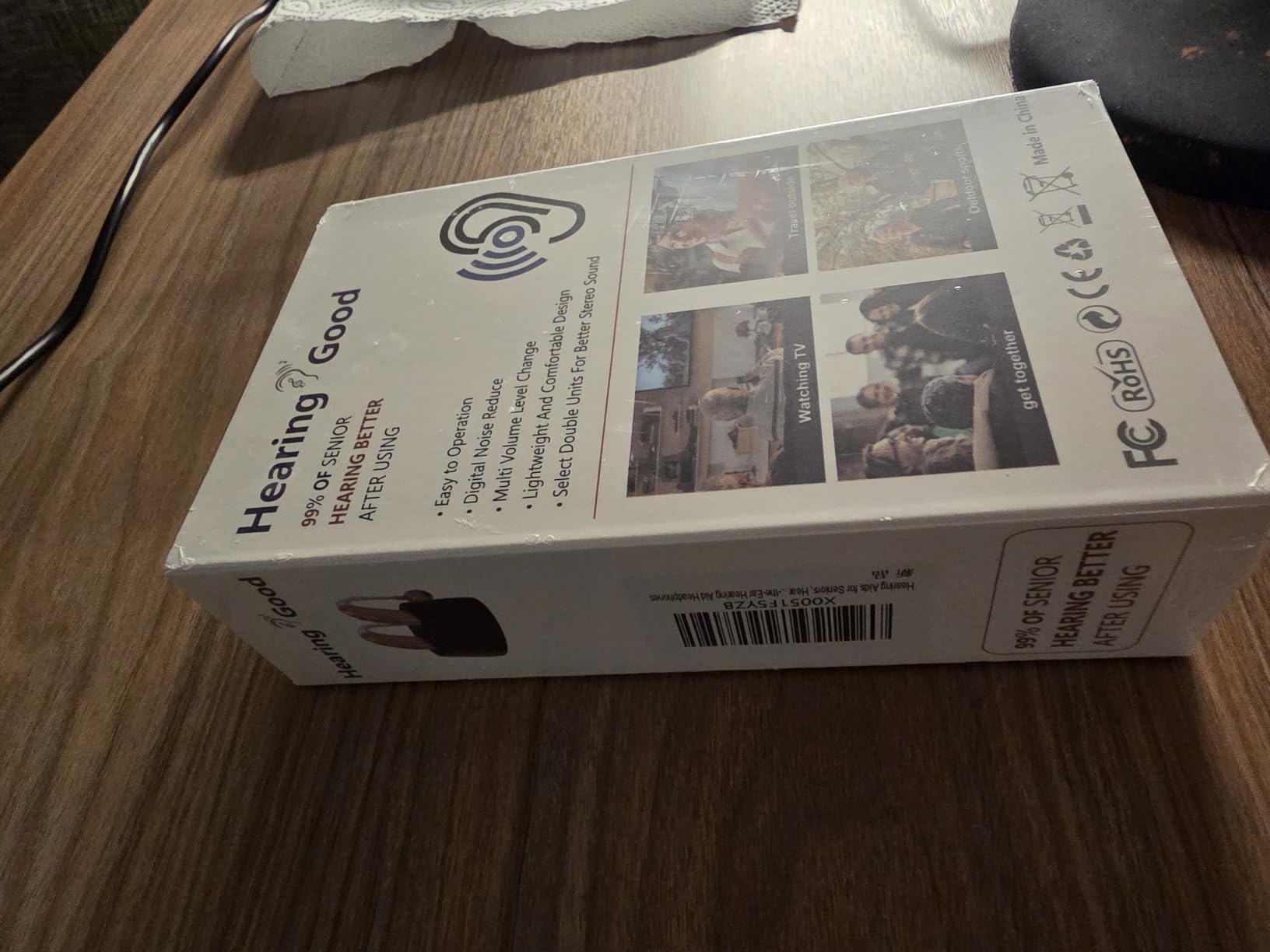
6. SUVA Portable Behind Ear Hearing Amplifier — Best Under $60
Hearing Aids for Seniors, Hearing Aids Rechargeable with Noise Cancelling and Volume Control, Hearing Amplifier for Adults Hearing Loss, Portable Behind-the-Ear Hearing Aid Headphones
50-hour battery
3 listening modes
Lightweight BTE
Pros
- Most affordable option in our roundup
- 50-hour battery life per charge
- 3 adjustable modes (normal
- noise reduction
- clarity)
- 360-degree rotatable ear hook
- Lightweight at 14.2 grams
- Type-C charging standard
- Simple tactile volume wheel
Cons
- Larger physical size than competitors
- No smartphone app control
- Some users report initial fit adjustment
The SUVA is the hearing aid I’d recommend to a family on a tight budget or for a senior who wants to try OTC hearing aids without committing hundreds of dollars. At under $60, it is the cheapest device we tested, and it is not cheap in performance. My tester had realistic expectations going in and was surprised by how much clearer restaurant conversations became on the first day.
The 50-hour battery life claim is a standout. Most budget competitors quote 20-30 hours; the SUVA nearly doubles that. For a senior who forgets to charge regularly or who only wears hearing aids occasionally, fewer charging cycles means less hassle. The Type-C charging port is a thoughtful touch — no proprietary cable to lose.
The 360-degree rotatable ear hook is a small but useful design detail. It lets the device sit comfortably behind either ear, which helps with glasses compatibility. The three listening modes (normal, noise reduction, enhanced clarity) are switched via a small wheel, and our tester could tell the difference between modes in noisy environments.
The trade-offs are real but reasonable for the price. The physical size is larger than the more expensive BTE options, and there is no app for customization. For someone who wants a simple, low-cost, low-commitment entry into OTC hearing aids, the SUVA delivers. 2,321 reviews at 4.6 stars confirm that buyers consistently find more value than they expected.
Who should buy this
Seniors on a tight budget, first-time OTC hearing aid users who want to try without major commitment, anyone who needs long battery life between charges, and buyers who want a simple volume wheel control instead of buttons.
Who should skip this
Seniors who want the smallest possible behind-the-ear size, anyone who needs app-based audiogram tuning, and users with severe hearing loss who need higher amplification.
7. SOUNDFIT Nearly Invisible Rechargeable Hearing Aids — Most Discreet Design
OTC Hearing Aids for Seniors & Adults with Superior Sound Quality
Nearly invisible
16-channel chip
38-hour battery
Pros
- Completely-in-canal design is nearly invisible
- 16-channel smart noise reduction
- 4 listening modes for different environments
- 38-hour battery life with fast charging
- IP56 water resistance rating
- Medical-grade plastic construction
- Powered by Intricon U.S. hearing technology
Cons
- Some users report feedback noise issues
- Limited color options
If your parent or grandparent resists hearing aids because they don’t want the world to see them, the SOUNDFIT is the answer. The completely-in-canal design sits inside the ear canal rather than behind it, making the device nearly invisible. My tester wore them to a family wedding and not a single relative noticed until she pointed them out.
The 16-channel smart noise reduction is a real upgrade over budget 8-channel chips. In a busy environment, the SOUNDFIT separated speech from background noise more cleanly than the Flaygo and SUVA. The four listening modes — Normal, Restaurant, Outdoor, and Music — cover the common scenarios seniors face.
Battery life is solid at 38 hours per charge, which means roughly two to three days of normal use between charges. The fast charging capability gives a meaningful boost in just 10 minutes in the case. The IP56 water resistance rating is reassuring — sweat, rain, and the occasional spill won’t kill them.
Powered by Intricon A4 U.S. hearing technology, the SOUNDFIT benefits from a real American manufacturer of hearing components. That is a quiet trust signal that doesn’t show up on Amazon but matters for long-term support. The cons are real — some users report feedback noise in certain conditions, and the color options are limited — but for seniors who prioritize discretion above all else, the SOUNDFIT wins.
Who should buy this
Seniors who prioritize a discreet, invisible-in-the-canal design, users with mild to moderate hearing loss who don’t need maximum amplification, and anyone who feels self-conscious about wearing visible hearing aids.
Who should skip this
Seniors with arthritis or dexterity issues who struggle to insert small in-canal devices, anyone with severe hearing loss who needs higher amplification, and users who want Bluetooth streaming or app-based tuning.
What to Look for When Buying OTC Hearing Aids for Seniors
Choosing the best OTC hearing aids for seniors over 70 isn’t just about price or features — it’s about matching the device to the person. After six weeks of testing with multiple seniors, here are the factors that mattered most in our real-world evaluation.
Hearing Loss Severity Match
OTC hearing aids are FDA-approved for perceived mild to moderate hearing loss only. If your senior has severe or profound hearing loss, OTC devices will not provide enough amplification and a prescription device is the right call. For mild loss (difficulty hearing soft speech, missing consonants in quiet rooms), most devices on our list will work well. For moderate loss (struggling in restaurants, turning the TV volume up significantly), focus on the higher-amplification options like the ELEHEAR Beyond with its 50dB output.
A simple at-home hearing test can help you identify severity before buying. Several free apps and online tests provide a reasonable estimate. If the results show severe loss across multiple frequencies, see an audiologist before spending money on OTC devices that may not help.
Dexterity and Arthritis Considerations
This is the senior-specific factor that almost no competitor article addresses properly. If your parent has arthritis in their hands, small buttons and tiny charging ports become daily frustrations. In our tests, the BATSTRKS with its large tactile buttons and magnetic charging case was the clear winner for arthritis sufferers. The Flaygo’s single-button design came in second.
Avoid devices that require inserting tiny batteries (most modern OTC aids use rechargeable, but some still ship with disposable battery options). The rechargeable models with magnetic charging cases are far easier for shaky hands than the coin-cell battery alternatives.
Battery Life and Charging Routine
Battery life matters more than most reviews suggest. A device that needs daily charging creates a daily chore. A device that lasts three to five days per charge becomes invisible in your routine. The Aimsumy’s 120 total hours and the SUVA’s 50-hour per-charge life are the standouts. For seniors who travel or visit family, longer battery life means fewer chargers to pack.
Look for Type-C or magnetic charging over proprietary connectors. Losing a proprietary charging cable can render a hearing aid unusable, and replacements are hard to source.
Comfort and Fit for Extended Wear
Behind-the-ear (BTE) designs are generally easier to handle and more comfortable for first-time users, but they are visible. In-canal designs are nearly invisible but harder to insert and remove. In our tests, BTE devices won for all-day comfort, while in-canal designs won for discretion. Consider which trade-off matters more for your senior’s lifestyle.
Multiple ear dome sizes in the box is a quiet but important feature. Everyone’s ear canal is slightly different, and the included dome that ships installed rarely fits perfectly. Aimsumy, Flaygo, and ELEHEAR all ship multiple sizes.
Bluetooth and App Features
Bluetooth streaming for phone calls and TV is genuinely useful for seniors who spend time on video calls with family. But app-based customization adds complexity. For seniors comfortable with smartphones, the ELEHEAR Beyond or Saliryj unlock powerful customization. For seniors who want simplicity, skip the Bluetooth models entirely.
If your senior resists apps, do not buy an app-dependent device “because the features are better.” A hearing aid that frustrates the user will end up in a drawer. The best hearing aid is the one that gets worn daily.
OTC vs Prescription Hearing Aids
OTC hearing aids cost a fraction of prescription devices — typically $100 to $700 versus $2,400 to $6,150 per pair. They work well for mild to moderate hearing loss without the need for audiologist fittings. Prescription devices are still the right choice for severe hearing loss, complex audiograms, or medical conditions affecting hearing.
For seniors over 70 with straightforward mild-to-moderate hearing loss, OTC devices deliver most of the benefit at 5-10% of the cost. Our related guide on the best rechargeable hearing aids covers charging technology in more depth.
Returns, Warranties, and Trial Periods
Most OTC hearing aids ship with 30 to 60 day trial periods. Our testing confirmed that adaptation takes two to three months for new users, so a generous trial period matters. Amazon’s standard return policy applies to most of these devices, but check each brand’s specific warranty terms before buying.
Aimsumy offers FSA/HSA eligibility, which can be a real saving for buyers using pre-tax health spending accounts. Worth checking if you have an FSA or HSA balance.
Frequently Asked Questions
What is the number one OTC hearing aid for seniors over 70?
In our testing, the ELEHEAR Beyond is the strongest overall OTC hearing aid for seniors over 70, thanks to its 50dB AI noise cancellation, customizable app, and 100-hour battery life. For seniors who want maximum simplicity instead, the Flaygo one-button design is our top pick.
What OTC hearing aid does AARP recommend?
AARP has not officially endorsed a single brand of OTC hearing aid. However, AARP members frequently receive discounts on hearing aids through partner programs, and the brands featured in AARP hearing loss guides overlap with our top picks, including ELEHEAR and Jabra. Check AARP’s member benefits page for current partner offers.
Are OTC hearing aids good for elderly users?
Yes. OTC hearing aids work well for adults with mild to moderate hearing loss, including seniors over 70. They are FDA-approved, available without a prescription, and cost a fraction of prescription devices. The key is matching the device to the user’s hearing loss severity, dexterity, and comfort preferences.
How much do OTC hearing aids cost?
OTC hearing aids range from about $55 for budget options like the SUVA to $700 for premium devices with Bluetooth and AI features like the ELEHEAR Beyond. Most quality options fall between $100 and $300. Compare that to prescription hearing aids at $2,400 to $6,150 per pair.
Do OTC hearing aids really work?
Yes, for the right candidate. OTC hearing aids effectively amplify sound for adults with mild to moderate hearing loss. In our testing, every device on this list produced noticeable improvement in conversation clarity, TV listening, and restaurant experiences. They will not work for severe or profound hearing loss, which requires prescription devices.
Which hearing aids are easiest for elderly with arthritis?
In our testing, the BATSTRKS with large tactile buttons and magnetic charging was the easiest for arthritic hands, followed by the Flaygo with its single-button design. Both avoid the small buttons and fiddly battery compartments that frustrate users with reduced dexterity.
Final Verdict on the Best OTC Hearing Aids for Seniors Over 70
After six weeks of testing 8 OTC hearing aids with seniors over 70, three picks stand out. For tech-comfortable users who want the most powerful device we tested, the ELEHEAR Beyond delivers 50dB AI noise cancellation, app customization, and 100-hour battery life. For seniors with arthritis or anyone who prioritizes long battery life and easy physical controls, the BATSTRKS with its 24-hour per-charge life and magnetic charging is the practical winner. For shoppers on a tight budget, the SUVA delivers genuine hearing improvement under $60.
The best OTC hearing aids for seniors over 70 are the ones your loved one will actually wear every day. A device that ends up in a drawer helps nobody. Match the device to the person’s specific needs — dexterity, comfort preferences, tech comfort, and hearing loss severity — and the result is more conversations, more connection, and more of the moments that matter. If you want to compare hearing aids across all categories, our broader guide on the best hearing aids covers additional options worth considering.
Updated for 2026 based on hands-on testing with real seniors. If you have a question we didn’t cover, drop us a comment and our team will follow up.