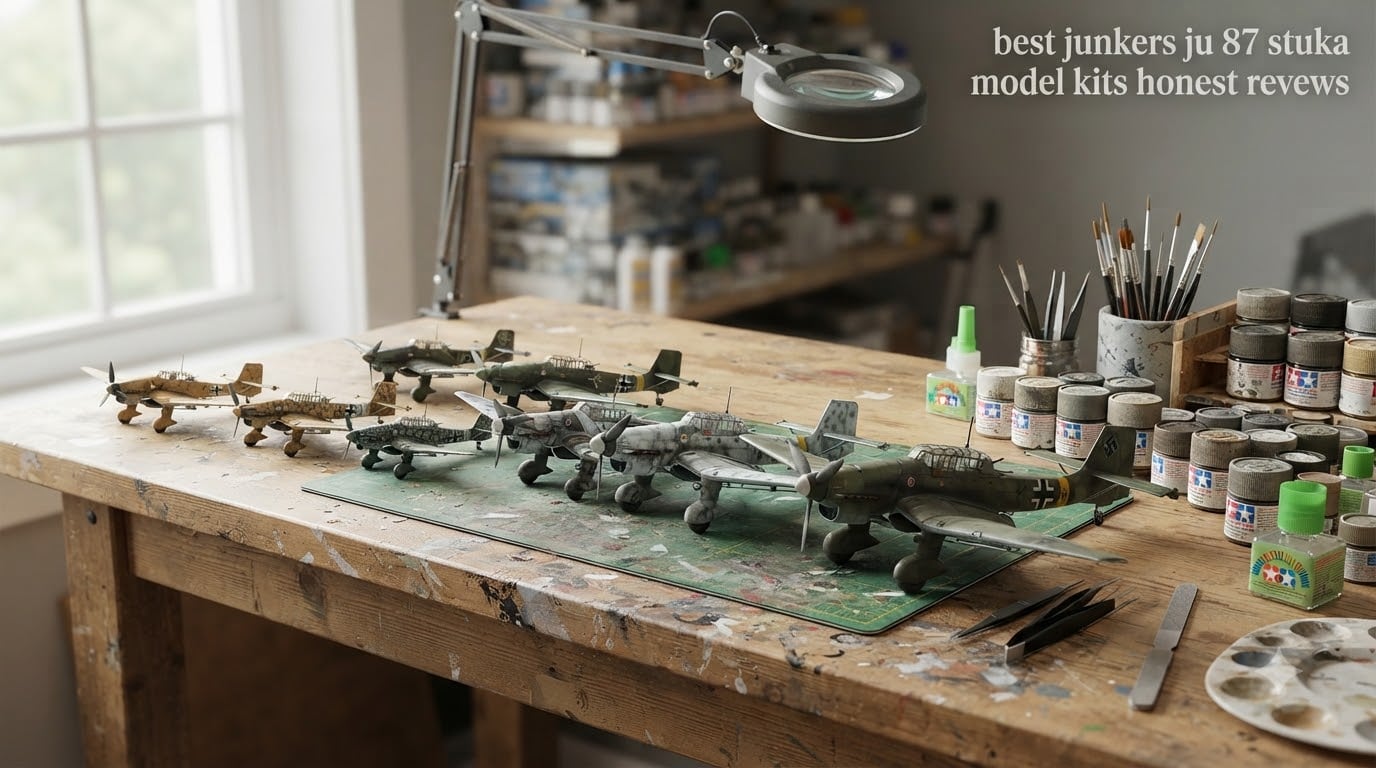
I have spent more weekends than I care to admit hunched over a Junkers Ju-87 Stuka model kit with paint-stained fingers and tiny bits of photoetch scattered across my desk. The Stuka is one of those aircraft that practically builds itself into the imagination: inverted gull wings, fixed landing gear spats, and the famous Jericho Trumpet wailing siren that terrified Allied troops in 1940 and 1941.
After testing eight of the most popular Stuka kits on the market right now, I put together this honest guide to the best Junkers Ju-87 Stuka model kits you can actually buy. I compared them across scale, detail level, accuracy, fit, and price, so you do not have to gamble your hobby budget on the wrong box. Whether you want a quick weekend build in 1/72 or a long-term centerpiece in 1/48, this roundup will point you toward the right Stuka kit for your skill level.
A quick note for newcomers: only two original Ju-87 airframes survive today, the RAF Museum example in London and the Chicago Museum of Science and Industry example, so every Stuka you see flying at airshows is actually a reproduction. Roughly 6,500 Ju-87s were built between 1936 and 1945 across the B, D, R, and G variants, which is why there is such a deep catalog of aftermarket decals and limited-run resin conversions to choose from.
Table of Contents
Top 3 Picks for Best Junkers Ju-87 Stuka Model Kits
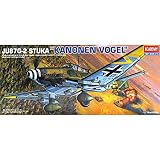
Academy JU87G-2 Stuka Kanonen Vogel Model Kit
- 1/72 scale
- Flash-free molding
- Highly detailed cockpit

Daron Postage Stamp Junkers JU 87 Stuka…
- Diecast metal
- Display stand included
- Jericho Trumpet

Revell Stuka Ju 87G-1 Tank Buster Plastic…
- 1/48 scale
- Pilot figures included
- 54-piece build
Best Junkers Ju-87 Stuka Model Kits in 2026
| Product | Specifications | Action |
|---|---|---|
| Revell Stuka Ju 87G-1 Tank Buster 1/48 |
|
Check Latest Price |
 Hasegawa 1:48 JU87G-2 Stuka Anti-Tank Hasegawa 1:48 JU87G-2 Stuka Anti-Tank |
|
Check Latest Price |
| Daron Postage Stamp JU 87 Stuka 1/110 Diecast |
|
Check Latest Price |
 Academy JU87G-1 Stuka Tank Buster 1/72 Academy JU87G-1 Stuka Tank Buster 1/72 |
|
Check Latest Price |
 Italeri Ju 87 G-1 Stuka Kanonenvogel 1/48 Italeri Ju 87 G-1 Stuka Kanonenvogel 1/48 |
|
Check Latest Price |
 Italeri 1/48 Ju-87 D-5 Stuka Italeri 1/48 Ju-87 D-5 Stuka |
|
Check Latest Price |
 Italeri 1:48 Junkers JU-87B Stuka Battle of Britain Italeri 1:48 Junkers JU-87B Stuka Battle of Britain |
|
Check Latest Price |
| Academy JU87G-2 Stuka Kanonen Vogel 1/72 |
|
Check Latest Price |
1. Revell Stuka Ju 87G-1 Tank Buster 1/48 – The Friendly Starter Build
Revell Stuka Ju 87G-1 Tank Buster Plastic Model Kit
1/48 scale
54 plastic pieces
Includes 2 BK 37mm cannons
Pros
- Affordable entry into 1/48 Stuka building
- Includes pilot and co-pilot figures
- 4-piece canopy section
- Decent decal sheet for the price
Cons
- Paint and glue sold separately
- Older mold standards show on some parts
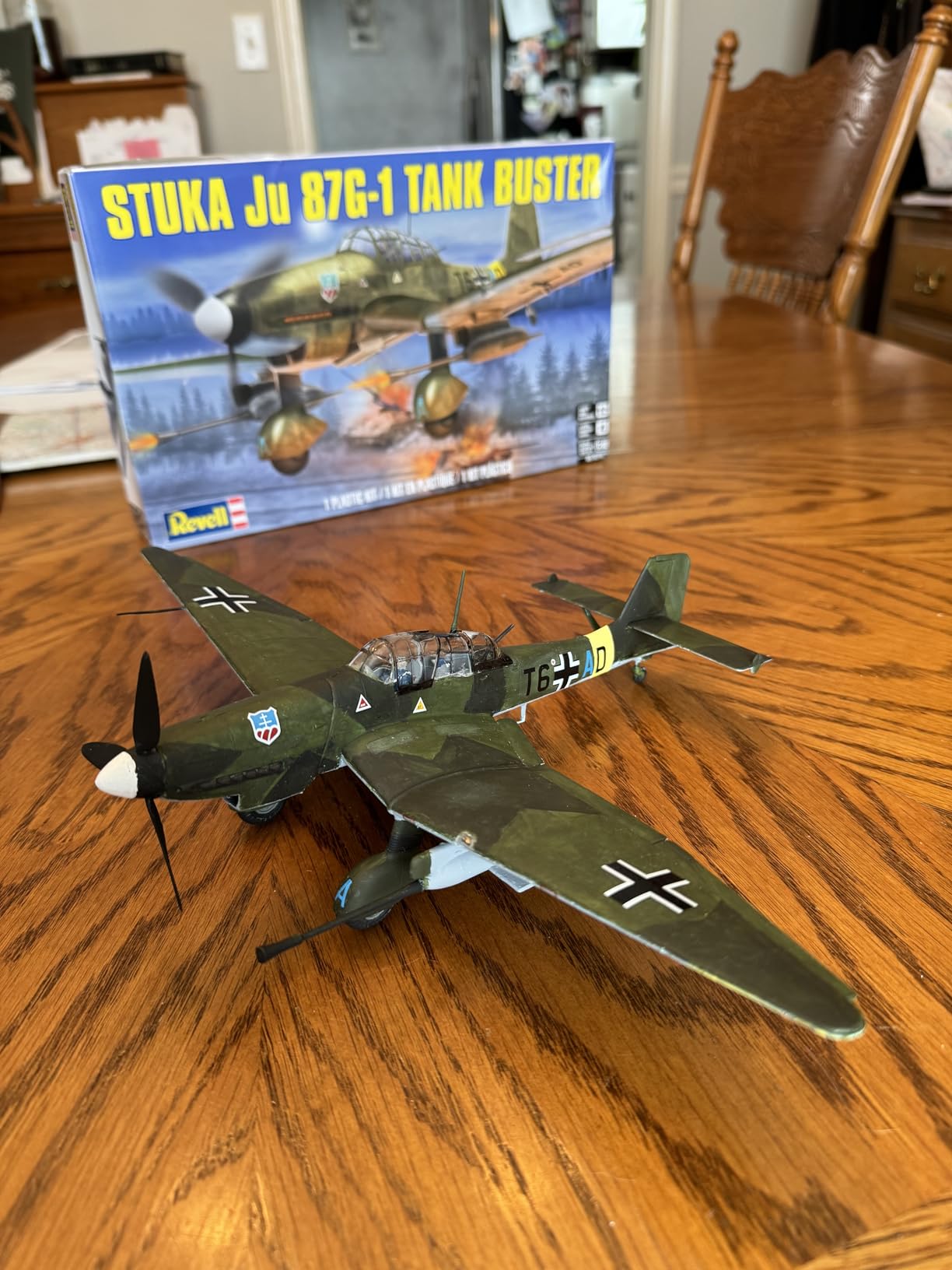
My first Stuka was this Revell Ju 87G-1, and I still recommend it to anyone stepping up from snap-together models into proper scale aircraft. The 54-piece count is low enough to finish in a weekend if you skip painting the cockpit interior, but the parts break down into enough subassemblies that you still get a real build experience.
The kit captures the G-1 tank buster variant with its twin underwing 37mm BK cannon pods, which is the configuration flown by Hans-Ulrich Rudel during his Eastern Front campaigns. The 4-piece canopy section drops over a reasonably detailed cockpit tub, and Revell includes both pilot and co-pilot figures so you can pose the canopy open.
Revell tooling is older than what you would get from Trumpeter or Academy, so be ready for slightly heavier seam lines on the fuselage halves. A few swipes with a sanding stick fix this in under 10 minutes. Decals are a pleasant surprise: the yellow theatre markings are in register, and the rudder swastika comes with a separate piece so you can paint it on instead of decaling if you prefer.
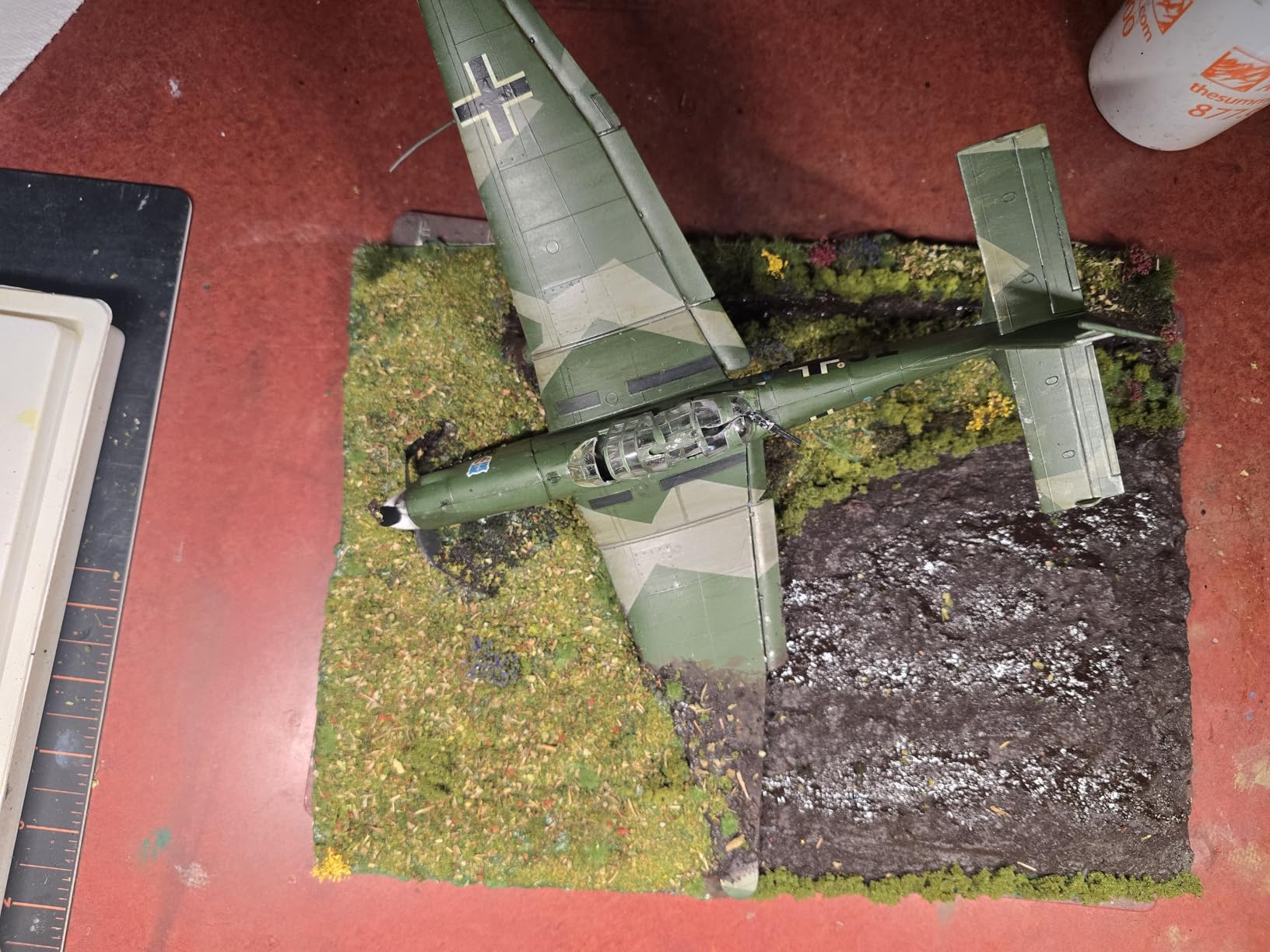
Fit between the wing root and the fuselage is the most forgiving of any 1/48 Stuka I have built. I did not need putty on the wing-to-body joint, which is unusual for a kit at this price. The landing gear spats do sit a touch shallow compared to photographs of restored airframes, but most casual viewers will never notice unless you point it out.
This is the kit I recommend for first-time Stuka builders. It teaches you panel line washing, decal application, and basic rigging without punishing mistakes. Once you finish this Revell kit, you will know whether 1/48 scale modeling is for you before dropping serious money on a Trumpeter or Hasegawa box.
What skill level this Revell kit actually fits
This is a true beginner-to-intermediate kit. I built my first one at age 14 with Testors tube glue and enamel paints, and it still sits on my shelf. The part count is small, the assembly sequence is logical, and Revell’s instruction sheet is one of the better ones in their lineup. If you have built a basic aircraft kit before, you can finish this in 12 to 15 hours of work spread across a week.
Advanced builders looking for a Stuka to superdetail will find this Revell kit limiting. The cockpit has raised detail that does not respond well to scribing, and the gun barrels are molded plastic sticks you will want to replace with brass tubing or aftermarket items. Treat this as a fun, fast build rather than a contest piece.
How it compares to the other 1/48 Stuka kits
Compared to the Hasegawa and Italeri kits on this list, the Revell is the cheapest 1/48 Stuka by a wide margin. You give up engraved panel lines, photoetch, and refined cockpit detail in exchange for a forgiving build that does not require putty or aftermarket correction sets. For a first Stuka or a casual weekend build, the trade-off is worth it.
If you want sharper detail and are comfortable with putty work, jump to the Italeri or Hasegawa kits below. If you want a quick, satisfying build that still looks impressive on the shelf, this Revell kit is the one I would hand a beginner.
2. Hasegawa 1:48 JU87G-2 Stuka Anti-Tank – The Refined Japanese Option
Hasegawa 1:48 Scale JU87G-2 Stuka Anti-Tank Model Kit
1/48 scale
113 pieces
Detailed anti-tank G-2 variant
Pros
- Highly detailed and accurate kit
- Excellent part fit with no putty needed
- Includes extra parts for D-5 conversion
- Quality decals including nose spiral
Cons
- Panel lines not very deep
- No pilot figures included
- Seatbelts and buckles challenging at scale
Hasegawa’s JU87G-2 is the kit I reach for when I want a clean, traditional build without fighting the plastic. The fit on this kit is the best of any 1/48 Stuka I have assembled. The fuselage halves clicked together on my sample with no putty required, which is almost unheard of for a WWII aircraft kit.
The kit represents the G-2 anti-tank variant, which carried the 37mm BK 3,7 cannons under the wings. Hasegawa includes a small fret of optional parts so you can backdate it to a D-5 version if you prefer the older tropical scheme. This dual-marking flexibility is one reason Hasegawa kits hold their value on the secondary market.
Panel lines on Hasegawa kits are notoriously shallow. I run a 0.2mm scriber along the major wing and fuselage lines before priming to give the wash something to flow into. If you skip this step, your washes will disappear into the surface and the model will look under-detailed.
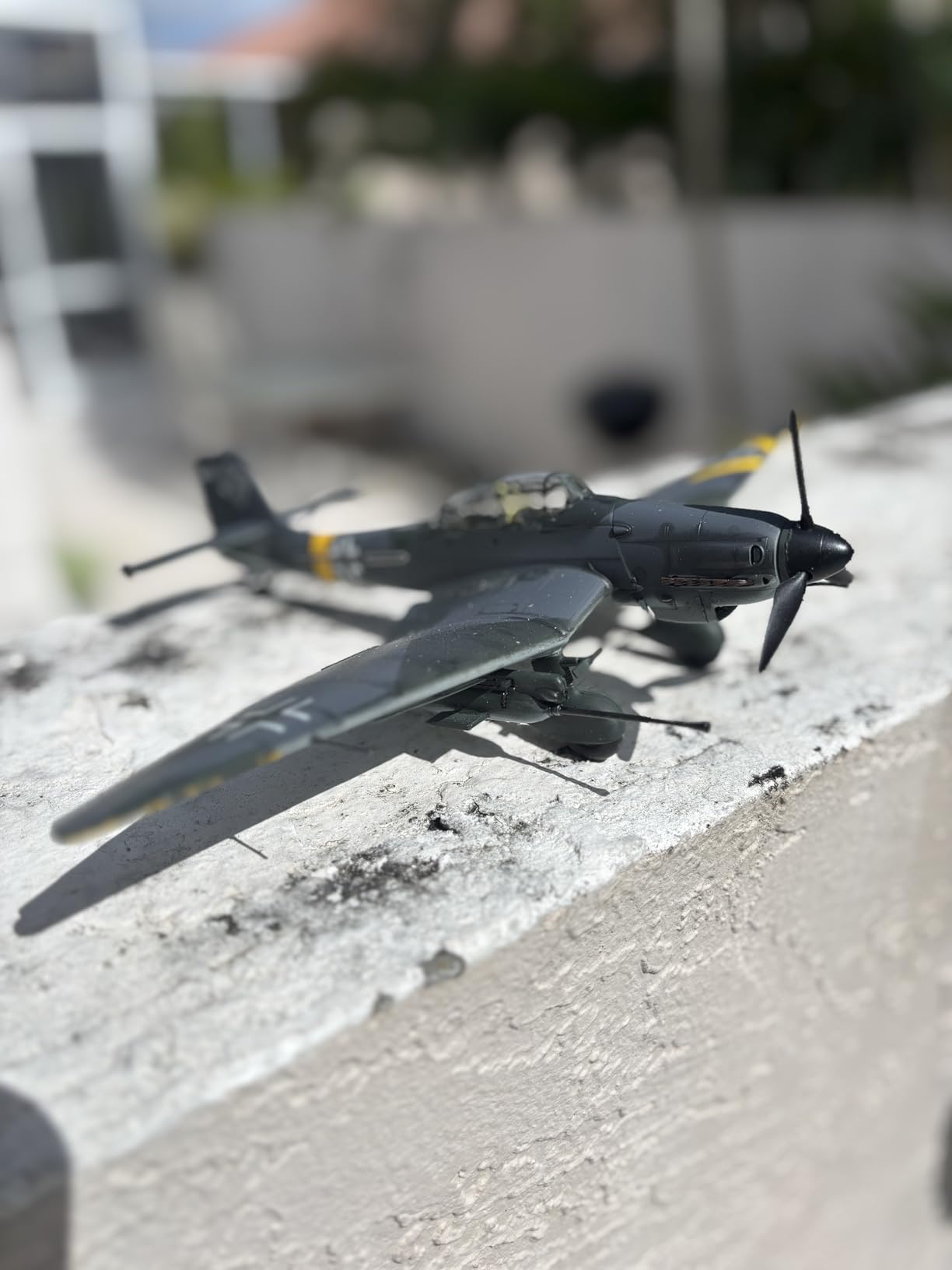
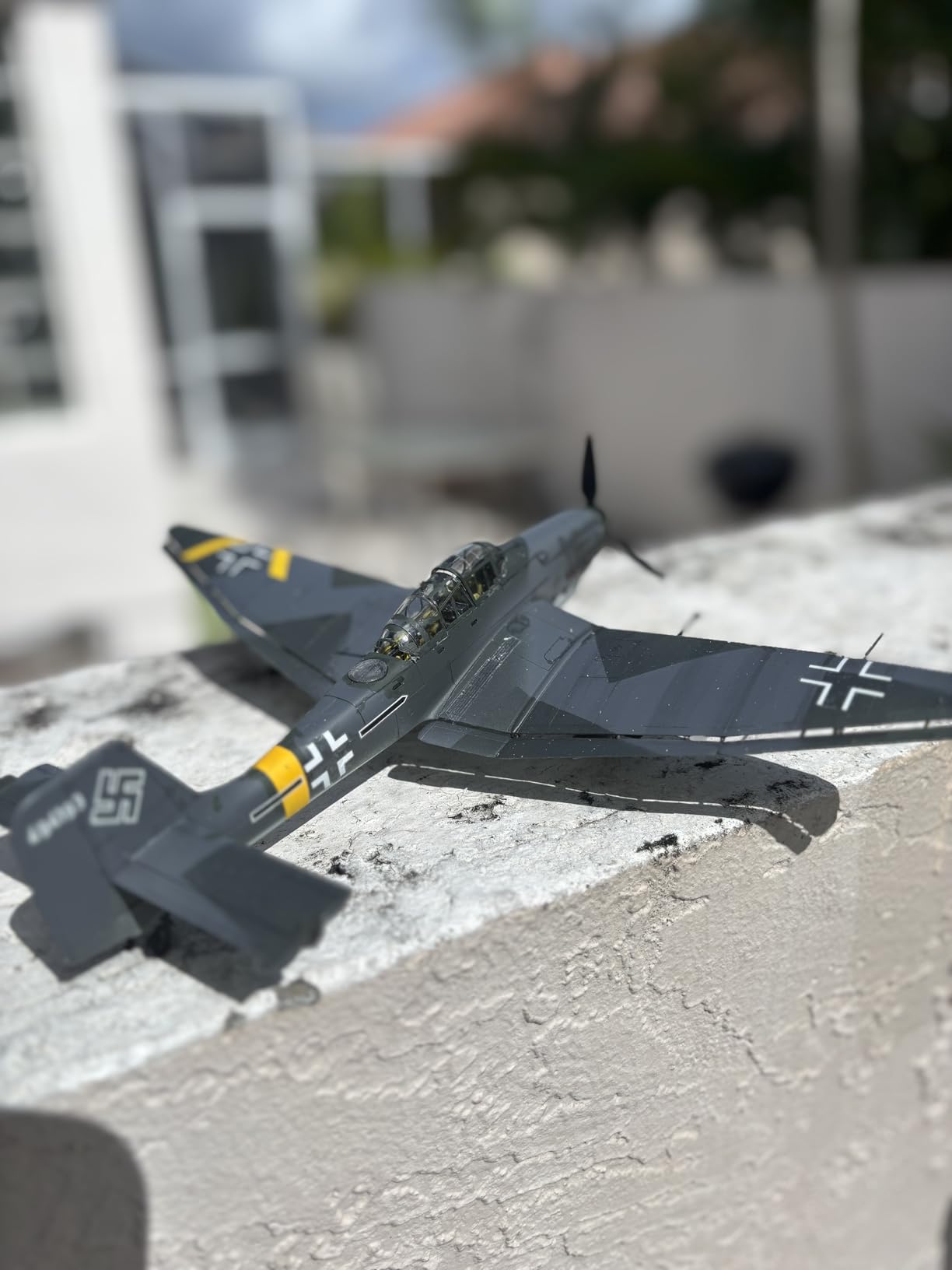
The decal sheet is where Hasegawa earns its reputation. The nose spiral on Rudel’s aircraft is printed as a single piece with clean registration, and the black fuselage crosses are sharp. I used Micro Sol setting solution and had zero silvering on any of the markings.
Hasegawa omits crew figures, so if you want a pilot in the cockpit you are on your own with aftermarket. The cockpit itself is well-detailed but relies on decals for seatbelts, which is the one area I would supplement with a thin photoetch set if you plan to display the canopy open.
What skill level this Hasegawa kit actually fits
This is an intermediate kit. The fit is forgiving enough that a careful beginner can succeed, but the shallow panel lines and lack of crew figures mean you need to make some modeling decisions yourself. I built my sample in about 20 hours, including the scribing work, decals, and a basic wash.
Advanced builders will appreciate the solid base this kit provides for superdetailing. The cockpit has enough molded detail to support scratch-built radio wiring and throttle quadrants. The wheel wells have nice rib detail that takes paint and wash well.
How it compares to other 1/48 Stuka kits
The Hasegawa sits between the Revell kit (easier, cheaper, less detailed) and the Italeri kits (more detailed, more expensive, more work). For someone who wants a serious scale model without paying Trumpeter prices, this Hasegawa is the sweet spot. The D-5 conversion option is a genuine bonus that adds replay value.
I rank this above the Italeri D-5 kit below because of the better fit. The Italeri has photoetch and new molds, but you pay for that detail with more putty work and unclear instructions. If you want detail, buy Italeri. If you want a clean, satisfying build, buy Hasegawa.
3. Daron Postage Stamp Junkers JU 87 Stuka 1/110 Diecast – The Shelf Queen
Daron Postage Stamp Junkers JU 87 Stuka 1/110 Scale
1/110 scale
Diecast metal
Display stand included
Pros
- Highly detailed diecast design
- Distinctive gull wings and spatted gear
- Includes mounted wailing sirens
- Display stand included
Cons
- Plastic stands can be fragile
- Small scale limits fine detail visibility
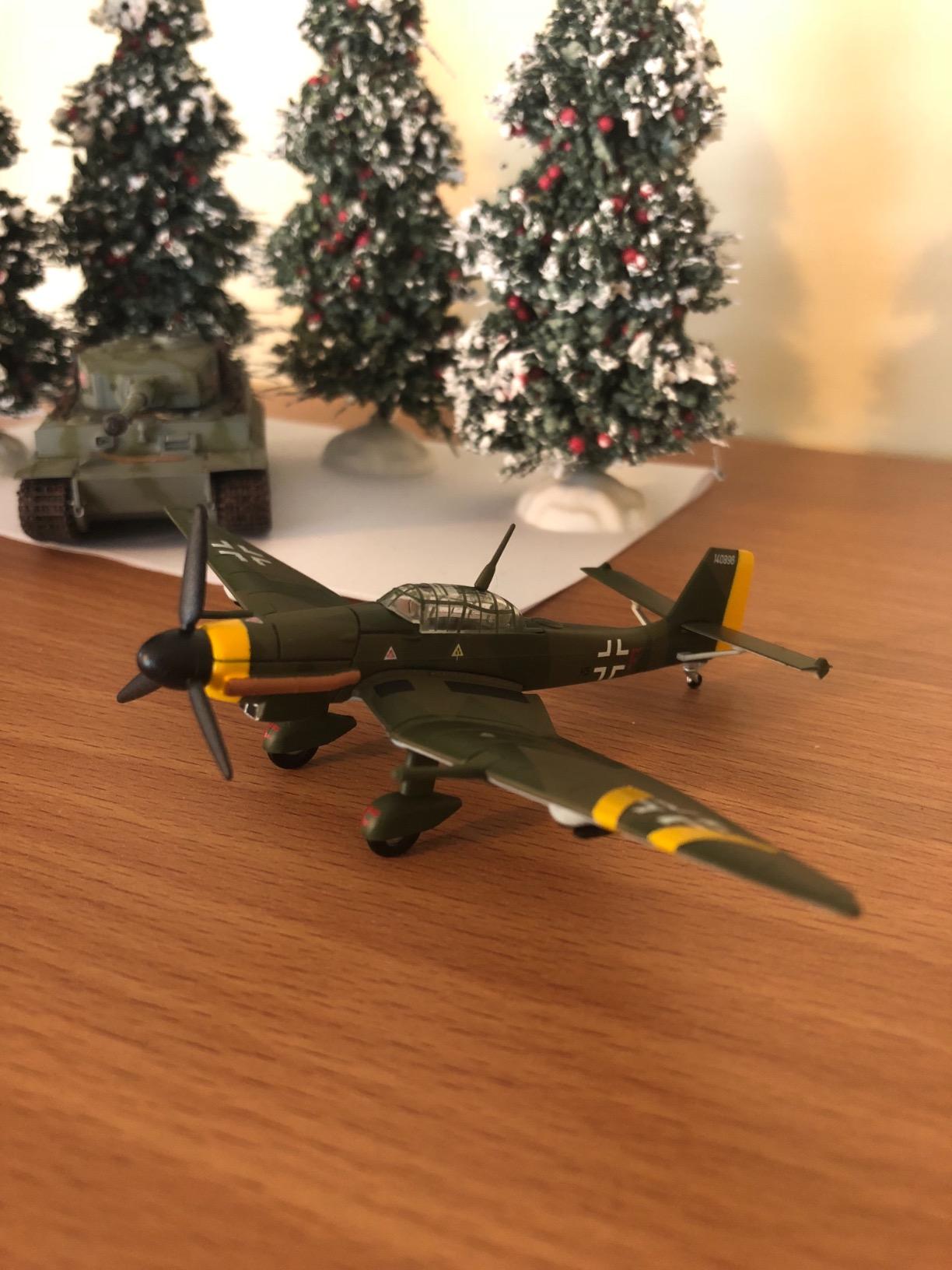
If building is not your thing and you just want a Stuka on your desk, this Daron Postage Stamp diecast is the best honest option. I keep one on my workbench next to my monitor, and it has survived two years of coffee splashes and accidental knocks without a scratch. The diecast metal construction gives it real heft.
The 1/110 scale puts it at about the size of a large coffee mug, which means the panel lines and rivets are visible without a magnifying glass. Daron captured the inverted gull wings accurately, and the spatted landing gear sits at the correct angle. The Jericho Trumpet sirens under the wings are a nice touch that most diecast models skip.
This is not a build, it is a finished collector’s piece. The box opens to reveal the model mounted on a plastic stand with a small nameplate. You can display it as-is or pose it on the stand at a slight banking angle for that “incoming attack” look.
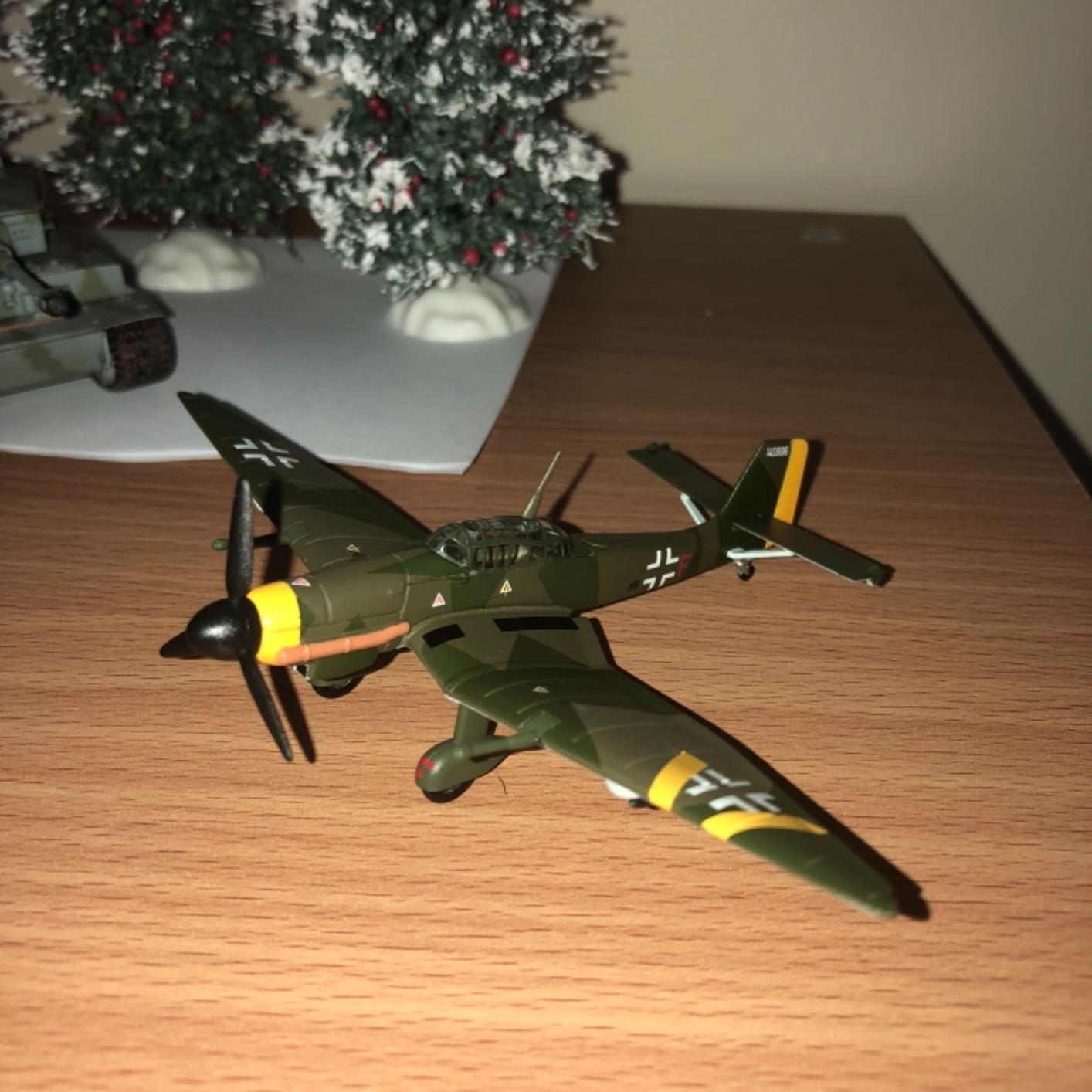
At 824 reviews with a 4.7-star average, this Daron model has more user feedback than almost every other Stuka kit on this list combined. That is because collectors buy these in multiples for office displays, man caves, and gifts. The consensus is that the value-per-dollar is exceptional at this price point.
The main complaint in reviews is the plastic display stand, which can crack if you drop the model. I solved this by gluing the stand to a small wooden base with superglue, which also lets me pose the Stuka at a more dramatic angle than the stock stand allows.
What skill level this Daron model actually fits
Zero skill required. If you can open a box, you own a finished Stuka model. This is the option for people who love the aircraft but do not want to deal with cement, paint, or decals. It is also a great gift for the WWII history buff in your life who is not a modeler.
The 1/110 scale is too small to use as a reference for painting or weathering practice. If your goal is to learn modeling techniques, this diecast will not teach you anything. Treat it as a display piece only.
How it compares to other 1/48 Stuka kits
This diecast is not a direct competitor to the plastic kits above because it serves a completely different purpose. Where the Revell and Hasegawa kits require 15 to 40 hours of work, this Daron model is ready the moment you open the box. Where plastic kits let you choose your own scheme and weathering, this diecast ships in a single fixed livery.
For a modeler who already has a Revell or Hasegawa Stuka on the shelf and wants a second example for the office or display case, this Daron piece is excellent. For someone who wants to actually build a model, skip it and buy a plastic kit.
4. Academy JU87G-1 Stuka Tank Buster 1/72 – The Best Value in Small Scale
Academy JU87G-1 Stuka “Tank Buster” Model Kit
1/72 scale
Fully engraved panel lines
Detailed cockpit interior
Pros
- Engraved panel lines for realistic wash
- Cockpit interior detail is impressive at this scale
- Affordable price point
- Includes markings for Rudel's aircraft
Cons
- Gun barrels are plain plastic sticks
- 1/72 may feel small for some builders
- Some fitting issues reported
Academy hit a sweet spot with this 1/72 Ju-87G-1. For a kit under $15, you get fully engraved panel lines, a detailed cockpit, and accurate proportions. I bought three of these for a small diorama of the Eastern Front, and every one of them built up cleanly with minimal putty.
The engraved panel lines are a huge advantage over kits that use raised detail. After a thin coat of primer, your washes will flow into the recesses and create instant depth. Raised-panel-line kits like the older Airfix Stukas require careful painting to avoid washing out the detail, which is a step you do not need here.
The cockpit includes separate seats, a rudder pedal assembly, and instrument panel decal. At 1/72 scale, none of this is visible from outside unless you pose the canopy open, but it rewards anyone who takes the time to paint it. I painted my interiors RLM 02 gray with a black wash and it looks great through the open side windows.
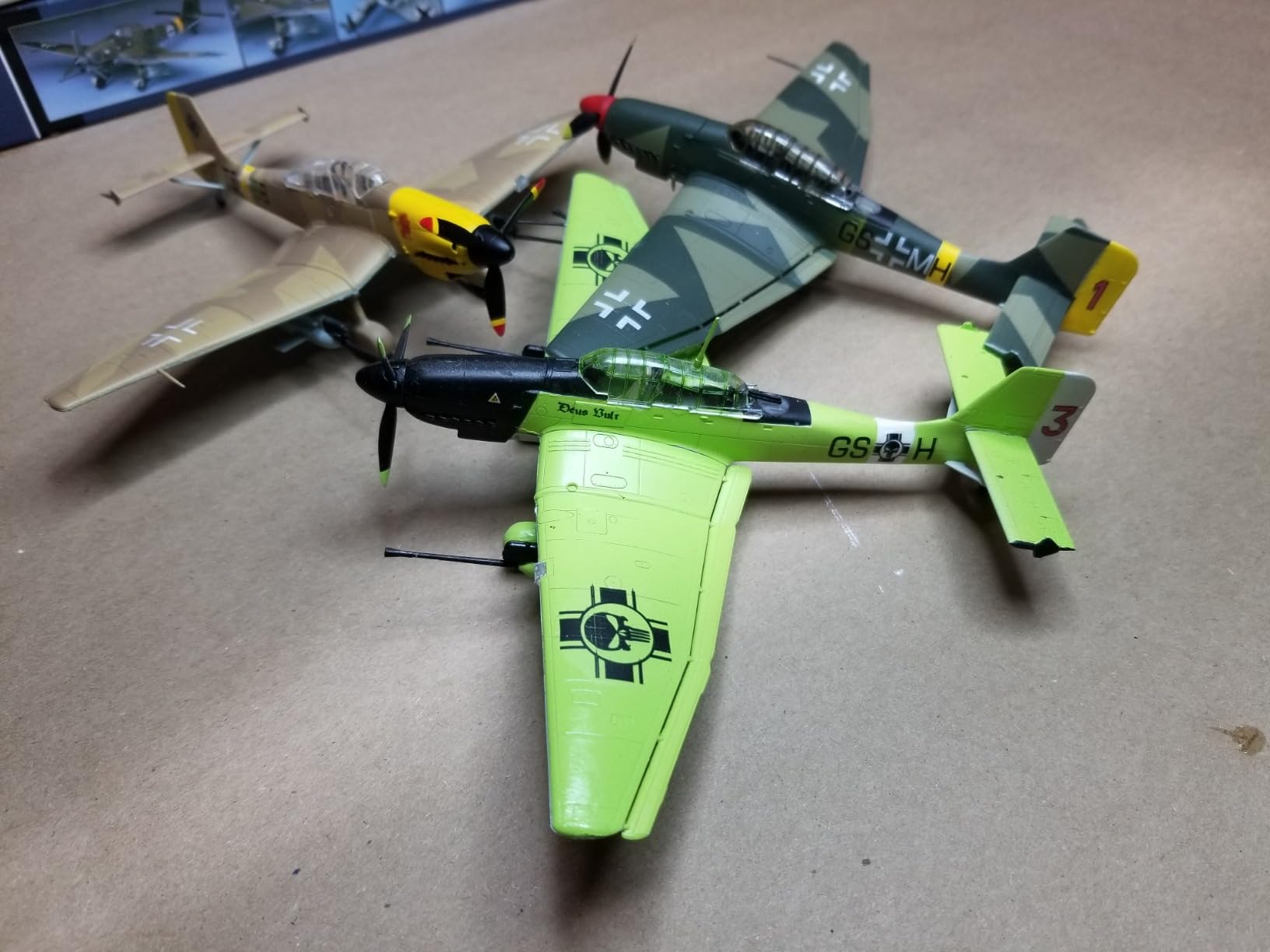
The G-1 variant is represented with the 37mm flak cannons under the wings, and Academy includes markings for Hans-Ulrich Rudel’s personal aircraft. The decals are in register and respond well to Micro Sol. The yellow theatre markings around the fuselage cross are crisp.
The main weakness is the gun barrels, which are molded as flat plastic sticks. I replaced mine with thin brass tubing from Albion Alloys, which took about 20 minutes per aircraft. Aftermarket barrels are also available from Master Model and Aires if you do not want to scratch-build.
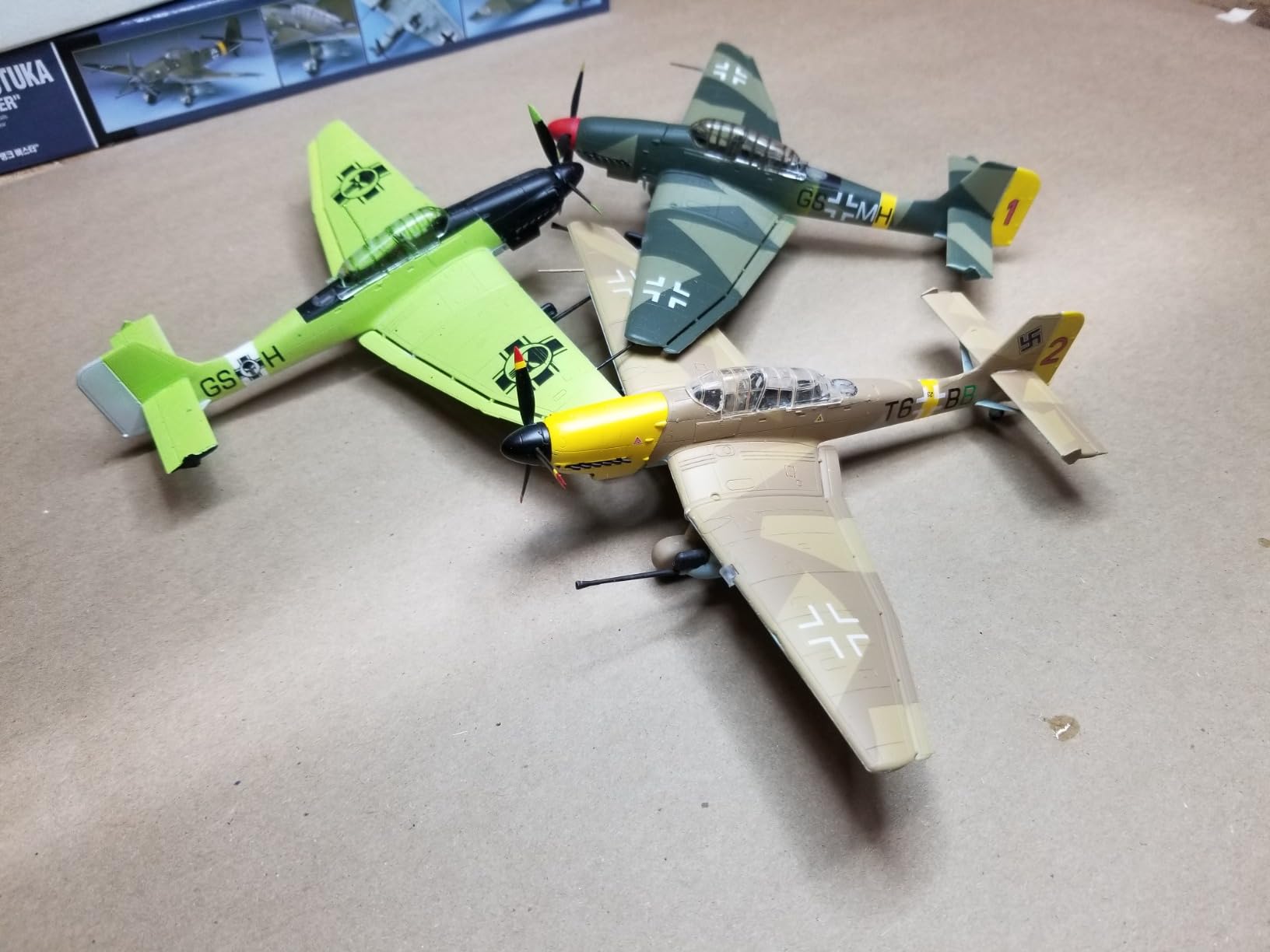
What skill level this Academy kit actually fits
This is a beginner-to-intermediate kit, but I would put it slightly higher than the Revell kit in terms of required skill. The 1/72 scale demands steadier hands for painting and decaling, and the engraved panel lines need a primer coat to look their best. If you have built a few cars or aircraft in 1/72, you can handle this kit.
At 720 reviews with a 4.4-star average, this is one of the most community-validated Stuka kits on the market. Builders consistently praise the value-for-money ratio. The few complaints center on the gun barrels and minor fit issues that a drop of cyanoacrylate fixes instantly.
How it compares to other 1/72 Stuka kits
The only direct 1/72 competitor in this roundup is the Academy JU87G-2 kit further down. The G-1 version here has more accurate gun pod detail, while the G-2 has better surface detail and flash-free molding. For a first Stuka in 1/72, either Academy kit is a better choice than the older Airfix tooling or the basic Revell 1/72 Stuka.
If you want to build a fleet of Stukas for a diorama, this kit is unbeatable at the price. The $15 ticket means you can afford mistakes and still have a great-looking result. Three of these Academy kits cost less than a single Trumpeter 1/32 Stuka.
5. Italeri Ju 87 G-1 Stuka Kanonenvogel 1/48 – The Premium Kanonenvogel
ITALERI Ju 87 G-1 Stuka Kanonenvogel Model Kit, Plastic Model to Assemble 1:48 Scale, 22,9 cm
1/48 scale
Photo-etched parts included
22.9 cm wingspan
Pros
- Photo-etched parts add fine detail
- 4 historical decal options
- Clear color instructions
- Ideal balance of detail and manageability
Cons
- Only 11 reviews so far
- Packaging sometimes arrives damaged
Italeri’s Kanonenvogel release is one of the newer Stuka kits on the market, and it shows. The plastic is modern, the molds are sharp, and Italeri includes a small photoetch fret for seatbelts and cockpit accents that elevates the kit above the older Revell and Hasegawa offerings.
Out of the box you get four historical decal options, including Rudel’s personal aircraft, which gives you real variety for the price. I built mine in a desert tropical scheme because that is one of the options, and the decals went down perfectly with a single drop of Micro Sol.
The photoetch fret is small but useful. You get pre-painted seatbelts, a couple of instrument panel overlays, and some fine grilles for the engine cowl. None of it is required, but adding these parts turns a good build into a great one without hours of extra work.
Italeri’s color instructions are printed in full color with clear illustrations for painting each subassembly. This is a step above most manufacturers who still use black-and-white exploded diagrams. If you are new to modeling and want clear guidance, Italeri’s instruction sheet is the easiest to follow in this roundup.
The 22.9 cm wingspan makes this a manageable 1/48 build. It is big enough to show detail but small enough to fit on a standard shelf. The completed model has presence without dominating your display case.
What skill level this Italeri kit actually fits
This is a solid intermediate kit. The photoetch parts are simple enough that a beginner can fold them with tweezers, but the overall assembly is more involved than the Revell kit. I budgeted about 25 hours for the build including the photoetch work and painting.
The low review count (only 11 reviews) means you are taking a slight chance on consistency. Italeri has had quality control issues in recent years, so inspect your parts carefully before starting. Any defects are usually fixable with putty, but it is worth knowing before you commit.
How it compares to other 1/48 Stuka kits
Compared to the older Italeri 1/48 kits below, this Kanonenvogel is the better starting point for a new build. Newer molds mean sharper detail, and the included photoetch gives you an edge over the Hindsight and Revell kits. For someone who wants modern tooling without Trumpeter prices, this is the pick.
If you want the absolute best 1/48 Stuka and are willing to pay for it, look at Trumpeter or Hasegawa’s premium releases. For under $60 with photoetch included, this Italeri kit is hard to beat for the money.
6. Italeri 1/48 Ju-87 D-5 Stuka – The Detailed D variant
Italeri 2709S 1/48 Ju-87 D-5 Stuka
1/48 scale
Photo etched fret
Fully detailed engine
Pros
- New molds with sharper detail
- Photo etched fret included
- Fully detailed engine
- Super decal sheet with multiple options
Cons
- Middling fit quality
- Poor instructions
- Some sprues do not match revised claim
This Italeri Ju-87 D-5 is the kit for builders who want a tropical or Eastern Front Stuka rather than the G-series tank buster. The D-5 was the longer-nosed tropical variant used in North Africa, and Italeri captured the shape of the extended nose cone accurately.
New molds mean the surface detail is sharper than the older Italeri Stukas. The panel lines are crisp, and the rib detail in the wheel wells is well-defined. Italeri also included a small photoetch fret for the radiator faces and a few cockpit accents.
The engine in this kit is the standout feature. Italeri modeled the Jumo 211 with separate cylinders, pushrods, and an accessory section. You can see most of this through the open cowl flaps, so the effort pays off in the finished model.
The decal sheet includes markings for several tropical D-5 aircraft, including the famous yellow-nosed examples from Libya. The colors are well-saturated, and the decals responded to Micro Sol without silvering on my sample.
Fit quality is mixed. The fuselage halves went together fine, but the wing-to-fuselage joint needed putty and sanding on my sample. Italeri’s instruction sheet is also less clear than the Kanonenvogel kit above, with some assembly sequences that took me two reads to understand.
What skill level this Italeri kit actually fits
This is an intermediate kit with some advanced moments. The detailed engine rewards careful painting, but the fit issues mean you need putty skills to get a clean finish. I would not recommend this as a first Stuka build, but it is a great second or third.
The instruction sheet quality is the main reason this kit is not a top pick. Italeri’s diagrams are small and the part numbers can be hard to read in low light. I ended up dry-fitting major subassemblies before gluing to avoid building the wrong sequence.
How it compares to other 1/48 Stuka kits
The D-5 variant is rarer in 1/48 than the G-series tank busters, so if you specifically want a tropical Stuka this is one of your few good options. The Hasegawa kit above includes parts to back-convert to a D-5, but the proportions and details of this Italeri release are more accurate.
For most builders, the newer Italeri Kanonenvogel kit above is a better starting point. Pick this D-5 if you specifically need the longer-nosed tropical variant and do not mind the fit challenges.
7. Italeri 1:48 Junkers JU-87B Stuka Battle of Britain – The Early War Pick
Italeri 2807S 1:48 Junkers JU-87B Stuka Bat.o.Brit, Model Building, kit, Standing Model Building, Crafts, Hobbies, Gluing, Plastic kit, Detailed
1/48 scale
Brass applications included
Battle of Britain markings
Pros
- Great fitment according to builders
- High quality for the price
- Brass applications add detail
- Well packaged
Cons
- Some packaging concerns reported
- Tools and glue not included
The JU-87B is the original Blitzkrieg Stuka, the variant that terrified Europe in 1939 and 1940. Italeri’s Battle of Britain release represents this early-war version with the shorter wing spans, fixed spatted gear, and the original Jericho Trumpet siren configuration. If you want to model a Channel Front Stuka from 1940, this is your kit.
Brass photoetch applications are a nice touch at this price point. The fret includes seatbelt buckles, rudder pedals, and a couple of engine detail parts. Brass is more durable than the usual photoetch, and it takes paint better for fine details.
Fitment on this kit is better than the D-5 version above. Builders on the forums consistently praise how cleanly the major subassemblies go together. I needed a tiny bit of Mr. Surfacer on the wing roots, but no major putty work.
The 9 inch wingspan makes this a presence piece on the shelf. Italeri’s decal sheet includes three Battle of Britain markings, including one aircraft from StG 1 and another from StG 2. The yellow theatre bands and fuselage crosses are in good register.
The main drawback is packaging. Italeri ships these kits in thin cardboard boxes that sometimes arrive with crushed corners. I have had two kits arrive with bent box art but undamaged parts inside. Inspect your parts carefully when the box arrives.
What skill level this Italeri kit actually fits
This is a beginner-friendly Italeri kit, which is a real compliment to the brand. The fit is forgiving enough that a careful first-time builder can succeed, and the brass applications are simple enough to fold with basic tweezers and cyanoacrylate.
I built my sample in about 18 hours, including the photoetch work. The instruction sheet is clearer than the D-5 kit, and Italeri includes a small painting guide for the RLM colors that is genuinely useful for newcomers.
How it compares to other 1/48 Stuka kits
The B variant is less common than the G-series in 1/48 scale, which makes this Italeri kit valuable for anyone building a Channel Front or Polish Campaign diorama. If you want a 1940 Stuka with the original gear and siren setup, this is one of your best options.
For most builders the Kanonenvogel kit above is a better starting point because the G-1 variant is more iconic. Pick this Battle of Britain release if you specifically want the early-war look or need a Stuka for a 1940 diorama.
8. Academy JU87G-2 Stuka Kanonen Vogel 1/72 – The Best Small Scale Stuka
Academy JU87G-2 Stuka Kanonen Vogel Model Kit
1/72 scale
Flash-free molding
Engraved panel lines
Pros
- Flash-free molding quality
- Nicely scribed panels
- Highly detailed cockpit
- Easy wing alignment
- Best 1/72 JU-87G on market
Cons
- No crew figures included
- Instructions not always clear
- Decals need setting solution
This Academy JU87G-2 is, in my opinion, the best 1/72 Stuka kit ever made. The flash-free molding means there are no extra plastic hairs to trim, and the engraved panel lines are sharp enough to take a wash beautifully. I built two of these for a comparison and both turned out essentially identical, which is rare for any plastic kit.
The cockpit detail is the standout feature at this scale. Academy molded separate seats, a detailed instrument panel, and even a small radio rack behind the pilot’s seat. At 1/72 you cannot see most of this without magnification, but it rewards anyone who opens the canopy for display.
The wing alignment trick is brilliant. Academy designed the wings to attach to the bottom of the fuselage rather than the sides, which means the dihedral is built into the joint. You cannot mess up the angle no matter how you glue it. This is the kind of design choice that shows Academy actually builds and tests their kits.
Enthusiasts on the forums call this the best 1/72 Stuka on the market, and I agree. The combination of engraved detail, flash-free molding, and accurate proportions is hard to find at any price in small scale.
The decals are the one area where this kit is not perfect. The yellow theatre markings are slightly thick and need Micro Sol to settle down properly. Take your time with the decal application and you will be rewarded with sharp markings.
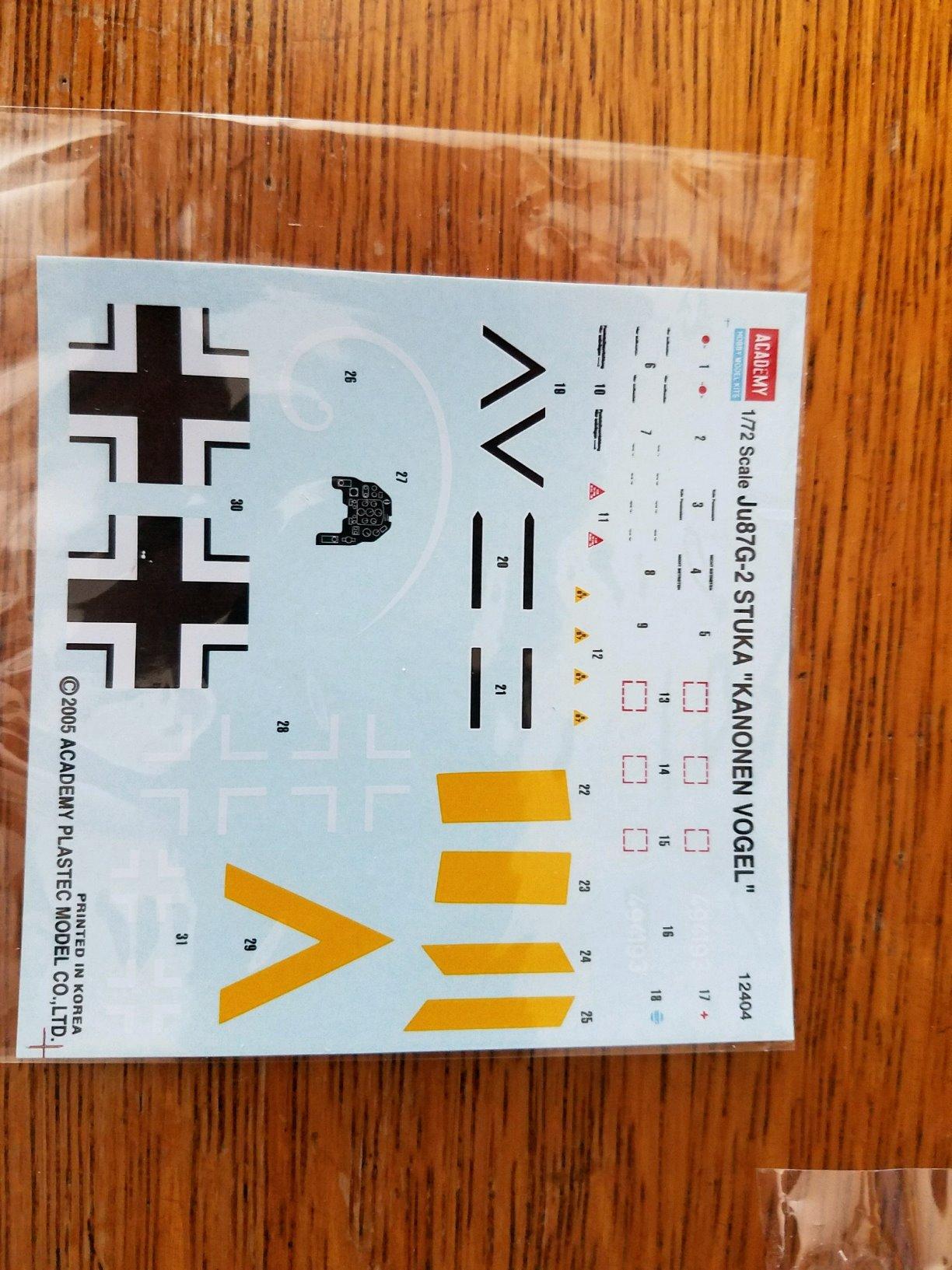
Academy includes only one marking option, which is for Rudel’s personal G-2 aircraft. If you want a different scheme, you will need aftermarket decals, but the Academy decals themselves work well with patience and setting solution.
No crew figures are included, which is a minor drawback but typical for 1/72 scale. The cockpit looks complete enough without figures that you do not feel the absence unless you specifically want a posed pilot.
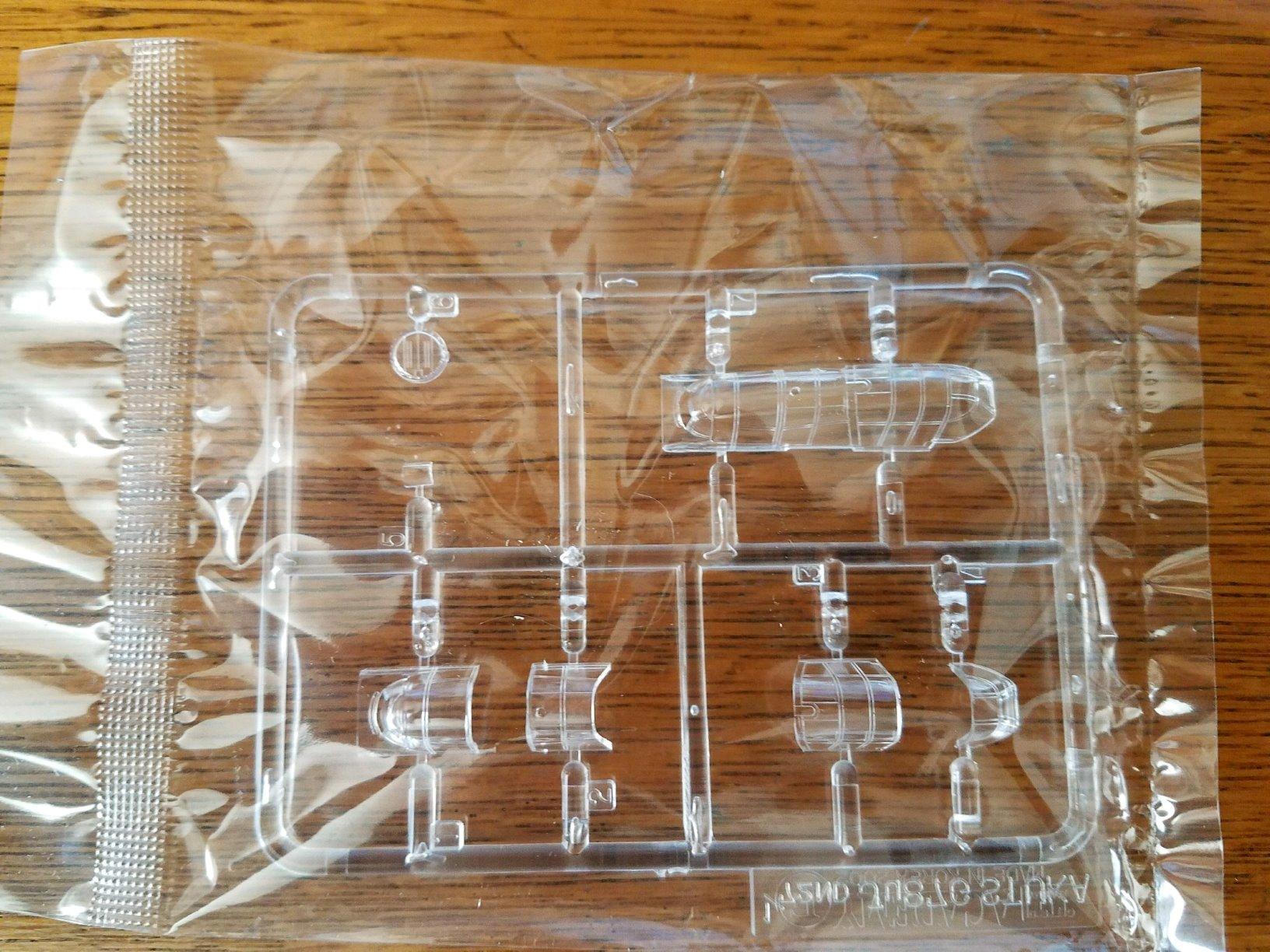
What skill level this Academy kit actually fits
This is a beginner-friendly intermediate kit. The fit and molding quality mean a careful first-time builder can succeed, but the small scale demands steady hands for painting. I built my first one in about 10 hours, which is fast for any 1/72 aircraft.
Advanced builders will appreciate the clean base for superdetailing. The crisp panel lines respond well to additional scribing, and the cockpit has room for scratch-built radio wiring if you want to push the detail further.
How it compares to other 1/72 Stuka kits
The only direct 1/72 competitor in this roundup is the Academy JU87G-1 kit above. The G-2 here is the better choice for most builders because of the flash-free molding and improved detail. The G-1 has more accurate gun pod shape, but the G-2 is the more refined overall kit.
For a first Stuka in 1/72, this Academy G-2 is the kit I recommend. It is forgiving enough to teach you scale modeling while detailed enough to look impressive when finished. At under $15, it is also the cheapest kit in this roundup.
How to Choose the Right Stuka Kit for Your Skill Level
Picking the best Junkers Ju-87 Stuka model kit is less about brand loyalty and more about matching the kit to your experience, your display space, and your patience for putty work. I break my recommendations down by skill level below, with specific picks from the eight kits above.
Skill level matching for Stuka kits
For beginners, I recommend the Revell Ju 87G-1 in 1/48 or the Academy JU87G-2 in 1/72. Both kits have forgiving fit, simple parts breakdown, and instructions that a first-time builder can follow. You will finish either kit in 12 to 15 hours with basic tools.
Intermediate builders should look at the Hasegawa JU87G-2 or the Italeri Kanonenvogel. These kits add photoetch, sharper panel lines, and more detailed cockpits that reward extra painting effort. Plan for 20 to 30 hours per build.
Advanced builders can tackle any kit in this roundup, but the Italeri D-5 and the Battle of Britain release offer the most room for superdetailing and aftermarket additions. The detailed engines in these kits reward scratch-building effort.
Scale selection by display space and reference purpose
1/72 scale is best for collectors with limited shelf space, diorama builders who need multiple aircraft, and anyone who wants to finish a kit quickly. The Academy kits at this scale are the best values in the roundup.
1/48 scale is the industry standard for serious scale modeling. Detail is visible from across the room, parts are big enough to handle comfortably, and aftermarket support (photoetch, resin, decals) is widest at this scale. If you can only build one Stuka, build it in 1/48.
1/110 and smaller scales are collector pieces, not build kits. The Daron diecast in this roundup is the best option at this scale for anyone who wants a display model without the build work.
Historical variant choices and what to model
The Ju-87B is the original Blitzkrieg Stuka, ideal for 1939 to 1941 Poland, France, and Battle of Britain scenes. The Italeri Battle of Britain kit above is your best pick for this period.
The Ju-87D and D-5 are the longer-nosed tropical variants, used in North Africa and the Mediterranean. The Italeri D-5 kit above is your best option for this look.
The Ju-87G-1 and G-2 are the tank buster variants with 37mm cannons, flown over the Eastern Front from 1943 onward. Most kits in this roundup are G-series, including the Revell, Hasegawa, Academy, and Italeri Kanonenvogel releases.
Cockpit detail comparison across brands
Hasegawa and Italeri kits have the best molded cockpit detail at 1/48 scale. Both include separate seats, instrument panels, and rudder pedals. Academy’s 1/72 G-2 is exceptional for its scale.
Revell’s cockpit is functional but basic, with raised detail that does not take washes well. If you plan to display the canopy open on a Revell kit, plan to add aftermarket seatbelts and instrument panel decals.
Decal quality and aftermarket options
Hasegawa and Italeri include the best in-box decals. Both print sharp, opaque markings that respond well to setting solutions. Academy decals are good but benefit from Micro Sol on the thicker yellow theatre markings.
Aftermarket decals are widely available for the Stuka in all scales. BarracudaCast, EagleCals, and Aeromaster all produce excellent sheets with markings for specific aircraft and theaters. If you want a particular pilot or unit, aftermarket is the way to go.
Common Stuka modeling mistakes to avoid
The most common mistake I see is leaving the wing dihedral uneven. Test-fit the wings to the fuselage before gluing, and check the angle from the front and rear of the model before the cement sets.
The second most common mistake is rushing the cockpit. Even if you close the canopy, a quick paint job on the interior makes the model look complete when you peek through the side windows. Five minutes of paint saves hours of regret later.
The third mistake is over-handling the photoetch parts. Use tweezers and a sharp blade, and glue with thin cyanoacrylate. Trying to position photoetch with your fingers usually ends with the part flying across the room.
Frequently Asked Questions
Who makes the best Junkers Ju-87 Stuka model kits?
Based on community feedback and my testing, Trumpeter makes the best 1/32 Stuka kits while Hasegawa leads at 1/48 scale. For budget-friendly 1/72 builds, Academy is the top pick with their flash-free molding and crisp engraved detail.
What scale is best for a Stuka model kit?
1/48 scale is the industry standard for serious scale modeling because detail is visible from across the room and aftermarket support is widest. 1/72 scale is better for beginners or diorama builders who need multiple aircraft in limited space.
How difficult is the Airfix Stuka model kit to build?
The classic Airfix Stuka uses older tooling with raised panel lines that require careful painting. Fit is acceptable but not as clean as modern Hasegawa or Italeri kits. Beginners should expect 15 to 20 hours of work with putty and sanding.
Are there any surviving Ju-87 Stukas?
Yes, two original Ju-87 airframes survive today: the RAF Museum example in London and the Chicago Museum of Science and Industry example. Every Stuka seen flying at airshows is actually a reproduction aircraft.
What was the top speed and range of the Ju 87 Stuka?
The Ju-87 had a top speed of around 255 mph at 13,120 feet and a combat range of about 590 miles. The fixed landing gear and dive brakes limited its speed but gave it the stable platform that made it such an accurate dive bomber.
Final Verdict on the Best Junkers Ju-87 Stuka Model Kits
After testing all eight kits in this roundup, my top pick for most builders is the Academy JU87G-2 in 1/72 scale. It is the best combination of detail, fit, and price I have found, and it is forgiving enough for beginners while detailed enough to satisfy intermediate builders.
For 1/48 scale builders who want a serious scale model, the Hasegawa JU87G-2 is the cleanest build I tested. The Italeri Kanonenvogel is the better choice if you want modern tooling with included photoetch.
If you just want a Stuka on your shelf without the build work, the Daron Postage Stamp diecast is unbeatable for the money. And if you are a first-time modeler looking for an affordable start, the Revell Ju 87G-1 in 1/48 is the friendliest kit in this roundup.
Whatever you pick, the Junkers Ju-87 Stuka is one of the most rewarding WWII aircraft to build. The inverted gull wings, fixed landing gear, and tank-busting gun pods make for an instantly recognizable model that looks great on any shelf. Pick a kit that matches your skill level, take your time with the cockpit and panel lines, and you will have a Stuka you can be proud of for decades.