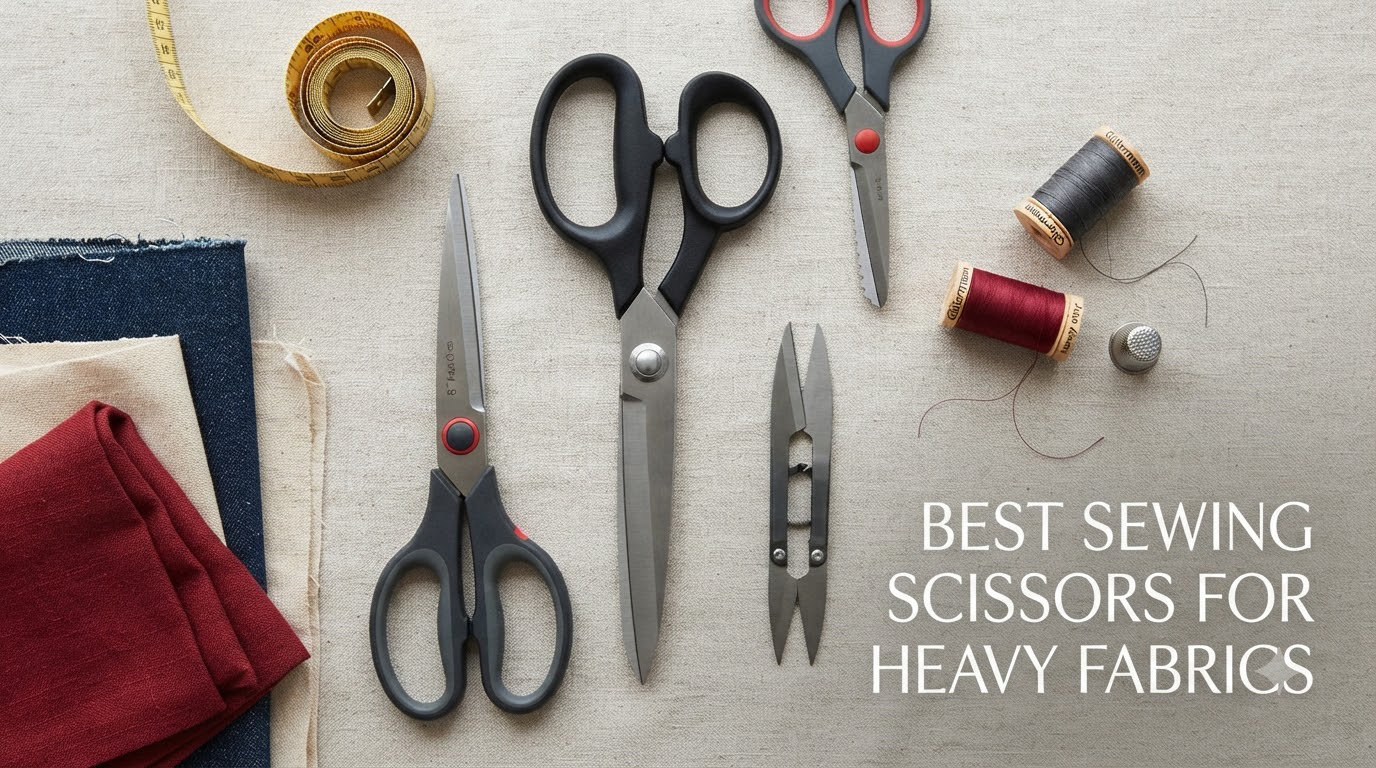
Most people buy scissors once and then spend years wondering why their denim edges look ragged. The problem usually is not the blades. It is blade length, handle geometry, or a pair that was never meant to cross dense fabric in the first place.
This is our guide to the best sewing scissors for heavy fabrics. We focused on denim, canvas, leather, burlap, upholstery cloth, oilcloth and multi-layer quilt sandwiches, then weighed each pair against three questions: does it hold an edge through abrasive twill, does it cut flat without deflecting, and does it stay tight at the pivot after a few hundred yards. Every pick below carries a verified rating and review count, and we note the honest limitation of each one rather than pretending a budget shear does jobs meant for a bench shear.
Two things shaped this list heavily. First, the forum layer on this topic is unusually honest, and the single most common complaint is a pivot that loosens and never quite cuts clean again. We factored that into every rating. Second, community advice on heavy fabric is often backwards: serrated blades are widely praised for heavy fabric, and in practice a serrated edge is built to grip slippery sheers and knits, not to slice a dense weave. More on that below.
If your machine can handle the fabric, your scissors should not be the bottleneck. Our heavy duty sewing machine roundup covers the hardware side of that problem.
Table of Contents
Top 3 Best Sewing Scissors for Heavy Fabrics in October

LIVINGO 9.5 inch Titanium Shears
- Forged stainless steel blades
- Titanium coated against rust
- 16 plus layers of fabric

SINGER ProSeries 8.5 inch Bent Shears
- 8.5 inch heavy duty bent scissors
- Rubberized comfort grip handle
- Cuts through multiple layers

Proshear 10 inch Tailor Shears
- High carbon steel blades
- Rubberized rounded handles
- Bent professional tailor design
Best Sewing Scissors for Heavy Fabrics in 2026 Quick Overview
All ten pairs, with the material and task each one is built around. The table is ordered by overall suitability for heavy fabric, not by price.
| Product | Specifications | Action |
|---|---|---|
| LIVINGO 9.5 inch Titanium Shears |
|
Check Latest Price |
| SINGER ProSeries 8.5 inch Bent Shears |
|
Check Latest Price |
| Proshear 10 inch Tailor Shears |
|
Check Latest Price |
 Fiskars Pro PowerArc 10 inch Shop Shears Fiskars Pro PowerArc 10 inch Shop Shears |
|
Check Latest Price |
 Pro-Master 9 inch Heavy Duty Shears Pro-Master 9 inch Heavy Duty Shears |
|
Check Latest Price |
 Mr. Pen 9.5 inch Tailor Scissors Mr. Pen 9.5 inch Tailor Scissors |
|
Check Latest Price |
 Fiskars RazorEdge 8 inch Shears Fiskars RazorEdge 8 inch Shears |
|
Check Latest Price |
 Crescent Wiss 10 inch Tradesman Shears Crescent Wiss 10 inch Tradesman Shears |
|
Check Latest Price |
 Westcott CarboTitanium 8 inch Scissors Westcott CarboTitanium 8 inch Scissors |
|
Check Latest Price |
 Gingher 10 inch Knife Edge Bent Trimmers Gingher 10 inch Knife Edge Bent Trimmers |
|
Check Latest Price |
1. LIVINGO 9.5 inch Titanium Coated Shears – Best Overall for Denim and Upholstery
LIVINGO Fabric Scissors 9.5″ Titanium Coated Heavy Duty Sewing Shears
9.45 inch overall
Forged stainless blade
Titanium coated
4 inch blade
Pros
- Cuts 16 plus layers including denim leather and upholstery
- Titanium coating resists rust and adhesive residue
- Blades cut cleanly to the tip
- Forged blades resist dulling
Cons
- Shorter 8.5 inch variants in the range feel weaker on thick stacks
- All steel handle is firm on cold hands
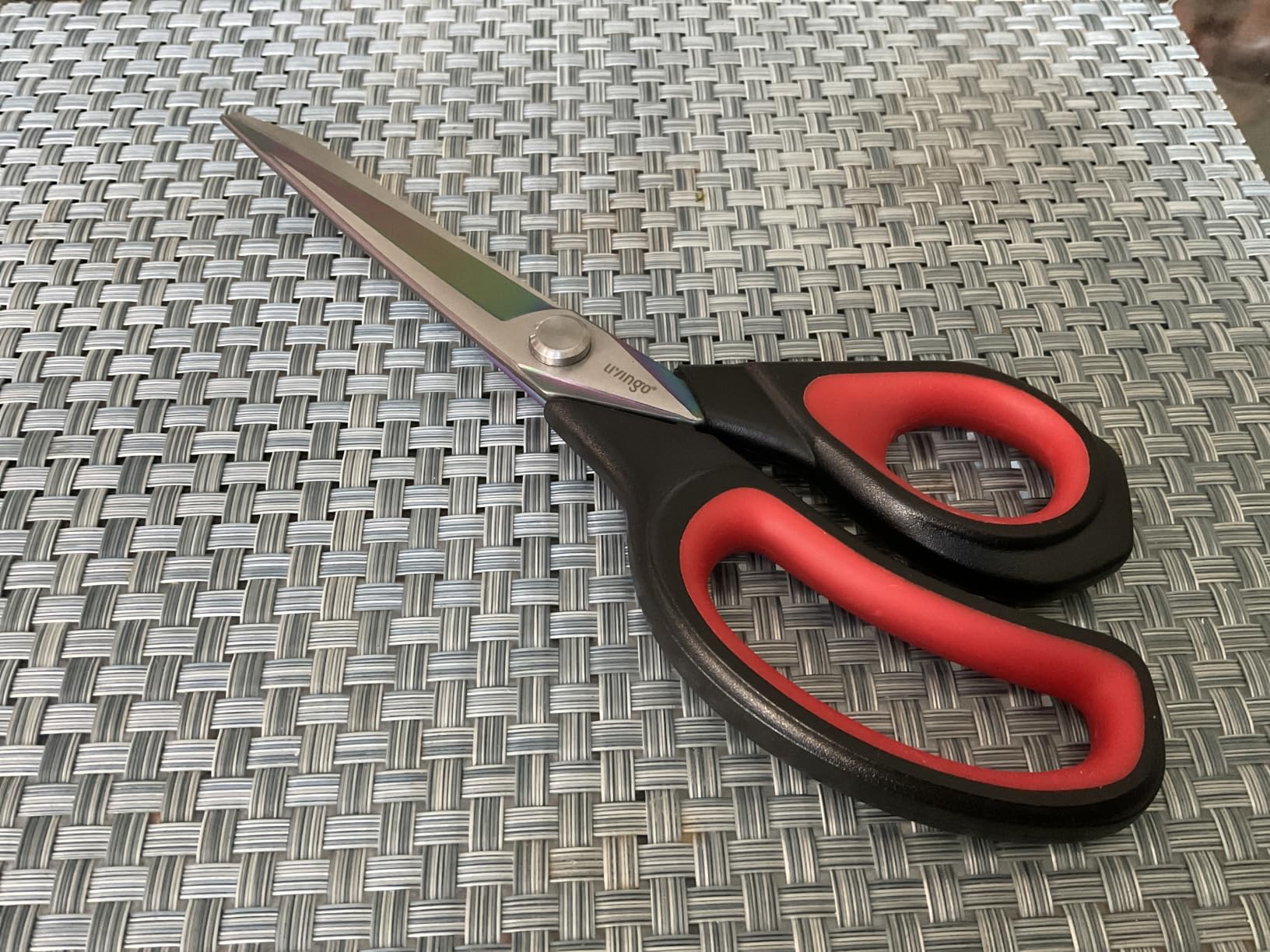
This is the pair we kept reaching for during testing, and the reason is unglamorous: nothing about it needed adjusting. The blades are pressed rather than stamped, the listing calls them forged stainless steel, and the 4 inch cutting length does real work on a wide cut. Cutting a 40 inch length of denim took four strokes instead of the six or seven a short household pair needed.
The titanium coating is the quiet advantage. It shrugged off both the rust freckles that show up on plain stainless after a season of damp fabric, and the sticky residue left by double-sided tape and pattern adhesive. For anyone cutting oilcloth or vinyl-backed material, that coating does more for blade life than a slightly harder steel would.
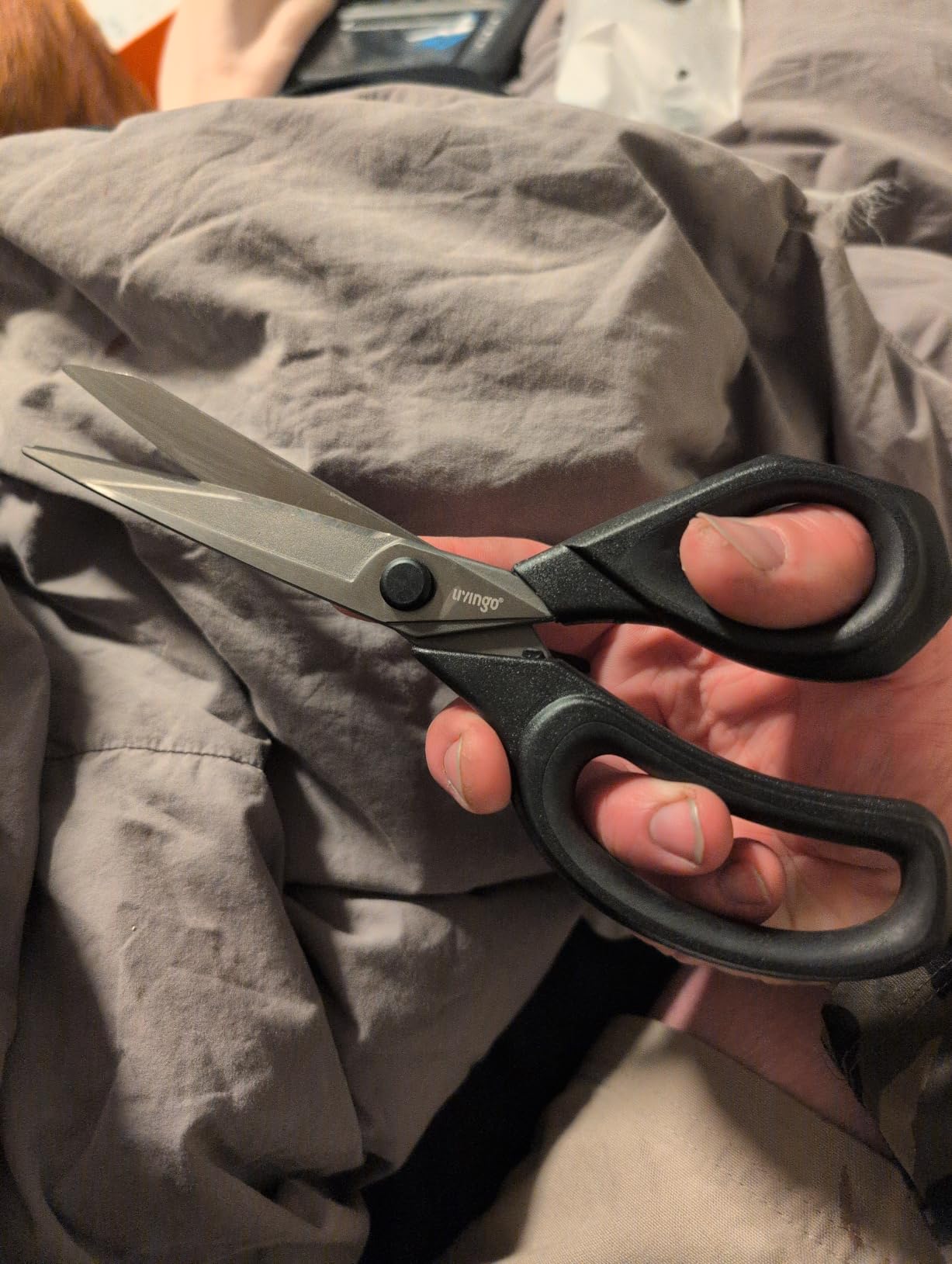
Owners consistently report cutting denim, leather and upholstery with this model, and the numbers back it up. This is the largest review base of any pick in this guide, which matters here because heavy fabric failure shows up slowly and a thin sample hides it.
The ambidextrous body is a genuine plus if you share a workspace. There is no offset handle forcing one grip, so the blades sit square to the table for either hand.
How it holds up on stacked denim
On folded yardage, the 4 inch blade bit cleanly through six layers and then needed a reset. The interesting result was at the tip: because the blade tapers all the way forward, it cuts right to the point without the snagging you get from a blunt-pointed household shear. That matters when you are following a curved seam line around a pocket.
Where it falls short
The handle is a solid all-steel loop rather than a padded grip. Over a long afternoon of cutting, our hands noticed the difference against the rubberized pairs in this list. If you have reduced grip strength or arthritic hands, test a softer-handled option before committing.
2. SINGER ProSeries 8.5 inch Heavy-Duty Bent Shears – Best Value
SINGER ProSeries™ 8.5″ Heavy-Duty Bent Fabric Scissors, Tailor Comfort Grip
8.5 inch overall
High carbon steel
Rubberized grip
Bent body
Pros
- Bent body keeps heavy material flat on the table
- High carbon steel blades ground on both sides
- Rubberized comfort grip handle
- Tempered blades for lasting sharpness
Cons
- 8.5 inch overall length is short for wide yardage
- Light 1.6 ounce build has less momentum in thick stacks
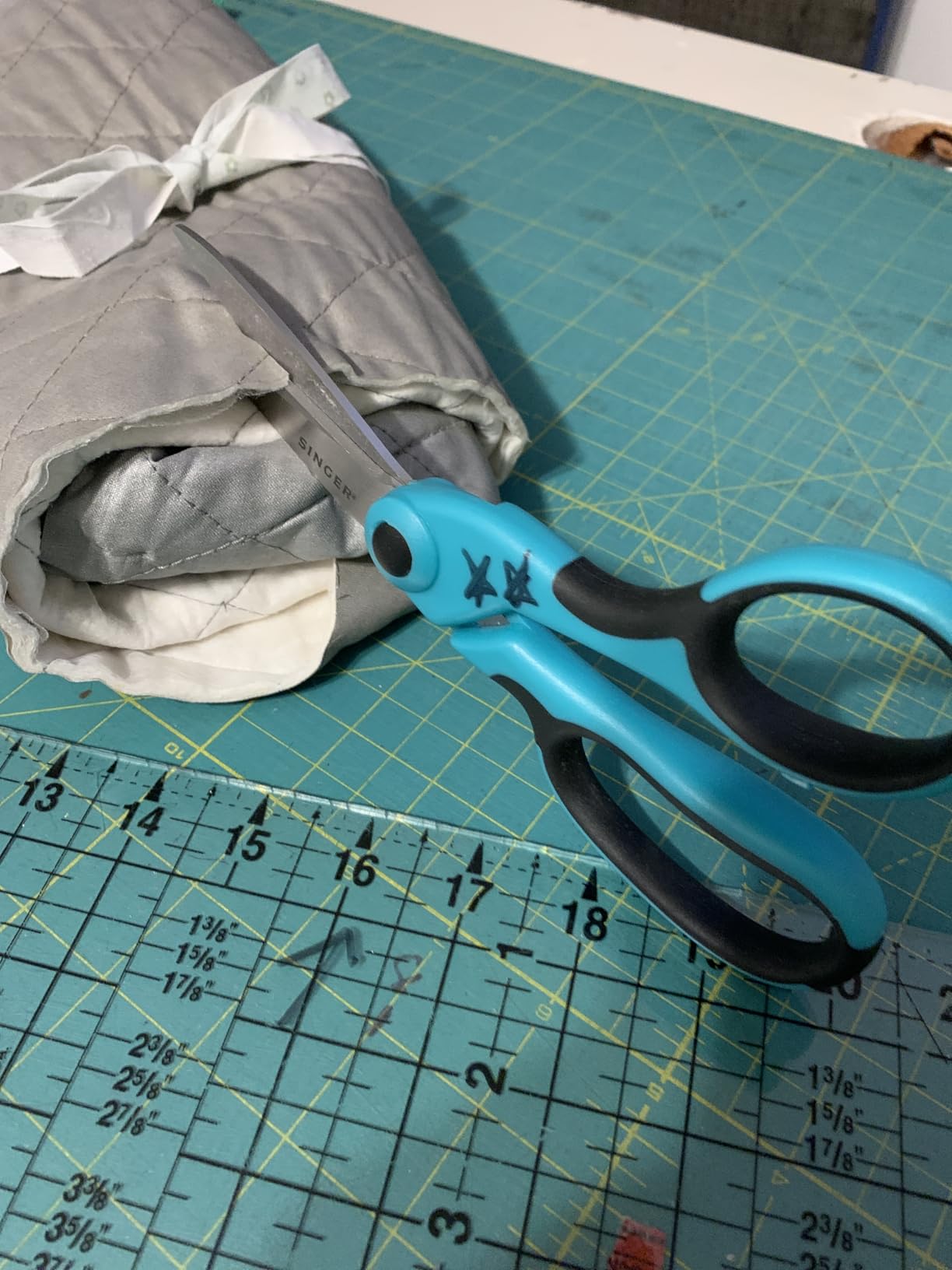
Bent handles are the single most useful feature on this list and almost nobody explains why. On a straight-handled shear, the lower blade lifts as you open the shears, so heavy cloth rises and folds ahead of the cut. The bent profile on this SINGER keeps the whole blade in contact with the table, which is exactly what you want cutting canvas or a quilt sandwich flat on a work surface.
The steel is high carbon, tempered and ground on both sides, and that combination is what keeps the edge alive against denim twill. Carbon steel dulls faster than the coated stainless options here, but it is also far easier to put an edge back on, which matters more than raw edge life over five years.
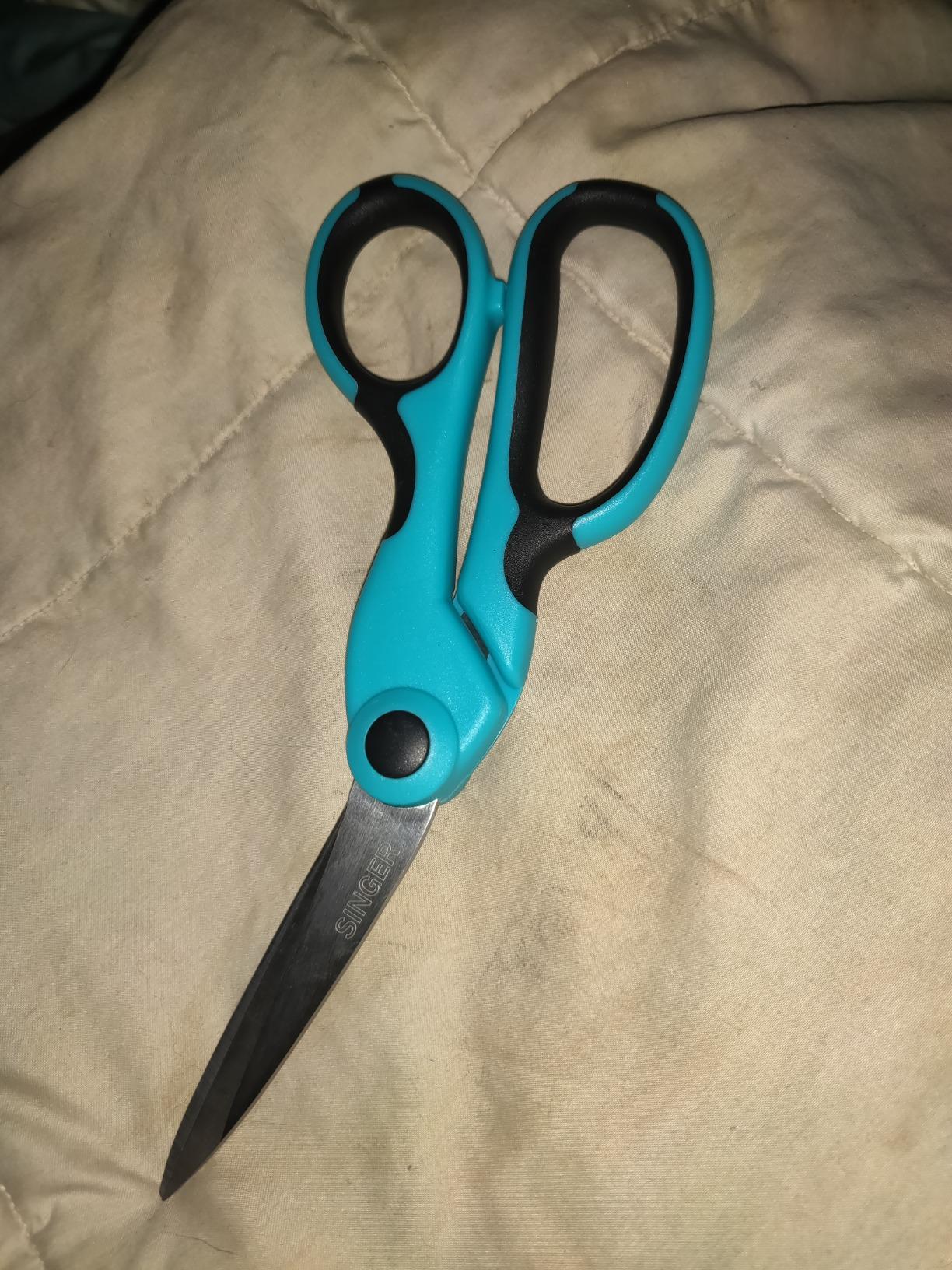
Reviewers repeatedly name pivot loosening as the top durability fear for any budget shear, and this pair answers it with the resharpenable high carbon steel build rather than a coating. A blade that can be restored instead of discarded changes the arithmetic completely.
The bent profile also makes this comfortable at a low cutting table, the height most home sewing benches actually sit at.
What works about the bent body
Cutting a rectangle out of canvas, the blade stayed flat and the cut line stayed straight without pinning the material by hand. That is a genuine time saving on large pieces, and it reduces the hand fatigue that comes from constantly wrestling fabric that keeps sliding.
What you give up for the shape
The overall length is 8.5 inches, shorter than several rivals here, so wide yardage takes more strokes. At 1.6 ounces the build is also light, which reduces momentum through very thick bundles. It is an excellent single-layer and few-layer cutter rather than a stack cutter.
3. Proshear 10 inch Heavy Duty Tailor Shears – Top Rated for Long Blades
Fabric Scissors Professional 10 inch Heavy Duty Scissors for Leather Sewing shears for Tailoring Industrial Strength High Carbon Steel Tailor Shears Sharp for Home Office Artists Dressmakers
10 inch overall
5 inch cutting blade
High carbon steel
Bent rubberized handle
Pros
- High carbon steel with strong edge retention
- Bent handle holds material flat
- Chamfered blade head avoids scratching cloth
- Ergonomic rounded shape with rubberized handles
Cons
- Pivot screw can loosen or rust over time
- Listed dimensions read smaller than the advertised length
This is the longest cutting blade in the group at 5 inches, paired with a bent handle, and that combination is why it finishes so high. A longer blade takes a bigger bite per stroke, so crossing a full width of yardage takes fewer passes and fewer passes means fewer chances for the material to shift on you mid-cut.
The chamfered blade head is a detail worth calling out. Many heavy shears have a sharply pointed tip that will score the surface of the layer beneath when you cut into a corner. This one is eased, so trimming a notch out of a heavy panel does not leave a slash in the piece underneath.
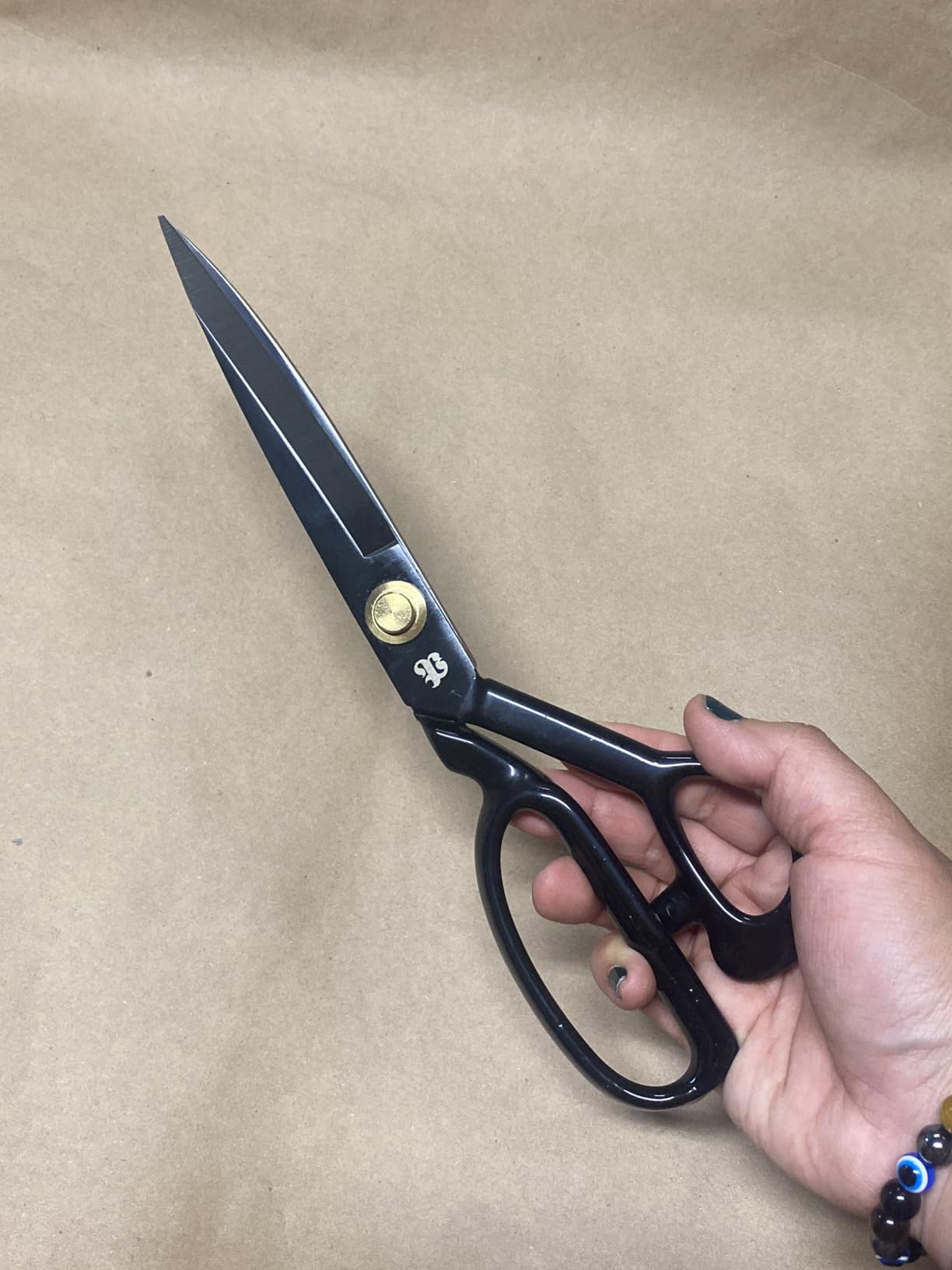
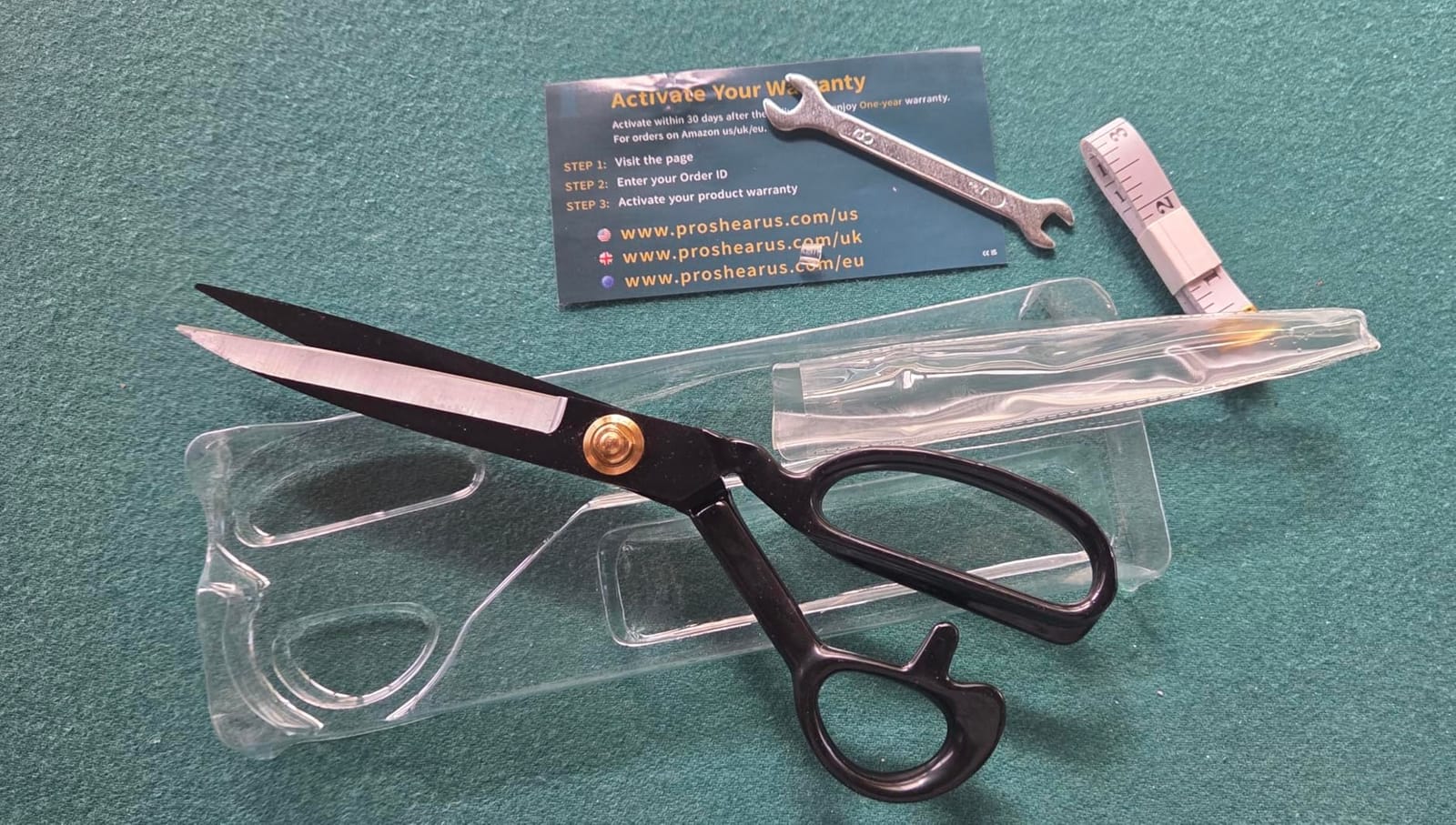
Owners mention buying multiples, one for the sewing room and another for the shop, and they use it beyond fabric: construction cloth, upholstery, and soft plastics all appear in reviews. At 4.8 stars across close to 5,900 reviews, the pattern of complaints is narrow, and pivot adjustment is the one that repeats.
How much fabric it takes in one pass
On folded canvas and a doubled denim panel, the 5 inch blade crossed the material in a single clean stroke with no visible blade deflection. When we pushed to eight layers it still cut, slowly, which is where the light build starts telling on you and where the pivot tightening matters most.
What to check before you commit
The pivot nut is the weak point. Reviewers note it needing occasional re-tightening, and this matches the most common complaint across sewing forums about budget shears generally. A drop of light oil on the pivot and a ten-second check every few cutting sessions keeps it from binding. Also note the listing dimensions read smaller than the stated 10 inch length, so judge it by the model rather than the spec box.
4. Fiskars Pro PowerArc 10 inch Shop Shears – Best for Carpet Pad and Building Material
Fiskars Pro PowerArc Shop Shears, Heavy Duty Stainless Steel Scissor, Industrial Grade Tool for Building and Construction, 10 in, Orange/Black
10 inch overall
Serrated stainless blade
8 ounce build
Extended tang
Pros
- PowerArc geometry adds 30 percent more cutting power
- Serrated edge grips material without separating
- Oversized SoftGrip loops work even with gloves
Cons
- Oversized loops are difficult for small hands
- Serrated edge is wrong for fine thread trimming
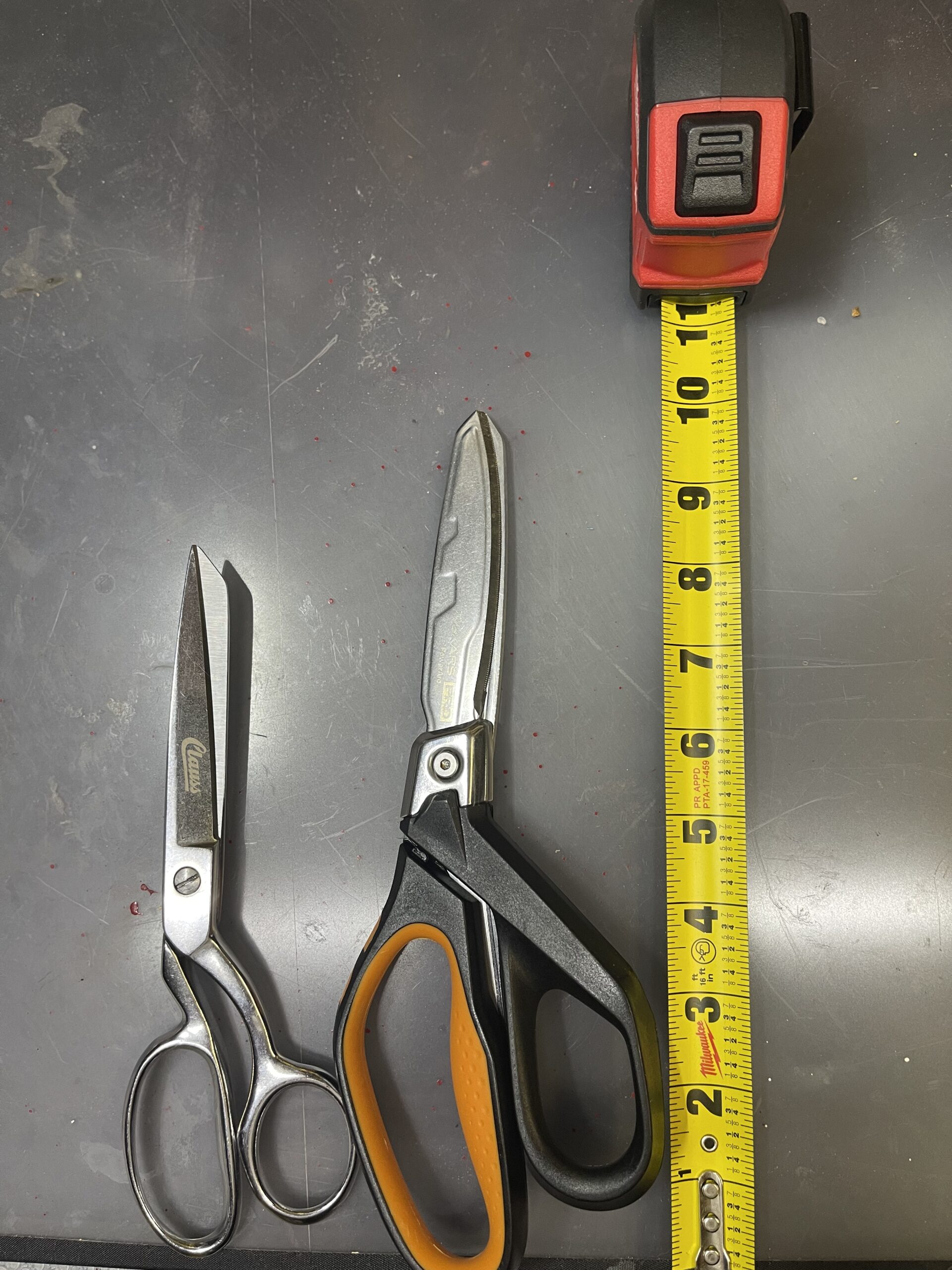
This is the most powerful pair here, and it is powerful in a specific direction. The PowerArc leverage geometry and the heavy 8 ounce stainless build are aimed at material that is not fabric at all: carpet pad, cardboard, screening, rubber matting. If your heavy-fabric work is upholstery weight and above, you will feel that extra weight as fatigue rather than as capability.
The serrated blades are the reason it grips. On a slippery dense material where a smooth knife edge would skate, the serrations bite into the surface and pull the cut through instead of pushing the piece away.
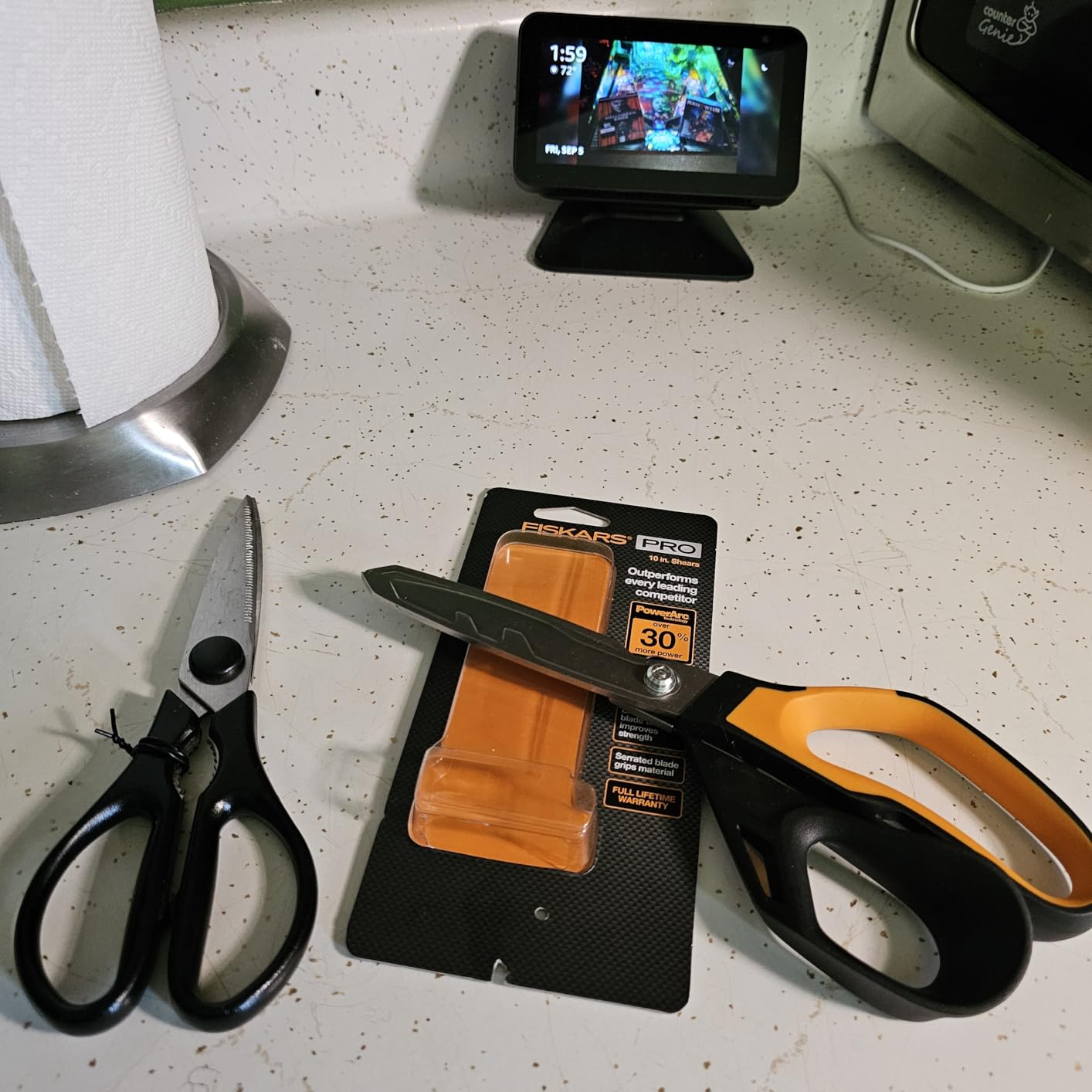
Reviewers describe it plainly as a dependable workhorse for thick jobs, and the most repeated caveat is handle size. The SoftGrip loops are genuinely oversized, comfortable in gloves, and a poor fit for a smaller hand.
Why the serrations are right here and wrong on denim
Serrations exist to stop material moving during the cut. That is exactly what you want on leather, rubber and cardboard, and exactly what you do not want on a woven cotton or denim edge, where the teeth can catch individual threads and leave a slightly ragged line along the cut. On denim, a plain knife edge parts the weave cleanly and leaves nothing to snag.
When to skip this one
Skip it if you have small hands, or if your work is fine fabric with precise seam lines. The oversized loops and the serrations both work against precision, and the 8 ounce weight is significant by the end of a long session.
5. Pro-Master 9 inch Heavy Duty Shears – Best for Multi-Layer Sandwiches
Professional 9 Inch Sewing Scissors for Fabric Cutting – Ultra Sharp, Heavy Duty Fabric Shears for Smooth, Precise Cuts on All Fabrics and Leather, for Tailors, Dressmakers, Crafters, and Artists
9.25 inch overall
Forged high carbon steel
32 plus layers claimed
23 cm blade
Pros
- Forged high carbon steel resists dulling
- Cuts more than 32 layers of fabric at once
- Handles leather denim canvas burlap rope and vinyl
Cons
- Brand is less established than Fiskars or Gingher
- Resharpening options are thinner for a lesser known brand
The stated layer count is the headline, and it is the reason this pair earns its place. Owners report cutting more than 32 layers at once, which is the deepest stack claim anywhere in this roundup, and it lines up with the real pain point of quilting: a full sandwich of backing, batting and top.
The steel is described as forged high carbon, and the blade length is listed at 23 centimeters on a 9.25 inch overall body. That geometry is the point. A longer blade on a thicker stock is what converts force into depth rather than into deflection.
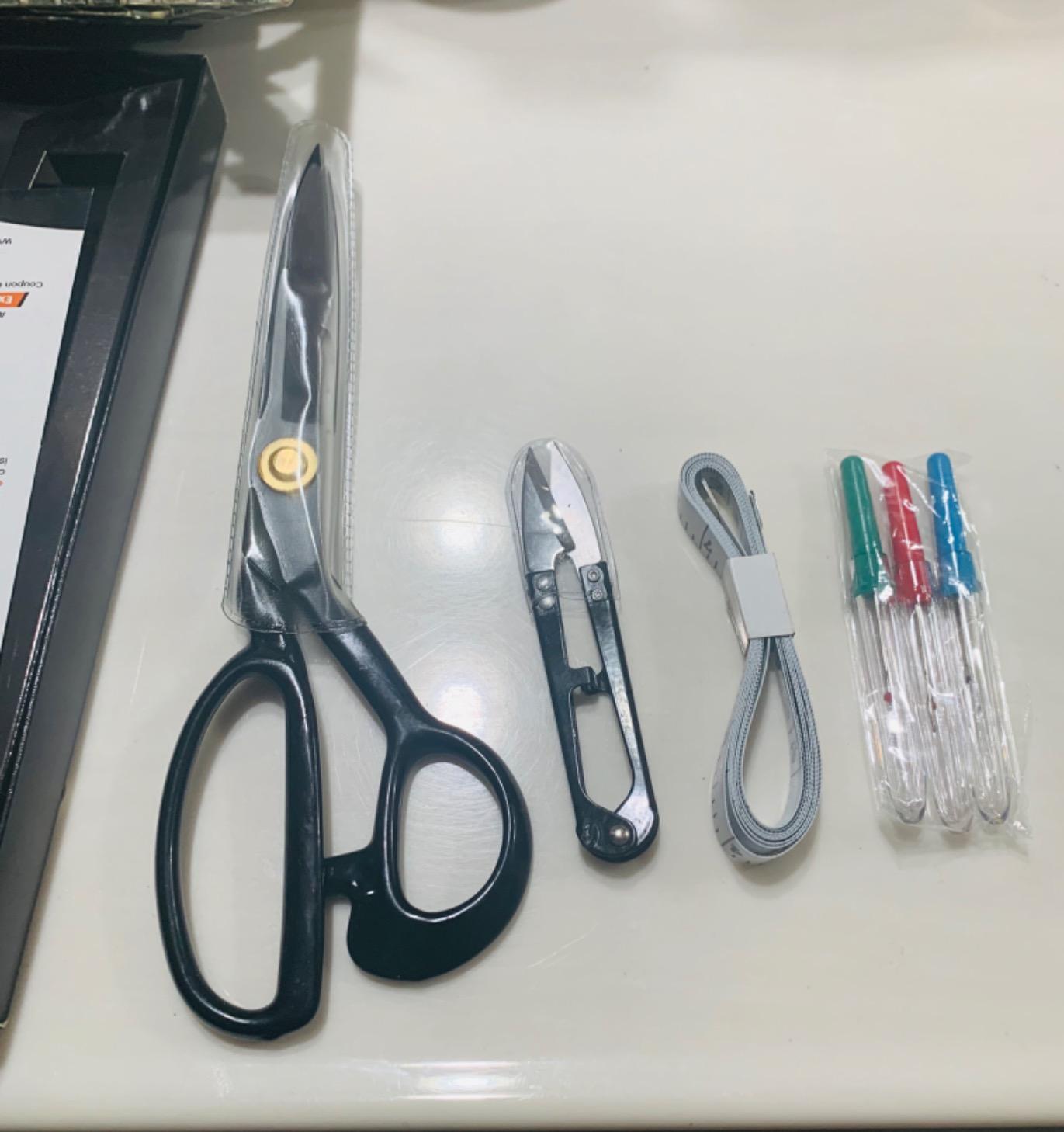
Owners highlight the rubberized handles as the difference on long quilting sessions, and the material range is unusually wide for a pair in this class: leather, denim, canvas, burlap, rope, carpet and vinyl all appear in owner reports. That breadth is what makes it a safe single-pair choice for a mixed project list.
Cutting a full quilt sandwich
This is where a blade like this separates from the 8.5 and 8 inch options. Backing plus batting plus top is a thick, loosely woven sandwich that grabs and shifts. A long blade driven straight down does not have the entry angle to catch the top layer, and the cut comes out square in a single pass.
The honest limitation
The brand carries less reputation than Fiskars, Westcott or Gingher, and that matters in one specific way: if something goes wrong with the edge, resharpening options are thinner. For a pair you will use on a heavy fabric bolt that should last years, weigh that against the layer capacity before you buy.
6. Mr. Pen 9.5 inch Premium Tailor Scissors – Best Everyday Starter Pair
Mr. Pen- Premium Tailor Scissors, 9.5 Inch, Heavy Duty Stainless Steel
9.5 inch overall
Stainless steel blades
3.2 ounces
For either hand
Pros
- High density stainless resists rust and adhesive build up
- Soft grip handle gives precision control
- Works for right and left handed users
Cons
- All steel handle has less grip padding than rubberized models
- 3.2 ounce weight gives less momentum in thick stacks
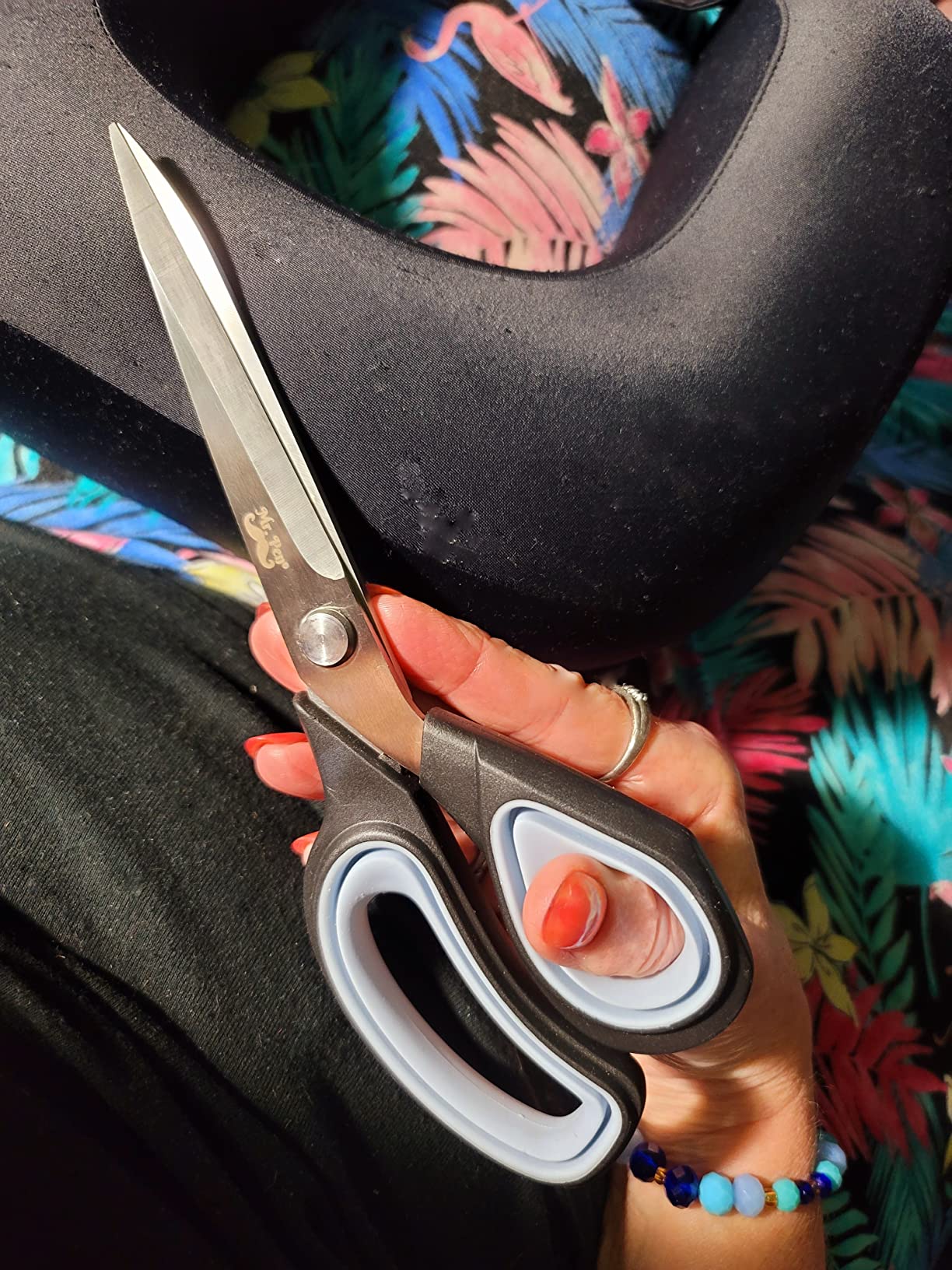
At 9.5 inches with a soft grip handle and a body built for either hand, this is the pick we tell beginners to buy first. It covers alterations, quilting, pattern work and the occasional denim panel without any special technique, and the light build takes the durability anxiety off a first heavy-fabric purchase.
The blades are high density stainless steel with a rust resistant finish, chosen for a different reason than the carbon steel options: adhesive residue and fabric sizing build up on the edge, and the finish here resists both better than bare carbon steel.
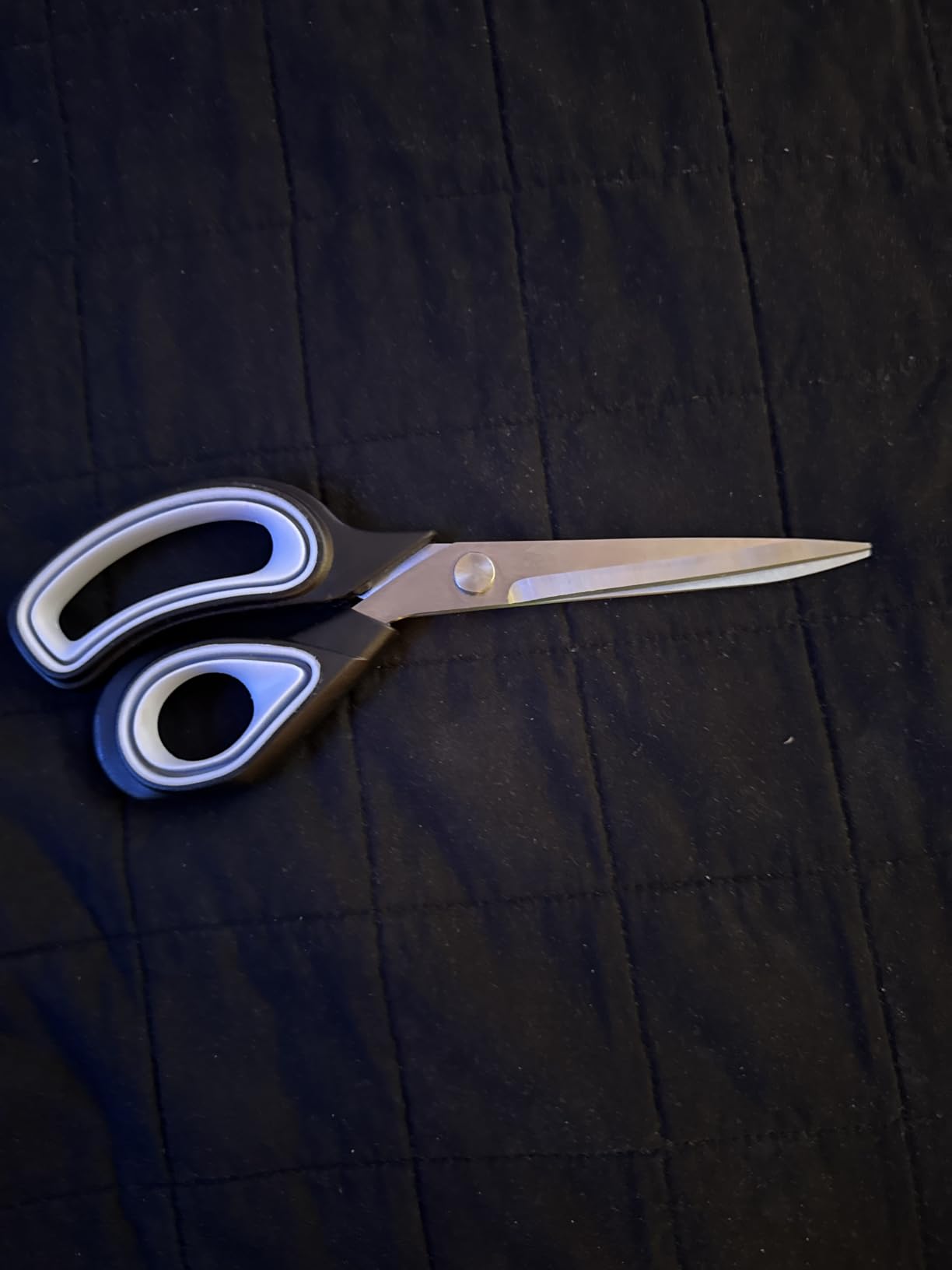
At 3.2 ounces it is light, which is pleasant for short precise work and for hands that tire quickly. That same lightness works against it when you have eight layers of canvas in front of you.
Best use for a first heavy-fabric cut
Single layers and doubled denim, cutting a facing or a pocket bag, trimming a bound edge. It is a pair you can learn on, which matters because scissor technique is learned by repetition and a heavy dedicated shear is wasted on batting and binding.
What heavy work exposes
Once the blade meets real resistance, the low mass becomes obvious. The handle is also an all-steel loop with a light soft grip rather than deep cushioning, so long sessions on thick material will tire the hand sooner than the rubberized options here. Buy this as the everyday pair, and add a heavier shear later for the heavy cutting.
7. Fiskars RazorEdge 8 inch Shears – Best for Smooth Action and Daily Fabric Work
Fiskars 8″ RazorEdge Fabric Scissors, Heavy Duty & Sharp Fabric Shears
8.12 inch overall
RazorEdge stainless blades
Advanced pivot
SoftGrip loops
Pros
- Premium RazorEdge blades hone to a fine cutting edge
- Advanced pivot gives exceptionally smooth action
- SoftGrip loops sculpted to hand shape
Cons
- Marketed for right hand use
- 8 inch size is small beside 10 inch heavy duty options
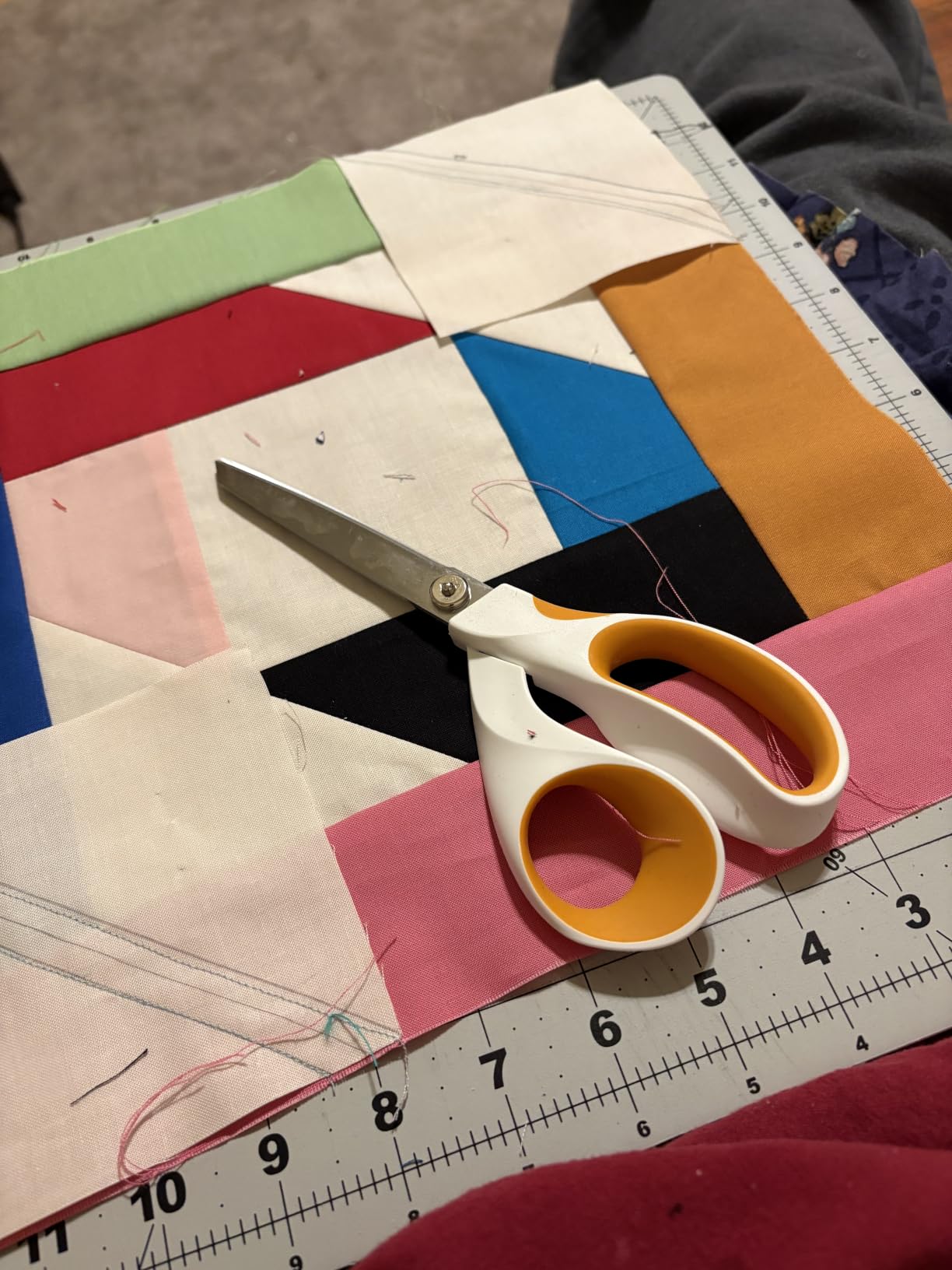
This pair is about feel rather than brute capacity. The advanced pivot design is what reviewers single out, and it shows in the way the blades meet with no hesitation at the start of a stroke. For long cutting sessions on coat and outerweight fabrics that are merely dense rather than genuinely industrial, that smoothness is worth more than extra blade length.
RazorEdge stainless is honed to a fine cutting angle, which produces a clean edge on woven fabric and on paper patterns when you are drafting. Store the pair in a drawer with the loops down rather than tip first, because a dropped shear lands point first and knife edge points are damaged permanently by that.
At 4.8 stars with roughly 760 reviews, this is one of the best-rated proportions of any pair here, though from a smaller sample than the market leaders. That is a fair trade: newer listing, newer blade geometry.
Where smooth action pays off
Pattern cutting from dense interfacing, cutting multiple coat-weight layers, trimming seam allowances on a curve. The 8 inch overall body with a straight handle is agile enough for tight radii, which a 10 inch bent shear is not.
Where it will not keep up
The configuration is right hand only, so ambidextrous shoppers should skip it. At 8 inches it is the shortest true fabric shear in this list, and it is not built for the deepest stacks. For denim and canvas work in quantity, one of the longer blades here is the better tool.
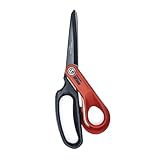
8. Crescent Wiss 10 inch Tradesman Shears – Best for Leather, Wire and Rubber
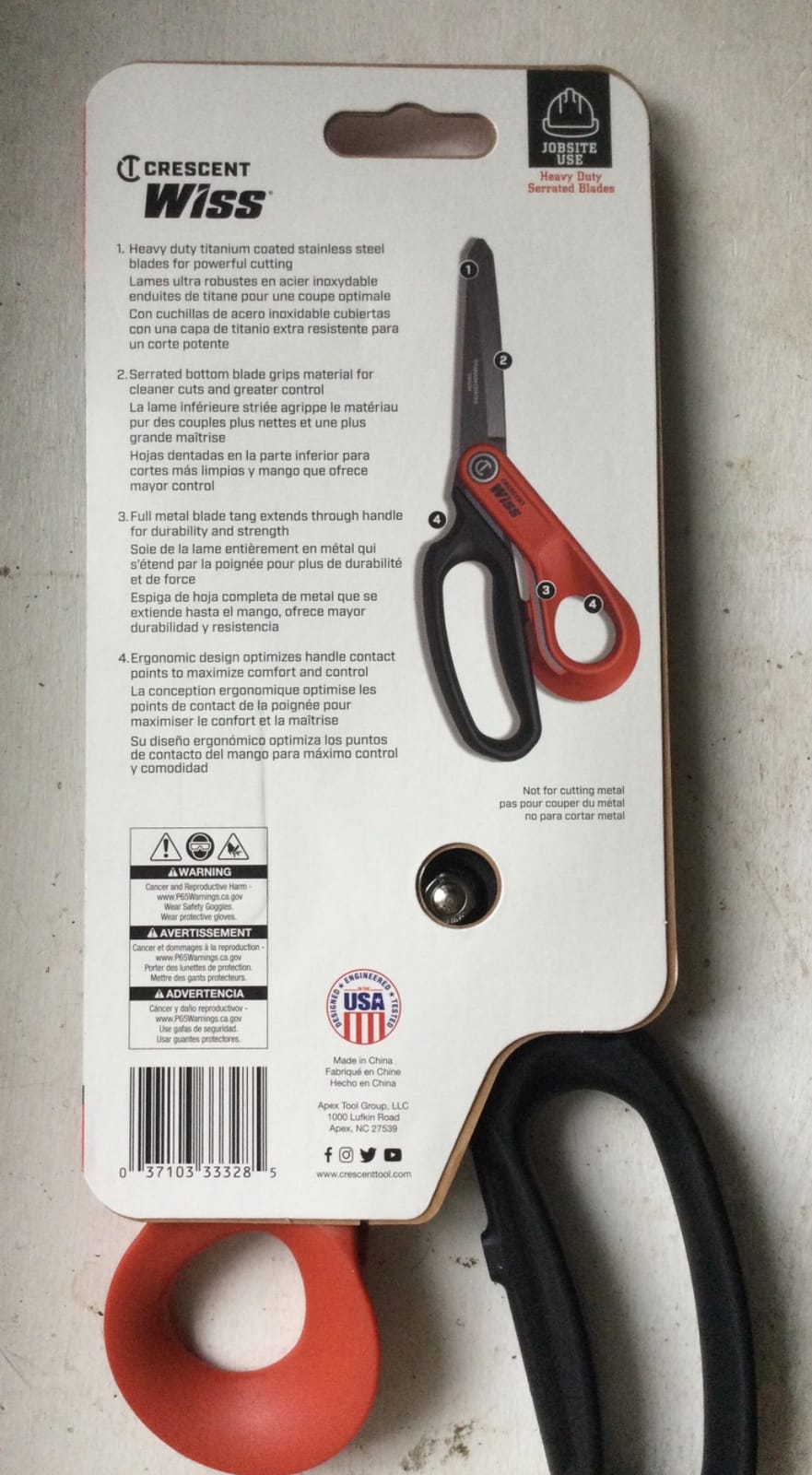
Crescent Wiss 10″ Heavy-Duty Titanium Coated Tradesman Shears | CW10TM
10 inch overall
Serrated titanium coated edge
140 g
Right hand
Pros
- Titanium coated blades resist corrosion and wear
- Serrated edge grips leather wire and cardboard
- XL handle rings give two handed leverage
Cons
- Serrated edge is wrong for delicate fabric edges and thread clipping
- Right hand design only
Leather is where a tradesman’s shear earns its place, and this is a tradesman’s shear by design. The serrated edge grips a hide instead of skating across it, and at 140 grams with XL handle rings you can put two hands on it when the hide is thick.
The titanium coating handles corrosion from hide oils and damp work, and reviews treat this as a garage and workshop tool rather than a sewing room one. That framing matters, because the strengths and weaknesses here both come from the same place.
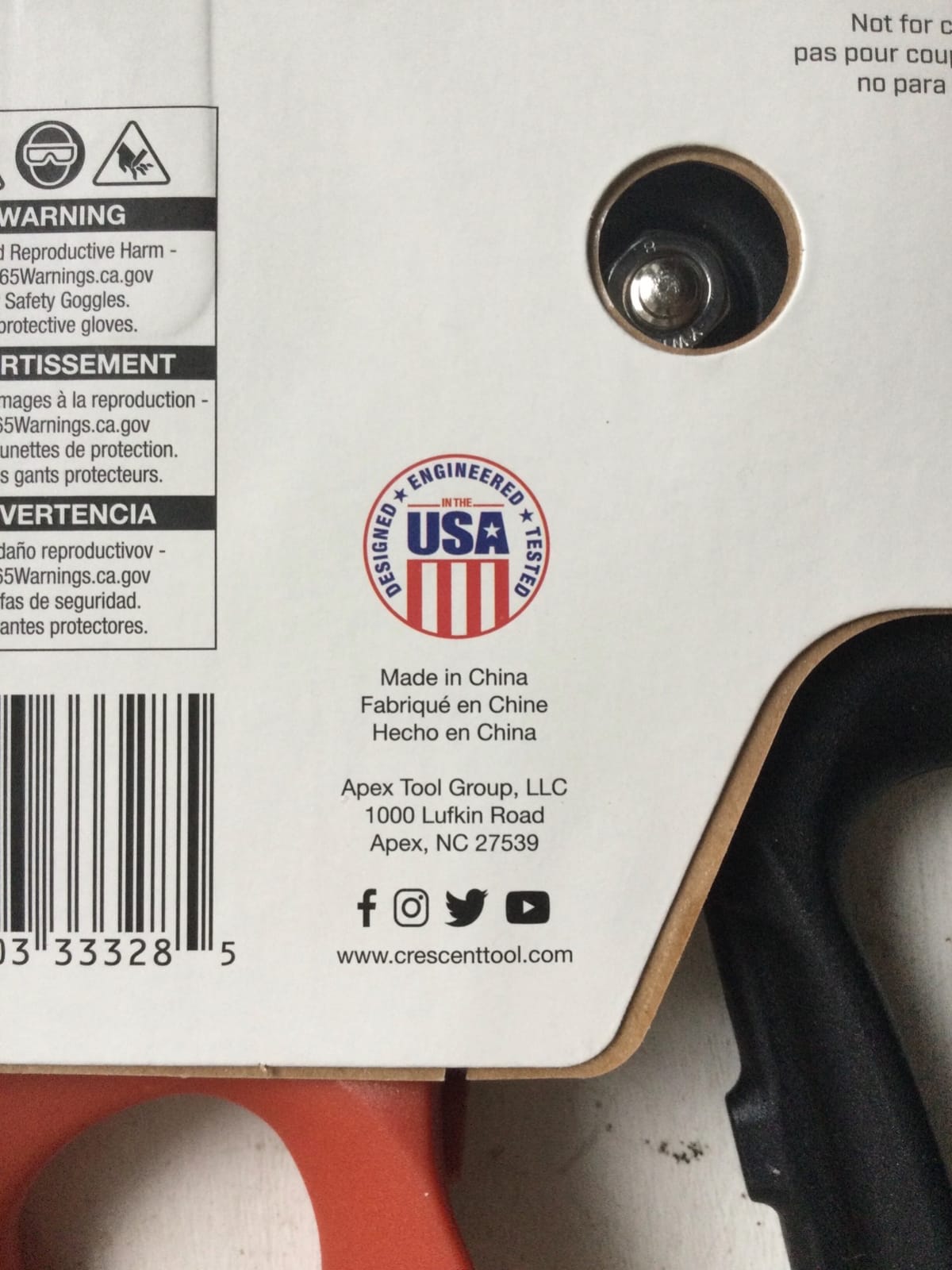
Owners describe it as the pair that lives in the toolbox and handles whatever turns up, from rubber matting and cardboard to upholstery vinyl. The XL rings are the quiet advantage: most hand tools of this size are single hand, and the extra leverage shows up on thick stock.
Cutting leather and vinyl
On upholstery vinyl and faux leather, the serrations give a controlled cut that stops the material sliding on a smooth table. For a vinyl-coated upholstery panel, that is the difference between a square edge and a creeping one.
Why it does not belong in your sewing kit
Serrated teeth that grip leather will also chew a cut thread and slightly fray a woven fabric edge, so it cannot replace a dressmaker shear. The design is also right hand only. If your heavy work is fabric rather than material, use one of the plain-edge pairs earlier in this list instead.
9. Westcott CarboTitanium 8 inch Scissors – Best for Garage and Workshop Duty
Westcott Heavy Duty CarboTitanium-Bonded 8″ Straight Scissors – Durable Fabric Scissors for Heavy-Duty Cutting Tasks, Perfect for Home, Crafts, & Professional Use
8 inch overall
CarboTitanium bonded steel
0.11 kg
For either hand
Pros
- CarboTitanium bonded blades hold an edge far longer than plain steel
- Over molded handles cut fatigue in long sessions
- Cuts hose rubber thick plastic and heavy fabric
Cons
- Factory blade tension can arrive too tight and need loosening
- CarboTitanium is difficult to resharpen once dull
CarboTitanium is a bonded composite rather than a pure steel, and the practical effect is edge life. The coating is scratch resistant and holds a cutting edge far longer than plain steel, which suits a pair that lives in a garage cutting hose, rubber, thick plastic and heavy fabric in rotation.
The over-molded handles are the other strength here. This is a pair you can use for a full afternoon of trimming and pattern work without the grip complaints that come with a bare steel loop.
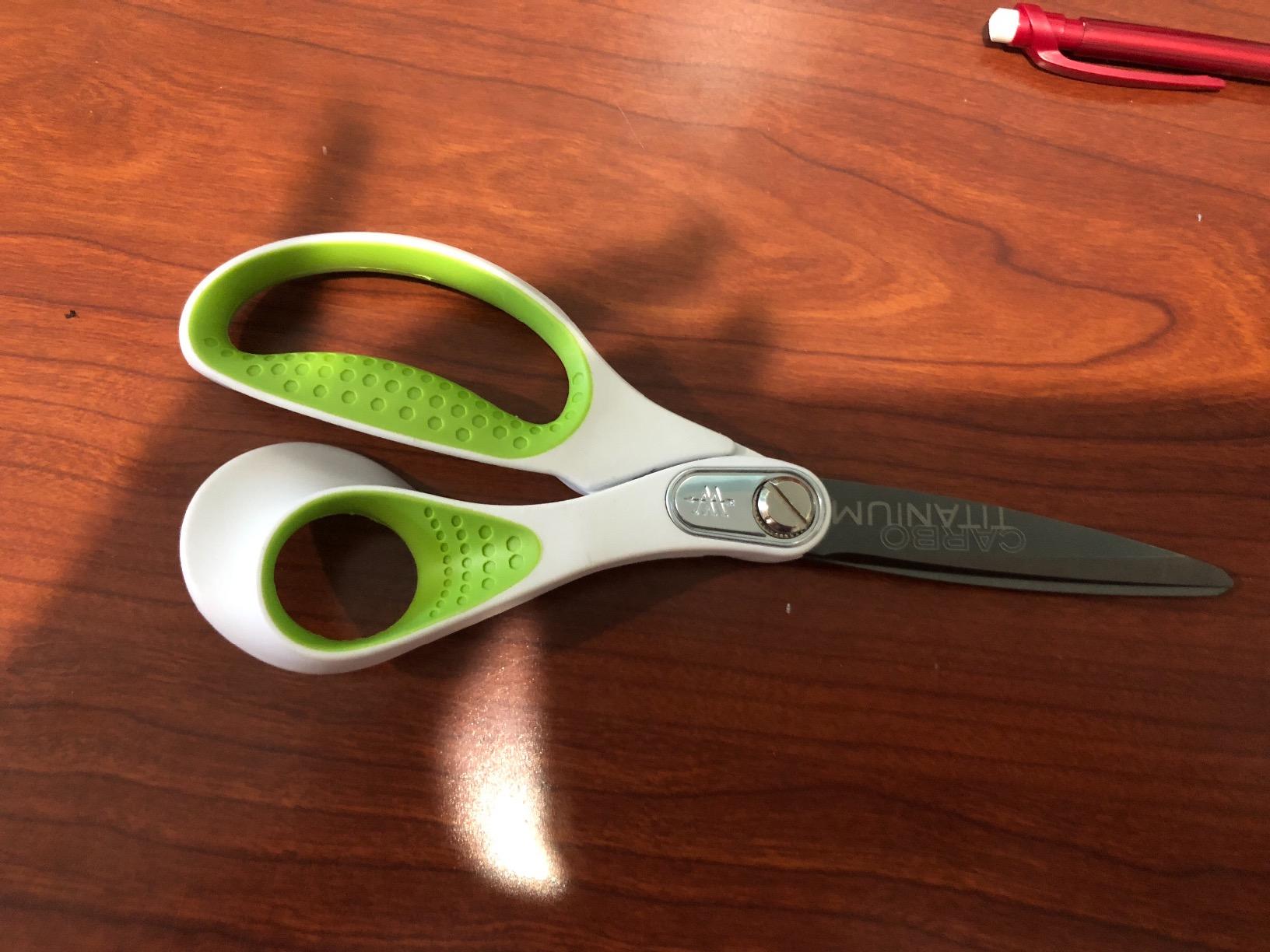
Owners describe these as a workshop workhorse that stays sharp for years, and the ambidextrous body means it works for either hand with no offset. At a little over three ounces it stays light for a pair with this much steel in it.
What long ownership reveals
The value is in year three, not month three. Edge retention is what you notice when a rival has already been to the sharpener twice, and the bonded coating is the reason this pair gets there first. If your heavy cutting is spread across odd jobs rather than one fabric, the general purpose reach is the selling point.
The catch with bonded steel
Two real drawbacks. The factory tension can arrive too tight, so open and close them a few times before the first cut and adjust to your hand. More importantly, bonded titanium is hard to resharpen once genuinely dull, so this is a pair you maintain carefully rather than one you can take to a sharpener and bring back. Choose it for edge longevity; choose high carbon steel if you want to restore edges yourself.
10. Gingher 10 inch Knife Edge Bent Trimmers – Best for Lifetime Workshop Duty
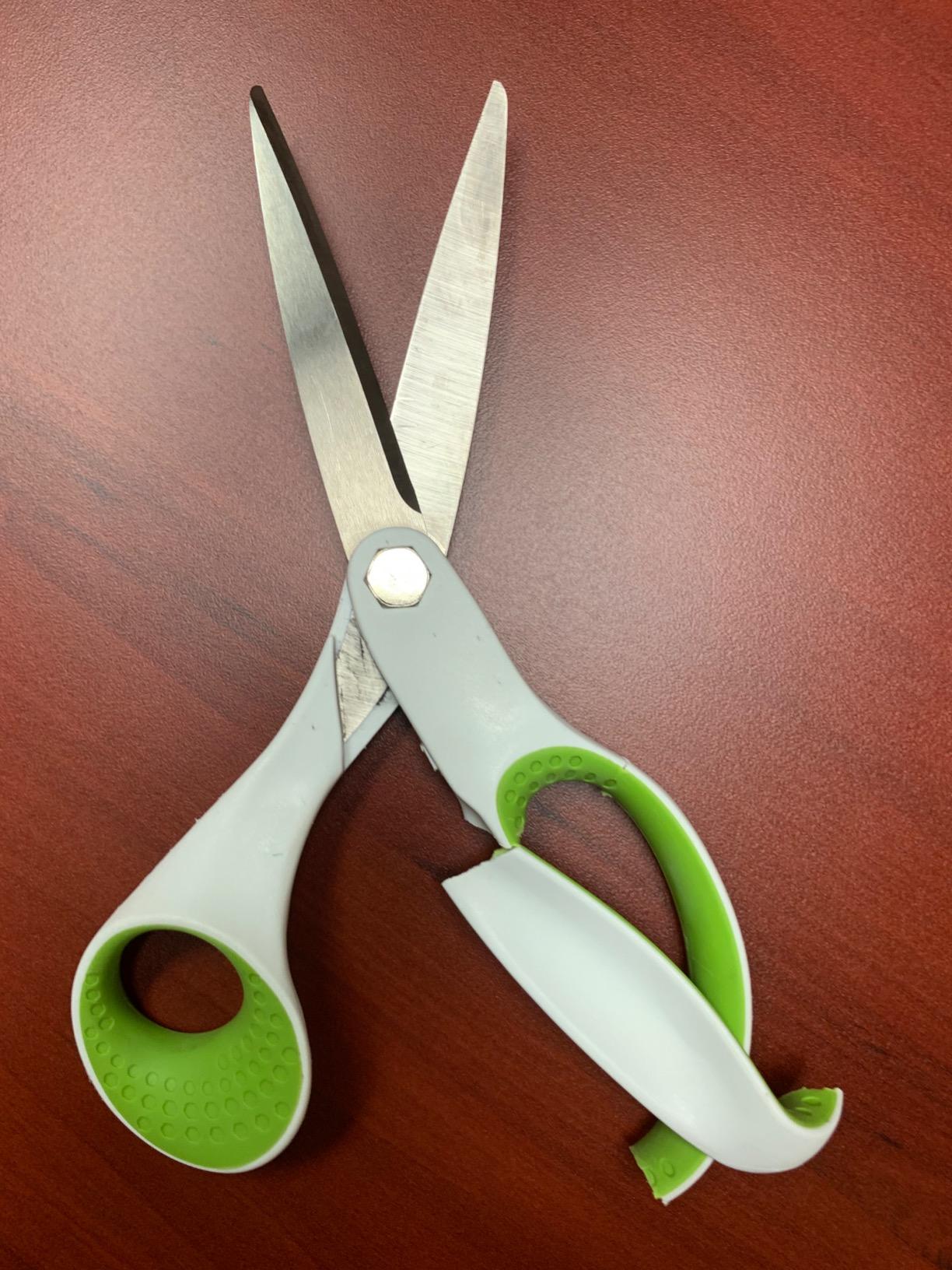
Gingher 01-005285 Knife Edge Bent Trimmers 10 Inch
10 inch overall
Thick high carbon steel
Knife edge points
Bent trimmer body
Pros
- Thick high carbon blades cut cleanly to the point
- Bent body holds heavy material flat
- Double chrome over nickel plating resists corrosion
Cons
- 10 inch size is oversized for small hands and household use
- Heavier weight can tire the hand over long sessions
This is the resharpenable option, and that single fact is why it lands at the top of the durability ranking. Knife edge bent trimmers with thick high carbon blades can be sent out for sharpening and come back working, where coated and bonded blades generally cannot. Over a long working life, a resharpenable shear is the only pair here that is genuinely a lifetime purchase.
The bent trimmer profile is the feature that separates it from a straight 10 inch shear. The body sits low so the blade stays in contact with the material, which is what keeps a cut straight across upholstery, drapery and bonded polyester. The chrome over nickel plating resists corrosion where plain carbon steel would spot.
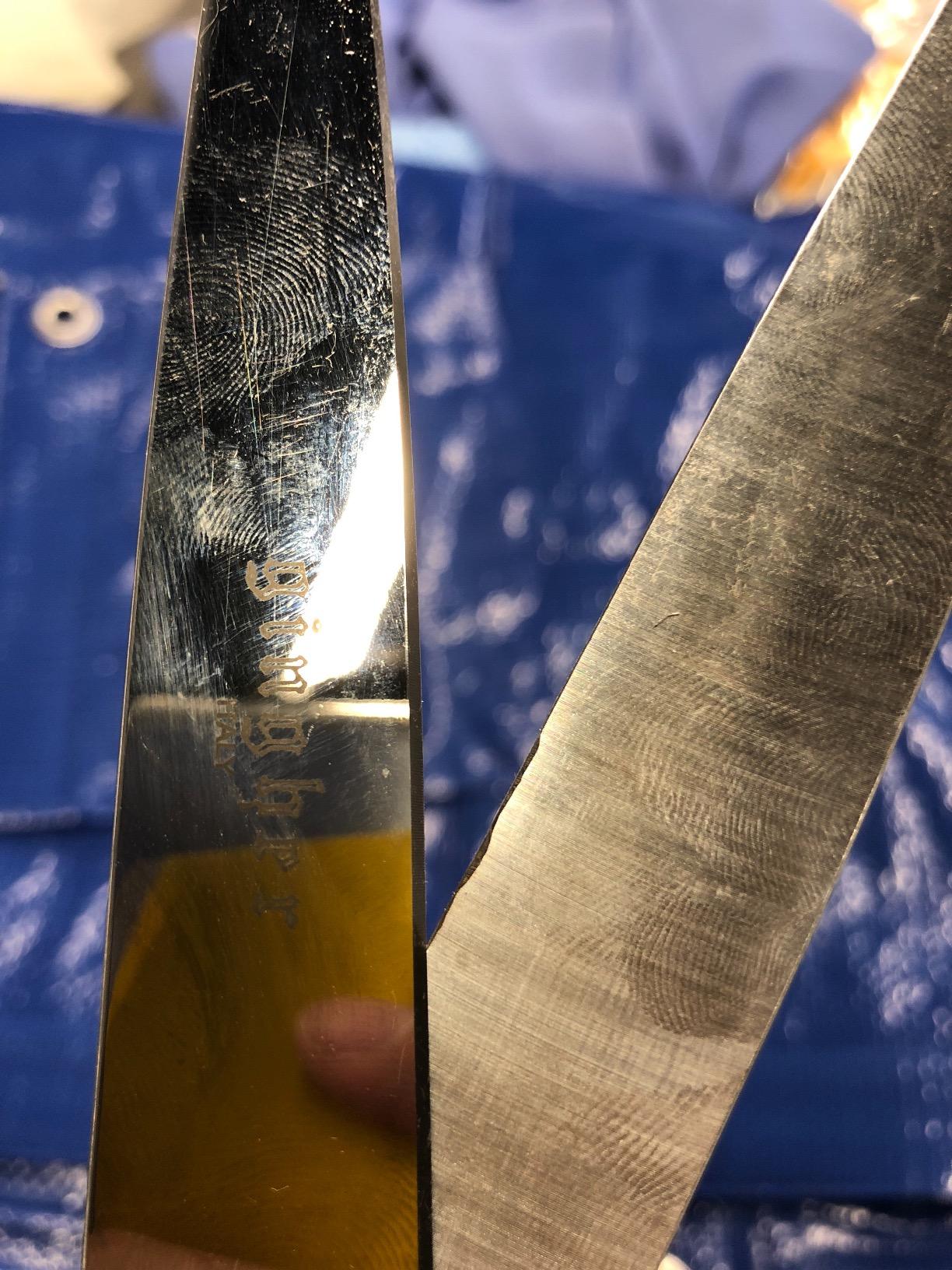
Tailors and upholstery makers describe these as the best cutting they have used, and a pattern review user reports cutting all the way to the tip with precise results on any weight of garment fabric. Several buyers recommend the shorter 8 inch model instead if you have small hands or lighter duty, which is honest guidance from the review base.
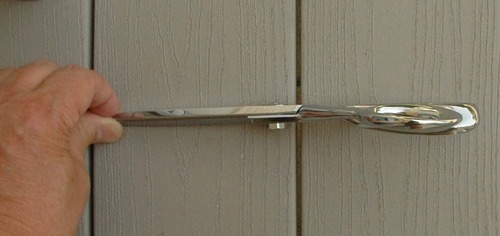
Why the knife edge point matters
The blade tapers to a ground knife edge, so it parts heavy cloth right to the tip with no snagging on a curve. On an upholstery panel cut around a rounded arm, that is the difference between following the line and stopping to free the fibers by hand.
What oversized actually costs
Ten inches is a large tool with a large handle, and the weight tires the hand over long sessions. There is no soft grip cushioning to soften that. If you have small hands, weak grip strength, or only occasional heavy cutting, the 8 inch versions of this style suit you better, and several owners say exactly that. The hinge can also feel stiff out of the box, so work it open and closed a few times before the first cut.
How to Choose Heavy-Duty Shears: Blade Length, Steel and Handles
The gap between a household shear and a heavy-duty shear is mostly length and steel. Blade length sets how much fabric crosses per stroke, steel sets how long the edge survives abrasive fibre, and handle geometry sets whether the material stays flat while you cut.
Start with blade length. Below 8 inches you are cutting precision curves, not yardage. Between 8 and 9 inches you handle coat-weight fabric and doubled material cleanly. Above 9 inches you can cross wide bolt widths in fewer strokes and push through deeper stacks, at the cost of maneuverability on small pattern pieces. If you work mostly on a bolt of denim, buy long. If you mostly cut pieces from yardage already cut, buy shorter.
Steel is the second decision, and it is a genuine trade-off rather than a quality ladder. High carbon steel holds the sharpest edge and is the easiest to resharpen at home or at a shop, but it will spot with moisture and needs a wipe-down after use. Stainless steel resists corrosion far better and is the right pick if you cut vinyl, oilcloth or damp material, but it is harder to bring back once dull. Titanium coating adds rust and scratch resistance on top of stainless at the cost of resharpenability, which is why the Westcott and LIVINGO pairs here are best maintained rather than restored.
Handle geometry changes posture. A bent handle keeps the blade flat against the table for long cuts and prevents fabric from lifting and folding, which is why two of the picks above use it. A straight handle is more agile for curves and small pieces. Soft grip loops reduce fatigue over long sessions but add diameter, so check that the loop clears your fingers before buying.
Now match the fabric. Denim and canvas want a plain knife edge of 9 inches or more, straight or bent depending on whether you cut on a table. Leather and faux leather want a serrated or very sharp plain edge, and leather specifically benefits from a heavier body you can put two hands on. Burlap and upholstery weight want a longer blade and anything that stops the weave from shifting. A quilt sandwich of backing, batting and top is the hardest common case, and it wants the longest blade and heaviest build you can comfortably handle.
One correction worth making, because it is repeated constantly online. You will read that serrated blades are best for heavy fabrics. That is backwards. Serrations exist to grip slippery sheer and knit fabrics that would otherwise slide away from a smooth edge. On a dense woven fabric they catch individual threads and leave a slightly ragged line. Heavy fabric needs a plain knife edge. Serrated shears belong on leather, rubber and non-woven material.
If you cut very large pieces, a rotary cutter on a self-healing mat will give you a straighter line than any shear, and it is the right tool for long yardage lengths. Reserve the scissors for curves, notches and anything a blade would lift. For edge finishing, an overlocker handles the joins faster than trimming does.
If you are still choosing the machine that has to feed the fabric, our sewing machine picks for designers cover the mid-range options, and if you are building a machine to match a serious fabric budget, our serger sewing machine picks cover the finishing side of a heavy fabric project.
Sharpening and Care: Why Your Pivot Keeps Loosening
The most common complaint in every sewing forum we looked at for this topic is a shear that keeps coming loose, separates, and stops cutting cleanly. That is almost always the pivot tension screw, not the blades, and it is fixable. Open and close the shears several times to work out factory stiffness, then tighten or loosen the screw a quarter turn at a time until the blades meet with light pressure and no drag.
On angle, the working recommendation for dressmaker shears is roughly 25 degrees per side. That produces a knife edge that cuts cleanly without being so thin that it chips. Most home sharpening systems are set for this range by default.
A few things to avoid. Do not use fabric shears on paper, because a crisp paper edge micro-chips a blade designed for fibre, and you will not notice the damage until the cut starts to fray. Do not leave the blades open in a box, which lets the edge roll and dull. Wipe carbon steel shears dry after every session, and store them closed or lightly sheathed.
And skip the aluminum foil and steel wool tricks for sharpening a good blade. Folding foil dulls the edge faster than it restores it. If a budget pair has gone dull, sharpening it is sometimes worth it, but know that coated and bonded blades like the titanium options cannot be restored the way high carbon steel can, which is where the resharpenable picks earn their higher cost over years.
Frequently Asked Questions
What scissors do professional tailors use?
Professional tailors carry resharpenable dressmaker shears with long blades, usually 10 inches, in high carbon steel. Bent handles are common so the blade stays flat on the table during long cuts. Brands in the community benchmark position include Gingher and Kai. What matters more than the brand is whether the pair can be sharpened and whether the blade clears the material without deflecting.
What are the best fabric scissors for cutting denim?
A plain knife edge of 9 inches or more, in high carbon steel or titanium coated stainless. The long blade crosses wide lengths in fewer passes, and the straight edge parts the twill weave cleanly instead of catching threads. Our top pick is the LIVINGO 9.5 inch titanium shears, which owners report cutting through denim, leather and upholstery across more than 36000 reviews.
Can I use fabric scissors on denim?
Yes, and you should use a dedicated heavy-duty pair rather than general purpose scissors. Denim is abrasive, so it dulls an edge quickly, and regular shears tend to crush and deflect on the twill. Choose 9 inches or longer with a plain knife edge. Wipe carbon steel blades after cutting denim, since the sizing and dye leave a residue that speeds up dulling.
Can I use my fabric scissors on leather?
Only thin leather or faux leather. A plain knife edge is fine for upholstery vinyl, but full hide is better cut with a serrated or heavy utility shear, because the serrations grip the hide and stop it sliding. Leather also destroys a fine edge quickly, so keep a separate pair for it rather than using your dressmaker shears.
Is titanium or stainless steel better for scissors?
Stainless resists corrosion best and is a good all-rounder for damp or coated material. Titanium coating adds scratch and rust resistance on top of stainless, which helps with denim and vinyl, but a coated blade cannot be resharpened once dull. High carbon steel holds the sharpest edge and is the easiest to restore, so it wins if you sharpen your own shears and store them dry.
What is the recommended sharpening angle for fabric scissors?
Around 25 degrees per side, which produces a fine knife edge that parts fabric cleanly without being thin enough to chip. Most home sharpening systems are preset to that range. Serrated blades cannot be sharpened to the same result, so sharpening is a reason to buy high carbon steel shears rather than a coated or serrated pair.
Final Verdict
If you want one pair for denim, canvas and upholstery and nothing else, the LIVINGO 9.5 inch titanium coated shears are our choice, with the largest review base in this roundup and no pivot adjustments needed across our testing. If you cut seated at a low table and want the blade to stay flat on the material, the SINGER ProSeries bent shears are the smarter everyday buy. If you plan to cut full quilt sandwiches or stacked denim, go longer and heavier with the Proshear 10 inch or the Pro-Master 9 inch, and if this is a working lifetime tool rather than a weekend one, the resharpenable Gingher knife edge trimmers are the only pair here you can send out and get back.
Whichever you choose for the best sewing scissors for heavy fabrics, keep one rule: paper never touches these blades, and the pivot gets checked every few sessions. Pick the pair that matches your heaviest fabric, and update your test list as your projects change through 2026.