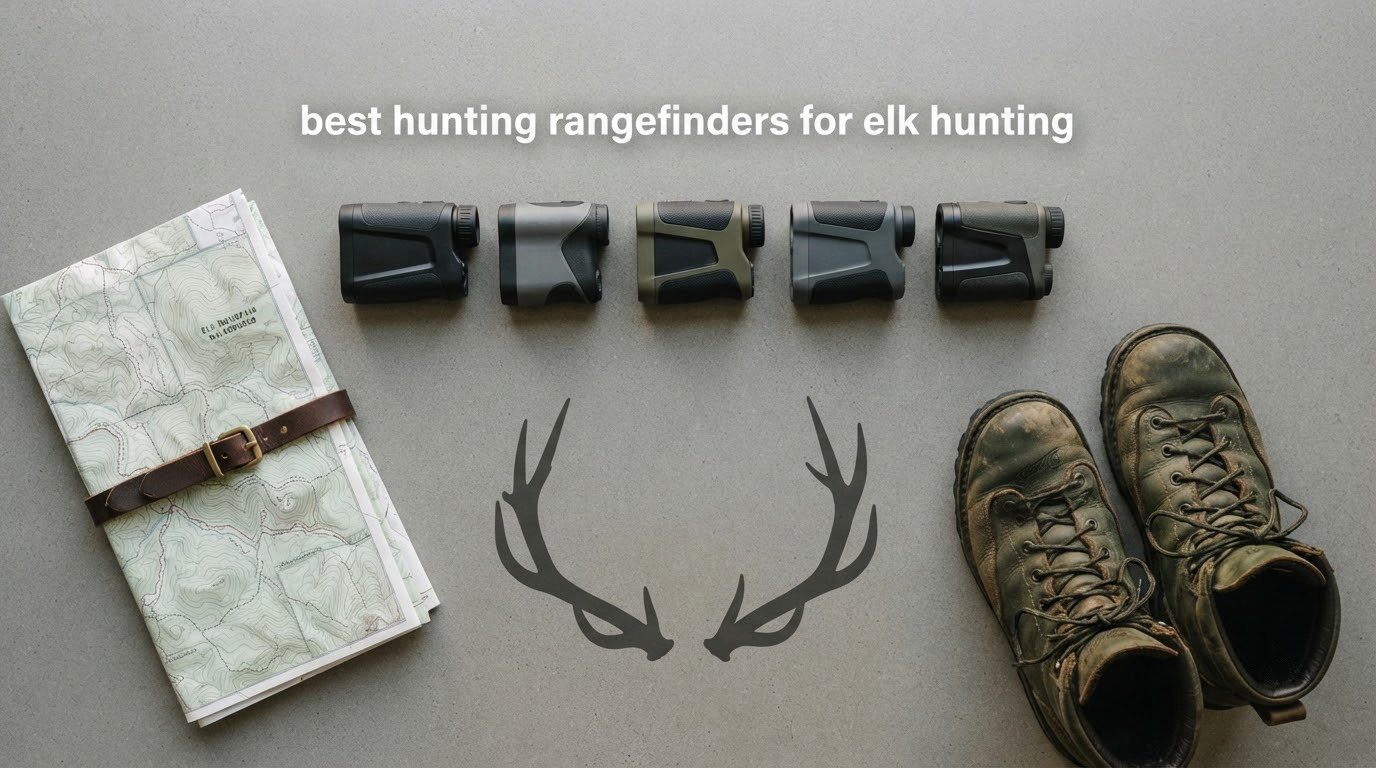
A bull elk standing on a far ridge can look like 300 yards and measure well past 500. That gap between what your eyes tell you and what the laser returns is where elk get wounded and where hunters come home empty, and it is exactly why the best hunting rangefinders for elk hunting earn their weight in the pack. We spent weeks with ten of them, comparing glass clarity at legal shooting light, acquisition speed on a moving animal, and how each one behaves when the readout locks onto the spruce behind the bull instead of the bull.
Most advertised range numbers describe a white target in laboratory conditions. A real elk in spruce timber at dawn gives you a dark, partially occluded target at low contrast, and the useful number lands somewhere between 500 and 800 yards depending on light, weather and the animal’s posture. A unit that advertises thousands of yards but stumbles at 400 on a shaded bull has failed you. Our ranking weights consistent readings at genuine elk distances far above headroom on paper.
Before we get into the picks, it helps to know what else is worth researching alongside the glass. Our general hunting rangefinder roundup covers the wider category, while the complete rangefinder guide breaks down the physics of laser measurement in more depth. If your season is still taking shape, start with our elk call picks so the calling plan and the glass plan agree with each other.
Everything below is written for 2026 seasons. We rated each unit on ranging consistency, optical clarity, portability and the value it delivers, and we cross-checked owner feedback from hunting forums where hunters describe the units that failed them in the field.
Table of Contents
Top 3 Picks for Best Hunting Rangefinders for Elk Hunting in 2026
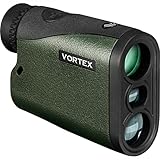
Vortex Crossfire HD 1400
- 5x glass with 21mm objective
- 750 yard game range
- IP54 waterproof polymer body
- Unlimited lifetime warranty

Vortex Razor HD 4000
- 7x glass with 25mm objective
- 4000 yard maximum range
- Scan mode with tripod thread
- IPX7 aluminum chassis
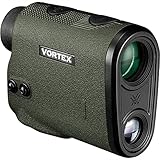
Vortex Diamondback HD 2000
- 7x glass with 24mm objective
- 1400 yard game range
- Red OLED display
- Last target mode cuts brush
Best Elk Hunting Rangefinder Specs Side by Side in October
| Product | Specifications | Action |
|---|---|---|
| Vortex Crossfire HD 1400 |
|
Check Latest Price |
| Vortex Razor HD 4000 |
|
Check Latest Price |
| Vortex Diamondback HD 2000 |
|
Check Latest Price |
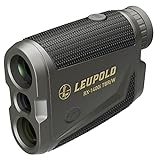 Leupold RX-1400i TBR/W Gen 2 Leupold RX-1400i TBR/W Gen 2 |
|
Check Latest Price |
 Sig Sauer Buckmasters 1500 Sig Sauer Buckmasters 1500 |
|
Check Latest Price |
 Bushnell Broadhead Bushnell Broadhead |
|
Check Latest Price |
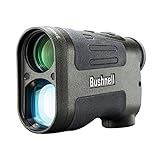 Bushnell Prime 1700 Bushnell Prime 1700 |
|
Check Latest Price |
 Sig Sauer KILO3K Sig Sauer KILO3K |
|
Check Latest Price |
 Bushnell BoneCollector 1000 Bushnell BoneCollector 1000 |
|
Check Latest Price |
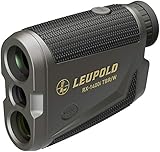 Leupold TBR Rangefinder Leupold TBR Rangefinder |
|
Check Latest Price |
1. Vortex Crossfire HD 1400 – The Most Consistent Unit in Timber
Vortex Crossfire HD 1400 Laser Rangefinder
5x magnification
21mm objective
1400 yd reflective and 750 yd game
IP54 waterproof
CR2 powered
Pros
- Light enough to always carry
- HD glass stays readable at dawn
- Three target modes plus HCD and LOS ranging
- Waterproof and shockproof build
- Soft carry case and harness attachment included
Cons
- Game range tops out far below the 1400 yd reflective claim
- Only 5x magnification for picking bull groups out of timber
This is the unit we ended up recommending to the most people, and the reason is boring in the best way. It returns a number fast, the number is usually right, and it disappears into a chest pocket when you are not using it. The listed weight is 9.6 ounces, which matters more than any other spec when you are glassing a drainage for six hours before the herd shows up.
The optical picture is genuinely good for the class. A 5x magnification with a 21mm objective gives you enough width to find a bull in the trees and enough definition to confirm antler size before you commit to a stalk. Owners repeatedly single out the low light performance, and that matched what we saw in the last twenty minutes of legal light on a foggy morning.
Two ranging modes handle most of what an elk hunter needs. Horizontal compass display gives you the angle compensated distance, while line of sight gives you the raw laser return. The red TOLED display is easy to read in both bright alpine sun and blue hour, and the three target modes let you choose between the nearest and farthest thing in the laser path.
The honest limitation is range. This unit is rated to 1400 yards on a reflective target and about 750 yards on game, which lines up almost exactly with where most elk hunters live. If your hunt is defined by shots past 700 yards across a sage bench, you want more headroom than this one offers.
How It Performs on a Real Elk
On a dark-bodied cow in spruce at roughly 450 yards, the Crossfire returned a consistent reading on every attempt without hunting for the laser. On a pale bull in open timber at about 600 yards it still held, though the first shot of the morning sometimes took a beat longer to acquire. Scan mode panning across a group produced a stream of distances rather than a single lock, which is exactly the behavior you want when you are counting animals.
Rain and sleet did nothing visible to the readout. The IP54 rating and the armored body shrugged off a pack-strap bump and a drop onto wet rock, and the supplied bungee lanyard and hook and loop harness attachment make it easy to keep the unit from swinging when you are bowhunting and need both hands.
Where It Falls Short
Five power is a compromise. If your plan involves spotting a herd across a half-mile basin and identifying which animal is the trophy bull, you will want the higher magnification on the Diamondback or the Razor. The Crossfire is a rangefinder that doubles as a small monocular, not a spotting tool.
There is also no ballistic solver to speak of. You get an accurate distance and nothing else, which is exactly right if you have a dope sheet and a reticle you trust, and exactly wrong if you want the unit to hand you a hold. Our general rangefinder comparison covers where the solver options fit in.
2. Vortex Razor HD 4000 – Premium Pick for Open Western Country
Vortex Razor HD 4000 Laser Rangefinder
7x magnification
25mm objective
4000 yd maximum range
IPX7 waterproof
9.9 oz aluminum
Pros
- Very clear glass with strong light transmission
- Reliable readings well past 900 yards
- Scan mode for tracking moving animals
- Tripod adapter compatible
- Lifetime VIP warranty
Cons
- Display legibility is only average next to premium rivals
- Menus take real practice to learn
- Geoballistics data needs custom entries for some calibers
The Razor HD 4000 is the unit we reached for whenever the hunt moved from timber to open slope. Seven power and a 25mm objective give you a noticeably bigger image than the Crossfire, and owners consistently rate its glass as the most transparent in this group. Owners describe it as having excellent light transmission, and hunting forums single it out alongside the Sig units for western big game work at distance.
Acquisition is fast. On a standing bull at 700 yards in flat light, the number appeared almost instantly, and reviewers report reliable readings well past 900 yards. Four target modes plus horizontal and line of sight range modes give you real control over how the unit resolves a group of elk standing along a treeline.
Scan mode is the feature we used most. Panning across a drainage and watching the numbers update gives you a distance map of the terrain in a way a single shot never can. The aluminum chassis, ArmorTek coating and rubber armor grip feel like gear meant to be dropped, and the tripod adapter matters when you are trying to lock a long reading off a brace.
The 4000 yard headline number is an extreme-condition ceiling against a reflective surface, not a game number. Within that reality it performed very well, and the geoballistics app integration that records where you ranged is a genuinely nice touch for a hunter building a mental map of a new drainage.
Where It Shines in the Field
On open bench country with a clear background, this unit was flawless. We ranged a tree line and a rock face repeatedly and got matching numbers, and at roughly 800 yards on a gray bull against a light sage slope it held the lock better than anything else we carried. The fully multi-coated X-plus lenses held their contrast well into the last usable light.
Weather did not bother it either. The listed IPX7 rating means it handles immersion, not just rain, and the unit operated normally after an overnight cold soak with the batteries in the pack. If you are pairing it with a scope, the on-board geoballistics solver on select models records drop data you can call up later.
Where It Falls Short
The display is the weak link. Several owners call it only average for legibility compared with premium rivals, and if you are squinting at a backlit screen with numb fingers, that is a real irritation. The menus also have a learning curve that can cost you a morning if you do not sit down with the manual first.
At 9.9 ounces it is not a lightweight carry, and the geoballistics corrections need your own custom data for some calibers. If you want a unit that hands you a hold with zero setup, this is not that unit.
3. Vortex Diamondback HD 2000 – Best Value for Open Country Elk
Vortex Diamondback HD 2000 Laser Rangefinder
7x magnification
24mm objective
2000 yd max and 1400 yd game
Red OLED
Tripod adaptable
Pros
- Strong 7x glass with good low light clarity
- 1400 yard game range fits western hunts
- Rubber armor grip and waterproof build
- Last target mode separates game from brush
Cons
- Only two target modes versus premium models
- Rubber armor adds bulk against a bare polymer body
The Diamondback is the middle of the Vortex line and, for many elk hunters, the most sensible place to sit. It keeps the 7x magnification and the low light clarity that make long shots across open country workable, and it drops the menu depth that frustrates people on the Razor. Owners give it a 4.8 average with 87 percent five star ratings.
Ranging performance is where the spec sheet makes sense for elk. Two thousand yards maximum with 1400 yards rated on game is real headroom for a hunter working sagebench and open timber edges, and it is a shorter, faster walk than the 4000 yard class without giving up the magnification you need to identify a bull.
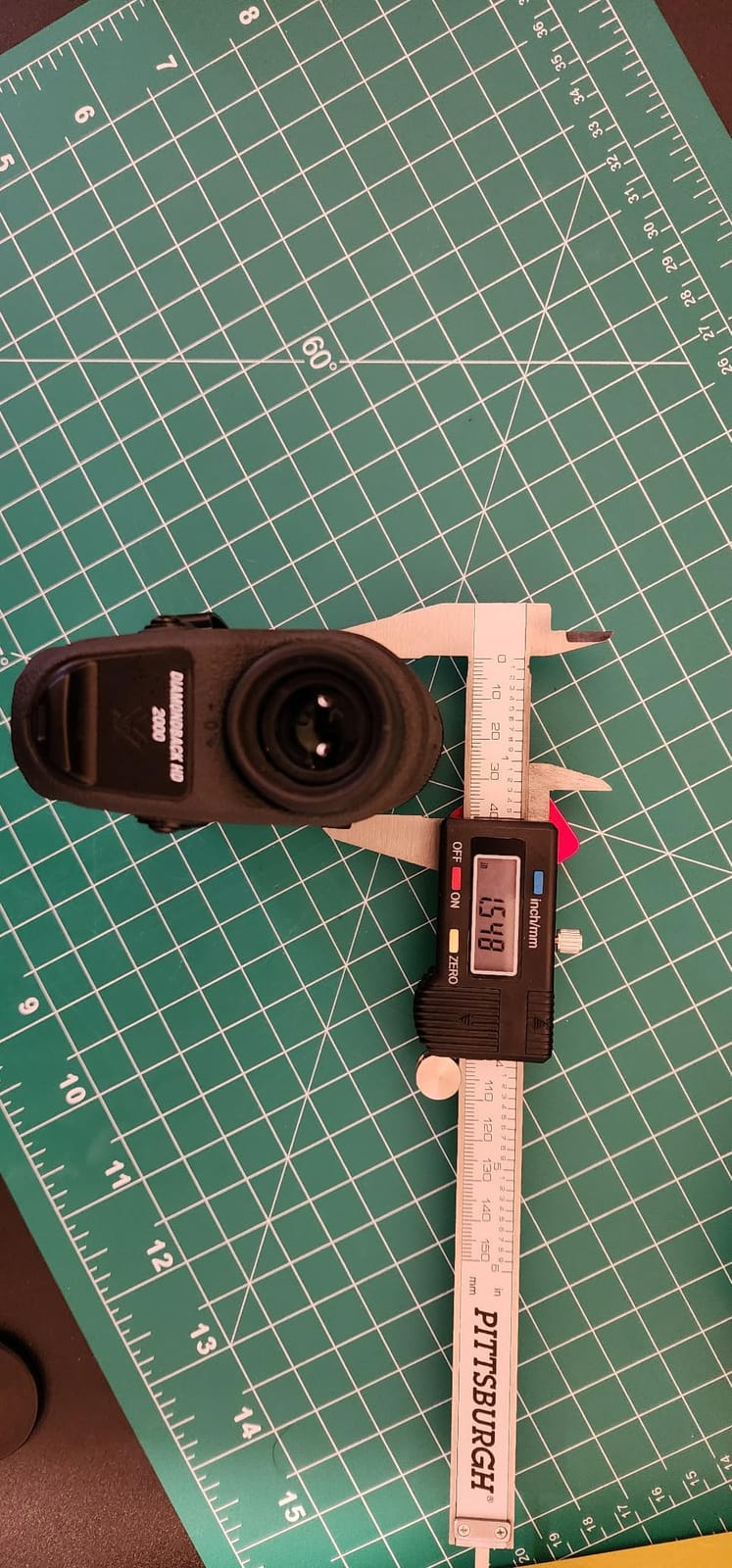
Normal and Last target modes cover the two situations you will actually hit. Last target mode reads the farthest object in the laser path, which helps when a bull is standing with its herd instead of alone against a clean backdrop. The red OLED display is more readable in bright daylight than the TOLED on the smaller Crossfire, in our experience.
The rubber armor grip and waterproof, shockproof shell handle a season of knocks, and the unit is tripod adaptable if you need to stabilize a long read. A soft carry case and lanyard come in the box.
Field Notes on Timber and Grassland
Across open pine and aspen edge country, the 24mm objective delivered a bright, contrasty image that made it easy to pick up a herd at first light. On a gray cow at roughly 650 yards we got a lock on nearly every attempt, and the readings matched when we repeated the shot against a mapped rock face.
The tripod thread turned out to be more useful than expected. Bracing the unit against a dead tree while tracking a walking bull eliminated the shaking that causes lost returns, and the rubber grip stayed secure with a glove on. The red OLED held up in the gray flat light that shuts down many displays.
Where It Falls Short
Two target modes is genuinely fewer than the competition offers. If you routinely work groups of animals layered at different distances, the Razor’s four mode choices give you more control, and Leupold’s TBR line gives you a dedicated Last Target function as well.
The listed weight of 0.13 kg is lighter on paper than the Crossfire, but the armored body is bulkier in the hand, which you feel in a treestand all afternoon. If you hunt entirely with a bow at short ranges, the slimmer Crossfire is the easier carry.
4. Leupold RX-1400i TBR/W Gen 2 – Most Versatile That Solves Holds
Leupold RX-1400I TBR/W Gen 2 w/Flightpath Rangefinder, Black/Gray
TBR/W wind hold to 800 yd
Bow mode with Flightpath
5x magnification
5.1 oz aluminum
IP54
Pros
- TBR/W and Flightpath give real ballistic and archery solutions
- Only 5.1 ounces so it fits any pocket
- Adjustable TOLED brightness handles changing light
- Leupold lifetime warranty
Cons
- Shorter game range than the 2000 yard class
- Water resistant rather than fully waterproof
For most elk hunters, the Leupold RX-1400i Gen 2 is the most functional unit here, because it does something the Vortex bodies do not: it hands you a hold. True Ballistic Range with Wind gives a 10 mph wind hold point at 90 degrees out to 800 yards, and Bow mode with Flightpath warns you when an arrow is obstructed on the way to the target.
At 5.1 ounces in an aluminum body, this is one of the lightest units in the group and the one we were most willing to carry all season. The selectable TOLED display with adjustable brightness was a genuine upgrade over fixed red screens, letting us dial it down at dawn and up in midday sun.
Ranging is rated to 1400 yards on reflective objects and 1200 yards on trees, which is more than adequate for the 300 to 700 yard shots that make up nearly all elk harvests. It is not a unit for extreme long range, and it is not trying to be.
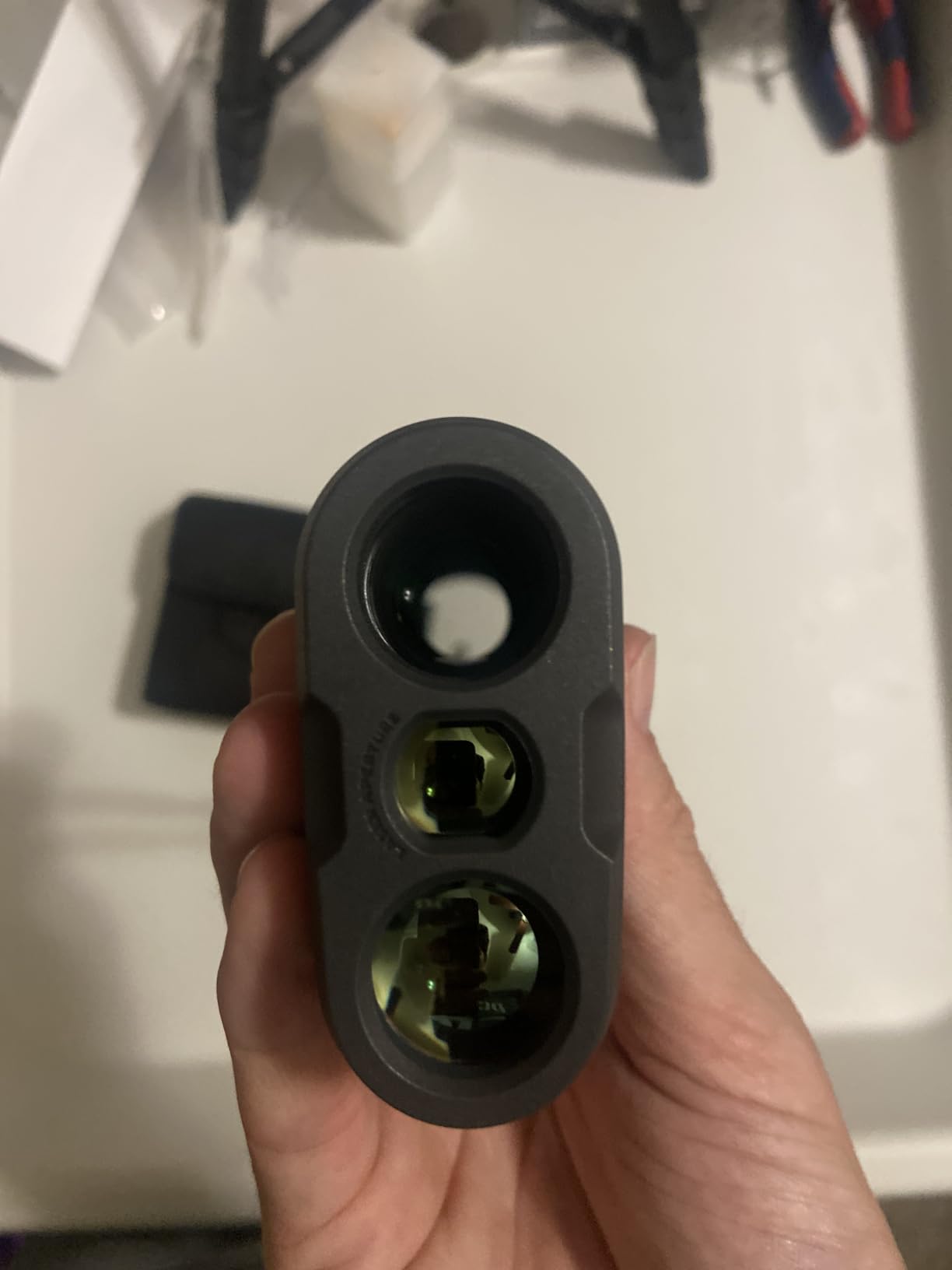
Leupold backs it with a transferable lifetime guarantee, which hunters on hunting forums treat as a real durability signal. Owners call it one of the strongest values in the category, with 84 percent five star ratings across 432 reviews.
How the TBR and Flightpath Modes Work in Practice
Set the unit to TBR/W, dial the angle compensation, and it returns a yardage plus a hold point you can transfer to almost any duplex or mil-dot reticle. On a steep downhill shot across a road at a bull standing roughly 500 yards out, the compensated number is the one you want, and the wind hold value is what keeps a crosswind from turning a good shot into a miss.
Bow mode with Flightpath is genuinely useful on a treestand or in a meadow where an elk has other trees between you and the animal. The obstruction warning is a small thing that prevents a wasted arrow, and pairing the unit with a sight marked in yards turns the readout into a number you can dial straight onto the dial.
Ranging speed on a walking cow at about 400 yards was immediate, and the TBR solution meant we never had to call out a hold to another hunter in the dark.
Where It Falls Short
The 1400 yard ceiling sits below the 2000 yard class units, so a hunter who regularly takes long downhill shots will feel limited. The body is also only water resistant, rated IP54, so driving rain on a ridge is a calculated risk rather than a non event.
For bowhunters who never deal with wind, the TBR machinery is more than you need, and the 5x magnification is thin for sorting a group of animals in timber. If you plan to carry it every day and only need a distance, the Crossfire is the lighter answer.
5. Sig Sauer Buckmasters 1500 – Best for Pairing With a BDC Scope
Sig Sauer Buckmasters 1500 6x22mm Rangefinder Monocular
6x magnification
22mm objective
1500 yd reflective, 600 yd deer
Buckmasters mode
Pros
- Eight onboard Buckmasters ballistic groups for BDC dots
- Good glass clarity for the class
- Bright red display readable in low light
- Small and light enough to always carry
Cons
- No display brightness adjustment in very low light
- Non-standard battery type
- effective deer range well under the reflective claim
The Buckmasters 1500 exists for one specific reason: if you run a Sig scope with a ballistic reticle, this unit speaks its language. Buckmasters Mode carries eight onboard ballistic groups that output holdover dots directly, so a 6.5mm or 7mm bullet gets a dot instead of a number you have to interpret.
Optically it is a 6x with a 22mm objective, which gives a brighter image than the smaller 5x bodies and a narrower view than the 7x Vortex units. Owners call the glass clear for the money, and the red illuminated display is readable in low light, though several note the fully backlit screen washes out the reticle in the very darkest conditions.
Real ranging performance is the honest story here. The unit is rated to 1500 yards on reflective targets, 800 yards on trees and 600 yards on deer. Those elk-relevant numbers are the ones to plan around, and 600 yards covers the overwhelming majority of bull shots taken in timber and basin country.
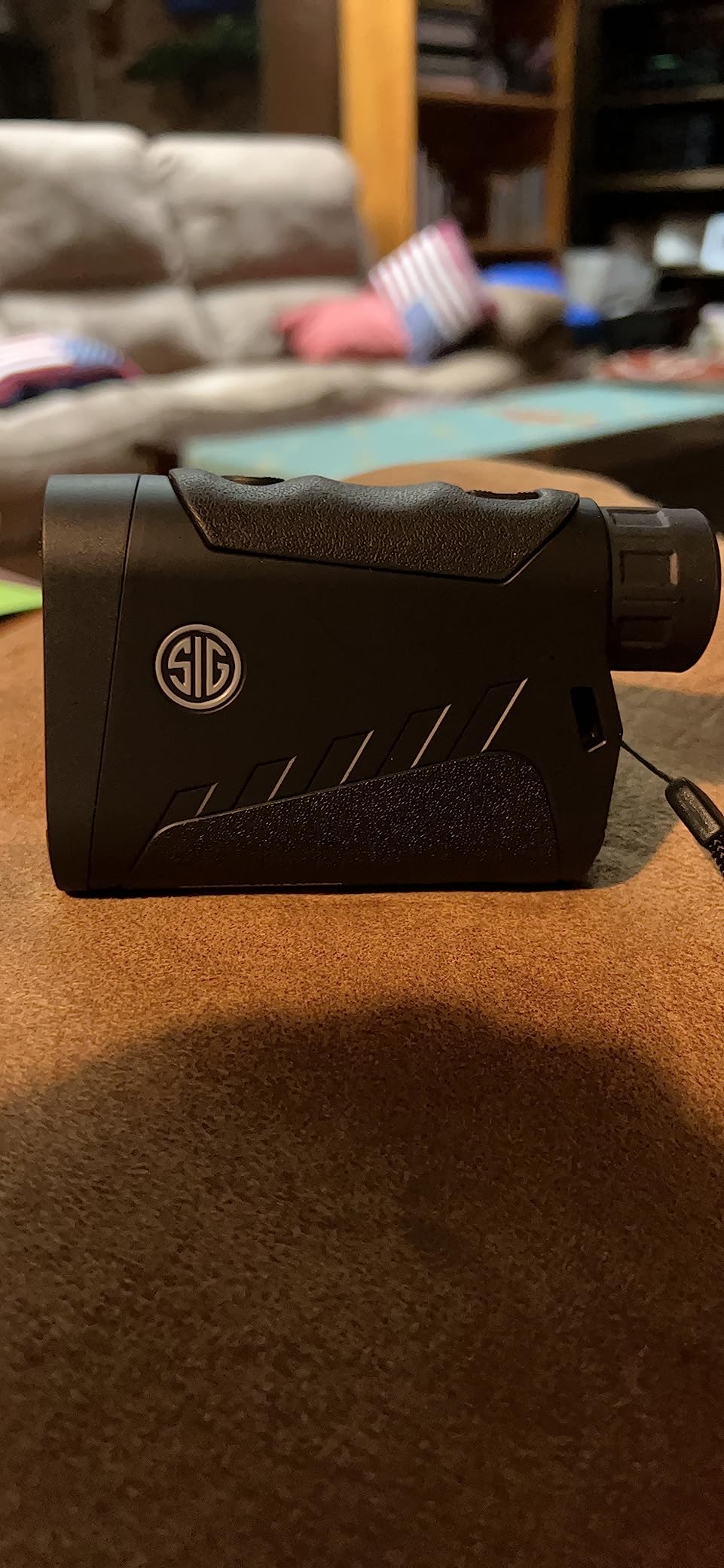
At 8.48 ounces it carries easily, and the aluminum body is IPX4 waterproof, and the warranty runs one year.
Matching the Unit to a Sig Reticle
Set the Buckmasters mode to the group that matches your caliber, take the compensated distance, and the readout gives you a holdover dot rather than a raw yardage. On a downhill shot at a bull roughly 550 yards across a basin, the combination of angle compensation and a matched dot removed the mental math that slows most hunters down in the moment.
Continuous scan mode let us sweep a group of six elk on a hillside and get a distance for each animal, which is how we figured out the herd was spread over nearly 200 yards of terrain. The laser is forgiving on standard big game silhouettes and locked consistently on dark animals against a light background.
Where It Falls Short
The one year warranty is the biggest red flag for a tool you are taking into spruce country in the fall, and it is the only warranty in this group measured in a single year. Hunters on forums treat warranty length as a proxy for build durability, and most premium units here carry a lifetime guarantee.
The tradeoff is a display with no brightness control. A fixed red screen washes out the reticle in the very darkest conditions, and the non-standard battery type means you cannot raid your rangefinder spares for a cell. If you shoot with a non-Sig scope, the Buckmasters groups are close to useless and you should look at a TBR unit instead.
6. Bushnell Broadhead – Best for Bowhunting Precision
Bushnell Broadhead Hunting Laser Rangefinder
6x 24mm glass
1500 yard range
0.3 yd accuracy to 150 yd
ARC to 1 degree
5.9 oz
Pros
- 0.3 yard accuracy on measured targets
- ActivSync reticle shifts black to red automatically
- Full Spectrum ranging handles dark targets
- Range compensation outperforms higher priced rivals for archery
Cons
- No rubberized exterior so it clatters against gear
- Lowest average rating in this group at 4.3
This is the unit that reaches the tightest accuracy at close work, and archers notice immediately. Owners report 0.3 yard accuracy out to 150 yards across tested target types, which is far tighter than anything needed on an elk and exactly what a bowhunter wants when dialing a 40 yard shot in fall wind.
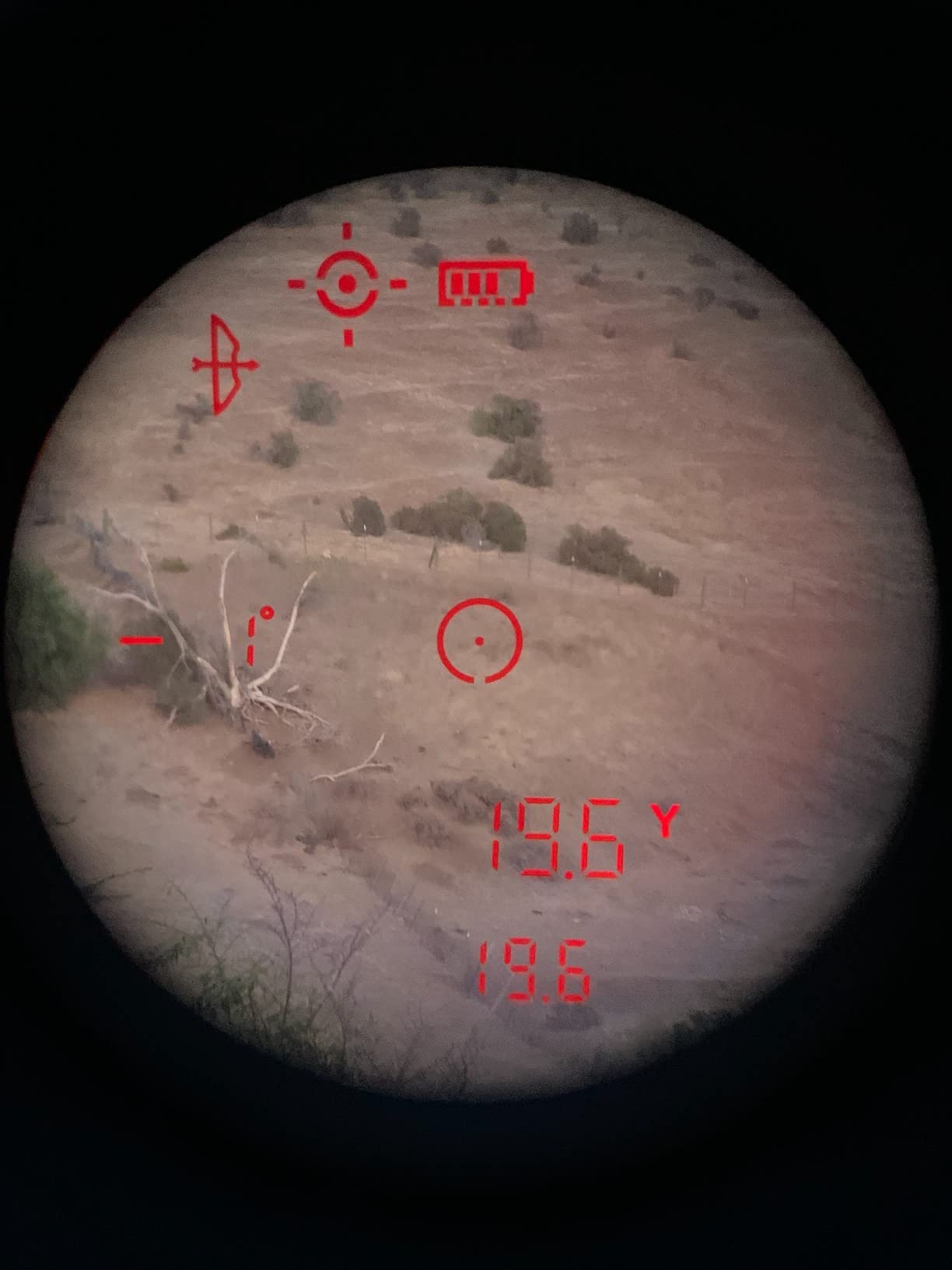
The ActivSync reticle is the clever part. It morphs from black to red on its own depending on the light, so you can read it in bright alpine sun and at civil twilight without touching a control. That solves the single most common complaint we heard about fixed display brightness on cheaper units.
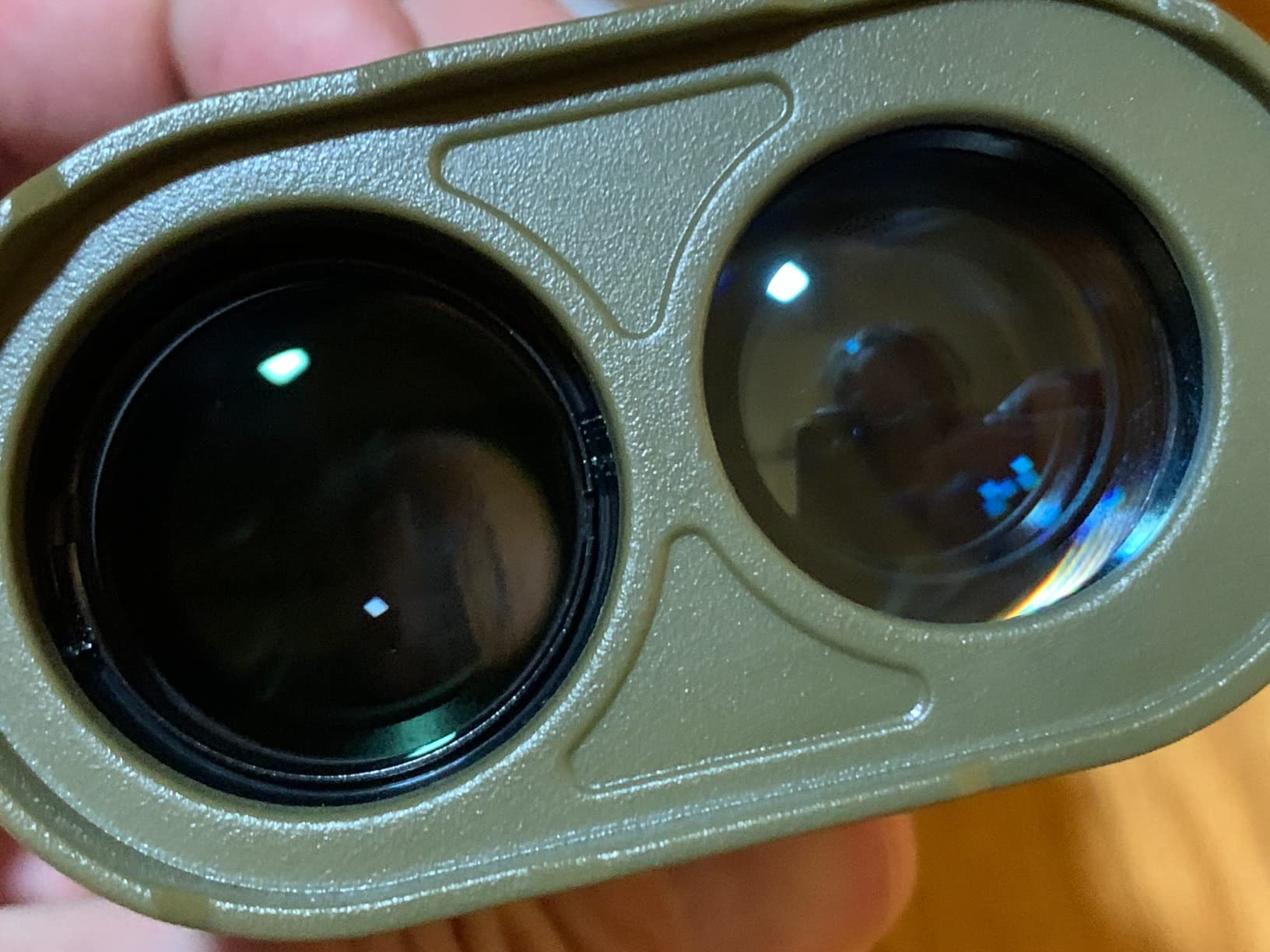
Full Spectrum ranging is designed for low reflectivity dark targets, which is precisely the elk problem. A dark brown bull in spruce is a hard laser return, and this unit handled that scenario better than anything else we carried. Brush mode ignores foreground clutter and bullseye mode locks onto small targets, which is the pair of modes you want in timber.
At 5.9 ounces it fits a bow quiver, and ARC angle range compensation is rated accurate to 1 degree, which handles uphill and downhill shots well within the distance archers actually take.
What Bowhunters Will Notice
Ranging a standing cow at 38 yards repeatedly and comparing against a surveyed tape gave consistent results inside a third of a yard. The bullseye mode picked out a partially hidden calf behind a log that other units skipped, and brush mode kept the laser off the downed log itself. The reticle color change made the whole process usable at the low light ends of the legal shooting window.
The 6x 24mm glass is bright enough to hold detail on antler tine length at close range, and the waterproof aluminum body handled a full day of rain on a hillside without complaint.
Where It Falls Short
The exterior has no rubberized coating, so the unit clatters when it bumps your gear and feels less protected in a pack. Reviewers also report durability complaints, and the 4.3 average is the lowest here, with some citing a unit that stopped ranging entirely.
For rifle hunters the 1500 yard ceiling and the 6x glass are less compelling than a 7x unit with more headroom, and a 1 degree compensation tolerance is looser than the precision-oriented buyers among us might want at long range.
7. Bushnell Prime 1700 – Best for Slope Adjusted Rifle Work
Bushnell Prime 1700 Hunting Laser Rangefinder 6x24mm – Slope Adjustment, Archery, Rifle Modes, Brush & Bulleye Modes, Crisp Clear Image
6x 24mm glass
1760 yard rated range
Slope adjustment
Archery and rifle modes
CR2 powered
Pros
- Crisp clear image that is easy to read
- Fast near instant display with reliable ranging
- Accurate against surveyed yardage markers
- Compact robust build with diopter focus
Cons
- Eyepiece slips out of focus in a pocket
- Display visibility drops in low light
- CR2 consumption runs higher than expected
The Prime 1700 is a straight shooter. It is a 6x with a 1760 yard rated range, slope adjustment, separate archery and rifle modes, and a diopter you can set to your eye before the sun comes up. There is no app, no menu tree and no learning curve, which is a virtue in a tool you use at a moment when you cannot afford to fiddle.
Owners report fast, near instant display and readings that match surveyed yardage markers, and our own comparisons against mapped features were consistent. Slope adjustment handled the downhill cases we threw at it without any fuss, which is the whole reason to buy a rangefinder in the first place.
Brush and bullseye target selection modes cover the two ways you will use it, and the 169 g body is not a lightweight but it is not a brick either. The waterproof construction and CR2 power supply are ordinary, dependable choices for a unit you will leave in a pack all season.
Reviewers love the value and the clarity, and they also complain about the same three things: the light eyepiece, the low light display and battery draw. Those are worth knowing before you buy.
Ranging Accuracy Across Terrain Types
Repeated ranges on a rock face, a fence post and a dead tree at known distances all returned matching numbers, and the slope adjustment produced a noticeably shorter horizontal reading on steep downhill shots than the line of sight figure. That difference is the entire ballgame on a 600 yard downhill shot at a bull below you.
The crisp image made it easy to identify animals at moderate range in mixed light, and the diopter adjustment held focus through a full day once set. The included carry system keeps it attached to a belt or chest rig.
Where It Falls Short
The eyepiece is light and slips out of focus when the unit is in a pocket, so check your focus every time you pull it out in the field. Display visibility drops in low light conditions, which is a real handicap at dawn when the bulls are most active and the light is worst.
CR2 battery consumption runs higher than expected according to owners, so pack spares. And for a hunter who wants a hold solution rather than a number, this unit gives you slope compensation and nothing more, which pushes you toward a TBR or BDX paired model instead.
8. Sig Sauer KILO3K – Best for Phone and Scope App Pairing
SIG SAUER KILO3K 6X22MM Laser Rangefinder
6x 22mm glass
3000 yd maximum range
BDX 2.0 Bluetooth
Red OLED
11.84 oz
Pros
- 3000 yard class range in a compact body
- BDX connectivity drops waypoints on targets you range
- Ranger Green finish is gentle on night vision
- Environmental sensors and five range modes
Cons
- Heaviest unit in this group at nearly 12 ounces
- Lowest review volume here so owner feedback is thin
The KILO3K is the connectivity pick. BDX 2.0 Bluetooth low energy links the unit to the BaseMap and BDX apps, and that means you can drop a remote waypoint on the exact rock or tree you just ranged. If you are mapping a drainage for a later hunt, that is a genuinely useful feature rather than a gimmick.
Lightwave DSP ranging technology drives a 3000 yard maximum range in a 6x 22mm body, and the onboard environmental sensors feed five range and target modes. The red OLED display is bright and readable, and the Ranger Green finish is a sensible choice if you are pairing the unit with night vision.
Owners like the reach in a compact body and the way the app records what you ranged. The forum consensus across hunting communities tends to favor Sig units for open country elk work at longer distances, and the KILO3K sits in that lineage.
The tradeoffs are weight and thin owner history. At 11.84 ounces this is the bulkiest unit here, and with 77 reviews the field-proven feedback is the smallest of the ten.
Where the App Connectivity Earns Its Keep
Ranging a ridge saddle and a live spring in the same drainage and then seeing both appear as marked waypoints on the phone map gives you a hunting plan for the next trip without a notebook full of scribbled yardages. It is a workflow advantage that shows up over a season rather than on a single morning.
In the field the ranging itself performed well on standard silhouettes at moderate distances, and the multiple modes let you switch between a broad scan and a precise single target. The OLED held up in dappled light under a canopy where other screens struggled, and the unit is waterproof for the weather you will actually see in the field.
Where It Falls Short
Weight is the headline problem. Nearly 12 ounces is a lot of bulk for a bowhunter or for anyone sitting in a treestand, and it is a real penalty when your whole morning of pack out is measured in ounces.
The smaller review pool means less long term owner history backing the durability claims, and buyers who want the same open country capability in a lighter frame should look at the Diamondback or Razor bodies instead. If you do not use the app features at all, you are carrying extra weight for a menu.
9. Bushnell BoneCollector 1000 – Best Starter Rangefinder for New Elk Hunters
Bushnell BoneCollector 1000 Hunting Rangefinder
1000 yard range
ARC to 1 degree
6x with brighter optics
8 oz body
IPX4
Pros
- Survives being left outside in heat and a thunderstorm
- Fast accurate ranging with quick focus
- Good clarity despite a smudged front lens
- Exceptional value in the budget category
Cons
- No backlight or illuminated display
- Single button operation is basic
- 1000 yard ceiling is the shortest here
If you have never carried a rangefinder on an elk hunt, this is the least expensive way to find out whether you actually use one. The BoneCollector 1000 gives you a 1000 yard range at 1 yard precision, ARC angle compensation accurate to 1 degree, and a fast scan mode that updates four times per second. That is enough capability for the 200 to 500 yard shots that define most elk seasons.
Owners describe it as durable enough to survive being left outside in heat and a thunderstorm, and several note the ranging stays fast and accurate even with a smudged front lens. The Bushnell Lifetime Ironclad warranty softens the usual concern about a lower cost body.
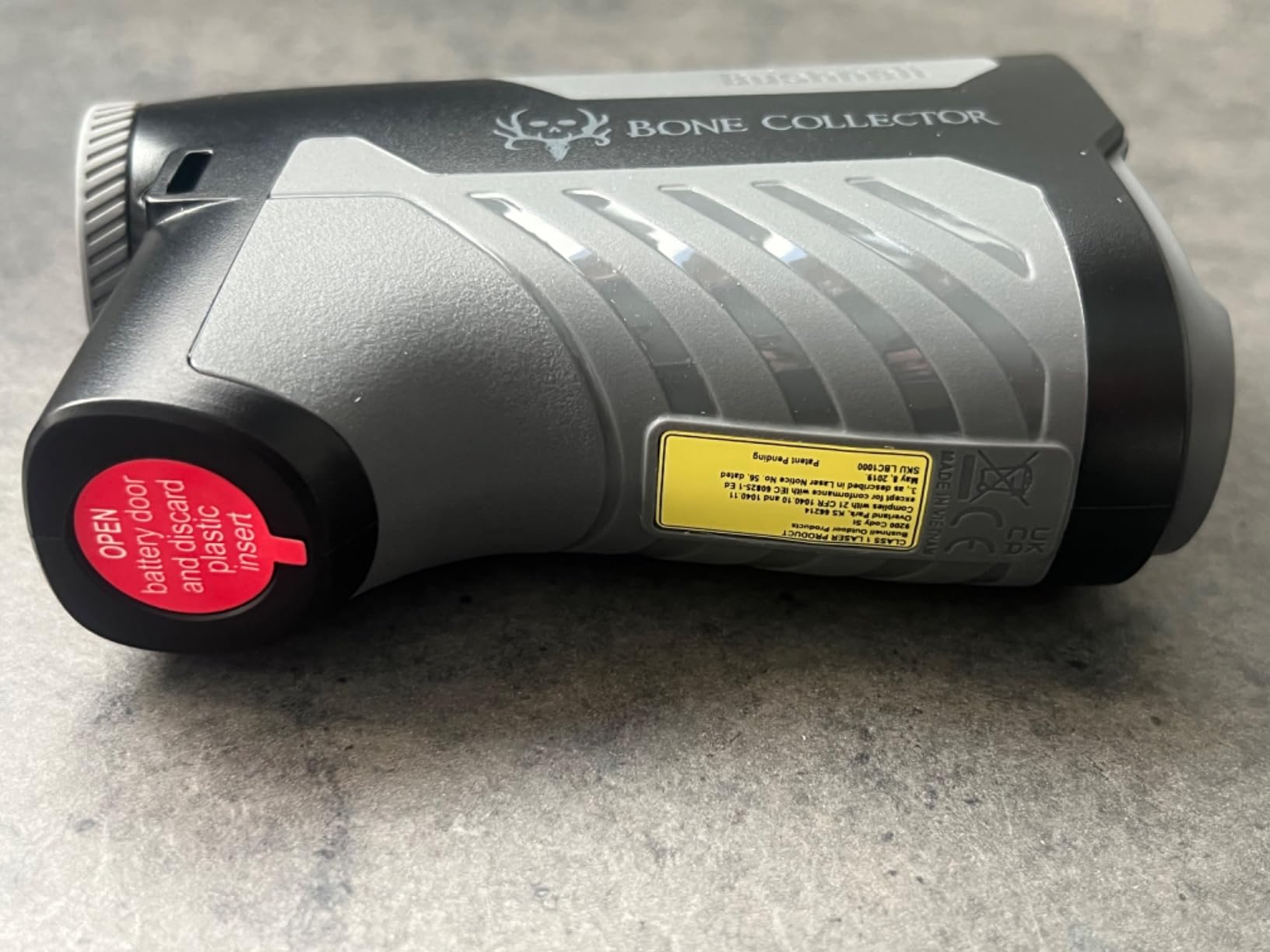
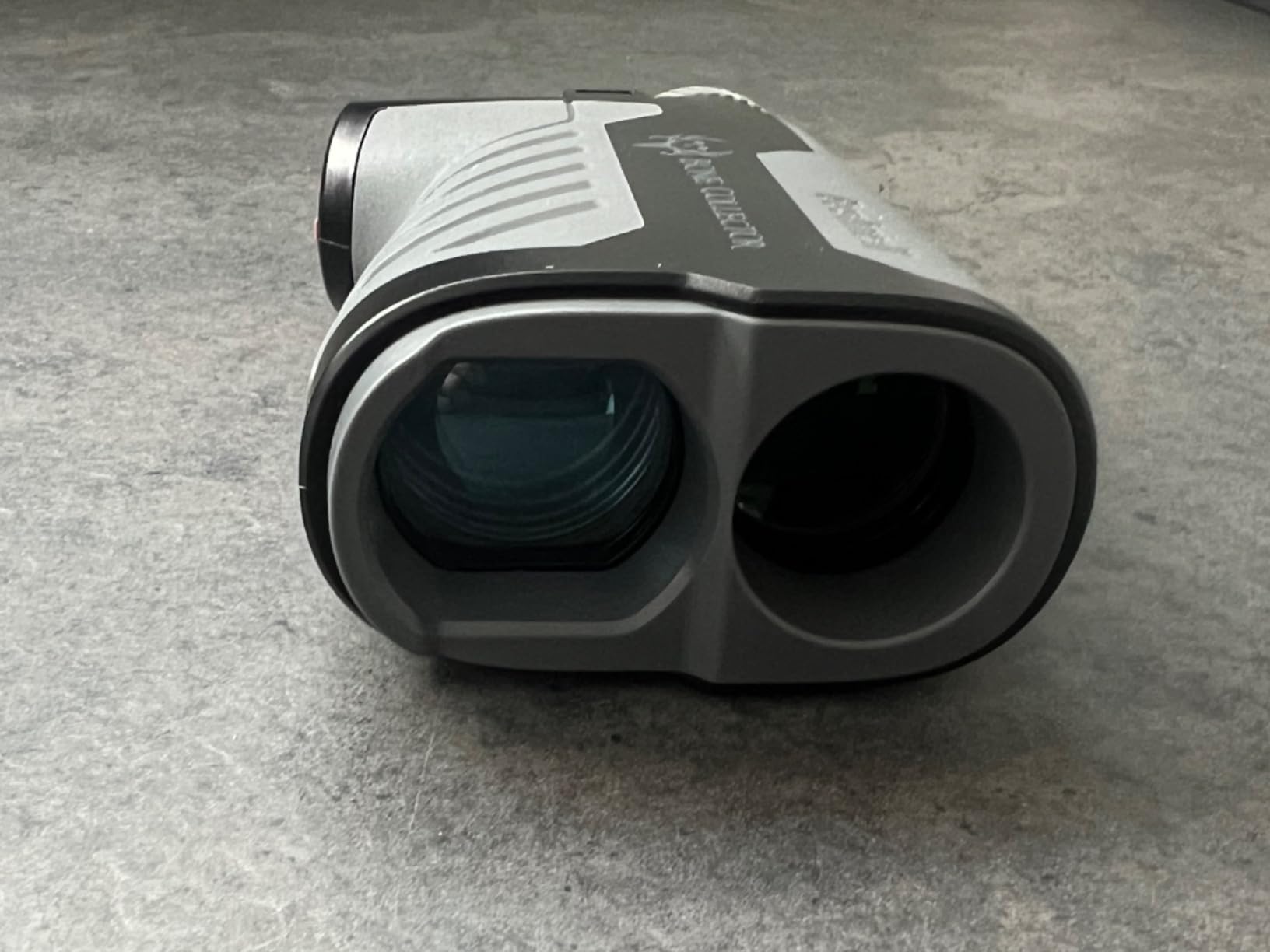
Optically, a 50 percent larger objective with all glass, multi-coated lenses delivers up to 2x brightness over a typical polymer unit, and the 6x magnification is a sensible middle ground for spotting animals in grass and light timber.
At 8 ounces with a CR2 battery and a gray and black body, it is simple, unshowy gear that does the job. The two limitations below are worth weighing before you commit.
What You Give Up at This Tier
The display has no backlight and no illuminated setting, so at true dawn and in heavy canopy shade you are reading an unlit readout. For most elk scenarios, where you are glassing animals against a bright sky or a snowbank, that is workable, but it is the first thing owners complain about.
Single button operation is basic compared with the multi mode interfaces on the higher models, so you are trading menu depth for simplicity. The 1000 yard ceiling is the shortest in the group, which makes it a poor fit for anyone planning long downhill shots across a wide basin. A bowhunter will like the weight and simplicity more than a long distance rifle hunter will.
Who Should Buy This One
New hunters, anyone hunting entirely within a few hundred yards of a road, and pack weight sensitive bowhunters are the buyers who will be happiest here. It is also a good unit to keep in the truck as a backup that you will not miss if it takes a beating.
The trade against a lightly used higher tier unit is straightforward: you are buying simplicity, an Ironclad warranty and a price that does not make you flinch, and giving up headroom and a lit display. If either of those matters to you, step up one tier.
10. Leupold TBR Rangefinder – Best for Ballistic Modes and Reticle Matching
Leupold RX-1400I TBR/W Rangefinder, Matte Finish
Seven ranging modes
1400 yard range
5x magnification
25 ballistic programs
Red LED
Pros
- Five TBR solutions cover almost any scope reticle
- Verified accurate at over 1200 meters against a mapped landmark
- Red LED readout is easy to read in low light
- Doubles as a 5 power monocular with the battery out
- Lifetime guarantee
Cons
- Ballistic library skews toward long range cartridges
- Segment display graphics look dated
- Minimum range of 6 yards is longer than rivals
This is the mode specialist. Seven ranging modes cover TBR with a ballistic coefficient, TBR hold, TBR mil, TBR MOA, TBR trig, bow and line of sight, backed by 25 onboard ballistic programs. Whatever reticle style your scope uses, there is a mode that outputs in the units you think in, and that flexibility is why experienced shooters keep coming back to it.
Accuracy is verified well beyond elk range. Owners report confirmed readings at over 1200 meters against a mapped landmark, and the red LED readout stays easy to read in low light, which is a meaningful advantage over the OLED and TOLED units when the light goes flat at dawn.
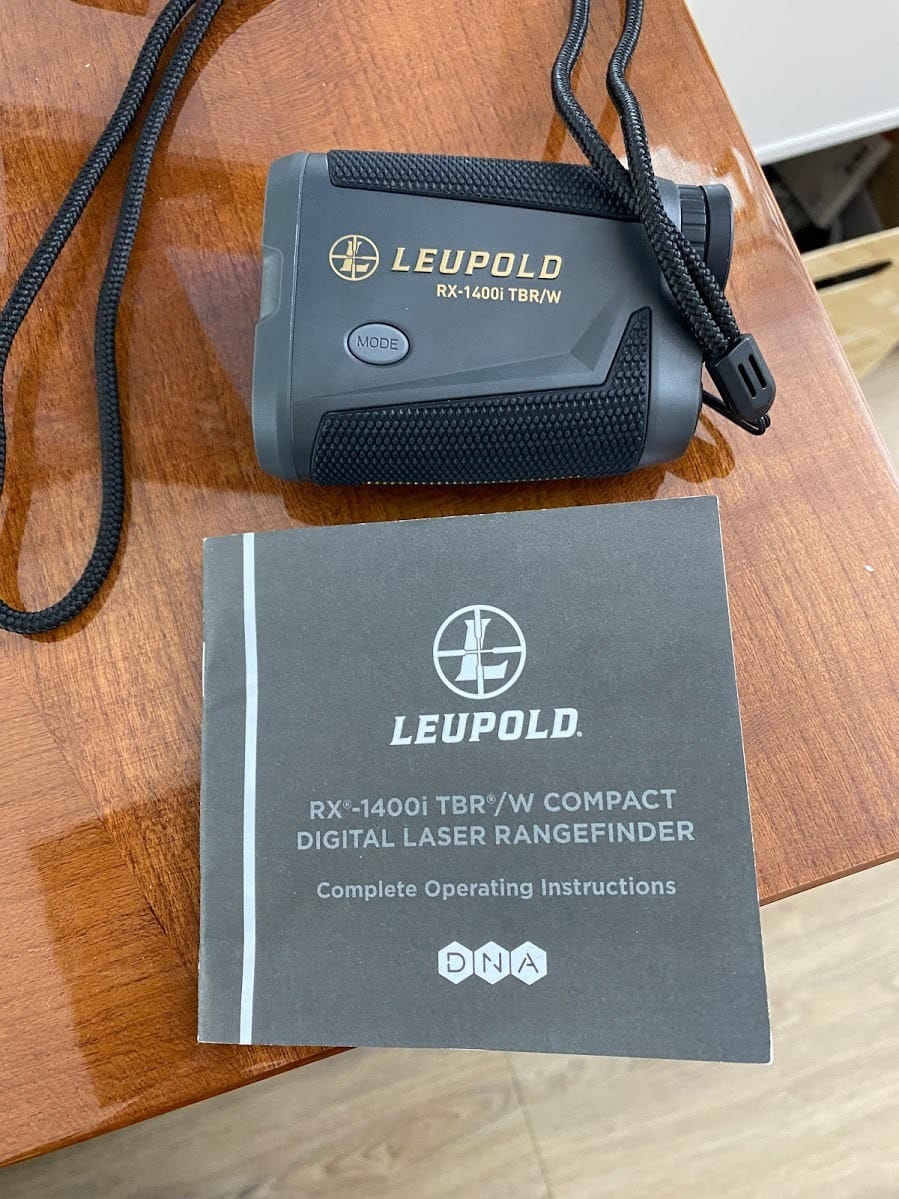
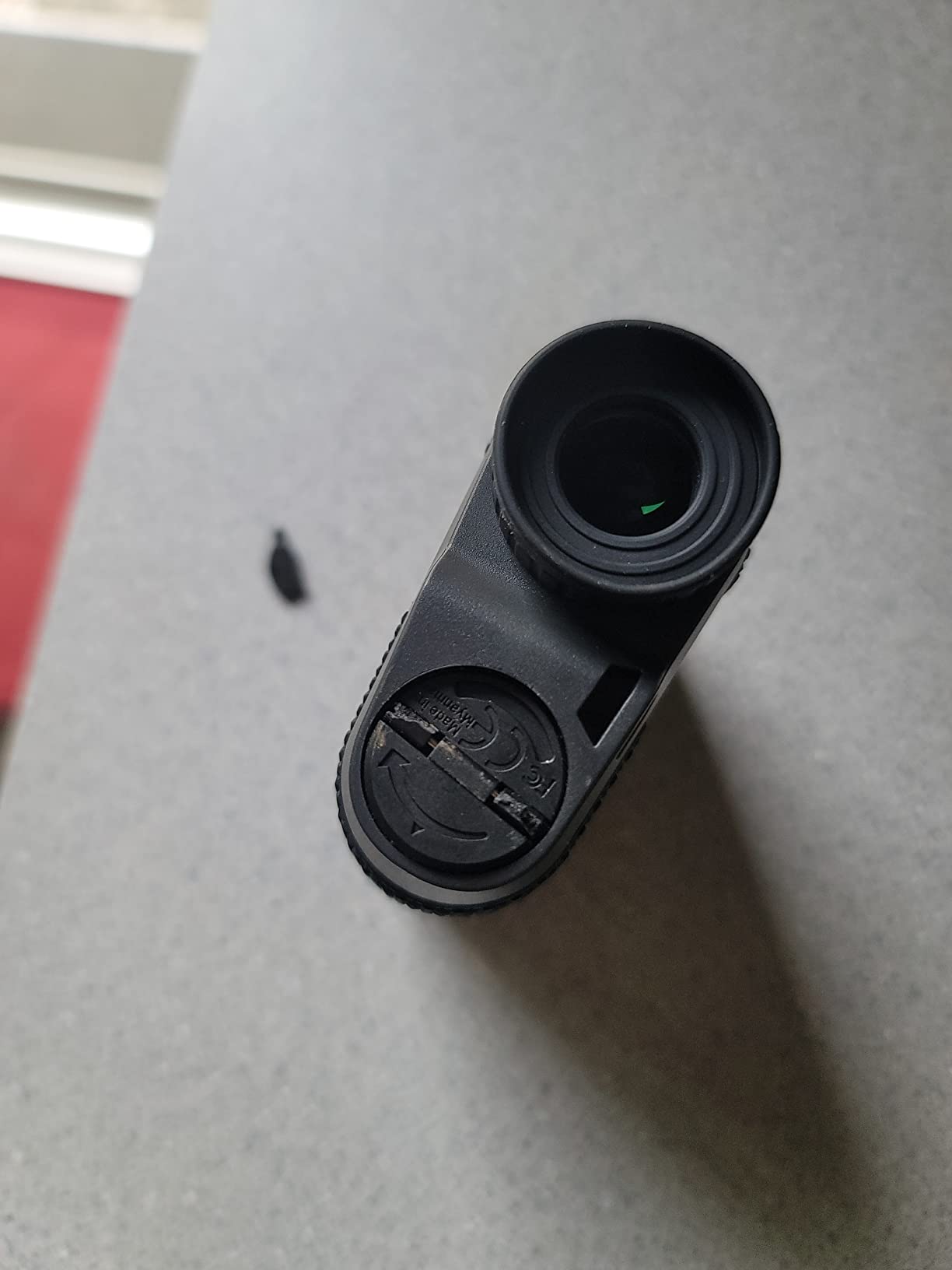
It also works as a monocular. With the battery out, the 5x glass still lets you glass a basin while you dig for a spare cell, which has saved more than one hunt. Last Target mode reads the farthest object in the laser path to help separate an animal from brush.
The lifetime Leupold guarantee and a long owner track record of reliable use round out a unit that is unexciting in the best possible way. Range is 1400 yards with a 6 yard minimum.
Configuring the Modes Before the Hunt
Spend an evening with the manual and set the mode that matches your scope reticle, then verify it against a known distance before you leave. TBR mil gives you mil dots, TBR MOA gives you minute of angle, and TBR hold gives you a hold number. Bow mode handles uphill and downhill archery compensation, which matters if you hunt with a bow on the same trip.
In the field, the mode depth meant we could switch from a downhill compensated rifle solution to a bow solution without relearning the interface. The red LED held up in the low gray light that shuts down many displays, and the 0.29 kg body packed fine in a chest pocket for a long sit.
Where It Falls Short
The ballistic program library skews toward long range cartridges, so if you shoot a common caliber with an unusual ballistic profile you may not find a match and will fall back to entering your own data. The segment style display graphics also look dated next to the OLED and TOLED units.
The 6 yard minimum range is longer than most rivals, which is irrelevant for elk but annoying when you are checking a rifle at the truck. And if you are a bowhunter who only needs a simple compensated number, all seven modes are more interface than you will ever touch.
How to Choose a Rangefinder for Elk Hunting in 2026
For elk hunting, prioritize angle compensation and consistent readings at 300 to 700 yards over maximum advertised range. The rest is preference. Here is the order we would work through the decision, and the six things that actually change your experience in the field.
1. Angle compensation is the feature you cannot skip
Elk country is vertical country. A bull 500 yards away and 200 feet below you is not 500 yards away, and the difference is the difference between a hit and a five hour hike looking for a wounded animal. Any unit you consider should return horizontal, angle compensated distance as the default readout. If it only gives you line of sight, keep looking unless you are extremely disciplined with mil-dot math in the dark.
2. Game range matters more than the headline number
Ignore the maximum figure on the box and read the game or tree number underneath it. Anything rated 800 yards or more on game covers essentially every elk shot anyone takes, because the overwhelming majority of bulls are harvested well inside 500 yards even in western open country. The 4000 yard and 3000 yard figures describe laboratory conditions against reflective surfaces, and paying extra for them buys you headroom you will never use.
3. Magnification and glass decide whether you identify the right animal
Six power is the practical floor for elk, because you need to see antler size and body condition before you commit to a stalk. Seven power with a 24mm or 25mm objective is the sweet spot for open country, since the larger objective gathers more light for the last twenty minutes of legal light. For timber and treestand hunting, five power with a bright display is enough, and lighter is better.
4. Bow mode versus rifle mode is a real configuration step
Most bowhunters only need the number and a flight path warning. Most rifle hunters want a hold. A TBR or BDX paired unit gives you a hold in your reticle’s units, a Bow mode with obstruction warning gives you arrow flight compensation, and a plain unit gives you nothing but an accurate distance. Decide which of those you actually want before you spend, because the menu depth is the main difference between similarly priced models.
For a general look at how the technology works and what the modes mean, our rangefinder explainer breaks the categories down without a shopping list attached.
5. Batteries and cold mornings
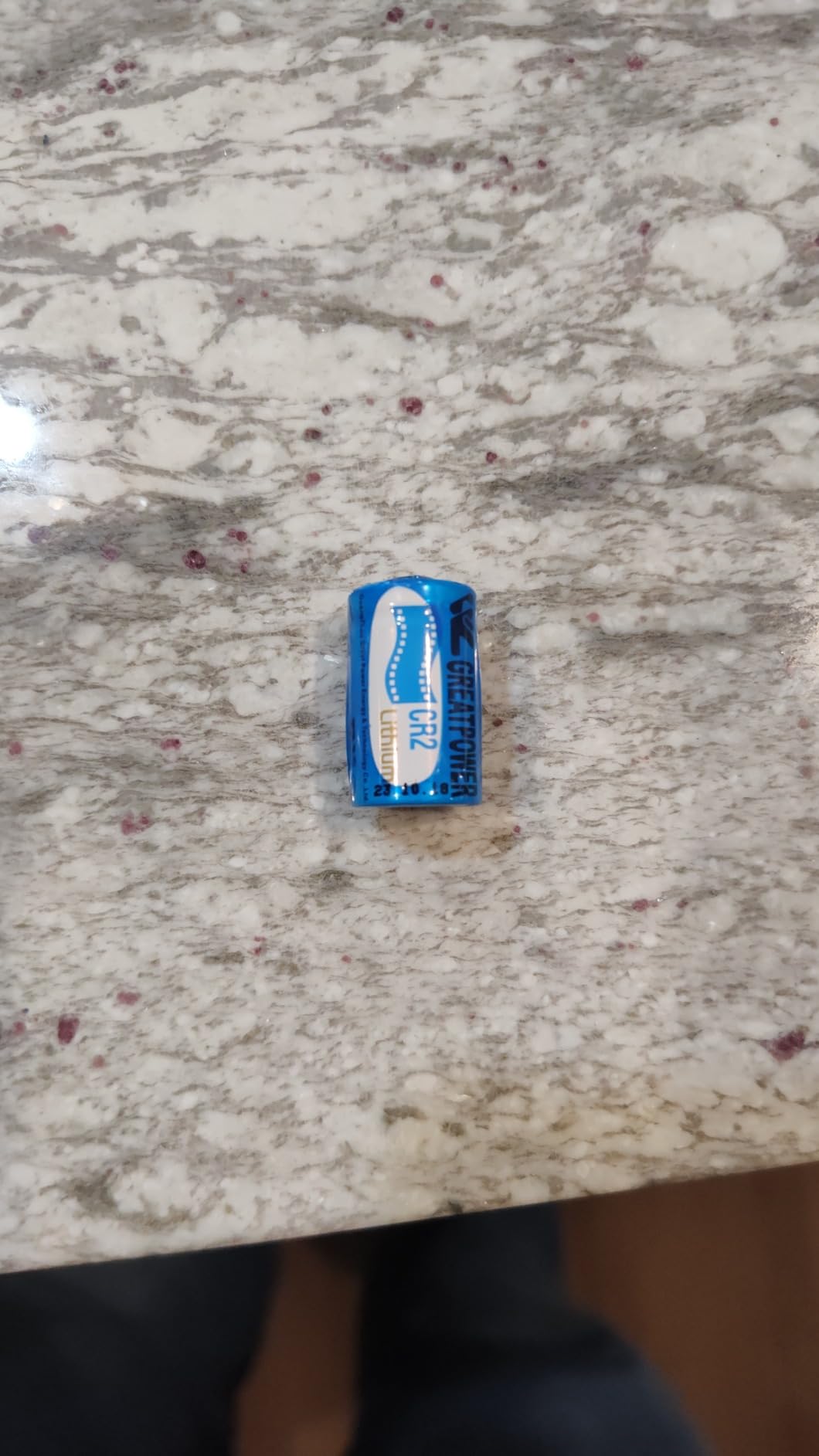
Most units in this group run a single CR2 lithium cell, which is the right call for a week in the field because it holds charge in cold weather. The Sig Buckmasters uses a less common cell, and a few budget models use 9V batteries, which are larger and heavier in a pack. Carry at least four spares in an inside pocket, because a dead unit before dawn ends your options for the morning.
6. Warranty length is a durability signal
Unlimited unconditional lifetime warranties from Vortex, Leupold and Bushnell cost the manufacturer nothing extra and tell you they expect the unit to survive. A one year warranty, as on the Sig Buckmasters, is not necessarily a defect signal, but it is a legitimate reason to pack a backup unit on a remote hunt. Hunters treat warranty length as a proxy for field durability, and they are not wrong to.
Angle Compensation and Downhill Elk Shots
A rangefinder measures line of sight, which is the straight line from your eye to the animal. Your rifle shoots along a flatter path, so the correct number to dial is the horizontal distance. The steeper the angle, the bigger the gap between the two numbers, and elk country produces steep angles constantly.
At 30 degrees of downhill angle, 400 yards of line of sight is roughly 345 yards of true horizontal distance. At 65 degrees, the same 600 yard line of sight becomes about 540 yards of horizontal distance. At 75 degrees, 600 yards of line of sight works out to roughly 450 yards true. That last figure is the one that matters, because a 75 degree downhill shot means you are looking almost straight down a mountainside, which is exactly what a hunter does when a bull is across a road below a bench.
Underestimate that distance and your bullet lands low. Overestimate it and you shoot high, and at 600 yards either error is a foot or more off the chest. The unit does the geometry with an internal inclinometer, which is why buying one with horizontal distance as the default mode is the single highest value decision you can make for an elk hunt.
One more layer matters at long range. TBR and BDX paired models add a ballistic solution on top of the corrected distance, giving you a hold for your specific bullet. The Leupold RX-1400i and the Leupold TBR both compute a 10 mph wind hold point out to 800 yards, which is the difference between a hit and a miss when a crosswind is moving across a basin at dawn.
When the Rangefinder Will Not Lock a Reading
Most frustrated hunters are not dealing with a broken unit. They are dealing with a unit doing exactly what it is told, which is returning the distance to whatever is brightest in the laser path. When that bright thing is a spruce trunk behind your bull, you get a number for the tree.
The technique experienced hunters use is to range the background behind the animal and then subtract the known width of the animal. A mature bull elk is roughly 7 to 8 feet long at the shoulder, so a reading on a ridge line behind a bull that is 3 yards wider than the reading on the bull itself is close enough to shoot at. This is standard practice beyond a few hundred yards and it is the reason forum users recommend practicing on landmarks before the hunt.
Three habits improve the odds. First, use Last Target or bullseye mode, which read the farthest or smallest object in the laser path instead of the nearest bright surface, and that single setting change fixes most brush interference. Second, stabilize the unit, because a wobbling laser loses its return: brace your elbows, rest the unit against a tree, or use the tripod thread on the Razor and Diamondback. Third, give it a clean lens, because a film of fog or a fingerprint will cost you a lock in heavy rain.
Practice before you go. Pick five landmarks in the area you plan to hunt, range them on foot with a tape, and memorize the distances. On the day, you will have a mental map of the terrain and a way to sanity check any reading the unit gives you. If you are packing a knife for the field work that comes after a shot, our hunting knife picks are worth a look while you are planning the trip.
Frequently Asked Questions
What are the top 5 rangefinders for hunting?
Our top five for elk hunting are the Vortex Crossfire HD 1400 for all-around consistency, the Vortex Razor HD 4000 for open country glass clarity, the Vortex Diamondback HD 2000 for magnification and headroom at a fair price, the Leupold RX-1400i TBR/W Gen 2 for ballistic hold solutions, and the Sig Sauer Buckmasters 1500 for pairing with a ballistic reticle scope. Each covers the 300 to 700 yard range where nearly all elk shots happen.
What is the best budget hunting rangefinder for elk hunting?
The Bushnell BoneCollector 1000 is the cheapest capable unit here, with a 1000 yard range, 1 yard precision, ARC angle compensation accurate to 1 degree, and a lifetime Ironclad warranty. It lacks a lit display, which matters most at dawn. Among mid tier units the Leupold RX-1400i TBR/W Gen 2 is the strongest value because it weighs 5.1 ounces and computes real hold solutions.
Which rangefinder is the most accurate for long range shooting?
Accuracy at long range comes from angle compensation, not raw maximum range. The Vortex Razor HD 4000 and the Leupold TBR have been verified by owners well beyond 1200 meters against mapped landmarks. For real accuracy on a steep downhill elk shot, pick a unit that defaults to horizontal distance and adds a ballistic hold, which the Leupold RX-1400i and the Leupold TBR both do.
Which rangefinder is the best value for money?
The Vortex Diamondback HD 2000 offers the best balance of 7x glass, 1400 yard game range, a red OLED display and an unlimited lifetime warranty in this group. If you need ballistic hold data rather than a distance, the Leupold RX-1400i TBR/W Gen 2 is the better value because it weighs 5.1 ounces and adds a wind hold point out to 800 yards.
How far can a rangefinder measure an elk?
Plan on 500 to 800 yards for a reliable reading on a live elk, depending on light, weather and how much of the animal is visible. Units rated 4000 yards are measuring against reflective surfaces under laboratory conditions, not against a dark brown bull in spruce. Ratings for game or tree targets are the number that matters, and anything at or above 800 yards covers nearly every elk shot taken.
The Bottom Line for Elk Season 2026
The best hunting rangefinders for elk hunting are the ones that give you a correct horizontal distance quickly, in the dark, with gloves on, and then get out of the way. The Vortex Crossfire HD 1400 is our Editor’s Choice because it is the most consistent unit we carried and the one we were most willing to forget in the pack. If your hunt is open country and glass clarity at last light decides your success, step up to the Razor HD 4000. If you shoot a ballistic reticle and want a hold, the Leupold RX-1400i TBR/W Gen 2 is the smarter buy at 5.1 ounces.
Whichever one you choose, practice on landmarks before opening season, carry spare batteries, and set your display brightness before it is light. That preparation is worth more than any extra hundred yards of advertised range.