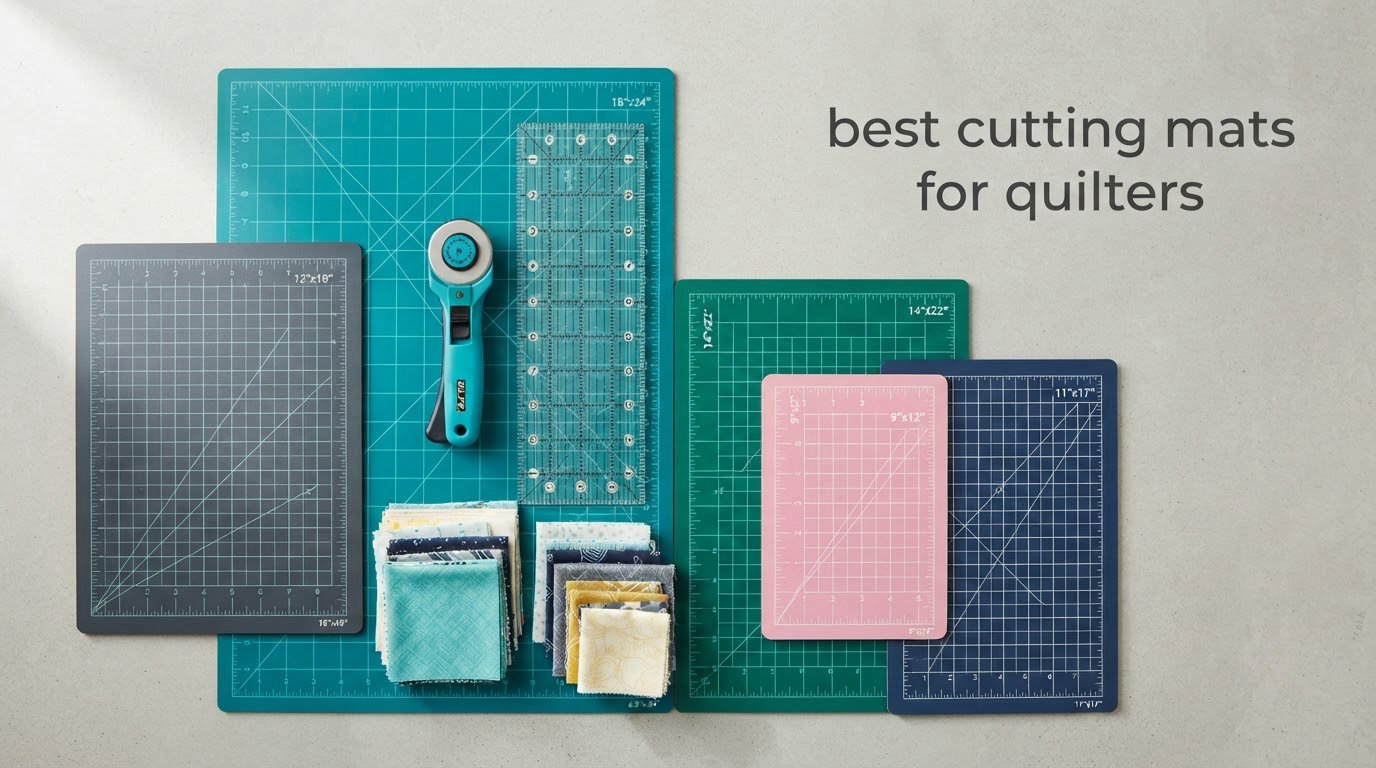
Most quilters buy a cutting mat the way they buy a rotary cutter: pick one, use it for years, never think about it again. That is exactly why the wrong pick is so annoying. A thin mat dulls your blade and drifts across the table, a folding mat leaves a dead zone at the crease, and a 12 x 12 square makes cutting yardage impossible.
Table of Contents
Top 3 Picks for Best Cutting Mats for Quilters in 2026

Fiskars 24×36 Self Healing
- Readable grid with 30 45 and 60 degree bias lines
- Double-sided printed grid
- Self-healing cutting surface
Dahle Vantage 24 x 36
- Five-layer 1/8 inch PVC build
- Screened inch metric and angle guides
- Heaviest full-size mat here

anezus 35 x 23.3 Mat
- A1 format 35 x 23.3 inches
- Hard white PVC core layer
- Highest review count in the roundup
Best Cutting Mats for Quilters in October
| Product | Specifications | Action |
|---|---|---|
| Fiskars 24 x 36 Self Healing Mat |
|
Check Latest Price |
| Dahle Vantage 24 x 36 |
|
Check Latest Price |
| anezus 35 x 23.3 Mat |
|
Check Latest Price |
 WORKLION 24 x 36 Mat WORKLION 24 x 36 Mat |
|
Check Latest Price |
 Elan 36 x 72 Mat Elan 36 x 72 Mat |
|
Check Latest Price |
 Fiskars 14 x 14 Rotating Mat Fiskars 14 x 14 Rotating Mat |
|
Check Latest Price |
 Calibre Art Rotating Mat 14 x 14 Calibre Art Rotating Mat 14 x 14 |
|
Check Latest Price |
 OLFA RM-12S 12 x 12 Rotating Mat OLFA RM-12S 12 x 12 Rotating Mat |
|
Check Latest Price |
 Omnigrid 360 Rotating Mat Omnigrid 360 Rotating Mat |
|
Check Latest Price |
 ArtAt 24 x 36 Mat ArtAt 24 x 36 Mat |
|
Check Latest Price |
1. Fiskars 24 x 36 Self Healing Cutting Mat, Grid With 30 45 and 60 Degree Bias Lines
Fiskars 24″ x 36″ Self Healing Cutting Mat, Large Grid, Lilac Mountain Haze
24 x 36 inches
Polypropylene
0.06 inch thick
Double-sided printed grid
Pros
- Readable grid with 30 45 and 60 degree bias lines
- Self-healing surface keeps measurements consistent
- Large 24 x 36 working area for full quilt cuts
- Double-sided construction doubles usable life
Cons
- Thinner than multi-layer competitors at roughly 0.06 inch
- Polypropylene rather than the multi-ply PVC used by many quilting mats
I keep the Fiskars 24 x 36 on my cutting table and it is the one I reach for first. The grid prints clearly enough to read without squinting, and the 30, 45 and 60 degree bias lines are the reason I stopped guessing at triangle points.
It is also the safest buy in this roundup by a wide margin. This mat carries a 4.8 average across 20k+ ratings, and the repeated theme in reviews is that it has quietly become the default mat in a lot of quilting rooms.
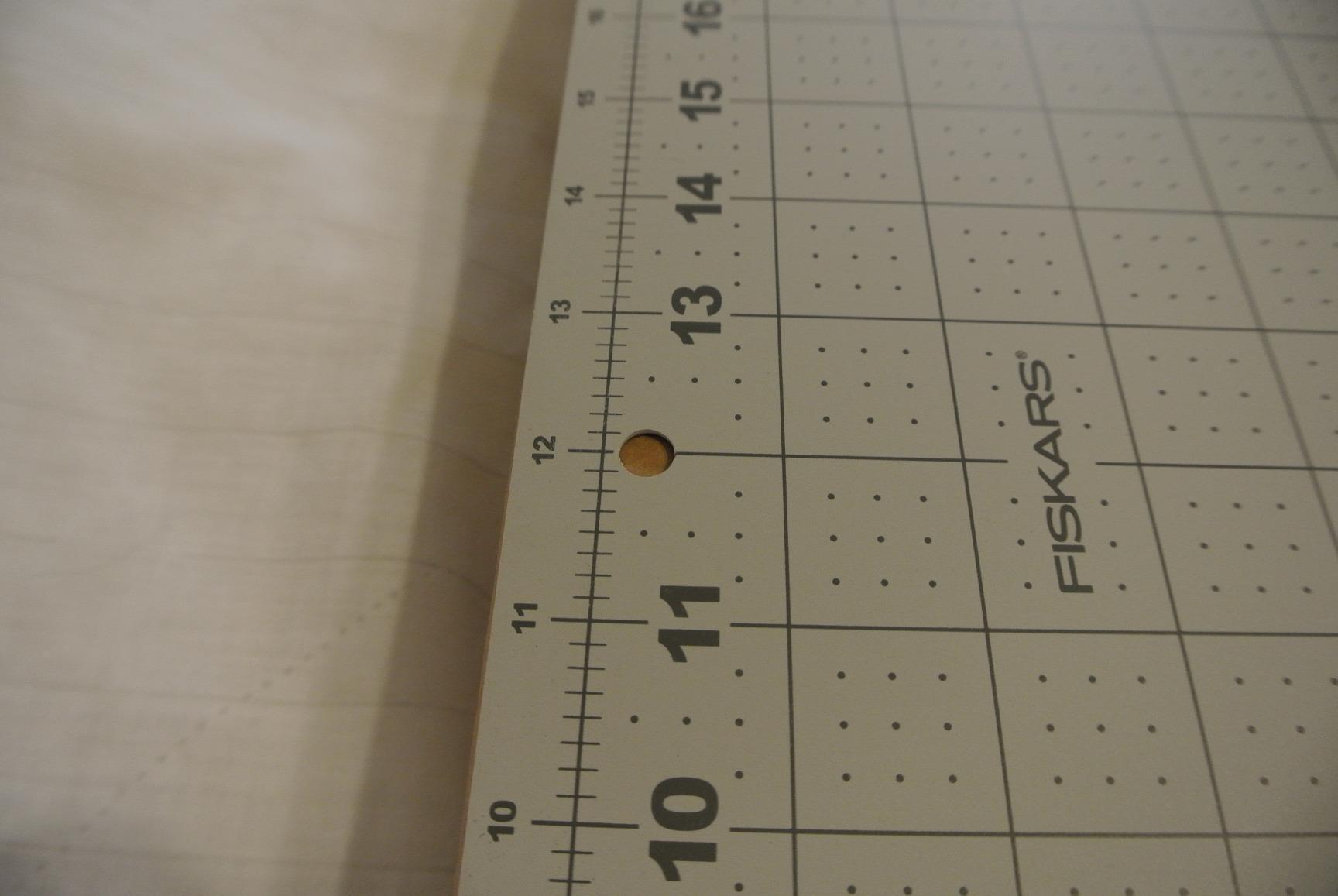
The double-sided print is the practical win. One face handles the standard imperial layout, and flipping it gives you a fresh working surface once the first side is heavily grooved from yardage cutting.
Here is the honest drawback. At roughly 0.06 inch thick, this is a thin mat, and thin matters if you cut multiple layers or push a hard blade through heavy cotton. If your main complaint is that your blades dull fast, this is not the one.
When this mat works best
This is the pick for someone cutting yardage for a quilt back, strips, or a stack of layers in one pass. The 24 x 36 footprint fits a standard cutting table without overhanging, and the bias lines speed up strip work considerably.
When you should pick something else
Skip it if you cut dense fabrics in heavy batches and want maximum blade life, or if you need a grid-free surface to stop visual distraction while fussy cutting. Our self-healing mat breakdown covers the grid-free options in more depth.
2. Dahle Vantage 24 x 36 Five-Layer Self Healing Mat, Screened Guides
Dahle Vantage 10673 Premium Self-Healing Cutting Mat, 24″x36″, 1/2″ Grid, 5 Layers for Max Healing, Perfect for Crafts & Sewing, Black
24 x 36 inches
5-layer PVC
0.13 inch thick
22 x 34 inch gridded area
Pros
- Thickest build here at roughly 1/8 inch
- Screened inch metric and angle guides resist wear
- Weight keeps the mat from shifting
- Black surface hides lint and debris
Cons
- Screened grid covers 22 x 34 inside a 24 x 36 mat
- Heaviest of the full-size mats so it is awkward to move
The Dahle Vantage is the mat I recommend to anyone who tells me their blades go dull. Five layers of 1/8 inch PVC is a genuinely different thickness class from most of what is on the shelf, and the difference shows up in how a blade feels through the third cut.
It carries a 4.7 average across 19k+ ratings with 84% five-star, and reviewers consistently point at the durability of the printed guides. Those guides are screened rather than surface-printed, which is why they still read clearly after heavy use.
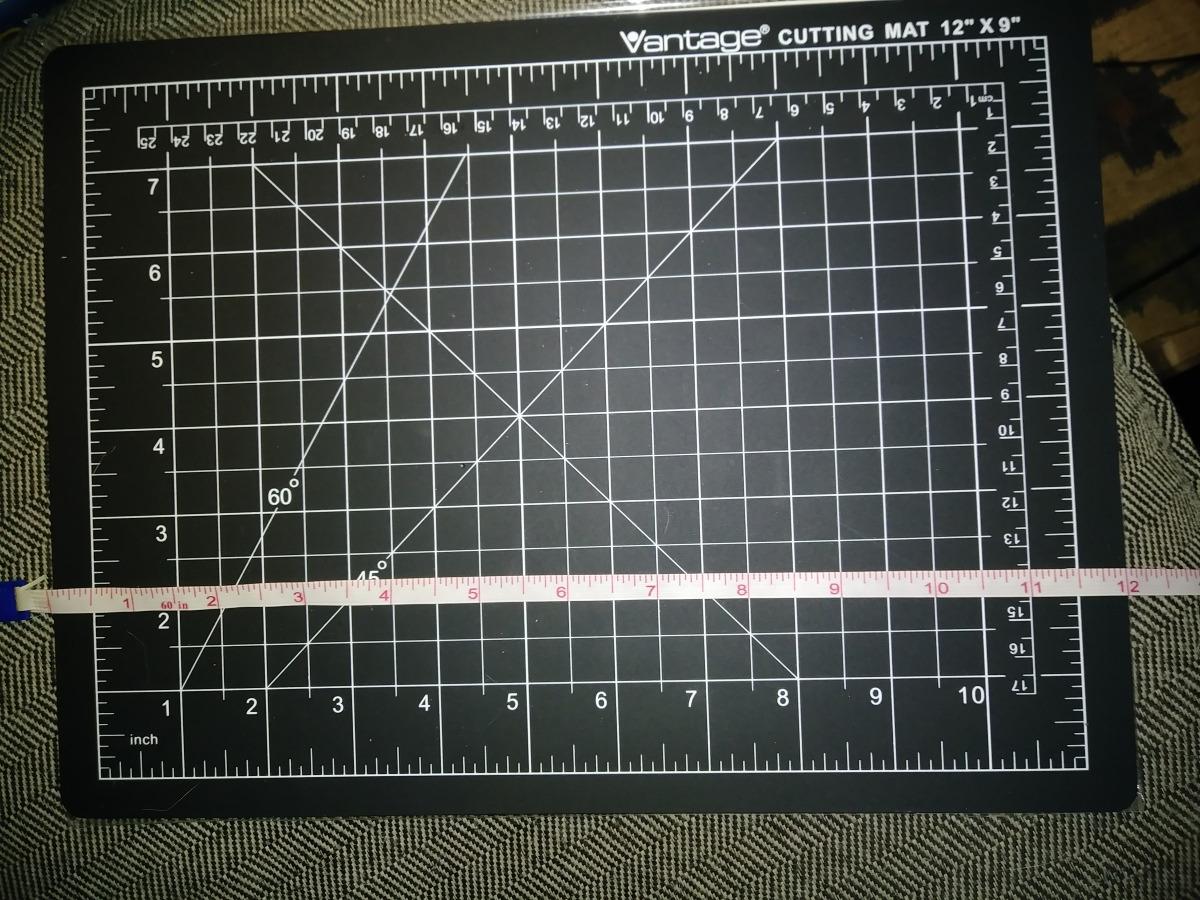
The weight is a feature on a cutting table. At 2.27 kg it stays put while you feed fabric across it, and I have had no need to hold the edges down.
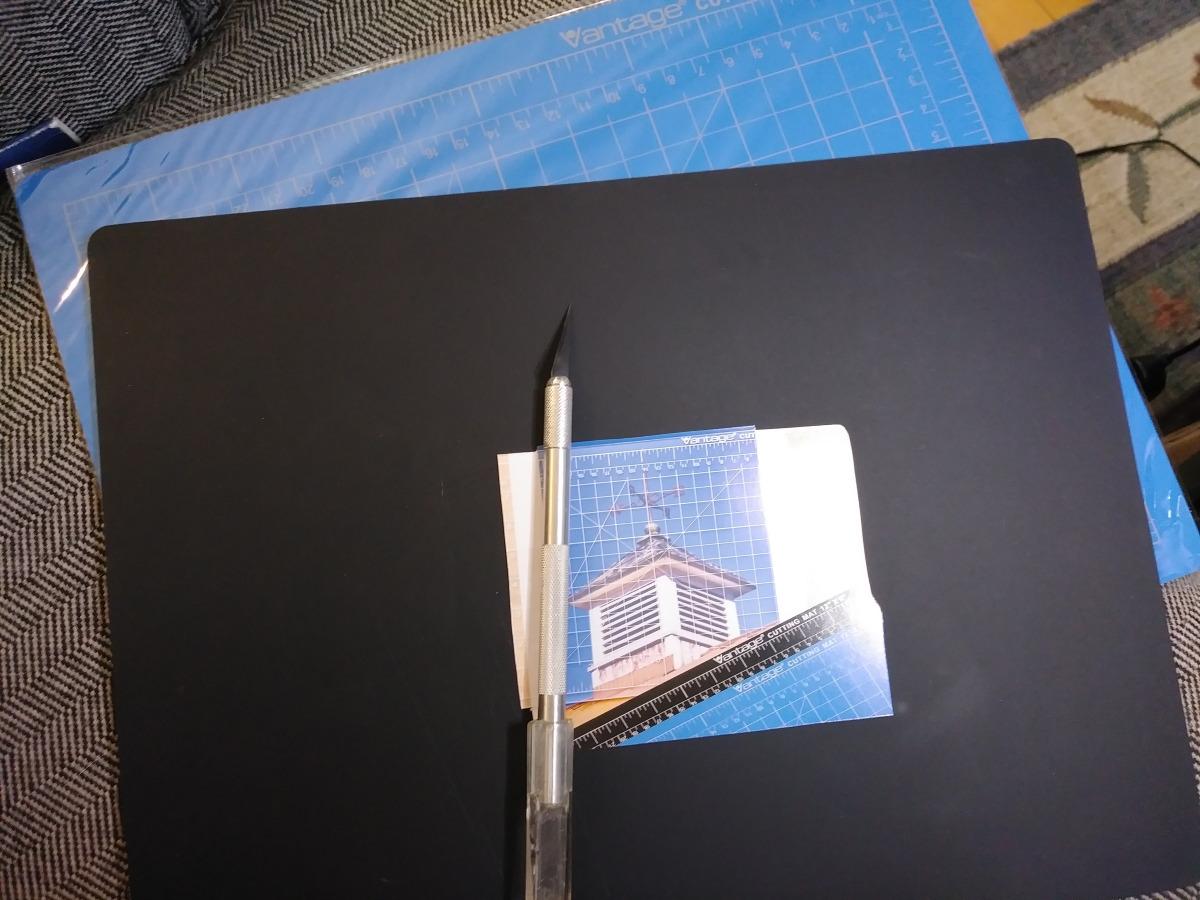
One thing to know before you order: the gridded working area is 22 x 34 inches, not the full 24 x 36. If you rely on grid lines at the outer edge, this will surprise you once. It also needs two hands to lift comfortably.
When this mat works best
Pick this one for a dedicated sewing room, cutting heavy quilting cotton in multiple layers, or if you cut several hours a session and want the blade to last. The screened guides also suit anyone who uses both inch and metric measurements.
When you should pick something else
Not ideal for a small flat where you carry the mat between rooms, and not ideal if you need gridded lines right out to the edge of the sheet. A lighter A1-format mat is the better call for one-handed moves.
3. anezus 35 x 23.3 Self Healing Mat, A1 Format With Hard Core Layer
anezus Self Healing Cutting Mat for Rotary Cutting, 35″ x 23.3″, Green
35 x 23.3 inches A1
5-layer PVC
0.08 inch thick
Double-sided grid
Pros
- Most-reviewed product in the roundup with 21k+ ratings
- A1 footprint is longer than a standard 24 x 36
- Hard white PVC core resists blade penetration
- Inch and metric grids with angle lines on both sides
Cons
- Not a true 36 inch mat so some rulers run past the edge
- Thinner than the Dahle five-layer option
The anezus is the mat I recommend when someone asks which one to buy if they are not going to spend much time choosing. It has 21k+ ratings, more than any other product in this roundup, and it holds the top position in the quilting cutting mat category.
The 35 x 23.3 inch A1 footprint is the quiet advantage. It is longer than a 24 x 36 in one direction, which means a full length of yardage fits without piecing the mat together.
The middle layer is a harder white PVC, and the manufacturer claims it is there specifically to stop the blade punching through. In practice the mat feels firmer under a blade than most mats at a similar weight.
The catch is arithmetic. At 35 inches rather than 36, a standard 36-inch ruler overhangs by a full inch, and any reference that assumes a 36-inch width runs past the edge. It is also thinner than the Dahle, so it is a step down on blade protection.
When this mat works best
Great for a first self-healing mat, for cutting long strips, and for anyone who wants both imperial and metric on the same mat without buying a second one. The double-sided print means you can flip it when one side wears.
When you should pick something else
Pass if your rulers and cutting blocks are all built around a true 36-inch width, or if blade life under heavy layering is the priority. In that case, go up a thickness class rather than a size class.
4. WORKLION 24 x 36 Five-Layer Compressed PVC Mat, Double Sided
WORKLION 24″ x 36″ Large Self Healing PVC Cutting Mat, Double Sided, Gridded Rotary Cutting Board for Craft, Fabric, Quilting, Sewing, Scrapbooking – Art Project…
24 x 36 inches
Five-layer compressed PVC
Double-sided inch and metric grid
30 45 and 90 degree guides
Pros
- One side printed in inches and the other in centimeters
- Soft top layer over a firm core
- No odor on arrival
- Thicker than comparable mats at this level
Cons
- Can shift on a smooth desk without weight on top
- Solvent damage can scratch the printed grid
- Curves permanently if stored on edge
The WORKLION is the value pick and it has an unusual selling point: no odor out of the box. For anyone who has ever received a new mat that smelled strongly of rubber, that alone changes the first impression.
It carries a 4.7 average across 13k+ ratings with 85% five-star. A recurring review theme is that quilters moved to a thicker mat and their rotary cutter suddenly performed better, which means the mat was the problem all along.
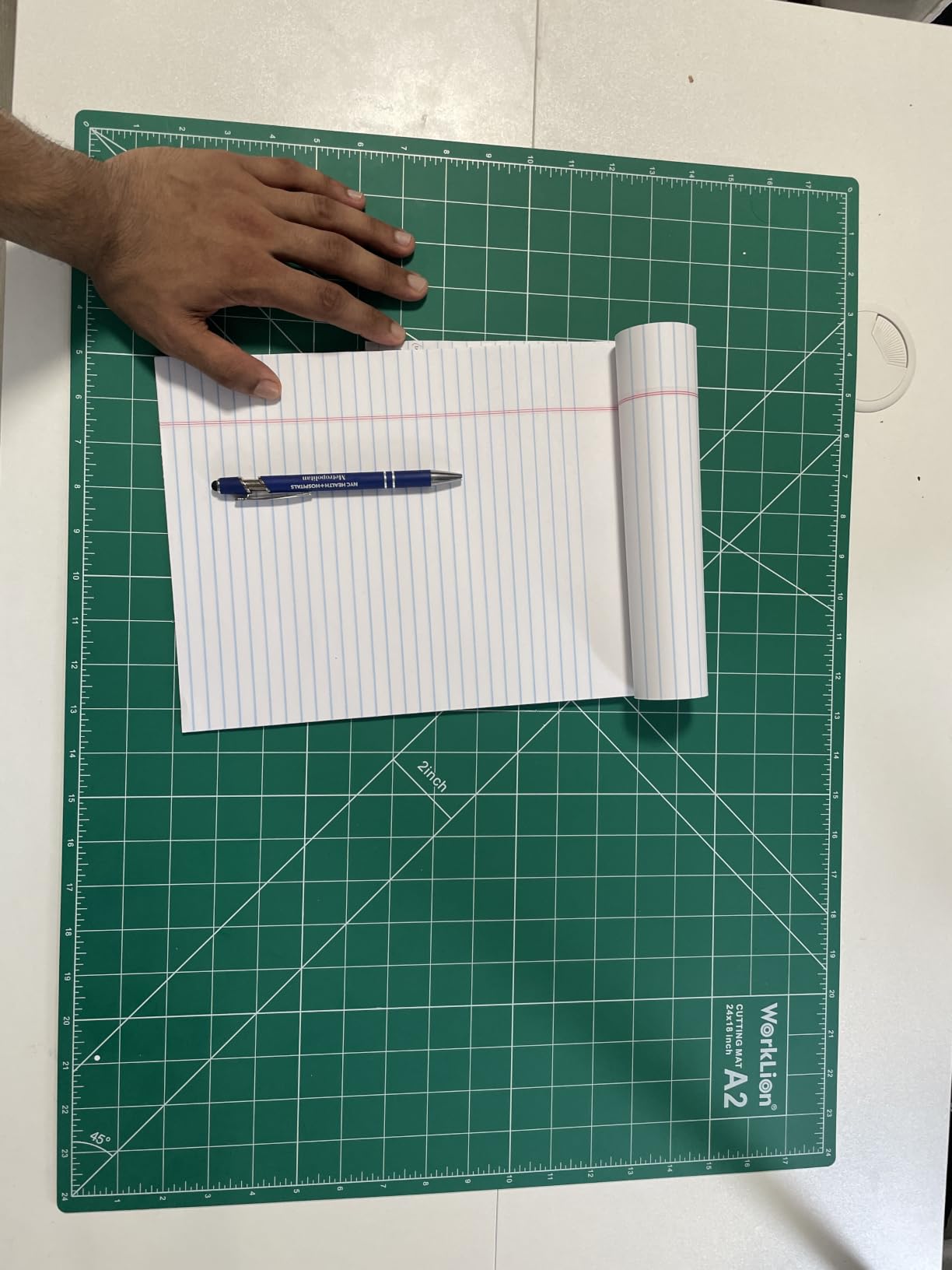
The construction is a soft top layer over a firm core. That combination is what keeps a blade sharp while stopping it cutting through to the table, and it is why the mat feels stable under a loaded ruler.
Two practical warnings. It can slide on a smooth desk, so put a grippy surface or a weight underneath it, and avoid acetone and similar solvents near the print because the grid marking lifts permanently.
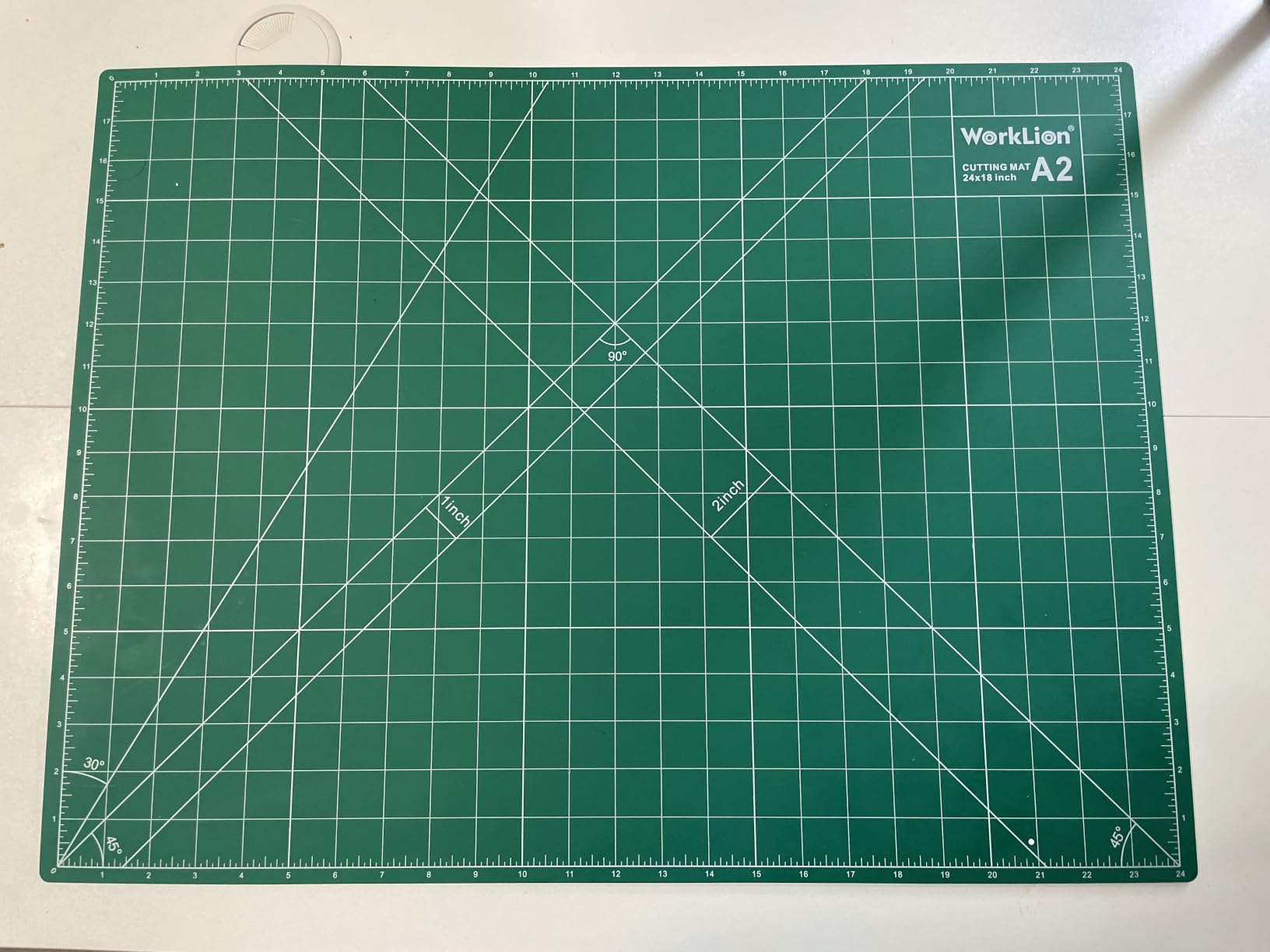
When this mat works best
This suits a first mat on a budget, a shared craft room, or anyone sensitive to chemical smell on arrival. The dual inch and centimetre faces make it useful if you sew from printed patterns in both units.
When you should pick something else
Not the right choice if your desk is slick glass or laminate and you will cut without anchoring it. In that case, a mat with a proper non-slip backing is a better fit.
5. Elan 36 x 72 Extra Large Self Healing Mat, Five-Ply With Recycled Layers
Elan Cutting Mat 36×72 Black & Taupe, Extra Large Self Healing Cutting Mat 36 x 72 Inch, 5-Ply Craft Board Black, Hobby Board for Sewing and Quilting
36 x 72 inches
5-ply PVC at just over 3mm
Black and taupe reversible
Rigid construction
Pros
- Only 36 x 72 option so quilt backs cut in one pass
- Noticeably more rigid and resists developing a curve
- About twice the thickness of a typical mat
- Black and taupe sides give contrast on light and dark fabric
Cons
- Far heavier and priced well above the rest of the roundup
- Marked area slightly smaller than the nominal sheet size
- Print can smudge under a hot iron
Most mats are sized for a quilt block. The Elan 36 x 72 is sized for a quilt back. It is the only mat here where you can lay out a full-length piece of yardage and cut it in one continuous pass with no shifting and no butting two mats together.
Rigidity is the real story. At 4.8 across 4.1k+ ratings with 87% five-star, owners who own several mats describe this one as noticeably stiffer and roughly twice as thick as a typical mat, and they credit that for it staying flat over time.
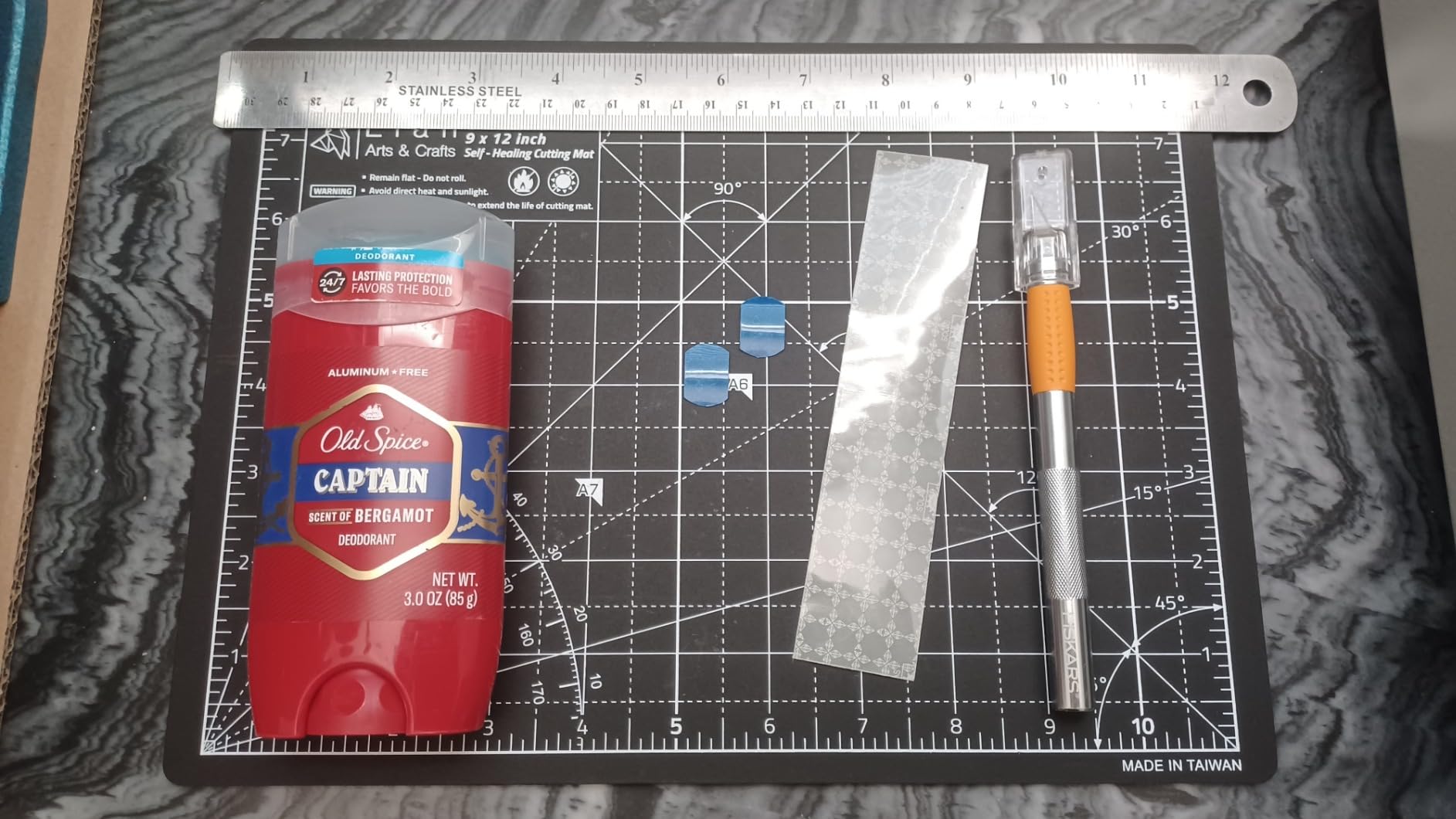
At just over 3mm it is a genuinely thick sheet, and two of the five plies are recycled PVC. There is no hanging hole, which sounds minor until you realise it removes a weak spot you would otherwise cut around.
The practical downsides are weight and money. It weighs 7.75 kg, it is by far the most expensive mat in this roundup, and the printed area stops short of the outer edge. It also prints on two sides, black and taupe, so contrast works for both pale and dark fabric.
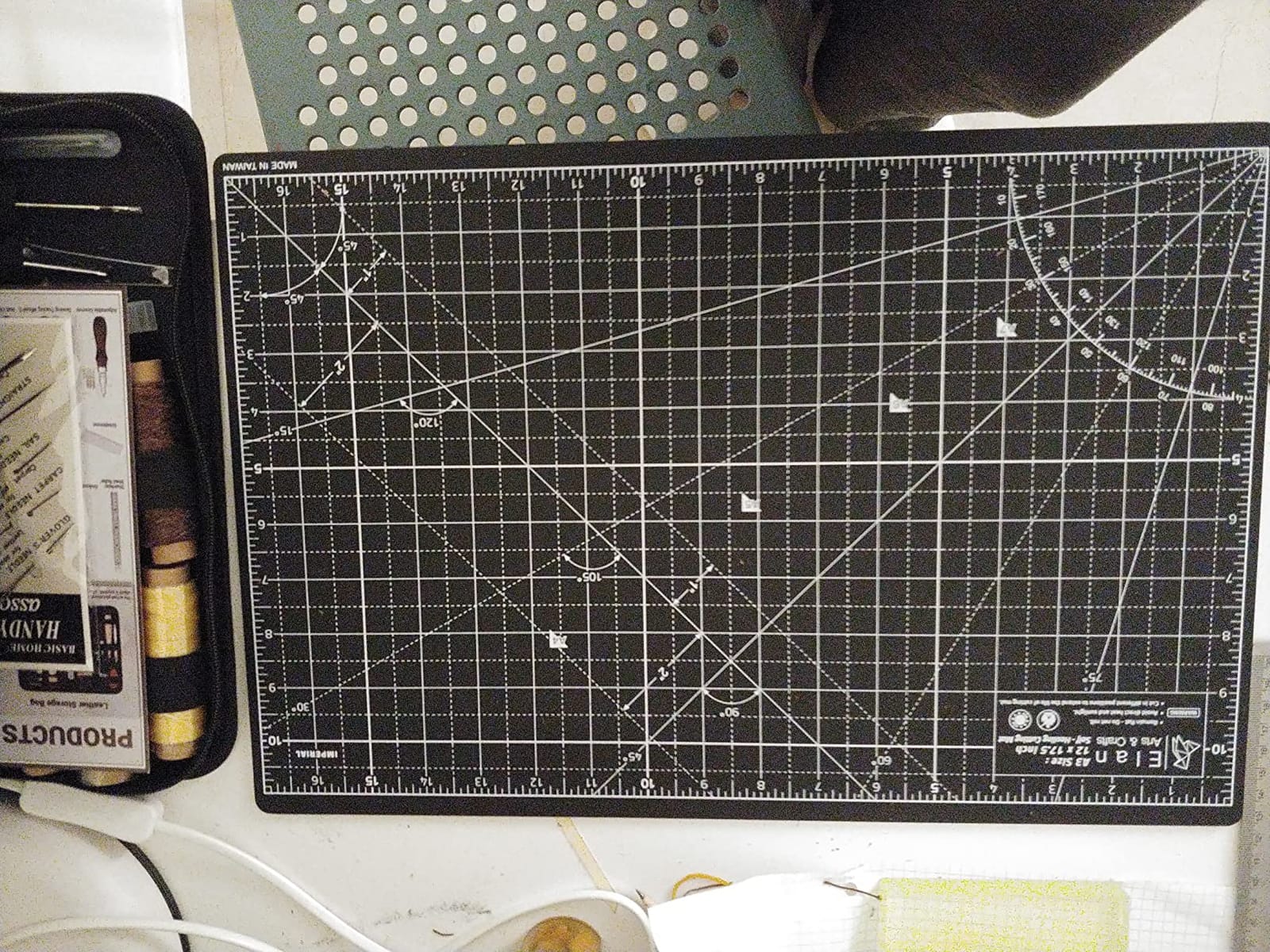
When this mat works best
This one is for a dedicated cutting table and for people who regularly cut quilt backs, appliqué backing, or long strips in bulk. If you also quilt on a long arm, having flat floor space to trim a finished quilt is a real secondary benefit.
When you should pick something else
It is hard to justify in a small flat, both for storage and for price. Our large cutting mat guide covers cheaper routes to extra workspace if this size is out of reach.
6. Fiskars 14 x 14 Rotating Self Healing Mat for Fabric Squares
Fiskars 14″ x 14″ Rotating Self Healing Cutting Mat for Fabric Squares
14 x 14 inches
Rotating surface
12 x 12 gridded working area
Lifetime limited warranty
Pros
- Rotation saves time on HST and disappearing blocks
- Full 12 x 12 marked area
- Rotates without slipping mid-cut
- Light enough to move between table and machine
Cons
- Outer 14 inch edge is not gridded
- Half-inch marks are faint
- Rotates less smoothly than costlier rotating mats
This is the mat I sit beside the sewing machine, not on the cutting table. The point of a rotating mat is simple: the mat turns instead of your fabric, so you stop shuffling a quilt block around with your wrist every time you need a new edge.
Quilters report this mat being used specifically for squaring up 12 x 12 blocks, and that is exactly the job it does well. It holds a 4.8 average across 4.7k+ ratings with 86% five-star, and it is backed by a lifetime manufacturer limited warranty.
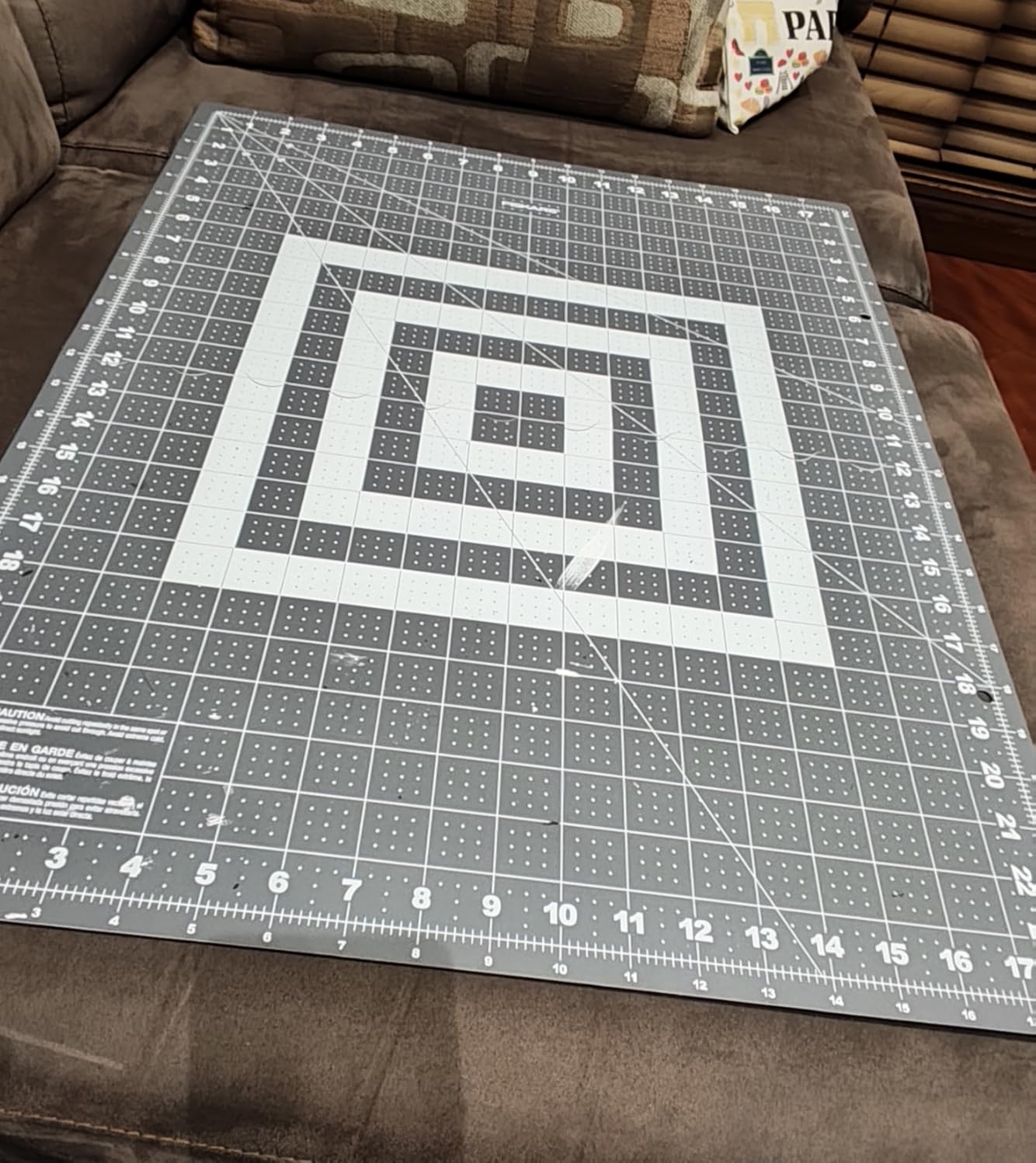
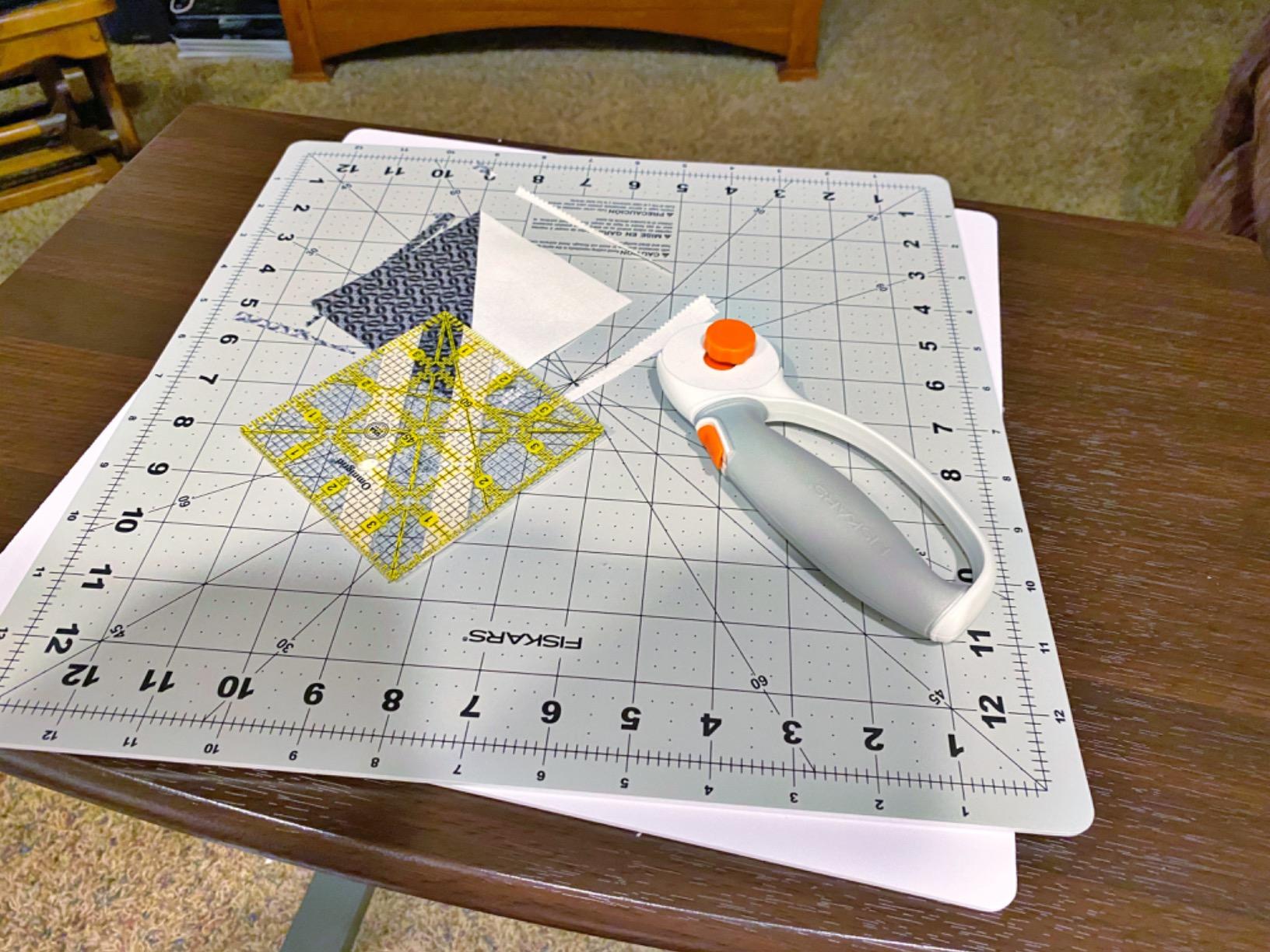
What I like is that the marked and gridded area is a full 12 x 12 rather than a 12-inch mat with an even smaller usable square. That means a 12 inch block genuinely fits with a half inch to spare on each edge.
The two honest caveats are that the outer 14 inch edge carries no grid, so cutting right along it is awkward, and the half-inch marks between the inch increments are faint under bright light. It also rotates with slightly more resistance than the pricier models.
When this mat works best
Buy this for half-square triangles, flying geese, and any trimming where you are cutting the same shape four times. The warranty is also a genuine advantage if you expect a decade of use at the machine.
When you should pick something else
It is not a yardage mat and it will not replace your full-size surface. If you have wrist or shoulder strain, a rotating mat with a scalloped turning edge reduces turning force further.
7. Calibre Art Rotating Self Healing Mat 14 x 14 With EN 71-3 Surface
Calibre Art Rotating Self Healing Cutting Mat 14×14 (13″ Grid), Quilting
14 x 14 inches
Rotating surface with non-detachable base
Angle lines every 15 degrees
Non-slip base
Pros
- Rotates smoothly without drifting mid-cut
- Dense firm surface resists visible cut marks
- Non-slip base holds the mat fixed
- Only rotating mat here with a certified EN 71-3 surface compound
Cons
- Dense grid with many markings is hard to read at a glance
- Some buyers report a slight odor on opening that fades
The Calibre Art is the rotating mat I would pick if a new mat smell is a dealbreaker for you. Its surface compound is EN 71-3 compliant, which is the stringent European chemical standard for surface materials used by children.
It holds a 4.8 across 2.9k+ ratings with 86% five-star. One quilter logged 128 cuts and turns across 32 blocks and reported only minimal visible grooving, which matches what I see after regular use.
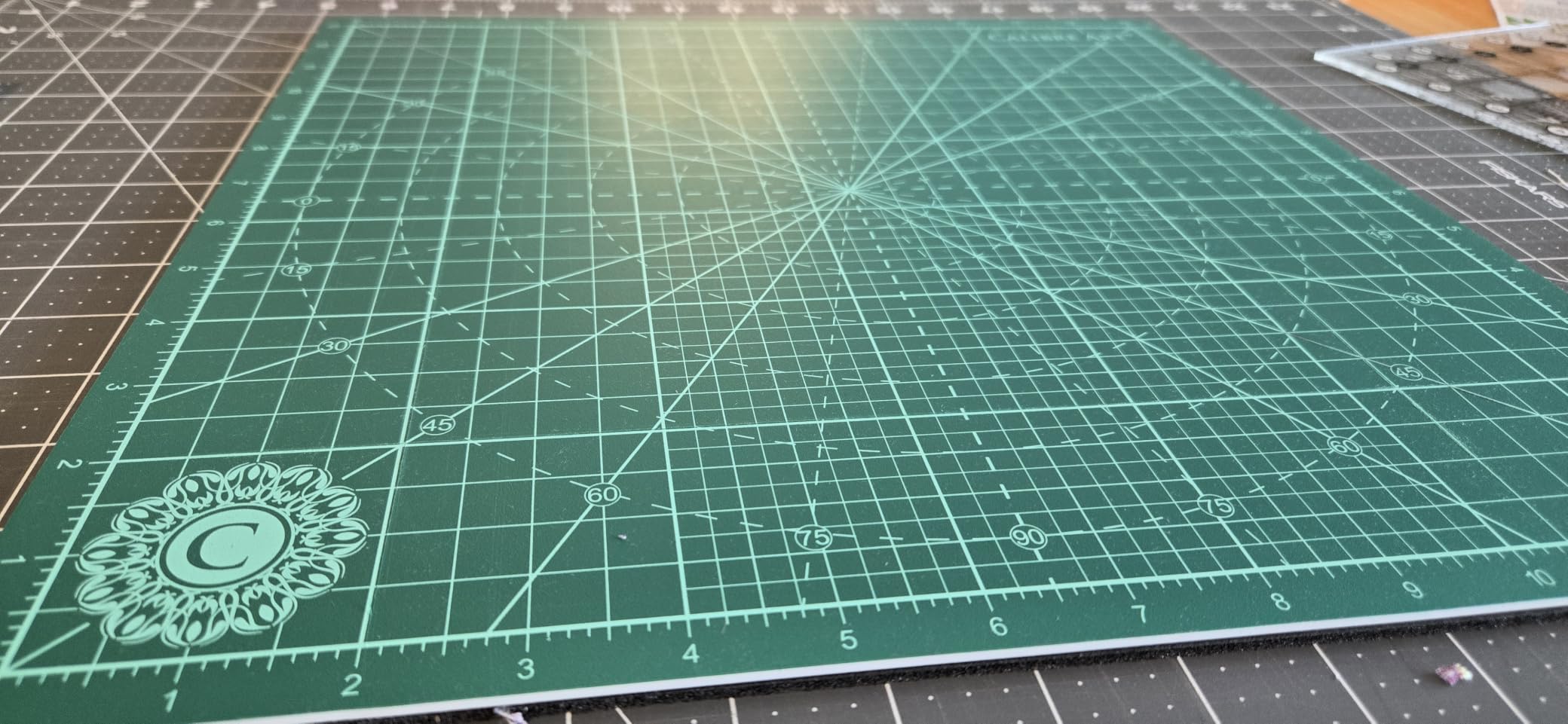
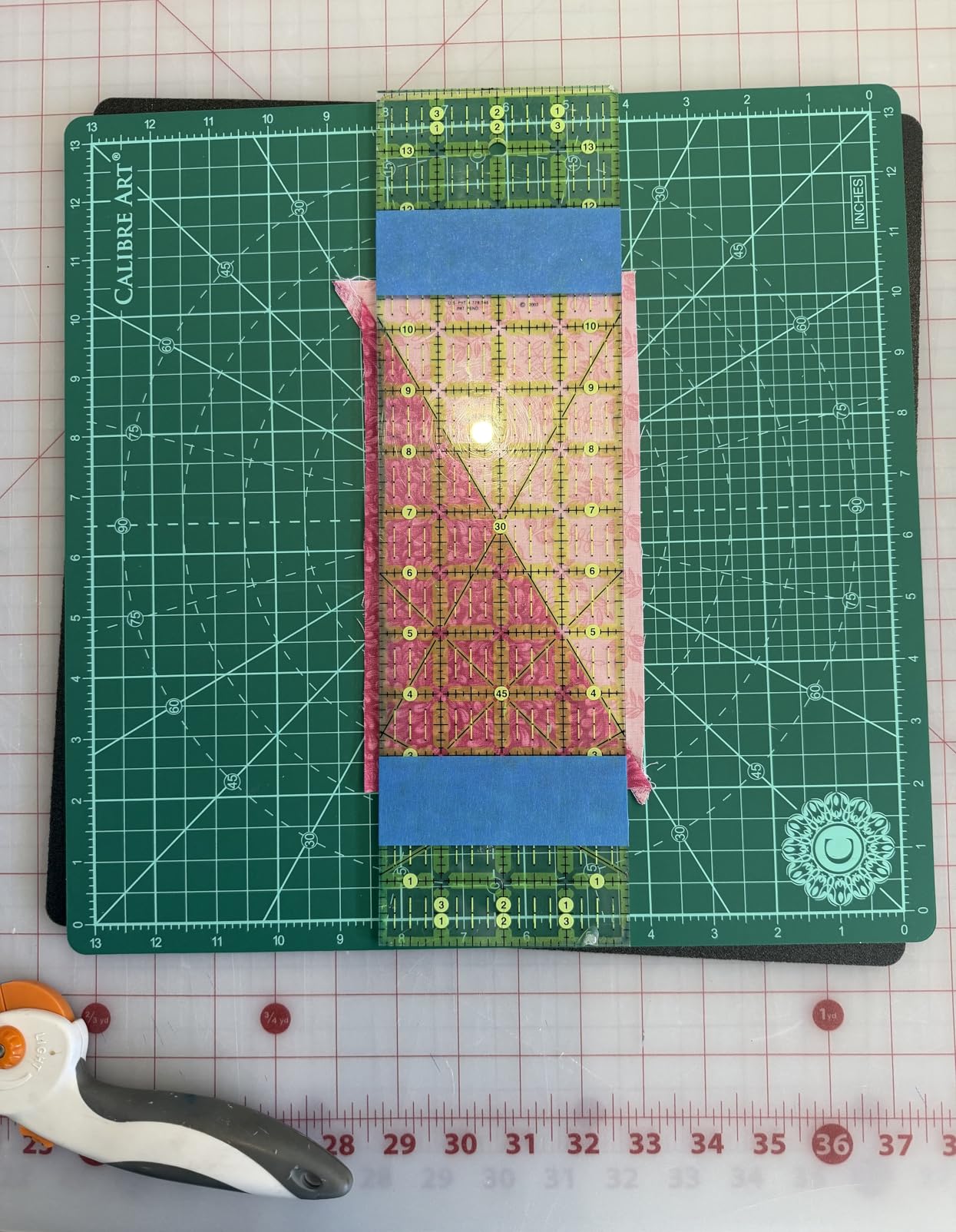
The base is non-detachable and non-slip, which keeps the mat planted while the top spins. That balance matters: a mat that spins too freely is as annoying as one that will not turn at all, because the fabric drifts.
The most repeated criticism is grid legibility. The printed surface is dense with lines and a 15-degree angle set, and it is easy to lose the specific line you are cutting on. Some buyers also note a faint odor that clears after airing out.
When this mat works best
Suits trimming blocks up to 12 inches square, and suits anyone sensitive to chemical smell or working with a child in the room. The firm surface also holds its edges well under repeated rotary work.
When you should pick something else
If you read your grid quickly under low light, this is not the one. Pick a mat with a sparser print and larger numerals, and accept a lower density of angle guides.
8. OLFA RM-12S 12 x 12 Rotating Cutting Mat, Two-Piece Self Healing
OLFA 12×12″ 360-Degree Rotating Cutting Mat (RM-12S) – Self-Healing, Green
12 x 12 inches
Two-piece rotating design
Self-healing surface
Rotary-cutter specific
Pros
- Two-piece build with a fixed non-slip base for stable rotation
- From a brand with a long cutting tool pedigree
- Compact enough for a small work area
- Handles squares triangles diamonds and circles
Cons
- Smallest rotating mat here so blocks over 12 inches will not fit
- Not designed for fixed-blade utility knives
- Needs flat storage away from direct sunlight
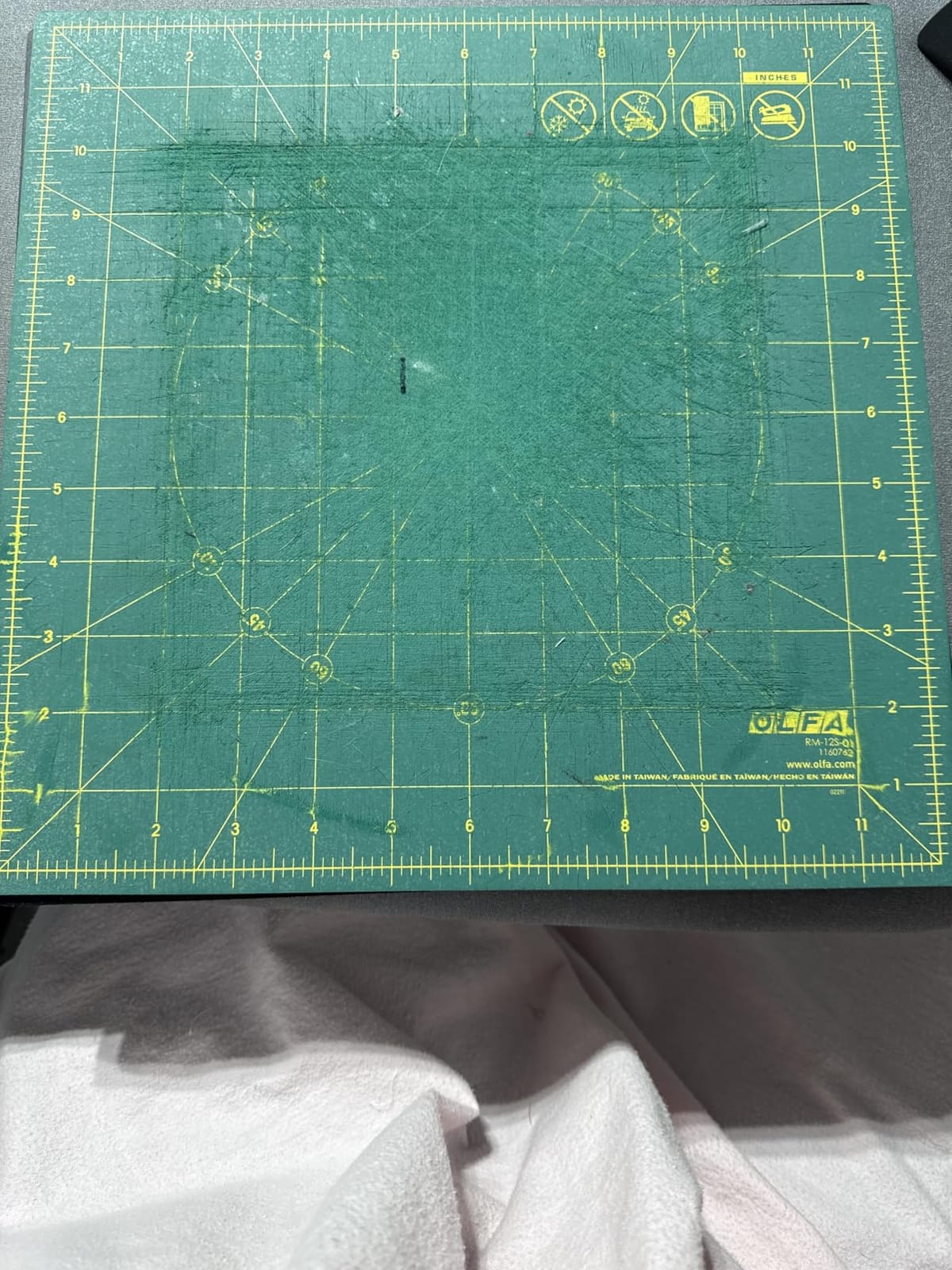
The OLFA RM-12S is the pick when space is the constraint. It is 12 x 12 inches, it rotates, and it takes up almost no room on a table, which makes it the one rotating mat I would actually put in a small flat or take on a retreat.
It holds a 4.8 across 1.8k+ ratings with the highest five-star share among the rotating mats here at 89%. The two-piece construction, a fixed non-slip base with a rotating mat on top, keeps the turn steady.
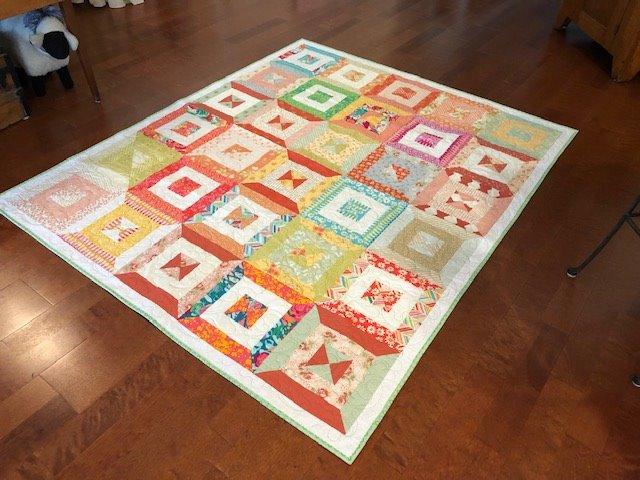
The brand matters more than it sounds. OLFA built its reputation on cutting tools, and this mat is designed for rotary cutters specifically, so the surface is tuned for a wheel blade rather than a dragged utility knife.
Be clear about the limits. Blocks larger than about 12 inches will not fit, and the manufacturer states it is for rotary cutters only. New OLFA mats are also the ones most often reported to arrive with a strong smell that fades over days, so leave it in a ventilated room before you use it.
When this mat works best
Good for small detailed shapes, appliqué, paper piecing, and for anyone working away from a full cutting table. It is light enough to move quickly around a work space between cutting and sewing.
When you should pick something else
Do not try to make it a yardage mat. For binding strips and long cuts, pair it with a larger mat rather than trying to rotate your way around a length of fabric.
9. Omnigrid 360 Rotating Self Healing Mat, 14 Inch
Omnigrid 360 Rotating Self-Healing Cutting Mat, 14 Inch
Rotating base with scalloped edge
Self-healing PVC
Half-inch gridlines with angles
Listed as 14 inch
Pros
- Scalloped edge lets the mat turn with a light fingertip push
- Suction-style base holds the mat on flat surfaces
- Centered measurements and marked angles
- Part of the Omnigrid ruler and cutter system
Cons
- Listing title says 14 inch while the size fields read 16 inch
- Smallest review count of the rotating mats here
- Highest cost rotating mat in the roundup
The Omnigrid is the rotating mat for anyone whose hand and wrist get tired. The scalloped edge gives you finger purchase so the mat turns with a light push instead of a shove, and the base lightly suctions to a flat surface to hold it in place.
It rates 4.7 from 1.6k+ ratings with 85% five-star. Reviewers point at the reduced wrist strain over long cutting sessions and at the base holding steady while the top spins.
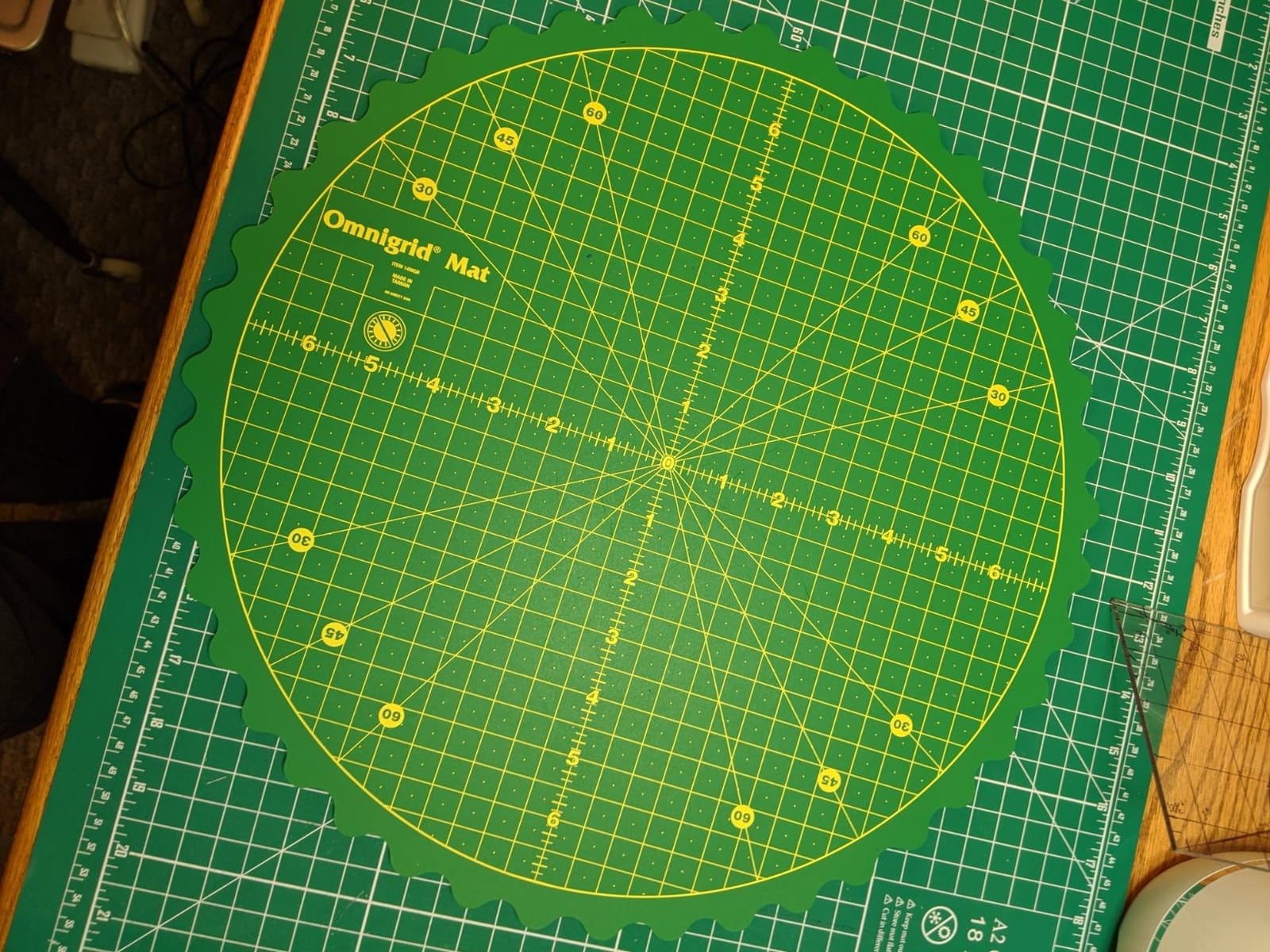
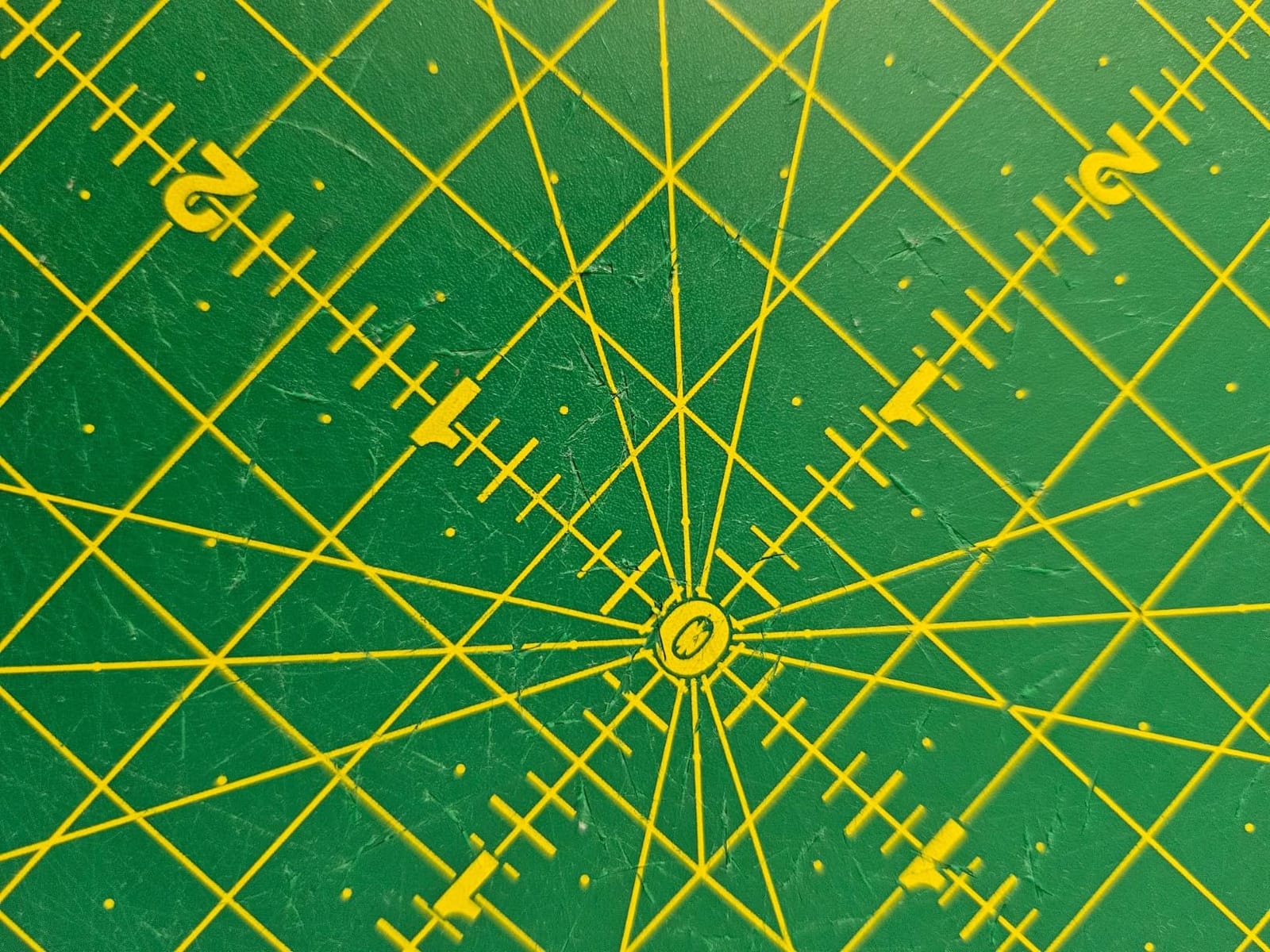
The half-inch gridlines are centred on the mat with marked angles, which is genuinely helpful for small pieces where a corner reference matters more than a long edge.
One thing to check before you commit. The product is listed as a 14 inch mat but the size and dimension fields read 16 inches, and that discrepancy is the main source of confusion in reviews. Confirm the actual cutting area on arrival.
When this mat works best
Pick it if you cut in long sessions, if you already own Omnigrid rulers, or if turning a mat with a flat palm has never felt natural to you. The system pairing is the real bonus.
When you should pick something else
It is the costliest rotating mat here and carries the thinnest review base of the four, so it is a harder bet on long-term community evidence. A simpler rotating mat covers most needs.
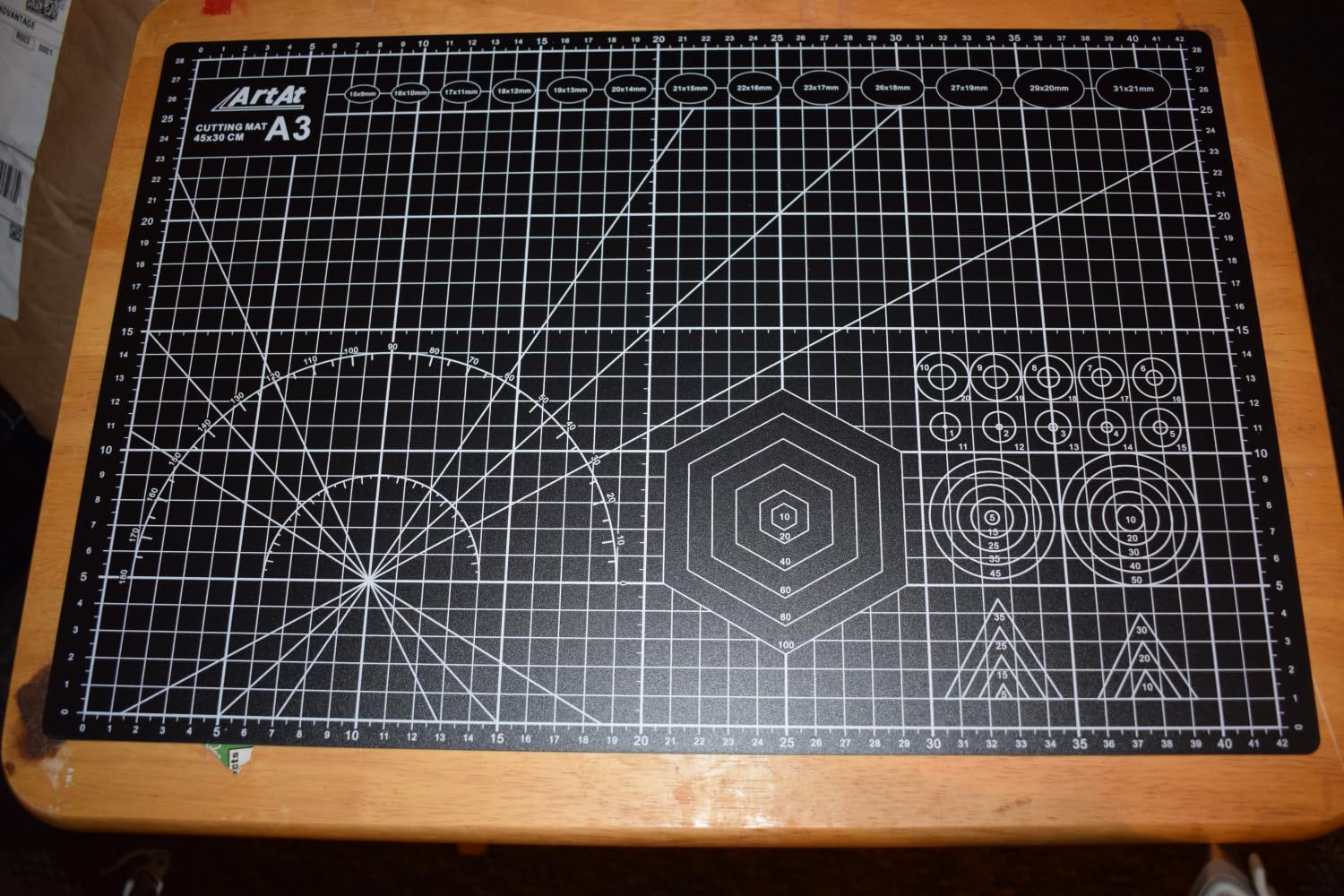
10. ArtAt 24 x 36 Self Healing Mat, 3mm Five-Layer With Non-Slip Backing
ArtAt Self Healing Cutting Mat: 24 x 36 inch Green Large 5-Ply Double-Sided Durable Non-Slip PVC Cutting Mat for Sewing Quilting Scrapbooking Art & Crafts projects…
24 x 36 inches
3mm thick 5-layer PVC
Double-sided inch and metric grid
Non-slip backing
Pros
- Arrives flat rather than rolled so it is usable straight away
- Reinforced white PVC core resists bending and cracking
- Non-slip backing holds it without a weight
- Half-inch grid with eighth-inch fine marks
Cons
- Some arrive with dents from transit
- The listing shape field reads Round though the mat is rectangular
The ArtAt solves a problem most listings do not acknowledge: mats that arrive rolled. This one is packed flat, so you can lay it down and cut immediately instead of spending an evening trying to get it flat under weights.
It carries a 4.7 average from 1.8k+ ratings with 85% five-star. Buyers highlight the flat arrival, the grip on the work surface without sliding, and how well it holds sharp rotary and utility cuts.
The marking density is the standout spec for fussy cutting. Half-inch grid lines with eighth-inch fine marks and a 30, 45 and 90 degree angle set give you a reference point for small pieces where a 1/8 inch error is visible.
The 3mm five-layer build with a reinforced white PVC centre resists cut-through, and the non-slip backing grips a desk without needing a weight on top. The one recurring complaint is transit damage, with dents near the edge showing as raised bumps on the reverse.
When this mat works best
Good for appliqué, fussy cutting, and for anyone who wants an eighth-inch reference without a separate small ruler. It is also a strong choice if you cut both fabric and paper on the same surface.
When you should pick something else
If your mailroom is rough on large flat items, this is worth checking carefully on arrival. Anyone wanting a mat that resists being moved around should look at the heavier options instead.
How to Choose a Cutting Mat for Quilting
Size first, everything else second. A 24 x 36 mat fits a standard cutting table and handles a full yard of quilting cotton. An 18 x 24 mat suits limited space or a travel bag. A 12 x 12 or 14 x 14 rotating mat is for squaring up blocks. A 36 x 48 and up only makes sense if you have a dedicated table you do not need for anything else.
Check the real material. A standard hard plastic or fibreboard mat takes permanent grooves, and those grooves blunt blades and make your measurements drift. A self-healing mat is made from PVC and other polymers whose surface closes back up after a blade passes, protecting the table, the fabric edge, and the blade itself. For rotary quilting, self-healing is effectively mandatory.
Thickness is blade life. Roughly 0.06 inch is a light mat. Around 0.10 inch is a solid everyday mat. At roughly 0.13 inch and above you are in the range where repeated cutting of multiple layers stops dulling your blade so quickly. Notice also that the best-reviewed full-size mats here are all multi-ply, which is what keeps a blade from punching through.
Decide about the grid. If you like a quick visual reference, take a gridded mat. If the printed lines distract you while fussy cutting, a grid-free mat is calmer. One caveat that experienced quilters on quiltingboard.com raise constantly: treat printed grid lines as a guide, not a measurement. Use a ruler for anything that has to be exact.
Buy two, not ten. Most quilters end up with a complementary pair rather than one giant mat. A full-size 24 x 36 for yardage plus a 14 x 14 rotating mat beside the machine covers more than a single large sheet, and it makes more sense than a 36 x 72 you have to store against a wall.
Never iron on it. Heat and steam are the primary cause of warping. A hot iron rested on the surface can cause a permanent curve, and it will also smudge the printed grid. Store your mat flat or rolled loosely, never on its edge, and keep it out of direct sunlight. If a mat starts feeling dry and stops closing its cuts, that is fixable rather than a reason to replace it. Lightly misting the surface or laying wet towels on it for an hour, then letting it air dry, brings the self-healing back. Our baste spray guide covers the next step in quilt prep.
Frequently Asked Questions
What is the best cutting mat for quilters?
The Fiskars 24 x 36 Self Healing Mat is the best all-rounder for most quilters, with a readable grid, 30 45 and 60 degree bias lines and 20k+ ratings at 4.8. The right choice still depends on use case: the Dahle Vantage for blade protection, a Fiskars 14 x 14 rotating mat for block trimming, the Elan 36 x 72 for cutting a quilt back in one pass, and the OLFA 12 x 12 when space is tight.
Which cutting mat is better, Olfa or Fiskars?
Both are legitimate and they answer different needs. Fiskars is the stronger pick for a full-size gridded mat, offering a clear printed grid with 30 45 and 60 degree bias lines and a double-sided surface. OLFA is the stronger pick for small rotating formats, where the two-piece RM-12S design and the brand’s rotary cutting pedigree carry the advantage. For full-size yardage cutting and longevity, choose Fiskars.
What is the best size cutting mat for quilting?
A 24 x 36 mat is the best general size because it fits a standard cutting table and handles a full yard of quilting cotton. Use 18 x 24 for limited space or travel, a 12 x 12 or 14 x 14 rotating mat for squaring up blocks, and 36 x 48 or larger only if you have a dedicated cutting table.
What is the difference between a cutting mat and a self-healing cutting mat?
A standard cutting mat is hard plastic or fibreboard, so every cut leaves a permanent groove that dulls blades and reduces accuracy. A self-healing mat is made from PVC and other polymers whose surface closes back up after a blade passes, protecting both the blade and your work surface. For rotary quilting, self-healing is effectively mandatory.
Do cutting mats self heal, and how long do they last?
Yes, to a point. Self-healing mats reseal shallow surface cuts, which is why they outlast hard plastic by a wide margin and keep a blade sharp. They still degrade over years, and they lose healing ability when they dry out. A light misting or an hour under wet towels, followed by air drying, restores a dried-out mat.
Why does my new cutting mat smell so strongly?
A strong chemical or rubber smell on arrival is common with PVC-based mats, and it is the reason some quilters return them. The smell fades over days to a couple of weeks. Leave the mat in a ventilated room, and for a larger mat that will not fit in a sink, use a spray bottle of water or wet towels rather than soaking it. The WORKLION mat in this roundup is noted for having no odor on arrival.
Can you iron on a cutting mat, and are mat grid lines accurate?
No, never iron or steam on a cutting mat. Heat is the main cause of permanent warping and it can smudge the printed grid. As for accuracy, experienced quilters generally treat printed grid lines as a visual guide rather than a measurement, and always confirm with a ruler before committing to a cut.
The Best Cutting Mats for Quilters in 2026
If you want one answer, take the Fiskars 24 x 36 Self Healing Mat. It has the clearest grid of the full-size options, a 4.8 rating across 20k+ reviews, and a double-sided surface that gives you two working faces in one mat.
Add the Dahle Vantage if blade life is your frustration, the anezus if you want the most proven mat per pound spent, and a rotating mat beside your machine. The Elan 36 x 72 is the upgrade only when you regularly cut full quilt backs. Check the latest price for each, then pick the one that matches your table rather than the one with the longest spec list.