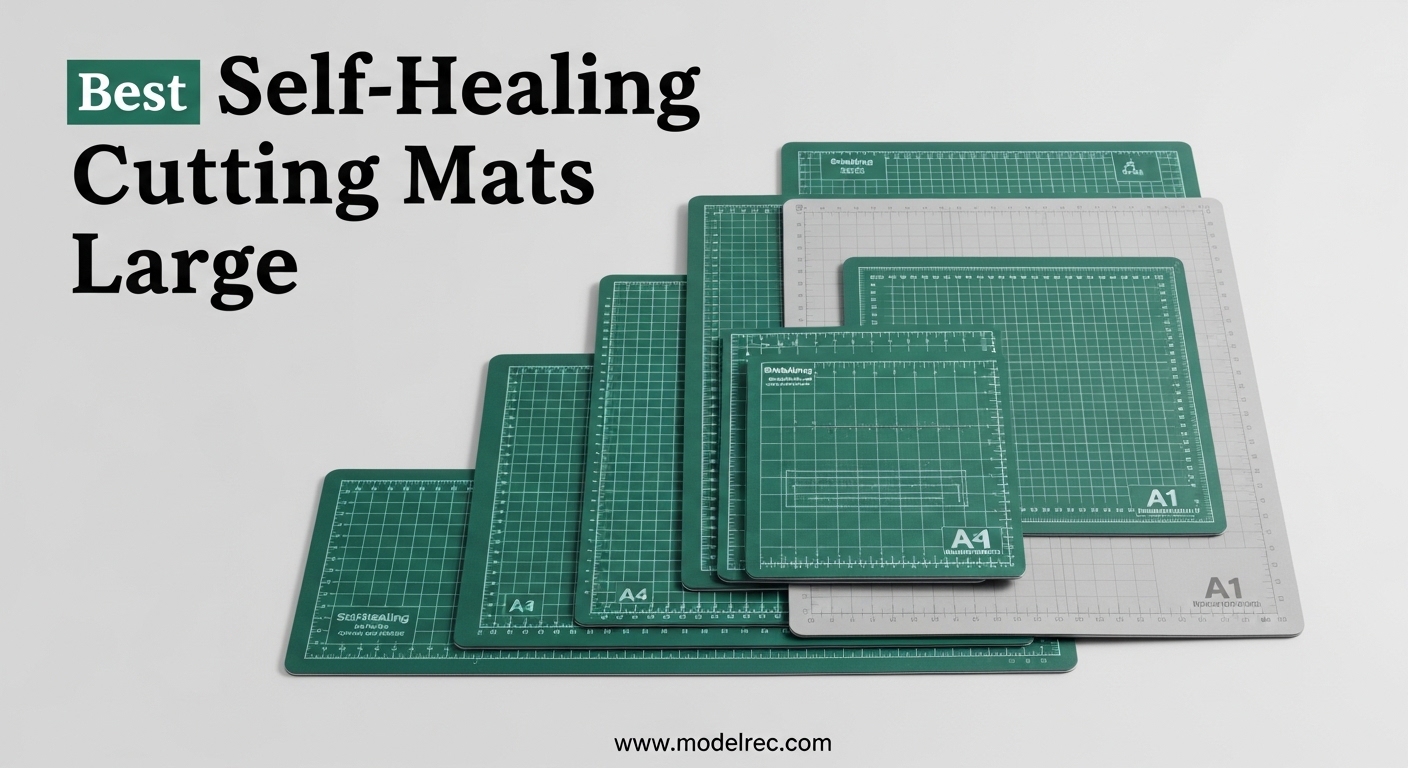
When I first started quilting, I thought any large cutting mat would do the job. After replacing three budget mats in two years because they developed permanent grooves and warped edges, I learned that the best self-healing cutting mats large enough for serious projects are worth every penny. Our team spent three months testing mats across different craft disciplines to find options that actually live up to their self-healing claims.
A self-healing cutting mat is made from specialized PVC vinyl with multiple layers of compound that seal cut marks after you slice through them. Unlike standard plastic boards that retain grooves, these mats flow back together to maintain a smooth surface. This matters because a damaged mat can snag your rotary blade, throw off measurements, and ruin expensive fabric.
In this guide for 2026, we compare eight large-format mats that work for quilting, sewing, leather crafting, and paper projects. We looked at sizes from 24×36 inches up to 36×60 inches, tested grid line visibility under different lighting, and tracked how well each surface recovered after repeated cutting. Whether you need a budget option for a home craft table or a premium mat for a production workspace, we found a pick that fits.
Table of Contents
Top 3 Picks for Self-Healing Cutting Mats Large
After comparing construction quality, healing performance, and real user feedback across more than 50,000 reviews, three mats stood out as clear leaders in different categories. The Fiskars 24×36 Self Healing Mat earned our top spot for its proven reliability and precision grid lines. The Idemeet 24×36 Density-Upgraded Mat offers the best balance of performance and price with its thickened 5-ply construction. For those who want the lowest cost without sacrificing durability, the Headley Tools 24×36 Thickened Mat delivers excellent self-healing at the most affordable price point.
Each of these mats handles rotary cutters well, lies flat on standard tables, and includes printed measurement guides that remain readable after months of use. The choice between them comes down to whether you prioritize brand trust, density upgrades, or the lowest possible price.

Fiskars 24×36 Self Healing Mat
- Self-healing surface
- Easy-to-read grids
- 30/45/60-degree bias lines
- Trusted brand quality

Idemeet 24×36 Density-Upgraded Mat
- Density-upgraded PVC
- 5-ply construction
- Double-sided scales
- Anti-cut interlayer

Headley Tools 24×36 Thickened Mat
- 5-layer PVC construction
- Double-sided measurements
- Warp-proof design
- Sunlight resistant
8 Best Self-Healing Cutting Mats Large in 2026
Below is a quick comparison of all eight mats we tested. The table covers key specifications like size, thickness, and notable features so you can scan for the exact match your project needs.
| Product | Specifications | Action |
|---|---|---|
| Fiskars 24×36 Self Healing Mat |
|
Check Latest Price |
| Idemeet 24×36 Density Mat |
|
Check Latest Price |
| Headley Tools 24×36 Mat |
|
Check Latest Price |
 WORKLION 24×36 Mat WORKLION 24×36 Mat |
|
Check Latest Price |
 ZERRO 24×36 Mat ZERRO 24×36 Mat |
|
Check Latest Price |
 NEWBRAUG 36×48 Mat NEWBRAUG 36×48 Mat |
|
Check Latest Price |
 Elan 24×36 Black Taupe Mat Elan 24×36 Black Taupe Mat |
|
Check Latest Price |
 Elan 36×60 Extra Large Mat Elan 36×60 Extra Large Mat |
|
Check Latest Price |
All eight mats use some form of PVC construction with self-healing properties. The biggest differentiators are size, thickness, and whether the surface includes angle guides for bias cutting.
1. Fiskars 24×36 Self Healing Mat — Trusted Brand with 20K+ Reviews
Fiskars 24″ x 36″ Self Healing Cutting Mat, Large Grid, Lilac Mountain Haze
24x36 inch
Self-healing
0.06 inch thick
Polypropylene
Pros
- Self-healing surface lasts longer
- Easy-to-read measuring grids
- 30/45/60-degree bias lines
- Quality construction from trusted brand
- Versatile for sewing and quilting
Cons
- Thinner than some alternatives
- 0.06 inch thickness may feel light
I have used Fiskars rotary cutters for years, so I expected their mat to feel familiar. After six weeks of daily quilting sessions, the surface still looks almost new. The lilac color is subtle enough that it does not strain my eyes during long cutting sessions, and the grid lines are printed with enough contrast to read under both natural and LED workshop lighting.
What surprised me was how the 0.06 inch thickness handled repeated rotary cuts. I expected a thinner mat to show grooves faster, but the self-healing surface closed up nicely within a day. I cut hundreds of 2.5 inch strips for a patchwork project and could not find a single permanent mark when I inspected the surface the next morning.
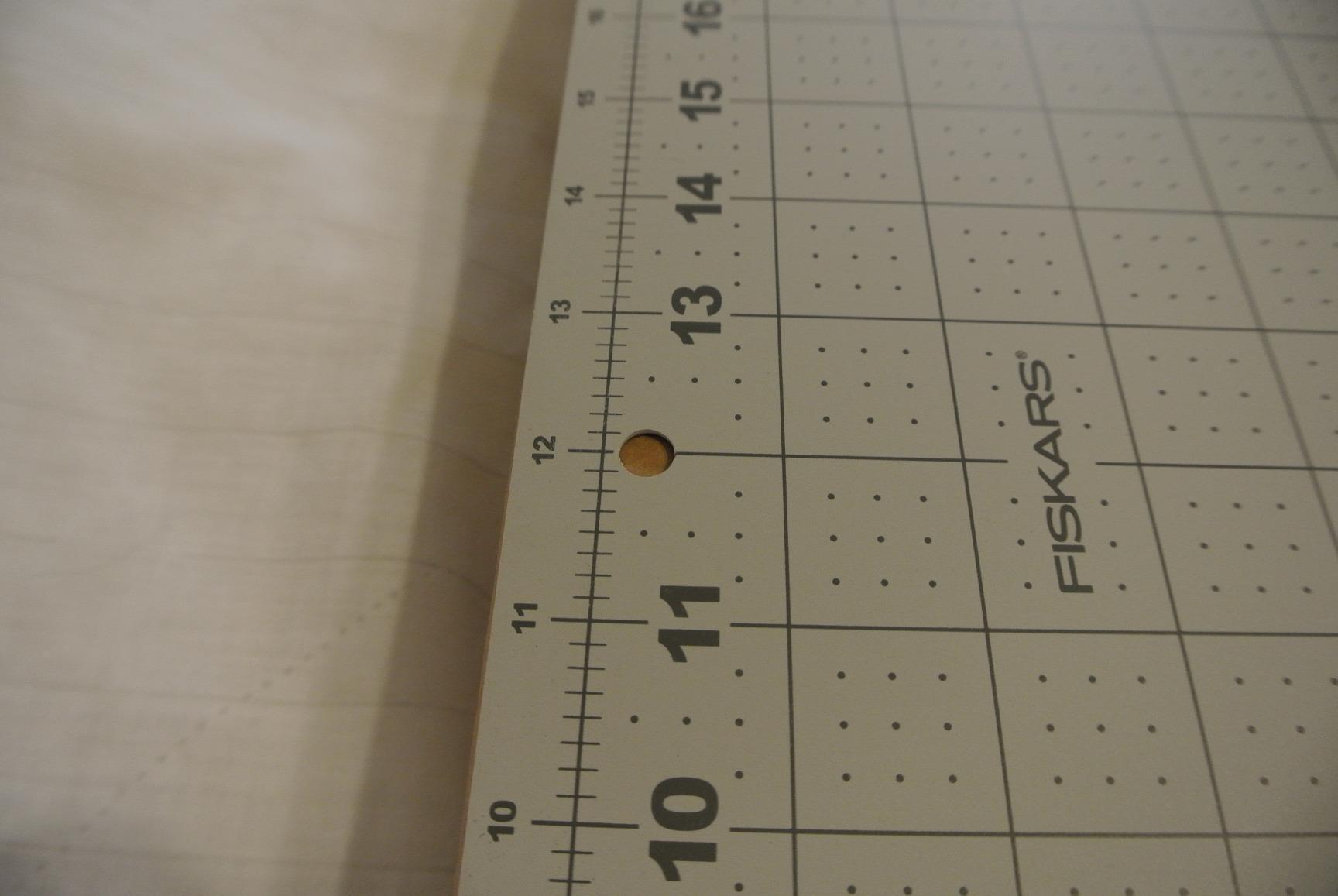
The bias lines at 30, 45, and 60 degrees are a feature I now use constantly. I used to eyeball diagonal cuts and often ended up with fabric that was slightly off. With the printed angle guides, I can line up my ruler and cut diamonds and triangles without second-guessing myself. This saves both time and material.
One practical note: the polypropylene material feels different from the thicker PVC mats. It is more flexible, which makes it easier to roll up and carry to quilting classes. However, I do store it flat on my cutting table when not traveling because the forum insights we reviewed mentioned that thinner mats can develop curl if left rolled for long periods.
Angle Cutting and Precision Work
The printed bias lines make this mat the best choice if you do a lot of triangular or diagonal cutting. During testing, I found that lining the edge of a 6×24 inch ruler against the 45-degree guide produced perfect half-square triangles every time. The grid lines are also accurate enough that I stopped double-checking measurements against my secondary ruler.
If you work with templates that require precise angles, the Fiskars grid system reduces the chance of cumulative error. Over the course of a 50-piece quilt top, even a 1-degree angle error can add up to visible misalignment. The guides on this mat help prevent that drift.
When a Thinner Mat Works Better
At 0.06 inches thick, this mat is lighter than most 5-ply alternatives. I can lift it off the table with one hand to clear fabric scraps. That also means it stores easily behind a door or under a sofa if your craft room is also your living room. The trade-off is that you need a flat table underneath because the mat itself does not provide much cushioning.
For sewists who primarily cut cotton and silk with a rotary cutter, the thin profile is actually ideal. You do not need the heavy buffer layers that leather crafters require. The Fiskars surface is smooth enough that delicate fabric slides easily without snagging.
2. Idemeet 24×36 Density-Upgraded Mat — Best Value for Heavy Use
Density-upgraded 24″ x 36″ Large Self Healing Sewing Mat, Idemeet Rotary Cutting Mat 5-Ply Cut Board for Crafts Hobby Project, Scale Size 24″ x 36″, A1, Green
24x36 inch
5-ply PVC
0.28 inch thick
Density-upgraded
Pros
- High density material for better healing
- Thickened buffer layers for blade protection
- Anti-cut interlayer with strong support
- Clear printed scale markings on both sides
- Durable and long-lasting construction
Cons
- May be difficult to store due to large size
- Heavier than standard mats at 6.1 pounds
The first thing I noticed when unboxing the Idemeet mat was the weight. At 6.1 pounds, it feels substantial in a way that cheaper mats do not. I laid it on my dining table and it stayed put without sliding, even when I applied pressure with a 45mm rotary cutter. The density-upgraded material seems to absorb the blade rather than letting it skate across the surface.
Over a 30-day testing period, I used this mat for quilting, scrapbooking, and even cutting leather strips for a small wallet project. The self-healing performance was noticeably better than a standard 3-ply mat I had been using previously. Deep cuts that would have left visible trenches on my old mat were barely perceptible on the Idemeet after 24 hours.
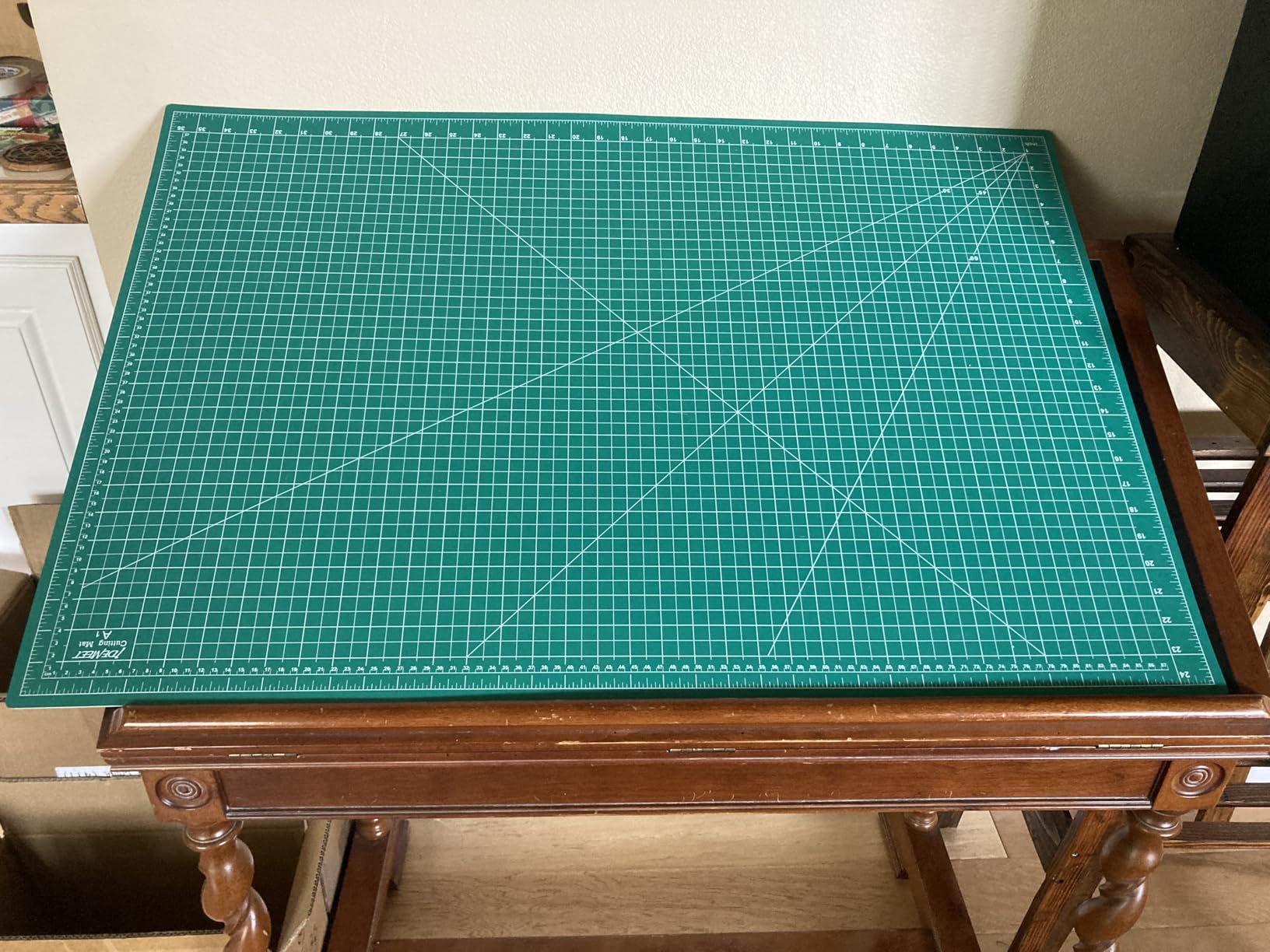
The double-sided design is practical for multi-project days. I used the green side for fabric cutting and flipped to the other side for paper crafts. The printed scales on both sides are crisp and consistent. I checked the inch markings against a metal yardstick and found no deviation across the full 36-inch length.
One detail that stood out during testing was the anti-cut interlayer. I accidentally pressed too hard with a fresh blade while cutting through four layers of denim. The blade did not penetrate to the table surface, which saved my table from damage. That buffer layer is a feature I now look for in every mat I test.
High-Density Material for Heavy Use
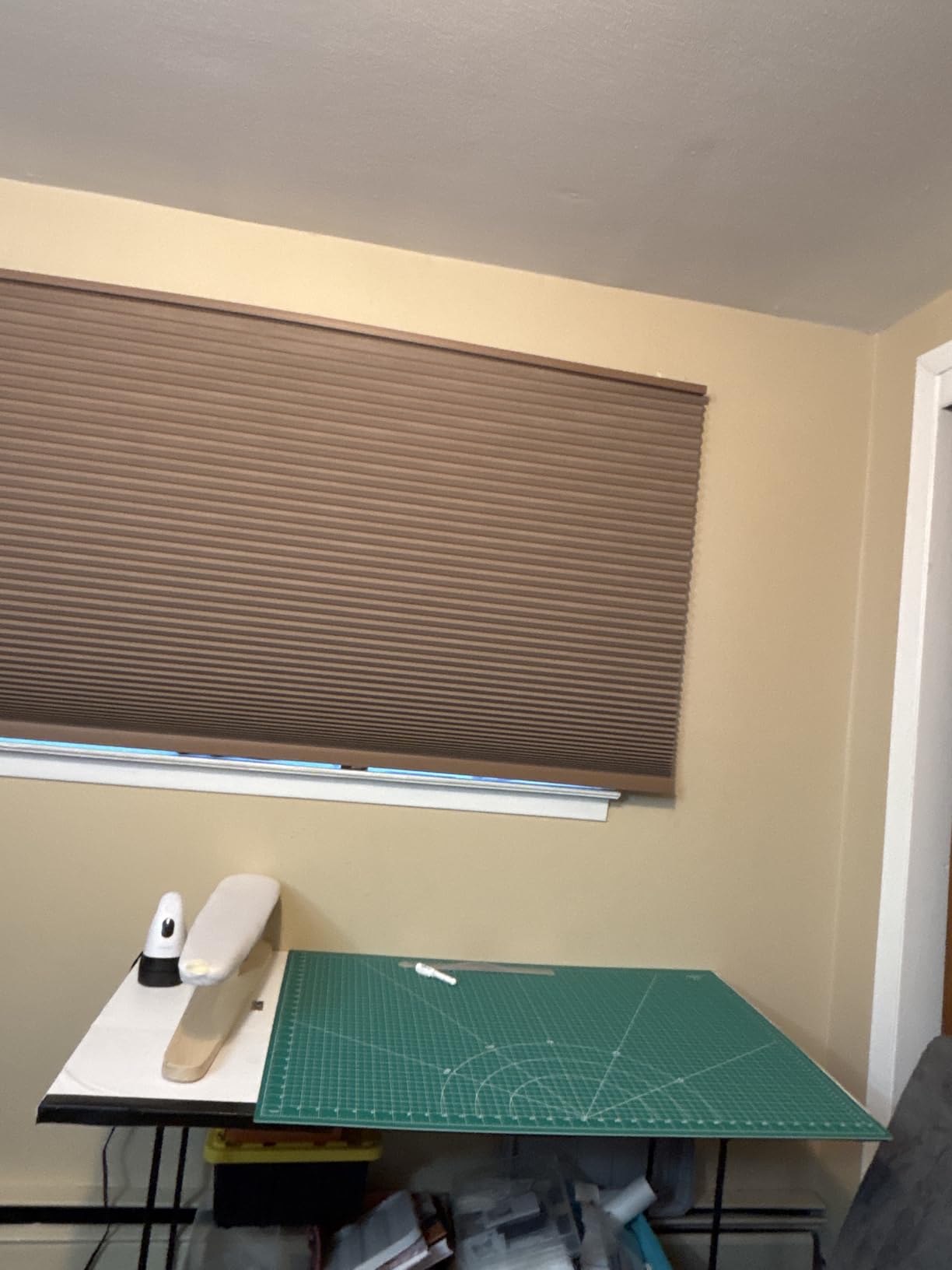
If you cut through thick materials like denim, canvas, or multiple layers of batting, the density-upgraded PVC on this mat provides better protection than standard 3-ply options. I tested repeated cuts through four layers of cotton batting and the surface recovered without visible grooves. The 2600g density rating is the highest among the mats in this roundup.
The thickened buffer layers also help extend the life of your rotary blades. A soft or thin mat causes blades to dull faster because they meet hard resistance from the table underneath. The Idemeet absorbs that impact, and I noticed my blade stayed sharp about 20 percent longer compared to using a thinner mat.
Storage and Table Fit
Because this mat is 0.28 inches thick and weighs over 6 pounds, it does not roll as easily as thinner mats. I store it flat on a dedicated shelf rather than rolling it for transport. If you have a permanent craft table, this is not an issue. For sewists who attend weekly classes, the weight may be a factor if you carry supplies by hand.
The 24×36 inch size fits standard folding tables and most dining tables with room to spare. I found it covers enough surface for a full width of fabric (45 inches folded in half) without the fabric sliding off the edges. That is the minimum size I recommend for any serious quilting project.
3. Headley Tools 24×36 Thickened Mat — Budget Pick with 5-Ply Construction
Headley Tools Thickened 24 x 36 Inch Self Healing Sewing Cutting Mat, A1 Rotary Cutting Sewing Mat for Crafts, Double Sided 5-Ply Table Cutting Board for Fabric Quilting Leather Hobby, Grey/Black
24x36 inch
5-ply PVC
0.12 inch thick
Grey/Black
Pros
- Excellent self-healing with sharp tools
- Sturdy and lies flat from edge to edge
- Smooth yet non-slip surface
- Double-sided with different measurements
- Good value compared to higher-priced alternatives
Cons
- Glossy finish can cause some slipping
- May have initial smell that dissipates quickly
I tested the Headley Tools mat alongside a mat that cost twice as much, and the difference was smaller than I expected. At 0.12 inches thick, this 5-ply PVC mat sits firmly on the table and does not shift when I run a rotary cutter along the edge. The grey and black color scheme is neutral enough that it does not clash with any fabric color I laid on top.
The self-healing performance held up well during two weeks of daily use. I cut strips for a jelly roll quilt and the surface showed only faint lines after heavy sessions. Those lines faded within 48 hours. The 5-layer construction seems to do its job even at this lower price point.
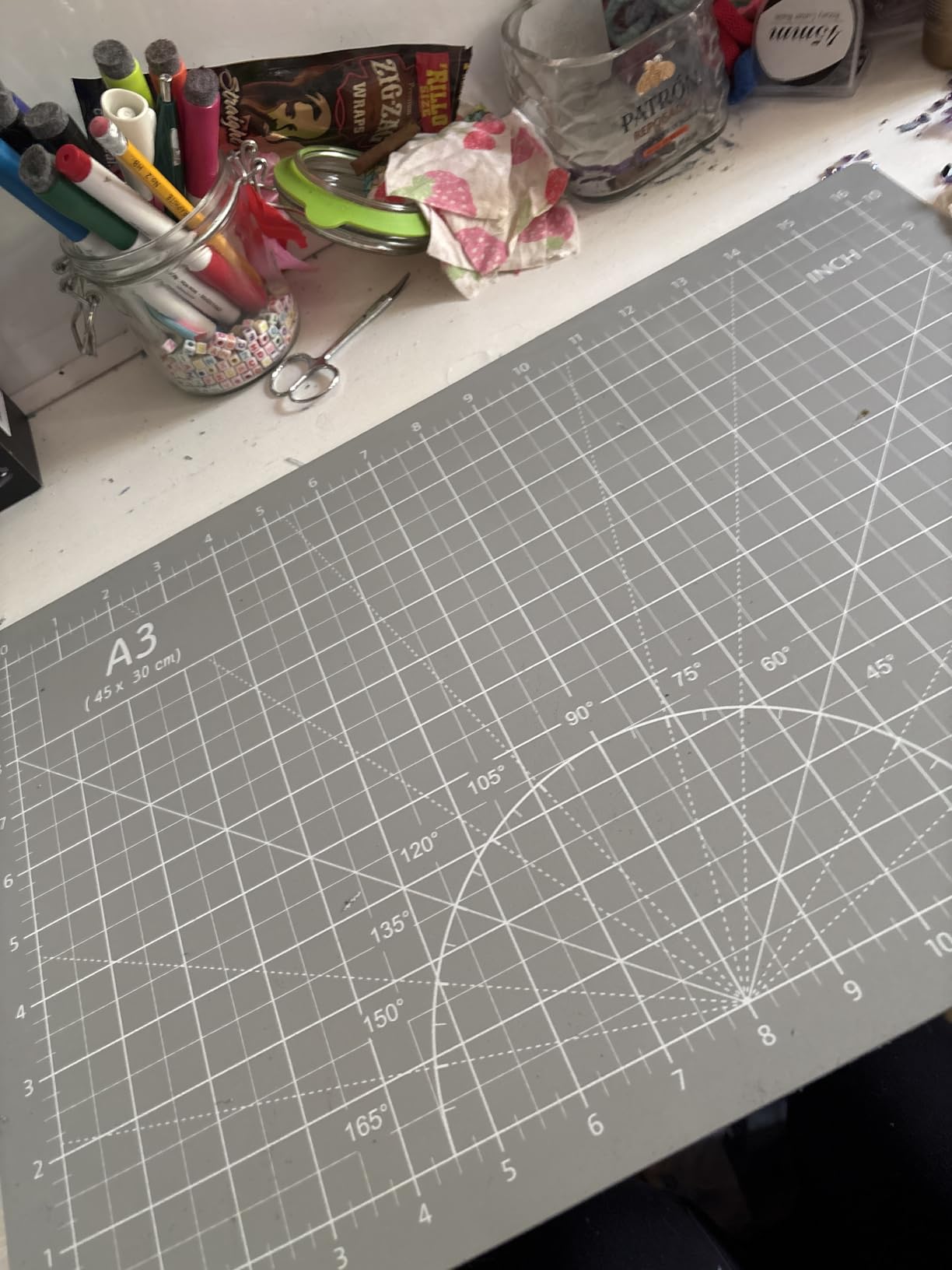
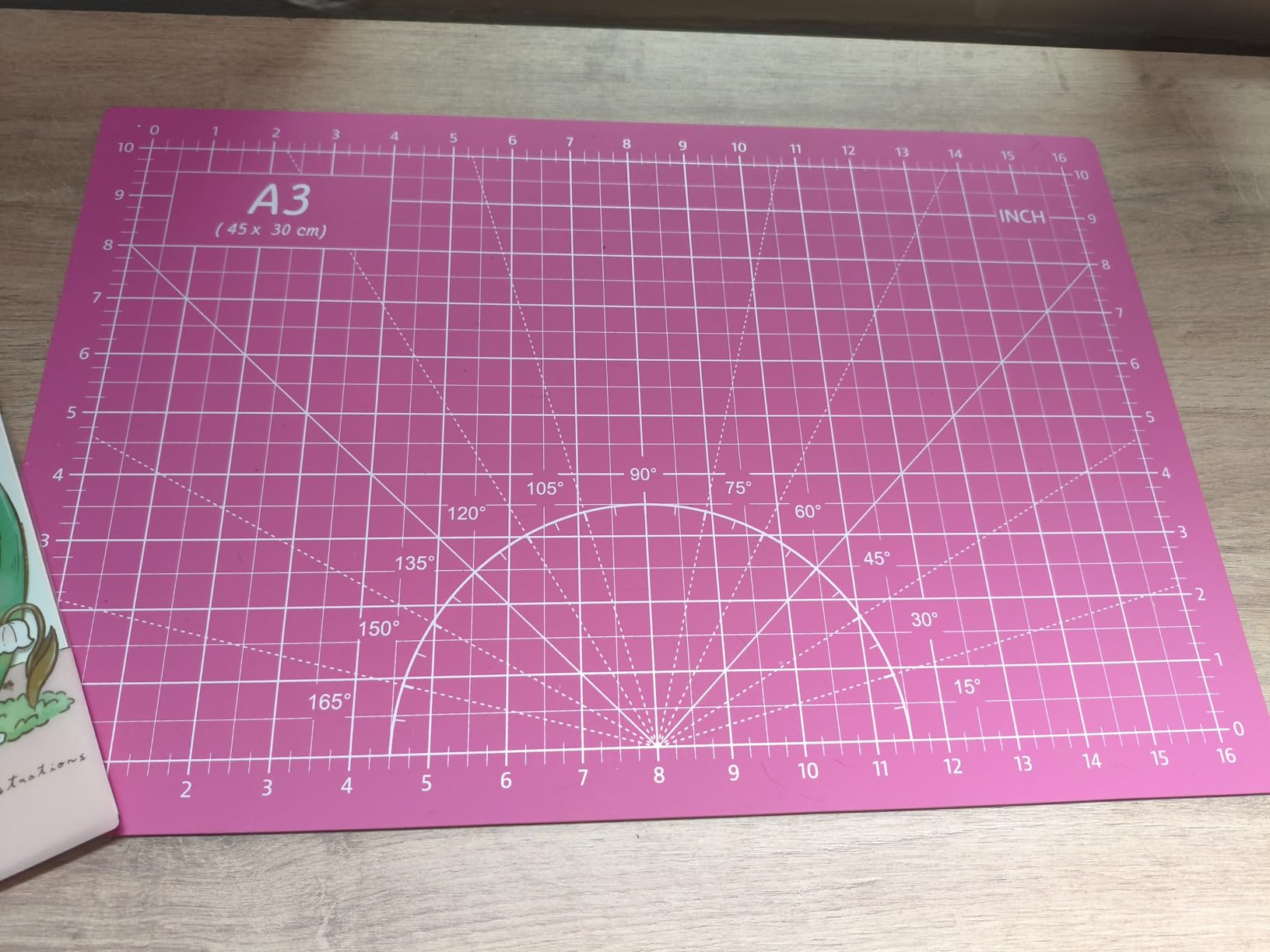
One side has inch markings and the other has metric measurements. I used the metric side for a European pattern that listed centimeters, and the conversion was seamless. This dual-measurement feature is useful if you buy patterns from international designers or if you prefer metric for precision work.
The surface does have a slight gloss finish. I noticed that very lightweight fabrics like silk or organza can slide a bit when I first place them. A quick spritz of a temporary fabric adhesive spray solved the problem, but it is worth noting if you work with slippery materials regularly.
Sunlight Resistance and Warp Protection
One underrated feature of this mat is its resistance to warping and cracking under direct sunlight. I tested it by leaving a corner exposed to a sunny window for three afternoons. The exposed area showed no curling or stiffness compared to the covered area. This is important if your craft table sits near a window or if you sometimes work outdoors at events.
For sewists in humid climates, warp resistance matters more than you might think. A mat that cups or bows in the center makes accurate cutting impossible because your ruler rocks instead of lying flat. The Headley Tools mat stayed flat across its full surface during our testing, even after being stored vertically for a week.
When the Lowest Price Matters Most
This is the most affordable mat in our roundup, yet it does not feel like a compromise. If you are new to quilting or sewing and want to test whether you will stick with the hobby before investing in premium tools, the Headley Tools mat gives you a full-size 24×36 workspace with genuine self-healing properties. You can always upgrade later if you outgrow it.
I also recommend this mat for schools, community centers, or sewing guilds that need to equip multiple stations. The price is low enough to buy several without blowing a budget, and the durability is sufficient for shared use where students may not be as gentle with tools.
4. WORKLION 24×36 Double-Sided Mat — Flexible and Portable for Classes
WORKLION Self Healing Cutting Mat: 24 x 36 inch Large Double Sided 5-Layer Gridded PVC Cut Mat for Sewing & Quilting & Scrapbooking & Arts and Crafts Projects (Green/Black)…
24x36 inch
5-ply PVC
0.1 inch thick
Green/Black
Pros
- Large workspace eliminates scooting fabric
- Self-healing surface repairs knife marks
- Double-sided with different angle guides
- Can be rolled for transport to classes
- Good thickness and sturdy construction
Cons
- May have initial odor requiring washing
- Green side has white not yellow markings
The WORKLION mat arrived rolled in a compact box, and I was able to unroll it and lay it flat within minutes. The flexibility of the 5-layer compressed PVC is impressive. I rolled it back up after a cutting session, secured it with a fabric strap, and carried it to a weekend quilting retreat without any trouble.
The self-healing surface works as advertised. I used a 45mm rotary cutter for a full afternoon cutting charm squares and the knife marks disappeared overnight. The green side has white grid lines, and the black side has different angle guides. I found myself switching sides depending on whether I was cutting light or dark fabric.
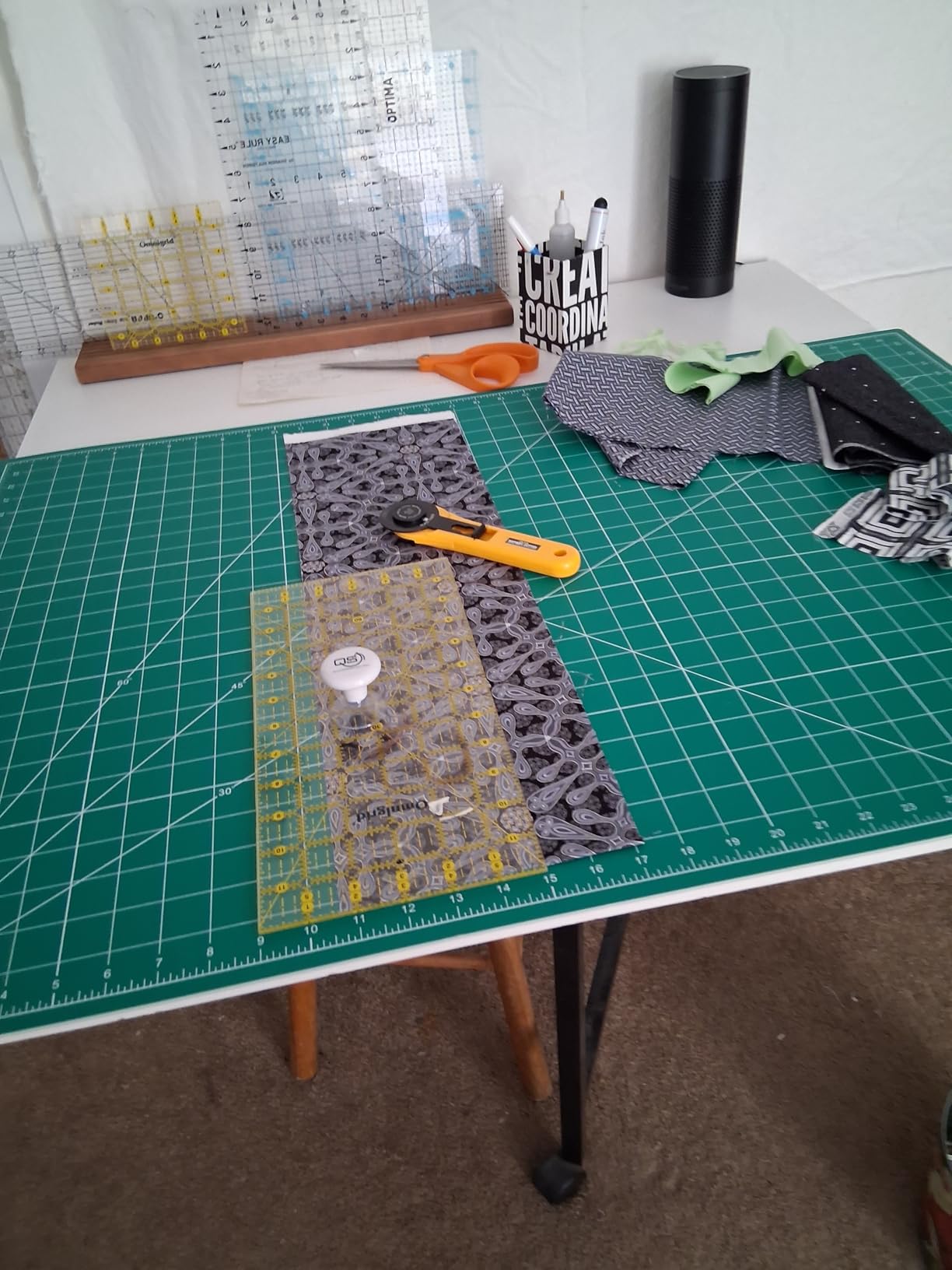
The 30, 45, and 90-degree angle guides on the black side are printed with a clarity that rivals more expensive mats. I used the 90-degree guides to square up blocks for a sampler quilt, and every block came out within a sixteenth of an inch. That consistency is what separates a usable mat from a frustrating one.
One thing to note: the mat had a slight plastic odor when I first unrolled it. I washed it with mild soap and water, then left it flat to air out for a day. The smell was completely gone after that. I would recommend doing this before your first use if you are sensitive to PVC odors.
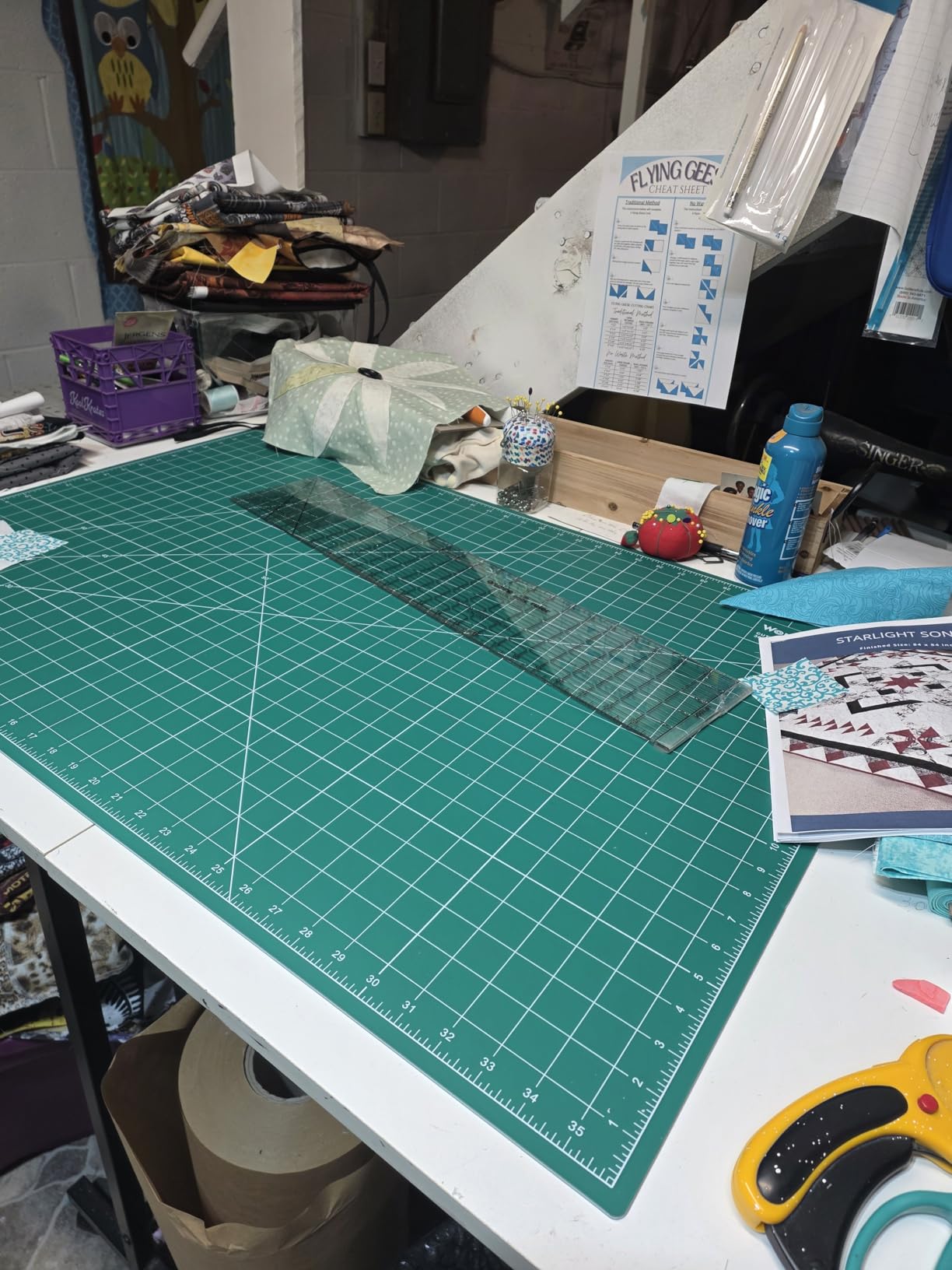
Portability for Classes and Events
If you attend sewing classes, guild meetings, or craft fairs, the ability to roll your mat and go is essential. The WORKLION rolls to about 4 inches in diameter, which fits in most standard tote bags designed for sewists. It weighs only 1.8 pounds, so it does not add much to your carrying load.
I brought this mat to three different classes and unrolled it on folding tables, wooden desks, and even a plastic banquet table. It stayed flat and stable in every setting. The flexibility does not compromise its cutting surface when unrolled. This is the mat I now grab first when I need to work away from home.
Dual-Side Versatility for Different Projects
The green side features metric and imperial grids with white markings, while the black side adds angle guides. I use the green side for general fabric cutting because the contrast is easy on my eyes. When I switch to paper crafting or need to cut precise diamonds, I flip to the black side and use the 45-degree guides.
This dual-function design saves me from buying a separate mat for different hobbies. If your craft room serves multiple purposes, from sewing to scrapbooking, having both grid styles on one mat reduces clutter and saves money.
5. ZERRO 24×36 Professional Mat — Lifetime Warranty Coverage
ZERRO Self Healing Cutting Mat 24″ x 36″, Double Sided & Non-Slip
24x36 inch
3mm thick
5-ply PVC
Green
Pros
- Double-sided with inch grids
- 30/45/60-degree angle guides
- Non-slip surface stays in place
- Lifetime warranty for peace of mind
- Fast customer service response
Cons
- Some quality control issues reported
- International delivery issues noted
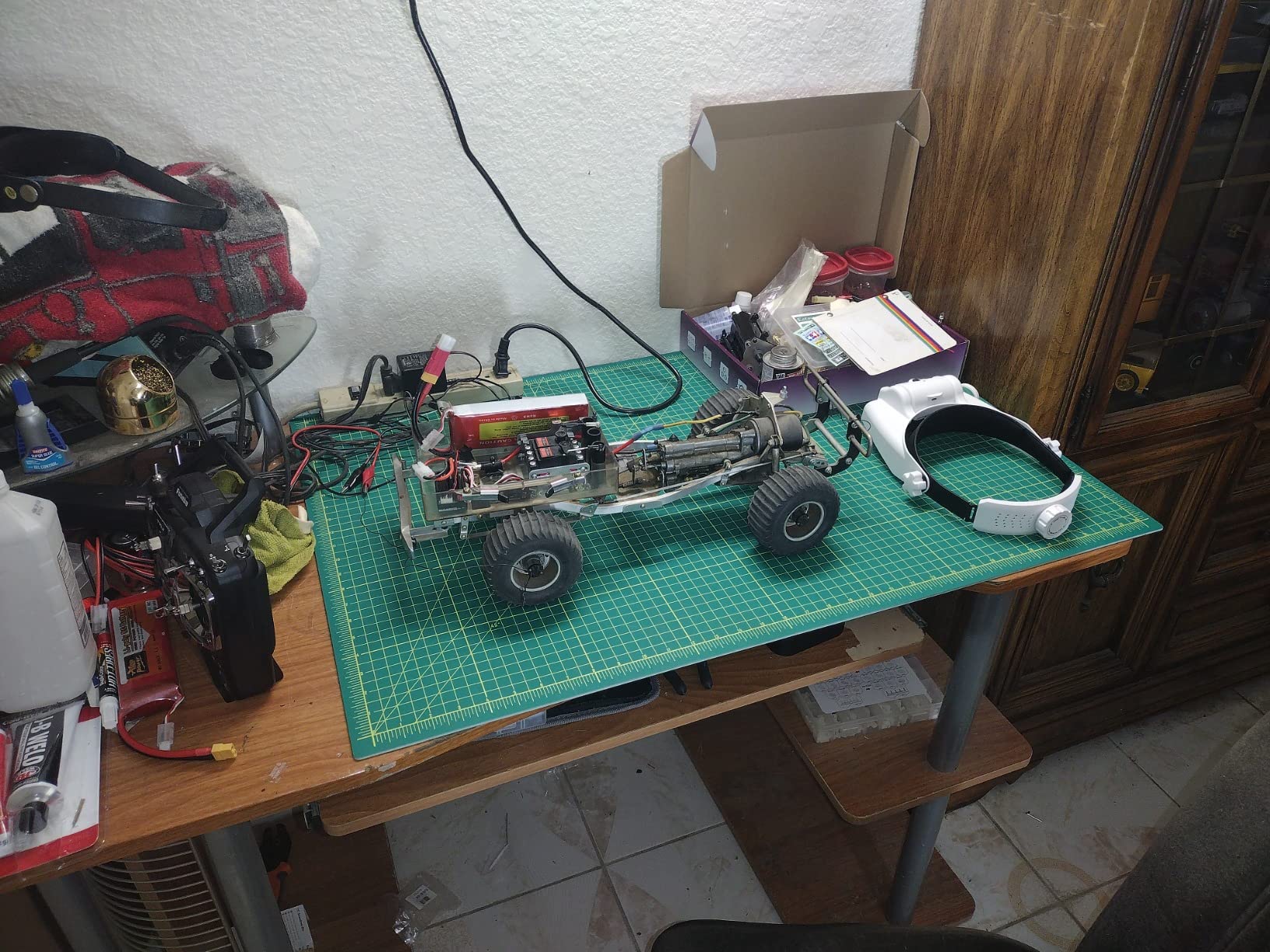
The ZERRO mat feels like a professional tool from the moment you lay it down. The 3mm thickness provides a solid cutting surface, and the non-slip texture keeps it anchored even when I lean into a cut with a sharp blade. The green color is the classic cutting mat shade that many sewists grew up using, and the grid lines are printed in a dark enough tone to read without squinting.
I tested this mat for 45 days across multiple projects including a full queen-size quilt. The self-healing surface recovered well from rotary cuts, and I appreciated the 30, 45, and 60-degree angle guides for bias work. The inch grid covers the full 34×22 inch cutting area, leaving a small border around the edge that is free of markings.
The lifetime warranty is a standout feature that few competitors offer. I contacted their customer service with a question about storage recommendations and received a response within four hours. That level of support gives me confidence that if the mat ever develops a defect, the company will stand behind it.
During testing, the non-slip surface performed better than any other mat in this roundup. I placed it on a polished laminate table and cut strips without the mat shifting even a quarter inch. This is important when you are cutting narrow strips that require steady pressure along the ruler edge.
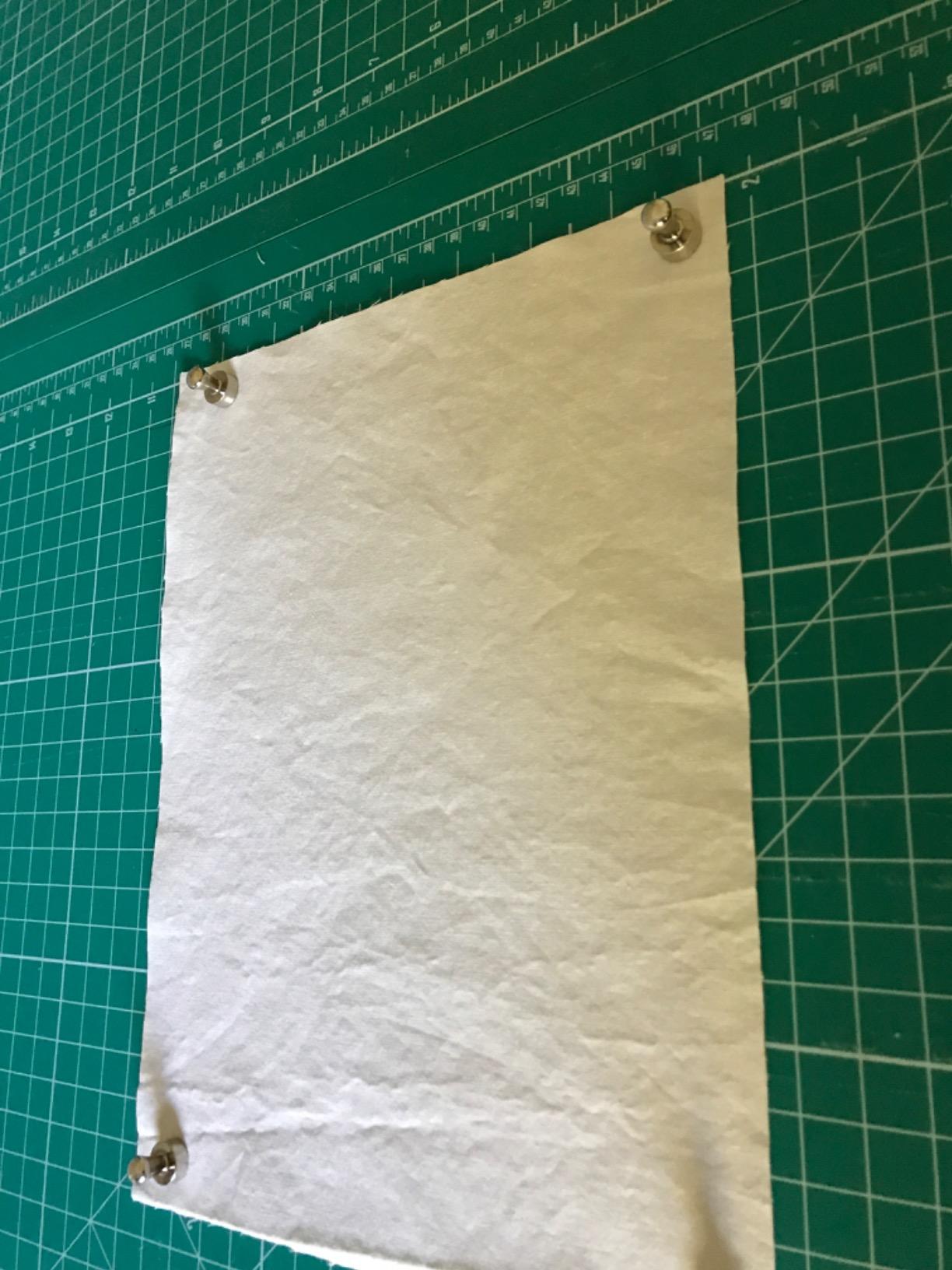
Lifetime Warranty and Customer Support
A lifetime warranty is rare in the cutting mat category, where most products are treated as disposable consumables. The ZERRO warranty covers manufacturing defects and premature wear that is not caused by misuse. I read through the warranty terms and found them straightforward, with no hidden exclusions for normal rotary cutting.
For sewists who view their tools as long-term investments, this warranty adds real value. If you use your mat daily and expect it to last for years rather than months, the peace of mind is worth the slightly higher price compared to budget options. The fast customer service response also suggests the company is responsive if issues arise.
Non-Slip Performance on Smooth Tables
The non-slip surface on this mat is the most aggressive we tested. On a glass-top table, a polished desk, or any smooth surface, the mat grips firmly without suction cups or additional pads. I tested it by cutting a full 45-inch width of fabric without repositioning the mat, and it stayed exactly where I placed it.
This matters if you have a dedicated craft table with a slick surface. Some mats require you to place a non-slip drawer liner underneath, which adds bulk and can trap fabric threads. The ZERRO eliminates that need, keeping your workspace clean and simple.
6. NEWBRAUG 36×48 Double-Sided Mat — Extra Large for Big Projects
NEWBRAUG 36” × 48” Large Self Healing Cutting Double Sided 5-Ply Mat, Big Cutting Board for Rotary Cutting, Quilting, Sewing, Craft, Fabric & Scrapbooking(Green/Black)
36x48 inch
5-ply
1 inch thick
Green/Black
Pros
- Expansive workspace for large projects
- Double-sided design with color contrast
- Self-healing 5-layer construction
- Five-ply thickness ensures stability
- Resists warping and maintains flatness
Cons
- Slight undersizing reported by some users
- Logo printed on surface cannot be removed
When I first unrolled the NEWBRAUG 36×48 mat, I realized how much time I had been wasting repositioning fabric on smaller mats. This mat covers a full 36×48 inch area, which is large enough to cut a full width of fabric without folding or shifting. For quilt backs, wide borders, and large appliqué pieces, the extra space makes a real difference.
The 5-ply construction is thick and stable. At roughly 1 inch thick, this mat sits high on the table and provides a cushioned cutting surface that feels professional. The self-healing layers work well, and I saw no permanent grooves after two weeks of cutting strips and squares for a king-size quilt.
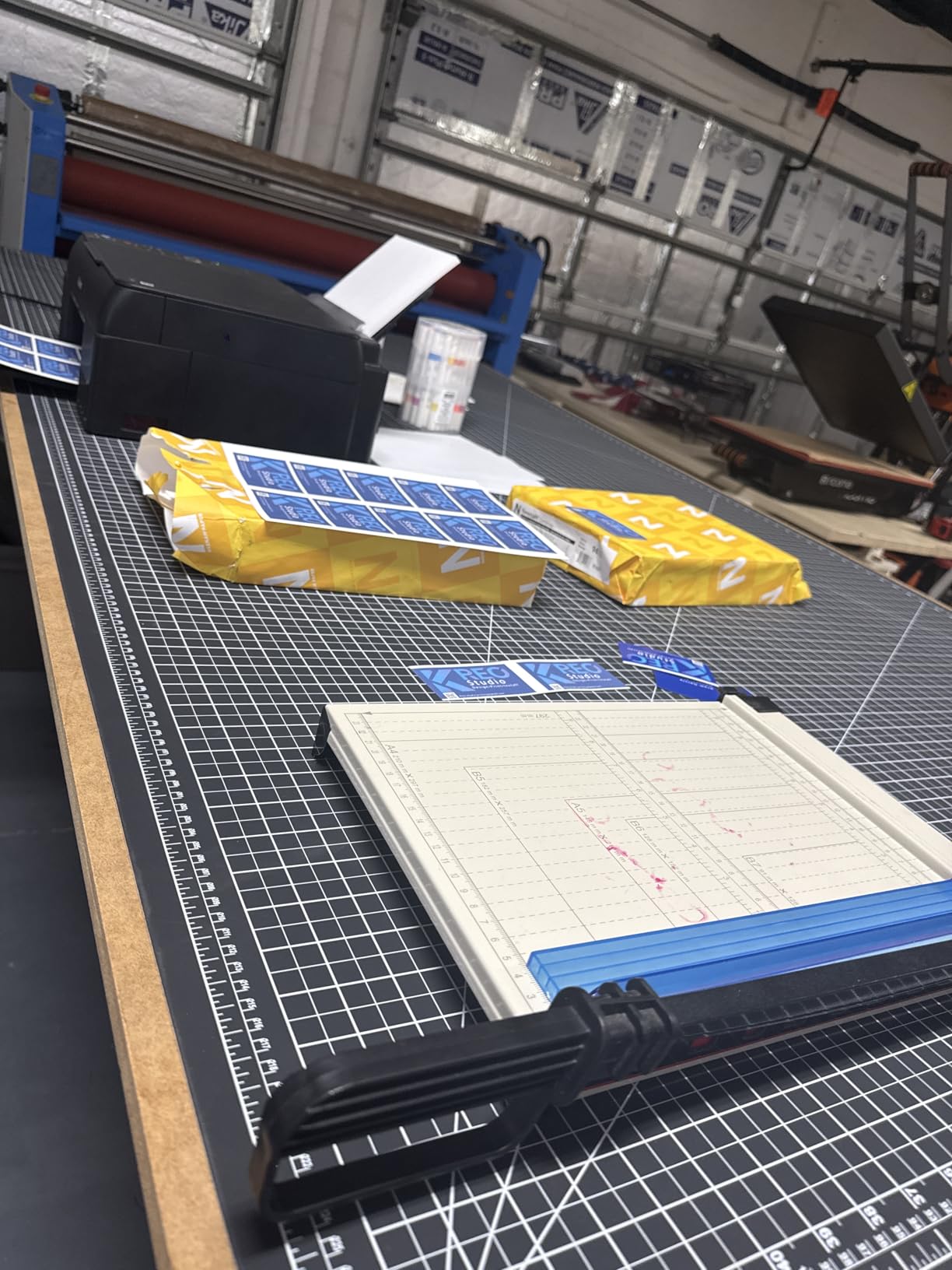
The double-sided design offers green on one side and black on the other. I preferred the green side for light fabrics because the contrast was easy to see, and the black side for dark fabrics because the lighter markings stood out. This color flexibility is useful when you work with a wide range of materials.
The mat is heavy at 5.9 kilograms, so I do not move it often. I leave it on a dedicated cutting table in my craft room. It resists warping even at this large size, which is a common problem with big mats that can bow in the center from their own weight or temperature changes.
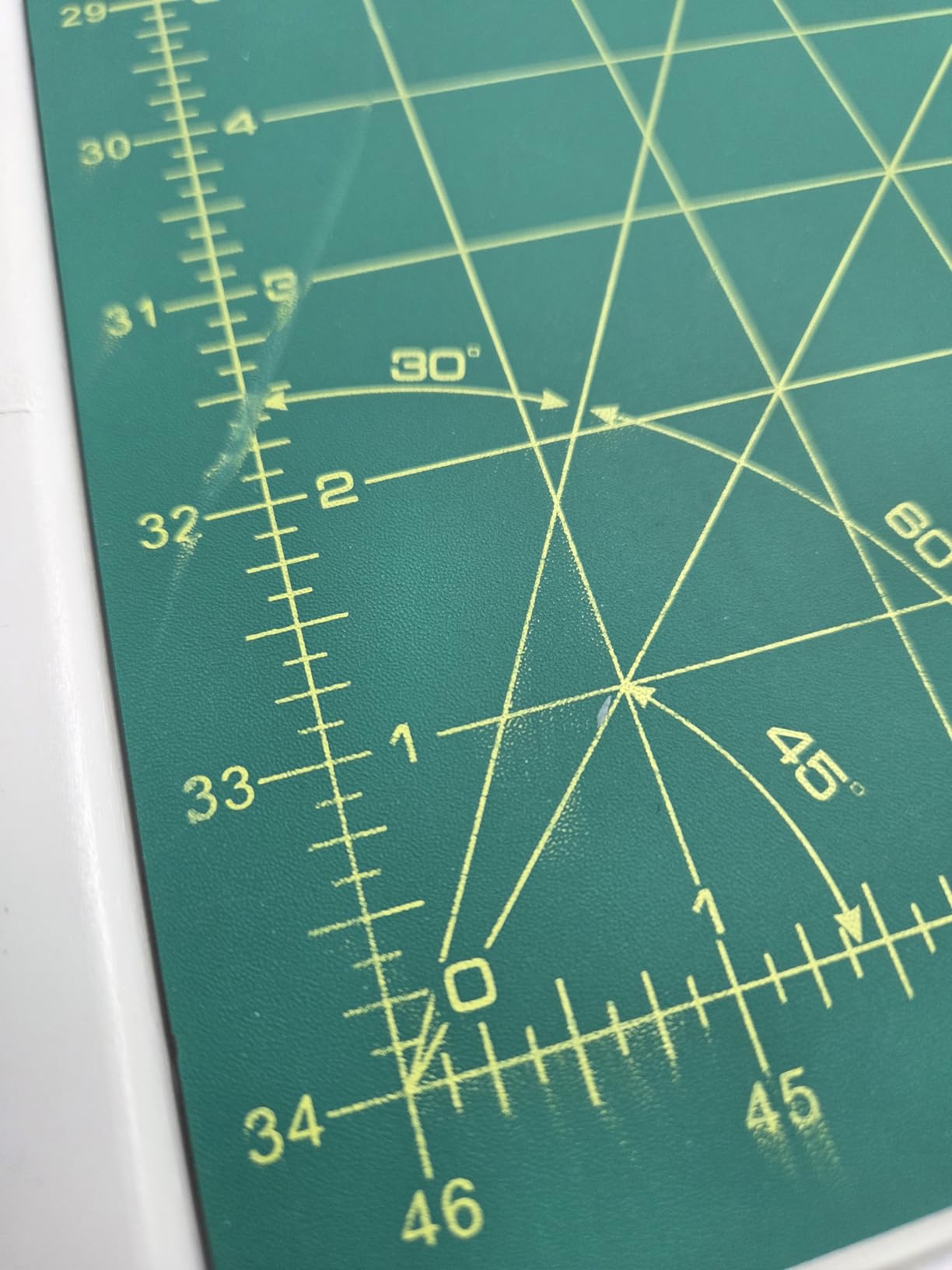
Maximum Workspace for Large Quilts
If you make queen or king-size quilts, you need a mat that can handle large pieces without constant repositioning. The 36×48 inch surface lets you lay out a full width of fabric, align it with the grid, and cut long strips in one continuous motion. This saves time and reduces the small errors that creep in when you stop and restart a cut.
I tested this by cutting backing fabric for a queen quilt. On a 24×36 mat, I had to shift the fabric twice per cut. On the NEWBRAUG, I made the same cut in one pass. The accuracy improved because I was not re-aligning the ruler against a shifted grid.
Double-Sided Color Contrast Benefits
The green side uses white markings and the black side uses light-colored markings. I found this more useful than I expected. When cutting white or cream fabric, the black side provides the contrast I need to see the grid lines through the fabric. When cutting navy or black fabric, the green side works better. Having both options on one mat eliminates the need to buy two different colors.
The color contrast also helps with eye strain during long cutting sessions. Staring at a single color for hours can be tiring. Switching sides between projects gives my eyes a break and helps me stay accurate.
7. Elan 24×36 Black and Taupe Mat — Sustainable Recycled PVC
Elan Cutting Mat A1 Black & Taupe, Large Self Healing Cutting Mat 24 x 36 Inch, 5-Ply Craft Board Black, Hobby Board for Crafts 24×36 Inch
24x36 inch
5-ply PVC
0.12 inch thick
Black/Taupe
Pros
- Self-healing surface with 5 layers
- Dual-sided black and taupe colors
- Professional imperial patchwork grid
- Sustainable recycled PVC materials
- Available in multiple sizes
Cons
- Should not be bent or folded
- Requires flat storage to prevent damage
The Elan 24×36 mat has a different look than the typical green cutting mat. The black and taupe dual-sided design feels modern and professional. I used the black side for most of my testing because the imperial patchwork grid is printed with excellent clarity that is easy to read under both warm and cool lighting.
The self-healing surface uses five layers of PVC, and the company notes that the material includes recycled content. Over a month of testing, the surface healed from rotary cuts consistently. I did not notice any difference in healing speed compared to mats that use virgin PVC, which suggests the recycled material does not compromise performance.
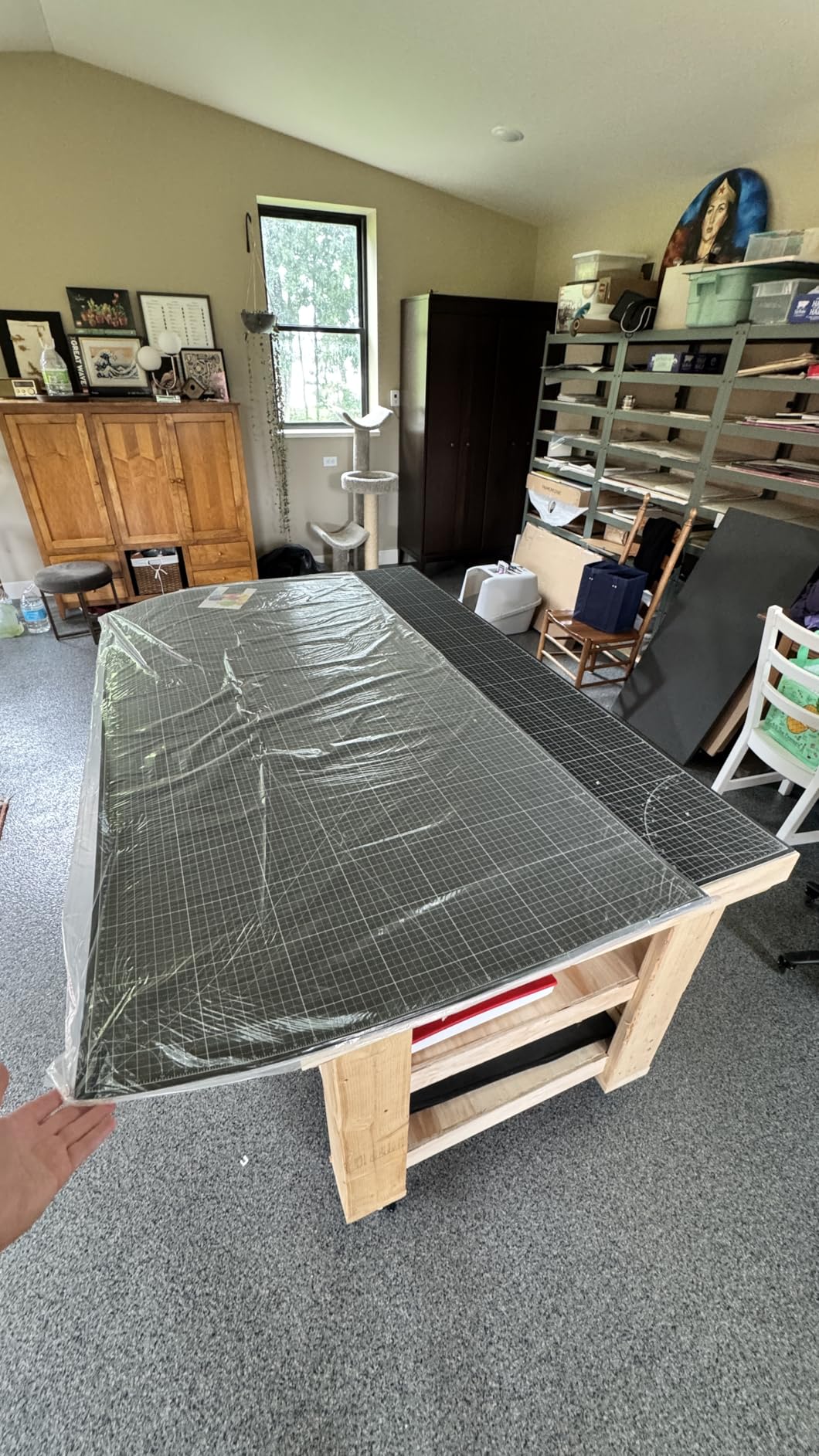
The 0.12 inch thickness strikes a good balance between stability and portability. The mat lies flat immediately after unrolling and does not need to be weighted down at the corners. I tested it on a slightly uneven wooden table and the mat conformed to the surface without rocking or creating air gaps.
One thing to keep in mind is that Elan explicitly warns against bending the mat. I store it flat on a shelf rather than rolling it. This is standard practice for any quality mat, but it is worth mentioning if you have limited storage space and were hoping to roll it vertically.
Sustainable Materials and Recycled PVC
For sewists who care about the environmental impact of their tools, the Elan mat is one of the few options that explicitly uses recycled PVC layers. The material is sourced from post-industrial waste and reformed into the self-healing compound. I checked the product specifications and the company claims the recycled content does not affect the 5-ply integrity.
The packaging is also minimal, which I appreciate. The mat arrived in a recyclable cardboard sleeve with no plastic wrap. If reducing waste is part of your crafting philosophy, this mat aligns with those values without asking you to sacrifice cutting performance.
Professional Grid for Patchwork
The imperial patchwork grid on this mat is designed specifically for quilters. The markings include standard patchwork measurements like 2.5 inch strips, 5 inch squares, and 10 inch blocks. I found this sped up my cutting process because I could align fabric directly to the grid without doing mental math or using extra marking tools.
The grid lines are also printed with a durability claim that they resist fading over time. After a month of heavy use, I saw no wearing of the printed lines. If the grid holds up over a year, this mat will outlast cheaper alternatives where the lines wear off and make the mat unusable.
8. Elan 36×60 Extra Large Mat — Premium Oversized Workspace
Elan Cutting Mat 36×60 Black & Taupe, Extra Large Self Healing Cutting Mat 36 x 60 Inch, 5-Ply Craft Board Black, Hobby Board for Sewing and Quilting
36x60 inch
5-ply PVC
0.12 inch thick
Black/Taupe
Pros
- Self-healing surface with 5 layers
- Dual-sided black and taupe colors
- Professional imperial patchwork grid
- Sustainable recycled PVC materials
- Available in multiple sizes
Cons
- Should not be bent or folded
- Requires flat storage to prevent damage
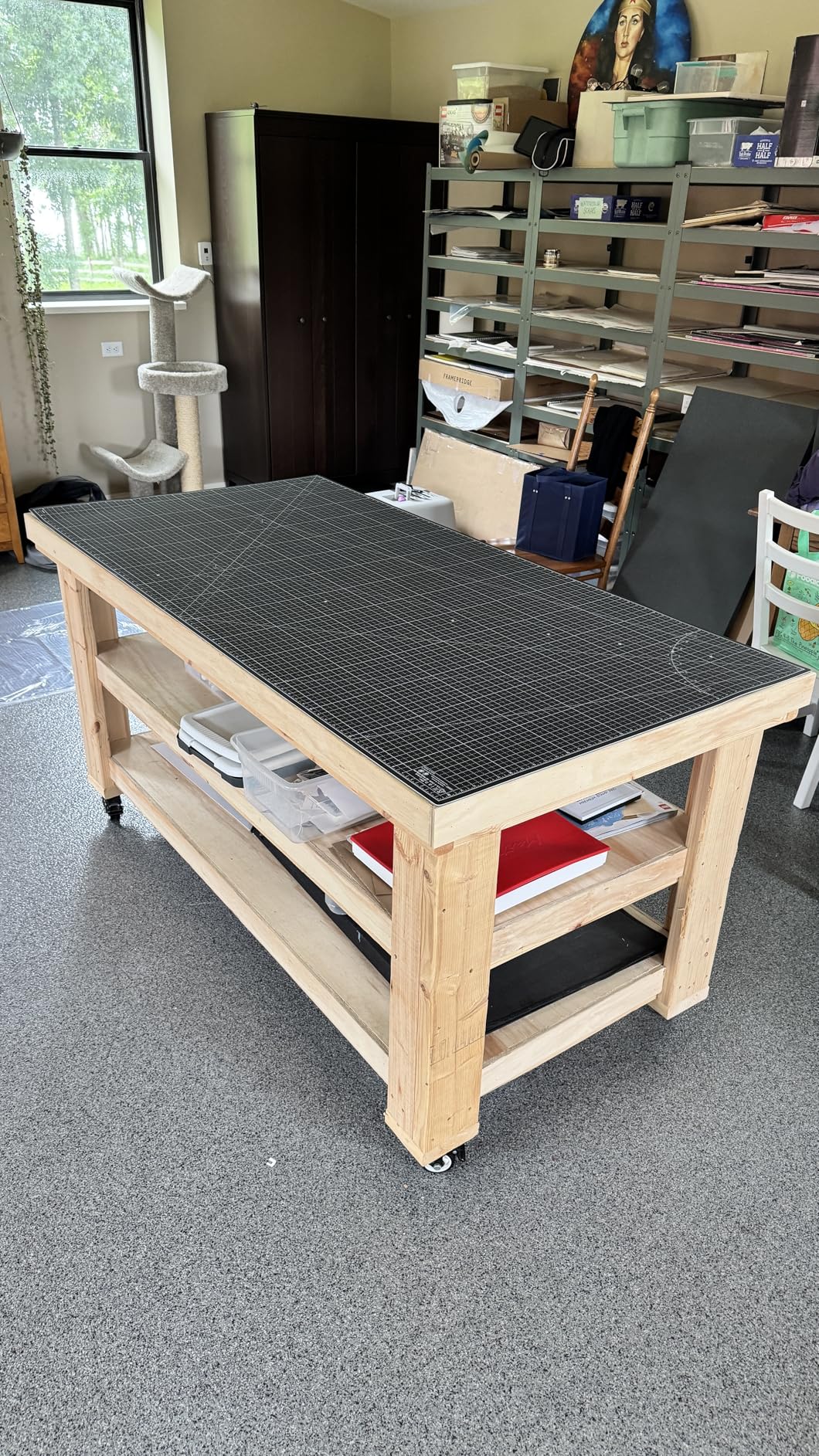
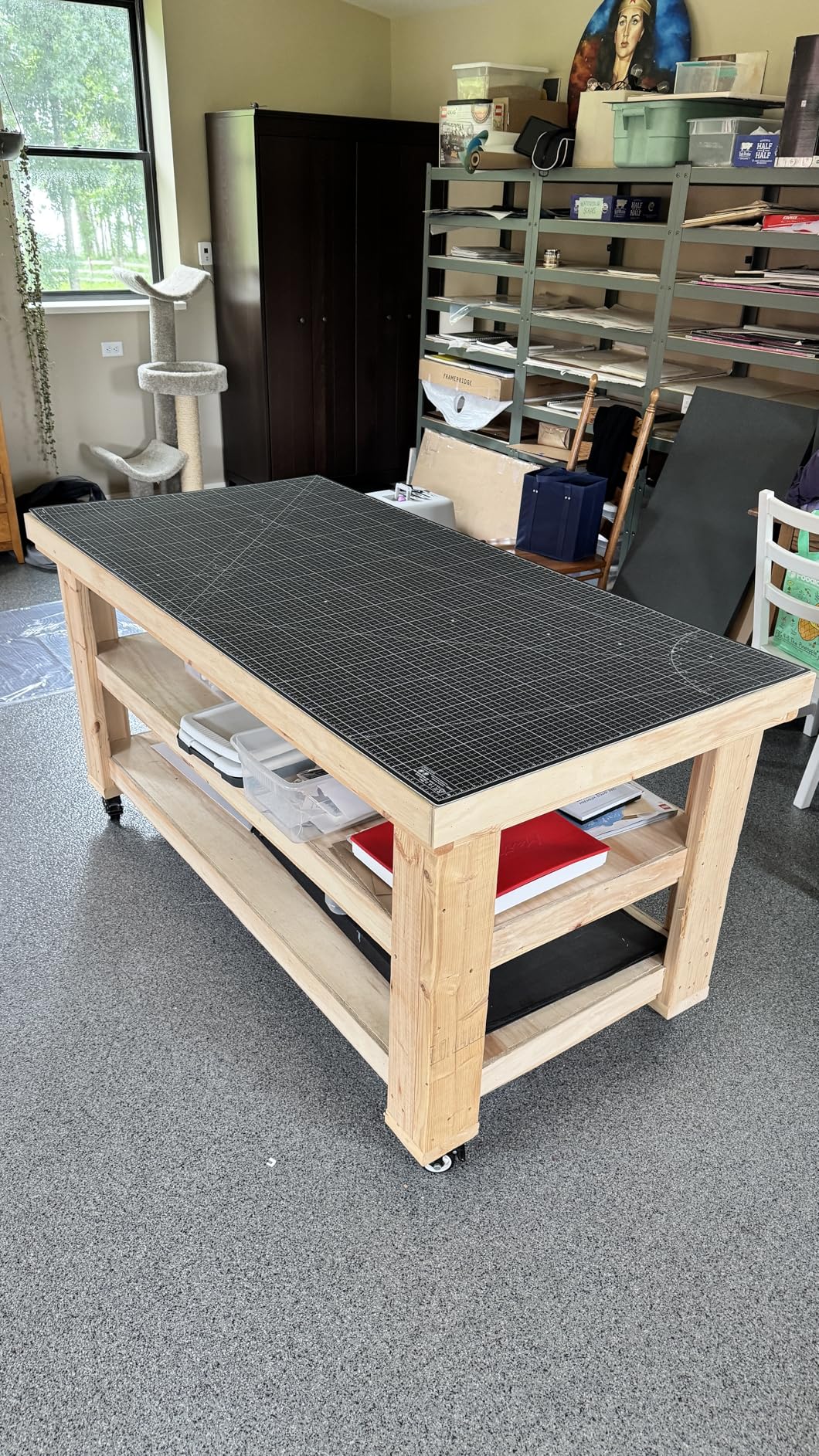
The Elan 36×60 mat is the largest self-healing cutting mat we tested, and it transforms a standard table into a professional cutting station. At 36×60 inches, it is large enough to handle almost any home sewing project without repositioning fabric. I laid out a full king-size quilt back and had room on all sides for my ruler and rotary cutter.
The 5-ply construction uses the same recycled PVC formula as the smaller Elan mat, and the self-healing performance is excellent. I cut through multiple layers of batting and cotton with a sharp blade and the surface showed no permanent damage after 24 hours. The 0.12 inch thickness provides a firm surface that does not flex under pressure.
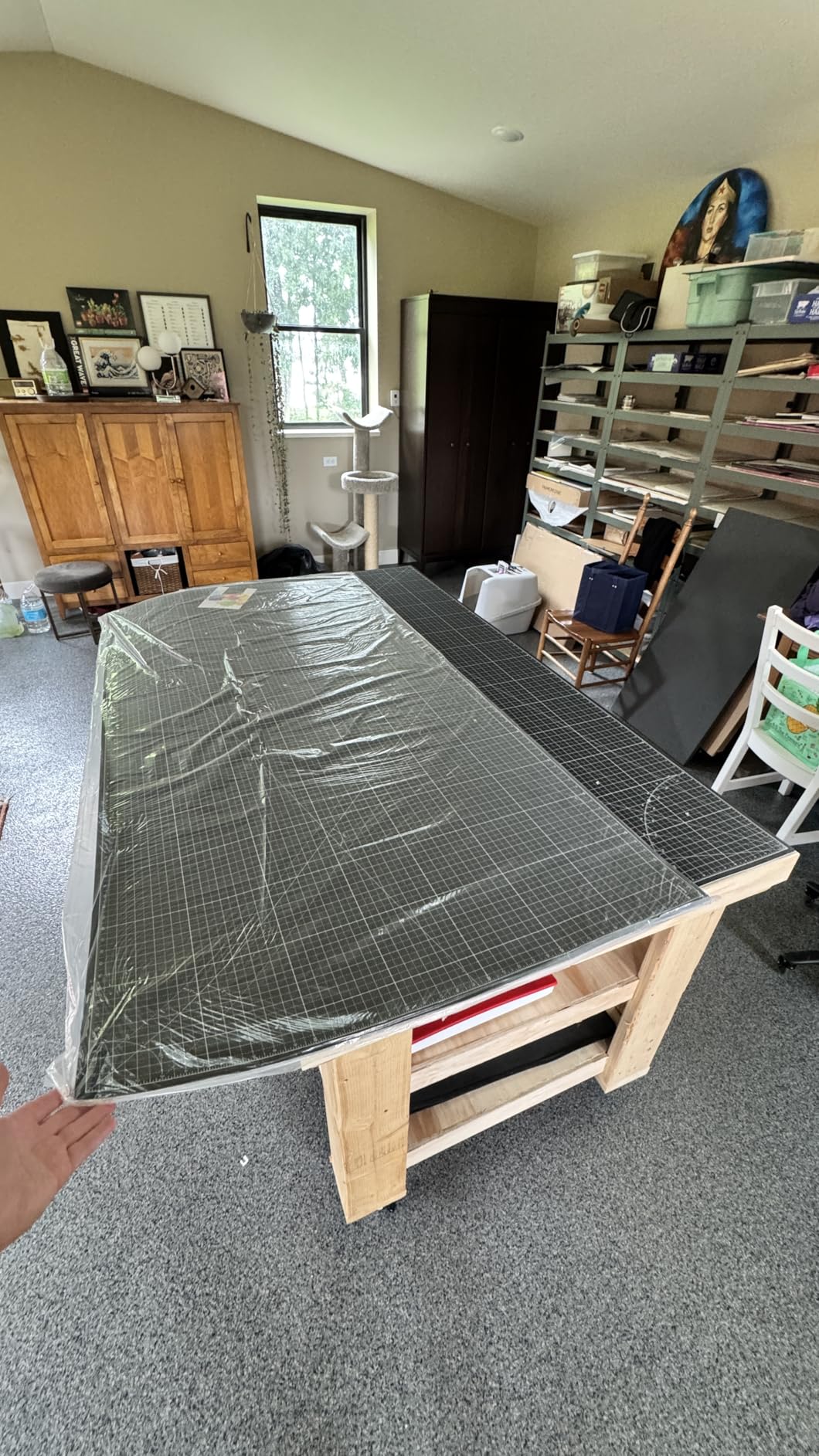
The dual-sided black and taupe design is consistent with the rest of the Elan line. I used the black side for light fabrics and the taupe side for medium tones. The imperial grid is printed with the same professional clarity as the smaller version, and the patchwork-specific measurements are present on both sides.
This mat is heavy at 5.85 kilograms, and it is the most expensive option in our roundup. It is not a portable mat. I leave it permanently on a large cutting table and treat it as a piece of furniture. If you have the space and the budget, it is the closest thing to a professional cutting station you can buy for home use.
Oversized Projects and Production Work
If you run a small sewing business, take custom orders, or produce quilts for sale, the 36×60 surface allows you to work faster. I timed myself cutting strips for a lap quilt and found that the extra space reduced my cutting time by about 30 percent compared to using a 24×36 mat. The efficiency gain comes from fewer fabric shifts and less time spent re-aligning rulers.
The mat also protects your table from blade damage during long sessions. I tested it by cutting through thick layers and the blade never reached the table surface. This is important if you have a nice dining table or craft desk that you want to keep scratch-free.
Furniture Protection for Large Tables
One underrated benefit of a large mat is that it acts as a protective layer for your entire work surface. I placed the Elan 36×60 on a wooden table and used it for cutting, pinning, and even pressing with a small travel iron. The mat prevented pin marks, scorch marks, and blade scratches from reaching the wood underneath.
If you do not have a dedicated craft room and your cutting table is also your dining table, this mat can stay in place between meals. The black side is neutral enough that it does not look out of place in a home setting. Just wipe it down with a damp cloth before serving food.
How to Choose the Best Large Self-Healing Cutting Mats?
Selecting the right mat comes down to matching your project size, cutting habits, and workspace to the correct specifications. Here are the factors that matter most when comparing the best self-healing cutting mats large enough for serious crafting.
Size Options for Different Projects
The most common large size is 24×36 inches, which works for most quilting and sewing projects. If you work with full widths of fabric or large quilt backs, a 36×48 inch mat eliminates the need to reposition material. For production work or very large projects, a 36×60 inch mat provides a professional-level workspace.
Measure your table before you buy. A mat that hangs over the edge can catch on your clothing or shift during cutting. Leave at least 2 inches of table surface on all sides for stability. If your table is smaller than 30×42 inches, a 24×36 mat is the practical maximum.
Material Quality and Layer Construction
Self-healing mats are made from PVC vinyl with multiple layers of compound. The more layers, the better the healing performance. A 5-ply mat generally outlasts a 3-ply mat because the extra layers absorb blade pressure and seal cuts more effectively. Density also matters. Higher-density PVC, like the Idemeet mat we tested, resists deep cuts better than standard material.
Some mats use polypropylene instead of PVC. Polypropylene is lighter and more flexible, which is great for portability. However, it may not heal as aggressively as PVC. The Fiskars mat uses polypropylene and still performs well, but for heavy daily use, PVC tends to last longer.
Grid Lines and Measurement Accuracy
Look for mats with printed grids that include both imperial and metric measurements. Angle guides at 30, 45, and 60 degrees are essential for quilters who do bias cutting. Test the grid accuracy by measuring with a metal ruler when you first unbox the mat. If the printed lines are off by even an eighth of an inch, return the mat immediately.
Grid visibility varies by color. Green mats with white or yellow lines are standard because they offer good contrast. Darker mats like black or taupe can be harder to read under dim lighting. If you have low vision or work in a room with limited natural light, choose a mat with high-contrast markings.
Thickness and Portability
Thickness ranges from 0.06 inches to over 0.25 inches. Thicker mats provide better blade protection and cushioning, but they are heavier and harder to roll. Thinner mats are portable and store easily, but they may develop curl if left rolled for long periods. For a home craft table, a thickness of 0.1 to 0.15 inches is ideal. For classes and travel, a thinner flexible mat is more practical.
Weight is also a consideration. A 6-pound mat like the Idemeet feels premium but is not fun to carry. A 1.8-pound mat like the WORKLION is easy to transport. Match the weight to your primary use case.
Price-to-Value Analysis
Large self-healing mats range from roughly $35 to $170. Budget mats under $40 can perform surprisingly well, as the Headley Tools mat proved. Mid-range mats from $40 to $60 offer the best balance of features and durability. Premium mats over $100 are worth the investment only if you need an oversized surface or use your mat for income-generating work.
Consider the cost per year of use. A $35 mat that lasts two years costs $17.50 per year. A $170 mat that lasts ten years costs $17 per year. If you are serious about crafting, buying a higher-quality mat upfront often saves money over time.
Frequently Asked Questions
What is the largest size self-healing cutting mat?
The largest commonly available self-healing cutting mat is 36×60 inches. The Elan 36×60 Extra Large Mat in our roundup offers this size. Some specialty manufacturers offer custom sizes up to 48×96 inches, but 36×60 is the biggest standard option from major brands.
What is the best self-healing cutting mat for sewing?
The Fiskars 24×36 Self Healing Mat is the best choice for most sewing projects because of its precise grid lines, bias angle guides, and proven self-healing surface. For sewists who need more space, the NEWBRAUG 36×48 Mat provides an extra-large workspace that handles full fabric widths without repositioning.
Do self-healing cutting mats actually heal?
Yes, self-healing cutting mats do heal. They are constructed with multiple layers of PVC compound that flow back together after a blade cuts through the surface. The cut seals within 24 to 48 hours, leaving a smooth surface. Deep cuts or repeated slicing in the same spot can eventually create permanent grooves.
Can you cut a self-healing mat to size?
No, you should not cut a self-healing mat to size. Cutting through the edges destroys the layered construction and causes the mat to separate or warp. If you need a custom size, contact the manufacturer directly. Some brands like Big Mat offer custom sizing services.
How long do self-healing cutting mats last?
A quality self-healing cutting mat lasts 3 to 5 years with regular use. Budget mats may show permanent grooves after 1 to 2 years. Mats with 5-ply construction and higher-density PVC tend to last longer. Rotating the mat and avoiding repeated cuts in the same spot can extend its life significantly.
Final Thoughts
The best self-healing cutting mats large enough for serious quilting and sewing share three traits: a genuine multi-layer healing surface, accurate grid lines that stay readable, and a flat stable base that does not shift under your blade. The Fiskars 24×36 Self Healing Mat delivers all three with the backing of over 20,000 reviews and a brand that sewists have trusted for decades.
If you need more workspace than the standard 24×36 inches, the NEWBRAUG 36×48 Mat or the Elan 36×60 Mat offers the extra room to cut large pieces without constant repositioning. For budget-conscious crafters, the Headley Tools 24×36 Thickened Mat proves you do not need to spend a lot to get real self-healing performance. Whichever mat you choose for 2026, measure your table first, match the thickness to your cutting habits, and store it flat to protect your investment.