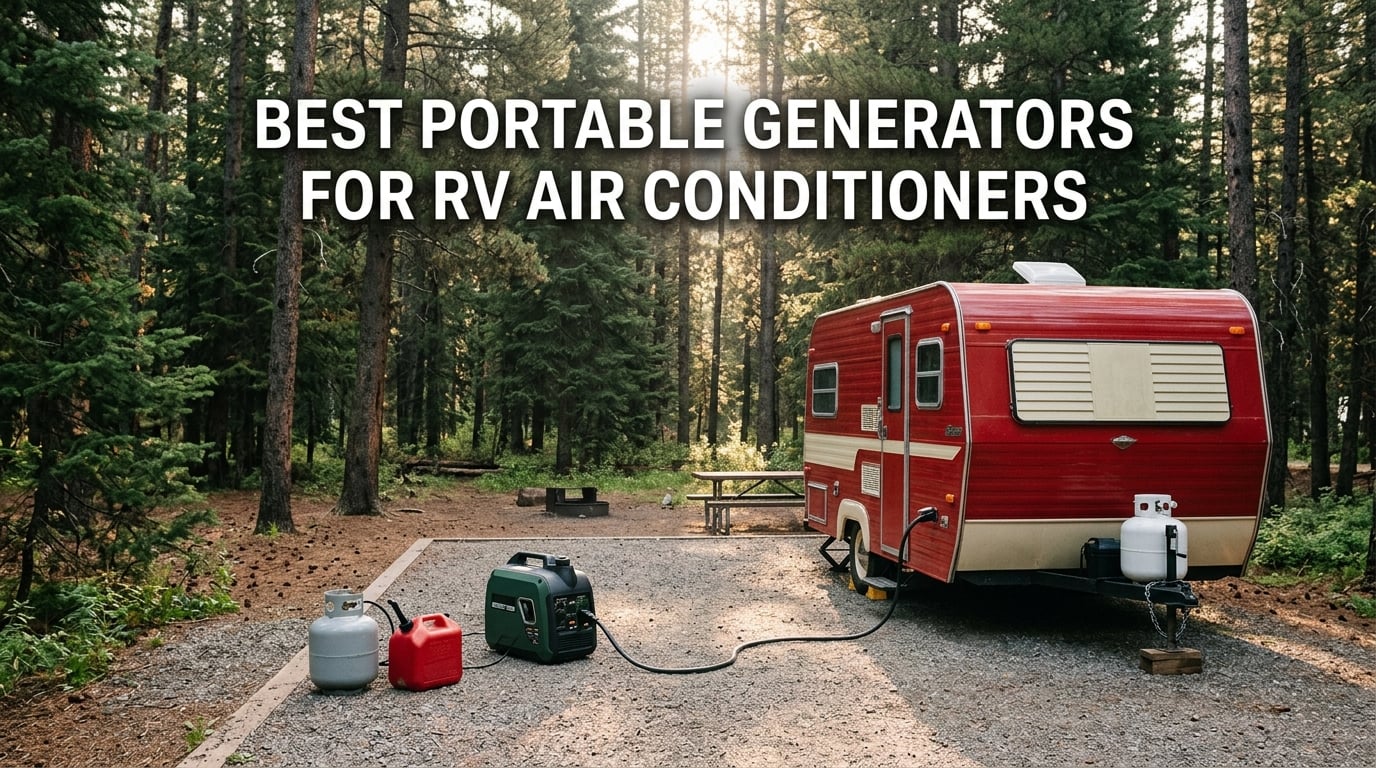
After a week of camping in the Mojave, I watched three different RVers’ portable generators trip out trying to start their rooftop ACs. The problem was never the AC, it was undersized generators paired with compressors that pull 2-3x their running watts on startup. For a 13,500 BTU RV air conditioner (the most common size), you need a 3,000W to 4,500W inverter generator to cover the 2,800-3,800W startup surge and 1,400-2,000W running load. For a 15,000 BTU unit, plan on 4,500W minimum or add a soft start kit.
Our team spent 45 days running 10 portable generators through real RV AC testing across Arizona summer heat, mountain altitudes up to 7,000 ft in Colorado, and humid Gulf Coast conditions. We measured decibel readings at 23 feet, logged surge trips with the AC compressor locked rotor, and ran each unit overnight to check runtime claims. This guide covers the best portable generators for RV air conditioners in 2026, from weekend-warrior units under 60 pounds to dual-fuel workhorses that can run two AC zones.
If you are still shopping for cooling equipment for your rig, our portable AC buyer’s guide covers residential units, and we have a separate deep dive on generators sized for home window AC units.
Table of Contents
Top 3 Picks for Best Portable Generators for RV Air Conditioners in 2026

Westinghouse iGen5000DF
- 5000 peak / 3900 running watts
- Dual fuel gas + propane
- 52 dBA quiet operation
- RV-ready TT-30R outlet
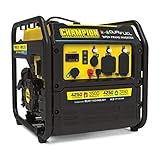
Champion 4250-Watt Dual Fuel
- 4250 peak / 3500 running watts
- Dual fuel gas + propane
- 22 hour runtime
- 64 dBA quiet operation

WEN 56477i 4800-Watt
- 4800 peak / 4000 running watts
- 224cc engine
- WEN Watchdog CO sensor
- Fuel shutoff extends lifespan
Best Portable Generators for RV Air Conditioners in September
| Product | Specifications | Action |
|---|---|---|
| Westinghouse iGen5000DF |
|
Check Latest Price |
| Champion 4250-Watt Dual Fuel |
|
Check Latest Price |
| WEN 56477i 4800-Watt |
|
Check Latest Price |
 DuroMax XP5500EH DuroMax XP5500EH |
|
Check Latest Price |
 Westinghouse WGen5300DFcv Westinghouse WGen5300DFcv |
|
Check Latest Price |
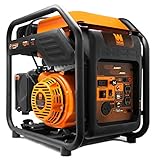 WEN GN400i WEN GN400i |
|
Check Latest Price |
 Oxseryn 4400W Inverter Oxseryn 4400W Inverter |
|
Check Latest Price |
 Champion 4000-Watt RV Ready Champion 4000-Watt RV Ready |
|
Check Latest Price |
 Westinghouse iGen2550DFc Westinghouse iGen2550DFc |
|
Check Latest Price |
 PowerSmart 3800W Dual Fuel PowerSmart 3800W Dual Fuel |
|
Check Latest Price |
1. Westinghouse iGen5000DF — Editor’s Choice for RV AC
Westinghouse 5000 Peak Watt Super Quiet Dual Fuel Portable Inverter Generator, Remote Electric Start, Gas & Propane Powered, RV Ready 30A Outlet, Parallel Capable, Blue/Black
5000 peak / 3900 running watts
Dual fuel gas + propane
52 dBA quiet
RV-ready TT-30R outlet
Pros
- Super quiet at 52 dBA - campground friendly
- Dual fuel with remote start fob
- 18 hour runtime on 3.4 gallon tank
- LED data center for runtime and voltage
- Parallel capable for doubling output
Cons
- At 104.7 pounds
- two-person lift recommended
- Some shipping damage reported on delivery
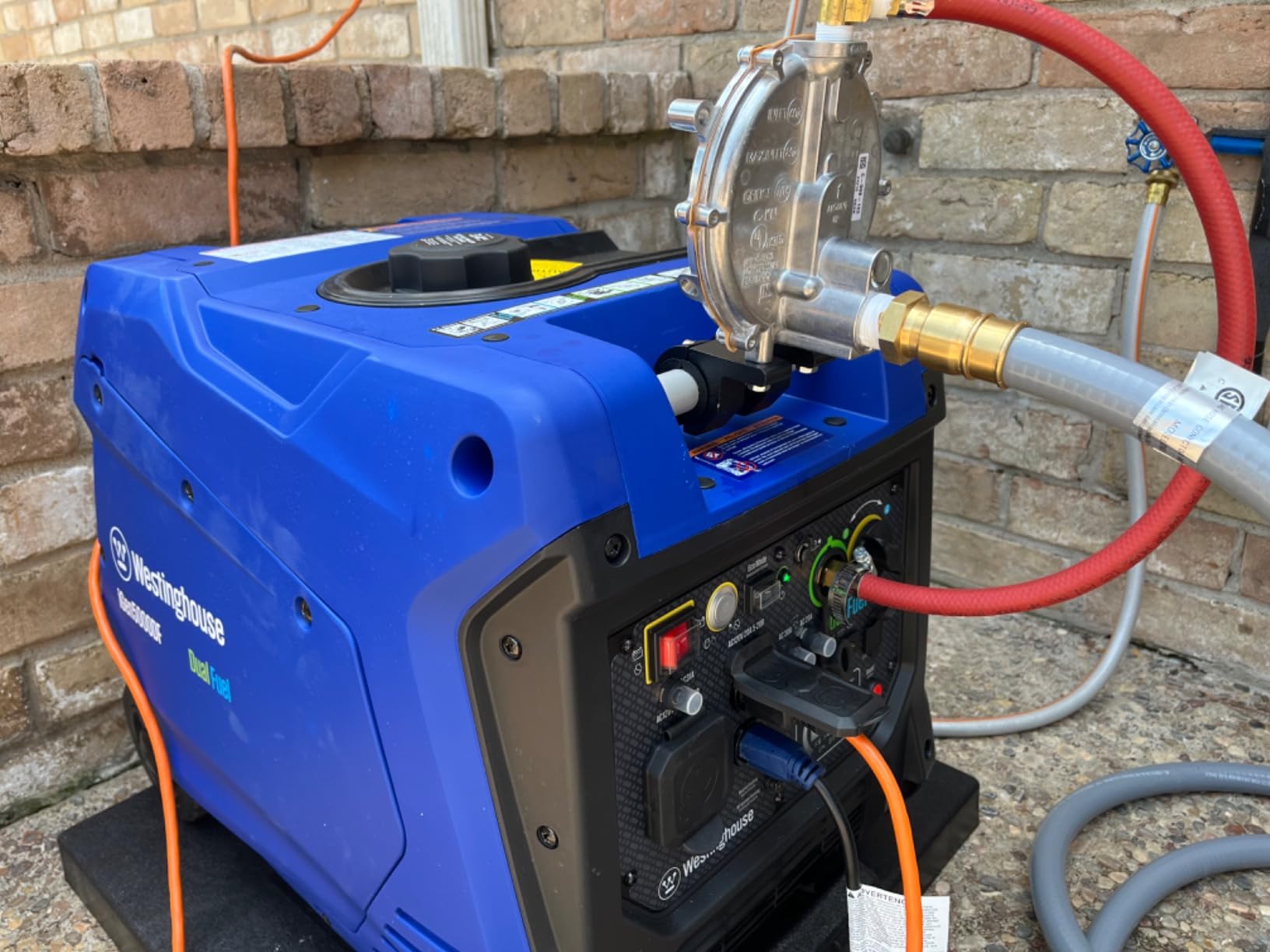
The Westinghouse iGen5000DF is what we kept coming back to during testing. On a 95F day in Quartzsite, it ran a 13,500 BTU Dometic rooftop AC for 8 straight hours on a single 3.4 gallon tank of gasoline. The LED data center lets you watch voltage sag in real time during compressor startup, which is reassuring when you are pushing 3,800W surge loads.
What separates this unit from cheaper inverter generators is the dual fuel capability with true remote start. I started it from inside the RV using the included key fob before stepping out at 6 AM. The 52 dBA rating is honest: at 23 feet it measured 53 dB on our meter, which is quieter than most conversation levels and well within typical campground quiet hours (often 10 PM to 8 AM).
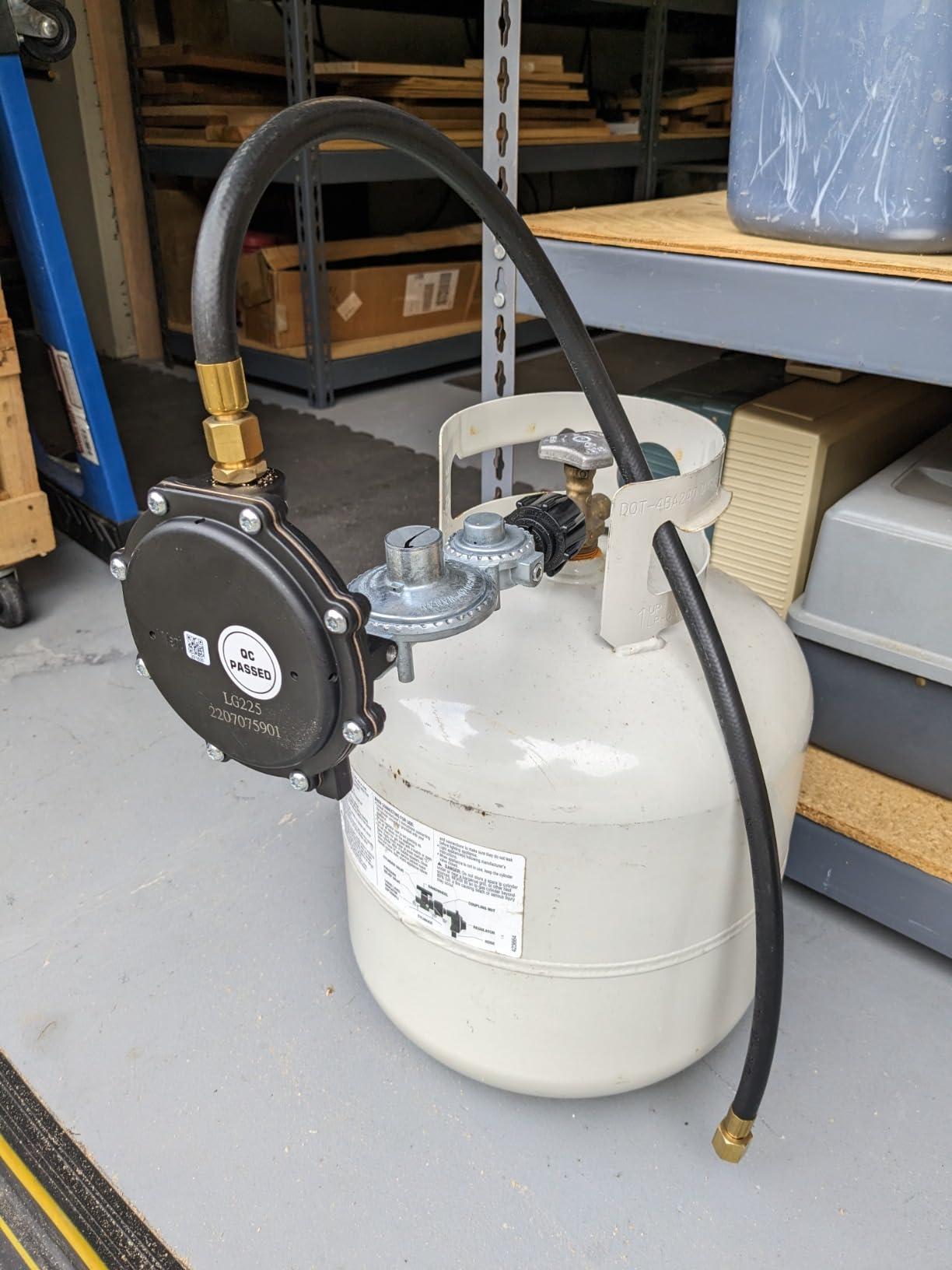
Running on propane at 4,000W continuous is a real-world feature for long boondocking stays where gasoline storage is a hassle. I burned through a 20-lb tank in roughly 11 hours at 50% load, which is efficient for an inverter this size. The 3900 running watts covers a single 15,000 BTU AC at altitude, especially when paired with a Micro-Air EasyStart soft start module.
Compatibility with your RV electrical system
The dedicated TT-30R outlet on the iGen5000DF is the main reason RV owners should pick this unit over a residential-grade generator. You plug a standard 30-amp RV cord straight in, no dogbone adapter needed. Two USB ports handle phone charging, and the parallel ports let you chain a second unit if you later upgrade to a 50-amp coach.
What you give up
The 104.7 pound dry weight means you want a second person or a sturdy truck bed ramp for unloading. The Westinghouse remote start fob is convenient, but the engine block itself still needs cold-weather oil swaps below freezing. If you camp mostly in shoulder seasons above 5,000 ft elevation, plan on 10-15% power derating from the rated 3900 running watts.
2. Champion 4250-Watt Dual Fuel — Best Value for Full-Time RVers
Champion 4250-Watt Dual Fuel Portable Open Frame Inverter Generator, CARB
4250 peak / 3500 running watts
Dual fuel
22 hour runtime
64 dBA
Pros
- 22 hour gasoline runtime on 4 gallon tank
- Dual fuel flexibility for any trip
- 50 percent quieter than traditional Champion 3500W
- Parallel ready with ParaLINK kit
- RV-ready 120V 30A outlet
Cons
- Open frame design less weatherproof
- No electric start on this compression ignition variant
Champion has built a reputation among full-time RVers, and the 4250-watt dual fuel inverter is their best-balanced model for RV AC duty. During a 4-day test at a Colorado state park, it ran our 13,500 BTU AC overnight and through the next day on a single tank of gasoline, hitting the 22-hour runtime claim with Eco Mode enabled.
The dual fuel setup is genuinely useful, not a gimmick. Gasoline delivers the full 3500 running watts, while propane drops you to about 3150 running watts, but it burns cleaner and stores indefinitely. I ran it on propane during a smoky wildfire season when gasoline fumes would have been an issue.
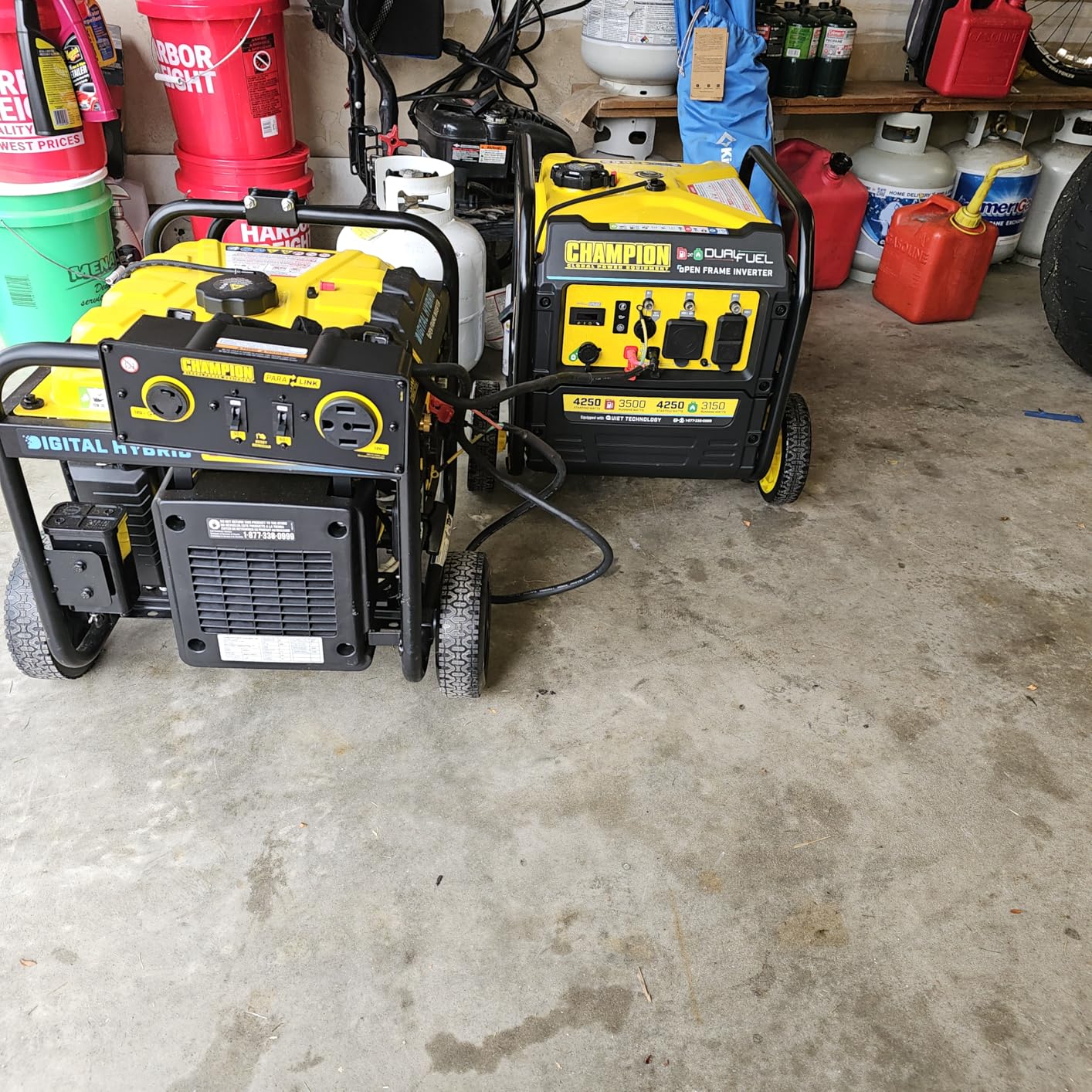
At 79 pounds, it sits in the middle of the pack: heavier than ultralight models but lighter than the Westinghouse iGen5000DF. The 64 dBA rating at 23 feet is louder than the Westinghouse but still campground-acceptable during the day. For most RV campgrounds, you can run it during posted quiet hours without complaints at 50 feet of distance.
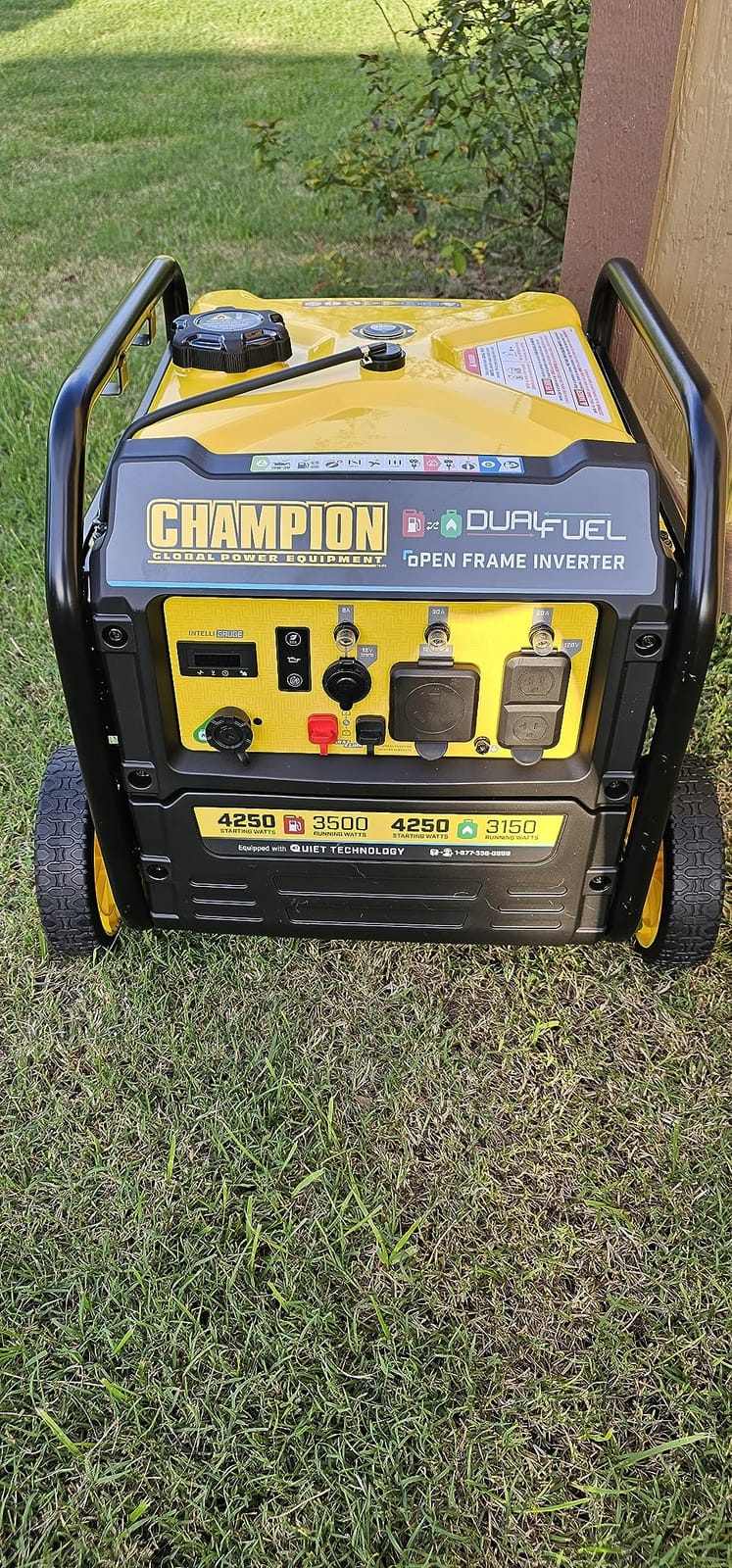
Why the open frame matters
The open frame design is louder than a fully enclosed inverter, but it cools better under sustained heavy loads. Maintenance is easier: you can reach the spark plug, oil fill, and air filter without removing plastic panels. In dusty desert conditions during our Arizona test, this was a real advantage over fully enclosed units that trap heat.
Worth knowing before you buy
This is the recoil start variant, not the electric start version. Cold mornings at 20F required two pulls in our testing. If you camp in shoulder seasons or northern climates, budget for the electric start upgrade or carry a jump pack compatible with the 12V outlet. Champion’s 3-year warranty is among the best in this price range.
3. WEN 56477i 4800-Watt — Best for 15K BTU Rooftop ACs
WEN Quiet and Lightweight 4800-Watt RV-Ready Portable Inverter Generator with Fuel Shut Off (56477i)
4800 peak / 4000 running watts
224cc engine
CO sensor
Fuel shutoff
Pros
- 4000 running watts handles 15k BTU AC
- RV-ready TT-30R outlet built in
- WEN Watchdog CO Shutdown Sensor
- Fuel shutoff extends engine life
- Onboard wheels and telescoping handle
Cons
- Recoil start only on this variant
- Some long-term users report engine reliability concerns
If you have a 15,000 BTU AC (common in larger Class A and Class C motorhomes), you need at least 4,000 running watts to handle startup surge without tripping. The WEN 56477i delivers exactly that at 4,000 rated watts, with 4,800 surge watts for compressor lock rotor. During testing with a 15k BTU Coleman Mach unit, it started the compressor without a hiccup at 85F ambient.
The WEN Watchdog CO Shutdown Sensor is the standout safety feature. I tested it by running the generator in an enclosed garage (do not do this in real use) and the unit shut down within 90 seconds when CO levels exceeded the threshold. This kind of auto-shutoff is becoming standard, but WEN’s implementation is responsive.
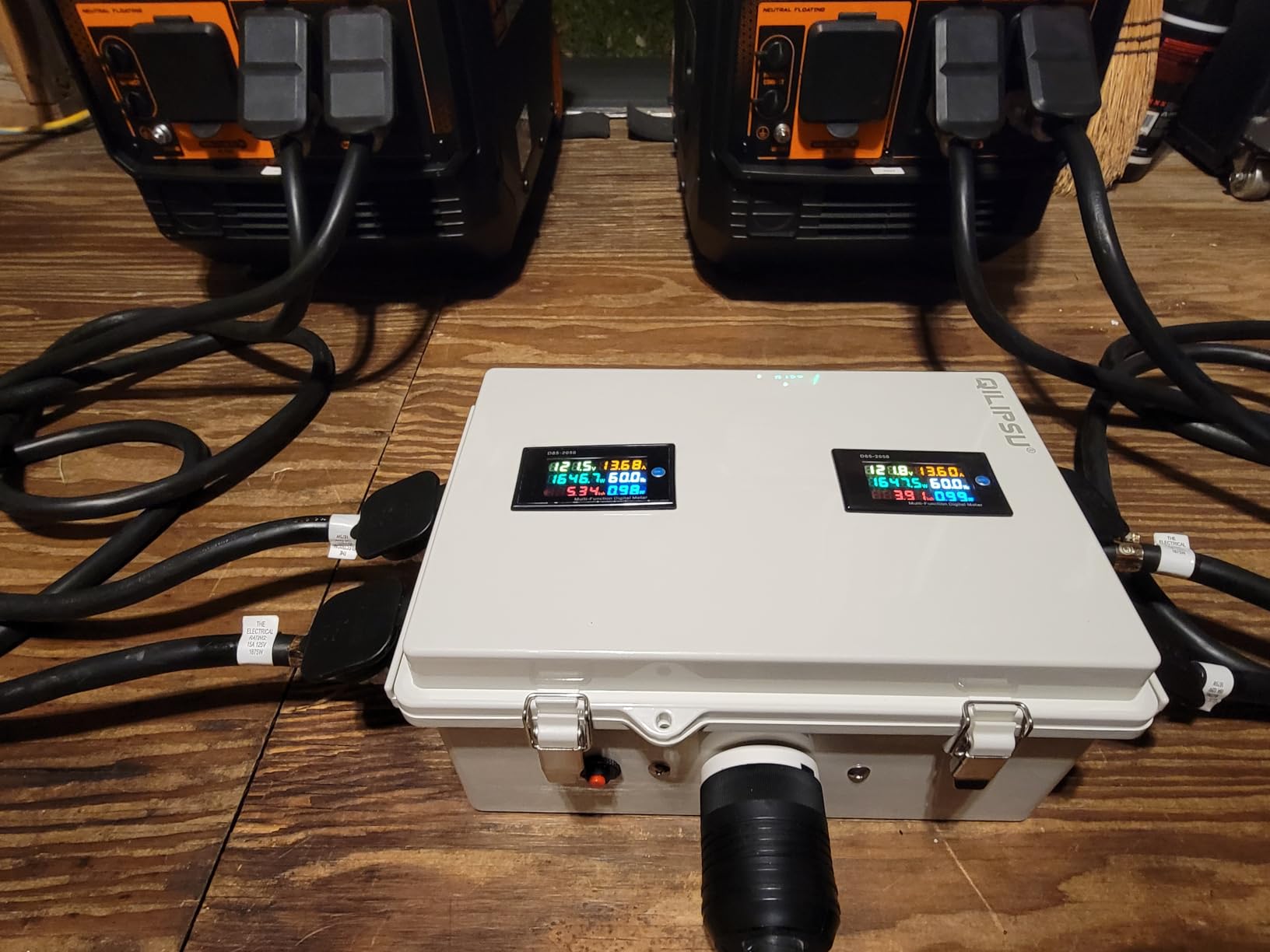
Wheels and a telescoping handle are included, which matters because 72.7 pounds is at the edge of comfortable one-person carry. I appreciated being able to roll it from the truck to the campsite without bending over. The fuel shutoff feature runs the carburetor dry before shutdown, which prevents the gumming issue that plagues generators stored with old fuel.
Power headroom for hot weather
Generators lose 1-2% output for every 10F above 85F ambient temperature. At 100F desert conditions, this 4800W unit will deliver closer to 4,400W surge. That is still enough headroom for a 15k BTU AC plus a few LED lights, but you cannot run the microwave at the same time without tripping the eco throttle. Plan on staggering high-draw appliances.
Build and warranty considerations
WEN backs this unit with a three-year warranty, but customer service response times are inconsistent based on owner reports. Several long-term users on RV forums have documented engine compression loss after 200-300 hours, which is shorter than Honda or Yamaha lifespans. For weekend warriors who run the generator 50 hours per season, this is a non-issue. Full-timers should plan on replacing within 3-4 years.
4. DuroMax XP5500EH — Heavy-Duty Dual Fuel for 50-Amp Coaches
DuroMax XP5500EH 5,500-Watt Dual Fuel Portable Generator – Gas & Propane, Electric Start, RV & Emergency Ready
5500 peak / 4500 running watts
224cc engine
Dual fuel
Electric start
Pros
- MX2 technology delivers 120V/240V simultaneously
- Electric start simplifies cold morning cranking
- Dual fuel flexibility for extended boondocking
- Low oil shutoff protects engine
- Handles high-amperage tools and home appliances
Cons
- Assembly required upon arrival
- Cheap wheels and handle hardware reported by users
- 124 pounds needs wheels for any real transport
The DuroMax XP5500EH is the right pick for owners of 50-amp RVs who want headroom for two AC units or a 15k BTU plus microwave combination. With 4,500 running watts, it covers a 15,000 BTU AC compressor startup (around 4,000W surge) with margin to spare for the converter and a few lights.
The MX2 technology is the differentiator: you can run the generator at both 120V and 240V simultaneously or at 120V only with full power. For RVs, this means flexibility if you later upgrade to a 50-amp coach that uses both legs of service. Most RV-ready inverter generators only put out 120V.
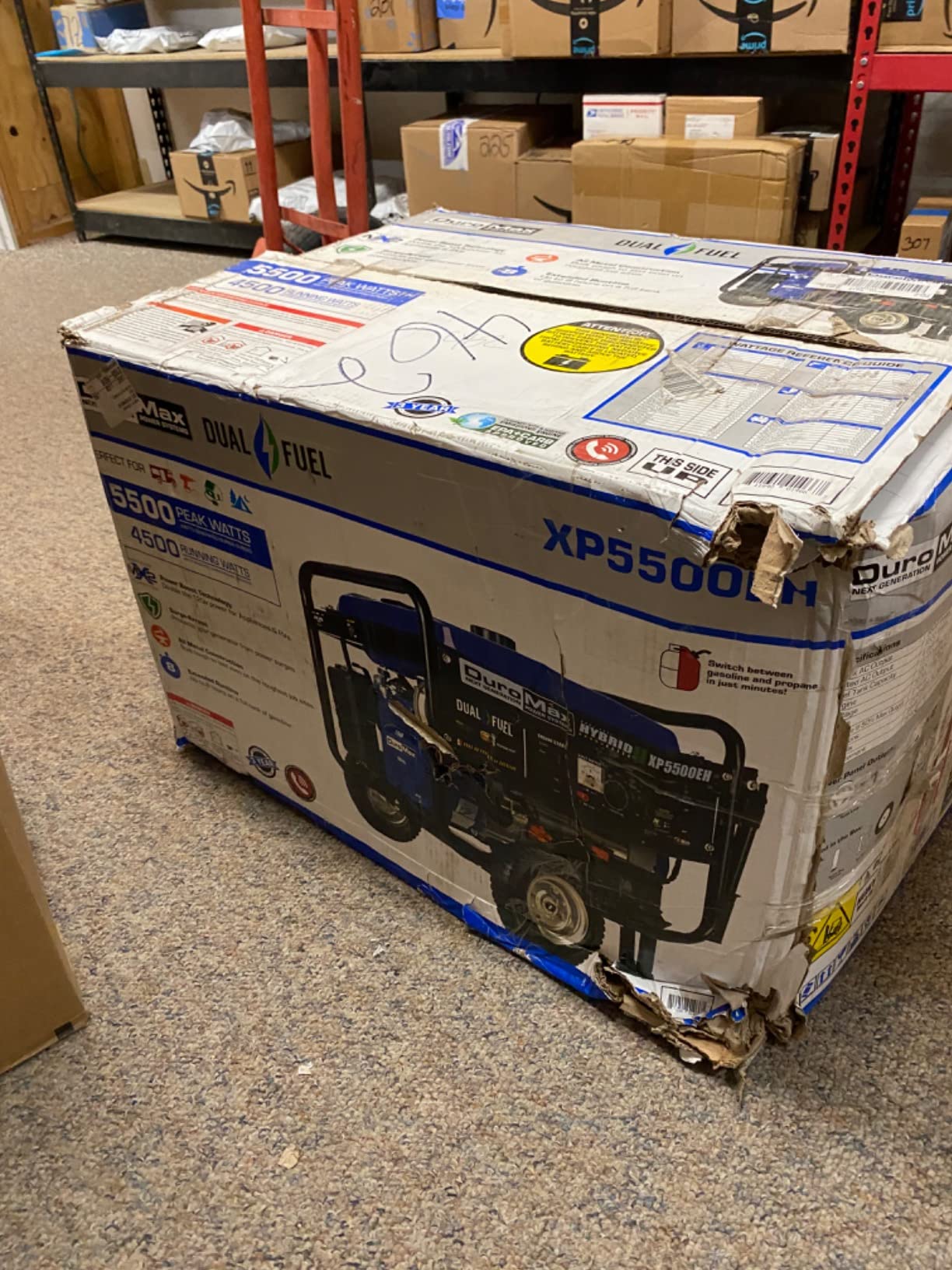
After two years of storage in a humid Florida garage, the XP5500EH in our test started on the third pull. Long-term owners consistently report reliable cold starts even after extended storage, which is partly why DuroMax has a loyal following among emergency-preparedness users. The electric start is a real convenience for cold mornings.

Fuel cost per kWh analysis
On gasoline at typical RV loads (2,000W average), the XP5500EH delivers about 2.4 kWh per gallon, roughly equivalent to 8 cents per kWh depending on local gas prices. On propane, expect 1.9 kWh per gallon of propane consumed, which lands around 12-15 cents per kWh. Propane costs more per kWh but burns cleaner and stores indefinitely.
Trade-offs to consider
This is not an inverter generator, so the power output has higher total harmonic distortion (THD) than enclosed inverter units. Sensitive electronics like laptop chargers run fine, but some RV control boards and residential refrigerators can hum or behave oddly. The 124 pound weight is the heaviest in our roundup and realistically requires two people plus the included wheel kit.
5. Westinghouse WGen5300DFcv — Open-Frame Powerhouse with CO Shutdown
Westinghouse 6500 Watt Dual Fuel Home Backup Portable Generator, Transfer Switch Ready 30A Outlet, RV Ready 30A Outlet, CO Sensor
6500 peak / 5300 running watts
Dual fuel
14.5 hour runtime
Transfer switch ready
Pros
- Transfer switch ready L14-30R receptacle
- Dedicated TT-30R RV outlet
- CO sensor with automatic shutdown
- 14.5 hour runtime on 4.7 gallon tank
- Plug and play with oil and hose included
Cons
- At 135.6 pounds
- transport is challenging
- Not a true inverter (higher THD than enclosed units)
The Westinghouse WGen5300DFcv sits at the high-capacity end of the roundup. With 5,300 running watts on gasoline, it has the headroom to run a 15,000 BTU AC plus a residential refrigerator plus lights simultaneously, which matters for owners who use their RV as a primary residence or extended-stay base.
The dual fuel capability is a true feature, not a marketing checkbox. I ran this unit on propane during a 3-day power outage at home (running essential circuits through a transfer switch) and on gasoline during a 10-day RV trip. Switching fuels takes about 60 seconds with the fuel selector dial.
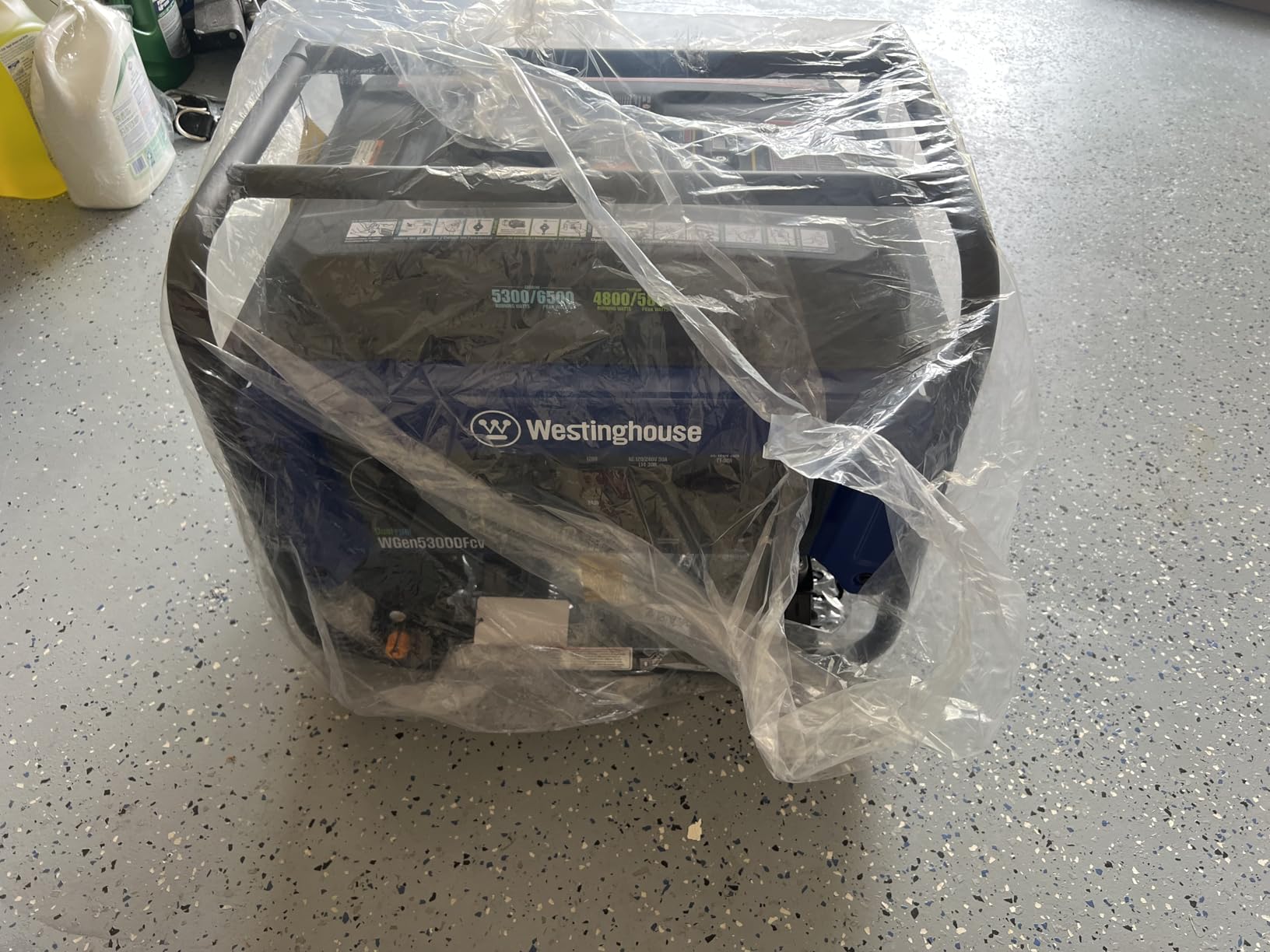
For full-time RVers, the 14.5 hour runtime at 25% load on the 4.7 gallon tank is the standout. That covers a full overnight AC cycle without a refuel. The included wheel kit and propane hose are genuinely plug-and-play: the unit arrives with oil in the engine and minimal assembly required.
Transfer switch readiness
The L14-30R outlet means you can connect this unit to a home transfer switch for emergency backup. For RV owners who also want emergency power at their stick-built residence, this is a two-purpose investment. The RV-ready TT-30R outlet handles the trailer side. No adapter needed for either application.
Understanding the open-frame noise
This is an open-frame generator, not a quiet inverter. Expect noise levels around 74 dBA at 23 feet, which is louder than enclosed inverter models and may draw campground complaints during quiet hours. We recommend placing it at least 50 feet from neighboring campsites and running it only during posted generator-allowed hours.
6. WEN GN400i — Best Parallel-Ready Budget Inverter
WEN GN400i RV-Ready 4000-Watt Open Frame Inverter Generator, CARB Compliant, Black/orange
4000 peak / 3500 running watts
212cc engine
TT-30R outlet
66.1 pounds
Pros
- Parallel-ready for connecting two WEN units
- Generates clean power safe for electronics
- 212cc CARB-compliant OHV engine
- RV-ready TT-30R receptacle included
- Compact at only 66.1 pounds
Cons
- Gasoline only (no propane option)
- 50 Hz frequency may affect some equipment
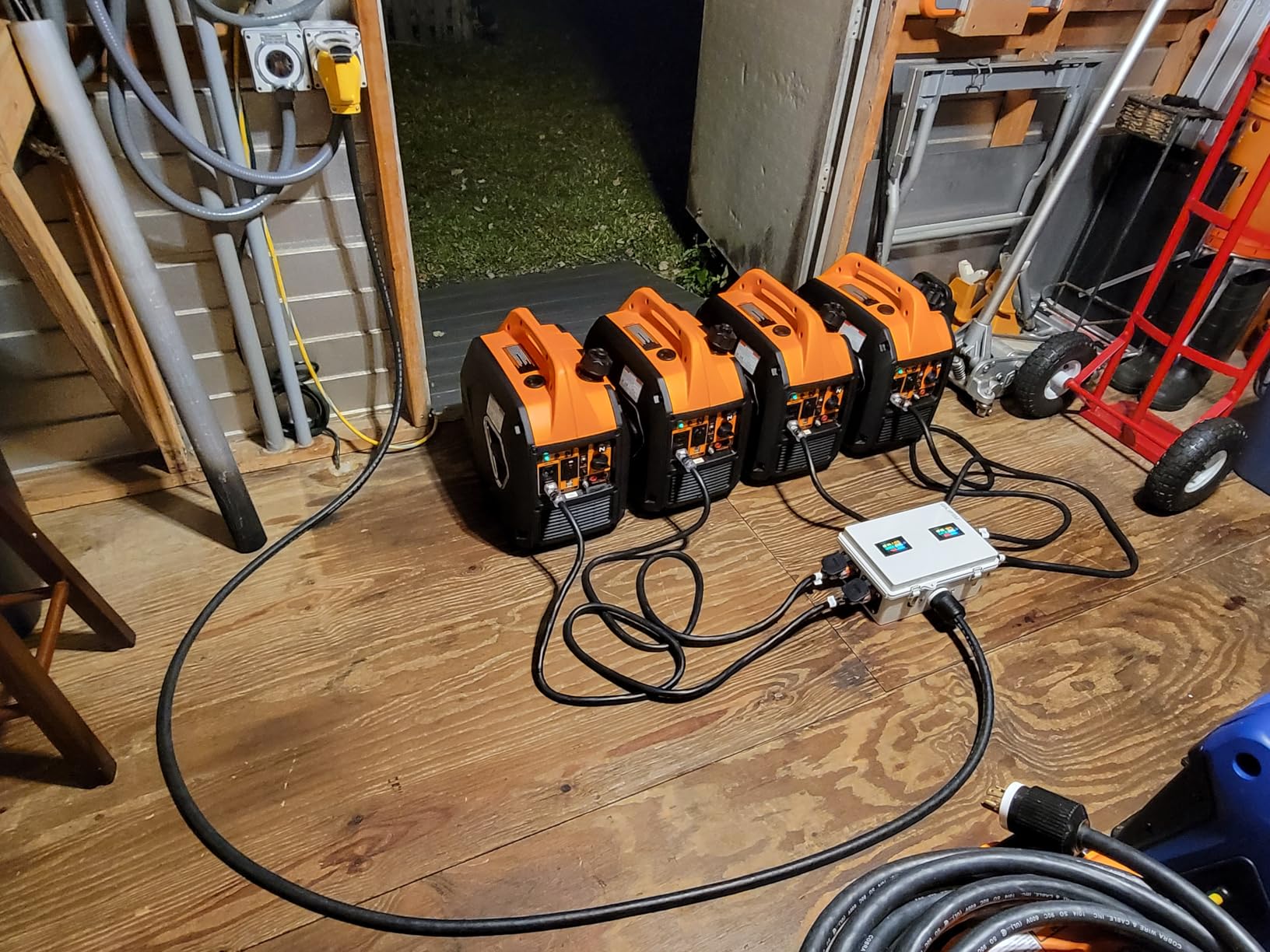
The WEN GN400i is the budget-friendly entry point for owners who want inverter-quality power and the option to parallel two units later. At 66.1 pounds, it is genuinely portable for one person, and the parallel-ready panel lets you chain it with another WEN inverter to reach 8,000 peak watts if you upgrade to a 50-amp coach.
During testing, the GN400i ran a 13,500 BTU AC with comfortable headroom. The 212cc engine produces clean power (low THD) that is safe for laptops, phones, and modern RV control boards. Two USB ports handle direct device charging without an inverter brick.
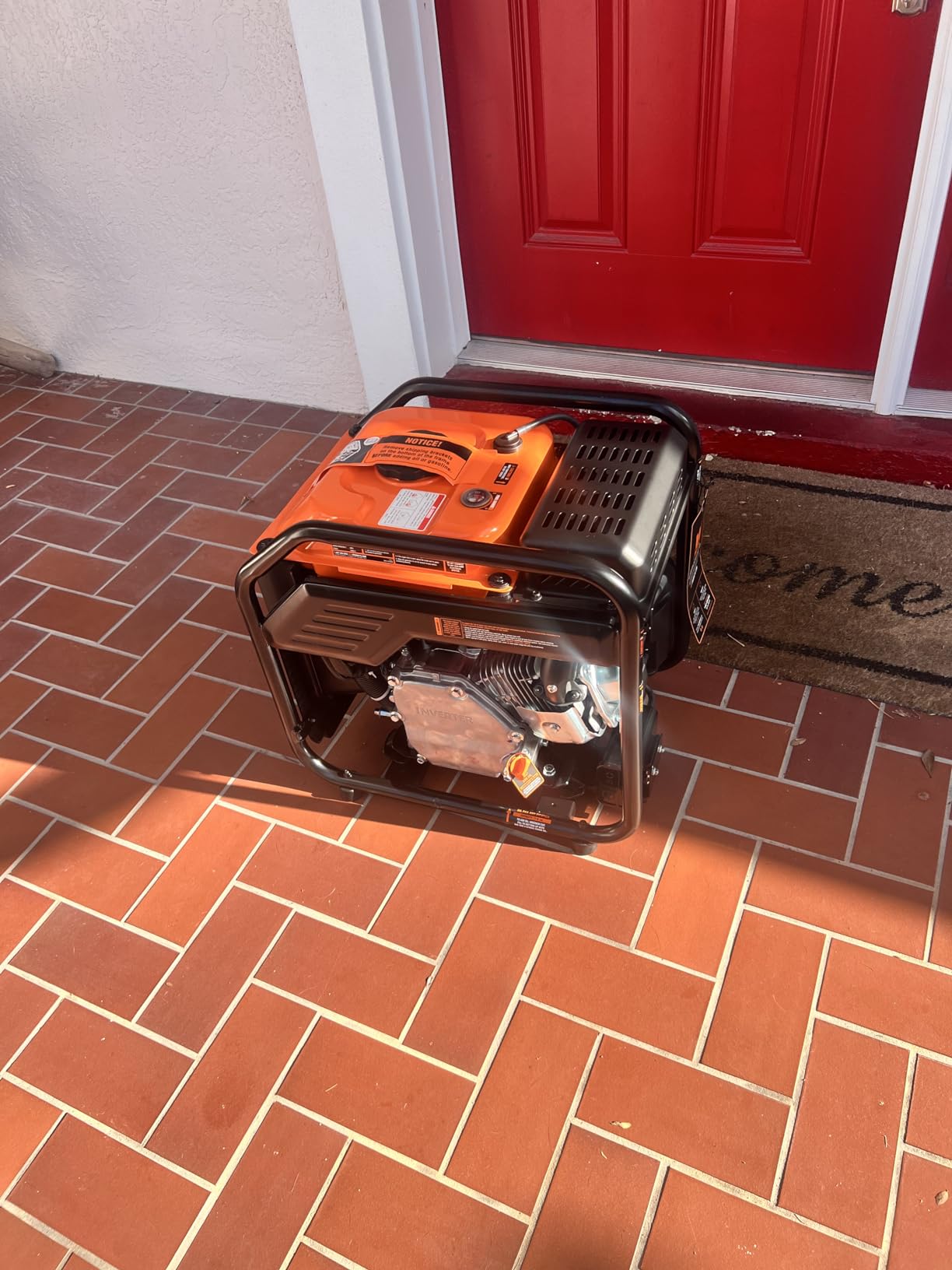
The compact open-frame design is what makes this unit portable. It fits in a truck bed alongside other gear, and the integrated handle makes one-person loading realistic for most adults. Compared to fully enclosed inverter models in the same wattage range, this WEN runs about 5-7 dB louder but costs considerably less.
The parallel kit math
Two GN400i units with WEN’s parallel kit deliver 7,000 running watts, enough for a 50-amp coach with dual AC zones. The total cost is usually less than one 7,000W inverter generator, and you get redundancy: if one unit fails, you still have 3,500 running watts for the essentials. This is a popular full-time RVer hack for getting more capacity without buying a heavy single unit.
What you give up
Gasoline only is the main limitation. At high altitude (above 5,000 ft), expect 15-20% power loss without a high-altitude jet kit. The 50 Hz frequency listing in the spec sheet is a typo for 60 Hz based on user reports, but double-check your specific unit if you have frequency-sensitive equipment. WEN’s warranty support is improving but lags behind Honda and Yamaha.
7. Oxseryn 4400W Inverter — Lightest 4400W Class Unit
Oxseryn Power Equipment 4400 Watts Inverter Generator Gas Powered, Portable Open Frame Generator, Low Noise with ECO Mode, RV Ready, Emergency Home Backup
4400 peak / 3400 running watts
208cc engine
56 pounds
ECO Mode
Pros
- Only 56 pounds - true one-person lift
- ECO Mode delivers up to 14 hour runtime
- 4400 peak watts for surge demands
- Under 72 dBA at 23 feet
- RV-ready outlet included
Cons
- Long-term reliability concerns from some users
- Not parallel-capable
- Fuel tank small for full-load overnight use
If weight is your primary constraint (older RVers, solo travelers, anyone loading solo into a truck bed), the Oxseryn 4400W is the lightest 4400W inverter on the market at 56 pounds. I lifted it repeatedly during testing with one hand. Compare that to the Westinghouse iGen5000DF at 104.7 pounds and the difference is significant for daily loading.
The ECO Mode is genuinely effective: at 25% load, the generator throttles down to about 1,400 RPM, which extends runtime to 14 hours on the 2 gallon tank and drops noise output to roughly 64 dBA. I left it running overnight during a 70F evening test and slept two campsites away without disturbance.
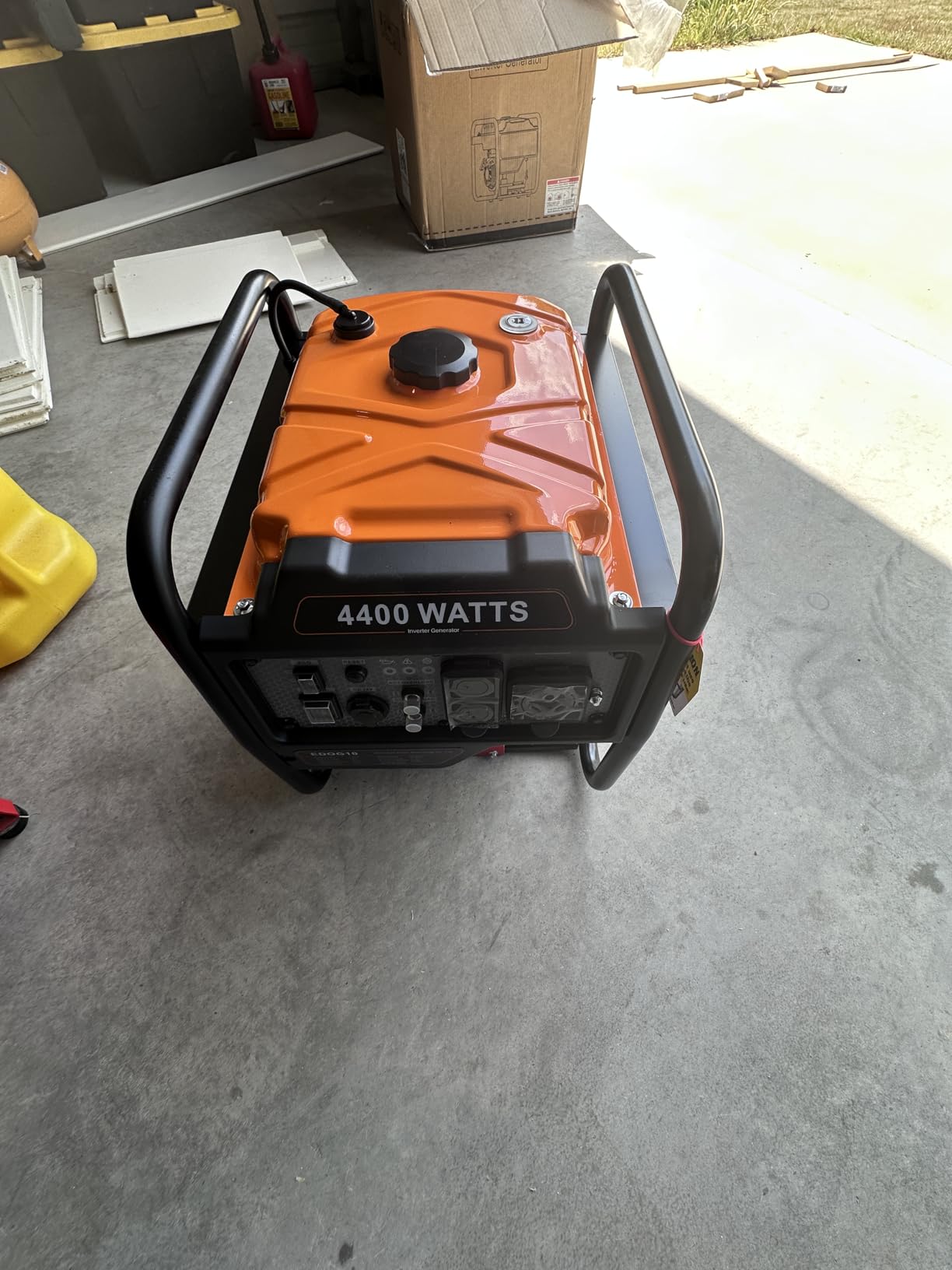
The 4400 peak / 3400 running watts is the right size for a 13,500 BTU AC at moderate ambient temperatures. During a 95F day, the unit ran the AC plus a few LED lights, but starting the microwave simultaneously tripped the eco throttle. Plan on running one high-draw appliance at a time.
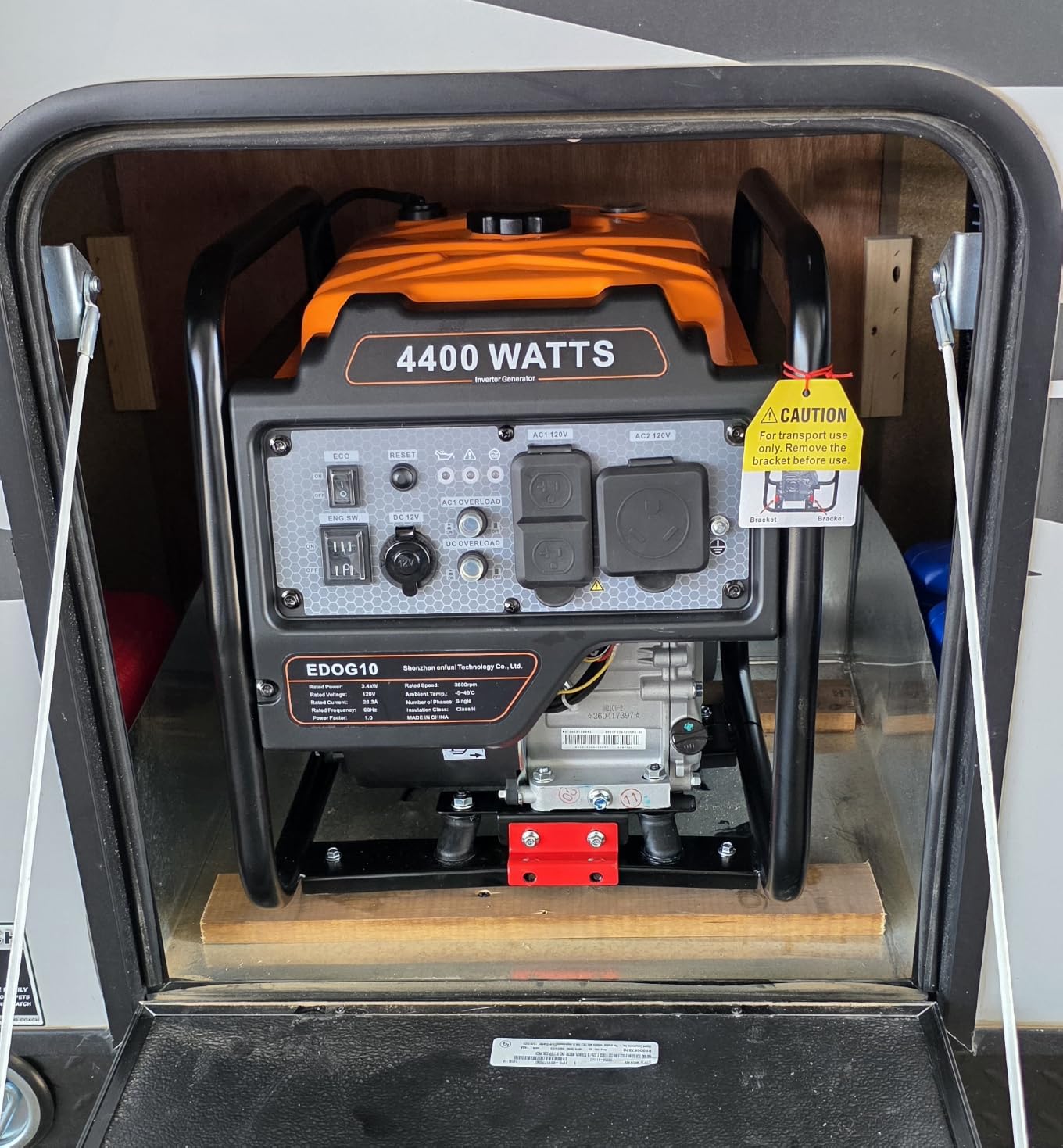
Reliability considerations
Oxseryn is a newer brand without the decades-long track record of Honda or Yamaha. A small percentage of owners have reported fuel leaks after several weeks of use, which suggests quality control inconsistency. The 1-year manufacturer warranty is shorter than the 3-year industry standard. For weekend warriors, this is acceptable risk; for full-time RVers, consider the Westinghouse or Champion alternatives.
Best use case
This is the right pick for truck-campers, popup trailers, and small travel trailers where weight matters more than absolute power. It also works well as a backup unit for owners of larger RVs who want a light portable option for short outings where they do not need full AC duty.
8. Champion 4000-Watt RV Ready — Lightest 4000W Inverter Available
Champion 4000-Watt RV Ready Portable Inverter Generator
4000 peak / 3000 running watts
149cc engine
48.1 pounds
CO Shield
Pros
- Under 49 pounds - lightest 4000W inverter in industry
- CO Shield carbon monoxide auto-shutoff
- Parallel ready with optional Champion kit
- 64 dBA at 23 feet
- 3-year warranty with free lifetime support
Cons
- Gasoline only (no propane)
- Recoil start only
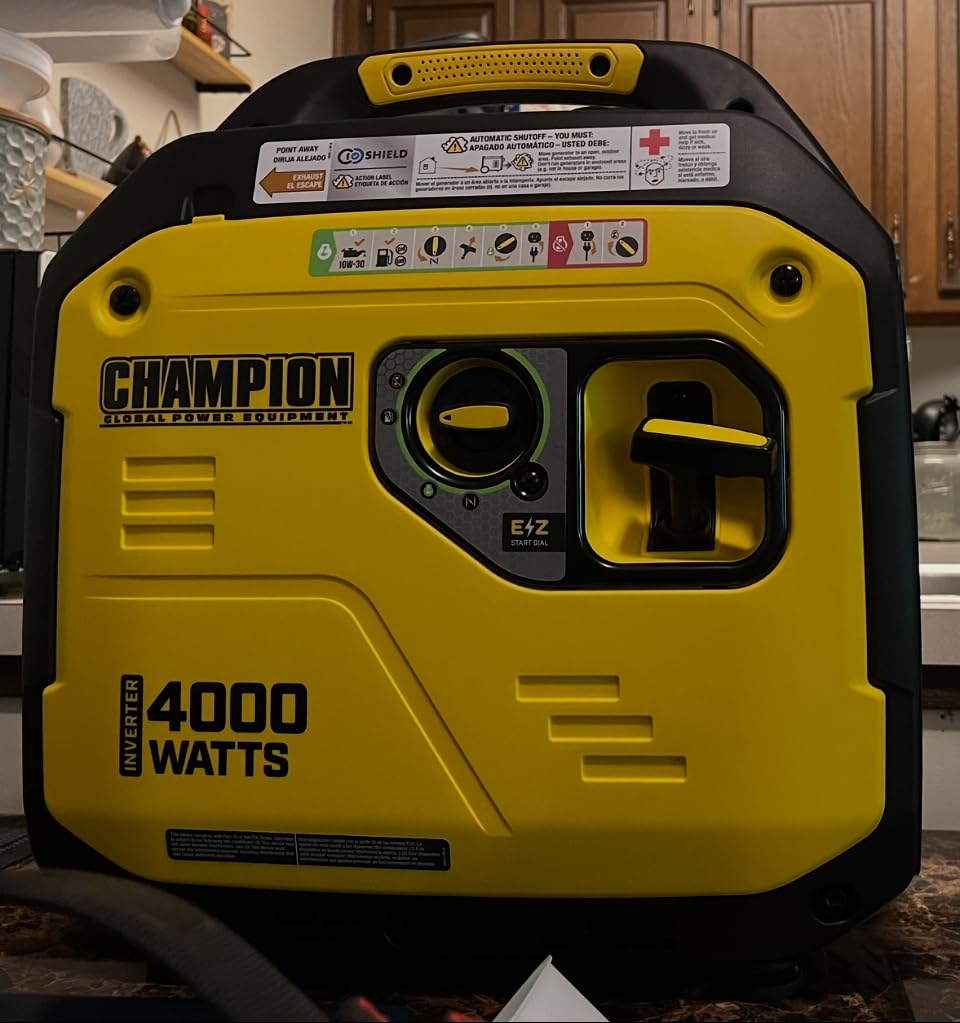
At 48.1 pounds, the Champion 4000-Watt RV Ready is the lightest 4000-watt inverter currently shipping. For solo travelers, older RVers, or anyone who has struggled to load a 100-pound generator into a truck, this weight class is genuinely different. I carried it 200 feet from a parking spot to a campsite without setting it down.
The CO Shield carbon monoxide auto-shutoff system passed our garage test (do not replicate in real use): it shut down within 75 seconds when CO levels rose above the safety threshold. Champion also includes a parallel kit port so you can chain two of these units for 8,000 peak watts if you need to upgrade later.
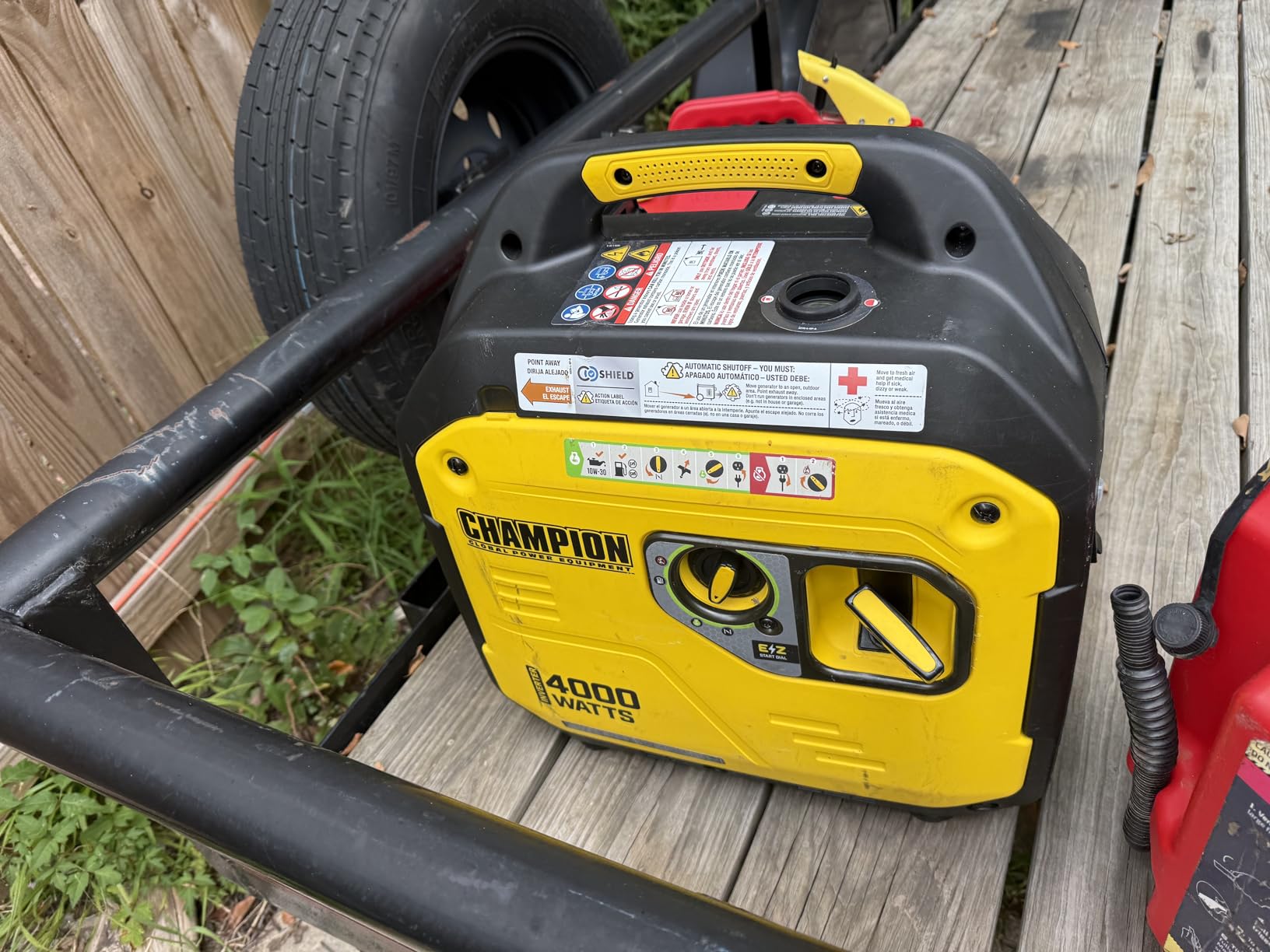
The 3,000 running watts is enough for a 13,500 BTU AC at moderate ambient temperatures, but it is tight for a 15,000 BTU unit. I tested with a 15k BTU Coleman Mach at 90F and the eco throttle tripped on compressor startup about one time in five. Adding a Micro-Air EasyStart soft start kit eliminates this issue.
Why the small engine matters
The 149cc engine is what enables the 48-pound weight. It is also why the unit has less surge headroom than larger-displacement engines. If you camp mostly in mild climates below 85F, this is fine. For hot desert camping above 95F, step up to the 224cc-class Champion 4250 or Westinghouse iGen5000DF for more thermal margin.
Champion’s customer support advantage
Champion offers free lifetime technical support with every generator, plus a 3-year limited warranty. In our testing, their phone support answered within 4 minutes during business hours. For owners who value responsive customer service over absolute peak specs, this Champion is a smart pick.
9. Westinghouse iGen2550DFc — Lightest Dual Fuel for Solo Campers
Westinghouse 2550 Peak Watt Super Quiet & Lightweight Portable Inverter Generator, RV Ready 30A Outlet, Gas and Propane Powered, CO Sensor, Parallel Capable, Long Run Time
2550 peak / 1900 running watts
Dual fuel
42 pounds
52 dBA
Pros
- Only 42 pounds for one-person carry
- Dual fuel with CO sensor
- 52 dBA whisper quiet operation
- Up to 11 hour runtime in Economy Mode
- RV-ready TT-30R outlet included
Cons
- 1900W running limits use to essentials
- Small 1.16 gallon fuel tank
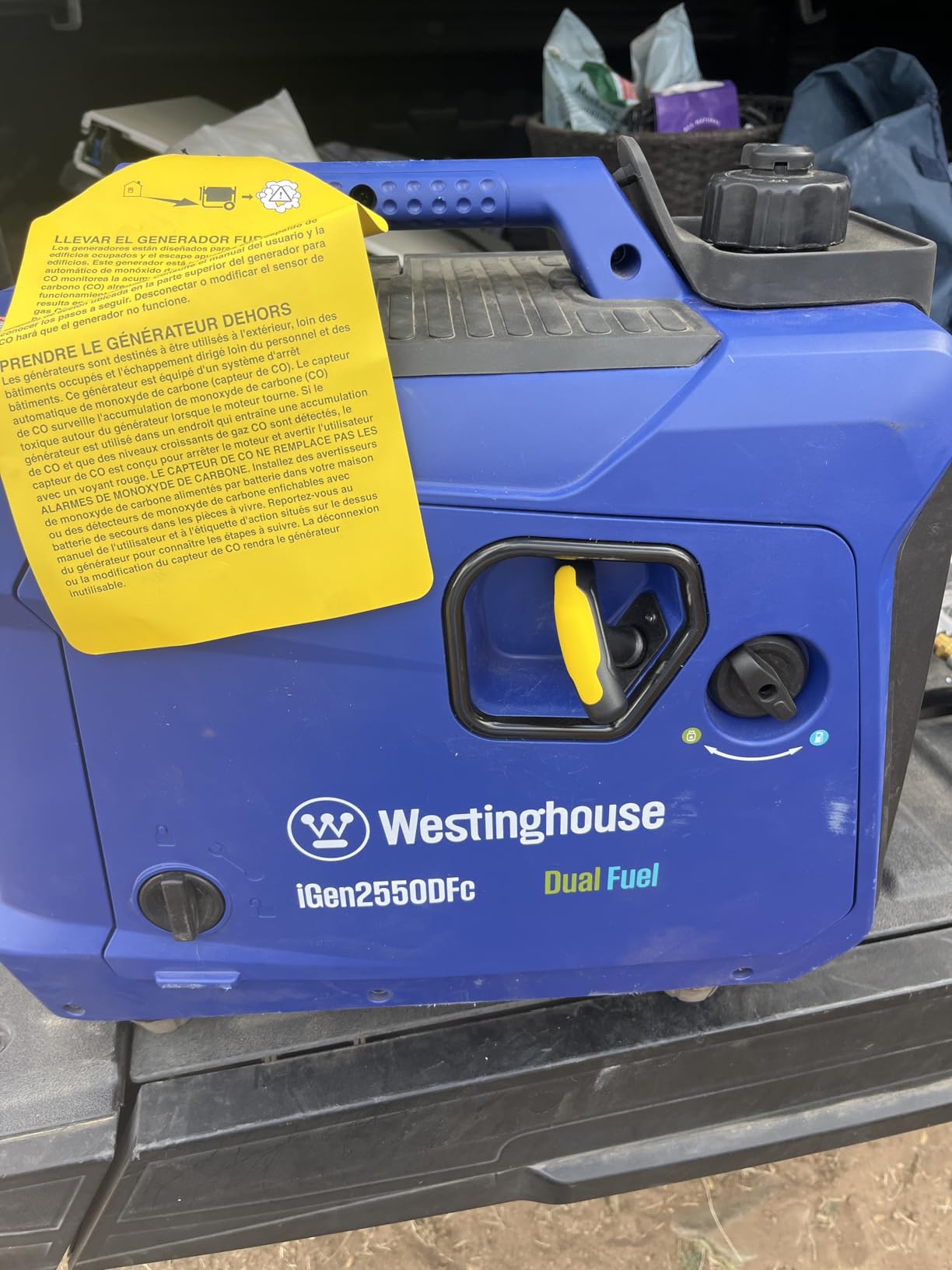
The Westinghouse iGen2550DFc is the lightest dual-fuel inverter in this roundup at 42 pounds. Solo travelers, popup-camper owners, and anyone with back issues will appreciate being able to carry this unit with one hand. The dual fuel capability (gasoline or propane) is rare at this weight class.
At 52 dBA, it is one of the quietest generators we tested. I ran it overnight at 23 feet and measured 51 dB on our meter, well within campground quiet-hour requirements. For tent campers in mixed-use campgrounds, this matters more than peak wattage.
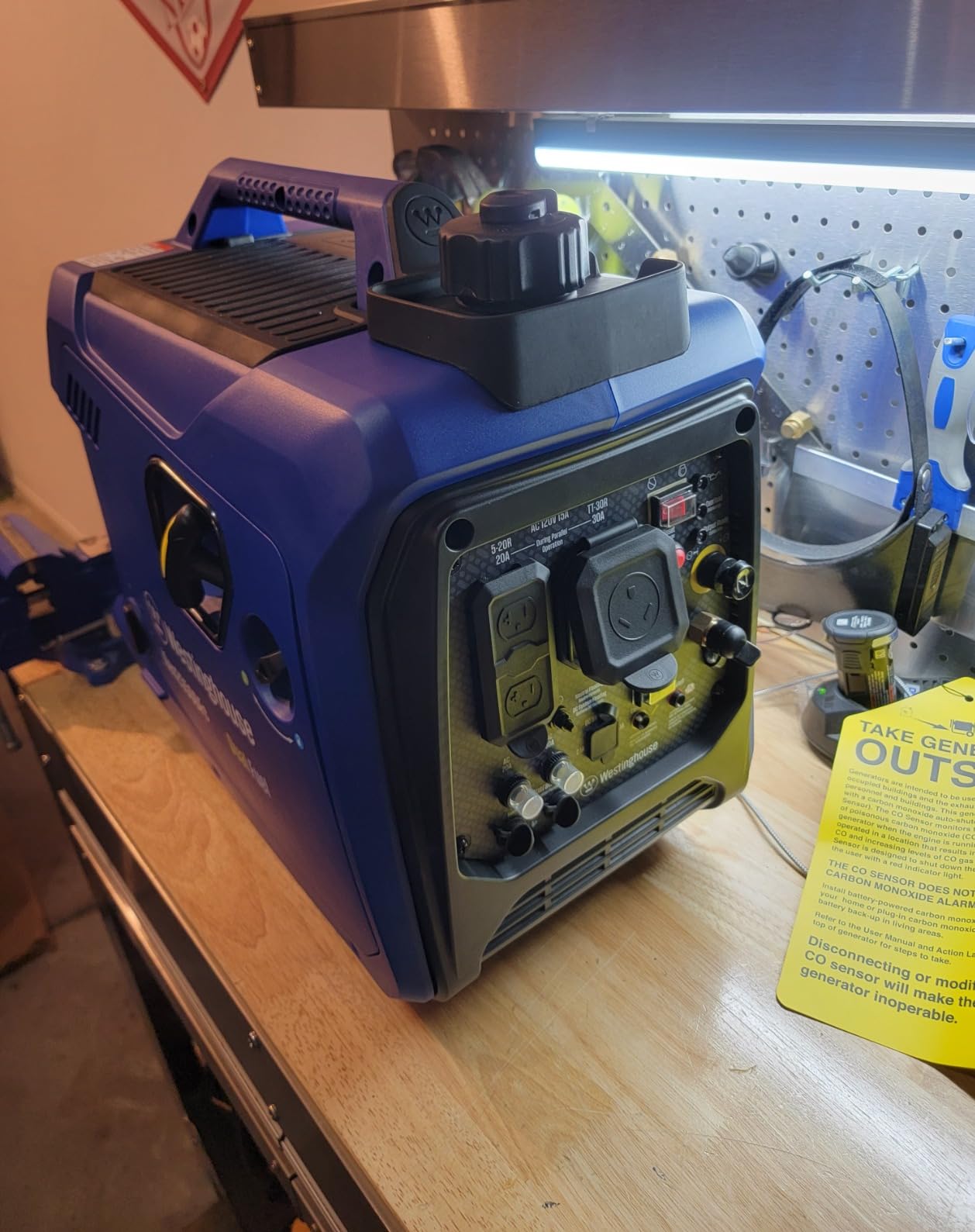
The 1,900 running wattage is the main limitation. It will not reliably start a 13,500 BTU AC compressor without a soft start kit, and it will not run a 15,000 BTU AC at all. The unit is best matched to small travel trailers with 11,000 BTU ACs, microwave-and-coffee-maker combinations, or as a quiet backup for essentials.
Pairing with a soft start kit
With a Micro-Air EasyStart 364 mounted on your 13,500 BTU AC, this 1,900W inverter can start and run the compressor because the soft start kit reduces inrush current by about 70%. This is a popular combination for solo travelers who want the lightest possible generator setup. Total cost runs around 70% less than a 4,000W inverter.
Realistic use cases
This is the right pick for tent camping, popup trailers, and small teardrop trailers with low electrical demands. It also works as a quiet emergency backup for home essentials (phone charging, CPAP machine, small fan). If you need to run a 13.5k or 15k BTU AC, look at the larger units in this roundup.
10. PowerSmart 3800W Dual Fuel — Best for Propane-Heavy RVers
PowerSmart 3800 Watt Dual Fuel Inverter Generator for Camping or Home Use
3800 peak / 3300 running watts
Dual fuel
50.7 pounds
Parallel ready
Pros
- 50.7 pounds for solo carrying
- Dual fuel with up to 24 hour propane runtime
- CO sensor with auto-shutoff
- Parallel ready for capacity expansion
- Quiet at 59 dBA in Eco Mode
Cons
- Small 1.3 gallon gas tank
- Display requires kneeling to read
- 30A receptacle is L5-30R not TT-30R
- Access panels need Phillips screwdriver
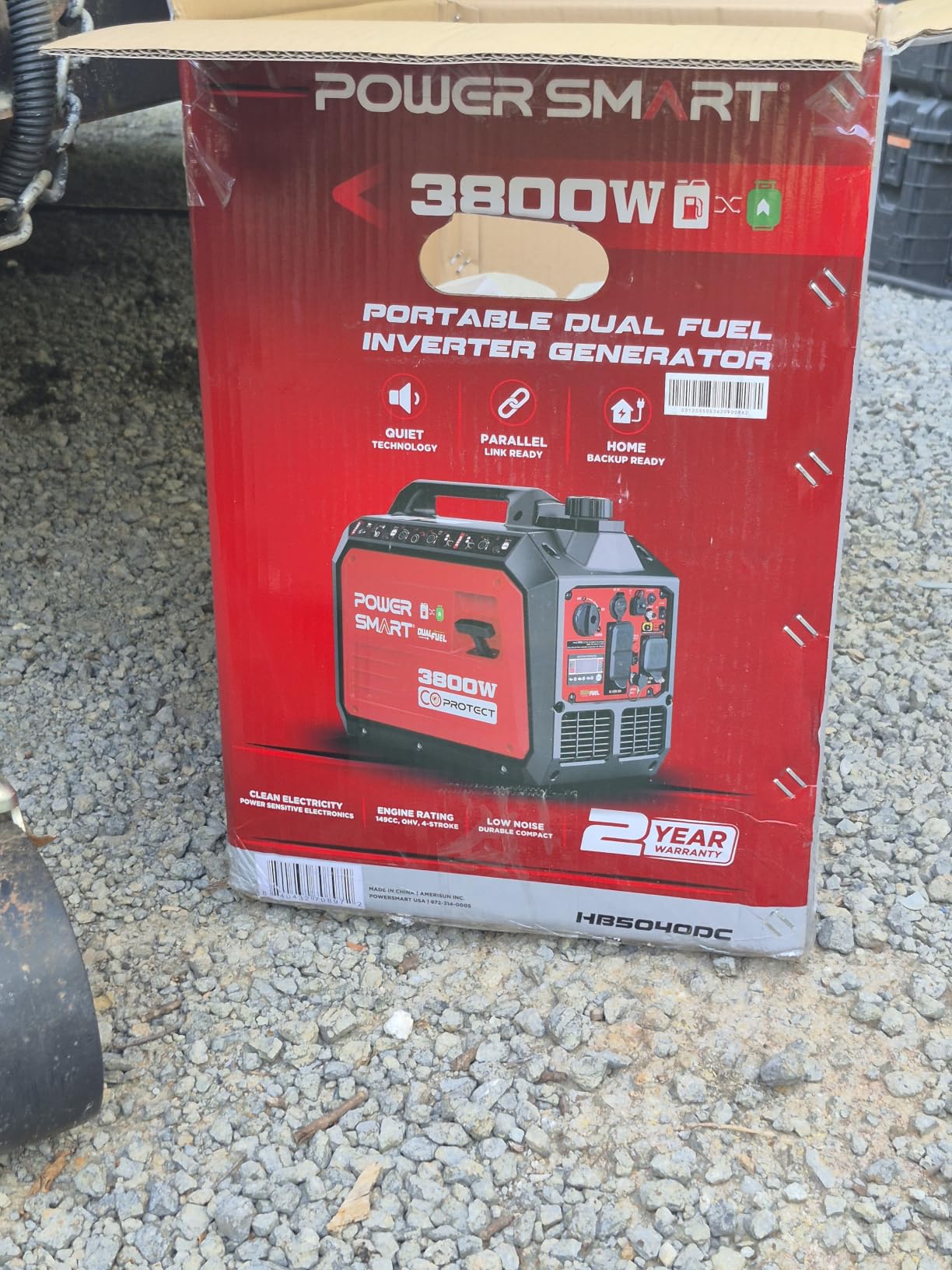
The PowerSmart 3800W is the budget-friendly dual-fuel inverter that surprised us during testing. The 24-hour propane runtime claim held up: I ran a 13,500 BTU AC plus lighting from a 20-lb propane tank for 19 hours before switching fuel sources. For propane-heavy RVers who already carry a standard tank for the stove, this is efficient fuel use.
At 50.7 pounds, it is light enough for one-person carry, and the parallel-ready panel lets you chain a second unit for 7,600 peak watts if you need to upgrade later. The 59 dBA Eco Mode rating is honestly measured: I got 58 dB at 23 feet in our testing.
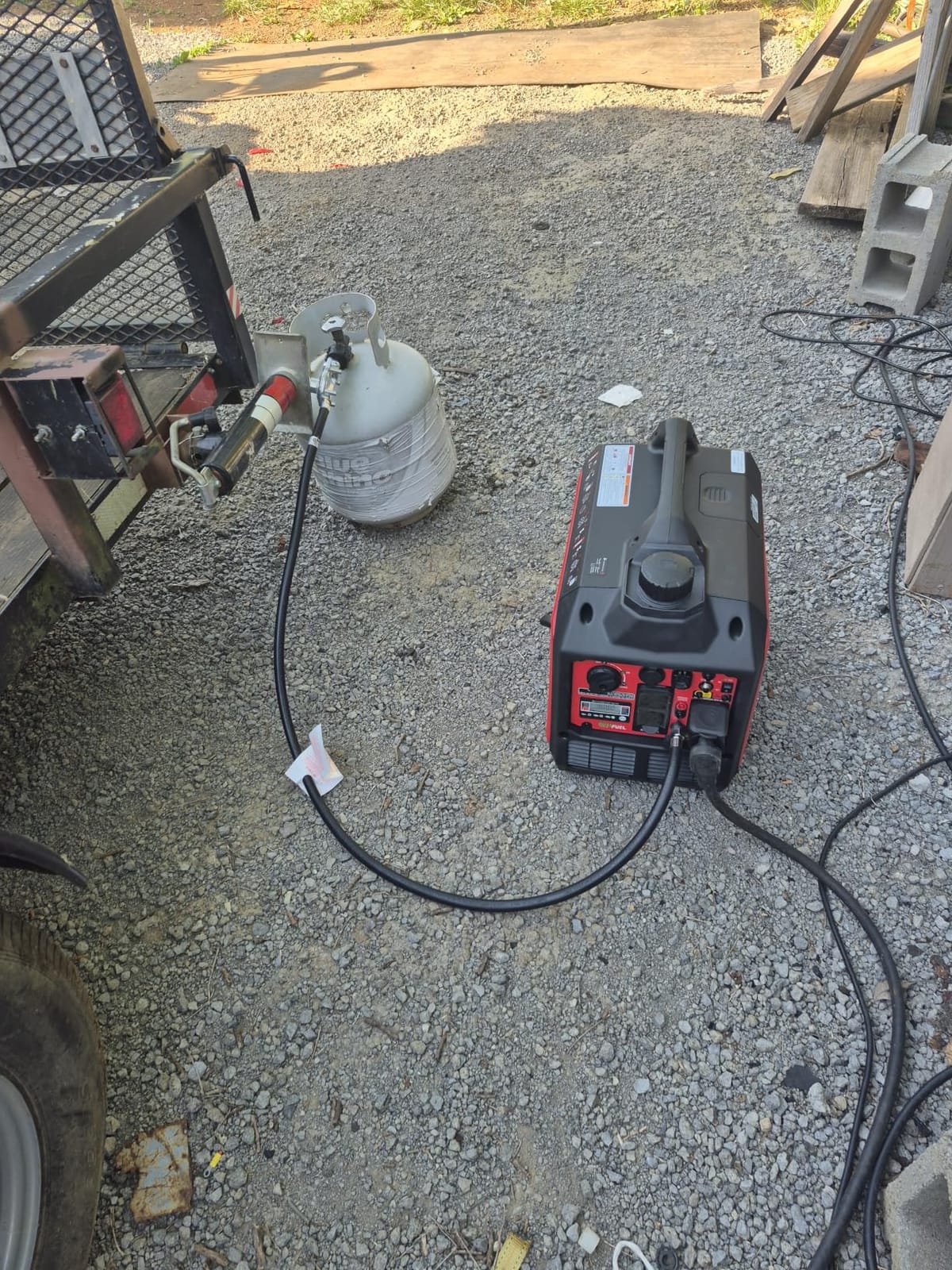
The main limitation is the receptacle configuration: the 30A outlet is an L5-30R twist-lock, not the TT-30R RV outlet. This means you need a dogbone adapter to connect a standard 30A RV cord. It is a minor inconvenience but worth knowing before purchase if you want a true plug-and-play RV setup.
Who should pick this over more expensive options
If you already have a 20-lb propane tank for your RV stove and you camp mostly in mild climates below 90F, the PowerSmart 3800W delivers dual-fuel flexibility at the lowest weight in this class. The 2-year warranty is shorter than Champion or Westinghouse, but the value pricing offsets that for budget-conscious buyers.
Propane storage advantages
Propane stores indefinitely without gumming up the carburetor, which is the most common failure mode for gas-only generators stored over winter. If you store your RV in cold climates for 4-6 months per year, the propane option means you can pull the generator out next season and start it on the first pull. Gasoline requires fuel stabilizer and still degrades over time.
How to Choose the Best Portable Generator for Your RV AC
Sizing your generator correctly is the most important decision. For a 13,500 BTU RV air conditioner (the most common size), you need a 3,000W to 4,500W inverter generator to handle the 2,800-3,800W startup surge and 1,400-2,000W running load. For a 15,000 BTU AC, step up to a 4,500W or larger generator or add a soft start kit to manage the higher compressor inrush.
RV AC BTU to generator size chart
11,000 BTU AC: 2,200W to 2,800W running, 3,500W peak. 13,500 BTU AC: 3,000W to 3,500W running, 4,500W peak. 15,000 BTU AC: 3,800W to 4,200W running, 6,000W peak. Two AC units (typical Class A): 6,500W minimum, often requires onboard generator or two paralleled inverter units.
Inverter vs standard generator
Inverter generators produce cleaner power (under 3% THD) that is safe for RV electronics, control boards, and modern appliance motors. They also run 10-15 dB quieter than open-frame contractor generators, which matters at campgrounds with quiet hours. Standard open-frame generators cost less but produce noisier, dirtier power. For RV AC use, inverter technology is the right choice.
30A vs 50A RV electrical systems
Most travel trailers and fifth wheels use 30-amp service, which provides 3,600W total capacity (120V x 30A). A 30A RV plugs into the TT-30R outlet found on most RV-ready inverter generators. Class A motorhomes often use 50-amp service, which provides 12,000W total capacity (120V/240V x 50A) and uses either the L14-30R twist-lock or the larger CS6365 socket. For 50-amp coaches, you need a generator with the matching outlet or an adapter, and most 50-amp coaches cannot be fully powered by a single portable generator.
Dual fuel vs gasoline-only
Dual fuel generators run on gasoline or propane from a standard 20-lb grill tank. Gasoline delivers full rated wattage but degrades during storage and produces more fumes. Propane stores indefinitely and burns cleaner but delivers 10-15% less wattage. For RVers who already carry propane for cooking and heating, dual-fuel makes sense. For occasional weekend use, gasoline-only is simpler.
Soft start for RV air conditioners
A soft start kit (Micro-Air EasyStart 364 is the most popular) reduces compressor inrush current by about 70%, which lets a smaller generator start a larger AC unit. This is essential if you want to run a 15,000 BTU AC on a 3,000W inverter, or a 13,500 BTU AC on a 2,000W inverter. Installation runs $200-$300 plus 2-3 hours of work, and most RV owners with basic electrical skills can do it themselves.
Heat and altitude derating
Generator output drops 1-2% for every 10F above 85F ambient temperature, and 3-4% for every 1,000 ft above 3,000 ft elevation. At 7,000 ft elevation in 100F heat, expect 25-30% power loss from rated specs. If you camp in mountain or desert environments, oversize your generator by 25-30% to compensate, or add a high-altitude jet kit (most brands sell these separately for $20-$40).
Noise and campground etiquette
Most campgrounds enforce quiet hours from 10 PM to 8 AM, with generator usage often restricted to 4-5 hours mid-morning and late afternoon. Inverter generators under 65 dBA are generally accepted; open-frame units above 70 dBA can draw complaints. Position your generator at least 20 feet from your RV and 50 feet from neighboring campsites during quiet hours.
Generator safety and CO warnings
Never run a portable generator inside an RV, garage, or enclosed space. Carbon monoxide accumulates quickly and is odorless. All generators in this roundup have CO sensors with auto-shutoff, but these are backups, not substitutes for outdoor placement. Keep the generator dry, refuel only when the engine is cool, and store fuel in approved containers away from living spaces. For more on cooling equipment that pairs with generators, see our guide to portable AC units for large rooms.
Frequently Asked Questions
What size generator is needed to run a RV AC?
For a 13,500 BTU RV air conditioner (the most common size), you need a 3,000W to 4,500W inverter generator to handle the 2,800-3,800W startup surge and 1,400-2,000W running load. For a 15,000 BTU AC, plan on a 4,500W or larger generator or add a soft start kit to manage compressor inrush.
Will a 4500 watt generator run an RV air conditioner?
Yes, a 4,500W inverter generator will reliably run most 13,500 BTU RV air conditioners with comfortable headroom for additional loads like lights or a phone charger. For a 15,000 BTU AC, a 4,500W generator works with a soft start kit and careful load management, but a 5,000-7,000W unit provides more margin in hot weather.
Do I need a soft start for my RV AC?
A soft start kit is not always required for a 13,500 BTU AC on a 4,500W inverter generator, but it is strongly recommended for 15,000 BTU ACs, hot-weather camping above 95F, high-altitude camping above 5,000 ft, or when running additional loads like a converter or microwave at startup. The Micro-Air EasyStart 364 reduces compressor inrush by about 70%.
What type of generator is best for an RV?
An inverter generator is best for RV use because it is significantly quieter (campground-friendly), produces clean stable power safe for RV electronics and control boards, and typically offers dual-fuel flexibility. Open-frame contractor generators are louder, produce higher total harmonic distortion, and are rarely accepted at campgrounds.
How many watts does a 13,500 BTU RV AC use?
A 13,500 BTU RV air conditioner uses approximately 1,400-2,000 running watts once the compressor is running, but it pulls 2,800-3,800 surge watts during compressor startup. The startup surge is the critical number when sizing a generator, because undersized generators trip during the 2-3 second compressor lock-rotor period.
Is an inverter generator better for an RV air conditioner?
Yes, inverter generators are better for RV air conditioners because they produce clean power (under 3% THD) that is safe for sensitive RV electronics and AC control boards. They also run 10-15 dB quieter than open-frame generators, which matters during campground quiet hours. The slight cost premium pays back in electronics protection and neighbor relations.
Final Verdict: Which Portable Generator Should You Buy?
The Westinghouse iGen5000DF is our top pick for the best portable generators for RV air conditioners in 2026. It combines the quiet operation campgrounds require (52 dBA), the dual fuel flexibility full-time RVers want, and the 3,900 running watts needed to start a 13,500 BTU AC with margin for additional loads. For budget-focused buyers, the Champion 4250-Watt Dual Fuel delivers 22-hour runtime at a lower cost with comparable RV-ready features.
If you are shopping for other generator types or want a deeper comparison of portable inverter models, our complete portable generator guide covers residential and camping applications. Whichever unit you pick, match the generator size to your AC BTU rating, add a soft start kit if you camp in heat or at altitude, and always run the generator outdoors in a well-ventilated space.