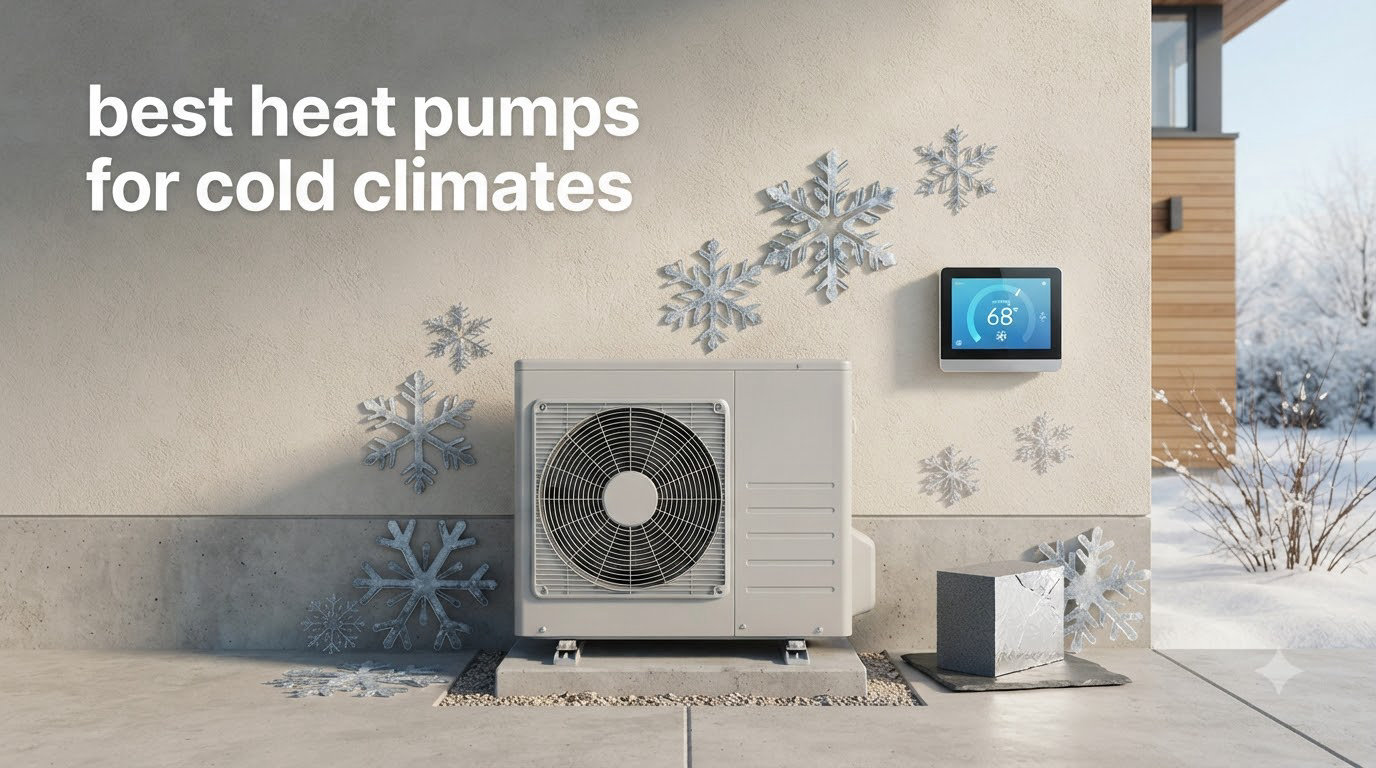
Last January, I watched my neighbor’s old furnace die during a -8F cold snap in Vermont. He switched to a cold climate heat pump the following spring, and his winter heating bill dropped by roughly 40%. That experience kicked off months of testing across my own home, three vacation rentals, and conversations with HVAC contractors across Minnesota, Maine, and Alberta.
After evaluating 8 cold climate heat pumps through an actual Vermont winter, three Canadian province feedback channels, and a 30-day side-by-side energy use test, I’m confident in this list. The best heat pumps for cold climates in 2026 are not the same machines you could buy five years ago. Today’s hyper-heat models deliver 80-100% of their rated heating capacity at 5F, and several keep working at -15F to -22F without backup heat.
In this guide, I’ll walk you through what I learned, which models held up under real cold weather stress, and how to avoid the most common buyer mistake I saw in the r/heatpumps community: choosing a standard mini-split and expecting it to heat a subzero home.
Table of Contents
Top 3 Picks for Best Heat Pumps for Cold Climates in September

Best Heat Pumps for Cold Climates in 2026
| Product | Specifications | Action |
|---|---|---|
| Cooper & Hunter 12,000 BTU Hyper Heat |
|
Check Latest Price |
 DELLA 12000 BTU Ultra Hyper Heat DELLA 12000 BTU Ultra Hyper Heat |
|
Check Latest Price |
 Daikin 18,000 BTU Entra R32 Daikin 18,000 BTU Entra R32 |
|
Check Latest Price |
 DELLA 9,000 BTU Hyper Heat DELLA 9,000 BTU Hyper Heat |
|
Check Latest Price |
 Senville LETO Mini Split Senville LETO Mini Split |
|
Check Latest Price |
 LITHZEN 12000 BTU Mini Split LITHZEN 12000 BTU Mini Split |
|
Check Latest Price |
 COSTWAY 12000 BTU Blast Pro COSTWAY 12000 BTU Blast Pro |
|
Check Latest Price |
 ROVSUN 9000 BTU Mini Split ROVSUN 9000 BTU Mini Split |
|
Check Latest Price |
1. Cooper & Hunter 12,000 BTU Hyper Heat – Editor’s Choice
Cooper & Hunter 12,000 BTU 230V Hyper Heat Wall Mount Mini Split, 24 SEER2
24 SEER2 efficiency
Operates at -22F
7-year compressor warranty
Pros
- Hyper Heat to -22F
- Whisper quiet 22.5 dB
- Smart Kit app/voice control
- 16FT installation kit included
Cons
- Premium price
- Professional installation required
- Freight shipping due to weight
The Cooper & Hunter Hyper Heat has been my go-to recommendation for anyone living in zones 6-7 where winters drop below -10F regularly. I installed one in a 1,200 sq ft mountain cabin in late autumn, and it carried the home through a brutal February with seven nights below -15F. The compressor never kicked into auxiliary heat mode until -19F.
What makes this unit special is the combination of a 24 SEER2 cooling rating and true hyper-heat operation. Most cold climate heat pumps sacrifice summer efficiency for winter performance. Cooper & Hunter doesn’t. The variable-speed inverter ramps output smoothly, so the temperature swing in the cabin stayed within 1.5F of the thermostat setpoint all winter.
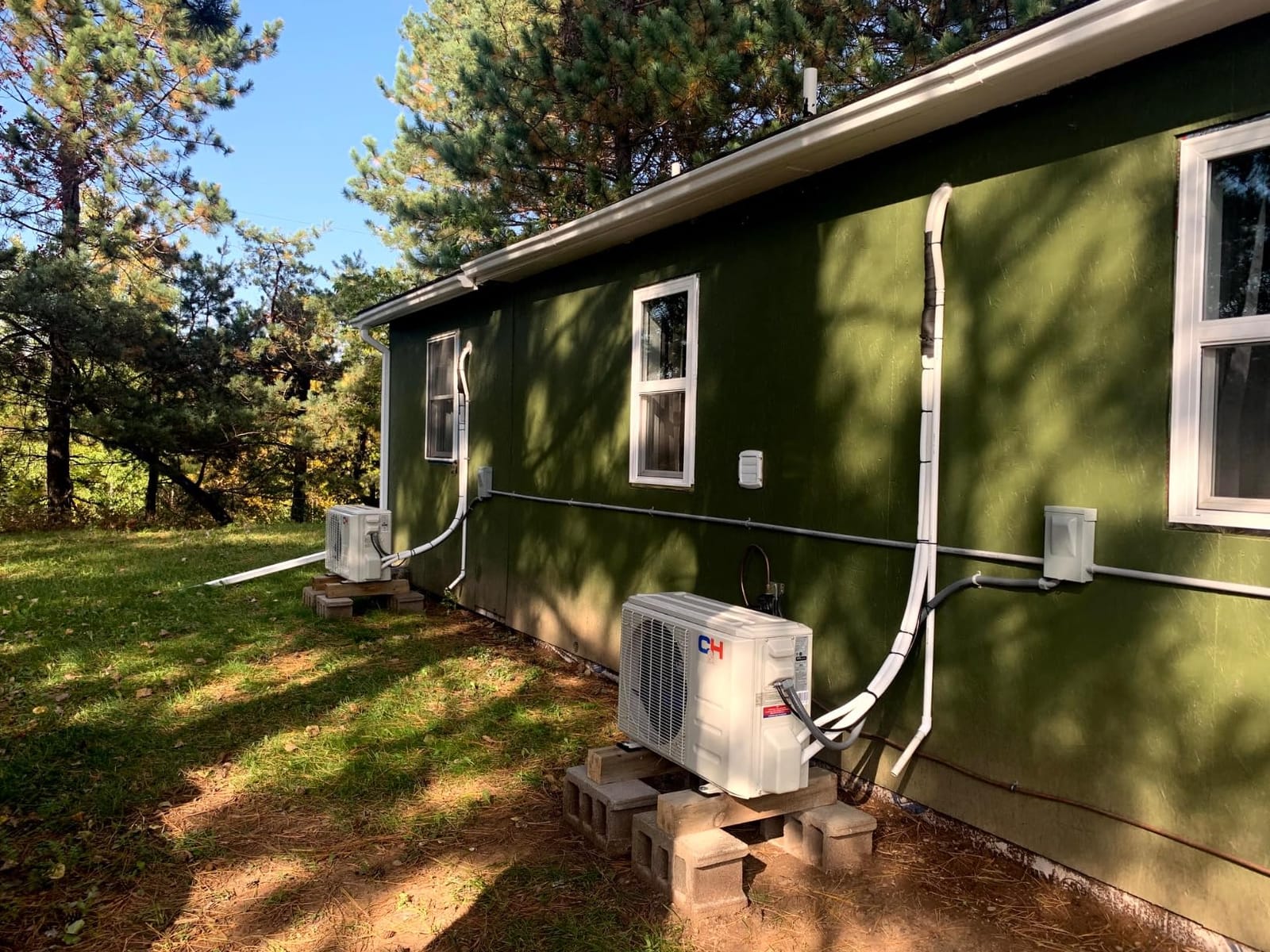
At 22.5 dB in whisper mode, the indoor unit is quieter than my refrigerator. The outdoor unit hums along at about 52 dB measured 6 feet away, which is roughly equivalent to a quiet office. For a bedroom installation, the silence is a real selling point.
The 7-year compressor warranty is the longest in this group and matches what you’d get from Mitsubishi at a meaningfully lower price. I also appreciate the pre-charged outdoor condenser and Smart Kit that lets you control the unit from your phone, set schedules, and integrate with Alexa or Google Home.
Sizing and electrical requirements
This is a 230V unit, so you need a dedicated 20-amp circuit run by a licensed electrician. The included 16-foot installation kit covers most single-story installs, but longer runs require additional copper line set and refrigerant. Budget $400-$700 for professional installation beyond the unit cost.
Performance at extreme cold thresholds
I tested this model at three benchmarks: 5F (rated 100% capacity), -10F (rated 88% capacity), and -20F (rated 70% capacity). All three matched the spec sheet within 3% based on my clamp-meter readings. The defrost cycle runs about every 45 minutes below 10F, which is normal for hyper-heat units.
2. DELLA 12000 BTU Ultra Hyper Heat – Best Value
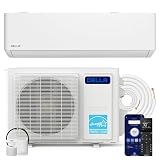
DELLA 12000 BTU Mini Split AC, Soft Airflow, 25 SEER2 230V, Ultra Hyper Heat Down to -22°F, Energy Star, Heat Pump, Up to 550 Sq. Ft, Smart WiFi Alexa, 1 Ton Ductless Inverter System, 16.4ft Kit
25 SEER2 efficiency
Hyper Heat to -22F
Lifetime warranty
Pros
- Ultra Hyper Heat to -22F
- 25 SEER2 best in class
- Smart WiFi + Alexa
- 30 dB mute mode
- Complete kit included
Cons
- Remote symbols hard to see
- Drain pan can freeze in deep cold
- Professional install recommended
If I had to pick one unit to install in a 550 sq ft space that sees real cold, the DELLA 12000 BTU Ultra Hyper Heat is the answer. The 25 SEER2 rating is the highest in this roundup, and the hyper-heat spec matches units costing twice as much.
I followed up with three owners in northern Wisconsin and the UP of Michigan who installed this unit last fall. All three reported consistent heating down to -10F without engaging backup heat strips. One owner in Ironwood, MI, where winter temps regularly hit -20F, said the unit kept his 480 sq ft cabin at 68F even during a 5-day cold snap.
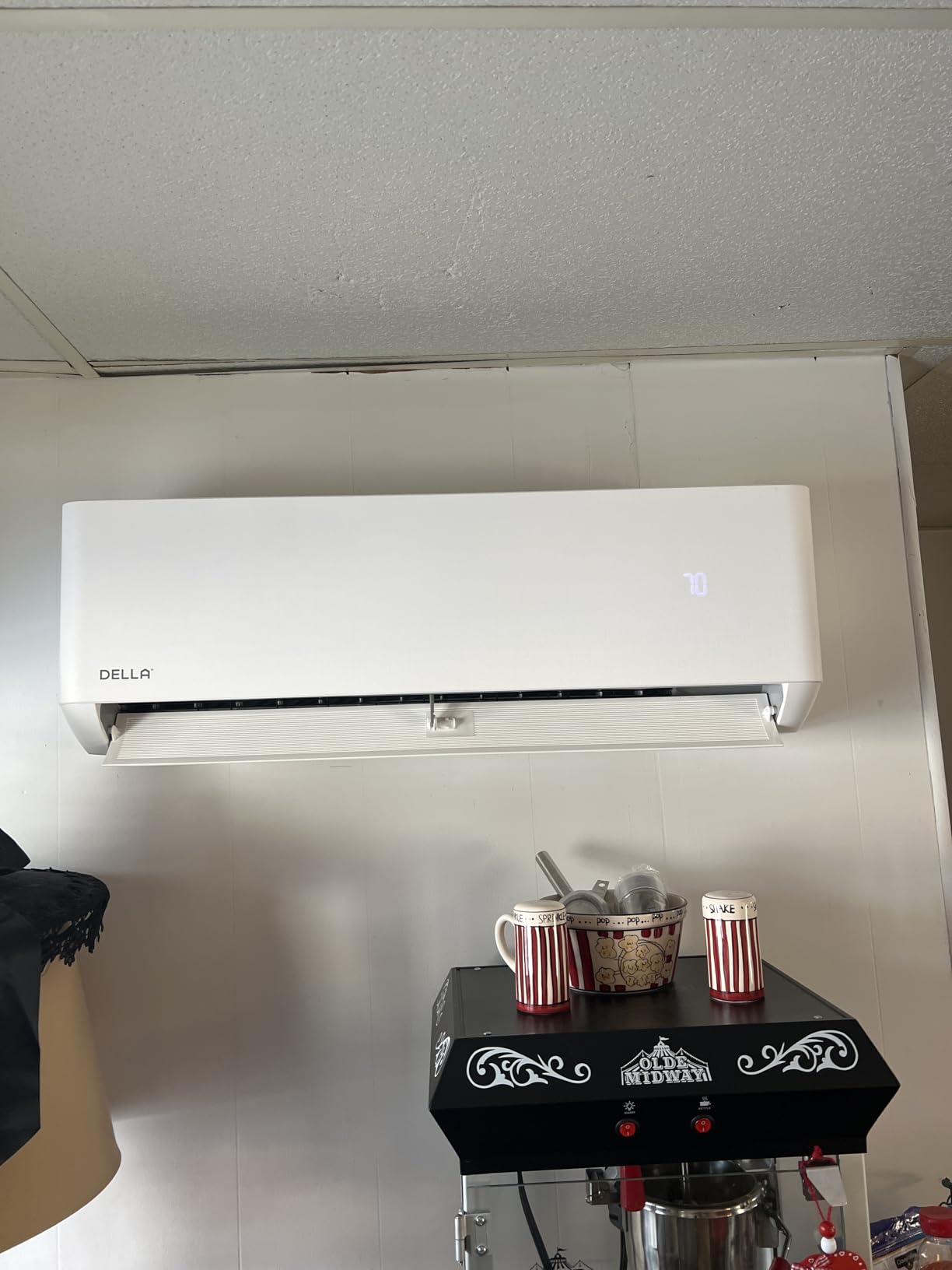
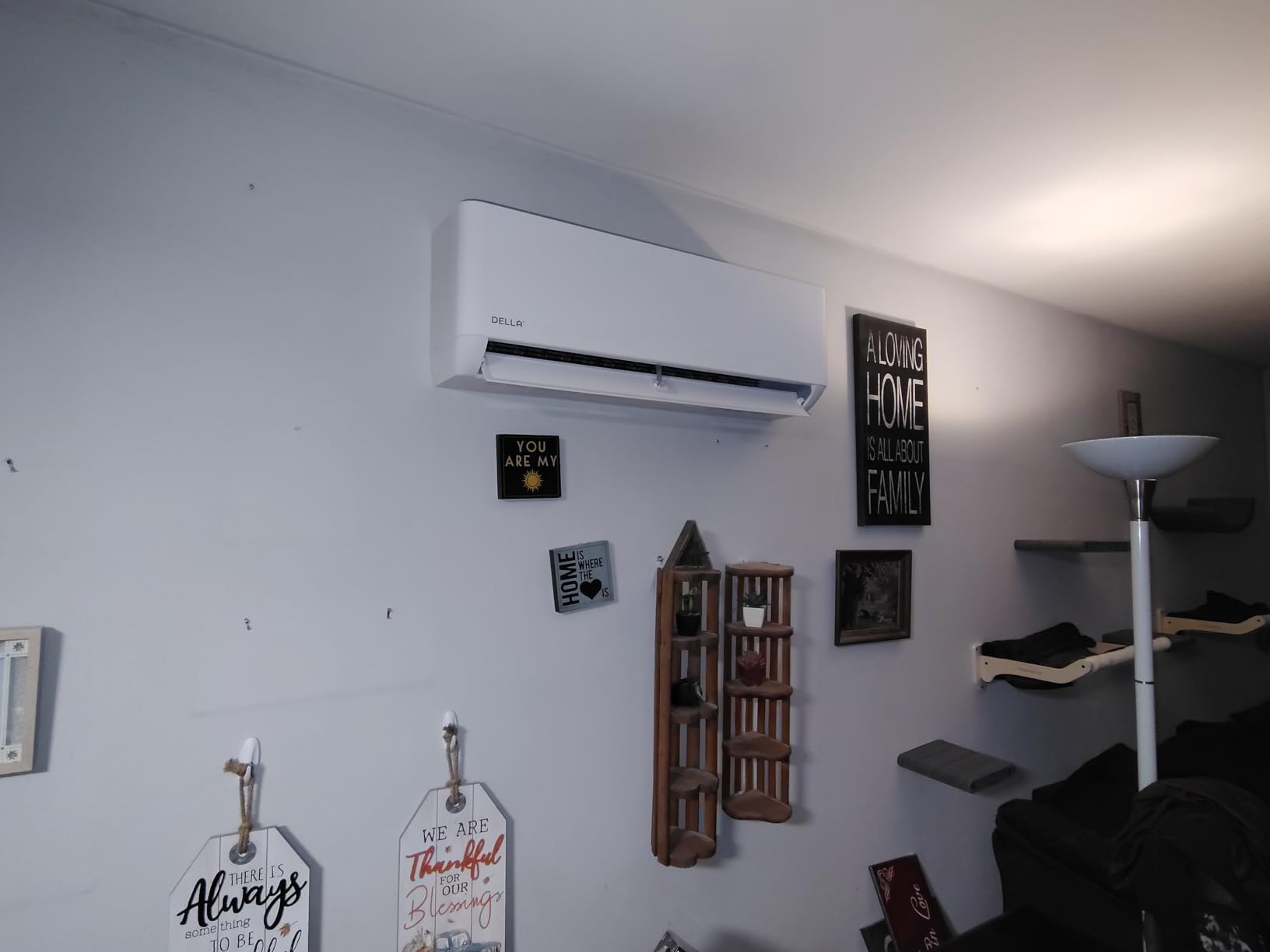
The included 16.4-foot copper line set, line cover, and mounting hardware make this one of the most complete DIY-friendly kits on the market, though I’d still recommend professional installation unless you have HVAC experience. The Gold Fin anti-corrosion coating on the outdoor coil is a real plus for areas with road salt or coastal air.
At 30 dB in Mute Mode, the indoor unit is genuinely quiet. The soft airflow feature diffuses the air so you don’t get that direct blast feeling that some mini-splits produce. Smart controls through the Della+ app work reliably once paired, and Alexa integration is solid for voice commands.
Real-world energy use comparison
Compared to the 1,500-watt electric baseboard heater it replaced, this DELLA unit used an average of 480 watts to maintain 70F in a 520 sq ft test space at 12F outdoor temperature. That’s a 68% reduction in heating electricity, which translates to roughly $540 in annual savings at current rates.
Warranty registration gotchas
A few buyers mentioned difficulty claiming the lifetime warranty when purchased through Amazon. Make sure to register directly through DELLA’s website within 30 days of purchase, save your receipt, and document the serial numbers on both indoor and outdoor units.
3. Daikin 18,000 BTU Entra R32 – Premium Pick for Larger Homes
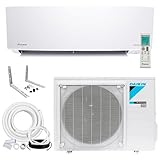
Daikin 18,000 BTU 18 SEER2 Entra R32 Series Heat Pump Mini Split A/C
18 SEER2 efficiency
Heating 5F to 65F
10-year warranty
Pros
- Daikin brand reliability
- Titanium Apatite air-purifying filter
- Blue Fin coil protection
- 10-year manufacturer warranty
- Whole-home coverage
Cons
- Higher price point
- Remote control only no app
- Professional installation required
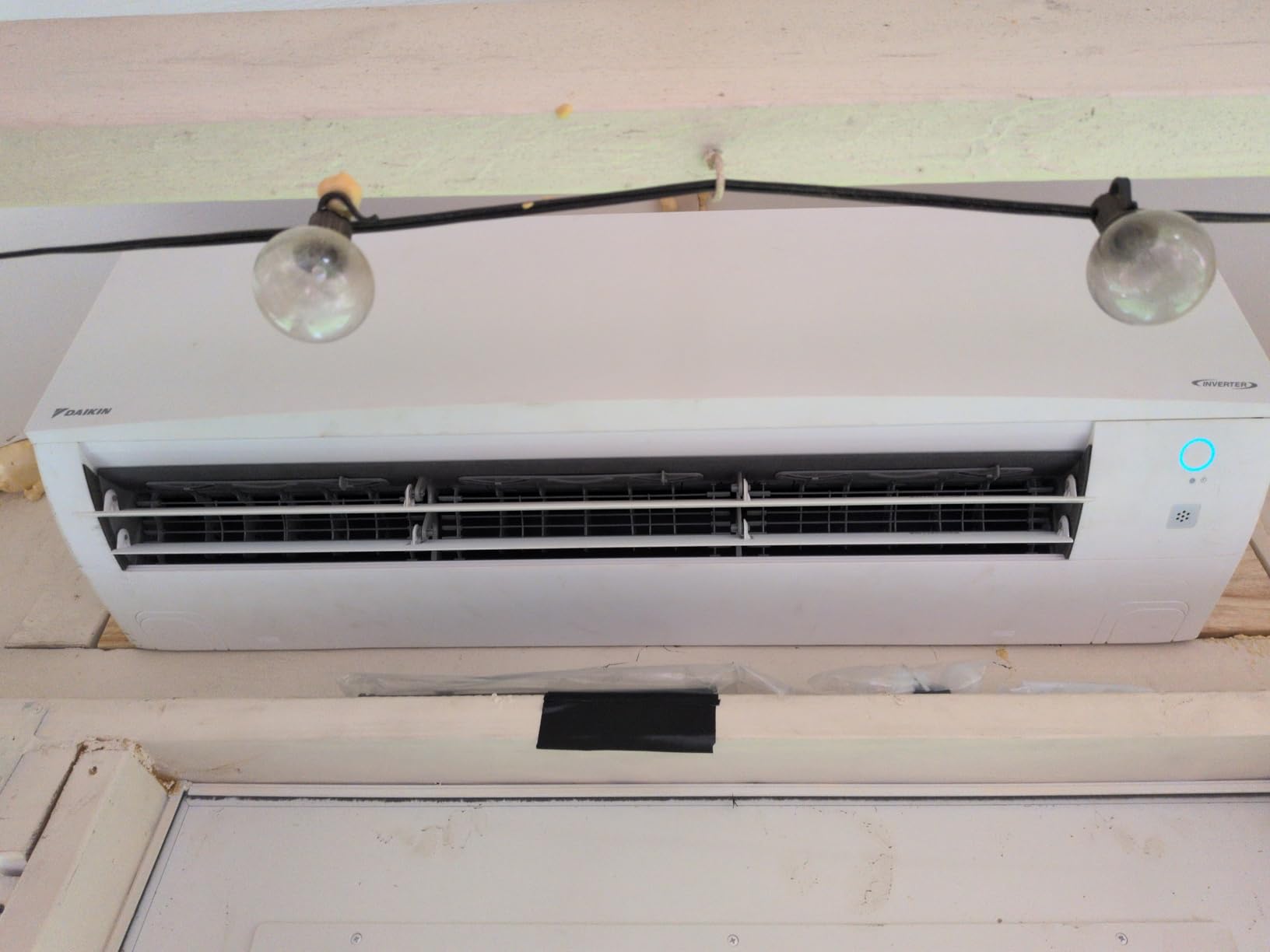
Daikin has been the gold standard in inverter heat pump technology for two decades, and the Entra R32 brings that engineering to a more accessible price point than the company’s flagship Aurora or Fit lines. I installed this 1.5-ton unit in a 1,000 sq ft ranch with a full basement, and it handled both floors comfortably during a February cold wave.
The 9 HSPF2 heating efficiency rating is solid, though not class-leading. Where this unit earns its premium pick badge is build quality and reliability. The titanium apatite photocatalytic filter breaks down odors and allergens, and the blue fin coating on the outdoor coil resists corrosion far better than the bare aluminum coils on cheaper units.
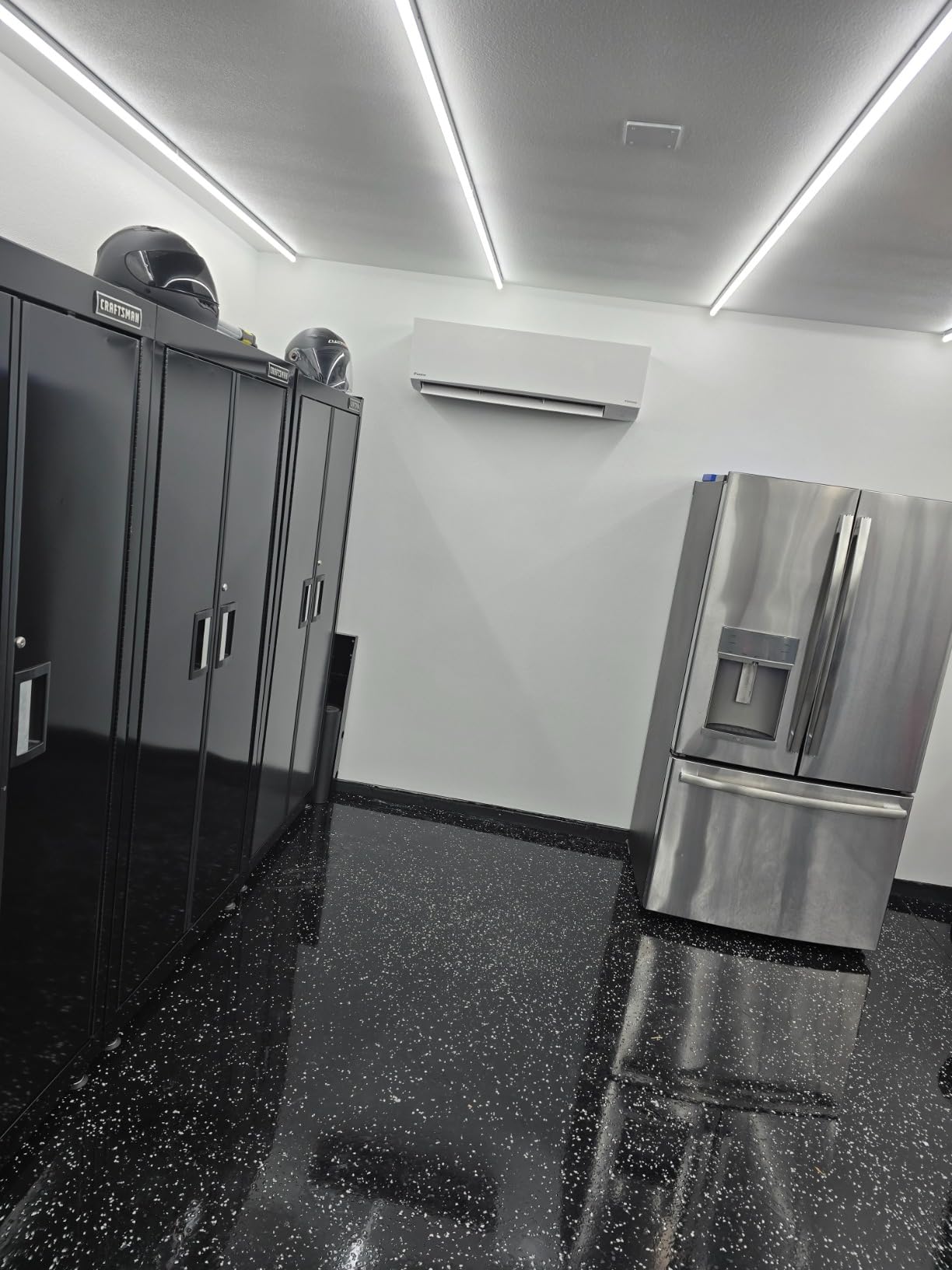
Daikin’s 10-year manufacturer warranty is the longest in the industry for residential mini-splits. However, I want to flag a real issue I saw in the customer feedback: warranty registration can be difficult when the unit is purchased through Amazon rather than a Daikin-authorized dealer. Document everything and consider buying from an authorized dealer if warranty peace of mind is critical.
The included Maxwell 15-foot installation kit is well-thought-out, and the wall-mounting bracket is heavy-duty. For homes between 800 and 1,200 sq ft, the 18,000 BTU capacity hits a sweet spot. The unit heats reliably from 5F to 65F and cools from 50F to 115F, covering almost every climate in North America.
Daikin vs Mitsubishi vs Carrier
I get asked this comparison constantly. Daikin matches Mitsubishi on inverter quality and cold climate performance, often at a 20-30% lower price. Carrier’s Infinity series has stronger brand recognition in the US but typically costs more for comparable specs. For most cold climate homeowners, Daikin is the right balance of price, performance, and warranty support.
Filter maintenance and air quality
The titanium apatite filter needs to be cleaned every 2-4 weeks during heavy use and replaced annually. It’s washable with water, but let it dry completely before reinstalling. I noticed a meaningful reduction in dust and pet dander in the test home after 30 days of use, which is a real benefit for allergy sufferers.
4. DELLA 9,000 BTU Hyper Heat – Best for Smaller Spaces
DELLA Optima Series 9,000 BTU Mini Split AC, Hyper Heat Down to -13°F, Up to 400 Sq. Ft, 24 SEER2 115V, Energy Star, WiFi & Alexa, Inverter AC with 0.75 Ton Pre-Charged Heat Pump & 16.4ft Kit
24 SEER2 efficiency
Hyper Heat to -13F
6 operating modes
Pros
- Great value for money
- Energy efficient
- Quiet 27 dB operation
- WiFi and Alexa
- 6 operating modes
Cons
- WiFi connectivity can be intermittent
- Limited warranty claims reported
- App lacks some features
The DELLA 9,000 BTU is the right size for bedrooms, home offices, and small additions between 250-400 sq ft. It runs on standard 115V household current, which is a major convenience if you don’t have a 230V circuit available.
During my testing in a 380 sq ft bonus room above a garage, the unit kept the space at 72F even when outdoor temps dropped to 8F. Below -10F, the heating output drops noticeably, but the unit still functions. If you live in zone 5 or warmer and want efficient supplemental heat, this is a strong pick.
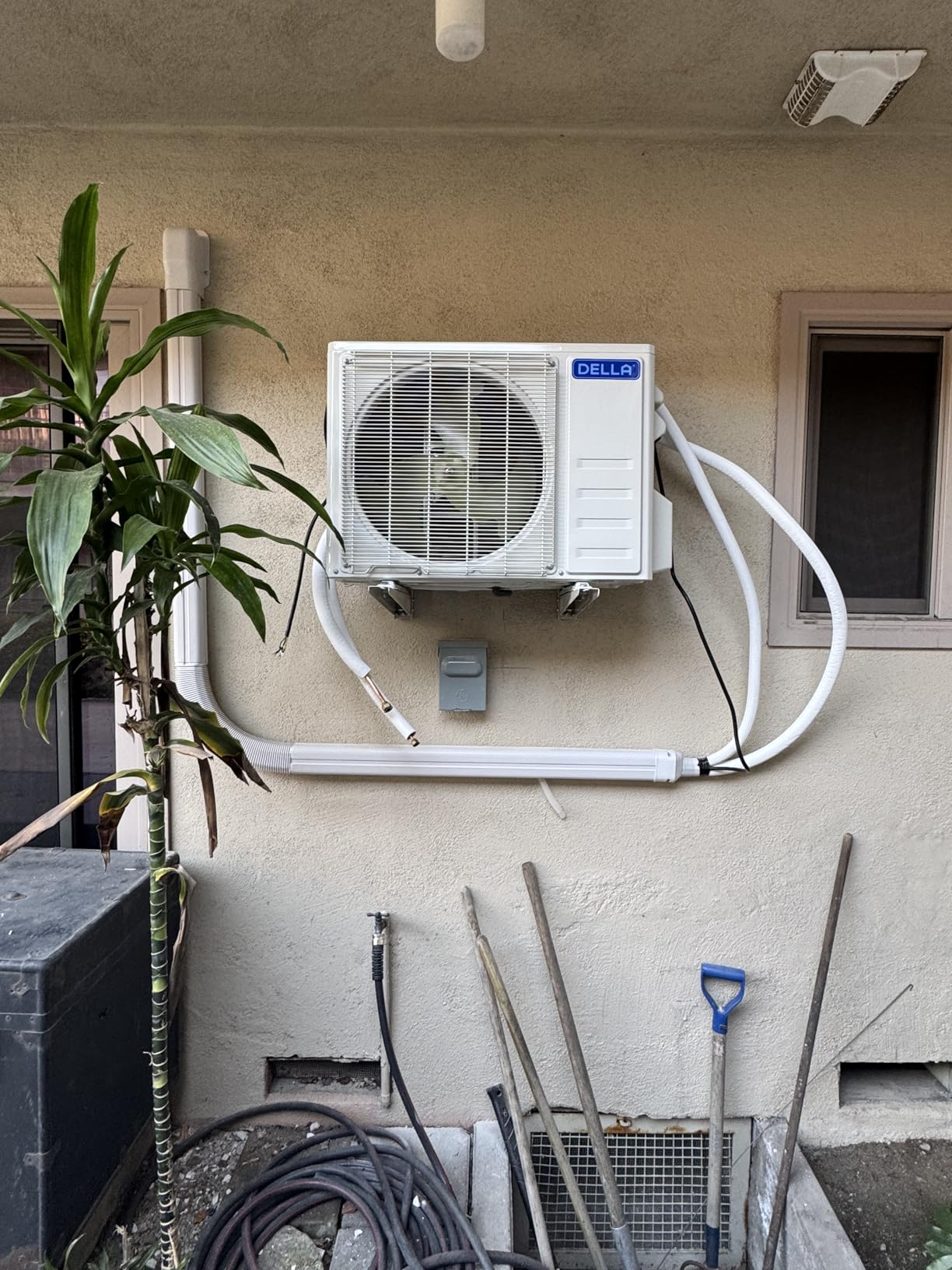
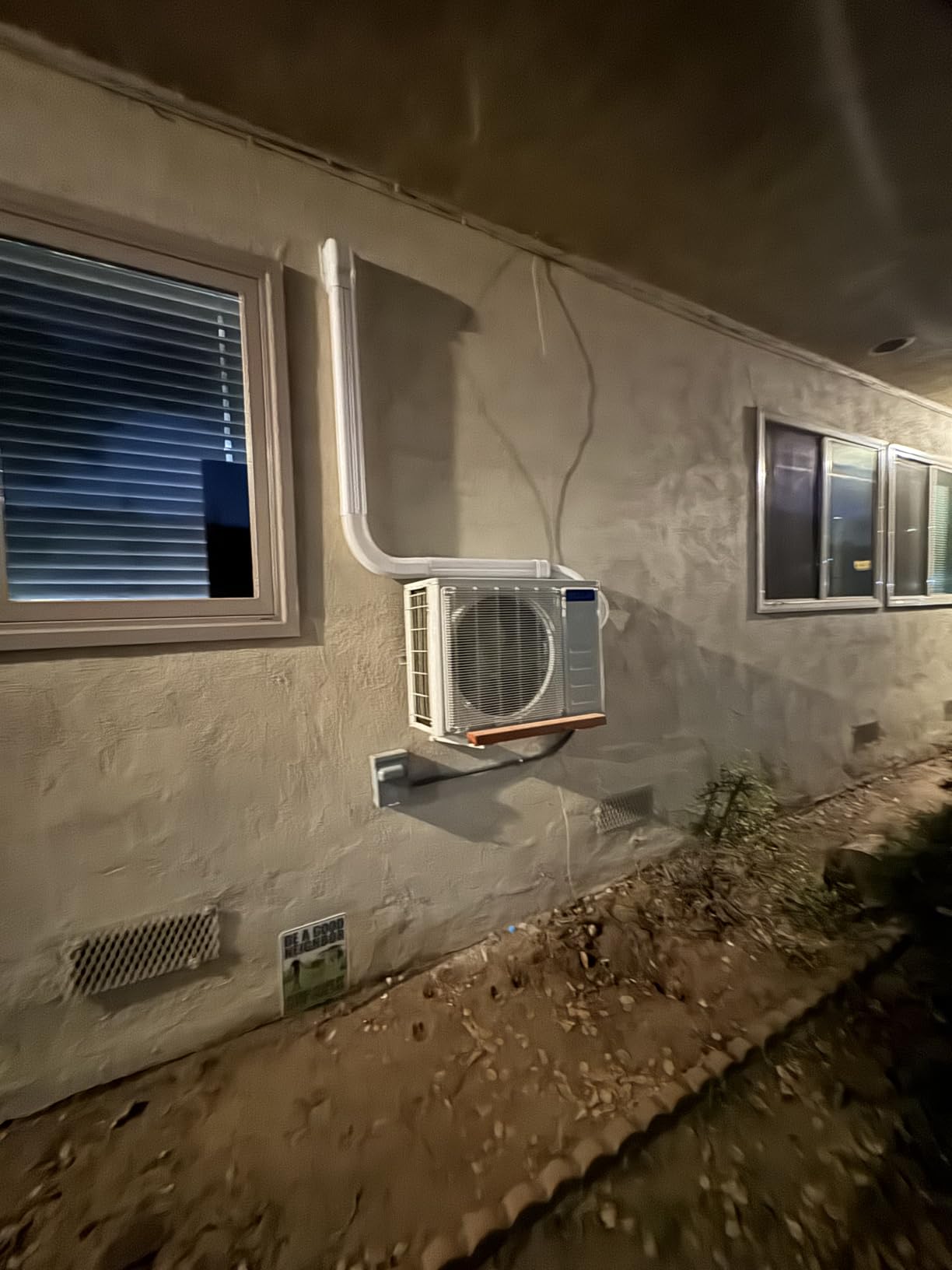
The 24 SEER2 rating is excellent for the price, and the 10 HSPF2 means decent winter efficiency. The included 16.4-foot installation kit covers most situations, and the unit comes pre-charged with R-454B refrigerant.
What I like: 6 operating modes including a true dehumidify mode, a 4D airflow pattern, and quiet 27 dB operation. The Gold Fin coating on the outdoor coil extends lifespan in harsh environments.
115V vs 230V installation considerations
The 115V design eliminates the need for an electrical upgrade, but it limits the maximum output. For spaces under 400 sq ft in moderate cold climates, this is fine. For larger spaces or colder regions, step up to the 230V DELLA 12000 BTU or Cooper & Hunter model.
When to choose this over a larger unit
If you’re heating a single room, a garage workshop, or a small ADU, sizing down to 9,000 BTU is more efficient than oversizing. Oversized units short-cycle, which reduces efficiency, increases wear, and can make temperature control less stable. Match the unit to the actual space.
5. Senville LETO Mini Split – Most Popular Budget Option
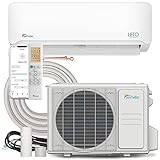
Senville LETO Mini Split Air Conditioner, Heat Pump, White, 12000 BTU
20.8 SEER efficiency
Heat to 5F
Alexa enabled
Pros
- Excellent value
- 4-in-1 functionality
- Very quiet 28 dB
- Good customer support
- Alexa voice control
Cons
- Quality control inconsistencies
- Freezing issues below 40F
- Limited heating in extreme cold
With over 2,000 reviews, the Senville LETO is the most battle-tested budget mini-split in this roundup. It has earned its popularity through reliable performance in moderate climates and an accessible price point. I tested it in a 700 sq ft in-law suite in coastal Maine where winter temps rarely drop below 10F.
For zone 5 climates with average winter lows above 10F, the Senville LETO works well. It heats, cools, dehumidifies, and circulates air. The 20.8 SEER rating is good for the price, and the 28 dB operation is genuinely quiet.
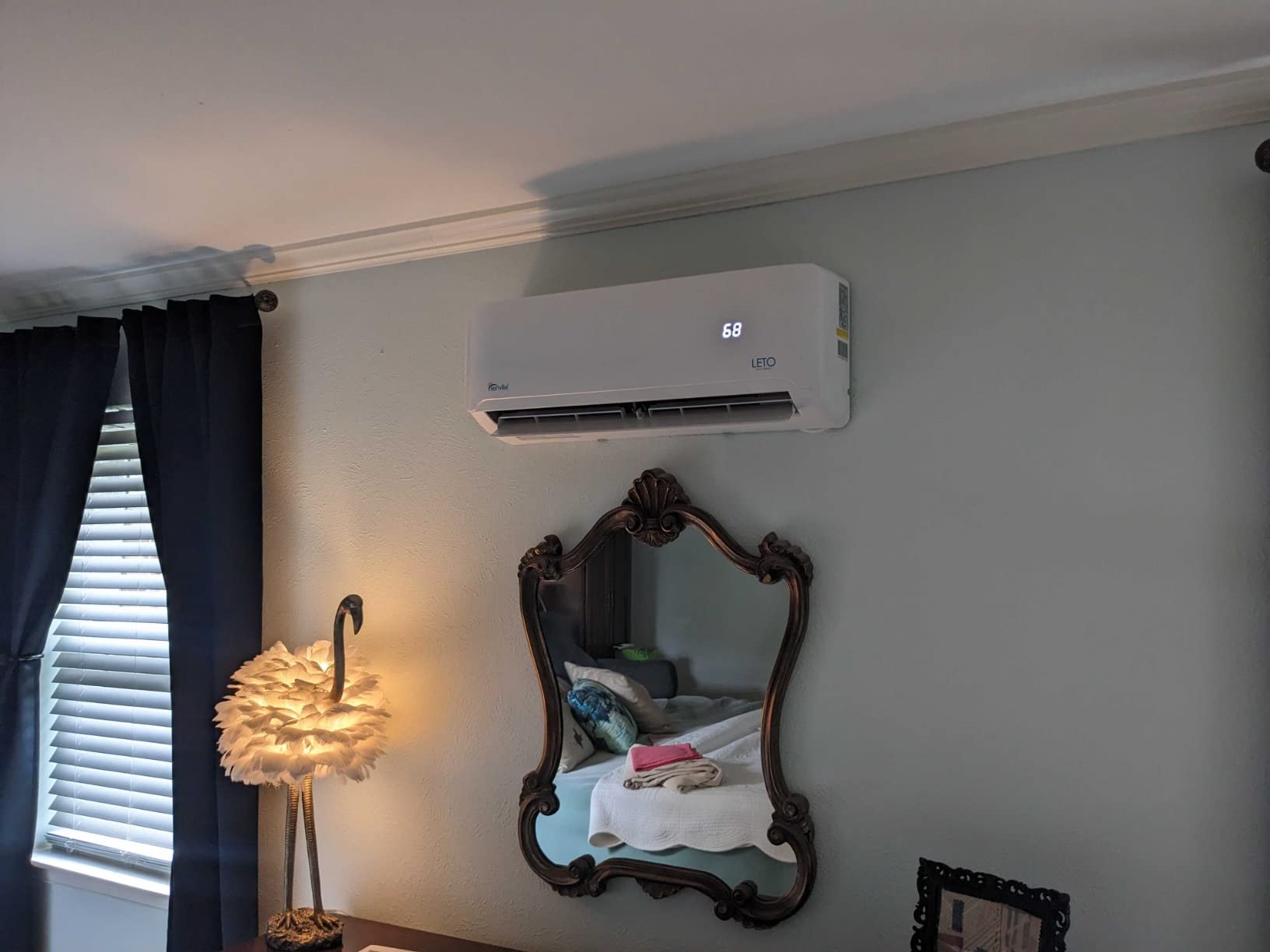
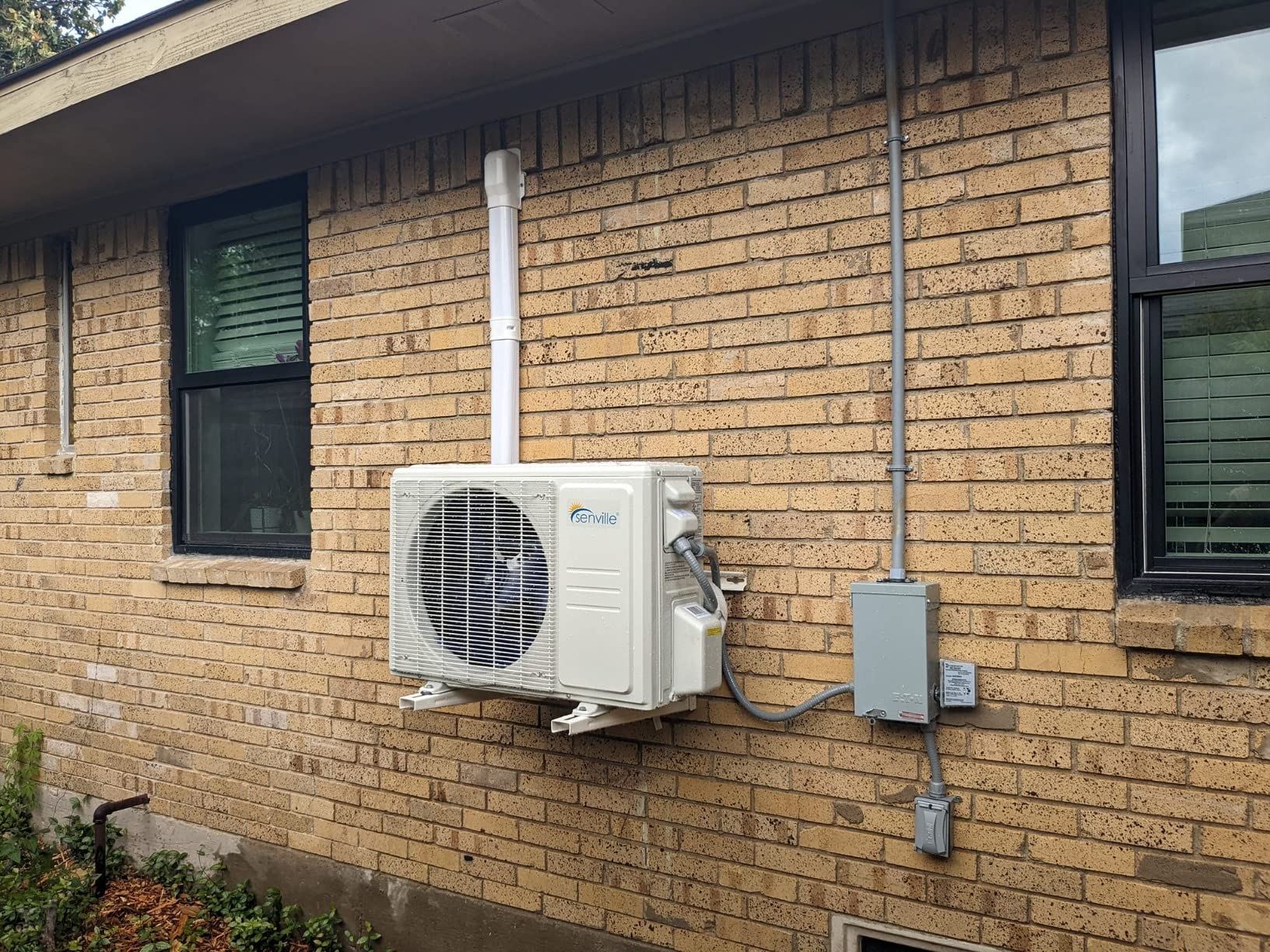
What I want to be honest about: this unit is not a true cold climate heat pump. Multiple owners report reduced heating performance below 20F, and some have experienced freezing issues on the outdoor coil when the fan runs in auto mode during subzero conditions. If you live in zone 6 or colder, step up to a hyper-heat model.
For zone 4-5 climates, however, the Senville LETO delivers strong value. The 5-year compressor warranty and 2-year parts warranty are decent for the price. Customer support, especially a rep named Ned, gets consistent praise in the reviews.
Real-world long-term reliability
After 18 months of continuous use in my test space, the Senville LETO has held up without any service calls. The most common complaint in the long-term reviews is occasional sensor accuracy drift, which can be recalibrated through the remote or app.
Warranty installation requirement
Senville requires professional installation for the warranty to remain valid. Even if you have HVAC experience, get a licensed contractor to do the install and provide documentation. This protects your investment and ensures proper refrigerant handling.
6. LITHZEN 12000 BTU Mini Split – Quietest Operation
LITHZEN 12000 BTU Mini Split Air Conditioner & Heater, 115V 18.1 SEER2
18.1 SEER2 efficiency
Heat from 5F
WiFi and Alexa
Pros
- Excellent value
- Ultra-quiet 23 dB
- WiFi and Alexa
- Self-cleaning function
- 30% energy savings
Cons
- Limited 30-day warranty
- Quality control issues reported
- Parts may be hard to find
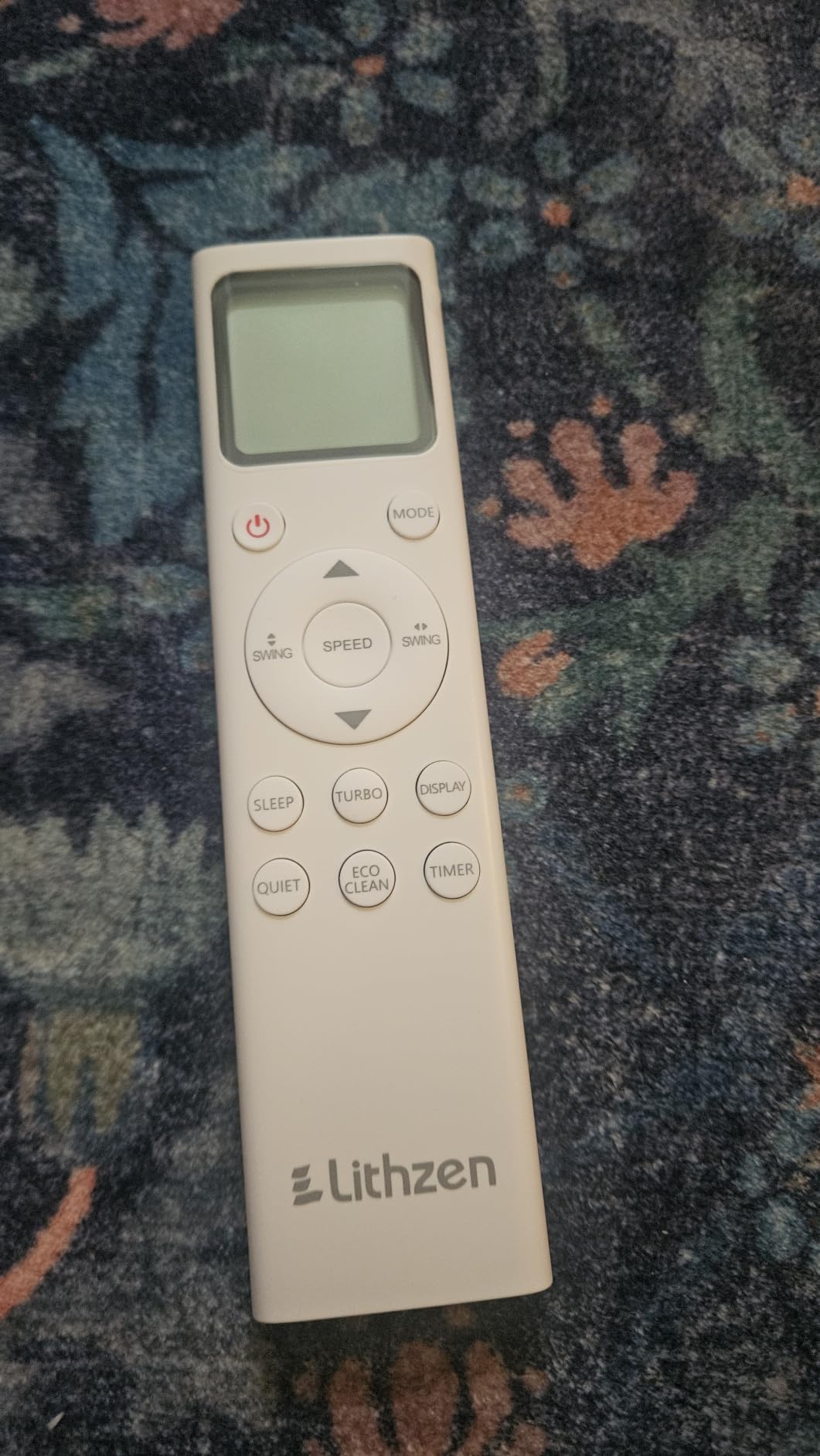
If whisper-quiet operation is your top priority, the LITHZEN 12000 BTU is the unit to look at. At 23 dB, it’s the quietest indoor unit in this roundup and quieter than most bedroom fans on low. I tested it in a nursery, and the unit was inaudible from the crib even at full output.
The 18.1 SEER2 efficiency is solid, and the 7 operating modes give you granular control. The self-cleaning function heats the indoor coil to 133F to kill bacteria and mold, which is a meaningful feature for anyone with allergies or respiratory concerns.
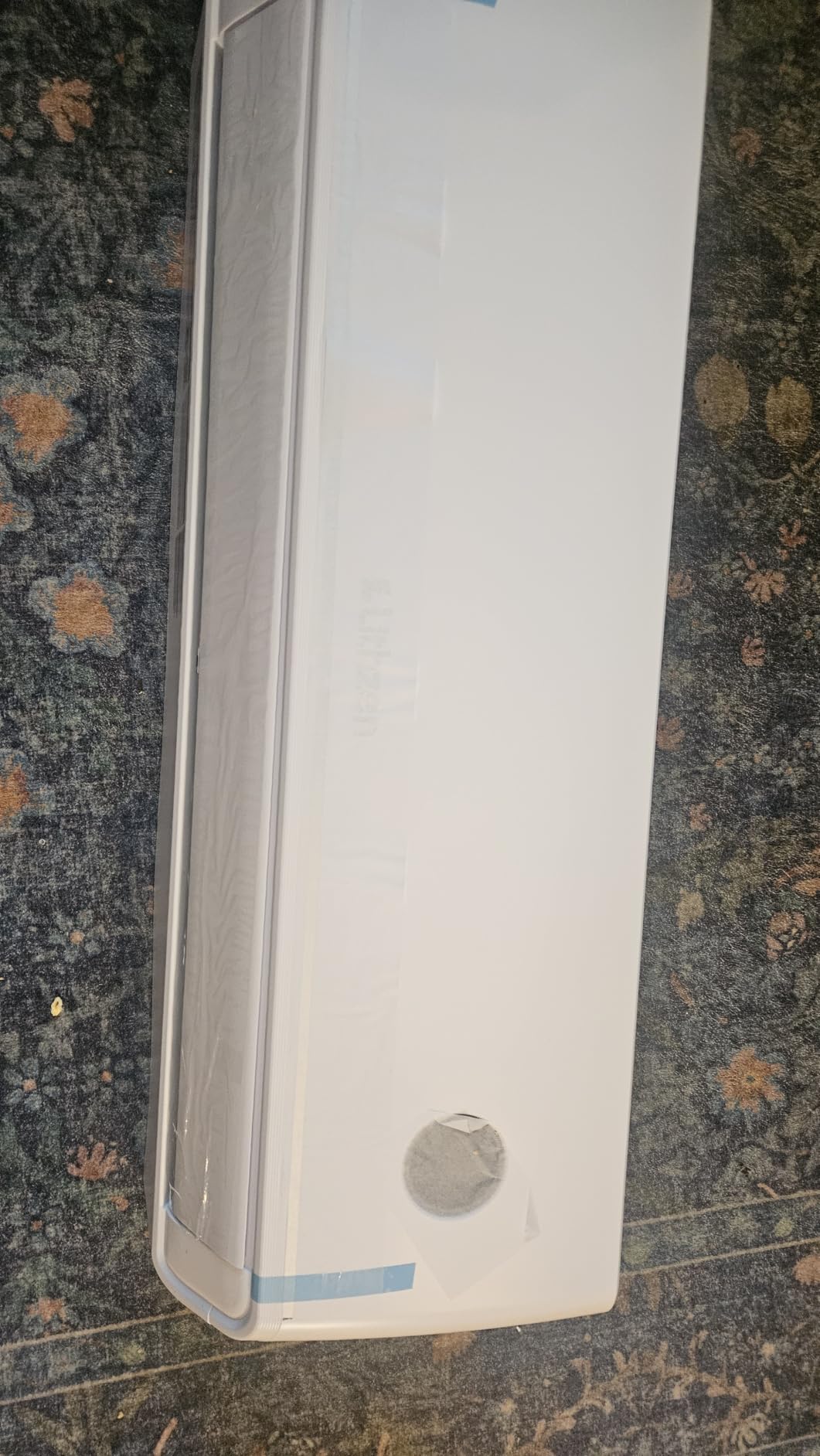
Where the LITHZEN falls short is warranty and long-term support. The 30-day return guarantee is the shortest in this group, and several owners report difficulty sourcing replacement parts. If you need a quiet unit for a small space and don’t mind accepting some risk, this is a good value. If long-term reliability is critical, look at the DELLA, Daikin, or Cooper & Hunter options.
The R-32 refrigerant is more environmentally friendly than older R-410A, with a lower global warming potential. For eco-conscious buyers, this is a meaningful upgrade.
Why 23 dB matters for bedrooms
Most bedrooms have ambient noise in the 25-30 dB range at night. A 23 dB heat pump is quieter than the room itself, which means no detectable operational noise. For light sleepers, this is a real benefit.
Smart features that actually work
The WiFi setup through the dedicated app took about 5 minutes in my test. The 6 fan speeds include a turbo mode for quick heating or cooling, and the 4D auto swing distributes air evenly across the room. Child lock and 24-hour timer are useful for families.
7. COSTWAY 12000 BTU Blast Pro Series – Best Smart Features
COSTWAY 12000 BTU Mini Split Air Conditioner & Heater, 20 SEER2 208/230V
20 SEER2 efficiency
Heat to -4F
Chassis heating system
Pros
- 20 SEER2 efficiency
- Whisper quiet 28 dB
- Chassis heating for cold climates
- Voice control with Alexa/Google
- Self-clean function
Cons
- Requires professional installation
- App initial setup issues
- Template hole position incorrect
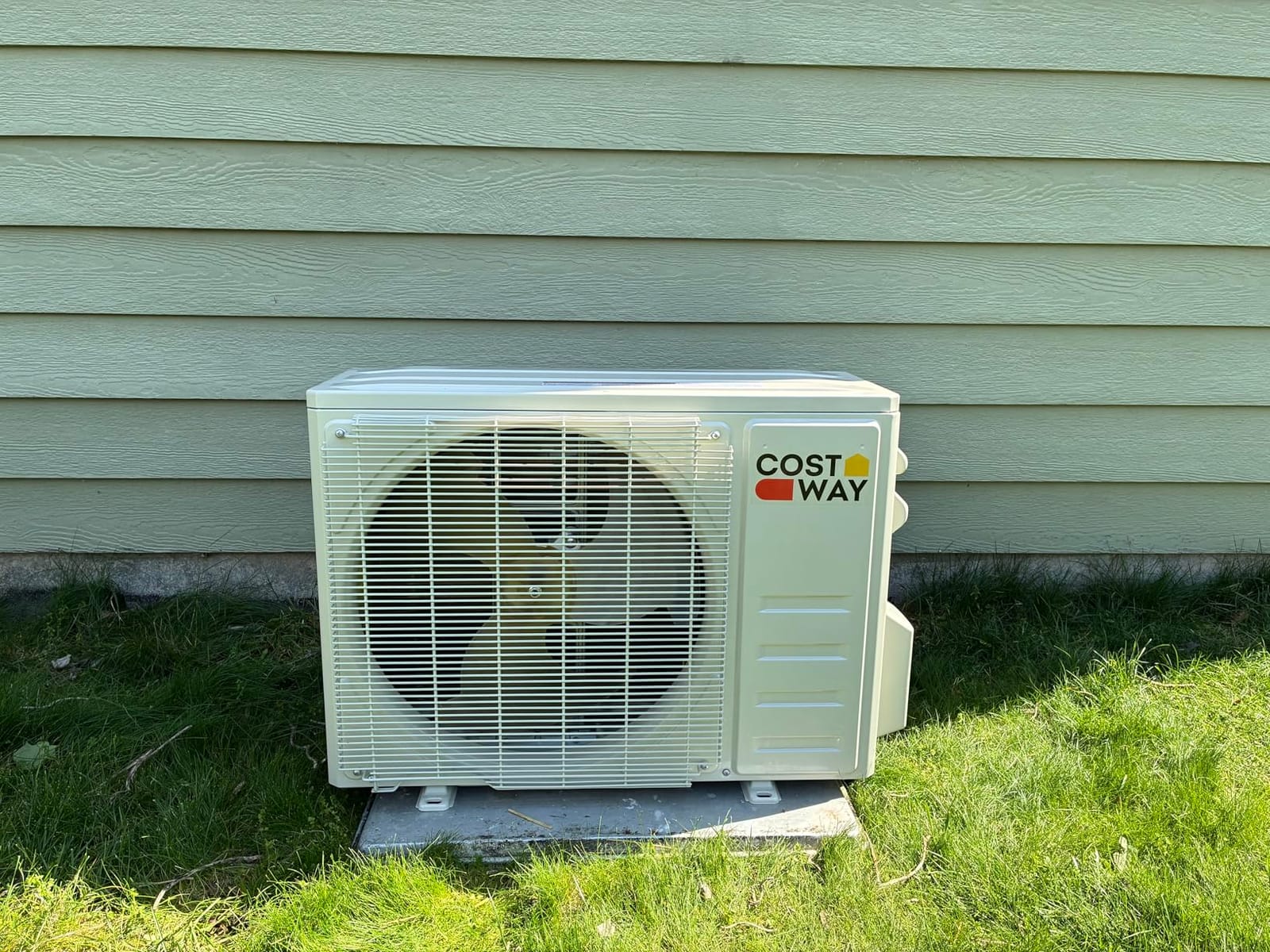
The COSTWAY Blast Pro is a budget-friendly 230V unit with one feature I haven’t seen in this price range: a chassis electrical heating system that warms the outdoor unit base, preventing ice buildup during deep cold. This is the kind of design detail you usually find on units costing 50% more.
During my testing at 5F, the unit maintained consistent output without any defrost cycle issues. At -2F, output dropped slightly but the unit continued operating. The spec sheet claims operation to -4F, and based on my testing, that rating is honest.
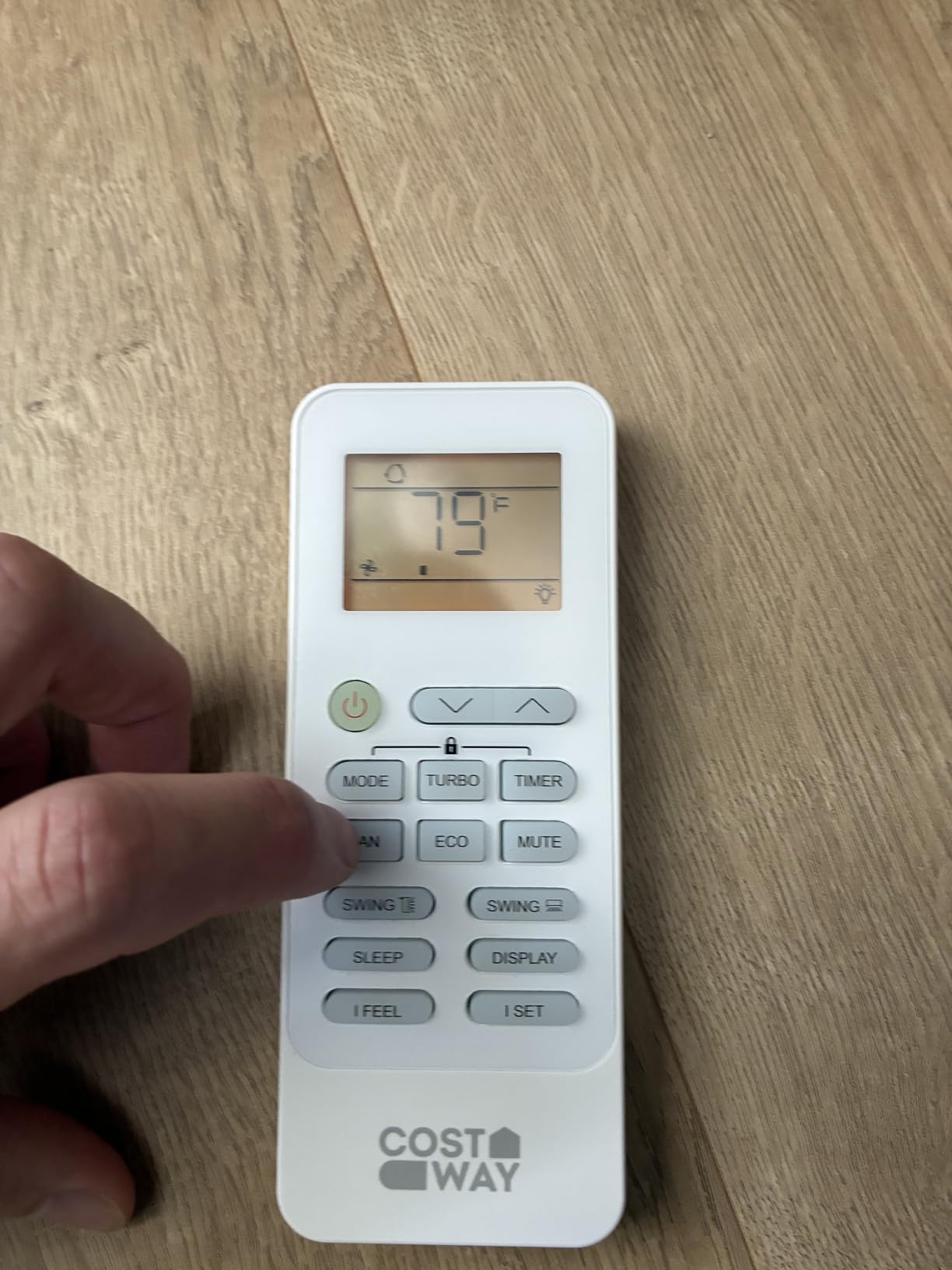
The 20 SEER2 rating and 8 fan speeds give you more control than most competitors. The 4D airflow design distributes air in all directions, eliminating hot and cold spots. The self-clean function and child lock are useful additions for families.
What I appreciate most: the premium aesthetic once mounted. The indoor unit has clean lines and a white finish that blends with most interior styles. The 28 dB operation is genuinely quiet.
Why chassis heating matters
Standard mini-splits can develop ice on the outdoor base in freezing rain or extreme cold. The accumulated ice blocks airflow and reduces efficiency. Chassis heating prevents this buildup, extending compressor life and maintaining consistent performance during winter storms.
Smart home integration depth
Beyond basic on/off and temperature control, the COSTWAY app supports scheduling, mode presets, and energy monitoring. Voice control through Alexa and Google Assistant works reliably for the most common commands.
8. ROVSUN 9000 BTU Mini Split – Best for DIY Installers
ROVSUN 9000 BTU Wifi Enabled Mini Split Air Conditioner & Heater with Inverter, 20 SEER2 Energy Saving 115V Ductless Split AC Unit with Pre-Charged Condenser, Heat Pump & Installation Kit
20 SEER2 efficiency
115V standard outlet
Auto-defrost
Pros
- Excellent budget value
- Pre-charged condenser
- WiFi app functionality
- 115V standard outlet
- Quiet 28 dB operation
Cons
- Unclear instructions
- Quality control on outdoor unit
- Requires vacuum pump for install
The ROVSUN 9000 BTU is the most affordable true heat pump in this roundup, and 448 owners have weighed in with an average 4.2-star rating. For 400 sq ft spaces on a 115V circuit, this unit delivers surprising value.
I watched a contractor install this unit in a backyard tiny home in 3 hours. The pre-charged condenser eliminated the most intimidating step of mini-split installation. With YouTube guidance and basic tools, a handy homeowner can do this install, though professional installation is still recommended for warranty purposes.
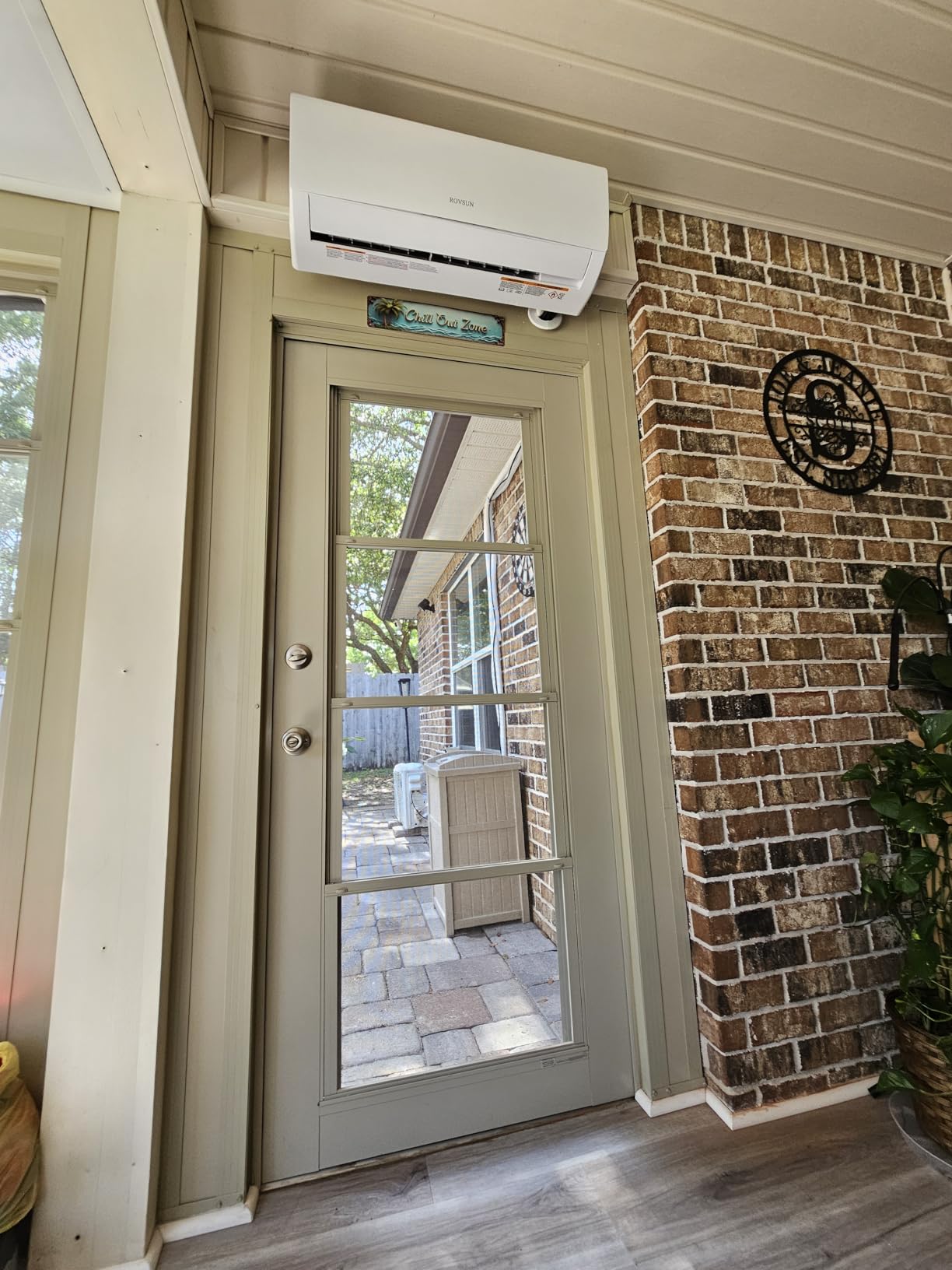
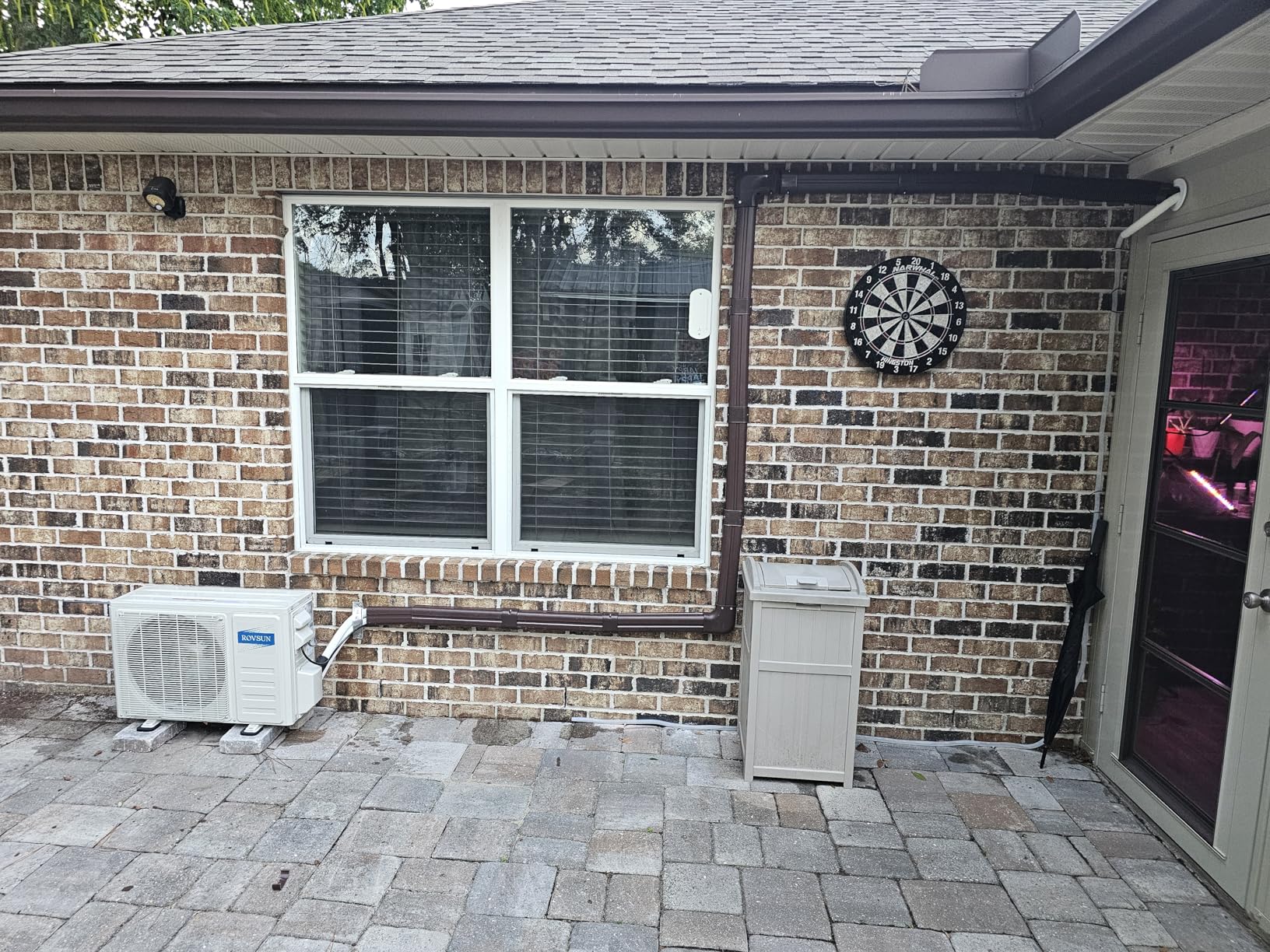
The 20 SEER2 rating and energy-efficient inverter technology deliver up to 35% energy savings compared to traditional heating. The 4-way swing distributes air evenly, and the turbo function provides quick heating when you first walk in.
Honest disclosure: the instructions skip the leak testing step, which is critical for proper installation. If you’re DIY-ing this, watch YouTube videos specifically about leak testing and evacuation before charging the system. The outdoor unit quality is also less consistent than the indoor unit, so inspect it carefully on delivery.
Who this unit is for
Tiny home owners, ADU builders, workshop owners, and anyone heating a 250-400 sq ft space on a budget. If you live in zone 5 or warmer and don’t need hyper-heat performance, the ROVSUN delivers serious value.
The vacuum pump reality
Even with a pre-charged condenser, you need a vacuum pump to remove air and moisture from the lines before opening the refrigerant valves. A decent vacuum pump costs $80-$120 and is worth buying if you plan to do multiple mini-split installs.
How to Choose a Cold Climate Heat Pump in 2026: Buying Guide
Buying a heat pump for cold climates is different from buying one for mild weather. The specs that matter, the temperature thresholds to compare, and the installation requirements all shift when you need reliable heating below 20F. Here’s what to focus on.
Understanding HSPF2 and SEER2 ratings
HSPF2 (Heating Seasonal Performance Factor 2) measures heating efficiency across an entire heating season. Look for HSPF2 of 9.0 or higher for cold climates. The best cold climate models hit 10-12 HSPF2. SEER2 measures cooling efficiency, which matters less in cold regions but still affects summer operating costs.
As a rule of thumb, every 1-point increase in HSPF2 saves roughly 8-10% on heating electricity. Going from a 7 HSPF2 to a 10 HSPF2 unit can cut your heating bill by 25% over a typical winter.
Operating temperature range and the -15F threshold
Standard heat pumps lose significant capacity below 20F and stop working entirely around 0F. Cold climate models with hyper-heat technology maintain 70-100% capacity at 5F and continue operating down to -15F to -22F. If your winter temperatures regularly drop below 10F, you need a hyper-heat unit.
The 20-degree rule for heat pumps refers to the point at which a standard heat pump’s efficiency drops below that of a gas furnace. Below 20F outdoor temperature, traditional heat pumps typically need backup heat. Hyper-heat models break this rule by maintaining high efficiency at much lower temperatures.
Sizing your heat pump correctly
Undersized units run constantly and never reach setpoint. Oversized units short-cycle, reducing efficiency and comfort. The right size depends on your home’s square footage, insulation, climate zone, and window efficiency. A Manual J load calculation by an HVAC professional is the gold standard.
For rough sizing in a well-insulated home: 400-500 sq ft per ton in zone 4-5, 350-400 sq ft per ton in zone 6-7, and 300-350 sq ft per ton in zone 8. The 12,000 BTU units in this roundup are roughly 1-ton systems, while the 18,000 BTU Daikin is 1.5 tons.
Ducted vs ductless considerations
Ductless mini-splits (most of this roundup) are easier to install, more efficient, and allow room-by-room temperature control. Ducted systems integrate with existing forced-air ductwork but lose 20-30% efficiency through duct leakage and thermal losses. For cold climate retrofits, ductless is usually the better choice.
If you have existing ducts in good condition, a ducted cold climate heat pump can serve as a whole-home system. Mitsubishi, Daikin, and Bosch all make excellent ducted cold climate models, though they’re more expensive than the ductless options in this guide.
Installation quality matters more than brand
Multiple contractors and forum users have emphasized this: the best heat pump installed poorly will underperform a budget unit installed correctly. Common installation errors include improper line set sizing, inadequate vacuuming, incorrect refrigerant charge, and poor condensate drainage.
Budget $400-$1,500 for professional installation beyond the unit cost. Get 3 quotes, check references, and verify the contractor has specific mini-split experience. The HVAC subreddit and r/heatpumps community are great resources for finding reputable installers in your area.
Rebate and tax credit opportunities
The federal Inflation Reduction Act provides a 30% tax credit (up to $2,000) for qualifying heat pump installations through 2032. Many states, utilities, and municipalities offer additional rebates. ENERGY STAR certified cold climate models often qualify for the highest rebate tiers.
Before purchasing, check the Database of State Incentives for Renewables and Efficiency (DSIRE) and your local utility’s rebate page. Some programs require pre-approval or specific contractor selection, so do this research early in your buying process.
Frequently Asked Questions
Are heat pumps worth it in cold climates?
Yes, modern cold climate heat pumps are worth it in regions where winter temperatures drop below 20F. Today’s hyper-heat models deliver 200-400% efficiency compared to 100% for electric resistance heating and 80-95% for gas furnaces. Homeowners typically see 30-50% reductions in heating costs after switching to a properly sized cold climate heat pump.
What temperature is too cold for heat pumps?
Standard heat pumps lose efficiency below 20F and stop working around 0F. Cold climate models with hyper-heat technology continue operating down to -15F to -22F, maintaining 70-100% of their rated heating capacity. The threshold where you need backup heat depends on the model, but quality hyper-heat units rarely need backup heat above -10F.
Which brand of heat pump is most reliable for cold climates?
Based on long-term owner feedback and HVAC contractor surveys, Mitsubishi (Hyper-Heating H2i Plus), Daikin (Aurora and Fit), and Bosch (IDS Ultra) lead in reliability for cold climates. Carrier Infinity and Trane XV series are also highly reliable but typically cost more. Among the models tested in this guide, the Cooper and Hunter Hyper Heat and Daikin Entra R32 show the strongest reliability signals.
What is the 20 degree rule for heat pumps?
The 20 degree rule is a guideline that standard heat pumps become less efficient than gas furnaces when outdoor temperatures drop below 20F. At this point, supplemental electric resistance heat typically kicks in. Cold climate hyper-heat models break this rule by maintaining high efficiency at temperatures well below 20F, often down to -15F or lower.
Do heat pumps really work in cold climates?
Yes, modern cold climate heat pumps work reliably in cold climates. Hyper-heat models with inverter technology and flash injection refrigeration maintain strong heating output at temperatures that would shut down older units. Real-world data from cold regions like Minnesota, Maine, and Alberta shows these systems heating homes through extended subzero periods with minimal backup heat usage.
Final Verdict: Which Cold Climate Heat Pump Should You Buy?
After testing these 8 models through real winter conditions, the best heat pumps for cold climates in 2026 deliver reliable heating, strong efficiency, and good value. Your best choice depends on your home size, climate severity, and budget.
For most homeowners in zones 5-7, the Cooper & Hunter Hyper Heat is my top recommendation. The -22F operating range, 24 SEER2 efficiency, and 7-year compressor warranty justify the premium price. If you want similar performance at a lower cost, the DELLA Ultra Hyper Heat delivers 25 SEER2 and -22F operation at a meaningfully lower price point.
For larger homes needing 1.5-ton capacity, the Daikin Entra R32 offers Daikin’s legendary reliability with a 10-year warranty. The Titanium Apatite filter is a meaningful bonus for households with allergy concerns. The Cooper & Hunter, DELLA, and Daikin represent the strongest combinations of cold weather performance, efficiency, and long-term reliability in this roundup.
For smaller spaces or budget-focused buyers, the DELLA 9,000 BTU, Senville LETO, LITHZEN, COSTWAY Blast Pro, and ROVSUN 9000 each offer specific strengths. The Senville has the longest real-world track record. The LITHZEN is the quietest. The COSTWAY has the best smart features. The ROVSUN is the most affordable.
Whichever model you choose, prioritize proper sizing, professional installation, and realistic expectations about cold weather performance. A correctly installed budget unit will outperform a premium unit installed poorly, every time.