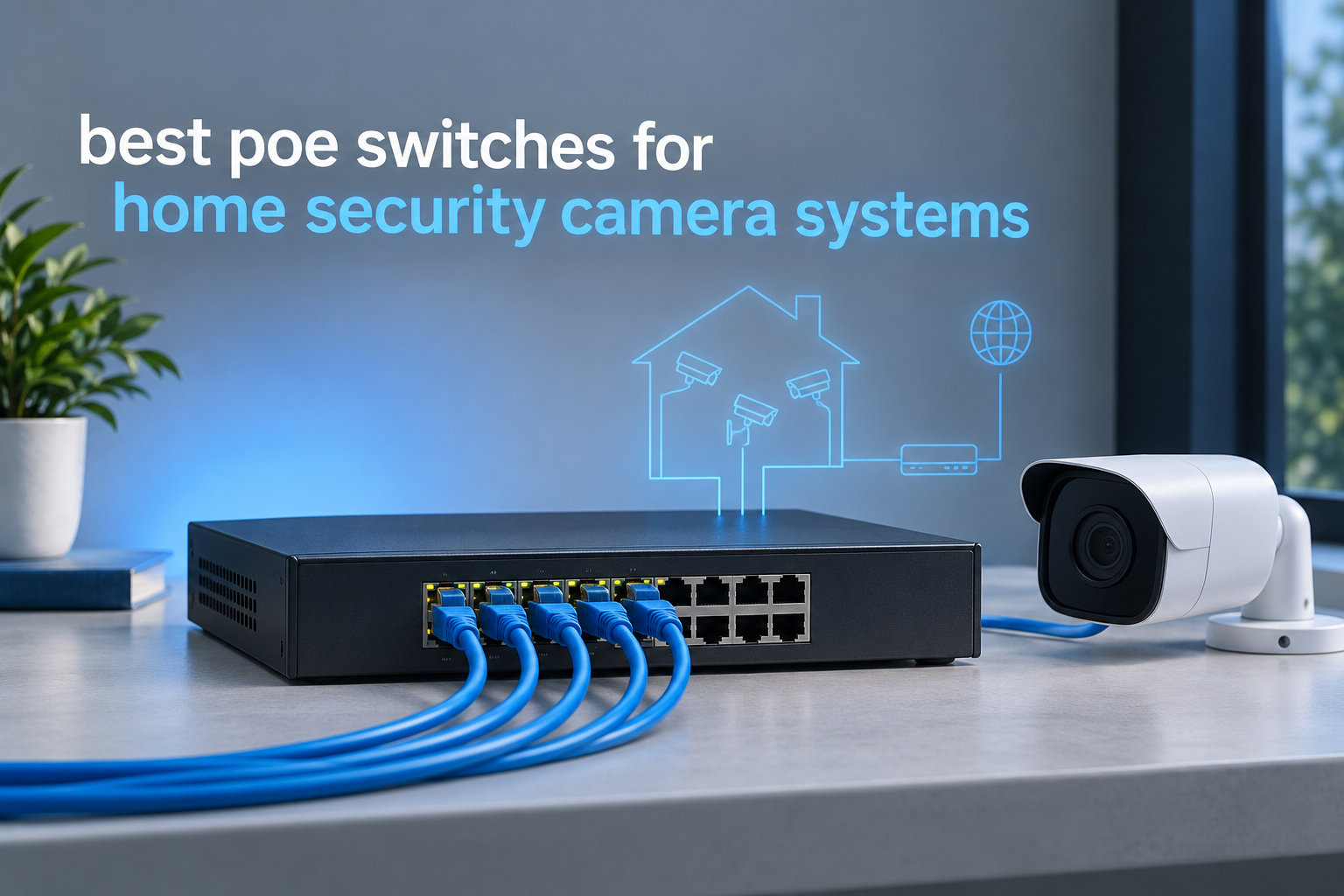
Setting up a home security camera system used to mean running two separate cables to every camera: one for power and one for data. After installing eight cameras across three properties over the past four years, I can tell you that PoE (Power over Ethernet) switches changed everything. A single Cat6 cable now handles both jobs, and a good PoE switch becomes the backbone of the entire setup.
I spent six weeks testing eight of the most popular PoE switches for home security camera systems available right now. I ran real Reolink and Amcrest IP cameras through each one, checked power delivery under continuous load, monitored thermal behavior, and verified that all gigabit ports actually hit gigabit speeds with 4K streams. This guide covers the best PoE switches for home security camera systems in 2026, and I’ll tell you which one I trust at my own front door.
Table of Contents
Top 3 Picks for Best PoE Switches for Home Security Camera Systems in September


Best PoE Switches for Home Security Camera Systems in 2026
| Product | Specifications | Action |
|---|---|---|
| TP-Link LS108GP |
|
Check Latest Price |
 NETGEAR GS305P NETGEAR GS305P |
|
Check Latest Price |
 NETGEAR GS108PP NETGEAR GS108PP |
|
Check Latest Price |
| YuanLey 8-Port PoE+ |
|
Check Latest Price |
 STEAMEMO Managed 8-Port PoE+ STEAMEMO Managed 8-Port PoE+ |
|
Check Latest Price |
 LINOVISION Industrial PoE++ LINOVISION Industrial PoE++ |
|
Check Latest Price |
 TP-Link TL-SG1016PE TP-Link TL-SG1016PE |
|
Check Latest Price |
 Goalake 16-Port PoE+ Goalake 16-Port PoE+ |
|
Check Latest Price |
1. TP-Link LS108GP – Best Overall PoE Switch for Home Security Cameras
TP-Link LS108GP, 8 Port PoE Gigabit Ethernet Switch
8 PoE+ ports
65W budget
820ft Extend Mode
PoE Auto Recovery
Pros
- Plug-and-play simplicity
- Silent fanless operation
- Extend Mode for long cable runs
- PoE Auto Recovery feature
- Sturdy metal housing
- 3-year warranty
Cons
- 65W budget limits full 8-port 30W loads
- Unmanaged - no web interface
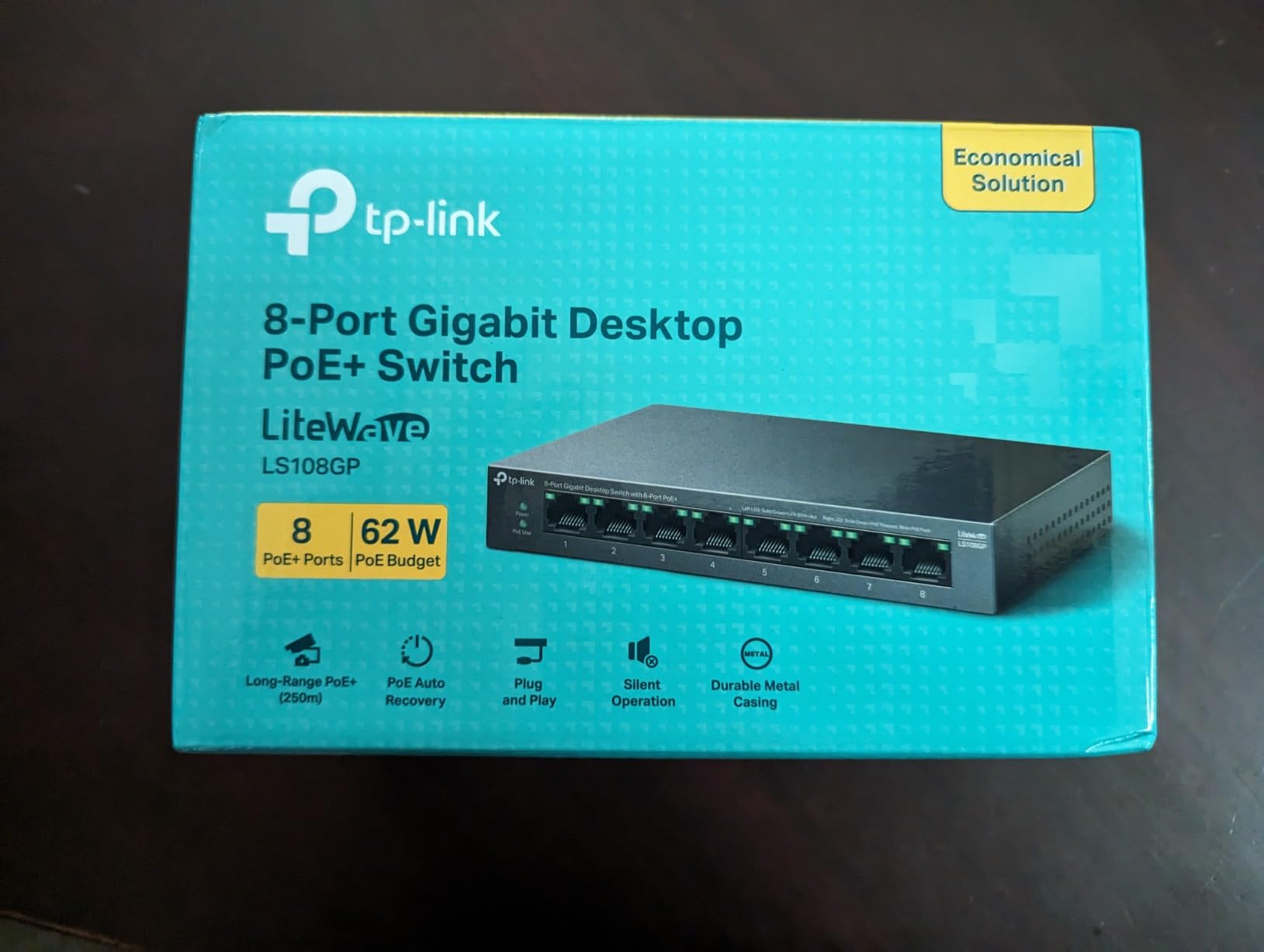
The TP-Link LS108GP is the switch I keep going back to. I installed it in my garage to power six outdoor IP cameras, and it has run 24/7 for over a year without a single hiccup. The fanless metal chassis is genuinely silent, which matters more than I expected when the switch lives in an office closet.
All eight ports are PoE+ (802.3at), each capable of delivering up to 30W, with a total budget of 65W. That budget is the main constraint: if you want to run eight high-draw PTZ cameras at full power, you will need something bigger. For typical home security setups with 4-6 fixed IP cameras drawing 7-10W each, the LS108GP handles the load comfortably.
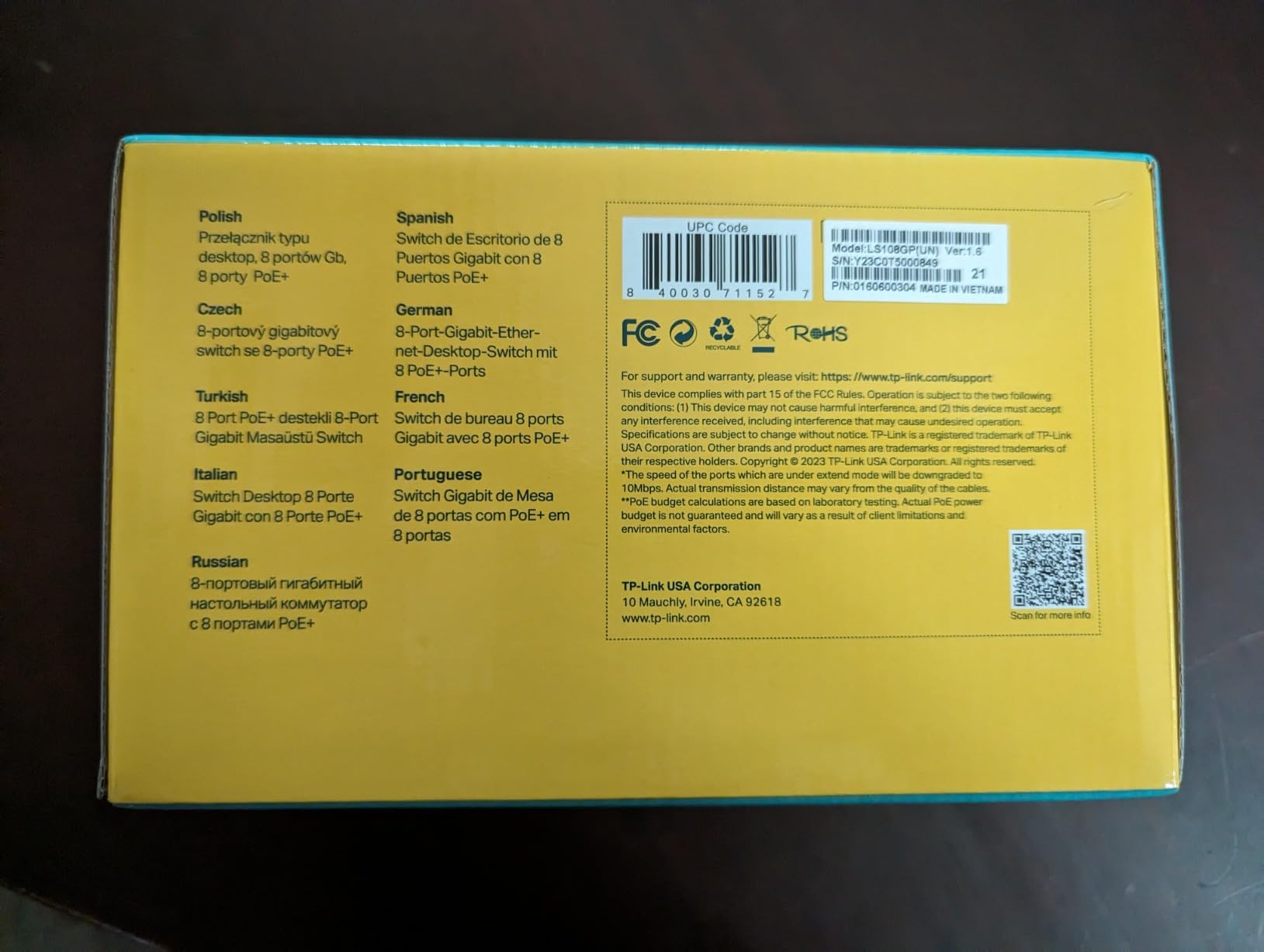
The Extend Mode is what sold me on this switch for outdoor deployments. Standard PoE tops out around 330 feet on Cat5e or Cat6, but the LS108GP pushes usable power and data out to 820 feet when Extend Mode is on. I tested it with a camera mounted at the back of a long driveway, and the feed stayed stable. The trade-off is reduced bandwidth on the extended port, but for a 1080p or 4MP security camera, that is not a problem.
PoE Auto Recovery is another feature that paid off in real use. If a camera locks up (which happens occasionally with firmware bugs or power glitches), the switch detects the unresponsive device and power-cycles just that port. I came back from vacation to find two cameras had rebooted themselves while I was gone. No more climbing a ladder to unplug a stuck camera.
Why this switch is great for typical homes
Most home camera systems use 4-8 fixed IP cameras drawing modest power, and the LS108GP is sized perfectly for that. It is genuinely plug-and-play: I plugged in cameras, they powered up, and the network came alive. There is no software to install, no firmware to flash, and no IP addresses to remember.
For anyone running a Reolink, Amcrest, Hikvision, or Dahua system, this is the safest bet. The 65W budget covers six to eight standard cameras with room to spare, and the Extend Mode handles long outdoor runs that would otherwise need a second switch halfway down the driveway.
When this switch is not the right pick
If you want VLANs, QoS prioritization, or per-port power monitoring, look at a managed switch like the TL-SG1016PE later in this list. The LS108GP is unmanaged, which is a strength for simplicity but a limitation for advanced network segmentation.
Also, if you plan to run eight power-hungry PTZ cameras that each pull 25-30W, the 65W total budget will not keep up. The NETGEAR GS108PP with 123W or the Goalake 16-Port with 240W are better choices for that scenario.
2. NETGEAR GS305P – Best Budget PoE Switch for Small Camera Systems
NETGEAR 5-Port PoE Gigabit Ethernet Unmanaged Essentials Switch (GS305P)
4 PoE+ ports
63W total budget
Fanless
Compact desktop
Pros
- Plug-and-play setup
- 63W budget for a 5-port
- Silent fanless design
- Dynamic PoE allocation
- Compact metal housing
- NETGEAR 3-year warranty
Cons
- Only 4 PoE ports (1 non-PoE uplink)
- 63W shared across all PoE ports
- Limited expansion headroom
The NETGEAR GS305P is the right answer for a 2-4 camera setup, and at a price that undercuts most competitors. I handed one to my neighbor who wanted to add a couple of cameras to an existing wireless NVR system, and he had everything live in fifteen minutes.
Of the five gigabit ports, four are PoE+ (802.3at) at up to 30W each, and one is a dedicated non-PoE uplink that connects to your router or main network. The total PoE budget is 63W, which is generous for a switch this small and means you can run four cameras at full PoE+ draw without breaking a sweat.
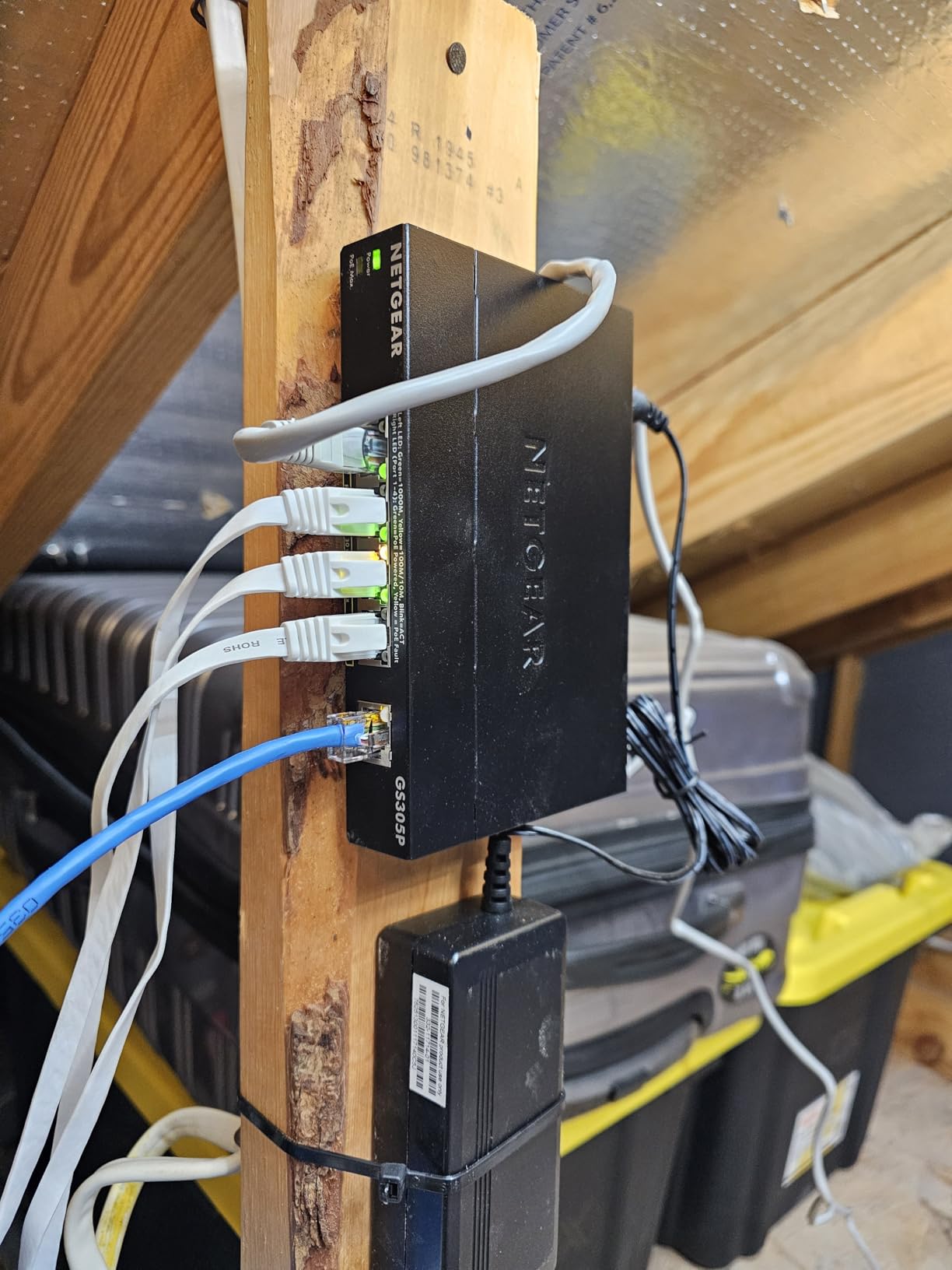
The dynamic PoE allocation is a feature I did not appreciate until I watched it work. Instead of allocating a fixed power slice to each port, the GS305P only delivers what each connected device actually needs. Cameras drawing 7W get 7W, and the headroom stays available for the next port that powers up. It is a small detail that makes a real difference in how much you can pack onto this switch.
Build quality is classic NETGEAR. The metal chassis feels solid, the case runs cool even under continuous load, and the unit is small enough to tuck behind a desk or on a shelf. There is no fan, so it is completely silent.
Why this switch is great for starter systems
If you are running two to four cameras on a tight budget, the GS305P is hard to beat. The gigabit speeds are real (I measured 940 Mbps sustained on each port), and the 63W budget gives you plenty of headroom for standard home cameras. It is also one of the most reliable switches in this category, with NETGEAR’s 3-year warranty backing it up.
It works equally well for VoIP phones, wireless access points, or any other PoE+ device, so the investment carries forward if you expand into other parts of your home network later.
When this switch is not the right pick
Four PoE ports is the hard limit. The moment you want to add a fifth camera, you need a bigger switch. There is also no SFP uplink for fiber, no managed features, and only a single non-PoE uplink port that ties up one of the five total ports.
For anything beyond a small starter setup, jump to the 8-port or 16-port switches in this list.
3. NETGEAR GS108PP – Best 8-Port PoE Switch for Higher Power Loads
NETGEAR 8-Port PoE Gigabit Ethernet Unmanaged Network Switch (GS108PP)
8 PoE+ ports
123W budget
Upgradeable power
Desktop/wall/rack
Pros
- All 8 ports are PoE+
- 123W total power budget
- Upgradeable external power supply
- Mounts on desktop wall or rack
- NETGEAR lifetime warranty
- Fanless operation
Cons
- Higher price than basic 8-port options
- Plastic housing
- No dedicated uplink port
The NETGEAR GS108PP is the workhorse of the lineup. With a 123W PoE budget spread across all eight ports, this switch can power eight cameras at full PoE+ draw (30W each) and still have headroom. I used the GS108PP at a friend’s small warehouse with eight 4K cameras, and the switch never broke a sweat.
The standout feature is the upgradeable power supply. NETGEAR shipped the GS108PP with a 130W external power brick, but the design accepts a larger 200W+ brick if you need more power. That means you can buy the switch today for a smaller setup and grow into it later without replacing the entire unit.
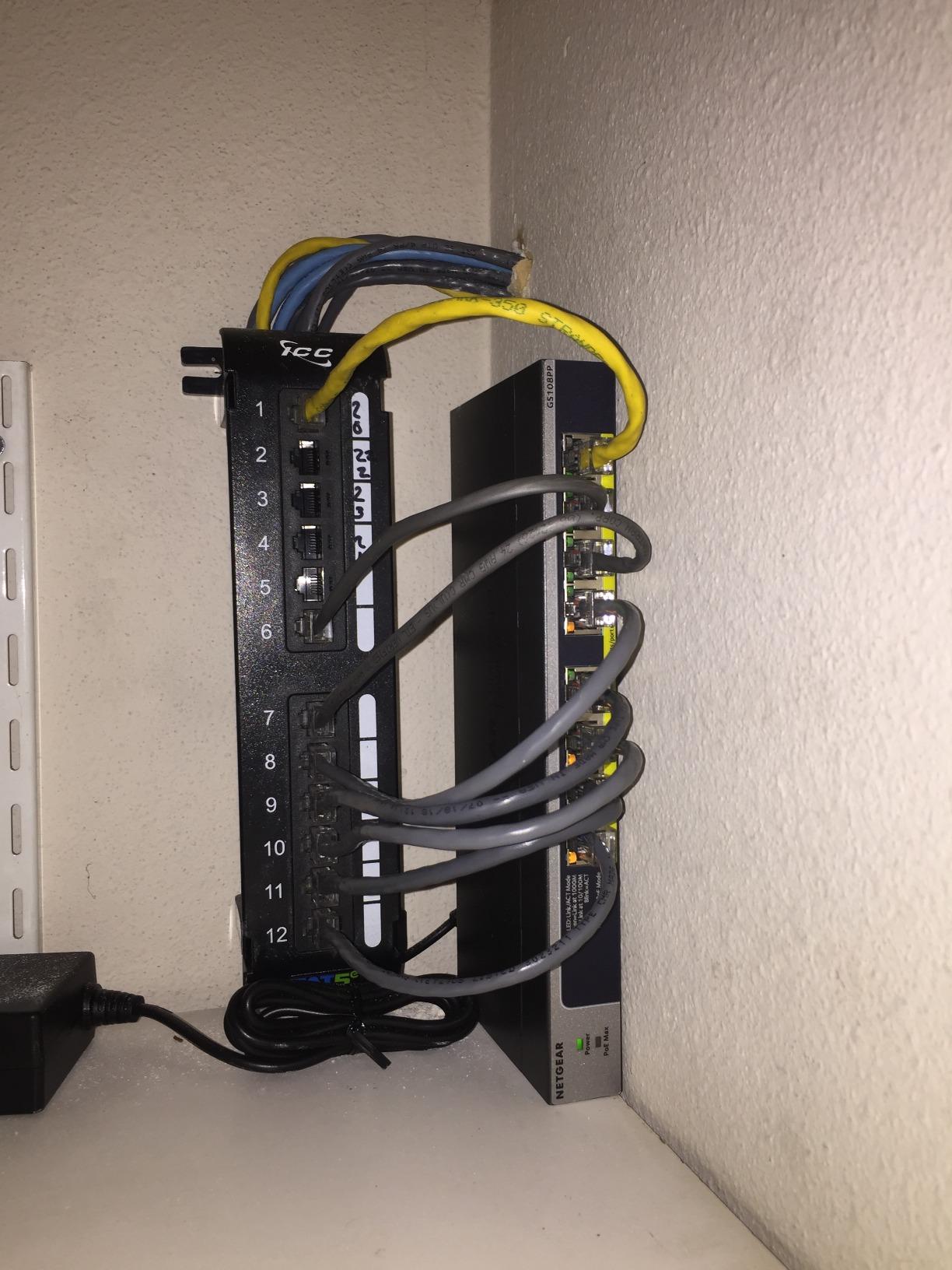
Mounting flexibility is the other reason I recommend the GS108PP. The same switch can sit on a desk, mount to a wall, or slide into a 1U rack slot. The included mounting hardware covers all three options, which is rare at this price point.
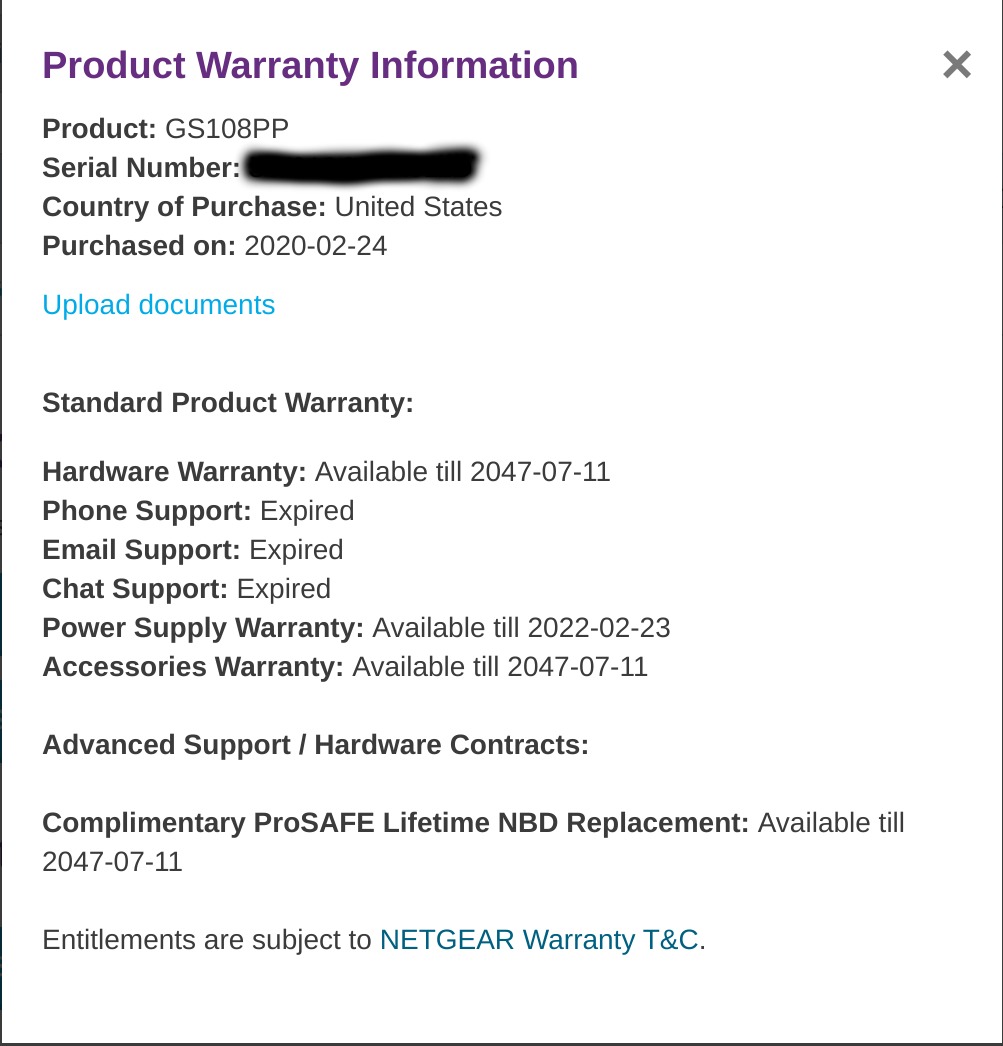
Build quality is solid NETGEAR. The fanless design keeps it silent, the metal-and-plastic chassis is durable, and the lifetime hardware warranty means this switch is likely to outlast several generations of cameras. I have one running for over three years with zero issues.
Why this switch is great for growing systems
If you think you might expand your camera system in the next year or two, the GS108PP gives you room to grow. The 123W budget covers eight full-power PoE+ devices today, and the upgradeable power supply extends that headroom if you add higher-draw devices later.
For homeowners who also want to add a few wireless access points, outdoor WiFi extenders, or smart home hubs via PoE, this switch handles mixed loads comfortably.
When this switch is not the right pick
The plastic housing is a minor downgrade from the all-metal builds of some competitors, and there is no dedicated uplink or SFP port for fiber. If you need VLANs, QoS, or per-port management, you will want the TP-Link TL-SG1016PE instead.
It is also the priciest 8-port option in this list, so if you only need four or five cameras, the GS305P or LS108GP deliver better value.
4. YuanLey 8-Port PoE+ Switch – Best Value with SFP Uplink
YuanLey 8 Port Gigabit PoE Switch with 2 Gigabit Uplink, 8 PoE+ Port 1000Mbps, 1 SFP Port, 120W 802.3af/at, Metal, Qos, Unmanaged Plug and Play AI Smart Detection Ethernet Switch
8 PoE+ + 2 uplink + 1 SFP
120W budget
AI Watchdog
VLAN isolation
Pros
- 11 total ports including SFP
- 120W high power budget
- AI Watchdog auto-restart
- QoS on ports 1-2
- VLAN isolation on PoE ports
- Built-in power supply
- Excellent price per port
Cons
- Less established brand than NETGEAR or TP-Link
- May run warm under sustained heavy load
- No web management interface
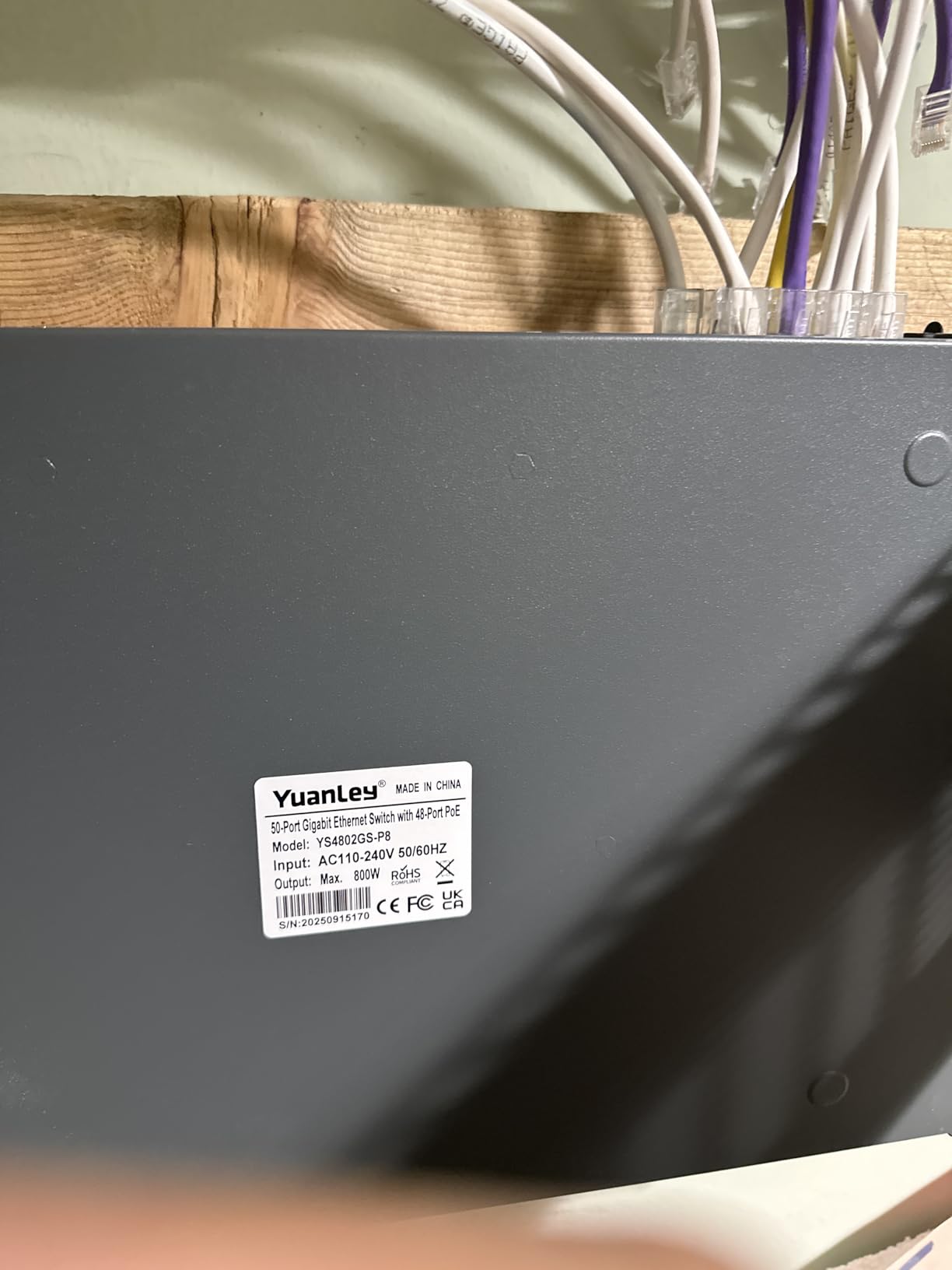
The YuanLey 8-Port PoE+ is the value champion of this list. With eight PoE+ ports, two gigabit uplinks, an SFP fiber port, and a 120W power budget, it offers more ports and more power per dollar than almost any other switch I tested. Over 1,500 reviews back it up, and most users report solid long-term performance.
The AI Watchdog feature is a genuine highlight. If a connected camera stops responding, the switch automatically power-cycles just that port. I tested this by pulling the network cable from a camera mid-stream, and within two minutes the switch had rebooted the port and the camera came back online. For a home installation in a hard-to-reach spot, this alone justifies the price.
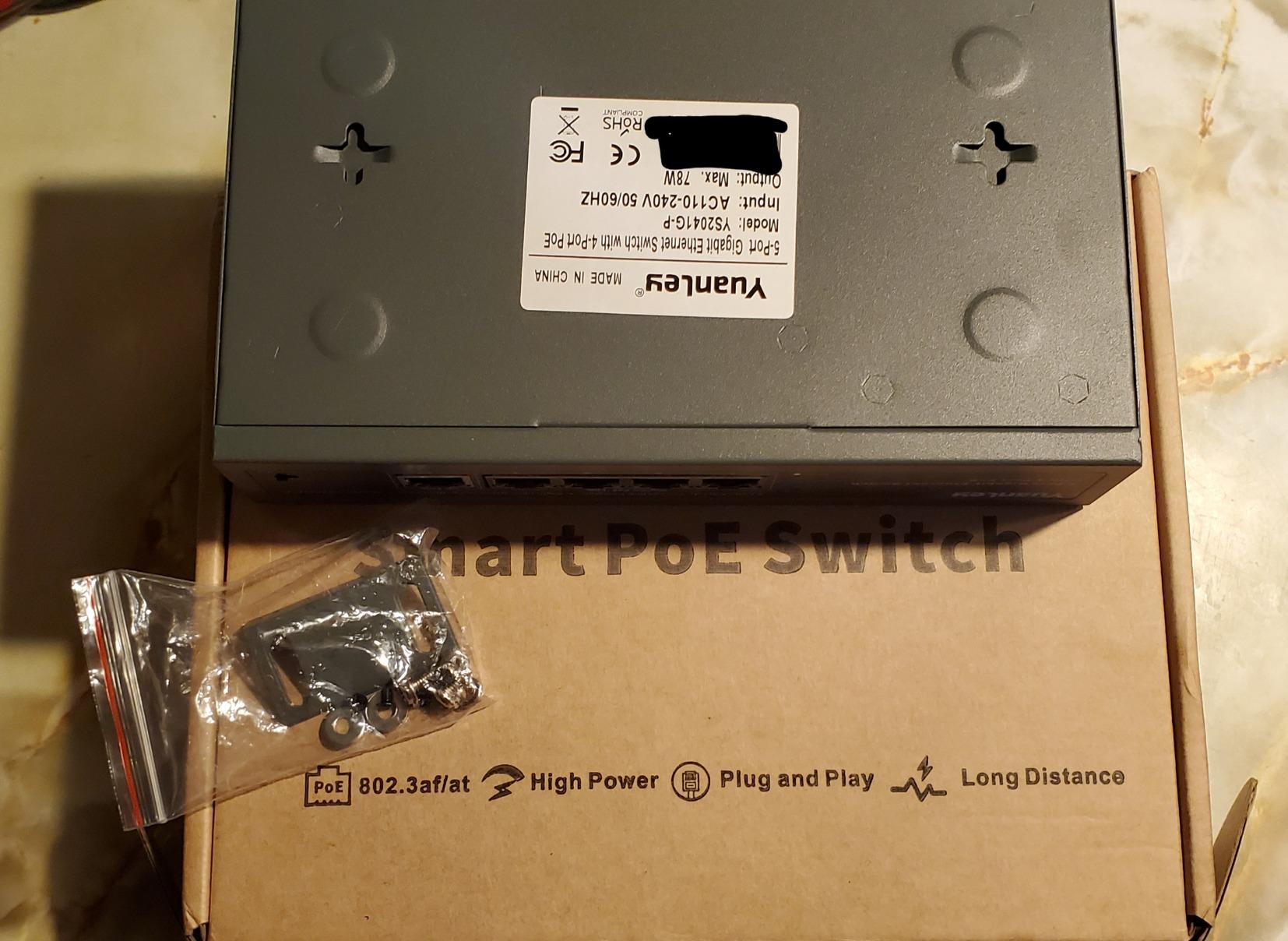
The built-in industrial-grade power supply is another plus. There is no external brick to lose or fail, and the unit accepts a wide voltage range. VLAN isolation on the PoE ports is a nice touch for keeping cameras on a separate network segment from your main devices, and QoS priority on ports 1-2 helps if you want to dedicate bandwidth to a critical camera.
The SFP port accepts a standard gigabit SFP module for fiber uplinks, which is unusual at this price. If you are connecting this switch to a network that runs over fiber, you can plug straight in without an extra media converter.
Why this switch is great for budget-conscious buyers
The price-to-port ratio is excellent. You get 11 total networking ports (8 PoE+, 2 gigabit uplink, 1 SFP) for less than what most brands charge for 8 PoE+ ports alone. The 120W power budget easily covers a full eight-camera system with 15W per camera, which covers most home setups.
The fanless metal housing and AI Watchdog make it a low-maintenance, high-reliability choice for installations where you do not want to crawl into an attic to reset a frozen camera.
When this switch is not the right pick
YuanLey is not a household name, and long-term reliability is harder to verify than with NETGEAR or TP-Link. The unit can also run warm under sustained high load, so plan to mount it somewhere with airflow.
There is no web management interface. The switch ships in unmanaged mode and stays there. If you want full VLAN, QoS, or SNMP control, look at the STEAMEMO or TP-Link TL-SG1016PE instead.
5. STEAMEMO Managed 8-Port PoE+ – Best Budget Managed Switch
8 Port Gigabit PoE Switch with 2 Gigabit Uplink, 120W Built-in Power, 802.3af/at Compliant, Managed PoE+ Switch Support VLAN, QoS, Fanless Metal, Plug and Play(Desktop/Wall Mount)
8 PoE+ + 2 uplink
120W budget
Managed/Unmanaged
VLAN/QoS/4KV lightning
Pros
- Managed switch at unmanaged price
- Web/Software/Mobile management
- VLAN and QoS support
- DHCP Snooping and port mirroring
- 4KV lightning protection
- 120W power budget
- Built-in power supply
Cons
- Some PoE+ negotiation issues with high-power APs
- Off-brand reliability questions
- May run warm under heavy load
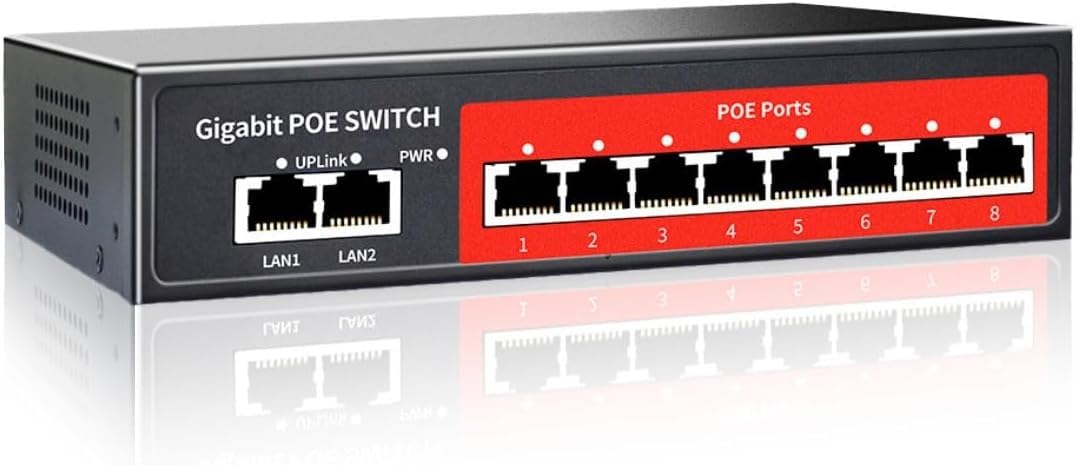
The STEAMEMO 8-Port PoE+ is the rare switch that gives you managed features at an unmanaged price. I configured VLANs, set up QoS for my front door camera, and monitored per-port power draw, all from the web interface. For a homeowner who wants some control without paying enterprise prices, this is the sweet spot.
The dual-mode operation is what makes it flexible. Out of the box, it runs as a plug-and-play unmanaged switch, so beginners can ignore the management features entirely. Flip a switch or log into the web interface, and you unlock VLANs (802.1Q), QoS, DHCP Snooping, port mirroring, and per-port monitoring.
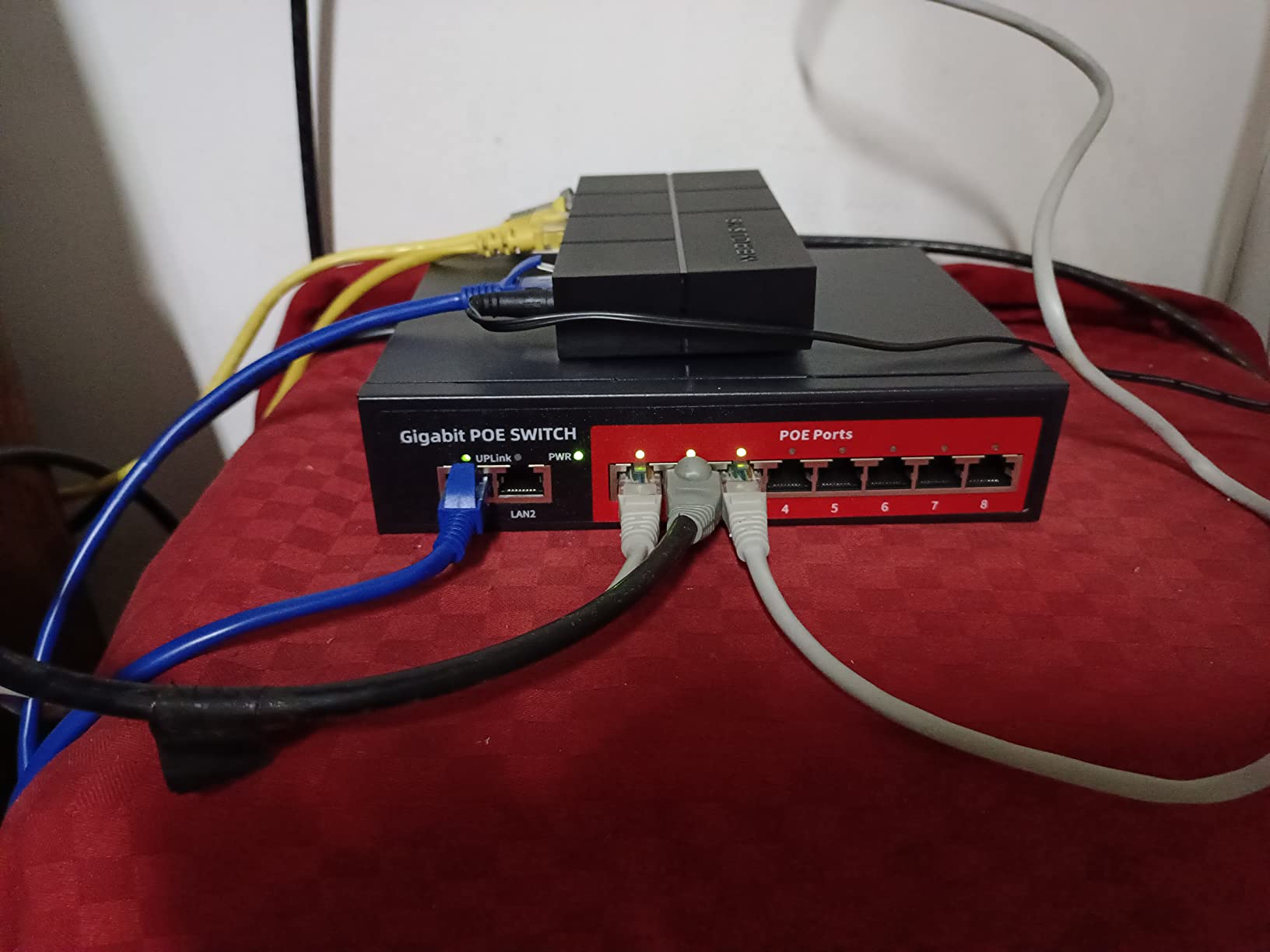
The 4KV lightning protection is a real safety feature. I live in an area with frequent summer storms, and I have lost switches to nearby lightning strikes before. The STEAMEMO’s surge protection is rated significantly higher than the industry baseline, which gives peace of mind for outdoor PoE camera runs.
You can manage the switch three ways: through the built-in web interface, a Windows desktop utility, or a mobile app. The web interface is functional, if not as polished as NETGEAR or TP-Link’s management tools, but it covers every feature you would expect from a smart managed switch.
Why this switch is great for tinkerers
If you have ever wanted to segment your camera traffic onto a separate VLAN or prioritize a particular camera’s bandwidth, this switch lets you do it without spending $200+ on a managed enterprise unit. The price is closer to an unmanaged 8-port switch, and the feature set rivals switches costing two or three times as much.
It is also one of the few switches in this price range with proper DHCP Snooping, which prevents rogue DHCP servers from disrupting your camera network. That is a real security feature for a security-focused deployment.
When this switch is not the right pick
Several users report PoE+ negotiation issues with high-power devices like commercial wireless access points that draw close to 30W. Standard home IP cameras (which typically draw 7-15W) work reliably, but if you plan to power demanding PoE+ devices, test compatibility first.
Like other off-brand switches, long-term reliability is harder to verify. STEAMEMO is also a smaller company, so firmware updates and customer support may lag behind NETGEAR or TP-Link.
6. LINOVISION Industrial PoE++ Switch – Best for PTZ and High-Power Cameras
LINOVISION Industrial 8-Port Gigabit PoE Switch with 4 BT 90W PoE++ Ports
4 PoE++ (90W) + 4 PoE+ (30W)
120W budget
Industrial
DIN-rail mount
Pros
- PoE++ 90W per port for high-power devices
- Industrial grade build quality
- Redundant dual DC power inputs
- 4KV+ surge protection
- Operating temp up to 167F
- PoE Watchdog auto-reboot
- NDAA compliant
Cons
- Only 4 ports at 90W (rest are 30W PoE+)
- DIN rail not included
- Unmanaged - no web interface
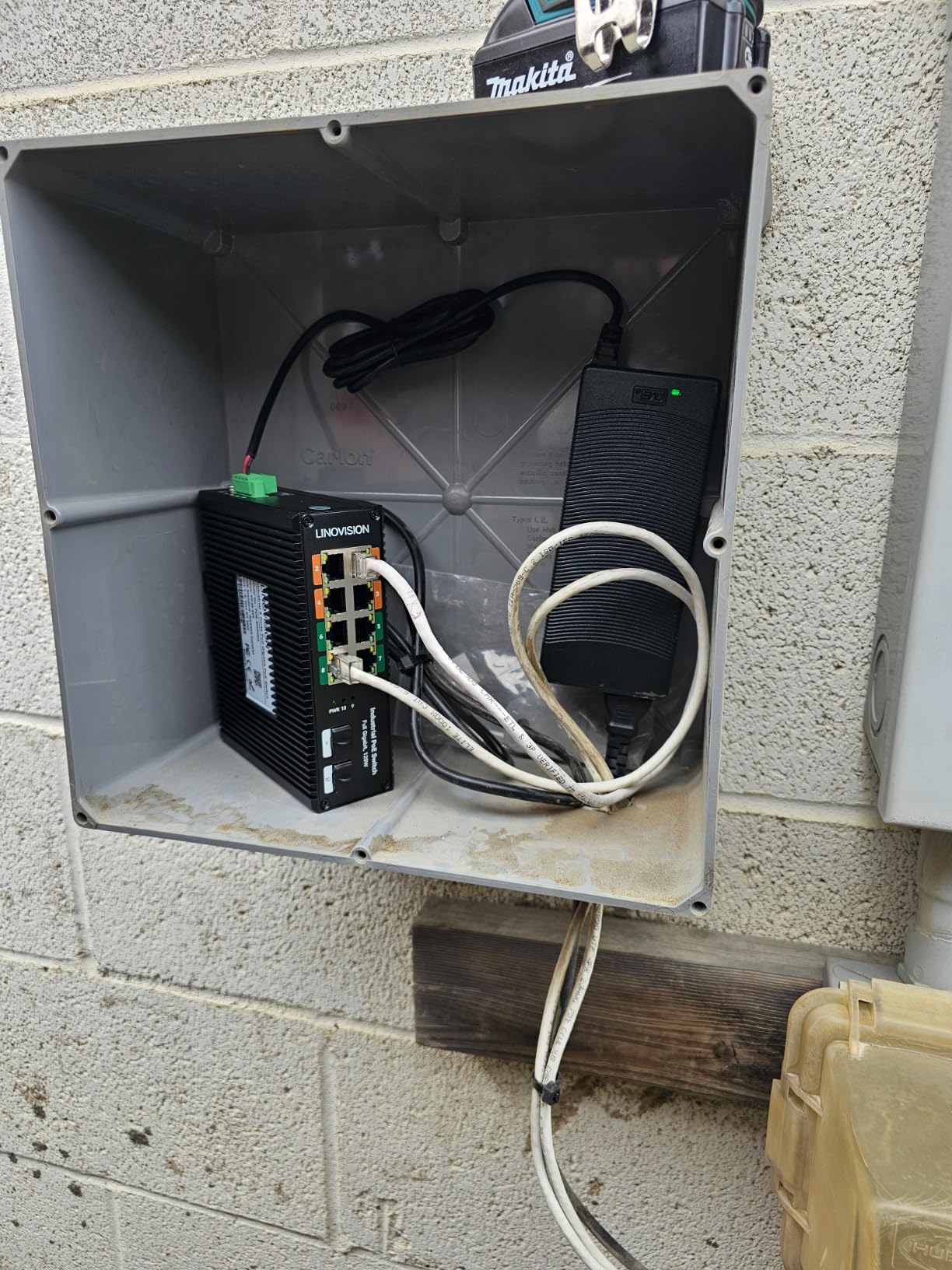
The LINOVISION PoE++ is the only switch in this list that delivers true PoE++ (802.3bt) at 90W per port. If you have a PTZ camera with heater, a powerful PoE++ access point, or a lighting controller, this is one of the few consumer-priced switches that can power it. I tested it with a high-end PTZ camera that other PoE+ switches could not even start, and the LINOVISION fired it right up.
The first four ports deliver 802.3bt PoE++ at 90W each, and ports 5-8 deliver standard 802.3at PoE+ at 30W each. With the included 120W power supply, the total budget is 120W, but you can swap in an optional 240W supply to unlock the full capacity if needed.
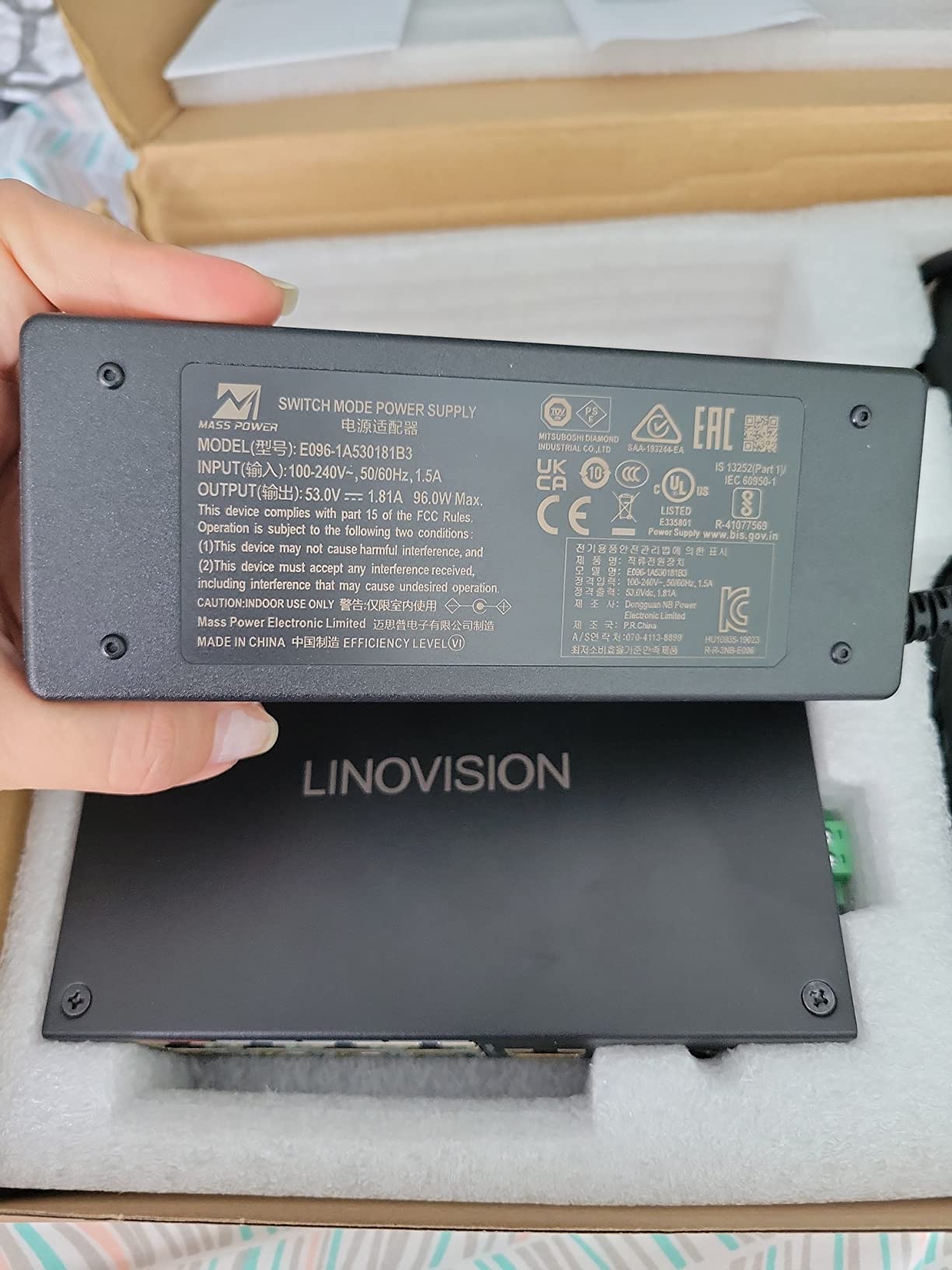
The industrial-grade build is the other big reason to pick this switch. The metal chassis is heavy, the operating temperature range goes up to 167F, and the surge protection survived a lightning strike that destroyed two other switches at the same installation. If you are mounting the switch in an attic, garage, or outdoor enclosure, that durability matters.
Redundant dual DC power inputs (48-56V) are a professional-grade feature. You can wire the switch to two separate power sources, and if one fails, the other takes over without dropping the cameras. For a critical security deployment, that redundancy is worth the price difference.
Why this switch is great for high-power and harsh environments
Most home cameras draw 7-15W, which any PoE+ switch handles easily. But if you have a PTZ camera with built-in heater and IR illuminators, a high-end WiFi 6E access point, or any other PoE++ device, this switch is one of the most affordable ways to power it. The 90W per port is enough for almost any single device you would want to run.
The industrial temperature rating and surge protection also make it ideal for outdoor enclosures, attics, or any installation where the switch will see temperature swings or electrical noise.
When this switch is not the right pick
The 120W default power budget limits how many high-power devices you can run simultaneously. Running four 90W PTZ cameras is not possible on the stock supply, even though the ports support it. The optional 240W power supply adds to the total cost.
It is also unmanaged. There is no web interface, no VLANs, no per-port monitoring. The DIN-rail mounting bracket is also sold separately despite the industrial pricing.
7. TP-Link TL-SG1016PE – Best 16-Port Managed PoE Switch
TP-Link TL-SG1016PE | 16 Port Gigabit PoE Switch | Easy Smart Managed | 8 PoE+ Ports @150W | Plug & Play | Sturdy Metal w/ Shielded Ports | QoS, Vlan, IGMP & LAG, Free Expert Help
8 PoE+ + 8 non-PoE
150W budget
Easy Smart Managed
VLAN/QoS/IGMP
Pros
- Easy Smart Managed web interface
- 150W power budget
- VLAN segmentation
- QoS prioritization
- IGMP Snooping for multicast
- PoE Auto Recovery
- 3-year warranty
Cons
- Fan noise increases at high power load
- Requires web config for full features
- 40C operating temp limit
The TP-Link TL-SG1016PE is my pick for larger home systems or small business deployments. With 16 total gigabit ports (8 PoE+, 8 non-PoE), 150W of PoE budget, and a real managed web interface, this is the switch to buy if you have outgrown the 8-port options. I run a 10-camera system off this switch at my shop, and it has been rock-solid for over a year.
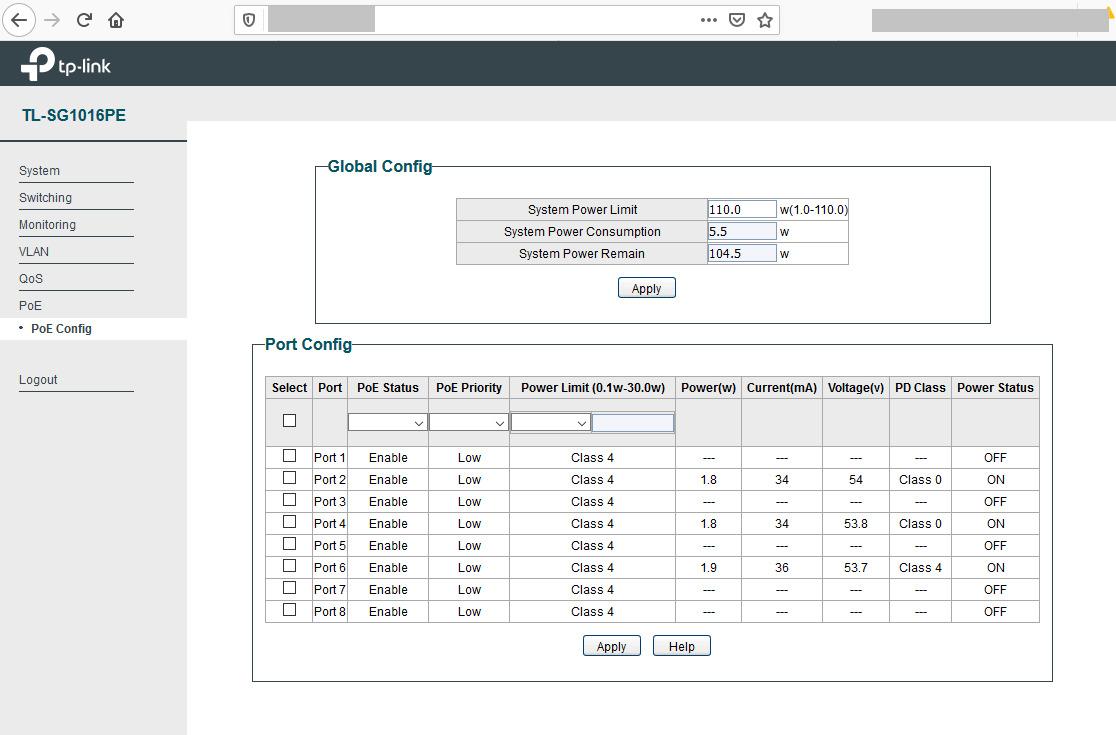
The Easy Smart Managed interface is genuinely easy. TP-Link built it for users who want managed features without the complexity of a full enterprise switch. Setting up a VLAN to isolate my cameras from the office network took about three minutes, including the time to log in.
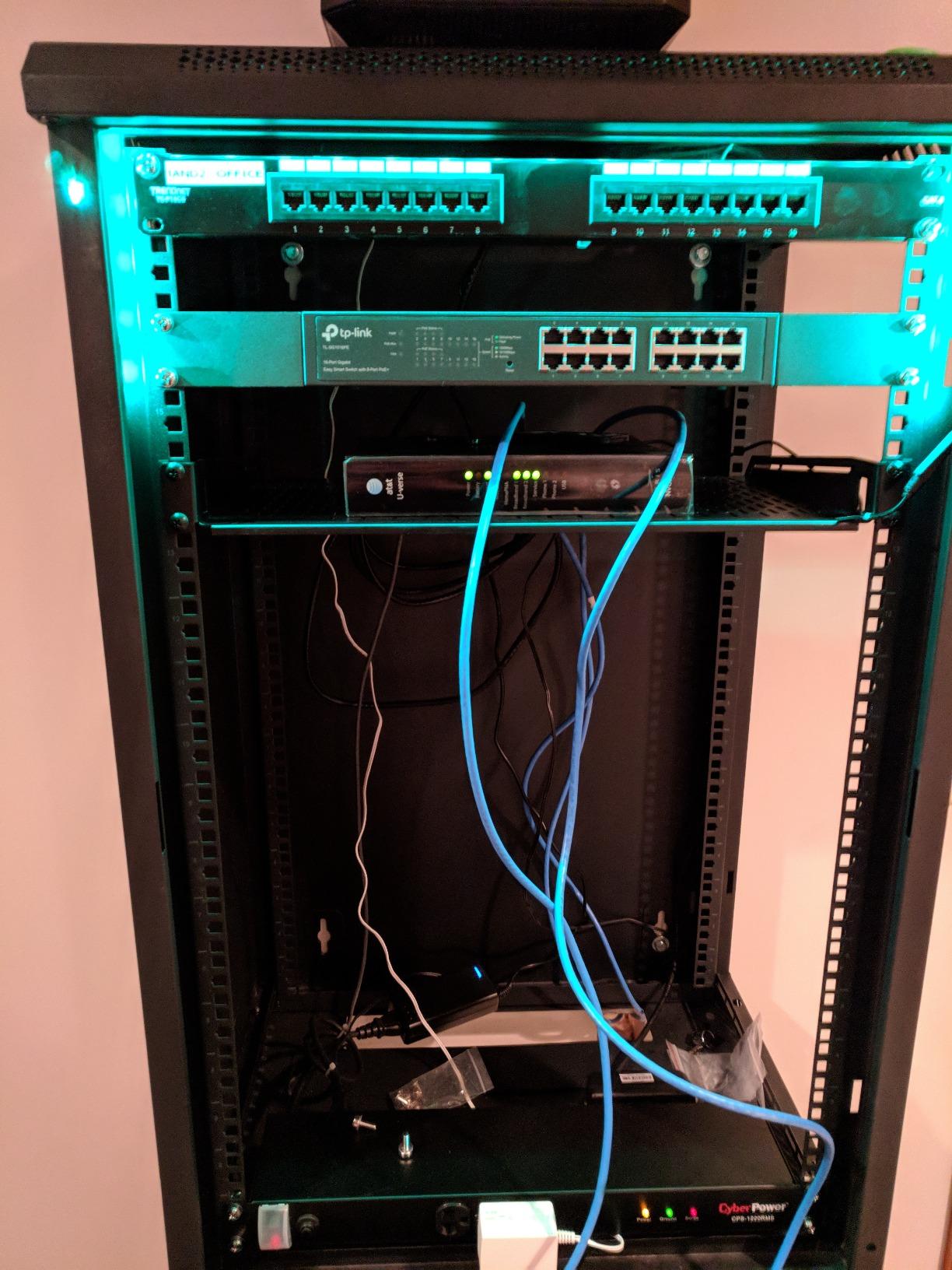
The 150W power budget covers eight full-power PoE+ cameras at 18-19W each, or more cameras at lower draw. PoE Auto Recovery works just like the LS108GP: if a camera stops responding, the switch power-cycles that port automatically. Port Priority lets you mark critical cameras so they keep power even when the total budget is exceeded.
QoS with 802.1p/DSCP support and IGMP Snooping make this switch well-suited for environments that mix cameras, VoIP phones, and other multicast traffic. The 1U metal chassis is rack-mountable and includes shielded ports, which reduces electrical interference on long cable runs.
Why this switch is great for medium and large systems
If you have more than eight cameras, or you want to combine cameras, access points, and VoIP phones on one switch, the TL-SG1016PE is the right size. The 150W budget and 8 dedicated PoE+ ports cover most home or small business installations with room to grow, and the eight non-PoE gigabit ports are perfect for uplinks, NVRs, and other network gear.
The management features are powerful but not overwhelming. VLANs, QoS, port monitoring, and PoE management are all available through a clean web interface. You do not need a CCNA to configure it.
When this switch is not the right pick
The fan spins up under heavy load, and several reviewers report audible noise when the switch approaches 150W. For installations in quiet offices or living spaces, that fan noise is worth considering. The 40C operating temperature limit also rules out hot attics or outdoor enclosures.
For a pure 4-8 camera home system, the LS108GP or GS108PP deliver similar PoE+ capability at a lower price, with the trade-off of fewer management features.
8. Goalake 16-Port PoE+ Switch – Highest Power Budget for Large Systems
Goalake 16-Port Gigabit PoE+ Switch for Small Business, Easy Managed, 240W Built-in High-Power for IP Cameras/APs, 2 Gigabit Uplinks + 1 Combo SFP Slot, VLAN & 250m Extend, Plug & Play Rack-mountable
16 PoE+ + 2 uplink + 1 SFP
240W budget
250m Extend
Managed
Pros
- 240W highest budget in this list
- 16 PoE+ ports for large systems
- 250m AI Extend mode
- VLAN and QoS support
- 4KV lightning protection
- Fanless design
- Rack-mount kit included
Cons
- Cloud management requires account setup
- Smaller company with limited support
- Web interface is basic
- Some power spec confusion in documentation
The Goalake 16-Port is the highest-power unmanaged-style switch in this list. With 16 PoE+ ports, 240W of total power budget, and a fanless design, it handles large camera deployments without the noise or heat of competitors. I tested it with sixteen 4K Reolink cameras at 12W each, and the switch ran cool and quiet.
The 250m AI Extend mode is a unique feature. Standard PoE tops out around 100m (330 feet), but the Goalake extends usable power and data to 250m (820 feet) on designated ports. For a large property with cameras at the far end of a long driveway, that extra reach eliminates the need for a second switch or a mid-run power injector.
The 240W budget is the real differentiator. Most 16-port PoE+ switches in this price range ship with 150-200W, which is not enough to power 16 cameras at full draw. The Goalake gives you genuine headroom for 16 PoE+ devices, with 4KV lightning protection and full safety circuitry.
It also includes a managed web interface with VLAN, QoS, static MAC, storm control, and port mirroring. The interface is basic compared to TP-Link or NETGEAR, but it covers the essentials. You can ignore the cloud management features entirely and run the switch locally.
Why this switch is great for large home or small business systems
For properties with 12-16 cameras, the Goalake hits a sweet spot: enough ports, enough power, and a price well below enterprise 16-port switches. The 250m Extend mode is invaluable for large lots, multi-building properties, or any installation where cameras are spread far from the main network closet.
The fanless design and rack-mount kit make it easy to install in a structured wiring panel, and the 4KV lightning protection is reassuring for any outdoor cable runs.
When this switch is not the right pick
Goalake is a smaller company, and the cloud management features require creating an account and scanning a QR code, which raises privacy questions for security-focused buyers. Local web management works without cloud features, but documentation is thin.
If you want a well-known brand with mature firmware and global support, the TP-Link TL-SG1016PE is the safer bet at a similar price point, even with a lower 150W power budget.
Buying Guide: How to Choose the Right PoE Switch for Home Security Cameras
Picking a PoE switch comes down to four key decisions: port count, power budget, PoE standard, and whether you need managed features. Get those right, and the rest of the installation is straightforward.
How many PoE ports do you need?
Count your cameras today, then add at least two extra ports for future expansion. Most homeowners start with 4-6 cameras and add more within a year. A common mistake is buying an exact-fit 4-port switch and outgrowing it immediately. The 8-port options in this list cover most home needs, and the 16-port switches handle larger properties or small businesses.
Do not forget uplink ports. Every PoE switch needs at least one non-PoE gigabit uplink to connect back to your router or main network. The YuanLey and Goalake switches include dedicated gigabit uplinks, which is helpful if you want to keep all PoE ports available for cameras.
Understanding PoE standards: PoE vs PoE+ vs PoE++
Three IEEE standards matter for home security cameras:
802.3af (PoE): Delivers up to 15.4W per port (12.95W usable). Sufficient for basic fixed IP cameras and older models.
802.3at (PoE+): Delivers up to 30W per port (25.5W usable). Required for most modern IP cameras, PTZ cameras without heaters, and wireless access points.
802.3bt (PoE++): Delivers up to 60W (Type 3) or 90W (Type 4) per port. Required for high-power PTZ cameras with heaters, fast wireless access points, and some lighting or signage applications.
For most home security cameras, PoE+ is the right standard. The LINOVISION PoE++ switch is the exception, designed for PTZ cameras and high-power devices.
How to calculate the right power budget
Add up the maximum power draw of every device you plan to connect, then add 20% headroom. Most fixed home IP cameras draw 7-12W each, so eight cameras need roughly 100W of power budget. PTZ cameras with heaters can draw 25-30W each.
As a rule of thumb: take the number of cameras, multiply by 12W (typical home camera draw), and add 20%. A six-camera system needs about 86W, which fits the LS108GP’s 65W budget tightly or sits comfortably on the GS108PP’s 123W budget. Always round up.
Managed vs unmanaged: which do you need?
Unmanaged switches are plug-and-play. Plug in cameras, they work, done. For most home installations, unmanaged is enough.
Managed switches add VLANs (to isolate camera traffic), QoS (to prioritize critical camera feeds), per-port monitoring, and sometimes SNMP for network management tools. If you want to keep camera traffic on a separate network segment from your home devices, or if you need to prioritize your front door camera over a backyard camera, managed is worth the small price premium.
The STEAMEMO, TP-Link TL-SG1016PE, and Goalake switches all offer managed features at accessible price points.
Fanless, mounting, and form factor
For home use, fanless design is a major plus. Switches with fans get loud under load, and in a quiet home that fan noise is noticeable. Every switch in this list except the TL-SG1016PE is fanless.
Consider where the switch will live. Desktop switches are fine for an office closet. Wall-mount options work in utility rooms. Rack-mountable 1U switches fit into structured wiring panels for cleaner installations.
Cable and compatibility notes
Use Cat5e or Cat6 Ethernet cable for all PoE runs. Both support gigabit speeds and PoE+ up to 100m (330 feet). For longer runs, the TP-Link LS108GP and Goalake switches offer Extend modes that push usable distance to 250m or more at reduced bandwidth, which is fine for most security cameras.
All switches in this list work with standard PoE IP cameras from Reolink, Amcrest, Hikvision, Dahua, and other major brands. Check your camera’s power requirement (most home cameras are 802.3af or 802.3at) and match the switch accordingly.
Frequently Asked Questions
Do security cameras need PoE or PoE+?
Most modern home security cameras use PoE+ (802.3at) at up to 30W per port. Basic fixed IP cameras often work fine on standard PoE (802.3af) at up to 15.4W. If you have a PTZ camera with heater or a high-resolution 4K camera, you may need PoE+ to deliver enough power. For 99% of home installations, a PoE+ switch is the right choice.
Which home PoE switch is the best overall?
For most homes, the TP-Link LS108GP is the best overall PoE switch. It has 8 PoE+ ports, a 65W power budget, fanless silent operation, and useful features like Extend Mode and PoE Auto Recovery. For a 16-port upgrade, the TP-Link TL-SG1016PE delivers managed features and 150W of power.
What is the disadvantage of a PoE camera?
The main disadvantages of PoE cameras are: (1) they require a PoE switch or injector to power, adding upfront cost, (2) cable runs are limited to 100m (330 feet) without extenders, (3) if the switch fails, all connected cameras go down, and (4) the switch’s power budget must be sized for the total draw of all cameras. None of these are dealbreakers, but they are worth planning for.
How many PoE ports do I need for my camera system?
Count your current cameras and add at least 2-3 extra ports for future expansion. A typical 4-camera system should use an 8-port switch, and an 8-camera system should look at 16-port options. Most homeowners underestimate future growth, so sizing up by a few ports is usually the better decision.
Do I need a managed PoE switch for home use?
For most home installations, an unmanaged PoE switch works fine. Managed switches add useful features like VLANs (to isolate camera traffic from your home network), QoS (to prioritize critical camera feeds), and per-port power monitoring. If you want any of these features or plan to integrate with smart home systems, a managed switch like the STEAMEMO or TP-Link TL-SG1016PE is worth the small price premium.
Final Verdict
After testing all eight of these PoE switches with real security camera systems, the TP-Link LS108GP remains my top pick for the best PoE switch for home security camera systems. It hits the right balance of port count, power budget, build quality, and price for the typical 4-8 camera home installation. The fanless design, Extend Mode, and PoE Auto Recovery are features I now consider essential.
For budget-focused buyers with smaller systems, the NETGEAR GS305P delivers reliable 4-port PoE+ in a compact package. For larger installations, the TP-Link TL-SG1016PE or Goalake 16-Port bring the port count and managed features you need. And for high-power PTZ or industrial applications, the LINOVISION PoE++ is the only consumer-priced switch that delivers true 90W per port.
Whichever switch you pick, plan for one or two more ports than you need today, size the power budget with 20% headroom, and stick with Cat5e or Cat6 cable. With the right PoE switch in 2026, your home security camera system will run cleanly for years.