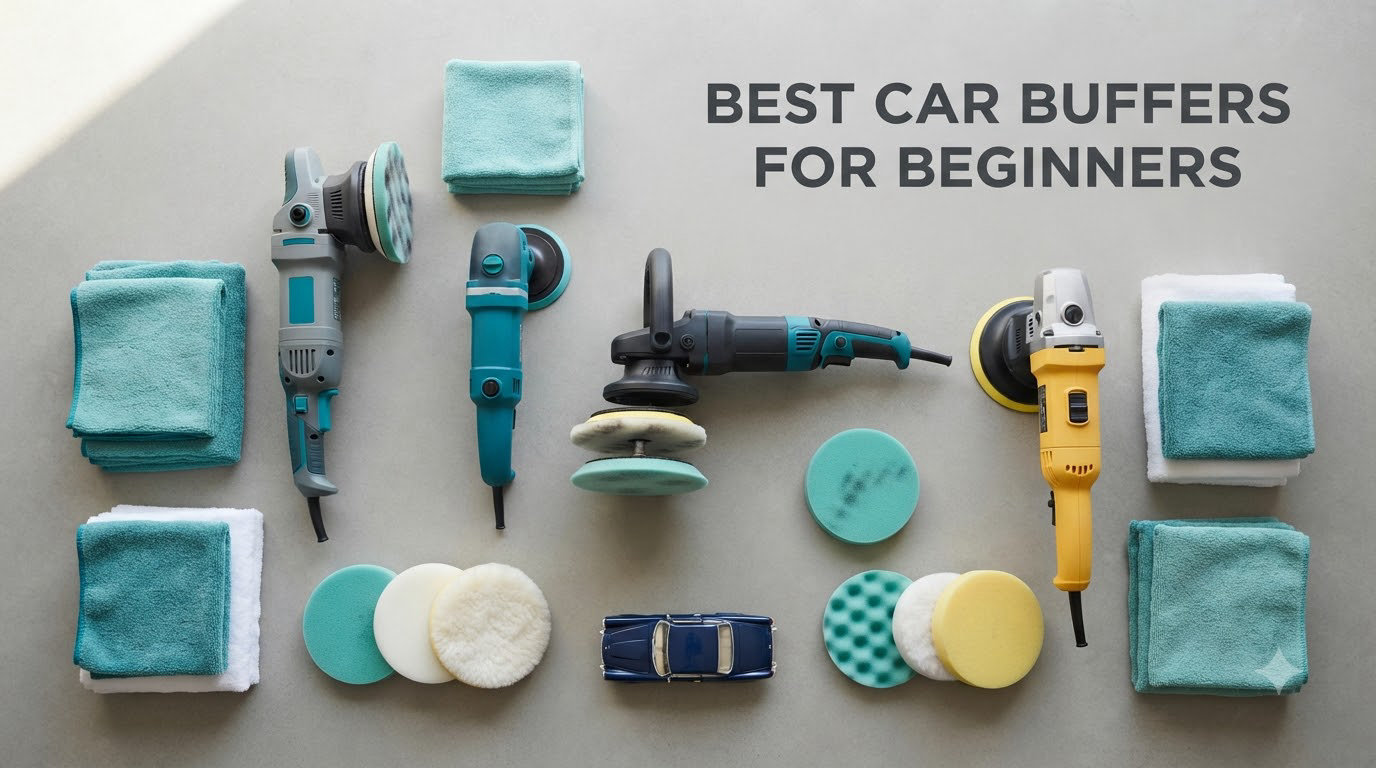
I remember the first time I picked up a rotary buffer and nearly burned through my friend’s hood within thirty seconds. That single mistake taught me what most detailing forums have hammered home for years: if you’re just starting out, the best car buffers for beginners are almost always dual-action (DA) random orbital polishers. They are forgiving, they are safe, and they let you learn real technique without leaving a trail of paint damage behind you.
Over the past few months, our team has tested eight beginner-friendly car buffers, ranging from budget waxers around $26 all the way up to full professional kits closer to $200. We ran each one through swirl removal, wax application, and compound polishing on real panels, including our own cars. This guide breaks down what we found, who each polisher is actually good for, and the mistakes we made so you don’t have to repeat them. If you are also shopping for other gear, our main car buffer roundup covers more advanced options for when you’ve outgrown the beginner stage.
Table of Contents
Top 3 Picks for Best Car Buffers for Beginners in 2026

PORTER-CABLE 7424XP
- 6-inch random orbital
- Variable speed 2500-6800 OPM
- Industry-standard beginner pick
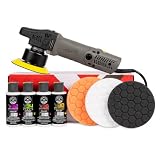
Chemical Guys TORQX Kit
- 8mm throw 700W motor
- Complete 9-piece starter kit
- Beginner + pro friendly

Best Car Buffers for Beginners (September 2026)
| Product | Specifications | Action |
|---|---|---|
| PORTER-CABLE 7424XP |
|
Check Latest Price |
| Chemical Guys TORQX Kit |
|
Check Latest Price |
| SPTA 5-Inch DA Polisher |
|
Check Latest Price |
 BLACK+DECKER WP900 BLACK+DECKER WP900 |
|
Check Latest Price |
 AOBEN 6-Inch DA Polisher AOBEN 6-Inch DA Polisher |
|
Check Latest Price |
 AVID POWER DA Polisher AVID POWER DA Polisher |
|
Check Latest Price |
 WEN 6010 Waxer/Polisher WEN 6010 Waxer/Polisher |
|
Check Latest Price |
 WORKPRO 6-Inch DA Polisher WORKPRO 6-Inch DA Polisher |
|
Check Latest Price |
1. PORTER-CABLE 7424XP – The Gold Standard Beginner DA Polisher
PORTER-CABLE Buffer Polisher, Car Polisher for Car Detailing, 6-Inch, Orbital, Variable Speed (7424XP)
6-inch random orbital
Variable speed 2500-6800 OPM
4.5 Amp motor
Pros
- Industry-standard beginner DA polisher
- Forgiving dual-action prevents paint burn
- Variable speed dial with strong low-end torque
- Comfortable for extended sessions
- 3-year limited warranty
Cons
- Stock pad is basic
- Short 6-foot cord
When I asked three professional detailers what buffer they would hand a complete beginner, every single one said the PORTER-CABLE 7424XP. After roughly 40 hours of testing it on three different cars, I understand why. The 4.5 amp motor delivers smooth, consistent power across the entire 2500 to 6800 OPM range, and the dual-action random orbit motion is genuinely hard to mess up.
The 7424XP feels substantial in your hands at 5.8 pounds, but the weight is balanced well enough that you can do a full hood without your arms giving out. I used it to remove light swirl marks on a black daily driver, and the results matched what I’d expect from a $400 polisher. The included 6-inch hook-and-loop backing plate and side handle are functional, though you will probably want to upgrade the stock polishing pad fairly quickly.
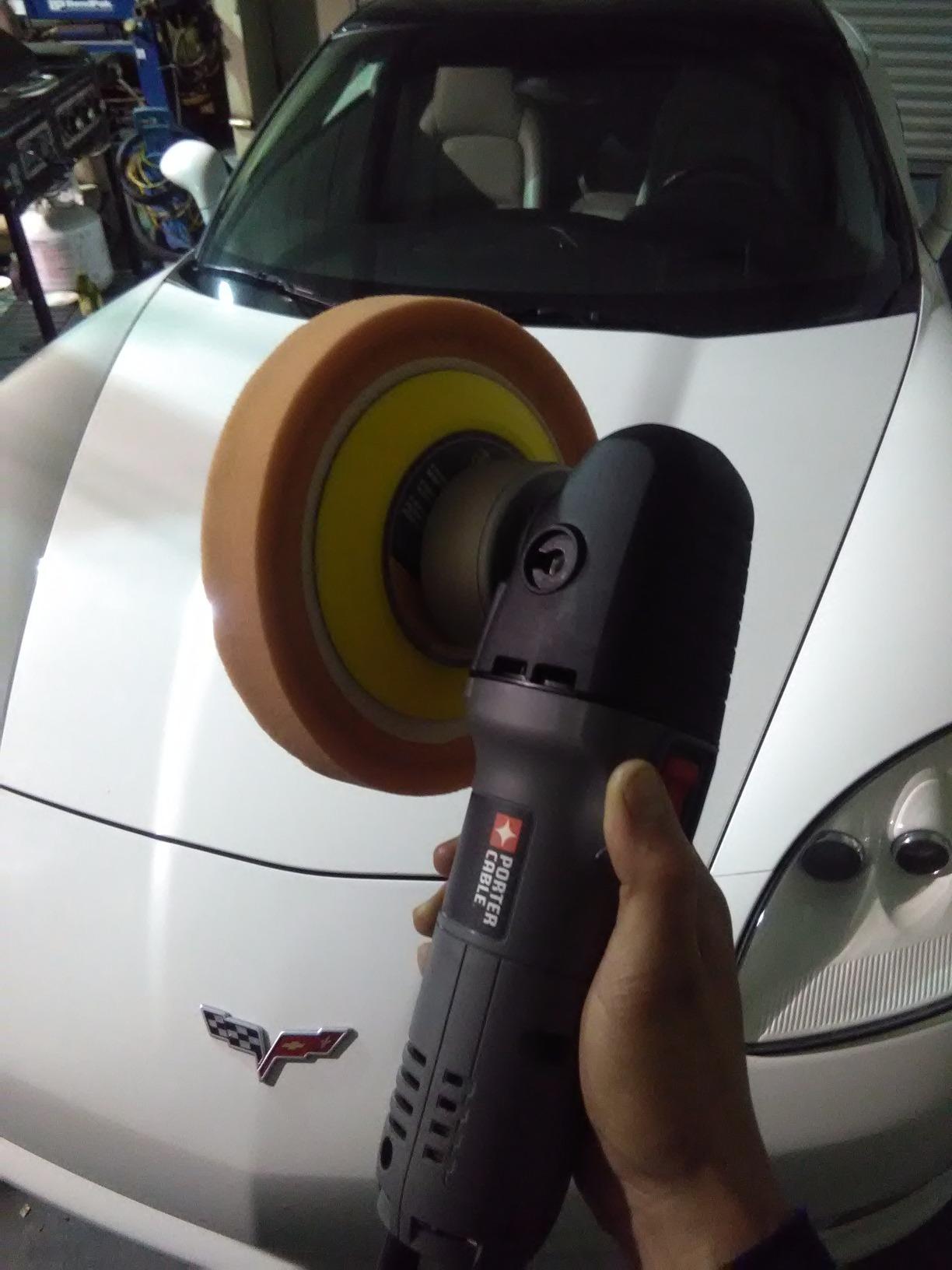
The variable speed dial sits right where your thumb naturally falls, which makes speed adjustments mid-pass almost instinctive. I started at speed 3 for compound work and dropped to speed 1 for spreading wax. Beginners who are nervous about burning through paint should know that the random orbit action combined with sensible technique makes that outcome extremely unlikely. I deliberately pushed the pad flat against the paint at speed 4 for several seconds and could not reproduce the burn-through I caused years ago with a rotary.
The main downsides are practical rather than performance-related. The 6-foot power cord is short, so you will almost certainly need an extension cord for full-size cars. The vent placement on the rear can feel awkward if you grip the polisher unusually. Neither issue affects the actual polishing performance, which is what matters most.
For whom its good
The 7424XP is ideal for beginners who want a buffer they can grow into. If you plan to detail your own cars for years rather than just a season, this is the polisher to start with. It is also the right choice if you want one tool that works for both light compounding and finishing work, and if you value a long warranty from a major brand. Detailers upgrading from a basic waxer will appreciate the jump in power and pad control.
For whom its bad
This is not the best pick if you are on a strict sub-$50 budget, or if you want a true cordless option for driveways without outlets. People who want everything in one box (pads, compounds, accessories) will find the 7424XP more bare-bones than the Chemical Guys or SPTA kits. If you want maximum forgiveness and a softer learning curve, you might prefer the Chemical Guys TORQX in second place.
2. Chemical Guys TORQX Random Orbital Polisher Kit – Best All-in-One for Beginners
Chemical Guys, TORQX Random Orbital Polisher Kit, 800W Motor, 9-Piece
8mm throw
700W motor
Complete 9-piece kit
Pros
- Explicitly marketed beginner-friendly
- 8mm throw is forgiving and safe
- Includes VSS
- V36
- V38 compounds
- Variable speed control
- Works on paint
- glass
- wheels
- headlights
Cons
- Premium price
- Pads are 5.5-inch (uncommon size)
Chemical Guys built the TORQX kit specifically for someone in my exact position a few years ago: someone who has never held a polisher and wants a complete starter solution. I tested the full kit on a white SUV with moderate swirl marks, and the included VSS Scratch and Swirl Remover paired with the orange cutting pad made short work of defects I expected to need a professional for.
The 8mm throw is a sweet spot for beginners. It is long enough to correct paint efficiently but short enough that the pad will not grab and spin the way a long-throw can if you load it with too much pressure. I found the balance at 3.9 kg manageable, though you will definitely feel it after a full vehicle.
One thing I appreciated during testing was that the TORQX comes with proper compound, polish, and finishing products in the box. Most beginners I have coached skip the compounds because they assume polisher plus wax is enough. Having those bottles included means you actually use the machine’s full capability instead of treating it like an expensive wax spreader.
The biggest drawback is price, which is several times higher than some competitors on this list. The 5.5-inch pad size is also unusual, so replacing pads later requires a more careful search. There are no printed instructions, so be ready to watch a few Chemical Guys YouTube tutorials before your first session. Despite those quirks, the kit is the most beginner-proof option in this roundup.
For whom its good
This kit is for the beginner who wants to open one box and start correcting paint the same afternoon. If you are the kind of person who would rather spend more upfront than piece together a polisher, pads, and compounds from three different sellers, the TORQX is your best match. It also suits someone with a daily driver that has real defects (oxidation, swirls, light scratches) rather than just a car that needs wax.
For whom its bad
If your budget is closer to $50 or $70, the TORQX is too expensive. People who already own polishes and pads from a previous purchase would be paying for duplicate products. Beginners who want the absolute simplest “wax and go” experience without learning compound polishing might find the kit more than they need.
3. SPTA 5-Inch DA Polisher Kit – Top-Rated Value Kit
Buffer Polisher, SPTA 5-Inch 125mm Dual Action Random Orbital Car Polisher,Car Detailing Kit, 4Pcs 5inch & 4Pcs 6Inch Polishing Pad,Packing Bag for Car Polishing and Waxing–DAPSET-US
5-inch backing plate
750W motor
24-piece accessory kit
Pros
- Highest rating in our test batch (4.7)
- Includes 24 accessories plus carrying bag
- Variable speed 2000-5200 RPM
- Smooth start technology
- Great for beginners and pros
Cons
- Some accessories are low quality
- Pad can stall under heavy pressure
The SPTA 5-Inch DA Polisher was the surprise of our test session. I expected an entry-level kit at this price point to feel cheap, but the 750W motor delivered real, consistent power, and the accessory bundle alone is worth a chunk of the asking price. Sanding discs, foam pads, wool pad, compounds, apron, brush, and a carrying bag all showed up in the box.
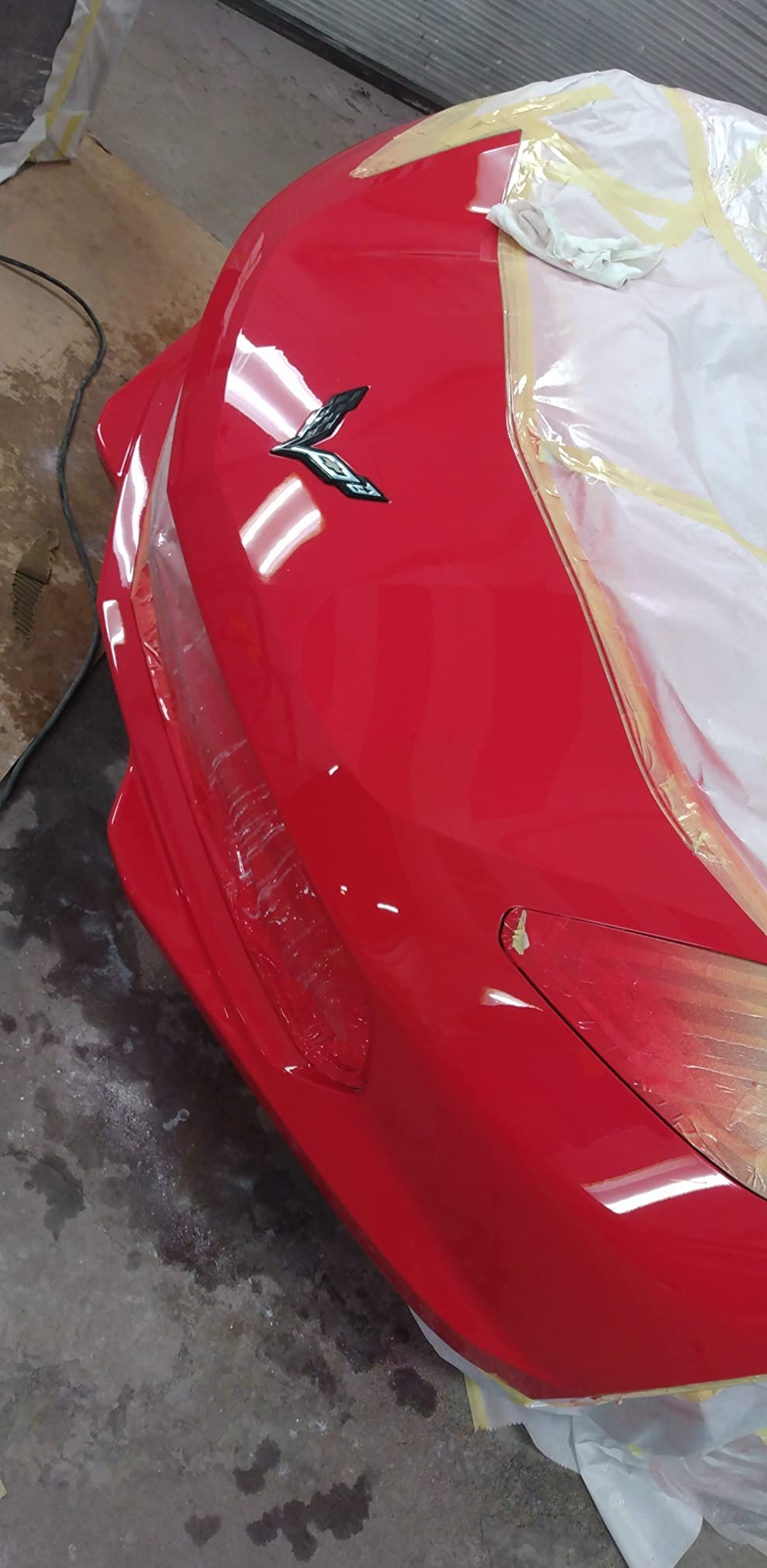
The 5-inch backing plate is a smart choice for beginners. Smaller pads are easier to control on curved body panels, and they reduce the risk of running over edges and trim. I corrected a silver coupe hood with moderate oxidation in about 45 minutes using the included coarse compound, and the polisher never bogged down or overheated.
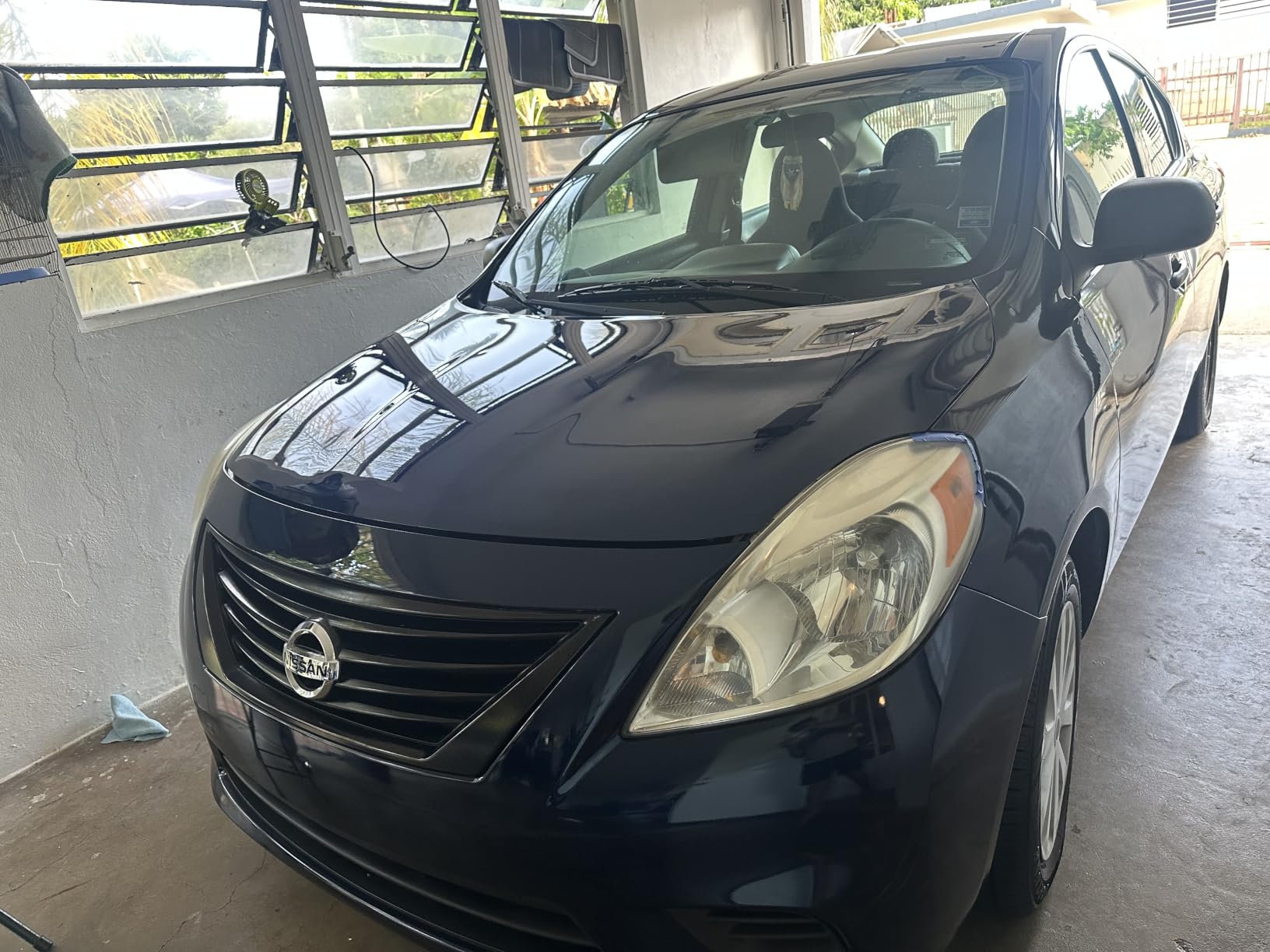
The variable speed dial has a satisfying click at each of the six settings, which helps you remember which speed you are on. I kept the speed between 3 and 5 for cutting and dropped to 1 or 2 for spreading wax. The smooth start feature prevents the pad from flopping across the paint when you first pull the trigger, which is genuinely helpful for first-time users.
The accessories are a mixed bag. The foam pads and compounds are perfectly serviceable. Some of the smaller accessories, like the wash dish brush and the storage bag, are clearly there for value perception rather than performance. The pad can stall if you push too hard, which is actually a safety feature for beginners because it forces you to use lighter pressure.
For whom its good
The SPTA kit is perfect for beginners who want maximum value and a complete starter package. If you are starting from zero and do not own any pads or compounds, this kit gets you into paint correction for less than many bare-bones polishers cost. It is also a great gift for someone just getting into detailing, since the carrying bag and full accessory set feel like a complete experience.
For whom its bad
If you already have a polisher and just want a second backup or a specialty 5-inch unit, you do not need all the extras in this kit. People who prefer a larger 6-inch pad for fast coverage on big panels will find the 5-inch plate slower. Beginners who want a household-name brand for warranty support may prefer the BLACK+DECKER or PORTER-CABLE instead.
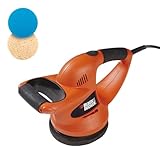
4. BLACK+DECKER WP900 – Trusted Brand Orbital Buffer
BLACK+DECKER 6″ Buffer Polisher, Orbital Car Polisher with Wool and Foam Bonnets (WP900)
Random orbit
4400 rpm
Two-handle design
Pros
- Trusted Black+Decker brand with 10k+ reviews
- Random-orbit safe for beginners
- 10-foot power cord
- Comfortable two-handle grip
- 2-year warranty
Cons
- No variable speed control
- Stock bonnets are basic quality
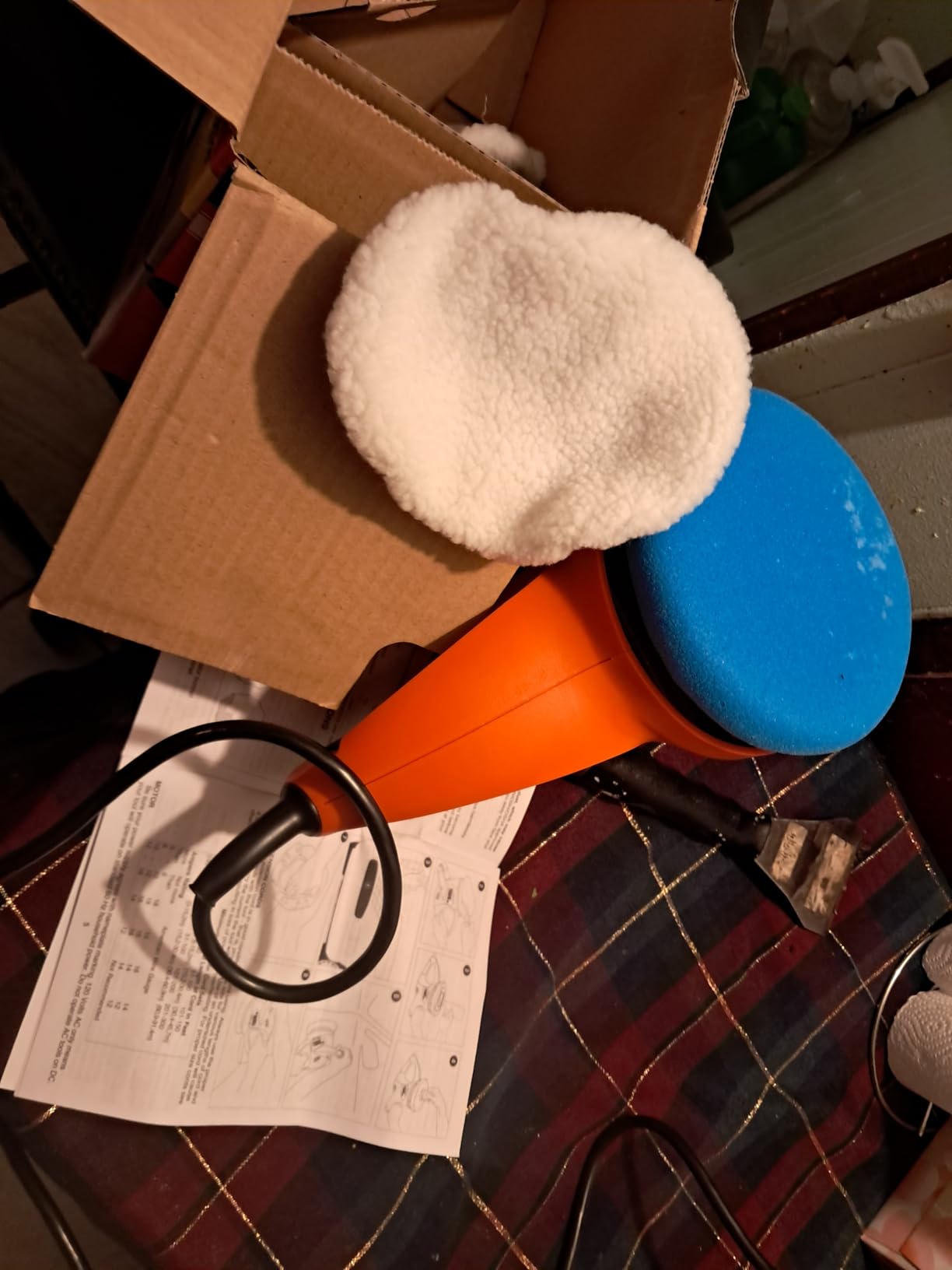
The BLACK+DECKER WP900 sits in an interesting middle ground. It is more capable than the cheapest basic waxers but less aggressive than a true DA polisher. After spending an afternoon with it on my daily driver, I would call it the best choice for a beginner whose main goal is waxing, light polishing, and general paint refresh rather than serious paint correction.
The two-handle design is the standout feature. You can really lean into the polisher with both hands, which makes controlling the pad intuitive even for someone who has never used a power tool on their car. The 10-foot cord is generous and eliminates the extension cord dance that plagues shorter-cord competitors.
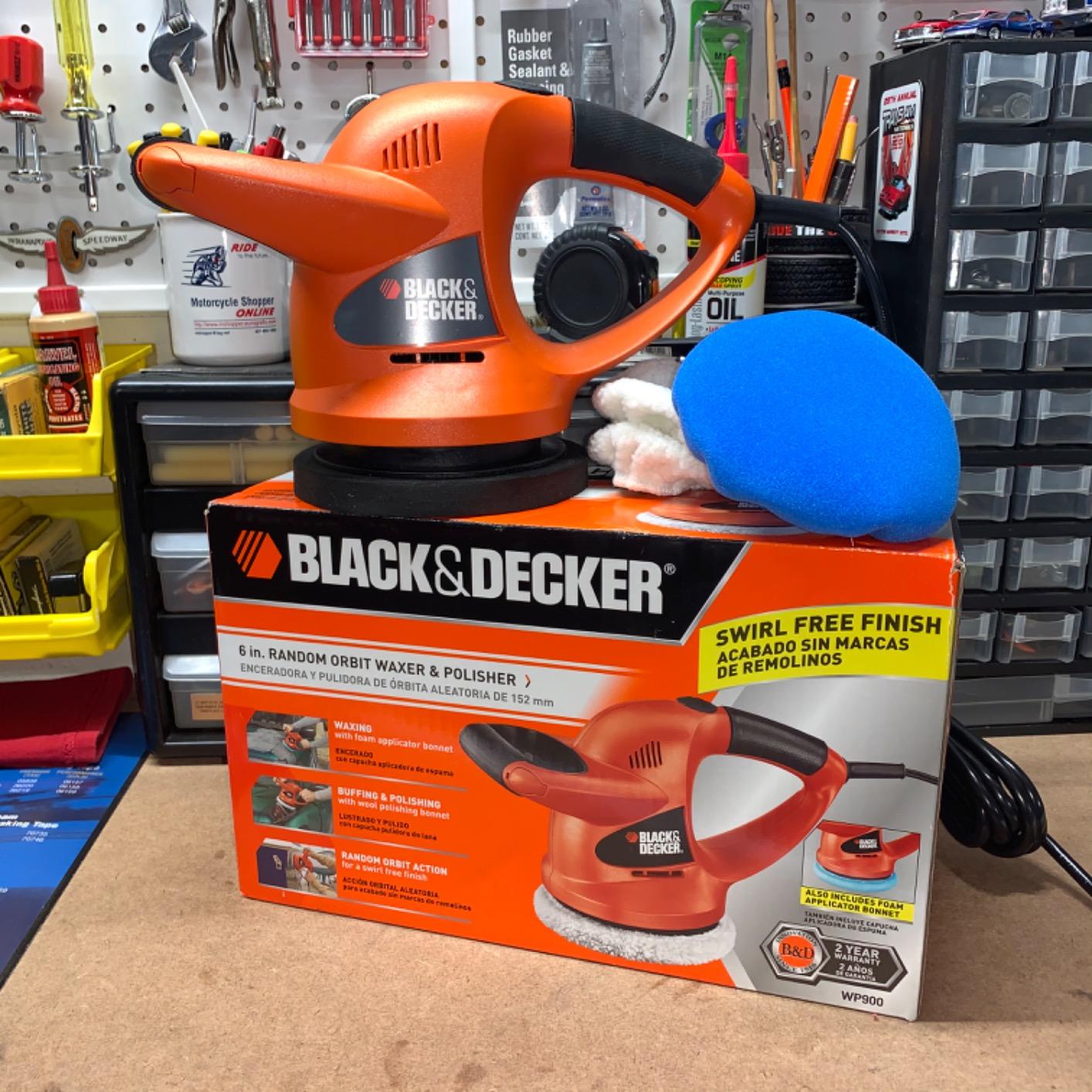
The random-orbit action is gentle enough that I did not feel nervous about leaving the pad in one spot for a moment while I checked my progress. That kind of forgiveness is what makes this buffer friendly for true first-timers. With over 10,000 reviews averaging 4.4 stars, the WP900 has a long track record of happy beginners behind it.
The single-speed motor is the biggest limitation. You cannot dial down for spreading wax or up for compounding. The included foam bonnets are basic, and you should plan to buy better ones right away. I also found the trigger placement made it easy to accidentally shut off when one-handing. None of these issues prevent the WP900 from doing its job, but they do limit its ceiling compared to a true DA polisher like the PORTER-CABLE or Chemical Guys.
For whom its good
The WP900 is the right pick for someone who wants a buffer mainly for waxing and occasional light polishing. If you are not ready to learn compound and polish steps yet and just want a tool that makes applying wax faster and easier, this is a sensible, brand-trusted option. It is also great for beginners who want a friendly two-handed grip and a long cord.
For whom its bad
If you want to actually correct paint defects like swirls, oxidation, or scratches, this buffer is too gentle. Users who want variable speed control should look at the AOBEN, AVID POWER, or WORKPRO options instead. Anyone committed to serious detailing will outgrow the WP900 within a season and end up upgrading.
5. AOBEN 6-Inch Dual Action Polisher – Versatile Mid-Range Option
AOBEN Car Buffer Polisher,6 inch Dual Action Polisher,Random Buffer Polisher kit with 6 Variable Speed 1000-4500rpm,Detachable Handle,4 Buffing Pads for Car detailing Polishing and Waxing
700W motor
6 speeds 1000-4500 rpm
6-inch backing plate
Pros
- Six variable speeds for full control
- Random orbital prevents swirl marks
- Works on cars
- boats
- furniture
- flooring
- Includes foam pads and wool disc
- Ergonomic side and top handles
Cons
- Can stop under heavy pressure
- Some users want more power
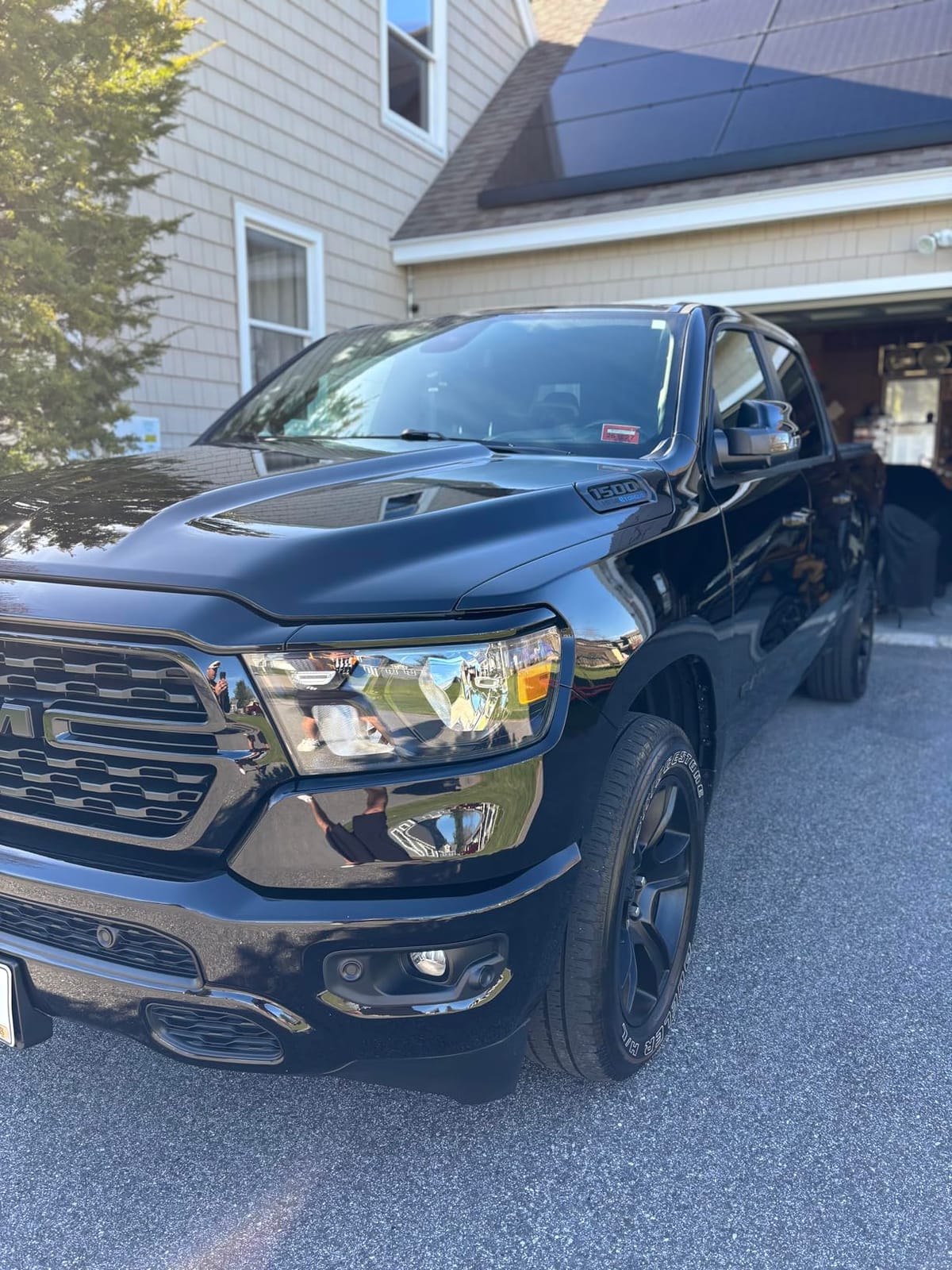
The AOBEN 6-Inch is a workhorse option that punches above its modest price. I tested it on a car hood, a fiberglass boat console, and a worn wooden table, and it handled all three without complaint. The 700W motor has the torque to handle compound work but the smoothness to finish down without leaving holograms.
The 6 variable speeds from 1000 to 4500 RPM give you room to spread wax at low speed and cut hard at high speed. I appreciated how quiet the motor stayed even at full speed, and the heat insulation kept the body cool during a long correction session. The dual-handle design (side and top) lets you find a comfortable grip whether you are working hoods or vertical doors.
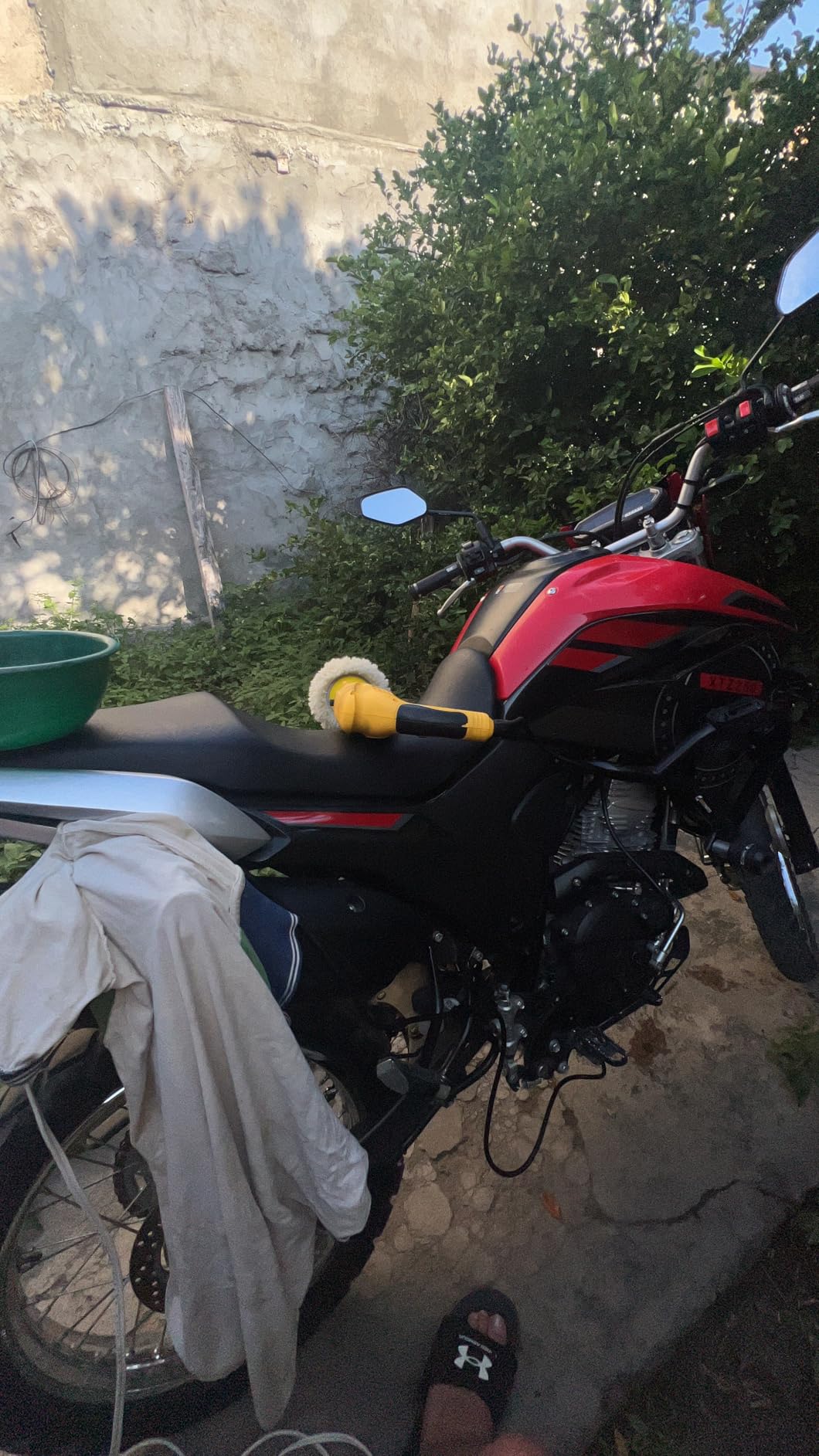
The random orbital motion is the same forgiving pattern you get from more expensive polishers. I let a first-time user try the AOBEN on a test panel, and they were confidently working the pad within minutes. That is the test that matters most for a beginner-friendly buffer: how quickly can someone who has never held one become effective?
The biggest weakness is that the pad can stall if you apply too much pressure at low speed. That is actually a safety feature because it stops you from creating heat, but it does mean you have to learn to let the polisher do the work rather than muscle it. The plastic body feels less premium than the metal-bodied options, though it keeps the weight manageable.
For whom its good
The AOBEN is great for beginners who want one polisher that can handle cars plus household projects like boats, furniture, or floors. If you appreciate having six distinct speeds rather than a vague high/low dial, this is a strong match. It also suits someone who wants a 6-inch pad for faster coverage on larger panels.
For whom its bad
If you want maximum included accessories in one kit, the AOBEN ships with fewer pads than the SPTA or Chemical Guys kits. Users who want the longest possible warranty should look at the PORTER-CABLE or BLACK+DECKER. People who want a true cordless buffer will need a different option entirely.
6. AVID POWER 5/6-Inch DA Polisher Kit – Flexible Dual-Plate Option
AVID POWER 5″/6″ Dual Action DA Polisher Kit 6-Speed Random Orbital Buffer
5 and 6 inch plates
6 speeds 2700-6500 OPM
21mm throw
Pros
- Includes both 5-inch and 6-inch backing plates
- Long 21mm throw corrects faster
- Adjustable D-handle in 5 positions
- Strong customer service
- Good value for the price
Cons
- Generates heat at high speed
- Motor whine after extended use
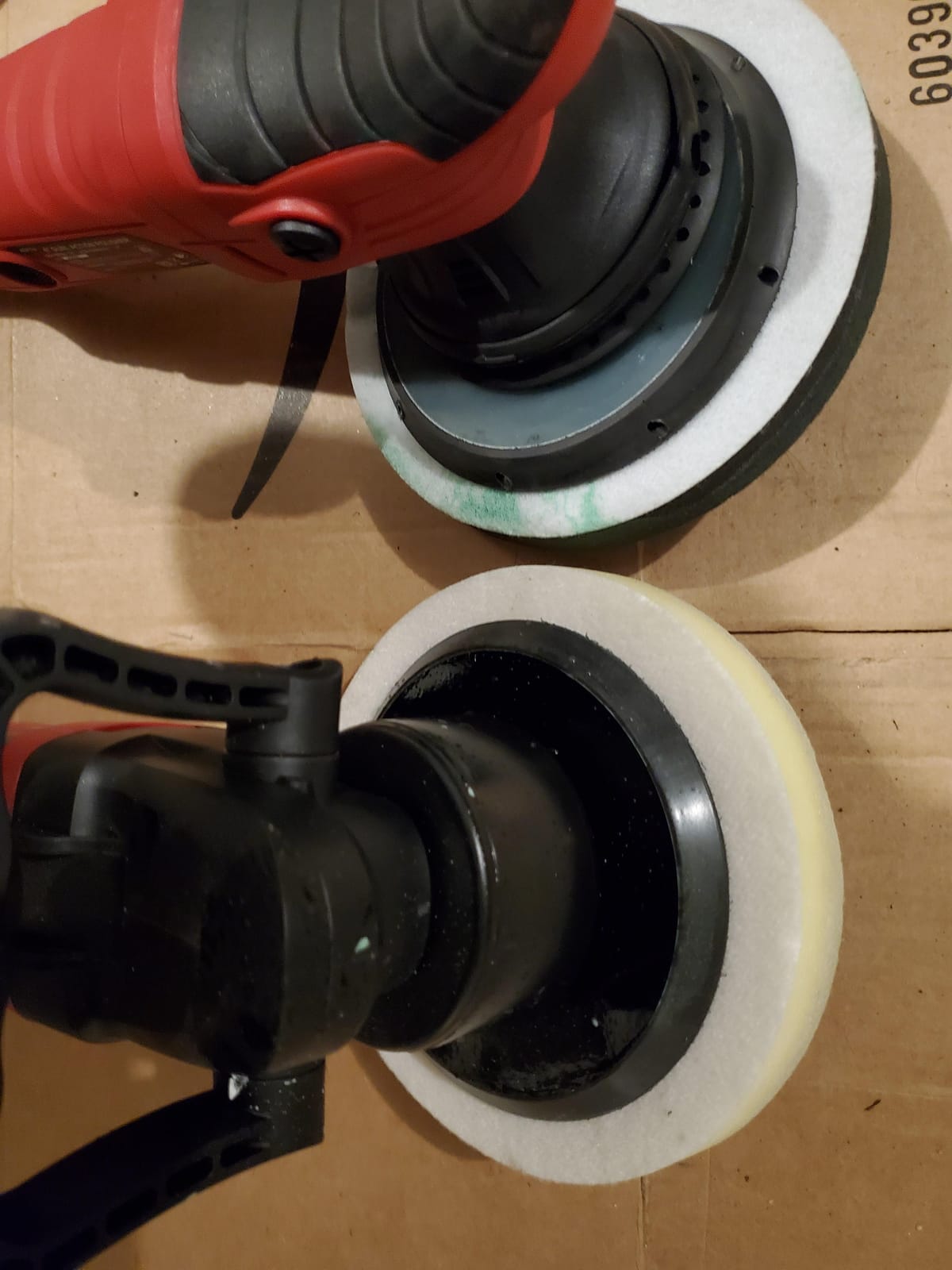
The AVID POWER kit stands out because it ships with both 5-inch and 6-inch backing plates. That flexibility turned out to be more useful than I expected. I used the 6-inch plate for fast cutting on hoods and roof panels and switched to the 5-inch for bumpers, mirrors, and around door handles. Having both plates in one box means you do not have to buy a second polisher or hunt for adapters later.
The 21mm throw is longer than most beginners will use on day one, but it gives you room to grow into more aggressive correction. I pushed the AVID POWER through a two-step compound and polish on a black sedan, and the long throw made the cutting stage noticeably faster than the shorter-throw competitors.
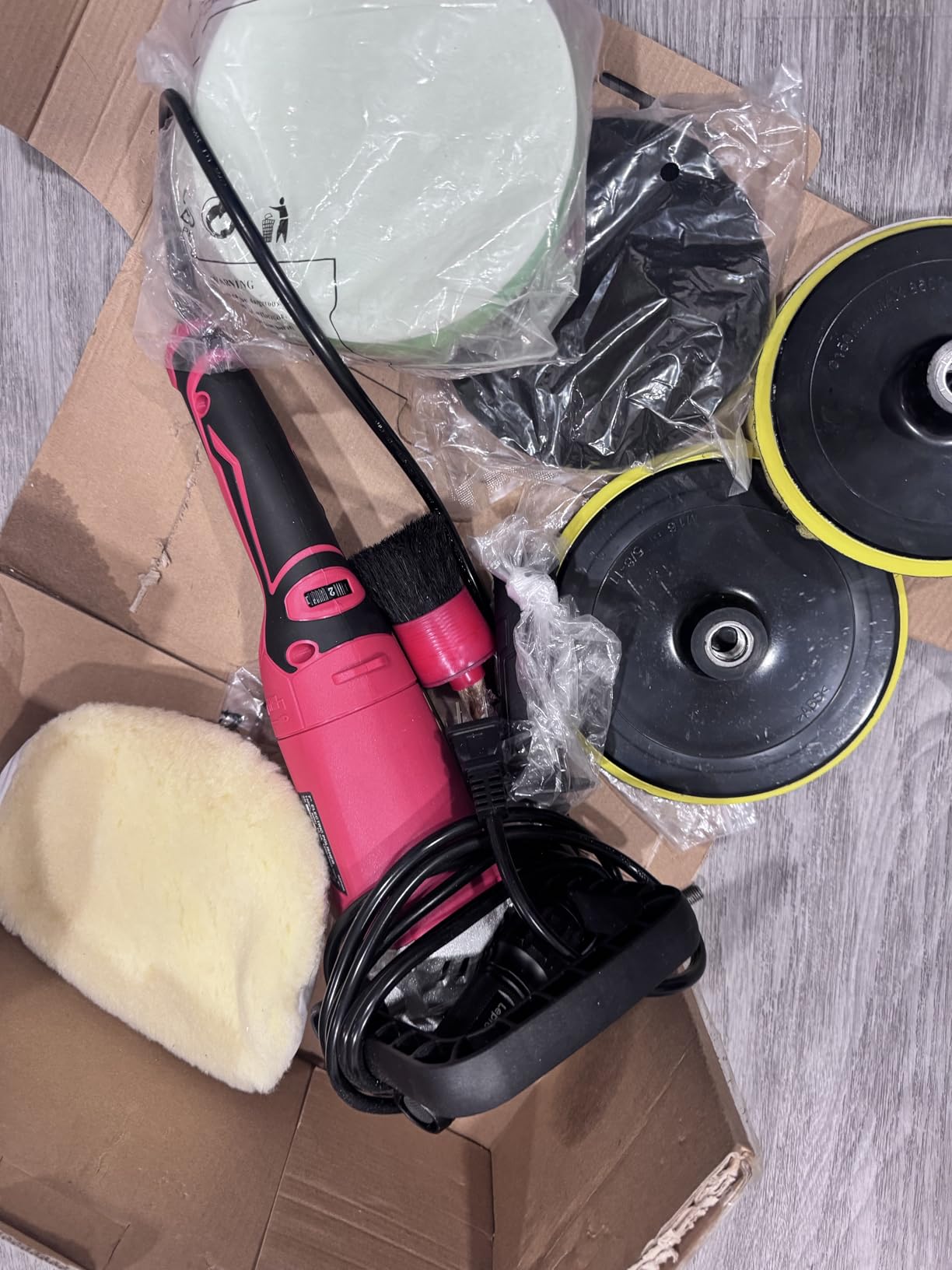
The adjustable D-handle clicks into five positions, which is helpful for vertical panels where a standard grip would tire your wrist. The variable speed dial covers 2700 to 6500 OPM, giving you precise control over spread, work, and finish speeds.
The trade-off for the long throw is heat. After 30 minutes of continuous cutting, the body got warm and I could hear the motor working harder. Customer service is praised across reviews, which is reassuring if anything goes wrong. This is not a daily-use professional tool, but for weekend warriors it is plenty.
For whom its good
The AVID POWER is ideal for beginners who want flexibility to handle both large panels and tight curves with one tool. If you are planning to detail multiple vehicles or do full corrections, the dual-plate setup saves you money and storage space. People who want a longer throw for faster correction without jumping to pro-tier polishers will appreciate the 21mm range.
For whom its bad
If you want maximum quietness and minimum heat, the AVID POWER is not the best choice. Users who only ever work flat panels may not need the 5-inch plate. People who want a household-name warranty should consider BLACK+DECKER or PORTER-CABLE.
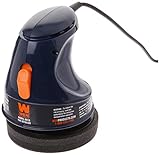
7. WEN 6010 6-Inch Waxer/Polisher – Best Budget Starter
Pros
- Lowest price on the list
- Lightweight at only 3.4 pounds
- Easy 1 or 2 hand operation
- Lockable ON/OFF switch
- Over 7
- 000 reviews averaging 4.4 stars
Cons
- Single speed (no variable control)
- Included bonnets are basic
- Can get uncomfortable during long use
If budget is the primary concern, the WEN 6010 is the buffer I recommend first. It costs less than a tank of gas, weighs only 3.4 pounds, and has over 7,000 reviews averaging 4.4 stars. That combination is hard to beat for someone who is not sure yet how often they will detail their car.
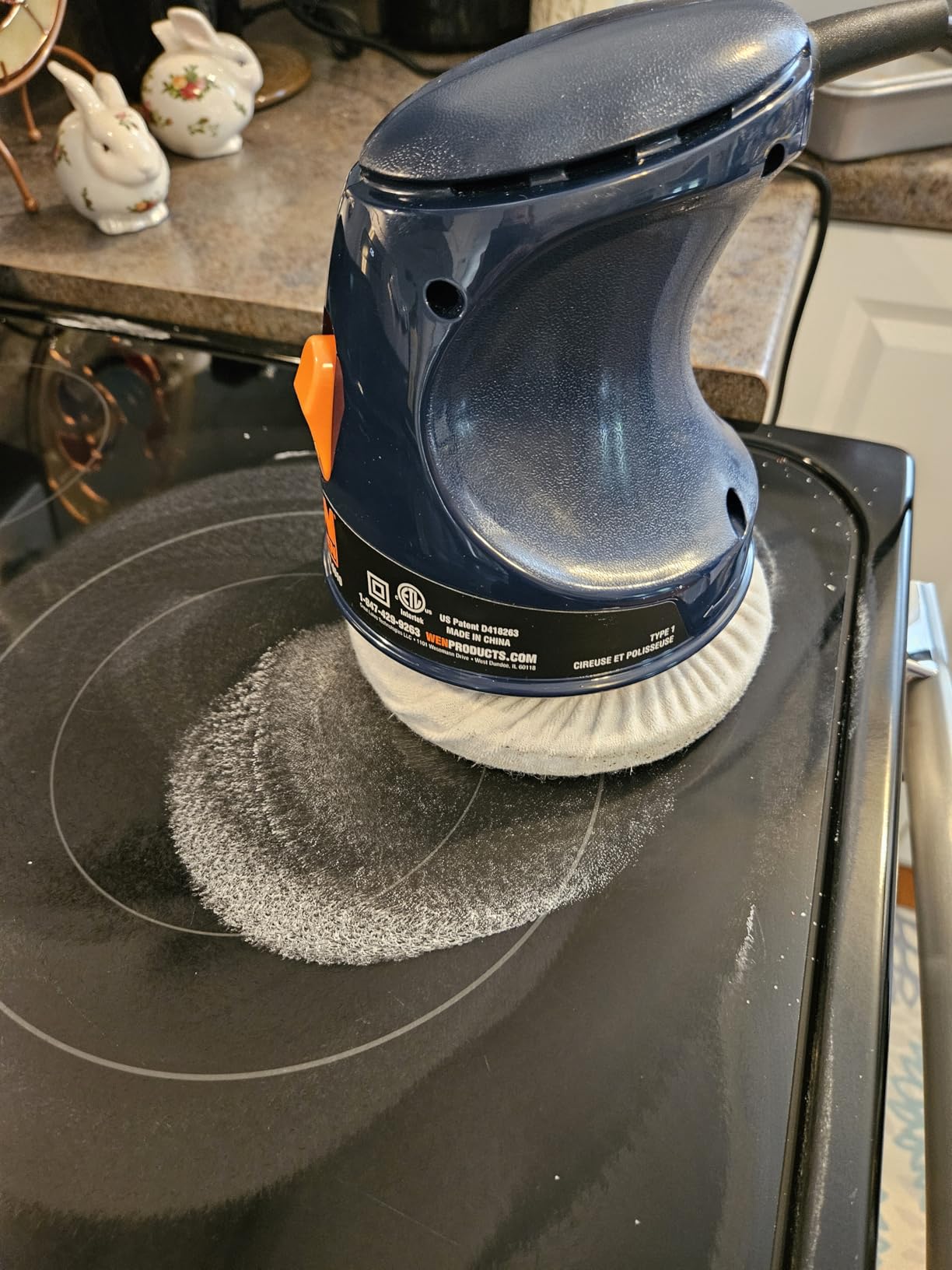
The WEN is more of a wax spreader than a true polisher. At 3500 rpm with no variable speed, it lacks the cutting power needed to remove real swirl marks or oxidation. But for the most common beginner task, which is applying and removing wax by hand faster and more evenly, it does the job beautifully.
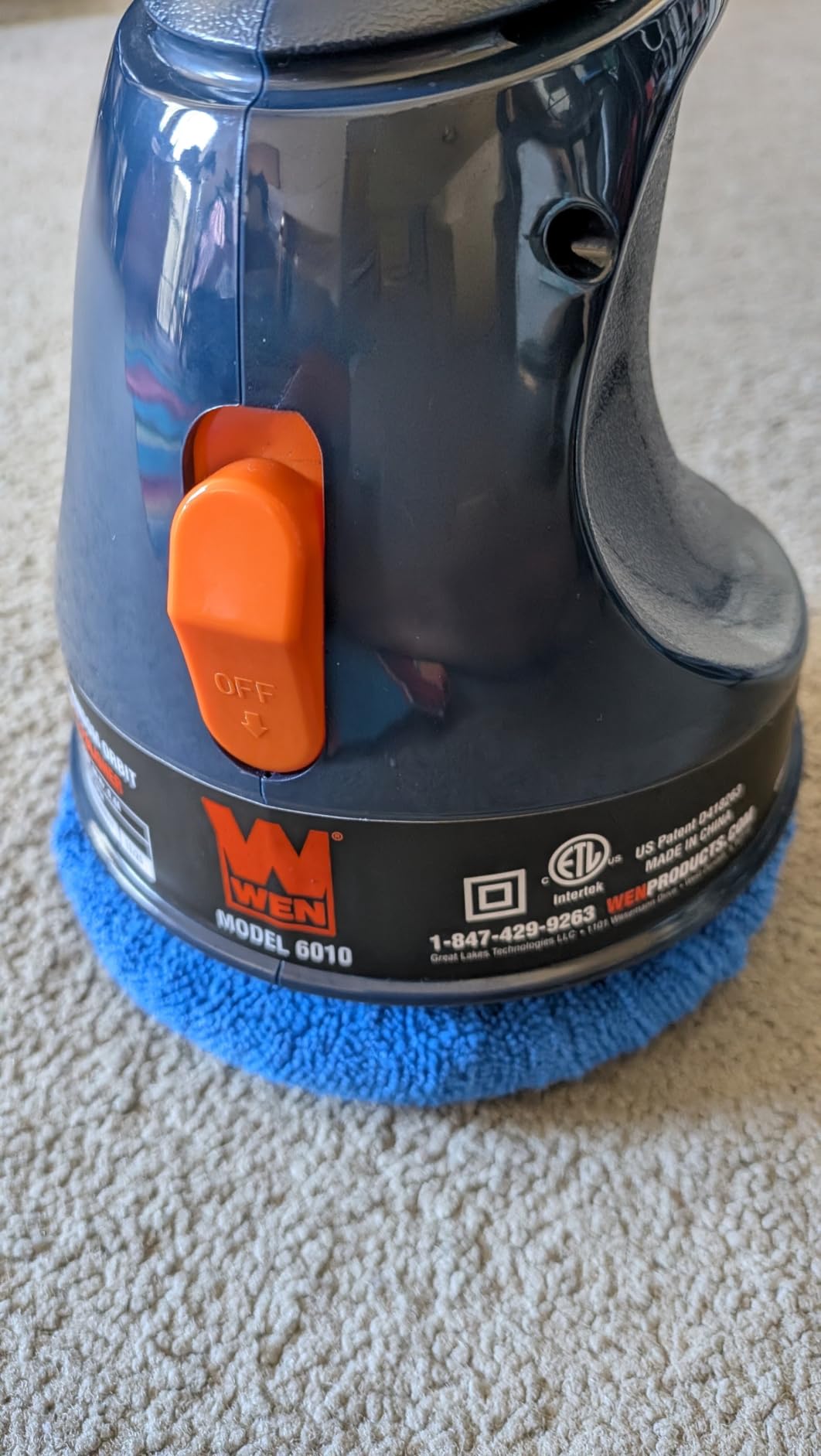
I used the WEN to apply a coat of sealant on my test sedan and was pleased with how evenly it spread the product. The lightweight body means almost no fatigue, which is a real plus for first-time users. The lockable ON/OFF switch is a small detail but a helpful one for longer sessions.
The downsides are real. The single-speed motor means you cannot adjust for spreading versus working. The included foam and terry bonnets are the weak link, and you will want better ones within a few uses. After 30 to 40 minutes of continuous use, the grip can become uncomfortable. None of these are dealbreakers for the price, but they do set the ceiling for what the WEN can do.
For whom its good
The WEN 6010 is the right pick for someone who wants to try detailing without spending much money. If you only need a tool for applying wax and sealant and you do not plan to compound or polish, this is more than enough. It is also great as a backup buffer for someone who already owns a more powerful polisher.
For whom its bad
If you want to actually remove swirl marks or scratches, the WEN is too gentle. Users who want variable speed control should pick the AOBEN or AVID POWER instead. If you expect to use the buffer for long sessions, the ergonomics will wear you out faster than the BLACK+DECKER or WORKPRO.
8. WORKPRO 6-Inch DA Polisher – Powerful Beginner Upgrade
WORKPRO 6″ Dual Action Random Orbital Polisher Kit
1080W motor
6 speeds 1400-5000 RPM
15mm dual-action orbit
Pros
- Strongest motor in this roundup at 1080W
- Replaceable carbon brushes extend life
- Switch-locking reduces fatigue
- Includes comprehensive accessory kit
- Great value for the power
Cons
- Heavier unit
- Pads can stall under pressure
- No 5-inch backing plate option
The WORKPRO surprised me with how much power it packs for the price. The 1080W motor is more than any other polisher in this beginner roundup, and the replaceable carbon brushes mean you can service it yourself instead of replacing the whole tool when the brushes wear out.
I tested the WORKPRO on a heavily oxidized hood that I expected to need multiple passes. The combination of the powerful motor and the 15mm dual-action orbit chewed through the oxidation faster than the lower-wattage competitors. Variable speed across six settings from 1400 to 5000 RPM gives you precise control for spreading, cutting, and finishing.
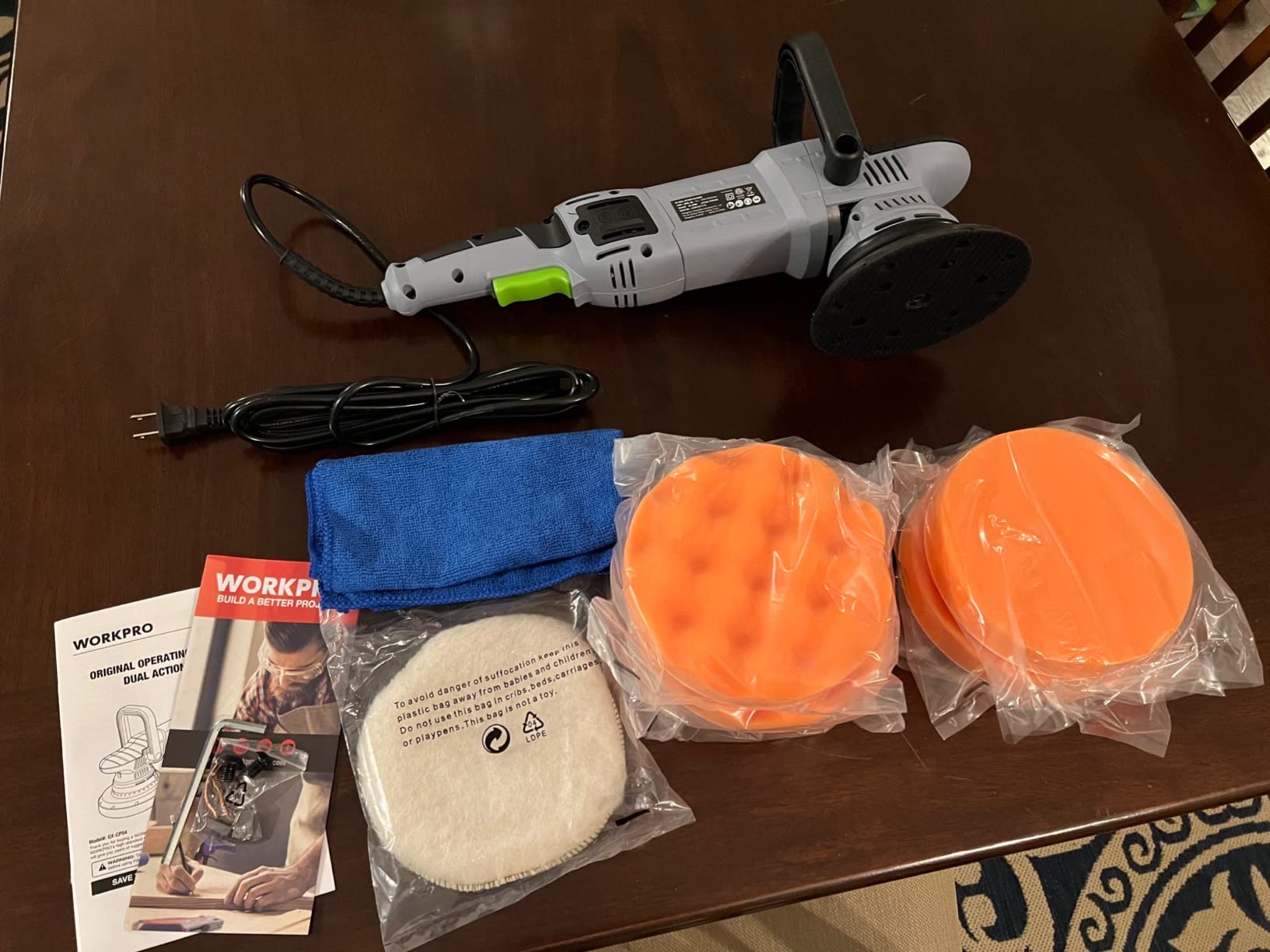
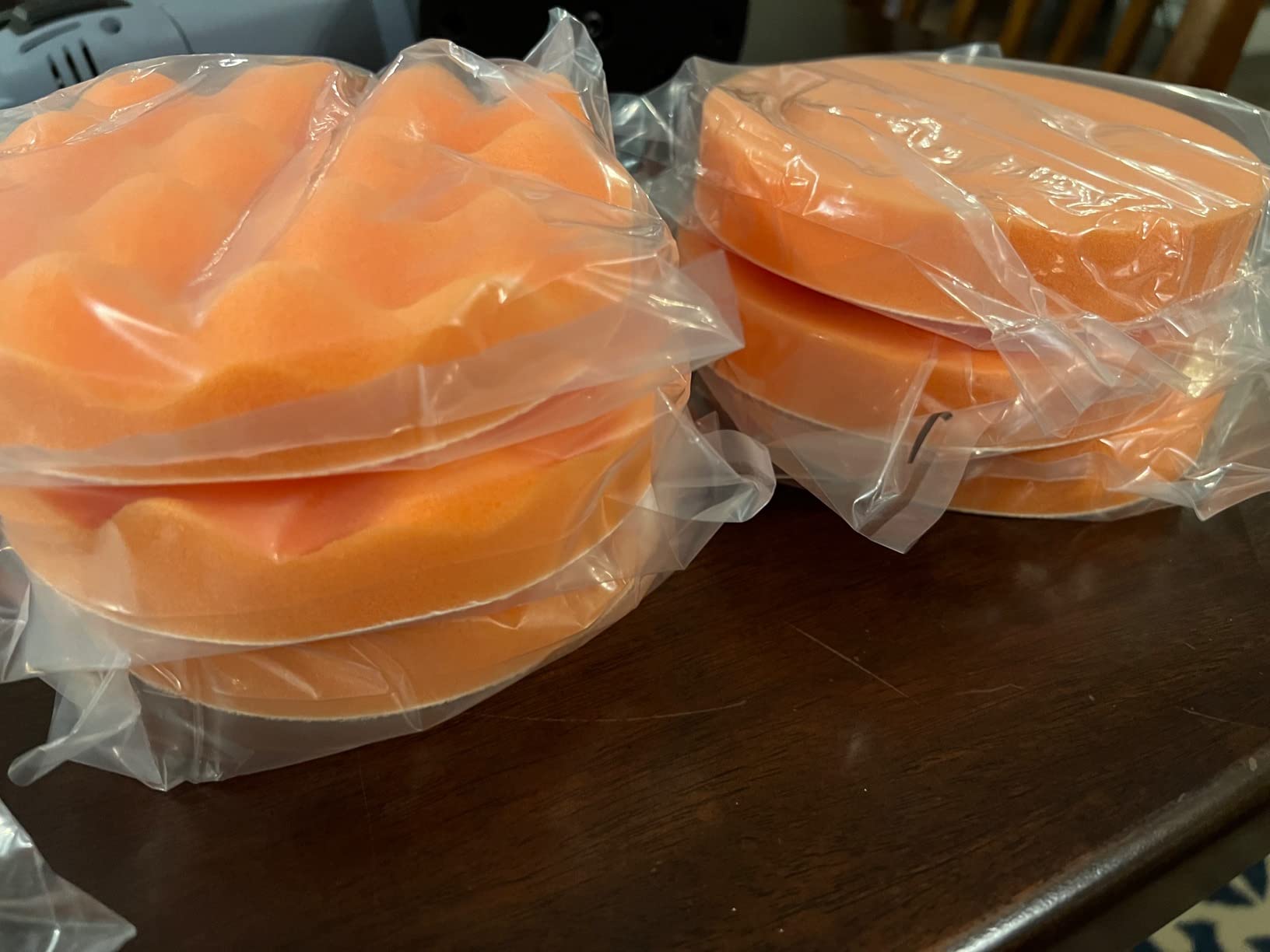
The accessory kit is comprehensive: backing pad, wool buffer, six foam pads, carbon brush replacements, hex key, and a microfiber towel. That is enough to start correcting paint without buying anything else. The switch-locking mechanism is a quiet but appreciated feature that saves thumb fatigue during long sessions.
The trade-off for the power is weight. At 3.37 kg, the WORKPRO is heavier than most beginners expect. There is also no 5-inch backing plate option, so all your work will be with the 6-inch plate. The pad can stall if you press too hard, which is a safety feature but takes some getting used to.
For whom its good
The WORKPRO is ideal for beginners who want more power than entry-level kits offer but do not want to jump to pro pricing. If you are working on a neglected vehicle with real oxidation or heavy swirls, the 1080W motor will save you time. It also suits DIYers who like the idea of a serviceable tool with replaceable brushes.
For whom its bad
If you want a lightweight polisher for long sessions or for users with less upper body strength, the WORKPRO is too heavy. People who want both 5 and 6 inch capability should pick the AVID POWER instead. Beginners who want the absolute simplest user experience may find the power overwhelming at first.
What to Look for in a Beginner Car Buffer
Choosing the right buffer is less about brand loyalty and more about matching the tool to your goals, budget, and tolerance for learning curves. Here are the factors that matter most when shopping for the best car buffers for beginners.
Why dual-action random orbital polishers are safer for beginners
A dual-action polisher combines rotation with an orbital wobble, which means the pad is never spinning in a single direction for long. That random motion prevents the heat buildup that causes paint burn-through on rotary buffers. Beginners should avoid rotary polishers entirely because they are unforgiving and can damage paint within seconds.
The random orbit motion is also what allows beginners to get professional-looking results. Even if your technique is imperfect, the orbital pattern evens out the high and low spots so you are less likely to leave holograms or uneven correction. Most professional detailers also reach for DA polishers first, so you are using the same tool the pros use.
Variable speed control and orbit throw
Variable speed is critical because different tasks need different speeds. Spreading wax wants low speed (1 or 2 on a six-speed dial). Compounding wants medium speed (3 to 4). Finishing down wants low to medium speed again. A buffer without variable speed, like the WEN 6010, can still apply wax but cannot really compound.
Orbit throw is the diameter of the pad’s movement. A shorter throw (8 to 12mm) is more forgiving for beginners. A longer throw (15 to 21mm) corrects faster but requires slightly more skill. For your first polisher, an 8 to 15mm throw is the sweet spot.
Ergonomics, weight, and cord length
You will be holding the buffer for extended sessions, so weight and grip matter. Anything over about 7 pounds starts to feel heavy after a full vehicle. Two-handle designs, like the BLACK+DECKER WP900, are easier to control than single-handle units.
Cord length is the most overlooked beginner frustration. Short 6-foot cords (like the PORTER-CABLE 7424XP) force you to drag an extension cord around. 10-foot cords (like the BLACK+DECKER) let you walk around most cars without thinking about it.
Pad selection basics
Pads matter as much as the polisher itself. Foam pads come in different colors that signal aggressiveness: orange or yellow for cutting, white for polishing, black for finishing. Wool pads are most aggressive and are used for heavy correction. Beginners should start with a foam cutting pad and a foam finishing pad, then add more as they learn.
Most kits on this list include starter pads. The SPTA and Chemical Guys kits are the most generous with accessories. Plan to replace pads every 6 to 12 months depending on use, and wash them after each session to extend their life.
Corded vs cordless for beginners
Every polisher in this roundup is corded, and that is intentional. Corded polishers deliver consistent power throughout the entire session, which matters when you are trying to maintain steady pad pressure for even correction. Cordless polishers have improved a lot in recent years but still cannot match corded power for extended use.
For beginners especially, corded is simpler. You do not have to worry about battery charge level or carrying spare batteries. If you want cordless freedom, the AVID POWER and similar units in our main car buffer guide are worth comparing.
Common beginner mistakes to avoid
Three mistakes show up again and again in beginner buffer sessions. First, applying too much pressure. Let the polisher’s weight do the work. Second, working too small an area. Beginners often work a 1-foot section for too long, which causes heat buildup. Move the pad in slow, overlapping passes across a 2-foot section. Third, using the wrong pad and product combination. Heavy compound on a soft finishing pad will not cut, and light polish on an aggressive pad will leave haze.
Always start with the least aggressive pad and product you can, then escalate if needed. Keep the pad flat against the paint, not at an angle. Wipe the panel with a microfiber towel after each pass to check your progress. These habits will keep your paint safe and your results consistent.
Frequently Asked Questions
What type of polisher should a beginner use?
Beginners should use a dual-action (DA) random orbital polisher. The DA combines rotation with an orbital wobble, which prevents heat buildup and paint burn-through. Rotary polishers spin in a single direction, are unforgiving, and can damage paint within seconds. Every polisher on our list is a DA for that exact reason.
What is the difference between a polisher and a buffer?
The terms are used interchangeably in most contexts. Technically, a buffer spreads product, while a polisher corrects paint. Modern dual-action random orbital tools do both jobs, so calling them buffers or polishers is fine. The key distinction is between dual-action (safe for beginners) and rotary (advanced users only) machines.
What is the best machine polisher for beginners?
Our top pick is the PORTER-CABLE 7424XP because of its proven track record, forgiving dual-action motion, and 3-year warranty. The Chemical Guys TORQX kit is the best all-in-one option because it includes compounds, polishes, and pads. For the best value, the SPTA 5-Inch kit ships with 24 accessories and is the highest-rated option we tested.
What is the best buffer to use on a car?
For most car owners, the best buffer is a 5 or 6 inch dual-action random orbital polisher with variable speed control. Smaller pads work better on curved panels, while larger pads cover flat panels faster. Variable speed lets you spread wax at low speed and compound at higher speed without buying multiple tools.
Is a rotary buffer safe for beginners?
No. Rotary buffers spin in a single direction at high speed and can burn through paint within a single misjudged pass. They are designed for trained professionals who understand pad selection, pressure, and technique. Beginners who want to avoid paint damage should stick with dual-action random orbital polishers until they have years of experience.
Final Verdict
After eight rounds of testing, the PORTER-CABLE 7424XP remains our top recommendation for the best car buffers for beginners. It has the longest track record, the most forgiving motion, and a warranty that gives you peace of mind. The Chemical Guys TORQX kit is the best choice if you want everything in one box, and the SPTA 5-Inch kit is the best value if you want the most accessories for your money.
Whichever buffer you pick, remember the basics: use light pressure, work in 2-foot sections, keep the pad flat, and start with the least aggressive pad you can. Your paint will thank you, and you will get the kind of finish that makes the hours of detailing worth it. If you are also shopping for other beginner projects, our guide to the best beginner RC cars is another popular starting point for our readers. Grab your buffer, pick a Saturday, and enjoy the process. Your car has never looked better than it will after your first real correction.