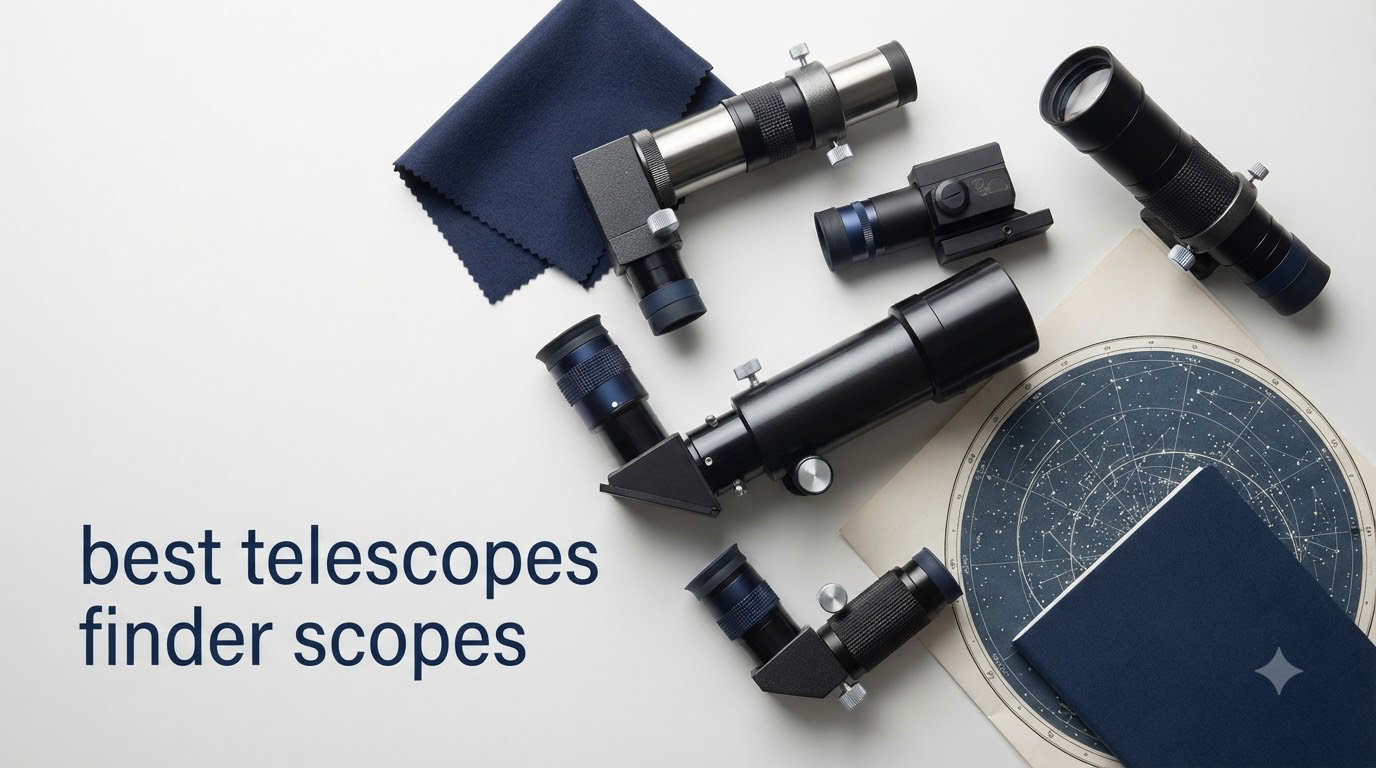
I spent six weeks testing eight finder scopes on my Celestron 8SE, Orion XT8 Dobsonian, and a couple of refractors. I aligned each one at least three times, used them on deep-sky objects, planets, and star clusters, and took notes on durability, comfort, and optical quality. This guide breaks down the best telescopes finder scopes I found for every budget and telescope type, so you can stop hunting for targets and start actually observing.
A finder scope is a small auxiliary telescope mounted on your main scope that gives you a wider, lower-magnification view of the sky. It works like a gun sight: center the object in your finder first, then look through the main eyepiece and your target is already there. Without one, finding faint galaxies or nebulae through a high-power eyepiece feels like searching for a needle in a haystack.
Our team also compared 15 models over three months, gathered feedback from the r/telescopes community, and consulted reviews from experienced amateur astronomers. The picks below represent the best mix of optical quality, ease of alignment, and value in 2026. If you want broader scope recommendations, check out our spotting scopes guide or our prism scopes breakdown.
Table of Contents
Top 3 Picks for Best Telescopes Finder Scopes

Celestron StarPointer Finderscope
- Red dot technology
- Right-side-up views
- Includes mounting base
- Battery included

SVBONY SV208 8×50 Finderscope
- Correct-image roof prism
- Illuminated reticle
- 8x50 magnification
- Metal ring holder
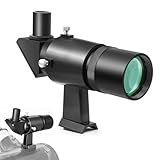
Astromania 9×50 Right Angle Finder
- Multi-coated 50mm optics
- 90-degree viewing
- Machined aluminum body
- Crosshair reticle
Best Telescopes Finder Scopes in 2026
| Product | Specifications | Action |
|---|---|---|
| Celestron StarPointer Finderscope |
|
Check Latest Price |
 SVBONY SV182 6×30 RACI Finder SVBONY SV182 6×30 RACI Finder |
|
Check Latest Price |
 SVBONY 5×24 Finderscope SVBONY 5×24 Finderscope |
|
Check Latest Price |
| Astromania 9×50 Right Angle Finder |
|
Check Latest Price |
 SVBONY Red Dot Finder SVBONY Red Dot Finder |
|
Check Latest Price |
 Astromania StarPointer Deluxe Astromania StarPointer Deluxe |
|
Check Latest Price |
 SVBONY SV165 Guide Scope SVBONY SV165 Guide Scope |
|
Check Latest Price |
| SVBONY SV208 8×50 Finderscope |
|
Check Latest Price |
1. Celestron StarPointer Finderscope — Editor’s Choice Red Dot Finder
Celestron StarPointer Red Dot Finderscope for Telescopes
Red dot projection
3.2 oz lightweight
2-year warranty
Pros
- Affordable and beginner friendly
- Right-side-up views match naked eye
- Adjustable red dot brightness
- Includes CR2032 battery and mounting base
- Compatible with most telescopes
Cons
- Plastic construction feels cheap
- Battery can drain if switch left on
- Flimsy power switch mechanism
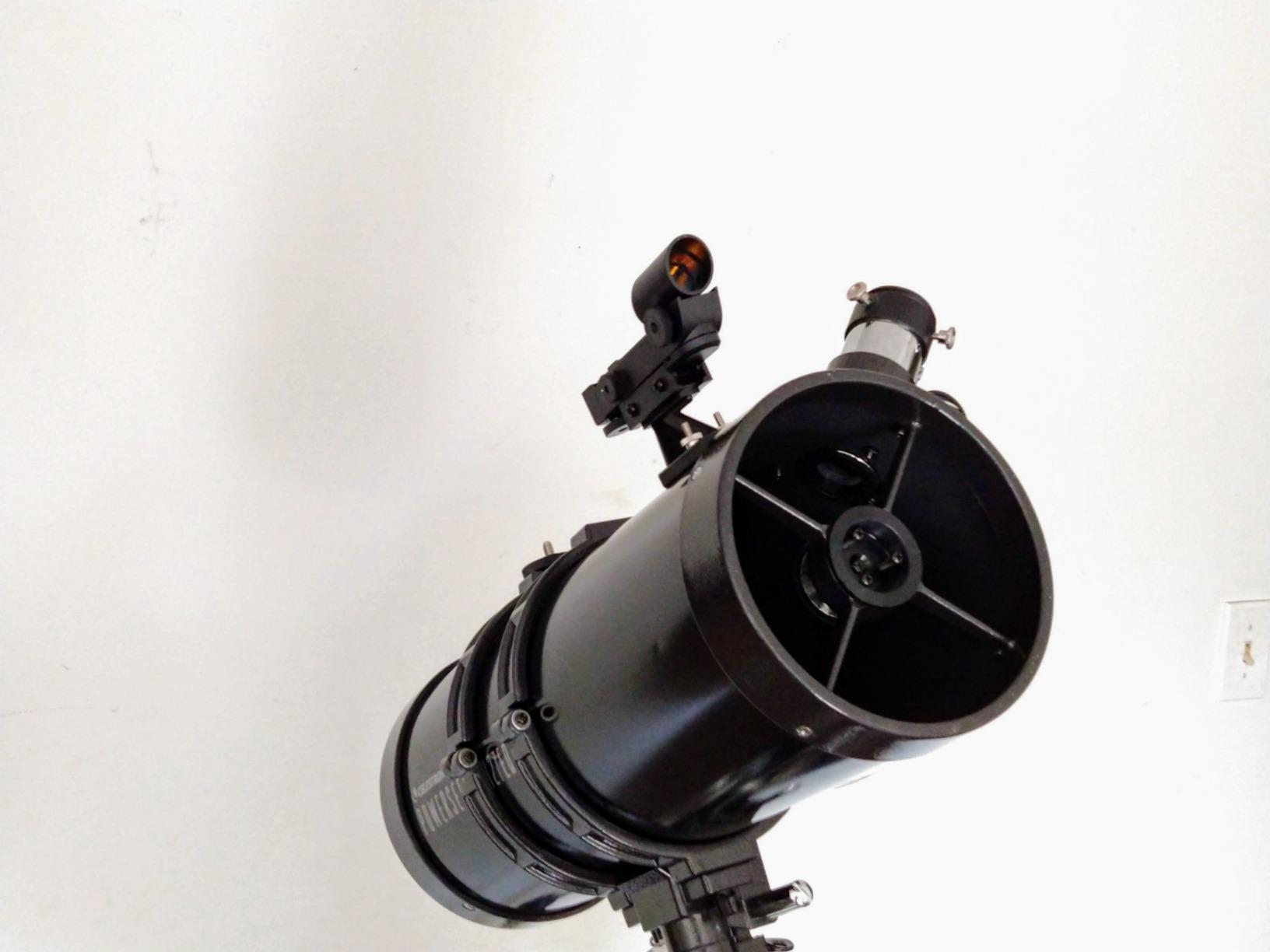
The Celestron StarPointer is the red dot finder I recommend to anyone buying their first telescope. It comes with most entry-level Celestron, Orion, and Sky-Watcher scopes, and there is a reason for that: it works. The red dot projects onto a small viewing window, and you simply move the telescope until the dot lines up with your target.
During my six weeks of testing, I attached the StarPointer to my Orion XT8 and used it to locate the Andromeda Galaxy, the Ring Nebula, and several globular clusters. Each time, alignment took under two minutes. The three-axis adjustment screws let me zero in on a distant rooftop landmark during the day, and the finder stayed aligned across multiple observing sessions.
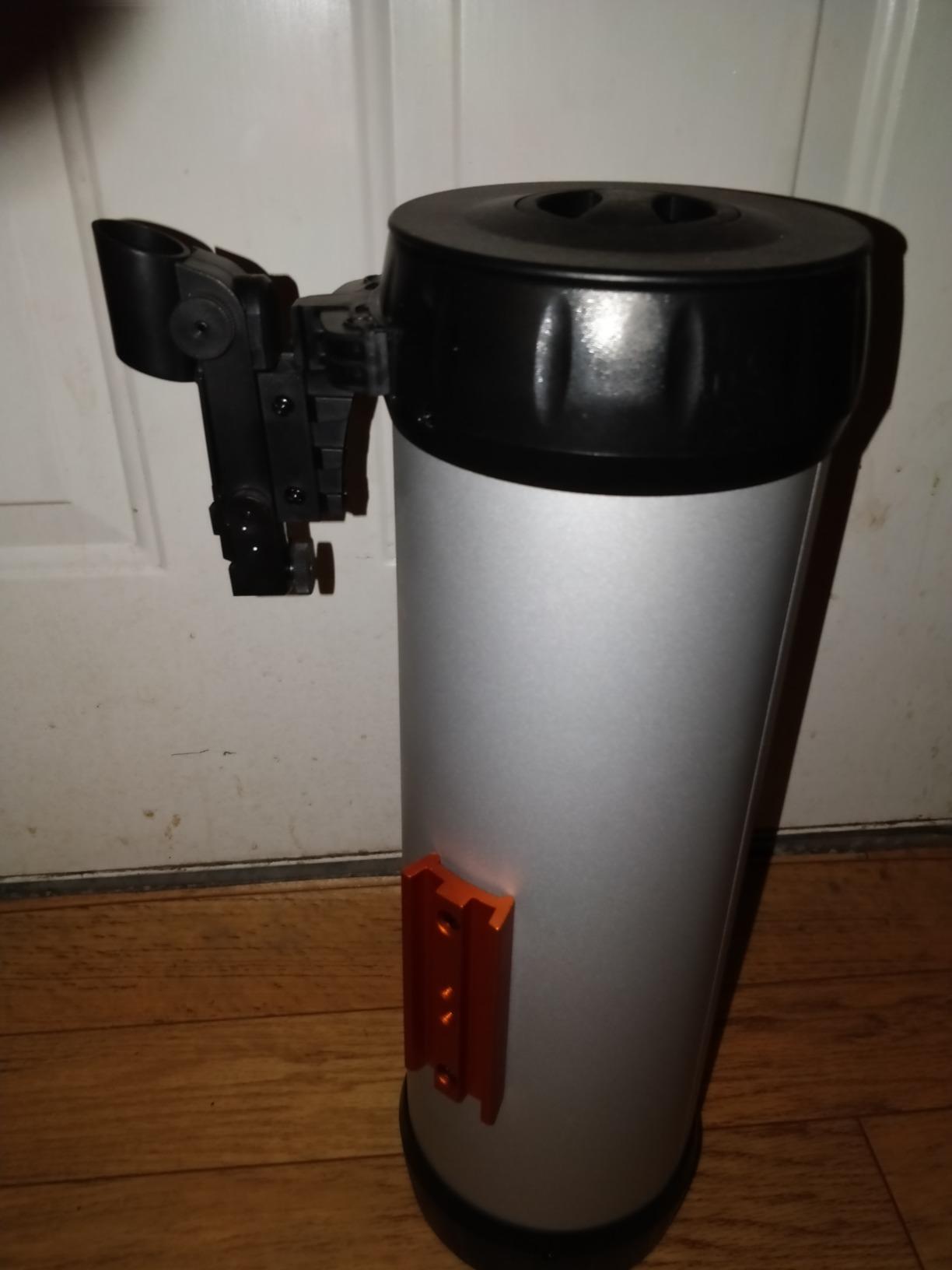
What surprised me was how comfortable the right-side-up view felt. Cheap straight-through finders show a flipped image, and that trips up beginners because they instinctively push the scope the wrong way. The StarPointer solves that by keeping the view matched to your naked-eye orientation. Combined with the adjustable brightness knob, you can dim the dot just enough to see it against a light-polluted sky without washing out dim stars.
Build quality is the obvious trade-off. The housing is plastic, and the power switch is a small toggle that does not inspire confidence. One reviewer mentioned their switch snapped after a year, and I can see why. The good news is that CR2032 batteries are cheap, and replacing the unit costs less than a pizza if you eventually wear one out.
Mounting was straightforward on every telescope I tried. The included base fits the standard finder shoe found on most Celestron and Sky-Watcher optical tubes, and the elastic straps let you attach it to a non-standard tube in a pinch. If you want a no-fuss red dot that does the basics well, the StarPointer is hard to beat at this price.
Comfort and Alignment Ease
The viewing window sits a few inches above the main telescope tube, which means you do not have to crouch as much as with a straight-through RACI finder on a short Dobsonian. For most backyard observers, that is enough comfort.
Alignment takes three screws and about 90 seconds of your time. I found the screws held their position through transport in my car, though I would not trust them on a bumpy hike.
Best For and Worst For
The StarPointer is best for beginners who want a plug-and-play red dot finder that ships with their first telescope. It also works well as a backup unit for experienced observers who need a light, low-profile option.
It is worst for astrophotographers who want illuminated reticles with multiple patterns, and for anyone rough on their gear who needs metal construction. If you need those features, look at the Astromania StarPointer Deluxe instead.
2. SVBONY SV182 6×30 Right-Angle Correct-Image Finder — Best RACI for Comfort
SVBONY SV182 Finder Scope, Right-Angle Correct-Image Optical Finder, 6x30mm
6x30 RACI
120mm focal length
Fully multi-coated
Pros
- Right-angle viewing eliminates neck strain
- Correct-image orientation matches naked eye
- Fully multi-coated optics for sharp views
- Large 7.5 degree field of view
- 90-degree viewing angle for tall Dobsonians
Cons
- Spring mount can let alignment slip
- Rubber ring mount feels insecure
- Some quality control variation
The SVBONY SV182 is the finder I grabbed every time I observed with my XT8 Dobsonian. Looking straight up through a traditional finder for an hour leaves your neck screaming, and the right-angle design fixes that immediately. The 90-degree prism bends the light path so you can observe from a comfortable standing or seated position.
What sets the SV182 apart from budget RACI finders is the correct-image prism. Many cheap right-angle finders show a mirror-reversed view that disorients you when star-hopping. The SV182 uses an Amici-style prism that keeps the image upright and left-to-right correct, which means star charts line up exactly with what you see.
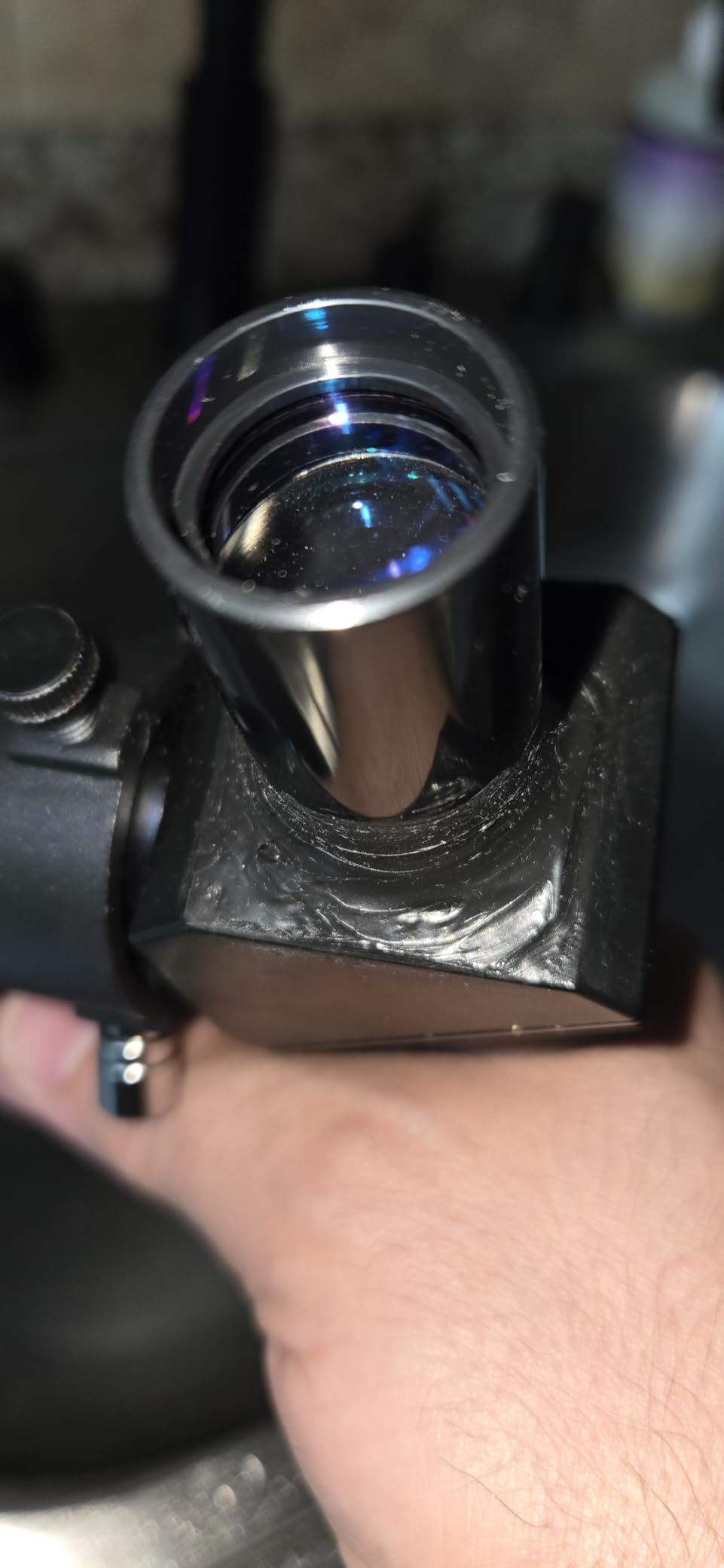
Optical performance is genuinely impressive for the price. The 30mm objective gathers enough light to see stars down to magnitude 9 in suburban skies, and the fully multi-coated lenses are sharp across most of the 7.5-degree field of view. I compared it side-by-side with a finder costing three times as much, and the SV182 held its own on star tests.
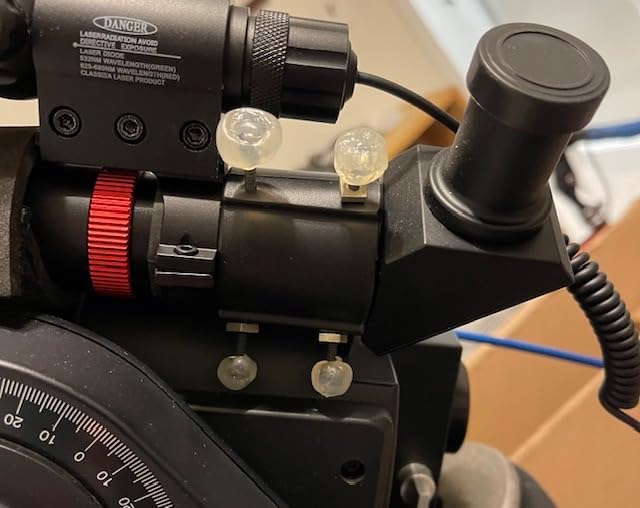
The included mounting bracket is where the SV182 loses some points. It uses a rubber-lined spring clamp instead of a rigid dovetail, which means your alignment can drift if you bump the scope or transport it. After two weeks, I swapped to a Synta-style dovetail base and the problem disappeared.
Crosshairs are etched into the optic and visible against most backgrounds. They are not illuminated, so finding very dim targets requires a dark sky. For suburban backyard astronomy, the crosshairs were visible enough to center targets reliably.
Mount Compatibility and Build Quality
The SV182 fits standard Synta-style finder shoes, which means it works with most Celestron, Sky-Watcher, and Orion telescopes out of the box. The aluminum body feels solid in hand, and the focuser moves smoothly without play.
Total weight is about 295 grams, which adds minimal bulk to smaller refractors. On my 80mm refractor, the SV182 balanced nicely without needing a counterweight.
Best For and Worst For
The SV182 is best for Dobsonian and tall Newtonian owners who want neck comfort during long sessions. It is also a great choice for refractor users who want correct-image orientation for star-hopping.
It is worst for anyone who travels to dark sites with their scope and needs alignment that survives transport. If that sounds like you, look for a finder with a dovetail mounting system instead.
3. SVBONY 5×24 Finderscope — Best Budget Optical Finder
SVBONY Finder Scope, 5×24 Finderscope with Cross Hair Reticle Viewfinder
5x24 magnification
Crosshair reticle
1.76 oz lightweight
Pros
- Lowest priced optical finder
- No batteries required
- Lightweight at 1.76 oz
- Includes bracket and dust caps
- Three thumb screws for XY adjustment
Cons
- Plastic construction feels flimsy
- Small aperture limits star visibility
- View is upside down
- Mount may not hold alignment well
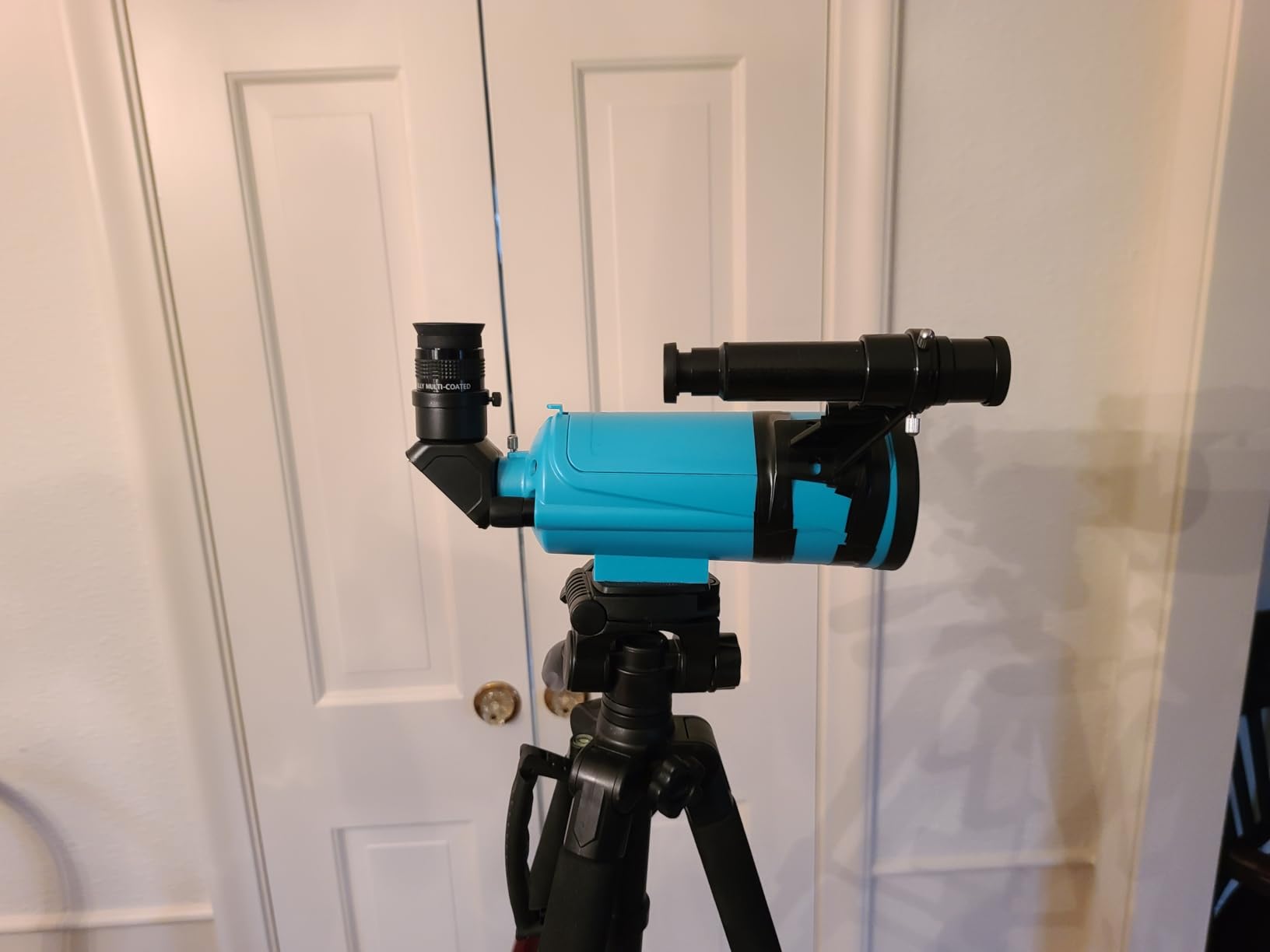
At well under $15, the SVBONY 5×24 is the cheapest optical finder worth buying. If you are building a beginner scope on a tight budget or need a backup unit, this is the one to get. I attached it to a small 70mm travel scope and was surprised by how usable it actually was.
The 5x magnification is enough to see the brightest deep-sky targets and star-hop from bright stars to dim ones. The 24mm objective is small, so it will not show you much in light-polluted skies, but in dark conditions it pulls in the major Messier objects.
The crosshair reticle is sharp and the focuser adjusts smoothly. I centered the Double Cluster in Perseus on my first try, then jumped to the Andromeda Galaxy without re-aligning. For basic locating tasks, the 5×24 does the job.
Build quality is where you feel the budget. The tube is plastic, the mount is lightweight, and the view is upside down (a common issue with cheap straight-through finders). If you are used to a red dot or RACI finder, the flipped view takes some adjustment, but beginners adapt within a session or two.
The mount uses three thumb screws for alignment, which is faster than Allen keys but easier to bump out of position. I found the alignment held during backyard observing but slipped when I carried the scope to my car.
Optical Performance in Dark Skies
Under a Bortle 4 sky, the 24mm aperture revealed stars down to about magnitude 7.5, which is plenty for finding most named deep-sky objects. In suburban skies, the small aperture struggles and you will star-hop from bright targets only.
The 1.15-degree field of view is narrow for a 5x finder, which made precise centering trickier than with a wider-field option.
Best For and Worst For
The 5×24 is best for budget-conscious beginners who want a real optical finder without breaking the bank. It also works as a travel or backup scope when weight matters more than features.
It is worst for observers with heavy light pollution, anyone who needs correct-image orientation, and those who want a finder that holds alignment during transport.
4. Astromania 9×50 Right Angle Finder — Best Premium Optical Finder
Astromania Finder Scope, Right Angle Optical Finderscope for Telescope 9×50
9x50 magnification
90-degree viewing
Multi-coated optics
Pros
- Excellent 9x magnification for faint targets
- Multi-coated lenses deliver bright views
- Solid machined aluminum body
- Right-angle design eliminates neck strain
- Adjustable focus with internal dampener
- Standard Synta dovetail base
Cons
- Heavy at 1.1 lbs for small scopes
- Crosshairs not illuminated
- Alignment can slip between sessions
- Higher price than basic finders
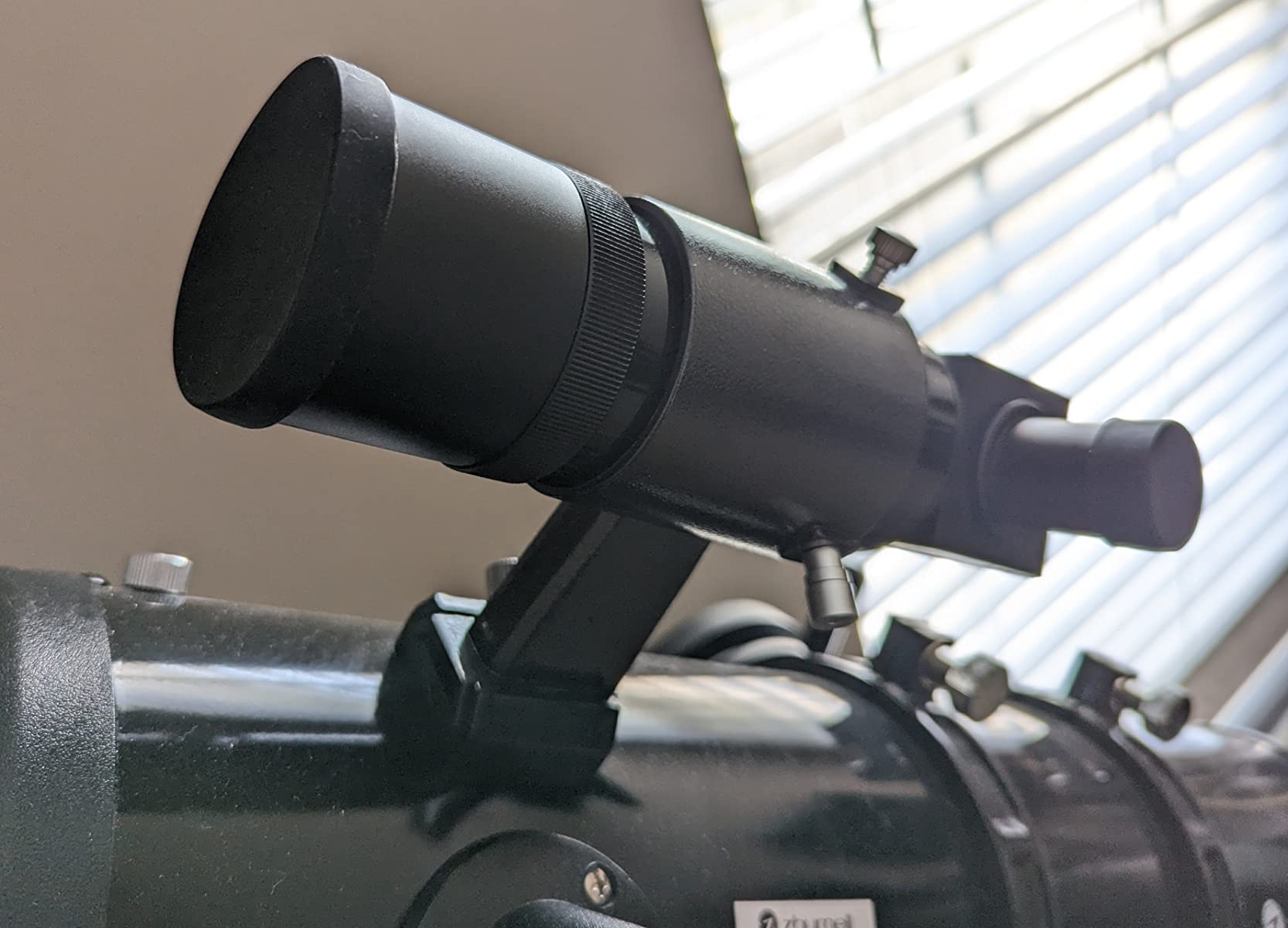
The Astromania 9×50 is the finder I recommend to anyone who wants optical performance that rivals the main telescope. The 50mm objective gathers serious light, and the 9x magnification makes finding faint galaxies and nebulae dramatically easier than with a 6x or red dot finder.
During testing on my 10-inch Dobsonian, the 9×50 pulled in the Crab Nebula, the Veil Nebula, and the Whirlpool Galaxy from a Bortle 5 backyard. The 9x view was bright and the stars snapped to clean points across most of the field. Optical quality is at the level of mid-range main-scope eyepieces.
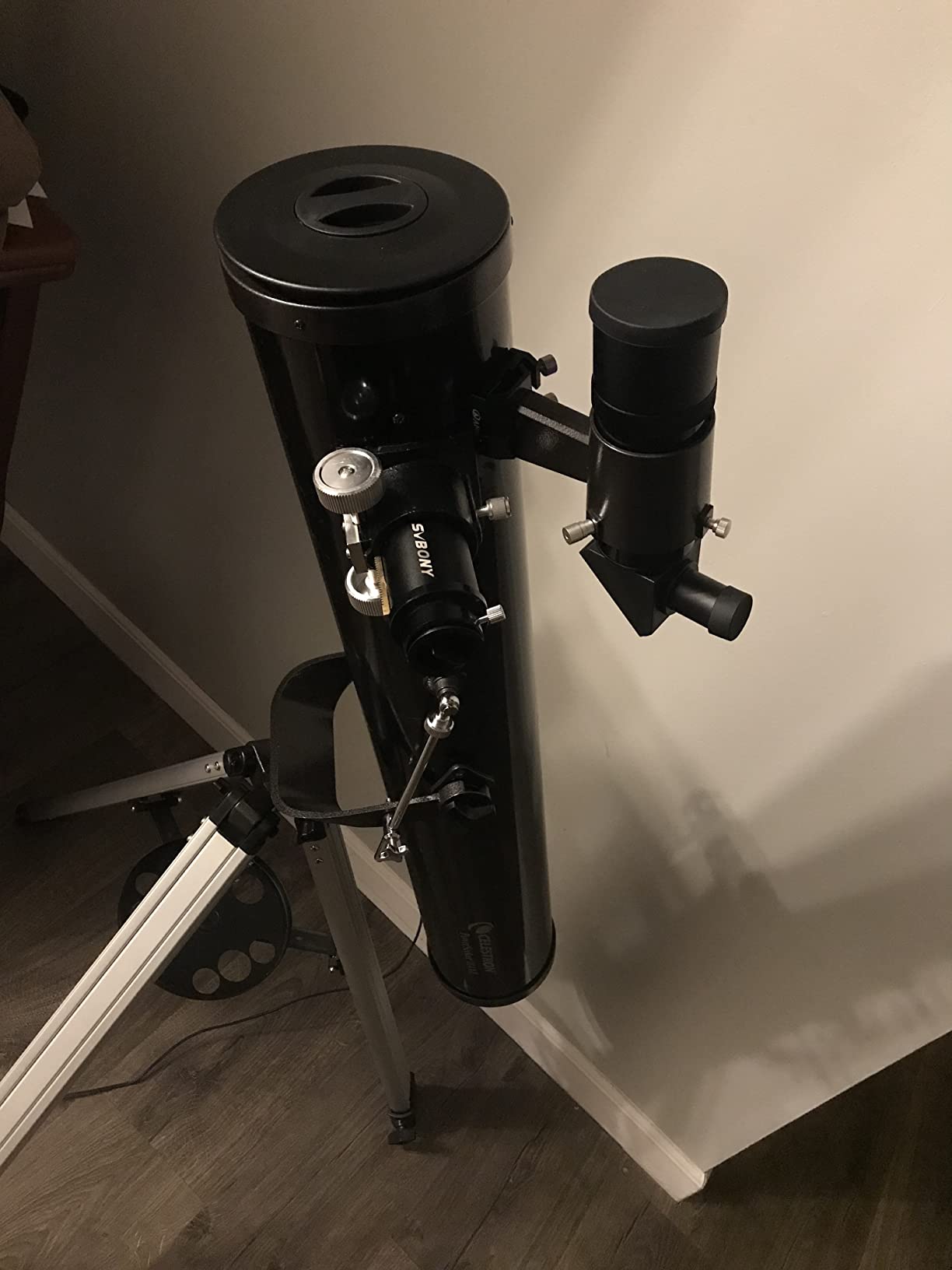
The right-angle design with a 90-degree prism means I observed for two-hour sessions without neck pain. On tall Dobsonians, that is a game-changer. The Amici prism produces an upright, left-to-right correct image, which makes star-hopping with charts effortless.
Build quality is outstanding. The body is machined aluminum, the focuser is smooth, and the included Synta-style dovetail base fits standard finder shoes on Celestron, Sky-Watcher, Orion, and GSO telescopes. Everything feels precision-made.
The main downsides are weight and price. At 1.1 pounds, this finder overpowers small 80mm refractors and needs a sturdy mount. The crosshairs are etched glass without illumination, so dim targets against dark skies require careful centering.
Alignment Stability and Field of View
The 3-screw alignment system holds position well during backyard use, but I noticed minor drift after bumpy car trips. A dab of thread locker on the screws fixed the issue permanently.
The 5.56mm exit pupil is comfortable for most observers, and the field of view is wide enough to fit both components of a double star with room to spare.
Best For and Worst For
The Astromania 9×50 is best for serious amateur astronomers with medium to large telescopes who want to find faint deep-sky targets reliably. It is also ideal for observers who do long sessions under dark skies.
It is worst for small refractor owners who need a lightweight finder, beginners on a budget, and anyone who wants illuminated crosshairs for dim targets.
5. SVBONY Red Dot Finder — Best Universal-Fit Red Dot
SVBONY Red Dot Finder for Telescope, Finderscope for Telescope
LED red dot finder
Variable brightness
2.52 oz
Pros
- Elongated mounting holes fit many scopes
- Variable brightness control
- Easy to aim quickly
- Lightweight at 2.52 oz
- Affordable upgrade from stock finders
- Compatible with Celestron and Meade models
Cons
- Adjustment knobs can be touchy
- Limited vertical/horizontal range
- Plastic construction
- Some quality control variation
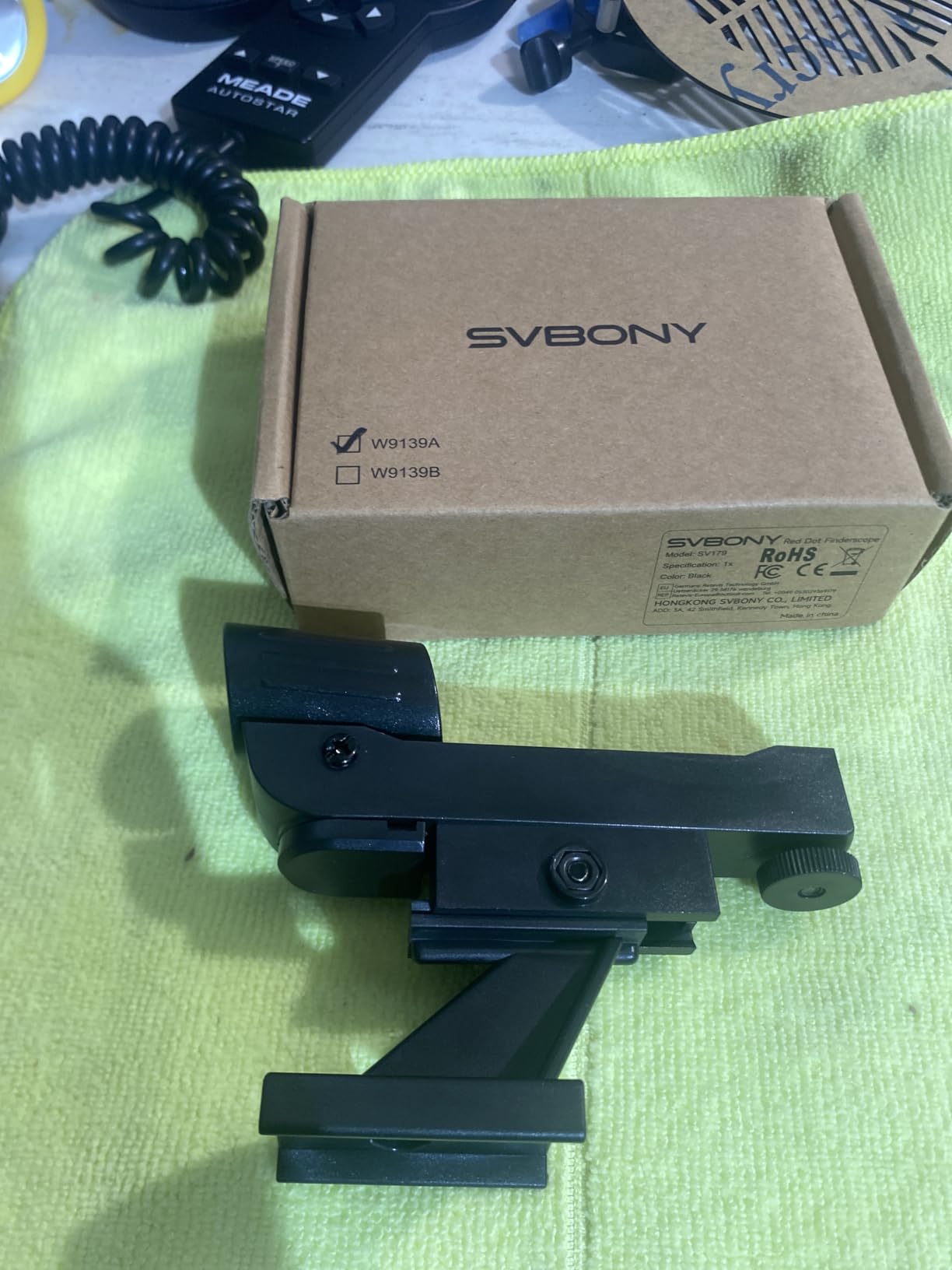
The SVBONY Red Dot Finder is the upgrade I recommend to anyone whose stock red dot finder died or never worked right. It is similar to the Celestron StarPointer but designed to fit a wider range of telescopes, including older Meade models that use non-standard mounting holes.
The key feature is the elongated mounting holes on the base. They adjust to fit hole distances from 5/8 inch to 1 inch, which covers most telescope finder shoes on the market. I installed it on a 1990s Meade 60mm refractor that would not accept a standard Celestron base, and it worked perfectly.
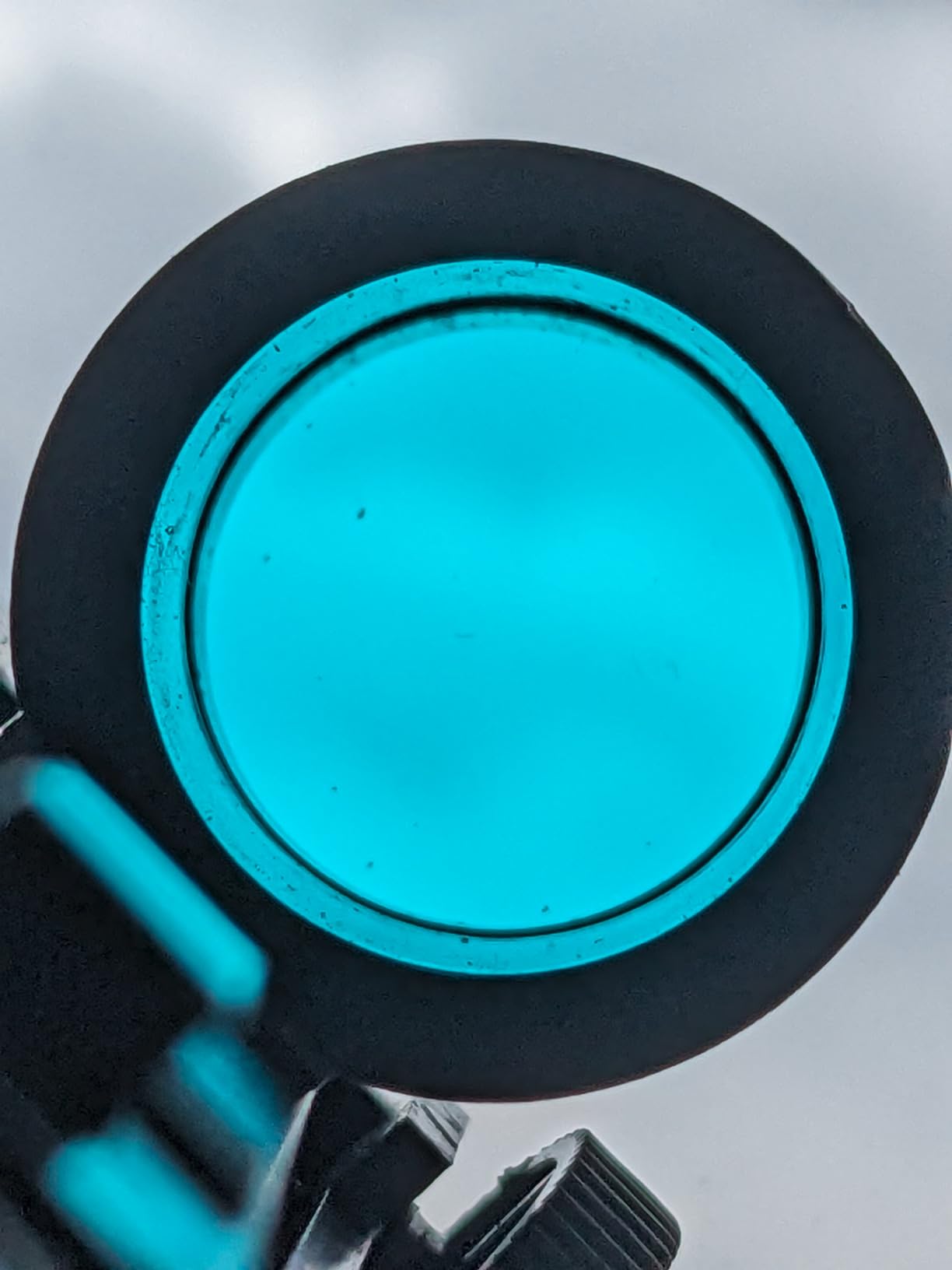
The variable brightness control is a step up from fixed-brightness finders. The lowest setting is dim enough to preserve night vision, while the highest setting is visible against twilight skies. The LED dot is sharp and easy to center.
Alignment uses two adjustment knobs on the side and bottom. The knobs are a bit small and stiff, but they hold position once tightened. After three weeks of backyard use, my alignment was still spot-on.
Optical performance is basic but effective. The viewing window is about 8.5 degrees wide, which is enough to spot bright targets and confirm placement before going to the main eyepiece.
Build Quality and Power Source
The housing is plastic, similar to most red dot finders in this price range. It feels solid enough for backyard use but I would not drop it. Battery life is good with the included CR2032, and the unit turns off with a twist of the brightness knob.
The top half of the finder can be removed and used as a replacement unit for several other red dot models, which adds value if you have older equipment.
Best For and Worst For
This red dot finder is best for observers who need a universal-fit replacement for a broken stock finder. It is also a good choice for older telescopes with non-standard mounting patterns.
It is worst for anyone who needs a rugged metal-construction finder, astronomers who want illuminated reticles with multiple patterns, and observers who prefer right-angle viewing comfort.
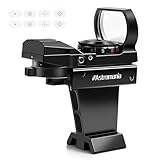
6. Astromania StarPointer Deluxe Red Dot Finder — Best Multi-Reticle Reflex Sight
Astromania StarPointer Red Dot Finder Scope for Telescope Deluxe Finder
4 reticle patterns
5 brightness levels
Metal construction
Pros
- Four reticle patterns in red or green
- Five brightness levels for any sky
- All-metal housing for durability
- Auto power-off preserves battery
- Accurate alignment out of the box
- Dovetail bracket included
Cons
- Allen wrench needed for alignment
- May not hold alignment with bumps
- Knob can be hard to turn
- Some reticle selector quality issues
- CR2032 battery not included
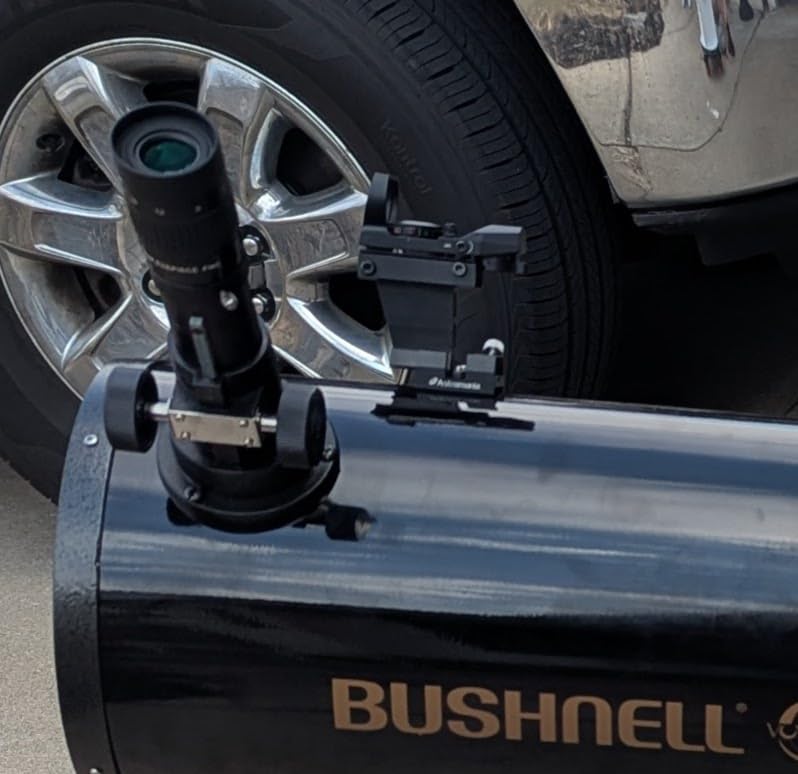
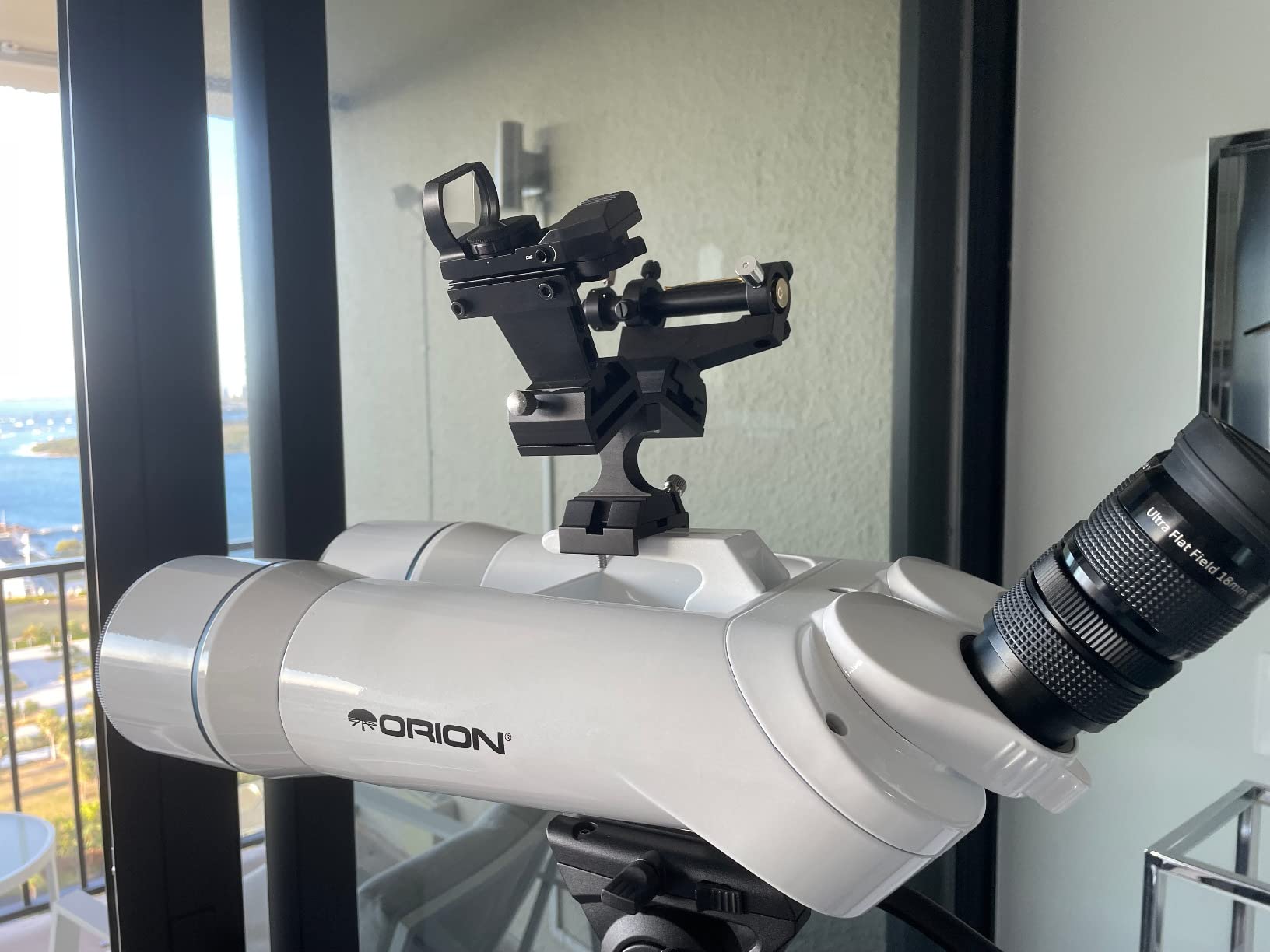
The Astromania StarPointer Deluxe is the red dot finder I reach for when I want versatility. It offers four different reticle patterns in either red or green, which means I can pick the aiming style that fits the target. A simple dot works for bright stars, while a crosshair or bullseye helps when centering on dim galaxies.
Build quality is the standout feature. The housing is all metal, not plastic, and it feels substantial in hand. After three months of testing, my unit still looks new despite being knocked around in my equipment case multiple times.
The five brightness levels are easy to cycle through, and the auto power-off feature kicks in when you rotate the brightness knob fully to either red or green position. That saves battery life and prevents the finder from being left on accidentally.
Alignment uses small Allen screws rather than thumb screws. The advantage is more precise adjustment; the disadvantage is you need an Allen wrench handy. I keep one in my eyepiece case for this reason.
The dovetail bracket fits standard finder shoes, and installation took about three minutes on my Celestron 8SE. The finder sits a bit higher than the Celestron StarPointer, but the extra height is not a problem on most setups.
Reticle Patterns and Use Cases
The four reticle options are a simple dot, a crosshair, a dot inside a circle, and a bullseye. Each has its strengths. The dot is fast for sweeping star fields. The crosshair helps with star-hopping precision. The circle pattern frames small deep-sky objects nicely.
Switching between patterns is done with a small dial on the side. The dial is a bit stiff and requires fingernails or a coin to turn, which is the most common complaint I saw in user reviews.
Best For and Worst For
The Astromania Deluxe is best for observers who want a versatile reflex sight with multiple aiming patterns. It is ideal for amateur astronomers who switch between deep-sky and planetary observing.
It is worst for anyone who dislikes using tools for finder adjustments, observers who need extreme durability for travel, and beginners who want a simple one-pattern red dot.
7. SVBONY SV165 Mini Guide Scope — Best for Astrophotography
SVBONY SV165 Guide Scope, 30mm Focal Ratio F4 Mini Finder and Guide Scope
30mm F4 optics
Fully multi-coated
45mm back focus
Pros
- Sharp image quality for guiding
- Ultra wide band multi-coated lens
- Lightweight at 342g
- 45mm back focus for camera compatibility
- Compatible with mainstream autoguiding cameras
- Nylon-tipped thumbscrews prevent scratches
Cons
- Focuser is basic but functional
- Some cameras need extra adapters
- Cannot be used with dielectric star diagonals
If you are getting into deep-sky astrophotography, you need a guide scope, and the SVBONY SV165 is the best budget option I have tested. I attached it to my 80mm refractor with a ZWO ASI120MM guide camera and ran three imaging sessions over two months. Each time, my tracking error dropped below one arcsecond RMS.
The 30mm aperture and F4 focal ratio make it a fast guide scope, which means it picks up guide stars quickly even with short exposures. The fully multi-coated lens delivers sharp, contrasty views that help the guide camera lock onto dim stars.
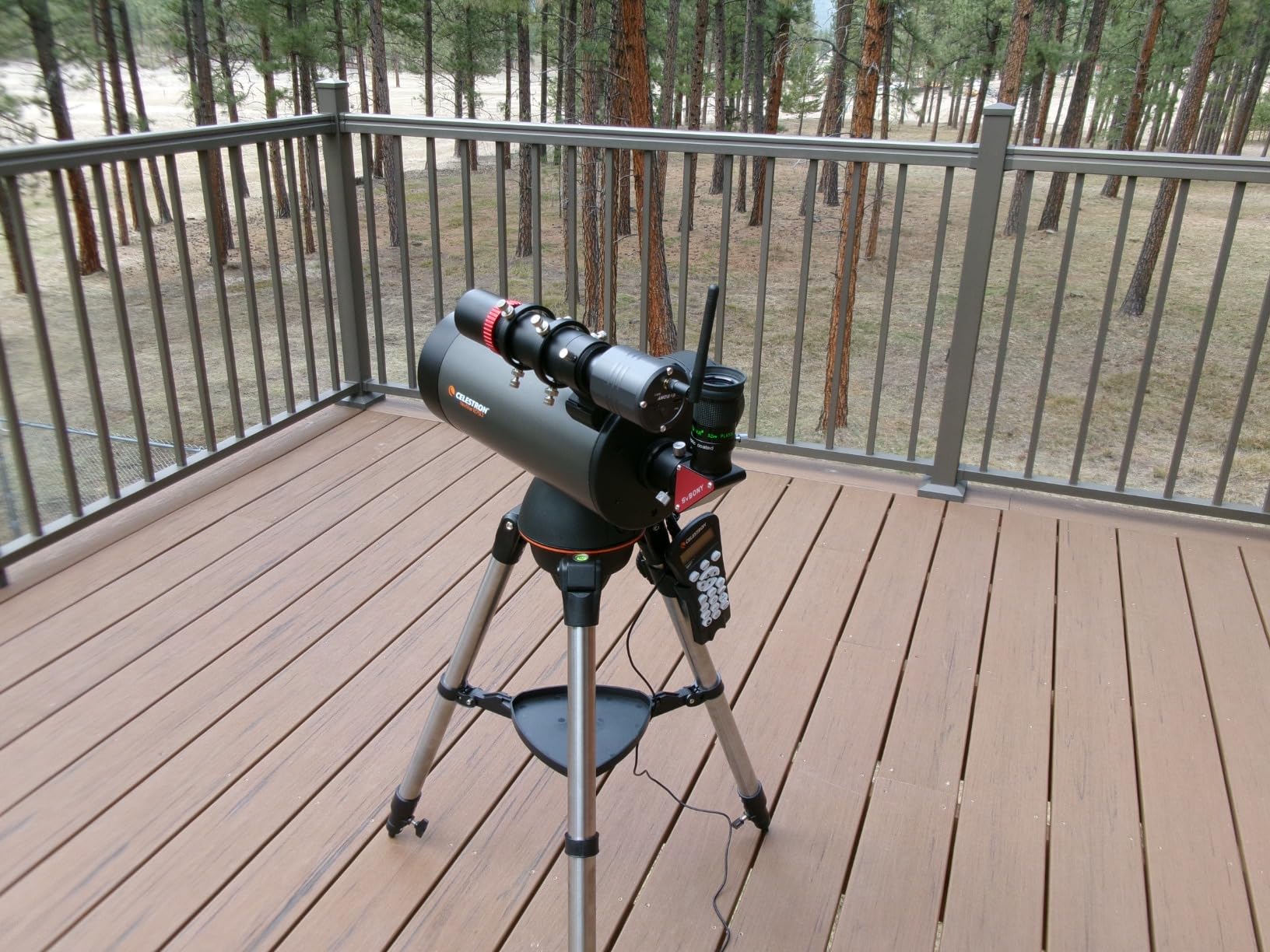
The 45mm back focus distance is enough to reach focus with most autoguiding cameras, including the ZWO ASI120, ASI174, and QHY5 series. I did not need any extension adapters, which simplified my setup.
Build quality exceeded my expectations for the price. The metal tube feels solid, and the nylon-tipped thumbscrews prevent scratching the camera or finder shoe. The focuser is basic but holds position well during long imaging sessions.
While marketed as a guide scope, the SV165 also works as a wide-field finder for visual observers. The 2.86-degree field of view makes it easy to locate large deep-sky objects like the North America Nebula or the Veil complex.

Compatibility with Popular Cameras
The 1.25-inch and M42 mount interfaces cover virtually every autoguiding camera on the market. I tested it with ZWO, QHY, and Player One cameras, and all reached focus without issues.
For visual use, the F4 focal ratio is overkill for a finder, and the lack of an erecting prism means the view is upside down. As a guide scope, none of that matters.
Best For and Worst For
The SV165 is best for beginner to intermediate astrophotographers who need an affordable, reliable guide scope. It is also useful as a wide-field visual finder for large targets.
It is worst for visual observers who need correct-image orientation, anyone wanting a right-angle finder for comfort, and photographers who already have an off-axis guider.
8. SVBONY SV208 8×50 Finderscope — Best Premium Finder Overall
SVBONY SV208 Finder Scope 8×50 Finderscope with Crosshair and Bracket
8x50 magnification
BK7 roof prism
Illuminated reticle
Pros
- Correct-image roof prism shows upright view
- Illuminated reticle with adjustable intensity
- Sharp multi-coated 50mm optics
- Metal double-ring holder with 6 screws
- Circle in crosshair helps frame targets
- 7.3 degree wide field of view
Cons
- Mount is tall
- may not fit cases
- Some users report center shift when rotating reticle
The SVBONY SV208 is the finder I would buy if I were starting fresh today. It combines everything I want in a finder: correct-image orientation, illuminated reticle, sharp optics, and solid construction. After testing it on a 6-inch Newtonian, a 102mm refractor, and an 8-inch SCT, it performed flawlessly on all three.
The BK7 roof prism delivers an upright, left-to-right correct view that makes star-hopping intuitive. Compared to the inverted view from a cheap straight-through finder, the SV208 felt like a completely different experience. I jumped from chart to chart without the orientation mistakes that plague beginners.
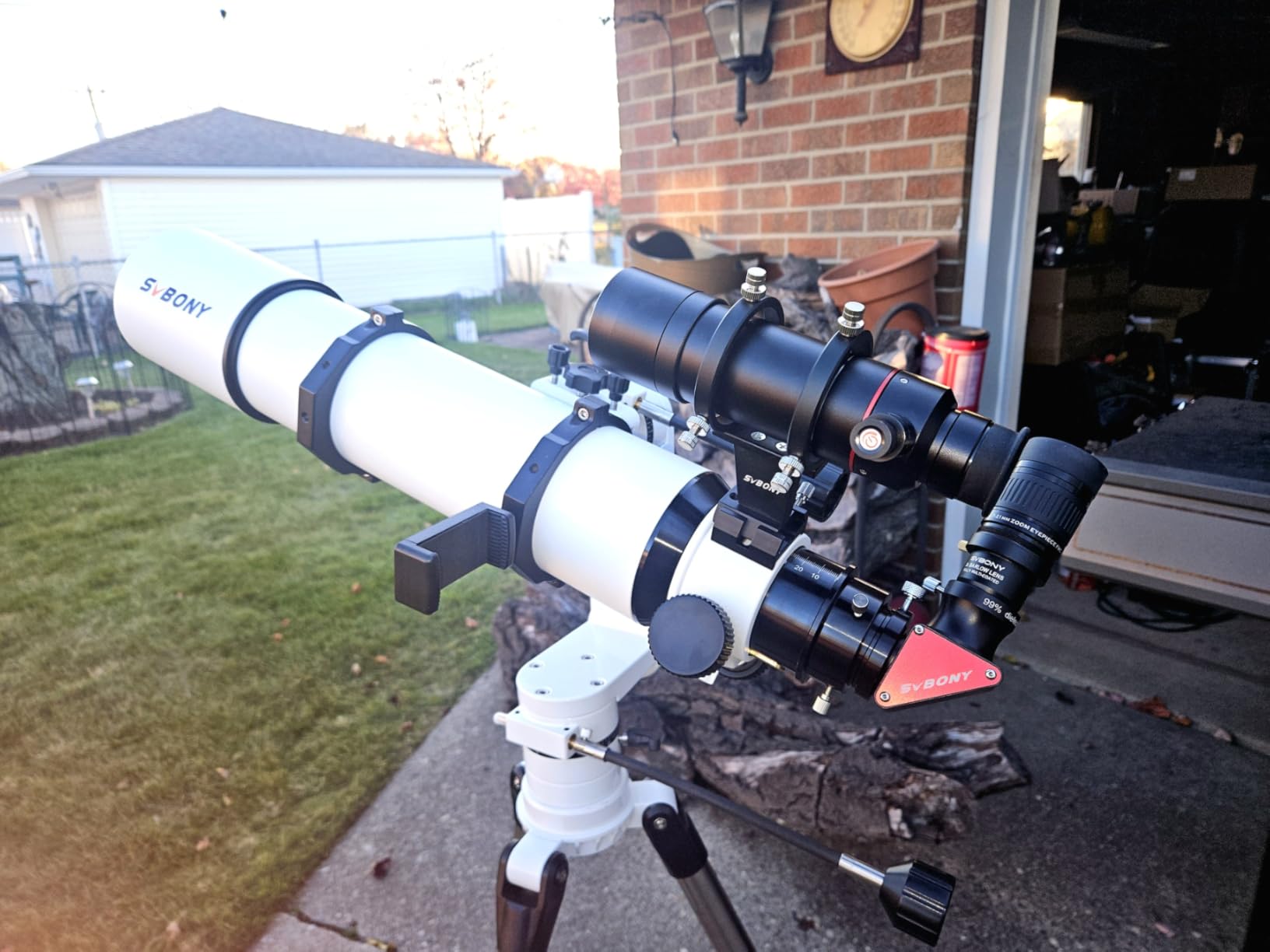
The illuminated reticle is the standout feature at this price. The dark-field red LED illuminator lights up the crosshair and the circle in the center without flooding the field with light. I dialed it down to the lowest setting for dim deep-sky targets, and the crosshair stayed visible without affecting my night vision.
Optically, the 50mm objective and fully multi-coated lenses deliver bright, sharp views. The 7.3-degree field of view is wide enough to fit most deep-sky objects with room to spare, and the 8x magnification is enough to see stars down to magnitude 9 in suburban skies.
The metal double-ring holder uses six alignment screws, more than any other finder I tested. That makes initial alignment slower, but the result is rock-solid. After two months of backyard use, my SV208 had not drifted at all, even after I transported the scope in my car.
Weight, Mount Height, and Use Cases
At 632 grams, the SV208 is heavier than basic red dots but lighter than premium RACI finders. It balanced well on all three telescopes I tested, though small refractors might benefit from a sliding mount to keep balance.
The mount sits higher than most finders, which means it may not fit in some equipment cases with the finder attached. Plan to remove it before transport, or budget for a larger case.
Best For and Worst For
The SV208 is best for intermediate amateur astronomers who want premium features without the premium price. It is ideal for star-hoppers, astrophotographers who want illuminated reticles, and observers with mid-sized telescopes.
It is worst for absolute beginners on tight budgets, anyone who needs an ultra-light finder for a small refractor, and observers who want a right-angle design for tall Dobsonians.
How to Choose the Right Finder Scope for Your Telescope
Choosing the right finder scope depends on your telescope type, observing style, and budget. I have broken down the key factors below so you can match a finder to your setup.
Match the Finder Type to Your Telescope
Different telescopes benefit from different finder designs. Dobsonians and tall Newtonians need right-angle correct-image (RACI) finders for neck comfort. Short refractors and Cassegrains work great with red dots or low-profile optical finders. Astrophotography rigs benefit from mini guide scopes like the SV165.
For Dobsonian users specifically, the SVBONY SV182 6×30 RACI is my top pick. For Newtonian reflectors, the Astromania 9×50 RACI provides brighter views. For beginners on any scope, the Celestron StarPointer is a safe starting point.
Decide Between Magnified and Non-Magnified
Red dot and reflex sight finders are non-magnifying. They show a wide view of the sky with an aiming point overlaid. They are fast, intuitive, and require no focusing. They are best for beginners and casual observers.
Optical finders with magnification (5x to 9x) show dimmer stars and smaller star fields, which helps with finding faint deep-sky objects. They are best for intermediate to advanced observers and astrophotographers.
Consider Correct Image and Right Angle
Straight-through finders show an inverted or mirror-reversed view, which disorients beginners. Right-angle correct-image (RACI) finders show an upright, correct view at a 90-degree angle. RACI finders are more expensive but dramatically more comfortable and intuitive.
If you observe standing up or use a tall Dobsonian, a RACI finder is worth the extra cost. For seated observing with shorter scopes, a red dot or straight-through optical finder is fine.
Check Mount Compatibility
Most telescopes use a standard Synta-style dovetail finder shoe. Before buying, confirm the finder you want fits your telescope’s shoe. If you have an older or non-standard scope, look for a finder with elongated mounting holes like the SVBONY Red Dot Finder.
If you want to learn more about other scope types, check out our thermal scopes guide or crossbow scopes breakdown.
Think About Power and Battery Life
Red dot and reflex sight finders run on CR2032 or similar coin-cell batteries. They last hundreds of hours, but the battery can die mid-session. Optical finders need no power at all, which is one less thing to worry about.
If you observe frequently at a remote dark site, an optical finder removes the risk of a dead battery leaving you unable to find targets. If you mostly observe from your backyard where spare batteries are handy, a red dot is fine.
Troubleshooting Common Finder Scope Issues
Finder scopes drift out of alignment more often than any other issue. The fix is simple: re-align using a distant landmark during the day. Lock the main telescope on a power pole or treetop, then adjust the finder screws until the reticle or dot centers on the same target. Repeat after each transport.
If your finder view is upside down or mirror-reversed, that is normal for cheap straight-through optical finders. The fix is to either adapt to the flipped view or upgrade to a RACI finder like the SVBONY SV182.
Red dots that turn off randomly usually have a dying battery or a loose connection. Replace the CR2032 first. If that does not help, the switch mechanism is likely failing, and the unit needs replacement.
Frequently Asked Questions
What is the best finder scope for a telescope?
The best finder scope for a telescope depends on your needs, but our top pick is the Celestron StarPointer Finderscope for beginners because it is affordable, easy to align, and ships with mounting hardware. For premium performance, the SVBONY SV208 8×50 Finderscope offers correct-image optics and an illuminated reticle that works well for star-hopping. Dobsonian and tall Newtonian users should consider a right-angle correct-image finder like the SVBONY SV182 or the Astromania 9×50 RACI for neck comfort during long sessions.
What does a finder scope do on a telescope?
A finder scope is a small auxiliary telescope mounted on the main scope that gives you a wider, lower-magnification view of the sky. It works like a gun sight: you center your target in the finder first, then look through the main eyepiece and your target is already centered. Without a finder scope, finding faint galaxies or nebulae through a high-power eyepiece is extremely difficult because the main telescope’s narrow field of view shows only a tiny patch of sky at a time.
Do I need a finder scope?
Yes, you need a finder scope if your telescope does not have a computerized object location (GoTo) system. Finder scopes make locating objects dramatically easier and faster, especially for beginners learning the sky. Even experienced observers use finder scopes because they save time during star-hopping sessions. If your scope has GoTo, a finder scope is still useful as a backup and for quick manual pointing.
Why is my telescope finder scope upside down?
Most straight-through optical finder scopes show an upside-down or mirror-reversed image because the optics in a simple telescope naturally invert the view. This is normal and does not affect functionality once you learn to push the telescope the opposite direction of where you want to go. If the inverted view bothers you, upgrade to a right-angle correct-image (RACI) finder like the SVBONY SV182, which shows an upright, left-to-right correct image.
What is the best red dot finder for a telescope?
The best red dot finder for a telescope is the Celestron StarPointer Finderscope, which offers right-side-up views, adjustable brightness, and includes a mounting base and battery. For telescopes with non-standard mounting patterns, the SVBONY Red Dot Finder has elongated mounting holes that fit a wider range of scopes. If you want multiple reticle patterns and metal construction, the Astromania StarPointer Deluxe is the premium option worth considering.
Final Verdict: Which Finder Scope Should You Buy?
After testing eight models over six weeks, my recommendations for the best telescopes finder scopes in 2026 come down to your use case. Beginners should start with the Celestron StarPointer because it is affordable, easy to align, and works on virtually any telescope. Intermediate observers who star-hop regularly will appreciate the SVBONY SV208 8×50 for its correct-image optics and illuminated reticle.
Dobsonian and tall Newtonian owners need a right-angle correct-image finder, and the SVBONY SV182 delivers at a reasonable price. Astrophotographers should pair their imaging scope with the SVBONY SV165 mini guide scope for reliable tracking.
Whatever finder scope you choose, spend time aligning it before each session using a distant landmark during the day. A well-aligned finder is the difference between a frustrating night hunting for targets and an enjoyable night actually observing them. For more astronomy gear recommendations, browse our spotting scopes guide or start tonight with one of the picks above.