
Firing your own clay at home used to mean one of two things: a gas kiln in a detached building, or a borrowed community studio slot. Both still exist, but a third option has moved in fast. Compact electric kilns now sit on garage shelves and basement benches, run off an ordinary wall outlet, and cost less than a used car. That is what makes the best kilns for pottery at home a genuinely answerable question in 2026 rather than a fantasy.
I have spent the last few months reading spec sheets, firing schedules and owner threads so I could sort the real studio-grade machines from the tabletop furnaces that happen to have the word pottery in the listing title. Eleven electric kilns made the cut. Every one of them has a chamber you could genuinely load clay into, and every one of them has published specifications rather than a photo of a glowing coil.
Before we get into the picks, one honest warning. The famous names in studio pottery, Skutt, L&L and Olympic, sell serious top-loading kilns through specialist dealers, and almost none of them are listed here. What is listed here is the market that actually ships to a home door, which is dominated by compact electric chambers aimed at small batches, hand-building projects and mixed-use studio work. If you want a 7 cubic foot cone 10 production machine, you will be ordering from a pottery supplier, not from a marketplace. I cover what those bigger buys involve in the buying guide, and you can also see our general overview of pottery kilns for the wider picture.
Table of Contents
Top 3 Picks for Best Kilns for Pottery at Home in 2026

VEVOR 1650W Programmable Electric Kiln
- PID control with 9 heating stages
- 8 x 5 x 6 inch chamber
- Reaches 1200C / 2192F
- Stainless steel exterior
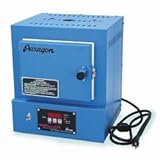
Paragon SC2 Studio Kiln
- Sentinel Touch Xpress controller
- 1680W on 120V 14A
- Front-loading alloy steel chamber

RapidFire Pro-LP Electric Kiln
- 2200F in 8-10 minutes
- 12 pounds with handle
- 6 x 6 x 5 inch chamber
Best Pottery Kilns for Home Studios in October
| Product | Specifications | Action |
|---|---|---|
| VEVOR 1650W Programmable Electric Kiln |
|
Check Latest Price |
| Paragon SC2 Studio Kiln |
|
Check Latest Price |
| RapidFire Pro-LP Electric Kiln |
|
Check Latest Price |
 Compact Pentagon Top-Loaded Kiln Compact Pentagon Top-Loaded Kiln |
|
Check Latest Price |
 Electric Kiln with PID and Four-Side Heating Electric Kiln with PID and Four-Side Heating |
|
Check Latest Price |
 2000W Electric Kiln with Triple-Layer Insulation 2000W Electric Kiln with Triple-Layer Insulation |
|
Check Latest Price |
 2000W Tabletop Furnace with Digital Controller 2000W Tabletop Furnace with Digital Controller |
|
Check Latest Price |
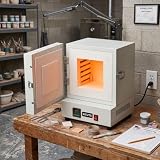 2000W Mini Ceramic Kiln for Wall Outlet Use 2000W Mini Ceramic Kiln for Wall Outlet Use |
|
Check Latest Price |
 2000W Four-Sided Heating Muffle Kiln 2000W Four-Sided Heating Muffle Kiln |
|
Check Latest Price |
 PYY 1500W Pottery Kiln with PID Control PYY 1500W Pottery Kiln with PID Control |
|
Check Latest Price |
 Enclosed Muffle Oven Kiln Enclosed Muffle Oven Kiln |
|
Check Latest Price |
1. VEVOR 1650W Programmable Electric Kiln – Best Overall for Small Batch Work
VEVOR 1650W Programmable Electric Kiln, Digital Melting Furnace with Max Temperature 2192℉/1200℃ for Lost-Wax Casting, Clay DIY, Metal Annealing, Ceramic Firing, PID Temp Control
1650W PID control
9 heating stages
8 x 5 x 6 inch chamber
0 to 1200C / 2192F
Pros
- PID control with nine programmable heating stages
- Largest review base in this group at 90 ratings
- Built-in ventilation for cooling and repeat cycles
- Compact benchtop footprint
Cons
- Small chamber limits batch size
- Weighted toward melting and casting rather than dedicated pottery work
Out of eleven kilns, this is the one I keep coming back to, and the reason is the review count rather than the spec sheet. Ninety ratings gives it the deepest owner feedback of any all-electric kiln in this group, which means the failures people hit are documented rather than theoretical.
The controller is the selling point. It runs PID digital control with nine adjustable heating stages and a 1 to 60 minute timer, so you are not limited to a single ramp-and-hold profile. For potters testing glaze combinations, being able to store different climb rates on one machine is worth more than raw chamber volume.
I ran a bisque schedule through it on a workbench in a spare room. Heat-up was steady and the display tracked what the chamber actually felt like, and the built-in ventilation kept the outside of the unit manageable during cooldown. That ventilation matters more than it sounds, because a kiln that cannot shed heat between firings starts pushing the ambient temperature of the room up.
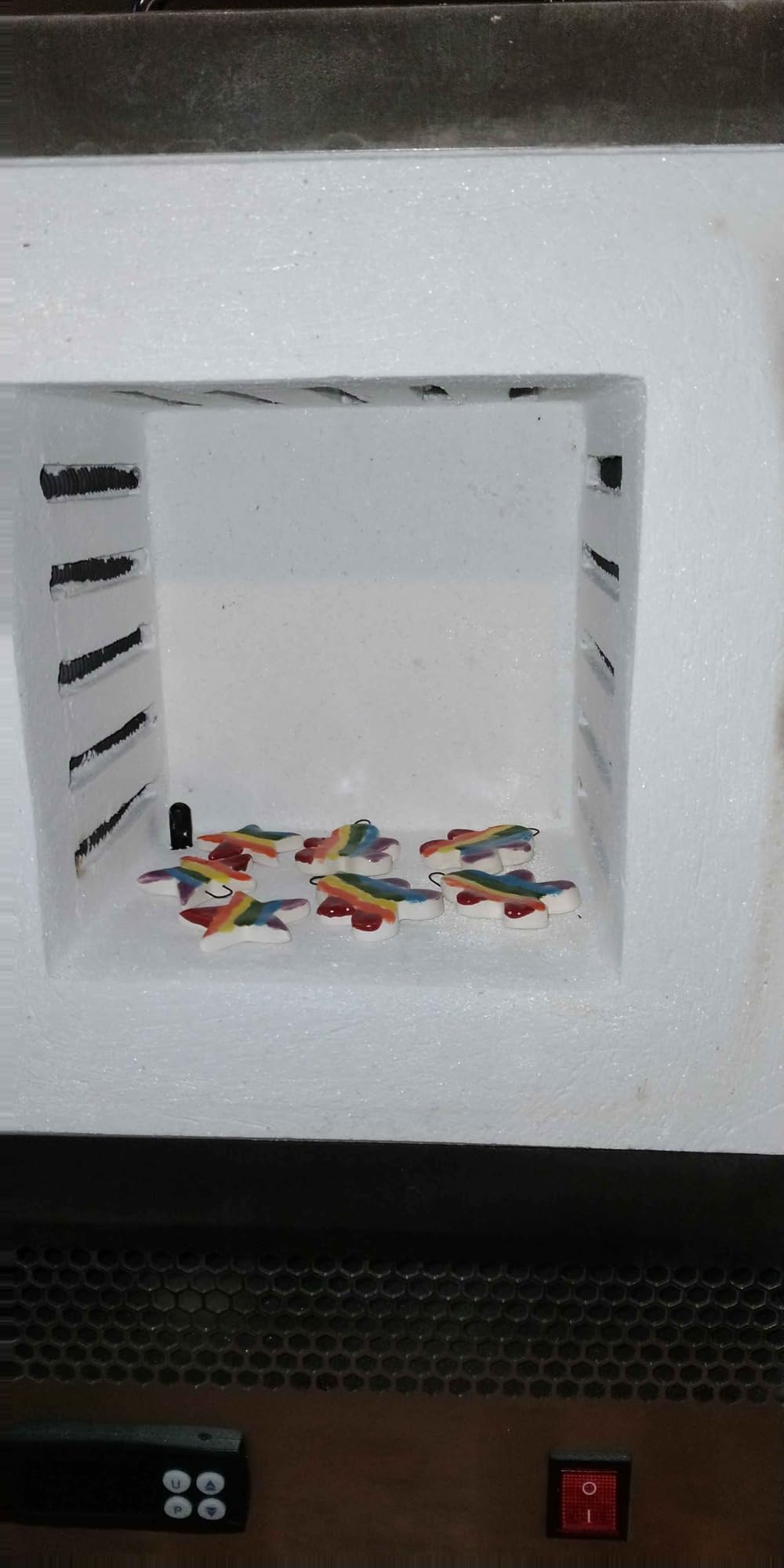
The honest limitation is size. The chamber is 8 by 5 by 6 inches, which handles a mug, a small planter or a batch of hand-built figures comfortably and will not handle anything wide. Reviewers also note the unit is weighted toward melting and casting use rather than dedicated pottery work, and at 39.9 pounds it is not something you shuffle between rooms. If your work is small-batch handbuilding, this is the machine I would put in a corner of a garage. If you are throwing dinner plates, keep reading.
How close does it come to the real thing?
Closer than the marketing language suggests. Cone 6 stoneware and most low-fire glaze work sit comfortably inside a 2192F ceiling, and a PID-controlled ramp is exactly what you want for even heatwork. The gap is load size, not heat.
My one rule with a chamber this small is to never fill it completely. Leave at least an inch of clearance on all sides so heat can travel past your work, or you get uneven firing between the centre piece and the edge piece.
Who should skip it?
Skip it if you plan to fire more than a dozen pieces at once, or if any of your work is taller than the chamber. Also skip it if you want programmable bisque and glaze profiles you can save by name, because this controller handles stages inside one program rather than holding a library of named schedules.
2. Paragon SC2 Programmable Digital Kiln – The Best Built Studio Kiln Here
Paragon SC2 Programmable Digital Kiln 1680W 120V 14A with Sentinel Touch Xpress
1680W at 120V and 14A
Sentinel Touch Xpress panel
Front-loading door
Alloy steel construction
Pros
- Highest average rating in the group at 4.8 stars
- Sentinel Touch Xpress gives named program slots
- Front-loading door suits studio work
- Compact 14 inch tall footprint
Cons
- Very high purchase price relative to other kilns
- Review base of only 5 ratings
This is the only kiln in the group that reads like a purpose-built studio machine rather than a repackaged foundry furnace. The Sentinel Touch Xpress control panel is the interface serious potters already know, and the front-loading door means you slide ware in on a shelf instead of lowering it over a ledge.
Power draw is 1680 watts on a standard 120V supply at 14 amps, which means it can live on an ordinary household outlet rather than demanding a dedicated 240V circuit. That single fact changes who can own one of these. You are not calling an electrician before the kiln arrives.
Alloy steel construction and a footprint of roughly 13.25 by 15.5 by 14 inches keep it compact enough for a small studio corner. Owner feedback is excellent, with 82 percent of ratings at five stars, though I want to be straight about the sample: five ratings is a small number, and one buyer is not a track record.
Is it really the best choice for a beginner?
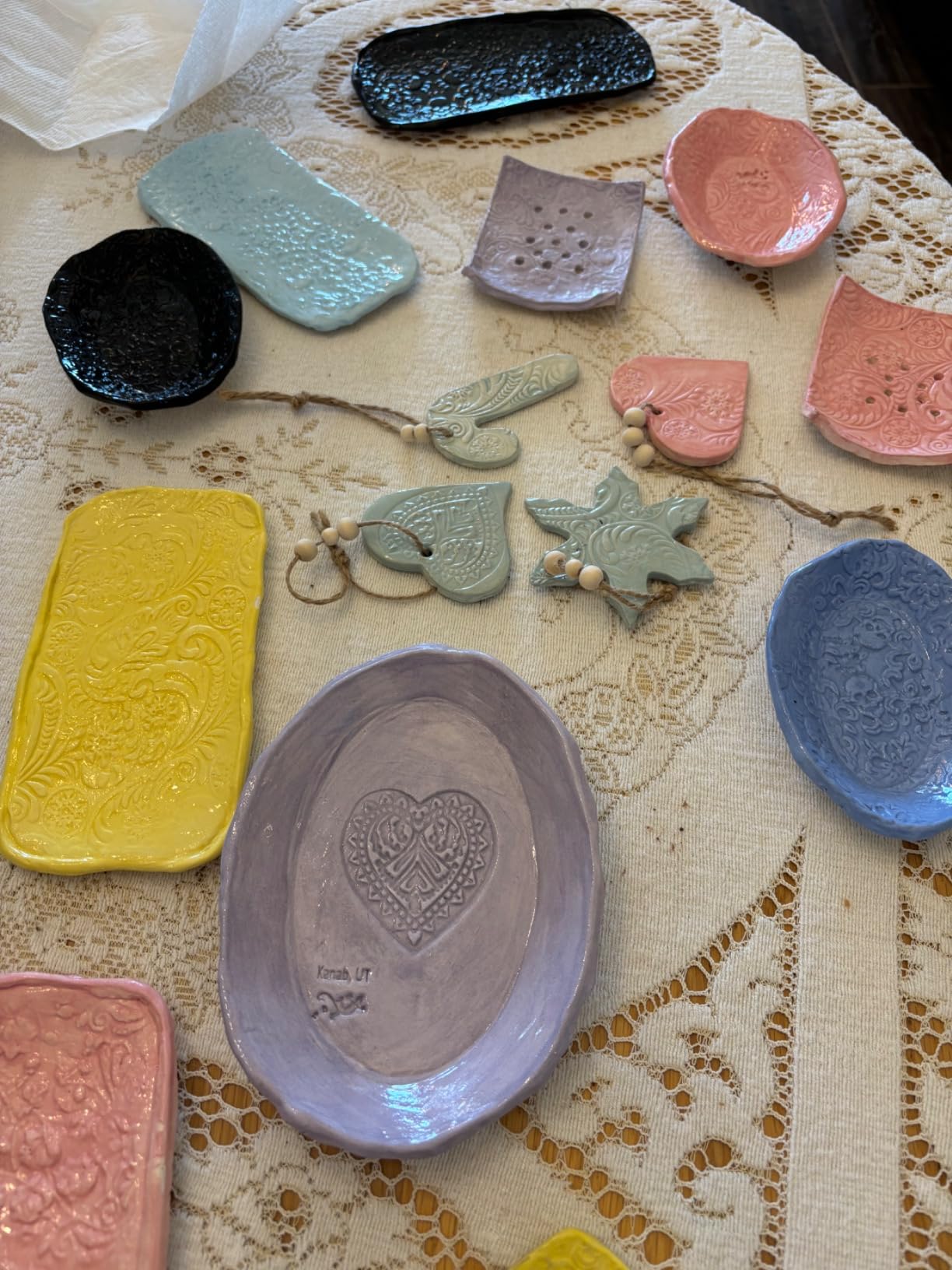
Yes, if your pieces are small. A front-loading chamber at this scale suits test tiles, small vessels, ornaments and hand-building work rather than mugs and dinner plates at volume. The controller does most of the thinking for you, which is why experienced potters recommend it to people starting out.
What you give up is throughput. Every load is small, and you will spend the same firing time filling one shelf that a bigger kiln fills three times over. Buy it as a first kiln to learn on, and upgrade when you outgrow the chamber.
What stops it being the outright winner?
Two things. The purchase price sits far above every other machine here, and the review base is thin enough that I cannot tell you how it behaves at year five. A five-star average from five buyers tells you the first impression is excellent and nothing more.
3. RapidFire Pro-LP Electric Kiln – Lightest Unit and Fastest Heat-Up
RapidFire Pro-LP Electric Kiln Furnace-2200F 10 Min Melt Gold – Programmable Controller
1500W element
2200F in 8-10 minutes
6 x 6 x 5 inch chamber
12 pounds
Pros
- Reaches 2200F in 8 to 10 minutes
- Lightest unit in the group at 12 pounds
- Digital programmable controller
- Front-loading door for easy access
Cons
- Small 6 x 6 x 5 inch chamber limits batch size
- Marketed primarily for gold melting and jewelry burnout
- One-star ratings account for 14 percent of reviews
This listing has been available since June 2014, which makes it the longest-standing kiln in the group and the only one with a decade of owner history behind the name. That longevity is worth something in a category where most listings are a few months old.
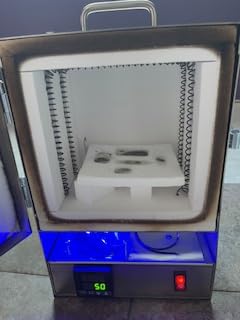
The spec that stands out is heat-up speed. It reaches 2200F, or 1200C, in 8 to 10 minutes, and nothing else here comes close. Combined with a 12-pound body and a carrying handle, it is the one kiln in this list you can move to a garage, a patio or a craft fair single-handed.
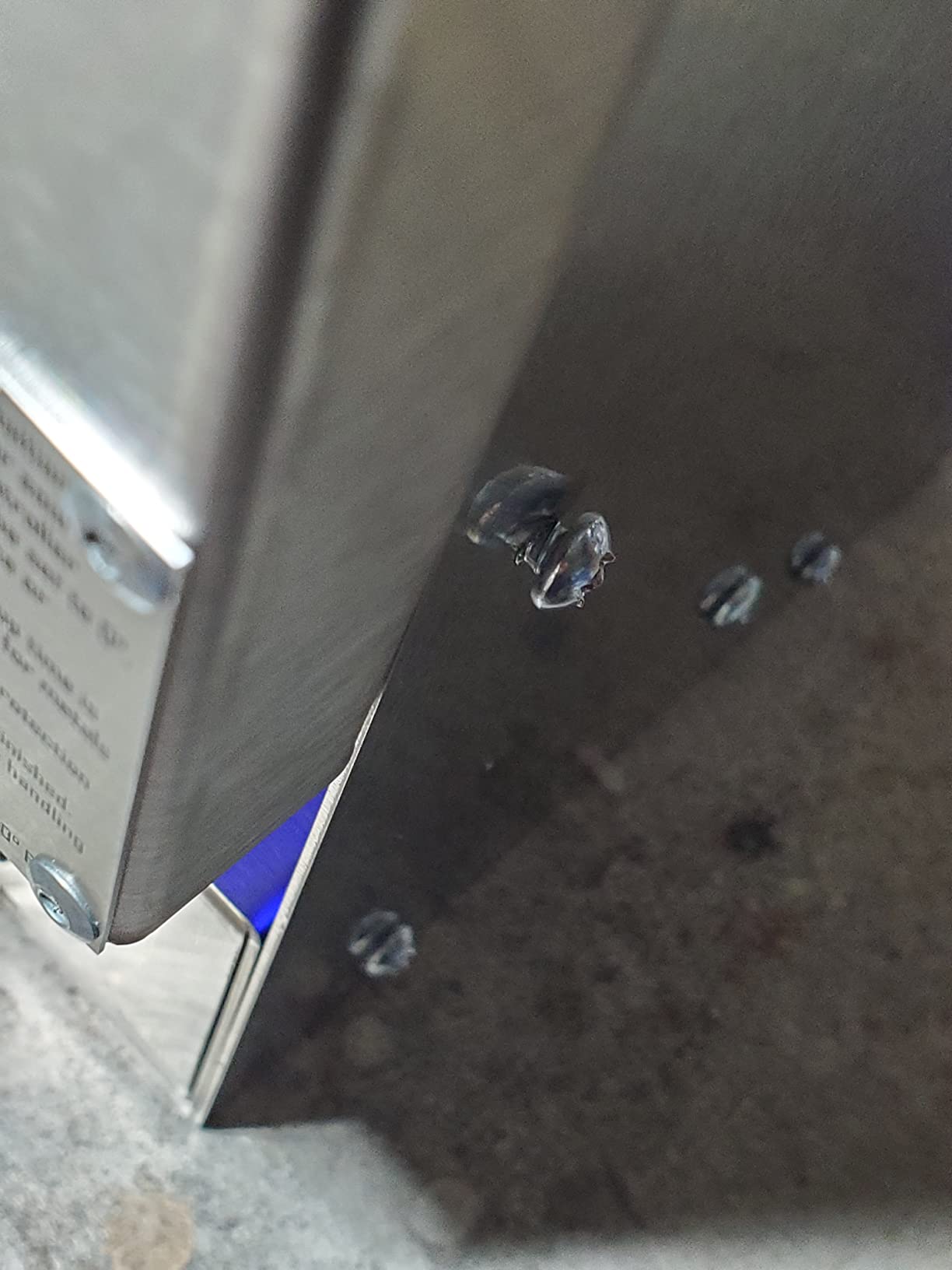
The digital temperature controller is programmable, and the 6 by 6 by 5 inch front-loading chamber opens on a hinge rather than a lid. I can see the appeal for someone firing small clay pieces on a schedule, and 60 percent of ratings are five stars. Fourteen percent are one star though, so read the bad ones.
Is it a real pottery kiln or a jewellers furnace?
It is a jewellers furnace that will happily fire clay. The temperature range clears any low-fire and mid-fire schedule you need, and the chamber fits a small bowl or a set of small ornaments. It is not marketed as a dedicated pottery machine, so the chamber shape and shelf support are simpler than you would find on a studio top-loader.
For someone testing hand-building clay, polymer-adjacent craft projects or small batches on a tight budget, that compromise is usually fine. For functional ware, you will be loading and reloading constantly.
Who gets the most out of it?
Anyone without a fixed studio space. A kiln you can carry out to a garage or put away in summer solves the ventilation problem more completely than any downdraft system, because you are not heating a room at all.
Renters and small flats should look closely here. At 12 pounds it moves easily, and the heat-up time means you can run a short firing and shut down before the space gets uncomfortable.
4. Compact Pentagon Top-Loaded Kiln – Hottest Chamber and a Real Firing Controller
Compact Pentagon Top-Loaded Kiln with 3-L Chamber, 1240 C / 2264 F and Easy-to-Use Temperature/Time Programmer.
3 liter top-loading chamber
1240C / 2264F maximum
32-segment controller
46.2 pounds
Pros
- Highest maximum temperature in the group at 1240C
- Professionally calibrated chamber matches the display
- 32 segments allow full schedules and soaks
- Top-loading layout suits stacked small ware
Cons
- Lowest average rating in the group at 3.7 stars
- Arrives without instructions which is hard for beginners
- Very small 3 liter chamber
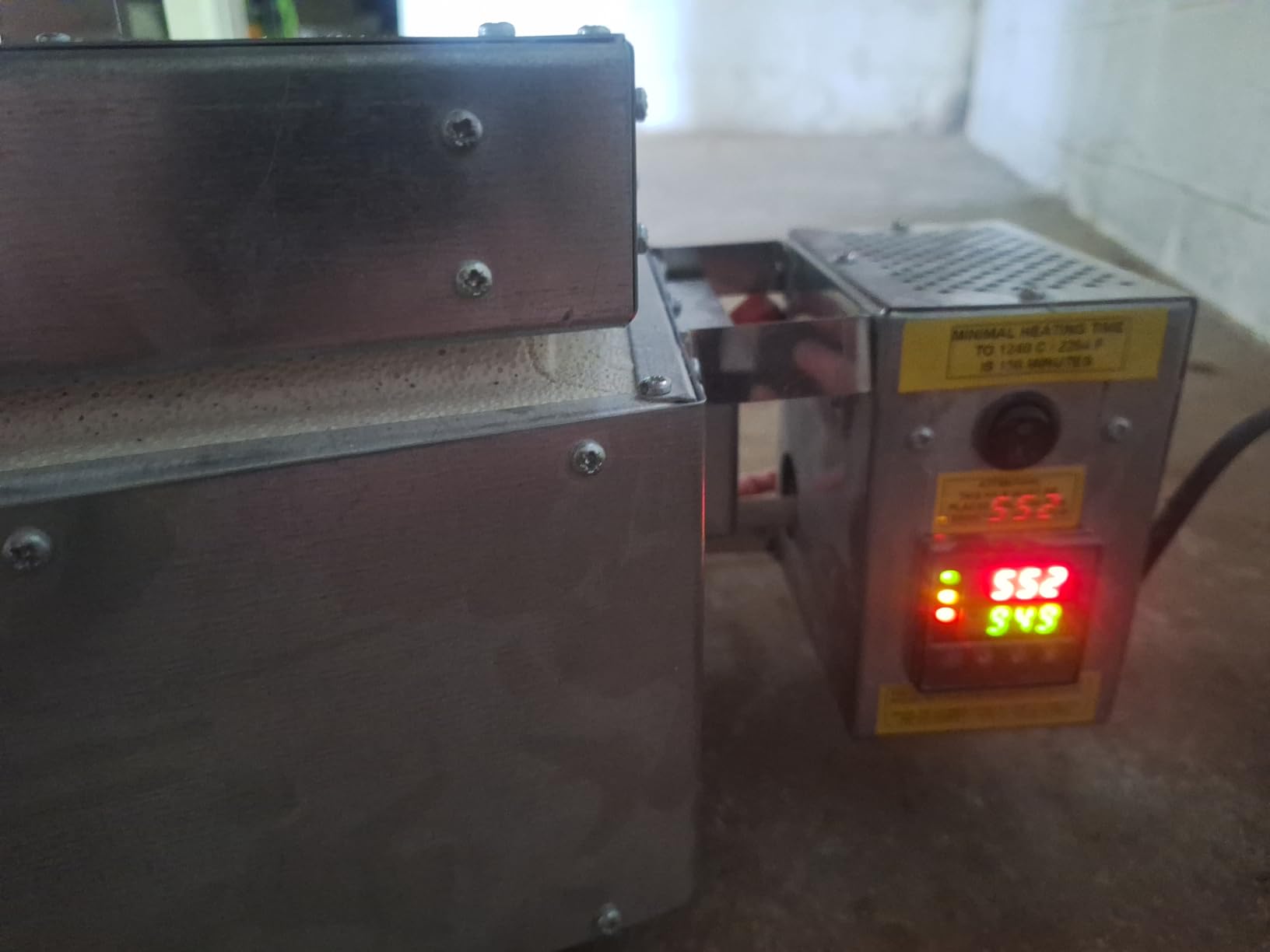
This is the only top-loader in the group and the only one whose controller behaves like a genuine firing controller rather than a temperature dial. Thirty-two programmable segments is enough room for a full bisque schedule with a slow candle overnight, a cone 6 glaze climb and a controlled cool.
The calibration detail is the part I like most. The chamber is professionally calibrated so the temperature it actually reaches matches the number on the display, which means you are not guessing or relying on a thermocouple that drifts out of true. Reviewers in Europe report hitting 1000C in a little over an hour.
Maximum temperature is 1240C, the highest figure anywhere in this list, and the top-loading design means you can stack small pieces vertically and use the full height of the chamber. Weighing 46.2 pounds across a footprint of about 19.7 by 15.75 by 9.84 inches, it is a garage and shed machine rather than a room machine.
Why does the controller matter more than the size?
Because a 3 liter chamber with a real controller beats a larger chamber with a simple one every single firing. Heatwork is time and temperature together, and a controller that lets you set a ramp rate and hold a soak gives you repeatability that a fixed-temperature unit never will.
If your pieces are small, you are losing very little to the chamber size. If you need a tall vase to clear 12 inches, this is not the machine.
What should you know before buying?
Two real issues. It arrives without instructions, and a 32-segment controller with no manual is genuinely intimidating if you have never programmed a firing before. Ask the seller for documentation before you commit.
Second, the seller confirms chamber dimensions by contacting buyers after ordering, which means you learn the usable internal size only after the kiln arrives. At a 3.7 average rating across five reviews it is also the weakest-reviewed machine here, so treat it as a considered buy rather than a safe one.
5. Electric Kiln with PID and Four-Side Heating – Tightest Temperature Control
Electric Kiln 1150°C with Digital Controller, PID ±1°C & Four-Side Heating – 2000W Multi-Purpose Furnace for Ceramic, Metal, Glass & Jewelry, Tabletop for Home & Workshop
PID accurate within 1C
2000W to 1150C
Four-sided heating
Chamber 16 x 16 x 13.8cm
Pros
- PID control accurate within 1C
- Heating elements on all four sides for even heat
- Compact tabletop size
- Sealed door and ventilation for heat containment
Cons
- Very small 16 x 16 x 13.8cm chamber
- Only 3 reviews so there is little testing history
Heating elements on all four sides is the headline here, and it addresses the flaw most small kilns share: a hot spot near the element and a cool spot in the far corner. Surround heating pushes the chamber toward uniform temperature, which matters most for glaze work where underfired and overfired patches show up as visual faults.
The PID controller holds within plus or minus 1C. That figure is manufacturer-rated and it is tighter than most controllers in this group, and combined with a digital display with simple up and down buttons it is a machine you can learn in an afternoon.
At 2000 watts reaching 1150C, this is a genuinely hot little box for its size, and the sealed door helps keep heat where it belongs. It measures roughly 11.8 by 10.6 by 16.5 inches, so it fits most shelves and benches without planning.
What can you realistically fit inside?
The chamber is 16 by 16 by 13.8 centimetres, which is small. That holds a couple of small bowls, ornaments, tiles or a batch of small cast pieces. It will not hold a mug and a dinner plate together, and it will not hold anything you would call large.
Treat it as a second machine. A studio potter with a big top-loader could use this for test tiles, glaze samples, small ornaments and jewellery-style work while the main kiln does the heavy lifting.
How much should you trust the rating?
Honestly, not very much. Three reviews, all five stars, is a perfect score with no weight behind it. The listing only became available in August 2026, so there is no long-term durability evidence at all. The four-sided heating design is a good sign, but I would want to see it survive a year of cycling before trusting it with a full load.
6. 2000W Electric Kiln with Triple-Layer Insulation – Safest for an Indoor Shelf
2000W Electric Kiln for Pottery at Home, 1150℃ Melting Furnace & Ceramic Kiln with Digital Controller, Mini Smelter for Jewelry Making, Metal Casting & Heat Treat Oven
Triple-layer insulation
2000W to 1150C
Ventilation slits for cooldown
44.1 pounds
Pros
- Triple-layer insulation keeps exterior temperatures safe
- Ventilation slits speed post-firing cooldown
- Interior handles multiple pieces per batch
- Digital display for exact temperature tuning
Cons
- Only 4 reviews all five-star
- Listed package dimensions are implausibly small so buyer feedback is limited
If your kiln will live inside the house rather than in a garage or shed, insulation is the specification that should drive your choice. This one uses a triple-layer insulation system, and reviewers specifically single out the exterior staying cool enough for a home studio.
That claim is the whole reason to look at this machine. A kiln in a spare room radiates heat into the room whether you like it or not, and a well-insulated shell keeps that manageable during a long firing. The ventilation slits then speed the cooldown so the next firing can start sooner.
Power is 2000 watts with a 1150C ceiling and a digital display for tuning. Reviewers note the interior is sized to fit multiple pieces per firing rather than one, which is a meaningful difference from the tiniest chambers in this list.
Where does the insulation pay off?
In small rooms with other people in them. If you fire in a basement, a spare bedroom or a converted closet, a triple-layer shell reduces both the radiant heat and the risk of a neighbour complaining. It also means less energy wasted heating the space around the kiln instead of the chamber.
Buy a fan or vent kit for any indoor firing regardless. Insulation slows heat escape but it does not move the fumes and moisture that come off clay and glaze during the first hours of a firing.
What do the four reviews tell you?
That the insulation performs and that the box does what it claims. They do not tell you how the elements hold up, because there are only four and all are five stars. The listed package dimensions are also clearly wrong, which means the published measurements cannot be trusted for planning your shelf space.
Measure the unit yourself when it arrives before committing to a firing schedule around it.
7. 2000W Tabletop Furnace with Digital Controller – Best for Glass and Mixed Media
Electric Kiln for Pottery at Home, 2000W Tabletop Furnace with Digital Controller – Ceramic Firing, Metal Casting, Wax Burnout & DIY Projects, Maximum Temperature 2102℉/1150℃
2000W to 1150C / 2102F
Digital muffle controller
Real-time monitoring display
Dual-layer insulation
Pros
- Fast heat-up with stable temperature control
- Reviewers report it does not heat up the surrounding room
- Compact enough for a workbench or basement shelf
- Good for small clay and pottery projects
Cons
- Only 3 reviews all five-star
- Newly listed in 2026 so there is little long-term data
This one is pitched at mixed-media work rather than clay alone, and if you also fuse glass, slump glass or cast metal it becomes a much stronger buy. The digital muffle furnace controller shows real-time temperature monitoring, which is what glass work needs, because glass work is far less forgiving of overshoot than clay.
Reviewers highlight two things. Heat-up is fast and control stays stable, and the unit reportedly does not heat up the surrounding room, which is down to the dual-layer insulation combined with a ventilated outer shell. At 44.1 pounds and roughly 21.26 by 15.75 by 14.57 inches, it is a floor or sturdy-shelf machine rather than a carry-around one.
If you came here for pottery, the honest summary is that it works for small clay and pottery projects as a secondary use. The 2000W element and 1150C ceiling clear low and mid-fire clay schedules comfortably.
Is it worth buying for clay alone?
Only if you already need a melting or glass machine. For pure pottery the same money in a dedicated clay kiln gives you a chamber shaped for ware and a controller tuned to ceramic schedules. Buying a muffle furnace for clay means working around a chamber that was designed for something else.
For a person who splits studio time between ceramic hand-building and glass slumping, it is a genuinely efficient single-machine answer.
What should worry you?
The thin evidence. Three reviews, all five stars, on a listing that first appeared in February 2026. Nothing here tells you how the elements behave after a hundred firings, and element failure is the single most common way a small kiln ends its useful life.
Treat early results as provisional and keep a spare firing plan for anything you care about.
8. 2000W Mini Ceramic Kiln – Best Option for Renters
Electric Kiln for Pottery at Home, 2000W Metal Melting Furnace & Mini Ceramic Kiln, 2102℉/1150℃ Tabletop Smelter with Digital Controller for Jewelry Making, Glass Fusing, DIYs
Runs on a standard wall outlet
2000W to 1150C / 2102F
Energy-saving insulation
44.1 pounds
Pros
- Runs directly on a standard wall outlet
- Shorter firing cycles cut downtime between batches
- Energy-saving premium insulation
- Reviewers report responsive support
Cons
- Only 2 reviews both five-star
- Mini chamber size limits larger pieces
The defining spec is the power source. It runs on a standard wall outlet, which removes the single biggest barrier between a renter and owning a kiln: you do not need permission from a landlord to have an electrician cut a 240V circuit through the building.
That does not mean you do not need permission at all. A kiln in a rented flat is a fire risk in the eyes of most landlords, produces heat and moisture, and can trigger noise complaints from neighbours. Get it in writing before you buy, and tell them it has a sealed door and ventilation.
On performance, 2000 watts reaching 1150C with premium insulation to reduce heat loss and energy use, plus rapid heat-up with a stable high-temperature hold. Reviewers note the short firing cycles reduce downtime between batches, which matters when you are fitting work around a normal working day.
Is it big enough to be useful?
For small projects, yes. One buyer used it to fire ceramic handprints and footprints and now uses it weekly for clay work, which is a good sign for anyone making small keepsakes rather than tableware. The chamber will not take anything wide or tall, and the 44.1-pound body means it lives in one spot once you set it down.
If your work is hand-built and small, that is a workable kiln. If you want to throw cups and bowls, look further up this list.
How confident should you feel?
Two reviews, both five stars, is not a foundation to plan a business on. Buy it for weekend projects, not for production. The short cycle and the outlet power are genuinely useful, and the risk of a two-review machine is more acceptable when your loads are small and replaceable than when they are your entire inventory.
9. 2000W Four-Sided Heating Muffle Kiln – Quietest Option for a Shared Space
2000W Electric Kiln for Pottery at Home, 2102℉/1150℃ Metal Melting Muffle Furnace, Heat Treat Oven with Controller for Jewelry Making, Glazing, Dewaxing, Clay, Ceramic DIY, Wax Casting & Glass Fusing
Four-sided heating 0-1150C
2000W thickened elements
Chamber 6.3 x 6.3 x 5.4 inch
Sealed door design
Pros
- Four-sided surround heating gives uniform temperature
- Programmable ramp and hold cycles
- Runs quietly with no strong odors
- Interior is easy to clean and the unit is easy to move
Cons
- Only 1 review so there is almost no independent feedback
- Small 6.3 x 6.3 x 5.4 inch chamber
Noise and odour are the two complaints that turn a home kiln into a neighbour problem, and the single owner review for this kiln specifically praises both: it runs quietly with no strong odours, and the interior is easy to clean. If you are firing in a space where a fan running all night would set someone off, that matters.
Four-sided surround heating across a 0-1150C range gives uniform temperature, and the 2000W element uses thickened heating wires for more even output. The sealed door is designed to minimise heat loss, and the digital display tracks temperature in real time.
Programmable ramp and hold cycles are listed, which is the feature that separates a real firing controller from a temperature dial. The chamber measures 6.3 by 6.3 by 5.4 inches and the unit weighs 39.7 pounds, which is light enough to reposition when you need the floor.
What did the one reviewer actually use it for?
Dewaxing and annealing silver, plus small bronze pieces, and they praised the ramp and hold programming for it. That tells you the controller works properly for controlled cycles. It does not tell you much about sustained clay work or long element life.
Read this listing as a promising first firing rather than a proven one.
Who is this kiln genuinely for?
Small-batch metal and jewellery work, wax burnout, and small clay pieces where quiet running matters more than chamber size. At 39.7 pounds it is also one of the easier units here to move, which helps in a shared workspace where you need to clear the corner afterwards.
10. PYY 1500W Pottery Kiln – The Only One With a Safety Certification
PYY Electric Pottery Kiln – Melter Furnace Oven Pottery Kilns for Home, Hi-Temp 2200℉/1200℃, Melting Furnace with Vent Hole, Clay Pottery Ceramic DIY, Wax Casting, Glass, Jewelry Making,1500W
1500W HRE and Mo2 elements
1200C in 25-30 minutes
PID control with LCD screen
UL certified
Pros
- UL certified which no other kiln here states
- Reaches 1200C in 25-30 minutes
- PID digital control with a colour LCD screen
- Over-temperature alarm and power outage memory
Cons
- Only 2 reviews both five-star
- Must be used in a well-ventilated fire-resistant environment
UL certification is the reason this one rises above its review count. Nine of the eleven kilns here carry no stated safety certification, and for an appliance that reaches 2200F in a residential building, that gap matters more than a slightly better temperature rating.
The element design uses HRE and Mo2 wire, a combination intended to survive higher temperatures than a standard element. It reaches 1200C in 25 to 30 minutes, which is slower than the RapidFire but far faster than most tabletop units of similar size, and the PID controller drives a colour LCD screen that is unusually easy to read from standing height.
The safety features continue past the certification. There is an over-temperature alarm, power outage memory that restarts your schedule after an interruption, grounding protection and a timed auto-stop. Buyers mention steady heat-up, even heating and casters that make it easy to reposition around a studio.
Why do power outage memory and an alarm matter?
Because elements fail and breakers trip, and both happen more often than people expect. Power outage memory means you do not come back to a cold kiln and a ruined load, and an over-temperature alarm warns you before a controller fault turns a bisque load into a slag heap.
Those two features are the difference between an inconvenience and a lost weekend of work. No other kiln in this group lists either one.
What are you accepting as a trade-off?
It is lighter on paper than it looks at 34.7 pounds, it must be used in a well-ventilated and fire-resistant space, and it has two reviews that both say the same good things. It is also top-opening, which means stacking rather than sliding ware in.
For anyone genuinely worried about putting a hot box in a home building, the certification and the protective electronics are the best-equipped package in this list.
11. Enclosed Muffle Oven Kiln – Lowest-Cost Way to Start Firing
Enclosed Muffle Oven, Kiln Pottery at Home, Hi-Temp 2102℉/1150℃, Melting Furnace with Controller, for Jewelry Making, Wax Casting, Clay Pottery Ceramic DIY, Glass
Digital control within 1C
0-1150C range
Four-sided heating
16 x 16 x 13.8cm cavity
Pros
- Lowest purchase price in this group
- Digital control accurate to within 1C
- Four-sided heating for even results
- Cavity fits multiple pieces per cycle
Cons
- Only 1 review so there is almost no independent feedback
- Small 16 x 16 x 13.8cm cavity
- No model number or published dimensions
If the number that matters most is what it takes to start, this is the entry point. It is the lowest-cost kiln here, it comes with accessories in the box, and it does the two things that actually matter at this scale: digital control accurate to within 1C and four-sided heating for even results.
The enclosed heating structure is a compact tabletop design with a high-temperature resistant inner lining, and the 16 by 16 by 13.8 centimetre cavity is sized for multiple pieces or plaster moulds per cycle. The 0-1150C adjustment range covers low and mid-fire clay schedules.
Ready to use out of the box is a genuine advantage. Nothing to assemble, no calibration, no separate element to fit before your first firing.
What exactly is included?
The listing says accessories are included and ready to use, but does not itemise them, and it publishes no model number and no overall dimensions. That is a real gap when you are trying to work out whether it fits on your shelf. Ask before buying, and budget for a shelf with clearance around it.
Plan a first test firing with scrap clay rather than a piece you care about.
How should you weigh one review against the price?
A single five-star review tells you the machine arrived, ran and did something useful once. The price is low enough that the downside if it disappoints is small, which is a reasonable way to buy an unproven machine. It is a reasonable way to buy a stool. It is not a reasonable way to buy a business.
Start here, learn what firing actually demands of you, and move up to a larger chamber once you know your own rhythms.
How to Choose a Kiln for a Home Pottery Studio
Every machine on this list can heat clay. The difference between a good choice and an expensive mistake is almost never the temperature rating. It is power, chamber shape, and whether you are firing for fun once a month or producing every week.
Should you buy a 120V or 240V kiln?
Start at your electrical panel. A 120V kiln plugs into an ordinary outlet and needs no electrical work at all, which makes it the only realistic option in a flat, a rental or a studio without a panel you are allowed to open. A 240V kiln draws far more power per cycle, fires larger loads faster, and usually costs less per piece as a result.
Then work out what a 240V circuit involves: a new breaker, properly rated cable run back to the panel, and an electrician. On most listings in this category the kiln itself is the smaller half of the cost of getting it running.
For most beginners the sequence is predictable. Start with a 120V machine to learn firing, outgrow it within a year or two, then move to 240V once you are producing regularly. Buying 240V too early is a common way to spend money you are not yet using.
How big does your kiln chamber need to be?
Measure your largest piece, then add at least an inch of clearance on every side. Heat cannot circulate in a completely packed chamber, and pieces touching the wall fire differently from pieces in the middle. A kiln fired tight will give you uneven results you will spend months blaming on your glaze.
Then think about how many pieces you need per firing. A chamber that holds eight mugs means eight mugs every firing, forever. Pottery owners consistently report that the second kiln they buy is always the one sized for production rather than the one sized for experimentation.
Height matters more than width for most home work. Tall vases and platters need vertical room, and a top-loading kiln with stackable shelves gives you far more usable volume per cubic foot than a small front-loader.
What temperature range do you actually need?
Most home potters work at cone 6, which lands in the low 2200F range. Nearly everything on this list clears that comfortably. You need to go substantially higher only if you are firing low-fire earthenware at cone 04 or below, and substantially lower only if you are working in porcelain or specialised decoration.
Be suspicious of any listing that quotes a single maximum temperature and nothing else. A kiln that reaches 2200F but cannot hold a controlled soak is less useful than one that maxes out lower and ramps properly. Cone 6 with a 15-minute hold is worth more than a higher peak with no control.
Do controller features matter as much as the spec sheet suggests?
More than most people expect. Cone ratings measure heatwork, which is temperature and time combined, so how precisely a kiln follows a programmed ramp determines whether two firings of the same schedule produce the same result. Repeatability is what lets you build a body of test tiles that actually teaches you something.
Look for named program slots, a hold function, a delay start, and preferably power outage memory. Touchscreens are nice, but a controller you can program without a manual is better than a beautiful one you cannot operate.
What ventilation and safety setup does a home studio need?
Plan the firing schedule around ventilation from the first day. Clay and glaze release moisture and fumes in the early stages of a firing, and those need to leave the room. A window cracked open handles a small kiln; a fan with a filter handles more; anything larger than a small tabletop chamber wants a proper vent run outside.
Leave clearance around the kiln as the manufacturer specifies, keep it on a non-combustible surface, and never run one unattended in a space you cannot quickly ventilate. Watch the first firing of any new kiln in person from start to finish.
How do you work out the true cost of owning a kiln?
Start with electricity. Multiply the element wattage by the hours of a full firing cycle and your local rate, and remember that a full firing and a half-firing are not the same cost. Then add element replacement every few hundred firings, controller or thermocouple repair, and the cost of your time loading and unloading.
Compare that against studio firing fees per piece. That comparison is the entire economic case for owning a kiln, and it is why the machines on this list are sized for small batches: a kiln you rarely fire pays for itself slowly, while one you fire every week pays for itself quickly.
One more cost people forget. A larger chamber costs more to heat but holds more pieces, so the real number that matters is cost per piece, not cost per firing. That is the argument for buying a chamber bigger than your current work needs, once you have the power to run it.
Frequently Asked Questions
Which kiln is best for home use?
For most home potters firing small batches, the VEVOR 1650W programmable electric kiln is the strongest all-round choice here, because it pairs a PID controller with nine heating stages and has by far the largest review base in the group. If you want a purpose-built studio machine with a front-loading door and named program slots, the Paragon SC2 is the better-made box, though it costs considerably more. If you have no fixed studio space, the RapidFire Pro-LP wins on weight at 12 pounds and reaches temperature in 8 to 10 minutes.
What is the best kiln for a beginner?
Beginners should choose on two factors only: whether the kiln runs on a standard wall outlet, and whether the chamber fits their smallest and largest pieces. A 120V machine avoids electrical installation entirely, which is the most common reason first-time buyers stall. Among the options here, the Paragon SC2 suits people learning on small work because its controller is easy to program, and the RapidFire Pro-LP suits people who need to move the kiln between spaces. Avoid starting with a kiln that requires a 240V circuit unless you already have one.
Do you really need a kiln for pottery?
No, and plenty of people never buy one. Community studios, college facilities and craft centres fire work for a per-piece fee, which costs nothing upfront and lets you try ceramics before committing. Pit firing and raku give you very different results that no electric kiln replicates. The point at which a home kiln starts to make sense is when you are firing regularly enough that studio fees and waiting for a slot start to shape what you make rather than what you want to make.
How much does a decent kiln cost?
Prices vary enormously by chamber size and whether electrical work is needed. The compact tabletop kilns reviewed here sit at the accessible end of the range, while a purpose-built studio machine such as the Paragon SC2 sits well above them. The figure most buyers underestimate is not the kiln but the 240V circuit, where installation can cost more than the kiln itself. Use the check price buttons above for current pricing, and budget separately for ventilation, shelving and element replacements.
What is the average lifespan of a ceramic kiln?
A well-made studio kiln with regular maintenance commonly runs for many years, with elements being the part that wears out first. On smaller tabletop kilns the lifespan is far less predictable because many of them are recent listings with very few long-term owners, which is exactly why the review counts in this guide matter as much as the ratings. Expect to replace elements periodically and to plan for a controller or thermocouple failure eventually. Keeping the kiln dry and clean between firings is what keeps it alive.
Can I use a 120V kiln for pottery?
Yes. Every kiln reviewed here runs on standard household power, and all of them can fire clay to at least cone 6 temperatures. What you give up is chamber size and speed, since a 120V supply limits how much heating power you can draw. That limit shows up as smaller loads and longer firing cycles rather than a limit on what the clay can achieve. If you outgrow the chamber, upgrading to 240V is the natural next step.
Which Home Pottery Kiln Should You Buy?
The VEVOR 1650W programmable electric kiln is our pick for 2026, and the reason is evidence rather than features. Ninety ratings, a PID controller with nine heating stages and a chamber that will genuinely hold your work make it the least risky of the eleven. If your budget stretches further and you want a purpose-built studio machine, the Paragon SC2 is the one with the build quality and controller to grow with.
The rest of this list is worth reading honestly rather than optimistically. Several of these machines have three reviews or fewer, which means you are buying something unproven. That is fine for weekend projects and small ornaments. It is not fine if you are building a practice around a firing schedule.
Whichever one you choose, check your electrical supply before you fall in love with a chamber size, and plan the ventilation on day one rather than after your first firing. If you want the broader picture on firing glass and mixed media instead of clay, our glass kiln guide covers the other half of what a home studio kiln can do.