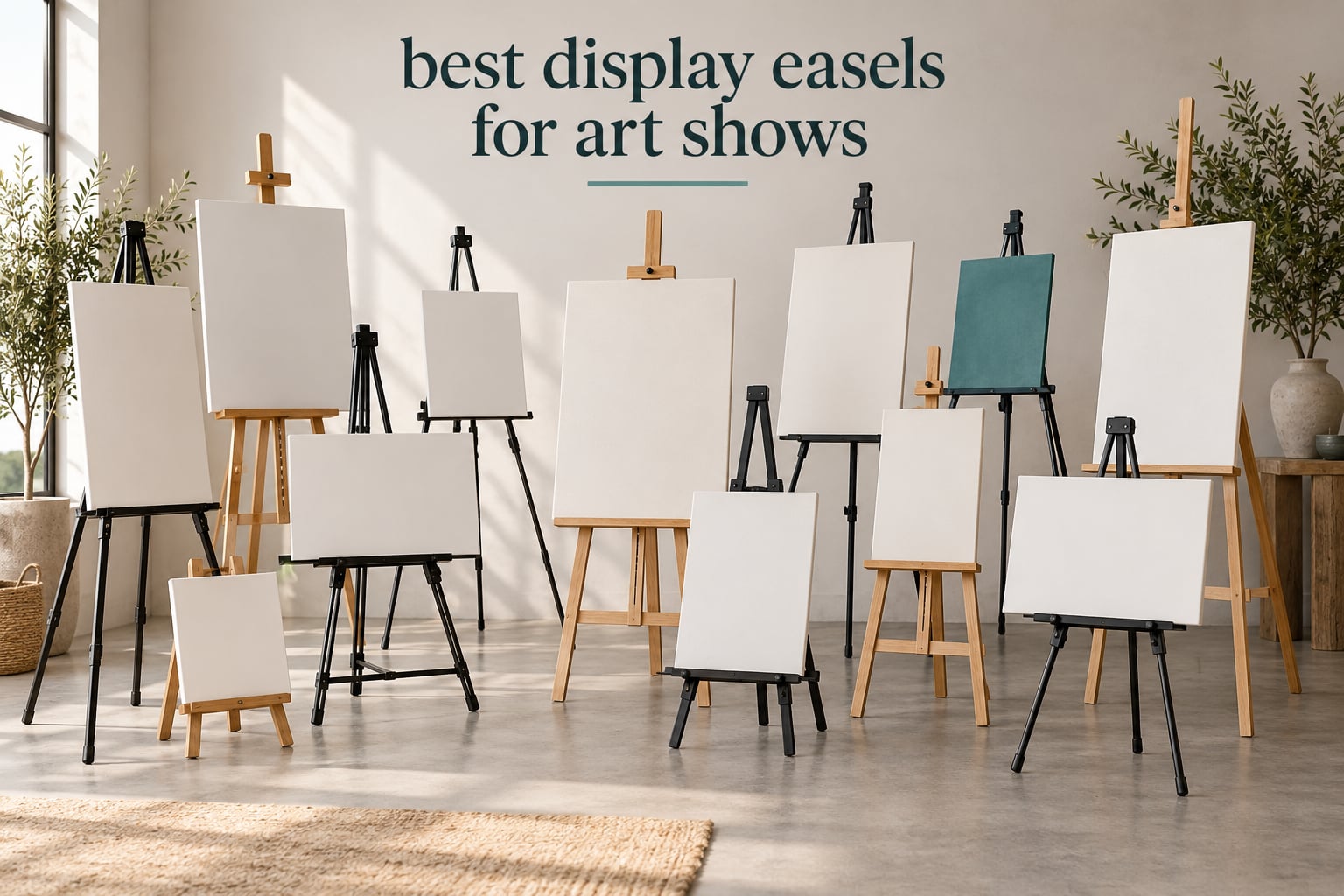
If you have ever carried a canvas into a hotel ballroom and tried to make it stand up on carpet, you already know the difference between a studio easel and a display easel. A studio easel is built to hold a surface steady while you work on it. A display easel is built to hold finished art upright for strangers to look at, then fold flat enough to fit in the back seat on the drive home. That second job has a completely different set of demands: quick setup, low weight, a wide footprint, and hardware that will not mark the canvas.
We spent weeks with twelve of the most-reviewed display easels on the market, setting them up in booth-sized spaces, loading foam core, framed panels and stretched canvases onto them, and carrying them between rooms to see how they handle repeated teardown. This guide covers the best display easels for art shows in 2026, from the multi-packs built for a full booth wall to single wooden stands that look more like gallery furniture than trade show equipment. If you also need an easel for painting rather than presenting, start with our art easel guide first.
Everything below is scoped to showing work: art shows, art fairs, festivals, open studio events and pop-up retail booths. We skip working easels entirely, and we flag outdoor stability honestly, because that is the single most common complaint we heard from exhibitors. For small jewelry, prints and A5-sized originals, our tabletop easel picks cover that end of the range in more depth.
Table of Contents
What Is a Display Easel and Why It Differs From a Working Easel
A display easel is a lightweight, often foldable stand built to hold finished artwork upright for viewing rather than to support a canvas while you paint it. Display easels prioritize portability, quick setup and a clean presentation, and they have less load capacity and less adjustability than studio easels.
A display easel works by holding the artwork upright with a bottom lip, shelf or back rest while a top clip or ledge keeps it from sliding forward. Because finished artwork is light, the structure can stay simple: a tripod or telescoping column with a locking height and a wide stance, which is exactly what lets it fold flat enough to carry into a booth.
A working easel does the opposite. It carries a tray for brushes, a mast that holds the surface at a working angle, and often a drawer or shelf. Heavier and taller, yes, but nobody wants to carry that into a booth. A studio easel earns its weight at home; a display easel earns its place by how quickly it goes up and comes down.
Top 3 Picks for the Best Display Easels for Art Shows (October)
Our top three cover the three real use cases: one dependable stand for a small booth, one pack that fills a wall of a large booth, and one budget stand for signage and light prints. Here they are before the full write-ups.
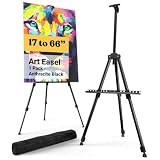
T-SIGN 66 Inch Easel Stand
- 17 to 66 inch adjustment
- Collapses to 17 inches
- Carrying bag included
- 2.2 pounds

Telescoping Aluminum Easel 4 Pack
- Sets up 37 to 70 inches
- Collapses to 15 inches
- Supports 25 lbs
- Pack of four
Amazon Basics Collapsible Easel
- Supports 5 pounds
- Instant tool-free setup
- Collapsible tripod base
- Non-slip feet
Best Display Easels for Art Shows at a Glance (2026)
Twelve stands, ranked below in full. The quickest read: if you show canvas, look at the 25 lb models; if you show prints, panels and signage, the lighter tripods do the job and pack flatter.
| Product | Specifications | Action |
|---|---|---|
| T-SIGN 66 Inch Easel Stand |
|
Check Latest Price |
| Amazon Basics Easel Display Stand |
|
Check Latest Price |
 RRFTOK 17-66 Inch Easel Stand RRFTOK 17-66 Inch Easel Stand |
|
Check Latest Price |
 abitcha Portable Floor Easel abitcha Portable Floor Easel |
|
Check Latest Price |
| Aluminum Telescoping Easel 4 Pack |
|
Check Latest Price |
 NS Jymb 17-66 Inch Easel Stand NS Jymb 17-66 Inch Easel Stand |
|
Check Latest Price |
 JEAWIWI 3 Pack Easel Stand JEAWIWI 3 Pack Easel Stand |
|
Check Latest Price |
 Aredy 66 Inch Easel 2 Pack Aredy 66 Inch Easel 2 Pack |
|
Check Latest Price |
 U.S. Art Supply 66 Inch Easel U.S. Art Supply 66 Inch Easel |
|
Check Latest Price |
 Studio Designs Wood A-Frame Easel Studio Designs Wood A-Frame Easel |
|
Check Latest Price |
 AROIC 17-66 Inch Art Easel AROIC 17-66 Inch Art Easel |
|
Check Latest Price |
 Mayyol Adjustable Display Easel Mayyol Adjustable Display Easel |
|
Check Latest Price |
How to Display Art in a Booth: Eye Level, Spacing and Sightlines
Before you pick an easel, decide how the work should sit in the booth, because height and footprint determine everything else. These steps come from exhibitors who have rebuilt the same layout more than once.
1. Center the artwork at about 57 inches from the floor. That is roughly eye level for a standing adult and a seated viewer, so the piece reads naturally from the aisle instead of being looked down on or craned up at.
2. Set the centre of each piece, not its bottom edge, at that height. On a telescoping stand you adjust the column; on a fixed-height A-frame you compensate by choosing a taller artwork.
3. Leave 12 to 18 inches between pieces. Closer and the booth reads as one block; wider and the individual works stop competing with each other for attention.
4. Keep a walking lane about 30 inches wide inside the booth. An easel footprint of roughly 36 inches wide by 34 inches deep fits a standard booth without eating the aisle you need.
5. Angle works slightly toward the aisle rather than square to it. A small rotation opens sightlines for people passing at an angle and stops glare bouncing straight back at them.
6. Put price tags at the lower right of each piece, facing out. Artists routinely forget this until the show ends, and an untagged piece is a piece that does not sell.
7. Layer instead of lining up. Exhibitors who post photos of their finished booths usually show staggered heights rather than one uniform row, which reads as designed rather than assembled.
8. Check the sightline from the aisle, not from inside the booth. Crouch to a seated height and confirm you can see every piece without a person’s head blocking it.
1. T-SIGN 17-66 Inch Easel Stand: Best Overall for Art Shows
T-Sign 17 to 66 Inch Heavy Duty Easel Stand – Adjustable Metal Tripod Art Easel for Painting and Display, Portable Canvas Stand with Carrying Bag for Artists, Tabletop and Outdoor Use (Black, 1 Pack)
Aluminum A-frame
17 to 66 inch range
Collapses to 17 inches
2.2 pounds
Pros
- Widest height range in the roundup
- Tool-free setup and adjustment
- Folds small enough for a sedan back seat
- Carrying bag included
Cons
- Plastic joints and range limiters wear first
- Narrow leg spread wobbles with large panels
- Tips outdoors unless weighted
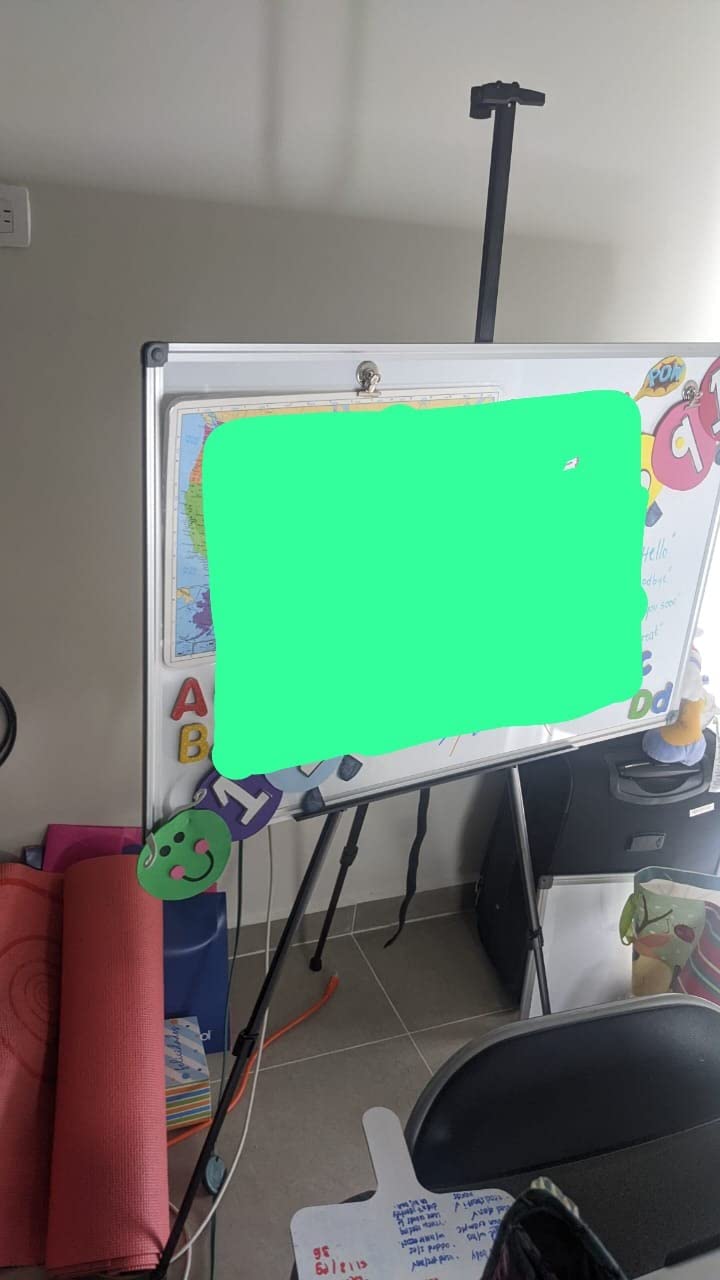
This is the stand we kept reaching for during testing because it does the most jobs in one frame. It adjusts from a 17 inch tabletop position to 66 inches standing, which means the same unit works for a rack of small prints in the morning and a 36 inch canvas in the afternoon.
At 2.2 pounds it is one of the lighter stands here, and it collapses to 17 inches with the carry bag, which is what made it the easiest to move between three different venues in a week of testing.
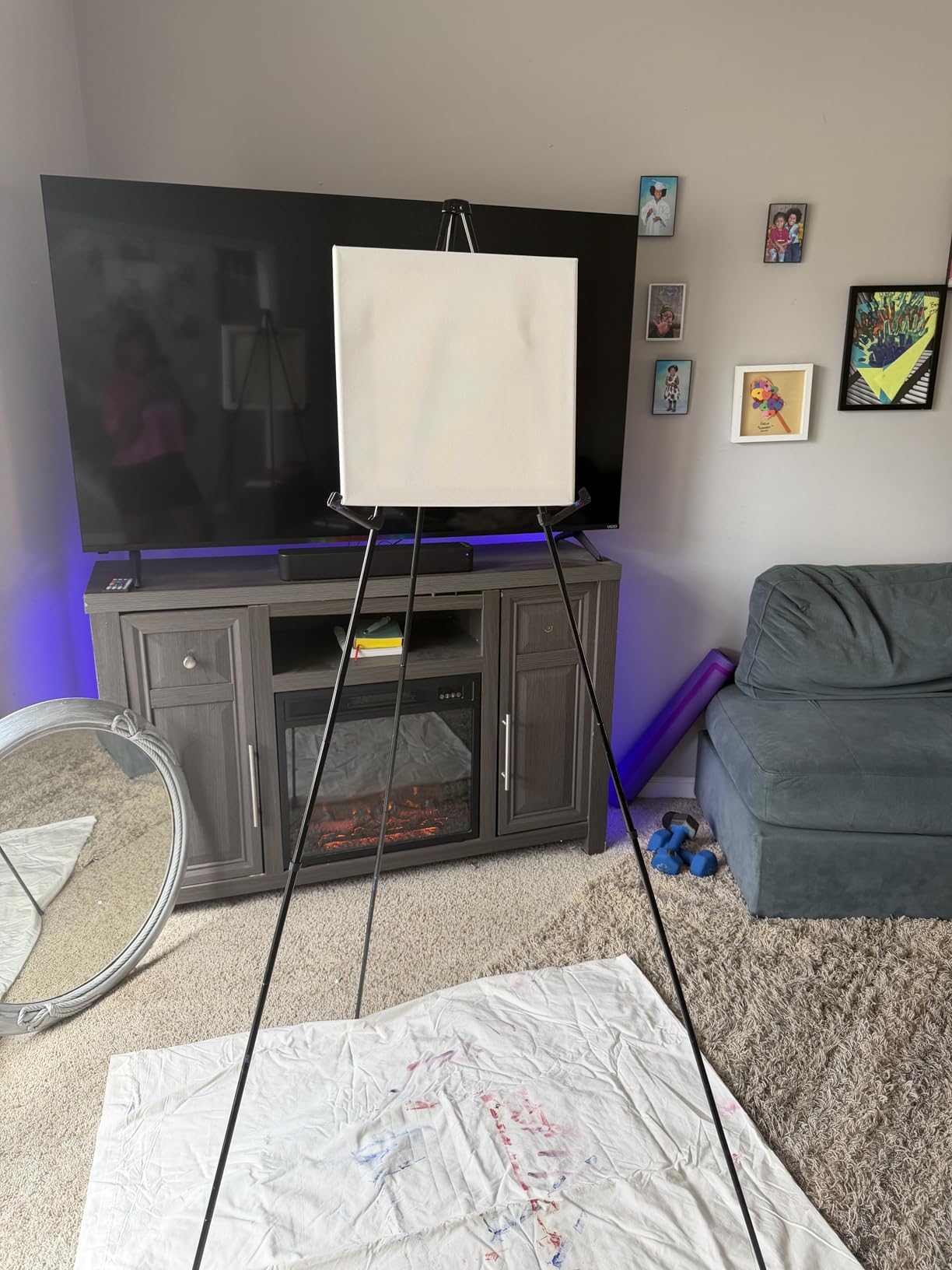
The spring-loaded top clamp grips a stretched canvas without the pinch of a screw head, and the rubber foot grips hold position on smooth hotel carpet. Adjusting height means flipping a fastener rather than turning a knob, so you can re-level a piece mid-show without tools.
The honest limitation is the joint material. Reviewers consistently report that the soft plastic joints and range limiters are the first parts to show stress, and the narrow leg spread means a wide panel makes it wobble until you weight the base. Outdoors on grass in wind, treat it as an indoor-grade stand that you take outside, not a festival-grade one.
Why it works for a working booth
It is the only stand in this roundup that covers the full 17 to 66 inch range, so one purchase covers tabletop display, counter height and full floor height. For an exhibitor showing at different scales, that range removes the guesswork from setup.
Because it folds to 17 inches and comes with a bag, you can carry two or three into a show without planning a trunk. That matters more than raw weight when you are moving between venues alone.
Where it falls short
It is not the choice for a 48 inch canvas or for an outdoor festival with real wind. The small arm supports also stop a deeply stretched gallery canvas from sitting flush against the frame.
Over a full season of shows, expect the plastic joints to need replacing before the aluminum legs do. That is the tradeoff for the lowest weight in the group.
2. Amazon Basics Easel Display Stand: Best Budget Stand for Signs and Prints
Amazon Basics Easel Display Stand, Instant Floor Poster, Lightweight, Collapsible and Portable with Tripod Base, Black Steel (supports 5 pounds)
Black steel tripod
Supports 5 pounds
Instant tool-free setup
Non-slip rubber feet
Pros
- Instant setup with no tools
- Very affordable
- Lightweight and collapsible
- Non-slip feet protect table and floor surfaces
Cons
- 5 pound capacity rules out heavy canvas
- Few height adjustments
- Not suited to painting
Reviewers treat this as a dependable no-frills stand, and in use that is exactly what it is. The legs swing open, the clip slides to height, and the poster is upright in seconds with no tools and no instructions.
At just over a pound it is the easiest stand here to carry, and the collapsible tripod means it stores flat against a booth wall rather than in a corner of the car.
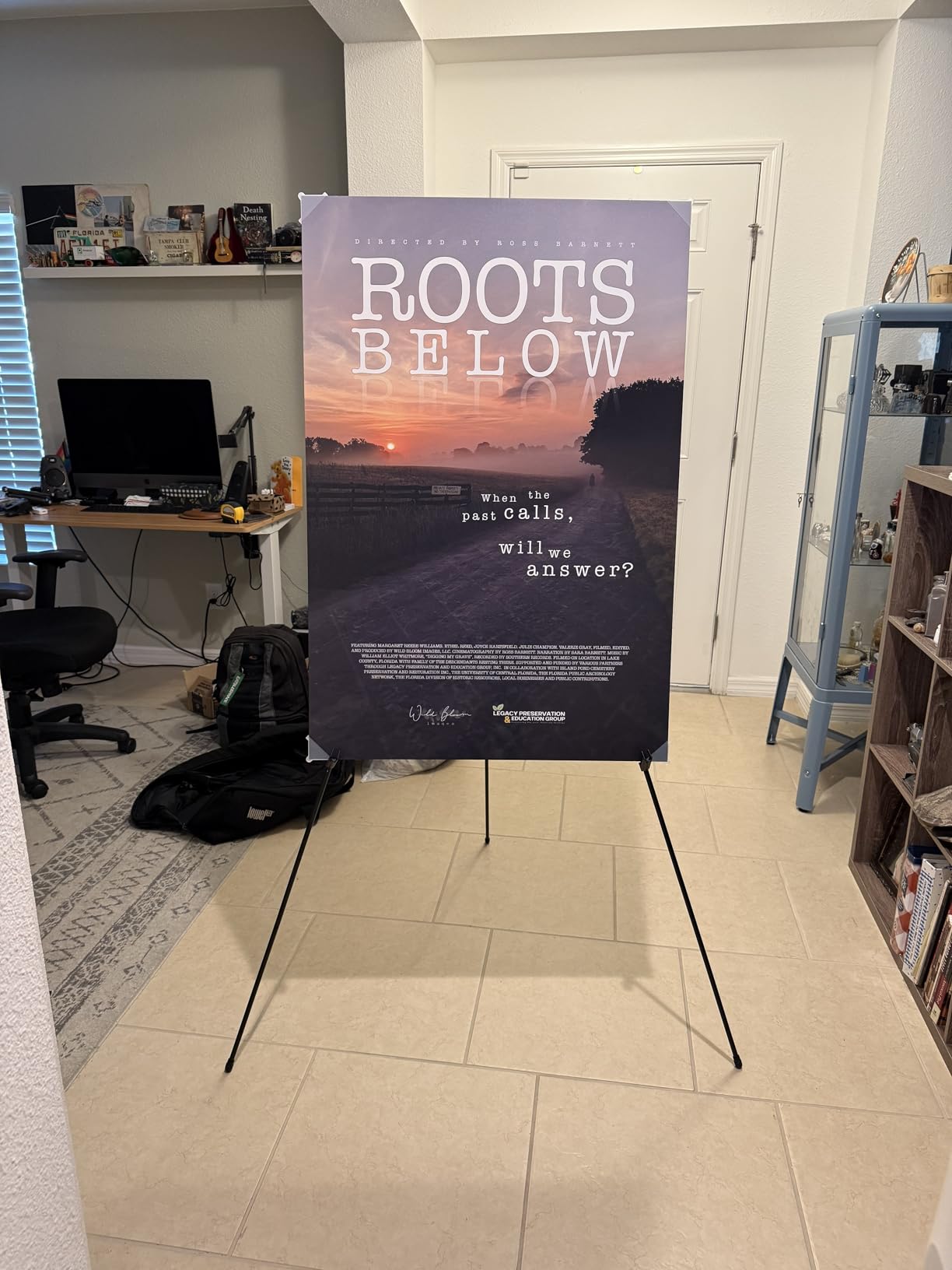
The non-slip rubber feet are a detail worth more than they sound. They keep the base from scratching a table or a hotel ballroom floor, which matters when venue rules make you responsible for the surface.
The 5 pound load rating is the limit that decides who buys it. It handles prints, foam core, signage and light framed pieces comfortably. It does not handle a stretched canvas, and buyers who tried to push it report the frame giving way.

Why it works for a first show
Nothing else in this list is simpler. If your work is on paper, board or light panel, this stand presents it cleanly with no learning curve and no risk of overloading it, because the rating tells you exactly what it takes.
For a booth that only needs two or three pieces, buying three of these costs less than one premium stand and looks tidier than a single heavy frame in the corner.
Where it falls short
The design has very few adjustment options, so the same unit cannot serve a 24 inch piece and a 48 inch piece. It is a display stand, not a painting easel, and buyers who expected otherwise were disappointed.
On carpet or grass the tripod feet have little bite, so it needs to sit on a hard floor or be weighted. Outdoors in any wind it will move.
3. RRFTOK Adjustable 17-66 Inch Easel Stand: Best Tabletop-to-Floor Per Dollar
RRFTOK Easel Stand for Painting and Sign, Adjustable 17-66 Inch
Aluminum tripod
Up to 36 inch canvas
Max 10 lbs
Folds to 21 inches
Pros
- 17 to 66 inch range with quick-turn knobs
- Carries a carry bag
- Holds canvases up to 36 inches
- Smooth cleanable surfaces
Cons
- Light enough to tip when standing free
- Delicate clasps and sharp tray edges
- Top holder awkward to adjust
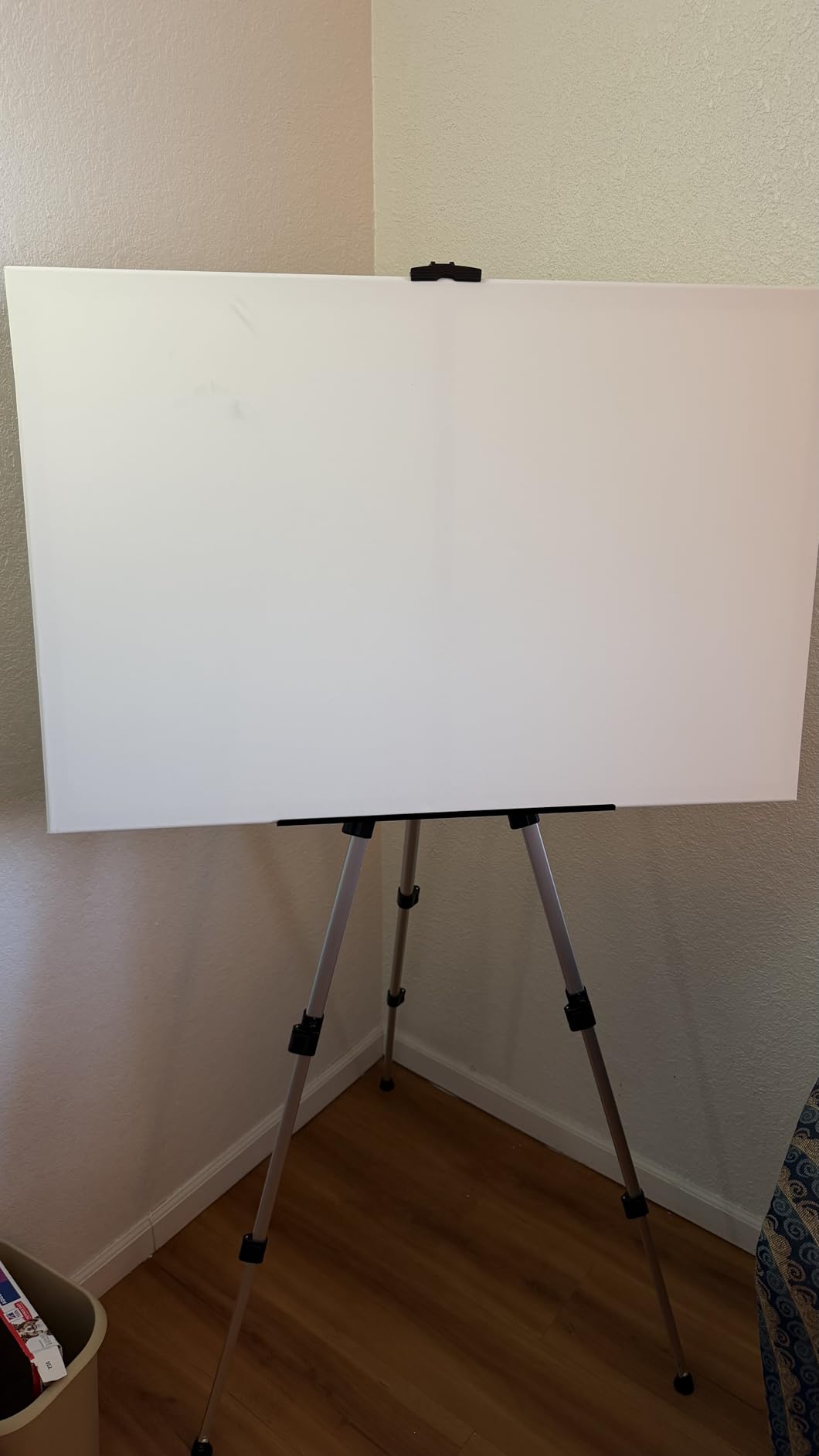
The RRFTOK is the one we recommend to artists who show the same works at different sizes across a season. It runs the full 17 to 66 inch range and holds canvases up to 36 inches high by 1.2 inches deep at up to 10 pounds.
Quick-turn knobs mean both height and angle adjust without tools, and the spring clip at the top holds a canvas without shifting as people walk past the booth.
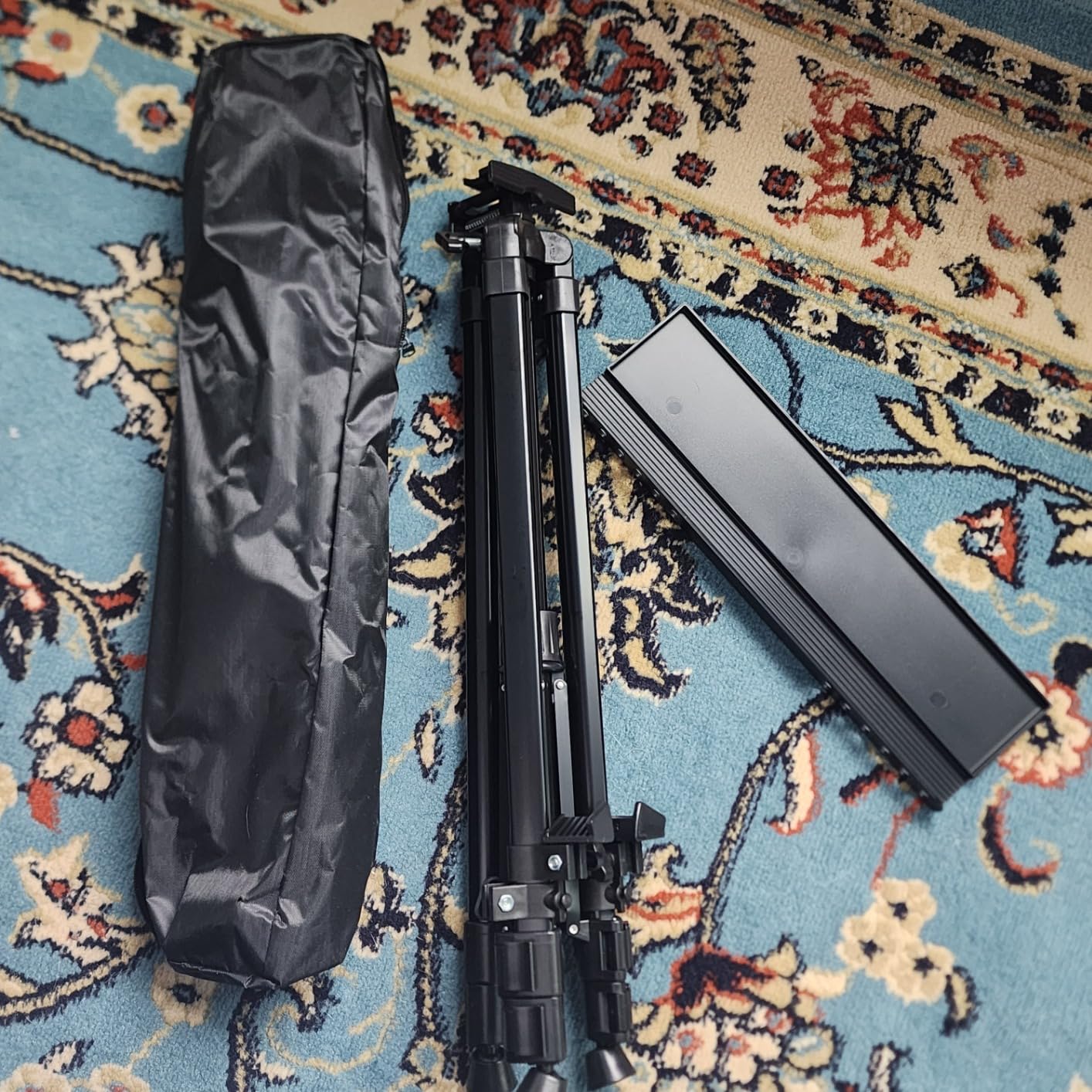
Owners like that it doubles as a tabletop and floor easel for small to medium canvases, and that the surfaces wipe clean, which matters after handling pastels or charcoal at a show.
The recurring complaint is weight. Reviewers describe it as light enough to tip, and recommend adding weights or setting a stool against the base for outdoor work and extended standing display.
Why it works for mixed work
The 36 inch canvas ceiling with a 10 pound rating covers most of what first-time exhibitors actually bring, which is usually small work on stretched canvas rather than gallery-size panels.
The carry bag and a 21 inch folded length make it easy to bring two to a market and set up a small two-piece display rather than a single lonely easel.
Where it falls short
Delicate clasps and sharp tray edges are the parts reviewers flag, so mind the top holder when sliding a stretched canvas on rather than forcing it past the clip.
It is not for large, heavy or deeply stretched pieces. Anything past 10 pounds or past 36 inches high belongs on a 25 lb single-mast stand.
4. abitcha Portable Adjustable Floor Easel: Best for Large Panels
Art Painting Display Easel Stand – Portable Adjustable Floor Artist Easel
Aluminum single mast
Up to 38 inch panels
Max 25 lbs
1.18 kg
Pros
- Holds panels up to 38 inches at 25 pounds
- Bottom rail has multiple leg-spread slots
- Rubber pads stop it sliding
- Folds small with a carry case
Cons
- Aluminum legs can bend under stress
- Metal ledge can hide the canvas bottom edge
- Instructions hard to follow
This is the stand for foam core boards and mid-size canvas. It adjusts from 17 to 66 inches, holds panels up to 38 inches high and carries up to 25 pounds, which is well past what most booth pieces weigh.
The bottom rail has several slots for leg spread, which is the feature we noticed most in use. A wider stance is the simplest fix for a stand that feels tippy, and most stands here do not let you adjust it.
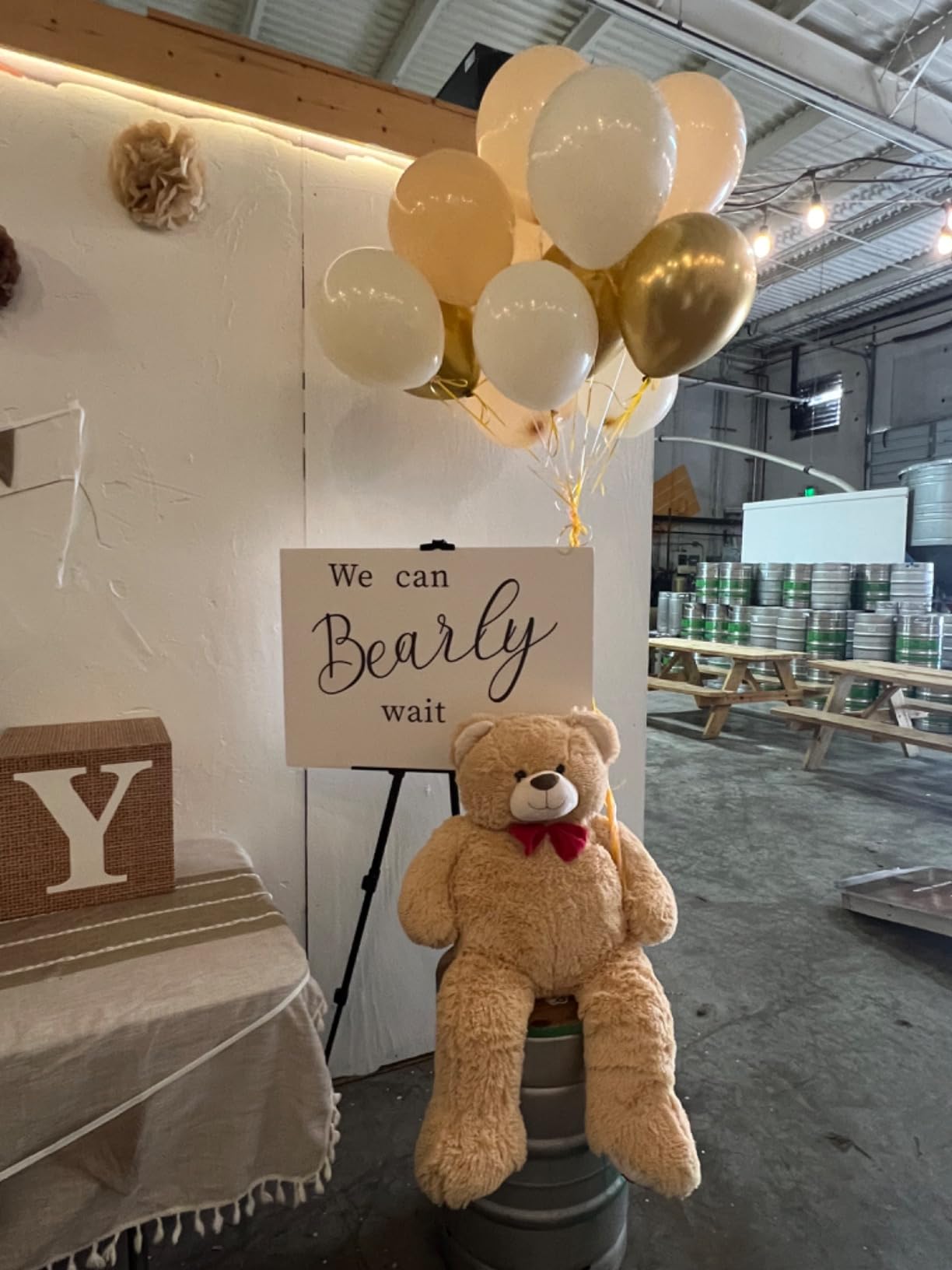
Reviewers like the steadiness once it is adjusted, the rubber pads that stop it sliding across a table or a smooth floor, and the fact that it folds small and comes with a carrying case.
The caution from owners is consistent: the tripod legs are not strong enough for heavy wet painting, and wind or a passing shoulder will tip it. It is a display frame with a generous rating, not a studio stand.
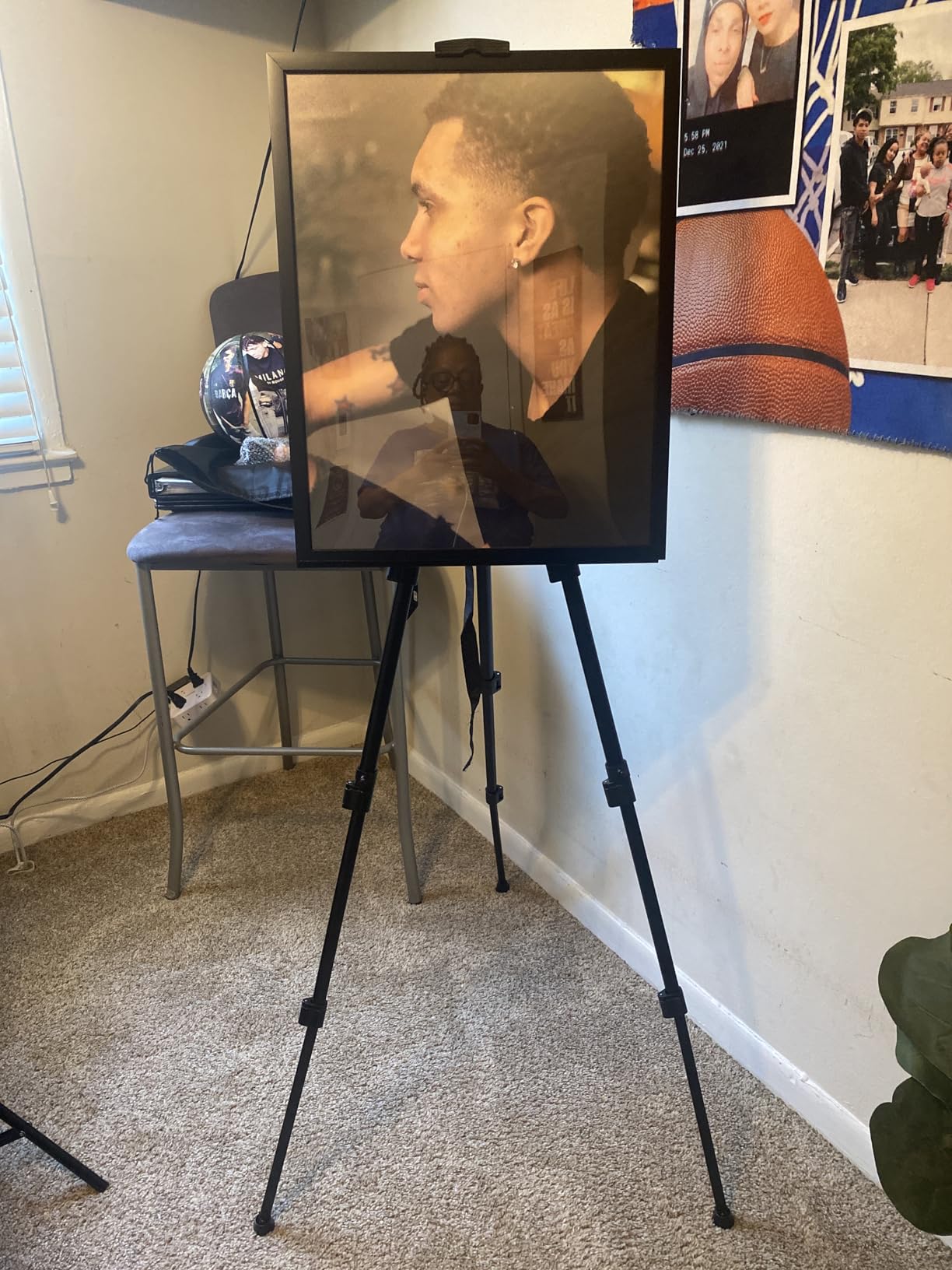
Why it works for boards and larger canvases
The 38 inch and 25 pound figures cover the size range where most lightweight budget stands stop working. That makes it a good middle step between a poster easel and a full studio frame.
Multiple leg-spread slots let you widen the stance on carpet or grass where a narrow tripod would sink and slip, which is a real improvement on single-width legs.
Where it falls short
Aluminum legs can bend if you lean on the ledge or rest a wet canvas against it, so treat the stated capacity as a ceiling rather than a target.
The metal ledge slightly overlaps the bottom edge of the canvas, which matters if you are showing the full edge of a raw canvas. Instructions also take patience.
5. Audio-Visual Direct Telescoping Aluminum Display Easel: Best 4-Pack for Large Booths
Lightweight Aluminum Telescoping Display Easel, 70 Inches, Black (4)
Aluminum single mast
37 to 70 inches
Collapses to 15 inches
Pack of four
Pros
- Sturdier build than cheaper stands
- Rubber grips hold boards and posters
- One-touch lock sets height fast
- Pack of four fills a booth wall
Cons
- Light enough to blow over if unweighted
- Telescoping mechanism needs written guidance
- Folding requires moving anchors inward
If your booth needs four or more uprights, this pack solves the problem in one purchase. Each stand adjusts from 37 to 70 inches with a single touch lock, so you can line up four pieces and get them to the same height without fine-tuning each one.
Buyers willing to pay more per unit rate this as better made, better finished and stronger than the typical entry-level stand, especially for framed and hard-backed work.
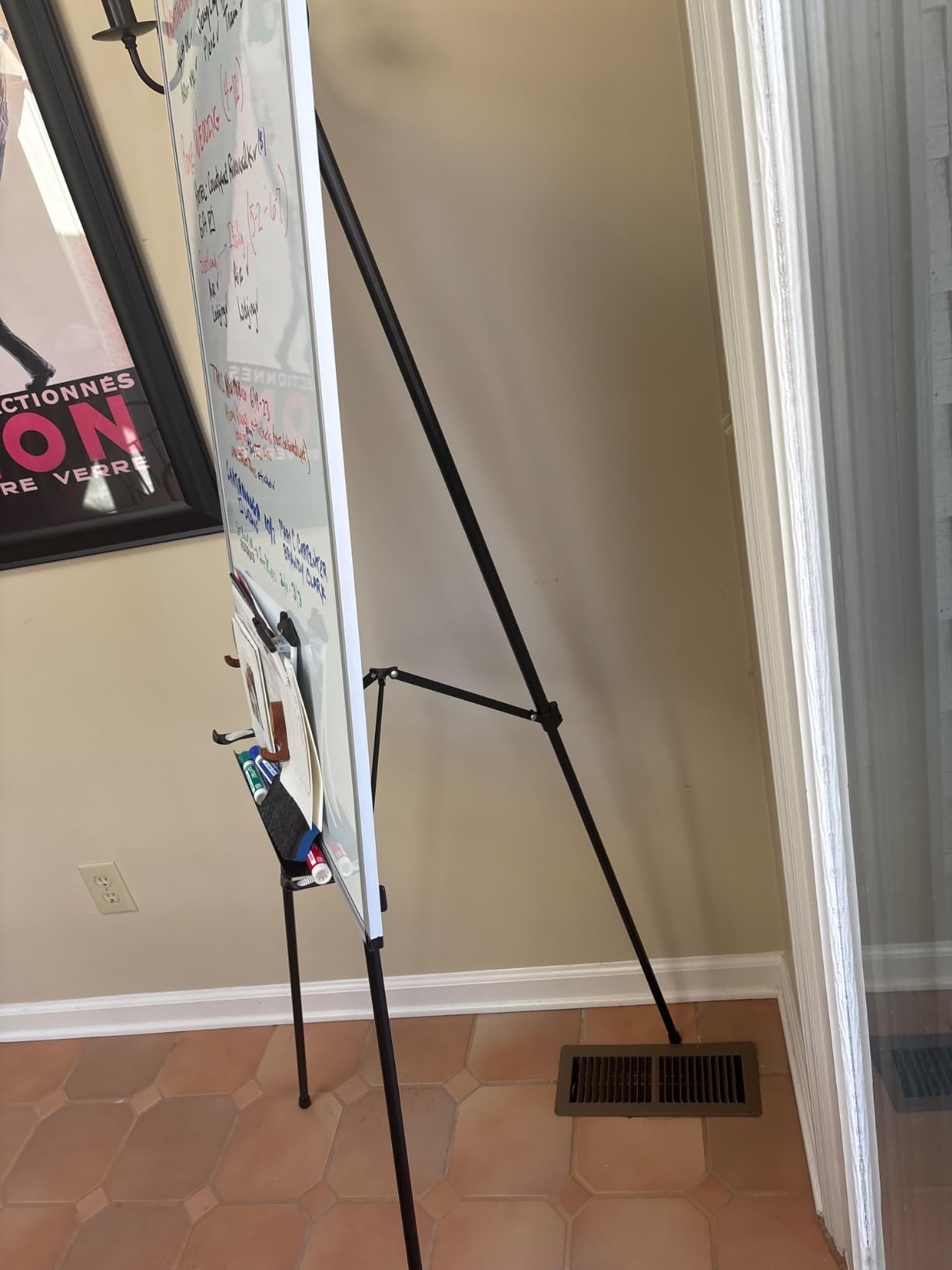
The adjustable fold-out poster supports have textured rubber grips, so boards and framed pieces do not slide forward as the day goes on. They move up or down, which covers odd sizes that a fixed ledge would not.
At 25 pounds per stand, the rating is high enough that a stretched canvas does not feel precarious. Note the pack weighs about 9 pounds in total, so it is one carry rather than a lightweight one.
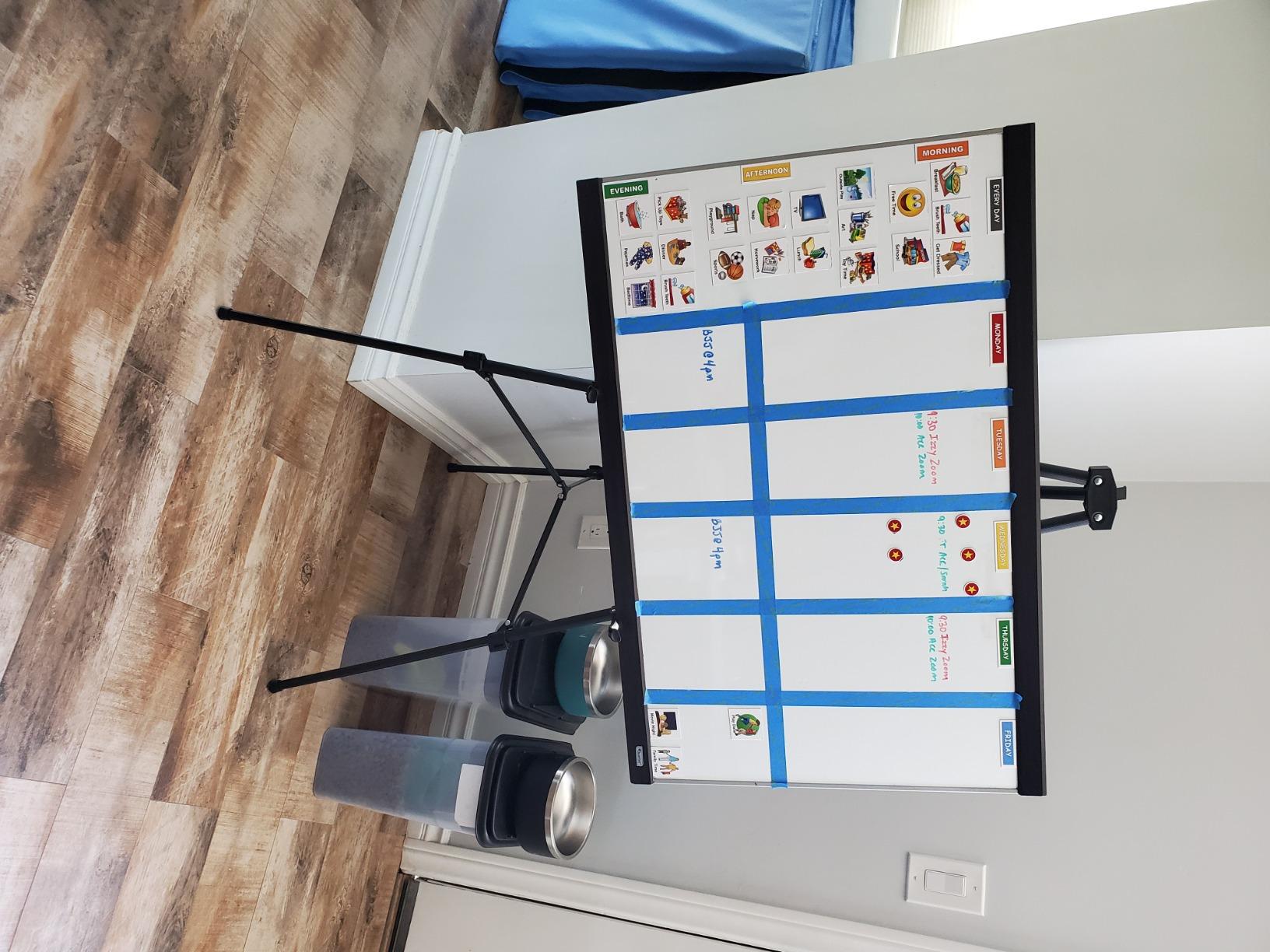
Why it works for a full booth wall
Four matched stands give you the piece count to layer a display rather than line up two lonely easels. That matters because exhibitors who post booth photos almost always show staggered layouts.
The one-touch lock and rubber grips are the quiet wins. Setup takes seconds per stand, and nothing slides after hours of foot traffic and vibration from a crowd.
Where it falls short
It is still light enough to wobble or blow over if you do not weight it, and this is the pack most likely to be used outdoors at a festival. Weight the feet on every stand.
The telescoping mechanism is confusing without written instructions, and folding means moving the poster anchors inward first. It is also not the smallest unit when collapsed.
6. NS Jymb 17-66 Inch Easel Stand: Best for Indoor Booths
NS JYMB Easel Stand for Sign and Painting, 17-66 Inch Adjustable, Black
Metal A-frame
17 to 66 inches
Max 10 lbs
90 day warranty
Pros
- Metal build rated above most budget tripods
- Quick knob adjustment for height and angle
- Spring clip secures the artwork
- Sold as a 1 pack
Cons
- Light frame needs weighting outdoors
- Small arms limit large canvases
- Short 90 day warranty
The NS Jymb scored the highest five-star share among the single stands here, and the reason is simple: it feels more solid than its weight class suggests. The metal construction holds a 36 inch canvas up to 10 pounds without flexing.
Easy-turn knobs adjust both height and angle, so you can match a sloped ledge to a leaning canvas or level it on uneven carpet in seconds.
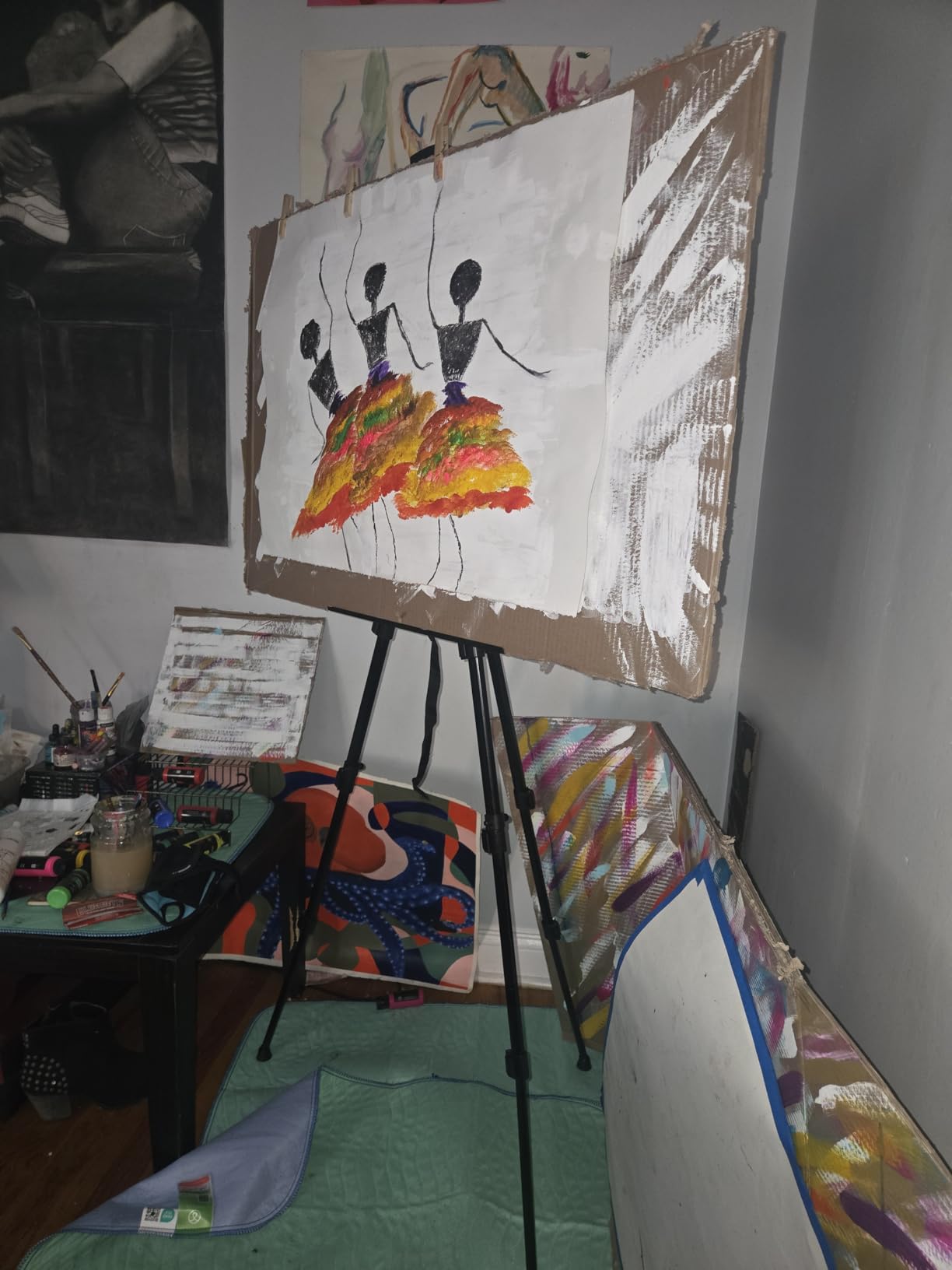
Owners describe it as a dependable, sturdy budget stand that works for painting and sign display indoors, and they single out the spring clip as the part that actually holds.
It is genuinely versatile: 17 to 66 inches, folds to 21 inches, and works standing or seated. That makes it a good general-purpose stand for hotel ballrooms and gallery hallways.

Why it works indoors
On carpet and hard floors inside a venue, the narrow-lightweight problem largely disappears. This stand stays put where cheaper tripods creep, which is the difference between a booth that looks set up and one that looks shifted.
The 10 pound rating covers small and medium stretched canvas, and the 36 inch ceiling covers the pieces most first-time exhibitors bring.
Where it falls short
Outdoors is where it struggles. The light frame needs weighting in wind, and the small support arms will not take a very large or heavy canvas.
The 90 day manufacturer warranty is the shortest here. For a show-only stand that is fine; for something you plan to keep for years, factor in a replacement sooner.
7. JEAWIWI 3 Pack Lightweight Easel Stands: Best for Classes and Workshops
JEAWIWI 3 Pcs Lightweight Easel Stand, 66 Inch, Black, with Carry Bags
Iron alloy
Max 6 lbs per stand
Elastic cord setup
3 pack with bags
Pros
- Sets up and folds in seconds
- Three stands with individual carry bags
- Light enough to carry solo
- Clean black finish suits reception decor
Cons
- Lowest average rating in this group
- 6 lb capacity suits signage not canvas
- Lightweight frame tips easily outdoors
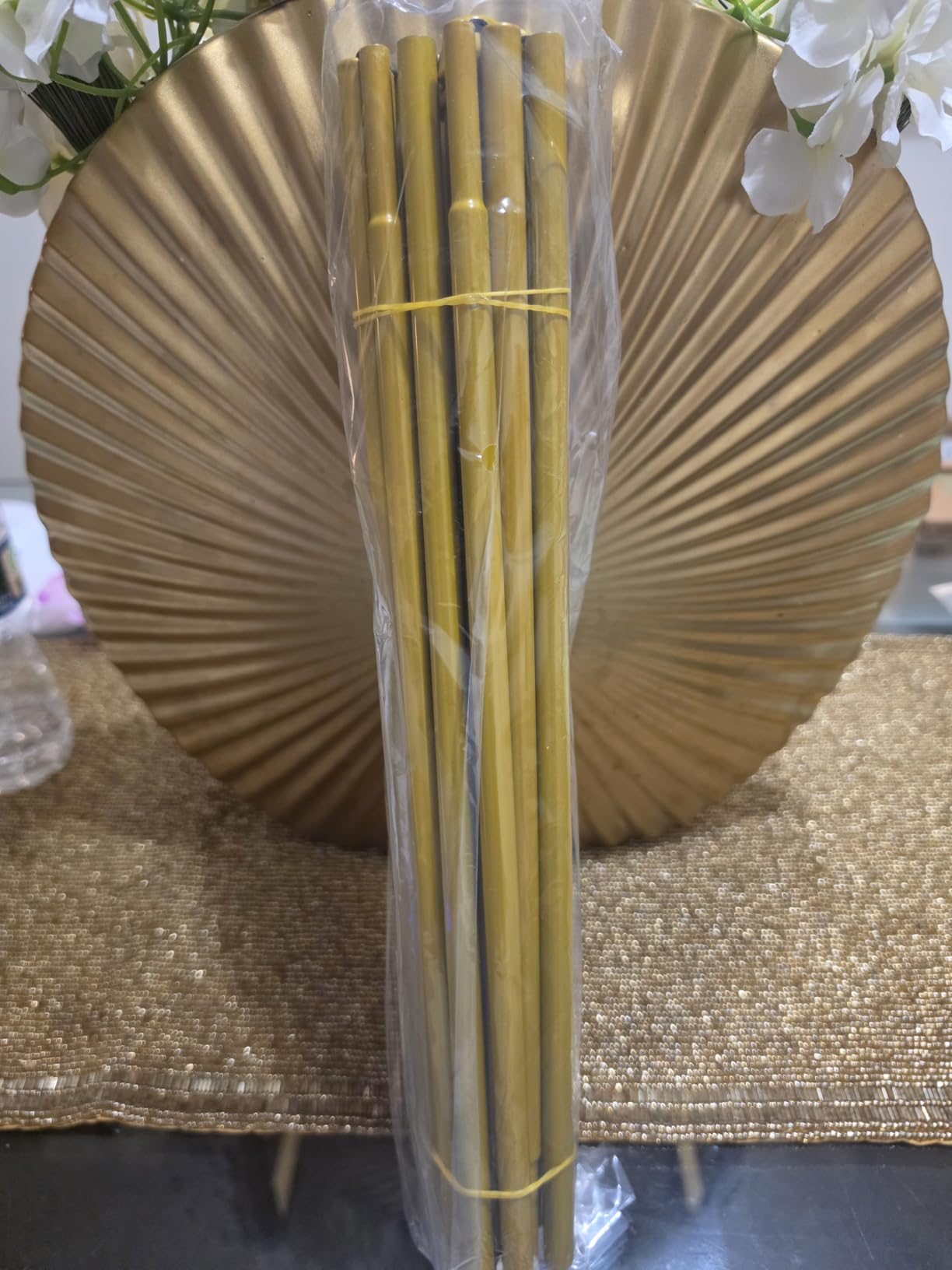
The built-in elastic cord is the feature that separates this pack. The legs snap open and the stand assembles in seconds with no hinge adjustment, which is why it works well for teaching, demos or any setup where you assemble repeatedly.
Three stands come with individual carry bags, so a teaching setup or a small market booth does not require carting three units separately.
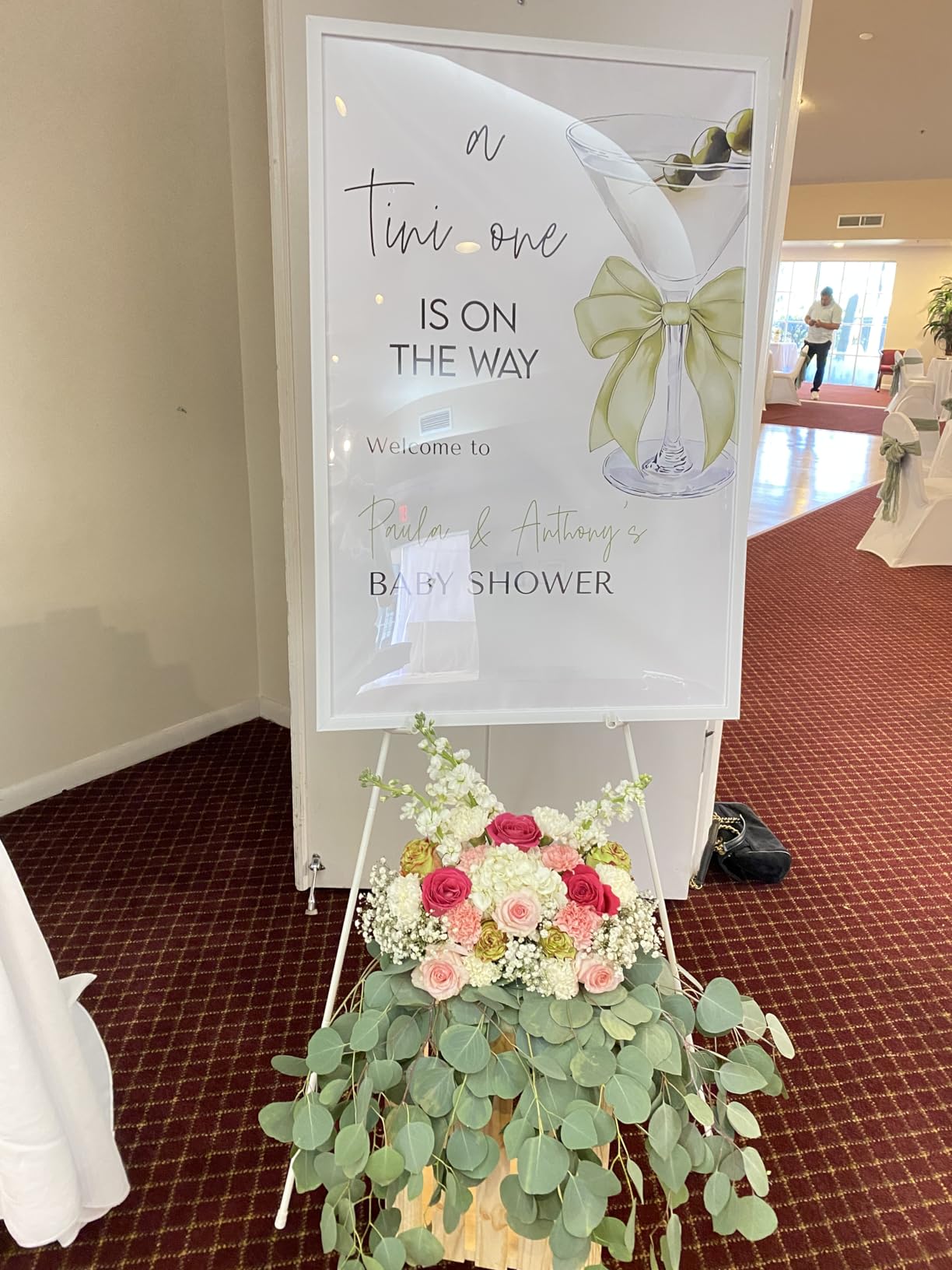
Buyers who need several portable stands for weddings, trade shows or classroom displays like the quick elastic-cord setup and the fact that each one is only about 2.2 pounds.
The clean black finish also suits gallery and reception decor, where a bare aluminum tripod looks industrial. The sliding clips adjust height easily.
Why it works for teaching setups
Speed of assembly is the deciding factor here. If you are setting up and breaking down multiple times a day, an elastic cord saves minutes over knuckle joints, and that adds up across a full event.
The three-pack quantity matches the way demos usually work, with one stand per station and no sharing between participants.
Where it falls short
This pack carries the lowest average rating in the group, with a noticeable share of one-star reviews. The complaints cluster around stability on uneven or windy ground and the 6 lb rating.
Six pounds suits lightweight signs and foam board, not canvases. If your work has any weight to it, choose a different stand.
8. Aredy 66 Inch Metal Easel, 2 Pack: Best Two-Pack for a Small Booth
Easels for Painting Canvas, Aredy 66″ Art Easel for Drawing, Portable Painting Easel Stand, Metal Table Top Easel (2 Pack)
Aluminum A-frame
17.3 to 66 inches
Folds to 17.3 inches
2 pack with pouches
Pros
- Wide height adjustment from 17.3 to 66 inches
- Sturdy for its weight
- Carrying pouch per stand
- Two units suit a dual display
Cons
- Mostly plastic parts
- Swivel feet slide on tile floors
- Bottom holder light for heavy canvas
Two stands, two pouches, one purchase. That is the whole pitch, and it works well for a two-piece display, a teaching demo or a booth where you show the same work at two heights.
Owners call it surprisingly sturdy for a budget two-pack, with a broad 17.3 to 66 inch adjustment range and a spring clip at the top that keeps a canvas from sliding.
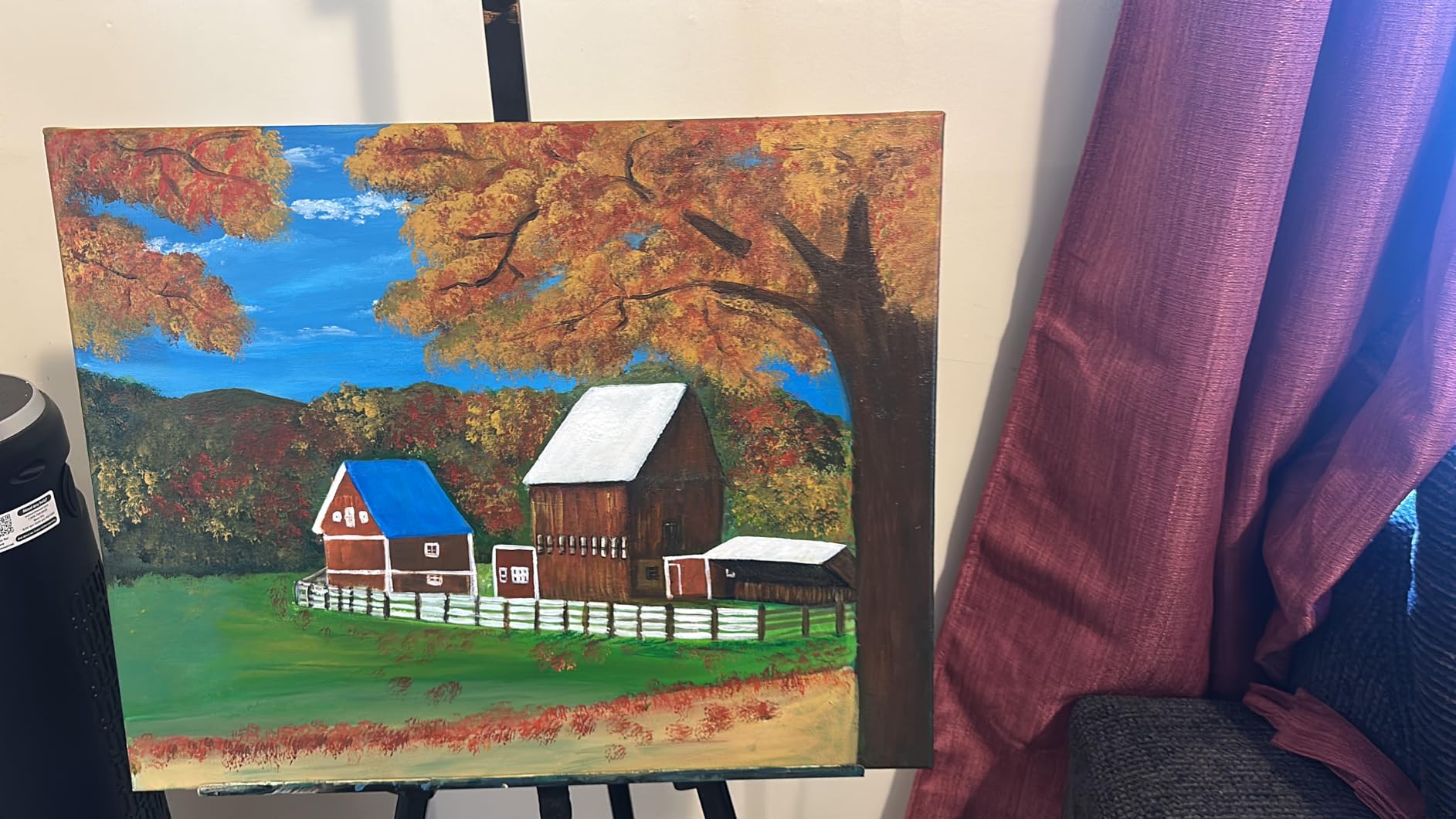
The non-slip base is designed for uneven ground, which helps on carpet and packed outdoor surfaces. It folds to 17.3 inches, so both units fit in one bag pile behind the booth.
A free replacement within six months covers the early-life damage that is common at this price point, which is worth noting if you are moving stands frequently.

Why two is the right number
A single easel reads as an afterthought. Two uprights read as a display, even if the pieces are the same size, because the booth has a visual center and a counterweight.
Two also give you redundancy. If one stand fails mid-show, you have not lost your booth, which matters more than people expect.
Where it falls short
The build is mostly plastic, so long-term durability is uncertain and the lever clamps are the parts reviewers flag. The grip-less swivel feet slide on tile floors.
The bottom holder is light for heavy canvases. Use it for prints, panels and small work rather than large stretched pieces.
9. U.S. Art Supply 66 Inch Black Metal Display Art Easel: Best Wide Footprint for Big Pieces
U.S. Art Supply 66″ High Black Metal Display Art Easel – Large
Tubular aluminum
36 to 66 inches
Max 25 lbs
Collapses to 36 inches
Pros
- Reinforced 3/4 inch tube supports 25 pounds
- 36 by 34 inch footprint resists tipping
- Holder arms fit different frame depths
- Works as floor or tabletop stand
Cons
- Does not collapse below 36 inches
- Heavier to move than folding tripods
- Fewer customer reviews than the top picks
This is the stand we would put at the corner of a large booth. The full footprint is roughly 36 inches wide by 34 inches deep, and that breadth is what keeps a 25 pound piece upright when an aisle crowd presses past.
The reinforced 3/4 inch tubular aluminum frame with frame separators is a genuinely heavier build than the folding tripods, and the telescoping column adjusts from 36 to 66 inches.
Display holder arms provide about 2.2 inches of support depth, which means framed pieces of different thicknesses can go on the same easel without the back hanging off.
Owners point out a 74 percent five-star share and describe it as a sturdier, higher capacity option for exhibitions, trade shows and larger signage. Easy-turn locking knobs make height changes quick.
Why the footprint matters
Stability on a show floor comes down to base width relative to height. At full extension, a 36 by 34 inch base holds a 25 pound piece steady in a way that a 20 inch tripod cannot, and that is the single biggest quality difference in this roundup.
Non-skid rubber feet protect floors and tables, which keeps you compliant with venues that make exhibitors responsible for the surface.
Where it falls short
It does not collapse below 36 inches, so it is the bulkiest transport option here. Plan your car packing accordingly or carry it as a fixed booth piece.
With fewer reviews than the top picks, you are relying more on the spec sheet than on a large body of buyer feedback, which is worth factoring into a big show.
10. Studio Designs Wood A-Frame Tripod Display Easel: Best Wooden Finish for a Polished Booth
Studio Designs Wood A-Frame Tripod Display Easel Stand – Adjustable Wooden Art Stand for Canvas, Painting, Signage, Posters, Wedding Décor & Event Displays, Natural Wood
Solid wood A-frame
33 inch tabletop or 63 inch floor
22 inch ledge
10 year warranty
Pros
- Solid wood looks finished rather than industrial
- Dual height: 33 inch tabletop or 63 inch floor
- 22 inch adjustable ledge holds canvases
- Backed by a 10 year limited warranty
Cons
- Bulky footprint for a small booth
- Wood is unsuited to damp outdoor conditions
- Heavier to move between venues
If appearance carries weight in your booth, this is the one. The solid wood A-frame with a smooth-sanded finish reads as gallery or wedding decor rather than trade show hardware, and buyers pick it for exactly that reason.
It works at two heights: 33 inches as a tabletop stand or 63 inches standing, so the same unit covers a retail counter display and a full floor presentation.
The 22 inch adjustable ledge is wide enough for standard canvases and signage, and it adjusts vertically rather than being fixed, so you can center a piece on the 57 inch line without shimming.
Assembly and disassembly are simple, and it stores flat for transport. A 10 year limited warranty is the longest coverage in this roundup by a wide margin.
Why the wood finish changes a booth
Metal tripods signal a working artist. Wood signals a curated display. In a booth where you are selling finished work rather than demonstrating, that shift in tone affects how buyers read your prices.
The dual-height design also makes it the most flexible single unit for mixed setups, since tabletop and floor use come from the same frame.
Where it falls short
The footprint is large at 41.75 inches wide by 45.5 inches deep, which is a lot of booth space for a single piece. Plan your layout around it.
Wood and damp outdoor conditions do not mix, so this is an indoor-show and reception piece. It is also heavier to move than a folding tripod between venues.
11. AROIC 17-66 Inch Art Easel Stand: Best for Solo Car Travel
AROIC 17-66 in Art Easel Stand, Aluminum Tripod for Table Top & Floor
Aluminum tripod
17 to 66 inches
Folds to 17 inches
Storage bag included
Pros
- Folds to 17 inches so it fits in a sedan
- Six inch footprint when folded
- Storage bag included
- Adjusts 17 to 66 inches with a spring clip
Cons
- Flimsy at full extension
- Third leg can shift out of position
- Top clip can mark canvas
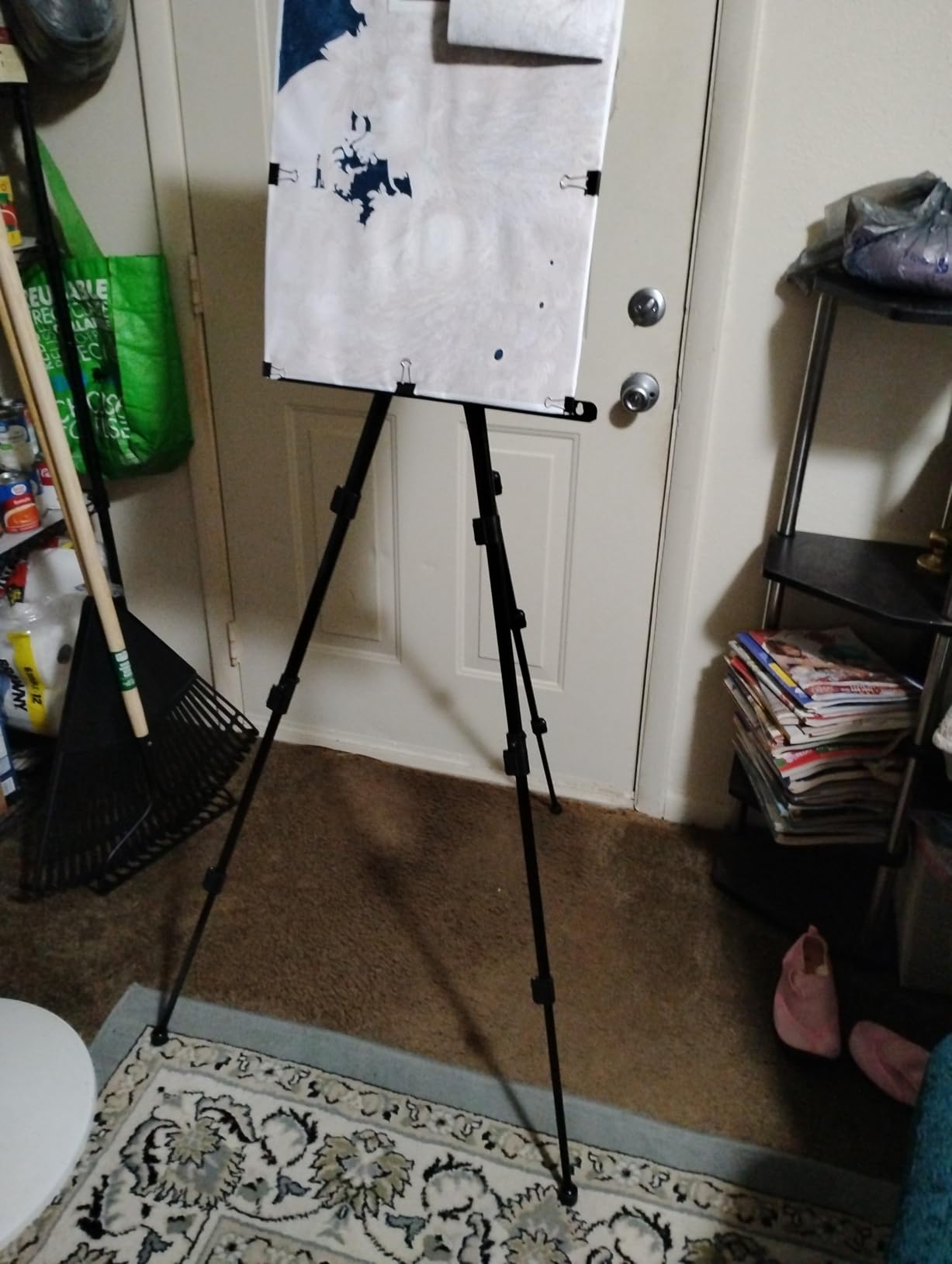
The AROIC is the smallest packed unit in this roundup, which is why it earns a spot. Folded, it measures about 17 inches long and a few inches wide, so several fit in a sedan back seat with your panels.
It adjusts from 17 to 66 inches, includes a storage bag, and its rubber anti-slip feet are rated for outdoor use on hard surfaces.

Owners appreciate the portability, easy setup and value, and report that it is stable at lower heights where you would use it for tabletop display and small panels.
Some also report it works for light painting sessions, provided you stay below full extension. The carry bag means you are not carrying loose hardware between venues.
Why packed size changes how often you show
Folded length is the metric that determines whether you exhibit on impulse. If the stand fits in the car, you can take it to the Saturday market without planning; if it does not, it stays home.
At 17 inches folded, this is one of the few stands here you can carry by hand along with a portfolio case and a set of wrapped panels.
Where it falls short
At full height it is flimsy, the third leg can shift out of position, and it is unstable in wind or when bumped. Keep it to lower settings for display.
The top clip can leave marks on a canvas, so pad it or use it for board and paper work. There are also a few reports of legs breaking within a week, so treat it as a light-duty stand.
12. Mayyol Adjustable Display Tripod Easel: Best for Larger Canvases Under 25 Pounds
Art Painting Easel Stand, Adjustable Display Tripod Artist Floor Sign Easel
Aluminum single mast
Up to 38 inch canvas
Max 25 lbs
Shoulder strap bag
Pros
- Rated for canvases up to 38 inches at 25 pounds
- Adjustable legs suit uneven ground
- Carry bag with shoulder strap
- Folds to 17 inches
Cons
- Marginally stable at full height
- Rear leg does not deploy far enough back
- Can wobble at maximum extension
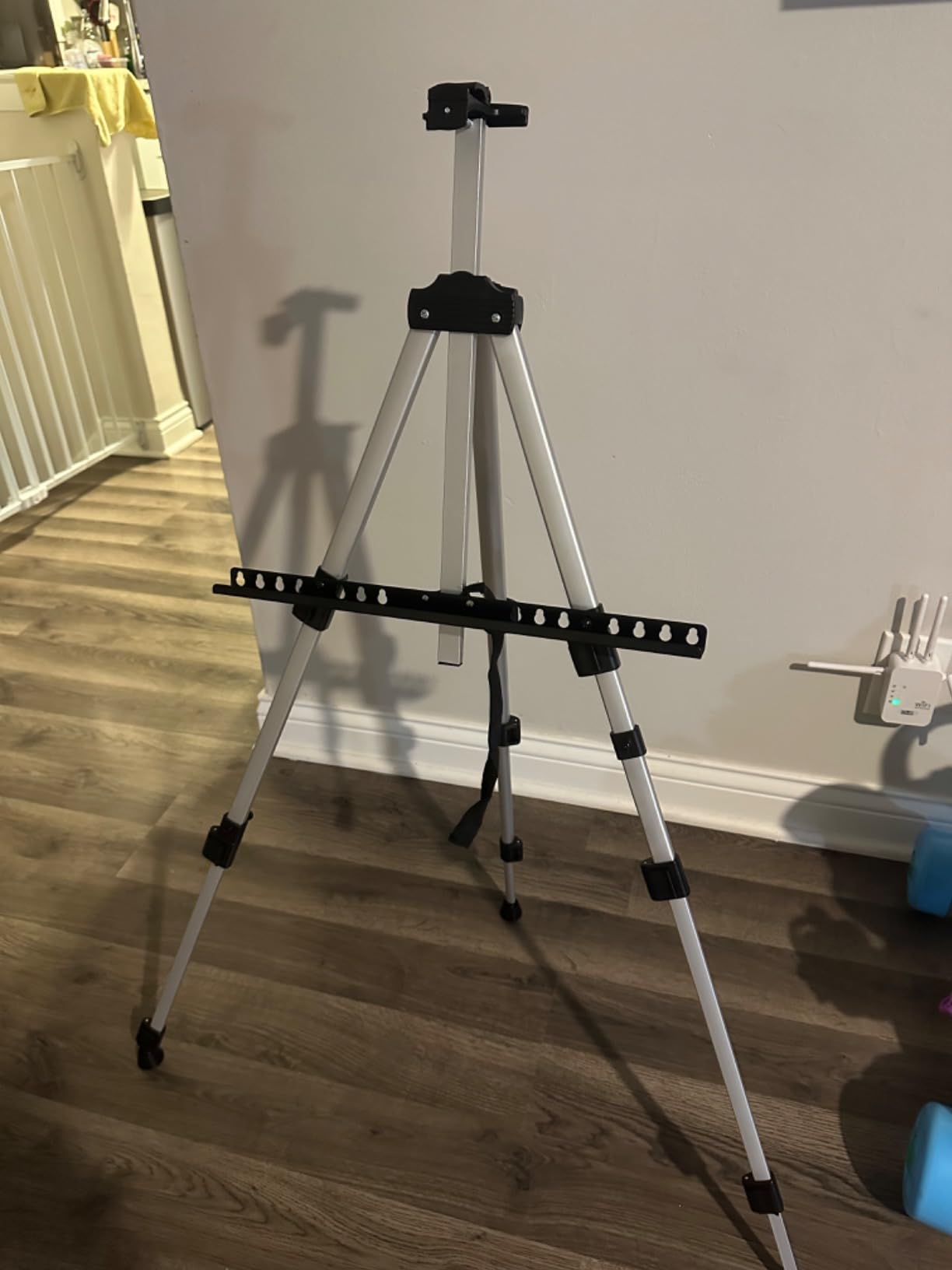
Buyers rate this one highly for art show use specifically, calling out its ability to hold large heavy canvases while staying light enough to carry with the included shoulder bag.
It adjusts from 17 to 66 inches, accommodates canvases up to 38 inches high at up to 25 pounds, and folds to 17 inches for transport.
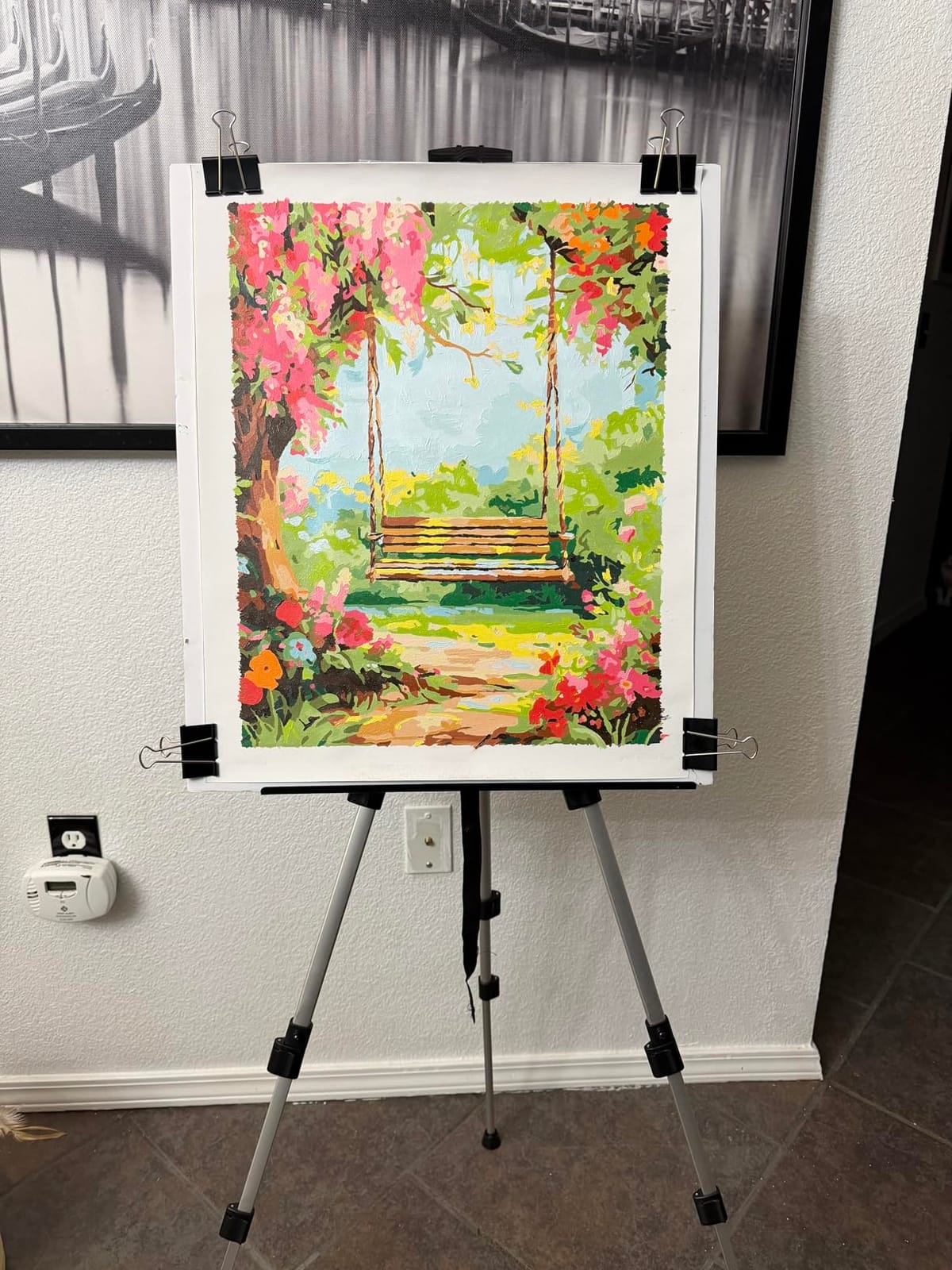
The adjustable legs are designed for uneven ground, which is more than most budget tripods offer. A non-slip base keeps the feet planted on carpet and packed surfaces.
Owners also comment on the professional appearance, the straightforward assembly, and that the shoulder strap makes solo carrying between venues manageable.
Why the 25 pound rating matters here
Most lightweight stands stop at 5 or 10 pounds, which quietly rules out a large stretched canvas. This one carries the piece most exhibitors actually bring without a visible lean.
Because it weighs about 0.69 kg, you get the higher rating without the bulk of a full studio frame, and it folds small enough to leave in the car overnight.
Where it falls short
Stability is only marginal at full height, and the rear leg does not deploy far enough back, which makes it susceptible to a breeze or a passing bump.
It can wobble at maximum extension, so set the height to the piece rather than to the tallest position available and keep it indoors or in calm weather.
How to Choose a Display Easel for Art Shows: 7 Criteria
Every stand here does some of this well. These are the seven checks that separated them for us, in the order we would work through them.
1. Match load capacity to your heaviest piece, not your average one. Add the weight of the canvas, board and frame, then leave margin. Anything under 10 pounds rules out large stretched canvas, and 25 pound models cover most gallery work.
2. Check canvas height against the rating. Two stands here hold up to 36 inches, two reach 38 inches, and the telescoping pack reaches 70 inches. If your largest work exceeds the number, it is not a candidate regardless of how good the stand looks.
3. Measure the folded length, not just the weight. A stand that collapses to 17 or 21 inches fits a sedan back seat. One that collapses only to 36 inches is a fixed booth piece you plan your car packing around.
4. Stand it at full height before you buy. Lightweight aluminum feels fine at tabletop height and tells you the truth at 66 inches. If the legs splay past your booth line, the piece is too wide for a small booth.
5. Decide about wind. Nearly every outdoor complaint we heard came down to a light frame tipping on grass or gravel. Indoors, that risk disappears and cheaper stands become viable.
6. Count how many pieces you need. A two-pack suits a small booth, a three-pack suits teaching, and a four-pack fills a wall. Buying matched units is cheaper and looks more deliberate than mixing brands.
7. Test the top holder on your actual work. Clips that grip hard enough to mark a stretched canvas will cost you a piece. Rubber grips and spring clips are safer on finished surfaces.
Wood vs Metal vs Aluminum for Repeated Show Use
Wood looks finished and suits curated booths. Aluminum is the best balance of weight and load for repeated shows. Steel is the most forgiving on price but the heaviest to carry.
Solid wood is chosen for appearance. The Studio Designs A-frame has a smooth-sanded finish and a long warranty, and it does not mind a bump, but it is bulky, heavy between venues, and unsuited to damp outdoor conditions.
Aluminum covers most of the roundup because it hits the practical middle: light enough to carry solo, strong enough for 25 pounds, and folding down to 15 or 17 inches on several models. The tradeoff is that aluminum legs bend under real stress, so do not lean on the ledge.
Tubular steel, as on the Amazon Basics stand, costs the least and holds its shape, but the load rating is correspondingly lower at 5 pounds. That is fine for signage and prints and wrong for canvas.
If you show outdoors more than indoors, add weight to the feet on any light frame. Sandbags clipped to the base or a flat weight on the lower rail fixes most of the tipping complaints we heard from exhibitors.
Art Show Rules and Booth Etiquette That Affect Your Easel Choice
Forum exhibitors mention the same thing repeatedly: the easel is the last decision, and the venue rules are the first constraint. Check these before you buy anything.
Wire hangers on 2D work. Many venues require D-rings and wire hangers on all framed and paper work for their own walls. If that applies to you, an easel-only display may be non-compliant, and you will need back wall hanging hardware as well.
Footprint limits. A 10 by 10 foot tent or a standard indoor booth constrains how deep your easels can sit. The U.S. Art Supply stand takes about 36 by 34 inches of floor; the folding tripods take considerably less.
Wall permission. If you plan to hang anything on the back wall or the side drape, ask in advance what weight the structure carries and whether drilling is allowed. Many venues will not permit it at all.
Surface responsibility. Venues that make exhibitors responsible for floors will notice scuffs. Non-slip rubber feet, as on several stands here, are the cheapest insurance you can buy.
Price tag placement. Put tags at the lower right of each piece facing out, and check from the aisle rather than from inside the booth. This is the single most overlooked detail at shows.
Matching equipment. Exhibitors who ask whether matching easels are necessary generally report that a consistent set looks professional, but a staggered mix of two or three heights looks designed. Uniform brand is not required.
Outdoor stability. Artists sharing festival setup content prioritize gear light enough to load solo into a car, and also gear that survives grass, gravel and wind. Those two goals pull in opposite directions, so decide which event matters more.
Frequently Asked Questions
How to display art for an art show?
Center each piece about 57 inches from the floor so both standing and seated viewers read it at natural eye level. Leave 12 to 18 inches between works, angle each piece slightly toward the aisle, keep a 30 inch walking lane inside the booth, and place price tags at the lower right of each piece facing out.
How to display art in a booth?
Use upright display easels for canvas and boards, and hanging hardware on the back wall for framed and paper work. Space pieces evenly, stagger heights rather than lining everything up at one level, and check the sightline from the aisle at both standing and seated height before the doors open.
Do art shows allow easels?
Most art shows allow floor easels within your booth footprint, but rules vary. Many venues require wire hangers and D-rings on all 2D work, ask about back wall hanging weight limits, and set footprint limits, so confirm with the promoter before you plan an easel-only display.
Is a wooden or metal easel better?
Wood looks finished and suits curated indoor booths, aluminum gives the best balance of low weight and 25 pound load capacity for repeated shows, and steel is the most affordable but usually rated lower, often 5 pounds. For outdoor and frequent travel, aluminum is the usual answer.
What is the best easel for professional artists?
For showing work, a single-mast aluminum display easel rated to 25 pounds and holding canvases up to 36 to 38 inches covers most professional work. Professionals showing many pieces typically buy a four-pack so they can layer a booth wall instead of lining up two stands.
Are lightweight display easels stable enough outdoors?
Lightweight aluminum stands are usable outdoors on calm days, but exhibitors report them tipping on grass, gravel and in wind. Widen the leg spread where the model allows it, keep the height matched to the piece rather than fully extended, and add sandbags or a flat weight to the base.
What size easel do I need for my canvas?
Match the rated canvas height and weight to your largest piece. Stands rated to 36 inches and 10 pounds suit small work, those rated to 38 inches and 25 pounds handle medium gallery canvas, and telescoping stands reaching 70 inches cover large originals and signage.
How do I transport paintings to an art show?
Wraps panels individually, carries them flat, and choose an easel that folds to 17 or 21 inches so it fits in the car with the work. Stands that collapse only to 36 inches work better as a fixed booth piece you carry separately rather than something you load solo.
Final Verdict on the Best Display Easels for Art Shows in 2026
After a season of setting these up in booth-sized spaces, the T-SIGN 17 to 66 inch stand is the one we recommend most often. It covers the widest height range, folds to 17 inches, comes with a bag, and has the largest body of buyer feedback of anything here, which matters when you are standing in a hall relying on one piece of gear.
If your booth needs more than two uprights, the telescoping four-pack is the stronger buy. If your work is on paper and board rather than canvas, the Amazon Basics stand costs less and does the job cleanly. And if presentation is the priority in a curated indoor booth, the wooden A-frame changes how the whole display reads.
Whichever you choose, measure your booth before you buy, check the venue rules on hanging hardware, and weight the feet if the show is outdoors. Those three steps prevent nearly every display problem we heard about from exhibitors this year.