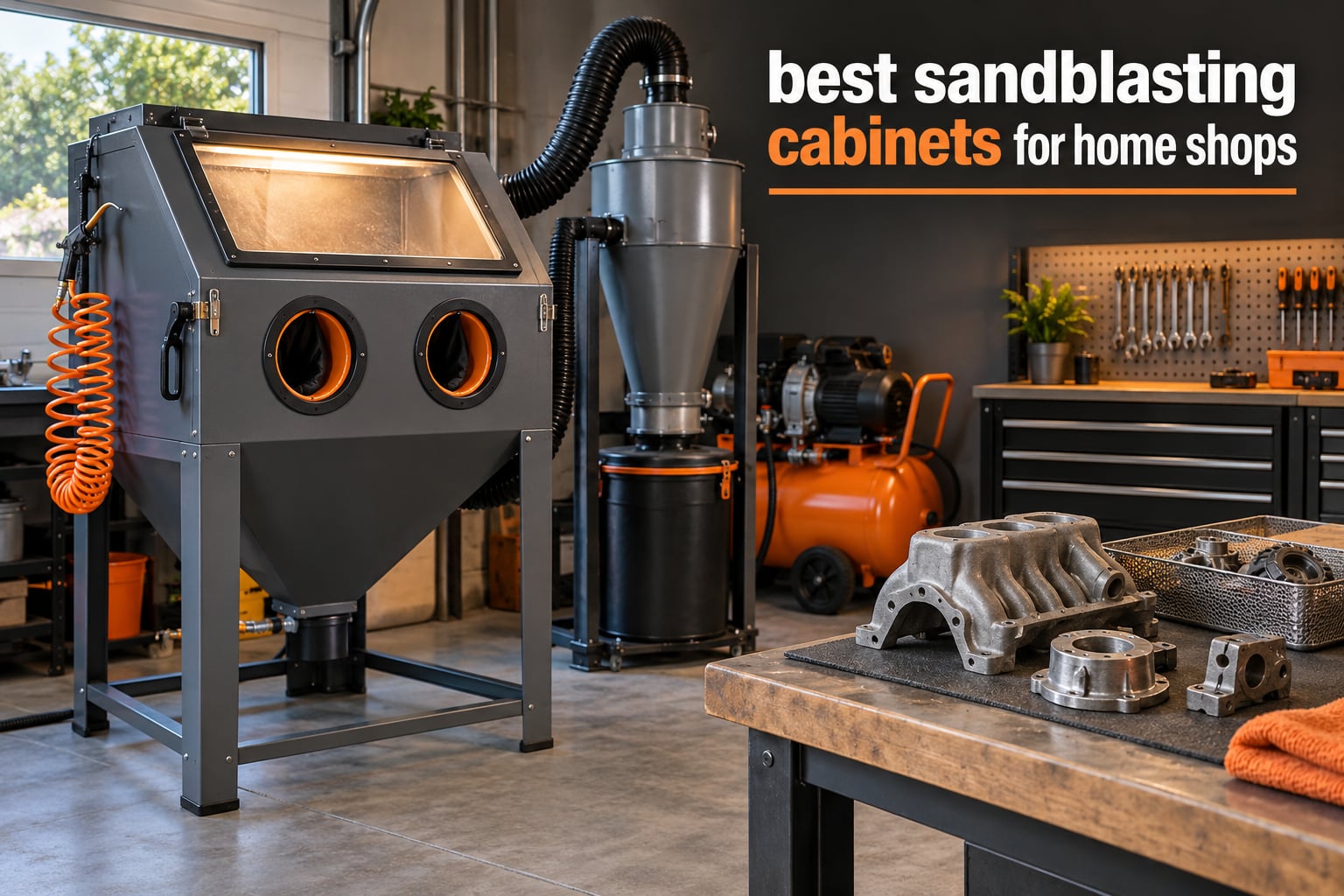
A sandblasting cabinet is an enclosed steel workstation that uses compressed air to propel abrasive media such as glass beads, aluminum oxide or walnut shell at a part, stripping rust, paint and scale while containing the dust and recycling the media. That containment is the whole point in a home shop: open blasting coats your bench, your car and your lungs in debris, and a cabinet keeps the mess behind a sealed door and a dust port.
We spent weeks reading owner reviews on every cabinet in this roundup and comparing published specs, then sorted them by the question that actually decides the purchase for most of us: can your compressor feed it. Nine of these ten run on 5 CFM or less, which is why they work on a typical 24 to 30 gallon home compressor. One asks for considerably more. If you are still choosing a compressor first, read our earlier sandblasting cabinet overview before you commit.
This is the guide for the best sandblasting cabinets for home shops in 2026: benchtop boxes for hand tools and small brackets, floor cabinets for wheels and motorcycle parts, and one heavy-duty unit built for frame-off restoration. Every cabinet below lists its air demand, media capacity, and the real complaints owners report, so you can match a cabinet to the compressor and the parts you already own.
Table of Contents
Top 3 Picks for Best Sandblasting Cabinets for Home Shops in October
Sandblasting Cabinets Compared in 2026
How We Picked These Cabinets
We ranked candidates on six things, in this order, and weighted home-shop fit above raw specifications.
Air demand against a real compressor. A cabinet you cannot feed is a paperweight. We wanted published CFM figures and we wanted them low enough for a residential compressor.
Media capacity and work envelope. Enough pounds of media to finish a part in one load, and enough interior room for the parts you actually own.
Sealing and dust control. Factory seals, gasket quality, dust port diameter, and how much sealing work owners report having to do afterward.
Visibility. LED internal lighting and a window large enough to actually watch the blast pattern. Acrylic etches fast, so window protection matters too.
Build quality and hardware. Steel gauge, welded versus riveted panels, latch and bolt strength, and the length of the replacement-parts list.
Owner satisfaction at volume. Rating alone is not enough. A 4.0 from hundreds of owners tells you more than a 4.4 from a few dozen.
Every cabinet here arrives as a bolt-together kit rather than a finished machine, and that is normal at this tier. Budget an evening, and plan on two people for the larger floor models.
1. VEVOR 40 Gallon Sandblasting Cabinet: Best Overall for a Home Shop

VEVOR 40 Gallon Sandblasting Cabinet, 40-120PSI Portable Benchtop Sand Blasting Cabinet, Heavy Duty Steel Sand Blaster with Blasting Gun & 4 Ceramic Nozzles for Paint, Stain, Rust Removal
40 gal
Holds 51.8 lb media
5 CFM at 40-120 PSI
22.6 x 27 x 24.8 inch
48.1 lb
Pros
- 5 CFM air demand works with small portable compressors
- Large window plus LED lighting gives good visibility
- Good gloves compared with other budget sandblasters
- Works well on rust scale and paint with glass bead
Cons
- Poorly drilled sheet metal with holes that do not line up
- Leakage around the lid seal and air filter needs extra sealing
- Included air and pickup hoses are stiff and kink-prone
This is the cabinet we keep coming back to, because it solves the problem that kills most home-shop blast cabinets: air. The published demand is 5 CFM across a 40 to 120 PSI range, which means a 24 gallon compressor on a Sunday afternoon can keep up with a 4 mm nozzle indefinitely instead of dying halfway through a fender.
Capacity is the other reason. Forty gallons holds up to 51.8 pounds of media, so you are not reloading every twenty minutes on a long rust removal job. The acrylic window with LED lighting is genuinely usable, and owners single out the gloves as better than what ships with most cabinets in this class.
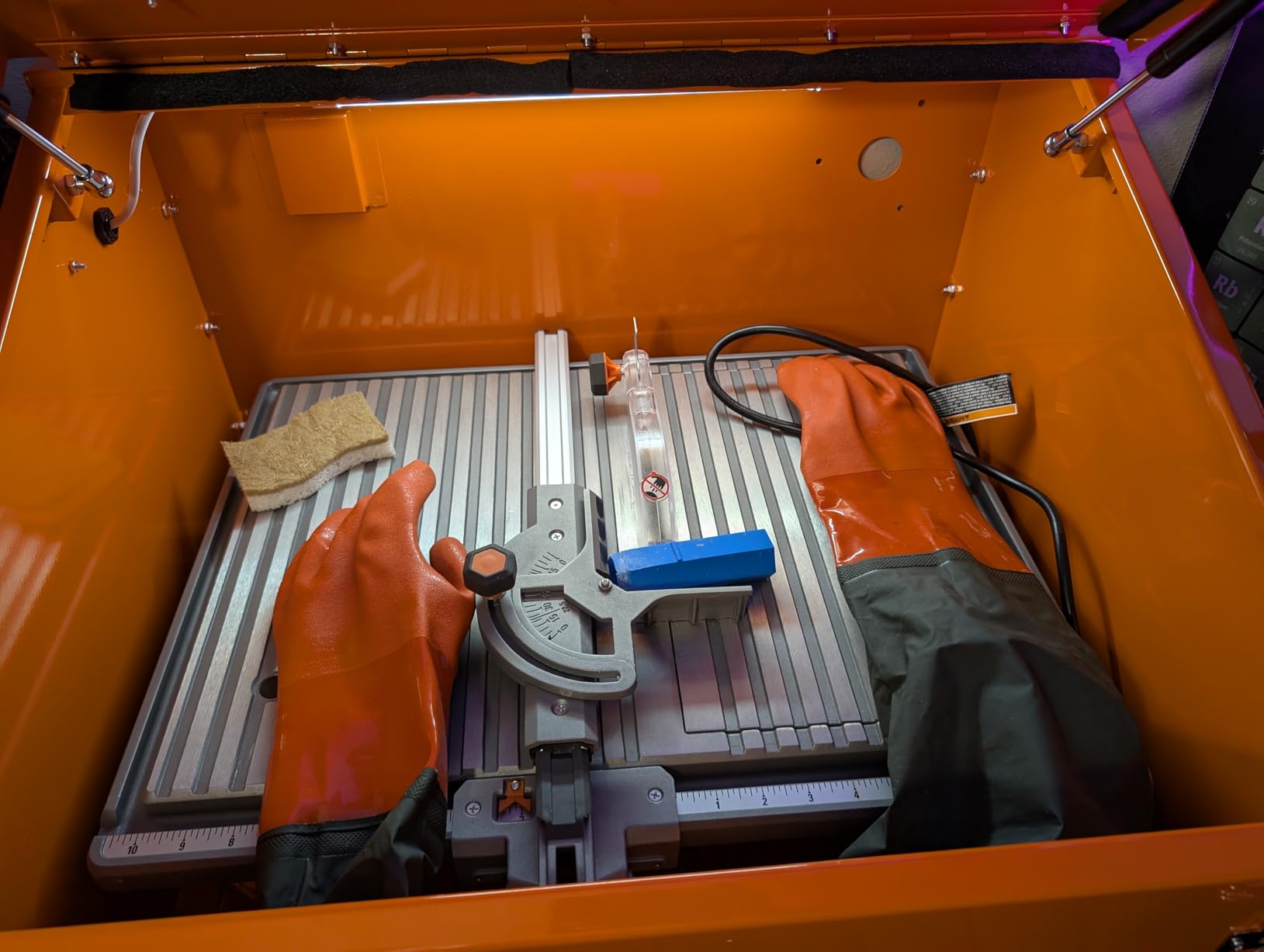
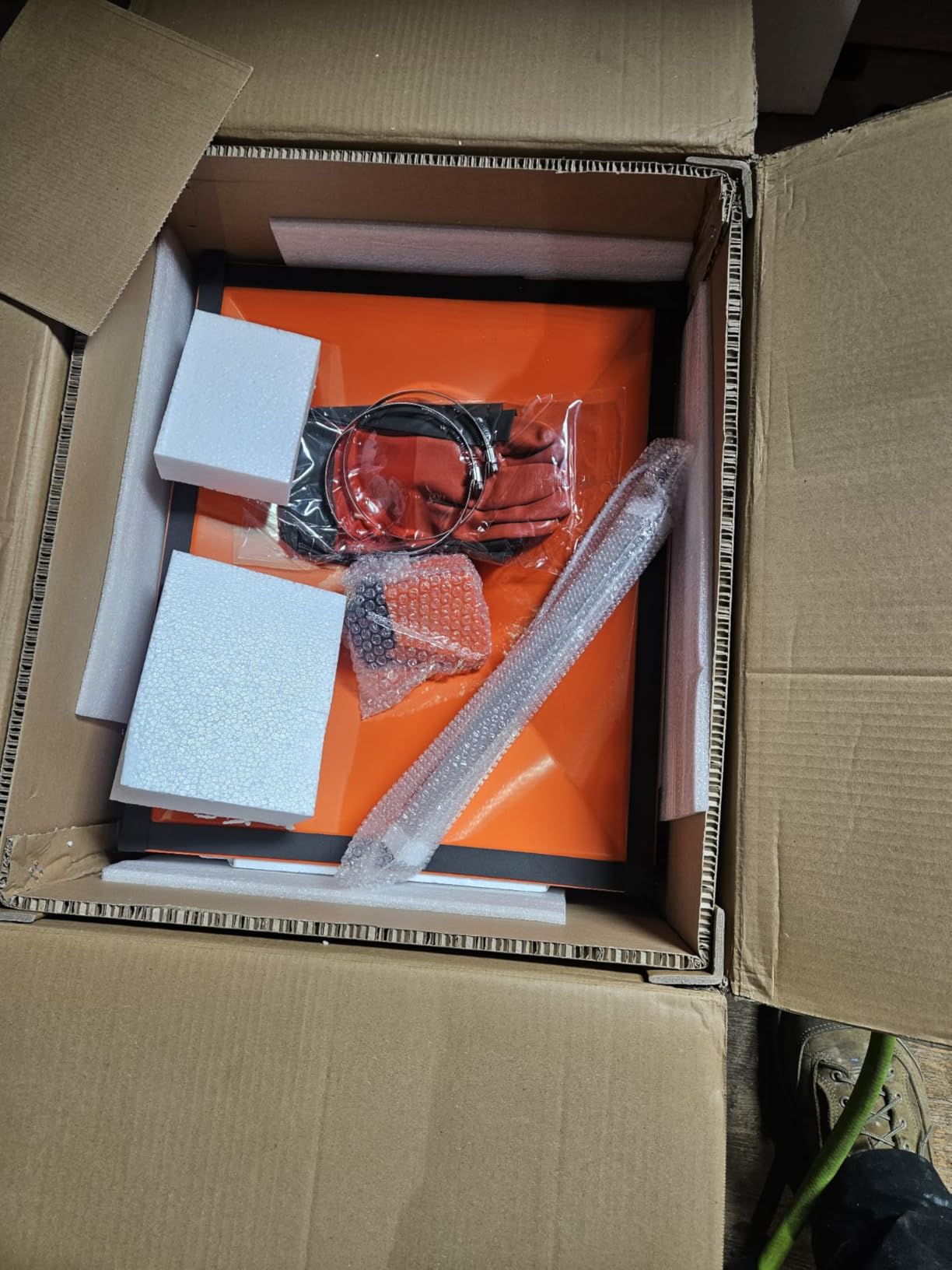
The honest weakness is factory sheet metal. Owners repeatedly report panels arriving bent or warped, holes that do not line up, weak alloy fasteners with no spares, and instructions with ambiguous steps. Budget an extra hour of careful reassembly and a tube of sealant before your first blast.
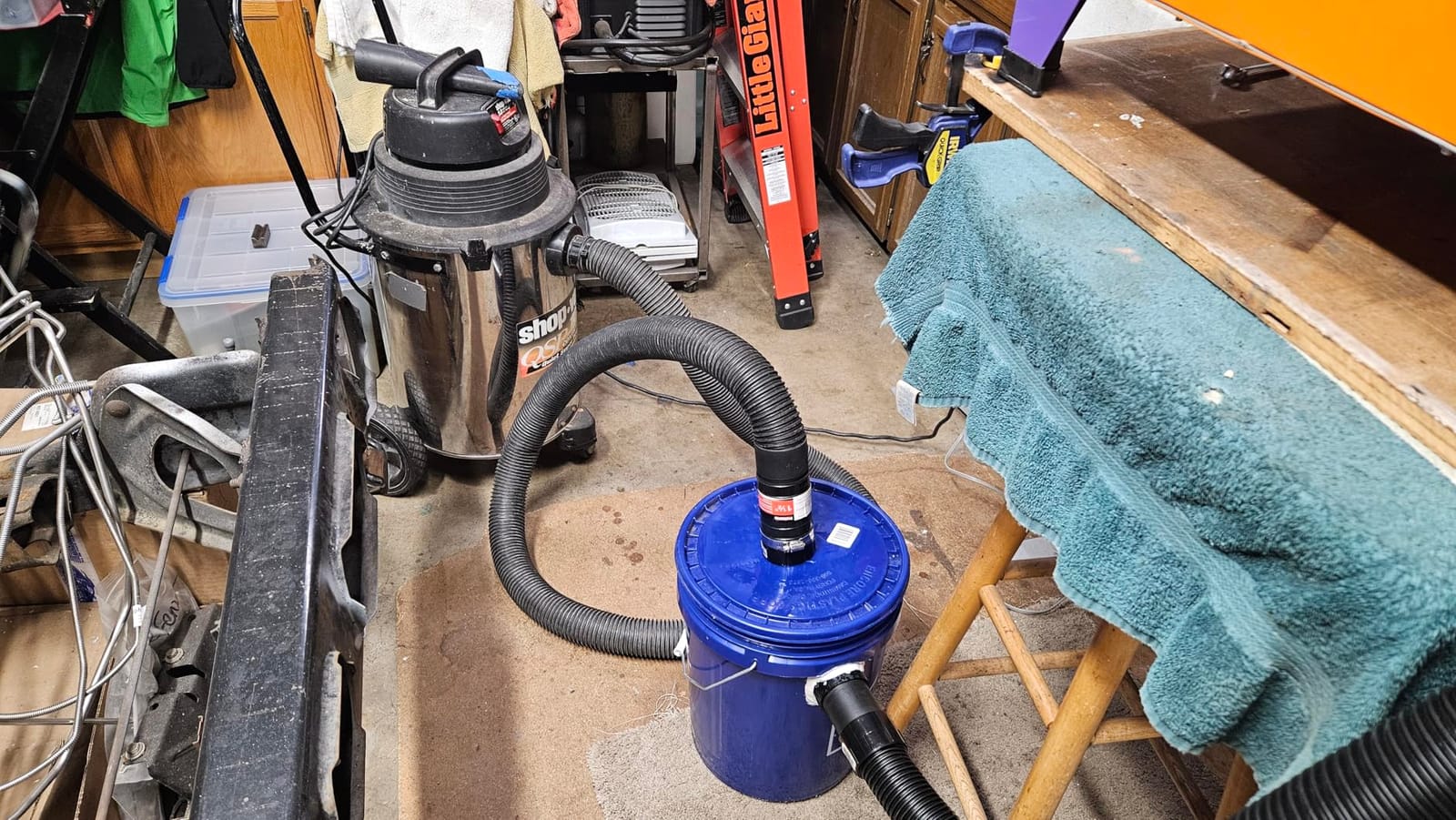
Noise is the other surprise. This is a loud machine in a small space, and the included air filter clogs quickly under continuous blasting, so plan on venting the dust port to a cyclone separator or shop vacuum.
Who this cabinet suits
A homeowner with a two-car garage, a small compressor, and a queue of brackets, hand tools, motorcycle parts and small panels. At 48.1 pounds and under 28 inches wide, it moves between benches without a second person.
It also works as a general dust-containment station. Several owners repurpose the sealed box for lapidary, Dremel and wet work, where keeping particulate off the bench matters more than throughput.
Who should skip it
Anyone restoring a full vehicle or handling 20 inch wheels needs more interior volume than 40 gallons offers. Buy the 60 gallon floor model instead rather than trying to angle a large part through the door opening.
If you are not willing to seal the seams and upgrade the hoses, look at a heavier gauge cabinet. The performance is there, but the finish work is on you.
2. VEVOR 60 Gallon Cabinet with Stand: Best Value for Bigger Parts

60 Gallon Sandblasting Cabinet, 40-120PSI Sand Blasting Cabinet with Stand, Heavy Duty Steel Sand Blaster with Blasting Gun & 4 Ceramic Nozzles for Paint, Stain, Rust Removal
60 gal
Holds 203.4 lb media
5 CFM at 40-120 PSI
37.1 x 22.9 x 54.5 inch
79.4 lb
Pros
- Large working volume handles wheels and bigger parts
- Stand keeps the blast chamber at a comfortable height
- Holes generally aligned and all fasteners included
- Good value for a home shop or garage
Cons
- Instructions poorly translated and parts list does not match illustrations
- Window seal does not hold and needs painter's tape
- Included pickup and air hoses are stiff and kink
This is the volume pick for a garage that handles full-size wheels, motorcycle frames and body panels. Sixty gallons holds up to 203.4 pounds of media, and the same 5 CFM air demand means it is no harder to feed than the 40 gallon bench model.
The stand is the real upgrade over a tabletop box. A floor cabinet puts the work at standing height, which matters after the first hour of wrist work. Owners note the cabinet stays stable once assembled and that all hardware arrives with no missing pieces.
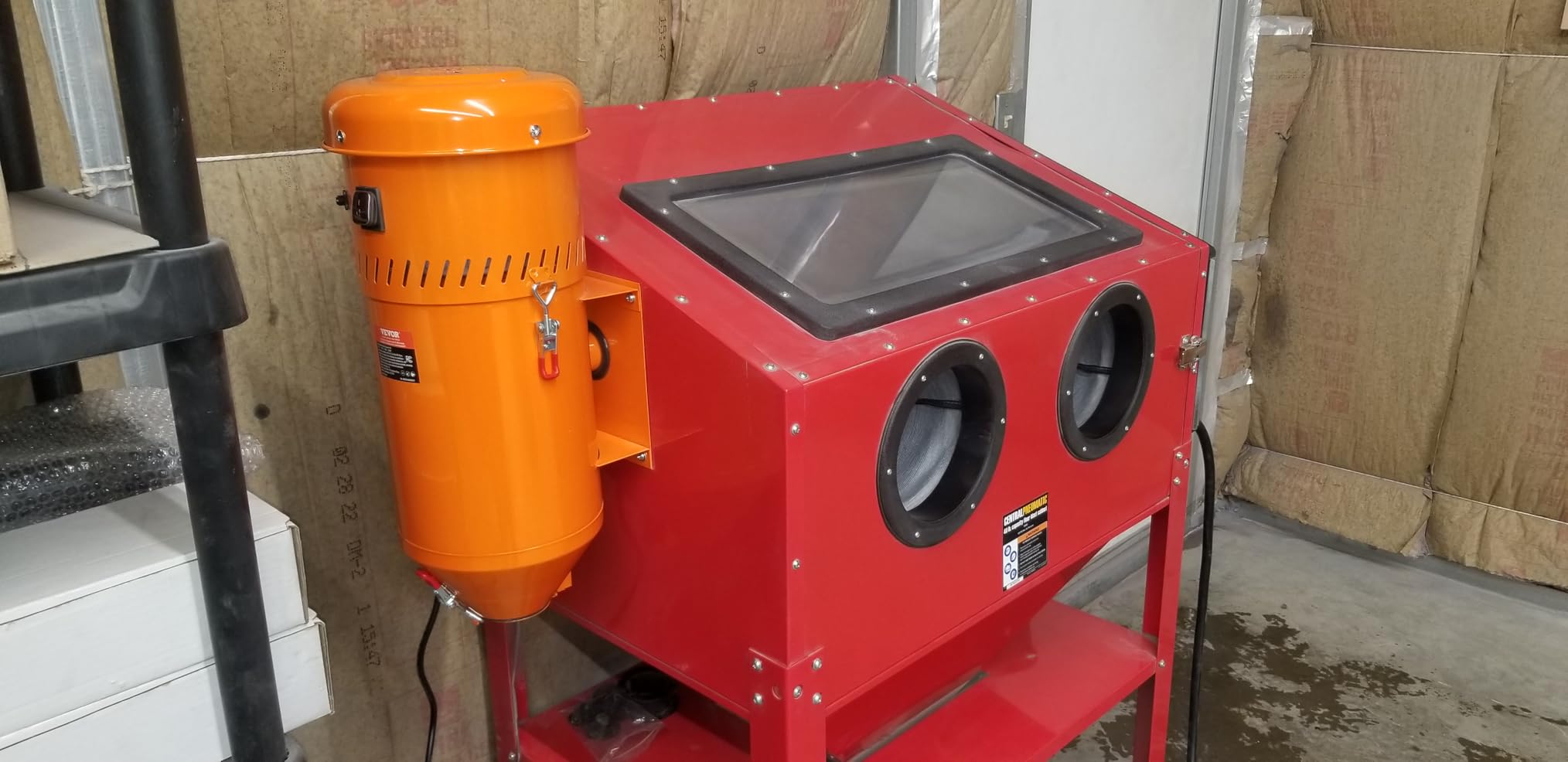
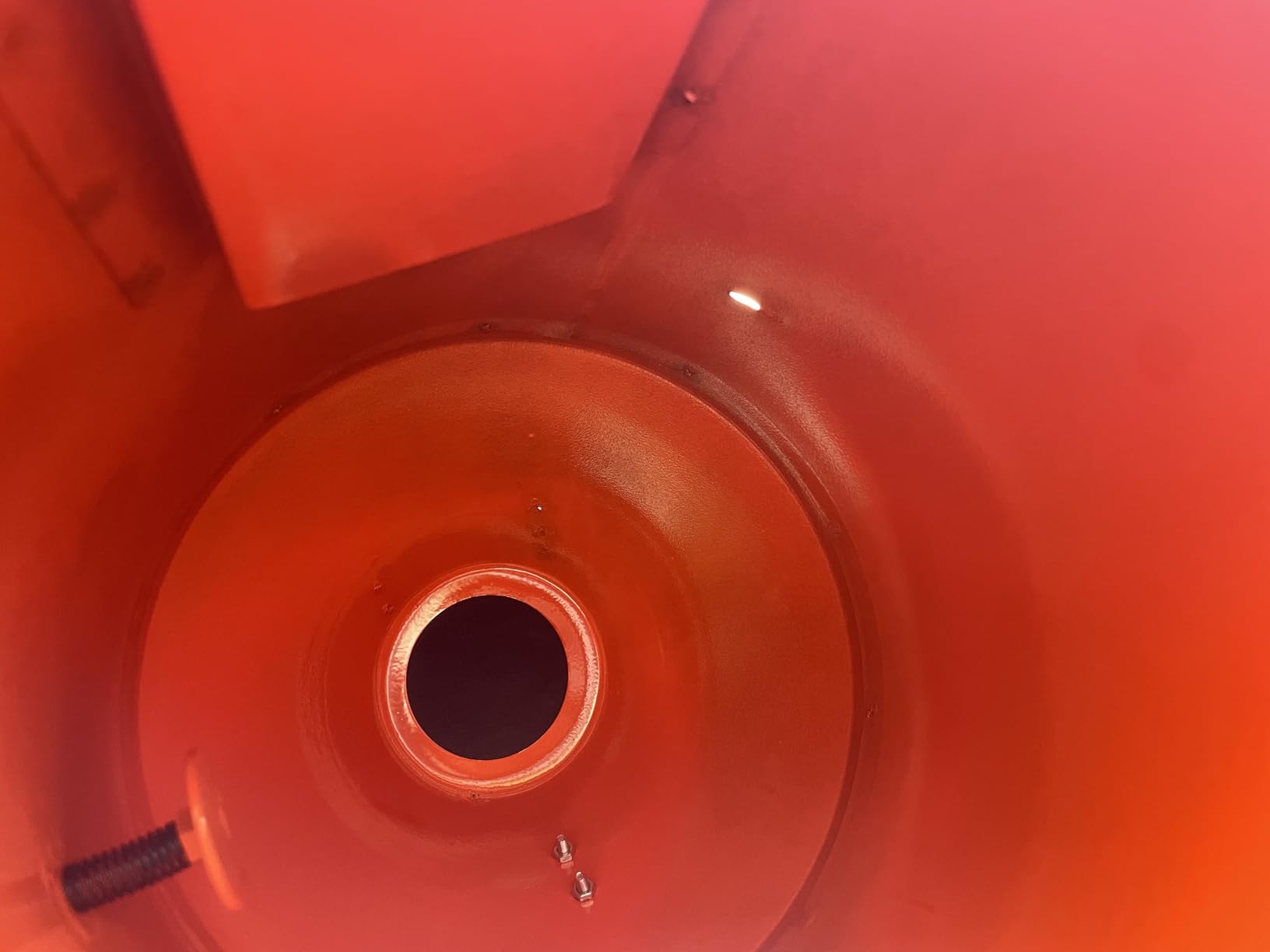
Documentation is the main complaint. Owners describe small, badly translated instructions where the parts list does not match the illustrations, plus a hinge location that is never explained. Some units arrive with unbent panel flanges that must be formed by hand without a brake, so have a hand seamer or a friend ready.
Two more factory issues recur: the window seal does not hold out of the box and needs painter’s tape, and the internal light is dim or works intermittently. A rolling caster platform is a worthwhile addition once it is built.
Who this cabinet suits
Home shops that already own a compressor and want one cabinet to cover automotive and motorcycle work. The dust collector add-on option for this line is worth pairing with it, because 60 gallons of glass bead produces a lot of airborne dust when the window is open.
It is also the sweet spot for a family garage: big enough to avoid constant reloading, small enough that two people can move it into position.
Who should skip it
Buyers with no patience for a bolt-together build. This is a two-person evening job, and the instructions will not walk you through it cleanly.
Those working in aluminum or magnesium parts should note that the aggressive media this cabinet is built for will cut those substrates. Use walnut shell and stay conservative on pressure.
3. Shop Fox M1114 Benchtop Sandblaster: Best Heavy-Gauge Benchtop Build

Shop Fox M1114 Benchtop Sandblaster
10 lb abrasive capacity
60-100 PSI
24.5 x 21.1 x 19.5 inch
50 lb
1-year warranty
Pros
- Heavier gauge steel and solid dual-door latches
- Compact footprint that is easy to move and store
- Clear view of the work once set up
- Strips real rust down to bare metal
Cons
- Molded plastic side doors bow in the middle and leak heavily
- Included gloves wear out within roughly 5-6 hours
- Shallow hopper needs media shaken back to the pickup
The Shop Fox is the pick when you care about how the metal feels when you open the door. Owners consistently describe heavier gauge steel and solid dual-door latches, which is exactly where the cheap import cabinets feel hollow after a year of use.
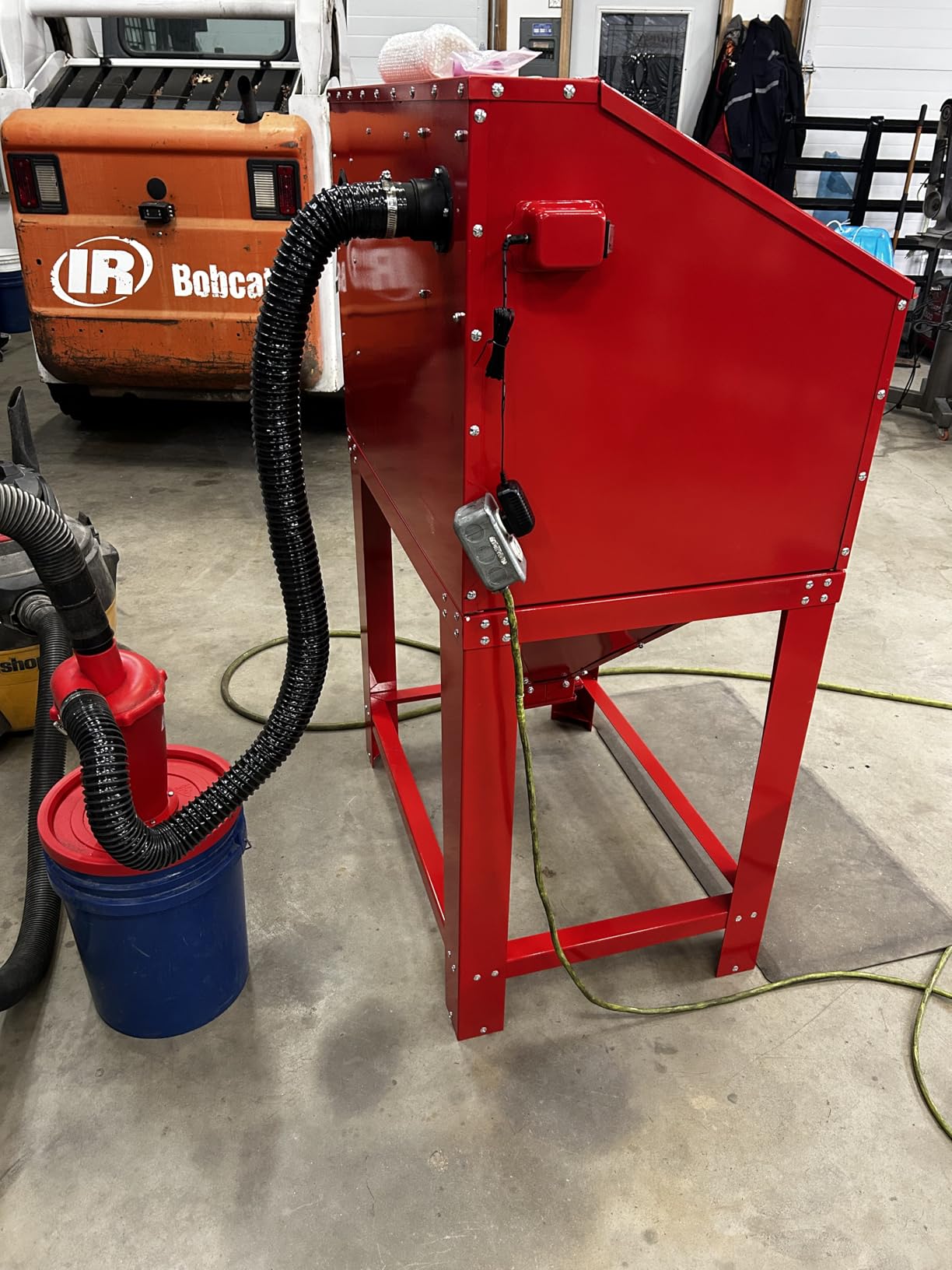
It is also a 10 pound abrasive machine working at 60 to 100 PSI, so it pairs naturally with a small compressor. Two 16 inch access doors and a 9 by 10-3/4 inch window give a decent view of small hardware, hand tools and gunsmithing work.
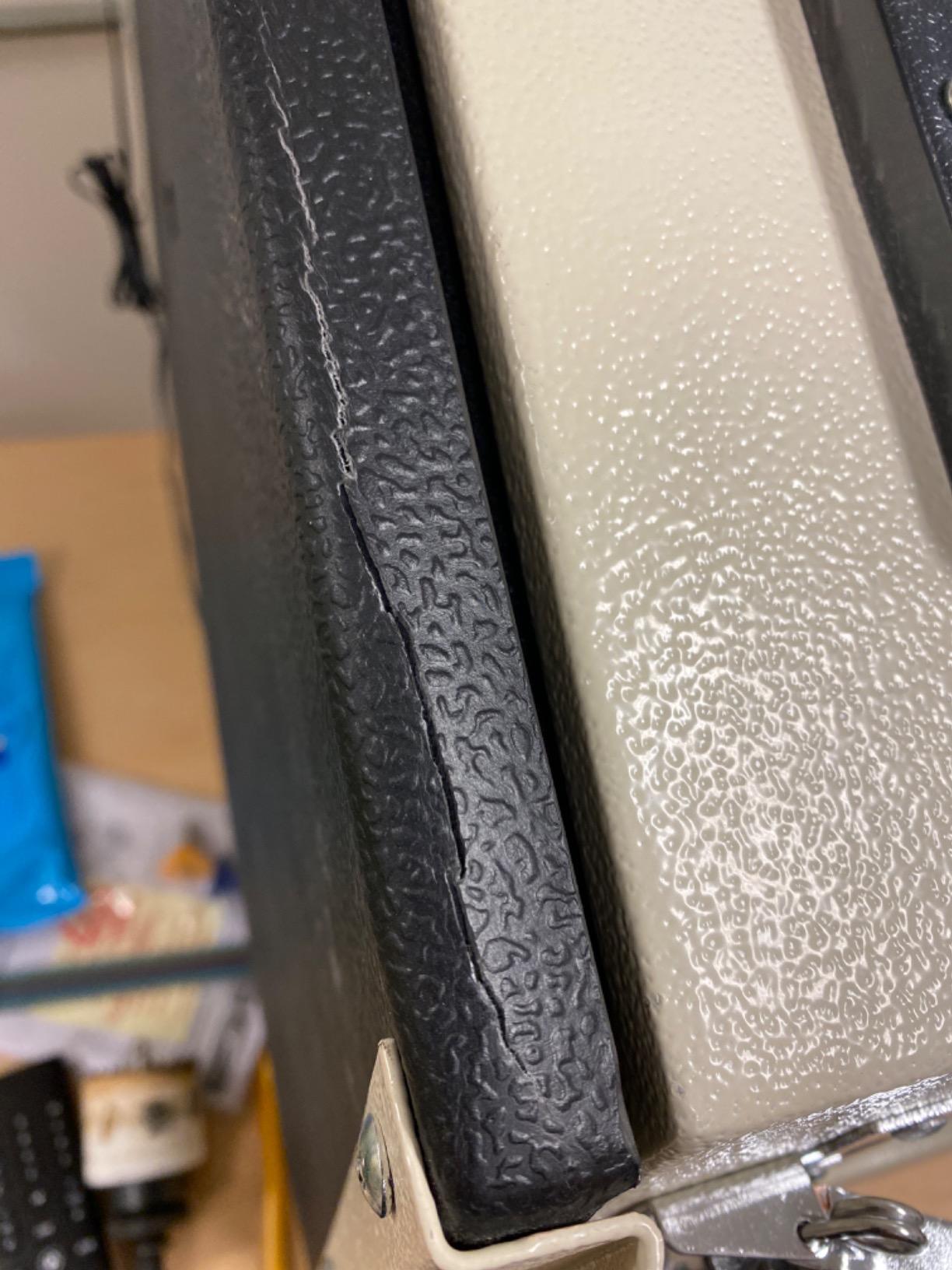
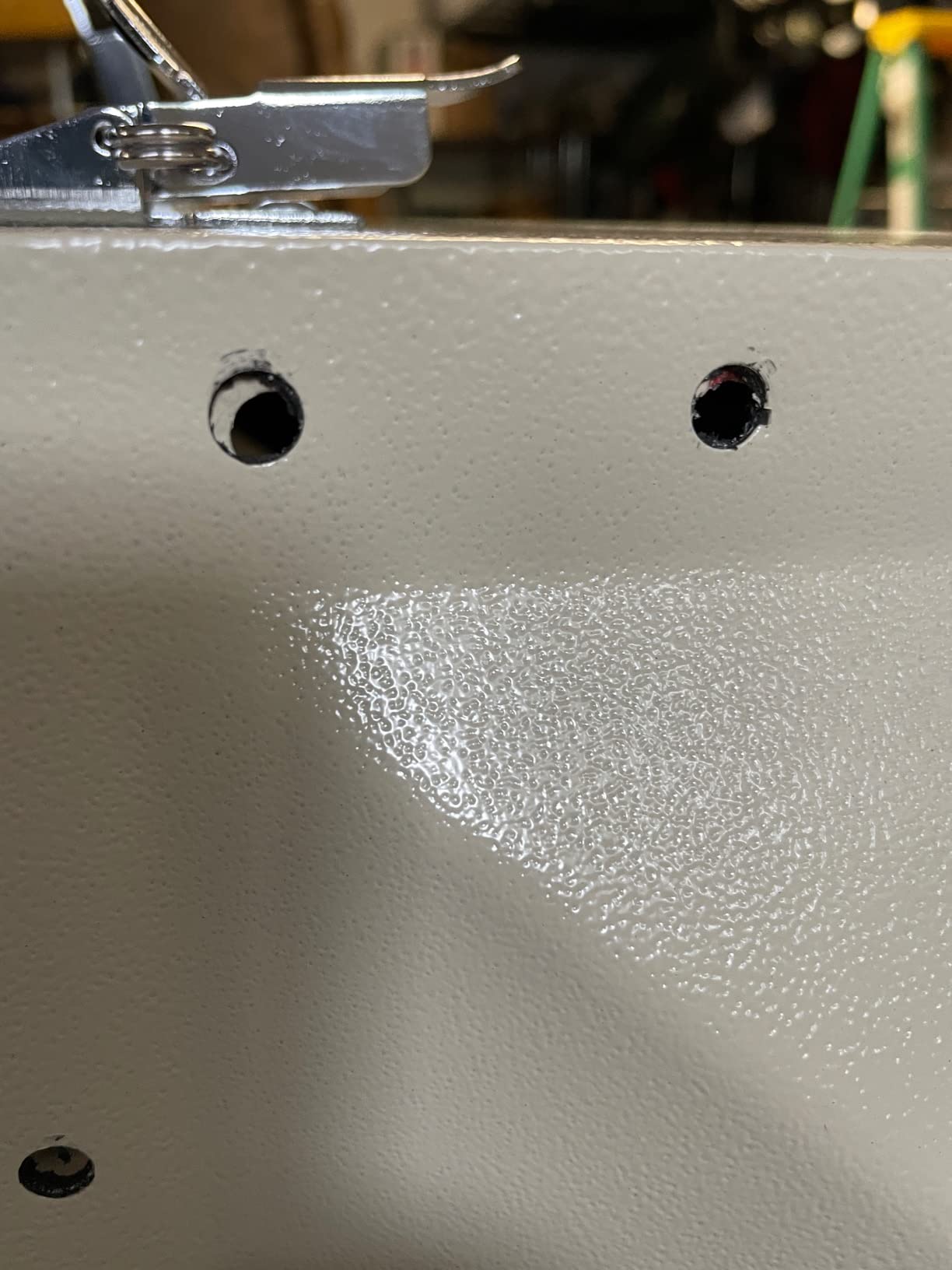
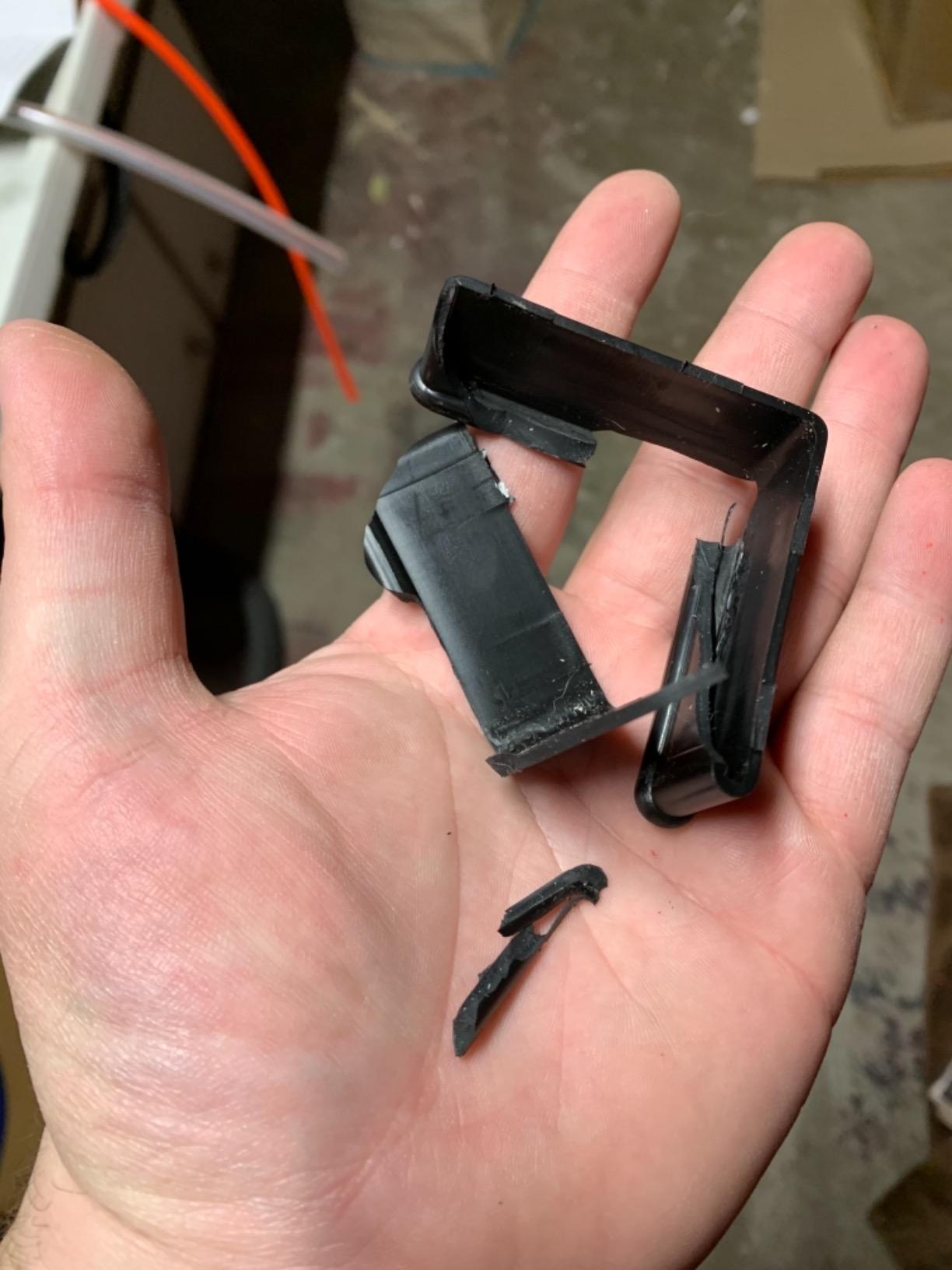
Nearly every owner files the same modification list. The molded plastic side doors bow in the middle and leak, rivets and joints need caulking before the first blast, the bulkhead fitting needs replacing, and the included gloves fail within five or six hours. Budget for a caulking gun and a fresh pair of gloves on day one.
The shallow hopper is the other recurring gripe. Media has to be shaken back toward the pickup regularly, which is fine for a hobbyist and tedious for a production job. The plexiglass window scratches easily and the lens shields do not stay put, while the interior light sits at the back behind the work instead of above the window.
Who this cabinet suits
Hobbyists with a small bench, a modest compressor, and a preference for a machine that will still be rigid in five years. The footprint is 24.5 by 21.1 by 19.5 inches, so it stores between projects.
Anyone restoring vintage hand tools, small cast pieces and hardware will find the 10 pound load more than adequate for those jobs.
Who should skip it
Buyers who want to open the box and start blasting. The seal, bulkhead, light and glove upgrades are not optional in practice.
Anyone doing wheels or frames needs a floor cabinet with real work envelope. This one is a bench machine by design, not by accident.
4. Parts-Diyer 25 Gallon Cabinet: Best Budget Entry

Parts-Diyer 25 Gallon Sandblasting Cabinet
25 gal
Holds 33 lb media
40-80 PSI and 5 CFM
25.6 x 21.7 x 11 inch
33 lb
Pros
- Lowest-cost entry into an enclosed benchtop cabinet
- Powder-coated steel body resists rust
- Includes 4 nozzle sizes
- gun
- dust port and air filter
- Removable window protective film limits etching
Cons
- Seams and joints must be sealed before blasting
- 33 lb media load means frequent refills on bigger jobs
- Fluorescent lamp is modest versus LED-equipped cabinets
This is the cheapest way into a properly enclosed cabinet, and for a first project on hand tools or small brackets that is often enough. It holds 25 gallons and up to 33 pounds of media at 40 to 80 PSI and 5 CFM, the same light air demand as the bigger VEVOR units.
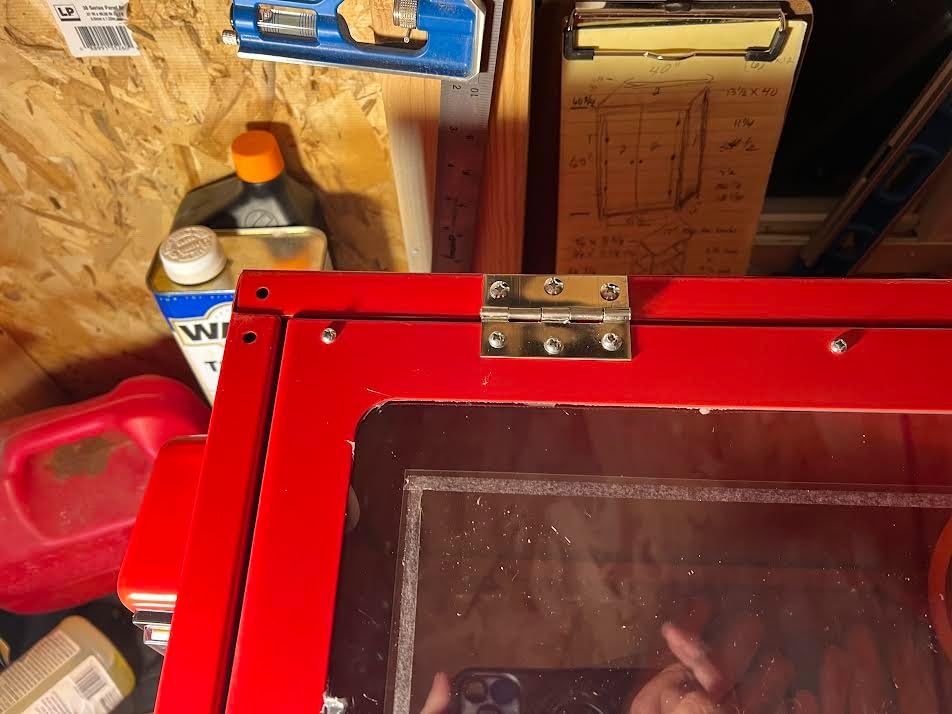
The box ships with four nozzle sizes at 4, 5, 6 and 7 mm, a blasting gun, a dust collector port and an air filter. Media compatibility covers glass beads, silicon carbide, alumina and crushed walnut shells, so aluminum and delicate parts are within reach if you buy the right media.
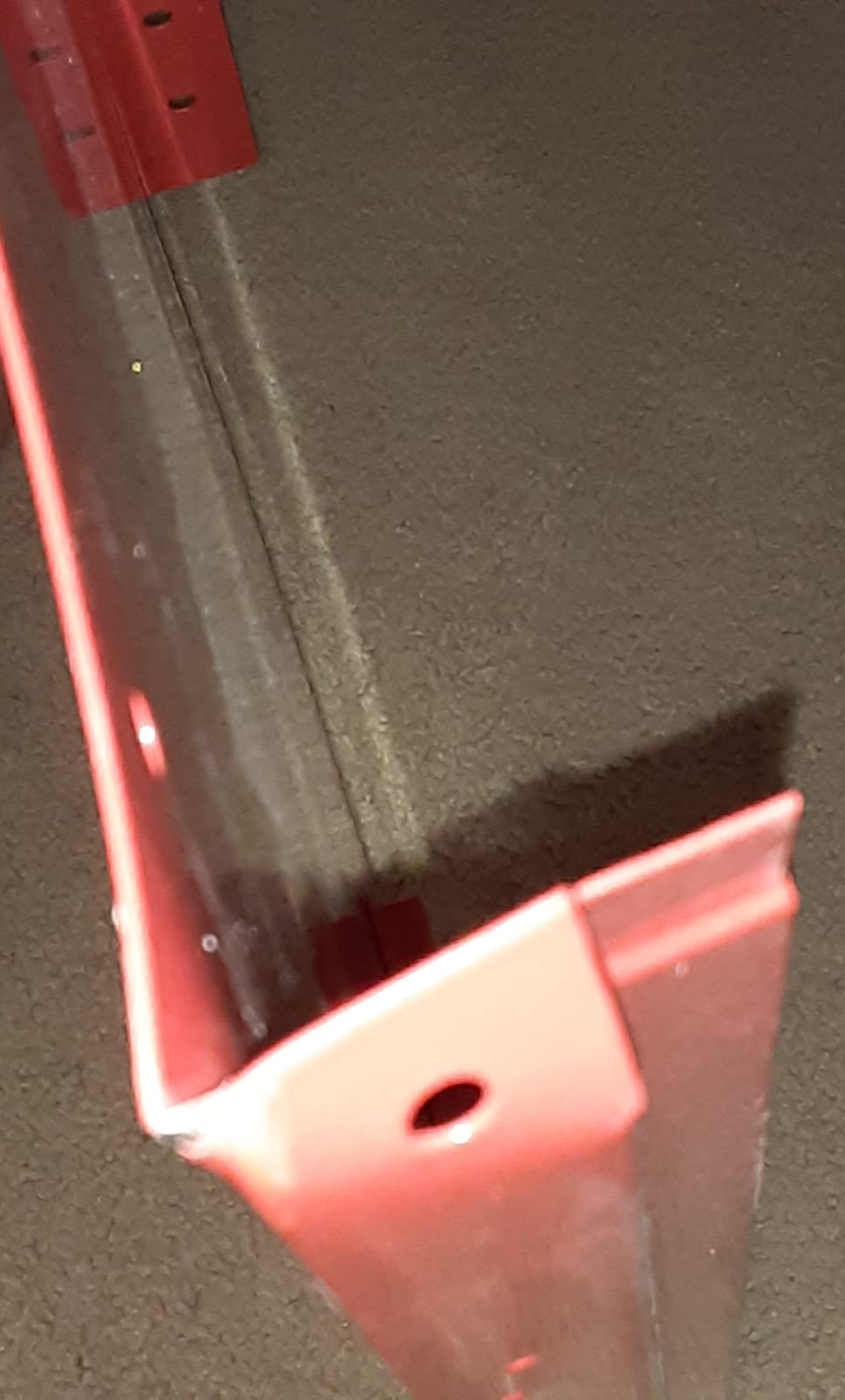
The trade-off is straightforward. A 33 pound load is small, so you will refill media often on anything bigger than a bracket, and every seam and joint needs sealing before you blast or media and dust will escape across the bench.
The fluorescent lamp with a switch is also modest next to LED-equipped cabinets, and the plexiglas window needs its protective film left on or replaced regularly. Buyers accept all of this because the price class sets expectations accordingly.
Who this cabinet suits
Apartment and hobby-garage users, and anyone restoring small hardware, brackets, hand tools and light surface rust. At 33 pounds and roughly 25 by 21 inches, it moves with one hand and stores out of the way.
It also works as a second station alongside a larger cabinet, giving you a sealed box for gunsmithing and fine detail while the floor model handles wheels.
Who should skip it
Anyone planning to strip a car, restore a motorcycle frame or handle mower decks. Repeated refills and a small envelope make those jobs frustrating.
Buyers unwilling to seal the seams should choose a cabinet that holds media better out of the box, even at a higher tier.
5. AutoForever 25 Gallon Bench Top Cabinet: Best for Fine Detail Work

AutoForever 25 Gallon Bench Top Air Sandblasting Cabinet,Orange
25 gal
Holds 33 lb media
40-80 PSI and 5 CFM
24.2 x 20.5 x 10.6 inch
35.3 lb
Pros
- Good paint finish for the price class
- Included gloves are good quality
- Benchtop size suits small parts and lapidary work
- Useful dust containment for Dremel and lapidary tasks
Cons
- Holes do not line up and instructions are rough
- Siphon hose is inadequate for reliable media metering
- Shallow catch basin needs media pushed back by hand
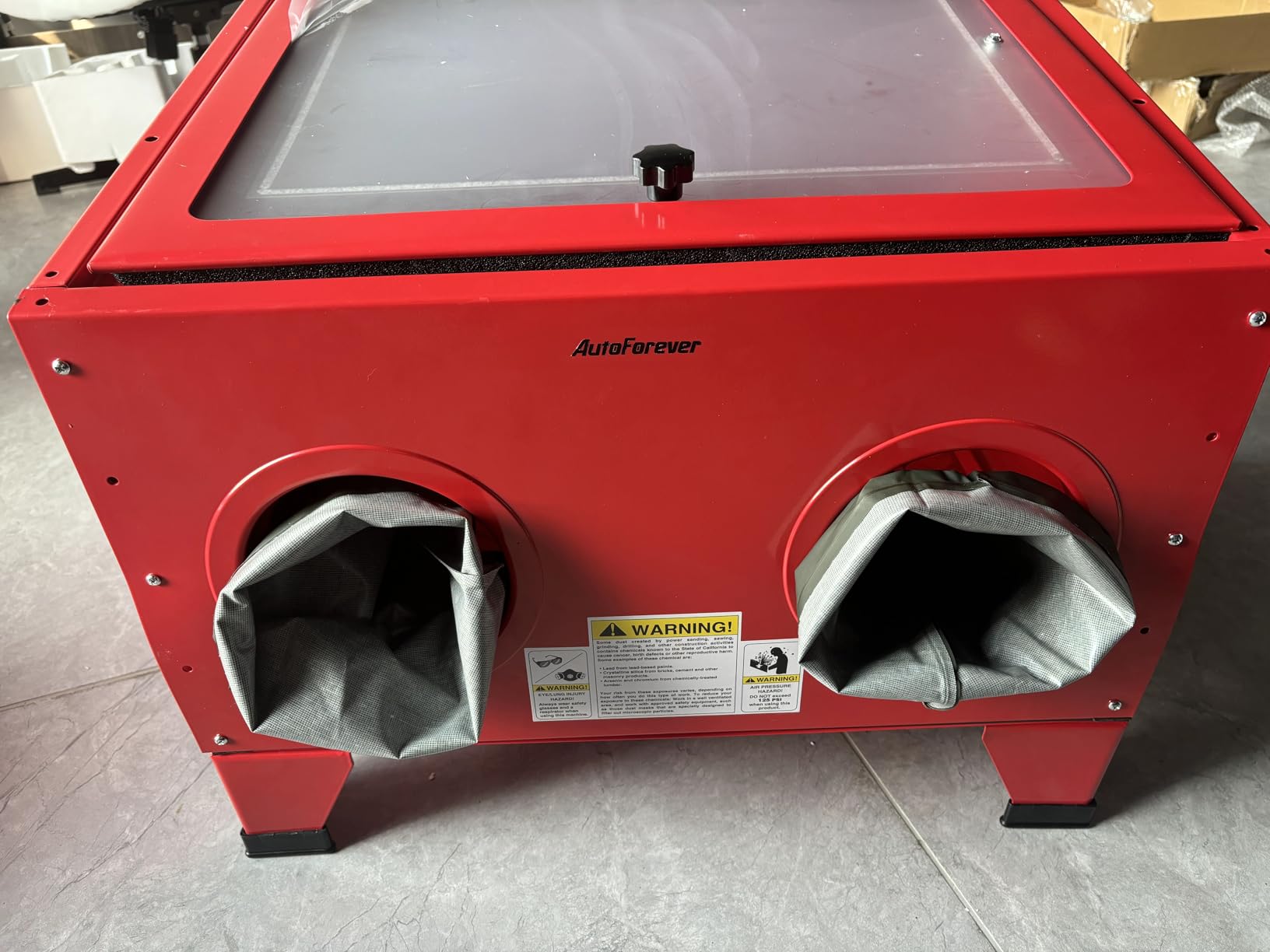
Several owners use this cabinet the way a serious hobbyist would: as a contained dust station rather than a production blaster. The steel body has a good powder-coated finish, and the included gloves are better quality than the ones that ship with many cabinets in this range.
Specs mirror the other 25 gallon boxes: 25 gallon capacity, up to 33 pounds of media, 40 to 80 PSI and 5 CFM, a plexiglas window with removable protective film, four nozzle sizes and a dust collector port.
The assembly complaints are the usual ones. Holes do not line up, instructions are brief and rough, included hardware is poor quality, and proper multi-size hose clamps are effectively required before the gun meters media reliably. Some units also arrive with the gun pickup tube not drilled out of the box, so check that before you blame the media.
The design flaw that shows up most is the shallow angle in the bottom catch basin. Spent media does not gravity-feed back to the pickup, so you push it back by hand between passes. A metering valve and a vacuum attachment are common modifications for anyone moving beyond occasional work.
Who this cabinet suits
Lapidary hobbyists, model painters and anyone doing Dremel or grinding work who needs containment as much as they need a blast pattern. The compact benchtop shape makes that easy.
It also works as a first cabinet for a renter who only wants to handle light surface rust on hand tools and small brackets.
Who should skip it
Buyers who expect clean media metering without modifications. If the siphon hose and the catch basin geometry sound like a project, pick a deeper cabinet.
Anyone who will do repetitive production work will find the manual media return too slow. Move up a size.
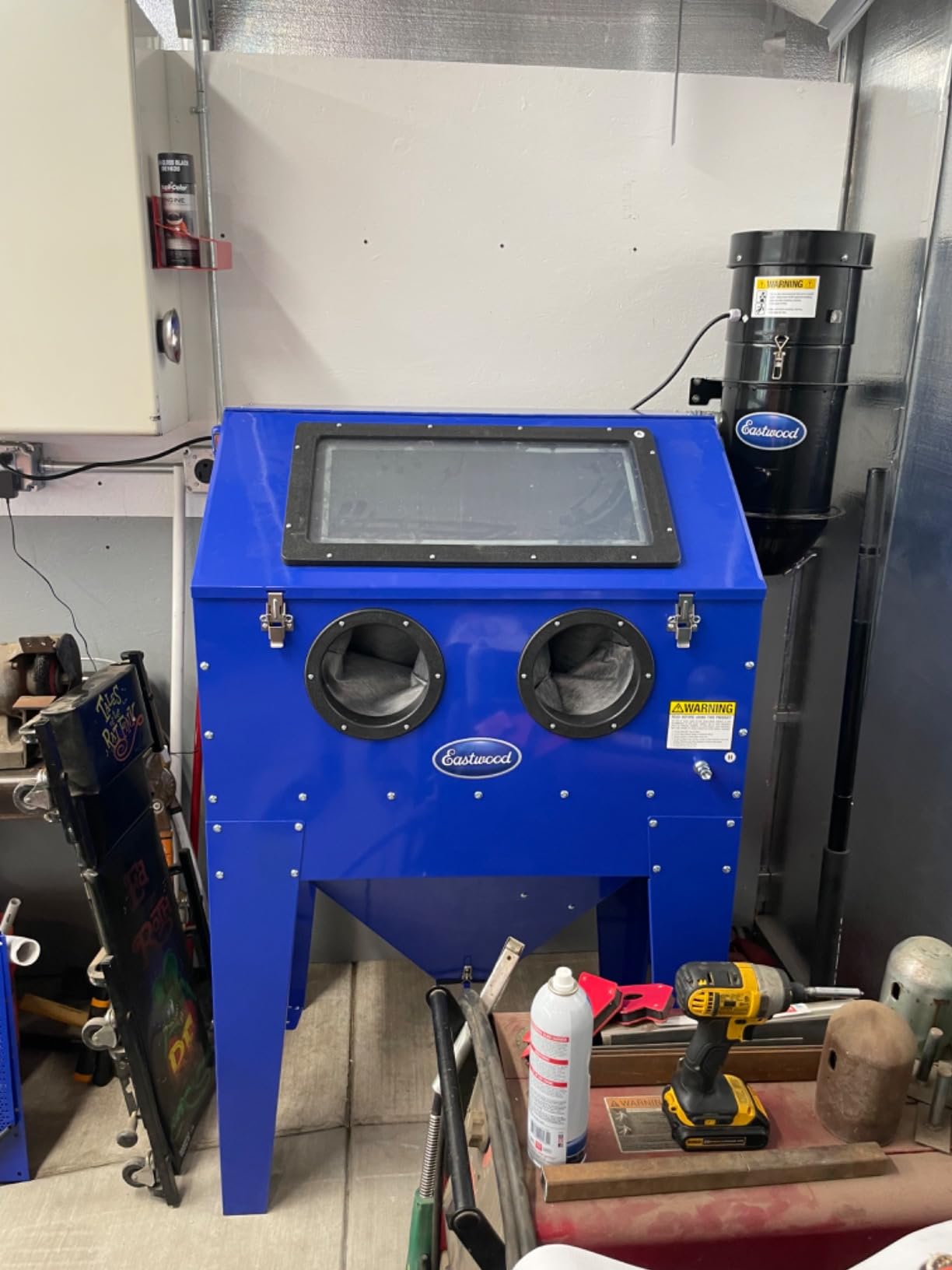
6. Eastwood B60 Sand Blasting Cabinet: Best for Frame-Off Restoration

Eastwood B60 Sand Blasting Cabinet | Steel Sand Media Blaster Cabinet Kit | for Paint Removal, Metal Restoration, Rust Removal, Sandblasting | Holds Up to 120 Lbs of Abrasive Media
36 x 24 x 23 inch work area
Holds 120 lb media
V-hopper with LED lighting
149 lb assembled
Pros
- Large working area handles big jobs and full-size parts
- Does not leak once assembled with silicone at a few joints
- Bright LED lighting and V-hopper keep the view clear
- Panels fit precisely with a high quality finish
Cons
- Assembly is a large multi-hour two-person job
- 149 lb is hard to move around a small shop
- Not designed for soda media
The Eastwood B60 is the most capable machine here and the one owners describe most positively. It carries the highest average rating in this group at 4.4 stars, and the praise is specific: panels fit precisely, media does not blow by once assembled, and the view stays clear through a full job.
The working area is 36 inches wide by 24 deep by 23 high, which is why it handles alloy wheels up to 20 inches and full frame-off restorations. It holds up to 120 pounds of media, and Eastwood recommends 60 grit or finer for best performance.
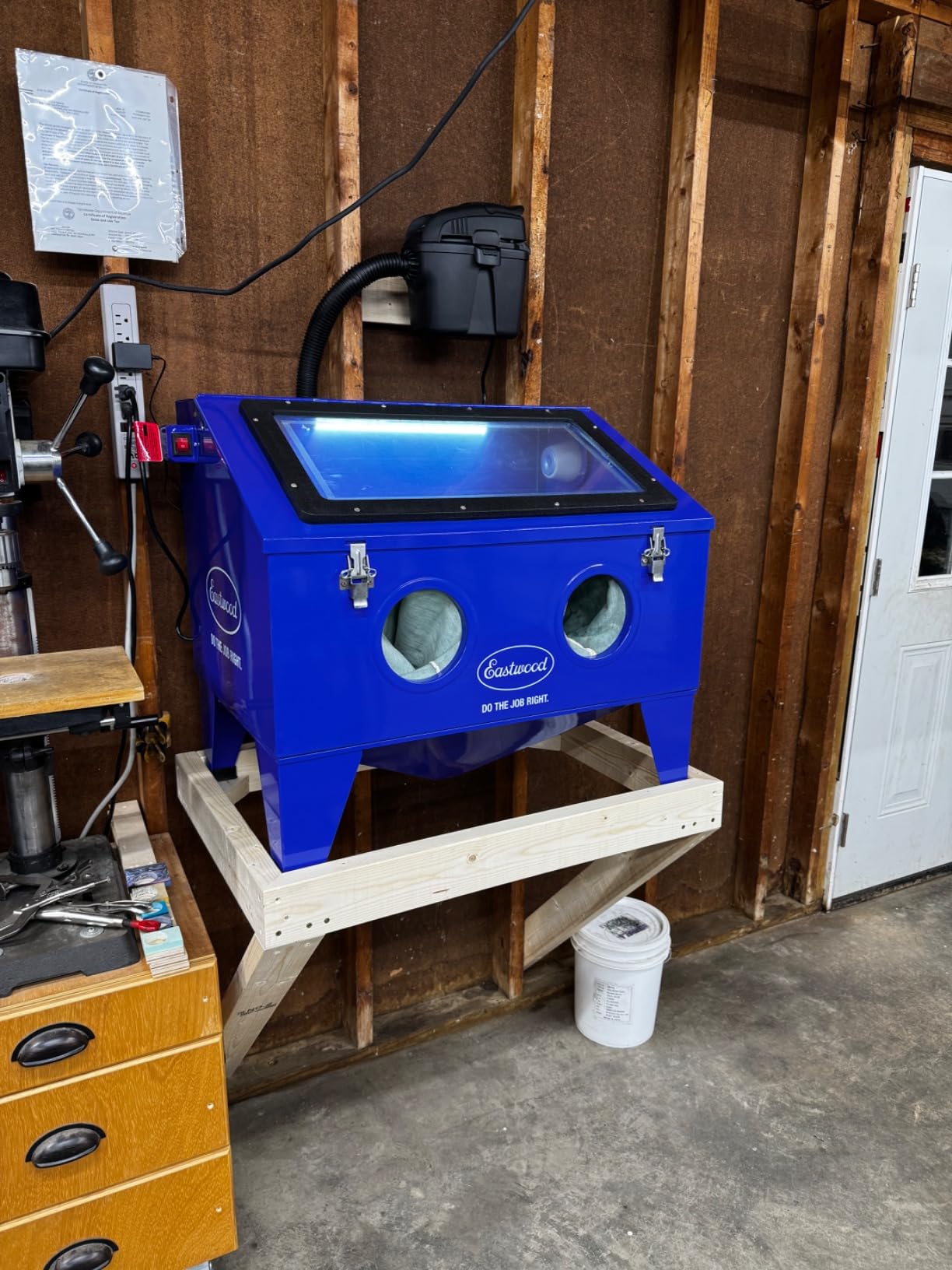
The V-hopper design is the feature other brands copy quietly. A conventional flat-bottom hopper lets spent media pile up in a dead spot that never returns to the pickup, which owners in other threads call duning. The V profile keeps media moving, and combined with the upgraded LED lighting it means you can see the blast pattern without stopping to dig.
The caveats are practical. It is a bolt-design build that takes about two hours with two people, it weighs 149 pounds assembled, and the glove clamps are very hard to reach once the front panel is installed, so attach the gloves first. The rear vacuum elbow also requires removing the interior cover plate.
Who this cabinet suits
Serious home shops and small restoration businesses doing powder-coat prep, frame-off work and large body panels. If you are building a car in a garage, this is the one most owners end up with.
It is also the best-supported buy in the group, with lifetime technical support, a 1-year limited warranty and a 90-day return, which matters when a replacement gasket is needed three years from now.
Who should skip it
Casual users. At 149 pounds and a two-hour two-person build, it is a commitment, and a small shop may not have floor space for it.
Anyone intending to run soda media. It is built for glass beads and other reusable abrasives, and soda will not perform as designed.
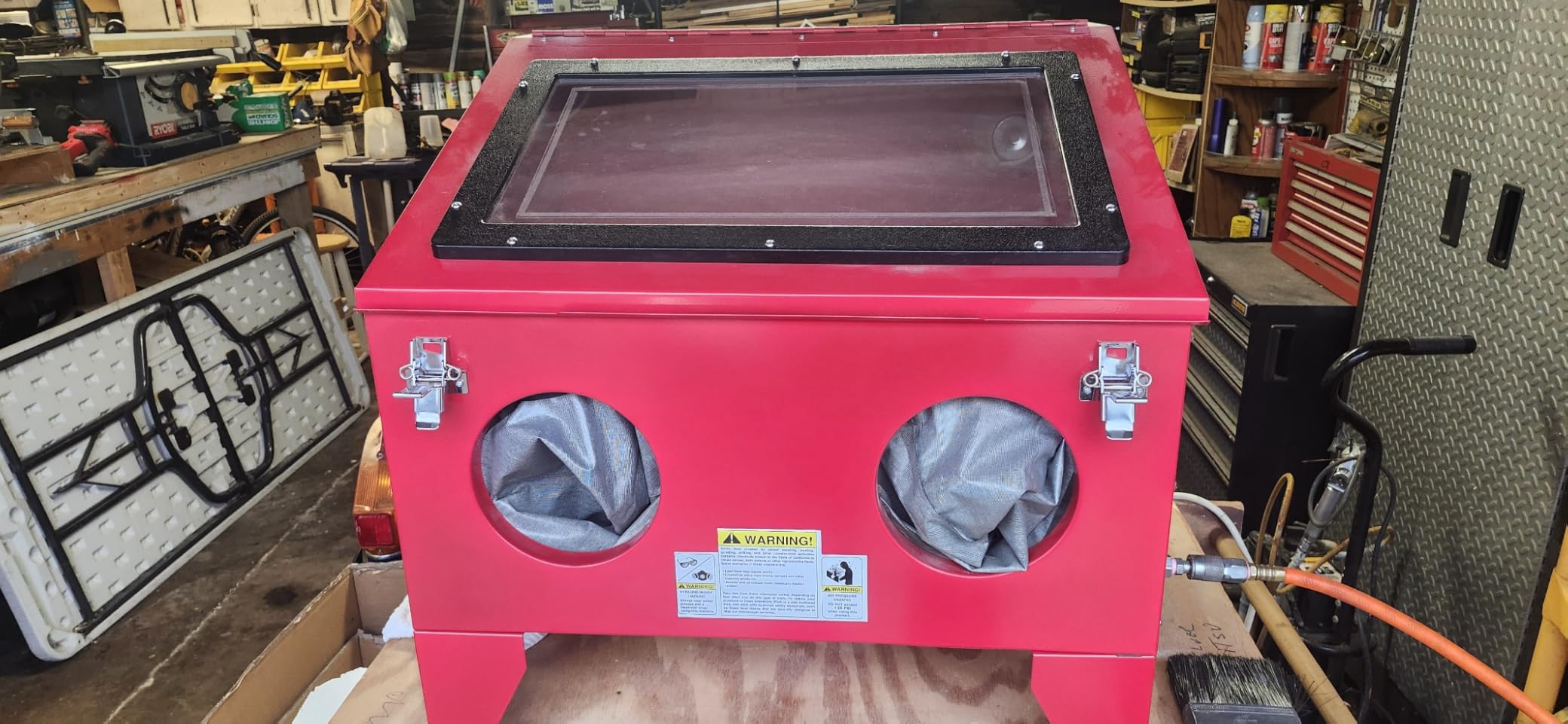
7. Parts-Diyer 40 Gallon Bench Top Cabinet: Best Mid-Size LED Workspace

Parts-Diyer 40 Gallon Bench Top Air Sandblasting Cabinet
40 gal
Working space 23.6 x 20.9 x 18.1 inch
60-125 PSI and 6-25 CFM
Bright LED lighting
Pros
- Useful 40 gallon working volume for mid-size parts
- Bright LED lighting and a large viewing window
- Includes four nozzle sizes
- gun
- dust port and sealant
- Sturdy powder-coated steel body
Cons
- Assembly required and leaks need sealing afterward
- No blasting media included with the kit
- 6-25 CFM air demand needs a capable compressor
This is the middle step between the 25 gallon bench box and the 60 gallon floor cabinet, and the 23.6 by 20.9 by 18.1 inch working space is genuinely automotive-sized for brackets, control arms and small panels.
Visibility is the standout. The bright LED lighting behind a removable protective film, with a 19.1 by 10.8 inch viewing area, is easier to work with than the fluorescent lighting several competitors still use in enclosed boxes where shadow matters.
Here is the caveat that catches people: the stated air demand is 6 to 25 CFM at 60 to 125 PSI. That is a wide range, and it means a small portable compressor will run this cabinet at the low end with a small nozzle. Match the nozzle to the compressor rather than assuming.
Assembly is required, the listing explicitly advises checking for leaks and sealing after you build, and no media is included. Treat the sealant, air filter and four nozzles as a kit you assemble yourself before the first job.
Who this cabinet suits
Home shops that want one bench cabinet for mid-size automotive parts without moving to a floor model. The footprint stays manageable on a workbench while the working volume is useful.
Gun owners doing parts work rather than heavy frame blasting also like it, because the LED window makes spotting a clean surface profile much easier.
Who should skip it
Buyers with a small compressor planning to use a 7 mm nozzle. The published CFM range means the big nozzle will starve the gun and produce a weak, inconsistent blast.
Anyone wanting zero setup. This one needs sealing work before it performs.
8. Central Pneumatic 40 lb Floor Blast Cabinet: Best Lockable Floor Cabinet
Central Pneumatic 40 Lb. Capacity Floor Blast Cabinet by Central Pneumatic
40 lb abrasive capacity
125 PSI max working pressure
18 gauge steel
36.5 x 23 x 54.5 inch
40 lb
Pros
- Floor-standing format gives a comfortable working height
- Lockable door for shop security
- Includes gun with ceramic nozzle
- hose and gloves
- 125 PSI maximum supports higher-pressure blasting
Cons
- Fluorescent lighting is less effective than LED-equipped cabinets
- 18 gauge steel is thinner than premium cabinets
The Central Pneumatic is the practical pick for a garage where floor area is tight and the cabinet will stand against a wall. At 36.5 inches wide by 23 deep and 54.5 high, it is a slim upright design that keeps the blast chamber at standing height.
Two details matter for a shared shop: a lockable door, which nothing else in this roundup has, and a 125 PSI maximum working pressure. The kit includes a gun with ceramic nozzle, hose and gloves, and two AC and DC power adapters for the light.
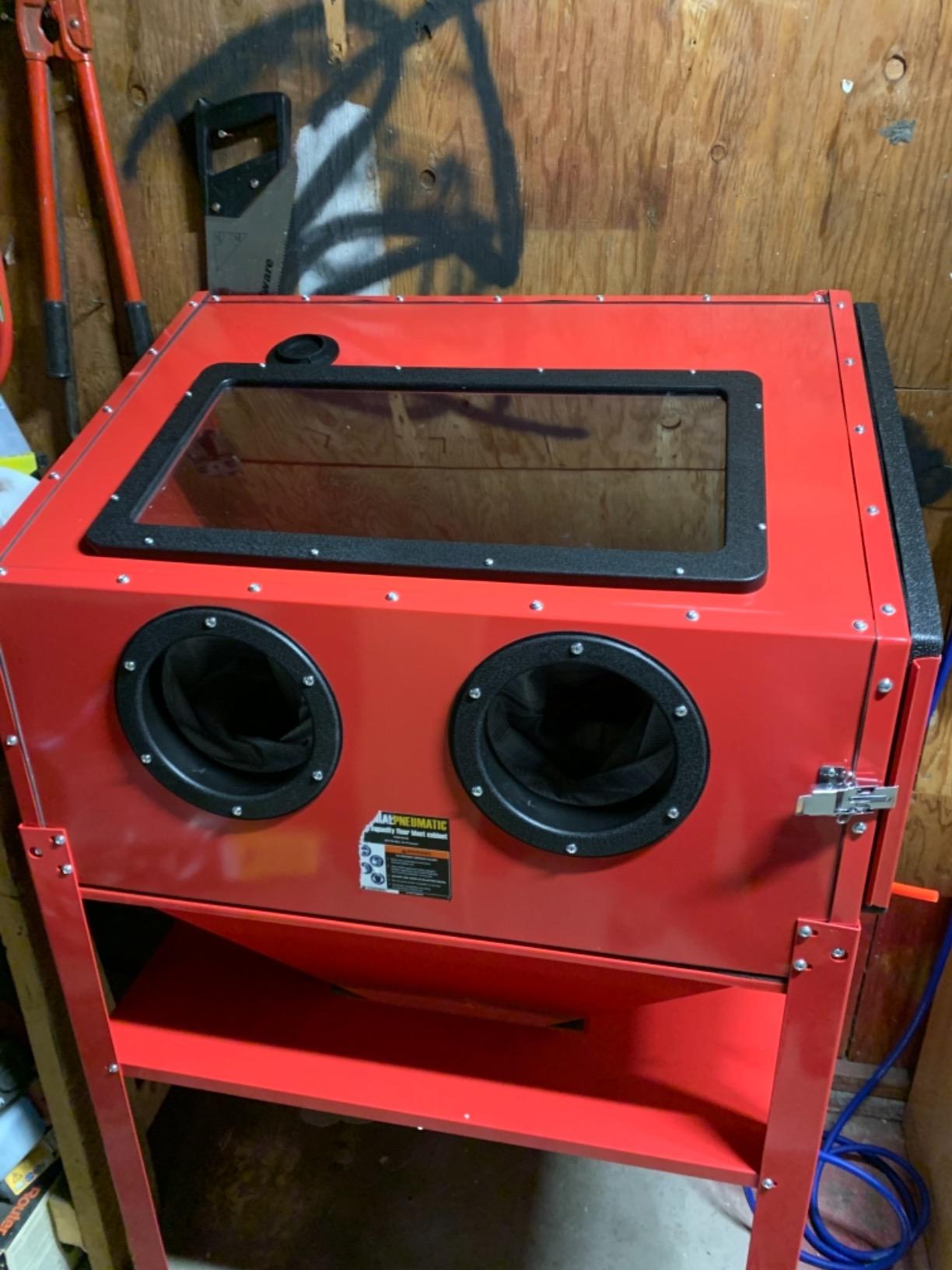
The rating sits below the VEVOR and Eastwood units for two specific reasons, and both are documented. The fluorescent lighting is less effective than LED in an enclosed box where you are looking through a scratched window, and the 18 gauge steel shell is thinner than the heavier gauge cabinets in this class.
Neither issue stops you blasting. If you plan heavy media, expect the shell to feel flexier, and plan to add a proper dust extraction setup rather than relying on the internal filter.
Who this cabinet suits
Home shops where the compressor is already the centerpiece of the garage and a slim, lockable cabinet is more useful than a wide benchtop box. A 40 pound media load is a comfortable working amount for hand tools, brackets and motorcycle pieces.
Shared or multi-use shops like the lock, since media and parts can be closed up between sessions.
Who should skip it
Buyers who plan to work on wheels or frames. The narrow 40 pound configuration is not a big-parts machine.
Anyone who cares about interior visibility. The fluorescent lamp is the single most common complaint, and swapping in an LED strip is a common first modification.
9. Parts-Diyer 60 Gallon Air Sandblasting Cabinet: Best for Full-Size Wheels

Parts-Diyer 60 Gallon Air Sandblasting Cabinet
60 gal
Working area 33 x 21.7 x 14.6 inch
Average 270 L/min at 6 bar
90.2 lb
Pros
- Large 60 gallon volume handles a 17-inch rim
- Sturdy leg-beam frame is stable once assembled
- Spent media is easy to recover and reclaim
- Dust port connects easily to most shop vacs
Cons
- Tedious assembly with poor instructions
- Interior lighting is ineffective and hard to improve
- Bottom cavity becomes an invisible dust trap
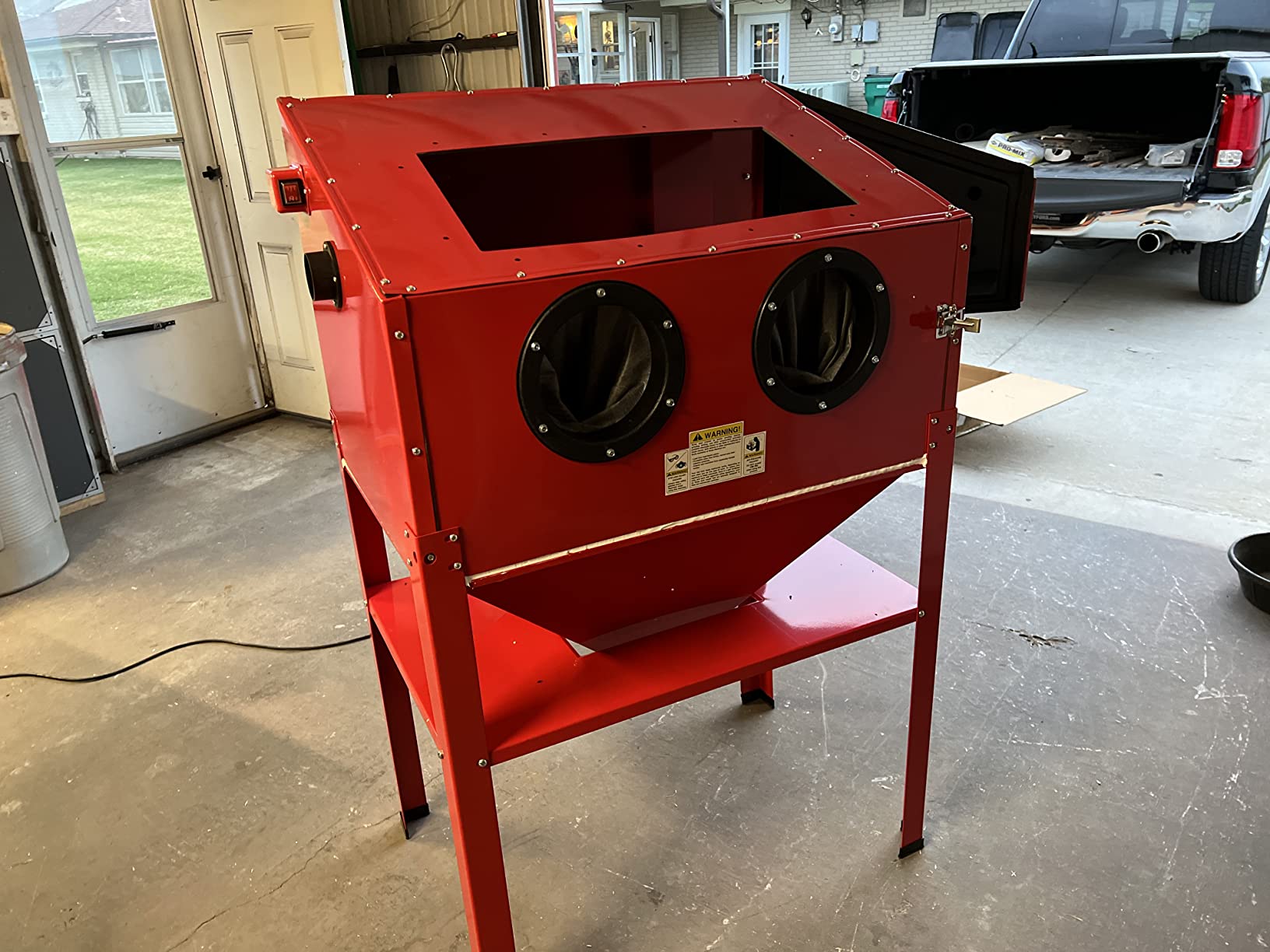
If your project list includes full-size wheels, this 60 gallon cabinet is built for it. Owners confirm it handles a 17-inch rim, and the 33 by 21.7 by 14.6 inch working area gives real room to roll a wheel through the blast pattern.
Media recovery is the underrated feature here. The removable mesh-design work surface tray and drain plug make it easy to dump and reclaim spent media, and the dust port connects to most shop vacuums without an adapter. Owners also note the 4 leg-beam frame is stable once assembled.
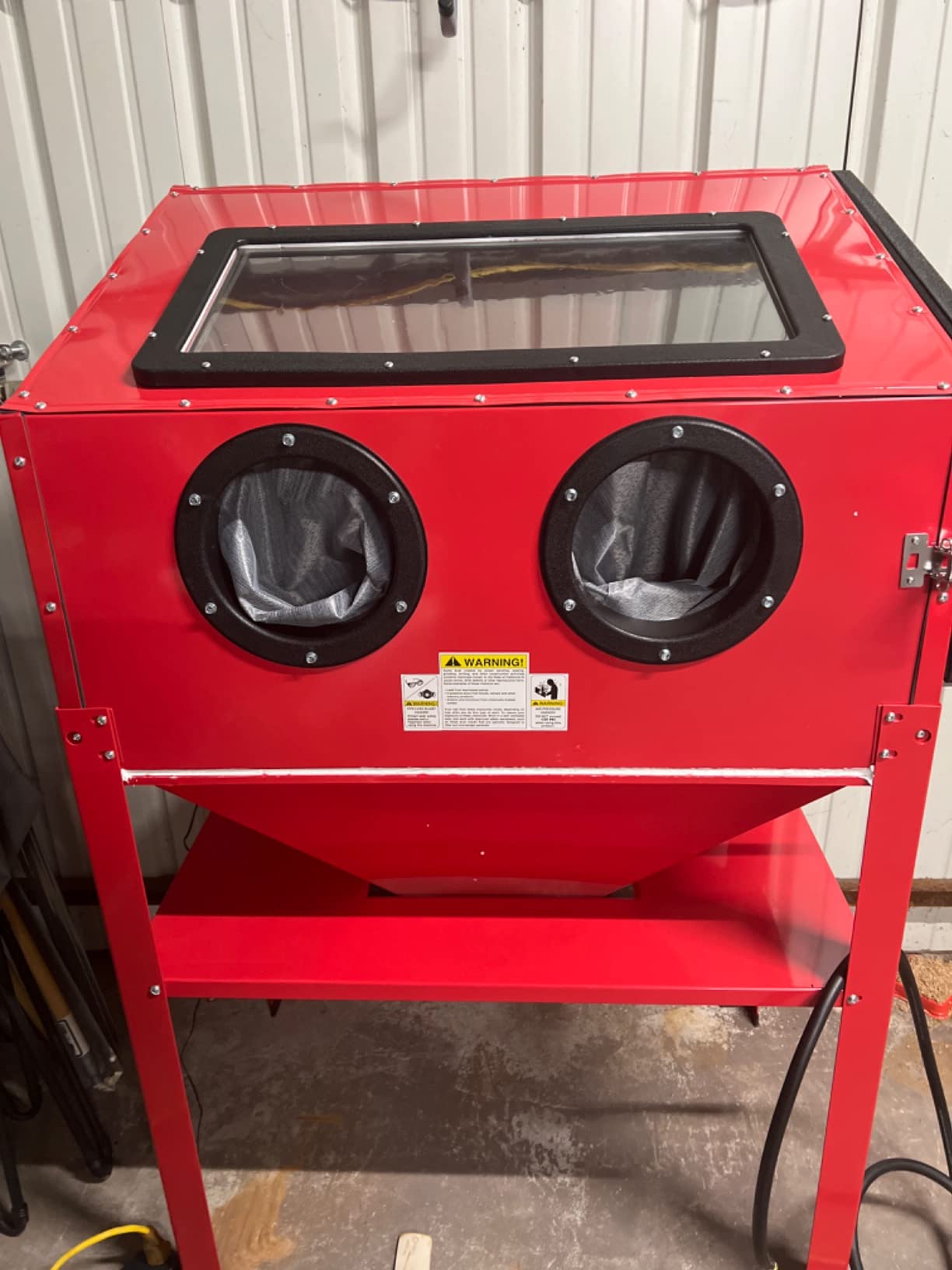
The build is the problem. It is consistently described as tedious with poor instructions, and some owners recommend paying someone else to assemble it. The interior lighting is widely called ineffective and is mounted so that no external light can easily be added, which is a real quality-of-life issue in an enclosed cabinet.
There is also a list of small factory fixes worth doing on day one: the bottom cavity becomes a dust and debris trap you cannot see into, the screws holding the floor seals are weak and should be riveted, the door bolts are undersized compared with the frame hardware, the exhaust vent port arrives without a seal, and the media supply hose is too short. Sealant and air filter were also missing from some units.
Who this cabinet suits
Home shops restoring alloy or steel wheels, motorcycle fenders and larger panels where a 25 gallon bench cabinet would mean constant refilling. The view window at 21.25 by 9.84 inches is wide enough to follow a wheel around.
Shop owners who reclaim and reuse media will appreciate the tray and drain plug, which cut the cost of each session considerably.
Who should skip it
First-time blasters who want a smooth first experience. The factory fix list is long and the instructions are weak.
Anyone working in a small garage with limited floor space. At 90.2 pounds with a full leg frame, it needs a dedicated footprint and a way to move it.
10. Grizzly Industrial T27156 Top-Loading Cabinet: Best Top-Loading Design

Grizzly Industrial T27156 – Top-Loading Benchtop Sandblast Cabinet
Top-loading benchtop design
Sealed gloves
4 ceramic tip sizes
23.75 x 19 x 19 inch
36 lb
Pros
- Top-loading design simplifies filling and media changes
- Compact benchtop footprint suits a small work area
- Sealed gloves give full access inside the cabinet
- Blasting gun with 4 ceramic tip sizes included
Cons
- Built-in fluorescent lamp is dated next to LED cabinets
- Lowest average rating and thinnest review volume in this group
The Grizzly T27156 does one thing differently: you load media from the top. For anyone who changes media often, that is a real time saver compared with reaching into a front-loading box through the glove ports.
It is compact at 23.75 inches wide by 19 high by 19 deep and weighs 36 pounds, so it is easy to move to a workbench when needed. The sealed gloves give full access inside, and the blasting gun ships with four ceramic tip sizes.
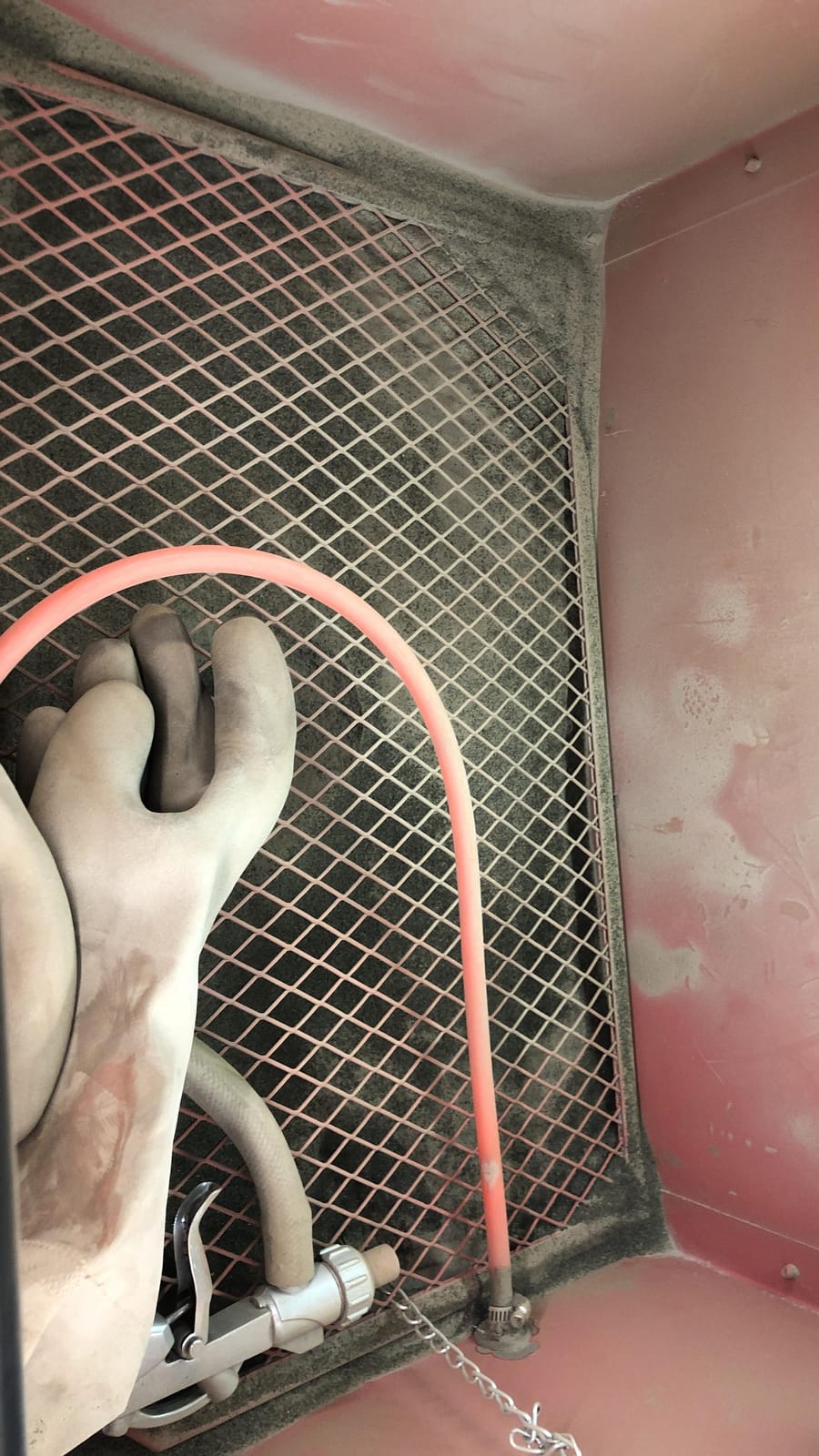
This is the last cabinet we would recommend, and the reason is simple: it carries the lowest average rating in the group at 3.7 stars with the thinnest review volume at just 29 ratings. The rating distribution also shows a heavier share of one-star reviews than the other cabinets here.
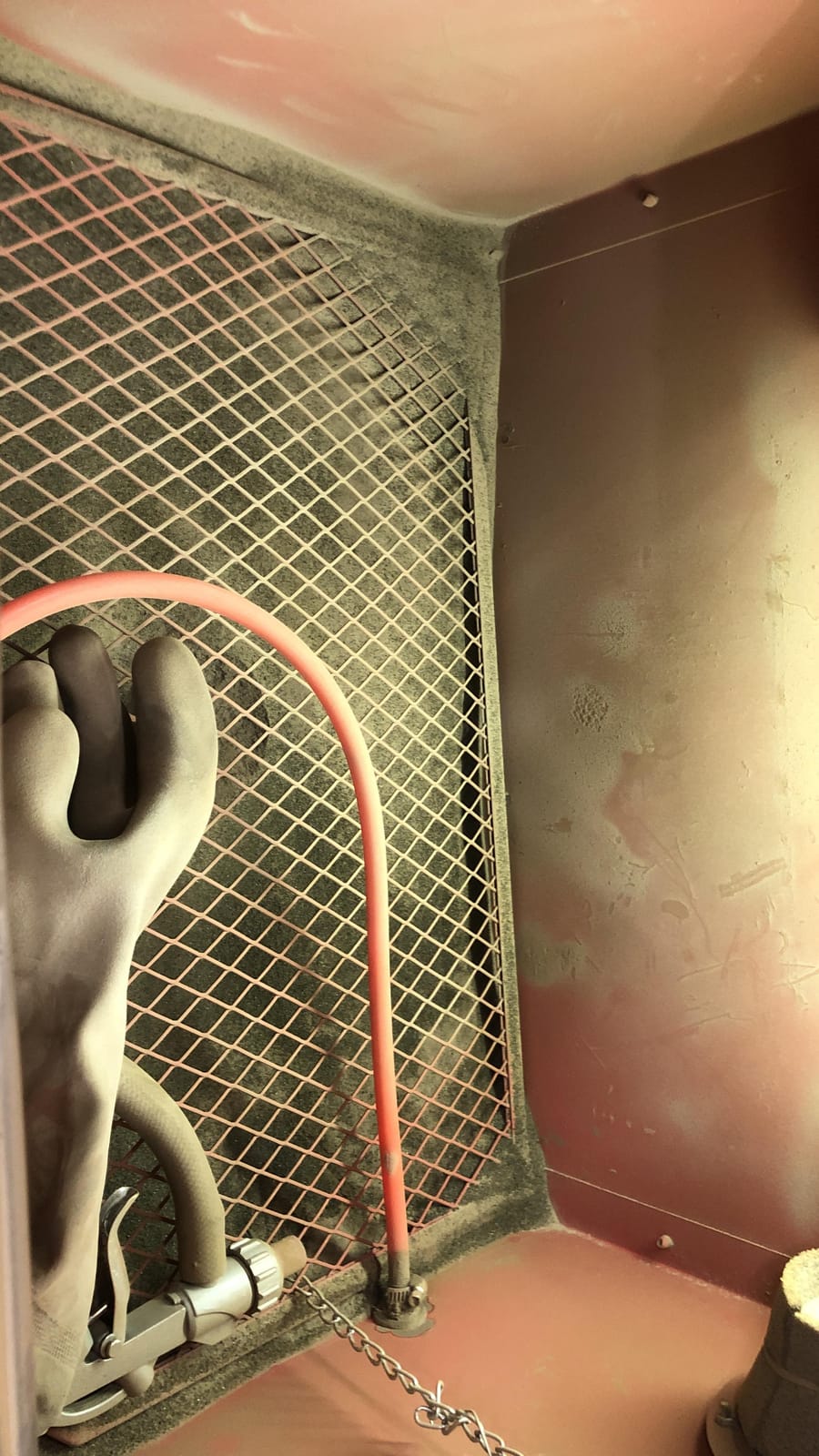
The specific complaint is the built-in fluorescent lamp. In an enclosed cabinet where you are looking through an acrylic window at a shadowed work area, fluorescent lighting makes it hard to judge the surface profile you are creating.
Who this cabinet suits
Hobbyists who primarily want a top-loading benchtop box and already have their own lighting plan, for example a shop with good ambient light or a machine they intend to retrofit.
Anyone working with walnut shell or glass bead who changes media between jobs will appreciate the top access more than most spec sheets suggest.
Who should skip it
First-time buyers who want the most owner feedback available. With 29 ratings there is far less field data to draw confidence from than the 273-review VEVOR or the 349-review VEVOR 60.
Buyers who care about interior visibility out of the box. The lamp is the one feature owners single out, and the fix is a retrofit you have to plan for.
Size Your Compressor Before You Buy a Cabinet
How much CFM do you need? For a home shop, 15 CFM is the realistic minimum for hobby work, roughly 5 to 7 CFM from a 60 gallon tank for automotive restoration, and 15 to 25 CFM from an 80 gallon tank or larger for production. The “feels weak” complaint almost always traces back to an undersized compressor, not a cheap cabinet.
Match the cabinet’s published demand to your compressor, then match the nozzle to both. A 4 mm nozzle on a 5 CFM cabinet keeps pressure steady; a 7 mm nozzle on the same setup produces a sputtering blast that will fool you into thinking the cabinet is faulty.
25 gallon benchtop cabinets in this roundup are rated at 40 to 80 PSI and 5 CFM, so a 24 or 30 gallon compressor is enough with a small nozzle.
40 gallon cabinets split into two groups: the VEVOR 40 is rated 5 CFM at 40 to 120 PSI, while the Parts-Diyer 40 lists 6 to 25 CFM at 60 to 125 PSI. That difference is the single most important spec to check before ordering.
60 gallon floor cabinets here run 5 CFM but move far more media per pass, so sustained demand is the factor, not peak flow. Owners restoring a truck report needing a larger compressor in practice than the printed number suggests.
The Eastwood B60 does not publish a CFM figure, but a 36 by 24 by 23 inch work area and 120 pound media load mean you will be blasting for long stretches. Plan on a 60 gallon tank or larger.
CFM at pressure is the number that matters, not free air delivery on the compressor label. A compressor rated at high free air delivery delivers far less once the pressure drops under load, and a blast gun with a 6 mm nozzle is a continuous load rather than a peak.
Siphon Feed vs Pressure Feed
Siphon feed, also called suction feed, uses the airflow of the blast gun itself to pull media up from the hopper and through the pickup tube. Every cabinet in this roundup is a siphon cabinet, and that is the right call for a home shop.
A pressure cabinet holds media in a pressurized pot and pushes it out under pressure. The kinetic energy difference is large, roughly three to four times the impact, which is why professional restoration and production shops use them. The trade-offs are a more complex machine, more maintenance, more expensive media metering, and a much higher price.
For weekend restoration work, siphon feed is the sensible endpoint. You get a simpler machine you can maintain yourself, cheaper consumables, and easier nozzle changes. The cost is lower media velocity, so you spend more time on a part rather than more money on the cabinet.
One siphon design detail does matter: the pickup tube and the hopper floor. When the floor is flat, spent media piles in a dead spot and stops returning to the pickup, a problem owners call duning. The Eastwood V-hopper is the direct answer to that, and several VEVOR and Parts-Diyer owners report pushing media back by hand instead.
Dust Collection and Media Choice
Do sandblasting cabinets need dust collection? Yes, and it is the one accessory that changes your shop more than any other purchase here. Without extraction, dust escapes worn gaskets and glove ports and settles on your bench, your car and your floor. Every cabinet below has a dust port, and pairing it with a cyclone separator or a proper HEPA shop vacuum keeps the window clear and the garage survivable.
Media selection matters more than most buyers expect, because the wrong abrasive will cut a part you were trying to save.
Glass bead is the safe generalist. It is reusable, gentle enough for most metals, and the right default for a first cabinet.
Aluminum oxide cuts faster and holds an edge longer, which is what you want for stubborn rust and cast iron, at the cost of being more aggressive on thin parts.
Walnut shell is the media to use on aluminum, magnesium and other soft or delicate surfaces. It strips coatings with almost no risk of gouging the substrate.
Garnet is a harder, sharper abrasive for heavy scale removal. It cuts fast and is unforgiving on soft metals.
Silicon carbide is the sharpest of the common media and is generally reserved for hard materials like carbide and hardened steel. It is not a home-shop default.
One warning on media: several cabinets in this roundup list silicon sand among compatible media. Avoid it. Crystalline silica dust is a serious respiratory hazard, and a home garage is exactly the enclosed space where it accumulates.
You can reuse media. Glass bead, aluminum oxide, garnet and walnut shell all survive multiple cycles as long as you screen out the fines and remove debris after each session. The Eastwood B60 is not designed for soda media, so pair that cabinet with reusable glass bead instead.
Garage Readiness: Footprint, Clearance, Noise and Venting
Garage fit is the step most roundups skip, and it is where home-shop buyers get surprised. A 60 gallon floor cabinet needs a dedicated footprint rather than a bench corner, and a large assembled unit can weigh well over 100 pounds, which means two people to reposition.
Check three things before the cabinet arrives. Floor space: benchtop units at roughly 25 by 21 inches fit a bench, while floor cabinets around 36 by 23 inches need clear wall space and a path to the dust port. Doorway clearance: the front panel and the work area have to clear your garage door opening and any shelf above the bench. Overhead clearance: the tallest unit here reaches 54.5 inches, so check the height under any shelf or loft before you commit.
Noise deserves its own warning. Blasting cabinets are extremely loud, and buyers are routinely unprepared for working in a residential-adjacent garage. Ear protection is not optional, and if your garage shares a wall with living space, plan your sessions rather than assuming a partition helps.
Venting is the third. Run the dust port to a cyclone separator or a shop vacuum, and keep the extraction path as short and sealed as possible. If you cannot vent outdoors, a HEPA-rated vacuum is the minimum for keeping particulate off your tools and floor.
Safety and PPE in a Home Shop
Are sandblasting cabinets safe? Enclosed blasting cabinets are safe when used as designed, and the cabinet is the main safety device, because it contains the abrasive dust that open blasting throws across your shop. The risk is not the blast itself, it is the dust, and the mitigation is extraction, media choice and personal protective equipment.
Our PPE list for any session:
A respirator rated for particulate, and it must be a tight fit. This is the single most important item given that abrasive dust and paint flakes become airborne.
Eye protection outside the cabinet, in case of a window or glove failure.
Hearing protection, because the cabinet is loud enough to need it.
Gloves for handling parts and spent media outside the gun cycle. Several cabinets in this roundup include gloves that fail within hours, so treat replacements as consumables.
Long sleeves and a respirator-compatible coverall when handling reclaimed media, which carries fine dust.
Media that is not crystalline silica. Glass bead, aluminum oxide, walnut shell and garnet avoid the worst respiratory risk.
Never blast outside in an open area near neighbors or downwind of your house, and never open the cabinet door mid-cycle. If your garage cannot be ventilated, that is a reason to reconsider blasting indoors altogether.
Troubleshooting Four Common Problems
Why isn’t my cabinet sandblaster picking up media? Moisture in the compressed air line is the most common cause by a wide margin. Most first-time owners never install a moisture trap or water separator, and condensed water mixes with media, clumps it and clogs the pickup tube.
1. The cabinet will not pick up media. Install a moisture trap and water separator as close to the cabinet as possible, drain the line, and pull the pickup tube to check for packed damp media. Confirm the gun pickup tube is actually drilled open, since some units arrive with it unperforated. Make sure the hopper has a proper mound of media over the pickup rather than a flat scatter.
2. Dust leaks around the door, window or glove ports. Reseat the sealing strip, then run a bead of silicone along the seams that still leak. Cheap imported cabinets frequently arrive with warped panels that need forming before the seal can do its job. Fit window protective film early, because scratched acrylic shows every leak as a haze.
3. The blast feels weak. This is an air problem in most cases. Check your compressor against the cabinet’s published CFM requirement, step down to a smaller nozzle, and confirm there is no kinked hose between the compressor and the cabinet. Stiff supplied hoses are a common fault and restricting flow before the gun ever opens.
4. The finish is uneven or inconsistent. Rotate the part rather than holding it in one spot, keep the nozzle moving, and check the media is not contaminated with paint flakes. A dirty media mix gives a gritty, uneven profile that no amount of extra dwell time will fix. Replace or screen the media and try again.
One more recurring habit worth building: dump and reclaim media after every job. Dust and debris left in the bottom of the cabinet turn into the invisible trap several owners describe, and they contaminate the next batch.
Buying a Used Blast Cabinet
Used blast cabinets are a reasonable way to get a heavy machine without paying new-cabinet money, and forum buyers with a 7.5 hp compressor and a truck restoration in progress ask for exactly this. A used 60 or 90 gallon cabinet is often a better machine than a new budget import.
Our inspection checklist, in order:
Check the steel thickness and whether it is welded or riveted. Welded seams and heavier gauge shells survive; thin riveted panels flex.
Open every door and inspect the latches. Replaceable latches are cheap; a warped frame around the door opening is not.
Look at the window and acrylic panels for crazing. Etched or yellowed panels cannot be fixed and cut visibility permanently.
Test the internal light. A dead or flickering lamp on a fluorescent unit is a cheap part, but it confirms the wiring age.
Run a blast test with a small amount of media. Watch for media blow-by at the seams, which indicates dead gaskets.
Inspect the pickup tube and hopper floor. Heavy pitting or a patched pickup tube means media metering will be inconsistent.
Verify the dust port is present and unblocked. A missing or modified port makes retrofitting extraction harder.
Check the gloves and their clamps. Torn gloves on a used cabinet usually mean poor storage, and the clamps are a wear item.
Confirm the gun, hoses and nozzle sizes are included. Budget to replace the hoses regardless, since stiff hoses are the most common failure.
Measure the cabinet against your compressor. A bigger used cabinet may demand more air than you can deliver.
Walk away from any cabinet with structural rust in the base, a cracked door frame, or a hopper patched with sheet metal. Those repairs cost more than the difference you saved.
Frequently Asked Questions
Are sandblasting cabinets safe?
Enclosed blasting cabinets are safe when used as designed, because the cabinet is the main safety device that contains abrasive dust and media. The real risk is airborne particulate, not the blast. Wear a tight-fitting particulate respirator, hearing protection and eye protection, vent the dust port to a cyclone separator or HEPA shop vacuum, and never use crystalline silica media. Never open the door mid-cycle and never blast outdoors downwind of your home.
How much CFM of air do I need to blast a cabinet?
For home shop work, 15 CFM is the realistic minimum for hobby blasting, about 5 to 7 CFM from a 60 gallon tank for automotive restoration, and 15 to 25 CFM from an 80 gallon tank or larger for production. Most 25 gallon benchtop cabinets in this roundup are rated at 5 CFM, and the VEVOR 40 gallon is rated 5 CFM at 40 to 120 PSI. Check each cabinet’s published CFM before you order, and use a smaller nozzle if your compressor cannot keep up.
Why isn’t my cabinet sandblaster picking up sand?
The most common cause is moisture in your compressed air line, which most first-time owners never address. Install a moisture trap and water separator as close to the cabinet as possible, drain the line, and pull the pickup tube to clear packed damp media. Also confirm the gun pickup tube is actually drilled open, since some cabinets arrive unperforated, and keep a proper mound of media over the pickup point.
Can you reuse sand in a sandblasting cabinet?
Yes, most blasting media survives multiple cycles. Glass bead, aluminum oxide, garnet and walnut shell can all be reused as long as you screen out the fines and remove debris after each session. Dumping and reclaiming media after every job also prevents the bottom of the cabinet from becoming a dust trap, which is a recurring complaint on several of these models. Soda media is the exception, and the Eastwood B60 is not designed for it.
What size sandblasting cabinet do I need?
Match the cabinet to the largest part you plan to clean and to your compressor. A 25 gallon benchtop unit handles hand tools, brackets and small hardware at 5 CFM. A 40 gallon unit handles control arms and small panels. A 60 gallon floor cabinet handles full-size wheels, with owners confirming a 17-inch rim, while the Eastwood B60 with a 36 by 24 by 23 inch area covers frame-off restoration.
Is the Harbor Freight sand blaster any good?
The Central Pneumatic 40 lb floor cabinet is a solid mid-tier machine with a lockable door, a 125 PSI maximum working pressure, and a gun, hose and gloves included. Two specific drawbacks explain its lower average rating: fluorescent lighting instead of LED, and 18 gauge steel that is thinner than heavier-gauge cabinets. For a home shop needing a slim upright cabinet at a comfortable working height, it works well once you add proper dust extraction.
Do sandblasting cabinets need dust collection?
Yes. Every cabinet in this roundup has a dust port, and connecting it to a cyclone separator or a HEPA shop vacuum is the single accessory that most improves your shop. Without extraction, dust escapes worn gaskets and glove ports and settles across your bench and floor, and the viewing window clouds during a session. A cyclone separator also keeps the window clear so you can watch the blast pattern and judge the surface profile.
Final Verdict: Where to Start
Start with the VEVOR 40 gallon if you want one cabinet that covers most home-shop work and already own a compressor. At 5 CFM and 40 gallons, it handles brackets, hand tools, motorcycle parts and small panels without draining your tank, and its 273 owner reviews give you the best field data in this roundup. Budget an evening for assembly and a tube of sealant, and vent the dust port properly.
Choose the VEVOR 60 gallon with stand if wheels and body panels are on your list and you want to stop refilling media every twenty minutes. Pick the Eastwood B60 when you are doing a full frame-off restoration and can give up a weekend to a two-person build, plus floor space for a 149 pound cabinet.
Choose the Parts-Diyer 25 gallon if your work is small parts and hand tools and you want the least expensive way into an enclosed cabinet. And before any of it, buy a moisture trap, a water separator, a respirator and a cyclone attachment, because those four items decide whether blasting in your garage stays pleasant. For related shop gear, our engine stand picks for auto shops cover the other half of a garage project.
Whatever you choose in 2026, measure the compressor, measure the floor space, and pick the media before you pick the cabinet. That order saves the expensive mistakes.