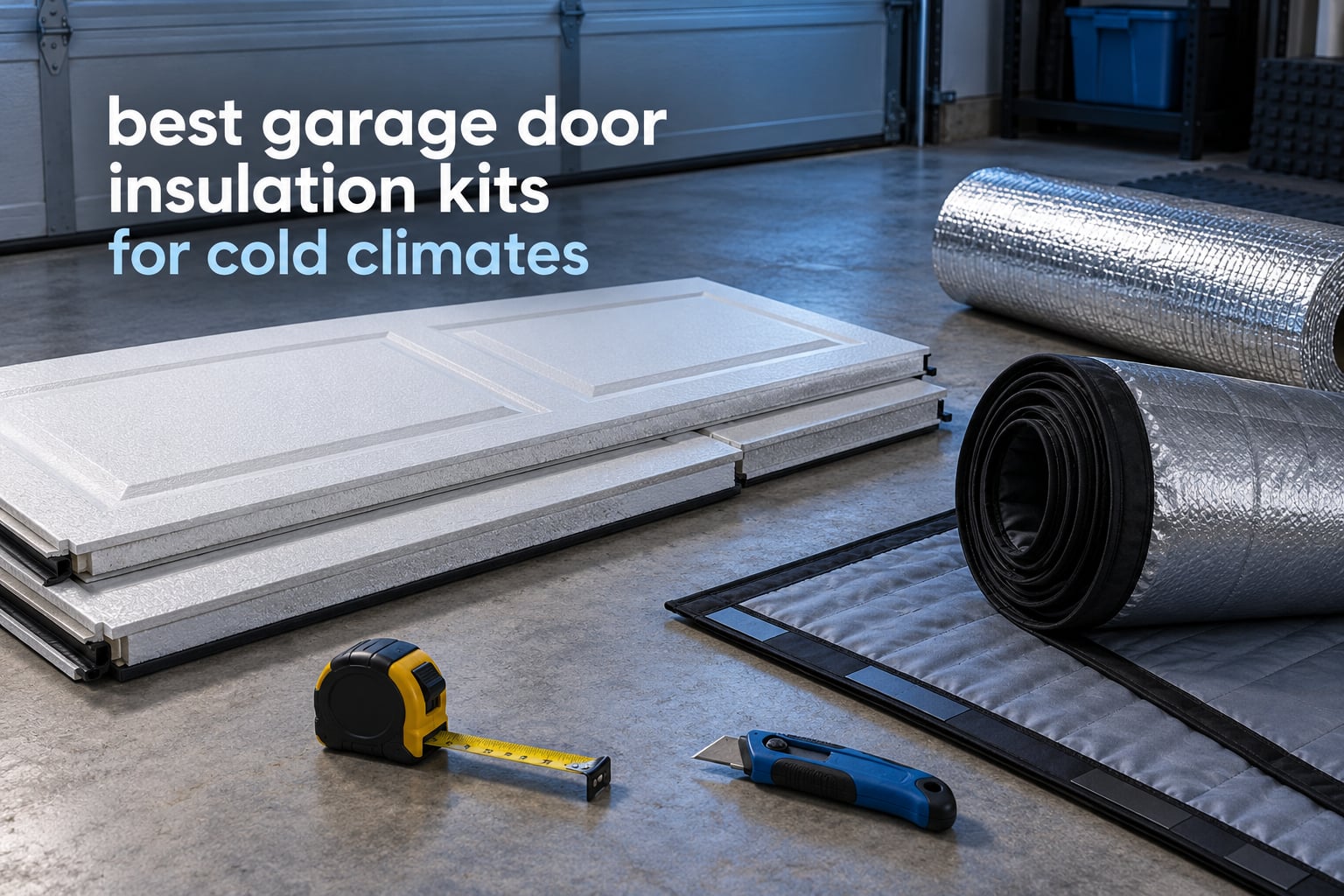
An uninsulated steel garage door is the largest uninsulated surface most homes have, and in a cold climate it works against you every hour of the winter. Cold air pours around the frame, the bare steel skin pulls warmth out of the room by conduction, and the interior face radiates that coldness straight back at you. This roundup covers the best garage door insulation kits for cold climates, ranked specifically on how they perform below freezing rather than on how well they deflect summer sun.
Be clear about what a kit can and cannot do. A garage door insulation kit slows heat transfer through the door, which lets a small heater work far less hard and keeps a workspace usable on a January evening. It will not heat an uninsulated garage by itself, because the ceiling and walls usually lose more heat than the door does. If you are insulating from the ground up, we recommend starting with the air barrier at the ceiling line first.
We spent several weeks comparing all ten kits in this guide on cold-weather performance, weight added to the door, install method, and door-size coverage. No manufacturer paid for placement, and every rating we quote comes from the retail listing rather than from us. We also weighed what the [Sprinter Van insulation kits](https://modelrec.com/best-sprinter-van-insulation-kits/) get right about sealing a large opening, since the physics of a big cold opening are the same.
Table of Contents
Top 3 Best Garage Door Insulation Kits for Cold Climates in 2026
Reach Barrier Reflective 8×8 Single Door Kit
- Pre-cut 24x48 panels
- Reflective bubble core
- Adhesive pad mounting
- Lightest load at 3.3 pounds
NASA TECH Reflective Foam Core 18×8…
- R8 vapor and radiant barrier
- 4 rolls cover a full 18x8 door
- Tape razor and squeegee included

LIAMST Magnetic Thermal Door Curtain 16×7
- Magnetic self-closing seam
- Weighted Oxford and cotton
- Blocks drafts and wind
- Sizes for 18x8 too
Best Garage Door Insulation Kits for Cold Climates in October
| Product | Specifications | Action |
|---|---|---|
| Reach Barrier Reflective 8×8 Single Door Kit |
|
Check Latest Price |
| NASA TECH Reflective Foam Core 18×8 Two-Car Kit R8 |
|
Check Latest Price |
| LIAMST Magnetic Thermal Door Curtain 16×7 |
|
Check Latest Price |
 Matador SGDIK002 X-Large Polystyrene Kit Matador SGDIK002 X-Large Polystyrene Kit |
|
Check Latest Price |
 MYFAMIREA 16-Panel 6mm Reflective Kit for 16×8 MYFAMIREA 16-Panel 6mm Reflective Kit for 16×8 |
|
Check Latest Price |
 NASATECH Pre-Cut R8 One-Car Foam Kit NASATECH Pre-Cut R8 One-Car Foam Kit |
|
Check Latest Price |
 LIAMST Magnetic Curtain with Clear Window 16×7 LIAMST Magnetic Curtain with Clear Window 16×7 |
|
Check Latest Price |
 US Energy Products Foam Core Kit for 9×7 and 9×8 Doors R8 US Energy Products Foam Core Kit for 9×7 and 9×8 Doors R8 |
|
Check Latest Price |
 FEGO Thermal Insulated Door Curtain 18X8 FEGO Thermal Insulated Door Curtain 18X8 |
|
Check Latest Price |
 Esteh Magnetic Thermal Door Curtain 16×7 Esteh Magnetic Thermal Door Curtain 16×7 |
|
Check Latest Price |
1. Reach Barrier Reflective Single Door Kit
Reach Barrier Garage Door Insulation Kit, Reflective, 8×8 Single Door
Coverage 64 sq ft
0.16 inch polyethylene bubble core
Reflective film both sides
Listed weight 3.3 pounds
Pros
- Pre-cut panels trim with scissors or a box knife
- Lightest added load among the panel and roll kits here
- Installs around hurricane straps without removal
- Reviewers report 8 to 20 degrees of moderation
Cons
- Included adhesive pads often reported too few or too weak
- Panels usually need trimming to fit each section
- Covers only part of one single door
Reach Barrier is the product most people in a cold climate end up with first, and the reason is simple: it does almost nothing to fight the opener or the torsion springs. The whole kit is listed at 3.3 pounds, and the panels snap or tape onto the inside face of the door rather than loading the structure. That matters more than most people expect when the door is being cycled several times a day through a freeze.
The construction is a five-thirty-second inch polyethylene bubble core with reflective film on both faces, shipped as eight pre-cut 24 by 48 inch panels. You trim each panel to the actual section height of your door, and the reviews on this listing repeatedly single out that panels fit around existing hurricane straps without having to remove anything.
Buyers on this listing report interior temperature improvements in the range of 8 to 20 degrees in both directions, which is the kind of range you should expect from a reflective air-pocket product rather than a thick rigid core. If your garage has an unheated ceiling, treat that as the expected outcome, not a disappointment.
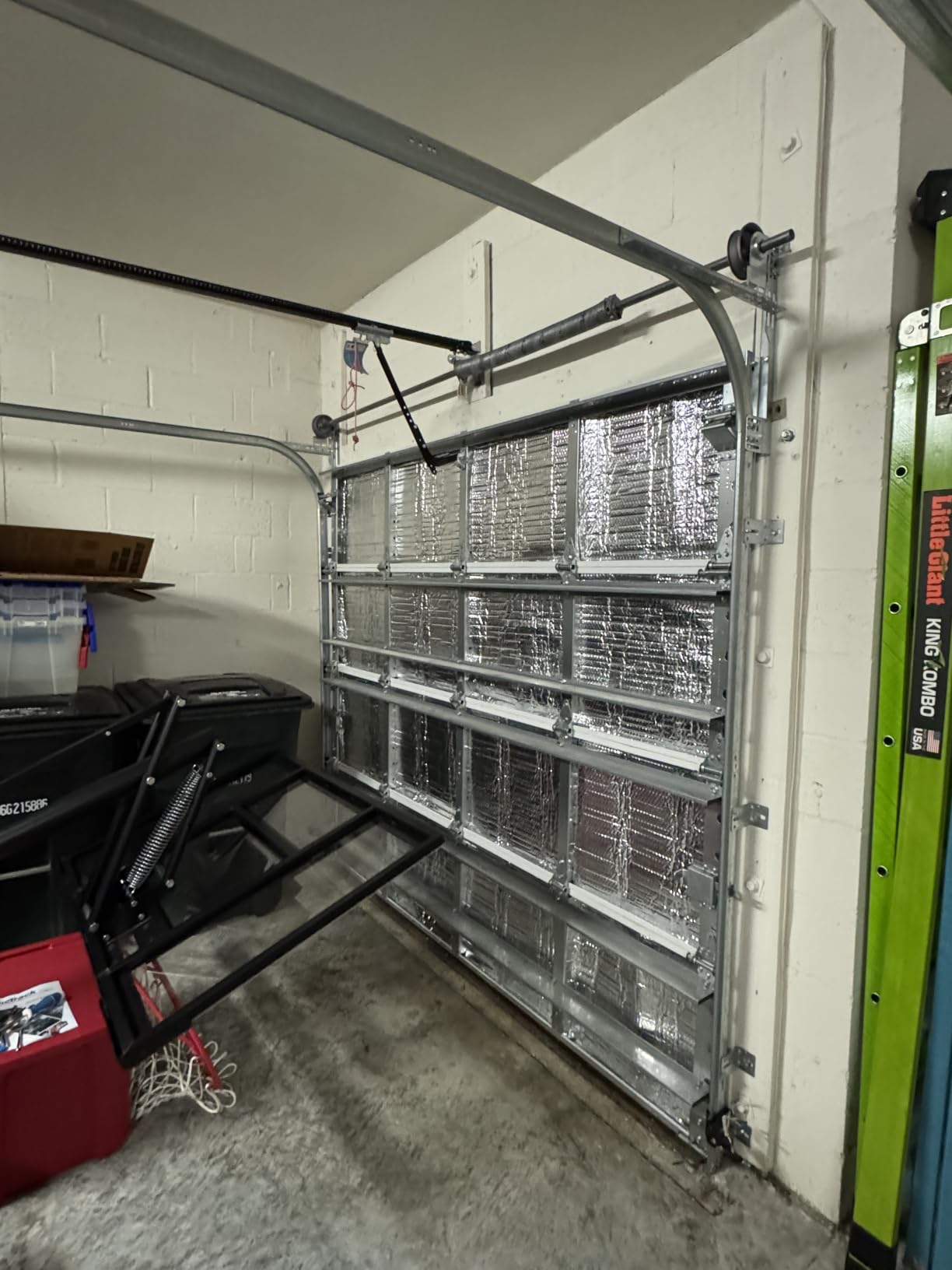
The material choice is the honest limitation. A reflective barrier is built to bounce radiant heat, and radiant heat matters most when a surface is hot to begin with. In deep cold the dominant losses through a steel door are conductive and convective, so this kit moderates them rather than stopping them. Owners on r/HomeImprovement frequently ask whether these kits are worth the money, and the honest answer for a reflective product is that they do most of their work in summer.
Adhesive is the second limitation. Reviewers commonly report that the supplied Stick’em pads are too few or too weak, and many add their own double-sided tape. Clean the steel with alcohol before you stick anything down, and expect to buy a roll of tape regardless.
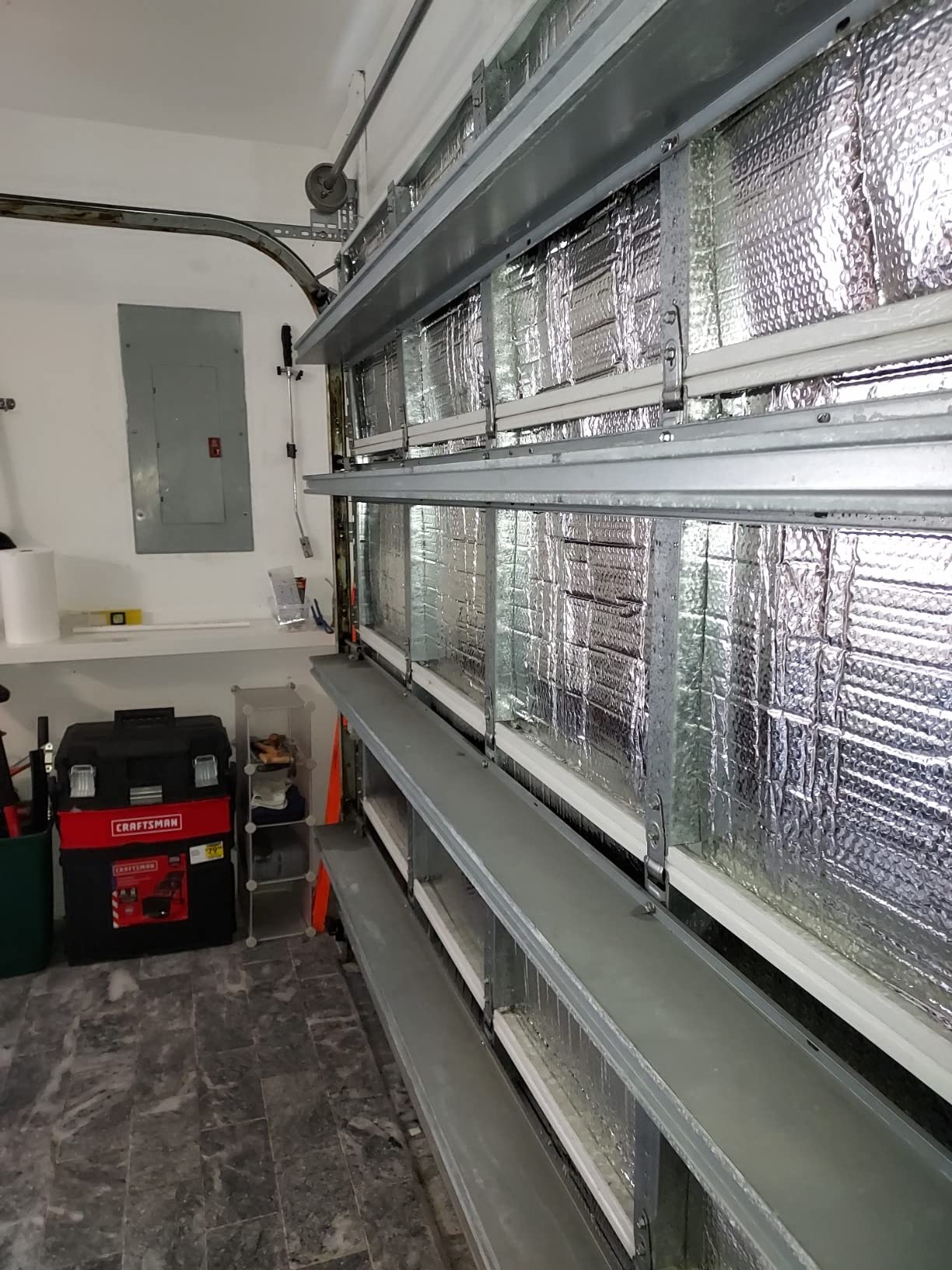
Is the Reflective Layer Enough Below Freezing?
For a garage that stays unheated and only needs pipes protected, yes. This is the least invasive way to take the chill off a steel door without touching spring balance or spending a full weekend on trim work.
For a heated workshop or garage gym where you want to sit comfortably in it, no. A reflective air pocket will not deliver the R-value a thick core does, and you will still be running a heater to hold temperature.
Where It Falls Short
It is single-door coverage only, so a 16-foot double door needs two. Panels are commonly oversized and need trimming per section, and a minority of owners report only modest gains once the garage air itself warms up.
On a west or south facing door, the summer surface temperature can degrade the supplied pads. If that describes your exposure, plan on aftermarket tape from the start.
2. NASA TECH Reflective Foam Core Two-Car Kit R8
NASA TECH White Reflective Foam Core 2 Car Garage Door Insulation Kit 18FT (WIDE) x 8FT (HIGH) R Value 8.0 Made in USA New and Improved Heavy Duty Double Sided Tape (ALSO FITS 18X7)
Rated R8
4 rolls of 2ft x 18ft foam core
144 sq ft coverage
Tape razor and squeegee included
Pros
- Covers a full 18x8 two-car door in four rolls
- R8 combines vapor barrier and radiant barrier
- Also fits 18x7 doors
- Meets US and international fire codes
Cons
- Rolls must be measured and cut around door hardware
- Double-sided tape needs liner peeled and tacked up
- Continuous sheet means all cuts are hand-made
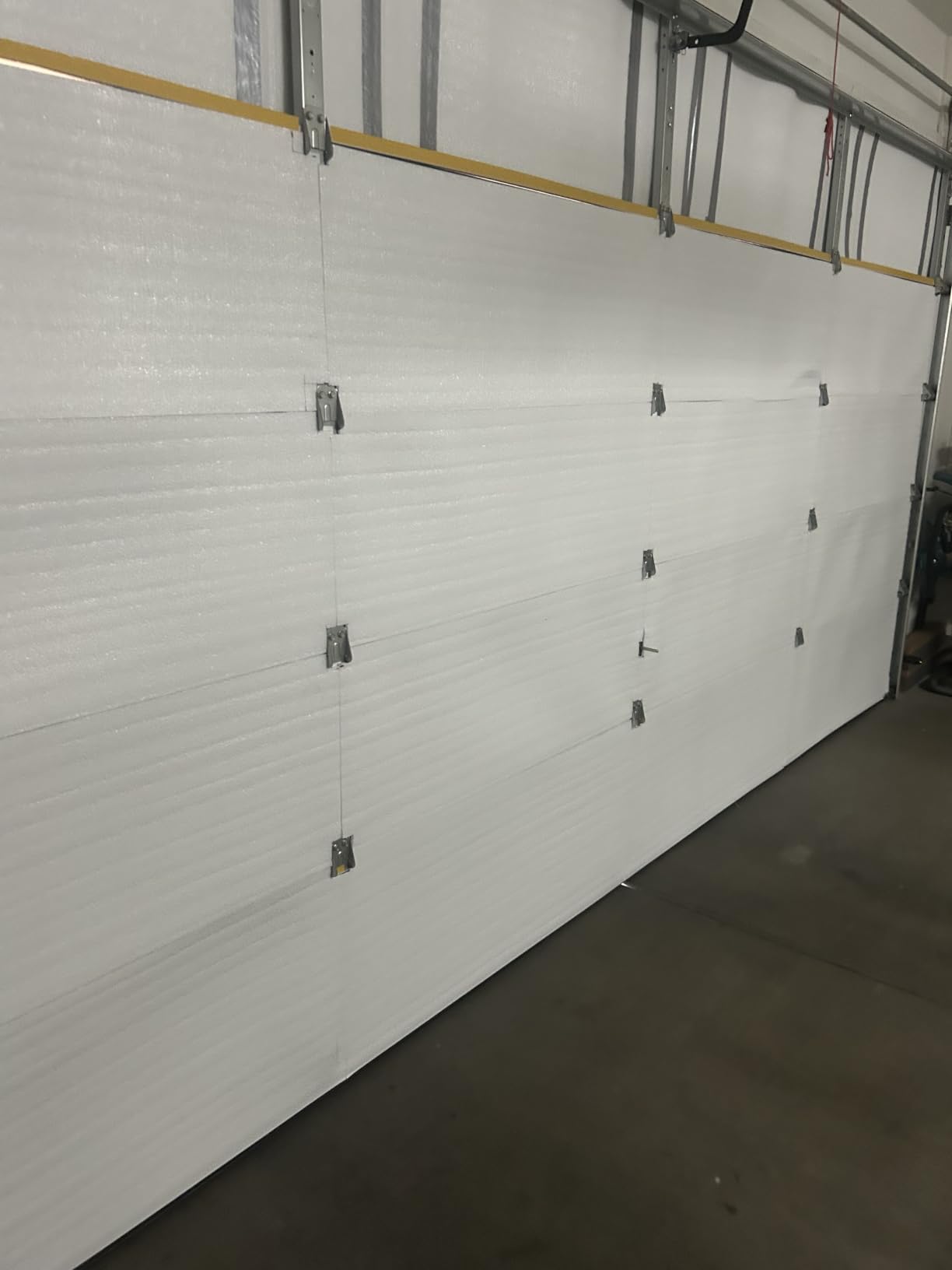
This is the kit we would put on an 18 by 8 two-car door in Zone 6 or colder. Four rolls of 2 foot by 18 foot white and foil foam core cover the whole opening without panel-by-panel measuring, and the spec sheet lists it at R8 combining a vapor barrier, a radiant barrier, and a sound deadener in one layer.
Because it is a continuous sheet rather than discrete panels, installation is a planning exercise instead of a fitting exercise. You unroll, position, cut around the window sections and hardware, then bond with the included heavy duty double sided tape. The liner has to be peeled and the tape allowed to tack up before it bonds, which is the step most people rush.
The kit includes a razor and a squeegee, so you are not buying tools for this job. Reviews on this listing credit the tape with holding through temperature swings and credit the material with holding up without degrading.
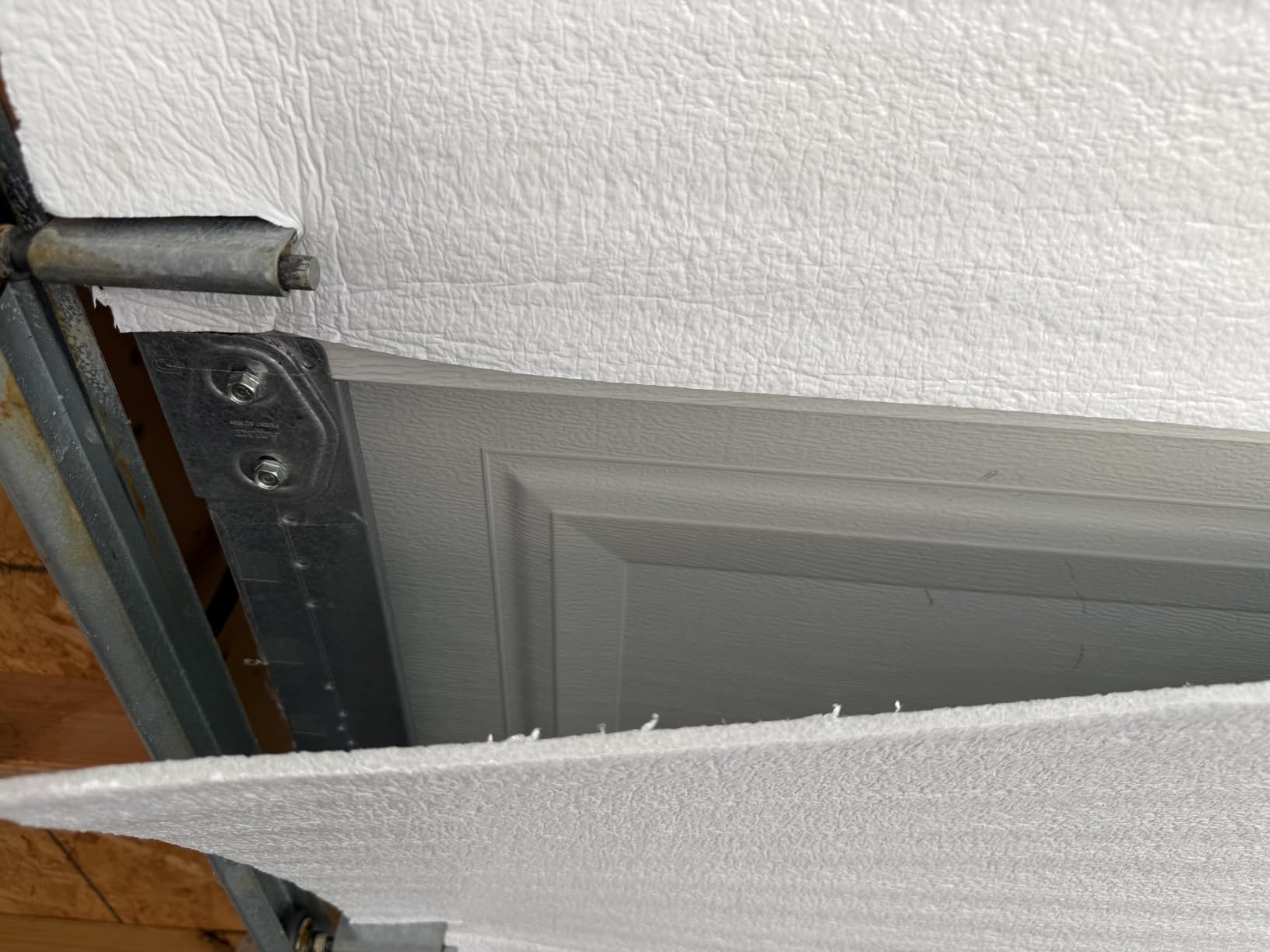
What we like most is the coverage math. Owners repeatedly ask how many kits a double-car garage needs, and for an 18-foot wide door this is a single purchase with no arithmetic. The rolls are described as waterproof and weatherproof, and damaged rolls are replaced, which matters for a garage where the door sees road salt and snow melt tracked in on tires.
Made in the USA and listed as meeting US and international fire codes. That is worth noting in a working garage where heat-producing tools are running.
Does This Really Reach R8 in Practice?
The R8 figure is the manufacturer’s rating for the material layer, and the air gap it creates. Install it without gaps and without compressing the core, and that is the layer doing the work described. Any installer who cuts it short around the rails gives away part of that.
Buyers report it also cuts noticeable noise from door operation, which is a secondary benefit that matters in a shop where you run a compressor.
Where It Falls Short
This is a two-car format. A single-car garage wastes most of a roll, and a pair of 9-foot doors needs this kit twice.
Continuous sheet installs are harder than panel installs. Every window cut, every hinge pocket, and every strut is a hand measurement, and a misaligned cut shows on the finished door.
3. LIAMST Magnetic Thermal Door Curtain for 16×7 Openings
Garage Door Screen for Winter,Garage Door Insulation Kit,Magnetic Thermal Insulated Door Curtain, Garage Insulated Door Curtain , Weatherproof, Windproof, Soundproof(16 * 7Ft)
Sized 16.3 x 7.15 ft
Oxford cloth with cotton filling
Magnetic center seam
Listed weight 10.3 pounds
Pros
- Magnetic seam closes by itself behind you
- No measuring or cutting of insulation panels
- Blocks drafts wind-blown debris and rain
- Also dampens door noise
Cons
- Hook-and-loop strips can be weak on cold or dirty frames
- Some sizes measure short of the advertised height
- Does not hold fully in high wind without extra fasteners
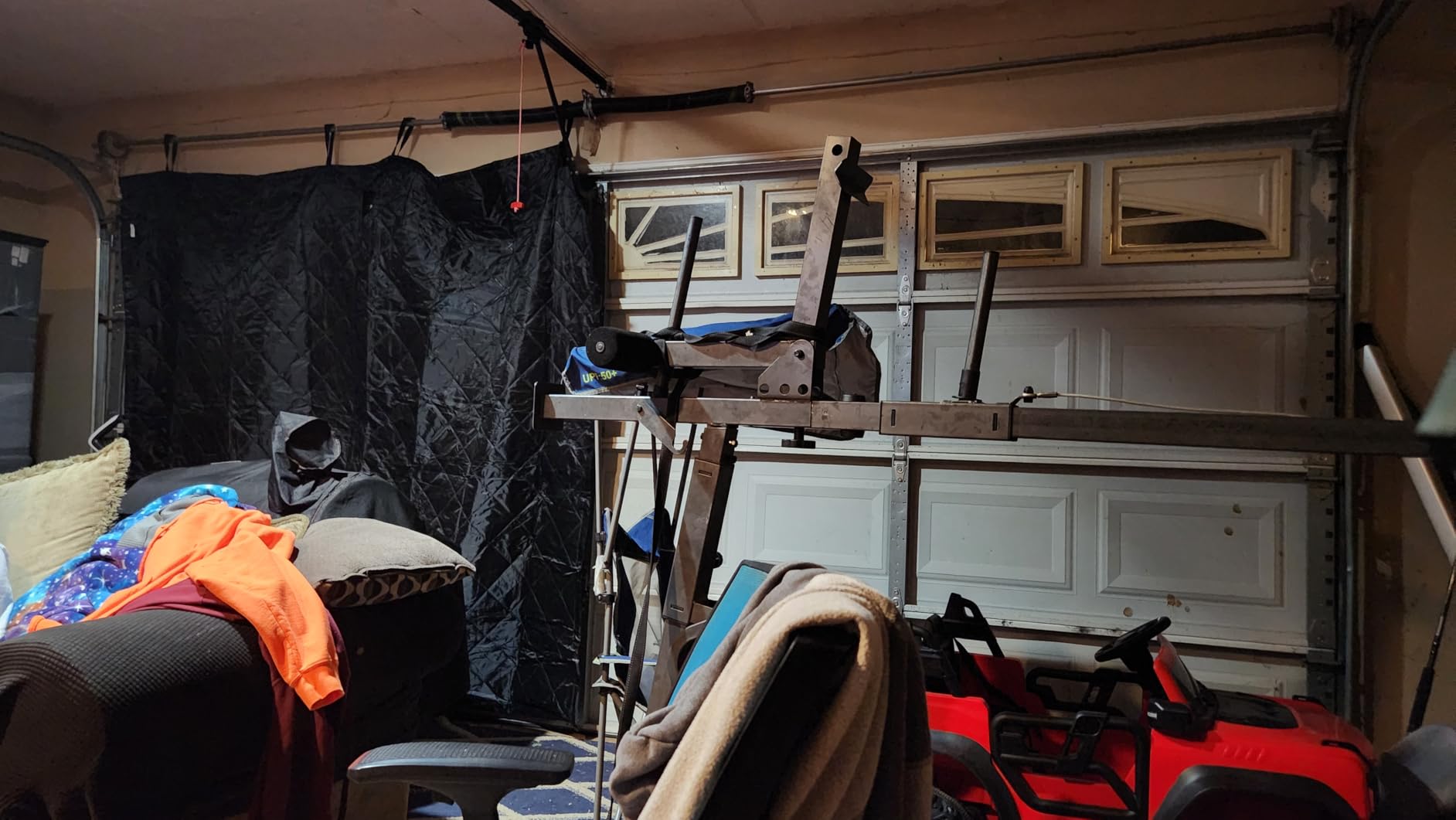
This is a different category of product and we think it deserves a place on a cold-climate list. Instead of adding a layer to the door, it hangs a weighted thermal barrier inside the opening and stops air from moving at all, which is the loss mechanism that panel insulation is weakest against.
The listing describes a 16.3 by 7.15 foot curtain in weighted Oxford cloth with cotton filling, with a magnetic center seam that closes on its own after you walk through. Reviewers report strong cold-weather results including sub-zero shop use, which is exactly the condition we ranked on.
Install is a roll of hook-and-loop strip along the frame. No panels, no cutting, no scoring, and nothing added to the torsion spring load beyond the listed 10.3 pounds.
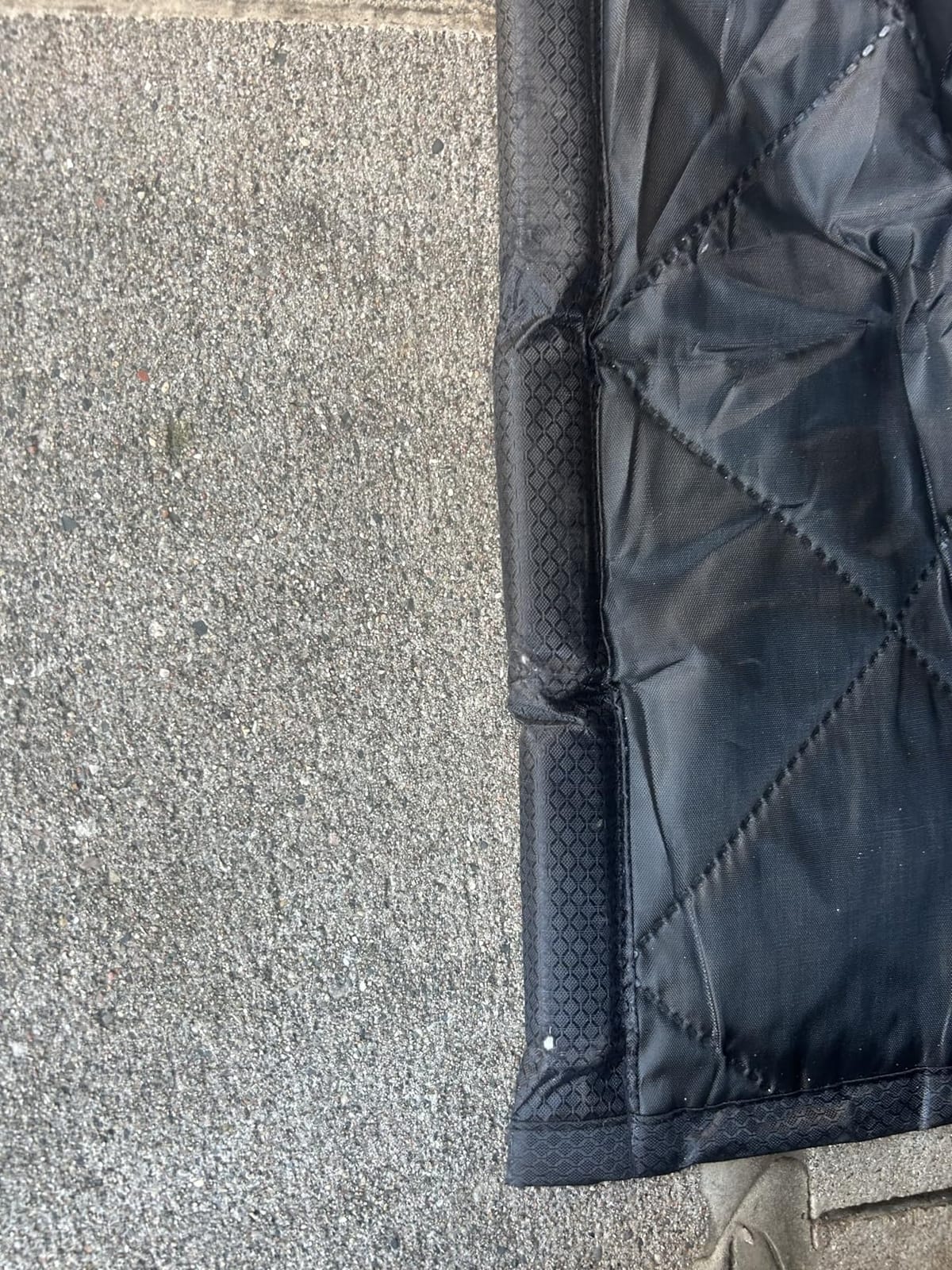
The trade-off is that an air curtain does not add R-value in the way a foam core does. It works by blocking infiltration, so its benefit rises when the door has gaps and falls when the door already seals tight. It also blocks light, which is a problem for a workshop where you want daylight on a bench.
Sound dampening is a real and frequently mentioned benefit on this listing, and for a garage used as a workspace the quieter operation is often what owners notice first.
When a Curtain Beats Panels
It wins when you want a working barrier in an afternoon, when the door does not seal well, or when you are insulating a garage you plan to heat only occasionally. Rolling it up in the summer and dropping it in October takes minutes.
It loses when you need light, when you need to drive straight through without dismounting, or when your frame is dirty and cold and the hook-and-loop will not grab.
Where It Falls Short
Measure your opening excluding the frame before you order. Reviewers on this listing report sizes that measure short of the advertised height, leaving a gap at the top.
Attachment strength is the recurring complaint. Clean the frame thoroughly, and consider extra buckles if you are in a windy site.
4. Matador X-Large Polystyrene Insulation Kit
Matador EP1323054_02 SGDIK002 Garage Door Insulation Kit, X-Large, White
1.25 inch thick polystyrene panels
8 panels at 23.25 by 54 inch
Fits standard 8ft and 9ft doors
Listed weight 13.2 pounds
Pros
- Friction fit into the existing frame with no tape glue or pins
- 1.25 inch core is thicker than the foil roll options here
- Vinyl facing is durable and washable
- Trim cleanly for uneven section sizes
Cons
- Instructions are thin on measuring and cutting technique
- Added weight may need the door rebalanced by a technician
- Coverage falls short on very large or mixed-size doors
- Polystyrene cutting leaves a lot of debris
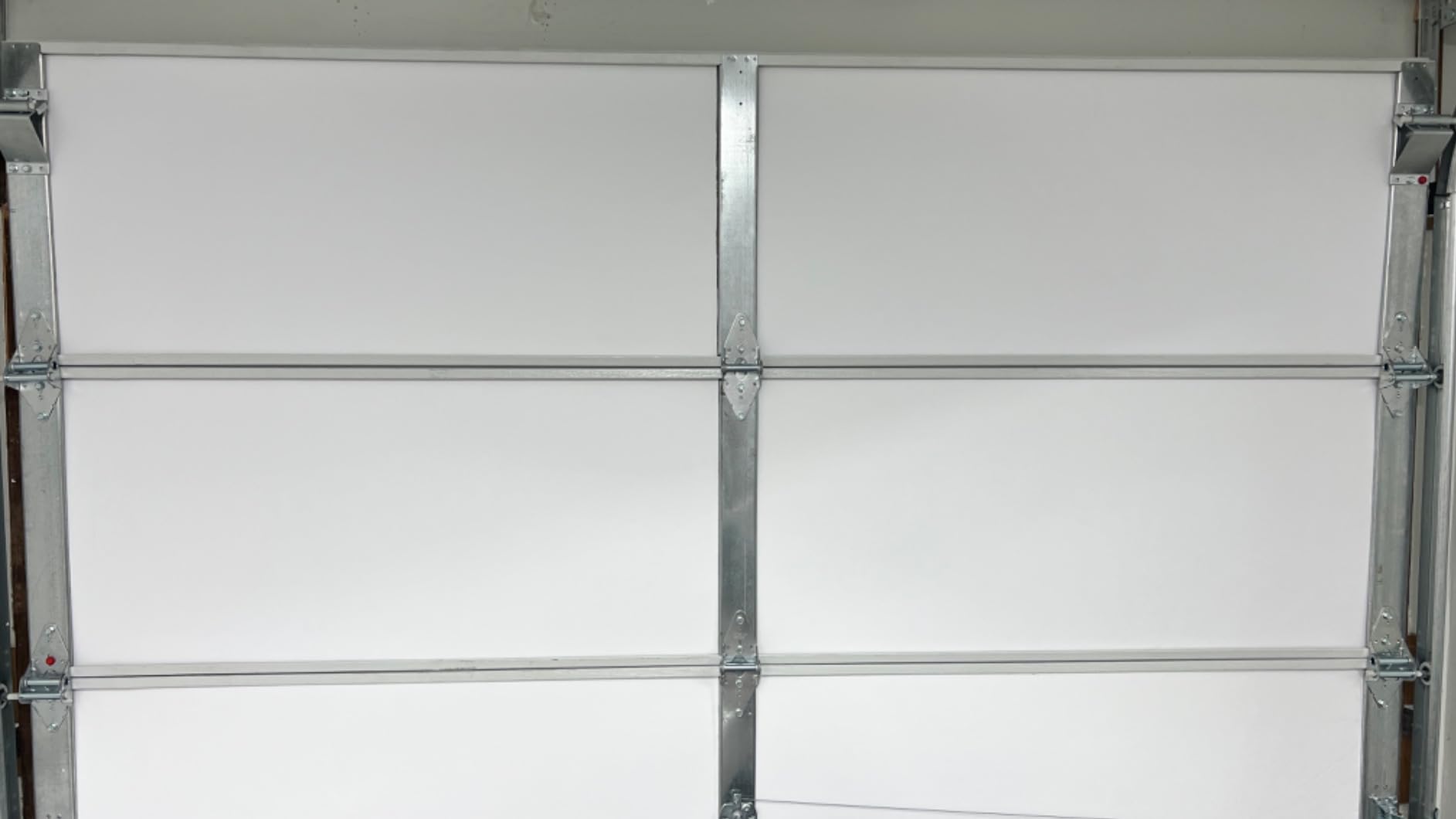
The Matador is the one in this group we would trust in a heated garage in the far north, purely because of thickness. The panels are 1.25 inch polystyrene laminate, measured at 23.25 by 54 inch, and eight of them are included in the kit.
Install is friction fit. You press each panel into the door’s existing frame and it stays, with no tape, glue, or retention pins. It is the fastest install of any rigid panel option here and the only one with nothing to clean off your hands afterwards.
Owners on this listing report a noticeable drop in door surface temperature and a quieter garage in the same install, and the vinyl facing is described as durable and easy to wash. This carries a 4.5 rating, matched by only one other product in this roundup.
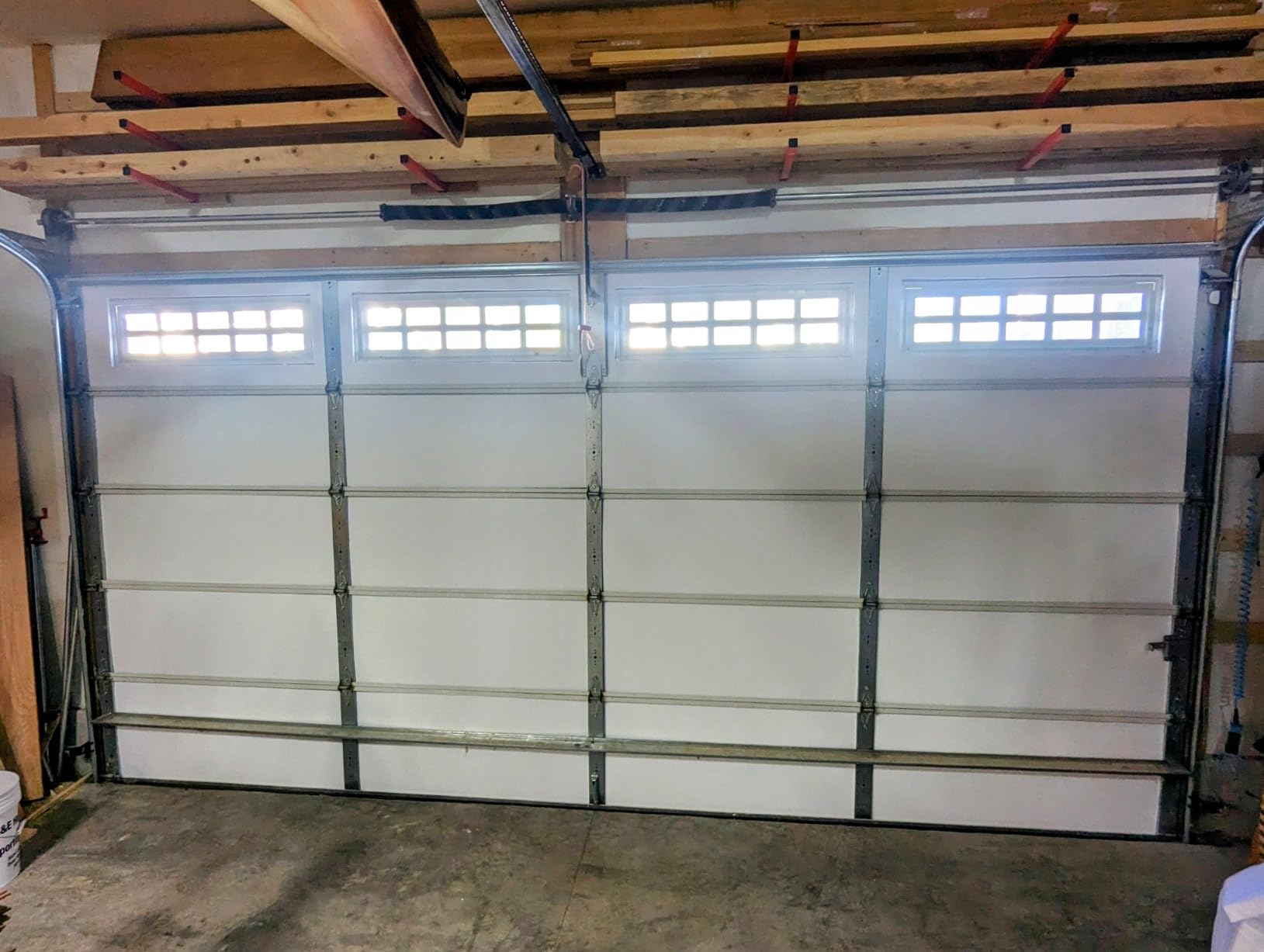
Thickness is also the reason it loads the door more than the other kits here that publish a weight. At a listed 13.2 pounds, against 3.3 pounds for the Reach Barrier kit and 1.8 pounds for the windowed curtain, reviewers report that the door may need rebalancing by a garage door technician afterwards. That is a real line item and it is the reason this is not our first pick for a door that opens several times a day.
The friction fit is also less forgiving. Doors with after-market hurricane braces or unusual strut spacing are specifically called out in the product description as outside what the panels are designed to snap into.
Is the Weight Worth It in a Heated Garage?
Yes, when the garage is heated and used. A 1.25 inch core is the difference between a heater cycling constantly and one that holds a work temperature, and the surface temperature drop owners report is exactly what you want at a bench.
Plan for one service visit after installing. Our guide to [garage door openers](https://modelrec.com/best-garage-door-openers/) covers why an out-of-balance door shows up as a door that stops mid-travel or reverses.
Where It Falls Short
Instructions are thin on how to measure and cut for doors whose sections are not uniform, so budget extra time and measure every section before you start.
Panels can arrive bent, creased, or dented and need extra trimming, and the kit does not cover very large or mixed-size doors, so a second kit is sometimes needed.
5. MYFAMIREA 16-Panel Reflective Kit for 16×8 Doors
16P Garage Door Insulation Kit Panels 6MM 16x8FT for Double Garage Door, Pre-Cut Bubble Reflective Aluminum Foil Sheet 120 Tape, DIY Install Temperature Control Block Summer Heat & Winter Cold(24×48)
16 pre-cut 24x48 panels
6mm aluminized bubble core
0.24 inch listed thickness
Covers a full 16x8 door
Pros
- 16 panels cover a full 16x8 door with minimal cutting
- 6mm is thicker than common 3mm bubble roll
- Waterproof vapor and radiant barrier
- Useful on windows pipes and packing
Cons
- Packaging creases need time to flatten before sticking
- Surface must be cleaned of dirt moisture and oil
- Blocks light so it suits storage not workshops
- Adhesive quality varies
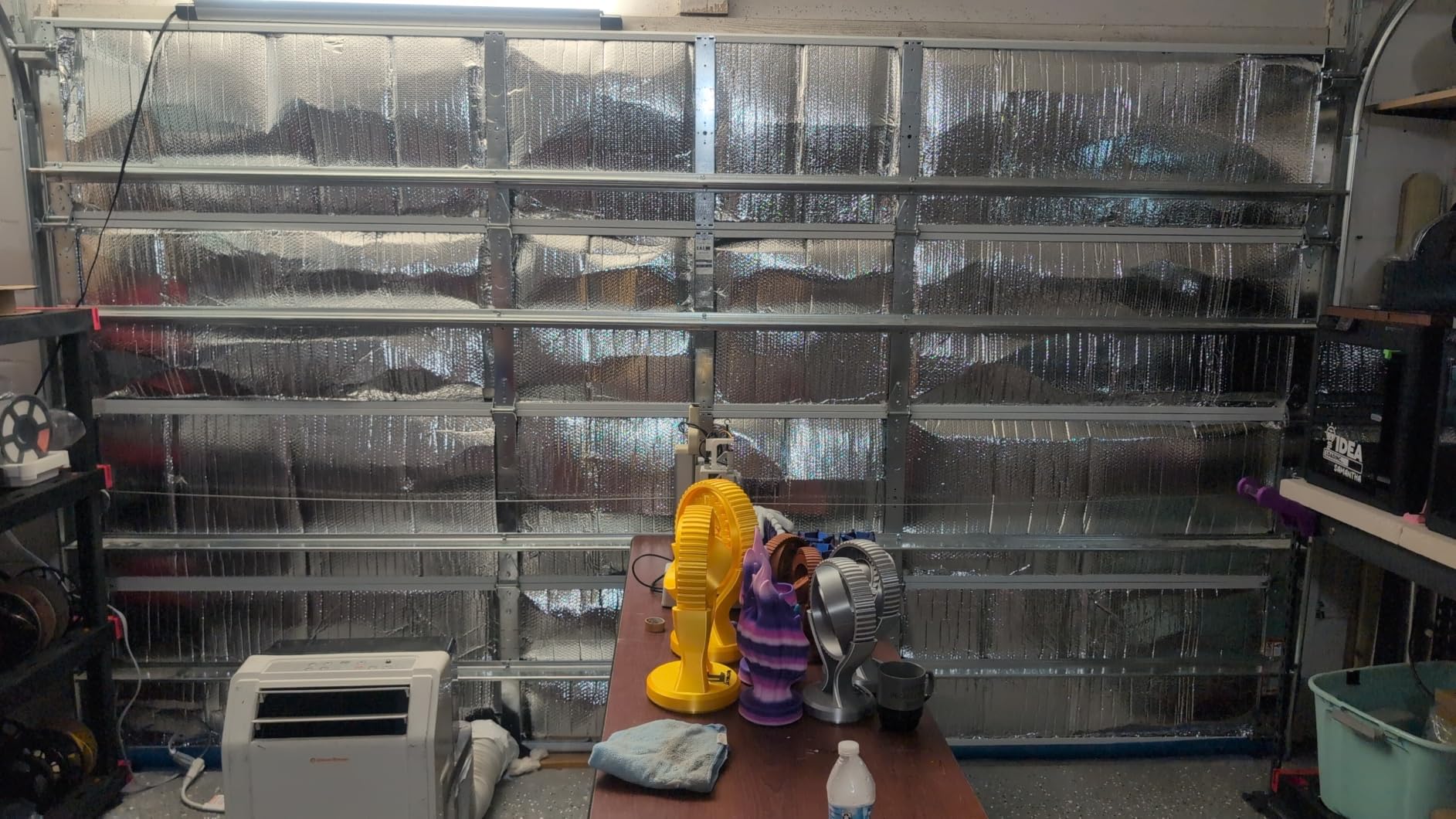
This is the bulk panel kit: sixteen pre-cut 24 by 48 inch panels, each with an aluminized film over a polyethylene bubble core at 6mm, listed at 0.24 inch thickness. Sixteen panels is a full 16 by 8 double door with very little cutting involved.
Thickness is the differentiator against cheaper bubble rolls. The manufacturer describes 6mm as blocking more heat entry and preventing more heat loss than the common 3mm product, and owners on this listing single out the useful thickness as the main reason for the purchase.
It also has broader reuse than any other kit in this roundup. The same panels are described for use on windows, attics, roofs, pipes, car flaps, walls, and as padding for moving items, which spreads the cost across more than one job.
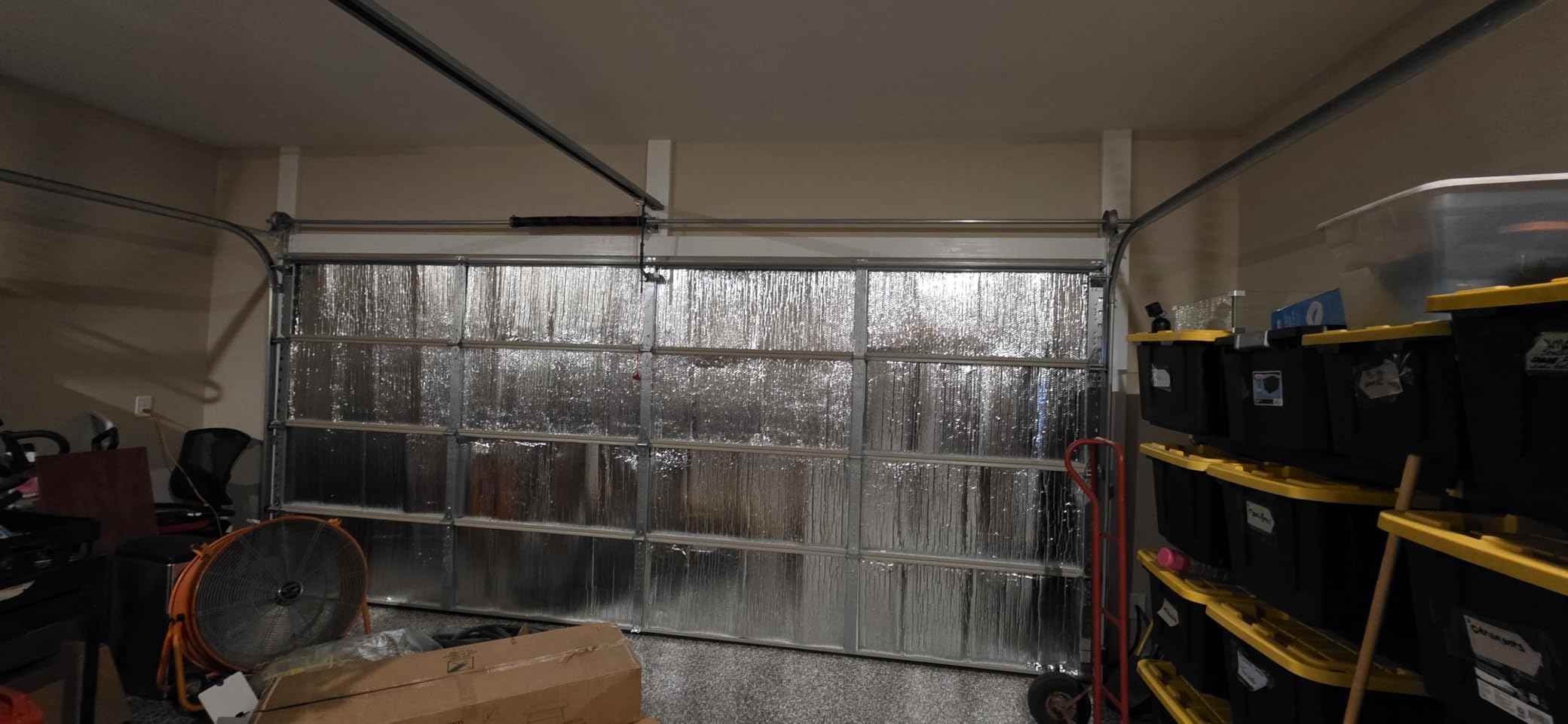
Be aware of what a foil-faced product does to light. Because it blocks light as well as heat, this is a choice for a storage garage rather than a workshop where you want daylight through the door sections. Owners who installed it in a workspace report the darkened interior as the surprise.
The panels arrive tightly rolled, so crease memory is the recurring complaint on this listing. Reviews suggest allowing roughly fifteen minutes for them to relax before you stick them down, and cleaning the steel of dirt, moisture, and oil first.
Sixteen Panels or Four Rolls?
Choose the panel kit when you want a short project and a door that is already a standard 16 by 8. Each panel is flat, so cutting is a single straight line with a box knife rather than a measurement around hardware.
Choose a roll format instead when your door has unusual window shapes or hardware you would rather cut around once on a continuous sheet.
Where It Falls Short
Reflective construction has the same cold-climate ceiling as the Reach Barrier: it moderates heat flow rather than blocking it with a thick core.
Adhesive quality varies enough that some buyers supplement the supplied tape, and you must clean the surface thoroughly for any of it to hold through a winter.
6. NASATECH Pre-Cut R8 One-Car Foam Kit
NASATECH White (Pre-cut 8 Panel) 1 Car Garage Door Insulation Foam Kit Energy Star Rated R8 Fits 8×7 8×8 9×7 9×8
Rated R8 air pocket barrier
Pre-cut for 8x7 8x8 9x7 9x8
1.5 inch listed thickness
Class 1 fire rated
Pros
- Pre-cut 8-panel format fits common single-car sizes
- R8 rating for the air pocket it creates
- Class 1 Class A fire rated for a working garage
- Waterproof non-toxic and clean handling
Cons
- Panels still need trimming for sections that are not square
- Not rated for two-car doors so doubles need two kits
- Some owners report less change than the R8 label suggests
If your garage has a single door and you want a stated R-value on the spec sheet, this is the pick. It is pre-cut as an eight-panel kit for 8×7, 8×8, 9×7, and 9×8 doors, using 6mm panels that create an air pocket rated at R8.
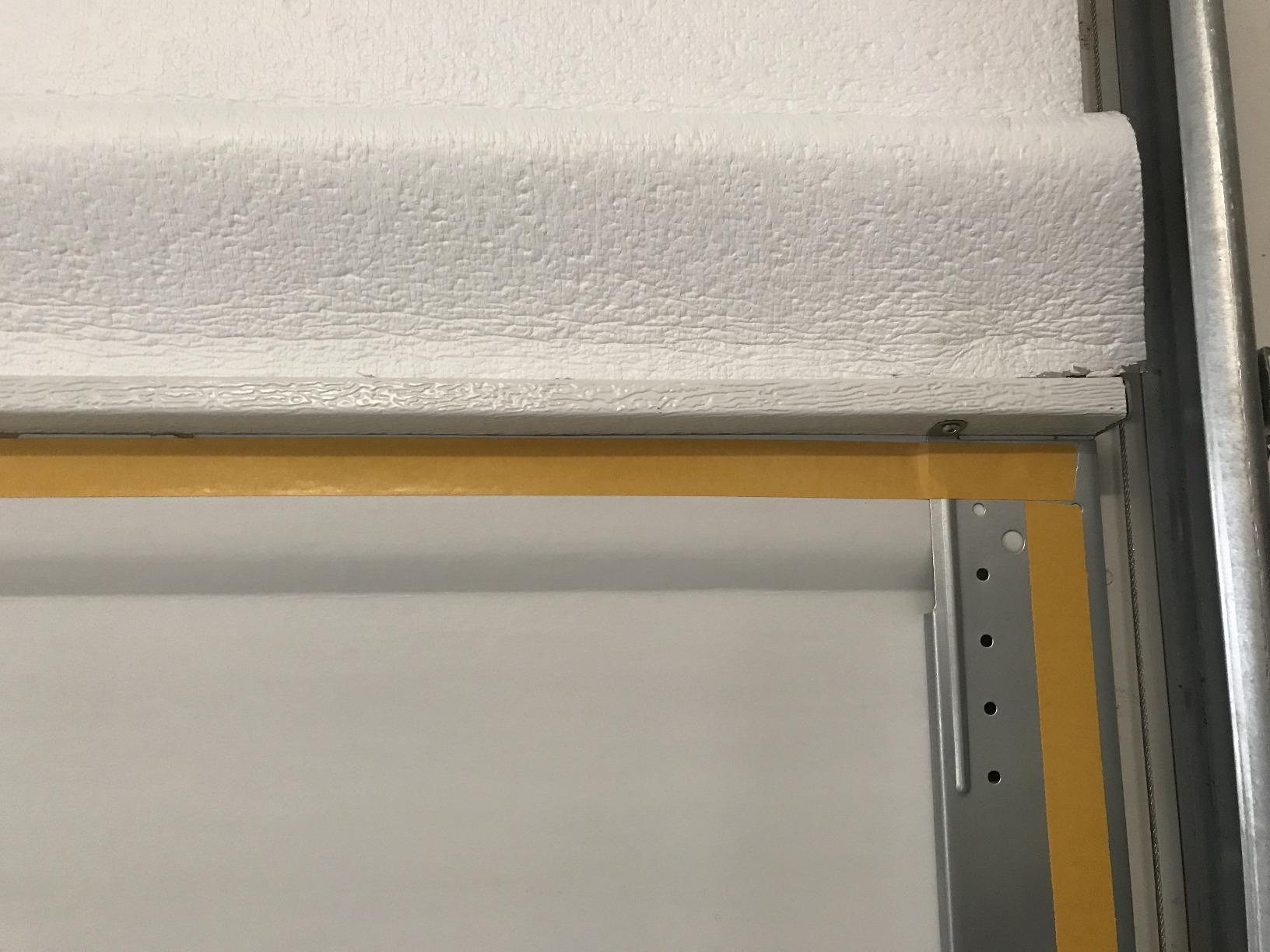
Install is tape-down, not friction fit, and the tape is included with the panels. Because the format is pre-cut to the common single-car dimensions, most people finish this in an afternoon without cutting more than a corner or two.
The Class 1, Class A fire rating on this listing is worth calling out for a garage where you run a heater or have heat-producing tools. The foam-core roll kits in this roundup carry it too, but not every reflective and curtain option does, and exposed foam in a working garage is worth thinking about.
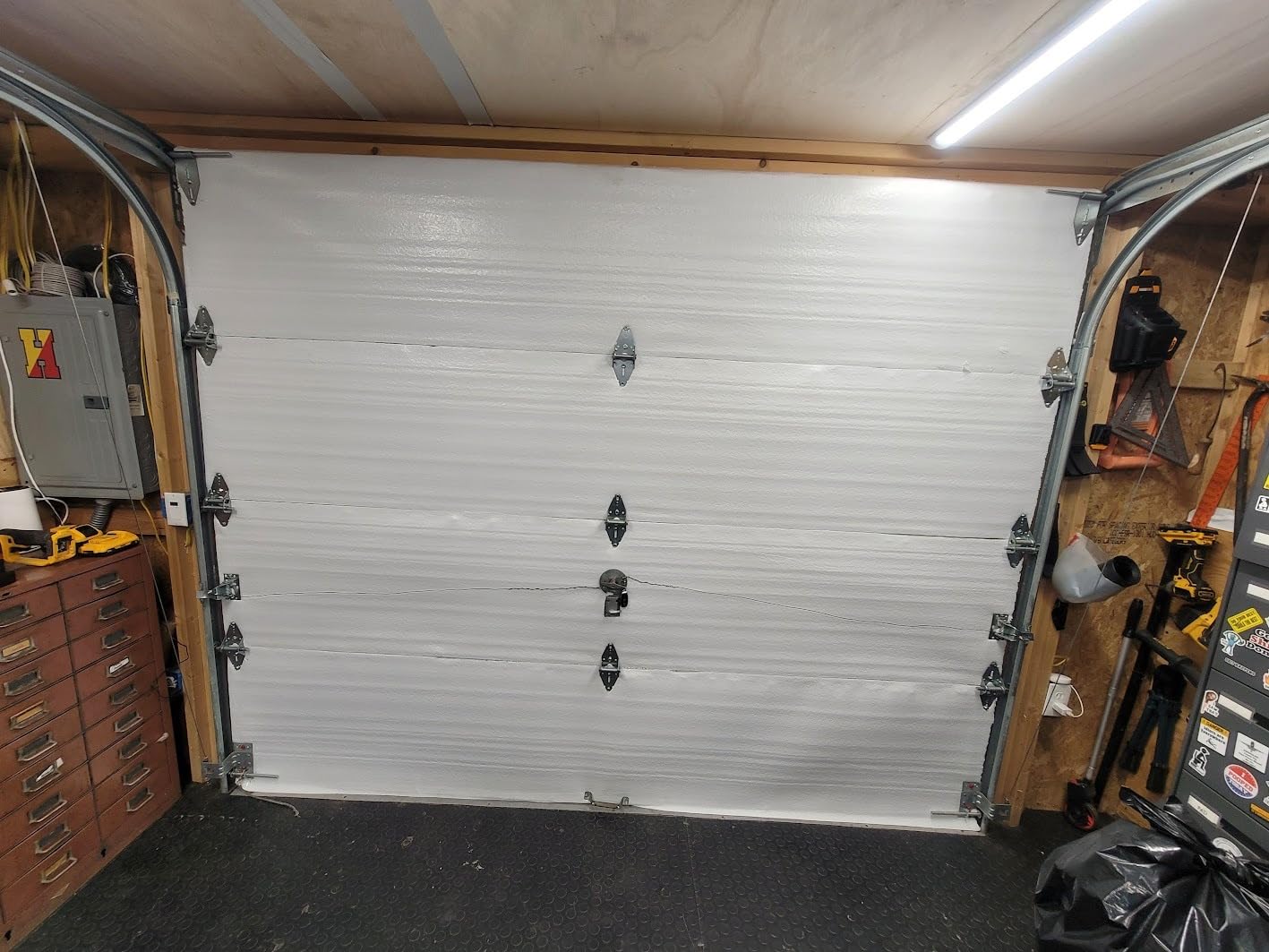
Be skeptical about the gap between the rating and the felt result. Owners on this listing note less dramatic temperature change than the R8 label implies, and that is usually a fit problem: trim every panel so the air pocket is not pinched, and do not let a panel short-circuit across a strut.
It is not rated for two-car doors, so a double garage needs two of these. That is the single most common sizing mistake on this product line, and it is the reason we always tell readers to measure before ordering.
R8 on Paper Versus R8 in Your Garage?
An R8 rating assumes the air pocket exists across the whole door face. Gaps at the top and bottom of each section, or a panel trimmed too short, let cold air sit directly on the steel and the layer stops earning its rating.
Seal the top and bottom edges of each panel run, and pair it with perimeter weatherstripping so the rating is not cancelled by bypass air.
Where It Falls Short
Single-car only. Two-car buyers should look at the roll format kits instead of doubling this one up.
On a door with non-square sections, panels still need trimming, and that is the point where beginners produce a ragged edge that lets drafts back in.
7. LIAMST Magnetic Curtain with Clear Window for 16×7 Doors
Car Garage Door Insulation Kit Fits 16x7FT, Magnetic Thermal Insulated Door Curtains for Winter with Clear Window, Garage Door Cover Blanket Panels Screen for 2 Car Garages
Fits 16x7 openings
Clear window panel in the center
Center-opening magnetic closure
Listed weight 1.8 pounds
Pros
- Clear window keeps daylight and visibility while blocking drafts
- Magnets self-close so pets and drafts stay out
- Easy to install remove and reinstall for the season
- Lightest listed weight among the curtains
Cons
- Slightly undersized on some variants needing about 2 inch overlap per side
- Center seam does not always run full height
- Clear plastic can weld to itself if rolled in warm weather
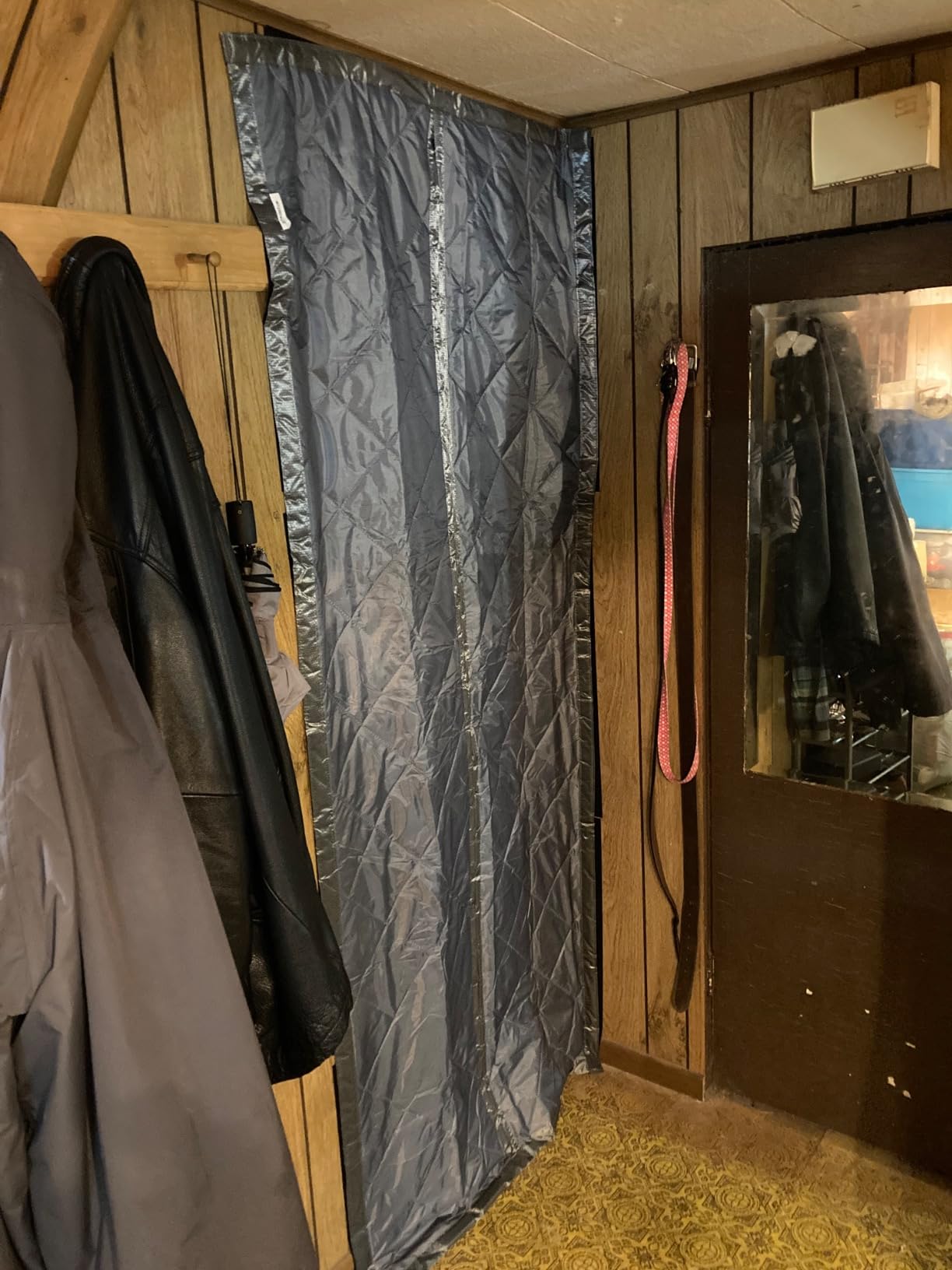
This is the curtain answer for anyone who wants the draft blocking of a thermal curtain without losing daylight. The clear window panel sits in the middle of the curtain so you can see out and let light in while the rest of the barrier stays closed.
It fits 16 by 7 foot two-car openings, uses a center-opening magnetic closure that closes after each pass, and mounts with supplied hook-and-loop strips. Removing it in spring and putting it back in autumn takes a few minutes.
Reviewers on this listing like the see-through panel and the simple setup, and this carries a 4.5 rating with roughly three quarters of its reviews at five stars. Its listed weight of 1.8 pounds is lower than the other two curtains with published weights here.

The sizing caveat is real. Reviewers report this curtain running slightly undersized on some variants, needing about two inches of extra per side to overlap the frame properly. An air barrier that does not overlap the frame is an air barrier that leaks at the edges, which defeats the purpose in a cold snap.
The center seam is the other issue. If it does not run the full height, the door cannot be opened after the curtain goes up without taking the curtain down, which matters in a garage you drive into daily.
Do You Need Daylight in a Winter Garage?
If you are working in the garage on a dark January afternoon, yes. Daylight through a windowed curtain is worth more than a slightly heavier fabric, and it reduces the temptation to run a work light all day.
If the garage is purely storage, a solid curtain blocks more light and typically performs better at blocking wind-driven rain.
Where It Falls Short
Roll it up carefully in warm weather. Owners report the clear window plastic welding to itself when the curtain is rolled and stored in heat.
The included push pins and plastic piece are not explained in the instructions, so allow a few minutes of improvising on the mounting.
8. US Energy Products Reflective Foam Core Kit for 9-Foot Doors
US Energy Products NASA Tech White Reflective Foam Core Garage Door Insulation Kit (9L x 7H) or (9L x 8H) Single Garage Doors R8 (Upgraded Tape)
Rated R8
4 rolls of 9ft x 2ft foam core
Fits 9x7 and 9x8 doors
Class 1 fire rated
Pros
- Sized for 9x7 and 9x8 doors that panel kits miss
- Automotive grade tape rated for extreme hot and cold
- Provides R8 plus sound deadening and light barrier
- Razor and squeegee included in the kit
Cons
- Rolls are not pre-cut and need measuring per section
- Four rolls cover one single door only
- Slower to install than a pre-cut panel kit
This is the sibling to the two-car roll kit, sized for 9 by 7 and 9 by 8 single doors. If your single door is wider than the standard 8 foot panel kits handle, this is the format that fits without wasting half a kit.
The material is the same white and foil foam core in four rolls of 9 foot by 2 foot, listed at R8 performance with sound deadening and a light barrier. It is Class 1, Class A fire rated and made and sent from the USA.
The detail that matters in a cold climate is the tape. This version uses upgraded automotive-industry heavy duty tape described as rated for extreme hot and cold climates, which is the failure point that reviewers flag on cheaper foil kits.
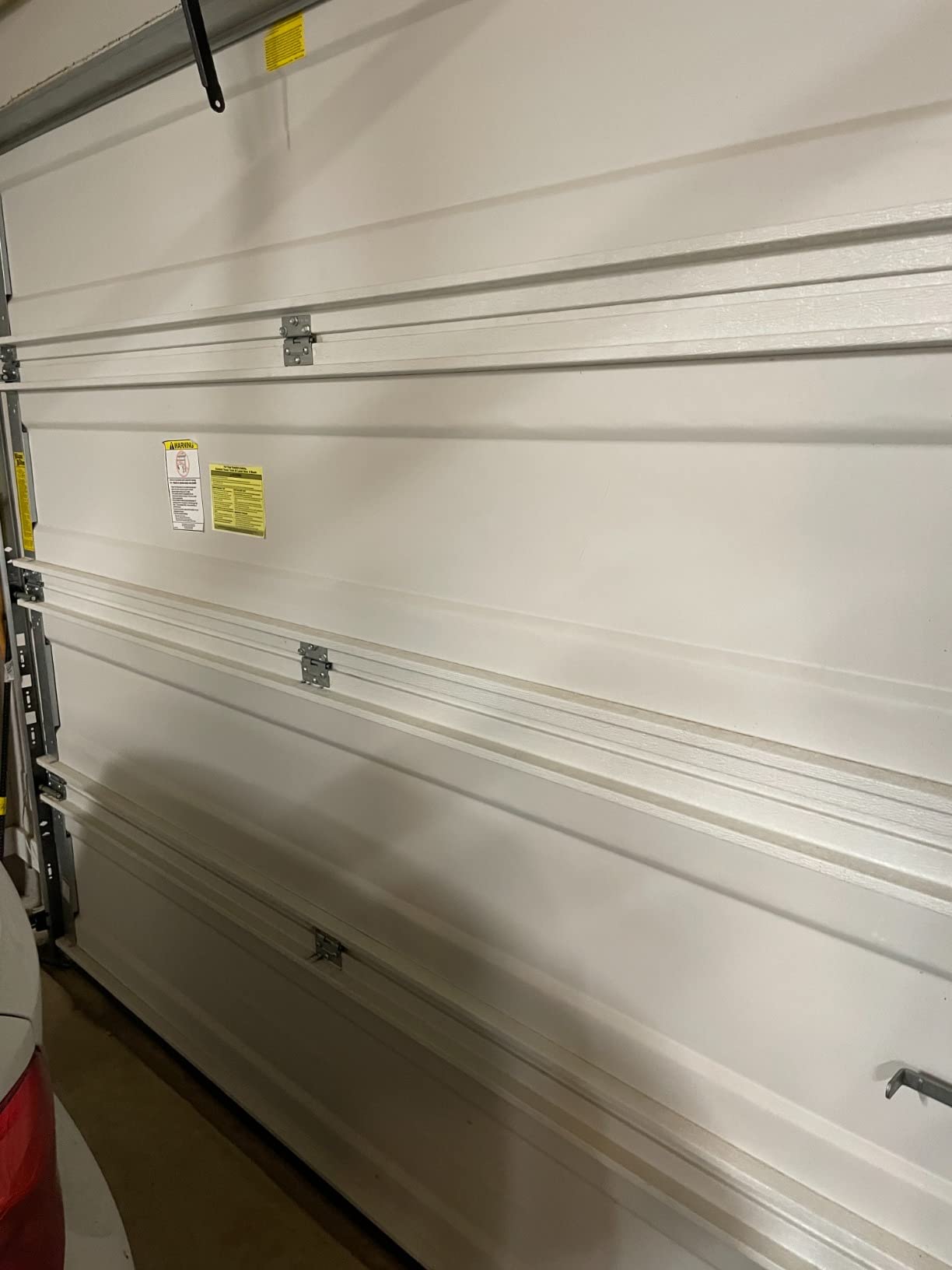
Like the two-car roll kit, this installs as a continuous sheet, so all cutting is hand work and the tape liner has to be peeled and allowed to tack before bonding. Plan your layout before you unroll anything, and dry-fit each strip.
The 4.2 rating here reflects a consistent theme in the reviews: the cold-weather blocking works, and the cost is time. Owners accept more measuring and cutting in exchange for a single-material sheet with no panel gaps.
Roll Format or Pre-Cut Panels?
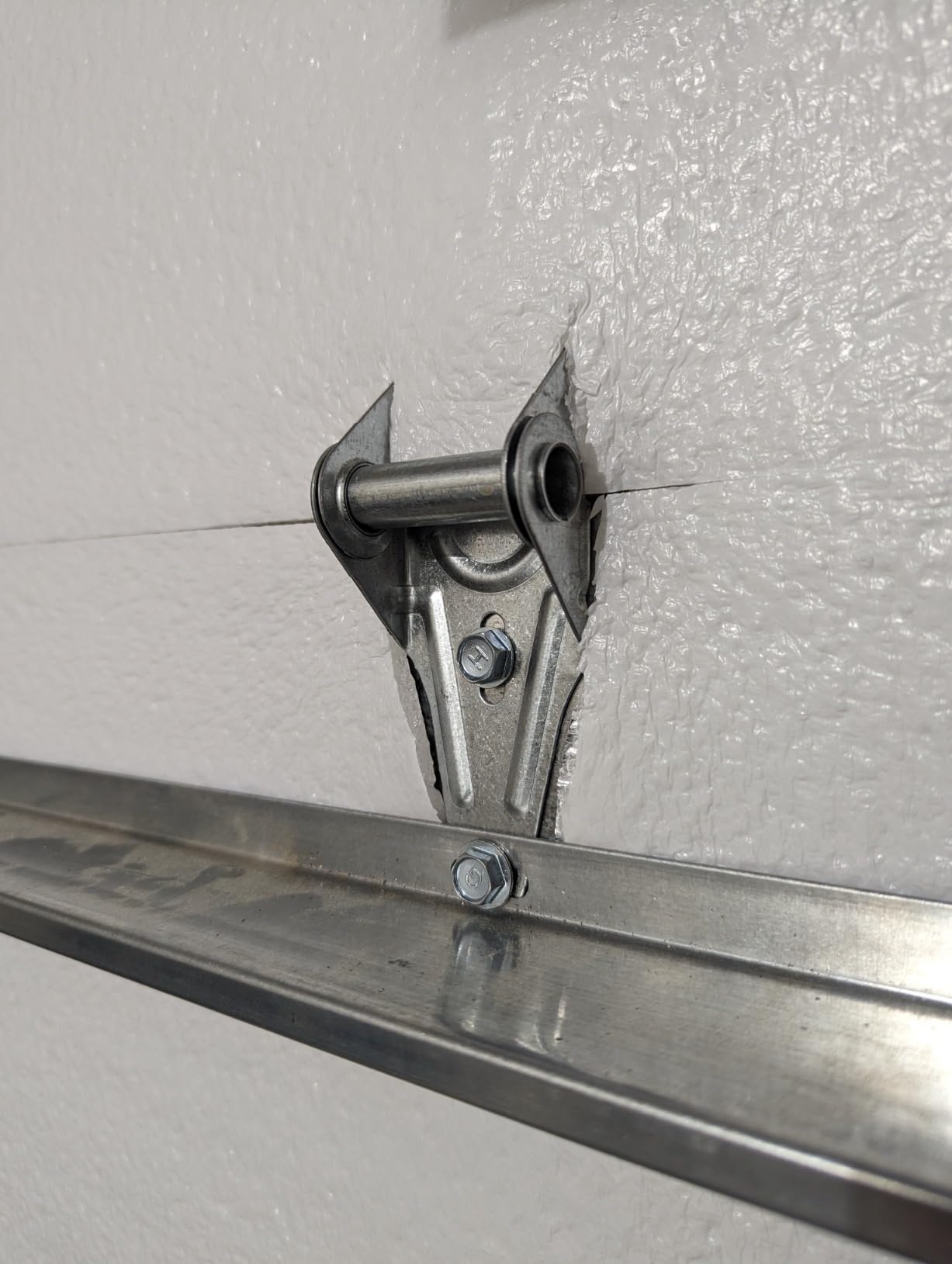
Pick rolls when your door has non-standard widths, tall sections, or several window openings you would rather cut around once. Pick panels when your door is a standard size and you want the job finished quickly.
For a garage where we heat only on weekends, the sheet format also lets you trim generously at the edges to close perimeter gaps.
Where It Falls Short
Not the fastest install. Every section needs measuring, and beginners overcut the first strip before they get a feel for the material.
Four rolls cover a single door only, so a double garage needs two of these kits.
9. FEGO Thermal Insulated Door Curtain for 18×8 Doors
FEGO Gargae Door Screen for Winter 18X8FT, Garage Door Insulation Kit, Thermal Insulated Door Curtain Waterproof Oxford&Thick Cotton Filling, Windproof&Keep Warm, Privacy Protection & Self-Close
Sized 18.3 x 8.15 ft
Three-layer Oxford and cotton build
60 magnets in the center seam
Includes tacks and hook-and-loop tape
Pros
- Three-layer build gives strong cold blocking with privacy
- 4-side widening and tacks improve adhesion
- 60 magnets and heavier bottom bars self-close fast
- Adjustable buckles let you secure and roll it up
Cons
- Sized to 18.3 by 8.15 ft so taller or wider doors will not fit
- Hook-and-loop adhesion depends on cleaning the frame first
- Large format needs careful planning for two-car layouts
For wide residential openings, this is the curtain built for the job. It is sized 18.3 feet wide by 8.15 feet high, fits doors up to 18 by 8 excluding the frame, and uses a three-layer build of dual Oxford fabric over thick cotton filling.
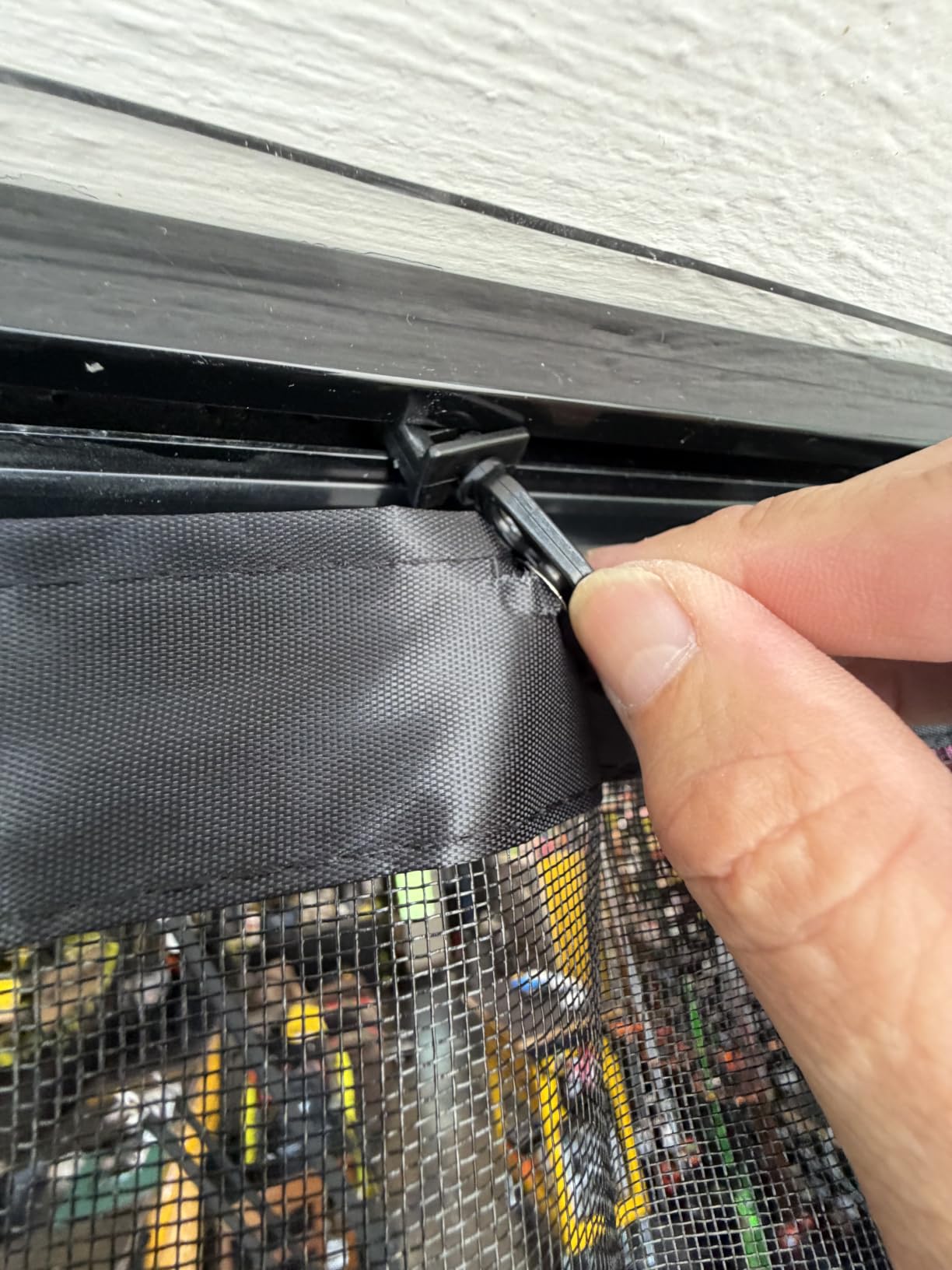
The hardware is specified more thoroughly than many competing curtains. Sixty magnets run the center seam, weighted gravity sticks sit along the bottom, and the perimeter uses full four-side widening with extra tacks included rather than a top-only strip. Buyers credit that reinforcement as the difference between a curtain that stays up and one that peels off the frame.
Adjustable side buckles let you secure the curtain and roll it up when you need vehicle access, which not every curtain here handles well.
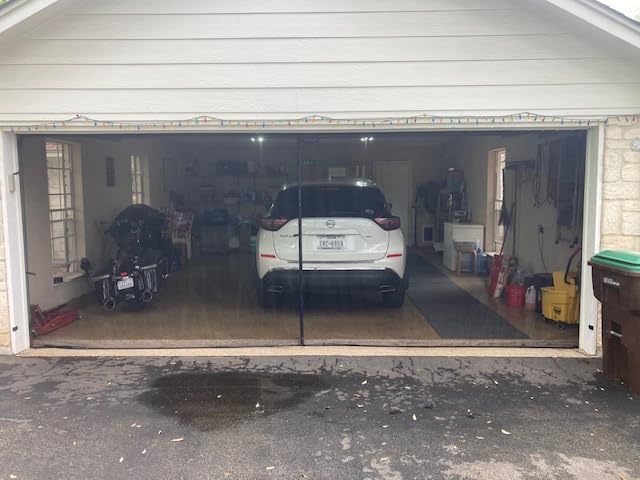
Frame preparation decides whether this works. Hook-and-loop adhesion depends heavily on cleaning the frame before install, and in a cold garage the dirt that accumulates along the bottom of an 18-foot opening is exactly what breaks the seal.
Privacy is a genuine benefit in this category and reviewers mention it. When the garage is attached to a house, a solid curtain also stops interior light from spilling out through the door glass at night.
How Wide Is Too Wide for a Curtain?
This fits openings up to 18 feet wide, but anything taller than 8 feet or wider than 18 feet falls outside it. Measure the opening excluding the frame, then subtract nothing, because the extra overlap is doing useful work on the edges.
If your garage has two separate single openings rather than one wide opening, a single wide curtain is the wrong shape and you should size per opening.
Where It Falls Short
Sizing is the first consideration and the most common purchase mistake on this listing.
At this size, a two-car layout needs planning before you unroll anything. A curtain that is cut wrong at 18 feet wide has no cheap fix.
10. Esteh Magnetic Thermal Door Curtain for 16×7 Doors
Car Garage Door Insulation Kit Fits 16×7 FT, Magnetic Thermal Insulated Door Curtain for Winter, Thermal Door Cover for Cold with Thickened Cotton, Garage Door Screen for 2 Car – Black
Sized 16.3 x 7.15 ft
180g cotton core in Oxford shell
28 pairs of reinforced magnets
Listed weight 5.16 kg
Pros
- Windproof Oxford with 180g cotton core blocks drafts and rain
- 28 pairs of reinforced magnets self-seal every time
- Extra-wide 1.5 inch hook-and-loop strip for winter
- Six sewn-in top straps let you roll it up
Cons
- Sized at 16.3 by 7.15 ft so larger doors need another variant
- You must measure the opening excluding the frame
- Heavier gravity bars add bulk when rolling it up
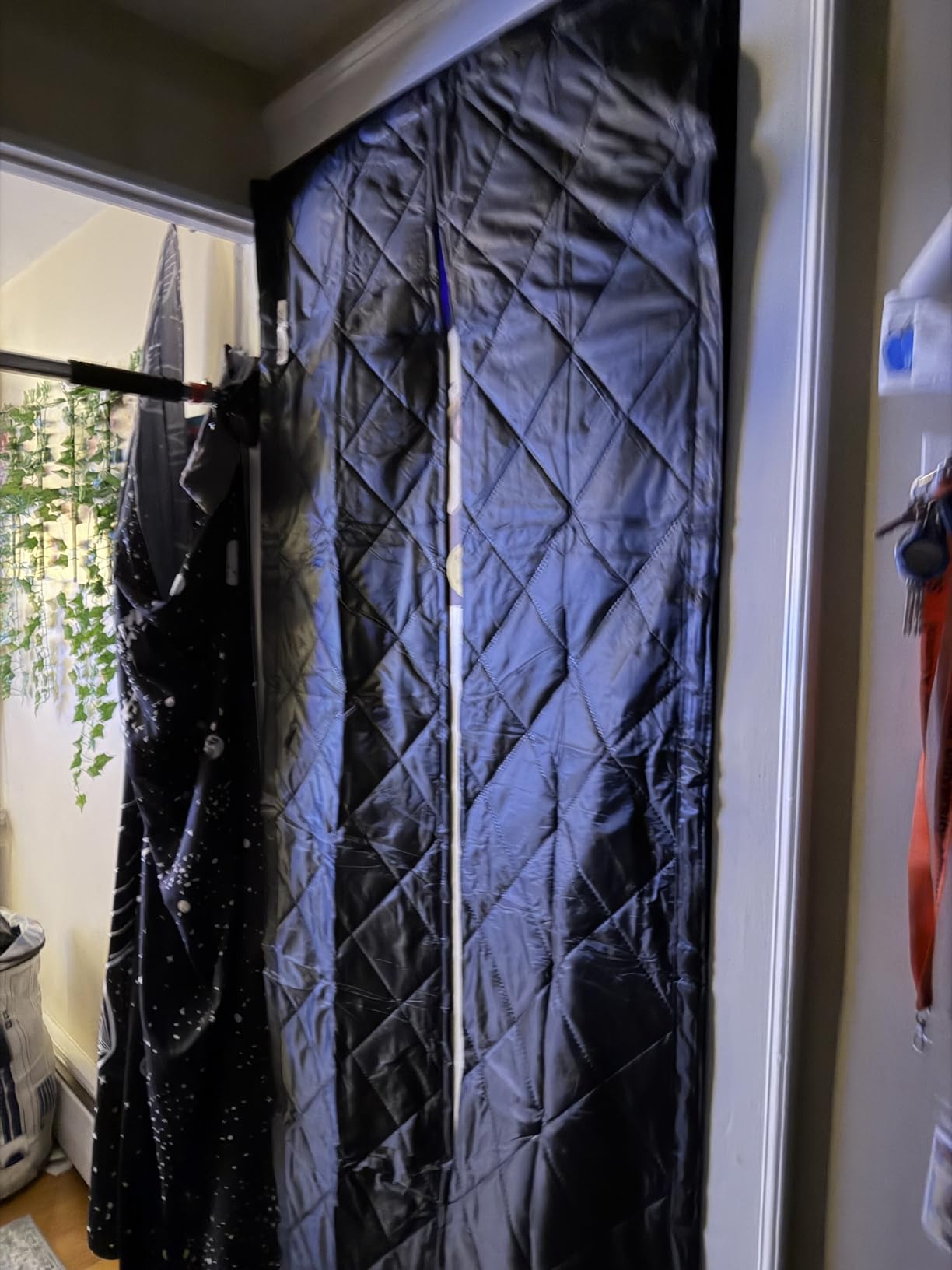
This is the curtain for a garage that gets driven into every morning. Six sewn-in top straps let you roll the whole curtain up and out of the way, and the heavier gravity bars along the bottom keep it from being lifted by drafts when it is down.
The build is a windproof Oxford outer over a 180g cotton core, a substantial filling compared with the lighter curtains in this roundup. Reviewers on this listing highlight reliable self-closing magnets and easy hook-and-loop mounting, with sizing accuracy as the primary caveat.
Twenty-eight pairs of reinforced magnets along the center seam is what makes the curtain close itself after a kid or a pet pushes through.
The 1.5 inch hook-and-loop fastening strip is wider than the standard 1 inch, and owners credit it with staying stable in winter conditions where narrower strips let go. Frame cleaning still matters, but the strip gives you more margin than most.
Roll-up convenience is the underrated feature. A garage you drive into daily cannot use a curtain you have to unhook entirely every morning, and the sewn-in straps handle that without turning the barrier into a daily chore.
Does a Cotton-Filled Curtain Beat a Foam Panel?
For blocking moving air, frequently yes. A fabric barrier seals the opening as a plane, while panel insulation works on the steel skin itself and leaves the frame leaks untouched.
For holding a heated room at temperature, a thick rigid core has the better R-value. If your garage is heated and used as a workshop all winter, panels plus a perimeter seal are the stronger combination.
Where It Falls Short
It fits doors up to 16 by 7 feet. If your opening is larger, this variant will not cover it and you need a wider curtain.
The heavier gravity bars that keep the curtain planted also make it bulkier when rolled for frequent vehicle entry.
How We Evaluated Garage Door Insulation Kits for Cold Climates
We ranked these ten kits on a single question: how well does this product stop a cold-climate garage from losing heat through the door? Everything else is secondary. That framing is different from most roundups, which rank one best kit for all climates and then hedge in the buying guide, and it is why the reflective products rank differently here than they would in a summer-focused list.
The four criteria we scored were cold-weather thermal performance including any stated R-value, the weight added to the door, how the product attaches and whether that attachment survives a freeze, and how well it covers the door sizes people actually own. We also checked whether a kit forces extra cutting, since a kit that does not fit your sections will leak.
Our honest limits are worth stating. We did not instrument a heated test bay with a calibrated thermometer and a control door, so we are not publishing temperature-delta figures of our own. Every rating, review count, dimension, weight, and material claim in this guide is taken directly from the retail listing and its reviews, and where reviewers report a temperature change we attribute it to them rather than claiming it as a measurement.
No manufacturer paid for placement or had sight of these rankings. We earn a commission when you buy through our links, which does not change the order.
What R-Value Do You Need in a Cold Climate?
R-value measures resistance to heat flow, and higher is better. U-factor, or U-value, is the same performance expressed inversely, where lower is better, and U-factor equals one divided by R-value. A manufacturer quoting R8 is describing a layer eight times more resistant than R1, and a factory insulated door often advertises a U-factor rather than an R-value, which is why the two numbers on a spec sheet look unrelated until you divide.
For cold climates, target these door-layer numbers by zone. Zone 3 wants roughly R4 to R5 on the door. Zone 4 and Zone 5 want R5 to R8. Zone 6 and Zone 7 want R8 or better. Zone 8 subarctic wants R8 plus a full air seal around the frame, because at those temperatures the frame leak matters as much as the panel.
Not every kit here publishes an R-value. Three of them list R8 explicitly: the NASA TECH two-car roll kit, the NASATECH pre-cut one-car kit, and the US Energy Products 9-foot roll kit. The reflective panel and curtain products do not carry a stated R-value on their listings, and we would rather say that than estimate one for them.
How Many Kits Do You Need?
Measure the width and height of the opening excluding the frame before you order anything. The most common sizing error we see in reviews is ordering a single-car kit for a double door, then discovering it covers a fraction of the opening.
An 8 foot single door fits one single-car kit. A 9 foot single door fits a 9-foot roll format kit, since panel kits are usually cut for 8 feet. A 16 foot double door needs a two-car kit or two single-car kits depending on the format. An 18 foot double door needs the 18-foot two-car roll kit, since that one is sized for 18 by 8 and also fits 18 by 7. A 5-panel tall door needs extra care, because it has five sections instead of four and panel kits are cut for four. A commercial roll-up door needs a continuous sheet format, because there is no snap-in frame to hold panels.
Which Insulation Type Wins in Deep Cold?
Foil-faced reflective bubble is excellent against summer sun and thin against deep cold. It works by bouncing radiant heat, and radiant heat matters most when a surface is already hot, so it is the wrong primary answer for a garage in Zone 6 and colder.
Polystyrene rigid panels are the best balance of thickness, weight, and install speed, and the 1.25 inch option here is the closest thing to a DIY equivalent of a factory insulated door. Fiberglass and foam-core air-pocket products carry stated R8 ratings and work well, with the foam-core options adding a fire rating some rivals lack.
Thermal curtains are an air barrier rather than an R-value layer. They stop the loss that panel insulation is weakest against, they install faster than any panel kit here, and they pair well with panels rather than competing with them.
The Condensation Trap Nobody Mentions
Insulating a door in a cold climate without insulating the walls and ceiling can push moisture onto the ceiling framing. Warm moist garage air meets a cold ceiling deck and condenses there, which is a structural problem, not a comfort problem.
If your garage is unheated and you only want to protect pipes and vehicles, stop after the door. If you are heating the space, insulate the ceiling and walls before or alongside the door, and read our [spray foam insulation guide](https://modelrec.com/best-spray-foam-insulation/) for the air-sealing step that makes the rest of the work count.
How to Install a Garage Door Insulation Kit Safely
Disconnect the opener before you start, either by unplugging it or by pulling the red emergency release cord. Panels and adhesive falling into a running opener is the one genuinely dangerous mistake in this job.
Set out a box knife or razor, a tape measure, a straightedge, a squeegee, a clean rag, alcohol, a putty knife, and whatever fasteners or tape your kit calls for. The roll-format kits ship with a razor and squeegee already in the box.
Vacuum the inside face of every door panel and clean the steel with alcohol. Adhesive fails on oil and dust, and this is the step that separates a panel that stays up for five winters from one that drops in February.
Vacuum the rail channels. Debris in the channel is the most common cause of foam panels rattling, and it also prevents a friction-fit panel from seating all the way in.
Score and snap rigid foam rather than sawing it, and leave a small clearance at the edges of each panel for thermal expansion. A panel cut dead to the section edge will bind when the steel contracts in a freeze.
Seal the perimeter last, which is covered in the next section. Panels without an air seal recover a large fraction less of their potential.
The Weight and Spring Balance Test
Added weight is the concern that comes up most often in homeowner discussions, and it deserves a real answer. A heavier door changes the load on the torsion spring, and an out-of-balance door is the complaint we see repeated most after a kit install.
Close the door, then disconnect the opener using the emergency release and lift the door manually by the handle. If the door does not stay put, or slides down on its own, it is out of balance and needs service. Do not attempt to wind or adjust a torsion spring yourself.
If the door stays in place but the opener struggles or reverses, the opener force setting likely needs raising. Our [garage door opener reviews](https://modelrec.com/best-garage-door-openers/) cover force adjustment, but the spring itself is a technician job.
Should You Install in Summer or Wait?
Install in summer, and you will fight two things. The steel door expands in heat, so panels cut tight in July may not fit the same sections in January, so leave expansion clearance. And adhesive pads on a west or south facing door can soften on a surface that gets very hot.
Installing in spring or fall avoids both. If you must install on a hot exposed door, use spray adhesive rated for the surface temperature rather than the small pads some kits include.
Seal the Perimeter or the Panels Underdeliver
A garage door that is insulated but surrounded by gaps performs far below its rating, because cold air bypasses the panel layer entirely and enters through the frame. Homeowners describe this as the wind tunnel effect, and it is the most common reason a kit seems to do nothing.
Start at the threshold. A P-bulb or vinyl threshold seal along the bottom of the opening closes the gap under the door where most infiltration happens. Then add vinyl weatherstripping stop molding along the two vertical jambs and across the header.
Check the fit with a dollar bill or a sheet of paper closed in the gap. If it slides out with no resistance, you have found a leak. Seal the gaps between the door and the frame before you seal anything else.
Curtains handle this differently. A properly overlapped curtain with a self-closing seam is an air barrier in its own right, which is why the curtain options in this guide can outperform a panel kit on a badly fitting door.
Frequently Asked Questions
Do garage door insulation kits actually work?
Yes, but with limits. A kit slows heat transfer through the steel skin, which lets a garage heater run less and keeps a workspace usable in winter. It will not heat an unheated garage, because an uninsulated ceiling and walls usually lose more heat than the door. Owner reports on these listings commonly cite a temperature change in the range of 8 to 20 degrees with reflective panels.
Which garage door insulation kit has the highest R-value?
Among these picks, three products list R8 on their retail listings: the NASA TECH two-car roll kit covering 18 by 8 doors, the NASATECH pre-cut one-car kit for 8×7 through 9×8 doors, and the US Energy Products roll kit sized for 9×7 and 9×8 doors. The Matador offers the thickest core at 1.25 inch polystyrene but does not publish a stated R-value on its listing.
How many garage door insulation kits do I need for a double-car garage?
It depends on width and format. An 18 foot wide door needs the 18-foot two-car roll kit, or two single-car kits. A 16 foot wide door can take a two-car panel kit or two single-car kits. Two separate single doors need one single-car kit each. Measure the opening excluding the frame, and note that tall doors have five sections rather than four.
Will insulating my garage door affect the automatic opener?
It can. Heavier kits add load to the door, which changes how the torsion spring balances it. Disconnect the opener, then lift the door manually. If it will not stay in place, it is out of balance and needs service. Never adjust a torsion spring yourself. If the door stays put but the opener reverses, raise the opener force setting instead.
Will insulating a garage door keep cold out?
Not on its own. A kit reduces heat flow through the door but leaves the frame gaps, the ceiling, and the walls untouched. Seal the threshold and jambs with a P-bulb and vinyl weatherstop, and insulate the ceiling and walls if you are heating the space. Insulating only the door in a cold climate can also push condensation onto cold ceiling framing.
Which Garage Door Insulation Kit Should You Buy?
For most cold-climate buyers, the Reach Barrier single-door kit is where to start. It is the lightest load of any panel or roll kit we could weigh, installs in an afternoon, and never meaningfully disturbs your spring balance, which matters more than raw R-value if your door cycles several times a day.
If your garage is heated and used as a workshop all winter, go thicker. The Matador 1.25 inch polystyrene panels deliver the most thermal resistance of any kit here for a heated space, and the NASA TECH R8 roll kit covers a wide door in one purchase. Plan on a balance check or a technician visit after either install.
If you want a barrier in an afternoon with no cutting, the magnetic curtains are the practical answer, especially on a door that does not seal well. For a separate question about keeping a whole space warm rather than just the door, our [heat pump guide for cold climates](https://modelrec.com/best-heat-pumps-for-cold-climates/) covers the equipment side.
Whichever you pick, seal the perimeter. That is the step that decides whether your kit performs anywhere near its rating in 2026.