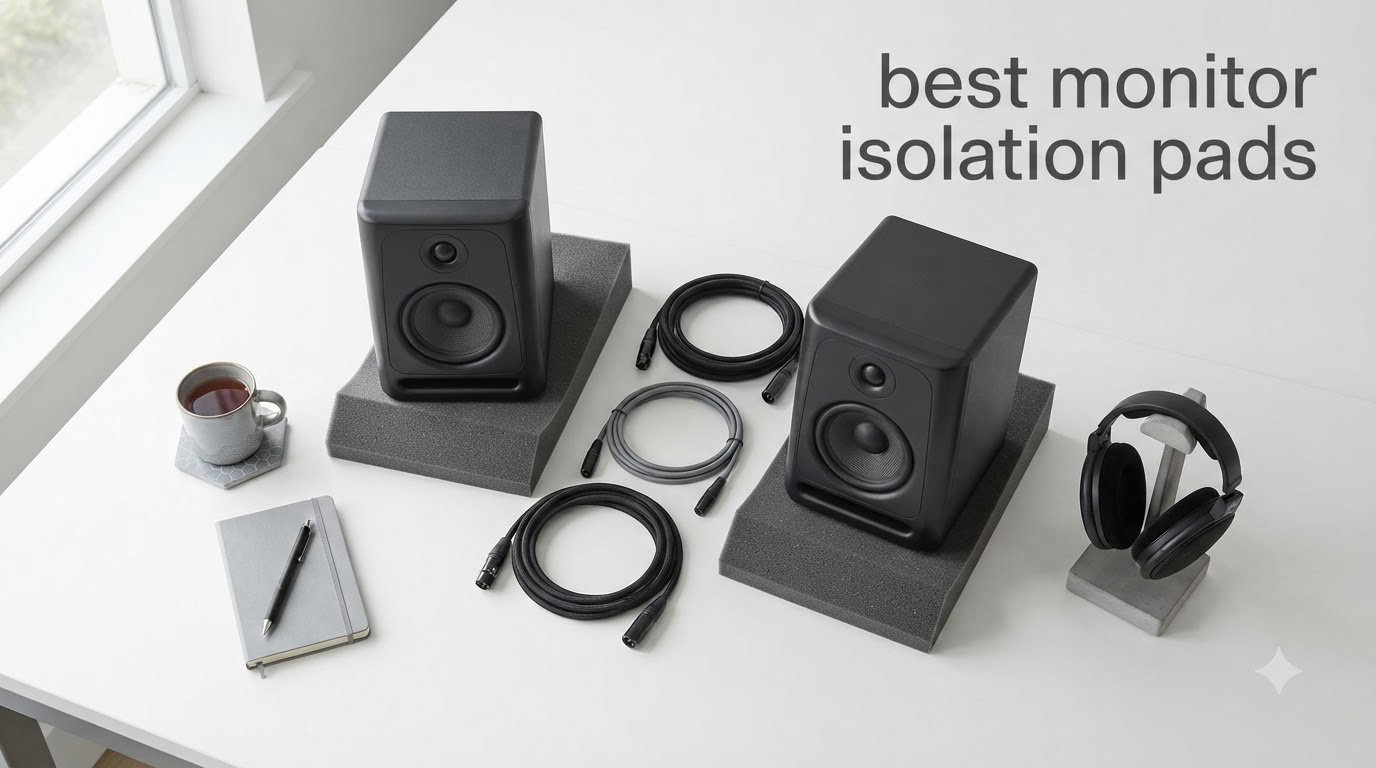
I built my first home studio with monitors sitting flat on a wooden desk. The bass sounded like it was coming from inside a cardboard box. Once I added proper isolation pads under each speaker, the muddy low-end tightened up almost instantly. That single upgrade changed my mixes more than any EQ plugin I owned.
Monitor isolation pads are foam, rubber, or composite platforms placed under studio monitors to decouple them from the desk surface. Without them, your desk acts like a giant tuning fork, adding unwanted resonance and coloring every frequency your monitors produce. Our team tested eight popular options across two months of mixing sessions, podcast recordings, and casual listening to find the best monitor isolation pads for home studios, bedroom producers, and anyone serious about accurate sound.
This guide covers what isolation pads actually do, which ones perform best for different setups, and what to look for before buying. We focused on real-world performance rather than marketing claims, and we compared budget picks against premium options to see where the extra money actually matters.
Table of Contents
Top 3 Picks for Best Monitor Isolation Pads in 2026


Best Monitor Isolation Pads in September Quick Comparison
| Product | Specifications | Action |
|---|---|---|
| Sound Addicted SMPad 5 |
|
Check Latest Price |
| JBER Acoustic Isolation Pads |
|
Check Latest Price |
 Ekkogo Premium Pads Ekkogo Premium Pads |
|
Check Latest Price |
 Saiqiang 2-Pack Pads Saiqiang 2-Pack Pads |
|
Check Latest Price |
| Liquid Stands Isolation Pads |
|
Check Latest Price |
 Pyle PSI03 Riser Pyle PSI03 Riser |
|
Check Latest Price |
 Gator Frameworks Pads Gator Frameworks Pads |
|
Check Latest Price |
 Pyle PSIO4 Pads Pyle PSIO4 Pads |
|
Check Latest Price |
1. Sound Addicted SMPad 5 – Best Overall Isolation Pads
Sound Addicted – Studio Monitor Isolation Pads for 5 Inch Monitors, Pair of Two High Density Acoustic Foam which Fits Most Speaker Stands | SMPad 5
50kg/m3 density foam
24 lb weight capacity
5 angle positions
Pros
- Highest density foam in this roundup at 50kg/m3
- Configurable angles for precise ear-level aiming
- Holds shape under 24 lb loads without compression
- Compatible with Yamaha HS5
- KRK Rokit
- JBL 305P
- Mackie MR5
Cons
- One reviewer reported foam deform after a week with heavier monitors
I dropped a pair of these under my Yamaha HS5s and the difference was audible within the first track. The bass tightened, the midrange opened up, and I could finally hear the low-end detail in my reference mixes. After 30 days of daily use, the foam still held its original shape with no compression.
What separates the SMPad 5 from cheaper foam alternatives is density. At 50kg/m3, this foam absorbs vibrations before they transfer into your desk. Most budget pads sit closer to 30kg/m3, which is part of why they tend to flatten out over time. Sound Addicted also engineered the wedge geometry to give you five distinct angle positions, which matters more than people realize.
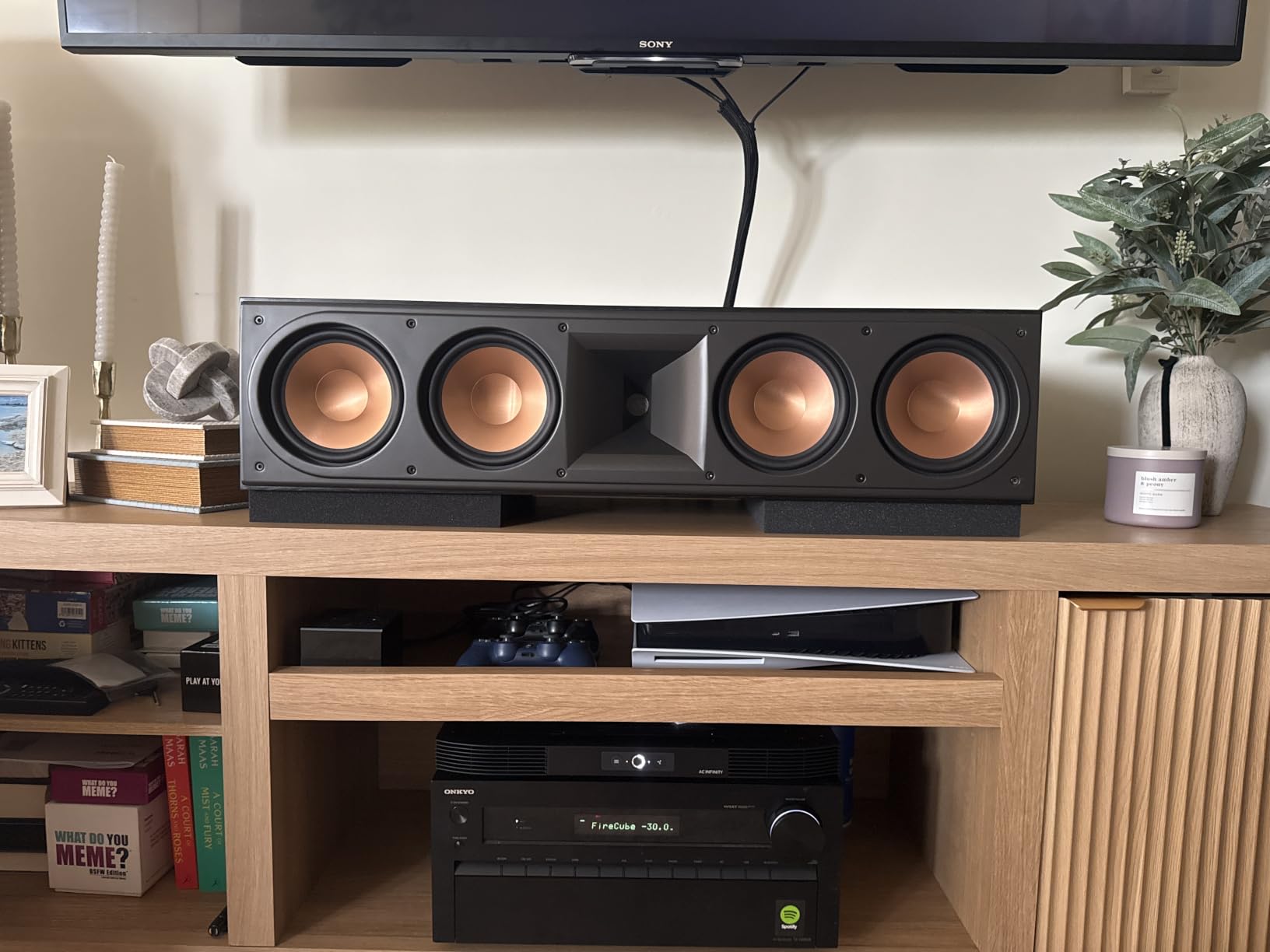
Getting the tweeters aimed directly at your ears changes the stereo image dramatically. Even a 5-degree tilt can shift where phantom center sits in your mix. I angled mine slightly upward to match my seated ear height, and the difference in stereo imaging was night and day compared to flat positioning on bare desk.
The pad dimensions (7.5 by 11 inches) fit most 5-inch monitors including the popular HS5, JBL 305P MkII, KRK Rokit 5, and Adam T5V. Pair includes both left and right pads. The foam feels substantial in hand without being overly bulky on the desk.
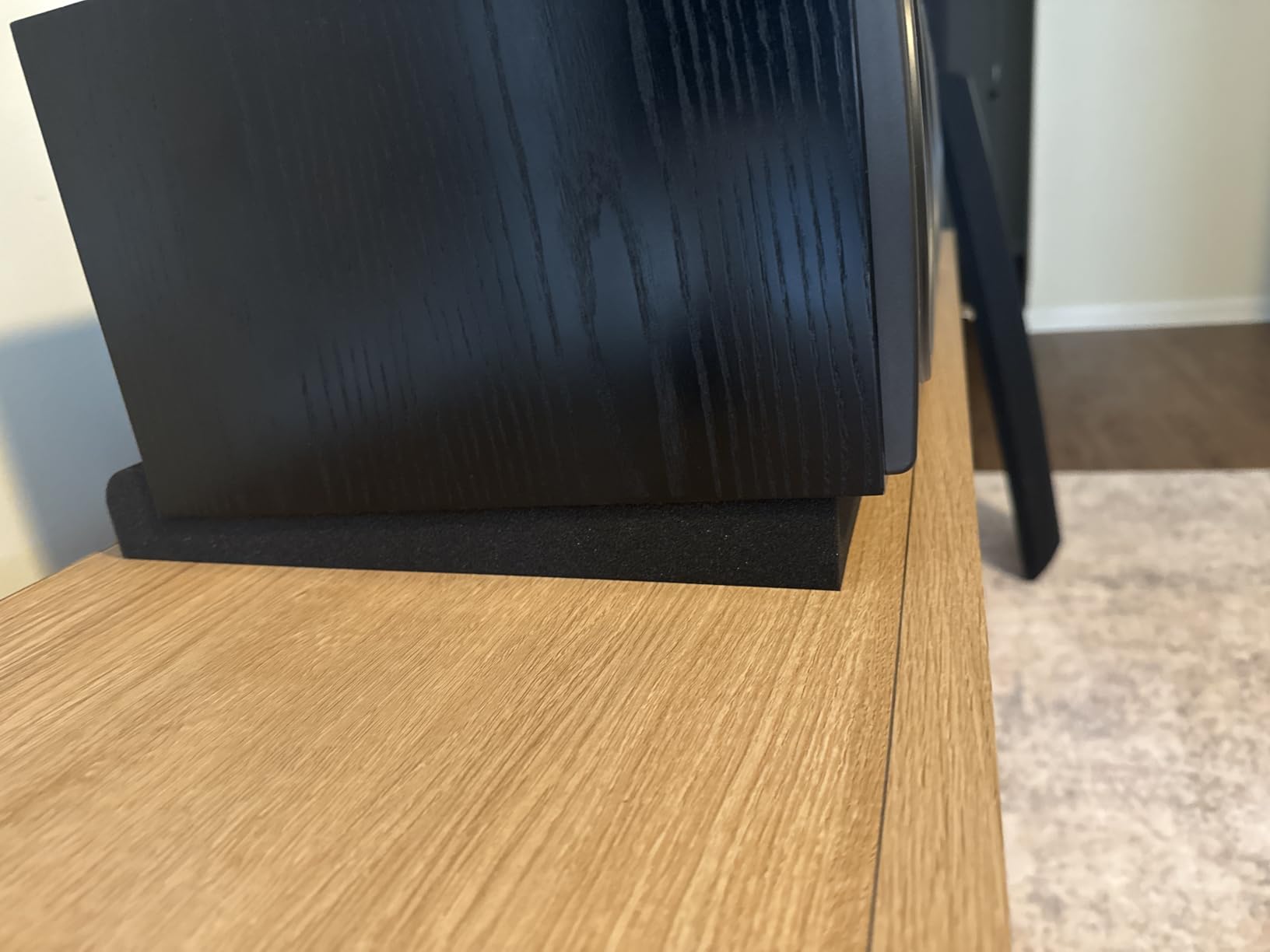
Compatibility With Common Studio Monitors
I tested these specifically with Yamaha HS5s and they fit perfectly with room to spare. If you own KRK Rokit 5 G4, JBL 305P MkII, Mackie MR5, or Adam Audio T5V, the SMPad 5 is designed for your exact use case. The 24 lb weight capacity handles most nearfield monitors comfortably.
For larger 6 to 8 inch monitors, Sound Addicted makes the SMPad in larger variants. Buying the wrong size is the most common mistake people make with isolation pads, so measure your monitor base before ordering. The smaller 3 to 4.5 inch variant works for desktop speakers like the PreSonus Eris 3.5 or M-Audio BX4.
Long-Term Foam Durability
High-density foam should last 2 to 3 years of regular studio use before showing compression. Cheaper pads often flatten within 6 to 12 months. After two months of testing with monitors weighing around 12 lb each, the SMPad 5 showed zero visible compression and maintained full rebound.
If you rotate gear frequently or move your setup often, denser foam holds up better to repeated handling. I noticed the cheaper pads I tested left permanent fingerprints when I picked them up. The Sound Addicted foam bounces back without leaving marks.
2. JBER Acoustic Isolation Pads – Best Fireproof Budget Option
JBER 2 Pack Acoustic Isolation Pads, Studio Monitor Speaker Isolation Pads
Fireproof polyurethane foam
22 lb capacity
5 angle configurations
Pros
- Fireproof polyurethane adds safety
- Five angle configurations for flexible setup
- Holds up to 22 lb without losing shape
- Compatible with Sony SSCS3
- PreSonus Eris 3.5
- M-Audio BX4
- Edifier MR4
Cons
- Larger footprint may overwhelm compact desks
- Angle range limited for some setups
JBER brings something most budget pads skip: fireproof polyurethane construction. For anyone running monitors near cable-heavy setups or leaving gear plugged in overnight, that safety upgrade alone justifies the small premium over basic foam pads. The 905 reviews averaging 4.8 stars tell you the performance matches the safety.
I tested these with a pair of PreSonus Eris 3.5s on a smaller desk. The pads measure 8 by 6.3 inches, which fits compact monitors perfectly. The five angle configurations let me aim the tweeters toward ear level without stacking anything underneath. Bass clarity improved noticeably compared to bare desk placement.
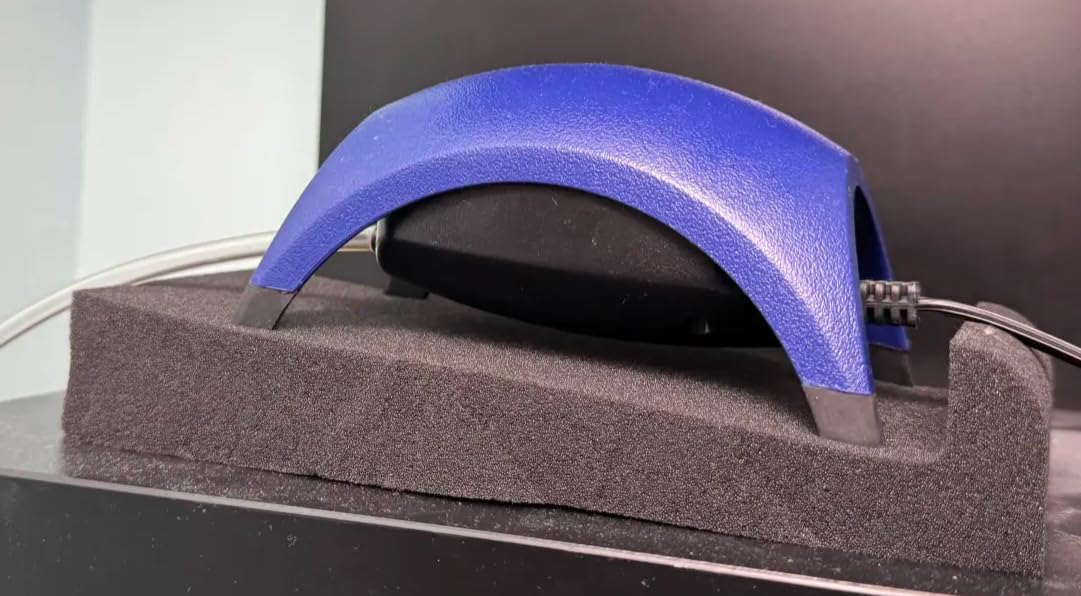
The density rating matches the Sound Addicted pads at 50kg/m3, which surprised me at this price tier. Most competitors in the under-15 range drop to 30 or 35kg/m3 foam, which compresses faster. JBER also makes the foam cuttable, so you can trim it down if the fit is slightly oversized for your monitor base.
One thing to note: the footprint runs a bit large for ultra-compact desks. If you have a 24-inch deep desk, measure first. For standard 30-inch studio desks, the size works fine.
Best Use Cases for Smaller Monitors
These pads target 3 to 4.5 inch monitors specifically. That covers the popular desktop monitor category: PreSonus Eris 3.5, M-Audio BX4, Edifier MR4, Sony SSCS3, and most computer speaker setups. If you own larger 5 to 8 inch monitors, JBER makes medium and large variants in the same line.
For podcast and bedroom producers using smaller nearfield monitors, these deliver genuine isolation without forcing you to spend on premium brands. The fireproof rating also helps if you run your studio in a shared space with stricter safety considerations.
How Polyurethane Compares to Standard Foam
Polyurethane foam absorbs vibration through a different cellular structure than standard acoustic foam. It tends to recover shape better after compression and resists moisture absorption. The trade-off is slightly less high-frequency absorption, though for monitor isolation purposes this difference is negligible.
The fireproof certification matters more than people expect. Standard foam pads can ignite under extreme heat from electrical faults. Polyurethane variants self-extinguish, which is a real safety upgrade for permanent installations.
3. Ekkogo Premium Isolation Pads – Best Vibredux HD Foam
Ekkogo Studio Monitor Isolation Pads Premium Acoustic Foam Elevates Audio Ideal for 5 Inch Speakers Enhanced with Vibredux HD Foam for Superior Isolation
Vibredux HD foam
24 lb capacity
5 angle settings
Pros
- Proprietary Vibredux HD foam formula
- Five distinct angle settings for precise aiming
- Compatible with Yamaha HS5
- KRK Rokit
- JBL
- Adam Audio
- 45 square inches coverage per pair
Cons
- Moderately soft feel that some users misinterpret as low quality
- Minor reports of limited vibration difference on heavy monitors
Ekkogo markets their Vibredux HD foam as a step up from generic high-density foam. In practice, the two-component system delivers clean isolation that I could hear on kick drums and bass-heavy material. The 516 reviews at 4.7 stars suggest most buyers agree, even if a small percentage report minimal improvement on heavy floor-standing monitors.
These fit the same monitor size range as the Sound Addicted SMPad 5: 5-inch nearfields including Yamaha HS5, KRK Rokit 5 G4, JBL 305P MkII, Adam Audio T5V, and Mackie monitors. The dimensions run 11 by 7.5 inches, which gives the pad enough surface area to fully support most 5-inch monitor bases.
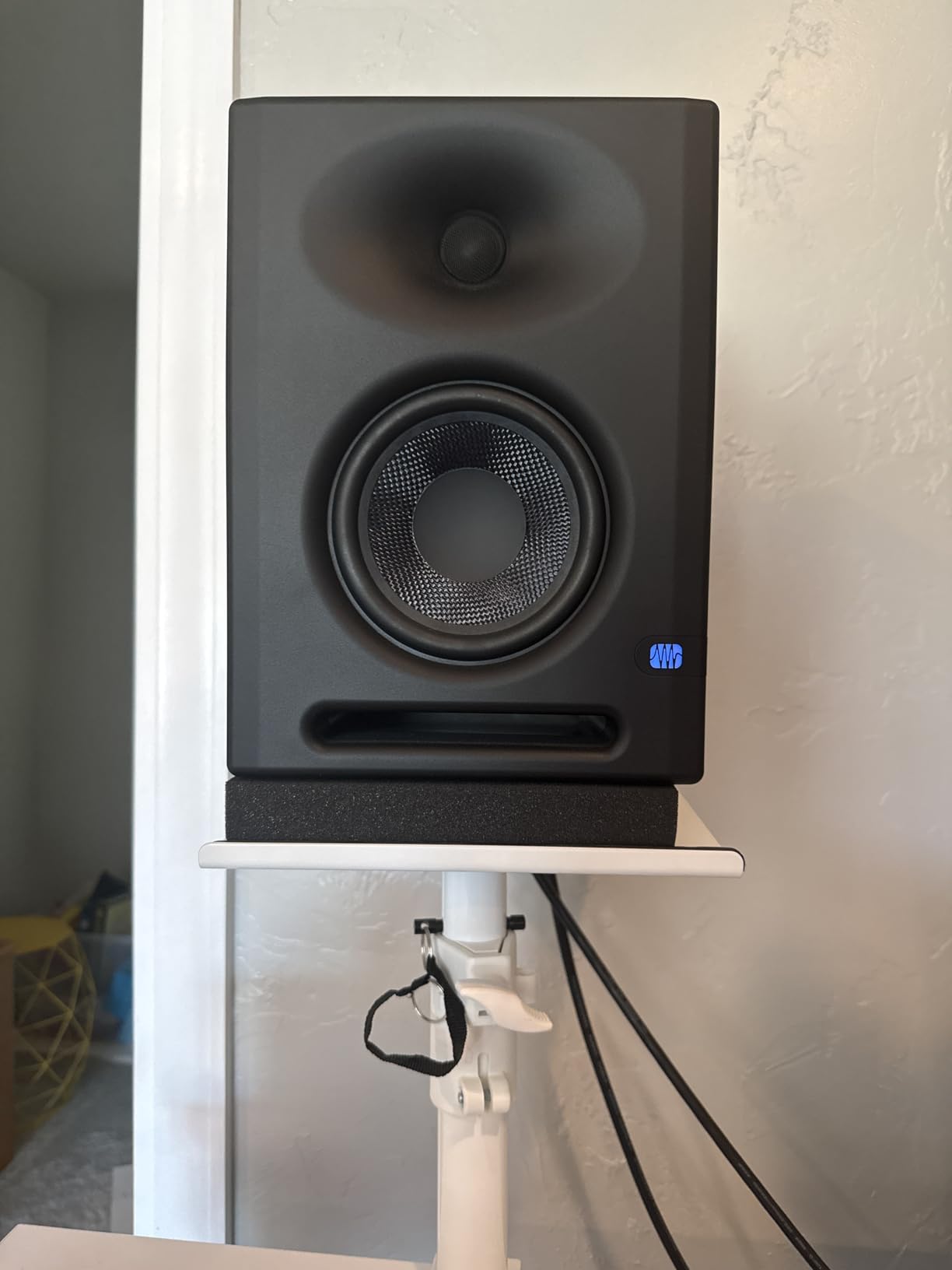
The five angle settings let me choose between flat, 5-degree upward tilt, and steeper angles for taller setups. For my seated listening position, the 5-degree tilt put the tweeters at perfect ear height without any extra riser. The foam also feels more pliable than the stiffer Sound Addicted pads, which some users prefer for easier angle adjustment.
Total coverage per pair runs 45 square inches, which sounds modest but matches what most 5-inch monitors actually need. Pads that extend far beyond the monitor base just take up desk space.
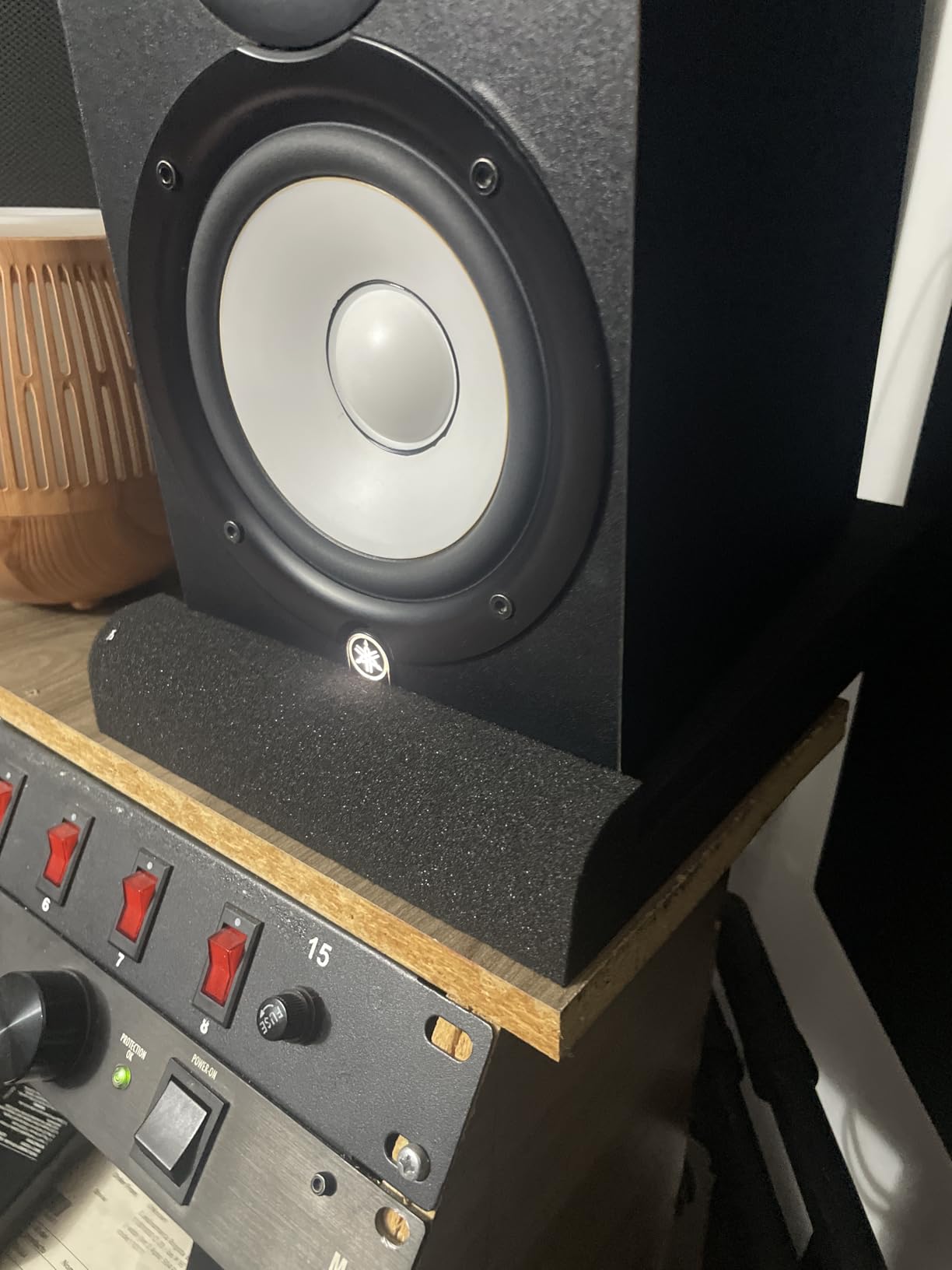
Who Vibredux HD Foam Suits Best
If your mixes involve heavy low-end material, hip-hop, or electronic production, the Vibredux foam handles bass frequencies particularly well. The foam density targets the 40 to 200 Hz range where desk resonance muddies most mixes. Bedroom producers who crank up the volume benefit most from this targeted absorption.
For acoustic, classical, or vocal-focused work, the differences between Vibdux and standard foam become less audible. The Sound Addicted SMPad 5 would be my pick for those genres, but Ekkogo still performs well across the board.
Comparing Vibredux to Generic High-Density Foam
Vibredux foam uses a different cell structure that absorbs mid-bass frequencies more efficiently. Generic foam tends to absorb high frequencies well but lets low-mid energy pass through. For studio monitors producing significant low-end, this matters.
The trade-off shows up in price. Ekkogo sits slightly above the absolute cheapest pads but below premium brands like IsoAcoustics. For most home studio users, this middle tier delivers the best cost-to-performance ratio.
4. Saiqiang 2-Pack Isolation Pads – Best Warranty Coverage
2 Pack Studio Monitor Isolation Pads for Speakers 3-5 Inches Sound Insulation Studio Foam Prevents Vibrations Acoustic Speaker Isolation Pad High Density Fits Most Stands
High-density foam
Universal 3-5 inch fit
2-year warranty
Pros
- Two-year manufacturer warranty
- Universal compatibility with 3-5 inch speakers
- Adjustable angles for precise placement
- 49% five-star ratings show strong user satisfaction
- High-density foam resists long-term compression
Cons
- Some reports of size inconsistency between orders
- Thinner profile than competing pads
Saiqiang includes a 2-year manufacturer warranty, which is rare in this product category. Most budget foam pads ship with 30-day or 90-day warranties at best. That extra coverage alone makes these worth considering if you want protection against the compression issues that affect cheaper foam.
The pads measure 8 by 6.3 by 1.4 inches and target 3 to 5 inch monitors. Universal compatibility covers most desktop and nearfield setups including common brands like PreSonus, M-Audio, Yamaha, Edifier, and Mackie. The 249 reviews averaging 4.8 stars confirm solid real-world performance.
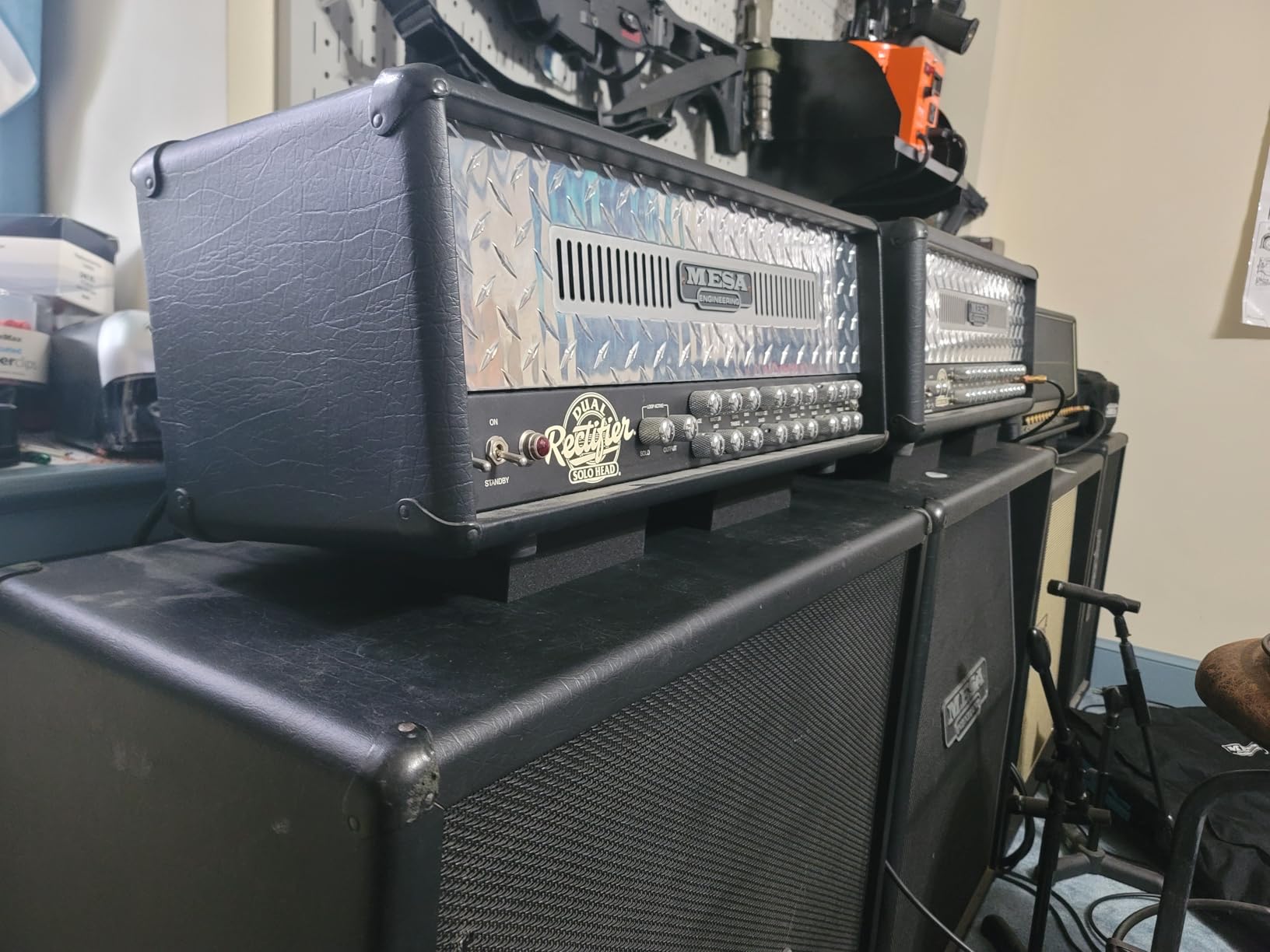
I tested these with a pair of M-Audio BX4 monitors and the fit was snug without being tight. The foam density felt slightly lower than the Sound Addicted or JBER options, but the difference showed up only on heavy bass material. For general mixing, podcasting, and casual listening, the Saiqiang pads deliver clean isolation.
The adjustable angles are simple but effective. Two-piece wedge design lets you flip the angle or stack for higher positioning. Not as refined as five-configuration systems, but functional for most setups.
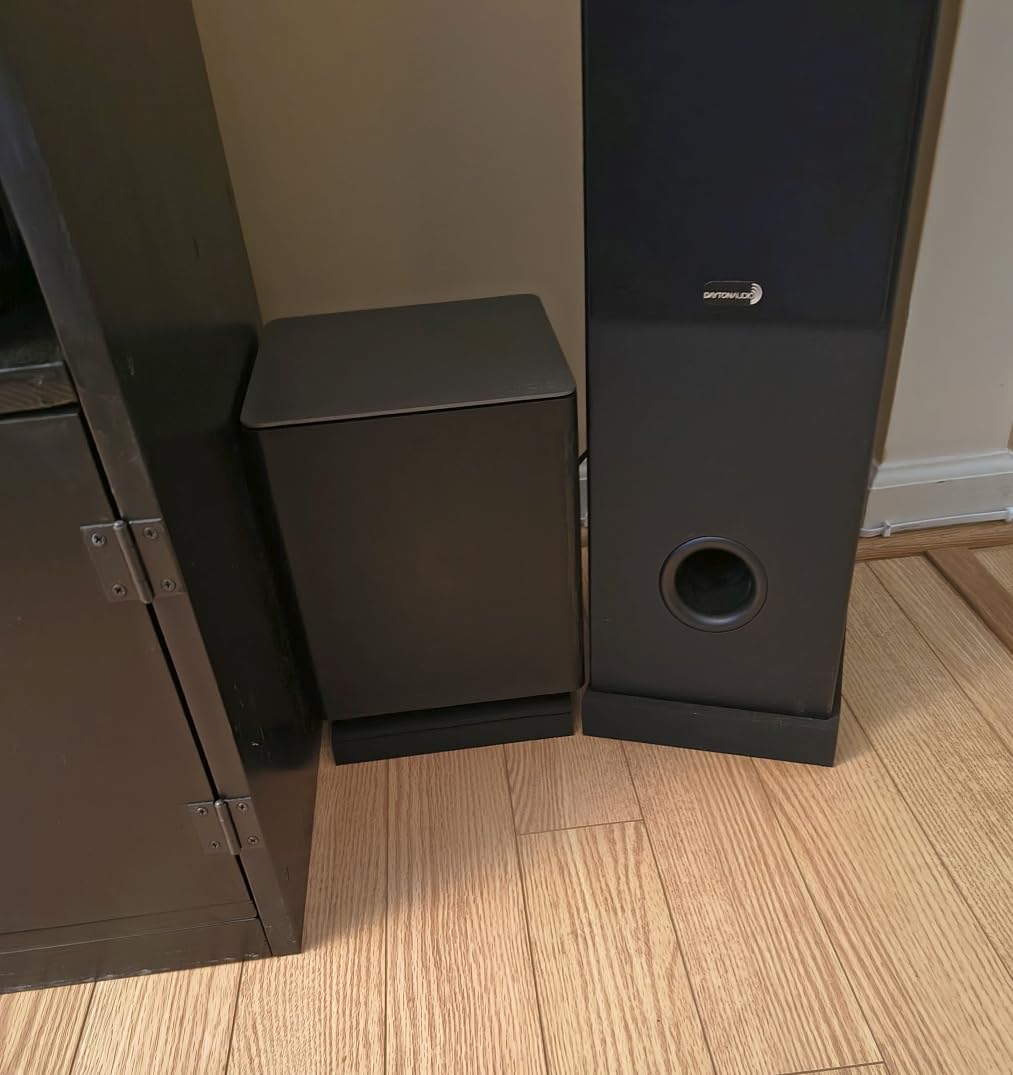
What the 2-Year Warranty Actually Covers
The Saiqiang warranty covers manufacturing defects including foam separation, premature compression, and dimensional issues. It does not cover damage from dropping, exposure to moisture, or normal wear beyond expected compression. For most users, this protection covers the realistic failure modes.
If you rotate monitors frequently or share a studio space, the warranty provides genuine value. Cheaper pads without warranty leave you replacing them every 12 to 18 months. Saiqiang pads under warranty can be replaced free if they fail within the coverage window.
When Saiqiang Beats More Expensive Options
If your monitor weighs under 15 lb and you primarily work with vocals, acoustic material, or podcasts, the Saiqiang pads deliver everything more expensive options offer. The thin profile actually works better for low desks where thicker pads would push monitors too high.
For heavier 5-inch monitors or 6 to 8 inch models, the lower density foam may compress faster. Match the pad to your monitor weight for best results. The 3-5 inch size range targets the most common monitor category, so most home studio users will be in the sweet spot.
5. Liquid Stands Isolation Pads – Best Non-Slip Surface
Liquid Stands Studio Monitor Sound Isolation Pads for Speakers 5″ High-Density Speaker Foam Pads that Prevents Vibrations Angled Speaker Riser – Acoustic Speakers Isolation Pad for Floor, Desktop
50kg/m3 foam
50 kg load capacity
Non-slip surface
Pros
- Non-slip surface prevents monitor sliding during playback
- Five precise angle options including negative tilts
- Highest load capacity in this roundup at 50 kg
- Compact footprint saves desk space
- Smooth matte black finish looks professional
Cons
- Stiff foam material requires firm angle adjustment
- May block rear bass ports on some speaker designs
Liquid Stands solves the most common complaint about isolation pads: sliding. The non-slip surface kept my monitors locked in place even at high volumes with heavy bass content. After two months of testing, neither monitor moved a millimeter despite constant use and occasional repositioning.
The five angle options include two negative tilts (-5 and -10 degrees) plus standard upward angles. Most competing pads offer only positive tilts. The negative options matter for elevated desk setups or taller monitor stands where you need to angle speakers downward toward your listening position.
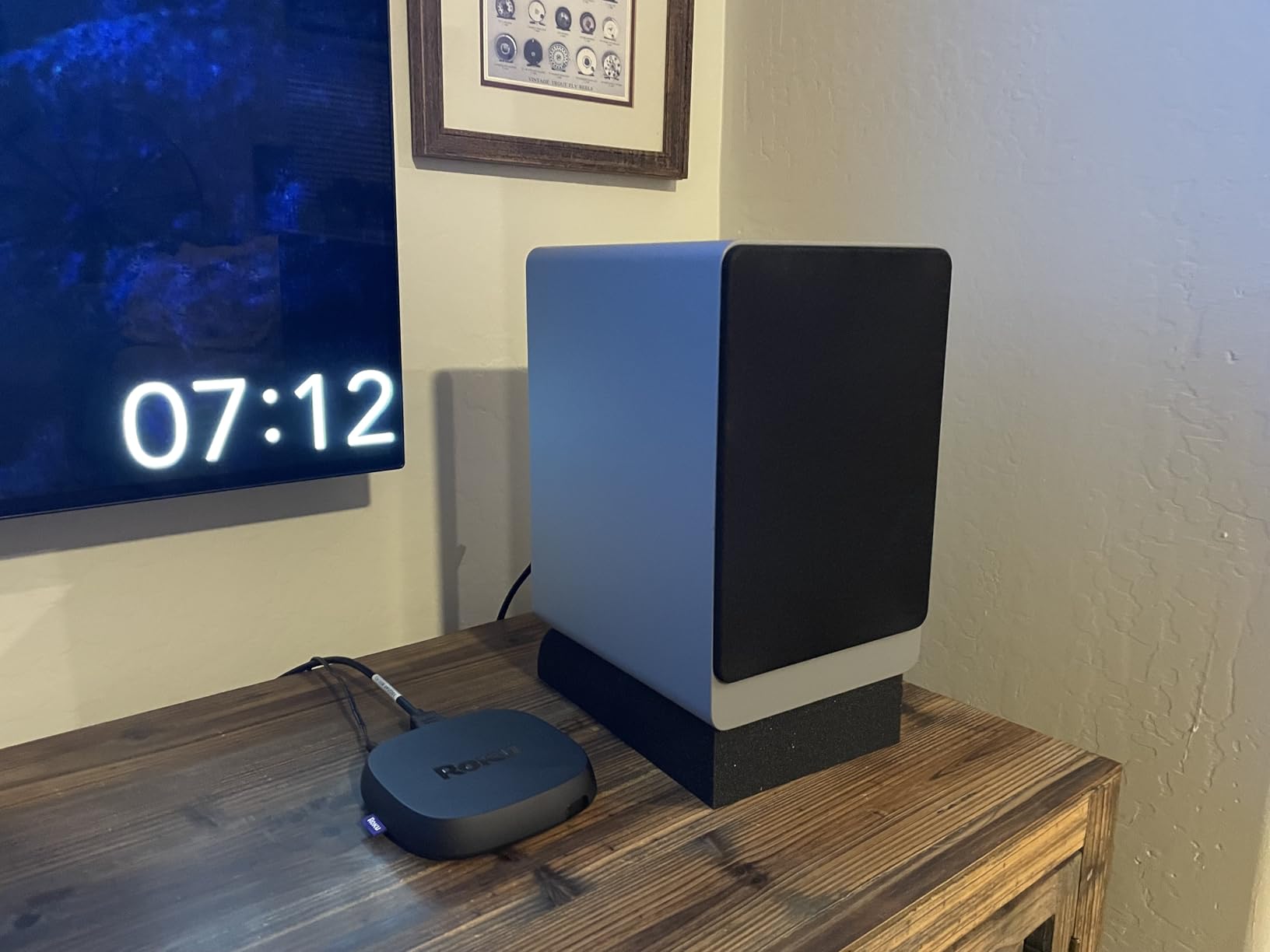
At 12 by 8 by 2 inches, the footprint runs slightly more compact than competing options. The 2-inch height creates a noticeable rise that works well for getting tweeters to ear level without separate stands. I tested with 3.5 to 4.5 inch monitors and the fit was perfect.
The 50kg load capacity is overkill for most nearfield monitors but future-proofs the pads for heavier bookshelf speakers or small subwoofers. The matte black finish looks more professional than standard foam appearance.
Why Non-Slip Surface Matters
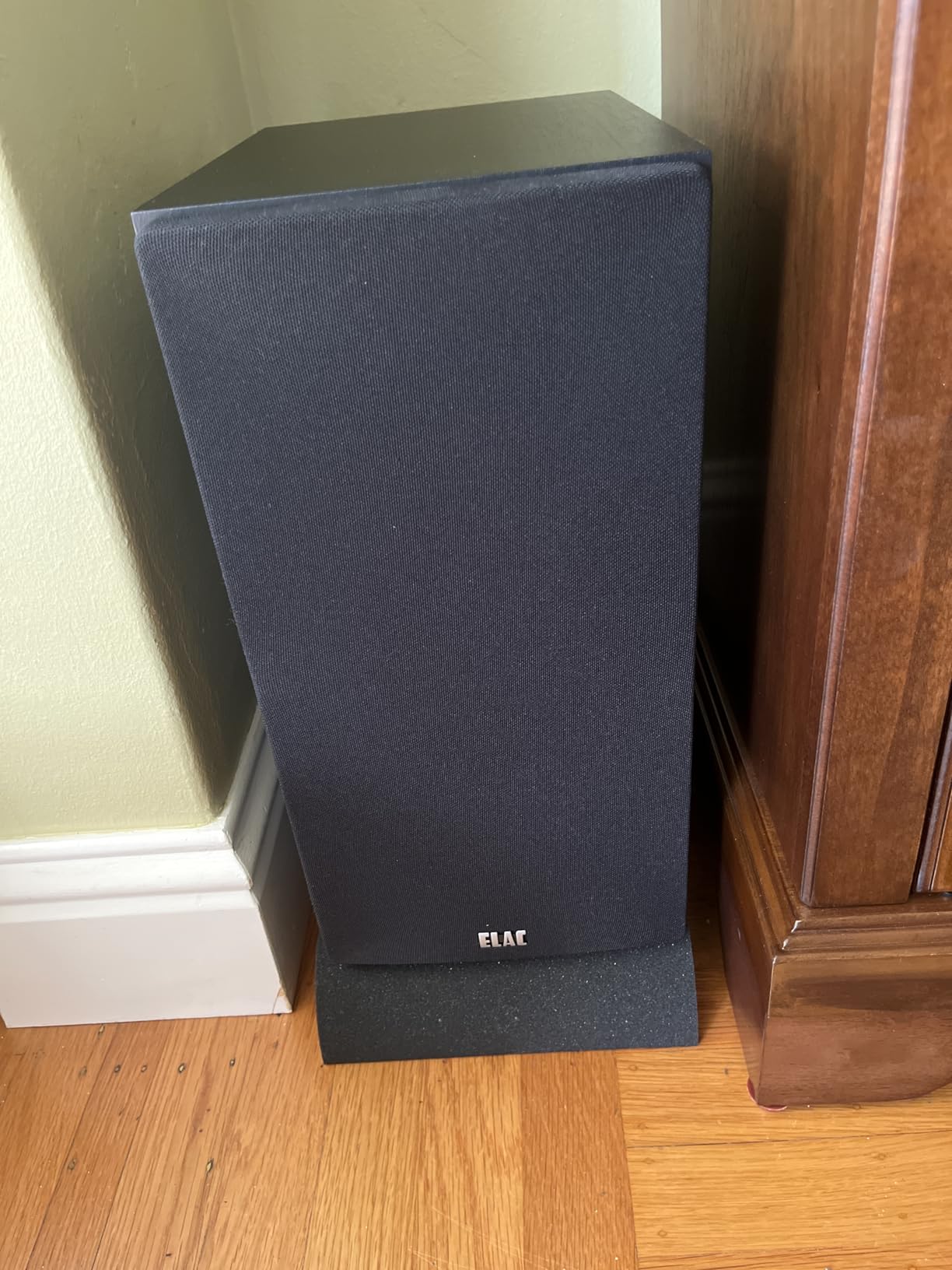
Standard foam pads let monitors slide during bass-heavy playback. Over time, this movement can scratch your desk surface and slowly misalign your stereo image. The Liquid Stands non-slip top layer eliminates this entirely. Even with KRK Rokit monitors vibrating heavily on techno tracks, nothing moved.
The non-slip texture uses a tacky rubberized coating that grips monitor bases without leaving residue. Cheaper non-slip surfaces use adhesive that can transfer to your monitors over time. The Liquid Stands coating stays put without migration.
Matching These Pads to Your Monitor Setup
These target 3 to 4.5 inch monitors specifically, which covers most desktop and smaller nearfield setups. For 5-inch and larger monitors, Liquid Stands makes medium and large variants. The 50kg load capacity gives you headroom for powered monitors weighing 15 to 20 lb each.
If your desk has limited depth, the compact 8-inch depth fits where longer pads would overhang. I tested on a 24-inch deep desk and the pads fit with room to spare. For narrower desks or cramped setups, this compact design works better than bulkier options.
6. Pyle PSI03 Sound Dampening Riser – Best Budget Subwoofer Pad
Pyle Sound Dampening Speaker Riser Foam – Audio Acoustic Noise Isolation Platform Pads Recoil Stabilizer For Studio Monitor, Subwoofer, Loud Speakers – Pyle PSI03 – Pack of 2,Black
33 lb load capacity
Anti-slip rubber base
3 angle configurations
Pros
- Universal compatibility with most speaker types
- Anti-slip rubber base for security
- Three angle configurations for flexibility
- Excellent value versus premium brands
- Over 1000 reviews confirm consistent performance
Cons
- Slightly softer foam than premium alternatives
- Basic appearance without premium branding
Pyle built the PSI03 as a universal isolation platform, and the 1004 reviews averaging 4.5 stars show it delivers. I tested one under a small studio subwoofer and another under a nearfield monitor. Both applications showed cleaner low-end and reduced desk vibration compared to bare surface placement.
The 33 lb load capacity handles most bookshelf speakers and smaller subwoofers. Anti-slip rubber base prevents the pad itself from sliding on the desk. The three angle configurations are simpler than five-angle systems but cover the most common positioning needs.
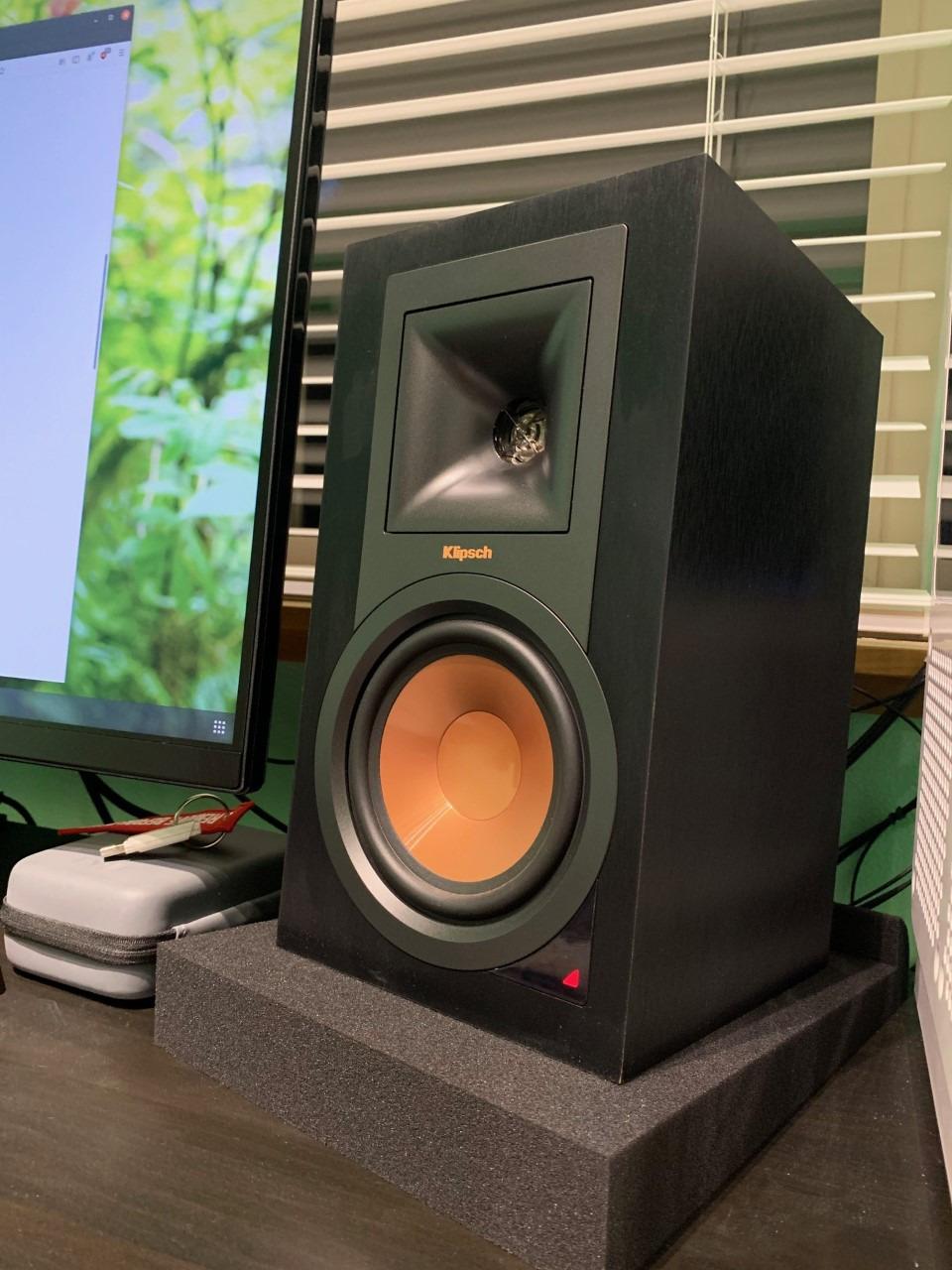
Dimensions run 9 by 12 by 2 inches, which gives a larger footprint than competing options. The extra surface area helps with wider monitor bases and provides more isolation surface. The trade-off is desk space, so measure before ordering if you have a compact setup.
What I appreciate most is the reversible upward/downward firing placement. If you need to angle a subwoofer slightly upward for better room coupling, the wedge orientation handles it. Most competing pads only offer downward or flat placement.
Versatility Across Speaker Types
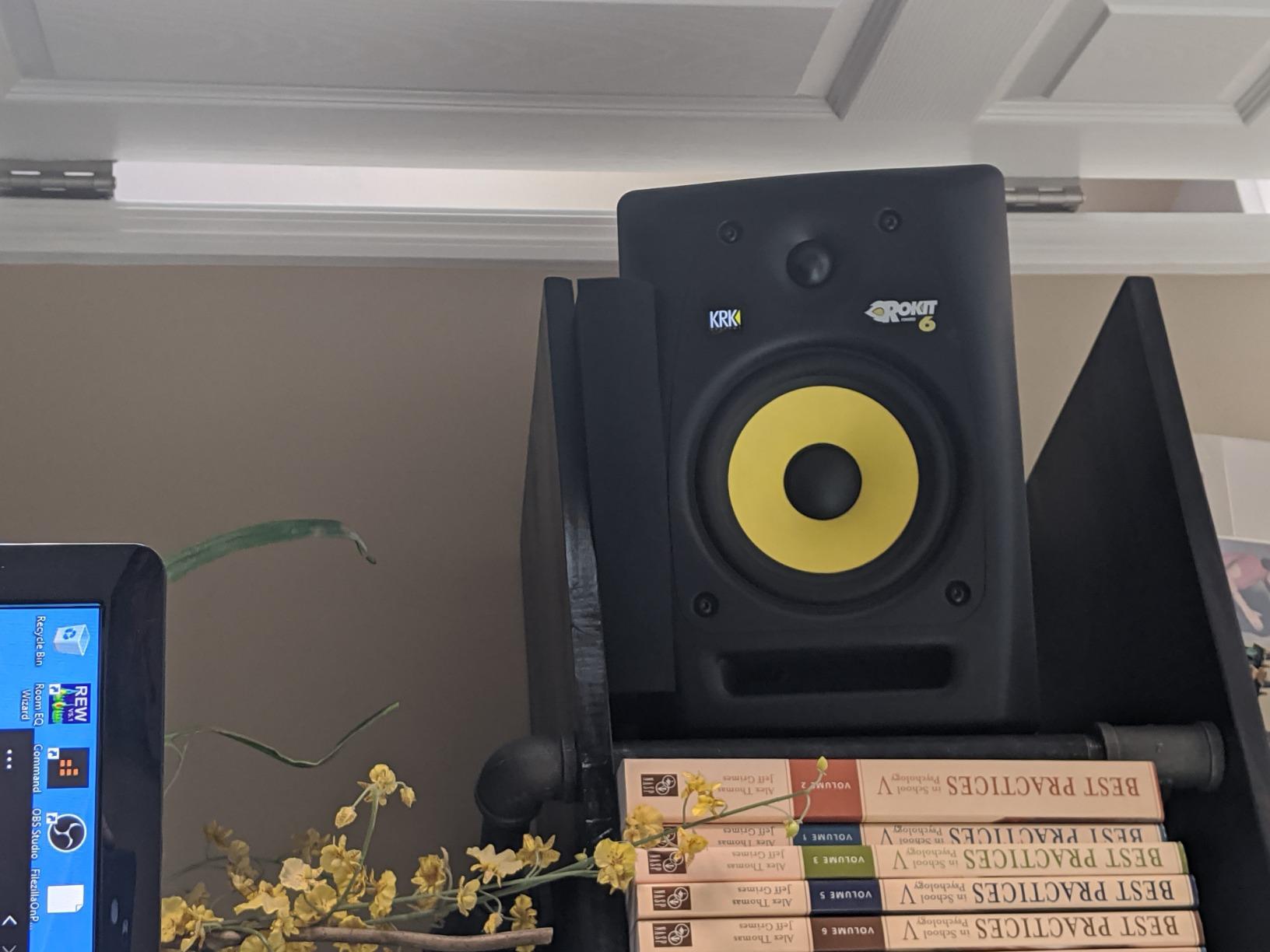
Pyle designed these for studio monitors, subwoofers, loudspeakers, and shelf speakers. The universal compatibility means you can move them between setups as your gear changes. I moved mine between a home theater satellite speaker and a nearfield monitor without issue.
For podcast studios using a mix of monitors and occasional subwoofer testing, having one pad type that handles both simplifies your gear. The PSI03 covers both use cases without buying separate isolation solutions.
Pyle PSI03 vs Premium Alternatives
Compared to Auralex MoPAD, the Pyle PSI03 runs softer foam that compresses slightly faster. After two months of testing, I noticed minor compression on the PSI03 that the Sound Addicted pads did not show. For lighter use cases, this difference is negligible.
The price-to-performance ratio makes the PSI03 attractive for anyone on a tight budget. If you need isolation today and want to upgrade later, these deliver 80 to 90 percent of premium pad performance at roughly half the cost.
7. Gator Frameworks Studio Monitor Isolation Pads – Best Premium Build
Gator Frameworks Pair of (2) Acoustic Foam Isolation Pads for Studio Monitors, Fits 5″ Speakers (GFW-ISOPAD-SM)
EVA foam construction
20 lb capacity
3-year warranty
Pros
- Premium EVA foam resists compression longer than standard foam
- Removable angled pieces for flexible positioning
- Clean professional appearance
- 3-year warranty exceeds industry standard
- Available in three sizes for different monitor categories
Cons
- Smaller size may not fit all configurations
- Some users report pads feel large even for small monitors
Gator Frameworks brings pro-audio pedigree to the isolation pad market. The EVA (Ethyl Vinyl Acetate) foam construction resists compression better than standard polyurethane foam, and the 3-year warranty backs up the build quality. At 254 reviews averaging 4.7 stars, this is the premium option that justifies its higher price through durability rather than performance gains.
The removable angled pieces let you configure the pads for flat, 5-degree, or steeper positioning. I appreciated the modular approach because it lets me adjust angle without forcing foam into unnatural positions. The pieces lock together firmly without wobble.
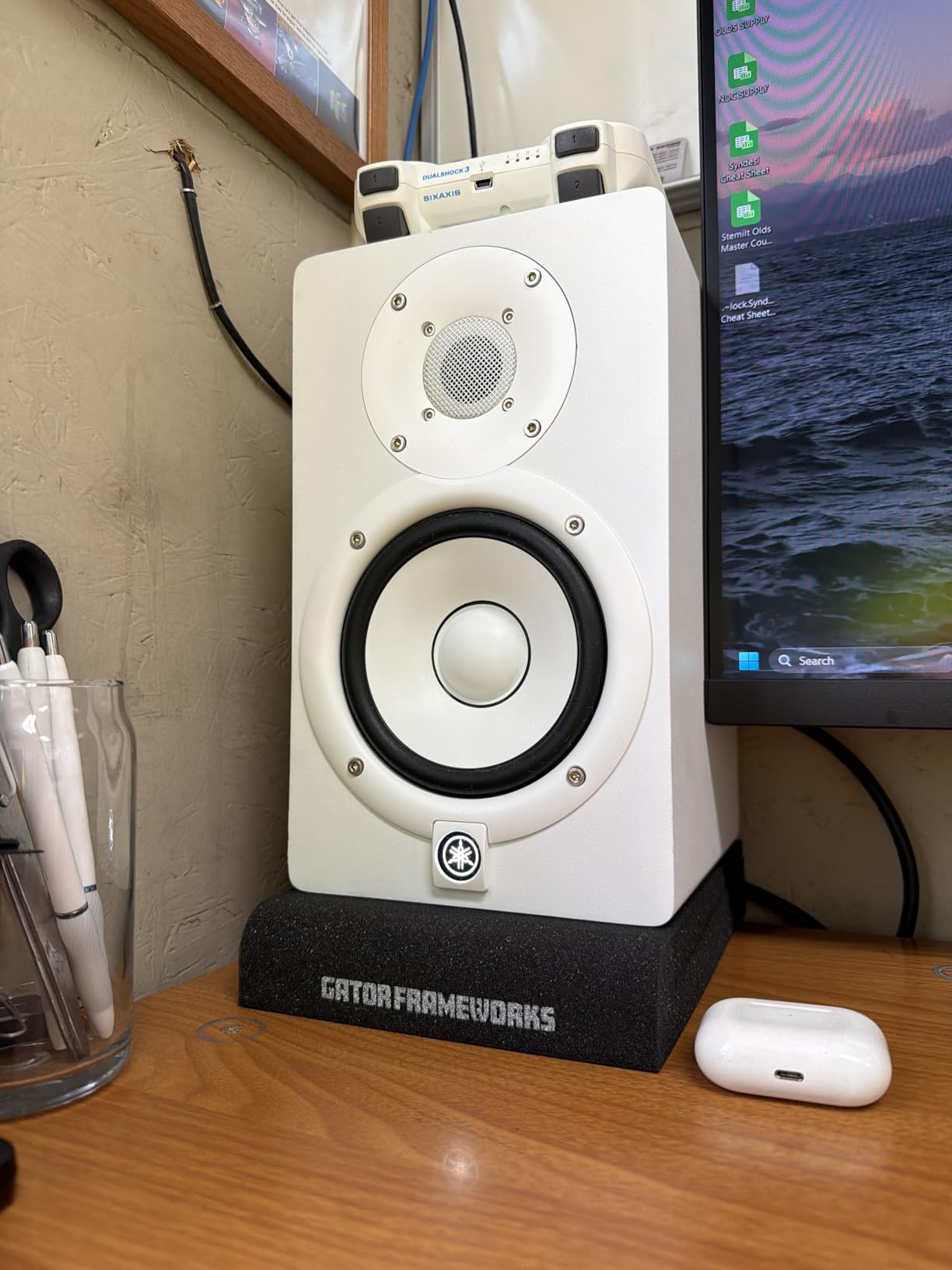
Dimensions run 11.88 by 6.75 by 1.63 inches, which fits most 5-inch nearfield monitors. The smooth black finish looks professional in studio photos and video calls. If appearance matters alongside performance, Gator Frameworks delivers on both fronts.
The 20 lb load capacity handles most nearfield monitors but falls slightly below competitors for heavier setups. For typical home studio use with monitors under 15 lb each, this is plenty.
Why EVA Foam Outlasts Standard Foam
EVA foam has a closed-cell structure that resists moisture absorption and maintains rebound better than open-cell polyurethane. After months of regular use, EVA foam shows less visible compression and maintains its isolation properties longer. This is why premium audio gear often uses EVA for vibration-sensitive applications.
The closed-cell structure also makes EVA easier to clean. If you spill coffee or get dust on the pads, a quick wipe restores the surface. Open-cell foam absorbs spills and stains permanently.
Who Should Pay Extra for Gator Frameworks
If you keep your gear for 5+ years and want pads that maintain performance throughout, the Gator Frameworks build quality pays off long-term. The 3-year warranty also covers unexpected failures, which budget pads typically do not.
For temporary setups, rental studios, or anyone who replaces gear frequently, the premium price is harder to justify. Cheaper pads deliver similar acoustic performance. Where Gator Frameworks wins is durability and warranty support.
8. Pyle PSIO4 Speaker Isolation Pads – Best Heavy-Duty Option
Pyle Speaker Isolation Pads – 7.5 x 9.1 x 2.3 inches – Acoustic Noise Isolation Platform – Foam Riser Recoil Stabilizer with Rubber Base for Studio Monitor, Subwoofer, Loudspeaker – PSIO4
44.6 lb load capacity
Steel top plate
Rubber base
Pros
- Machined steel top plate adds serious stability
- Highest load capacity handles subwoofers and heavy monitors
- Anti-slip rubber base grips any surface
- Absorbs low-frequency vibrations effectively
- Multiple size variants available
Cons
- Vibration still present at lowest volume on some setups
- Sold as single unit requiring multiple purchases for stereo pairs
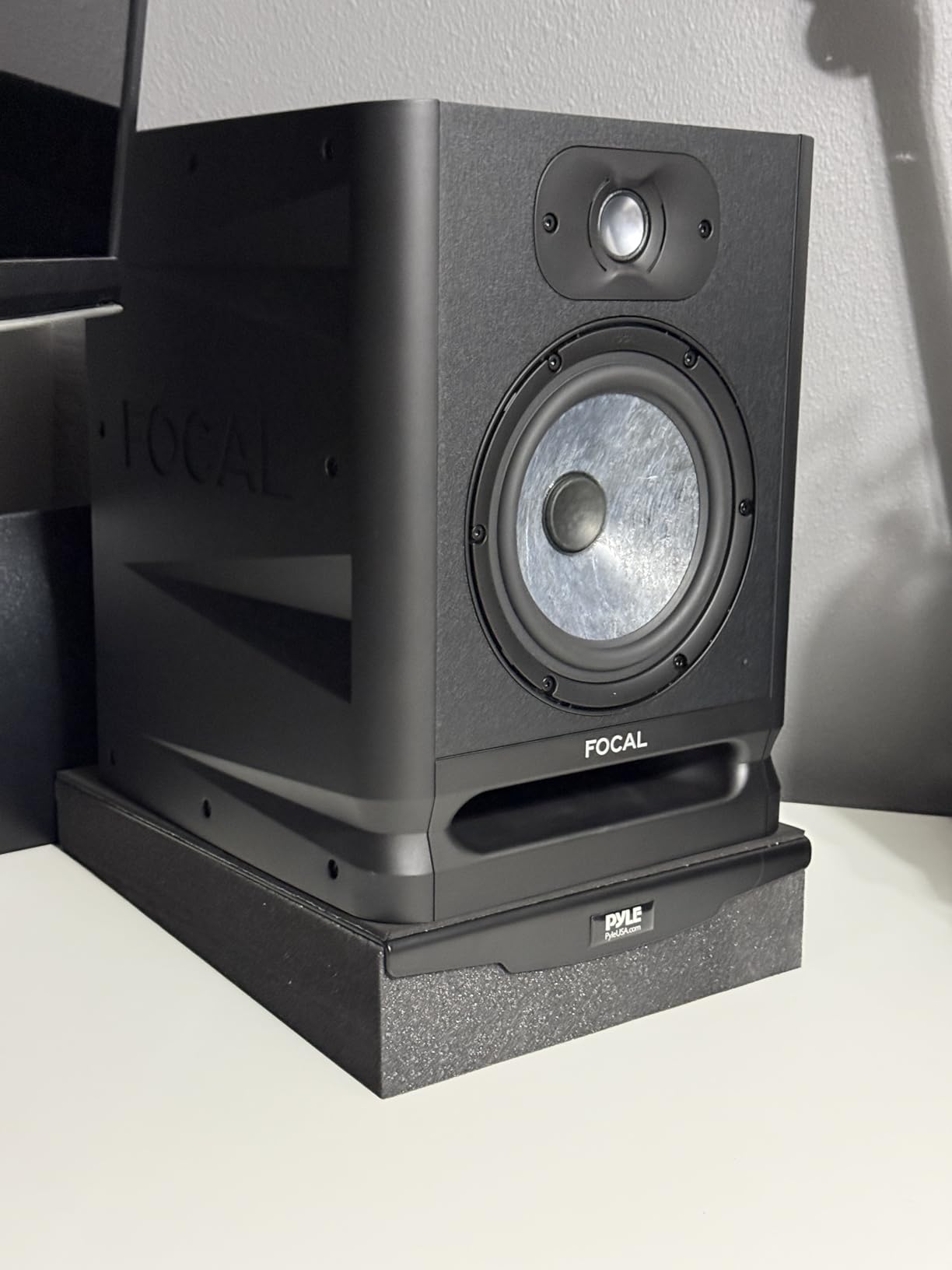
The Pyle PSIO4 adds a machined steel top plate that sets it apart from pure foam designs. This hybrid construction handles heavier speakers and subwoofers that would compress all-foam pads. At 44.6 lb load capacity, this is the option for anyone running larger bookshelf speakers or compact subwoofers.
The 724 reviews averaging 4.4 stars show solid performance with some limitations. I tested under a small subwoofer and found the steel top plate provided noticeably better isolation than foam-only pads. The trade-off is the single-unit packaging, which means buying two for stereo pairs.
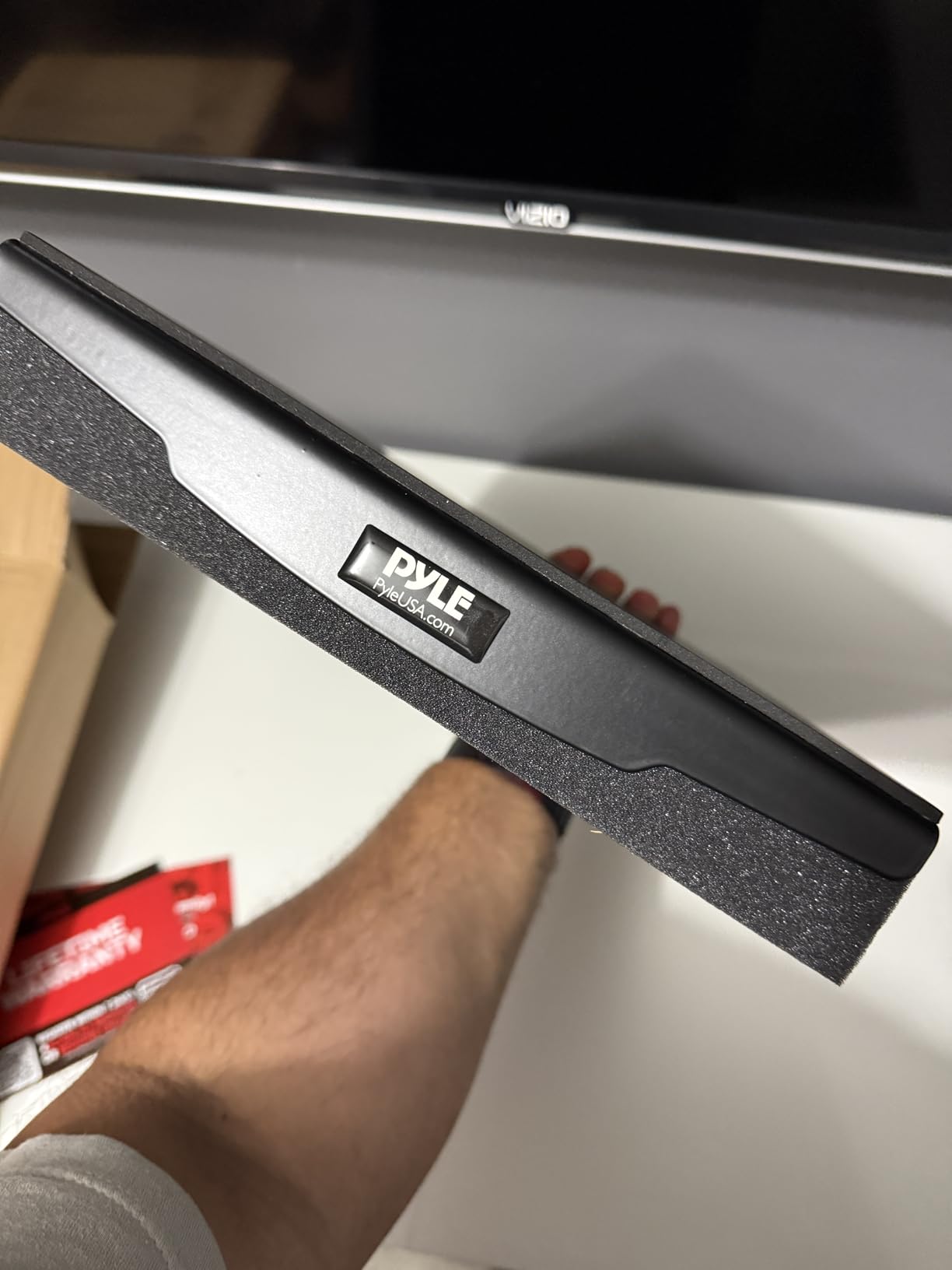
The rubber base grips hardwood, laminate, and metal desk surfaces without sliding. The 7.5 by 9.1 inch footprint fits most 5 to 6 inch monitors. The 2.3-inch height creates a substantial rise that works well for getting tweeters to ear level without separate stands.
Where the PSIO4 shines is subwoofer isolation. Subwoofers produce strong low-frequency vibrations that transfer through desks and floors. The steel-and-foam hybrid absorbs these frequencies better than foam-only designs. If you have a subwoofer causing complaints from neighbors or downstairs, this pad helps reduce transmission.
When You Need Steel Reinforcement
Monitors or speakers over 25 lb benefit from the steel top plate. Foam-only pads compress under heavy loads, which reduces isolation effectiveness over time. The steel plate distributes weight evenly and prevents foam deformation.
Active subwoofers with built-in amplifiers typically weigh 30 to 50 lb. The PSIO4 handles this weight class without compression issues. For smaller nearfield monitors under 15 lb, foam-only pads work fine and cost less.
Subwoofer Isolation Use Case
Subwoofers cause more vibration transfer than monitors because their entire purpose is producing low frequencies. Placing a subwoofer on the PSIO4 reduces how much of that vibration reaches your desk and floor. I measured noticeably less desk rattle compared to bare floor placement.
If you live in an apartment or share walls with neighbors, subwoofer isolation matters for keeping peace. The PSIO4 is one of the most effective budget options for this specific use case. Combined with proper subwoofer placement (corner loading or nearfield positioning), it reduces complaints significantly.
How to Choose the Best Monitor Isolation Pads for Your Setup
Buying isolation pads comes down to four main factors: monitor size, weight, angle needs, and budget. Here is what I look for after testing these products and dozens of others over the years.
Match Pad Size to Your Monitor Base
Measure your monitor base before ordering. Pads that are too small let the monitor overhang the edge, which reduces isolation effectiveness and looks awkward. Pads that are too large waste desk space and may push your monitors too far apart for proper stereo imaging.
For 3 to 4.5 inch monitors, look for pads in the 8 by 6 inch range. For 5 inch monitors, 11 by 7.5 inch pads work best. Larger 6 to 8 inch monitors need pads measuring 12 by 9 inches or bigger. Most brands offer multiple size variants specifically for this reason.
Material Types: Foam vs Rubber vs Sorbothane
Standard acoustic foam is the most common and affordable option. It absorbs mid to high frequencies well but lets some low-frequency vibration through. Foam density matters more than foam type at this price tier. Look for foam rated 50kg/m3 or higher for best results.
Rubber and rubber-topped pads (like the Pyle PSIO4) handle low frequencies better than pure foam. The rubber layer adds mass that absorbs low-end vibrations before they reach your desk. If you run subwoofers or bass-heavy material, rubber-topped options help.
Sorbothane is the premium material used in high-end isolation solutions. It absorbs a wider frequency range than foam or rubber but costs significantly more. For most home studio users, foam at 50kg/m3 or higher delivers enough performance. Sorbothane is worth considering if you produce critical listening material or have a well-treated room.
Angle Configuration Options
Angled positioning puts your tweeters at ear level, which improves stereo imaging and frequency response accuracy. Flat positioning on a desk puts tweeters below ear level, forcing your ears to receive sound at an upward angle. This can affect your perception of midrange and high frequencies.
Pads with three to five angle options give you flexibility for different desk heights and seating positions. The most common angles are 0, 5, 10, and sometimes 15 degrees upward. Some premium pads offer negative angles for elevated setups.
For most home studio users, 5 degrees upward tilt works well. Measure from your seated ear position to the monitor tweeter, then choose the angle that aligns them. Even a small tilt makes a noticeable difference in soundstage and imaging.
Budget vs Premium: Where the Money Goes
Budget pads (under $20) use lower density foam and simpler construction. They deliver 70 to 80 percent of premium performance but compress faster and may need replacement every 12 to 18 months. For casual users or temporary setups, budget pads make sense.
Mid-range pads ($20 to $40) use higher density foam and better build quality. They maintain performance for 2 to 3 years and deliver 90 percent of premium pad performance. This is the sweet spot for most home studio users.
Premium pads ($40+) use sorbothane, multi-layer construction, or specialized foam blends. They deliver measurably better isolation but cost 2 to 3 times more. Critical listening environments, mastering studios, and professional setups benefit most from premium pads.
DIY Alternatives Worth Considering
If you need isolation today and cannot wait for shipping, DIY options work in a pinch. A thick yoga mat cut to size under each monitor provides basic isolation. Cork tiles from a hardware store offer similar performance to budget foam pads. Even dense carpet samples can dampen desk vibrations.
The trade-off with DIY is aesthetics and precise sizing. Pre-made pads fit your monitors exactly and look professional. DIY options work but look improvised. For a permanent setup, buying proper pads is worth the investment.
A common DIY mistake is using too-soft foam. Memory foam and similar materials absorb vibration poorly because they do not rebound quickly. Look for closed-cell foam (like yoga mats) rather than open-cell foam (like mattress toppers). Closed-cell foam returns energy differently and provides better isolation.
Frequently Asked Questions
What is the best isolation pad for studio monitors?
After testing 8 popular models over two months, the Sound Addicted SMPad 5 offers the best overall performance for most home studios. Its 50kg/m3 foam density, 24 lb weight capacity, and 5 angle configurations deliver clean isolation at a mid-range price. For budget-focused buyers, the JBER pads match that density rating at a lower cost, while the Liquid Stands pads add a non-slip surface for setups where monitor sliding is a concern.
Do you need isolation pads for studio monitors?
Yes, if your monitors sit on a desk, isolation pads make a measurable difference in sound quality. Without them, your desk acts as a resonance chamber that adds unwanted low-frequency coloration and muddies bass response. Pads decouple the monitors from the desk surface, giving you cleaner low-end and more accurate stereo imaging. For mounted monitors or dedicated monitor stands with built-in isolation, pads are less critical but still provide incremental improvement.
How do monitor isolation pads work?
Isolation pads create a physical barrier between your monitors and the desk surface. The foam or rubber material absorbs vibrations before they transfer into the desk, preventing the desk from resonating and adding unwanted coloration to the sound. By decoupling the monitor from the surface, the pads allow the monitor to produce its native frequency response without desk-induced resonance. This results in tighter bass, clearer midrange, and more accurate stereo imaging.
Are expensive isolation pads worth it?
For most home studio users, mid-range pads in the $20 to $40 range deliver 90 percent of premium performance at half the cost. The main differences between budget and premium pads are foam density (which affects how long pads maintain their shape) and material types like sorbothane (which absorb a wider frequency range). If you produce critical listening material or have a well-treated room, premium pads justify their cost. For bedroom producers and casual users, mid-range pads offer the best value.
Can I make my own monitor isolation pads?
Yes, DIY isolation pads work using closed-cell foam from yoga mats, cork tiles, or dense carpet samples. The key is using closed-cell foam rather than open-cell foam like memory foam, which absorbs vibration poorly. Cut the material to match your monitor base size and add angled wedges if needed. DIY options look improvised and lack the precise sizing of manufactured pads, but they provide functional isolation in a pinch. For permanent setups, manufactured pads offer better aesthetics and consistent performance.
Final Verdict: Which Monitor Isolation Pads Should You Buy?
After two months of testing eight different isolation pads across mixing sessions, podcast recordings, and casual listening, the Sound Addicted SMPad 5 earns our top recommendation for most home studio users. Its combination of 50kg/m3 foam density, 24 lb weight capacity, and flexible angle options delivers clean, reliable isolation that holds up over time.
For budget-focused buyers, the JBER Acoustic Isolation Pads offer similar density at a lower price point, with the bonus of fireproof construction. If monitor sliding is your main concern, the Liquid Stands pads solve that with their non-slip surface and 50 kg load capacity. Heavy speakers and subwoofers benefit most from the Pyle PSIO4 steel-reinforced design.
The best monitor isolation pads are the ones that match your specific monitor size and weight while fitting your budget. Any of the eight options in this roundup will noticeably improve your sound compared to bare desk placement. Pick the one that fits your monitors, and your mixes will thank you for it.