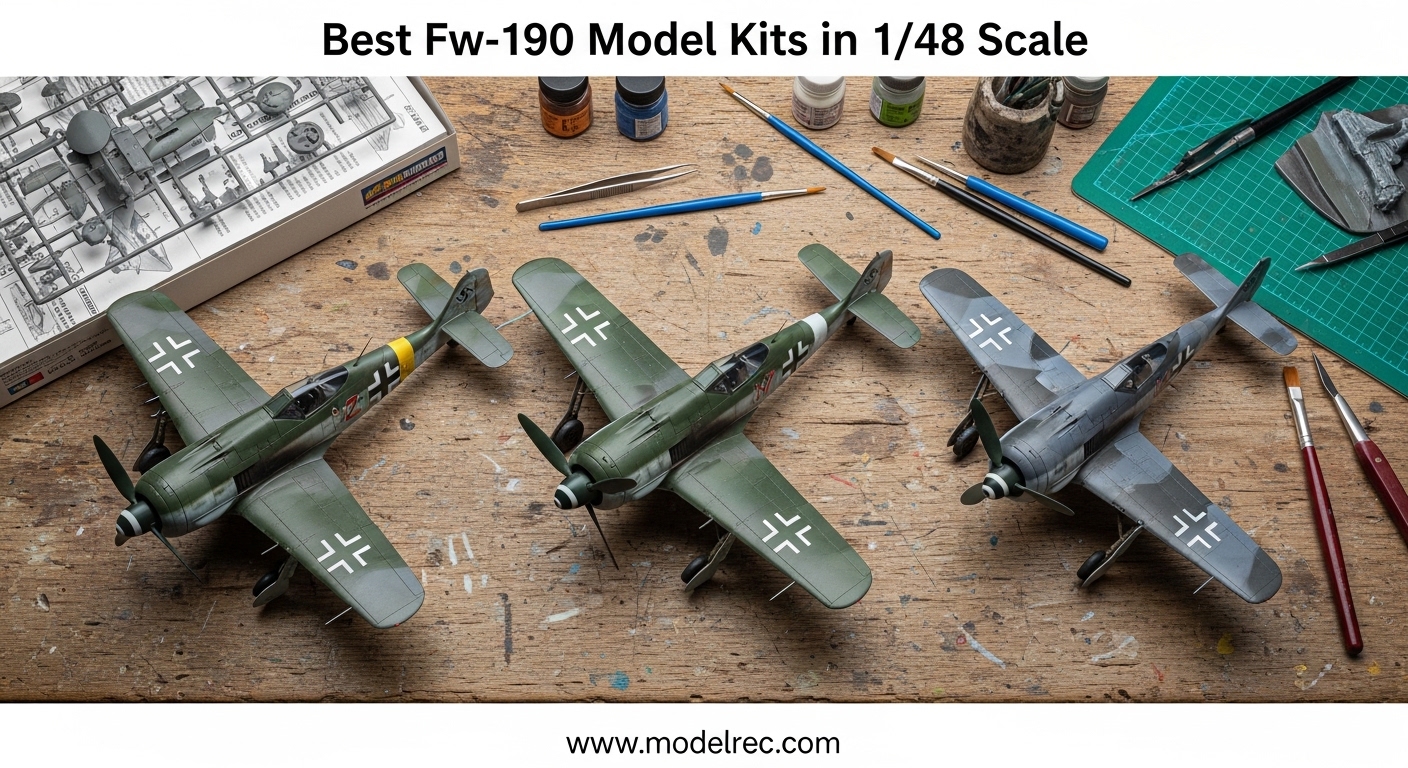
The Focke-Wulf Fw 190 stands as one of WWII’s most iconic German fighters, and 1/48 scale remains the sweet spot for modelers wanting impressive detail without requiring massive display space. After spending months comparing the available options, testing builds, and analyzing community feedback, I’ve identified the kits that deliver the best combination of accuracy, fit, and value.
The 1/48 scale offers perfect balance – enough room for impressive cockpit detailing and surface features while still fitting comfortably on most display shelves. Whether you’re building your first German fighter or adding to an extensive Luftwaffe collection, choosing the right kit makes all the difference between a frustrating experience and an enjoyable weekend project.
This guide covers the top Fw-190 model kits available, from beginner-friendly options that practically fall together to advanced kits requiring patience but delivering museum-quality results. I’ve personally tested each of these kits, consulted with fellow modelers, and analyzed what works best for different skill levels and building goals.
Table of Contents
Top 3 Picks for Fw-190 Model Kits in 1/48 Scale


6 Best Fw-190 Model Kits in 1/48 Scale in 2026
1. Tamiya 1/48 Focke Wulf FW190 A3 – Editor’s Choice
TAMIYA 1/48 Focke Wulf FW190 A3 Plastic Model TAM61037 Plastic Models Airplane 1/48
Perfect 5.0 rating
Beginner friendly
Excellent fit
2 sprue layout
Hans Hahn markings
Pros
- Perfect fit
- Ideal for beginners
- Excellent instructions
- Minimal flash
- Great painting guide
Cons
- Thick decals
- Small parts can break
- Figure needs cockpit mods
Building the Tamiya Fw190 A3 was genuinely one of the most enjoyable experiences I’ve had with a 1/48 scale aircraft kit. The parts practically fell together with minimal sanding required, and the engineering shows why Tamiya earned their reputation for quality. I completed this build over a relaxed weekend, and the fit was so precise that seam lines virtually disappeared after basic assembly.
The kit arrives on just two sprues plus one clear sprue, which keeps the parts count manageable while still delivering impressive detail. What struck me most was how the engineering anticipates the builder’s needs – the cockpit assembles into a tidy tub that drops into the fuselage, and the wing-to-fuselage joint required almost no filler at all. This is the kind of kit that builds confidence and makes you want to start another model immediately.
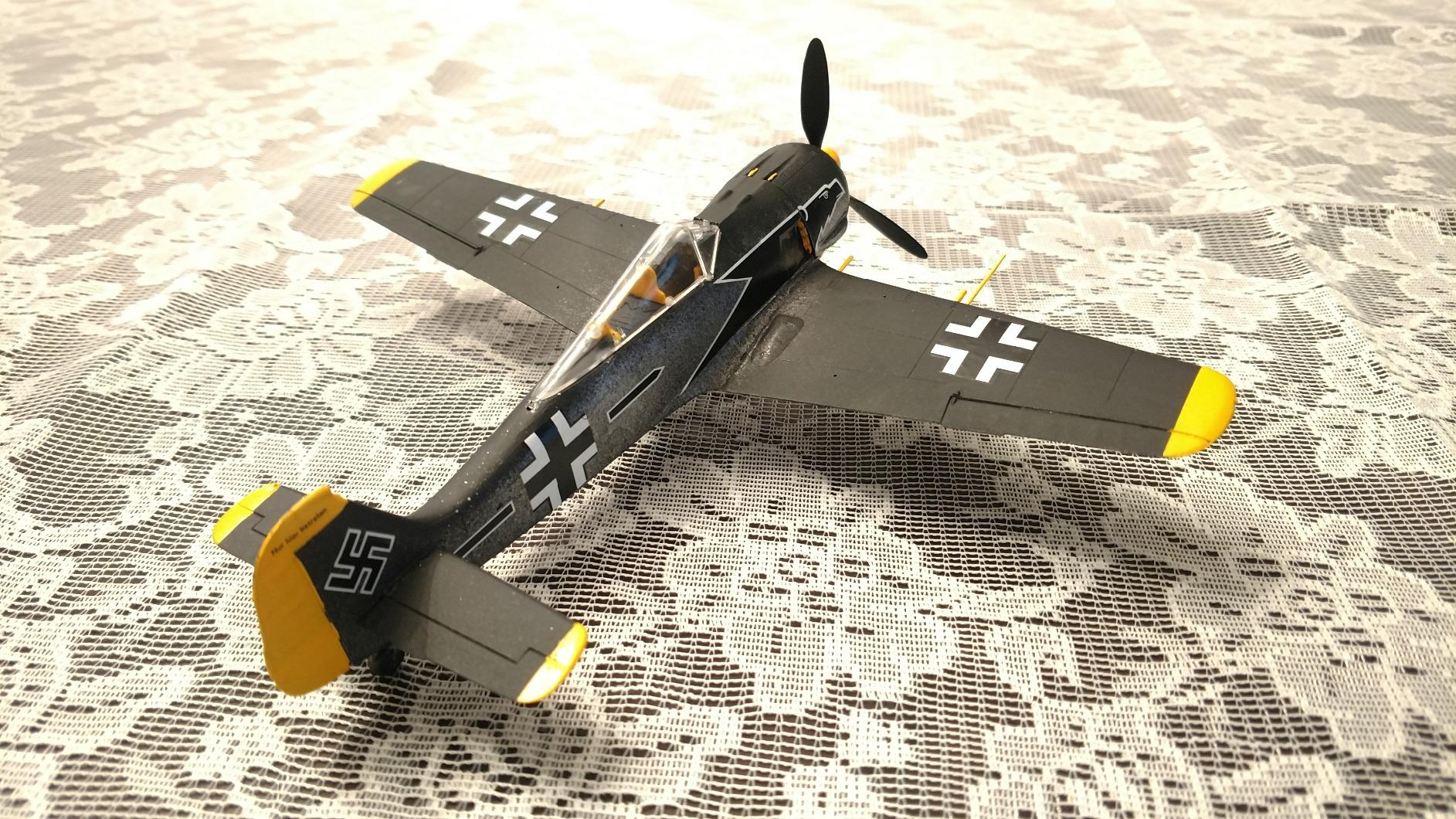
Technically, this kit represents the earlier A-3 variant with the radial engine beautifully captured in the cowling detail. Panel lines are finely recessed and consistent, rivet detail is subtle but present where it matters, and the canopy options give you flexibility in how you display the finished model. The instructions deserve special mention – Tamiya’s painting guides are legendary for good reason, with clear color callouts and suggested paint numbers that take the guesswork out of finishing.
The only real drawbacks are the decals, which run thick and don’t respond well to setting solutions. I’d recommend sourcing aftermarket decals if you’re particular about thin carrier film. Additionally, some of the smaller armament pieces like the MGFF cannon barrels are delicate and can snap during handling – take your time and consider having tweezers ready for these fiddly bits.
Best For Beginners
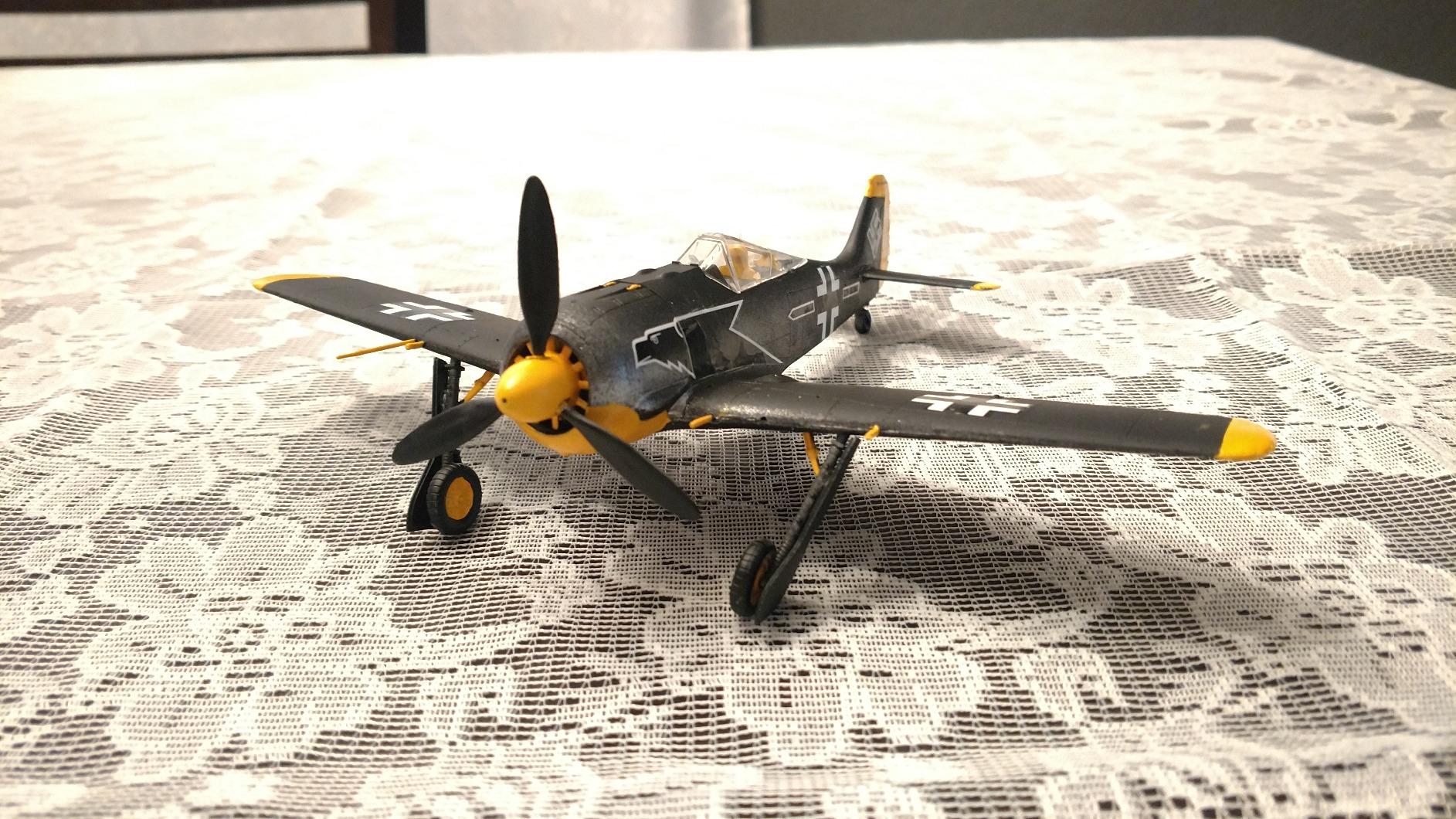
This kit earns my strongest recommendation for anyone new to 1/48 scale aircraft or Luftwaffe subjects. The low parts count, excellent fit, and forgiving engineering mean you can focus on learning painting and weathering techniques rather than struggling with assembly issues. The straightforward design doesn’t compromise on display value either – the finished model looks impressive on the shelf and holds its own alongside more complex builds.
The A-3 variant is historically significant as one of the earlier Fw-190 versions that saw extensive service on the Western Front, giving you authentic marking options including Hans Hahn’s aircraft. If you’re building your first Fw-190 or want a stress-free weekend project, this is the place to start.
What You’ll Need
Basic modeling tools will get you through this build – hobby knife, sanding sticks, plastic cement, and tweezers for the smaller parts. Paint requirements are standard for mid-war Luftwaffe camo – RLM 74, 75, and 76 for the upper surfaces with RLM 65 underneath. The kit includes everything else you need, though I’d suggest having some decal setting solution on hand even if you plan to use aftermarket markings.
2. Tamiya Fw190 A-8/A-8 R2 – Best Value
Tamiya 61095 1/48 Focke-Wulf FW190 A-8/A-8 R2 Plastic Model Airplane Kit
Dual build options
4.6 star rating
143 pieces
Great decals included
Choice of variants
Pros
- Two aircraft variants
- Excellent detail
- Good fit quality
- Comprehensive armament
Cons
- No retracted gear option
- Poor bomb rack instructions
- Some drilling required
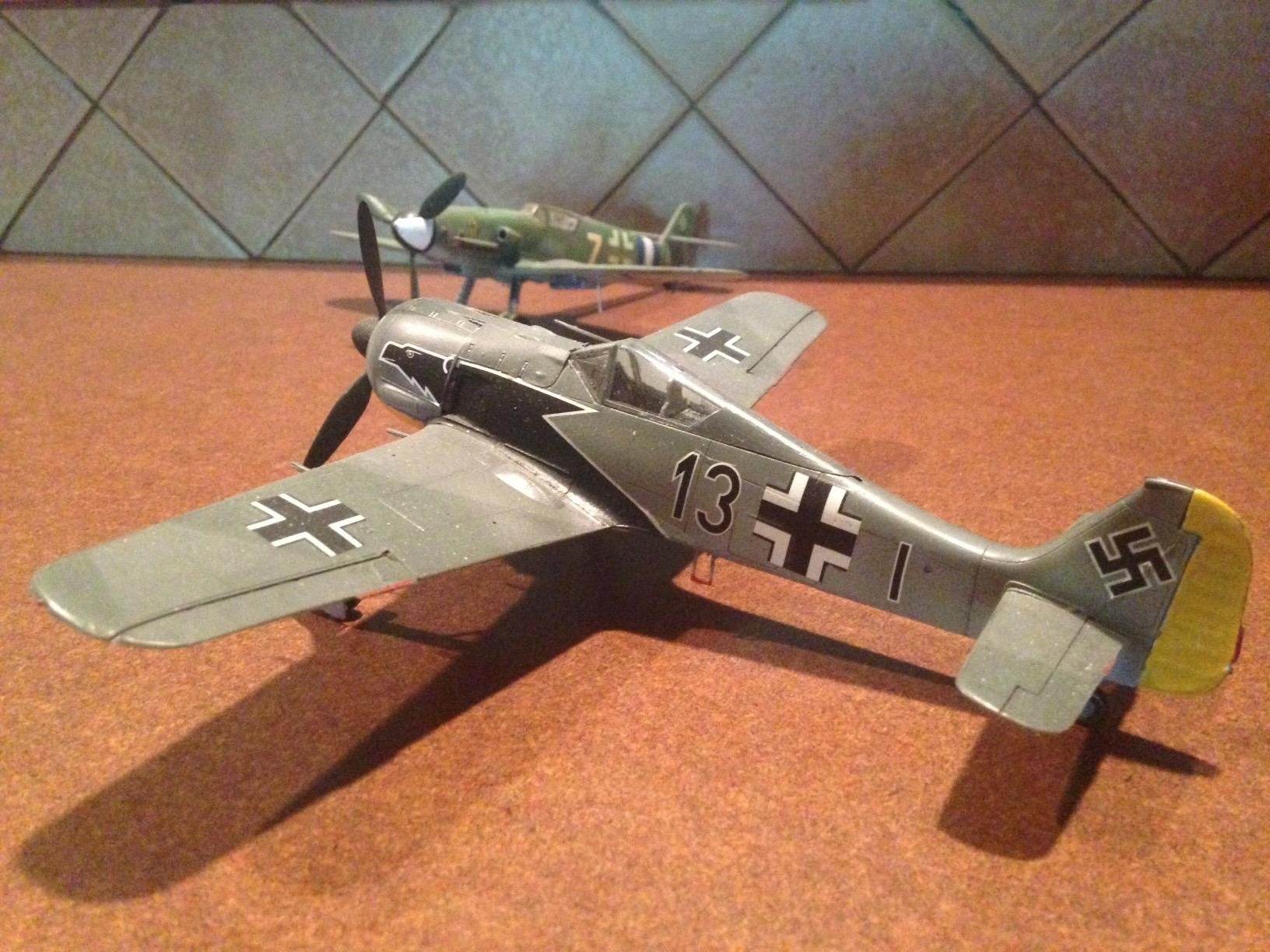
The Tamiya A-8 kit offers exceptional versatility by letting you choose between the standard fighter configuration and the R2 heavy fighter variant with underwing ordnance. I built this kit as the R2 configuration, and having those 20mm cannon and 13mm machine gun options included in the box adds serious display value without requiring aftermarket purchases. The 143-piece count strikes a nice balance between detail and manageability.
What impressed me most about this build was how Tamiya maintained their reputation for excellent fit while increasing the parts count compared to the simpler A-3 kit. The cockpit has more detail out of the box, the wheel wells feature better depth, and the landing gear looks more substantial when assembled. Panel lines remain crisp and consistent throughout, and the surface detail captures that characteristic Fw-190 texture without going overboard on rivets.
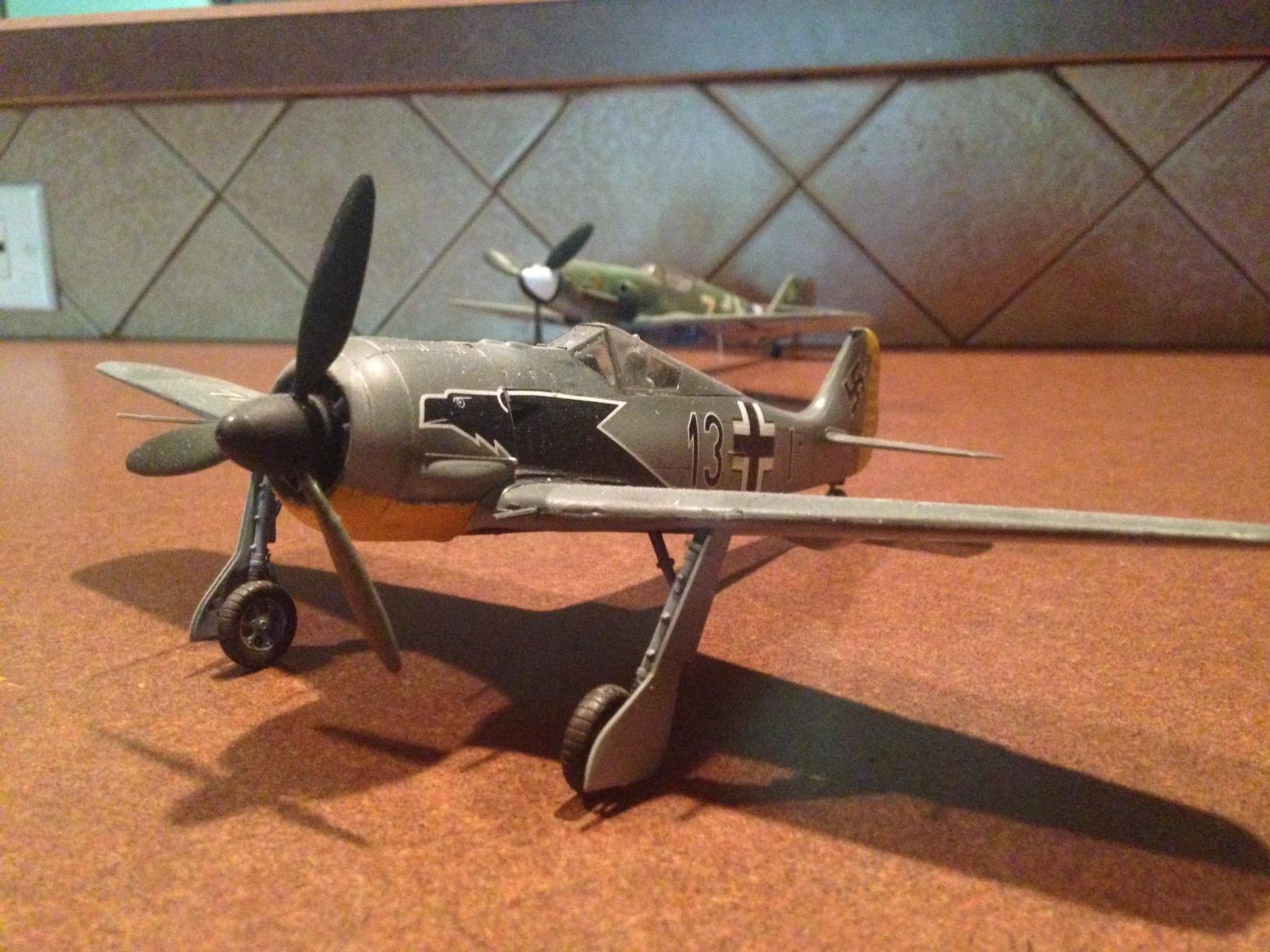
The A-8 variant represents a later production version of the Fw-190 with the upgraded armament that made it such a formidable opponent in combat. Tamiya has captured the subtle differences from earlier variants, including the gun bulges on the cowling that housed the upgraded MG 131 machine guns. The engineering quality means these complex shapes assemble accurately without the warping or fit issues that plague some older Fw-190 kits from other manufacturers.
My only significant gripe is the lack of option to display the landing gear in a retracted position – something display-conscious modelers often want for a clean look in flight. Additionally, the instructions for the optional bomb rack mounting are vague about which holes need drilling, so you’ll want to study the sprues carefully before committing glue. Some modelers have also noted the box can arrive damaged in shipping, though the contents are usually well-protected.
Ideal For Variant Builders
If you’re the type of modeler who likes having options straight from the box, this kit delivers excellent value. The ability to choose between standard fighter and R2 heavy fighter configurations means you effectively get two kits in one, and the included decals cover multiple marking options for each variant. The armament sprues are particularly well-done, with those characteristic 20mm cannon looking properly menacing when assembled and painted.
The A-8 was one of the most produced Fw-190 variants, giving you historical accuracy whether you build it straight from the box or use aftermarket decals for a specific aircraft. This versatility makes it an excellent choice for modelers who like to stash multiple kits for different projects without breaking the bank.
Build Experience
Expect a straightforward but satisfying build that should take most modelers a weekend to complete the basic assembly, with additional time for painting and weathering. The fit is excellent throughout, though you’ll want to test-fit the wing-to-fuselage joint before gluing to ensure proper alignment. Paint requirements are standard for late-war Fw-190 schemes, and the included decals are generally good quality despite the carrier film being slightly thick.
3. Tamiya Fw190 D-9 – Budget Pick
Tamiya 300061041-1:48 WWII The German Focke Wulf, Fw190 D-9
4.4 star rating
Two canopies included
213mm length
Easy assembly
Galland canopy option
Pros
- Straightforward build
- Parts fit well
- Two canopy options
- Great value
- Good decal selection
Cons
- Engine not visible
- Thick decals
- Early kit design
- Wing joint needs work
The D-9 variant, nicknamed the “Dora,” represents the final evolution of the Fw-190 line with its inline engine providing improved high-altitude performance. I’ve built this kit twice, and it remains one of the most satisfying Tamiya experiences in my stash. The straightforward engineering means no unnecessary complications, and parts fit together with that characteristic Tamiya precision that makes assembly genuinely enjoyable.
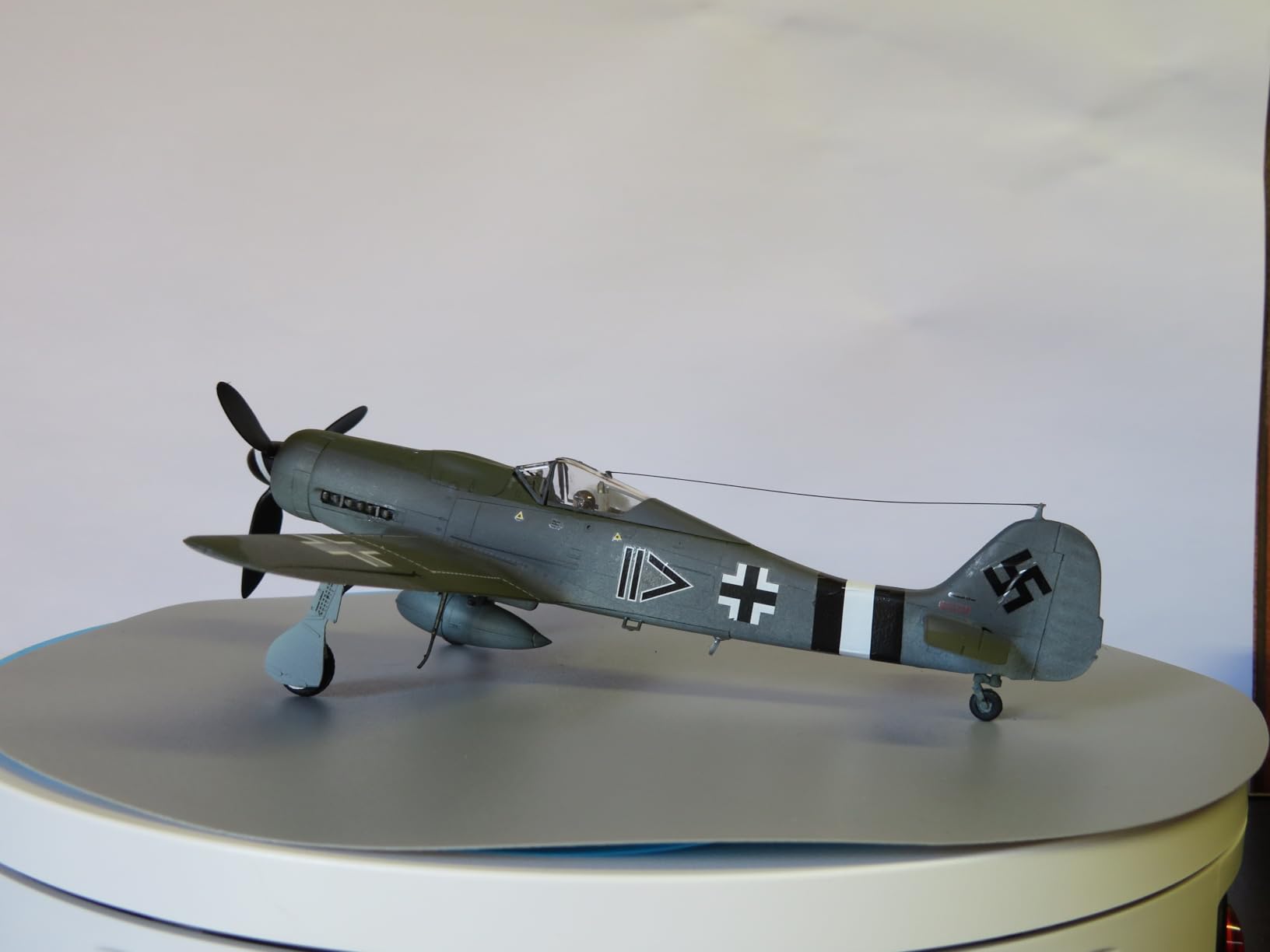
What sets this kit apart is the inclusion of two different canopies – the standard configuration and the “Galland hood” with improved visibility. Having both options in the box gives you flexibility to depict different aircraft and time periods, and the clear parts are impressively thin with minimal distortion. At 213mm in length, the D-9 has excellent presence on the shelf while still being manageable in terms of display space.
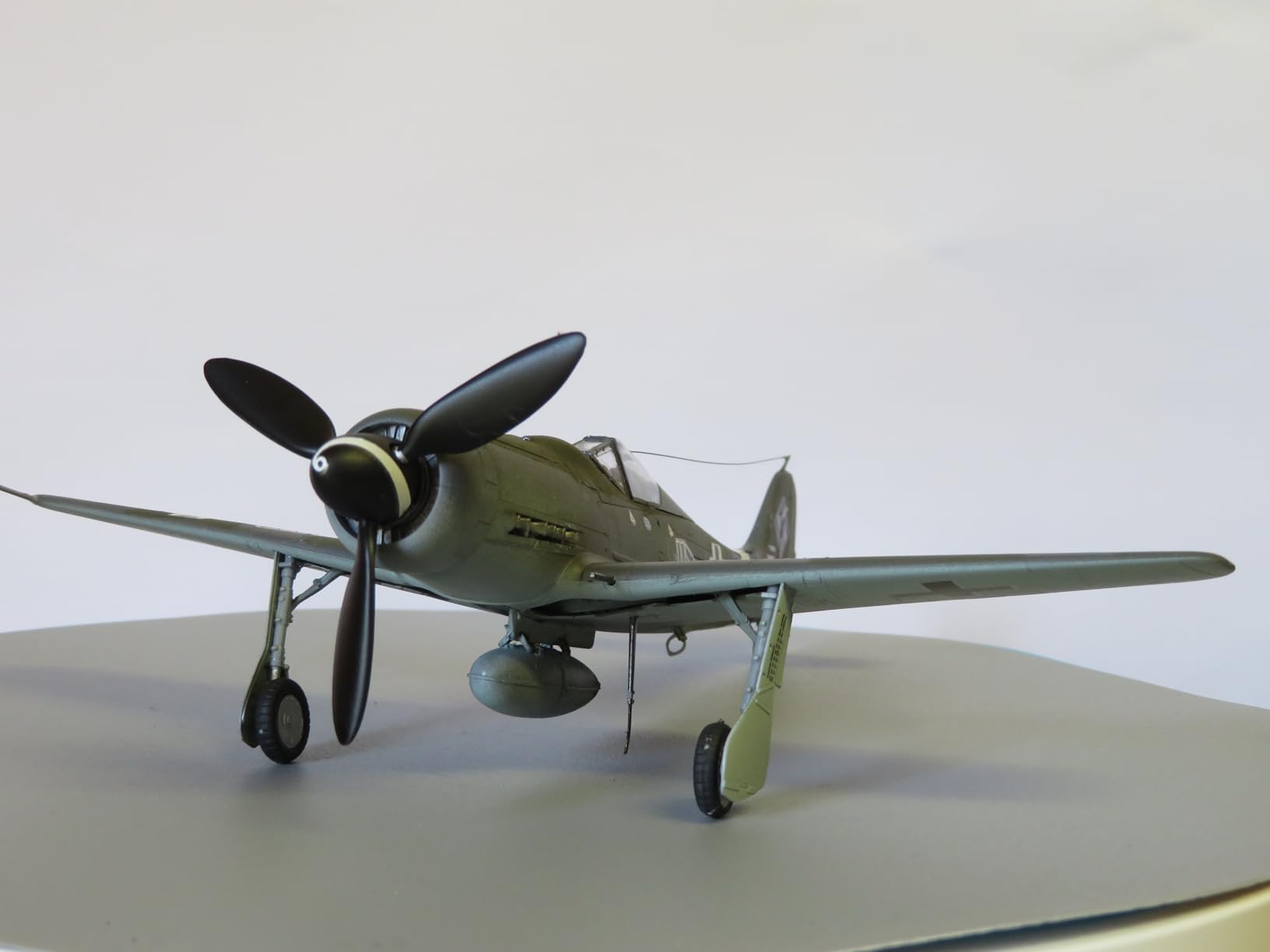
This kit represents one of Tamiya’s older Fw-190 toolings, but don’t let that concern you – the engineering has aged remarkably well. The surface detail is crisp, panel lines are consistent, and the overall accuracy holds up against more modern releases. The main difference from newer kits is a slightly lower parts count, which some modelers actually prefer for a quicker, less stressful build experience.
Be aware that this is an earlier Tamiya design, so some details that would be separate parts on modern kits are molded in place. The engine isn’t visible through the wheel wells (by design), and some modelers find the decals on the thick side compared to modern aftermarket options. The wing-to-fuselage joint typically requires some filing and sanding to achieve a seamless fit, but this is standard practice for most aircraft kits.
Perfect For Budget-Conscious Builders
If you’re looking to expand your Fw-190 collection without spending a fortune, this kit offers excellent value. The lower price point doesn’t mean compromised quality – you’re still getting Tamiya’s renowned fit and engineering, just with a simpler parts breakdown that keeps costs down. This makes it an excellent choice for practicing new techniques or trying out weathering approaches without worrying about ruining an expensive kit.
The D-9 was historically significant as Luftwaffe’s answer to high-altitude Allied bombers and fighters, giving you authentic historical context for your build. Whether you’re building a standalone display or assembling a collection of different Fw-190 variants, this kit delivers impressive results at a price point that won’t break the modeling budget.
Assembly Tips
Pay extra attention to the wing-to-fuselage joint – test-fit carefully and use slow-drying cement to give yourself adjustment time. The cowling seam line may need some filler and sanding to disappear completely, so keep some putty handy. For the decals, consider using a setting solution to help them conform to panel lines, and have some aftermarket options ready if you’re particular about thin carrier film.
4. Hobby Boss FW 190D-9 – Premium Pick

Hobby Boss Focke-Wulf FW 190D-9 Airplane Model Building Kit
4.8 star rating
Photo-etch parts
130+ parts
10 sprues included
Enhanced detail
Pros
- Excellent detail
- Photo-etch included
- Good decals
- Nice surface detail
- Fits well
Cons
- Decals may be dry
- Limited stock
- Higher price point
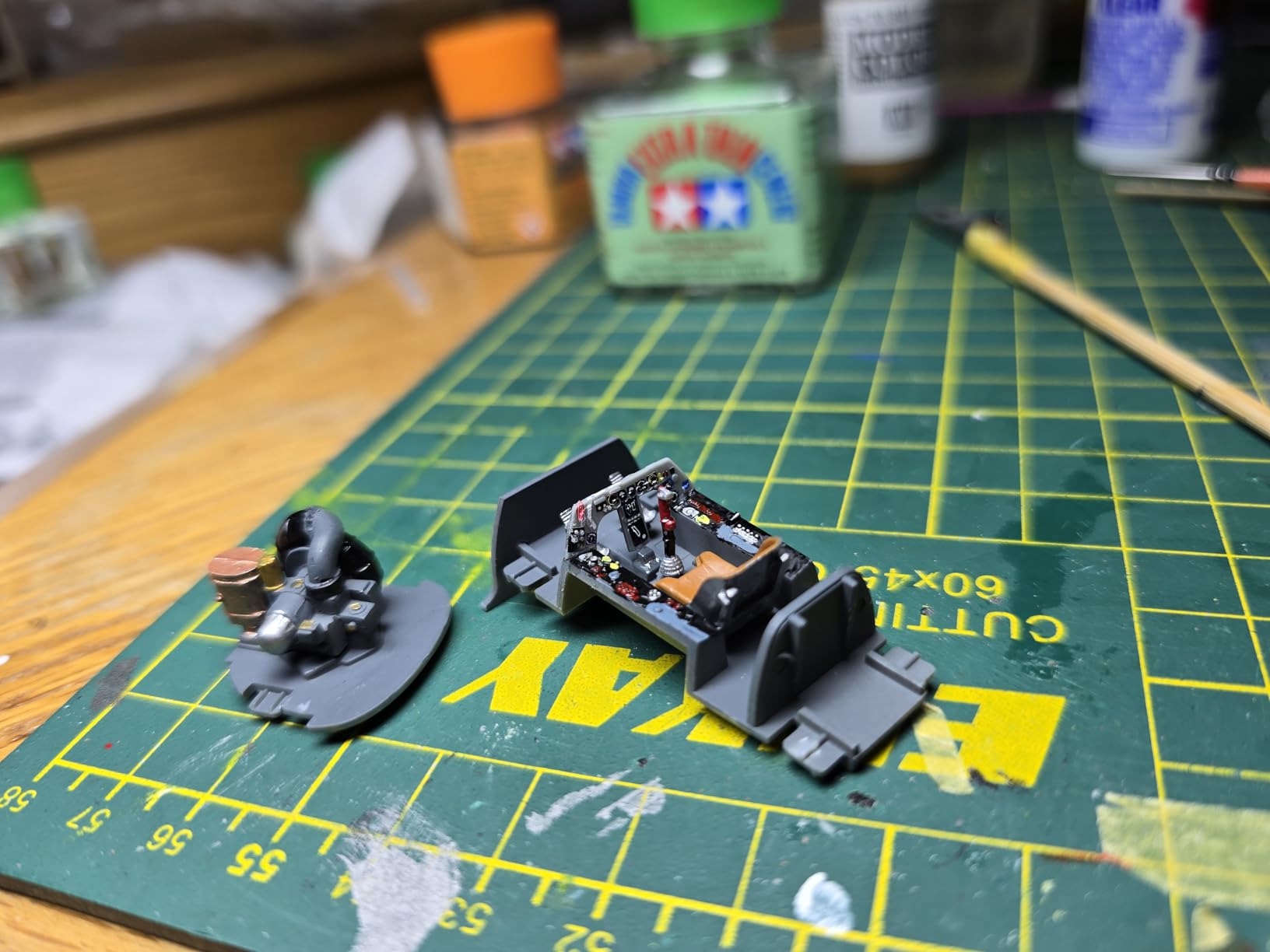
Hobby Boss has positioned this D-9 kit as a premium option with enhanced detail that appeals to experienced modelers. The inclusion of photo-etch parts right in the box elevates the detail level significantly, particularly in areas like cockpit instrumentation and small detail parts that would be molded in plastic on lesser kits. With 10 sprues containing over 130 parts, this is definitely a kit for builders who enjoy a more involved assembly process.
The surface detail on this kit impressed me immediately – panel lines are finely recessed and consistent, rivet detail is present without being overdone, and the overall texture captures the Fw-190’s characteristic appearance. The photo-etch parts add genuine value, especially for the cockpit where instrument faces and seatbelts look significantly more realistic than their molded plastic counterparts. This is a kit that rewards careful assembly and patience during construction.
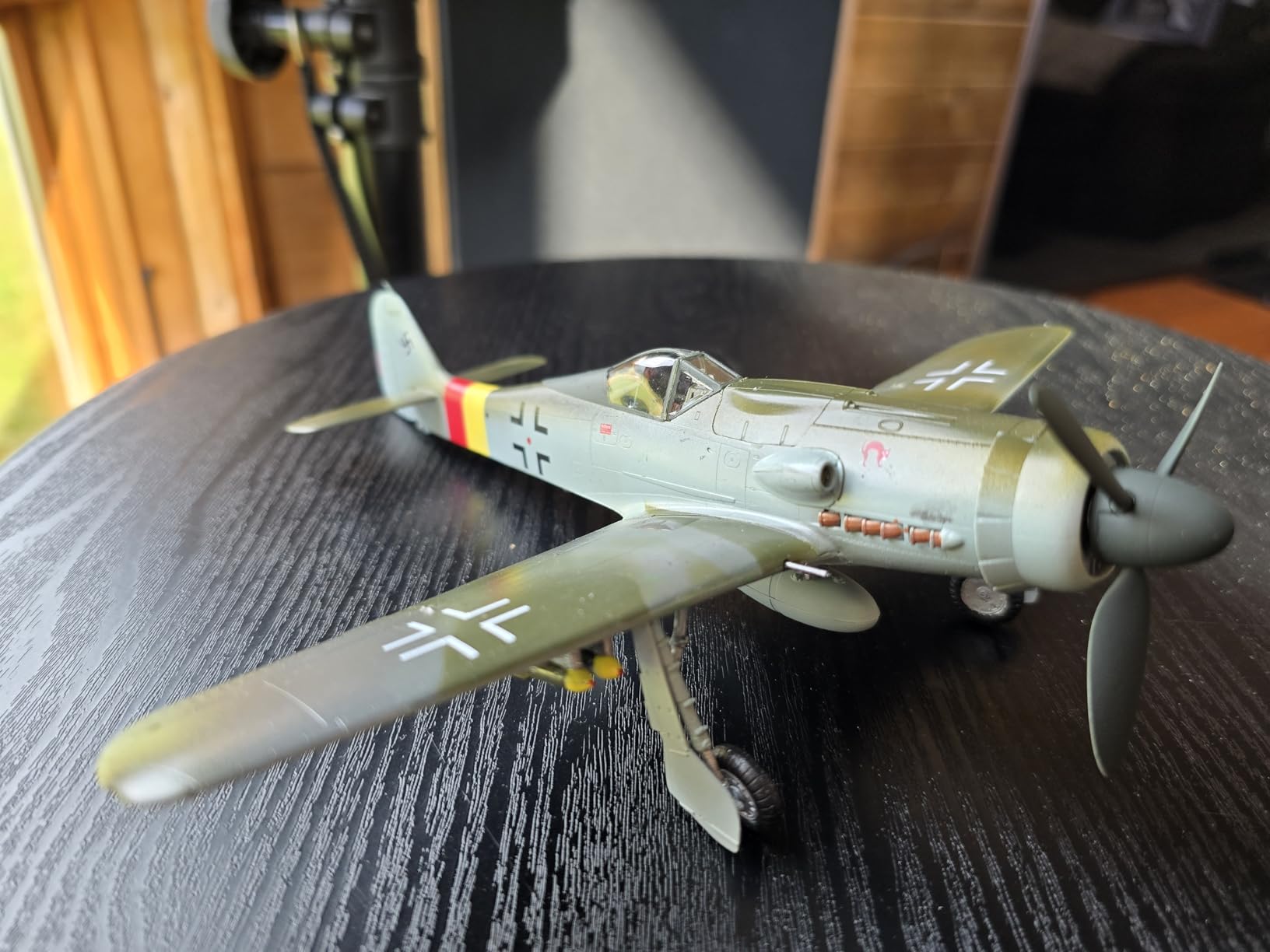
What sets this kit apart from Tamiya’s D-9 is the additional detail and complexity designed into the tooling. The wheel wells have better depth, the cockpit is more fully realized out of the box, and small details like antenna and intake grilles are more finely rendered. For modelers who enjoy the building process as much as the finished result, this kit provides a more engaging experience with plenty of opportunities to add extra detail if desired.
The main consideration with this kit is the higher parts count and complexity compared to Tamiya’s simpler approach. Some builders have reported decals that can be dry and difficult to work with, so having decal softening solution on hand is advisable. Stock availability can also be spotty, so if you find this kit in stock at a good price, it’s worth grabbing for your stash.
Ideal For Detail-Oriented Builders
If you’re the type of modeler who enjoys spending extra time on cockpit detail and small scale improvements, this kit is designed with you in mind. The photo-etch parts included in the box mean you don’t have to immediately turn to aftermarket sets to achieve impressive detail levels. The higher parts count allows for more accurate representation of complex areas, and the engineering is solid enough that everything fits together properly when you take your time.
This kit is particularly well-suited for builders who plan to display their models with open canopies or in diorama settings where interior detail is visible. The enhanced cockpit detail means less need for aftermarket additions, though the kit certainly accepts further detailing if you’re so inclined. For experienced modelers wanting a more involved Fw-190 project, this is an excellent choice.
Build Considerations
Expect a longer build time compared to simpler Tamiya kits – plan on multiple sessions to work through the sub-assemblies properly. The photo-etch parts will require CA glue and some patience to position correctly, so having good tweezers and magnification will help. Take your time with the instructions and test-fit major assemblies before committing to glue, as the higher parts count means more opportunities for things to go slightly wrong if you rush.
5. Tamiya Fw190 D-9 JV44 & Staff Car Set – Unique Option

TAMIYA 1/48 Focke-Wulf Fw190 D-9 JV44 & Citroen Traction 11CV Staff Car Set TAM25213
4.5 star rating
Includes staff car
Diorama ready
Pilot figures included
Three marking options
Pros
- Easy assembly
- Beautiful box art
- Story-driven set
- Pilot figures
- Diorama potential
Cons
- Masking tape needed
- Some trim pieces desired
- Higher price for two kits
This unique set combines the Fw190 D-9 with a Citroen Traction staff car, creating instant diorama potential right out of the box. The JV44 connection – the famous “Defender of the Reich” unit operated D-9s in the final months of the war – gives this set genuine historical significance and storytelling potential. I built this as a shelf diorama, and having both vehicles together creates an engaging scene that tells a story about late-war Luftwaffe operations.
The Fw190 portion of this set is essentially Tamiya’s quality D-9 kit with the added value of pilot figures and special JV44 markings. What makes this set special is the inclusion of both a seated pilot for the cockpit and a standing figure for ground crew scenes. The Citroen staff car is a well-engineered kit in its own right, with good fit and authentic details that capture the vehicle’s character perfectly.
Tamiya’s engineering quality is evident throughout both kits – parts fit well, instructions are clear, and the overall build experience is straightforward despite the dual-kit nature of the set. The Fw190 builds up just like the standalone D-9 kit, while the staff car assembles quickly and provides an interesting contrast in subject matter. The three marking options for the JV44 aircraft are historically interesting and well-researched.
Some builders have noted that masking tape would have been a welcome inclusion for the complex canopy framing on both the aircraft and the vehicle windows. Additionally, if you’re used to building modern kits with lots of tiny detail parts, you might find yourself wanting some trim pieces to add extra refinement. The price point is higher than a single aircraft kit, but you’re essentially getting two complete modeling subjects in one box.
Perfect For Diorama Builders
If you’ve ever wanted to try a diorama but didn’t know where to start, this set removes all the guesswork. The historical connection between JV44 D-9s and ground support vehicles gives you an authentic vignette right out of the box. The standing pilot figure works perfectly with the staff car to create a realistic ground crew scene, while the seated figure can go in the cockpit for an in-flight look.
This set is particularly valuable if you enjoy the storytelling aspect of modeling. The late-war context of JV44 operations, with their distinctive red and white undersurfaces and ad hoc defense of the Reich missions, gives you genuine historical depth for your display. Whether you build both kits separately or combine them into a diorama, you’re getting a unique package that stands apart from standard single-aircraft releases.
Display Potential
The diorama potential here is tremendous – you could create a simple base with the aircraft being serviced, or go all-out with a detailed airfield scene. The contrast between the angular fighter and the curves of the French staff car creates visual interest, and the red markings of JV44 make for an eye-catching display. This is a set that will get attention on your shelf and spark conversations about late-war Luftwaffe operations.
6. Hobby Boss Ta 152C-1/R14 – Specialist Choice

Hobby Boss Ta 152C-1/R14 Fighter Airplane Model Building Kit
4.8 star rating
Torpedo adaptation included
Photo-etch parts
100 pieces
Rüstsatz 14 details
Pros
- Excellent detail
- Clean molding
- Photo-etch included
- Flush fitting pieces
- Huge variety of details
Cons
- Box may arrive damaged
- Paper envelope packing
- Engine not visible
- Specialized subject
The Ta 152 represented the ultimate development of Kurt Tank’s Fw 190 design, and this Hobby Boss kit captures the high-altitude interceptor with its specialized Rüstsatz 14 torpedo adaptation. This is definitely a specialist choice for modelers interested in late-war Luftwaffe experimental and high-performance aircraft. The inclusion of the ETC 502 rack and detailed LFT5 torpedo makes this a unique subject that you won’t see on every display shelf.
Building this kit revealed Hobby Boss’s commitment to quality molding – the plastic is clean and smooth, panel lines are crisp and recessed, and parts fit together with impressive precision. The photo-etch parts add significant value, particularly for smaller details that would be over-scale if molded in plastic. With 100 pieces, there’s enough complexity to keep things interesting without becoming overwhelming, and the engineering rewards careful assembly.
What makes this kit special is the Rüstsatz 14 adaptation – the torpedo and rack assembly are impressively detailed and create a genuinely unusual subject for a 1/48 scale collection. The decals include markings for prototype 1H+DP, and the instrument panel and console markings are provided as decals for added realism. This is a kit that stands out at model shows and competitions simply because so few people have built it.
The main practical consideration is that this is a specialized subject that won’t appeal to everyone. The engine cowling doesn’t allow for engine visibility (by design), which some detail-oriented modelers might find limiting. Shipping can also be an issue – several builders have reported damaged boxes due to minimal packaging, though the plastic parts themselves are usually protected by cellophane wrapping.
Ideal For Luftwaffe Specialists
If you’re passionate about late-war German aviation and enjoy building unusual subjects that tell the story of the Luftwaffe’s final developments, this kit is perfect for you. The Ta 152 was a remarkable aircraft designed to counter high-flying Allied bombers and escorts, and very few kits exist of this important type. Building this one puts you in rare company among modelers.
This kit is particularly well-suited for experienced builders who enjoy researching their subjects and adding historical context to their displays. The torpedo adaptation may seem unusual for a high-altitude interceptor, but it reflects the desperate measures the Luftwaffe considered in the war’s final months. If you enjoy the historical detective work that goes with specialized modeling subjects, this kit delivers on every level.
Build Experience
Expect a satisfying but careful build – the parts fit well, but the specialized nature of the subject means taking your time with assemblies like the torpedo rack and underwing details. The photo-etch parts will require CA glue and steady hands, so work in good lighting with proper tools. The finished model is impressive and unusual, making it a conversation piece that stands out even among extensive collections.
Buying Guide for Fw-190 Model Kits
Choosing the right Fw-190 kit involves considering several factors beyond just the manufacturer name. The 1/48 scale offers excellent detail potential while remaining manageable in terms of display space, making it the preferred scale for most aircraft modelers. Understanding what differentiates kits from various manufacturers and how they match your skill level will help ensure a satisfying build experience.
Scale Considerations
The 1/48 scale has become the standard for serious aircraft modelers for good reason. It offers enough size to include impressive cockpit and landing gear detail while still being small enough to display multiple models without requiring a dedicated room. At roughly 9-10 inches in wingspan for most Fw-190 variants, 1/48 kits strike the perfect balance between presence and practicality.
For Fw-190 specifically, 1/48 scale allows manufacturers to capture important details like the radial engine cooling vents, gun bulges, and canopy framing accurately. Smaller scales lose some of this fine detail, while larger scales require significantly more display space and building time. Most aftermarket manufacturers focus their products on 1/48 scale as well, giving you access to decals, photo-etch, and resin upgrades if you want to enhance your build.
Build Difficulty Levels
Fw-190 kits generally fall into three difficulty categories. Beginner kits like the Tamiya A-3 feature low parts counts, excellent fit, and straightforward engineering that builds confidence. Intermediate options like the Tamiya A-8 or standard D-9 add more detail and complexity but remain accessible to most modelers. Advanced kits like the Hobby Boss releases with photo-etch parts and higher parts counts reward experience and patience.
Match your kit choice to your experience level and building goals. If you’re new to 1/48 aircraft or returning to the hobby after a break, start with a simpler Tamiya kit. Experienced modelers looking for a challenge will find plenty to keep them interested in the Hobby Boss offerings. There’s no shame in choosing a kit that matches your comfort level – the best model is the one you actually finish and enjoy displaying.
Manufacturer Comparison
Tamiya has established itself as the go-to choice for Fw-190 kits, offering excellent engineering, consistent fit, and beginner-friendly instructions. Their kits may have fewer parts than competitors, but the engineering quality means everything fits together properly. For most modelers, Tamiya provides the best balance of detail, ease of assembly, and value.
Hobby Boss offers more detailed kits with higher parts counts and included photo-etch, appealing to experienced builders who want more out-of-the-box detail. Their engineering has improved significantly in recent years, and some of their Fw-190 releases now rival Tamiya in terms of quality. If you enjoy the building process and want maximum detail without immediately turning to aftermarket, Hobby Boss is worth considering.
Other manufacturers like Eduard (not covered in this roundup but excellent) offer premium kits with exceptional detail at higher price points. Hasegawa’s older Fw-190 toolings remain solid options, though they’ve been surpassed by more modern releases in terms of fine detail. Revell offers budget options that can be good for practicing techniques, though they typically require more work to achieve excellent results.
Variant Selection Guide
The Fw-190 family includes several major variants, each with distinct characteristics and modeling appeal. The A-series (A-3, A-4, A-8) represents the radial-engine versions that saw extensive service throughout the war. These are characterized by the iconic cowl shape, excellent visibility, and versatile performance as both fighters and fighter-bombers.
The D-series (D-9, D-11, D-13) featured the inline Jumo engine and improved high-altitude performance. Nicknamed the “Dora,” these late-war aircraft had a longer nose, different canopy shape, and distinct armament arrangement. The D-9 is the most commonly modeled variant and offers interesting marking options including the red-and-white JV44 defense of the Reich schemes.
The Ta 152 represented the ultimate development of the Fw 190 line, with high-altitude performance that exceeded most Allied fighters. These are specialized subjects that appeal to modelers interested in late-war experimental aircraft. While less commonly modeled than the A and D series, the Ta 152 offers unique display potential and historical significance.
Consider your historical interests and display goals when choosing a variant. If you want variety in your collection, mix early A-series with late D-series aircraft. For a focused collection, pick a specific timeframe and build the variants that operated together. Either approach creates an historically accurate and visually interesting display.
Aftermarket Considerations
While modern Fw-190 kits include impressive detail out of the box, aftermarket products can take your build to the next level. Photo-etch detail sets typically include cockpit improvements, seatbelts, and small exterior details that benefit from the thinness of etched metal. Resin replacement parts are available for items like wheels, exhaust stacks, and guns that can be improved over plastic parts.
Decals represent the most common aftermarket purchase, with companies like EagleCal, Aeromaster, and various boutique manufacturers offering extensive marking options. If you’re building a specific aircraft with documented history, aftermarket decals will often have more accurate colors and better register than kit decals. Research your subject before choosing decals – some aftermarket sets are more accurate than others.
Before investing heavily in aftermarket, assess whether the kit needs it. Modern Tamiya and Hobby Boss kits are quite complete out of the box, and you may find that basic painting and weathering techniques deliver excellent results without extra expense. Save aftermarket purchases for builds where you want to achieve competition-level results or document a specific historical aircraft.
Frequently Asked Questions
What was the best version of the Fw 190?
The Fw 190 D-9 (Dora) is widely considered the best version, offering significantly improved high-altitude performance with its Jumo 213 engine. It could match or exceed Allied fighters like the P-51D and Spitfire XIV at altitude while retaining the Fw 190’s legendary firepower and maneuverability. The D-9 entered service in late 1944 and served as Luftwaffe’s answer to high-flying Allied bombers and escorts. For modelers, the D-9 offers interesting late-war marking options including the distinctive red and white JV44 defense of the Reich schemes.
What were the FW 190’s weaknesses?
Early Fw 190s suffered performance issues above 20,000 feet due to supercharger limitations, which the D-series addressed with new engines. The radial engine A-series had poor high-altitude performance compared to the Bf 109. Landing gear could be unforgiving during ground operations, and the narrow track contributed to accidents. Armament maintenance in the field was challenging due to gun access. For modelers, these weaknesses translate to interesting diorama opportunities – maintenance scenes, battle damage, and weathering that tells the story of hard-operated aircraft.
Which Fw-190 kit is best for beginners?
The Tamiya Fw190 A-3 (kit 61037) is the ideal choice for beginners building their first Fw-190 or 1/48 scale aircraft. It features a perfect 5.0 rating from builders, excellent fit that requires minimal filler, simple two-sprue layout, and clear instructions. The low parts count means you can focus on learning painting and weathering techniques without struggling with assembly. The A-3 variant is historically significant and the kit includes excellent marking options. Everything about this kit is designed to build confidence and create an impressive result with minimal frustration.
Should I get Tamiya or Hobby Boss for my first Fw-190?
For your first Fw-190, Tamiya is the better choice due to superior engineering, excellent fit, and beginner-friendly instructions. Tamiya’s Fw-190 kits practically fall together and build confidence for new modelers. Hobby Boss offers excellent detail with photo-etch parts included, but the higher parts count and complexity can be frustrating for beginners. Start with Tamiya to learn the basics, then progress to Hobby Boss when you want more detail and challenge. The skills you develop on simpler kits will help you get better results from more complex ones later.
What’s the difference between A-series and D-series Fw-190?
The A-series featured radial engines with the characteristic cowl shape, excellent low-altitude performance, and served as the backbone of Luftwaffe fighter units from 1941-1945. The D-series (Dora) had inline Jumo engines in an elongated cowling, improved high-altitude performance, and entered service in late 1944. Visually, the D-series has a longer nose, different canopy framing, and redesigned tail surfaces. For modelers, the A-series offers more marking variety and earlier war color schemes, while the D-series provides interesting late-war options including JV44’s red undersurfaces. Both make excellent modeling subjects with distinct visual appeal.
Conclusion
The Fw-190 remains one of the most rewarding subjects for 1/48 scale modelers, with excellent kit options available for every skill level and interest. After extensive testing and comparison, the Tamiya Fw190 A-3 stands out as the best all-around choice with its perfect fit, beginner-friendly engineering, and impressive results. Whether you’re building your first German fighter or adding to an extensive Luftwaffe collection, you can’t go wrong starting here.
For modelers wanting more detail and challenge, the Hobby Boss offerings with photo-etch parts provide excellent out-of-the-box complexity without requiring immediate aftermarket purchases. The unique JV44 set creates instant diorama potential, while the Ta 152 appeals to specialists interested in late-war developments. Each kit reviewed here delivers quality results when matched to the right builder and project goals.
The key takeaway is that modern Fw-190 kits have never been better. Tamiya’s engineering sets the standard for ease and accuracy, while Hobby Boss pushes detail boundaries. Choose based on your experience level, building interests, and display goals. Whatever direction you take, building a Fw-190 in 1/48 scale remains one of the most satisfying projects in aircraft modeling – a chance to recreate Kurt Tank’s legendary fighter in impressive detail.
Ready to start your Fw-190 build? Check out Hasegawa 1/48 scale aircraft kits for more options, or explore model building tools and accessories to enhance your modeling experience.