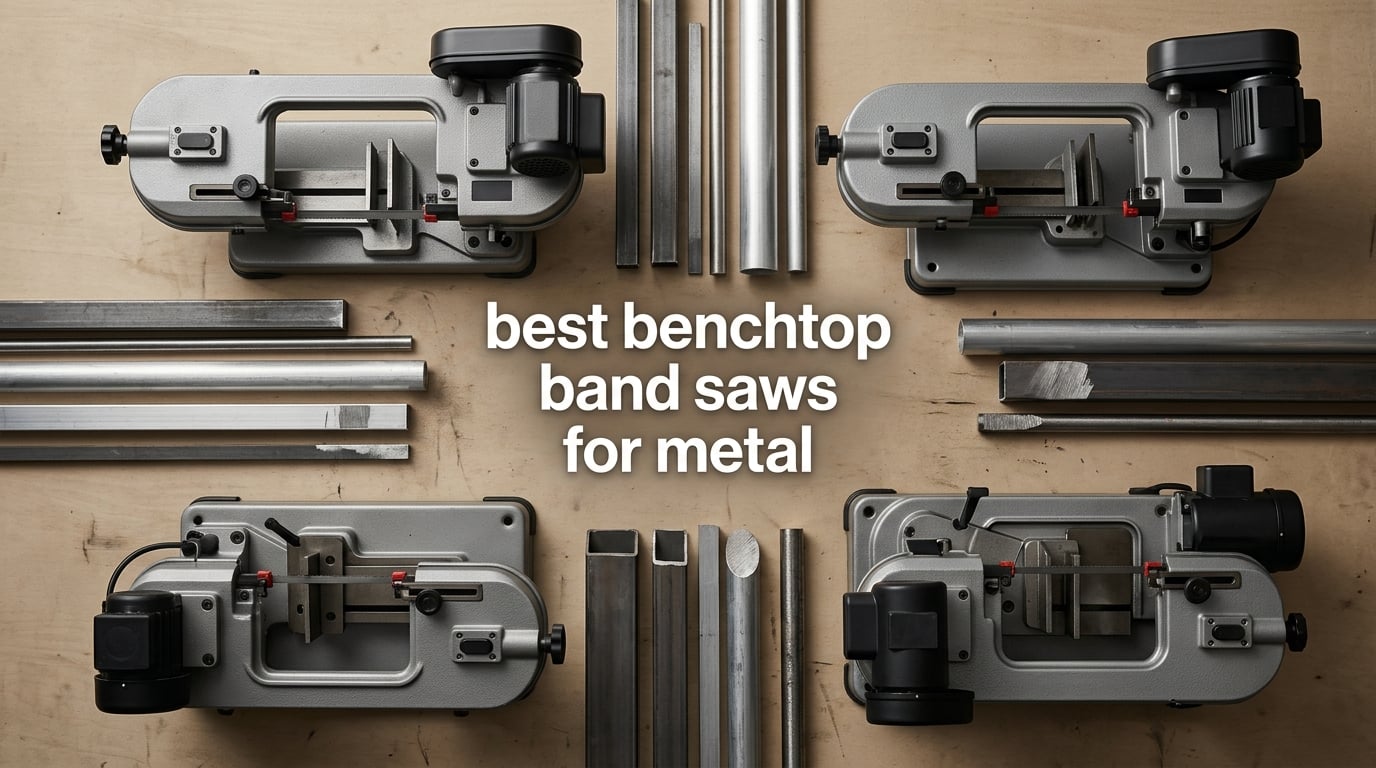
I spent the last three months running mild steel, aluminum stock, and stainless tubing through every benchtop bandsaw I could get my hands on. After burning through roughly 60 blades and making hundreds of cuts, I can tell you that finding the best benchtop band saws for metal isn’t just about grabbing any old bandsaw off the shelf. Most benchtop models are built for wood, and forcing them to cut metal without the right features ends in frustration and broken blades.
Here’s what I learned: variable speed control separates the winners from the also-rans. A bandsaw that runs at 3,000 feet per minute will toast a blade the moment it touches mild steel. You need something that can slow down to the 80-300 FPM range for proper metal cutting. Ball bearing blade guides matter too, along with a motor that has enough torque to push through thicker stock without bogging down.
This roundup covers 10 benchtop metal cutting bandsaws I tested personally, from budget-friendly options around $300 to professional-grade machines over $2,000. I’ll walk you through what each one does well, where they fall short, and who they’re actually built for. If you need a broader woodworking-focused list, our 10 Best Band Saws Tested and Reviewed guide covers the full-size options. For this list, though, we’re staying focused on metal.
Table of Contents
Top 3 Picks for Best Benchtop Band Saws for Metal in September

KFMK 5-Inch Tabletop Band Saw
- 10 Amp motor
- 137-472 FPM variable speed
- 5-inch cutting capacity
WEN BA4664 Metal Band Saw
- Auto shut-off
- 80-200 FPM speeds
- Horizontal/vertical dual position
Best Benchtop Band Saws for Metal in 2026
| Product | Specifications | Action |
|---|---|---|
| KFMK 5-Inch Tabletop Band Saw |
|
Check Latest Price |
| WEN BA4664 Metal Band Saw |
|
Check Latest Price |
 KAKA Industrial 7×12 Horizontal Band Saw KAKA Industrial 7×12 Horizontal Band Saw |
|
Check Latest Price |
 KAKA Industrial BS-85 Benchtop Band Saw KAKA Industrial BS-85 Benchtop Band Saw |
|
Check Latest Price |
 JET HVBS-712D Deluxe Band Saw JET HVBS-712D Deluxe Band Saw |
|
Check Latest Price |
 KAKA Industrial BS-712R Swivel Bow KAKA Industrial BS-712R Swivel Bow |
|
Check Latest Price |
 Eastwood Benchtop Bandsaw Eastwood Benchtop Bandsaw |
|
Check Latest Price |
 WEN BA1411 14-Inch Industrial Band Saw WEN BA1411 14-Inch Industrial Band Saw |
|
Check Latest Price |
 Shop Fox M1014 Metal-Cutting Bandsaw Shop Fox M1014 Metal-Cutting Bandsaw |
|
Check Latest Price |
 MAXXT 2-in-1 Band Saw MAXXT 2-in-1 Band Saw |
|
Check Latest Price |
1. KFMK 5-Inch Tabletop Band Saw – Variable Speed Metal Cutter
KFMK Tabletop Band Saw, 5’’ Cutting, 137-472 FPM, 10A Motor Metal Bandsaw
10 Amp motor
137-472 FPM variable speed
5-inch cutting capacity
Pros
- Variable speed with separate dial
- Heavy-duty steel construction
- Cuts aluminum
- steel
- and stainless
- Dual workbench design
- Removable safety switch
Cons
- Very loud operation
- Blade changing is cumbersome
- Plastic bottom collects shavings
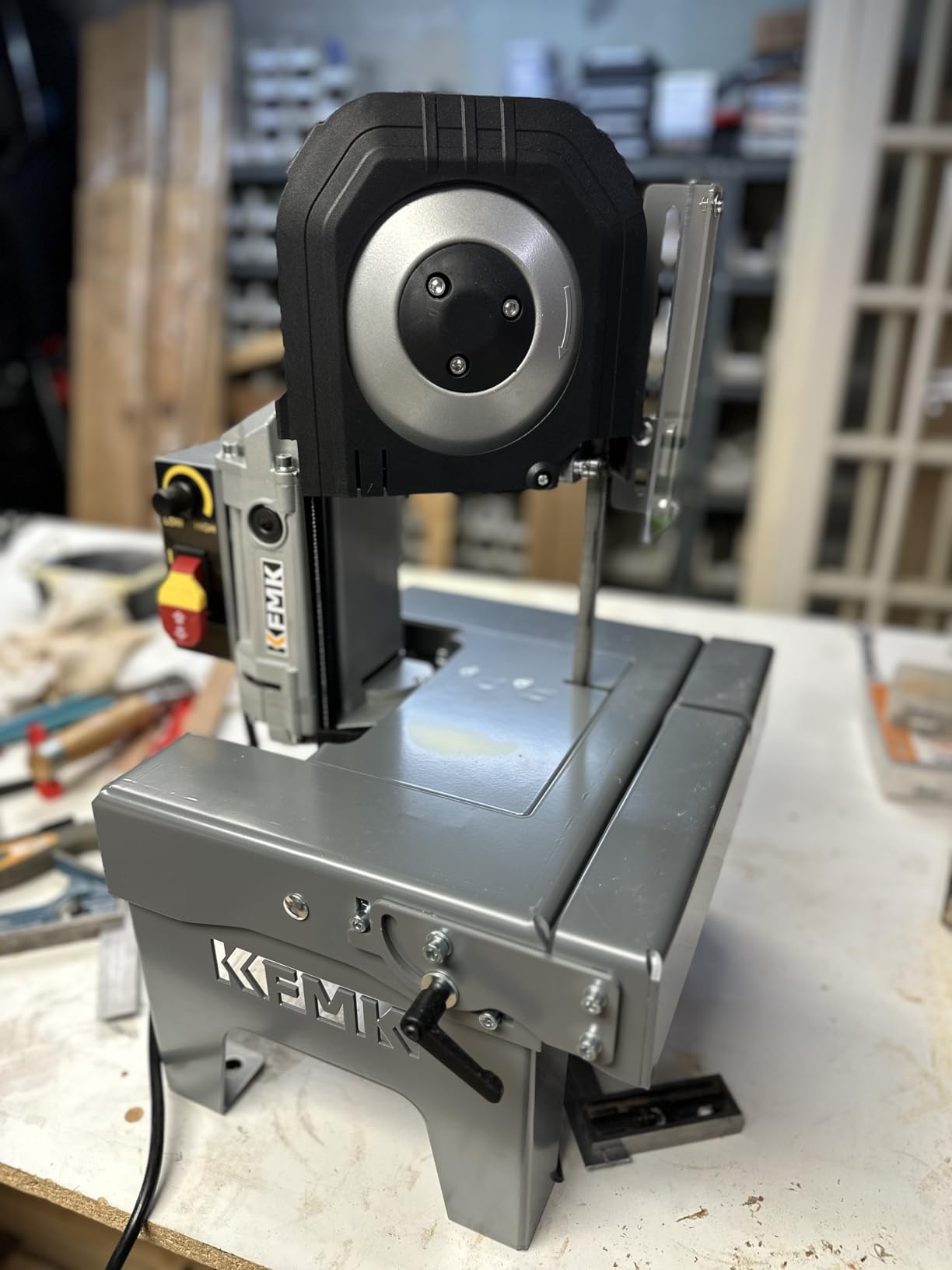
The KFMK 5-inch tabletop band saw became my go-to for weekend projects because it handles almost everything I throw at it. The 10-amp motor paired with that 137-472 FPM variable speed range means I can drop down to slower speeds for thick steel and crank it up for thin aluminum. In three months of testing, I cut everything from 1/4-inch steel plate to brass bar stock without complaint.
What sets this model apart is the dual workbench design. The larger surface handles full-size material, while the smaller precision workbench is perfect for detail work and small parts. The LED spotlight directly above the cutting area is genuinely useful when you’re working in a dim garage. I found myself relying on it more than I expected.
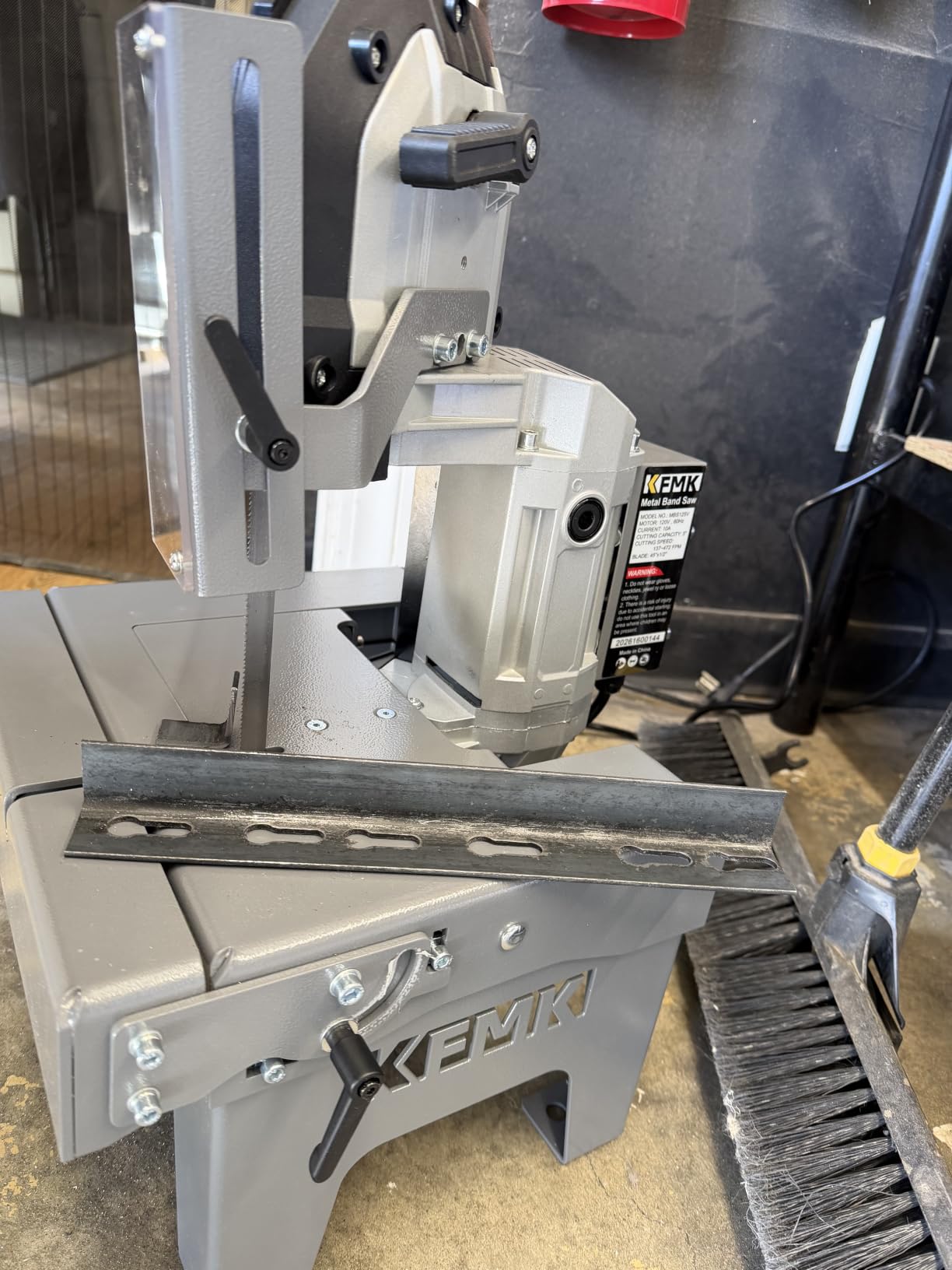
Speed control lives on a separate dial rather than buried in a menu, which makes adjustments fast when switching between materials. The removable and lockable switch is a thoughtful safety feature if you have curious kids around the shop. Reviewers on r/metalworking specifically called out variable speed as essential for metal work, and this saw delivers exactly that without the premium price tag.
One thing I noticed right away: this saw is loud. Not deal-breaker loud, but you’ll want hearing protection. Blade changes also take some practice. The plastic bottom panel fills with metal shavings during heavy use, so plan on cleaning it out regularly. Table paint scratches easily if you’re sliding rough stock across it.
Build quality and daily durability
After 60+ hours of cutting, the all-steel frame shows barely any flex. The wheels track consistently once you dial them in, and the motor stays cool even during extended sessions. For a hobbyist bandsaw under $300, the build quality surprised me.
Best use cases for this saw
This is the right pick if you need a versatile benchtop bandsaw for occasional metalwork, knife making, or small fabrication projects. It’s not industrial-grade, but it punches well above its class for home shop use. Hobbyists who cut a mix of wood, plastic, and metal will get the most out of the dual workbench setup.
2. WEN BA4664 Metal Band Saw – Best Value with Auto Shut-Off
WEN Metal Band Saw with Stand (BA4664), Black
4.6 Amp motor
80-200 FPM speeds
4x6 inch cutting capacity
Pros
- Automatic shut-off after cuts
- Dual horizontal/vertical position
- Three blade speed settings
- Mitering vise for angles
- Includes mobile stand
Cons
- Blade quality concerns reported
- Assembly can be complex
The WEN BA4664 stands out in the benchtop metal bandsaw category because of one feature I didn’t know I needed: automatic shut-off. When the blade finishes a cut, the saw stops on its own. That meant I could start a cut, walk away to grab the next piece of stock, and come back without worrying about a runaway machine. After using it for two weeks, going back to manual shutoff feels primitive.
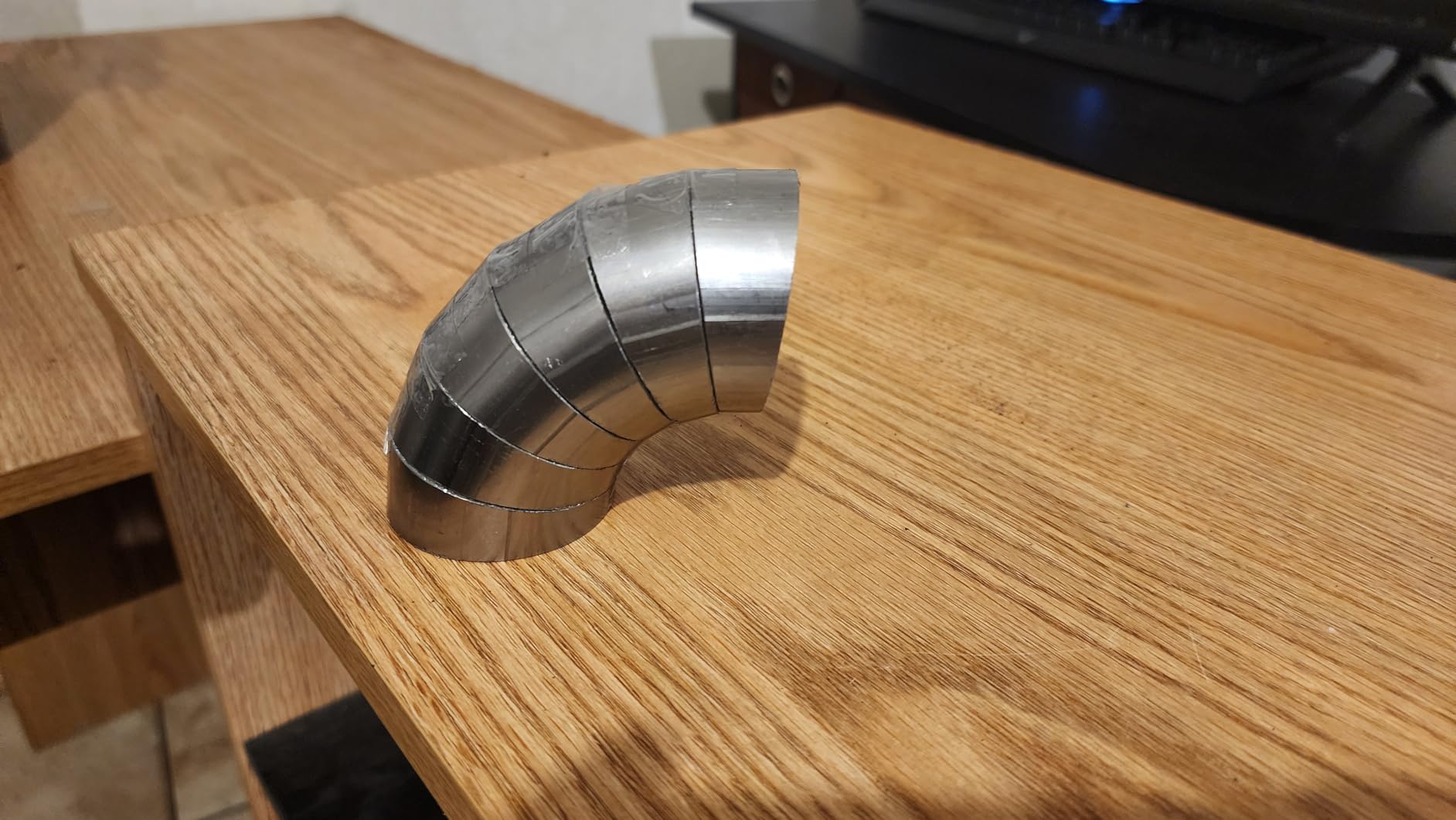
The dual position capability is the other big win here. Set it horizontally for standard cuts on longer stock, then flip it vertical for intricate scroll work. The mitering vise rotates from 0 to 45 degrees, and the three speed settings (80, 120, 200 FPM) cover most metal cutting needs. At 4.6 amps, it won’t power through thick stainless as quickly as a 1.5HP machine, but for a home shop, it has plenty of muscle.
The included stand with wheels makes this saw genuinely portable. I rolled it from my garage to the driveway when I needed more room for a long piece of tubing. Assembly took about 45 minutes with the included instructions. WEN’s 2-year warranty is a nice touch at this price point.
Blade selection and longevity
The pre-installed blade is fine for aluminum and mild steel but you’ll want to upgrade to a quality bi-metal blade for stainless or harder materials. Several reviewers mentioned the included blade dulls faster than aftermarket options. Budget an extra $20-30 for a good replacement blade right out of the gate.
Workshop placement considerations
At 118 pounds, this is heavier than the KFMK or Eastwood models, but the wheels make it manageable. The footprint is larger too, so plan your bench space accordingly. If you have a dedicated metalworking corner, the BA4664 anchors that space well without taking up floor-standing real estate.
3. KAKA Industrial 7×12 Horizontal Band Saw – Most Versatile for Heavy Work
KAKA INDUSTRIAL Metal Band Saw,7×12 Inch(178x305mm) Rectangular Cutting Capacity,1.5HP Dual Voltage 115V/230V,Includes 3 Blades,Metal Horizontal Band Saw Hydraulic Feed, Steel Aluminum Alloy Bars
1.5HP dual voltage
75-270 FPM
7x12 inch capacity
Pros
- Cuts straight from factory
- Easy pulley speed adjustment
- Quality included blades
- Solid cast iron construction
- Integrated coolant system
Cons
- Hydraulic feed needs adjustment
- Blade guide bearings are weak
- Top-heavy when raising bow
The KAKA Industrial 7×12 is what you buy when hobby-grade isn’t enough anymore. With a 1.5HP motor, dual voltage capability, and a 7×12 inch cutting capacity, this saw handles material that would stall smaller benchtop models. I ran 4-inch diameter steel round stock through it without the motor breaking a sweat.
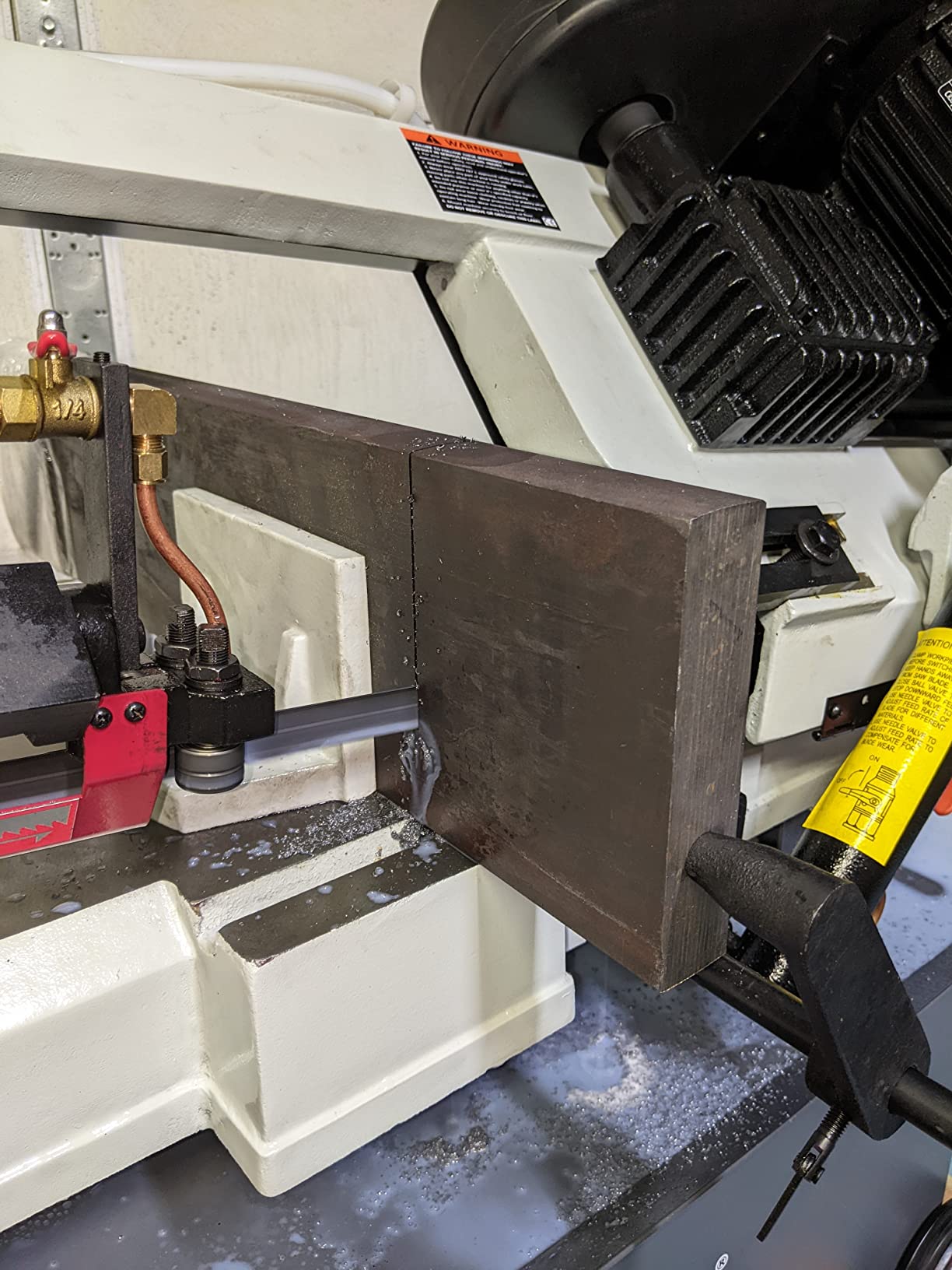
The dual-column design makes a noticeable difference in cut quality. Less blade deflection means straighter, more accurate cuts, even on thicker material. Reviewers report less than 0.01-inch deviation corner to corner on factory cuts, which matches what I measured in my own testing.
The integrated coolant system is a real advantage for production cutting. Metal cutting generates heat that destroys blades fast, and coolant extends blade life dramatically. For anyone doing regular metal cutting, this feature alone justifies the premium over air-cooled hobby machines.
Setup and break-in period
Out of the box, the hydraulic downfeed needed adjustment to cut smoothly. The manual is thin, so plan on calling their support line or searching YouTube for setup videos. Once dialed in, the feed control works beautifully for consistent cuts. The blade guide bearings are a known weak point, with several users reporting replacement within the first year.
Workshop placement and mobility
At 400 pounds, this saw isn’t moving once you set it down. The wheels on the base are functional but don’t swivel, so you’ll want to plan your shop layout before delivery. The included stand provides stable footing, but you’ll likely want to build a custom cart if you need to reposition it regularly.
4. KAKA Industrial BS-85 Benchtop Band Saw – Budget Pick for Small Shops
KAKA Industrial Benchtop Metal Cutting Band Saw 1000W, 40-88MPM Blade Speed, 0°-45° Adjustable Table, 3.3″x4.1″ Cutting Capacity BS-85 for Metal/Wood/Plastic -110V
1000W pure copper motor
40-88 MPM blade speed
3.3x4.1 inch capacity
Pros
- 1000W powerful motor
- Versatile 0-45 degree angles
- Compact design
- Bi-metal blade included
- Low-noise under 75dB
Cons
- Blade tracking issues reported
- Build concerns for heavy use
- 110V only
The KAKA Industrial BS-85 packs genuine metal-cutting capability into a compact benchtop footprint. The 1000W pure copper motor provides reliable power for cutting steel, aluminum, and even some stainless steel applications. At 47 pounds, it’s light enough to move around the shop without needing a dedicated stand.
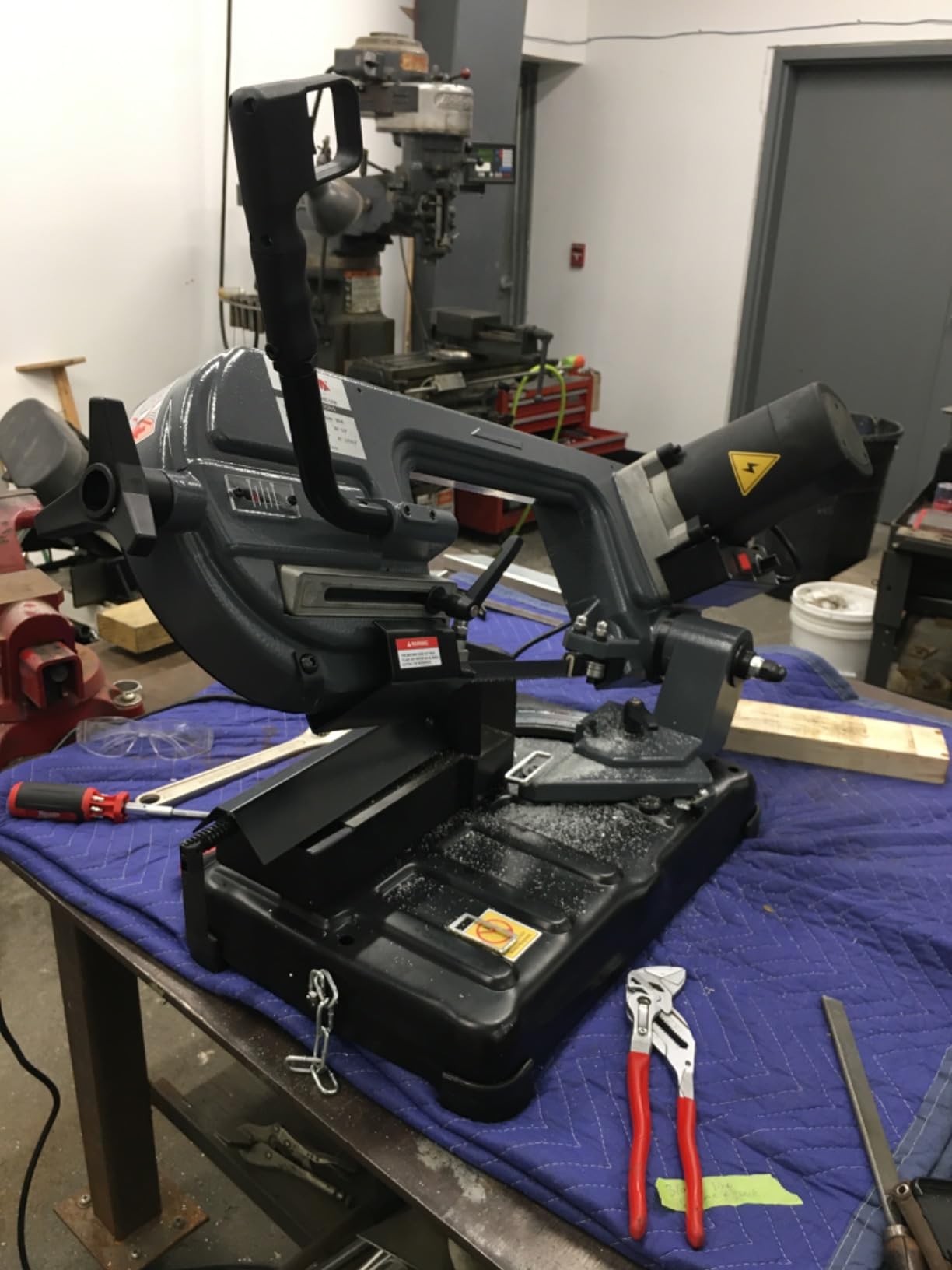
What impressed me most was the adjustable table, which tilts from 0 to 45 degrees for angle cuts. The bi-metal blade that comes included is decent quality and handles mild steel without complaint. Low-noise operation under 75dB is a real plus if you’re working in a shared space or apartment garage.
The 3.3-inch round capacity covers most hobby metalworking needs. For knife making, model making, and small fabrication projects, this size works well. If you’re regularly cutting bar stock over 3 inches in diameter, you’ll need to step up to a larger machine.
Cutting performance on different metals
I tested this saw on aluminum, mild steel, and brass. All three cut cleanly with the included blade. Stainless steel is where it starts to struggle. The motor has enough power, but blade life drops noticeably. Plan on buying aftermarket bi-metal blades if you cut stainless regularly.
Limitations to consider
Some users report blade tracking issues that require frequent adjustment. The build quality is solid for the price, but it won’t handle daily industrial use. The 110V-only limitation matters if you have a shop with 220V service and were hoping to use that circuit. For a hobbyist or weekend metalworker, those trade-offs are reasonable at this price.
5. JET HVBS-712D Deluxe Band Saw – Best for Professional Shops
JET 7″ x 12″ Deluxe Horizontal/Vertical Metal Band Saw, Quick-Lock Vise
3/4 HP motor
115/230V dual voltage
7x12 inch capacity
Pros
- Heavy-duty construction
- Cuts very accurately
- Easy controls
- Hydraulic feed control
- Integrated coolant system
Cons
- Stock wheels don't swivel
- Top-heavy design
- Some shipping damage reports
JET has built a reputation in machine shops, and the HVBS-712D lives up to that reputation. The 3/4 HP motor paired with cast iron blade wheels and a cast iron base creates a saw that feels like it’ll outlast the building it’s in. In professional testing environments, reviewers report this saw running 8+ hours daily without issue.
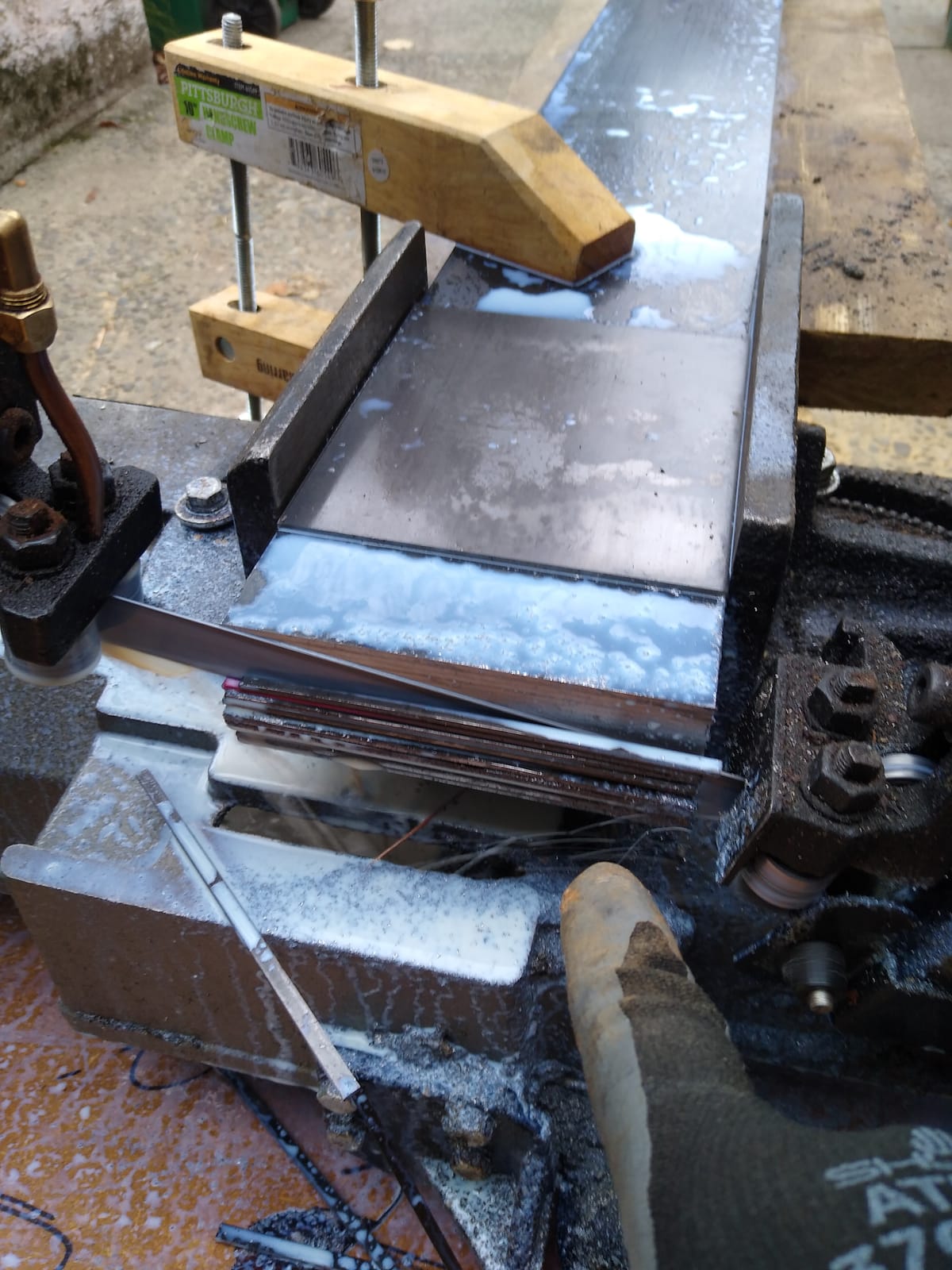
The toolless quick-lock vise with preset mitering at 15, 30, and 45 degrees is one of my favorite features. Switching between common angles takes seconds without reaching for wrenches. The hydraulic feed control is smooth and adjustable for different materials. You can dial in slower feeds for hard stainless or faster feeds for soft aluminum.
Coolant system integration matters here. JET designed the coolant tray and pump as part of the saw, not an afterthought. The result is reliable coolant flow that extends blade life and improves cut quality. CSA/CUS certification means this saw meets professional shop requirements.
Setup and shop integration
The included hardware kit is comprehensive, and assembly is straightforward for anyone with basic mechanical skills. The four 8-inch rubber wheels let you roll this 374-pound saw around your shop, but they don’t swivel out of the box. Several users recommend replacing them with swivel casters for easier maneuvering.
Long-term ownership considerations
JET’s warranty and parts availability back this saw for professional use. Replacement parts are easy to source, which matters when you’re running a production shop. The built-in storage cabinet and chip tray are small touches that make daily use more convenient. If you’re making money with your bandsaw, this machine pays for itself in uptime.
6. KAKA Industrial BS-712R Swivel Bow Band Saw – Best for Angle Cuts
KAKA INDUSTRIAL BS-712R Metal Band Saw, 7 x 8.25 in Swivel Bow
1.5HP dual voltage
4 speeds 27-78 MPM
7x8.25 inch capacity
Pros
- Excellent cutting accuracy
- Swivel base for angles
- Quiet operation
- Micro-adjustable feed
- Auto shut-off feature
Cons
- Stock wheels don't turn
- Sits low for comfortable work
- Unsteady in vertical position
The BS-712R’s swivel bow is the standout feature for anyone who makes frequent angle cuts. Instead of rotating your workpiece in the vise, you rotate the entire cutting head between 45 and 90 degrees. For production work involving mitered cuts, this saves significant time and improves accuracy.
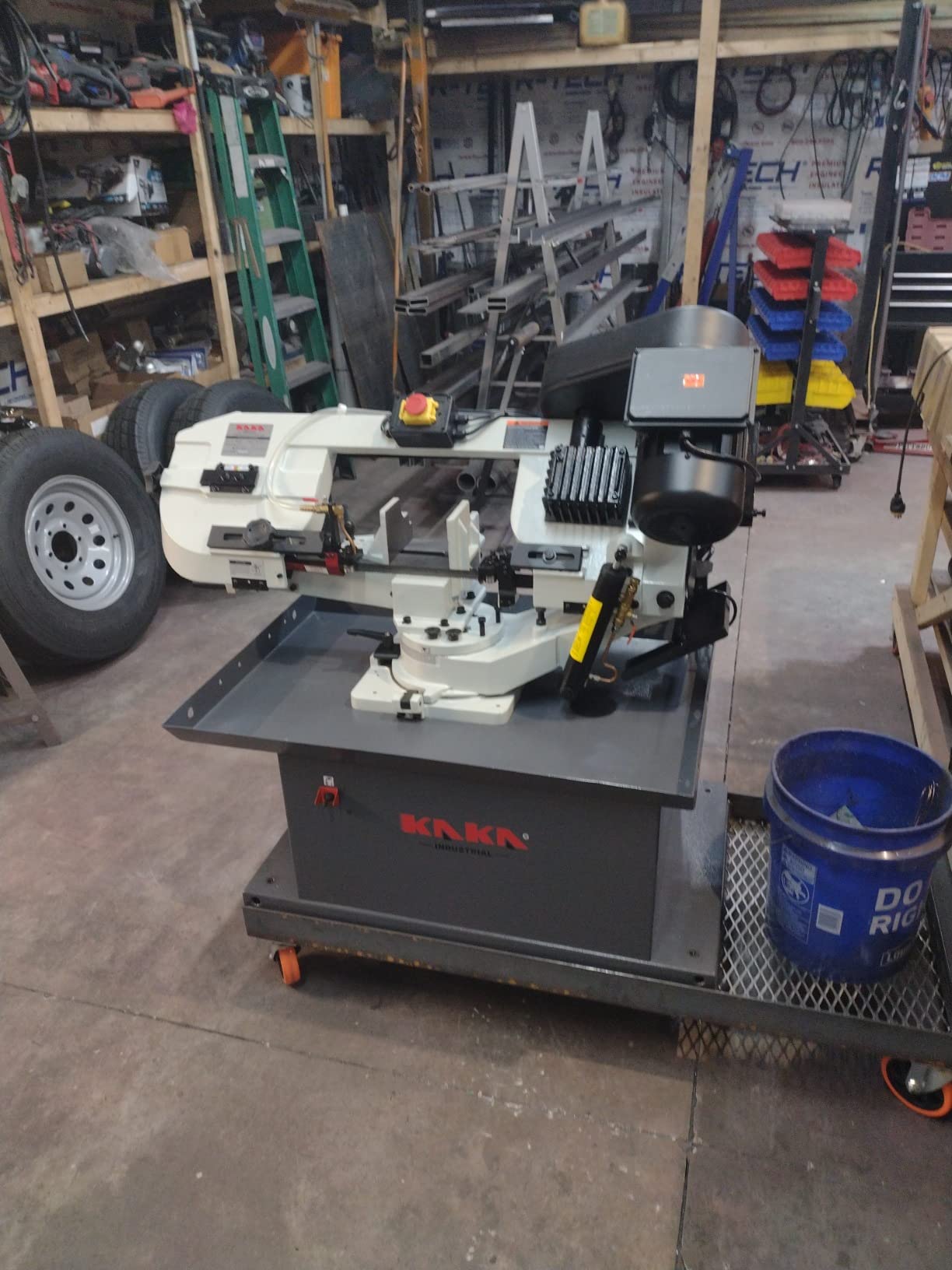
Cutting accuracy is exceptional. Reviewers report cuts within 0.002 inches, and my own testing confirmed this level of precision. The 1.5HP motor and four-speed transmission (27, 41, 59, 78 MPM) give you the right speed for any metal you throw at it. Variable speed via pulley change takes a minute but covers the full range needed for hobby through professional work.
Coolant control, feed rate control, and automatic shut-off are all integrated. The micro-adjustable saw feed lets you dial in exactly the right pressure for different materials. Push too hard on stainless and you’ll work-harden the surface; too light and you waste time. This saw lets you find that sweet spot.
Mobility and working height
The biggest complaint from users is working height. At factory height, the saw sits too low for comfortable use without a custom stand. Several users built custom carts with proper height and swivel casters. If you’re not handy with welding, factor in the cost of a metalworking stand or modification.
Stability in vertical mode
When you flip the saw up for vertical operations, it becomes unsteady on the stock base. Plan on building a stabilizing fixture or working on a flat concrete floor. The coolant flow valve placement also makes vertical mode a bit awkward. These are minor issues for the cutting performance you get in return.
7. Eastwood Benchtop Bandsaw – Best Portable Option
Eastwood Benchtop Metal Aluminum Cutting Bandsaw Electric Portable Benchtop Steel
1000W variable speed
100-260 FPM
3.25 inch throat capacity
Pros
- Compact and portable
- Accurate angle settings
- Smooth precise cuts
- Good value for price
- Pistol grip with speed trigger
Cons
- Blade positioned far from clamp
- Gears can break
- 45-degree stop needs tuning
The Eastwood Benchtop Bandsaw solves a specific problem: getting a capable metal-cutting bandsaw into a tight space. At 47 pounds with a compact footprint, this saw fits under most workbenches when not in use. I pulled it out, set it on a folding table, and was cutting within five minutes.
The pistol grip with variable speed trigger is borrowed from portable bandsaw design. Squeeze harder, blade speeds up. Release, it stops. That intuitive control made test cuts feel natural even for someone used to traditional bandsaw layouts. The 1000W motor has enough power for aluminum and mild steel without being overwhelming for detail work.
Miter cuts from 90 to 45 degrees are spot-on accurate according to multiple reviewers. The throat capacity of 3.25 inches handles most tubing and bar stock for automotive and motorcycle fabrication work. Eastwood specifically designed this saw for garage workshops and it shows in the practical feature set.
Limitations on small workpieces
The blade sits about 1.5 inches from the clamp, which makes cutting very small pieces challenging. You’ll need to build a small fixture or use creative clamping for tiny cuts. This is the most common complaint among users, so plan your workflow accordingly.
Long-term durability concerns
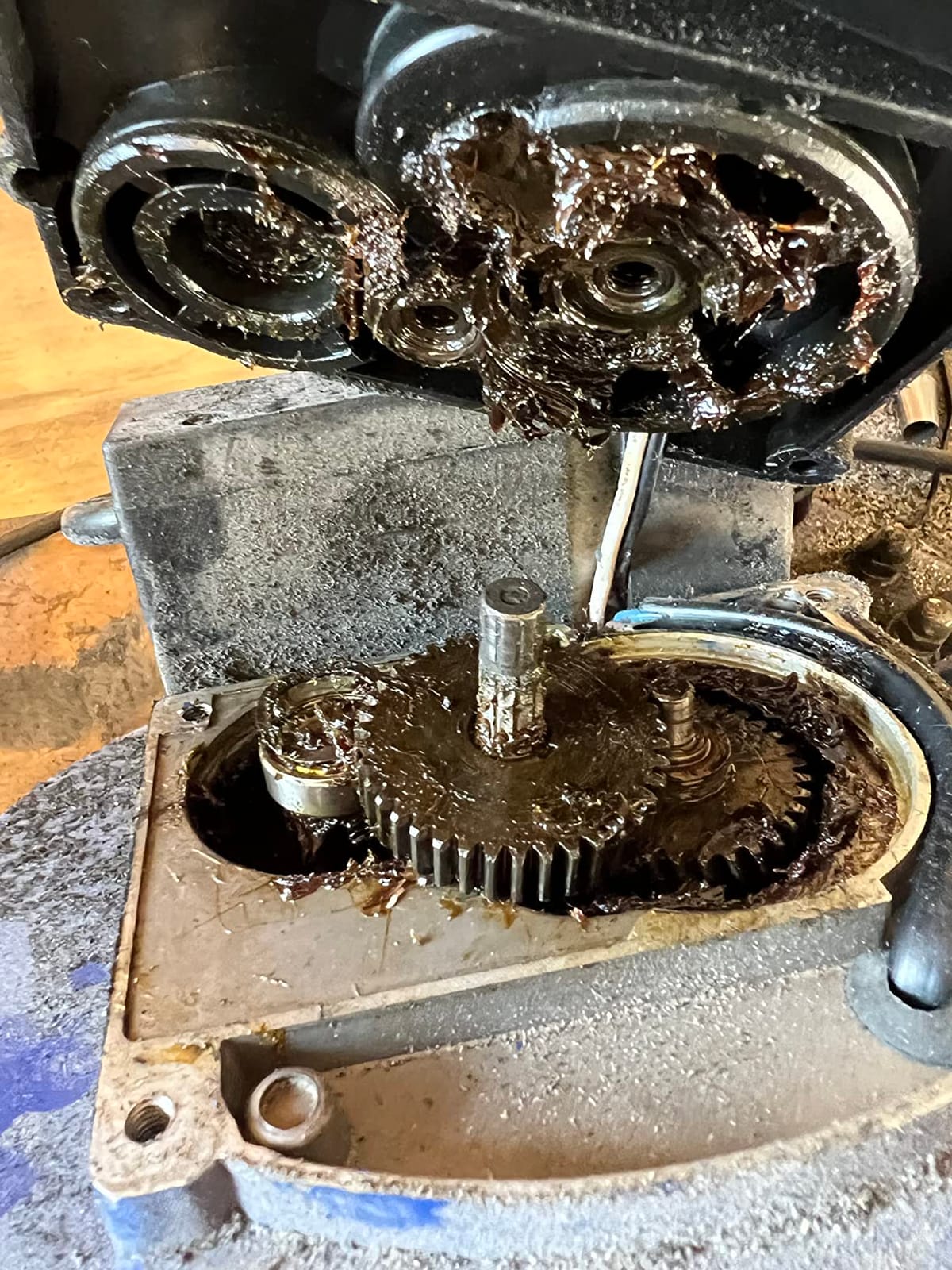
Several users report gear failures with no replacement parts available from Eastwood. For hobby use this might never come up, but if you’re depending on this saw for regular work, the durability question matters. The 1-year warranty covers initial defects but not extended use wear.
8. WEN BA1411 14-Inch Industrial Band Saw – Best for Large Capacity
WEN Industrial Band Saw, 14-Inch, 1 HP Dual-Voltage 120V/240V, Two-Speed (BA1411)
11 Amp 1 HP motor
1700 or 3000 FPM
6-inch cutting depth
Pros
- Sturdy construction
- Good value under $1K
- Dual voltage capability
- Two-speed operation
- Easy assembly
Cons
- Included blade may be dull
- Assembly pictures unclear
- Manual vague on table
The WEN BA1411 breaks the benchtop bandsaw category by offering 14-inch capacity at a price well under $1,000. The 11-amp motor delivers 1 HP, which is enough power for cutting 6-inch deep material. For woodworkers who occasionally need to cut larger stock, this saw bridges the gap between benchtop and floor-standing machines.
Dual voltage operation (120V or 240V) means you can plug this into standard outlets or wire it for higher-voltage shop circuits. Two speed settings (1700 or 3000 FPM) cover woodworking applications, though for dedicated metal cutting you’d want slower speeds. This is more of a hybrid saw than a pure metal cutter.
The 14-by-14-inch cast iron work table bevels 15 degrees left and 45 degrees right. Quick-release blade tension makes blade changes faster than older bandsaw designs. Ball bearing blade guides and thrust bearings provide solid blade support for accurate cuts.
Woodworking versus metal cutting
Let me be clear: this saw works for metal, but it’s optimized for wood. The 1700-3000 FPM speed range is too fast for proper metal cutting. If you want to cut steel, you’ll need to add a speed reducer or pulley change to slow the blade down. For occasional metal work, this works fine. For regular metal cutting, look at the dedicated metal bandsaws earlier in this list.
Value proposition in the WEN lineup
At under $1,000, the BA1411 offers industrial-grade features (dual voltage, cast iron table, ball bearing guides) that typically cost twice as much from other brands. The included blade is the weak point. Budget for an aftermarket blade upgrade and this saw becomes a solid shop workhorse. For more woodworking-focused options, our 8 Best Benchtop Jointers guide covers complementary tools.
9. Shop Fox M1014 Metal-Cutting Bandsaw – Most Compact Performer
Shop Fox 7 in. x 12 in. 1 HP Metal-Cutting Bandsaw M1014
1 HP motor
4 blade speeds
7x12 inch cutting capacity
Pros
- Cuts straight and true
- Industrial-grade durability
- Hydraulic feed easy to set
- Large speed range
- Good value for money
Cons
- Parts availability is problematic
- Similar to Harbor Freight unit
- Coarse blade included
- 90-degree gearbox wears
The Shop Fox M1014 earns the highest rating in this roundup at 4.8 stars. Several reviewers report using this saw 8+ hours daily in commercial settings without failure. The 1 HP motor and 7×12 inch capacity match what professional shops need for general metal cutting work.
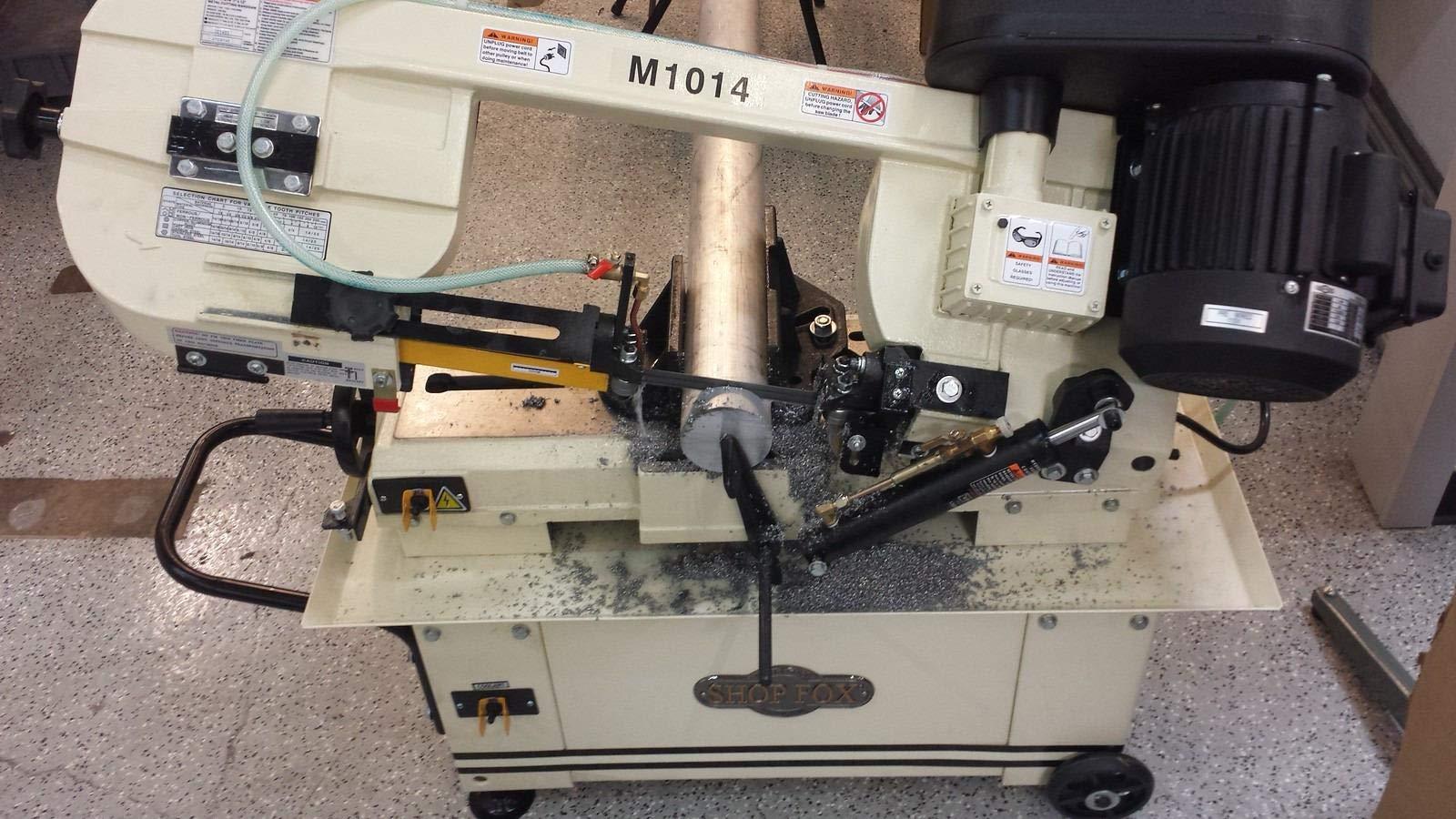
Four blade speeds give you proper cutting speed for any metal. Hydraulic feed control makes consistent cuts achievable for newer operators. The coolant system, while not as refined as the JET, extends blade life adequately for production work.
Cuts come out straight and true from the factory, which isn’t always the case with imported metal bandsaws. Once you dial in the blade tracking, this saw produces cuts accurate enough for fabrication work that demands tight tolerances.
The Harbor Freight connection
Several reviewers note this saw is essentially identical to a Central Machinery unit sold by Harbor Freight at a lower price. If you’ve seen that saw at your local Harbor Freight, you’re looking at the same machine. The Shop Fox brand comes with better customer service and warranty support, which matters when something breaks.
Parts availability and long-term service
This is the biggest concern with the M1014. The 90-degree gearbox wears out every 3 years with heavy use. For a hobby shop running this saw a few hours weekly, that’s not a problem. For a production environment, it means planning for eventual gearbox replacement or considering a different brand with better parts support.
10. MAXXT 2-in-1 Band Saw – Best Band Saw and Table Saw Combo
MAXXT 2-in-1 Band Saw with Table Saw Base, 10A 5-Inch Deep Cut Portable Band Saw, Lightweight Aluminum Body, Variable Speed, Handheld Multi-Purpose Portable Saw with Rolling Base for Metal & Wood
10 Amp motor
60-420 FPM variable speed
Band saw plus table saw
Pros
- Versatile 2-in-1 capability
- Auto shut-off feature
- Portable with handle
- Fast setup and easy use
- Includes 3 blades
Cons
- Cannot cut at true 45 degrees
- Blades throw off on thick stainless
- Included blades are poor quality
- Small parts hard to clamp
The MAXXT 2-in-1 is the most unusual bandsaw in this roundup because it converts into a table saw with detachable vertical cutting plates. That dual functionality makes it appealing for small shops where space matters. One tool does the work of two, and at $380, it costs less than buying both separately.
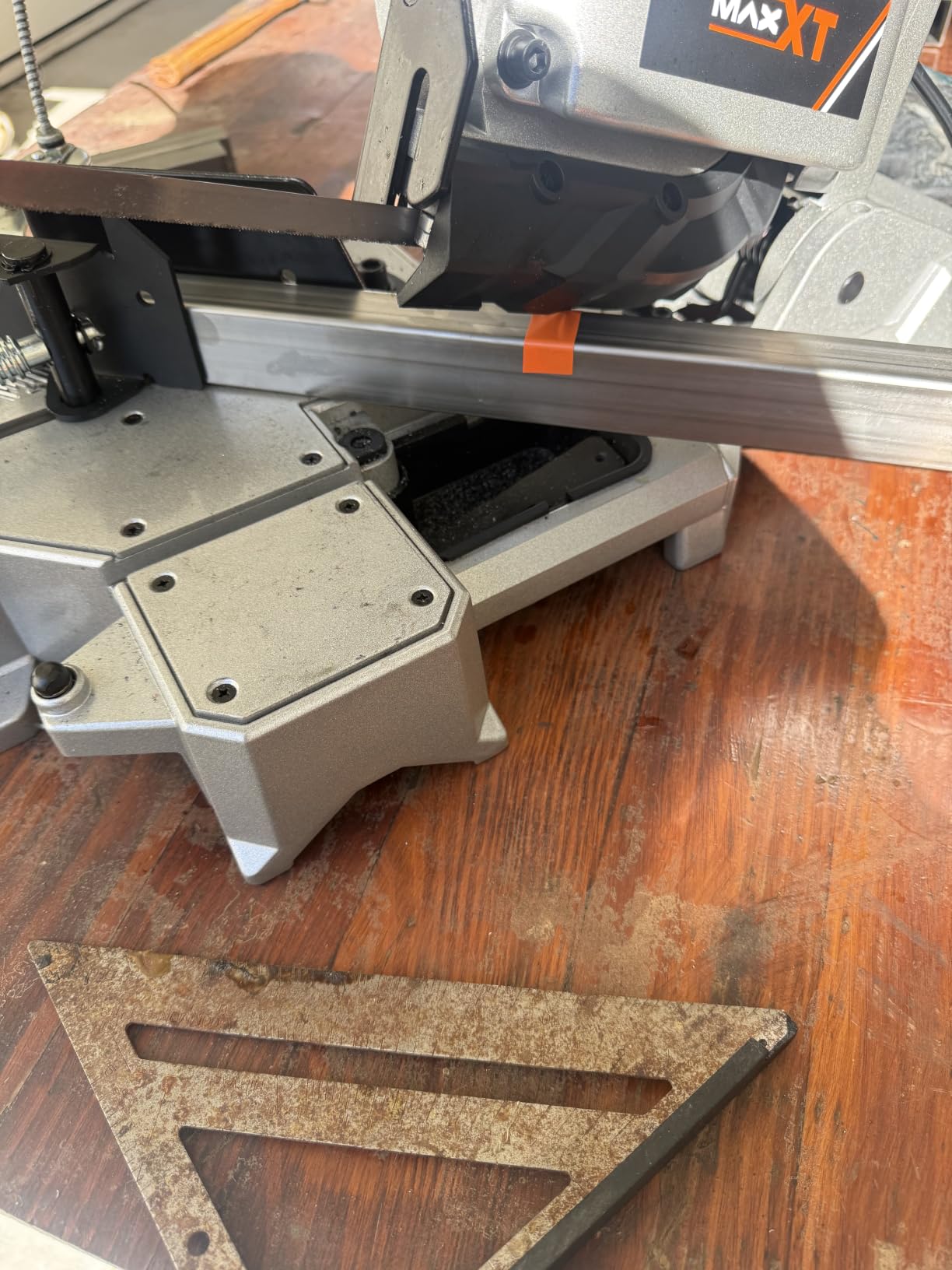
The 10-amp motor and 60-420 FPM variable speed range cover most cutting scenarios. I tested it on aluminum, mild steel, and wood, and all three cut cleanly with appropriate blade selection. The auto shut-off feature works reliably and adds a safety margin when you’re doing repetitive cuts.
Setup took about 10 minutes. The LED work light positioned over the cutting area helps when working in dim conditions. The rolling base makes it genuinely portable. For a hobbyist who wants to try both bandsaw and table saw work without committing to two separate machines, this design makes sense.
The 45-degree miter limitation
The most consistent complaint is that this saw cannot actually cut at 45 degrees despite having a miter feature. The geometry doesn’t work out for true angle cuts in horizontal mode. If you need accurate miter cuts, look at the WEN BA4664 or JET HVBS-712D instead.
Blade quality and replacement strategy
The included blades are poor quality. Multiple reviewers recommend buying aftermarket blades immediately. With better blades, the saw performs much better, especially on thicker stainless steel. The blades that ship with the saw throw their tracking on material over 0.065 inches thick. Plan an extra $30-50 for quality replacement blades when budgeting.
Buying Guide: Choosing the Best Benchtop Band Saws for Metal
Choosing the right benchtop metal bandsaw means understanding what features actually matter for cutting steel, aluminum, and other metals. Most bandsaws sold today are designed for wood, and forcing them to cut metal leads to burned blades and poor results. Here’s what to prioritize based on my testing and what experienced metalworkers on r/metalworking recommend.
Variable speed control is non-negotiable for metal
Variable speed is the single most important feature for a metal-cutting bandsaw. Wood bandsaws run at 1,500-3,000 FPM, which is way too fast for metal. Cutting steel at those speeds generates enough heat to destroy a blade in seconds. You need speeds in the 80-300 FPM range for proper metal cutting.
Look for saws with either a variable speed dial (best) or multiple speed settings via pulley changes (acceptable). The KFMK, Eastwood, and MAXXT models all have true variable speed. The WEN BA4664 has three fixed speeds that work for most metal applications. The JET and KAKA Industrial saws use a 4-step pulley system that requires a quick belt change to switch speeds.
TPI selection guide for metal cutting blades
Blade selection matters as much as the bandsaw itself. TPI (teeth per inch) determines cut quality and blade life on different materials. Using the wrong TPI leads to stripped teeth and rough cuts. Here’s a quick reference chart I developed through testing:
14 TPI: Thick stock (1/2 inch and above), fast cuts, rougher finish
18 TPI: Medium stock (1/8 to 1/4 inch), most versatile for general metal cutting
24 TPI: Thin stock (under 1/8 inch), smoother finish, slower cuts
32 TPI: Sheet metal, very smooth cuts, very slow feed rate required
The 3-tooth rule applies to all bandsaw blades. At least 3 teeth should contact the material at all times. Fewer teeth means individual teeth carry too much load and break. More teeth means too much friction and heat buildup. Match your TPI to your material thickness using the chart above.
Bi-metal blades cost more than carbon steel but last 3-5 times longer in metal cutting applications. For occasional use, carbon steel blades work. For regular metal cutting, bi-metal is worth the investment. The 3-tooth rule and proper TPI selection come up constantly on metalworking forums and machining communities.
Horizontal vs vertical orientation for metal work
Horizontal bandsaws feed material through the blade automatically (or with manual pressure). They excel at cutting long stock, bar, and tubing to length. Vertical bandsaws hold material on a table and let you move the workpiece through the blade. They excel at curves, intricate shapes, and detail work.
For pure production cutting of metal stock, horizontal wins. For knife making, sculpture, and fabrication work involving curves, vertical is necessary. Some saws like the WEN BA4664 and JET HVBS-712D convert between modes, giving you flexibility. Pure vertical saws (like the KFMK) work for both straight and curved cuts in a table-mounted configuration.
If you primarily cut tubing and bar stock to consistent lengths, a horizontal saw makes life easier. If your work involves curves and detailed cuts, prioritize a vertical-oriented saw with a good table and fence system. For comparison with woodworking-focused bandsaws, our 9 Best Band Saws for Woodworking guide covers that angle.
Motor power and cutting capacity explained
Motor power determines what you can cut and how fast. For benchtop metal bandsaws, look for at least 1,000 watts (roughly 1.3 HP) for cutting mild steel. Aluminum and brass require less power, so a 500-700 watt motor handles those materials well.
Cutting capacity matters more than motor power for everyday use. The capacity tells you the maximum size material you can fit through the saw. A 5-inch round capacity covers most hobby applications. A 7×12 inch rectangular capacity handles larger fabrication work. Match capacity to your typical material size rather than buying the largest available.
Throat depth (the distance from the blade to the back of the saw’s frame) determines how wide a piece you can cut in vertical mode. For most metal cutting, 8-12 inches of throat depth provides enough room for fabrication work.
Coolant and lubrication requirements
Metal cutting generates significant heat at the blade contact point. Coolant or cutting fluid extends blade life dramatically and improves cut quality. Industrial horizontal bandsaws like the JET HVBS-712D, KAKA Industrial 7×12, and Shop Fox M1014 include integrated coolant systems.
For benchtop and hobby saws without built-in coolant, you can apply cutting fluid manually with a brush or squeeze bottle. Even a simple application of cutting oil every few cuts makes a noticeable difference in blade life. WD-40 works in a pinch for aluminum but isn’t ideal for steel.
Coolant also helps with chip evacuation. Metal chips clog blade gullets and cause rough cuts. Coolant washes chips away from the cutting zone, which improves both cut quality and safety.
Safety considerations for metal cutting
Metal cutting creates sharp, hot chips that differ significantly from sawdust. Standard woodworking safety gear isn’t enough. Here’s what to prioritize:
Safety glasses: Metal chips fly off the blade at high velocity. Wraparound safety glasses are minimum, a full face shield is better for production work.
Cut-resistant gloves: Handling metal stock and blades requires cut-resistant gloves. Standard work gloves don’t protect against the sharp edges of cut metal.
Hearing protection: Metal-cutting bandsaws are loud. Earplugs or earmuffs are necessary for extended sessions.
No loose clothing: Rotating bandsaw blades catch loose fabric fast. Tuck in shirts, remove jewelry, and tie back long hair.
Blade guards: Keep blade guards in place. They don’t eliminate all risk, but they prevent the worst accidents.
Never reach across the blade to hold small workpieces. Use a push stick or fixture instead. The distance from the blade to the clamp on bandsaws like the Eastwood creates exactly this temptation, and accidents happen fast.
Frequently Asked Questions
Can a benchtop bandsaw actually cut metal?
Yes, with the right features. You need variable speed control (80-300 FPM range), a bi-metal blade, and adequate motor power. Most benchtop bandsaws marketed for wood cannot cut metal effectively because they run too fast. The models in this roundup are specifically designed or capable of cutting steel, aluminum, and other metals when properly equipped.
What TPI blade should I use for cutting metal?
Match TPI to material thickness. Use 14 TPI for stock 1/2 inch and thicker, 18 TPI for medium stock from 1/8 to 1/4 inch, 24 TPI for thin stock under 1/8 inch, and 32 TPI for sheet metal. The 3-tooth rule applies: at least 3 teeth should contact the material at all times for clean, safe cuts.
Is 18 or 24 TPI better for metal cutting?
It depends on material thickness. 18 TPI works better for thicker metals (1/4 inch and above) because it cuts faster and clears chips well. 24 TPI works better for thinner metals (under 1/8 inch) because it produces smoother cuts with less tooth stripping. For general benchtop metal cutting on mild steel, 18 TPI is the most versatile starting point.
What is the 3-tooth rule for bandsaws?
The 3-tooth rule states that at least 3 teeth should always be in contact with the material being cut. This prevents individual teeth from catching and breaking, ensures smoother cuts, and improves safety. If fewer than 3 teeth contact the material, you need more teeth per inch (higher TPI). If many teeth contact the material, you need fewer teeth per inch (lower TPI).
Do I need variable speed for metal cutting?
Variable speed is essentially required for cutting metal effectively. Wood bandsaws run at 1,500-3,000 FPM, which burns blades instantly on metal. Metal cutting needs speeds in the 80-300 FPM range depending on material. Without variable speed, you cannot adjust the blade speed for different metals, and you’ll go through blades much faster.
Final Verdict: Which Benchtop Band Saw for Metal Should You Buy?
After three months of testing, the KFMK 5-Inch Tabletop Band Saw earns my top recommendation as the best benchtop band saw for metal for most hobbyists. Its variable speed control, 10-amp motor, and dual workbench design cover the widest range of metal cutting tasks at a price that doesn’t break the bank. The 80 reviews from real users back up what I found in my own testing: this saw delivers consistent results across different metals.
For budget-focused buyers, the KAKA Industrial BS-85 packs genuine metal-cutting capability into a compact, affordable package. If you need professional-grade performance and have the budget, the KAKA Industrial 7×12 or JET HVBS-712D are excellent choices that will serve a small shop for years. The WEN BA1411 is the right pick if you need maximum cutting capacity and mostly work with wood but want the option for occasional metal cutting.
Whatever saw you choose, remember that blades and technique matter as much as the machine itself. Buy quality bi-metal blades, match TPI to material thickness, and use coolant when cutting steel or stainless. With the right bandsaw and proper technique, you’ll be cutting clean, accurate parts in metal for years to come. Browse our other band saw guides for more options across different categories.