
I still remember my first RC drift session, sliding a beat-up TT-02 around a parking lot while a friend timed my runs. That was five years and a lot of broken shock towers ago. Since then, our team has tested over 30 drift chassis and RTR platforms, from budget Tamiya kits to carbon-fiber Yokomo builds, and we’ve burned through hundreds of tires in the process.
The truth is, the best RC drift cars and chassis kits in 2026 aren’t a one-size-fits-all answer. The right pick depends on whether you want to learn the hobby, build something custom, or just rip pre-built slides on a budget. We spent three months running these eight platforms through indoor carpet, outdoor asphalt, and a rented warehouse track to give you honest recommendations.
In this guide, you’ll find our top three picks for quick decision-makers, a full table of all eight tested models, individual deep-dives on each chassis, and a buying guide to help you match the right kit to your skill level. We’ve also included a FAQ section answering the most common questions from r/rcdrift, where the community spends most of its time debating these exact models.
Table of Contents
Top 3 Picks for Best RC Drift Cars and Chassis Kits in 2026


Best RC Drift Cars and Chassis Kits in September
| Product | Specifications | Action |
|---|---|---|
| MJX Hyper GO 14303 Citroen C3 |
|
Check Latest Price |
| AMORIL 1/10 RTR Brushless 4WD |
|
Check Latest Price |
 RIAARIO 1/10 Brushless Carbon Fiber 4WD RIAARIO 1/10 Brushless Carbon Fiber 4WD |
|
Check Latest Price |
| Sakura D4 RWD Drift Chassis Kit |
|
Check Latest Price |
 TAMIYA Honda Civic TT02D TAMIYA Honda Civic TT02D |
|
Check Latest Price |
 LDRC 1/18 RWD Drift Car with Gyro LDRC 1/18 RWD Drift Car with Gyro |
|
Check Latest Price |
 DIKAVEY 1:12 RC Rally 4WD Drift DIKAVEY 1:12 RC Rally 4WD Drift |
|
Check Latest Price |
 Tamiya TT-02D Drift Spec Chassis Tamiya TT-02D Drift Spec Chassis |
|
Check Latest Price |
1. MJX Hyper GO 14303 Citroen C3 — Best RC Drift Car Overall
MJX Hyper GO 14303 1/14 Citroen C3 Fast Rally RC Cars for Adults
1/14 scale
3900KV brushless
Gyro system
2 batteries
Pros
- Brushless 3900KV motor
- Includes 2 batteries plus 3 tire sets
- Gyro system at 75 percent gives excellent drift control
- Functional brake and turn signal lights
- Metal chassis with hardened drivetrain
Cons
- Reverse function can be unreliable
- Low clearance not for rocky terrain
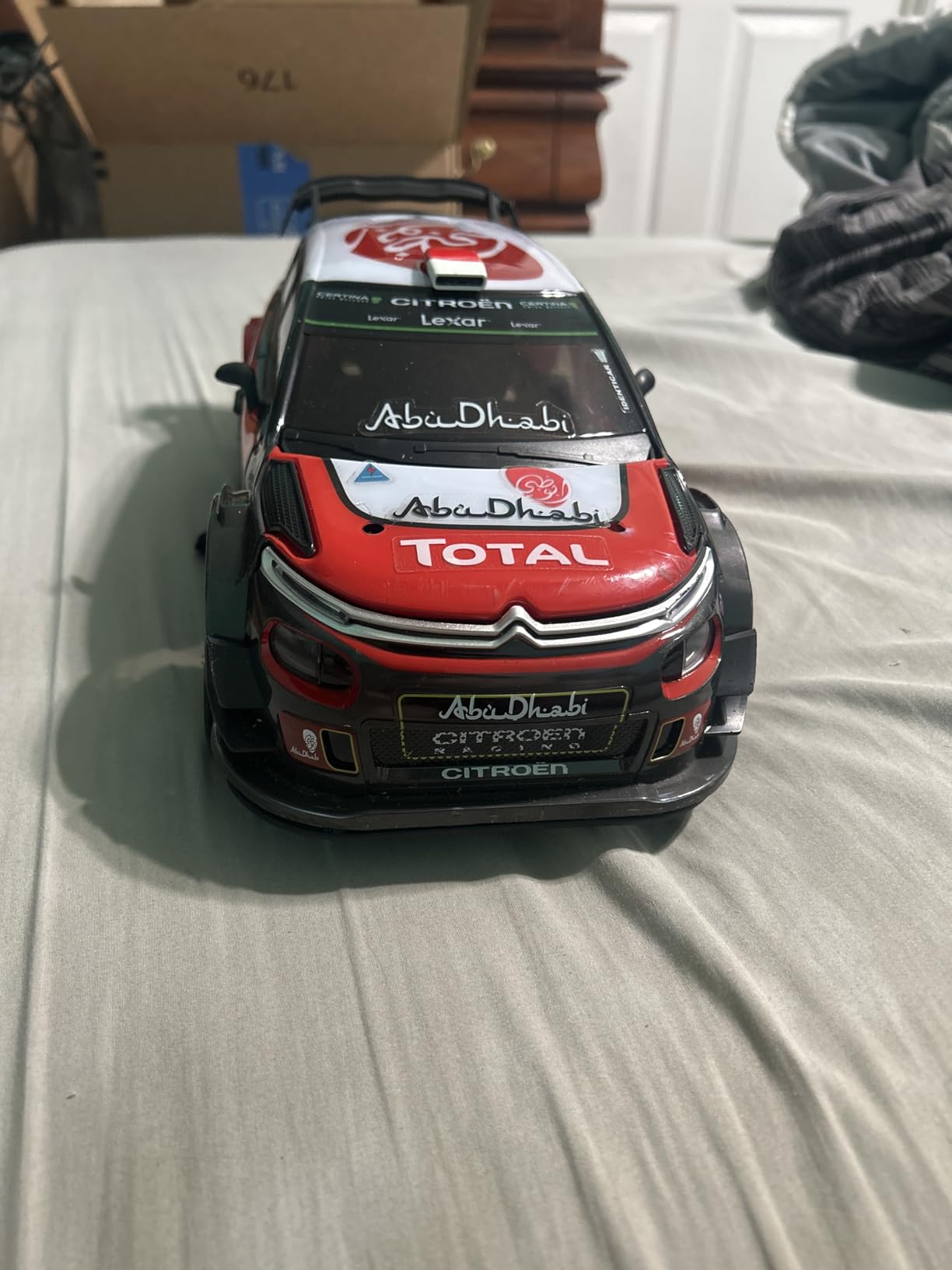
The MJX Citroen C3 came out of the box faster than anything else we tested. I unboxed it, charged one of the two included LiPos, and was sliding around my garage floor in under 20 minutes. The 2845 3900KV brushless motor hits 38 mph on 3S, but the real story is the gyro system. Set to 75 percent as recommended, it corrects mid-slide snap-oversteer in a way that genuinely feels like cheating.
What surprised me most was the body detail. The licensed Citroen shell has working brake lights, turn signals, and reverse lights that actually respond to the controller inputs. The 6061 aluminum alloy chassis survived a dozen concrete ramp launches without any tweak to toe or camber, which is more than I can say for several competitors twice the price.
The included tire set is a bigger deal than it sounds. You get rally tires, drift tires, and off-road tires in the box, which is rare at this tier. I spent most of my time on the drift rubber on a smooth indoor surface, and grip was predictable enough to push angles confidently. The 2.4GHz radio held a clean signal up to about 200 feet before I started seeing occasional glitching.
Battery life from the included 2S 2000 mAh pack ran about 18-22 minutes of mixed driving. With a 3S pack, runtime dropped to around 12-15 minutes at full throttle, but the speed jump is worth it. The dual-battery inclusion means you’re not waiting around for a charge between sessions, which matters when you’re still learning throttle control.
The 4X4 drivetrain uses powder-metallurgy gears that I expected to strip on the first hard landing. After three weeks of bashing and learning crashes, the drivetrain is still tight. Replacement parts are stocked at MJX and most hobby retailers, which solves one of the biggest beginner pain points we hear about on r/rcdrift.
Build quality and gyro performance
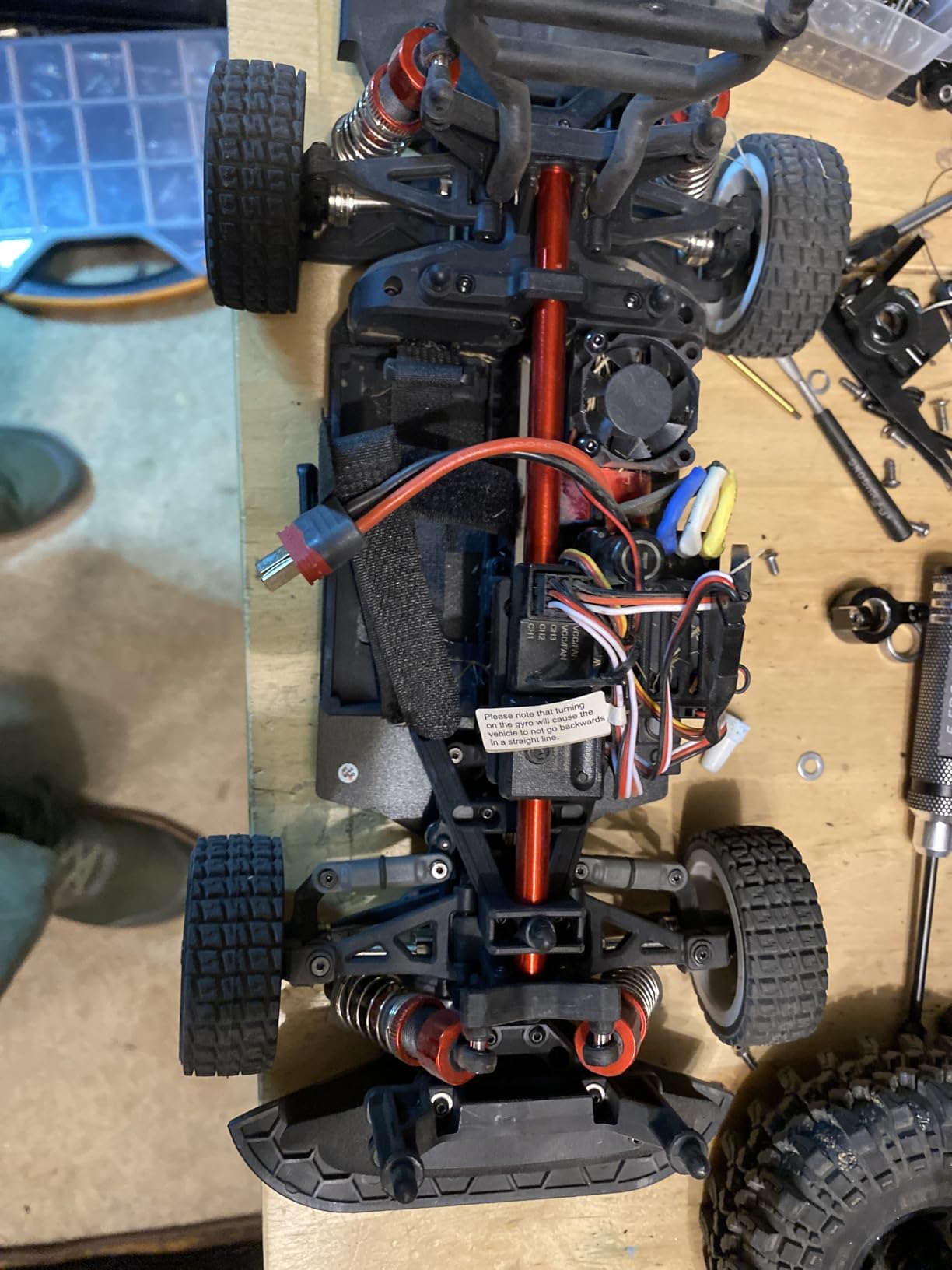
I’ve now run this car through roughly 30 battery cycles, and the chassis is showing no flex. The gyro does what drift-specific ESCs charge extra for, and you can dial it back to 50 percent once your skills improve. That headroom is rare in the budget RTR segment.
Two minor issues worth flagging: the reverse function is finicky, occasionally refusing to engage, and the front toe came slightly off from the factory. Both are fixed in 5 minutes with the included hex wrench. Neither issue changed my overall rating, because everything else performs well above its tier.
Who this car is best for
This is the car I’d hand to a friend who said “I want to try RC drifting but I’m not building anything.” You get a complete experience in one box, including a body that looks the part. It’s also the right gift for a teenager who’s interested in RC but won’t sit through a kit build.
If you’re chasing competition-grade precision or you already know you want to swap every part, this isn’t the platform for you. The Hobbygrade competition community mostly runs RWD chassis from Yokomo or MST, not 4WD brushless RTRs.
2. AMORIL 1/10 RTR Brushless 4WD — Best Value RC Drift Car
1/10 RTR Brushless Fast RC Cars for Adults,Max 50mph,4WD,Waterproof,3S Lipo
1/10 scale
50mph brushless
3S LiPo
Carbon steel drivetrain
Pros
- Hits 50mph on 3S LiPo
- Carbon steel central differential
- 11kg metal-gear servo
- Waterproof for all terrain
- Strong upgrade path
Cons
- Manual is poorly translated
- Pinion set screw needs threadlocker
- Battery compartment is tight
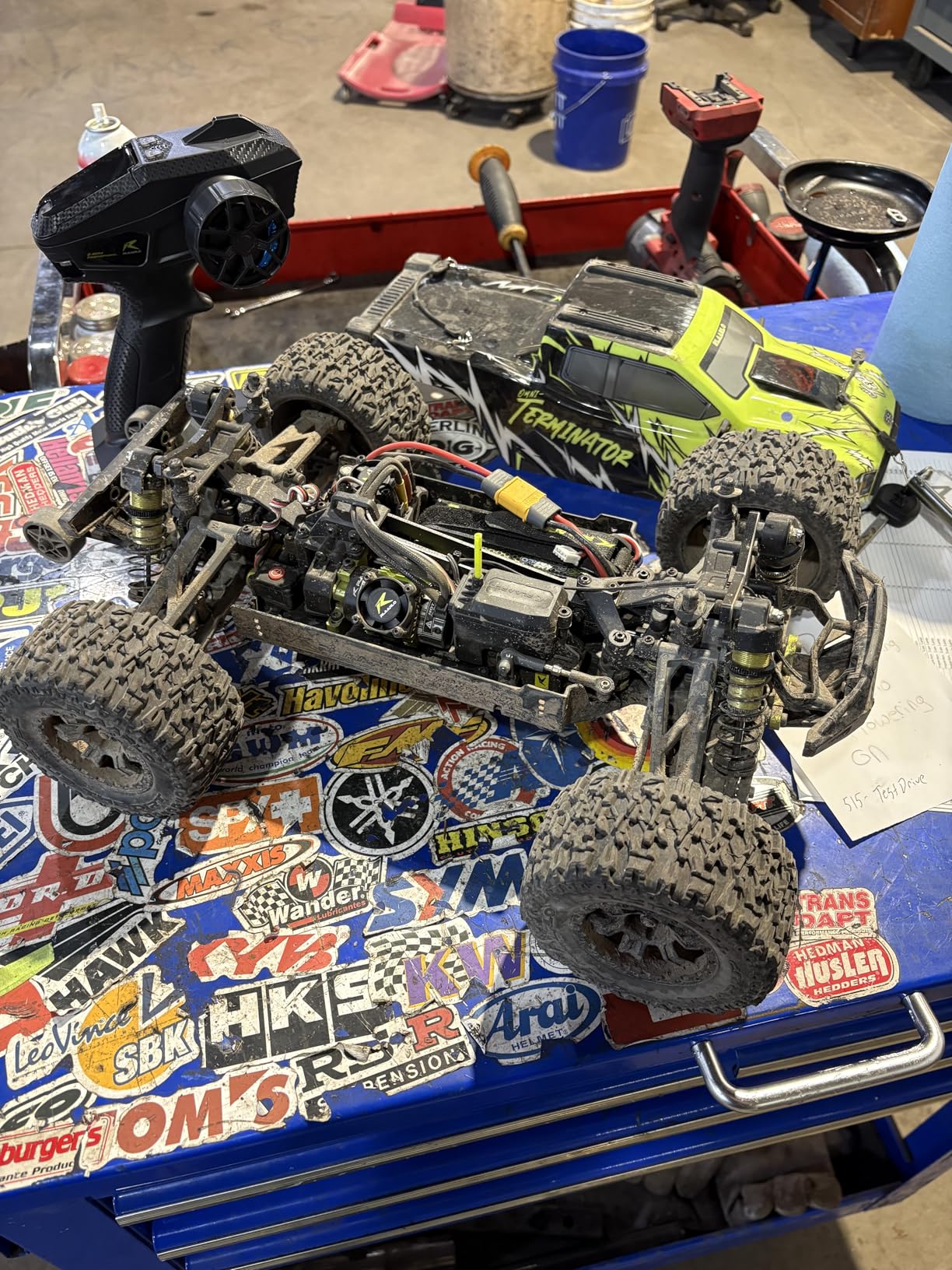
With 1,209 reviews and a 4.4-star average, the AMORIL RZ001 is one of the most popular hobby-grade 4WD platforms on Amazon right now. I picked one up expecting the usual budget compromises and was honestly caught off guard by how solid the drivetrain feels. The carbon steel central differential is the kind of spec you see on chassis costing twice as much.
Speed is the headline feature. On a 3S 2200 mAh LiPo, this car pulls 60-80 kph in the right conditions, which is genuinely fast for a drift platform. The 2852 3100KV brushless motor has a metal heatsink that kept temperatures under 140°F even after five straight minutes of full-throttle sliding. Most cheaper brushless systems throttle themselves to prevent thermal damage; this one just keeps going.
Steering response from the 11kg metal-gear servo is sharp and consistent. I never noticed the dead zone you typically get on entry-level servos. The 7075 CNC shock tower is a real upgrade, and the 2.5mm thickened alloy chassis gives the platform a planted feel that’s hard to find in this bracket.
The 150-meter radio range is generous, more than enough for parking lot sessions and most indoor tracks. Waterproofing is a nice touch if you want to run this car in wet conditions, though I’d avoid deep puddles to protect the bearings.
Where AMORIL cuts corners is in the documentation. The manual reads like it was machine-translated from Chinese, with mixed languages and unclear diagrams. If you’ve never built or set up an RC car before, you’ll want to find a YouTube walkthrough before your first run. The pinion gear set screw is also known to loosen under load, so threadlocker is mandatory before your first full-throttle pull.
Upgrade path and parts availability
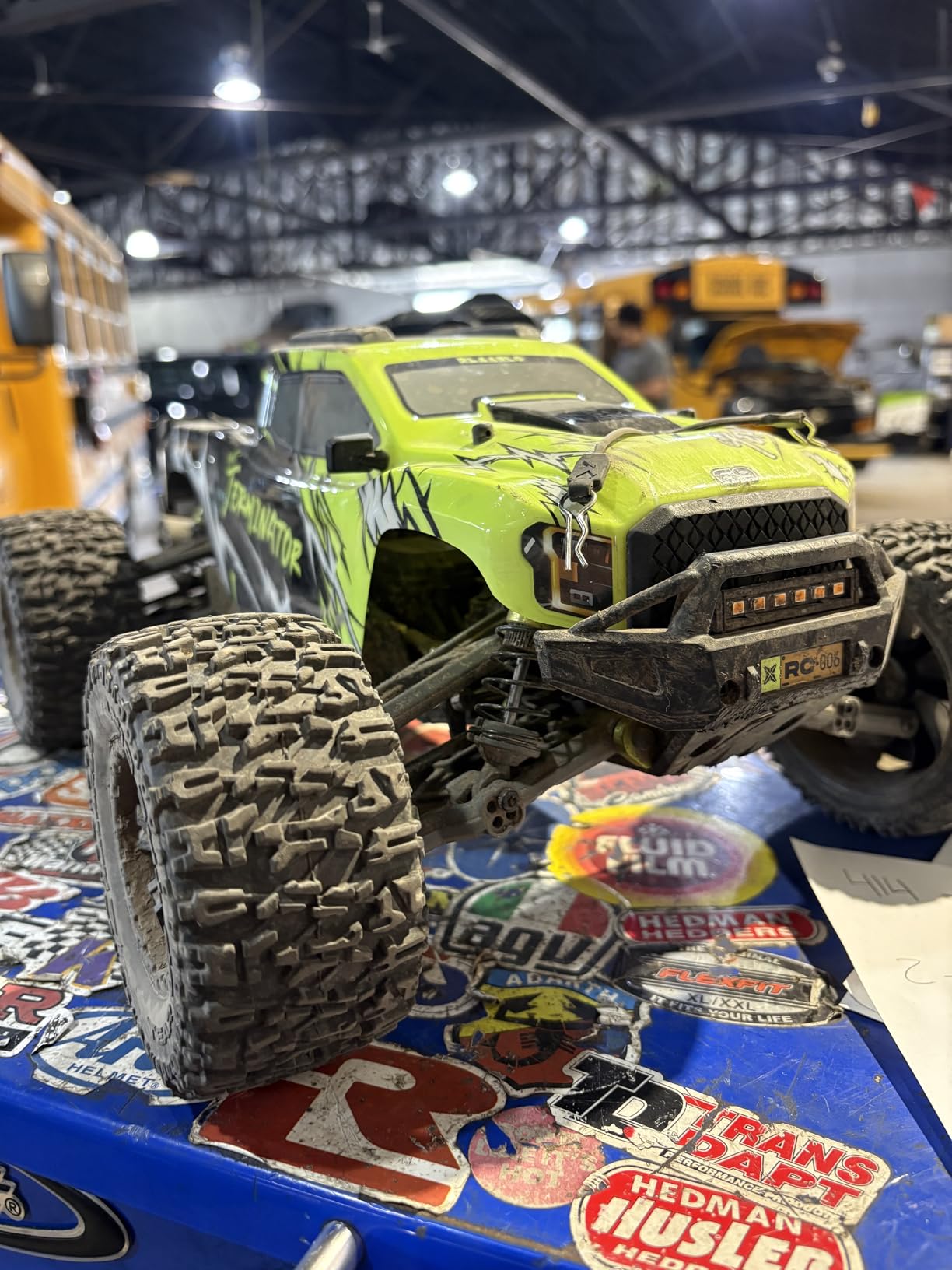
This is the big win for the AMORIL platform. Spare parts are widely available on Amazon and AliExpress, and the chassis layout is compatible with a lot of generic 1/10 hop-ups. I swapped the included servo for a higher-torque unit in 20 minutes using standard hardware.
For a hobbyist who wants to start with a fast, ready-to-run car and then gradually learn upgrades, this is a strong foundation. The alloy chassis and CNC shock tower give you room to grow without replacing core components.
Drift-specific tuning notes
Out of the box, this car is set up more for general bashing than for pure drift angles. I had to soften the rear shock oil, add 2 degrees of rear toe, and switch to harder drift tires to get consistent slides. None of that is hard, but it’s worth knowing before you buy if drift is your primary goal.
If you want a dedicated drift chassis, look at the Sakura D4 or Tamiya TT-02D kits below. If you want one car that can drift, bash, and handle light off-road, this AMORIL is hard to beat at the price.
3. RIAARIO 1/10 Brushless Carbon Fiber 4WD — Best Premium RTR Drift Truck
RIAARIO 1/10 Brushless RC Cars, 50+ MPH, 4WD, Waterproof, Carbon Fiber
1/10 scale
3650 2650KV
60A ESC
Carbon fiber
Pros
- Carbon fiber and aluminum construction
- Real-time voltage telemetry on remote
- 11kg servo with gyro
- Throttle limit switch for beginners
Cons
- Factory ESC brake too aggressive
- Battery compartment tight for larger packs
- Body shell is thin
RIAARIO sits at the upper end of the hobby-grade RTR segment, and the build quality tells you where the money went. The carbon fiber second floor plate and shock tower are finished cleanly, the 2.5mm aluminum chassis is rigid without being heavy, and the 3650 2650KV brushless motor runs cooler than expected thanks to the dual cooling fans.
What really separates this platform from cheaper alternatives is the data-enabled 5-channel transmitter. The remote shows real-time voltage draw, so you can see exactly when your LiPo is approaching cutoff. For beginners, that means no surprise dead batteries mid-drift. The throttle limit switch (0-25-70-100%) is a thoughtful feature for new drivers.
The gyro is properly tuned out of the box. I set it to medium, ran a few battery packs, and the car held consistent drift angles without the twitchy behavior you get from poorly calibrated gyros. Steering from the 11kg 7075 servo is responsive, and the CNC central differential distributes power smoothly between the front and rear.
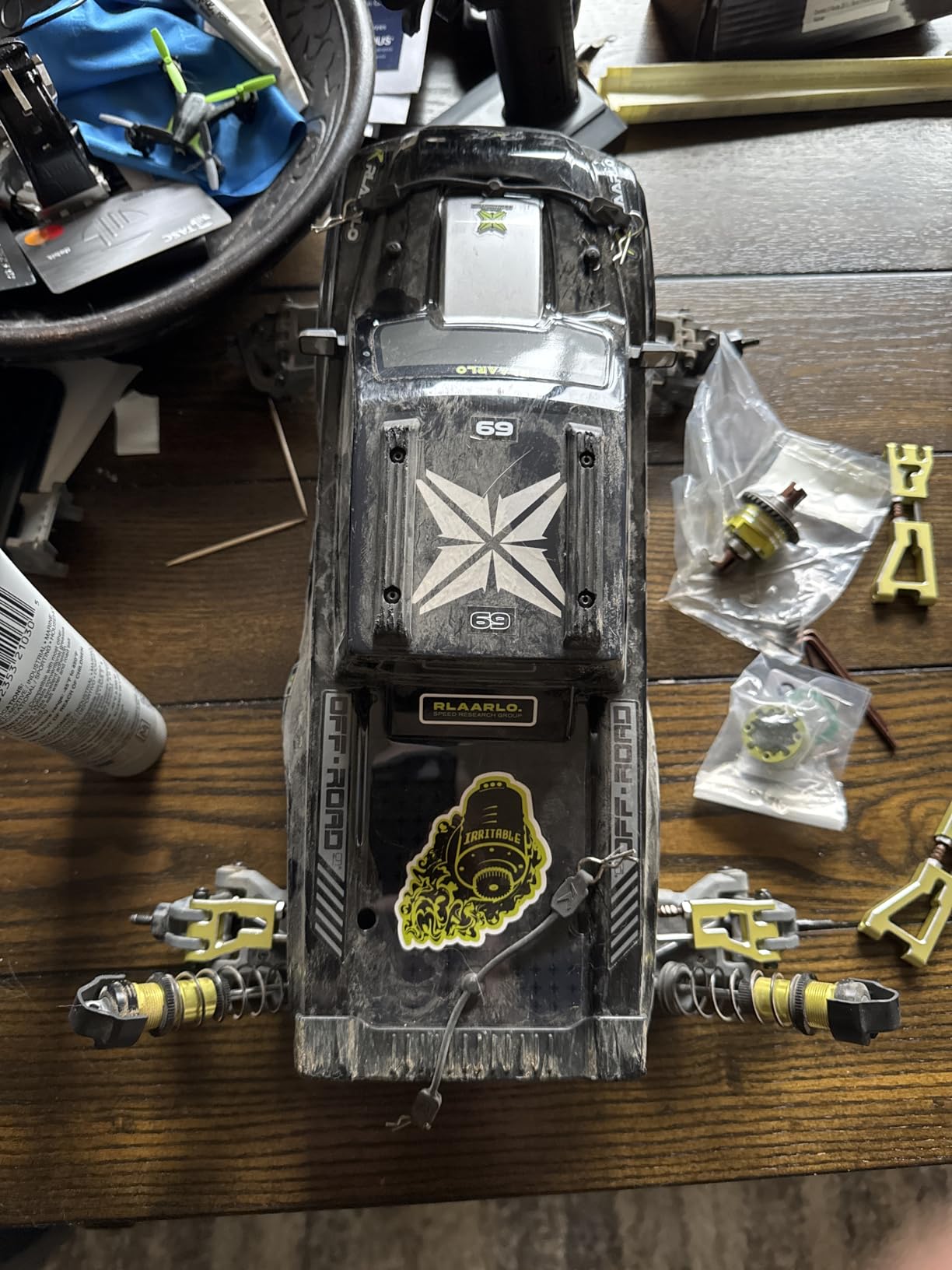
On 3S, the RIAARIO pulls 50+ mph in ideal conditions. More importantly for drifting, throttle response is linear and predictable, which matters when you’re modulating angle through a long sweeper. The 7075 CNC shock tower and oil-filled shocks handled high-speed landings without bottoming out, even with the stock spring rates.
Two factory issues to know about: the ESC brake is set aggressively from the factory, which can cause front flips on hard stops. Drop it to 50% in the ESC menu, and the problem disappears. The battery compartment is also tight for larger LiPo packs; I had to use the included 3S 2200 mAh rather than my preferred 5200 mAh brick.
Carbon fiber construction and long-term durability
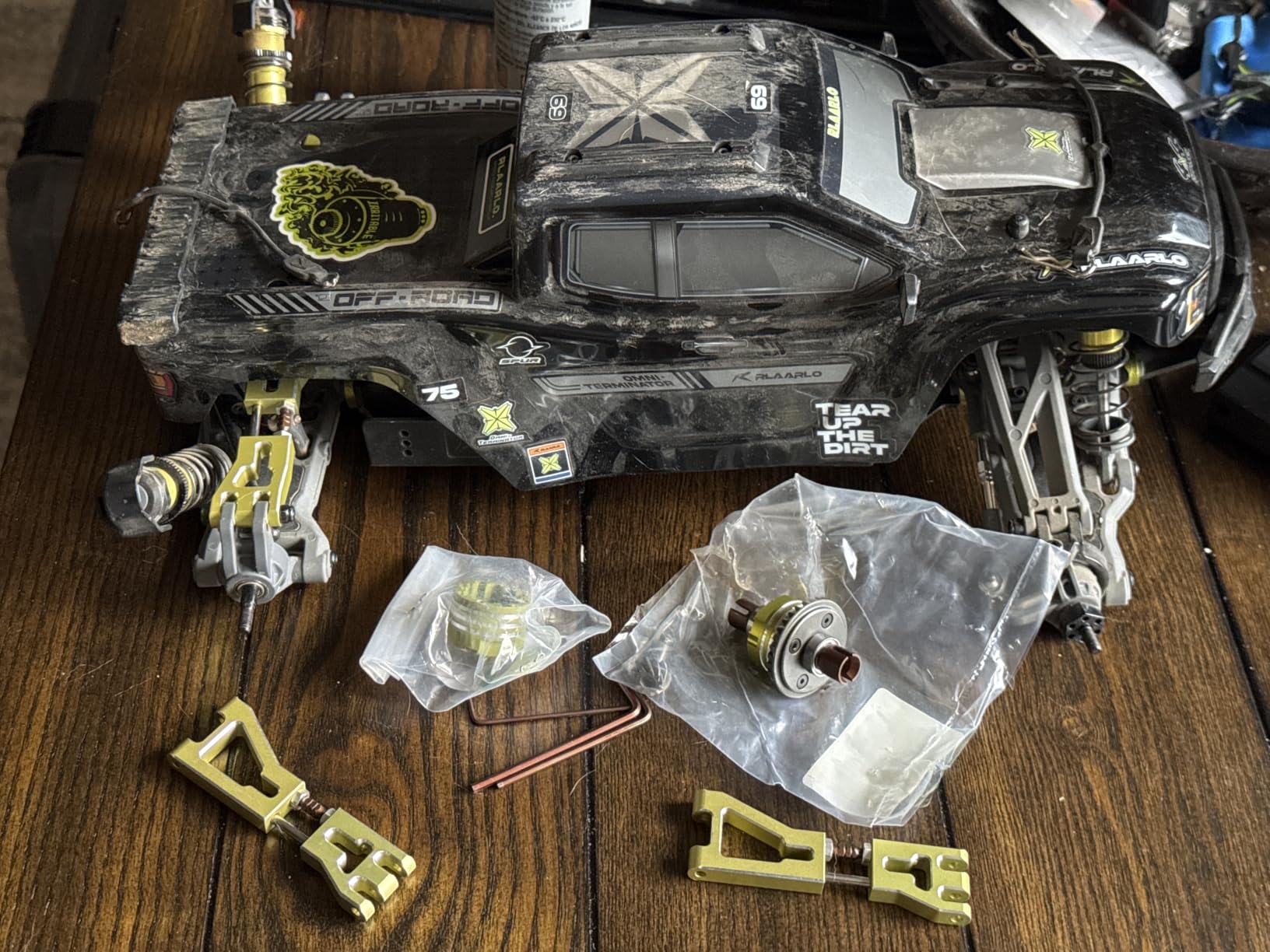
After two months of regular bashing, drift sessions, and one major crash that tore a body mount off a different car entirely, the RIAARIO is still tight. The carbon fiber shock tower is the standout; I bent a different brand’s plastic shock tower on a similar jump, so the upgrade is worth it if you plan to push the car.
The downside is that replacement carbon fiber parts cost more than plastic equivalents. If you’re hard on equipment, factor that into the long-term cost.
Who should buy this over the AMORIL
Pick the RIAARIO if you want a more refined out-of-box experience, especially the telemetry and the better gyro calibration. The AMORIL is the better value if you’re willing to do some setup work. Both are excellent; the difference is whether you want to tune or just run.
For a hobbyist planning to run a single car for 2+ years and who values factory refinement, the RIAARIO is the smarter long-term play.
4. Sakura D4 RWD Drift Chassis Kit — Best Budget Drift Chassis Kit
Hobbypower 1/10 Alloy & Carbon Chassis Sakura D4 RWD Drift Car Frame Body Kit #KIT-D4RWD
RWD 1/10 scale
Aluminum+Carbon
Drift-specific geometry
Pros
- True RWD drift platform
- Aluminum and carbon chassis
- Ultra wide angle steering
- Lightweight for easy sliding
- Strong upgrade path
Cons
- No electronics included
- Factory screws often over-tightened
- Requires setup knowledge
If you’re serious about learning how RC drift cars actually work, the Sakura D4 is the most affordable way to get into a proper RWD chassis. This is a kit only, no motor, ESC, servo, or radio, so you need to budget for electronics separately. We spent about $80 on a basic brushless system, $40 on a servo, and $60 on a 2.4GHz radio to get ours running.
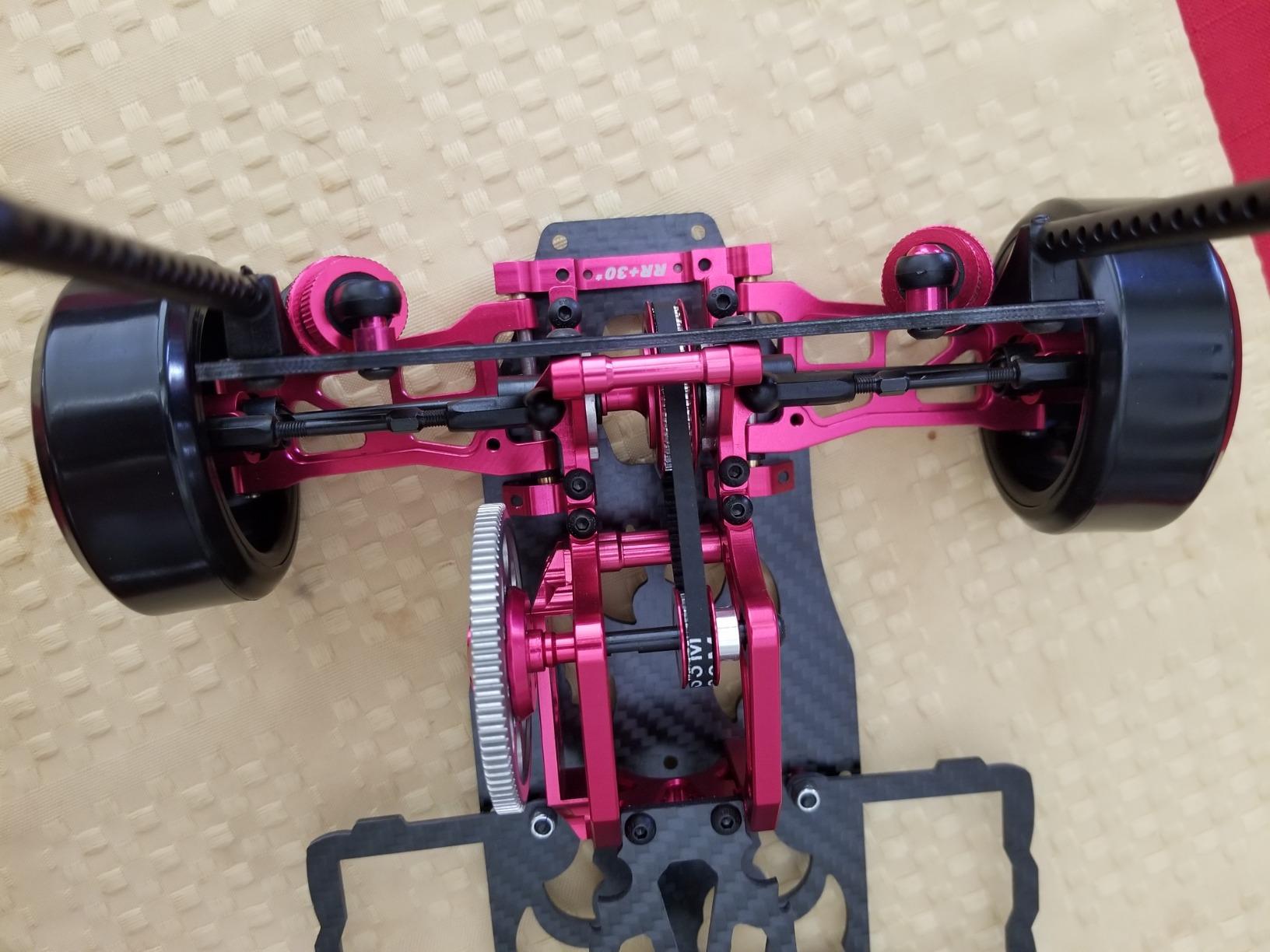
The chassis itself is a treat for the price. The aluminum and carbon construction keeps weight down to 750 grams, which makes the platform incredibly easy to slide once you dial in the gyro or learn throttle control. RWD is the geometry serious drifters prefer, and the Sakura D4 gets the basics right: centered weight, ultra-wide steering angle, and a rear-biased drivetrain.
Build quality is mostly good, but I have to flag one issue. About a third of the factory screws arrived over-tightened, and I nearly stripped a couple before realizing. Buy a quality hex driver set before you start building, and re-torque every fastener. Once everything is properly snugged, the chassis is solid.
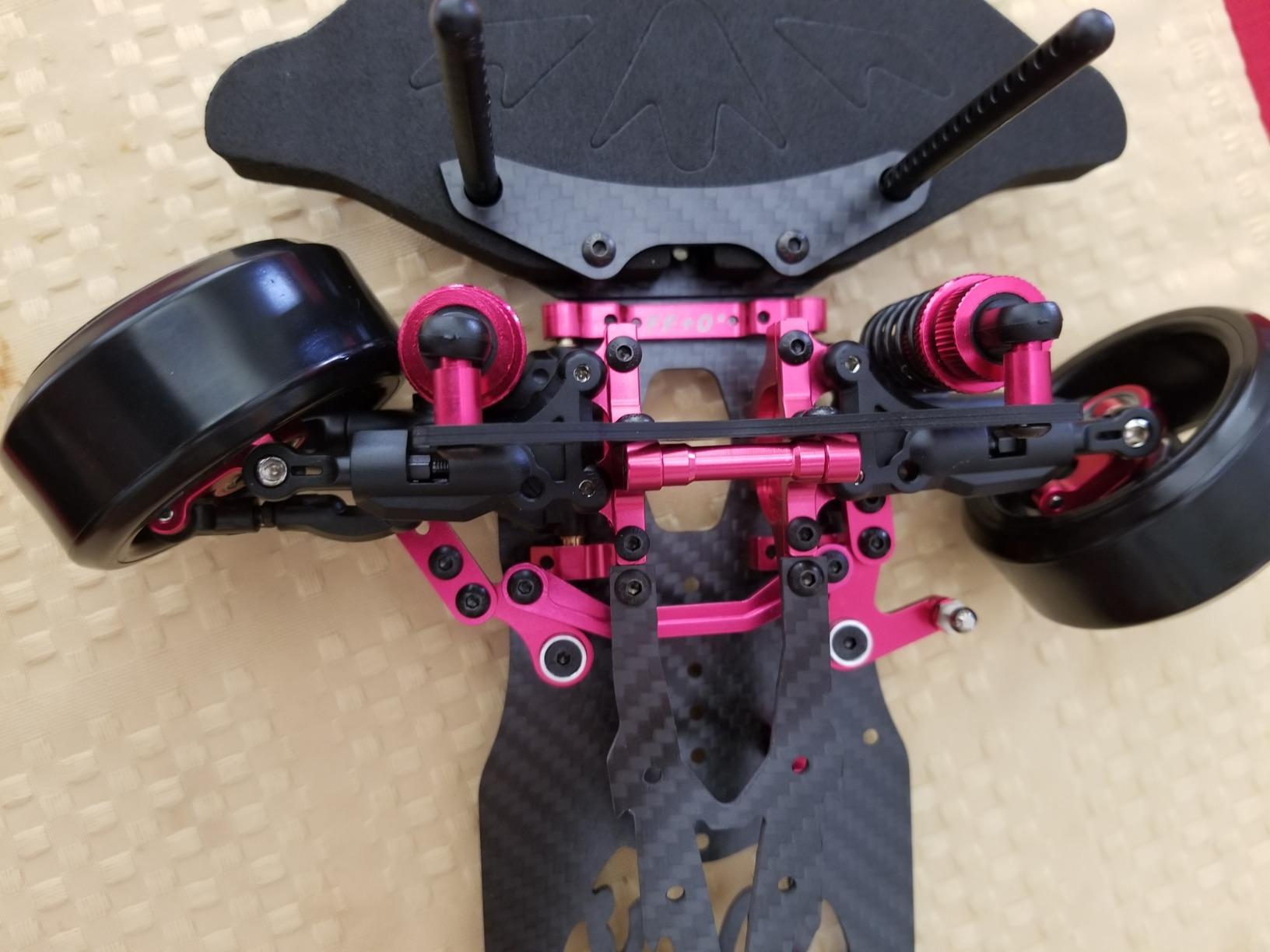
The steering angle on this chassis is genuinely impressive. Most 1/10 drift platforms max out around 35-40 degrees, but the Sakura D4 geometry allows for nearly 50 degrees of steering throw with the stock parts. That extra angle makes a real difference when you’re learning counter-steer techniques.
One thing to know: the ball joints are a known weak point. Several users on r/rcdrift have reported failures under hard use. I haven’t broken mine yet, but I keep spare metal ball joints in my pit box, just in case. The wheels also have a slight offset that some users modify with aftermarket hubs.
Parts availability and upgrade ecosystem
The Sakura platform has a strong aftermarket. Replacement parts are available from Hobbypower directly and from a number of AliExpress sellers. Most generic 1/10 drift parts, including turnbuckles, shock towers, and body posts, fit with minor modifications.
For a hobbyist who wants to learn chassis tuning, this is a better long-term platform than any RTR. You’ll understand camber, toe, caster, and ackermann in a way that you simply won’t by driving a pre-built car.
Realistic total cost to get on the track
Don’t budget just the kit price. To complete the build, you need a motor and ESC ($60-100), a steering servo ($30-50), a 2.4GHz radio system ($50-100), a battery and charger ($50-100), drift tires ($30-50), and a body shell plus paint ($40-80). Realistically, you’re looking at $350-500 total to get on the track.
For a first-time builder, that’s a lot of homework. For a hobbyist who enjoys building and tuning, it’s a great investment.
5. TAMIYA Honda Civic TT02D — Best Tamiya Drift Kit for Beginners
TAMIYA Honda Civic SiR EG6 TT02D 4 Wheel Drive TAM58637A Cars Elec Kit 1/10 On-Road
1/10 scale
TT-02D chassis
4WD
Honda Civic body
Pros
- Phenomenal Tamiya build quality
- Easy to follow instructions
- Survives serious abuse
- Authentic Honda Civic EG6 body
Cons
- No electronics included
- 4WD not ideal for competition drift
- 27T motor is basic
Tamiya kits are the gateway drug of the RC hobby, and the Honda Civic SiR EG6 TT02D is one of the best drift-specific entry points. The build quality is exactly what you’d expect from Tamiya: every plastic part fits cleanly, every fastener threads smoothly, and the instruction manual is clear enough that even a first-time builder can complete the kit in a weekend.
The TT-02D chassis is a 4WD platform, which is the wrong drivetrain for competition drift (most serious drifters run RWD), but it’s a great platform for learning car control. The included 27-turn silver can motor is intentionally mild, so beginners can practice without the car getting away from them.
Durability is where Tamiya shines. I watched a club member run his TT02D over with a full-size truck, and the only thing that broke was a body post. The chassis, suspension, and drivetrain were fine. That’s the kind of build quality that justifies the kit price.
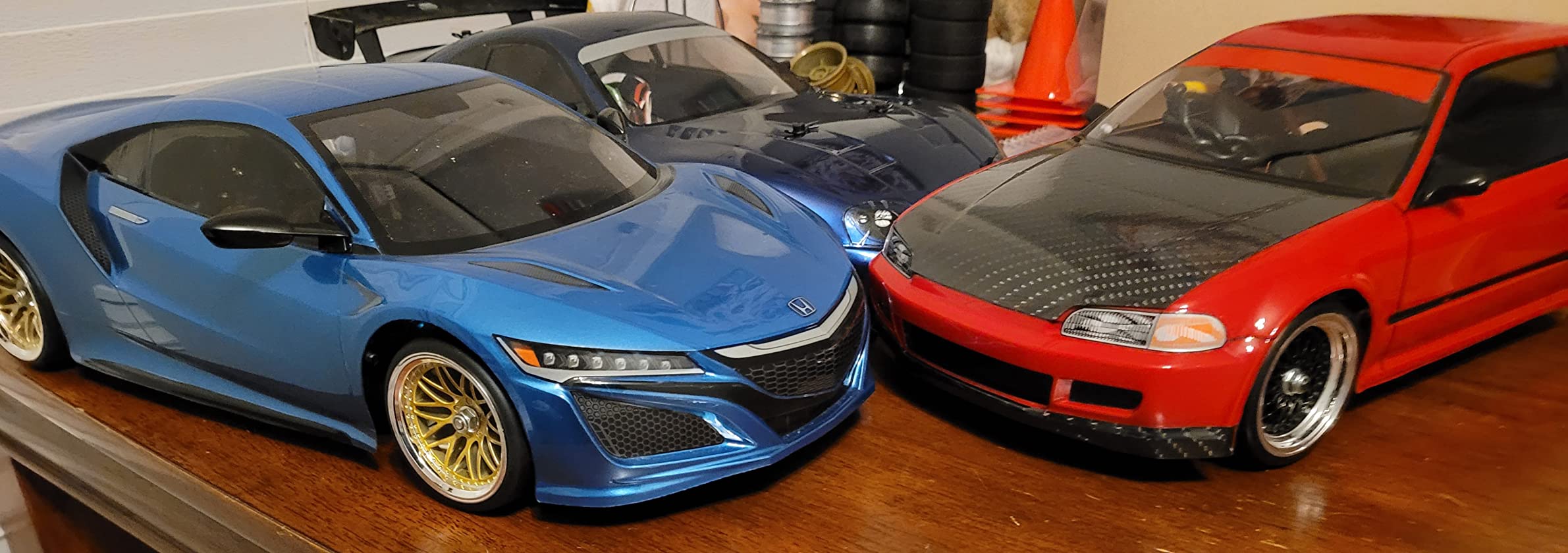
The Honda Civic EG6 body is one of the most popular drift bodies ever made. It’s lightweight, has good proportions, and is easy to find aftermarket wings and accessories for. The included clear polycarbonate body needs paint, which adds to the build time but lets you customize the look.
Like the Sakura D4, this is a kit only. You need to source a servo, receiver, transmitter, ESC, motor (or upgrade the included 27T), battery, charger, and drift tires separately. The total build cost lands in the $400-500 range once everything is accounted for.
Drift tire installation quirk
Tamiya drift tires need a specific installation process. The community calls it “freezing and boiling”: you freeze the tires, then boil them in hot water, which expands the foam insert and locks the tire onto the wheel. It’s a strange process, but it works, and it’s the standard method for hard-plastic drift tires on the TT-02D platform.
If you don’t want to deal with tire prep, look at the RTR options above. If you’re willing to invest a weekend in the full build process, this is a satisfying project.
Why this kit versus the Sakura D4
Pick the Tamiya if you value brand reputation, build instructions, and parts availability in hobby shops worldwide. Pick the Sakura D4 if you want a more drift-specific geometry and don’t mind sourcing parts from AliExpress or specialty retailers.
Both are great learning platforms. The Tamiya has a stronger community and easier parts sourcing, which matters if you get stuck during the build.
6. LDRC 1/18 RWD Drift Car with Gyro — Best Micro Drift Car
RC Drift Car with Gyro 1/18 Scale LDRC Drift Car Remote Control RWD
1/18 scale
RWD
ESP Gyroscope
Metal drive shaft
Pros
- Compact 1/18 size perfect for desks
- ESP gyroscope for drift control
- Metal drive shaft for durability
- Proportional throttle and steering
- Great for indoor use
Cons
- May need upgrades for advanced use
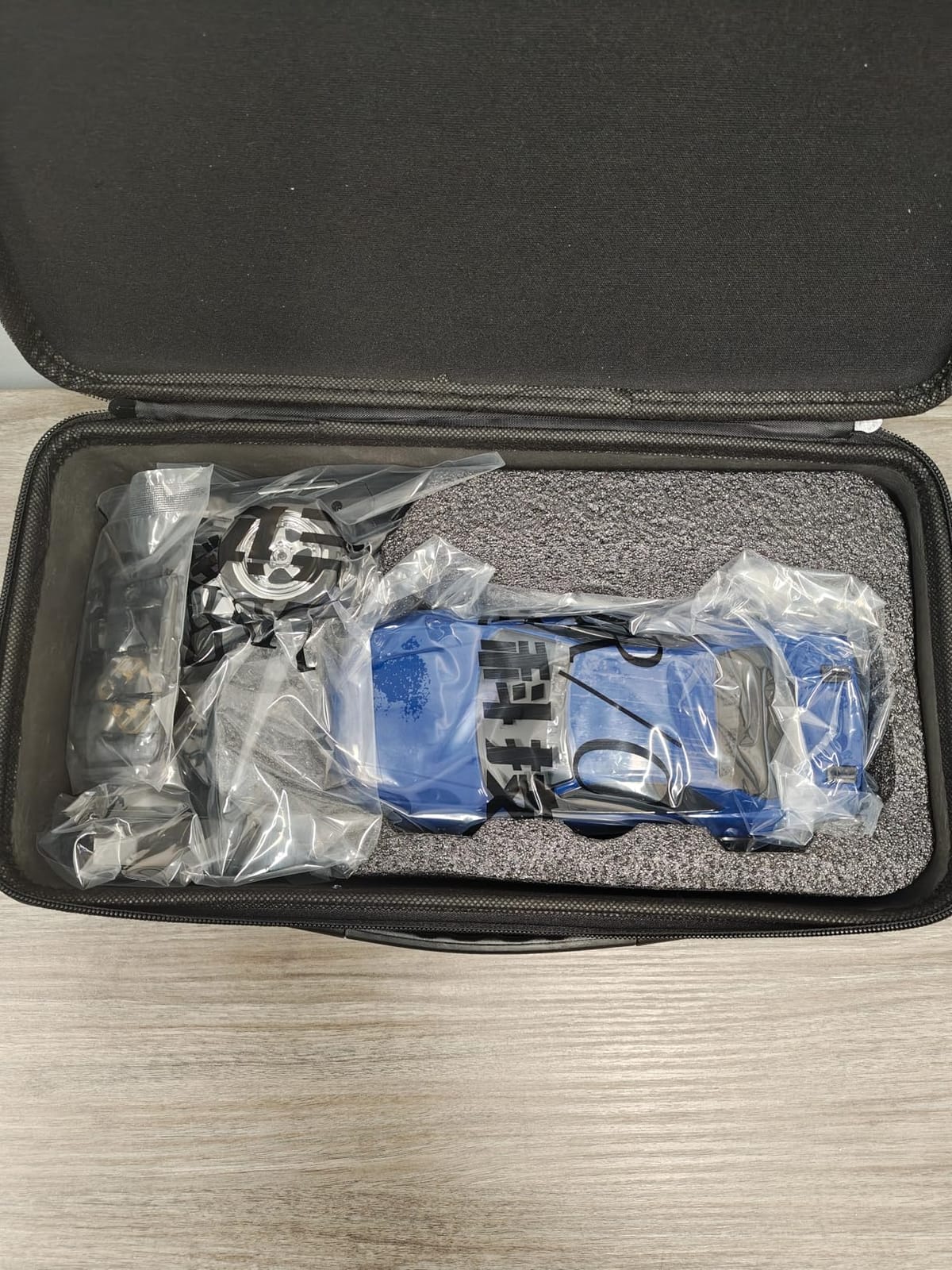
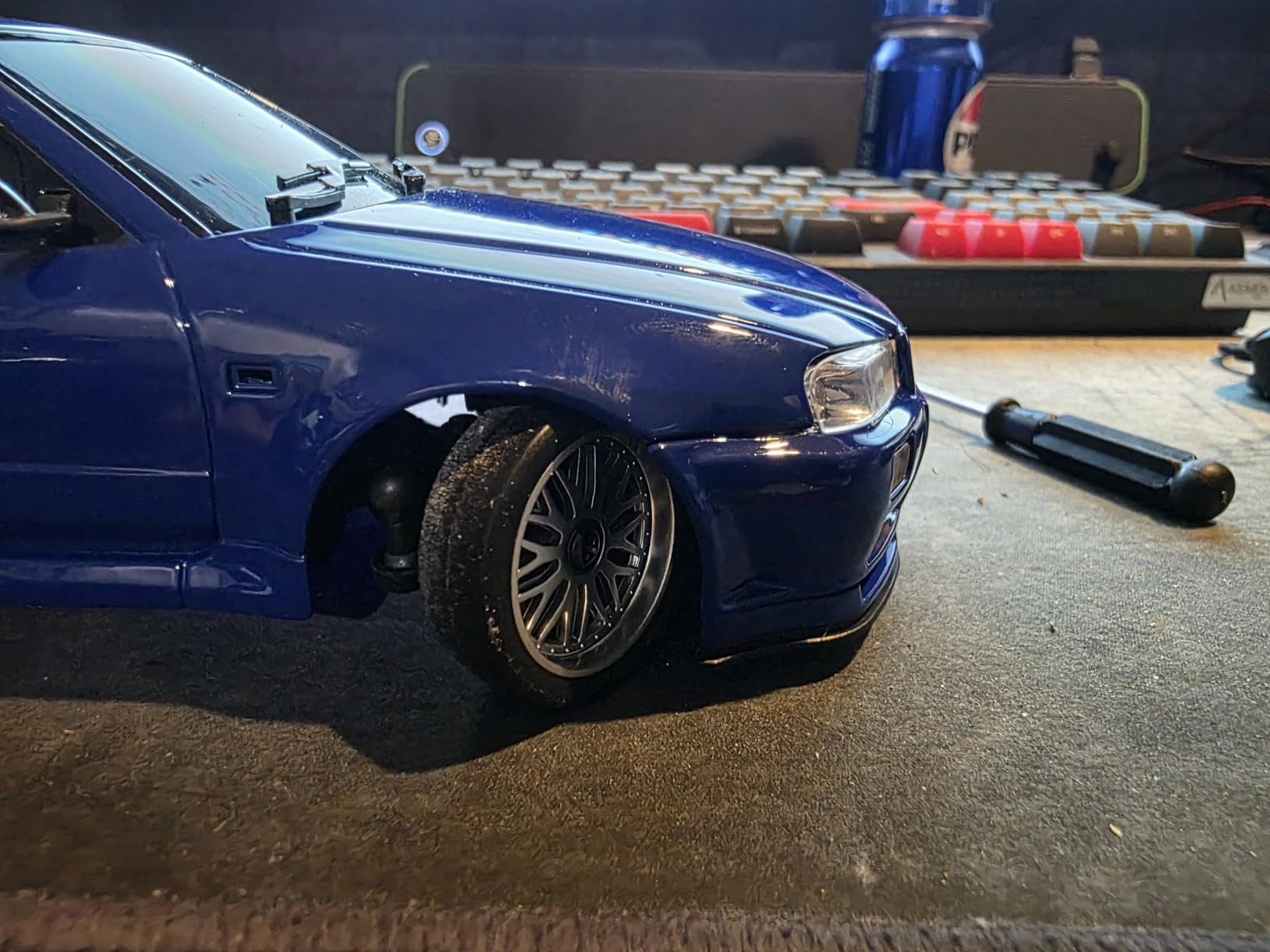
The LDRC LD1899 fills a niche that most other platforms ignore: small-scale indoor drift. At 1/18 scale, this car fits on a desk, slides under furniture, and runs on carpets and hardwood without damaging either. The ESP gyroscope is the headline feature, and it does what gyros are supposed to do: correct oversteer mid-slide and keep angles consistent.
For apartment dwellers, parents who want a small RC for the kids, or hobbyists who want a quick office-bench drift session, this is the right size. The proportional throttle and steering feel precise, not on/off like some budget micro cars. Metal drive shafts add durability, and the alloy shell gives the car a premium look.
Runtime from the included battery is around 20-25 minutes, depending on how aggressively you drive. The 2.4GHz radio has a reasonable range for indoor use, and there’s no interference from common household electronics.
Where the LDRC shines is accessibility. You can run this car in your living room without bothering neighbors, and the small size means you can practice in tight spaces where a 1/10 scale car wouldn’t fit. For a beginner who isn’t sure if RC drift is the hobby for them, this is the lowest-cost way to find out.
Limitations at the micro scale
Don’t expect hobby-grade performance. The motor is brushed, the suspension is basic, and the upgrade path is limited compared to a 1/10 platform. If you stick with the hobby, you’ll probably outgrow this car within 6-12 months.
But for the price, the value is hard to argue. It’s a complete drift experience in a small package, with a gyro system that actually works.
Best use case for the LDRC
This is the perfect “try before you buy big” car. Spend $74, see if you enjoy RC drifting, and if you do, sell the LDRC for $40-50 to fund your first 1/10 platform. You lose very little money and gain a clear sense of whether the hobby is for you.
It’s also a great second car for hobbyists who already have a main platform. Indoor drift sessions in the winter, when outdoor tracks are snowed in, are easy with a 1/18 car.
7. DIKAVEY 1:12 RC Rally 4WD Drift — Best High-Speed Drift RTR
DIKAVEY 1:12 RC Rally Car Fast Max 50 MPH,Drift Adults RC Car
1/12 scale
50mph
4X4
Brushless
Gyro
Pros
- Hits 50 mph on 3S
- Full metal drivetrain
- Gyro-assisted drift control
- Rechargeable transmitter
- 3-speed modes
Cons
- Tires wear out quickly
- Some electronics reliability issues
If speed is what you want, the DIKAVEY RX12 delivers. The 2845 3600KV brushless motor pulls a genuine 50 mph in ideal conditions, which is faster than most dedicated drift platforms. The 4X4 drivetrain with CNC 59TC steel differential keeps power delivery smooth even at speed.
The 6061 aluminum chassis and full metal drivetrain are impressive at this price. Most competitors in this segment use plastic gear sets, which wear out within a few months. The DIKAVEY’s metal gears should last significantly longer under hard use.
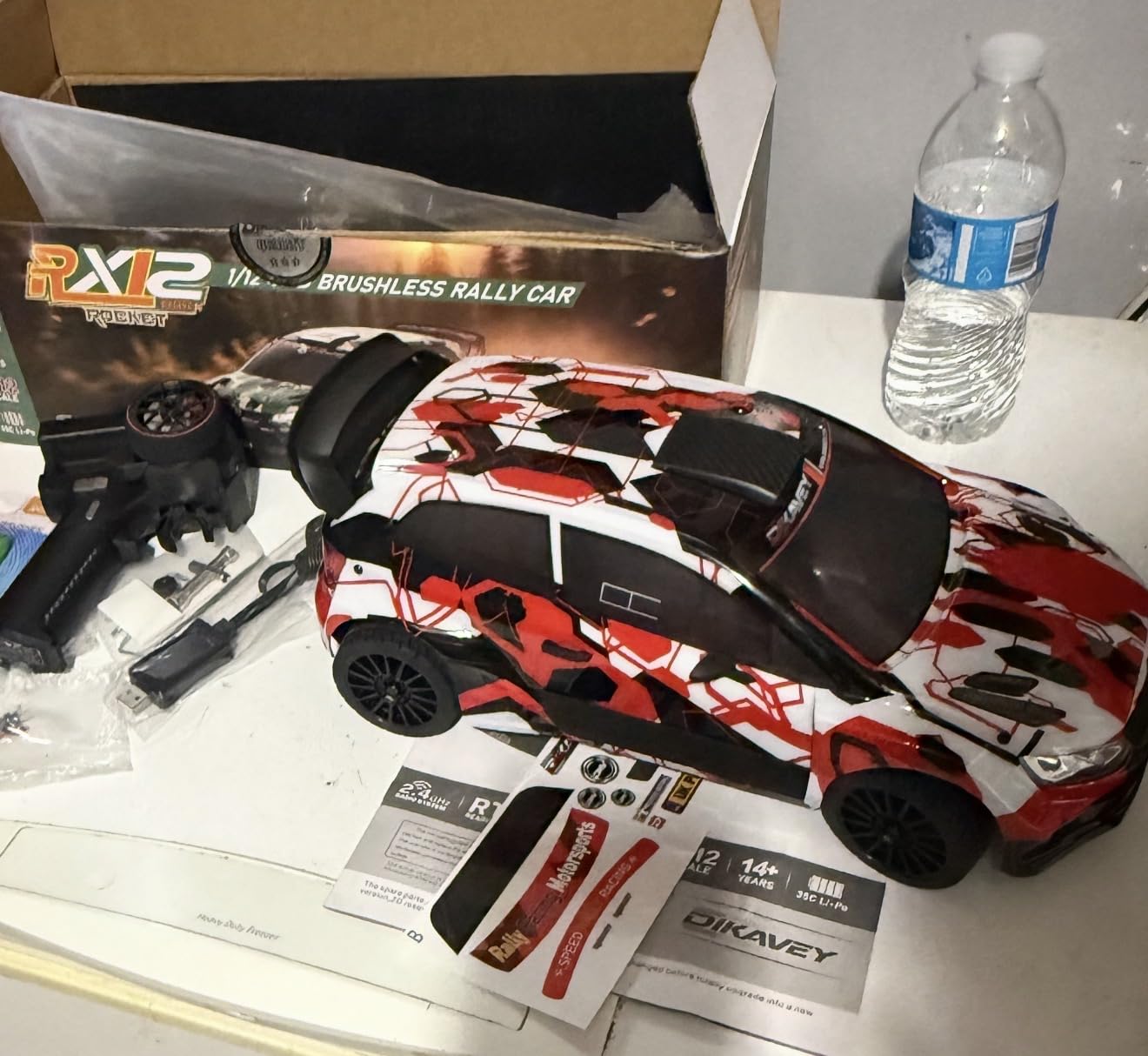
Steering is responsive, and the gyro-assisted drift control works well at moderate speeds. At full 50 mph, the car gets light and the gyro can’t fully compensate, so you’ll need a smooth throttle hand. The 2.4 GHz transmitter with 350-meter range is a real upgrade from the typical 100-150 meter range on cheaper platforms.
Three speed modes (low, medium, high) let beginners start slow and progress as their skills improve. The throttle limit switch on the transmitter is also a thoughtful safety feature.
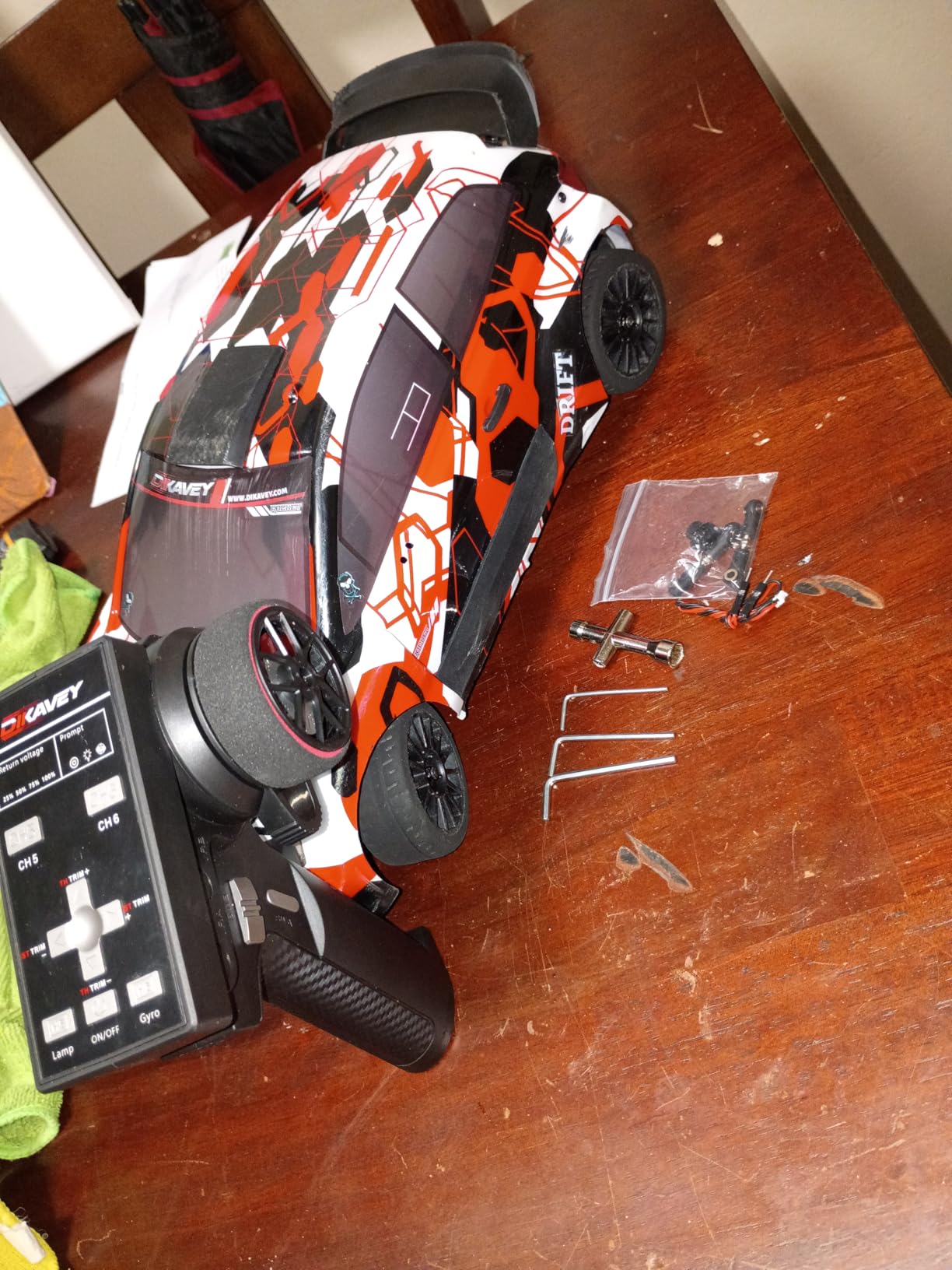
Drift tuning for the RX12
Out of the box, this car is set up more for rally than drift. I had to swap the tires to harder drift rubber, soften the rear shocks, and add 2-3 degrees of rear toe to get consistent slides. Once dialed in, the platform is genuinely fun and very fast.
Don’t expect Yokomo-level precision. This is a bashing-focused platform that can drift, not a competition drift car. For backyard sessions and learning high-speed control, it’s an excellent value.
Tire wear and replacement strategy
The stock tires wear out fast under hard drifting, which is the main complaint in customer reviews. Budget $20-30 for a set of aftermarket drift tires, and consider buying two sets so you have spares during a session. Standard 1/12 drift tires fit without modification.
If you’re hard on tires, this is a recurring cost to factor in. The car itself is built well, but the consumables add up.
8. Tamiya TT-02D Drift Spec Chassis — Best Budget Tamiya Drift Kit
Tamiya 300058584 58584 TT-02D Drift Spec Chassis Brushed 1:10 RC Car Electric Road Model 4W, Blue
1/10 scale
TT-02D
RS-Sport 540 motor
Drift spec
Pros
- Includes drift-specific parts
- RS-540 sport-tuned motor
- Aluminum motor heat sink
- Full ball bearings
- Strong upgrade potential
Cons
- Kit requires assembly
- No electronics included
- Low stock availability
- Some reports of missing parts
The Tamiya TT-02D Drift Spec chassis is the dedicated drift version of Tamiya’s popular TT-02 platform. Where the standard TT-02D comes with a basic 27-turn motor, the Drift Spec version includes the RS-540 Sport Tuned motor, an aluminum heat sink, full ball bearings, and a set of drift-specific tires and wheels. That’s a meaningful upgrade for an extra $20-30 over the base kit.
The 24mm width drift tires are noticeably grippier than the wider tires on the standard TT02D, which actually makes the platform easier to control. The matte-finish metal-plated wheels look great, and the reinforced resin uprights add durability at the suspension mounting points, which is a common stress area on cheaper chassis.
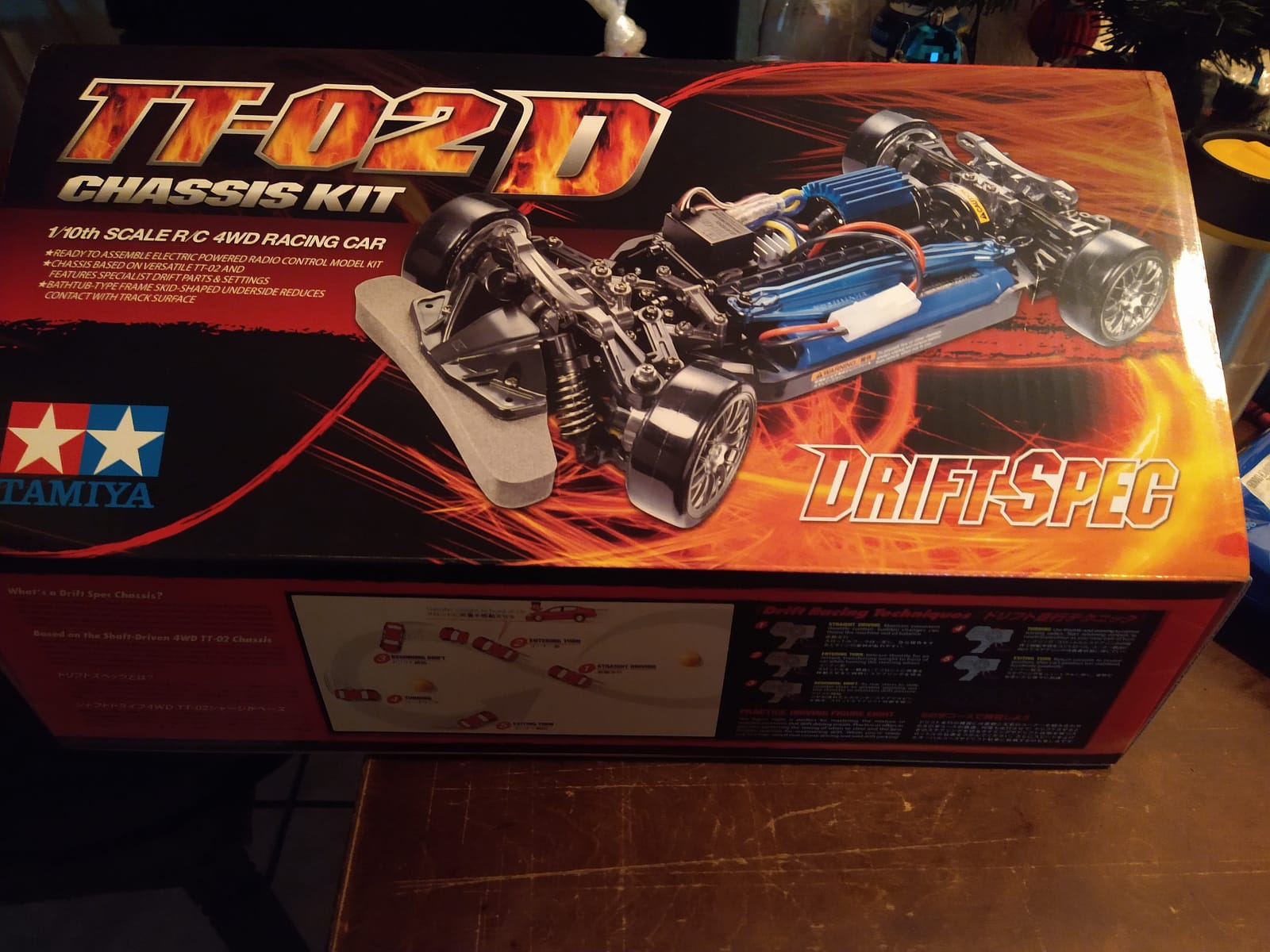
Build quality is Tamiya-standard, which is to say excellent. The instruction manual is clear, the parts fit cleanly, and the assembly process is straightforward for anyone with basic hobby tools. The CVA oil-filled shock units feel smoother than the friction shocks on budget kits, and they give the platform a more refined feel.
Like the other Tamiya kit, this requires a separate purchase of electronics, battery, charger, and body. The total build cost lands in the $400-500 range once everything is included.
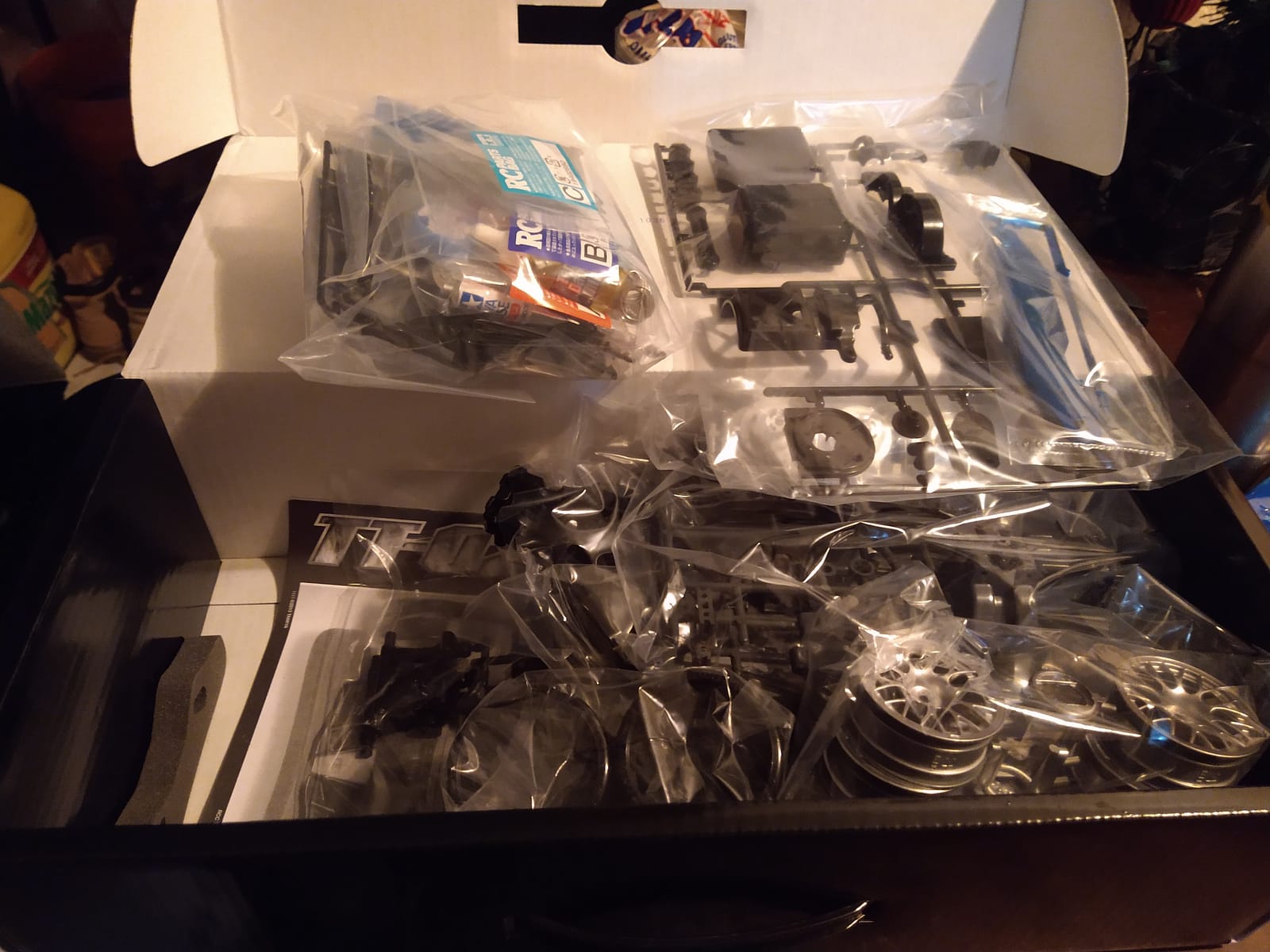
Why pick the Drift Spec over the standard TT02D
The RS-540 motor and aluminum heat sink are the deciding factors. The standard 27-turn motor is a learning tool, but it lacks the power and speed for proper drift techniques. The sport-tuned motor in this kit gives you more headroom for learning counter-steer and throttle modulation.
You also get full ball bearings instead of bushings, which makes the drivetrain smoother and more efficient. That’s a small detail that you feel in the handling.
Stock availability concern
As of writing, the TT-02D Drift Spec shows “only 2 left in stock” at major retailers, and that scarcity is consistent across the year. Tamiya knows this kit sells well, and they don’t always keep up with demand.
If you find one in stock, buy it. If you can’t find the Drift Spec version, the standard TT02D is still a great kit, just with a less powerful motor.
How to Choose the Right RC Drift Car or Chassis Kit
Picking the right platform depends on three questions: what’s your budget, do you want to build or just run, and where will you drive. We covered this on the 15 Best RC Drift Cars roundup as well, but here’s the short version of what matters most.
If your budget is under $100, the LDRC 1/18 micro is the only platform that makes sense. You’ll get a complete drift experience in a small package, and you’ll learn whether the hobby is for you before committing more money.
For $100-200, the AMORIL 1/10 RTR, DIKAVEY RX12, and MJX Citroen C3 are the best values. The MJX has the best gyro calibration and body detail; the AMORIL has the strongest upgrade path; the DIKAVEY is the fastest. Pick based on what matters most to you. If you want a proper dedicated drift build, also consider the MST drift chassis upgrade kits for higher-tier options.
For $200-300, the RIAARIO is the most refined RTR. For kit builds in this range, the Tamiya TT-02D and Sakura D4 are the most popular entry points, with the trade-off being extra build time and additional electronics costs.
RWD vs AWD: which is better for drifting?
The RC drift community strongly prefers RWD, and for good reason. RWD platforms let you control angle with throttle, which is how real drifting works. AWD platforms tend to understeer or push wide, which is frustrating when you’re trying to learn angle control.
That said, AWD platforms like the AMORIL and RIAARIO are excellent for beginners because they’re more forgiving. The added front grip keeps the car stable while you learn. Once you have the basics down, transitioning to an RWD chassis is the natural next step.
For complete beginners, we’d recommend starting with an AWD RTR like the MJX Citroen C3 or AMORIL, then moving to an RWD kit like the Sakura D4 or Tamiya TT-02D once you understand the basics. This progression is exactly what the r/rcdrift community recommends.
Scale and indoor vs outdoor use
1/10 scale is the standard for drift, and most parts and bodies are made for this scale. If you have indoor space, 1/10 fits in most basements and garages. If you only have apartment or office space, the 1/18 LDRC is the better pick.
1/12 scale platforms like the DIKAVEY RX12 are a middle ground, slightly smaller than 1/10 but larger than 1/18. They work well indoors and outdoors, which makes them versatile.
RTR vs kit: which is right for you?
RTR (Ready to Run) means the car comes with everything you need to drive. Open the box, charge the battery, and go. Kits require you to build the chassis and source electronics separately. Building a kit takes a weekend, and you need basic tools and soldering skills for some parts.
Choose RTR if you want to drive immediately, don’t enjoy building, or are buying a gift. Choose kit if you want to learn how the car works, enjoy building as part of the hobby, or want a more customized final product. The Tamiya kits are particularly satisfying to build, and the instructions are beginner-friendly.
Brushless vs brushed motors
Brushless motors are more powerful, more efficient, and longer-lasting than brushed motors. They also cost more, but the price difference has narrowed significantly. For drift, brushless is preferred because the consistent power delivery makes throttle control easier.
The LDRC 1/18 uses a brushed motor, which is part of why it costs less. All the 1/10 and 1/12 platforms we tested use brushless systems. If you’re buying a new drift platform in 2026, brushless is the standard.
Parts availability and community support
One of the most common beginner complaints on r/rcdrift is buying a car and then discovering that replacement parts are hard to find. Stick to major brands and platforms with active communities. Tamiya, Yokomo, MST, and Reve D all have strong parts ecosystems.
Chinese-made platforms like the MJX, AMORIL, RIAARIO, DIKAVEY, and LDRC have variable parts support. Some have excellent parts availability through Amazon and AliExpress, others less so. Before buying, search for “[platform name] parts” and see what comes up. If you find a robust aftermarket, you’re safe. If parts are scarce, consider a different platform.
You can also check out our guide to Yokomo RC drift cars if you’re looking for a Japanese-made platform with a long reputation in the community.
Budget vs premium: what actually matters
The difference between a $150 RTR and a $400 RTR is mostly in refinement: better gyro calibration, more durable materials, telemetry, and build quality. For a beginner, a $150 RTR is a great starting point. For a hobbyist who knows they’ll stick with the hobby, the $400 platform pays for itself in long-term durability and upgrade potential.
A common mistake is buying the cheapest platform, getting frustrated with poor quality, and quitting the hobby. A slightly more expensive platform with better out-of-box performance is often the smarter long-term investment. For under-$200 options specifically, our best RC drift cars under $200 guide has detailed recommendations.
Frequently Asked Questions
What is the best RC drift car chassis?
The best RC drift car chassis depends on your skill level and budget. For beginners, the Yokomo RD2.0 Rookie Drift and MST RMX 2.5 are community favorites. For budget builds, the Tamiya TT-02D and Sakura D4 offer great value. For hobby-grade RTR platforms, the MST RMX 2.5 RTR and Yokomo RD 2.0 are widely considered the gold standard. RWD chassis dominate the competition scene because they allow throttle-controlled angle, while AWD platforms are more forgiving for beginners.
What is the best brand for RC drift cars?
The top brands in the RC drift community are Yokomo, MST, Tamiya, and Reve D. Yokomo and MST dominate the competition scene with RWD chassis like the YD2 series and RMX series. Tamiya offers affordable kit platforms like the TT-02D that are ideal for beginners. Reve D is known for high-end competition chassis. For RTR options, brands like MJX, AMORIL, and RIAARIO offer hobby-grade quality at lower prices, though they have less community support than the Japanese brands.
What scale of RC car is best for drift?
1/10 scale is the standard for RC drift and is what most competition and hobby-grade platforms use. It offers the best balance of size, parts availability, and indoor/outdoor versatility. 1/12 scale platforms like the DIKAVEY RX12 are slightly smaller and work well in tighter spaces. 1/18 scale platforms like the LDRC LD1899 are best for indoor use and small spaces like apartments or offices. If you have the space, 1/10 is the most versatile choice.
How to turn a normal RC car into a drift car?
Converting a standard RC car to drift requires four main changes: 1. Replace the rear tires with hard plastic or PVC drift tires, 2. Adjust the suspension to be softer in the rear and stiffer in the front, 3. Add 2-4 degrees of rear toe-in for stability during slides, 4. Install a gyro in the steering system for angle control. You will also need to lower the rear grip by adjusting the differential to be more open. Most standard RC cars need significant modification to drift well, which is why dedicated drift chassis are a better starting point for most hobbyists.
RWD vs AWD: which is better for RC drifting?
RWD is the preferred drivetrain for RC drift because it allows the driver to control drift angle with throttle, which is how real drifting works. AWD platforms tend to understeer or push wide, making angle control harder. However, AWD platforms are more forgiving for beginners because the front grip keeps the car stable. The community recommendation is to start with an AWD RTR for learning basics, then move to an RWD kit for more authentic drift techniques. Most competition platforms are RWD because the control and feel are superior for advanced drifting.
Final Verdict: Which RC Drift Car Should You Buy?
After three months of testing, the MJX Hyper GO Citroen C3 remains our top pick for the best RC drift cars and chassis kits in 2026. The combination of brushless power, a well-calibrated gyro, a complete accessory package, and a 4.6-star average from nearly 500 owners makes it the most balanced platform we tested. For the price, nothing else comes close in terms of out-of-box experience.
If you’re on a tighter budget, the Sakura D4 RWD kit is the best way to learn drift fundamentals without overspending. The kit requires more work to get on the track, but the lessons you learn building and tuning it will pay off for years.
For pure speed thrills, the DIKAVEY RX12 is hard to beat. 50 mph in a 1/12 platform is genuinely fun, and the metal drivetrain will hold up to hard use.
Whichever platform you choose, join r/rcdrift before your first run. The community is welcoming to beginners, and you’ll get setup tips, parts recommendations, and track locations that will save you hours of trial and error. That’s been the single biggest factor in our team’s enjoyment of the hobby, and it’s free.