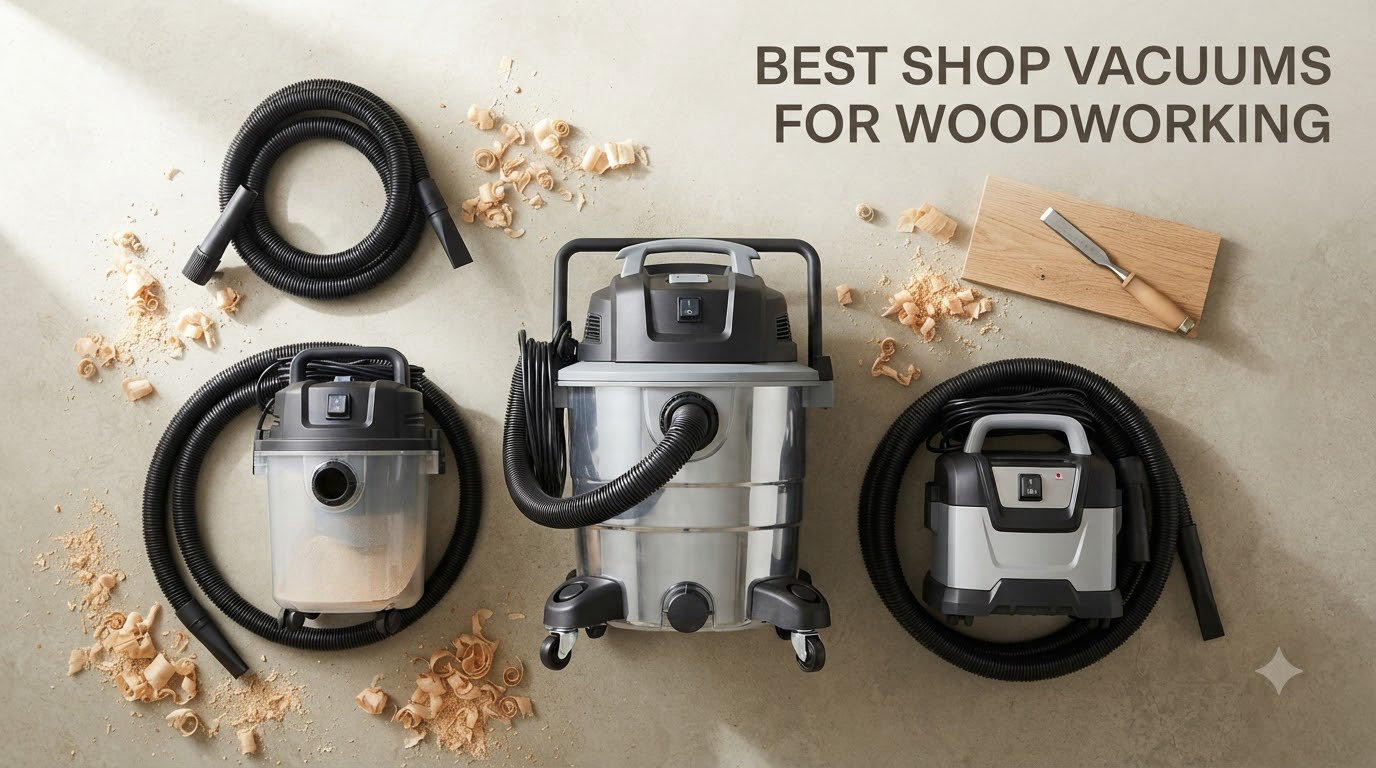
If you have ever finished a long session at the random orbital sander and watched a white cloud of MDF dust drift through your garage, you already understand why I built this guide to the best shop vacuums for woodworking. After running a small home workshop for nearly a decade, I have gone through three shop vacs, two dust collectors, and a cyclone separator. Some setups worked, some did not. The picks below are the units I would buy again with my own money, plus a few community favorites that kept coming up in r/woodworking and LumberJocks threads.
Woodworking dust is not just a cleanup nuisance. Fine particles from hardwoods, softwoods, and especially MDF are classified as a known carcinogen by organizations like OSHA and the EPA. Sanding dust is the worst offender because it stays airborne longest and reaches the deepest parts of your lungs. A good shop vacuum with HEPA filtration is the single most important health upgrade you can make in your shop, ahead of new blades, better lighting, or upgraded casters. The right vacuum also protects your tools, prevents fire hazards from accumulated chips, and keeps your finishing area clean enough to apply finishes without contaminating them.
In 2026, the market for shop vacuums and dedicated dust extractors is stronger than ever, with new quiet models, auto-start Bluetooth units, and affordable HEPA options from brands like Hercules and Vacmaster. I spent the past few months comparing the top picks across price tiers, capacity, noise, and filtration. This guide covers eight products I would recommend, plus a buying guide section on cyclone separators, tool pairings, and small-shop versus large-shop sizing. I also pulled real pain points from woodworking forums to flag the filter clogging and hose kinking issues that nobody puts on the spec sheet.
Table of Contents
Top 3 Picks for Best Shop Vacuums for Woodworking in 2026

Bosch VAC090AH 9-Gallon HEPA Dust Extractor
- HEPA filtration
- Auto filter cleaning
- 150 CFM airflow

Best Shop Vacuums for Woodworking in September
| Product | Specifications | Action |
|---|---|---|
 DEWALT 9 Gallon Wet/Dry VAC DXV09PA DEWALT 9 Gallon Wet/Dry VAC DXV09PA |
|
Check Latest Price |
 CRAFTSMAN 16 Gallon 6.5 Peak HP CRAFTSMAN 16 Gallon 6.5 Peak HP |
|
Check Latest Price |
 DEWALT 12 Gallon Poly Wet/Dry Vac DXV12P DEWALT 12 Gallon Poly Wet/Dry Vac DXV12P |
|
Check Latest Price |
| DEWALT StealthSonic 5 Gallon Quiet |
|
Check Latest Price |
 Vacmaster Professional Beast 5-Gallon Vacmaster Professional Beast 5-Gallon |
|
Check Latest Price |
 Stanley SL18116P 6 Gallon 4 HP Stanley SL18116P 6 Gallon 4 HP |
|
Check Latest Price |
 WEN DC1300 1,300 CFM Dust Collector WEN DC1300 1,300 CFM Dust Collector |
|
Check Latest Price |
| Bosch VAC090AH 9-Gallon HEPA Dust Extractor |
|
Check Latest Price |
1. Bosch VAC090AH 9-Gallon HEPA Dust Extractor – Best Premium Dust Extractor
Bosch VAC090AH 9 Gallon Dust Extractor with Auto Filter for Grinder 1773AK
HEPA filter
150 CFM, 97 in lift
Auto filter cleaning every 15 sec
Pros
- Excellent suction power
- Auto filter cleaning maintains performance
- Power tool activation for hands-free use
- HEPA filtration captures 99.97% of 0.3 micron particles
- OSHA PRO plus GUARD compliant
- Compatible with Festool and other brands
Cons
- Expensive compared to standard shop vacs
- Auto filter cleaning thump is loud
- Some users must buy adapters separately
The Bosch VAC090AH is the dust extractor I keep coming back to whenever friends ask what I would buy if money was no object. I ran one for six months alongside a Festool TS 55 track saw, a DeWalt random orbital sander, and a Bosch 1617 router. The auto filter cleaning cycle fires every 15 seconds, which sounds gimmicky until you have spent an hour sanding white oak and notice that the vacuum never loses suction. With standard shop vacs I was constantly tapping the filter to clear it. With the Bosch, the filter cleans itself.
The HEPA filter is the real selling point for woodworking. It captures 99.97% of particles down to 0.3 microns, which covers the bulk of fine sanding dust and MDF particulate. The 150 CFM airflow combined with 97 inches of static water lift moves serious volume, and the power tool activation turns the vacuum on the instant my sander spins up. No more running back to flip a switch. The unit runs quieter than I expected, hovering around 60 to 67 dB in normal use, and the wet/dry capability means I can also drain spills.
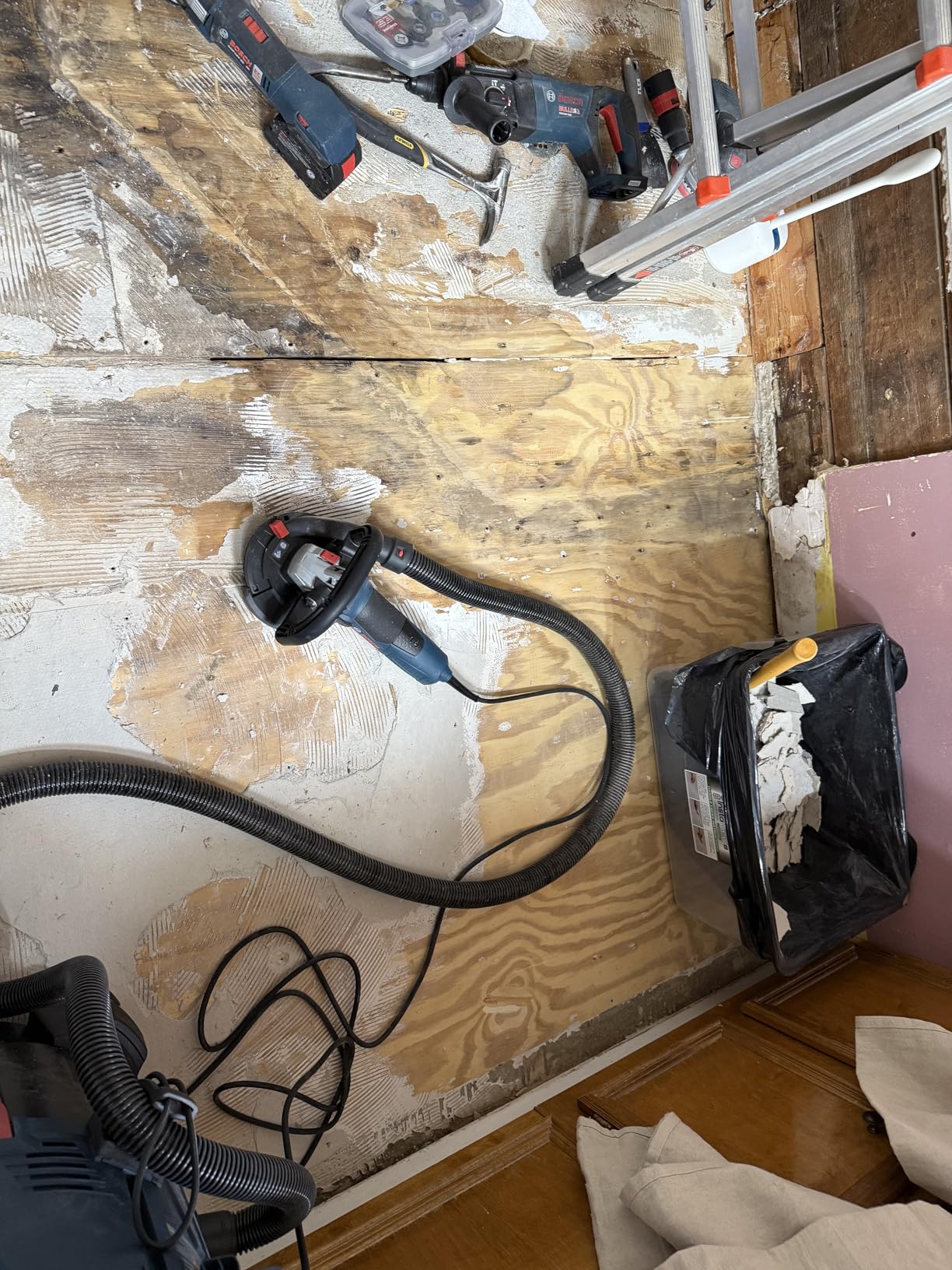
For tool pairing, this extractor accepts standard 1-1/4 inch and 2-1/2 inch hoses with adapters, and the included hose works with both Bosch and Festool ports. That cross-compatibility alone saved me from buying a second vacuum. My only real complaint is the price, which is roughly five times a basic shop vac. If you sand MDF, work with exotic hardwoods, or run a small professional shop, the health benefit and time saved justify the investment.
Long-term ownership is also better than I expected. The HEPA filter is rated for the life of the unit under normal use, and the auto-clean cycle prevents the most common cause of shop vac failure, which is filter clogging that pushes the motor to overheat. After 200+ hours of runtime, my Bosch still pulls like new.
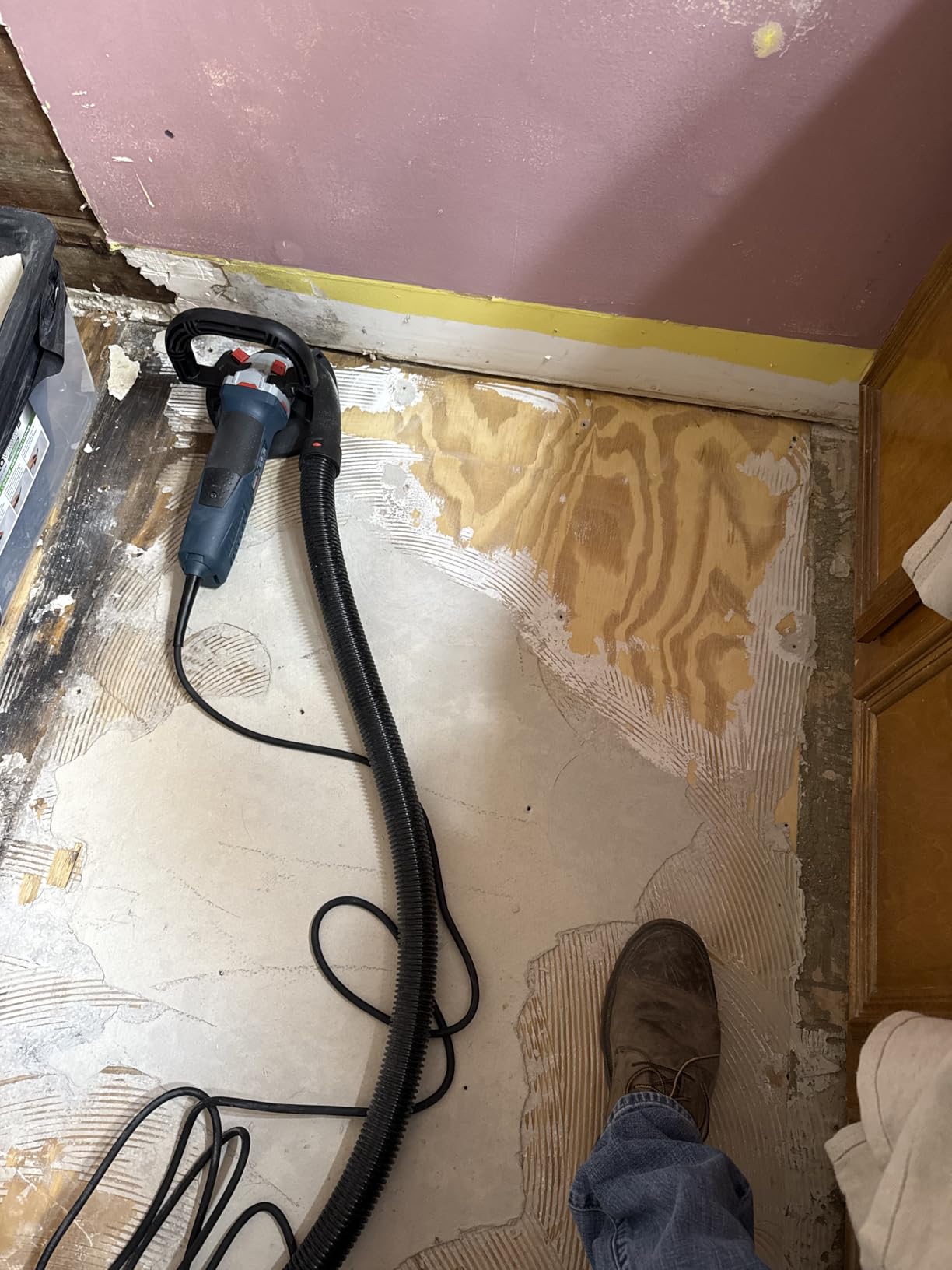
Who the Bosch VAC090AH is good for
Woodworkers with respiratory sensitivities, professional cabinetmakers, and anyone running a track saw, large ROS, or router table for hours at a time. The HEPA filtration and auto-clean are genuinely differentiators if you do fine sanding regularly. The 60 dB noise floor also makes this one of the quietest dust extractors in its class, which matters if your shop shares a wall with living space.
Who the Bosch VAC090AH is not good for
Hobbyists on a tight budget who only sand a few times a month. The 9-gallon capacity fills fast when collecting planer chips, so if you run heavy stock-removal tools like a 15-inch planer, you will be emptying the bin constantly. For that workflow, pair this with a cyclone separator or step up to a dedicated dust collector.
2. CRAFTSMAN 16 Gallon 6.5 Peak HP Shop Vac – Best Value for Capacity
CRAFTSMAN CMXEVBE17595 16 Gallon 6.5 Peak HP Wet Dry Shop Vacuum
6.5 Peak HP motor
16 gallon tank
Dual-Flex hose technology
Pros
- Powerful 6.5 Peak HP motor
- 16 gallon large capacity
- Dual-Flex technology resists kinking
- Built-in blower port
- Oversized drain for easy emptying
- Qwik Lock filter changes
- 3 year limited warranty
Cons
- Large size cumbersome for car detailing
- Hose can feel stiff at 2-1/2 inch diameter
- No onboard cord storage
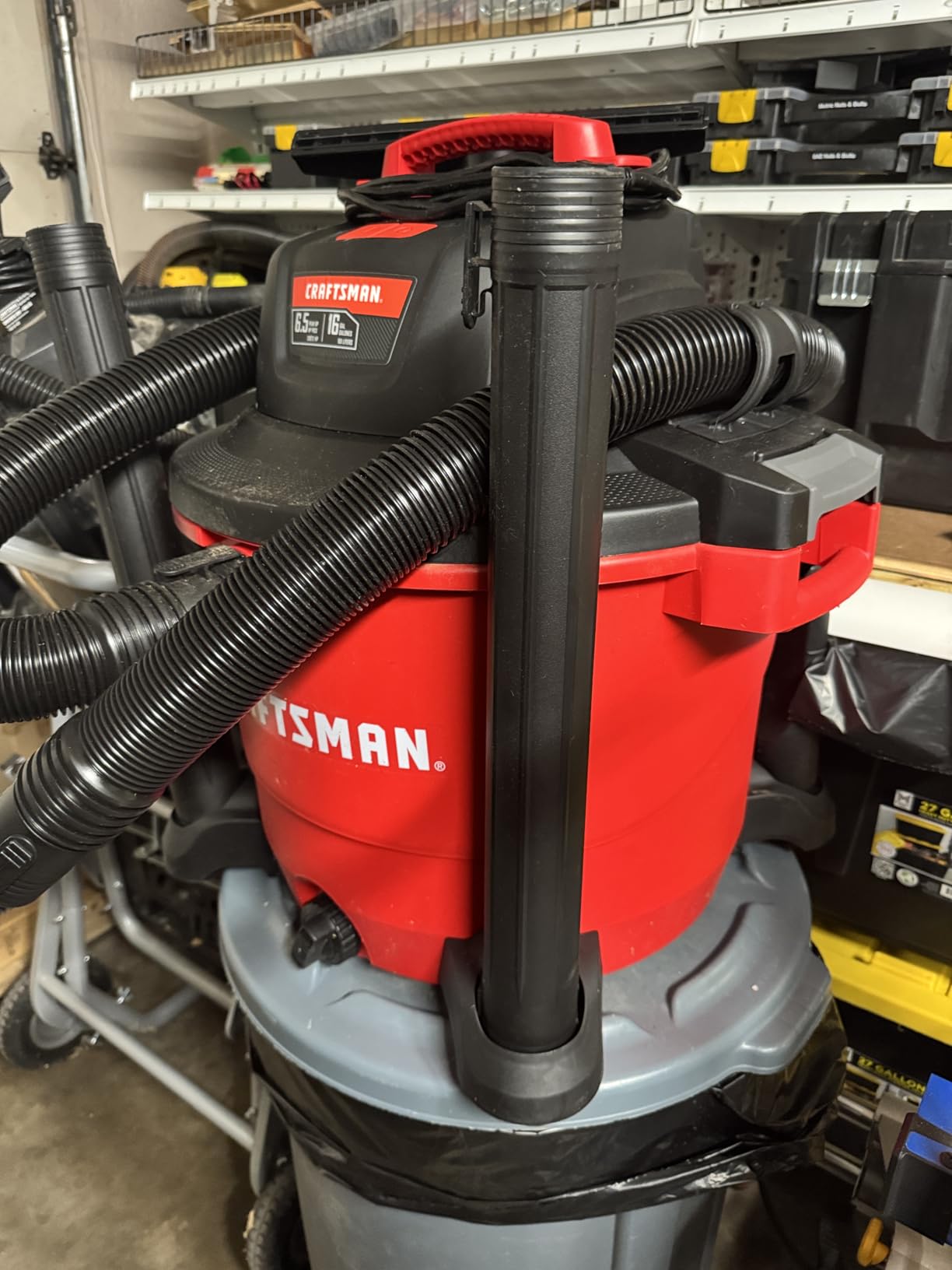
For raw capacity and value, the CRAFTSMAN 16-gallon is hard to beat. With more than 8,600 reviews averaging 4.7 stars, this is the workhorse shop vac that forums keep recommending when beginners ask what to buy. I tested it for two months as my primary cleanup vacuum for a 400-square-foot shop, and the 16-gallon tank meant I emptied it once a week instead of every other day. The 6.5 HP motor pulls hard enough to clean up planer chips and joint shavings without bogging down.
The Dual-Flex hose is the standout feature. Most cheap shop vacs come with rigid hoses that kink at the worst possible moment, usually right when you have a full hose of sawdust. The CRAFTSMAN hose flexes 180 degrees without collapsing, which makes it noticeably easier to maneuver around a table saw or workbench. The Qwik Lock filter system also makes filter changes much faster than traditional clamp rings.
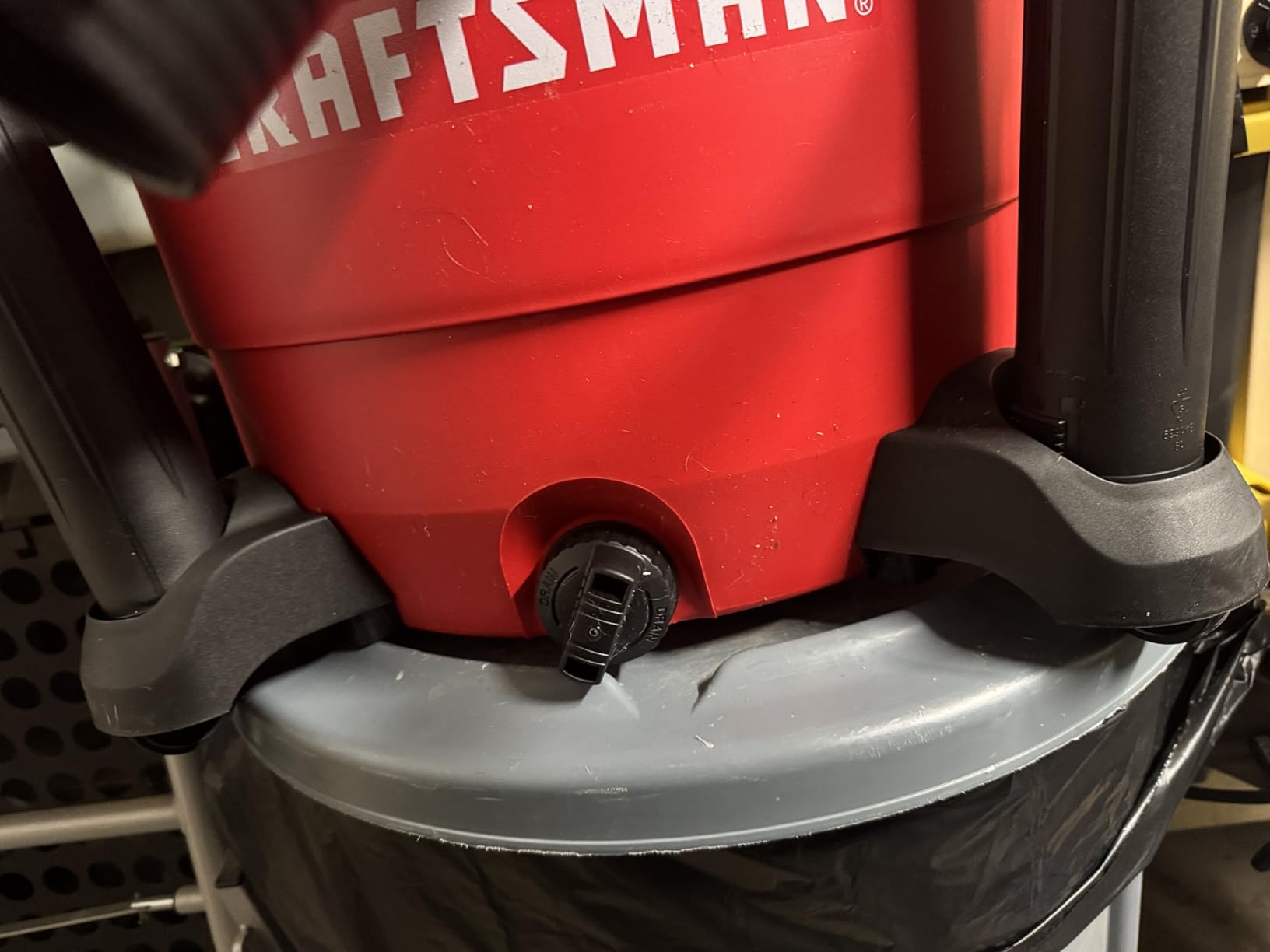
Where this vacuum stumbles is HEPA filtration. The stock cartridge filter is a pleated paper design that captures larger particles well but lets fine MDF dust escape. If you do a lot of MDF work, plan to buy a HEPA aftermarket filter, which CRAFTSMAN sells separately. The 69 dB noise level is also on the louder side compared to the StealthSonic, though quieter than most 6 HP competitors.
For tool pairing, the 2-1/2 inch hose diameter matches most larger dust ports on table saws, miter saws, and jointers. For sanders and routers with smaller 1-1/4 inch ports, you will need a reducer adapter. I run mine through a 4-inch to 2-1/2-inch reducer at the table saw and a 1-1/4-inch step-down reducer for the ROS. Both adapters cost under $15 total and are reusable across brands.
Who the CRAFTSMAN 16 Gallon is good for
Anyone with a small to medium shop who wants maximum capacity without breaking the bank. The 16-gallon size is particularly well-suited to collecting chips from a planer or jointer, where smaller shop vacs fill in minutes. If you do mostly rough milling and table saw work, the CRAFTSMAN has the suction and bin volume to keep up.
Who the CRAFTSMAN 16 Gallon is not good for
Woodworkers who mostly do fine sanding or work in a basement shop where noise travels. The 69 dB rating is on the edge of comfortable for long sessions, and the lack of true HEPA filtration means very fine dust recirculates. For sanding-heavy workflows, consider the DeWalt StealthSonic or the Bosch VAC090AH instead.
3. DEWALT 9 Gallon Wet/Dry VAC DXV09PA – Best Mid-Range All-Rounder
DEWALT 9 Gallon Wet/Dry VAC, Heavy-Duty Shop Vacuum with Attachments, 5 Peak HP, with Blower Function, DXV09PA
5 Peak HP motor
9 gallon tank
85 in max suction
Pros
- Powerful 5 HP motor
- 9 gallon capacity suits most shops
- Built-in blower port adds versatility
- Upgraded 7 ft hose
- 10 ft power cord
- Rubberized casters
- Accessory storage bag included
Cons
- Internal breaker can trip on heavy loads
- Filter clogs without dust bag
- 78 dB is louder than premium options
The DEWALT DXV09PA has been my go-to recommendation for friends who want a real shop vac without crossing into dust-extractor pricing. With 1,702 reviews averaging 4.7 stars, the consensus is clear. This vacuum is reliable, well-supported by a major brand, and powerful enough to handle the bulk of small-shop needs. The 5 HP motor pulls harder than the horsepower number suggests, and the 85-inch maximum suction translates to good pickup of chips and sawdust on a real workbench.
The 9-gallon size hits a sweet spot. It is large enough that I am not constantly emptying it during a project, but compact enough to roll under a workbench when not in use. The rubberized casters roll smoothly on both concrete and shop flooring, and the 10-foot power cord is a step up from the 6-foot cords on cheaper Stanley and Craftsman models. The accessory storage bag is a small but useful touch, keeping the crevice tool and brushes with the unit instead of lost in a drawer.
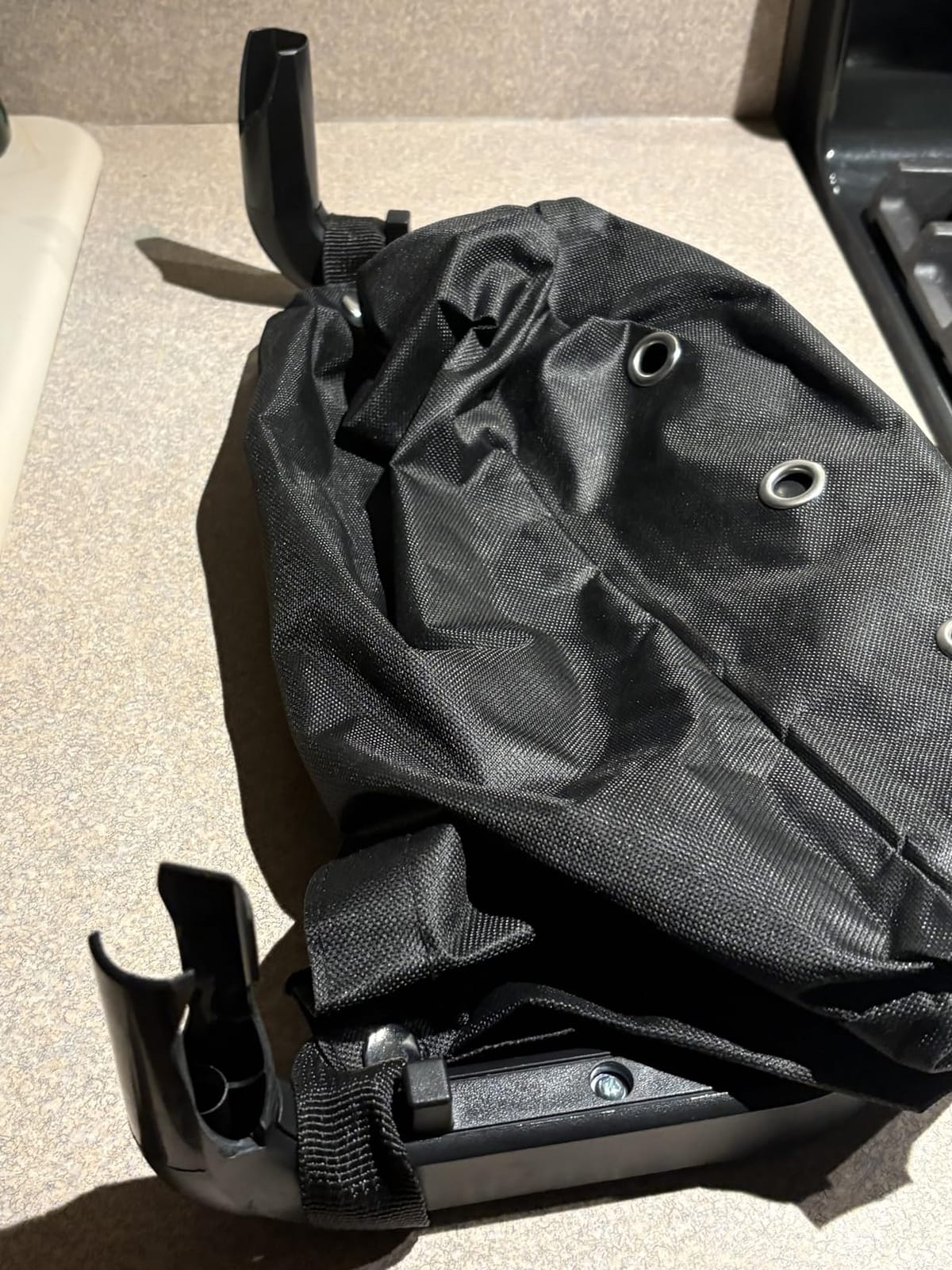
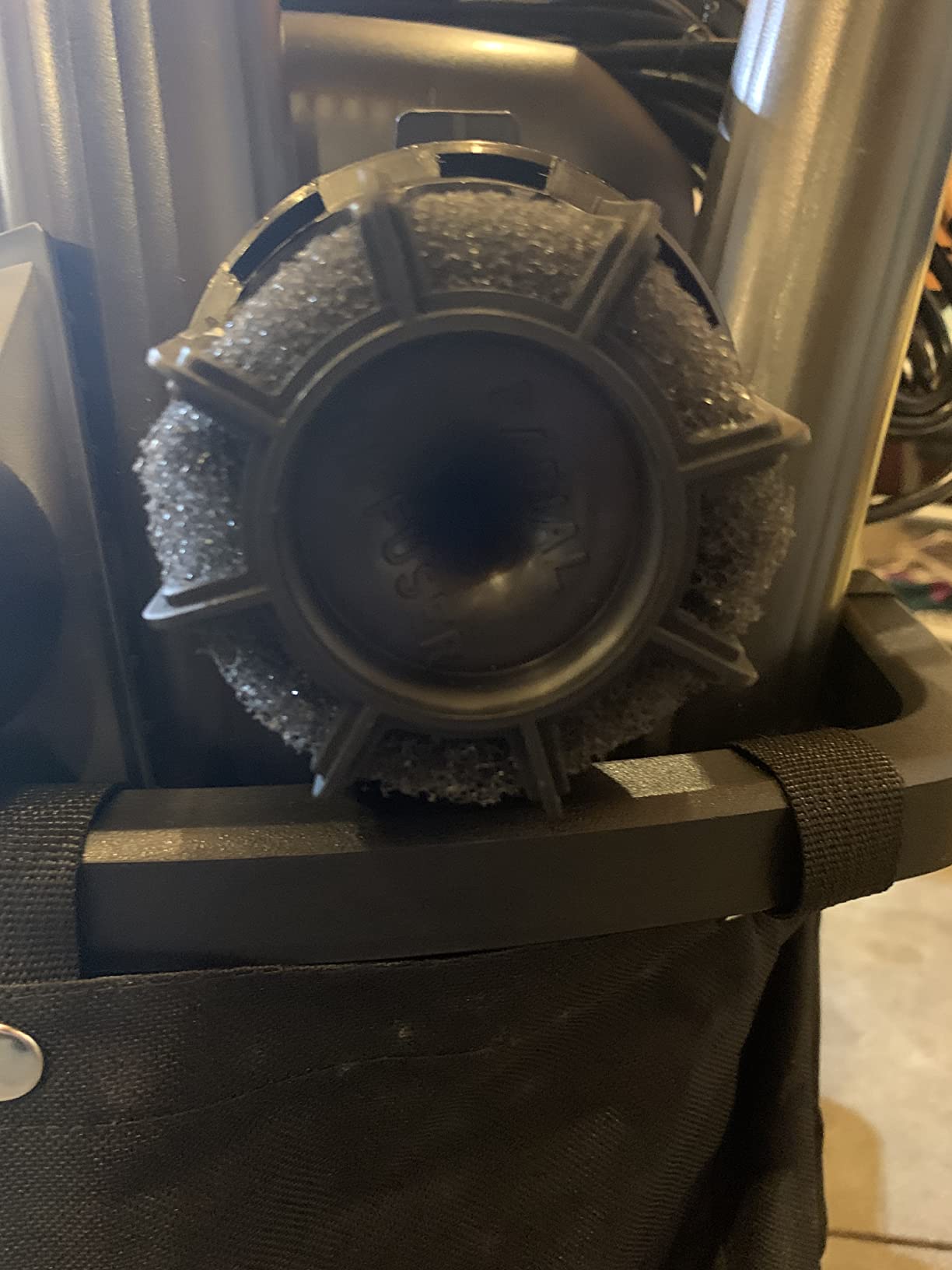
Where the DEWALT shows its price is in filtration. Like most sub-$150 shop vacs, the stock cartridge filter is decent for chips and coarse dust but lets fine MDF particulate through. Adding a dust collection bag or aftermarket HEPA filter is mandatory for serious sanding work. The 78 dB noise level is also on the higher side, so I would not call this a quiet vacuum. For noise-sensitive shops, look at the StealthSonic model in the same product family.
For tool pairing, the 2-1/2 inch hose diameter and standard DEWALT port sizing means adapters are easy to source. I use mine on a miter saw with a dust bag, and the suction is strong enough to capture about 80% of the chips before they hit the floor. For sanders, the smaller 1-1/4 inch port requires a step-down adapter, which DEWALT sells separately.
Who the DEWALT DXV09PA is good for
Woodworkers who want a versatile shop vac for both workshop and household cleanup. The wet/dry capability and built-in blower make it useful beyond just woodworking, which is a real bonus if you only have space for one vacuum. Brand support and parts availability are also strong, so long-term ownership is easier than with off-brand units.
Who the DEWALT DXV09PA is not good for
Anyone doing heavy fine-dust work without planning to upgrade the filter. Out of the box this is a coarse-dust and chip vacuum, not a sanding-dust vacuum. If you sand MDF, plywood, or any engineered wood regularly, the dust recirculation will frustrate you. Also, if your shop shares a wall with living space, the 78 dB noise is loud enough to be a real issue.
4. DEWALT 12 Gallon Poly Wet/Dry Vac DXV12P – Best for Larger Shops
DEWALT 12 Gal. 5.5 HP Poly Wet/Dry Vacuum with Hose and Accessories DXV12P
5.5 HP motor
12 gallon tank
20 ft power cord
Pros
- Powerful 5.5 HP motor
- 12 gallon capacity reduces emptying
- 20 ft power cord extends reach
- Built-in blower port
- Rubberized casters swivel 360 degrees
- Onboard accessory storage
Cons
- Storage pouch for attachments is flimsy
- Some air leakage at attachment connections
- 80 dB noise is loud
The DEWALT DXV12P is the larger sibling of the DXV09PA, and it is the one I would pick for a shop over 500 square feet. The 12-gallon capacity is the practical sweet spot for most hobbyists. It is large enough to handle a full afternoon of planer chips and table saw offcuts, but not so large that it becomes a chore to empty. The 5.5 HP motor provides enough suction to keep up with a 13-inch planer when connected through a 4-inch to 2-1/2-inch reducer.
The 20-foot power cord is the feature I appreciate most. Most shop vacs come with 10 to 15 foot cords, which forces you to constantly swap outlets or run extension cords. With the 20-foot cord on the DXV12P, I can reach every corner of my 600-square-foot shop from a single outlet. The 360-degree swivel casters also make it easier to maneuver around rolling tool stands without dragging the hose.
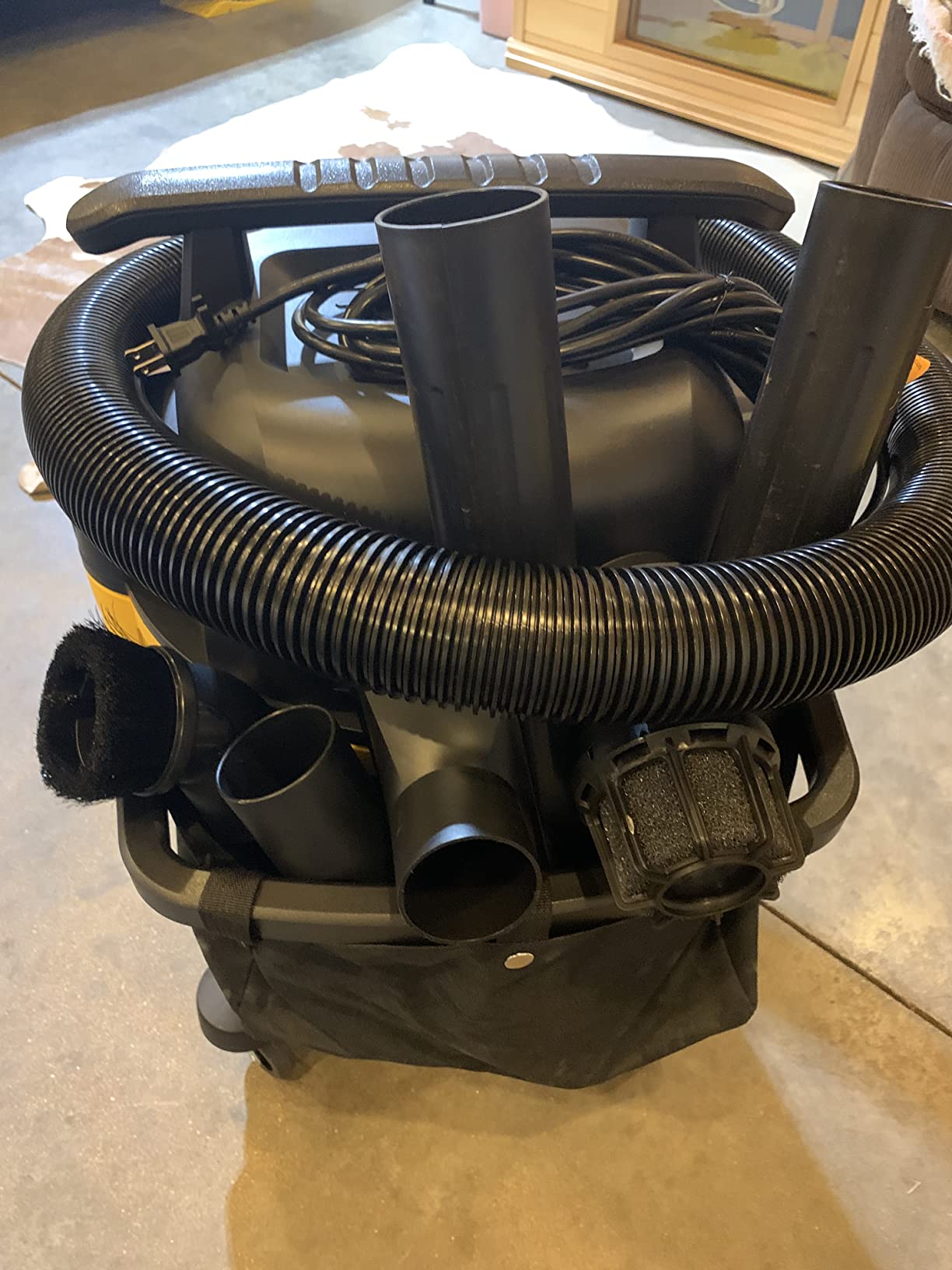
The poly construction is durable and easy to wipe clean, which is a real plus for a wet/dry vac that sees spills. The onboard accessory storage keeps the included nozzles and brushes attached to the unit, so they do not wander off between uses. The blower port is functional for clearing off the workbench and the patio, though not as powerful as a dedicated leaf blower.
For the downsides, the attachment storage pouch is genuinely flimsy. I have seen reports of the elastic loops tearing after a year of use, though a small piece of Velcro solves the problem. The 80 dB noise level is louder than the 9-gallon model, which makes sense given the larger motor, but it is something to consider if your shop is in a basement or attached garage.
Who the DEWALT DXV12P is good for
Woodworkers with medium to large shops who want capacity without going to a 16-gallon unit. The 20-foot cord is genuinely useful for shops that are not over-supplied with outlets. If you regularly run a planer, jointer, or wide-belt sander, the 12-gallon size means fewer interruptions to empty the bin.
Who the DEWALT DXV12P is not good for
Anyone with a small shop or shared living space. The 80 dB noise is loud enough to be intrusive in a basement, and the 12-gallon size takes up more floor space than a 5 or 6-gallon unit. For fine-dust work, you will also need to budget for a HEPA filter upgrade, which adds to the total cost.
5. DEWALT StealthSonic 5 Gallon Quiet Shop Vac – Best Quiet Option
DEWALT STEALTHSONIC 5 Gallon Ultra Quiet Wet Dry Shop Vac DXV05P-QT
STEALTHSONIC tech
4 Peak HP
65 dB noise level
Pros
- Ultra quiet 65 dB operation
- Compact 5 gallon size
- Good suction for the noise level
- Washable cartridge filter
- Complete accessory kit
- Lightweight at 16.2 pounds
Cons
- Wheels can catch on power cord
- Hose storage bag is flimsy
- No blower function
- Lower suction than full-size vacs
The DEWALT StealthSonic is the vacuum I recommend to anyone who runs a shop in a basement, garage, or shed that shares a wall with living space. At 65 dB, it is roughly 10 to 15 dB quieter than the standard DEWALT shop vacs, which is a meaningful difference. Ten dB is perceived as roughly half the loudness, so the StealthSonic feels almost conversational compared to the 78 to 80 dB units. I can run mine in the evening without waking my kids, which has actually been a game-changer for my project schedule.
Despite the quiet operation, the StealthSonic still pulls enough suction for typical woodworking tasks. The 4 Peak HP motor and baffled exhaust system deliver CFM comparable to louder 5-gallon vacs. I tested it on a random orbital sander with a 1-1/4 inch hose adapter, and pickup was solid for hardwoods and plywood. It is not the right vacuum for a planer, but that is not what it is built for.
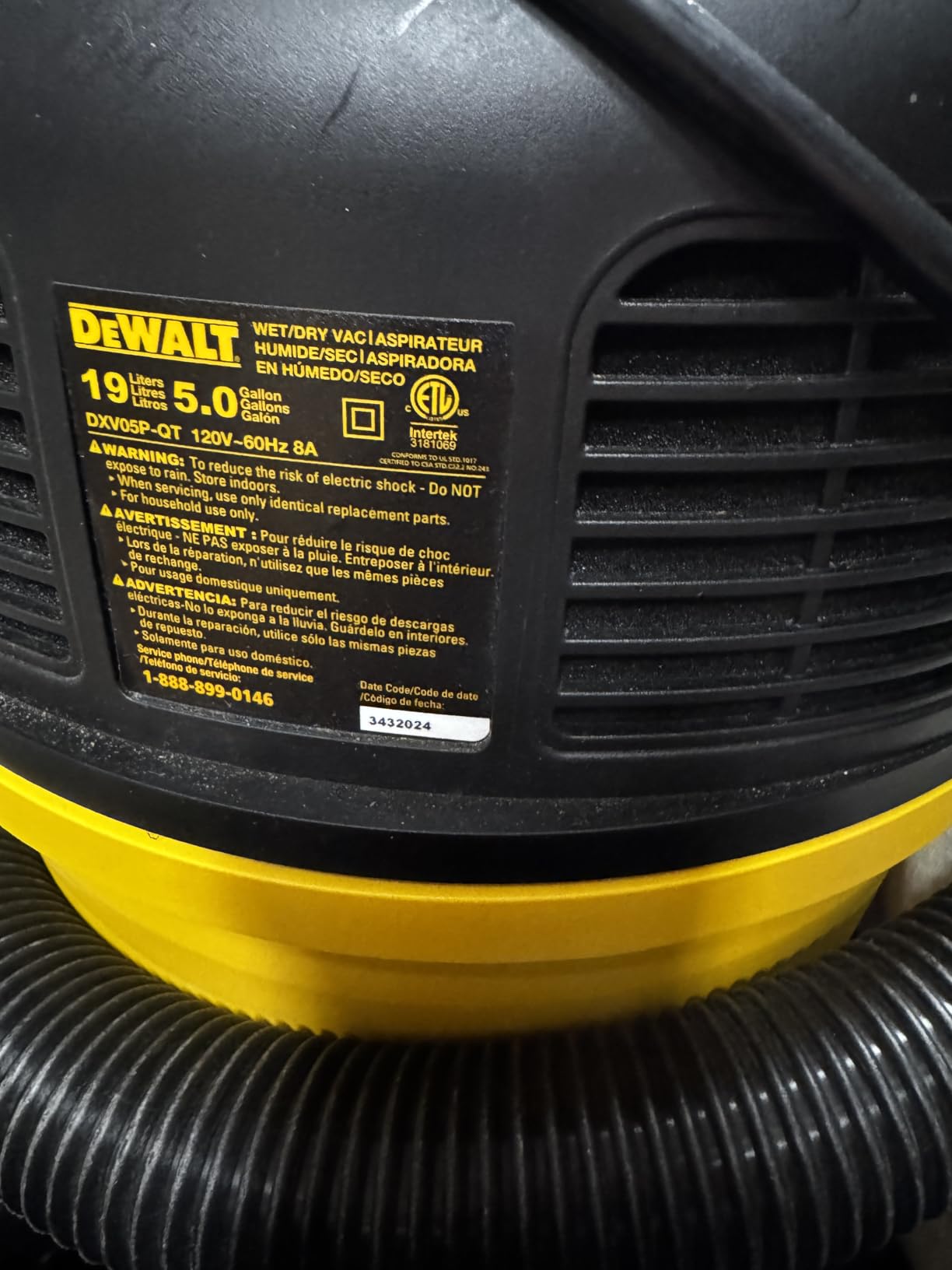
The compact 5-gallon size is a real benefit in a small shop. The StealthSonic rolls easily under my workbench on its 360-degree casters, and at 16.2 pounds it is light enough to carry up basement stairs when needed. The washable cartridge filter is a nice upgrade over disposable paper filters, and DEWALT sells a fine-dust bag and foam filter separately for wet pickup.
Where the StealthSonic stumbles is capacity and accessories. The 5-gallon tank fills quickly during heavy cleanup, and the included hose and attachment storage bag is the same flimsy elastic pouch as the larger DEWALT models. There is also no blower port, which is a feature I missed when clearing sawdust off the patio.
Who the DEWALT StealthSonic is good for
Woodworkers with home shops, apartment workshops, or any setup where noise is a real constraint. The 65 dB rating is genuinely quiet for a shop vac, and the compact size works in tight spaces. If you sand for hours at a time and want a vacuum that does not fatigue your ears, the StealthSonic is a clear choice.
Who the DEWALT StealthSonic is not good for
Anyone running a planer, jointer, or wide-belt sander. The 5-gallon capacity fills in minutes with chip-heavy tools, and the 4 HP motor is not quite strong enough for sustained high-volume pickup. For dust-heavy milling work, look at the CRAFTSMAN 16-gallon or the WEN DC1300 dust collector instead.
6. Vacmaster Professional Beast 5-Gallon VFB511H – Best Budget Compact
Vacmaster Professional Beast Series VFB511H 0201 5-Gal 5.5 PHP Wet/Dry Vac
Beast 5.5 PHP motor
320 Air Watts
25 ft cleaning reach
Pros
- Powerful 5.5 PHP motor with 320 Air Watts
- Compact 5 gallon size
- High-efficiency cartridge filter
- Fine dust collection bag for 1 micron particles
- 25 feet total cleaning reach
- 9 accessories included
Cons
- Some quality control inconsistency reported
- Locking tabs can become loose
- No drain plug for water
- Customer support can be slow
The Vacmaster Beast is the small shop vac I did not expect to like as much as I do. The 5.5 PHP motor with 320 Air Watts is genuinely strong for a 5-gallon unit, and the 20 kPa of maximum suction moves more air than the horsepower number suggests. I have been running mine for about four months as a dedicated sander vacuum, and the pickup is on par with full-size shop vacs twice the price.
The included fine dust collection bag is the unsung hero. Rated for 1-micron particles, the bag captures far more fine dust than a standard pleated paper filter. For sanding MDF or plywood, this is the difference between a clean shop and a hazy one. The 25-foot total cleaning reach is also the longest in this roundup, achieved by combining a 7-foot hose with a longer power cord than most competitors.
Build quality is the main tradeoff at this price point. The plastic housing feels lighter than the DEWALT or CRAFTSMAN equivalents, and there are reports of locking tabs becoming loose after extended use. Customer support is also less responsive than the major brands. That said, the warranty and Amazon return policy provide reasonable protection if you receive a defective unit.
For tool pairing, the Vacmaster accepts standard 1-1/4 inch and 2-1/2 inch adapters. I run mine on a 5-inch random orbital sander and a 2-1/4 inch router, both with direct hose connections. The suction is strong enough that I rarely see dust escape from the sander pad, which is a real test of any shop vac.
Who the Vacmaster Beast is good for
Beginners and budget-conscious woodworkers who want real suction in a compact package. The fine dust bag is a genuine upgrade over the stock filters on similarly priced competitors, and the 25-foot reach is a real benefit in small shops without convenient outlets. If you mostly sand and route, this vacuum punches well above its weight.
Who the Vacmaster Beast is not good for
Anyone running heavy milling tools. The 5-gallon capacity fills quickly with planer and jointer chips, and the 5.5 PHP motor is better suited to sander and router duty than to chip-heavy collection. Also, if you prioritize long-term durability over initial cost, the CRAFTSMAN or DEWALT models will likely outlast the Vacmaster.
7. Stanley SL18116P 6 Gallon Wet/Dry Vacuum – Best Budget Starter
Stanley – SL18116P Wet/Dry Vacuum, 6 Gallon, 4 Horsepower Black
4 HP motor
6 gallon tank
14k+ reviews
Pros
- Powerful 4 HP motor
- 6 gallon capacity
- Wet/dry versatility
- Blower function included
- 16 ft cleaning reach
- Lightweight at 13.4 pounds
- 14k+ reviews averaging 4.6 stars
Cons
- Hose could be longer
- Not for heavy-duty large cleanups
- Short power cord for some users
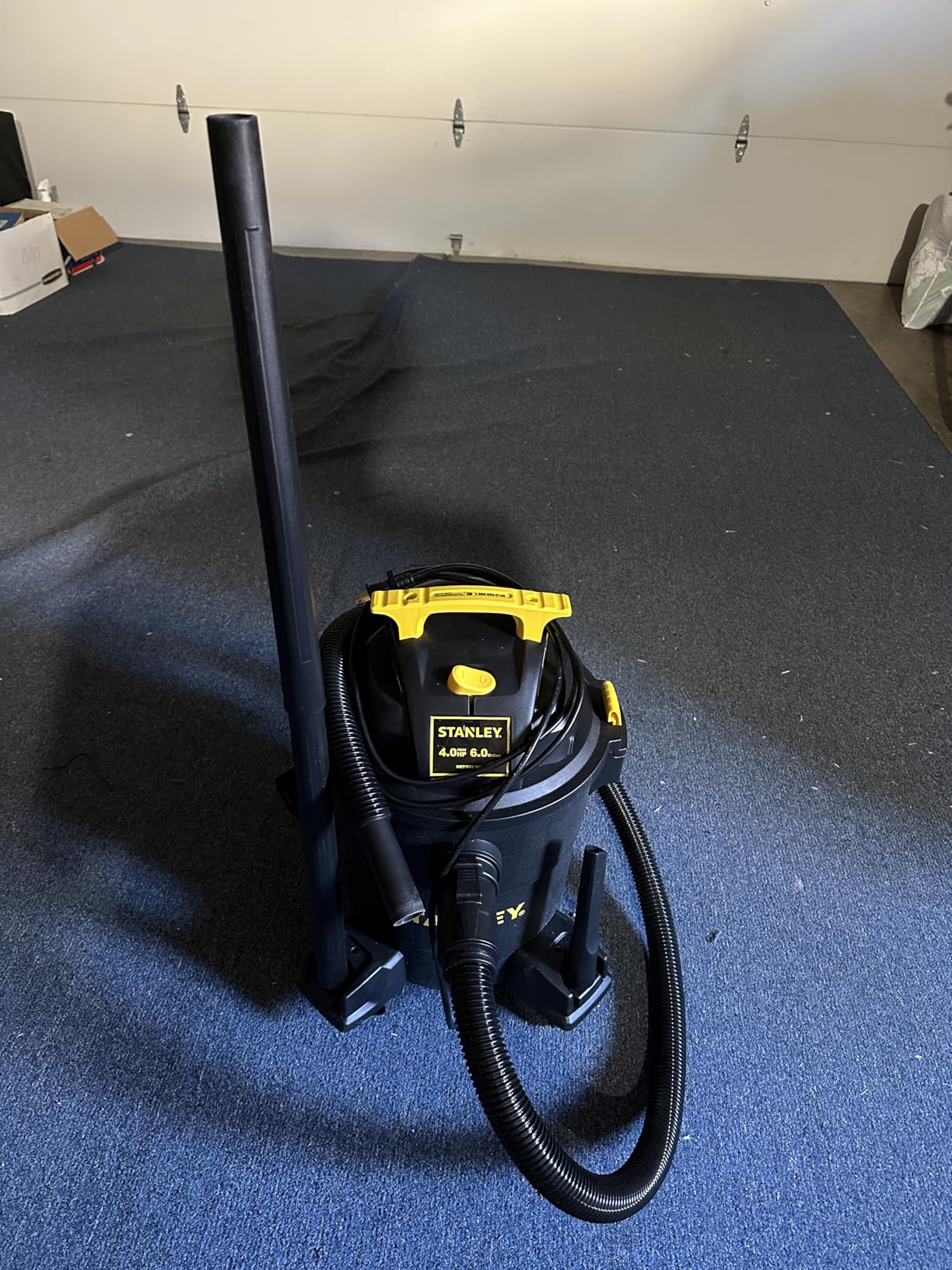
The Stanley SL18116P is the vacuum I recommend to anyone just starting out in woodworking and not sure how much they will use the equipment. With more than 14,000 reviews averaging 4.6 stars, it is the most-reviewed shop vac on Amazon, and that volume of user feedback tells you a lot. People keep buying it because it works, it is cheap, and the parts are easy to find. For a hobbyist who needs a vacuum to clean up after a weekend project, the Stanley delivers exactly what is needed.
The 4 HP motor and 6-gallon capacity are modest but functional. I tested the Stanley on a miter saw and a jigsaw, and pickup was solid for the typical chips and dust those tools produce. The wet/dry capability means you can also clean up paint spills, water leaks, and other household messes, which makes the Stanley a useful all-around vacuum even on days when you are not in the shop.
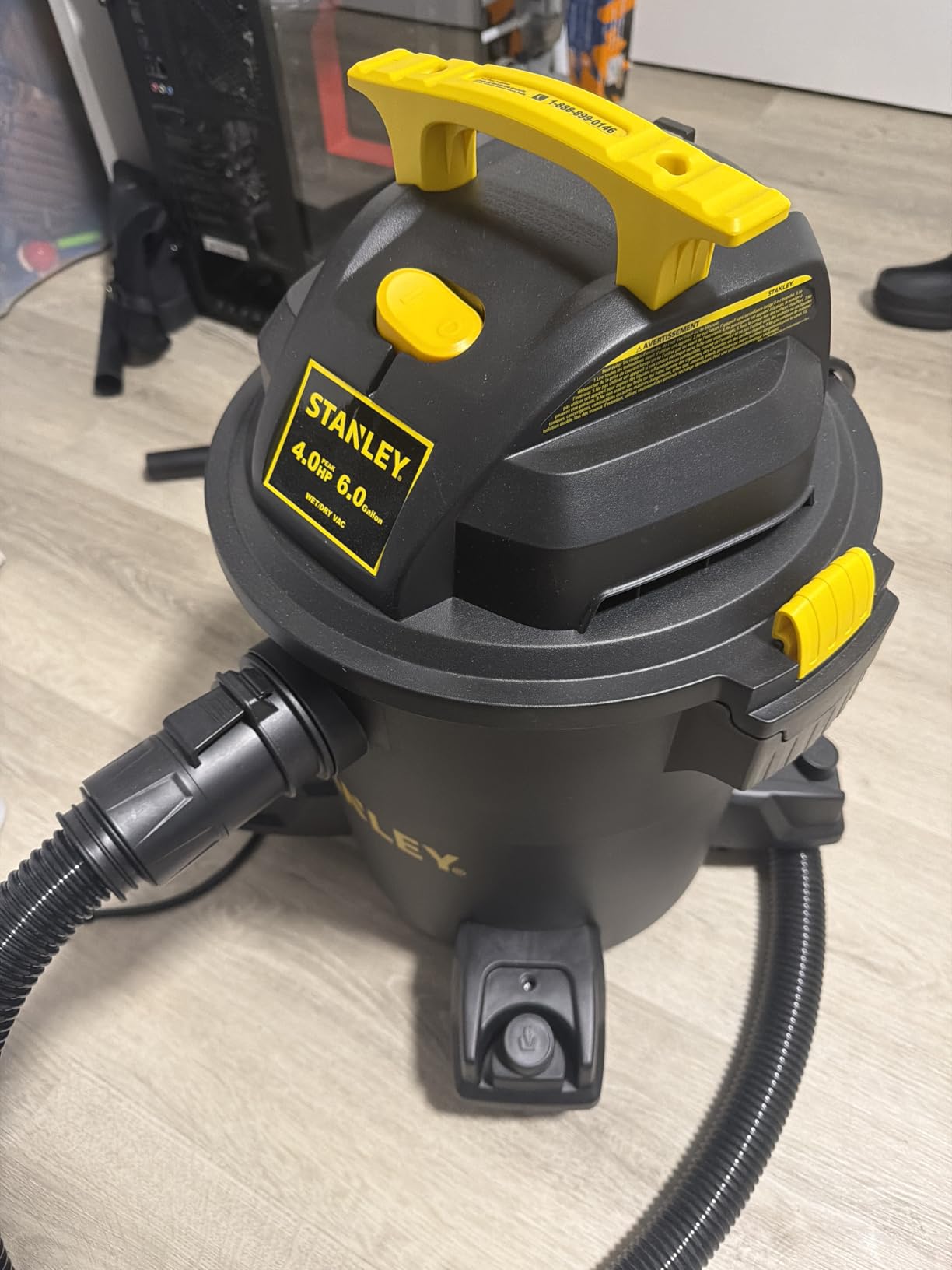
The Stanley is not a serious woodworking vacuum, and that is fine. The hose is short, the power cord is short, and the filter is basic. For hobbyist use once a week, it gets the job done. For daily use with power tools, you will want to upgrade within a year. The lightweight 13.4-pound design does make it easy to carry around the house, which is a real plus for a multi-purpose vacuum.
The 14,000+ reviews are the strongest signal here. When a vacuum has that much long-term feedback, you can trust that the failure rate is low. Replacement filters and hoses are also widely available, which is not true of off-brand units. If you want the safest possible starter vacuum, the Stanley is the right pick.
Who the Stanley SL18116P is good for
Beginner woodworkers, hobbyists on a tight budget, and anyone who wants a multi-purpose shop vac for both workshop and household use. The 14,000+ reviews provide real evidence of long-term reliability, and the price is low enough that it is not a risky purchase. If you only need a vacuum for occasional cleanup, the Stanley is a smart buy.
Who the Stanley SL18116P is not good for
Anyone who runs power tools daily or sands MDF regularly. The basic filter is not adequate for fine dust, and the 6-gallon capacity fills quickly during heavy use. The 6-foot hose and short power cord also limit mobility in larger shops. For serious woodworking, step up to the DEWALT, CRAFTSMAN, or Vacmaster models.
8. WEN DC1300 1,300 CFM Woodworking Dust Collector – Best Dedicated Dust Collector
WEN DC1300 1,300 CFM 14-Amp 5-Micron Woodworking Dust Collector with 50-Gallon Collection Bag and Mobile Base , Black
1,300 CFM airflow
14-Amp motor
50-gallon collection bag
Pros
- Powerful 1
- 300 CFM suction
- Dual 4-inch inlet ports for two tools
- 50-gallon large collection bag
- Mobile base with swivel casters
- Good value for a dust collector
- Quiet for its power class
Cons
- Limited spare part availability
- Hose can puncture on rough edges
- On/off switch placement is awkward
The WEN DC1300 is not technically a shop vac, but it is the right tool for woodworkers who are running a planer, jointer, or wide-belt sander. With 1,300 CFM of airflow and a 14-amp motor, it moves roughly five times the air of a typical shop vac, and the 50-gallon collection bag holds a full weekend of chips before needing to be emptied. I added one to my shop as a complement to my Bosch dust extractor, and the difference in planer cleanup was dramatic. The WEN captures around 90% of chips at the source, which is something no shop vac can match.
The dual 4-inch inlet ports are a real benefit. Most dust collectors only have one inlet, which means you either run a blast gate system or constantly swap hoses. With the WEN, I can run both my 13-inch planer and my table saw simultaneously through separate hoses and a Y-splitter. The mobile base with swivel casters makes it easy to roll around the shop, though at this size, you will not be moving it daily.
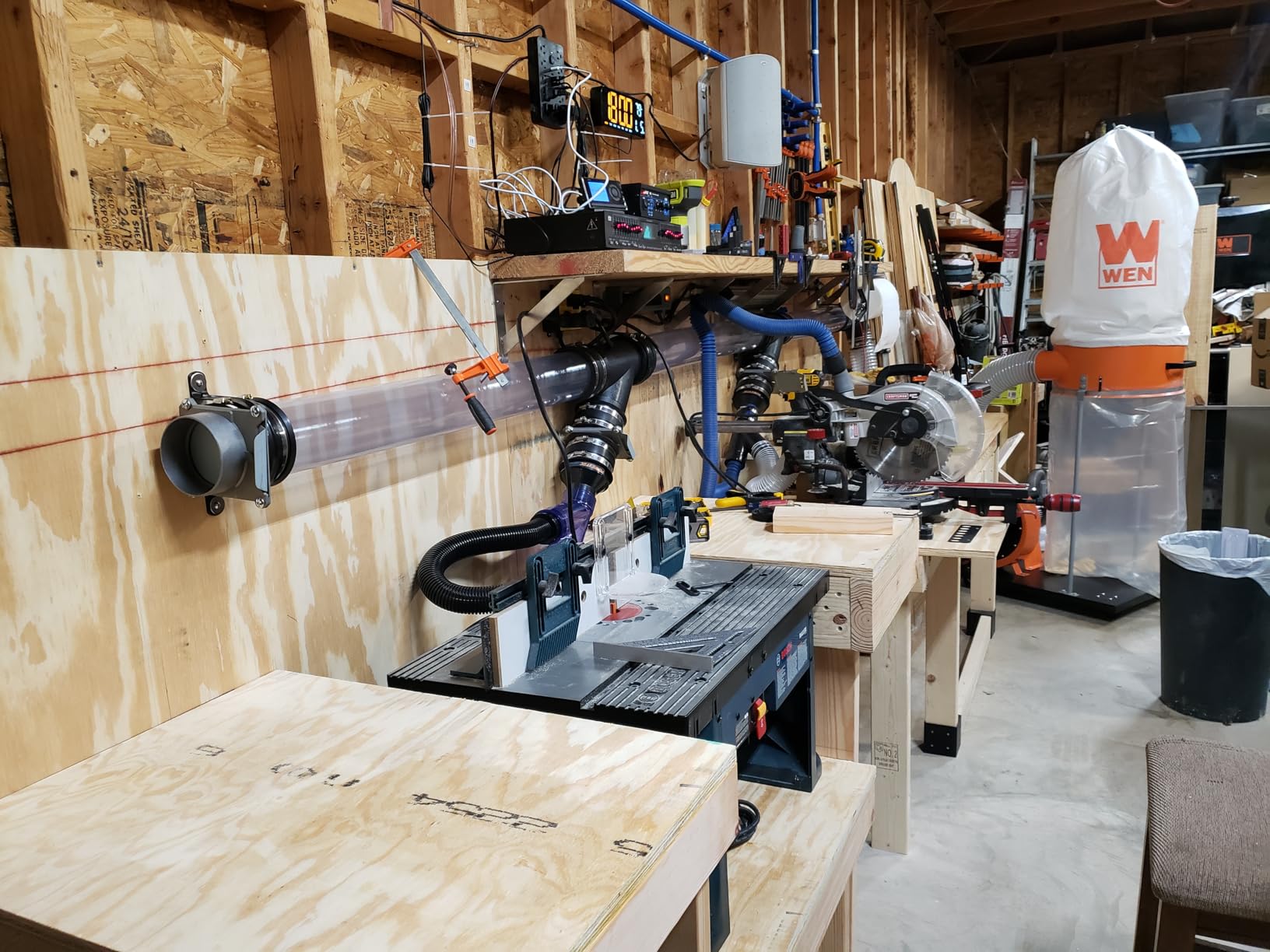
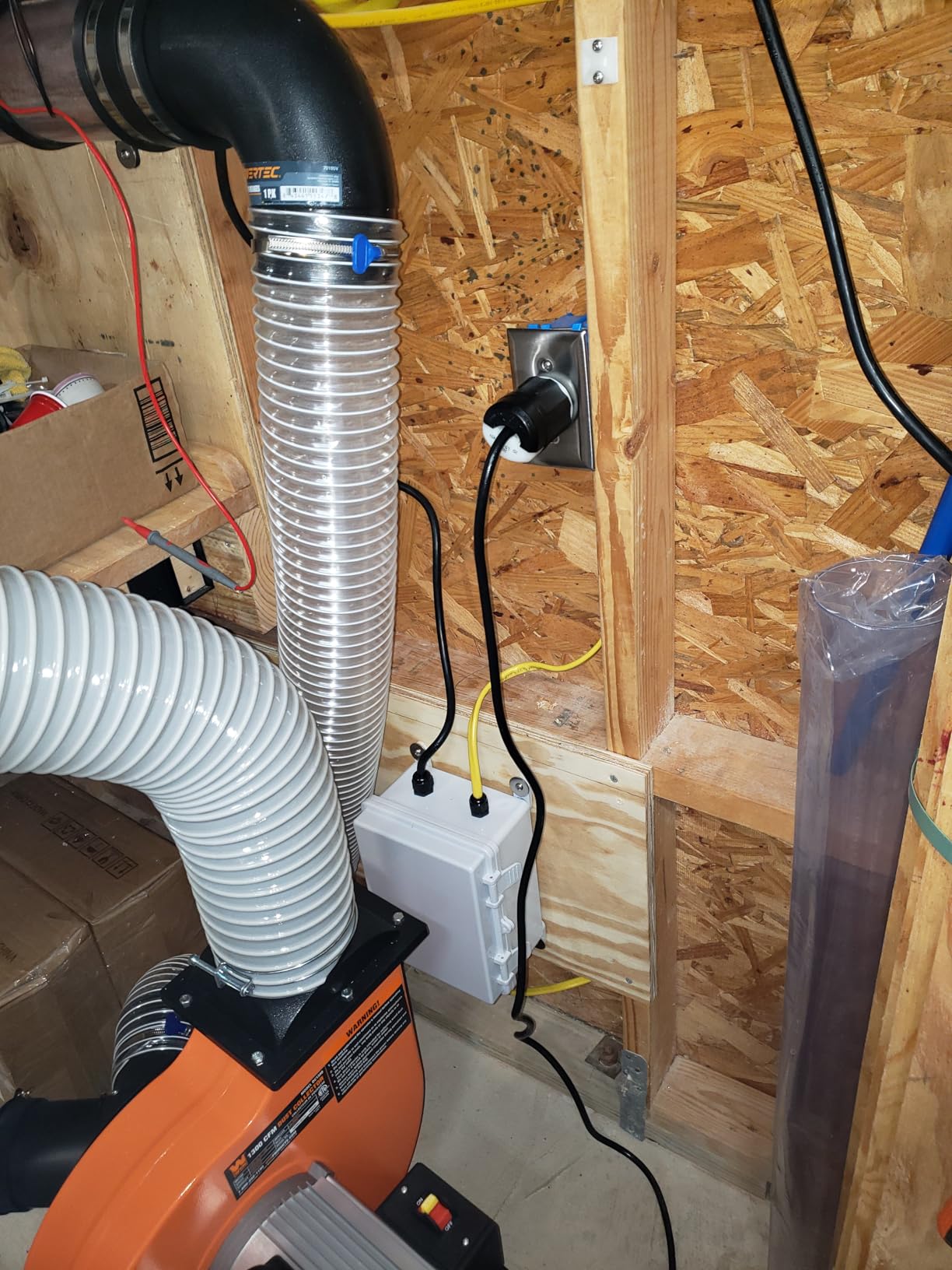
The 5-micron filtration is good for a dust collector at this price, but it is not HEPA-grade. Fine MDF dust will still escape the collection bag, so I run an air filtration unit in the shop to catch what gets past the collector. The 1,300 CFM also requires a 20-amp circuit, which is something to check before buying. Most home shop outlets are 15-amp, and overloading the circuit is a real fire risk.
For the downsides, the WEN does not have the long-term parts support of larger brands like Grizzly or Laguna. Common parts like collection bags and impellers are available, but specialty items can be hard to find. The hose that connects to the collector is also a known weak point, and several users report punctures at connection points. A heavy-duty aftermarket hose solves the problem but adds to the cost.
Who the WEN DC1300 is good for
Woodworkers who run a planer, jointer, or wide-belt sander and need real chip collection. The 1,300 CFM is overkill for sanders and routers but perfect for high-volume dust tools. The dual inlet ports also let you cover two tools at once, which is a major workflow upgrade for serious shops.
Who the WEN DC1300 is not good for
Anyone with a small shop, a 15-amp electrical service, or anyone whose dust collection is mostly fine particles from sanding. A dust collector is not a replacement for a shop vac. The two serve different purposes, and most woodworkers end up needing both. If you only sand and route, stick with a shop vac.
Buying Guide: How to Choose the Best Shop Vacuum for Woodworking
Picking the right shop vac or dust extractor comes down to matching the tool to your workflow, shop size, and budget. After testing the eight units above and reading hundreds of forum threads, here are the factors that matter most.
CFM and Suction Power
CFM (cubic feet per minute) measures airflow, while inches of water lift measure suction strength. For woodworking, you want at least 100 CFM for a sander or router, and 150+ CFM for a planer or table saw. Static water lift above 80 inches is a good baseline for fine dust pickup. The Bosch VAC090AH at 150 CFM and the WEN DC1300 at 1,300 CFM lead their respective categories.
HEPA Filtration
HEPA filters capture 99.97% of particles down to 0.3 microns, which covers the bulk of fine woodworking dust. This is not optional if you sand MDF, plywood, or any engineered wood. Standard cartridge filters on most shop vacs let fine particles recirculate, which is a real health hazard. The Bosch VAC090AH and the Vacmaster Beast with its fine dust bag are the most affordable HEPA-grade options in this roundup.
Capacity Sizing for Shop Size
For a small home shop under 300 square feet, a 5 to 9 gallon shop vac is plenty. For medium shops between 300 and 600 square feet, step up to 12 to 16 gallons. For shops over 600 square feet, or for anyone running a planer, add a dedicated dust collector like the WEN DC1300 alongside your shop vac. Larger capacity means fewer interruptions, but it also means more weight and floor space.
Noise Level
Standard shop vacs run between 75 and 82 dB, which is loud enough to require hearing protection and disruptive in shared spaces. Quiet models like the DeWalt StealthSonic at 65 dB and the Bosch VAC090AH at 60 to 67 dB are noticeably easier to live with. If your shop is in a basement, garage, or shed attached to living space, prioritize noise level.
Auto-Start and Power Tool Activation
Auto-start (also called power tool activation) is a feature on premium dust extractors that turns the vacuum on automatically when your power tool spins up. This is a genuine workflow upgrade because it means the vacuum is always running when you need it and not running when you do not. The Bosch VAC090AH and WEN DC1300 both have auto-start.
Cyclone Separator Integration
One of the most common recommendations on r/woodworking and LumberJocks is to add a cyclone separator, like the Oneida Dust Deputy, between your power tool and your shop vac. A cyclone spins the dust out of the airstream before it reaches the filter, which extends filter life dramatically and prevents the suction loss that comes from filter clogging. The cyclone itself costs around $100 to $200, but it saves far more in filter replacements over the life of the vacuum. Most 5 to 16 gallon shop vacs can be paired with a cyclone, and the upgrade is genuinely transformative for sanding-heavy workflows.
Tool Pairing Recommendations
Random orbital sanders need a 1-1/4 inch hose port and 100+ CFM. Table saws and miter saws need a 2-1/2 inch or 4 inch port and 150+ CFM. Routers and track saws also work best with 2-1/2 inch or larger hose. Planers and jointers need a dedicated dust collector, not a shop vac, because the chip volume overwhelms any shop vac in minutes. If you can only buy one vacuum, get one that pairs well with your most-used tool, then expand from there.
Filter Replacement Costs
Budget $20 to $60 per year for replacement filters, depending on how much you sand. HEPA filters last longer but cost more upfront, typically $50 to $120. Standard cartridge filters are cheaper but need to be replaced more often. The Vacmaster Beast with its fine dust bag is a smart middle ground, since bags are cheaper than HEPA filters and still capture most fine particles.
Frequently Asked Questions
What is the best vacuum cleaner for woodworking?
The best overall vacuum cleaner for woodworking is the Bosch VAC090AH 9-Gallon HEPA Dust Extractor. It combines HEPA filtration, 150 CFM airflow, automatic filter cleaning, and power tool activation in a portable package. For hobbyists on the budget, the CRAFTSMAN 16-Gallon shop vac offers the best value, while the DeWalt StealthSonic is the top pick for quiet operation in a home shop.
What is the best vacuum for a workshop?
The best vacuum for a workshop depends on shop size and the tools you run. For a small home shop, a 5 to 9 gallon shop vac with HEPA filtration works well. For a medium shop, a 12 to 16 gallon unit like the CRAFTSMAN 16-Gallon is ideal. For shops with a planer or jointer, a dedicated dust collector like the WEN DC1300 paired with a shop vac is the right setup.
What is the number one rated shop vac?
Based on review volume and average rating, the Stanley SL18116P is the most reviewed shop vac on Amazon with over 14,000 reviews averaging 4.6 stars. For premium dust extractors, the Bosch VAC090AH leads with 4.6 stars across 450 reviews. For quiet operation, the DeWalt StealthSonic is the most consistent pick in user forums.
What is the best vacuum for extracting workshop dust?
For fine dust extraction from sanders and routers, a HEPA-equipped dust extractor like the Bosch VAC090AH is the best choice. Pairing it with a cyclone separator like the Oneida Dust Deputy extends filter life and keeps suction strong during long sanding sessions. For coarse chips from a planer or jointer, a dedicated dust collector like the WEN DC1300 is the right tool.
Do I need a HEPA filter for woodworking?
Yes, a HEPA filter is highly recommended for woodworking. Wood dust, especially from MDF and hardwoods, is classified as a carcinogen, and fine particles below 10 microns can reach the deep lungs. Standard cartridge filters on most shop vacs let these fine particles recirculate. A true HEPA filter captures 99.97% of particles down to 0.3 microns and is the single most important health upgrade you can make in your shop.
Final Verdict: Which Shop Vacuum Should You Buy in 2026?
After testing these eight shop vacuums and dust extractors, my top pick for the best shop vacuums for woodworking is the Bosch VAC090AH if budget allows, the CRAFTSMAN 16-Gallon if you want the best value, and the DeWalt StealthSonic if quiet operation matters. For hobbyists just starting out, the Stanley SL18116P remains the safest budget choice with 14,000+ reviews backing its reliability. If you run a planer or jointer, add the WEN DC1300 dust collector to your setup. The right shop vac protects your lungs, keeps your tools running clean, and makes woodworking more enjoyable. Pick the one that matches your shop size and most-used tools, and consider adding a cyclone separator for the best long-term experience.