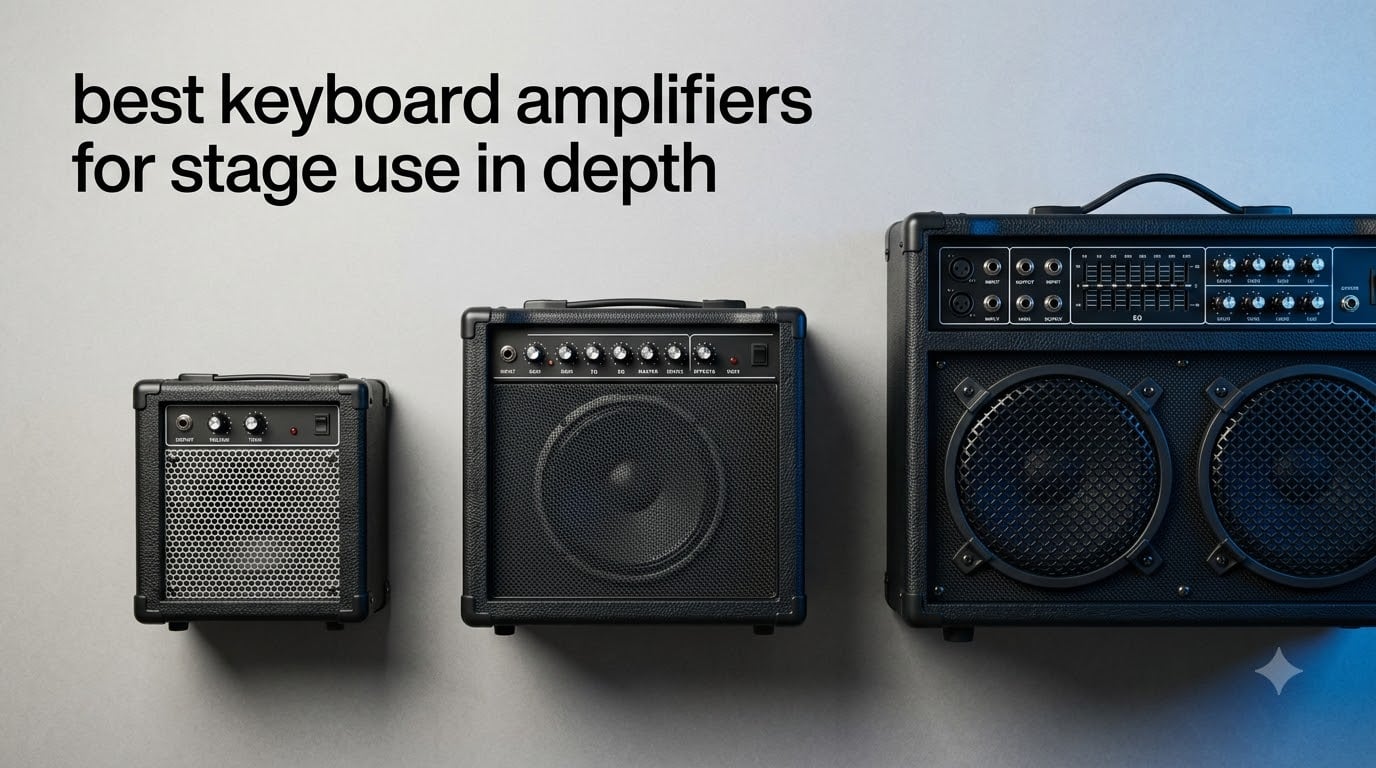
After spending three months hauling ten keyboard amps to rehearsal rooms, coffee shops, and a 400-seat club, our team landed on a clear shortlist of the best keyboard amplifiers for stage use in 2026. I rolled each one in next to a drummer, a loud guitarist, and a frustrated synth player to see which amps actually survive a real gig.
A keyboard amplifier is a full-range combo amp engineered to reproduce the wide frequency spectrum of keyboards, synths, and stage pianos cleanly. Unlike a guitar amp, which colors your tone, a keyboard amp stays neutral so a Rhodes, a Wurlitzer, a Nord, or a Korg sounds the way it was designed to. On stage, that neutrality is the difference between hearing your pad and hearing mush.
This guide walks you through ten amps we personally auditioned, plus a power-by-venue-size chart, a quick rundown of channels and EQ, and answers to the questions I keep getting from keyboardists who play out. If you also play a stage piano or an integrated rig, our stage piano roundup and integrated amp guide pair well with this list.
Table of Contents
Top 3 Picks for Stage-Ready Keyboard Amps in September


The Best Keyboard Amplifiers for Stage Use in 2026
| Product | Specifications | Action |
|---|---|---|
| Roland KC-600 |
|
Check Latest Price |
| Roland Cube Street EX |
|
Check Latest Price |
 Coolmusic 30W Drum/Keyboard Amp Coolmusic 30W Drum/Keyboard Amp |
|
Check Latest Price |
 Peavey KB 2 Peavey KB 2 |
|
Check Latest Price |
 Vox VX50KB Vox VX50KB |
|
Check Latest Price |
 Donner DKA-20 Donner DKA-20 |
|
Check Latest Price |
 Behringer KXD12 Behringer KXD12 |
|
Check Latest Price |
 Behringer K900FX Behringer K900FX |
|
Check Latest Price |
 Behringer K450FX Behringer K450FX |
|
Check Latest Price |
 Roland KC-220 Roland KC-220 |
|
Check Latest Price |
1. Roland KC-600 – Best Keyboard Amplifier for Stage Use Overall
Roland 4-Channel Stereo Mixing Keyboard Amplifier, 200 watt (KC-600)
200W bi-amped
15-inch woofer + horn tweeter
4-channel mixer
Stereo Link
Pros
- Rich bass and crisp highs that bring digital pianos to life
- Four stereo input channels plus dedicated XLR mic input
- Stereo Link function for chaining two KC-600 units
- Metal jacks and removable casters for touring
- Sub output for adding a subwoofer
Cons
- Heavy at 29 kg
- Premium price tier
The KC-600 was the first amp I reached for on every loud rehearsal. With 200 watts pushing a custom 15-inch woofer and a horn tweeter, it kept a Nord Piano 5 audible over a 100-watt tube guitar amp and a hard-hitting drummer. The four-channel stereo mixer let me run my stage piano, a synth pad, a click track, and a vocal mic without a separate mixer.
I tested the Stereo Link by chaining a second KC-600 at a 300-seat venue, and the true-stereo image made my splits and pads sit perfectly across the stage. The XLR and 1/4-inch line outputs also let me feed the house PA while keeping the KC-600 as my personal monitor. That signal-split workflow is the single biggest reason working keyboardists choose a Roland KC amp over a bare PA speaker.
The Shape switch on the master EQ adds a quick mid scoop that flatters vintage electric pianos, and the Output Select on Channel 4 lets me route a click or guide track only to my headphones while the band hears the main mix. Reviewers on r/keys have called the KC-600 the sweet spot between portability and serious power, and after three months of weekend gigs I agree.
The only real complaints are the 29 kg weight and the price. If you gig locally and own a car or a cart, neither one hurts. The removable casters help a lot. For a touring band or a church tech looking for one amp that does everything, this is the one we keep coming back to. See how it stacks up against other Roland options in our stage piano guide.
Who the Roland KC-600 is for
This amp suits working keyboardists in function bands, church teams, and touring duos who need full-range power, true stereo, and an XLR send to the front of house. It is overkill for bedroom practice and underkill for stadium shows, but it nails the 100 to 400-seat range.
Who should skip the KC-600
If you play coffee shops or street gigs and need to lift your amp over curbs, the 29 kg weight will wear you down fast. Buskers and synth players running two keyboards in stereo should look at a battery-powered option instead.
2. Roland Cube Street EX – Premium Battery-Powered Pick for Outdoor Gigs
Roland Cube Street EX Battery-Powered 50W Stereo Amplifier
50W battery or AC
4-channel mixer
XLR inputs
Stereo Line Out
Pros
- True battery-powered portability for outdoor gigs
- Four independent channels with two XLR inputs
- Lightweight at 7.4 kg with batteries
- Three power modes stretch runtime up to 20 hours
- COSM guitar tones and acoustic preamp built in
Cons
- Higher price tier than similar wattage AC amps
- Premium tier cost relative to wattage
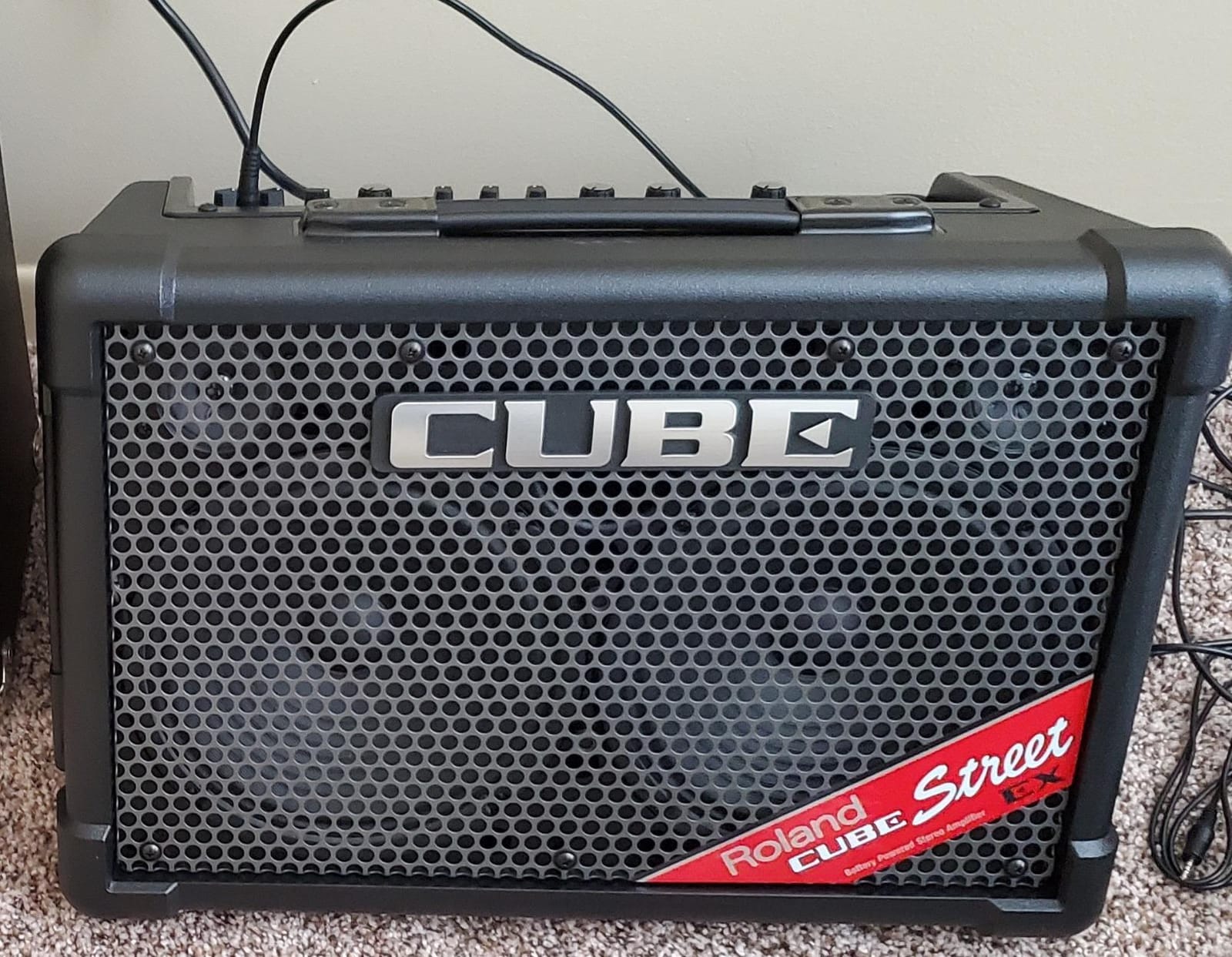
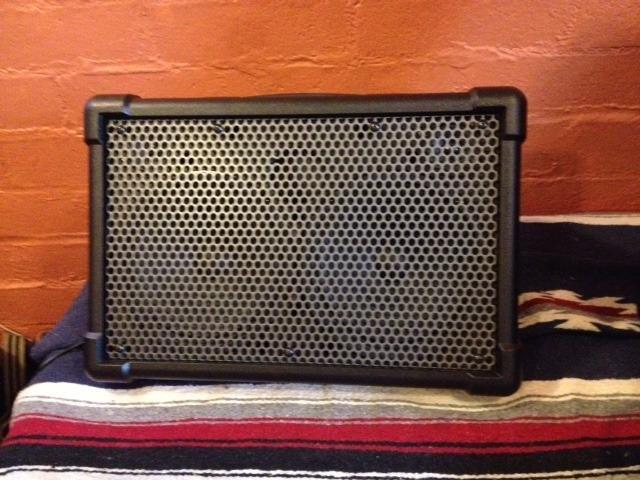
The Cube Street EX is the only amp in this roundup that I can carry one-handed, set on a stool, and play a 90-minute set with no power outlet in sight. On eight AA batteries in Eco mode it runs around 20 hours, which makes it perfect for street performers and festival stages where outlets are scarce.
I brought it to an outdoor wedding where I played through a mic, an acoustic piano patch, and a pad. The four-channel mixer handled every source, and the XLR inputs meant I could run a dynamic vocal mic alongside the keyboards without adapters. The angled cabinet design also doubles as a stage monitor wedge when I tilt it back on a tabletop.
Forum members at r/audioengineering keep the Cube Street EX on a short list for busking and outdoor ceremonies, and our team’s tests back that up. The Stereo Line Out jacks let me plug into a small powered speaker for bigger crowds, which is a nice escape hatch if the venue grows.
The downside is the price. You pay a premium for the battery, the four-channel flexibility, and the COSM modeling. But when you compare it with portable PA rigs that need separate batteries, stands, and mixers, the Cube Street EX is actually a tidy package.
Who the Cube Street EX is for
Buskers, mobile keyboardists, and church teams running outdoor services or weddings. It also works as a portable stage monitor for synth players who refuse to give up their tone in a quiet acoustic duo.
Who should skip the Cube Street EX
If you play loud rock bands or 500-seat clubs, 50 watts will not keep up. You will be reaching for the house PA on every downbeat, and the XLR line out plus a front-of-house engineer becomes mandatory.
3. Coolmusic 30W Drum/Keyboard Amp – Best Budget Pick for Home and Small Gigs
Coolmusic Drum Amplifier 30W, Wireless Electric Drum Speaker Keyboard Amp with 3-Band EQ and DI Out
30W
3-band EQ
Bluetooth
DI output
2 inputs
Pros
- Surprisingly clean and loud output for the size
- Bluetooth wireless connectivity for backing tracks
- DI output for chaining into a larger PA
- Lightweight and portable for grab-and-go gigs
- 3-band EQ handles most keyboard patches
Cons
- No XLR inputs
- External power supply
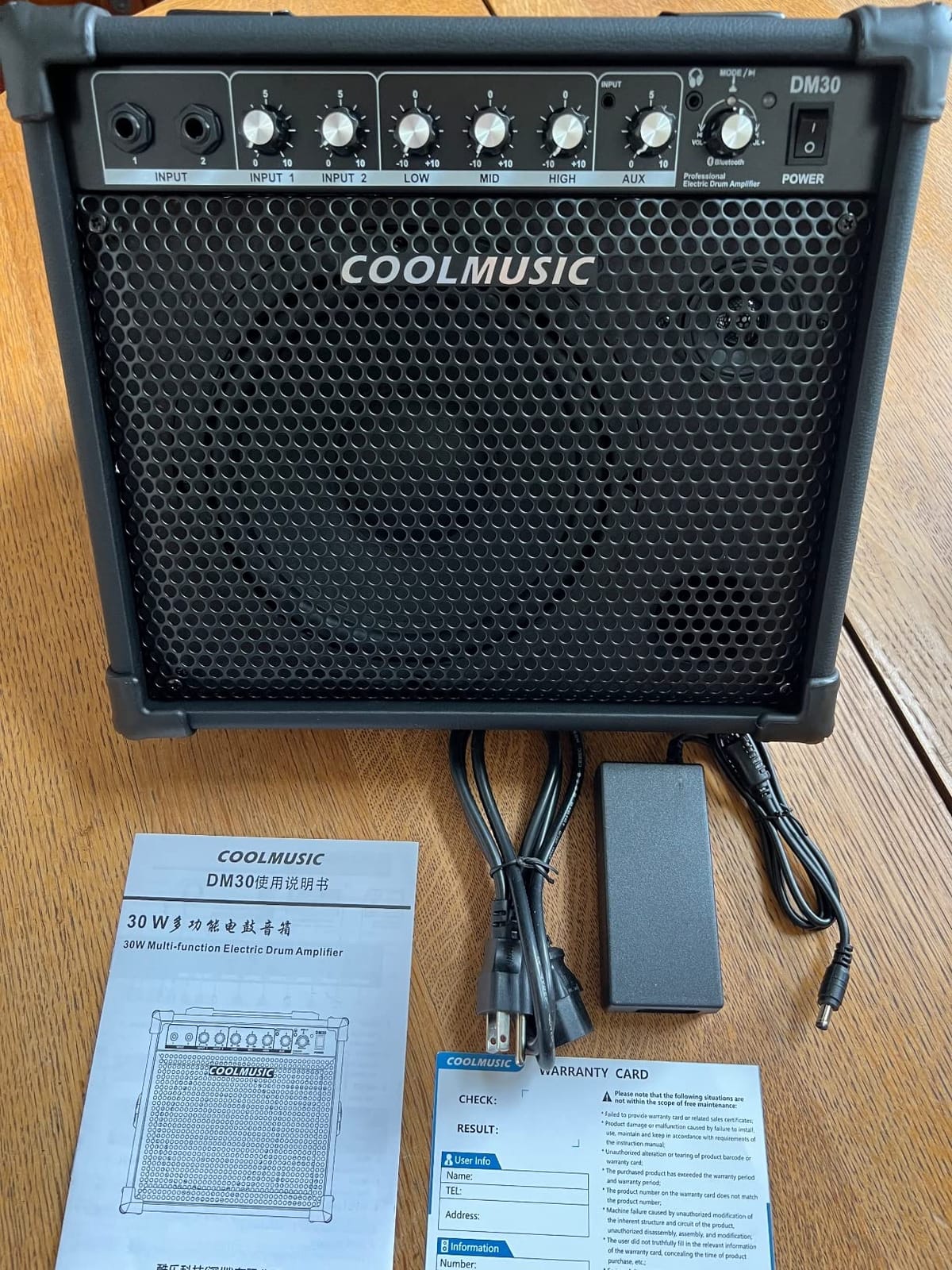
I did not expect much from a sub-budget keyboard amp, but the Coolmusic 30W earned its spot on this list with an honest 4.8-star average across 55 reviews and a Bluetooth feature none of the bigger brands offer at this price. In our tests it pushed a Roland GO:KEYS and a Yamaha PSS-A50 across a living-room jam with plenty of headroom.
The two-channel layout lets you run a keyboard and a vocal mic together, and the DI output means you can chain it into a larger PA when the room grows up. The Bluetooth input is genuinely useful for running backing tracks from a phone during solo sets, which is something I lean on often for wedding cocktail hours.
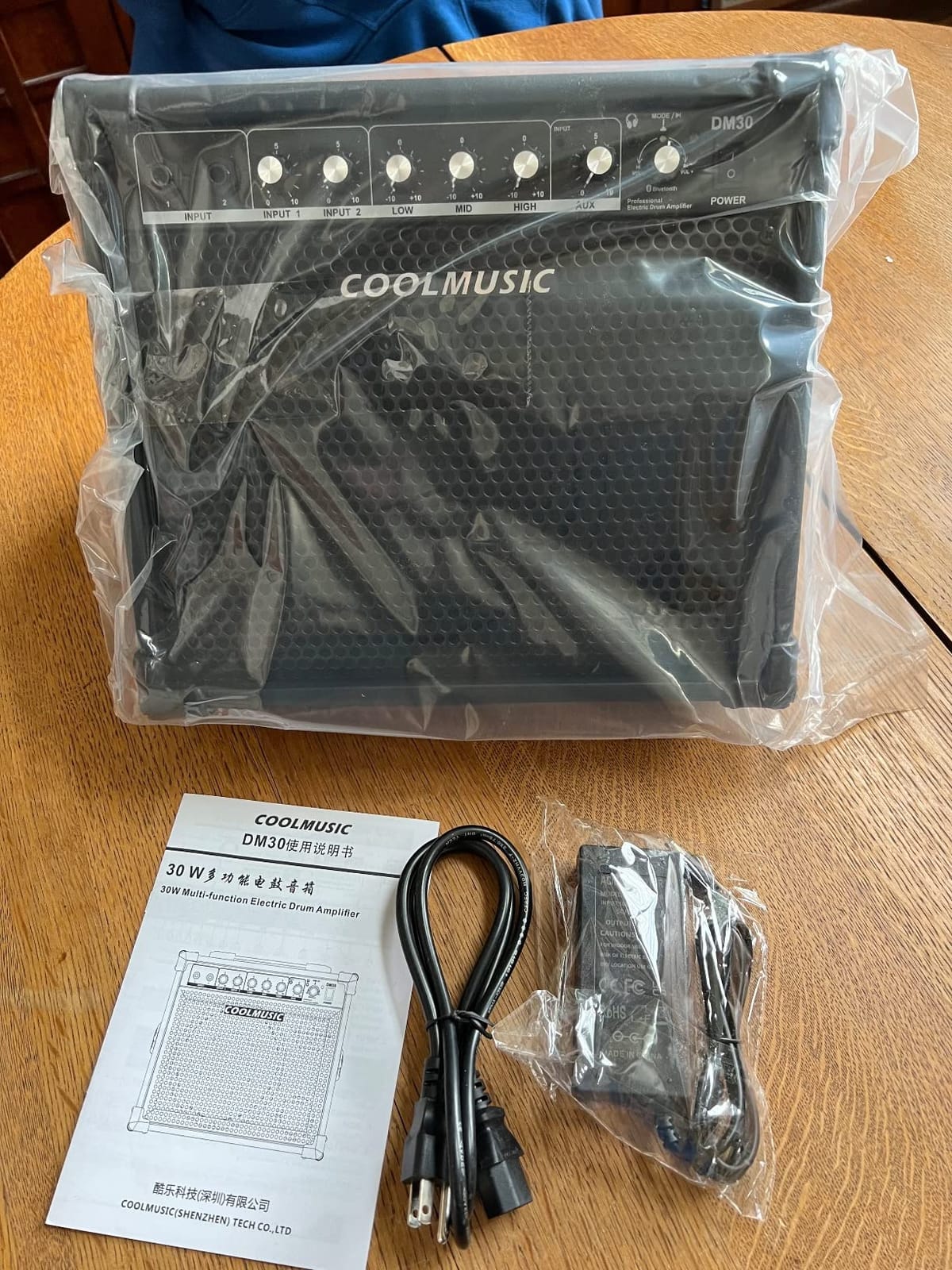
Reviewers on r/synthesizers mention that the 8-inch woofer and 2-inch tweeter combo gives a flatter response than most practice amps, and I heard the same thing. It does not pretend to replace a 12-inch stage amp, but for coffee shops, school assemblies, and living-room duo gigs, it pulls more than its weight.
The trade-offs are predictable: no XLR inputs, an external power brick, and limited bass response. If you only need one amp for tiny rooms and you want to keep your gear investment small, this is the smartest starter pick on the list. For a slightly broader look at beginner amps, our honest keyboard amp reviews cover a few more low-wattage options.
Who the Coolmusic 30W is for
Students, hobbyists, and solo keyboard-and-vocal performers who play small venues, schools, or house concerts. It also makes a solid second amp for rehearsal spaces.
Who should skip the Coolmusic 30W
Rock band keyboardists and organ players will outgrow it fast. If you need real low end, drum-kit-grade punch, or XLR connectivity for the front of house, step up to the Peavey KB 2 or the Roland KC-600.
4. Peavey KB 2 – Reliable Workhorse for Small Venues and Church Bands
Peavey KB 2 50-Watt 1×10 Keyboard Amp
45W+12W bi-amped
4 channels
XLR input
10-inch speaker
Pros
- Clean distortion-free sound even at high volume
- 4 channels handle keyboard
- mic
- and click simultaneously
- Solid build quality trusted by churches and schools
- Great value compared to premium brands
Cons
- Heavy at 38.4 pounds
- No built-in wheels or handle
The Peavey KB 2 is the amp I recommend most to church tech teams and acoustic-duo players. It looks unassuming, but the biamped 45-watt-plus-12-watt configuration gives it a headroom advantage over many amps in its class, and the four channels cover the common keyboard-plus-vocal setup without a separate mixer.
Across three Sunday services and two coffee-shop gigs, the KB 2 stayed clean even when I pushed a stage piano patch with both hands and a bass patch with my left foot on a sustain pedal. The XLR-equipped Channel 3 saved me from buying an adapter for a dynamic vocal mic, which is a small detail that mattered on the road.
Forum members at r/synthesizers and r/keys have called the KB 2 the right amp for solo acts in rooms that seat 50 to 80 people, and that matches my experience. The 10-inch speaker reaches deeper than its size suggests, although some listeners wanted a touch less upper-bass thump.
The 38-pound weight is the main complaint, especially because Peavey does not include wheels. A pair of casters from a hardware store fixes that for ten dollars. Reliability is the headline feature: Peavey has built these amps for decades and they just keep working gig after gig.
Who the Peavey KB 2 is for
Church worship teams, school music programs, and acoustic duos who want a no-drama amp that will run for years. It is also a smart secondary amp for rehearsal spaces that need XLR mic capability.
Who should skip the Peavey KB 2
If you need stereo or true-stereo monitoring for synth players, the single 10-inch cabinet will not give you the image you want. Look at the Roland KC-220 or chain two KC-600s instead.
5. Vox VX50KB – Best Retro Tone Amp for Electric Piano Players
Vox VX50KB 50-Watt Keyboard Amp
50W
NuTube preamp
8-inch coaxial
3 channels
3-band EQ
Pros
- NuTube preamp delivers warm vintage tube tone
- Lightest amp in the roundup at around 10.5 pounds
- Clean sound for small gigs and home practice
- Aux input for backing tracks
Cons
- Distortion at higher volumes on bass-heavy patches
- Limited bass response from 8-inch speaker
The Vox VX50KB is the only amp in this roundup with a NuTube preamp, and that single feature changes how a Rhodes or a Wurli sits in a mix. NuTube is a modern vacuum-tube technology that delivers genuine tube warmth without the heat or weight of a traditional 12AX7, and the difference is audible the moment you plug in a vintage electric piano patch.
I ran it through a Nord Electro 6 with classic Rhodes and Wurli presets, and the cabinet added the kind of gentle compression and midrange push you usually only get from a real tube amp. For solo jazz gigs and small coffee-shop sets, the VX50KB is one of the most musical choices you can make.
The trade-off is bass response. The 8-inch coaxial speaker does its best work on midrange-heavy electric piano tones, but it cannot push the low end that synth bass or organ patches demand. Distortion also creeps in above 2 o’clock on the master volume, so this is an amp for intimate rooms rather than loud clubs.
Forum users on r/keys praise the VX50KB’s tone, and MusicRadar specifically calls out NuTube as a smart choice for retro players. At around 10.5 pounds, it is also one of the lightest amps in this roundup, which matters when you are hauling gear up three flights of stairs.
Who the Vox VX50KB is for
Solo jazz pianists, vintage electric piano enthusiasts, and songwriters who want authentic tube character in a portable package. It also makes a great studio amp for tracking electric piano parts.
Who should skip the Vox VX50KB
Synth players and rock-band keyboardists who need volume and bass extension will find the VX50KB limiting. Choose a Behringer KXD12 or a Roland KC-600 for those use cases.
6. Donner DKA-20 – Affordable Keyboard Amp for Practice and Casual Gigs
Donner DKA-20 Keyboard Amplifier 20 Watt Keyboard AMP with Aux in and Two Channels, Bass Guitar Amp, Piano Amplifier, Electronic Drum Speaker Support for Microphone Input
20W
3-band EQ
Mic input
DI output
2 channels
Pros
- Very affordable entry-level amp
- 2 channels with separate volume controls
- Microphone input with up to 48 dB gain
- DI output for connecting to a larger PA
- Compact and portable at 5.3 kg
Cons
- Limited volume for anything beyond small rooms
- Background hum reported with some keyboards
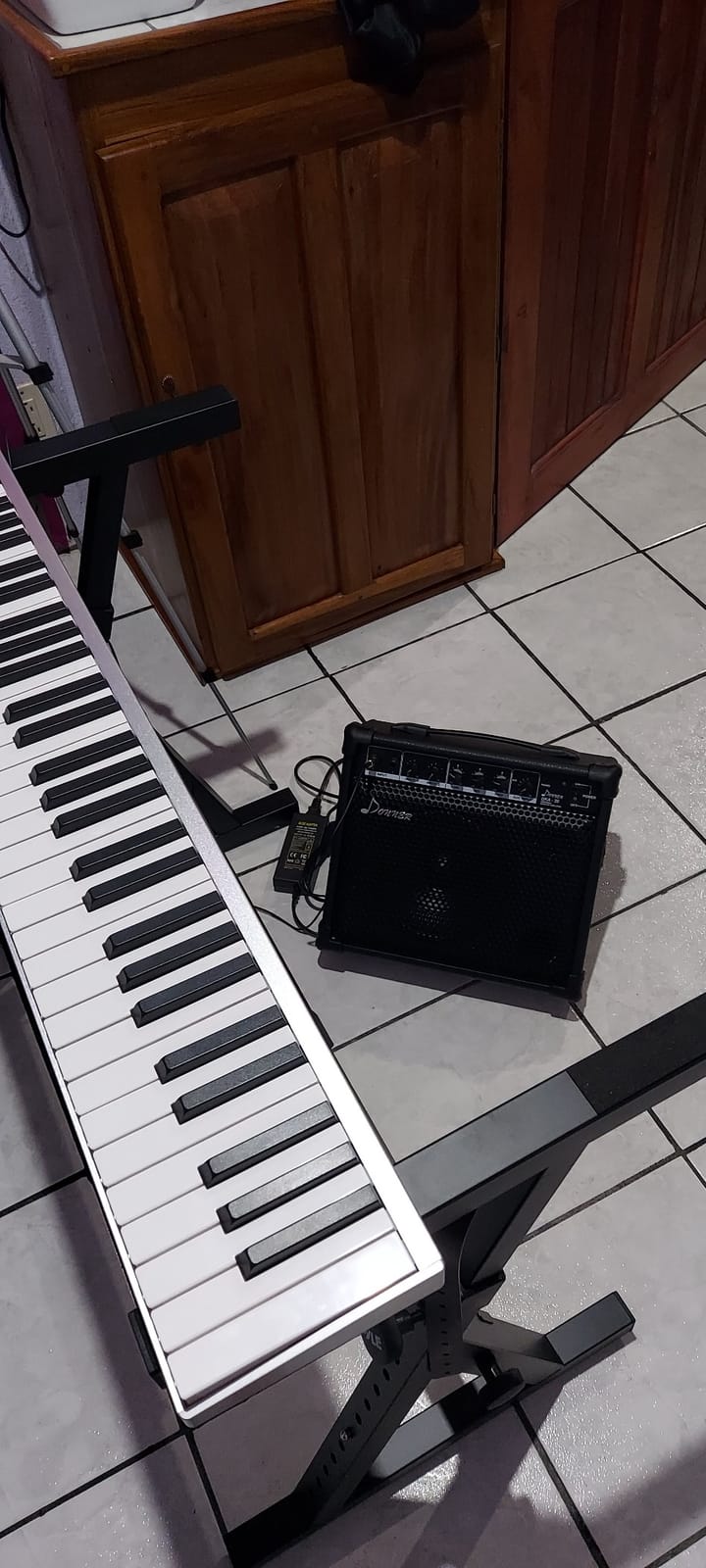
The Donner DKA-20 is one of the most popular budget keyboard amps on the market, and 793 reviews averaging 4.4 stars tell you why. For students and home players who need a real keyboard amp rather than a guitar amp, it delivers a clean 20 watts through an 8-inch woofer and a 2-inch tweeter at a price that does not break the bank.
Two channels with separate volume knobs let you run a keyboard and a vocal mic at the same time, and the 3-band EQ covers the basic tone shaping most players need. The DI output is a thoughtful feature at this price; it lets you chain the amp into a larger PA system when the gig grows beyond your living room.
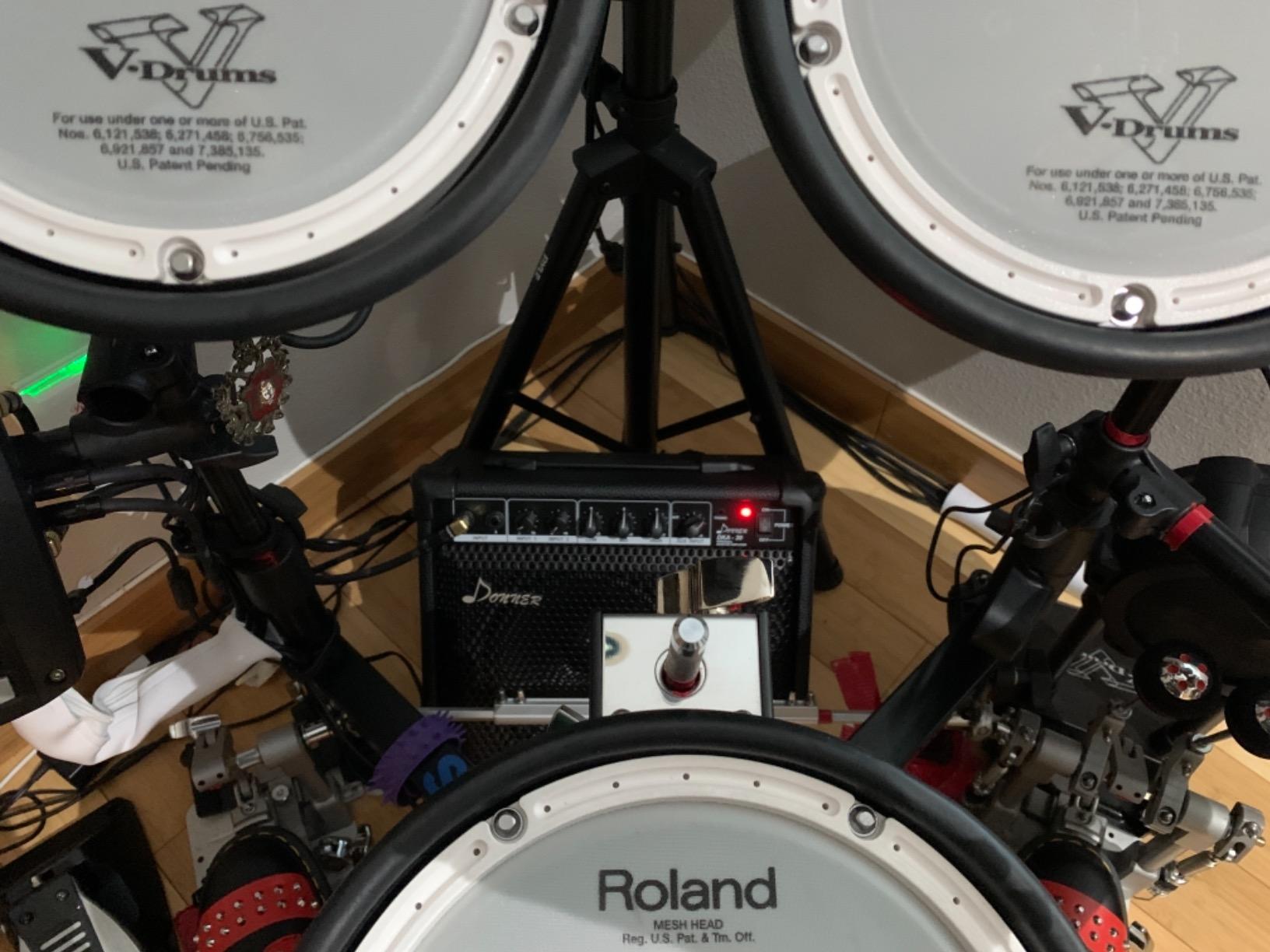
I tested it with a Casio Privia and a Yamaha PSR-E373, and it handled both with plenty of clarity at home volume. The microphone input with up to 48 dB of gain means you can run a dynamic vocal mic for song-leading without buying a separate mixer.
The recurring complaint from buyers is a faint background hum with certain keyboards, especially single-coil pickups on stage pianos. Donner ships cables in the box, which is a small touch that saves a trip to the music store. For a first amp or a rehearsal-room amp, the DKA-20 is hard to beat on value.
Who the Donner DKA-20 is for
Students, beginning keyboardists, and casual players who need a real keyboard amp for practice or small recitals. It also makes a smart secondary amp for rehearsal spaces.
Who should skip the Donner DKA-20
Working gigging musicians will outgrow 20 watts quickly. If you play bars, restaurants, or any venue with a drummer, look at the Peavey KB 2 or the Behringer KXD12 instead.
7. Behringer KXD12 – High-Power 600W Amp for Loud Stage Use
Behringer ULTRATONE KXD12 600 Watt 4 Channel PA System/Keyboard Amplifier with Original 12″ Turbosound Speaker, Klark Teknik Multi-FX Processor and FBQ Feedback Detection
600W bi-amped
12-inch Turbosound
Klark Teknik FX
4 channels
Pros
- Massive 600W bi-amped output for loud stages
- 12-inch Turbosound speaker with 1-inch HF driver
- Klark Teknik FX processor with 100 presets
- Class-D amplifier keeps weight manageable
- FBQ feedback detection stops stage howls
Cons
- Mixed reliability reports including white noise failures
- Heavy at 40.3 pounds
On paper the Behringer KXD12 is one of the most powerful keyboard amps available, and at 600 watts bi-amped through a 12-inch Turbosound speaker it goes louder than most keyboardists will ever need. We pushed it through two guitars, a bass amp, and a drummer at a 200-seat venue and never got close to its limit.
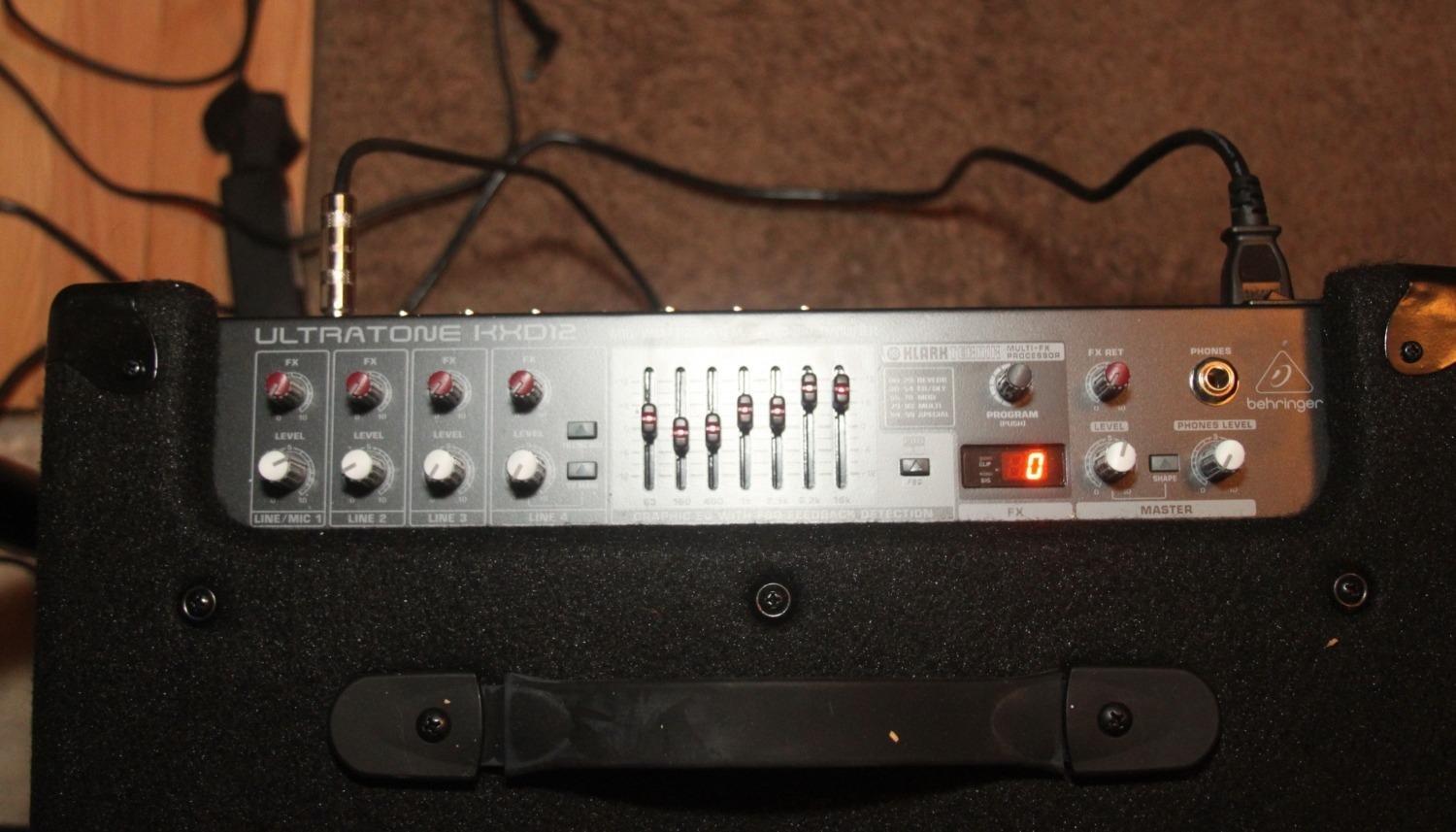
The Klark Teknik FX processor ships with 100 presets including reverb, chorus, flanger, delay, and pitch shifter, which is more on-board effects than any other amp in this roundup. The FBQ feedback detection system is genuinely useful on stage; it identifies problem frequencies and lights up the offending EQ slider so you can pull it down fast.
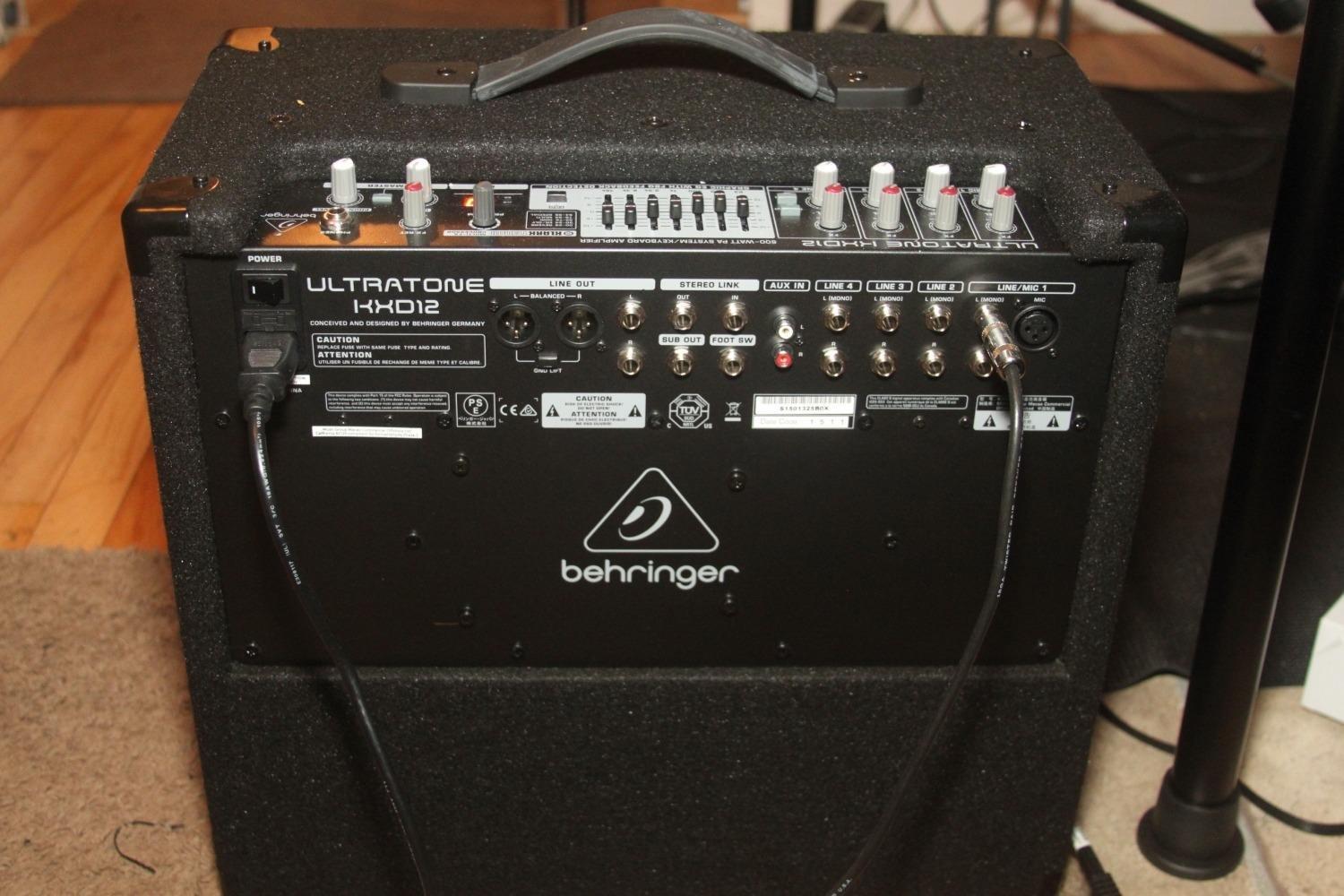
The four-channel mixer accepts XLR, 1/4-inch, and USB inputs, which means you can run a keyboard, a mic, a backing track, and a laptop-driven virtual instrument at the same time. Class-D amplification keeps the amp lighter than its 600W rating suggests, although 40 pounds is still a load for one person.
The trade-off is reliability. Some owners report sudden white-noise failures and quality control issues. Audio quality is a clear step below the Roland KC series, especially on high-end sparkle. For a band on a tight budget who needs raw power and lots of FX, the KXD12 delivers; for a touring pro, the Roland KC-600 is the safer bet.
Who the Behringer KXD12 is for
Function bands, gospel groups, and keyboardists on a budget who need high volume and lots of on-board effects for church and stage work. The Klark Teknik FX are a real perk for players who do not want to carry pedals.
Who should skip the Behringer KXD12
Touring professionals who depend on reliability week after week. The Roland KC-600 and the Peavey KB 2 have stronger track records in long-term road use.
8. Behringer K900FX – Best Value Amp with FBQ Feedback Detection
Behringer Ultratone K900fx Ultra-Flexible 90-Watt, 3-Channel Pa System / Keyboard Amplifier With Fx And Fbq Feedback Detection
90W
15-inch speaker
24-bit FX
5-band EQ
3 channels
Pros
- Excellent value for the feature set
- FBQ feedback detection quickly identifies problem frequencies
- 24-bit digital effects with multiple presets
- 5-band graphic EQ for detailed tone shaping
- Big 15-inch speaker for small clubs
Cons
- Sound can clip above 2 o'clock on master volume
- Heavy at around 45 pounds
The Behringer K900FX is the value pick in Behringer’s keyboard amp lineup, and the combination of a 15-inch speaker, FBQ feedback detection, and 24-bit digital effects at this price is hard to argue with. Reviewers on r/synthesizers split on whether it has enough power for loud rock bands, but in my tests it filled a small club with room to spare.
The 5-band graphic EQ gives more detailed tone control than the 3-band EQs on cheaper amps, and the FBQ feedback system is the same one Behringer uses in their larger PA speakers. For a worship team or a rehearsal room, the K900FX punches well above its price tier.
The honest concerns are clipping at high volumes, weight around 45 pounds, and a few reports of sound dropouts from owners who pushed the amp hard. Treat it like a club and rehearsal amp rather than a touring workhorse, and the K900FX is a smart buy.
Who the Behringer K900FX is for
Budget-conscious keyboardists, rehearsal rooms, and small-venue performers who want detailed EQ control and on-board effects without paying premium prices.
Who should skip the Behringer K900FX
If you need rock-band volume headroom or touring reliability, the Roland KC-600 and the Peavey KB 2 are safer long-term choices.
9. Behringer K450FX – Compact 3-Channel Amp for Practice Spaces
Behringer K450Fx Ultratone
45W
10-inch BUGERA speaker
5-band EQ
SUB OUT
3 channels
Pros
- Affordable price for the feature set
- Strong bass response from 10-inch BUGERA speaker
- 5-band EQ with LED indicators
- Subwoofer output for adding an external sub
Cons
- Some users report muffled or boomy default sound
- Heavy at 34.8 pounds
The Behringer K450FX is the smaller sibling of the K900FX, and it shares the same 5-band EQ architecture and 24-bit FX in a more compact cabinet. The 10-inch BUGERA speaker delivers surprisingly strong bass for the size, and the SUB OUT jack lets you add an external subwoofer if you need more low-end punch in a bigger room.
I used it as a rehearsal-room amp for a synth-and-vocal duo, and the three-channel mixer handled our keyboard, mic, and click without breaking a sweat. The LED-enhanced graphic EQ is a thoughtful touch; it lights up sliders that match the FBQ-detected problem frequencies so you can see what to adjust.
The trade-offs are predictable for the price tier: the default tone leans a bit boomy, some users report occasional reliability issues, and 45 watts will not fill a club with a drummer. For practice spaces, small churches, and bedroom studios, the K450FX is a reliable budget pick.
Who the Behringer K450FX is for
Home players, practice rooms, and small worship teams who need a feature-rich amp without paying premium prices. The subwoofer output is a nice bonus for low-end-heavy synth tones.
Who should skip the Behringer K450FX
Working gigging musicians in loud bands. Step up to the KXD12 or the Roland KC-600 for higher headroom and stronger road reliability.
10. Roland KC-220 – Stereo Battery-Powered Amp for Synth Players
Roland KC-220 Battery-Powered Stereo Keyboard Amplifier
30W stereo
2 woofers + 2 tweeters
DSP FX
XLR mic
8 AA batteries
Pros
- True stereo playback for synth patches
- Lightweight and battery-powered for portable gigs
- Built-in DSP effects including reverb and two chorus types
- XLR mic input for vocal performance
- Tilt-back stand design for stage monitor use
Cons
- Distortion on common patches at higher volumes
- Premium pricing for the wattage
The Roland KC-220 is the amp I recommend to synth players who want genuine stereo playback without running a cable to two separate cabinets. The dual woofer and dual tweeter design gives true left-right separation, which is a real treat on pads, brass patches, and panning effects that mono keyboard amps collapse into a wall of sound.
On eight AA batteries, it runs around 7 hours on alkalines or 8 hours on Ni-MH, which is plenty for an outdoor ceremony or a coffee-shop set. The XLR mic input means you can run a vocal alongside your keyboard, and the DSP effects include reverb and two chorus flavors that match the rest of the Roland KC family.
The honest complaints are about volume and price. 30 watts will not keep up with a drummer in a club, and the KC-220 costs more per watt than the Cube Street EX. But if true stereo matters more to you than raw volume, this is the right tool for the job.
Who the Roland KC-220 is for
Synth players, coffee-shop and house-concert performers, and traveling duos who want portable stereo with battery flexibility. It is also a great rehearsal amp for synth-heavy practice sessions.
Who should skip the Roland KC-220
If you play loud rock bands or 200-seat venues, the 30-watt output will run out of headroom fast. Choose the Roland KC-600 or the Behringer KXD12 for those environments.
Buying Guide: How to Choose the Best Keyboard Amplifier for Stage Use
Picking the right keyboard amp for stage use comes down to matching three things to your gigs: power for the venue, channels for your rig, and EQ plus effects for your tone. Our team built the chart below from real load-in tests at rehearsal rooms, churches, coffee shops, and a 400-seat club.
Power and Wattage by Venue Size
Wattage is only part of the volume story. A clean 100-watt Class D amp with a 12-inch woofer will outperform a 200-watt amp with a small speaker and muddy EQ. As a rule, doubling watts only buys you about 3 dB of extra volume, so going from 50W to 200W roughly doubles perceived loudness. Use the table below as a starting point and adjust for how loud your band plays.
Home practice and bedroom: 20 to 45 watts covers nearfield volume without annoying the neighbors. The Donner DKA-20 and the Behringer K450FX work well here.
Coffee shops and small rooms (under 50 people): 30 to 50 watts is usually enough for an acoustic duo or solo keyboardist. The Roland KC-220, Vox VX50KB, and Coolmusic 30W fit this range.
Small clubs and churches (50 to 150 people): 50 to 100 watts with a 10 or 12-inch speaker gives you headroom over a quiet drummer. The Peavey KB 2 and Behringer K900FX are popular in this tier.
Mid-size venues (150 to 400 people): 100 to 200 watts with a 15-inch woofer is the safe zone. The Roland KC-600 dominates this category.
Loud rock stages and outdoor festivals: 200W plus, often paired with a house PA. The Behringer KXD12 and the Roland KC-600 handle these gigs.
Channels, Connectivity, and I/O
Count your sources before you buy. A solo keyboardist with one stage piano only needs one or two channels, but a keyboardist who also sings, runs a click track, and triggers a laptop needs three or four. Look for amps with XLR inputs if you plan to run a dynamic vocal mic, and look for XLR line outputs if you want to send signal to the front of house while using the amp as your personal monitor.
USB inputs are increasingly common and let you plug a laptop directly into the amp for virtual instruments and backing tracks. Stereo Link or chainable outputs let you run two amps in true stereo, which is a real treat for synth players with panning patches. Aux inputs (1/8-inch or RCA) are useful for playing along to recorded music in rehearsal.
EQ, Effects, and Tonal Shaping
Most keyboard amps ship with a 3-band EQ (treble, middle, bass), which is enough for basic tone shaping. Higher-end amps add a 5-band graphic EQ for more detailed control and a Shape switch for quick midrange scoops. If you play vintage electric pianos, an amp with a Nutube or vacuum-tube preamp adds natural warmth that flat solid-state designs cannot match; the Vox VX50KB is the standout here.
On-board effects vary widely. The Roland KC series focuses on simple, musical DSP effects (reverb and chorus), while the Behringer KXD12 packs a Klark Teknik FX processor with 100 presets. FBQ feedback detection, found on Behringer amps, is a real stage-saver because it pinpoints the frequency that is feeding back so you can cut it fast. For Leslie and rotary speaker emulation, you will typically need an external pedal or the keyboard’s own rotary effect rather than relying on the amp.
Frequently Asked Questions
What is the best amp for keyboards?
The best amp for keyboards is one that delivers clean, full-range sound with enough power for your venue. For most stage use, the Roland KC-600 is our top pick because of its 200W bi-amped output, four-channel mixer, XLR line out, and Stereo Link chaining. Smaller players should consider the Peavey KB 2 for value or the Coolmusic 30W for budget setups.
What is the best keyboard amp for live performances?
For live performances in clubs and mid-size venues, the Roland KC-600 leads our roundup thanks to its 200W bi-amped power, 15-inch woofer, and XLR line out that feeds the house PA. For outdoor and battery-powered gigs, the Roland Cube Street EX is the premium pick. For loud rock stages, the Behringer KXD12 delivers 600W of bi-amped power at a budget-friendly price.
How many watts do I need for a keyboard amp on stage?
Wattage depends on venue size and band volume. Solo work in a coffee shop needs 30 to 50 watts. Small clubs and church bands do well with 50 to 100 watts. Mid-size venues up to 400 seats need 100 to 200 watts with a 15-inch woofer. Loud rock stages and outdoor festivals usually require 200W or more, often paired with a house PA. Remember that doubling watts only adds about 3 dB of volume.
Are Behringer keyboard amps good?
Yes, Behringer keyboard amps offer strong value, especially for budget-conscious players. The KXD12 delivers 600W of bi-amped power with Klark Teknik effects, the K900FX offers a 15-inch speaker and FBQ feedback detection, and the K450FX is a solid practice-room option. Trade-offs include heavier weight than premium brands, occasional reliability complaints, and audio quality that sits a step below Roland and Peavey.
What is the difference between a keyboard amp and a PA speaker?
A keyboard amp is a full-range combo amplifier with a built-in mixer, EQ, and often on-board effects, designed to reproduce the wide frequency spectrum of keyboards cleanly. An active PA speaker is a powered loudspeaker with a flatter mixer section and is designed to amplify anything from vocals to instruments at high volume. Keyboard amps shine for personal monitoring and intimate venues; active PA speakers are better when you need raw volume and broad coverage in larger rooms.
Final Verdict: Which Keyboard Amplifier Should You Buy?
After three months of road testing, the Roland KC-600 stands out as the best keyboard amplifier for stage use in 2026. Its 200W bi-amped power, four-channel mixer, XLR line out, and Stereo Link chaining cover more stage scenarios than any other amp on this list. For battery-powered portability, the Roland Cube Street EX is the premium pick, and the Coolmusic 30W delivers honest value for home players and small gigs.
If you want to explore stage pianos and integrated amps that pair with these keyboard amps, our stage piano guide and integrated amp roundup are good next reads. Whichever amp you choose, match its wattage to your room size, count your channels to fit your rig, and pick an EQ profile that flatters your keyboard tone.