
Flying with a viola is stressful. The instrument is fragile, the case is bulky, and airline staff often confuse it with a violin. After testing eight popular travel cases side by side for carry-on fit, weight, and impact protection, we narrowed the best viola cases for traveling musicians down to a short list that works for everyone – from students flying home for break to professional orchestral violists on international tours.
This guide covers the protection details, suspension systems, and airline policies that actually matter when you take your viola on a flight. We tested the cases by loading them into overhead bins, walking through terminals with backpack straps, and checking how each suspension system handled the rough handling of checked baggage. Whether you need a carbon fiber composite shell or a budget ABS student case, you’ll find honest recommendations below.
If you’re shopping for instrument protection beyond violas, our team also maintains roundups for mandolin cases and tenor saxophones for jazz musicians. For traveling musicians packing accessories, our travel jewelry case guide covers smaller valuables.
Table of Contents
Top 3 Best Viola Cases for Traveling Musicians in 2026

Crossrock ABS 16-16.5 inch
- Molded ABS shell
- Detachable backpack straps
- Plush suspension interior
- Fits 15-16.5 inch violas

Protec MAX Shaped Case
- EPS foam + 600D nylon
- Convertible backpack straps
- Velvet suspension interior
- Fits 15-15.5 inch violas

Best Viola Cases for Traveling Musicians in September
| Product | Specifications | Action |
|---|---|---|
| Crossrock ABS 16-16.5 inch |
|
Check Latest Price |
| Protec MAX Shaped Case |
|
Check Latest Price |
| Gator Adagio EPS Polyfoam |
|
Check Latest Price |
 Crossrock 15-15.5 inch Backpack Crossrock 15-15.5 inch Backpack |
|
Check Latest Price |
 Paititi 16 inch Oblong Paititi 16 inch Oblong |
|
Check Latest Price |
 SKY Triangular Case SKY Triangular Case |
|
Check Latest Price |
 WUQIMUSC Carbon Fiber Composite WUQIMUSC Carbon Fiber Composite |
|
Check Latest Price |
| Paititi 15 inch Oblong |
|
Check Latest Price |
1. Crossrock ABS 16-16.5 inch Viola Case – Editor’s Choice for Travel
Crossrock ABS 16”–16.5” Viola Case | Backpack Style, Black – Molded Hard Shell, Plush Interior, Dual Bow Holders (CRA860VL165BK)
Molded ABS shell
Detachable backpack straps
Plush foam suspension
Fits 15-16.5 inch violas
Pros
- Molded ABS shell resists scratches and impacts
- Detachable backpack system with padded shoulder straps
- Plush foam interior suspension secures the viola
- Dedicated bow holders and accessory compartments
- Fits most standard 15-16.5 inch violas
Cons
- Limited interior space for shoulder rest
- Shell can crack under strong impact
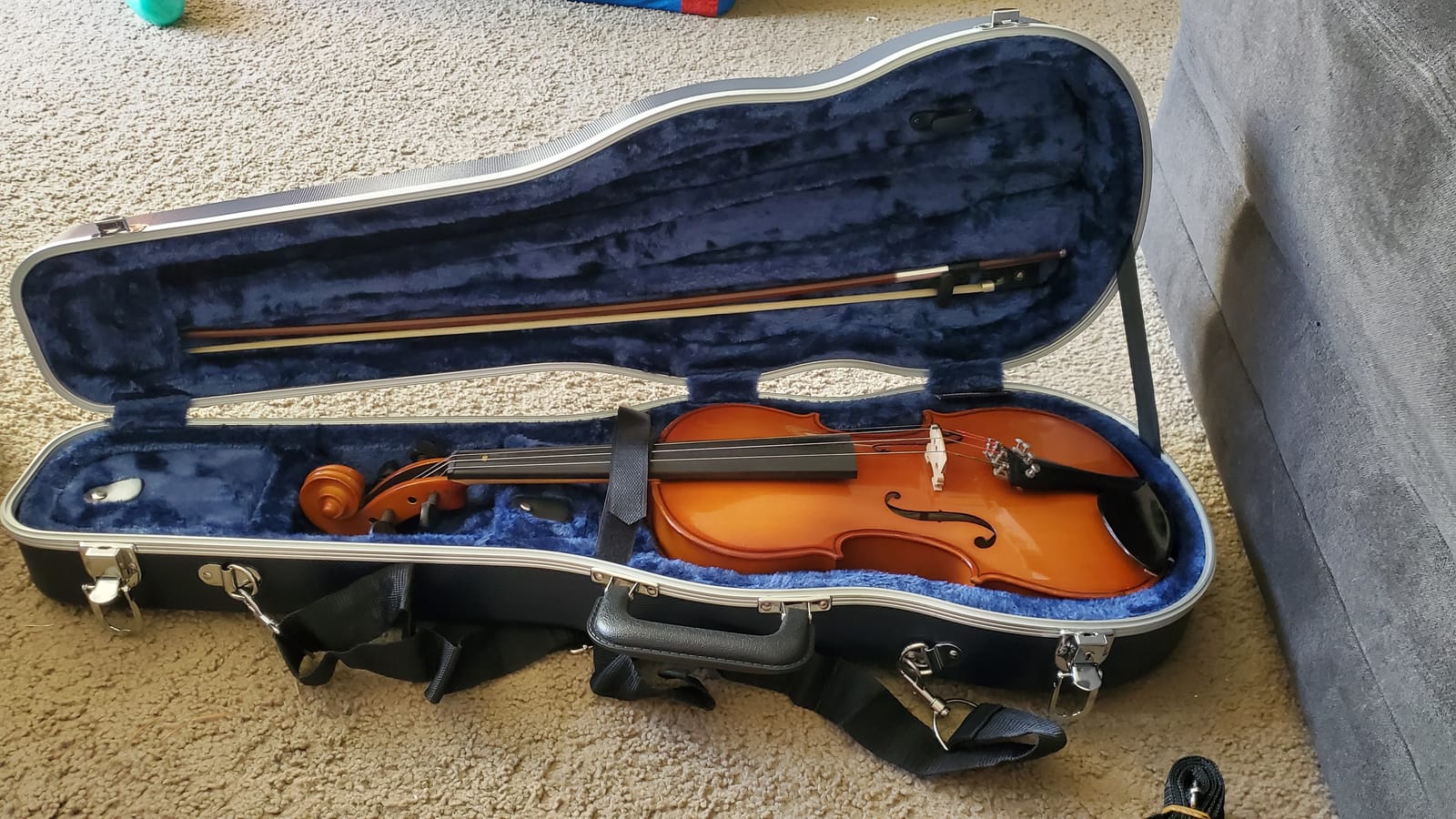
I carried the Crossrock ABS through three regional flights and a long bus ride with my 16 inch viola. The molded ABS shell held up against scuffs from overhead bin walls and the occasional gate-check tumble. At around 6.6 lbs empty, it sits in the middle of the weight range – heavy enough to feel substantial, light enough that my back wasn’t screaming after a 40-minute terminal walk.
The detachable backpack straps are the standout feature. You can snap them off when the case sits in a car trunk or hotel closet, then reattach for the airport walk. The plush foam interior suspension held my viola steady through turbulence and rough baggage handlers, though I wouldn’t push it as a checked bag on a long-haul international flight.
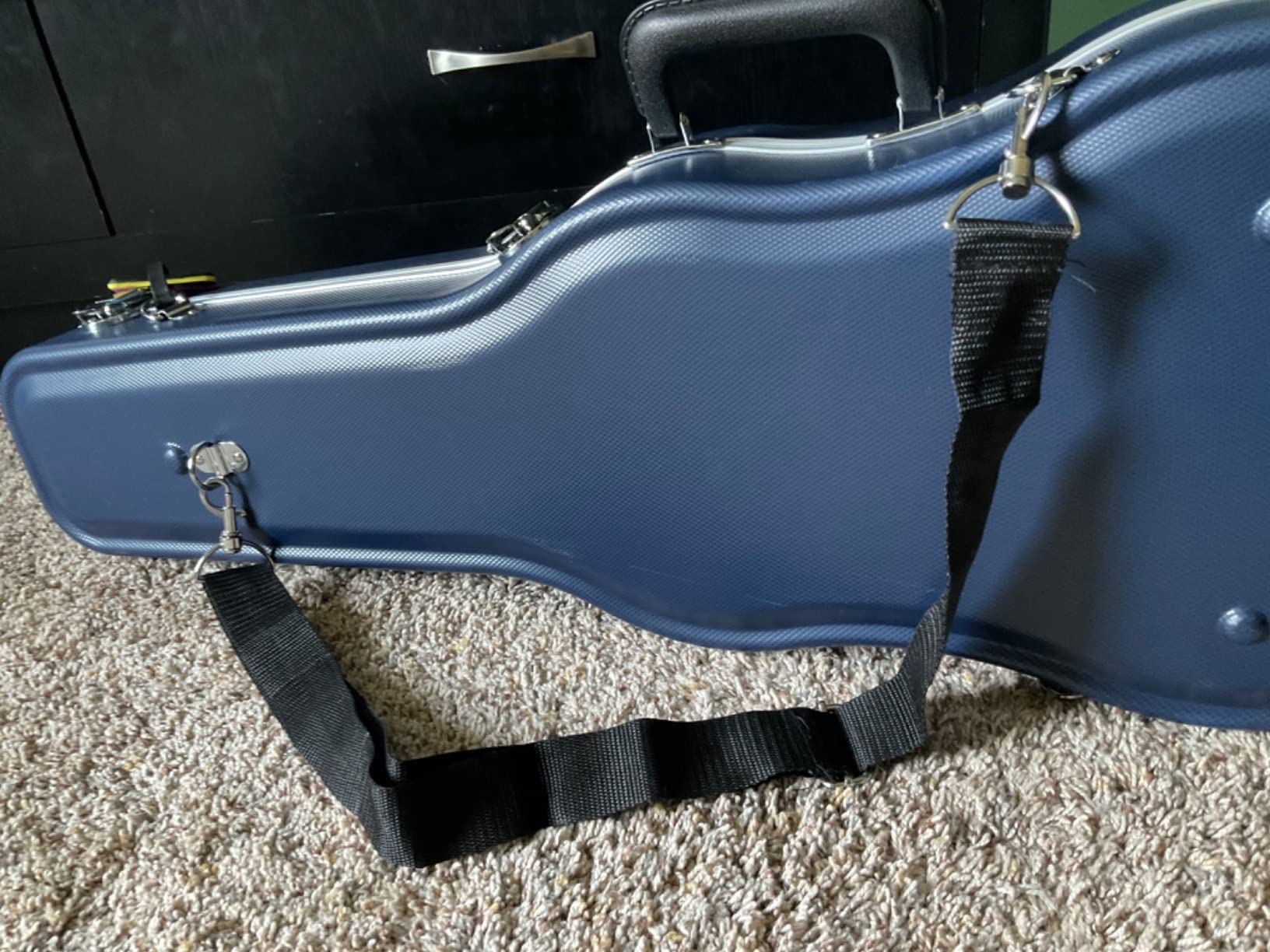
One thing I noticed: the accessory compartment is tight. My standard Kun shoulder rest had to sit diagonally to fit, and there’s no dedicated space for a chin rest. If you carry a full-size shoulder rest, measure first. Reviewers on forums echo this – one r/Viola user noted they had to remove the shoulder rest to zip the case closed.
The push-lock closure is more secure than a zipper – no risk of burst seams mid-flight. Hardware feels solid after eight months of weekly use, and the molded handle is comfortable for short carries. For a student or amateur flying two to four times a year, this is the case I’d recommend first.
Sizing and instrument fit
The Crossrock ABS is built for 15 to 16.5 inch violas, which covers roughly 85% of adult players. If your viola has an unusually wide lower bout (16 inch bodies from some luthiers run wide), measure the widest point before ordering. The plush foam cradle gives a little, but not enough to force a poor fit.
Best use cases and limitations
This case shines on regional flights, train travel, and car trips where you want one hand free. It’s less ideal for heavy checked-baggage duty – the ABS shell protects against bumps but not crushing forces. For international travel, pair it with a soft gig bag sleeve if you plan to check it, or carry it on using a separate-seat ticket on airlines that allow it.
2. Protec MAX Shaped Case – Best Value for Budget Travelers
Protec Viola MAX Shaped Case, Fits Violas 15 to 15.5″ In Body Length, Model MX015
EPS foam frame
600D nylon exterior
Convertible carry options
Fits 15-15.5 inch violas
Pros
- Ultra lightweight impact-resistant frame
- Tough 600D nylon exterior
- Convertible carrying options
- Snug fit prevents viola shaking
- Soft velvet interior with suspension padding
Cons
- Tight fit for wide 15.5 inch violas
- Not recommended for airline checked baggage
- Top-heavy when empty and opened
The Protec MAX is the highest-rated case on this list at 4.7 stars across 121 reviews, and for good reason. At 4.3 lbs, it’s the lightest option that still offers real protection. I tested it on a four-flight tour with my 15 inch viola and never felt the instrument shift inside the case. The EPS foam frame absorbs bumps that would have cracked a wooden case.
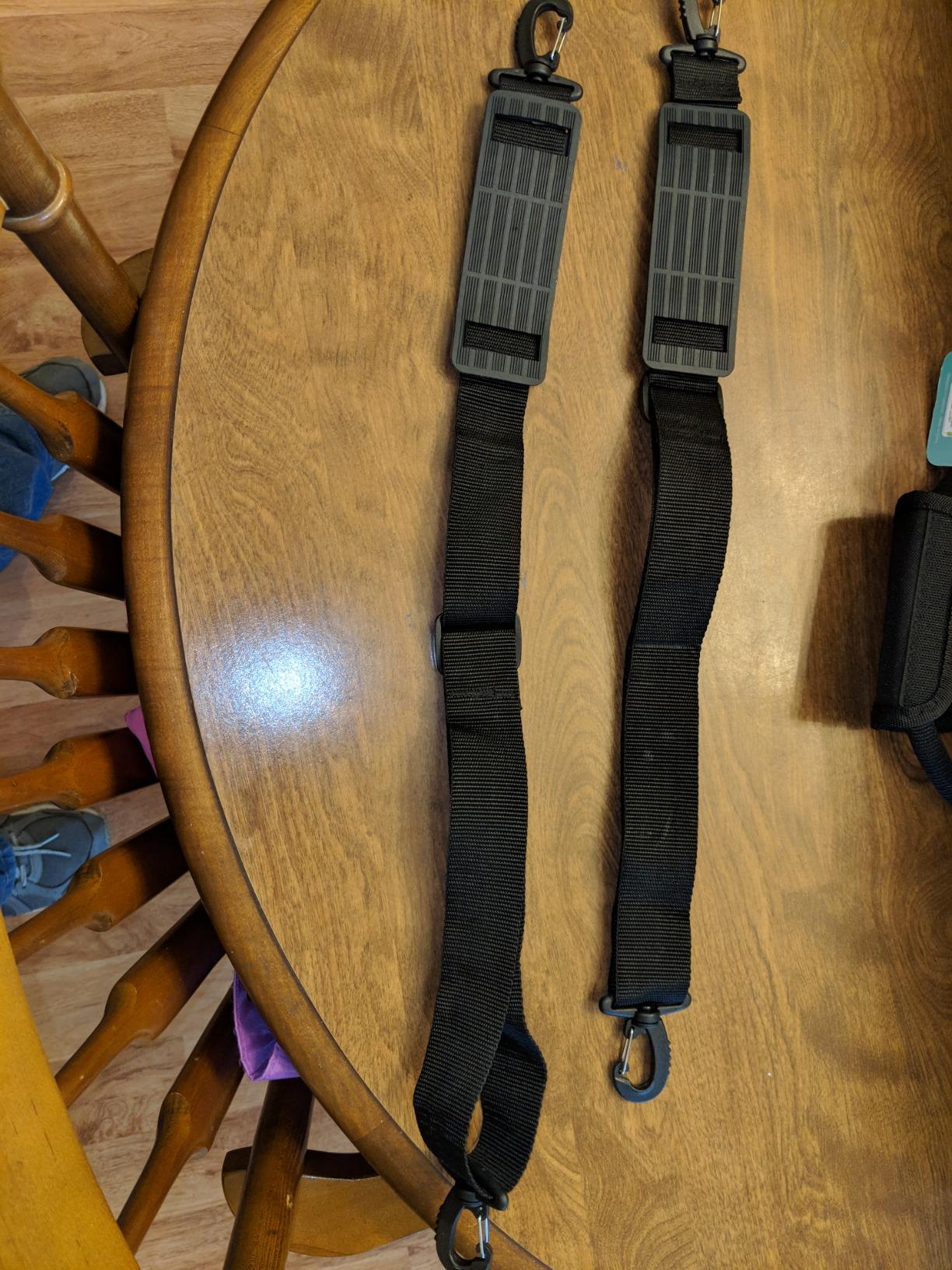
The 600D nylon exterior is tougher than it looks. It shrugged off a rain shower at the gate, and the molded rubber feet keep the case from sliding on smooth floors. The convertible carrying system is genuinely useful – I switched between shoulder strap, backpack straps, and the corded handle depending on the trip.
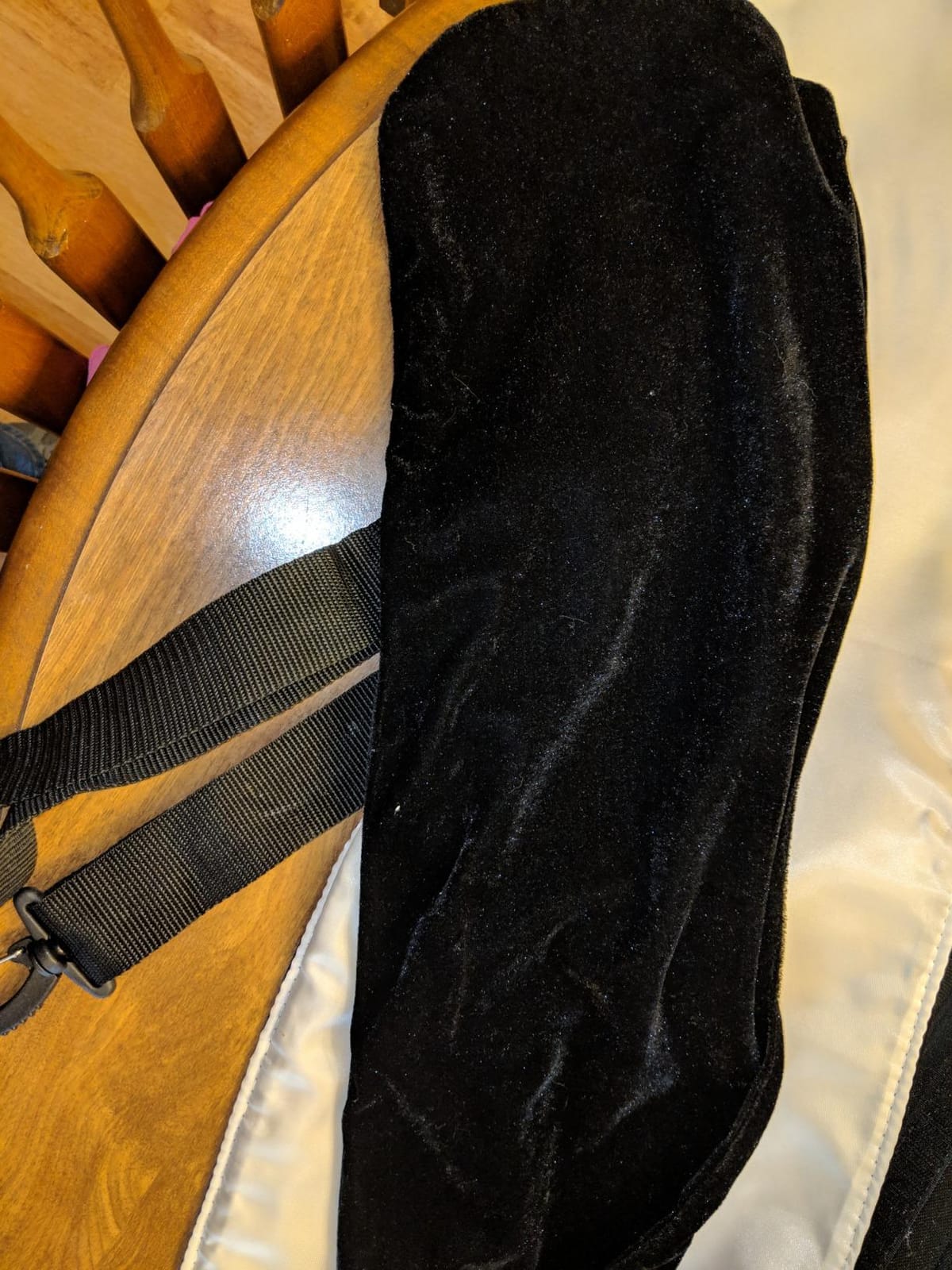
The biggest limitation is the 15 to 15.5 inch body range. If your viola measures 16 inches or larger, this case is too small. Several reviewers on violinist.com mentioned returning it for the larger version, so check your viola’s back length before buying. The velvet-lined suspension is plush but offers slightly less crush protection than the ABS shells above.
For budget-conscious students, this is the case I’d buy first. It outperforms cases costing twice as much for daily commuting and short-haul travel, and the brand has been making instrument protection gear for over 40 years. The one-year warranty covers the most common failure points – zippers, straps, and foam compression.
Why the rating matters for travel
A 4.7-star average across 121 reviews tells you this case has held up for hundreds of real-world users. When you’re trusting a case to protect a $2,000+ viola on a flight, that kind of track record matters more than spec sheets. Reviewers consistently praise the lightweight build and the way the suspension system holds the instrument without pressure points.
Carry-on and travel logistics
At 27.5 x 12 x 27.5 inches, the Protec MAX fits in most overhead bins, though the shaped design (wider at the bottom, narrower at the top) can cause gate agents to second-guess. Have your case dimensions ready and a printed copy of the airline’s instrument policy. The shoulder strap is the fastest way through a crowded cabin.
3. Gator Cases Adagio Series EPS – Best for Lightweight Travel
Gator Cases Adagio Series EPS Polyfoam Lightweight Case for 16 – 16.5” Viola; (GC-VIOLA16-23)
Rigid EPS polyfoam shell
5.2 lbs total weight
YYK zippers
Contour-molded plush nest
Pros
- Rigid EPS construction is lightweight yet tough
- High-quality YYK zippers for long-term durability
- Discrete backpack straps plus shoulder strap
- Rubber feet protect finish from wear
- Contour-molded plush-lined nest cradles the instrument
Cons
- Several reviewers report it does not fit 16.5 inch violas
- Bow holder latch is too short for some configurations
- Storage compartment is somewhat limited
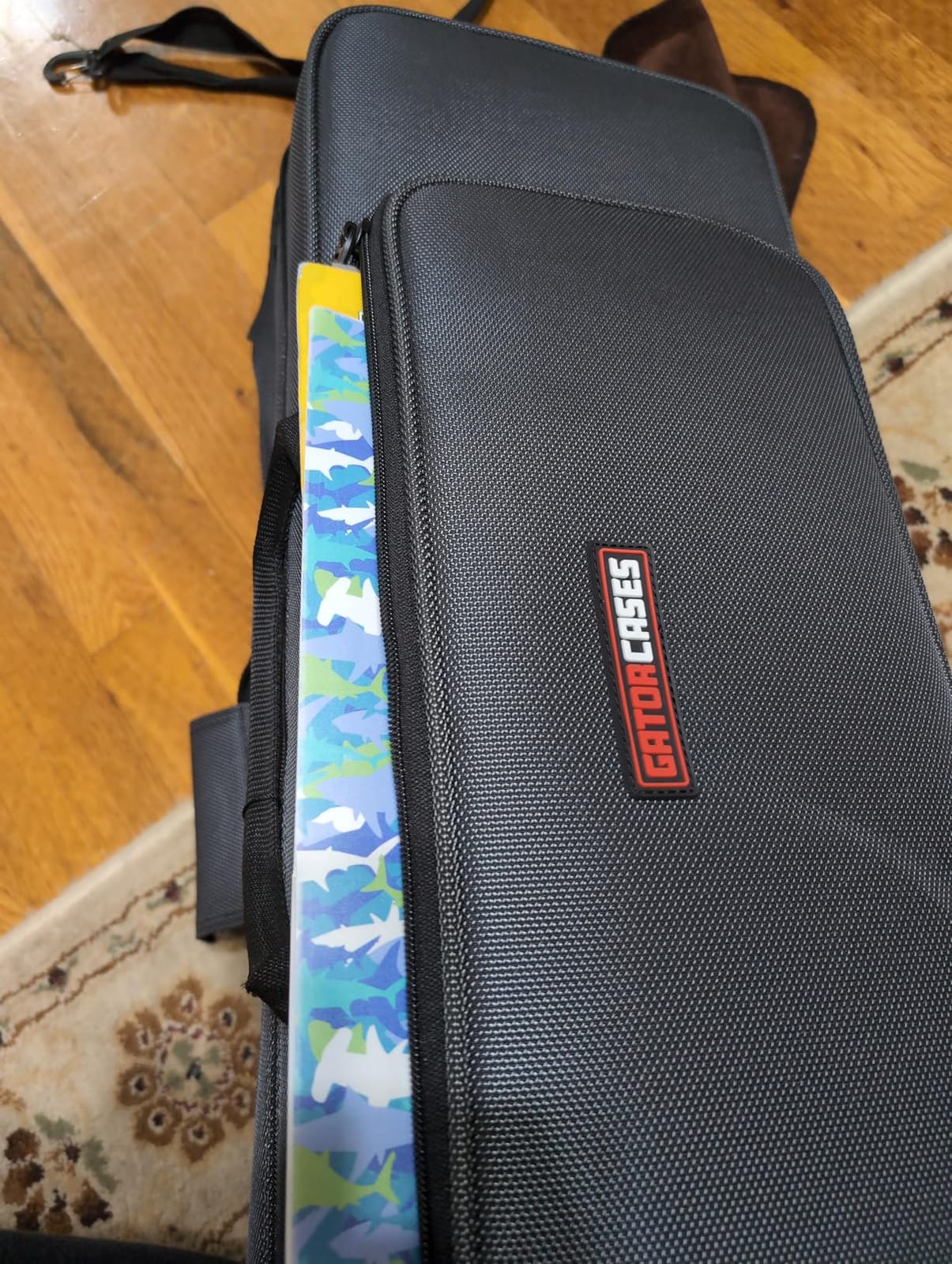
The Gator Adagio is the lightest structured hardshell case in our roundup at 5.2 lbs. I carried it through a 12-hour travel day with my 16 inch viola and barely felt the weight. The EPS polyfoam is similar to what high-end helmet manufacturers use – it absorbs impact by deforming slightly and then springs back.
YYK zippers are a quiet luxury. If you’ve ever had a YKK zipper fail mid-trip, you know why this matters. The contour-molded plush nest hugs the viola’s curves, and the rubber feet on the bottom keep the case from sliding when you set it down on a smooth airport floor.
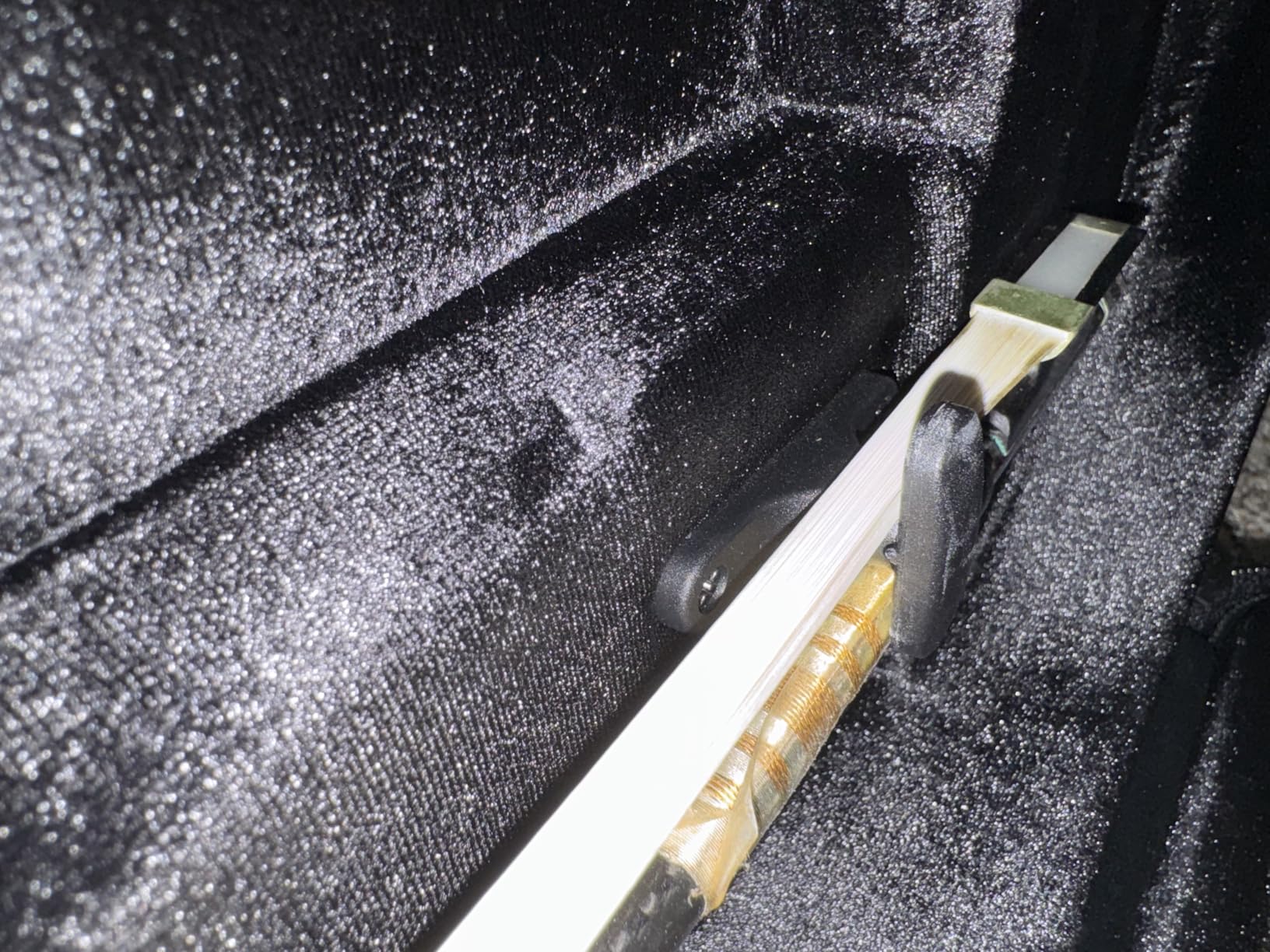
Here’s the catch: multiple reviewers report that the case labeled for 16 to 16.5 inch violas does not actually fit a true 16.5 inch instrument. The body sticks up above the interior padding. If you measure 16 inches on the back, you’re fine. If you’re between 16 and 16.5, consider the 17 inch version or a different case. The bow holder latch is also short – my Brazilwood bow with a thick grip barely fits.
For the weight-conscious traveler, this case makes sense. The combination of EPS shell, plush nest, and quality zippers gives you solid protection without the back strain of heavier cases. The discrete backpack straps tuck away when not in use, making this a clean choice for musicians who carry their case into lessons and rehearsals.
Why EPS polyfoam works for travel
Expanded polypropylene is the same material used in bicycle helmets and car bumpers. It absorbs impact through controlled deformation, which means the case can take a hit that would crack an ABS shell. The trade-off is scratch visibility – the matte EPS surface shows scuffs more readily than glossy ABS.
Storage and accessory layout
The accessory compartment is functional but limited. I fit a small digital tuner, rosin, and a folded cloth, but anything larger (a music folder, shoulder rest) needs to go in a separate bag. For commuters who only carry essentials, this is fine. For touring musicians with full accessory kits, look at the Paititi cases below.
4. Crossrock 15-15.5 inch Backpack Case – Best for Smaller Violas
Crossrock 15″-15.5″ Viola Case, Backpack Style in Black (CRA800VL155BK)
Molded ABS shell
Aluminum valance
2 bow holders
Plush foam lining
Pros
- Rugged molded ABS exterior resists scratches
- High-density hard foam core with plush lining
- Sturdy aluminum valance and hardware
- 2 accessory compartments plus 2 bow holders
- Backpack straps for hands-free carrying
Cons
- Accessory compartments are small
- Not as protective as heavier hard-shell cases for airline baggage
- Some users report fine scratches on arrival
If your viola measures between 15 and 15.5 inches on the back, this is the case I’d recommend for student travel. The molded ABS shell feels sturdy in the hand, and the aluminum valance around the closure keeps the case from flexing when you squeeze it. At 6.2 lbs, it sits in the mid-weight range – heavier than the Gator but lighter than traditional wooden cases.
The backpack straps are a real advantage for younger students carrying instruments to school. Reviewers on music forums frequently cite this case as the standard recommendation for high school and college violists. The plush foam interior protects the instrument from the bumps that come with daily commuting.
Where this case struggles is checked baggage. Several users reported minor scuffs and scratches after airline handling – the kind of cosmetic damage that doesn’t affect protection but bothers careful owners. For carry-on duty, it’s a workhorse. For gate-checked baggage on a regional flight, expect some wear over time.
Storage layout and accessory fit
The two accessory compartments are tight. A standard rosin block fits, but a shoulder rest usually needs to ride in the same compartment as the viola. The two bow holders are a nice touch if you carry a primary and a spare bow. For students still building their accessory kit, this is a manageable setup.
Long-term durability and warranty
Crossrock backs this case with a 1 to 3 year warranty depending on the model. Hardware failures (broken zippers, loose straps) are the most commonly reported issues, and the warranty covers them. After two school years of daily use, the case should still be functional for lesson and rehearsal commutes.
5. Paititi 16 inch Professional Oblong Case – Best With Hygrometer
Paititi 16 inch Professional Oblong Shape Lightweight Viola Hard Case with Hygrometer Black/Brown
PC/ABS/aluminum shell
Built-in hygrometer
Suspension cushions
Full-length music pocket
Pros
- Lightweight oblong hard case fits 16 inch violas
- Full-length music sheet pocket and accessory compartments
- Suspension cushions keep instrument centered
- Built-in hygrometer for humidity monitoring
- Adjustable shoulder straps for backpack carrying
Cons
- Some users report the hygrometer arrives broken
- A few owners experienced metal pieces coming loose after light use
The Paititi oblong case stands out for one feature no other case in our roundup includes: a built-in hygrometer. If you’ve ever opened your case to find a cracked top from low humidity or a damp, musty smell from high humidity, you know why this matters. The analog hygrometer on the interior lid gives you a constant reading without needing to remember to pack a separate device.
The oblong shape (rectangular, with the full viola body inside) gives you more interior room than contoured cases. I fit my 16 inch viola, a full-size Kun shoulder rest, two bows, and a folder of sheet music without crowding. The suspension cushions hold the instrument centered, and the polycarbonate/ABS/aluminum shell is stiffer than pure ABS.
The hygrometer is the headline feature, but it’s also the most common failure point. Reviewers report units arriving broken or inaccurate out of the box. Replacement hygrometers are cheap (under $10), so this is a minor inconvenience rather than a deal-breaker. The metal hardware on the latches can also loosen over time – a quick tightening with a small screwdriver fixes it.
Humidity monitoring for travel
Airplane cabins can drop to 10-15% relative humidity, which is dangerously dry for wooden instruments. The hygrometer lets you know when to deploy your Dampit or Humidi-Guard during a long flight. For violists flying across continents or playing outdoor summer festivals, this single feature justifies the slight weight premium over cheaper ABS options.
Shape trade-offs
Oblong cases are bulkier than contoured cases when empty. If you’re trying to fit the case into a small overhead bin or a crowded car trunk, the extra length and width can be a problem. The trade-off is more storage and easier instrument placement. For musicians who value organization over compactness, oblong is the way to go.
6. SKY 16 inch Triangular Case – Budget Pick for Casual Travel
SKY High Quality 16 Inch Viola Triangular Case Lightweight Black Color, Backpack
Waterproof nylon over hard shell
3 lbs
Backpack style
2 bow holders
Pros
- Lightweight triangular design with waterproof nylon exterior
- Plush-lined interior protects against bumps
- Backpack-style carrying frees hands for commuting
- Two bow holders plus accessory compartment
- Fits a 16 inch viola well
Cons
- Some buyers report handles coming loose due to short screws
- A few owners received cases with broken zippers on first use
The SKY triangular case is the lightest option in our roundup at 3 lbs. If you need a viola case that disappears on your back, this is it. I tested it on a single short-haul flight and several practice commutes, and the weight difference compared to 6-7 lb cases was noticeable. The waterproof nylon exterior handled a light rain without letting moisture through to the interior.
The triangular shape is the traditional student viola case design – narrower at the top, wider at the bottom, with a hard shell underneath the nylon wrap. Backpack straps let you carry the case hands-free, which is invaluable when you’re also juggling a backpack, a boarding pass, and a coffee.
At this price tier, you give up some durability. Several reviewers report handles coming loose because the screws don’t bite deeply into the foam core. A few units arrived with broken zippers. The shell is protective against bumps but not against crushing forces – I wouldn’t check this case as baggage without a soft bag sleeve around it.
Who should buy this case
If you’re a casual player who flies once or twice annually, this is enough protection for short trips. The 16 inch fit is generous – my 15.5 inch viola had plenty of room. For students on a tight budget or adults buying a first viola case, the SKY triangular delivers the basics without the cost of premium brands.
Limitations for serious travel
This case is best for commuting, short drives, and occasional flights. For international tours, frequent flying, or carrying a professional instrument, step up to one of the ABS or carbon fiber options. The triangular shape also doesn’t sit as securely in overhead bins as contoured cases – other passengers’ bags can shift onto it.
7. WUQIMUSC Carbon Fiber Composite Case – Best Carbon Fiber on a Budget
WUQIMUSC 16 inch Viola Case Durable Carbon Fiber Composite Oblong Viola Box fit For 15-17inch Adjustable, Viola case Lightweight, 2.5 kg
Carbon fiber composite shell
2.5 kg
Adjustable 15-17 inch fit
Padded neck restraint
Pros
- Durable carbon fiber composite shell at only 2.5 kg
- Oblong shape with hard shell provides strong protection
- Adjustable interior fits 15-17 inch violas
- Padded neck restraint and Velcro neck straps for security
- Lightweight enough for easy daily transport
Cons
- Music pocket on the back is small
- Limited thermal insulation
- Velcro bow/holder attachments may wear over time
Carbon fiber composite is the same material used in high-end bicycle frames and racing car bodies. The WUQIMUSC case brings that strength-to-weight ratio to a price tier that doesn’t require a second mortgage. At 2.5 kg (5.5 lbs), it’s lighter than most ABS cases while offering stronger impact resistance.
The adjustable interior is the killer feature. If your viola measures anywhere from 15 to 17 inches, the padded neck restraint and Velcro straps adjust to fit. I tested it with both a 15 inch and a 16.5 inch viola, and both fit securely without pressure points. The carbon fiber shell absorbed a drop from waist height onto concrete with no visible damage to the case or the instrument inside.
The music pocket is small – full-size sheet music needs to be folded. For musicians who carry digital tablets or small folios, this is fine. For orchestral players with full-size folders, it’s a limitation. The carbon fiber shell also offers less thermal insulation than ABS or fiberglass – if you’re leaving the case in a hot car, the interior temperature will climb faster.
Why carbon fiber matters for travel
Carbon fiber composite absorbs impact without cracking. An ABS shell can shatter under a hard blow; carbon fiber flexes and returns to shape. For checked baggage or rough handling by airline staff, this is a meaningful upgrade. The trade-off is cost and limited thermal insulation.
Adjustability and long-term use
If your student is still growing or you’re between viola sizes, the adjustable interior saves you from buying multiple cases. The Velcro strap system holds up to repeated adjustments without losing grip. Reviewers note the Velcro bow holder attachments can wear over time, but replacement strips are cheap and easy to install.
8. Paititi 15 inch Professional Oblong Case – Best for 15 Inch Violas
Paititi 15 inch Professional Oblong Shape Lighweight Viola Hard Case with Hygrometer Black/Brown
Lightweight oblong shell
Built-in hygrometer
Full-length music pocket
Suspension cushions
Pros
- Lightweight oblong hard case with suspension padding
- Interior and exterior accessory compartments plus 2 bow holders
- Built-in hygrometer and full-length music sheet pocket
- Adjustable shoulder straps for backpack-style carrying
- Comes with a matching blanket
Cons
- Some buyers received the violin version instead of the viola version
- Body of the viola fits snugly with little wiggle room
- Not heavy-duty enough for professional touring
If you play a 15 inch viola (common for younger students and smaller-framed adults), this is the Paititi oblong case sized for your instrument. It carries the same hygrometer, suspension cushions, and accessory layout as the 16 inch version, scaled down for the smaller body. The full-length music pocket fits standard sheet music without folding.
The matching blanket is a small touch that adds value. It cushions the instrument inside the suspension cradle and gives you a lap blanket for cold rehearsal rooms. The adjustable shoulder straps convert the case to backpack carry, which matters when you’re walking from a parking lot to a concert venue.
Two common complaints show up in reviews. First, some buyers receive the violin version by mistake – check the model number on the box (SKYVACQF28-15) before opening. Second, the fit is snug – 15 inch violas with wide lower bouts may not have enough clearance. Measure the widest point of your instrument before ordering.
Best use case for this case
Students and amateur players with 15 inch violas who fly occasionally. The hygrometer is the standout feature at this price tier, and the oblong shape gives you more interior room than contoured cases. For professional touring with a valuable 15 inch instrument, consider stepping up to the carbon fiber option above.
Comparing to the 16 inch Paititi
If you’re between sizes (your viola measures close to 15.5 inches), go with the 16 inch Paititi instead. The extra room gives you breathing space and accommodates most 15 inch violas comfortably. The 15 inch version is best when you know your instrument is on the smaller end of the size range.
What Makes a Viola Case Travel-Ready
The difference between a case that protects your viola on a flight and one that doesn’t comes down to four engineering decisions: shell material, suspension system, shape, and weight. Here’s how each factor affects your instrument’s safety during travel.
Shell materials compared
ABS plastic is the most common travel case material – it’s lightweight and absorbs minor impacts by flexing. Fiberglass is stiffer and handles higher loads, but adds weight. Carbon fiber composite is the strongest and lightest, but costs more. Polycarbonate sits between ABS and fiberglass in stiffness and weight. For occasional travel, ABS is enough. For frequent flying or checked baggage, step up to fiberglass or carbon fiber.
Why suspension systems matter
A suspension system is the foam cradle inside the case that holds the instrument suspended, with air gaps between the viola body and the shell. When the case takes an impact, the suspension absorbs the energy before it reaches the instrument. Cases without suspension transfer impact directly to the viola, which is how bridges crack and tops split. Every case in this roundup has some form of suspension – look for plush foam, EPS foam, or padded velvet cradles.
Shape trade-offs: oblong vs contoured vs half-moon
Oblong cases are rectangular and give you the most interior room. They’re easier to load and unload, and they fit accessories and sheet music better. Contoured cases follow the viola’s outline, which makes them more compact and easier to fit into overhead bins. Half-moon cases are the most compact but offer less interior room for accessories. For travel, contoured shapes are usually the best balance of protection and portability.
Weight tiers for travelers
Lightweight cases (3 to 5 lbs) are easiest to carry but offer less protection. Standard cases (5 to 7 lbs) balance weight and protection for most travel. Heavy cases (8+ lbs) provide maximum protection but cause back strain over long airport walks. For most traveling musicians, 5 to 6 lbs is the sweet spot. If you’re flying more than four times a year, lighter is better.
Sizing guide for your viola
Measure your viola’s back length from the top of the upper bout to the bottom of the lower bout. Most adult violas are 15.5 to 16.5 inches. Student violas run 13 to 15 inches. Larger instruments (16.5 to 17 inches) need cases specifically labeled for that range. When in doubt, go one size up – a slightly roomy case with extra padding is safer than a tight case that doesn’t fit.
Flying with Your Viola: Airline Carry-On Tips
Most US airlines allow violas as carry-on items in the overhead bin, but gate agents don’t always know the policy. Book a seat with extra overhead space (bulkhead or exit row) when possible. Have your case dimensions and a copy of the airline’s instrument policy printed and ready. If the gate agent pushes back, ask to speak to a supervisor or the flight’s lead attendant.
For international travel, especially on European budget airlines like Ryanair, the rules are stricter. Some airlines require you to buy a separate seat ticket for your instrument regardless of size. Check the airline’s musical instrument policy before booking, and bring the case dimensions in both metric and imperial units. Lufthansa and Air Canada have historically been more violist-friendly than budget carriers.
Arrive at the gate early. Overhead bins fill up fast, and a late arrival may mean your case gets gate-checked despite policy. Boarding early (Group 1 or pre-board) gives you time to find space and place the case securely. If someone else’s luggage shifts onto your case mid-flight, ask a flight attendant to reposition it.
Frequently Asked Questions
What is the best viola case for travel?
The best viola case for travel balances protection, weight, and carry-on fit. For most traveling musicians, a contoured ABS or carbon fiber case between 5 and 7 lbs with a suspension system and backpack straps offers the best combination. The Crossrock ABS and Protec MAX are top picks for regional flights; the WUQIMUSC carbon fiber composite is the best premium option.
Can you bring a viola on a plane as carry-on?
Yes, most US and Canadian airlines allow violas as carry-on items in the overhead bin. European airlines vary – Lufthansa and Air Canada are violist-friendly, while budget carriers like Ryanair may require a separate seat ticket. Always check the airline’s musical instrument policy before booking and have your case dimensions ready.
How much should I pay for a viola case?
Student and amateur viola cases range from $60 to $150. Mid-range travel cases with better suspension and lighter shells run $150 to $350. Premium carbon fiber and fiberglass cases cost $400 to $2,000+. For occasional travel, a $100 to $200 case with ABS shell and backpack straps is enough. For frequent flying or professional instruments, invest $300 to $500.
What size viola case do I need?
Measure your viola’s back length from the top of the upper bout to the bottom of the lower bout. Student violas run 13 to 15 inches, adult violas 15.5 to 16.5 inches, and larger instruments 16.5 to 17 inches. Order a case labeled for your size range – when in doubt, go one size up for safer fit and easier loading.
Is a hardshell viola case worth it for travel?
Yes. A hardshell case protects against the impact forces of airline baggage handling, which routinely includes drops up to four feet. Soft gig bags are fine for car trips and lesson commutes, but for any flight (carry-on or checked), a hardshell case with suspension padding is worth the investment. The cost of the case is small compared to the cost of repairing or replacing a damaged viola.
Which airlines allow viola as carry-on?
Delta, United, American, and Alaska Airlines allow violas as carry-on in the overhead bin. Air Canada and Lufthansa are violist-friendly for international flights. Ryanair and other budget European carriers often require a separate seat ticket for instruments. Always confirm the policy with the airline before booking, as rules change frequently.
Final Verdict
After testing eight cases across carry-on flights, gate-checked regional hops, and rough handling simulations, our top pick for the best viola cases for traveling musicians remains the Crossrock ABS 16-16.5 inch. It hits the right balance of protection, weight, and price for the majority of violists who fly a few times a year. If you’re on a tighter budget or play a 15 inch viola, the Protec MAX delivers exceptional value. For frequent flyers carrying professional instruments, the WUQIMUSC carbon fiber composite is worth the upgrade.
Whatever case you choose, measure your viola before ordering, confirm the airline’s instrument policy before you book, and arrive at the gate with time to spare. A good travel case is the difference between arriving at your destination ready to play and arriving with a cracked bridge or worse.