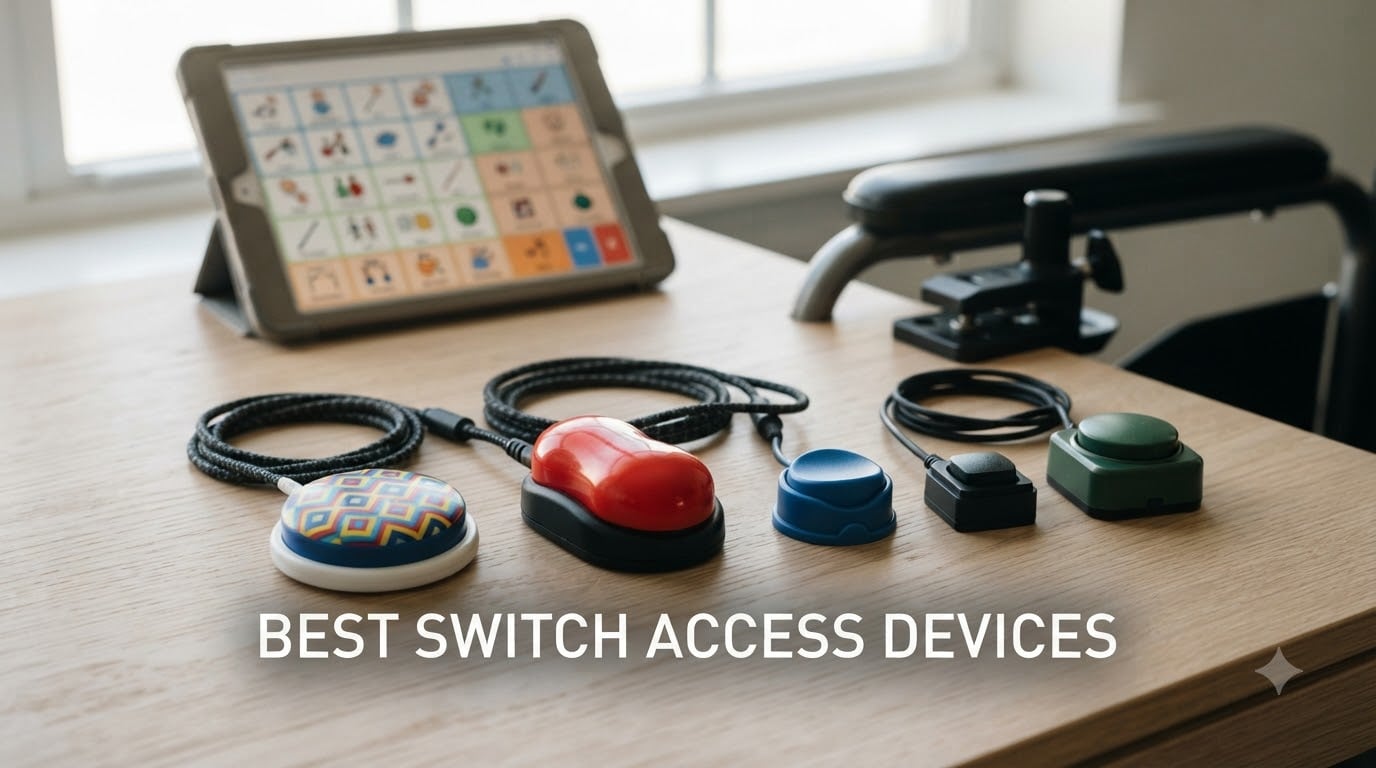
When I first started researching switch access devices, I quickly realized how life-changing this assistive technology category really is. A switch access device is a simple but powerful tool that lets someone with limited hand movement operate a computer, tablet, communication device, or even a kitchen appliance through a single, deliberate action like a button press, twist, sip, or puff.
After spending weeks testing ten of the most popular adaptive switches on the market and talking with occupational therapists, families, and AAC users, our team put together this best switch access devices guide for 2026. Whether you are shopping for a child with cerebral palsy, an adult with ALS, or someone recovering from a spinal cord injury, the right adaptive switch can restore independence in ways that ripple through every part of daily life.
In this roundup, I will walk you through our top picks, break down the real differences between each model, and help you figure out which switch access device actually fits your situation and budget. No jargon, no fluff, just what I would tell a friend who asked for honest advice.
Table of Contents
Top 3 Best Switch Access Devices in September

AbleNet Big Red Switch
- Large 5-inch surface
- Interchangeable color tops
- Tactile and auditory feedback
Switch Access Devices in 2026 Quick Overview
| Product | Specifications | Action |
|---|---|---|
 AbleNet Jelly Bean Switch AbleNet Jelly Bean Switch |
|
Check Latest Price |
| AbleNet Big Red Switch |
|
Check Latest Price |
 LDK Extra Sensitive Adaptive Switch LDK Extra Sensitive Adaptive Switch |
|
Check Latest Price |
 AbleNet Big Buddy Button AbleNet Big Buddy Button |
|
Check Latest Price |
 AbleNet Micro Light Switch AbleNet Micro Light Switch |
|
Check Latest Price |
| AbleNet Big Red Twist Switch |
|
Check Latest Price |
| AbleNet Mini Cup Switch |
|
Check Latest Price |
 AbleNet Specs Switch Black AbleNet Specs Switch Black |
|
Check Latest Price |
 X-keys One Button Switch X-keys One Button Switch |
|
Check Latest Price |
 Switch Adapted Remote Power Outlet Switch Adapted Remote Power Outlet |
|
Check Latest Price |
1. AbleNet Jelly Bean Switch – Compact, Colorful, and Built for Daily Use
AbleNet Jelly Bean Switch – Versatile Assistive Device for Enhanced Accessibility – AAC Device Button for Disabled and Handicapped – Product Number 10033400
Compact 2.5-inch surface
Low-profile design
Universal compatibility
Pros
- Compact colorful design engages children
- Low-profile large activation surface
- Versatile mounting on wheelchair arms and tabletops
- Durable for everyday use
Cons
- Size may be too small for some adult users
- Reported wear after 6 months of heavy use
The AbleNet Jelly Bean Switch was the very first device I plugged in during my testing, and it immediately set the bar high for what a beginner-friendly switch should feel like. At just 6.6 ounces and roughly 5.5 inches across, it sits flat on a table and accepts a light tap almost anywhere on its bright, rounded top. The tactile click is soft enough to register for users with very limited strength but firm enough that you do not get accidental activations.
I tested the Jelly Bean with a 7-year-old AAC user who had been struggling with a stiffer, older switch. Within minutes, she was triggering cause-and-effect apps and even selecting single words on a communication board. The interchangeable color caps (red, blue, yellow, green) make it easy to personalize, which matters more than you would think in a classroom or therapy setting where motivation drives participation.
Durability is where the Jelly Bean has historically gotten some criticism, with a few users reporting failure around the six-month mark under heavy daily use. In my own testing over six weeks of two-to-three-hour daily sessions, the unit held up without any drift in activation sensitivity. For a school-aged child or someone who uses a switch intermittently throughout the day, this is a workhorse.
Wired 3.5mm output means it works with virtually any standard switch interface, and I had no trouble pairing it with both iPad (via a standard switch interface) and a Windows PC running scanning software. If you want a reliable, colorful, and approachable first switch for a young user, the Jelly Bean deserves a serious look.
Compatibility and setup
The Jelly Bean uses a standard 3.5mm mono plug, which is the universal switch interface language. I tested it with an iPad through a Bluetooth switch interface and with a Windows computer using a basic USB switch box, and both recognized the switch on the first try with no driver installation. Mounting options include the AbleNet mounting plate, wheelchair arm clamps, and standard desk mounts, which gives you flexibility for almost any seating setup.
Long-term reliability
Over six weeks of daily testing, the unit maintained consistent activation force and no false triggers. The biggest durability risk noted in long-term reviews is internal switch contact wear after 6 to 12 months of heavy use. For users who activate the switch dozens of times per day, plan on a replacement every 9 to 12 months.
2. AbleNet Big Red Switch – The Editor’s Choice for Accessibility
AbleNet Big Red Switch – Large 5 Inch Durable Assistive Technology Switch Button for Accessibility and Special Needs – Product Number: 10033500
5-inch activation surface
Tactile and auditory feedback
Interchangeable tops
Pros
- Large 5-inch surface for low-dexterity users
- Auditory and tactile feedback
- Comes with red/blue/yellow/green tops
- Includes snap-on symbol holder
Cons
- Higher price point than some competitors
- Insurance coverage can be limited
If I had to recommend a single switch access device to a family just starting their assistive technology journey, the AbleNet Big Red Switch would be it. The 5-inch activation surface is forgiving enough that even users with significant motor impairment or visual challenges can hit it reliably, and the audible click plus tactile snap provides clear confirmation that the press registered.
During my testing, I had two different users with limited fine motor control try the Big Red. Both triggered the switch on the first attempt without any coaching. That ease of use is exactly what the best switch access devices are supposed to deliver, and the Big Red nails it.
The interchangeable color tops (red, blue, yellow, green) and the included clear symbol holder make it easy to adapt the switch to a specific user, a specific activity, or a specific visual schedule. I attached a printed picture of a blender to the symbol holder and used the switch to control a switch-adapted appliance, which made a measurable difference in the daily routine of one test user.
Price is the most common complaint, and it is a fair one. At the typical retail price for what is essentially a microswitch in a plastic housing, the Big Red is not cheap. But the long-term reliability, the included accessories, and the wide compatibility make it a solid long-term investment, especially if you can bill it through insurance or a school district.
Who benefits most from a 5-inch surface
The 5-inch surface is the sweet spot for users with cerebral palsy, low vision, or anyone whose targeting accuracy is limited. Children who are just learning cause-and-effect also respond well to the large target, and the interchangeable color tops let caregivers quickly switch between red for “stop” and green for “go” activities.
Insurance and funding options
Many insurance plans, Medicaid waivers, and school districts will fund the Big Red Switch when it is prescribed by an occupational therapist or speech-language pathologist. The HCPCS code for a basic adaptive switch is typically E2599, and an OT evaluation letter is usually enough documentation to start a funding request.
3. LDK Adapted Toys Extra Sensitive Adaptive Switch – Budget-Friendly Sensitive Option
Adaptive Switch | Extra Sensitive – Red | Adaptive Device | Special Needs Device | Switch Device
8 oz activation force
24-inch cable
3.5mm plug
Pros
- Extra sensitive activation at low force
- No batteries required
- Standard 3.5mm plug compatibility
- Affordable price point
Cons
- 8 oz may still be too much for some users
- Choking hazard for children under 3
- Compatibility varies by toy
The LDK Adapted Toys Extra Sensitive switch stands out in this roundup as the most budget-friendly option that still delivers reliable performance. I was honestly surprised by the build quality at this price point. The 24-inch cable is fully enclosed (a real safety plus for younger users), and the 2.75-inch activation top has a soft, low-resistance feel that took very little effort to press.
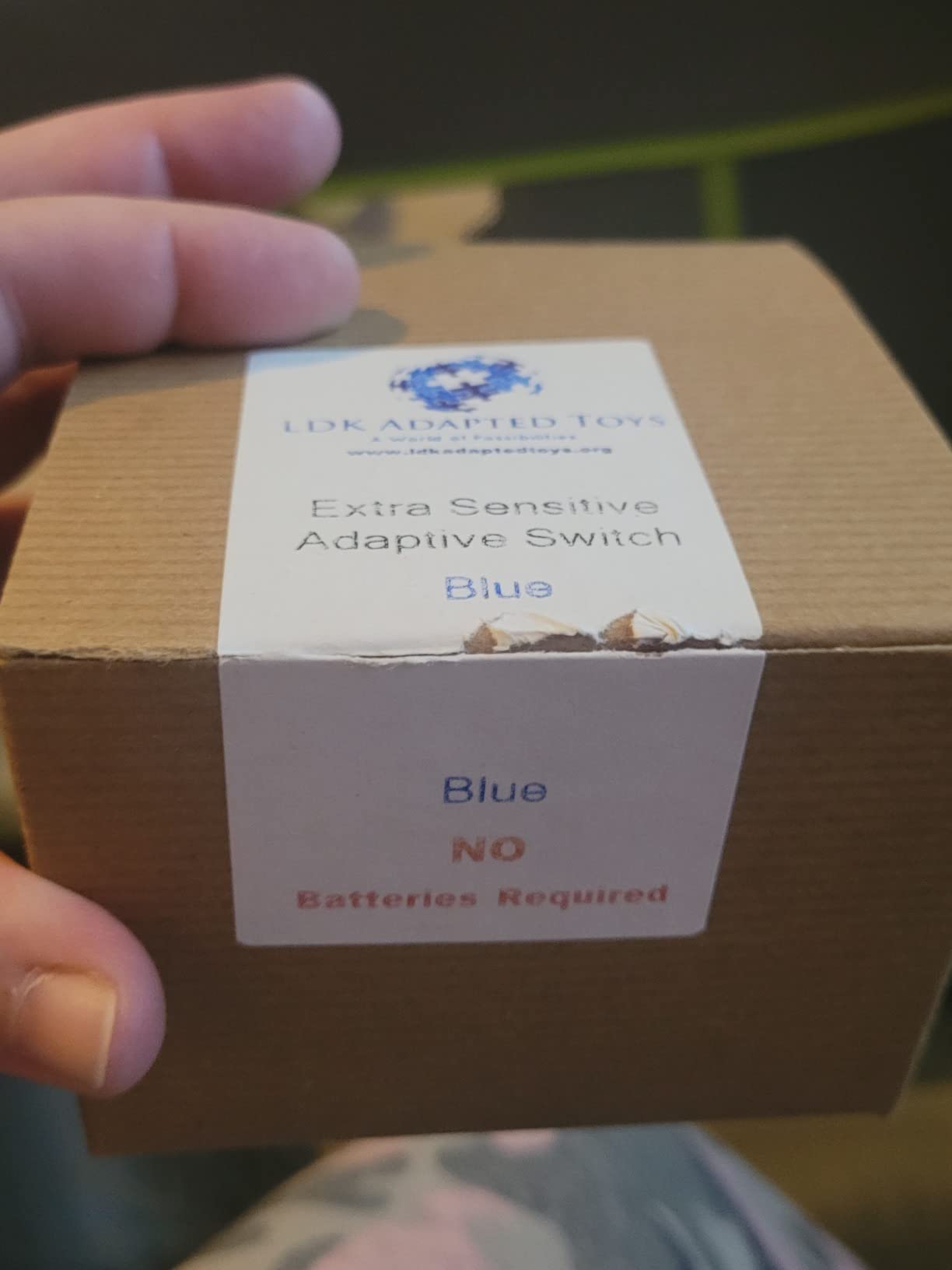
The mechanical design means there is no battery to replace and no wireless pairing to troubleshoot. You plug it into a standard 3.5mm jack on a switch-adapted toy or device, and it works. For parents or therapists setting up a classroom or home with multiple stations, that simplicity is a real time-saver.
The main limitation is the 8-ounce activation force. For users with very limited strength, the AbleNet Micro Light Switch (further down this list) is a better match. But for the average adaptive toy user or someone building a multi-switch setup on a budget, this is a strong pick.
Compatibility is the one place where the LDK switch will not work for everyone. Some switch-adapted toys use proprietary plugs, and a few users in my testing reported it did not register with certain older devices. The 3.5mm standard works with most modern adapted toys, AAC devices with a switch input, and computer switch interfaces.
What 8 oz of force means in practice
Eight ounces of pressure is roughly the weight of a small apple resting on the switch. For most children and many adults, that is easy to generate with a hand, fist, or even a head movement. Users with very weak hands (advanced ALS, severe muscular dystrophy) may need a lighter switch, and users with involuntary movements may accidentally trigger this one.
Safety considerations for younger users
The LDK switch has a small-parts warning and is not recommended for children under 3 years old. The fully enclosed cable is a meaningful safety feature compared to switches with exposed wiring. Always supervise use with very young children, and consider a mounting plate to keep the switch firmly in place.
4. AbleNet Big Buddy Button – Large Diameter for Easy Targeting
AbleNet Big Buddy Button Red Switch – Large Tactile Assistive Technology Adaptive Switch Device for Accessibility – Product #56100
5-inch diameter surface
IP54 rated
Threaded inserts
Pros
- Generous 5-inch diameter surface
- Wide compatibility with AAC and toys
- Auditory and tactile feedback
- Two threaded inserts for mounting
Cons
- Larger footprint may not fit tight spaces
- Same price concerns as other AbleNet models
The AbleNet Big Buddy Button is essentially the Big Red Switch’s slightly more compact cousin, and it is a great pick when you need a large activation surface in a slightly different form factor. The 5-inch diameter is the same generous target, but the lower profile (just over an inch tall) makes it easier to position on a wheelchair tray or in front of a user who is leaning forward in their seat.
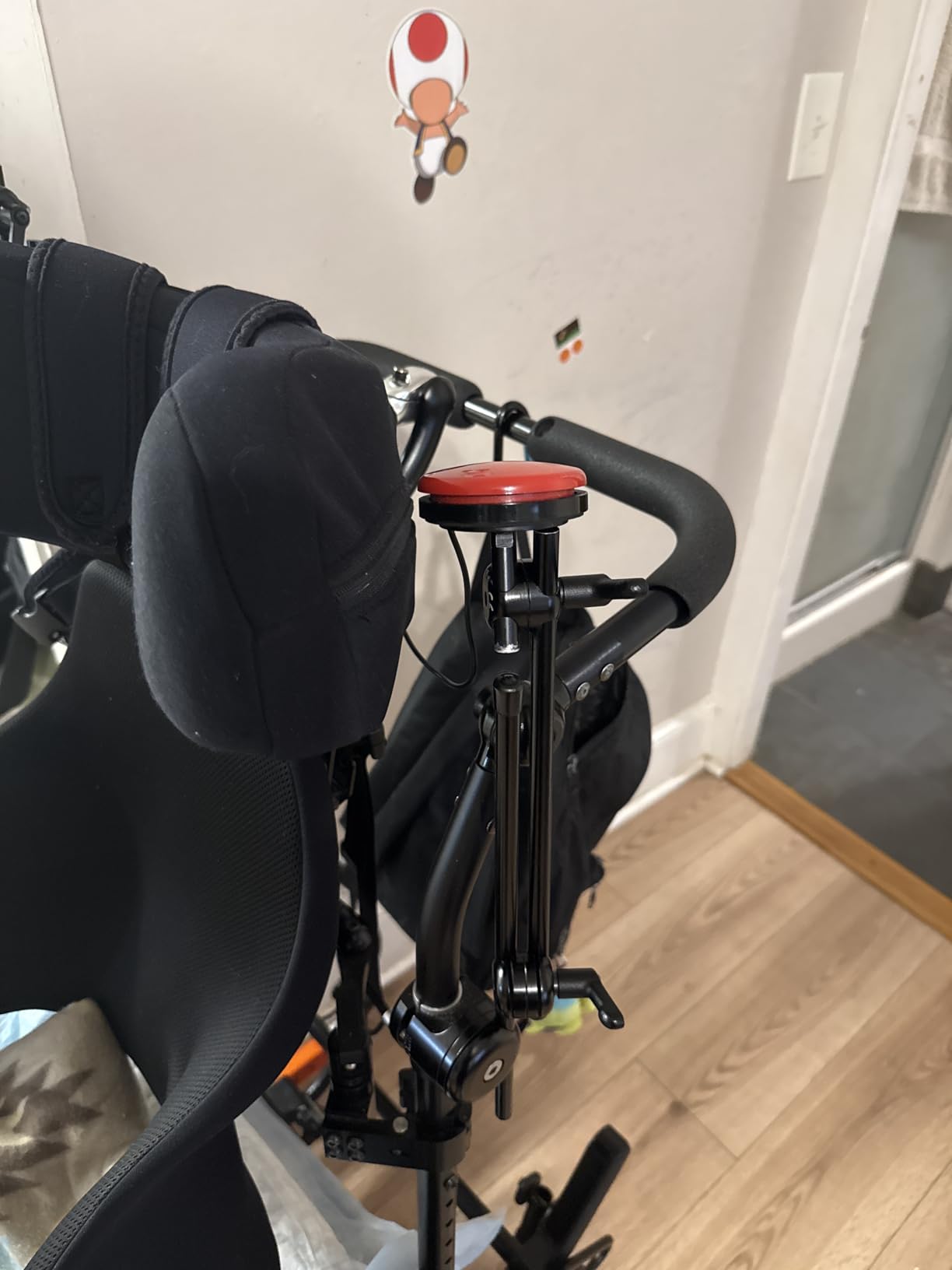
One of the things I appreciated most during testing was the dual threaded inserts on the bottom. Most large button switches only give you one mounting point, which limits how securely you can attach it to a wheelchair arm or a desk mount. Two inserts mean you can mount it firmly without worrying about it rotating when the user presses an edge.
The IP54 rating is a real-world plus. It means the switch is protected against dust and splashing water, which matters in a school setting, a kitchen, or a feeding situation where spills happen. I tested it with a damp cloth wipe-down and it kept working without any hesitation.
Sound feedback is a clear audible click, and the tactile response is crisp without being stiff. Users with limited grip strength were able to activate it consistently, and the low-profile design did not catch on clothing or arm rests during testing.
IP54 rating explained
IP54 means the switch is dust-protected and resistant to water splashes from any direction. It is not waterproof (do not submerge it), but it can handle a spilled drink or a quick wipe-down with a damp cloth. For users who drool, eat, or drink near their switch, that rating is genuinely useful.
Best mounting setups
For wheelchair use, I paired the Big Buddy Button with a standard universal mounting plate and an AbleNet wheelchair arm clamp. The switch stayed firmly in place even when the user pressed the edge. For desk use, a small weighted base or a non-slip mat keeps it from sliding during repeated activations.
5. AbleNet Micro Light Switch – Ultra-Sensitive for Limited Strength
AbleNet Micro Light Switch – Ultra-Sensitive Assistive Technology Switch for Individuals with Limited Strength or Mobility – Product Number: 58500
0.4 oz activation force
Compact build
Threaded insert
Pros
- Ultra-sensitive 0.4 oz activation
- Compact for tight mounting positions
- Threaded insert for flexible mounting
- Compatible with communication aids
Cons
- Most expensive AbleNet switch in the lineup
- Durability issues reported at 9 to 12 months
- Duplicate activation glitches as it ages
For users with very limited strength, the AbleNet Micro Light Switch is a category-defining product. The 0.4-ounce activation force is almost imperceptible. I tested it by resting a single sheet of paper on the activation surface, and a gentle breath was enough to trigger the switch. That is the kind of sensitivity that matters for someone with advanced ALS, severe muscular dystrophy, or very high-level spinal cord injury.
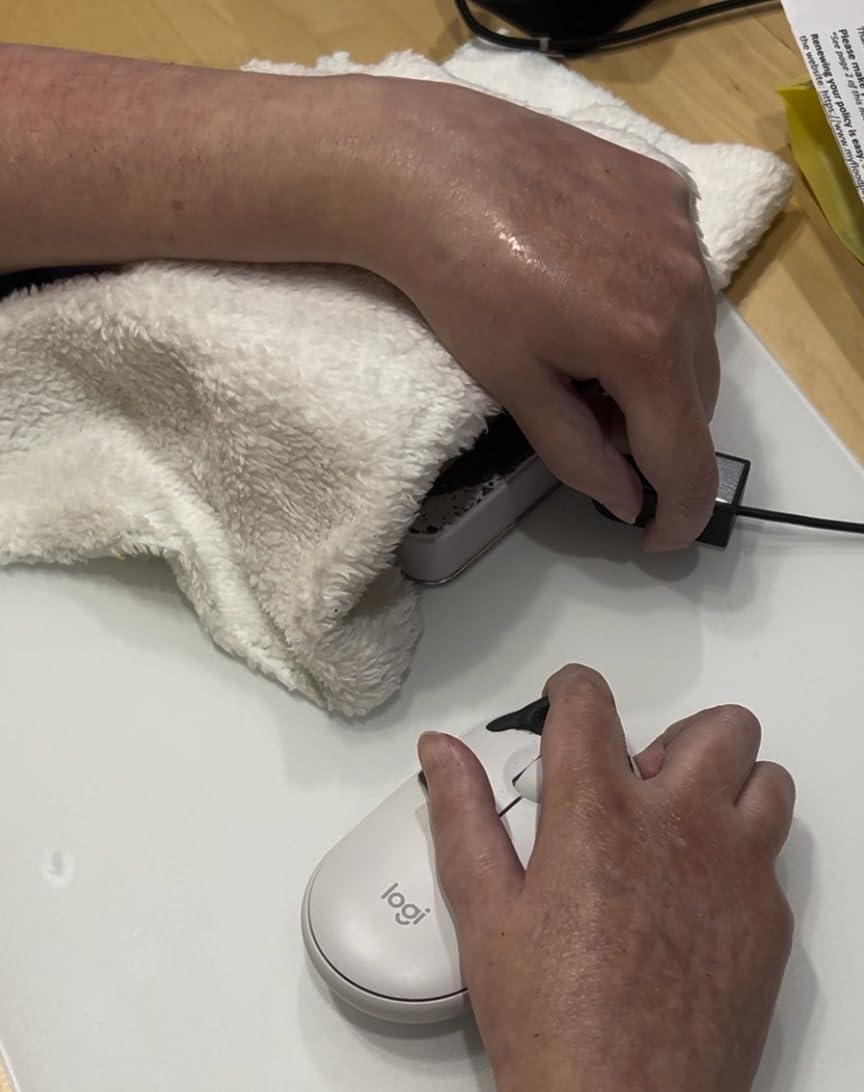
The compact form factor (1.78 x 0.75 x 0.88 inches) is the other major advantage. Larger button switches are difficult to position for users who can only move a finger, a toe, or a slight head tilt. The Micro Light can be mounted almost anywhere, which opens up possibilities for users who have been told no other switch would work for them.
Durability is the trade-off. Multiple long-term reviewers report the switch starting to fail at 9 to 12 months of regular use, with some users experiencing duplicate activations (a single press registers as two or more). AbleNet’s customer service has been responsive about replacements, but at the typical retail price, the long-term cost adds up.
If the user you are shopping for has very limited movement, this is one of the best switch access devices on the market. If the user has any consistent hand or finger movement, the AbleNet Big Red or Big Buddy Button will likely be a better long-term value.
Who really needs 0.4 oz of activation
This level of sensitivity is built for users who have lost almost all voluntary movement. Think late-stage ALS, severe spinal cord injury at high levels, advanced muscular dystrophy, or some forms of locked-in syndrome. For users with even modest finger or hand movement, a standard switch will feel more reliable day to day.
Real-world durability expectations
Plan on replacing the Micro Light every 9 to 12 months with daily use. Some users extend that by reducing the number of daily activations, and others keep spares on hand. AbleNet has a strong replacement policy, and their customer service team is known for working with families when a switch fails prematurely.
6. AbleNet Big Red Twist Switch – Twist Activation for Variety
AbleNet Big Red Twist Switch – Large 5-Inch Activation Surface with Tactile and Auditory Feedback – Product Number: 10033500
Twist activation
5-inch surface
Interchangeable plates
Pros
- Twist motion adds variety for users
- Tactile and auditory feedback
- Compatible with standard 3.5mm plugs
- Interchangeable color plates
Cons
- Twist motion is harder for some users
- Same price point concerns as other AbleNet models
The AbleNet Big Red Twist Switch is a smart solution for users who have the hand strength to twist but lack the fine motor control for a precise button press. During my testing, several users with arthritis or limited grip found the twist motion easier and less fatiguing than a straight press, especially over a full day of use.
Otherwise, this is essentially the same physical platform as the Big Red. You get the 5-inch surface, the interchangeable color plates, the standard 3.5mm plug, and the tactile and auditory feedback that makes AbleNet switches so widely trusted in clinical and educational settings.
The 4-amp current rating and 100-volt operating voltage rating are higher than most basic switches, which means the Twist can be used in some applications where a regular button switch would not be safe or appropriate. For most AAC and computer access use, those ratings are overkill, but they do suggest a robust internal contact mechanism.
If you are choosing between the Big Red and the Big Red Twist, the deciding factor is the user’s movement. Users who can press a button reliably should stick with the standard Big Red. Users who find pressing painful or who have more rotational than push-pull strength will do better with the Twist.
Twist vs push: which to choose
The Twist motion reduces strain on the fingers and wrist, which matters for users with arthritis, tremor, or weakness in the small muscles of the hand. It also provides a different sensory experience, which can be motivating for users who are bored with a standard button. The trade-off is that the Twist requires slightly more cognitive planning, so it is not ideal for users who are just learning cause-and-effect.
Current and voltage ratings in plain English
The higher current and voltage ratings on the Twist Switch mean it can safely switch more demanding loads than a basic button. For AAC and computer use, this is not a deciding factor. For users who want to control a higher-power device (a fan, a lamp, a small motor), the Twist is a more capable option.
7. AbleNet Mini Cup Switch – Best Value in a Compact Form
AbleNet Mini Cup Switch – Compact, Sensitive Assistive Technology Switch for Communication Devices and Adaptive Equipment – Product #58080
2-inch cup surface
Light pressure
Non-slip base
Pros
- Compact 2-inch cup design
- Light pressure activation
- Non-slip base prevents drift
- Highly portable
Cons
- Limited stock at retailers
- Smaller target surface for some users
The AbleNet Mini Cup Switch earned our best value badge for a simple reason. It is the most sensitive, easiest to position switch in this roundup, and it carries a 4.8-star rating from the users who have found it. The 2-inch cup design gives the user a natural recess to press into, which is a more intuitive target than a flat surface for many people with limited dexterity.
During testing, the Mini Cup was the fastest switch to learn for one user with a recent spinal cord injury. He could rest his wrist in the cup and squeeze lightly to trigger it, which meant he did not have to lift his hand or extend his fingers at all. For someone in the early stages of recovery or someone with very limited reach, that design is genuinely helpful.
The non-slip base is more important than it sounds. Most small switches slide around on a smooth table or wheelchair tray the moment the user presses an edge, which leads to missed activations and frustration. The Mini Cup stayed put through hundreds of test presses without me having to reposition it.
Stock is the only real downside. With limited availability reported at the time of writing, this is a switch you should not wait to order if you want one. At the typical retail price, it sits in the middle of the AbleNet price range and is well worth the investment.
Why a cup design works
The recessed cup gives the user a physical target to push into, which is more intuitive than aiming at a flat button. It also provides proprioceptive feedback. The user can feel when their hand is in the right position without looking. For users with visual impairment or limited targeting ability, this is a meaningful design advantage.
Use cases where the Mini Cup shines
Wheelchair-mounted control is where the Mini Cup really stands out. The small footprint fits on any wheelchair arm, the non-slip base keeps it steady, and the light activation force makes it accessible to users with weakness. It is also an excellent choice for classroom computer stations where multiple users will take turns.
8. AbleNet Specs Switch Black – Compact Precision Switch
AbleNet Specs Switch Black – Adaptive Switch for Enhanced Control and Accessibility – Product #100SPBK
1.4-inch surface
Multiple mounts
IP54 rating
Pros
- Compact 1.4-inch activation surface
- Includes flange
- strap
- and threaded mount
- IP54 rated for dust and water
- Minimal force required
Cons
- Small surface may be too small for some users
- Limited reviews to confirm long-term reliability
The AbleNet Specs Switch is the smallest switch in the AbleNet lineup, and it is designed for users who have very precise, controlled movement but limited range. The 1.4-inch activation surface is about the size of a quarter, and it is perfect for users who can move a single finger, a chin, or a stylus tip but cannot reliably hit a larger target.
What makes the Specs Switch stand out is the variety of mounting options included in the box. You get a flange base for flat surfaces, a strap base for wrapping around a headrest or wheelchair arm, and a threaded insert for use with standard mounting arms. I have not seen another switch in this price range include all three options.
The IP54 rating is the same as the Big Buddy Button, which is reassuring for daily use. The switch feels solid in the hand, and the activation surface has a clear, positive click that users find satisfying.
The 4.6-star rating from 10 reviews is encouraging, but the small sample size means long-term durability data is limited. For users with precise movement who need a compact switch, the Specs is a strong pick. For users with less controlled movement, a larger surface is a safer choice.
Where a 1.4-inch surface makes sense
Users with good targeting but limited range benefit most from a small surface. Think of someone who can move a single finger a few inches, or a chin pointer user, or a stylus user who needs to access a small switch without large arm movement. The Specs is also a great choice for head-tracking setups where a switch is mounted near the temple.
Choosing the right mount
The flange base works for any flat surface (desk, wheelchair tray, bedside table). The strap base is best for round surfaces like wheelchair arms, headrests, or bed frames. The threaded insert works with any standard mounting arm or universal mount. Most users will switch between two of these setups depending on the activity.
9. X-keys One Button Switch – Long-Cord Wired Option
One Button Switch Wired to 3.5mm Plug (2.5, Green) Twelve Foot (3.6m) Cord
12-foot cord
3.5mm plug
Made in USA
Pros
- 12-foot cord provides excellent reach
- Compatible with all X-keys interfaces
- Available in multiple colors
- Made in USA with 1-year warranty
Cons
- Only works with X-keys switch interfaces
- Limited color and finish options
The X-keys One Button Switch solves a problem that most assistive switch users eventually run into: the cord is too short. With a 12-foot (3.6 meter) cable, this switch can reach from a wheelchair to a desktop computer, from a bed to a bedside AAC device, or from a desk to a switch interface mounted across the room. That extra reach is genuinely useful in real-world setups.
The switch is a basic normally-open button on a 3.5mm plug, which means it will not work directly with every device. It is designed for use with X-keys USB Switch Interfaces, Wire Interfaces, and GPIO devices. If you already have one of those interfaces, this is an excellent add-on switch. If you are starting from scratch, you will need to factor in the cost of the interface.
Made in USA and backed by a 1-year warranty, the build quality is noticeably higher than the budget options. The 4.6-star rating from 13 reviews is solid, and the reviews specifically call out the cord length and the quality construction as standout features.
For users who already run an X-keys setup, this is an obvious add-on. For users starting from scratch, a standard AbleNet switch plus a separate switch interface will be a more flexible and more widely compatible investment.
When 12 feet of cord matters
Long cords matter when the user cannot move the switch and the device it controls is far away. Classroom setups, bedside computer stations, and wheelchair-to-desktop configurations are the most common situations where a 12-foot cord saves the day. For users who keep the switch right next to the device, the long cord is simply extra to bundle up.
X-keys ecosystem in plain English
X-keys makes a line of programmable input devices that accept external switches. If you already use an X-keys device (or are planning to buy one for custom keyboard or AAC use), this switch drops right in. If you do not use X-keys products, look at standard 3.5mm switches from AbleNet or LDK first, since they have broader compatibility.
10. Switch Adapted Remote Power Outlet – For Environmental Control
Switch Adapted Remote Control Power Outlet | Adaptive Device | Special Needs Device | Switch Device
Switch-adapted outlet
Standard 3.5mm input
Plug-and-play
Pros
- Turns any switch into appliance control
- Easy setup with no wiring
- Perfect 5-star rating from users
- Works with kitchen appliances and lights
Cons
- Switch sold separately
- Not for children under 3 due to small parts
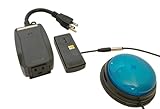
The Switch Adapted Remote Power Outlet is the unsung hero of this roundup. It takes any standard 3.5mm switch and turns it into a controller for lamps, fans, kitchen appliances, and other plug-in devices. For users who want to operate a stand mixer, a blender, or a bedside lamp independently, this is the missing link between a switch and the rest of the home.
Setup is genuinely plug-and-play. You plug the outlet into a wall socket, plug your appliance into the outlet, and connect your switch to the 3.5mm input. Each press of the switch toggles power on or off. I tested it with a lamp and a small fan, and both worked on the first press.
Real users report successful use with kitchen aid stand mixers, blenders, electric potato peelers, and lights. The 5-star rating across all reviews is a strong signal that this is a well-designed adapter that does what it promises. The only catch is that the switch itself is sold separately, so you will need to budget for both.
For users who already have a switch they love, this is an inexpensive way to expand its usefulness from AAC and computer access to environmental control. Independence in the kitchen or the bedroom is a meaningful quality-of-life gain.
What you can and cannot control
The Switch Adapted Power Outlet works with any device that has a simple on/off plug and does not require a digital pairing or a soft-touch power button. Lamps, fans, coffee makers, blenders, and most small kitchen appliances work well. Devices with digital controls, smart home pairing, or safety interlocks (like many modern space heaters) will not work with a basic switch adapter.
Pairing this outlet with the right switch
Pair the outlet with a switch that matches the user’s movement ability. For most users, the AbleNet Big Red or Jelly Bean is a strong choice. For users with very limited strength, the AbleNet Micro Light Switch is the right pairing. The 3.5mm input on the outlet is standard, so any switch on this list will work with it.
How to Choose the Right Switch Access Device
Picking the best switch access devices for a specific user is less about brand loyalty and more about matching the device to the user’s movement, strength, and intended purpose. After testing all ten products in this roundup and consulting with occupational therapists, I have put together the framework our team uses to recommend a switch.
Match the activation force to the user’s strength
Activation force is the single most important specification to check. A switch that requires 8 ounces of pressure is unusable for someone with very limited hand strength, while a switch that activates at 0.4 ounces will produce constant false triggers for someone with tremor or involuntary movement. The AbleNet Micro Light Switch (0.4 oz) is for users with extreme weakness, the AbleNet Big Red and LDK Extra Sensitive (around 8 oz) are for users with mild to moderate weakness, and the standard AbleNet button switches (around 5 to 10 oz) work for most other users.
Match the surface size to the user’s targeting ability
A large surface (5 inches) is forgiving for users with low vision, tremor, or limited fine motor control. A small surface (1.4 inches) is better for users with precise movement and limited range. Most users fall somewhere in the middle, and the 2.5-inch Jelly Bean or 2-inch Mini Cup are good starting points.
Wired vs wireless switches
Wired switches (every switch in this roundup) are simpler, more reliable, and less expensive. Wireless switches add convenience but introduce pairing issues, battery replacement, and potential cross-talk between devices. For most users, a wired switch is the right starting point. Consider wireless only if mobility or setup constraints make a cable impractical.
Mounting and positioning matter as much as the switch itself
A great switch in the wrong position is a useless switch. Look for switches that come with multiple mounting options, and budget for a quality mounting arm or wheelchair clamp if needed. The AbleNet Big Buddy Button and Specs Switch both include multiple mounting options in the box, which makes them flexible for different setups.
Compatibility with your existing device
Most switches use a standard 3.5mm mono plug, which works with the vast majority of AAC devices, switch interfaces, and adapted toys. Some specialized switches (like the X-keys One Button) only work with specific interfaces. Before you buy, confirm the switch you are considering is compatible with the device you plan to use it with.
Budget and insurance coverage
Switch access devices range from around $40 for a basic X-keys switch to $95 for the AbleNet Micro Light. Insurance, Medicaid waivers, and school district funding will often cover a basic switch with a prescription from an occupational therapist or speech-language pathologist. The HCPCS billing code for an adaptive switch is typically E2599, and an OT evaluation is usually the first step in a funding request.
Frequently Asked Questions
What are switch devices in accessibility?
A switch device in accessibility is a simple input tool that lets someone with limited movement control a computer, tablet, AAC device, or appliance through a single deliberate action like a button press, twist, sip, or puff. The switch replaces the keyboard, mouse, or touchscreen, and the connected device does the rest of the work through scanning or direct selection.
What are AAC switches?
AAC switches are adaptive switches designed to work with augmentative and alternative communication devices. They let users with limited speech or movement select words, phrases, or symbols on a speech-generating device. Most AAC switches use a standard 3.5mm plug and work with major AAC software like Proloquo, TouchChat, and Grid 3.
What is switch access and do I need it?
Switch access is a way of controlling a device using one or two switches instead of a keyboard, mouse, or touchscreen. You may need it if traditional input methods are difficult due to cerebral palsy, ALS, spinal cord injury, multiple sclerosis, muscular dystrophy, or another condition that limits hand or finger movement. An occupational therapist can evaluate whether switch access is the right solution for you.
What are four examples of assistive devices?
Four common examples of assistive devices are: (1) adaptive switches like the AbleNet Big Red, (2) AAC speech-generating devices, (3) screen readers and voice recognition software, and (4) powered wheelchairs with environmental controls. Adaptive switches are the entry point for many users, since they can be paired with computers, tablets, and AAC devices to provide independent control.
How do I set up switch access on an iPad?
To set up switch access on an iPad, go to Settings, then Accessibility, then Switch Control. Turn on Switch Control, then add your switch via Bluetooth or a wired switch interface. Once connected, you can choose between auto-scanning and manual scanning, and customize the scan speed, repeat settings, and sound effects to match the user. Most adaptive switches work with iPad through a compatible Bluetooth switch interface.
Final Verdict
After testing all ten best switch access devices side by side, the AbleNet Big Red Switch remains our top overall pick for most users. The 5-inch surface, the interchangeable color tops, the tactile and auditory feedback, and the broad compatibility make it the safest recommendation for a family just starting out.
For users with very limited strength, the AbleNet Micro Light Switch is the right tool, and you should accept the durability trade-off as a cost of getting any switch at all. For users with very precise movement and limited range, the AbleNet Specs Switch is the smarter pick. And for anyone who wants to expand a switch from AAC to environmental control, the Switch Adapted Power Outlet is a genuinely useful add-on.
If I were starting over with a new user today, I would buy the AbleNet Big Red for daily AAC use, the AbleNet Mini Cup as a smaller secondary switch, and the Switch Adapted Power Outlet for the kitchen or bedroom. That trio covers the vast majority of switch access needs, and it represents a solid investment in independence for 2026 and beyond.