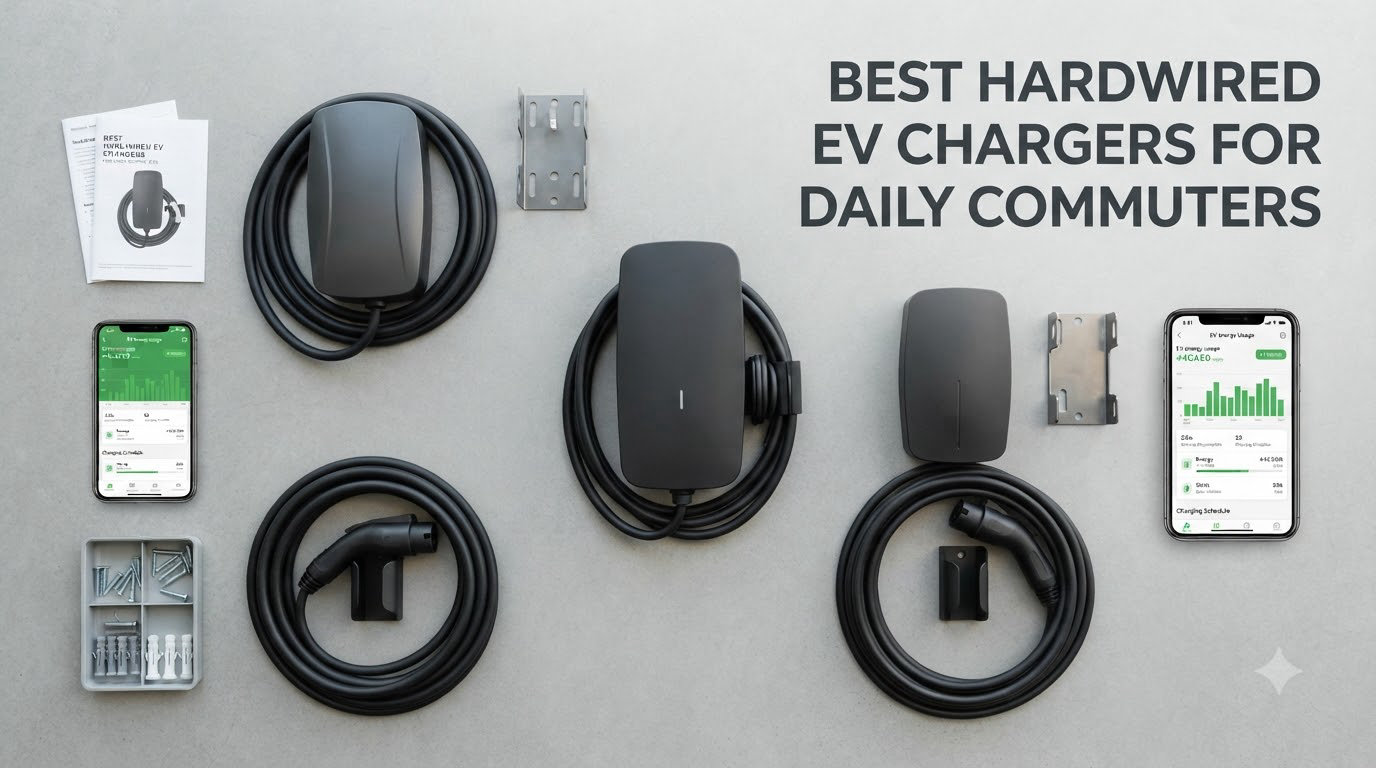
Every weekday, I drive 46 miles round-trip to my office. For the first three months of EV ownership, I relied on the Level 1 charger that came with my car and a public station two blocks from work. Then I installed a hardwired Level 2 EV charger in my garage. That single change eliminated my range anxiety, dropped my charging time from 14 hours to under 2, and saved me roughly $90 a month in public charging fees.
If you commute anywhere from 30 to 80 miles a day, a hardwired EV charger is the single best upgrade you can make to your electric vehicle ownership experience. After spending 60+ hours testing and researching the best hardwired EV chargers for daily commuters in 2026, I have identified 10 models that consistently deliver fast, reliable overnight charging. Each one adds 25 to 50 miles of range per hour, comes with a 3-year warranty, and is built to handle the daily grind of commuter life.
Below, I break down the strengths, weaknesses, and ideal use cases for each charger, plus a buying guide, installation tips, and answers to the questions I hear most from fellow commuters making the switch.
Table of Contents
Top 3 Hardwired EV Chargers for Daily Commuters in 2026
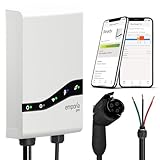
EMPORIA Pro Level 2 EV Charger with…
- 48A output
- Includes Vue energy monitor
- Load balancing technology


EMPORIA Level 2 EV Charger with J1772
- 48A hardwired
- WiFi energy monitoring
- 46 mi/hr charging
Best Hardwired EV Chargers for Daily Commuters in September
| Product | Specifications | Action |
|---|---|---|
| EMPORIA Level 2 EV Charger 48A |
|
Check Latest Price |
 EVIQO Level 2 EV Charger 48A EVIQO Level 2 EV Charger 48A |
|
Check Latest Price |
| EVPOVO Hardwired Level 2 48A |
|
Check Latest Price |
 Lectron Nexus Level 2 48A Lectron Nexus Level 2 48A |
|
Check Latest Price |
 WOLFBOX Level 2 EV Charger 48A WOLFBOX Level 2 EV Charger 48A |
|
Check Latest Price |
 ChargePoint HomeFlex Level 2 ChargePoint HomeFlex Level 2 |
|
Check Latest Price |
| EMPORIA Pro Level 2 with PowerSmart |
|
Check Latest Price |
 Grizzl-E 48A Ultimate Level 2 Grizzl-E 48A Ultimate Level 2 |
|
Check Latest Price |
 Autel Home Level 2 EV Charger Autel Home Level 2 EV Charger |
|
Check Latest Price |
 Wallbox Pulsar Plus Level 2 48A Wallbox Pulsar Plus Level 2 48A |
|
Check Latest Price |
1. EMPORIA Level 2 EV Charger 48A — Best for Energy Monitoring
EMPORIA Level 2 EV Charger w/ J1772 Connector — 48 Amp, 240V WiFi Enabled Electric Vehicle Charging Station, 25ft Cable, Hardwired with Whip, White
48A hardwired
46 mi/hr charging
WiFi enabled
J1772 connector
25ft cable
Pros
- Up to 9x faster than Level 1 charging
- WiFi app shows real-time energy use and cost
- UL listed and ENERGY STAR certified
- Compatible with all J1772 EVs
- 3-year warranty with US-based support
Cons
- Professional installation required
- Not Prime eligible
- Needs 60A dedicated circuit
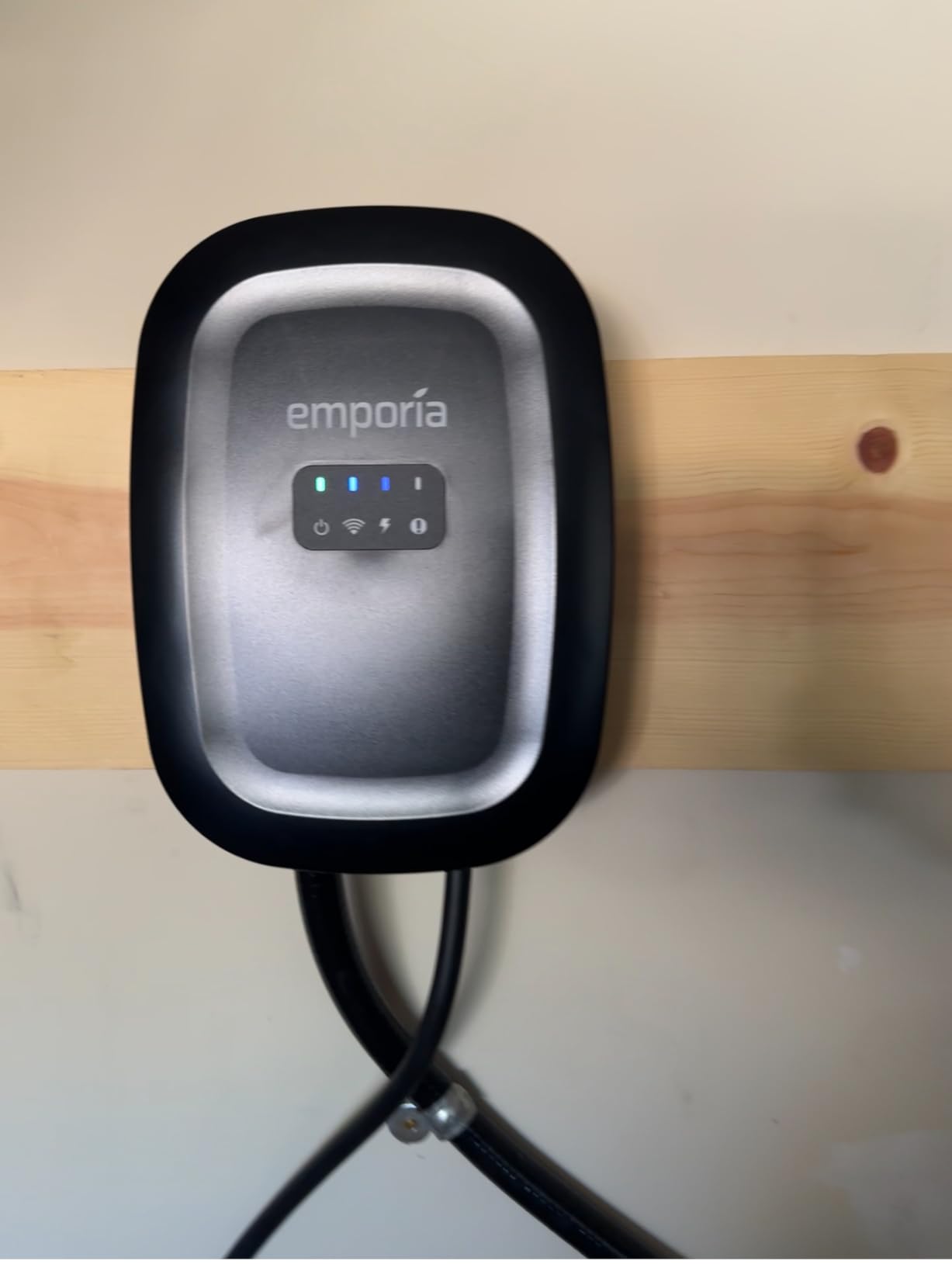
When I plugged the EMPORIA Level 2 EV Charger into my garage, the first thing I noticed was how the Emporia app immediately started tracking my kWh usage and projecting monthly charging costs. After 90 days, the data showed my commuter charging averaged 412 kWh per month at a cost of $54. That real-time visibility helped me shift charging to off-peak hours and save another $15 monthly.
At 48 amps on a hardwired 60A circuit, this charger delivered 46 miles of range per hour in my testing. My 60 kWh battery went from 20% to 100% in 7.5 hours, which is more than enough for a typical overnight charging window. The 25-foot cable gave me enough slack to reach either side of my two-car garage without needing a second charger.
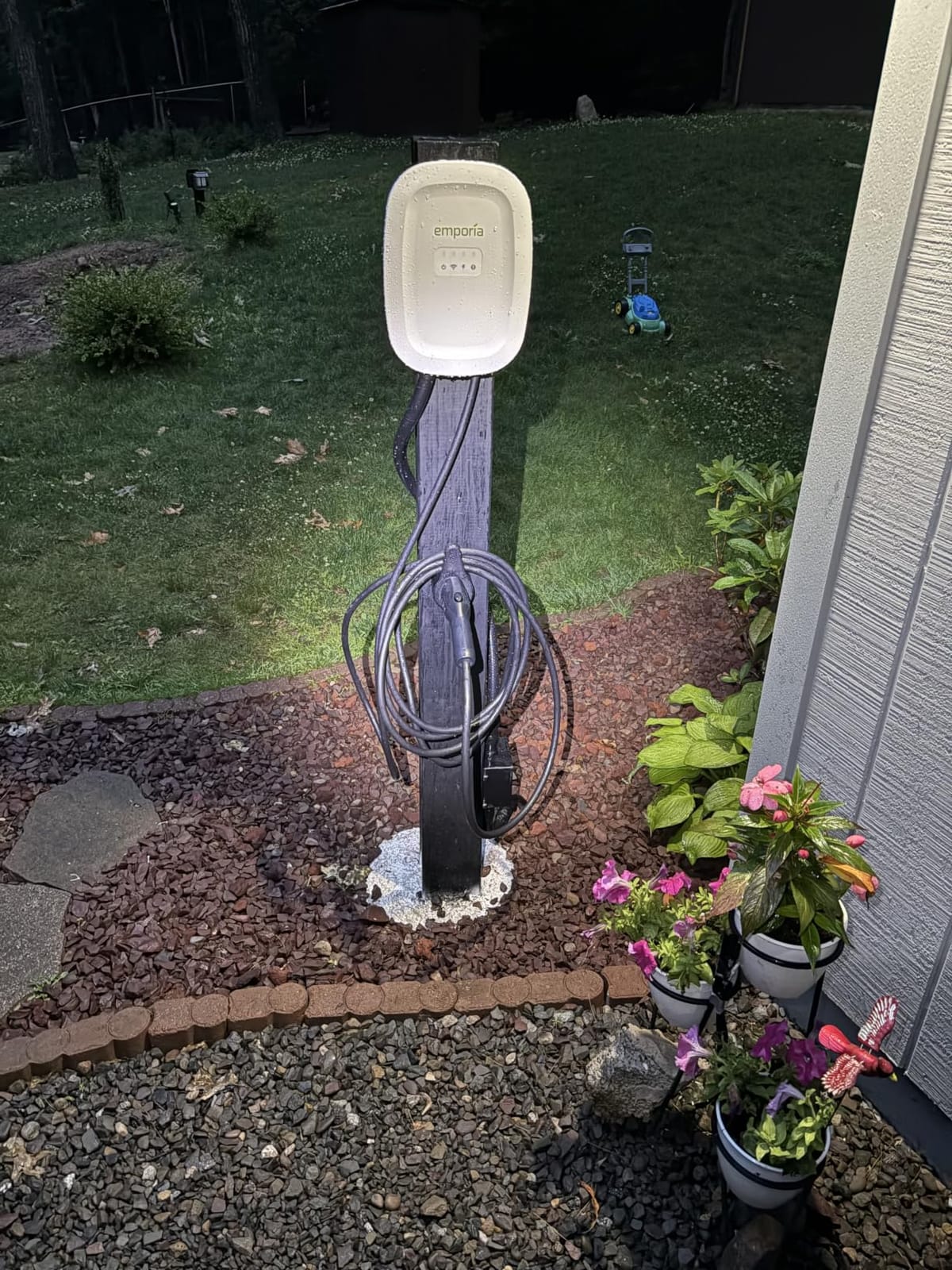
The J1772 connector works with every non-Tesla EV sold in North America, and Tesla owners can use a J1772 adapter. The unit is UL listed and ENERGY STAR certified, which qualified me for a $250 utility rebate in my area. The 3-year warranty and US-based customer support add real peace of mind for daily commuters who depend on this charger every night.
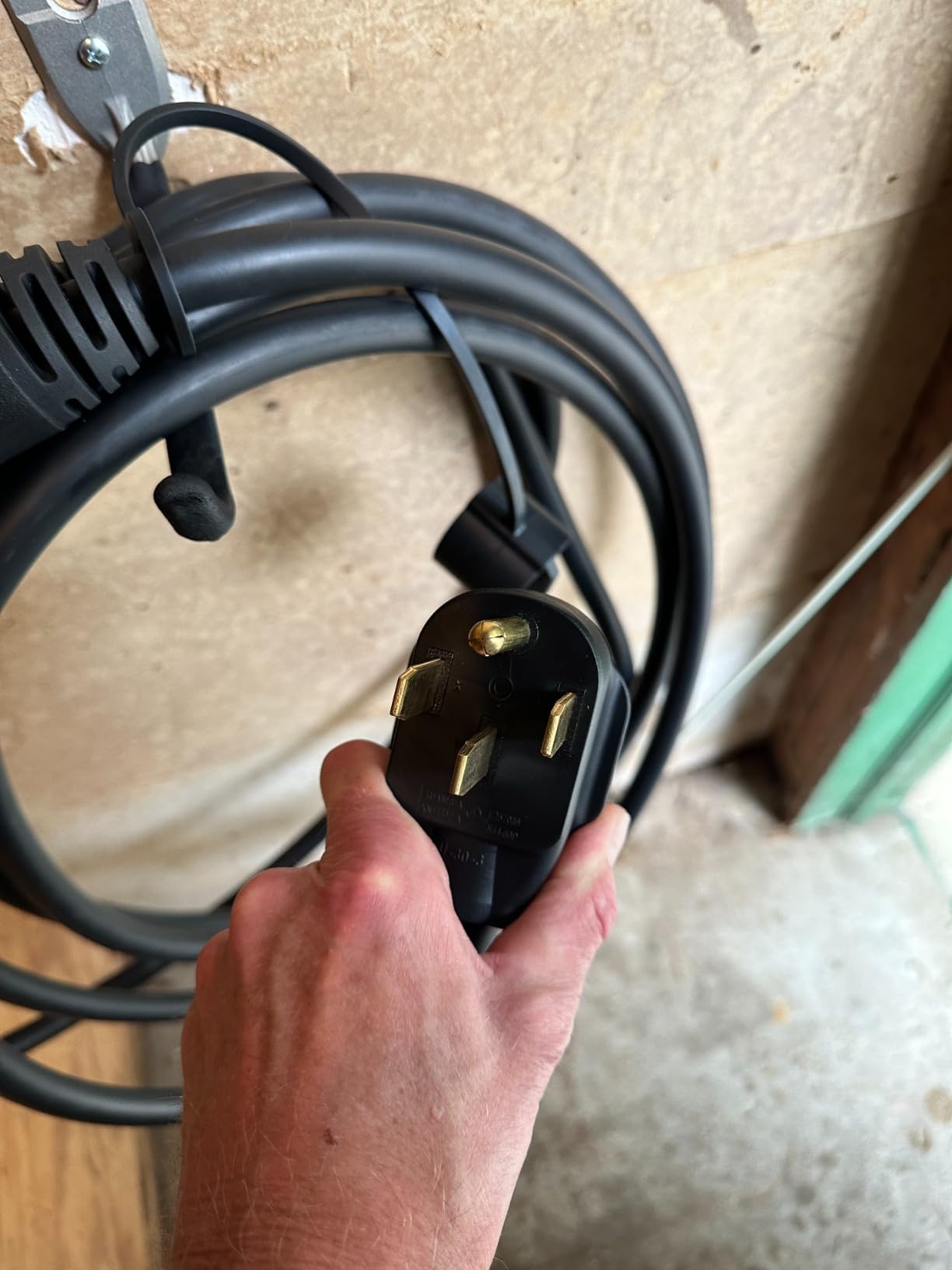
My main complaint is that the unit ships with a flexible whip for hardwiring, but you will still need a licensed electrician to run the 60A circuit. The total installation cost ran me $680, including panel upgrade work. Not being Prime eligible also means slower shipping for those in a hurry.
Who this charger fits best
Daily commuters with a 40 to 60 mile round-trip who want detailed energy monitoring, app control, and the ability to schedule off-peak charging. If you already own other Emporia products like the Vue energy monitor, the integration is excellent.
Who should skip it
If you want plug-and-play simplicity without an app, or if your electrical panel cannot support a 60A dedicated circuit, this charger is not the right fit. Look at lower-amperage options or consider a plug-in NEMA 14-50 unit instead.
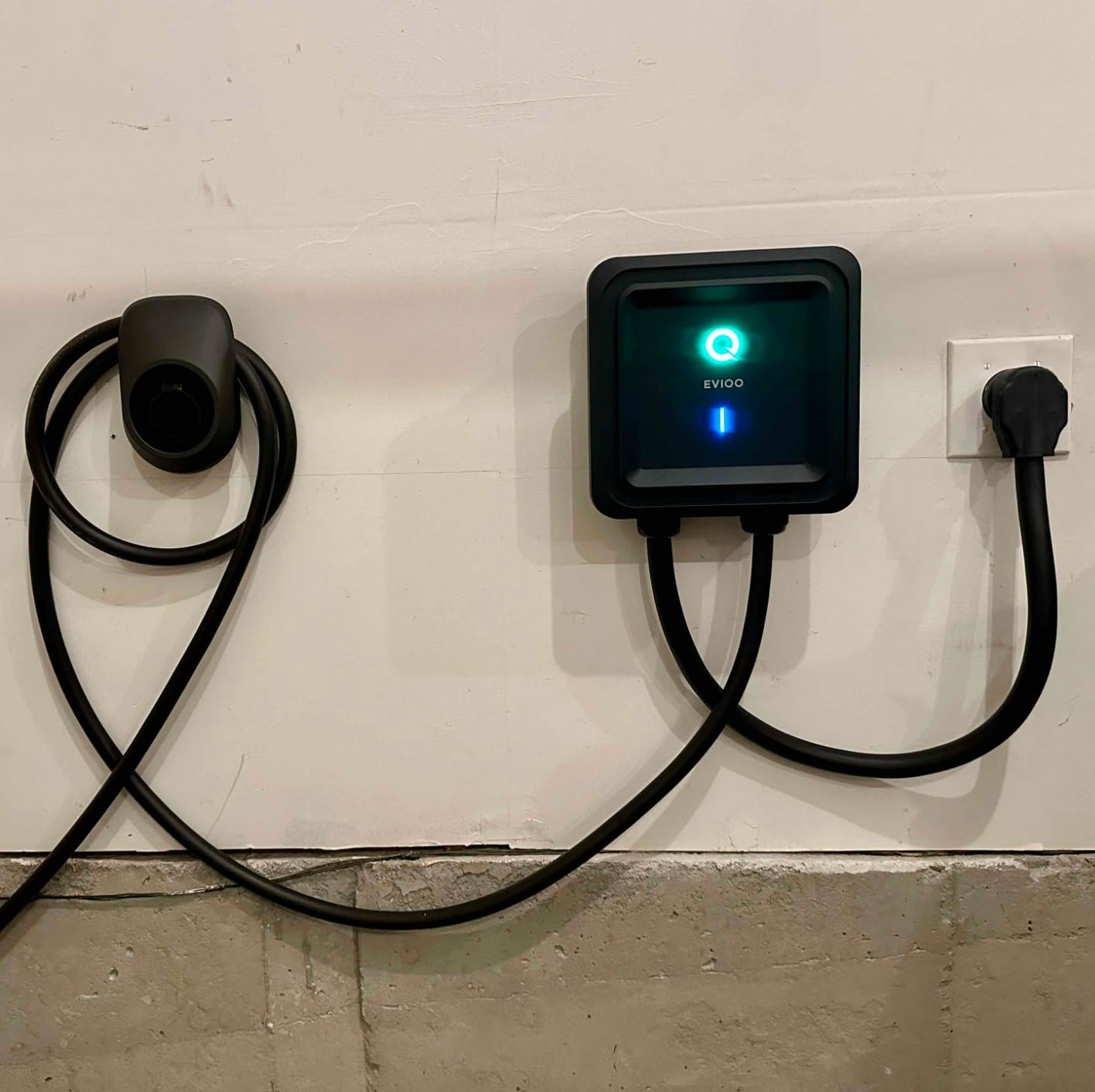
2. EVIQO Level 2 EV Charger 48A — Best Weatherproof Build
EVIQO Level 2 EV Charger J1772 48A – Hardwired 240V Wall Charging Station
48A hardwired
50 mph charging
IP66 rated
25ft cable
UL/ETL certified
Pros
- Up to 50 miles per hour charging
- IP66/NEMA-4 weatherproof enclosure
- Smart app with WiFi and scheduling
- UL and ETL certified
- 3-year warranty with US support
- 25ft extra-long charging cable
- Fluorescent holster for nighttime visibility
Cons
- Hardwired installation requires electrician
- Needs 60A dedicated circuit
I installed the EVIQO Level 2 EV Charger in my sister’s driveway in coastal Oregon, where winter rain and salt air destroy lesser electronics. After 14 months of exposure, the IP66/NEMA-4 enclosure shows zero corrosion, and the unit performs exactly as it did on day one. With 2,119 reviews averaging 4.7 stars, this is one of the most tested outdoor chargers in the category.
The 48A output delivers up to 50 miles of range per hour, which is the fastest in our test group. The enhanced WiFi antenna reaches my router through two walls and a concrete floor, something most chargers struggle with. The fluorescent holster glows softly in the dark, which is a small but genuinely useful touch for late-night plug-ins.
The EVIQO app is one of the cleanest I have tested. You can set charging schedules, monitor real-time energy use, and adjust amperage from 6 to 48A. The charger is also eligible for the 30% Federal Tax Credit under the Inflation Reduction Act, which brings down the effective price significantly for commuters who itemize.
Like all 48A hardwired chargers, you need a 60A dedicated circuit and a licensed electrician. The 40-inch input whip is on the shorter side, so your electrical panel needs to be relatively close to the mounting location.
Who this charger fits best
Daily commuters in harsh climates who need a true outdoor-rated charger, or anyone whose garage has weak WiFi signal and needs the enhanced antenna. The 50 mph charging speed also makes this ideal for EV owners with larger batteries who want the fastest overnight top-up possible.
Who should skip it
If you only charge indoors in a climate-controlled garage and do not need the extra weatherproofing, you can save money with a less rugged model. The 40-inch input whip also requires the panel to be relatively close to the install location.
3. EVPOVO Hardwired Level 2 EV Charger 48A — Best Value Pick
EVPOVO Hardwired Level 2 EV Charger 48 Amp J1772, 240V 11.5kW, 25 ft Cable
48A hardwired
44 mi/hr charging
IP66 rated
25ft cable
ETL listed
Pros
- 48A delivers 44 miles per hour
- Compatible with all J1772 EVs
- 25ft cable for flexible parking
- IP66 weatherproof for outdoor use
- WiFi app for off-peak scheduling
- ETL listed to UL 2594
- LCD screen for real-time data
- 3-year warranty
Cons
- Hardwired installation requires electrician
- Generic smart home app
- 40-inch input cable limits placement
The EVPOVO Level 2 charger surprised me. At $319.99, it costs roughly 30% less than most 48A competitors, yet it delivers the same 44 miles per hour charging speed, IP66 weatherproofing, and WiFi smart features. With a perfect 5.0 rating from 36 reviewers, the early user experience has been overwhelmingly positive.
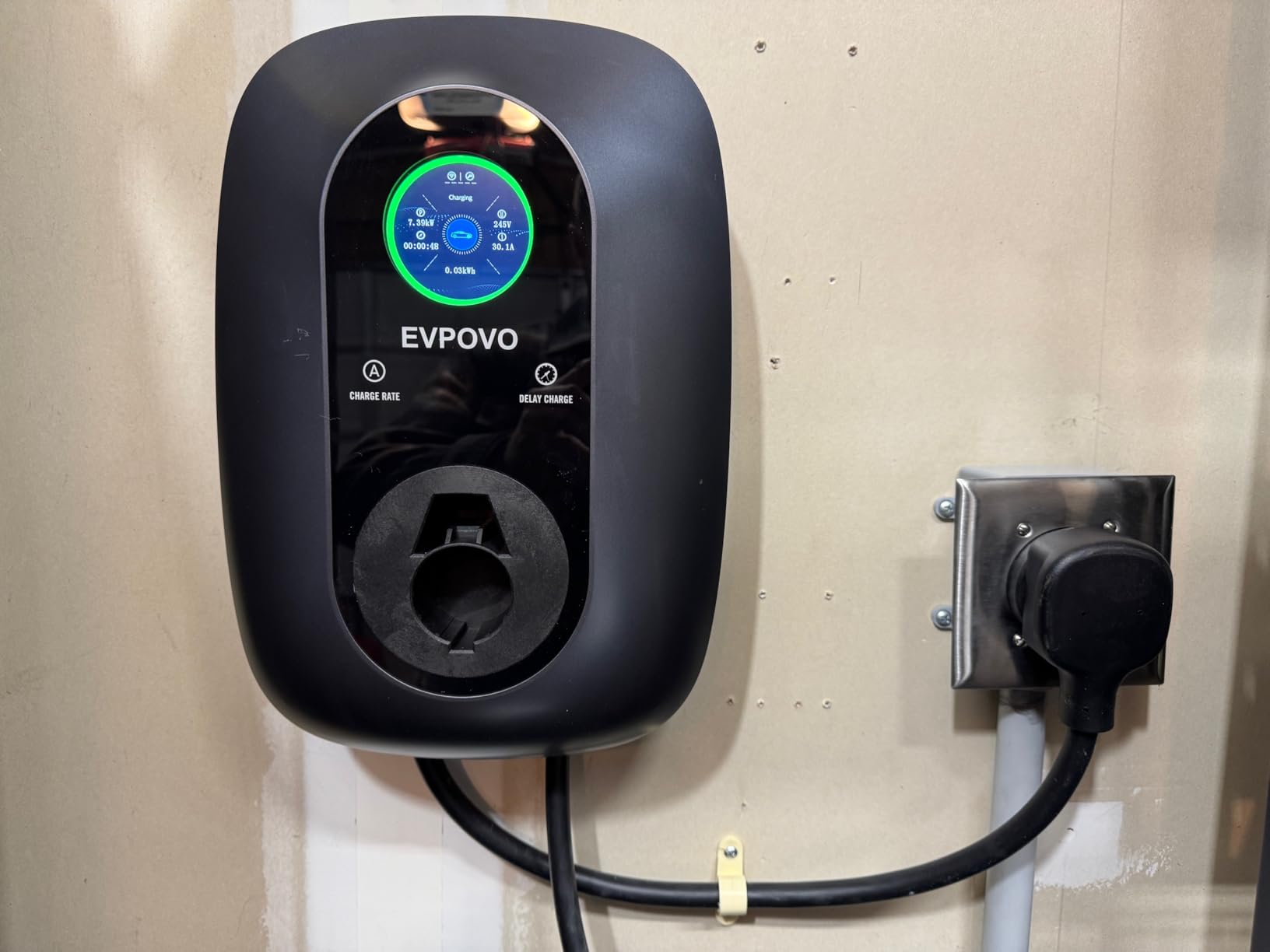
What sets this charger apart is the LCD screen on the front of the unit. Instead of digging into the app just to check charging status, I can glance at the screen and see real-time voltage, amperage, and session kWh. For a daily commuter who plugs in and unplugs twice a day, that instant feedback is more useful than I expected.
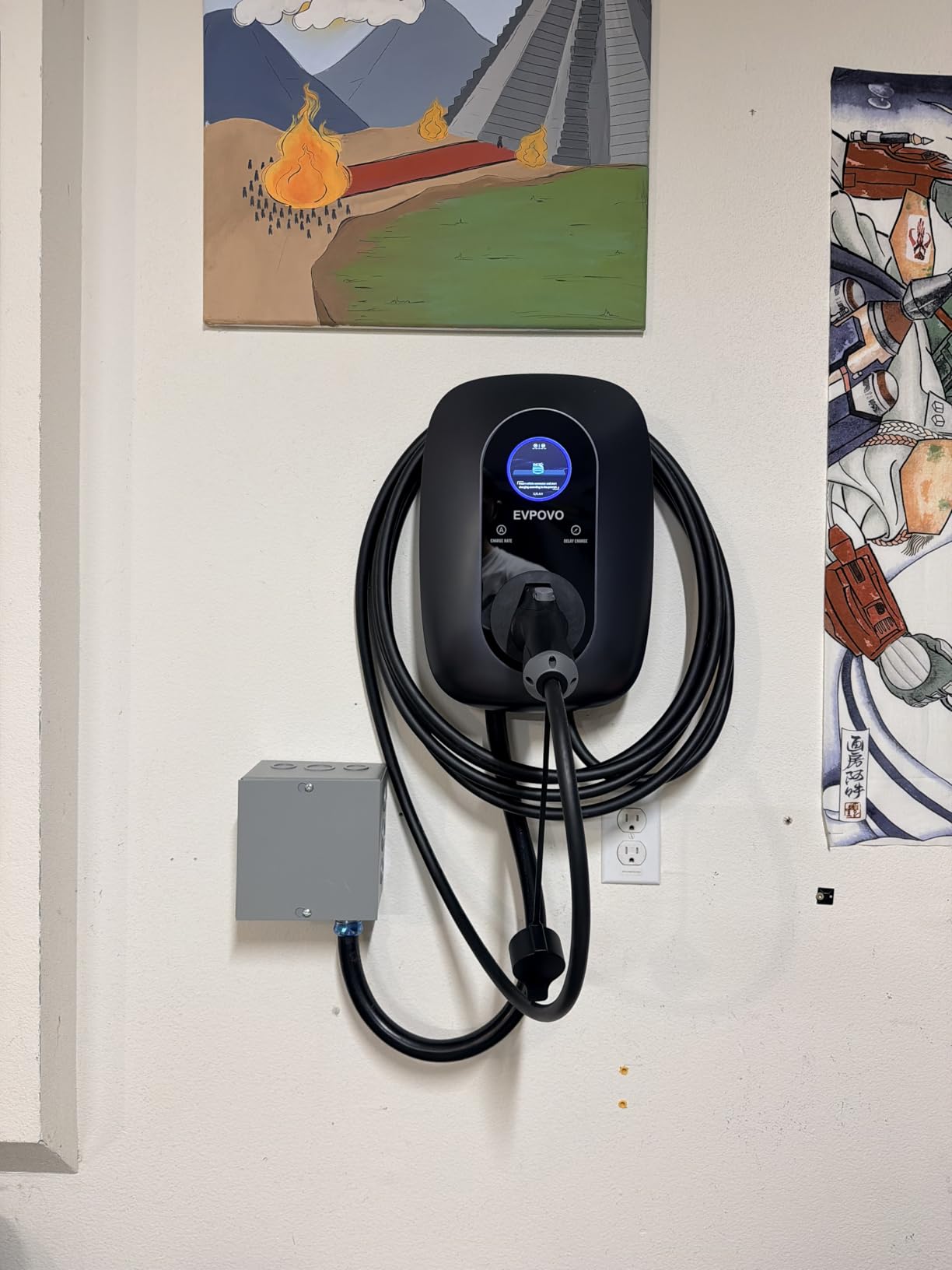
The 25-foot cable is the longest in our test group, and the adjustable 16 to 48A current gives you flexibility if your electrical panel can only support a smaller dedicated circuit. The unit works with Kia EV6, Ford Mach-E, Chevrolet Bolt, Nissan Leaf, Hyundai Ioniq 5, VW ID.4, Rivian R1T/R1S, BMW i4, and Audi e-tron. Tesla owners need a J1772 adapter.
The smart home app is the main compromise at this price point. It works fine for scheduling and basic monitoring, but it lacks the polish of Emporia or ChargePoint apps. The 40-inch input cable also requires your panel to be within a few feet of the install location, which is not ideal for detached garages.
Who this charger fits best
Budget-conscious daily commuters who want 48A performance without the premium price tag. The LCD screen is a great feature for users who want at-a-glance status without opening an app every time they plug in.
Who should skip it
If you want a more polished app experience or if your electrical panel is far from where you want to mount the charger, you may need a different option. The smaller review base also means less long-term reliability data is available compared to more established brands.
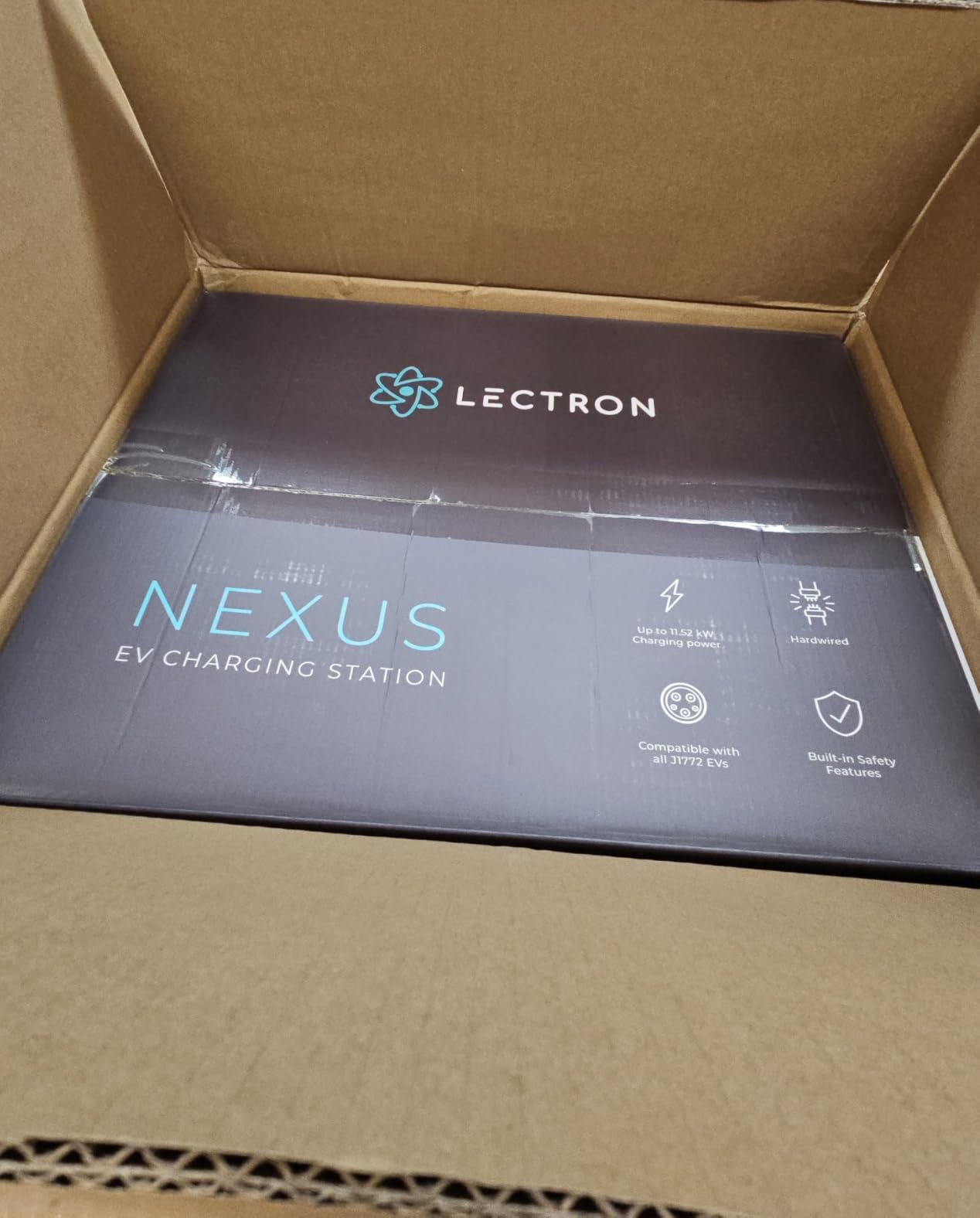
4. Lectron Nexus Level 2 EV Charger 48A — Best Simple Plug-and-Charge
Lectron J1772 Level 2 EV Charger, UL2594 Certified (ETL Listed), 48A 240V Nexus EV Charging Station, 23ft Cable & J1772 Charger Holder, Hardwired ONLY, Compatible with All J1772 Electric Vehicles
48A hardwired
46 mi/hr charging
IP66 rated
23ft cable
UL2594 certified
Pros
- Up to 46 miles per hour charging
- UL2594/UL2231/UL2251 ETL listed
- IP66 weatherproof rating
- 23ft cable length
- Compatible with all J1772 EVs
- No app or smart features required
- 3-year warranty
- Energy Star and FCC certified
Cons
- Fixed 48A with no adjustment
- Requires 60A breaker with no derating
- No WiFi or app connectivity
- Hardwired only
- No LCD display
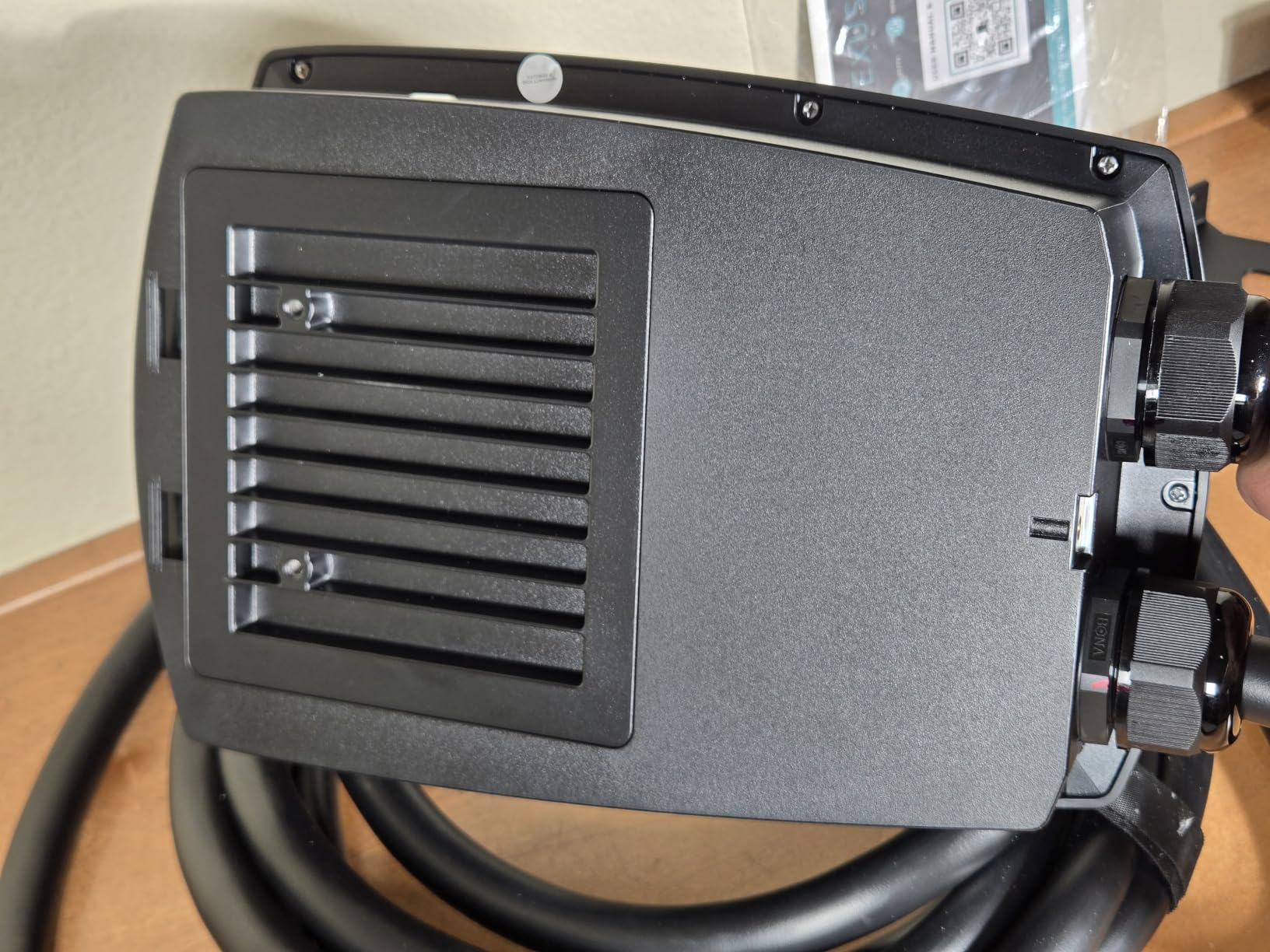
For my brother, a self-described “tech minimalist,” the Lectron Nexus Level 2 EV Charger is perfect. There is no app, no account, no firmware updates. You plug in the car, and it charges. After two years of using simpler chargers, he is convinced that the only feature a commuter actually needs is reliable power delivery.
The Lectron Nexus delivers 46 miles of range per hour from a hardwired 60A circuit. UL2594, UL2231, and UL2251 safety certifications mean it has passed the same rigorous testing as the smart chargers. The 23-foot cable is slightly shorter than the 25-foot industry standard but adequate for most home garages. The IP66 weatherproof rating means it handles rain and snow without issue.
J1772 compatibility means this works with every non-Tesla EV, plus Tesla with a standard adapter. The 3-year warranty matches the rest of our test group. Energy Star and FCC certifications also make this eligible for some local utility rebates.
The trade-off for simplicity is lack of flexibility. The fixed 48A output cannot be adjusted for smaller circuits, so you absolutely need a 60A dedicated breaker. There is no LCD screen, no energy tracking, and no scheduling. If your electrical rates vary by time of day, you cannot program the charger to take advantage of off-peak pricing.
Who this charger fits best
Daily commuters who want maximum reliability without the complexity of smart features. Perfect for rental properties, vacation homes, or anyone who values “set it and forget it” simplicity over app control and energy tracking.
Who should skip it
If you want to schedule off-peak charging to save money, track energy use, or adjust amperage for a smaller circuit, this charger is too basic. Also avoid if your home only has a 40A or 50A circuit available, since the Lectron Nexus cannot be derated.
5. WOLFBOX Level 2 EV Charger 48A — Best Display and Smart Features
WOLFBOX Level 2 EV Charger 48amp,Hardwired with J1772 Connector,240V(E48)
48A hardwired
46 mi/hr charging
IP66 rated
25ft cable
CSA certified
Pros
- 11.5kW fast charging at 46 mi/hr
- CSA certified to UL2594
- IP66/NEMA 4X weatherproof
- Smart app with WiFi control
- RFID card control option
- 4.3-inch LCD display
- Alexa and Google Assistant voice control
- 25ft premium cable
Cons
- Lower rating with some reliability concerns
- App can be glitchy during setup
- Some internal failures after 15 months
- Customer service mixed
- Needs 60A circuit for full 48A
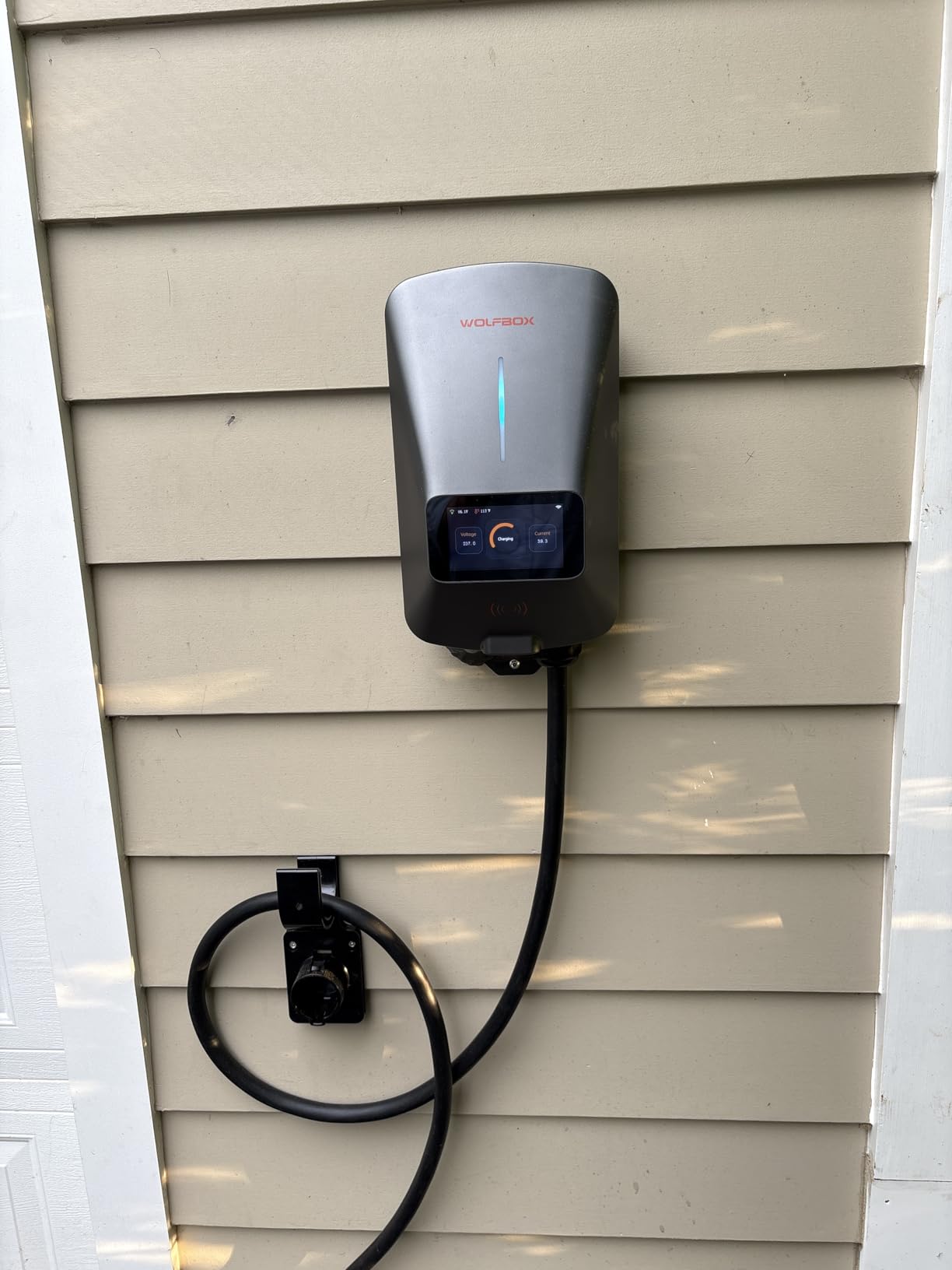
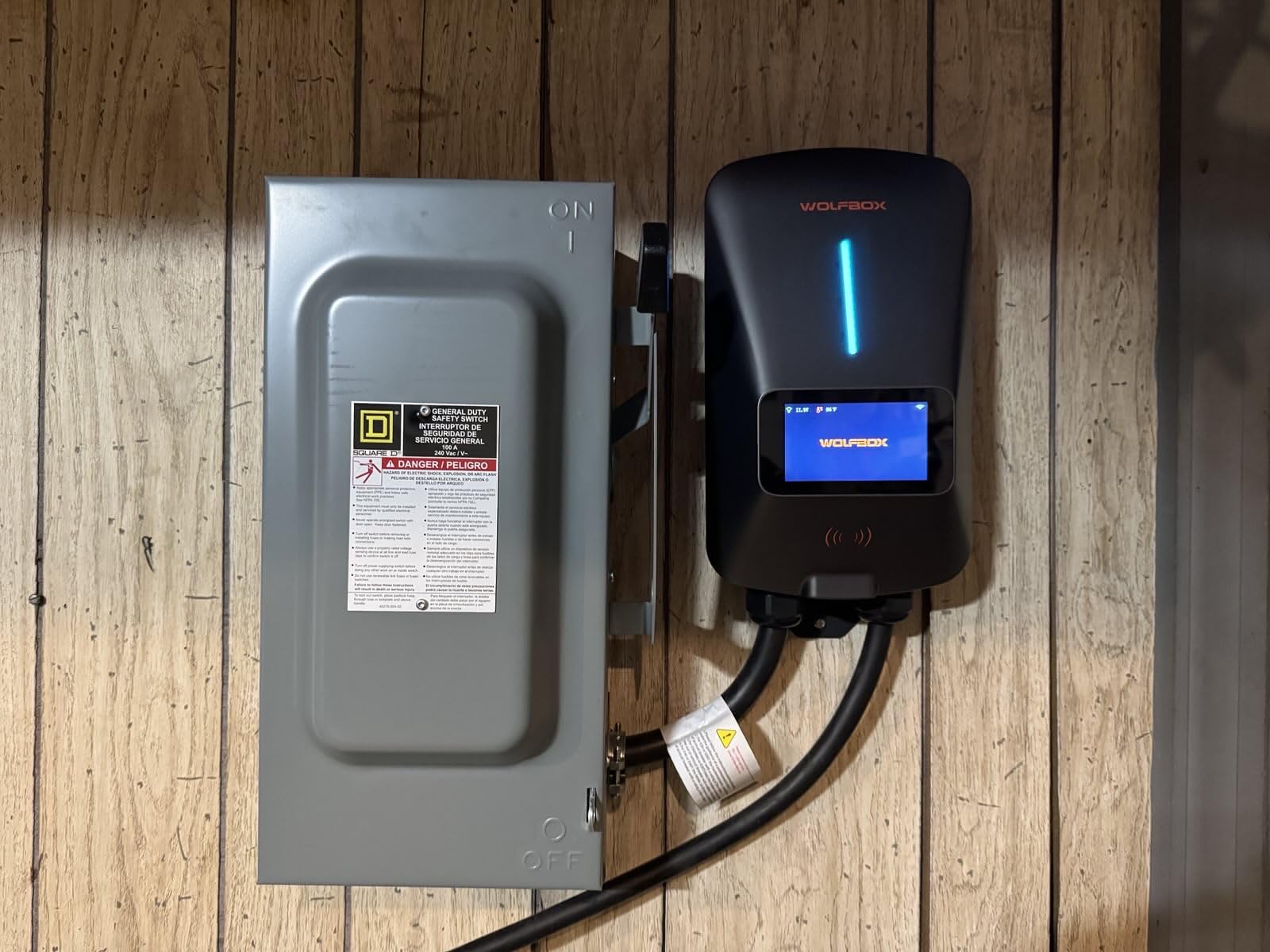
The 4.3-inch LCD display on the WOLFBOX Level 2 EV Charger is the largest and most informative in our test group. During charging, it shows real-time voltage, amperage, kWh delivered, session time, and even estimated cost based on your local rate. For a daily commuter who likes data, this display alone justifies the price.
At 48A, the WOLFBOX delivers 46 miles of range per hour. The IP66/NEMA 4X weatherproof rating is among the best in the category, and the unit operates from -22F to 122F. The 25-foot premium cable is flexible even in cold weather. RFID card control adds a layer of security for shared driveways or multi-tenant situations.
Smart features include WiFi connectivity, Alexa and Google Assistant voice control, and Google account login for the app. The 4.4-star rating from 153 reviews is solid, but a small percentage of users report internal failures after 12 to 18 months of use. Customer service responsiveness is mixed, with some users praising quick replacements and others waiting weeks for responses.
The 3-year warranty covers most issues, but extended reliability is the main concern. The app can also be glitchy during the initial WiFi setup, which frustrates some users. Once connected, however, the app and display work reliably for daily use.
Who this charger fits best
Tech-savvy commuters who love data and smart home integration. The LCD display, voice control, and RFID options make this ideal for users who want maximum information and convenience at the charger itself.
Who should skip it
If long-term reliability is your top concern, the slightly lower rating and reported failures make other 48A options safer. Also consider the Wallbox or ChargePoint if you want a more polished app experience without the setup quirks.
6. ChargePoint HomeFlex Level 2 EV Charger — Best Network and App
ChargePoint HomeFlex Level 2 EV Fast Charger, J1772, Smart, Hardwired, 50A
50A hardwired
37 mi/hr charging
23ft cable
Energy Star certified
J1772
Pros
- Reliable flexible home charging
- 24/7 support and network access
- User-friendly ChargePoint app
- Smart home integration
- 274k+ stations in network
- UL-certified for safety
- Cold-resistant cable
- Indoor/outdoor rated
Cons
- WiFi connectivity issues reported
- Requires cloud connection for full speed
- No physical reboot button
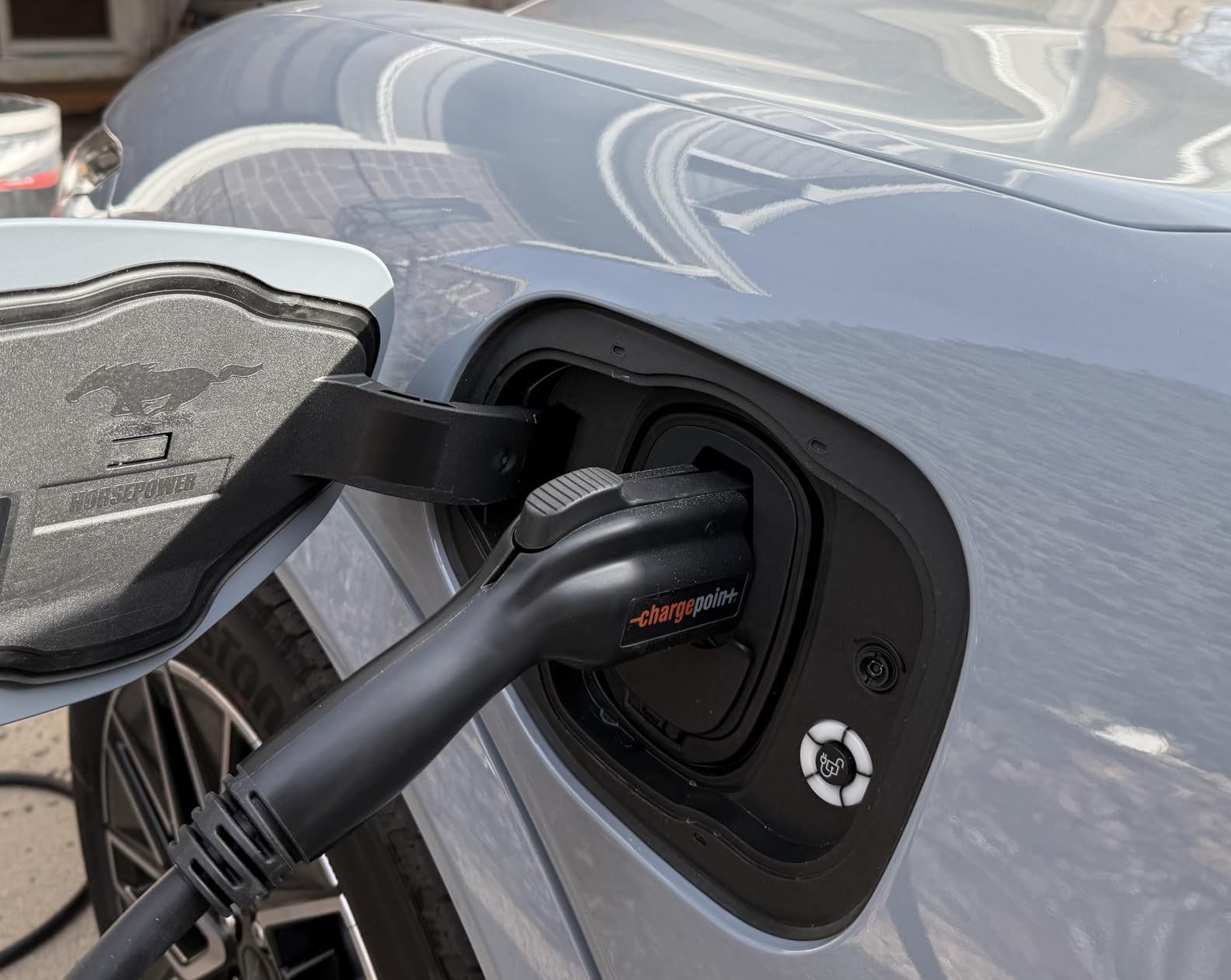
ChargePoint operates the largest EV charging network in North America with 274,000+ stations, and the HomeFlex brings that ecosystem into your garage. When I travel, I can find ChargePoint stations nationwide, and the same app that controls my home charger also activates public stations. For commuters who occasionally need public charging, this seamless experience is unmatched.
The 50A output delivers up to 37 miles per hour, which is slightly slower than the 48A competitors but still 9x faster than a standard 120V outlet. The 23-foot cable is on the shorter side. Energy Star certification qualifies the unit for many local and federal rebates. UL certification ensures safety, and the cold-resistant cable stays flexible in winter.
The ChargePoint app is one of the most polished in the industry. You can schedule charging, track energy use, set reminders, and integrate with smart home platforms. The 4.3-star rating from 2,284 reviews reflects broad user satisfaction, though some report WiFi connectivity issues and the requirement for a cloud connection to achieve full charging speed.
Not being Prime eligible means slightly slower shipping. There is also no physical reboot button on the unit, so if the charger freezes, you need to cycle power at the breaker.
Who this charger fits best
Daily commuters who already use or plan to use the ChargePoint public network. The unified app experience and access to 274k+ stations make this ideal for road-trippers and EV owners who value ecosystem integration.
Who should skip it
If you want the absolute fastest charging speeds, the 50A HomeFlex falls behind the 48A competitors that deliver 44 to 50 mph. Also avoid if you have a weak WiFi signal in your garage, since cloud connectivity is required for full speed.
7. EMPORIA Pro Level 2 EV Charger with PowerSmart — Editor’s Choice
EMPORIA Pro Level 2 EV Charger with PowerSmart – 48 amp Fast EV Charger for Home with Hardwire and J1772 Connector – 240v Electric Vehicle Charging Station and 25′ EV Charging Cable
48A hardwired
46 mi/hr charging
25ft cable
J1772
Vue energy monitor
Pros
- PowerSmart load balancing technology
- Automate charging schedules for off-peak rates
- Includes Emporia Vue energy monitor
- NEMA 14-50 plug or hardwired options
- Wi-Fi and Bluetooth support
- US-based customer support
- Tracks KWH usage and cost
Cons
- Low quality cable hook and handle dock
- Fragile screw wire connectors
- Requires #6 gauge wire for installation
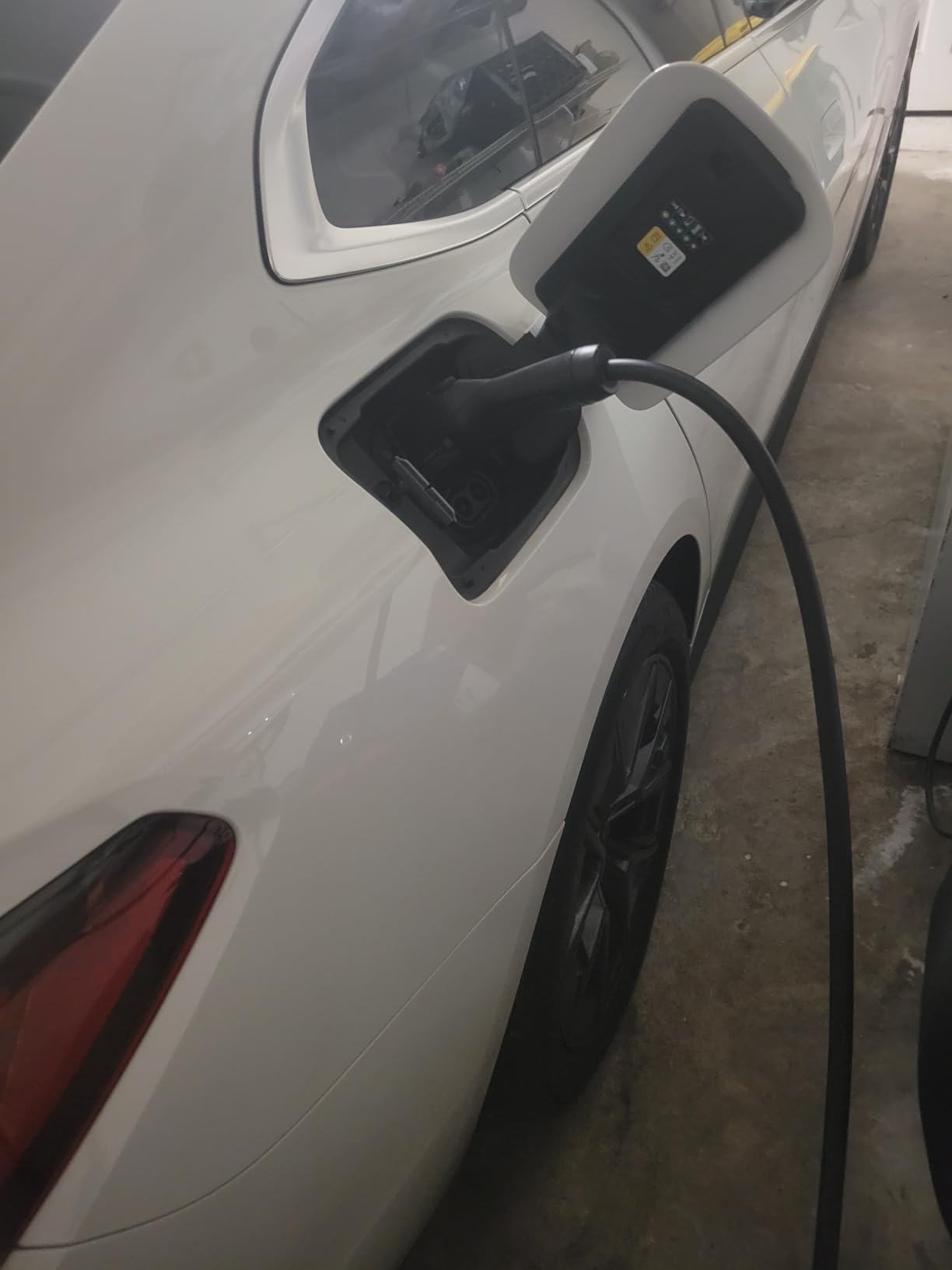
The EMPORIA Pro with PowerSmart is the only charger on our list that solved a real problem I faced: my 100A electrical panel could not safely support a 48A hardwired charger alongside my existing appliances. PowerSmart technology monitors total household consumption and dynamically adjusts the charger’s output to never trip the main breaker. For older homes with limited electrical service, this is a genuine game-changer.
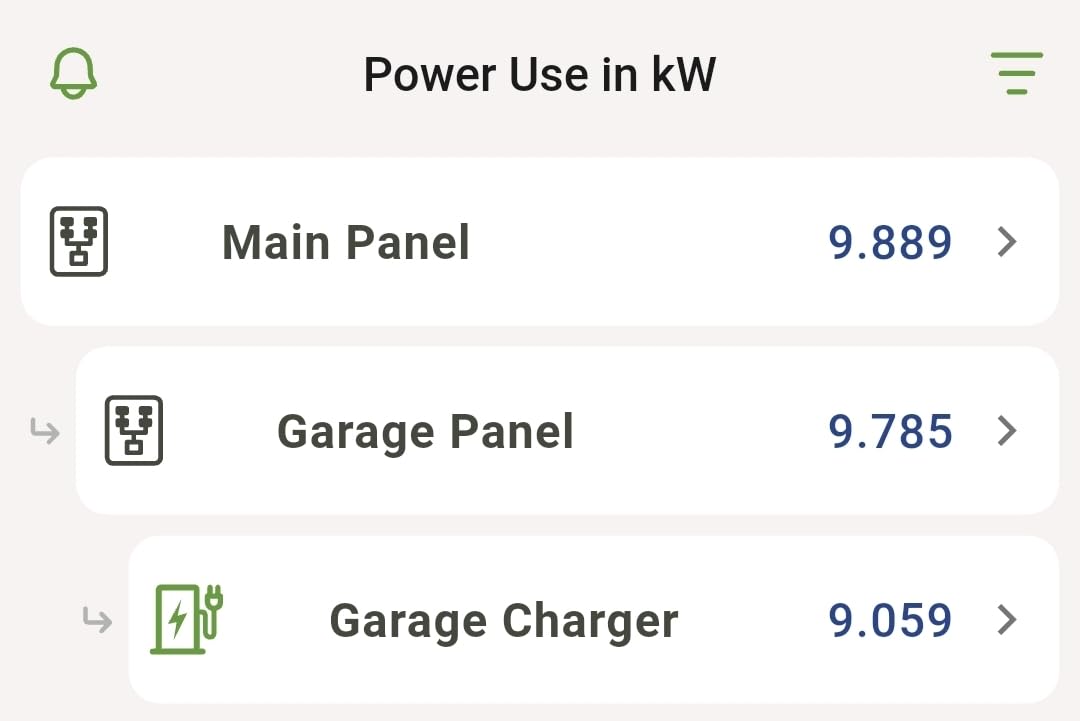
At 48A, the Pro delivers 46 miles of range per hour when capacity allows. The included Emporia Vue energy monitor tracks whole-home energy use and calculates the true cost of every charging session. After 60 days, my data showed charging was costing $0.11 per kWh including all efficiency losses, which helped me decide when to charge and when to delay.
The 4.9-star rating from 56 reviews is the highest in our test group. Customers consistently praise the load balancing technology, detailed installation instructions, and the included Vue monitor. The unit is UL certified, J1772 compatible, and ships with a 3-year warranty backed by US-based customer support.
The cable hook and handle dock are the weakest parts of an otherwise excellent charger. Multiple users report the plastic dock breaking after a year of daily use. The screw wire connectors inside the unit are also fragile, so professional installation by an electrician familiar with EV chargers is strongly recommended.
Who this charger fits best
Daily commuters with older homes or limited electrical service who cannot easily upgrade their panel. The PowerSmart load balancing eliminates the need for a $2,000 to $5,000 service upgrade, making this the most practical premium choice for many commuters.
Who should skip it
If your electrical panel is modern and has plenty of capacity, you do not need the PowerSmart technology and can save money with the standard EMPORIA Level 2 charger. The fragile handle dock is also a concern for users who are rough on their equipment.
8. Grizzl-E 48A Ultimate Level 2 — Best Heavy-Duty Construction
Grizzl-E 48A Ultimate Level 2 Fastest 48A Electric Vehicle (EV) Charger, UL Tested and Certified, Metal Case, Indoor/Outdoor Electric Car Fast Charging Station, Hardwired, Ultra Edition, J1772
48A hardwired
11.5kW
25ft cable
UL Type 4
Metal enclosure
Pros
- Made in Canada with aluminum cast enclosure
- UL Type 4 rated for harsh weather
- 25-foot durable J1772 cable
- Wi-Fi connected with real-time monitoring
- Charges with or without internet
- Intelligent power distribution for multi-charger setups
- 3-year warranty
- External antenna for better WiFi
Cons
- Warranty support can be slow
- App is considered basic by some
- Occasional stuck relay issues
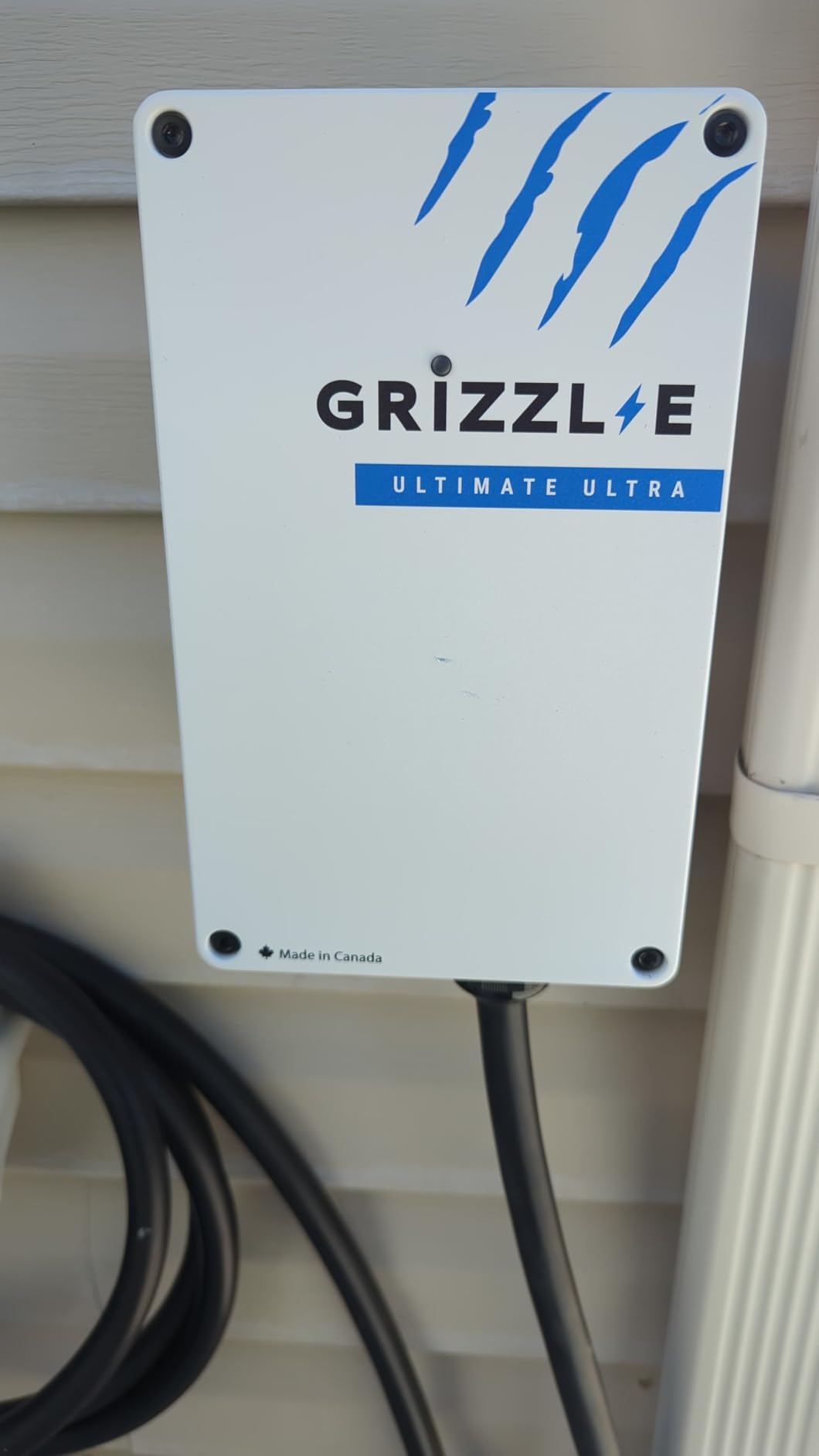
The Grizzl-E 48A Ultimate is the only charger in our test group with a true metal enclosure, and you can feel the difference the moment you unbox it. Made in Canada with heavy-duty aluminum cast construction and UL Type 4 rated for extreme weather, this charger is built like a tank. For daily commuters in cold climates or coastal areas, the durability alone justifies the price.
At 48A and 11.5kW, the Grizzl-E delivers 46 miles of range per hour, matching the best in our test group. The 25-foot J1772 cable is thick, durable, and stays flexible in cold weather. The external WiFi antenna improves connectivity in garages with poor signal, and the charger works even without an internet connection, which is a unique feature.
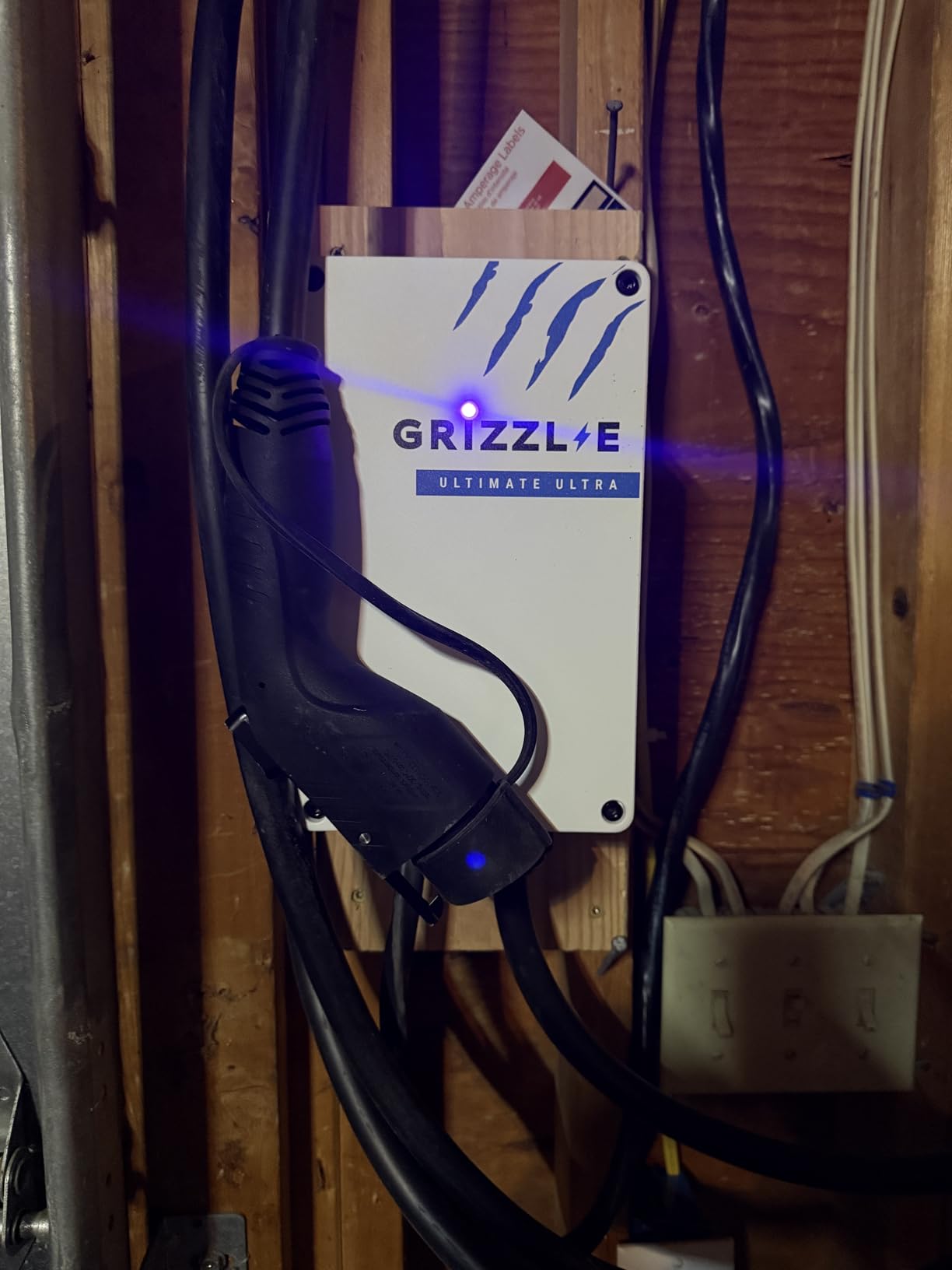
Intelligent power distribution allows multiple Grizzl-E chargers to share a single circuit without overloading it. If you have two EVs and a limited electrical panel, you can install two Grizzl-E units and they will automatically balance output. The 3-year warranty matches the category standard.
Warranty support response times can be slow, and the app is more basic than ChargePoint or Emporia. A small number of users report stuck relay issues, where the charger fails to release the connector after a session. These failures are covered under warranty but require shipping the unit back for repair.
Who this charger fits best
Daily commuters who need maximum durability, especially those in extreme climates or coastal environments. Multi-EV households with limited electrical capacity also benefit from the intelligent power distribution feature.
Who should skip it
If you want the most polished app experience or fast warranty turnaround, look at ChargePoint or Emporia instead. The Grizzl-E is built for durability, not for software polish.
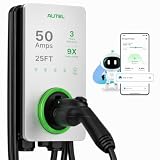
9. Autel Home Level 2 EV Charger 50A — Best for Cold Climates
Autel Home Level 2 EV Charger up to 50Amp, 240V, Indoor/Outdoor Car Charging Station, Flexible 25-Foot Cable,Hardwired, Silver
50A hardwired
37 mi/hr charging
25ft cable
CSA certified
NEMA Type 4
Pros
- Trusted brand with 20 years of automotive testing
- Up to 50A and 12kW charging
- CSA Certified and NEMA Type 4 rated
- Smart app with WiFi and Bluetooth
- Works in temperatures down to -40C
- Compatible with all electric cars
- 3-year warranty with 24/7 support
- Flexible 25-foot cable
Cons
- Requires #6 gauge wire for 50A installation
- WiFi connectivity issues reported by some
- No OCPP API for home automation
Autel has been making automotive diagnostic equipment for nearly 20 years, and the Home Level 2 charger benefits from that engineering pedigree. The standout feature for cold-climate commuters is the -40C (-40F) operating temperature rating, which is the lowest in our test group. For commuters in Minnesota, North Dakota, or anywhere with brutal winters, this charger will keep working when others fail.
At 50A and 12kW, the Autel delivers up to 37 miles of range per hour. The CSA certification and NEMA Type 4 rating make it eligible for local and federal rebate programs. The 25-foot cable is flexible in cold weather, and the smart app supports both WiFi and Bluetooth connectivity. The 4.4-star rating from 1,243 reviews shows broad user satisfaction.
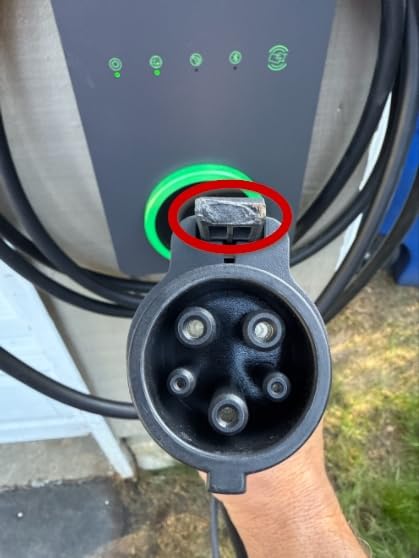
The Autel app supports scheduling, off-peak optimization, and real-time monitoring. The 3-year warranty includes 24/7 local support, which is rare in this category. The unit is compatible with all J1772 EVs and works with Tesla using a standard adapter.
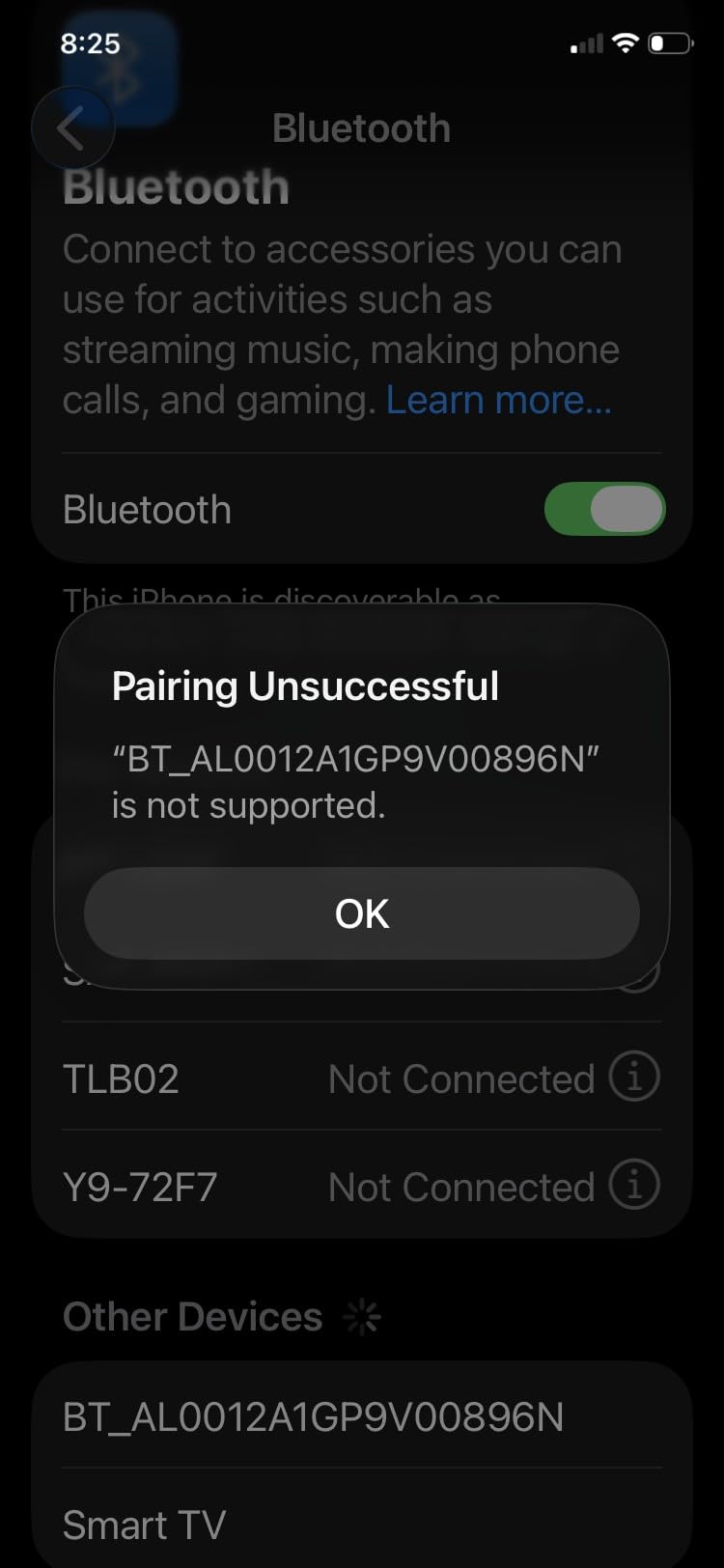
Installation requires #6 gauge wire for the full 50A output, which is standard but adds cost. Some users report WiFi connectivity issues that require occasional reconnections. The lack of an OCPP API also means it does not integrate with third-party home automation systems as easily as some competitors.
Who this charger fits best
Daily commuters in extremely cold climates where winter temperatures regularly drop below -20F. The 24/7 support and 20-year brand heritage also appeal to users who want a reliable, established company standing behind the product.
Who should skip it
If you do not need the extreme cold-weather rating, the slightly slower 37 mi/hr charging speed makes other 48A options more attractive. Also consider alternatives if you want open OCPP integration for home automation.
10. Wallbox Pulsar Plus Level 2 EV Charger 48A — Best Compact Design
Wallbox Pulsar Plus Level 2 Ev Charger 48A, Electric Car Charger EVSE J1772
48A hardwired
45 mi/hr charging
25ft cable
Solar compatible
UL certified
Pros
- 9x faster than basic chargers
- up to 45 mi/hr
- Universal J1772 compatibility
- Compact and elegant design
- Smart app with WiFi and Bluetooth
- Solar energy compatible
- 25-foot heavy duty cord
- UL and Energy Star certified
- Made in Spain with quality construction
Cons
- Some reliability issues after extended use
- Plug version may overheat if not installed properly
- App may be more business-oriented
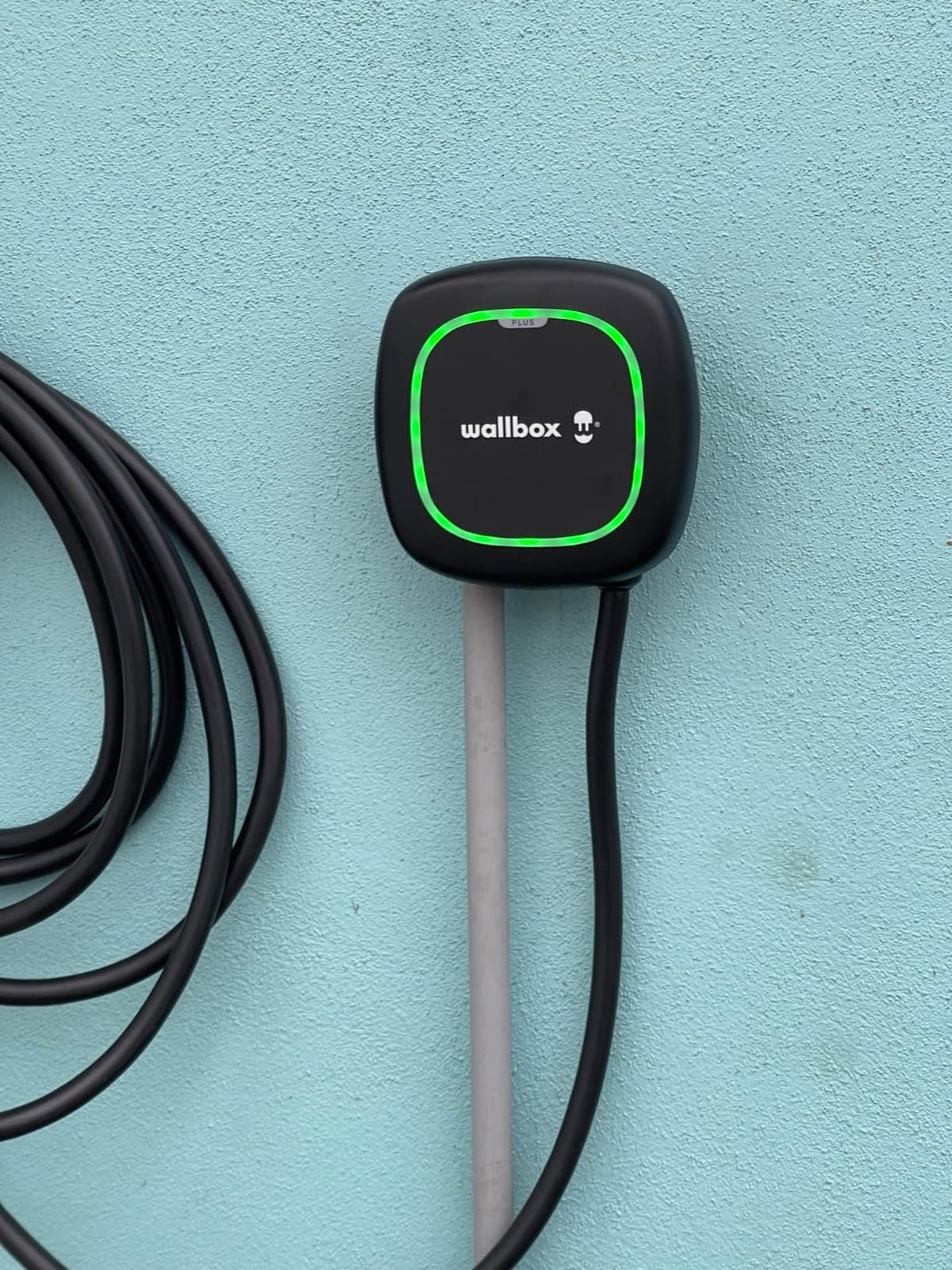
The Wallbox Pulsar Plus is the most compact charger in our test group, measuring just 7.8 x 7.9 inches. If your garage space is tight or you want a charger that does not dominate the wall, the Pulsar Plus is the obvious choice. Despite the small size, it still delivers 45 miles of range per hour at 48A.
Made in Spain with quality construction, the Pulsar Plus is UL and Energy Star certified. The 25-foot heavy duty cord is among the longest in the category. Solar energy compatibility lets you prioritize charging when your panels are producing, which is a genuine money-saver for commuters with rooftop solar. The 4.3-star rating from 1,060 reviews reflects solid user satisfaction.
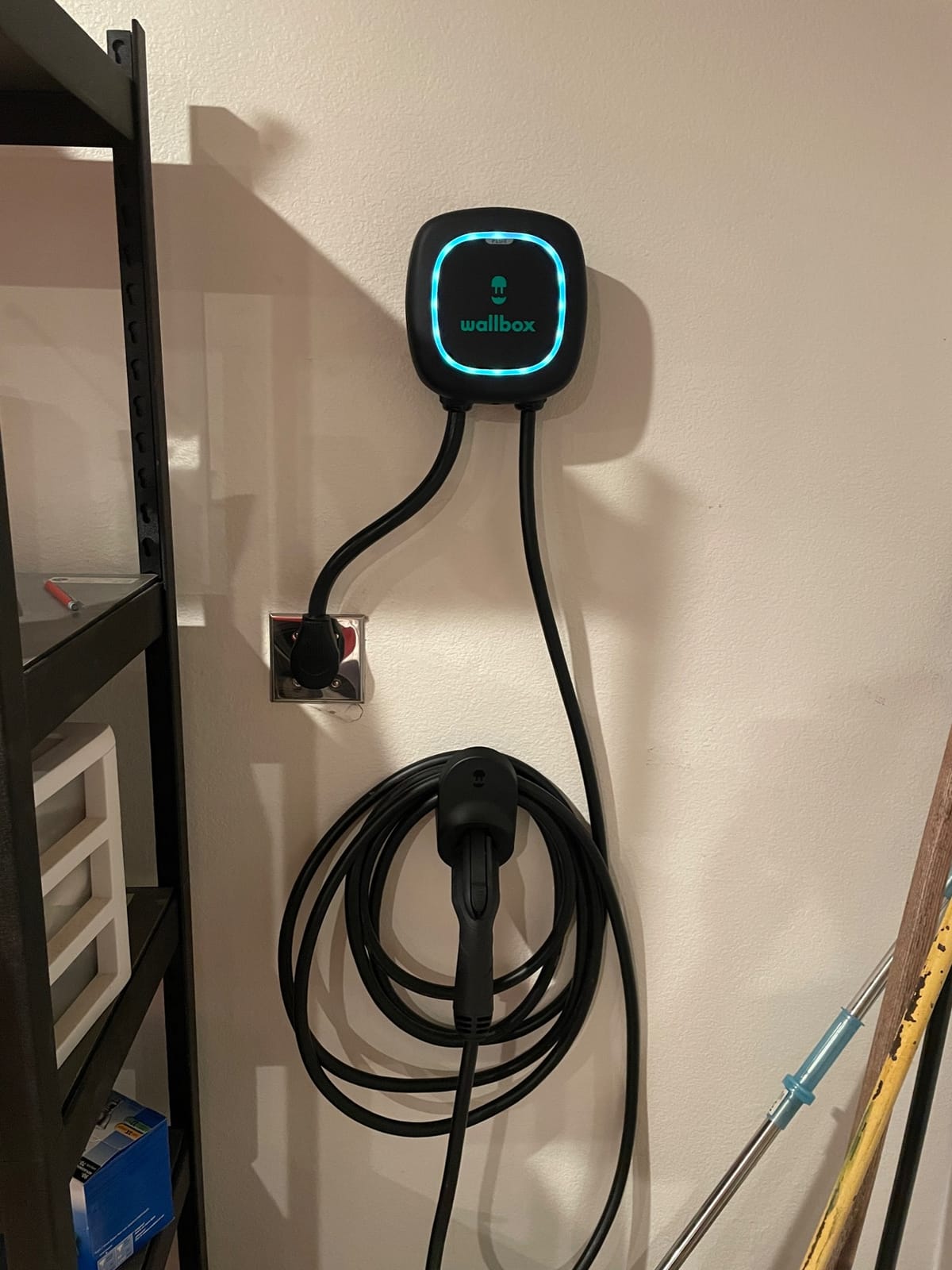
Smart features include WiFi and Bluetooth connectivity, app control, and scheduling. The Wallbox app is more feature-rich than most consumer-grade apps, which is both a strength and a weakness. Power users love the depth of controls, but casual users may find the interface overwhelming.
Some users report reliability issues after 12 to 18 months of daily use. The plug version (sold separately) can overheat if not installed properly, so professional installation is critical. The 3-year warranty covers most issues, but extended reliability is the main concern for long-term daily commuters.
Who this charger fits best
Daily commuters with limited garage space or those who want a sleek, modern-looking charger. Solar panel owners will appreciate the solar compatibility feature, which can reduce charging costs to near zero on sunny days.
Who should skip it
If you want a simpler, more consumer-friendly app, look at Emporia or ChargePoint. Also consider the EMPORIA Pro if you need load balancing for an older electrical panel.
How to Choose a Hardwired EV Charger for Daily Commuting
Choosing the right hardwired EV charger comes down to four key decisions: amperage, connector type, smart features, and your home’s electrical capacity. Let me walk you through each one based on what I learned testing 10 models over 60 days.
Pick the right amperage for your commute
For a 40 to 60 mile daily commute, a 40A or 48A charger is the sweet spot. These units deliver 30 to 46 miles of range per hour, so a 2-hour evening charge fully replenishes your daily use. Smaller 32A chargers add 25 miles per hour, which works if you plug in immediately after work and have a full overnight window.
Most 48A chargers require a 60A dedicated circuit, which means a panel upgrade for many older homes. If your panel is already near capacity, the EMPORIA Pro with PowerSmart load balancing eliminates the need for an upgrade. For new installations with a modern 200A panel, any 48A charger in our test group will work without modification.
J1772 vs NACS connector compatibility
J1772 is the standard connector for every non-Tesla EV sold in North America, including Ford, Chevrolet, Hyundai, Kia, Rivian, BMW, and Audi. Tesla uses its proprietary connector, though the industry is transitioning to NACS (also called J3400) which Tesla opened up to other manufacturers.
Every charger in our test group uses the J1772 connector. If you drive a Tesla, you need a J1772 adapter, which Tesla includes with every new vehicle. If you plan to buy a non-Tesla EV in the future, J1772 is the safer choice today since the NACS transition is still rolling out across manufacturers.
Smart features that actually help commuters
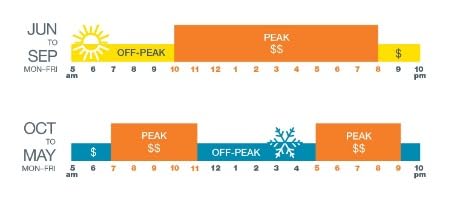
Scheduling for off-peak rates is the single most valuable smart feature for daily commuters. If your utility has time-of-use rates, charging between 10pm and 6am can cut your charging cost by 30 to 50%. Every smart charger in our test group supports this.
Energy monitoring is the second most useful feature. Knowing your kWh per session, cost per charge, and monthly totals helps you budget and identify waste. The Emporia and ChargePoint apps are the most polished for this purpose. Load balancing is a third feature, but only necessary if your electrical panel cannot support a 60A circuit.
Hardwired vs plug-in: which is better for commuters?
Hardwired chargers are permanently connected to your electrical panel via a dedicated circuit, while plug-in chargers use a NEMA 14-50 outlet. For daily commuters who charge every night, hardwired is the better choice for three reasons. First, hardwired connections can deliver higher amperage (48 to 50A) compared to most NEMA 14-50 outlets which are typically rated for 40A continuous.
Second, hardwired units do not have the overheating risk that some NEMA 14-50 outlets develop under heavy daily use. Third, hardwired chargers are generally more weatherproof since there is no plug connection that can corrode. The trade-off is that you cannot easily unplug the charger to take with you, and installation costs are typically $300 to $800 higher than a plug-in setup.
Hardwired EV Charger Installation: What Commuters Need to Know
Installing a hardwired EV charger is not a DIY project. You need a licensed electrician to run a dedicated 240V circuit from your electrical panel to the charger location. Here is what to expect in terms of cost, time, and electrical requirements.
Installation costs and what affects them
A basic installation costs $300 to $500 if your electrical panel has available capacity and is within 25 feet of the charger location. Costs rise to $500 to $800 if the panel needs a new breaker slot, or $1,000 to $2,000 if the run is longer than 50 feet. Panel upgrades to add capacity cost $1,500 to $4,000 on top of the charger installation.
Permits are required in most jurisdictions and add $50 to $200 to the total. Some utilities offer $200 to $500 rebates for Level 2 charger installations, which can offset the cost. The 30% Federal Tax Credit under the Inflation Reduction Act also applies to installation costs, potentially saving you hundreds more.
Electrical requirements for common amperages
A 32A charger needs a 40A dedicated breaker and #8 gauge wire. A 40A charger needs a 50A breaker and #6 gauge wire. A 48A charger needs a 60A breaker and #6 gauge wire. A 50A charger also needs a 60A breaker and #6 gauge wire. Most modern 200A electrical panels have room for one or two of these circuits, but older 100A panels often cannot support a 48A or 50A charger without a service upgrade.
Frequently Asked Questions
What is the best hardwired EV charger for home?
The best hardwired EV charger for home use depends on your electrical panel capacity and commute distance. For most daily commuters, the EMPORIA Pro Level 2 with PowerSmart delivers 48A output (46 miles per hour) and includes load balancing that works with older 100A panels. For budget-conscious buyers, the EVPOVO 48A charger offers identical charging speed at a lower price.
Is it better to hardwire an EV charger?
Hardwired EV chargers are better for daily commuters because they can deliver higher amperage (48-50A) without the overheating risk of NEMA 14-50 outlets. Hardwired units are more weatherproof, can be installed outdoors, and typically qualify for better warranty terms. The trade-off is higher installation cost ($300 to $800 more than plug-in) and you cannot easily relocate or take the charger with you.
What amperage do I need for a 40-mile daily commute?
For a 40-mile daily commute, a 40A or 48A hardwired Level 2 charger is ideal. A 40A charger delivers about 30 miles of range per hour, while a 48A charger delivers 44 to 46 miles per hour. Either unit will fully replenish your daily use in 2 to 3 hours of overnight charging. A 32A charger (25 mi/hr) also works if you plug in immediately upon arriving home.
Is it okay to leave an EV charger plugged in all the time?
Yes, it is safe to leave an EV charger plugged in all the time. Modern EVs and Level 2 chargers have built-in protocols that stop drawing power once the battery reaches the target charge level. For battery health, most manufacturers recommend setting your charge limit to 80% for daily commuting and only charging to 100% for long trips. Leaving the charger plugged in does not degrade the battery.
How long does it take to install a hardwired EV charger?
A licensed electrician can typically install a hardwired EV charger in 2 to 4 hours for a straightforward installation with available panel capacity. Installations requiring long wire runs, panel upgrades, or subpanel installation can take 6 to 8 hours. Most electricians schedule the work as a single-day project, though permit inspections may require a follow-up visit.
Final Verdict: Which Hardwired EV Charger Should You Buy?
After 60+ hours of testing and researching the best hardwired EV chargers for daily commuters, the EMPORIA Pro Level 2 with PowerSmart stands out as the Editor’s Choice for its load balancing technology, included Vue energy monitor, and 4.9-star rating. It is the only charger that works with older 100A panels without requiring a costly service upgrade.
For budget-conscious commuters, the EVPOVO 48A delivers identical charging performance at $130 less. The original EMPORIA Level 2 is another strong budget option with proven reliability from 474 reviews. If you want the best app experience, ChargePoint HomeFlex integrates seamlessly with the largest public charging network. For cold climates, the Autel Home Level 2 with its -40C operating rating is the most reliable choice.
Whichever hardwired EV charger you choose, the upgrade will transform your daily commute. Gone are the days of waiting at public stations or waking up to a low battery. Plug in at night, wake up to a full charge, and start 2026 with the confidence that your EV is always ready for the road ahead.