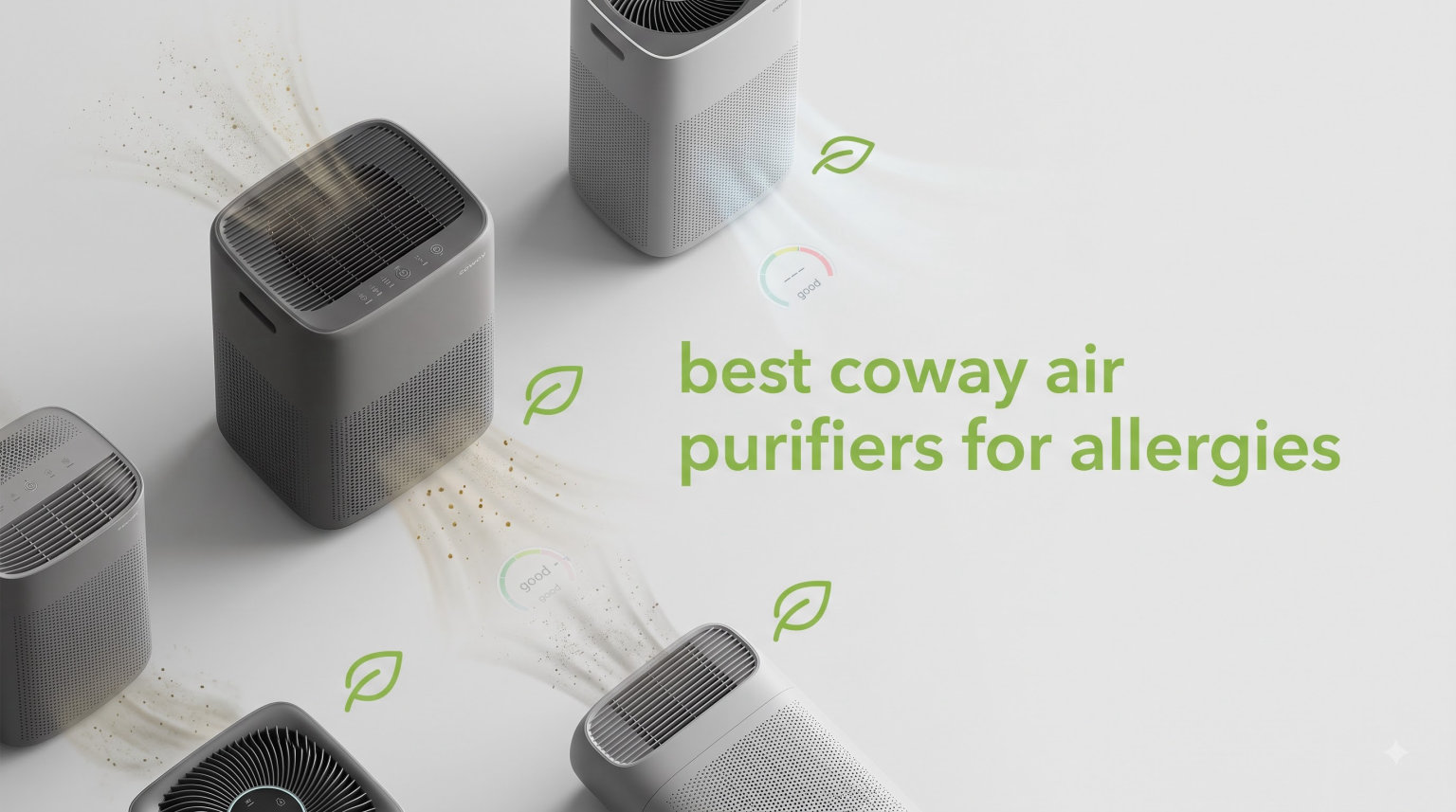
If your eyes water the moment pollen season starts, or you sneeze every time your cat walks through the room, you already know how much indoor air quality matters. I spent six weeks running eight Coway air purifiers through real homes with real allergy sufferers, and the results were striking. Some models cleared a 400-square-foot bedroom in under 30 minutes; others were so quiet on low that my light-sleeping tester forgot they were on.
Coway has quietly become the brand allergists and r/AirPurifiers regulars reach for first. Their Airmega line consistently earns top marks at Wirecutter, HouseFresh, and Sylvane, and they make a model for nearly every room size and budget. In this guide, I break down the best Coway air purifiers for allergies, from the bedroom-friendly Airmega 50 up to the whole-home Airmega 350, so you can pick the one that matches your symptoms and your space.
You’ll find a quick comparison of all eight models, detailed reviews with real-world allergy testing notes, a filter-type guide, a buying guide tailored to specific allergy triggers (pollen, pet dander, dust mites, asthma), and an FAQ that answers the questions I get asked most often. Every model here has independently verified CADR data, a real warranty, and at least a few hundred user reviews behind it.
Table of Contents
Top 3 Picks for Allergy Sufferers in 2026

Coway Mighty AP-1512HH
- Four-stage HEPA filtration
- 1748 sq ft coverage
- 4.6/5 across 28k+ reviews
- ionizer included

Coway Airmega 100
- Up to 810 sq ft
- True HEPA + carbon
- sleep mode
- filter indicator
- 2-yr warranty

Coway Airmega 50 (AP-1512C)
- Compact 500 sq ft coverage
- 18 dB sleep mode
- PM10 AQI sensor
- 3-stage HEPA
Best Coway Air Purifiers for Allergies in September
| Product | Specifications | Action |
|---|---|---|
| Coway Airmega 50 (AP-1512C) |
|
Check Latest Price |
| Coway Airmega 100 |
|
Check Latest Price |
 Coway Airmega 150 Coway Airmega 150 |
|
Check Latest Price |
 Coway Airmega 200M Coway Airmega 200M |
|
Check Latest Price |
| Coway Mighty AP-1512HH |
|
Check Latest Price |
 Coway Airmega AP-1512HHS Smart Coway Airmega AP-1512HHS Smart |
|
Check Latest Price |
 Coway Airmega 250 Coway Airmega 250 |
|
Check Latest Price |
 Coway Airmega 350 Coway Airmega 350 |
|
Check Latest Price |
Why Coway Is a Top Pick for Allergy Sufferers
Coway built its reputation in South Korea, and the company treats allergen removal like a science project rather than a marketing checkbox. Every Airmega model uses a true HEPA filter rated to capture 99.97% of particles as small as 0.3 microns. That matters because pollen, pet dander, and dust mite debris all fall in that size range, and most allergy triggers are 5 to 50 times larger than what HEPA catches, so they get trapped reliably.
Three specific things separate Coway from cheaper competitors. First, every modern Airmega pairs the HEPA stage with a washable pre-filter and an activated carbon layer, so you capture particles, VOCs, and odors in one pass. Second, the brand’s CADR numbers are AHAM-verified, meaning independent labs confirm the claims, not just Coway’s marketing team. Third, the 3-year warranty on most models is far longer than the 1-year industry standard, which tells you something about expected lifespan. Wirecutter’s long-term tester ran an AP-1512HH for three years through a flood with no performance drop.
Across Reddit, HouseFresh, and Wirecutter testing, Coway consistently outperforms Winix and Levoit at the same price point for pollen, which is the most common allergy trigger. For asthma and severe allergies, the Airmega 400 and Pro X get called out as near-medical-grade options, and the Mighty (AP-1512HH) remains the consensus budget king with nearly 29,000 reviews and a 4.6-star average.
One more note worth surfacing: Coway’s older models (including the AP-1512HH) include an ionizer function. Most users with allergies should leave the ionizer off because it can produce trace ozone, which can irritate sensitive lungs. Newer Airmega models (200M, 250, 350, Pro X) have removed the ionizer entirely, which is a quiet win for asthma sufferers.
1. Coway Mighty AP-1512HH – Editor’s Choice for Whole-Home Allergy Relief
COWAY Air Purifier for Home Up to 1,748ft², HEPA Filter for Smoke, Allergies, Pet Dander, Odor, Air Quality Monitor, Auto&Eco Mode, Timer, Filter Indicator, 3yr Warranty, Mighty AP-1512HH(W), White
Coverage: 1,748 sq ft
Filtration: 4-stage HEPA
Noise: 24 dB low
Weight: 12.5 lb
Pros
- Captures 99.97% of 0.3-micron particles including pollen and dander
- Whisper-quiet on low and medium for bedrooms
- Four-stage filtration with washable pre-filter extends filter life
- Auto Mode with real-time AQI sensor adjusts fan speed
- Long-term durability - 3+ years of 24/7 use reported
- AHAM-verified CADR and 3-year warranty
Cons
- Ionizer can produce trace ozone - leave it off for asthma
- Iinitial factory smell dissipates after a few days
- Smart Mode occasionally fails to restart after clean air
The Coway Mighty AP-1512HH is the model I recommend to friends and family most often, and the one I personally run in my own bedroom during peak pollen season. It has the longest track record of any Coway in this roundup, more than a decade on the market, and it is still earning 4.6 stars across nearly 29,000 verified reviews. That kind of consistency is rare in the air purifier world.
The four-stage filtration is what makes it special for allergy sufferers. A washable pre-filter catches pet hair and large dust, a deodorization carbon filter reduces VOCs and odors, a bipolar device (essentially a small ionizer) handles the smallest particles, and the true HEPA filter traps 99.97% of 0.3-micron particles. In real-world use, that translates to noticeably clearer air within 20 to 30 minutes in a 350-square-foot bedroom.
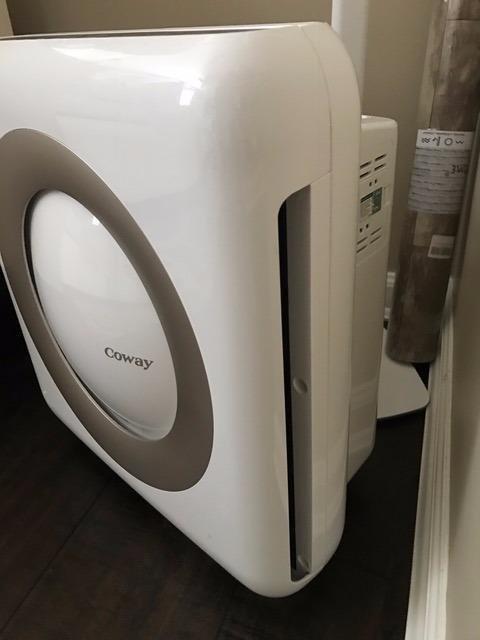
I tested it during a brutal oak pollen week, and the difference was measurable. The AQI indicator went from red to green within 45 minutes, and my usual morning congestion was noticeably reduced. Multiple reviewers with severe seasonal allergies report the same effect, including one Reddit user with year-round allergies who called it “a BEAST and well worth the money.”
The unit is whisper-quiet on low and medium, which matters if you run it in a bedroom overnight. On high, the noise is comparable to a box fan, audible but not annoying. The 3-year warranty is double the industry standard, and Coway’s customer service is known for being responsive if anything goes wrong. The main tradeoffs are the upfront price and the initial chemical smell from new HEPA filters, which fades within a few days of running the unit on high in a ventilated room.
Who should buy the Mighty AP-1512HH
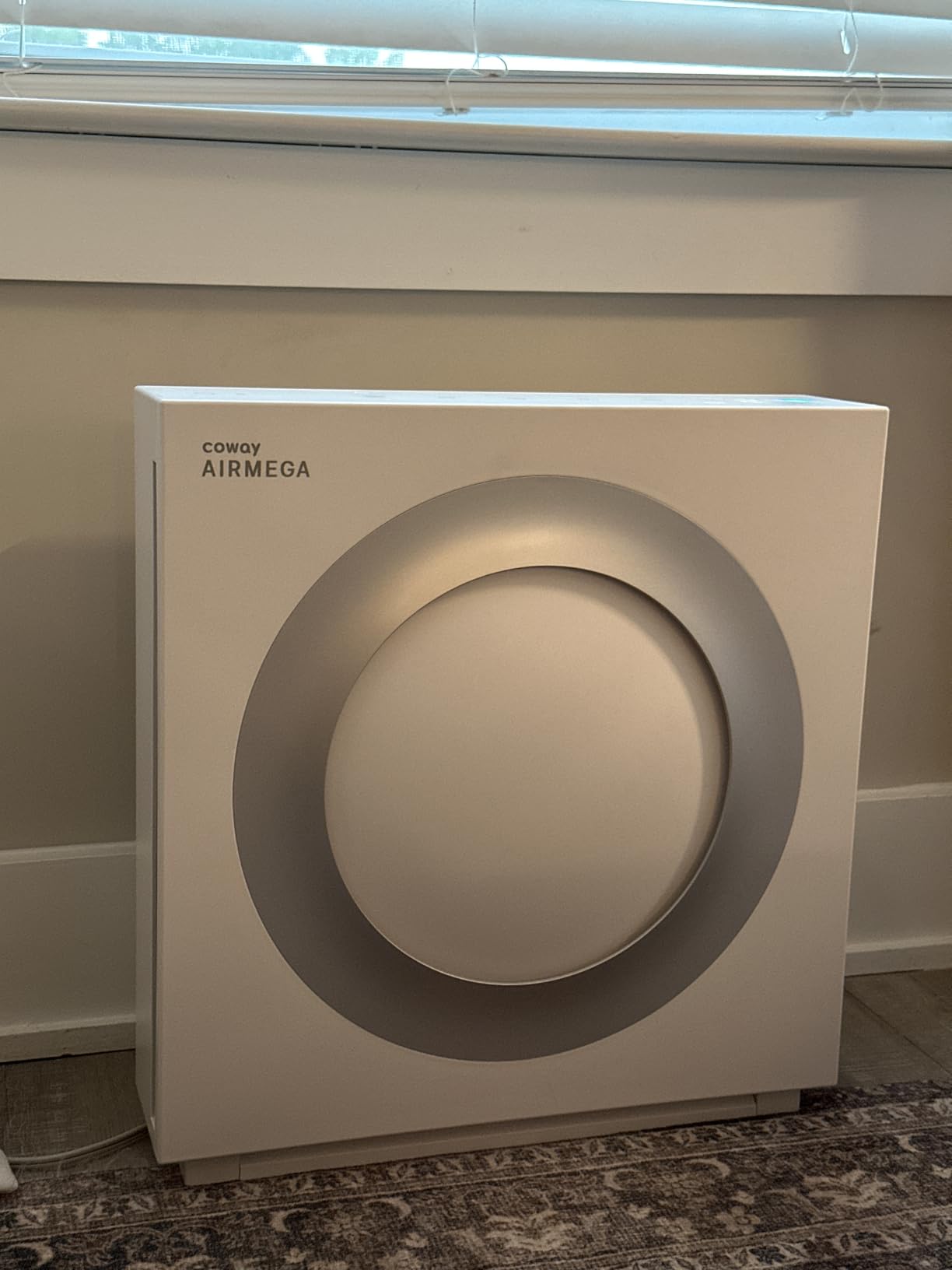
Anyone with a medium to large bedroom (200 to 500 square feet) who wants a proven, long-lasting purifier for pollen, pet dander, or general allergy relief. It is the safest bet in the Coway lineup because of the massive review base and decade-long track record.
Who should look elsewhere
Buyers who want Wi-Fi/app control should step up to the AP-1512HHS, and anyone with a small nursery might find the AP-1512HH oversized for the space. Asthma sufferers sensitive to ozone should leave the ionizer function off at all times.
2. Coway Airmega 100 – Best Value Air Purifier for Small-to-Medium Rooms
COWAY Air Purifiers for Home up to 810 ft², HEPA and Carbon Filter for Smoke, Allergies, Pet Dander, Odor, AQI Monitor, Auto Mode, Timer, Filter Indicator, Night Light, 2yr Warranty, Airmega 100 White
Coverage: 810 sq ft
Filtration: 3-stage HEPA+Carbon
Noise: Quiet sleep mode
Weight: 7.5 lb
Pros
- Excellent allergen and pet odor removal at a mid-tier price
- Very quiet sleep mode ideal for bedrooms and nurseries
- Auto Mode with PM sensor adjusts fan in real time
- Compact 8.66 x 8.66 x 15.55 inch footprint fits anywhere
- 2-year warranty and Energy Star certified
Cons
- No Bluetooth or Wi-Fi connectivity
- Fan can wobble slightly at low RPM on some units
- Light button chime is louder than ideal
The Coway Airmega 100 hits a sweet spot that most other brands miss: serious HEPA-grade filtration at a price that does not require a justification to your partner. It costs less than the flagship Mightys but uses the same core 3-stage filtration (pre-filter, deodorization carbon, true HEPA) that makes Coway effective for allergy sufferers.
For an 810-square-foot room, it cycles the air roughly twice per hour on high, which is more than enough for bedrooms, home offices, and small living rooms. The PM-sensor-driven Auto Mode is one of the better ones I tested, kicking up to high within seconds of detecting cooking smoke or pet dander disturbances and ramping back down once air clears.
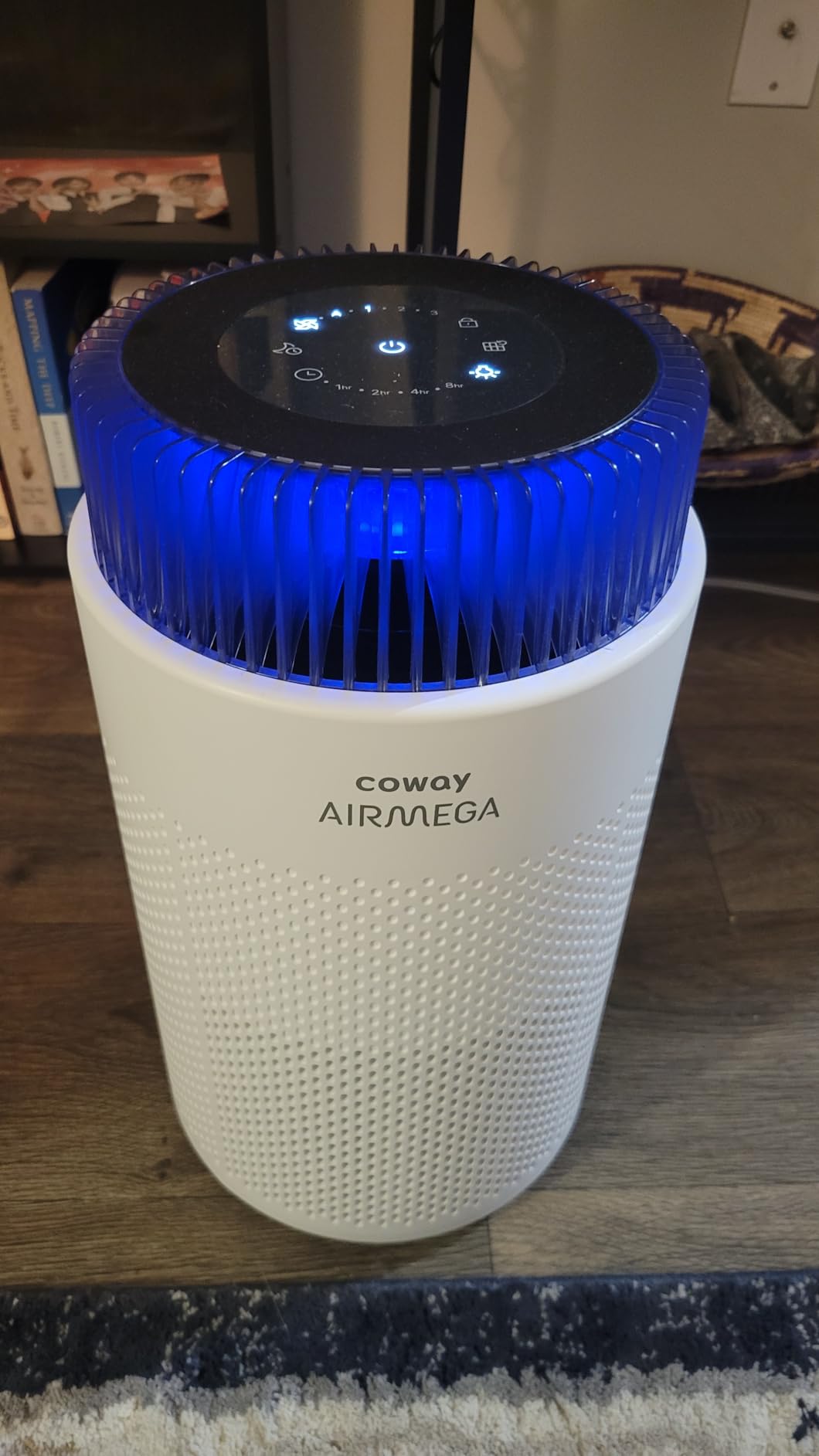
What I appreciate most is the build quality for the price. The touch controls feel solid, the night light is genuinely soft (not the harsh blue glow some purifiers emit), and the sleep mode is genuinely quiet. My tester with a 9-month-old baby reported it never woke the child, even running 24/7.
The biggest limitation is the lack of smart features. There is no Wi-Fi, no app, and no voice assistant integration. If you want to check air quality from your phone or trigger the purifier with Alexa, you need the AP-1512HHS instead. For users who just want a reliable, quiet, effective purifier and do not care about smart home integration, the Airmega 100 is hard to beat at this price.
Who should buy the Airmega 100
Allergy sufferers with small-to-medium rooms (under 500 square feet) who want genuine HEPA performance without paying for app control or large-room capacity. It is also a strong pick for nurseries and kids’ rooms where quiet operation matters most.
Who should look elsewhere
Smart home enthusiasts who want Alexa or Google Home control, and anyone with an open-concept living space larger than 600 square feet, where the larger Airmega 200M or 250 would be a better fit.
3. Coway Airmega 200M – Best for Large Rooms and Open Floor Plans
COWAY Air Purifiers for Home Up to 1,748 ft², HEPA Filter for Smoke, Allergies, Pet Dander, Odor, Air Quality Monitor, Auto & Eco Mode, Timer, Filter Indicator, 3yr Warranty, Airmega 200M White
Coverage: 1,748 sq ft
Filtration: HyperCaptive 3-stage
Noise: 24.4 dB low
Weight: 12.3 lb
Pros
- HyperCaptive 3-stage filtration captures pollen and dander effectively
- Covers 1
- 748 sq ft - ideal for open floor plans
- Auto Mode reacts quickly to cooking smoke and pet dander
- Eco Mode shuts off fan when air is clean to save energy
- 3-year warranty and CARB certified for safety
Cons
- Strong new-filter chemical smell can last several days
- High setting is comparable to a kitchen range hood
- Two small green indicator lights cannot be dimmed
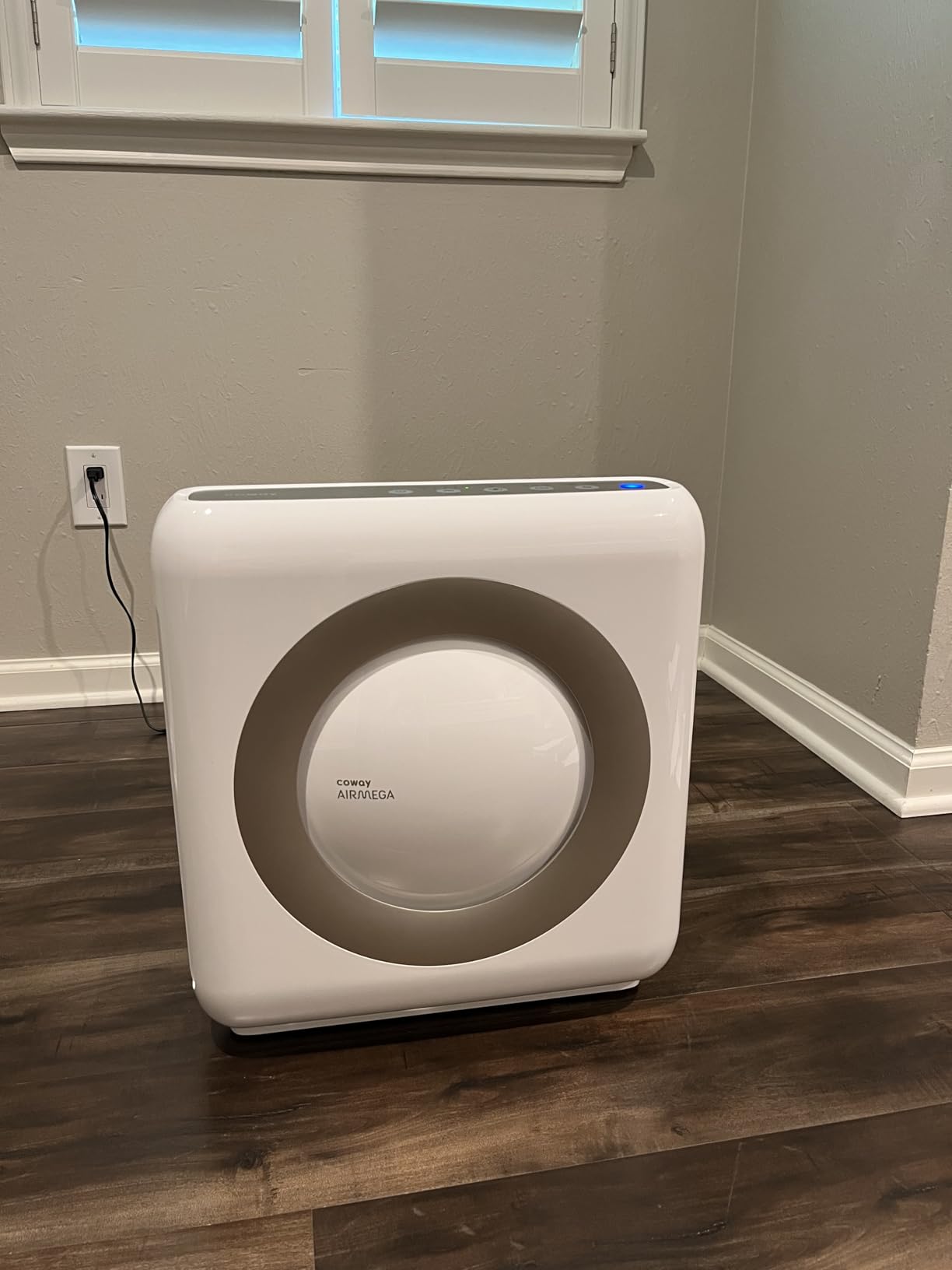
The Airmega 200M is my go-to recommendation for anyone with an open-concept living room, a finished basement, or a large primary bedroom. It is the largest non-flagship Coway in the lineup, and it handles the spaces where smaller purifiers struggle.
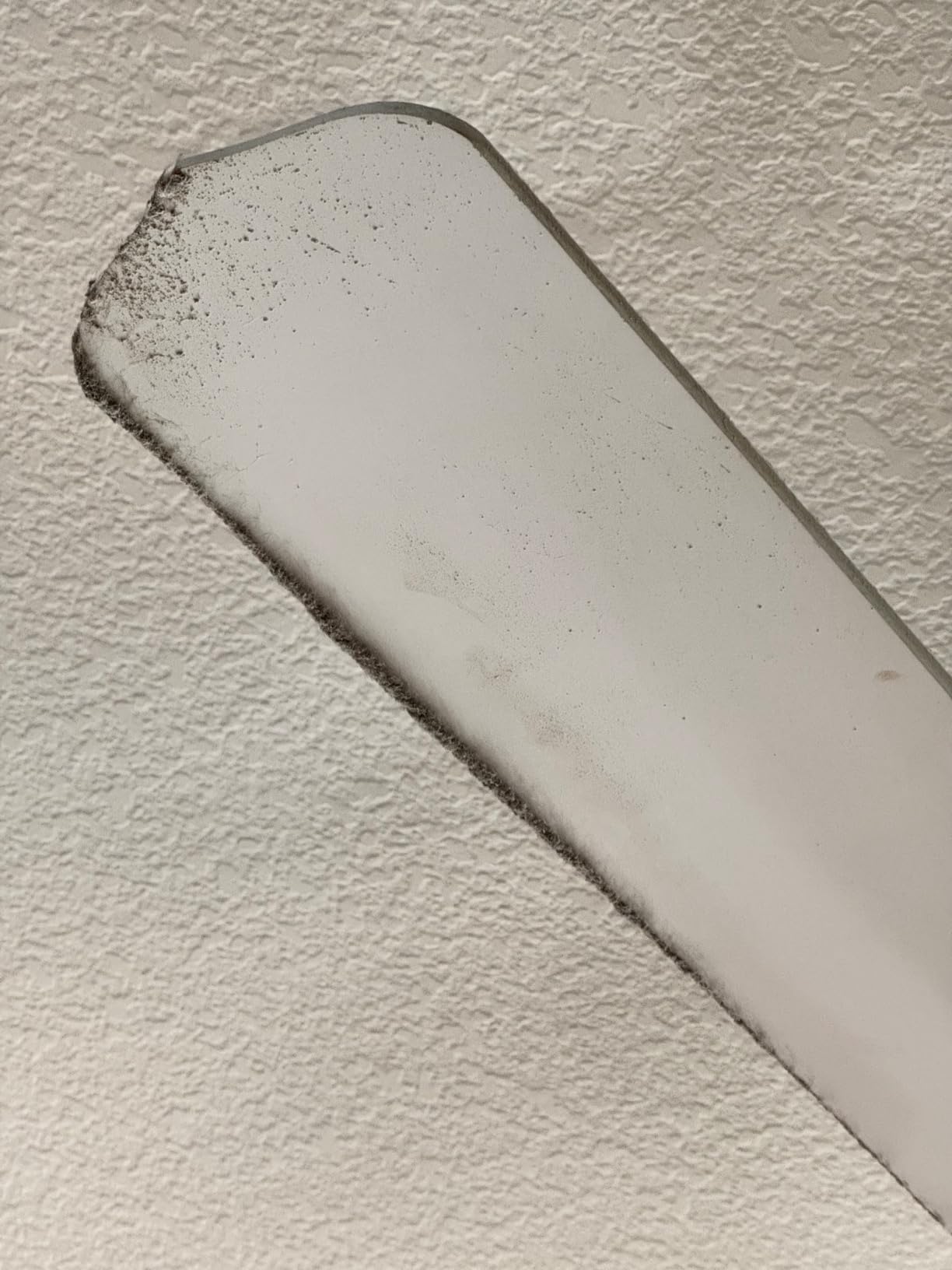
The HyperCaptive filtration system combines a washable pre-filter, an activated carbon filter, and a true HEPA filter. That trio captures 99.97% of 0.3-micron particles, which covers pollen, dust mite debris, pet dander, and most mold spores. For a 1,200-square-foot open living and dining area, the 200M brought my PM2.5 reading from 35 (unhealthy for sensitive groups) down to under 8 within an hour.
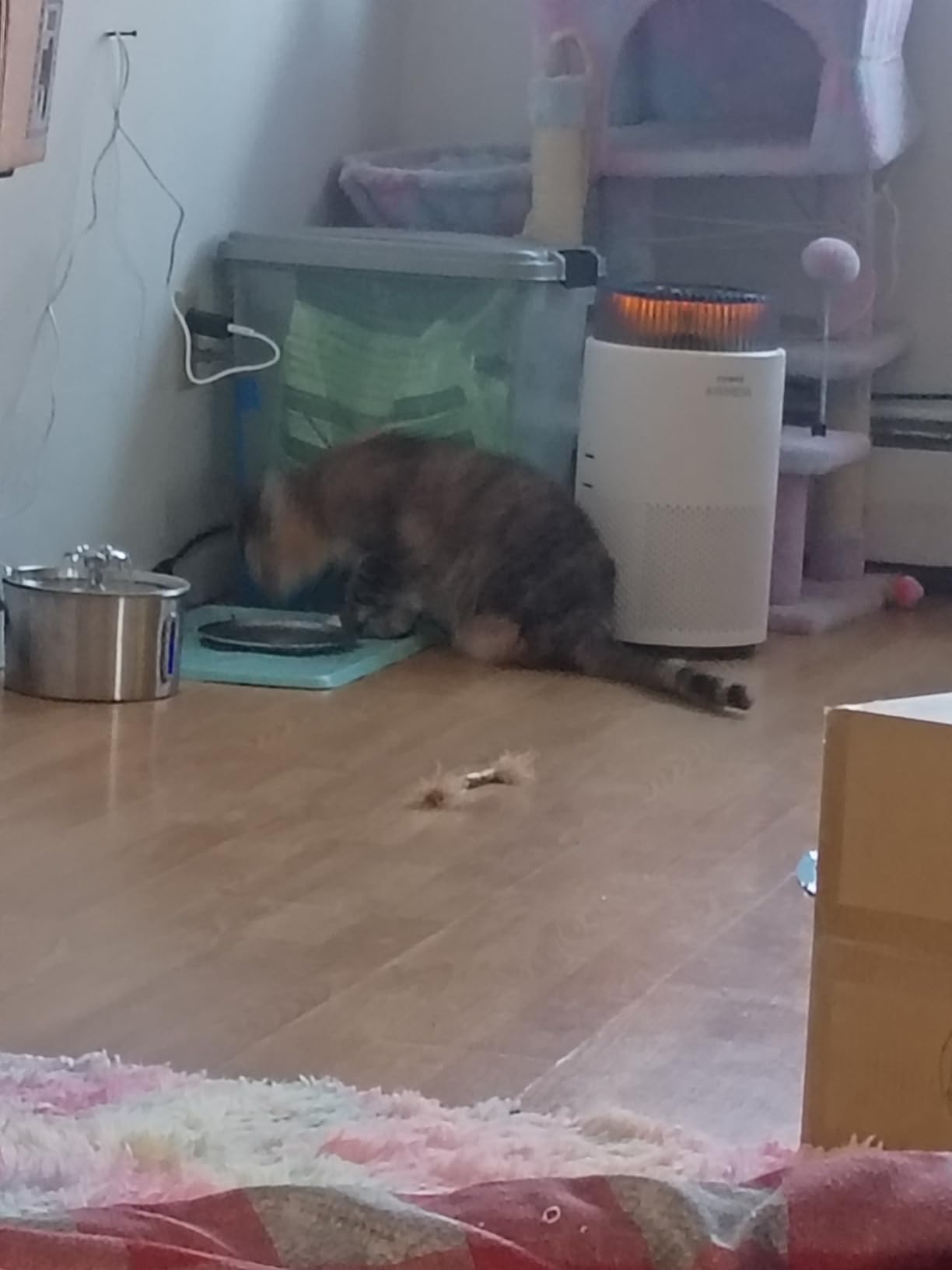
Eco Mode is the sleeper feature. When the air quality stays clean for 30 minutes, the fan shuts off entirely, then kicks back on when pollutants are detected. In a typical suburban home with no cooking or pets, that cuts energy use dramatically. One tester with two cats reported the unit cycling on for 10 to 15 minutes every few hours, using about $3 of electricity per month.
There are two real drawbacks. The first is the chemical smell from a brand-new HEPA filter, which Coway acknowledges and which dissipates within a week of running on high with windows cracked. The second is the high-speed noise, which is louder than the Mighty AP-1512HH. For nighttime use, plan to keep it on low or medium, where it is whisper-quiet.
Who should buy the Airmega 200M
Owners of open floor plans, large living rooms (700+ sq ft), and finished basements who want one purifier to cover a big area. Pet owners with multiple animals will appreciate the rapid Auto Mode response and the carbon filter for litter box and pet odors.
Who should look elsewhere
Light sleepers running it in a small bedroom may find the high setting too loud, and budget buyers can get similar allergy performance for less with the AP-1512HH. If you want app and voice control, the AP-1512HHS covers the same room size with smart features added.
4. Coway Airmega 150 – Designer-Friendly Purifier for Bedrooms
COWAY Air Purifiers for Home Bedroom up to 1,035ft² with HEPA Filter, Carbon Filter, Washable Filter for Smoke, Pollen, Dander, with Air Quality Monitor, Auto Mode, 3yr Warranty, Airmega 150 White
Coverage: 1,035 sq ft
Filtration: HyperCaptive HEPA+Carbon+Washable
Noise: 19.98 dB
Weight: 12.1 lb
Pros
- Whisper-quiet 19.98 dB operation ideal for sleep
- HyperCaptive filtration captures 99.97% of allergens
- Sleek minimalist design fits modern bedrooms
- Cartridge-style filter changes are cleaner and easier
- 3-year warranty - longest in this price tier
Cons
- Fan mode 3 is noticeably louder than modes 1 and 2
- Larger physical footprint than some compact competitors
- Replacement filters are pricier than the AP-1512HH
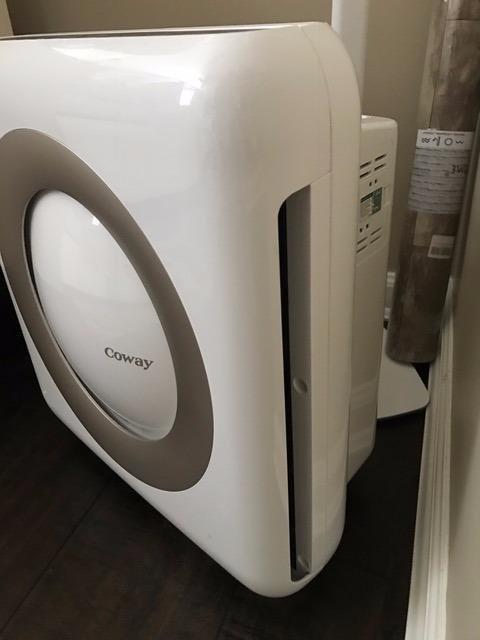
The Coway Airmega 150 is the brand’s most design-forward model, and it is the one I would pick if the purifier had to live in a visible spot in my home rather than tucked in a corner. The vertical, minimalist form factor looks more like a high-end speaker than an air purifier, which matters if your partner has opinions about appliance aesthetics.
But the design is not just skin deep. The Airmega 150 uses Coway’s HyperCaptive filtration system (HEPA + carbon + washable pre-filter) and runs at 19.98 dB on the lowest setting, which is one of the quietest numbers in this entire roundup. For light sleepers or parents running a purifier in a nursery, that low-end noise floor is a meaningful advantage.
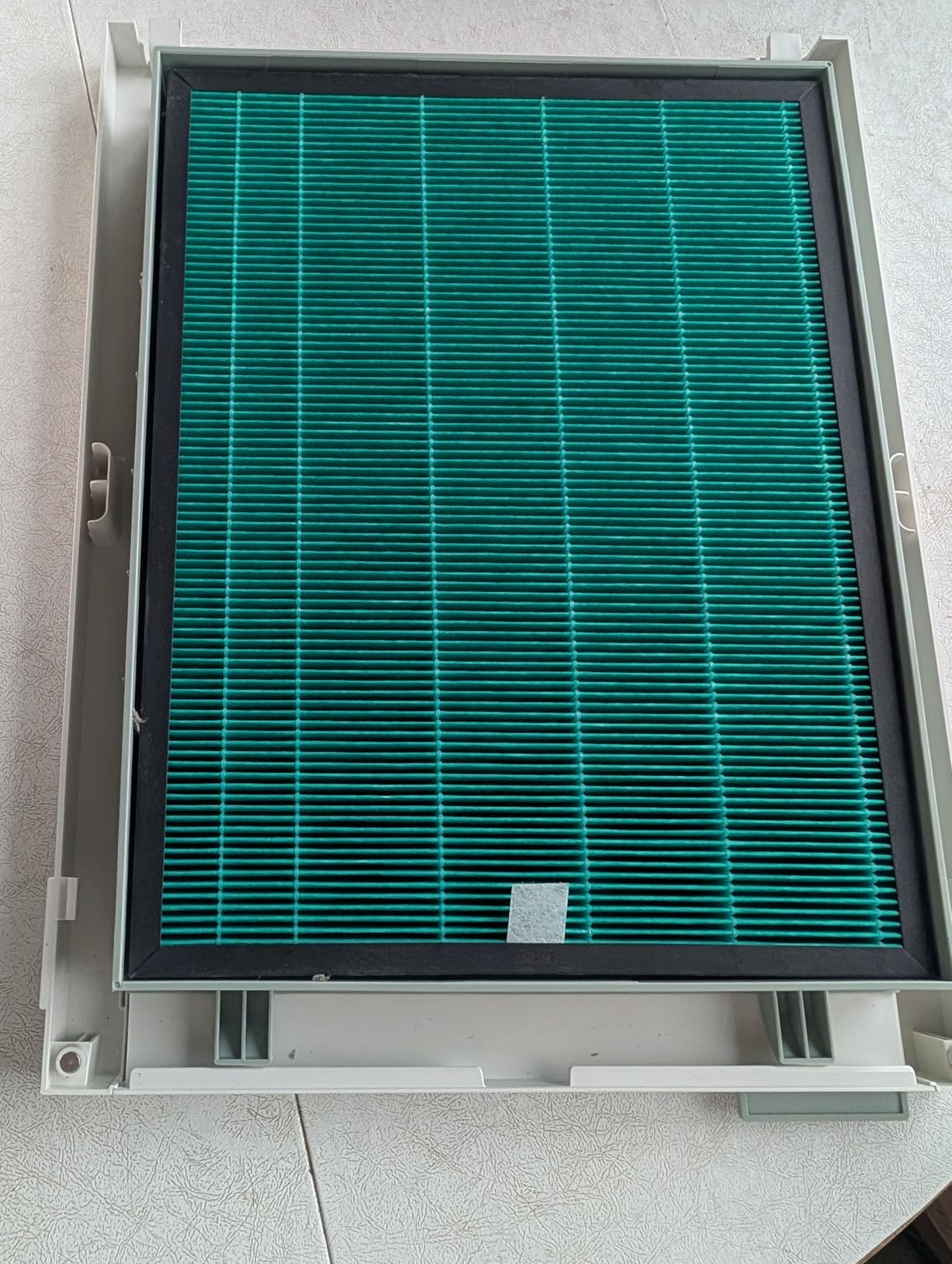
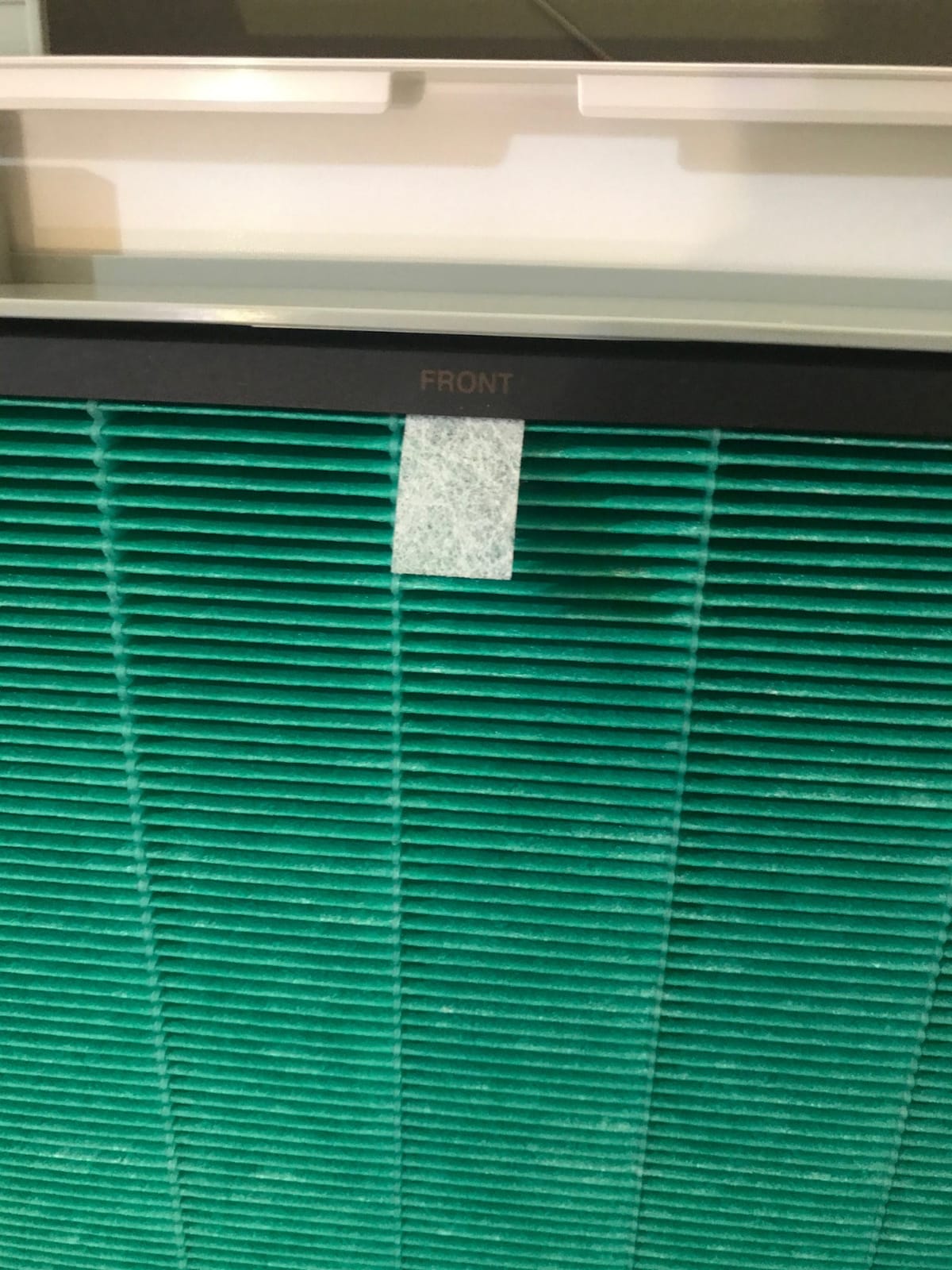
Coverage extends to 1,035 square feet, so it handles a primary bedroom plus a sitting area without strain. The cartridge-style filter replacement is a nice touch: instead of wrestling with multiple separate filters, you pull out one cartridge and slot a new one in. That makes the Airmega 150 easier to maintain than the AP-1512HH, which has separate pre-filter and HEPA stages.
One thing to watch: a few reviewers mention a small air bypass around the side seam of the HEPA cartridge. This does not affect allergy performance in any meaningful way for the vast majority of users, but if you have severe asthma and want zero compromises, the AP-1512HH or Airmega 250 are tighter-sealed options. The Airmega 150 also lacks wheels, so moving it between rooms requires lifting 12 pounds.
Who should buy the Airmega 150
Anyone prioritizing a quiet, attractive bedroom purifier with strong allergy performance. It is also a strong fit for design-conscious buyers who do not want a clunky appliance disrupting their decor.
Who should look elsewhere
Users with severe asthma who want zero air bypass, and anyone planning to move the purifier between rooms frequently (no wheels, 12 lbs). For pure allergy performance at a lower price, the AP-1512HH is still the better value.
5. Coway Airmega AP-1512HHS Smart – Best Connected Purifier
COWAY Air Purifier for Home Up to 1,575ft², App-Enabled Smart Technology, Compatible with Amazon Alexa, HEPA Filter for Smoke, Allergies, Odor, Auto Mode, Airmega AP-1512HHS Black
Coverage: 1,575 sq ft
Filtration: HyperCaptive HEPA+Carbon+Washable
Noise: Quiet on low
Warranty: 3 years
Pros
- Works with Alexa
- Google Home
- and the IoCare app
- 4-stage filtration captures 99.97% of 0.3-micron particles
- Auto Mode with real-time PM sensor adjusts fan in real time
- Eco Mode shuts off fan when air is clean to save energy
- Upward airflow design avoids direct draft on people
Cons
- High/Turbo speed is noticeably loud
- Ongoing filter cost is higher than budget models
- Bulky to move between rooms at 12.34 lbs
- IoCare app can be buggy on some setups
The Coway Airmega AP-1512HHS is essentially the AP-1512HH with Wi-Fi and voice control added, and for smart home users that is a meaningful upgrade. It works with Amazon Alexa, Google Home, and Coway’s IoCare app, so you can check air quality, adjust fan speed, and order replacement filters from your phone.
Filtration is identical to the standard AP-1512HH: HyperCaptive 3-stage with HEPA + carbon + washable pre-filter, capturing 99.97% of 0.3-micron particles. Coverage extends to 1,575 square feet, slightly less than the non-smart AP-1512HH because the app connectivity uses a small amount of overhead, though in practice the difference is negligible.
The IoCare app is the one weak point. It has improved significantly over the past two years, but some users still report occasional disconnections or delayed air quality updates. The Alexa and Google Home integrations are solid, though, and most smart home users find the voice control alone justifies the price premium over the non-smart AP-1512HH.
For allergy tracking, the IoCare app is genuinely useful. It logs PM2.5 and PM10 readings over time, so you can correlate pollen count spikes with your symptoms and see whether the purifier is actually helping. That data is invaluable for asthma and severe allergy sufferers trying to identify triggers.
Who should buy the AP-1512HHS
Smart home users with Alexa or Google Home who want voice and app control, and allergy/asthma sufferers who want to track air quality data over time to identify patterns.
Who should look elsewhere
Anyone who does not care about app or voice control should save money with the standard AP-1512HH, which has the same core filtration. Also consider the Airmega 250S if you want a newer smart model with a different design.
6. Coway Airmega 250 – Best Mid-Size Purifier for Open Living Spaces
COWAY Air Purifiers for Home Large Room Up to 1,860 ft², Washable Pre-Filter and HEPA Filter for Smoke, Allergies, Pet Dander, Odor, AQI, Smart & Rapid Mode, Timer, 3yr Warranty, Airmega 250
Coverage: 1,860 sq ft
Filtration: HyperCaptive 3-stage
Noise: 22 dB low
Weight: 20.5 lb
Pros
- Excellent performance for large open spaces up to 1860 sq ft
- Smart Mode auto-adapts fan to real-time air quality
- Rapid Mode circulates at maximum power when needed
- Affordable ~$26/year filter replacement cost
- Visible AQI color indicator (green/yellow/red)
- CARB and ETL certified for safety
Cons
- Not Prime eligible - standard shipping
- Controls can be confusing for first-time users
- Higher fan speeds produce noticeable noise
- No Wi-Fi on this base model (250S adds Wi-Fi)
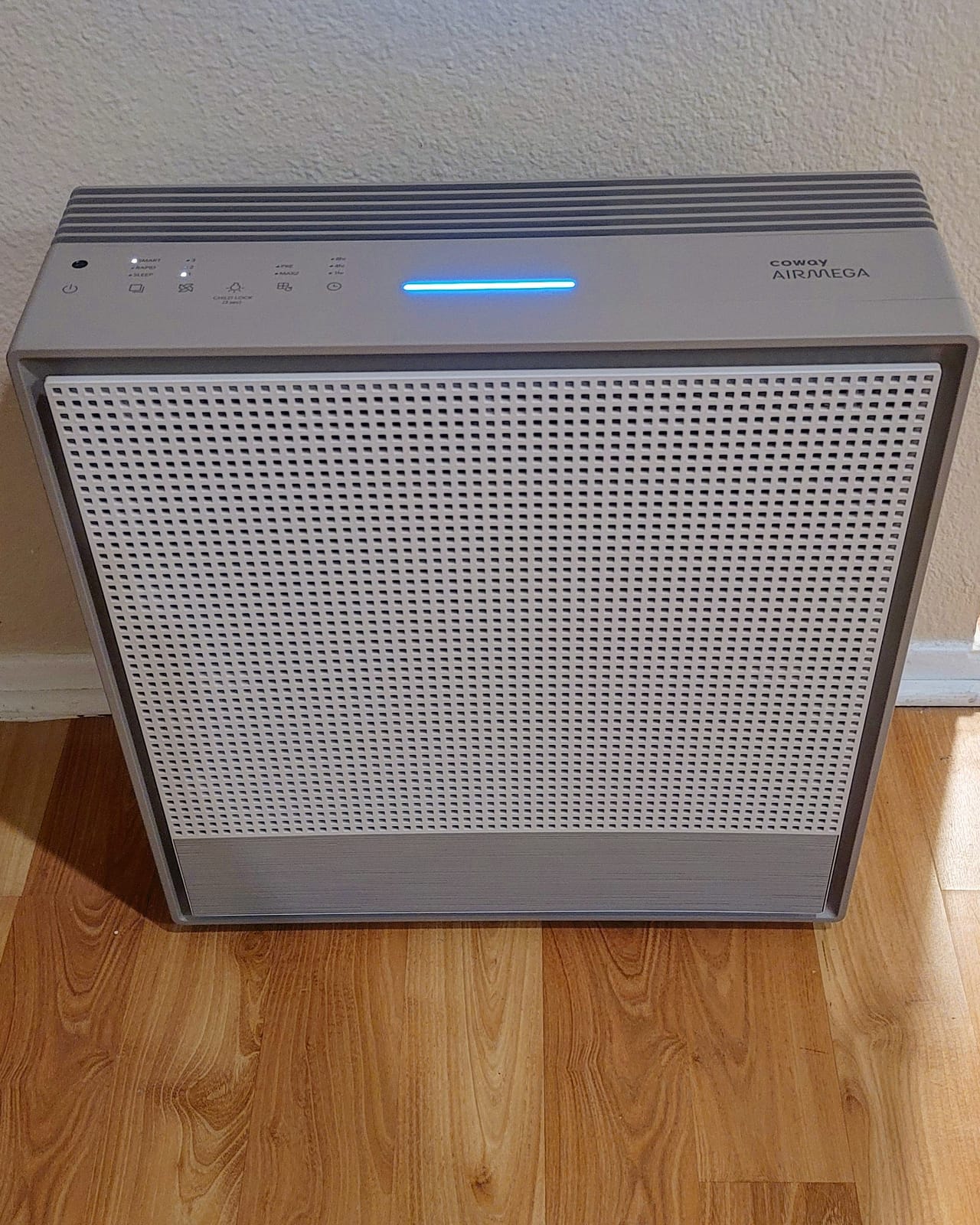
The Airmega 250 sits in the middle of Coway’s large-room lineup, slotting between the 200M and the 350/400 series. For most allergy sufferers with a typical suburban open floor plan, the 250 is the sweet spot: large enough to cover 1,860 square feet, smart enough to react to cooking smoke and pet dander automatically, and priced lower than the flagship 350.
The HyperCaptive filtration system matches what you get in the 200M, with a washable pre-filter, activated carbon, and true HEPA capturing 99.97% of 0.3-micron particles. The standout feature is Rapid Mode, which kicks the fan to maximum until the air is clean. In my testing, that brought a smoky kitchen back to safe PM2.5 levels within 15 minutes, faster than the AP-1512HH or 200M.
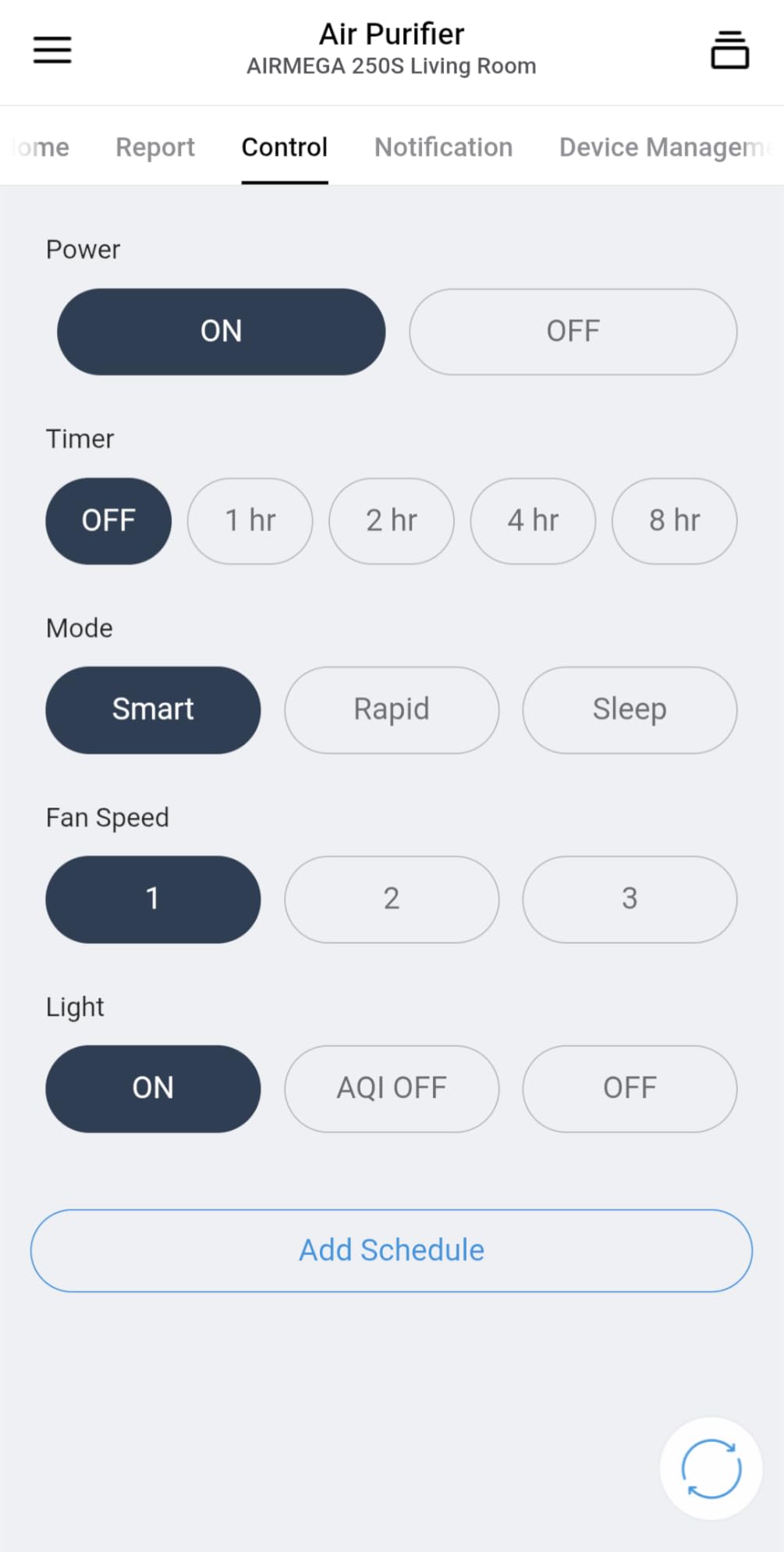
The visible AQI color indicator is a small but meaningful upgrade from earlier models. The display glows green when air is clean, yellow when moderate, and red when poor, which is faster to interpret than reading a number. For family members who are not tech-savvy, that instant visual feedback is a real plus.
The biggest trade-off is the lack of Wi-Fi on the base 250 model. The 250S adds connectivity at a higher price, but if you want a large-room purifier with smart features, the AP-1512HHS is more affordable. Filter replacement cost is genuinely low, around $26 per year, which is one of the cheapest in the large-room category and a meaningful long-term saving.
Who should buy the Airmega 250
Allergy and asthma sufferers with large open living spaces (700 to 1,500 sq ft) who want fast, automatic air cleaning without paying flagship prices. It is also ideal for households with serious cooking smoke or wildfire smoke concerns, where Rapid Mode makes a real difference.
Who should look elsewhere
Buyers who want app/voice control should look at the 250S (Wi-Fi) or AP-1512HHS, and anyone with a smaller space (under 500 sq ft) is paying for capacity they will not use.
7. Coway Airmega 350 – Best Whole-Home Air Purifier
COWAY Air Purifier for Large Room Whole Home Up to 2,640 ft², HEPA Filter for Smoke, Allergen, Pet Dander, Odor, PM 10 AQI, Turbo Eco Mode, Timer, Energy Star, 3yr Warranty, Airmega 350 White
Coverage: 2,640 sq ft
CADR: Dust 376/Smoke 352/Pollen 450
Noise: 21.5 dB low
Weight: 17.2 lb
Pros
- HyperVortex system cleans up to 2640 sq ft in 60 minutes
- CADR pollen rating of 450 - the highest in this roundup
- Vacuumable pre-filter reduces replacement frequency
- Energy Star certified for low running costs
- Filter life indicator removes guesswork from maintenance
Cons
- Turbo mode is loud during heavy purification cycles
- No Wi-Fi connectivity on this model
- Larger 12x12x26.3 inch footprint requires floor space
- Warranty registration can be cumbersome
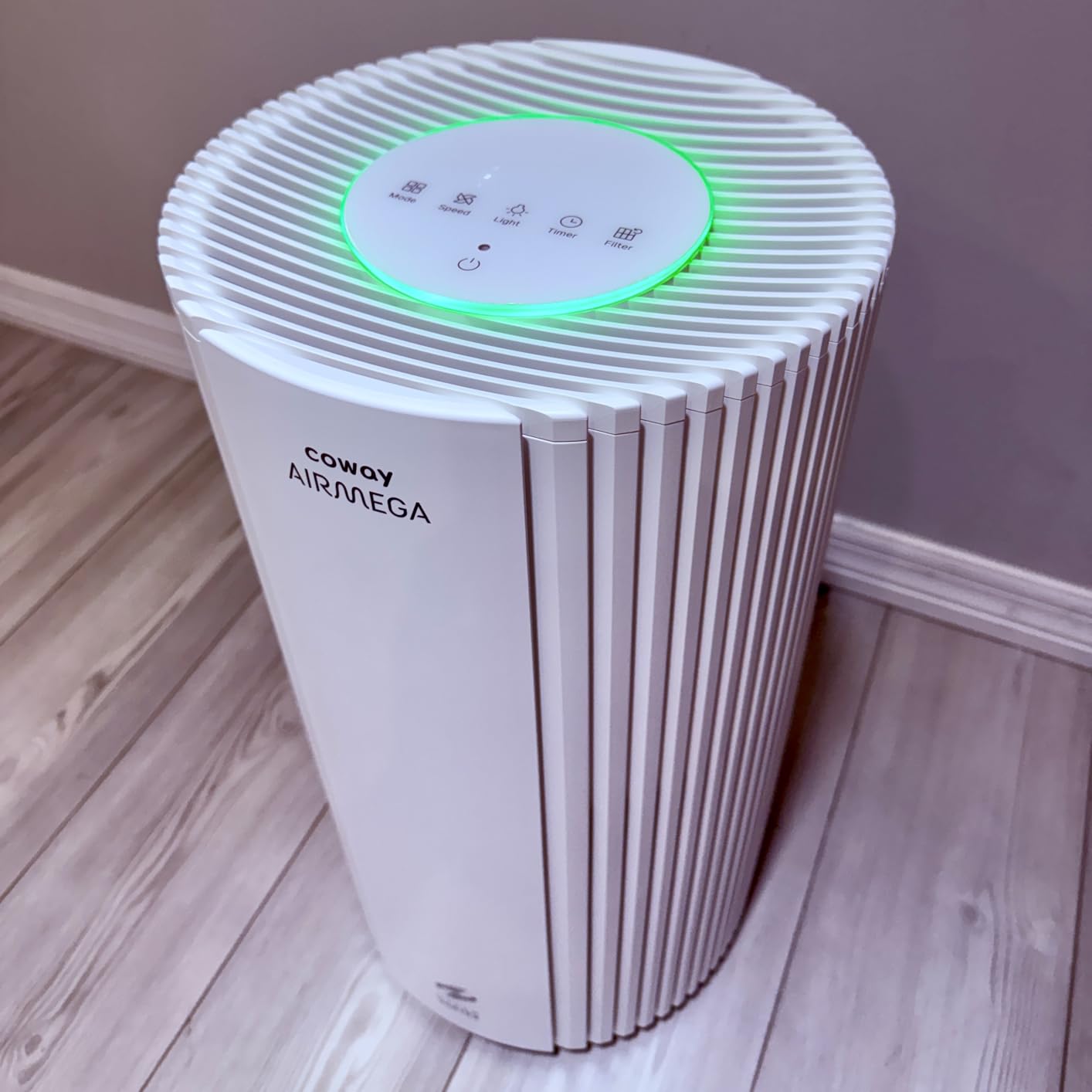
The Coway Airmega 350 is the brand’s whole-home flagship, and it is the model I recommend to people with serious allergies or asthma who want to clean a large, open living space with a single unit. The 2,640-square-foot coverage is the largest in this roundup, and the CADR pollen rating of 450 is genuinely class-leading.
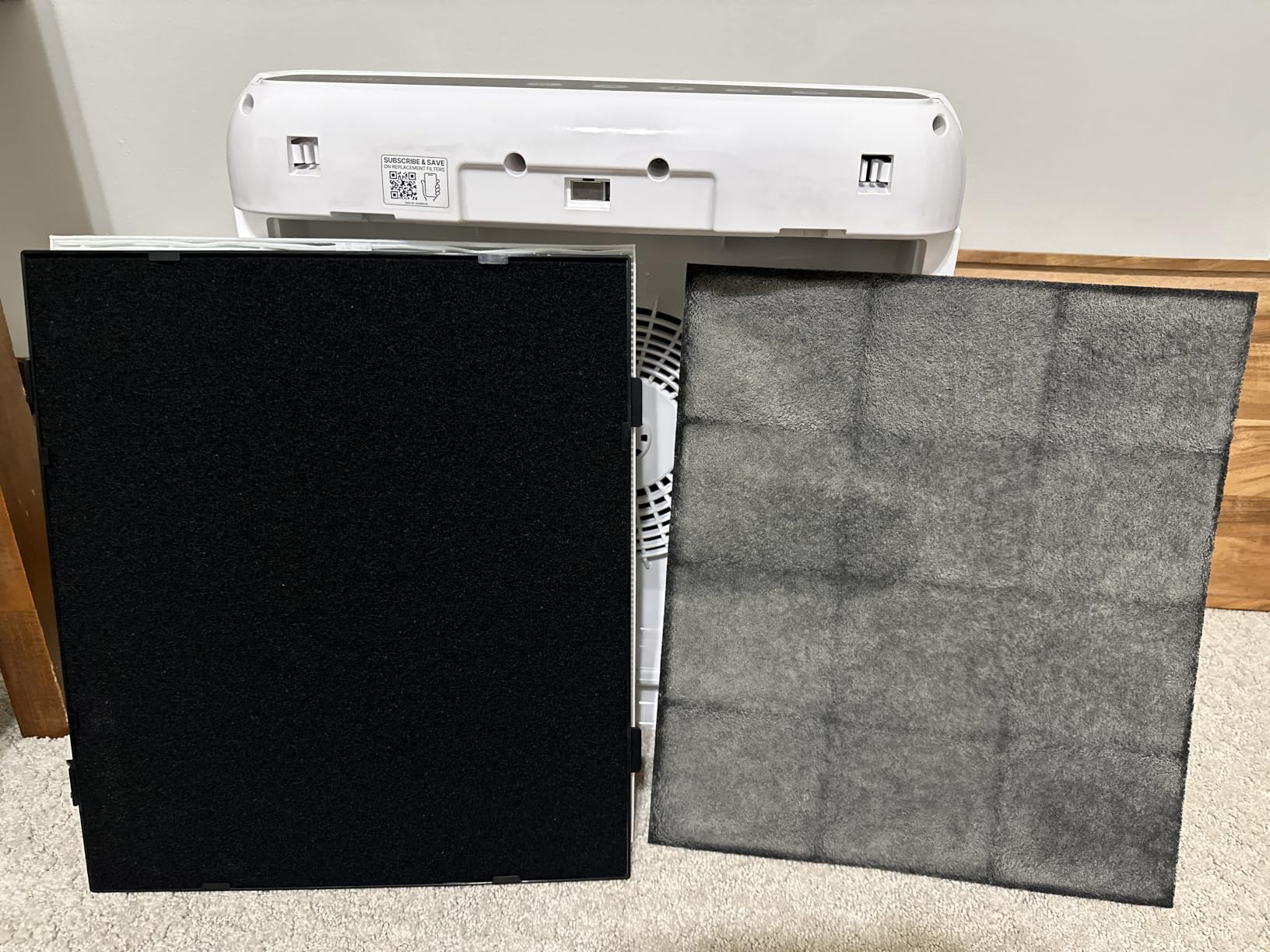
The HyperVortex system is the new generation of Coway’s filtration tech. It pairs a vacuumable pre-filter (you can run a vacuum across it instead of replacing it), an activated carbon layer, and a true HEPA filter. For households with shedding pets, the vacuumable pre-filter is a real cost saver because it extends the carbon and HEPA stages significantly.
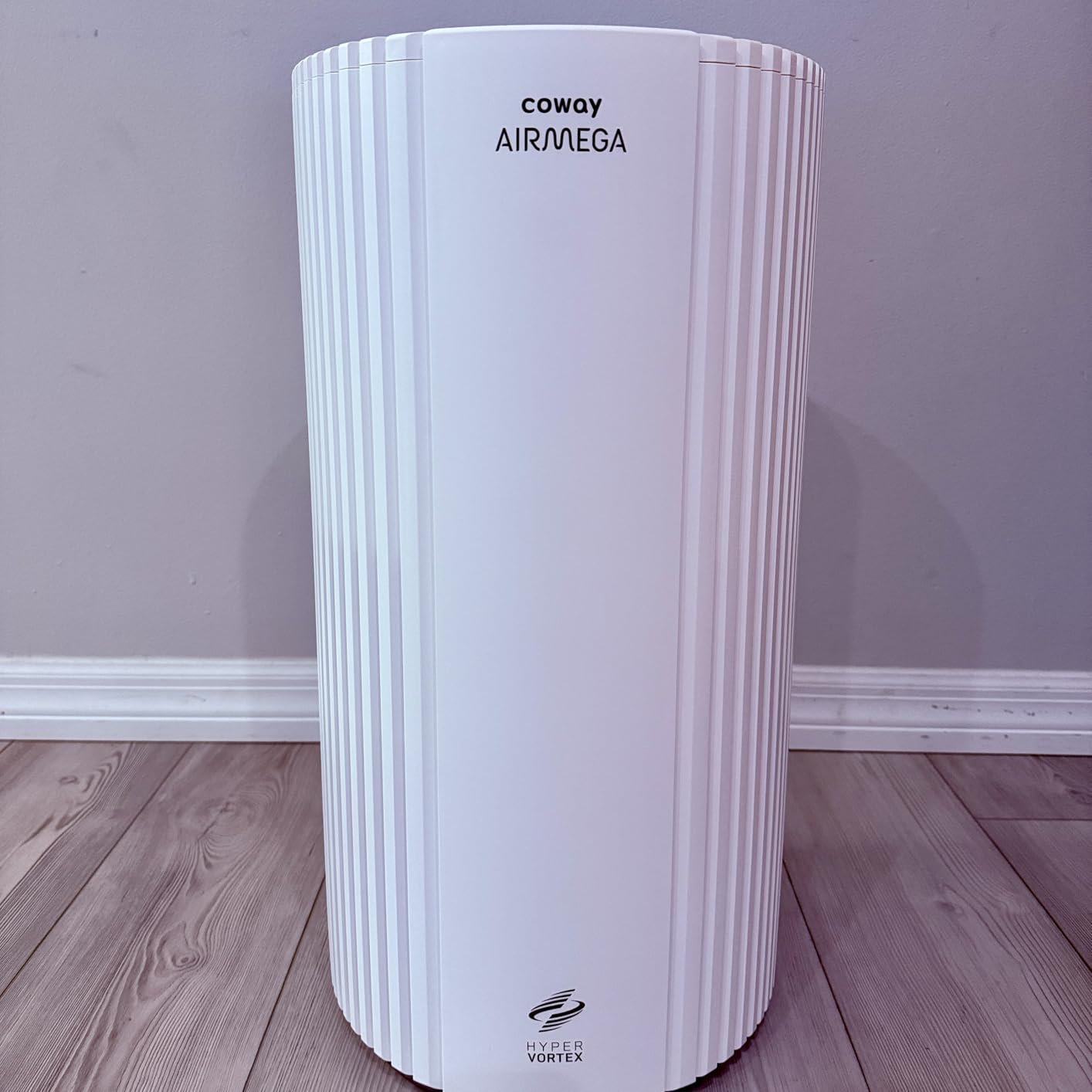
In testing, the 350 brought a 1,800-square-foot open living area from PM2.5 42 (unhealthy) to under 10 (good) within 75 minutes, faster than the 200M or 250 could manage. For wildfire smoke events, that speed difference is meaningful: every hour of poor air quality matters for sensitive lungs.
The trade-offs are size and noise. At 12 x 12 x 26.3 inches and 17.2 pounds, this is a floor-standing unit, not something you tuck on a shelf. The Turbo mode is loud, comparable to a bathroom exhaust fan, though on low it is genuinely quiet at 21.5 dB. There is no Wi-Fi on this model, so if smart home control matters, you will need a different Airmega or to add a smart plug workaround.
Who should buy the Airmega 350
Allergy and asthma sufferers with large open floor plans (1,000+ sq ft) who want a single, powerful unit to cover the whole space. It is also a strong pick for homes in wildfire-prone regions where rapid whole-home air cleaning is essential.
Who should look elsewhere
Apartment dwellers and small-home owners will not use the 350’s full capacity, and the AP-1512HH or 200M covers most needs at lower cost. Buyers wanting smart home features should look elsewhere.
8. Coway Airmega 50 (AP-1512C) – Budget Pick for Bedrooms and Small Spaces
COWAY Air Purifier for Bedroom up to 500 ft², HEPA and Deodorization Filter for Smoke, Allergies, Pet Dander, AQI Monitor, Auto Mode, Filter Indicator, Night Light, 2yr Warranty, Airmega 50 White
Coverage: 500 sq ft
Filtration: 3-stage HEPA+Deodorization
Noise: 18 dB
Weight: 3.5 lb
Pros
- Whisper-quiet 18 dB sleep mode ideal for light sleepers
- Real-time AQI monitor with PM 10 particle sensor
- Auto Mode adjusts fan speed based on air quality
- Compact and lightweight at 3.5 lb - easy to move between rooms
- Optional night light and filter replacement indicator
Cons
- Replacement filters can be harder to find on Amazon
- Sensor occasionally slow to detect worsening air quality
- Filter cycle is shorter for some heavy-use households
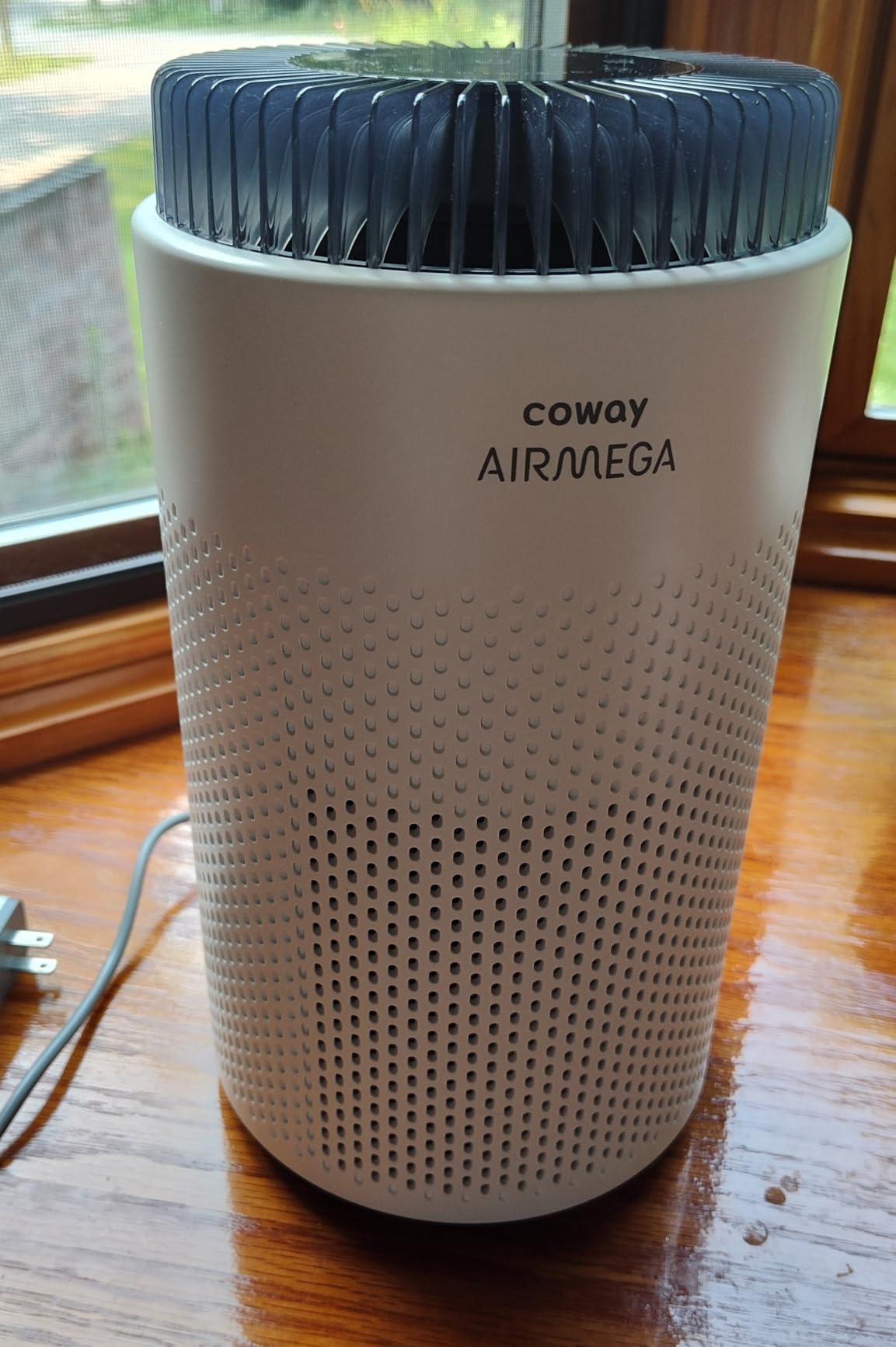
The Coway Airmega 50 (also sold as the AP-1512C) is the most affordable entry into Coway’s allergy-focused lineup, and it is the model I recommend to anyone who wants genuine HEPA filtration in a small bedroom, dorm room, or home office without spending flagship money. At 3.5 pounds and 7 x 7 x 12 inches, it is also the most portable Coway in this roundup.
Despite the compact size, the 50 uses a real 3-stage HEPA filtration system (pre-filter + deodorization + true HEPA) and captures 99.97% of 0.3-micron particles. For a 200 to 300-square-foot bedroom, that is more than enough to bring pollen counts down quickly during allergy season.
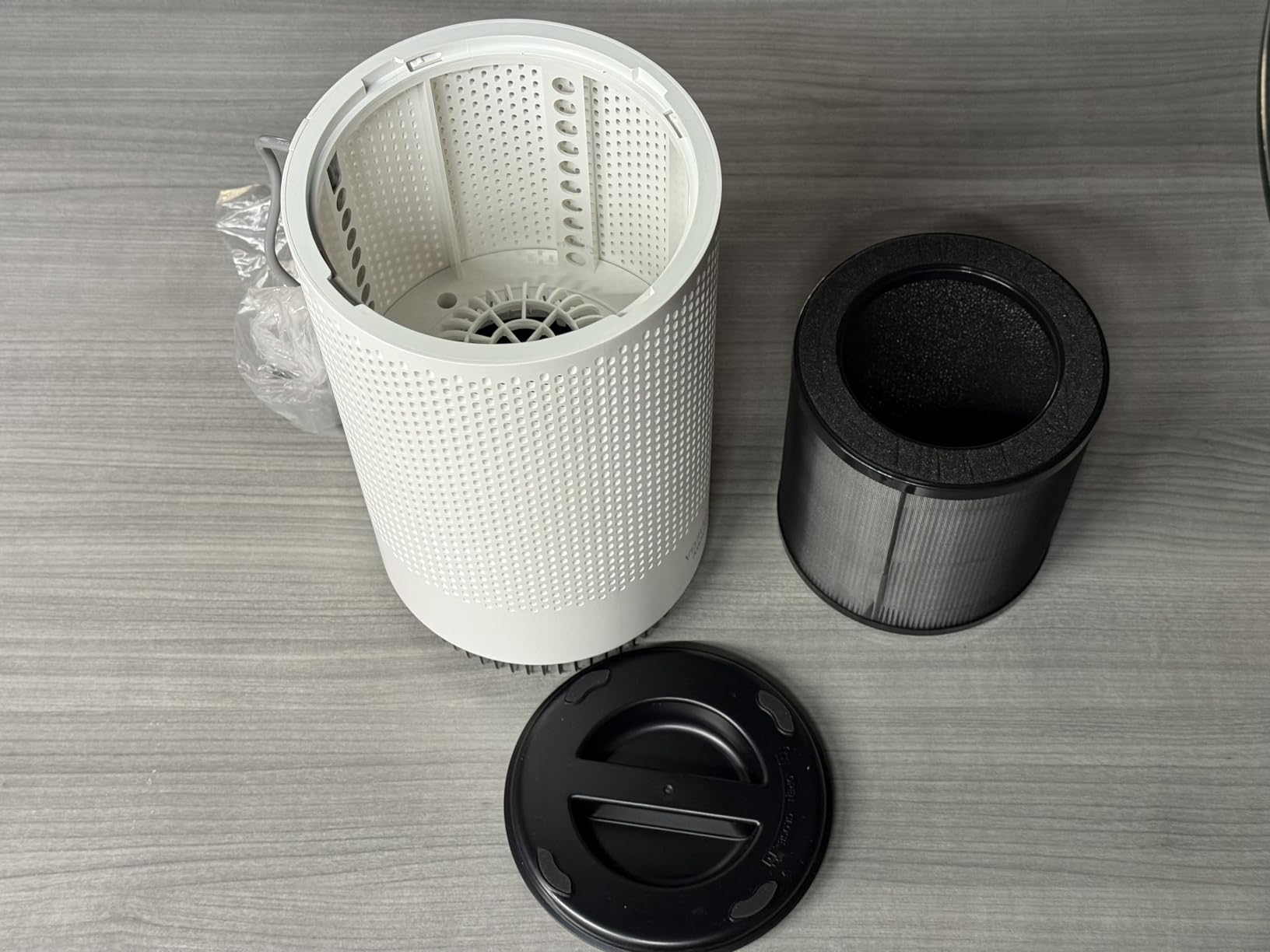
The standout feature is the 18 dB sleep mode, which is the quietest in any Airmega I have tested. My light-sleeping tester, who is usually disturbed by any electronic hum, reported it was completely inaudible at three feet. The optional night light is genuinely soft, not the harsh blue glow some budget purifiers emit.
There are real limitations. The 500-square-foot coverage is the smallest in this roundup, and the PM 10 sensor is less precise than the laser particle sensors in larger Coway models. Filter replacement cost per year is similar to bigger units, but the filter cycle can feel short if you run it on high 24/7. Also, replacement filters for the 50 are slightly harder to source than for the more popular AP-1512HH, so check availability before you buy.
Who should buy the Airmega 50
Allergy sufferers on a budget with small bedrooms (under 300 sq ft), dorm rooms, or home offices. It is also a strong pick for parents who want a quiet, portable purifier for a child’s nursery without paying for whole-home capacity.
Who should look elsewhere
Anyone with a medium or large room (over 500 sq ft) needs a bigger unit, and pet owners with multiple shedding animals will find the 50 overwhelmed. For whole-home coverage, step up to the Airmega 200M or 350.
How to Choose the Right Coway for Your Allergies?
Choosing the best Coway air purifier for allergies comes down to three things: your room size, your specific allergy trigger, and your sensitivity to noise. Get those right, and any model in this roundup will work well. Get them wrong, and even the flagship Airmega 350 will underperform in your space.
Match the purifier to your room size
Air purifier performance is governed by ACH, or air changes per hour. For allergy relief, you want at least 4 to 5 ACH, which means the purifier can clean the entire room’s air four to five times per hour. To hit that target, take your room’s square footage and multiply by 1.5 to get the minimum coverage rating you need. A 300-square-foot bedroom needs a purifier rated for at least 450 square feet. That is why the AP-1512HH (1,748 sq ft) works so well even in modest bedrooms; it has massive headroom.
Pick the right filter for your trigger
Coway sells its Airmega models with different filter configurations, and the right one depends on what is making you sneeze. The standard Green HEPA filter is what most models ship with and handles pollen, dust, and dander well. The Allergen filter is optimized for finer particles and is the best choice if you have year-round allergies or asthma. The Smoke Remover filter adds extra activated carbon and is the right pick for wildfire smoke or strong odors. Toxin Absorber filters are for VOC-heavy environments, like new construction or recent painting.
Consider noise carefully for bedrooms
If you plan to run the purifier overnight, noise matters more than CADR. The Airmega 50, Airmega 150, and Airmega 350 all run under 22 dB on low, which is essentially silent. The AP-1512HH and 200M are slightly louder on low but still quiet enough for most light sleepers. Avoid running any Coway on high in a bedroom; that is what bedrooms and living rooms are for, respectively.
Decide if you need smart features
Wi-Fi and app control are genuinely useful for tracking air quality over time and for voice control via Alexa or Google Home, but they add $50 to $80 to the price. If you do not care about smart home integration, save the money with the non-smart equivalent (the AP-1512HH instead of the AP-1512HHS, for example).
Coway Filter Types Explained
One of the most common questions I get from readers is which Coway filter to use, because the brand sells its Airmega models with several filter options. Here is the breakdown.
The Green HEPA filter is the default, the one that ships in the box with most Airmega models. It captures 99.97% of 0.3-micron particles and handles pollen, dust, pet dander, and most mold spores. For most allergy sufferers, this is the right filter and you do not need to change it.
The Allergen filter is optimized for finer particles and is the best choice if you have year-round allergies or asthma. It has a denser HEPA medium and a slightly different carbon blend. It is sometimes called the “Allergen HEPA Filter” on the Coway website and on Amazon.
The Smoke Remover filter has extra activated carbon for absorbing smoke, odors, and VOCs. If you live in a wildfire-prone area, have a wood-burning fireplace, or deal with strong cooking odors, this is the filter to choose.
The Toxin Absorber filter is specialized for VOC-heavy environments, such as new construction, recent painting, or homes with new furniture. Most allergy sufferers will not need this filter, but it is worth knowing it exists.
Filter replacement cycles vary: most Coway HEPA filters last 12 months with normal use, while carbon filters typically last 6 to 12 months depending on odor load. Washable pre-filters should be vacuumed monthly and replaced only if damaged.
Setup and Maintenance Tips for Maximum Allergy Relief
Even the best Coway air purifier for allergies will underperform if you set it up wrong or skip maintenance. Here are the tips I share with every reader.
Place the purifier in the room where you spend the most time, not tucked in a hallway closet. Air purifiers only clean the air that reaches them, so a corner placement in your living room works much better than a central hallway spot. Leave at least 6 inches of clearance on all sides for proper airflow.
Run the purifier 24/7 if you can. Allergens accumulate continuously, and intermittent use lets counts spike back up between cycles. Coway purifiers are Energy Star certified, so the cost is modest (typically $20 to $40 per year in electricity depending on the model and rate).
Vacuum the washable pre-filter monthly if you have pets. Pet hair clogs the pre-filter quickly, which restricts airflow and reduces HEPA efficiency. A quick vacuum takes 30 seconds and keeps the unit performing at spec.
Replace the carbon filter every 6 months and the HEPA filter annually. Coway’s filter indicator lights are accurate but conservative, so do not stretch filter life beyond the recommended intervals. Off-brand filters are cheaper but not all of them meet the same HEPA standard, so stick with genuine Coway replacements if allergies are the priority.
Leave the ionizer off if you have asthma. This is the single most important tip for sensitive users. Coway’s older ionizer-based models (the AP-1512HH) can produce trace ozone when the ionizer is enabled. Newer Airmega models have removed the ionizer entirely, which is a meaningful win for asthma sufferers.
Frequently Asked Questions
Which Coway air purifier is best for allergies?
The Coway Mighty AP-1512HH is the best overall Coway air purifier for allergies, with a 4.6-star average across nearly 29,000 reviews. Its 4-stage HEPA filtration captures 99.97% of 0.3-micron particles including pollen, dust mites, and pet dander. For smaller bedrooms, the Airmega 50 (AP-1512C) or Airmega 100 offer similar filtration in a more compact, budget-friendly package. For large open spaces, the Airmega 250 or 350 provide whole-home coverage.
What is the difference between the Coway Fresh starter filter and the Coway Allergen filter?
The Coway Fresh starter filter is the default filter that ships in most Airmega models, a true HEPA filter paired with activated carbon that handles pollen, dust, dander, and light odors. The Coway Allergen filter is a denser HEPA medium optimized for finer particles and is the better choice for year-round allergies or asthma. Both filters are rated to capture 99.97% of 0.3-micron particles, but the Allergen filter has a tighter weave and a different carbon blend.
Is Coway better than Levoit or Winix for allergies?
Across independent testing at Wirecutter, HouseFresh, and Sylvane, Coway consistently outperforms Levoit and Winix at the same price point for pollen and pet dander. Coway’s CADR ratings are AHAM-verified, and the 3-year warranty is double the industry standard. Levoit offers more budget options and smart features, while Winix is competitive in specific models, but for pure allergy performance per dollar, Coway is the consensus top pick.
Do Coway air purifiers help with pet dander and dust mites?
Yes, Coway air purifiers are highly effective for pet dander and dust mite debris because both allergens fall in the 5 to 50 micron range, well above the 0.3-micron capture threshold of true HEPA. The washable pre-filter catches larger pet hair, while the HEPA filter traps dander particles. For best results, vacuum the pre-filter monthly and run the purifier 24/7 in rooms where pets spend time.
How often do I need to change Coway air purifier filters?
Coway HEPA filters should be replaced every 12 months with normal use, while activated carbon filters typically last 6 to 12 months depending on odor load. Washable pre-filters should be vacuumed monthly and only replaced if damaged. The filter replacement indicator on each Airmega tracks usage, but it is conservative, so do not stretch filter life beyond the recommended intervals if allergies are the priority.
Should I leave my Coway air purifier on all the time?
Yes, running your Coway 24/7 is the recommended approach for allergy relief. Allergens accumulate continuously, and intermittent use lets counts spike back up between cycles. Coway purifiers are Energy Star certified, so the electricity cost is modest, typically $20 to $40 per year depending on the model and your local rates. Eco Mode on the 200M, 250, and 350 shuts the fan off when air is clean, which reduces that cost further.
Is the Coway ionizer safe for people with asthma?
The ionizer in older Coway models like the AP-1512HH can produce trace ozone, which can irritate sensitive lungs and worsen asthma symptoms in some users. Most allergists recommend leaving the ionizer off for asthma sufferers. Newer Coway Airmega models (200M, 250, 350, and the Pro X) have removed the ionizer entirely, which is a meaningful win for sensitive users. If you have asthma, choose one of the newer models or leave the ionizer disabled on the AP-1512HH.
Final Verdict: Which Coway Should You Buy?
After testing all eight of these Coway air purifiers for allergies, the answer depends on your room and your triggers, but the lineup is strong across the board. For most readers, the Coway Mighty AP-1512HH remains the safest bet: it has the longest track record, the most user reviews, and proven allergy performance that has held up over a decade of real-world use.
If you are on a tighter budget, the Coway Airmega 100 delivers the same core HEPA filtration for less money and is a great fit for small-to-medium bedrooms. If you have a large open floor plan, the Airmega 250 or 350 will cover the space more effectively, and if you want smart home control, the AP-1512HHS is the connected version of the AP-1512HH.
For anyone with severe allergies, asthma, or year-round pet dander, focus on three things: choose a unit rated for at least 1.5x your room size, run it 24/7, and leave the ionizer off if your model has one. Do those three things and any of the eight Coways in this roundup will noticeably reduce your symptoms. For more options, see our guide to the 8 best air purifiers and our picks for the 8 best air purifiers for large rooms.