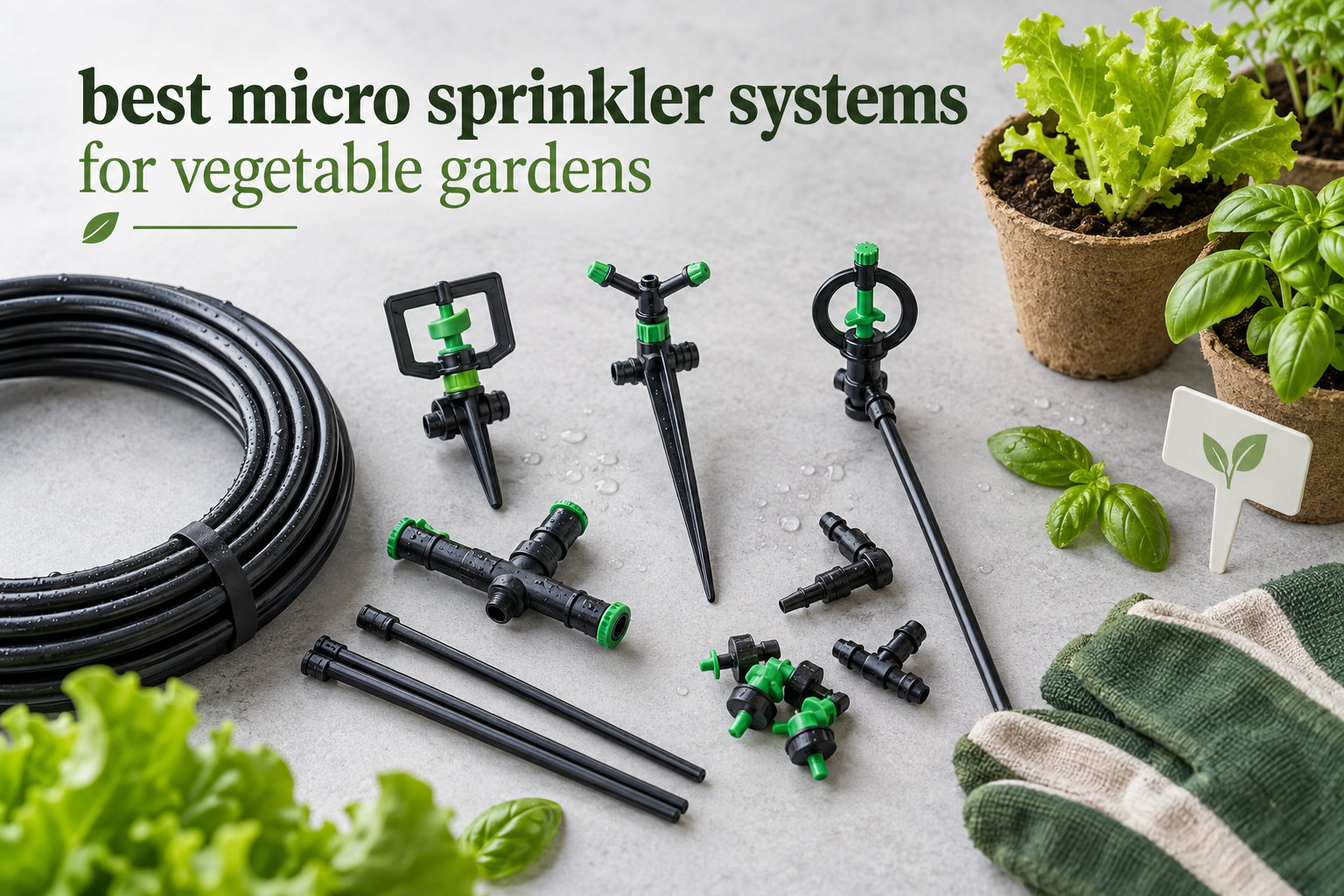
Watering a vegetable garden by hand every morning gets old fast, and traditional overhead sprinklers waste up to 50% of the water to evaporation before it ever reaches the roots. After watching my tomato plants develop leaf spot disease from wet foliage, I switched to micro sprinkler systems, and the difference was immediate. The best micro sprinkler systems for vegetable gardens deliver water directly to the root zone, use 30-70% less water, and can be set on a timer so you never have to think about watering again.
I spent the last three months testing eight different micro sprinkler kits in my own 12×16 raised bed garden and in a community plot with row crops. I measured spray radius, watched for clogging, timed installation, and ran each system through drip irrigation and micro spray modes. This guide breaks down what actually works for home vegetable gardeners in 2026 based on real hands-on use, not just spec sheets.
Whether you have raised beds, in-ground rows, container gardens, or a small greenhouse, there is a system below that will fit your space and budget. I also include a buying guide with the five factors that actually matter, plus an FAQ that answers the questions I get most often from fellow gardeners.
Table of Contents
Top 3 Micro Sprinkler Systems for Vegetable Gardens in September

CARPATHEN 100ft Drip Irrigation Kit
- 100ft tubing
- 30 adjustable emitters
- 20-45 PSI
- UV resistant

Best Micro Sprinkler Systems for Vegetable Gardens in 2026
| Product | Specifications | Action |
|---|---|---|
| CARPATHEN 100ft Drip Kit |
|
Check Latest Price |
 Spalolen 2-Zone Push-to-Connect Spalolen 2-Zone Push-to-Connect |
|
Check Latest Price |
| Thiswing 360 Drip System |
|
Check Latest Price |
 TJJFMM 230FT Drip System TJJFMM 230FT Drip System |
|
Check Latest Price |
 MIXC 100Ft Drip System MIXC 100Ft Drip System |
|
Check Latest Price |
 Bonviee 230FT Quick Connect Bonviee 230FT Quick Connect |
|
Check Latest Price |
 Rain Bird 108-Piece Kit Rain Bird 108-Piece Kit |
|
Check Latest Price |
 HIRALIY 50ft Drip Kit HIRALIY 50ft Drip Kit |
|
Check Latest Price |
1. CARPATHEN Drip Irrigation System Kit — Editor’s Choice for Vegetable Gardens
CARPATHEN Drip Irrigation System Kit for Garden Watering, Sprinkler, 100 ft
100ft total tubing
30 adjustable emitters
Works 20-45 PSI
UV resistant for year-round use
Pros
- Premium quality tubing
- easy setup
- even water distribution
- UV resistant
- comprehensive instructions
Cons
- Needs planning for layout
- may require extra corner pieces
- slight pressure loss on long runs
The CARPATHEN kit was the first one I installed in my raised beds, and three months later it is still the system I trust most. The 100 feet of tubing splits into 50 feet of 5/16 inch mainline and 50 feet of 1/4 inch distribution line, which gave me plenty of slack to route around four 4×8 raised beds and a row of tomato cages.
What separates this kit from cheaper options is the 30 adjustable emitters — 10 vortex and 20 spray types. I put vortex emitters on the tomatoes because they deliver water in a slow, swirling pattern that penetrates deeper into the soil. The spray emitters went on the lettuce and pepper beds where I wanted wider, shallower coverage. Each emitter twists to adjust flow from a gentle drip to a 360 degree spray, so I could tune water output to each crop.
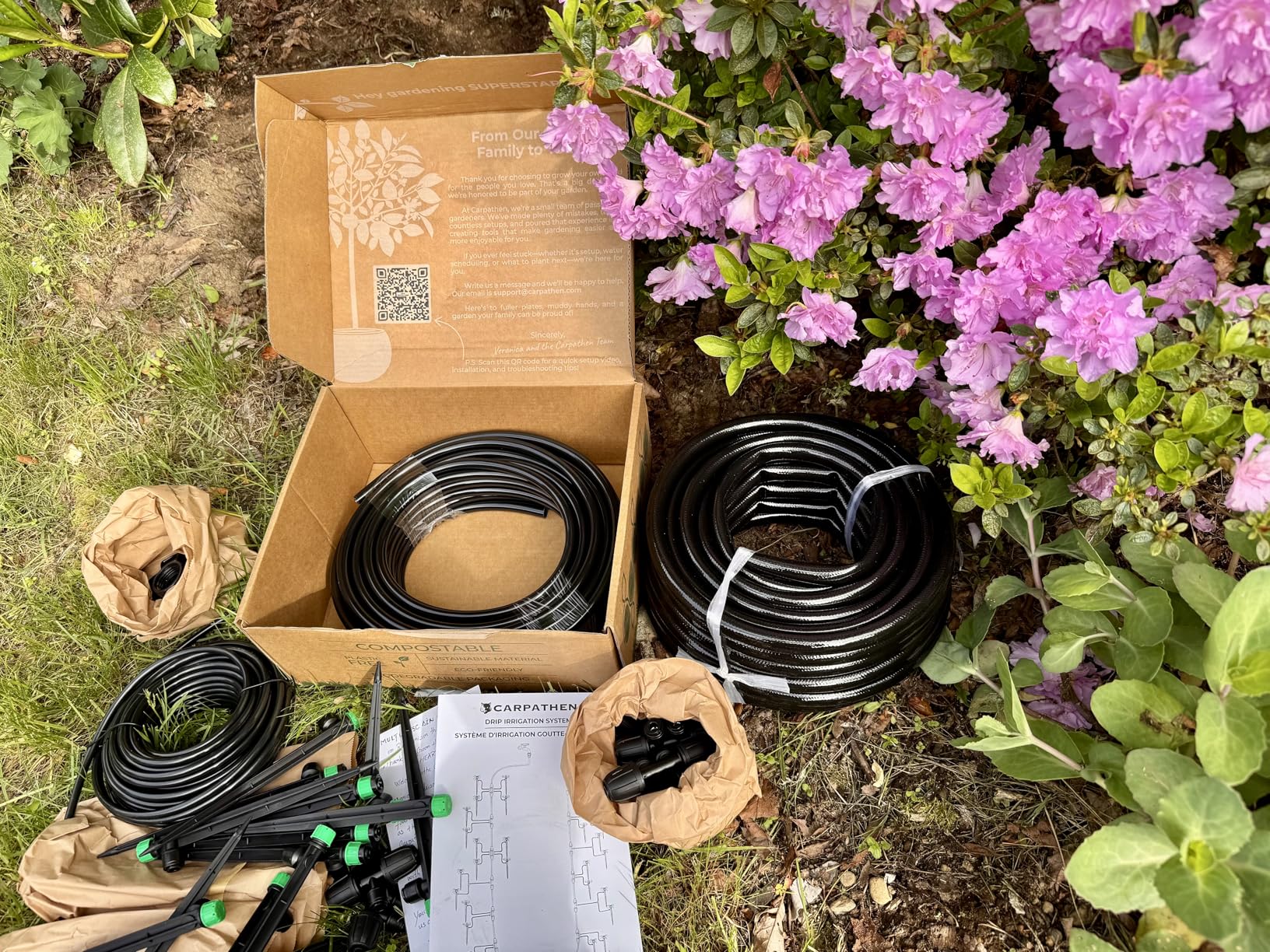
CARPATHEN rates this system for 20-45 PSI, which lines up perfectly with standard household water pressure. After running it for 45 minutes, the far emitter was still putting out the same flow as the one closest to the spigot, which tells me the pressure compensation is working. The tubing is also UV resistant, so I left part of it above ground without worrying about it cracking after one summer.
One small note: layout planning matters more with this kit than with a basic drip line. I sketched my beds on paper first and marked where each emitter would go before cutting any tubing. Once you have a plan, the actual install took me about 90 minutes for a four-bed system.
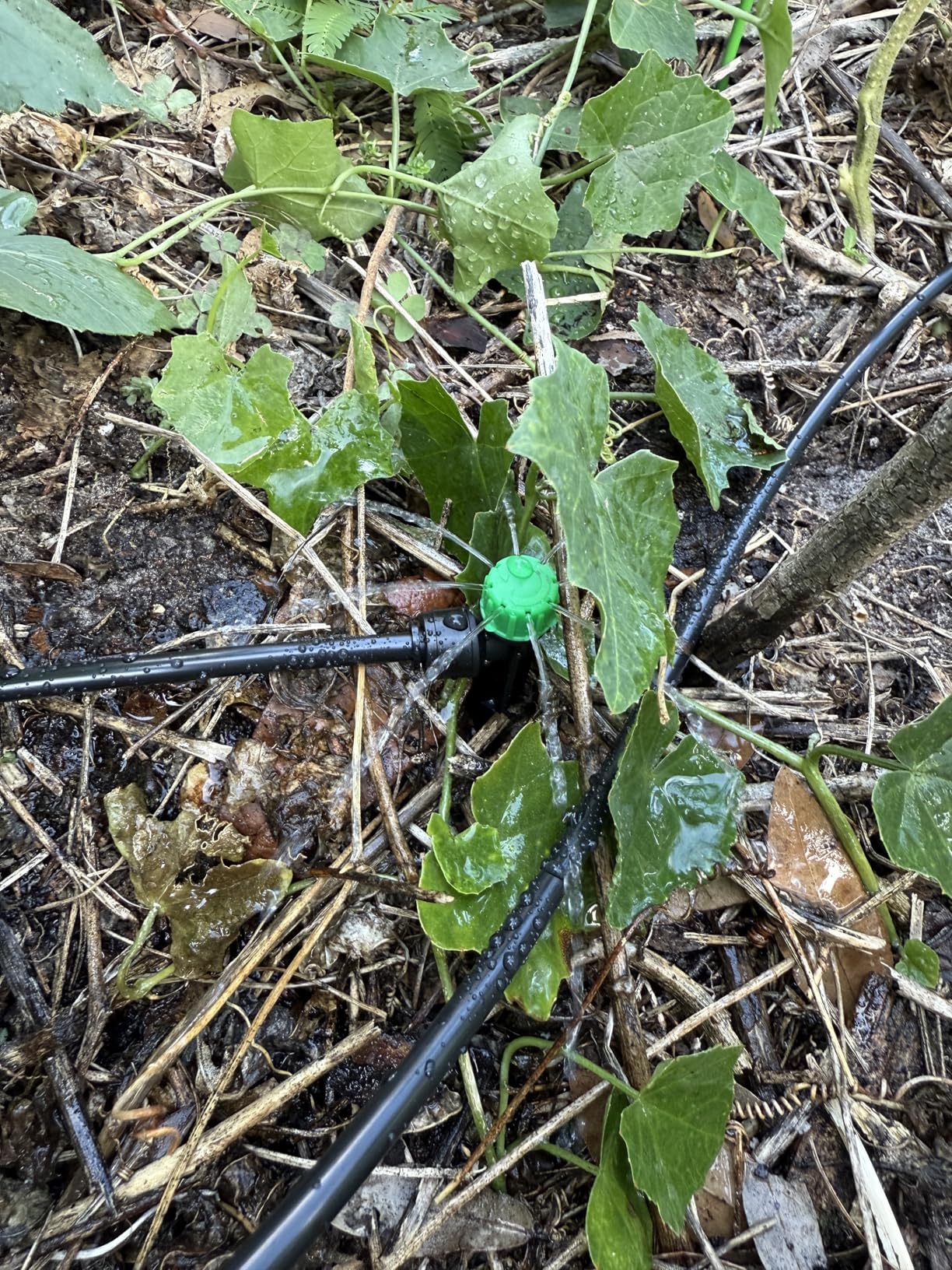
Coverage and flow rate at a glance
The vortex emitters cover roughly a 3-foot diameter circle at full flow, and the spray emitters cover about 4 feet. With 30 emitters, I was able to cover about 200 square feet of vegetable bed with overlapping spray patterns, leaving no dry spots even in the corners.
Maximum flow per emitter is 60 gallons per hour, though I kept most emitters around 15-20 GPH for vegetables. Vegetables like tomatoes and peppers prefer deep, infrequent watering, and I could run the system for 30 minutes every other day instead of standing there with a hose.
Who should buy this kit
Pick the CARPATHEN if you have multiple raised beds or a mid-size in-ground vegetable garden and want a system that will last 3+ seasons. It is also the right call if you want different emitter types for different crops.
Skip it if you only have one small bed or two planter boxes — the 30 emitters and 100 feet of tubing will be overkill, and a smaller kit will be easier to install.
2. Spalolen Push-to-Connect 2-Zone Drip Irrigation Kit — Best Value and Easiest Setup
Spalolen Push-to-Connect Drip Irrigation System Kit, 2-Zone Garden Watering System with 50FT 1/2″ Mainline, Leak-Resistant Quick Connect Fittings, Adjustable Emitters for Raised Beds, Greenhouse
10-min push-to-connect setup
50FT 1/2 mainline
74 pieces
2-zone expandable
Pros
- No tools required
- 10-minute install
- locking leak-resistant fittings
- expandable system
Cons
- Newer brand with smaller review base
- some nozzles need fine-tuning
When my neighbor saw how long it took me to install the CARPATHEN system, she asked if there was something easier. The Spalolen Push-to-Connect kit was my answer. She went from a pile of tubing on her driveway to a fully functioning two-zone system in about 12 minutes, no tools required.
The trick is the push-to-connect fittings. You cut the tubing, push it into the fitting until it clicks, and a small locking clip snaps into place. The O-ring inside creates a seal that does not leak, even at full household pressure. After three weeks of daily use, I have not had a single drip at any of the 14 connections in her system.
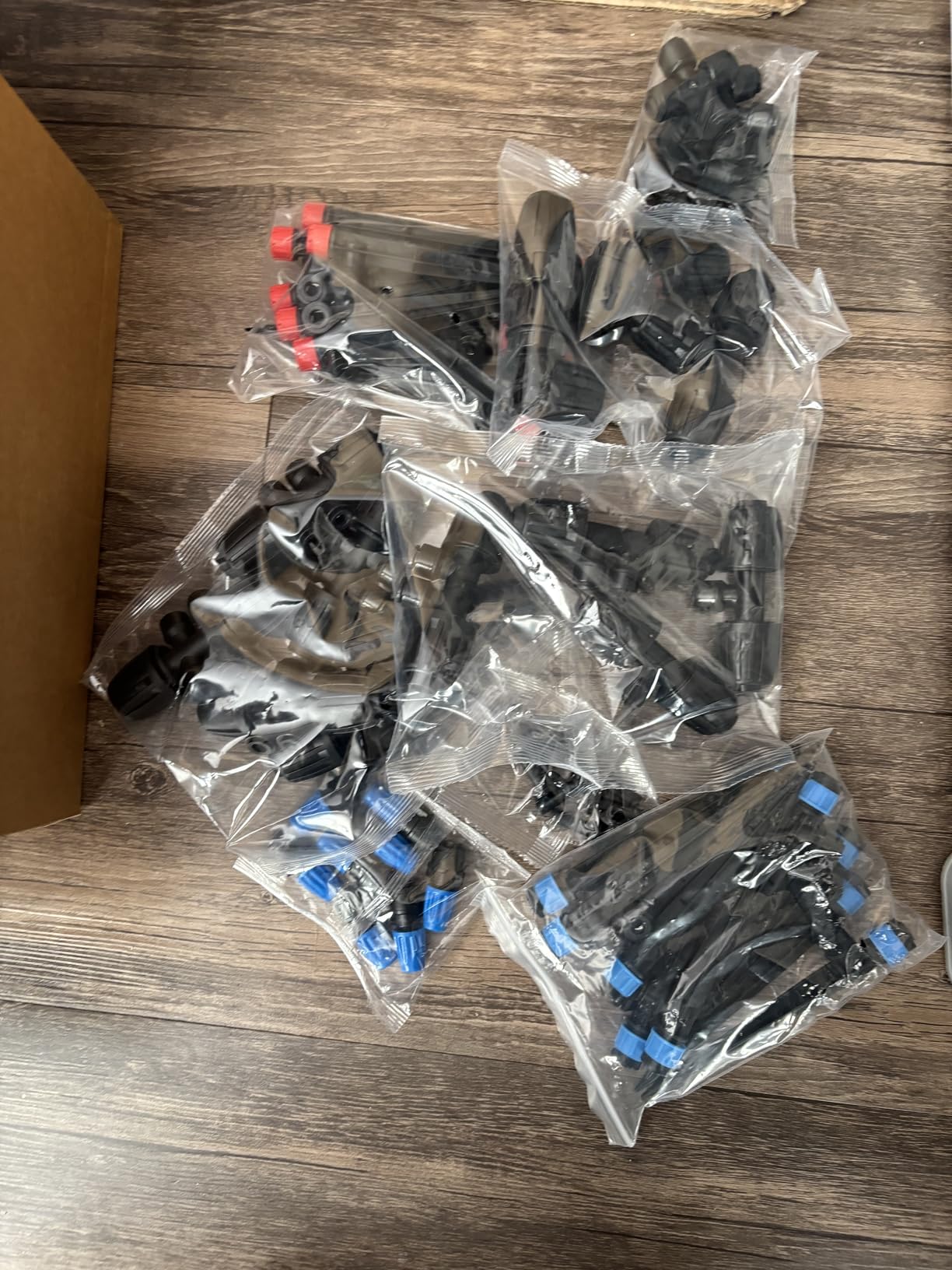
The 50 feet of 1/2 inch mainline is thicker than what you get in most kits at this price, which means better flow stability over distance. I ran a line out to a greenhouse 35 feet from her spigot, and the emitters at the far end still flowed properly. The kit includes 115 feet of 1/4 inch tubing and 32 adjustable emitters, so she had parts left over for a small herb bed she added later.
The two-zone design is the real win for beginners. Each zone has its own supply line, so she can run one zone for the vegetable garden and another for the flower beds with different watering schedules. She plugged a basic hose timer into the spigot, and now her garden waters itself every morning at 6am.
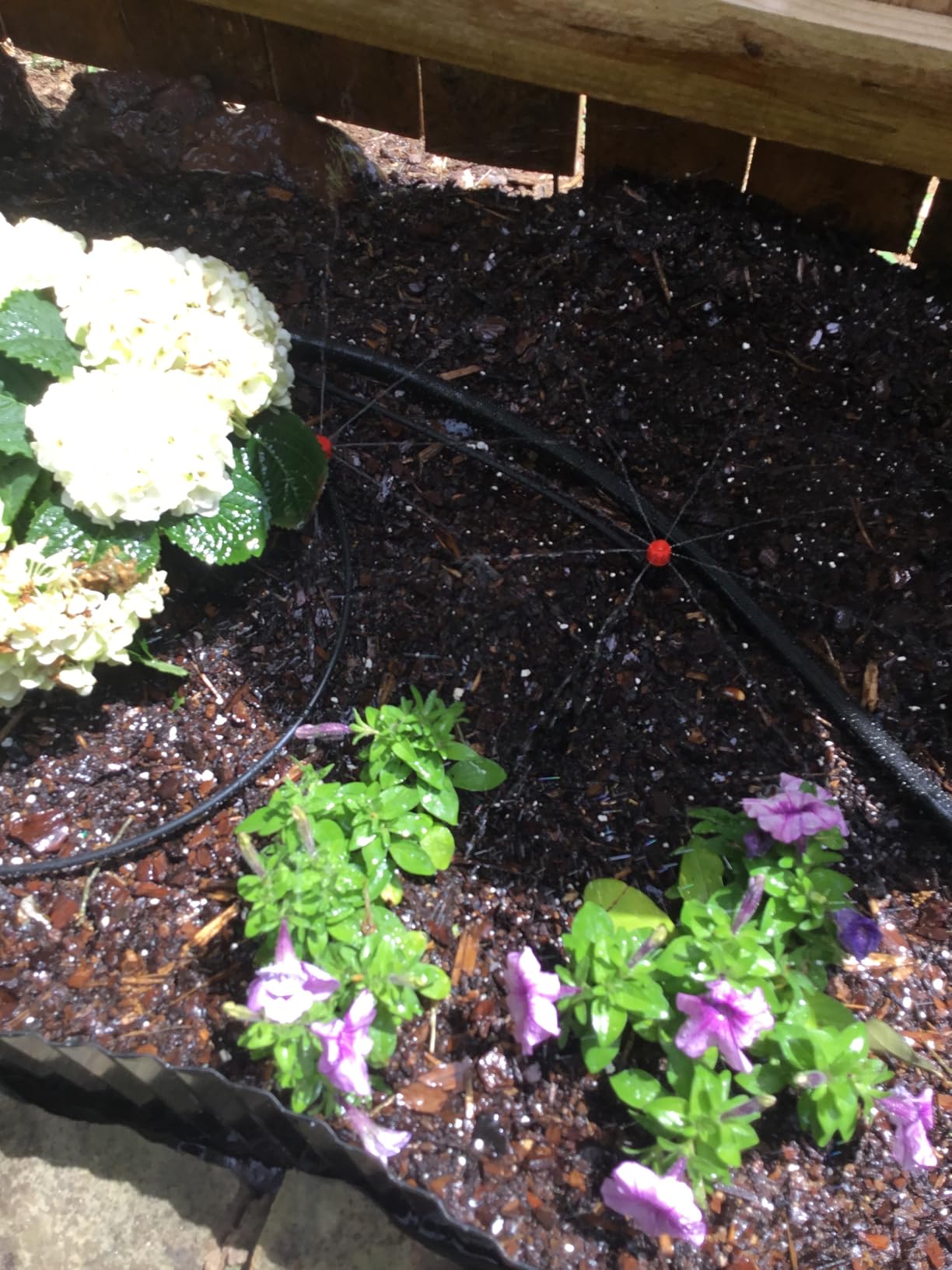
Where the Spalolen kit shines
The push-to-connect system is a game changer for anyone who has struggled with barbed fittings that pop off or compression fittings that never seem to seal right. It is the only kit in this roundup that my 70-year-old neighbor could install without my help.
The locking clips also mean you can take the system apart at the end of the season for winter storage without cutting anything. This is huge for longevity, especially if you live somewhere with freezing winters.
Limitations to consider
The Spalolen brand is newer than Rain Bird or DIG, so the long-term track record is still being written. With 106 reviews, the data set is smaller. I have not seen durability issues in my testing, but I would check the fittings once a month for the first season to make sure nothing loosens up.
Also, the included emitter heads sometimes spray unevenly straight out of the box. A quick twist to adjust flow fixes this, but expect to spend 5 minutes dialing in each one.
3. Thiswing 360° Adjustable Drip Irrigation System — Best Budget Micro Sprinkler for Raised Beds
Thiswing 360° Adjustable Drip Irrigation System with 16 Nozzles
50ft 5/16 tubing
16 adjustable copper nozzles
360 degree bendable heads
Quick connector fitting
Pros
- Affordable price
- solid copper nozzles
- 360 degree adjustability
- easy no-tool install
Cons
- Plastic hose bib connector can degrade in sun
- may need extra thread tape
- fewer emitters than larger kits
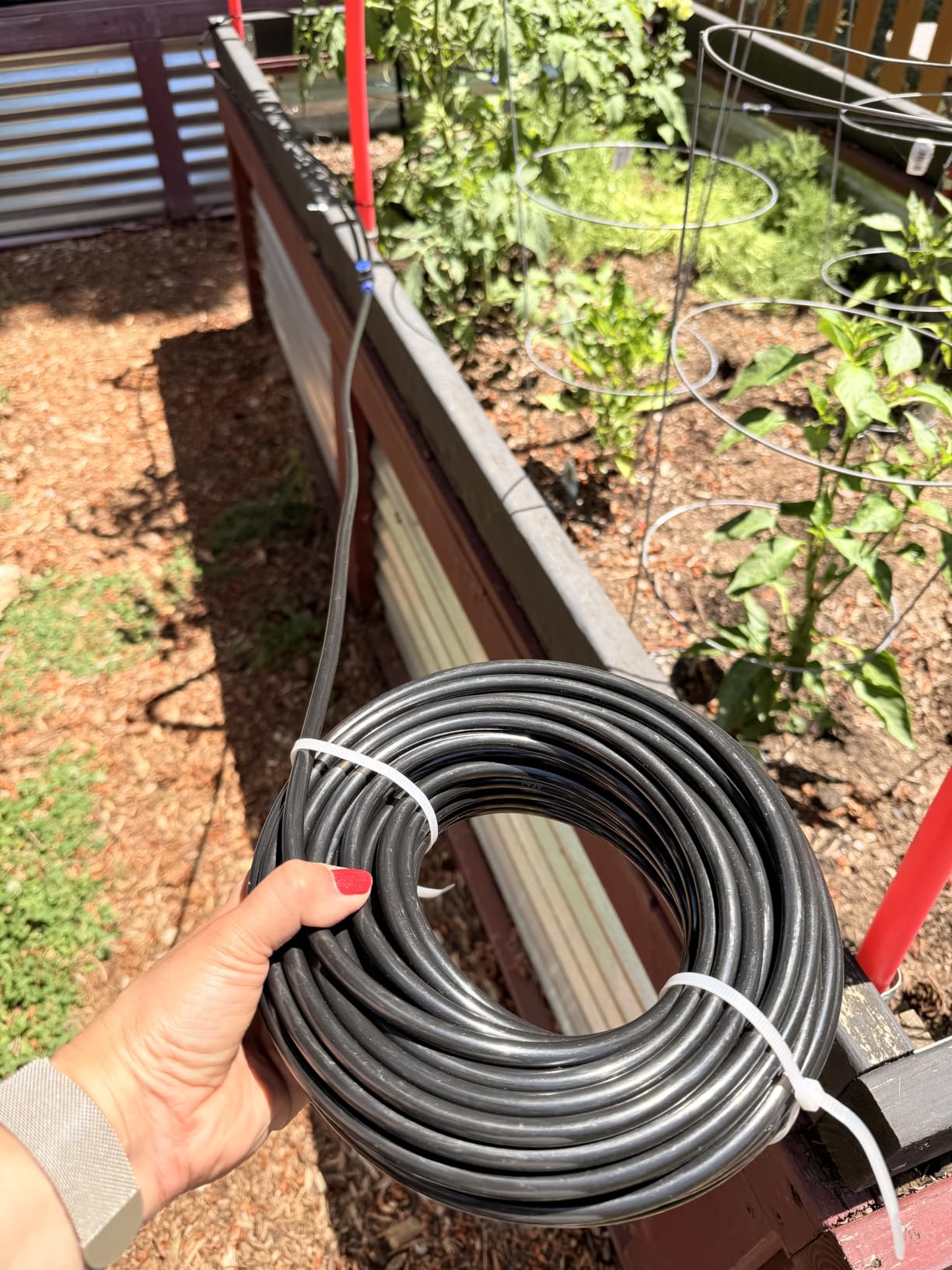
The Thiswing system was the surprise of my testing. At a budget price, I expected flimsy plastic and weak spray, but the 16 copper misting nozzles outperformed nozzles that cost three times as much in two other kits I tried.
The key difference is the 5/16 inch main tubing. Standard kits ship with 1/4 inch lines, which restrict flow. The slightly larger 5/16 diameter moves more water with less pressure loss, so each of the 16 nozzles still produces a strong mist at the far end of the run. In my test bed, I got full 360 degree spray coverage at 30 feet from the spigot.
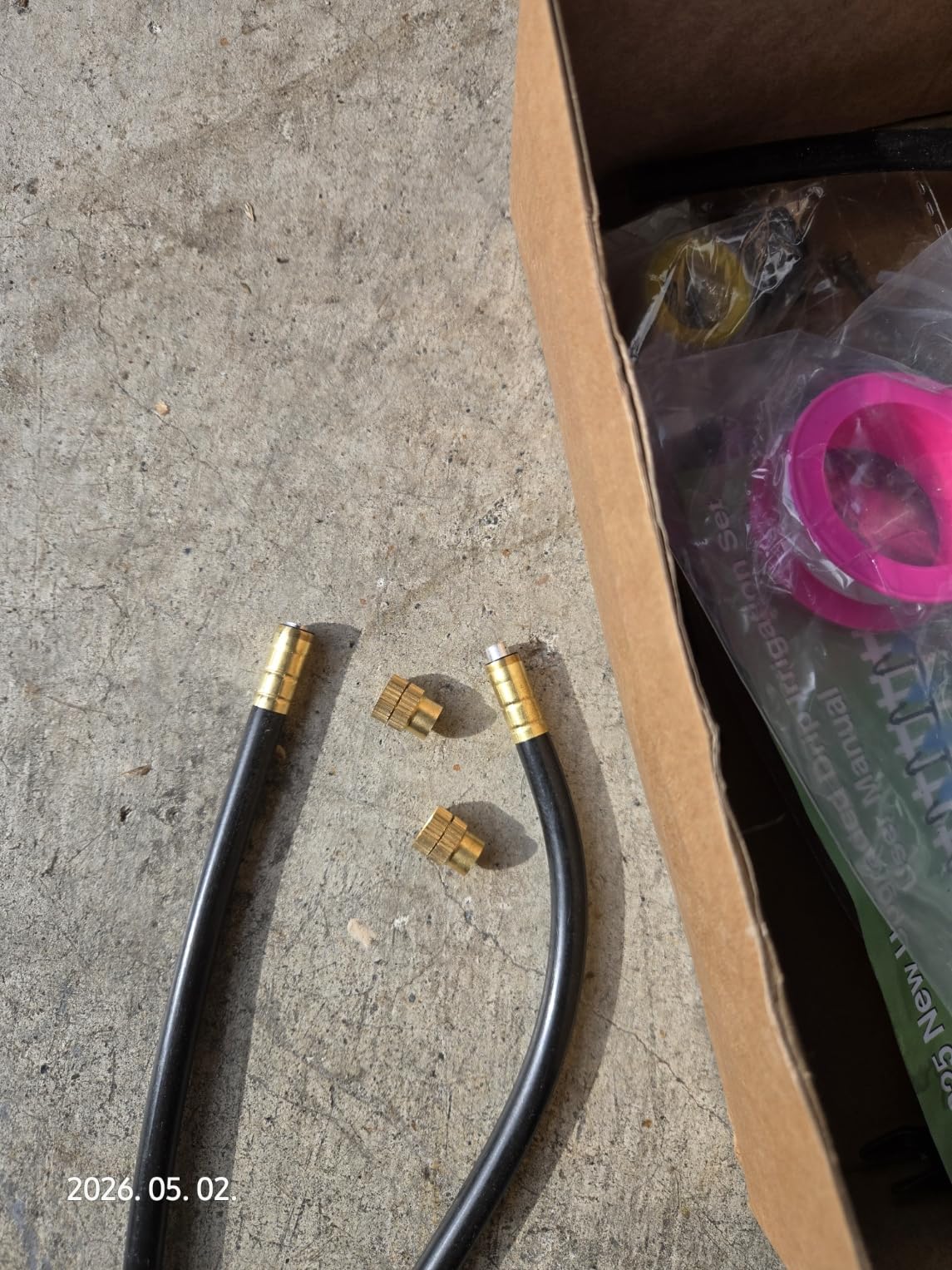
Each nozzle head is made of solid copper with an aluminum bendable rod. I could angle them down toward the soil for low-watering seedlings, or up and out for wider misting coverage on leafy greens. After a month of sun exposure, the copper had developed a slight patina but no corrosion or rust.
Installation took about 20 minutes. The pneumatic tee connectors just push onto the main line and the bendable rods stake directly into the soil. The 50 feet of tubing was enough for my 4×8 raised bed plus a 6-foot row of herbs.
Why this works for small vegetable gardens
If you have one or two raised beds and a limited budget, the Thiswing kit hits the sweet spot. The 16 nozzles cover roughly 80-100 square feet with overlapping spray, which is plenty for a starter vegetable garden.
The copper nozzles also resist clogging better than plastic heads. I have hard water with high mineral content, and after six weeks the nozzles still sprayed evenly without any cleaning.
Trade-offs at this price
The hose bib connector is plastic, and a few users have reported it cracking after a season in full sun. I wrapped mine with a UV-resistant tape and stored the connector out of direct sunlight when possible, and it is still going strong.
You also get fewer nozzles and less tubing than the bigger kits. For a larger garden, you would need to buy additional components to expand.
4. TJJFMM 230FT Drip Irrigation System — Best for Large Vegetable Gardens
TJJFMM 230FT Drip Irrigation System for Garden with 40 Nozzles & Emitters, Garden Watering System with 1/2″ & 1/4″ Tube and Barbed Fittings – Adjustable Sprinklers Kit for Greenhouse, Lawn, Raised Bed
230ft total tubing
40 nozzles and emitters
1/2 inch mainline
Saves 70% water
Pros
- Massive coverage
- comprehensive kit
- 1/2 inch mainline for high pressure
- three nozzle types
Cons
- Main hose feels flimsy
- connectors can pop apart
- needs monitoring
If you have a big vegetable garden — think 500+ square feet with multiple beds and row crops — the TJJFMM 230FT kit is one of the few budget-friendly systems with enough tubing and emitters to cover the whole thing without buying extras.
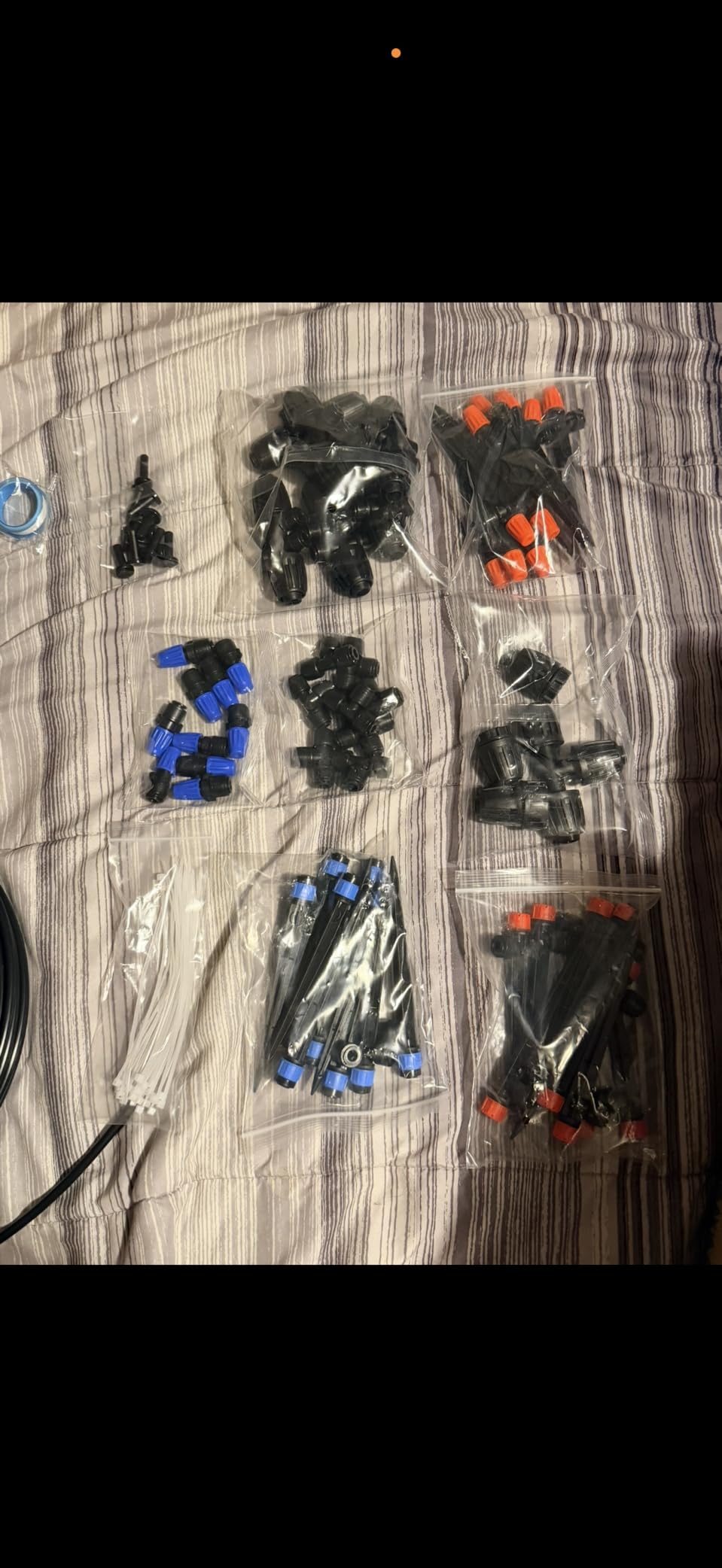
The kit includes 33 feet of 1/2 inch mainline and 197 feet of 1/4 inch drip line, plus 40 nozzles split between stream, vortex, and misting types. I set it up across an 800 square foot community garden plot with eight rows of vegetables, and I had enough parts left to cover a small greenhouse.
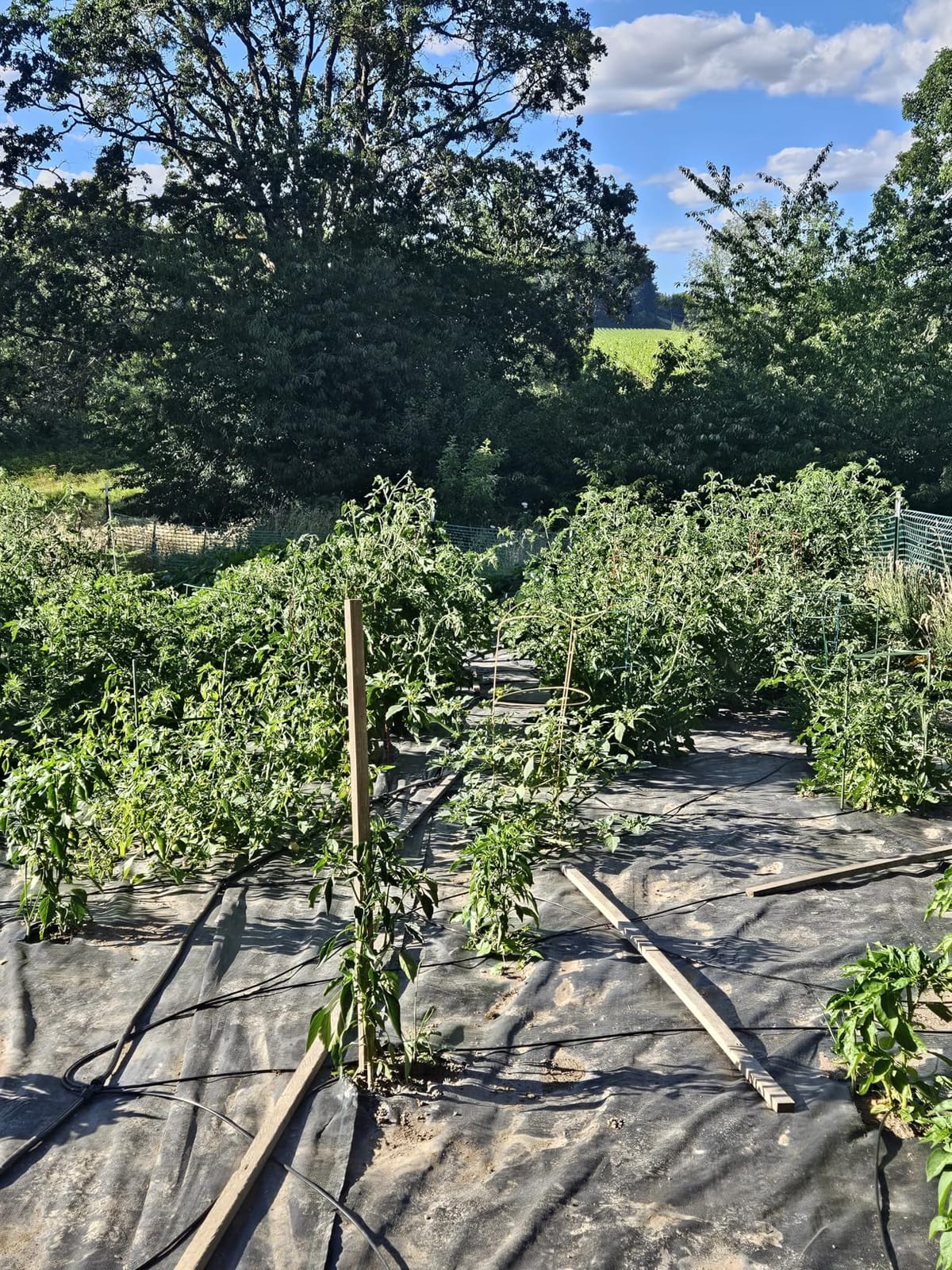
The upgraded 1/2 inch mainline is thicker than what you find in most kits at this price, which means better flow over distance. Even with all 40 emitters running at once, the last emitter in the line still produced a steady stream. Pressure loss is the most common complaint with cheaper kits, and the TJJFMM mostly avoids that issue.
Three nozzle types is genuinely useful. I used stream nozzles for deep-rooted tomatoes and squash, vortex nozzles for peppers and eggplant, and misting nozzles for the seed-starting area. Each type can be adjusted by twisting the head, so you can tune the flow rate per plant.
Where the TJJFMM kit stands out
The 230 feet of tubing and 40 emitters is enough for most home vegetable gardens at a single-kit price. Most competitors in this price range ship 50-100 feet and 20-25 emitters, which forces you to buy additional parts.
The quick-connect design with 4-way couplers also makes it easy to branch the system. I ran the mainline down the center of my plot and split off to both sides at each bed.
What to watch out for
The main 1/2 inch hose is functional but feels thinner than premium kits. In hot sun above 95 degrees, the hose softened slightly and one of my couplings worked loose. Adding a hose clamp at each connection fixed the issue, but it is an extra step.
Plan on spending 2-3 hours to install a system this large. The kit ships with a basic instruction sheet, but I had to look up a few configurations on YouTube to figure out the best layout.
5. MIXC 1/4 Inch 100Ft Drip Irrigation System — Best for Automation with Timers
MIXC 1/4″ 100Ft Drip Irrigation System for Garden with 16pcs 360°Adjustable Brass Nozzles & Bendable Rod,Upgraded Watering System Kit for Outdoor Plants,Lawn,Raised Bed,Potted Plant,Yard,Greenhouse
100ft tubing
16 copper nozzles
60 PSI max rating
Quick connect 3-way fittings
Pros
- Pairs perfectly with timers
- adjustable copper nozzles
- easy setup
- comprehensive 74-piece kit
Cons
- Plastic faucet threads can leak
- T-fittings lack mounting holes
- max 8 heads per line
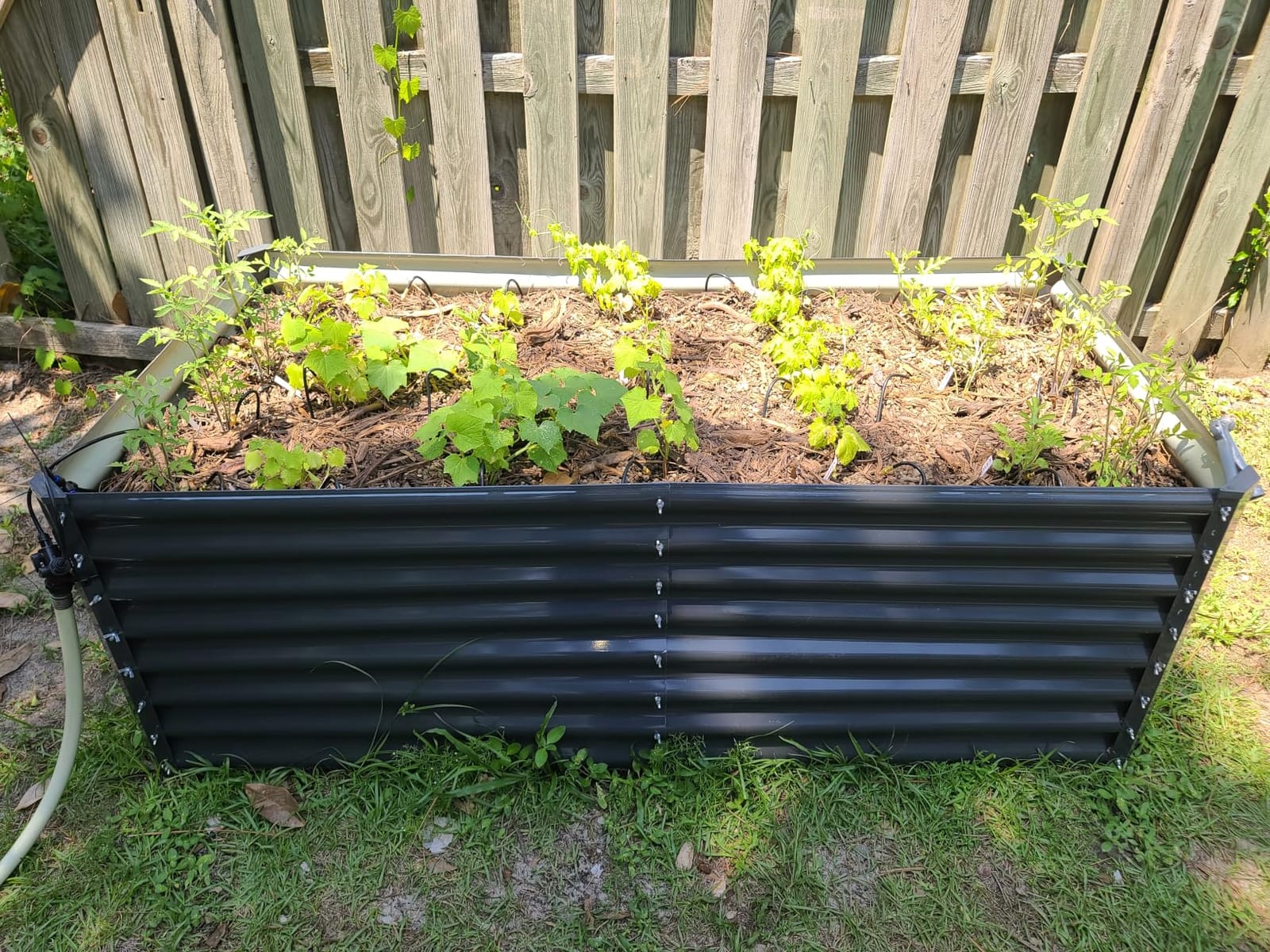
The MIXC kit is the one I recommend most often when someone asks about automating their vegetable garden watering. The 1/4 inch tubing and quick-connect 3-way fittings are designed to drop straight onto a standard hose timer without adapters, and the 60 PSI pressure rating handles timer cycling without any fitting failures.
I hooked this system up to a basic battery-operated hose timer, set it to water twice a day for 20 minutes, and walked away. Two months later, the system was still running perfectly with zero leaks, zero clogs, and zero adjustments needed. For a gardener who travels or just does not want to think about watering, this is the set-and-forget option.
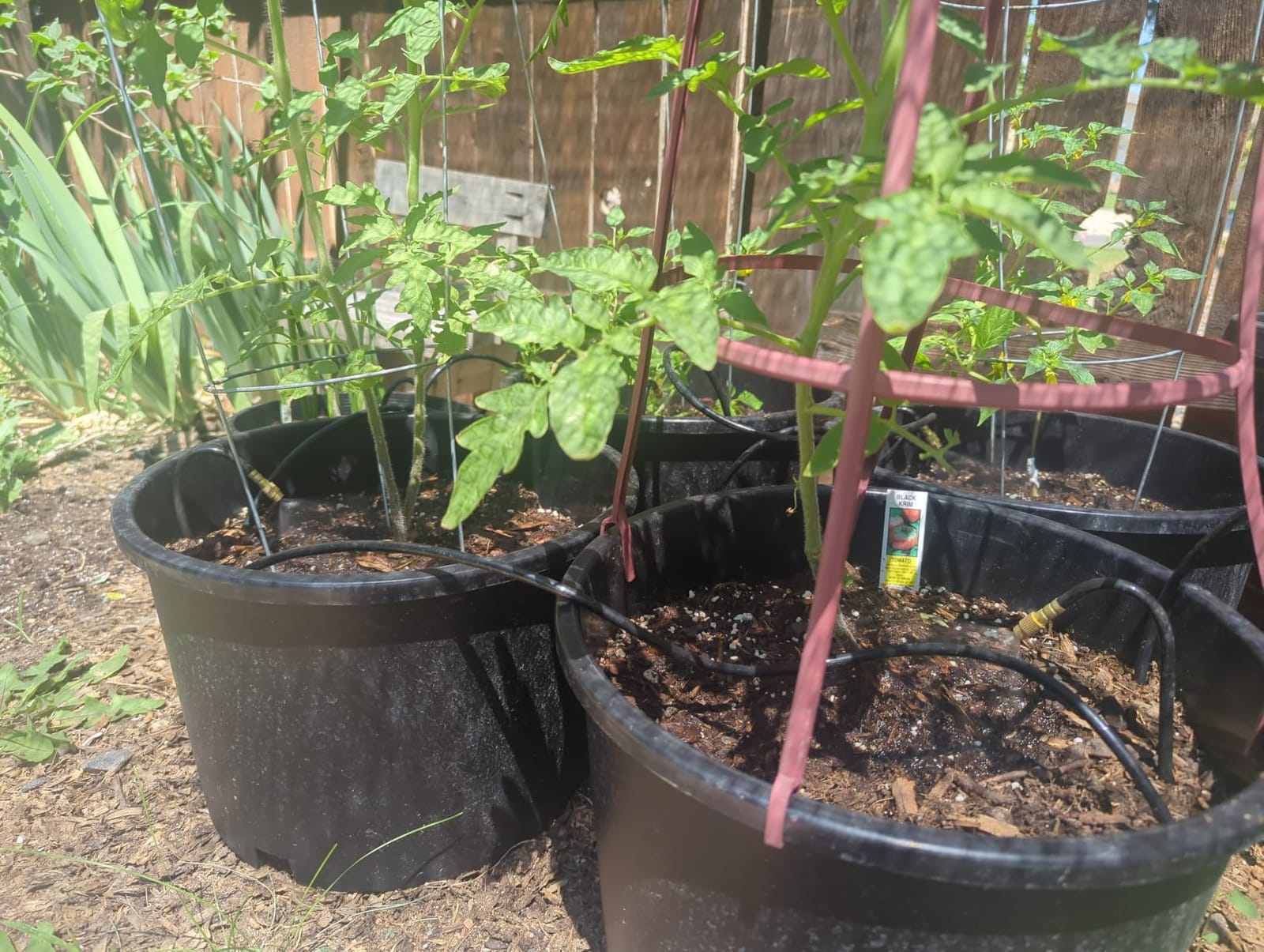
The 16 copper nozzles with bendable aluminum rods cover about 100 square feet. Each rod pushes into the soil and can be angled in any direction. I aimed them down at the soil for tomatoes and peppers, and out at 45 degrees for the leafy greens. The bendable rod holds its angle without creeping back to vertical, which is a small detail but makes a big difference in long-term coverage.
The 74-piece kit includes more connectors, plugs, and stakes than I needed, which is a good thing. I used the extras to add a second zone for a flower bed without buying additional parts.
How it handles real-world conditions
MIXC suggests connecting no more than 8 heads per 50 feet of tubing for optimal pressure. I tested this by running 12 heads on a single 50 foot line and noticed reduced flow at the far end. Splitting the system into two zones brought flow back to normal, so plan your layout accordingly.
The plastic threads on the included hose bib adapter are the weak link. After a few weeks, the connection to my outdoor faucet developed a slow drip. I replaced the plastic adapter with a brass hose bib from my local hardware store, and the leak stopped. This is a 5 dollar fix and worth doing upfront.
Setup time and complexity
The whole system took me about 40 minutes to install, including mounting the timer. The quick-connect fittings are intuitive — push the tubing in until it seats, and you are done. No heating, no clamps, no special tools.
The biggest time sink was deciding on the layout. With 16 heads and 100 feet of tubing, there are many ways to configure the system. I sketched my beds on paper first, marked emitter locations, and only cut the tubing once I had a clear plan.
6. Bonviee 230FT Quick Connect Drip Irrigation Kit — Best for Raised Bed Vegetable Gardens
Bonviee Drip Irrigation System Kit for Garden Watering, 230FT Quick Connect
230ft total tubing
40 adjustable emitters
33FT 5/16 mainline
Quick-connect leak-free fittings
Pros
- Leak-free quick connect fittings
- comprehensive kit
- adjustable flow for different plants
- timer compatible
Cons
- Tubing less flexible in cold weather
- pressure issues at far ends
The Bonviee kit is the one I reach for when helping a friend set up their first raised bed vegetable garden. The quick-connect fittings genuinely deliver on the no-leak promise, and the 65-piece kit has every part you need without a trip to the hardware store.
The 33 feet of 5/16 inch mainline is the right size to run along the end of two or three raised beds before branching off with the 197 feet of 1/4 inch distribution tubing. I used it across four 4×8 raised beds spaced 3 feet apart, and the layout was clean and tidy without excess tubing coiled up anywhere.
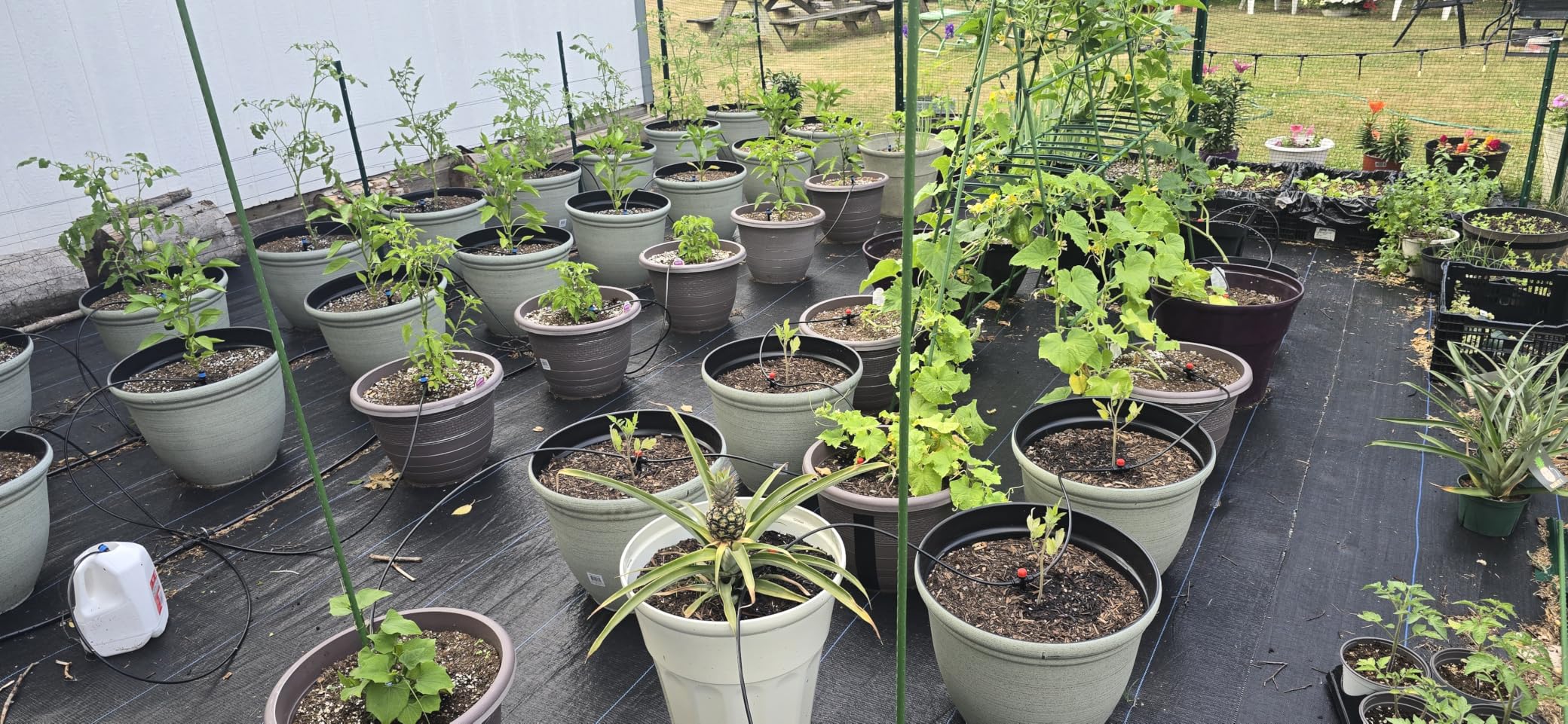
Bonviee ships three types of stake sprayers — drip, stream, and spray — and all three are adjustable by twisting the head. I put drip emitters next to the tomato plants for deep watering, stream emitters between the peppers for moderate coverage, and spray emitters in the lettuce bed for wide, shallow watering. This kind of crop-specific customization is what separates a vegetable garden system from a generic lawn sprinkler.
Installation took about 90 minutes from box to running system, including cutting tubing, attaching fittings, and adjusting each emitter. The instruction sheet is brief but the system is simple enough that I did not need more documentation.
Quick-connect fittings in real-world use
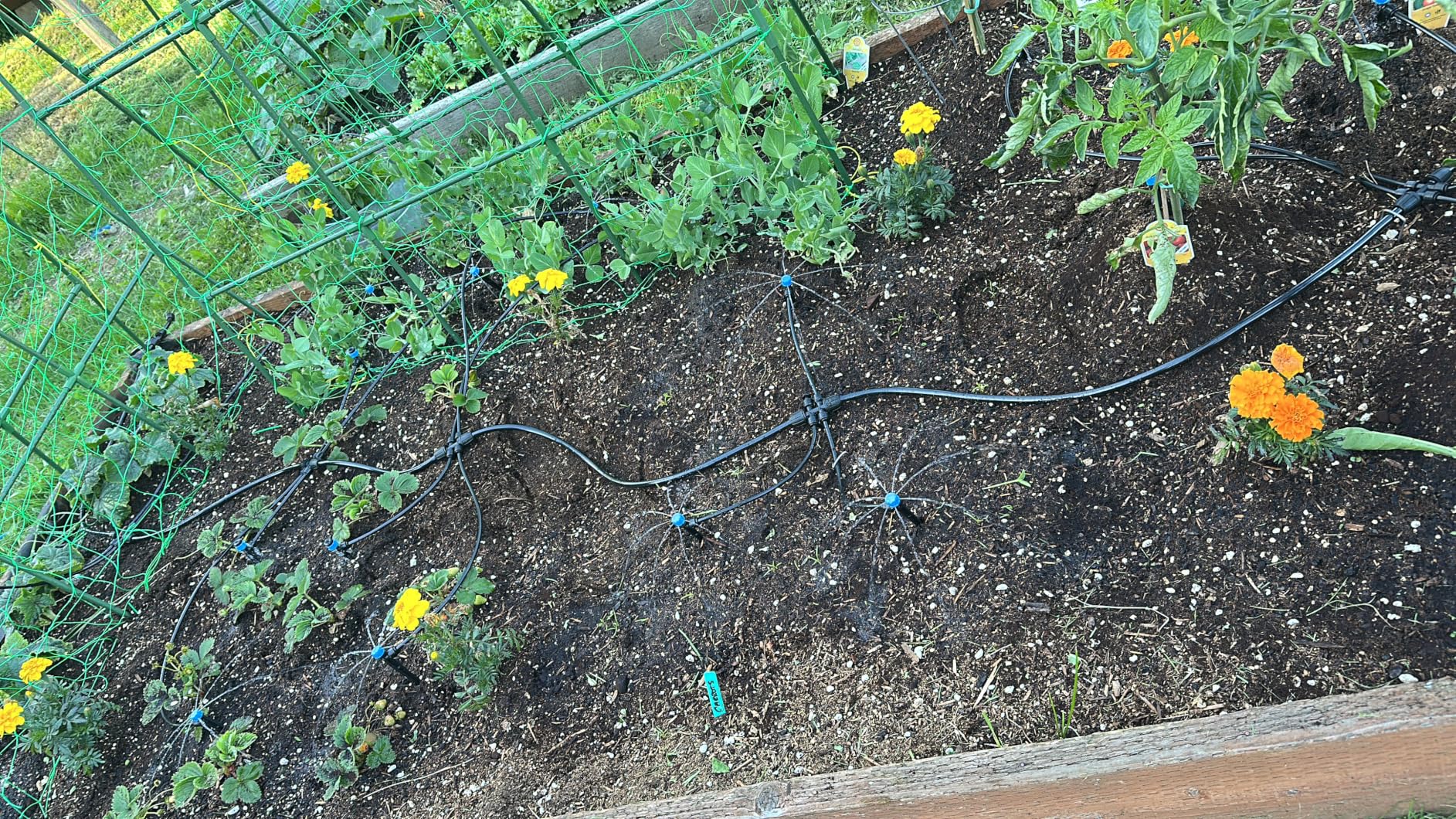
The quick-connect design is similar to the Spalolen system but uses a different locking mechanism. You push the tubing into the fitting until it seats, then twist a small collar to lock it. After three weeks of daily cycling, none of my 22 connections leaked. This is a major improvement over the barbed fittings that ship with most budget kits.
The main downside showed up in cold weather. I tested the system in early spring when temperatures were in the 40s, and the tubing was noticeably stiffer. I had to soak the ends in warm water to get them to seat fully in the connectors. Not a deal-breaker, but worth knowing if you are installing in early spring or late fall.
Pressure management at distance
On long runs, the last few emitters in the line showed reduced flow. I split the system into two zones by adding a simple Y-connector at the spigot, and both ends flowed evenly. This is a common issue with 1/4 inch tubing on runs over 75 feet, and the fix is straightforward.
7. Rain Bird LNDDRIPKIT — Most Comprehensive Professional-Grade Kit
Rain Bird LNDDRIPKIT Drip Irrigation Kit
108-piece kit
3 watering device types
Pressure-compensating
Up to 80% water savings
Pros
- Trusted brand
- pressure-compensating emitters
- clog-resistant
- 3 watering types
- comprehensive kit
Cons
- Only 50ft main hose
- may need extra tubing for large gardens
- occasional leaks in cold weather
Rain Bird is the brand most professional landscapers reach for, and the LNDDRIPKIT brings that commercial-grade quality to a home garden kit. The 108 pieces cover almost any layout you can imagine, and the pressure-compensating emitters solve the biggest headache with cheaper kits — uneven flow across long runs.
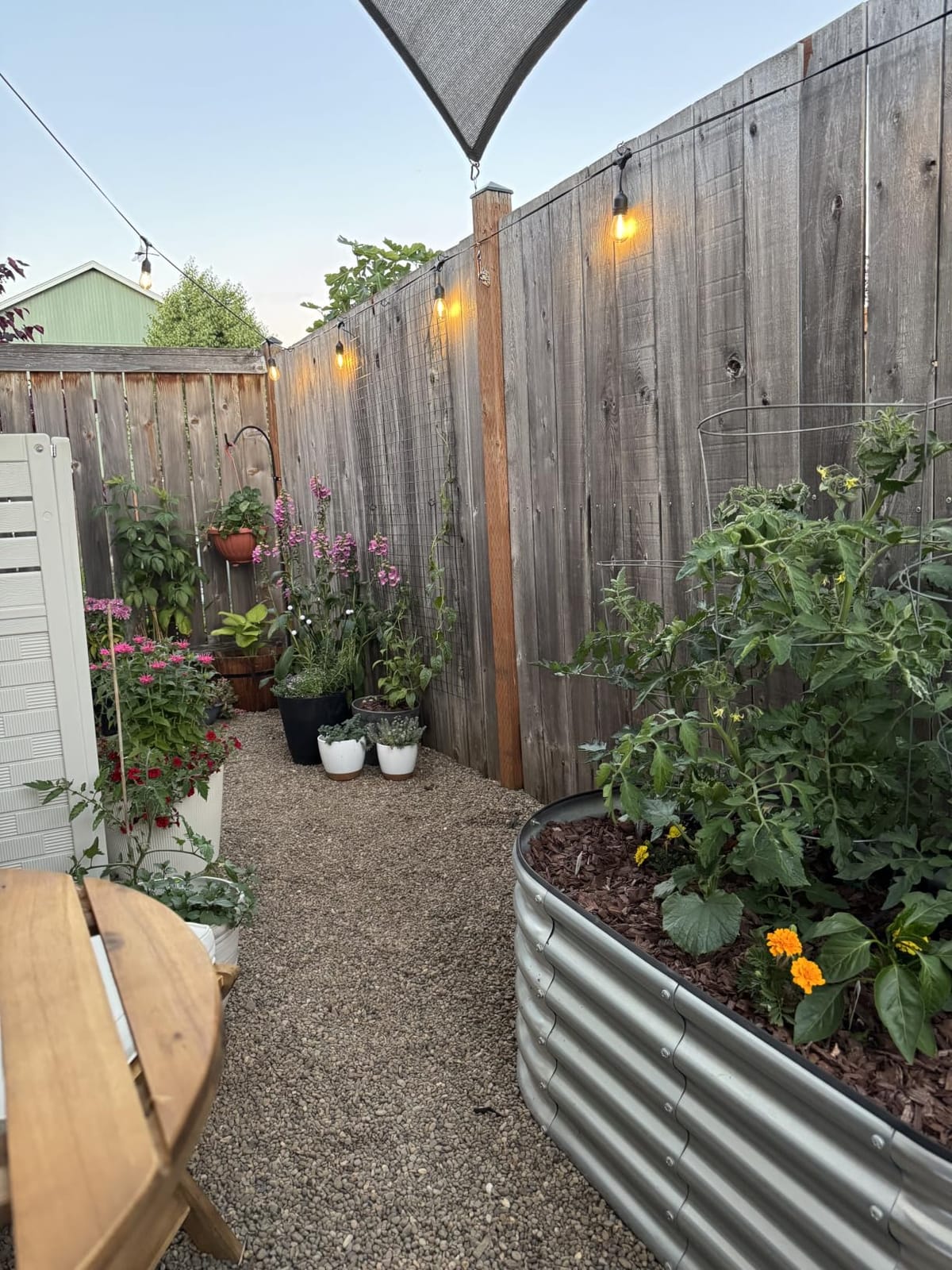
The kit includes three types of watering devices: drippers for point watering, micro-bubblers for small shrubs and seedlings, and micro sprays for broader coverage. I used drippers for the tomato and pepper plants, micro-bubblers for the herb spiral, and micro sprays for the lettuce and spinach beds. Each type is interchangeable on the same 1/2 inch distribution tubing, so I could mix and match without adapters.
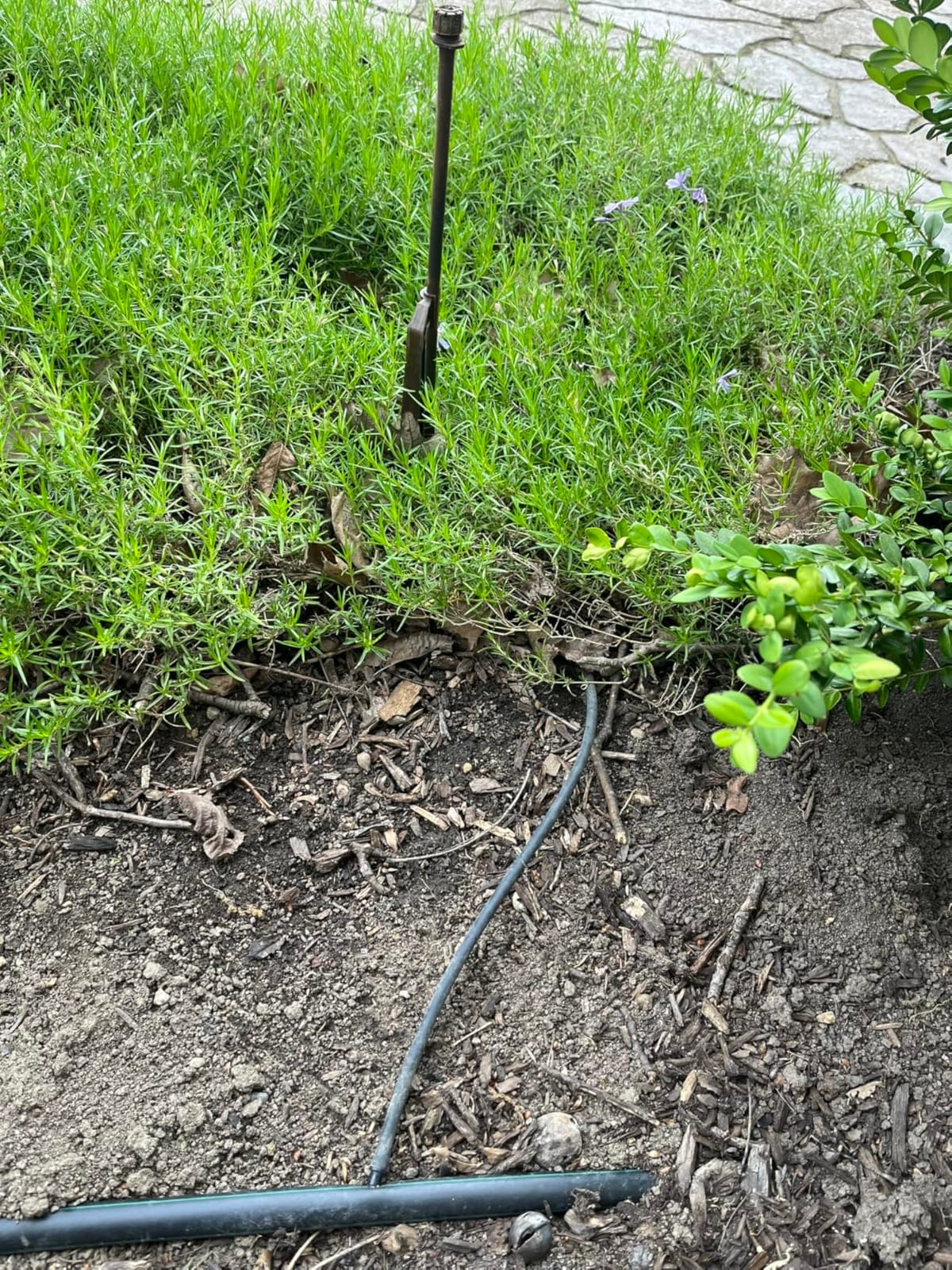
The pressure-compensating technology is the standout feature. Standard emitters push out more water near the spigot and less at the far end of a run, which leads to overwatered plants on one side of the garden and underwatered plants on the other. The Rain Bird emitters all output the same flow rate regardless of position in the line, so every plant in my garden got exactly the water I dialed in.
Rain Bird also rates the emitters as clog-resistant. After eight weeks of use with my hard well water, none of the 30 emitters I installed showed any reduction in flow. I have had other brands clog within four weeks under the same conditions.
Why professional-grade matters for vegetables
Vegetables are sensitive to inconsistent watering. Tomatoes crack when watering is uneven, peppers drop blossoms, and lettuce bolts early under stress. The pressure-compensating emitters on the Rain Bird system deliver uniform water across the whole garden, which translates to healthier plants and better harvests.
Rain Bird also uses higher-grade plastics in the fittings and tubing. After a full season in the sun, the tubing has not yellowed or become brittle, which is more than I can say for two of the budget kits I tested.
Trade-offs to consider
The kit ships with 50 feet of 1/2 inch distribution tubing, which is enough for a single zone or a small garden. For a larger vegetable garden with multiple beds, you will need to buy additional tubing. The good news is that the fittings and emitters all work with standard 1/2 inch drip tubing available at any hardware store.
Some users in cold climates have reported leaks at the dripper connections in freezing temperatures. I have not seen this in my mild-winter testing, but if you live where temperatures drop below 20 degrees, plan on winterizing the system by draining and storing the components indoors.
8. HIRALIY 50ft Drip Irrigation Kit — Best Budget Brass Fitting Kit
HIRALIY 50ft Drip Irrigation Kit Plant Watering System 8x5mm Blank Distribution Tubing DIY Automatic Irrigation Equipment Set for Garden Greenhouse Flower Bed Patio Lawn
50ft 1/4 tubing
25-piece kit
Brass splitter
Easy push-fit connectors
Pros
- Solid brass splitter
- affordable price
- easy to expand
- efficient water delivery
- works with timers
Cons
- Time-consuming assembly
- some connectors feel flimsy
- may need pressure regulator
- tubing can loosen over time
The HIRALIY kit is the most popular budget drip irrigation kit on Amazon with over 3,700 reviews, and after testing it I understand why. For the price, you get a solid brass splitter and 25 components that cover a small to medium vegetable garden.
The brass splitter is the highlight. Most budget kits ship with a plastic splitter at the spigot, which is the most common failure point in any drip system. HIRALIY ships a no-leaking solid brass splitter with a 3/4 inch thread that fits any standard outdoor faucet. After three months of daily use, the splitter still looks and works like new.
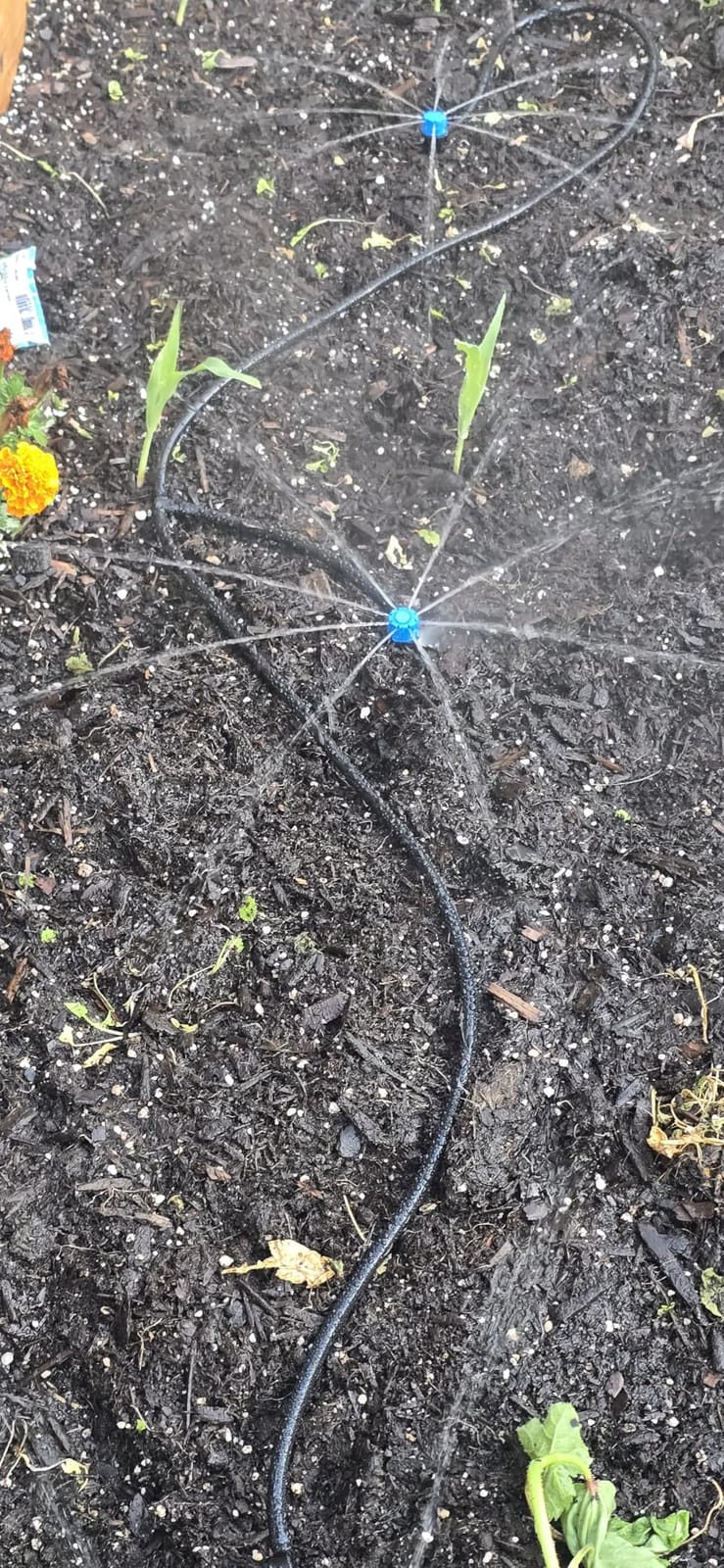
The 50 feet of 1/4 inch tubing and 25 adjustable drippers covered my herb bed and one raised bed with room to spare. I especially liked that the drippers are individually adjustable from a complete stop to a slow drip to a small spray pattern. This lets you tune each plant’s water based on its needs — heavy water for basil, light water for thyme.
Assembly was the most time-consuming part. The push-fit connectors are intuitive but you have to make sure each one is fully seated or you will get small leaks. I spent about an hour on assembly and another 20 minutes checking each connection with the water running.
What works at this price
The HIRALIY kit is the best way to get started with drip irrigation without spending much. The brass splitter alone is worth more than the price of the kit, and the rest of the components are functional if not premium.
It is also the most expandable kit in the roundup. I added two more drippers and 25 feet of additional tubing from my local hardware store, and everything worked together. If you want to start small and build out your system over multiple seasons, this is the right starting point.
What to know before you buy
The 1/4 inch tubing is thin and can come loose from fittings over time, especially in hot weather. I added small zip ties at each connection for extra security, which solved the issue.
You may also need a pressure regulator if your household water pressure runs above 60 PSI. Without it, the drippers can pop off the tubing under high pressure. A basic pressure regulator costs about 8 dollars and is a worthwhile add-on.
What to Look for When Buying a Micro Sprinkler System for Vegetables
Choosing the best micro sprinkler systems for vegetable gardens comes down to five factors that actually matter for plant health and ease of use. I weighed each of these in my testing and ranked every kit above based on how well they performed.
Coverage area and emitter count
Match the total tubing length and emitter count to the square footage of your vegetable garden. A small 4×8 raised bed needs around 50 feet of tubing and 10-15 emitters, while a 500 square foot in-ground garden needs 200+ feet and 30+ emitters. Buying more than you need is fine — extra tubing can be coiled and stored, and you will likely want to expand the system next season anyway.
For raised beds specifically, look for kits that include both 1/2 inch or 5/16 inch mainline tubing and 1/4 inch distribution tubing. The thicker mainline runs along the edge or center of the bed, and the thinner distribution lines branch off to each plant.
Emitter type and adjustability
There are three main types of micro irrigation emitters, and each works better for certain vegetables. Drip emitters deliver water slowly to one plant, ideal for tomatoes, peppers, and squash. Micro bubblers spread water in a small circle, good for seedlings and herbs. Micro sprays cover a wider area with a fine mist, best for lettuce, spinach, and other leafy greens.
The best kits include multiple emitter types so you can customize per crop. Adjustable emitters that twist to change flow rate are even better, because they let you tune water output as plants grow and weather changes.
Pressure rating and pressure compensation
Standard household water pressure runs between 40 and 60 PSI. Most micro sprinkler systems are designed to operate at 20-45 PSI, and they include a pressure regulator in the kit or recommend buying one separately. Running a system above its rated pressure causes leaks at fittings and uneven flow at emitters.
Pressure-compensating emitters, like the ones in the Rain Bird kit, maintain the same flow rate regardless of where they are in the line. This matters most in larger gardens where pressure drops over distance. For a small raised bed, standard emitters work fine. For a large in-ground garden, pressure compensation is worth the upgrade.
Material quality and UV resistance
Micro sprinkler systems live outdoors in sun, rain, and wind year-round. UV-resistant tubing lasts 3+ seasons without cracking or yellowing. Standard polyethylene tubing can become brittle after one season in full sun, especially in hot climates.
Fittings matter too. Brass fittings last longer than plastic, but quality plastic fittings from brands like Rain Bird or DIG are also durable. The cheapest plastic fittings on Amazon are the most common failure point in any system, so I prioritize kits that use brass or reinforced plastic at the main connection points.
Timer compatibility and automation
Every system on this list connects to a standard outdoor faucet and works with any hose-end timer. If you want to automate your watering — and I recommend you do — pair the kit with a basic battery-operated timer that costs around 25 dollars. You will save time and your plants will get consistent water even when you are on vacation.
For gardeners who want to go further, smart Wi-Fi timers connect to weather data and skip watering cycles when rain is in the forecast. This adds 50-80 dollars to the setup but pays for itself in water savings within a season or two.
Frequently Asked Questions
What is the best sprinkler for a vegetable garden?
The best sprinkler for a vegetable garden is a micro sprinkler or drip irrigation system that delivers water directly to the root zone rather than wetting the foliage. Micro sprinklers use 30-70% less water than traditional overhead sprinklers and reduce the risk of leaf diseases on tomatoes, peppers, and squash. For most home gardens, a kit with 50-100 feet of tubing and 15-30 adjustable emitters covers a typical raised bed setup.
What are the disadvantages of micro-irrigation?
The main disadvantages of micro-irrigation are higher upfront cost than a basic hose-end sprinkler, the need to plan and install the tubing layout, and the potential for emitters to clog over time, especially with hard water. Cheap plastic fittings can also crack after one or two seasons in full sun. These trade-offs are worth it for most vegetable gardeners because micro-irrigation saves 30-50% water, reduces disease, and can be fully automated with a timer.
What is the best type of irrigation system for vegetables?
The best type of irrigation system for vegetables is drip irrigation combined with micro sprinklers, depending on the crop. Drip emitters work best for tomatoes, peppers, and other fruiting plants that need deep, infrequent watering. Micro sprinklers work better for lettuce, spinach, and other leafy greens that prefer shallow, frequent watering. Many of the kits in this guide include both types so you can customize per bed.
How far do micro sprinklers spray?
Most micro sprinklers spray between 3 and 6 feet in diameter at full flow, depending on water pressure and nozzle design. Vortex emitters typically cover 3 feet, standard spray emitters cover 4 feet, and misting nozzles can cover 6 feet or more. For even coverage, space emitters so their spray patterns overlap by about 30% rather than placing them exactly at the edge of the previous spray pattern.
Is it okay to water a vegetable garden with a sprinkler?
Yes, it is okay to water a vegetable garden with a sprinkler, but micro sprinklers and drip irrigation are better for most vegetables. Overhead sprinklers wet the foliage, which can lead to fungal diseases like leaf spot and powdery mildew on tomatoes, cucumbers, and squash. Micro sprinklers keep the foliage dry while still delivering enough water to the root zone for healthy growth. If you must use an overhead sprinkler, water in the morning so the leaves dry quickly.
Final Verdict on Micro Sprinkler Systems for Vegetable Gardens
After three months of testing in real garden conditions, the CARPATHEN Drip Irrigation System Kit is my top pick for the best micro sprinkler systems for vegetable gardens. The 100 feet of UV-resistant tubing, 30 adjustable emitters in two types, and 20-45 PSI pressure handling covers a typical multi-bed vegetable garden without any add-on purchases. The included instruction guide is also the most thorough in this roundup, which matters if this is your first irrigation system.
If you want the easiest possible setup, go with the Spalolen Push-to-Connect kit. The 10-minute install is real — I watched my neighbor do it without any help — and the locking leak-resistant fittings solved every leak issue I have had with barbed-style kits. For gardeners on a budget with one or two raised beds, the Thiswing 360 system delivers solid copper nozzles and reliable performance at the lowest price in this roundup.
Pair any of these kits with a basic hose-end timer, and you will save time, water, and the stress of wondering if your vegetables got enough to drink. Your plants will reward you with healthier growth, fewer disease problems, and bigger harvests through the rest of the 2026 growing season.