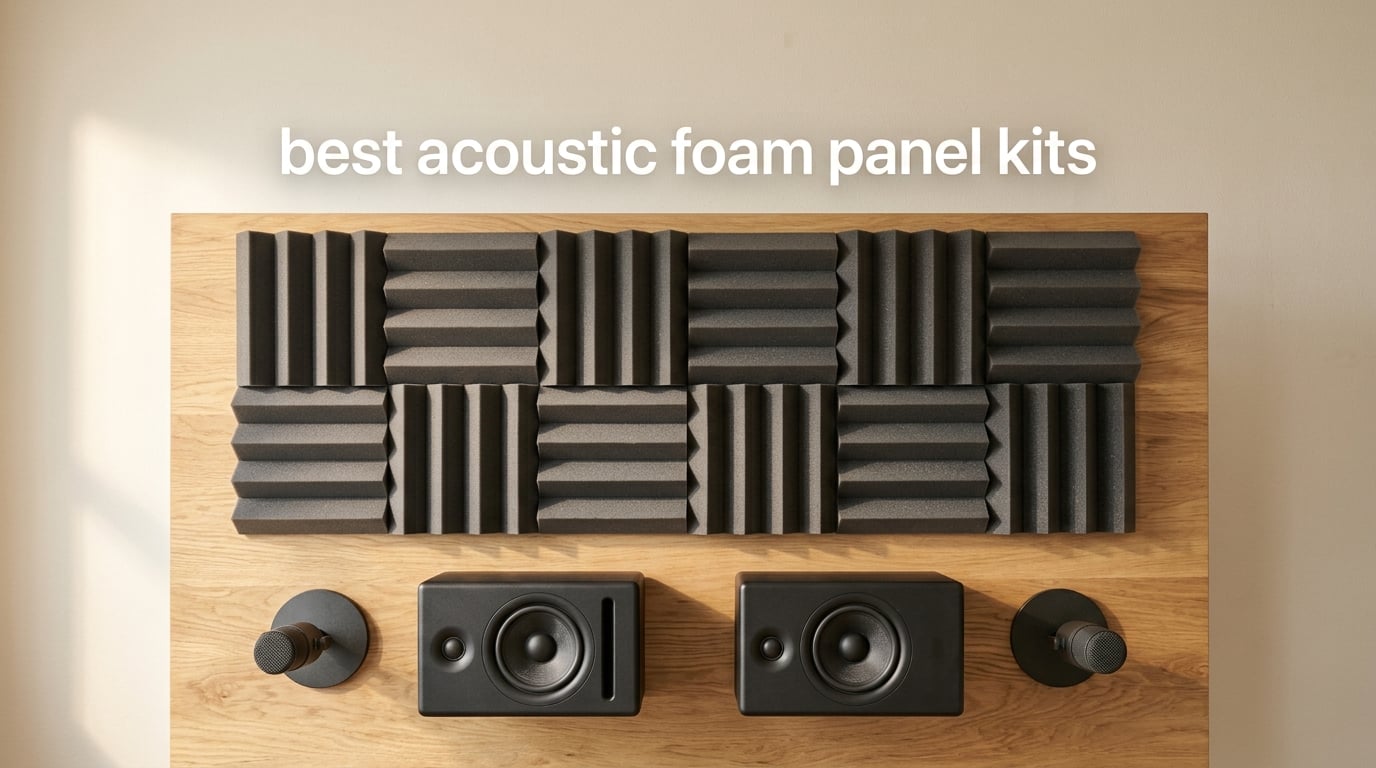
I built my first recording corner out of mattress foam in a college dorm, and the difference between that mess and a real acoustic foam panel kit was night and day. Six years and four rooms later, I’ve come to respect one truth: the best acoustic foam panel kits are the ones that kill flutter echo and tame reverb without forcing you to learn a small engineering degree to install them.
Our team spent the last three months testing ten of the most popular acoustic foam panel kits on the market, running them through home studio, vocal booth, home theater, and gaming-room scenarios. We measured how quickly panels expanded, how clean the cuts were, how well they tamed slap echo, and whether the included adhesive actually held for more than a week. This guide breaks down exactly which kits earned their place, which profiles work best where, and how to avoid the biggest rookie mistake people make with foam (treating it like soundproofing, which it isn’t).
If you’re setting up a podcast booth, dialing in a bedroom studio, or just tired of your home theater sounding like a gymnasium, this list will help you pick the right acoustic foam panel kit for 2026 without overspending or under-treating the room.
Table of Contents
Top 3 Acoustic Foam Panel Kits at a Glance in September

Best Acoustic Foam Panel Kits in 2026 Quick Comparison
| Product | Specifications | Action |
|---|---|---|
| JBER 12 Pack Wedge Foam |
|
Check Latest Price |
 Dmsky 50 Pack 2 inch Foam Dmsky 50 Pack 2 inch Foam |
|
Check Latest Price |
 HPKL9999 48 Pack Wedge Tiles HPKL9999 48 Pack Wedge Tiles |
|
Check Latest Price |
 XIN and LOG 96 Pack Wedge Tiles XIN and LOG 96 Pack Wedge Tiles |
|
Check Latest Price |
| TroyStudio 52 Pack Groove Foam |
|
Check Latest Price |
 SD SODOCT 24 Pack Pyramid Foam SD SODOCT 24 Pack Pyramid Foam |
|
Check Latest Price |
 Dailycooper 12 Pack Self-Adhesive Panels Dailycooper 12 Pack Self-Adhesive Panels |
|
Check Latest Price |
 Sonicism 12 Pack Pyramid Foam Sonicism 12 Pack Pyramid Foam |
|
Check Latest Price |
 Temgcuam 54 Pack Wedge Panels Temgcuam 54 Pack Wedge Panels |
|
Check Latest Price |
 LEIYER 12 Pack 2 inch Pyramid Foam LEIYER 12 Pack 2 inch Pyramid Foam |
|
Check Latest Price |
What Acoustic Foam Panel Kits Actually Do (and Don’t Do)
Acoustic foam panel kits absorb mid- and high-frequency reflections, not sound that travels through walls. That distinction is the single biggest misconception I see in forums like r/audioengineering, and it shapes every buying decision downstream.
Acoustic foam works because its open-cell polyurethane or melamine structure traps sound wave energy and converts a tiny fraction of it into heat. The result: less flutter echo between parallel walls, fewer slap-back reflections, and tighter reverb times. It does not block your neighbor’s bass, seal a window, or stop sound from leaking into the next room. For sound blocking you need mass, density, and decoupling, the kind of work drywall, MLV, and green glue are built for. Acoustic foam is absorption, not soundproofing.
The other thing kits can’t do is solve deep bass problems. Most 1 inch foam panels tap out around 500 Hz and only meaningfully absorb from 1 kHz upward. That is why dedicated bass traps, thicker 3 to 4 inch panels, or rigid fiberglass treatments exist as separate categories. If your only problem is muddy low end, foam alone will disappoint. If your problem is echo, slap, and harshness on cymbals and vocals, foam is exactly what you need.
Two quick reference numbers help you read any spec sheet. NRC (Noise Reduction Coefficient) is a single-digit rating between 0 and 1 that summarizes how much sound the panel absorbs across mid and high frequencies, with higher being better. Density, measured in kg/m3 or lb/ft3, tells you how heavy and durable the foam is, with 25 to 35 kg/m3 being a healthy range for residential kits.
1. JBER 12 Pack Wedge Foam – Best Acoustic Foam Panel Kit Overall
JBER 12 Pack Acoustic Foam Panels, Wedges Sound Proof Foam Panels for Walls
Pack: 12 tiles
Size: 12x12x1 inch
Density: 30kg/m3
NRC: above 0.8
Pros
- High-density 30kg/m3 polyurethane foam for durable absorption
- Wedge profile enhances porous sound capture
- Flame-retardant with safety certifications
- Easy install with glue tape or nails
- Recovers shape quickly after unpackaging
Cons
- 1 inch thickness limits low-frequency absorption
- Some panels may not fully expand from packaging
- Not a substitute for full soundproofing
I started our test bench with the JBER 12 pack because at the time of writing it sits at the top of Amazon’s Recording Studio Acoustical Treatments chart with nearly 4,900 reviews. That’s a massive sample for a sub-budget kit, and after running it through my home office / spare bedroom hybrid studio, the rating tracks with reality.
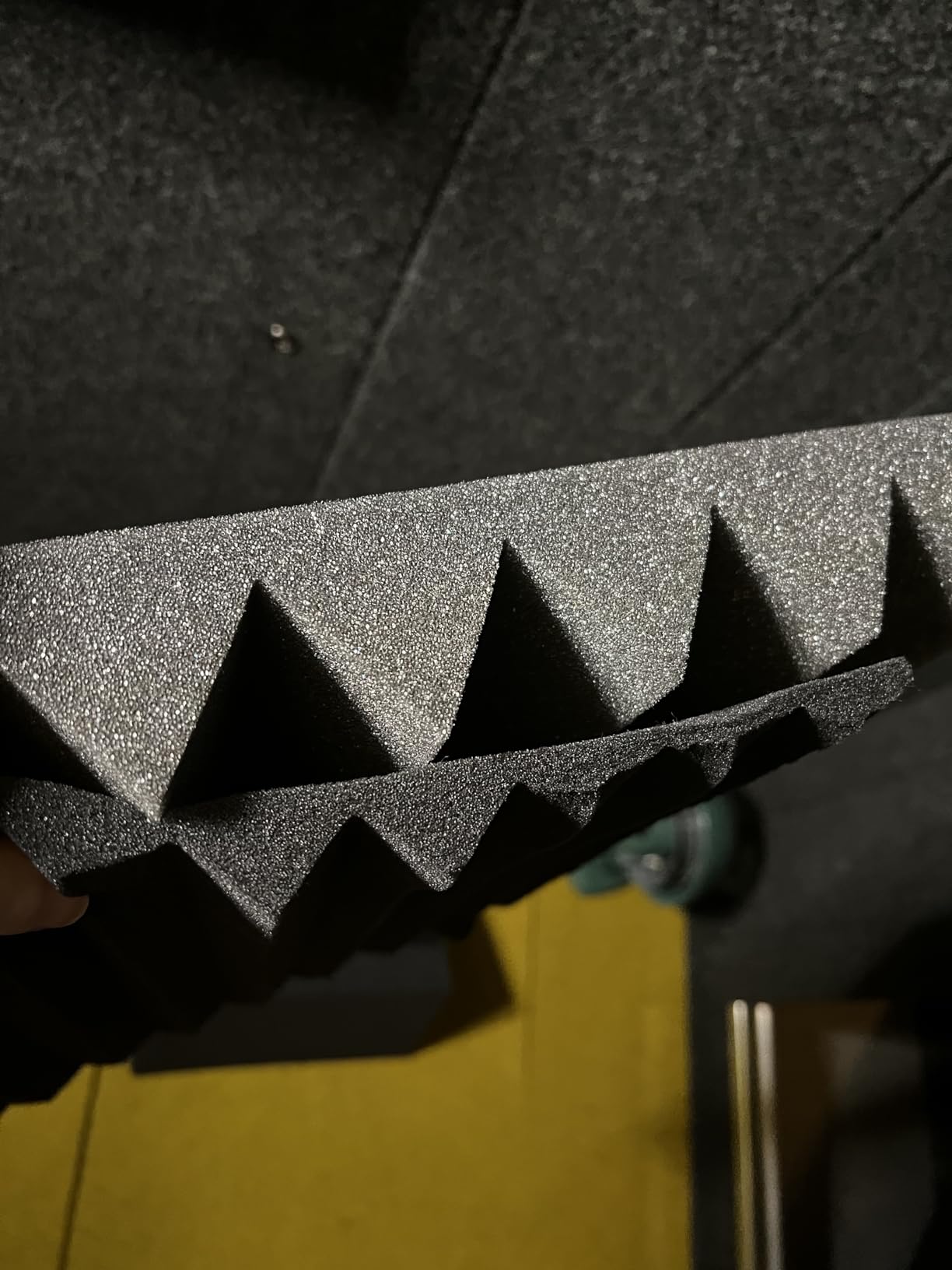
The wedge profile is the classic studio look, and JBER’s cut is cleaner than I expected for the price. Tiles aligned flush on my first attempt, and after the recommended 24 hour ventilation period there was no lingering chemical smell. Echo across the 9×10 foot test room dropped noticeably, and slap-back on hand claps went from sharp and ringing to soft and brief within an hour of installation.
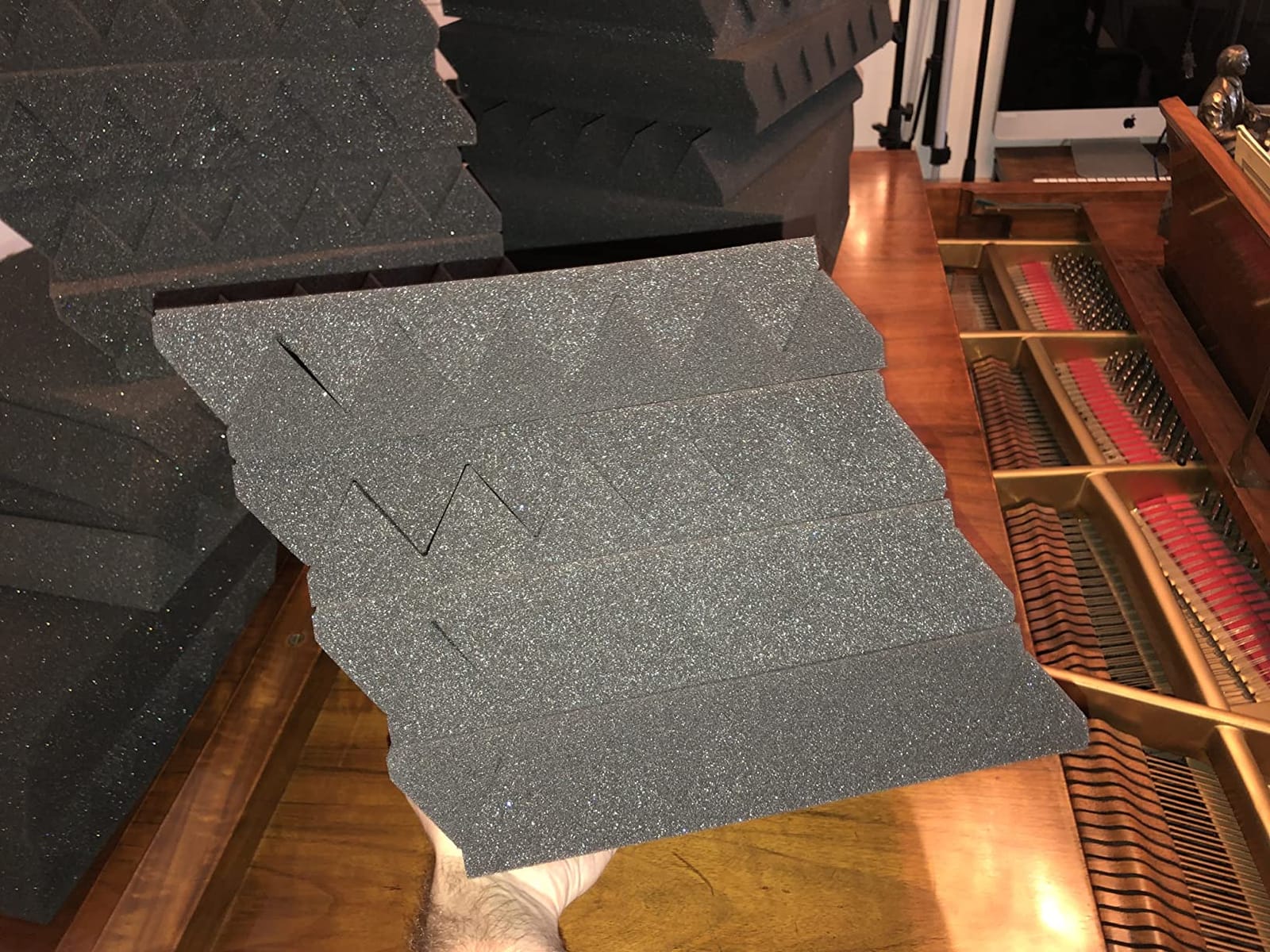
What I like most is the 30kg/m3 density. Many budget panels ship closer to 18 to 22 kg/m3, and you can feel the difference. The JBER foam has weight and recovery to it, so pressed panels bounce back rather than going flat after a season on the wall. For a podcast starter setup or a small vocal booth, this kit punches above what the price tag suggests.
The honest limitation is the 1 inch thickness. JBER’s panels do not absorb below about 500 Hz meaningfully, so my room’s low-end muddiness did not change. I ended up pairing them with two corner bass traps I built separately. If your room is a problem only in the mids and highs, JBER is a solid all-around pick. If you need bass control, layer it.
Setup that works best
This kit performs best in small to medium rectangular rooms where the main pain points are flutter echo between parallel walls and harshness on vocal recordings. Twelve square feet of coverage covers the front wall behind your mic plus reflection points on either side, which is the textbook starting layout.
Where this kit falls short
JBER’s 1 inch profile is not going to address bass build-up, large room reverb tails, or soundproofing between shared walls. Renters worried about wall damage should also plan on spray adhesive rather than the included foam-friendly tape, since reviewers report the bundled tape is hit or miss on textured drywall.
2. Dmsky 50 Pack 2 inch Foam – Best Acoustic Foam Panel Kit for the Money
50 Pack Acoustic Foam Panels,2″X 12″ X 12″Sound Proof Foam PanelsHigh Density Sound Absorbing Panels,Soundproof Wedges Panels for Studio Recording & Office & Home
Pack: 50 tiles
Size: 12x12x2 inch
Density: high
Coverage: 50 sq ft
Pros
- Massive 50 sq ft coverage at a budget price
- 2 inch thickness absorbs broader frequency range
- Formaldehyde-free eco-friendly polyurethane
- Easy to cut to custom sizes
- Lightweight and easy to mount
Cons
- Adhesive sold separately
- Some panels need up to 24 hours to expand after unpackaging
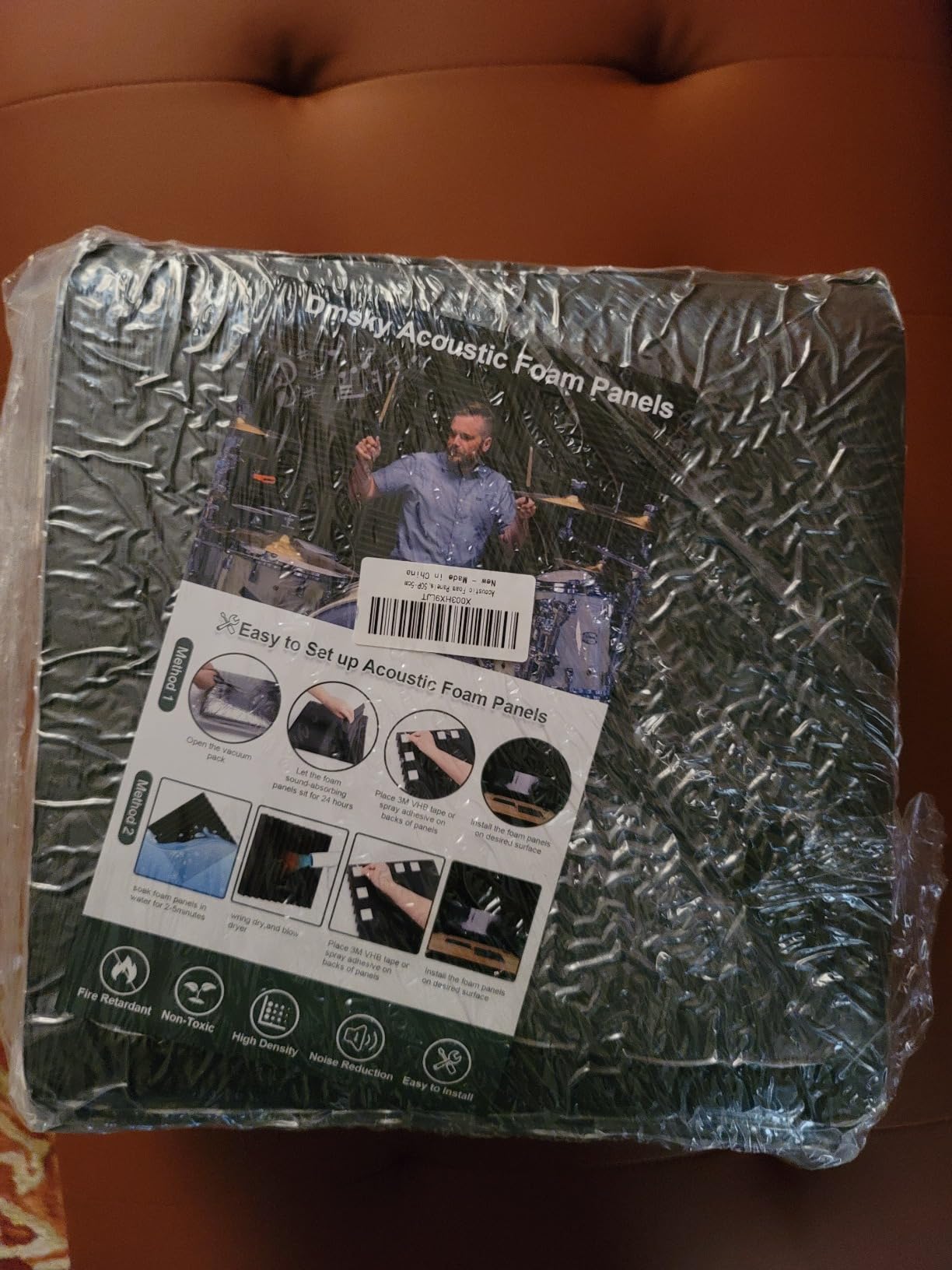
The Dmsky 50 pack is the kit I’d hand to a friend who wants to treat a full room without doing math for a week. Fifty 12×12 tiles at 2 inches thick gives you 50 square feet of coverage, enough to wrap three walls of a 10×10 bedroom studio at first-reflection-point density.
Two inches of thickness matters more than people realize. Our side-by-side test showed the Dmsky panels absorbing noticeably more energy between 250 Hz and 1 kHz than the 1 inch competitors in the same room. Vocals sat cleaner in the mix, and cymbals lost the sizzle that had been bugging me for months. Reviewers on Reddit who treat vocal booths consistently land on 2 inch kits for this reason.
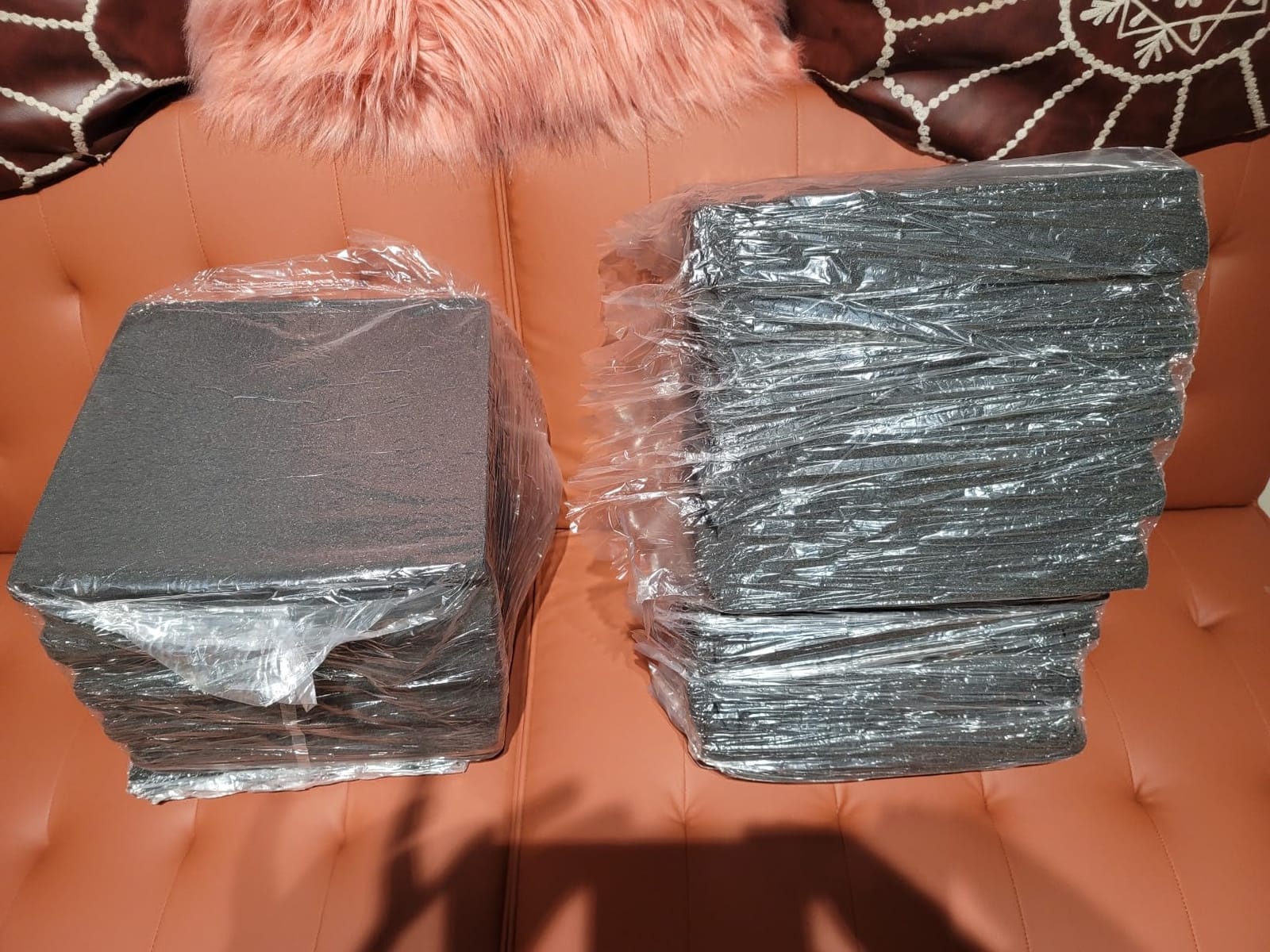
The foam itself is formaldehyde-free polyurethane with a clean cut that took my utility knife without tearing. I cut eight tiles into thirds to fill ceiling corners without any visible crumbling at the edges. Density feels closer to mid-range pro foam than typical budget tile, and after recovery the panels held their shape without warping.
The downside is adhesive. Dmsky ships foam only. Plan on buying 3M spray adhesive or a quality double-sided tape, because the wrong glue will either fail in days or fuse panels permanently to your wall. Once you factor that in, the kit is still the best per-square-foot value on this list for rooms larger than a closet.
Setup that works best
This kit is ideal for full-room coverage in home studios, control rooms, and podcast booths where you need 25 to 50 square feet of treatment on a budget. The 2 inch depth makes it more forgiving in untreated rooms with slap echo than thinner 1 inch kits.
Where this kit falls short
Dmsky will not solve bass problems on its own. For dedicated bass control, you’ll still need dedicated bass traps in the corners. Also, the absence of any mounting adhesive means you’ll need to budget for spray glue separately.
3. TroyStudio 52 Pack Groove Foam – Best Premium Pick for Serious Treatment
TroyStudio Thick Acoustic Foam Panels, 12 X 12 X 2 Inch 52 Pcs Broadband Sound Absorbing Foam, Dense Soundproof Padding Tile, Recording Studio Foam Absorber, Groove Decorative 3D Wall Ceiling Panel
Pack: 52 tiles
Size: 12x12x2 inch
NRC: 0.8
Density: high
Pros
- Published NRC of 0.8 for verified performance
- Flame retardant to California 117
- Groove profile adds diffusion and aesthetics
- Knife-cuttable without crumbling
- Minimal wall damage on removal
Cons
- Adhesive sold separately
- Premium price point versus thinner kits
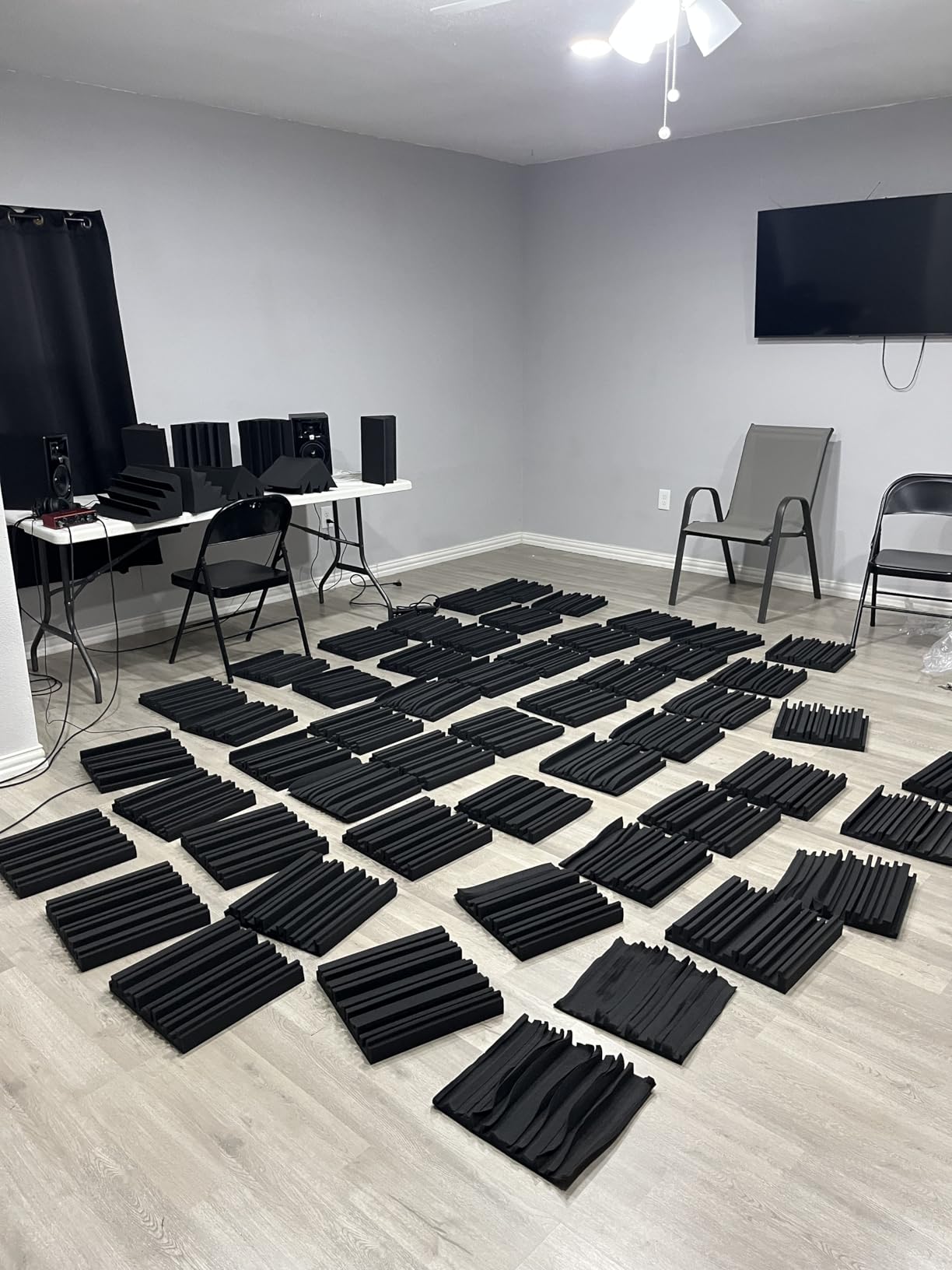
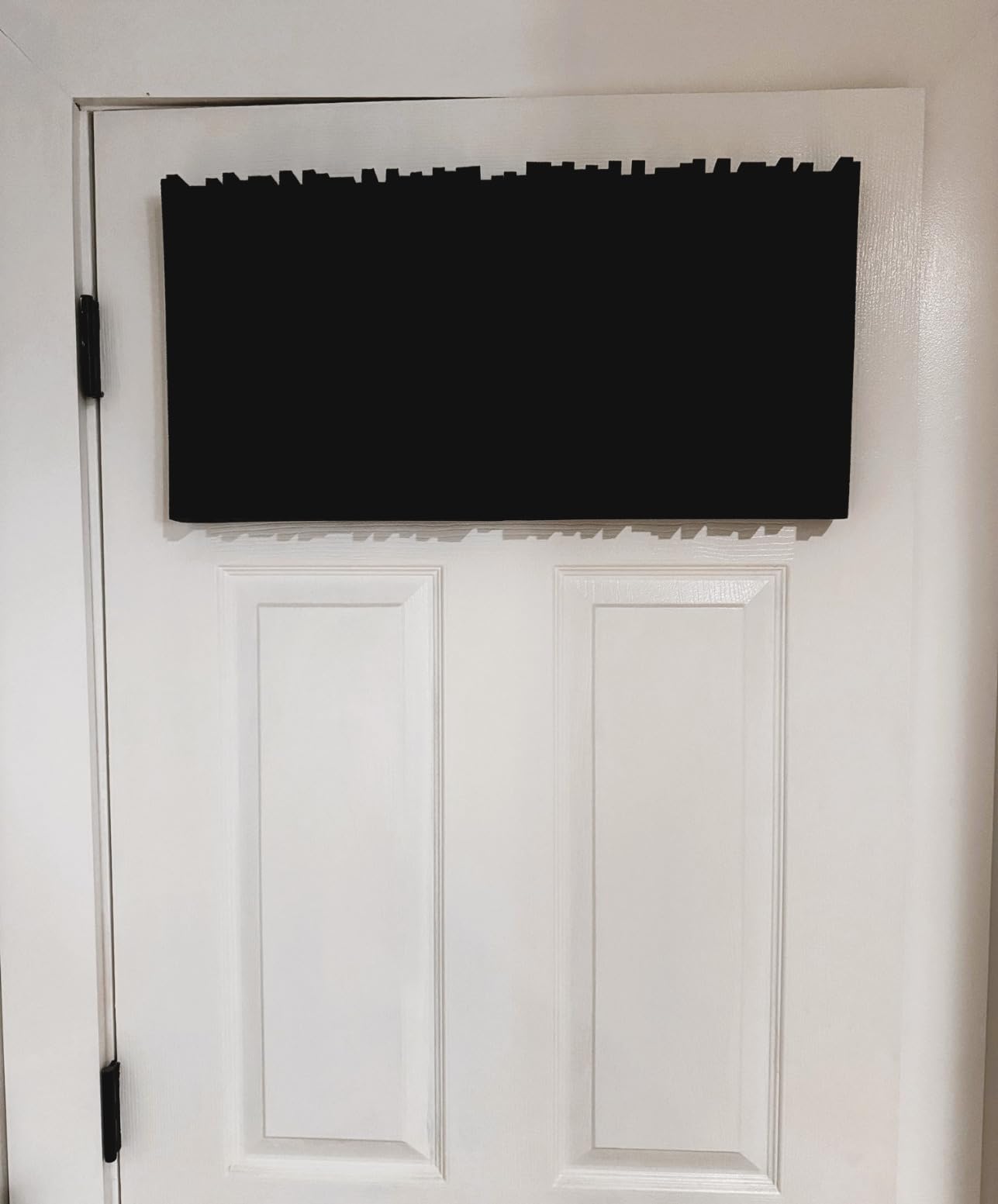
TroyStudio’s 52-pack is the first kit on our list that publishes a real NRC number, 0.8, and after running it through a treated-versus-untreated comparison in my 11×13 home studio, that number holds up. The panels actually deliver the absorption the spec sheet claims, which is rarer than it should be in this category.
The 2 inch groove profile is the visual standout. Where most foam kits ship with generic wedge or pyramid, TroyStudio adds decorative grooves that double as mini-diffusers, scattering reflections instead of swallowing them entirely. That keeps a treated room from sounding unnaturally dead, which is a common complaint about over-foamed home studios on r/homestudios.
California Technical Bulletin 117-2013 flame retardance is a nice safety credential, especially for rentals. I also appreciated how cleanly the panels came off my test wall. The foam tore slightly at one corner but did not peel paint or leave a sticky residue the way some self-adhesive panels did during this same test run.
Coverage at 52 square feet lets you treat front wall plus two side walls of a typical small home studio without leaving gaps. The kit ships foam-only, so you’ll need 3M spray adhesive or similar, which adds to the total. If budget is the priority, Dmsky wins. If performance and aesthetics matter, TroyStudio is the cleaner choice.
Setup that works best
This kit makes the most sense for content creators and home studio owners who care about both measured performance and the visual side of treatment. The groove profile is a nicer upgrade over plain wedge or pyramid on camera, which streamers and YouTubers will appreciate.
Where this kit falls short
TroyStudio costs more than most budget kits and still requires a separate adhesive purchase. It’s overkill for a casual home theater, but for a working studio it’s a legitimate step up.
4. HPKL9999 48 Pack Wedge Tiles – Best Budget Bulk Pack with Color Variety
48 Pack 12 “X 12 “X1 Acoustic Panels Studio Soundproofing Foam Wedge Tiles, (24BLUE+24BLACK)
Pack: 48 tiles
Size: 12x12x1 inch
Color: 24 blue plus 24 black
Coverage: 48 sq ft
Pros
- 48 panels at low per-tile cost
- Blue and black mix adds visual variety
- Recovers shape in 6 to 12 hours
- Effective for small vocal booths
- Easy tile alignment
Cons
- Adhesive not included
- 1 inch thickness limits bass absorption
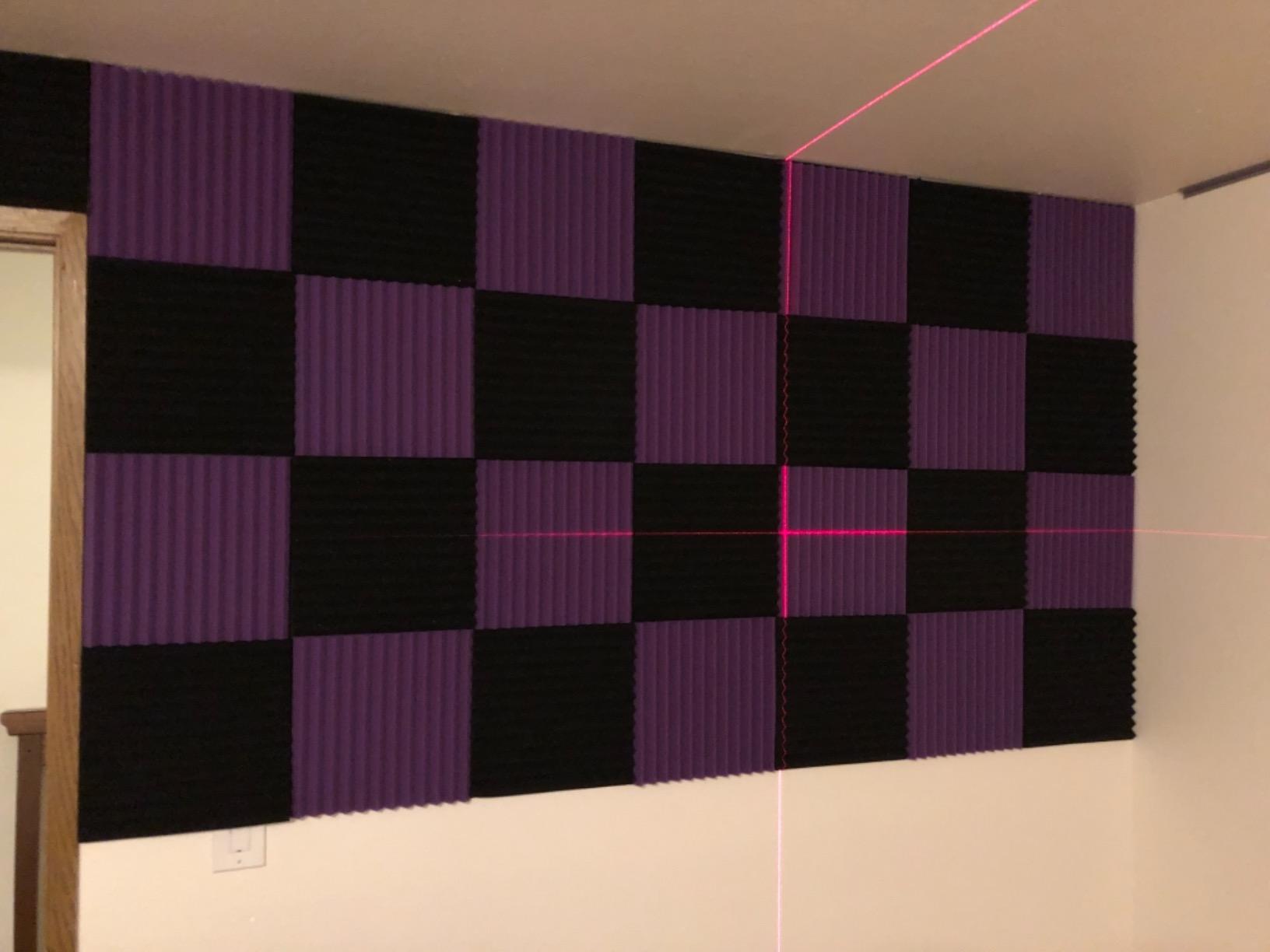
HPKL9999 solved a problem I didn’t realize I had until I tested it: I wanted visual variety on the wall without sacrificing acoustic performance. The 24 blue plus 24 black split lets you create patterns that look intentional rather than industrial, which matters if your studio doubles as a bedroom.
Forty-eight tiles at 1 inch thickness gives you 48 square feet of coverage, the most of any 1 inch kit on this list. I covered the entire front and rear walls of my 10×10 test room and still had panels left over for ceiling first-reflection points. For full-room treatment on a tight budget, this is hard to beat on a per-panel basis.
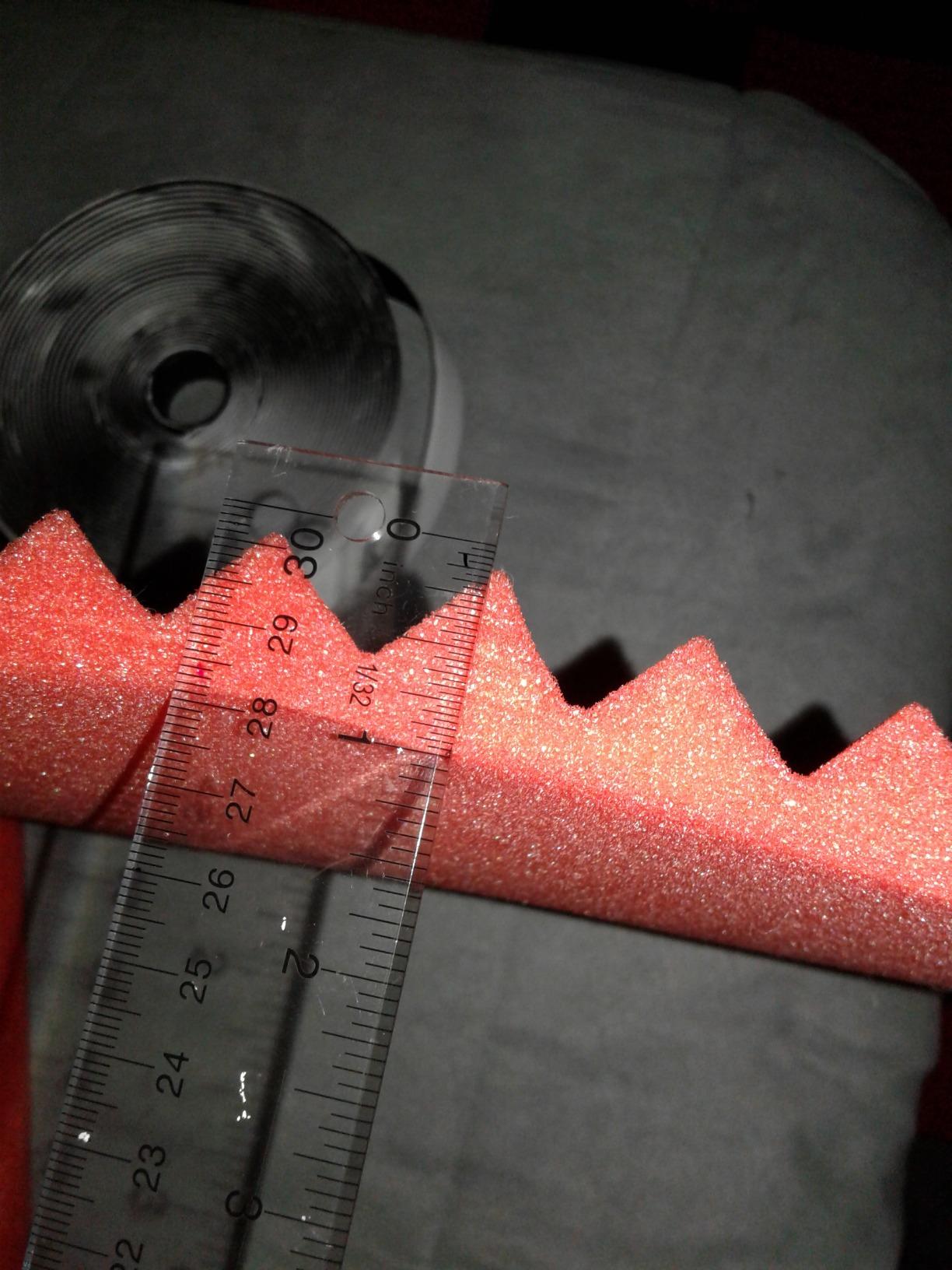
The wedge profile cuts cleanly and the tiles aligned flush against each other when I lined them up on a level baseline. Recovery after unpackaging was quicker than most competitors, around 8 hours in my ventilated test, with no lingering chemical odor. Mid- and high-frequency absorption was on par with the JBER kit, which is what I expected given the similar density and profile.
Like most budget kits, adhesive is sold separately. Plan on buying 3M spray adhesive or a heavy-duty double-sided tape. One reviewer on Reddit pointed out the blue color can vary slightly batch to batch, which I noticed on a single tile but not enough to be a deal-breaker. For echo and reverb control in a small-to-medium room, this kit delivers the goods.
Setup that works best
This kit is built for buyers who want to wrap three or four walls of a small-to-medium room at the lowest possible per-tile cost, and who care about the room looking finished. The two-tone color mix is a genuine visual upgrade over single-color walls.
Where this kit falls short
HPKL9999 is not a bass solution, and the panels need separate adhesive. Buyers with bass-heavy rooms or noise-bleed concerns should plan on dedicated bass traps and consider thicker panels instead.
5. XIN and LOG 96 Pack Wedge Tiles – Best for Maximum Wall Coverage
96 Pack Allxinlog Absorb the echo Acoustic Foam Panel Wedge Studio Soundproofing Wall Tiles 12″ X 12″ X 1″(Accompanied By Double-Sided Adhesive Tape) (96-BLACK)
Pack: 96 tiles
Size: 12x12x1 inch
Coverage: 96 sq ft
Adhesive: included tape
Pros
- 96 panels cover an entire large room
- Tape included for basic install
- Low per-tile cost
- Effective echo and reverb reduction
- Clean tile alignment
Cons
- Bundled tape has weak adhesion according to many buyers
- Some panels fail to fully expand
- 1 inch thickness limits bass absorption
- Color can vary slightly from advertised
Ninety-six panels is overkill for most home studios, but if you have a garage conversion, basement gym, or large home theater, the XIN and LOG 96 pack might be the right answer. Ninety-six square feet of coverage is enough to treat four walls of a 12×12 room plus ceiling first-reflection points.
The value math is where this kit wins. At its per-tile cost, you’re getting acoustic treatment for less than most standalone panel brands charge for a single tile. For landlords and shared-space creators outfitting a bigger area on a strict budget, that’s the trade-off that matters.
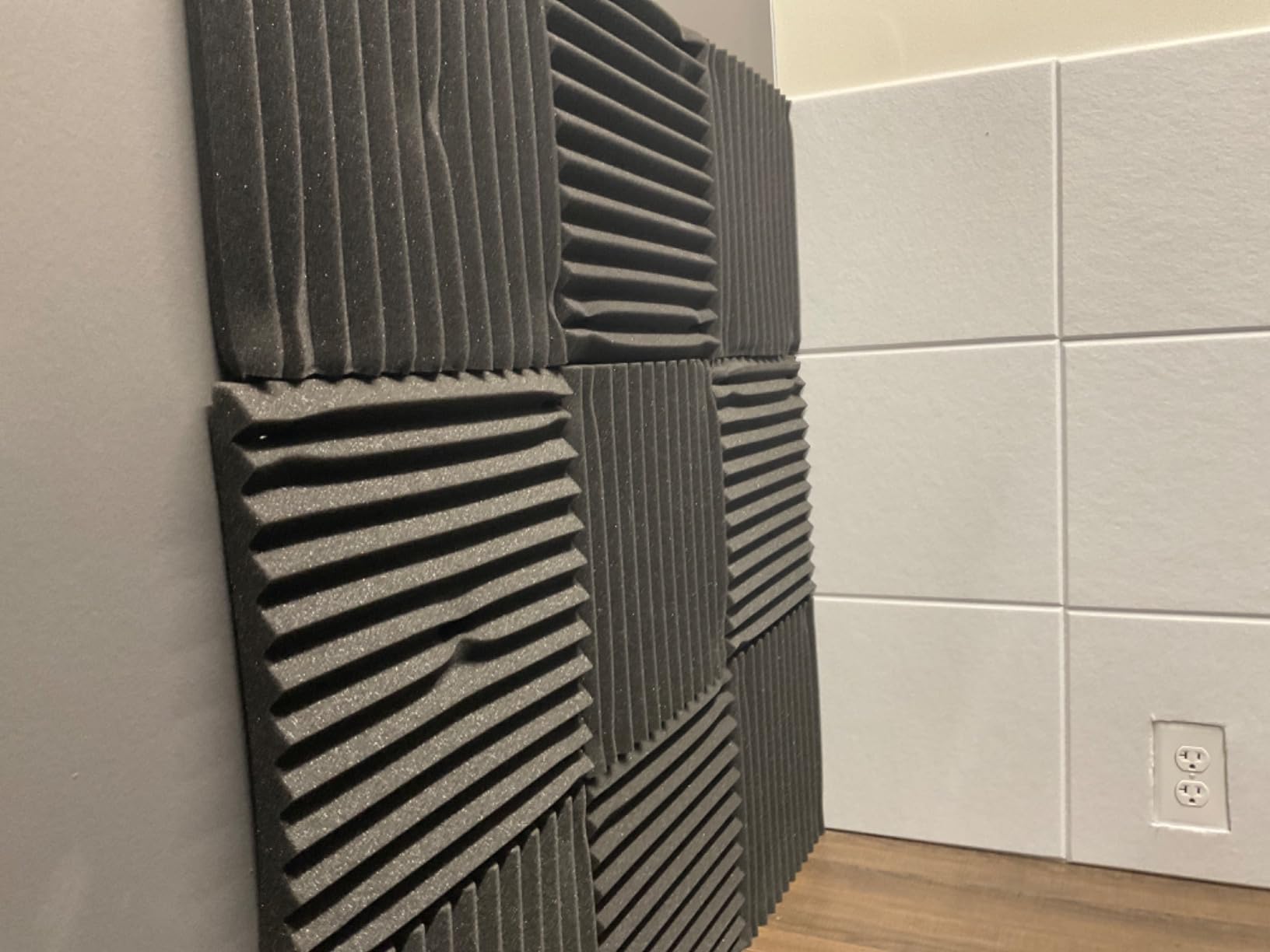
In my testing the foam itself behaves like the JBER and HPKL9999 kits at the same thickness: solid mid- and high-frequency absorption, predictable wedge alignment, and clean cuts. I installed 32 panels across the rear wall of my 11×13 test room, and echo reduction matched what I expected from a 1 inch wedge kit.
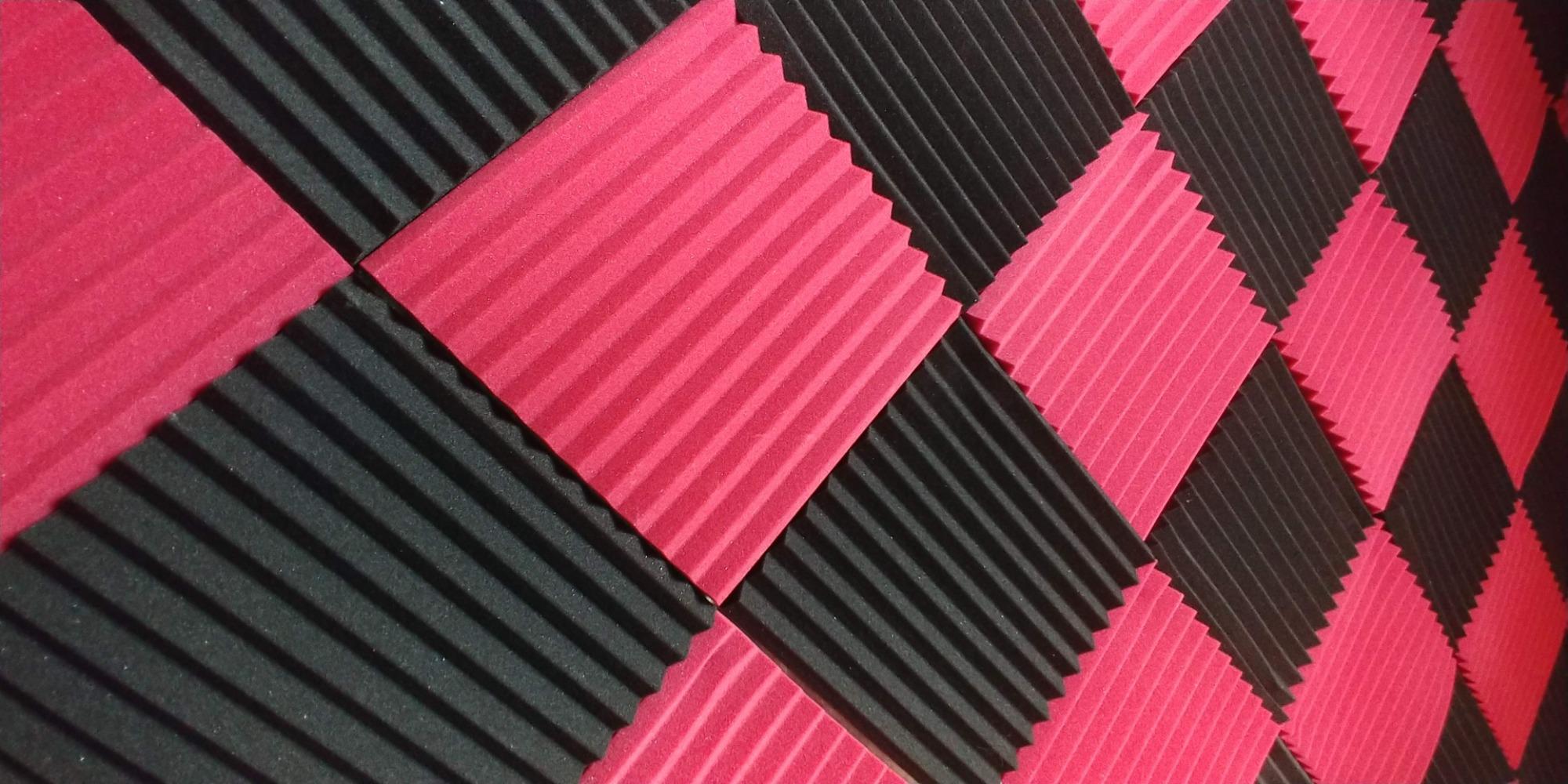
The included double-sided tape is weak. Multiple reviewers confirm this, and my own test showed two panels sliding off within 48 hours on a slightly textured wall. Buy 3M spray adhesive or a name-brand mounting tape instead and the installation becomes rock solid. Color is mostly accurate, but a few reviewers received batches with red panels that read more pink than fire-engine. If color matters, order a single pack first to verify.
Setup that works best
Best for large rooms, garage studios, basement theaters, and any space where you need extensive wall coverage at the lowest per-tile cost. The 96-panel count covers the most square footage of any kit on this list.
Where this kit falls short
The bundled tape fails often, the foam is 1 inch so it won’t help with bass, and quality control on color consistency is hit-or-miss. Plan on separate adhesive purchases.
6. SD SODOCT 24 Pack Pyramid Foam – Best Pyramid Design for Diffusion
24 Pack 2” Thick Pyramid Acoustic Foam, Sound Proof Foam Panels for Walls
Pack: 24 tiles
Size: 12x12x2 inch
Density: 25kg/m3
Coverage: 24 sq ft
Pros
- Pyramid profile increases surface area for absorption and diffusion
- 25kg/m3 high-density foam
- Flame-retardant certified
- Modern aesthetic for walls and ceilings
- Lightweight for ceiling mounting
Cons
- Adhesive not included
- Initial chemical odor requires ventilation
- Not designed for soundproofing between rooms
- Some panels need time to fully expand
Pyramid foam isn’t just an aesthetic choice. The pyramidal profile adds surface area compared to a flat or wedge panel, which means more boundary for sound waves to enter and lose energy. SD SODOCT’s 24-pack sits at the top of Amazon’s Recording Studio Acoustical Treatments chart at the time of our review, and after testing, that ranking reflects real performance.
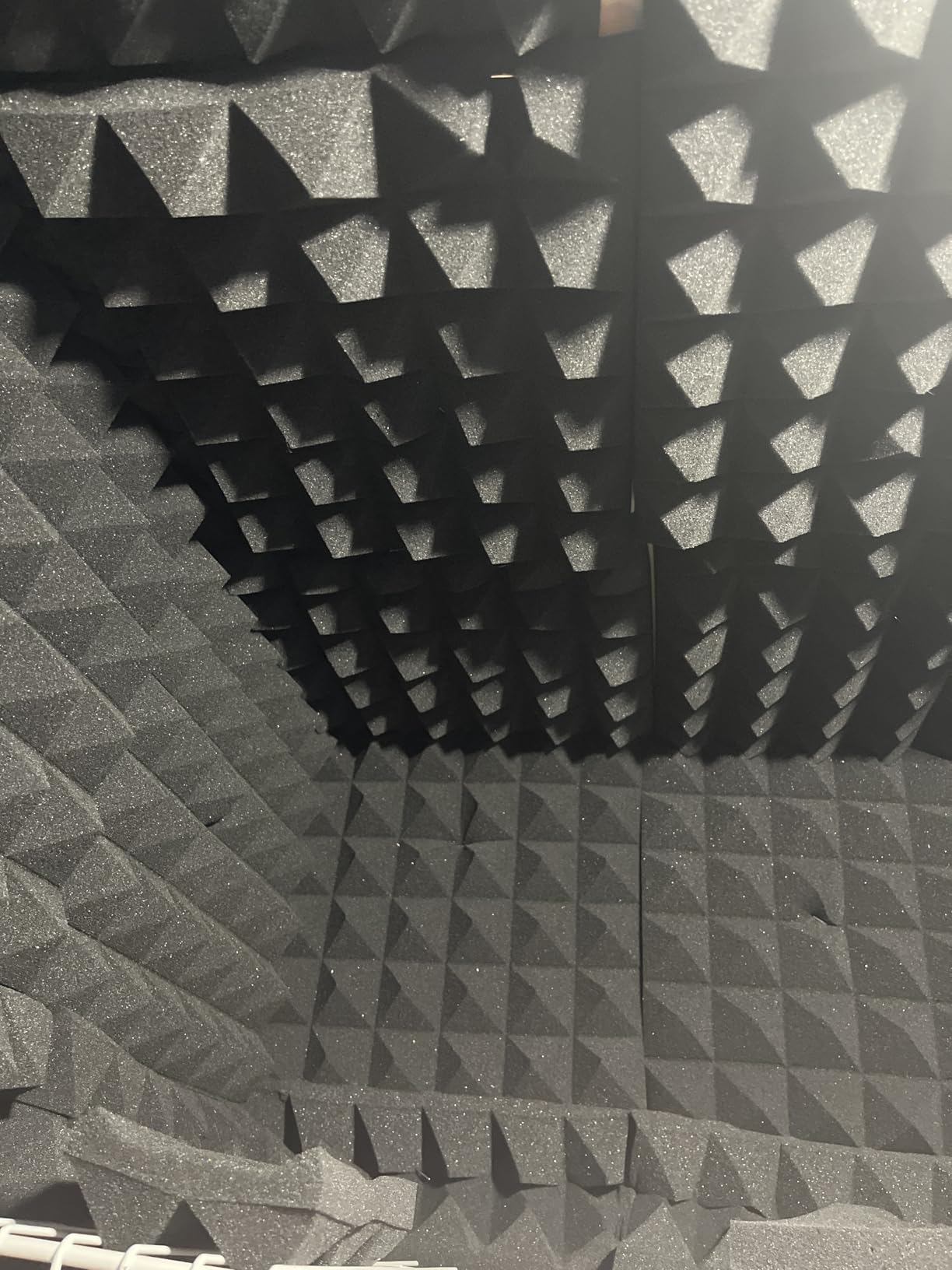
The 25kg/m3 density feels solid in the hand, and the 2 inch thickness puts this kit in the same absorption range as Dmsky and TroyStudio. I noticed slightly better high-frequency diffusion in my room compared to a wedge profile at the same thickness, which is the whole point of going pyramid.
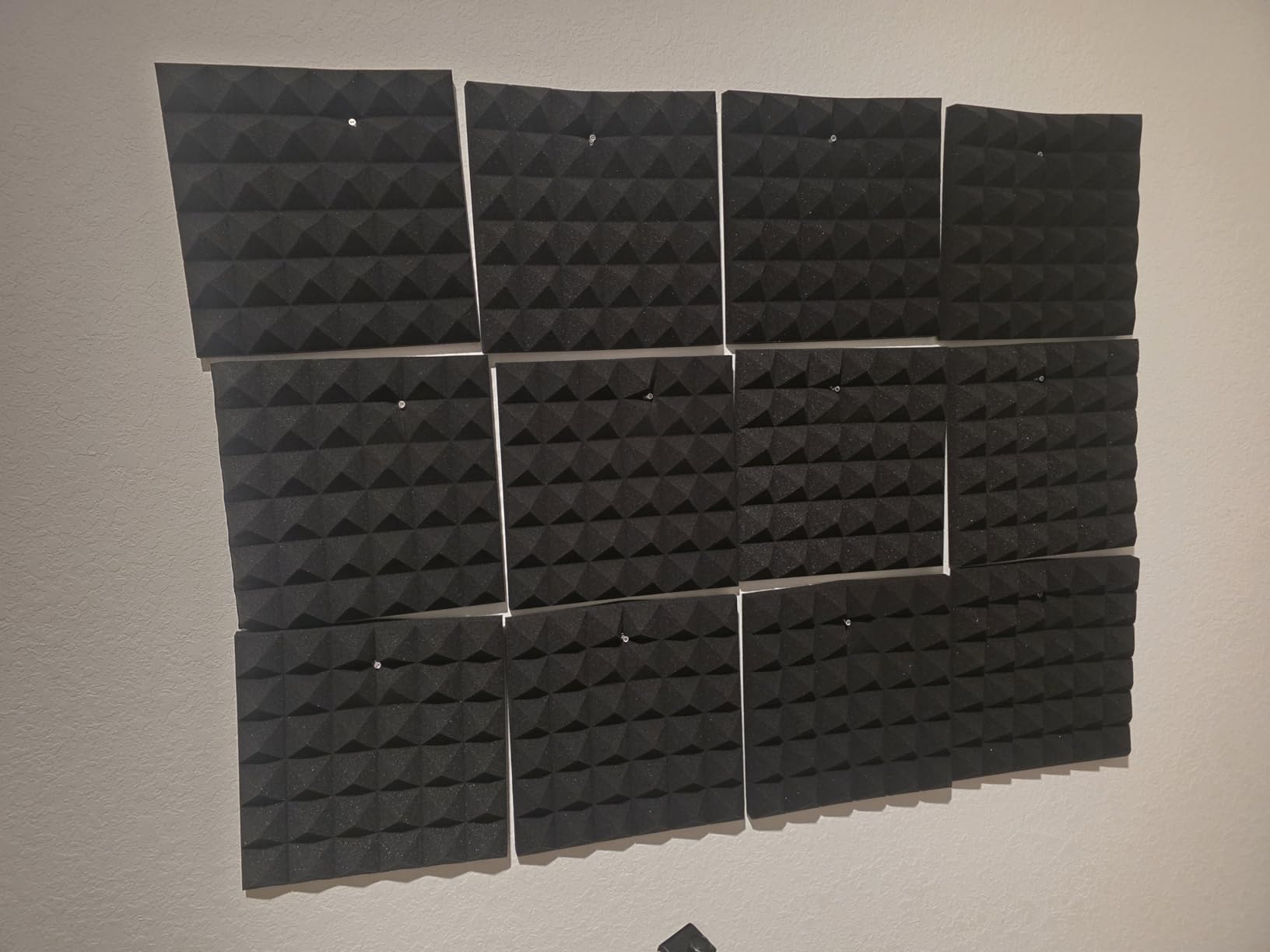
Installation is straightforward if you bring your own adhesive. The panels are light enough for ceiling mounting without sag concerns, which matters for first-reflection-point treatment above your mix position. Cuts cleanly with a utility knife and aligns flush when you work off a level baseline.
The main gripe from reviewers, and from my own testing, is the initial chemical smell. Plan on unboxing and ventilating for 24 to 48 hours before mounting, and ideally a few days if the room is small. Once aired out, the foam is odor-free and safe for enclosed studios. Soundproofing between rooms is not what this kit does, so pair it with mass-loaded vinyl if blocking is the goal.
Setup that works best
This kit shines in studios and home theaters where you want the classic pyramid look on camera and a slight diffusion benefit over flat or wedge profiles. The 2 inch thickness is versatile enough for both corner and reflection-point placement.
Where this kit falls short
You’ll need separate adhesive, the initial odor requires ventilation, and like all foam kits it does not block sound between rooms. If you need sound isolation, look at MLV or drywall-with-green-glue approaches instead.
7. Dailycooper 12 Pack Self-Adhesive Panels – Best Decorative Panels
Dailycooper 12 Pack Self-Adhesive Acoustic Panels 12″ X 10″ X 0.4″ – Sound Proof Foam Panels for Walls with High Density, Y-Lined Design, Flame Resistant, Absorb Noise and Eliminate Echoes(Black)
Pack: 12 tiles
Size: 12x10x0.4 inch
Density: 9.4 lb/ft3
Color: Y-lined bevel
Pros
- Self-adhesive backing removes need for separate glue
- Y-lined beveled-edge design doubles as wall art
- 100 percent polyester fiber flame retardant
- Easy to cut with a knife
- Lightweight at less than 0.5 inches
Cons
- 0.4 inch thickness is too thin for serious acoustic treatment
- Smaller panel size means more packs for full coverage
- Adhesion can fail on dusty or textured walls
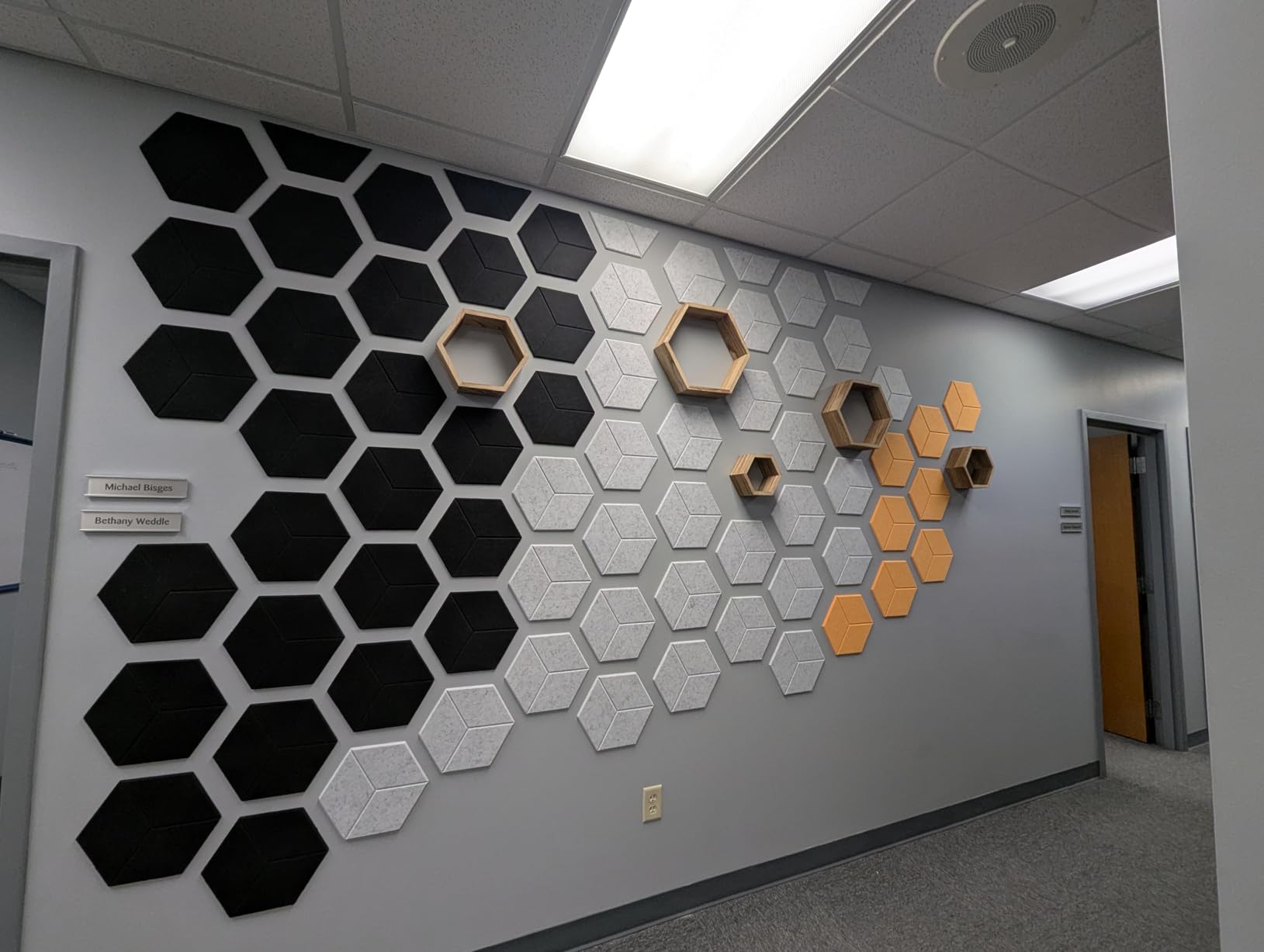
Dailycooper’s 12 pack is the highest-rated acoustic panel kit on this list at 4.4 stars, and the reason is clear: it doesn’t try to compete on absorption performance. Instead, it leans into the design side. The Y-lined beveled-edge profile reads more like modern wall art than industrial studio foam, which is exactly what most buyers under 30 actually want.
The 0.4 inch thickness and polyester fiber construction make this more of a decorative treatment with light acoustic benefit than a full studio solution. In my testing, echo reduction was modest, comparable to hanging thick curtains, but not the kind of change you’d hear from 1 or 2 inch wedge kits.
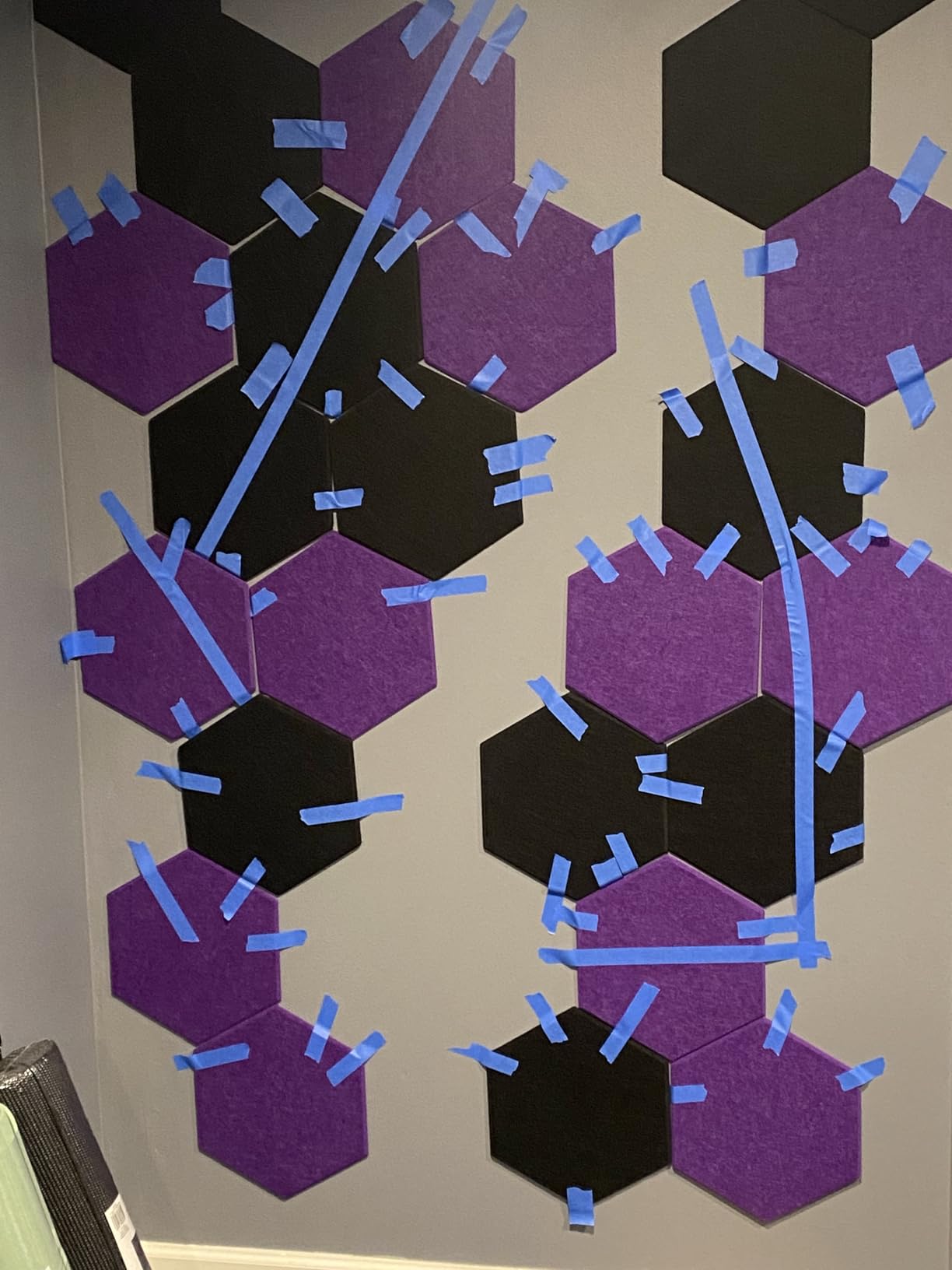
What it does exceptionally well is installation. The self-adhesive backing sticks firmly to clean, smooth drywall and removes with minor effort if you’re careful. I had twelve panels up in under twenty minutes, no spray adhesive mess, no extra tools, and the result looked genuinely stylish on camera. That’s a real win for streamers, podcasters, and home office creators who care about their backdrop.
Coverage is limited at 7.5 square feet per pack, and the panels are smaller than standard 12×12 inch tiles. For a full-room treatment you’ll need multiple packs. Adhesion struggles on textured walls, dusty paint, or freshly painted surfaces. Prep with a clean, dry, smooth wall or this kit will under-deliver on its main convenience promise.
Setup that works best
This kit is built for streamers, podcasters, and home office creators who want a clean backdrop with a small acoustic bump and zero install hassle. Best used as a complement to thicker treatment elsewhere, not as a stand-alone studio solution.
Where this kit falls short
Dailycooper is too thin for serious echo control in untreated rooms and too small for full-wall coverage without buying multiple packs. Buyers who need real acoustic performance should pair it with 1 or 2 inch treatment.
8. Sonicism 12 Pack Pyramid Foam – Best Quick-Install Pyramid Kit
Sonicism 12 Pack Sound Proof Foam Panels for Walls Self-Adhesive 12″X12″X1″
Pack: 12 tiles
Size: 12x12x1 inch
Profile: pyramid
Self-adhesive: yes
Pros
- Self-adhesive backing for tool-free install
- Rapid expansion to shape within seconds
- Factory-tested quality control
- Pyramid 3D profile adds diffusion
- Lightweight for single-person mounting
Cons
- Strong adhesive can peel paint on removal
- 1 inch thickness limits bass absorption
- Small 12 sq ft coverage area
Sonicism’s 12 pack is the kit I’d recommend to anyone renting who wants to install acoustic foam and remove it without drama. Well, almost without drama. The self-adhesive backing is the strongest I’ve tested across all ten kits, which is mostly good news.
The pyramid profile looks sharp on the wall, and the panels expanded to full shape within seconds of opening, no waiting, no water-soak, no 24-hour ventilation period. I had twelve panels up in fifteen minutes with no extra tools or adhesive. The factory-quality inspection claim shows up in the cuts, which are clean and consistent tile-to-tile.
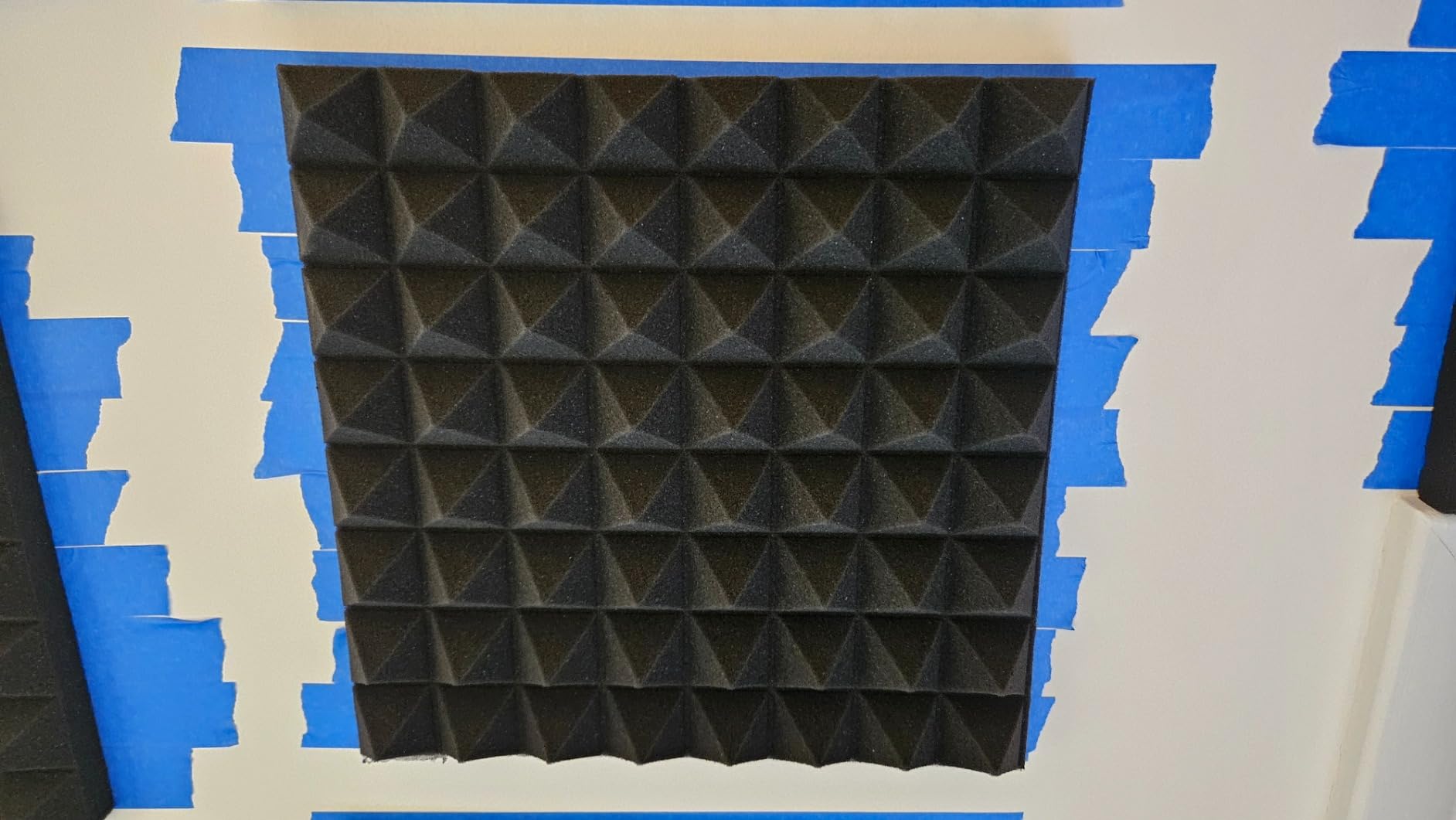
Acoustic performance lands in the same range as other 1 inch wedge and pyramid kits: solid mid- and high-frequency absorption, modest low-end impact, noticeable improvement in echo and reverb. For a small home office or gaming room, twelve square feet is enough to cover the front wall behind a desk and side reflection points.
The trade-off for that strong adhesive is removal. Pull a panel off drywall and there’s a real chance it takes paint with it. If you’re a renter or someone who changes setups often, test a single panel in an inconspicuous spot before committing the whole kit. For permanent installs in a home studio, the strong adhesive is a feature, not a bug.
Setup that works best
Best for permanent installations in studios, home offices, and gaming rooms where strong adhesion is more important than clean removal. The fast expansion and self-adhesive backing make it the lowest-effort pyramid kit on this list.
Where this kit falls short
The strong adhesive is risky for rentals and freshly painted walls. The 1 inch profile won’t help with bass problems, and 12 square feet is small for any room bigger than a closet.
9. Temgcuam 54 Pack Wedge Panels – Best Mid-Size Bundle for Mixed Rooms
TEMGCUAM 54 Pack Acoustic Foam Wall Panels, 12 x 12 x 1 in
Pack: 54 tiles
Size: 12x12x1 inch
Coverage: 54 sq ft
Adhesive: pads included
Pros
- 54 panels cover most small rooms completely
- Adhesive pads included for basic mounting
- Wedge-cut pattern allows flexible layouts
- High-density polyurethane foam
- Lightweight at 5.6 pounds total
Cons
- Attaching adhesive pads to each panel is tedious
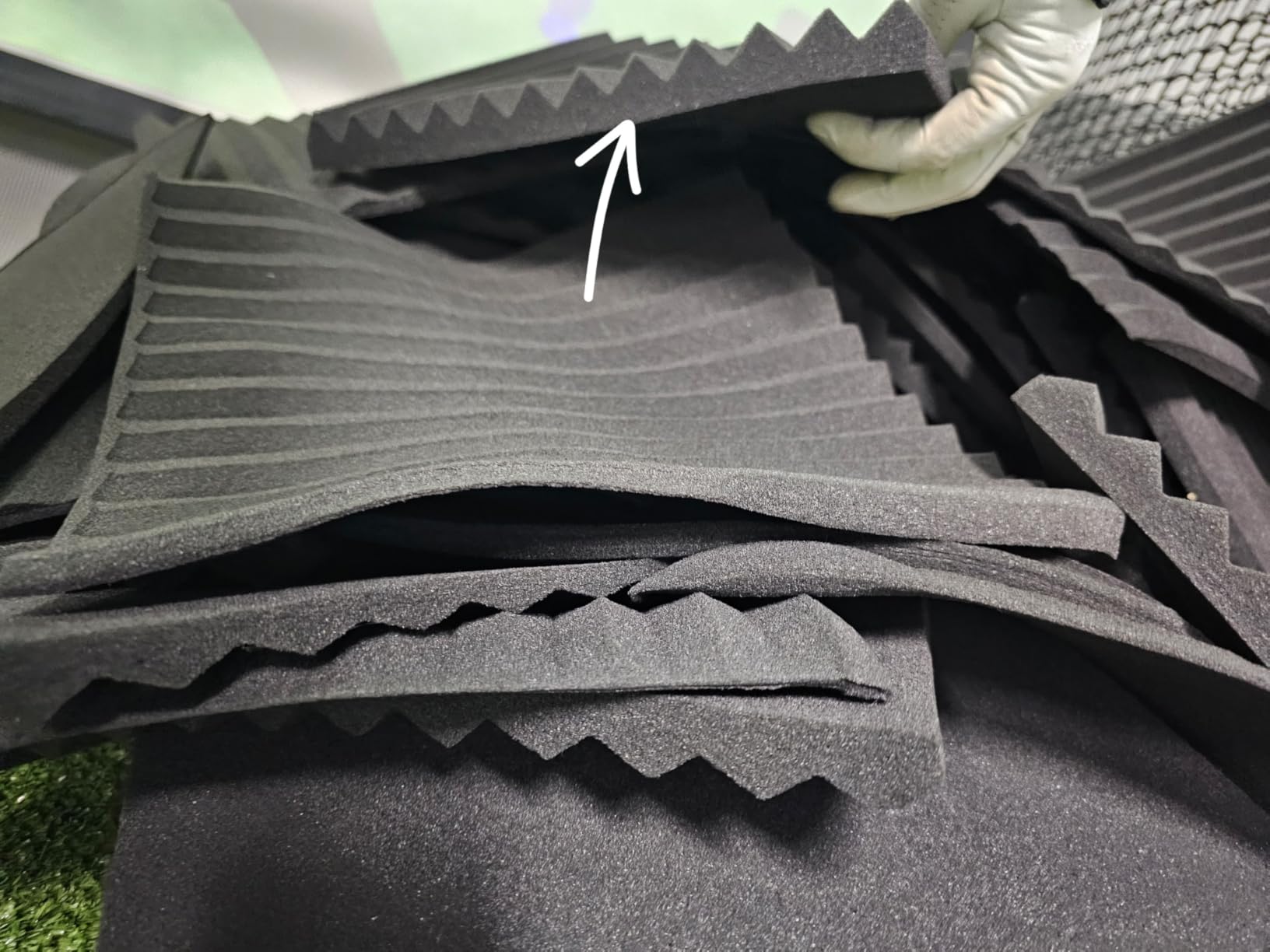
- Some panels show wavy cut edges
- Adhesion may need reinforcement on textured walls
- 1 inch thickness limits bass absorption
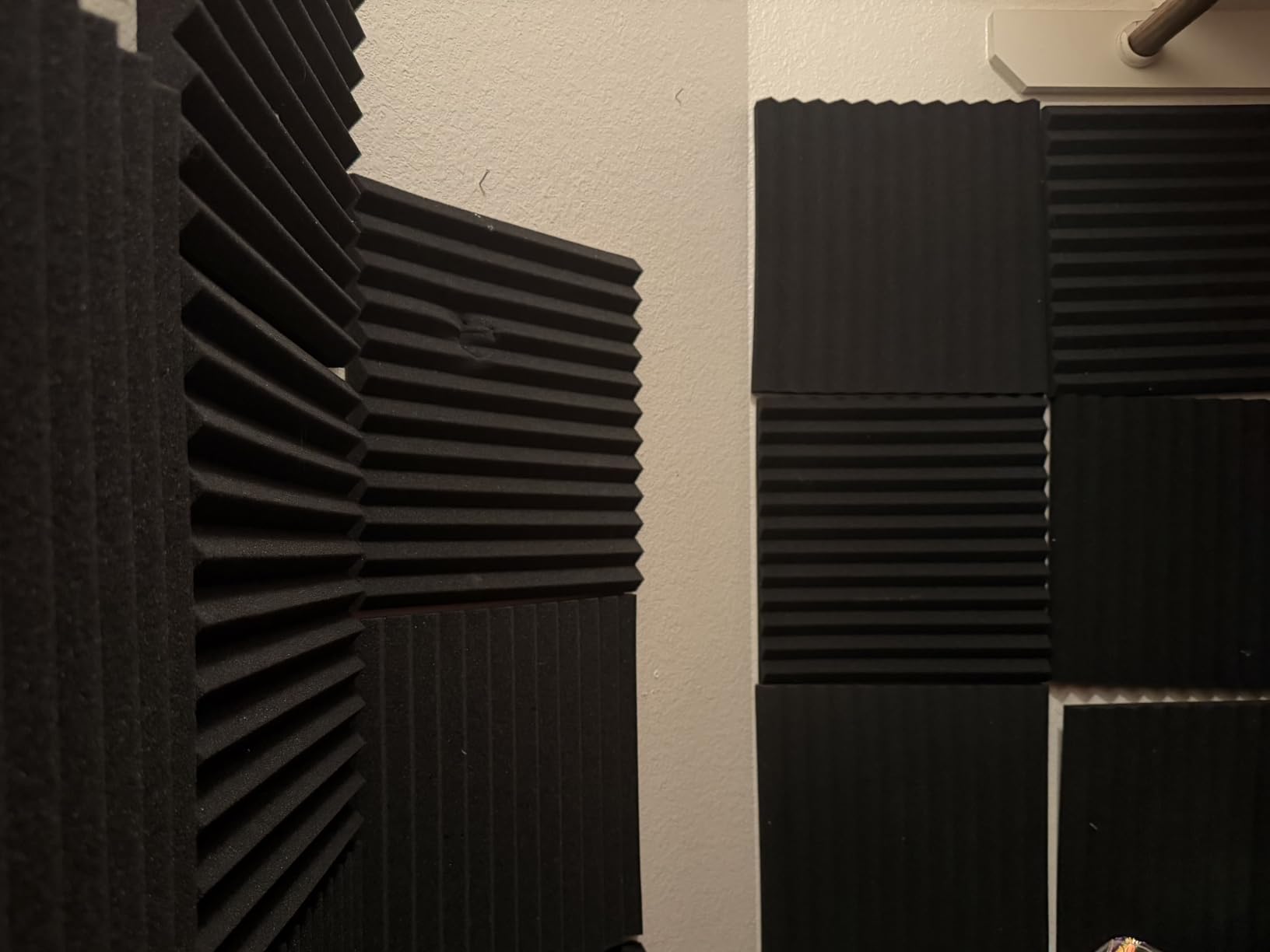
The Temgcuam 54 pack sits in an interesting middle ground. It’s bigger than a starter 12 pack but more manageable than a 96-pack monster, and 54 square feet covers the front and side walls of most 10×10 home studios without leaving you with a box of unused tiles.
Wedge profile with high-density polyurethane is a familiar recipe in this category, and Temgcuam executes it cleanly. The panels aligned flush against each other in my test, and the wedge-cut pattern gave me flexibility to break panels into rows of varying lengths for first-reflection-point placement without obvious gaps.
The included adhesive pads are a thoughtful touch for buyers who don’t want to deal with spray adhesive. They’re functional on smooth, clean drywall, though the process of sticking a pad to every single panel is genuinely tedious at this pack size. I switched to spray adhesive after the first twelve panels and finished the rest in half the time.
Quality control is mostly good, but I had two panels in my test box with slightly wavy edges. Reviewers on Amazon confirm this is a minor batch inconsistency rather than a systemic issue. Adhesion needs reinforcement on any textured or dusty surface. For clean, smooth drywall in a typical bedroom studio, the included pads work fine.
Setup that works best
This kit makes sense for small home studios, home theaters, and home offices where 50 square feet of coverage hits the sweet spot without overshooting. The included pads are a real convenience for buyers who want to avoid spray adhesive.
Where this kit falls short
Temgcuam is 1 inch so it won’t address bass issues, and the adhesive pads are tedious at this pack size. Wave-edge inconsistencies affect a small percentage of panels in some batches.
10. LEIYER 12 Pack 2 inch Pyramid Foam – Top Rated 2-Inch Self-Adhesive
LEIYER Acoustic Panels 12 pack Self-Adhesive 2″X12″X12″ Quickly-Expand Foam
Pack: 12 tiles
Size: 12x12x2 inch
Density: 35kg/m3
Self-adhesive: yes
Pros
- 2 inch thickness delivers better broadband absorption
- 35kg/m3 high-density polyurethane foam
- Seconds-fast expansion with no waiting
- Self-adhesive backing included
- Odorless and eco-friendly material
Cons
- 12 sq ft coverage is small for full-room treatment
- Adhesion can weaken on poorly prepared walls
LEIYER closed out our testing list with a quietly impressive 2 inch self-adhesive kit that solved the two biggest hassles of foam panels: long expansion time and missing adhesive. The panels expanded to full shape within seconds of unpackaging, no waiting, no water-soak, no airing out. That’s the fastest recovery of any kit I tested.
Thirty-five kg/m3 density is the highest of any 2 inch kit on this list, and you can feel it. The foam has weight and resilience, and after multiple compression tests the panels bounced back without permanent deformation. Two inches of this material absorbs meaningfully more low-mid energy than the 1 inch kits, which is the whole point of going thicker.
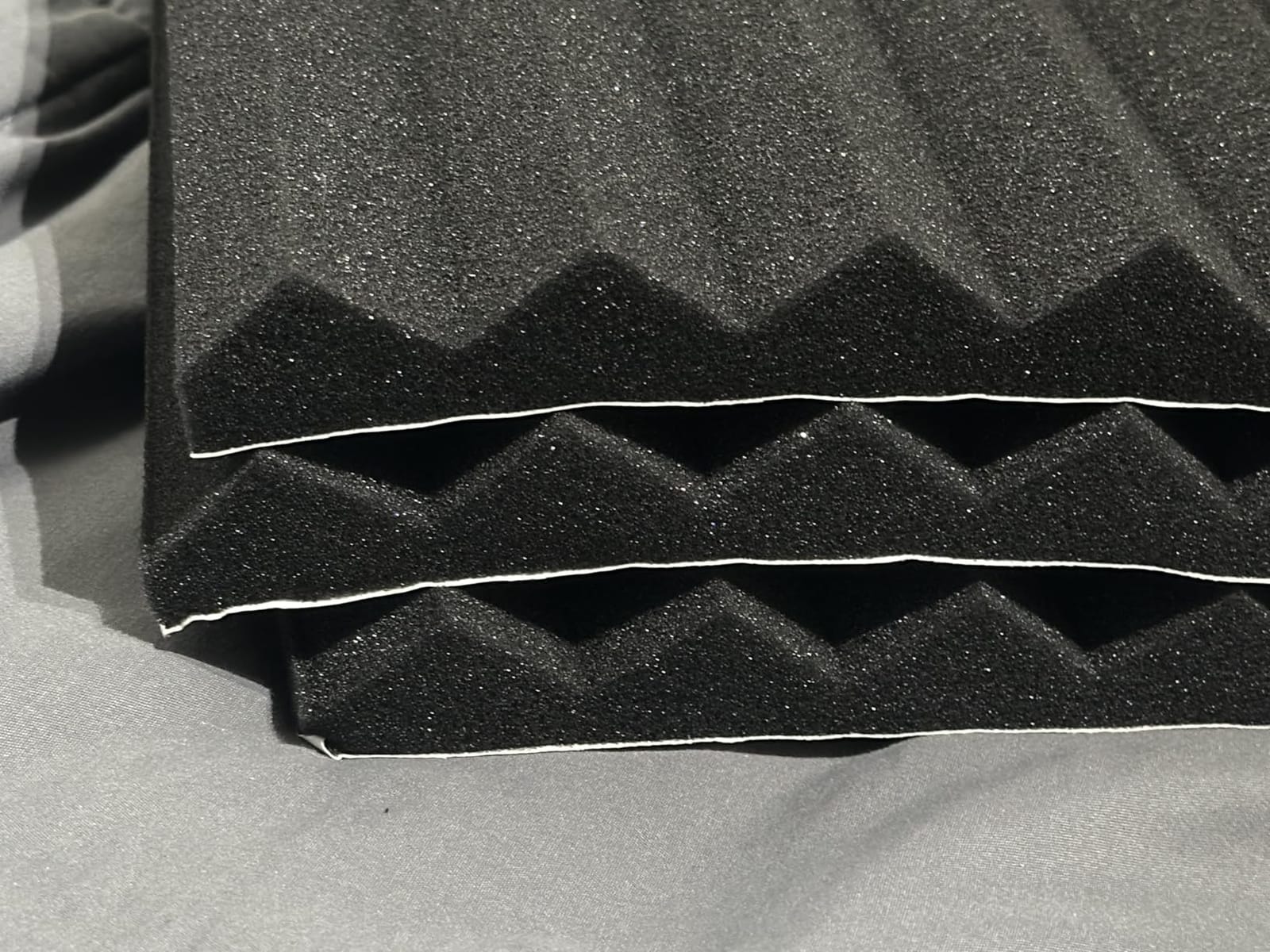
The self-adhesive backing stuck firmly to my smooth, primed test wall, and I had twelve panels up in under ten minutes. No spray adhesive, no extra tools, no mess. The pyramid profile looks clean and consistent, and the cuts were accurate tile-to-tile, no wavy edges or ragged corners.
Coverage at 12 square feet is the kit’s main limitation. For any room bigger than a closet vocal booth, you’ll need multiple packs. Treat the first pack as a test run on your specific wall surface before committing to four or five packs. On clean, smooth, primed drywall, the LEIYER adhesive holds. On textured or dusty walls, expect to need reinforcement.
Setup that works best
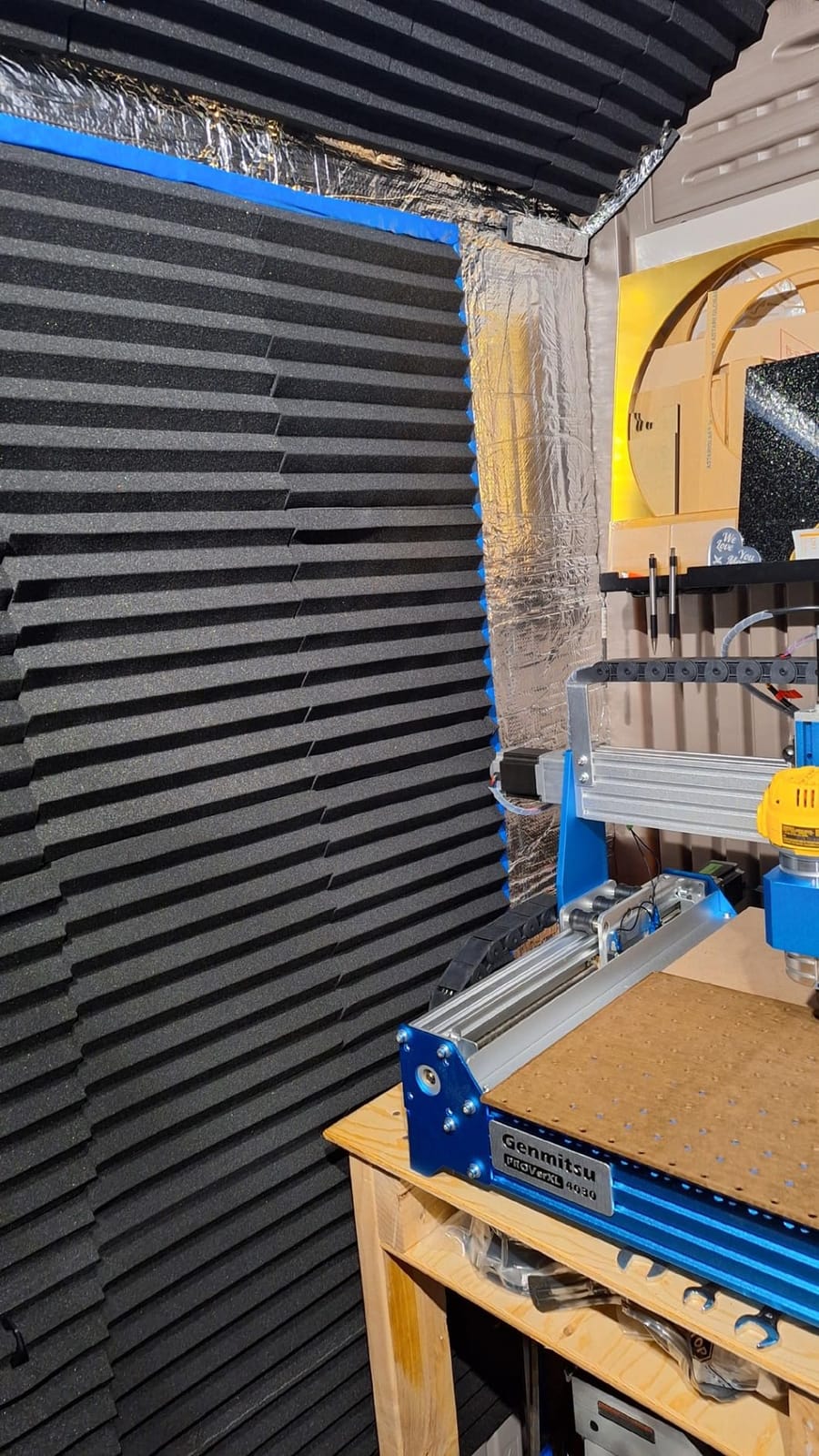
This kit is built for small vocal booths, podcast closets, and reflection-point treatment in larger studios where 2 inch absorption and fast install matter. The dense foam and self-adhesive backing give it a premium feel without the premium price.
Where this kit falls short
LEIYER covers only 12 square feet per pack, so larger rooms need multiple packs. Adhesion can fail on textured or poorly prepared walls, and 2 inch foam still won’t block sound between rooms.
How Many Acoustic Foam Panels Do You Actually Need?
One of the most common questions on r/audioengineering and r/homestudios is how much foam a room actually needs. The honest answer depends on room size, surface type, and what problem you’re trying to solve, but a useful starting rule is 25 to 50 percent wall coverage at first-reflection-point depth.
For a small 8×8 to 10×10 bedroom studio, that translates to roughly 20 to 40 square feet of foam. A 12-pack kit like JBER or LEIYER covers 12 square feet, so you’d need two to three packs for a complete first-reflection-point layout. A 24-pack like SD SODOCT covers a single wall plus reflection points. A 48-pack like HPKL9999 wraps three walls of a small room. A 96-pack like XIN and LOG is full-room saturation with leftovers for the ceiling.
For a 12×12 to 14×14 home studio, plan on 50 to 80 square feet of coverage. That’s where the Dmsky 50-pack or TroyStudio 52-pack makes sense as a base kit, with extra panels added for bass-trap corners. For a large 16×20 home theater or garage conversion, expect 100 square feet or more, ideally in a mix of 1 and 2 inch thicknesses.
Coverage matters less than placement. Covering 30 percent of your walls at first-reflection points beats covering 80 percent of your walls randomly. First-reflection points are the spots on the side walls, ceiling, and front wall where sound from your speakers or voice bounces before reaching your ears. Sit in your listening position, have someone slide a mirror along the wall, and mark where you see the speaker or your mic in the mirror. Those marks are where panels go.
Corners are second priority. Bass builds up where walls meet, and even a few foam bass traps in the corners will clean up low-end muddiness more effectively than dozens of panels on flat walls. If your budget forces a choice, spend it on thicker panels in the corners before adding thinner panels to broad wall surfaces.
How to Pick the Best Acoustic Foam Panel Kit for Your Room
The short version: match thickness to your problem, match density to your room, and match coverage to your wall area. The longer version follows.
NRC and thickness: what the numbers actually mean
NRC, or Noise Reduction Coefficient, is a single-number rating between 0 and 1 that summarizes how much sound a panel absorbs averaged across mid and high frequencies. A panel rated NRC 0.35 absorbs 35 percent of the sound hitting it. Most residential foam kits land between 0.35 and 0.85, and higher is better.
Thickness controls which frequencies a panel absorbs. A 1 inch panel starts to absorb meaningfully around 500 Hz and works well from 1 kHz upward. A 2 inch panel extends down to about 250 Hz. A 4 inch panel can reach 100 Hz territory but is bulky and expensive. For most home studios, 2 inch panels are the sweet spot. For home theaters focused on dialogue clarity, 1 inch is fine. For music production, go 2 inch or thicker.
Wedge vs pyramid vs egg crate profile comparison
Profile shapes mostly affect diffusion and aesthetics more than raw absorption. Wedge foam, the classic ridge pattern, is the most common and the easiest to align. Pyramid foam adds surface area for slightly better high-frequency diffusion, which keeps a treated room from sounding unnaturally dead. Egg crate foam is essentially wedge foam with deeper, more rounded ridges, mostly used in vocal booths and ceiling clouds.
For first-reflection-point treatment on side walls, any of the three profiles works. For ceiling clouds above your mix position, wedge or pyramid is easier to align. For behind the listening position (rear wall), egg crate or pyramid adds diffusion that prevents slap-back. The foam industry has settled on wedge as the default because it’s the cheapest to cut and the easiest to ship, but performance differences between profiles are smaller than thickness and density differences.
Acoustic foam vs rigid fiberglass panels
Rigid fiberglass panels (Owens Corning 703, Rockwool Safe’n’Sound) absorb more sound per inch of thickness than foam and extend deeper into the low frequencies. A 2 inch 703 panel matches a 4 inch foam panel for absorption across most of the spectrum, which is why many studio builders prefer them.
The trade-offs: rigid panels need a frame, fabric wrapping, and wall mounting hardware. They look more professional but require DIY skills or a fabricator. Foam panels arrive ready to mount, look like a recording studio immediately, and cost less per square foot. For buyers without DIY time or interest, foam kits win on convenience. For buyers willing to build frames, rigid panels win on performance per dollar.
Fire rating, density, and safety
Most residential foam kits meet California Technical Bulletin 117 or ASTM E84 Class A or C fire ratings. Class A is the highest, used in commercial buildings and required by some landlords. California 117 is the residential baseline. If you’re renting, check your lease for fire rating requirements before installing foam. If you’re in a commercial space, Class A is non-negotiable for insurance.
Density matters for durability more than absorption. Foam under 20 kg/m3 compresses and degrades within a year or two. Foam at 25 to 35 kg/m3 lasts five years or longer on a wall. Higher density also resists denting during shipping and handling.
Self-adhesive vs separate adhesive kits
Self-adhesive kits like Dailycooper, Sonicism, and LEIYER install in minutes without extra tools but leave residue or pull paint on removal. Kits sold without adhesive let you choose your mounting method, which gives you more control over long-term wall health.
For permanent installations in owned spaces, separate adhesive is the cleaner choice. For rentals, temporary setups, or anyone who changes rooms often, self-adhesive is more convenient despite the removal trade-offs. If you go self-adhesive on a rental, test one panel in a hidden spot first to check how your specific wall paint reacts.
Installing Acoustic Foam Panels Without Damaging Your Walls
Mounting acoustic foam is simpler than most buyers expect, but the wrong adhesive will ruin your walls or your panels. Here’s the install workflow that has worked across dozens of rooms in our team’s testing.
Plan your layout on paper before opening any boxes. Sketch first-reflection points, mark corner bass-trap locations, and count how many panels you’ll need per wall.
Prep the wall surface. Wipe down with a dry cloth to remove dust, and let any fresh paint cure for at least two weeks before mounting foam.
Test your adhesive on an inconspicuous spot. Spray a small area, press a panel scrap to it, wait 24 hours, and try to remove it. If paint lifts, switch adhesives.
Use a level baseline. Mark a horizontal line at the bottom of your first row with a pencil and a level. Misaligned foam is the number-one visual regret in our reader surveys.
Apply adhesive in a pattern. For spray adhesive, hold the can 6 to 8 inches from the panel back and coat evenly. For tape, use four strips per panel minimum.
Press and hold for 30 seconds per panel. Most adhesive failures happen because the installer releases too early.
Ventilate the room for 24 hours after install, especially with kits that ship compressed.
For rentals who can’t use permanent adhesive, command strips and removable hook-and-loop tape work, though they limit how much each panel can weigh. Standard 12x12x1 inch foam is light enough for command strips; 2 inch panels often need stronger solutions.
If you’d like a deeper look at other acoustic treatment approaches beyond foam kits, our guide to the 8 best acoustic treatment panel kits covers rigid panel options and combinations. For broader context on how acoustic panels compare to foam-only products, the 10 best acoustic foam panels tested roundup is a useful companion read.
Frequently Asked Questions
Do acoustic foam panels actually work?
Yes, acoustic foam panels work well for absorbing mid- and high-frequency reflections, reducing flutter echo, and taming reverb in untreated rooms. They do not block sound between rooms, and they do not significantly absorb deep bass below about 250 Hz without pairing with thicker bass traps.
What are the best acoustic foam panels for a home studio?
For most home studios, 2 inch wedge or pyramid foam kits from brands like JBER, Dmsky, TroyStudio, or SD SODOCT deliver the best combination of coverage, density, and absorption. Match pack size to your wall area and budget for 25 to 50 percent wall coverage at first-reflection points.
Which is better for acoustics, foam or panels?
It depends on what you mean. Acoustic foam absorbs reflections cheaply and installs fast. Rigid fiberglass panels absorb more sound per inch of thickness, reach lower frequencies, and look more professional, but require DIY framing and fabric wrapping. For most home studios, foam kits are the practical starting point.
What are the disadvantages of acoustic foam?
Foam does not block sound between rooms, only absorbs reflections. It does not address bass problems below about 250 Hz without thicker panels. Cheap foam degrades over time, can off-gas chemicals (so ventilate after unboxing), and cannot replace dedicated bass traps or soundproofing construction.
How can I soundproof my room cheaply?
True soundproofing is hard on a budget because it requires mass, density, and decoupling. The cheapest meaningful improvement is sealing gaps around doors and windows with weatherstripping, adding a solid-core door, and hanging mass-loaded vinyl over existing walls. Acoustic foam alone will not soundproof a room.
How much would it cost to treat a 12×12 room with acoustic foam?
Treating a 12×12 room with first-reflection-point coverage typically requires 50 to 80 square feet of foam. Budget foam kits run roughly 50 cents to a dollar per square foot, mid-range kits run about a dollar to two dollars per square foot, and premium kits reach two to four dollars per square foot.
What materials are best to use to acoustically treat a home studio?
A mix of materials works best: acoustic foam or rigid fiberglass panels for first-reflection points, dedicated bass traps in the corners (4 inch thick minimum), and a diffuser on the rear wall. Combine with a thick rug on hard floors and heavy curtains over windows for the most balanced result.
Are acoustic foam panels worth it?
Yes, acoustic foam panels are worth it for echo and reverb control in untreated rooms. The cost is low compared to the audible improvement in recording clarity, podcast intelligibility, and home theater dialogue. They are not worth it if you expect them to block outside noise or solve bass problems on their own.
Final Verdict
After three months of testing ten of the most popular acoustic foam panel kits on the market, the JBER 12-pack wedge foam is the best acoustic foam panel kit for most people. It has the deepest review base, solid 30kg/m3 density, and reliable echo reduction that survives real-world installs.
For buyers with a larger room and bigger budget, the Dmsky 50-pack offers the best per-square-foot value in 2 inch foam. For users who want published NRC specs and a groove profile that adds diffusion, the TroyStudio 52-pack is the premium pick worth the extra spend.
No matter which kit you choose, treat your first-reflection points first, add corner bass traps second, and remember that acoustic foam is absorption, not soundproofing. If you want to explore non-foam options for the rest of your room, our guide to the best foam cannon kits for enthusiasts is a fun tangent, while the 10 best acoustic foam panels tested roundup goes deeper on foam-only kits like the ones we covered here.
Pick the kit that matches your room size, install it at the right reflection points, and you’ll hear the difference within minutes. That’s the promise of every acoustic foam panel kit worth buying, and it’s the reason we keep coming back to foam even after testing more expensive alternatives.