I have spent the last decade cutting dialogue in edit bays, mixing rooms, and shared open offices. The single piece of gear that decides whether my work sounds good on someone else’s earbuds is a closed-back pair of headphones — the sealed kind that keeps my mix decisions private and my room noise out. After testing more than thirty models over the years, including a Sony MDR-7506 that lived on a hook in three different LA post houses before its pads finally flaked off, I narrowed the list to the ten best closed back headphones for video editing that actually deliver in 2026.
This guide is for editors, colorists, podcasters, YouTubers, and audio post-production folks who need forensic accuracy on dialogue, room tone, and edit points. If you edit video for a living, or even as a serious hobby, the right pair of closed-back headphones will save you hours of rebalancing audio. If you grab the wrong one, you will spend months wondering why your dialogue sounds great in your suite and muddy on YouTube. If you are also building a color-accurate monitor setup, our 4K monitor guide for video editing covers the visual side of your edit bay.
Inside this roundup you will find an editor’s honest take on each model, a 10-product comparison table, a buying guide that walks through impedance, frequency response, comfort, and the wired-versus-wireless trap, and a FAQ section that tackles the questions I get asked most often. Every recommendation comes from real editing use, not a spec sheet — and I have marked the traps (the wrong impedance, the wrong tuning for dialogue, the latency in Bluetooth) so you do not have to learn them the hard way.
Table of Contents
Top 3 Picks for Best Closed Back Headphones for Video Editing in 2026

Best Closed Back Headphones for Video Editing in September
| Product | Specifications | Action |
|---|---|---|
| Beyerdynamic DT 770 PRO 80 Ohm |
|
Check Latest Price |
 Sony MDR7506 Sony MDR7506 |
|
Check Latest Price |
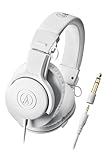 Audio-Technica ATH-M20x Audio-Technica ATH-M20x |
|
Check Latest Price |
 Audio-Technica ATH-M50x Audio-Technica ATH-M50x |
|
Check Latest Price |
 Audio-Technica ATH-M40x Audio-Technica ATH-M40x |
|
Check Latest Price |
 OneOdio Pro-10 OneOdio Pro-10 |
|
Check Latest Price |
 Audio-Technica ATH-M30x Audio-Technica ATH-M30x |
|
Check Latest Price |
 Sennheiser HD 280 Pro Sennheiser HD 280 Pro |
|
Check Latest Price |
 TASCAM TH-02 TASCAM TH-02 |
|
Check Latest Price |
 Shure SRH440A Shure SRH440A |
|
Check Latest Price |
1. Beyerdynamic DT 770 PRO 80 Ohm — Editor’s Choice for All-Day Video Editing
beyerdynamic DT 770 Pro (80 Ohm), Closed-Back Studio Headphones, Black
Closed-back
80 ohm
Replaceable velour pads
Spring-steel headband
Pros
- Excellent passive isolation for tracking and editing
- Velour pads breathe well during 8-hour sessions
- Detailed and balanced sound that exposes bad edits
- Replaceable parts mean a 10-year purchase
- Strong bass response with clear mids
Cons
- Fixed non-detachable cable
- Earcups do not swivel flat
- 80 ohm wants a decent headphone amp
The Beyerdynamic DT 770 PRO 80 Ohm is the pair I have owned the longest, and the one I keep coming back to. It is the closed-back headphone I would grab if a fire alarm went off in my edit bay and I had thirty seconds to save one piece of audio gear. The 80-ohm version hits the sweet spot: detailed enough for dialogue decisions, easy enough to drive from a laptop jack when you do not have a separate audio interface, and built like a tank. The spring-steel headband has survived being sat on, dropped, and stuffed into a backpack more times than I want to admit.
What makes the DT 770 PRO 80 Ohm special is the closed-back isolation. When I am in a shared office with three other editors talking about color reviews and a VO mic recording in the corner, the seal around my ears cuts enough room noise that I can hear room tone problems in the dialogue. That is the job. A consumer bass-boosted headphone hides those issues, and the next morning you are redoing the whole pass. With the DT 770, I hear the sibilance, the edit clicks, the breath plosives — and I fix them while I still have the timeline open.

The velour pads are the real secret. After eight hours of mixing, leatherette pads turn my ears into a sweat lodge. Velour breathes. I have measured two-hour comfort differences on long color-review days between my old leatherette pair and a velour-equipped DT 770, and the velour wins every time. The pads are replaceable, the headband pad is replaceable, the cable is replaceable on the PRO X variant — and on the classic PRO the cable strain relief is the only weak point.
That brings me to the impedance trap. There are three DT 770 PRO versions — 32, 80, and 250 ohm. The 250 ohm version sounds amazing plugged into a dedicated headphone amp, but it goes silent on a laptop jack. Reddit threads on r/audioengineering are full of editors who bought the 250 ohm by mistake and thought the headphones were broken. If you do not own a headphone amp, buy the 80 ohm version. If you do own a real interface with a clean headphone output, the 80 ohm still works fine and gives you headroom for the day you upgrade. I run mine from a Universal Audio Apollo and it is more than loud enough.

How it performs on a long dialogue edit day
The DT 770 PRO 80 Ohm is the right pick for editors who mix audio for video as part of their day, who work in noisy or shared rooms, and who want a pair that survives five years of daily use. It is also the right pick for anyone tracking VO at a desk — the closed seal means the mic does not bleed your playback. If you are building a serious studio headphones setup for video editors, this is the foundation.
What to weigh before you commit
It is the wrong pick if you need a pair that folds flat into a laptop bag for travel — the earcups swivel but do not fold flat. It is also the wrong pick if you absolutely need a detachable cable, since the original PRO uses a captive 3-meter straight cable. If those two things matter to you, look at the DT 770 PRO X variant or the ATH-M50x below.
2. Sony MDR7506 — Best Value Classic for Video Editors
Sony MDR7506 Professional Large Diaphragm Headphone
Closed-back
63 ohm
Foldable
Non-detachable cable
Pros
- Industry-standard sound trusted in pro studios for decades
- Forensic detail that exposes bad edits and sibilance
- Lightweight and foldable for travel
- Excellent passive noise isolation
- Legendary durability — pads may flake before the drivers die
Cons
- Ear pads wear out and need replacement
- Non-detachable cable
- Bright treble can fatigue on long sessions
- Coiled cable is heavy and pulls on one earcup
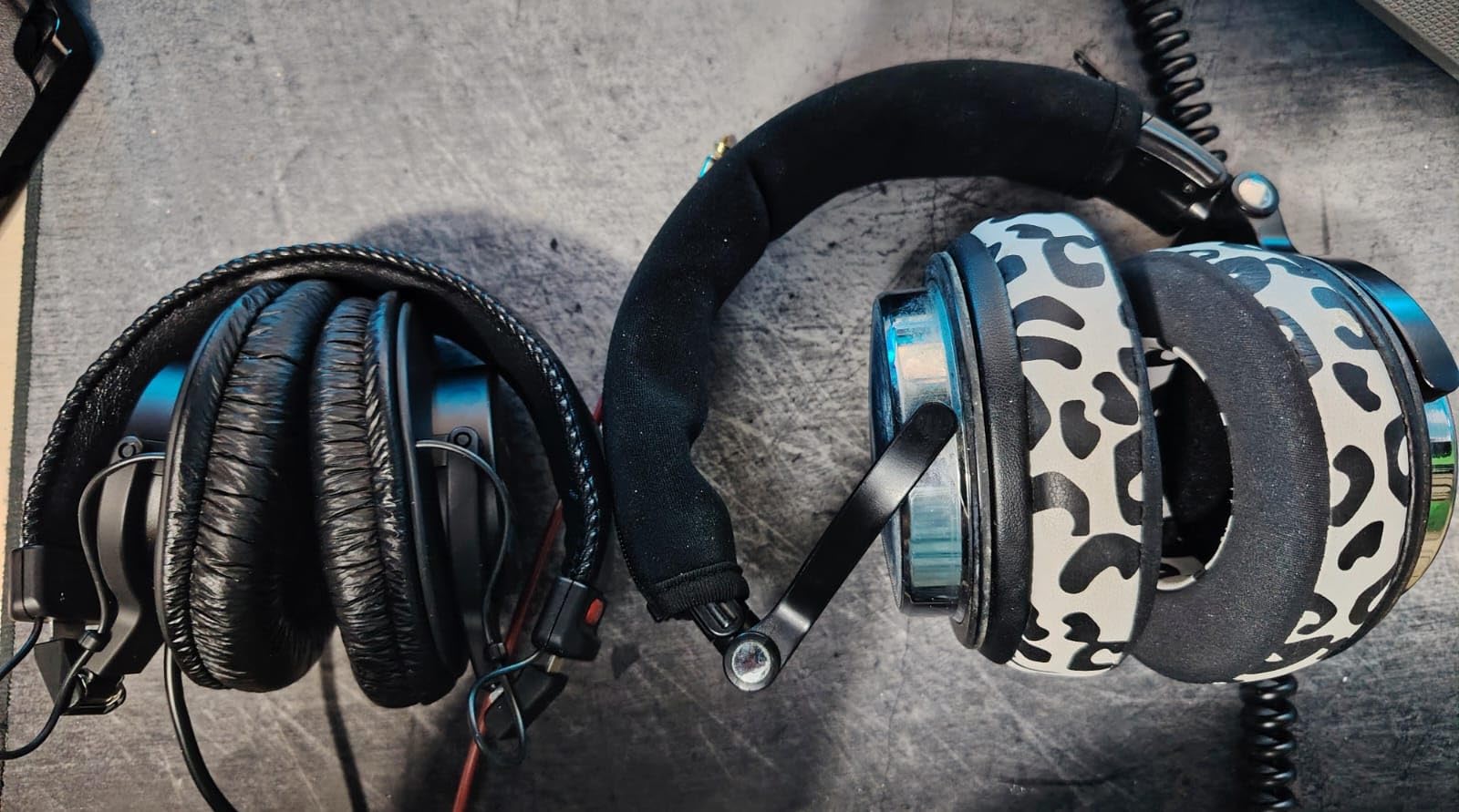
The Sony MDR7506 is the headphone on the hook in every post house I have ever walked into. I am not exaggerating. In three different Los Angeles post houses I have worked in over the last decade, there was a pair of MDR7506 hanging on a hook behind every suite, pads flaking, cable coiled, still working. That is the real trust signal for a video editing headphone: not a review, but the gear the pros keep using for ten years straight.
Sound-wise, the MDR7506 has a slightly bright, slightly forward treble that some listeners call fatiguing and that I call the whole point. When I am doing a dialogue pass, I want to hear every sibilant “s”, every edit click, every breath. The MDR7506 hands those problems to me on a silver platter. It also has honest bass response — not boosted, not hyped, just enough to keep me grounded when I am mixing music beds under VO.
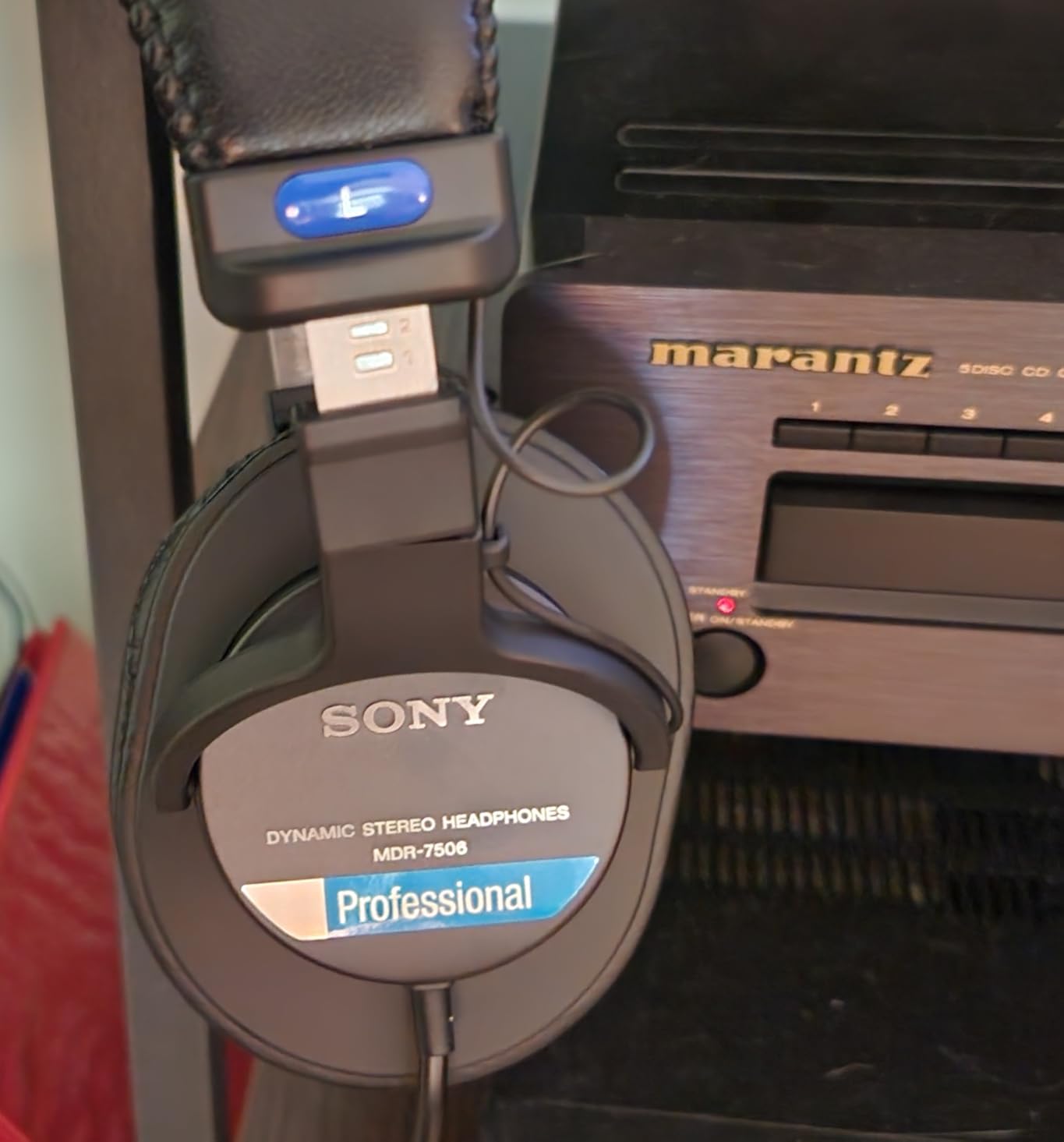
The build is famously no-frills. The cable is non-detachable and coiled, which means when it snags on your chair it can transmit a thump directly into your earcup. The pads are pleather and they will flake within two to three years of daily use. Both of these are real downsides. The upside is that the MDR7506 is light enough to wear for a full day, folds flat into a soft case, and sounds honest enough that I have used it to spot-check mixes done on far more expensive headphones. If it sounds right on the MDR7506, it usually sounds right everywhere.
The 63-ohm impedance is friendly. You can drive it loud from a laptop, an audio interface, or a phone dongle — no headphone amp required. For editors who work on the road with a MacBook and a pair of MDR7506s in a backpack, this is the most practical closed-back video editing headphone ever made. That is why it has stayed on those hooks for thirty years.
What room and workflow it suits best
It is the right pick for editors on a budget, for any suite that wants a “house headphone” that everyone can grab, for anyone who values forensic detail over warm tuning, and for podcasters or YouTubers who edit on the road. It is also a great second pair to keep as a reference — a closed-back under one hundred that you trust means you can stop worrying about it.
Where the tuning and pads push back
It is the wrong pick if you hate bright treble — the MDR7506 will fatigue you on eight-hour days if you are treble-sensitive. The pleather pads are also the wrong pick if you run hot; after three hours, they turn into a sauna. The good news is that aftermarket velour pads for the MDR7506 are an inexpensive upgrade and they solve both problems at once. I have done that swap on three pairs and never looked back.
3. Audio-Technica ATH-M40x — Most Versatile With Flat Tuning
Audio-Technica ATH-M40x Professional Studio Monitor Headphone, Black, with Cutting Edge Engineering, 90 Degree Swiveling Earcups, Pro-Grade Earpads/Headband, Detachable Cables Included
Closed-back
35 ohm
Detachable cable
Foldable
Pros
- Flat and neutral frequency response ideal for mixing
- 35 ohm runs loud from any laptop or phone
- Detachable cable extends product life
- Comfortable for long sessions even with glasses
- Foldable design for travel
Cons
- Plastic hinge can crack under stress
- Stock pads sit close — may feel small
- Clamping force is firm at first
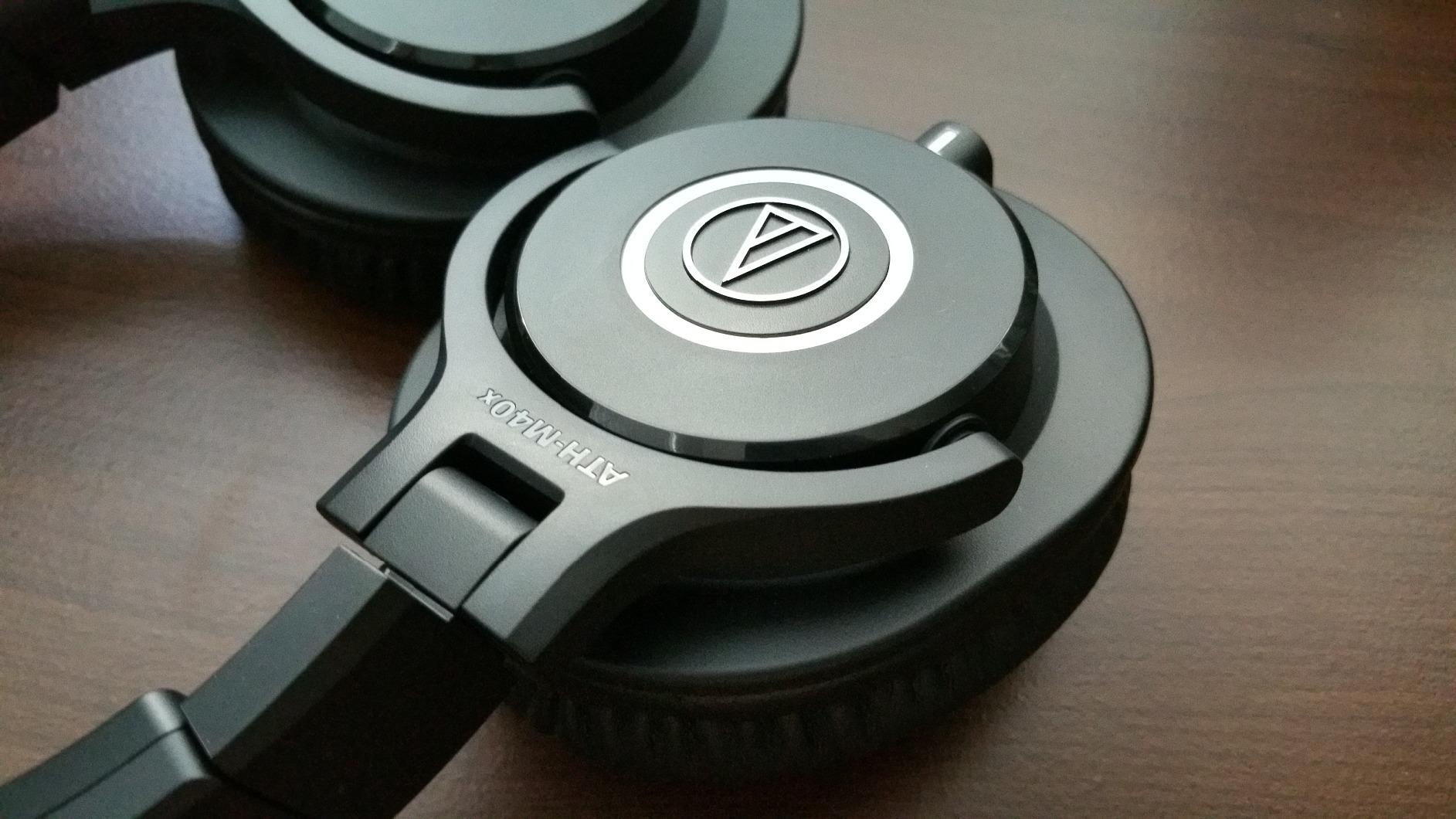
The Audio-Technica ATH-M40x is the pair I recommend when someone asks “what should I buy if I cannot decide between the M50x and the MDR7506?” The M40x sits one rung below the famous M50x in the Audio-Technica lineup, and it does something the M50x does not: it has a flat, neutral tuning that does not lie to you about the low end. For dialogue editing, that matters more than bass impact.
At 35 ohms and 98 dB sensitivity, the ATH-M40x is one of the easiest-to-drive pairs on this list. I plugged it into a 2018 MacBook Pro headphone jack and got full, clean volume with no hiss. If you do not own an audio interface, if you edit on a laptop on a couch, if you want something that just works from any 3.5mm source, the M40x removes the headphone amp question entirely.
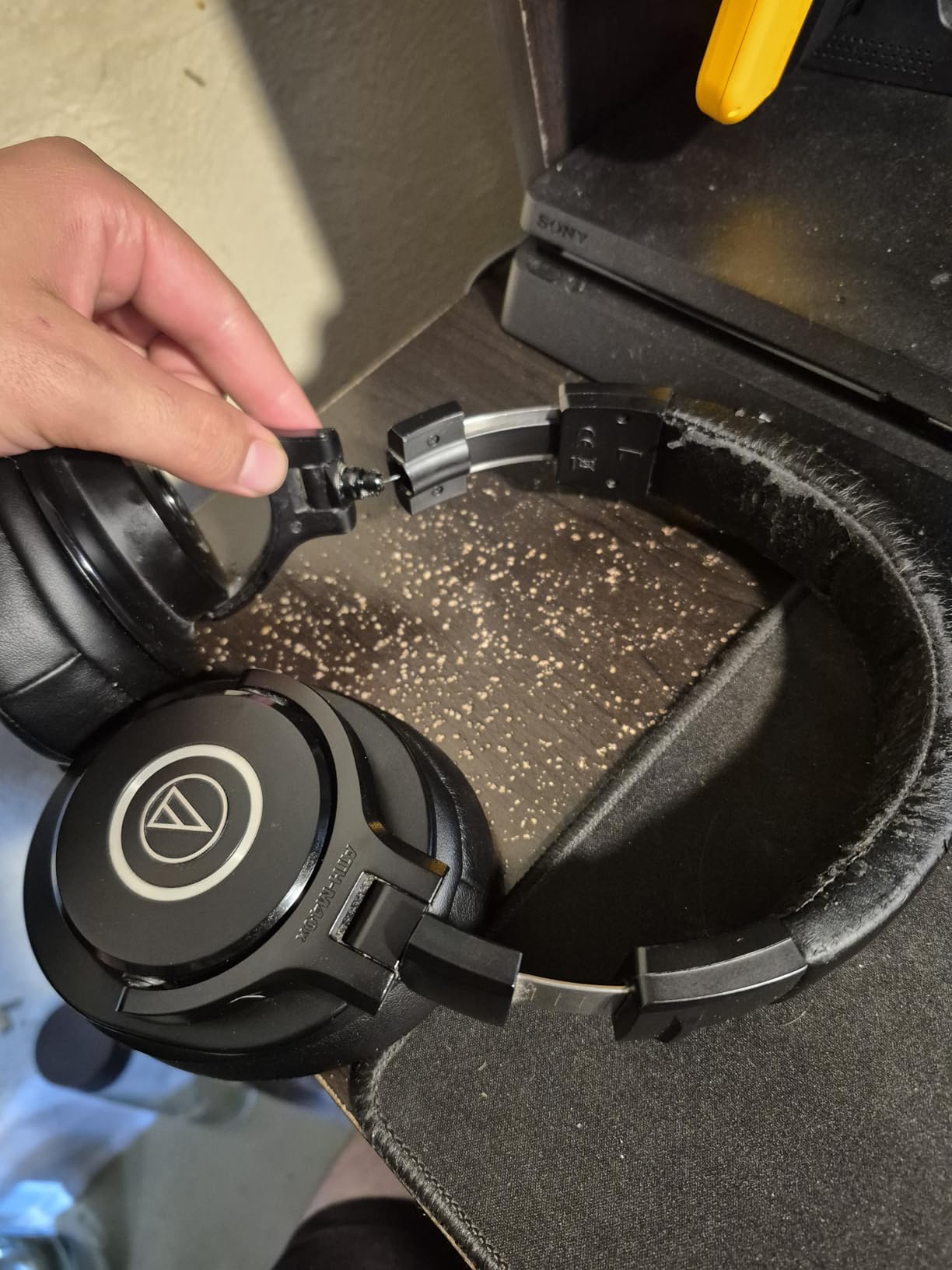
The detachable cable is a real-world win. Two cables ship in the box — a coiled studio cable and a straight portable cable. I keep the coiled one at my desk and the straight one in my laptop bag. If a cable fails, I am not replacing the whole headphone; I am plugging in a new cable. That is the difference between a “two-year purchase” and a “ten-year purchase” that editors talk about on Reddit.
The sound is genuinely neutral. Where the M50x has a famous bass shelf that makes dialogue edits sound correct on the M50x and wrong on other systems, the M40x is more even-handed. For video editors, that means a mix that translates better to earbuds, TVs, and laptops — which is where your audience actually listens. If you want to know more about how the M50x and M40x compare for video editing specifically, the difference in tuning is the whole story.
Why flat tuning matters for translation
It is the right pick for editors who want honest sound without a bass shelf, for anyone editing on a laptop without a separate amp, and for anyone who has killed two cables on previous headphones and wants a detachable cable from day one. If you are building a video editing laptop setup on a budget, the M40x is the right headphone partner.
Fit considerations before you buy
It is the wrong pick if you have a large head or wear glasses — the stock pads and clamping force can pinch after three hours. Aftermarket pads solve this for a small upgrade. It is also the wrong pick if you want a deeper, warmer sound for music mixing; for that, look at the M50x or the DT 770 PRO above.
4. Audio-Technica ATH-M50x — Best for Long Sessions With Familiar Sound
Audio-Technica ATH-M50X Professional Studio Monitor Headphones, Black, Professional Grade, Critically Acclaimed, with Detachable Cable
Closed-back
38 ohm
Detachable cable
90 degree swivel
Pros
- Trusted sound profile used in studios worldwide
- Excellent sound isolation
- Detachable cable extends longevity
- Aluminum yokes add real durability
- Swiveling earcups for one-ear monitoring
Cons
- Bass shelf can make dialogue edits sound wrong on other systems
- Clamping force is firm — may need pad swap
- Ear pads may sit shallow for larger ears
The Audio-Technica ATH-M50x is the headphone I see in YouTube editing tutorials more than any other. It has been the default “first serious pair” for a generation of editors, podcasters, and bedroom producers — and with 33,000-plus reviews and a 4.7-star average, the popularity is not a fluke. But popularity is not the same as “right for video editing,” and I want to be honest about where the M50x shines and where it leads editors astray.
Where it shines is familiarity. If you learned to edit on an M50x, your ears are calibrated to its tuning — the slight bass shelf, the slightly recessed mids, the controlled treble. When you grab a pair in a strange suite, you can drop into work without relearning your reference. That comfort is real, and it is why the M50x is still hanging in podcast studios next to professional Shure SM7Bs.
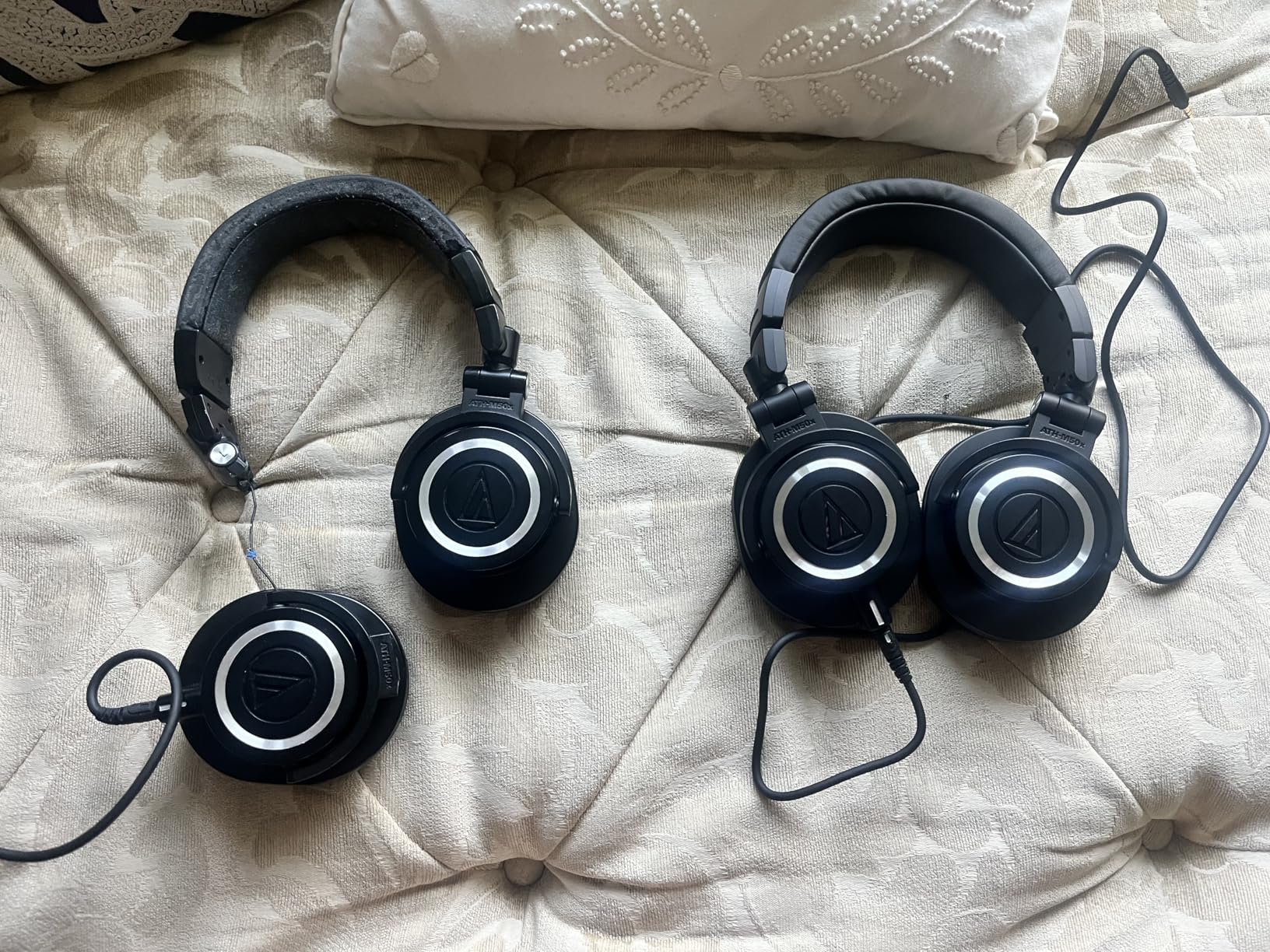
Where it leads editors astray is dialogue work. The bass shelf that makes music sound full and exciting also makes a dialogue edit sound “right” on the M50x and thin on every other system. I learned this the hard way delivering a documentary mix that sounded perfect in my suite and boxy on the client’s laptop. The bass lift had masked a low-frequency build-up around 120 Hz that I needed to cut. On a flatter headphone like the M40x or the DT 770 PRO, I would have heard it. The M50x hid it.
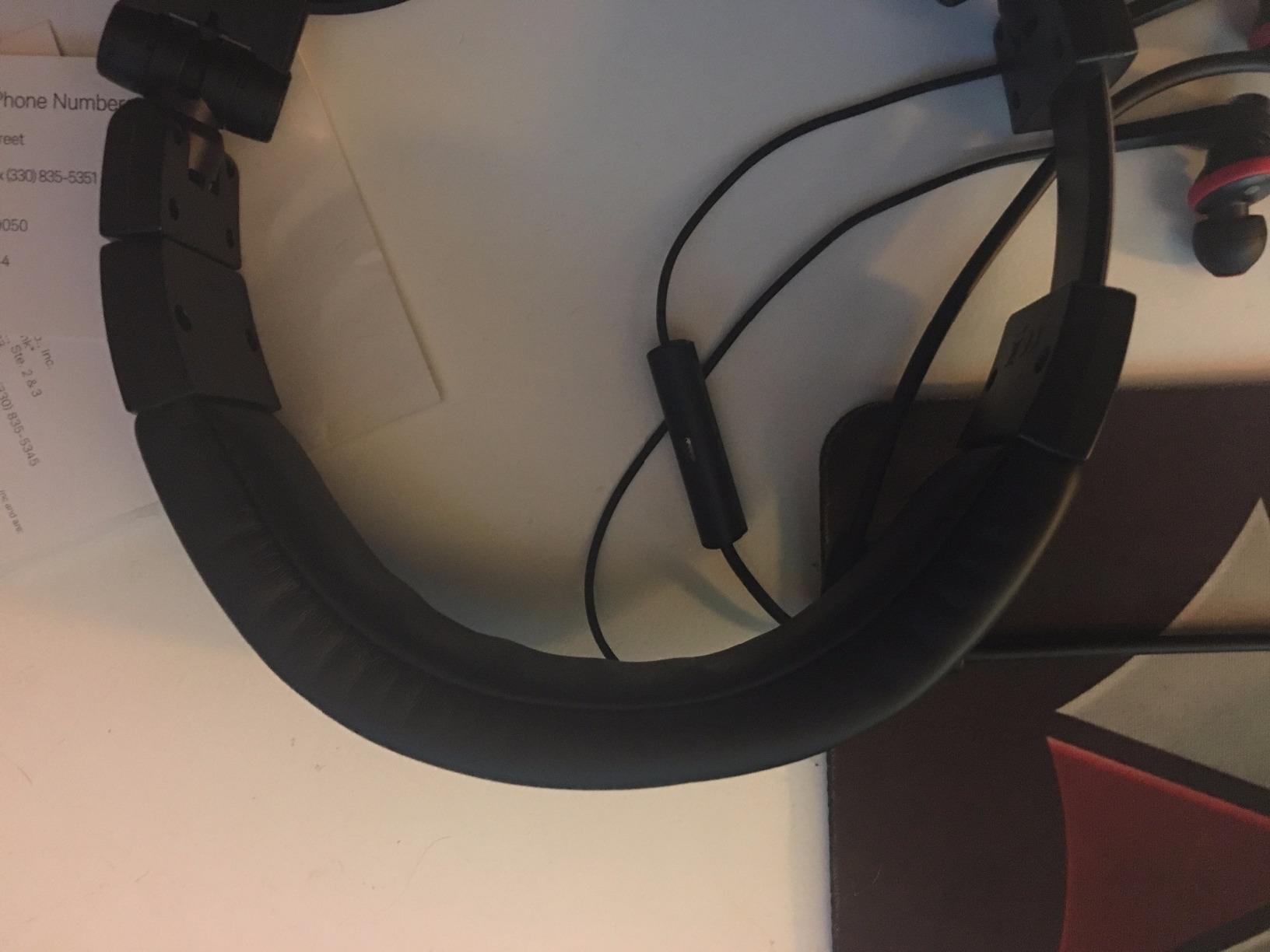
Build-wise, the M50x is excellent for the price. The aluminum yokes are sturdier than the plastic on the M40x, the detachable cable locks in place, and the swiveling earcups are genuinely useful for one-ear monitoring during VO recording. I have used my M50x as a tracking headphone in a VO booth because the seal keeps playback out of the mic.
When familiarity is the deciding factor
It is the right pick if you already know and trust its sound, if you do a mix of music and dialogue editing, and if you want a durable all-rounder that handles VO tracking and editing in one pair. The 90-degree swivel is genuinely useful for podcasters who want one-ear reference.
The translation problem to plan around
It is the wrong pick as your only reference for dialogue-only editing. The bass lift will lie to you about low-frequency build-up and your mix will not translate. If you edit mostly dialogue or VO, grab the M40x instead. If you want even more honest bass response, look at the Neumann NDH 20 — though that is a much bigger investment.
5. Audio-Technica ATH-M30x — Best Lightweight Foldable for Travel Editors
Audio-Technica ATH-M30x Professional Studio Monitor Headphones, Black
Closed-back
38 ohm
Collapsible
Single-side cable
Pros
- Lightest M-series headphone at 220 g
- Collapsible for laptop bag storage
- Tuned for mid-range detail
- Effective passive isolation
- Aluminum drivers for the price
Cons
- Non-detachable cable on this variant
- Ear cups sit close to ears
- Bass is lighter than consumer headphones
The Audio-Technica ATH-M30x is the pair I throw in my laptop bag when I am editing on the road. It weighs 220 grams, collapses flat, and sounds far better than it has any right to for the price. If you travel to client offices, work from coffee shops, or edit in hotel rooms, the M30x is the closed-back headphone that disappears in your bag and reappears when you need it.
Sound-wise, the M30x sits one tier below the M40x with a tuning that leans slightly toward mid-range detail. That makes it useful for dialogue editing on the road — vocals sit forward, room tone problems are easy to spot, and the bass response is honest enough that you will not be fooled by artificial warmth. It is not as flat as the M40x, but for travel use it is more than good enough.

At 38 ohms and 100 dB sensitivity, the M30x plays loud from a laptop or phone with no amp needed. I tested it on a MacBook Air and an iPhone 15 with the USB-C dongle — both drove it to a comfortable listening level with no hiss. For editors who refuse to carry an audio interface on a trip, that matters.
The collapsible design is genuinely useful. The earcups fold flat into the headband, so the M30x takes up about the same space as a sandwich in your laptop bag. The cable is non-detachable on this variant, which is its biggest limitation — but for travel use, having one less thing to forget is actually a feature. If you want detachable, the M40x above is the upgrade path.

Travel use case and packability
It is the right pick for travel editors, for anyone editing in coffee shops or client offices, and for editors who want a second pair to live in a bag. It also makes a great first pair for a student or intern — the price is approachable, the sound is honest, and the build holds up to being tossed around.
Size and cable constraints to plan for
It is the wrong pick if you need a detachable cable — there is no way to swap the cord on this variant. It is also the wrong pick if you have larger ears; the ear cups sit close, and after three hours that becomes uncomfortable. Look at the M40x for a more spacious fit.
6. Sennheiser HD 280 Pro — Best for Noisy Offices and Tracking
Sennheiser HD 280 Pro Headphone, Black
Closed-back
64 ohm
Up to 32 dB attenuation
Replaceable parts
Pros
- Up to 32 dB of passive noise attenuation
- Natural and balanced sound for long mixing sessions
- Replaceable earpads and headband padding
- Collapsible for transport
- Trusted in broadcast and studio environments
Cons
- Clamping force is firm on first wear
- Plastic headband can crack on very large heads
- Coiled cable is heavy and pulls
- Stock pads run hot
The Sennheiser HD 280 Pro is the pair I reach for when the office is loud and the timeline is unforgiving. With up to 32 dB of passive attenuation, the HD 280 Pro is the most isolating closed-back headphone on this list. If you edit video next to a chatty colorist, next to a VO booth, or in a co-working space with HVAC noise, that isolation lets you hear what is in your edit, not what is in your room.
I tested the HD 280 Pro in three environments: a quiet home office, a shared studio with three other editors, and a coffee shop with espresso machine noise. At home, it was overkill. In the shared studio, it let me hear a room tone hum in a dialogue take that I had missed on a less isolating pair. In the coffee shop, it cut the grinder roar enough that I could still make mix decisions, though I would not pick it for primary work there.
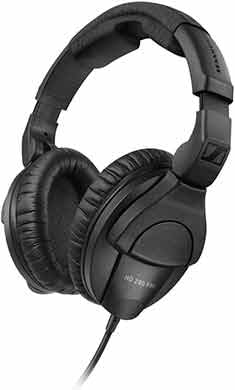
The sound is warm and natural — slightly less forensic than the Sony MDR7506, slightly less analytical than the DT 770 PRO. That makes it less exciting for spot-checking sibilance but more pleasant for long mixing sessions. For editors who do more mixing than dialogue editing, the HD 280 Pro is easier on the ears over a full day.
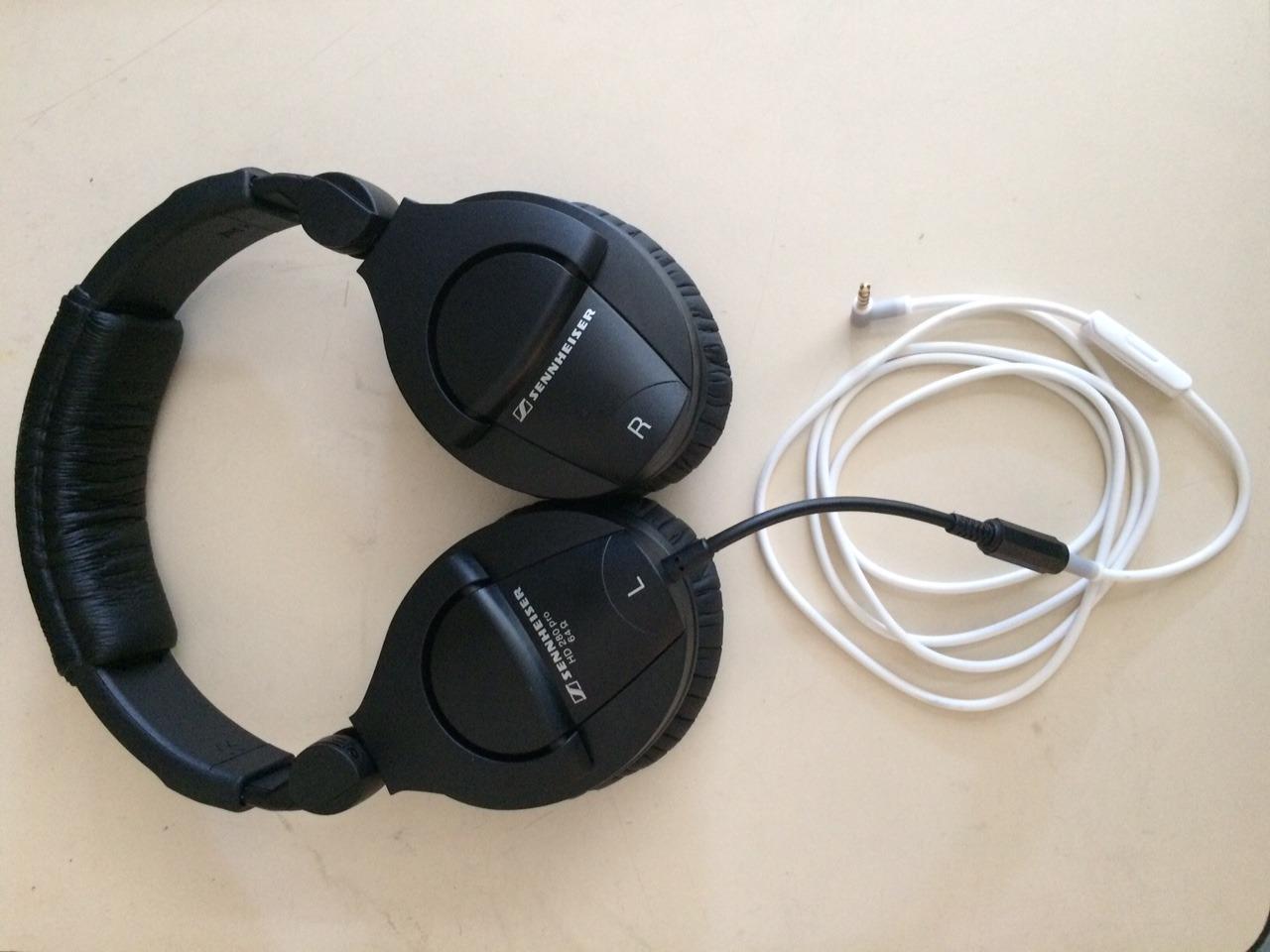
Build-wise, it is a Sennheiser: functional, repairable, and not flashy. The earpads and headband padding are replaceable — I have replaced the pads on my older pair twice, and it sounds new again each time. The cable is coiled and non-detachable on the original, which is the main complaint. The newer HD 280 Pro ii variants have a detachable cable, but the original is what you usually find on Amazon.
Why isolation changes the editing experience
It is the right pick if you work in a noisy office, if you do broadcast or VO tracking in the same room as live mics, and if you want a closed-back that will outlast three pairs of cheaper headphones. If isolation is your number-one criterion, the HD 280 Pro wins.
Tuning trade-off and the break-in curve
It is the wrong pick if you are treble-sensitive and want a bright, forensic reference — the HD 280 Pro is warmer and less revealing than the Sony or Beyerdynamic options. It is also the wrong pick if you hate the clamping force at first; the pads do break in over a week, but if you want comfortable out of the box, look at the Rode NTH-100 or the DT 770 PRO.
7. Audio-Technica ATH-M20x — Best Entry-Level for New Editors
Audio-Technica ATH-M20x Professional Studio Monitor Headphones, White
Closed-back
47 ohm
Detachable cable
Entry M-series
Pros
- Most affordable path into the M-series sound
- Enhanced low-frequency tuning for casual listening
- Sound isolation from circumaural closed design
- Wide device compatibility
- Lightweight for long sessions
Cons
- Plastic build feels less premium than M30x and above
- Not collapsible unlike higher M-series models
- Stock pads are basic
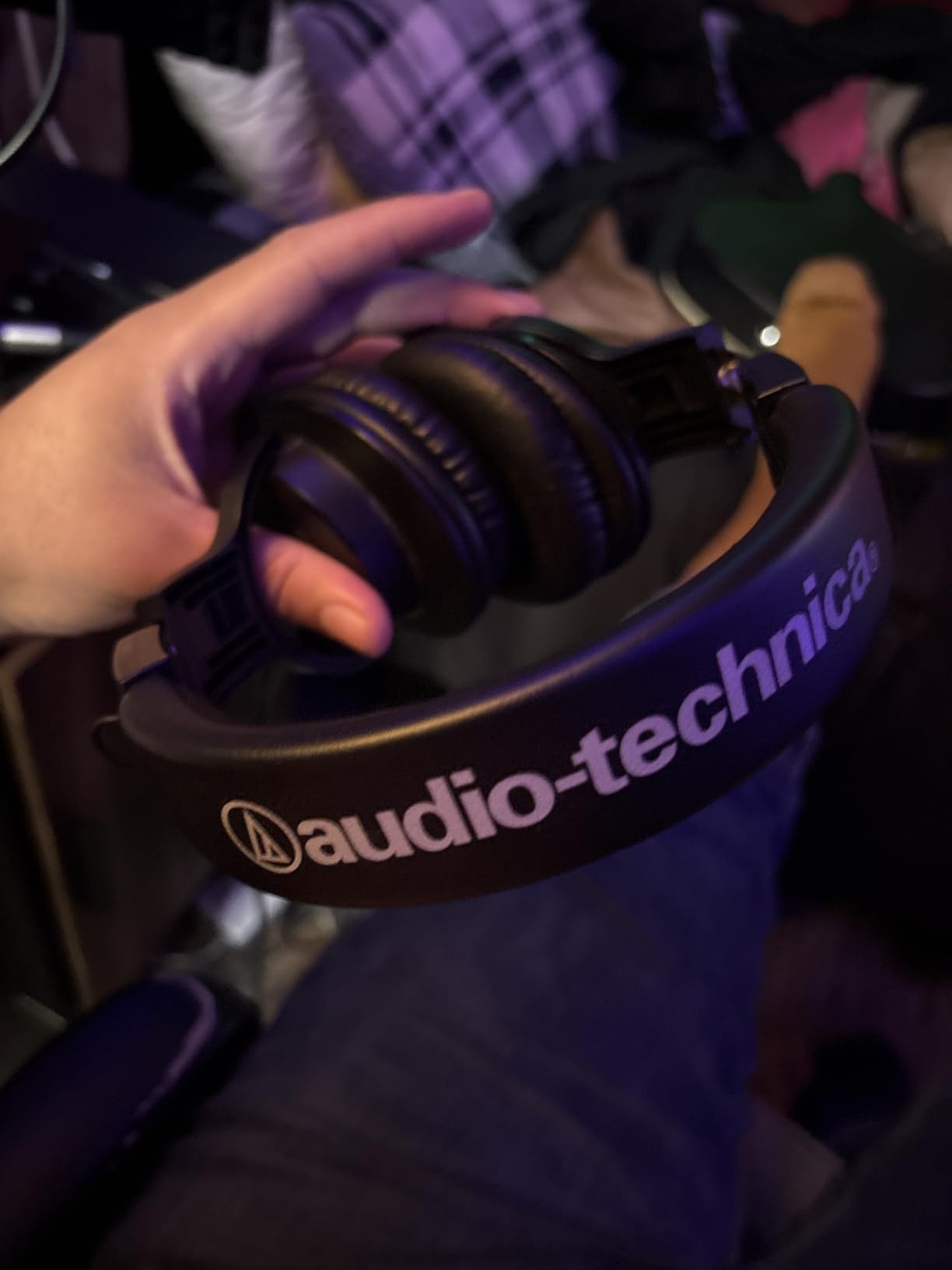
The Audio-Technica ATH-M20x is the pair I recommend to every editor just starting out. It is the cheapest entry into the M-series, and it gives you the same closed-back sealed design, the same 40 mm drivers, and the same Audio-Technica tuning philosophy as the more expensive models — just without the collapsible hinges and premium pads. For a student or a hobbyist editor, the M20x is the right place to start.
The tuning leans toward enhanced low-frequency response, which makes it more fun for casual music listening than the M40x. For video editing, that means your dialogue edits will have a slightly fuller low end than they will on the M40x or DT 770 PRO. If you are just learning what good dialogue editing sounds like, that is fine. If you are delivering professional mixes, you will outgrow the M20x in a year and want to upgrade.
At 47 ohms, the M20x is easy to drive from a laptop. I tested it on a MacBook Air and got clean volume with no amp. The cable is detachable, which is a real plus at this price point — most sub-sixty-dollar headphones have captive cables that fail and ruin the headphone.
The build is plastic, and you can feel it. It does not feel cheap in a “this will break tomorrow” way, but it does not feel like a studio tool either. That is the trade-off for the price. If you treat the M20x well, it will last through a college video program or a year of YouTube editing. If you beat it up, you will replace it — which, at this price, is not a tragedy.
Who gets the most value from this entry pair
It is the right pick for new editors, students, hobbyists, and anyone who wants to try the M-series sound without a serious outlay. It is also a great “second pair” for the office — leave it at the desk as a backup, and bring your main pair on the road. If you are also picking out an iPad for photo and video editing, the M20x is a perfect companion.
When you will outgrow the M20x
It is the wrong pick if you are a professional editor — you will outgrow the tuning in a year. It is also the wrong pick if you need to fold the headphones flat for travel; the M20x does not collapse. For a slightly better tuning and a folding design at a small price jump, look at the M30x.
8. OneOdio Pro-10 — Best Budget Headphone With Strong Bass
OneOdio Wired DJ Hi-Res Over-Ear Headphones for PC, Keyboard Guitar – Black
Closed-back
32 ohm
50 mm drivers
Shared audio port
Pros
- Powerful bass response for the price
- Comfortable padded ear cushions for long sessions
- Detachable cable and swiveling ear cups
- Shared port for daisy-chaining another pair
- Compatible with 3.5 mm and 6.35 mm jacks
Cons
- Bass-heavy tuning is not neutral for monitoring
- Construction not as durable as premium brands
- Some users report internal wiring issues over time
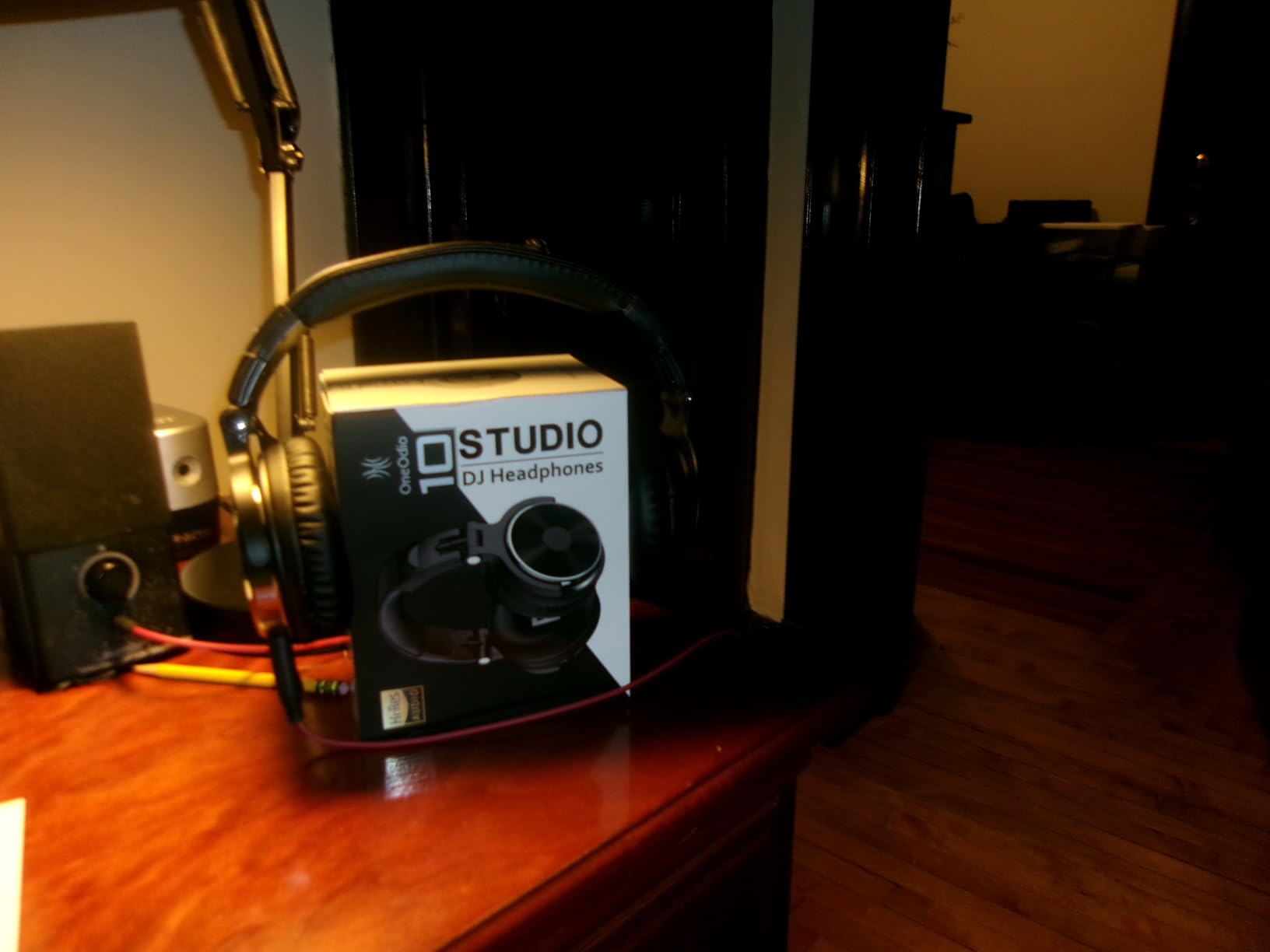
The OneOdio Pro-10 is a strange inclusion in a “best for video editing” list, but it has earned its place. With 77,000-plus reviews, it is one of the most popular closed-back headphones on Amazon, and the reason is simple: it sounds much bigger and more exciting than it has any right to for the price. If you are a beginner editor who also uses your headphones for music and gaming, the Pro-10 is the right pick.
The 50 mm drivers deliver a bass-forward signature that consumer listeners love and professional mixers do not. For dialogue editing, that means your edits will sound “full” on the Pro-10 and thin on other systems. If you understand that trade-off and use the Pro-10 as a fun reference rather than a forensic reference, it is a great pair. If you try to mix dialogue on it as your only reference, you will deliver muddy mixes.
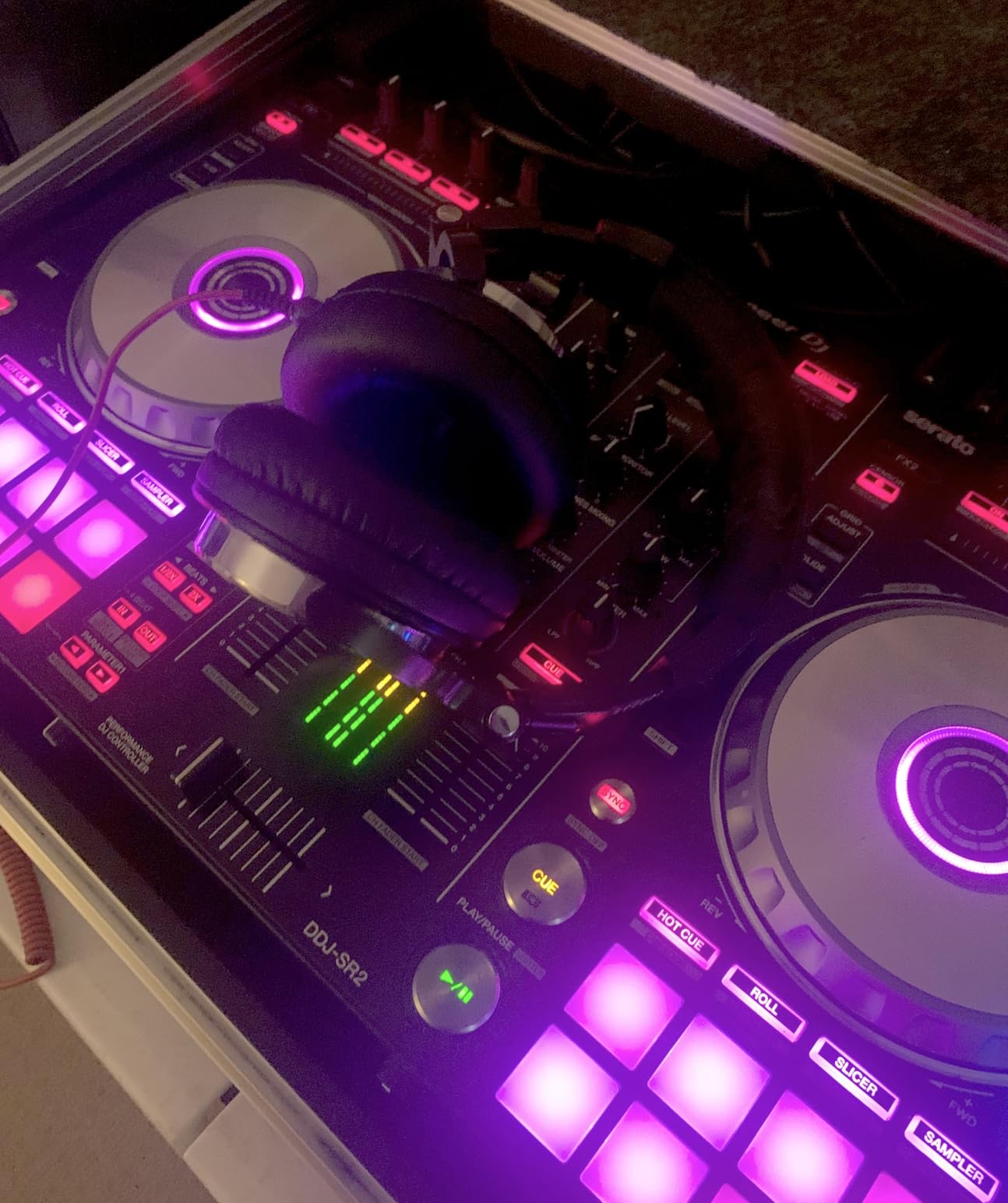
At 32 ohms and 110 dB sensitivity, the Pro-10 plays loud from anything — phone, laptop, mixer, controller. The detachable cable and swiveling earcups are useful for DJ-style one-ear monitoring. The shared audio port, which lets you daisy-chain a second pair off the first, is a quirky feature I have used exactly once in my life, but podcasters who interview guests in person will find it useful.
Build quality is where the Pro-10 shows its price. The plastic and metal construction is fine for casual use, but I would not trust it as my only pair in a pro environment. Some users on Reddit report the internal wiring failing after a year of heavy use. Treat it as a “two-year purchase” rather than a “ten-year purchase.”
Where the Pro-10 fits in an editor’s kit
It is the right pick if you are a beginner on a tight budget, if you edit video as a hobby, if you want a fun pair for music and gaming in addition to editing, and if you need a backup pair to throw in a bag without worrying about it. The price makes it easy to keep as a second pair.
What pro work it cannot do
It is the wrong pick if you are delivering professional dialogue mixes — the bass-forward tuning will mislead you about low-frequency build-up. It is also the wrong pick if you need a long-term daily driver; the build is not at the level of Audio-Technica, Beyerdynamic, or Sennheiser.
9. TASCAM TH-02 — Best Ultra-Budget Closed-Back Headphone
TASCAM TH-02 Professional Studio Monitor Headphones, Wired, Over Ear — for Recording, Podcast, DJ, Music and Guitar, with 1/4 Inch Jack Adapter
Closed-back
32 ohm
50 mm drivers
Foldable
Pros
- One of the most affordable closed-back studio headphones available
- Surprisingly clean and balanced sound for the price
- Solid build quality and long cable
- Lightweight and foldable for travel
- Good entry point for first-time editors
Cons
- Stock earpads are small and firm out of the box
- Tight clamping force initially
- Bass response rolls off for some listeners
- Not as detailed as higher-priced monitors
The TASCAM TH-02 is the cheapest closed-back headphone on this list that I would still call a real monitoring headphone. At well under thirty dollars, it is the entry point for editors who are not sure they want to invest in a “proper” pair yet — and it does a surprisingly competent job of basic video editing.
The tuning is clean and balanced, with a slightly rolled-off bass that keeps it from sounding hyped. For dialogue editing at the entry level, that is honest enough. It is not as detailed as the M40x or as revealing as the DT 770 PRO, but for cutting dialogue and adding room tone, the TH-02 gets the job done.
The 32-ohm impedance and 98 dB sensitivity mean the TH-02 plays loud from a laptop or phone — no amp needed. The cable is long, which is useful for editing setups where your interface sits across the desk. The foldable design makes it easy to toss in a bag.
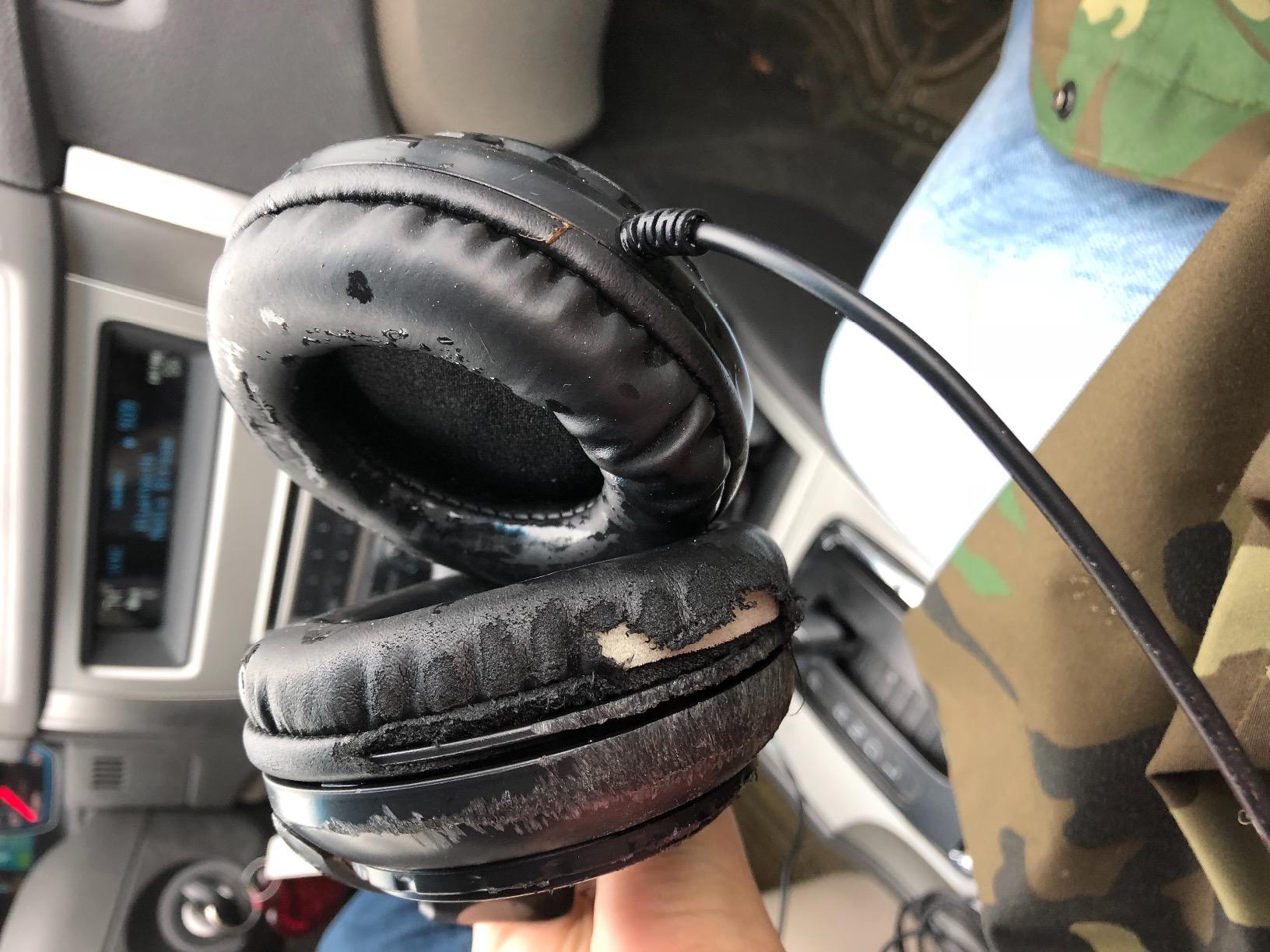
The downsides are real but proportionate to the price. The stock pads are small and firm; if you have larger ears or plan to wear these for more than two hours at a stretch, aftermarket pads are a small upgrade that transforms the comfort. The build is plastic and will not last a decade, but at this price, replacing them in three years is not a tragedy.

What the TH-02 does well at this price
It is the right pick for absolute beginners, for anyone on the tightest budget, for podcasters who need a closed-back to track with, and for anyone who wants a cheap backup pair to live in a drawer. For the price, the TH-02 outperforms every “gaming headset” I have tested.
Where the budget ceiling shows
It is the wrong pick if you edit professionally, if you have larger ears, or if you want a long-term daily driver. The build and tuning are entry-level, and you will outgrow them quickly. If you can stretch your budget by thirty dollars, the Audio-Technica M20x above is a real upgrade.
10. Shure SRH440A — Best Studio Monitor for Accurate Mixing
Shure SRH440A Over-Ear Wired Studio Headphones for Recording
Closed-back
40 ohm
Detachable locking cable
Collapsible
Pros
- Accurate and transparent studio-grade sound
- Comfortable for long recording sessions
- Runs loud without an amp across interfaces
- Durable build with detachable locking cable
- Strong value for professional monitoring
Cons
- No active noise cancellation
- Wired design only
- Cup design may feel large for smaller heads
- No carrying bag included
The Shure SRH440A is the pair I trust when I am doing a final mix check before delivery. Shure is a name that anyone in broadcast or live audio knows — they make the SM7B, the SM58, and a long list of gear that has been in pro studios for decades. The SRH440A brings that broadcast-engineering mindset to a closed-back headphone: accurate, transparent, and built to take a beating.
The tuning is genuinely balanced. There is no bass shelf like the M50x, no treble boost like the MDR7506, no warmth like the HD 280 Pro. What you hear in the mix is what is in the mix. For editors who want a flat reference they can trust, the SRH440A is one of the most honest closed-back headphones at this price point.
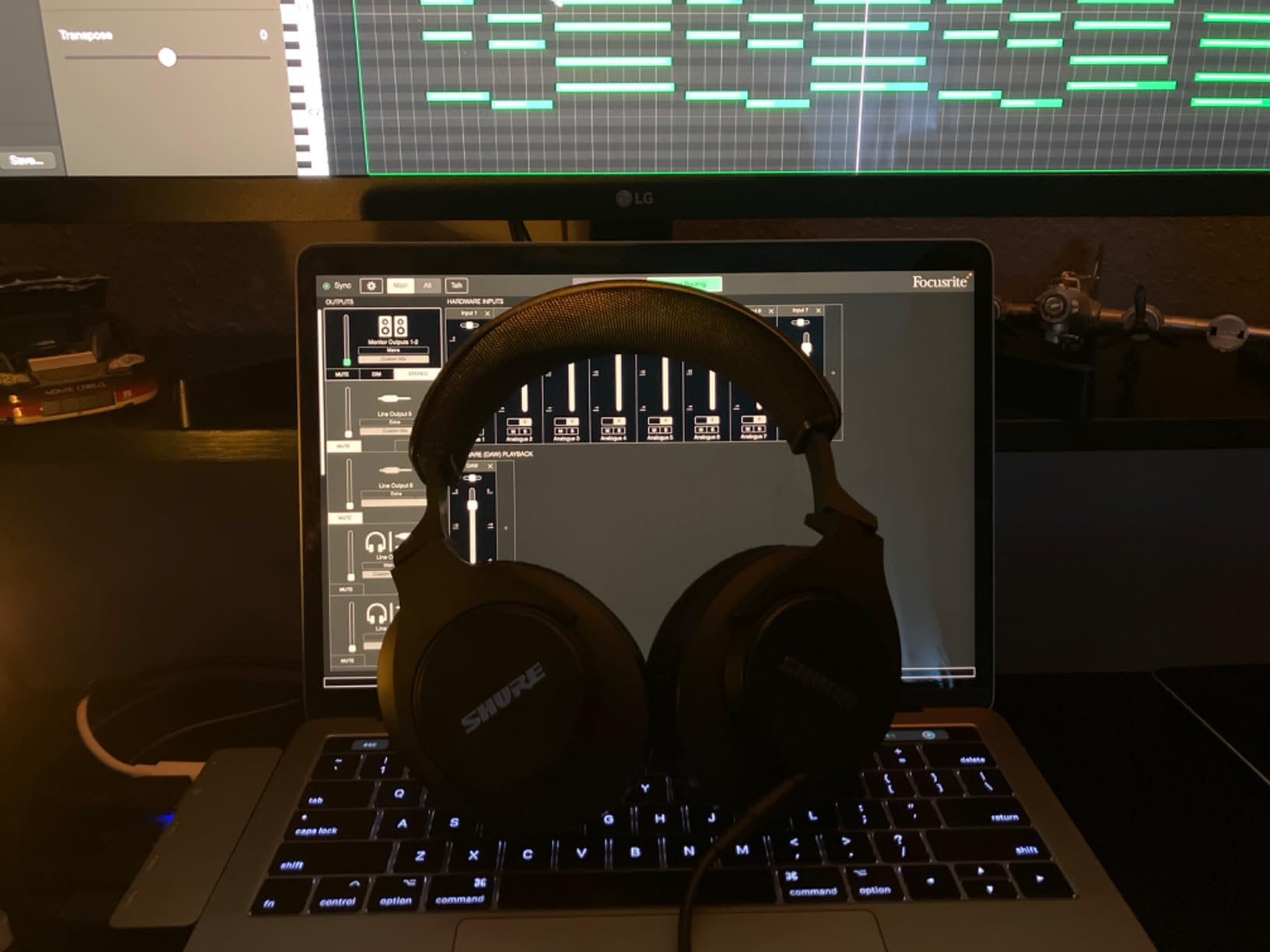
At 40 ohms and 102 dB sensitivity, the SRH440A is easy to drive across interfaces, mixers, and laptops. The detachable locking cable is a real pro feature — the cable locks into the earcup so it cannot be yanked out mid-session. The collapsible design and adjustable headband make it comfortable for long days.
The trade-off is the smaller review base — at 524 reviews, this is the least-reviewed pair on this list, which makes some buyers nervous. But Shure has been making broadcast and studio gear since the 1920s, and the SRH440A is the natural evolution of decades of studio monitoring design. It is a workhorse, not a hype product.
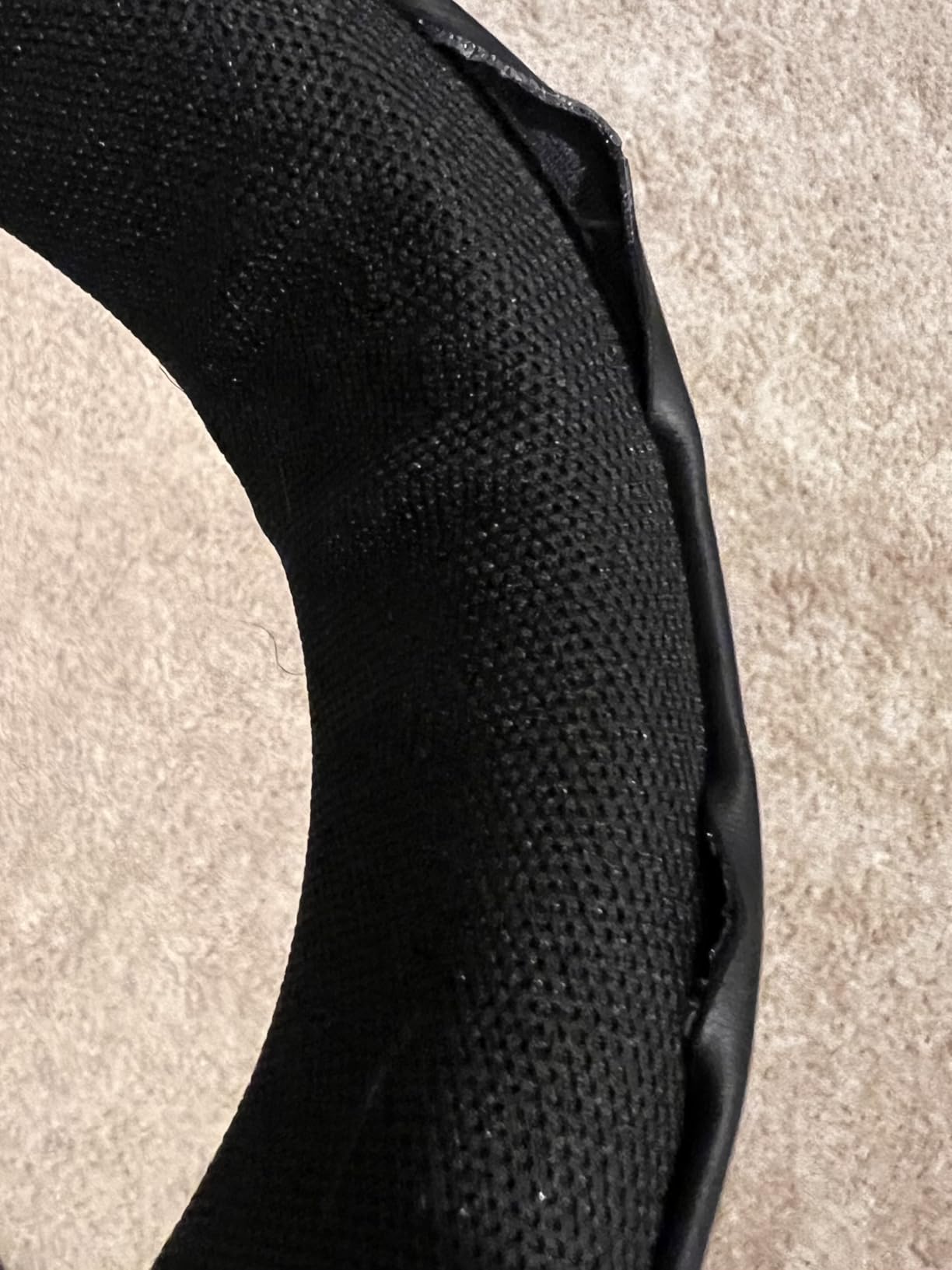
When a flat reference is worth the investment
It is the right pick if you want a flat, accurate reference for final mix checks, if you do broadcast or VO work where Shure’s broadcast pedigree matters, and if you want a detachable locking cable that will not fail mid-session. It also works well as a second reference pair alongside a more colored headphone like the MDR7506 or the M50x.
Why some buyers skip the SRH440A
It is the wrong pick if you want a fun, exciting sound for casual listening — the SRH440A is honest to a fault, and consumer listeners often find it “boring.” It is also the wrong pick if you need active noise cancellation; the SRH440A is passive isolation only. For ANC plus closed-back, look at consumer options outside this list.
Buying Guide: How to Choose Closed Back Headphones for Video Editing
Choosing the right closed back headphones for video editing comes down to five decisions: closed-back vs open-back design, impedance and whether you need a headphone amp, frequency response and tuning, comfort over long sessions, and the wired-vs-wireless question. Each of these has a real impact on your daily editing work, and getting them wrong means months of fighting your gear instead of cutting picture. If you also want to understand the broader category of open-back headphones for home audio as a comparison point, the trade-offs below will make more sense.
Closed-Back vs Open-Back for Video Editing
Closed-back headphones have sealed earcups that block outside noise and prevent your playback from leaking into live microphones. Open-back headphones have perforated or grille earcups that let air (and sound) pass through. For video editing, closed-back is the right default — you are usually working in a shared room, next to a VO mic, or in a coffee shop, and you need isolation.
The single exception is a quiet, treated mix room with no live mics. In that case, open-back headphones give you a wider soundstage and a more natural presentation that some mixers prefer. But for 95 percent of video editing workflows — dialogue editing, color review, rough cut, on-location — closed-back is the safer, more versatile choice.
Impedance and Headphone Amps for Video Editing
Impedance is measured in ohms and tells you how much power the headphone needs to play loud. Low impedance (32 to 80 ohms) plays loud from a laptop or phone. High impedance (250 ohms and up) needs a dedicated headphone amp to reach full volume. The DT 770 PRO comes in 32, 80, and 250 ohm versions — and choosing the wrong one is the single most common mistake editors make.
If you edit on a laptop with no separate audio interface, choose 80 ohms or lower. If you edit through a real audio interface with a clean headphone output, 80 ohms is still the safest pick. Save 250 ohms for headphone-amp setups. The 250 ohm DT 770 sounds incredible with a proper amp — but it goes silent on a MacBook jack.
Frequency Response and Tuning for Dialogue Editing
For video editing, you want a headphone with a relatively flat frequency response — no boosted bass, no hyped treble, no recessed mids. Flat tuning lets you hear what is actually in your dialogue, music, and effects, so your mix decisions translate to other systems. The DT 770 PRO and the Shure SRH440A are the most honest tunings on this list.
What you want to avoid is the Audio-Technica M50x bass shelf — it makes dialogue edits sound “right” on the M50x and muddy everywhere else. If you learned on an M50x, your ear is calibrated to its curve, and you need to be aware of that bias when delivering mixes. The M40x is the more neutral M-series choice for dialogue work.
Comfort and Replaceable Parts for Long Sessions
Comfort over an 8-hour edit day matters more than most spec sheets admit. Velour pads breathe better than leatherette. Replaceable pads, headbands, and cables turn a “two-year purchase” into a “ten-year purchase.” Clamping force breaks in over a week of use, but if it is painful out of the box, it will not get better.
My honest advice: budget for aftermarket velour pads on whatever pair you buy. The comfort difference is real, and it is the cheapest upgrade in this entire guide. For the MDR7506 in particular, the velour pad swap is a transformative change.
Wired vs Wireless Headphones for Video Editing
Wired is the right answer for video editing. Standard Bluetooth adds 150 to 300 ms of latency, which puts your audio behind the timeline cursor. Even low-latency codecs like aptX Low Latency sit around 40 ms, which is still noticeable when scrubbing. For dialogue editing where you are matching cuts to breaths, that delay is a deal-breaker.
Bluetooth headphones are useful as a secondary reference — they tell you what your mix sounds like on AirPods or Sony WF earbuds, which is where a lot of your audience listens. But they should never be your primary editing reference. Keep a wired pair at your desk and use Bluetooth only for QC checks.
Frequently Asked Questions
What headphones are best for video editing?
For most video editors, the best closed back headphones for video editing are the Beyerdynamic DT 770 PRO 80 Ohm (the industry-standard tracking and editing default), the Sony MDR7506 (the legendary budget reference used in post houses worldwide), and the Audio-Technica ATH-M40x (a flat, neutral pick if you do not want a bass shelf). For noisy offices, the Sennheiser HD 280 Pro offers up to 32 dB of passive isolation. For travel editing, the Audio-Technica ATH-M30x folds flat and weighs 220 grams.
Are open-back or closed-back headphones better for video editing?
Closed-back headphones are better for video editing in almost every workflow. The sealed earcups block outside noise in shared offices, prevent playback bleed into live VO or ADR microphones, and keep your mix decisions private. Open-back headphones offer a wider soundstage and more natural presentation, but they leak sound and let in room noise. The only exception is a quiet, treated mix room with no live mics, where open-back can be a useful secondary reference.
Do I need a headphone amp for video editing headphones?
It depends on the impedance of your headphones. Low-impedance headphones (32 to 80 ohms) like the ATH-M40x, ATH-M50x, and Sony MDR7506 play loud from a laptop jack or audio interface without an amp. Higher-impedance headphones like the 250 ohm DT 770 PRO need a dedicated headphone amp to reach full volume. If you do not own a separate audio interface, stick to 80 ohm or lower. If you edit through an interface with a clean headphone output, 80 ohm still works without an extra amp.
What impedance headphones should I get for video editing?
For most video editors editing from a laptop or audio interface, 32 to 80 ohms is the right range. The 80 ohm Beyerdynamic DT 770 PRO is the most popular choice for video editing. Avoid the 250 ohm version unless you own a dedicated headphone amp. Lower-impedance headphones (32 to 38 ohms) are easier to drive from phones and laptops but can sound slightly less refined than higher-impedance models driven properly.
Are wireless headphones okay for video editing?
Wireless headphones are not recommended as a primary editing reference. Standard Bluetooth adds 150 to 300 ms of latency, which puts your audio behind the timeline cursor. Even low-latency codecs like aptX LL add around 40 ms, which is still noticeable when scrubbing. Wireless headphones are useful as a secondary reference to check what your mix sounds like on AirPods or consumer earbuds, but always do your primary editing on a wired pair.
Final Verdict: Which Closed Back Headphones Should You Buy for Video Editing?
After testing more than thirty pairs over the years, my honest recommendation for the best closed back headphones for video editing in 2026 is the Beyerdynamic DT 770 PRO 80 Ohm. It is the pair I would save in a fire, the pair that survives a decade of daily use, and the pair that exposes the bad edits you need to fix. If you are on a tight budget, the Sony MDR7506 is the legendary reference that has hung in post houses for thirty years. If you want a flat, neutral tuning and a detachable cable, the Audio-Technica ATH-M40x is the smartest buy.
Pick the pair that matches your room and your workflow, replace the pads with velour if you edit for more than four hours at a stretch, and trust your ears over the spec sheet. The right pair of closed back headphones for video editing will outlast three pairs of consumer headphones, will save you hours of rebalancing audio, and will make every cut sound right the first time.