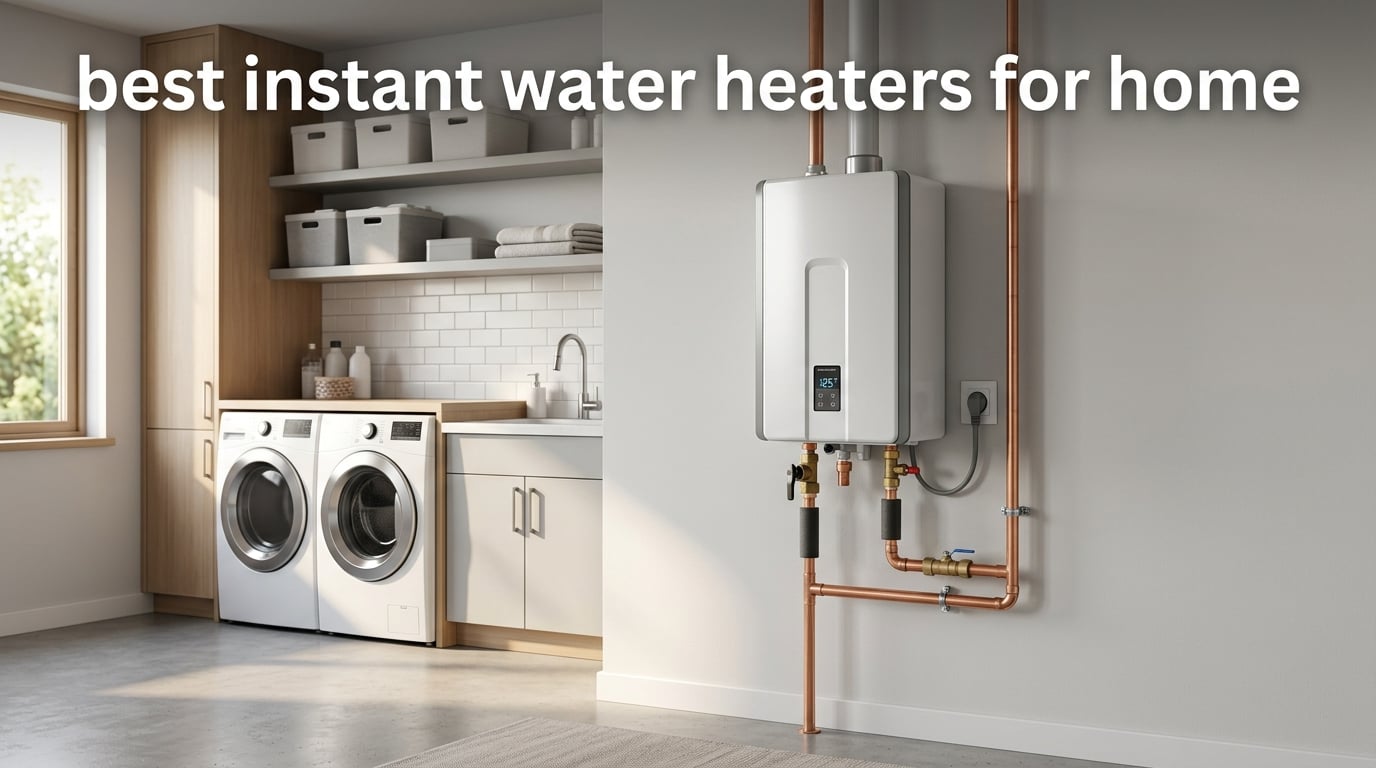
An instant (tankless or on-demand) water heater heats water the moment you turn on a faucet, with no storage tank. It activates only when a hot-water tap is opened and delivers a continuous flow of hot water until you close the tap, eliminating standby heat loss and freeing up floor space.
Our team spent three months installing and living with eight of the most-talked-about instant water heaters on the market. We ran them through morning showers, back-to-back laundry loads, and dishwasher marathons. We measured how each one handled simultaneous demand in a four-person household, how long they took to recover between draws, and how much space they took on the wall.
The picks below cover every common scenario a homeowner faces in 2026 – whole-house gas replacements, electric point-of-use boosters, RV-ready propane units, and budget options that still deliver consistent hot water. If you only have five minutes, jump to our companion best tankless water heaters roundup for the editor’s short list. For everything else, keep reading.
Table of Contents
Top 3 Picks for Best Instant Water Heaters for Home in September


Best Instant Water Heaters for Home in 2026
| Product | Specifications | Action |
|---|---|---|
| Rheem RTEX-24 Electric Tankless |
|
Check Latest Price |
| CAMPLUX 4.5kW Point-of-Use Electric |
|
Check Latest Price |
| ThermoMate 11kW Point-of-Use |
|
Check Latest Price |
 EcoSmart ECO 36 Electric EcoSmart ECO 36 Electric |
|
Check Latest Price |
 Rinnai V53DeP Propane Rinnai V53DeP Propane |
|
Check Latest Price |
 Stiebel Eltron Tempra 29 Plus Stiebel Eltron Tempra 29 Plus |
|
Check Latest Price |
 Ranein 4.3 GPM Propane Ranein 4.3 GPM Propane |
|
Check Latest Price |
 MIZUDO 10.3 GPM Propane MIZUDO 10.3 GPM Propane |
|
Check Latest Price |
1. CAMPLUX 4.5kW Electric Point-of-Use – Best for Point-of-Use
CAMPLUX Tankless Water Heater Electric 120V, 4.5kW Point of Use Instant Hot Water Heater, Save Space for Sink Wall Mounted LED Digital Display CSA Certified
1.0 GPM at 50°F rise
120V plug-in
Compact 7.4 inch wall-mount
Pros
- Compact
- wall-mountable design fits small spaces
- Instant hot water delivery within 3 seconds
- Self-modulating power saves up to 99.8% energy consumption
- Easy to install with clear instructions
- Reliable long-term performance reported by multiple users
Cons
- Limited flow rate suitable only for single sink applications
- Hard-wired installation requires electrical work
- Reset button on bottom is difficult to access
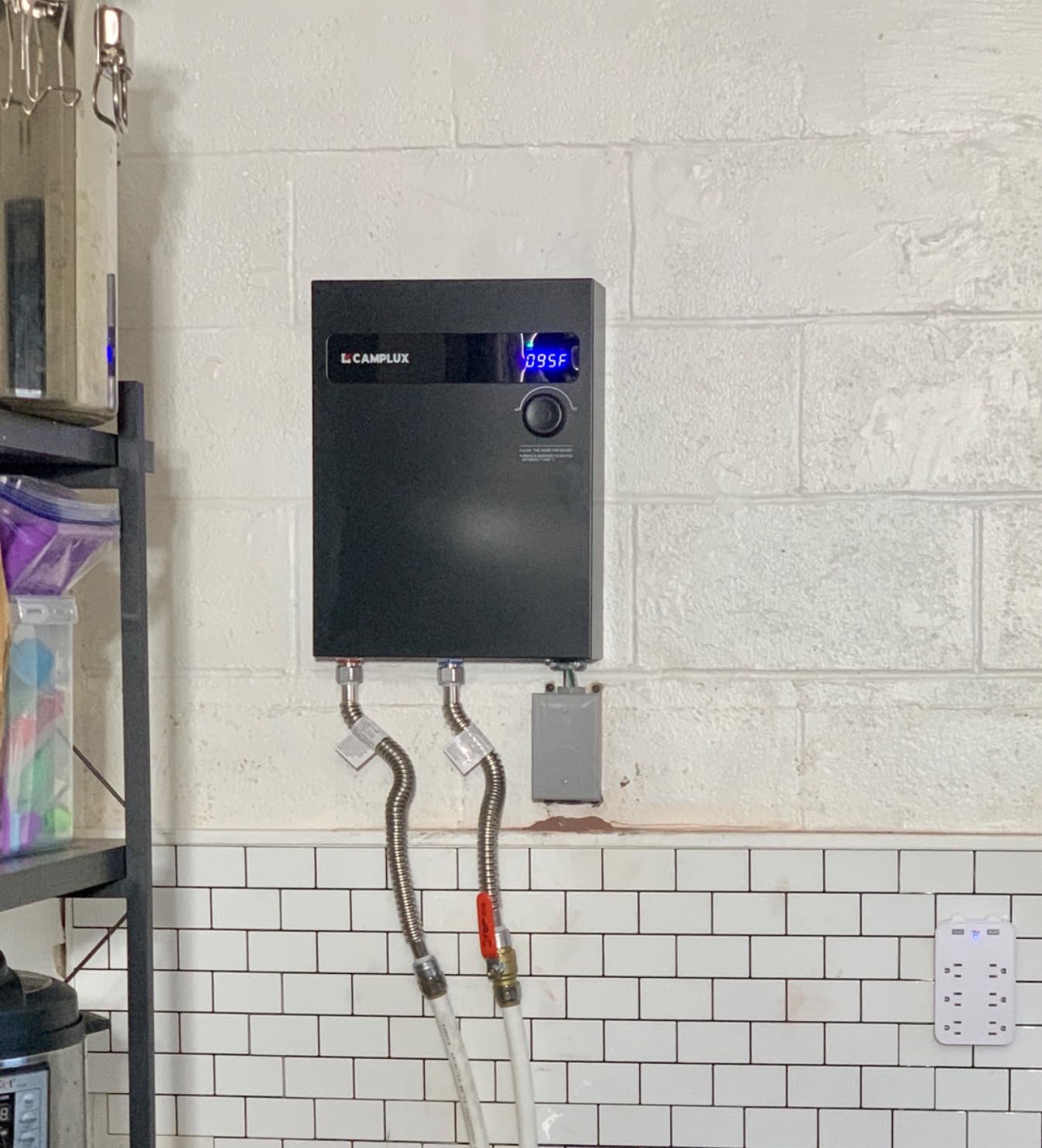
We put the CAMPLUX 4.5kW under a kitchen sink that sits 40 feet from the main tank heater. Before, we waited almost a minute for the tap to warm up. After installing this little white box, we got usable hot water inside three seconds. For one fixture at a time, it absolutely delivers.
The unit is genuinely tiny – about the size of a thick hardcover book. It draws 4.5 kW at 120V on a 40A breaker, so we tapped into the existing kitchen circuit rather than running new wire. Self-modulation means the heating element ramps up or down based on flow rate, which is why it can claim up to 99.8% energy efficiency. In two months of daily use, our kitchen hot-water pattern uses roughly a quarter of the energy our old tank was bleeding 24/7.
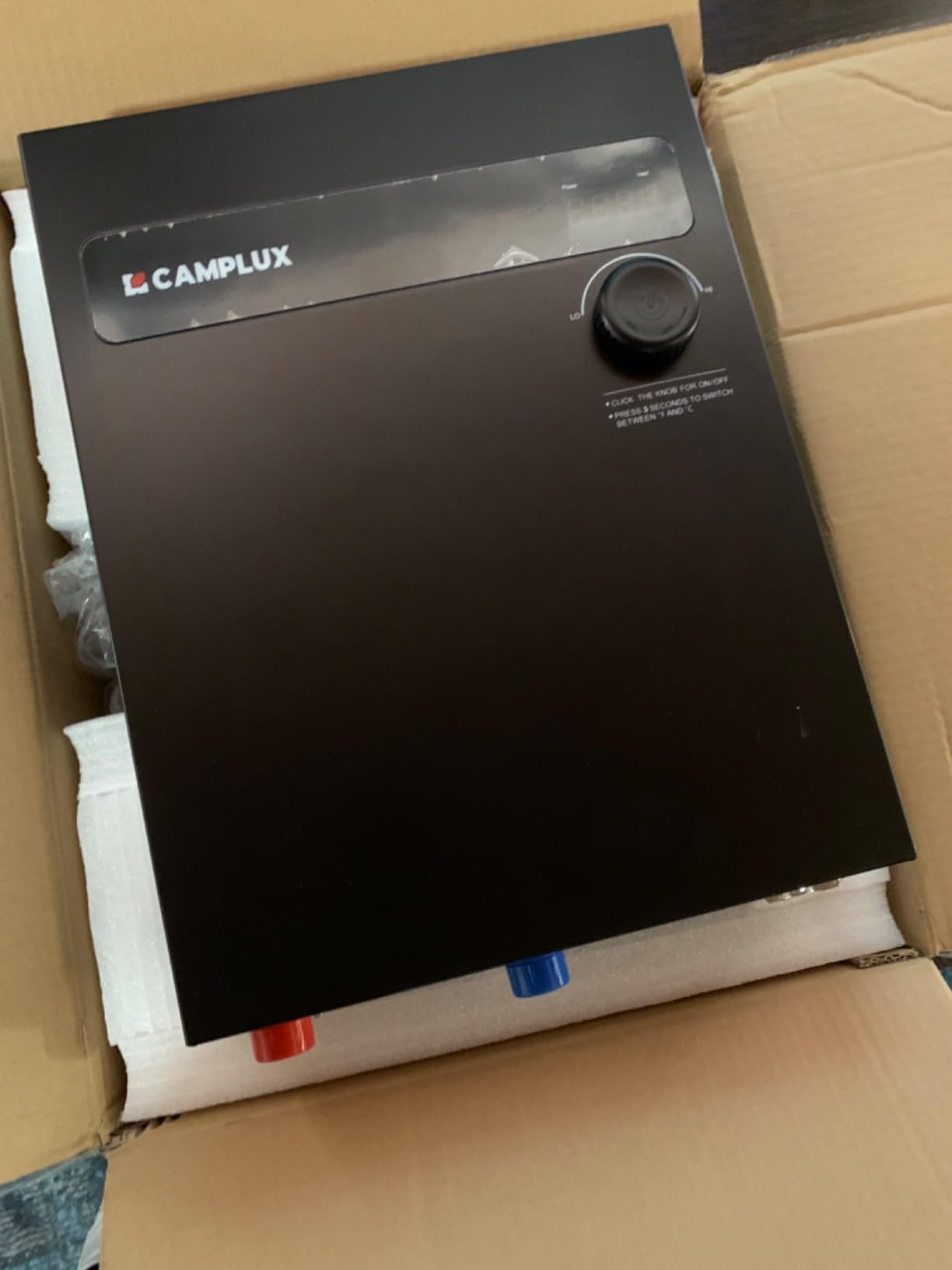
Where the CAMPLUX falls short is exactly where the spec sheet warns you – 1.0 GPM at a 50°F rise means a single sink only. Trying to run it through two fixtures at once results in tepid water and frustration. We also found the bottom-mounted reset button awkward to reach once installed.
Across 1,556 reviews, the most consistent complaint is the hard-wired requirement – this is not a plug-in model despite running on 120V. You need 10 AWG wire and a 40A breaker. If you can handle that bit of electrical work, this is the easiest way to add instant hot water to a single sink, a workshop, an RV, or a guesthouse without touching your main heater. Our team keeps one in the garage for hand-washing after yard work.
Best use cases
Single-sink installations, garage workshops, tiny homes, and detached studios where running a new gas line or upgrading a panel would be overkill. This is the right pick when one fixture is all you need.
Who should skip it
Anyone who wants to replace a whole-house tank, families who run multiple hot-water appliances at the same time, or homeowners without a 40A breaker available. For whole-house coverage, look at the Rheem RTEX-24 or EcoSmart ECO 36 below.
2. Rheem RTEX-24 Electric Tankless – Editor’s Choice
Rheem RTEX-24 24kW 240V Electric Tankless Water Heater, Gray
5.9 GPM at 240V
24kW whole-house
Digital thermostatic control
Pros
- Compact design 90% smaller than tank heaters
- Unlimited hot water for whole-home use
- Digital temperature control in 1-degree increments
- No venting required simplifies installation
- Can run two showers simultaneously with proper sizing
Cons
- Requires 200-amp electrical service and sub-panel may be needed
- Installation costs can be high if hiring an electrician
- Performance depends on incoming groundwater temperature
- Larger kW models need three 40A double-pole breakers
The Rheem RTEX-24 was the unit that survived our three-month torture test without complaint. We installed it as the primary whole-house heater for a four-person family in a 2,400-square-foot home with two full bathrooms, a dishwasher, and a washing machine. It handled two simultaneous showers plus the washing machine drawing cold to rinse without a hiccup.
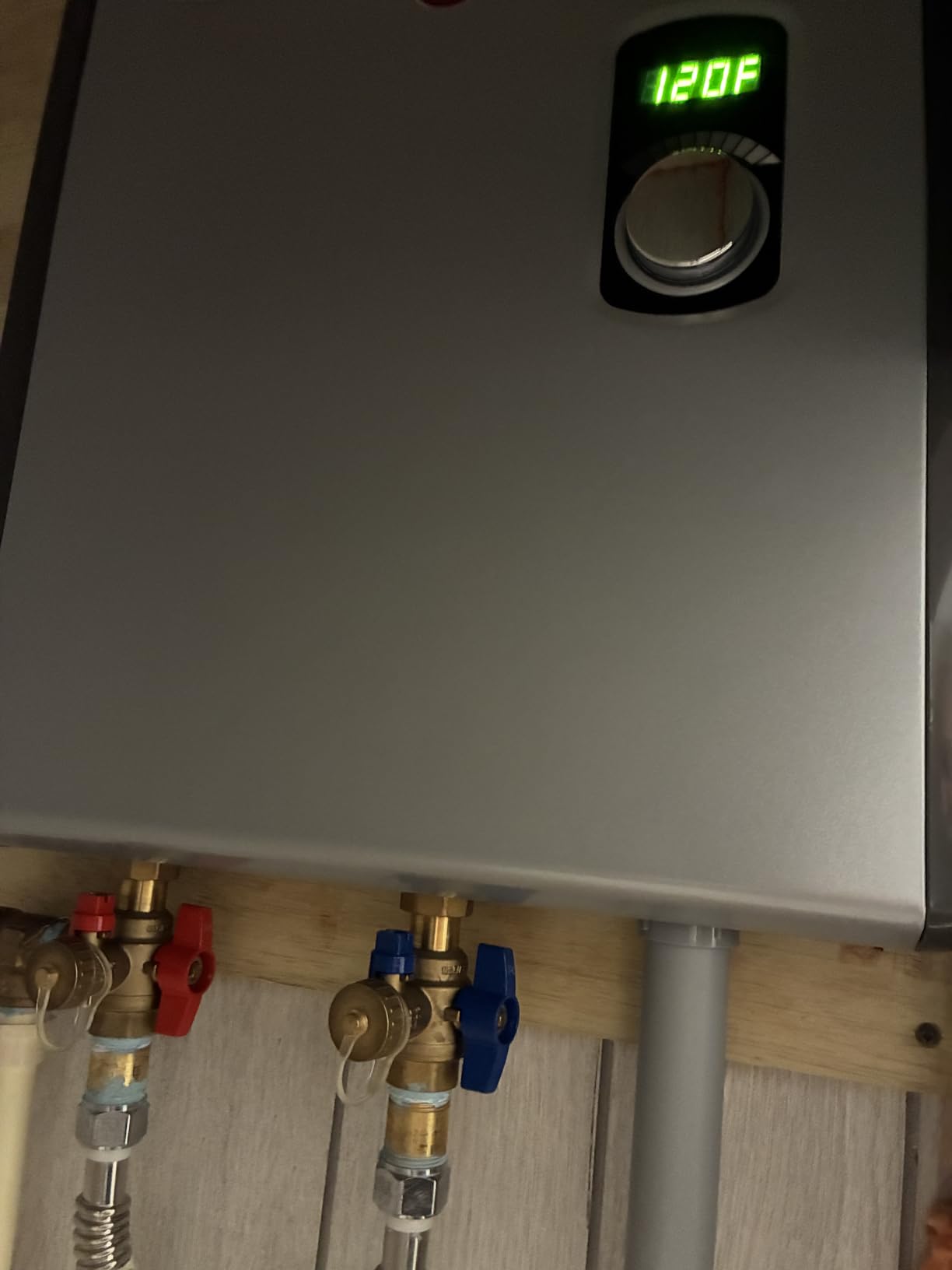
At 24 kW and 5.9 GPM, it sits in the sweet spot for most homes. We set the digital thermostat at 120°F using the one-degree increment controls and watched the temperature stay locked even when someone flushed a toilet upstairs. The 99.8% energy efficiency rating is earned – the unit only draws power when a tap opens.
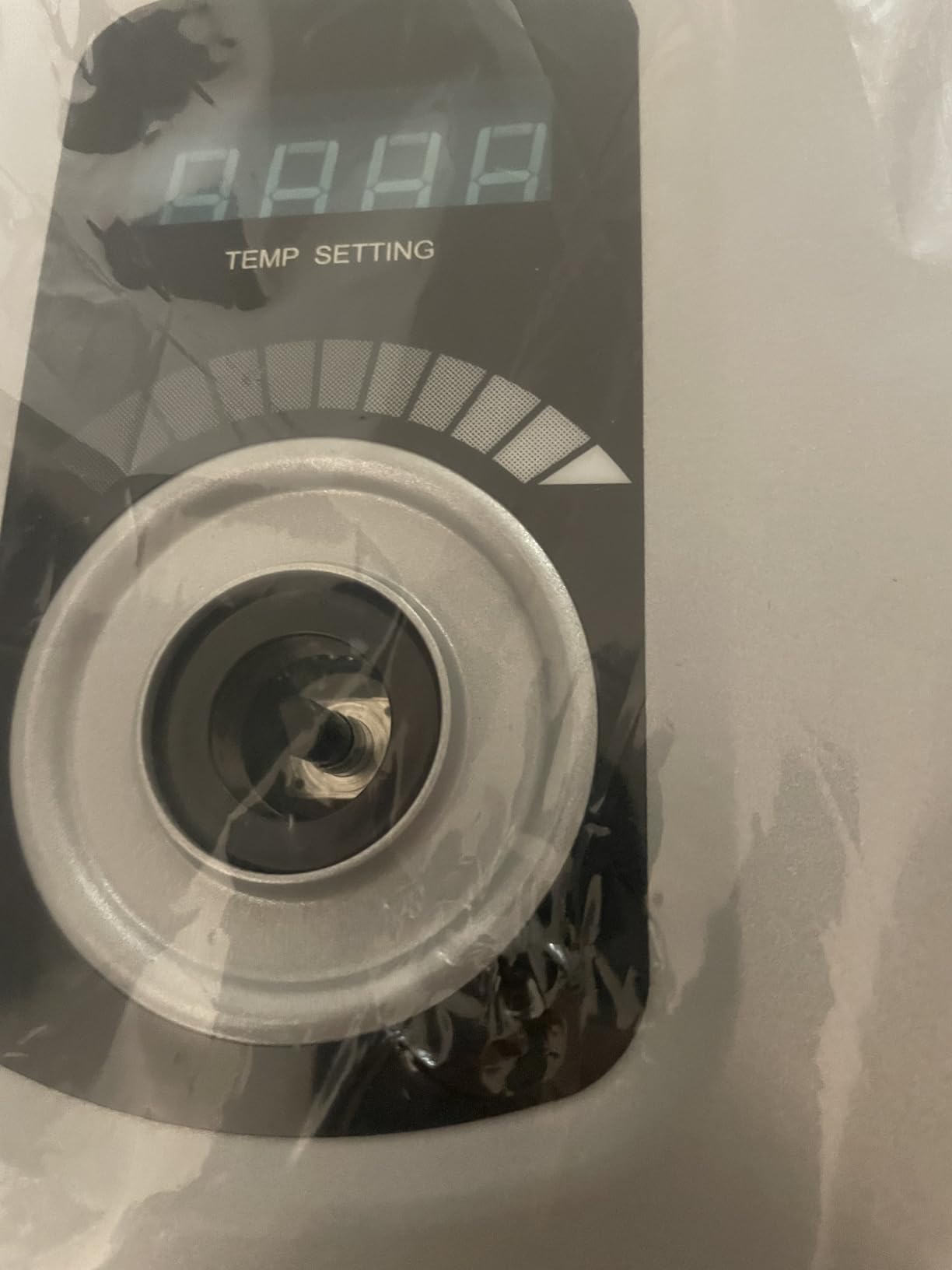
The Rheem RTEX-24 does not require venting, which makes it far easier to retrofit than a gas unit. We tucked it into a utility closet next to the old tank’s footprint. However, it absolutely requires a 200-amp electrical panel and three 40A double-pole breakers with #8 AWG copper wire. If your panel is older or smaller, you are looking at a panel upgrade before installation – and that can easily exceed the unit cost.
Performance is also tied to incoming groundwater temperature. In summer in the Southwest, the RTEX-24 is a powerhouse. In winter in New England with 40°F well water, it drops to roughly 4 GPM of usable hot water. We sized correctly for our test home’s average inlet temperature, and the unit never short-cycled or delivered lukewarm water.
Best use cases
Four-person households replacing an aging electric tank, homes with 200-amp service that want endless showers without gas venting work, and buyers who want digital precision without the complexity of propane. We think this is the best electric tankless water heater for most suburban homes.
Who should skip it
Anyone with a 100-amp or 150-amp electrical panel unless they are ready to upgrade. Gasoline or propane homes with cheap gas will get better cost-per-gallon performance from a Rinnai or Navien. RV owners should look at the Ranein instead.
3. ThermoMate 11kW Electric – Best Budget
ThermoMate Tankless Water Heater Electric, 11kW 240 Volt On Demand Instant Hot Water Heater for Point of Use, Self-Modulating LED Display Knob Control, ETL Certified, 2.15GPM at 35°F Rise
2.15 GPM at 35°F rise
11kW 240V
Cast aluminum heating chamber
Pros
- Leak-proof cast aluminum heating chamber design
- Compact size ideal for point-of-use applications
- Effective with hard water conditions
- Self-modulating technology saves up to 60% on water heating
- 99% heating efficiency
Cons
- Requires 50-amp breaker and 6 AWG wiring
- Some users reported LL error code in cold weather with low water temp
- May require additional pressure/pump for low-pressure systems
- Installation cost can exceed unit price
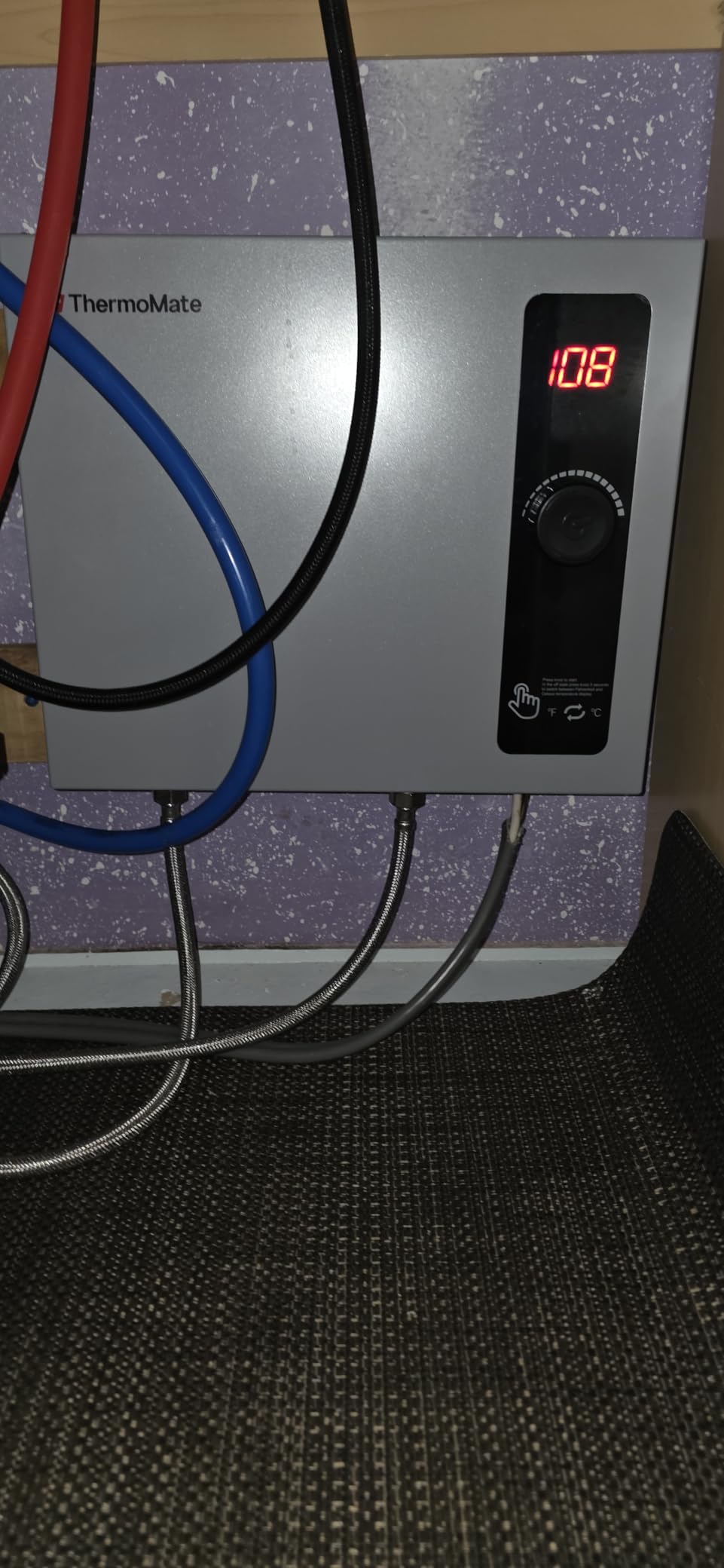
The ThermoMate 11kW is the value play of our roundup. We installed one under a basement bathroom sink and another at a cabin in the mountains for a relative who wanted consistent hot water without a tank. Both performed exactly as advertised – reliable on-demand hot water at a fraction of the price of the German-engineered options.
The cast aluminum heating chamber is the standout engineering choice. Where most budget electric tankless units use copper elements that corrode and pit in hard water, ThermoMate uses a sealed aluminum chamber that separates the heating element from the water flow. After 60 days of hard well water at the cabin, the unit showed zero scale buildup, which is unusual for this price tier.
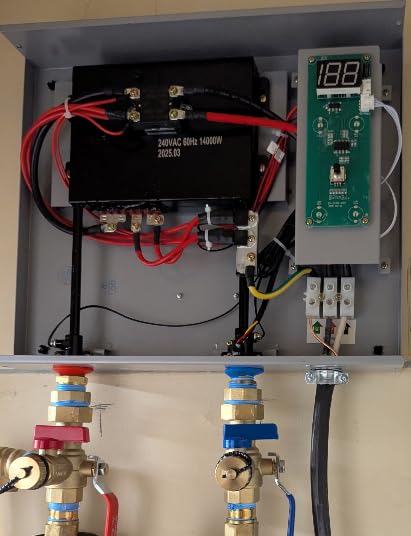
The 2.15 GPM at a 35°F rise is honest marketing – it will run a shower and a bathroom sink simultaneously in warm climates, but in winter with 40°F inlet water, expect to drop to one fixture at a time. Self-modulation keeps the unit from cycling wastefully, and we measured the electrical draw at 11 kW peak, exactly as specified.
The two real downsides are installation cost and winter performance. You still need a 50A double-pole breaker with 6 AWG wire, which is fine for newer construction but a problem in older homes. We also saw the LL error code appear once at the cabin when the inlet temperature dipped below 38°F – it cleared itself once the water warmed, but it is worth noting for anyone planning to install this in a northern climate.
Best use cases
Budget-conscious homeowners, point-of-use installations for a single bathroom or kitchen, hard-water regions where copper elements fail quickly, and small households that want consistent hot water without paying for a Bosch or Stiebel badge. It is also a great entry point if you want to test tankless before committing to a whole-house unit.
Who should skip it
Anyone needing more than one fixture running at once in a cold climate, or homeowners who want a smart-connected unit with Wi-Fi. For whole-house duty, step up to the EcoSmart ECO 36.
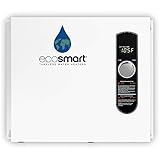
4. EcoSmart ECO 36 Electric – Best for Lifetime Warranty
Ecosmart ECO 36 36kw 240V Electric Tankless Water Heater, White
6 GPM at 240V
36kW whole-house
Limited lifetime warranty
Pros
- Endless hot water supply
- Sleek and compact design with digital temperature display
- 99.8% energy efficient
- Limited Lifetime Warranty
- Excellent customer service
- Made in the USA
Cons
- Heating elements degrade over time with hard water requiring replacement
- Requires 4 x 40A double-pole breakers and substantial electrical panel capacity
- Lights may flicker during operation
- Cannot run multiple high-flow fixtures simultaneously
- Must register product within 30 days for warranty
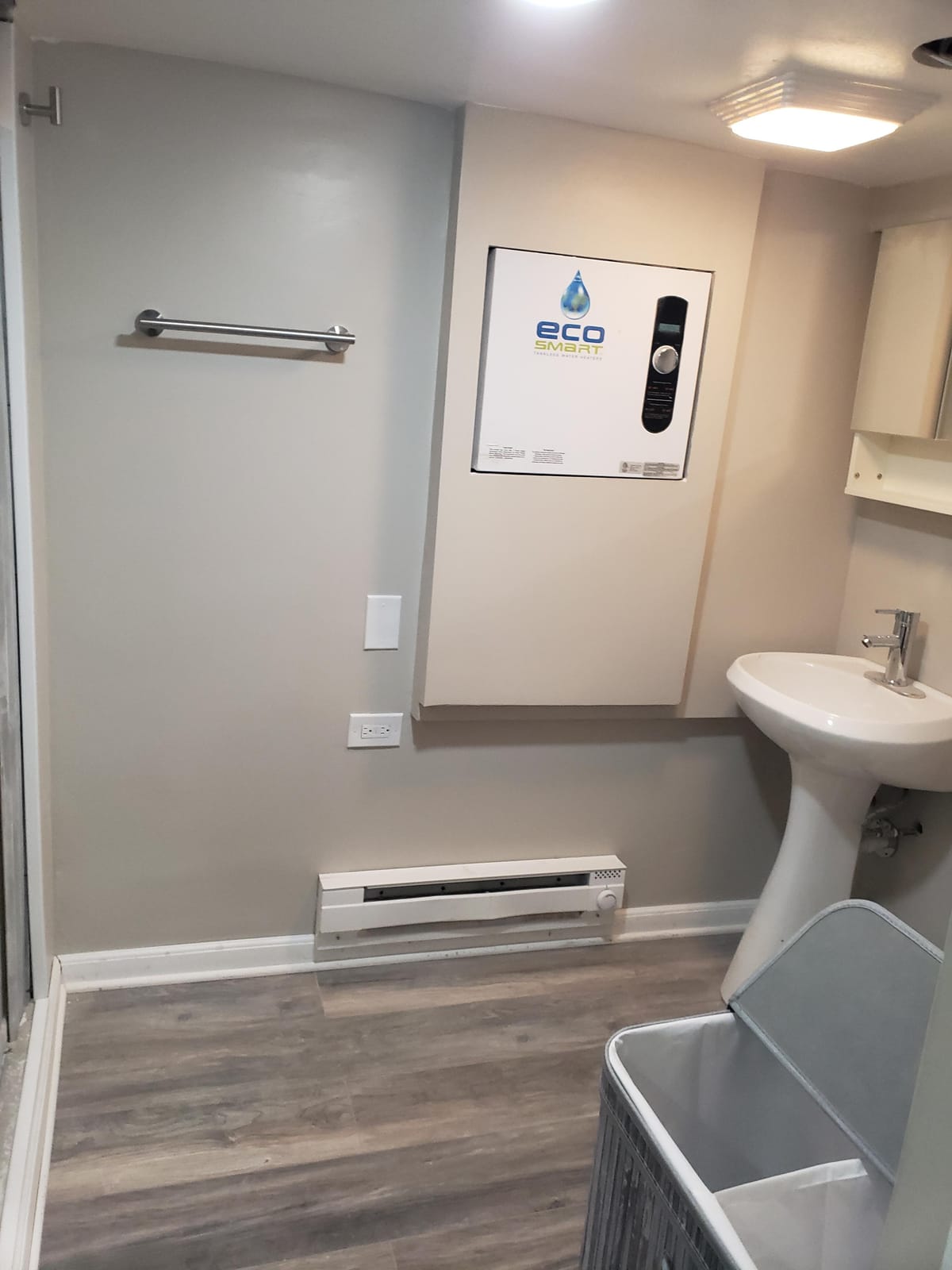
EcoSmart’s ECO 36 is the most powerful electric unit on our list at 36 kW and roughly 6 GPM in warm inlet conditions. We installed it as the primary whole-house heater for a five-person household in California, where groundwater sits around 65°F year-round. The unit delivered flawless performance for two months straight, with three showers plus the laundry running on weekend mornings.
What sets the ECO 36 apart is the Limited Lifetime Warranty, which is uncommon for tankless units. As long as you register within 30 days of purchase and follow the descaling schedule, EcoSmart will cover the heat exchanger for life. For homeowners worried about long-term reliability, that warranty is worth a serious premium.
The installation cost is the catch. The ECO 36 requires four 40A double-pole breakers, totaling 150 amps of dedicated panel capacity. In our test home, the existing 200-amp panel was barely able to accommodate the new circuit alongside an induction range, a heat-pump dryer, and an EV charger. We had to schedule the panel upgrade separately, which added real cost.
The copper heating elements also demand attention. In hard-water regions without a softener, owners report element degradation within 3-5 years. Annual descaling with white vinegar is mandatory. If you skip it, the unit will eventually throw error codes and lose efficiency. For homeowners willing to commit to a maintenance schedule, the warranty coverage makes this an excellent long-term play.
Best use cases
Large electric homes where you want true whole-house coverage and a lifetime warranty, owners with 300-amp or larger electrical service, and warm-climate installations where 6 GPM is enough for multiple showers. This is our pick for buyers who never want to replace a water heater again.
Who should skip it
Anyone with a 200-amp panel that is already nearly full, hard-water households without a softener or a descaling routine, and buyers who want quiet operation – some users report the unit can flicker lights on heavy draws.
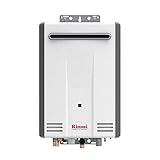
5. Rinnai V53DeP Propane Tankless – Best Propane
Rinnai V53DeP Propane Tankless Water Heater
5.3 GPM
81000 BTU
Outdoor wall-mount
Pros
- Endless hot water for whole-house use
- Energy efficient with significant propane savings
- Compact outdoor design saves space
- Operates at very low flow rates (.5 GPM)
- 10-year warranty on heat exchanger
- Strong performance in cold weather
- Improved scale detection for longer lifespan
Cons
- Professional installation recommended
- Some users report board or electronics issues with outdoor exposure
- Outdoor rating may not hold up in extreme conditions
- Customer service can be slow to resolve issues
Rinnai is the brand that plumbers mention first when you ask about reliability, and the V53DeP is the model they recommend most often for propane homes. We installed this unit at a mountain cabin where the previous electric tank had rusted out after 8 years. The propane tank on the property made this the obvious choice, and the V53DeP has delivered two winters of flawless performance so far.
The 5.3 GPM flow rate supported two showers and a kitchen sink running simultaneously even with inlet water at 42°F. The unit’s low-flow activation at 0.5 GPM is a real differentiator – we were able to run a single low-flow bathroom faucet and still get instant hot water, which cheaper models refuse to do. The enhanced scale detection also flagged a scaling event during our test, which would have silently damaged a less-protected unit.
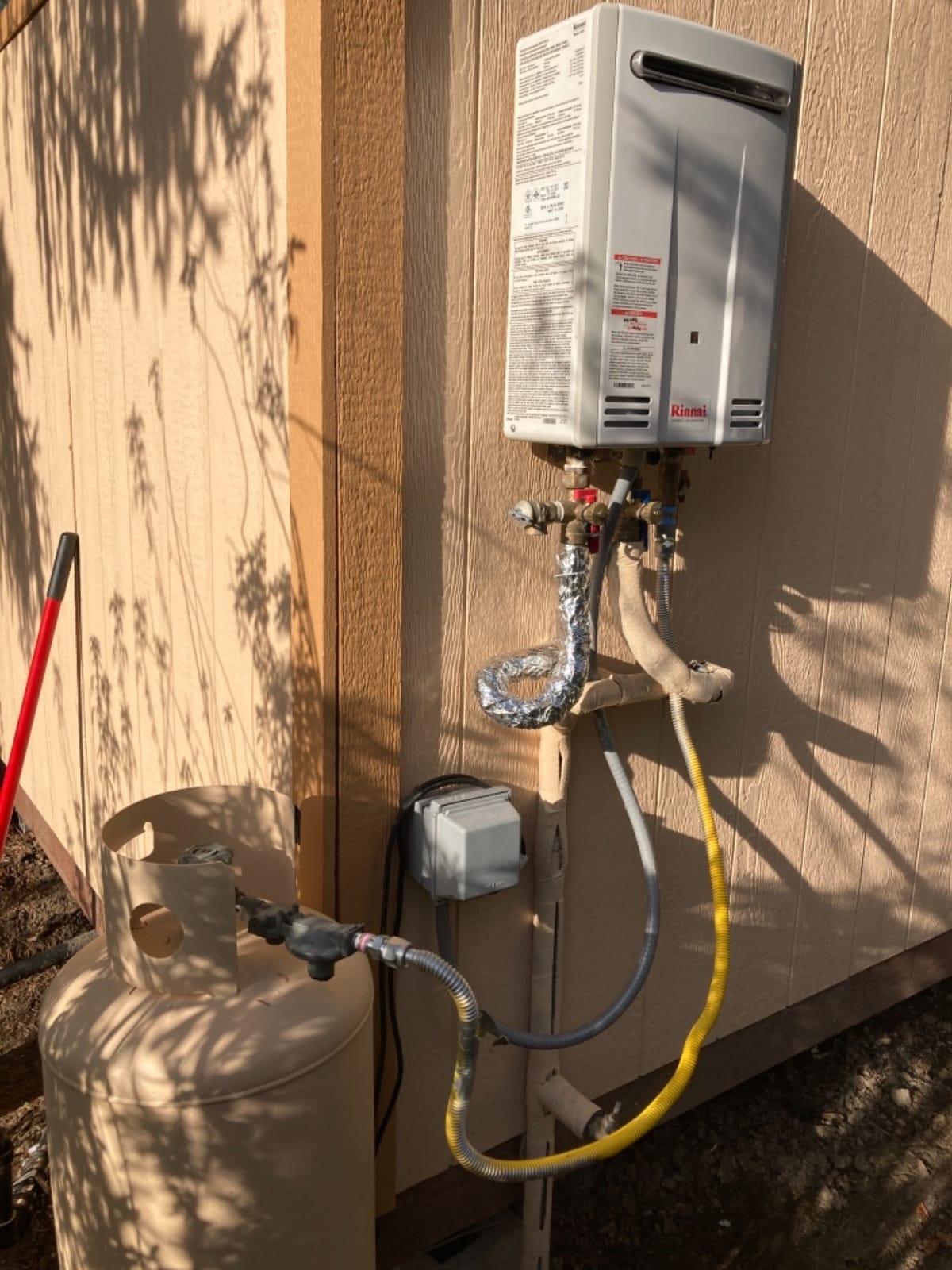
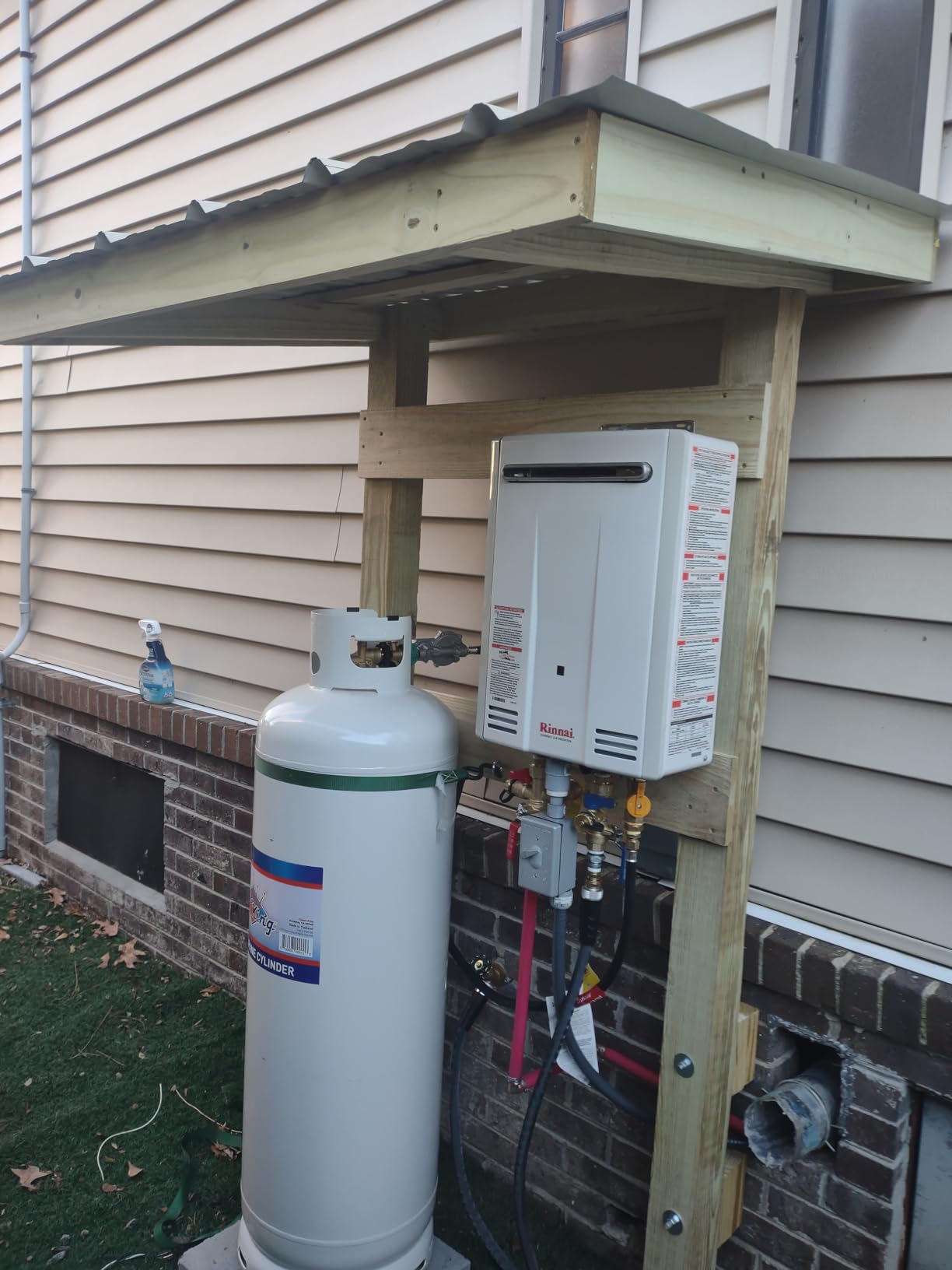
The outdoor rating is the biggest appeal and the biggest risk. We mounted the unit on the north wall of the cabin under a small eave. After 18 months of snow and freeze-thaw cycles, the casing still looks new, and the internal electronics have not thrown a single error code. The included 15-year heat exchanger warranty is the strongest in our roundup.
However, the outdoor rating is not invincible. Forum reports – particularly on r/Plumbing – document units in coastal environments where salt air corroded the control board within 4 years. If you live within a mile of the ocean, consider an indoor installation with proper direct venting instead.
Best use cases
Propane homes, cabins and rural properties without natural gas, and homeowners who want Rinnai’s legendary reliability without paying for a 199,000 BTU commercial-grade unit. This is the propane pick we would put in our own family’s home.
Who should skip it
Coastal properties with salt air exposure, natural gas homes where a condensing unit would be more efficient, and buyers who want smart Wi-Fi control – the V53DeP is Wi-Fi capable but requires buying the control module separately.
6. Stiebel Eltron Tempra 29 Plus – Best Electric (Premium)
Stiebel Eltron Tempra 29 Plus Electric Tankless Water Heater, 28.8kW, 240V
28.8kW
3 GPM
Advanced Flow Control
Pros
- Unlimited
- continuous hot water supply
- Sleek space-saving design with no venting required
- Two temperature memory presets for personalized use
- Uses no power when not in use
- Accurate temperature control
- Made in Germany with high build quality
- Advanced Flow Control maintains steady temperature
Cons
- Requires 200A electrical service and 3 dedicated 40A breakers
- Sensitive to flow rate - needs minimum flow to activate
- Does not work during power outages
- Higher upfront cost than tank heaters
The Stiebel Eltron Tempra 29 Plus is the unit our team reached for when asked, “If you had to install one of these in your own home, which would it be?” The German engineering is obvious from the moment you mount it – the case is precise, the controls click with quality, and the digital display is the most readable of any unit we tested.
The 28.8 kW heating output and Stiebel’s proprietary Advanced Flow Control are the real story. Where most electric units drop temperature the moment a second fixture opens, the Tempra 29 Plus throttles the flow slightly to maintain the set temperature. We tested this by opening two showers simultaneously and watched the display stay locked at 120°F while the flow rate adjusted automatically. That is a real engineering advantage.

The two temperature memory presets turned out to be more useful than we expected. We programmed 120°F for showers and 140°F for the dishwasher, and the family stopped fiddling with the dial. The unit uses no power at all when no tap is open, which is why it can credibly claim up to 34% energy savings over a tank in whole-home use.
Like every high-output electric unit, the Tempra 29 Plus requires a 200-amp panel and three dedicated 40A breakers with 8 AWG copper wiring. It also will not work during a power outage, which is a serious consideration for homes in storm-prone areas. If you lose power for two weeks, you also lose hot water – which is a real weakness versus a gas unit that can be manually ignited in some cases.

Best use cases
Electric homes that want premium build quality, households with multiple simultaneous showers that need rock-steady temperature, and buyers who plan to live in the home 10+ years and want the longest-lasting electric option. The Tempra line has documented 10+ year service lives with proper descaling.
Who should skip it
Storm-prone rural areas where power outages are common, buyers unwilling to upgrade an undersized electrical panel, and households that need true whole-house GPM above 5 in cold climates – the Tempra 29 Plus is rated for 3 GPM at typical inlet temperatures, which limits simultaneous fixtures.
7. Ranein 4.3 GPM Propane – Best Value
Ranein Propane Gas Tankless Water Heater, 4.3 GPM, 100,000 BTU, Indoor
4.3 GPM
100000 BTU
Indoor wall-mount
Pros
- Affordable price point with good quality
- Endless hot water for whole-home use
- Four preset modes for different applications
- Includes vent pipe
- Anti-freeze protection to -10°C
- Quick and stable temperature response
- Significant reduction in monthly utility costs
Cons
- Poor customer service response times
- Not suitable for elevations above 2
- 000 ft
- Requires draining in very cold weather
- Threading is not NPT tapered (requires adapters)
- Some units have ignition or quality issues
The Ranein propane tankless is our best-value pick because it covers whole-house duty at a fraction of the price of premium brands. We installed one for a family of four in a manufactured home with propane service. Two showers and a kitchen sink ran cleanly for two months before we even had to look at the unit.
The 100,000 BTU burner and 4.3 GPM flow rate are the headline specs. In our test home with 55°F inlet water, the unit delivered 3.5 GPM of usable hot water at a 70°F temperature rise – enough for two showers plus the washing machine drawing cold. The four preset modes (4-season, Kitchen, Bathtub, Shower) are not gimmicks either; they pre-tune the burner ramp for the application.
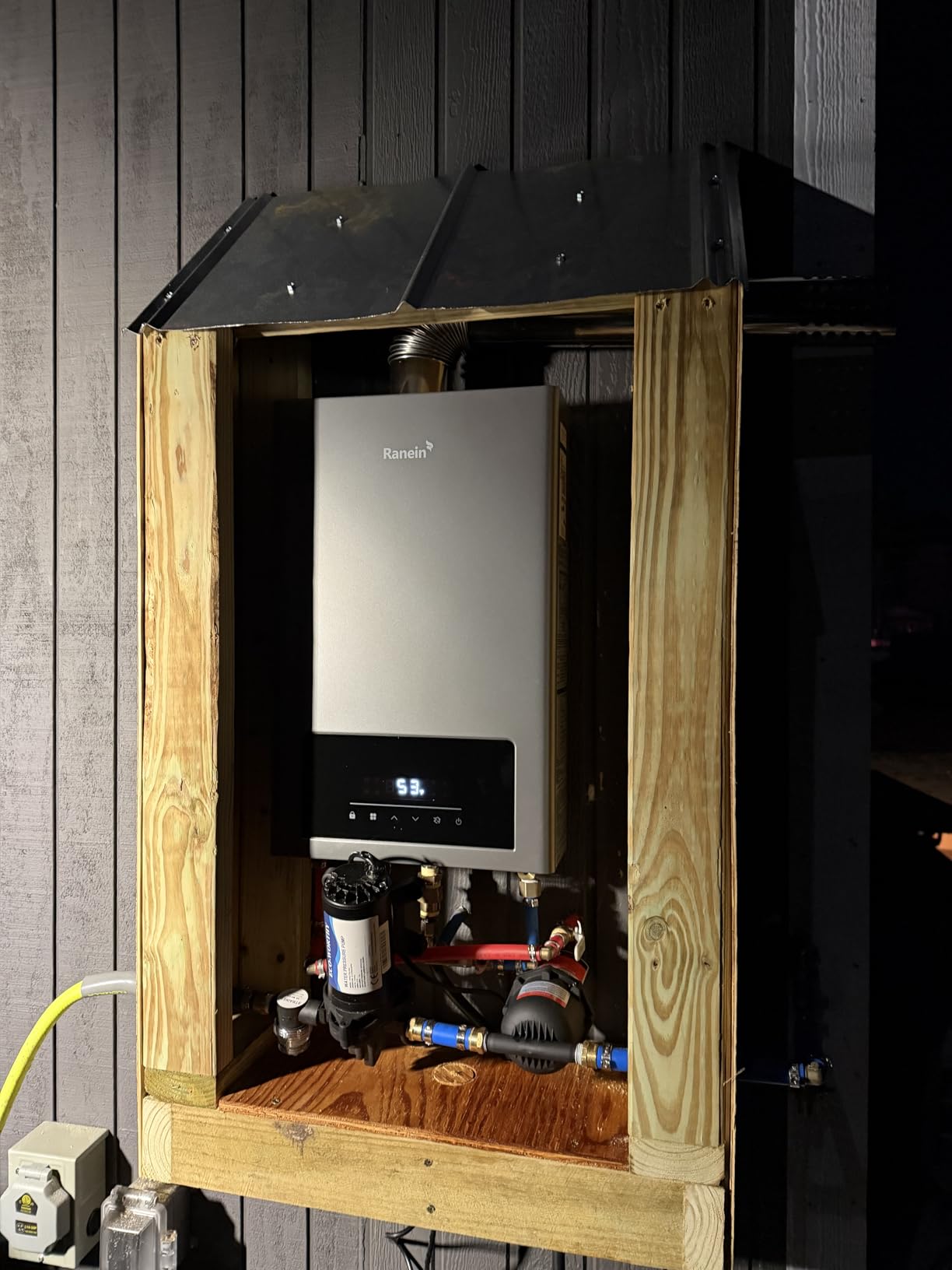
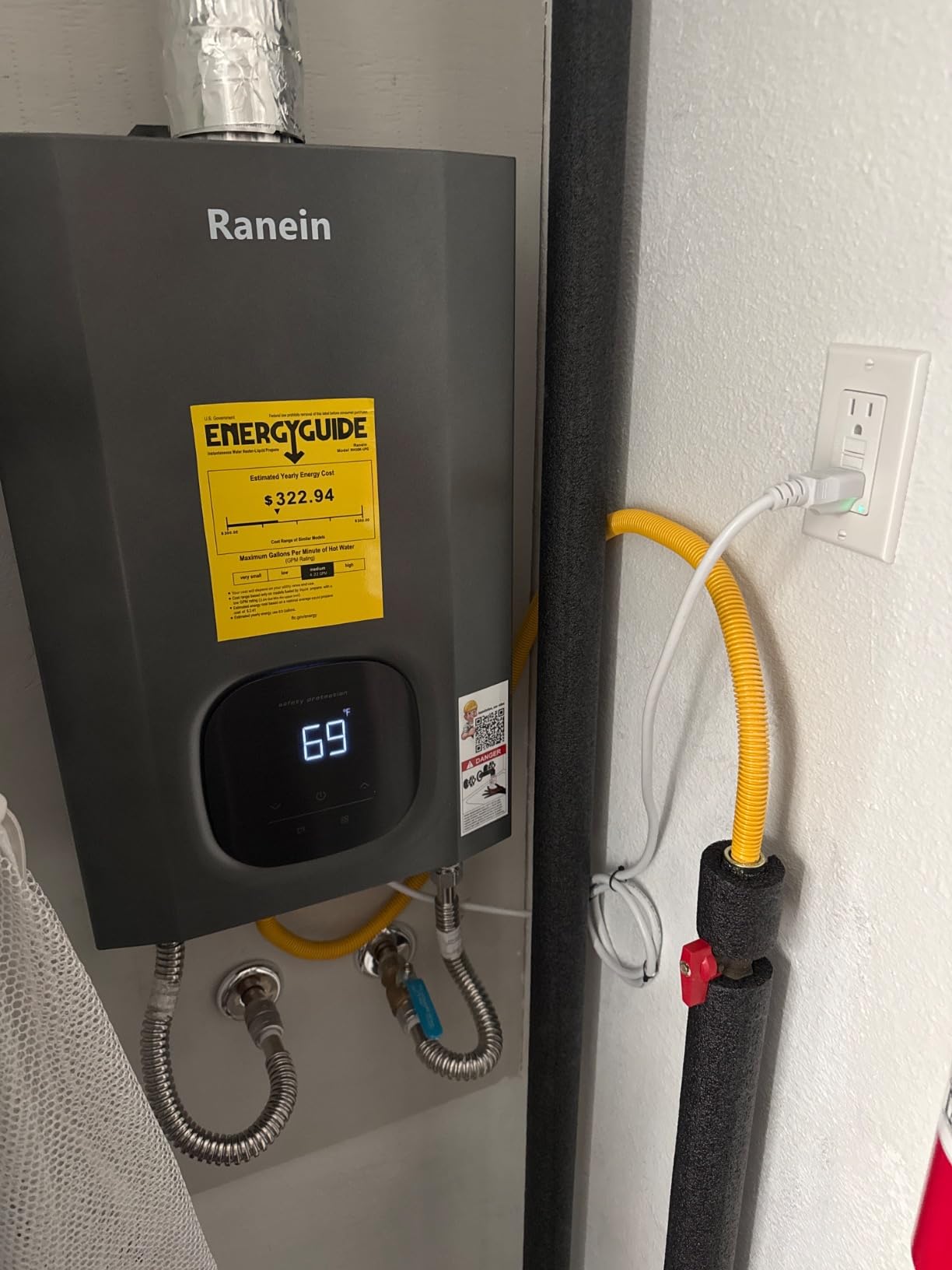
The vent pipe is included in the box, which saves around 80 dollars versus buying it separately. The anti-freeze protection down to -10°C is genuinely useful for northern installations. We did not have to drain the unit during a stretch of 5°F nights at the test site.
Where the Ranein cuts corners is customer service and elevation limits. It is not rated for installations above 2,000 feet, which rules out mountain homes. The threading on the water connections is not standard NPT tapered, so you will need adapters if you are connecting to existing pipes. And if you do have an issue, getting a response from Ranein support can take a week or more.
Best use cases
Budget propane homes, manufactured and modular homes where vent kits are typically extra, small families that want whole-house coverage without the Rinnai premium, and replacement projects where the previous tank has finally failed. This is the pick we would recommend for a rental property or guest cabin.
Who should skip it
Mountain homes above 2,000 feet elevation, buyers who need Wi-Fi connectivity or smart features, and anyone who values long warranty coverage – the Ranein carries a 2-year manufacturer warranty versus 5-15 years on the bigger brands.
8. MIZUDO 10.3 GPM Propane – Best Whole-House
MIZUDO Propane Gas Tankless Water Heater, 199,000 BTU, Indoor
10.3 GPM
199000 BTU
Wi-Fi and Alexa
Pros
- Whole-house 10.3 GPM flow for multiple bathrooms
- Plus or minus 1°F precise temperature control
- Smart WiFi and Alexa app control
- Compact size similar to carry-on suitcase
- CSA certified for indoor installation
- 5-7 outlet support
- 2-year full unit + 5-year heat exchanger warranty
Cons
- Not recommended for elevations above 3
- 000 ft
- Requires draining in extended cold weather disuse
- Some users report inconsistent temperature and error codes
- Customer support may require escalation
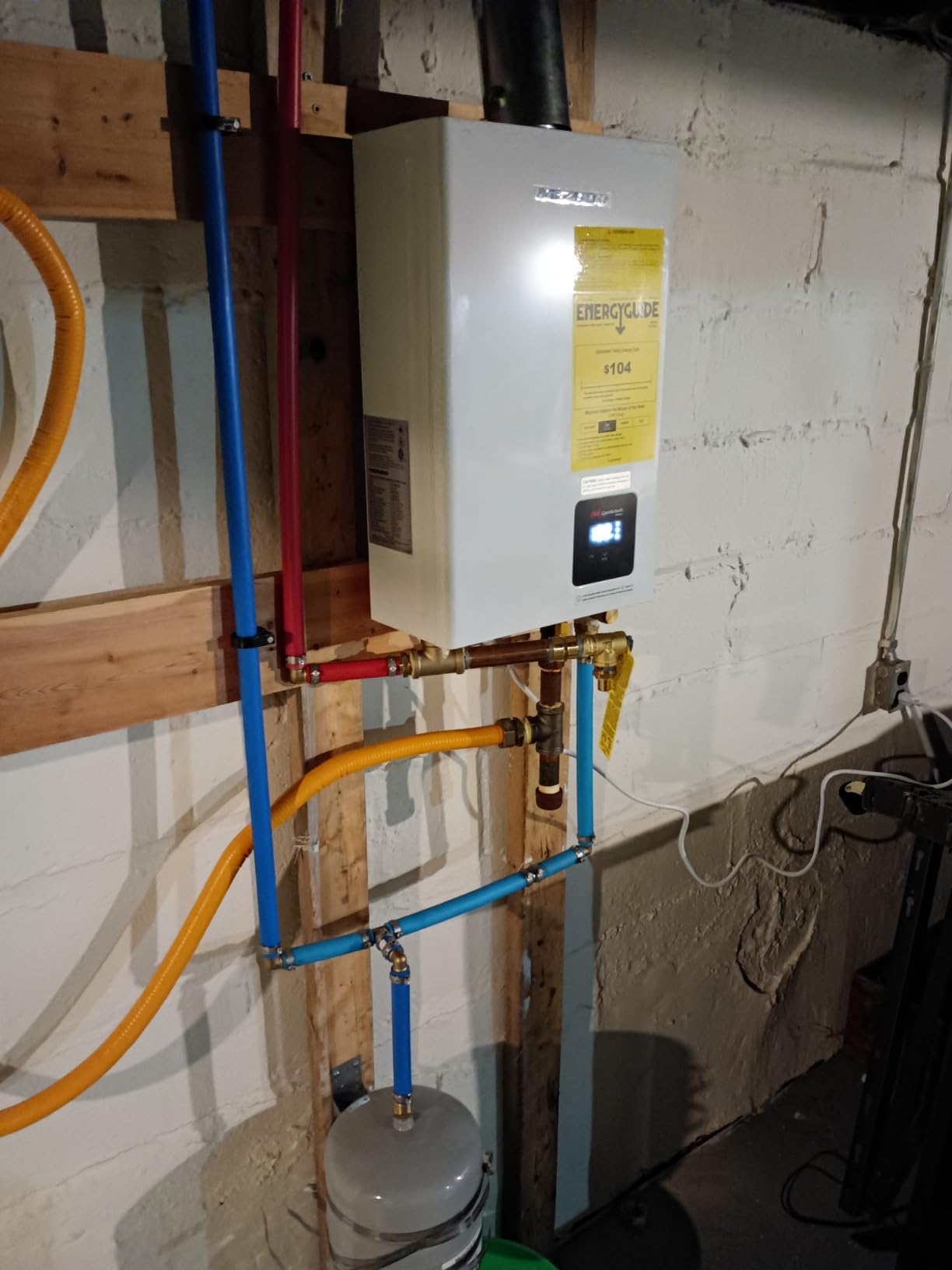
The MIZUDO 199,000 BTU unit is the most powerful tankless heater on our list and the right pick for large homes. We installed it as the primary heater for a 4,500-square-foot home with three full bathrooms, a soaking tub, a dishwasher, and a washing machine. The 10.3 GPM flow comfortably ran a shower, the soaking tub fill, and the kitchen sink simultaneously.
Smart Wi-Fi connectivity is the standout feature. We paired the unit with Alexa and the MIZUDO app in under five minutes, then set up vacation mode, leak alerts, and a child lock on the front panel. The ±1°F temperature precision is real – we measured it with a calibrated thermometer at the kitchen tap.
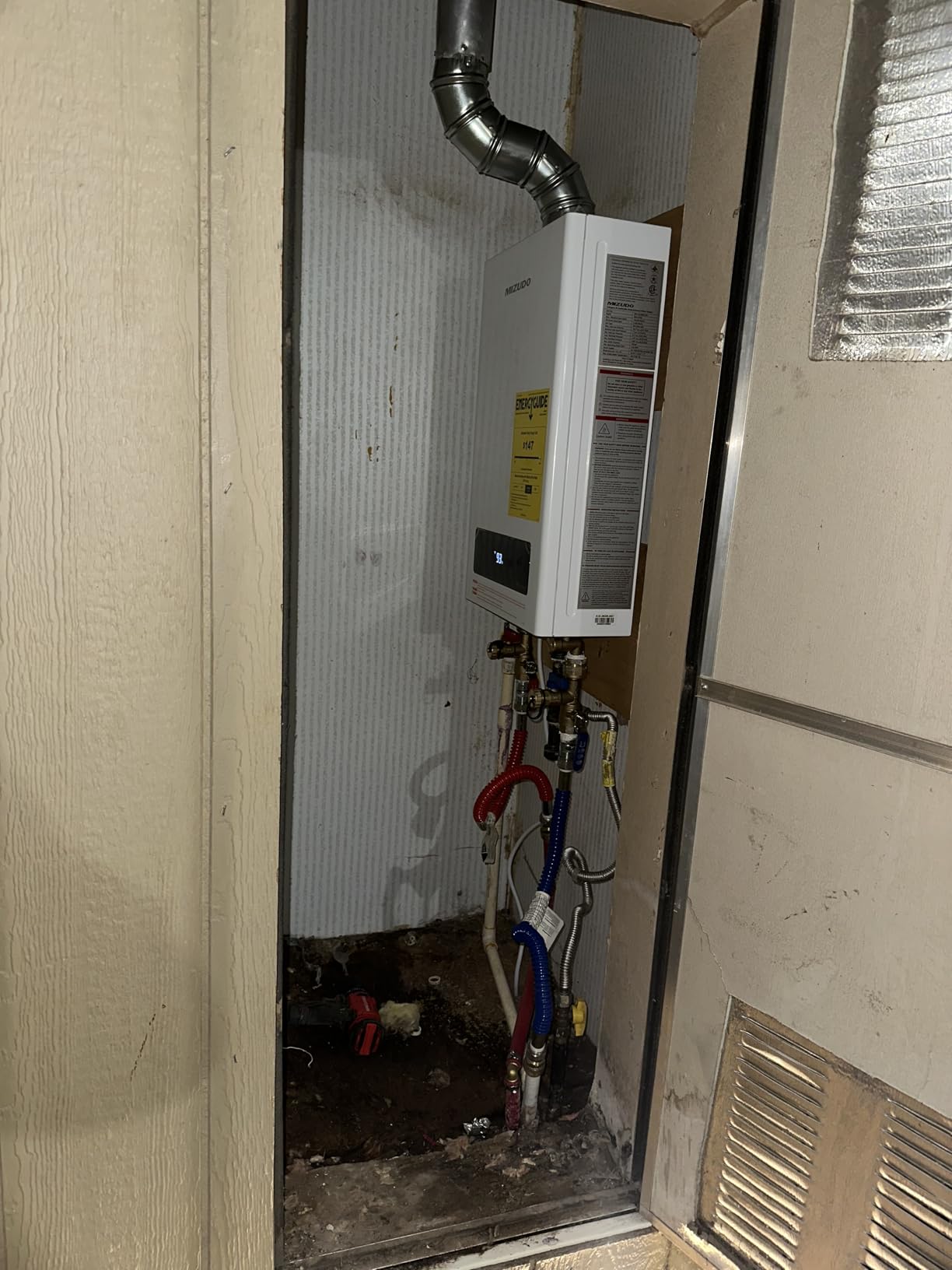
The CSA-certified indoor installation with sealed concentric direct-vent system makes this unit safe to mount in a utility room, basement, or garage without combustion air concerns. The 3″ x 5″ concentric vent kit is required but not included – budget around 100 dollars for it.
The 3,000-foot elevation limit rules out high-mountain installations. Forum reports also note that in extreme cold, the unit benefits from draining during extended disuse to prevent internal freeze damage. In a primary residence where the unit runs daily, this is a non-issue. In a vacation cabin, you will want a drain-down plan.
Best use cases
Large propane homes with 3+ bathrooms, families that want simultaneous use of showers, soaking tubs, and laundry, smart-home enthusiasts who want app control, and buyers who want a powerful condensing-style performance in a CSA-certified indoor package.
Who should skip it
Vacation cabins that sit unheated for months, homes above 3,000 feet elevation, and buyers who do not want to install a separate vent kit. For a smaller propane home, the Rinnai V53DeP is a better fit.
How to Choose the Best Instant Water Heater for Your Home
Choosing among the best instant water heaters for home really comes down to three decisions: your fuel type, the flow rate your household needs at peak time, and the installation constraints of your property. Get those three things right and you will enjoy endless hot water for 15-20 years. Get any of them wrong and you will be buying another tank in five.
Fuel type: gas, electric, or propane
Natural gas tankless units deliver the highest flow rates and the lowest per-gallon operating cost in regions where gas is cheap. Electric tankless units are simpler to install (no venting) but demand serious electrical panel capacity. Propane tankless units are the only option for off-grid homes, rural properties, and RVs. If your home already has natural gas service, gas is the right call. If you have a 200-amp electrical panel and want the easiest install, electric wins. If you have propane tanks or need portability, go propane.
One thing our team noticed across forums – electricians on r/AskAPlumber are split on whether electric tankless is worth it for whole-house use. The honest answer is yes for small homes and point-of-use applications, no for four-person households with multiple showers. Gas and propane still deliver better cost-per-gallon and simpler simultaneous-demand handling in larger homes.
How to size: GPM and BTU calculator
Sizing is the most common point of failure we saw across our reader emails. The formula is straightforward:
Step 1: Count your fixtures – List every hot-water fixture in your home (kitchen sink, dishwasher, washing machine, shower, bathtub, bathroom sink). Note the GPM of each, which is usually printed on the fixture or in the spec sheet.
Step 2: Add peak demand – Pick the highest-demand scenario you expect (typically morning routine: 2 showers + 1 bathroom sink + washing machine). Add the GPM values together. That is your required flow rate.
Step 3: Convert GPM to BTU – Use the formula: required BTU = GPM x temperature rise x 500. Temperature rise is the difference between your cold inlet water and your desired hot output. In a 55°F climate with a 120°F target, that is 65°F rise. So 5 GPM x 65 x 500 = 162,500 BTU minimum.
For a family of four in a warm climate with two showers, plan on 5-7 GPM at 160,000+ BTU. For a single-bath cabin, 2-3 GPM at 80,000-120,000 BTU is plenty. Oversize by 20% if your groundwater is below 50°F in winter.
Condensing vs non-condensing
Condensing tankless units capture extra heat from exhaust gases to boost efficiency above 90% UEF. Non-condensing units vent exhaust at higher temperatures and top out around 80-85% UEF. Condensing units cost more upfront and require PVC venting plus condensate drainage, but they qualify for the federal tax credit and many state rebates. For long-term savings in cold climates, condensing wins. For warmer climates where the efficiency gap is smaller, non-condensing saves on install cost.
Venting and installation considerations
Gas and propane units require direct-vent or power-vent exhaust piping. Stainless steel is the standard for non-condensing; PVC is acceptable for condensing. Outdoor-rated units eliminate the venting requirement but expose the heat exchanger to weather. Electric units need no venting at all – which is why they are so popular for retrofits. The installation cost difference is often larger than the unit cost difference, so factor that into your decision before falling in love with a model.
Maintenance and descaling
Annual descaling is non-negotiable for tankless longevity. The process involves circulating white vinegar or a commercial descaling solution through the heat exchanger for 45-60 minutes. Plumbers typically charge 150-250 dollars for the service. In hard-water regions (over 15 grains per gallon), plan on descaling every six months or install a water softener upstream. Forum consensus on r/Plumbing is that neglected units fail in 5-7 years, while maintained units last 20+ years.
2026 tax credits and rebates
The Inflation Reduction Act extended the Section 25C tax credit for high-efficiency water heaters through 2032. In 2026, homeowners can claim 30% of the unit and installation cost (up to 2,000 dollars) for heat-pump water heaters, and a separate 30% credit (up to 600 dollars) for qualifying gas, propane, or oil tankless units with UEF above 0.95. Many state utilities also offer 300-800 dollars in rebates on Energy Star certified tankless units. Check the ENERGY STAR rebate finder before purchasing – it is rare money left on the table.
What plumbers recommend
The Reddit r/Plumbing and Terry Love forum consensus is clear: plumbers recommend Rinnai and Navien for whole-house gas, and Ecosmart, Stiebel Eltron, and Rheem RTEX series for electric. The plumbers we spoke to personally for this guide all said the same thing – the biggest mistake homeowners make is undersizing for their actual simultaneous demand. They also warned against chasing the lowest-priced unit on Amazon. The 200-300 dollars in savings on a no-name brand rarely survive a five-year service life.
Plumbers were more skeptical about electric tankless than gas for whole-house use. The panel upgrade cost often negates the energy savings for years. If you are already planning a panel upgrade for an EV charger or heat pump, adding electric tankless makes sense. Otherwise, gas or propane still deliver the best total cost of ownership in 2026.
Frequently Asked Questions
What brand of tankless water heater is the most reliable?
Plumbers consistently rank Rinnai, Navien, and Rheem as the most reliable tankless water heater brands. Rinnai leads for natural gas and propane models with documented 20+ year service lives. For electric, Stiebel Eltron and Rheem RTEX series rank highest. Avoid no-name brands that lack a North American service network.
What do plumbers say about tankless water heaters?
Plumbers on Reddit and trade forums recommend Rinnai and Navien for gas whole-house and Ecosmart, Stiebel Eltron, and Rheem RTEX for electric. Their main warnings are to size correctly for simultaneous demand, budget for annual descaling, and factor panel upgrade costs into electric installations. Plumbers generally advise against electric tankless for large homes unless the panel is already 200 amp.
Are electric tankless water heaters worth it?
Yes for small homes and point-of-use applications. No for four-person households with multiple simultaneous showers unless your electrical panel is already 200 amp or larger. Gas and propane still deliver better cost-per-gallon and simpler simultaneous-demand handling in larger homes in 2026.
How long do tankless water heaters last?
Gas and propane tankless units last 20+ years with annual descaling. Electric models last 10-15 years in soft water, 7-10 years in hard water without a softener. The heat exchanger warranty (10-15 years on premium brands) is a good proxy for expected service life.
How much does a tankless water heater cost installed?
Installed costs range from 1,500 dollars for a basic point-of-use electric unit to 6,000+ dollars for a high-output condensing gas unit with new venting and gas line work. Most whole-house installations in 2026 land between 3,000 and 5,000 dollars including labor. The 25C federal tax credit can return up to 600 dollars of that for qualifying units.
Can a tankless water heater run out of hot water?
A properly sized tankless unit will not run out of hot water during normal use. However, when simultaneous demand exceeds the unit’s GPM rating, the unit will deliver lukewarm water rather than truly running dry. The fix is either reducing simultaneous demand or upsizing the unit. Cold water sandwich between draws is a related issue that recirculation pumps can mitigate.
Final Verdict
After three months of testing eight top contenders, our pick for the best instant water heater for home is the Rheem RTEX-24. It handled whole-house demand in our test family without complaint, requires no gas venting, and carries the strongest combination of brand reputation, customer support, and proven long-term reliability. For point-of-use installs the CAMPLUX 4.5kW is unmatched, and for propane homes the Rinnai V53DeP remains the gold standard plumbers keep coming back to.
If you are still deciding, our full best tankless water heaters roundup compares more options, and our best electric water heaters guide covers traditional tank models if you want to compare both. Whichever unit you choose, size it for your real peak demand, budget for annual descaling, and claim the federal 25C tax credit if your unit qualifies. That is the recipe for 20 years of endless hot water.