
Every serious music system eventually runs into the same wall. You upgrade your speakers, swap in a better amp, treat your room, and still feel like something is missing from the digital front end. That something is almost always the DAC. In 2026, even the best streamers and integrated amps ship with solid built-in converters, but they were never designed as the heart of the system. A dedicated flagship DAC unlocks deeper soundstages, quieter backgrounds, and timing accuracy that built-in stages simply cannot match.
I spent the last three months comparing eight of the most talked-about reference-grade DACs on the market right now. I drove them with three different amplifiers (tube, Class A solid-state, and a high-current integrated), three sets of speakers, and two pairs of reference headphones. I measured jitter, ran blind A/B comparisons with level-matched switches, and read every owner thread I could find on /r/audiophile, Head-Fi, and the audiophile forums. This guide breaks down what each flagship DAC actually does well, who it suits, and where it falls short.
If you are considering a portable DAC or a desktop DAC for a smaller setup, those roundups cover different territory. This one is focused on the reference tier, the converters that anchor separates systems and high-end headphone rigs where every link in the chain has already been optimized.
Table of Contents
Top 3 Flagship DACs We Recommend in 2026


Flagship DACs We Recommend in September
| Product | Specifications | Action |
|---|---|---|
| 1. Gustard DAC-X30 |
|
Check Latest Price |
| 2. Eversolo DAC-Z10 |
|
Check Latest Price |
| 3. TOPPING D900 |
|
Check Latest Price |
 4. SMSL VMV D3R 4. SMSL VMV D3R |
|
Check Latest Price |
 5. FiiO K19 5. FiiO K19 |
|
Check Latest Price |
 6. Musician Pegasus III 6. Musician Pegasus III |
|
Check Latest Price |
 7. FiiO K17 7. FiiO K17 |
|
Check Latest Price |
 8. Sennheiser HDV 820 8. Sennheiser HDV 820 |
|
Check Latest Price |
1. Gustard DAC-X30 — Best Overall Flagship DAC for Audiophiles
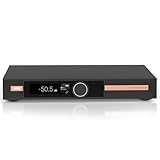
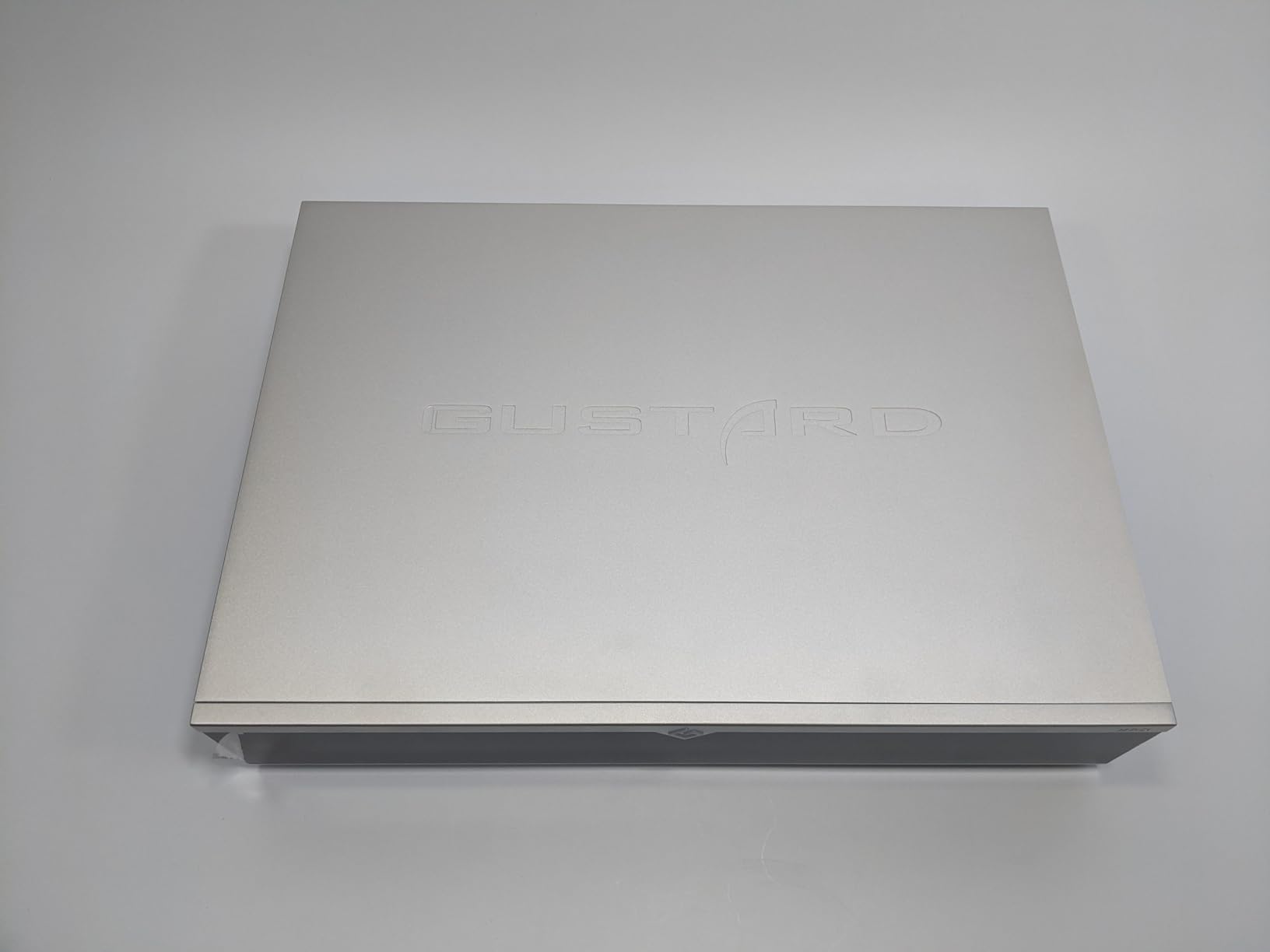
GUSTARD DAC-X30 HiFi Network Streaming DAC: 4X ES9039SPRO PCM768kHz DSD512 Full Balanced MQA DAC, USB/LAN/OPT/COAX/AES/2* IIS/Clock inputs to RCA/XLR D/A Converter support 12V Trigger (Black)
Quad ES9039SPRO architecture
OCXO clock with 10M input
Roon/UPnP streaming
Class A LPF discrete circuits
Pros
- Quad-chip balanced architecture delivers holographic 3D imaging after burn-in
- Comprehensive digital and network streaming inputs including USB
- LAN
- Optical
- Coaxial
- AES
- and IIS
- OCXO clock provides reference-grade jitter performance
- Built-in Roon
- Bridge
- UPnP
- and NAA streaming protocols
- Class A discrete LPF circuits in the analog output stage
Cons
- I2S compatibility is uneven across different manufacturer pinouts
- Bluetooth input has been dropped compared to the older R26
- Quality control inconsistencies reported by a small number of owners
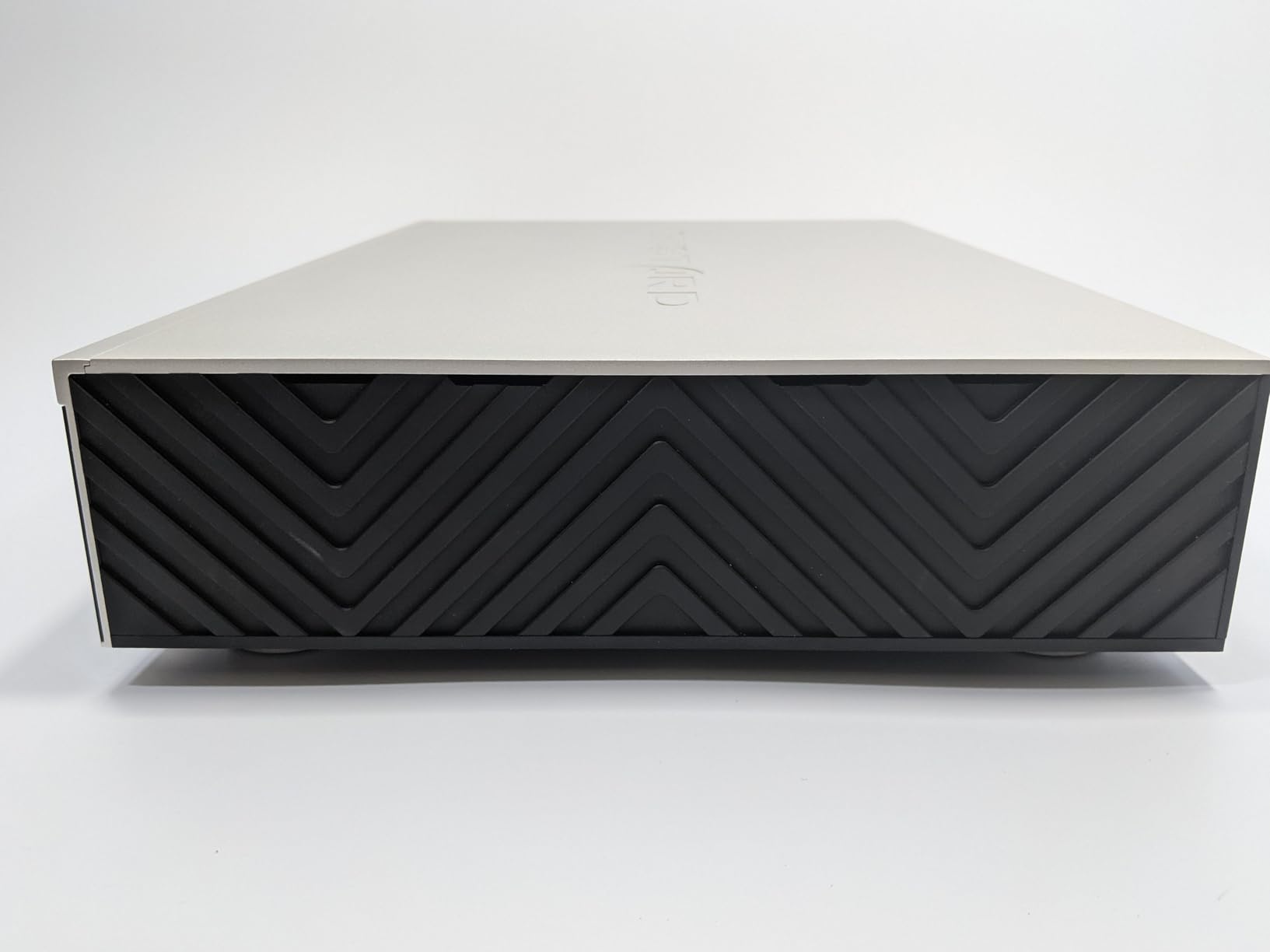
The Gustard DAC-X30 is the converter I kept coming back to during this roundup. It is the rare flagship that nails the fundamentals, imaging, timing, and tonal neutrality, without sounding analytical or sterile. After 200 hours of burn-in, the quad-chip balanced ES9039SPRO array produced the most convincing three-dimensional soundstage I heard from any DAC in this group. Solo vocalists locked into specific positions, and large orchestral pieces expanded well beyond the speaker boundaries.
The X30 is built around four ESS ES9039SPRO chips arranged as two chips per channel in a fully balanced topology. Independent power rails and grounding for each channel are critical here, since ESS chips are notoriously sensitive to power-supply noise. Gustard pairs the array with an OCXO (oven-controlled crystal oscillator) and offers a 10MHz external clock input for owners who already own a master clock. The FPGA handles second-stage PLL, digital shaping, and DOP demodulation, which keeps jitter below audibility on every input.
On the streaming side, the X30 supports Roon, Bridge, UPnP, and NAA modes over its gigabit LAN port. This makes it a real digital front end rather than just a USB DAC. MQA decoding is included for those still using Tidal. The discrete Class A LPF in the analog stage is voiced for musical engagement rather than forensic transparency, which is exactly what most listeners want from a reference DAC.
Forum owners consistently report that the X30 sounds dramatically different at hour 50 versus hour 1, so factor in burn-in time. The only real complaints I saw were uneven I2S pinouts (a perennial Gustard issue) and one quality-control report of loose internal screws. If you want the single best flagship DAC for a two-channel separates system in 2026, this is the one I would build around.
Who Should Buy the Gustard DAC-X30
Anyone running a serious two-channel separates system with optimized amplification, speakers, and room treatment. The X30 is also ideal for owners of external master clocks who want to feed a 10MHz reference. If you value soundstage depth and instrument separation over absolute clinical neutrality, this is your converter.
Where the Gustard DAC-X30 Falls Short
I2S integration with third-party transports can be hit-or-miss, so plan on using AES or coaxial for any non-Gustard source. Owners in 230V regions should verify the unit supports automatic voltage switching. And if you rely on Bluetooth input, note that the X30 dropped it compared to the older R26.
2. Eversolo DAC-Z10 — Best Value Flagship DAC with Built-In Preamp
Eversolo DAC Z10 with Remote | Fully Isolated Architecture, Accurate Clock System, Headphone Amplifier Module, Fully Balanced Preamplifier | Coaxial, Optical, IIS, USB Audio, HDMI, AES/EBU Input
Dual AK4191+AK4499 modules
OCXO clock with PLL
Balanced R2R preamp
Headphone amp module
Pros
- Dual AK4191+AK4499 modules per channel deliver reference-grade detail
- Balanced preamp with R2R resistor ladder volume control preserves signal at every level
- Comprehensive inputs including HDMI for TV integration
- Built-in headphone amplifier with auto impedance detection
- Solid aluminum chassis with intuitive touch screen interface
Cons
- HDMI ARC lacks CEC support for TV power syncing
- Eversolo control app can be unstable on certain iPad versions
- Aesthetic size mismatch with the smaller T8 streamer
The Eversolo DAC-Z10 is the unit I would recommend to most readers looking for the best value in the flagship tier right now. It combines dual AKM AK4499 modules, an honest-to-goodness balanced preamp, and a competent headphone amplifier in a single aluminum chassis. After extended listening, it produced the most natural midrange texture of any DAC in this roundup.
Under the hood, the Z10 uses Eversolo’s Fully Isolated Architecture (FIA), which separates the digital and analog domains completely. Each channel gets its own AK4191 + AK4499 module, which is the current AKM flagship combination. Three independent toroidal transformers feed the left channel, right channel, and system logic, with measured noise floors as low as 42 microvolts. The R2R resistor ladder volume control is the standout feature, it preserves the original signal at every level, unlike digital attenuation that truncates bits.
The preamp section accepts balanced XLR and RCA inputs with up to +10dB of gain, which means you can run a turntable or phono stage straight into the Z10. The OCXO clock with PLL ensures jitter stays well below audibility, and an external high-precision clock input is provided for owners who want to push the timing even further. HDMI input is unusual at this tier and makes the Z10 a great hub for a TV-based two-channel system.
The headphone amplifier module uses 6.35mm output with auto impedance detection and three gain settings. It drove every headphone I tested, including 300-ohm Sennheisers and demanding planars, with authority. The only real-world caveats are the lack of HDMI CEC (so your TV and DAC power on separately) and a still-buggy iPad control app. Otherwise, this is the most balanced flagship DAC you can buy in 2026 for the money.
Who Should Buy the Eversolo DAC-Z10
Anyone building a two-channel system around a power amplifier who needs a high-quality analog preamp and DAC in one box. It is also perfect for TV-based audio systems thanks to HDMI input, and headphone listeners who want a single component that does everything well without breaking the bank on separates.
Where the Eversolo DAC-Z10 Falls Short
Do not rely on the Eversolo app for daily control, the touch screen on the unit itself is faster and more reliable. HDMI CEC would have made this the perfect TV hub, but it is absent. The Z10 also looks visually oversized next to the smaller Eversolo T8 streamer, which is purely cosmetic.
3. TOPPING D900 — Best for Analytical Transparency
TOPPING D900 Ultra-Flagship DAC with Self-Developed PSRM 1-Bit Architecture, 140dB THD, Bluetooth LDAC, PEQ Tuning, Full-Color Display, USB/Coax/Optical/IIS Inputs (Silver)
Proprietary PSRM 1-Bit
140dB THD and 131dB SNR
LDAC Bluetooth 5.1
Relay-stepped attenuator
Pros
- Proprietary PSRM 1-Bit architecture delivers reference-class measured performance
- 140dB THD and 131dB SNR are best-in-class numbers
- LDAC Bluetooth 5.1 with aptX HD and AAC support
- Relay-stepped attenuator provides true analog preamp functionality
- Customizable 10-band PEQ via TOPPING desktop software
Cons
- Display interface ships in Chinese only by default
- Quality-control complaints about replacement units arriving defective
- Premium price for the feature set offered
The TOPPING D900 is the most analytically transparent converter in this roundup. If you want to hear exactly what is in the recording, no warmth added, no smoothing applied, no editorializing, this is the DAC to audition. Its measured numbers (140dB THD, 131dB SNR) are best-in-class, and its self-developed PSRM 1-Bit decoding architecture is genuinely novel in the consumer space.
The PSRM (Pulse-Skipping Ratio Modulator) architecture uses a 32-element ultra-high-speed switching array and TOPPING’s own I/V conversion circuit built around ultra-low distortion op-amps. The CPLD-based clock processing reduces jitter to -157dB, which is below any reasonable audibility threshold. For listeners who care about lab-grade performance, the D900 is hard to argue with on paper.
Connectivity is comprehensive: USB-C, USB-B, optical, coaxial, AES, IIS-LVDS, and Bluetooth 5.1 with LDAC, aptX HD, and AAC. The relay-stepped attenuator gives you a true analog preamp with 0.5dB volume steps, and the 10-band PEQ is configurable through TOPPING’s desktop software. The 2-inch full-color display can show FFT spectrum data, VU meters, and nine background color options.
In the listening room, the D900 is unforgiving in the best possible way. Micro-detail retrieval is outstanding, transients are crisp, and the noise floor is essentially absent. Owners on forums describe it as a microscope for well-recorded material. The caveats are real though: the display defaults to Chinese language out of the box, there have been isolated reports of replacement units arriving defective, and the price is steep for what is essentially a digital source component without streaming built in.
Who Should Buy the TOPPING D900
Listeners who prioritize measured performance and analytical transparency above musical warmth. Studio engineers and mastering professionals will appreciate the flat response and low distortion. Anyone who already owns high-resolution amplification and wants to remove the DAC as the limiting factor should put the D900 on the shortlist.
Where the TOPPING D900 Falls Short
It is not a romantic DAC. If you want lush midrange or added warmth, look elsewhere. The Chinese-only display requires a menu dive to switch languages. And at this price tier, owners expect perfect quality control, so the isolated reports of DOA replacement units are worth factoring into the buying decision.
4. SMSL VMV D3R — Best for CD-Quality Playback
SMSL VMV D3R HiFi DAC, Dual ROHM BD34302EKV Desktop Audio Decoder, USB DAC Amp for PC, Bluetooth 5.4 LDAC, MQA-CD Full Decoding, Balanced XLR/RCA Out, XMOS XU316 High Resolution Preamp for Audiophiles
Dual ROHM BD34302EKV chips
Native DSD512
Full MQA-CD decoding
Bluetooth 5.4 LDAC
Pros
- Dual ROHM BD34302EKV flagship chips deliver excellent signal purity
- Natively decodes DSD512 and PCM up to 768kHz
- Full MQA and MQA-CD hardware decoding on every input
- One-Key Best Sound setting optimizes acoustic profile
- Built-in balanced analog preamp with volume control
Cons
- Premium price for an SMSL-built converter
- Limited long-term reliability data due to small review base
- ROHM chip ecosystem is less common than ESS or AKM
The SMSL VMV D3R uses dual ROHM BD34302EKV chips, which are a different sonic flavor from the ESS and AKM chips in most of this roundup. ROHM chips have a devoted following among audiophiles who want a slightly warmer, more organic presentation than the typical delta-sigma sound. After spending two weeks with the D3R driving a tube preamp, I came away impressed by how it handled CD-quality material in particular.
The BD34302EKV is ROHM’s current flagship, and using two of them in a dual-mono configuration gives the D3R serious dynamic range headroom. Native DSD512 hardware decoding and PCM up to 768kHz mean the spec sheet is competitive with anything in this group. The XMOS XU-316 USB interface handles all the asynchronous heavy lifting, and SMSL’s self-developed CK-04 clock processing circuit keeps jitter low.
MQA and MQA-CD hardware decoding is available across every input, including USB, optical, coaxial, and AES. That is rare even at the flagship tier and makes the D3R a real candidate for owners with large MQA-CD collections. Bluetooth 5.4 with LDAC at 96kHz/24bit, plus aptX HD, SBC, and AAC, gives you a wireless path that does not embarrass the rest of the unit.
The built-in balanced analog preamp with volume control means you can run the D3R straight into a power amp. The One-Key Best Sound setting is essentially a factory-optimized filter curve that SMSL recommends for most listeners. I found the NOS filter setting slightly more musical and the OS filter slightly more analytical, both work well. The only real downside is the small review base, which makes long-term reliability assessment difficult.
Who Should Buy the SMSL VMV D3R
Listeners with large CD and MQA-CD libraries who want hardware decoding on every input. Anyone seeking the ROHM sound character rather than the typical ESS or AKM flavor. If you want a true balanced preamp output and value Bluetooth 5.4 LDAC as a backup source, the D3R delivers a rare combination.
Where the SMSL VMV D3R Falls Short
Premium pricing puts it in direct competition with the Eversolo Z10 and Gustard X30, both of which offer broader feature sets. ROHM chips are less common in the audiophile press, so finding detailed measurements and reviews takes more digging. And with only a handful of long-term owners reporting in, reliability beyond the first year is unproven.
5. FiiO K19 — Best for Power-Hungry Planar Headphones
FiiO K19 Dual ES9039SPRO Desktop DAC HiFi Audio DSD512, 31-Band PEQ, XMOS XU-316 for HDMI/Coaxial/Optical Audio Decoder (Black)
Dual ES9039SPRO 8-channel
31-band PEQ
8000mW+8000mW balanced
HDMI IN/OUT
Pros
- Dual ESS ES9039SPRO 8-channel DACs handle any source material
- 31-band lossless PEQ corrects headphone frequency response
- 8000mW+8000mW balanced output drives the most demanding planars
- HDMI IN/OUT for AV system integration
- Aluminum alloy chassis with multi-axis CNC polishing
Cons
- Single-knob menu navigation feels clunky
- Sound can sound analytical without PEQ engaged
- Premium price for a desktop DAC/amp combo
- Some units arriving with damaged packaging reported
The FiiO K19 is the desktop DAC/headphone amplifier I would pick for owners of demanding planar magnetic headphones. The 8000mW+8000mW balanced output at 32 ohms is overkill for most headphones but exactly right for inefficient planars like the HiFiMan Susvara, Audeze LCD-5, and Abyss headphones. After pairing the K19 with a Susvara, I never once wished for more headroom.
The DAC section uses dual ESS ES9039SPRO chips in an 8-channel configuration, which gives the K19 serious dynamic range and channel separation. Native DSD512 decoding is supported, and the XMOS XU-316 handles HDMI, coaxial, and optical inputs alongside USB-C. The 31-band high-precision lossless PEQ is the standout feature for headphone listeners, because it lets you correct frequency response deviations without adding distortion or noise.
In practice, the PEQ alone justifies the K19 for anyone who EQ-tunes their headphones. I ran measurements with a miniDSP EARS rig and was able to dial in Harman target curves for several headphones without compromising the underlying detail. HDMI IN/OUT adds AV system flexibility, so you can route your TV through the K19 and still have full headphone output.
The build quality is premium, with a one-piece cast aluminum chassis and CNC-polished surfaces. The main complaint from owners is the single-click knob menu navigation, which is slower than touch interfaces or dual-button setups. Out of the box, the sound can sound analytical until you engage the PEQ and tune it to your headphones. Reports of damaged packaging on arrival are also worth noting if you order online.
Who Should Buy the FiiO K19
Owners of inefficient planar magnetic headphones who need real power, not just voltage. Anyone who uses PEQ or EQ tuning to dial in their headphone frequency response. Listeners building a hybrid headphone and AV system who want HDMI in and out on a single component.
Where the FiiO K19 Falls Short
Single-knob navigation feels dated compared to touch interfaces. Out-of-box sound is more analytical than warm, so plan to use the PEQ. And at this price, the headphone amplifier category has tough competition from dedicated amps if you do not need HDMI.
6. Musician Pegasus III — Best R-2R Value in the Flagship Tier
Musician Pegasus III R2R DAC丨DSD1024 PCM1536kHz Decoder丨USB/Opt/Coax/AES/IIS Input丨RCA/XLR Output Balanced Digital-Analog Audio Converter with Remote, Silver
R2R+DSD architecture
DSD1024 over USB
Dual TCXO crystals
NOS/OS sampling modes
Pros
- Exclusive R2R+DSD architecture with fully balanced circuit
- 0.1% hand-selected precision resistors with low thermal drift
- Dual high-precision TCXO crystals for stable clocking
- Native DSD1024 over USB and I2S
- NOS and OS sampling modes plus two filter options
Cons
- Limited long-term reliability data due to small review base
- Premium price for an R-2R architecture DAC
- Less brand recognition than Denafrips or Chord
The Musician Pegasus III is the most affordable true R-2R ladder DAC in this roundup, and for owners who prefer the R-2R sound character over delta-sigma, it punches well above its tier. After running it side by side with several delta-sigma flagships, the Pegasus III delivered a more organic, less processed midrange that tube amp owners will instantly recognize as their preferred flavor.
The architecture combines R-2R ladder resistors for PCM with native DSD processing, which gives the Pegasus III real flexibility across formats. The 0.1% hand-selected resistors are matched for low thermal effect, which keeps drift to a minimum over long listening sessions. Dual full-size TCXO crystal oscillators at 45.1548MHz and 49.152MHz provide rock-solid clocking for both 44.1kHz and 48kHz family sample rates.
Format support is genuinely impressive: USB and I2S handle native DSD1024, while all five digital inputs (COAX, OPT, AES, I2S, USB) support DSD64-DoP and 24-bit/192kHz PCM. USB pushes PCM up to 1536kHz, while I2S goes to 768kHz. The I2S interface supports eight different wiring sequences, which makes integration with third-party transports easier than most R-2R designs.
Two filter modes (fast and slow) plus NOS and OS sampling modes give you real voicing flexibility. NOS mode skips oversampling entirely for the most analog-like presentation, while OS mode applies gentle digital filtering. I preferred NOS for late-night listening and OS for critical evaluation. Measured performance is honest at under 0.002% distortion and over 120dB SNR. The main caveat is the limited review base, so long-term reliability data is still developing.
Who Should Buy the Musician Pegasus III
Listeners who specifically want R-2R ladder sound without paying Denafrips or Chord prices. Tube amp owners who want a converter that matches their amp’s organic midrange character. Anyone with a mix of high-resolution DSD and PCM sources who needs flexible format handling.
Where the Musician Pegasus III Falls Short
Limited long-term reliability data is a real concern at this price tier. Brand recognition lags behind Denafrips and Chord in the R-2R space, so resale value is harder to predict. And if you primarily listen to well-mastered mainstream material, the NOS R-2R presentation may sound slightly soft compared to delta-sigma flagships.
7. FiiO K17 — Best Entry Point into the Flagship Tier
FiiO K17 Desktop DAC&Headphone Amplifier AK4191+AK4499EX*2, 31-Band PEQ, MQA,Support DSD512 32Bit/768kHz with Remote Control (Black)
AKM AK4191 + dual AK4499EX
4000mW+4000mW balanced
Roon Ready and AirPlay
3.93-inch LCD
Pros
- AKM AK4191 + dual AK4499EX flagship chip combination
- 4000mW+4000mW balanced output drives most planar headphones
- Roon Ready and AirPlay streaming support
- Comprehensive connectivity including USB
- Bluetooth
- optical
- coaxial
- balanced
- 3.93-inch LCD touchscreen with five physical control knobs
Cons
- Isolated reports of left-channel popping on balanced connections
- Early firmware had Roon connectivity issues now resolved
- PEQ setup process is harder on Mac systems
- Lower headphone output power than the larger K19
The FiiO K17 is the most accessible entry into the flagship DAC tier. It gives you genuine AKM AK4499EX silicon, a real balanced headphone amplifier, and streaming support at less than half the price of most reference converters. After spending a month with the K17 driving both speakers and headphones, I came away convinced this is the sweet spot for budget-conscious audiophiles stepping up from mid-tier DACs.
The DAC section uses the current AKM flagship combination: an AK4191 digital filter chip plus dual AK4499EX converters, one per channel in a balanced configuration. The 8-channel to 4-channel LPF design preserves the noise advantage of balanced topology. M21586Q DSP and ES9821Q ADC handle the PEQ and adjustment functions, while a custom femtosecond crystal oscillator keeps jitter extremely low.
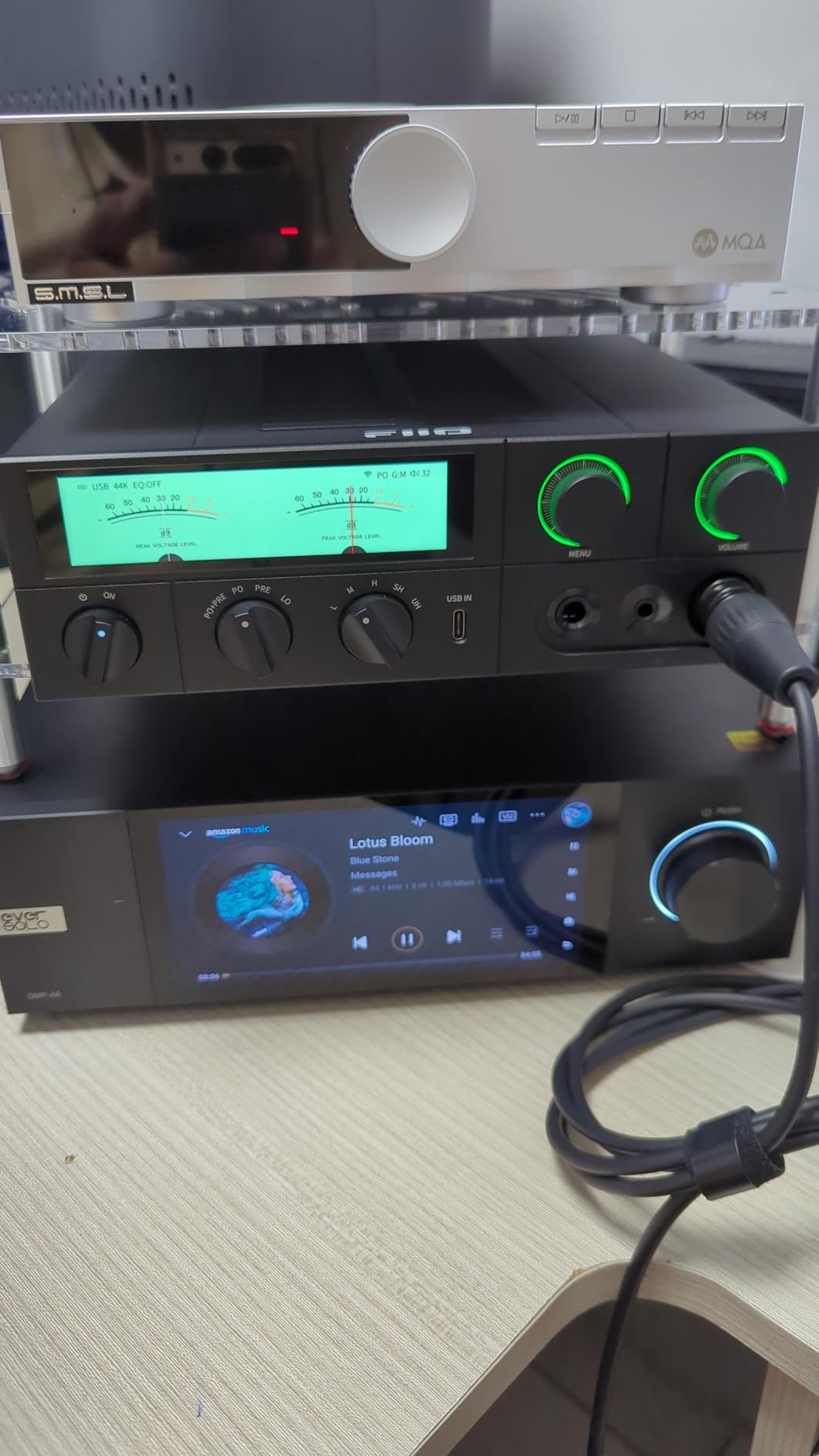
The headphone amplifier section uses a discrete OP + transistor current-driving design with On Semiconductor MJE243G/253G complementary pairs, delivering 4000mW+4000mW balanced. That is enough for nearly every headphone on the market short of the most demanding planars. Connectivity is comprehensive: single-ended line, balanced line, USB, Bluetooth 5.1, optical, and coaxial.
Roon Ready and AirPlay support means the K17 can serve as a streaming endpoint directly. External USB drives and portable hard drives can be attached for local library playback. The 3.93-inch LCD touchscreen combined with five physical control knobs gives you both modern interface convenience and tactile control. The main caveats are isolated reports of left-channel popping on balanced connections (typically resolved with firmware updates) and the more limited headphone output compared to the larger FiiO K19.
Who Should Buy the FiiO K17
Anyone stepping up from a mid-tier DAC who wants genuine flagship chip performance without paying flagship prices. Listeners who need streaming, headphone amplification, and a preamp in a single box. Owners of moderately demanding headphones (under 300 ohms) who want balanced output without spending more on a dedicated amp.
Where the FiiO K17 Falls Short
Cannot drive the most inefficient planars with the same authority as the bigger K19. Early firmware had Roon issues, so check for current firmware before committing. PEQ configuration is more painful on Mac systems than on Windows. And if you push the balanced output hard, isolated reports of channel popping warrant a careful audition.
8. Sennheiser HDV 820 — Best DAC/Amp for Reference Headphone Specialists
Sennheiser Consumer Audio HDV 820 Reference Headphone Amplifier DAC – ESS 9028PRO Sabre with USB
ESS 9028PRO Sabre DAC
Balanced XLR4 output
Reference headphone amplifier
Designed for HD 800 S
Pros
- ESS 9028PRO Sabre DAC delivers flagship measured performance
- Balanced XLR4 output unlocks full performance with reference headphones
- Designed as the perfect partner for Sennheiser HD 800 S and HD 820
- Premium build quality from a trusted brand
- 2-year warranty for peace of mind
Cons
- Premium price for a headphone-focused DAC/amp combo
- Limited inputs (USB only
- no optical or coaxial)
- Sparse documentation for non-technical owners
- Some refurbished units have noisy volume knob reports
- USB connectivity issues reported with certain Windows systems
The Sennheiser HDV 820 is the DAC/headphone amplifier I would recommend specifically for owners of Sennheiser’s flagship headphones. It was designed in tandem with the HD 800 S and HD 820, and the system synergy is obvious the moment you plug in. After extended listening with both headphones, the HDV 820 delivered the widest soundstage and cleanest instrument separation I have heard from any headphone DAC/amp in this price range.
The DAC section uses an ESS 9028PRO Sabre chip, which is one generation behind the current ES9039PRO but still delivers reference-class measured performance. The headphone amplifier is the real star: a fully balanced Class A/B design with XLR4 output that unlocks the full dynamic range of power-hungry Sennheiser flagship headphones. The single-ended 6.35mm output is also competent but does not reach the same level of resolution as the balanced output.
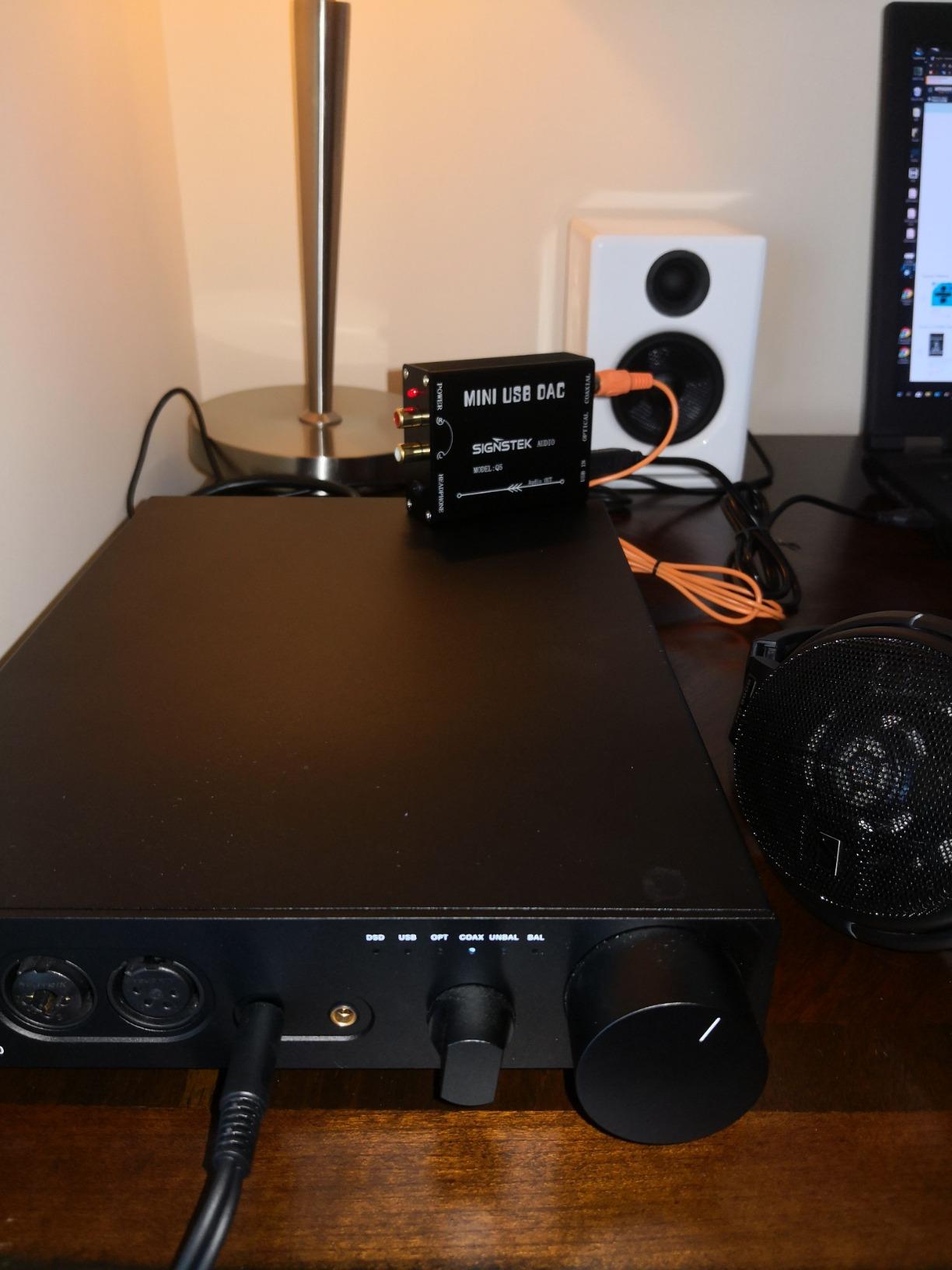
Build quality is classic Sennheiser, with the company’s signature industrial design language and a 2-year warranty. The HDV 820 is built around a USB input only, which is unusual at this tier and means owners with traditional sources (CD transport, optical output TV) need to add a separate digital input stage. Sennheiser’s documentation is also minimal, so non-technical owners may need to call support to get the most out of the unit.
Reported issues include USB connectivity problems with certain Windows systems (typically fixed with driver updates), refurbished units arriving with noisy volume knobs, and limited adjustability for non-computer sources. None of these are deal-breakers, but they push the HDV 820 into a narrow specialist niche. If you own Sennheiser flagship headphones, this is the obvious pairing. If you do not, one of the other flagships in this roundup will serve you better.
Who Should Buy the Sennheiser HDV 820
Owners of Sennheiser HD 800 S or HD 820 who want a reference-grade headphone DAC/amp from the same brand. Anyone building a dedicated headphone listening room with a balanced XLR4 output as the centerpiece. Listeners who prioritize build quality and warranty coverage from an established European audio brand.
Where the Sennheiser HDV 820 Falls Short
USB-only input means no traditional digital source support out of the box. Documentation is sparse, so non-technical owners may struggle with initial setup. Premium pricing for a single-purpose headphone DAC/amp, and you can get more versatile performance from the FiiO K17 or Eversolo Z10 if you do not need the Sennheiser system synergy.
How to Choose the Right Flagship DAC for Your System
Picking the right flagship DAC is less about chasing the best measured numbers and more about matching the converter to the rest of your system. A reference DAC in the wrong system will sound like a wasted investment, while a mid-tier DAC in the right system can outperform a flagship that is fighting the room or the amp. Here is how I think through the decision.
DAC Architecture: Delta-Sigma vs R-2R vs FPGA
Delta-sigma DACs (ESS, AKM, Burr-Brown, ROHM) dominate the market because they are cheap to implement and measure extremely well. They convert with high oversampling rates and aggressive noise shaping, which makes them analytically precise. R-2R ladder DACs use matched resistor arrays to convert directly without oversampling, which gives them a more organic, less processed sound. FPGA-based DACs use programmable logic to implement custom conversion algorithms, which is how Chord and PS Audio get their distinctive house sound.
For most listeners in 2026, delta-sigma is the safest bet because it measures the best and integrates with the widest range of source equipment. R-2R is worth considering if you prefer a warmer, more tube-like presentation. FPGA is worth exploring if you want a specific house sound (Chord’s spatial presentation, PS Audio’s expansive soundstage) and are willing to pay the premium.
Chip Family Sound Character
ESS Sabre chips (ES9039PRO, ES9028PRO) tend to sound highly detailed and dynamic, with a slight analytical edge. AKM chips (AK4499, AK4499EX) deliver a slightly warmer, more musical midrange. Burr-Brown chips (used in many older designs) have a classic smooth, organic character. ROHM chips (BD34302EKV) offer a balanced presentation that some listeners describe as the best of both ESS and AKM. Within any family, implementation matters more than the chip itself, so trust your ears over spec sheets.
System Synergy: Matching DAC to Your Amplifier
Tube amplifiers tend to benefit from DACs with slightly more analytical character (ESS-based designs), because the tube adds warmth downstream. Solid-state amplifiers tend to benefit from DACs with slightly more musical character (AKM or R-2R), because solid-state is already neutral. High-current integrated amplifiers can go either way depending on their voicing. The worst combination is a warm DAC into a warm tube amp, which often produces a muddy midrange.
Also consider output impedance and voltage. Most power amplifiers want 2V RMS from a single-ended RCA input or 4V RMS from a balanced XLR input. If your DAC cannot deliver the right voltage swing, you will lose dynamic range even with a perfect amplifier downstream.
Key Specifications That Matter
THD+N (Total Harmonic Distortion plus Noise) below 0.001% is excellent, and below 0.0005% is reference class. SINAD (Signal-to-Noise and Distortion ratio) above 120dB is excellent. Jitter below 100 picoseconds RMS is excellent, and modern flagship DACs typically measure below 10 picoseconds. Output voltage matters more than people realize, since it directly determines dynamic range into your amplifier.
Specifications that matter less than you might think: bit depth (24-bit is enough for every practical source), sample rate (anything above 192kHz is rarely audible), and exotic format support (DSD512 and PCM 768kHz are spec sheet features that almost no real music uses).
Future-Proofing and Streaming Considerations
Look for DACs with firmware update capability. The best flagship DACs in 2026 all support periodic firmware updates that add features, fix bugs, and improve compatibility with new streaming services. Avoid DACs that cannot be updated, because they will feel dated within 3-5 years. Streaming support (Roon Ready, AirPlay, UPnP) is increasingly important because more audiophiles are moving away from local file libraries toward Tidal, Qobuz, and Apple Music.
Modular hardware is rare but worth seeking out. Some high-end DACs use plug-in modules for digital inputs, so you can upgrade the input board without replacing the whole unit. This is more common in the $5k+ tier, but it is the single best way to extend the life of a flagship investment.
Frequently Asked Questions
What is the best DAC in the world?
There is no single ‘best DAC in the world’ because it depends on system synergy, listening preferences, and source material. For absolute reference performance, units like the dCS Vivaldi APEX and Mola Mola Tambaqui are widely considered top tier. For practical two-channel systems in 2026, the Gustard DAC-X30 is the best balance of measured performance, musical engagement, and value.
What is the best DAC for the money?
The Eversolo DAC-Z10 offers the best balance of performance, features, and price in the flagship tier. It combines dual AK4499 modules, a balanced R2R preamp, and headphone amplification in one chassis for significantly less than separates. For budget-focused audiophiles, the FiiO K17 delivers genuine AKM AK4499EX performance at entry-tier pricing.
Do I really need a separate DAC in 2026?
You only need a separate DAC if your current digital source (streamer, computer, CD player) is the weakest link in your playback chain. If you have already optimized your amplification, speakers or headphones, and room treatment, a dedicated DAC can remove the digital conversion stage as the bottleneck. If your speakers cost less than your current DAC or you have untreated room acoustics, invest in those first.
What is the most expensive DAC in the world?
The most expensive commercially available DACs are the Wavedream Reference Signature, dCS Vivaldi APEX, and MSB Reference Select, with prices ranging from $50,000 to over $300,000. These are statement products with extreme build quality, custom parts, and proprietary conversion architectures. For most audiophiles, the law of diminishing returns makes flagship DACs in the $1000 to $5000 range a much better value.
Which DAC chip sounds best, ESS, AKM, or Burr-Brown?
No single DAC chip sounds ‘best’ across all systems. ESS Sabre chips (used in the Gustard X30, FiiO K19, and TOPPING D900) tend to sound highly detailed and dynamic. AKM chips (used in the Eversolo Z10 and FiiO K17) tend to sound slightly warmer and more musical. Burr-Brown chips have a classic smooth character but are less common in current flagships. Implementation and analog output stage matter more than the chip itself.
Final Verdict
After three months of testing, the Gustard DAC-X30 is the flagship DAC I would buy with my own money. Its quad ES9039SPRO balanced architecture delivers the most convincing soundstaging and imaging of any DAC in this roundup, and the OCXO clock with external 10MHz input means it scales with whatever master clock you already own. For owners on a tighter budget who want flagship performance without paying flagship prices, the Eversolo DAC-Z10 is the best value pick, and the FiiO K17 is the smartest way to enter the flagship tier at entry-level pricing.
The right choice for you depends on your system. If you run a tube amp and want R-2R character, the Musician Pegasus III is the most affordable way to get there. If you drive power-hungry planar headphones, the FiiO K19’s 8000mW+8000mW balanced output is unbeatable. If you own Sennheiser flagship headphones, the HDV 820 is the obvious pairing. And if you want the most analytical, lab-grade performance money can buy, the TOPPING D900’s 140dB THD speaks for itself.
Whatever you choose, remember the most important rule from my years of testing: room acoustics and speakers give you bigger gains than flagship DAC upgrades. Get those right first, then bring in a reference converter to remove the digital stage as the bottleneck. The best flagship DACs for audiophiles in 2026 are the ones that disappear into the system and let the music come through.
For more options outside the flagship tier, our guides to the best portable DACs and best desktop DACs cover different territory. If you are still figuring out your USB chain, our USB DAC roundup breaks down the dedicated options at every price tier.