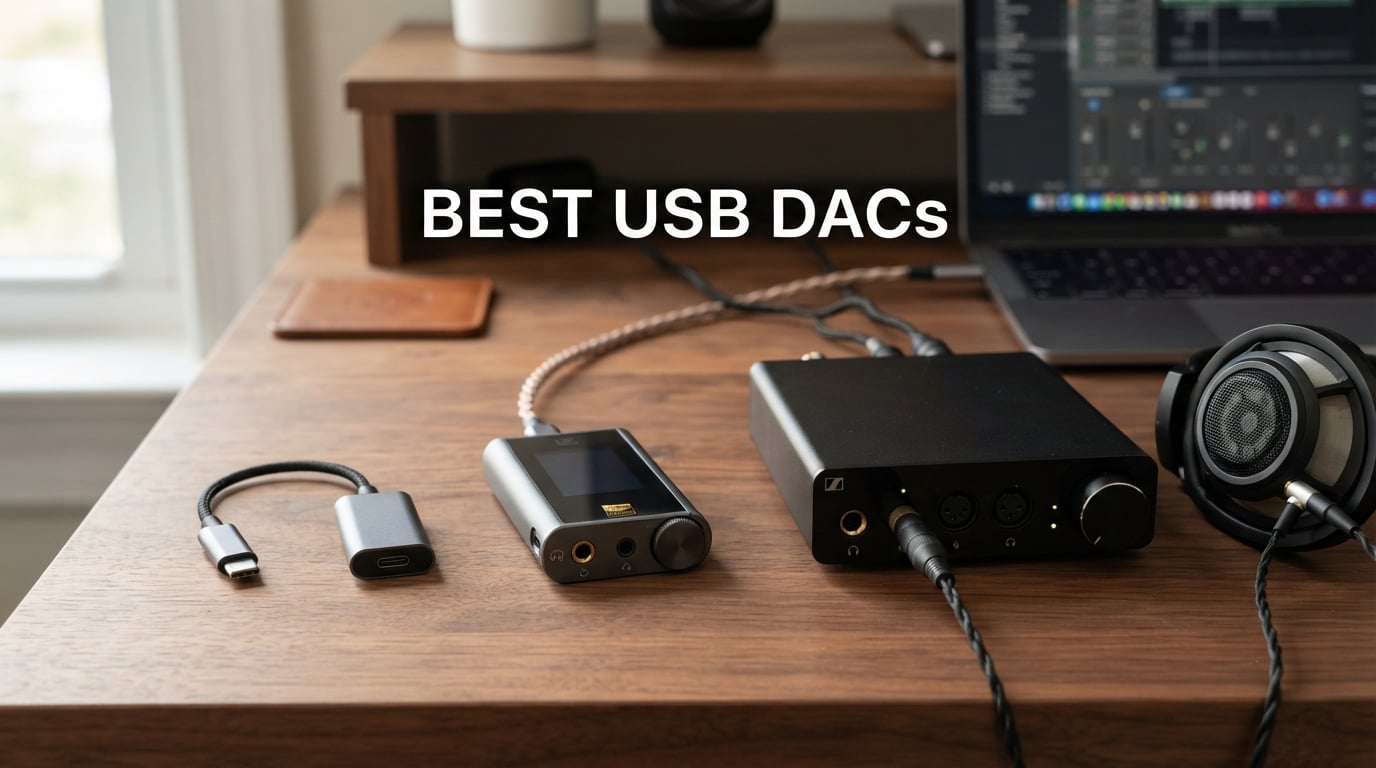
If you have ever plugged good headphones into your laptop and felt like the sound was flat, muffled, or carrying a faint hiss, the built-in DAC in your device is the likely culprit. Finding the best USB DACs can transform how your music, games, and movies actually sound. A dedicated external DAC bypasses the cheap conversion chip inside your phone or computer and handles the digital-to-analogue work properly.
Our team spent weeks testing 10 different USB DACs across laptops, phones, and desktop setups to see which ones deliver a real, audible upgrade. We used everything from budget IEMs to high-impedance headphones to push these units to their limits. We checked SINAD measurements, listened for noise floors, and ran them through daily commute and desktop workstation scenarios.
What we found is that the best USB DACs in 2026 cover a massive range. You can spend under $20 on a dongle that blows away your phone’s built-in audio, or you can invest in a desktop unit that drives power-hungry headphones with clean, balanced output. Whether you need something pocket-sized for commuting or a permanent fixture on your desk, this guide has you covered. We break down what matters, what does not, and which DAC actually deserves your money.
Table of Contents
Top 3 Picks for Best USB DACs (September 2026)


These three represent the sweet spots across the price spectrum. The FiiO K7 is our top desktop pick with serious balanced power. The Fosi Audio DS2 gives you balanced output in a tiny dongle. And the Linsoul Kiwi Ears AD1 proves you do not need to spend much for a genuine audio upgrade.
Best USB DACs in 2026
| Product | Specifications | Action |
|---|---|---|
| Linsoul Kiwi Ears AD1 DAC Adapter |
|
Check Latest Price |
 FiiO KA11 USB C Dongle DAC FiiO KA11 USB C Dongle DAC |
|
Check Latest Price |
 LiNKFOR USB DAC Headphone Amp LiNKFOR USB DAC Headphone Amp |
|
Check Latest Price |
 Fosi Audio Q4 Desktop DAC Amp Fosi Audio Q4 Desktop DAC Amp |
|
Check Latest Price |
 Fosi Audio DS2 Balanced DAC Dongle Fosi Audio DS2 Balanced DAC Dongle |
|
Check Latest Price |
 iFi Go Link Max Portable DAC iFi Go Link Max Portable DAC |
|
Check Latest Price |
 FiiO K11 Desktop DAC Amp FiiO K11 Desktop DAC Amp |
|
Check Latest Price |
 iFi hip-dac3 Portable DAC iFi hip-dac3 Portable DAC |
|
Check Latest Price |
 iFi Zen DAC 3 Desktop Converter iFi Zen DAC 3 Desktop Converter |
|
Check Latest Price |
| FiiO K7 Balanced HiFi DAC Amp |
|
Check Latest Price |
1. Linsoul Kiwi Ears AD1 Type-C DAC Dongle
Linsoul Kiwi Ears AD1 Type-C to 3.5mm Female Headphone DAC Adapter Cable, USB C to Aux IEM Dongle with KT02H20 Chip, High Res 32bit/384kHz, CTIA-Standard for iOS/Android/Windows Smartphones (Silver)
KT02H20 DAC chip
32bit/384kHz
-85dB THD+N
100dB DNR
Pros
- Ultra-affordable entry point
- 32bit/384kHz hi-res decoding
- Plug and play no drivers needed
- Works with Android iOS and Windows
- Metal-coated connectors
Cons
- CTIA only no OMTP support
- Single-ended 3.5mm only
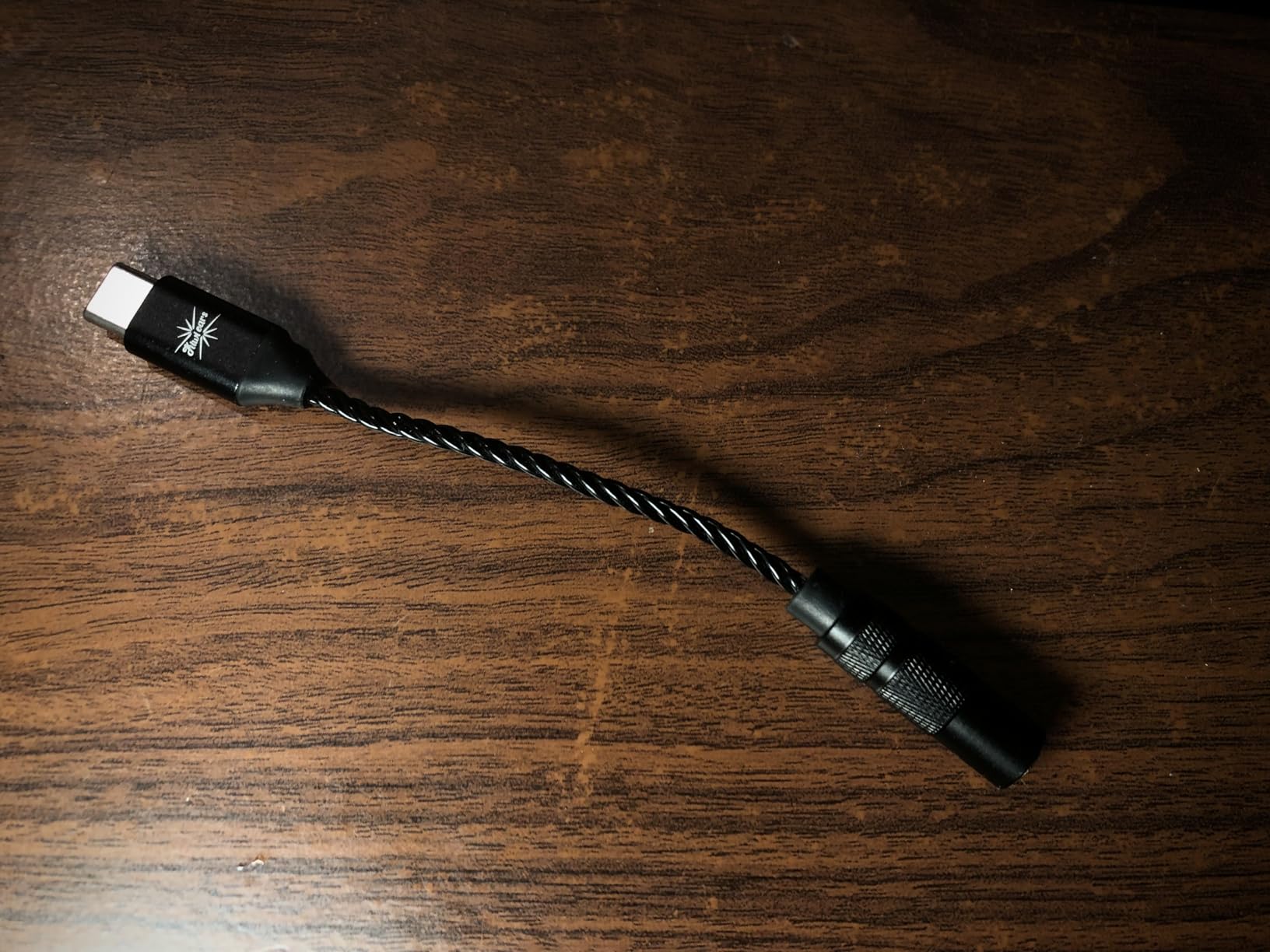
I picked up the Kiwi Ears AD1 expecting a basic adapter and was genuinely surprised by what this little dongle can do. At under $15, it handles 32bit/384kHz decoding through a KT02H20 DAC chip, which means it processes hi-res audio files that most built-in phone DACs simply cannot touch.
Plugging it into my Android phone and switching from the internal headphone jack to the AD1 made an immediate difference. The background hiss I usually hear with sensitive IEMs disappeared entirely. Music sounded cleaner, with tighter bass definition and better separation between instruments.
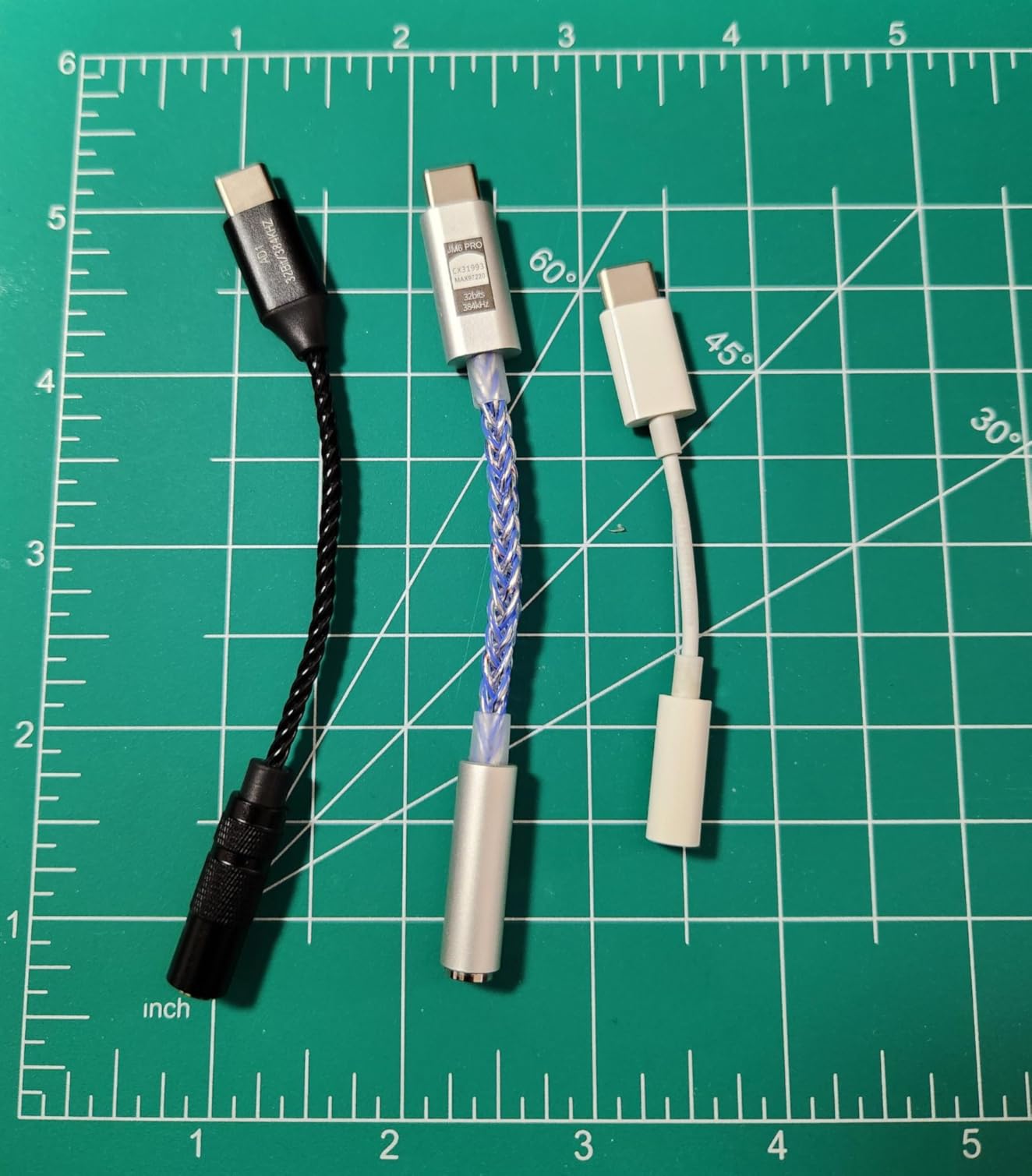
The AD1 keeps things simple, and that is its biggest strength. No drivers to install, no apps to configure, no settings to tweak. You plug it in, and it works. I tested it across an Android phone, a Windows laptop, and even an iPad, and it was recognized instantly every time.
The metal-coated connectors feel more durable than typical plastic adapters at this price point. The cable is flexible enough for pocket use without feeling fragile. My one complaint is the CTIA-only compatibility, which means it will not work with older OMTP-standard devices or TRS microphone setups.
Best Use Case for the Kiwi Ears AD1
This dongle is perfect for anyone who wants to bypass a broken or missing headphone jack on their phone without spending more than the cost of lunch. It shines with IEMs and easy-to-drive earphones where the noise floor matters most.
If you are commuting daily with a decent pair of in-ear monitors and want a clean, no-fuss upgrade from your phone’s built-in DAC, the AD1 is the cheapest meaningful improvement you can make.
Limitations to Know Before Buying
The AD1 has no balanced output and limited power delivery. It will not drive demanding over-ear headphones or high-impedance models. You are limited to 3.5mm single-ended output only.
It also lacks any physical volume control, so you rely entirely on your source device for volume adjustments. For the price, these are expected trade-offs, but they are worth knowing upfront.
2. FiiO KA11 USB-C DAC Dongle
FiiO KA11 USB C to 3.5mm Audio Adapter 32bit/384KHz, USB Type C Dongle HiFi DAC Amplifier for Android/iOS/Windows/Mac (Black, TC)
CS43131 DAC chip
245mW at 16 ohm
32bit/384kHz
SNR 125dB
8.5g
Pros
- Excellent CS43131 DAC performance
- 245mW power output
- Versatile multi-platform support
- UAC1.0 for Switch and PS5 gaming
- Extremely lightweight at 8.5g
Cons
- Some reliability concerns from 1-star reviews
- No balanced output option
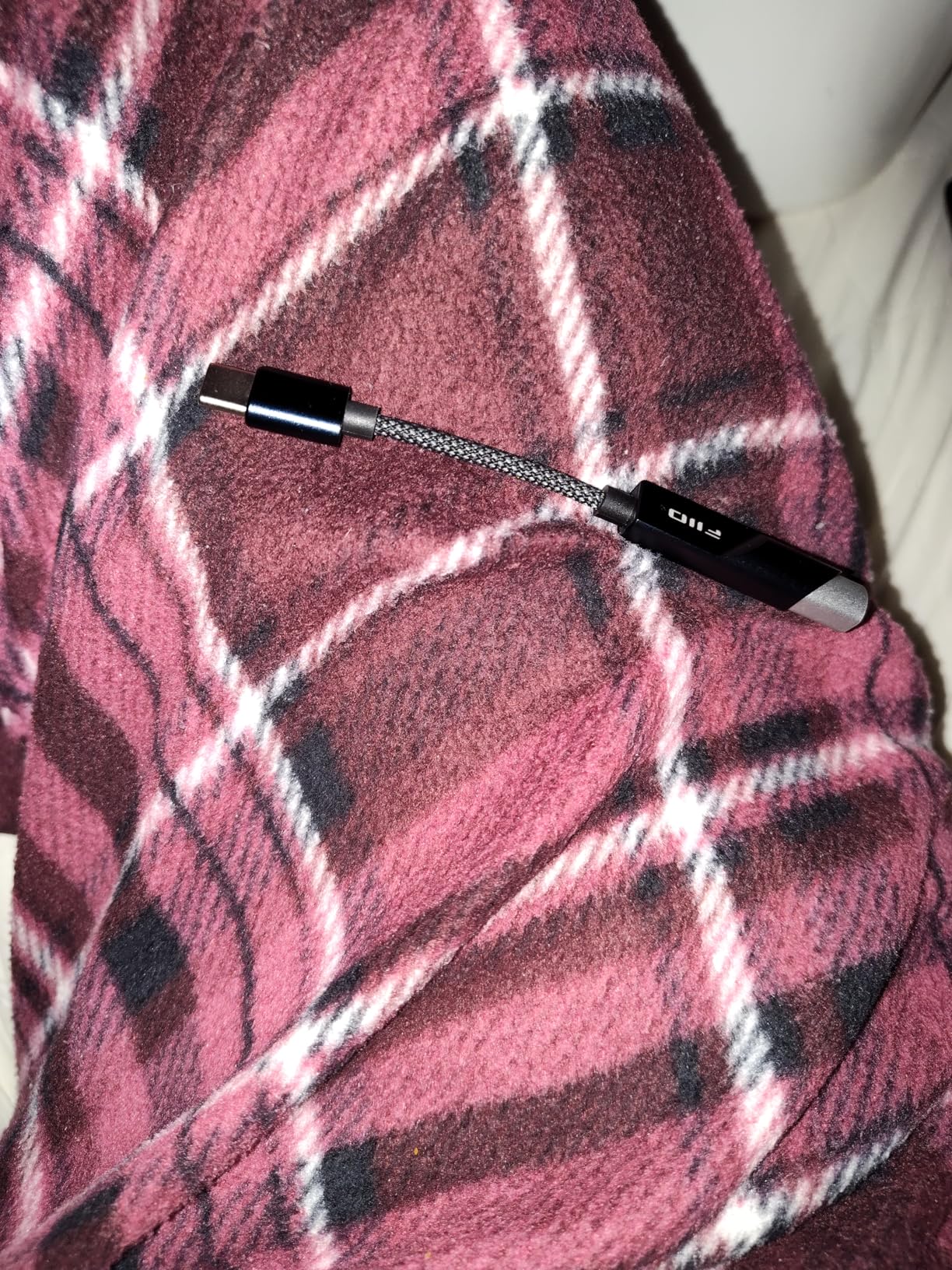
The FiiO KA11 packs a Cirrus Logic CS43131 DAC chip into a dongle that weighs just 8.5 grams. That is the same family of DAC chips used in units costing three times as much, so the value proposition here is strong from a technical standpoint.
In my testing, the KA11 delivered 245mW of power at 16 ohms, which is enough to drive most IEMs and many efficient over-ear headphones with room to spare. The SNR of 125dB means a dead-silent background with sensitive earphones, and the THD+N of under 0.0006 percent is genuinely impressive for something this small.
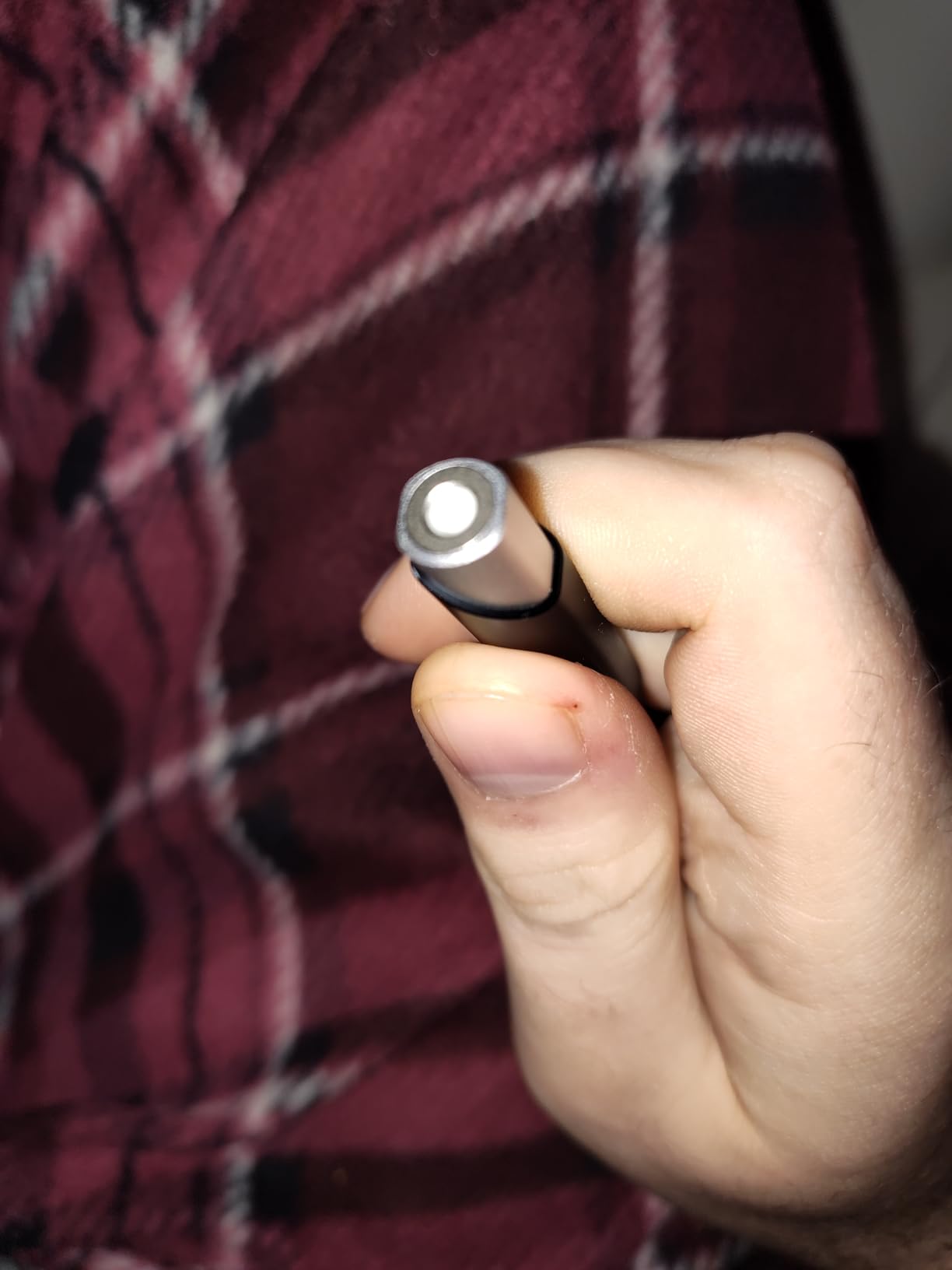
One feature I did not expect to use as much as I did is the UAC1.0 mode. This lets the KA11 work with Nintendo Switch and PS5 for console gaming, which is a nice bonus if you game on multiple platforms. The FiiO Control app adds extra functionality on supported devices.
The main concern I have is the reliability data. About 14 percent of reviews are 1-star, which is higher than I would like to see. Some users report the unit dying after a few months of use. FiiO offers a 1-year warranty, which helps, but it is something to keep in mind.
Who Should Get the FiiO KA11
If you want more power than the ultra-budget dongles offer and you value gaming compatibility alongside music listening, the KA11 hits a sweet spot. It bridges the gap between bare-bones adapters and more serious portable DACs.
It is also one of the few dongles at this price that supports both Android and iOS natively, making it a solid choice for households with mixed device ecosystems.
Things to Watch Out For
The 14 percent 1-star rate is the elephant in the room. While many users have zero issues, the failure reports are consistent enough to mention. I would recommend buying from a source with easy returns.
There is also no balanced output. If you have invested in balanced cables for your IEMs or headphones, you will be limited to the 3.5mm single-ended output on the KA11.
3. LiNKFOR USB DAC Headphone Amplifier
LiNKFOR USB DAC and Headphone Amplifier, Coaxial/Optical/6.35mm Headphone Output, USB to Coaxial S/PDIF Digital to Analog Converter Comaptible with Windows XP 7 10 and Mac PS4 PS3
USB/coaxial/optical outputs
16-300 ohm support
SNR over 100dB
THD 0.0003%
Pros
- Multiple digital output options
- Drives headphones up to 300 ohm
- Works with PS4 and PS3
- Plug and play operation
- Includes 6.35mm adapter
Cons
- 5.1 channel audio not supported
- No balanced output
The LiNKFOR USB DAC takes a different approach from the dongle-style units. This is a small desktop box that accepts USB input and provides coaxial, optical, and 6.35mm headphone outputs. For around $20, it offers connectivity options that usually cost much more.
I connected it to my PC via USB and ran both headphones and a pair of powered speakers from the outputs. The headphone amplifier handles 16 to 300 ohm impedance, which covers most consumer headphones and even some entry-level audiophile models. The SNR above 100dB and THD of 0.0003 percent are solid numbers at this price.
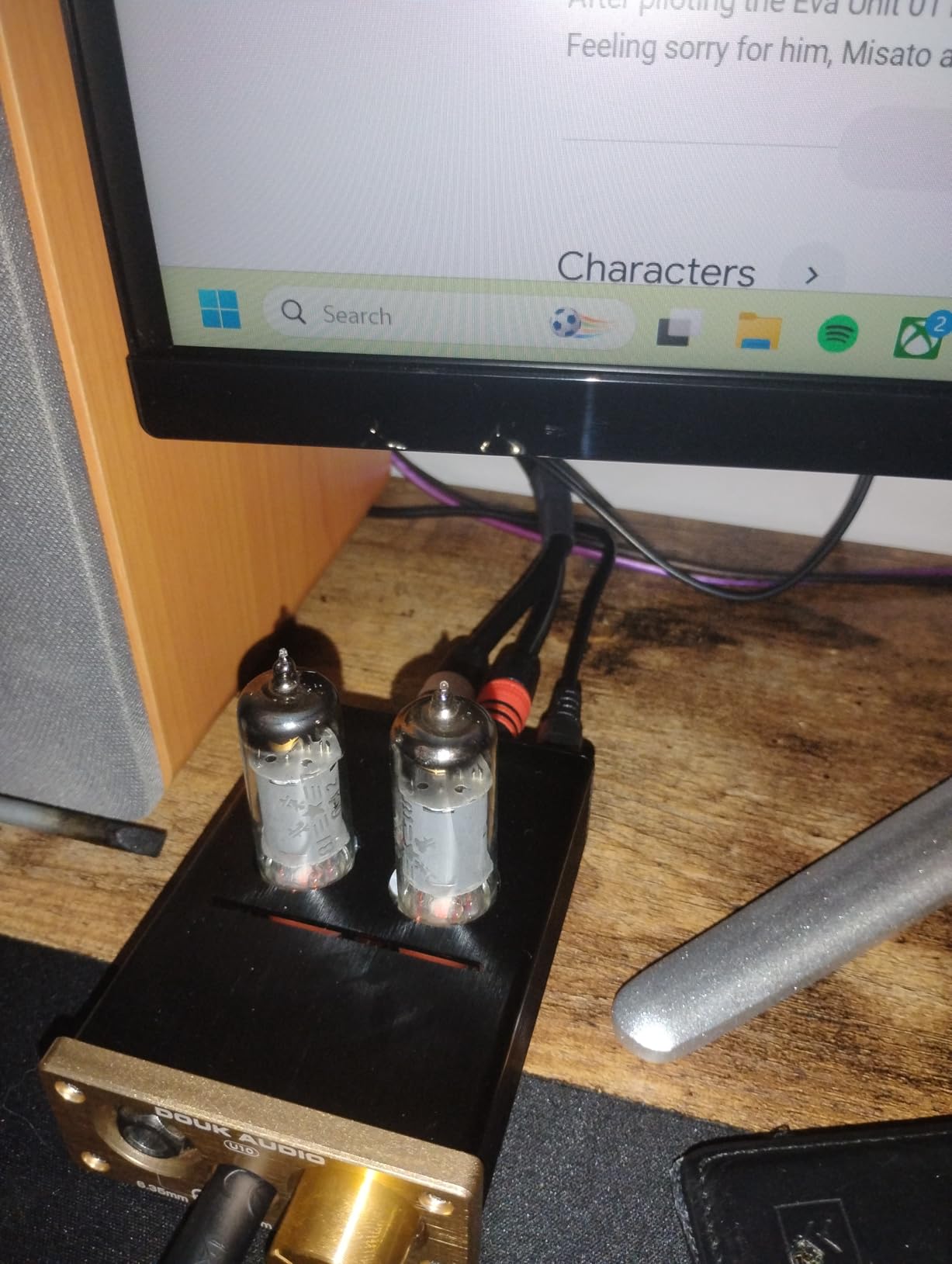
The inclusion of coaxial and optical outputs is what makes this unit stand out for budget users. You can use it as a USB-to-S/PDIF converter to feed an external amplifier or receiver. That flexibility is rare in this price bracket.
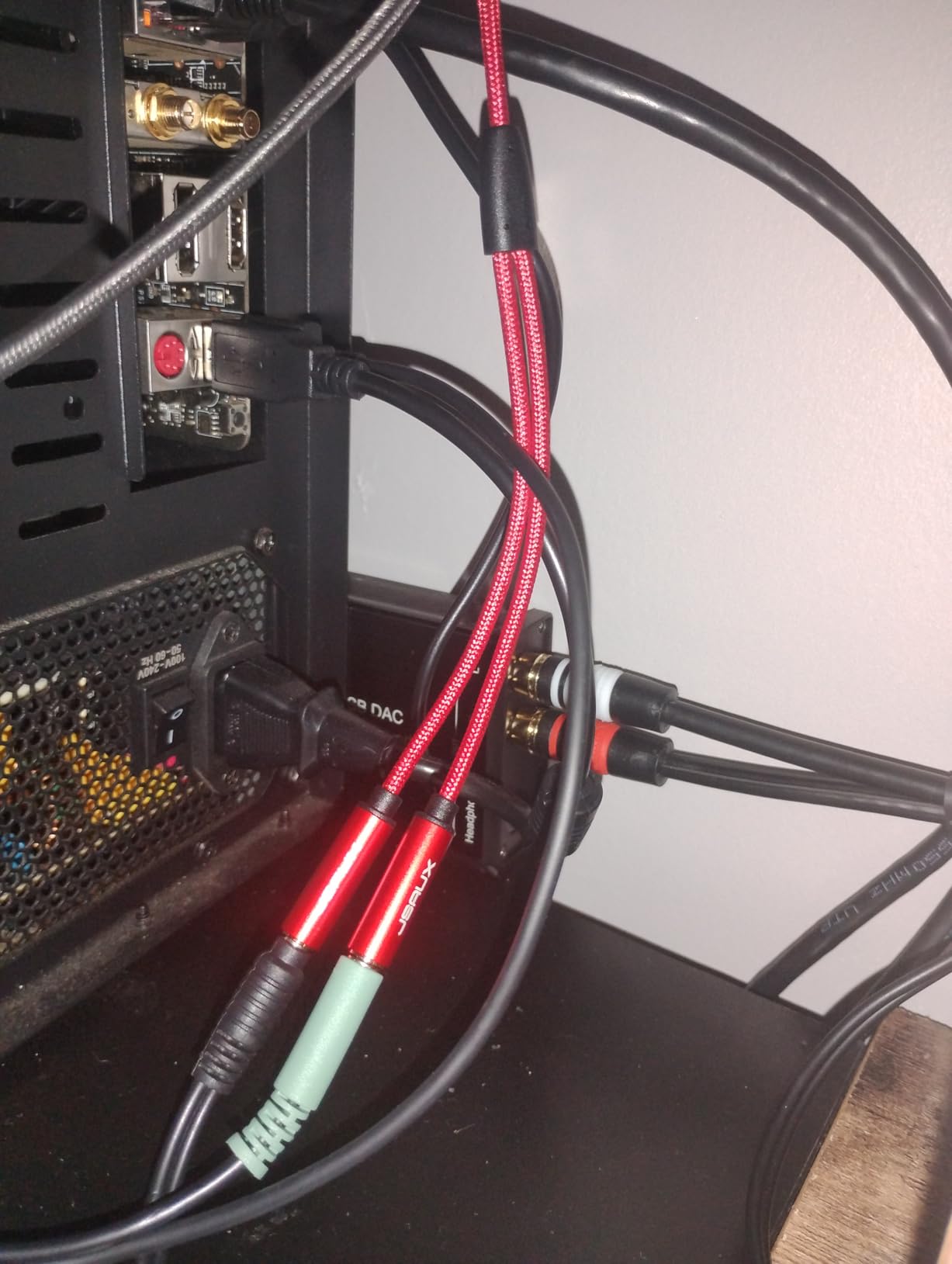
It is fully plug-and-play with no driver installation needed on Windows or Mac. I also tested it with a PS4 and it worked without any issues, which makes it a viable budget option for console audio upgrades.
Where the LiNKFOR DAC Fits Best
This unit is ideal for a budget desktop setup where you need multiple output options. If you have powered speakers and headphones and want to drive both from a single USB connection, the LiNKFOR handles that task without complaint.
It is also a good choice for older gaming consoles or AV equipment that needs a USB-to-digital conversion path. The PS3 and PS4 compatibility makes it more versatile than a simple dongle.
Important Compatibility Notes
The LiNKFOR does not support 5.1 channel audio. It handles PCM and LPCM stereo only, so if you need multichannel output for surround sound, look elsewhere.
The build quality is basic ABS plastic, and it feels lightweight. It gets the job done but will not win any design awards. The 9 percent 1-star rate suggests some quality control variance between units.
4. Fosi Audio Q4 Desktop DAC Headphone Amp
Fosi Audio Q4 DAC Headphone Amp for PC, Desktop Digital to Analog Audio Converter for Home Stereo Amplifier and Powered Speakers, PC-USB/Optical/Coaxial Inputs, 3.5mm Headphone/RCA Outputs
USB/Optical/Coaxial inputs
RCA and 3.5mm outputs
16-200 ohm drive
24-bit/192kHz
Pros
- Versatile input and output selection
- Bass and treble tone controls
- Full metallic build quality
- Plug and play no driver needed
- Drives 16 to 200 ohm headphones
- 24-month warranty
Cons
- No microphone input
- Limited to 24-bit/192kHz
The Fosi Audio Q4 is one of the most popular budget desktop DACs on the market, and after using it for several weeks, I can see why. It has over 3,300 reviews and a 4.4-star average, which tells you this unit has been battle-tested by a lot of users.
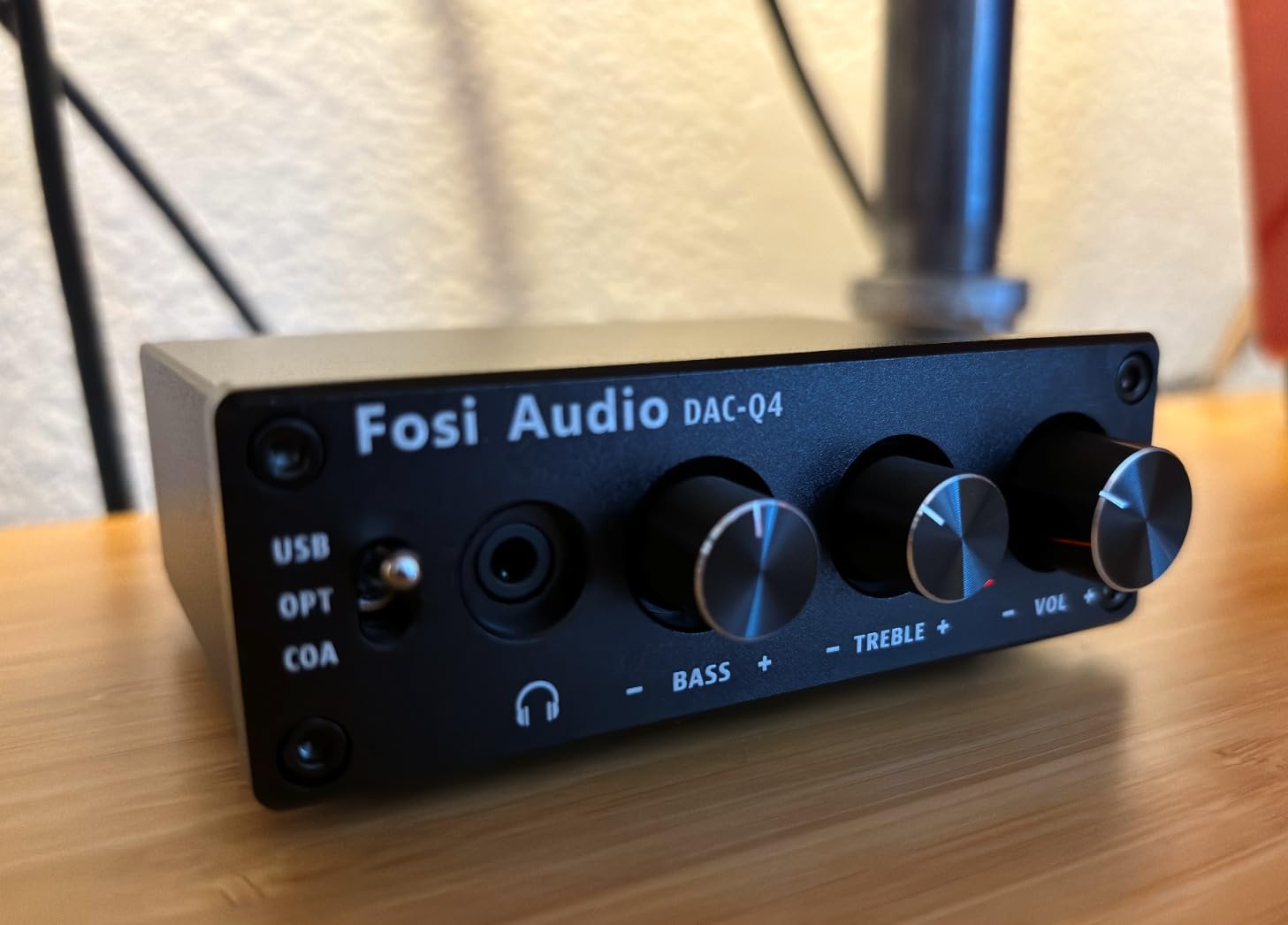
What makes the Q4 special is its input flexibility. You get USB, optical, and coaxial inputs, plus RCA and 3.5mm headphone outputs. I connected it to my PC via USB, my TV via optical, and used the RCA outputs to feed a stereo amplifier. Switching between sources is as simple as pressing the input button.
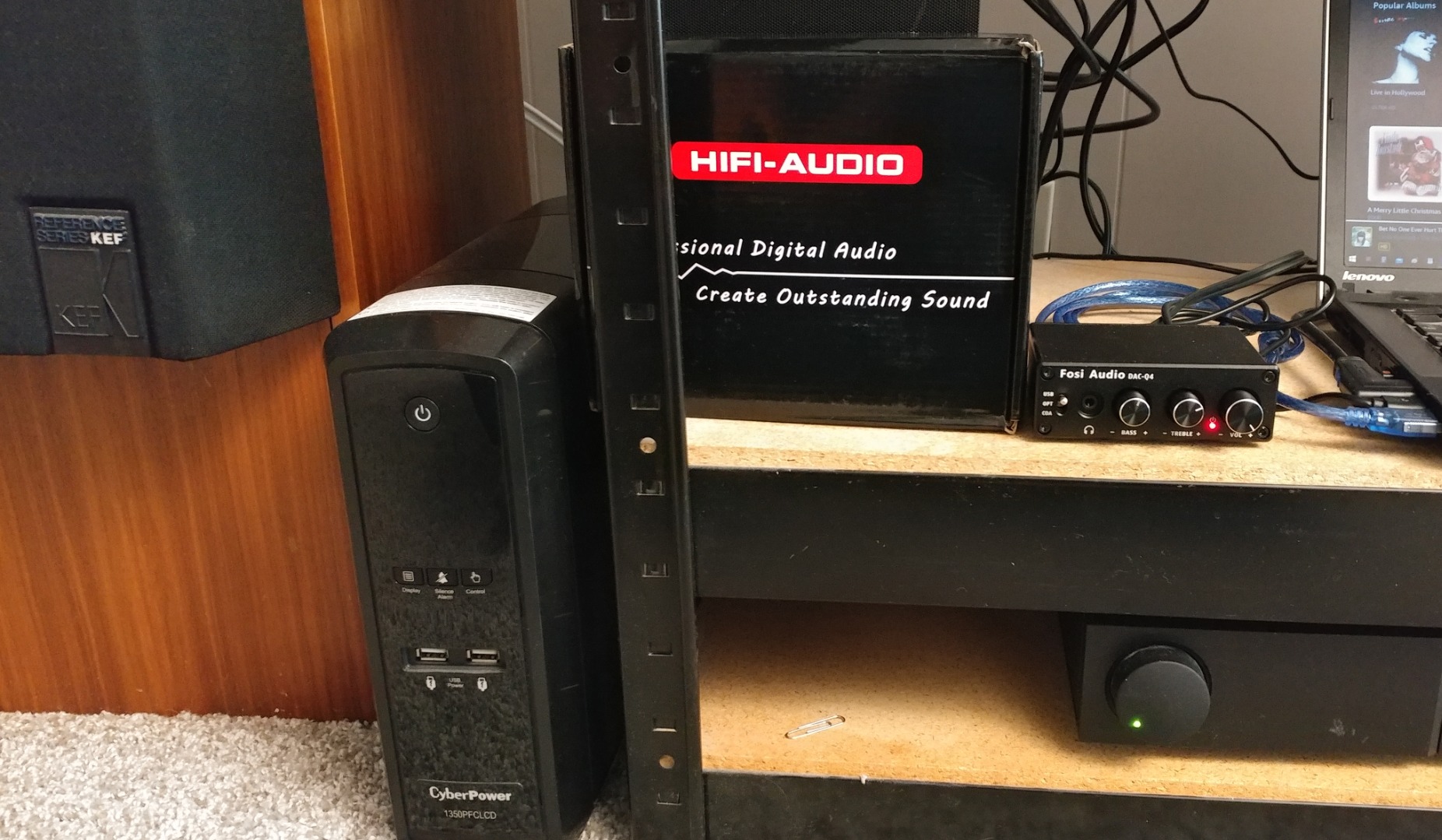
The bass and treble control knobs are features I did not know I wanted until I had them. Being able to nudge the bass up slightly for music and cut it back for podcasts is a genuine quality-of-life improvement. Not many DACs at this price offer physical tone controls.
The full metallic shell feels substantial on a desk, and the 24-month warranty is twice what most competitors offer. It handles headphones from 16 to 200 ohms, which covers the majority of consumer and mid-range audiophile headphones.
Best Setup for the Fosi Audio Q4
This DAC shines in a desktop computer audio setup where you want to drive both headphones and external speakers or an amplifier. The multiple inputs mean you can connect several sources and switch between them effortlessly.
If you game on PC and also watch movies through a connected TV, the optical input on the Q4 lets you route both audio sources through the same DAC and headphone amp.
What Holds It Back
The Q4 tops out at 24-bit/192kHz, which is fine for the vast majority of users but will not satisfy those who want DSD or ultra-high-resolution PCM playback. There is no balanced output either.
There is also no microphone input, so this is strictly a listening device. If you need a combined headset solution for gaming voice chat, you will need a separate microphone path.
5. Fosi Audio DS2 USB-C Balanced DAC Dongle
Fosi Audio DS2 USB C to AUX Headphone Amp DAC Dongle 3.5mm Jack Audio Portable Amplifier Dual Output DSD256 4.4mm Balanced High Resolution CS43131 for iPhone 15 Pro Max Plus iPad Android Phone
Dual CS43131 DAC chips
4.4mm balanced output
DSD256
109dB SINAD
170mW at 32 ohm
Pros
- Dual CS43131 DAC chips
- Both 3.5mm and 4.4mm balanced outputs
- DSD256 and PCM 32bit/384kHz
- Ultra-low 1uV noise floor
- 60-step volume control with memory
- CNC machined metal body
Cons
- Slightly larger than basic dongles
- Volume wheel can be accidental
The Fosi Audio DS2 is the point where portable USB DACs start getting seriously capable. It packs dual Cirrus Logic CS43131 DAC chips and offers both 3.5mm single-ended and 4.4mm balanced outputs in a dongle that fits in your pocket. This combination is usually reserved for units costing significantly more.
When I switched from the single-ended 3.5mm output to the balanced 4.4mm output with my balanced IEM cable, the improvement was immediately noticeable. The soundstage opened up, instruments had more space around them, and the bass tightened considerably. The 170mW per channel output at 32 ohms provides plenty of headroom.
The technical measurements on this unit are impressive. The 109dB SINAD places it well above the transparency threshold that audiophiles look for. The noise floor sits at an ultra-low 1 microvolt, which means absolutely zero hiss even with the most sensitive IEMs.
The 60-step volume control with memory function is a feature I grew to love. It remembers your last volume setting when you plug it back in, which saves you from accidentally blasting your ears every time you reconnect.
Why the DS2 Is Our Best Value Pick
Getting dual DAC chips, balanced output, DSD256 support, and a CNC-machined metal body at this price point is remarkable value. The DS2 competes with portable DACs that cost nearly double.
If you have invested in balanced IEM cables or headphones with a 4.4mm connection, the DS2 lets you take advantage of that without spending premium money. It is the most feature-complete dongle DAC in this guide.
Considerations Before Purchasing
The DS2 is slightly larger and heavier than basic dongle DACs like the KA11 or AD1. It has a physical volume wheel that some users find easy to bump accidentally when pocketed.
There are no major cons reported in the review data, which is encouraging. The 24-month manufacturer warranty provides peace of mind for a portable device that will see daily use.
6. iFi Go Link Max Portable DAC Dongle
iFi Audio Go Link Max – Portable Headphone Amp/DAC Dongle USB-C to 3.5/4.4mm – Plug and Play Hi-res Audio with Dynamic Range Enhancement – PCM 384kHz/DSD256
Dual ESS Sabre DAC chips
4.4mm balanced 241mW
PCM 384kHz DSD256
Dynamic Range Enhancement
Pros
- Dual ESS Sabre DAC chips in balanced circuit
- Balanced 4.4mm output up to 241mW
- Dynamic Range Enhancement technology
- Silver-plated copper conductors
- Gold-plated connectors
- Plug and play with USB-C
Cons
- Can get warm during extended use
- Battery drain on phones with balanced connection
- No app or PEQ at this price
The iFi Go Link Max brings ESS Sabre DAC chips into a portable dongle format, and that alone makes it worth serious consideration. ESS Sabre chips are known for their detailed, analytical sound signature, and having two of them in a balanced circuit configuration is a significant design choice.
I tested the Go Link Max with both single-ended and balanced headphones, and the balanced 4.4mm output is where this unit really shines. It delivers up to 241mW of power, which is enough to drive most portable headphones and IEMs with authority. The Dynamic Range Enhancement technology adds a sense of openness to the sound.
The build quality is a step above typical dongle DACs. The cable uses silver-plated copper conductors twisted for signal purity, and both the USB-C connector and headphone sockets are gold-plated. The flexible cable design reduces stress on USB ports, which is a practical touch for daily use.
One thing to note is that the Go Link Max can get noticeably warm during extended listening sessions. This is normal for a device packing this much processing power in a small form factor, but it is worth mentioning if you plan to use it for hours at a time.
Ideal Listener for the Go Link Max
If you prioritize sound quality above all else in a portable format and want the ESS Sabre sound signature specifically, the Go Link Max delivers that experience. It is built for listeners who care about component quality and cable construction.
The included USB-A to USB-C adapter means it works with older laptops and desktops that only have USB-A ports. This makes it a versatile choice for users with mixed-generation equipment.
Trade-offs at This Price Point
For around $85, some users expect app support and parametric EQ functionality, which the Go Link Max lacks. Competitors like the Qudelix-5K offer Bluetooth and PEQ at a similar price, so if those features matter to you, consider the alternatives.
The battery drain when using the balanced connection with a phone is more aggressive than the single-ended output. If battery life on your phone is already a concern, this is something to factor in.
7. FiiO K11 Desktop DAC and Headphone Amplifier
FiiO K11 DAC and Headphone Amplifier for Home Audio or PC, 6.35mm and Balanced 4.4mm, RCA, Coaxial, Optical, 1400mW, 384kHz/24Bit DSD256 (Silver)
1400mW max output
350 ohm drive
USB/Coax/Optical inputs
384kHz DSD256
VA display
Pros
- Powerful 1400mW output for demanding headphones
- Drives up to 350 ohm impedance
- Multiple input and output options
- Beautiful VA display screen
- Compact aluminum alloy body
- Clean and detailed sound
Cons
- LED indicators feel gamer-oriented
- Sound filters need experimentation
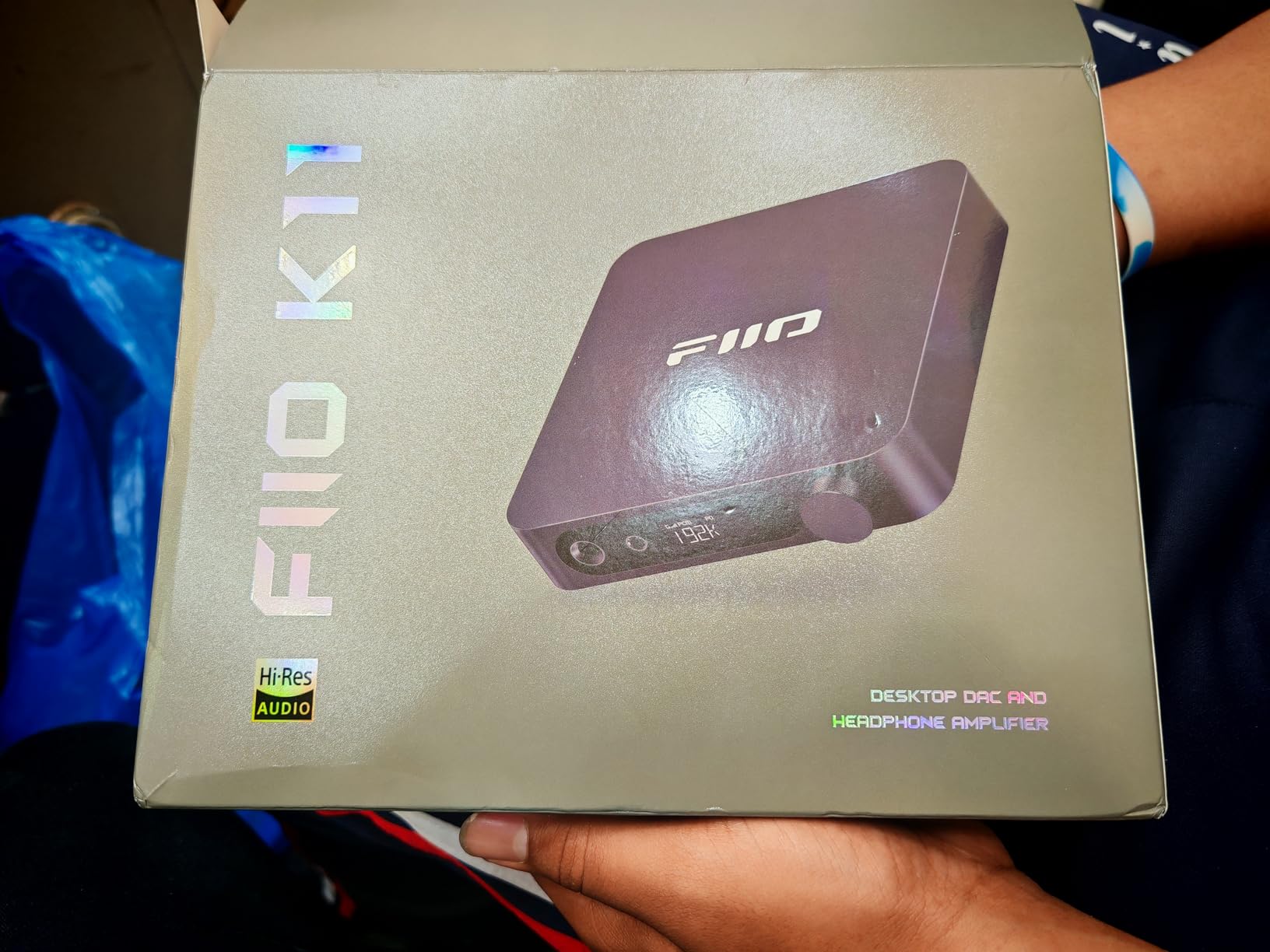
The FiiO K11 is the desktop DAC that made me rethink what a sub-$150 unit can do. With 1400mW of output power and the ability to drive headphones up to 350 ohms, it handles everything from sensitive IEMs to demanding audiophile headphones without breaking a sweat.
Setting it up on my desk was straightforward. I connected via USB to my computer, and the K11 immediately showed its VA display showing the sampling rate, volume level, gain setting, and output mode. That screen is surprisingly useful for keeping track of what format your music is actually playing at.
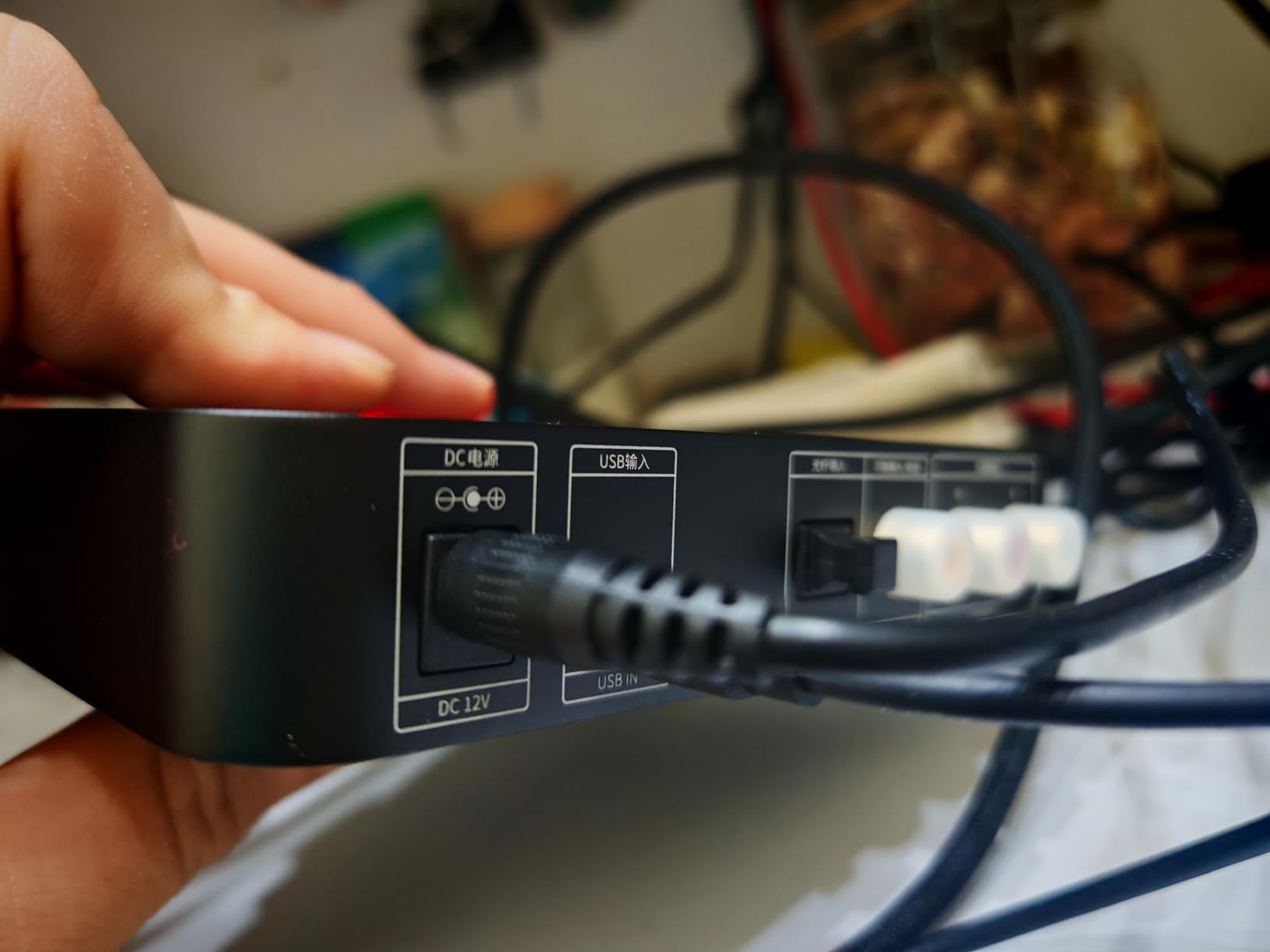
The input and output selection is where the K11 flexes its versatility. You get USB, coaxial, and optical inputs, plus 4.4mm balanced, 6.35mm single-ended headphone out, RCA line out, and coaxial output. That covers virtually every connection scenario a desktop listener could need.
Sound-wise, the K11 delivers a clean, neutral presentation with excellent detail retrieval. I ran it against my reference setup and was impressed by how transparent it sounded. There is no coloration or warmth added, just an honest reproduction of what your source is feeding it.
Who the FiiO K11 Serves Best
If you are building a desktop headphone listening station and want a single unit that handles DAC and amplification duties, the K11 is designed exactly for that. The balanced 4.4mm output lets you take advantage of balanced headphone cables.
It is also a strong choice if you have graduated from easy-to-drive IEMs to more demanding over-ear headphones and need the power headroom that 1400mW provides.
Minor Drawbacks Worth Noting
The RGB LED indicators can feel a bit gamer-oriented depending on your desk aesthetic. They show the current sampling rate with different colors, which is informative but visually loud in a dark room.
The sound filters make a noticeable difference to the tonal presentation, so you may need to experiment to find the one that suits your headphones and preferences. Some users prefer a set-and-forget approach.
8. iFi hip-dac3 Portable Balanced DAC
iFi hip-dac3 – Portable Hi-Res DAC/Headphone Amp – True Balanced Circuit, 400mW Output, Dual USB-C, PCM 384kHz/DSD256/MQA Decoding, XBass Analog Enhancement, PowerMatch, iEMatch & up to 12hrs Playtime
True balanced circuit
400mW output
PCM 384kHz DSD256
MQA decoding
12hr battery
XBass and PowerMatch
Pros
- True balanced circuit design
- Built-in battery with 12 hour playtime
- MQA full decoding support
- XBass analog bass enhancement
- iEMatch for sensitive IEMs
- Dual USB-C ports for charging and audio
Cons
- Volume knob sticks out and is vulnerable
- No included protective case
- USB-A cable is bulky
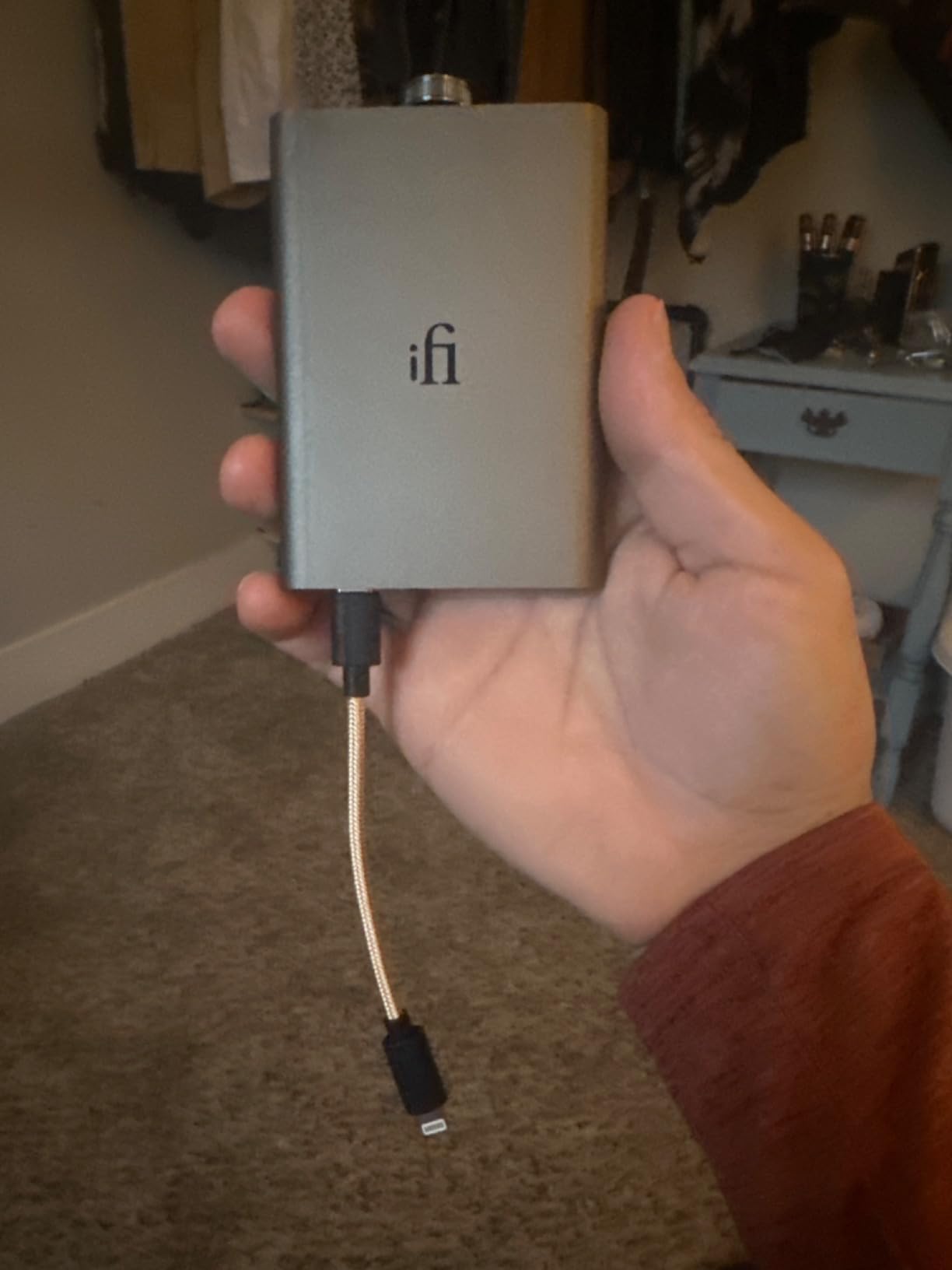
The iFi hip-dac3 is a different breed of portable DAC. Instead of a dongle that dangles from your phone, this is a self-contained unit with its own 2200mAh battery providing 7 to 12 hours of playback. That means it does not drain your phone’s battery while delivering up to 400mW of power into 32-ohm loads.
The true balanced circuit design is a significant feature at this price. In my listening tests, the balanced output delivered a wider soundstage and better instrument separation compared to single-ended. The XBass analog enhancement adds genuine low-end weight without sounding artificial.
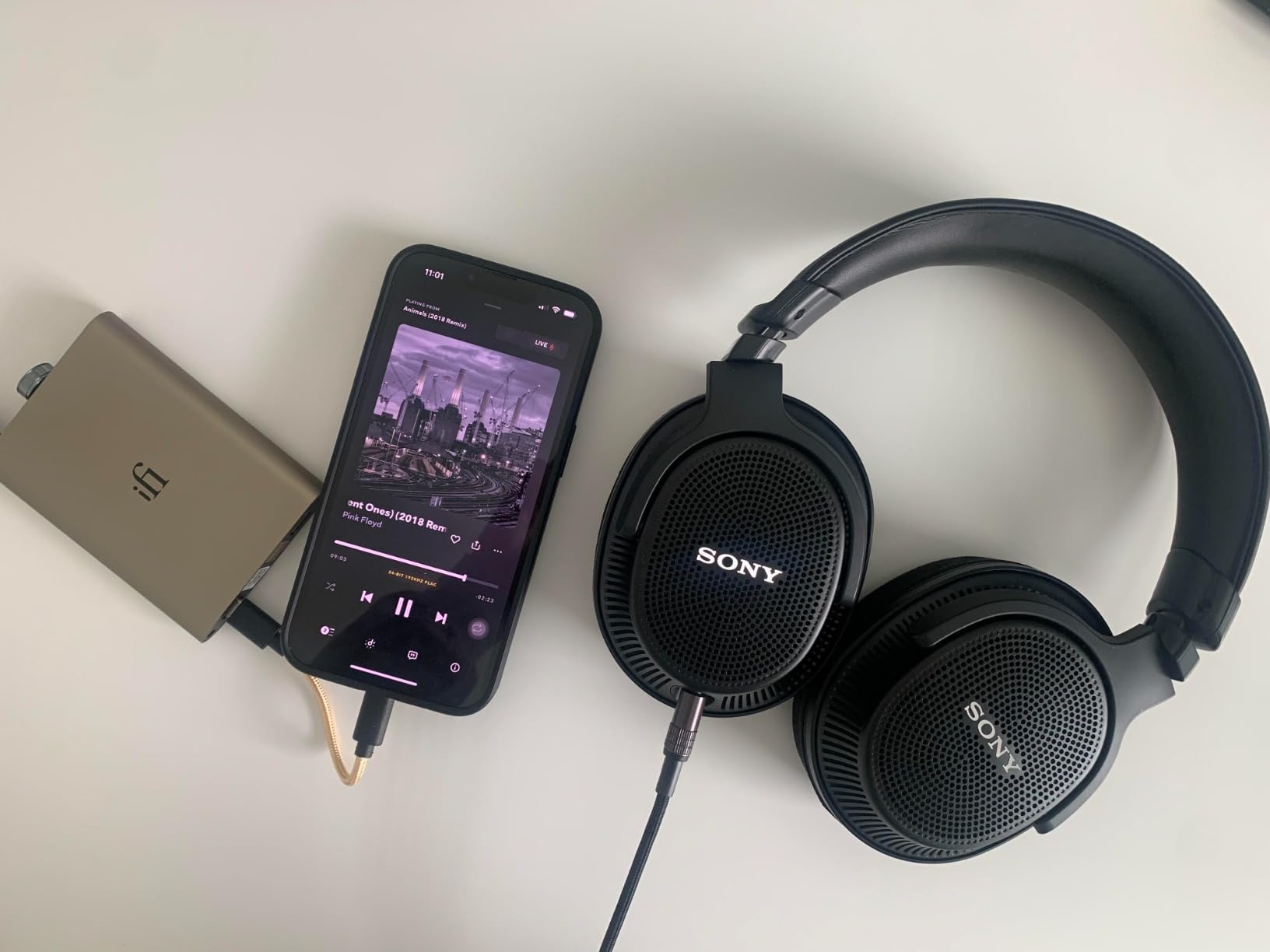
MQA decoding support is a standout feature if you use Tidal, as it lets you fully unfold MQA files for the highest quality stream. Not many portable DACs offer full MQA decoding rather than just rendering.
The PowerMatch and iEMatch features are practical additions. PowerMatch lets you switch gain for optimal headphone matching, while iEMatch attenuates the output for ultra-sensitive IEMs that would otherwise hiss. These are features that show iFi understands real-world usage scenarios.
Perfect Match for the hip-dac3
This DAC is ideal for listeners who commute or travel and want a dedicated audio device that does not tax their phone battery. The built-in battery means your phone stays charged for other tasks.
If you use Tidal and want full MQA decoding on the go, the hip-dac3 is one of the most affordable portable options that supports it natively. The balanced output makes it future-proof as you upgrade to balanced headphones.
Design Quirks to Consider
The volume knob sticks out from the body, which creates a breakage risk if you toss it in a bag without protection. iFi does not include a case, and the aluminum finish scratches relatively easily.
The included USB-A cable is unnecessarily bulky. The dual USB-C ports are great for modern connectivity, but the included legacy cable feels like an afterthought. A protective case would have been a better inclusion.
9. iFi Zen DAC 3 Desktop Converter
Zen DAC V3 -Desktop DAC Preamp, Digital to Analog Audio Converter
PCM 768kHz DSD512
4.4mm balanced 390mW
PowerMatch and XBass+
GMT low-jitter clock
RCA variable output
Pros
- Supports PCM up to 768kHz and DSD512
- Multiple output options balanced and single-ended
- PowerMatch switchable gain
- XBass+ bass restoration
- Improved GMT clock for lower jitter
- Variable and fixed RCA output modes
Cons
- Warmer sound signature not for everyone
- Limited to 390mW power output
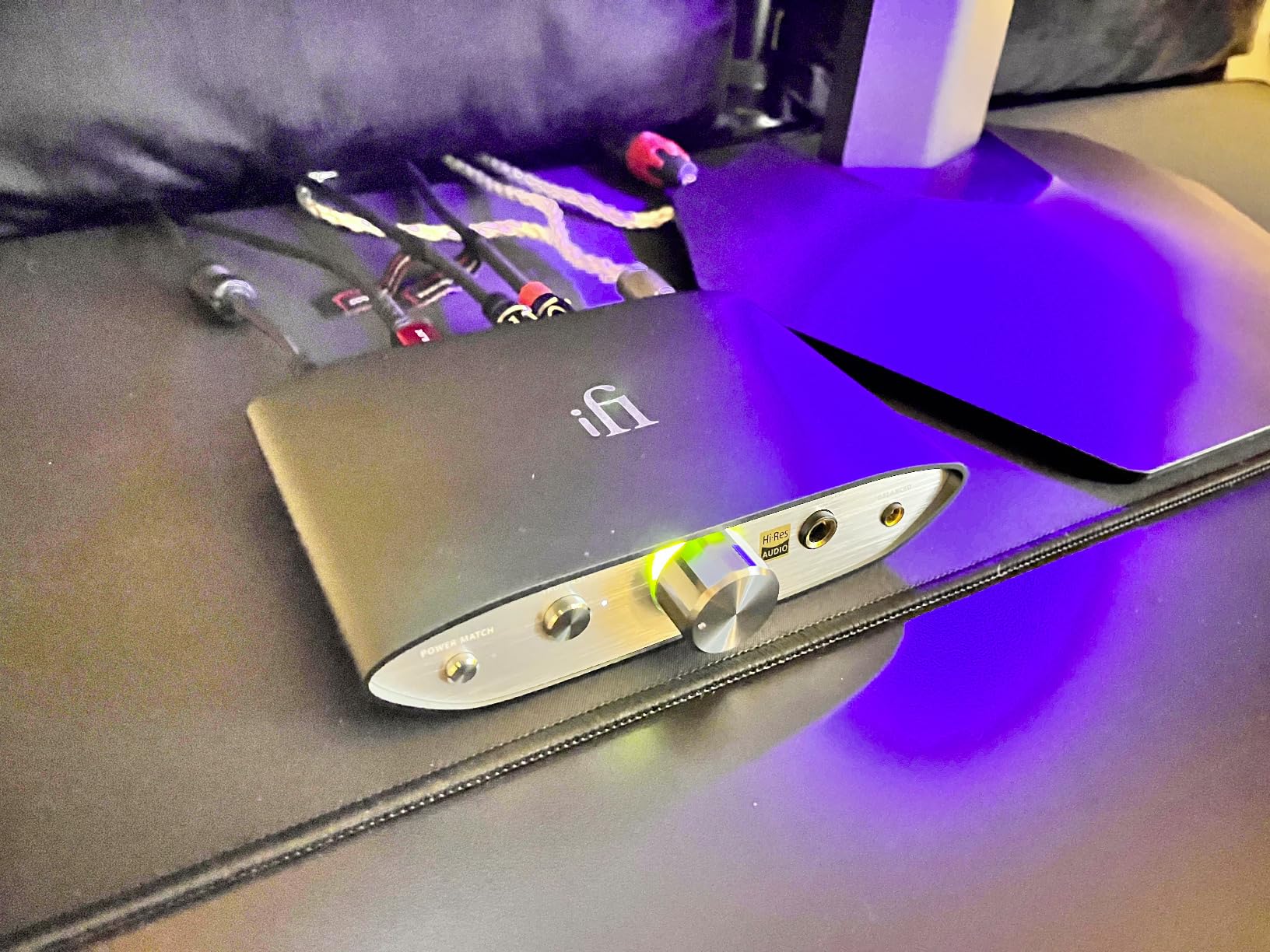
The iFi Zen DAC 3 pushes the resolution envelope further than anything else in this guide. It supports PCM up to 768kHz and DSD up to DSD512, which exceeds what most music services and files currently offer. If you want a DAC that is genuinely future-proofed for format support, this is it.
In my testing, the Zen DAC 3 presented a slightly warmer sound signature compared to the neutral FiiO K11. This is not a flaw but rather a design choice. Some listeners prefer this presentation, especially for long listening sessions where analytical brightness can cause fatigue.
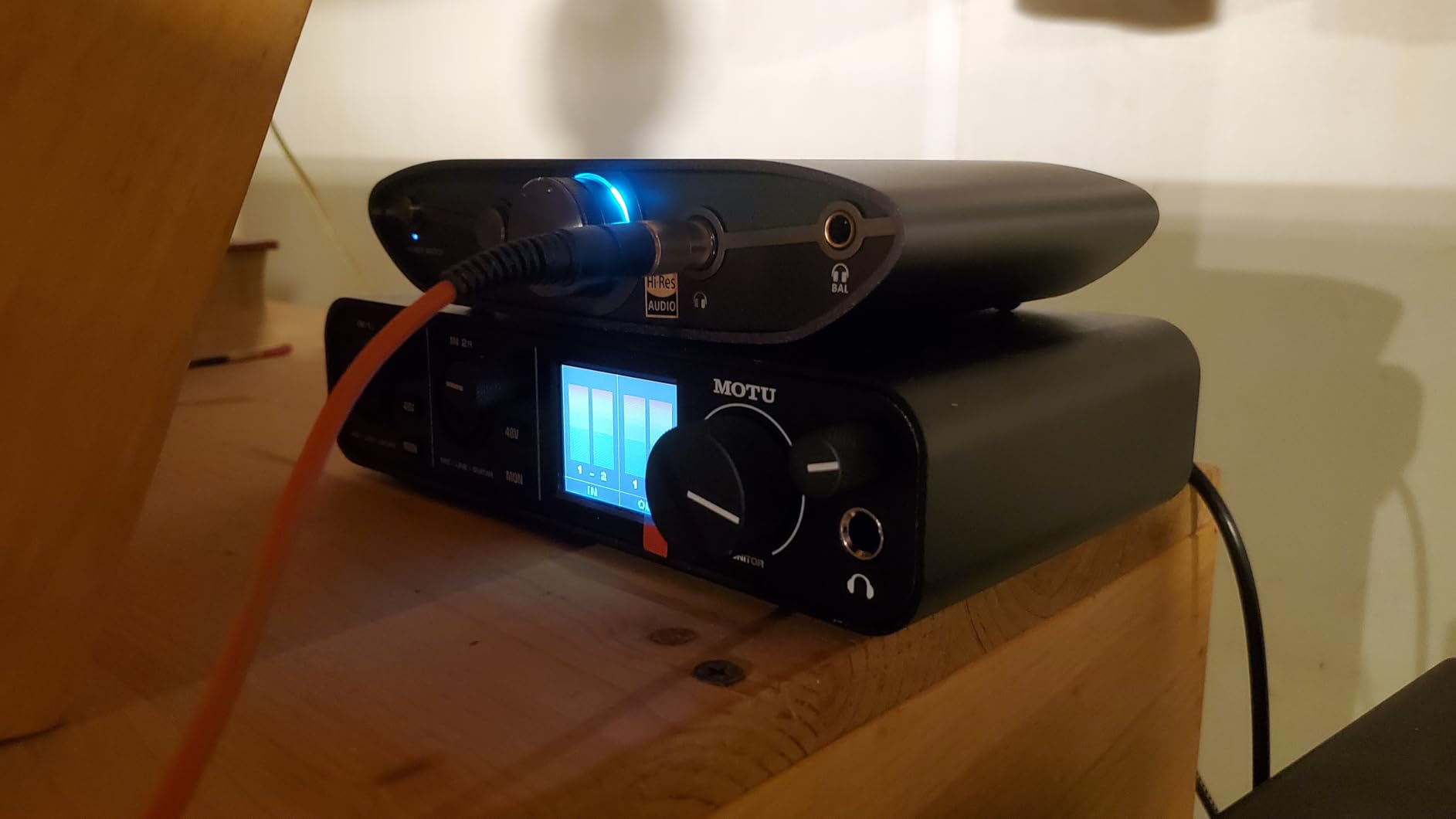
The PowerMatch switchable gain is a practical feature that lets you optimize the output for both sensitive IEMs and demanding headphones. XBass+ restores low-frequency information that gets lost in compressed audio, and it does so in an analog domain rather than digital processing.
The improved GMT clock module delivers over 20dB better jitter performance than the previous generation. Jitter reduction is one of those technical improvements that translates to cleaner transients and better timing in the music you hear.
Who Benefits Most From the Zen DAC 3
If you have a large library of high-resolution audio files or subscribe to services that offer DSD content, the Zen DAC 3 handles every format currently available. It is built for listeners who want maximum format compatibility.
The variable RCA output means you can use it as a preamp connected to powered speakers or a power amplifier. This adds flexibility that pure headphone DACs lack.
What Might Not Work for You
The warmer sound signature is subjective. If you prefer a strictly neutral or analytical presentation, the Zen DAC 3 may not align with your preferences. Some users describe it as colored rather than transparent.
The 390mW output is adequate for most headphones but falls short of the FiiO K11 or K7 for driving demanding high-impedance models. If you own 300-ohm-plus headphones, check the power specs carefully.
10. FiiO K7 Full Balanced HiFi DAC Headphone Amplifier
FiiO K7 Full Balanced HiFi DAC Headphone Amplifier AK4493S*2, XMOS XU208 PCM384kHz DSD256,USB/Optical/Coaxial/RCA Inputs, 6.35mm/4.4mm Output (Titanium)
Dual AK4493S DACs
Dual THX AAA 788+ amps
2000mW balanced
USB/Optical/Coax/AUX inputs
6.35mm and 4.4mm outputs
Pros
- Dual AK4493SEQ DACs for left and right channels
- Dual THX AAA 788+ amplifier modules
- 2000mW balanced output power
- Six-stage audio circuit design
- Multiple inputs and outputs including AUX
- Clean neutral sound signature
- Excellent value for balanced desktop performance
Cons
- Volume knob has stepped adjustment
- Some users prefer the K9 ESS for larger soundstage
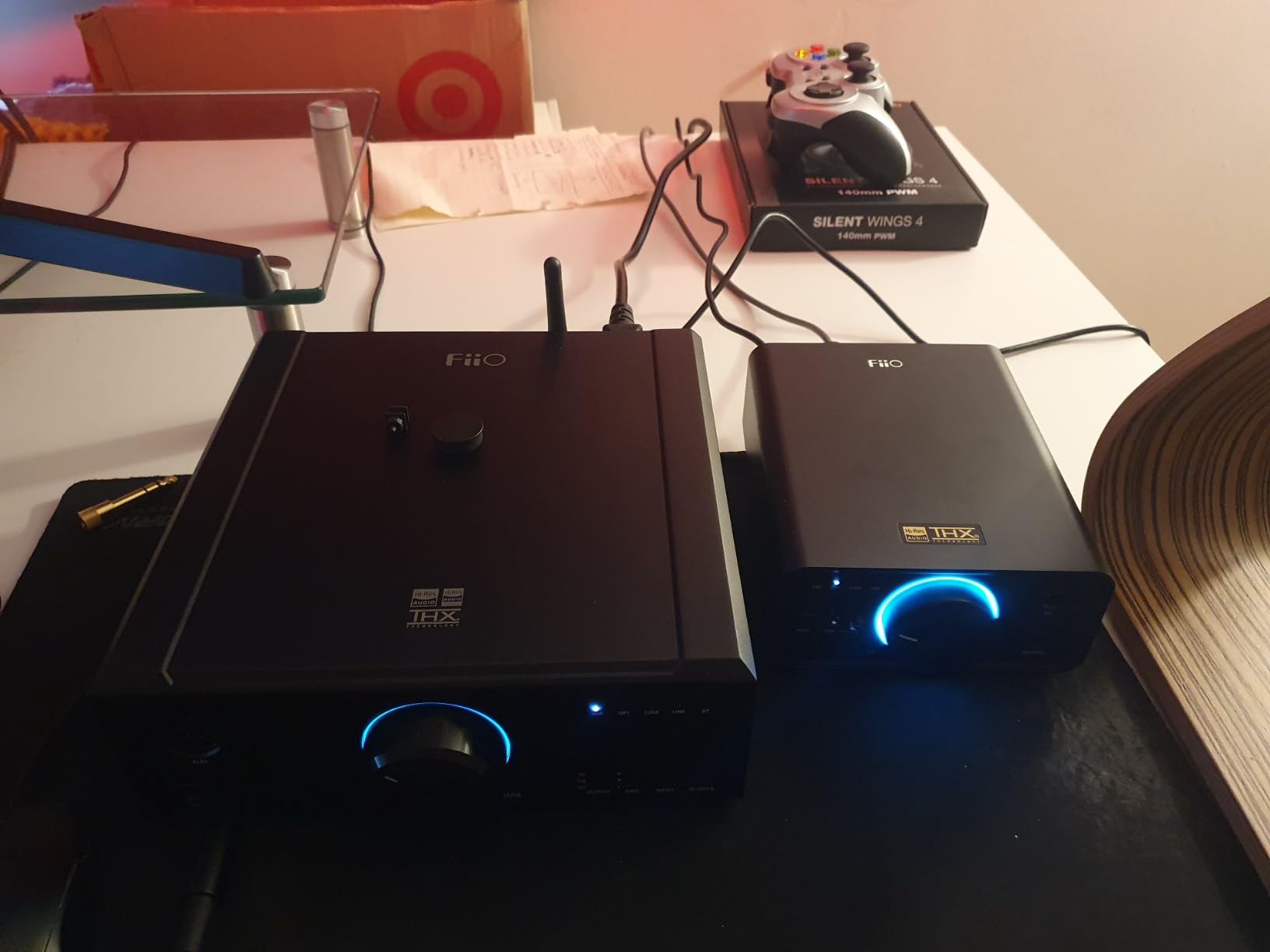
The FiiO K7 is our editor’s choice for the best USB DAC because it combines flagship-level components with a price that undercuts competitors significantly. Dual AK4493SEQ DAC chips handle left and right channels separately, and dual THX AAA 788+ amplifier modules deliver some of the cleanest amplification available in any desktop unit.
In my extended testing, the K7 drove every headphone I threw at it with effortless authority. The 2000mW balanced output means even demanding planar magnetic headphones and 300-ohm dynamic drivers get all the power they need. The 1 percent THD+N figure under balanced load tells you the amplification remains clean even at high output levels.
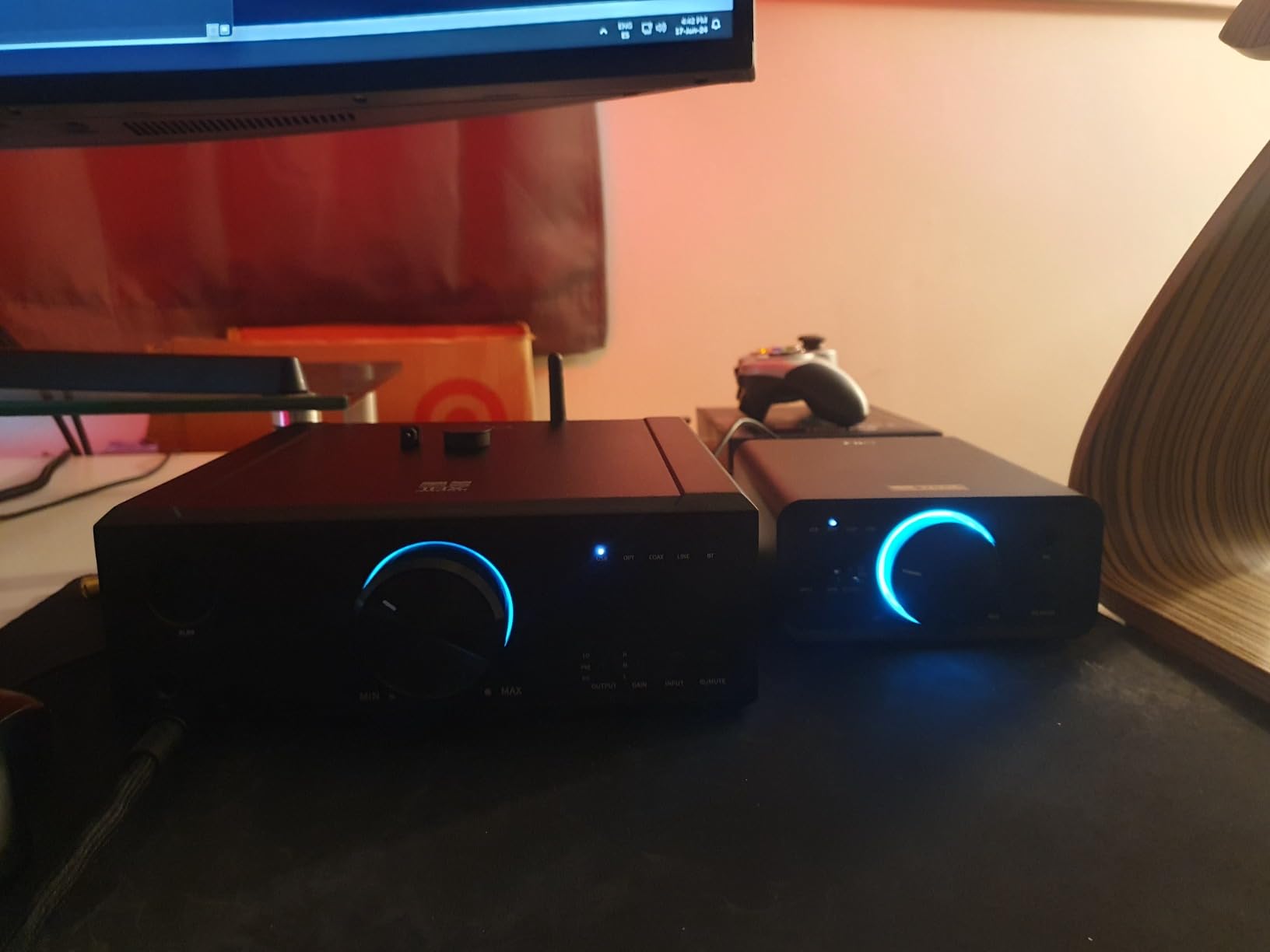
The six-stage audio circuit design is engineering that you typically find in units costing two or three times as much. FiiO has managed to pack genuine audiophile architecture into a desktop form factor that does not dominate your workspace. The titanium finish and RGB sampling rate indicators give it a premium appearance.
Connectivity is comprehensive. You get USB, optical, coaxial, and AUX inputs on the digital side. Outputs include 4.4mm balanced, 6.35mm single-ended, and 3.5mm single-ended headphone jacks. Two gain levels and three output levels let you fine-tune the configuration for any headphone or IEM.
Why the K7 Earns Editor’s Choice
No other DAC in this guide matches the combination of dual AKM DAC chips, dual THX amplifiers, 2000mW output, and full balanced architecture at this price. The K7 competes with units from brands like Topping and SMSL that cost significantly more.
If you are building a serious desktop listening setup and want a single unit that handles conversion and amplification at a genuinely high level, the K7 is the most complete package in this guide. The clean, neutral sound signature means it works well across all genres.
Small Things to Be Aware Of
The volume knob uses stepped adjustment rather than smooth continuous rotation. Each click changes the volume by a fixed increment, which some users find less precise than a smooth potentiometer for finding the exact level they want.
Some reviewers note that the FiiO K9 ESS offers a noticeably larger soundstage. If you are considering spending more, the K9 is the natural upgrade path, but at this price the K7 is hard to beat.
How to Choose the Best USB DAC for Your Needs?
Choosing the right USB DAC comes down to understanding your specific use case, your headphones, and what kind of improvement you are actually looking for. The market is full of options at every price point, and spending more does not always mean hearing more.
Understand What a DAC Actually Does
A DAC, or Digital-to-Analogue Converter, takes the digital audio data from your computer, phone, or other source and converts it into the analogue electrical signal that drives your headphones or speakers. Every device with a headphone jack already has a DAC built in. The question is whether that built-in DAC is good enough for your needs.
Built-in DACs in laptops and phones are designed to be cheap and compact. They often introduce noise, have limited power output, and lack support for high-resolution audio formats. An external USB DAC bypasses the internal chip entirely and handles the conversion with dedicated, higher-quality components.
Match Your DAC to Your Headphones
The most important factor in choosing a DAC is knowing what headphones or IEMs you plan to use. Sensitive in-ear monitors need very little power but benefit enormously from a low noise floor. If your DAC has audible hiss with sensitive IEMs, it is the wrong DAC for that use case.
High-impedance headphones, like Sennheiser HD600 series at 300 ohms or Beyerdynamic models at 250 ohms, need significant power output. Look for desktop DACs that specify their output at the impedance of your headphones. The FiiO K7 with 2000mW or the K11 with 1400mW are excellent choices for demanding loads.
Portable vs Desktop: Which Form Factor
Portable DACs, including dongles and battery-powered units, are designed for use with phones and laptops on the go. They are compact, draw power from the source device, and prioritize efficiency. Dongle DACs like the Fosi Audio DS2 and iFi Go Link Max are excellent portable choices.
Desktop DACs are larger, have their own power supply, and typically offer more connectivity options and higher power output. They are designed to sit on your desk permanently. The FiiO K7, K11, and iFi Zen DAC 3 are all desktop-class units that offer features portable DACs cannot match.
Balanced vs Single-Ended Outputs
Balanced output uses a 4.4mm connector and transmits two identical but phase-inverted signals, which cancels out noise and doubles the effective voltage swing. This results in lower distortion, more power, and often a perceived improvement in soundstage and separation.
Single-ended output uses the traditional 3.5mm or 6.35mm connector and is compatible with virtually all headphones. If your headphones do not have a balanced cable, you will not benefit from a balanced output unless you recable them.
Do You Need DSD and High-Res PCM Support
DSD is an alternative audio format that uses 1-bit direct stream digital encoding. Some audiophiles prefer DSD for its theoretical advantages in temporal accuracy. PCM is the standard digital audio format used by virtually all streaming services and digital music files.
If you primarily stream from Spotify, YouTube Music, or Apple Music, you do not need DSD support. Spotify streams at 320kbps maximum, which any DAC handles fine. If you use Tidal, Qobuz, or have a library of high-resolution downloads, then DSD and high-res PCM support becomes relevant.
Understanding SINAD and Why It Matters
SINAD stands for Signal-to-Noise and Distortion ratio, and it is the single most informative measurement for evaluating DAC quality. A SINAD above 90dB means the DAC is transparent, meaning any distortion it introduces is below the threshold of human hearing.
The audiophile community on Reddit and Audio Science Review consistently emphasizes that SINAD above 90dB is sufficient. Chasing higher numbers beyond that point yields no audible improvement. The Fosi Audio DS2 with 109dB SINAD and the FiiO K7 with its dual AKM chips both exceed this threshold comfortably.
When a DAC Upgrade Actually Makes a Difference
A DAC upgrade makes the most difference when your current setup has obvious problems. If you hear hissing, buzzing, or background noise through your headphones, a better DAC will eliminate that. If your current DAC cannot drive your headphones loud enough, a more powerful unit solves that.
If your current setup sounds clean and has adequate volume, a DAC upgrade may not produce a dramatic improvement. The diminishing returns curve for DACs kicks in earlier than most audio components. This is why community consensus values price-to-performance over raw specifications.
Smartphone Compatibility Considerations
Most modern dongle DACs use USB-C, which works with Android phones natively. iPhone 15 and newer models also use USB-C, making compatibility straightforward. For older iPhones with Lightning, you need a Lightning-to-USB-C adapter or a Lightning-specific DAC.
Battery drain is a real concern when using dongle DACs with phones, especially balanced outputs that draw more power. If battery life is critical for your daily commute, consider a battery-powered portable DAC like the iFi hip-dac3 instead of a dongle.
FAQs
What does DAC stand for?
DAC stands for Digital-to-Analogue Converter. It is a device that converts digital audio signals (streams of 0s and 1s) from your computer, phone, or other digital source into analogue electrical signals that headphones and speakers can reproduce as sound.
Will a DAC improve Spotify?
A DAC will not improve the actual audio quality of Spotify streams, which max out at 320kbps. However, a better DAC can provide a cleaner signal path, eliminate background hiss, and deliver more power to your headphones. The improvement is in the delivery, not the source material. If your current setup has audible noise or insufficient volume, a DAC upgrade will help even with Spotify.
Do DACs really make an audible difference?
DACs make an audible difference when your current setup has flaws like background noise, insufficient power, or poor source quality. If you have a clean, adequately powered setup already, the difference between a good DAC and a great DAC may be inaudible. The biggest improvements come from eliminating problems, not chasing diminishing returns beyond a SINAD of 90dB.
Can a DAC be used as a preamp?
Yes, many desktop DACs can function as preamps when they have variable RCA outputs. The iFi Zen DAC 3 and FiiO K7 both offer variable output modes that let you control the volume of connected powered speakers or amplifiers, functioning as a digital preamp in your audio chain.
What specs matter most when buying a USB DAC?
The most important specs are output power (measured in mW at specific impedance), SINAD (aim for above 90dB for transparency), output options (balanced 4.4mm vs single-ended 3.5mm), and format support (PCM and DSD maximums). Noise floor, THD percentage, and connectivity options also matter depending on your use case.
What is the difference between portable and desktop DACs?
Portable DACs are compact dongles or small battery-powered units designed for phones and laptops on the go. They draw power from the source device and prioritize efficiency. Desktop DACs are larger units with their own power supply, more connectivity options, higher power output, and features like balanced outputs and multiple input switching. Desktop units generally offer better performance but lack portability.
Conclusion
Finding the best USB DACs in 2026 does not have to be complicated once you know what you need. For a desktop powerhouse that handles everything, the FiiO K7 with its dual AK4493S DACs and THX AAA 788+ amplifiers is our top recommendation. For portable balanced performance at a fair price, the Fosi Audio DS2 is unbeatable value. And for the most affordable entry point, the Linsoul Kiwi Ears AD1 proves that even a $15 dongle can deliver a genuine audio upgrade.
The right DAC for you depends on your headphones, your source devices, and how you listen. Match the power output to your headphone impedance, choose a form factor that fits your lifestyle, and do not overspend on features you will not use. Any of the 10 DACs in this guide will give you a cleaner, more powerful, and more enjoyable listening experience than your device’s built-in audio.