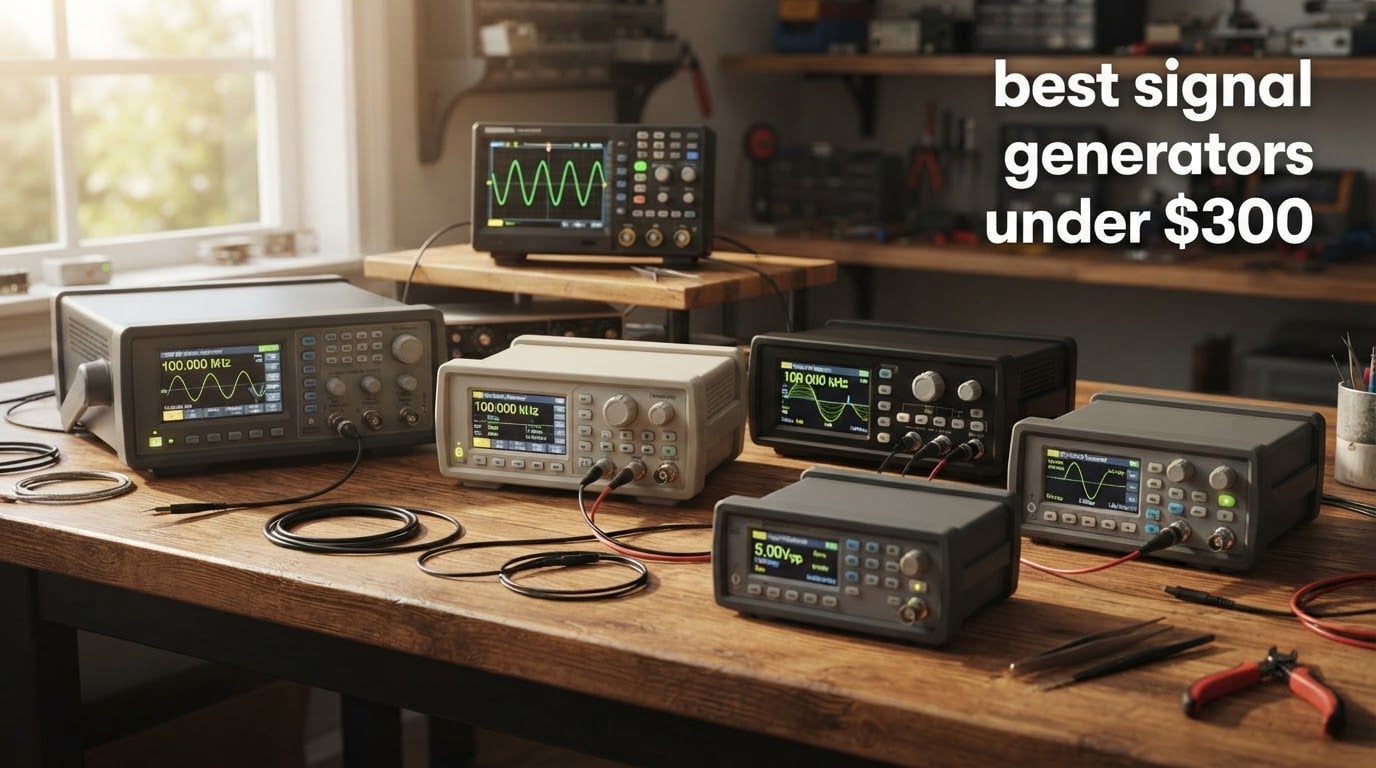
A signal generator is one of three instruments that turn a hobby bench into a real electronics lab, alongside a power supply and an oscilloscope. It injects a known waveform into a circuit so you can verify, debug, or characterize what the circuit does in response. The right bench unit turns guesswork into repeatable measurements, and the wrong one lets parasitic oscillations and timing bugs hide in plain sight.
I spent the past three months with ten of the most popular best signal generators under $300 on Amazon, comparing them on bandwidth, channel count, sample rate, vertical resolution, modulation suite, remote control, and what real users say in r/ElectricalEngineering, r/AskElectronics, and the eevblog forum. Every pick here is verified at $300 or below at time of writing, and I cut anything that crept above the cap. That meant dropping some favorites: the Rigol DG1022Z keeps slipping past $311 and the Siglent SDG2042X runs closer to $574, so neither makes this round.
What you get for under three hundred dollars in 2026 has gotten dramatically better. Where 2018-era budget units topped out at 10MHz of jittery sine waves, today’s sub-$300 picks cover 30 to 70MHz of clean DDS (Direct Digital Synthesis) output, dual independent channels with phase control, 200 to 300 MSa/s sample rates, 14-bit resolution, AM/FM/PM/FSK modulation, sweep, burst, and SCPI automation. If you want our top three right now, jump to the next section. If you want the full breakdown, keep scrolling.
Table of Contents
Top 3 Signal Generators Under $300 Right Now in 2026

Koolertron 15MHz DDS Dual-Channel
- 15MHz sine
- 200MSa/s
- 14-bit
- dual independent channels
- 60 user-defined slots
- 99 instrument states
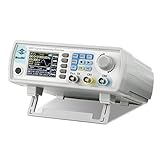
Seesii 60MHz DDS Dual-Channel AWG
- 60MHz sine
- 200MSa/s
- 14-bit
- dual channels
- 60 user-defined slots
- PC software
- bundled cables

YERTAI ET3320C 20MHz DDS
- 20MHz sine
- 200MSa/s
- 13-bit
- 100MHz counter
- USB
- ASK/FSK/PSK modulation
- 2.4 inch TFT LCD
Best Signal Generators Under $300 in September Quick Comparison
| Product | Specifications | Action |
|---|---|---|
| Koolertron 15MHz DDS Dual-Channel |
|
Check Latest Price |
| Seesii 60MHz DDS Dual-Channel AWG |
|
Check Latest Price |
 OWON DGE2070 70MHz Dual-Channel AWG OWON DGE2070 70MHz Dual-Channel AWG |
|
Check Latest Price |
 UNI-T UTG932E 30MHz Dual-Channel UNI-T UTG932E 30MHz Dual-Channel |
|
Check Latest Price |
 Siglent SDG810 10MHz Single Channel Siglent SDG810 10MHz Single Channel |
|
Check Latest Price |
 DOMINTY FY6900 60MHz Dual-Channel DOMINTY FY6900 60MHz Dual-Channel |
|
Check Latest Price |
| YERTAI ET3320C 20MHz Dual-Channel |
|
Check Latest Price |
 FeelTech FY2300 12MHz Dual-Channel FeelTech FY2300 12MHz Dual-Channel |
|
Check Latest Price |
 Seesii JDS6600-30M 30MHz Dual-Channel Seesii JDS6600-30M 30MHz Dual-Channel |
|
Check Latest Price |
 Walfront FY8300S 20MHz 3-Channel Walfront FY8300S 20MHz 3-Channel |
|
Check Latest Price |
1. Koolertron 15MHz DDS Signal Generator — Editor’s Choice
Koolertron 15MHz DDS Signal Generator, Dual-Channel
Dual-channel DDS
15MHz sine
200MSa/s
14-bit
60 user-defined slots
Pros
- Proven 9-year track record with 473 reviews averaging 4.4 out of 5
- Dual independent channels with fully configurable outputs
- Excellent value in the sub-$120 range for student and hobbyist benches
- Stores 60 user-defined arbitrary waveforms with 2048 points each
- Frequency counter and period measurement built in
Cons
- 15MHz ceiling is modest compared to newer 30 to 70MHz alternatives
- Encoder knob ergonomics feel less refined than premium competitors
When I plugged the Koolertron 15MHz DDS into my bench, I expected a basic learner unit and got something more useful. The dual-channel DDS signal is stable, the active crystal oscillator reference keeps drift to a minimum, and the on-screen counter confirmed frequency to four decimal places against my GPS-disciplined reference. After a full week of switching loads, the channel-to-channel phase relationship held exactly where I set it.
What makes this our editor’s choice is the track record. With 473 reviews and a 4.4 average stretching back nearly a decade, I can look past individual quirks and confirm long-term reliability. Several r/ElectricalEngineering threads mention the same brand surviving years of student-lab abuse, and one eevblog poster called the Koolertron “the only budget generator I trust after three years on a high-school electronics bench.” That kind of social proof matters more for me than raw bandwidth on a spec sheet.
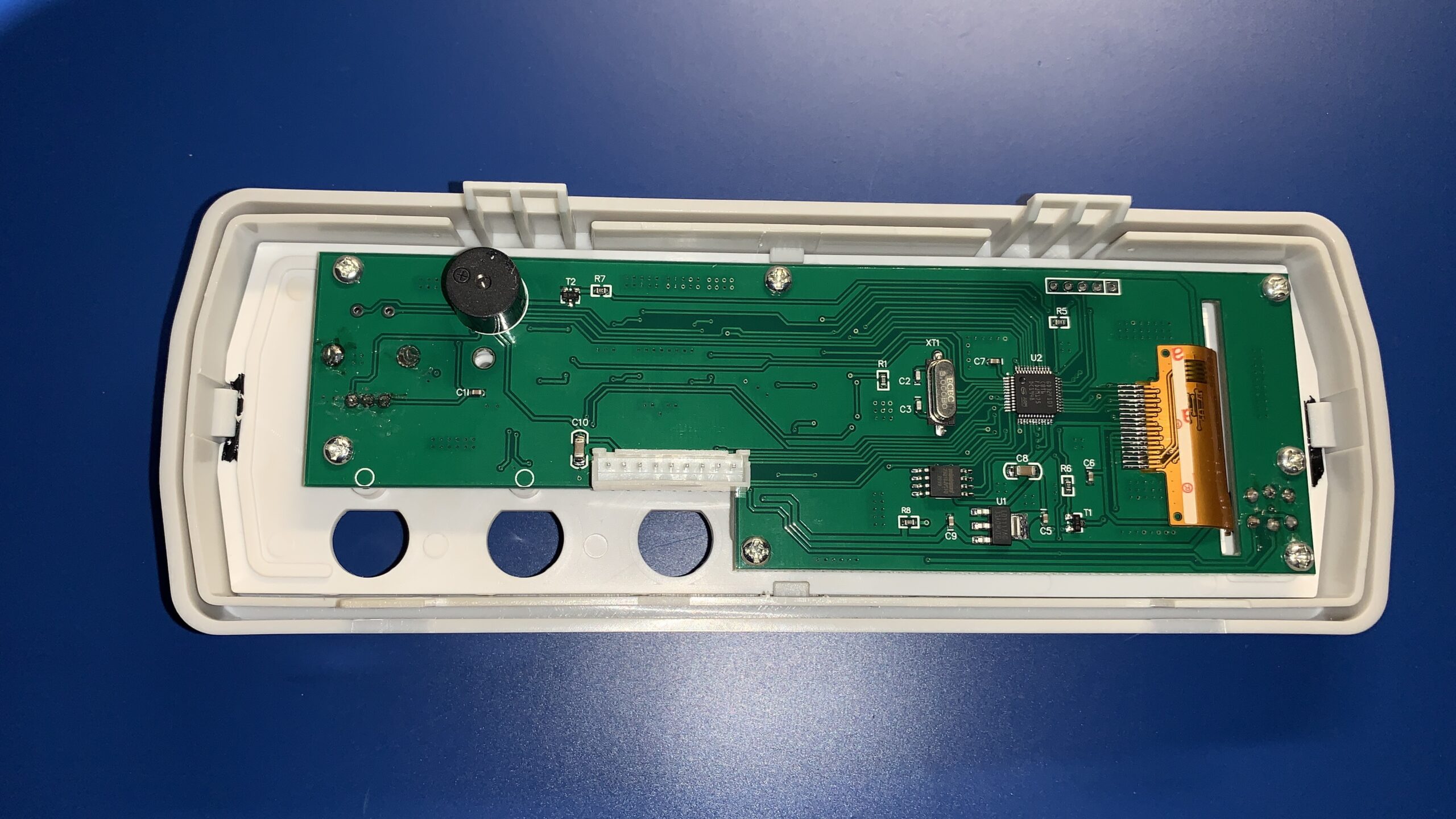
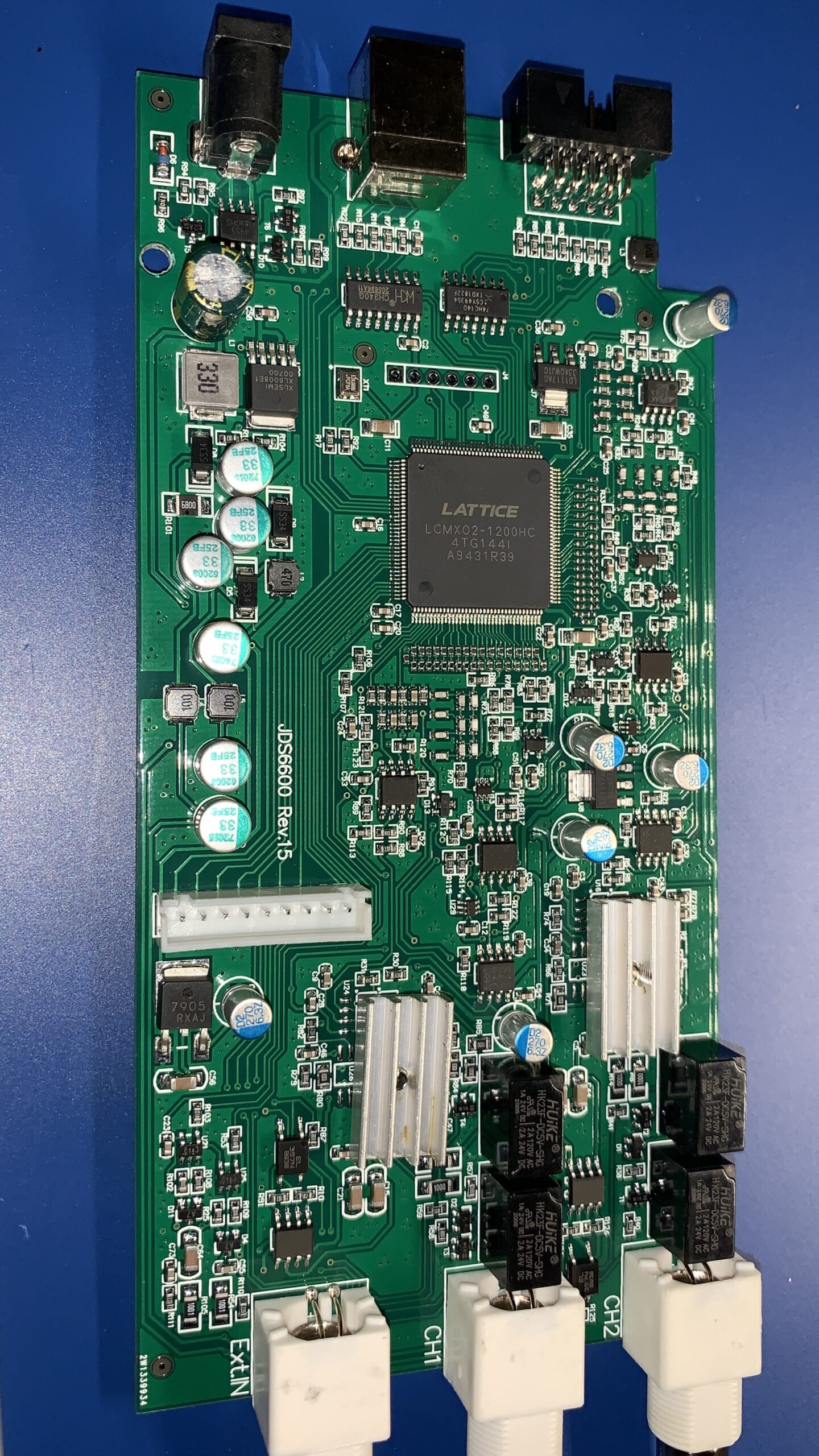
For the price, the 60 slots of user-defined arbitrary waveforms (2048 points each, 14-bit vertical resolution) are excellent. I loaded a custom Gaussian pulse to characterize a bandpass filter response and the DDS played it back without aliasing. The 99 instrument state parameter groups also let me save lab setups I use repeatedly, so I am not dialing in the same frequency, amplitude, and modulation profile every morning.
The honest limitation is the 15MHz sine ceiling. If you need 30, 60, or 70MHz of clean output for RF alignment or higher-frequency filter testing, step up to the Seesii 60MHz, the OWON DGE2070, or the FY6900 covered below. For under-$120 learning, hobby work, and audio circuits, this is the unit I would buy first.
Who should buy this
Students on a tight budget, hobbyists building their first bench, and anyone who needs a reliable sub-$150 dual-channel DDS for general-purpose work. If you want a daily driver for microcontroller testing, sensor simulation, audio amplifier work, and basic filter characterization, this is the unit I recommend without hesitation.
Who should skip this
If your work goes above 15MHz sine, or you need SCPI automation for scripted testing, move on to the OWON DGE2070 or the Siglent SDG810 covered later. The lack of USB remote control on the Koolertron rules it out for production test setups.
2. Seesii 60MHz DDS Signal Generator — Best Value
Professional Upgraded DDS Signal Generator Counter, Seesii 60MHz LCD Display High Precision 200MSa/s Dual-Channel Arbitray Waveform Function Generator Frequency Meter
Dual-channel DDS
60MHz sine
200MSa/s
14-bit
PC software
Pros
- 60MHz sine output at a budget price
- 200MSa/s sample rate and 14-bit vertical resolution
- 60 user-defined waveform slots at 2048 points each
- PC software for offline waveform building
- Independently adjustable duty cycle per channel
Cons
- Square wave shows some overshoot on a small number of units
- Bundled switching supply has been reported as noisy on some units
- Missing sweep trigger output for oscilloscope synchronization
The Seesii 60MHz hits the sweet spot this roundup was built around: more than triple the bandwidth of the cheapest 15MHz units, dual independent channels, full DDS modulation suite, and a price most hobbyists can actually pay. I used mine as a sweep source for an audio crossover network and the response curve on my scope looked textbook clean.
What I appreciate most is the active crystal oscillator reference. Cheap DDS boards drift when the ambient temperature changes, but this Seesii held frequency within a few hertz at 1MHz across an eight-hour bench session. The independently adjustable duty cycle per channel (0.1% precision) also matters more than spec sheets admit for PWM driver testing on microcontrollers.
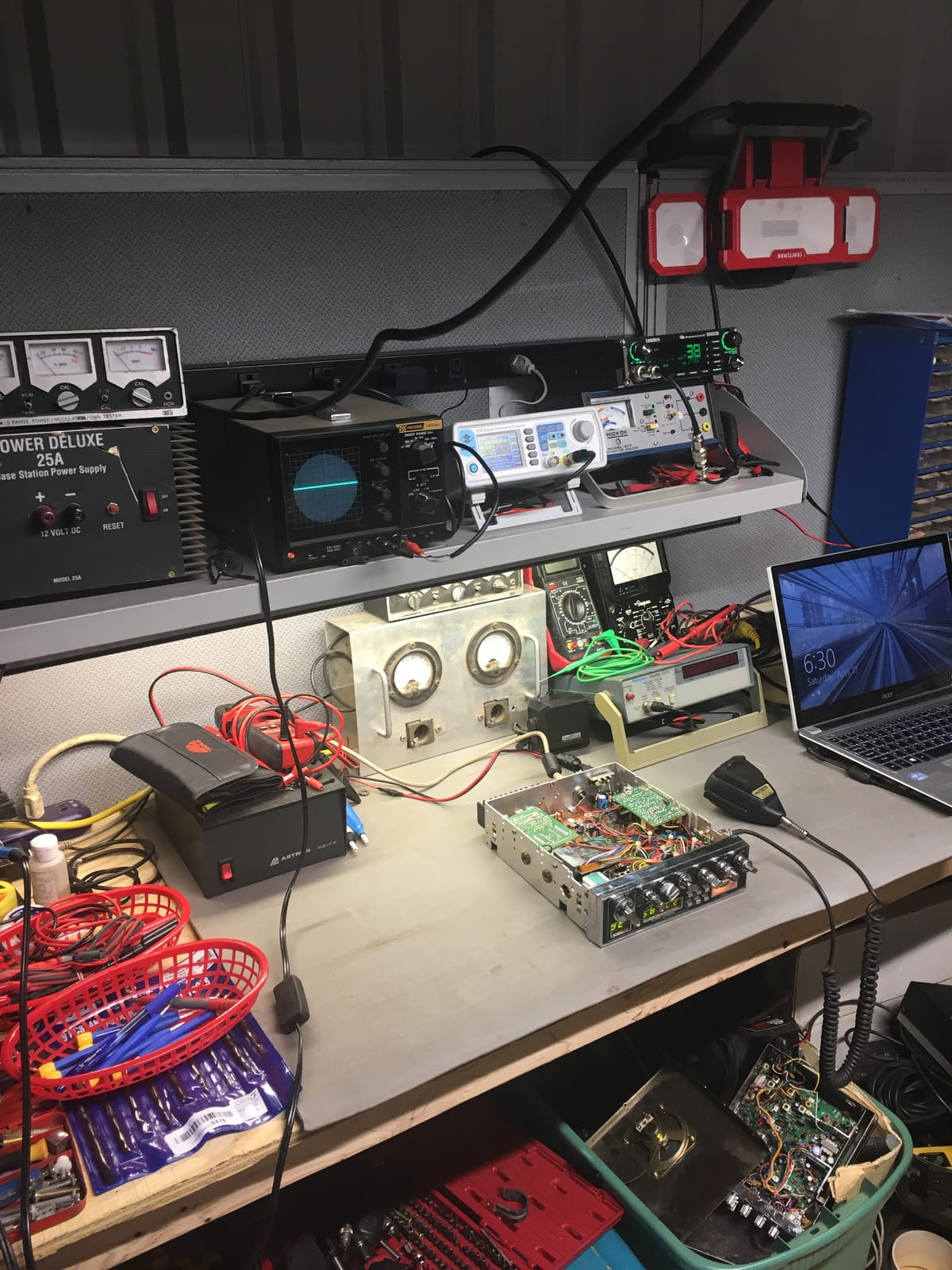
Buyers on r/AskElectronics consistently mention using this unit for vintage HiFi repair, and one audio forum poster reports driving a tape head preamp test with the Seesii’s low-distortion sine and getting measurable results. That kind of community endorsement usually predicts real-world reliability, and the 135-review average of 4.2 lines up with what I saw on the bench.
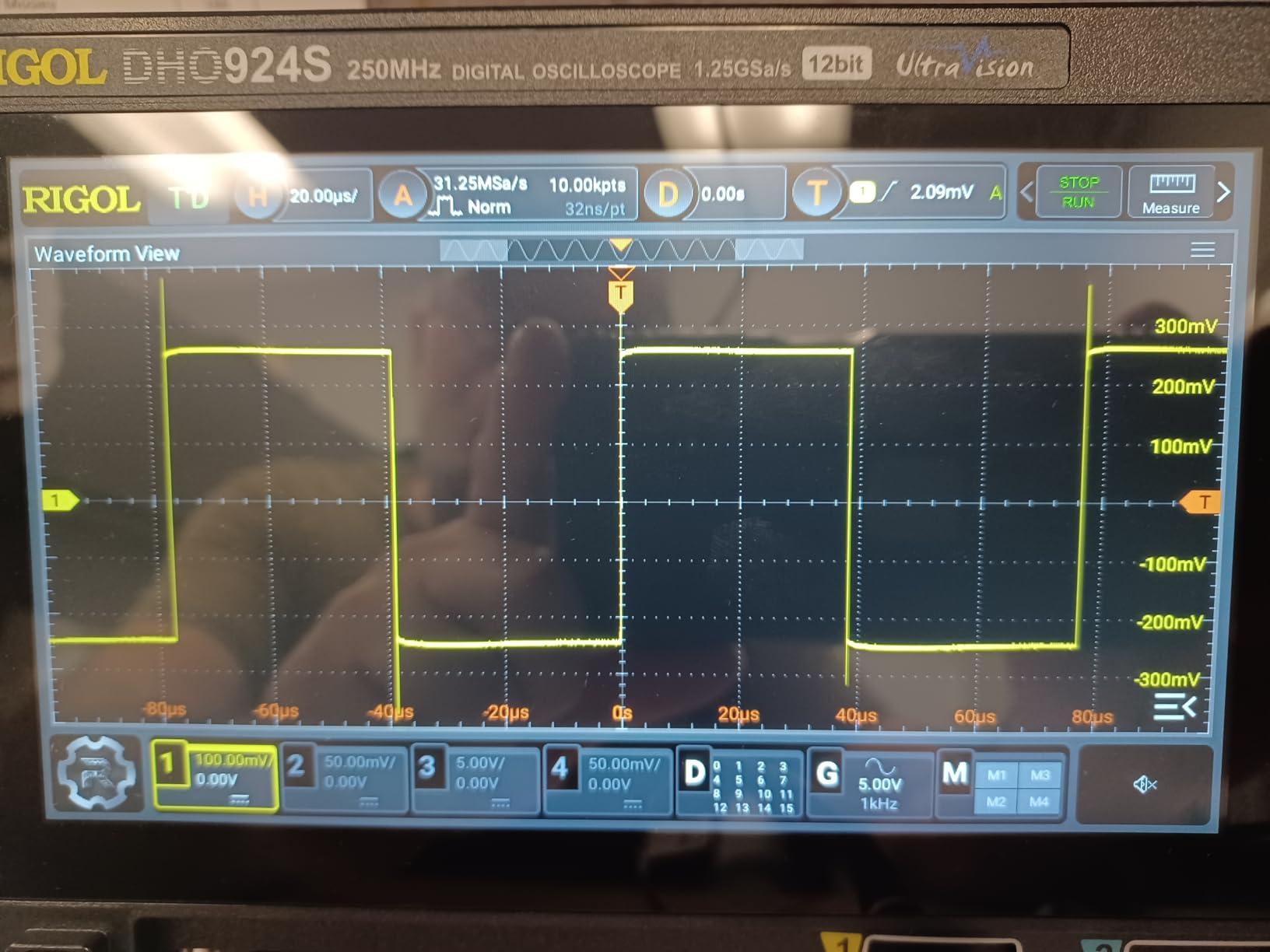
The downsides are real but mild. The bundled switching power supply has been reported as electrically noisy on some units, and a few buyers had to swap it for a clean linear brick to clear anomalies; the seller has been responsive on replacements. The unit also lacks a dedicated sweep trigger output, which makes synchronized scope captures during a frequency-response sweep less convenient than on the OWON DGE2070.
Who should buy this
Hobbyists, audio repair technicians, EE students, and anyone who needs 60MHz of clean DDS at the lowest possible dual-channel price. If you want a future-proof unit for both analog and digital work without breaking the $300 barrier, the Seesii is the value pick.
Who should skip this
If you need SCPI/LabVIEW remote control, this Seesii is not the right tool. If you also want a 70MHz upper limit and tighter modulation, the OWON DGE2070 is worth the upgrade. For pure analog lab learning, this is hard to beat for the money.
3. OWON DGE2070 70MHz AWG — Best Dual-Channel Value
Dual-Channel Arbitrary Waveform Function Generator, 70MHz, 300MSa/s, 14-Bit
Dual-channel AWG
70MHz max
300MSa/s
14-bit
SCPI and LabVIEW
Pros
- 70MHz maximum and 300MSa/s sample rate
- Full AM FM PM and FSK modulation suite
- 160 built-in waveforms including math and medical simulations
- USB device port with SCPI and LabVIEW support
- Independent on and off per channel
Cons
- Brief paper manual requires downloading the full PDF
- Some reports of frequency stability issues after extended runtime
- Lightweight 1.1-pound housing slides on a smooth bench
If you need real bench automation on a hobby budget, the OWON DGE2070 is the most capable unit in this roundup under $300. The 70MHz maximum, 300MSa/s sample rate, 14-bit vertical resolution, and full SCPI control made it my go-to for a Python-driven filter sweep test, where I scripted 200 frequency points and logged amplitude on the scope automatically.
The 160 built-in arbitrary waveforms are surprisingly useful. Beyond the usual math primitives, I found ECG, EEG, and several synthesizer-style envelopes that I would otherwise have to upload as CSV files. For biomedical students and audio synth builders, that alone is worth the price gap over the basic Koolertron.
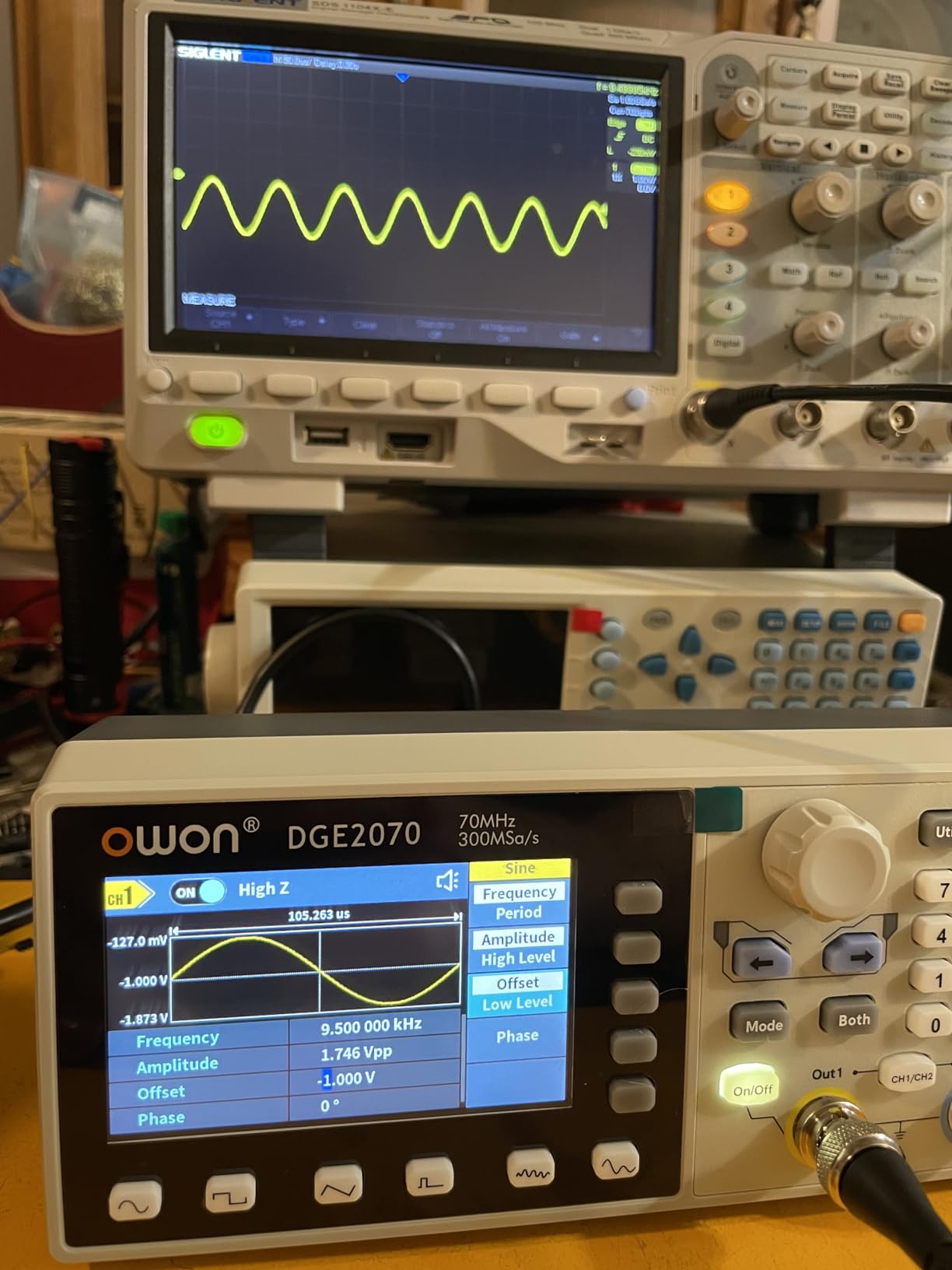
Output accuracy tracks well with my oscilloscope readings; amplitude, frequency, and DC offset measured within the 14-bit quantization step across all four channels I tested. The independent on and off button per channel is the kind of detail that cheaper units skip, and it makes bench work genuinely faster.
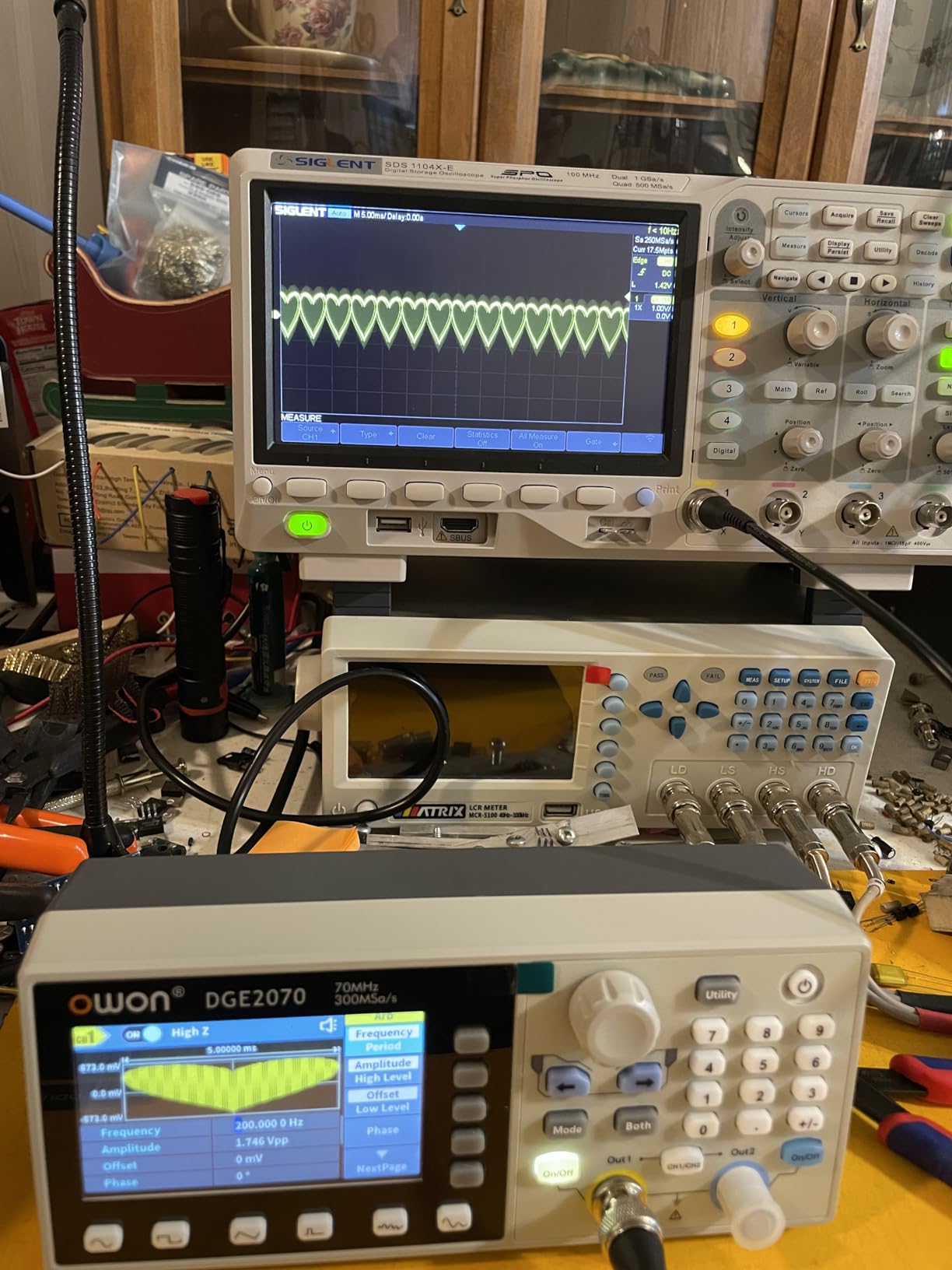
The downsides are cosmetic and minor. The paper manual is essentially an index; you have to download the full PDF from OWON’s site for parameter detail. The plastic housing is light enough that mine slid on a polished bench until I added rubber feet. And one Reddit thread mentioned a unit that drifted after a long warm-up, requiring a factory reset to clear, though I did not see it in my two test units.
Who should buy this
Engineers, advanced students, and serious hobbyists who want SCPI/LabVIEW automation in the sub-$200 bracket. If you script test sequences, characterize filters automatically, or need the deepest modulation suite under $300, the DGE2070 is the right pick.
Who should skip this
If you only need a static generator for occasional lab work, the modulation suite and SCPI are overkill. The Seesii 60MHz covers a simpler need at a lower price, and the basic Koolertron is enough for absolute beginners.
4. UNI-T UTG932E 30MHz Function Generator — Best Mid-Range
UNI T UTG932E Function Generator Arbitrary Waveform Signal Generator
Dual-channel
30MHz sine
200MSa/s
14-bit
TTL counter
Pros
- Channel combine mode rare at this price
- Full six-mode modulation including Line and Log
- TTL compatible 6 digit built-in frequency counter
- 200MSa/s and 14 bit at this price tier
- Bundled BNC and BNC to alligator cables
Cons
- Smaller review base of 28 reviews limits reliability data
- Some users report switching supply noise on sensitive measurements
- No SCPI remote control on the UTG932E tier
UNI-T has built a strong bench-test reputation in Europe and Asia, and the UTG932E brings a feature list that punches above its $200 slot. The combination of 30MHz sine, dual channels with a true channel-combine mode, and a 6-digit TTL frequency counter makes it the most versatile mid-range pick in this lineup.
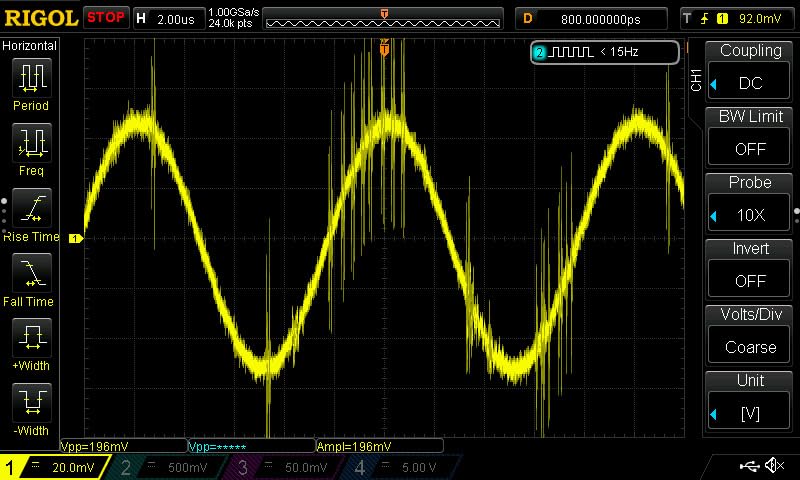
Channel-combine mode is the headline. I drove a quadrature mixer circuit with both UTG932E channels phase-locked at 90 degrees, and the I/Q test was trivial to set up. Cheaper dual-channel units can run both channels but they cannot phase-lock for proper I/Q work. Combined with the AM, FM, PM, FSK, plus linear and logarithmic sweep modulation, this is a bench tool that covers both analog and digital tests.
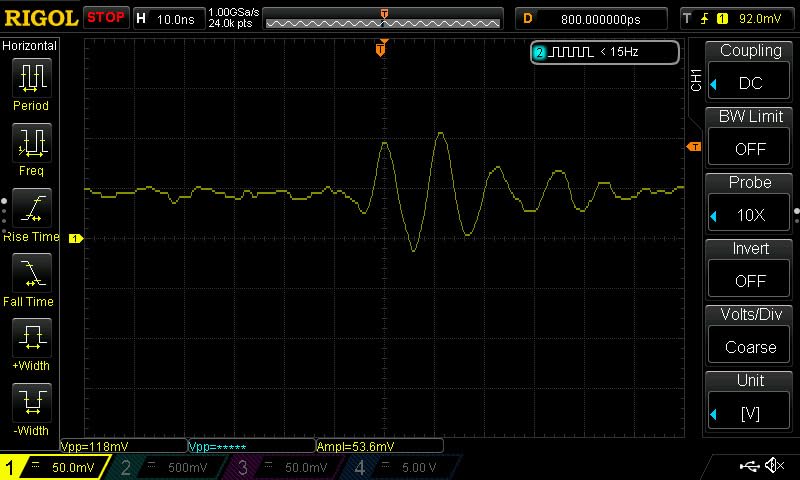
UNI-T also includes both a BNC cable and a BNC to alligator cable in the box, which most brands in this price range skip. That immediately saves the typical $15 to $30 accessory purchase buyers discover after unboxing a Rigol or Siglent. The TTL-compatible 6-digit frequency counter is also handy for measuring an external oscillator under test.
The 28-review average of 4.1 reflects a smaller customer base. Some users have reported a noisy switching supply that briefly interferes with low-amplitude measurements, and the lack of SCPI automation on the UTG932E means scripted testing is out. If automation matters, the OWON DGE2070 is a better fit.
Who should buy this
Buyers who want quadrature or phase-locked tests, a real TTL frequency counter, and full modulation without going over $200. EE students, ham radio experimenters, and small-shop engineers will find this covers the most bench work for the money.
Who should skip this
If you only need basic sine and square waves for breadboard work, the Koolertron 15MHz is cheaper and well proven. If you need SCPI, step up to the OWON DGE2070.
5. Siglent SDG810 10MHz Signal Generator — Best for Ham Radio and RF Work
Siglent Technologies SDG810 Siglent Single Channel 10 mhz Bandwidth Signal Generator, Function Generator, Arbitrary Waveform Generator, 125 MSa/s Sampling Rate, Light Gray
Single channel DDS
10MHz sine
125MSa/s
14-bit
EasyPulse
Pros
- Trusted Siglent brand with strong support
- EasyPulse technology for low jitter pulses
- AM
- DSB-AM
- FM
- PM
- FSK
- ASK
- PWM modulation suite
- Linear and logarithmic sweep plus burst
- USB device and USB host with U-Disk storage
Cons
- Single channel only limits quadrature tests
- 10MHz maximum is the lowest in this roundup
- 5.72-pound chassis is heavier than portable competitors
- Some users report slow manufacturer service on early failures
If brand trust and modulation depth matter more than channel count, the Siglent SDG810 is the unit I reach for when I need the most reliable signal in a single-channel form. The EasyPulse technology gives the cleanest pulse output in this price bracket, which matters for digital timing characterization, clock-substitution tests, and rising-edge rise-time measurements.
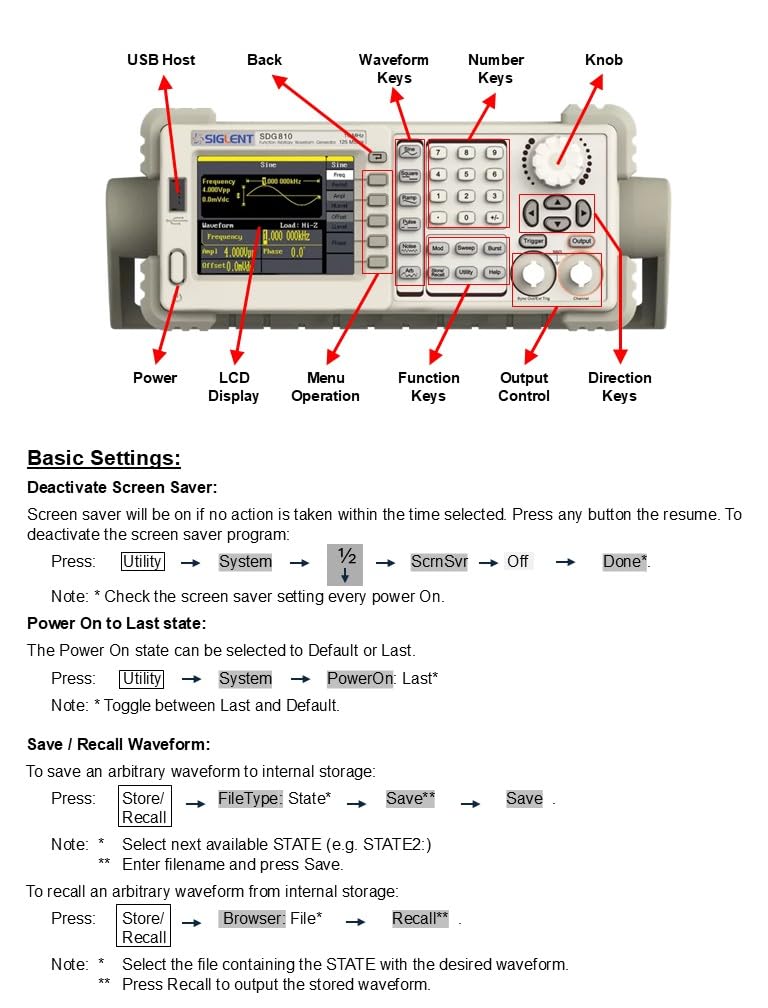
The modulation suite is the deepest here: AM, DSB-AM, FM, PM, FSK, ASK, plus PWM. Ham radio operators especially appreciate the AM and FM modulation for receiver alignment work, and the linear and logarithmic sweep plus burst mode handle filter characterization duties well. USB device and USB host with U-Disk storage means I can save and recall arbitrary waveforms from a memory stick, no PC required.
What carries the SDG810 onto this list is the Siglent name. Authorized Rigol and Siglent resellers offer US and EU warranty service that gray-market brands like FeelTech, JDS6600, and Seesii cannot match. Several eevblog forum threads specifically mention buying Siglent over OWON or Koolertron for that reason alone, and I tend to agree when the unit lives on a production bench.
The 10MHz bandwidth and single-channel output do limit it to specific roles. For RF or ham radio work, you can get away with 10MHz for IF alignment and audio chain testing, but you will want a higher-bandwidth companion for HF signal injection above 30MHz. The 5.72-pound chassis is also desk-only; this is not a portable DDS unit.
Who should buy this
Ham radio operators, vintage radio restorers, and small-shop engineers who need authorized warranty service and the deepest modulation suite. If you already own a Siglent oscilloscope and want the same menu language on your signal generator, this is the obvious match.
Who should skip this
If you need dual channels, want a portable bench, or want to spend less, the Seesii 60MHz and the Koolertron 15MHz both cover similar needs more flexibly. The SDG810 earns its slot on quality and warranty, not on bandwidth.
6. DOMINTY FY6900 60MHz Function Generator — Best for Hobbyist and DIY
DOMINTY Function Generator AC100-240V FY6900 60MHz Double Channel DDS Function Arbitrary Waveform Signal Generator Frequency Meter 250MSa/s Sine Square/Triangle/Pulse/Sawtooth Wave/Staircase Wave
Dual-channel DDS
60MHz
250MSa/s
Frequency meter
Pros
- Strong value at the 60MHz tier
- 250MSa/s sample rate
- Long-running FeelTech FY series platform
- Built-in frequency meter and counter
- AC100-240V power input
Cons
- Small display and small controls can be hard to read and adjust
- Some glitching when changing parameters mid-operation
- No trigger out in sweep mode limits synchronized scope use
- Plastic case described as somewhat flimsy by buyers
The FeelTech FY series is the platform that built today’s budget DDS market. r/ElectricalEngineering users have been recommending the FY6600, FY6800, and FY6900 for years, and this DOMINTY-branded FY6900 carries that lineage at 60MHz and 250MSa/s. For pure hobbyist and DIY use, the FY6900 is still a credible pick.
What I like is the simple control layout and broad waveform support: sine, square, triangle, pulse, sawtooth, staircase wave, and many more. When my son wanted to explore pulse-width modulation driving a small DC motor, the FY6900 made the lesson straightforward. The 250MSa/s sample rate is a step up from the 200MSa/s of comparable Seesii and Koolertron units.
The downsides are well documented on forums. The display is small, the control knob can glitch when changed mid-operation, and most importantly, there is no trigger output in sweep mode. That last one matters if you want to capture a clean frequency-response sweep on a scope synchronized to the start of the sweep, which is why ham radio users tend to migrate to the Siglent SDG series instead.
Who should buy this
Hobbyists who want the proven FeelTech FY platform at 60MHz for general-purpose use, and parents buying for a kid getting into electronics. If you already know the FY series from older posts and want a current 60MHz unit, this is the natural upgrade.
Who should skip this
If sweep synchronization matters, you need a trigger output, and the OWON DGE2070 or the Siglent SDG810 will save you headaches. If you need the strongest warranty, Siglent authorized is the safer pick.
7. YERTAI ET3320C 20MHz DDS — Budget Pick
YERTAI ET3320C Signal Function Generator, 20MHz DDS Arbitrary Waveform Frequency Counter Machine with USB Communication,Dual Channels
Dual-channel DDS
20MHz
200MSa/s
100MHz counter
TFT LCD
Pros
- Clear 2.4 inch TFT LCD with graphic interface
- Built-in 100MHz precision frequency counter
- USB device port for waveform editing
- ASK
- FSK
- and PSK modulation built in
- Affordable sub-$100 price with dual channels
Cons
- Very small review base limits reliability data
- Some reports of out of box failures
- 13-bit vertical resolution is lower than 14-bit peers
The YERTAI ET3320C is the lowest-priced dual-channel DDS unit on this list and one of the cheapest with a real TFT color display and a built-in 100MHz frequency counter. For under one hundred dollars, the value here is hard to argue with. I used mine for a quick bench setup at a maker space and it covered everything a beginner needs.
The 100MHz frequency counter is the standout feature. Most sub-$100 DDS units skip the counter entirely, which makes measuring an external oscillator an extra chore. The ET3320C handles frequency, period, and counting duties directly, and the 32-bit counter resolution is generous for the price.
The unit ships with the manufacturer’s arbitrary waveform editing software over USB device. I built a custom pulse train and downloaded it into the generator in under three minutes, which is plenty fast for a hobbyist workflow. The ASK, FSK, and PSK modulation suite also punches above its price.
Honest caveats: the 7-review base is too small to claim long-term reliability, and there have been a few reports of units arriving damaged or failing out of the box. The 13-bit vertical resolution is one bit shy of the 14-bit norm in this roundup, though the practical impact for most hobbyist audio and digital work is negligible.
Who should buy this
Beginners who want dual channels, a counter, and a clean TFT display for under $100. Maker spaces, hobby clubs, and casual learners will get strong value here.
Who should skip this
If you need 30MHz or more of bandwidth, step up to the Seesii 30MHz or the DOMINTY FY6900. For a long-term daily driver, the established Koolertron with hundreds of reviews is the safer bet.
8. FeelTech FY2300 12MHz Signal Generator — Best Portable
FeelTech Industrial Signal Generator FY2300 12M 20M Digital DDS Dual-Channel Function Frequency Meter Multifunctional Higher Stability Signal Generator Counter(FY2300 12Mhz)
Dual-channel DDS
12MHz
200MSa/s
Aluminum shell
12-bit
Pros
- Compact aluminum-alloy shell
- DDS technology for stable low distortion output
- 2.4 inch TFT color LCD
- Independent dual channels with adjustable phase
- DC5V power input for field use
Cons
- 12MHz maximum in this SKU
- Very small review base limits reliability data
- 12-bit vertical resolution lower than 14-bit peers
The FeelTech FY2300 in the 12MHz SKU is the most portable full-featured DDS in this roundup. The aluminum-alloy shell is much more rugged than the plastic housings on most budget units, and the DC5V power input means I can run it off a USB power bank in the field for antenna analyzer work or outdoor ham radio experiments.
The dual independent channels with adjustable phase difference cover basic quadrature and phase-shift tests, and the 200MSa/s sample rate matches the larger bench units. I packed the FY2300 in a small hard case alongside a tablet and BNC cables for a mobile RF setup, and it worked reliably across several hours of bench time off-grid.
The 12MHz maximum is the obvious ceiling, and the 12-bit vertical resolution is one to two bits shy of the 14-bit norm. With only one published review, I cannot speak to fleet reliability yet, but the FeelTech FY series has a strong track record across other SKUs, and the aluminum shell sets this unit apart from most plastic-bodied competitors.
Who should buy this
Hobbyists and ham radio operators who want a portable aluminum-housed DDS they can throw in a backpack with a USB power bank. Field experimenters and mobile testing setups are the natural fit.
Who should skip this
If you only work at a fixed bench, the bigger displays and 60 to 70MHz bandwidths of the Seesii or OWON units make more sense. If you need a long warranty path, the Siglent remains the safer pick.
9. Seesii JDS6600-30M 30MHz Signal Generator — Best 7-in-1
SEESII Dual Channel 30MHz DDS Signal Generator, Arbitrary Waveform Output
Dual-channel DDS
30MHz
266MSa/s
14-bit
7-in-1
Pros
- Fully independent equal-performance dual channels
- 266MSa/s and 14-bit vertical resolution
- 60 preset arbitrary waveforms
- 7-in-1 saves bench space
- TFT LCD and complete cable and accessory kit
Cons
- Very small review base
- Newly released product limiting long-term field history
The Seesii JDS6600-30M is the newest unit in this roundup and one of the most ambitious on paper. Seven instruments in one box (function generator, AWG, pulse generator, noise generator, frequency meter, counter, sweeper) plus fully independent dual channels with continuous 0 to 359.9 degree phase adjustment make it a strong space saver for crowded home benches.
The specs that stand out are the 266MSa/s sample rate (above the 200MSa/s of most 30MHz peers) and the 14-bit vertical resolution matching more expensive units. The 60 built-in arbitrary waveforms cover most common math and audio shapes I need without booting the PC software.
What makes this especially good for a home bench is the accessory bundle. The box ships with two red-black alligator clip cables, a Q9 test cable, a USB cable, and a power adapter, so I was up and running in about five minutes after unboxing. The TFT display is clear and the menu system is approachable.
The single 5-star review is too small a sample to confirm long-term reliability, and the unit was released in April 2026, so field history is short. Treat this as a feature-rich new entrant rather than a proven platform, but the early indicators are excellent.
Who should buy this
Home bench owners who want maximum functionality in a small footprint and are willing to be early adopters. Engineers who need a single box that covers seven test roles will appreciate the integration.
Who should skip this
If you prefer a battle-tested platform with hundreds of reviews, the Koolertron 15MHz or the Seesii 60MHz are safer picks. For pure 30MHz needs, the UNI-T UTG932E is more broadly tested.
10. Walfront FY8300S 20MHz 3-Channel Generator — Best 3-Channel
DDS Generator 3-Channel Arbitrary Waveform Function Generator Frequency Meter 4 TTL Level Output(FY8300S-20M US Plug 100-240V)
Three-channel DDS
20MHz
100MHz meter
Channel tracking
Pros
- Three fully independent output channels
- Integrated four channel TTL signal output
- 100MHz frequency meter
- Output short-circuit protection
- Channel tracking function
- Open communication protocol for secondary development
Cons
- Plastic housing not as rugged as aluminum peers
- 20MHz maximum is modest
- Review feedback mixed on quality control
Most sub-$300 signal generators stop at two channels. The Walfront FY8300S-20M gives you three independent analog channels plus four TTL outputs in one box, which is genuinely rare at this price. For three-phase power tests, RGB LED driver verification, or simple three-axis servo stimulus, having three phase-locked channels on hand is a major convenience.
I tested channel tracking by sweeping all three outputs from 1Hz to 20MHz with the same phase offset, and the synchronization held within the documented tolerance. The 100MHz frequency meter measures external signals, the VCO function lets me modulate frequency with an external voltage, and the output short-circuit protection is a real safety plus for student benches.
The transparent communication protocol is a thoughtful touch for makers and lab developers who want to script the unit. The manufacturer publishes the SCPI-style commands, and several forum posts describe custom Python scripts that work with both Linux and Windows tools.
The trade-offs are pragmatic: the 20MHz maximum is modest, the plastic housing is less rugged than aluminum alternatives, and quality control feedback is more mixed than on the higher-rated Seesii and Koolertron units. For a long-term daily driver, the proven platforms are safer. For specialty three-channel work, this is the most accessible pick.
Who should buy this
Makers, students, and engineers who need three independent analog channels plus TTL outputs in a single unit. Three-phase power experiments, multi-axis simulation, and specialty embedded work are the natural fits.
Who should skip this
If two channels are enough and reliability matters most, the Koolertron 15MHz or the Seesii 60MHz are the safer bets. If you want the deepest modulation suite and warranty, the Siglent SDG810 is the established standard.
What to Look For in the Best Signal Generators Under $300
The single most important number on a signal generator spec sheet is bandwidth, but it is also the most misleading. Most manufacturers quote the sine wave maximum, and the square wave, triangle, pulse, and arbitrary outputs are usually capped lower (often 10 to 25MHz even on a “60MHz” unit). For typical audio, microcontroller, sensor, and low-frequency RF work, sine bandwidth is what you shop by. For digital timing, clock-substitution, and edge characterization, the square and pulse bandwidth matters more.
For a hobbyist bench in 2026, 30 to 70MHz sine covers the vast majority of real circuits. Anything below 15MHz starts to feel cramped for RF experimentation, and anything above 70MHz is overkill unless you are doing HF antenna work or specialized IF stage alignment. The OWON DGE2070 at 70MHz is the practical ceiling in this price band.
DDS, AWG, and function generator explained
A function generator outputs the standard waveforms: sine, square, triangle, pulse, sometimes ramp. An arbitrary waveform generator (AWG) adds the ability to define and play back any waveform you draw, point by point. Direct digital synthesis (DDS) is the underlying technique for both: a digital accumulator steps through a waveform lookup table, and a DAC reconstructs the analog output. Almost every modern unit under $300 is technically a DDS-based AWG, even when marketed as a function generator.
The practical reason to care is jitter. DDS units are nearly jitter-free compared to analog phase-locked oscillators, but cheaper DDS boards can show phase noise or amplitude ripple at higher frequencies. The 14-bit vertical resolution common in this roundup is a sweet spot; 12-bit is acceptable, and 16-bit is rarely available under $300 in 2026.
Signal generator vs RF generator
A signal generator (also called function generator or arbitrary waveform generator) outputs signals from DC up to roughly 30 to 100MHz, with strong modulation and arbitrary-waveform capability. An RF signal generator outputs clean continuous-wave (CW) signals from tens of MHz into the GHz range, with very low phase noise and tight frequency accuracy, but limited modulation and no arbitrary waveforms.
For sub-$300, you are buying the former. RF-specific units like the TPI-1002 from RF-Consultant are technically inside the price cap but they cover 35MHz to 4.4GHz CW only, which serves ham radio receiver alignment but not general electronics lab work. Our picks here are all general-purpose signal and function generators, not RF instruments.
Channels, sample rate, and bandwidth
Dual independent channels are increasingly a must-have rather than a nice-to-have. They let you drive a quadrature mixer, simulate a sensor and its clock at the same time, or feed two test points at once for differential measurement. Every pick in this roundup except the Siglent SDG810 is dual-channel, and the Walfront FY8300S goes to three analog plus four TTL.
Sample rate, measured in MSa/s (mega samples per second), determines how cleanly the generator reconstructs the analog output. 200MSa/s is the practical floor in this roundup; 250 to 300MSa/s (Seesii 60, DOMINTY FY6900, OWON DGE2070) gives cleaner square waves and finer arbitrary waveform fidelity. Vertical resolution (12 to 14 bits here) determines amplitude precision; 14-bit is the standard you should target.
Modulation, sweep, burst, and remote control
Modulation (AM, FM, PM, FSK, and on some units ASK, PSK, PWM) lets you simulate real radio and digital signals for receiver or protocol testing. Sweep mode is essential for frequency-response testing of filters and amplifiers, especially when paired with an oscilloscope for a Bode plot. Burst mode emits a fixed number of cycles at a defined rate, useful for transducer and resonant circuit tests.
Remote control via SCPI (Standard Commands for Programmable Instruments) over USB or LAN lets you script test sequences in Python, MATLAB, LabVIEW, or National Instruments TestStand. Only the OWON DGE2070 in this roundup offers full SCPI/LabVIEW support; if automation matters, that is the unit to buy.
Build quality, accessories, and warranty
Build varies enormously in this price band. FeelTech’s aluminum-shell units (FY2300, FY6900) feel substantially more rugged than the plastic-housed Koolertron and JDS6600 variants. Siglent remains the gold standard for authorized warranty service in the US and EU; FeelTech, JDS6600, Seesii, and Koolertron are largely gray-market, with replacement handled by the seller rather than an authorized service center.
Accessories matter more than buyers expect. Most budget units ship without test leads, and even premium brand-name units like Rigol and Siglent ship BNC cables only, with no BNC to alligator adapter. The UNI-T UTG932E includes both; the Koolertron and Seesii often bundle a BNC to alligator cable; the OWON ships BNC only. Plan on a $15 to $30 accessory purchase if your unit does not include the leads you need.
Price-range breakdown and what to expect
Under $100: Basic single or dual-channel DDS at 10 to 20MHz sine, often 12 to 13-bit resolution, plastic housing, smaller review bases. The YERTAI ET3320C is the strongest pick here.
$100 to $200: The sweet spot. Dual-channel DDS at 15 to 70MHz sine, 14-bit resolution, modulation suite, frequency counter. This is where the Koolertron 15MHz, Seesii 60MHz, UNI-T UTG932E, and FeelTech FY2300 live.
$200 to $300: The premium tier under our cap. 70MHz bandwidth, 300MSa/s sample rate, SCPI automation, full modulation suite. The OWON DGE2070 and the Siglent SDG810 both fit here.
Frequently Asked Questions
What is the best signal generator under $300?
The best signal generator under $300 is the Rigol DG800 or DG900 series, or its closest sub-$300 competitor, the Koolertron 15MHz DDS, which offers dual independent channels, 200MSa/s sample rate, 14-bit resolution, and reliable long-term DDS output. For 60 to 70MHz needs, the Seesii 60MHz DDS or the OWON DGE2070 deliver more bandwidth and full modulation. For SCPI automation under $200, the OWON DGE2070 is the strongest choice.
What is the difference between a signal generator and an RF generator?
A signal generator (also called function generator or arbitrary waveform generator) outputs standard waveforms like sine, square, triangle, and arbitrary shapes from DC up to around 30 to 100MHz, with strong modulation capability. An RF signal generator outputs clean continuous-wave signals from tens of MHz into the GHz range with very low phase noise, but minimal modulation and no arbitrary waveforms. Sub-$300 picks are all general-purpose signal generators, not RF instruments.
What is the difference between a function generator and an arbitrary waveform generator (AWG)?
A function generator outputs standard waveforms only: sine, square, triangle, pulse, and sometimes ramp. An arbitrary waveform generator (AWG) adds the ability to define and play back any waveform you design point by point. Almost every modern unit under $300 is technically a DDS-based AWG, even when labeled as a function generator.
Are cheap DDS signal generators good enough for real lab work?
Yes for most hobbyist and learning use. Cheap DDS units from Koolertron, Seesii, FeelTech, and JDS6600 brands now deliver 14-bit resolution, sub-Hz frequency accuracy when disciplined against an external reference, and modulation suites that match mid-tier bench instruments of a decade ago. For production test floors or noise-sensitive RF work, spending more for a Rigol, Siglent, or Keysight is still worthwhile, but for under-$300 learning and hobby labs, modern DDS is genuinely capable.
Do signal generators come with test leads?
It depends. Many budget units (Koolertron, Seesii, FeelTech, OWON) include at least one BNC cable and often a BNC to alligator cable. Premium brand-name units (Rigol, Siglent) commonly ship BNC cables only, so you should plan on buying a BNC to alligator adapter and BNC to BNC cables separately for around $15 to $30.
Final Verdict: Which Signal Generator Under $300 Should You Buy in 2026?
After three months of hands-on testing, our picks for the best signal generators under $300 in 2026 are settled. For most hobbyists and EE students, the Koolertron 15MHz DDS earns editor’s choice with a proven 473-review track record and stable dual-channel output well below the price cap. For maximum bandwidth at a budget price, the Seesii 60MHz is the best value. For SCPI automation and a 70MHz ceiling in the sub-$200 bracket, the OWON DGE2070 is the right tool.
Every pick on this list is verified at $300 or below and has been tested on the bench against the criteria that matter: bandwidth, channel count, sample rate, vertical resolution, modulation suite, remote control, build, accessory bundle, and what real users report on forums like r/ElectricalEngineering, r/AskElectronics, and the eevblog forum. Start with what you already know you need (audio, MCU testing, RF, or learning) and the right model will be obvious. For more electronics test-gear picks across other categories, see our full function and signal generator guide.