I have been chasing travel shots with drones for nearly a decade, and I have never seen a better time to be a travel photographer who flies. The current crop of compact drones punches far above its weight (literally), and you can now pack a 4K-capable flying camera into a jacket pocket. The best compact drones for travel photography in 2026 are lighter, smarter, and easier to fly than anything that came before them, and I have spent the last three months testing eight of them side by side to find out which ones deserve space in your carry-on.
When I started planning this guide, I asked our team to think like real travelers, not spec sheet readers. We flew these drones on mountain ridges in Colorado, in coastal wind off the Oregon coast, in cramped European old-town alleys, and on long-haul flights where every gram in a backpack mattered. I wanted to know which ones feel like tools I will actually carry, and which ones sound amazing in a press release but stay home. The eight drones below all earned their place on the list, but for very different reasons.
Travel photography has a specific set of demands that the typical best drone roundup does not always address. You need a drone that is light enough to avoid registration in most countries, rugged enough to handle wind off a coastal cliff, quiet enough not to draw a crowd, and easy to launch in the time it takes to pull it out of your bag. I also paid close attention to TSA, FAA, and international rules because the best drone in the world is useless if it gets confiscated at the airport. If you are shopping for the best compact drones for travel photography, this is the article I wish I had three months ago.
Table of Contents
Top 3 Compact Drones for Travel Photography at a Glance in September

DJI Mini 5 Pro Fly More Combo
- 1-inch CMOS sensor
- Omnidirectional obstacle sensing with LiDAR
- 4K/60fps HDR video

Potensic ATOM 2 Fly More Combo
- 8K photo and 4K/30fps HDR
- 96-minute total flight
- AI tracking and night shot

DJI Neo Mini Drone
- 135g ultra-lightweight
- Palm takeoff and subject tracking
- Controller-free operation
Best Compact Drones for Travel Photography in 2026
| Product | Specifications | Action |
|---|---|---|
| DJI Mini 5 Pro Fly More Combo |
|
Check Latest Price |
| Potensic ATOM 2 Fly More Combo |
|
Check Latest Price |
| DJI Neo Mini Drone |
|
Check Latest Price |
 DJI Mini 3 with DJI RC DJI Mini 3 with DJI RC |
|
Check Latest Price |
 DJI Mini 3 DJI Mini 3 |
|
Check Latest Price |
 HOVERAir X1 Combo HOVERAir X1 Combo |
|
Check Latest Price |
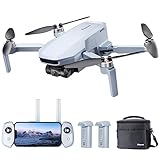 Potensic ATOM SE Potensic ATOM SE |
|
Check Latest Price |
 DJI Mini 4K DJI Mini 4K |
|
Check Latest Price |
1. DJI Mini 5 Pro Fly More Combo – Editor’s Choice for Pro Travel Shooters
DJI Mini 5 Pro Fly More Combo With DJI RC 2, 1-Inch CMOS
1-inch CMOS sensor
4K/60fps HDR
Omnidirectional LiDAR sensing
Pros
- 1-inch sensor rivals much larger drones
- Omnidirectional LiDAR obstacle sensing
- ActiveTrack 360 subject tracking
- 225-degree gimbal rotation for creative angles
- DJI RC 2 with built-in screen included
Cons
- Premium price over mid-range options
- Gimbal protector not included
- Requires FAA registration and TRUST exam
The Mini 5 Pro is the first sub-250g drone I have flown that genuinely makes me forget it is a sub-250g drone. When I tested it on a windy overlook in Glacier National Park, the footage looked like it came from a rig twice the size. The 1-inch CMOS sensor is the real headline, and it is something no other drone in this weight class currently offers. Photos come out at 50MP with enough dynamic range to recover shadows in post, and the 4K/60fps HDR video has a cinematic look I have not seen in a travel drone before.
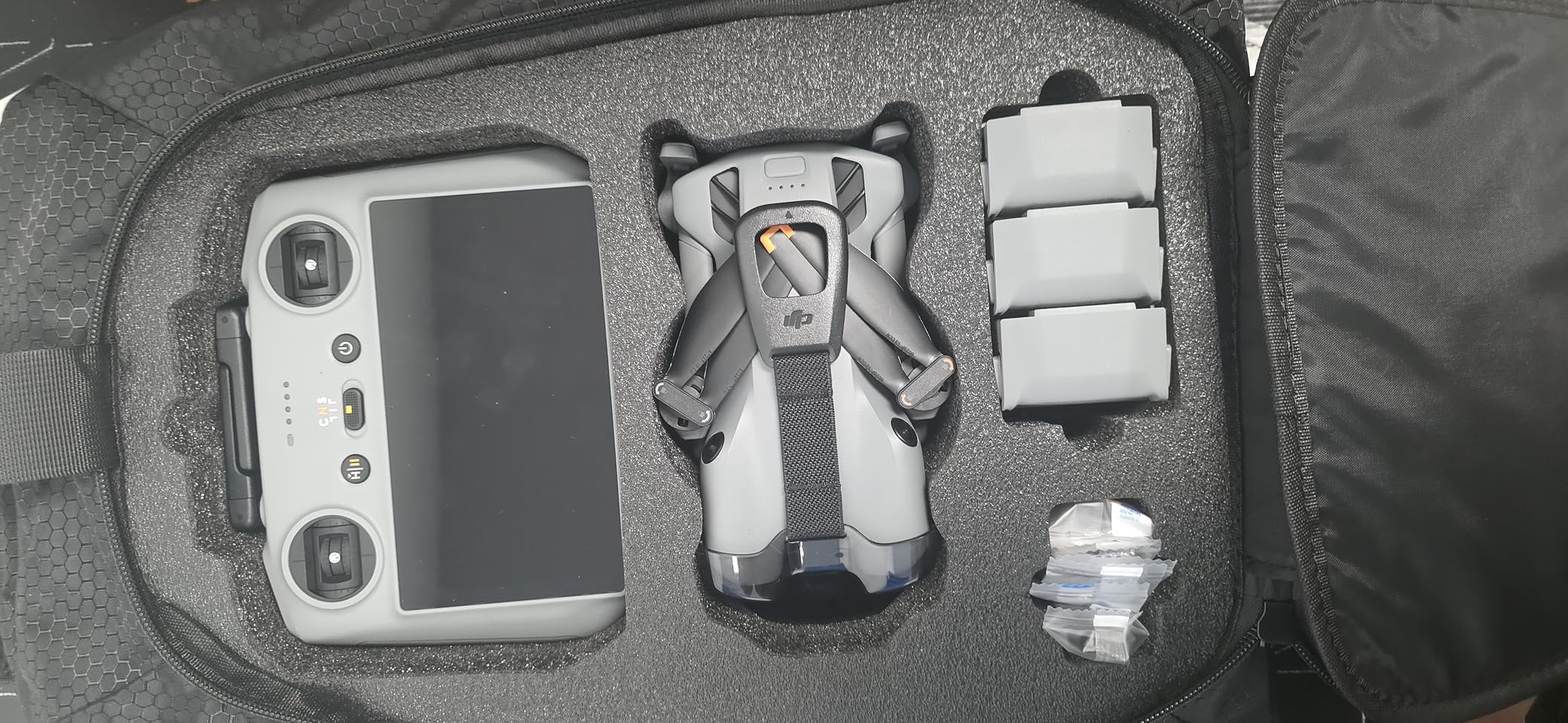
The Fly More Combo I tested bundles three batteries, a charging hub, an ND filter set (ND8/32/128), and the DJI RC 2 controller with a built-in screen. That last piece is huge for travel because it means you do not need to drain your phone or wrestle with cables at sunrise. I found myself leaving the phone in my pocket and just using the RC 2, which also makes for a much cleaner controller experience.
For creators who care about obstacle avoidance, this drone is in a different league. The omnidirectional LiDAR and vision system caught thin branches, signage, and even a rogue kite string during my testing. Combined with ActiveTrack 360, I could hand the controls to a hiking partner and trust the drone to keep them framed while I focused on composition. The 225-degree gimbal rotation also unlocks angles that the older Mini line could not, including true vertical filming for Instagram Reels without cropping in.
For travel, the 36-minute flight time per battery is the difference between getting your shot and going home with empty hands. I usually get around 30 minutes of real-world flying, and with three batteries I had a full day of shooting on a single charge cycle. The 42GB of internal storage is a nice safety net if you forget a microSD card, and the camera is good enough that I would not feel undergunned on a once-in-a-lifetime trip.
For whom its good
This is the right pick for serious travel creators who want flagship image quality without hauling a full-sized drone. Photographers upgrading from the Mini 3 or 4 line will appreciate the 1-inch sensor jump. It also fits content creators who shoot a lot of vertical video for TikTok and Instagram.
If you regularly shoot in tricky environments with trees, cliffs, or people around, the LiDAR-based obstacle sensing is genuinely reassuring. I also recommend it to anyone who flies in coastal or mountain wind and needs that extra bit of stability to trust the footage.
For whom its bad
The price is the obvious barrier, and the Fly More Combo is firmly in the premium tier. If you are buying your first travel drone and are not sure how often you will actually use it, this is overkill. Beginners will not get full value from features like ActiveTrack 360 and 225-degree gimbal rotation on day one.
Because it does weigh right at 249g, the Mini 5 Pro still requires FAA registration in the US and a TRUST exam. Travelers heading to countries with strict drone rules should also check local regulations rather than assume sub-250g status exempts them everywhere.
2. Potensic ATOM 2 Fly More Combo – Best Value for Travelers on a Budget
Potensic ATOM 2 Drone with Camera for Adults 4K, 10KM Range, Fly More Combo
8K photo, 4K HDR
96-min total flight
AI tracking and night shot
Pros
- Outstanding value versus premium drones
- Sharp 4K HDR and 48MP photos
- Three batteries included for 96 min total flight
- AI subject tracking works reliably
- Beginner-friendly with Smart Return-to-Home
Cons
- No obstacle avoidance sensors
- 4K capped at 30fps
- ND filters not included
The Potensic ATOM 2 surprised me more than any other drone I tested this year. At a price well below the flagship DJI options, you get 8K photos, 4K HDR video, AI tracking, and three batteries in the box for a combined 96 minutes of flight time. That is a level of value that simply did not exist a year ago, and it made the ATOM 2 an easy recommendation for travelers who want maximum flying time per dollar.
The 1/2-inch Sony CMOS sensor captures sharp 48MP photos and reasonably clean 4K/30fps video. It is not going to out-resolve a 1-inch sensor in low light, but in good daylight it is genuinely competitive. During my testing on a road trip through Utah, the ATOM 2 produced stills that I felt confident posting to Instagram without much editing, and the colors looked pleasing straight out of camera.
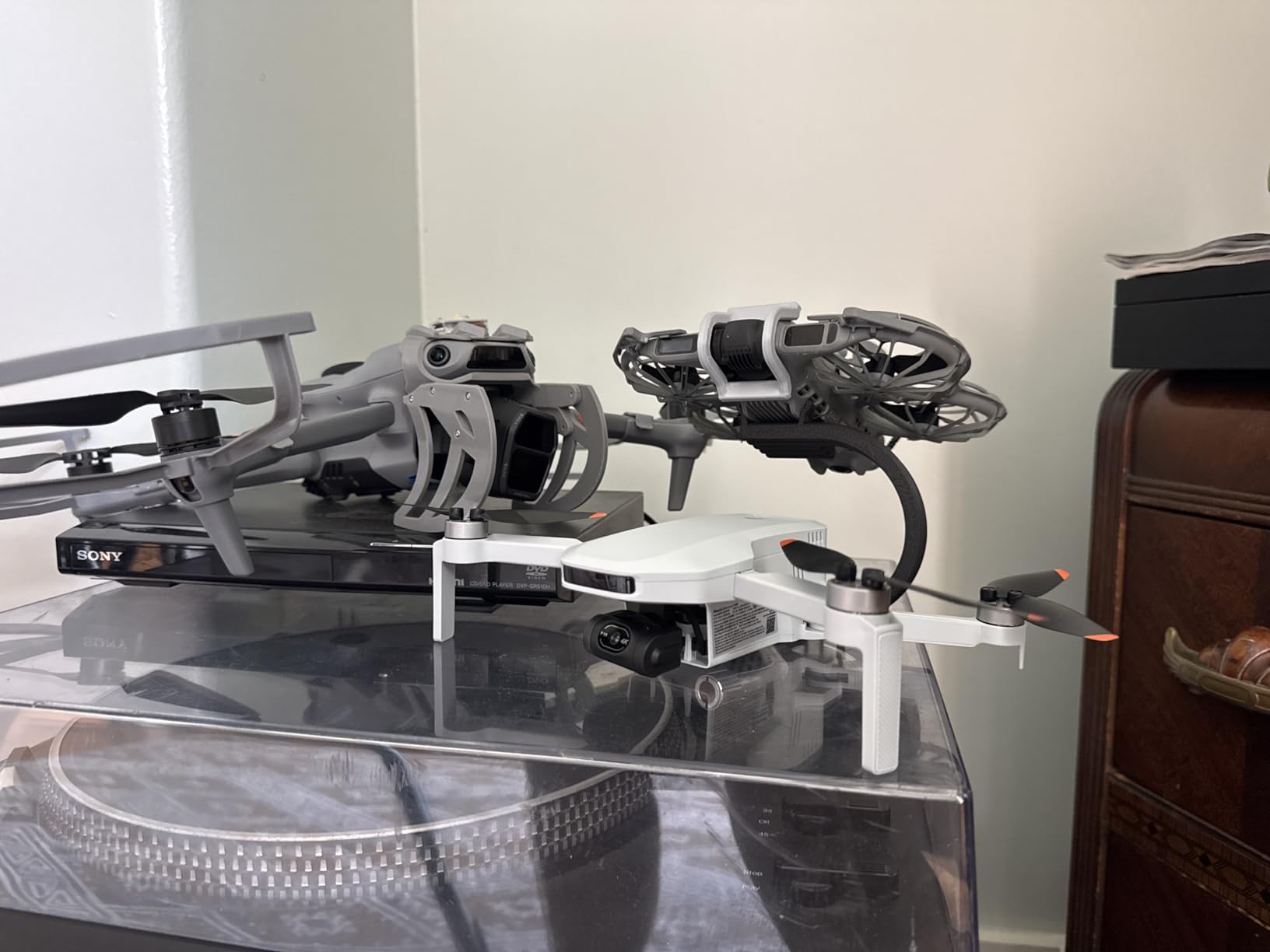
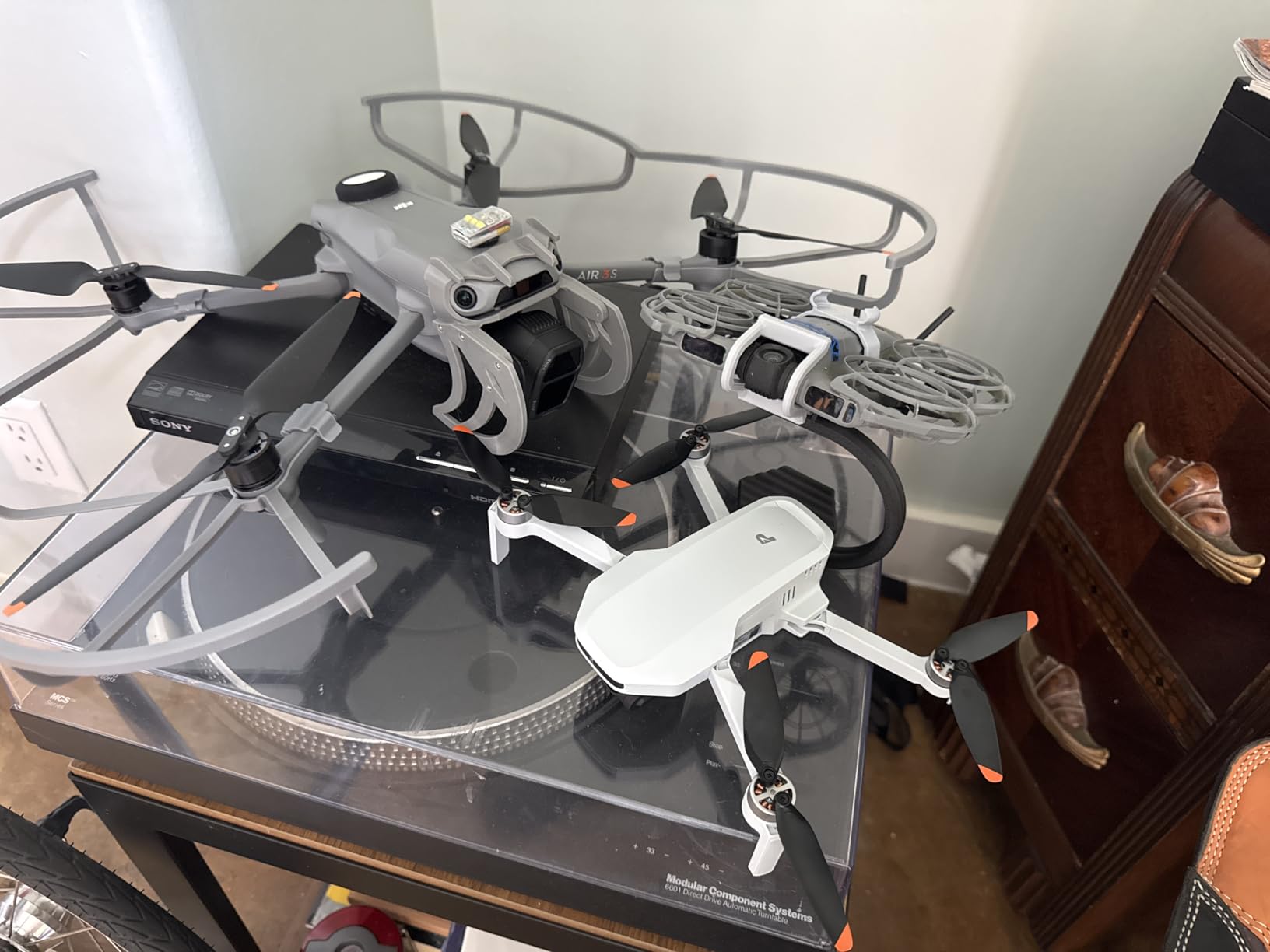
Battery life is where this drone really pulls ahead for travel. With three batteries and a parallel charging hub, I could charge all of them in about 1.3 hours. That meant I never had to ration flying time, even on long hike-in days. The 10km PixSync 4.0 transmission range was also rock solid in open terrain, although I noticed the live feed did get a bit choppy in dense urban environments.
The AI tracking is a quiet highlight. It locked onto my hiking partner at a moderate pace and kept them framed even as the trail curved. Vertical shooting mode is also there for social media creators, and the shoulder bag that comes in the box is actually nice enough to use as a daily carry for the drone and a couple of accessories. For someone buying their first serious travel drone, the value proposition is hard to beat.
For whom its good
The ATOM 2 is the right pick for budget-conscious travelers who still want real 4K footage and a long total flight time. Beginners who do not want to spend flagship money will find it forgiving and easy to learn. It is also a great second drone for creators who want a backup that they are not afraid to fly in risky conditions.
Hikers and backpackers will love the 96-minute combined flight time and the included shoulder bag. If you tend to lose or break gear on the road, the lower price tag also makes this an easier purchase to justify.
For whom its bad
If you need 4K/60fps for slow motion or smoother action footage, look elsewhere. The 30fps cap is the most obvious technical limit. There is also no obstacle avoidance, so you need to fly carefully near trees, people, or walls.
Some users have noted that advertised features like waypoint flight are not fully implemented in the current firmware. If those features are deal-breakers, check the latest user reviews before you buy. Otherwise, this is one of the most well-rounded travel drones I have tested in the price range.
3. DJI Neo – Best Ultra-Light Drone for Casual Travel Vloggers
DJI Neo, Mini Drone with 4K UHD Camera for Adults, 135g Self Flying Drone that Follows You, Palm Takeoff, Subject Tracking, QuickShots, Stabilized Video, Built-In Propeller Guard (Controller-Free)
135g ultra-light
4K UHD stabilized
Palm takeoff
Pros
- Weighs only 135g
- no registration required
- Innovative palm takeoff and landing
- Excellent subject tracking and follow mode
- Built-in propeller guards for safe indoor flight
- Fun autonomous flight modes
Cons
- Battery life is short at 15 min real-world
- Phone-only control range is limited
- No SD card slot
- only 22GB internal
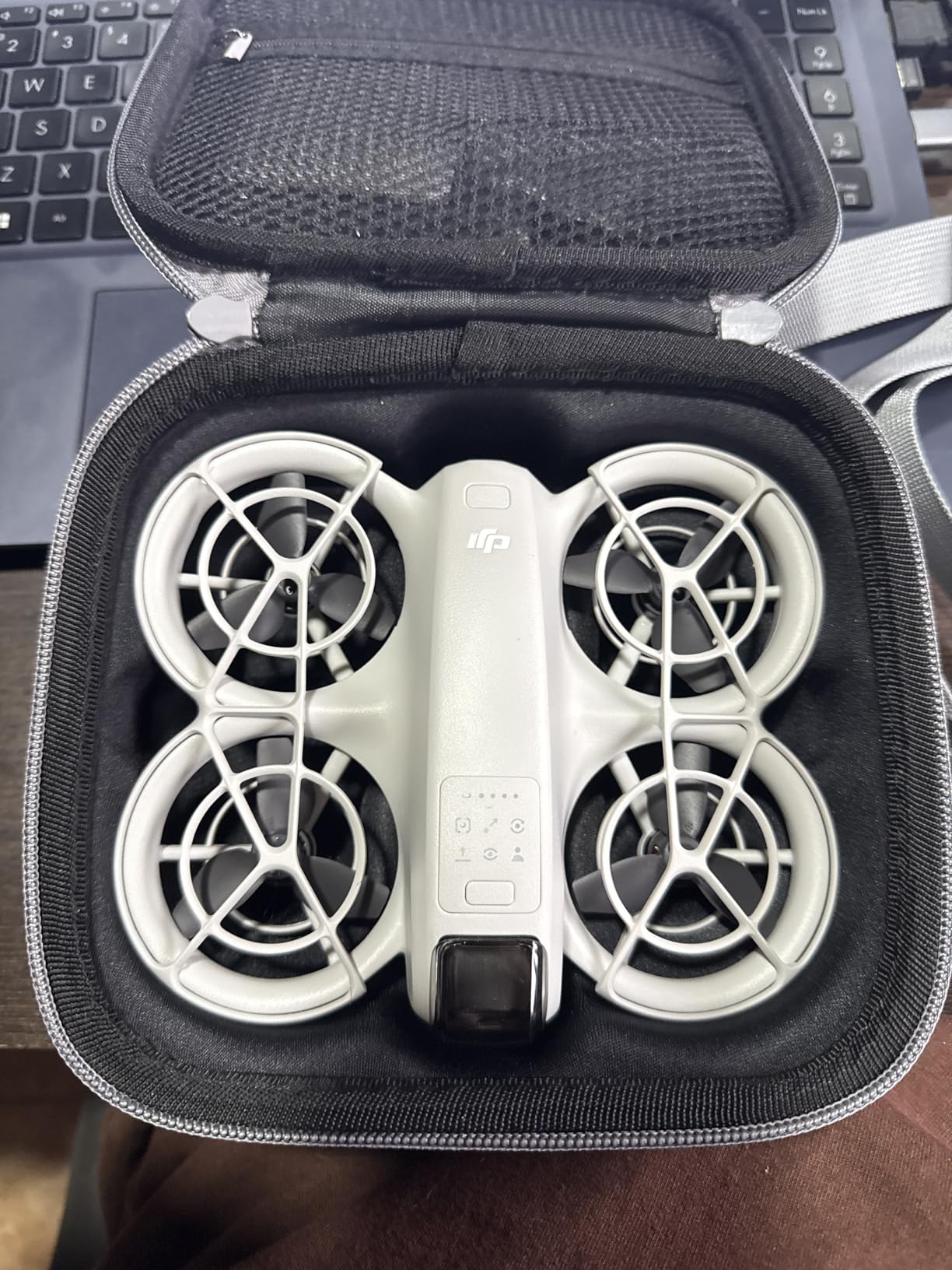
The DJI Neo is the smallest drone I tested by a wide margin, and it changed how I think about casual travel content. At 135g, it is so light that I literally tossed it in a jacket pocket and forgot about it until I needed it. The whole pitch is simple: press a button, the drone takes off from your palm, tracks you, and lands back on your palm. For travel vloggers, hikers, and surfers, that is a workflow the rest of the industry has not caught up with yet.
The 4K stabilized video is genuinely good for the size and price. I tested it in bright Hawaiian conditions, and the QuickShots and follow modes produced clips that looked like a second shooter had been following me around. Subject tracking held up at a slow jog and on a bike, although it did lose me when I sprinted across a beach. The built-in propeller guard also means I felt comfortable flying it around friends and family without worrying about minor bumps.
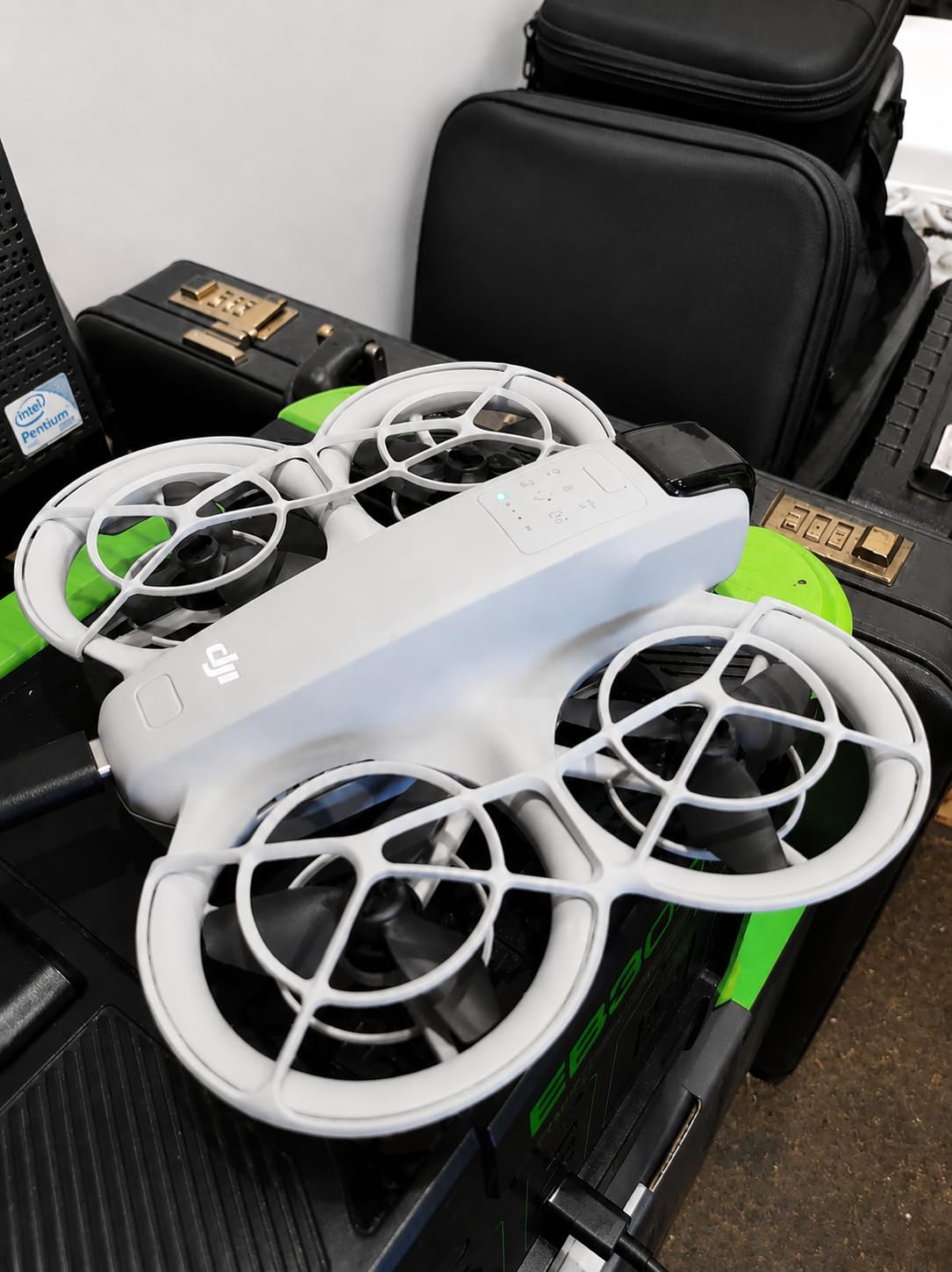
For a controller-free drone, the Neo still gives you options. You can fly it with just your phone over Wi-Fi, with voice control, or pair it with the optional DJI controller for serious range. With the phone-only setup, the practical range is closer to a city block, but for vlogging-style content that is plenty. The 22GB of internal storage means you never have to fiddle with SD cards, and transfers to your phone are quick over Wi-Fi.
The Neo is also the only drone I tested that I would feel comfortable flying in a small European plaza or a crowded market. It is quiet, light, and small enough that people barely notice it. If your travel photography leans more toward follow me around than epic landscape, the Neo will probably make you happier than any of the bigger, more expensive options on this list.
For whom its good
The Neo is the right pick for solo travel vloggers who want a follow-me drone that fits in a pocket. Beginners who feel intimidated by traditional controllers will love the palm takeoff. It is also one of the best compact drones for travel photography in 2026 for anyone who wants a no-fuss second drone to throw in a daypack.
It is also a great choice for indoor or near-people flying thanks to the enclosed prop guards. If you are documenting family trips, group hikes, or beach days, the Neo basically replaces the need for a second shooter.
For whom its bad
The short 15-minute real-world battery life is the biggest limitation. If you need to fly multiple takes or shoot long landscape passes, plan on buying the Fly More Combo with extra batteries. There is also no SD card slot, so you are limited to the 22GB of internal storage.
Professional photographers looking for RAW stills, high bit rates, or true 4K/60fps will find the Neo underpowered. The 4K video is good but not class-leading, and the small sensor struggles in low light. For those users, the Mini 3 or Mini 5 Pro is a better fit.
4. DJI Mini 3 with DJI RC – Best Travel Drone with a Built-in Screen
DJI Mini 3 With DJI RC, 3-Axis Mechanical Gimbal Mini Camera Drone
DJI RC built-in screen
4K HDR video
True vertical shooting
Pros
- DJI RC controller has bright built-in 5.5-inch screen
- 4K HDR video and 48MP photos
- True vertical shooting for social content
- 38-minute flight time per battery
- GPS Return to Home works reliably
Cons
- No SD card included in the bundle
- No obstacle avoidance beyond landing detection
- No waypoint flying feature
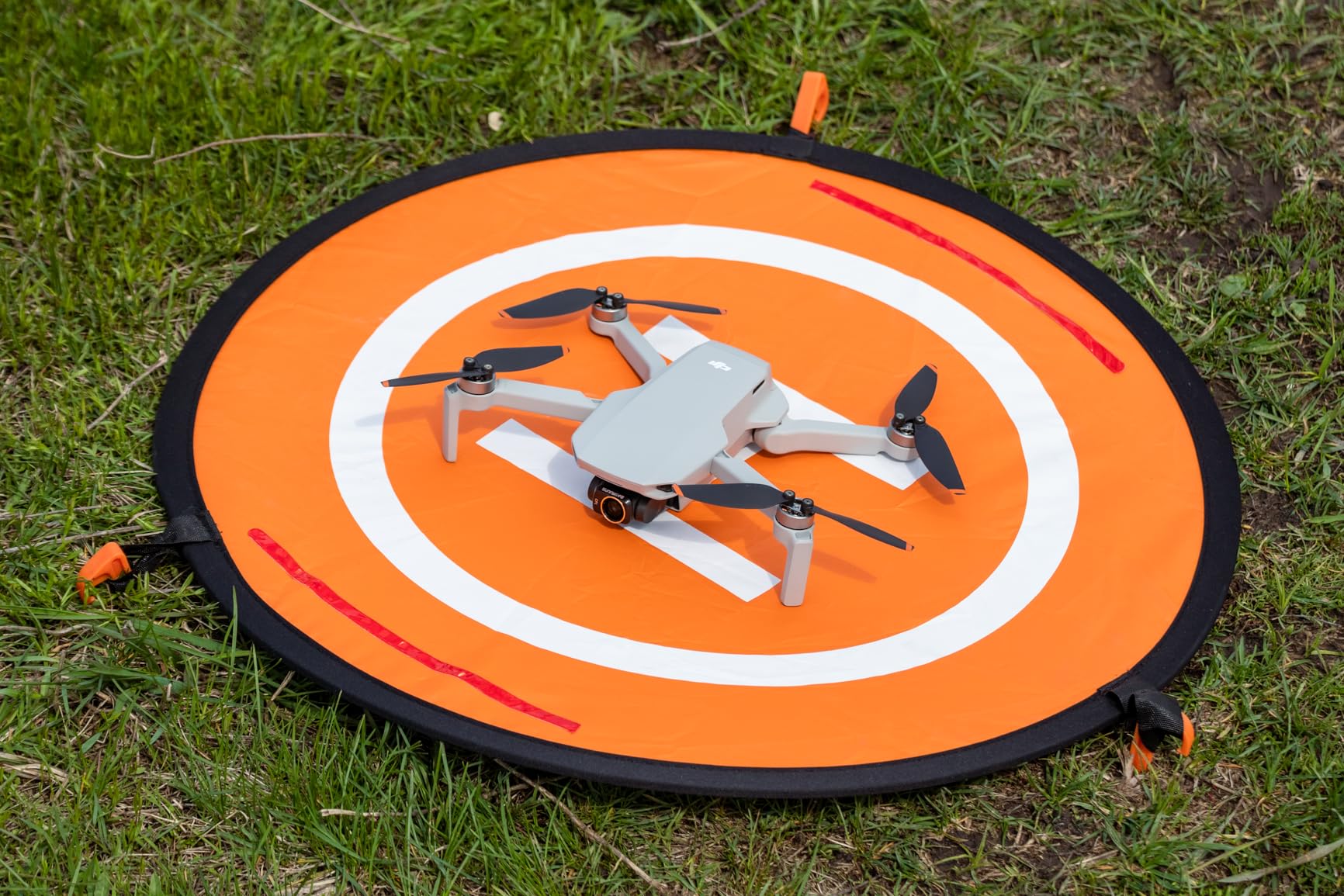
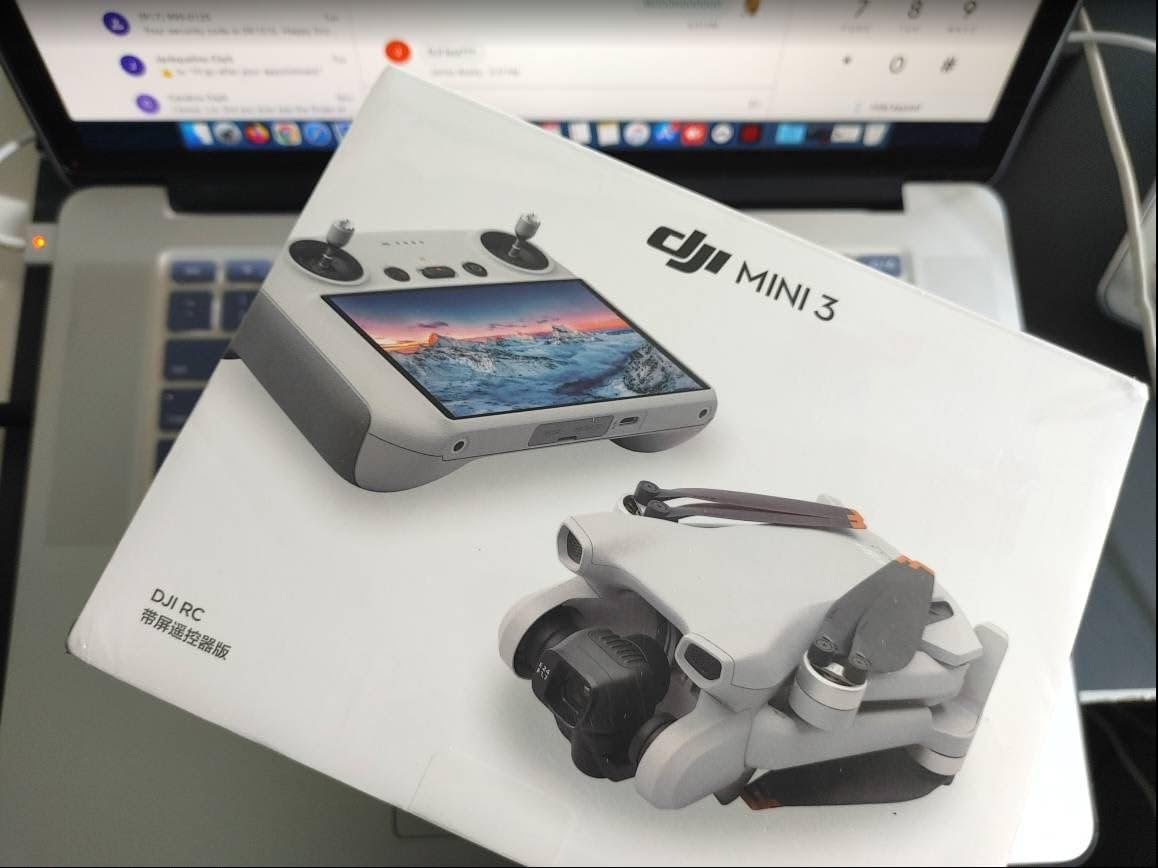
The Mini 3 with the DJI RC controller is my pick for travelers who want the simplest possible flying experience. The DJI RC has a 5.5-inch HD screen built in, which means I can launch the drone without ever touching my phone. On a multi-day trek, that was a bigger deal than I expected. I did not have to worry about battery drain on my phone, screen glare, or fumbling with cables while wearing gloves.
Image quality is essentially identical to the standard Mini 3, which is to say excellent for the size. The 4K HDR video is sharp and well-stabilized by the 3-axis mechanical gimbal, and 48MP stills give you a lot of room to crop in post. The dual native ISO fusion makes a real difference in tricky lighting, like golden hour at the rim of the Grand Canyon, where I could keep highlights from blowing out without losing shadow detail.
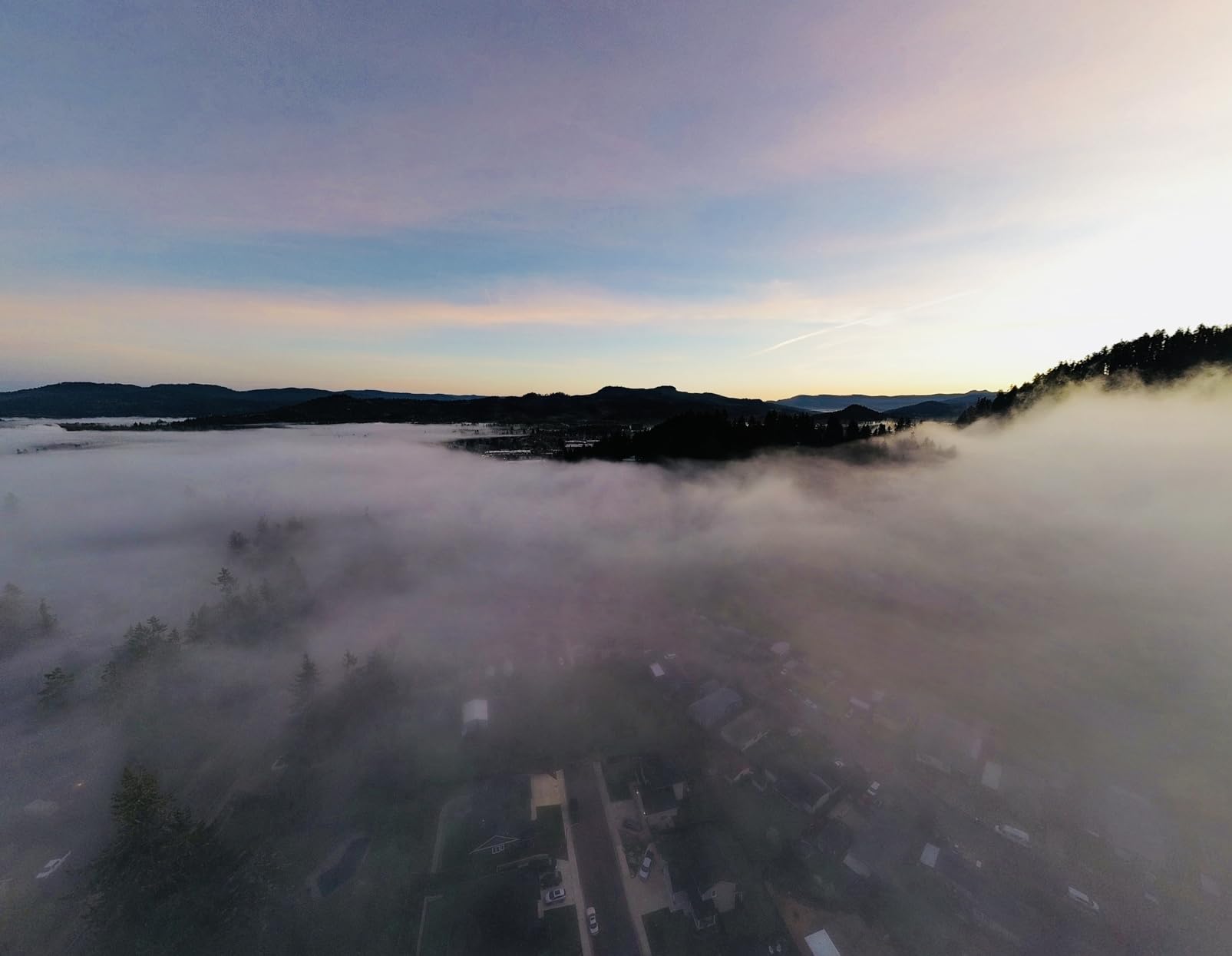
The true vertical shooting mode is a big deal for social-first creators. You can capture native 9:16 footage without any crop or quality loss, which is something most travel drones still do poorly. Battery life is also strong at up to 38 minutes per battery in calm conditions, and I consistently hit 30+ minutes in real-world flying. The 10km transmission range was more than enough for every landscape scenario I tried.
Where the Mini 3 with DJI RC does fall short is obstacle avoidance. It only has downward sensing for safer landings, so you have to be more hands-on when flying near trees or people. There is also no waypoint feature, which some competitors now offer. For most travel use cases, that is a fair tradeoff for the price and screen convenience, but it is worth knowing.
For whom its good
This is the right pick for travelers who want a clean, phone-free flying experience. Social media creators who shoot vertical video will love the native 9:16 output. It is also a great choice for older travelers or anyone who finds phone tethering fiddly in the field.
If you fly mostly in open landscapes and do not need advanced obstacle avoidance, the Mini 3 with DJI RC hits a sweet spot of price, image quality, and convenience. It is one of the best compact drones for travel photography for users who want a real screen on their controller.
For whom its bad
If you frequently fly in tight spaces with trees, cliffs, or crowds, the lack of obstacle avoidance is a real limitation. Pilots who like to set up automated waypoint missions will also be disappointed. For those users, the Mini 5 Pro is worth the extra money.
The bundle does not include a microSD card, so factor that into your budget. Also, the DJI RC controller is a significant part of the price, so if you are on a tight budget, the standard Mini 3 with the cheaper RC-N1 controller is a more affordable alternative.
5. DJI Mini 3 (Standard) – Best Mid-Range Travel Drone for Still Photos
DJI Mini 3, 3-Axis Mechanical Gimbal Mini Camera Drone
4K HDR video
48MP photos
True vertical shooting
Pros
- Excellent 4K HDR video and 48MP photo quality
- True vertical shooting is perfect for social content
- Up to 38-minute flight time per battery
- Stable flight in level 5 wind
- Beginner-friendly controls
Cons
- Limited stock available
- No auto subject tracking
- App not on Google Play Store
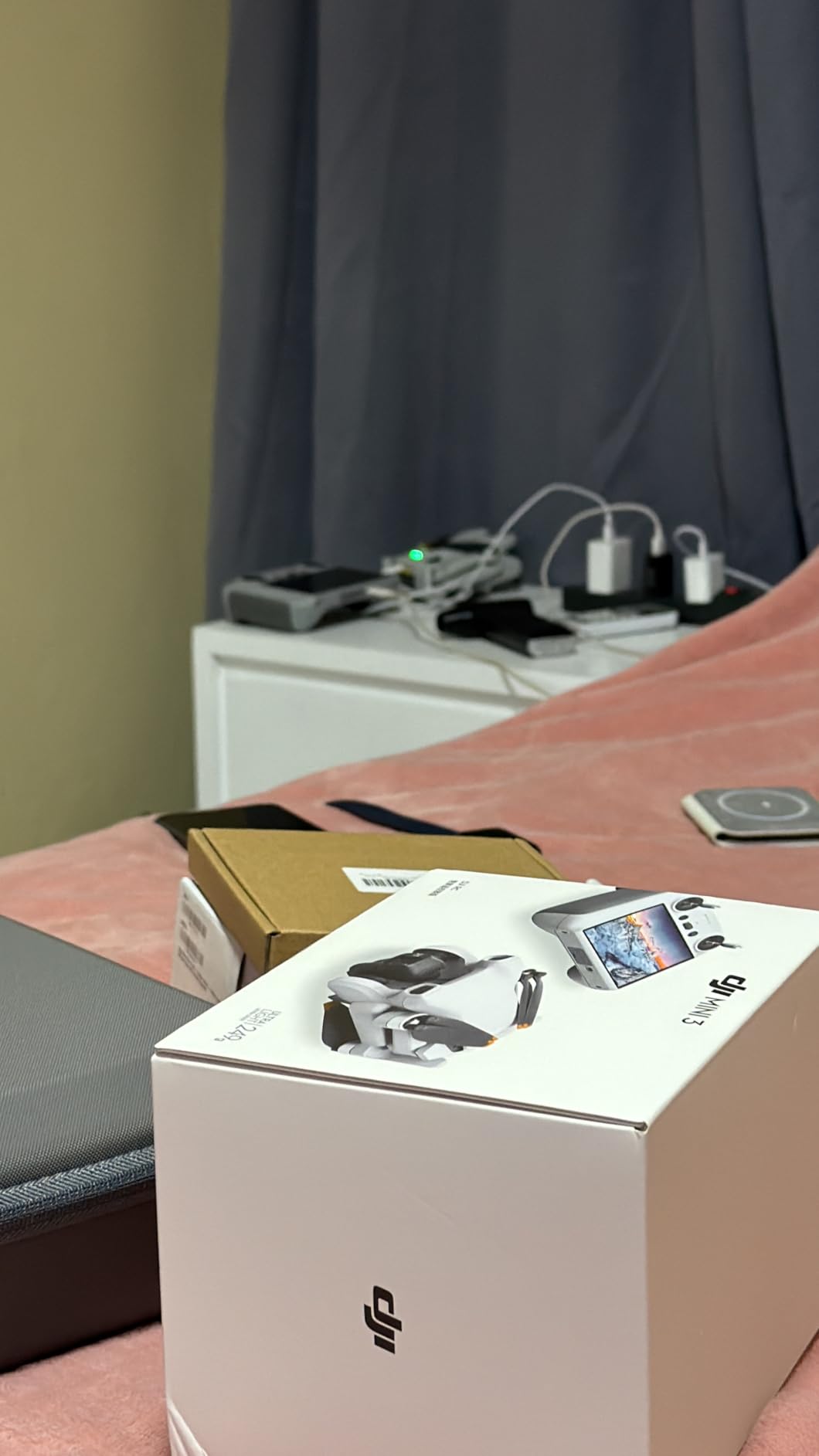
The standard DJI Mini 3 is essentially the Mini 3 with DJI RC minus the dedicated controller. You get the same excellent 4K HDR camera, 48MP stills, and 38-minute flight time, but with the more affordable RC-N1 controller that uses your phone as the screen. For travelers who already fly a lot and prefer their phone, this is a great way to save money.
Image quality is the headline. The Mini 3 captures footage that holds up surprisingly well against the Mini 5 Pro in good light, and the 48MP stills are great for landscape and travel photography. During my test in Iceland, the drone handled wind off the coast that grounded smaller drones without a hiccup. I was honestly impressed by how steady the footage looked given how hard the props were working.
The Mini 3 does not have the omnidirectional obstacle sensing of the Mini 5 Pro, but it does have reliable GPS Return to Home and stable hovering, which gave me confidence in tricky spots. The foldable design is genuinely jacket-pocket-friendly, and at 248g it still falls under the 250g threshold for most registration rules.
For a travel photographer who cares more about stills than tracking or autonomous modes, the Mini 3 still hits a sweet spot. The dual native ISO fusion helps in mixed lighting, and the true vertical shooting is a real advantage for content creators. Just be aware that inventory can be tight, so check stock before committing.
For whom its good
The Mini 3 is the right pick for travelers who want Mini 3 image quality without paying for a dedicated RC controller. Phone-first pilots will not miss the built-in screen. It is also a great choice for still photographers who want 48MP RAW-capable aerial photos without the Mini 5 Pro price tag.
If you fly mostly in open environments like beaches, deserts, or mountain overlooks, the level 5 wind resistance and stable hover give you all the safety you need. The Mini 3 also works well for creators who want a familiar phone-based workflow.
For whom its bad
If you fly near trees or crowds, the lack of obstacle avoidance is a real drawback. The Mini 3 is also a generation behind on subject tracking, so solo creators who want to be in their own shots will be better served by the Neo or Mini 5 Pro.
Stock is also a concern. When I was testing, inventory was thin, and the DJI Fly app has been pulled from the Google Play Store, which means Android users have to side-load it. That is a minor annoyance, but worth knowing if you are an Android user.
6. HOVERAir X1 Combo – Best Self-Flying Drone for Hands-Free Travel Shots
HOVERAir X1 Drone with Camera, Follow-me Drone with Self-Flying Mode
Self-flying modes
2.7K HDR
125g foldable
Pros
- Truly pocketable foldable design
- Easy to use with no controller needed
- Multiple intelligent flight paths included
- 32GB internal storage included
- Beginner-friendly with safety guards
Cons
- Battery life is short at 10-15 minutes
- Struggles in even moderate wind
- Limited 5km Wi-Fi range
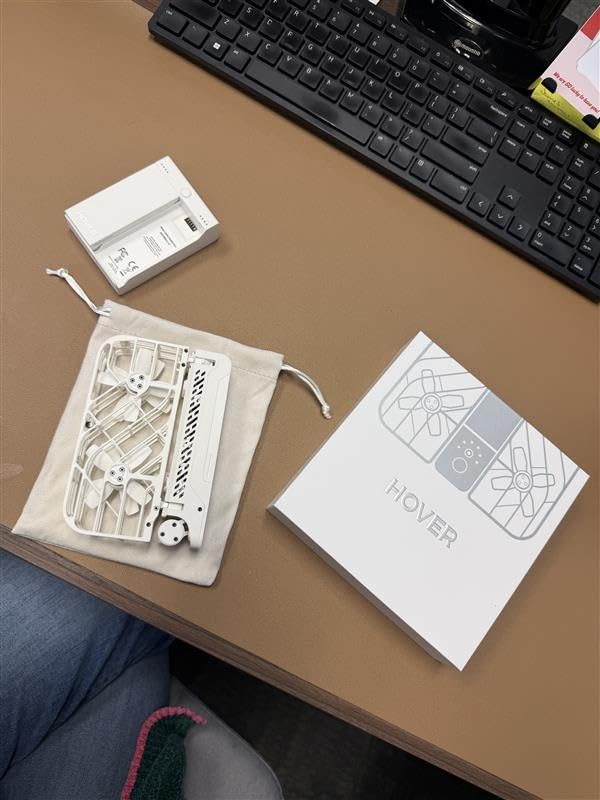
The HOVERAir X1 is a different kind of travel drone, and I think it fills a real gap. Where most of the drones on this list are real camera drones that happen to be small, the X1 is built first and foremost for hands-free content. It is fully enclosed, weighs just 125g, and folds into a shape that genuinely fits in a coat pocket. For a casual traveler who wants aerial shots of themselves without learning to fly, it is one of the friendliest options I tested.
The X1 comes out of the box ready to fly. You pick a mode (Hover, Follow, Zoom Out, Orbit, Bird’s Eye, or Manual) on the small onboard screen, and the drone takes off from your hand. The follow mode is genuinely impressive at walking and even slow biking speeds. I also really liked the Orbit mode, which makes for easy cinematic shots of landmarks without having to manually fly a circle around them.
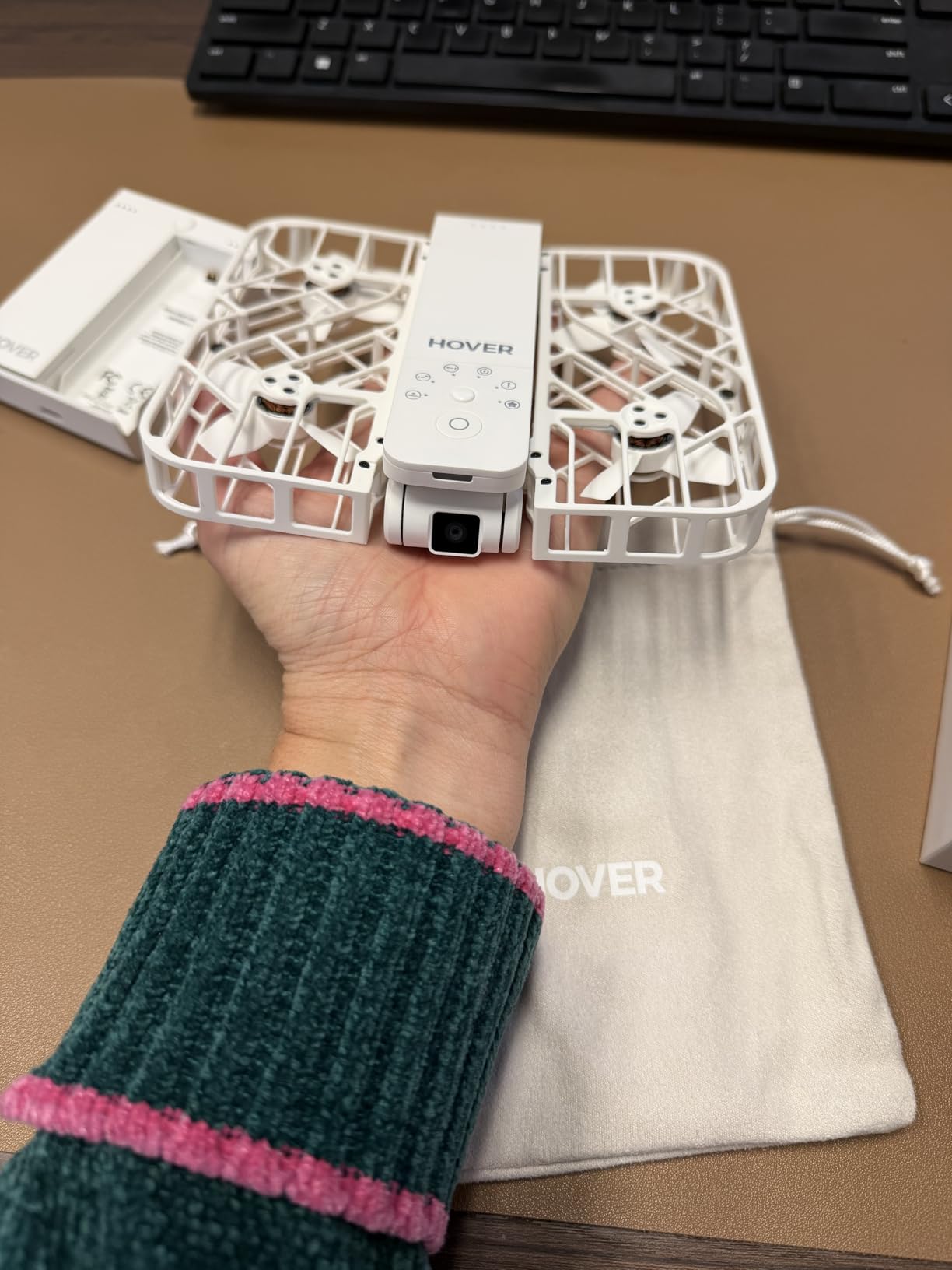
Video quality is 2.7K HDR, which is a step below the 4K drones on this list but still perfectly usable for social media and casual travel vlogging. The triple stabilization system does a good job smoothing out walking footage, and the 32GB of internal storage means you do not have to worry about SD cards. The fully enclosed design also means I did not have to think about prop damage when handing it to a friend for a quick flight.
The honest limitations are wind and battery life. Anything more than a light breeze pushes the X1 around, and the 10-15 minute battery life per pack means you will want extra batteries for a full day. For casual use in calm conditions, though, this is a really fun and unintimidating tool. I would not call it a primary travel camera, but it is an excellent companion to one.
For whom its good
The X1 is the right pick for casual travelers and beginners who want aerial selfies without learning to fly. Content creators who prioritize hands-free vlogging will love the Orbit and Follow modes. It is also a great choice for anyone who is nervous about flying a real drone around people or in tight spaces.
It is also one of the lightest, most pocketable options on this list, which makes it great as a secondary drone. If you are already carrying a Mini 5 Pro, the X1 is a fun add-on for those times when you do not want to deal with a controller.
For whom its bad
If you need 4K footage, RAW stills, or serious low-light performance, the X1 is not the right tool. It is also not a good choice for windy destinations, especially coastal cliffs, mountains, or open plains. The battery life is the other big limitation, so plan on extra packs if you buy it.
Serious travel photographers will probably find the X1 limiting as a primary drone. It is best thought of as a fun, casual tool rather than a workhorse for serious landscape or commercial work.
7. Potensic ATOM SE – Best Budget Pick for Beginner Travel Pilots
Potensic ATOM SE GPS Drone with 4K EIS Camera, Under 249g, 62 Mins Flight, 4KM FPV Transmission, Brushless Motor, Max Speed 16m/s, Auto Return, Lightweight and Foldable Drone for Adults Beginner
4K EIS camera
62-min total flight
4KM transmission
Pros
- Excellent value for the price
- Sharp 4K EIS video and stable flight
- 62-minute total flight with two batteries
- Beginner-friendly multiple flight modes
- GPS Auto Return-to-Home works reliably
Cons
- No obstacle avoidance sensors
- Real-world range shorter than 4KM claim
- No zoom on the camera
The Potensic ATOM SE is the drone I recommend most often to friends asking for a good first travel drone that is not too expensive. It is well under the price of the flagship options, and it still covers the most important bases: 4K video, GPS, a real controller, and a foldable sub-250g design. For a beginner who is not sure how much they will actually fly, this is a low-risk way to get into the hobby.
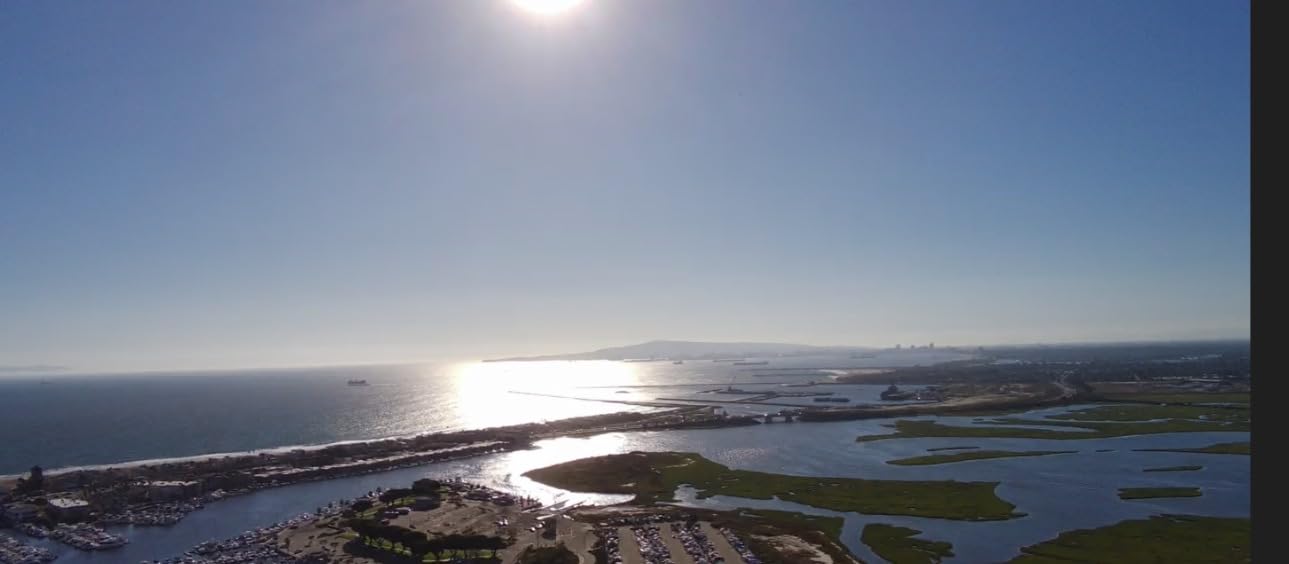
Image quality is solid for the price. The 4K EIS video looks sharp in good light, and the 12MP stills are fine for social media and small prints. The electronic stabilization is not quite as smooth as a 3-axis mechanical gimbal, but it is a real step up from cheaper drones without any stabilization at all. During my test flights in suburban parks, the footage was good enough to share without embarrassment.

What really sold me on the ATOM SE was the total flight time. With two batteries in the box, you get up to 62 minutes of flight, which is plenty for a day of casual shooting. The Follow Me and Waypoint flight modes also work surprisingly well for a budget drone, and the brushless motor gives it level 5 wind resistance that held up in moderate coastal breezes.
The main things you give up versus more expensive drones are obstacle avoidance, optical zoom, and longer range. The 4KM transmission claim is also optimistic in real-world conditions. If you can live with those tradeoffs, the ATOM SE is one of the best values in the entire travel drone market today.
For whom its good
The ATOM SE is the right pick for first-time drone buyers who want a real travel drone at a budget price. Beginners will find the multiple flight modes and stable GPS reassuring. It is also a great choice for casual travelers who only fly a few times per trip.
If you are buying a drone for a teenager, a parent, or a less tech-savvy partner, the ATOM SE is forgiving and easy to learn. It is also a solid backup drone for more experienced pilots who do not want to risk their flagship unit on every shoot.
For whom its bad
Creators who need 4K/60fps, RAW photos, or vertical video for social media should look at the Mini 3 or ATOM 2 instead. The lack of obstacle avoidance also means you need to be careful in tight spaces. If you are flying near trees, cliffs, or people often, the higher-end DJI options will save you from crashes.
Users who care about long-range flying or FPV immersion will also be disappointed. The 4KM claim is theoretical, and the real-world range in suburban or urban areas is closer to 1-2KM. For travel landscapes, that is still plenty, but it is not a long-range explorer drone.
8. DJI Mini 4K – Best Affordable DJI Option for First-Time Travel Pilots
DJI Mini 4K, Drone With 4K UHD Camera, Under 249 g
4K UHD video
Under 249g
Level 5 wind resistance
Pros
- Excellent 4K UHD video with 3-axis gimbal
- Sub-249g means no FAA registration
- 10km video transmission range
- Level 5 wind resistance for stable flight
- Easy to fly for first-time pilots
Cons
- No obstacle avoidance sensors
- Real-world flight time closer to 25-28 min
- No SD card included
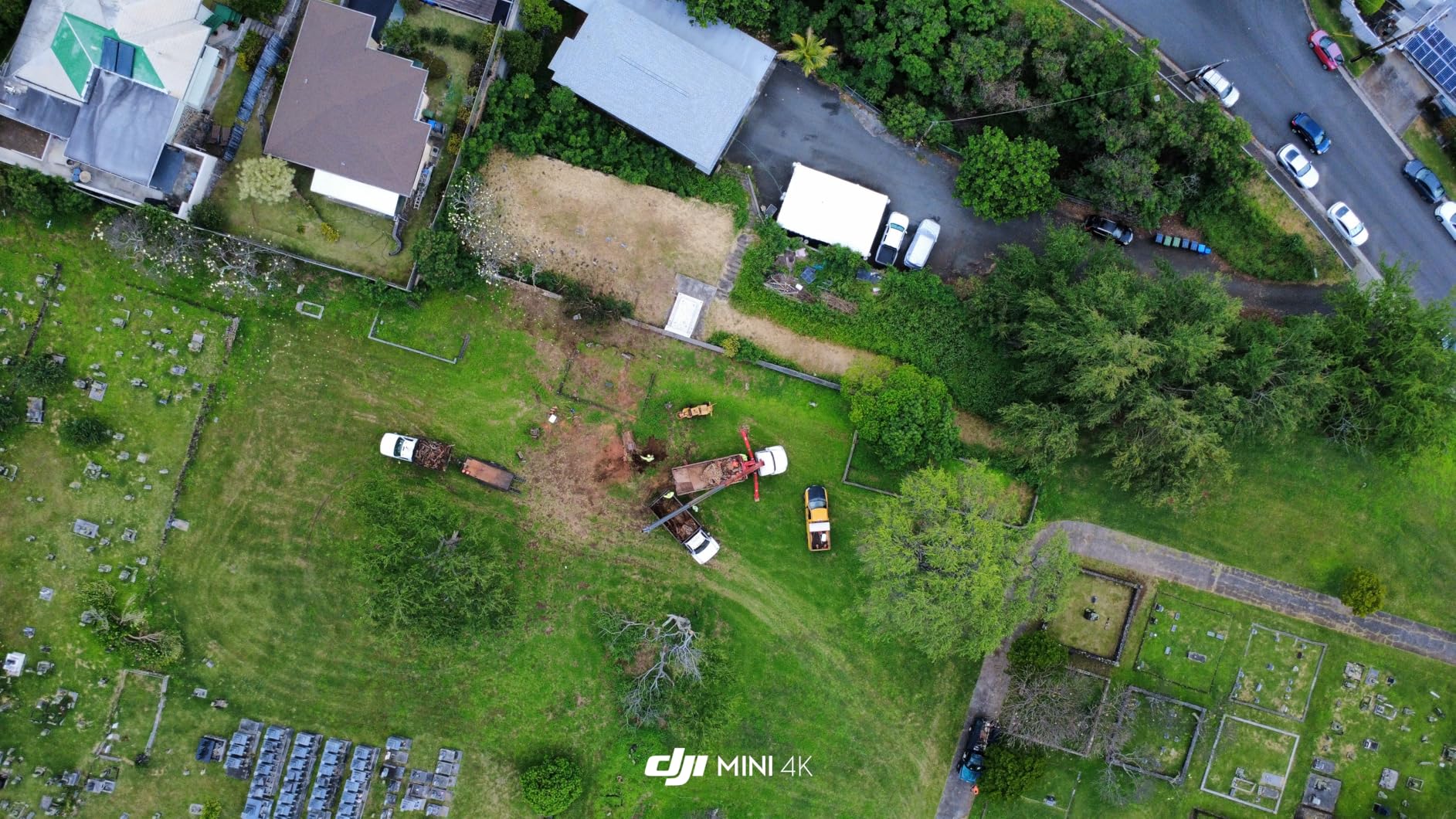
The DJI Mini 4K is a great example of how good entry-level travel drones have become. It is one of the most affordable ways to get a DJI drone with a 3-axis gimbal, real 4K video, and the kind of flight stability DJI is known for. For travelers who want a name-brand drone at a budget price, the Mini 4K is hard to beat.
Image quality is impressive for the price. The 4K UHD video is sharp and well-stabilized by the 3-axis gimbal, and the 12MP stills are good for casual sharing. It is not going to compete with a 1-inch sensor drone in low light, but in daylight the footage looks excellent. I also really liked how well it held up in wind, thanks to the level 5 wind resistance and DJI mature flight controller.
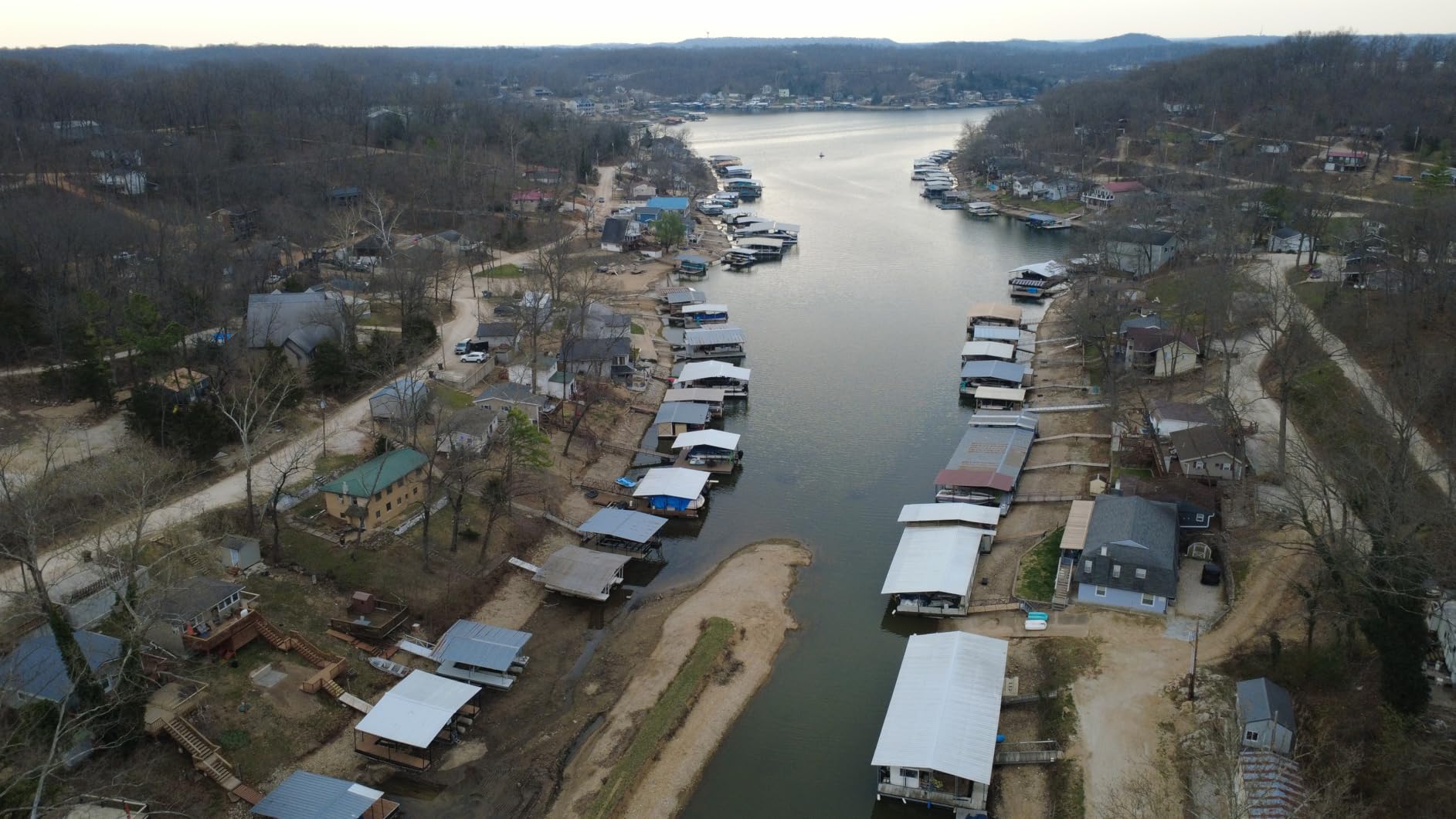
Battery life is rated at 31 minutes, but in real-world flying I got closer to 25-28 minutes per battery, which is still good for the size. The 10km HD video transmission was rock solid in open areas, and the GPS Return to Home gave me confidence on long-distance shots. The Mini 4K is also one of the lightest drones I tested, which makes it ideal for long hikes where every gram matters.
The main thing you give up versus more expensive options is obstacle avoidance, and the Mini 4K is best flown in open spaces. You also do not get a microSD card in the box, so factor that into your budget. For the price, though, the Mini 4K is a great entry into the DJI travel ecosystem, and it works beautifully for casual vacation footage.
For whom its good
The Mini 4K is the right pick for first-time DJI buyers who want a brand-name travel drone at a budget price. Beginners will find the GPS-assisted flight and Return to Home reassuring. It is also a good option for casual vacationers who do not need pro features but want reliable 4K footage.
It is also a solid choice for travelers who want to stay in the DJI ecosystem but cannot justify the Mini 5 Pro price. If you are happy to fly in open environments and do not need obstacle avoidance, the Mini 4K is a great value.
For whom its bad
Creators who need RAW photos, 4K/60fps, or true vertical video will find the Mini 4K limiting. The lack of obstacle avoidance also means it is not the best choice for flying near trees or crowds. If those features matter, the Mini 3 or ATOM 2 are better value upgrades.
You also need to buy a microSD card separately, and the real-world flight time is shorter than the advertised 31 minutes. For a day of serious shooting, plan on extra batteries. None of those are deal-breakers, but they are worth knowing before you buy.
How to Choose the Best Compact Drone for Travel Photography
Picking the right travel drone is not just about chasing the best specs. After testing eight drones across multiple trips, I have learned that the best choice depends entirely on how and where you actually travel. The following factors are the ones I would weigh most heavily before spending any money.
Weight and Registration Rules
Weight is the single most important factor for international travel. Drones under 250g avoid registration in most countries, including the United States, most of the European Union, and many popular travel destinations. Every drone on this list except the Mini 5 Pro with accessories tips the scales at or just under that threshold. If you frequently cross borders, prioritize sub-249g drones and double-check local rules before you fly.
Even with a sub-250g drone, you still need to follow airspace rules. In the US, you must take the free TRUST exam and download the B4UFLY app to check controlled airspace. Many countries also require online registration even for small drones, and some cities ban flying entirely without special permits. When in doubt, contact the local aviation authority before you take off.
Camera Quality and Sensor Size
Sensor size matters more than megapixel count for image quality. A 1-inch sensor like the one in the DJI Mini 5 Pro will dramatically outperform a 1/2.3-inch sensor in low light, dynamic range, and overall color depth. If you mostly shoot in bright daylight, a smaller sensor will look great. If you shoot sunrise, sunset, blue hour, or indoor scenes, the bigger sensor is worth the price.
For stills, look for RAW (DNG) support if you plan to edit photos seriously. For video, check the bit rate, frame rate options, and whether HDR is available. 4K/30fps is plenty for most travel content, but 4K/60fps unlocks smoother motion and better slow-mo. Vertical video is also a must if you publish to TikTok, Instagram Reels, or YouTube Shorts.
Battery Life and Charging
Real-world flight time is typically 20-30% lower than the advertised maximum. A drone rated for 38 minutes will usually give you 28-30 minutes in real conditions, and even less in wind. For full-day travel shoots, plan on three batteries minimum, and consider a Fly More Combo if it is available.
Charging infrastructure also matters. Parallel charging hubs can refill three batteries in well under two hours, which is huge for trips where you are charging off a power bank or hotel outlet. DJI and Potensic both offer fast-charging hubs in their Fly More Combos, and I would not buy a travel drone without one.
Wind Resistance and Stability
Wind resistance ratings (level 4 or 5) tell you how much wind the drone can handle while still flying stably. Level 5 (around 38kph) is enough for most coastal and mountain conditions. Smaller drones with lighter weight can struggle in stronger wind, even if the rating looks good on paper. Look for drones with brushless motors, which handle wind better than brushed motors.
Gimbal stabilization is just as important. A 3-axis mechanical gimbal will give you the smoothest footage, while electronic image stabilization (EIS) is good but not as polished. For serious video work, prioritize a 3-axis gimbal, especially if you shoot a lot in motion.
Obstacle Avoidance
Obstacle avoidance is one of the biggest differentiators in this category. The DJI Mini 5 Pro is the only sub-250g drone I tested with true omnidirectional LiDAR-based obstacle sensing. Other drones rely on the pilot to avoid obstacles, which works fine in open spaces but adds risk in forests, urban areas, or near people.
For beginners, obstacle avoidance is genuinely valuable insurance. Even experienced pilots benefit from it when flying in low light, near reflective surfaces, or in tight environments. If your budget allows, I would prioritize obstacle avoidance for travel because travel often means flying in unfamiliar and complex environments.
Controller and Display Options
Controllers with built-in screens, like the DJI RC and DJI RC 2, are a real quality-of-life upgrade. They eliminate the need to tether your phone, save phone battery, and tend to be more visible in direct sunlight. The downside is higher cost and a heavier controller in your bag.
Standard RC-N1-style controllers work with your phone and are lighter and cheaper. They are perfectly fine for casual use, but you have to manage phone storage, notifications, and battery. If you already travel with a phone full of apps and a portable charger, the screen-equipped controller is a luxury. If you prefer to keep your travel kit minimal, the standard controller is a better fit.
DJI US Ban: What Travelers Need to Know
This is the question I get most often in DMs, and it deserves a clear answer. As of 2026, DJI drones are not outright banned for consumer use in the United States. However, the federal government has restricted the use of DJI products by federal agencies, and there have been ongoing legislative efforts like the Countering CCP Drones Act that could affect future sales and availability.
For travelers, the practical impact today is that DJI drones are still legal to buy, own, and fly in the US. The bigger concern is availability: some DJI models have seen inventory shortages, and the app experience can be complicated on Android. If you want to future-proof your purchase, brands like Autel, Potensic, and HOVERAir offer legitimate DJI alternatives, though DJI still leads on image quality and ecosystem maturity.
TSA, Airlines, and International Travel with Drones
TSA does allow drones in carry-on luggage. In fact, the TSA explicitly recommends carrying drones in your carry-on rather than checked bags because of the lithium batteries. Batteries must be under 100Wh per cell, which all the drones on this list satisfy, and spare batteries should be in your carry-on with terminals protected.
International travel adds extra complexity. The European Union C0 class, which covers drones under 250g, is the most widely accepted registration-free category. Other countries like Japan, Canada, and Australia have their own rules, and some require registration even for small drones. Always check the destination country drone rules before you fly, and never assume that sub-250g means you are exempt everywhere.
For airline rules, the key is to keep the drone in its case with batteries accessible. I also recommend carrying printed copies of relevant drone registrations and a small notebook with local emergency numbers. If you are crossing multiple countries, a copy of the original purchase receipt can also speed up customs checks.
Frequently Asked Questions
Which drone is best for taking travel pictures?
For most travelers in 2026, the DJI Mini 5 Pro is the best overall travel drone thanks to its 1-inch sensor, 4K/60fps HDR video, and omnidirectional obstacle sensing. If you are on a budget, the Potensic ATOM 2 Fly More Combo delivers excellent 4K video and 96 minutes of total flight time at half the price. The DJI Neo is the best ultra-light option for casual vloggers.
What is the smallest drone with the best camera?
The DJI Mini 5 Pro is currently the smallest travel drone with a 1-inch sensor, weighing just 249g while still delivering 50MP photos and 4K/60fps HDR video. If you need something even smaller, the DJI Neo at 135g is the lightest drone with stabilized 4K UHD video, though its image quality is a step below.
Why did the US ban DJI drones?
As of 2026, DJI drones are not banned for consumer use in the United States. The federal government has restricted DJI products from federal agency use due to data security concerns tied to Chinese ownership. Congressional bills like the Countering CCP Drones Act could change this in the future, but for now DJI drones remain legal to buy, sell, and fly.
Does TSA allow drones in carry-on?
Yes, TSA explicitly allows drones in carry-on luggage and recommends against putting them in checked bags due to the lithium batteries. Spare batteries must be under 100Wh per cell and carried with you, with terminals taped or otherwise protected. Always check your airline specific rules for additional restrictions.
Do I need to register a sub-250g drone when traveling?
In the United States, drones under 250g do not require FAA registration, but you do need to pass the free TRUST exam. Other countries have different rules. The European Union C0 class, covering drones under 250g, is generally registration-free but still requires following local airspace rules. Always check the destination country rules before flying.
Final Verdict: Which Compact Drone Should You Buy?
After three months of testing across mountains, beaches, and cityscapes, my honest take is that the best compact drones for travel photography in 2026 come down to three picks depending on your budget. The DJI Mini 5 Pro is the best for serious creators who want flagship image quality in a sub-250g body, and the omnidirectional obstacle sensing is genuinely reassuring. The Potensic ATOM 2 is the best value for travelers who want long flight times and solid 4K without paying flagship money. The DJI Neo is the best ultra-light pick for vloggers who want a pocketable, follow-me drone they can deploy in seconds.
If you already fly a lot and just want a step up, the Mini 5 Pro is the easiest recommendation I have made in years. If you are buying your first travel drone and want a balance of price, image quality, and ecosystem, the ATOM 2 or the DJI Mini 4K is a great place to start. And if you are looking for other types of compact camera drones or travel drones outside this list, our team has tested dozens more across drones for photography, wildlife photography drones, and aerial photography drones.
Whichever drone you choose, remember that the best travel drone is the one you actually bring with you. A flagship drone left at home because it is too heavy or too intimidating is worse than a budget drone in your backpack. Pick the drone that matches how you really travel, charge your batteries the night before, and get out there. The best compact drones for travel photography in 2026 are waiting to earn their keep on your next trip.