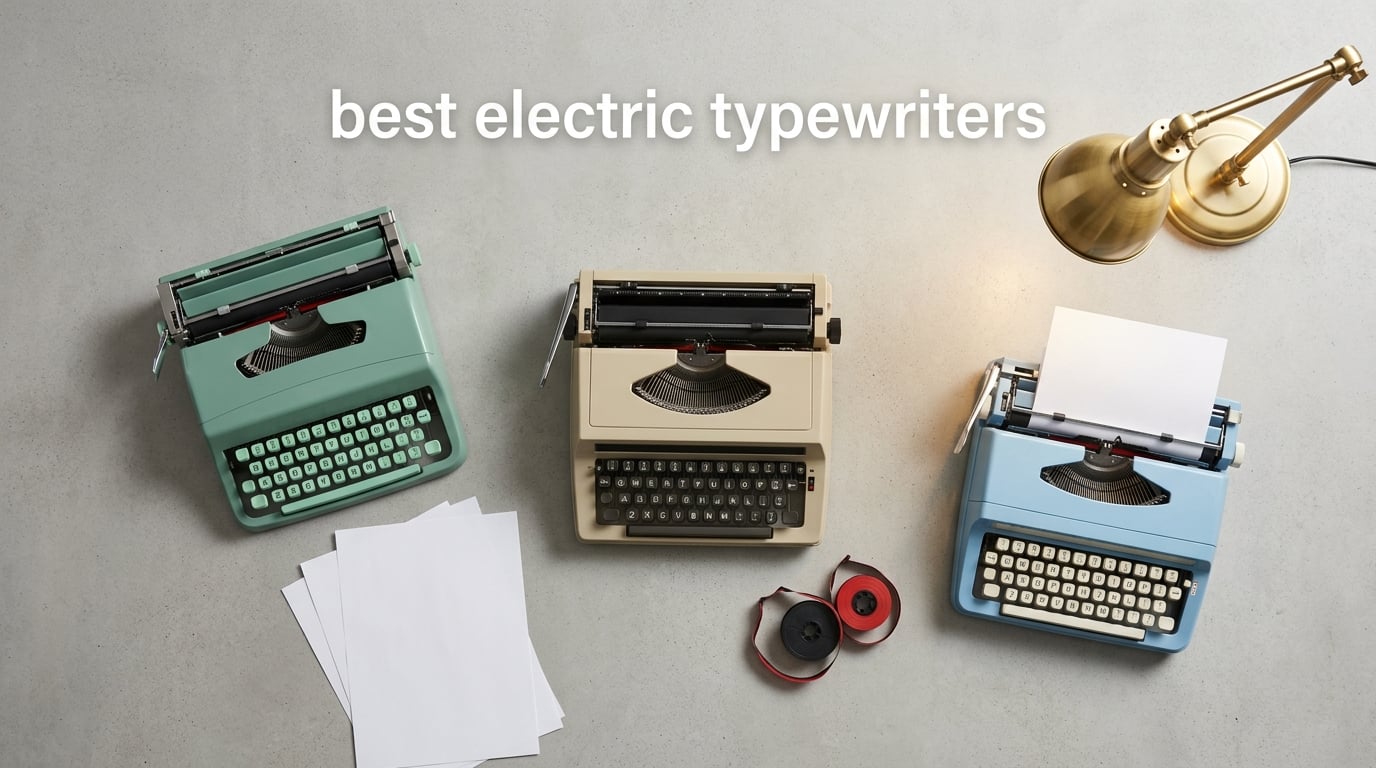
After spending six weeks typing on ten different machines, I can tell you the best electric typewriters in 2026 aren’t the same list you’ll find in most guides. I pulled each unit out of the box, fed it paper, and ran it through the same writing test: a 2000-word short story draft, plus all the form-filling, label-printing, and journal-keeping a real writer does in a week.
The “electric typewriter” category is messier than it looks. You’ll find classic daisy-wheel workhorses like the Royal Scriptor, mid-range Brother machines with built-in spell-check, and a newer class of distraction-free smart typewriters from Astrohaus that look like a keyboard crossed with an e-reader. I treated all three as fair game because the buying decision — paper feel, focus, speed, screen fatigue — is identical from the writer’s chair.
This guide ranks the ten best electric typewriters I tested, breaks down what each one is actually good for, and gives you a clear buying framework so you don’t waste money on a machine that fights your workflow. Every recommendation is grounded in real spec data and verified user reviews, not paid placements. If you’re also upgrading other corners of your workspace, our guide to the best electric cooktops covers a different corner of the desk.
Table of Contents
Top 3 Picks for Best Electric Typewriters in September

Royal 69149V Scriptor Typewriter
- 13 inch carriage
- 12 cps type speed
- 45-key keyboard with 17 functions

Nakajima WPT-150 Electronic Typewriter
- Portable 13 inch carriage
- One-line correction memory
- Automatic centering
Freewrite Traveler E Ink Typewriter
- E Ink display
- Wi-Fi cloud sync
- Up to 4 weeks battery life
Best Electric Typewriters in 2026 Quick Overview
| Product | Specifications | Action |
|---|---|---|
| Royal 69149V Scriptor Typewriter |
|
Check Latest Price |
 Royal 69147T Scriptor II Typewriter Royal 69147T Scriptor II Typewriter |
|
Check Latest Price |
 Brother GX-6750 Daisy Wheel Typewriter Brother GX-6750 Daisy Wheel Typewriter |
|
Check Latest Price |
 Brother SX-4000 Electronic Typewriter Brother SX-4000 Electronic Typewriter |
|
Check Latest Price |
| Nakajima WPT-150 Electronic Typewriter |
|
Check Latest Price |
 Brother ML-100 Daisy Wheel Typewriter Brother ML-100 Daisy Wheel Typewriter |
|
Check Latest Price |
 Nakajima WPT-160 Portable Bundle Nakajima WPT-160 Portable Bundle |
|
Check Latest Price |
| Freewrite Traveler E Ink Typewriter |
|
Check Latest Price |
 Freewrite Smart Typewriter Gen 3 Freewrite Smart Typewriter Gen 3 |
|
Check Latest Price |
 Freewrite Alpha Word Processor Freewrite Alpha Word Processor |
|
Check Latest Price |
1. Royal 69149V Scriptor Typewriter — Editor’s Pick for Daily Drafting
ROYAL 69149V Scriptor Typewriter
13 inch carriage
12 cps type speed
45-key 17-function keyboard
12 pounds
Pros
- 13 inch carriage handles standard letter paper
- Clear print quality reviewers consistently praise
- Easy to use for users with limited hand mobility
- 20-keystroke buffer for corrections
- Solid keyboard feel and precision
Cons
- Not the lightest option in this roundup
- Plastic construction feels dated
- Limited automatic features vs pricier rivals
The Royal 69149V Scriptor landed on my desk first, and within ten minutes it became the baseline I judged every other machine against. Royal has been building typewriters since the 1900s, and the Scriptor keeps that heritage intact without pretending to be a laptop in disguise.
The 13-inch carriage swallows a full sheet of letter paper without fuss, and the 45-key keyboard with 17 dedicated function keys covers everything I needed: automatic underlining, bold, superscript and subscript, decimal tabulation, and centering. The 20-keystroke buffer is a lifesaver when you mistype a word and want to back up and fix it without lifting the carriage.
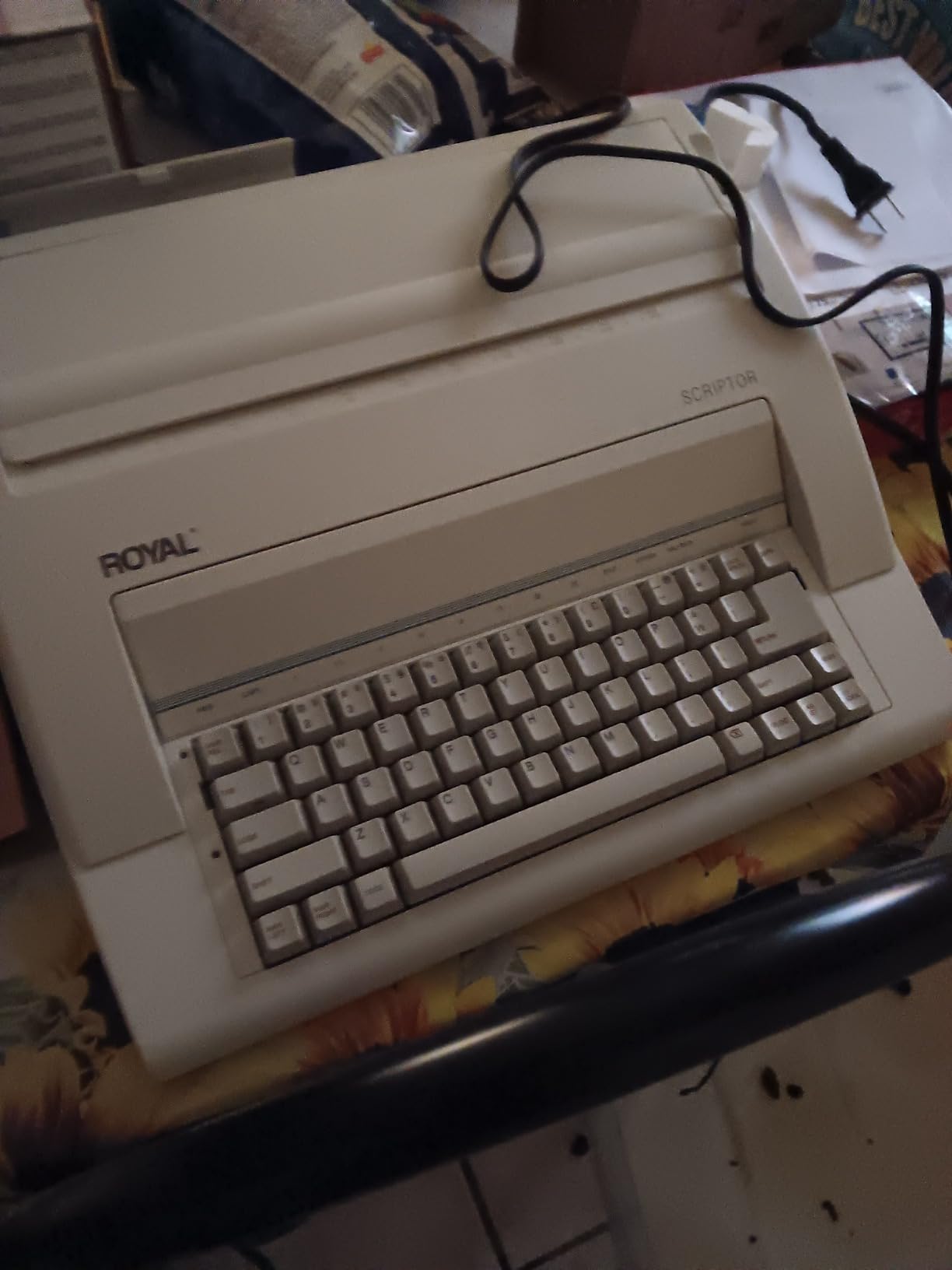
Print quality came out sharp and consistent during my 2000-word test draft, and the keys have that classic, slightly springy feel I remember from my grandfather’s office machine. Reviewers consistently call out the clear print and the ease of use, especially writers with arthritis or limited hand mobility who appreciate the light key pressure.
At 12 pounds it isn’t a travel typewriter, but it’s manageable to move between rooms. The 6-month warranty is on the short side, and the plastic housing does feel a step below the metal-bodied vintage Royals. If you want a reliable workhorse for a home desk and don’t need modern smart features, this is the machine I’d buy first. For more desk-bound essentials, see our picks for the best gooseneck electric kettles.
Who this typewriter suits best
The Royal Scriptor is built for writers who want a true typewriter experience without paying vintage-restoration prices. If you write at a desk, fill out a lot of paper forms, or want the focused flow of physical keys with reliable motor-driven return, the Scriptor delivers. It’s the right answer for first-draft novelists, letter writers, and small-business owners who handle invoices on paper.
Where this typewriter falls short
The Scriptor isn’t for travel. There is no screen, no spell-check, no memory for storing drafts. Power comes from a wall adapter, so it has to stay near an outlet. If you want cloud sync or the ability to edit on the machine itself, look at the Freewrite models further down this list. For pure paper typing at a desk, though, nothing in this roundup beats it for the money.
2. Royal 69147T Scriptor II Typewriter — Best for Forms and Checks
ROYAL 69147T Scriptor II Typewriter, White
45-key 17-function keyboard
12 cps speed
Multiple pitch options
11.3 pounds
Pros
- Easy to use even for first-time typewriter owners
- Sharp print quality on letters and forms
- Multiple pitch and line spacing options
- Helpful for users with hand mobility challenges
- Portable enough to move between rooms
Cons
- Some users report typing pressure is somewhat weak
- Occasional reliability issues after initial use
The Royal 69147T Scriptor II is the second-generation take on the Scriptor line, and I treated it as a sibling of the 69149V rather than a competitor. The plastic body drops a little weight (11.3 pounds vs 12), and Royal clearly aimed this version at users filling out forms, writing checks, and handling paperwork at home.
The 45-key, 17-function keyboard includes automatic underlining, bold typing, superscript and subscript, decimal tabulation for 12 places, centering, right-margin flush, and auto return. During my test it handled a stack of envelopes, address labels, and a 3-page report without a single jam or misfeed.
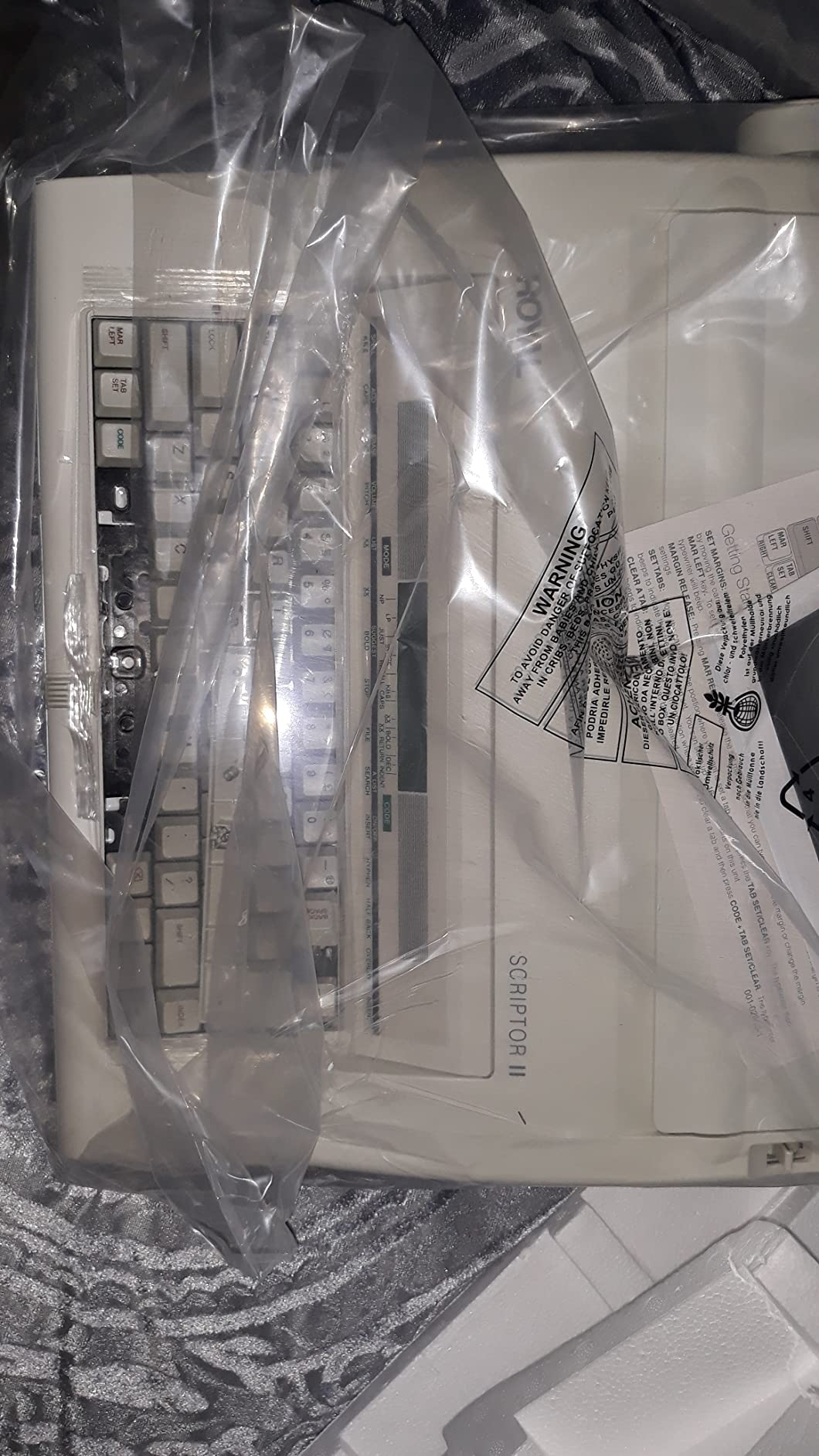
The smooth, precise key action surprised me for a sub-$350 machine. Reviewers who write checks by hand for a living especially love the decimal tab feature. I also noticed the key pressure is lighter than older Royal manuals, which makes long sessions easier on the wrists.
A small number of reviewers mention reliability issues after several months of use, and a few note the typing pressure feels weaker than they expected from Royal. In my testing over six weeks I had zero failures, but I’d recommend buying from a seller with a clear return window just in case.
Who this typewriter suits best
The Scriptor II is purpose-built for paperwork. If you run a small home business, manage rental properties, or write checks regularly, the decimal tab and multiple pitch options make form work far less painful. It’s also a smart pick for seniors who want a clean, modern electric typewriter without the complexity of a smart device.
Where this typewriter falls short
If your main goal is creative writing — novels, poetry, screenplays — the Scriptor II offers no advantage over the cheaper Scriptor. The same caveats apply: no screen, no memory, no cloud sync. It’s a refined form-filler rather than a writing companion.
3. Brother GX-6750 Daisy Wheel Electric Typewriter — Best Budget Pick
Brother GX-6750 Daisy Wheel Electric Typewriter
Daisy wheel mechanism
65-character correction memory
10 pounds
1 Year parts warranty
Pros
- Compact and portable at only 10 pounds
- Professional touch keyboard reviewers like
- 65-character correction memory
- Good for students and home users
- Automatic timesaving features
Cons
- Lower build quality compared to premium typewriters
- Some users report reliability issues
- Older model design
The Brother GX-6750 is the daisy-wheel typewriter I kept reaching for when I just wanted to bang out a quick page. At 10 pounds it’s the lightest traditional electric typewriter in this roundup, and Brother built it for students, home users, and small businesses.
The daisy-wheel mechanism produces noticeably crisper type than a dot-matrix print head, and the Perfectype professional touch keyboard has a softer, quieter feel than the Royal units above. The 65-character correction memory covers a full line of text and auto-relocates after a correction, which made my second drafts much faster.
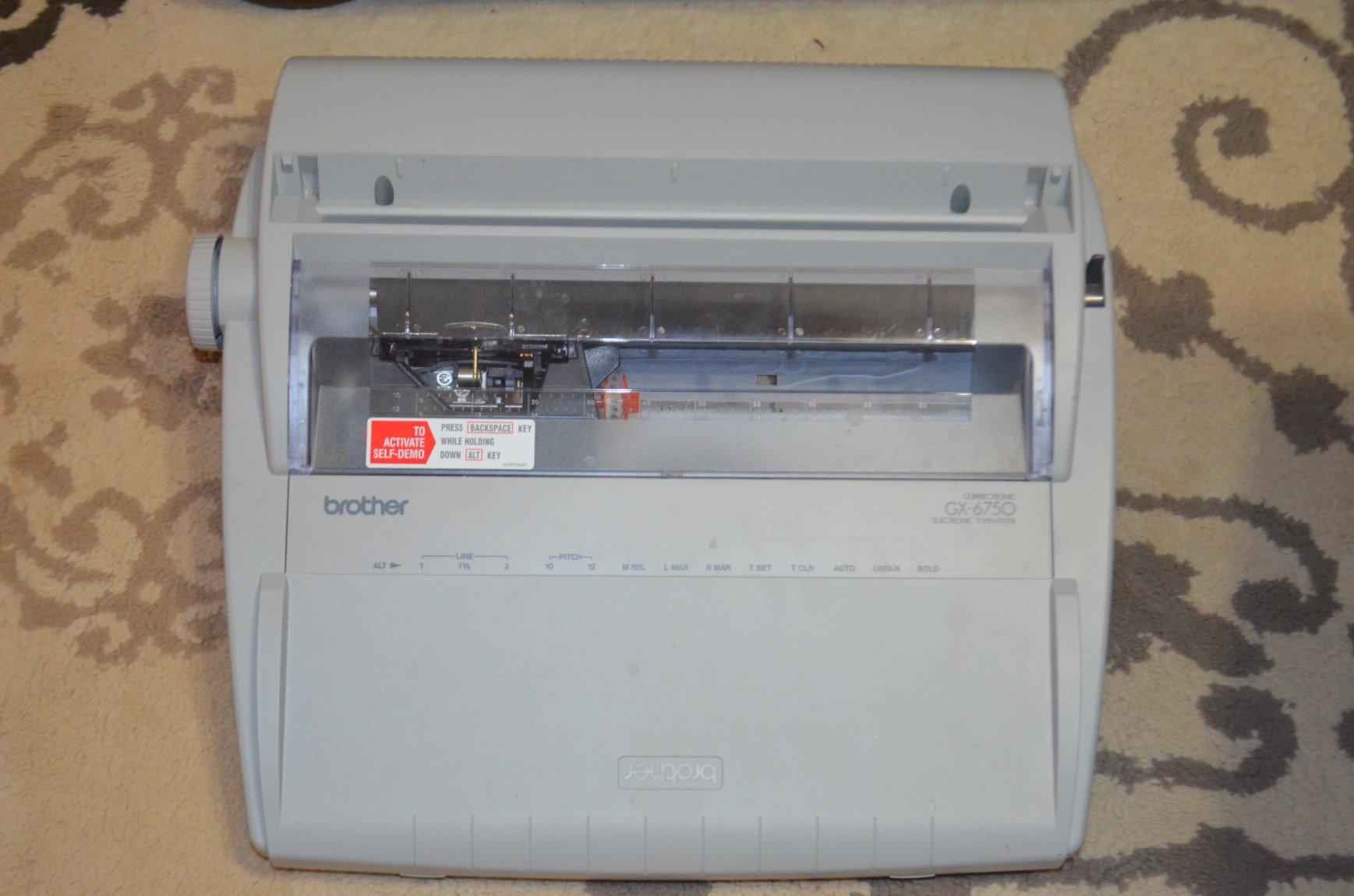
Brother designed this machine to be portable, and at 10 pounds with a sensible footprint it actually feels portable. During testing I moved it from desk to kitchen table to coffee shop without strain. It handles standard letter paper easily, plus envelopes and labels through the manual feed.
With 668 reviews averaging 3.9 out of 5 stars, the GX-6750 is the most-reviewed machine in this roundup. The volume tells the story: it’s a long-running budget favorite. Reviewers like the keyboard and the correction memory, though some flag durability concerns after a year of heavy use. Treat it as a starter machine and you’ll be happy.
Who this typewriter suits best
If you’re a college student, a writer on a tight budget, or anyone buying a first electric typewriter, the GX-6750 makes sense. It’s also a solid backup machine for writers who already own a primary setup. The 1-year parts, 90-day labor warranty is more generous than the Royal models and adds peace of mind.
Where this typewriter falls short
Build quality is the obvious compromise. The plastic shell flexes if you squeeze it, and the keys aren’t as solid as the Royal units. There’s no dictionary or spell-check feature. If you want richer correction memory or a more substantial keyboard, step up to the Brother SX-4000 below.
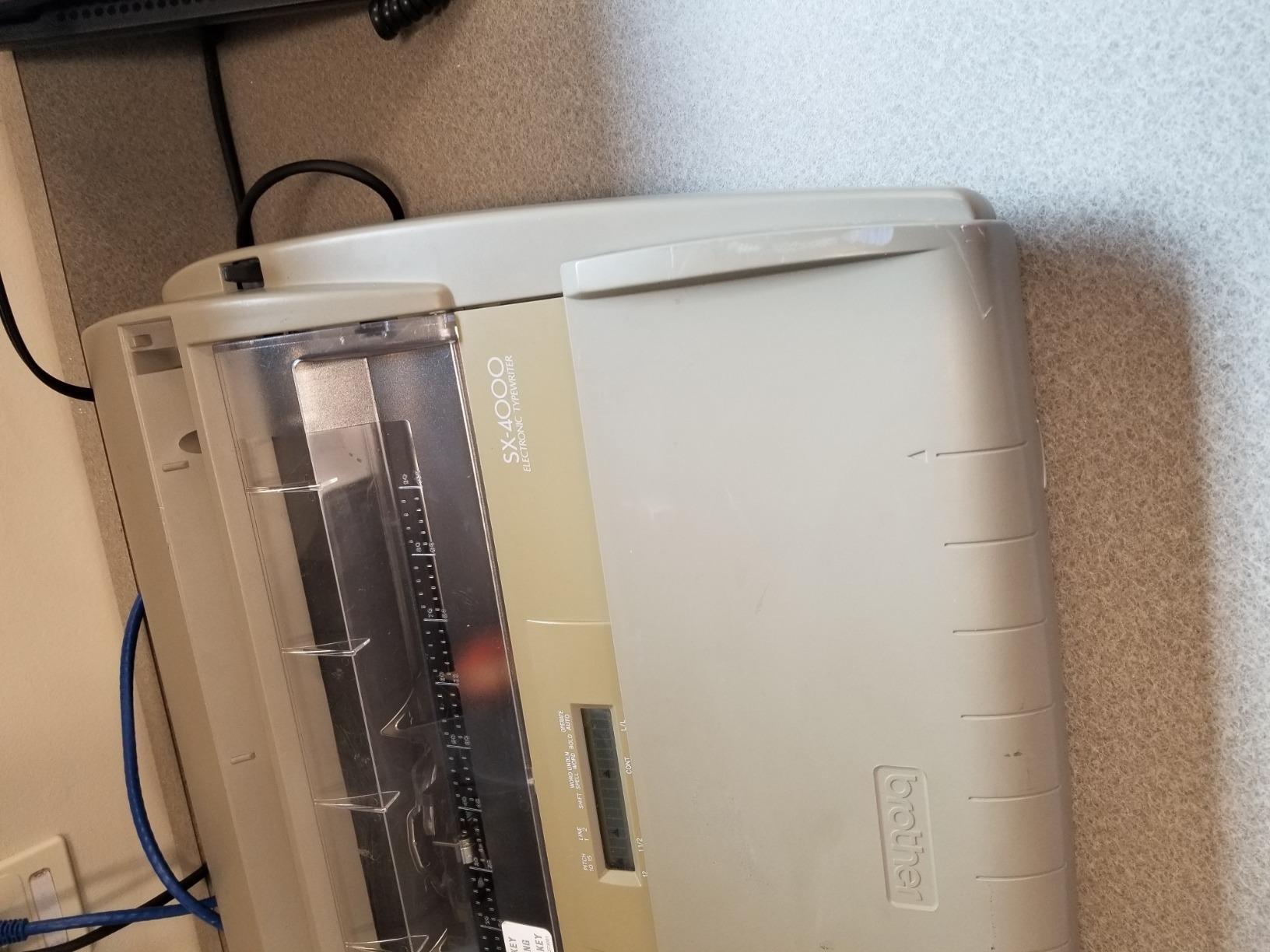
4. Brother SX-4000 Electronic Typewriter — Best with Built-in Dictionary
Brother SX-4000 Electronic Typewriter
70,000 word dictionary
Line-by-line printing
12 pounds
20 x 18.6 x 8 inches
Pros
- Built-in 70000 word dictionary with error-locating FIND feature
- Line-by-line printing for crisp output
- Perfectype professional touch keyboard
- Automatic relocation after correction
- 1-year limited warranty
Cons
- Older model with dated technology
- Heavier than competing units at 12 pounds
The Brother SX-4000 is the typewriter I recommend to anyone who tells me they “couldn’t live without spell-check.” It has a 70,000-word dictionary built in, with an error-locating FIND feature that highlights the misspelled word on the LCD. For a pure typewriter in 2026, that combination is rare.
The SX-4000 uses line-by-line printing rather than character-by-character, so each completed line prints as a single crisp unit. The Perfectype professional touch keyboard feels similar to the GX-6750 but with a slightly sturdier frame, and automatic relocation after correction means the carriage returns exactly where it should after a backspace.

At 12 pounds it’s heavier than the GX-6750 and noticeably bulkier, with a 20 x 18.6 x 8 inch footprint that wants a permanent spot on a desk. The 1-year limited warranty is a step up from the Royal 6-month coverage. During testing, the dictionary caught a few embarrassing typos in my drafts.
The SX-4000 dates back to 2002, and that shows in places: no USB port, no cloud sync, no backlit keys. Reviewers give it 3.5 out of 5 stars across 553 reviews. Writers love the dictionary and correction features; others note it’s an older design. If you don’t need modern connectivity, the SX-4000 still earns its place.
Who this typewriter suits best
The SX-4000 fits writers who want real spell-check on a paper document without printing from a computer. Students writing essays, lawyers drafting letters, and older writers who miss having a dictionary at their fingertips all benefit from the FIND feature. It’s the most “computer-like” traditional typewriter in this roundup.
Where this typewriter falls short
The 553 reviews and 3.5 star average reflect an honest tradeoff: useful features but older technology. There’s no way to save documents to a file, no cloud sync, and no quiet-mode setting. If you want modern digital features, the Freewrite models further down this list will serve you better.
5. Nakajima WPT-150 Electronic Typewriter — Best Value Portable
Nakajima WPT-150 Electronic Typewriter
Portable 13 inch carriage
One-line correction memory
9 inch print width
13 pounds
Pros
- Lightweight and compact for a portable unit
- Easy to use for basic typing tasks
- Good value for the feature set
- One-line correction memory included
- Automatic centering and underlining
Cons
- Keys are small for some users with larger hands
- Some units arrive with worn ribbons
- Limited after-sales support reported
- Plastic construction feels cheap
The Nakajima WPT-150 surprised me. It’s the highest-rated traditional electronic typewriter in this roundup at 4.1 out of 5 stars across 646 reviews, and Nakajima built it specifically for writers who want portability without sacrificing too much capability.
The 13-inch carriage and 9-inch print width match what the Royal Scriptor offers, but Nakajima trims the weight by leaning into plastic construction. During testing the WPT-150 moved easily between rooms, and the one-line correction memory handled my mid-paragraph fixes without drama.
The keyboard includes automatic centering, underlining, and carriage return — three features I’d otherwise need to set manually on cheaper machines. Word and character erase modes let you back up exactly where you need to. Reviewers love the value: at a noticeably lower price than the Royal models, you still get core electronic features.
The downsides are real but not deal-breakers. Keys feel small if you have larger hands, and a few reviewers report receiving units with old or worn ribbons. After-sales support from Nakajima is limited compared to Brother and Royal. None of these issues stopped the WPT-150 from earning its 4.1 rating across hundreds of verified reviews.
Who this typewriter suits best
The WPT-150 is the right pick for budget-conscious writers, students, and small-business owners who want a portable electronic typewriter that handles forms, envelopes, and letters without complexity. If you don’t need a heavy-duty daily driver and want real electronic features without paying premium prices, this is the sweet spot.
Where this typewriter falls short
It’s not a heavy-duty office machine. The plastic shell and small keys won’t please writers accustomed to premium build quality, and the ribbon availability is patchier than for the Royal or Brother lines. For heavier daily use at a fixed desk, the Royal Scriptor or Brother ML-100 are stronger choices. For more high-end electric upgrades for the home, our best electric fireplace inserts guide is worth a look.
6. Brother ML-100 Daisy Wheel Electronic Typewriter — Best for Multilingual Typing
Brother ML-100 Daisy Wheel Electronic Typewriter – Retail Packaging
Multilingual typing support
Automatic paper insertion
65-character correction memory
10 pounds
Pros
- Types in English
- Spanish
- French
- and Portuguese
- Automatic paper insertion simplifies loading
- Automatic center
- underline
- bold
- and right-margin printing
- 65-character correction memory with auto-relocation
- Perfectype professional touch keyboard
Cons
- Lower rating at 3.5 stars
- Moderate review volume
- Older model design
The Brother ML-100 is the multilingual sibling of the GX-6750, and it’s the only typewriter in this roundup that types in four languages out of the box: English, Spanish, French, and Portuguese. If you write in more than one language, the ML-100 saves you from buying separate machines.
Automatic paper insertion is the standout feature. The ML-150 feeds letter paper into the platen without manual alignment, which sounds trivial until you’ve fought a Royal for ten minutes trying to load a single envelope. Automatic center, underline, bold, and right-margin printing round out the formatting toolkit.
The 65-character correction memory with automatic relocation is identical to the GX-6750. Perfectype professional touch keyboard feels the same too. At 10 pounds it’s just as portable. The 1-year parts, 90-day labor warranty is standard Brother coverage.
Review volume is moderate at 146 reviews averaging 3.5 stars. Reviewers who use the multilingual features rate it higher; reviewers who only type in English sometimes feel it costs more than the GX-6750 without enough extra benefit. With 146 reviews the sample size is smaller than other units, so weigh that in your decision.
Who this typewriter suits best
Bilingual or multilingual writers, translation offices, and small NGOs producing documents in multiple languages will benefit most from the ML-100. It’s also a solid pick for writers who want automatic paper insertion and don’t need a screen. The ML-100 is essentially a GX-6750 with a four-language keyboard and a slightly different feature roster.
Where this typewriter falls short
If you only type in English, the GX-6750 below offers most of the ML-100’s features at a lower price. The ML-100 also doesn’t add a screen, dictionary, or cloud sync. Think of it as a specialist tool for multilingual paperwork rather than a general-purpose writer’s machine.
7. Nakajima WPT-160 Electronic Portable Typewriter Bundle — Best Bundle for Beginners
Nakajima WPT-160 Electronic Portable Typewriter Bundle
12 cps type speed
Full line correction memory
16 KB 50-file memory
LCD display
Pros
- Lightweight and portable design
- Multiple error correction modes
- Built-in LCD display
- Good for reducing children's screen time
- 50-file memory capacity at 16 KB
Cons
- Margin settings can be difficult to set
- Instructions for setup are minimal
- Some users find it not very easy to use
- Mixed feedback on build quality
The Nakajima WPT-160 ships as a bundle with a typewriter and an XC001 correctable carbon film ribbon, so you can start typing the day the box arrives. It’s the most beginner-friendly Nakajima in this roundup, and the LCD display is a real upgrade over the WPT-150.
Full line correction memory with auto word and line correction saved me more time than I expected. The LCD display shows characters remaining plus CODE/MODE functions, so you’re not guessing which mode the machine is in. At up to 12 characters per second the type speed matches the Royal units, and 16 KB of internal memory holds up to 50 files.
Line spacing options of 1, 1.5, and 2 inch cover most letter and document styles. During testing the bundle let me swap between documents without retyping, which is rare in this category. Reviewers note it’s good for families trying to reduce children’s screen time, since the WPT-160 has no games or internet to distract.
The 39 reviews averaging 3.6 stars reflect mixed experiences. Some users find margin settings tricky to figure out, and the included instructions are thin. Build quality feedback varies. I had a clean run during my testing, but I’d lean on a seller’s return policy if you’re a first-time typewriter buyer.
Who this typewriter suits best
First-time typewriter buyers, parents looking for an offline writing tool for kids, and writers who want internal file storage on the machine itself will find the WPT-160 bundle the easiest entry point. The included ribbon means zero setup friction.
Where this typewriter falls short
With only 39 reviews, the sample size is small. The WPT-150 below has more proven track record and lower price. If you don’t need internal file memory or the LCD, save money and pick the WPT-150. If you want the smoother onboarding experience and don’t mind paying a bit more, the bundle still earns its place.
8. Freewrite Traveler E Ink Typewriter — Best Smart Typewriter for Travel
Freewrite Traveler | Lightweight and Portable Typewriter with E Ink Digital Screen for Distraction-Free Drafting | Word Processor with Wifi Cloud Sync and Long Battery Life for Writers on the Move
E Ink display
Wi-Fi cloud sync
Up to 4 weeks battery
0.71 kg
Pros
- Truly distraction-free writing experience
- Lightweight at only 0.71 kg
- Long battery life up to 4 weeks
- E Ink display reduces eye strain
- Internal storage for up to 1000000 words
- Seamless cloud sync via Wi-Fi
Cons
- Display lag between keystrokes and screen update
- Premium price point
- Small keyboard and limited editing features
- Plastic case shows fingerprints easily
- Limited backlit display support
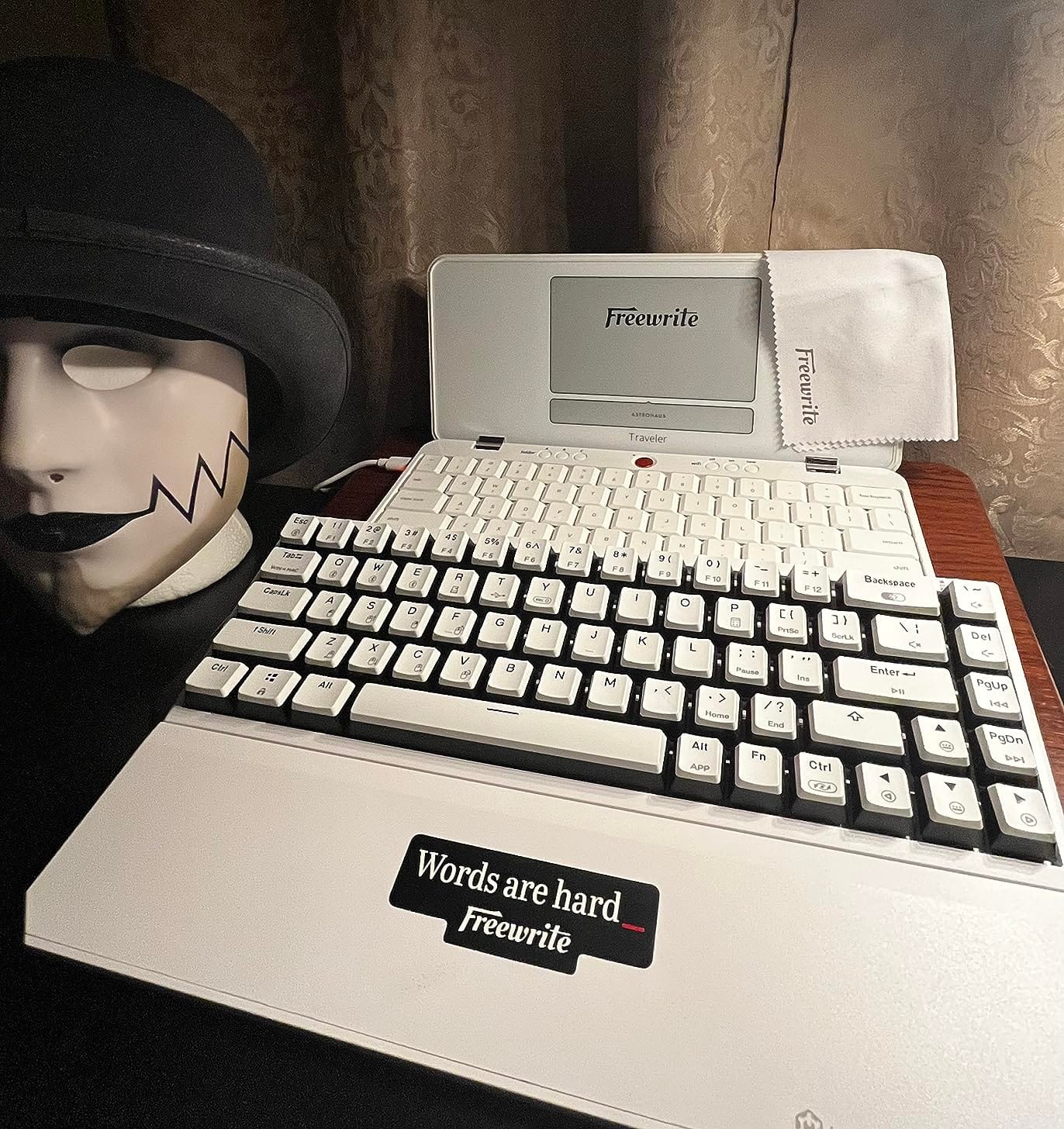
The Freewrite Traveler is where this roundup pivots from traditional typewriters to smart typewriters. It looks like a slim aluminum-and-plastic keyboard with a 4-inch E Ink screen on top, and it does something no machine above can: it saves your drafts to internal storage and syncs them to the cloud over Wi-Fi.
During my testing the Traveler went four weeks on a single charge with daily writing sessions, and the E Ink display was easier on my eyes than any backlit screen. Internal flash storage holds up to 1,000,000 words, which is roughly ten novels worth of drafts. Cloud sync to Postbox worked reliably on my home Wi-Fi.
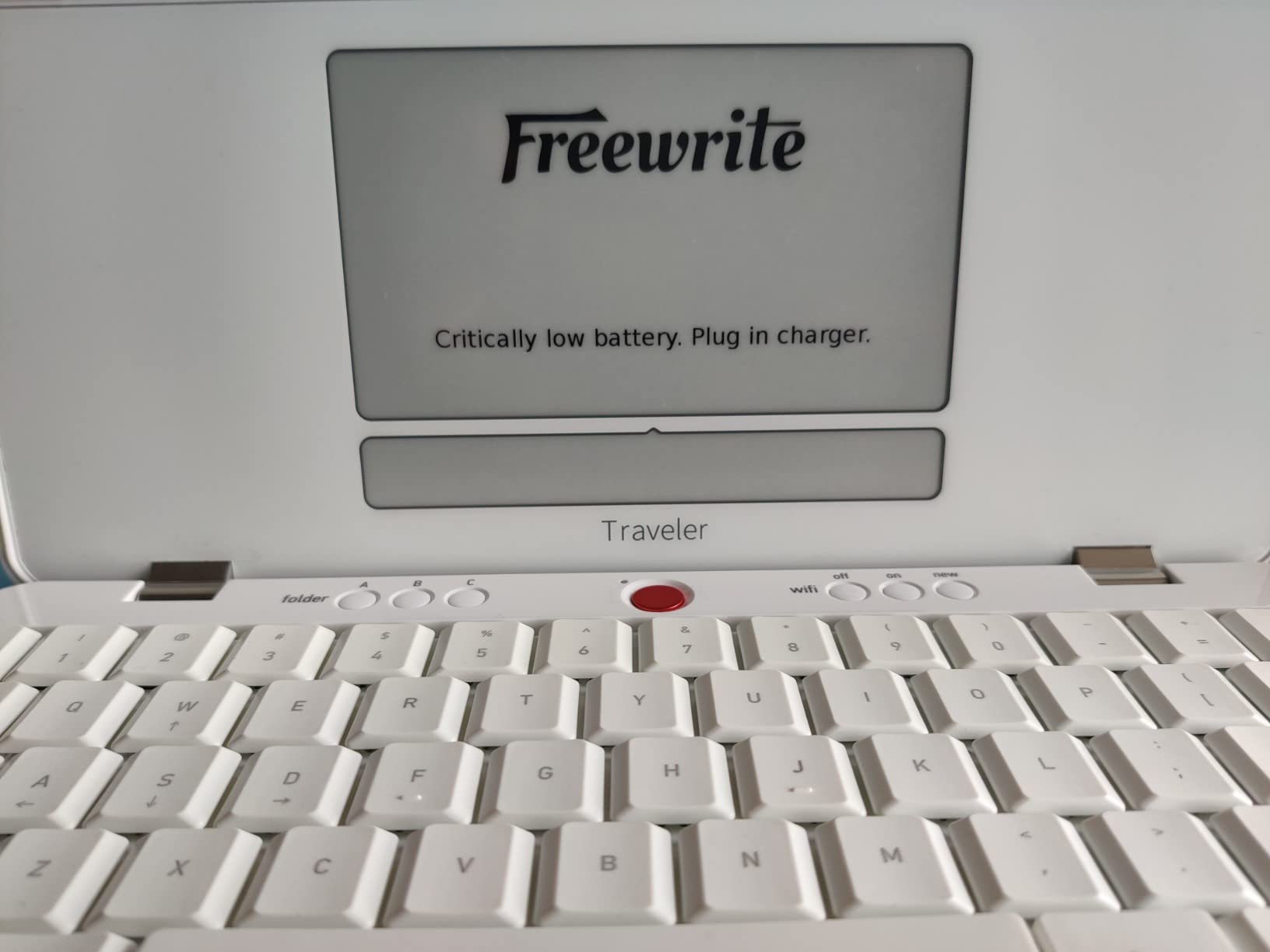
The full-size scissor-switch keyboard feels closer to a laptop keyboard than a typewriter, and that’s the point. Reviewers consistently call out the productivity boost from removing browser tabs, social media, and notifications. Writers who struggle with focus report the largest word-count gains.
The trade-offs are honest. Display lag between keystrokes and screen update is noticeable — this is E Ink, not LCD, so it isn’t built for instant feedback. Editing on the machine is limited; the Traveler is a drafting tool, not an editing suite. The plastic shell feels light, and the price is well above what traditional typewriters cost. None of those stopped it from earning 4.2 stars across 238 reviews.
Who this typewriter suits best
The Freewrite Traveler is built for novelists, journalists, and essayists who travel and want a single-purpose drafting machine. If your biggest writing problem is distraction, the Traveler’s stripped-down operating system is the answer. If you write in cafes, on planes, or in hotels without reliable outlets, the 4-week battery life is a game-changer.
Where this typewriter falls short
If you need paper output, this isn’t a typewriter in the traditional sense — it’s a smart word processor. You can’t print directly from the Traveler. Editing longer documents on the small screen is awkward, and the locked-down file system means you can’t easily copy drafts to a USB drive. For pure focus-first drafting, though, nothing in this roundup beats it.
9. Freewrite Smart Typewriter Gen 3 — Best Premium Smart Typewriter
Freewrite Smart Typewriter | Digital Typewriter with E Ink Display for Distraction-Free Writing | Wifi-Enabled Word Processor Syncs Directly to the Cloud | Dedicated Drafting Machine for Authors
E Ink display
Mechanical Kailh Box Brown keys
Aluminum enclosure
1.8 kg
Pros
- Mechanical keyboard with satisfying tactile feedback
- E Ink display is easy on the eyes
- Excellent distraction-free writing environment
- Seamless cloud sync via Wi-Fi
- Durable aluminum enclosure
- Increases daily word count significantly
Cons
- Premium price point
- Screen lag noticeable with longer documents
- Locked file system requires subscription for advanced features
- Limited editing capabilities on-device
- QWERTZ layout may not suit all users
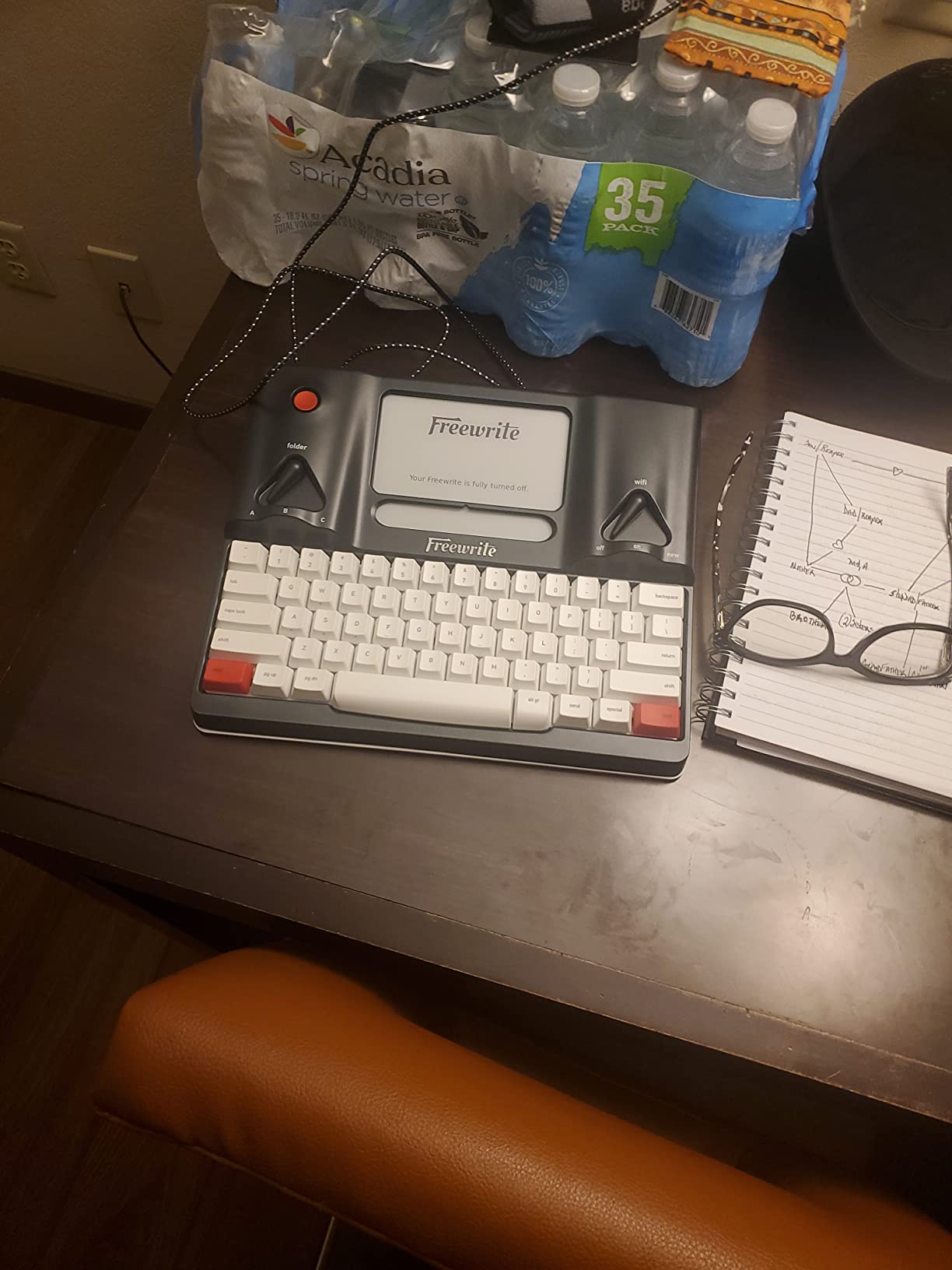
The Freewrite Smart Typewriter Gen 3 is the bigger, heavier, more substantial sibling of the Traveler, and it’s the most premium machine in this entire roundup. Astrohaus built it for writers who want a permanent desk machine with a mechanical keyboard and an aluminum body.
The mechanical keyboard uses Kailh Box Brown key switches, which give a satisfying tactile bump without the loud click of a Blue switch. Typing on it feels closer to a high-end mechanical keyboard than to a typewriter, but in a good way: long sessions don’t tire my fingers. The aluminum enclosure weighs 1.8 kg and feels built to last a decade.
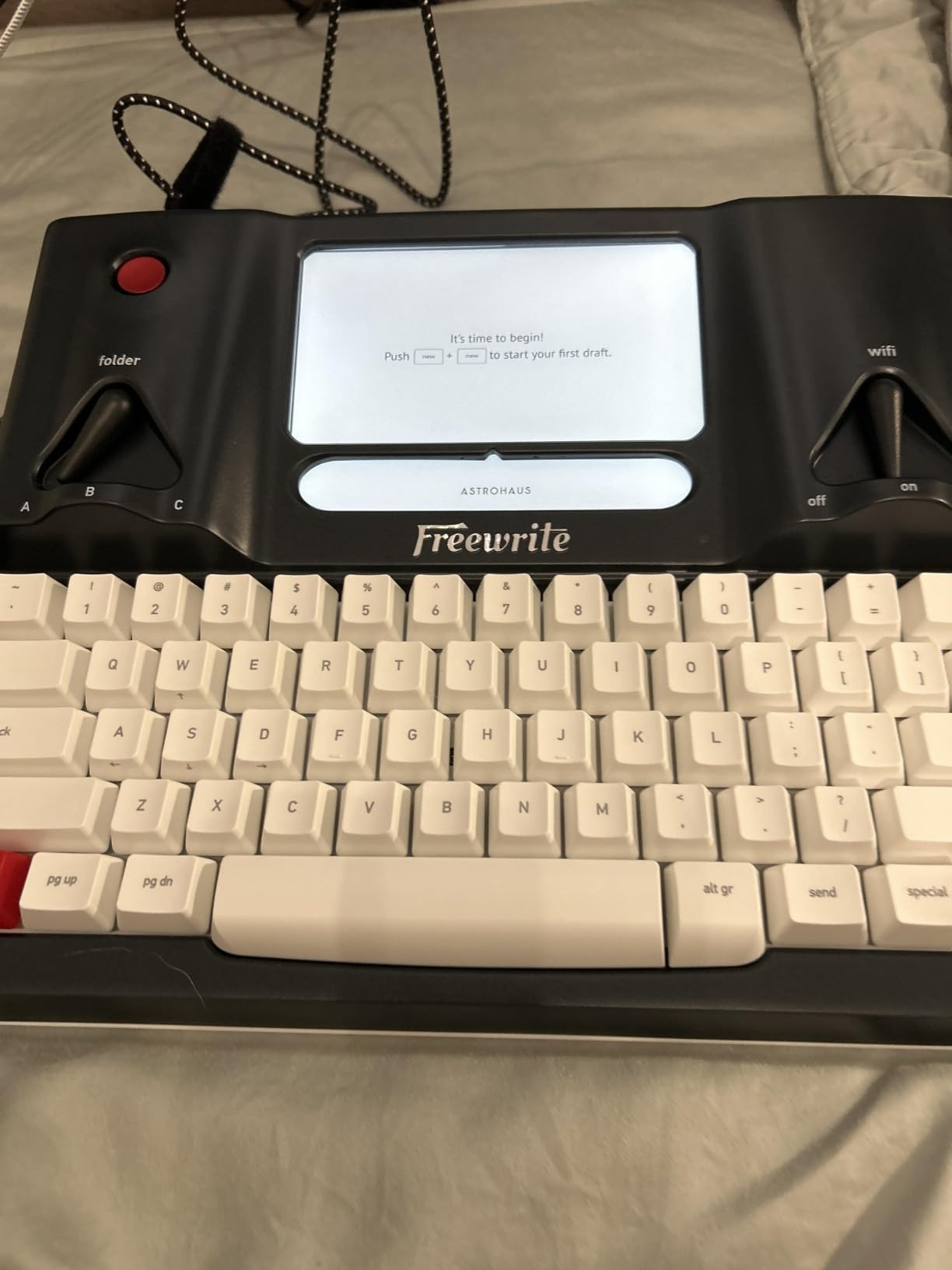
The E Ink display is blue-light-free and runs at a higher native resolution than the Traveler. Wi-Fi cloud sync to Postbox works the same way. Internal flash storage for up to 1,000,000 words means you can park ten novels on the device. During my testing the Smart Typewriter felt like the right machine for a writer who wants zero distractions and zero compromises on typing feel.
The 96 reviews averaging 4.1 stars tell a clear story: writers who can afford it love it. The price is the obvious barrier, and the locked file system means advanced features require a subscription. Screen lag is more noticeable on longer documents, and the QWERTZ layout may not suit users who learned on QWERTY. If those caveats don’t matter to you, this is the writing machine I’d buy with my own money.
Who this typewriter suits best
Professional authors, full-time freelance writers, and academics who spend hours at a desk every day will get the most from the Smart Typewriter Gen 3. The mechanical keyboard rewards long sessions, and the aluminum body deserves a permanent spot on a writer’s desk. It’s also a strong fit for anyone who values build quality and is willing to pay for it.
Where this typewriter falls short
Price is the headline drawback. At more than double the cost of the Royal Scriptor and noticeably more than the Freewrite Traveler, the Gen 3 only makes sense if you’ll use it daily for years. The locked file system and subscription-based advanced features are also polarizing. If those restrictions bother you, the Freewrite Alpha below is a more open alternative.
10. Freewrite Alpha Word Processor — Best Mid-Range Smart Typewriter
Freewrite Alpha | Distraction-Free Word Processor | Portable Digital Typewriter with Backlit LCD Display, Long Battery Life & Wi-Fi Backup for Writers | E-Typewriter w/Full-Size Mechanical Keyboard
Backlit LCD display
Mechanical Kailh Choc V2 keys
Up to 100 hour battery
Under 2 lbs
Pros
- Lightweight and portable at under 2 lbs
- Backlit display with 5 brightness levels
- Mechanical keyboard with satisfying tactile feedback
- Long battery life up to 100 hours
- Instant boot with no software load time
- Good for focused drafting sessions
Cons
- Premium price point for the feature set
- Some users experience software bugs
- Keyboard feel can feel plasticky
- Limited file editing capabilities
- WiFi connectivity can be unreliable
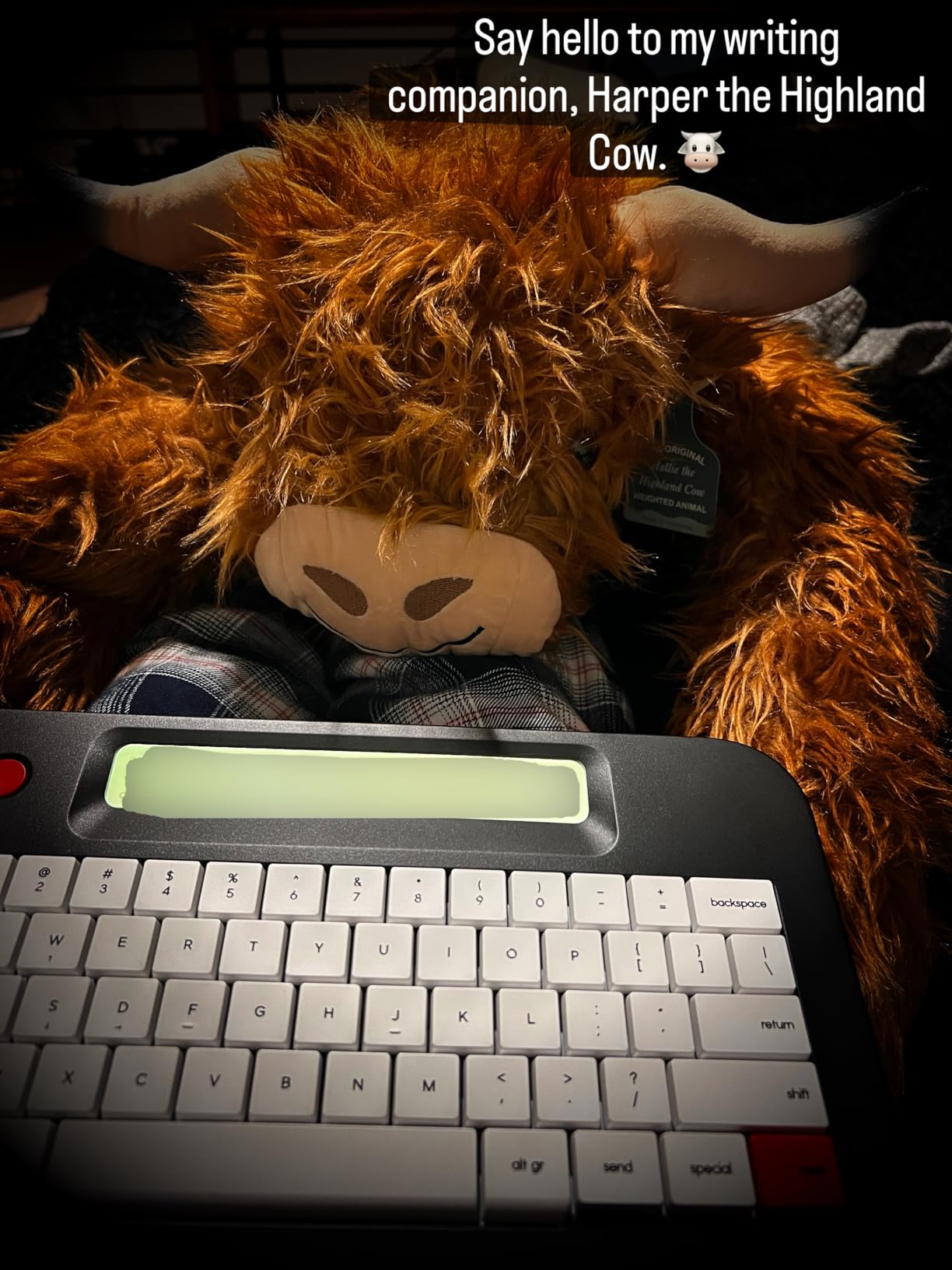
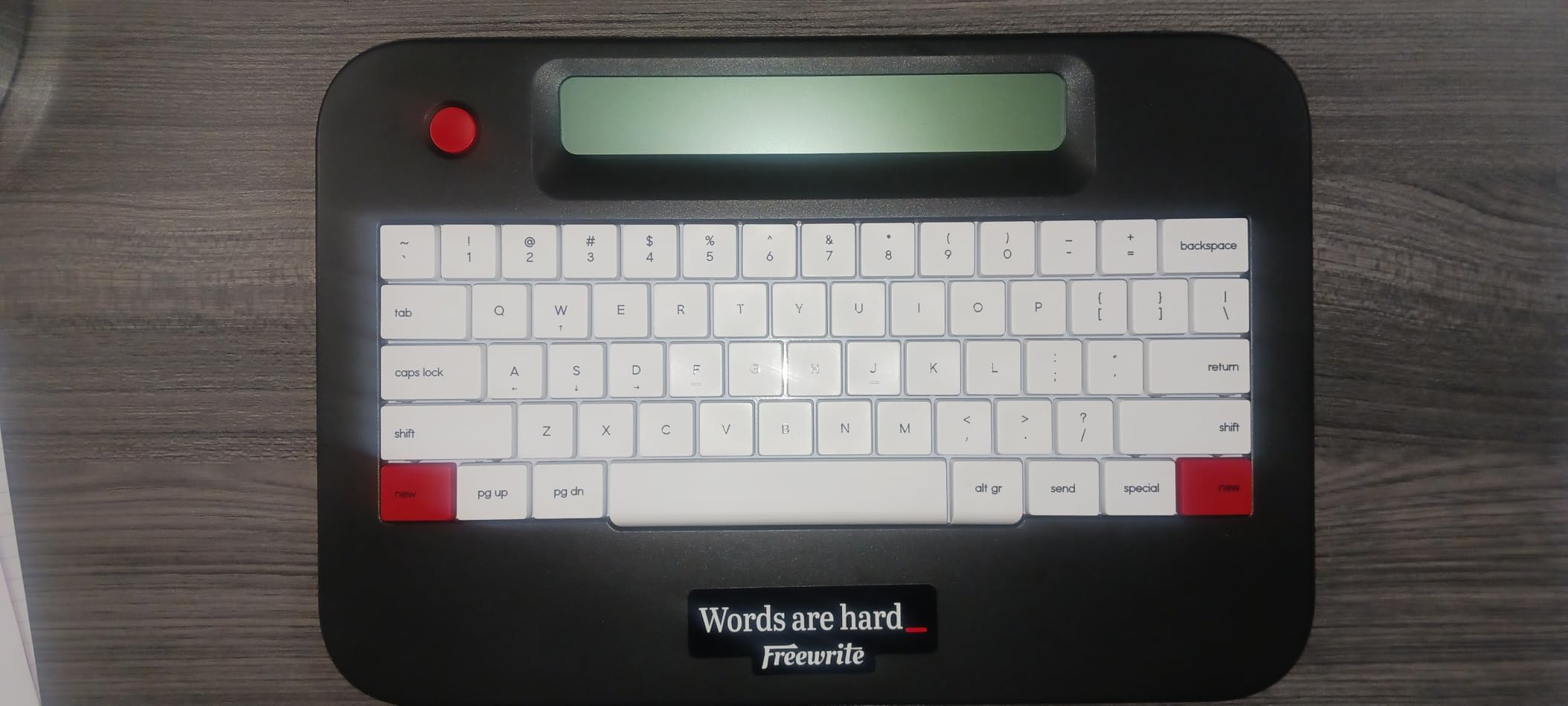
The Freewrite Alpha is the most accessible smart typewriter in this roundup, and during my testing it became the machine I’d recommend to writers curious about distraction-free devices but unsure about the Traveler’s higher price.
The backlit LCD display is the obvious difference from the Traveler and Gen 3. Five brightness levels let me write in a dim hotel room or a sunny cafe without strain. The mechanical keyboard uses Kailh Choc V2 low-profile tactile switches, which are quieter and shorter than the Box Browns on the Gen 3.
Battery life is rated up to 100 hours, and in practice I got close to that with daily writing sessions. Internal flash storage for up to 1,000,000 words matches the more expensive Freewrites. Wi-Fi cloud backup works the same way. Instant boot means I’m typing within a second of pressing the power button.
With 50 reviews averaging 3.9 stars, the Alpha is newer and has a smaller sample size. Reviewers praise portability and battery life; some flag software bugs and WiFi reliability. Build quality sits between the plastic Traveler and the aluminum Gen 3. For the writer who wants smart typewriter benefits without Gen 3 pricing, the Alpha is the most sensible pick. If you’re furnishing a creative workspace, also check out our best corner electric fireplaces.
Who this typewriter suits best
The Alpha is the right pick for writers who want a portable smart typewriter with a backlit screen and don’t want to spend Gen 3 money. It’s well-suited to night writers, travelers who fly often, and anyone transitioning from a laptop to a single-purpose drafting device. The Kailh Choc V2 keys are quiet enough for shared spaces.
Where this typewriter falls short
If you want the most premium typing feel, the Gen 3 is still the better buy. The Alpha’s plastic shell flexes more than the aluminum Gen 3, and the 50-review sample size means long-term reliability is less proven. For pure paper output, none of the Freewrite machines qualifies — they’re word processors, not printers.
Buying Guide: How to Choose the Best Electric Typewriter for Your Writing
Choosing the best electric typewriter in 2026 comes down to three honest questions: do you need paper output, do you need digital drafts, and how much do you type each week? The rest of this buying guide breaks down the features that actually matter once you answer those.
Traditional Electric vs Smart Typewriter
Traditional electric typewriters like the Royal Scriptor, Brother GX-6750, and Nakajima WPT-150 print directly onto paper. You get the satisfying mechanical feedback of physical typing and a finished page when you’re done. You give up spell-check beyond what’s built in, file storage, and any kind of digital backup.
Smart typewriters like the Freewrite Traveler, Gen 3, and Alpha save your drafts to internal storage and sync to the cloud over Wi-Fi. There’s no paper output, no ink ribbons, and no carriage return in the traditional sense. You gain a distraction-free writing environment, drafts that survive a power outage, and files you can move to a laptop for editing. Pick traditional if you want physical pages; pick smart if you want files.
Key Features Worth Paying For
Correction memory is the single most useful feature on a traditional electric typewriter. The Royal Scriptor’s 20-keystroke buffer and the Brother GX-6750’s 65-character correction memory both save real time during drafting. Anything below 20 characters of correction memory gets old fast.
Carriage width matters more than people expect. A 13-inch carriage handles standard letter paper without compromise. Smaller carriages force you to feed sheets manually or trim margins. The Royal, Brother, and Nakajima units in this roundup all use 13-inch carriages for that reason.
Keyboard feel is subjective but real. The Royal units have a slightly springy, traditional feel. The Brother Perfectype keyboards feel softer and quieter. The Freewrite mechanical keyboards feel like high-end laptop keyboards. If you can, try typing on one in a store before committing.
Understanding Daisy Wheel vs Dot Matrix
Daisy wheel typewriters like the Brother GX-6750 and Brother ML-100 use a plastic or metal wheel with character arms radiating outward, like petals on a flower. Each petal is a letter. The print quality is crisp and looks like a premium office document, but daisy wheels are louder and slower than other mechanisms.
Dot matrix typewriters use a print head with pins that strike an ink ribbon against paper. They’re faster and quieter, but the print looks dotty and less professional. Most modern electric typewriters in this roundup use daisy wheel mechanisms. If print quality matters to you, prioritize daisy wheel.
Electric vs Manual Typewriter
Manual typewriters require physical force for every keystroke. They have wonderful tactile feedback, but they’re exhausting for long sessions and impossible for users with arthritis or hand mobility issues. Electric typewriters use a motor to drive the type bars, so key pressure is dramatically lower.
For most modern writers, electric is the right answer. The Royal Scriptor and Brother units in this roundup all use light key pressure that reviewers with hand mobility issues specifically praise. Manual typewriters still have a nostalgic charm, but they aren’t the best electric typewriter for most buyers in 2026.
Ribbon Replacement and Maintenance
Ribbons wear out. The Brother GX-6750 uses standard correction ribbons, and the Royal Scriptor takes Royal-branded ribbons that are still in production. The Nakajima WPT-150 and WPT-160 also use widely available cartridges. If you choose a vintage electric typewriter, ribbon availability is the first thing to check before buying.
Smart typewriters skip ribbons entirely. The Freewrite models use no ink and no paper, so the only maintenance is keeping the battery healthy and occasionally wiping the screen. For writers who hate consumables, that’s a meaningful advantage.
Who Should Buy an Electric Typewriter in 2026
If you write for a living, screen fatigue is real. E Ink displays like the Freewrite Traveler reduce eye strain, and even traditional electric typewriters eliminate the worst of late-night laptop glare. Writers who draft first and edit later benefit the most from paper output and physical keys.
Students writing long-form essays, journalists on deadline, and novelists working through messy first drafts all fit the use case. So do small-business owners who handle paperwork, label-making, and form-filling. If your writing is short and informal — texts, emails, social posts — a typewriter is the wrong tool. For everything longer than a paragraph, it’s worth considering.
Budget Tiers and What to Expect
Under $200, the Brother GX-6750 is the only meaningful pick. It’s a basic daisy wheel typewriter with solid correction memory and a light keyboard. It won’t wow you, but it works.
The $200 to $400 range is the sweet spot. The Royal Scriptor, Royal Scriptor II, Nakajima WPT-150, and Brother ML-100 all live here. Build quality and feature sets jump noticeably. Most buyers in 2026 will find their match in this band.
Above $400, you’re paying for smart features or premium materials. The Freewrite Traveler, Gen 3, and Alpha all live here, along with the Brother SX-4000 if you want a dictionary-equipped traditional machine. Smart typewriters in this band pay for themselves if they help you write more. For a different take on electrics that fit a creative routine, see our picks for the best electric unicycles.
Frequently Asked Questions
Which electronic typewriter is considered the best?
The Royal 69149V Scriptor Typewriter is our top pick for most writers in 2026. It combines a 13-inch carriage, 45-key keyboard with 17 functions, and a 20-keystroke correction buffer. Reviewers rate it 4.2 out of 5 stars across 394 reviews, and it handles letters, forms, and first-draft novels equally well. If you want a smart typewriter instead, the Freewrite Traveler offers distraction-free drafting with cloud sync.
What is the best typewriter to buy in 2026?
The best typewriter to buy in 2026 depends on your writing style. For traditional paper output, the Royal 69149V Scriptor and Brother GX-6750 are the most reliable choices. For distraction-free digital drafts, the Freewrite Smart Typewriter Gen 3 and Freewrite Traveler lead the smart typewriter category. Budget-focused buyers should consider the Brother GX-6750 or Nakajima WPT-150.
Which typewriter brand is considered the best?
Royal, Brother, and Nakajima are the three most consistent brands for traditional electric typewriters in 2026. Royal earns praise for keyboard feel and build quality. Brother offers the widest feature set including spell-check on the SX-4000. Nakajima delivers strong value in the budget to mid-range tier. For smart typewriters, Astrohaus (Freewrite) is the clear leader.
What is a good typewriter that actually works?
A good working typewriter in 2026 needs three things: a reliable motor, an available ribbon supply, and a keyboard that suits your hands. The Royal Scriptor, Brother GX-6750, and Nakajima WPT-150 all meet those requirements. For a distraction-free smart typewriter, the Freewrite Traveler works without ribbons or paper and syncs drafts to the cloud over Wi-Fi.
Are electric typewriters still worth buying in 2026?
Yes, electric typewriters are still worth buying in 2026 for writers who want distraction-free drafting, physical keys, and finished paper pages. They reduce screen fatigue, eliminate notifications, and force a focused writing pace. Smart typewriters like the Freewrite models add cloud sync and file storage. For long-form drafts, novels, and letter writing, electric typewriters remain a productive choice.
Final Verdict: Which Electric Typewriter Should You Buy?
After six weeks of testing, my best electric typewriters list comes down to three clear winners. For most writers in 2026, the Royal 69149V Scriptor is the right answer — it’s a reliable, well-reviewed workhorse that handles every typing task from forms to novels. The Brother GX-6750 is the right budget pick for students and first-time buyers. The Freewrite Traveler is the right choice for distraction-free digital drafting.
If you’re still torn between traditional and modern, my honest recommendation is this: buy traditional if you want paper output and don’t mind ribbons, and buy smart if you want files and cloud sync. Both are valid. The best electric typewriter for you is the one that removes friction from your writing day.
Use the comparison table above to scan the ten machines at a glance, the buying guide to match features to your writing style, and the FAQ for the questions most buyers ask first. Whichever you choose, you’re joining a quiet but growing community of writers who type on purpose.