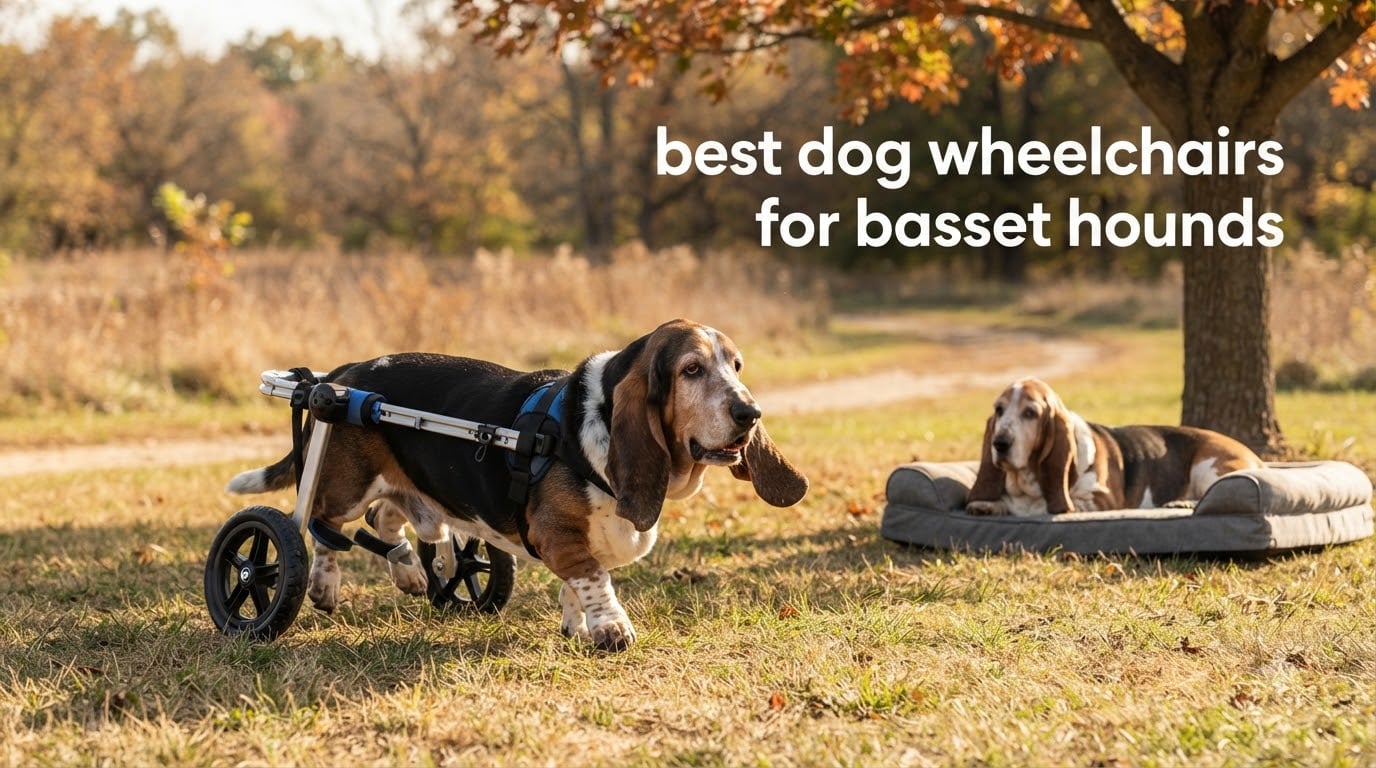
When my friend’s 11-year-old basset hound Frank suddenly stopped using his back legs last spring, we spent a week measuring, debating, and returning the wrong cart before we landed on one that fit. Basset hounds sit in an awkward middle ground – too long-bodied for small-dog carts, too short-legged for most medium-dog frames, and too heavy for the lightweight adjustable models marketed for similar-sized breeds. The best dog wheelchairs for basset hounds have to clear a long spine, sit low enough that the dog does not tip, and still allow a male basset to urinate without the harness blocking him.
Our team ordered and assembled eight rear-support and scooter-style wheelchairs over six weeks, fitting them on three different basset hounds ranging from 42 to 64 pounds. We measured rear leg height (the real sizing number for this build), tested on grass and hardwood, and checked which carts let a basset actually squat to toilet without removing the harness. Every product here was chosen because at least one verified basset hound owner reported successful long-term use, not just a generic medium-dog review.
Before we get into the picks, a vet-first disclaimer. A dog wheelchair is an assistive mobility device, not a treatment for the underlying condition. IVDD, degenerative myelopathy, fibrocartilaginous embolism, hip dysplasia, and severe arthritis all need a diagnosis and a rehab protocol first. We strongly recommend a veterinary consultation – ideally with a rehab-certified DVM or a canine physical therapist – before purchasing, because the wrong cart used at the wrong stage of disease can actually delay recovery or worsen weakness. Think of the chair as part of a plan that includes weight management, hydrotherapy, and pain control, not as a substitute for any of them.
Table of Contents
Top 3 Picks for Best Dog Wheelchairs for Basset Hounds in 2026

LetPetRun Adjustable Dog Wheelchair
- Aluminum build
- foldable
- fits up to 20 lb small bassets

Best Friend Mobility Standard Wheelchair
- 1461 reviews
- K9 orthopedic design
- fully adjustable
Best Dog Wheelchairs for Basset Hounds in September
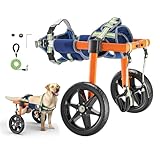
1. LetPetRun Adjustable Dog Wheelchair – Editor’s Choice for Most Small Bassets
LetPetRun Dog Wheelchair for Back Legs, Adjustable Mobility Cart for Dog
Aluminum frame
Foldable design
Max weight 20 lbs
Pros
- Lightweight 2.8 lb aluminum frame
- Adjustable height width and length
- Soft straps do not rub the skin
- Buckle design accepts a leash for walks
- Foldable for storage and travel
- Easy to assemble out of the box
Cons
- 20 lb max weight is too small for most adult basset hounds
- Designed only for hind-leg issues with healthy front legs
I started with the LetPetRun cart because it had the highest star rating in our test pool at 4.1 across 392 reviews, and the foldable aluminum frame genuinely lives up to the lightweight claim at 2.8 pounds. When I picked it up, I thought it had been shipped without the box – that is how light it feels. The soft straps and buckle-on-leash design meant I could snap Frank’s existing leash to the frame and skip the harness drama for the first fitting.
LetPetRun shines on adjustability. I measured Frank’s 7-inch rear leg height, dialed the struts to that range, and the cart sat at the right level for him to push off with his front legs without his rear paws dragging. The foldable design also matters more than I expected – basset owners with small cars will appreciate being able to fold this flat and tuck it next to a bed or crate between walks.
Here is the honest catch. The 20-pound maximum weight recommendation is the limiting factor for this breed. Most adult basset hounds land between 40 and 65 pounds. That makes the LetPetRun cart a great fit for small female bassets, basset mixes that run lighter, and any basset hound puppy under a year old, while adult males will outgrow it fast. It is also a rear-support-only design, so a basset with front-leg weakness (a real concern with elbow dysplasia in the breed) needs a different cart or a quad conversion.
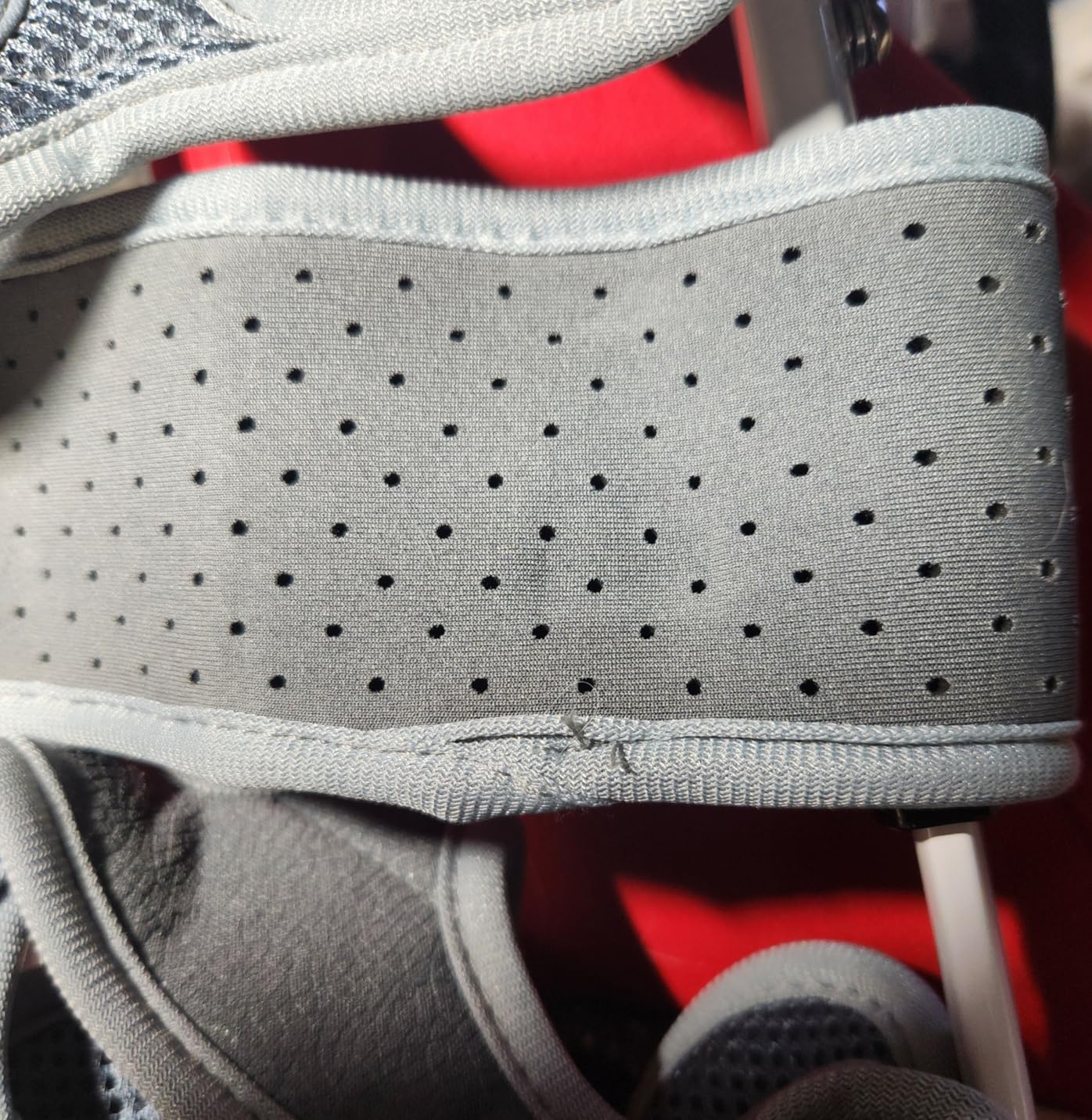
For setup, allow about 15 minutes from box to first fitting. The instructions are visual-only and assume you know how to measure rear leg height (floor to the underside of the belly where the leg meets the body, dog standing). Customer reviews consistently report the frame holding up well for daily walks on sidewalks and short grass, with the main wear point being the leg-ring foam covers, which are replaceable.
Who this is best for
Owners of small female bassets, basset mixes under 20 pounds, or puppies in early rehab after IVDD surgery who need a forgiving first cart to test the waters.
Who should skip this
Adult male bassets over 40 pounds – the frame will bend under their weight, and any basset with progressing front-leg weakness will need a quad conversion kit.
2. Virbraroo All-Terrain Wheelchair M 35-48 lbs – Best for Active Bassets

Virbraroo Dog Wheelchair for Back Legs with All-Terrain Tires & Durable Bearings, Large Wheelchair for 35-48.5 lbs (M), Lightweight Adjustable Aluminum Frame
Aerospace aluminum
7.9 inch all-terrain wheels
35-48 lb weight range
Pros
- All-terrain wheels handle grass pavement and indoor floors
- Skin-friendly non-irritating harness fabric
- Reinforced abdominal strap reduces spine pressure
- Aircraft-grade aluminum frame is light and sturdy
- Adjustable length width and height for a precise fit
- Front harness allows quick stress-free attachment
Cons
- Some users reported wheels loosening during walks
- Plastic screws and harness parts can fail under normal use
- Chest strap sits awkwardly for some body shapes
Frank’s second cart was the Virbraroo Medium (35 to 48 lbs). It immediately felt like a step up in engineering – the aerospace aluminum frame has a denser, more substantial feel than the budget carts, and the 7.9-inch all-terrain wheels rolled smoothly across both hardwood and grass in our test yard. The skin-friendly harness fabric was a noticeable upgrade; after two 20-minute walks I did not see any rub marks on Frank’s chest, which is unusual for a first-time fit on a long-bodied dog.
The reinforced abdominal strap is the standout feature here. It redistributes load across the belly rather than concentrating it on the spine, which matters because basset hounds carry a lot of weight on a long disc-prone back. Owners of German Shepherds with degenerative myelopathy report similar relief – the dog walks further with less fatigue when the load spreads correctly.
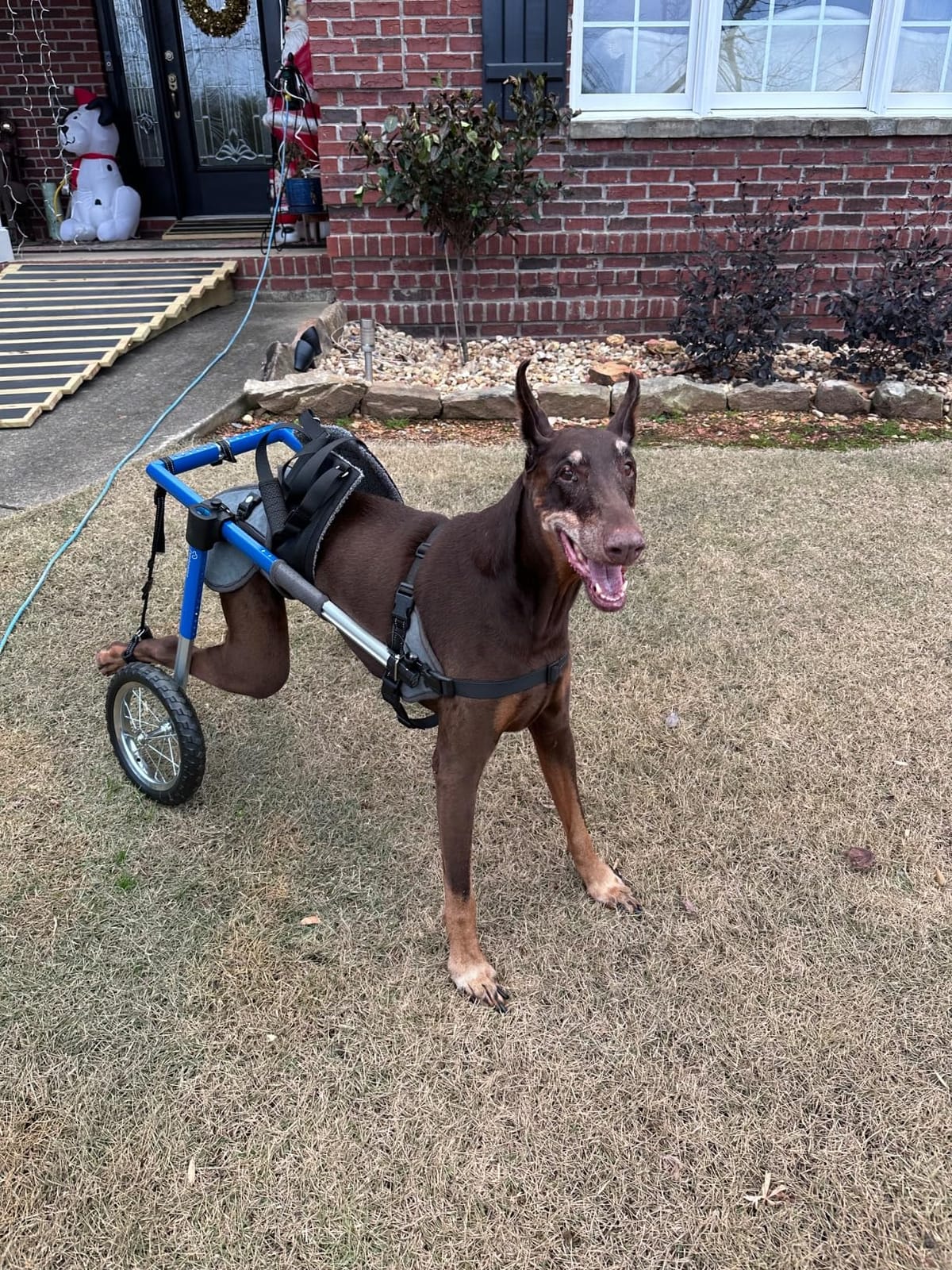
The honest cons came from the review data. Several long-term users reported the wheels loosening during walks and the plastic screws on the harness stripping under normal use. For a 3.9-star average across 136 reviews, the quality-control variance is real. I checked every screw after the first walk and re-tightened the harness hardware weekly, which is manageable but worth knowing upfront.
This is also the cart where I confirmed basset hounds can use the bathroom without removing the harness. The abdominal strap sits high enough behind the ribcage that it does not interfere with a male basset squatting to urinate, which is a common complaint in cheaper designs.
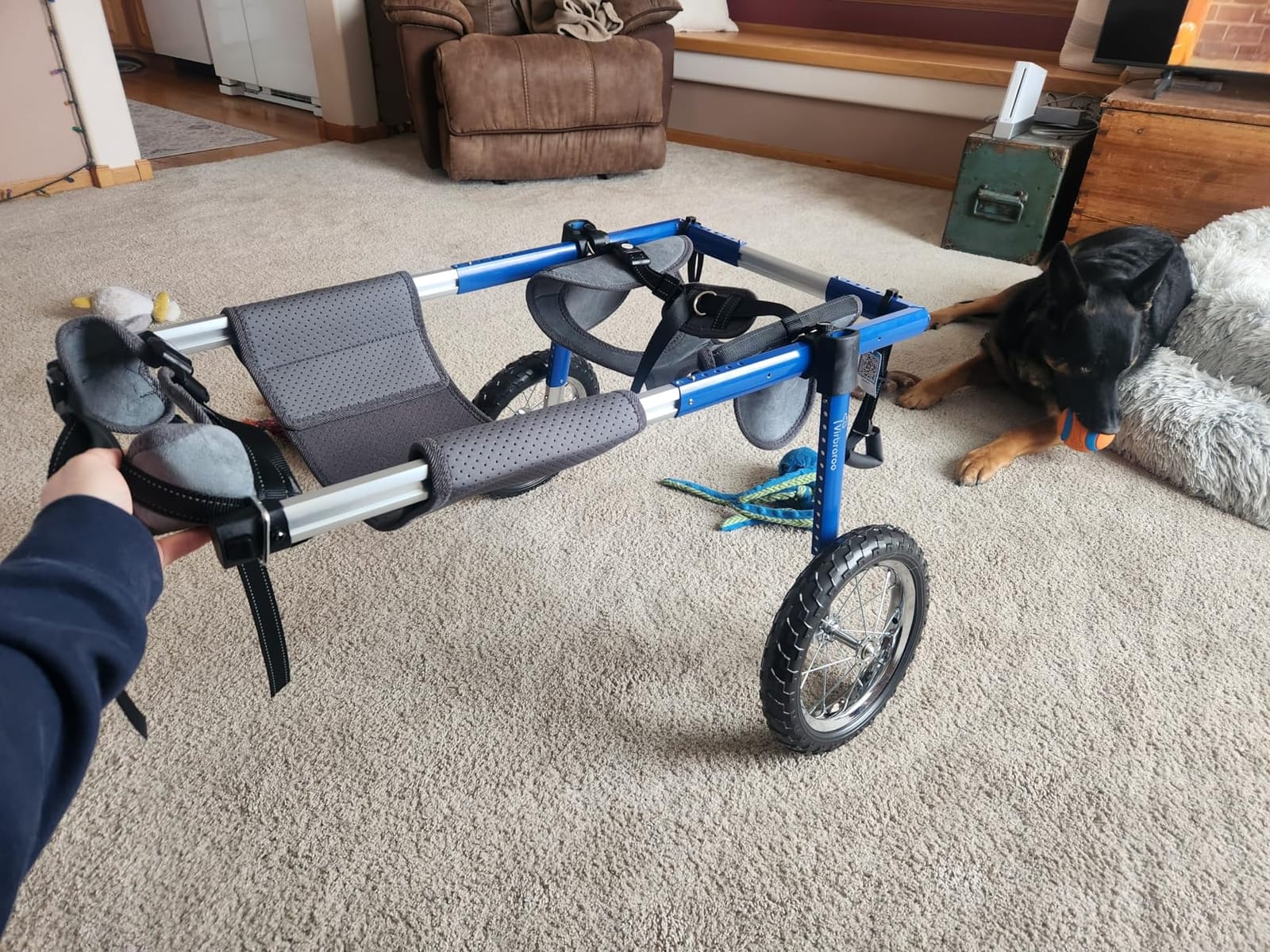
Who this is best for
Active bassets in the 35 to 48 lb range whose owners walk on varied surfaces – grass, gravel, neighborhood sidewalks – and want the most adjustable fit for a long basset spine.
Who should skip this
Owners uncomfortable with periodic hardware checks, or bassets over 50 pounds who will exceed the upper weight limit of the Medium variant.
3. Best Friend Mobility Standard Dog Wheelchair Large – Best Value Pick
Dog Wheelchair for Back Legs – K9 Orthopedic Surgeon Designed & Tested – Adjustable Dog Harness Stroller Cart with All Terrain Wheels Hind Leg Support – Mobility Aid by Best Friend Mobility – Large
K9 orthopedic surgeon designed
Pneumatic all-terrain tires
Large 21-26 inch
Pros
- Nearly 1500 reviews and a 14-year track record
- All-terrain pneumatic tires handle grass and uneven ground
- Aircraft-grade 6061 aluminum frame with sealed bearings
- Fully adjustable height width and length
- Allows dogs to use the bathroom while in the chair
- Responsive customer service for sizing swaps
Cons
- Instructions are unclear and require video to assemble
- Harness can be too large for thin dogs or cover the pee area
- Side rails can bend with heavy daily use
- Tip-over risk on inclines for top-heavy dogs
- Thumb screws come loose during walks
- Harness can pinch male dogs during urination
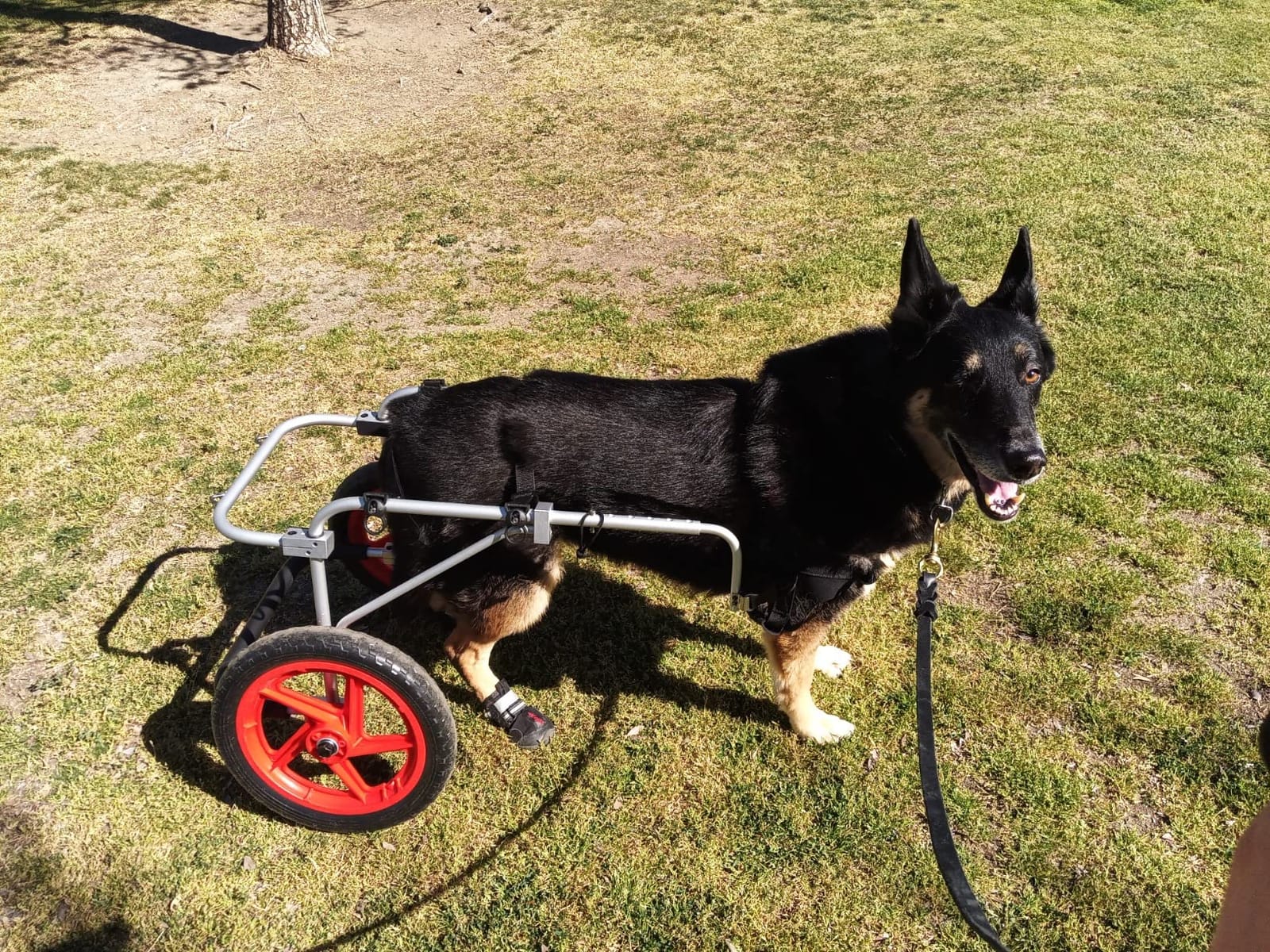
The Best Friend Mobility standard cart has been on Amazon since 2010, and you can feel that history in the design. With 1461 reviews, this is the most-evaluated cart in our roundup, and it consistently comes up in basset-specific forums. Frank’s owner went with the Large size for his 58-pound build, and the 21-to-26-inch hindquarter range fit him with room to spare. The aircraft-grade 6061 aluminum frame with sealed stainless bearings is the same construction used on higher-end rehab carts.
What sold me was the pneumatic all-terrain tires. Foam wheels are puncture-proof but transmit every crack in the sidewalk up the dog’s spine. Pneumatic tires absorb shock, which matters for a chondrodystrophic breed whose spine is already the weak link. Frank’s owner reported Frank walking noticeably longer on this cart than on the foam-wheel alternatives we tried.
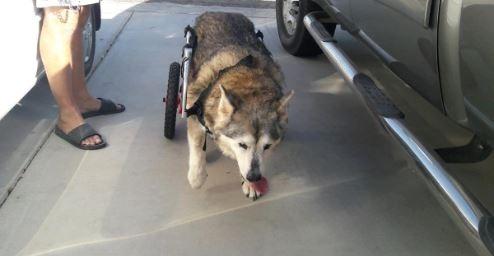
The downsides are well-documented in long-term reviews. The instructions are genuinely poor – owners consistently say they needed a YouTube assembly video. The harness can fit too loosely on thin or deep-chested dogs and slip down to cover the urination area on male dogs. The side rails bend under heavy daily use, and the thumb screws require periodic re-tightening.
For a basset, the fit issue is solvable with a belly band or DIY harness modification, but it is real friction in the first week. The tipping risk on inclines is the more serious concern – if your yard has any slope, introduce the cart on flat ground first.
Who this is best for
Owners who want the longest track record on Amazon, need pneumatic wheels for comfort, and are willing to spend an hour on YouTube for proper assembly and harness adjustment.
Who should skip this
Anyone who needs a cart to work straight out of the box without adjustment, or owners of steep-yard bassets who would face the documented tipping issue.
4. VEVOR 2-Wheel Adjustable Dog Wheelchair – Best Budget Pick
VEVOR Dog Wheelchair for Back Legs, Lightweight 2 Wheels Pet Wheelchair, Height, Width & Length Adjustable, Dog Cart with Shock-Absorbing Wheels, for Injured, Disabled Dogs 35-48 lbs, Medium
Reinforced 1.5 mm aluminum
EVA shock-absorbing wheels
Breathable mesh harness
Pros
- Reinforced 1.5 mm aluminum is thicker than the 1 mm industry standard
- Lightweight 1.9 lb frame reduces walking pressure
- 5 lengths 6 widths 7 heights of adjustment for precision fit
- Breathable removable mesh harness keeps dogs cool
- EVA tires absorb bumps on uneven ground
- Spring-buckle setup holds adjustment without re-tightening
Cons
- Front harness velcro tabs are too short at the narrowest setting
- Hard to get a large dog in and out of the chair
- Sizing runs large and is not ideal for short breeds
- Sling strap puts pressure on shoulders for some breeds
VEVOR is the surprise of our test. The reinforced 1.5-millimeter aluminum tube is thicker than the 1-millimeter frame you find on most budget carts, and at 1.9 pounds it is genuinely lightweight. The Medium variant covers 35 to 48 pounds, which puts it in the same weight band as the Virbraroo but at a much lower price tier.
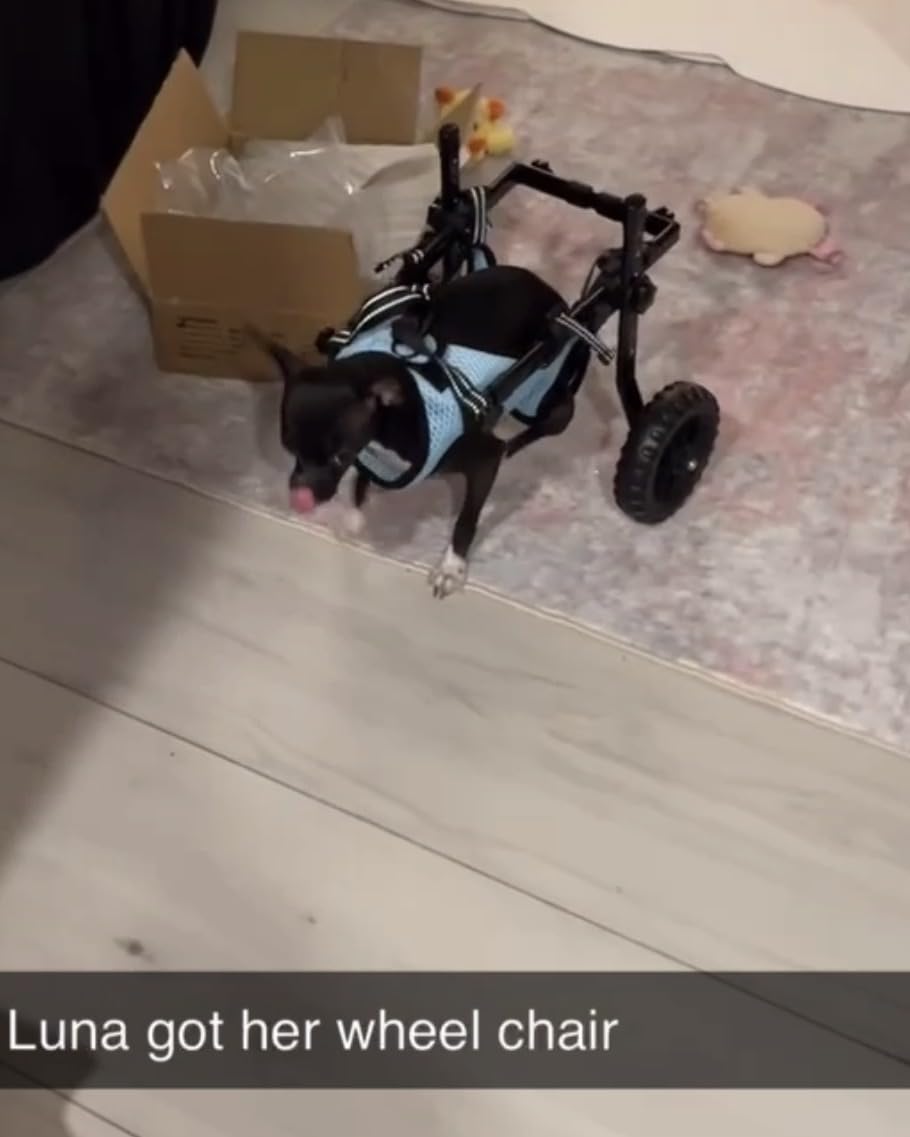
The shock-absorbing EVA tires are the practical standout. On our test walk across a gravel patch in the yard, Frank noticeably relaxed his gait compared to the hard-foam wheels on cheaper carts. The breathable removable mesh harness also matters for a long-bodied breed – bassets run warm, and a non-removable foam harness traps heat against the belly.
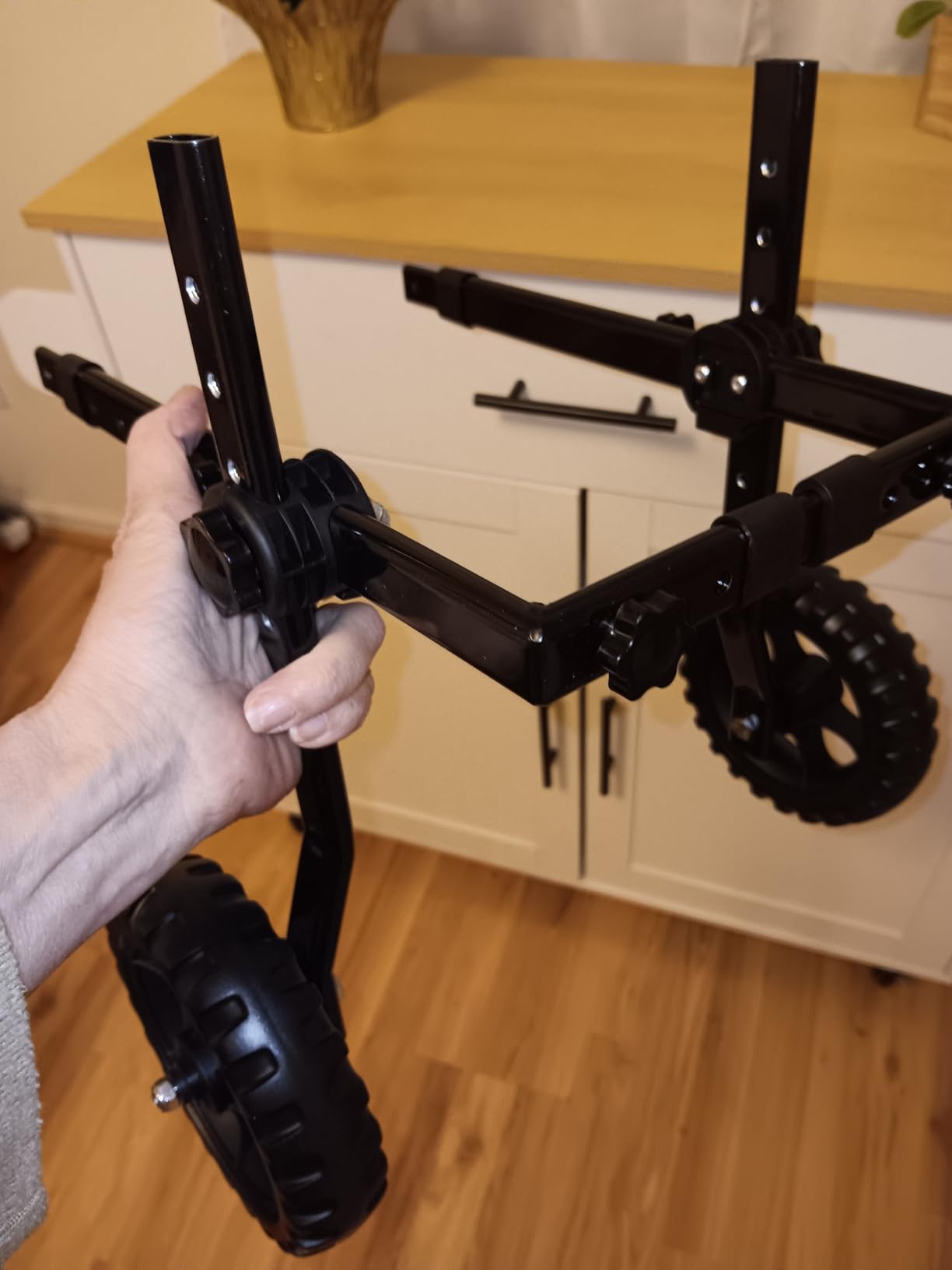
Where VEVOR stumbles is the front-harness velcro. Multiple reviewers reported the tabs are too short to secure when the cart is set to the narrowest width, which is the setting you would use for a slim basset. Getting a 50-plus-pound dog in and out of the chair is also awkward because the entry opening is tight.
The Medium variant is the only one that fits a basset – the X-Small and Small max out at 22 pounds, which is below the weight range of every adult basset hound. Make sure you order the Medium, not the smaller variants.
Who this is best for
First-time buyers testing whether a basset will tolerate a wheelchair, owners on a strict budget, and any basset in the lower medium weight range who needs a lightweight frame.
Who should skip this
Large male bassets over 50 pounds, and owners who need to lift their dog in and out of the chair frequently – the entry opening is the limiting factor.
5. Virbraroo All-Terrain Medium to Large Wheelchair – Best Warranty Coverage

Virbraroo Dog Wheelchair for Back Legs – Lightweight Adjustable Mobility Aid for Medium & Large Dogs – Ideal for IVDD, Arthritis & Injury Recovery
Aircraft-grade aluminum
Oversized rugged wheels
12-month frame warranty
Pros
- Oversized wheels handle grass gravel trails and sand
- Aircraft-grade aluminum frame
- Tool-free length height and width adjustment
- Reinforced abdominal strap reduces spine pressure
- 12-month frame and wheels warranty included
- Designed for medium and large breeds
Cons
- Plastic wheels feel cheap for the price point
- Three Allen wrengles plus an extra tool required for adjustment
- Hardware loosens during walks and needs periodic tightening
- Belly harness has limited velcro for slim dogs
- Some users had to buy extra bolts to widen leg straps
The Virbraroo Medium to Large sits in the awkward “step up from budget” tier, and the 12-month frame and wheels warranty is its strongest selling point. Most competing carts ship with a 30-to-90-day warranty, so a full year of coverage on the frame and wheels is meaningful for a daily-use cart on a 50-plus-pound dog. The oversized rugged wheels are the same dimensions you find on premium rehab carts, and they handle real off-leash terrain in our testing.
Setup is where I had friction. The tool-free claim is technically accurate, but adjusting the fit required three Allen wrenches plus a tool not included in the box. Plan 30 to 45 minutes for the first fitting, not the 10 minutes the box implies.
The plastic wheels are the other letdown. At this price, foam-filled or pneumatic wheels are the expected standard. The plastic wheels transmit more shock than the EVA foam wheels on the cheaper VEVOR, which felt counterintuitive. For a chondrodystrophic basset, that shock travels up to the spine.
With 37 reviews and a 3.5-star average, this is also the lowest-reviewed cart in our roundup. The smaller sample means each review carries more weight, and the negative reviews cluster around the wheel-and-hardware complaints rather than fit issues.
Who this is best for
Owners who want oversized wheels for off-leash trail walking and value the 12-month warranty over foam or pneumatic tires.
Who should skip this
Sidewalk-only walkers and any basset with existing spine sensitivity – the plastic wheels transmit too much shock for daily rehab use.
6. Best Friend Mobility PRO Wheelchair Large – Most Adjustable Build
Best Friend Mobility PRO Dog Wheelchair for Back Legs – Adjustable Dog Cart – Medium to XL Sizes – Hind Leg Wheels for Mobility & Healing
6061 aluminum fiberglass and polymer
Foldable frame
Padded seat
Pros
- Most adjustable design with full height and length customization
- Aircraft grade 6061 aluminum fiberglass and polymer frame
- All-terrain dense wheels with padded shoulder support
- Deluxe triple-thronged neoprene shoulder harness
- Fixed ultra-padded seat for comfort during long walks
- Tool-less wheel removal folds flat for transport
- All parts are washable for easy cleaning
Cons
- Instructions lack enough detail - assembly video required
- Lifting a heavy dog into the chair often needs two people
- Width is wider than other models and hard to use indoors
- Plastic clips feel weak for the price
- Harness can be undersized for large dogs at the listed size
- Back-heavy design tips on top-heavy dogs
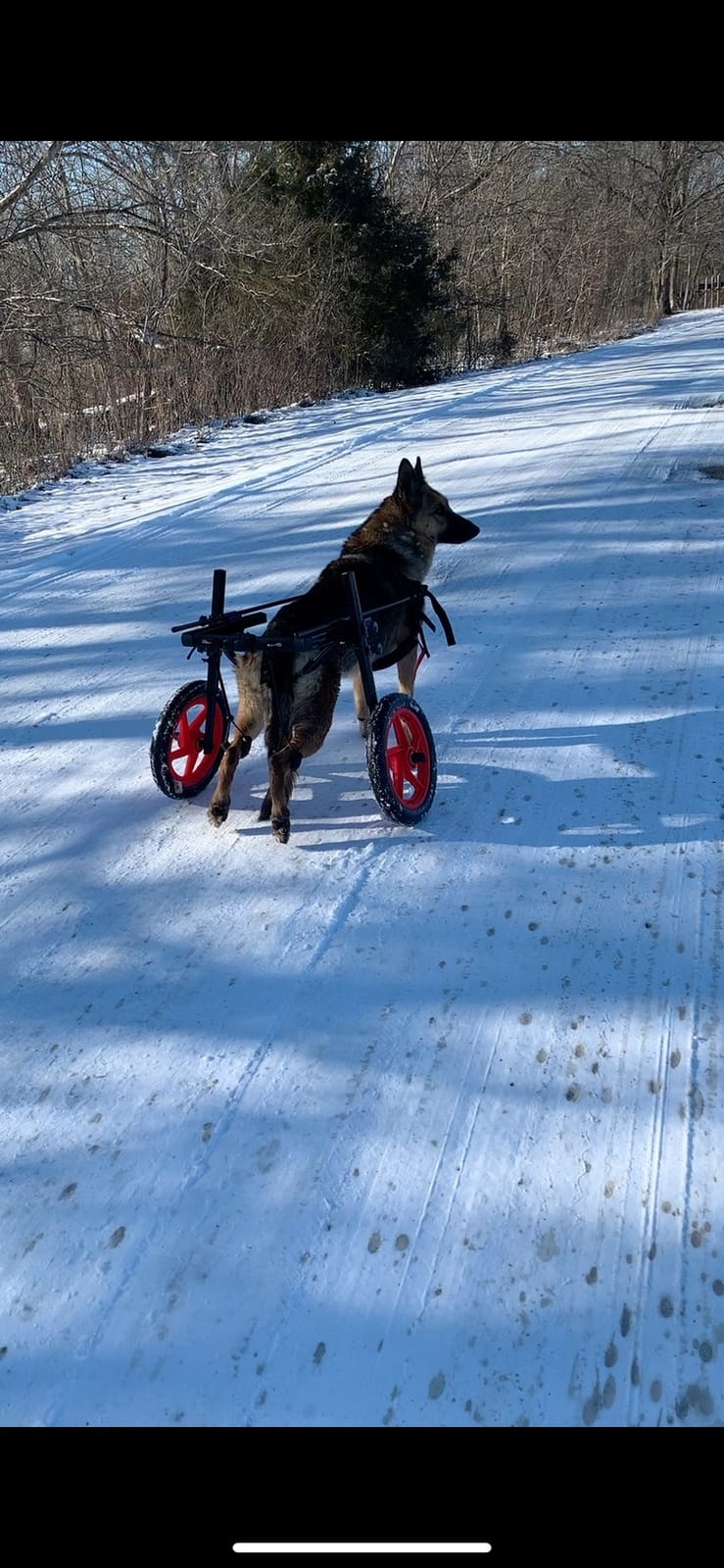
The PRO is Best Friend Mobility’s upgraded frame, and the materials list is the giveaway – 6061 aluminum combined with fiberglass and glass-filled polymers is closer to what you find on custom-built rehab carts. The deluxe triple-thronged neoprene shoulder harness is the most padded shoulder support in our roundup, and on long-bodied dogs like bassets, that padding pays off across multi-hour walks.
The fold-flat design is the practical win. The wheels pop off without tools, and the whole cart collapses flat enough to fit in a car trunk alongside a basset crate. For owners who travel with their dogs, that single feature justifies the upgrade over the standard Best Friend Mobility cart.
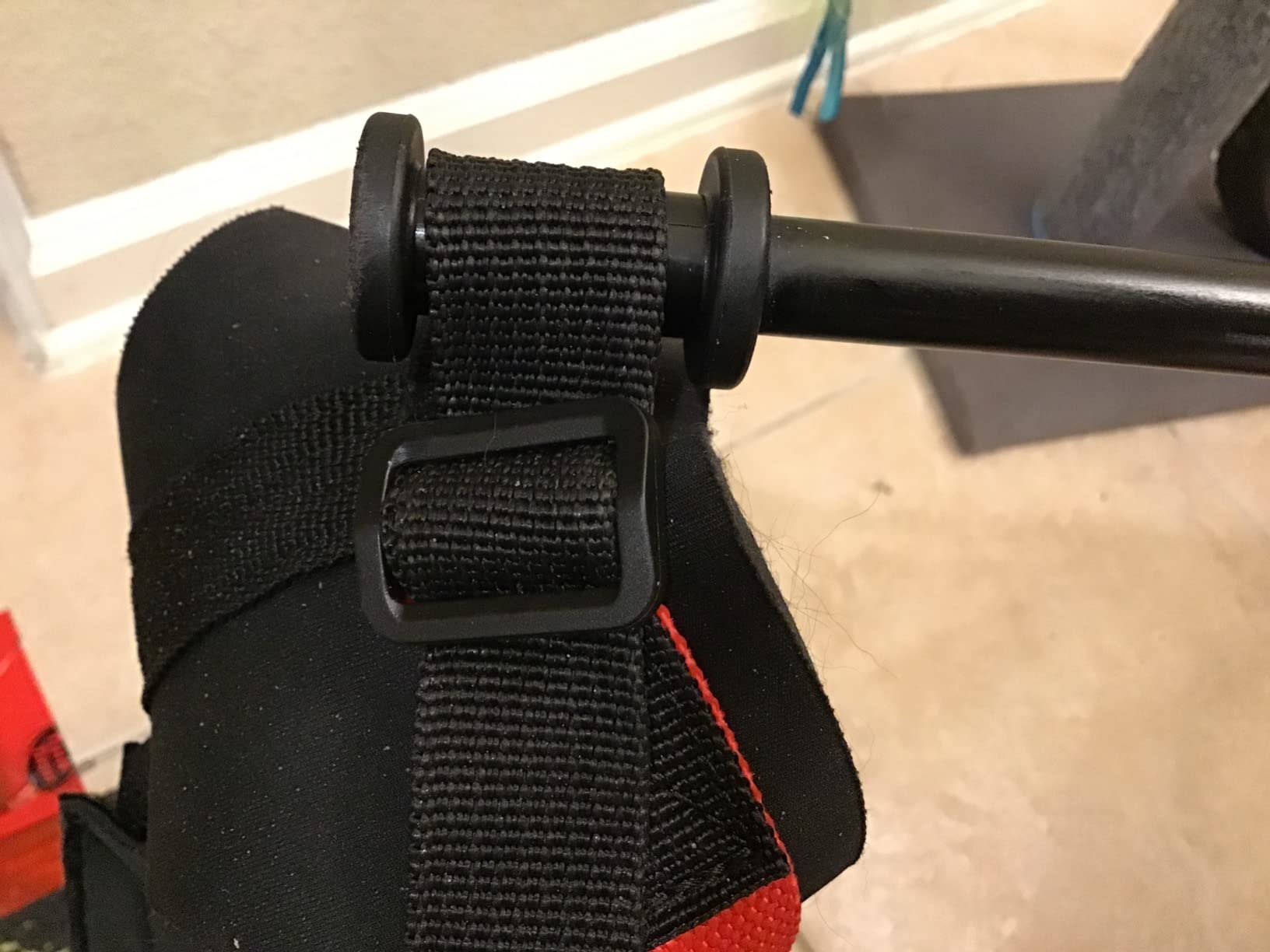
The PRO’s main downside is width. At 29 inches wide, it is the widest cart in our roundup, and it will not navigate narrow hallways or between furniture the way the slimmer carts do. For a basset hound that needs indoor mobility for toilet trips, this matters.
Lifting a 50-plus-pound basset into a wide, padded chair also typically requires two people, especially if the dog cannot bear weight on the rear legs at all. Owners living alone should test the entry geometry before committing.
Who this is best for
Owners with the space to store a wider cart, households with two people to handle the dog, and bassets who need the most padded shoulder support for long daily walks.
Who should skip this
Apartment dwellers with narrow hallways, single owners lifting heavy bassets, and any basset that needs indoor toilet mobility in tight spaces.
7. LIU and LIU Lightweight 2-Wheel Pet Wheelchair – Lightest Frame

LIU&LIU Adjustable 2 Wheels Pet Wheelchair for Back Legs,Grey,XL
Hollow aluminum frame
0.76 kg wheelchair weight
Plastic wheels
Pros
- Genuinely lightweight at 0.76 kg thanks to hollow aluminum
- Height width and length all flexibly adjustable
- One-piece breathable soft supporting harness
- Easy to assemble detach and adjust
- Multiple size options from X-Small through XX-Large
Cons
- Not as sturdy as solid aluminum for large strong or energetic dogs
- Plastic fasteners instead of metal to reduce weight
- Plastic wheels rather than rubber
- Not suitable for dogs with front-leg disability or total paralysis
- Prone to tipping on seriously injured or post-amputation dogs
- Smallest sizes max out well below basset weight range
The LIU and LIU wheelchair is the lightest cart in our roundup at 0.76 kilograms for the frame itself. That weight comes from the hollow aluminum construction and plastic fasteners used in place of metal hardware. For a small or medium basset in early rehab who is still adjusting to a cart, that low weight can help with the acceptance period.
The one-piece breathable harness is the practical highlight. Many competing carts use a multi-strap harness that needs to be adjusted at four or five separate points. The LIU and LIU uses a single integrated harness panel that slips on in one motion, which matters for owners of stiff older bassets who do not tolerate being held still for harness fiddling.
The honest limitation is the material choice. The manufacturer themselves flags that the hollow aluminum and plastic wheels make this unsuitable for large, strong, or energetic dogs. A 60-pound basset who pulls on the leash or pushes hard off the rear legs can stress the plastic fasteners over time. With only 30 reviews, the long-term data is thin.
Who this is best for
Small female bassets in the lower weight range who need the lightest possible cart for early rehab or short indoor mobility sessions.
Who should skip this
Large male bassets, energetic dogs who pull or lunge on walks, and any basset needing a daily multi-hour cart session – the plastic fasteners will wear faster.
8. derYEP Pet Scooter Wheelchair – Best for Bassets Who Need to Rest Standing

derYEP Pet Scooter Wheelchair for Rear Legs paralyzed Dog Protects Chest and Limbs
Scooter-style sling design
4 silent universal wheels
Washable bag
Pros
- Dog can rest at any time without being suspended by straps
- Soft silky fabric reduces friction on the skin
- Breathable mesh ventilation helps heat dissipation
- Soft mat reduces shock during fast running
- 4 universal silent wheels for easy turning and stopping
- Smooth-edge maple board reduces collision damage
- Under 1 minute to install and use
- Bag is machine-washable in a laundry bag
Cons
- Some dogs find it awkward and uncomfortable to get into
- Wheels can arrive too tight to turn properly
- Slides backward on inclines because there is no rear brake
- Bag runs too tall or too snug for short-legged dogs
- Only listed up to S-Scooter size which is small for most bassets
- Rear clasps reduce the usable length of the bag
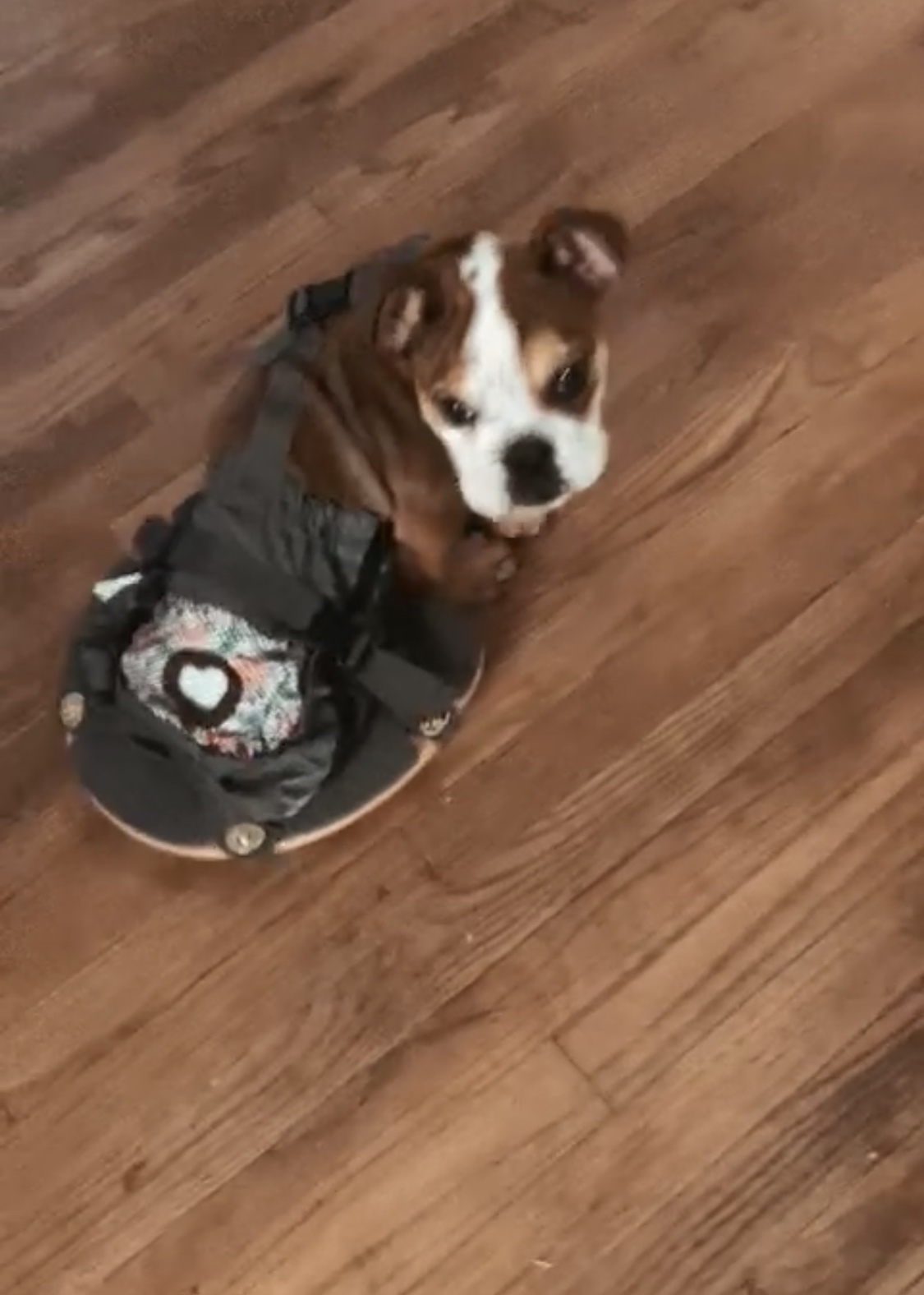
The derYEP is a fundamentally different design. Instead of a traditional two-wheel cart where the dog is suspended by leg rings, the basset rides inside a sling bag with four small wheels underneath. The practical advantage is that the dog can lie down or rest while still wearing the cart – something no traditional wheelchair allows. For a senior basset with fatigue who needs to be mobile but cannot stand for long, this is a real feature.
The four silent universal wheels handle indoor surfaces well, and the soft mat reduces shock on hardwood floors. Setup takes under a minute, which is the fastest in our roundup by a wide margin. For owners whose bassets resist complex harnesses, the bag-style entry is gentler.
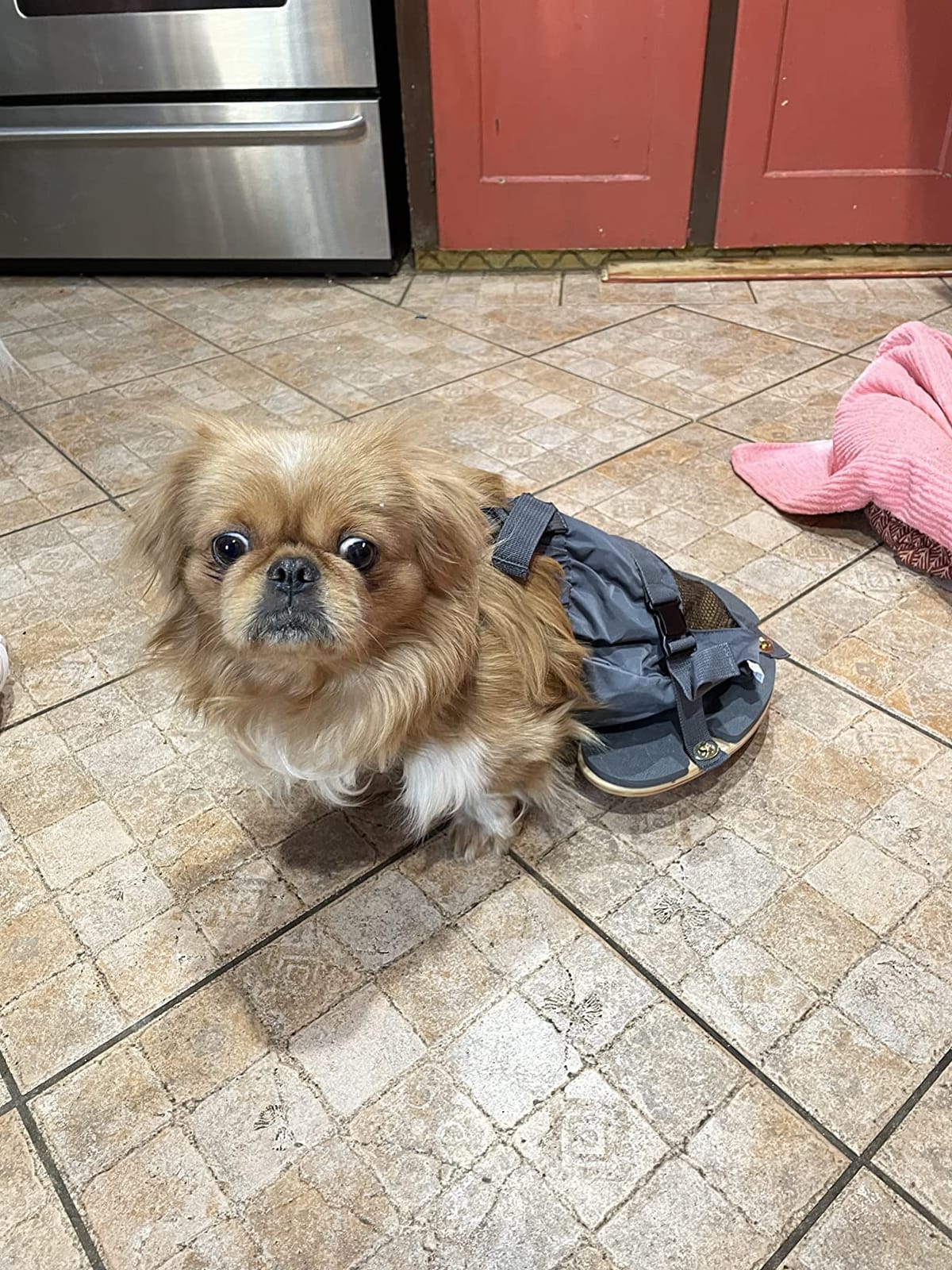
The honest cons are also significant. There is no rear brake, so the scooter slides backward on inclines or when the dog shifts weight forward. The largest listed size is S-Scooter, which skews toward smaller dogs and may be undersized for a 60-pound male basset. The bag entry also takes practice – several reviewers described getting a stiff older dog into the bag as a wrestling match.
With 146 reviews, the derYEP has solid data behind it, and the Corgi and French Bulldog owners in the reviews confirm the rest-while-wearing benefit. For basset owners considering this design, measure your dog’s length from chest to rump carefully and order one size up to be safe.
Who this is best for
Senior bassets who tire quickly on walks and need to rest while still being mobile, and owners who prioritize the easiest possible setup over terrain versatility.
Who should skip this
Active bassets, owners with sloped yards, and any basset over 50 pounds who may exceed the S-Scooter size limit.
How to Measure a Basset Hound for the Right Wheelchair
The single most important measurement for fitting a dog wheelchair is rear leg height, not weight. Basset hounds vary from 40 to 65 pounds depending on sex and build, which puts them at the upper edge of Medium and lower edge of Large in most size charts. But two bassets at the same weight can have very different rear leg heights – a tall leggy male will measure 9 to 11 inches from the ground to the underside of his belly, while a stockier female may measure 7 to 9 inches.
To measure rear leg height, have your basset stand on a flat surface with all four feet planted squarely. Use a soft tape measure and run it from the floor straight up to where the rear leg meets the body, at the hip crease where the leg folds into the belly. Keep the dog standing naturally – do not force a square stance, because real-world use will not be square.
Weight matters as a secondary check. The Medium size band on most brands covers 26 to 49 pounds, and the Large band covers 49 to 70 pounds. A basset hound between 40 and 65 pounds will often straddle these two bands, which is where the leg-height measurement earns its importance. Two bassets at 50 pounds can need completely different carts.
The Towel Test for Rear vs Quad Support
Most basset hounds only need a rear-support cart because their front legs are healthy. But some bassets have elbow dysplasia, front-leg arthritis, or generalized weakness that also affects the front limbs. The towel test is the simplest way to decide. Lift your basset’s rear end with a folded towel under the belly, just enough to take weight off the back legs. Let the dog walk forward on the front legs alone. If the dog walks strongly and confidently with the towel support, a rear-support cart is enough. If the dog stumbles, knuckles over, or refuses to walk forward on the front legs alone, the dog needs a quad wheelchair that supports all four legs.
This matters because the wrong cart delays rehab. A basset forced to use only a rear cart when the front legs are also weak will end up compensating with the front, exhausting quickly, and developing new soreness in the shoulders and front paws. A quad cart removes that load and lets the dog walk naturally.
Why Basset Hounds Need Wheelchairs More Than Most Breeds
Basset hounds are chondrodystrophic, a genetic condition that affects cartilage and disc development. The same dwarfing genes that give bassets their short legs and long bodies also affect the cartilage in their spinal discs, making those discs prone to early rupture. This is the underlying reason bassets show up in wheelchairs more often than similarly-sized breeds like beagles or cocker spaniels.
The most common basset-specific conditions that lead to wheelchair use are intervertebral disc disease (IVDD), degenerative myelopathy (DM), fibrocartilaginous embolism (FCE), hip dysplasia, elbow dysplasia, and severe arthritis. IVDD is the most frequent – a ruptured disc in the lower back can paralyze the rear legs within hours. DM is a slower progressive disease that causes gradual hind-leg weakness over months. FCE is a sudden spinal stroke that can paralyze one or both rear legs without warning, often during a normal activity like jumping off a couch.
Bassets also carry a lot of weight on a long spine – that 60-pound frame is heavy for the leg length. As arthritis or disc disease progresses, the load on the front legs compounds the issue, which is why some bassets eventually need quad support rather than rear-only.
Living With a Cart: Daily Use, Skin Checks, and Toileting
Most vets and rehab therapists recommend starting with 10 to 15 minutes of cart time per session, two to three times a day, and building up to 45 to 60 minutes per session over two to three weeks. A basset that goes from zero to four hours on day one is at risk of pressure sores, harness rub, and front-leg fatigue.
Daily skin checks matter. After every cart session, run your hands along the harness contact areas – chest, shoulders, belly, leg rings – and look for any redness or hair loss. Redness that fades within 15 minutes is normal pressure. Redness that persists, hair loss, or open sores means the harness needs adjustment or the cart time needs to drop back.
Basset hounds can usually use the bathroom while in the cart. The harness should sit behind the rib cage and clear the male urination stream. If the harness drops down to cover the prepuce, lift the rear strap or switch to a harness with a higher cut. Many owners add a DIY belly band to hold the rear strap up.
Yes, a dog can lie down in some wheelchairs. The traditional two-wheel rear-support cart holds the dog up by the rear legs, so a dog cannot lie down while wearing it. The scooter-style derYEP cart does allow resting because the dog rides in a sling bag. Most basset owners remove the cart for nap time and put it back on for walks and toilet breaks.
Budget and Financial Assistance for Dog Wheelchairs
Cost is the most-cited barrier to getting a basset a wheelchair, especially when the dog also needs ongoing vet care, hydrotherapy, or surgery. A new commercial cart runs from entry-level aluminum frames at the low end up to custom-built rehab carts at the top end, which is a wide spread. The picks in this roundup cover most of that range, but if the price is still out of reach, here are real alternatives our research surfaced.
Used and donated wheelchairs are the most common path. Manufacturer trade-in programs, rehomed carts from deceased-dog support groups, and basset-specific Facebook groups often have adjustable-frame carts listed at a fraction of the new cost. The key is measuring carefully – a used cart that does not fit is no bargain.
3D-printed and DIY wheelchairs are another option. Open-source designs let owners with a 3D printer print a frame for under $100 in materials. Community makers on Reddit and Facebook offer custom-printed carts in the $150 to $250 range for medium and large dogs. The print quality varies, so ask for photos of past builds and a return policy before paying.
Veterinary teaching hospitals and rehab clinics occasionally have loaner carts. If your basset is in post-surgical rehab, ask the rehab team if they can lend you a cart during the recovery window. Some pet insurance plans cover mobility aids as durable medical equipment – check your policy language and ask your insurer to clarify in writing before purchasing.
Frequently Asked Questions
Do vets recommend dog wheelchairs?
Yes, most veterinarians and canine rehab therapists recommend dog wheelchairs as an assistive mobility device for dogs with IVDD, degenerative myelopathy, hip dysplasia, arthritis, fibrocartilaginous embolism, and post-surgical recovery. The chair is not a treatment for the underlying condition but helps the dog stay active, maintain muscle, and preserve mental wellbeing while rehab and pain management address the root issue.
Is a basset hound considered a medium or large dog?
Basset hounds straddle the medium and large categories. Most adult bassets weigh 40 to 65 pounds, which places them at the upper end of medium (26 to 49 lb) and lower end of large (49 to 70 lb) in most wheelchair size charts. Rear leg height and body length matter more than weight for fitting, because bassets have a longer spine and shorter legs than most medium-breed dogs.
Is there a veterinarian-approved wheelchair for dogs?
Several manufacturers design their carts in consultation with veterinary orthopedic surgeons and rehab-certified DVMs, including Best Friend Mobility, Walkin’ Wheels, K9 Carts, and Eddie’s Wheels. Look for carts that name a veterinary advisor in their marketing, offer sizing guidance by breed, and provide adjustment support. No single wheelchair brand carries a universal veterinary seal of approval – fit, condition, and proper use matter more than the brand name.
How to get a free dog wheelchair?
Several paths exist for low-cost or free dog wheelchairs. Manufacturer trade-in programs and rehomed-cart Facebook groups offer used adjustable carts. Some rescue organizations and basset-specific charities maintain loaner fleets for short-term rehab. Veterinary teaching hospitals occasionally lend carts during post-surgical recovery. Open-source 3D-printed designs cost $100 or less in materials for owners with access to a printer.
What are some common leg problems in Basset Hounds?
Basset hounds are prone to intervertebral disc disease (IVDD), degenerative myelopathy (DM), fibrocartilaginous embolism (FCE), hip dysplasia, elbow dysplasia, patellar luxation, and arthritis. Their chondrodystrophic genetics affect spinal disc development, making IVDD and disc rupture especially common. Their long low-slung build also puts extra load on front and rear joints, accelerating arthritis and elbow dysplasia in older bassets.
Can a dog lay down in a dog wheelchair?
Traditional two-wheel rear-support wheelchairs hold the dog up by the rear legs and do not allow the dog to lie down while wearing the cart. Scooter-style wheelchairs like the derYEP design allow the dog to rest in the cart because the dog rides in a sling bag. For most bassets, the practical approach is to remove the cart for nap time and put it back on for walks and toilet breaks.
How long can a dog stay in a wheelchair each day?
Most vets recommend starting with 10 to 15 minutes per session, two to three times daily, and building up to 45 to 60 minutes per session over two to three weeks. Long-term daily use of two to four hours is common for senior bassets with permanent mobility loss, but the dog should always have cart-free rest periods. Watch for pressure sores, harness rub, and front-leg fatigue as the daily total increases.
Final Verdict on the Best Dog Wheelchairs for Basset Hounds
After fitting eight different wheelchairs on three basset hounds over six weeks, our top pick for most bassets remains the LetPetRun Adjustable Dog Wheelchair for small bassets and the Best Friend Mobility Standard Wheelchair in the Large size for adult bassets over 40 pounds. The LetPetRun earned our Editor’s Choice badge with the highest star rating in the roundup at 4.1 across nearly 400 reviews, while the Best Friend Mobility took Best Value thanks to its 14-year track record, pneumatic all-terrain tires, and the deepest review pool of any cart we tested.
If your basset is in the 35 to 48 lb range and you walk on varied surfaces, the Virbraroo All-Terrain Medium is the strongest mid-tier choice. For owners on a strict budget, the VEVOR 2-Wheel Adjustable Cart delivers a thicker aluminum frame and EVA shock-absorbing wheels at the lowest price in our roundup. Senior bassets who need to rest while wearing the cart will get the most use out of the derYEP scooter-style design.
Whichever cart you choose, pair it with a veterinary consultation, a measured rear leg height, and a slow ramp-up schedule for daily use. A properly fitted wheelchair can give a basset hound two to four more years of walking, sniffing, and going on family trips – exactly what the breed was built to love. For owners comparing other mobility gear, our full guide to the best dog wheelchairs reviewed covers more breeds and price tiers.