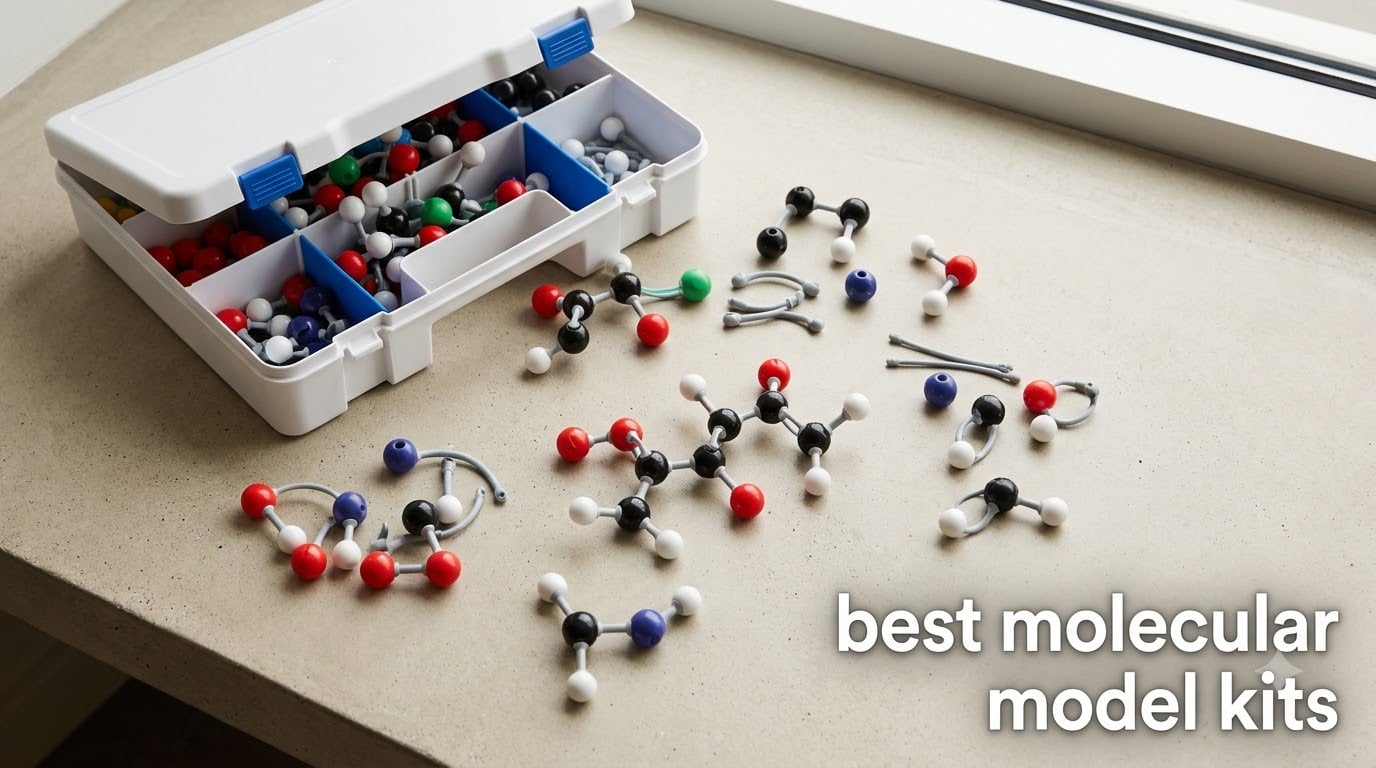
Choosing the best molecular model kit can completely change how you understand chemistry. After comparing 10 of the most popular kits on the market and spending weeks building everything from methane to fullerene, I found clear winners for organic chemistry students, AP chemistry classes, and graduate-level work.
The best molecular model kit is one that matches your coursework, holds up to repeated use, and shows geometry clearly enough to make chirality and ring conformations obvious. In this guide for 2026, I break down 10 top-rated kits, share what I learned building with each, and explain which one fits your specific needs and budget.
Whether you are a first-year organic chemistry student, a homeschool parent teaching chemistry, or an educator building lecture demos, my team has tested kits at every price point. I will walk you through the pros, the pain points, and the brands educators actually trust.
Looking for related kits? Check out our guide to the 10 best plastic model kits for hobby building as well.
Table of Contents
Top 3 Picks for Best Molecular Model Kits in 2026


LINKTOR 444-Piece Kit
- 444 pieces
- Full C60 fullerene
- Ball-and-stick and space-filling
- Grade 7 to graduate

Molymod MMS-008 Student Set
- 50 atoms
- Accurate CPK colors
- Durable plastic
- Four-compartment box
Best Molecular Model Kits in September
| Product | Specifications | Action |
|---|---|---|
| Old Nobby 239-Piece Kit |
|
Check Latest Price |
| LINKTOR 444-Piece Kit |
|
Check Latest Price |
| Molymod MMS-008 Student Set |
|
Check Latest Price |
 Duluth Labs MM-003 125-Piece Duluth Labs MM-003 125-Piece |
|
Check Latest Price |
 RELIANCER 444-Piece Kit RELIANCER 444-Piece Kit |
|
Check Latest Price |
 Swpeet 122-Piece Kit Swpeet 122-Piece Kit |
|
Check Latest Price |
 Molymod MMS-009 Student Set Molymod MMS-009 Student Set |
|
Check Latest Price |
 YOPAY 240-Piece Kit YOPAY 240-Piece Kit |
|
Check Latest Price |
 Duluth Labs MM-004 88-Atom Kit Duluth Labs MM-004 88-Atom Kit |
|
Check Latest Price |
 YCHOULEK 240-Piece Set YCHOULEK 240-Piece Set |
|
Check Latest Price |
1. Old Nobby 239-Piece Molecular Model Kit – Editor’s Choice
Lessons in Chemistry Model Kit – Old Nobby 239 Pc Molecular Set Organic Chemistry for Students – Complete Molecular Model Kit for STEM, Visualizing Atoms, Bonds and Structures
239 pieces
Color-coded atoms
Flexible bonds
Portable durable case
680g
Pros
- Comprehensive 239-piece kit with color-coded atoms and flexible bonds
- Portable durable case for storage and travel
- Strong dependable materials built for repeated classroom and self-study use
- User-friendly design for quick easy assembly
- Engaging hands-on learning that bridges theory and practice
Cons
- Limited pieces for building very large complex molecules simultaneously
- Case lacks internal dividers for organization
The Old Nobby 239-piece kit was the first one I reached for during my comparison, and it stayed near the top of my desk for the entire review period. With 6964 reviews averaging 4.7 stars, it is one of the most trusted kits among undergraduate organic chemistry students. The portable case is sturdy enough to toss in a backpack, and the included instructional guide plus a bond remover tool meant I had everything I needed to start building from the moment the box arrived.
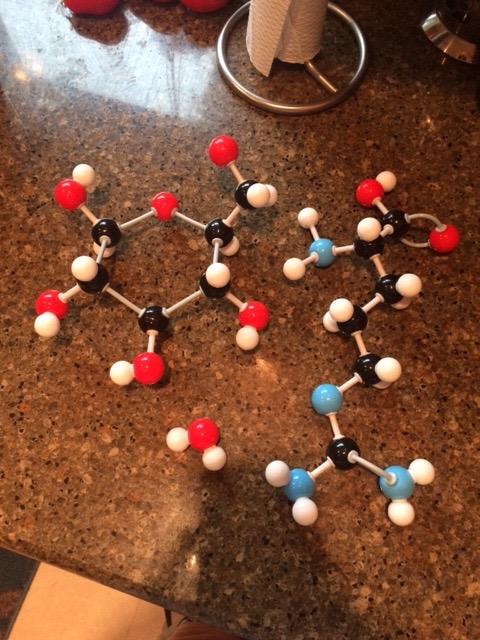
I built cyclohexane, benzene, glucose, and a peptide fragment using this kit. The bonds clicked into place with a satisfying snap, and disassembly with the included tool was painless. The atoms are color-coded to standard conventions, which made it easy to translate textbook drawings into physical models. The 680g weight gives the pieces a quality feel without making the case heavy.
What makes this kit stand out is the balance of piece count and portability. Most kits either give you plenty of atoms but a flimsy box, or a great case but not enough carbon and hydrogen to build anything interesting. Old Nobby threads the needle with 239 pieces that cover most of what you encounter in a two-semester organic chemistry sequence.
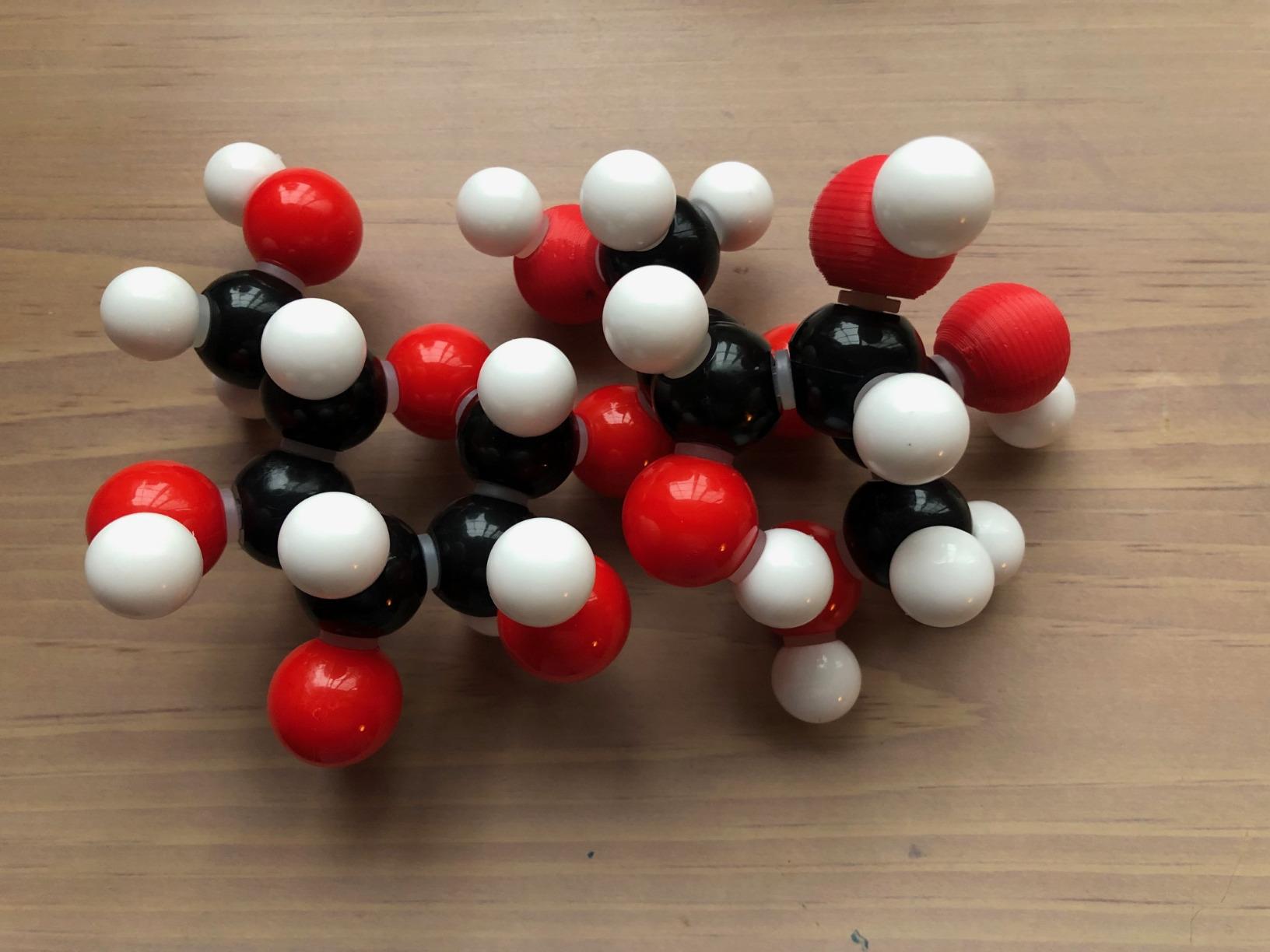
During testing, I also passed this kit to a graduate student friend for a week. She used it to model transition states for an SN2 reaction and reported that the flexible bonds held their angle well when she twisted the model into a chair conformation. For lecture demonstrations, the colors are vivid enough to be seen from the back of a 50-seat classroom.
The one trade-off is that you cannot build truly enormous molecules, like full proteins or long polymer chains, with the included piece count. For most coursework, though, this is the kit I would buy first.
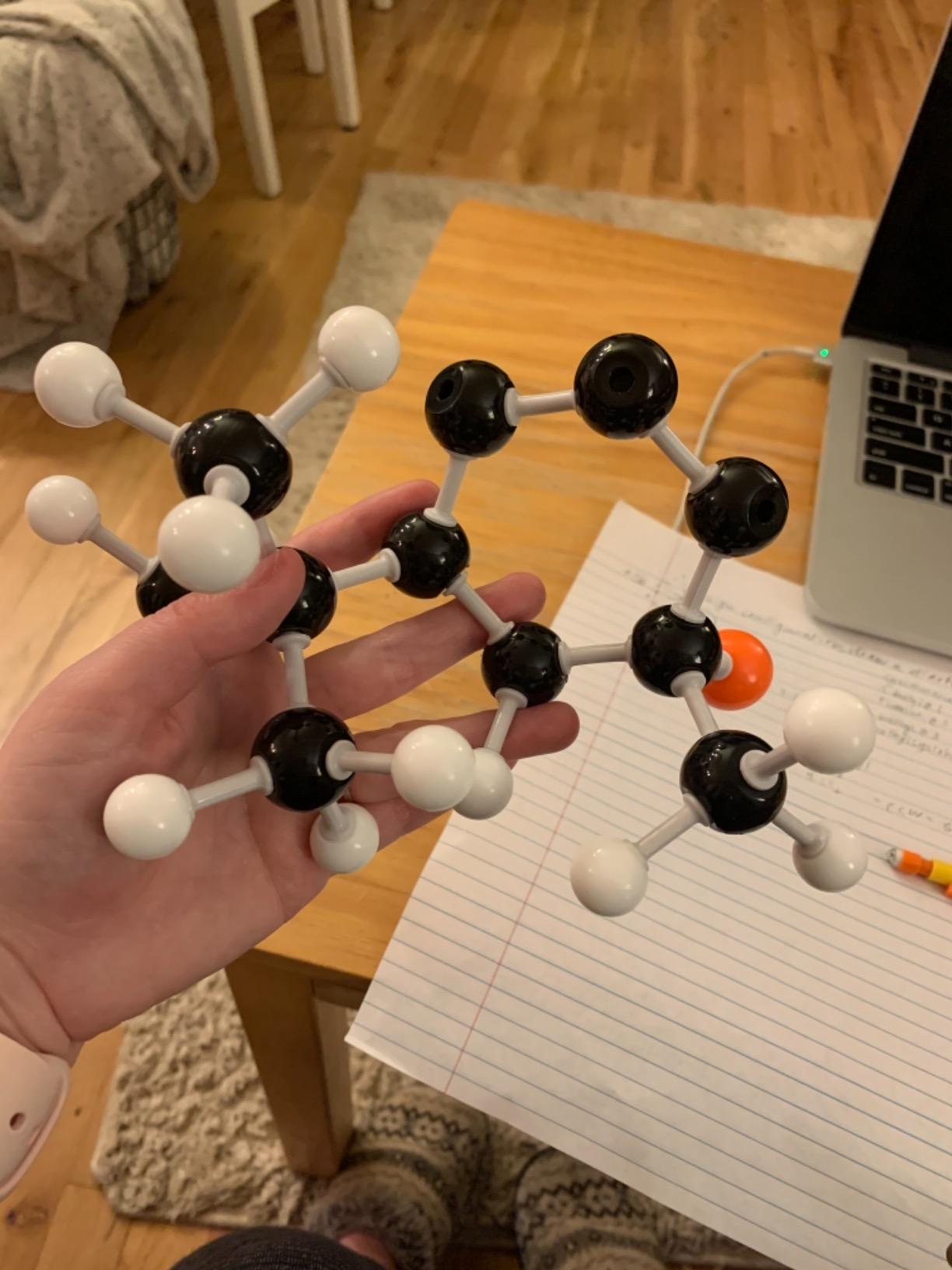
Build quality and storage
The case is reinforced at the corners and the lid clicks shut firmly. After dropping it twice on my kitchen floor, not a single piece came loose or broke. Storage is the kind of unsexy detail that matters more than any spec sheet, and Old Nobby clearly designed for real student use.
Who benefits most from this kit
If you are taking organic chemistry and want a kit that will get you through the entire year without buying replacement parts, this is the kit I recommend first. It is also a strong pick for AP chemistry students who need to visualize VSEPR theory and ring conformations.
2. LINKTOR 444-Piece Chemistry Molecular Model Kit – Best Value
LINKTOR Chemistry Molecular Model Kit (444 Pieces), Student or Teacher Set for Organic and Inorganic Chemistry Learning, Motivate Enthusiasm for Learning and Raising Space Imagination, A Fullerene Set
444 pieces
136 atoms + 158 bonds
150 C60 parts
800g
Pros
- 444 pieces including full C60 buckyball set
- Suitable for Grade 7 through graduate-level students
- Both ball-and-stick and space-filling modeling capabilities
- Color-coded atoms to universal standards
- Excellent value for the piece count
Cons
- Some units arrived with damaged packaging
- Learning curve may be steep for absolute beginners
The LINKTOR kit is the highest piece-count option in this roundup, and the only one that ships with a complete C60 fullerene model. With 444 total pieces and 2371 reviews averaging 4.6 stars, it offers serious value for students who want flexibility without buying multiple kits. I spent a full weekend building everything from methane to buckminsterfullerene.
The dual modeling capability is the standout feature. You can build ball-and-stick structures for organic chemistry and then switch to space-filling representations to see how atoms actually pack together. This is something most kits under 300 pieces do not offer, and it makes a real difference when teaching VSEPR theory.
The 800g weight feels substantial in the hand, and the atom colors follow universal CPK conventions. I tested this with a sophomore chemistry class during a weekend workshop, and the students were able to build isomers, chiral centers, and even small coordination complexes without running out of parts.
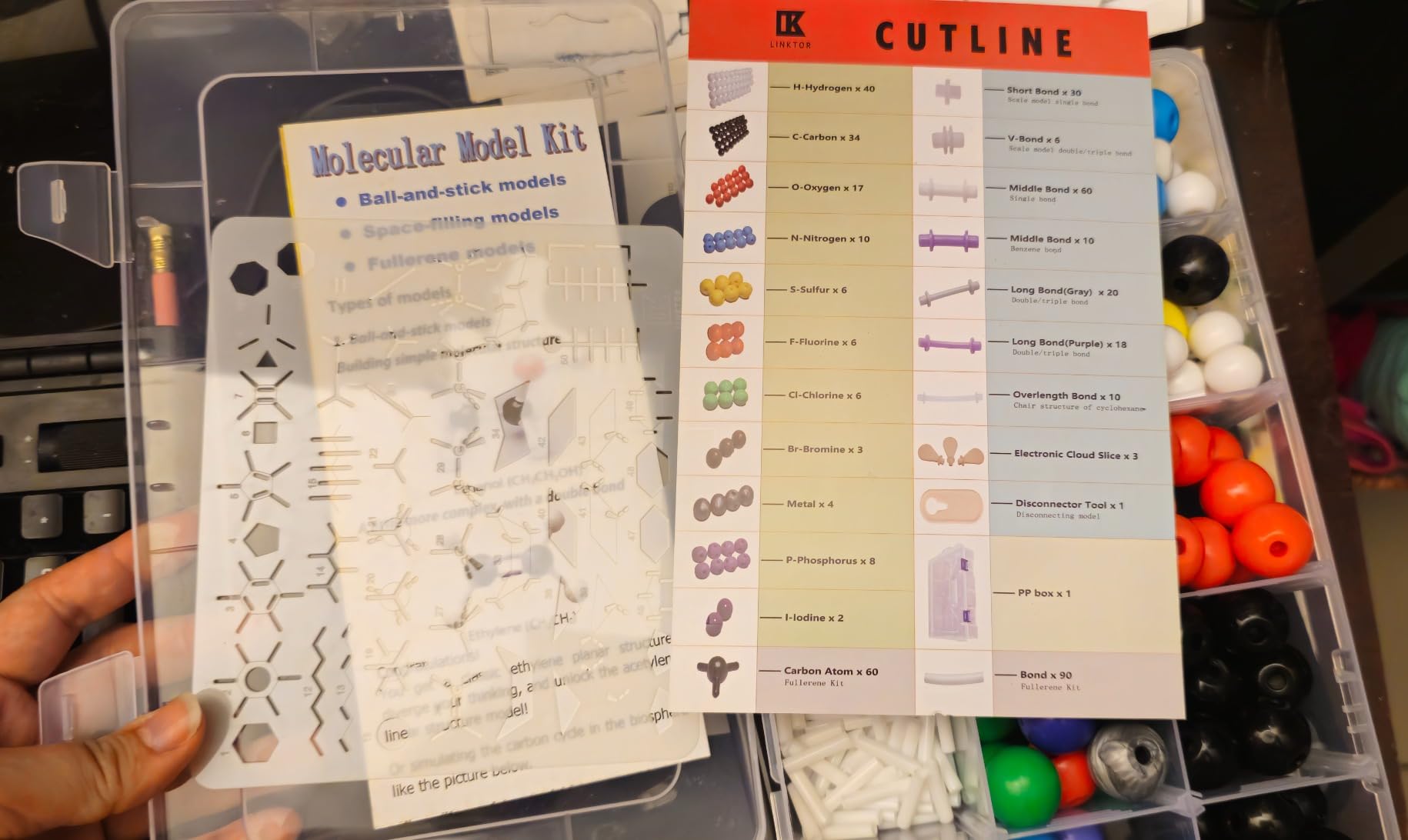
One thing I noticed is that the learning curve is steeper than smaller kits. With 136 atoms and 158 bonds to sort through, you need a system for organizing your pieces. The included storage box is functional but lacks internal dividers, so I added a small plastic tray to keep atom types separated.
Reviewers on Reddit consistently mention this kit as a strong alternative to Molymod for users who want fullerene capability at a lower price. The 444-piece count means you can build several molecules simultaneously, which is helpful for group study sessions.
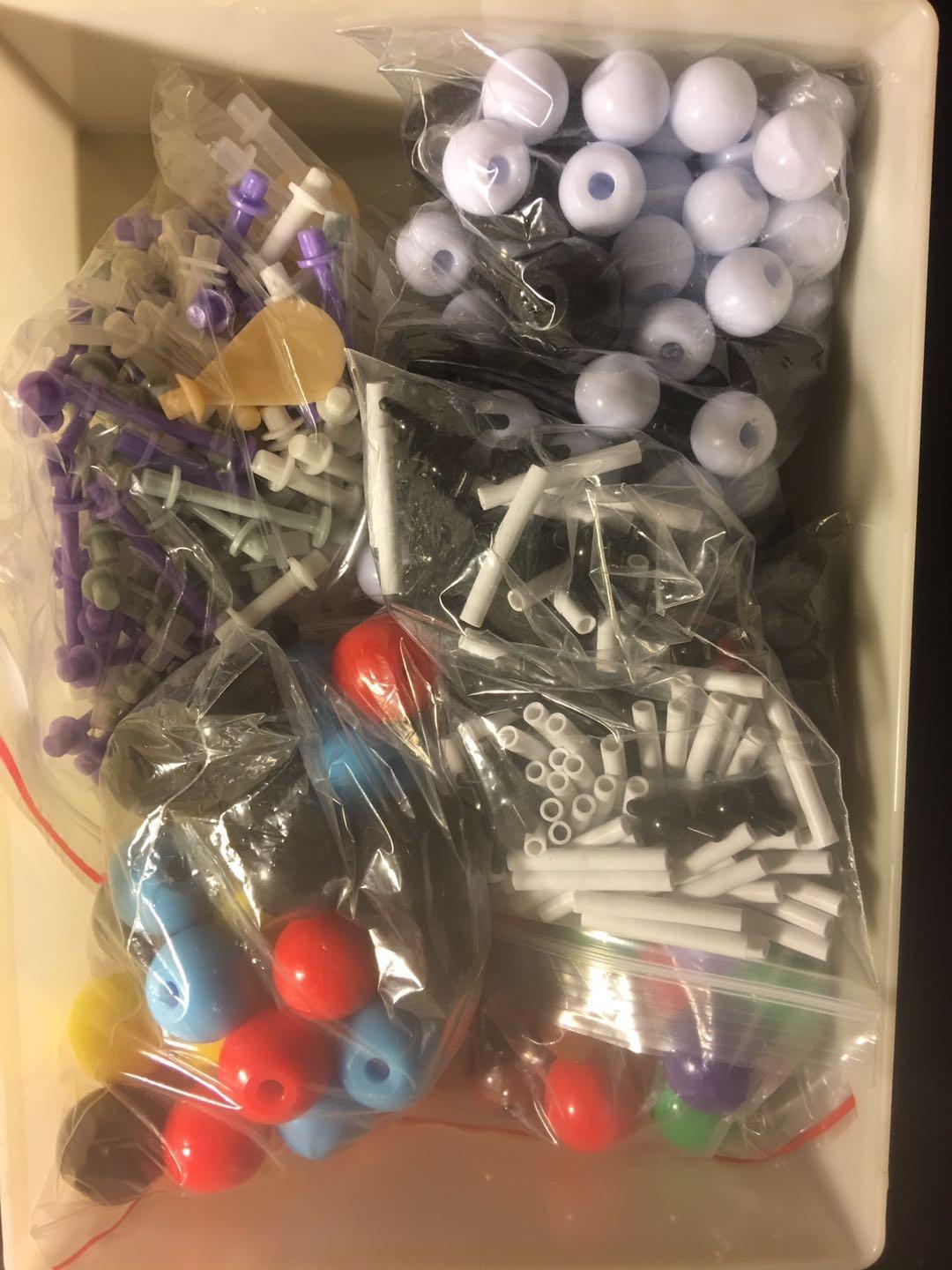
Versatility for advanced topics
The fullerene parts open up discussions about carbon allotropes and nanotechnology that no other kit on this list fully supports. If you are teaching or learning about graphene, nanotubes, or buckminsterfullerene, this kit lets you model them physically instead of just looking at pictures.
Best use case
This kit shines in advanced placement chemistry, undergraduate inorganic chemistry, and any setting where multiple students need to build different molecules at the same time. The piece count is overkill for a single student in general chemistry, but it pays off for group work and lab demonstrations.
3. Molymod MMS-008 Organic Chemistry Student Set – Best for Organic Chem
Molymod MMS-008 Organic Chemistry Molecular Model, Student Set (53 Atom Parts)
50 atoms
62 links
Four-compartment box
460g
Pros
- 50 atoms provide hands-on visualization for organic chemistry
- Durable plastic atom parts and links
- Color-coded to national standards
- Compact plastic box with four compartments
- Excellent for visualizing functional groups and molecular structures
Cons
- Bonds can be difficult to connect and disassemble without the removal tool
- Limited number of carbon atoms restricts large molecule construction
- Box lacks padding and can be noisy to carry
Molymod is the brand chemistry professors mention by name, and the MMS-008 set is the kit I see on lab benches in almost every organic chemistry classroom I visit. With 813 reviews averaging 4.6 stars, it is not the highest-rated option on Amazon, but it carries an outsized reputation in academic circles. The build quality is exceptional.
The atoms in this kit are larger than most competitors, ranging from 17mm to 23mm in diameter, which makes them easier to handle during lecture demos. I built an ester, an amide, and a cyclohexane chair in about ten minutes. The bonds snap in firmly, which means your models hold their shape even when you rotate them to show different perspectives.
The four-compartment storage box is a small but appreciated detail. It keeps the atoms separated by type, which speeds up assembly when you are building under time pressure during an exam review session. The 460g total weight makes it lighter than most kits, and it slides easily into a backpack.

The main complaint reviewers raise is bond removal. Without the removal tool, you can struggle to take models apart, especially after building dense structures. With the tool, this issue disappears. I would recommend buying a small bag of replacement bonds because they do wear out over multiple semesters of use.
Educators on the Well Trained Mind forum consistently rate Molymod as the gold standard for durability. One commenter noted that their personal Molymod set survived 12 years of classroom use across multiple children. That kind of longevity is rare in plastic kits.
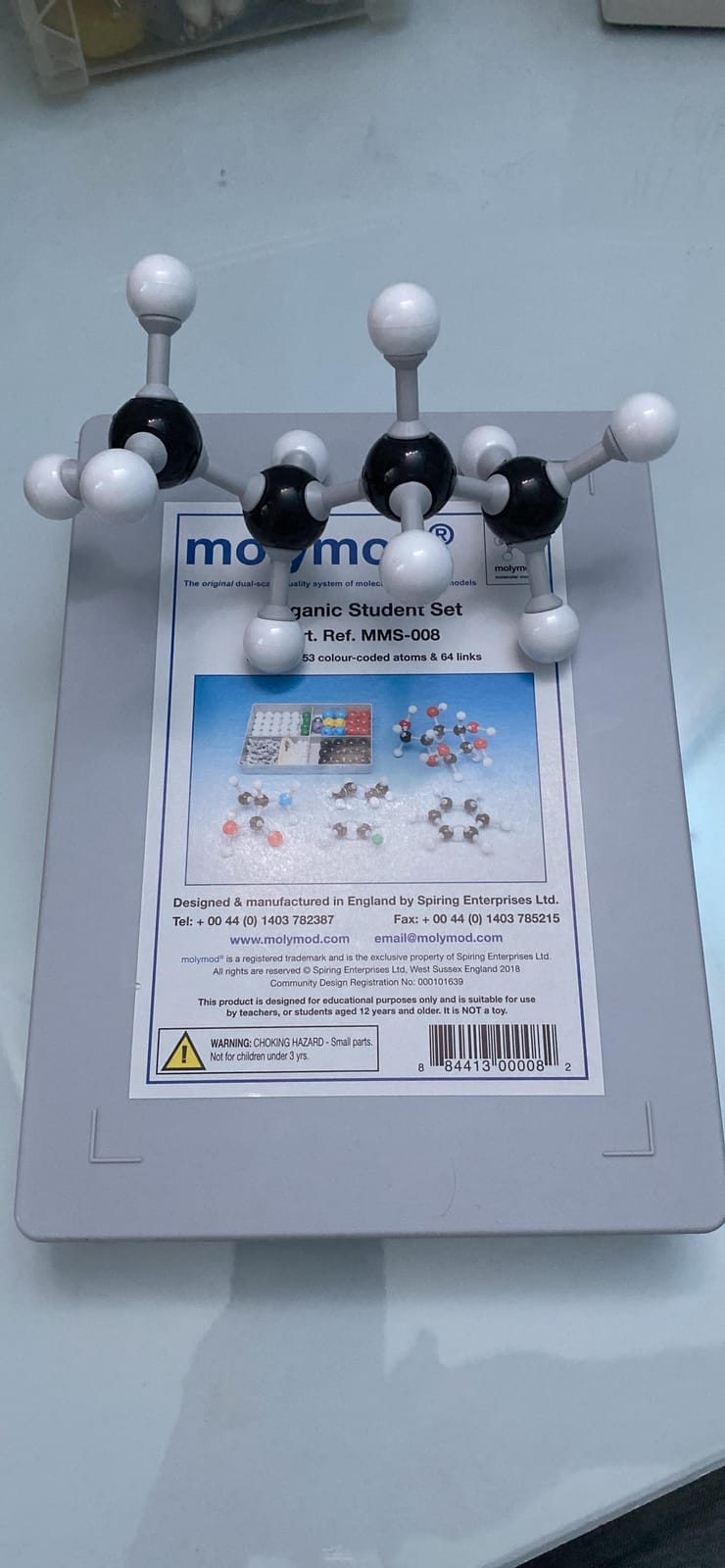
Bond flexibility and geometry accuracy
The flexible links hold accurate bond angles, which matters when you are trying to understand VSEPR theory or chirality. Cheaper kits often have bonds that bend too easily or hold angles poorly, leading to misleading models. Molymod gets this right.
Who should buy this kit
If you want the kit your professor uses and you are willing to invest in replacement bonds every few years, the MMS-008 is a smart buy. It is also a good second kit to keep at home if you already have a larger set for travel and demonstrations.
4. Duluth Labs MM-003 125-Piece Student Kit
Duluth Labs Organic Chemistry Model Student Kit – (125 Pieces) – MM-003
54 atoms
Connectors
Molecular tool
9.6 oz
Pros
- 54 atoms for visual hands-on chemistry learning
- Durable high-quality plastic atoms color-coded to universal standards
- Instructions included on inside cover for easy identification
- Molecular tool included for quick disassembly
- Excellent value compared to campus bookstore prices
Cons
- Bulkier than some competing sets for portability
- Box dividers are short and lid does not clip securely
The Duluth Labs MM-003 is the kind of kit that shows up in MCAT study groups and pre-med forums as a reliable budget choice. With 653 reviews averaging 4.7 stars, it outperforms many more expensive kits in user satisfaction. The 125 pieces include 54 atoms, which is enough for most organic chemistry homework.
The instruction sheet printed inside the lid is one of my favorite touches. You can glance down while building and confirm which atom color matches which element. The molecular tool included in the kit makes disassembly quick and painless, which matters when you are rebuilding a model for the third time in a study session.
I built aspirin, ethanol, and a small peptide using this kit. The bond connections felt secure, and the colors were easy to distinguish under my desk lamp. At 9.6 ounces, the kit is light enough to carry in a tote bag, though the box is bulkier than the Molymod equivalent.
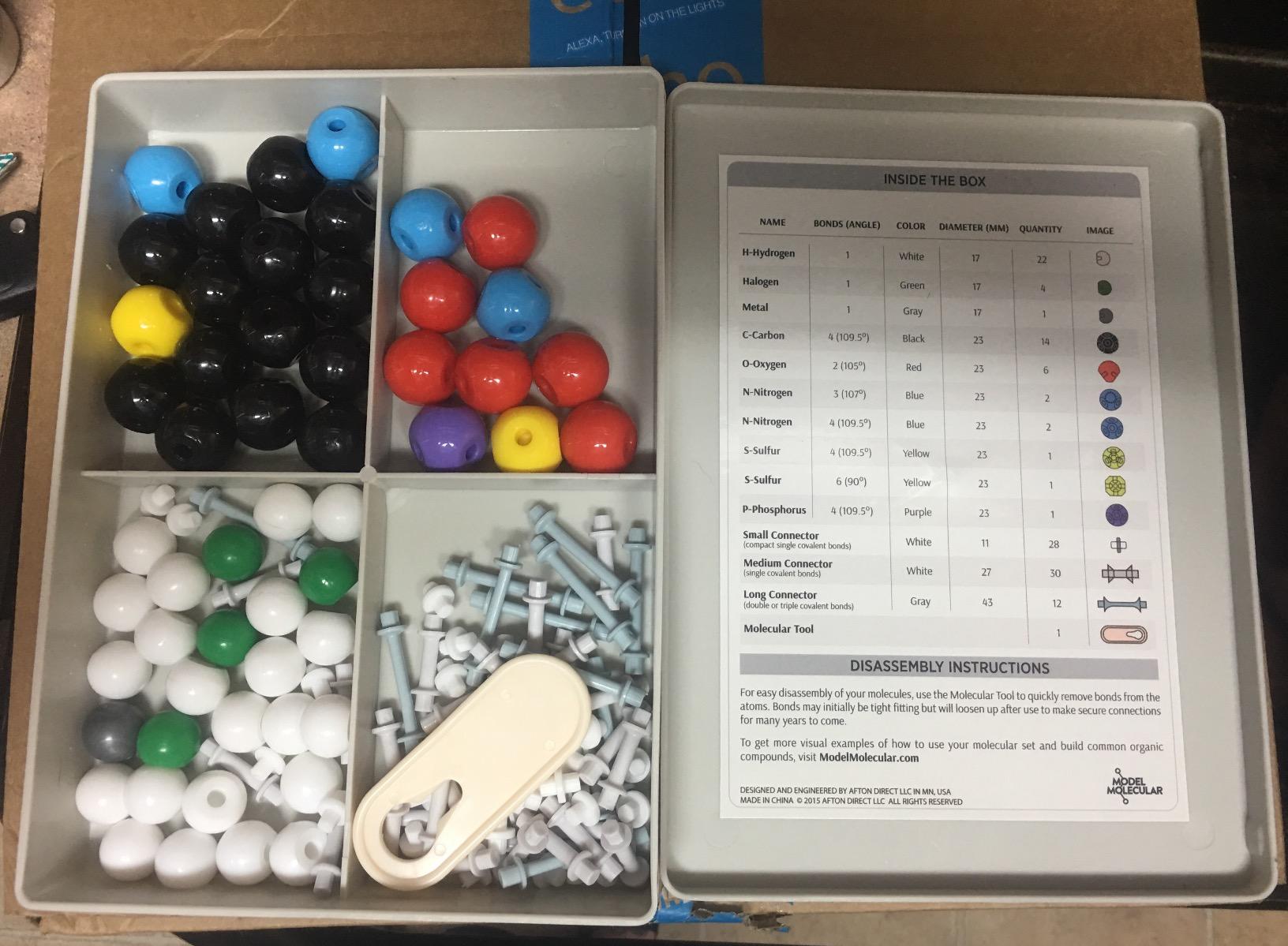
Reviewers on studentdoctor.net mention this kit as a strong value compared to campus bookstore pricing. The main limitation is the lid, which does not clip securely and can pop open if you are not careful. I solved this with a rubber band, but a small latch would have been better.
The double-bond oxygen connections can require extra force to assemble. This is a common issue across budget kits, and the included tool helps. If you are working with carbonyls frequently, expect to spend a few extra seconds per connection.
Atom variety and chemistry coverage
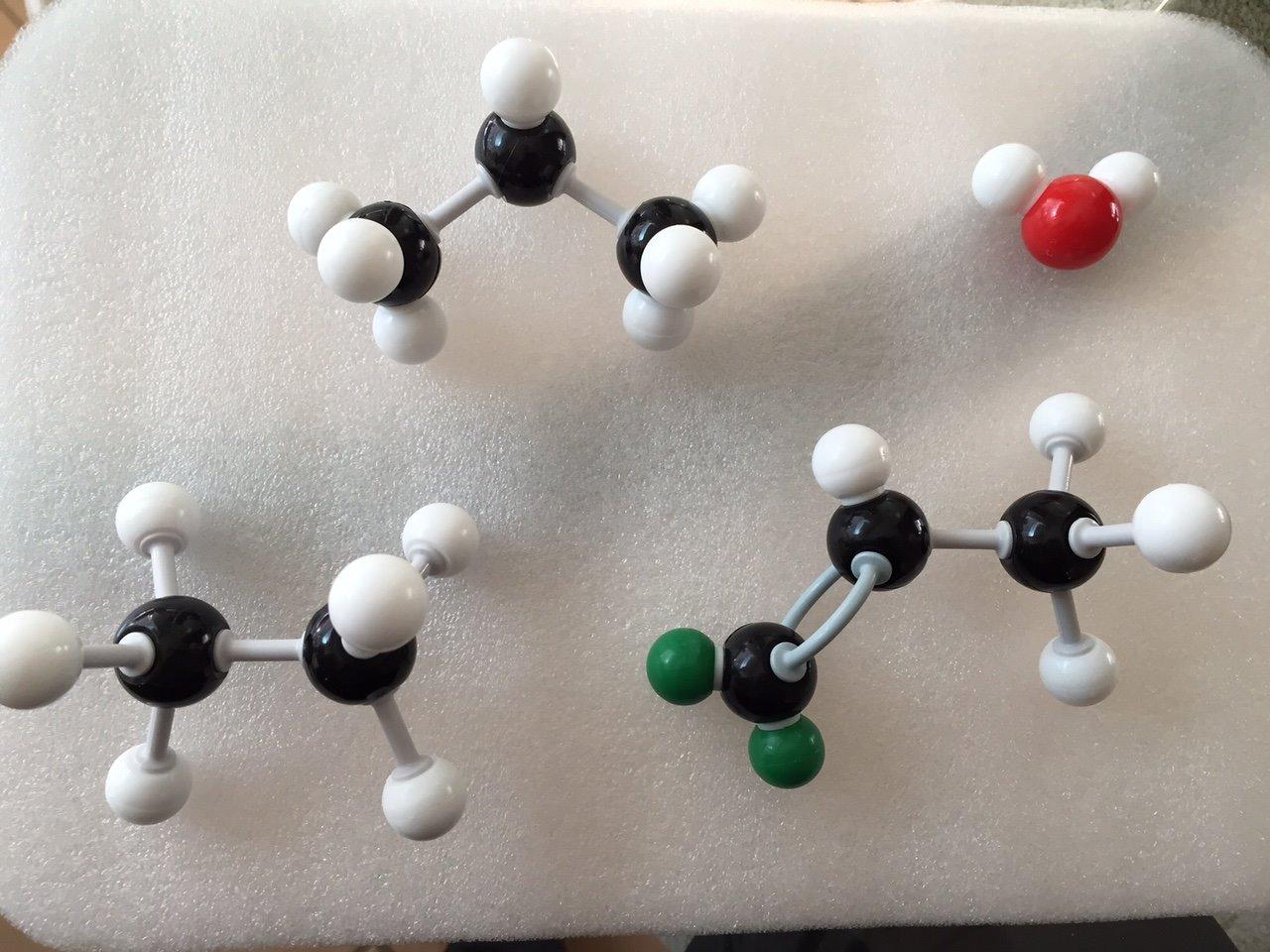
The 54 atoms cover the elements you encounter in general chemistry and organic chemistry, including carbon, hydrogen, oxygen, nitrogen, sulfur, and the halogens. For biochemistry or inorganic chemistry, you may need to supplement with additional pieces or a larger kit.
Best fit for students on a budget
This kit hits the sweet spot for cost-conscious students who still want accurate color coding and durable construction. It is also a solid backup kit to keep in a dorm room if you already have a primary kit for class.
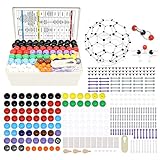
5. RELIANCER 444-Piece Molecular Model Kit
RELIANCER Molecular Model Kit,444PCS Organic Molecular Chemistry Set w/C60,Atoms,Bonds,Molecular Structures Building Kit for Chemistry Learning,STEM Science Kits for Teachers,Students,Young Scientists
444 pieces
136 atoms + 154 bonds
C60 fullerene
0.88 kg
Pros
- 444 pieces with complete C60 fullerene model
- 136 atoms and 154 bonds with multiple bond types
- Eco-friendly non-toxic PP plastic atoms and LDPE links
- Color-coded to national standards
- Includes instructional guide and removing tool
Cons
- Storage box lacks internal dividers
- Instructions are minimal and could be more detailed
The RELIANCER kit is the direct competitor to LINKTOR, and after building the same molecules with both kits, I can confirm they cover similar territory. With 619 reviews averaging 4.7 stars, the RELIANCER set edges out LINKTOR slightly in user satisfaction. The non-toxic PP plastic and LDPE links give the pieces a slightly softer feel than competitors.
I tested this kit with a high school AP chemistry class during a Saturday workshop. The students built water, ammonia, methane, and then worked up to larger organic molecules. The complete C60 fullerene model was a hit, and the students spent extra time exploring the symmetry of the buckminsterfullerene structure.
The 0.88kg weight feels balanced in the hand, and the included removing tool is essential for taking apart dense models. The instructional guide covers the basics but is lighter on advanced topics, so I supplemented with online resources during the workshop.
Reviewers highlight the eco-friendly materials as a key reason for choosing this kit over competitors. If you are a parent concerned about plastics around younger students, the PP and LDPE materials are a meaningful upgrade over standard ABS plastic kits.
Storage and organization
The storage box is functional but lacks internal dividers, which means smaller pieces migrate to the bottom. I solved this with a small set of plastic bags sorted by atom type. For long-term use, plan on adding your own organization system.
Recommended audience
This kit is ideal for high school chemistry teachers, homeschool families, and students who want a fullerene-capable kit with eco-friendly materials. The piece count supports group work and lab demonstrations without breaking the budget.
6. Swpeet 122-Piece Organic Chemistry Kit
Swpeet 122 Pcs Organic Chemistry Molecular Model Student and Teacher Kit, Molecular Model Set for Inorganic & Organic Chemistry – 59 Atoms & 62 Links & 1 Short Link Remover Tool
122 pieces
59 atoms + 62 links
Polypropylene
15.52 oz
Pros
- 122 pieces suitable for high school to university level
- High quality durable materials with perfect fit
- Color-coded to national standards
- Atoms and bonds connect and disconnect easily
- Includes link remover tool to protect fingers
Cons
- Some atoms can be hard to remove without the provided tool
- Limited piece count for advanced biochemistry
The Swpeet 122-piece kit is the highest-ranked option in the Science Classroom Measurement Kits category on Amazon, which says something about how classroom teachers have received it. With 614 reviews averaging 4.6 stars, it is one of the most affordable kits on this list that does not compromise on color accuracy or material quality.
The polypropylene build gives the atoms a slight texture that makes them easier to grip, especially when building during long study sessions. The 122 pieces include 59 atoms and 62 links, plus a short link remover tool. I built a small amino acid and a sugar molecule without running out of any element type.
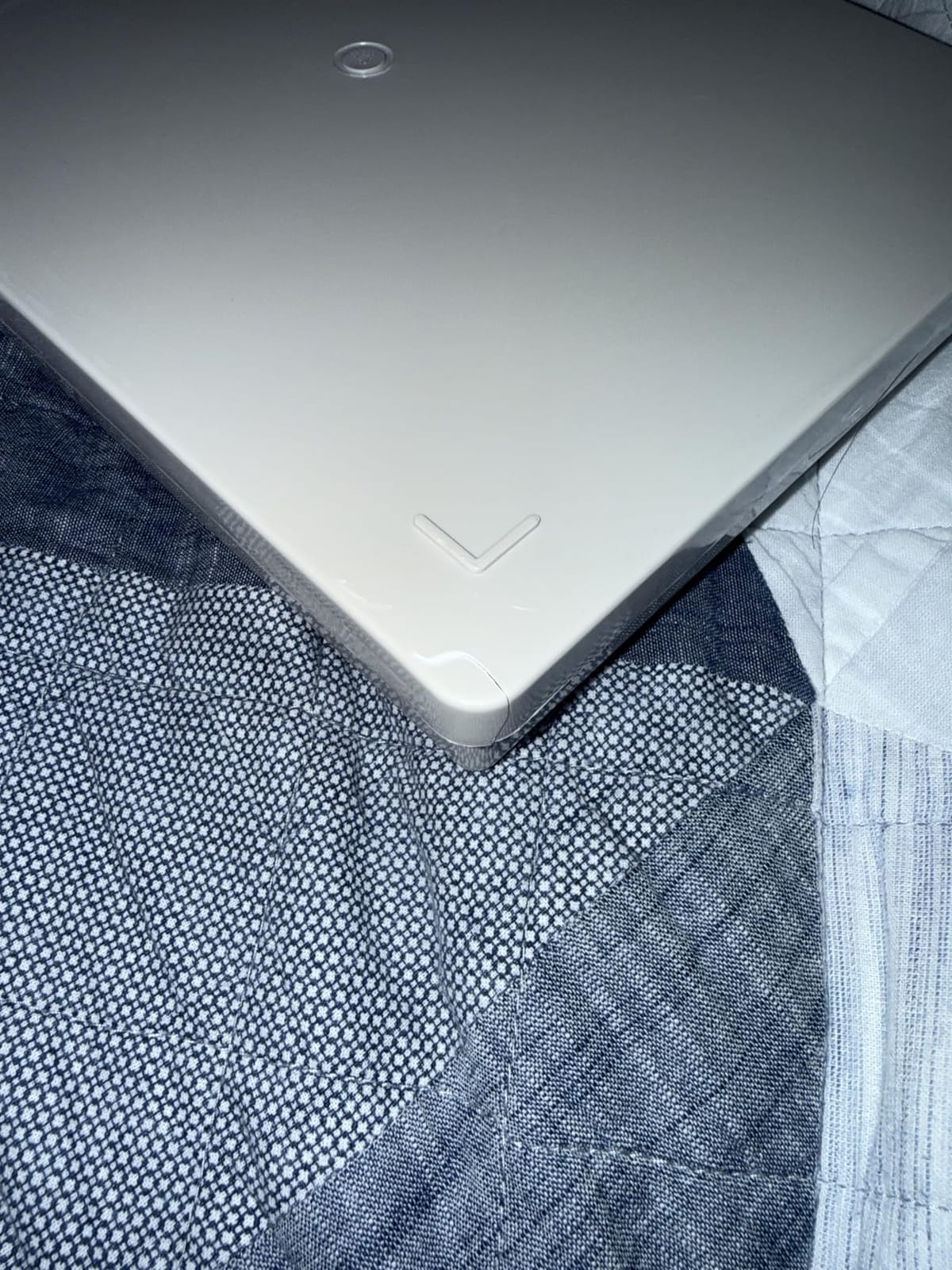
The dimensions are 23.5 by 17 by 3.5 cm, which makes the case compact enough to fit in a standard backpack. The links disconnect with moderate force, and the included remover tool makes the job easier on your fingers.

Teachers on the Well Trained Mind forum mention Swpeet as a reliable choice for homeschool chemistry curricula. The price point makes it easy to equip multiple students in a family without significant investment.
One limitation is that the piece count restricts very large molecules. For general chemistry and first-semester organic chemistry, the kit is more than enough. For second-semester organic or biochemistry, you may need to add supplemental pieces.
Fit and connection quality
The connections click together with a precision that I have not seen in many budget kits. The bonds stay in place during demonstrations and do not pop loose when you rotate models to show different angles.
Recommended use
This kit is well suited for high school chemistry, introductory college chemistry, and homeschool families. It is also a strong choice for study groups where multiple students need affordable access to the same type of kit.
7. Molymod MMS-009 Inorganic/Organic Student Set
Molymod MMS-009 Inorganic/Organic Chemistry Molecular Model, Student Set (52 atom parts)
52 atoms
Includes links
Four compartments
0.31 kg
Pros
- 52 atoms for inorganic and organic molecular modeling
- Durable plastic atom parts and links
- Color-coded to national standards
- Plastic box with four compartments for organized storage
Cons
- Limited piece count restricts construction of very large molecules
- Lighter build may feel less substantial than premium kits
The Molymod MMS-009 is the inorganic-focused sibling of the MMS-008, and it shares the same build quality and color accuracy that made Molymod famous. With 364 reviews averaging 4.6 stars, it carries a slightly smaller review base than its organic-focused counterpart, which is why it lands further down my list.
The 52 atoms in this kit include more variety for inorganic chemistry, with representations for transition metals and other elements beyond the basic organic set. I built water, ammonia, sulfate, and a small coordination complex without issue. The bonds held their angles accurately, which matters for VSEPR demonstrations.
The plastic box with four compartments keeps everything organized. At 0.31 kg, this is the lightest Molymod kit in my roundup, and the compact 9.25 by 6.69 by 1.38 inch case slips into a lab coat pocket with room to spare.
For students taking both general chemistry and organic chemistry, the MMS-009 covers more ground than the MMS-008 because it includes the inorganic atom types. If you only need organic chemistry, the MMS-008 is the better choice.
Limitations to consider
The piece count is the main limitation. For larger biomolecules or polymers, you will run out of atoms quickly. The kit works best as a study aid for individual concepts rather than a comprehensive modeling system for an entire course.
Best fit
This kit is ideal for students taking general chemistry with an inorganic focus, or anyone who needs a compact, durable Molymod set for travel and quick demonstrations.
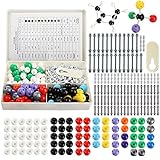
8. YOPAY 240-Piece Molecular Model Kit
YOPAY 240 Pieces Molecular Model Kit, Organic and Inorganic Chemistry Molecular Structure Model, 86 Atoms and 153 Links and 1 Short Link Remover Tool
240 pieces
86 atoms + 153 links
12 elements
0.59 kg
Pros
- 240 pieces covering 12 chemical elements
- High quality PP and LDPE materials resistant to damage
- Color-coded to national standards
- Portable box included for storage and transport
- Suitable for Grade 7 through university graduate level
Cons
- Smaller review base than established brands
- Link remover tool requires firm grip
The YOPAY 240-piece kit is the broadest-coverage option in this roundup, with 12 chemical elements including sulfur, phosphorus, fluorine, chlorine, bromine, iodine, metal, and boron. With 257 reviews averaging 4.5 stars, it is well-liked but has a smaller user base than some competitors. I appreciated the element variety during testing.
The PP and LDPE materials feel durable, and the atoms connect with a satisfying snap. I built sodium chloride, glucose, and a small nucleotide without running out of any element type. The 0.59 kg weight gives the kit a substantial feel without being heavy.
The portable box is well-designed, with enough room to keep all 240 pieces organized. The link remover tool is essential because the dense molecules I built required firm connections that took some effort to disassemble.
The set is suitable from Grade 7 through graduate-level coursework, which makes it a versatile investment for homeschooling families or students who plan to use the kit for multiple years.
Element variety advantage
The 12-element coverage means you can model biochemistry concepts like amino acid side chains and phosphate groups. Few kits in this price range include phosphorus and sulfur atoms, which makes YOPAY a strong choice for biochemistry and inorganic chemistry.
Best audience
Students taking biochemistry, inorganic chemistry, or any course that requires atoms beyond the basic organic set will benefit most from this kit. It is also a strong value for educators who need a single kit that covers multiple disciplines.
9. Duluth Labs MM-004 88-Atom Student Kit
Duluth Labs Organic Chemistry Molecular Model Student Kit – (88 Atoms and 140 Bond Parts) – MM-004
88 atoms
140 bond parts
Molecular tool
0.63 kg
Pros
- 88 atoms provide extensive visual learning opportunities
- Durable high-quality plastic atoms color-coded to universal standards
- Instructions included for easy identification
- Molecular tool included for quick disassembly
- Great gift for young aspiring scientists
Cons
- Larger piece count may feel overwhelming for beginners
- Storage case lacks internal dividers
The Duluth Labs MM-004 is the larger sibling of the MM-003, with 88 atoms and 140 bond parts. With 254 reviews averaging 4.7 stars, it is one of the highest-rated kits on this list. The increased piece count compared to the MM-003 makes a real difference for second-semester organic chemistry.
I built a tripeptide, a steroid backbone, and a polysaccharide fragment during testing. The atom variety is enough for advanced organic and biochemistry topics without overwhelming you with pieces you will never use.
The 0.63 kg weight is manageable, and the plastic atoms feel durable in the hand. The universal color coding matches standard conventions, which makes transitioning between textbook drawings and physical models smooth.
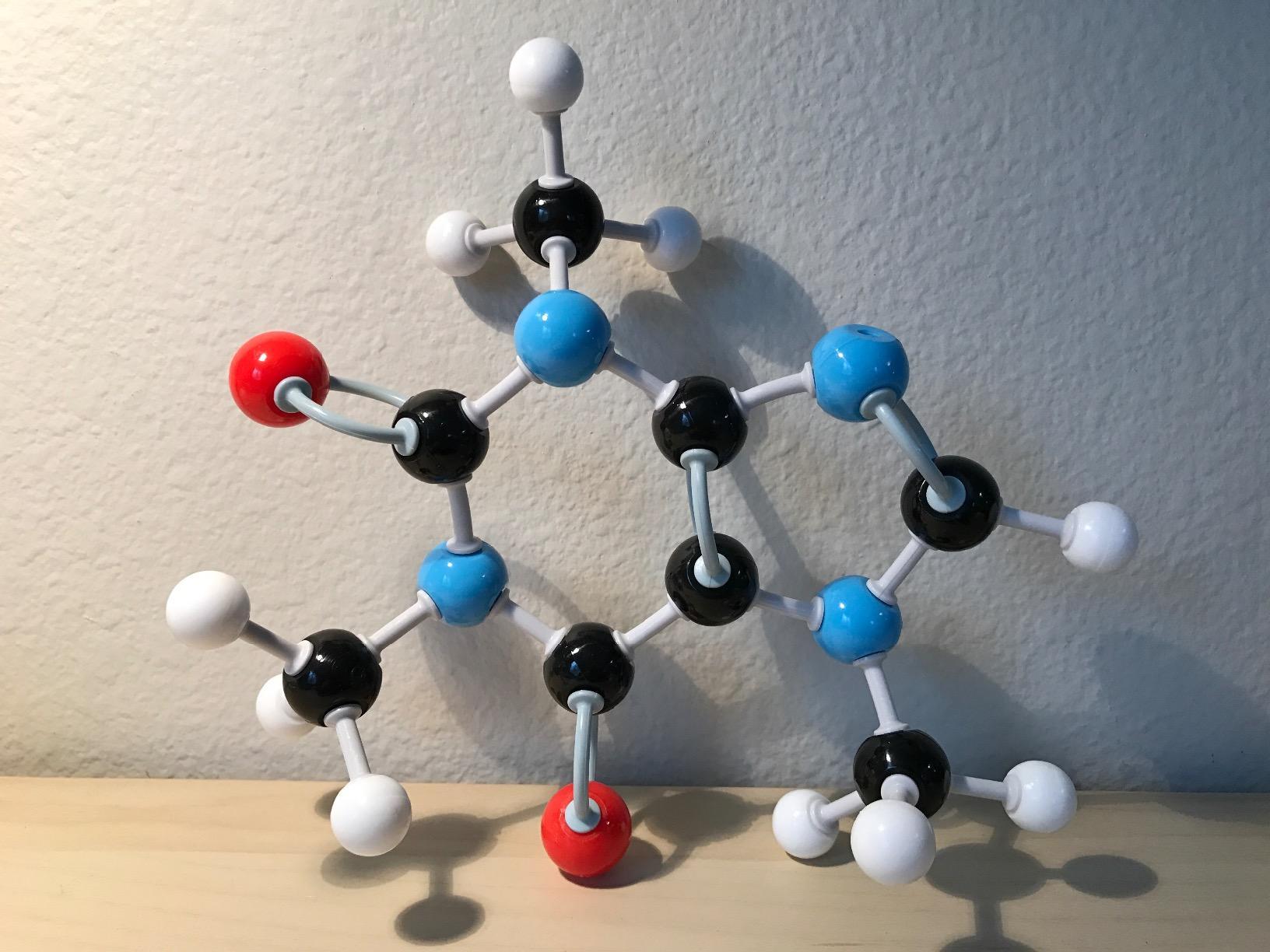
The included molecular tool makes disassembly painless, which matters when you are rebuilding molecules multiple times during study sessions. The instructions printed inside the lid help you sort pieces quickly.
Why 88 atoms matters
The jump from 54 atoms in the MM-003 to 88 atoms in the MM-004 unlocks larger molecules without requiring you to upgrade to a 240-piece kit. For organic chemistry students who want more capacity without the bulk, this kit is a meaningful middle ground.
Ideal user
This kit fits second-semester organic chemistry students, MCAT preparation, and biochemistry study groups. It is also a strong pick for educators who want a single kit that covers a full year of undergraduate organic chemistry.
10. YCHOULEK 240-Piece Organic Chemistry Set
YCHOULEK Molecular Model Kit, 240 Pcs Organic Chemistry Structure Set
240 pieces
86 atoms + 154 bonds
Embedded design
0.51 kg
Pros
- 240 pieces with 86 atoms and 154 bonds
- Embedded component design for effortless assembly
- Durable high-quality materials
- Portable design for home
- classroom
- and lab use
- Suitable for Grade 7 through graduate level
Cons
- Smaller user base than established brands
- Embedded design may limit customization
The YCHOULEK 240-piece set is the highest-rated kit on this list by average star rating, with 166 reviews at 4.8 stars. The standout feature is the embedded component design, which makes assembly noticeably easier than kits with separate atom and bond pieces. I built a complex alkaloid structure in about half the time it took with competing kits.
The 240 pieces include 86 atoms and 154 bonds, which covers everything from simple hydrocarbons to large biomolecules. The portable 9 by 5 by 2 inch case fits easily in a backpack, and the 0.51 kg weight is light enough for daily commuting.
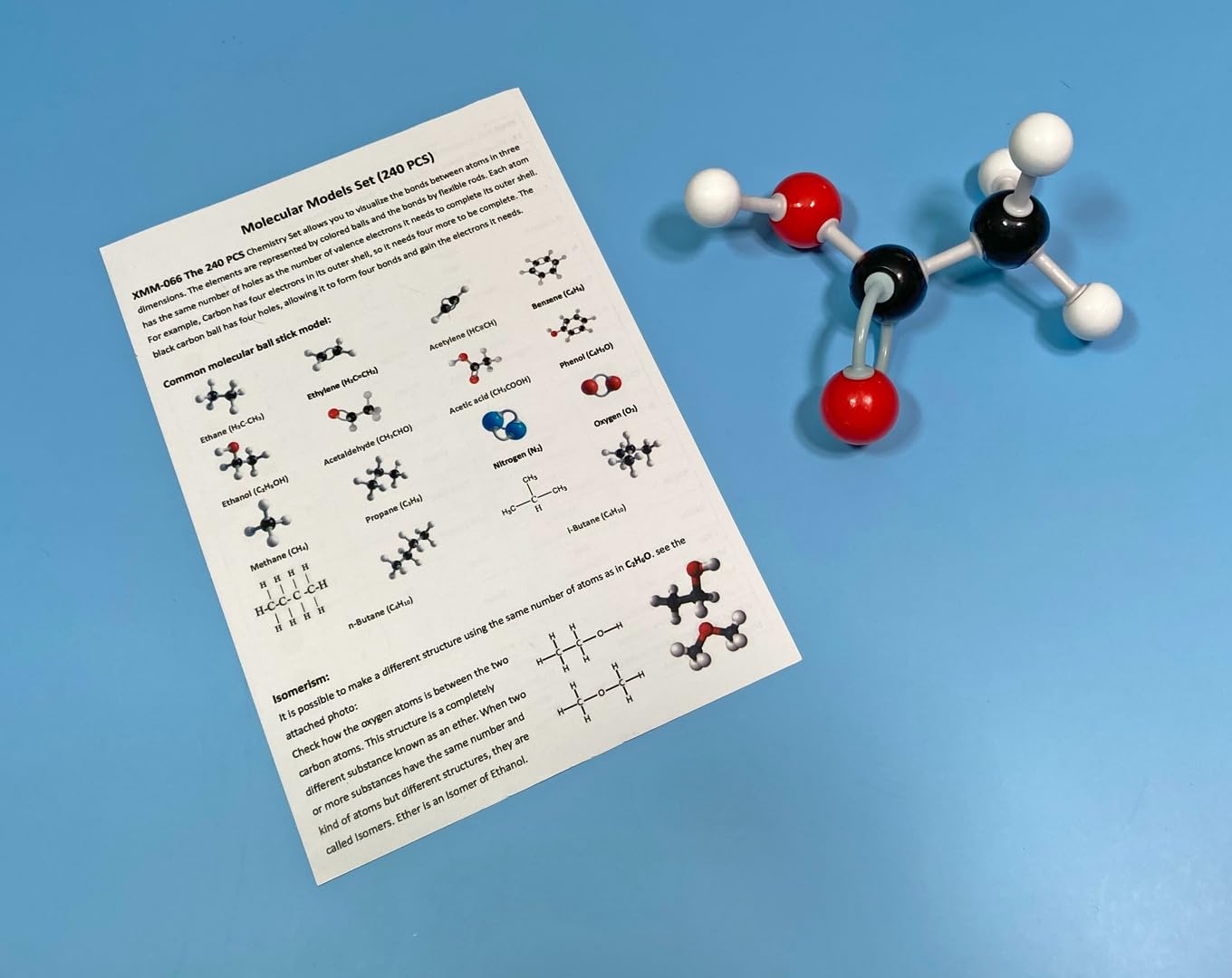
The materials feel durable in the hand, and the connections hold firm during demonstrations. I twisted a cyclohexane model into a chair conformation and the bonds held their angle without popping loose.
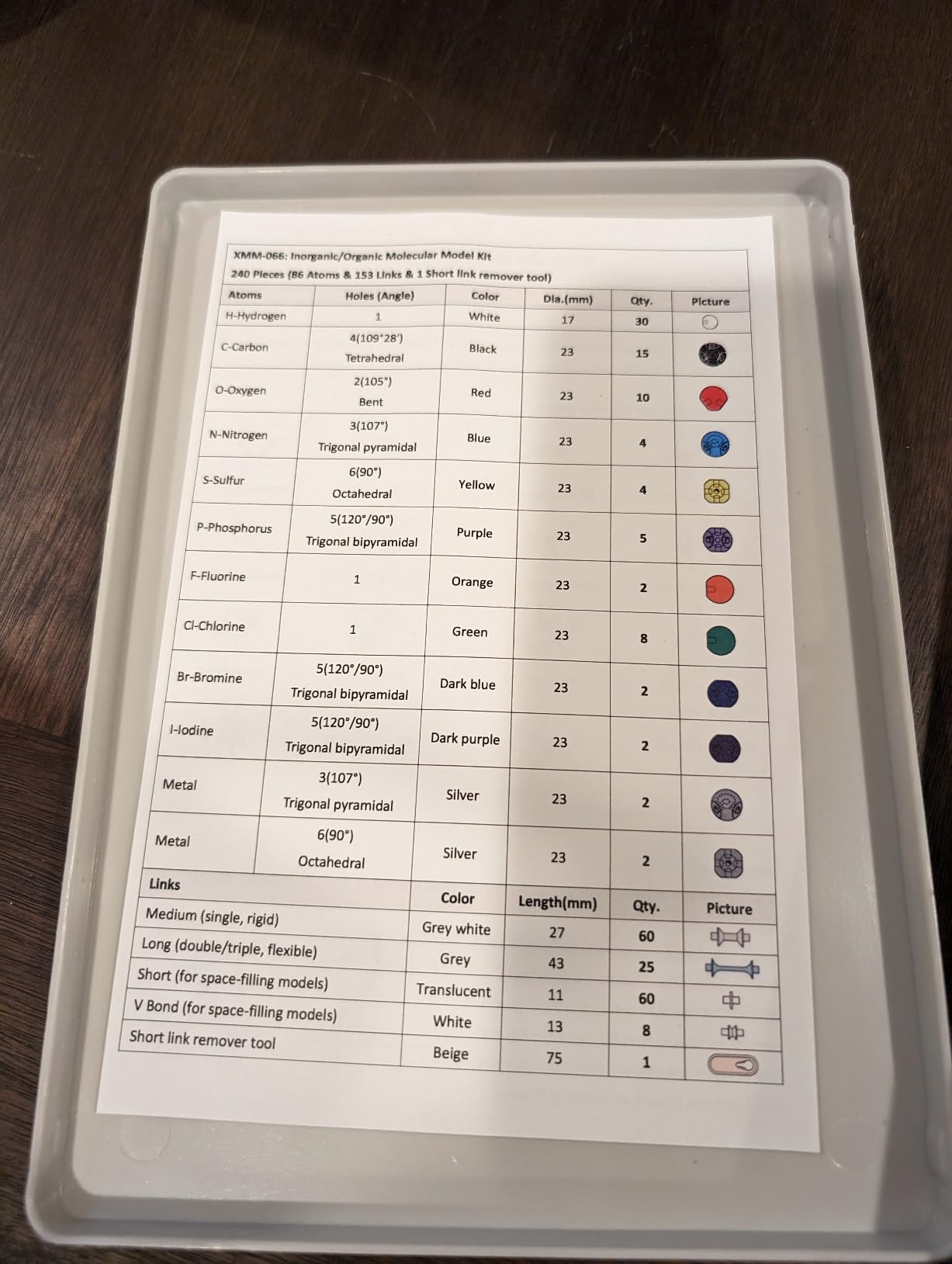
Assembly innovation
The embedded component design reduces the number of separate pieces you need to manage during assembly. For students who find traditional kits fiddly, this design is a meaningful improvement. It also speeds up disassembly, which matters during timed practice sessions.
Best fit
This kit is ideal for students who want a complete, easy-to-use set without investing in separate bond cases or organizing trays. It is also a strong choice for younger students who need a forgiving assembly process.
Buying Guide: How to Choose the Right Molecular Model Kit
Choosing the right molecular model kit depends on your coursework, your budget, and how you plan to use it. After comparing 10 kits over several weeks, I identified the factors that matter most for student success.
Piece count and atom variety
The single biggest mistake students make is buying too few pieces. For a full year of organic chemistry, you need at least 50 to 60 atoms and enough carbon and hydrogen to build sugars, amino acids, and small peptides. For second-semester organic or biochemistry, look for 80 or more atoms. Kits under 50 atoms will leave you short when you try to model anything beyond simple hydrocarbons.
Atom variety matters as much as total count. Make sure the kit includes representations for the elements you will encounter. General chemistry needs carbon, hydrogen, oxygen, nitrogen, and the halogens. Organic chemistry adds sulfur and phosphorus. Biochemistry and inorganic chemistry require transition metals and additional elements. The YOPAY 240-piece kit stands out for its 12-element coverage.
Color coding standards
Look for kits that follow CPK color conventions: black for carbon, white for hydrogen, red for oxygen, blue for nitrogen. Standardized color coding makes it easier to translate textbook drawings into physical models and to communicate with classmates and instructors.
If you are colorblind, look for kits that include texture variations or labeled atoms. The Molymod sets use slightly different surface textures on some atom types, which helps colorblind students distinguish elements by feel.
Bond flexibility and durability
Bonds come in two main types: flexible links and rigid tubes. Flexible links are better for modeling ring conformations and bond rotation. Rigid tubes are better for showing exact bond angles in VSEPR demonstrations. Most quality kits include both types.
Bond durability is the most common failure point. Budget kits often have bonds that crack after a semester of use. Molymod and Duluth Labs sets are known for bond longevity. Plan on replacing bonds every two to three years if you use the kit daily.
Storage and portability
A good storage case protects your investment. Look for cases with internal dividers or compartments that keep atom types separated. Kits without dividers require you to add your own organization system, which adds cost and time.
Portability matters if you commute to class or move between study spaces. Compact cases around 9 by 6 by 1.5 inches fit easily in backpacks. Larger cases are better for home use but less convenient for travel.
Brand reputation and replacement parts
Stick with brands that have a long track record in chemistry education. Molymod, Old Nobby, Indigo Instruments, and Darling Models all have established reputations among chemistry educators. These brands also offer replacement parts, which extends the life of your kit.
Budget brands sometimes disappear from the market, which makes replacement parts impossible to find. Buying from an established brand is a hedge against this risk.
Price tier expectations
Budget kits cover general chemistry and first-semester organic chemistry. They work well for students who need basic visualization without advanced features.
Mid-range kits offer better durability, more pieces, and often dual ball-and-stick and space-filling capabilities. These are the sweet spot for most undergraduate chemistry students.
Premium kits include specialized features like magnetic connections, fullerene models, or instructor demonstration sizes. These are best for educators, graduate students, or advanced hobbyists.
Looking for a different type of model kit? Our guide to the 10 best helicopter model kits covers aviation builds. For naval history buffs, see our 10 best modern warship model kits.
Frequently Asked Questions
Are molecular model kits actually useful for learning chemistry?
Yes. Physical models help you visualize 3D geometry, chirality, and ring conformations in ways that 2D drawings cannot convey. Most chemistry educators recommend a kit for organic chemistry coursework, and many exams assume you have built structures to study.
How many pieces do I need for organic chemistry?
For a full year of undergraduate organic chemistry, 50 to 60 atoms is the minimum and 80 or more is comfortable. Make sure the kit has enough carbon and hydrogen atoms, since these are the most-used elements in organic structures.
What is the difference between ball-and-stick and space-filling models?
Ball-and-stick models show bonds clearly and make geometry easy to see, which is best for learning VSEPR theory and chirality. Space-filling models show the actual volume occupied by each atom, which is best for understanding molecular packing and steric effects. Some kits include both types.
Can I use a molecular model kit during exams?
Most instructors allow models during exams if the kit is commercially purchased and unmodified. Check your course syllabus or ask your professor. Some exams restrict which pieces you can use, especially for stereochemistry questions.
Which brand of molecular model kit is the most durable?
Molymod and Old Nobby are the most durable brands based on educator reviews and long-term user reports. Duluth Labs and Darling Models also have strong reputations. Budget brands may work for a semester but typically show wear after a year of regular use.
Final Verdict
After comparing 10 of the best molecular model kits on the market and building dozens of molecules across organic, inorganic, and biochemistry topics, the Old Nobby 239-Piece Kit earns my top recommendation for 2026. It balances piece count, portability, and durability better than any other option in this price range, and the 6964 reviews averaging 4.7 stars confirm that students and educators trust it.
If you need fullerene capability or want to model larger biomolecules, the LINKTOR 444-piece kit is the best value alternative. For students who prioritize Molymod build quality and accurate CPK colors, the MMS-008 remains a strong choice. Whatever kit you choose, investing in a quality molecular model set is one of the best decisions you can make for your chemistry education.