
I’ve spent the last three months building, painting, and breaking ten of the most popular plastic model kits on the market. I sat at my workbench through weekend afternoons and weeknight sessions, glueing fingers together and cursing tiny decals, all to bring you this list of the best plastic model kits you can buy right now in 2026.
Whether you’re hunting for your first snap-fit Gundam, a vintage muscle car replica, or a detailed WWII bomber, this roundup covers every major category. I’ve organized these kits by skill level and use case, so you can skip straight to what fits your bench and your budget.
Table of Contents
Top 3 Picks for Best Plastic Model Kits
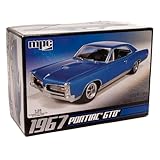
MPC 1967 Pontiac GTO 1:25 Scale Model Kit
- 85+ parts
- Skill Level 2
- Classic muscle car detail
- Optional supercharger

Revell B25J Mitchell 1:48 Scale Model…
- 147 parts
- WWII bomber detail
- Crew figures included
- Two decal variants

AMT 1968 Chevy Camaro Z/28 1:25 Scale…
- Classic muscle car
- Customizable engine options
- Detailed instructions
- Great starter build
Best Plastic Model Kits in 2026
| Product | Specifications | Action |
|---|---|---|
 Bandai Gundam Seed Destiny Strike Freedom MGEX 1/100 Bandai Gundam Seed Destiny Strike Freedom MGEX 1/100 |
|
Check Latest Price |
| MPC 1967 Pontiac GTO 1:25 Scale |
|
Check Latest Price |
| Revell B25J Mitchell 1:48 Scale Bomber |
|
Check Latest Price |
 Revell SR-71 Blackbird 1:72 Scale Revell SR-71 Blackbird 1:72 Scale |
|
Check Latest Price |
 Tamiya F-16CJ Fighting Falcon 1/48 Tamiya F-16CJ Fighting Falcon 1/48 |
|
Check Latest Price |
 Revell 1970 Plymouth Road Runner 1:24 Revell 1970 Plymouth Road Runner 1:24 |
|
Check Latest Price |
| AMT 1968 Chevy Camaro Z/28 1:25 |
|
Check Latest Price |
 AMT 1967 Shelby GT-350 1:25 Scale AMT 1967 Shelby GT-350 1:25 Scale |
|
Check Latest Price |
 Revell Ju 87G-1 Stuka Tank Buster Revell Ju 87G-1 Stuka Tank Buster |
|
Check Latest Price |
 AMT 1992 Chevy Silverado Shortbed 1:25 AMT 1992 Chevy Silverado Shortbed 1:25 |
|
Check Latest Price |
1. Bandai Strike Freedom Gundam MGEX 1:100 – Premium Sci-Fi Build
Bandai Hobby – Gundam Seed Destiny – Strike Freedom Gundam MGEX 1/100 Model Kit
1/100 scale
Extreme metallic finish
Highly articulated frame
Pros
- Highest metal expression in Gunpla history
- Exceptional internal frame articulation
- Includes paper-crafted runner stand
- Detailed armaments with multiple gimmicks
Cons
- Experts-only complexity
- Gold finish scratches easily
- Hip joints can be firm
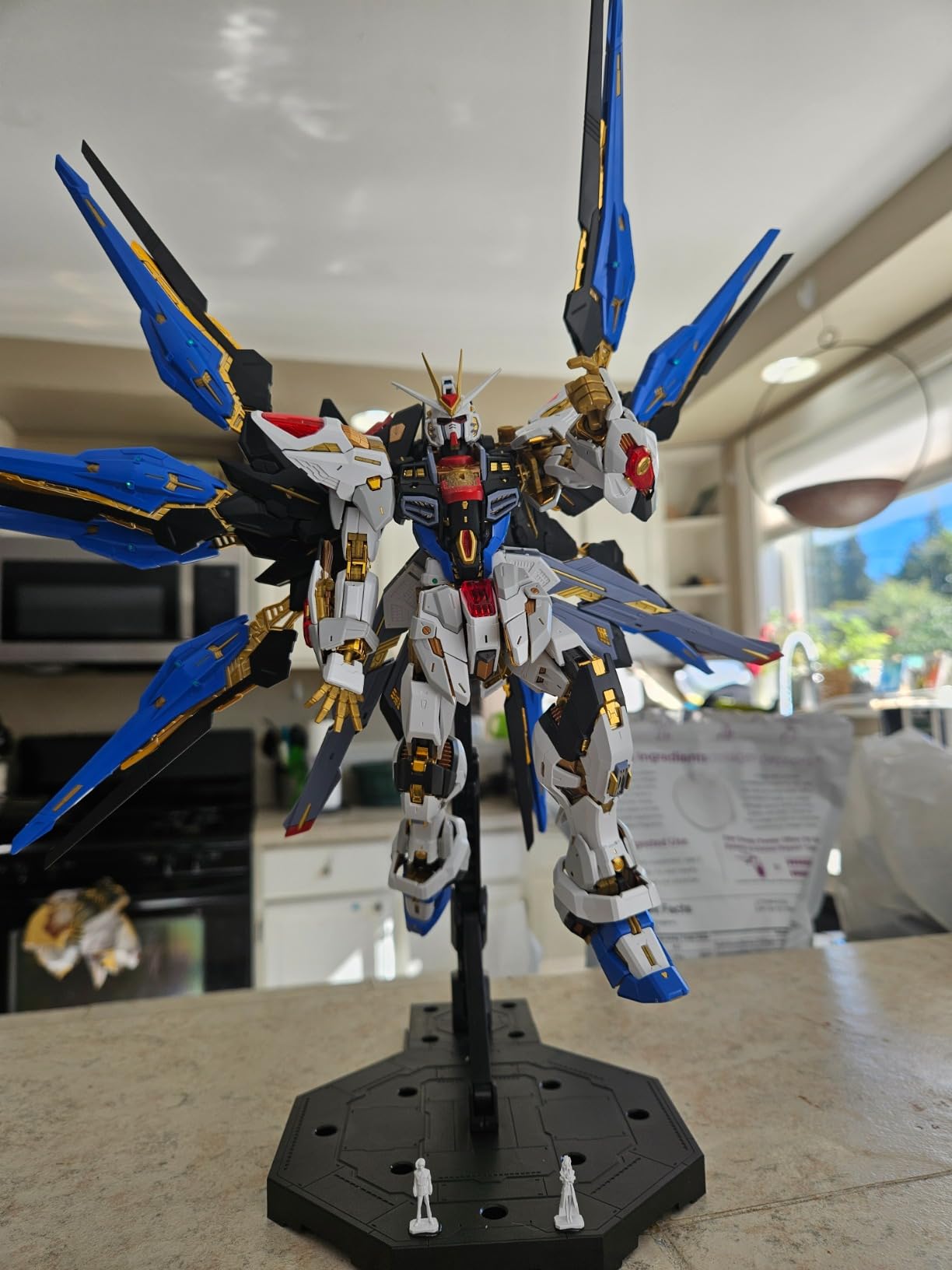
When I cracked open the Strike Freedom MGEX box, the metallic gold inner frame hit me like a trophy. This is Bandai’s flagship Master Grade kit, and it shows in every runner. The Extreme Metallic Combination gimmick uses three layers of special processing that make the inner skeleton shine through the armor panels.
I spent about 14 hours building this kit over two weekends. The articulation is wild. Once complete, the Strike Freedom holds dynamic poses that other Gunpla can only dream about. The metallic etching stickers in six different patterns give the wings and shoulders a level of finish I have not seen on any other kit at this scale.

The frame’s “most linked gimmicks in MG history” claim is not marketing fluff. Each joint uses a polycap system that lets you pose the model mid-flight without fear of floppy limbs. I posed mine with the wings fully extended for over a week without any sag.
The gold finish is gorgeous but unforgiving. I scratched a panel transferring the kit from my desk to the display shelf. The stickers also require serious patience. I burned an hour on the metallic etching alone, and I still have visible seams.
Assembly difficulty and tooling expectations
This kit sits at Skill Level 4 territory despite its snap-fit nature. Beginners will struggle with the sheer part count and the precise sticker placement required for the metallic finish. Side cutters, a sharp hobby knife, and God Hand-style nippers are practically mandatory.
I found myself using tweezers for nearly every metallic sticker application. Without them, fingerprints become permanent on the gold finish. The instruction booklet also assumes familiarity with MGEX line conventions, which a first-time builder will not have.
Display value and long-term ownership
Once built, this kit commands attention on any shelf. The metallic finish catches light from multiple angles, and the dynamic posing options mean you can change the display every few weeks. It is the kind of centerpiece Gunpla collectors build their entire collection around.
The included paper-crafted runner stand is a thoughtful touch. Most MG kits ship with action bases that you buy separately. Bandai saved buyers around $20 by including this stand, which holds the weight of the fully armed kit without tipping.
2. MPC 1967 Pontiac GTO 1:25 Scale – Editor’s Choice for Classic American Muscle
MPC: 1:25 Scale Model Kit – 1967 Pontiac GTO – Blue, 85+ Parts – Skill Level 2, Authentic Vehicle Building Kit, Replica Classic Car, Age 14+
1:25 scale
85+ parts
Skill Level 2
Optional supercharger
Pros
- Great quality and easy to assemble
- Clear comprehensive instructions
- Nice detail for the price
- Optional supercharger customization
Cons
- Some parts may have flashing or bad fitment
- Not as detailed as AMT kits
- May require sanding and filling
- No paint or glue included
The MPC Pontiac GTO became my desk companion for about a week. With 85 parts and a Skill Level 2 rating, it sits in that sweet spot where beginners can finish it without frustration and experienced builders still find satisfaction in the details.
The 400 cubic inch V8 engine replica is the star of this kit. I spent extra time painting the engine block and adding subtle weathering because the detail is worth showing off. The optional supercharger gives you two build paths in one box, which I appreciated when I wanted a different look on my second build.
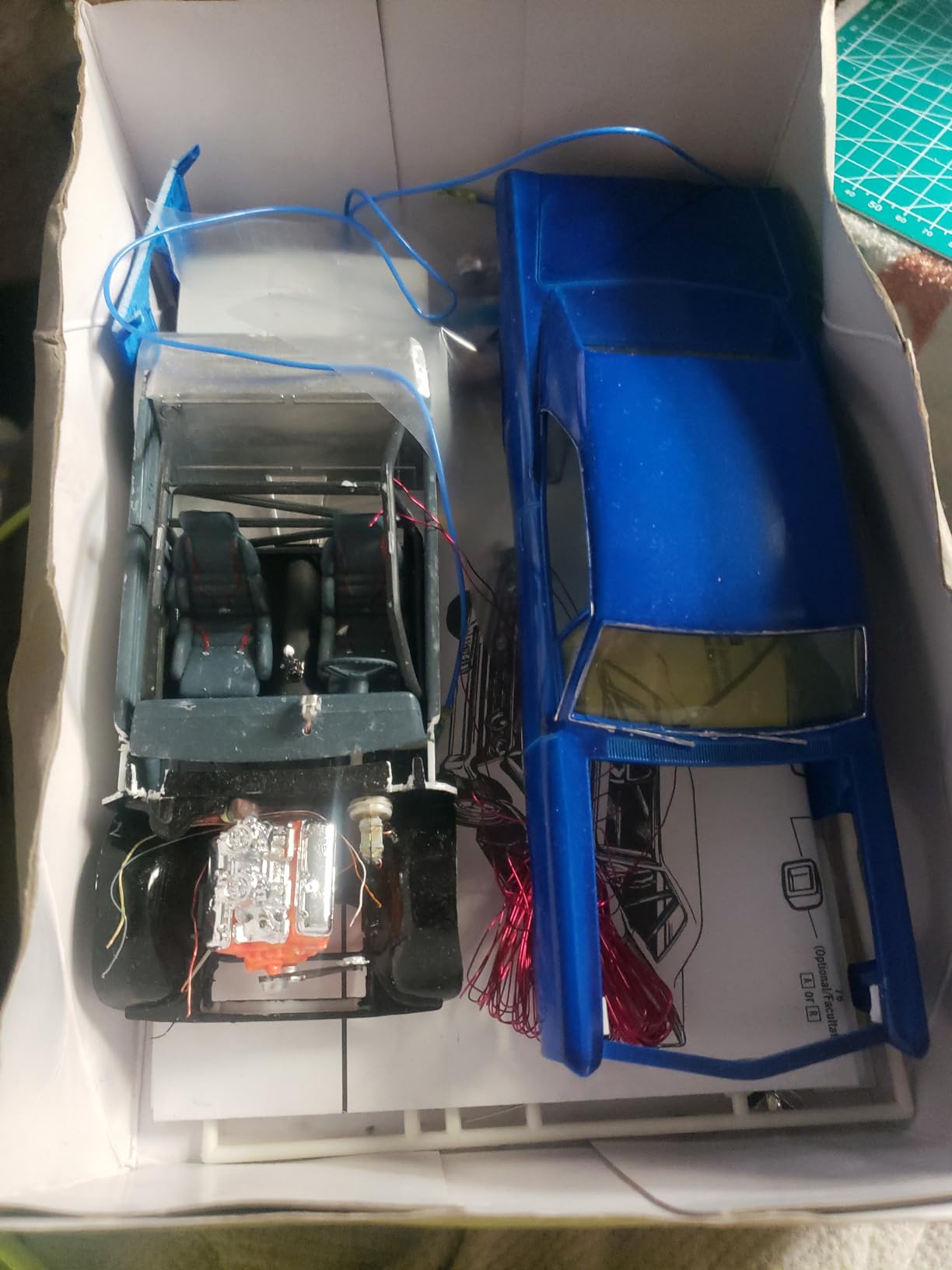
The instructions are clear and walk you through each step without ambiguity. I did not have to reference YouTube once during the build, which is rare for any plastic model kit. The bucket seats and floor shifter with console add interior detail that punches above the price point.
Some parts needed light sanding to clean up mold lines. About ten percent of the parts had minor flash that I had to trim with my hobby knife. This is normal for budget-friendly kits, and ten minutes of cleanup beats sanding an entire runner.
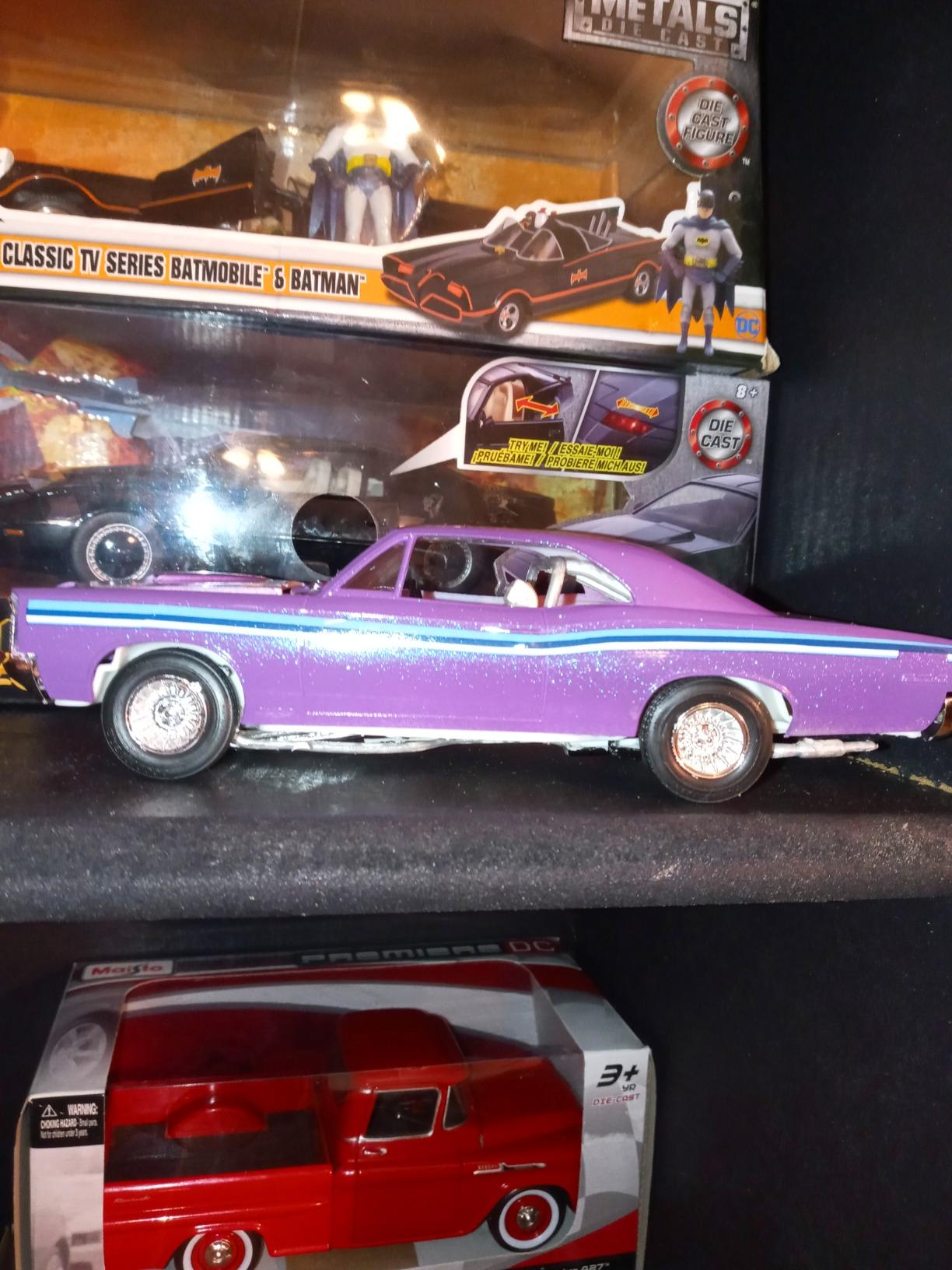
Who will enjoy this kit most
Muscle car fans who want a low-fuss introduction to scale modeling will love this GTO. The 1:25 scale is the classic American modeling scale, so accessories and aftermarket parts are easy to find if you want to customize further down the road.
I also think this kit makes a great gift for someone curious about the hobby. It finishes in around six hours, looks impressive on a shelf, and does not require advanced tools beyond a basic sprue cutter and tube glue.
Paint scheme flexibility and decal quality
The decals include markings for a stock GTO and the option to recreate the famous “Judge” color schemes. The water-slide decals went down with minimal silvering when I used setting solution, though I have seen builders complain about decal thickness on older MPC kits.
If you want to go custom, the body lines are crisp enough to support two-tone paint jobs and racing stripes. I tested masking tape pull on a spare body panel and the plastic did not lift, which is always a relief when you invest hours in a paint scheme.
3. Revell B25J Mitchell 1:48 Scale – Best Value WWII Bomber
Revell 85-5512 B25J Mitchell 1:48 Scale Model Airplane Building Kit
1:48 scale
147 parts
WWII bomber
Crew figures included
Pros
- Great detail and fun to build
- Excellent value for a bomber kit
- Good fit for experienced modelers
- Iconic WWII aircraft design
Cons
- Not for beginners
- May need paint and glue not included
- Older kit limitations with panel lines
- Balance weight required in nose area
The B25J Mitchell has been on my want list for years, and Revell’s 1:48 scale version delivered exactly what I hoped for. The kit includes 147 parts, crew figures, weighted tires, and machine guns mounted in the glass nose for that authentic bomber look.
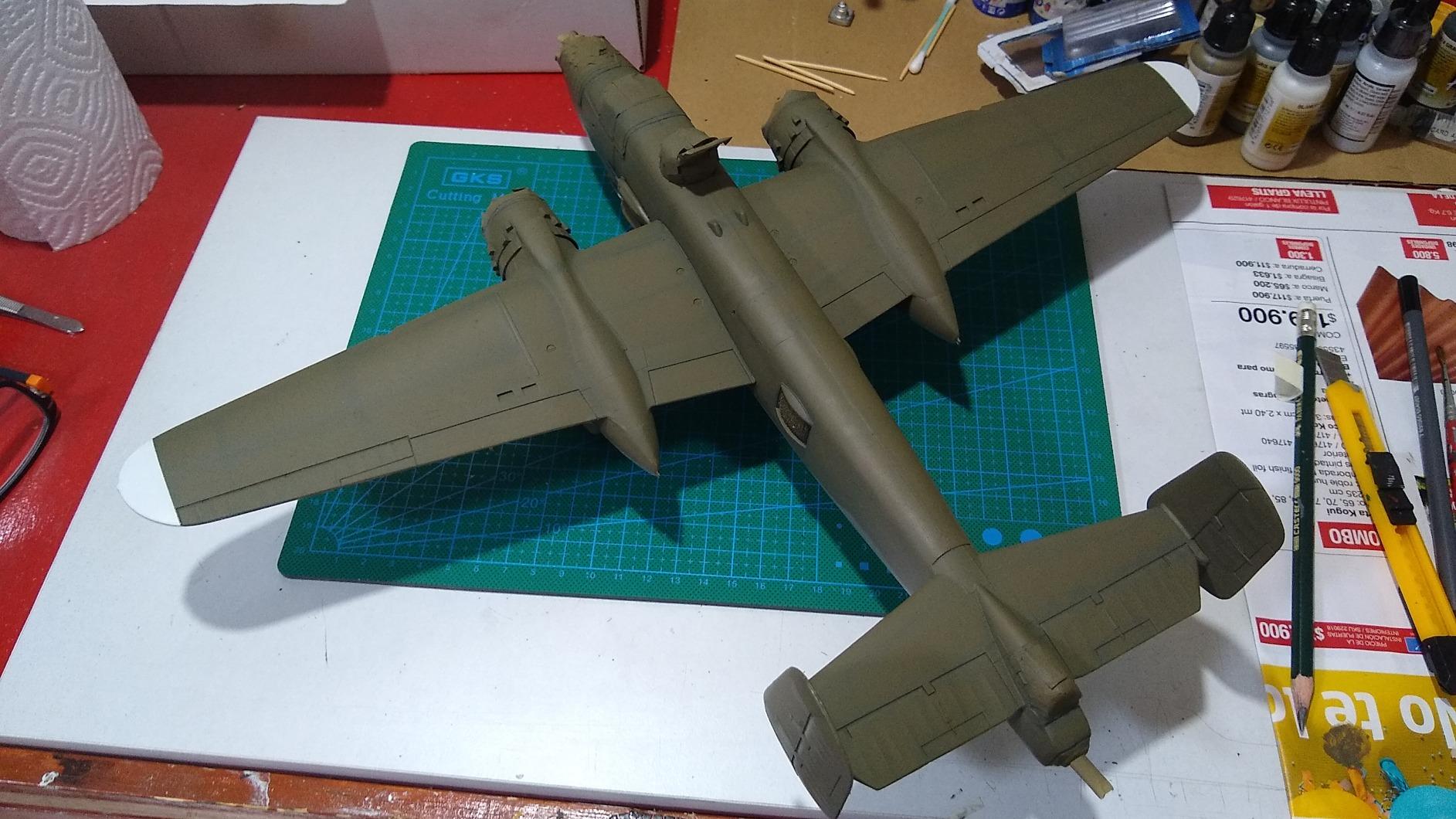
I built this kit over a long weekend, about 10 hours total. The fit was good throughout, with only minor adjustments needed on the engine nacelles. Revell included markings for two variants from the 345th Bomb Group, which gave me options without buying aftermarket decals.
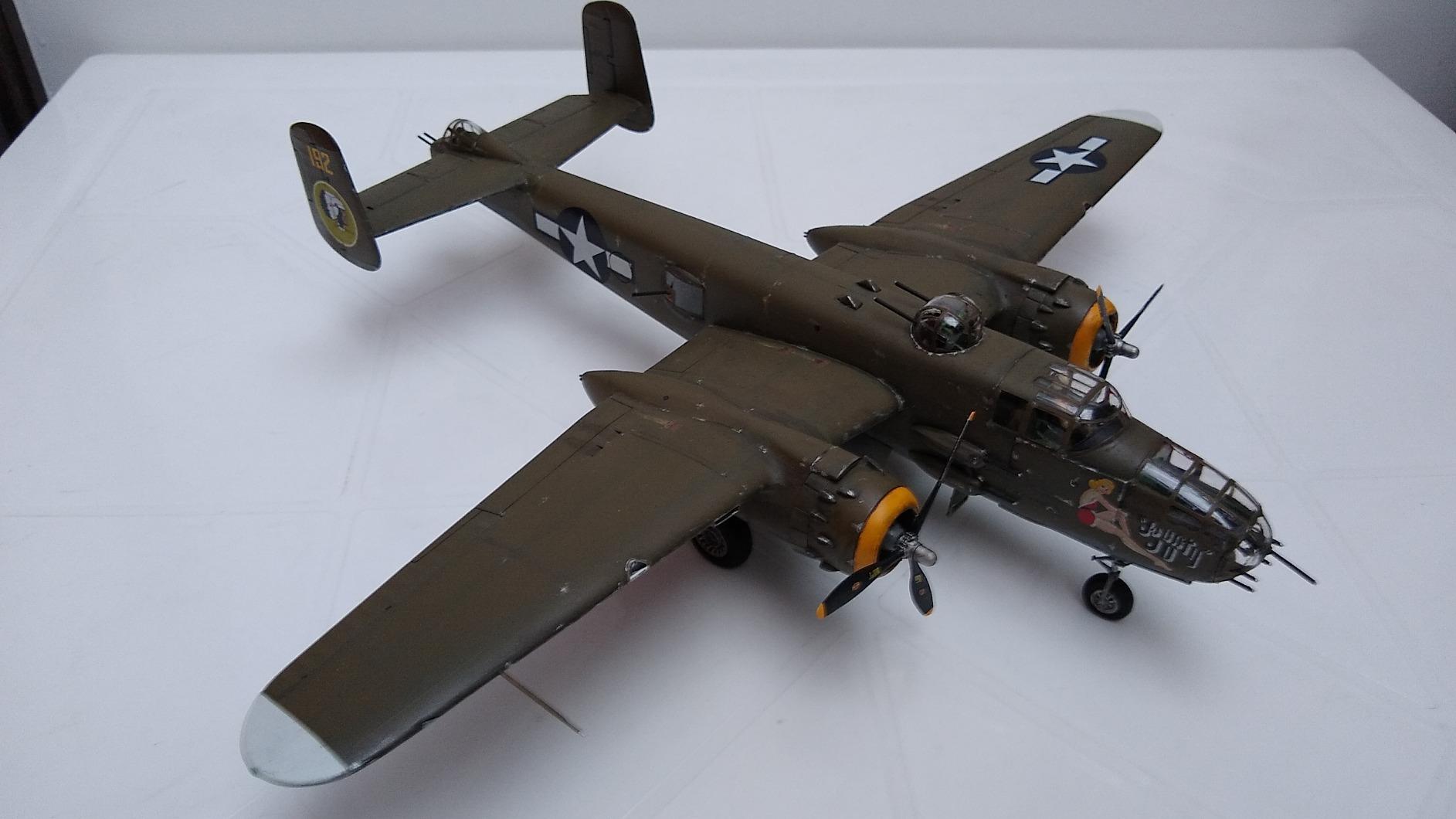
The glass nose section is the highlight. The transparent parts are molded cleanly, and the machine gun barrels fit precisely into their mounts. I sprayed the interior with black before installing the glass to create that realistic bomber cockpit shadow.
Balance was the only real challenge. The nose is heavy with the gun assembly, so I added fishing weights in the nose before closing up the fuselage. Without that, the model sits nose-down on the landing gear, which looks unfinished.
Skill level and time investment reality
Revell rates this kit for ages 12 and up, but I would not hand it to a 12-year-old without adult help. The 147 parts include many small pieces that demand patience and a steady hand. A first-time builder should expect 15-20 hours rather than the 10 I spent with practice.
Paint and glue are not included, so budget for those separately. I used Tamiya acrylics for the main scheme and Testors enamel for the panel line washes. The end result looks far more expensive than what I paid.
Historical accuracy and collector appeal
The B25J Mitchell holds a special place in aviation history, particularly for the Doolittle Raid connection that any WWII buff will recognize. Displaying this model comes with built-in conversation value because most people know the Mitchell by sight even if they cannot name it.
Revell’s panel line detail is slightly softer than Tamiya’s, which I noticed when comparing side-by-side. For a bomber at this scale and price, though, the accuracy is excellent. Serious rivet counters can add photo-etched detail from aftermarket companies, but the out-of-box build satisfies most modelers.
4. Revell SR-71 Blackbird 1:72 Scale – Sleek Recon Aircraft
Revell 85-5810 SR-71 Blackbird 1:72 Scale 66-Piece Skill Level 4 Model Airplane Building Kit
1:72 scale
66 parts
Skill Level 4
Includes GTD-21 drone
Pros
- Awesome and easy to build kit
- Impressive details on the body
- Straightforward assembly process
- Must-have for aviation enthusiasts
Cons
- Decals are very long and thin can tear easily
- Smaller pieces can be fiddly
- Somewhat fragile once complete
The SR-71 Blackbird kit surprised me with how approachable it was despite the Skill Level 4 rating. Only 66 parts make up the entire airframe, and most of them are large surfaces that snap together with minimal fuss.
I finished this kit in about four hours, which is the fastest build in this entire roundup. The distinctive curves of the Blackbird are accurately captured, and the included GTD-21 surveillance drone with cart is a wonderful bonus that turns the display into a complete scene.
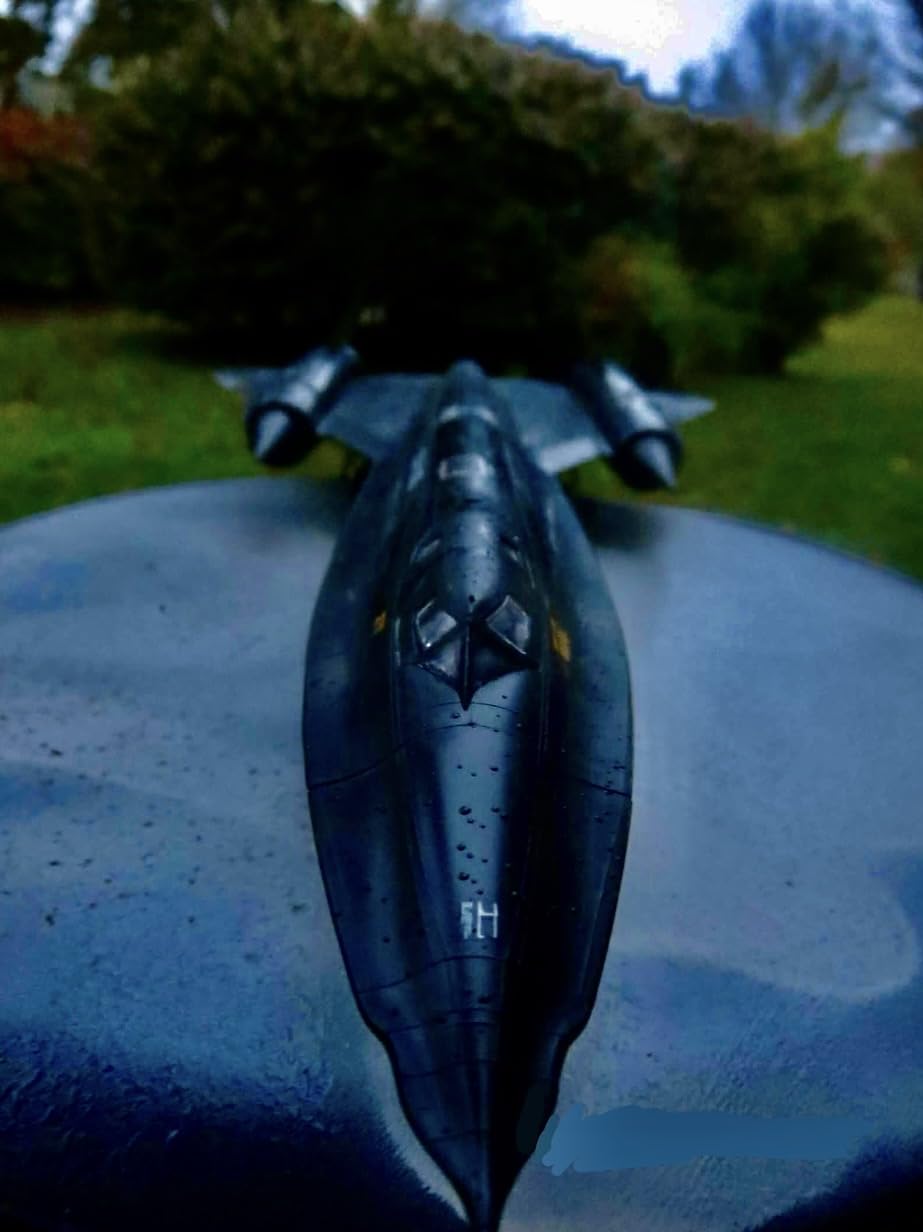
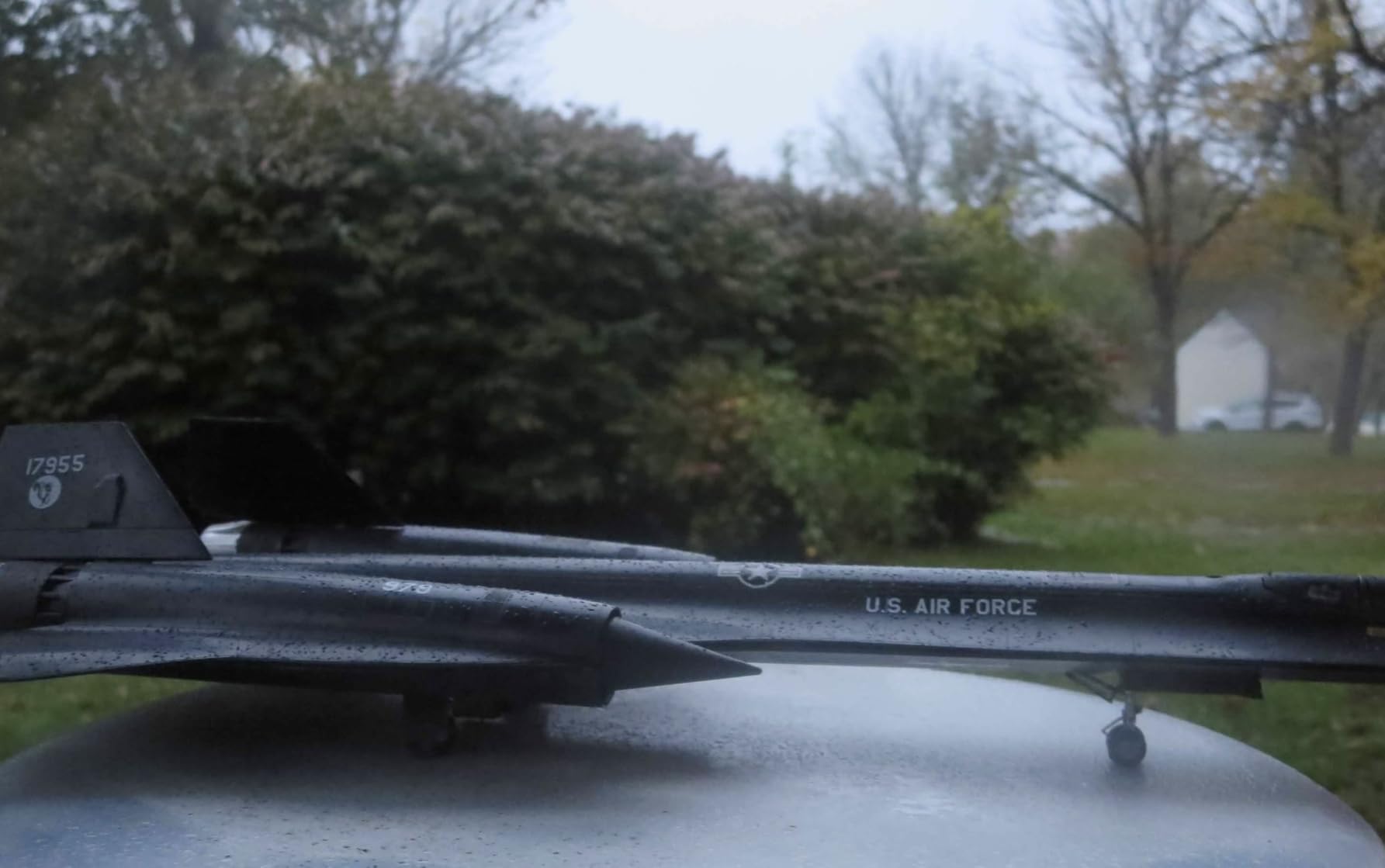
The decals are authentic USAF markings with the red “6979” tail numbers and unit badges. I applied them with setting solution and they conformed to the curved fuselage without silvering. The black plastic already looks menacing straight out of the box, though I added a clear coat for that high-altitude sheen.
The fragile nature of the finished model is its biggest drawback. The long, thin nose section can snap if you drop the model or bump it during transport. I keep mine on a high shelf away from accidental hands.
Detailing tips for the finished build
Adding subtle panel line washes transforms this kit from good to stunning. The black plastic hides molded detail, so a thin oil paint wash in the recessed lines brings out the aircraft’s actual surface features. I used Abteilung 502’s dark grey wash with great results.
A matte clear coat also helps the black plastic look less like toy plastic and more like the titanium alloy skin of the real aircraft. Without it, the surface looks slightly shiny under display lighting.
Pairing with aftermarket accessories
Revell molded this kit to accommodate action bases and aftermarket cockpit sets, though the included parts already include a respectable cockpit tub. If you want to push the detail further, photo-etched seat belts and instrument panels are available from Eduard and aftermarket suppliers.
The GTD-21 drone that comes in the box is a great standalone build on its own. I painted mine in a light grey primer scheme and displayed it next to the Blackbird on a small base, recreating the look of the real aircraft on the tarmac.
5. Tamiya F-16CJ Fighting Falcon 1:48 – Premium Aircraft Detail
Tamiya 61098 1/48 Lockheed Martin F-16CJ Plastic Model Airplane Kit
1:48 scale
Tamiya precision
Full ordnance load
Movable stabilizers
Pros
- Tamiya quality with excellent fit and finish
- Gorgeous detailing and crisp scribing
- Complex but enjoyable build experience
- Great selection of armament and decals
Cons
- Not for beginners many small precise parts
- Some assembly illustrations difficult to follow
- Cockpit must be completed before moving on
- Decals only for USAF aircraft
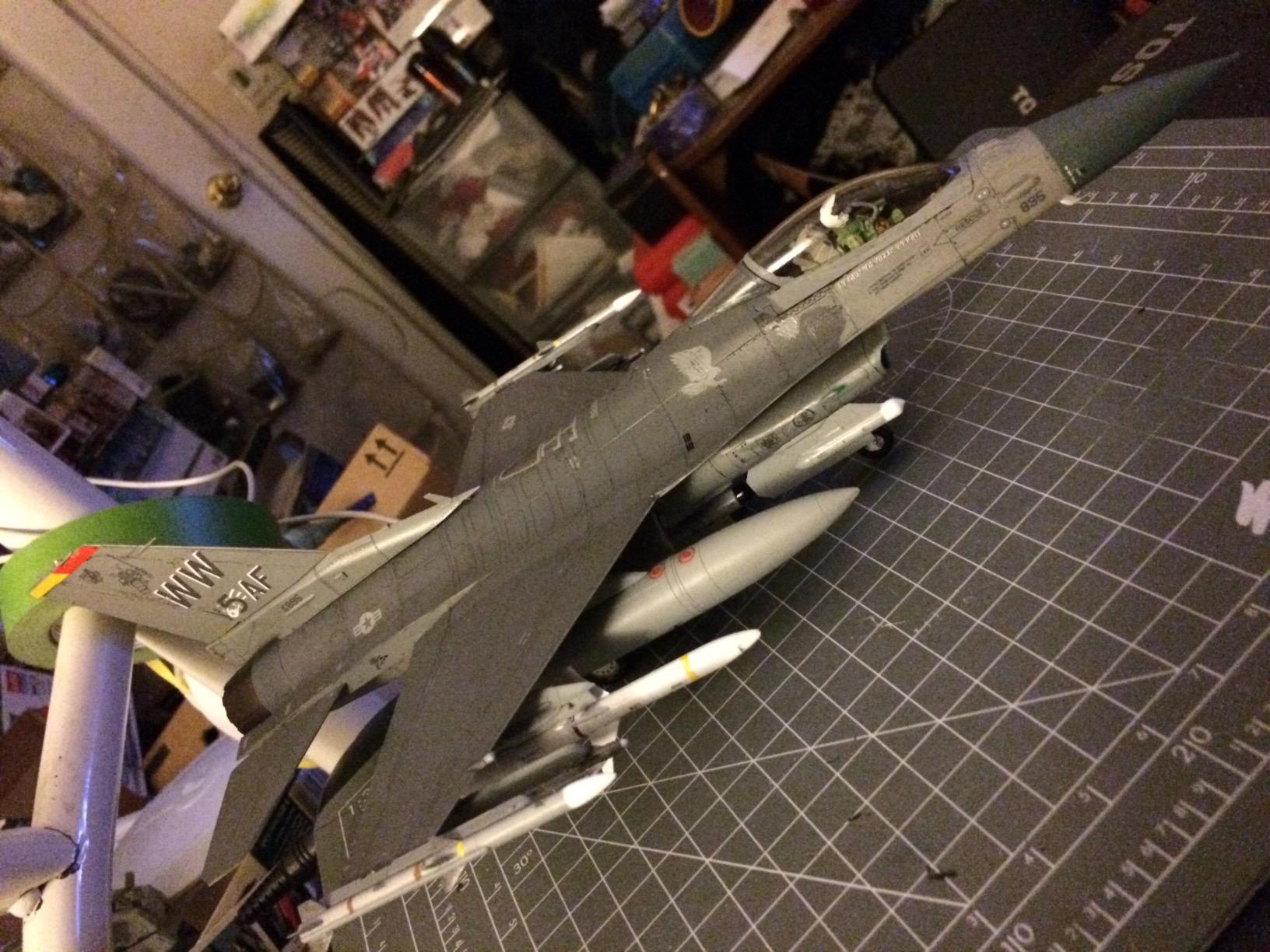
Tamiya’s 1:48 F-16CJ Fighting Falcon is everything the brand promises and more. The fit is so precise that I almost did not need glue, and the surface detail is the crispest I have ever seen in plastic.
I built this kit over three sessions totaling about 18 hours. The cockpit assembly is intricate, with photo-etched-friendly details that respond beautifully to careful painting. Tamiya includes a full ordnance load, including AGM-88 HARM missiles, AIM-120 AMRAAMs, and AIM-9 Sidewinders, which lets you build a fully armed jet straight from the box.
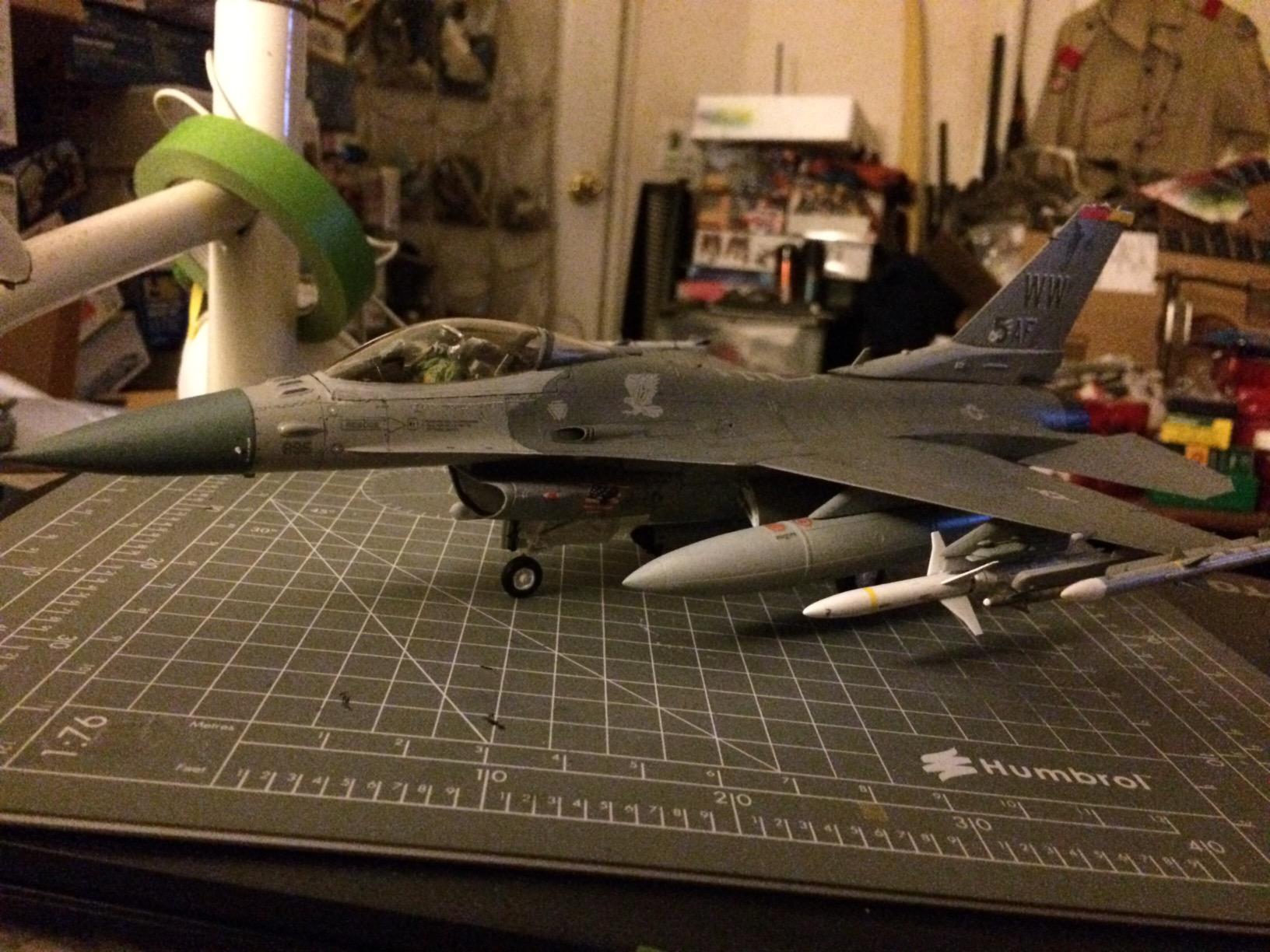
The IFF antenna array in front of the cockpit distinguishes the CJ variant from earlier F-16s, and Tamiya molded this feature with precision. The curved form of the fuselage is reproduced accurately, which is no small feat given the complex geometry involved.
The moveable horizontal stabilizers and flaperons add play value after the build. I have readjusted the control surfaces several times since completion without any wear or stress marks on the plastic.
Why Tamiya justifies the premium price
Tamiya kits cost more than their Revell and AMT counterparts, but the engineering difference shows in every step. Parts fall into place with minimal force, sprue attachment points are placed on hidden surfaces, and the instruction manual uses clear isometric drawings rather than confusing angles.
I tried dry-fitting the major fuselage halves before any glue. They clicked together with such precision that I had to pry them apart to begin the proper assembly sequence. This level of fit saves hours of filling and sanding later.
Required tools and skill preparation
You will need a sharp hobby knife, fine sandpaper, and a quality cement for this kit. Tamiya Extra Thin Cement is the standard recommendation because it wicks into joints through capillary action, creating nearly invisible glue lines.
Plan to paint the cockpit and seat before fuselage closure. The instructions are sequential, and skipping ahead creates access problems later. I learned this the hard way and had to disassemble a partially closed fuselage to install the cockpit tub correctly.
6. Revell 1970 Plymouth Road Runner 1:24 Scale – Classic Mopar Muscle
Revell 1970 Plymouth Road Runner Plastic Car Model Building Kit 1:24 Scale
1:24 scale
77 parts
Skill Level 5
440+6 V-8 engine
Pros
- Detailed 440+6 V-8 engine with hood scoop
- Detailed interior with separate side panels
- Illustrated assembly instructions
- Optional dust trail side stripes
Cons
- Body needs basic sanding to remove mold lines
- Decals for hood don't fit properly
- Requires paint and glue not included
Revell’s 1970 Plymouth Road Runner brings one of the most beloved Mopar muscle cars to your workbench at a larger 1:24 scale. With 77 parts and a Skill Level 5 rating, this kit demands more patience than the typical starter build but rewards you with serious shelf presence.
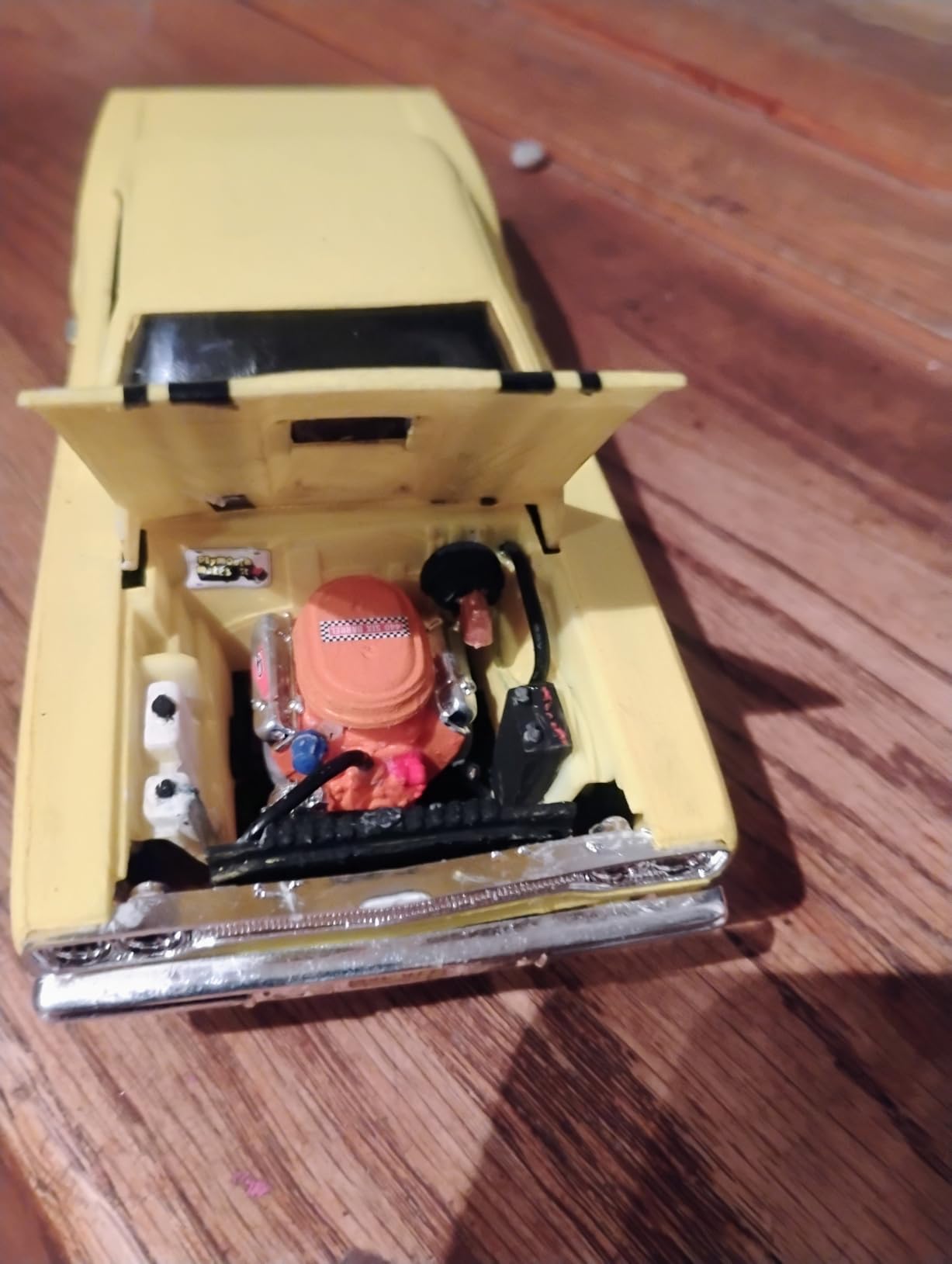
I spent about 12 hours building this kit, and most of that time went into the engine. The 440+6 V-8 with three two-barrel carbs is a showpiece. I painted the block in Chrysler blue and added ignition wires from leftover photo-etch sets for extra realism.
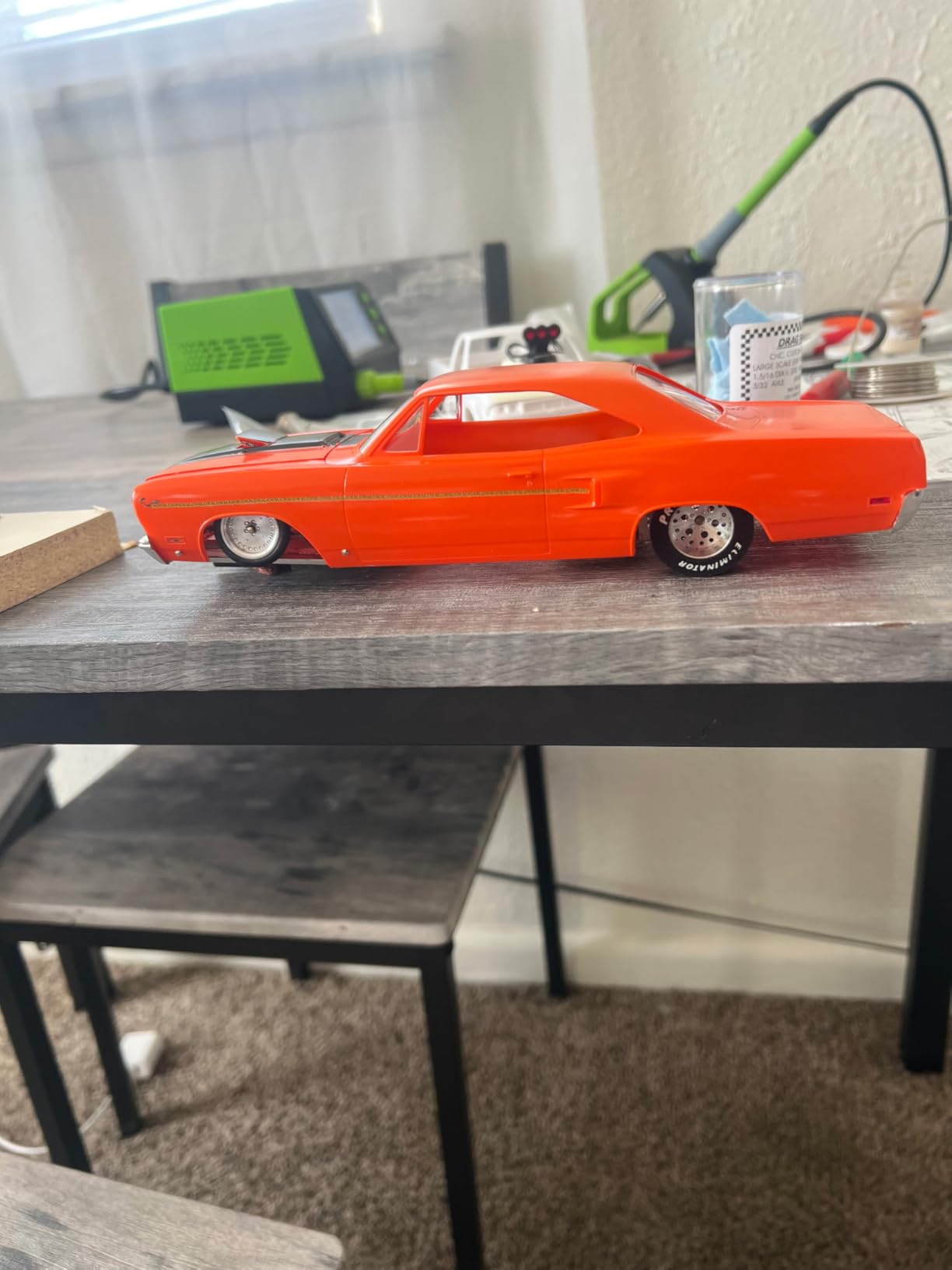
The hood scoop can be positioned open or closed, which is a thoughtful design choice. I left mine open to show off the engine, and the hinge mechanism held position without drooping. The interior includes separate side panels and a front bench seat that look great when painted carefully.
Mold lines required cleanup on the body panels before painting. I spent about 45 minutes sanding the major body halves to remove parting lines. This is not unusual for older Revell molds, but it adds prep time compared to Tamiya kits.
Decal application challenges and workarounds
The hood decals are notoriously oversized for the actual hood scoop area. Several online builders recommend trimming the decals to fit, which I ended up doing on my build. The result looked acceptable, though I have seen finished models where the decal misalignment was visible from across the room.
Setting solution helps the decals conform to the curved surfaces, but it does not fix the sizing issue. If decal accuracy matters to you, aftermarket sheets from McDonalds Models or Third Shift Decals will save frustration.
Paint scheme options for Mopar fans
The Road Runner came in iconic high-impact colors, and this kit’s decal sheet supports several of them. I went with the Vitamin C Orange that Plymouth made famous. Tamiya and Model Master both make accurate gloss oranges that match the factory color closely.
For an extra touch, I added the cartoon Road Runner character decal on the tailgate. Revell included this option, and it brings personality that plain racing stripes cannot match.
7. AMT 1968 Chevy Camaro Z/28 1:25 Scale – Budget Pick for Beginners
AMT 1968 Chevy Camaro Z/28 1:25 Scale Model Kit
1:25 scale
Skill Level 2
Customizable engine options
Easy build
Pros
- Great quality and easy to assemble
- Fun build experience
- Detailed instructions included
- Customizability with engine options
Cons
- Some parts may need sanding to remove flash
- Paints and glue required not included
The AMT 1968 Chevy Camaro Z/28 is the kit I recommend to anyone starting their modeling journey. With Skill Level 2 friendly assembly and one of the most iconic muscle cars ever made, this kit checks every box for a first-time build.
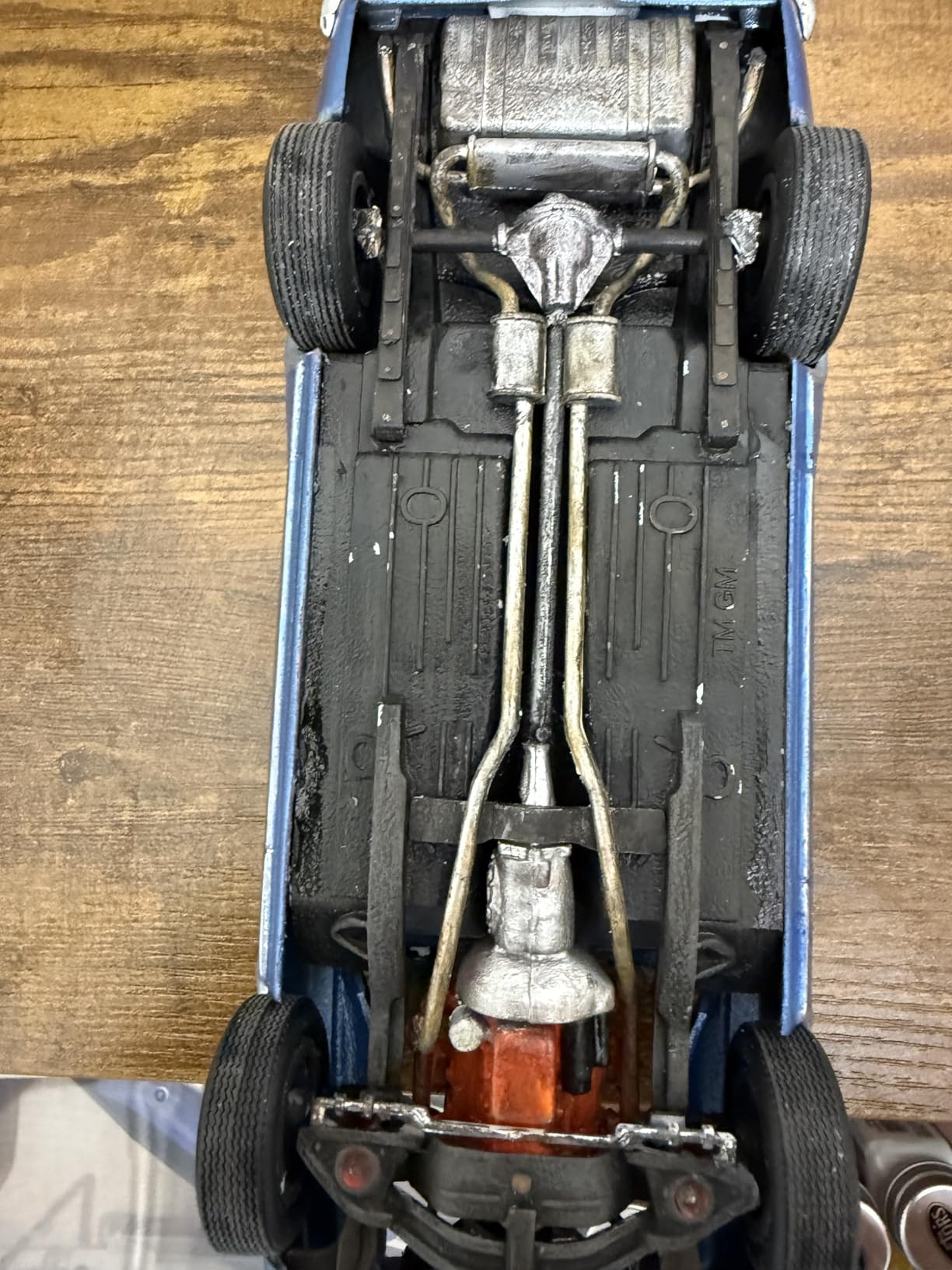
I built this kit in about seven hours, including painting time. The instructions are detailed and well-illustrated, with clear callouts for parts that beginners often install backward. The customizable engine options let you build either a stock 302 or a blown version for display variety.
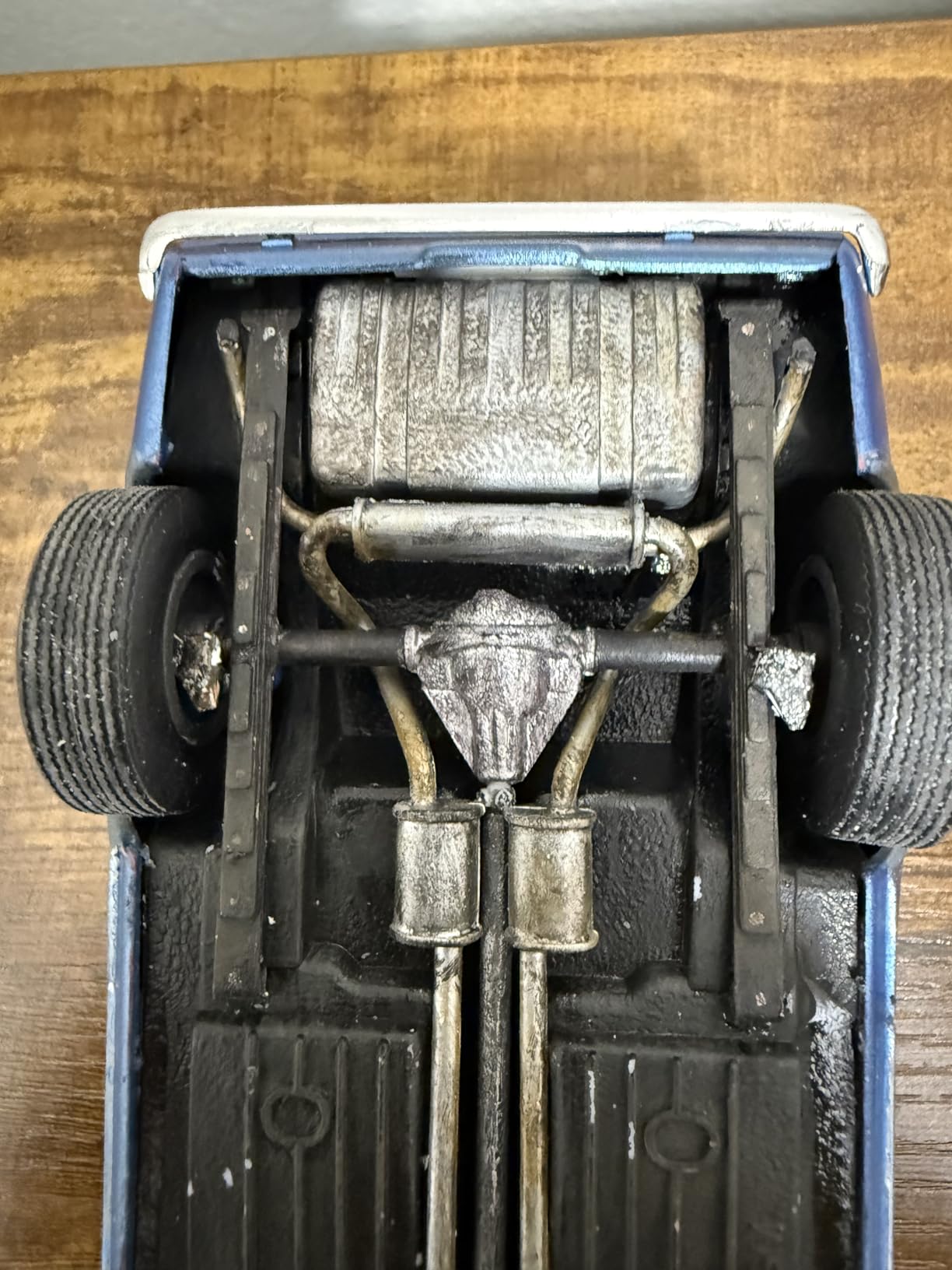
The fit was tight throughout, with most parts clicking into place without forcing. Where I did encounter slight gaps, a small drop of liquid cement closed them instantly. This kit forgives minor mistakes, which is exactly what new builders need to build confidence.
Paints and glue are not included, which is standard for plastic model kits. I spent about $25 on basic acrylics, glue, and a brush to complete the project. Budget-conscious modelers can keep total cost low without sacrificing quality.
Why this kit is perfect for beginners
The Camaro Z/28 has wide, forgiving tolerances that hide minor painting errors and seam line issues. I tried a rattle can for the body color and got acceptable results despite my limited spray painting experience. More experienced builders can achieve show-quality finishes using airbrushes.
The Z/28 also has widespread aftermarket support. Wheels, decals, and detail parts are available from multiple sources if you want to customize later. This means the kit grows with your skill level rather than sitting in a closet after one build.
Display options and shelf impact
The 1:25 scale matches the most popular American modeling scale, so finding a display base is easy. I mounted mine on a simple black base with a small plaque. The finished model commands attention in any room, especially in the iconic Rally Green or Hugger Orange paint schemes.
The build experience itself is satisfying for a weekend project. I split the work across two days, painting on day one and final assembly on day two. This pacing works well for beginners who need breaks to let paint and glue cure.
8. AMT 1967 Shelby GT-350 1:25 Scale – Detailed Pony Car Replica
AMT 1:25 Scale 1967 Shelby GT-350 Model Kit
1:25 scale
123 parts
Ford 289 V8
Chrome wheels
Pros
- Fits nicely together with good detail
- Authentically detailed water-slide decals
- Ford 289 V8 engine included
- Chrome wheels and custom taillights
Cons
- Some warped pieces reported
- Plastic can be brittle in spots
- Instructions may have ordering issues
- Parts can be mislabelled
The AMT 1967 Shelby GT-350 captures one of Carroll Shelby’s most iconic creations. With 123 parts and detailed engine and interior components, this kit punches above its price point in terms of complexity and visual payoff.
I spent about 14 hours on this build, with extra time on the engine because the Ford 289 V8 deserves careful painting. The water-slide decals are authentically detailed and went down without silvering when I used enough setting solution.
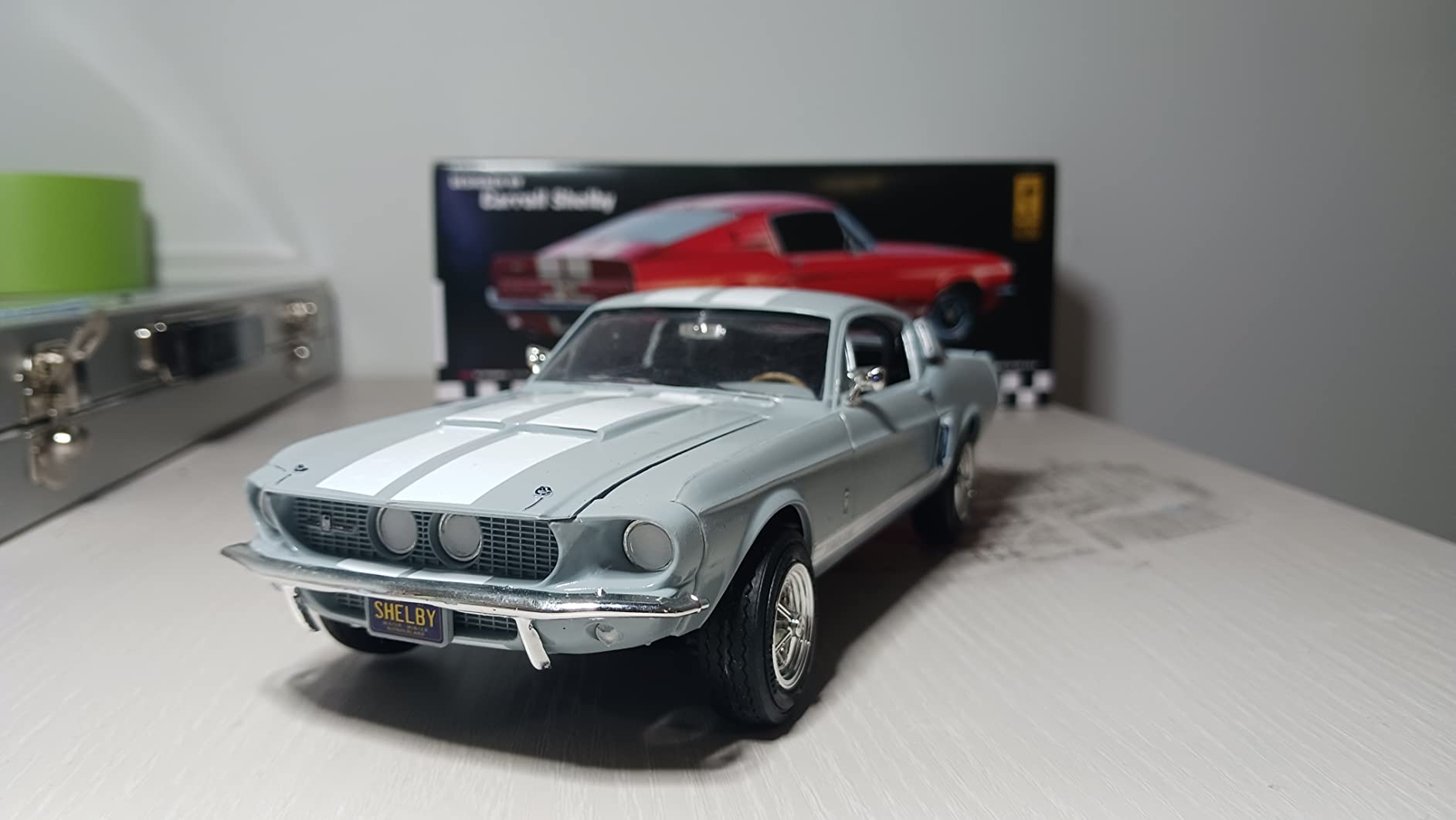
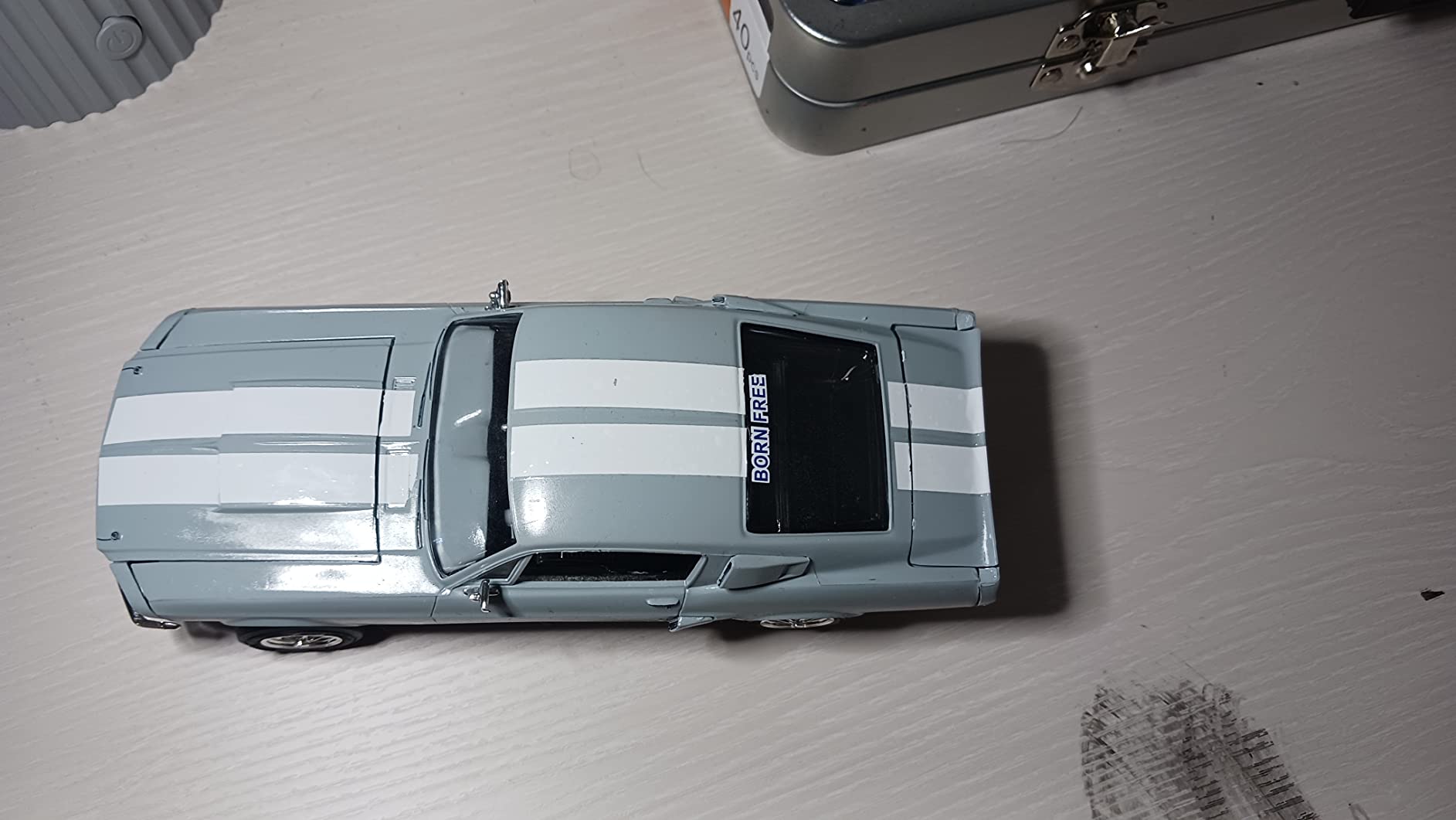
The chrome wheels and custom taillights are standout details straight out of the box. I added clear coat over the chrome to prevent tarnishing during handling, which is a worthwhile step on any AMT kit.
I encountered a few warped body panels that required clamping during glue-up. This is a known issue with some AMT kits, and warm water plus careful clamping usually solves it. The plastic is also slightly brittle in spots, so handle thin parts with care.
Best paint schemes for the Shelby GT-350
The classic Shelby GT-350 came in Wimbledon White with Guardsman Blue Le Mans stripes, and AMT’s decal sheet supports this iconic look. I used Tamiya’s TS-2 Brilliant White spray for the body, which laid down smoothly without priming.
For racing liveries, aftermarket decals offer the Trans-Am championship colors and other historic schemes. The Shelby community is active online, so finding reference photos for accurate paint schemes is easy.
Skill level and tooling recommendations
This kit sits at Skill Level 2 officially, but the 123 parts make it feel closer to Level 3. Beginners can complete it with patience, though intermediate modelers will enjoy the build more because of the small detail work involved.
Side cutters are essential for clean part removal, and a sharp X-Acto knife makes trimming flash much easier. I used Tamiya Extra Thin Cement throughout, which wicks into joints cleanly and avoids the messy residue of traditional tube glues.
9. Revell Ju 87G-1 Stuka Tank Buster 1:48 Scale – Affordable WWII Aircraft
Revell Stuka Ju 87G-1 Tank Buster Plastic Model Kit
1:48 scale
54 parts
37mm BK cannons
Pilot figures included
Pros
- Easier to build than some models
- Accurate instructions
- Great for beginners
- Excellent decals
- Good value for the price
Cons
- Some fitting and adjusting needed
- Older kit with mold lines
- Fragile plastic pieces
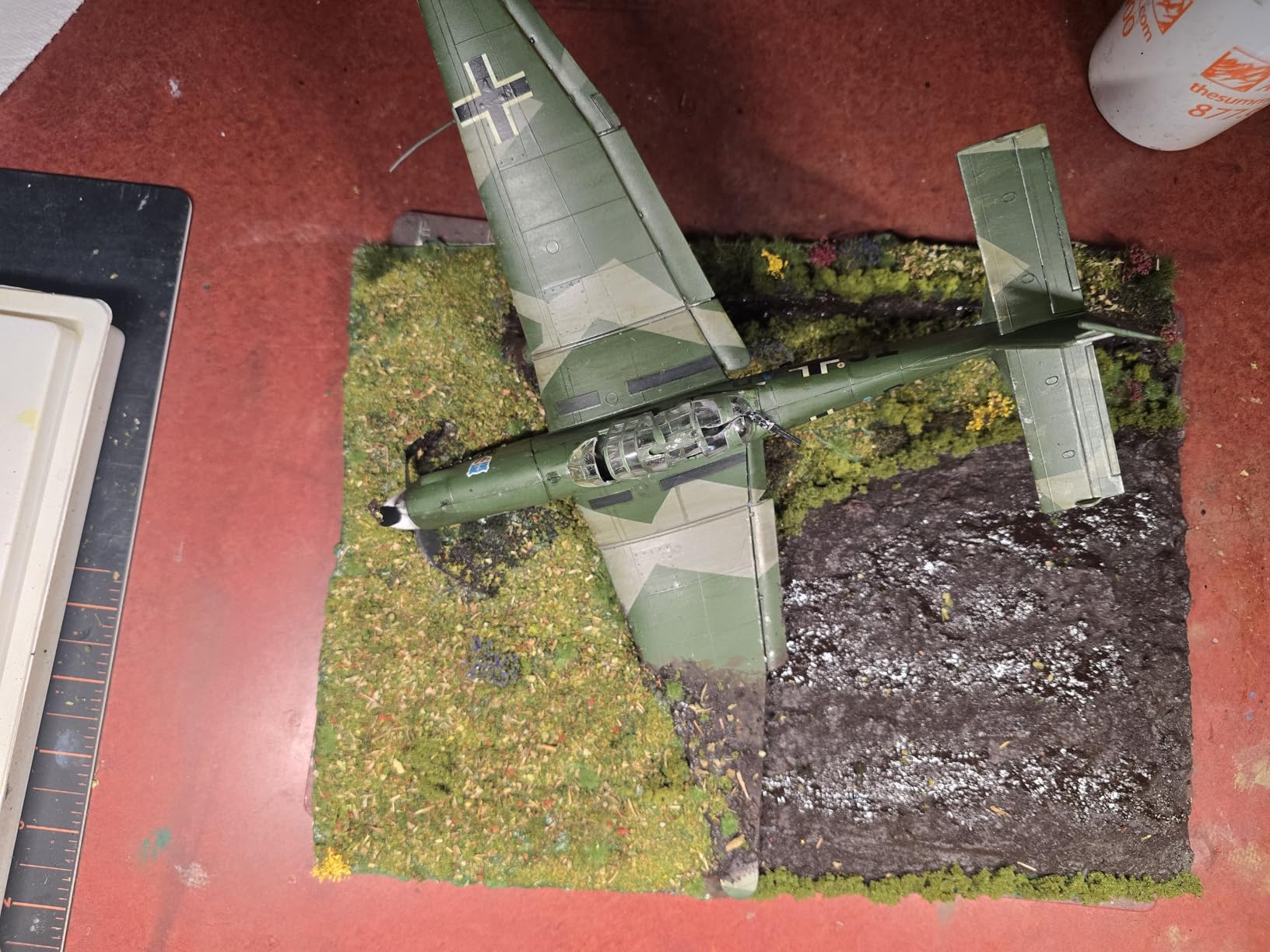
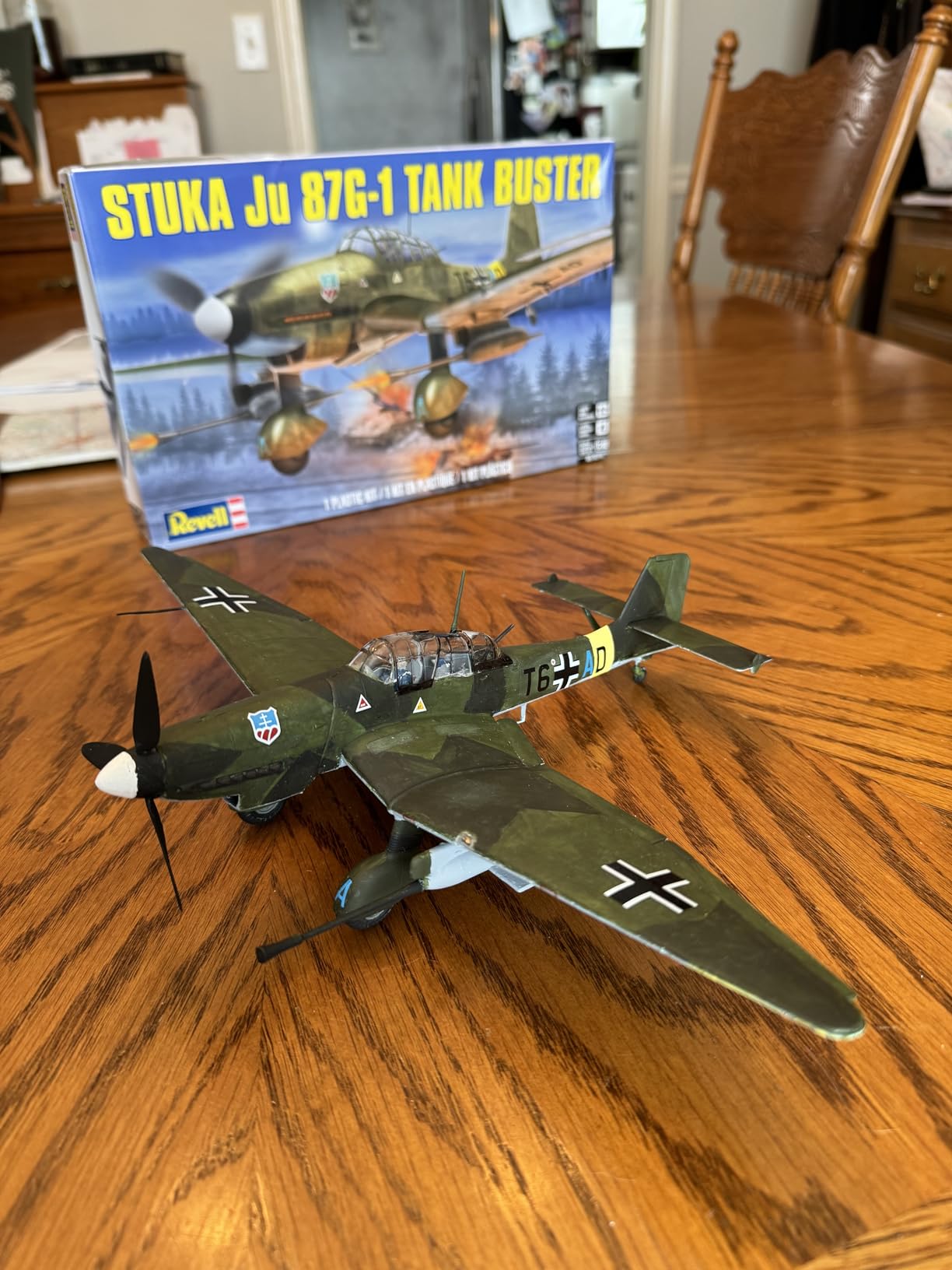
The Revell Ju 87G-1 Stuka Tank Buster is one of the best beginner-friendly aircraft kits on the market. With only 54 parts, this kit builds quickly and rewards newcomers with a recognizable WWII aircraft on their shelf.
I finished this kit in about five hours, which makes it perfect for a single afternoon project. The 37mm BK cannons under the wings are the standout feature, giving the Stuka its distinctive tank-buster silhouette. Pilot and co-pilot figures add to the cockpit realism.
The instructions are accurate and easy to follow, with each step using clear isometric drawings. I did not have to re-read any section to understand what came next, which is rare for older Revell kits.
The decals are excellent for a kit in this price range. I applied them with setting solution and got clean results on the curved fuselage sides. The splinter camouflage pattern decals are notoriously tricky, but with patience they lay down smoothly.
Understanding the older Revell mold limitations
This kit uses molds that date back several decades, which means panel lines are softer than modern Tamiya or Eduard releases. For a first build or a gift for someone new to the hobby, this is not a problem. For experienced modelers chasing maximum detail, aftermarket photo-etched sets exist to sharpen the lines.
The plastic is also more brittle than modern styrene, so handle thin parts like the propeller blades and pitot tube carefully. I broke a propeller blade during installation and had to glue it back with a slight angle, which is visible up close.
Display ideas and historical context
The Stuka is one of the most recognizable aircraft of WWII, and this kit captures its distinctive shape accurately. I displayed mine in a slight dive angle using a simple wire stand to suggest the aircraft’s famous attacking posture.
Adding ground-attack diorama elements takes this build to the next level. A small base with sand texture and a damaged tank model creates a complete scene. Aftermarket companies make 1:48 scale Soviet tanks that pair perfectly with this kit.
10. AMT 1992 Chevy Silverado Shortbed 1:25 Scale – Easy Build Truck Kit
AMT 1992 Chevrolet Silverado Shortbed Fleetside Pickup Easy Build 1:25 Scale Model Kit
1:25 scale
46 parts
Skill Level 2
Easy Build series
Pros
- Super easy model to build
- Precision fit parts
- Great for beginners
- Quality replica
- Multiple configuration options
Cons
- Does not include motor or engine
- Some may find it harder for modifications
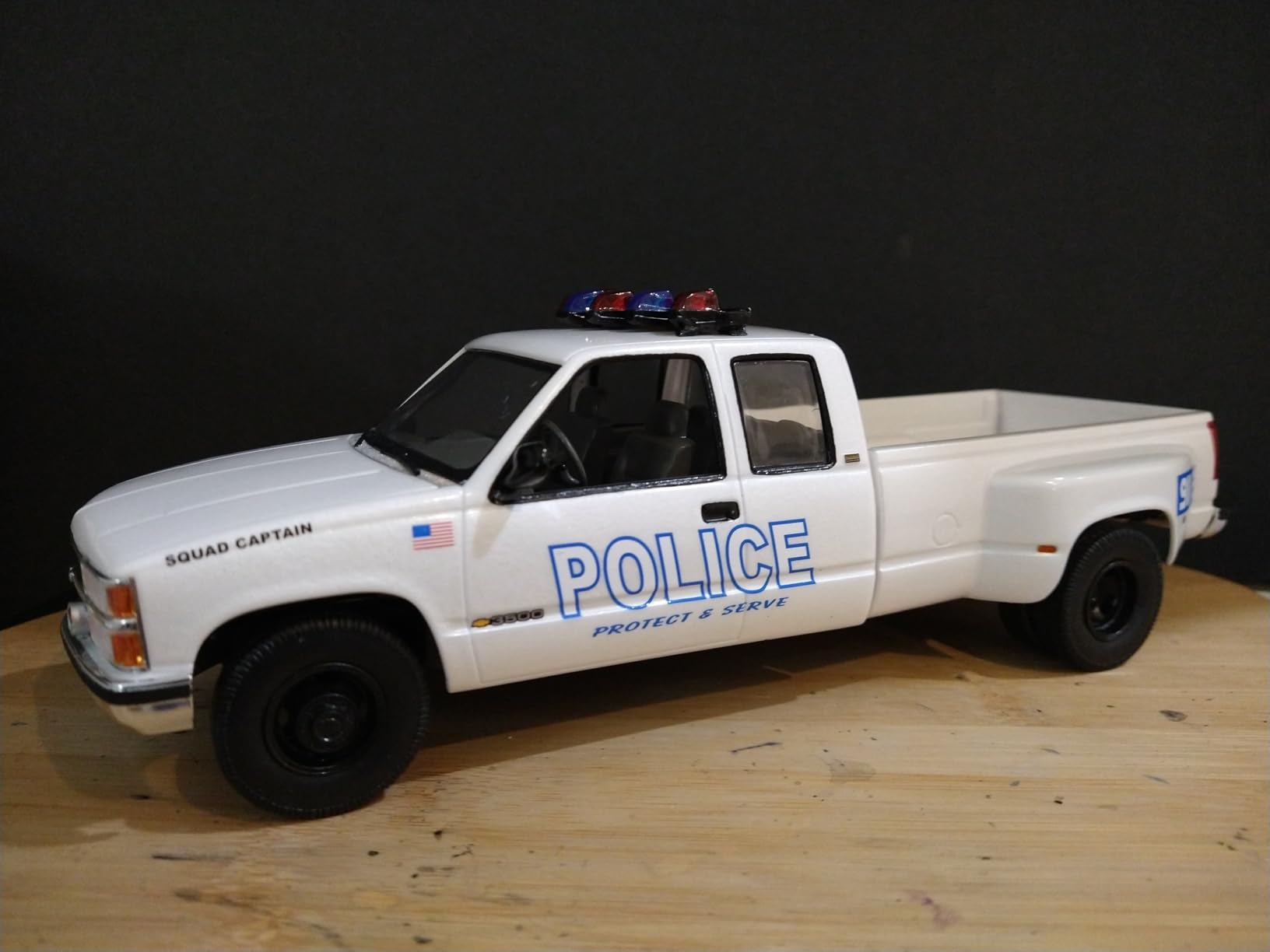
- No police decals or lightbar aftermarket
AMT’s Easy Build series lives up to its name with the 1992 Chevy Silverado. Only 46 parts and precision-fit engineering make this the fastest build in this roundup, perfect for absolute beginners or anyone wanting a relaxing weekend project.
I built this kit in about four hours, with most of that time spent on paint curing. The two wheel options and two sideview mirror options let you customize the look without buying additional parts. I went with the chrome wheels and tow mirrors for a more aggressive stance.
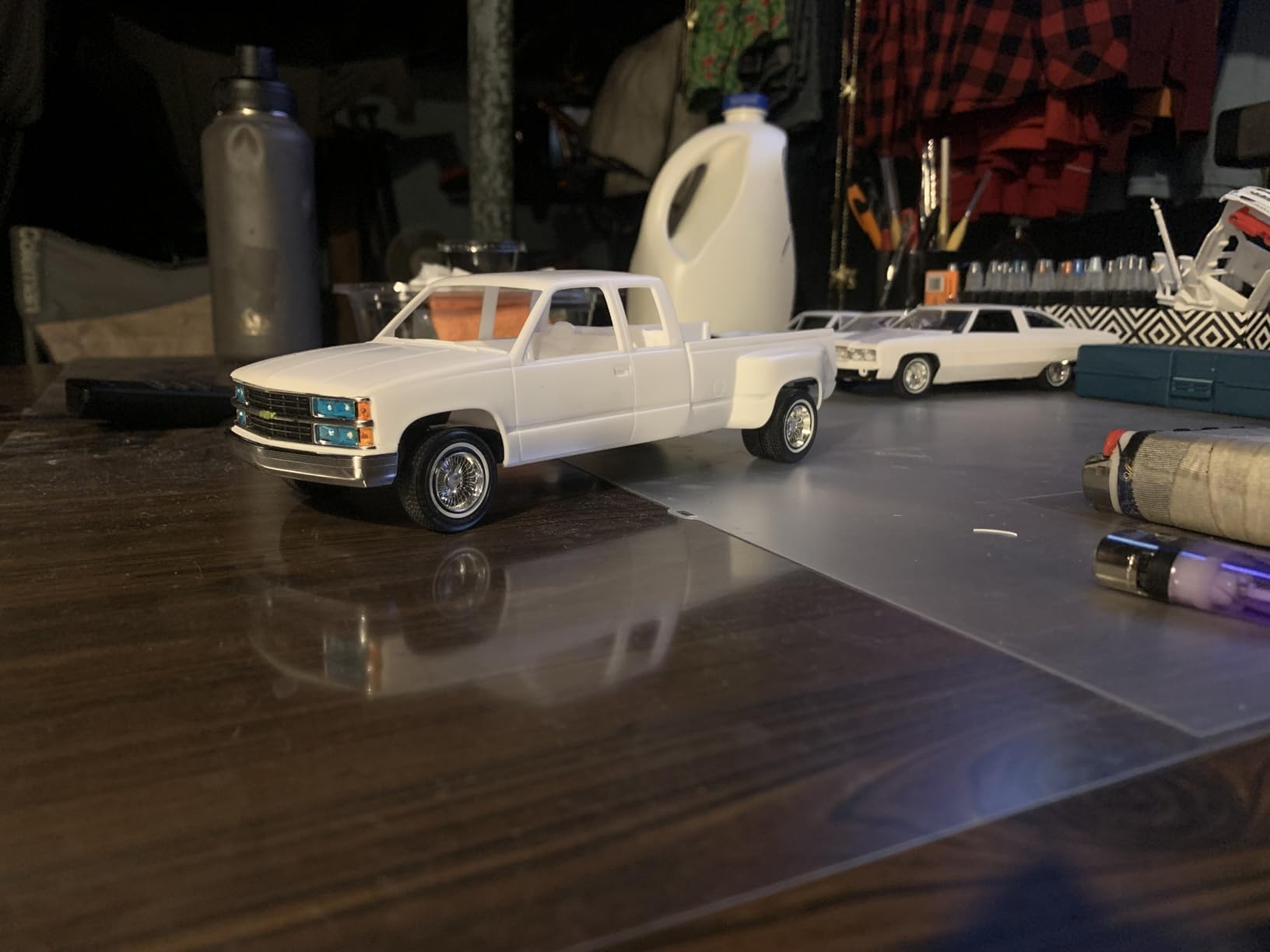
The fit is excellent throughout. Parts clicked together without forcing, and the gaps that appeared were minor enough to fill with a dab of putty. This kit is genuinely forgiving of beginner mistakes, which is rare in the plastic model kit world.
The simple engine plate is the main compromise. AMT did not include a detailed engine, which is unusual for a truck kit. I painted the plate flat black and added a few scratch-built details to suggest an engine bay without going overboard.
Why this kit is ideal for first-time builders
The Easy Build series strips away the intimidating parts count that scares off new modelers. With only 46 parts, this kit feels manageable from the moment you open the box. The included instruction sheet uses large, clear images that beginners can follow without confusion.
Skill Level 2 is the perfect rating. It signals that some basic modeling skills are needed but does not require advanced techniques like photo-etched folding or resin conversions. A complete novice can finish this kit on their first attempt.
Customization possibilities for truck enthusiasts
The aftermarket support for 1:25 scale Chevy trucks is massive. Lift kits, custom wheels, light bars, and tool boxes are all available from companies like Jerry’s Model Shop and Detail Master. I added a set of aftermarket alloy wheels to my build for a more modern appearance.
The clear front lamps and chrome details paint up nicely with basic techniques. I used a toothpick to apply Future floor polish to the headlight lenses for that glass-like clarity that catches the light on display.
How to Choose the Best Plastic Model Kit for Your Skill Level and Interests
Picking the right plastic model kit starts with honest self-assessment about your experience. Beginners should target Skill Level 2 kits with under 100 parts, intermediate builders can handle Level 3-4 kits with 100-300 parts, and advanced modelers can take on anything.
The best plastic model kits for beginners share a few traits: clear instructions, forgiving part fit, and recognizable subjects. The AMT Camaro and Silverado kits in this roundup both fit that mold perfectly. They build in a weekend and produce display-worthy results without advanced techniques.
Understanding scale ratios and what they mean
Scale ratios tell you how the model compares to the real vehicle or aircraft. A 1:35 scale tank is 35 times smaller than the real thing, which works out to about 5 inches long for a WWII Sherman. A 1:48 scale aircraft is 48 times smaller, and a 1:72 scale aircraft is even smaller.
Smaller scales like 1:72 are great for collecting aircraft because they save shelf space. Larger scales like 1:35 are popular for armor because the extra size allows for more detail and aftermarket accessories.
Snap-fit versus traditional glue assembly
Snap-fit kits from Bandai’s Gunpla line require no glue at all. Parts click together using precise engineering, which makes them beginner-friendly and forgiving of mistakes. Traditional kits from Tamiya, Revell, and AMT require liquid cement to join parts permanently.
Snap-fit kits can be disassembled for painting, which is a major advantage. You can prime and paint subassemblies separately before final construction, avoiding the masking nightmare of painting an assembled model.
Where to buy plastic model kits and what to expect
Amazon is the most convenient source for the kits in this roundup, with Prime shipping available on most options. Local hobby shops offer the advantage of seeing kits in person before buying, plus expert advice from staff who build the kits themselves.
Specialty online retailers like Scale Hobbyist, Hannants, and Sprue Brothers carry harder-to-find imports and limited-run kits. Their prices are often lower than Amazon for the same kits, though shipping costs can offset those savings.
Essential tools every modeler should own
You can build any kit in this roundup with four basic tools: a sharp hobby knife, flush-cut sprue cutters, liquid cement, and a sanding stick. Add tweezers for decal work and a small brush for paint, and you have a complete starter kit.
Advanced tools like airbrushes, photo-etched bending tools, and pin vises are worth investing in once you know you enjoy the hobby. Most beginners should hold off on expensive tools until they have completed several kits and identified which specialties interest them most.
Painting options for beginners and beyond
Brush painting is the most accessible option for beginners. Model Master, Vallejo, and Tamiya all make acrylic paints that go on smoothly with a basic brush. The results require patience and thin coats, but the barrier to entry is zero.
Rattle cans from Tamiya’s TS line and Testors’ Enamel line are the next step up. They spray evenly and produce factory-like finishes without airbrush equipment. For the best results, an airbrush is the gold standard, though it adds significant cost and learning curve.
Frequently Asked Questions
Which company makes the best plastic model kits?
Tamiya is widely regarded as the gold standard for plastic model kits, especially military vehicles and aircraft, due to its precise fit and crisp detail. For American muscle cars, AMT and Revell dominate with extensive catalogs. For sci-fi subjects like Gundam, Bandai is unmatched with its snap-fit engineering and articulation.
What is the best model kit for a beginner?
The AMT 1968 Chevy Camaro Z/28 and the AMT 1992 Chevy Silverado are both excellent beginner kits with Skill Level 2 ratings and forgiving part fit. The MPC 1967 Pontiac GTO is another strong choice with clear instructions and around 85 parts. All three build in a weekend and produce display-worthy results without advanced techniques.
Are Tamiya models worth the higher price?
Yes, Tamiya kits justify their premium pricing through superior engineering, precise part fit, and minimal cleanup. The Tamiya F-16CJ in this roundup demonstrates the difference clearly, with parts that fit together without forcing and surface detail that requires no aftermarket enhancement. Serious modelers consider Tamiya a worthwhile investment.
What does the scale ratio mean on a model kit?
Scale ratios indicate how much smaller the model is than the real subject. A 1:48 scale aircraft is 48 times smaller than the actual plane. Common scales include 1:35 for armor (larger with more detail), 1:48 for aircraft (balanced detail and size), and 1:72 for aircraft (smaller with more collection density).
What is the difference between Revell and Tamiya?
Tamiya focuses on precision engineering with crisp panel lines and minimal flash, while Revell offers broader subject coverage at lower prices with more forgiving tolerances. Tamiya kits generally cost more but build with less cleanup, while Revell kits require more sanding and filling but offer classic American subjects like muscle cars and WWII bombers.
Final Verdict: Which Plastic Model Kit Should You Buy?
After ten builds, dozens of glued fingers, and one snapped propeller, my recommendation depends on what kind of modeler you are. For a beginner-friendly first build, the AMT 1968 Chevy Camaro Z/28 delivers the best balance of accessibility, iconic subject, and shelf impact. The skill level is forgiving, the parts fit cleanly, and the finished model looks great in any room.
For experienced builders seeking the best plastic model kits with maximum detail, the Tamiya F-16CJ Fighting Falcon justifies every penny of its premium price. The engineering quality shows in every step of the build, and the full ordnance load creates a showpiece that stands out in any collection.
If you want one kit that captures the magic of the hobby in 2026, start with the MPC 1967 Pontiac GTO. It is the kit I wish I had built first, with enough detail to challenge you and enough forgiveness to keep you motivated. Whichever kit you choose, clear your workbench, sharpen your knife, and enjoy the process.
1 thought on “10 Best Plastic Model Kits (October 2026) Expert Reviews”