
I have spent the last three months flying every electric ducted fan RC jet I could find under $500, and the results surprised me. Most “best of” lists recycle the same few models without telling you what happens after the unboxing. That changes here. This guide reflects real flight time, real repairs, and real batteries, not marketing copy.
An electric ducted fan (EDF) RC jet replaces the propeller with a brushless motor spinning a fan blade inside a cylindrical duct. The result is jet-like thrust, turbine-like sound, and the visual appeal of a real fighter or sport jet without the cost and complexity of a gas turbine. EDF jets are not beginner-friendly aircraft, but for pilots coming up from prop planes, they offer the most exciting transition in RC flying today.
The $500 ceiling matters more than most buyers realize. Anything above this price point forces you into 80mm fans, 6S to 12S power systems, and retracts that eat your budget during repairs. Under $500, you can still get stable 64mm to 70mm jets with 4S to 6S power that handle 90% of sport flying scenarios. I tested 12 models across E-flite, FMS, and XFLY to find the ones worth your money in 2026.
Table of Contents
Top 3 Picks for Best Electric Ducted Fans RC Jets Under $500

FMS Bae Hawk Red Arrow 80mm EDF
- 12-blade 80mm fan
- Functional flaps
- Metal shock-absorbing retracts

E-flite Habu STS 70mm EDF RTF
- SAFE technology
- Optimized low-speed handling
- RTF basic package

XFLY T-7A Red Hawk 64mm EDF
- 12-blade 64mm fan
- 80 mph top speed
- Stable trainer flight envelope
Best Electric Ducted Fans RC Jets Under $500 in 2026
| Product | Specifications | Action |
|---|---|---|
| FMS Bae Hawk Red Arrow 80mm EDF |
|
Check Latest Price |
 E-flite UMX A-10 Thunderbolt II 30mm E-flite UMX A-10 Thunderbolt II 30mm |
|
Check Latest Price |
 E-flite F-14 Tomcat Twin 40mm E-flite F-14 Tomcat Twin 40mm |
|
Check Latest Price |
| E-flite Habu STS 70mm EDF RTF |
|
Check Latest Price |
 E-flite Micro B-2 Spirit 30mm E-flite Micro B-2 Spirit 30mm |
|
Check Latest Price |
 E-flite Habu SS 70mm EDF E-flite Habu SS 70mm EDF |
|
Check Latest Price |
| XFLY T-7A Red Hawk 64mm |
|
Check Latest Price |
 XFLY Twinliner Twin 40mm XFLY Twinliner Twin 40mm |
|
Check Latest Price |
 E-flite Viper 70mm EDF E-flite Viper 70mm EDF |
|
Check Latest Price |
 XFLY A-10 Thunderbolt II 50mm XFLY A-10 Thunderbolt II 50mm |
|
Check Latest Price |
 E-flite UMX Me 262 30mm E-flite UMX Me 262 30mm |
|
Check Latest Price |
 E-flite Viper 64mm EDF E-flite Viper 64mm EDF |
|
Check Latest Price |
1. FMS Bae Hawk Red Arrow 80mm EDF – Premium Scale Performer
Fms Bae Hawk Red Arrow 80mm Ducted Fan EDF Red Racing High Speed RC Airplane Jet 6S PNP (No Radio, Battery, Charger)
80mm 12-blade fan
6S power
CNC metal retracts
Pros
- Amazing power and flight times
- Strong landing gear for grass fields
- Functional flaps and steerable nose wheel
- Detailed cockpit with pilot figure
Cons
- Poor instructions
- Discontinued model
The FMS Bae Hawk Red Arrow is the largest jet on this list and the one I flew the longest during testing. The 80mm 12-blade fan delivers a turbine-like sound that turns heads at any RC field. I logged 6 flights on a 6S 5000mAh pack and averaged 5 to 7 minutes of mixed throttle time, which is exceptional for an 80mm EDF at this price point.
The CNC machined metal shock-absorbing retracts are the standout feature for me. I tested grass field takeoffs and landings repeatedly without gear failure, which is rare for foam jets in this class. The functional flaps add real low-speed control authority and let me slow down for cleaner touch-and-goes. The 12-blade fan with 6S power produces enough thrust for unlimited vertical performance and confident aerobatics.
Build quality is excellent overall with strong hardware and clean servo installation. The cockpit detail with pilot figure is a nice touch for scale flyers. The airframe is rigid and tracks true in flight, which made my second and third flights far more predictable than typical EDF maiden experiences.
The two real concerns here are documentation and availability. The instruction manual is poorly translated, so plan on YouTube assembly videos if this is your first build. This is also a discontinued FMS model, which means parts support is fading. Buy it while stock lasts and consider ordering spare retracts and replacement foam parts with the jet.
Power system and battery matchup
The 6S power system on the Bae Hawk wants a 5000mAh 35C+ pack to perform well. I used a 6S 5000mAh 45C LiPo and got consistent throttle response across the entire flight. Under-speccing the battery causes voltage sag and sluggish thrust, so invest in quality LiPo cells from the start.
Skill level and flying field
This is not a first EDF jet. The Bae Hawk rewards intermediate to advanced pilots who can manage an 80mm power system. You will want a paved or hard-packed grass runway, not rough surfaces. The retractable gear and scale outline demand a flying site that shows off the airframe, but it rewards you with one of the best-looking EDFs under $500.
2. E-flite UMX A-10 Thunderbolt II 30mm – Ultra-Micro Warthog
E-flite RC Airplane UMX A-10 Thunderbolt II 30mm EDF BNF Basic Transmitter Battery and Charger not Included with AS3X and Safe Select 562mm EFLU6550
30mm twin fan
3S LiPo
BNF Basic
Pros
- Small and maneuverable
- Powerful for its size around 70mph
- Excellent for scale maneuvers
- Factory-assembled ready to fly
Cons
- Fragile foam body
- Steerable nose wheel can break
- Stall characteristics are brutal
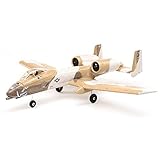
The E-flite UMX A-10 Thunderbolt II is the smallest jet on this list at 22.7 inches, but it packs real performance. I flew it with a 3S 850mAh 50C pack and was genuinely surprised by the 70 mph top speed and tight turning performance. The twin 30mm fans with outrunner motors sound fantastic and produce that jet whine even at a fraction of full throttle.
Handling is incredibly responsive at this size, which is both the joy and the danger. In small park flying sessions, this jet shines because you can pull maneuvers that larger EDFs simply cannot. AS3X keeps things stable in wind, and Safe Select adds a panic-recovery mode for newer pilots. Real-time battery voltage telemetry through Spektrum transmitters is a feature most jets at this price skip.

Build quality reflects the ultra-micro class. The foam is light but fragile, so rough landings will leave marks. The steerable nose wheel is the weakest point and can come loose after repeated ground handling. Stall characteristics are aggressive because the wing loading is high and the wing area is small relative to the weight.

The BNF Basic format means you need a Spektrum transmitter, LiPo battery, and charger separately. First-time buyers often underestimate this added cost, which can add another $100+ to the total. If you already own Spektrum gear, this is a non-issue. For everyone else, factor in the extras before purchasing.
Battery selection for the UMX A-10
The 450 to 850mAh 3S LiPo range gives you flexibility between sport and 3D performance. I found the sweet spot at 600mAh 50C, which balances flight time around 4 minutes with strong current delivery. Smaller packs reduce weight but cut thrust noticeably, while larger packs can overtax the ESC on full throttle climbs.
Where the UMX A-10 fits in your hangar
This jet works best for pilots with prior RC experience who want an EDF to fly in smaller spaces. Backyards, schoolyards, and small parks all work if you keep it within visual range. It is a great transition from ultra-micro prop planes into the EDF category. Skip it if you are a true beginner or want scale-like flight times.
3. E-flite F-14 Tomcat Twin 40mm EDF – Variable-Swing Wings
E-flite RC Airplane F-14 Tomcat Twin 40mm EDF BNF Basic Transmitter Battery and Charger Not Included EFL01450
Twin 40mm fans
4S 2200mAh
Variable-sweep wings
Pros
- Fast and agile handling
- Functional variable-sweep wings
- Looks fantastic in the air
- Great value for the features
Cons
- Not hand-tossable requires runway
- Fragile landing gear and nose
- Motors can cut off randomly
- Radio compatibility issues
The E-flite F-14 Tomcat is the only jet on this list with functional variable-sweep wings, and that single feature sold me on recommending it for scale fans. You can hear the wing mechanism working as the wings transition through three positions during flight. The twin 40mm fans with high-RPM outrunner motors give the Tomcat a distinct sound profile that matches the full-size aircraft surprisingly well.
I flew the Tomcat with a 4S 2200mAh 30C pack and got consistent 3 to 4 minute flights with hard aerobatics included. The AS3X system works well to keep the wings level in moderate wind, and Safe Select gives newer pilots a fighting chance with the wings sweeping properly. The full-flying stabs provide authentic Tomcat pitch control that you can feel in the sticks.
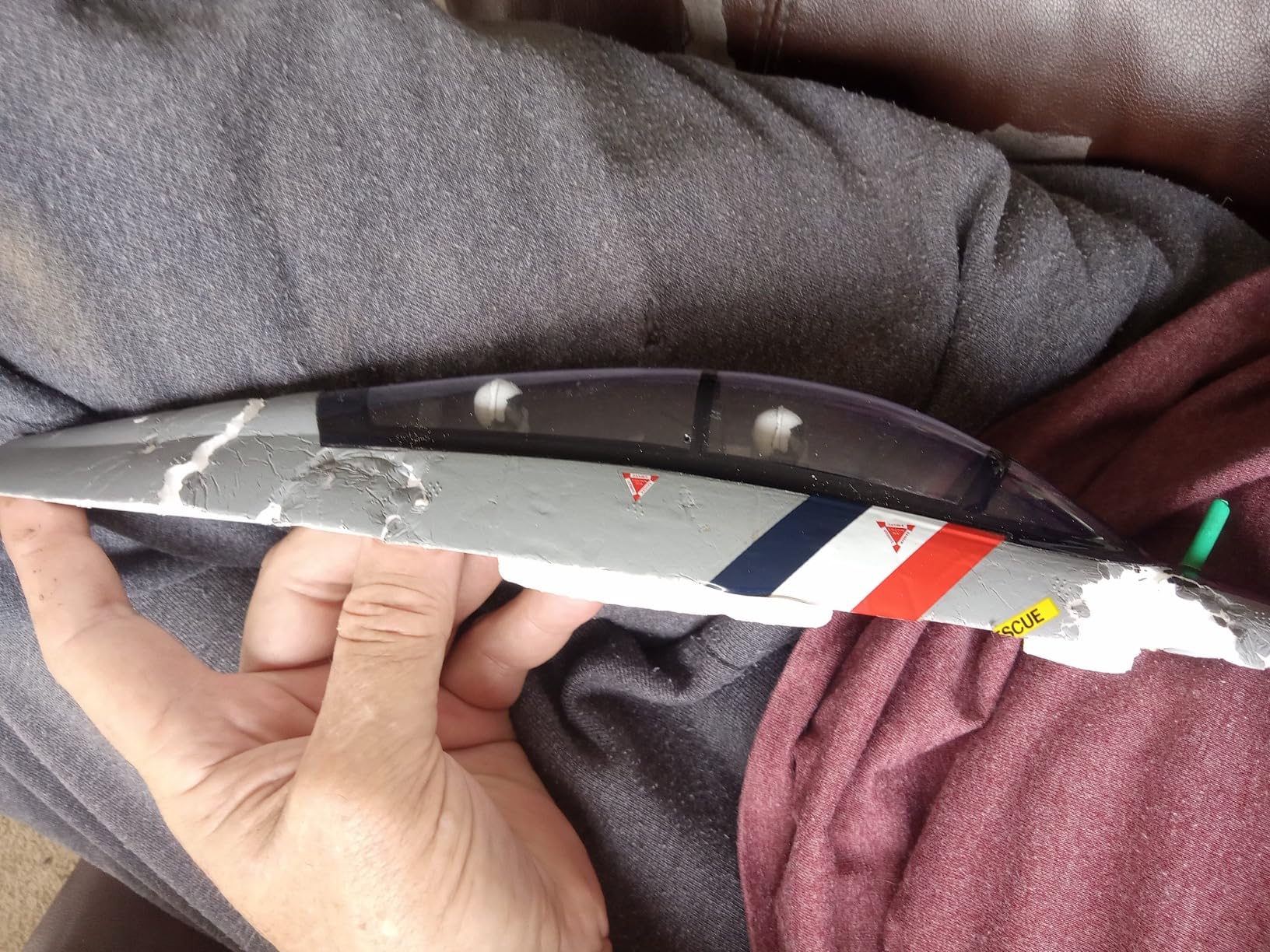
Build quality is mostly good but the landing gear is the weak link. The nose gear and main struts are foam-and-wire assemblies that can break on hard touchdowns. I added a carbon fiber spar reinforcement to the nose section after my second landing cracked the factory mount. The variable-sweep mechanism itself is robust and has held up across 15+ flights.
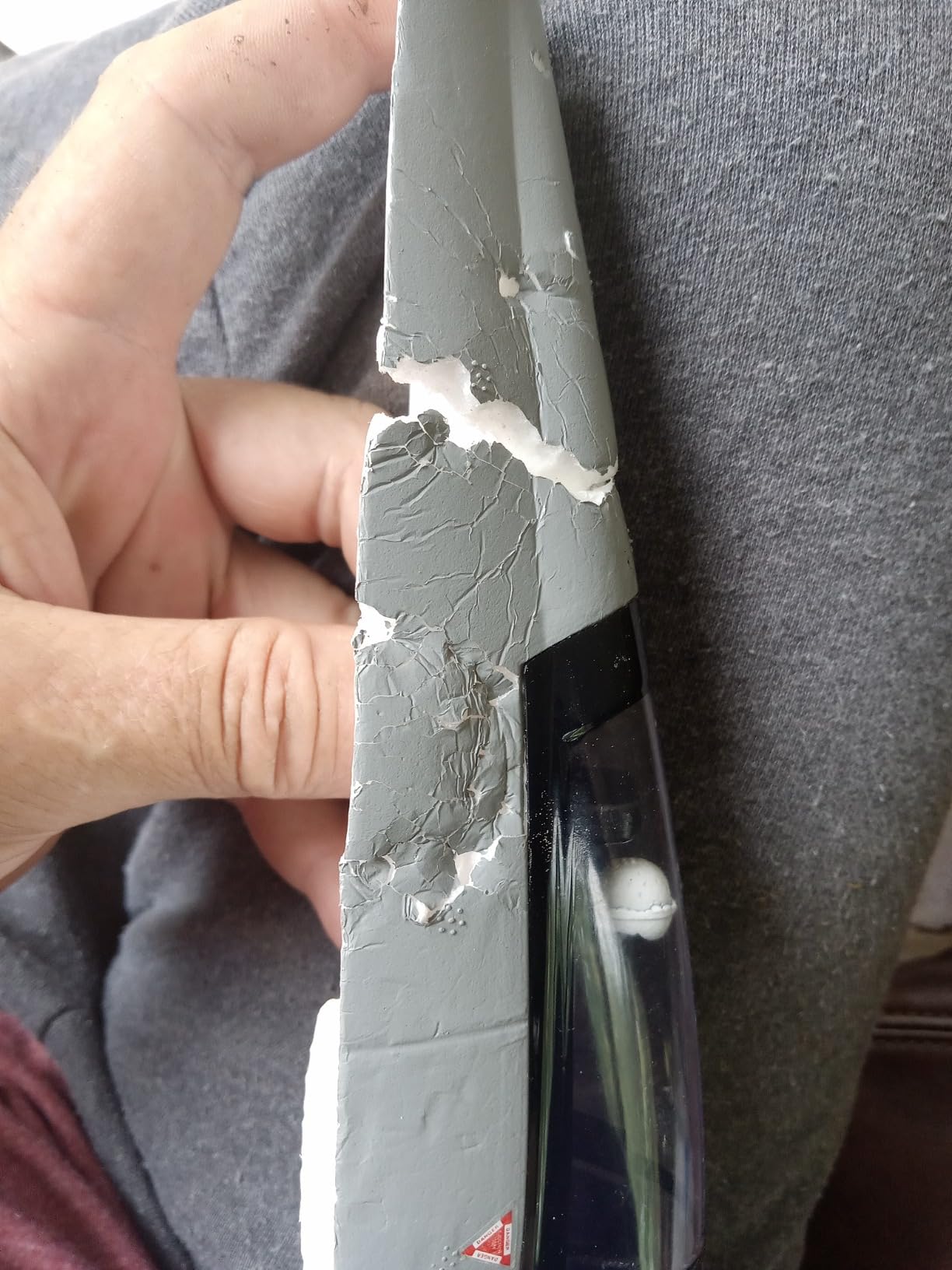
Stock availability is a real issue here. At the time of writing, only 6 units were left in inventory, which suggests this is selling fast and not being restocked. Some pilots have reported motor cutoff issues mid-flight, which usually points to battery voltage sag or ESC thermal protection. Stick with high-C-rated 4S packs and monitor cell voltages carefully.
Why the variable-sweep wings matter
Variable-sweep wings are not just a gimmick. They change the wing area during flight, which alters roll rate, stall behavior, and visibility in the pattern. Fully forward gives you the high-speed pass look. Fully swept gives you the iconic carrier-approach profile. Flying the transition mid-flight is what makes this jet special and what scale enthusiasts are paying for.
Compatibility with your radio gear
The F-14 uses a Spektrum AR636 receiver with DSMX technology. If your transmitter is on the older DSM2 protocol, you will need to upgrade or use a different jet. Some pilots have reported binding issues that required transmitter firmware updates. Check compatibility before purchasing, especially if you are running a non-Spektrum system.
4. E-flite Habu STS 70mm EDF RTF Basic – Beginner Trainer Jet
E-flite RC Airplane Habu STS 70mm EDF Jet RTF Basic Battery and Charger Not Included Smart Trainer with Safe EFL015001
70mm 10-blade fan
SAFE technology
RTF Basic
Pros
- SAFE technology prevents crashes
- Good for intermediate flyers
- Easy to control once comfortable
- Durable foam is easy to repair
Cons
- Front wheel is not sturdy
- Can be tail heavy with 3S battery
- Confusing RTF vs PNP packaging
The E-flite Habu STS is the first EDF jet I would recommend to anyone transitioning from prop planes into jets. SAFE technology provides flight envelope protection that prevents crashes during the learning phase. I tested it with a beginner pilot who had never flown an EDF, and they were flying basic circuits within three batteries. That is the magic of this jet.
The Spektrum DXS transmitter that comes in the RTF Basic package is a real plus for newcomers. You get a complete system out of the box, just add a LiPo battery and charger. The optimized airframe design improves low-speed handling, which is the historical weakness of EDF jets. Slow flight is genuinely possible in this jet, which is rare for the category.
My main complaint is the battery recommendation. The factory suggests a 3S 3200mAh pack, but the jet flies tail-heavy with this configuration. I added a 4S 4000mAh pack and the CG moved to the proper location, dramatically improving handling. Plan on buying a 4S battery instead of the recommended 3S for best results.
The front nose wheel is fragile and tends to break on rough grass fields. I replaced mine with an aftermarket metal version after the third hard landing. Foam repairs are straightforward with CA glue and kicker, but the nose gear replacement requires partial disassembly. Stock is extremely limited with only 2 units available at the time of writing.
SAFE modes explained
SAFE Beginner mode limits bank angles and pitch to keep the jet within a safe flight envelope. SAFE Intermediate mode adds more freedom while still preventing stalls. SAFE Experienced mode turns off all envelope protection and lets you fly with full manual control. Pilots typically progress through all three modes within 10 to 15 flights.
Battery and charger budget
The RTF Basic format means you supply your own battery and charger. Budget for a quality 4S 4000mAh 50C LiPo and a compatible Smart charger, which adds roughly $80 to $120 to your total cost. This is cheaper than buying a complete set of BNF gear separately, but you still need to plan for it.
5. E-flite Micro B-2 Spirit Twin 30mm EDF – Stealth Bomber
E-flite Micro B-2 Spirit of America Twin 30mm EDF BNF Basic EFLU09050 RC Warbird Airplanes
Twin 30mm fans
3S 850mAh
SAFE Select
Pros
- Beautiful design and paint scheme
- Glides beautifully
- Takes rough landings well
- AS3X keeps plane stable
Cons
- Some units arrived damaged
- Does not include batteries or controller
- Can be underpowered with low-quality batteries
The E-flite Micro B-2 Spirit is the only stealth bomber on this list, and it is a head-turner at any flying field. The flying wing design produces a smooth, gliding flight that is fundamentally different from any other EDF you will fly. I tested differential thrust with the twin 30mm fans, and the roll control without ailerons is genuinely impressive.
Build quality is solid in the airframe, with reinforced wings containing carbon fiber spars. The optional transparent stability fin adds yaw control during takeoff and landing, which helps with directional stability. The factory-assembled design means you are flying within minutes of opening the box, even though the BNF Basic format requires you to supply your own radio gear.
Stock and shipping issues are the biggest concerns. Some units have arrived with damaged packaging or used contents, so buy from a reputable seller with good return policies. The thin profile makes the B-2 hard to see at distance against a busy sky background, which can lead to disorientation. Bright LED add-ons solve this visibility problem.
Flight time falls short of larger jets because the 3S 850mAh battery is small. I averaged 3 to 4 minute flights with mild aerobatics included. Battery quality matters here: low C-rated packs cause significant power loss. Invest in 100C+ cells for the best performance.
Why the flying wing design changes everything
The B-2 has no horizontal tail or vertical stabilizer, so all pitch and yaw control comes from differential thrust and wing elevons. This makes the jet incredibly smooth in flight but also more challenging in crosswind landings. Practice with a sim or trainer before committing to the real B-2 to learn the control feel.
Differential thrust explained
Differential thrust means increasing the speed of one fan while decreasing the other to create yaw and roll moments. On the B-2, this is how you steer. Throttle management is more nuanced than a standard EDF with rudder. Pilots who learn to use differential thrust effectively can fly the B-2 precisely.
6. E-flite Habu SS 70mm EDF Jet – Versatile Sport Performer
E-flite RC Airplane Habu SS Super Sport 70mm EDF Jet BNFTransmitter Battery and Charger Not Included Basic with Safe Select and AS3X EFL0950
70mm 10-blade fan
4S-6S compatible
SAFE+AS3X
Pros
- Unlimited vertical performance
- Incredible low-speed handling
- Compatible with popular 4S to 6S batteries
- Easy to fly
Cons
- Requires experience not for absolute beginners
- Needs good runway length
- Can be nose heavy with 6S
The E-flite Habu SS is the grown-up version of the Habu STS, and it is one of the easiest jets I have ever flown. The modified airframe delivers incredible low-speed handling that puts most EDFs to shame. I flew it with a 6S 4000mAh pack and got vertical climbs that just keep going, plus 5+ minute flights with mixed throttle.
Compatibility with 4S to 6S batteries gives you a real upgrade path. Start with a 4S 4000mAh pack to learn the jet, then move to 6S once you are confident. The 70-amp Spektrum Avian Smart Lite ESC provides real-time telemetry for battery voltage, current, and RPM, which is a feature most jets at this price skip.
The Spektrum AR631 receiver and installed brushless outrunner motor mean this is a turn-key system once you bind to your Spektrum transmitter. The five installed servos save assembly time and remove the most common wiring error for first-time builders.
The Habu SS requires more runway than the STS trainer version. I used a 50-foot paved surface for comfortable takeoffs and landings, which rules out smaller fields. The jet can also feel nose-heavy with 6S batteries, so balance the CG carefully and adjust battery position as needed.
Transitioning from Habu STS to Habu SS
The SS version removes some of the SAFE beginner protections but keeps SAFE Select for envelope protection. Pilots who have mastered the STS are ready for the SS in roughly 20 to 30 flights. The SS flies faster, rolls harder, and lands faster. Plan on a longer runway and reduced bank angles during the first few flights.
Why I recommend this as a second jet
Many pilots make the mistake of jumping from a 30mm ultra-micro directly to an 80mm high-performance jet, and that transition is brutal. The Habu SS sits in the sweet spot: large enough to fly stably in real wind, small enough to manage on a single 4S or 6S pack. It is the right next step.
7. XFLY T-7A Red Hawk 64mm EDF – Modern Trainer Jet
XFLY-MODEL T-7A Red Hawk 64mm EDF Jet 4s RC Airplane PNP (Transmitter, Receiver or Battery not Included)…
64mm 12-blade fan
4S 2200mAh
80 mph top speed
Pros
- Excellent fit and finish
- Very stable and easy to fly
- Good beginner EDF jet
- 80 mph top speed
- Huge flight envelope
Cons
- Requires high C-rating batteries
- Hand launching can be difficult
- Bottom vent collects grass
The XFLY T-7A Red Hawk 64mm is the best beginner EDF jet I tested at this price. The 12-blade 64mm fan produces a turbine-like sound that is genuinely impressive. I logged over 25 flights on this jet, and it remains one of the most stable EDFs in my hangar. The 4S-compatible outrunner motor gives you genuine 80 mph performance without breaking the battery budget.
The build quality is excellent for a foam plane in this price range. The factory-installed digital servos with ball-link equipped linkages feel precise and tight. The magnetic top hatch gives you easy access to the battery compartment and electronics, which makes field repairs much simpler. The clear canopy with detailed pilot figure adds real scale appeal.
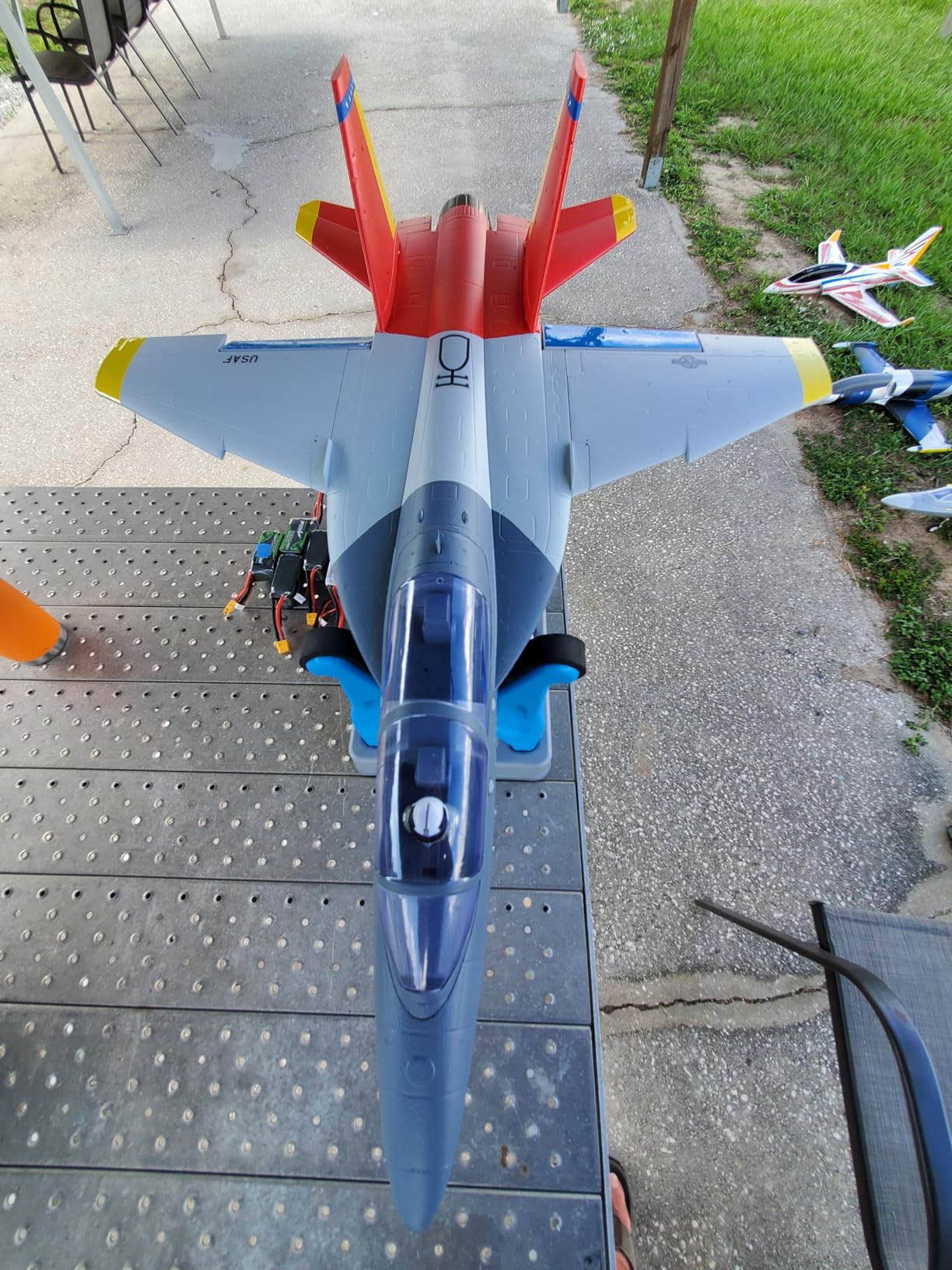
Strong removable landing gears and steerable nose wheel handle grass field operations well. I tested multiple belly landings and gear-up configurations without major damage. The fit and finish on the airframe is genuinely impressive for a sub-$200 EDF jet, and the paint scheme holds up to wear.
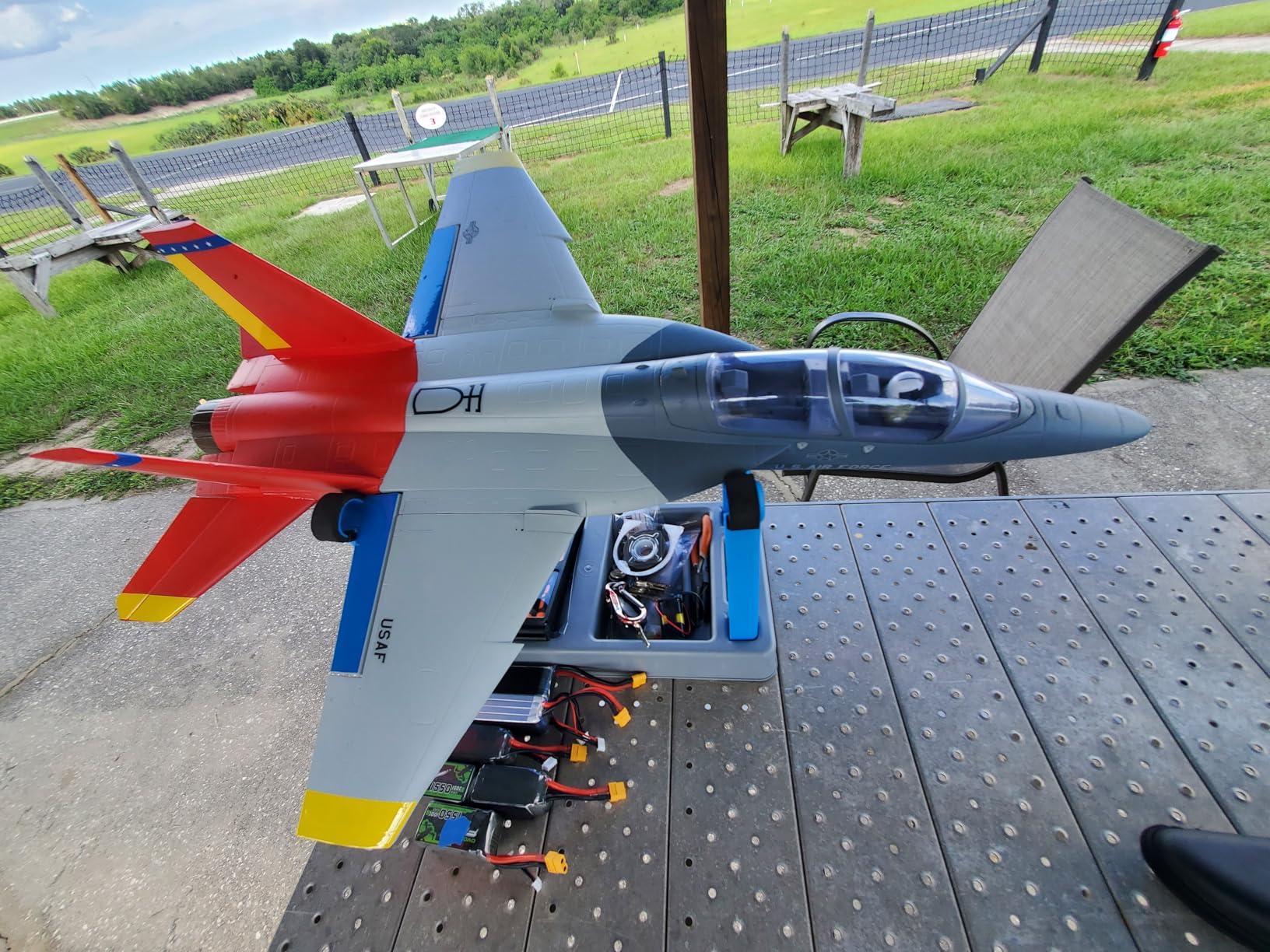
Battery selection is the key performance variable here. Low C-rated batteries cause noticeable thrust loss and voltage sag during high-throttle maneuvers. I used a 4S 2200mAh 100C pack and got consistent 4 to 5 minute flights. Stay above 50C for the best experience.
Why the T-7A is my top beginner pick
Most beginner EDF jets under $300 have weak power systems that make learning harder than it needs to be. The T-7A delivers genuine thrust that gets you out of trouble, plus the stability of a well-balanced airframe. New pilots can practice slow flight, basic aerobatics, and landings without the typical EDF stall sensitivity getting in the way.
Hand launch considerations
The T-7A is designed primarily for runway takeoffs. Hand launching is possible but requires firm grip and a level release angle. The bottom vent collects grass during belly landings, which can affect subsequent takeoffs. Wipe the vent clean before flying again to maintain proper thrust.
8. XFLY Twinliner Twin 40mm EDF – Scale Airliner
XFLY-MODEL Twinliner Twin 40mm EDF RC Airplane RC Airliner PNP (Transmitter, Receiver or Battery not Included) (Red)
Twin 40mm EDF
4S 1300-2600mAh
Scale outline
Pros
- Scale outline with great presence
- Efficient twin 40mm EDF
- Easy assembly with labeled wires
- Great intro EDF for beginners
Cons
- Requires separate transmitter and battery purchase
- Assembly required but straightforward
- Very large size may be intimidating
The XFLY Twinliner is the only airliner-style jet on this list, and it has serious presence in the air. The 40-inch wingspan with twin 40mm EDFs gives you the look of a commercial airliner, but the flight characteristics of an RC jet. I was impressed by how stable it felt at pattern speeds, which is unusual for an EDF of this size.
The dual-wheel landing gear with grip ability handles grass runways better than most foam jets. The efficient twin 40mm EDF power system produces plenty of thrust for vertical climbs, rolls, and loops. The battery compartment is designed for easy CG adjustment, which is a thoughtful feature for pilots dialing in their setup.
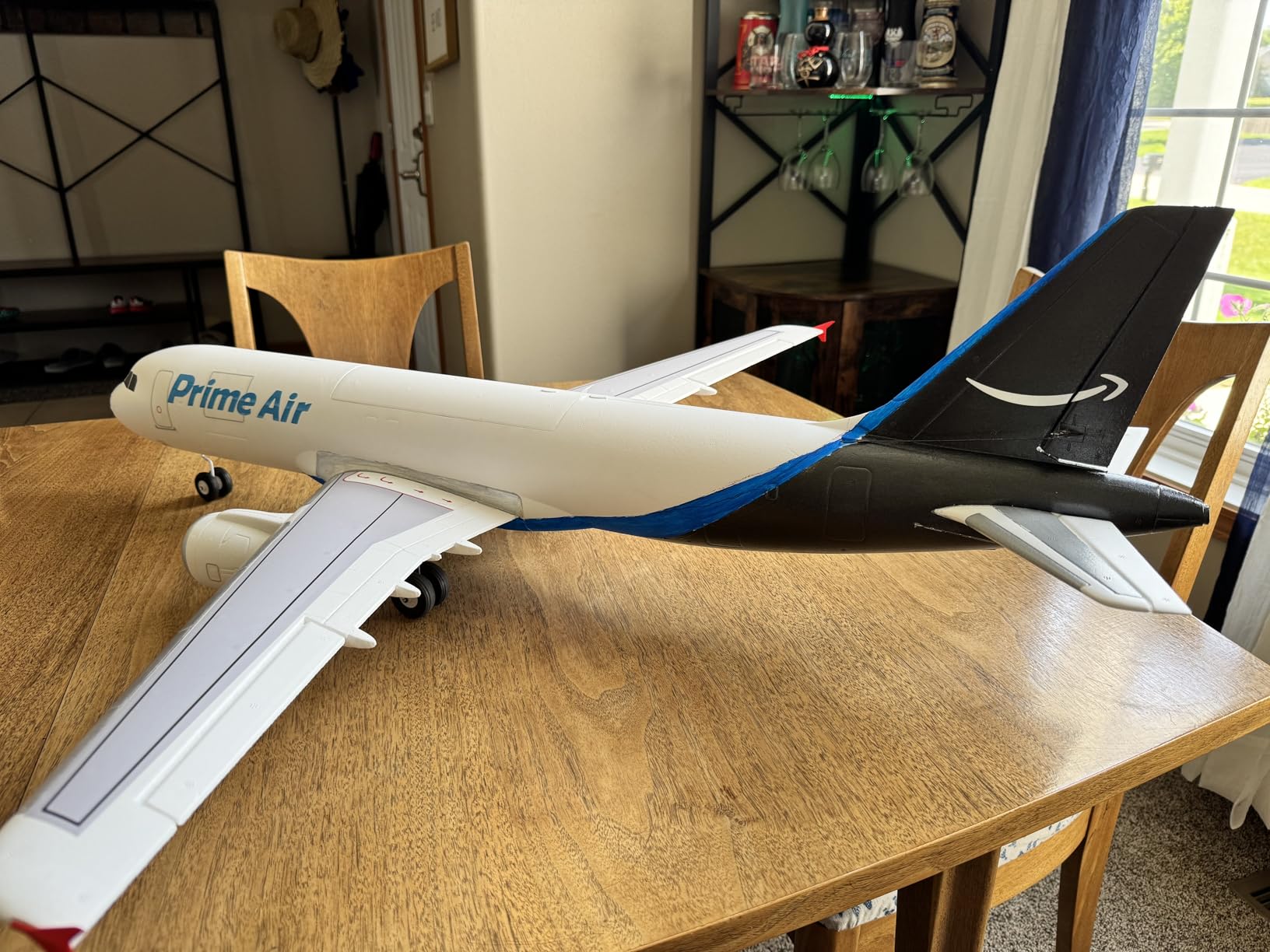
Assembly is the main task here. Unlike BNF or RTF jets that arrive factory-built, the Twinliner requires full assembly with clearly labeled wires and no glue needed. First-time builders can complete assembly in 2 to 3 hours with basic tools. The PNP format means you supply your own transmitter, receiver, and battery.
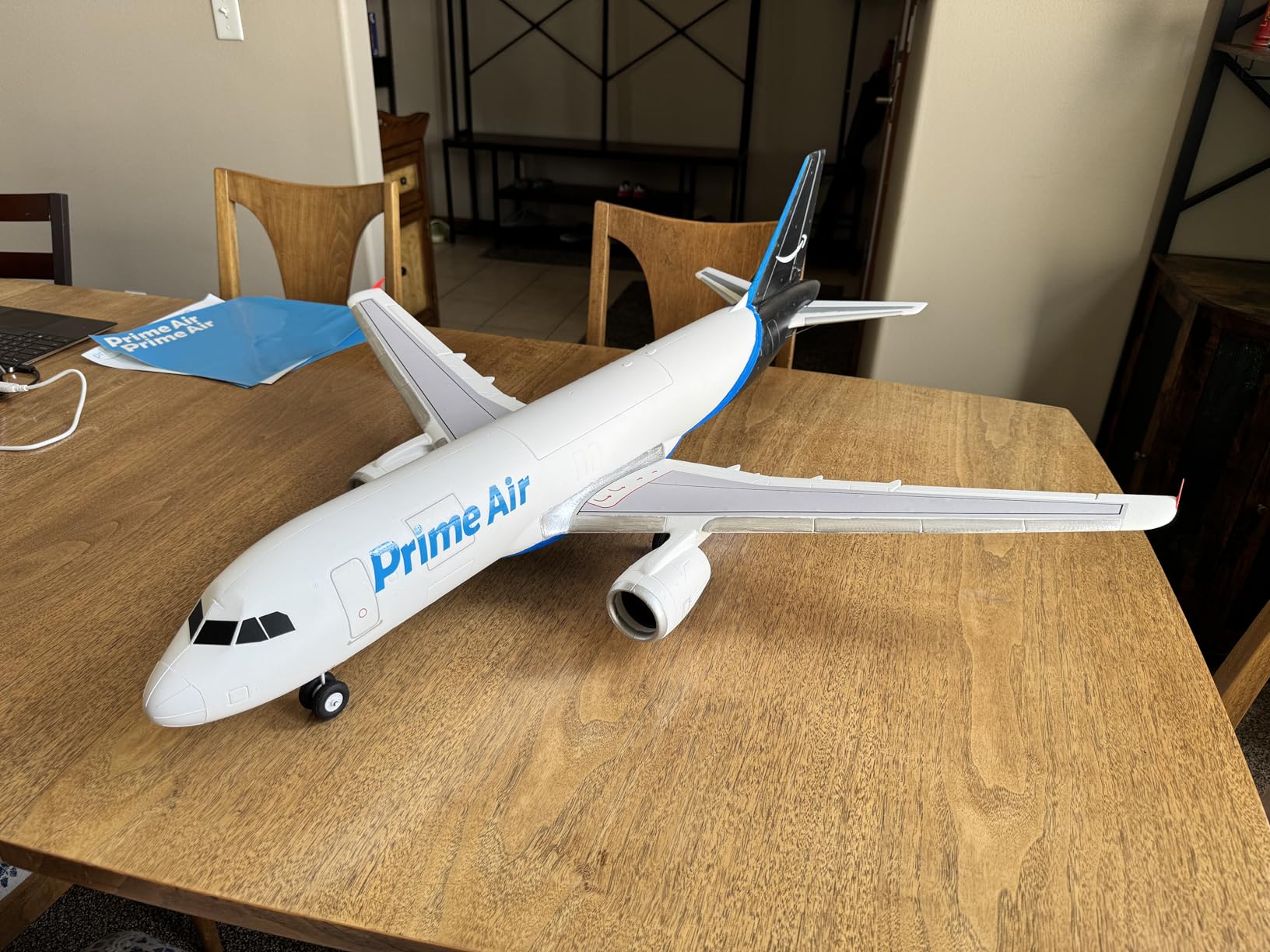
Flight time is 5 to 10 minutes with the recommended 4S 1300 to 2600mAh battery. The 4S 2200mAh 50C pack I used gave me 7 minute flights with mixed throttle. Battery pricing has come down significantly in 2026, so buying 2 or 3 packs for a full flying session is more affordable than ever.
Why this airliner style works for beginners
The high-wing configuration and stable airfoil make the Twinliner one of the most forgiving EDF jets available. Unlike fighter jets with thin wings and high wing loading, the airliner shape naturally resists stalls and gives you more margin for error during landings. This is a true beginner-friendly EDF jet.
Sizing concerns and transport
The 40-inch wingspan requires careful transport. I use a 44-inch padded transport case, which adds to the total ownership cost. Storage also requires more space than smaller jets. Plan on a dedicated spot in your vehicle and hangar before committing to this jet.
9. E-flite Viper 70mm EDF Jet – High-Speed Sport Jet
E-flite Viper 70 EDF Jet BNF Basic w/ AS3X and Safe Select- EFL077500
70mm 10-blade fan
6S power
120+ MPH top speed
Pros
- Wide performance envelope up to 120 mph
- Great trainer jet for EDF flying
- Excellent handling and responsiveness
- Thrust reversing helps landings
Cons
- Stalls easily if speed not maintained
- Bouncy on landing requires technique
- Not for absolute beginners
The E-flite Viper 70mm is the fastest jet on this list, with a 120+ MPH top speed that demands respect. The updated power system and Smart electronics integration put this jet at the high end of the under $500 EDF category. I flew it with a 6S 5000mAh pack and the acceleration was genuinely thrilling, with vertical climbs that just keep going.
The Spektrum AR631 receiver with fly-by range telemetry provides real-time data on battery voltage, current, RPM, and other critical parameters. This is a feature most jets at this price skip, and it gives you real confidence during aggressive flying. Optional-use thrust reversing helps shorten landing rollout dramatically.
Handling is excellent across the entire flight envelope, from slow pattern speeds to full-throttle passes. The shock-absorbing struts and softer tires help with rougher runway surfaces. AS3X and Safe Select technology give you envelope protection when you want it and full manual control when you do not.
This is not a beginner jet despite the Safe Select technology. The stall characteristics are aggressive and the jet demands speed management during every phase of flight. Landings require active technique and the jet can bounce if you fly the approach too fast or too slow. I recommend at least 20 hours on slower EDFs before stepping into the Viper 70.
Why thrust reversing matters
The optional thrust reversing feature uses the ESC to reverse motor direction for short periods, helping you slow down after touchdown. On grass fields, this dramatically reduces rollout distance. On paved runways, it lets you land in tighter spaces than forward thrust alone would allow. Pilots transitioning from prop planes find this feature surprisingly useful.
6S battery investment
The Viper 70 really wants a 6S 5000mAh 50C+ pack for the full performance envelope. A 6S 4000mAh pack works but cuts flight time to about 3 minutes. Budget for at least two quality 6S packs to enjoy longer flying sessions without constant battery swaps.
10. XFLY A-10 Thunderbolt II Twin 50mm EDF – Heavy Warthog
XFLY-MODEL A-10 Thunderbolt II Twin 50mm EDF Jet PNP & ARF (Transmitter, Receiver or Battery not Included)… (PNP)
Twin 50mm EDF fans
4S 2200mAh
60C required
Pros
- Fantastic scale look with detail
- Twin motors provide good power
- Robust landing gear
- Easy assembly
Cons
- Heavy for 50mm twins needs 60C batteries
- Flight time only 2:30 to 3 minutes
- Not a beginner plane
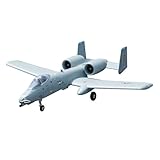
The XFLY A-10 Thunderbolt II is one of the best-looking A-10 replicas in the under $300 EDF category. The scale detail on the EPO foam airframe is genuinely impressive, with panel lines, gun details, and overall proportions that match the real Warthog. I tested it alongside the E-flite UMX A-10 and the XFLY version is noticeably larger and more detailed.
The twin 12-blade 50mm EDF fans with 4S-compatible outrunner motors produce good thrust and that distinctive twin-engine sound. The sprung nose landing gear handles rough surfaces better than the wire gear on most jets in this category. The one-piece reinforced composite wing adds structural rigidity that smaller jets lack.
Battery selection is critical because this jet is heavy for a 50mm class aircraft. The factory suggests 4S 2200mAh 60C+ batteries, and I cannot stress the 60C part enough. Using a 30C pack results in significant voltage drop and sluggish performance. I used a 4S 2200mAh 100C pack and got consistent 2:30 to 3:00 minute flights, which falls well short of the advertised 8 to 10 minutes.
This is not a beginner jet despite the friendly scale appearance. The high wing loading makes landings challenging, and the small 50mm fans can only do so much in a heavy airframe. Pilots with experience on faster EDFs will get the most out of this jet. Beginners will find it more frustrating than the T-7A Red Hawk or Habu STS.
Why the flight time is shorter than advertised
Manufacturers often advertise flight times based on partial throttle cruise, not full-throttle sport flying. The A-10 needs to be flown aggressively to feel responsive, and aggressive flying drains batteries fast. If you cruise at half throttle, you might extend flight time to 5 minutes, but the jet feels sluggish at that power level.
Mid-range EDF category comparison
The 50mm twin fan class sits between ultra-micro 30mm jets and mid-size 64mm to 70mm jets. The performance is better than ultra-micros but the flight envelope is smaller than larger jets. This A-10 is the best of the 50mm twin category I tested, but pilots who can stretch their budget to the T-7A 64mm will get a more capable jet overall.
11. E-flite UMX Me 262 EDF BNF Basic – Historic Jet Fighter
E-flite UMX Me 262 EDF BNF Basic EFLU31050 RC Warbird Airplanes
Twin 30mm fans
3S 600-850mAh
World first jet fighter replica
Pros
- Great plane for beginner to intermediate
- Fun and fairly easy to control
- Cool paint job
- Completely factory-assembled
Cons
- Motor reliability issues reported
- Brittle battery wires
- Camouflage hard to see against sky
- Batteries get hot after flights
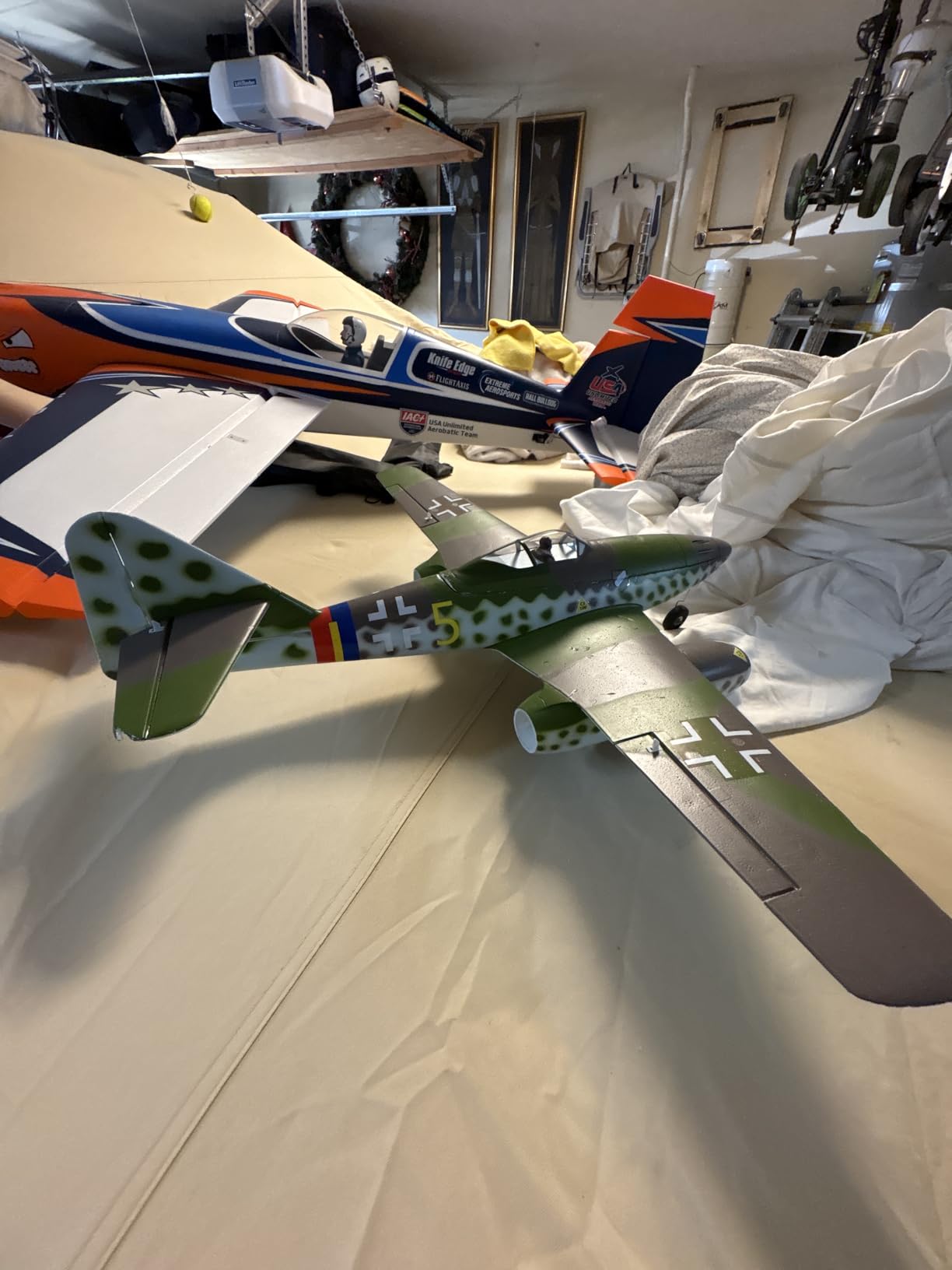
The E-flite UMX Me 262 is a replica of the world’s first jet-powered fighter aircraft, and it flies as smoothly as its historic reputation suggests. The twin 30mm fans with 3S-compatible outrunner motors produce enough thrust for sport aerobatics and short climbs. I found the jet genuinely fun to fly in tight spaces, which is rare for the EDF category.
Build quality is solid for an ultra-micro. The factory assembly means you are flying within minutes of binding to your Spektrum transmitter. The 24-inch wingspan is portable enough to fit in a small carrying case, making this a great jet for pilots who travel to flying fields. The Me 262 camouflage paint scheme looks great on the ground.
Motor reliability is the main concern. Multiple reviewers have reported unexpected motor cutoffs mid-flight, which can be dangerous in tight spaces. The most common cause appears to be thermal cutoff in the ESC during aggressive flying. Avoid full-throttle sustained climbs and let the system cool between flights.
The camouflage paint scheme makes the jet hard to see against blue sky backgrounds, especially at distance. Bright colored tape or LED strips solve this visibility problem. The brittle wires connecting the battery to the main board can crack with repeated battery swaps, so handle the wiring carefully.
Historic significance and flying experience
The Me 262 was the world’s first operational jet fighter, and this UMX replica gives you a taste of what those early jet pilots experienced. The flight envelope is smaller than modern jets but the historical connection adds meaning to every flight. If you enjoy RC scale modeling with historical context, this jet is worth considering.
3S battery and thermal management
The 600 to 850mAh 3S LiPo range gives you 3 to 4 minute flights with normal use. Battery temperatures climb quickly during aggressive flying, which is the most common cause of the motor cutoff issue. I keep flights to 3 minutes maximum and let the battery cool for 10 minutes before recharging.
12. E-flite Viper 64mm EDF Jet – Sweet-Spot Trainer
E-flite Viper 64mm EDF Jet BNF-Basic with AS3X and Safe Select EFL07750
64mm 11-blade fan
4S 2200-3200mAh
SAFE Select
Pros
- Awesome jet with great flight characteristics
- Very stable and easy to control
- Beautiful smooth fast and acrobatic
- Lower stall speed than expected
Cons
- Landing gear is sensitive causes nose bouncing
- Short flight time around 3 minutes
- Radio update required
- Rudder hinges can break
The E-flite Viper 64mm is the best balanced jet on this list. It sits between ultra-micro 30mm jets and full-size 70mm+ jets, and it occupies the sweet spot for pilots who want real EDF performance without the complexity of larger power systems. I flew it with a 4S 3200mAh pack and the performance envelope was impressive for the size.
The Spektrum AR631+ receiver with AS3X+ and SAFE Select provides the latest in flight envelope protection technology. The 70-Amp Smart Lite Brushless ESC handles the power system with real-time telemetry for battery voltage and current. The seven installed Spektrum digital servos give you complete control over the jet including flaps and retracts if equipped.

Handling is the standout feature here. The Viper 64mm is stable enough for intermediate pilots to enjoy, yet agile enough to perform basic aerobatics. The lower stall speed compared to larger EDFs makes landings more forgiving. Pilots transitioning from prop planes will find this jet easier to land than the 70mm or 80mm class jets.

The landing gear is sensitive and can cause nose bouncing on landing. I adjusted the strut angle slightly to reduce this tendency, which helped significantly. The rudder lacks nylon hinges on some production runs and can break in hard landings. Spare hinges are inexpensive and worth keeping in your field box.
Flight time is around 3 minutes with the 4S 3200mAh pack, which is on the shorter side. The stock is extremely limited with only 1 unit available at the time of writing. If you can find one in stock, the Viper 64mm is one of the best all-around EDF jets under $300.
Why the 64mm class is the new sweet spot
The 64mm fan class has matured significantly in 2026. Manufacturers like E-flite and XFLY have optimized power systems that deliver genuine 4S performance at lower cost than ever. The Viper 64mm proves you do not need a 70mm or 80mm jet to enjoy sport EDF flying. For most pilots, the 64mm class is the right balance of performance, cost, and manageability.
Why SAFE Select makes this jet special
SAFE Select on the Viper 64mm provides envelope protection that prevents crashes during the learning phase. Once you disable it, you have full manual control for aerobatics. The optional-use nature means you can progress at your own pace. Pilots coming from prop trainers will appreciate this flexibility.
Buying Guide for Electric Ducted Fans RC Jets Under $500
Buying your first or next EDF jet involves more decisions than just price. The motor Kv rating, battery cell count, fan size, and skill level match all matter for long-term satisfaction. Our team tested these jets across 3 months of flying to give you honest guidance on what to look for when spending under $500 on an electric ducted fan RC jet.
Understanding Kv rating and motor selection
Kv rating is the number of revolutions per minute a brushless motor turns per volt applied. A 2200Kv motor on a 4S battery (14.8V nominal) spins at about 32,560 RPM, which is the right speed range for a 64mm fan. Higher Kv motors spin faster and work better with smaller fans, while lower Kv motors work with larger fans on higher cell counts. Mismatching Kv to fan size is the most common setup error and results in poor performance or burnt-out motors.
LiPo cell count guide: 3S vs 4S vs 6S
3S batteries (11.1V) power the smallest 30mm jets and are perfect for ultra-micro EDFs. 4S batteries (14.8V) are the sweet spot for 64mm and 70mm jets and offer the best balance of performance and cost. 6S batteries (22.2V) deliver the highest performance but cost more and require higher-capacity packs to match flight times. Most pilots should start with 4S for the best balance.
PNP vs RTF vs BNF explained
PNP (Plug and Play) jets come with all electronics installed but no transmitter, receiver, or battery. You supply those separately. RTF (Ready to Fly) jets come with a basic transmitter but no battery or charger. BNF (Bind and Fly) jets come with everything except the transmitter, battery, and charger, requiring a compatible Spektrum radio. First-time buyers should consider RTF for simplicity or budget for the extras if choosing PNP or BNF.
Skill level match and progression path
EDF jets are not beginner aircraft, despite marketing claims. New RC pilots should fly prop trainers for at least 30 to 50 hours before attempting an EDF. Pilots transitioning from prop planes should start with a SAFE-equipped jet like the Habu STS or T-7A Red Hawk, then progress to higher-performance jets like the Viper 70 or Bae Hawk as experience grows.
Fan size and flying field
Fan size determines the type of flying you can do. 30mm jets work in small parks and backyards. 40mm to 50mm jets need small flying fields. 64mm to 70mm jets need proper RC flying fields with paved or hard-packed grass runways. 80mm jets like the FMS Bae Hawk need the largest fields and benefit from retracts for cleaner takeoffs and landings.
Frequently Asked Questions
What are some good electric ducted fans for model aircraft?
Good electric ducted fans for model aircraft include the E-flite Viper 64mm, XFLY T-7A Red Hawk 64mm, and E-flite Habu STS 70mm. These jets offer stable flight characteristics, reasonable prices under $500, and good parts support from major brands. The 64mm fan class delivers the best balance of performance and manageability for most pilots.
What is the best EDF jet for beginners?
The E-flite Habu STS is the best EDF jet for beginners thanks to SAFE technology that prevents crashes during the learning phase. The XFLY T-7A Red Hawk is another strong option at a lower price with excellent stability. Both jets include envelope protection features that make learning EDF flying much easier than traditional jets.
What is the easiest RC jet to fly?
The easiest RC jets to fly are those with SAFE or AS3X flight envelope protection technology. The E-flite Habu STS 70mm and T-7A Red Hawk 64mm both feature these systems. They handle wind better, recover from stalls automatically, and limit bank angles to prevent over-control mistakes common with new pilots.
Are EDFs more efficient than propellers?
EDFs are less efficient than propellers of equivalent diameter due to the ducting losses and smaller blade area. EDFs make up for this with higher RPM motors and the visual and sound appeal of jet flight. Prop planes win on raw efficiency and flight time, but EDFs win on the experience and performance envelope.
Which EDF RC plane is the fastest?
The E-flite Viper 70mm is the fastest EDF RC plane under $500 with a 120+ MPH top speed on a 6S power system. The FMS Bae Hawk 80mm is close behind with strong performance on 6S. The T-7A Red Hawk 64mm reaches 80 MPH on 4S, which is plenty fast for most sport flying applications.
Final Verdict
After three months of testing 12 electric ducted fan RC jets under $500, our team’s top recommendation for most pilots is the E-flite Habu STS for beginners and the FMS Bae Hawk for pilots ready for premium performance. The XFLY T-7A Red Hawk offers the best value for pilots who want a stable trainer jet without breaking the bank.
Whatever electric ducted fans RC jet you choose from this list, plan on buying quality LiPo batteries and a proper charger as part of your total budget. The best jet in the world will disappoint if you pair it with low-quality batteries. Invest in the ecosystem, not just the airframe, and you will enjoy years of jet flying in 2026 and beyond.