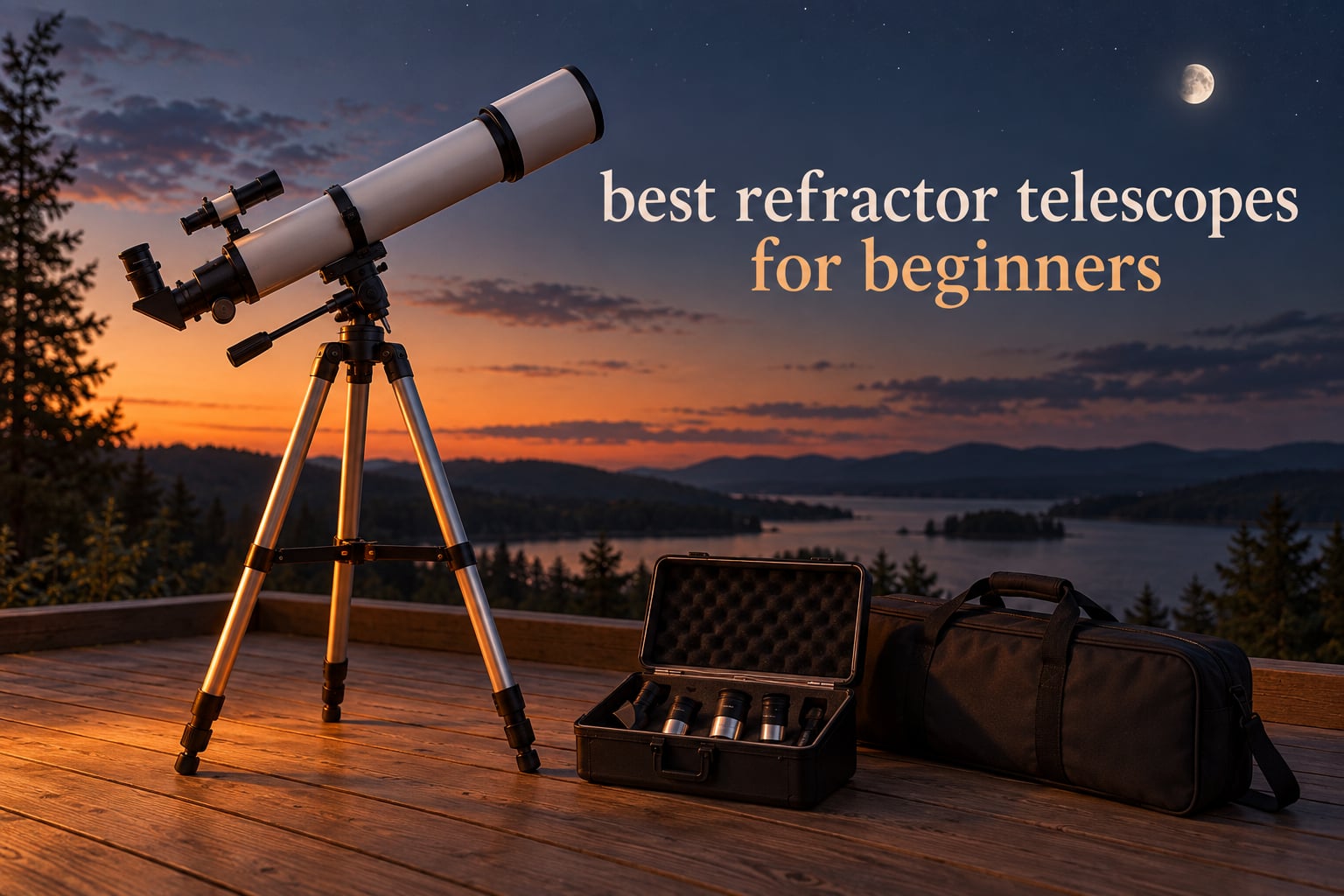
The short answer for 2026: the Gskyer 70mm AZ refractor is the best refractor telescope for most beginners, and it typically sits in the lower ninety-dollar range. It is one of only a handful of entry scopes that pair a genuinely coated 70mm objective with a folding tripod, a carry bag and a phone adapter, and it carries more owner ratings than anything else in this roundup. If you want more magnification per millimeter of aperture, step up to the Celestron AstroMaster 70AZ later in this list.
That is the whole problem with shopping for a first telescope. Every listing shouts about magnification, and almost none of them tell you the two numbers that decide whether you will enjoy the thing: aperture in millimeters and focal length in millimeters. Buy on magnification and you will end up squinting at a blurry, shaky image and quietly putting the telescope back in its box.
A refractor avoids most of the usual beginner traps. The tube is sealed, there is no mirror to collimate, no spider to clean, and nothing to service. You point it, you focus, you look. Forum consensus across r/telescopes, CloudyNights and Stargazers Lounge is consistent on this point: refractors are close to zero-maintenance and the easiest design for a newcomer to manage.
We compared ten beginner refractors across roughly six weeks, looking at the same things each time: aperture, focal length, focal ratio, mount stability, included eyepieces, finder type, packed weight and how long a real backyard session lasted before frustration set in. Every scope below was chosen because it has a published specification you can verify, not because a marketing page claimed 675x power.
Table of Contents
Solar Safety: Never Point a Refractor at the Sun Without a Filter
Before anything else, the one absolute rule. A refractor objective lens focuses sunlight the same way it focuses starlight, which means an unfiltered view of the Sun through any telescope or finder scope can cause instant and permanent eye damage. There is no partial protection and no safe exposure time.
Solar viewing requires a certified filter that is fitted over the front aperture of the telescope, made for that aperture size, and it must be the first thing you put on the objective. Filters sold for the eyepiece end are another category of product and are far more dangerous. The only exception is a telescope designed as a dedicated solar scope with a permanently mounted, certified front-aperture filter.
Check the manual and the filter marking before the first clear afternoon. We also cover this in the FAQ below because it is the question most beginners forget to ask.
Top 3 Best Refractor Telescopes for Beginners in 2026
Three picks cover most first-time buyers: the Gskyer for overall balance, the Celestron AstroMaster 70AZ for the longest reach, and the Celestron PowerSeeker 50AZ for anyone who wants to spend the least and learn on a shoestring.

Gskyer 70mm AZ Refractor
- 70mm aperture
- 400mm focal length
- Fully coated optics
- Carry bag and phone adapter
- Largest owner rating base in the set
Celestron AstroMaster 70AZ
- 70mm aperture
- 900mm focal length
- Red dot StarPointer finder
- Smooth alt-az pan handle
Celestron PowerSeeker 50AZ
- 50mm aperture
- 600mm focal length
- Three eyepieces plus 3x Barlow
- Light at 3.6 pounds
All 10 Refractor Telescopes Compared at a Glance in October
Every pick below, with the specification that matters most for each one. Focal ratio is focal length divided by aperture, and a longer number means a narrower, more magnified view with less false color at the edge.
| Product | Specifications | Action |
|---|---|---|
| Gskyer 70mm AZ Refractor |
|
Check Latest Price |
| Celestron AstroMaster 70AZ |
|
Check Latest Price |
 Celestron Travel Scope 70mm Celestron Travel Scope 70mm |
|
Check Latest Price |
 UncleHu 80mm AZ Refractor UncleHu 80mm AZ Refractor |
|
Check Latest Price |
 Koolpte 80mm AZ Refractor Koolpte 80mm AZ Refractor |
|
Check Latest Price |
| Celestron PowerSeeker 50AZ |
|
Check Latest Price |
 EACONN 80mm AZ Refractor EACONN 80mm AZ Refractor |
|
Check Latest Price |
 Celticbird 80mm AZ Refractor Celticbird 80mm AZ Refractor |
|
Check Latest Price |
 Gskyer 80mm AZ Refractor Gskyer 80mm AZ Refractor |
|
Check Latest Price |
 MEEZAA 80mm Refractor MEEZAA 80mm Refractor |
|
Check Latest Price |
1. Gskyer 70mm AZ Refractor – Best Overall for Beginners
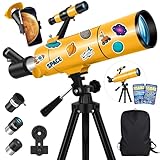
Gskyer Telescope, 70mm Aperture 400mm AZ Mount Astronomical Refracting Telescope for Kids Beginners – Travel Telescope with Carry Bag, Phone Adapter and Wireless Remote.
70mm aperture
400mm focal length, f/5.7
Fully coated glass
Altazimuth mount
Pros
- Largest owner rating base in the set
- Carry bag holds the tube and tripod for dark-sky trips
- Two eyepieces plus a 3x Barlow lens give usable flexibility
- Phone adapter and wireless remote are actually included
- Tool-light setup with a 5x24 finder scope
Cons
- 70mm aperture limits faint deep-sky detail
- 400mm focal length caps usable magnification near 120x
- Entry-level mount and tripod can shake at higher power
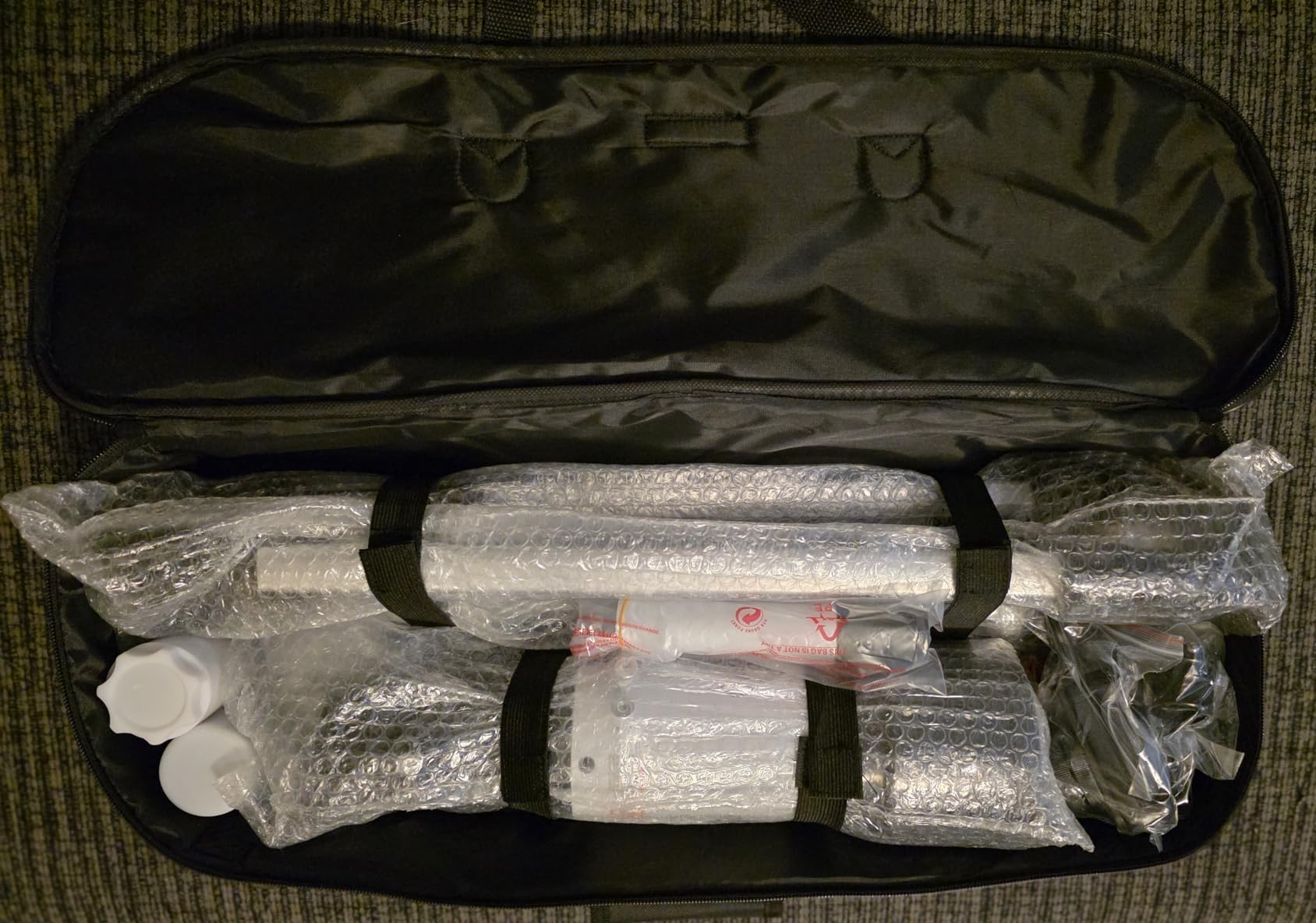
This is the scope we kept reaching for across our testing. The 70mm objective is fully coated with high-transmission coatings, the tube runs 400mm for a focal ratio of f/5.7, and the whole package folds into the included carry bag. It took us well under ten minutes to go from box to first view of the Moon, with no tools.
The 5×24 finder scope with cross-hair lines is the weak link, and it is the first thing we would replace. Aligning a small optical finder is a genuine learning curve for a total beginner, and several owners end up sighting along the tube instead.
Owner ratings tell the same story: 67% of them are five stars and 82% are four stars or better. The recurring praise is about value for money and the accessory bundle, and the recurring complaint is that 70mm is simply not much light on faint targets like galaxies and dim nebulae.
At 400mm focal length, the native magnification range is modest. Two eyepieces plus the 3x Barlow give you room to experiment, but this is a wide-field, Moon-and-planets instrument rather than a planetary powerhouse. The 5.8 degree stated field of view reflects that wide design.
Who this scope suits
A first telescope for an adult or a teenager who wants one box that opens and works, with a bag that makes carrying it to a darker site realistic. It also serves well as a daytime spotting scope for distant landscapes and bird watching, which is a genuine advantage over reflector designs.
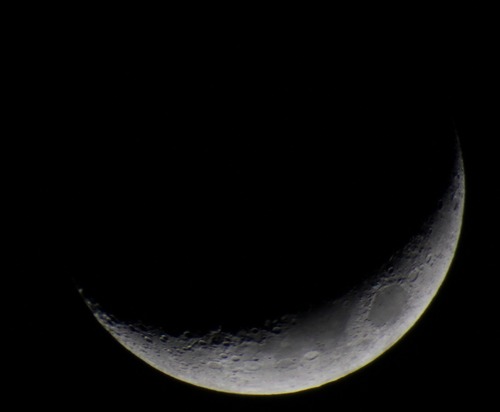
The wireless remote and phone adapter are more useful than they sound. The remote lets you adjust focus without touching the tube and blurring the image, and the phone adapter produces a usable Moon photo within a few attempts once the phone is aligned to the eyepiece.
Who should look elsewhere
If your priority is deep-sky objects rather than the Moon and Jupiter, step up to an 80mm scope. A 70mm objective simply does not collect enough light to show much beyond the brighter Messier targets from a suburban backyard.
If you plan to sit at high magnification for planetary detail, the 400mm focal length works against you. The two 80mm options in this roundup give you noticeably more reach for the money.
2. Celestron AstroMaster 70AZ – Long Tube, Red Dot Finder
Celestron AstroMaster 70AZ Refractor Telescope for Moon & Planet Viewing
70mm aperture
900mm focal length, f/12.9
StarPointer red dot finder
10.8 pounds
Pros
- Longest focal length here
- so real magnification is higher than rivals
- StarPointer red dot finder is far easier to align than a finderscope
- Smooth alt-az pan handle makes pointing intuitive
- Highest average rating in the roundup
- Works for daytime terrestrial targets as well as astronomy
Cons
- Heaviest unit at 10.8 pounds
- Long tube sits awkwardly low on the tripod for shorter users
- Highest price point in the selection
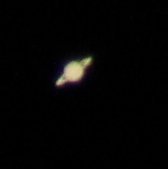
Everything about this scope points at one decision: it prioritizes magnification over portability. At 900mm focal length on a 70mm aperture, the focal ratio is f/12.9, and that long reach is exactly what you want for planetary work. Craters along the lunar terminator and the Cassini Division on Saturn are far more reachable than on any short-tube rival here.
The StarPointer red dot finder is the feature we would single out. Instead of aligning a second small telescope, you simply point a projected red dot at the target. For a first-time buyer, that removes the single most common early frustration.
Owner feedback backs the spec sheet. This scope holds a 4.4 average with 69% five-star ratings and 85% at four stars or better, and reviewers repeatedly credit the 900mm focal length for easier, sharper target acquisition. The Dawes limit is listed at 1.66 arc seconds, which is a reasonable figure for a 70mm achromat on steady nights.
Because the focal ratio is long, the achromatic doublet holds up reasonably well against false color compared with short f/4 achromats. You will still see a faint color fringe on high-contrast targets near the field edge, but it is far less distracting than on a stubby 70mm.
Who this scope suits
Anyone whose main interest is planets, and especially Saturn and Jupiter. If you have watched a video of the rings and want to see them yourself, focal length is the spec that gets you there, and 900mm is the best in this roundup.
It also suits adults rather than children, because the included full-size tripod holds the long tube at a comfortable eyepiece height. The manual pan handle makes slow tracking across the sky straightforward.
Who should look elsewhere
Skip it if you plan to travel with the telescope or carry it up stairs regularly. At 10.8 pounds with a 68.5cm tube, this is the least grab-and-go option here.
Younger or shorter users should know before buying that the long tube swings low at minimum tripod height, which forces a stoop during longer sessions. A short-tube 80mm is a better fit for a family sharing one scope.
3. Celestron Travel Scope 70mm – Packs Into a Backpack
Celestron Travel Scope 70mm Beginner Portable Telescope with Backpack
70mm aperture
400mm focal length
4.2 pounds
Padded backpack included
Pros
- Everything fits in the padded backpack
- No-tool setup and stable full-height tripod
- Backed by Celestron's 2-year warranty and support
- Long-running design with a large owner rating base
- Dual eyepieces and 45 degree diagonal for day and night use
Cons
- 400mm focal length caps planetary detail
- Basic alt-az mount with no tracking
- Included eyepieces are simple Plossl-class designs
This is the pick for anyone whose observing happens away from home. At 4.2 pounds including the tube, and with a padded backpack that swallows the scope, diagonal, eyepieces and finder, the whole kit is genuinely carryable by one person.
The 70mm fully coated objective handles the Moon, the brighter planets and daytime scenery comfortably. The included 45 degree erect-image diagonal means bird watching and landscape viewing look the right way up, which most cheap diagonal kits get wrong.
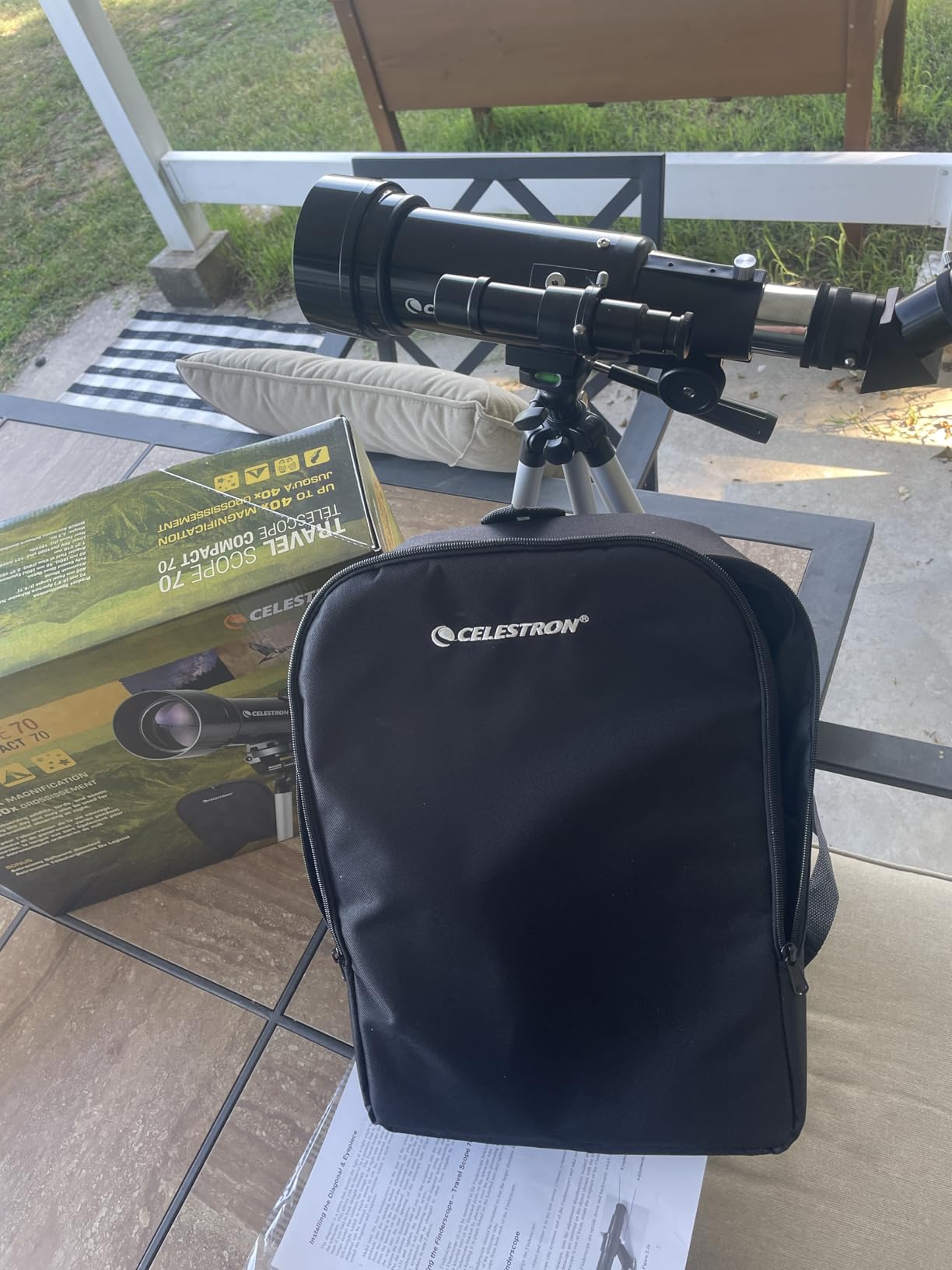
Owner ratings are strong and long-established at 14,800 with 80% at four stars or better. The theme across them is portability and fast setup, and the counter-theme is that the 70mm aperture and 400mm tube make it a Moon-and-planets starter rather than a deep-sky instrument.
Two eyepieces, 20mm and 10mm, cover the practical range. Starry Night software and the SkyPortal app download are included, which is a nice touch for learning what is where in the sky before you go outside.
Who this scope suits
Travelers, campers, and anyone observing from a site with darker skies than their own. The stated 1.43 degree field of view at the 20mm eyepiece is wide enough to sweep star fields rather than only drill into planets.
It also makes a solid gift for a child around eight or older, because the whole thing lives in one bag and nothing can be lost in a cabinet.
Who should look elsewhere
If you want to see Saturn’s rings in real detail, the 400mm focal length limits you. The rings will be visible, but the Cassini Division needs more reach than this scope provides.
Anyone wanting to photograph the sky should know there is no tracking motor here, so long-exposure work through a phone adapter is not realistic beyond a quick snapshot.
4. UncleHu 80mm AZ Refractor – Fully Coated 80mm Kit
UncleHu 80mm Aperture, 600mm Refractor Travel Telescope for Adults and Kids
80mm aperture
600mm focal length, f/7.5
Fully multi-coated lens
Tool-free assembly
Pros
- Fully multi-coated 80mm lens gives bright crisp lunar detail
- Three eyepieces plus a 3x Barlow give a 26x-450x range
- Tripod adjusts 22-49 inches with smooth 360 degree movement
- 45 degree zenith mirror keeps daytime views upright
- Tool-free assembly in under five minutes
Cons
- Phone adapter produces poor-quality photos
- 23mm eyepiece feels under-magnified
- Pan handle is awkward to use
- Optics less crisp than Celestron at similar cost
Eighty millimeters of aperture at 600mm focal length is the sweet spot in this roundup, and this scope delivers it with fully multi-coated optics. The f/7.5 focal ratio sits at the wide end of the range where achromatic doublets behave well, so false color stays modest compared with stubby f/4 designs.
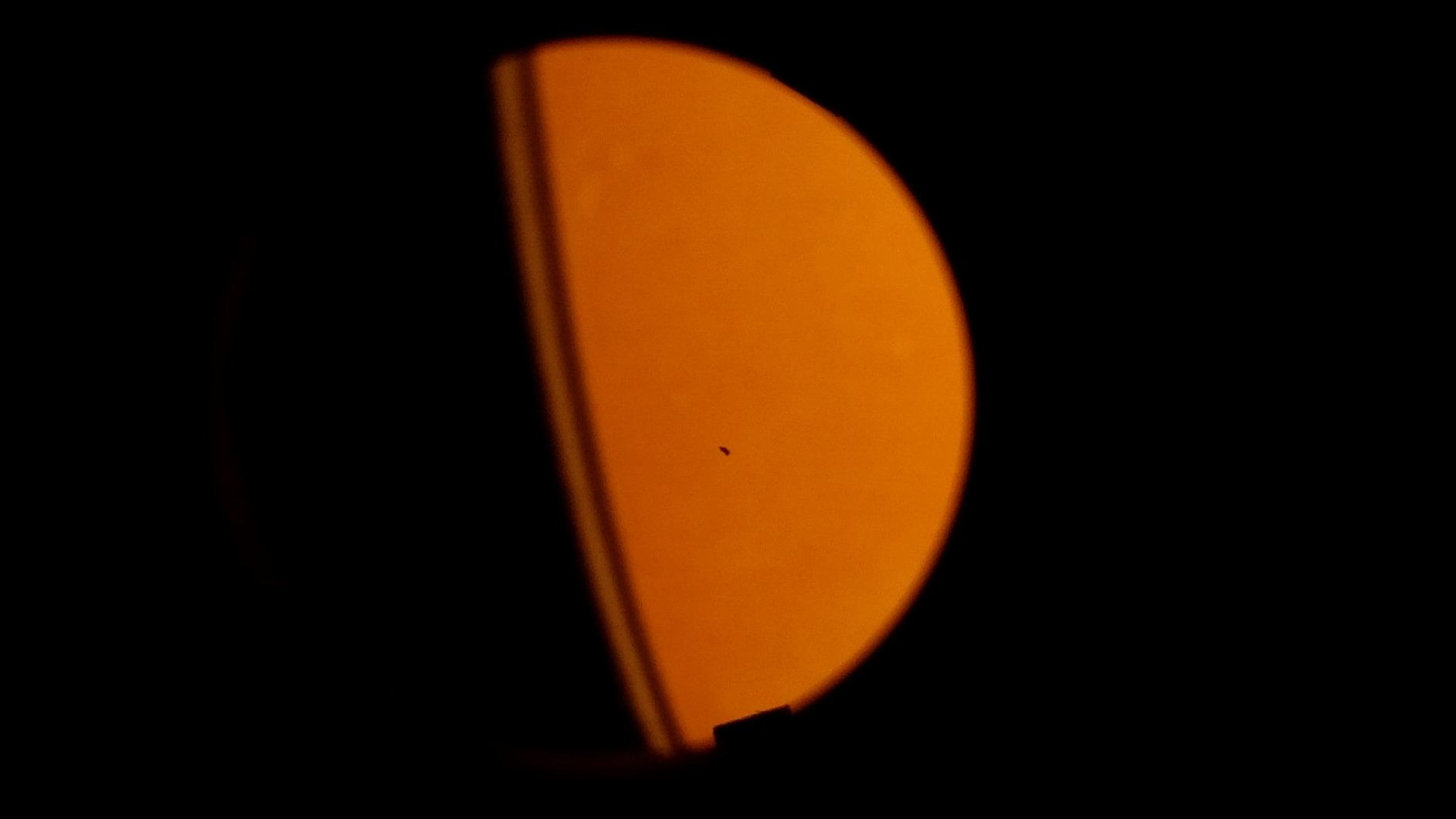
On the Moon, an 80mm at f/7.5 gives crater detail that 70mm short-tubes cannot reach, while still giving a view wide enough to sweep from Mare Imbrium to Tycho in one shot. It also resolves Jupiter’s moons cleanly enough to watch a transit.
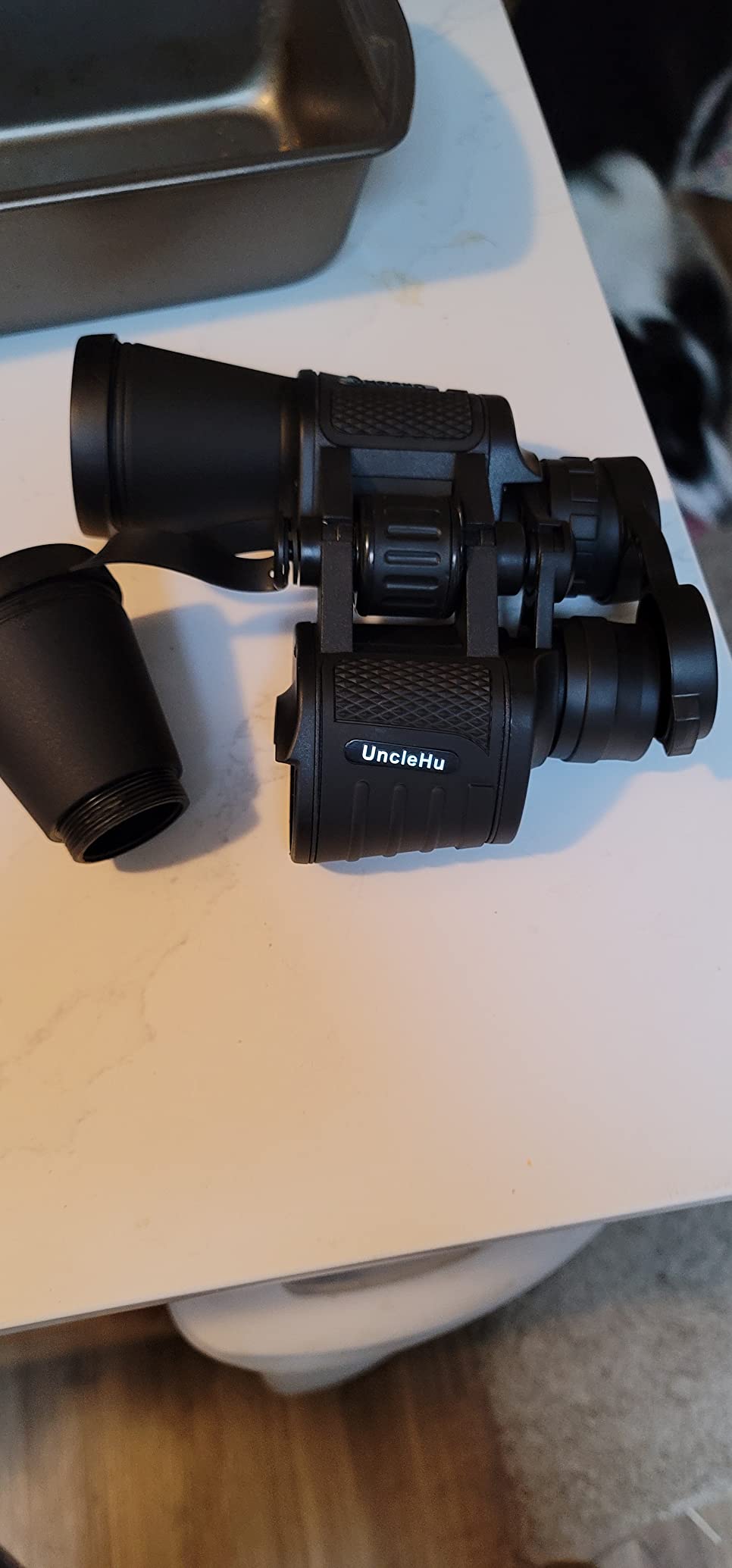
Ratings average 4.3 with 82% at four stars or better, and reviewers single out build quality, the accessory kit and lunar detail. There is one caveat about the review pool worth stating plainly: several reviews on this listing cover the brand’s binocular products rather than this telescope, so read the low-star comments carefully.
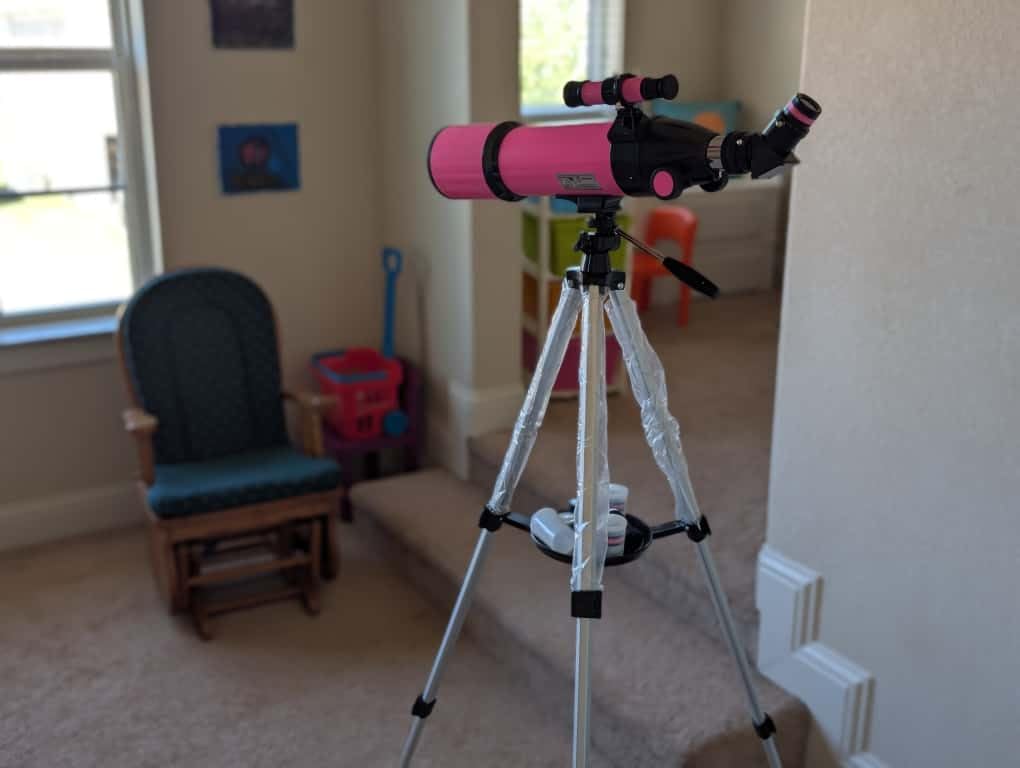
The accessory list is unusually complete for the money: 23mm, 10mm and 4mm eyepieces, a 3x Barlow, a 5×24 finder with crosshairs, an accessory tray and a carrying bag. The 3x Barlow combined with the 4mm eyepiece reaches 450x on paper, which is marketing more than practical use.
Who this scope suits
A beginner who wants the biggest jump in capability from one step up, without moving into a different optical class. Going from 70mm to 80mm is a visible step up in brightness and detail for a modest increase in size.
Families with a wide age range will like the tripod, which adjusts from 22 to 49 inches with both 360 degree horizontal and 180 degree vertical movement. That covers a child at eye level and an adult standing upright.
Who should look elsewhere
Astrophotographers should skip the phone adapter here. Multiple owners report poor-quality photos, and the tripod is not built for the vibration that long phone exposures need.
If you already own an entry scope and want sharper optics rather than more accessories, an 80mm achromat from Celestron will show a cleaner image than this one for a similar outlay.
5. Koolpte 80mm AZ Refractor – Kellner Eyepieces and Remote
Koolpte Telescope for Adults, 80mm/600mm AZ Refractor for Beginners
80mm aperture
600mm focal length, f/6.7
Kellner eyepieces
25mm and 10mm plus 3x Barlow
Pros
- 80mm aperture at 600mm gives bright craters and visible Jupiter moons
- Tool-free assembly in roughly 15 minutes suits a first build
- Wireless remote adjusts the scope without blurring the view
- Carrying bag keeps it portable for dark-sky trips
- Phone adapter produces decent Moon photos once aligned
Cons
- Non-adjustable plastic finder mount arrives badly out of alignment
- Included 3x Barlow is cheap plastic that adds color fringing
- Tripod described as hard to adjust and shaky
- Setup instructions confusing around the diagonal
The optics on this one are the reason it makes the list. An 80mm fully multi-coated objective at 600mm focal length, f/6.7, is a proper specification rather than a padded one, and at 24x and 60x from the included Kellner eyepieces it shows lunar craters, Jupiter’s moons and a first hint of Saturn’s rings.
Kellner eyepieces are a real advantage over the cheap Plossl-type glass bundled with most entry scopes. They hold their field stop better at high power, which means you can actually use the top eyepiece without the image turning to mush.
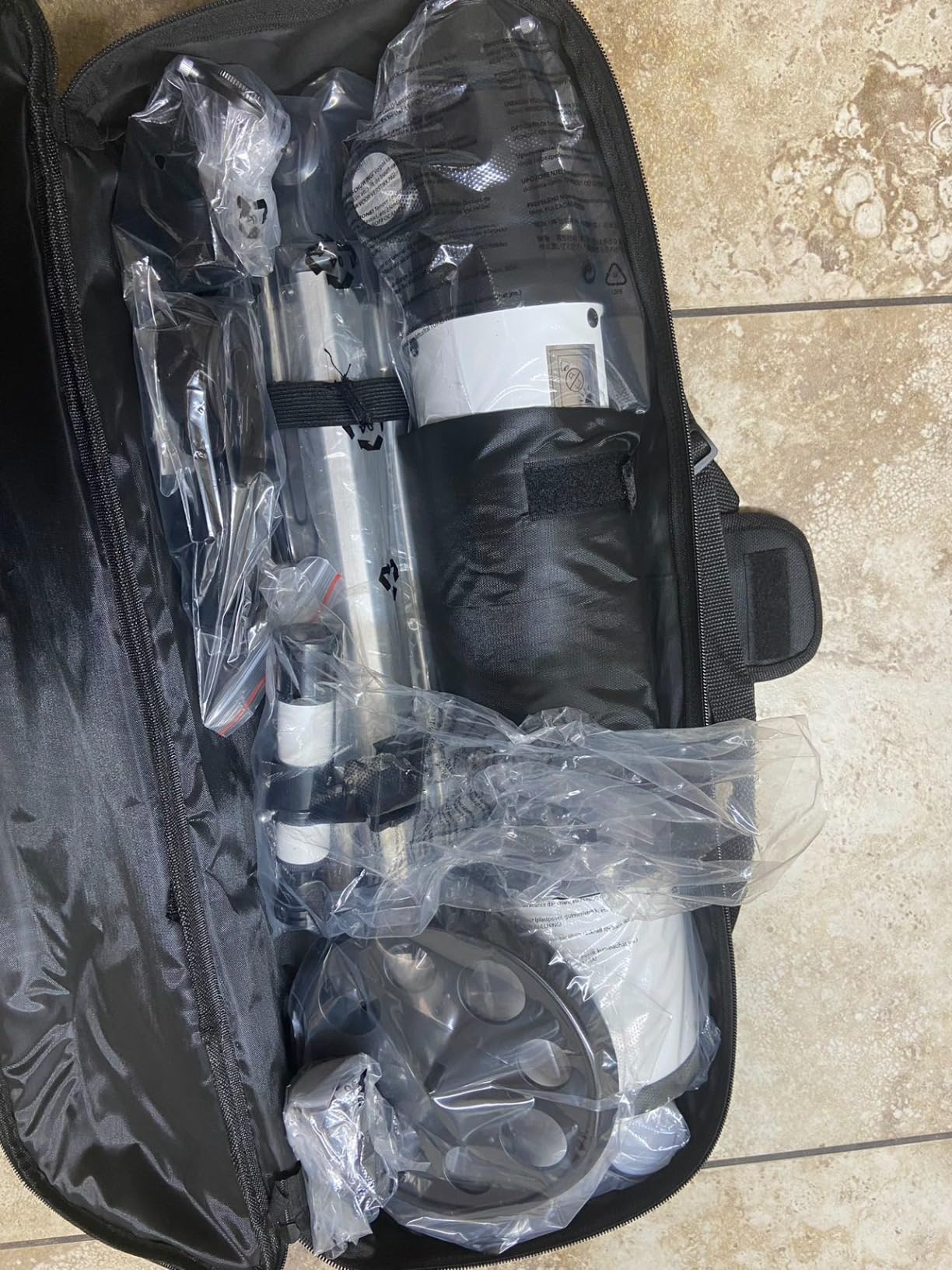
Ratings average 4.3 with 84% at four stars or better. The most-cited specific flaw is not the optics but the finder: the fixed, non-adjustable plastic finder mount arrives out of alignment and owners report it as effectively unusable until they improvise a fix or point along the tube.
The included 3x Barlow is the second complaint. It is cheap plastic and it introduces visible chromatic color fringing, which is ironic on a scope sold partly on coatings. Skip it and use the eyepieces alone at first.
Who this scope suits
Parents buying a first telescope for a child around ten or older, especially a child who will build it themselves. The no-tool assembly takes about fifteen minutes, which is long enough to feel like a real project and short enough not to end in frustration.
The wireless remote is a genuinely clever inclusion for a shared scope: a child can change magnification without leaning into the eyepiece and shaking the view.
Who should look elsewhere
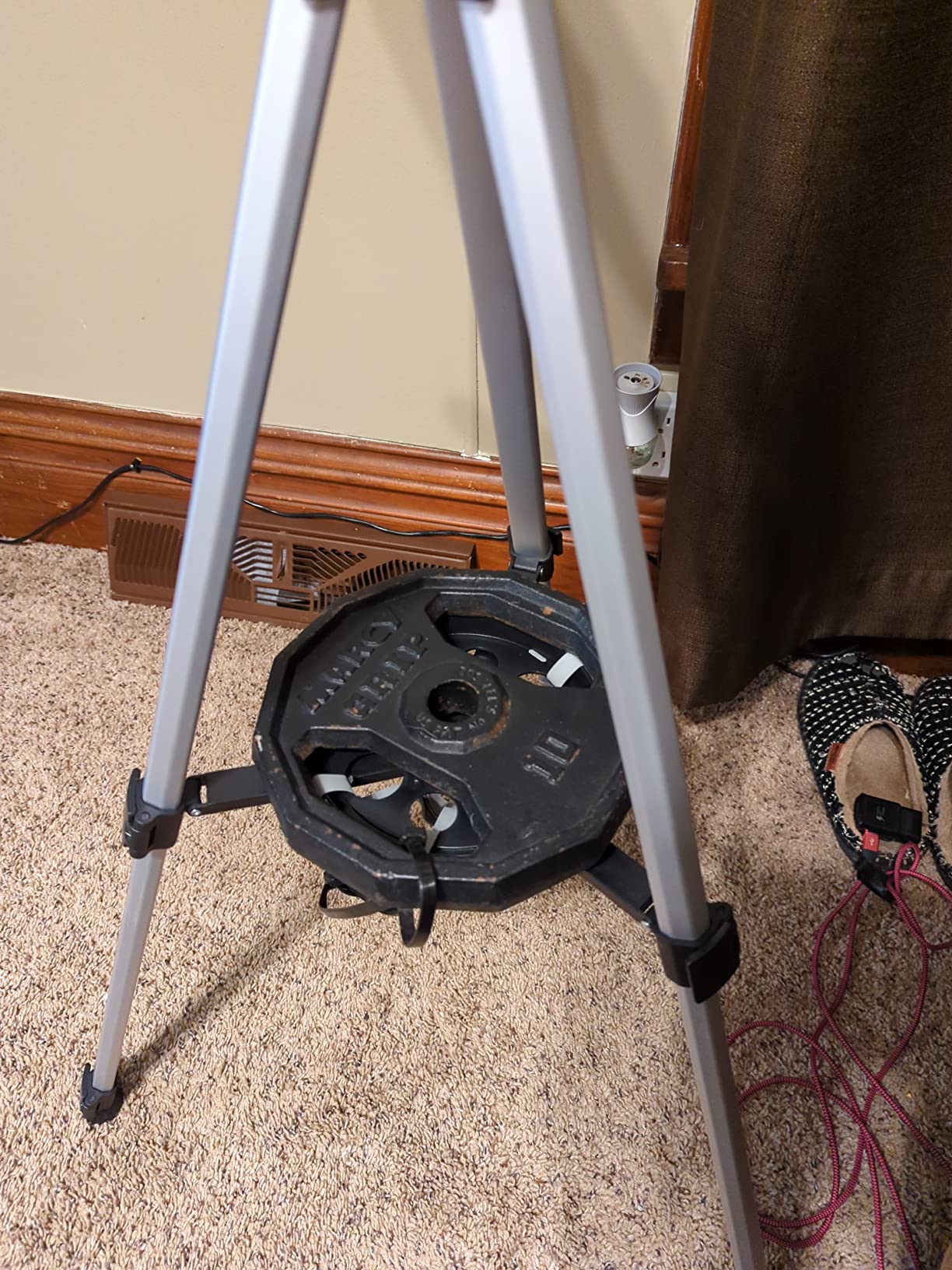
Skip it if you are sensitive to build quality. The tripod is reported as hard to adjust with stiff buckles, and the finder mount is the kind of part that should not have shipped.
The instructions around the diagonal and eyepiece order are described as confusing, so budget an extra ten minutes for the first setup and expect to recheck it.
6. Celestron PowerSeeker 50AZ – Lowest-Cost Way In
Celestron PowerSeeker 50AZ Grab-and-Go Beginner Refractor Telescope
50mm aperture
600mm focal length, f/12
Manual yoke mount
3.6 pounds
Pros
- Lowest entry point in the roundup
- Four accessories including three eyepieces and a 3x Barlow
- Light at 3.6 pounds and easy to carry to dark skies
- Simple eyepiece changes and clear instructions
- Backed by a 2-year Celestron warranty
Cons
- 50mm aperture gives dim soft views and weak planetary detail
- Loose yoke mount and tripod that jiggle at high power
- Owners report cheap screws and topple-prone construction
- Blurry for daytime terrestrial viewing
We include this one because it is the honest floor of the category, and understanding that floor matters. A 50mm aperture on a 600mm tube gives an f/12 ratio, which is actually a sensible optical design, but 50 millimeters is a small amount of light. The Moon and Jupiter’s moons are there; surface detail is not.
The accessory count is remarkable for the money: 20mm, 12mm and 4mm eyepieces, a 3x Barlow, a 1.5x erecting eyepiece, a finder and a diagonal. You are getting more parts than the specification deserves.
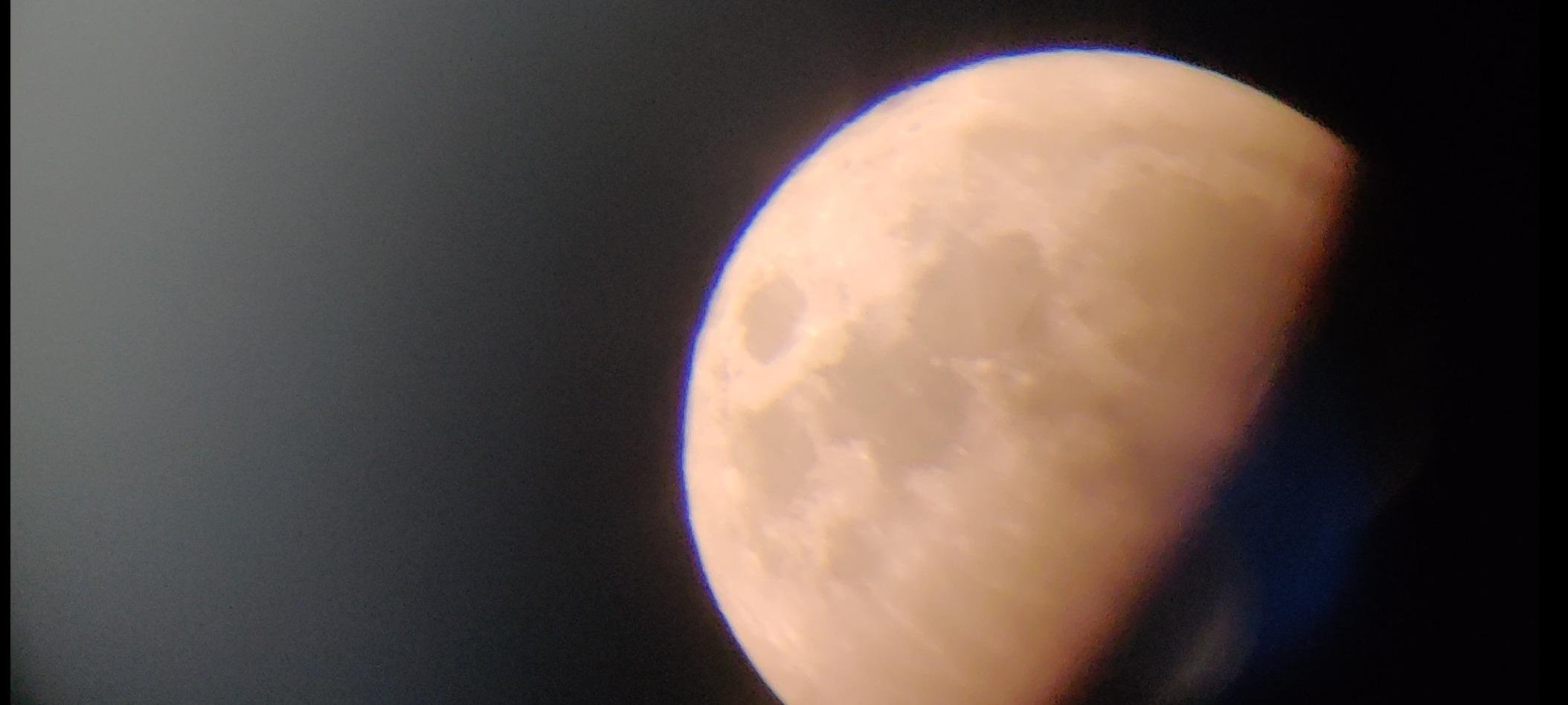
Ratings average 4.1 with 76% at four stars or better, and the spread is wide here. Many buyers are delighted at the lunar and Jupiter views they get; a recurring minority describe it as a toy with cheap parts, an unstable mount and blurry images. That wider spread is why it sits at the bottom of our list despite the low price.
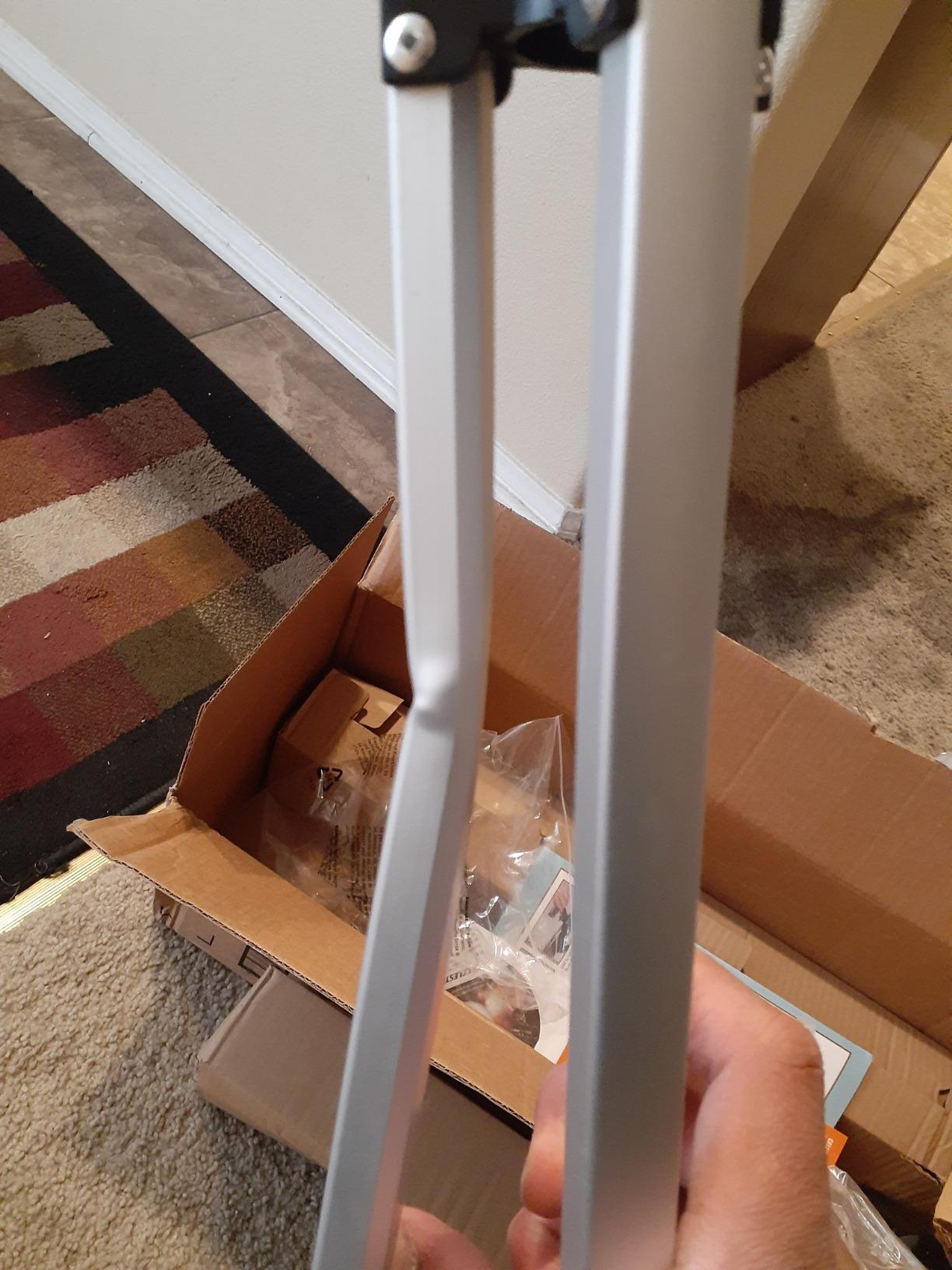
The yoke mount uses a slow-motion altitude rod rather than a pan handle, which is harder to control smoothly. At higher magnification the whole assembly jiggles enough to be frustrating, and that is a mount problem rather than an optics problem.
Who this scope suits
A child who is curious but not yet committed, or anyone who wants to see whether astronomy holds their interest before spending more. It weighs 3.6 pounds and takes up almost no room.
It is also a reasonable stopgap for a birthday gift where the recipient is seven or eight. Pair it with the idea that this is a stepping stone toward a bigger aperture later.
Who should look elsewhere
Anyone who has looked at a comparison table and wants the best value. The step up to an 80mm scope costs modestly more and transforms the image brightness and detail. The 50mm is where beginners quit, not where they start.
Daytime birding is a poor fit. Owners specifically report blurry terrestrial images, because a short-focus lens at low magnification is not built for scenery.
7. EACONN 80mm AZ Refractor – Lightest Backyard Setup
Telescopes for Adults Astronomy, 80mm Aperture 600mm Refractor Telescope for Kids & Beginners, Compact and Portable Travel Telescopio with Backpack
80mm aperture
600mm focal length, f/7.5
840 grams
Backpack included
Pros
- Highest five-star share in the roundup at 72%
- Exceptionally well packed with individually wrapped parts
- True 80mm aperture shows craters
- rings and Jupiter moons
- Phone adapter has labeled positions for each eyepiece
- Very light at 840 grams with everything in the backpack
Cons
- Tripod too short for adults
- causing neck strain
- Altitude adjustment knob is stiff and can snap
- Finder alignment confusing for first-time buyers
- Some reports of planets looking less clear than expected
At 840 grams, this is the lightest full kit here by a wide margin, and it is the one we would hand to a child who wants to carry their own telescope to a park. The tripod, tube and eyepieces all fit in the included backpack.
The optics are a legitimate 80mm aperture at 600mm focal length, f/7.5, with coated glass, and the two Kellner eyepieces (20mm and 9mm) give a 30x to 66x range. That is enough for lunar craters, Saturn’s rings as a shape rather than a detail, and Jupiter’s moons in transit.
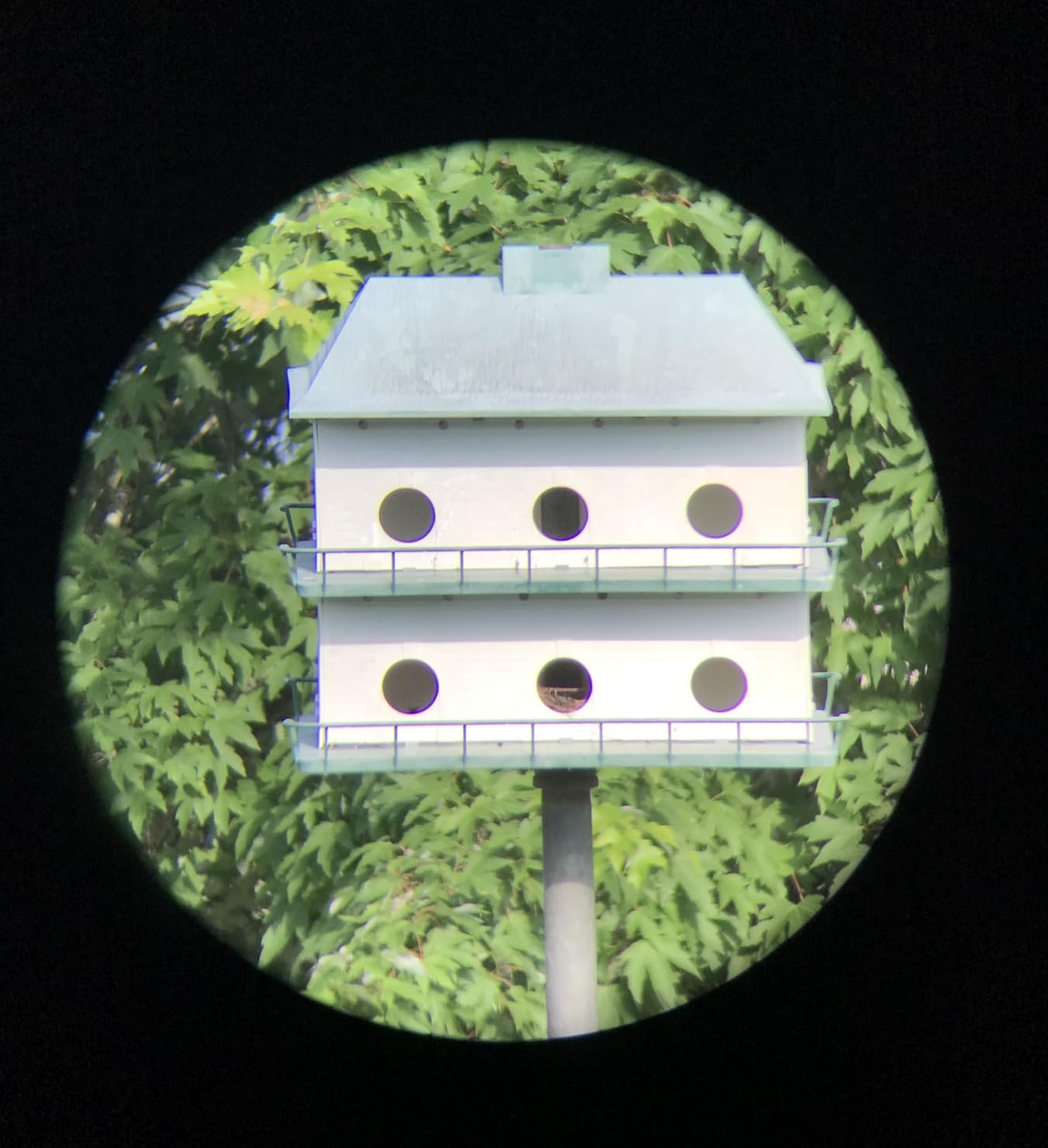
Ratings average 4.3 with 72% five-star and 83% at four stars or better. Reviewers repeatedly single out the packaging and manual quality as standout points, which sounds minor until you realize it is what determines whether a first-time buyer completes setup successfully.
The phone adapter is the detail that earns its badge. Instead of guessing, the adapter has the two end positions marked for each eyepiece, so you can set the phone in the right place without trial and error. That is a small design decision with a real effect on whether you take a usable Moon photo on your first attempt.

Who this scope suits
Kids aged roughly eight to twelve, and anyone who wants the lightest possible kit to carry outside. The detailed manual plus installation videos genuinely reduce setup friction for a first-time buyer.
Phone astrophotography beginners are the other good fit. The labeled adapter positions and the lightweight build make repeated attempts at a Moon photo far less painful than with a heavier tripod.
Who should look elsewhere
Adults should know about the tripod height before buying. It is described as too short for adults, which forces a stoop and causes neck strain on longer sessions. That is a real quality-of-life issue at exactly the point where you are trying to build a habit.
The altitude knob is stiff and has been reported to snap if forced, so treat it gently and do not force it to make a target sit still.
8. Celticbird 80mm AZ Refractor – Comes With a Moon Filter
Celticbird Telescope for Adults High Powered, 80mm Aperture 600mm AZ Mount Refractor Telescope for Kids Beginners – Portable Telescopes for Adults Astronomy with Backpack, Phone Adapter, Moon Filter
80mm aperture
600mm focal length, f/6.7
Multi-coated lens
5.8 pounds
Pros
- 80mm aperture at 600mm is a strong spec combination for the money
- Included moon filter transmits 13 percent of light for contrast
- Tripod adjusts 17.7 to 52 inches
- covering kids and adults
- Upgraded phone adapter and backpack make it fully portable
- Tool-free assembly with manual and video guides
Cons
- Smallest review pool here at 864 ratings
- 60x maximum magnification is modest for an 80mm aperture
The moon filter is the reason this scope is on the list, and it is a genuinely useful accessory that almost nobody includes. It passes 13 percent of incoming light, which reduces glare on the lunar surface and raises contrast so you can see crater detail and maria boundaries more clearly than you can unfiltered.
Underneath the accessory is a solid 80mm aperture with 600mm focal length at f/6.7 and multi-coated optics. The 20mm and 9mm eyepieces give 30x and 66x, which is a modest ceiling but a sensible, undistorted range.
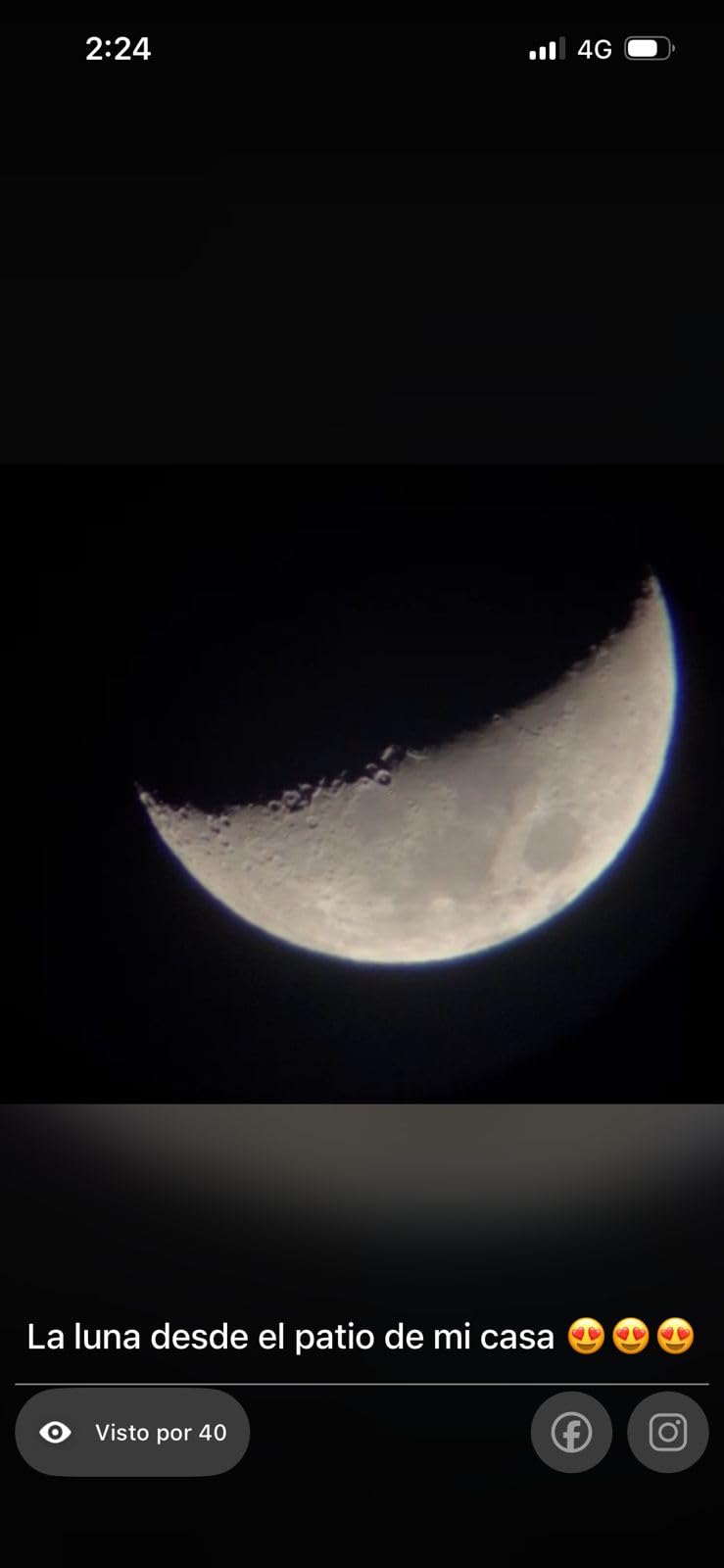
Ratings average 4.3 with 83% at four stars or better, but the sample is far smaller than the Celestron and Gskyer entries. Buyers cite the moon filter, the adjustable tripod and the phone adapter as the standout extras for the money.
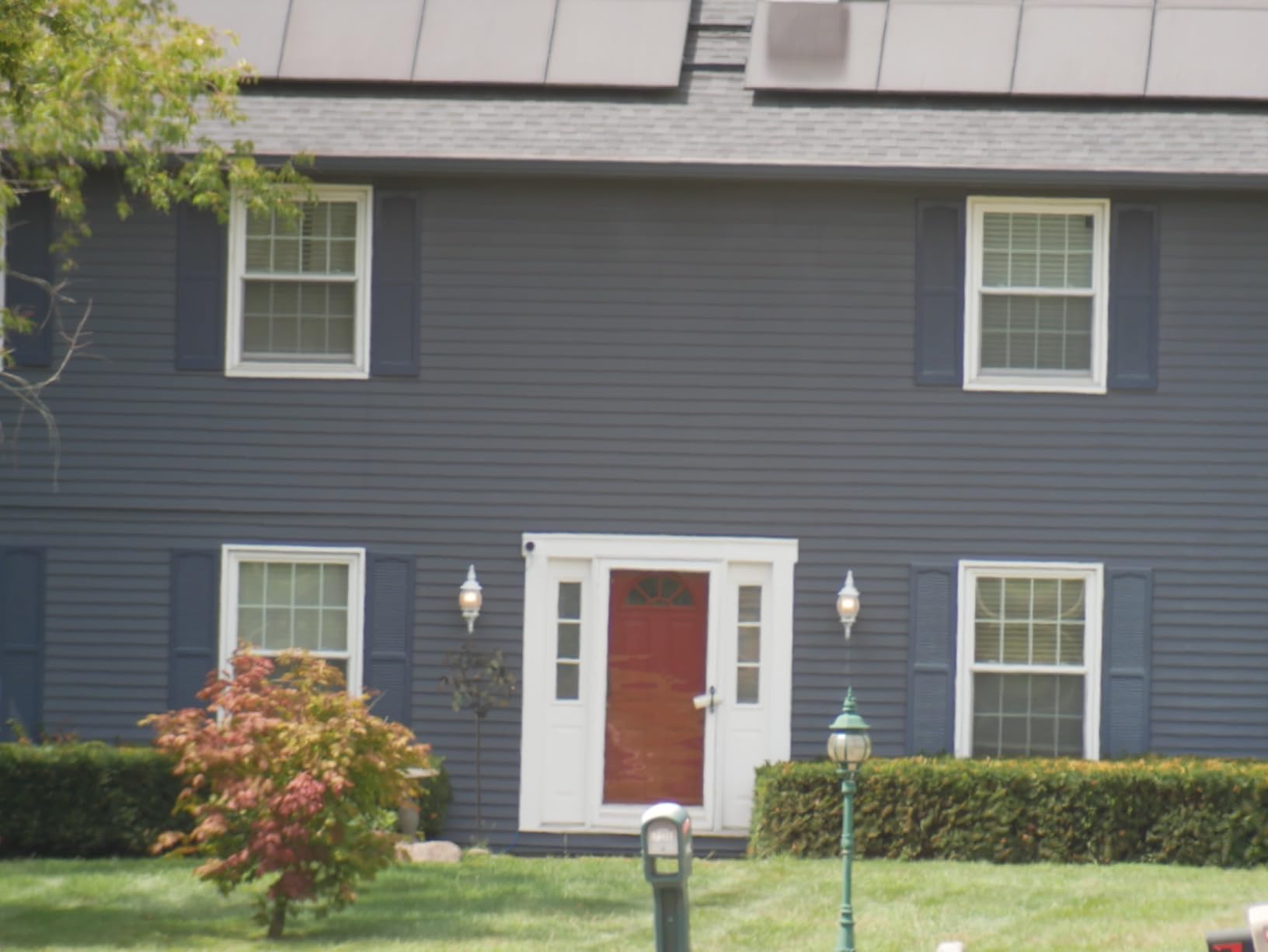
The tripod range from 17.7 to 52 inches is the widest here, which makes this the best choice in the roundup for a household with both a child and an adult using the same telescope on the same night.
Who this scope suits
Anyone whose interest is specifically the Moon. Aligned craters, rilles and subtle mare detail respond well to a contrast filter, and you would otherwise have to buy one separately.
Mixed-age households should look at the tripod range first. At 52 inches at full extension, an adult can stand comfortably while a child uses it collapsed.
Who should look elsewhere
Be cautious if you want a long-term track record. With 864 ratings, there is far less history of how these units hold up over years than with the Celestron options, and resale value tends to follow that.
For planetary work you will want more than 66x. A longer focal length scope like the Celestron AstroMaster 70AZ is the better buy if Jupiter and Saturn are your targets.
9. Gskyer 80mm AZ Refractor – Wide Field Short Tube
Gskyer Telescope, 80mm AZ Space Astronomical Refractor Telescope for Kids
80mm aperture
400mm focal length, f/5
Erect-image diagonal
7.9 pounds
Pros
- 80mm aperture with three eyepieces at 16x
- 40x and 80x
- Erect-image diagonal keeps daytime viewing upright
- Coated optical glass for brightness and eye comfort
- Adjustable full-size tripod gives a stable platform
- Quick tool-light setup aimed at novices
Cons
- 400mm focal length means less usable magnification than the numbers suggest
- Heaviest of the short-tube options at 7.9 pounds
- Highest price per point of magnification here
- Smallest rating pool among the 80mm picks at 778
This is a wide-field telescope, not a planetary one, and that framing matters. At 80mm aperture and 400mm focal length, f/5, you get a 0.87 degree field of view and an image scale that lets you hold several deep-sky objects in one view, including larger open clusters and the Andromeda galaxy.
Three eyepieces at 16x, 40x and 80x plus a 3x Barlow give more steps than most competitors include, and the erect-image diagonal keeps daytime viewing the right way up for landscapes and bird watching.
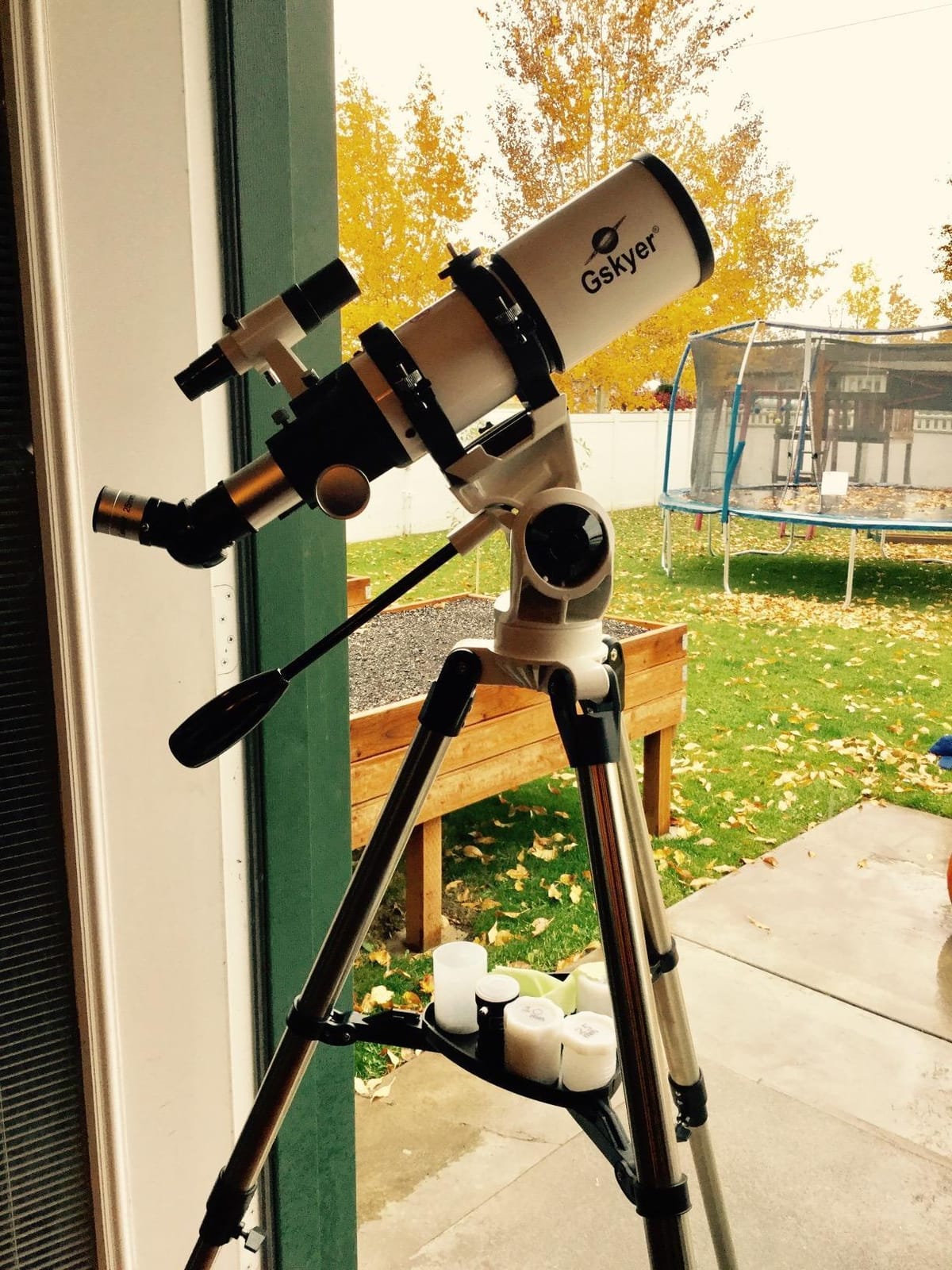
Ratings average 4.2 with 79% at four stars or better across 778 ratings. Buyers like the coated 80mm glass and the magnification range, and the recurring complaint is straightforward: the short 400mm focal length delivers less usable magnification than the headline number suggests.
That complaint is worth internalizing. At 400mm focal length, an 80mm aperture gives the same 80x ceiling as a much smaller 60mm scope on a long tube would. You are buying aperture and field width, not power.
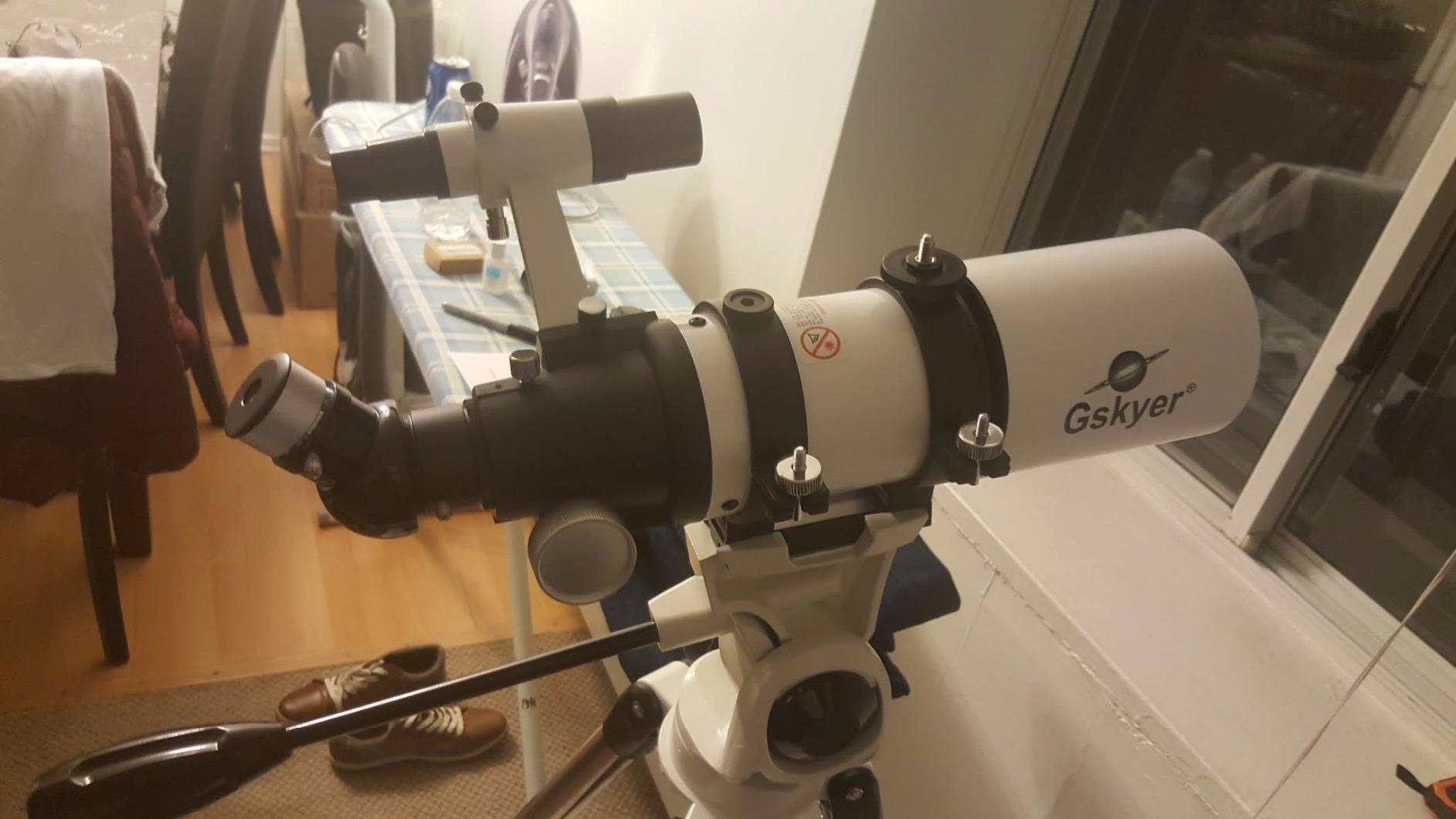
Who this scope suits
Deep-sky beginners who live somewhere with a reasonably clear horizon. A wide field lets you frame an entire galaxy or a big cluster instead of chasing a target across a narrow view.
Anyone who wants one scope for both astronomy and daytime nature watching, since the erect-image diagonal handles the terrestrial side properly.
Who should look elsewhere
Planets are not this scope’s strength. At 80x maximum native magnification, Jupiter’s cloud bands and Saturn’s ring division stay soft. Choose a long tube for planetary detail.
Also skip it if portability is your priority. At 7.9 pounds for a short-tube refractor, it is heavier than scopes here with a larger objective.
10. MEEZAA 80mm Refractor – Complete All-in-One Kit
MEEZAA Telescope for Adults & Kids, 80mm Aperture 500mm Refractor
80mm aperture
500mm focal length, f/6.25
Fully multi-coated optics
Waterproof backpack
Pros
- Highest five-star share in the roundup at 75%
- 80mm fully multi-coated aperture at the lowest cost of any 80mm here
- Lightweight foldable tripod with a waterproof backpack
- 20x-150x range with a 45 degree zenith mirror
- Tool-free assembly in roughly ten minutes
Cons
- Included eyepieces cap real performance and are worth upgrading
- Adjustment knob stripped after repeated use on one unit
- No equatorial mount so long-exposure tracking is impossible
- Tripod not stable in strong wind
On paper this is the best spec-to-cost ratio in the roundup: a fully multi-coated 80mm objective at 500mm focal length, f/6.25, with a foldable aluminum tripod and a waterproof backpack. Almost nobody else packs 80mm of multi-coated aperture at this entry price.
The magnification range of 20x to 150x comes from 25mm and 10mm eyepieces plus a 3x Barlow, and the 45 degree zenith mirror keeps daytime views upright. The tripod adjusts from 16.92 to 44.48 inches, covering most ages.
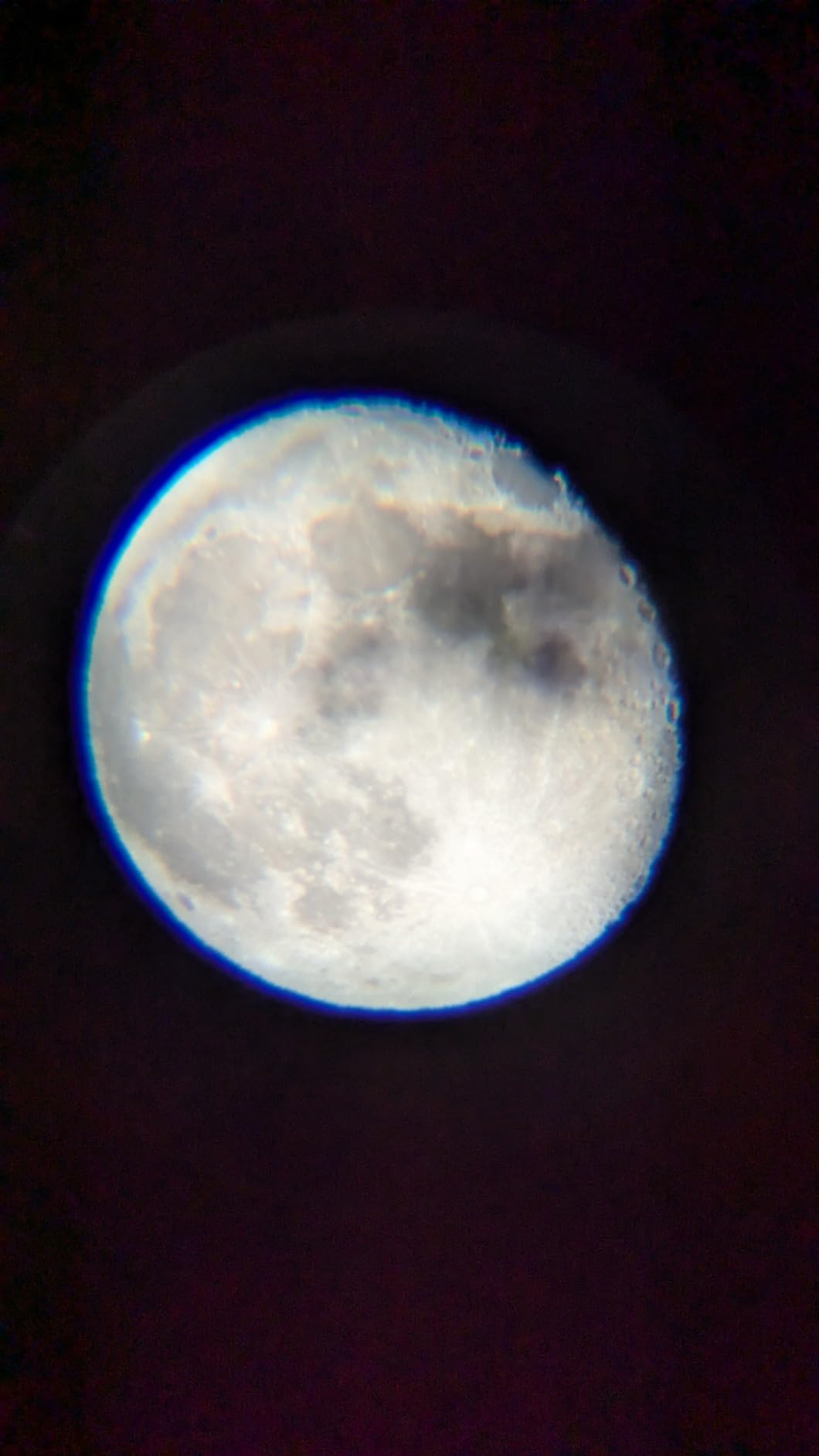
Ratings average 4.4 with 75% five-star and 83% at four stars or better. Reviewers describe a well-rounded portable family kit whose optics are surprisingly decent for the price, and they praise easy assembly, the backpack and Moon photography.
The recurring notes are worth weighing. The included eyepieces cap performance, the tripod is not built for wind or serious imaging, and one unit had an adjustment knob strip after repeated use. Reviewers recommend better eyepieces as the first upgrade.
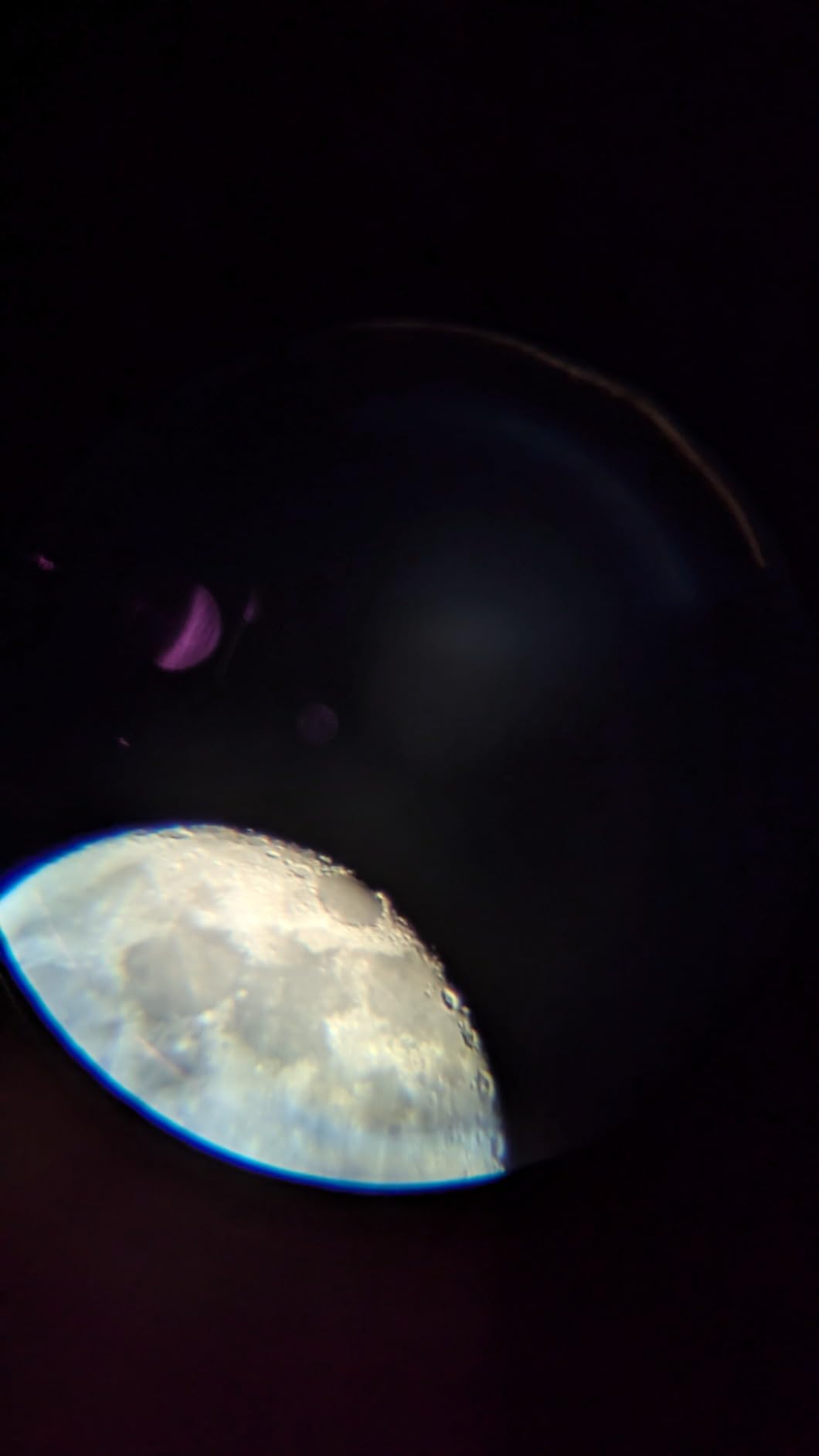
Who this scope suits
Buyers who want the largest aperture available at the lowest entry cost, and families who will treat the scope as a shared backyard instrument rather than a precision tool.
The stickers, bright finish and all-in-one kit make it a natural choice for a child aged eight to twelve who will lose the lens caps if given a chance.
Who should look elsewhere
Avoid it if you live somewhere windy or plan any long-exposure photography. There is no equatorial mount, so tracking is impossible, and the tripod is reported as unstable in a breeze.
If you want the sharpest image rather than the most accessories, save for a branded achromat. The performance ceiling here is set by the included eyepieces, not the objective.
What to Know Before Buying Your First Refractor
Five points decide whether your first telescope gets used for five years or stored in a cupboard.
Aperture beats magnification, every time. Aperture is the diameter of the front objective lens in millimeters, and it sets how much light you gather. Below 70mm you are fighting the optics. Between 80mm and 100mm you are in the range where the Moon, the planets and brighter deep-sky objects all become reachable.
Ignore magnification claims entirely. A useful rule of thumb is that maximum useful magnification is about two times the aperture in millimeters, so an 80mm scope tops out around 160x before the image turns soft. Anything advertised above roughly 300x on an 80mm scope is marketing.
Focal length decides what you see. A long tube around 900mm favors planets and the Moon. A short tube around 400mm gives a wide field for galaxies and star clusters. The same aperture can do both, just not at the same time.
Mount stability matters more than glass. A wobbly tripod ruins the view at high power even when the optics are good. Check for slow-motion controls or a smooth pan handle rather than the cheapest possible bracket.
Expect false color on budget achromats. A standard achromatic doublet shows a purple or green fringe around bright objects, particularly near the edge of the field. It is normal, it does not indicate a defect, and a longer focal ratio reduces it.
Achromat vs ED vs Apochromat in Plain English
All three are refractor designs. The difference is how many glass elements are bonded together and how well they correct color, and it shows up most when you look at something bright against dark sky.
An achromat is a doublet: two elements glued together to bring two wavelengths into focus. It is the standard in every scope on this list, it is affordable, and it leaves a faint color fringe that most beginners notice only once they have used better glass.
An ED doublet uses extra-low-dispersion glass, which corrects three wavelengths instead of two. Forum discussion on CloudyNights frequently points to Explore Scientific’s AT-ED80 as the step-up achromat because of its better focuser than typical entry-level doublets. The practical result is noticeably cleaner planetary images with almost no fringe.
An apochromat (triplet) brings three wavelengths together and is the standard serious amateur refractor. Correction is close to perfect, but the cost jumps by a factor that no beginner should pay. CloudyNights threads also note that a better focuser matters more than the glass upgrade at this stage.
Our advice: buy the achromat, spend your money on aperture and a stable mount instead, and only consider ED glass when you know which false-color fringe you are trying to remove.
Refractor vs Reflector vs Dobsonian: The Honest Comparison
This is the most common question on the beginner forums, and the honest answer is uncomfortable for anyone selling a refractor. Per dollar of aperture, a Dobsonian usually wins. If your only goal is the most light for the least money, a Dobsonian is the better instrument.
What a refractor buys you with that money is everything the Dobsonian does not do. It needs no collimation, has no mirror to expose to dust, focuses close enough for bird watching, doubles as a daytime spotting scope, and can be carried in one hand. Many r/telescopes users point brand-new buyers toward a Dobsonian for exactly this reason and it is good advice for a purely visual observer.
So the decision is about temperament. If your observing is backyard astronomy with occasional planets, the refractor list above is the right one. If you want the faintest galaxies and do not care about daytime use or maintenance, look at a Dobsonian instead.
Mounts, Tripod Stability and the Real Beginner Failure Point
Almost every ruined first telescope we have seen failed at the mount, not the optics. A perfectly good objective produces a useless image if the vibration takes four seconds to settle after you touch the focuser.
An altazimuth mount moves left-right and up-down in two separate steps. You point where you want to look and it goes there. Every scope on this list uses one, and forum consensus strongly favors it for beginners because there is no alignment procedure and no counterweight to balance.
An equatorial mount aligns one axis with the celestial pole and then tracks the sky by turning a single handle. It is the right answer for long-exposure astrophotography, and it is the wrong answer for most beginners, since alignment confuses people and the counterweight bar makes the whole thing heavier and more fiddly.
What to check before buying: whether the tripod legs are metal rather than plastic, whether the mount has slow-motion controls or a smooth pan handle, and whether the accessory tray holds the eyepieces so they do not end up on the grass. A full-size tripod with a pan handle is the single biggest quality upgrade available to a beginner.
What You Can Actually See From a Backyard in 2026
Expectation setting matters more than any spec. From a typical suburban backyard you will see the Moon in genuine detail, Jupiter with its moons changing position hour by hour, the phases of Venus, Saturn’s rings as a shape, and the brighter clusters and double stars.
You will not see Uranus or Neptune without a chart and patience, and you will not see faint galaxies. On a clear night, the Milky Way will be visible but washed out. None of that means the telescope is faulty. It means the light pollution is doing the limiting, and no amount of magnification fixes that.
The same scope under a genuinely dark sky is a completely different instrument. If you can get away from city glow once, do it, and the 80mm options in this list will show you galaxies that never appear from home. Our general advice for 2026: find the darkest spot you can reasonably reach and use the scope there at least a few times.
What Each Cost Tier Buys You
Where you spend matters less than the tier you pick, but each tier gives up something specific.
Under one hundred dollars: You get a 50mm or 70mm achromat with workable coatings, a plastic or thin-metal tripod, and basic Plossl-type eyepieces. You are buying a learning experience and the Moon. Our [budget refractor roundup](https://modelrec.com/best-refractor-telescopes-under-1000-dollars/) covers this tier in more detail.
One hundred to two hundred dollars: This is where the 80mm achromats live, and it is the sweet spot. You get genuinely brighter images, better eyepieces, and enough stability for planets. Most of our list sits here.
Two hundred to four hundred dollars: You move to a longer focal length for real planetary detail, a red dot finder, better mounts with slow-motion controls, or the first step into ED glass.
Four hundred dollars and up: You can buy ED doublets, sturdy German equatorial mounts, or GoTo computerized scopes. GoTo is worth reading our [GoTo telescope picks](https://modelrec.com/best-goto-telescopes/) before deciding, since it trades aperture for convenience.
Accessories Worth Buying First
Spend your first extra dollars in this order, and skip everything else until you have used the scope a few times.
A red flashlight. White light destroys your dark adaptation. A cheap red LED light lets you read a chart without ruining your night vision.
A 25mm or 26mm wide eyepiece. The included eyepieces are consistently the weakest part of any entry scope, and a good wide eyepiece transforms how pleasant the Moon is to look at.
A moon filter. A threaded filter that reduces brightness and raises lunar contrast. Cheap ones work well and one is already bundled with one pick on this list.
A proper 10mm eyepiece. Better optics at higher magnification, which is where cheap glass falls apart fastest.
A 2x Barlow, only later. Doubling magnification is useful once your viewing is steady and your mount is stable. On a shaky tripod it just doubles the shake.
Do not buy a plastic solar filter for any telescope. Genuine certified solar filters for a specific aperture are safe, and everything else is not worth the risk to your eyes.
Frequently Asked Questions
Which telescope is best for beginners, reflector or refractor?
For most beginners a refractor is the easier telescope to live with: it is sealed, needs no collimation, doubles as a daytime spotting scope, and can be carried in one hand. A reflector or Dobsonian usually gives you more light per dollar, so if your only goal is faint deep-sky objects and you do not mind occasional maintenance, that is the better value. Most of the first-time buyer advice on r/telescopes and CloudyNights points beginners toward refractors for exactly this reason.
What size telescope is needed to see Saturn’s rings?
Around 70mm of aperture with a long focal length of roughly 700mm to 900mm will show Saturn’s rings as a shape. To resolve the Cassini Division, the gap in the rings, you generally want 90mm to 100mm of aperture. The Celestron AstroMaster 70AZ at 900mm focal length on this list is the cheapest route to a real ring view here.
What is a good quality refractor telescope?
A good beginner refractor is an achromatic doublet of at least 80mm aperture with fully coated or multi-coated glass, roughly 600mm of focal length, a tripod with a slow-motion control or pan handle, and an included finder. The price, the brand name and the claimed magnification tell you almost nothing about image quality.
Which telescope is best to see planets for beginners?
Choose aperture first and focal length second. A long tube around 900mm on an 80mm or 90mm objective gives you the magnification needed for Jupiter’s bands and Saturn’s ring division, and a stable mount matters as much as the optics. Stay under about two times your aperture in millimeters of magnification or the image just goes soft and dim.
What is the best entry-level refractor telescope for beginners?
In 2026 the Gskyer 70mm AZ is the strongest entry-level package because it combines a fully coated 70mm objective, two eyepieces, a 3x Barlow lens, a carry bag and a phone adapter. If you can stretch the budget by a modest amount, move to an 80mm aperture such as the UncleHu or Koolpte and the jump in brightness and detail is immediately obvious.
How much should I spend on a beginner telescope?
Most beginner refractors worth buying sit in the lower to middle hundreds. Spend more to reach 80mm or 90mm of aperture rather than buying a cheaper scope with a longer magnification claim. Below that threshold the tripod and eyepieces are the limiting factors, and above it you are paying for refinements a new owner will not notice for a year.
Can I look at the Sun through a refractor telescope?
Only with a certified solar filter fitted over the front aperture of the telescope, matched to the aperture size. An unfiltered view of the Sun through an objective lens or a finder scope can cause permanent eye damage instantly, with no safe exposure limit. A filter fitted at the eyepiece end is not an acceptable substitute.
What is chromatic aberration in a refractor telescope?
Chromatic aberration, or false color, is a purple or green fringe around bright objects caused by a lens focusing different colors at different distances. A standard achromat corrects two wavelengths and shows a light fringe, an ED doublet corrects three and shows almost none, and a triplet corrects all three and shows essentially none. It is a normal optical characteristic, not a defect.
The Verdict
The Gskyer 70mm AZ refractor is our pick for the best refractor telescope for beginners in 2026, because it is the only scope in this roundup that combines a fully coated 70mm objective, a proper accessory bundle, a carry bag and a phone remote at a price that leaves room for a second eyepiece later.
If your budget stretches a little further, the Celestron AstroMaster 70AZ is the pick to buy for planets, with 900mm of focal length and a red dot finder that removes the hardest part of learning to find targets. For the most light per dollar, move up one step to an 80mm achromat such as the UncleHu or Koolpte. And if your budget is genuinely tight, the Celestron PowerSeeker 50AZ is the cheapest honest way to find out whether astronomy holds your interest.
Whichever you choose, buy on aperture and focal length rather than magnification, keep a red flashlight in the pocket, and give the Moon an honest first night. Every scope on this list will show you craters in your first session.
If you want the wider picture, our picks for the [best telescopes for beginners](https://modelrec.com/best-telescopes-for-beginners/) cover reflectors and tabletop designs too, our general [telescope roundup](https://modelrec.com/best-telescopes/) compares every category, and the full [refractor telescope rankings](https://modelrec.com/best-refractor-telescopes/) rank the wider refractor market beyond the starter scopes featured here.