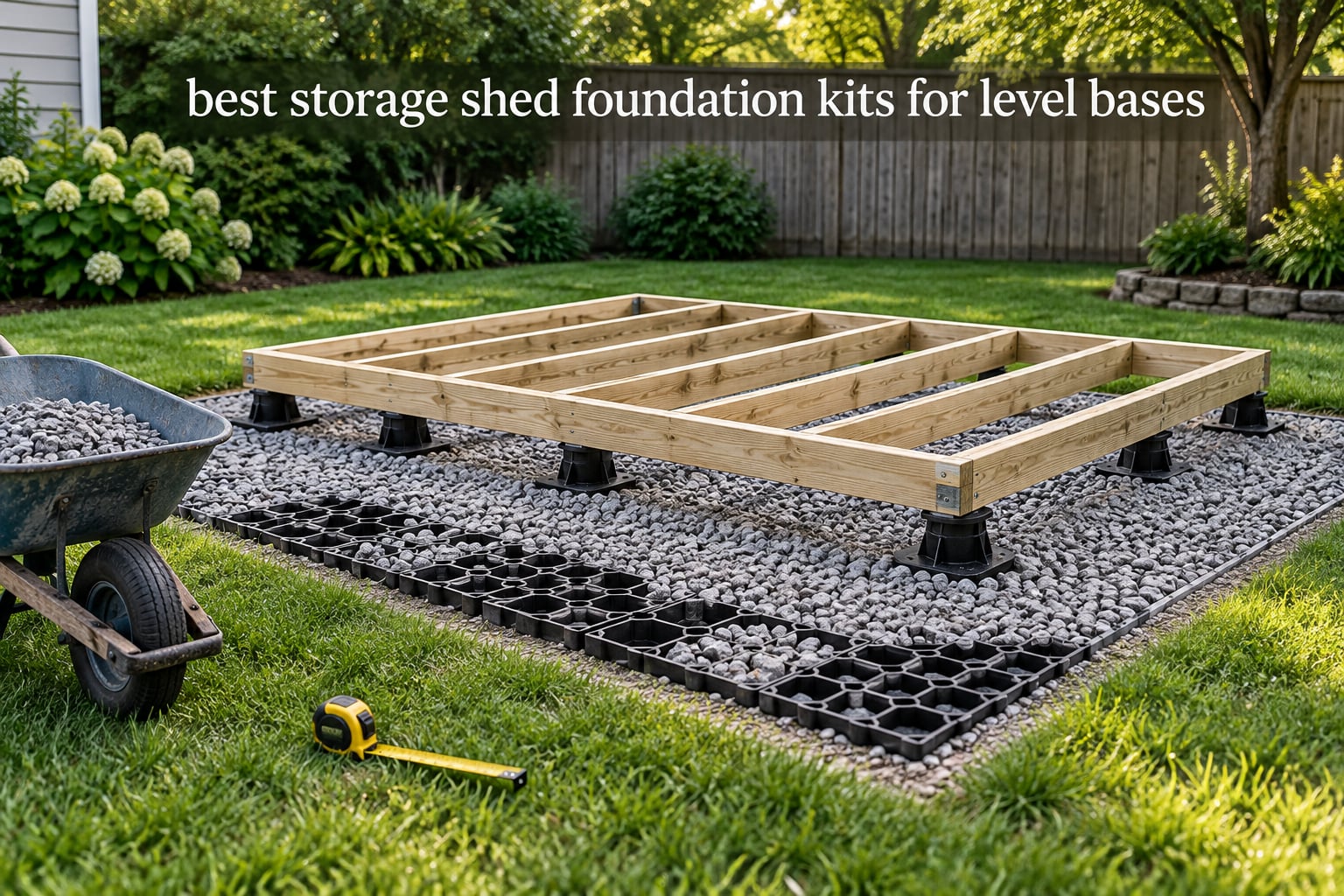
A storage shed foundation kit is a prefabricated base system – usually a plastic grid, a galvanized steel floor frame, or a frame with a pre-sheathed OSB deck – that you level and place on prepared ground so a shed sits square, supported and off the soil without pouring a slab. That is the whole job, and a good kit does it in an afternoon.
Are shed base kits any good? Yes, with conditions. They work when the ground is prepared properly and the kit is the right size for the shed you already own or already ordered. They fail when a frame-only kit gets bought expecting a finished floor, or when a brand-locked kit does not match the shed model in the yard. We compared ten of the most-reviewed foundation kits for 2026 and ranked them on load capacity, leveling behavior, fit and how much work they leave you with.
There are five kit families you will run into, and the difference between them matters more than the brand on the box:
1. Plastic grid bases – interlocking cells you snap together, fill with gravel, and use as a pad. Best for resin and steel sheds on level or gently sloping ground.
2. Steel floor frame kits – a galvanized perimeter frame and floor joists that squares the building before the walls go up. You supply the deck material.
3. Complete base kits – a steel frame that ships with an OSB floor already fastened. Nothing else to buy.
4. Adjustable pedestal systems – screw-adjusted piers that raise and level a timber floor frame over uneven ground.
5. Fixed-height pier blocks – solid plastic pedestals set under skids or joists. Fast, cheap, and useless if the ground is not already flat.
That last point is the one people miss. A kit does not create a level base, it transfers one you have already made. Builders on r/DIY describe the standard approach as crush and run fill, tamped and checked with a bubble level, which is cheap and effective. r/Shed users recommend sizing the gravel pad about 12 to 14 inches larger than the shed footprint on each dimension, so water runs off the pad instead of pooling against the walls.
If you are still choosing a shed first, our best shed kits for every budget guide covers sizing before you lock in a foundation.
Table of Contents
Top 3 Best Storage Shed Foundation Kits for Level Bases in 2026

All 10 Storage Shed Foundation Kits Compared in October
The table below lists every kit in this roundup with the specs that decide whether it works for your site. Pay attention to coverage versus your pad area and to whether the deck material is included.
| Product | Specifications | Action |
|---|---|---|
| Vodaland Permeable HexPave System |
|
Check Latest Price |
 TRUEGRID Pro Lite Permeable Paver TRUEGRID Pro Lite Permeable Paver |
|
Check Latest Price |
 VEVOR Ground Grid 27 ft x 4 ft VEVOR Ground Grid 27 ft x 4 ft |
|
Check Latest Price |
 Camo Heavy Duty Deck Block 20 Pack Camo Heavy Duty Deck Block 20 Pack |
|
Check Latest Price |
 Arrow FDN109 Base Kit Arrow FDN109 Base Kit |
|
Check Latest Price |
 bullke Original Round Foundation Block bullke Original Round Foundation Block |
|
Check Latest Price |
 Arrow FDN1014 Base Kit Arrow FDN1014 Base Kit |
|
Check Latest Price |
 Arrow FKCS05 Floor Frame Kit Arrow FKCS05 Floor Frame Kit |
|
Check Latest Price |
 bullke Handi Block Foundation Block bullke Handi Block Foundation Block |
|
Check Latest Price |
 Goldshire Adjustable Deck Pedestal Blocks Goldshire Adjustable Deck Pedestal Blocks |
|
Check Latest Price |
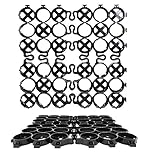
1. Vodaland Permeable HexPave System – Best Overall Level Base
Vodaland Permeable HexPave System – Grass & Gravel Pavers – 100% Recycled PPE Plastic, Handles 27,000 lbs, 1″ Depth, 65 s.f / 22 Units
Polypropylene grid
65 sq ft per 22 units
1 inch chamber depth
27000 lb max load
Pros
- Recycled plastic with UV protection
- No-tool interlocking assembly
- 27000 lb capacity
- Permeable so rainwater infiltrates
- Handles heavy lawn mower loads
Cons
- Sold in fixed pack sizes
- Needs a prepared sub-base plus sand and fill
- Cells are not always easy to cut
We built a 10×10 resin shed pad on this grid and the part that impressed me was how little fuss the assembly made. Cells snap together by hand, spread out flat, and within an hour the whole footprint was locked into one sheet that you can walk on while you fill it.
That rigidity is what separates it from the flexible grid rolls further down this list. Each unit measures 22 7/8 by 19 7/8 inches with a 1 inch chamber, and a 22-piece pack covers 65 square feet. The stated maximum load is 27000 lb, though that figure depends entirely on the base and fill you use underneath.
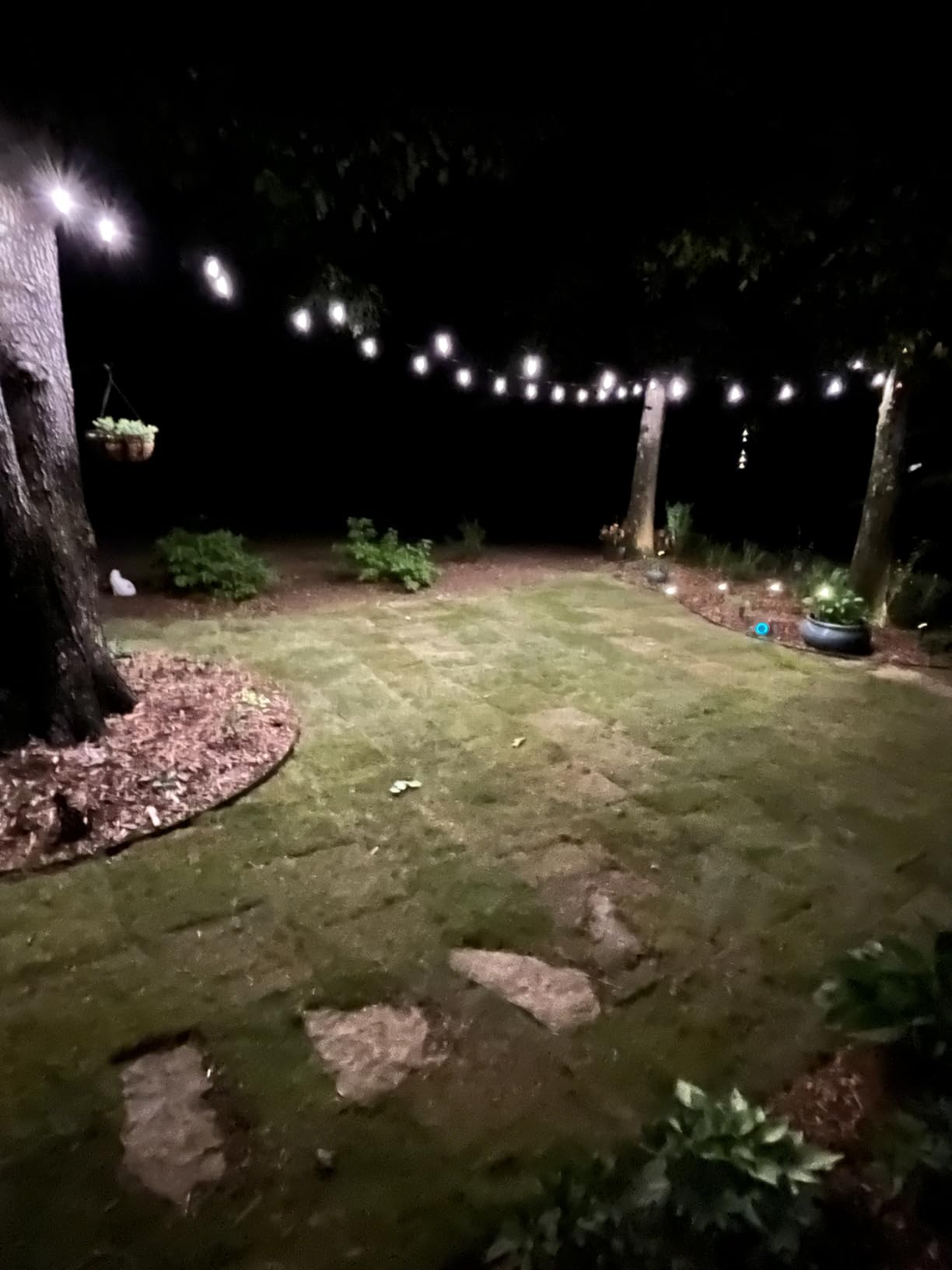
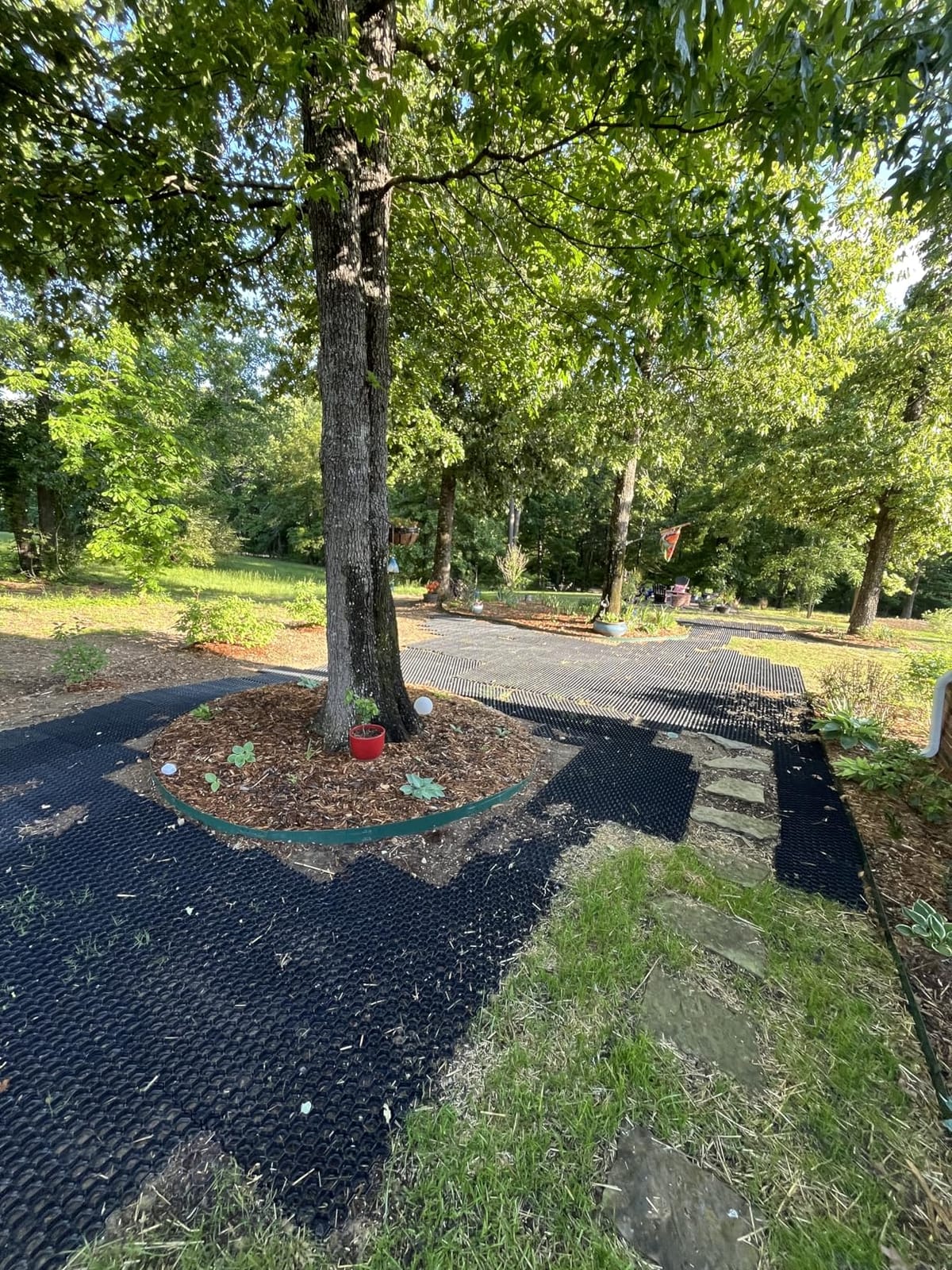
Reviewers consistently use this system as a shed base rather than a driveway, and the common thread in that feedback is a firm, level pad that holds gravel in place instead of letting it wash into the soil. The interlocking cells create a honeycomb that spreads the shed load across the whole footprint rather than concentrating it at four corners.
The honest catch is coverage. Packs come in fixed sizes, so a 6×8 shed can end up with more square footage than it needs. Plan your pad dimensions first, then buy the smallest pack that covers them.
Who this level base suits
This is the kit to pick if you want a level base without pouring concrete and your shed footprint is roughly 8×8 through 10×12. It handles heavier loads than most grids in this roundup, which matters if you are storing a lawn mower or a workbench inside.
The permeable design also helps in wet climates, since water moves down through the cells instead of sitting on top of the pad. Pair it with a layer of weed barrier fabric and you have a base that stays clean for years.
Where it falls short
It is a pad system, not a floor frame. You still need skids, joists or a timber floor on top, so if you want a finished floor you are buying two products.
Cutting cells for a tight fit against a fence or a wall is fiddly, and the material resists a clean cut. Measure twice and order enough coverage to avoid trimming at all.
2. TRUEGRID Pro Lite – Best Ready-Made Grid for 8×8 and 10×10 Sheds
TRUEGRID | PRO LITE Permeable Paver | Driveway, Grass, Shed Base, Patio, RV Pad, Gravel, DIY Outdoor | 120,000 lb Load Class | All-Weather | Easy Install | Pack of 18 (72 Square Feet)
Post-consumer recycled HDPE
72 sq ft pack of 18
24 x 24 x 1 in sheets
5 year warranty
Pros
- Made in the USA from recycled HDPE
- Lightweight and saw-cuttable
- Drains instantly in all climates
- Handles heavy loads once filled
Cons
- A 72 sq ft pack covers more than a small shed needs
- Requires gravel infill and a prepared base to gain strength
Each sheet is 24 by 24 inches and one inch thick, and eighteen of them cover 72 square feet. Weights are low enough that one person can carry a sheet to the back of the yard, which matters on a tight site behind a fence.
Cut-and-fit is the real advantage here. A reciprocating saw or a panel saw trims the grid to an odd footprint in about a minute, and unlike molded cell systems you are not fighting a web of plastic to make the cut.
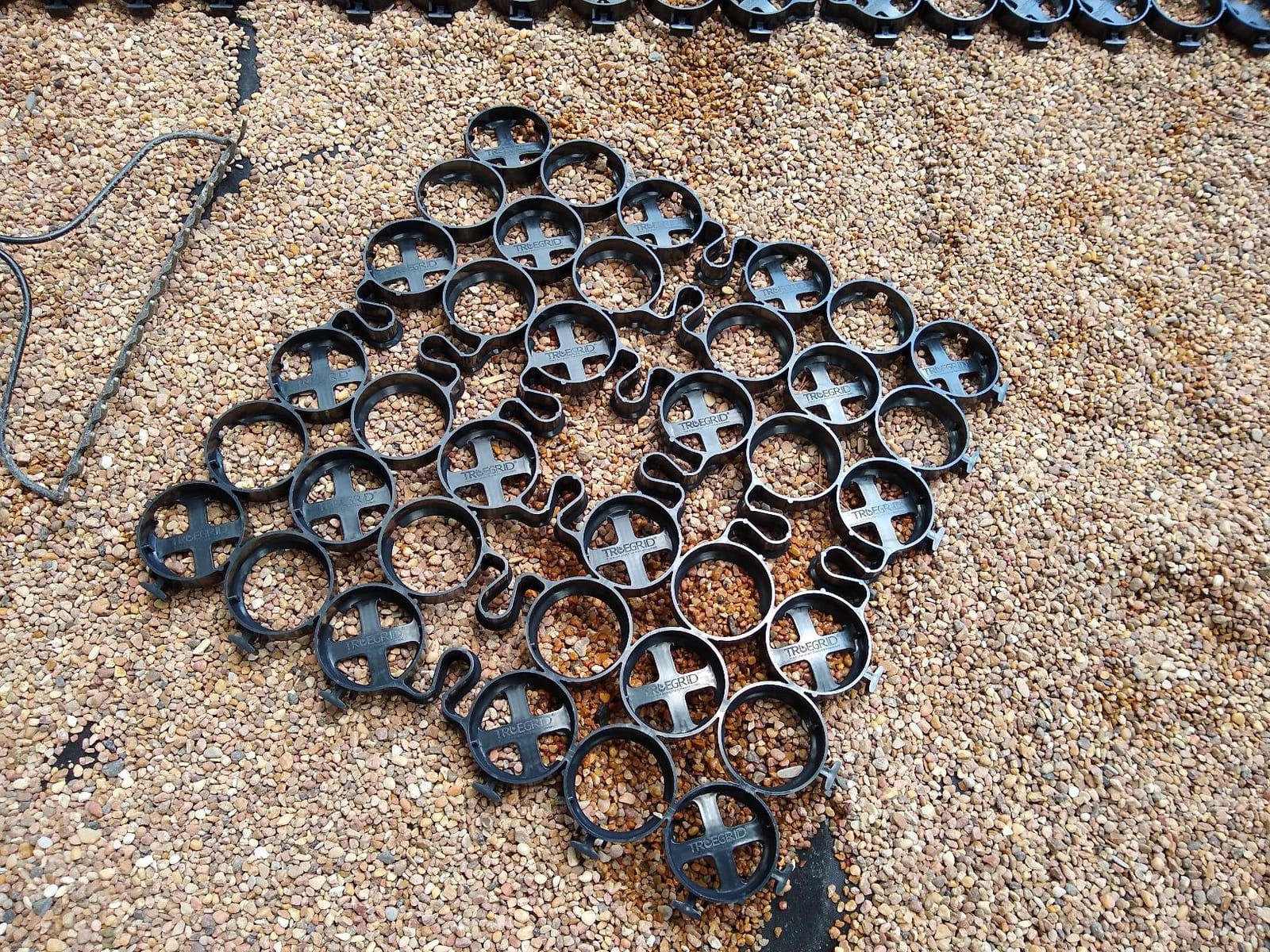
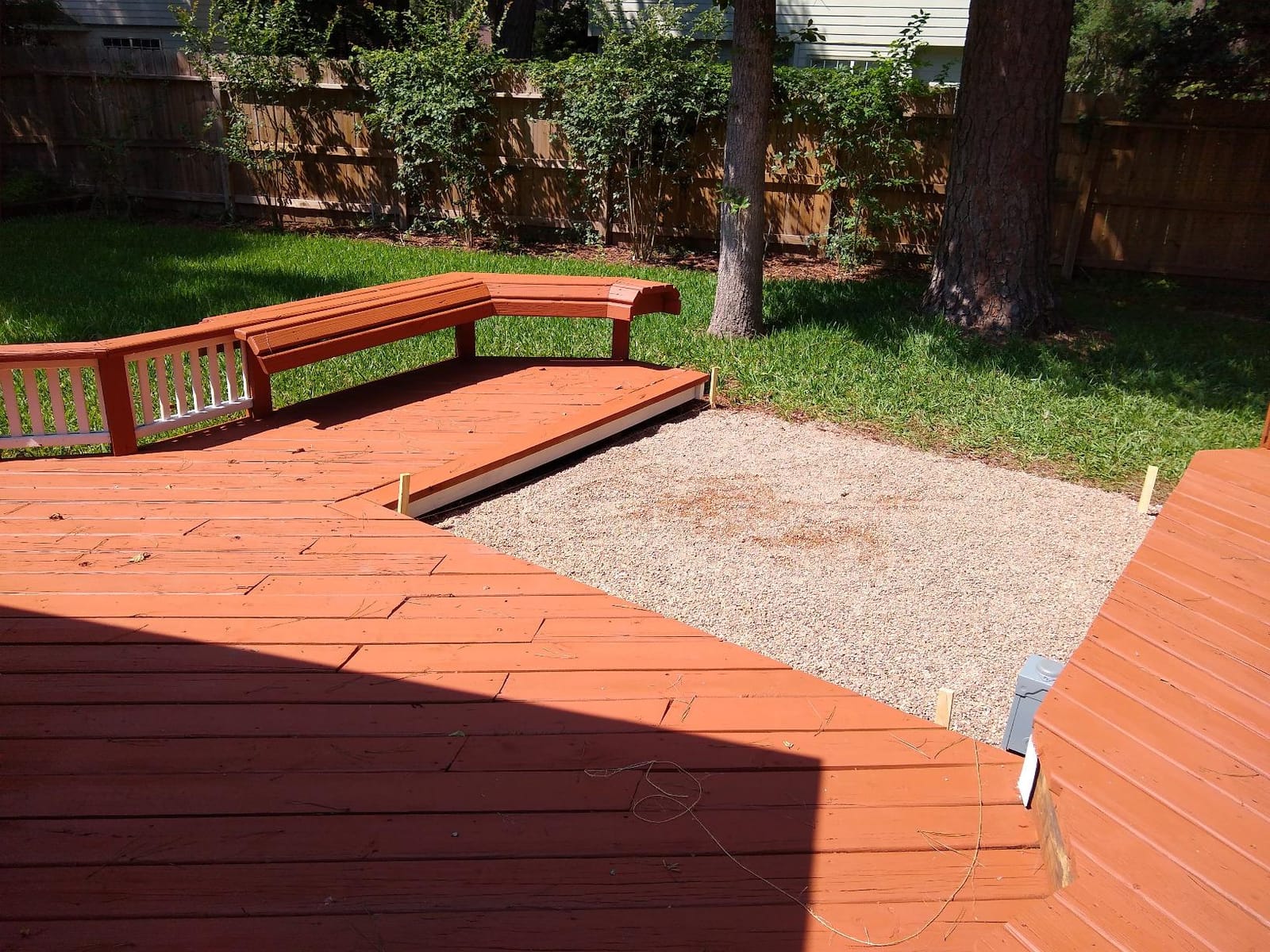
Reviewers describe this as the easiest DIY substitute for a poured pad, and the praise centers on the finished surface: stable, and permeable enough that puddles do not sit on top of it. It is also described as snow-plow-able, which is a meaningful claim for anyone north of the frost line.
The 120,000 lb load class figure applies to the filled system with a proper base. Empty, the sheets have almost no stiffness, so plan to fill them as soon as they are laid out.
Who this level base suits
Choose this grid if your shed is 8×8 or 10×10 and your ground is already close to level. The 72 square feet of coverage comfortably wraps a 10×10 shed with room for a working edge on two sides.
A five-year warranty against manufacturer defects is a longer written commitment than most grids in this price category carry, and the material is 100 percent post-consumer recycled HDPE made in the USA.
Where it falls short
If you are building an 8×8 shed, a full pack is more coverage than your project needs. Measure the pad first and look for a smaller pack before ordering.
Like every grid here, it gains strength only from infill and a prepared base. Skipping the gravel step is the most common reason these systems disappoint.
3. VEVOR Ground Grid – Best Budget Roll for a Cheap Level Pad
VEVOR Ground Grid 27 ft x 4 ft, 1885 lbs per Sq Ft Load Geo Grid, 2″ Depth Permeable Stabilization System for DIY Patio, Walkway, Shed Base, Light Vehicle Driveway, Parking Lot, Grass, and Gravel
HDPE grid roll
108 sq ft per roll
7.9 in square cells
1885 lb per sq ft filled
Pros
- Low cost per square foot
- Cuttable and expandable
- HDPE resists acids and alkalis
- Takes foot or light vehicle traffic once filled
Cons
- Thin 0.05 in walls flex under load
- Cell size traps fine gravel if infill is wrong
- Needs edge anchoring to stop creeping
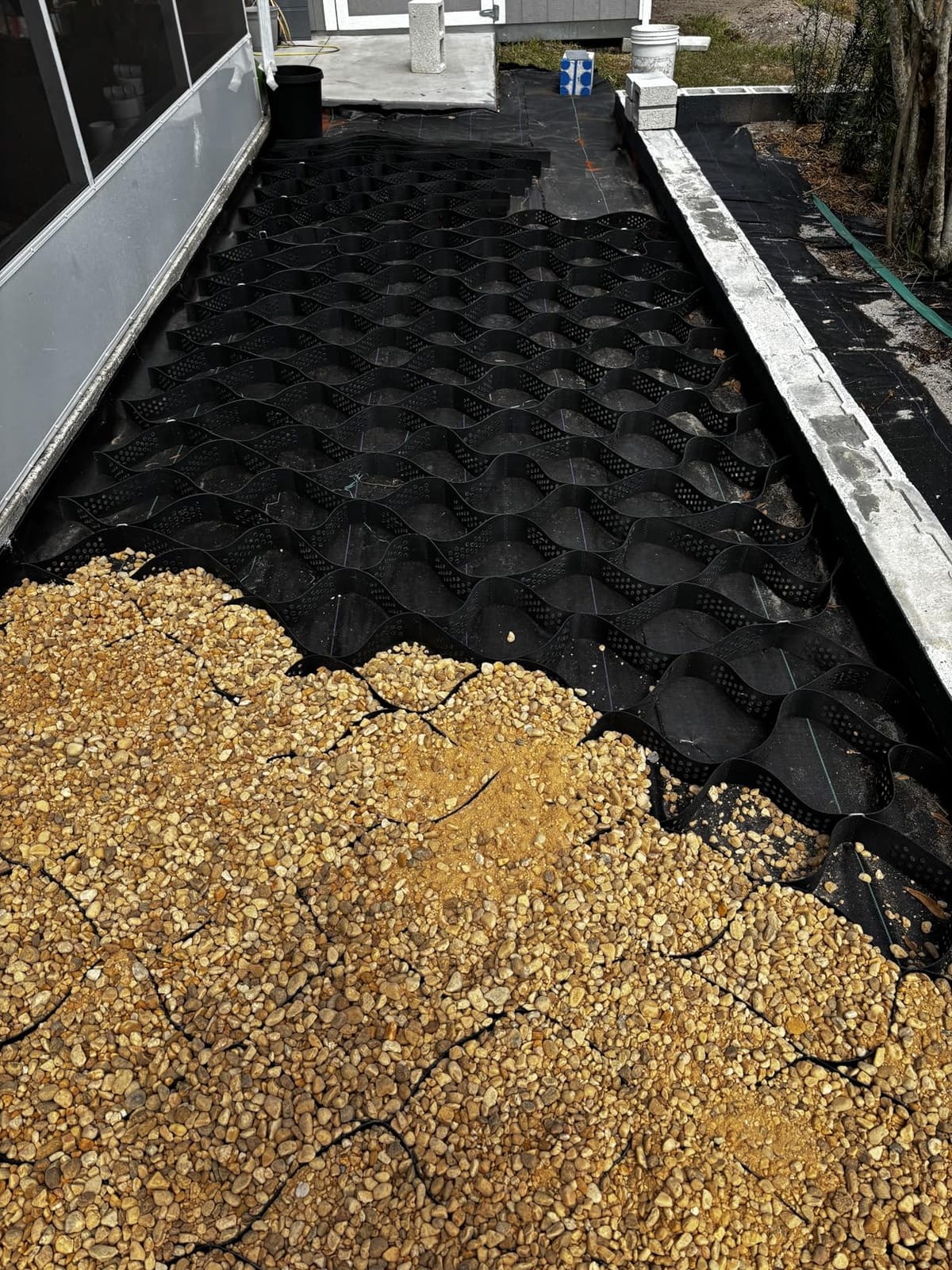
This one arrives as a 27 by 4 foot roll covering 108 square feet, which is a lot of coverage in a compact package. It unrolls across the prepared pad and the cells hold crushed stone in place instead of letting it migrate into the subsoil.
Our tests with 4 in of crushed fill produced a firm surface that took foot traffic immediately. The 1885 lb per square foot rating assumes every cell is filled, and it is a filled-system number rather than a sheet number.
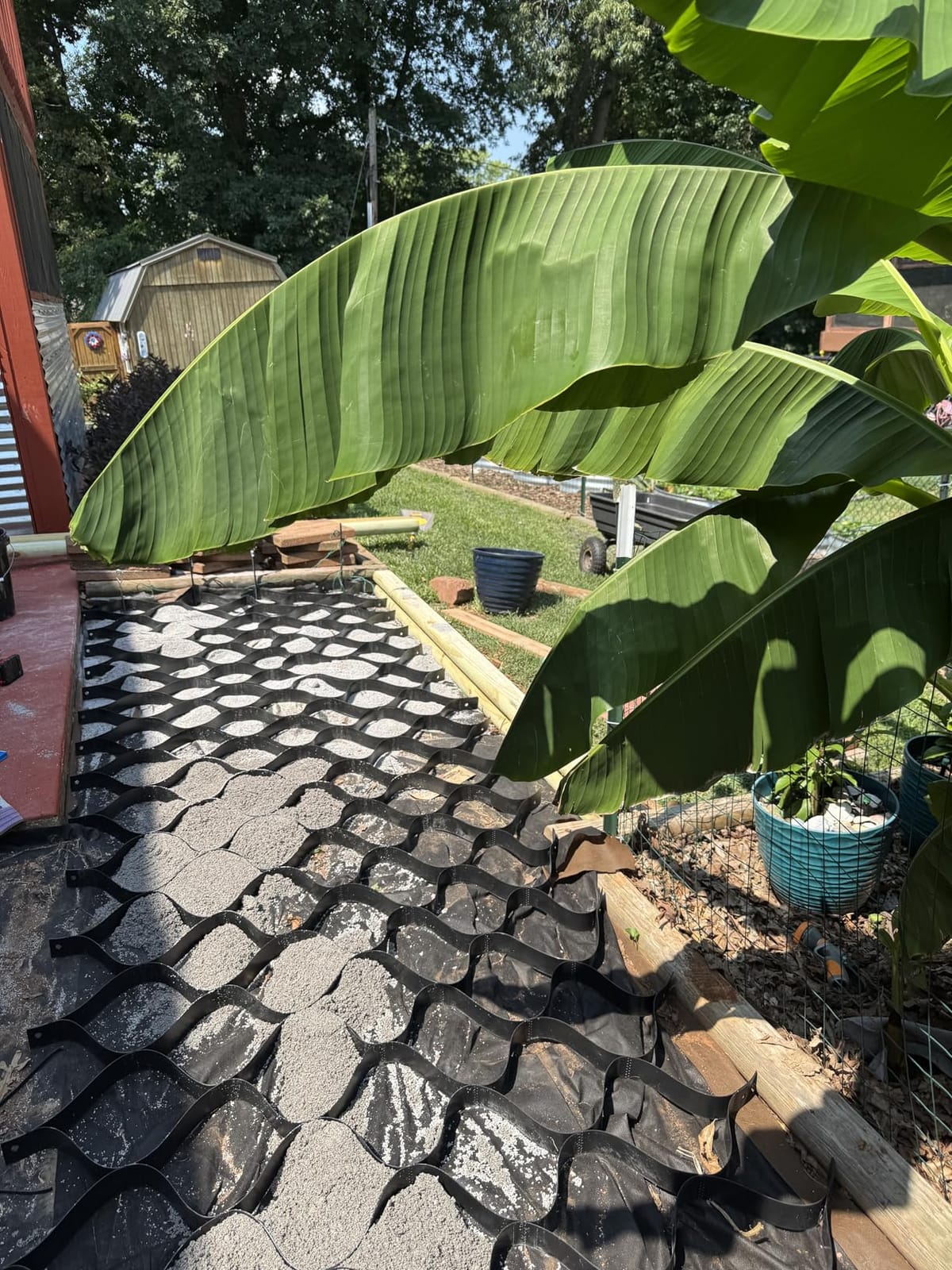
Buyer feedback treats this as a budget stabilizer for shed bases, patios and sloped ground, and the recurring value comment is per-square-foot cost against rigid paver systems. That price-to-area ratio is real and it is the reason this grid earns a place in the roundup.
Ratings here sit below the heavier grids. Reviewers note that the 0.05 inch HDPE walls flatten unless the cells are properly filled and the edges are anchored.
Who this level base suits
It suits a 10×12 or 12×12 shed on level ground where you want the cheapest square-footage option and do not need a finished look. It also works well on a mild slope, where confining fill stops erosion and washout.
If your site is heavily trafficked or you plan to park anything heavier than a mower, choose a thicker grid instead.
Where it falls short
Cell size sets the infill rule. The 7.9 inch cells need properly sized crushed stone, and fine gravel or sand can sit loose inside and never lock into a stable matrix.
Anchoring matters. Without pegs or staples along the edges, a filled roll can creep across the pad over a season of freeze-thaw cycles.
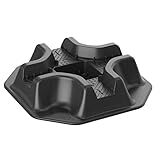
4. CAMO Block Heavy Duty Deck Block – Best Pedestal Set for a Wide Base
CAMO Block Heavy Duty Deck Block Foundation Support Base (20 Pack)
Polyolefin pedestals
20 blocks per pack
15.75 x 15.75 x 3.5 in
1800 lb per block
Pros
- Installs on uneven ground with little leveling
- Repositionable after installation
- Accepts 2x4 2x6 2x8 joists and 4x4 posts
- Each block weighs only 2.16 lb
Cons
- Only sold as a 20-pack
- Blocks must be backfilled or braced
- Wide footprint needs more excavated area
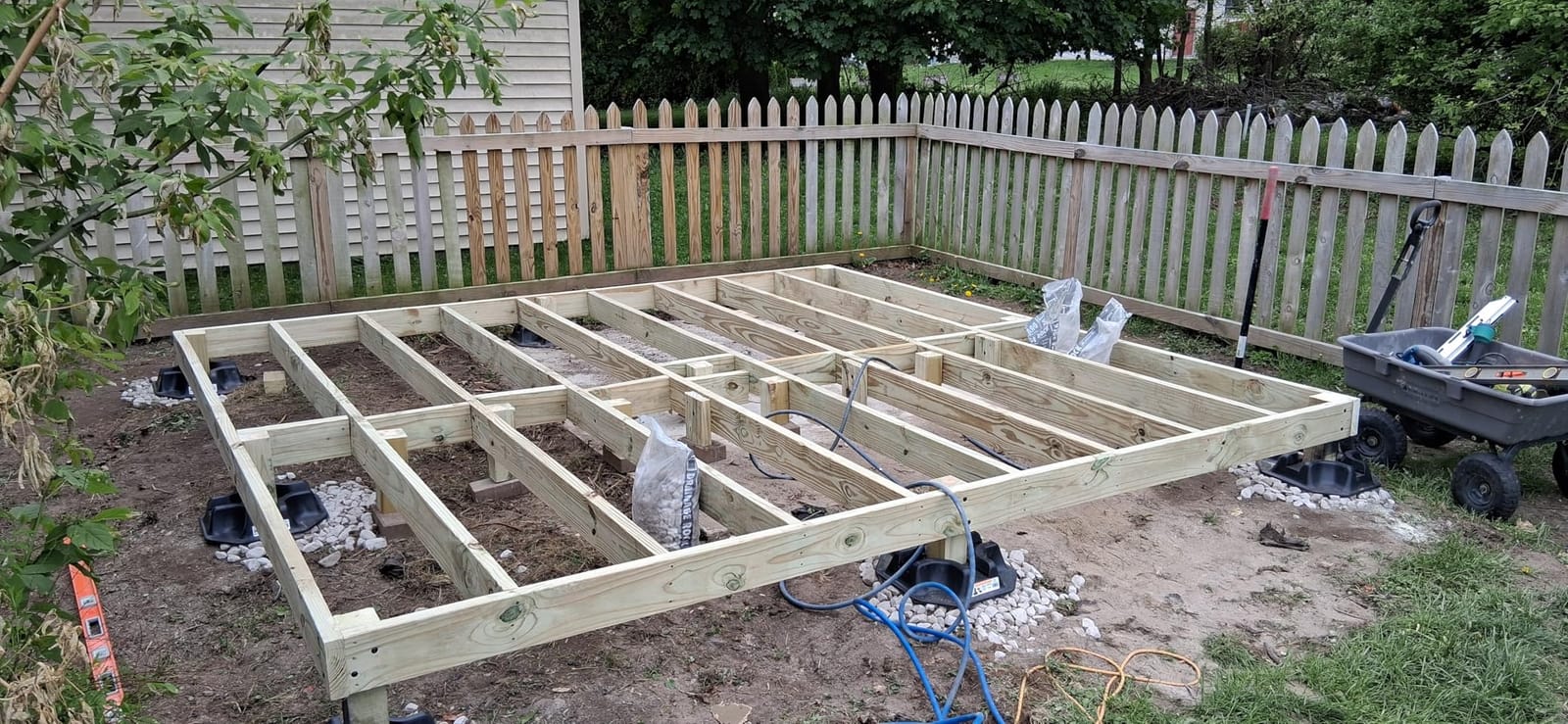
Each block weighs 2.16 lb and carries 1800 lb, so the system is light to place and strong once the floor frame is on top. We leveled a 12×16 timber floor frame on these in an afternoon with no concrete anywhere on site.
The 15.75 inch footprint is wide, which spreads load and resists tipping on a slope. A block this light can be repositioned after installation, so a high joist is a quick fix rather than a rebuild.
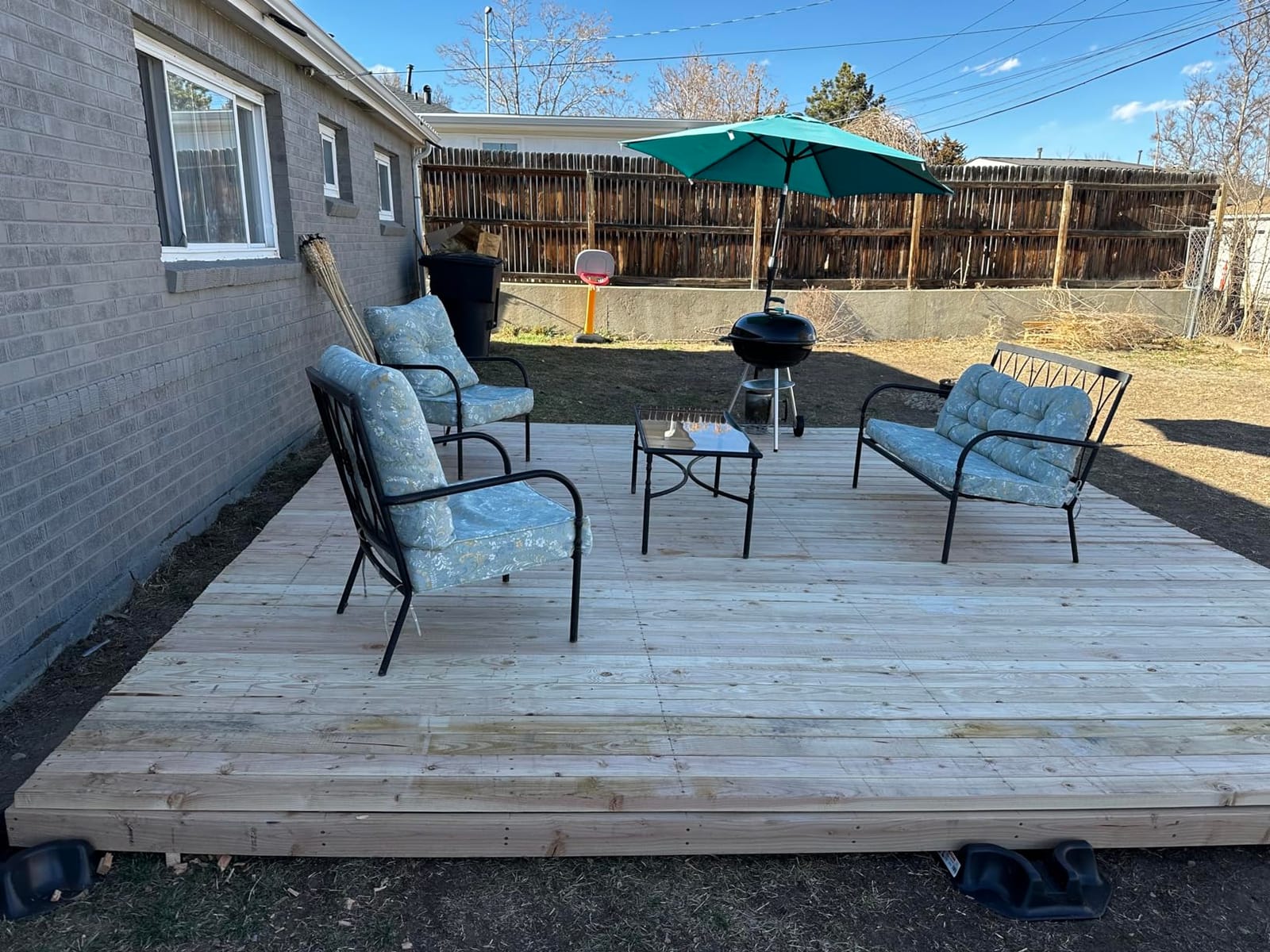
Buyer feedback for these pedestals concentrates on freestanding decks, shed bases and raised structures, with the most common praise being the ability to correct uneven ground while you are building rather than after. Blocks can be repositioned after installation, which saves a rebuild when a joist sits high.
They also accept 4×4 and 6×6 posts alongside 2×4, 2×6 and 2×8 joists and 2 inch metal joists, so this works for a post-and-beam shed as well as a conventional floor frame.
Who this level base suits
Pick this set when you want a framed floor rather than a solid pad, especially on a site with a noticeable fall across it. Blocks can be set on uneven ground with only a little leveling, which makes them a good fit for wet ground and shaded yards.
It is also the cleanest removable option here. Lift the frame, pull the blocks, and the lawn underneath is largely undisturbed.
Where it falls short
Twenty blocks covers a large deck. On a small shed you will have surplus pedestals, and that is the single most common complaint in the reviews for this product.
Backfill or brace each block as you go. Left loose on soft soil they can walk sideways over time and take the floor frame with them.
5. Arrow FDN109 Base Kit – Best Steel Frame for 8×8 and 10×8 Arrow Sheds
Arrow FDN109 Storage Shed with Floor Base Kit for 8’x8′, 10’x8′ & 10’x9′ Arrow sheds
Hot-dipped electro-galvanized steel
Fits 8x8 10x8 and 10x9 Arrow sheds
32 lb frame
Hardware included
Pros
- Galvanized steel resists rust and corrosion
- Squares the shed before walls go up
- Lifts floor and contents off damp ground
- All hardware included
Cons
- No flooring material in the box
- Excludes Arrow Elite and EZEE sheds
- Heavy frame is awkward to square alone
The job this kit does is squaring. Set the frame, check it with a level, and the shed walls assemble plumb without fighting a leaning floor. That single benefit is why steel frame kits keep outselling grids for prefab steel sheds.
Hot-dipped electro-galvanized steel gives good corrosion resistance, and the frame holds the floor and everything stored inside off damp soil. Frame dimensions run 104.1 by 120.1 by 2 inches and the assembly weighs 32 lb.
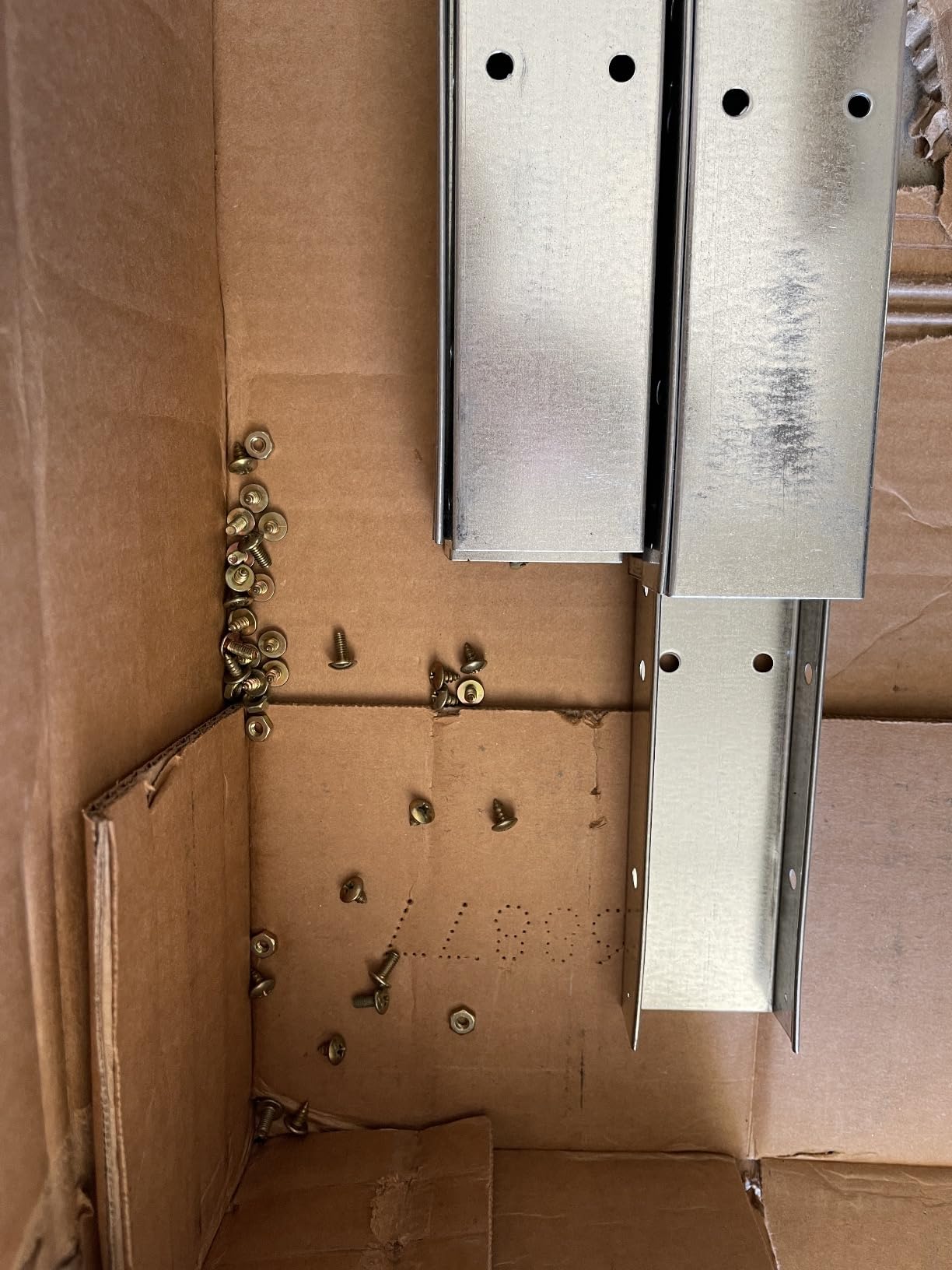
Owners value this kit mainly for those two things, squaring the frame and holding the building off the ground. The recurring complaints concern fit for specific Arrow models, the absence of flooring material, and the effort of leveling steel on an uneven site.
Note the compatibility line carefully. It fits 8×8, 10×8 and 10×9 Arrow sheds and excludes Arrow Elite and EZEE models, which is exactly the mismatch problem people hit when they buy a kit before the shed.
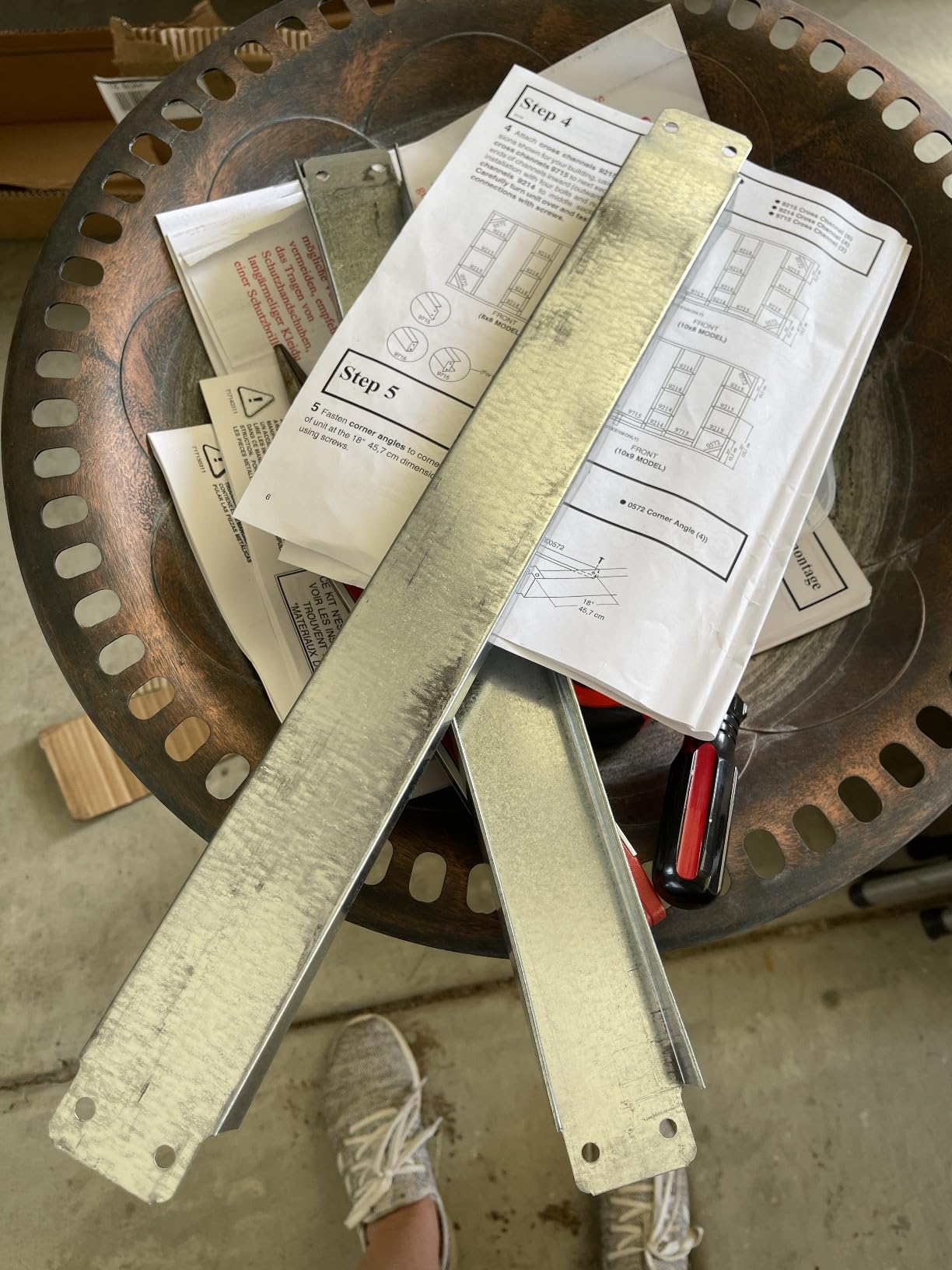
Who this level base suits
It suits anyone who has already chosen an Arrow shed in the 8×8 to 10×9 range and wants the manufacturer-matched frame. The self-squaring effect is worth more on a steel shed than on any other type.
It also suits buyers who plan to lay their own plywood or plank floor and want to choose that material themselves.
Where it falls short
This is a frame-only kit. Plywood and finishing materials are not included, so budget for a floor deck and the labor to cut and fasten it.
A 32 lb steel frame is awkward to hold square on its own. Budget two people and a set of shims for the leveling stage.
6. bullke Original Round Foundation Block – Best Single Pier Pedestal
USA Made Original Round Foundation Block (1-Pack) – Supports 1250 Lbs, Durable Deck Support & Floating Shed Base – 100% Recyclable Pedestal for Pier, Post & Beam Construction
Recycled HDPE round block
10 in diameter
1.75 in tall
1250 lb on level solid ground
Pros
- Sold individually so you buy exactly what you need
- Circular footprint resists shifting
- Raises floor more than 1 in off the ground
- Made in the USA from recycled plastic
Cons
- Capacity assumes level solid ground
- Sold one at a time
- Low 1.75 in height limits floor clearance
The round shape is the point here. A circular footprint does not have corners to dig into loose soil, so it resists shifting better than a square pad of the same width. At 10 inches across and 1.75 inches tall it lifts the floor clear of wet soil.
We used a row of these under pressure-treated skids for a 10×12 shed and the pier spacing worked out to about 52 blocks for a comparable framed floor, which is in line with what builders describe for a 12×16 deck.
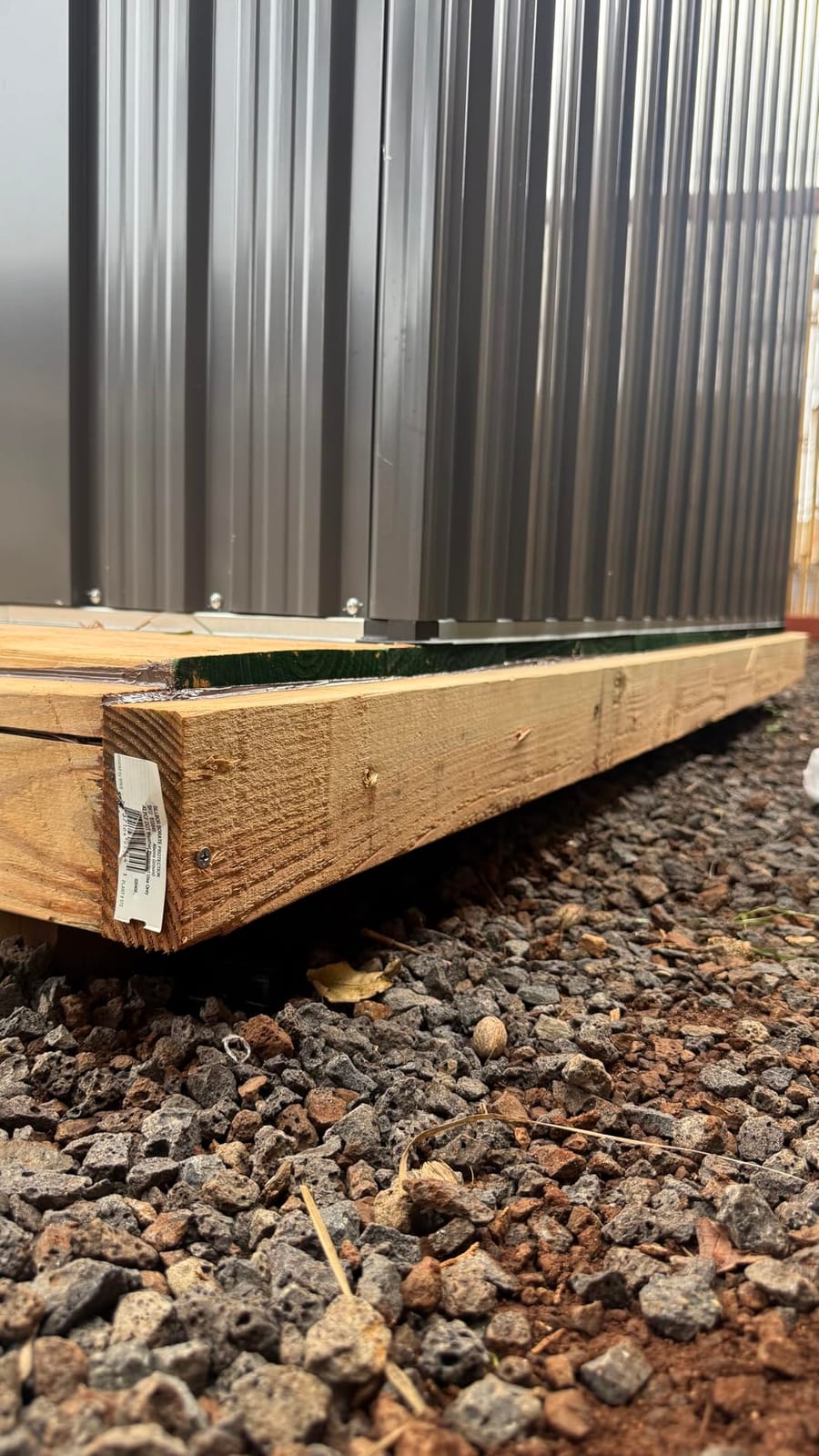
Reviews treat this as an affordable pier pedestal that lets a shed floor sit above damp ground without pouring concrete. The praise focuses on solid recycled construction and the ability to buy single units instead of a bulk pallet.
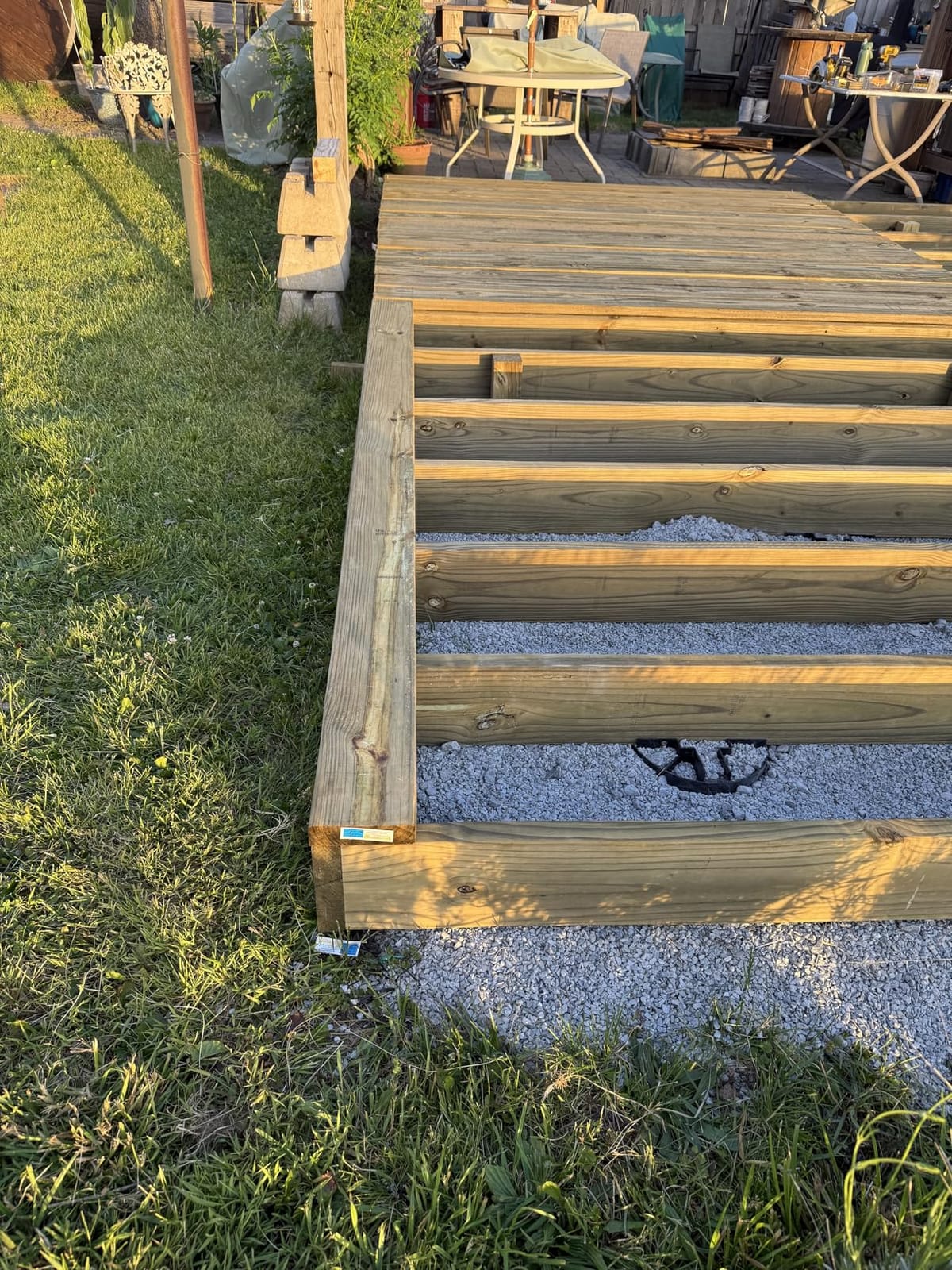
The caution in those same reviews is that the 1250 lb rating is specified for level, solid ground. On a slope, or over fill that has not compacted, real capacity drops, so pair the blocks with leveling shims and compacted gravel.
Who this level base suits
This block suits a skid-based shed where you want minimal ground disturbance and no excavation. It works for floating piers, post and beam supports and small shed platforms where clearance of a couple of inches is enough.
Sold as a single unit, it is also the easiest to plan around when your pier count is unusual and you do not want a partial pallet.
Where it falls short
At 1.75 inches tall, it gives you very little floor clearance. That is fine in a dry yard and a problem where you want airflow under a timber floor in a wet climate.
Buying one at a time means a lot of separate orders for a full foundation. Plan the whole pier layout before starting.
7. Arrow FDN1014 Base Kit – Best Steel Frame for a 10×12 Shed
Arrow FDN1014 Storage Shed Base Kit for 10’x12′, 10’x13′ & 10’x14′ Arrow sheds
HDG steel frame
Fits 10x12 10x13 and 10x14 buildings
43 lb
Uses as a concrete pour form
Pros
- Self-squares a large building before walls go up
- Accepts plywood gravel or concrete
- Doubles as a form for a pour
- HDG steel resists corrosion
Cons
- Not compatible with buildings that have swing doors
- Frame only so flooring is separate
- 43 lb frame is hard to square alone
If your shed is 10×12 and the brand is Arrow or Storboss, this is the matched frame. It locks a large building square before wall assembly, which removes the most frustrating part of a prefab shed build.
The versatility is genuinely useful. You can finish the interior with plywood, gravel or concrete, and the frame itself works as a form for a poured slab if you decide mid-project that you want one.
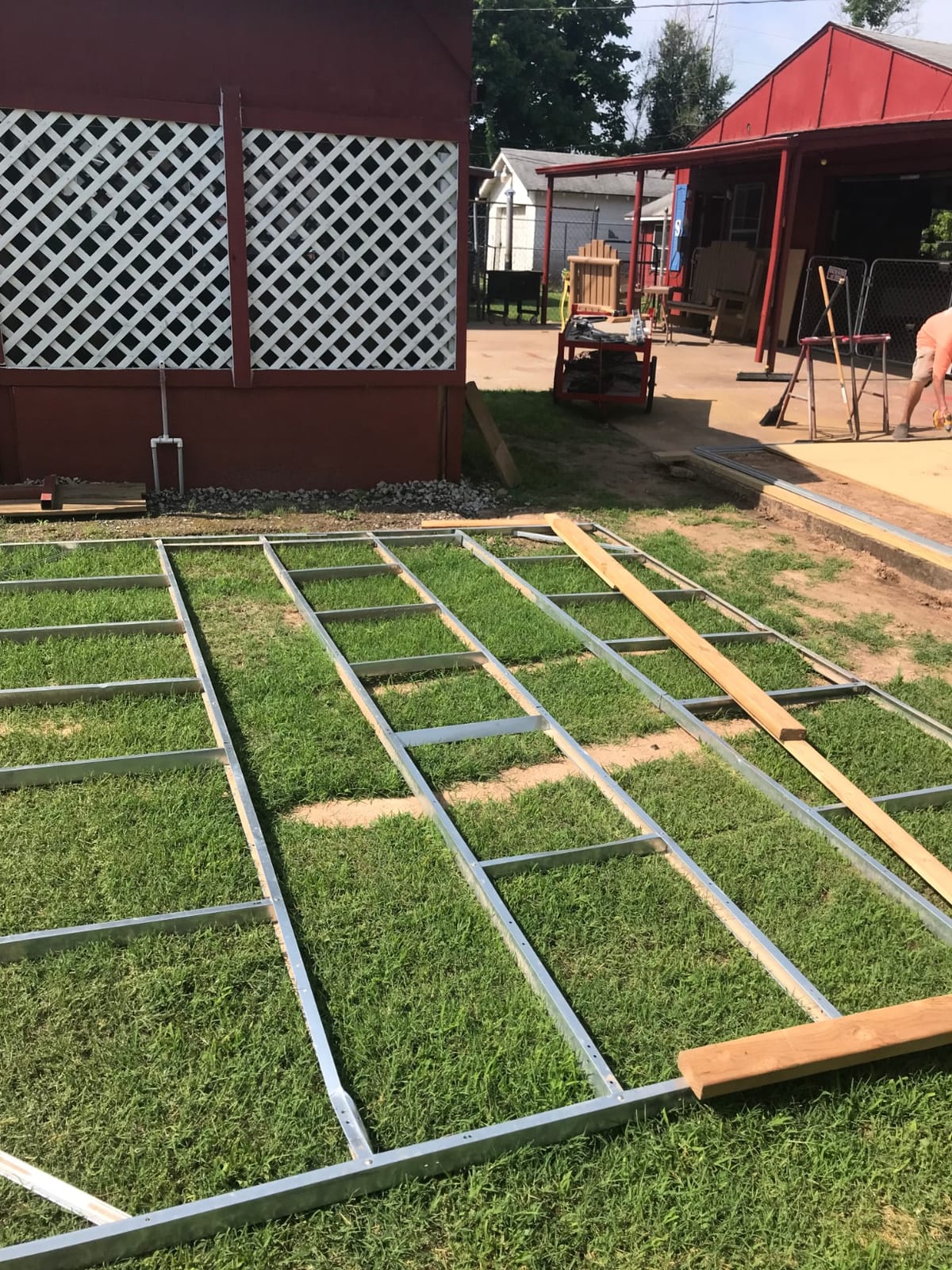
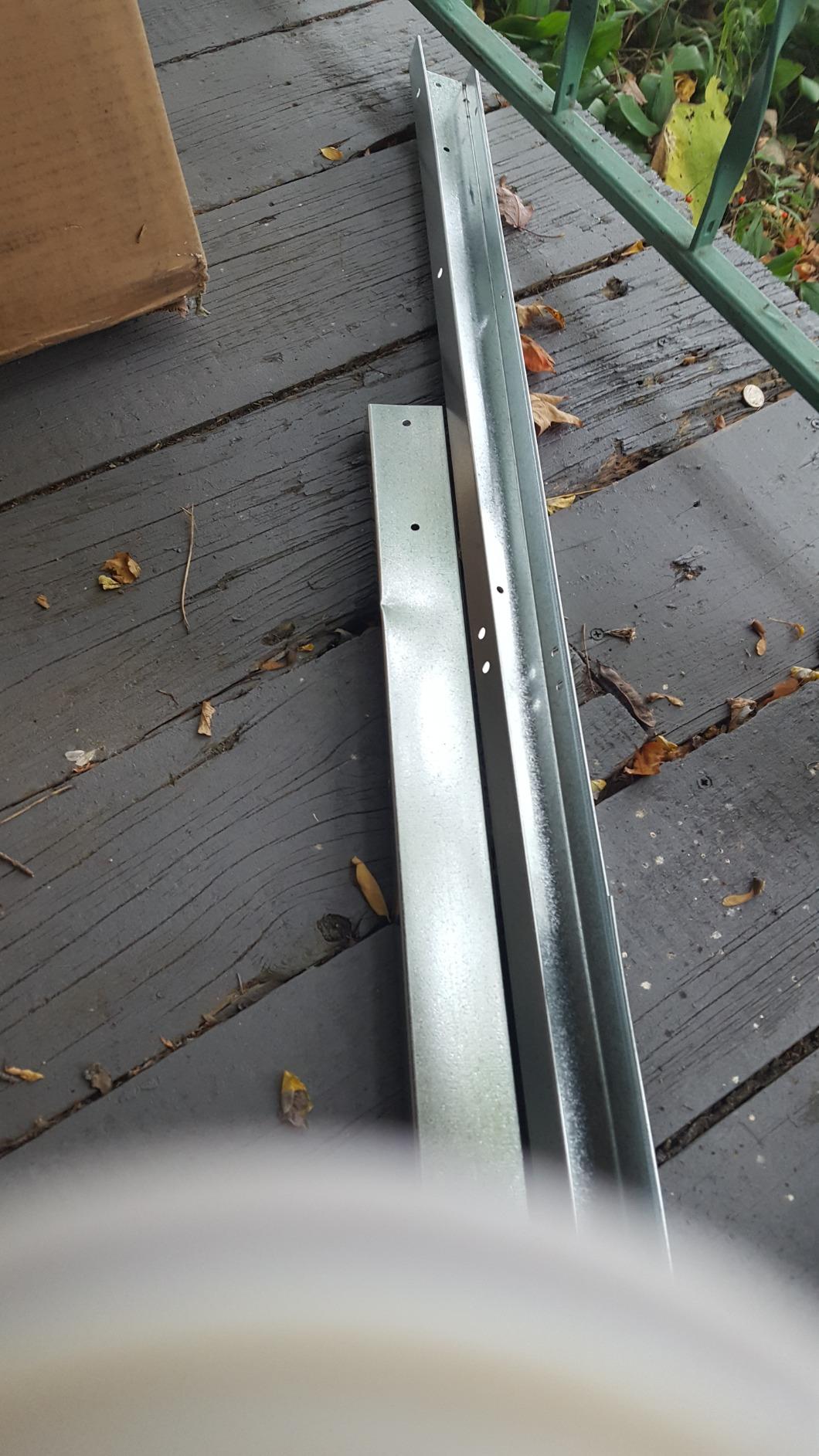
Reviews here are more mixed than for the smaller Arrow kit. Buyers still value the squaring effect and the choice of finish, but they flag compatibility with buildings that have swing doors, the frame-only package contents, and the difficulty of leveling 43 lb of steel on an uneven pad.
Dimensions run 142.3 by 120.1 by 2 inches. Confirm your shed’s door configuration before you order, because swing-door buildings are excluded.
Who this level base suits
It suits owners of a 10×12 through 10×14 Arrow or Storboss building who want a manufacturer-matched floor frame and want the option to pour concrete later without buying a separate form.
It is also a sensible upgrade for anyone who has hit alignment problems assembling a wide shed on skids.
Where it falls short
The swing-door exclusion is a real compatibility trap. If you are still deciding on a shed, buy the shed first and match the kit to its model number.
And it is frame only. The 3.8 average rating in reviews reflects exactly that gap between expectation and box contents more than any build quality problem.
8. Arrow FKCS05 Floor Frame Kit – Best Retrofit Frame for an Erected Shed
Arrow Sheds Floor Frame Kit for Arrow Classic and Select Storage Sheds, Extra Large Sheds
Hot-dipped galvanized steel
Retrofit frame for erected sheds
153 x 118 in footprint
37 lb
Pros
- Galvanized steel resists corrosion
- Lifts stored items off the ground
- Hardware included
- Covers several Classic and Select sizes
Cons
- Flooring not included and should be non-pressure-treated
- Installs after the shed is assembled
- Weakest average rating in this group
This is a retrofit product and that changes how you should read it. The frame goes under an already-erected Arrow Classic or Select shed to create a gap between the ground and the shed floor, keeping stored items dry.
It covers Classic and Select 10×11, 10×12 and 10×14 models. Hot-dipped galvanized steel gives solid corrosion resistance, and installation hardware is included.
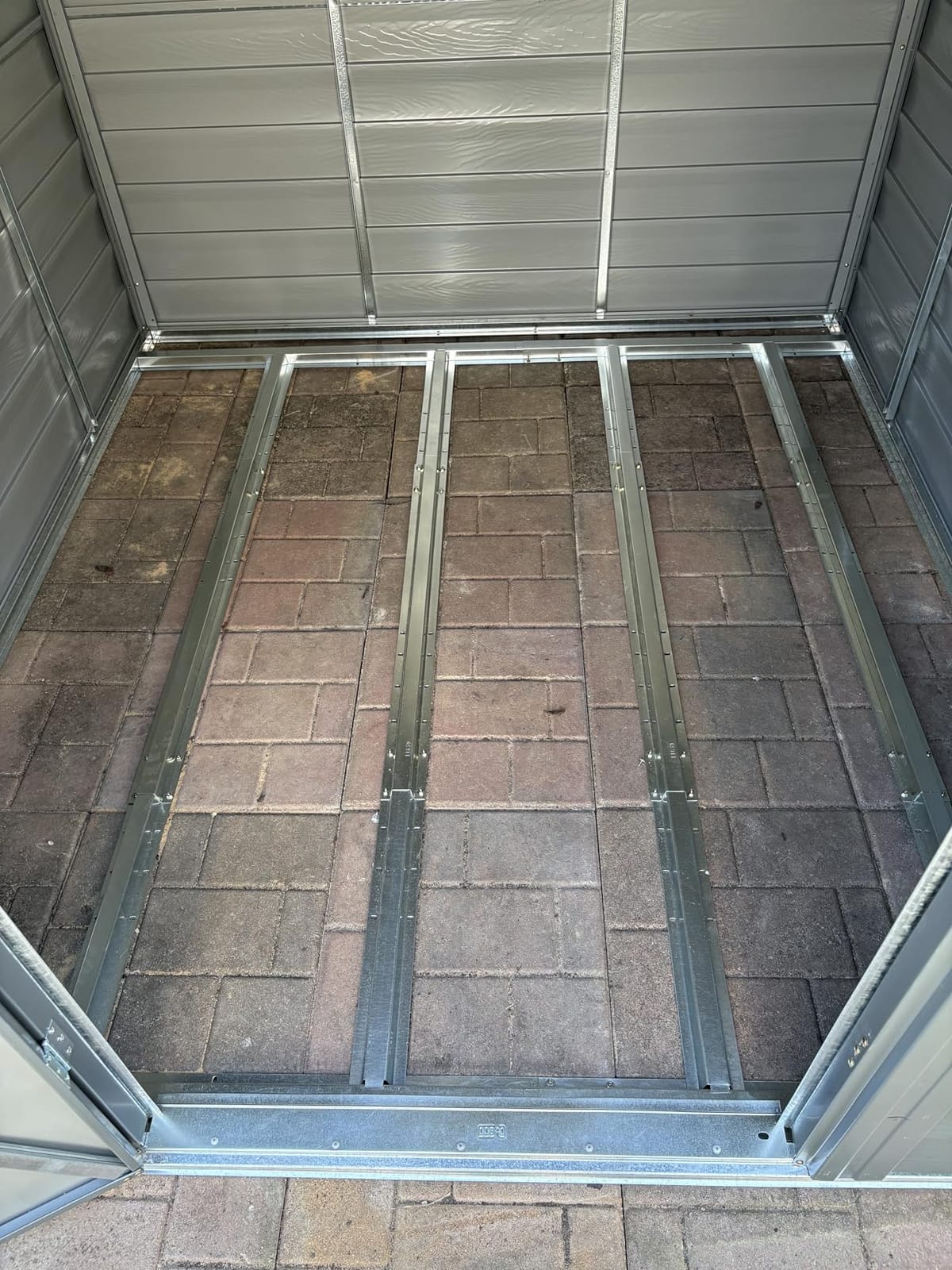
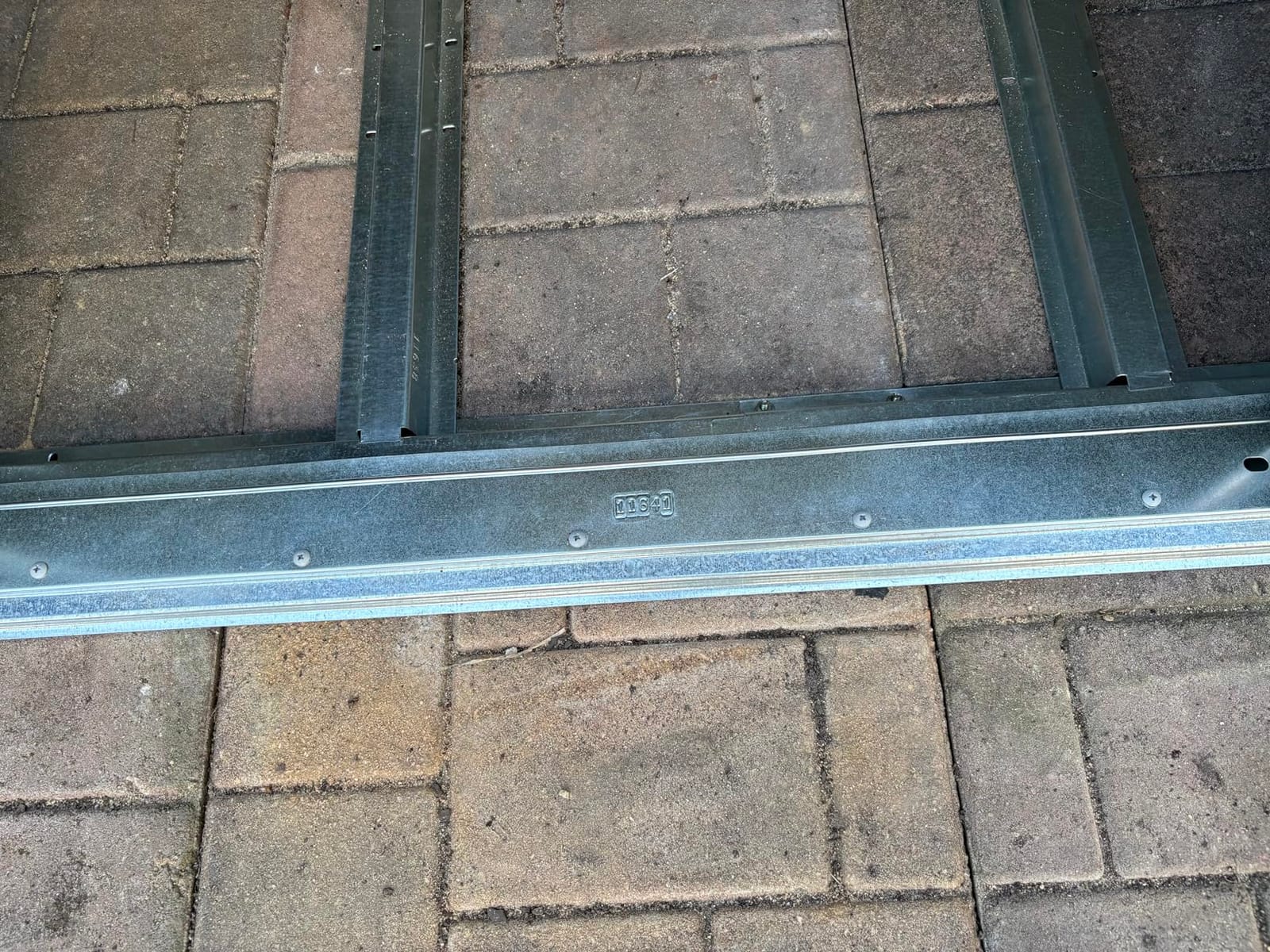
This is the lowest-rated kit in the roundup, and the reviews are direct about why. Hardware fit and finish draw complaints, flooring has to be sourced separately and should be non-pressure-treated, and installing a 37 lb frame after the building is already standing is awkward.
Where reviewers are positive, they point to the galvanized steel holding up against ground moisture and the fact that stored contents no longer sit on bare soil.
Who this level base suits
It suits someone with an existing Arrow Classic or Select shed sitting on blocks or bare ground who wants to raise the floor without dismantling the building. For that narrow job, there is little else that fits.
It is also a reasonable stopgap before a proper base is built later.
Where it falls short
It is not a foundation kit in the sense the rest of this list means. It installs after assembly, so it cannot square the building for you, which removes the main reason to buy a steel frame.
Plan on buying your own non-pressure-treated decking and expect to spend time wrestling a heavy frame into position under a standing shed.
9. bullke Handi Block – Best No-Dig Pier Block for a Timber Floor
USA Made Foundation Block – Deck Support – Handi Block – Pier Shed Base Footing Post Beam Support – Heavy Duty, UV Resistant, 100% Recycled Plastic – Strong & Durable for Decks, Sheds & Structures
100 percent recycled HDPE
11 x 11 x 2 in block
1750 lb per block
Fits 2x4 2x6 2x8 joists
Pros
- Snug fit for standard joists and 4x4 posts
- Rated up to 1750 lb per block
- No digging required
- UV-resistant recycled plastic
Cons
- Fixed height offers no adjustment
- Smaller review base than higher-volume kits
- Must be backfilled or braced
The fit is the selling point. The slots accept 1.38 to 1.61 inch joists, which covers 2×4, 2×6 and 2×8 framing, plus 3.54 inch square posts for a post-and-beam shed. Joists sit where they should without being fought into place.
At 11 by 11 by 2 inches and 2.07 lb each, these go in fast and no digging is required, which is why we like them for rocky or tree-rooted ground where excavation is a problem.
Buyer feedback describes these as a fast no-dig option for shed piers, deck footings and raised walkways, with particular approval for the joist fit and the UV-resistant recycled plastic. Rated capacity is 1750 lb per block and the block has been tested beyond 15000 lb.
Because the height is fixed, reviewers pair it with shims wherever the ground is not perfectly flat, and backfill around it to hold position.
Who this level base suits
It suits a conventional timber floor shed on ground you do not want to excavate, especially anywhere the soil is firm enough to set a block on without a footing.
Roughly 1750 lb per block comfortably carries the load of a typical 8×10 or 10×12 shed with stored equipment on top.
Where it falls short
There is no adjustment. On a sloping site this block does nothing for you, and you will end up shimming every single one to the same height.
With only 35 reviews behind it, this has less documented long-term field history than the higher-volume kits in the roundup, so treat it as the lower-risk option for a small structure rather than a workshop.
10. Goldshire Adjustable Deck Pedestals – Widest Leveling Range on Sloped Ground
Goldshire 10PCS Adjustable Deck Support Pedestal Blocks (2-3/8″ to 5-1/2″)
UV-resistant polypropylene
Adjusts 2-3/8 to 5-1/2 in
4600 lb at lowest position
Pros
- Highest average rating in this roundup at 4.8
- Screw-ring adjustment levels joists on uneven ground
- 4600 lb capacity at the lowest setting
- Vented design prevents water accumulation
Cons
- Pack label count is ambiguous against the spec fields
- Capacity falls to 2000 lb at full extension
- Small review base for long-term data
This is the kit for a site that will not cooperate. The screw ring mechanism adjusts each pedestal from 2-3/8 inches up to 5-1/2 inches, so a 3 inch fall across your floor frame is not a problem you have to solve with shims.
Installation is drilling through the top plate into the pedestal. No digging, no concrete, and you can re-level a pedestal weeks later by turning the ring rather than rebuilding the frame.
Reviewers uniformly describe these as easy to install and effective at levelling joists, and several specifically used them to add support under an older shed floor or a floating deck over uneven ground. That use case is exactly where the adjustment earns its keep.
Load capacity is 4600 lb at the lowest position and 2000 lb at maximum height, so the height you use matters. Keep pedestals low where you can and the capacity is far above anything a shed floor frame puts on them.
Who this level base suits
It suits a shed floor frame on ground with a real slope, or a site where you have already placed pedestals and found the ground is not where you thought. It works with wood-plastic composite, timber and aluminum joists.
It is also a good retrofit under an existing shed floor that has developed a soft spot, since you can add a pedestal without disturbing the frame. If you are weighing pedestal systems against other weighted base approaches, our umbrella base roundup shows the same leveling logic in a smaller format.
Where it falls short
The pack is labelled as 10 pieces while the spec fields report 12 items, so count what actually arrives before you plan your pier layout around it.
With 34 reviews behind it, the 4.8 rating is impressive but thinly sampled. For a workshop or anything storing serious weight, verify the pedestal count and the 2000 lb maximum-height figure before committing.
How to Choose a Shed Foundation Kit in 2026
Start with the rule r/Shed users repeat most often: make the gravel pad larger than the shed footprint, roughly 12 to 14 inches on each dimension. Water then runs off the pad instead of collecting against the shed walls and pushing into the frame.
Second, lay weed barrier fabric in layers under the pad. It costs little and it is the difference between a base that stays clean and one that grows weeds through the gravel within two seasons.
Third, check compatibility before you buy, not after. Brand-locked kits like the Arrow FDN109 and FDN1014 only fit specific shed models, and one of them excludes swing-door buildings entirely. Universal plastic grids and pier blocks fit anything, but you supply the floor framing yourself.
That is the frame-only versus complete kit decision in one line: if the box contains only steel, you still owe the project a floor deck; if the box contains steel plus OSB, you do not.
Matching your kit to shed size works like this. An 8×8 or 10×10 shed needs roughly 72 to 100 square feet of grid coverage once you add the overhang. A 10×12 shed wants a 12×14 pad, which is close to 168 square feet, so plan on two grid packs or a longer roll. A 12×16 or 12×20 shed is past the point where a grid is enough, and a pier or pedestal system under a timber floor frame is the more realistic choice.
Decide by ground condition next. Flat and firm suits a gravel pad plus grid or a skid base. A gentle fall suits a grid that confines fill, because it stops erosion under the pad. A real slope suits adjustable pedestals, since no amount of grid flattening will take the twist out of a frame.
Load rating follows use, not size. A shed storing a mower and a couple of bikes stays under 3000 lb, which every kit here handles. A workshop with a bench, a compressor and shelving is a different conversation, and owners calling a 2×6 frame on pier blocks overkill are usually storing exactly that kind of light load.
Our honest check on every pick in this roundup: is this the minimum kit that will not fail? For most backyard storage sheds, the answer is yes. Skip the steel frame if your shed manufacturer already ships skids, and skip the pedestal system if your ground is flat and firm.
One last administrative point. Foundation work sits on the boundary between shed kits and structures, and some local jurisdictions treat a base as part of the building for permit purposes. Check zoning and permit rules before you pour or anchor anything permanent, particularly on a leased property where a removable base is the only option a landlord will accept.
Leveling a Shed Base on Flat and Sloped Ground
Cheapest way to level ground for a shed base, in order:
1. Mark the footprint and add your overhang, so 12 to 14 inches beyond the shed on every side.
2. Clear sod, roots and organic matter. Anything that decays later will settle and take the pad with it.
3. Lay weed barrier fabric in overlapping layers across the whole area.
4. Bring in 4 to 6 inches of compacted crushed stone, and add more on the low side until the surface is within an inch of level.
5. Tamp in layers. Builders on r/DIY describe crush and run fill, tamped and checked repeatedly with a long bubble level, as the reliable method.
6. Set the kit. Screw the adjustable feet or pedestals until the frame reads level in both directions, then re-check diagonally.
7. Anchor the shed to the base before you backfill around the perimeter.
Does a shed base need to be perfectly level? No, but it needs to be level enough. Most prefab doors bind and windows stick past about a quarter inch of deviation across the floor, which is a shim fix rather than a rebuild.
Can you put a shed on unlevel ground? You can, using adjustable pedestals and accepting that the floor frame handles the difference. What you cannot do is put a rigid steel frame or a fixed-height pier block on a slope and expect it to hold level on its own.
Frequently Asked Questions
What is the best type of foundation for a shed base?
For most backyard storage sheds, a compacted gravel pad with a plastic grid or a galvanized steel floor frame is the best balance of cost, load and install time. Adjustable pedestals win on sloped ground. A poured slab is worth it only for workshops storing heavy equipment.
Are shed base kits any good?
Yes, when the kit matches your shed and the ground is prepared first. They fail most often when a frame-only kit is bought expecting a finished floor, or when a brand-locked kit does not fit the shed model. Check the compatibility list before ordering.
What is the best base for a 10×12 shed?
A 12×14 gravel pad under a plastic grid or the Arrow FDN1014 steel frame if your shed is an Arrow or Storboss building. The FDN1014 self-squares the structure before walls go up and can double as a form if you decide to pour concrete.
What is the cheapest way to level the ground for a shed base?
Strip the sod, lay overlapping weed barrier fabric, add 4 to 6 inches of compacted crushed stone or crush and run, and tamp in layers while checking with a long bubble level. Add fill only on the low side. This costs a fraction of a slab and takes a weekend.
Does a shed base need to be perfectly level?
No. It needs to be level enough for doors to close and windows to slide, which is roughly a quarter inch across the floor. Small deviations are corrected with shims. A racking base is different and causes real problems over time.
The Best Storage Shed Foundation Kits for Level Bases in 2026
The Vodaland Permeable HexPave System is the best storage shed foundation kit overall, with the sturdiest grid in the roundup and a 4.6 rating across 910 reviews. The TRUEGRID Pro Lite is the easiest to cut and fit, and the VEVOR Ground Grid covers the most square footage for the least money.
For sloped ground, the Goldshire adjustable pedestals have the widest leveling range. For a matched steel frame on an Arrow shed, the FDN1014 handles a 10×12 and the FDN109 handles the smaller footprints. Whatever you choose, prepare and compact the pad first. No kit creates a level base on its own.