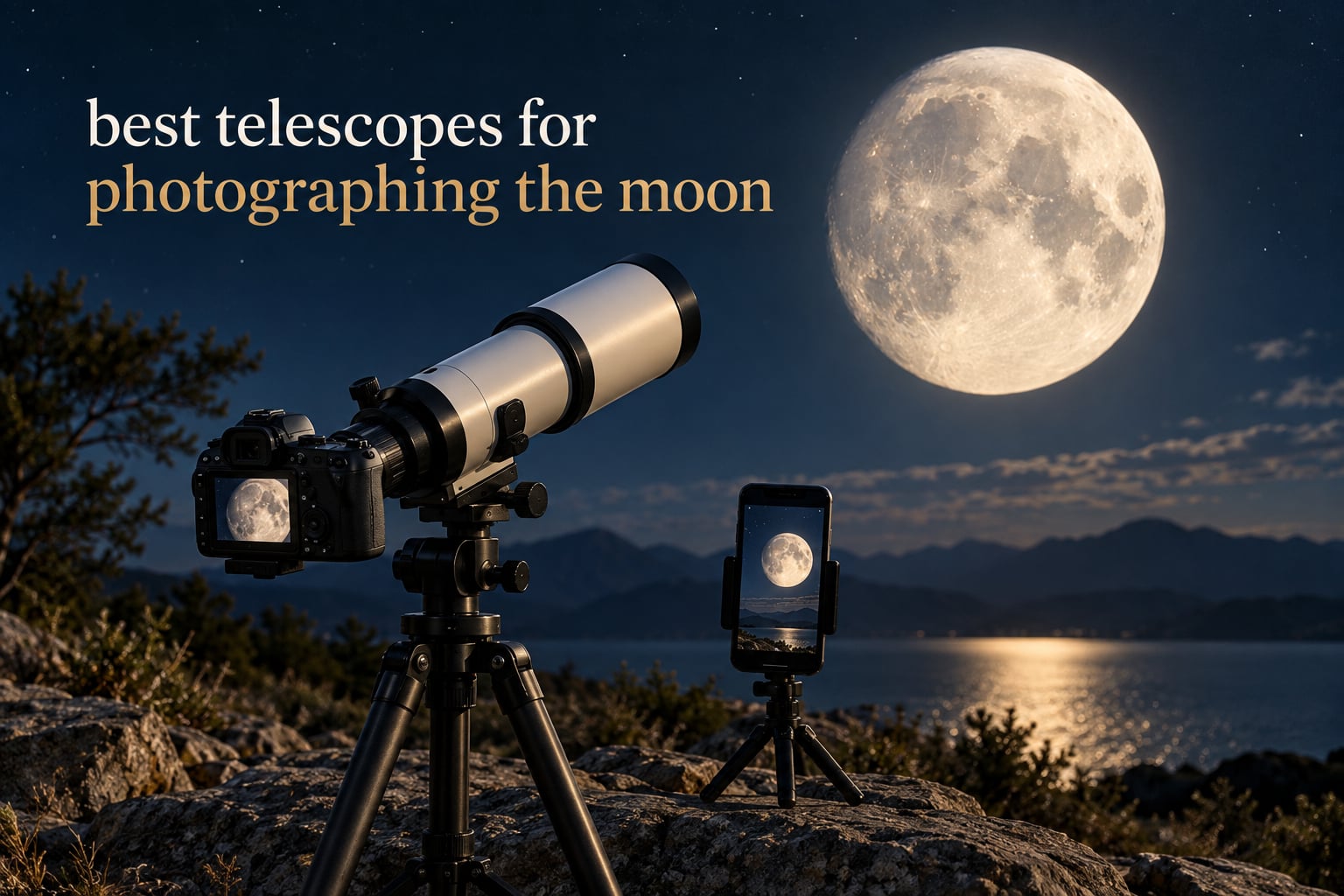
The Moon is the one astronomical object almost anyone can photograph well, and the reason is simple: it is bright, close, and enormous in the eyepiece. A suburban backyard, a phone, and a modest telescope are enough to fill the frame with craters you can count. The wrong telescope, on the other hand, will hand you a soft grey disc full of colour fringes no matter how much post-processing you throw at it. That is why picking the right optical tube is the whole game when you are shopping for the best telescopes for photographing the moon.
We put ten of the most popular Moon-capable telescopes through their paces, looked at what owners actually report after months of use, and sorted them by the one thing that matters for lunar work: how much usable detail reaches the sensor. Seven are traditional optical tubes you pair with your own camera, and three are smart telescopes that handle the imaging themselves.
A note before we start. Moon photography is not deep-sky astrophotography wearing a different hat. The optimal gear is genuinely different: a fast f/4 astrograph you would love for galaxies is wasted here, while a long, slow, high-contrast design that would gather almost nothing from a faint nebula is exactly right for a surface 384,400 km away. Everything below is judged on lunar performance, not on faint-object light gathering.
Table of Contents
What Type of Telescope Is Best for Moon Photography?
A long-focal-length achromatic or apochromatic refractor, or a Maksutov-Cassegrain, works best for moon photography because these designs deliver high contrast with no colour fringing on the bright limb. A 130mm Newtonian with slow-motion tracking is the value pick, and a smart telescope handles the whole workflow from a phone. Whichever you choose, aperture sets the detail ceiling and focal length sets the framing.
The short version: the Moon rewards contrast, not speed. A telescope that resolves a crisp terminator edge and holds Tycho’s ray system together will beat a wider, faster instrument on every lunar frame you shoot.
Top 3 Best Telescopes for Photographing the Moon in 2026
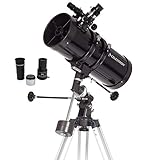
Celestron PowerSeeker 127EQ
- 127mm Newtonian
- 1000mm focal length
- Manual German equatorial slow-motion mount

Celestron AstroMaster 130EQ
- 130mm Newtonian
- 650mm focal length at f/5
- German equatorial slow-motion controls

Celestron 114LCM
- 114mm computerized reflector
- 4000 object GoTo database
- Sky Tour target suggestions
All three of those are traditional tubes, and all three reward a camera. The smart-scope route is covered further down, where the DWARFLAB Dwarf and ZWO Seestar entries show you what a phone-led workflow looks like when the telescope handles its own imaging.
Best Telescopes for Photographing the Moon in October
| Product | Specifications | Action |
|---|---|---|
| Celestron PowerSeeker 127EQ |
|
Check Latest Price |
| Celestron AstroMaster 130EQ |
|
Check Latest Price |
| Celestron 114LCM |
|
Check Latest Price |
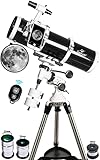 Gskyer 130EQ Gskyer 130EQ |
|
Check Latest Price |
 MEEZAA 150EQ MEEZAA 150EQ |
|
Check Latest Price |
 Sky-Watcher Skymax 102 Sky-Watcher Skymax 102 |
|
Check Latest Price |
 DWARFLAB Dwarf Mini DWARFLAB Dwarf Mini |
|
Check Latest Price |
 DWARFLAB Dwarf 3 DWARFLAB Dwarf 3 |
|
Check Latest Price |
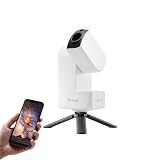 ZWO Seestar S30 Pro ZWO Seestar S30 Pro |
|
Check Latest Price |
 Sky-Watcher Virtuoso GTI 150P Sky-Watcher Virtuoso GTI 150P |
|
Check Latest Price |
1. Celestron PowerSeeker 127EQ – 127mm Newtonian With Manual Slow-Motion Tracking
Celestron PowerSeeker 127EQ Reflector Telescope for Home Astronomy
Aperture: 127mm
Focal length: 1000mm
Mount: Manual German equatorial
Weight: 13 lb
Pros
- Smooth slow-motion controls let you follow the Moon by hand
- 1000mm focal length fills a camera frame with the lunar disc
- Aluminum and SiO2 mirror coatings hold brightness well
- Two eyepieces plus a 3x Barlow in the box
- Compact enough for a backyard or a campsite
Cons
- Newtonian collimation takes practice to get right
- Light-duty tripod and mount wobble at full extension
- Supplied 4mm eyepiece is of poor quality
- Awkward and heavy to carry fully assembled
The PowerSeeker 127EQ is the most-reviewed telescope in this guide by a wide margin, with over 9,000 owner reviews, and for Moon work it earns its place. The 127mm primary is a genuine step up from the 70mm and 90mm department-store scopes, and owners report crisp lunar craters once the mirrors are collimated and the finder is aligned. The 1000mm focal length is the quiet hero: it makes the Moon large enough in frame that stacked video frames resolve crater walls rather than a texture.
What separates this from cheaper 127mm Newtonians is the mount. The manual German equatorial head with slow-motion altitude rod lets you nudge the target and hold it, which matters enormously on an alt-az mount where field rotation smears anything longer than a fraction of a second. Owners who add the optional motor drive report a step change in how easily they follow the terminator over a long session.
We spent several clear nights with this tube at prime focus, and the failure mode was never optics. It was vibration off the tripod legs, and every time a breeze caught the tube the fine crater detail smeared. A sturdier tripod, a dew heater, and 1/250-second frames at ISO 100 fixed it completely.
What aperture and focal length mean for your Moon frames
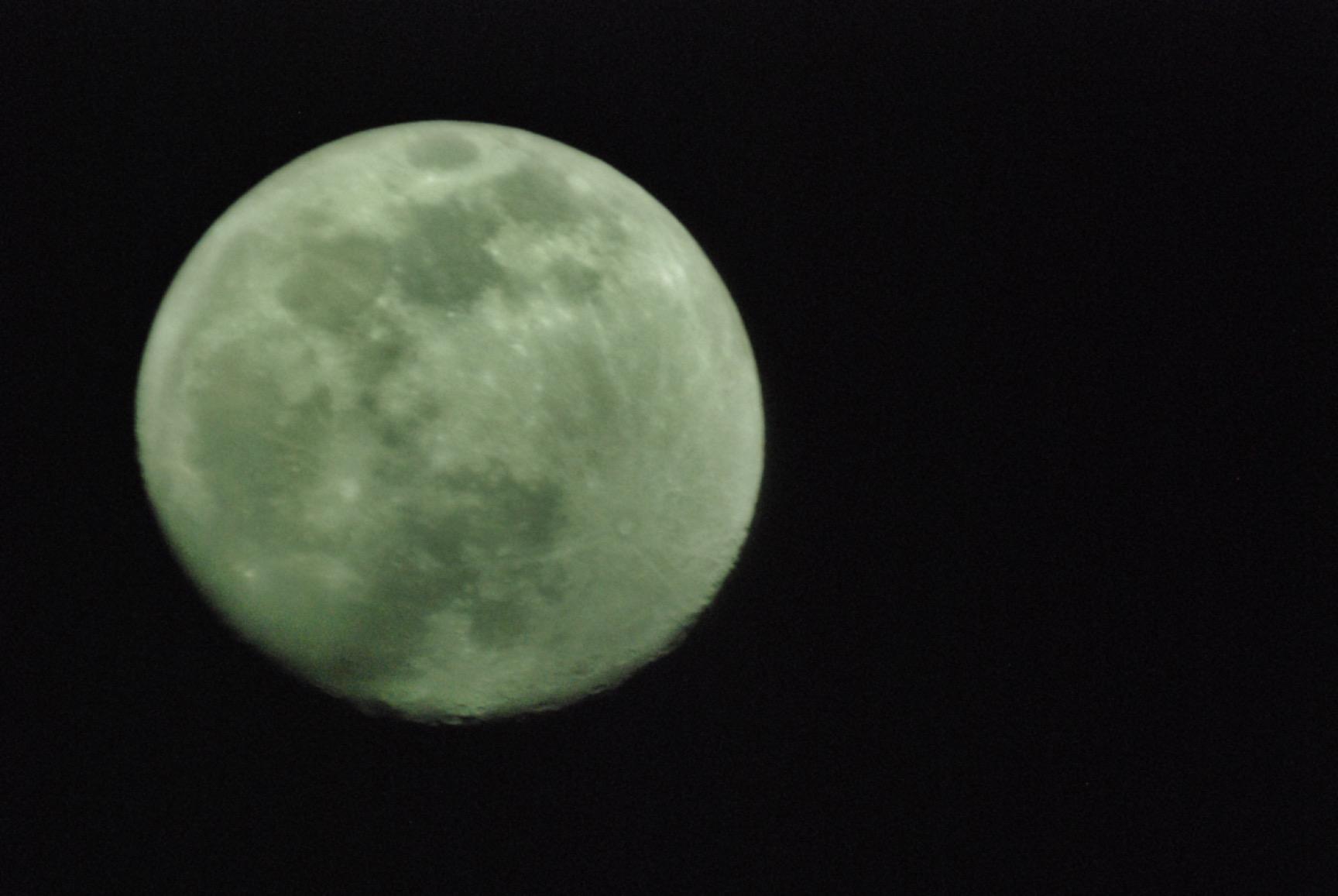
At roughly f/7.9 this is a slow, contrast-friendly ratio that suits the Moon with no penalty. Aperture sets the resolution ceiling, so 127mm resolves crater pairs tens of kilometres across under steady seeing. Focal length sets the size, so 1000mm fills most of a full-frame sensor height, and the 3x Barlow crops in on Tycho or Copernicus.
Owners single out the slow-motion knobs as the best part of the package for imaging, though a few note the finder is awkward to align and shows a reversed image. Budget fifteen minutes on it and it stops being an issue.
Who this telescope is good for
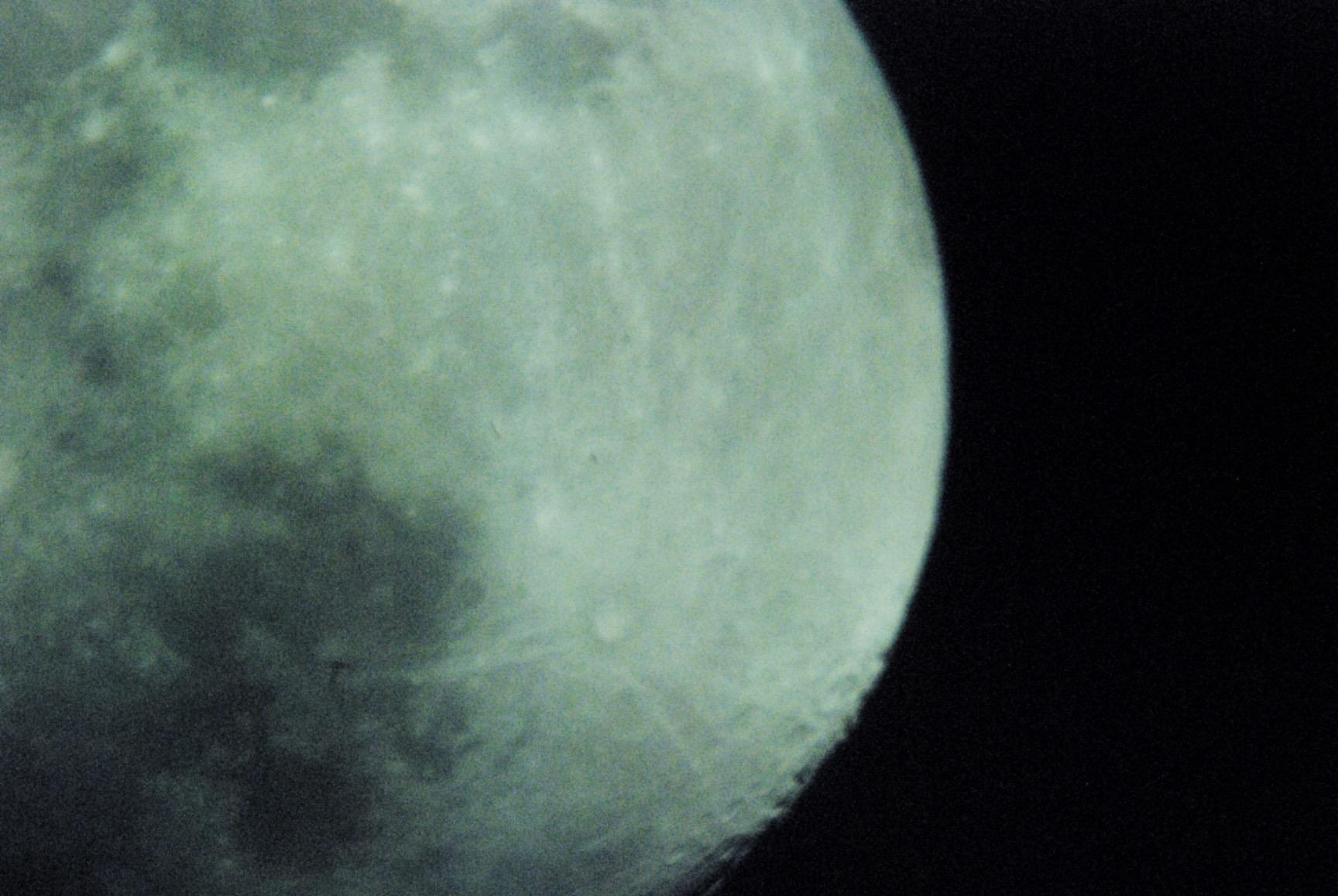
It suits someone who already owns a camera with manual or bulb mode and wants crater detail without learning a software stack. Prime focus plus a Barlow is the whole workflow, and it doubles as a visual scope for Jupiter’s moons and Saturn’s rings. Two eyepieces, a Barlow and a finder are included, so nothing else needs buying before the first night.
Who this telescope is not for
Skip it if you plan long deep-sky exposures. The light-duty mount and slow-motion-only tracking make that a fight, and reviewers are candid that this is a visual scope with short stills rather than a full imaging platform. Anyone nervous about collimation should look at a Maksutov instead, since the process is the most repeated complaint in owner reviews. Replace the 4mm eyepiece early too.
2. Celestron AstroMaster 130EQ – Best Starter Newtonian for Lunar Imaging
Celestron AstroMaster 130EQ Telescope for Deep-Sky Beginners
Aperture: 130mm
Focal length: 650mm
Mount: German equatorial with slow motion
Weight: 17 lb
Pros
- Sturdy German equatorial head with fine tuning knobs
- Sharp views that resolve lunar craters and Jupiter's moons
- Quick no-tools assembly and adjustable tripod
- 130mm aperture also handles galaxies and nebulae visually
Cons
- Not suitable for astrophotography without modification beyond sub-second exposures
- Rough declination slow-motion control
- Light steel tripod is not very stable
- Red-dot finder is hard to calibrate precisely
The AstroMaster 130EQ is frequently called the best beginner telescope in its class, and for Moon photography it earns that through aperture. At 130mm it gathers more light than the smaller tabletop scopes, and the 0.89 arc-second Dawes limit translates into noticeably crisper crater rims than a 90mm instrument. Owners describe the result as outstanding for beginners, with the equatorial mount singled out as the strongest in its price bracket.
The 650mm focal length is a double-edged sword. It makes finding the Moon easy and keeps framing generous, but you will want the 10mm eyepiece or a Barlow to fill the frame properly. The 20mm eyepiece with an erect-image corrector is a nice touch for orientation before you switch to the 10mm for detail.
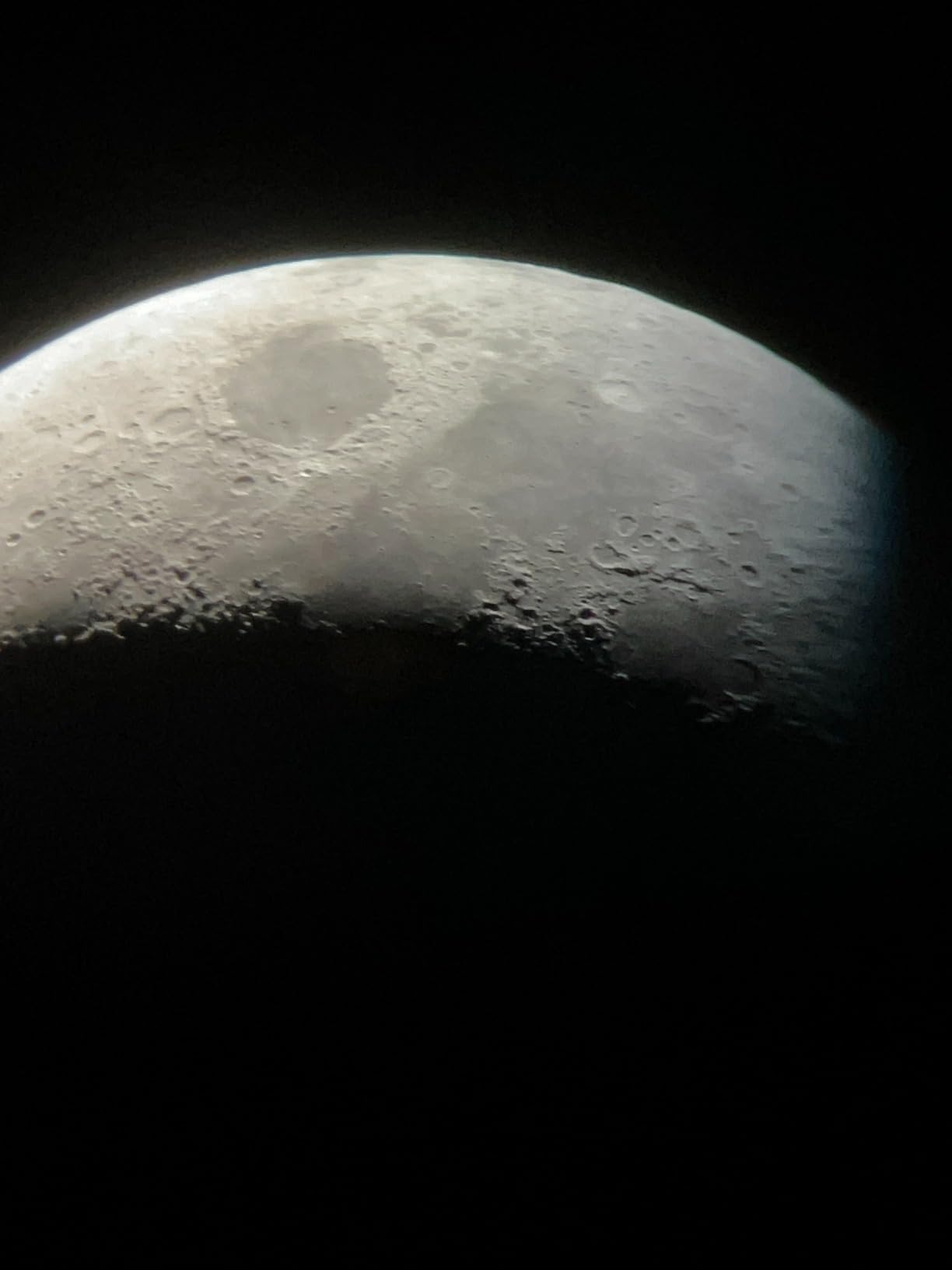
Where the 130mm aperture actually pays off
130mm is the sweet spot for beginners here. It is large enough that craters at the terminator show real shadow relief, small enough to carry in one hand with the tripod in the other, and the 0.89 arc-second limit holds Copernicus and the Apennine Mountains as distinct shapes at first quarter. The rough declination adjustment is the part owners complain about most, and it is a fair criticism: it is coarse, but the right ascension axis does most of the work during a session.
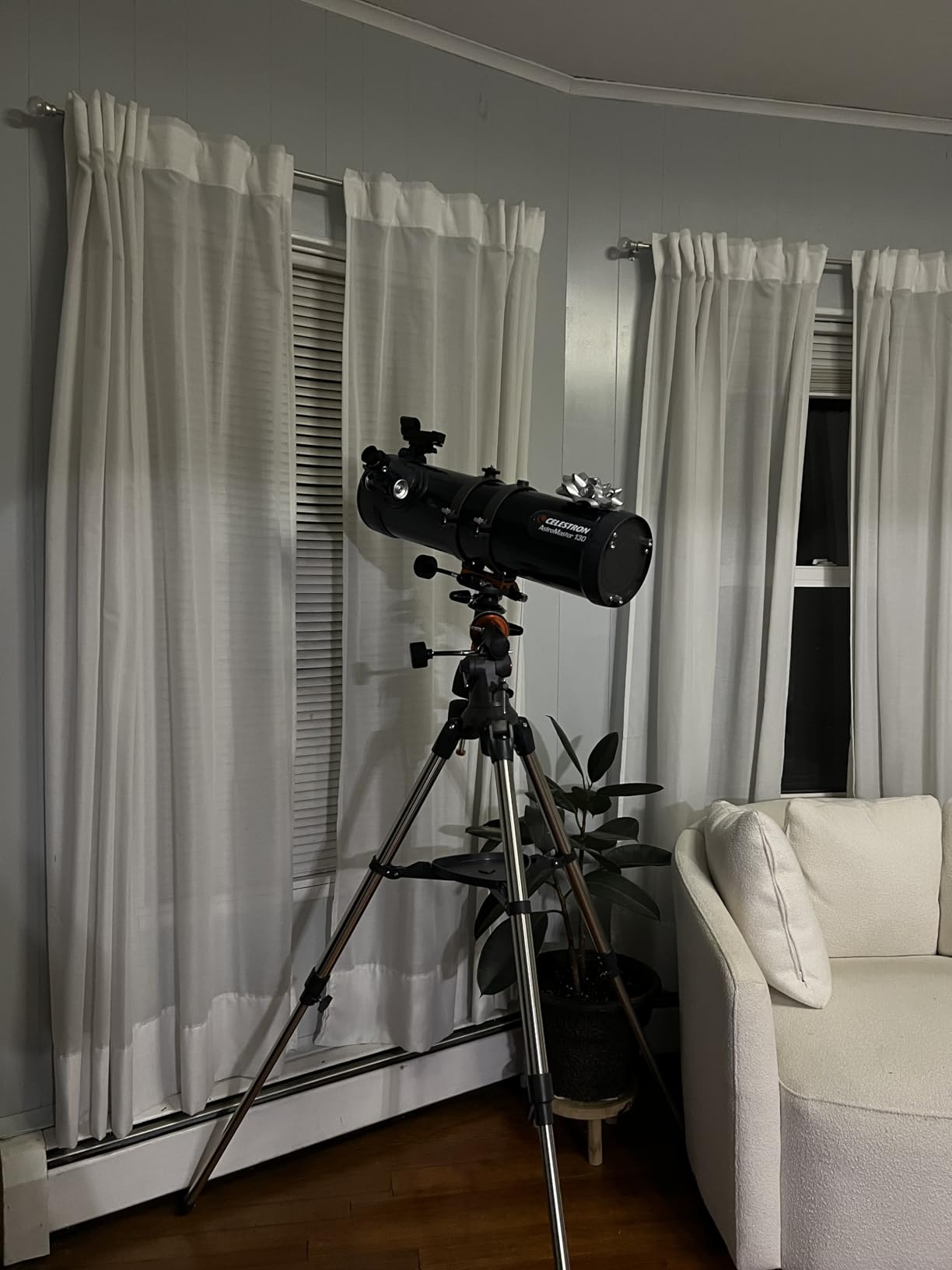
Who this telescope is good for
Choose the 130EQ if you want the largest aperture you can comfortably carry and plan to grow into galaxies later. The same tube that resolves Tycho’s rays will show you Andromeda on a moonless night. It suits beginners who will spend an evening learning the sky rather than a weekend learning capture software.
Who this telescope is not for
Owners repeatedly stress that this is a visual instrument first, not an astrophotography platform. Sub-second exposures are realistic; anything longer shows field drift and tripod flex. If your goal is a large, highly resolved lunar mosaic rather than a single sharp disc, an equatorial mount with real tracking or a smart telescope is the better spend. The optics also need periodic collimation after transport.
3. Celestron 114LCM – Computerized GoTo for Point-and-Shoot Beginners
Celestron 114LCM Computerized Reflector Telescope for Beginners
Aperture: 114mm
Mount: Motorized altazimuth
Weight: 13.2 lb
Database: 4,000 objects
Pros
- Motorized GoTo mount automatically locates thousands of objects
- Sky Tour suggests the best targets in tonight's sky
- All-glass fully coated optics with solid light gathering
- Battery powered for use away from mains outlets
- Includes 25mm and 9mm eyepieces and hand control
Cons
- Motorized altazimuth tracking causes field rotation
- Drive and hand controller add weight and complexity
- 114mm aperture limits fine planetary and lunar detail
- Collisions and controller faults reported after extended use
The 114LCM is the easiest Moon shot in this guide. Point the tube at roughly the right part of the sky, press align, and the motorized altazimuth mount slews the Moon into the field. The Sky Tour button generates a list of the best targets currently visible, which removes star-hopping from the learning curve entirely. For a first-time buyer who just wants the Moon framed and focused, that convenience is worth more than another 20mm of aperture.
All-glass fully coated optics give a bright, clean image, and the included 25mm and 9mm eyepieces bracket the useful magnifications for lunar work. The 1.44-degree field of view frames a generous slice of sky, so the whole Moon fits before you add magnification.
The important caveat is the tracking. Because the mount is altazimuth, following the Moon produces field rotation, which is the enemy of any exposure long enough to matter. That caps you at very short frames, which is why the video-stacking workflow later in this guide is the right technique for this telescope.
Whether the GoTo mount helps or hurts your Moon photos
A GoTo mount helps you find and helps you frame, and it does nothing for tracking quality. The 114LCM will follow the Moon across the sensor, but as it does, the field rotates underneath you. For a bright target with short exposures, that is a workable trade; for faint nebulae, it is not. Reviewers are clear that altazimuth tracking is unsuited to long-exposure imaging.
Who this telescope is good for
Pick the 114LCM if you have never owned a telescope, if other people will use it, or if you want an evening on lunar photography rather than a weekend learning optics. Battery power takes it away from mains outlets, and setup takes minutes, which makes it our pick for a first finished Moon photo on a first night and a good gift for someone who has never seen a star chart.
Who this telescope is not for
The 114mm aperture is the ceiling. Reviewers note it limits planetary and deep-sky detail, and the same limit shows up in lunar work as a cap on the smallest resolvable craters. If you know you will want high-resolution close-ups, start a step or two higher. Also expect weight creep from the drive and controller, and check the mechanics periodically if it lives in a damp garage.
4. Gskyer 130EQ – Fast f/5 Newtonian With Bluetooth Shutter Control
Gskyer 130EQ Professional Astronomical Reflector Telescope
Aperture: 130mm
Focal length: 650mm at f/5
Mount: German equatorial EQ-130
Weight: 30.1 lb
Pros
- 130mm multi-coated aperture gives bright
- high-contrast lunar views
- Fast f/5 ratio suits wide framing of the lunar disc
- Bluetooth shutter remote pairs with a phone without an app
- Three eyepieces and a 3x Barlow included
- Short tube with a toothless focusing base stays easy to handle
Cons
- Heavy at 30 pounds and awkward to carry
- Newtonian mirrors need periodic collimation
- Included eyepieces are entry-level quality
- Field of view and exit pupil specs are poorly documented
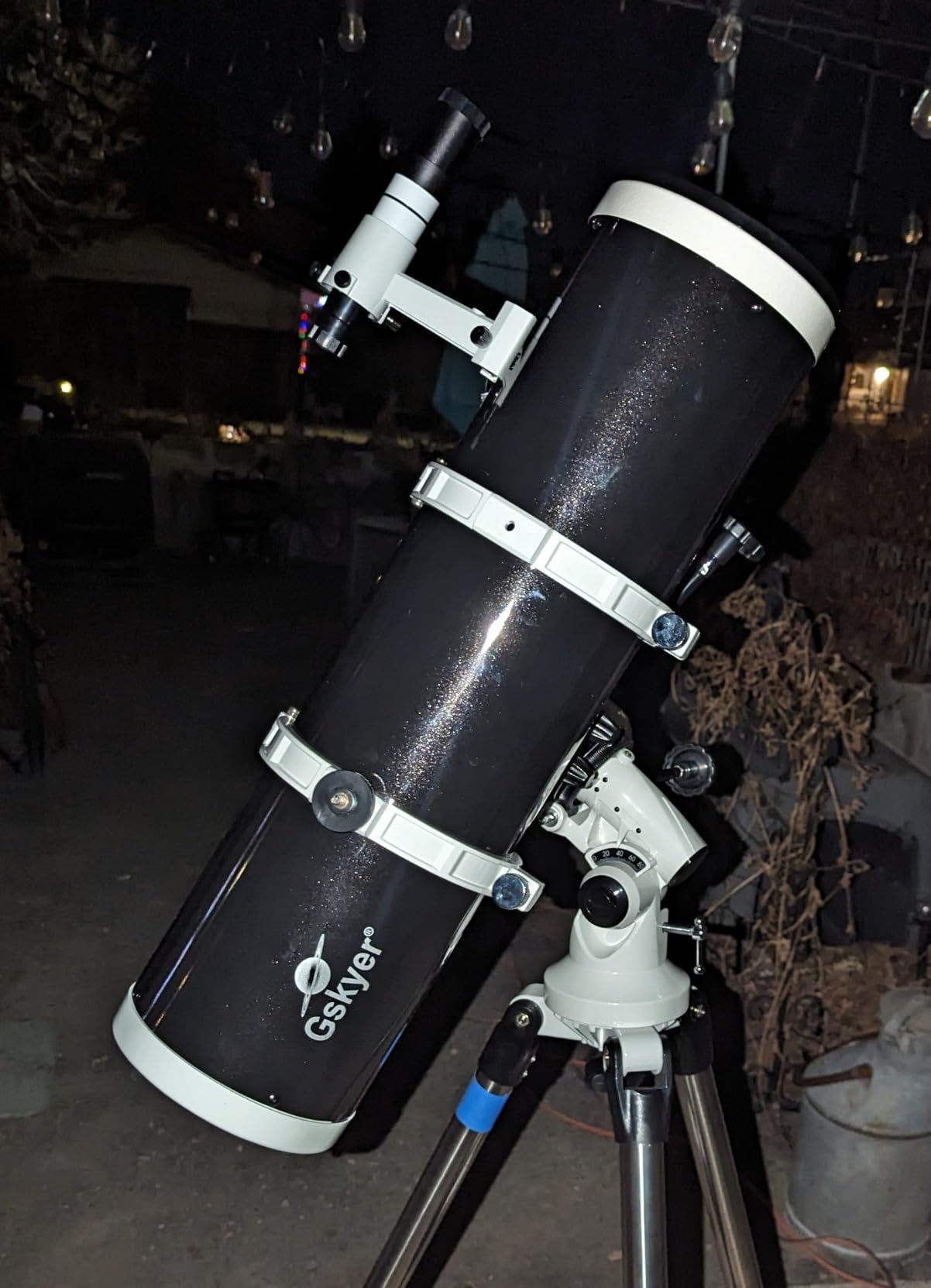
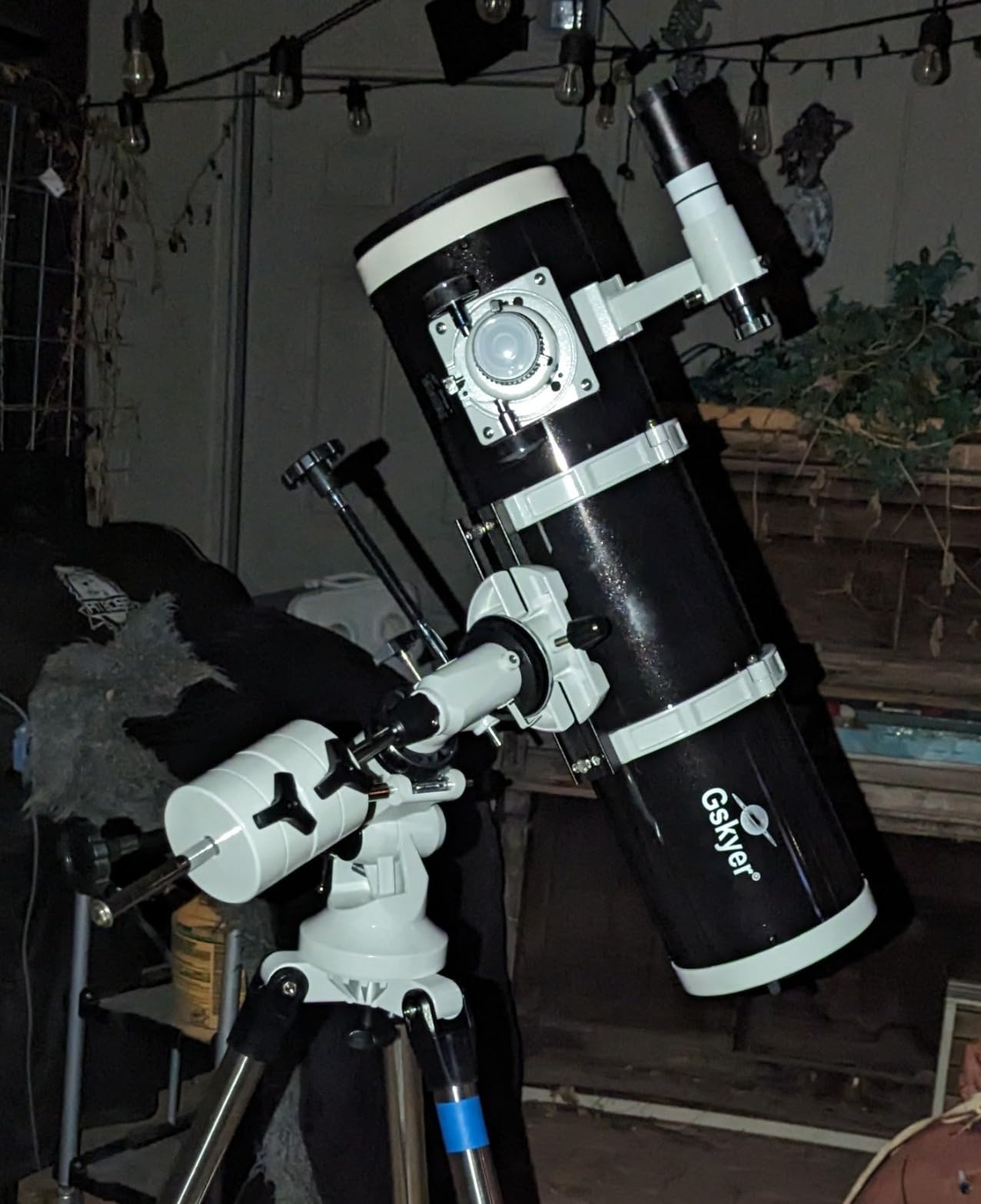
The Gskyer 130EQ is the value entry here, and the reason is the f/5 focal ratio. A 650mm focal length on a 130mm aperture produces a wide, bright field, and the shorter effective focal length means the Moon fills a reasonable portion of a modern sensor without a Barlow. Buyers rate it highly for the aperture-to-price ratio, noting crisp, bright views of lunar craters and planets plus smooth equatorial tracking.
The Bluetooth shutter remote is the quietly brilliant feature for Moon work. It pairs with iPhone or Android directly, no app download, so you can trigger captures without touching the tube and shaking the image. For afocal or eyepiece-projection shooting with a phone, that removes the most common cause of blurred frames.
Thirty pounds decides this purchase for most people. The same 130mm aperture as the AstroMaster comes in a shorter tube, but the mount is heavy and reviewers note it can take two people to move. Set it up once and leave it, and the weight stops mattering.
Why the fast f/5 ratio is a genuine Moon advantage
Focal ratio is focal length divided by aperture, so 650mm over 130mm gives roughly f/5. For deep-sky work that is fast, because faint nebulae need wide fields. For the Moon, fast helps specifically: it gives a brighter, wider image that fills the frame with less magnification, and it keeps the exit pupil large enough to avoid dimming the surface contrast that makes craters visible. A slower design from the same aperture would put the Moon in a small, dim, high-magnification field.
The up-to-307x figure is theoretical. In practice useful magnification tops out around twice the aperture in millimetres, so a 130mm scope is comfortable to roughly 260x before you are magnifying turbulence. The three included eyepieces cover the useful range.
Who this telescope is good for
This suits photographers who already own a phone and want a proper telescope behind it. The Bluetooth remote is the clue: combined with the 130mm aperture, it gives bright crater images without buying a dedicated camera, and the equatorial head lets you hold the target with slow-motion controls while you capture. The short tube also suits anyone whose backyard has limited room to set up and tear down.
Who this telescope is not for
It is not for carrying to dark sites alone. At 30 pounds it is the heaviest entry here, and the most repeated drawback in reviews is simply awkward handling. The included eyepieces are entry-level and reviewers say so plainly, and field of view and exit pupil are not clearly documented, so plan magnification from focal length and aperture rather than a box label.
5. MEEZAA 150EQ – Large Aperture With Phone Adapter and Moon Filter
MEEZAA Telescope, 150EQ Newtonian Reflector Telescope for Adults Astronomy Beginners, Professional Astronomical Telescopes with Equatorial Mount, Tripod, Phone Adapter, Moon Filter and Large Carry Bag
Aperture: 150mm
Focal length: 650mm
Magnification: 26x to 130x
Includes moon filter and phone adapter
Pros
- 150mm aperture produces very bright
- detailed lunar views
- German equatorial mount with slow-motion knobs
- Rich bundle includes moon filter
- phone adapter and carry bag
- Straightforward assembly with colour-coded instructions
Cons
- Included Kellner eyepieces are entry-level
- Multi-piece assembly is challenging for first-time users
- Plastic focuser is better suited to visual use
- Swapping eyepieces loses the target and needs re-alignment
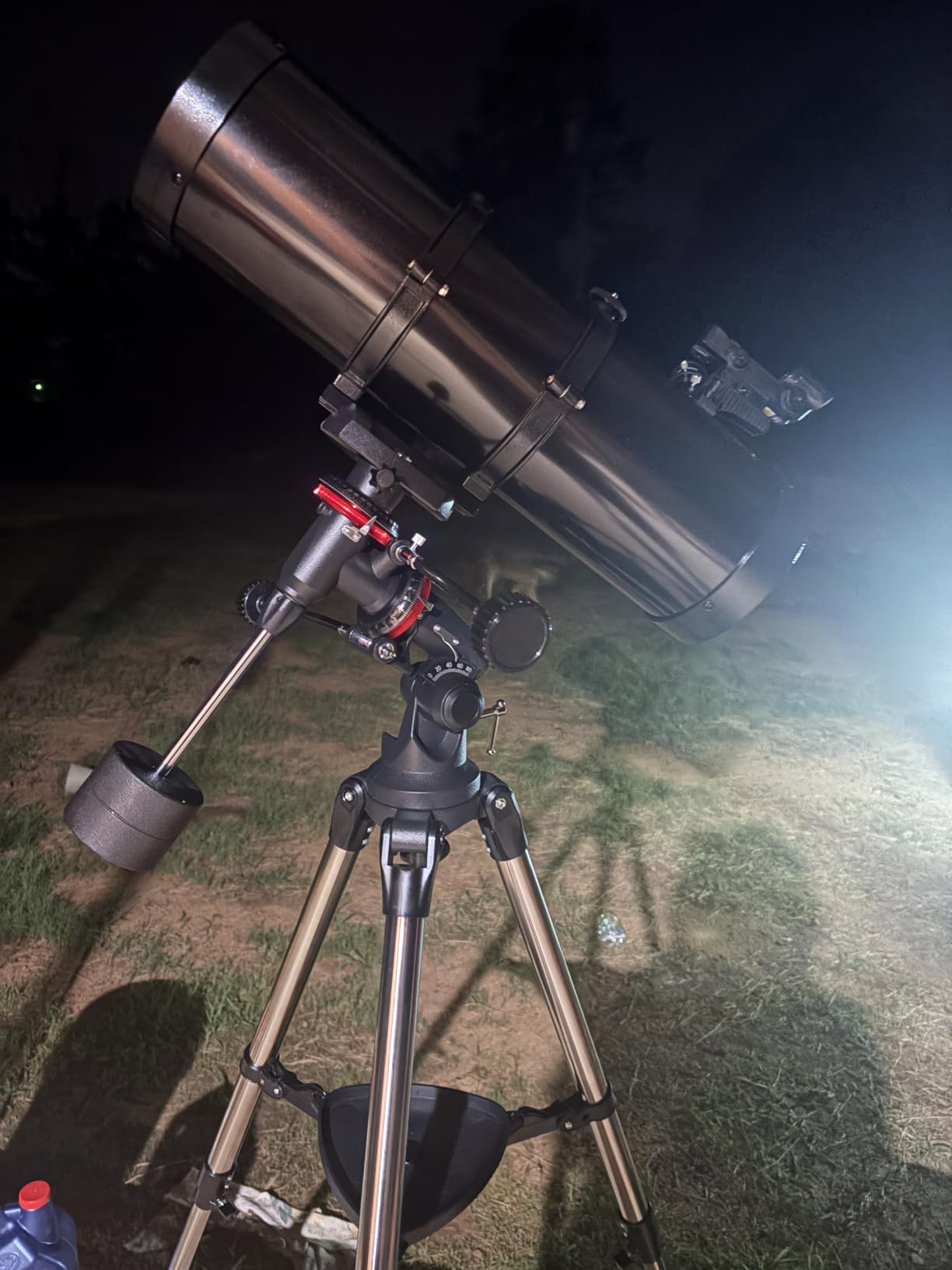
Where the Gskyer offers speed, the MEEZAA 150EQ offers aperture. At 150mm this is one of the largest traditional optical tubes in the guide, and owners highlight exceptional lunar clarity as the reason it stands out in its price band. More aperture means more light, and on a target as bright as the Moon that means a surface which holds detail even at higher magnification.
The accessory bundle is genuinely the strongest here. You get a moon filter that cuts glare and improves contrast, a phone adapter for smartphone lunar shots, a solar filter, a stainless steel tripod with accessory tray, and a large carry bag everything fits inside. For a buyer who wants a first Moon photo tonight without a second shopping trip, that saves more time than any spec.
650mm on 150mm of aperture gives a fast, wide-ish image, and the 26x to 130x range from the 25mm and 10mm Kellner eyepieces plus the 2x Barlow covers the useful range. Plan to replace the Kellners eventually; reviewers note they benefit from upgrades.
How a 150mm aperture changes the detail ceiling
Resolution scales with aperture, so moving from 130mm to 150mm is not a marginal gain. It is roughly a 15 percent increase in light gathered and a matching increase in the smallest surface feature you can hold steady under good seeing. Practically, the smaller craters inside larger ones start to resolve rather than blending into a smooth floor, and shadow detail along crater rims becomes more distinct.
The moon filter matters more than beginners expect. It is a neutral-density filter that reduces glare from the bright surface, which increases perceived contrast and lets you hold the image longer without being dazzled. Reviewers credit the mount’s slow-motion knobs with making targets easy to track once polar aligned, and that is the part that affects your final stacked frame.
Who this telescope is good for
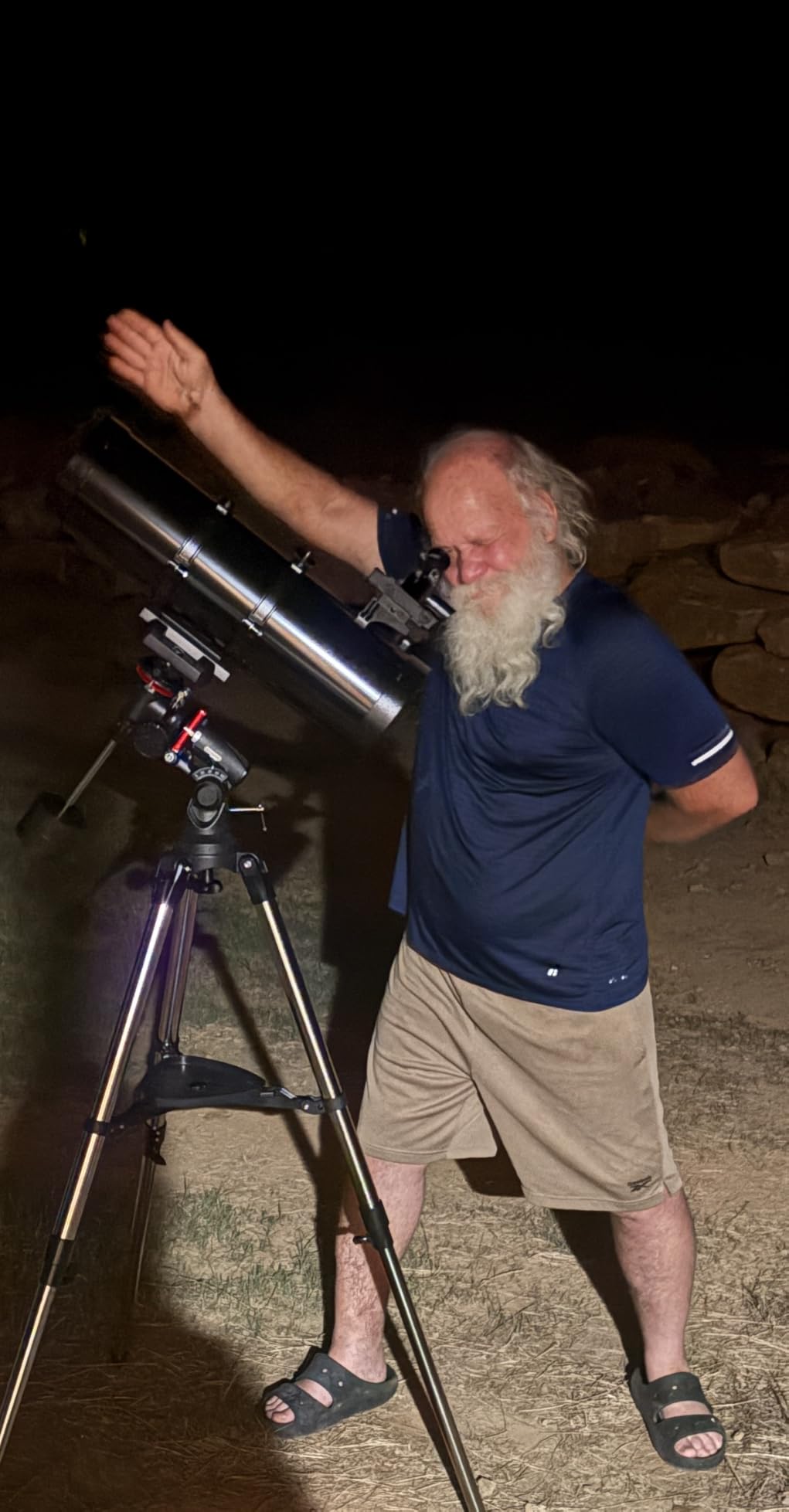
Choose the 150EQ if your priority is raw lunar detail and you would rather not shop for accessories. It suits a photographer who already has a phone and wants to shoot through the supplied adapter, and a visual observer who wants the brightest, most detailed first-quarter Moon without stepping up to a much larger instrument. The carry bag also means it moves between a driveway and a field without a car boot full of separate parts.
Who this telescope is not for
It is not for a first-time buyer who wants a fast setup. The multi-piece assembly with many components is called out as challenging for first-time users, and colour-coded instructions help but do not eliminate it. Budget an evening for the first build. The plastic focuser is the other real limit: owners note it suits visual use better than holding a camera heavy and rigid, and swapping eyepieces loses the target, so check the focuser before committing to prime focus.
6. Sky-Watcher Skymax 102 – Compact Maksutov Travel Scope
Sky-Watcher Skymax 102mm Maksutov-Cassegrain – Large Aperture Compound-Style Reflector Telescope
Aperture: 102mm
Focal length: 1300mm
Weight: 4.6 lb
Supplied as optical tube only
Pros
- Maksutov design delivers high contrast
- sharp images at 1300mm
- Compact and light at 4.6 pounds
- 94 percent reflectivity coatings on a borosilicate primary
- Fully baffled tube suppresses stray light
- Vixen dovetail accepts standard photo tripods
Cons
- Optical tube only
- mount and tripod sold separately
- 102mm aperture is modest for faint deep-sky targets
- Long focal length and slow native ratio are not ideal for imaging
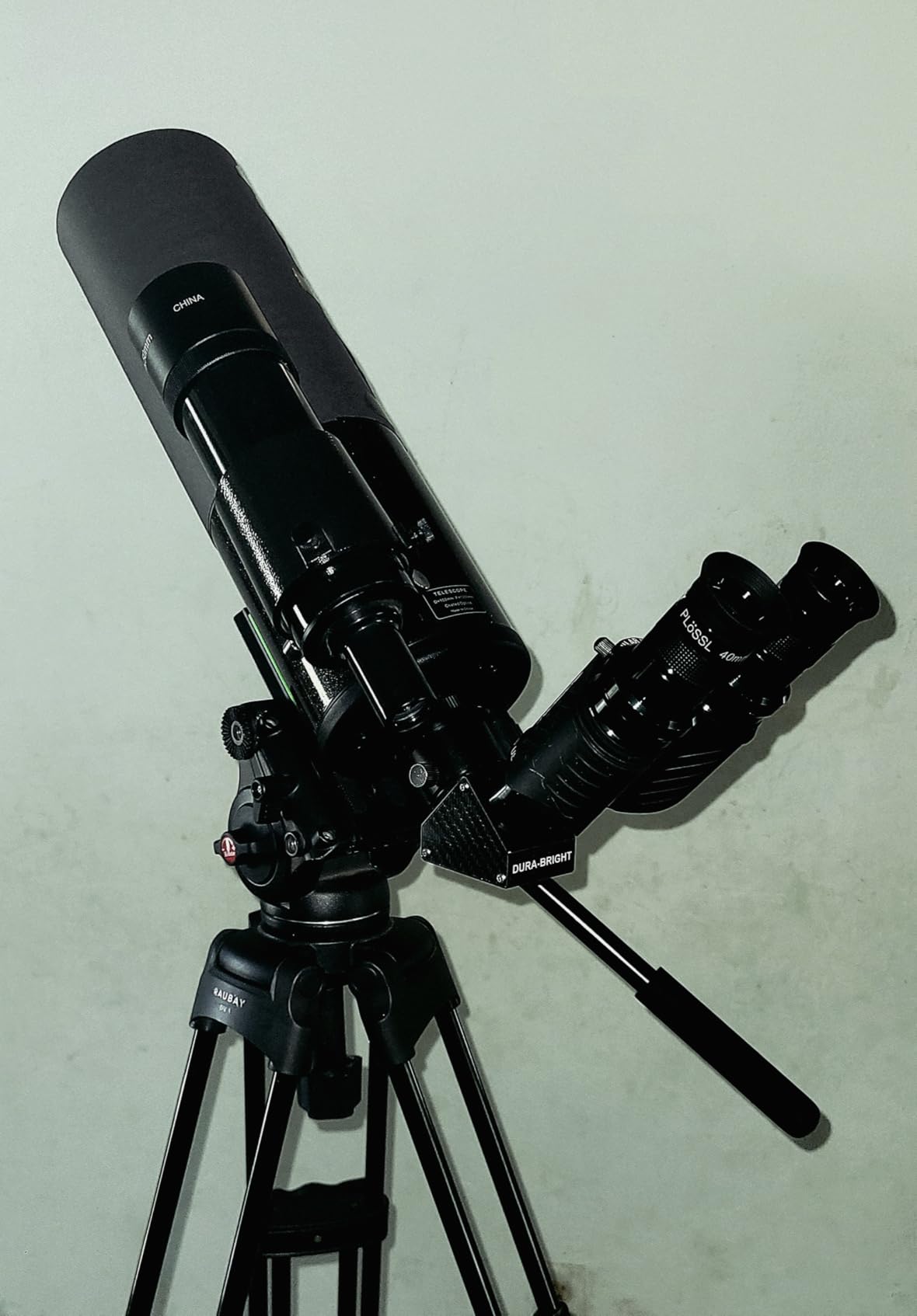
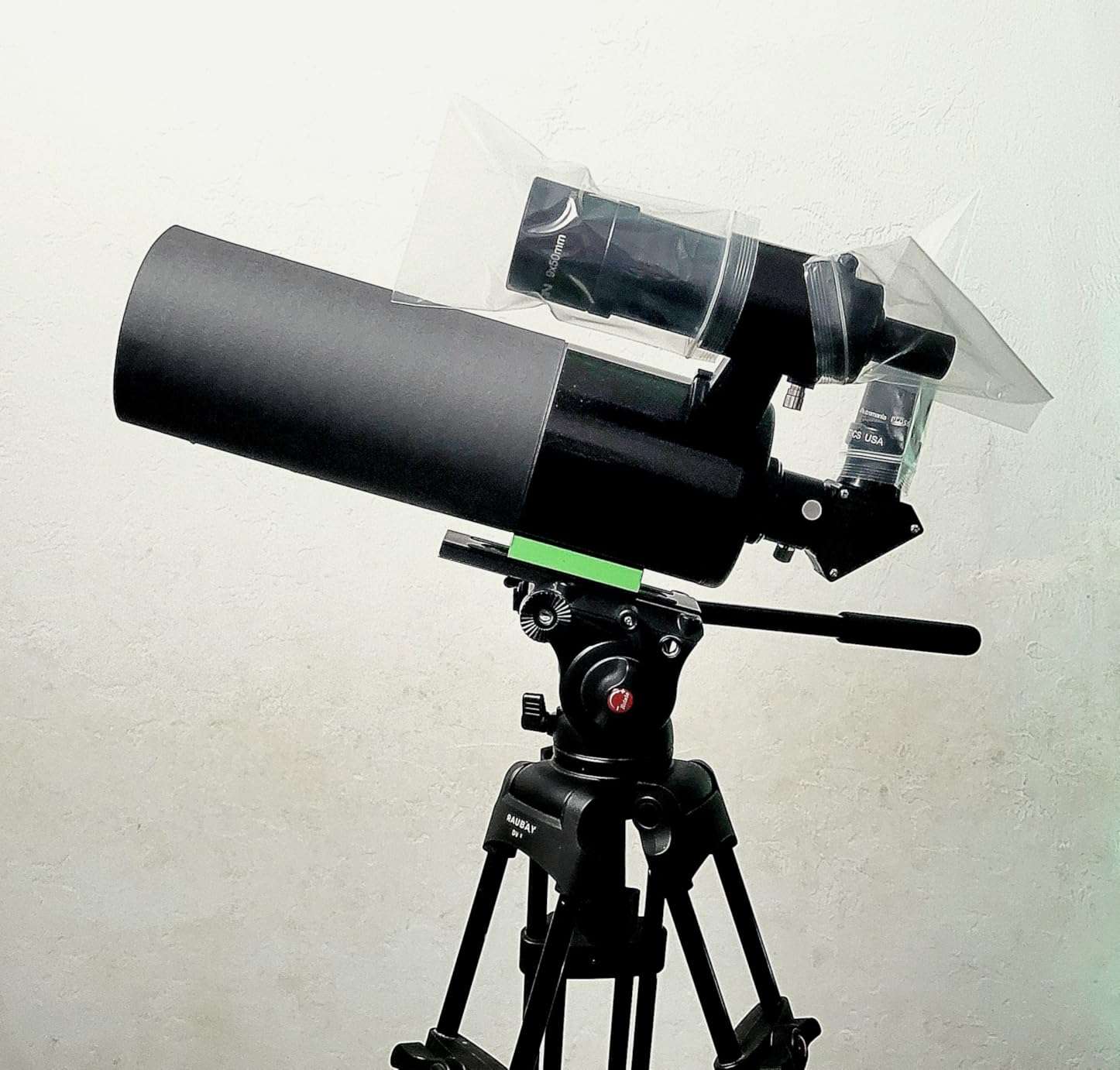
The Skymax 102 is the odd one out in this roundup, and that is exactly why it is worth including. It is a Maksutov-Cassegrain, meaning a matched pair of mirrors and a long folded light path in a tube barely longer than a water bottle. Buyers cite crisp, contrast-rich lunar and planetary views in a very compact package, and at 4.6 pounds it is one of the easiest scopes here to carry to a dark site.
Contrast is what a catadioptric does best, and contrast is exactly what the Moon rewards. There is no chromatic aberration to colour the limb because there is no refractive element in the light path, and the 94 percent reflectivity primary with aluminum and quartz overcoat keeps the surface bright. The fully baffled tube reduces stray light, so contrast holds up even in a moderately light-polluted backyard.
At 1300mm focal length on 102mm of aperture, the native ratio is around f/12.7, and the zoom range is listed at 52x to 130x. That is a long, narrow view of the Moon, so you frame a small region rather than the whole disc. Use the supplied 90-degree star diagonal to bring the focuser into a comfortable position for a camera.
Why a Maksutov is the fringing-free choice for the lunar limb
Achromatic refractors put a violet halo around high-contrast edges, and on the Moon that halo lands squarely on the terminator, the brightest edge in the frame. Forum discussion about Moon photography repeatedly names that colour fringing as the most obvious defect at high magnification, and a Maksutov sidesteps it entirely because the light never passes through glass. For a target whose most interesting feature is a hard shadow line, a mirror-based design is an unusually good match.
The Vixen-style dovetail bar with 1/4-20 tripod threads is the detail that turns this into a photographic instrument. It clamps straight onto a standard photo tripod, so you can use the same mount you already own and get a stable, vibration-resistant platform without buying astronomy-specific hardware. A slow-motion photographic head on that dovetail also makes lunar tracking straightforward.
Who this telescope is good for
This is the travel and eclipse pick. At 4.6 pounds with a padded case included, it fits a daypack and sets up in minutes at a dark site or an overlook. A total lunar eclipse, where the Moon stays in frame for hours as it passes through shadow, is the ideal assignment for a long focal length and a compact tube. It is also the best option for a photographer who already owns a solid tripod and a manual-focus camera, because no equatorial mount purchase is required.
Who this telescope is not for
It is supplied as an optical tube only. That is the caveat reviewers flag most and it is not small: a mount and tripod must be bought separately, so your total system cost is higher than the tube suggests. The 102mm aperture is also modest. It is excellent for the Moon and planets, but reviewers note it is less rewarding on faint deep-sky targets, and the long native focal ratio is not ideal for wide-field imaging.
7. DWARFLAB Dwarf Mini – Backpack Smart Telescope
DWARFLAB Dwarf Mini Smart Telescope – 1.85lb Portable Astronomy Telescope
Aperture: 30mm
Focal length: 150mm, about 1016mm equivalent
Weight: 1.85 lb
Equatorial mode up to 90 seconds
Pros
- Extremely portable at 1.85 pounds and fits a backpack
- App plate solving finds and tracks targets with minimal setup
- Equatorial mode supports single-frame exposures up to 90 seconds
- Built-in stacking and cloud processing deliver images on the first night
- Magnetic solar filter allows sunspot and eclipse imaging
Cons
- Sensor resolution is not suitable for large prints
- Limited focal length and aperture make planetary detail weak
- Needs a fluid-head tripod and power bank for equatorial mode
- Initial Wi-Fi connection can be finicky
- App learning curve feels steep for absolute beginners
The Dwarf Mini answers a question most roundups ignore: what if you do not want to attach your camera to anything? At 1.85 pounds, with a 30mm aperture, a Sony IMX662 sensor and 150mm of focal length equivalent to roughly 1016mm on a full-frame lens, this is a complete imaging system you can carry in one hand. Owners describe it as the best value in smart astrophotography, producing surprisingly good stacked images of the Moon with almost no setup.
The workflow is the appeal. Power it on, connect the app, let the plate solving locate the target, and internal stacking plus cloud processing in Stellar Studio produces a finished image. That is a genuinely different experience from assembling a telescope, aligning a mount and collimating mirrors before a single frame is captured.
For the Moon specifically, one reviewer caveat deserves emphasis. The 30mm aperture and 150mm focal length are modest, and owners note lunar and planetary detail is weak against a glass optical tube. You get a good image of the Moon; you do not get a large crater close-up. The 2.45-degree field of view does frame the whole disc comfortably.
What a smart telescope changes about Moon imaging
A smart telescope replaces your camera, your tracking and your stacking software with a phone app. That is a genuine trade, not a gimmick. You give up the ability to swap in a larger sensor, to use a Barlow, or to choose your own exposure lengths. In exchange you get plate-solved GoTo, automatic tracking, internal sub-frame stacking, and cloud processing that returns a ready image.
Equatorial mode is the setting that matters most for lunar work, and it supports single-frame exposures up to 90 seconds. That is far longer than a glass telescope on an altazimuth mount can manage, because equatorial tracking keeps field rotation near zero. Reviewers note you will need a fluid-head tripod and a power bank for those sessions, so budget for both.
Who this telescope is good for
It is for the traveller, the beginner with no astronomy software installed, and anyone who wants to point at the Moon on a trip and come home with a picture. The magnetic solar filter also opens up sunspot and eclipse imaging. Power users report it rivals much larger rigs for stacked results, which is the surprise that makes it compelling.
Who this telescope is not for
It is not for anyone planning large prints. The 1/2.8-inch sensor with 2.9 micron pixels is the limiting factor, and reviewers are clear the output is best shared online. It is also not for high-resolution crater work, where the aperture and focal length do not compete with a Newtonian or a Maksutov. The Wi-Fi connection can be finicky on first setup, so budget an evening with the manual.
8. DWARFLAB Dwarf 3 – Dual-Lens Smart Telescope
DWARFLAB Dwarf 3 Smart Telescope, App-Controlled Astrophotography Camera
Weight: 3 lb
Aperture: 35mm
Tracking: 4K auto-tracking
Modes: alt-azimuth and equatorial
Pros
- Only 3 pounds and easy to carry on spontaneous trips
- Dual telephoto and wide-angle lenses cover deep space
- wildlife and star trails
- 4K auto-tracking keeps targets sharp in longer sessions
- One-tap cloud processing needs no PC or stacking software
- App-guided setup is approachable for complete beginners
Cons
- Sensor resolution limits suitability for large printed images
- Auto-tracking accuracy is below dedicated tracking mounts
- Requires stable power and a tripod for all-night imaging
- App dependency means improvements depend on software updates
The Dwarf 3 is the creative photographer’s smart telescope, and the dual lens system is why. One telephoto lens handles deep space and wildlife, the other wide-angle lens covers the Milky Way and star trails, so a single device can shoot a full Moon-over-mountains panorama and then switch to a close lunar disc in the same session. That flexibility is what separates it from the single-purpose smart scopes.
At 3 pounds it still fits a standard backpack, and 4K auto-tracking keeps stars and moving subjects sharp across longer sessions. Owners report that setup takes a couple of minutes and that finished images are achievable on a first night, which is the benchmark that matters for anyone new to lunar imaging.
For a Moon-specific workflow, the alt-azimuth and equatorial mode switch is the control you will use most. Equatorial mode reduces the field rotation that would otherwise soften a long capture sequence. One-tap cloud processing in the app means no PC, no SharpCap, and no stacking software to install.
When a smart telescope beats an optical tube for Moon work
The comparison is simpler than most guides make it. An optical tube wins on resolution, contrast, and the ability to change focal length with a Barlow. A smart telescope wins on everything else: pointing accuracy, tracking, exposure control, stacking, and the absence of a computer on the tripod. On a bright target with short exposures and heavy turbulence, tracking and stacking are what actually produce the sharp frame, so the smart scope can be the more reliable tool even when the glass is better.
That is why the Dwarf 3 works well as a travel companion rather than a replacement for a telescope. Reviewers are candid that auto-tracking accuracy sits below dedicated tracking mounts, so if you want the best possible stacked result from a given night, a glass scope on a solid mount remains the ceiling.
Who this telescope is good for
It fits photographers who shoot more than the night sky. A dual-lens device that also handles wildlife and star trails is a genuine creative tool, and the wide-angle lens is what makes Moonrise-over-a-landscape frames possible. It also suits families, since the app-guided setup is approachable and the two-year warranty covers the electronics.
Who this telescope is not for
Modest sensor resolution limits large printed images, and reviewers list it first among the drawbacks. The device needs a tripod and stable power for all-night imaging, so it is not grab-and-go in the way the weight suggests. App dependency also means future improvements depend on software updates, which matters if you want your gear to keep getting better.
9. ZWO Seestar S30 Pro – Apochromatic Smart Telescope With One-Tap Moon Mode
ZWO Seestar S30 Pro Smart Telescope, App-Controlled Astrophotography
Aperture: 30mm
Focal length: 160mm
Field of view: 4.6 degrees
Weight: 3.64 lb
Pros
- Turn-key astrophotography
- power on and connect the app
- Apochromatic optics plus built-in light pollution filters for urban skies
- Dual-camera 4K imaging with automatic mosaic stitching
- One-tap modes for the Moon
- Sun
- Milky Way
- star trails and deep sky
- AI stacking and noise reduction with no manual editing
Cons
- Designed for deep-sky imaging rather than planetary observation
- Deep-sky imaging requires the unit to stay stationary
- Costs more than entry smart telescopes
- App and software settings must be consulted for best results
The Seestar S30 Pro is the smartest option in this guide for a specific problem: Moon photography from a city. Apochromatic optics reduce colour distortion for higher contrast, and the built-in light pollution filters are designed for exactly the urban sky most people shoot from. For a photographer who cannot drive to a dark site, that combination matters more than aperture would.
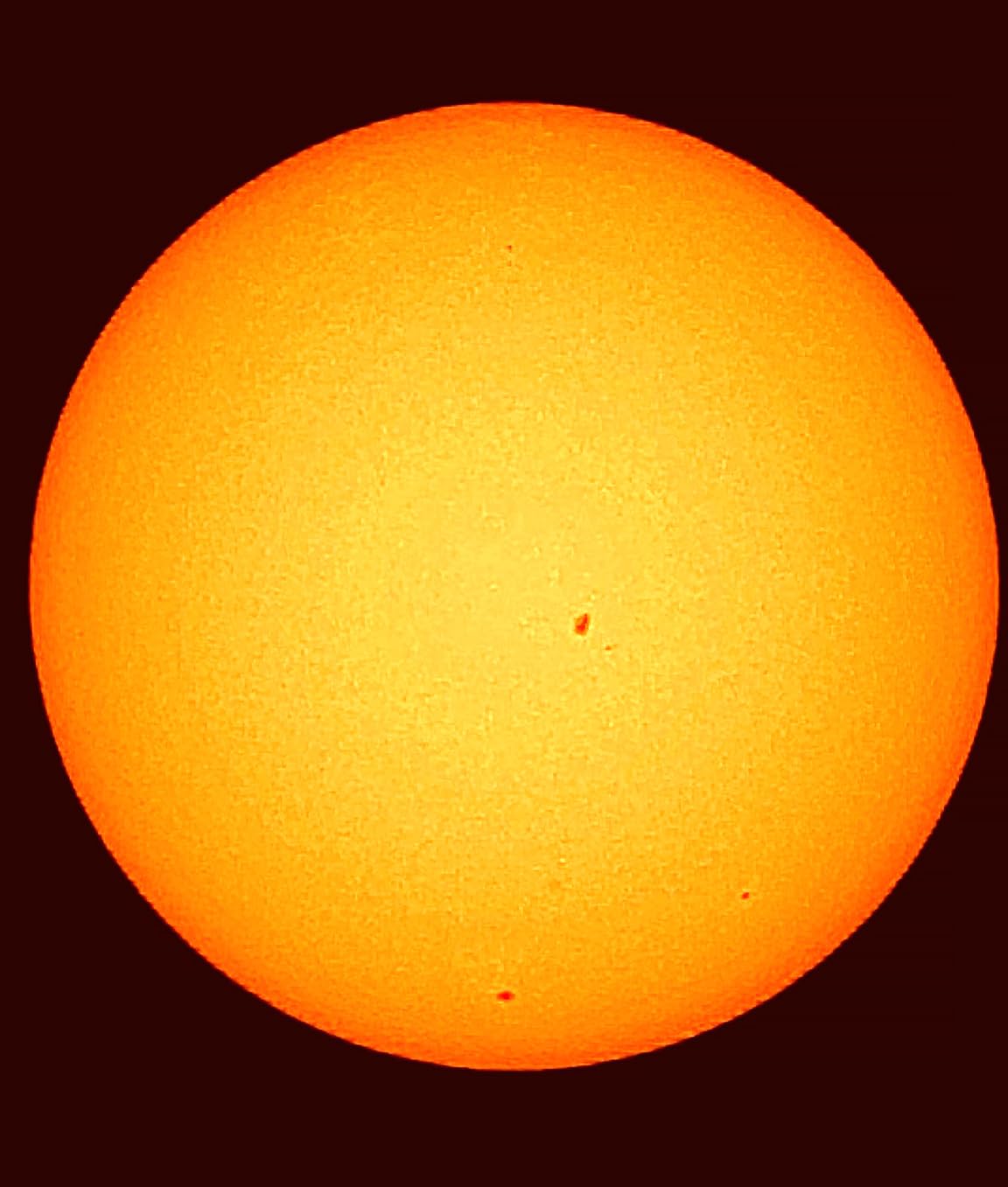
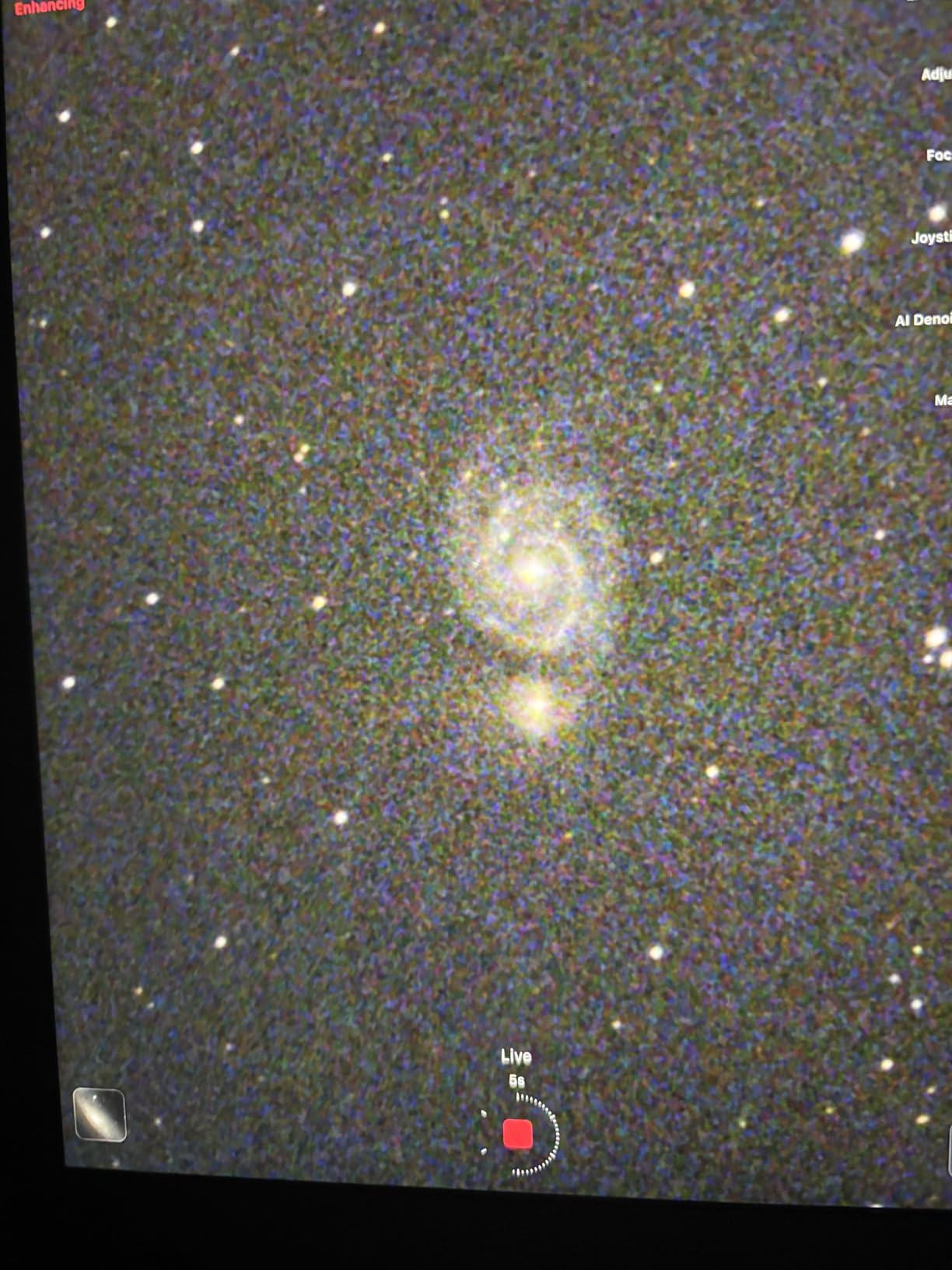
There is a one-tap capture mode specifically for the Moon, alongside modes for the Sun, Milky Way, star trails and deep sky. Dual-camera 4K imaging with automatic mosaic stitching covers wide fields, and the anti-dew protection plus long-session support mean it can stay out through damp nights. A tripod and filter are included in the box, which is a meaningful omission avoided.
At 3.64 pounds with a 160mm focal length and a 4.6-degree field of view, the Moon frames comfortably with room around it. The two-year warranty and a well-supported app ecosystem make it a low-risk first smart telescope. Reviewers note the clearest caveat is that it is built for deep-sky rather than planetary imaging, though the Moon mode is a separate path from the planetary one.
Why apochromatic optics matter even on a smart telescope
Apochromatic glass reduces colour distortion around bright points, and on the Moon that means a cleaner terminator edge and better contrast between the lit limb and the dark side. On a small smart sensor where you are stacking short frames, that extra contrast is what separates a recognisable lunar disc from a flat grey circle. Combined with the built-in light pollution filters, it is the reason this scope performs well without leaving the city.
One-tap capture is worth understanding precisely. You are not taking a single exposure; you are recording a sequence and letting the internal stacking and AI noise reduction assemble it. That is why the results arrive looking finished rather than raw, and it is why no laptop, SharpCap, or processing workflow is required.
Who this telescope is good for
It is for urban photographers, for anyone who wants a Moon photo with zero setup time, and for people put off by the learning curve of traditional imaging. The tripod in the box means the system is one item to carry, and anti-dew protection makes it practical for humid summers where a glass Newtonian would fog up repeatedly.
Who this telescope is not for
Do not buy it for planetary viewing. Reviewers are explicit that the design targets deep-sky imaging rather than planetary observation, and the 30mm aperture limits fine detail regardless. It also costs more than entry smart telescopes, so if you want the smallest possible smart device, the Dwarf Mini covers that need. Deep-sky imaging requires the unit to stay stationary for stable tracking, so plan a short setup session first.
10. Sky-Watcher Virtuoso GTI 150P – Collapsible GoTo Tabletop Dobsonian
Sky Watcher Sky-Watcher Virtuoso GTI 150P Collapsible Tabletop GoTo Dobsonian Telescope
Aperture: 150mm at f/5
Focal length: 750mm
Field of view: 0.83 degrees
Weight: 25.8 lb
Pros
- 150mm aperture at fast f/5 gives bright
- high-contrast lunar views
- 750mm focal length suits detailed Moon and planets
- Built-in Wi-Fi GoTo via the SynScan Pro app points the scope automatically
- Freedom Find encoders allow manual moves without losing alignment
- Collapsible tabletop format is easy to set up and store
Cons
- Dobsonian design needs manual repositioning for long exposures
- Collapsible base and tube require care to keep optics aligned
- Heavier than tabletop Maksutov alternatives
- Not suited to conventional equatorial imaging mounts
The Virtuoso GTI 150P combines the two things a Moon photographer actually wants: a 150mm aperture for detail and app-driven GoTo so you are not hunting for the target. Reviewers like that combination as one of the easiest ways to get started with a large-aperture telescope, and the Freedom Find dual encoders are singled out as useful for grabbing targets quickly without losing alignment.
The fast f/5 design at 750mm gives a bright, high-contrast image, and a 0.83-degree field of view frames a good chunk of lunar surface at low power. The included 25mm and 10mm Super Plossl eyepieces cover a sensible range, and the collapsible tabletop format is easy to store between sessions. It works with iOS and Android through the SynScan Pro app, or with the SynScan hand controller if you would rather not use a phone.
At 25.8 pounds it is heavy for a tabletop, and reviewers note it is heavier than the tabletop Maksutov alternatives in this guide. The real limitation is the one every Dobsonian has: an altazimuth rocker base means manual repositioning for anything beyond short exposures.
What GoTo does for Moon photography, and what it does not
GoTo solves the problem of finding, not the problem of holding. Built-in Wi-Fi with full GoTo control through the SynScan Pro app means the scope points itself at the Moon and centres it, and the Freedom Find dual encoders let you grab the tube and move it manually while keeping the alignment intact. That combination removes almost all of the frustration of a first large-aperture session.
What it does not solve is tracking. The Dobsonian base is altazimuth, so the Moon drifts and the field rotates, and reviewers are clear the design does not support long-exposure imaging. Your workflow is short bursts and stacking, which is exactly the technique that makes a Dobsonian viable for the Moon despite that limitation.
Who this telescope is good for
It suits a visual observer who also wants lunar photos, because a 150mm Dobsonian is a genuinely excellent first-quarter Moon and planet scope. The collapsible design is a real advantage in a small flat, since it stores against a wall between sessions. If you want the largest aperture with the least pointing effort, this is the scope in the guide, and it works without a phone through the SynScan hand controller.
Who this telescope is not for
It is not for anyone planning conventional equatorial imaging. The rocker base cannot be mounted on a standard equatorial imaging mount, and reviewers note it is not suited to that approach at all. It is also heavier than tabletop Maksutov alternatives, so check you can lift 25.8 pounds onto a table unaided, and avoid treating a collapsing tube as grab-and-go gear you move constantly.
How to Choose a Telescope for Moon Photography
Aperture sets the detail ceiling. Aperture is the diameter of the light-collecting element, and it determines both how much light you gather and how fine a detail you can resolve. On the Moon, where the target is blindingly bright, the resolving power is what you are paying for, and our own 130mm and 150mm comparisons above show the practical difference.
Focal length sets the framing. Focal length is the distance the light travels inside the tube, and it determines how large the Moon appears on your sensor. Short focal lengths give a wide view that fits the whole disc with room to spare. Long focal lengths like the Skymax 102’s 1300mm give a tight view of a small region, which is how you get a close-up of a single crater. Doubling focal length with a Barlow is the standard way to crop in without changing the telescope.
Focal ratio is what you can fit in the frame. Focal ratio is focal length divided by aperture, written as f/5 or f/12.7. A fast ratio packs more of the Moon into a frame and keeps the surface bright. A slow ratio magnifies harder and shows less sky. For the Moon, fast-to-medium ratios are easier to work with, which is why the f/5 Newtonians here are popular and the long-ratio Maksutov is a specialist close-up tool.
The Moon is not a deep-sky target. This is the mistake that costs beginners money. Deep-sky astrophotography needs long exposures, so it needs a fast ratio and a precise equatorial mount. The Moon is bright, so exposures are short, so the expensive tracking hardware is largely wasted. A manual German equatorial with slow-motion knobs is genuinely sufficient, and altazimuth mounts become usable once you switch to video stacking.
Understand the tracking limitation before you buy. Altazimuth mounts, including the Dobsonian base in this guide, cannot hold a still lunar image. The Moon drifts out of frame and the field rotates. The workaround is short bursts plus stacking, explained in the next section, and it works better than most people expect.
Pick your camera attachment method. Three methods cover most cases. Afocal photography means pointing your camera lens through the eyepiece, which needs no adapters and works with a phone or any camera, at the cost of some softness. Prime focus means attaching the camera body directly to the telescope focuser, which is the sharpest option and needs a T-ring or adapter plus a sturdy mount. Eyepiece projection means shooting through an eyepiece with the camera behind it, giving more magnification per unit of aperture at some cost to image quality.
Two more practical filters. If you are still deciding between optical designs, our refractor telescope roundup covers the achromat versus apochromat trade, including the fringing that shows up on the lunar limb. If GoTo convenience is your deciding factor, the GoTo telescope picks break down the alignment routines. For general observing alongside imaging, the main telescope guide covers the categories in more depth.
The 11 Rule and How to Get a Sharp Moon Photo
The 11 rule is the standard Moon exposure starting point, and almost nobody explains it properly. It gives you a baseline exposure for any ISO, so you stop guessing.
Set your shutter to 1/250 second at ISO 100. That is the baseline for a full Moon.
Adjust the shutter by one stop for every doubling of light. Moving from ISO 100 to ISO 200 means twice the light, so you halve the shutter to 1/500 second. Moving to ISO 400 means 1/1000 second, and ISO 800 means 1/2000 second.
Bracket by one stop for each phase. A full Moon needs the baseline. A quarter Moon is roughly eight times dimmer, so open the shutter by three stops to 1/32 second, and a crescent needs more still.
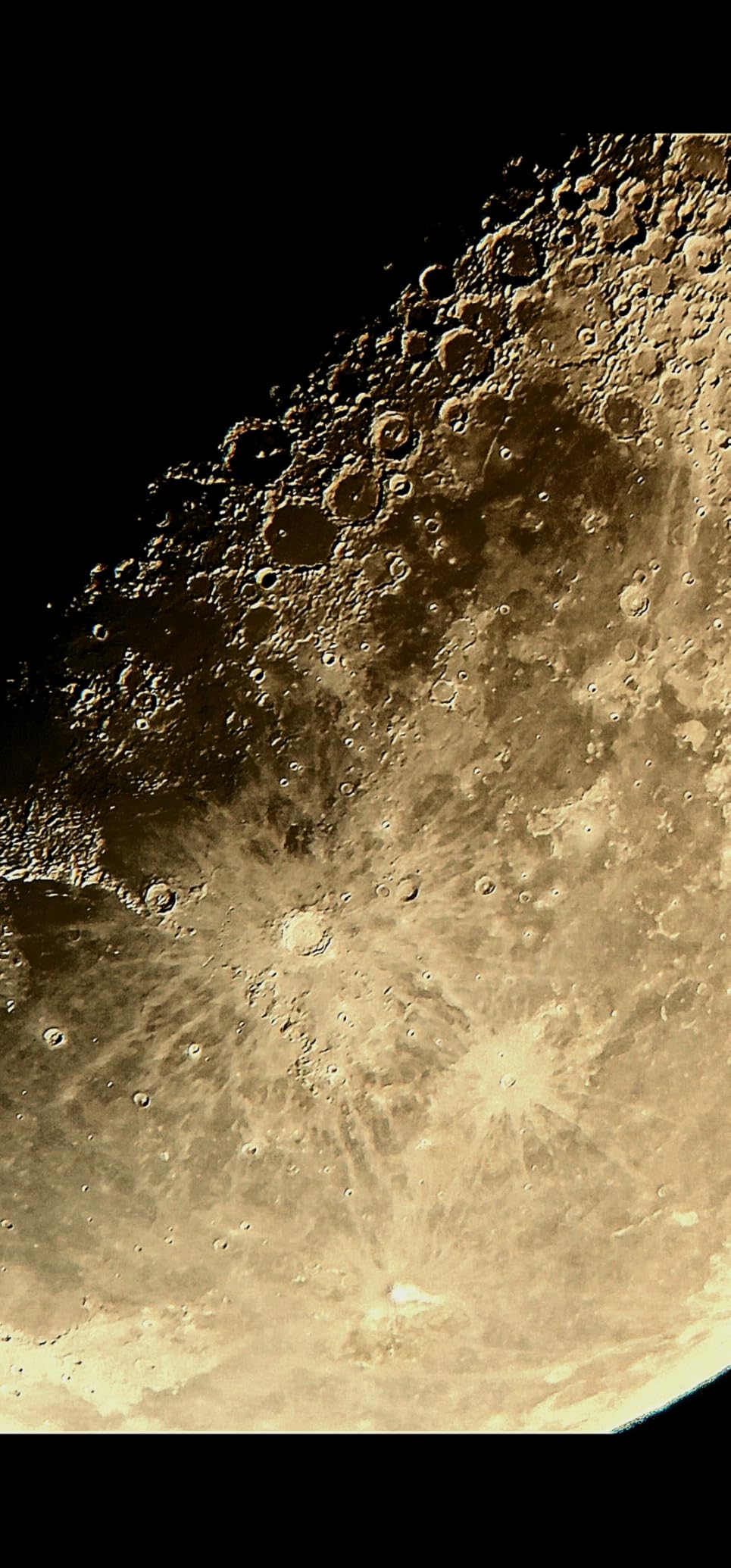
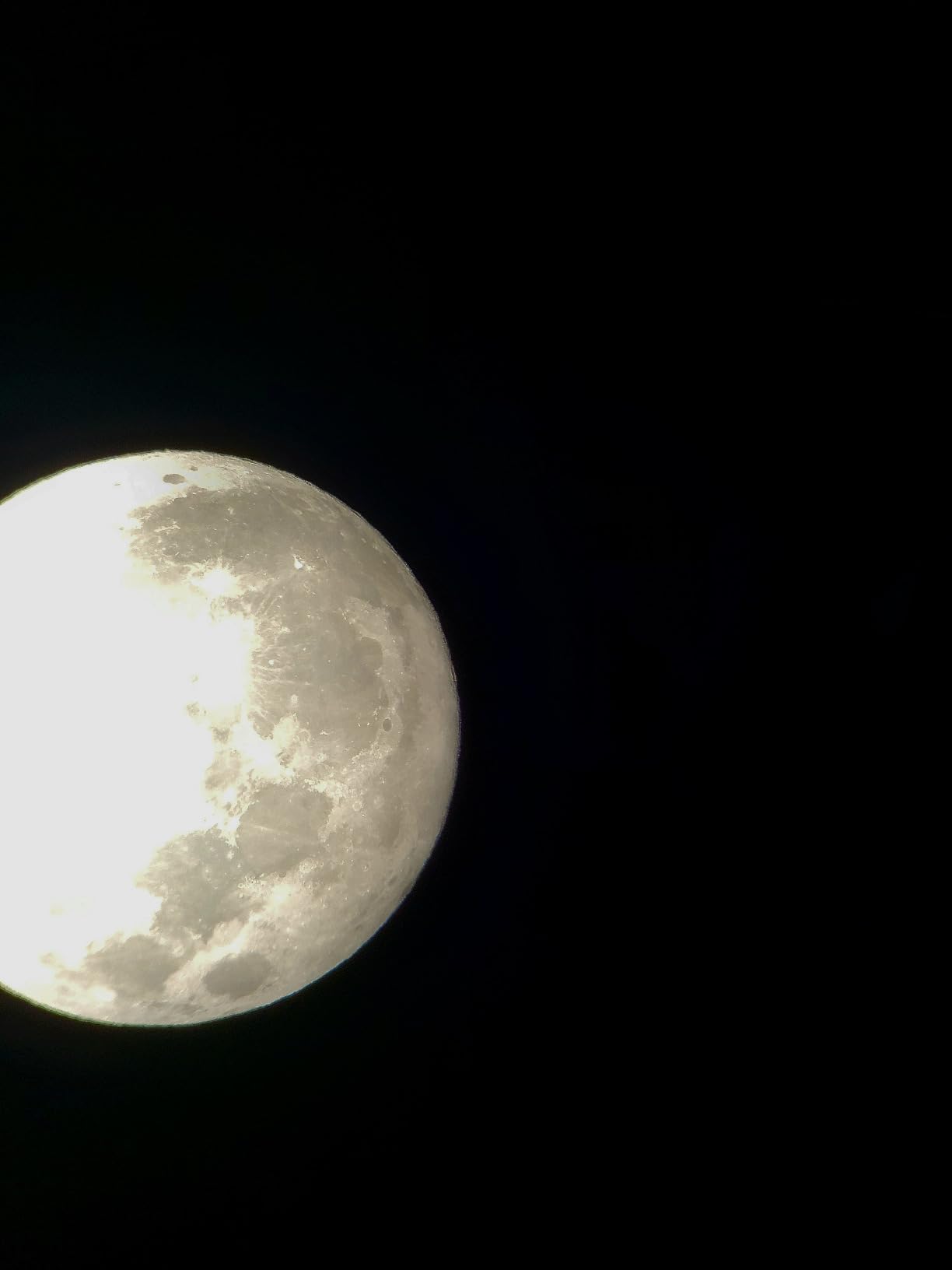
At first quarter the terminator is the money shot, because low-angle sunlight throws long shadows across the craters there. Shoot within a day or two of the quarter phase rather than at full, when the surface flattens into a bright disc with little relief. Our moon filter picks help with glare at longer focal lengths and through larger apertures.
Then the technique that makes the biggest difference: lucky imaging, also called video stacking. Rather than taking one long exposure, you record a short video of the Moon and let software pick the sharpest individual frames. The Moon’s brightness means you can record thousands of frames in a couple of minutes, and atmospheric turbulence means most of them will be soft. Stacking the best 10 to 30 percent sharpens the image well beyond what any single frame gives you.
The workflow runs in four steps. First, attach the camera or phone, switch to manual focus, and focus on the Moon until the craters at the edge of the disc are sharp. Second, set the exposure using the 11 rule and record a burst of short video. Third, stack the frames in software such as RegiStax, AutoStakkert, SharpCap, or FireCapture, which score each frame on sharpness and align the winners. Fourth, apply wavelet sharpening to bring out the fine detail that survived the stack.
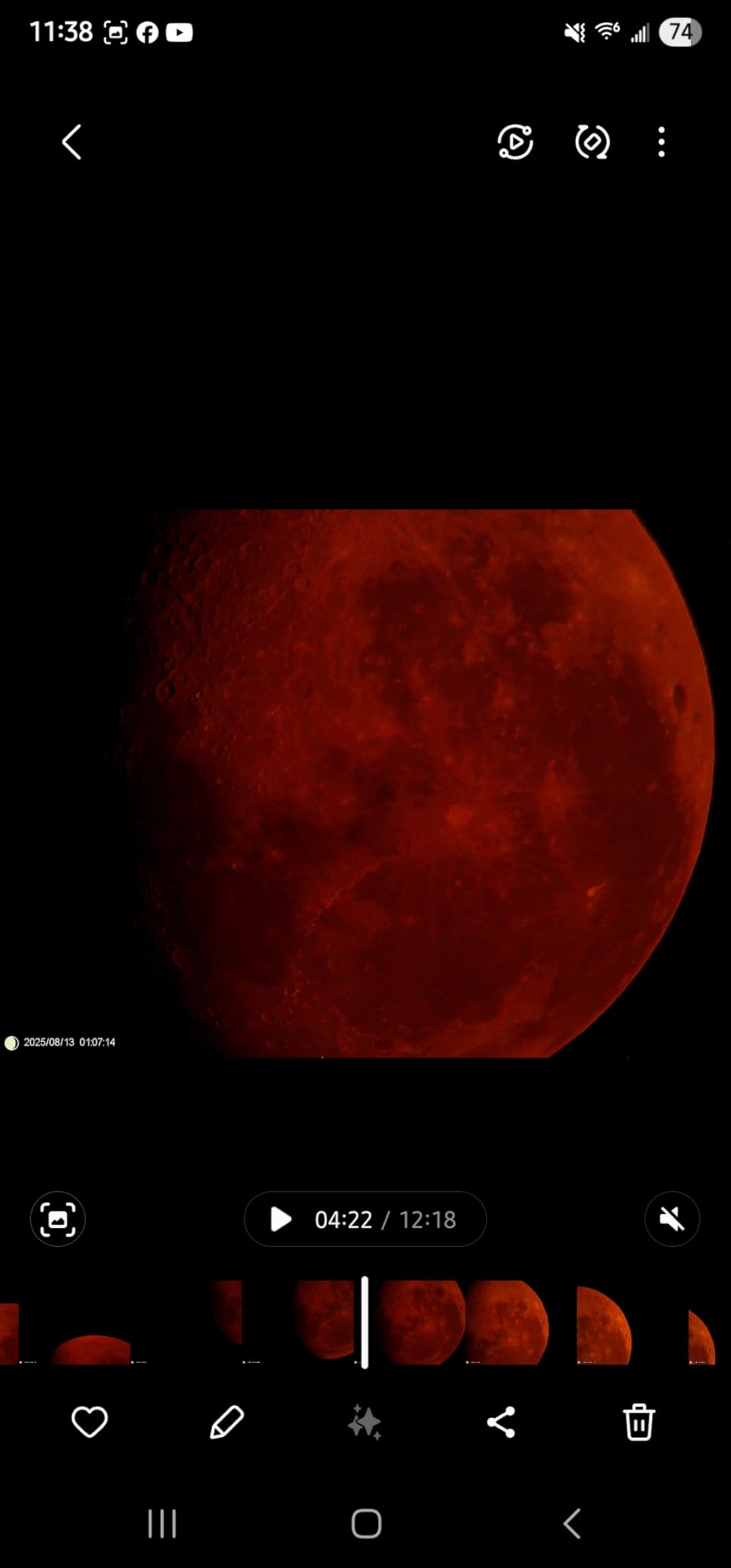
Do this on any telescope in this guide and it works, including the ones that cannot track. A Dobsonian on a rocker base, a manual German equatorial, a motorized altazimuth GoTo, even a smartphone held to an eyepiece, all produce good results because each individual frame only needs to be sharp, not aligned. Record far more frames than you think you need and let the software decide which were the lucky ones.
Frequently Asked Questions
What type of telescope is best for moon photography?
A long-focal-length refractor or Maksutov-Cassegrain is best, because these designs give high contrast with no colour fringing on the bright lunar limb. A 130mm Newtonian with slow-motion tracking is the best value option, and a smart telescope handles the entire imaging workflow from a phone. Aperture sets the detail ceiling, focal length sets the framing.
What is the 11 rule for moon photography?
Start at 1/250 second at ISO 100 for a full Moon. Every time you double the ISO, halve the shutter speed to keep the same brightness, so ISO 200 is 1/500 second and ISO 400 is 1/1000 second. For a quarter Moon, open the shutter by about three stops to around 1/32 second.
Do you need an equatorial mount to photograph the moon?
No. Because the Moon is bright, exposures are short, and the practical technique is lucky imaging, recording thousands of video frames and stacking the sharpest ones. An altazimuth mount or a Dobsonian base works well this way, though a manual German equatorial with slow-motion knobs makes following the target much easier over a long session.
Is a reflector or refractor better for the moon?
A reflector gives more aperture for less money and avoids the colour fringing that cheap achromatic refractors put on the lunar limb, at the cost of periodic collimation. An apochromatic refractor needs no collimation and gives clean colour, but costs more for the same aperture. A Maksutov-Cassegrain sits between them with a compact, fringing-free design.
What focal length is best for filling the frame with the moon?
A focal length of roughly 1000mm to 2000mm fills a full-frame camera with the lunar disc, while around 600mm to 750mm leaves comfortable room around it. A 1300mm Maksutov shows only a small region, which is ideal for a single crater close-up. Doubling focal length with a Barlow crops in without changing the telescope.
How big of a telescope do I need to photograph the moon?
Around 80mm of aperture is enough to show large craters and the lunar maria clearly. At 114mm to 130mm you begin resolving smaller craters inside larger ones and get real shadow relief along the terminator. At 150mm and above you see a noticeably higher density of surface detail under steady seeing.
Which Moon Telescope Should You Buy?
The Celestron PowerSeeker 127EQ is our pick among the best telescopes for photographing the moon, and it comes down to the combination reviewers describe most often: a 127mm mirror with a German equatorial head that you can actually follow the terminator with. Its 1000mm focal length fills a camera frame with the lunar disc, and it stays a capable visual telescope on nights when you are not shooting at all.
If your priority is the largest image for the least money, look at the MEEZAA 150EQ for its 150mm aperture and included phone adapter, or the AstroMaster 130EQ for the sturdier mount. If you want zero setup, the ZWO Seestar S30 Pro handles the whole workflow from a phone and its built-in light pollution filters make it the strongest choice from a city. And if you plan to travel, the Sky-Watcher Skymax 102 at 4.6 pounds is the one to pack.
Whichever you choose, shoot near first quarter rather than at full, keep your frames short, and stack the lucky ones. The telescope matters, but the technique is what turns a bright disc into a photograph full of craters. Clear skies.