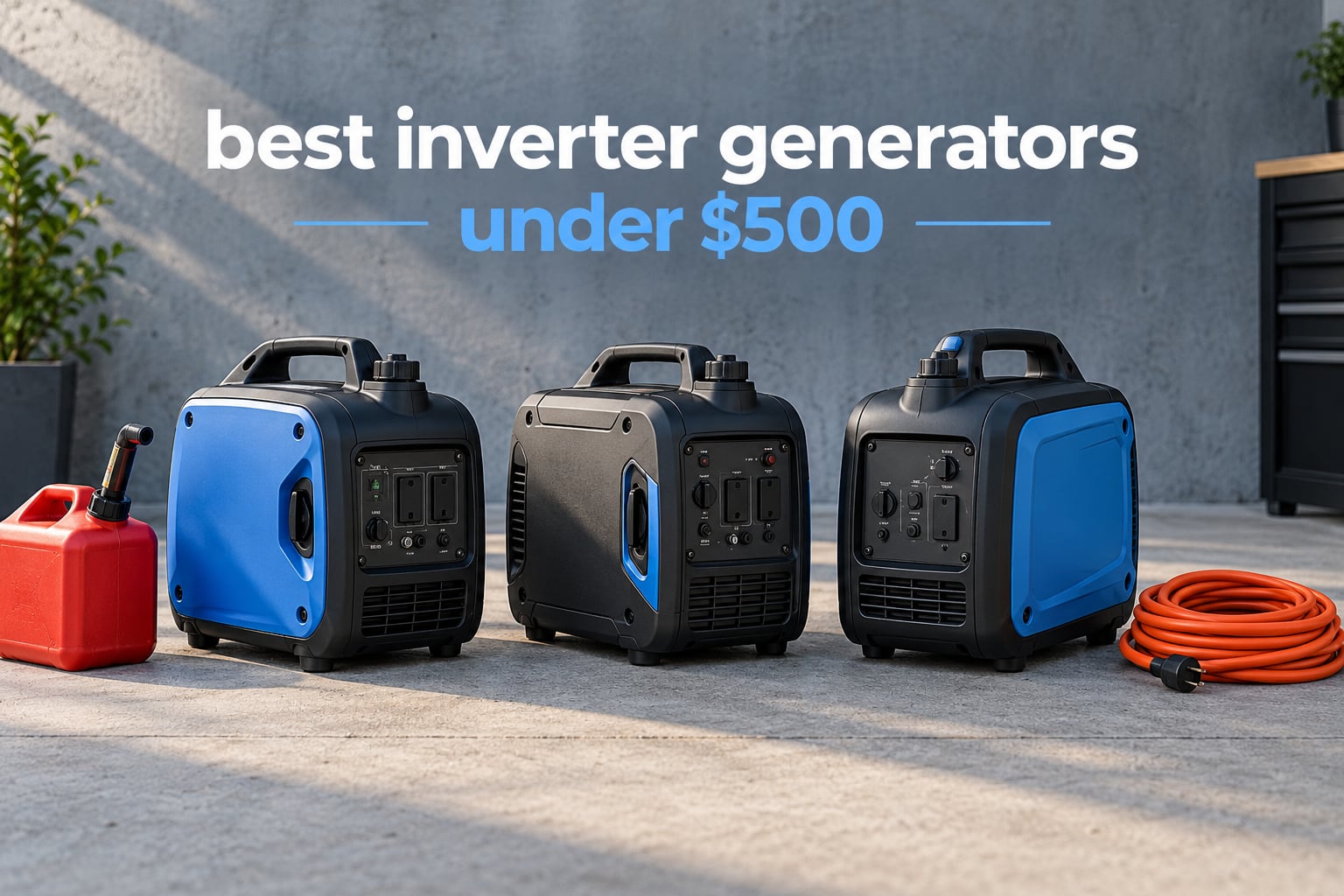
Carbon monoxide deaths from portable generators happen every year, almost always because someone ran a unit indoors or in a garage. Everything in this roundup is built for outdoors, and we cover placement rules before the product list.
There is a hard ceiling on this list: every generator here sits under 500 dollars. That cap matters more than it sounds, because most major publication roundups start well above it and quietly include units that blow the budget. We held the line, sorted eight models that actually fit inside it, and looked at what each one costs you in tank size, outlet count and warranty length.
An inverter generator differs from a standard open-frame unit in one important way. The engine still makes raw AC current, but inverter circuitry converts it to DC, filters it, and flips it back to AC as a smooth sine wave. That smoothing is what makes these units safe for laptops, TVs, phones and medical equipment, and it is also why they idle quietly enough for a campsite.
We built this roundup around five real use cases: keeping a refrigerator, router and lights alive through a short outage; powering a tailgate; running an RV; carrying a unit solo into a truck bed; and running small power tools. If your load is bigger than a refrigerator plus a handful of small appliances, the honest answer is that this price tier is too small, and the best inverter generators overall guide covers the next step up.
Table of Contents
Top 3 Picks for Best Inverter Generators Under $500 in October


All 8 Picks Compared Side by Side in 2026
The table below is the fastest way to eliminate options. Running watts are the only number that decides whether a load fits; the surge number only matters for the moment a compressor kicks on. Read the tank column before anything else, because a 1-gallon tank is the single biggest limitation in this tier.
| Product | Specifications | Action |
|---|---|---|
| WEN 56235i 2350-Watt Inverter Generator |
|
Check Latest Price |
| PowerSmart 3800-Watt Dual Fuel Inverter Generator |
|
Check Latest Price |
| Oxseryn 4400-Watt Open Frame Inverter Generator |
|
Check Latest Price |
 AIVOLT 1600-Watt Super Quiet Inverter Generator AIVOLT 1600-Watt Super Quiet Inverter Generator |
|
Check Latest Price |
 WEN 56360i 3600-Watt RV-Ready Inverter Generator WEN 56360i 3600-Watt RV-Ready Inverter Generator |
|
Check Latest Price |
 ERAYAK 2400-Watt Portable Inverter Generator ERAYAK 2400-Watt Portable Inverter Generator |
|
Check Latest Price |
 Pulsar PGD40ISCO 4000-Watt Inverter Generator Pulsar PGD40ISCO 4000-Watt Inverter Generator |
|
Check Latest Price |
 Oxseryn 2800-Watt Portable Inverter Generator Oxseryn 2800-Watt Portable Inverter Generator |
|
Check Latest Price |
How We Evaluated These Eight Generators
Every model here was scored on five things we could actually verify: published running and starting wattage, fuel type and tank capacity, measured noise, outlet mix, and warranty length. We then cross-checked those specs against the recurring themes in owner reviews, because spec sheets tell you what a machine claims and reviews tell you what it does at hour 300.
Here is the honest limit of this roundup. We did not put these budget units on a load bank, so our runtime figures and noise readings come from manufacturer specs measured at published distances, not from our own sound meter. Where a spec was measured at 7 meters and another at 23 feet, we say so rather than pretending the numbers are interchangeable.
Reliability is the number-one question in every generator forum we read, and brand reputation does not answer it at this price. Warranty length, whether parts are actually sold, and what owners report failing are the signals we used instead. The watt-focused inverter generator guide goes deeper on load matching if your priority is raw output.
1. WEN 56235i 2350-Watt Inverter Generator – Best Overall
WEN Super Quiet 2350-Watt Portable Inverter Generator with Fuel Shut Off, Gasoline Power, Ultra Lightweight (56235i), Black
1900 running W
2350 starting W
39 lb
1 gal tank
5 outlets
2-yr warranty
Pros
- 39 pounds is easy for one person to carry
- quiet enough for conversation-level background
- fuel shutoff valve extends carburetor life
- clean inverter power for electronics
- ECO mode thins fuel use on light loads
Cons
- Limited surge headroom means one big appliance at a time
- low-oil sensor can trip on sloped ground
- no built-in hour meter
This is the unit we recommend to someone who wants backup power and minimal fuss. It weighs 39 pounds, which is light enough that one person can lift it into a trunk without a plan, and the closed frame keeps the exhaust and noise on the polite side of neighborhood limits. Owners consistently report first-pull or second-pull starting, which matters more than it sounds when the power is already out.
The 79cc four-stroke engine produces 1900 running watts and 2350 starting watts, and those numbers are honest. That is a refrigerator, a router, a few lamps, a chest freezer, and a small inverter window air conditioner if you start them one at a time. Reviews repeatedly describe exactly that load running through a storm outage without issue, which is the use case this tier exists to serve.
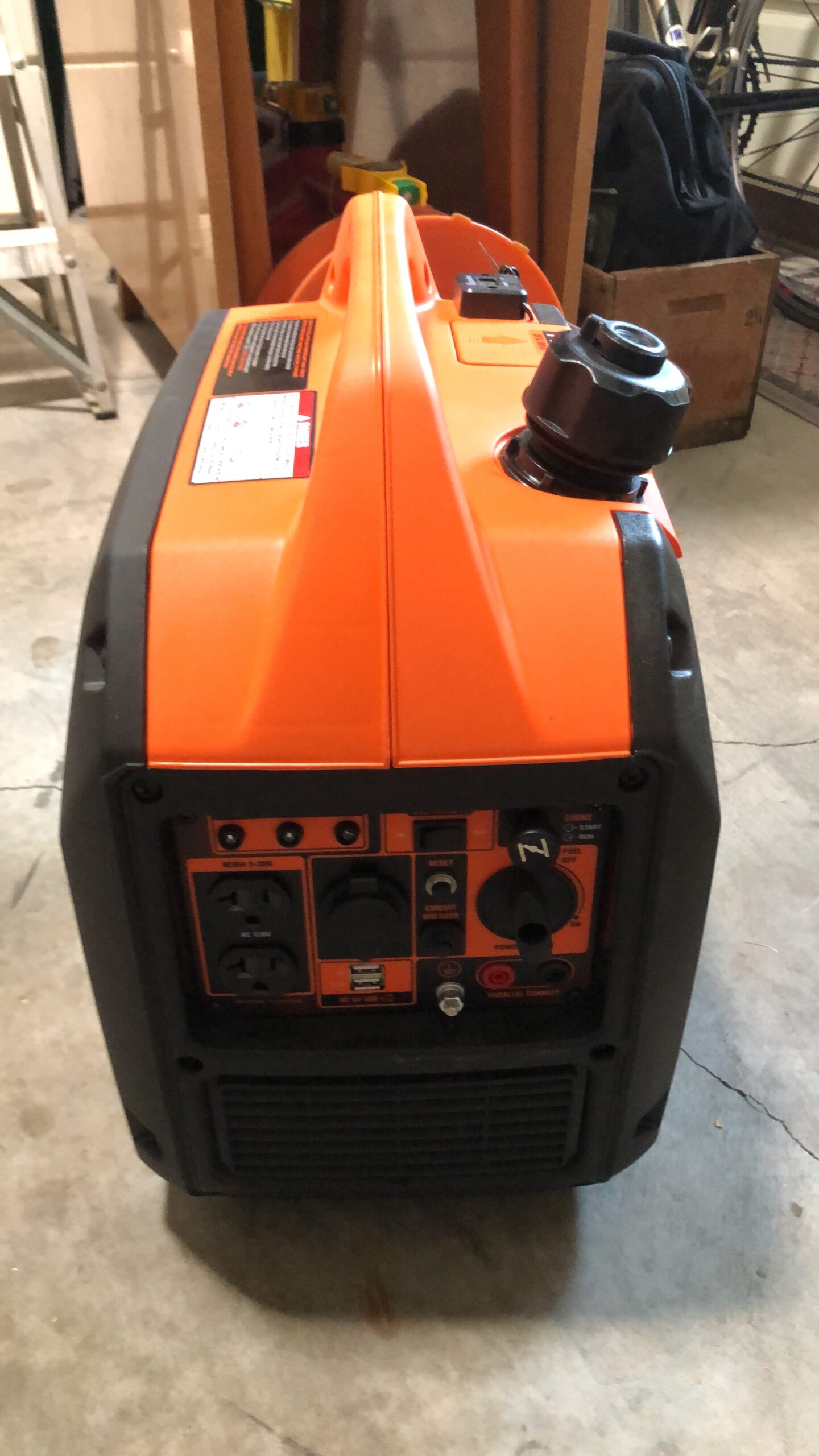
The fuel shutoff valve is the detail that separates this from cheaper units. Run it down until the carburetor is empty instead of parking gasoline in it, and you avoid the varnish problem that gums up a carburetor over a winter. The 1-gallon tank is the trade: the listed runtime figure is 10 hours under light duty, so plan refills for anything heavier.
Two outlet sets, a 12V DC receptacle and two 5V USB ports cover phones, lights and small electronics without a power strip. Fuel economy degrades if ethanol-blended gas sits in the tank, so if this becomes a seasonal backup unit, add stabilizer or run it dry after an outage.
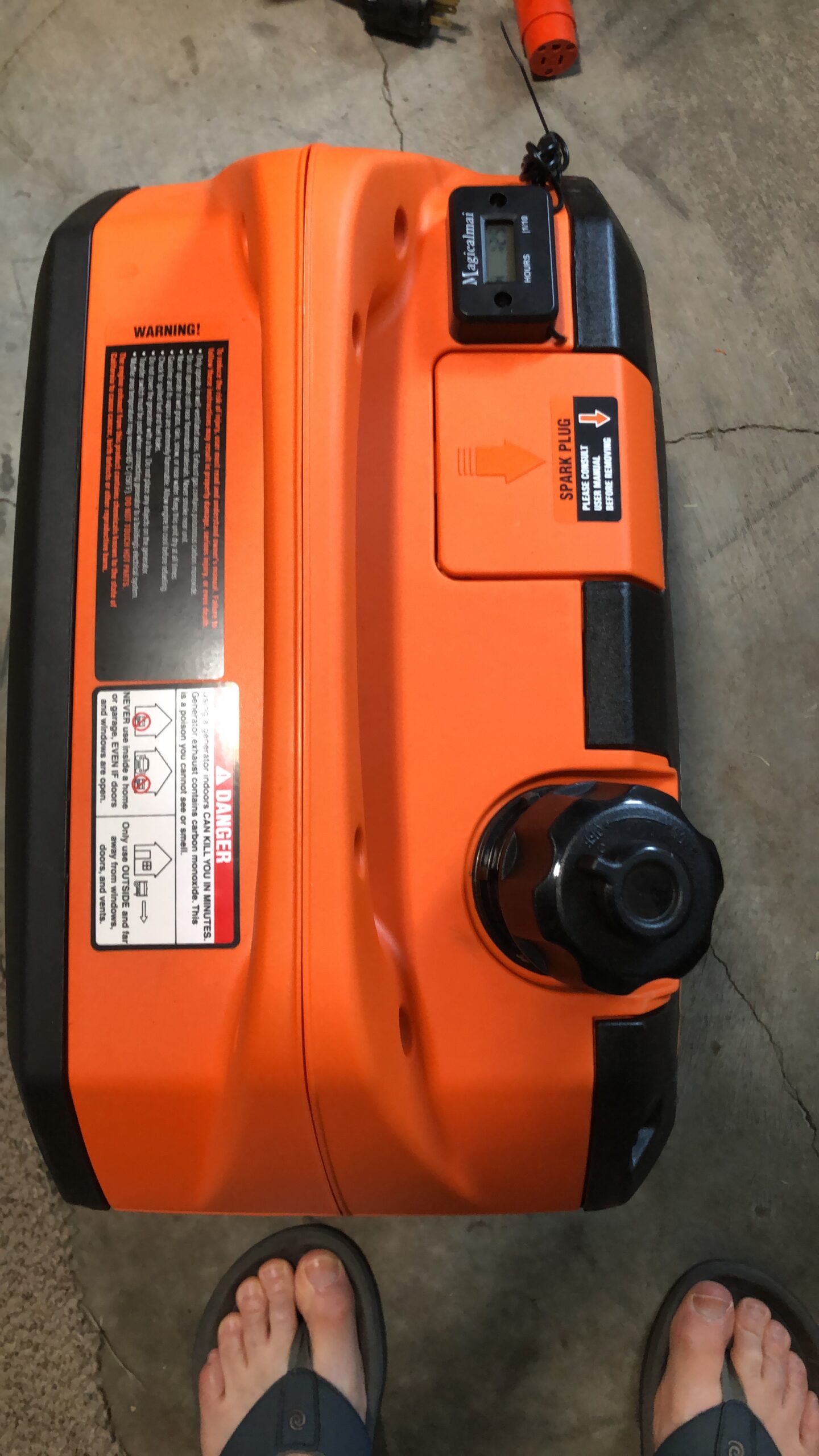
Is 1900 Running Watts Enough for an Outage?
Enough for the essentials, not enough for a house. Add up the running watts of everything you want on at once, then remember that a refrigerator compressor can pull three to four times its running draw for a second or two. With 1900 running and 2350 starting, you can start one compressor load, wait ten seconds, then start the next.
Should You Buy the Bigger WEN Instead?
Only if you need a 30-amp RV outlet or more headroom. The 56360i reviewed later gives you 2900 running watts and a TT-30R receptacle for more money. For a condo, a small house’s essential circuits, or an RV that only needs a coffee maker and a phone charger, the 56235i covers it at a lighter carry weight.
2. PowerSmart 3800-Watt Dual Fuel Inverter Generator – Best Value
PowerSmart 3800 Watt Dual Fuel Inverter Generator for Camping or Home Use
3300 running W
gas or propane
1.3 gal tank
6 outlets
50.7 lb
2-yr warranty
Pros
- Runs on gasoline or a standard 20 lb propane tank
- up to 24 hours on propane
- 30A L5-30R RV outlet plus 12V DC and USB
- clean output under 3 percent THD
- CO sensor and low-oil shutdown
Cons
- Heavy at 50.7 pounds and awkward without a cart
- 1.3 gallon gasoline tank needs frequent refills
- noise climbs as load rises
Dual fuel is the reason this model earns its place. Gasoline is convenient when you have a can, but propane stores indefinitely and keeps working through an extended outage when gas stations are the first thing to get crowded. One owner described running a refrigerator and an electric fireplace through a tornado outage on this unit, and that is roughly the load class it was built for.
On gasoline you get 3300 running and 3800 starting watts. On propane, 3100 running and 3500 starting. That is the most usable output we found from a dual-fuel unit inside the cap, and it is enough to carry a window air conditioner, a refrigerator and a few lights at the same time.
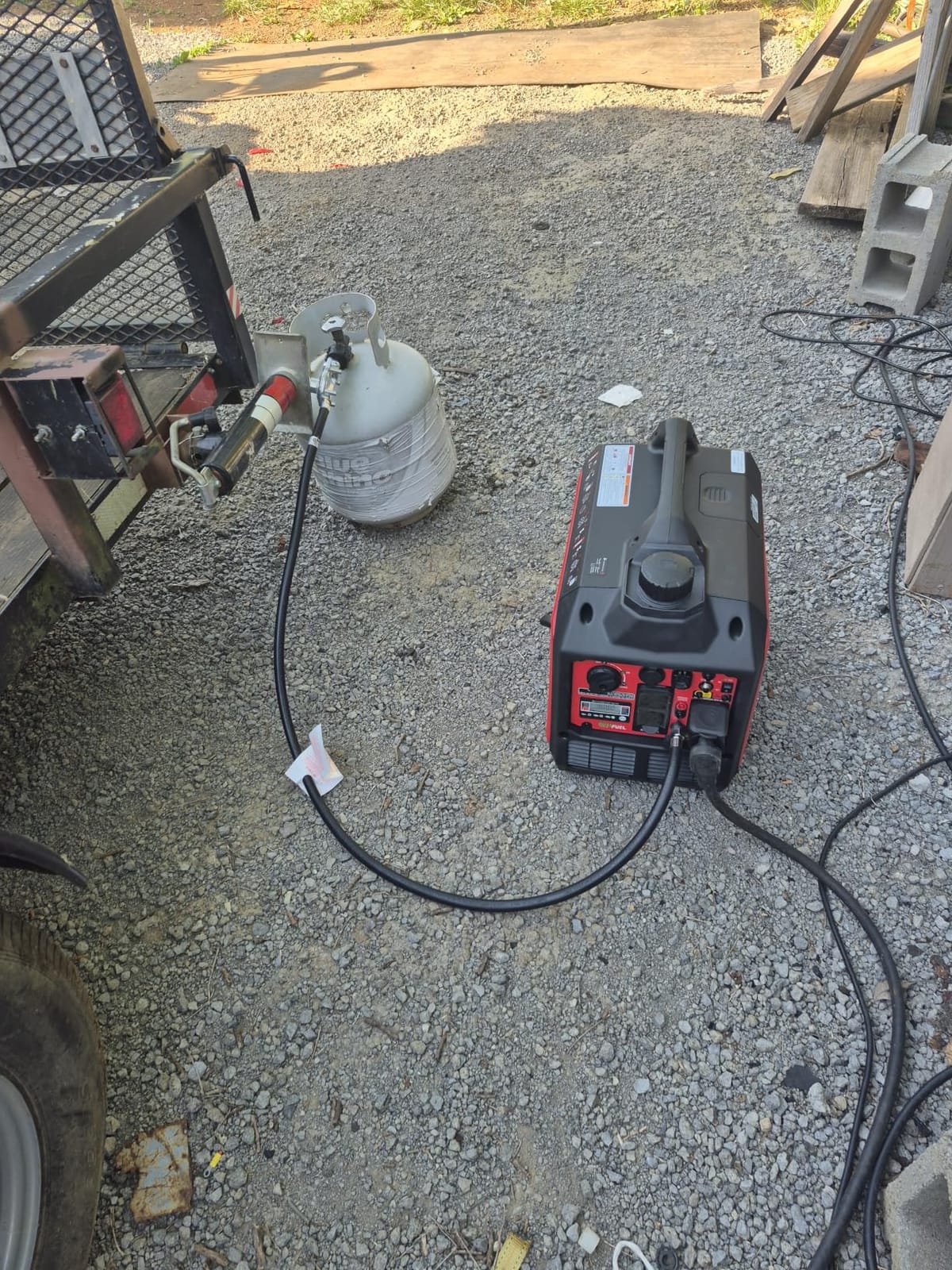
The outlet panel is the best in the group: a 30A L5-30R twist-lock for RV hookups, a 20A duplex, 12V DC and dual USB. Runtime is 8 hours at 25 percent load on the 1.3-gallon gasoline tank, and up to 24 hours on a 20-pound propane cylinder, which is where the long-outage math comes from.
Two things slow this one down. At 50.7 pounds it is a two-hand lift unless you have a cart, and the access panels for oil changes need a Phillips screwdriver, which is a small irritation when your hands are dirty. The control panel display is also thin on documentation and hard to read with the unit on the ground.
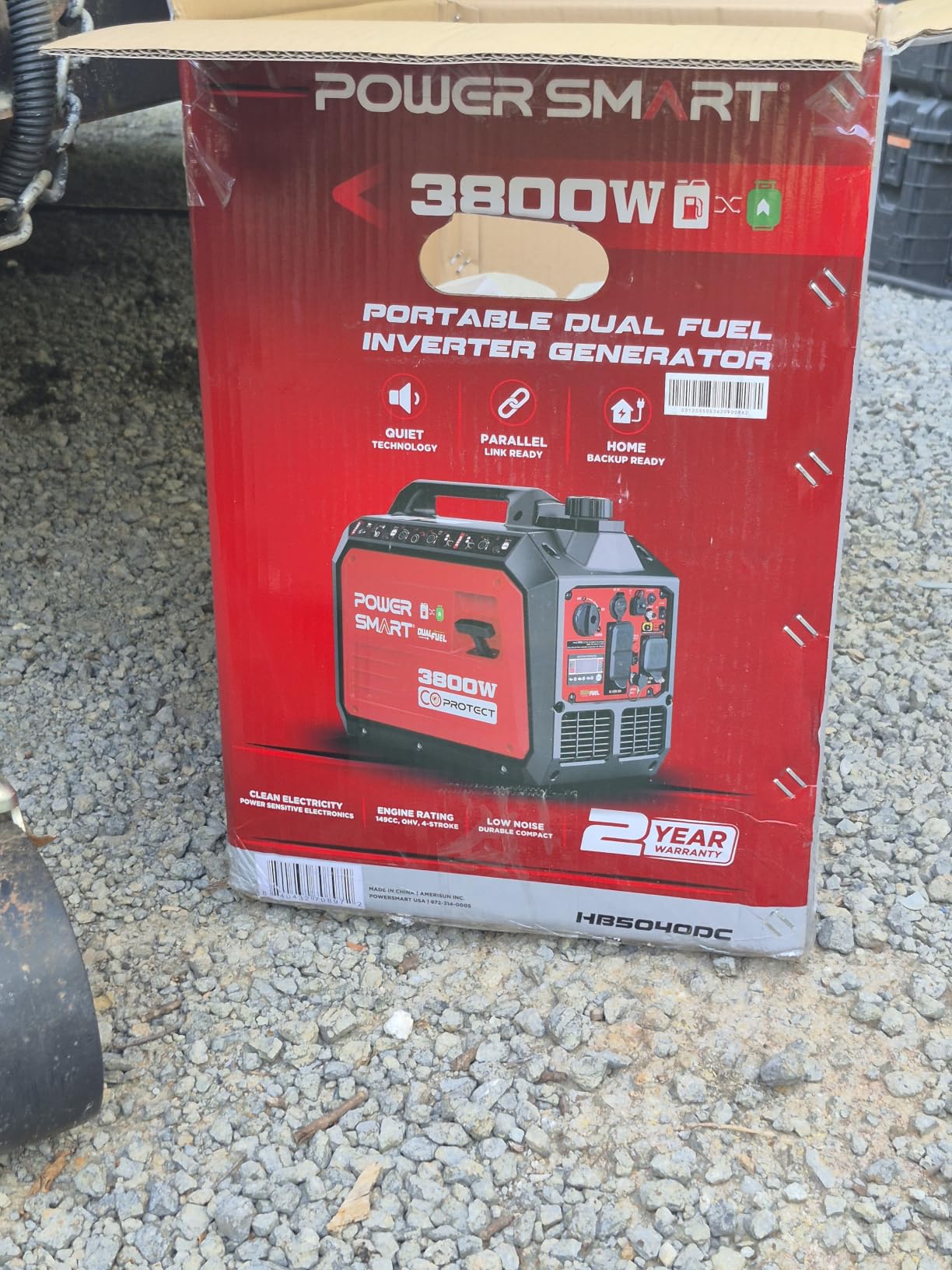
Do You Have a Propane Tank on Hand?
That question decides this purchase. If you own a 20-pound cylinder already, propane changes the calculus entirely: you get 24 hours of runtime per tank and fuel that will not spoil in storage. If you do not own one, gasoline-only models are simpler, and the added bulk here buys you nothing until you buy the cylinder.
Is the 50-Pound Weight a Problem?
For a fixed installation or a truck bed, no. For carrying up stairs or lifting solo into a hatchback repeatedly, yes. Budget owners consistently praise the output and the outlet mix and consistently mention the weight, so plan a two-person lift or a folding cart before the first outage rather than after it.
3. Oxseryn 4400-Watt Open Frame Inverter Generator – Budget Pick
Oxseryn Power Equipment 4400 Watts Inverter Generator Gas Powered, Portable Open Frame Generator, Low Noise with ECO Mode, RV Ready, Emergency Home Backup
3400 running W
4400 starting W
2 gal tank
14 hr runtime
RV outlet
1-yr warranty
Pros
- 3400 running watts is the highest output in this list
- 2 gallon tank with fuel gauge
- dedicated RV outlet plus 12V DC
- up to 14 hours at 25 percent load
- cold start technology and low-oil shutdown
Cons
- Heaviest model here at 56 pounds
- open frame is louder than enclosed inverter units
- 1-year manufacturer warranty
- no CO sensor listed
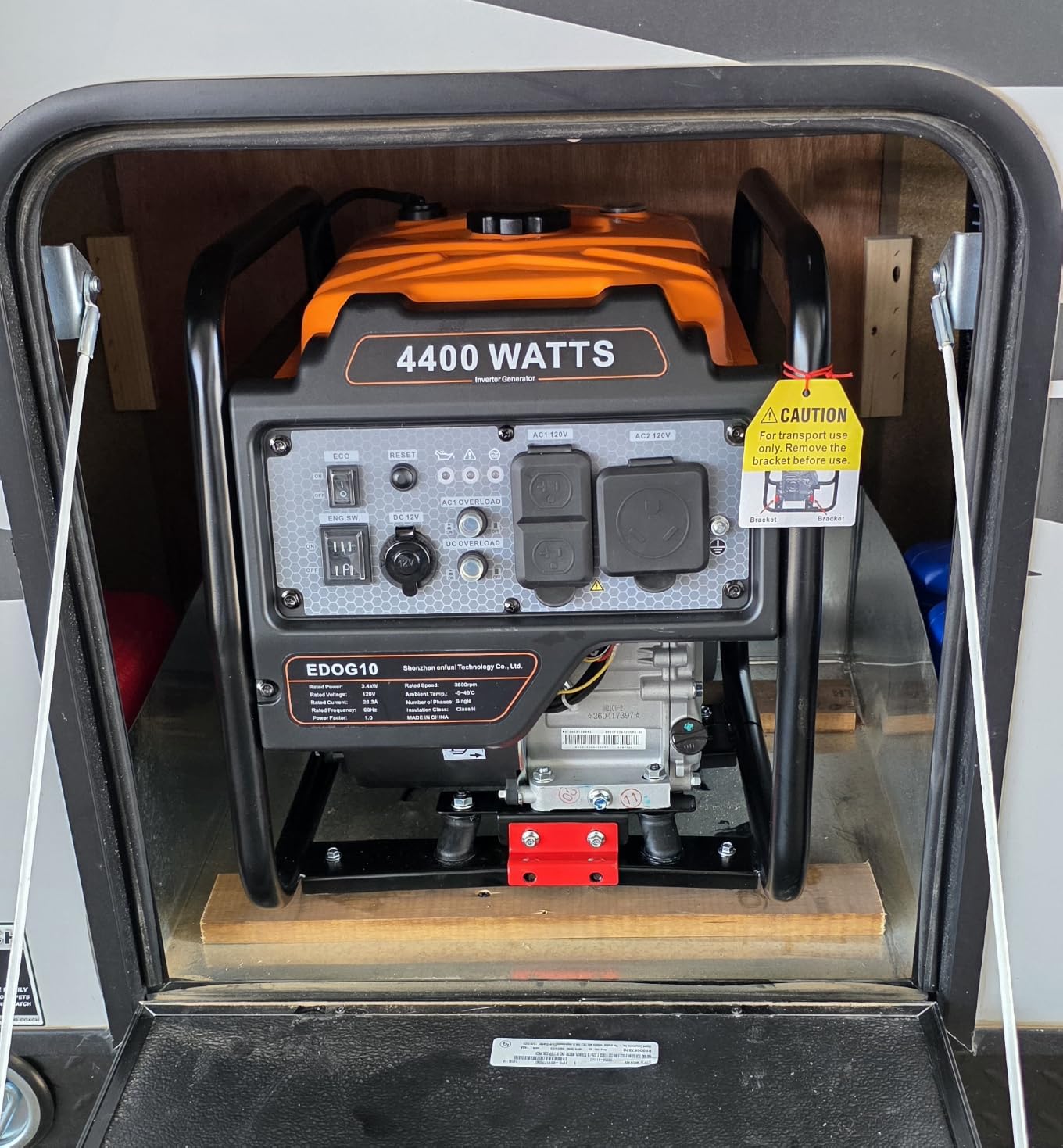
If your load math comes back above 2500 watts and you refuse to go over the 500-dollar ceiling, this is the model. The 208cc engine puts out 3400 running watts, which is the highest rated output in this group, and the open frame keeps the unit cheaper and easier to service than an enclosed inverter design.
The 2-gallon tank is larger than most of what we tested, and with a fuel gauge plus a listed 14 hours at 25 percent load, you are not refilling it every couple of hours during a long outage. Outlet coverage is a dedicated RV port, two 120V AC receptacles and a 12V DC port, which is enough for a travel trailer’s essentials.
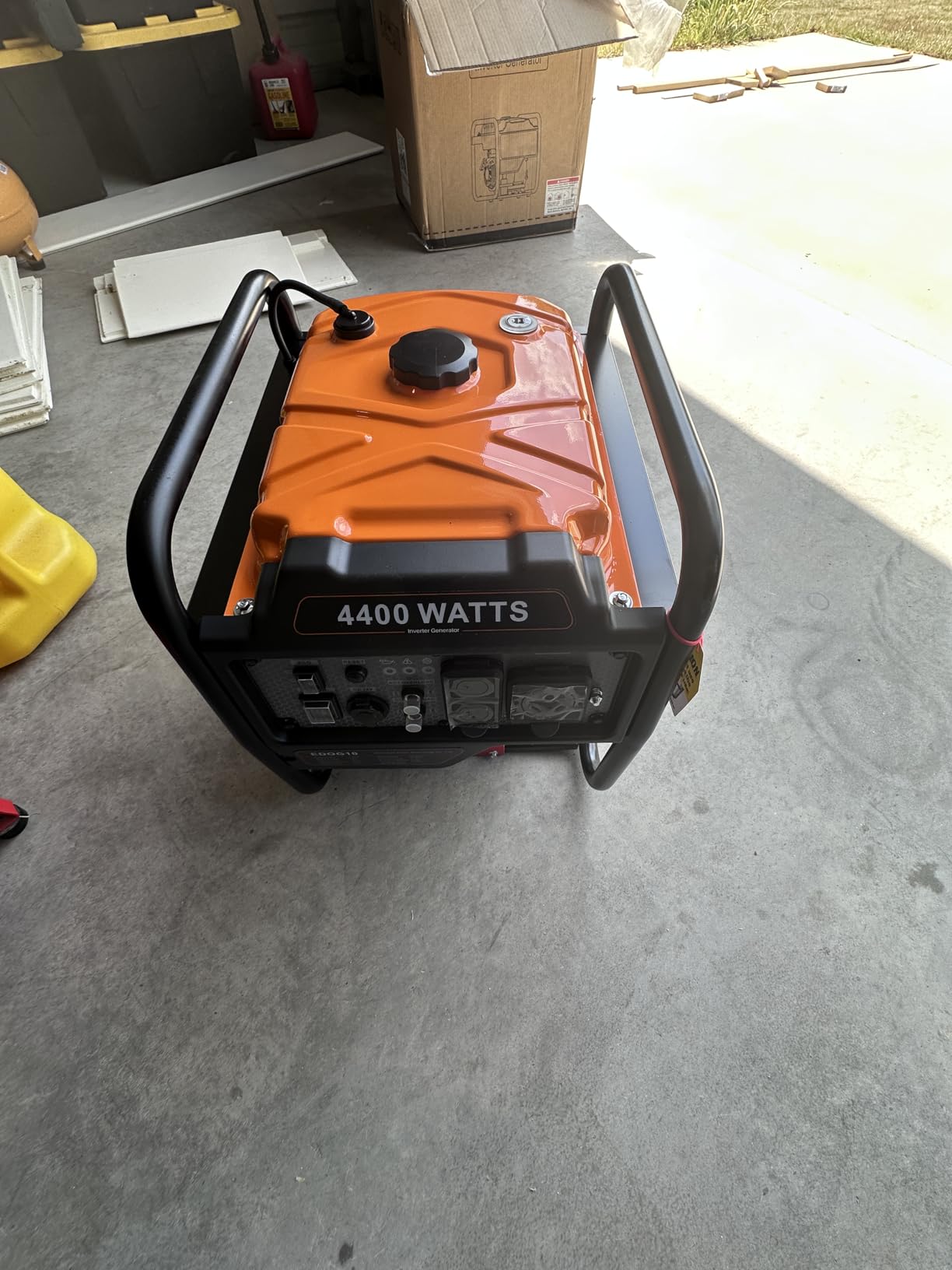
The cost of that output is noise. The listed figure is under 72 dBA at 23 feet, which is fine in a backyard or on a job site and marginal for a campsite at night. ECO mode helps on light loads, but an open frame has no acoustic enclosure doing the work, so the sound is more mechanical than the closed-frame units here.
The warranty is one year, the shortest on the list, and no CO sensor is listed among the safety features, which are cold start technology, low-oil shutdown and overload protection. For a unit you may only run twice a year, that shorter coverage window is the main reason to keep a wrench and a small parts budget in mind.
Does an Open Frame Fit Where You Plan to Run It?
Ask that question before anything else. An open frame is fine in a garage with the door fully open, on a job site, or at the edge of a campsite at midday. In a quiet campsite at 11 pm, or in a neighborhood where a 72 dBA unit will draw complaints, one of the enclosed units is the better neighbour.
Is a One-Year Warranty Acceptable?
It depends entirely on how often the machine runs. As seasonal backup, a one-year warranty is a real risk because you get one chance per year to find a defect. As a tool you exercise regularly, the risk is lower, and the extra output plus 14-hour runtime on a 2-gallon tank is worth the shorter coverage.
4. AIVOLT 1600-Watt Super Quiet Inverter Generator – Best for Camping
AIVOLT 1600W Super Quiet Inverter Generator 28lbs Portable for Camping
1260 running W
28 lb
57 dBA at 23 ft
8 hr at 25 pct
2 outlets
2-yr warranty
Pros
- Lightest model here at 28 pounds
- quiet at 57 dBA measured at 23 feet
- clean sine wave under 3 percent THD
- CO alert auto-shutoff with low-oil and overload protection
- 2-year warranty with lifetime technical support
Cons
- Lowest output in the group at 1260 running watts
- engine oil not included
- parallel kit sold separately
- roughly 12 percent one-star feedback
This is the pack-it-and-go option. At 28 pounds it is the lightest unit we found, and the listed 16.9 by 9.9 by 15.8 inch footprint means it fits where a full-size inverter will not, such as a small RV storage bay or a sedan trunk. For a camper who carries gear a hundred yards from the car, that is the deciding factor.
Noise is the other headline. The listed 57 dBA at 23 feet keeps it in the same territory as a conversation, so it works at a campground without drawing the neighbouring pitch over. Output, though, is the limit: 1260 running watts covers a phone charger, a laptop, a small fan and a string of lights, and not much more.
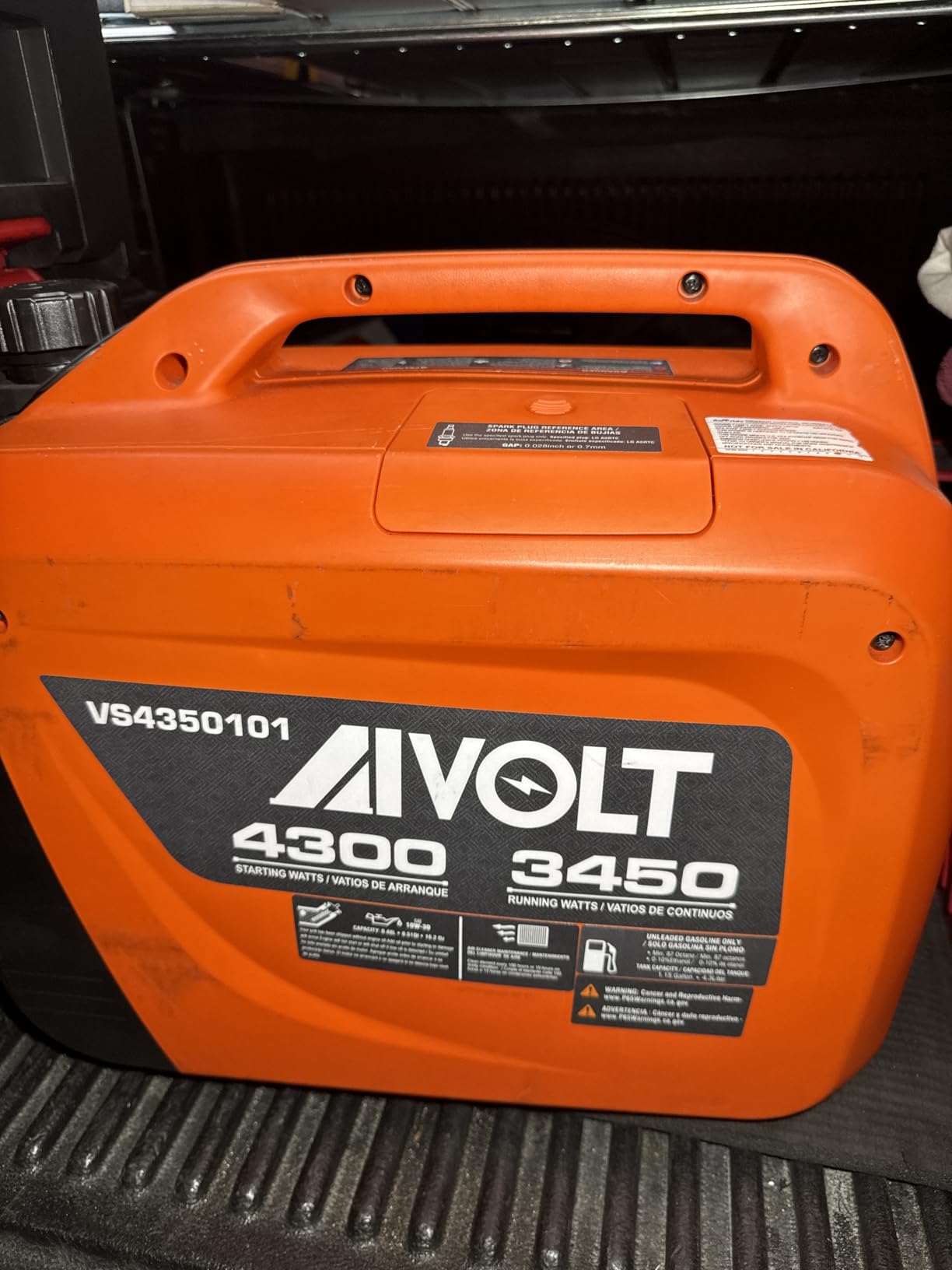
The 60cc four-stroke with copper windings delivers 8 hours at 25 percent load in ECO mode and 2 hours at full output, which is a normal ratio for this engine size. Safety is well covered for the class: CO alert auto-shutdown, low-oil shutdown and overload protection, plus EPA and ANSI/PGMA compliance and a 2-year warranty with lifetime technical support.
Plan for the gaps. Engine oil is not shipped, the parallel kit needed to double output is a separate purchase, and the panel offers only 120V AC plus USB, with no 30-amp or RV twist-lock. Roughly 12 percent of reviews are one-star, mostly units that would not start or would not hold a load, so treat this as a light-duty companion rather than an outage machine.
Can 1260 Running Watts Cover a Camp Weekend?
A weekend of phones, laptops, cameras, a small fan and lights, yes, comfortably. Add a 1000-watt kettle, a microwave or a portable heater and the answer becomes no. The quick test is to list everything you would realistically run at once, sum the running watts, and stay under 1000 to leave headroom for compressor surge.
What Should You Know Before Buying This Tier?
Three things: buy oil on the same trip, keep it off the ground with a folding mat if you camp on dirt, and understand that a 4.1 average rating with about 12 percent one-star feedback is a different risk profile from the 4.5-rated units here. It is the right buy for electronics-light camping and the wrong buy for a refrigerator.
5. WEN 56360i 3600-Watt RV-Ready Inverter Generator – Best for RV Use
WEN 3600-Watt Portable Inverter Generator, RV-Ready, Quiet and Lightweight with Fuel Shut Off (56360i)
2900 running W
3600 starting W
46.3 lb
1.6 gal tank
TT-30R
3-yr warranty
Pros
- 2900 running watts from a 149cc engine under 50 pounds
- true TT-30R RV receptacle alongside two household outlets
- clean inverter power for electronics
- fuel shutoff for carburetor life
- 3-year warranty
Cons
- Shortest listed runtime here at 5 hours
- larger and heavier than the 2350-watt sibling
- CO sensor versions are separate variants
This is the model travel trailer owners gravitate toward, and the reason is the outlet. A TT-30R receptacle is the standard RV connection, so a coach with a 30-amp shore power inlet can plug straight in without an adapter, which is the thing most budget units cannot do at any wattage.
Power is a step up too. The 149cc four-stroke delivers 2900 running and 3600 starting watts while staying under 50 pounds at 46.3, so it is still a one-person lift. That is enough to run a 13,500 BTU-class air conditioner alongside a refrigerator and a television, or a microwave instead of the AC if your coach is smaller.
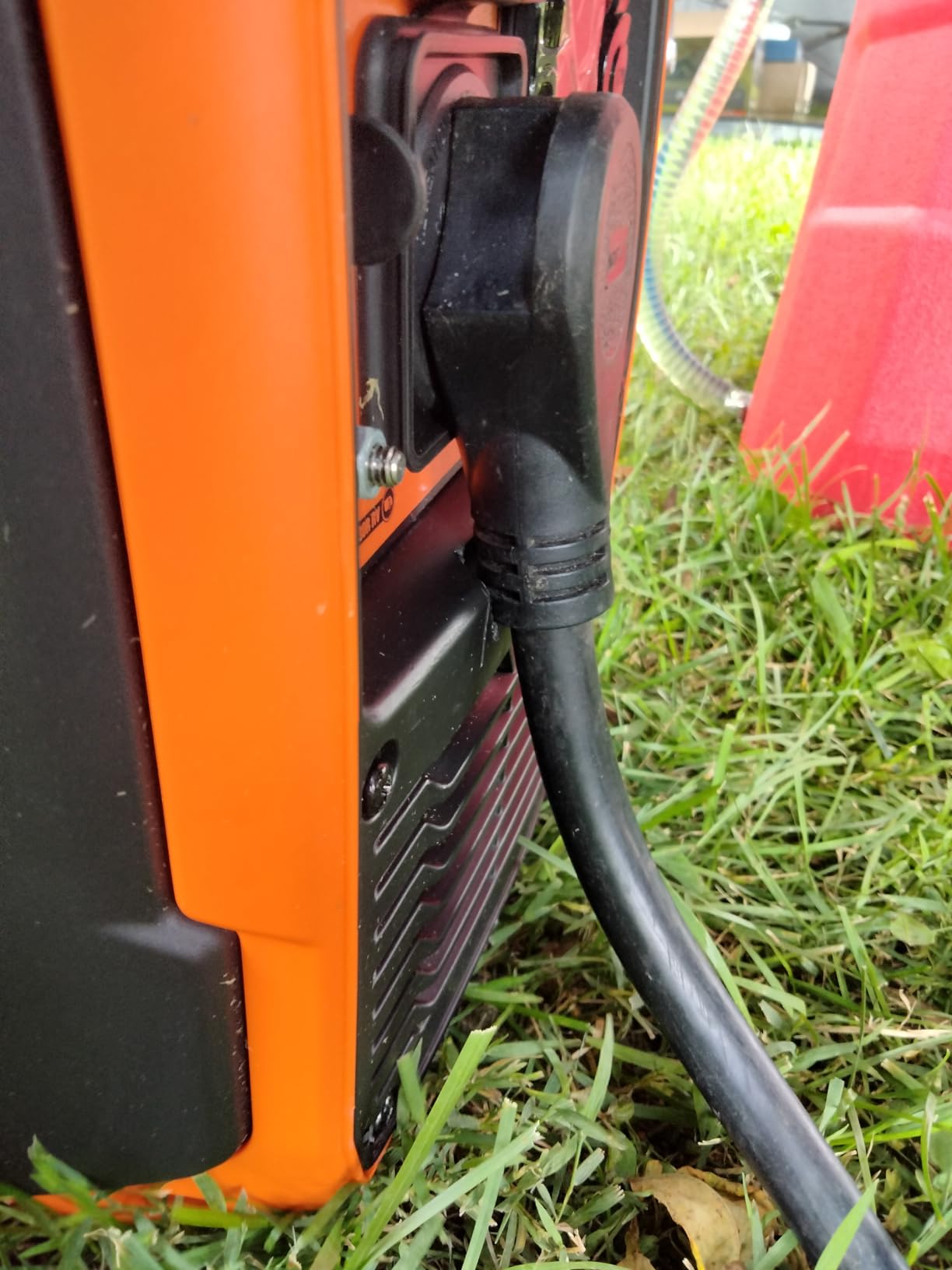
Clean inverter output protects the electronics in an RV, which is usually the more sensitive environment than a house: onboard converters, a control board, a smart TV and a phone charger all share the same circuit. The fuel shutoff valve carries the same carburetor-life benefit as the smaller WEN, and the 3-year warranty is the second-longest coverage here.
The tank is the compromise. At 1.6 gallons and a listed 5 hours, you are managing fuel more actively than with a 2-gallon unit, and a campground run of two full days means refilling in the morning and evening. Also note that CO-sensor protection is sold on separate variants of this model, so confirm which one you are actually buying.

Do You Actually Need the TT-30R Outlet?
If your RV has a 30-amp shore power inlet, yes, and this is the cleanest fit in the roundup. If you are powering a small camping trailer, a tent, or a van with only household receptacles, you are paying for a connector you will not use, and the 56235i covers the same use for less weight and less money.
How Do You Live With a Five-Hour Tank?
By planning refills around a daily cycle rather than a weekly one. Five hours covers an evening of air conditioning, lighting and a full evening of use, which suits a weekend at a campground with a predictable refill point. It does not suit a week of discretionary use, and it does not suit an outage where you cannot reach a fuel source.
6. ERAYAK 2400-Watt Portable Inverter Generator – Best for Low-Distortion Power
ERAYAK 2400W Portable Inverter Generator for Home Use, Super Quiet Small Generator for Camping Outdoor Emergency Power Backup, Gas Powered Engine, EPA, ECO Mode
1800 running W
0.2-1.2 pct THD
52.5 dB at 7 m
42 lb
3-yr warranty
Pros
- Quietest listed figure at 52.5 dB measured at 7 meters
- THD of 0.2 to 1.2 percent is among the lowest here
- 42 pounds and compact enough for a sedan trunk
- 2 AC outlets plus 2 USB and a DC output
- 3-year warranty with lifetime support
Cons
- No 110V circuit breaker protection
- no authorized service centers and slow email-only support
- no parts list in the manual
- engine oil not included
Power quality is this model’s argument. Total harmonic distortion between 0.2 and 1.2 percent is the lowest published range in this roundup, and if you are running audio equipment, a small medical device, or anything with a sensitive power supply, that margin over a typical 3 percent inverter is worth something real.
Owners report running coffee makers, microwaves, an air conditioner, a television and even a well pump off this unit, and eco-mode runtime is listed at about 16 hours at 25 percent load. At 42 pounds and 18.8 by 11.7 by 18.1 inches, it is a genuinely car-portable size rather than a shop-only one.

The concern is support, not output. Reviewers consistently raise three points: no 110V circuit breaker on the outlets, no authorized service centers, and email-only technical support with slow parts fulfillment. If something goes wrong, you are more likely to replace the unit than repair it, and that changes how you should think about the 3-year warranty.
There is also a documentation gap. The manual references features that do not exist and lacks a parts diagram, and the unit is not rated above 1,000 meters of altitude without a high-altitude jet kit. About 14 percent of reviews are one-star, concentrated in the support and reliability column rather than the power column.
How Much Does Total Harmonic Distortion Matter Here?
For a laptop charger, a phone, or a modern TV, a 3 percent inverter is already fine and the difference will not be visible. It matters for audio gear, medical equipment, a variable-speed drive, or anything with a power supply that hums. In those cases, lower distortion is not a spec-sheet nicety, it is the reason to pick this over an otherwise similar unit.
Is the Support Situation a Dealbreaker?
It rules this model out if your generator is a primary backup you depend on, because a machine with no service network and no breaker is a poor thing to discover a fault in. It is acceptable if the unit is a weekend companion, you test it monthly, and you accept replacing rather than repairing. Buy the oil on the same order, since it is not included.
7. Pulsar PGD40ISCO 4000-Watt Inverter Generator – Best for Air Conditioners
Pulsar PGD40ISCO Ultra Light Quiet 4000W Portable Gas Inverter Generator, white
3200 running W
4000 starting W
rated to 13500 BTU
59 dB
47.3 lb
3-yr warranty
Pros
- 4000 peak and 3200 rated watts from a 145cc engine
- rated to run air conditioners up to 13500 BTU
- 59 dB operation
- parallel ready to double output with a matching unit
- 3-year warranty
Cons
- 1 gallon tank limits runtime to about 4 hours at half load
- 3 outlets is a lean panel
- listing gives limited detail on outlet types
This is the pick when the load is an air conditioner. Pulsar rates it for air conditioning units up to 13,500 BTU, which is a specific claim worth taking seriously: it means 3200 running watts and 4000 starting watts with enough surge headroom to get a compressor spinning before anything else joins the circuit.
The 145cc four-stroke puts that power in a 47.3-pound aluminum-and-steel body at 59 dB, which is quiet enough for a tailgate or a site where conversation continues. It is also parallel ready, so two of these double the output for a weekend or an outage, which is the practical substitute for buying a larger single unit.
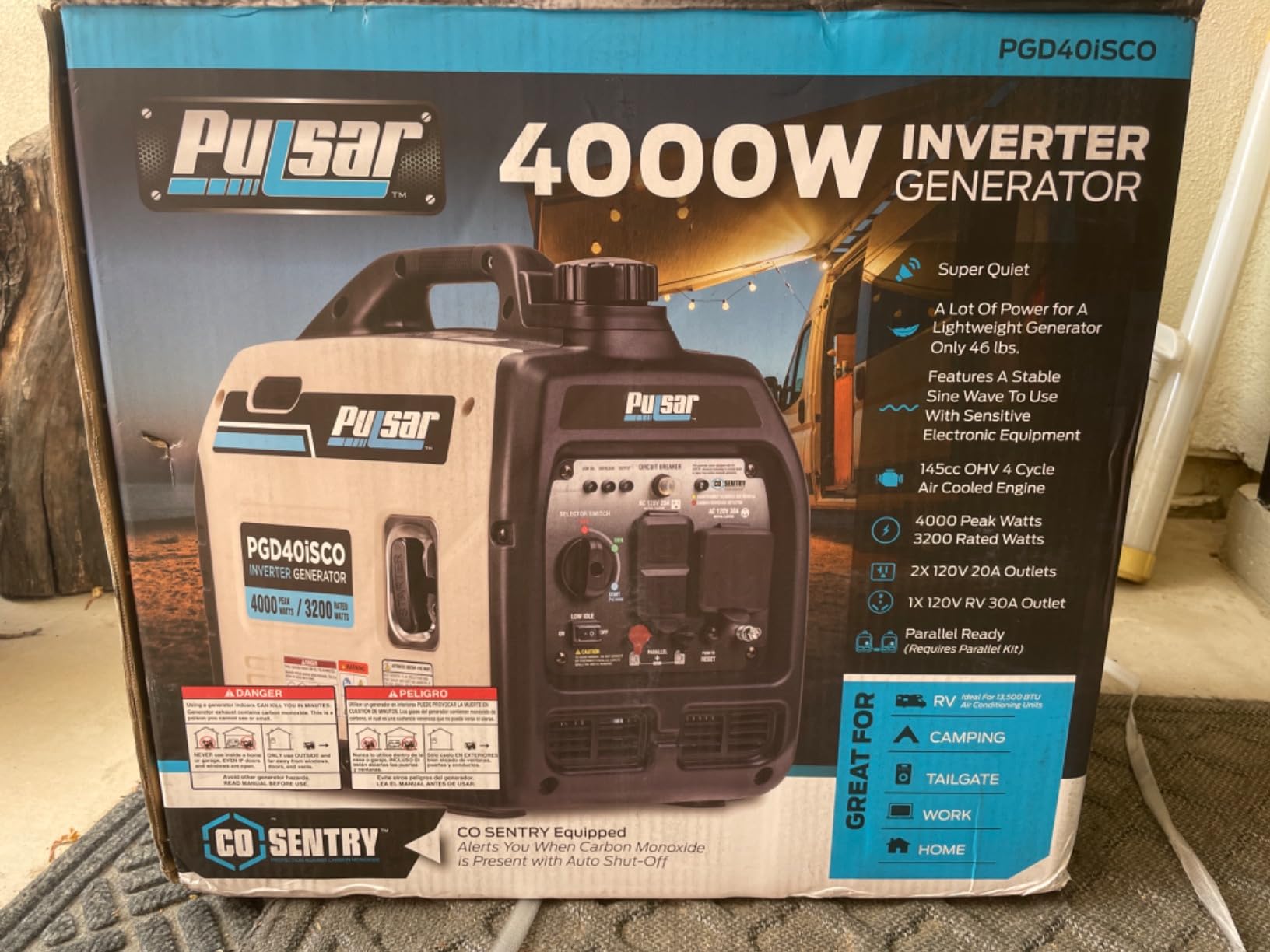
The 1-gallon tank is the real limit. Runtime is about 4 hours at half load, which works for a trip or an afternoon of air conditioning but means you are carrying fuel or refilling regularly during a long outage. Nobody mentions it because people are buying it for a compressor, not for a marathon.
Three outlets is a lean panel by comparison, and the listing does not spell out the types clearly, so confirm your RV or tool requirements before buying. The 3-year warranty is among the better ones here, which is a reasonable counterweight to the small tank.
Can It Run a 13,500 BTU Air Conditioner?
That is the manufacturer’s rating, and it is the reason to buy this unit. Pair the AC with a refrigerator and a few lights, start the compressor before the rest, and 3200 running watts handles it. Move to a whole-house central unit, a 3-ton or larger window unit, or an electric space heater and the math stops working inside this price tier.
What Do You Give Up for Those Watts?
Runtime and outlet flexibility. Four hours at half load from a 1-gallon tank is the shortest useful endurance here, and three outlets means an extension cord or a power strip if you are running more than two devices. If your load is moderate, the WEN 56360i gives you more outlets and a bigger tank for a similar outlay.
8. Oxseryn 2800-Watt Portable Inverter Generator – Best for One-Hand Carrying
Oxseryn 2800-Watts Portable Inverter Generator, Gas Generators for Home Use, Camping, Super Quiet Emergency Home Backup, with Fuel Shut Off, 1.1Gal Fuel Tank, 39Lbs, EPA Compliant
2000 running W
2800 starting W
40 lb
1.1 gal tank
9 hr
1-yr warranty
Pros
- 2000 running watts from a compact 79.8cc four-stroke
- quiet at under 58 dBA measured 23 feet away
- clean output under 3 percent THD
- 40 pounds with a built-in carry handle
- up to 9 hours at 25 percent load with a fuel indicator
Cons
- 1-year manufacturer warranty
- high-altitude kit required above 4000 feet and not included
- no 30A or RV twist-lock outlet despite the wattage
- small tank limits full-load runtime
This is the middle of the roundup: 2000 running watts, 40 pounds, a built-in handle and under 58 dBA at 23 feet. It is the pick for someone who wants more headroom than the smallest units without taking on a 50-pound machine, and the port mix including USB-A and a Type-C port means phones and laptops charge without a brick.
The 79.8cc four-stroke carries a 1.1-gallon tank with a fuel indicator and a listed 9 hours at 25 percent load, plus ECO mode and a parallel function for doubling output with a matching unit. At 40 pounds it moves easily between a trunk and a campsite, which is the practical difference from a fixed-installation unit.

Clean output under 3 percent THD is fine for laptops, phones, drones and cameras, and it can charge a power station. If you run sensitive audio or medical gear, step up to the ERAYAK’s lower distortion range rather than assuming all inverter output is identical.
The warranty is one year, and a high-altitude kit is required above 4,000 feet but not included, which matters for anyone in a mountain market. The absence of a 30-amp or RV twist-lock outlet is odd for a 2800-watt class, and it rules this out for a 30-amp RV hookup.
Who Is This 2800-Watt Unit Actually For?
Apartment and condo dwellers, tailgaters, and van or small-trailer owners who need a mid-size load without a second person to help lift it. It handles a refrigerator, lights, a router, a television and a coffee maker. It is not the unit for a 30-amp RV connection or for anyone above 4,000 feet without buying the high-altitude kit separately.
Is the USB-C Port Worth Choosing It?
It is a tiebreaker, not a reason. The Type-C port saves an adapter, which matters when you are already carrying a phone and a laptop, but the deciding specs here are 2000 running watts, 40 pounds, a fuel gauge and a 9-hour eco-mode figure. If those work for your load, the port mix is a pleasant extra rather than the headline.
How to Size a Sub-500 Inverter Generator
Ignore peak wattage. It is the marketing number, it exists for the first two seconds after a compressor starts, and a machine advertised at 4400 peak may deliver 3400 running. Running watts are what determine whether your load fits, and surge matters only for sequencing.
Start with the nameplate on each appliance. Watts equals volts times amps, and most household circuits are 120 volts, so a device drawing 4 amps consumes 480 watts. Add up the running watts of everything you want on simultaneously, then check that total against the running watts of the unit.
Then add starting headroom. A refrigerator compressor, a well pump, a freezer and an air conditioner each draw roughly three to four times their running wattage for a brief moment. The practical rule is to leave at least 50 percent of your running wattage free, and to start compressor appliances one at a time with a delay between them.
A refrigerator alone typically needs 100 to 400 running watts and a surge that can reach three times that. A window air conditioner in the 12,000 to 13,500 BTU range is the real test: it can draw around 1,200 watts running with a much higher surge, which is exactly why the Pulsar 4000W and the Oxseryn 4400W open frame exist.
For a 30-amp RV, the outlet type decides the purchase. A TT-30R receptacle plugs into a standard 30-amp shore power inlet, while an L5-30R is the common twist-lock found on travel trailers and portable generators used at campsites. Match the connector before you match the wattage.
If you need more output than one unit offers, look for parallel-ready models and buy a matched second unit plus the manufacturer’s parallel cable. Two identical parallel-capable units roughly double your available watts, and several models in this roundup, including the WEN 56235i, the Oxseryn 2800W and the Pulsar, support that path. Use the same model and the same rating on both sides.
Once the numbers work, the inverter generators for camping guide covers placement, extension cord gauge and the campsite-specific noise rules that a spec sheet will not tell you.
What You Give Up Under the 500-Dollar Cap
The compromises in this tier are consistent enough to name in advance. Fuel tanks run from 0.95 to 2 gallons, which is a 4 to 10 hour range depending on load, and outages rarely end on a schedule. Outlet panels hold between 2 and 6 connections, so expect to bring your own power strip or extension cords.
Running watts top out at 3400 in this list and bottom out at 1260. That ceiling is the reason central air, electric heat, well pumps and simultaneous appliances stay out of reach, and no amount of clever load sequencing changes it. If your list of essentials exceeds 3000 running watts, you need a larger unit than this cap allows.
Warranty length is the quieter cost. Coverage here runs from one to three years, and two models carry only a one-year manufacturer warranty while the ERAYAK carries a 3-year warranty without an authorized service network. Longer coverage with no parts channel is not always better coverage, so read the terms rather than counting years.
Outlets and safety features are where budget shows. One model in this roundup lists no CO sensor, and CO-sensor protection is sometimes sold only as a separate variant of the same model. When a spec sheet is silent, assume the feature is not there and buy a standalone CO alarm as a backup layer.
Runtime Math: Gasoline Tank Versus a 20-Pound Propane Tank
Runtime figures assume 25 percent load unless stated otherwise, and half-load is the more honest planning number. A 1-gallon tank on a unit rated at 10 hours of light-duty use delivers closer to 6 hours when you are actually running a refrigerator and a fan, so plan for the shorter figure.
Propane changes the arithmetic rather than just extending it. A 20-pound cylinder holds about 4.7 gallons of fuel and stores indefinitely, and a unit set up for propane can run far longer on it than its gasoline tank allows. That is the argument for the dual-fuel PowerSmart over any gasoline-only pick if you expect a multi-day outage.
Keep two spare gasoline cans, add fuel stabilizer for storage, and run the carburetor dry at the end of every session. The fuel shutoff valve on the WEN models does this automatically, which is why we rate it highly for a unit that sits between uses.
Which Sub-500 Inverter Generator Is Most Reliable?
Reliability at this price is best judged by warranty length, parts access and reported failure patterns rather than by brand name. The two WEN models and the Pulsar carry 3-year limited warranties, the PowerSmart and AIVOLT carry 2 years, and the two Oxseryn models carry one year, which on a machine you might start twice a year is a narrow window to find a defect.
Review themes are consistent across owners. The WEN 56235i draws praise for reliable starting with occasional engine failures reported at a few hundred hours, and its low-oil sensor can trip when the unit is not level. The PowerSmart and Pulsar earn praise for output with a scattering of units that would not stay running. The AIVOLT and ERAYAK carry the highest share of one-star feedback, concentrated in starting reliability and support response.
Parts and service is where the budget tier genuinely divides. Established brands sell replacement carburetors, fuel valves and ignition coils through a normal parts counter, while a couple of the lesser-known names here have no authorized service center and slow email-only support, which in practice means replacement rather than repair.
Whatever you buy, test it. Run it for 30 minutes under a realistic load, check every outlet, confirm the CO sensor trips as described, and do it again in spring. The home backup inverter generator guide covers the full checklist, including grounding and transfer switch basics.
Carbon Monoxide Safety and the 20-Foot Rule
Never run a portable generator indoors, in a garage, in a basement, in a shed, or under a carport with the roof closed. Carbon monoxide is colorless and odorless, and generator-related poisoning causes deaths every year in the United States, including in homes where windows were open.
The rule is simple: operate outdoors at least 20 feet from the building, with exhaust pointing away from doors, windows and vents. Wind direction matters more than distance, and a tailgate or a campsite with a fire pit nearby is a poor location. Opening a door does not make an interior safe.
Prefer a unit with a CO sensor that shuts the engine down, and treat the backup alarm as the second layer rather than the first. Two models in this roundup do not list a CO sensor, and on one WEN model the sensor is only on separate variants, so verify which version you are buying before you rely on automatic shutdown.
Where to Buy and Why Sub-500 Prices Move So Much
Models in this tier are discounted constantly rather than once a year, and the same unit carries different numbers at different retailers. Check the current price at more than one place before buying, and buy the model number you have researched rather than a near-identical listing from an unfamiliar seller.
Big-box retailers and the two dominant marketplaces carry most of the models here, and for a product this size the differences are usually the buyer’s coupon code and shipping speed. For a quieter shortlist organized by use case, our quiet inverter generators for tailgating page ranks the same class by noise at a stated distance.
One practical note: extended-cord and adapter needs often cost more than the price gap between two models. Check that whatever you buy comes with the outlet type your load requires, so you are not adding a part on day one.
Frequently Asked Questions
What is the best and most affordable inverter generator under 500 dollars?
The most affordable usable option in this price range is the AIVOLT 1600W, which weighs 28 pounds and runs 8 hours at 25 percent load for laptops, phones and lights. For more output at a similar spend, the Oxseryn 2800W gives 2000 running watts, a fuel gauge and USB-C charging. Our overall pick is the WEN 56235i for its 39-pound weight, quiet closed frame and 2-year warranty.
Which inverter generator under 500 dollars is most reliable?
Reliability tracks warranty length and parts access more than brand name at this price. The WEN 56235i, WEN 56360i and Pulsar PGD40ISCO carry 3-year limited warranties, while two Oxseryn models carry only one year. Reported failure patterns are mostly starting issues and carburetor-related complaints, so test your unit under load every few months rather than assuming it will start when you need it.
How many watts do I need to run a refrigerator?
A household refrigerator typically draws 100 to 400 running watts, with a starting surge of roughly three to four times that when the compressor kicks in. Budget 500 to 600 watts of headroom for the fridge alone, then add your lights, router and any other appliance that will run at the same time. Start the refrigerator before other compressor appliances, with a delay between them.
Can an inverter generator under 500 dollars run a window air conditioner?
Yes, provided the unit has enough running watts for the compressor surge. A 12,000 to 13,500 BTU window unit typically needs around 1,200 running watts and a much higher starting draw, so units rated at 2,900 to 3,400 running watts, such as the WEN 56360i or Oxseryn 4400W, handle it comfortably while smaller 1,260-watt units do not.
What is the downside of an inverter generator?
The main downsides are power, cost and tank size. Running wattage in this tier ranges from 1,260 to 3,400, so central air, well pumps and electric heat stay out of reach. Fuel tanks are small, commonly 1 gallon or less, which limits light-duty runtime. Outlet panels hold only two to six connections, and warranty coverage ranges from one to three years.
The Best Inverter Generator Under 500 Dollars for 2026
Buy the WEN 56235i if your load is a refrigerator, lights and a router, because its 39-pound weight, quiet closed frame and fuel shutoff make it the one you will actually keep ready. Buy the PowerSmart 3800W dual fuel if you already own a propane cylinder and want multi-day endurance, and the Oxseryn 4400W open frame if you need the most running watts the cap allows and can live with the noise.
That is the whole of the best inverter generators under 500 dollars: real clean power, honest compromises on tank size and outlet count, and a ceiling around 3,400 running watts. For heavier loads, our guide to the best inverter generators across all budgets covers the next step up.