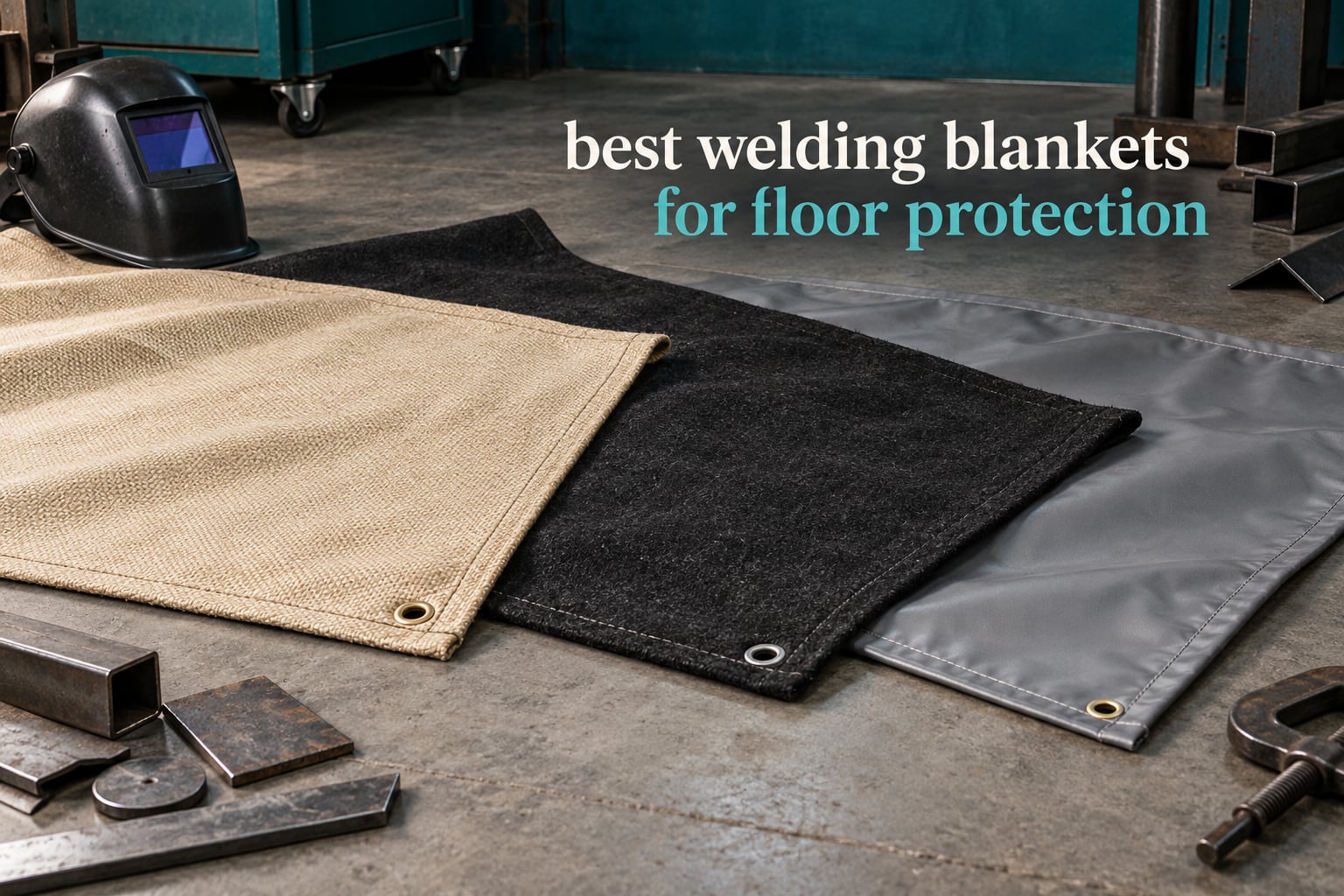
Welding spatter does not care what is under your work. One droplet lands on a sealed concrete floor and sinks into it, one spark reaches a wooden garage floor and you have a fire, and one stray bead on a car’s quarter panel leaves a crater in the paint. Finding the best welding blankets for floor protection is less about marketing and more about matching one thing: how much heat your process throws at the ground.
Our top pick for floor protection is the Deke Home 4×6 fiberglass blanket, a single-layered 0.31 inch sheet with brass grommets spaced every 12 inches and more than a thousand reviews behind it. The material decision rule is simpler than most product pages make it sound. Use heavy plain fiberglass for MIG, stick and flux-core work on a concrete or plywood floor. Use silicone-coated fiberglass when sparks come from cutting or grinding, because the coating stops molten metal from bonding into the weave. Use carbon felt when you kneel on the blanket, work bare-handed over it all day, or need a higher temperature rating than glass cloth gives you.
We spent weeks going through ten blankets that cover the four material families that matter for floors: raw fiberglass, coated fiberglass, carbon felt, and heavier heat-treated cloth. Each entry below is tagged to a floor scenario rather than a barbecue pit, because that is how you will actually use it. If you are outfitting a whole shop, our guides to the best welding tables and best welding carts cover the surrounding setup.
Table of Contents
Top 3 Best Welding Blankets for Floor Protection in 2026

Deke Home Fiberglass 4×6
- Fiberglass
- 0.31 inch thick
- rated to 1000°F
- brass grommets every 12 inch

Gihunk Fiberglass 60×40
- Treated fiberglass rated to 1400°F
- drapes flat or hangs
- budget entry
These three cover the widest range of real shop situations. The Deke Home blanket is the one we keep reaching for when a single layer has to stop ordinary MIG spatter over a standard bay. The Matace carbon felt is the answer when skin contact is part of the job. The Gihunk blanket is the pick when you want a second floor layer for a weekend of fabrication without spending much.
Best Welding Blankets for Floor Protection at a Glance in October
| Product | Specifications | Action |
|---|---|---|
| Deke Home Fiberglass 4×6 Blanket |
|
Check Latest Price |
| Matace Carbon Felt 4×6 Blanket |
|
Check Latest Price |
| Gihunk Fiberglass 60×40 Blanket |
|
Check Latest Price |
 JJ CARE 850 GSM Fiberglass 4×6 JJ CARE 850 GSM Fiberglass 4×6 |
|
Check Latest Price |
 YESWELDER Fiberglass 4×6 2-Pack YESWELDER Fiberglass 4×6 2-Pack |
|
Check Latest Price |
 kanhiro Carbon Felt 20×36 2-Pack kanhiro Carbon Felt 20×36 2-Pack |
|
Check Latest Price |
 FIREWESS Silicone Coated 4×6 2-Pack FIREWESS Silicone Coated 4×6 2-Pack |
|
Check Latest Price |
 FIREWESS Heavy Fiberglass 4×6 2-Pack FIREWESS Heavy Fiberglass 4×6 2-Pack |
|
Check Latest Price |
 FLASLD 850 GSM Fiberglass 48×70 2-Pack FLASLD 850 GSM Fiberglass 48×70 2-Pack |
|
Check Latest Price |
 WINTOOLS 180 oz Fiberglass 4×6 WINTOOLS 180 oz Fiberglass 4×6 |
|
Check Latest Price |
1. Deke Home Fiberglass Welding Blanket 4×6 ft – Best Overall Floor Shield
Deke Home – Fireproof Welding Blanket 4×6 ft, Heavy-Duty Fiberglass Fire Shield for Welding, Heat Resistant 1,000°F, Fire Retardant, Fireproof Insulation Blankets for Home, Kitchen & Industrial Use
Fiberglass
4x6 ft, 0.31 inch thick
Rated to 1,000°F
Brass grommets every 12 inch
Pros
- Tight 30x30 fiberglass weave resists fraying and repeated use
- Rated to 1000°F for welding and fire shielding
- Brass grommets every 12 inch for hanging or floor weighting
- Lightweight 1.2 pound build folds flat for storage
Cons
- Beige surface can shed small fibers after heat or spatter contact
- Single-layered so it gives up sooner than double-thickness cloth
This is the blanket we put down first in almost any bay. The 30×30 weave is tight enough that spatter beads hit the surface and sit there rather than sinking halfway through, and at 0.31 inch it has enough body to stay flat on concrete without bunching under your feet.
With 1,171 reviews at a 4.6 average, it is the most validated blanket in this roundup, and that consistency matters more for floor work than any spec sheet. Users consistently describe it as draping flat, staying where it is put and lasting across months of shop use.
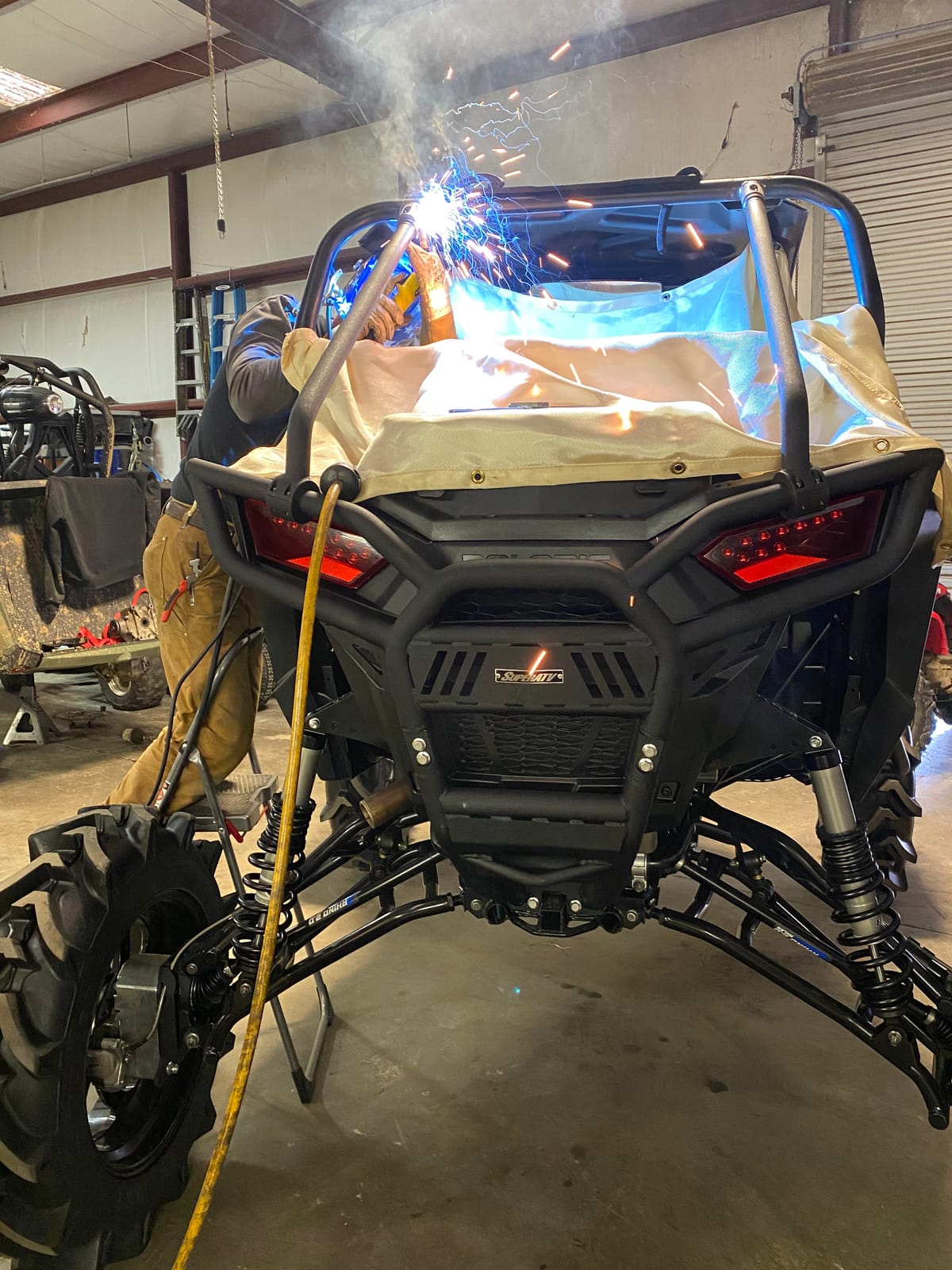
The 1,000°F rating covers MIG, TIG, stick and flux-core spatter without any special handling. That is the range where roughly 90 percent of home and hobby shop welding sits, which makes this the safe default rather than the specialist choice.
Brass grommets spaced every 12 inch give you two useful options. Weight the grommeted edge with a piece of angle iron or a magnet to stop the blanket creeping, or hang it as a vertical spark screen beside the work.
How it holds up to concrete and painted floor
On a sealed concrete floor it does the job well, and the concrete underneath stays clean because droplets cool on the surface rather than embedding. On a painted or sealed garage floor the same physics applies, though we would still put a sheet of plywood or Masonite under it if the welding is above head height or the floor is varnished.
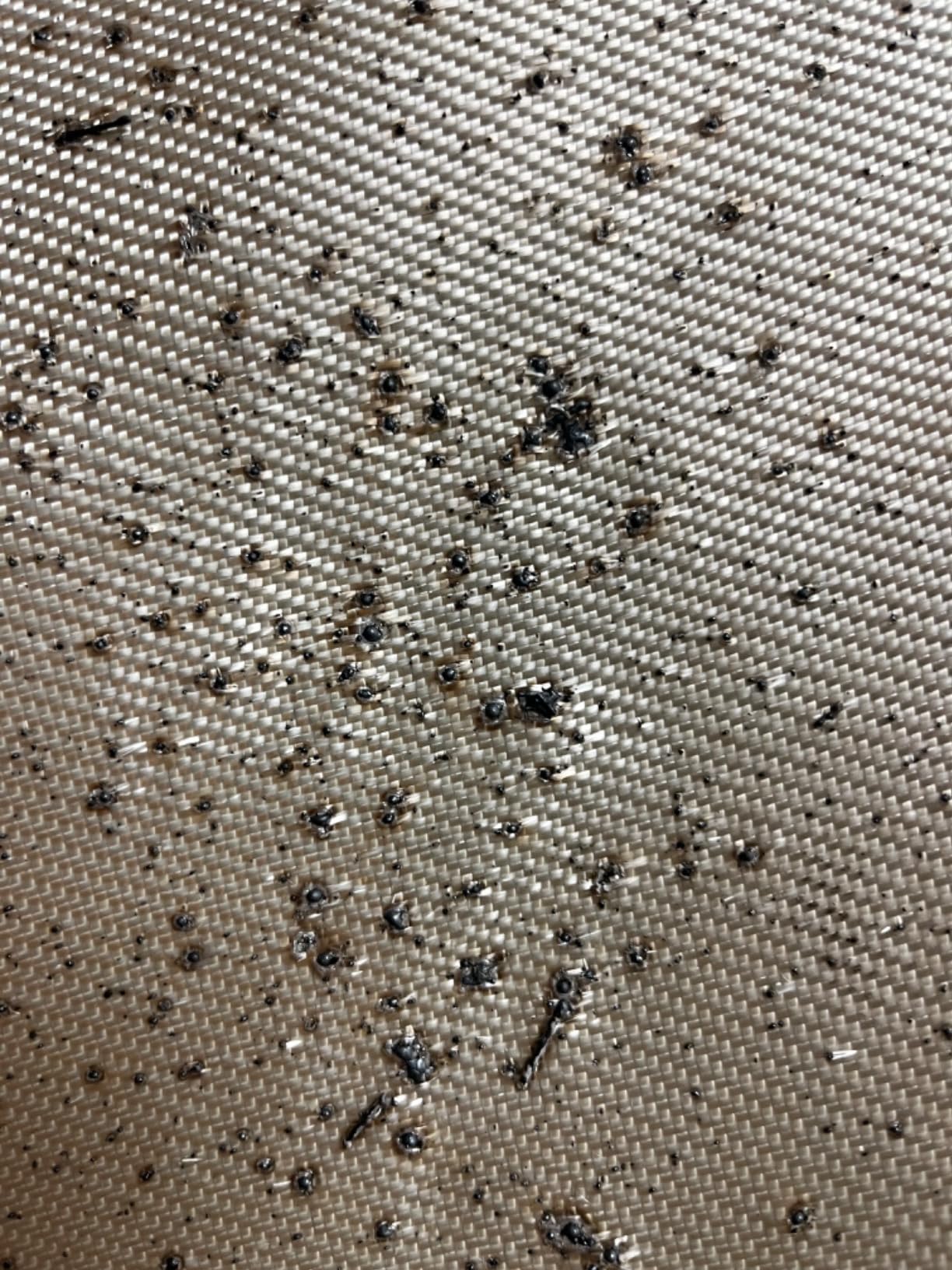
The one real drawback is fiber shedding. After a heavy session the beige surface can release small fragments that transfer to your boots and then to your forearms. Gloves handle it; so does a beat-down with a rubber mat on top.
Where it falls short
Because it is single-layered, sustained heavy spatter from a big job will eventually work through it faster than a double-thickness blanket would. Buyers doing production work tend to replace it yearly, while occasional users get much more out of one.
It is also not the right answer for cutting and grinding. Grinding sparks travel far and stay very hot, and uncoated glass cloth is the first thing on the list to scorch when that is your main hazard.
2. Matace 5mm Carbon Felt Welding Blanket 4×6 ft – Best for Floor Work Without Fiberglass Itch
Welding Blanket Fireproof 4×6 Feet – Matace Carbon Felt Soldering Mat & Pad, 5mm Flame Retardant Fabric, Heat Shield for Brazing, Automotive Repair, Grill & Smoker, HVAC Plumbing, Black
100% carbon felt
4x4 ft, 5mm thick
ASTM D6413 tested
3 pounds
Pros
- Carbon felt does not shed the itchy particles woven glass releases
- Substantial 5mm thickness cuts heat transfer to the floor underneath
- Trims to custom shapes for benches and tight floor layouts
- Tested to ASTM D6413 for flame resistance
Cons
- Heaviest and most expensive option here at 3 pounds per sheet
- No grommets so it must be laid flat or draped
- Soot and carbon staining is hard to clean out of the felt
Carbon felt behaves differently from woven glass cloth, and the difference shows up in how you use it on a floor. Instead of a loose weave that releases fibers, it is a dense non-woven mat that feels closer to a thick piece of leather. Nothing itches your forearms when you kneel on it.
That single property makes it the floor blanket we recommend for anyone who spends full days on the ground, working tack welds on frame rails or floor pans with nothing else under their knees.
The 5mm thickness is roughly three times what a standard glass blanket offers, and you feel that immediately. Heat passes through it far more slowly, so a bench or floor below the work stays cool even after repeated hot passes. At 3 pounds it stays put without weighting, which is unusual for a blanket this size.
Reviewers use it across welding, soldering, brazing, HVAC and plumbing work, and the pattern is consistent: it blocks heat effectively and the surface stays clean to the touch even after exposure. It is cuttable with scissors, so you can trim a corner around a pillar or make a smaller pad for a specific spot.
Why carbon felt suits kneeling work
Because it is a felt and not a weave, it compresses rather than abrading. If your process means lying on the floor for hours, this solves the dermatitis problem that sends people looking for leather or coated alternatives.
It also reads as a safer surface around unfinished vehicle bodies. Spatter lifts off a carbon felt sheet rather than welding itself to the surface, and no exposed glass fibers end up on a paint job you just finished.
Where it falls short
There are no grommets, so it cannot be hung as a curtain without being fitted with hardware yourself. That limits its use for vertical shielding compared with the fiberglass picks further down this list.
Staining is the other limitation. Carbon felt holds soot and grease permanently, so it looks progressively dirtier with use even while it keeps protecting. Plan for it as a consumable you retire on appearance as much as condition.
3. Gihunk Heavy Duty Fiberglass Fire Blanket 60 x 40 inch – Best Value Floor Cover
Gihunk Welding Blanket Heavy Duty Fiberglass Fire Blanket Protect Work Area from Sparks (60 x 40 inches)
Treated fiberglass
60 x 40 inch
0.03 inch thick
Rated to 1,400°F
Pros
- Most reviewed budget fiberglass option in the group at 881 ratings
- Drapes flat over floors or hangs as a vertical spark screen
- Manufacturer rates the treated cloth to 1400°F
- Handy for grinding debris
- hot coals and open flame as well as welding
Cons
- Thin 0.03 inch cloth stops fewer sparks than heavier blankets
- Untreated surface irritates skin during close contact
- Lowest rated of the ten at 4.4 with a 5 percent one-star share
This is the blanket most people end up buying first, and for a single weekend of garage fabrication that is a defensible choice. It has been on the market long enough to accumulate 881 ratings, which is more real-world feedback than most of its competitors attract.
The 1,400°F manufacturer rating sounds impressive, but read it as a material property rather than a performance promise. The cloth itself tolerates that heat; the weave is thin enough that spatter passes through before the temperature argument matters.
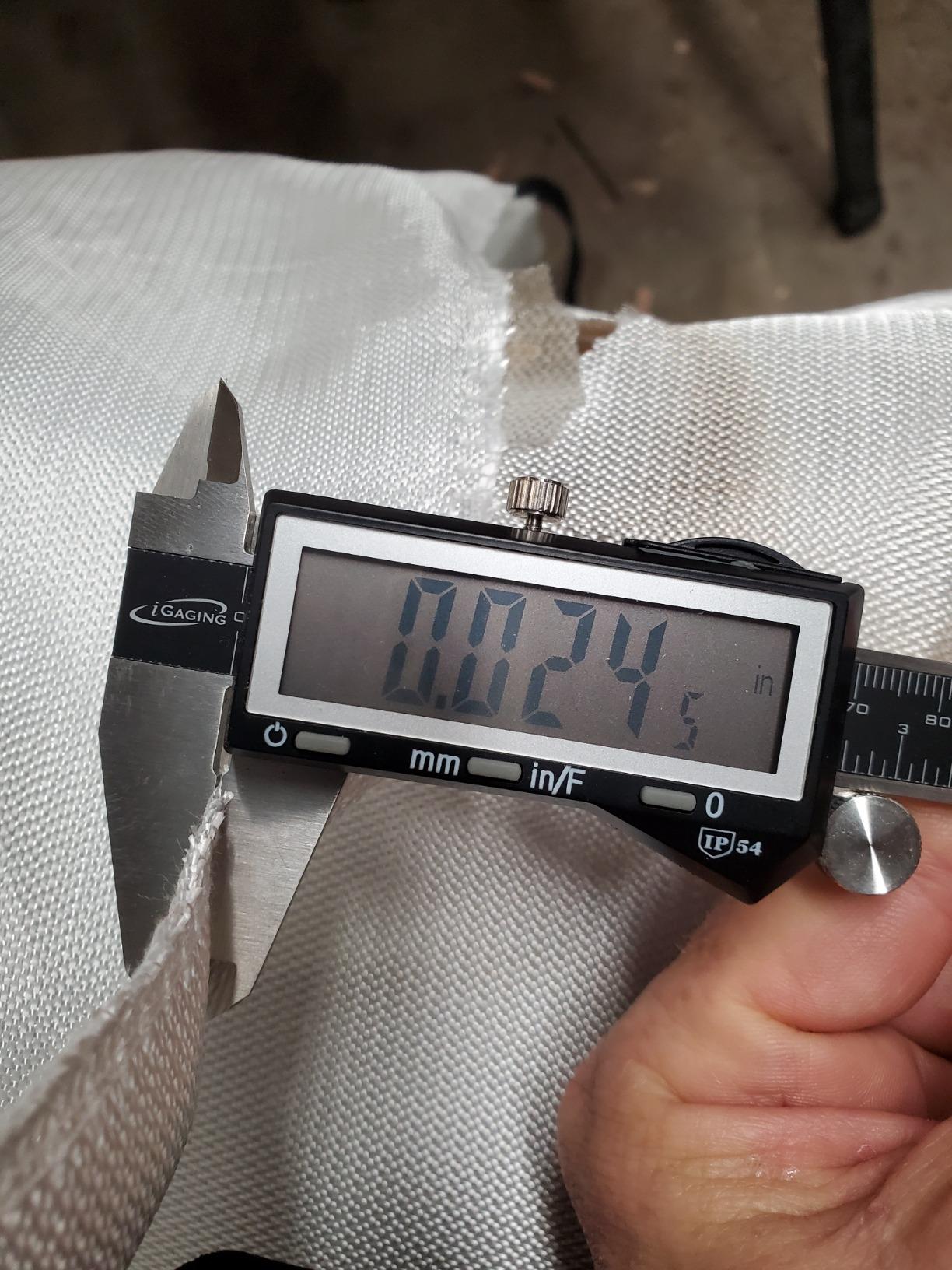
Where it genuinely earns its place is as a second layer. Under a heavier blanket, or on top of plywood, it adds separation and catches the sparks that get past the top layer. Used that way the thinness stops being a weakness and becomes the point.
It is also the easiest of the fiberglass options to drape over a vehicle or piece of equipment, because 1.5 pounds of cloth hangs rather than sags. Buyers use it for driveways, truck beds and shop gear as often as for floors.
Where the thin weave actually matters
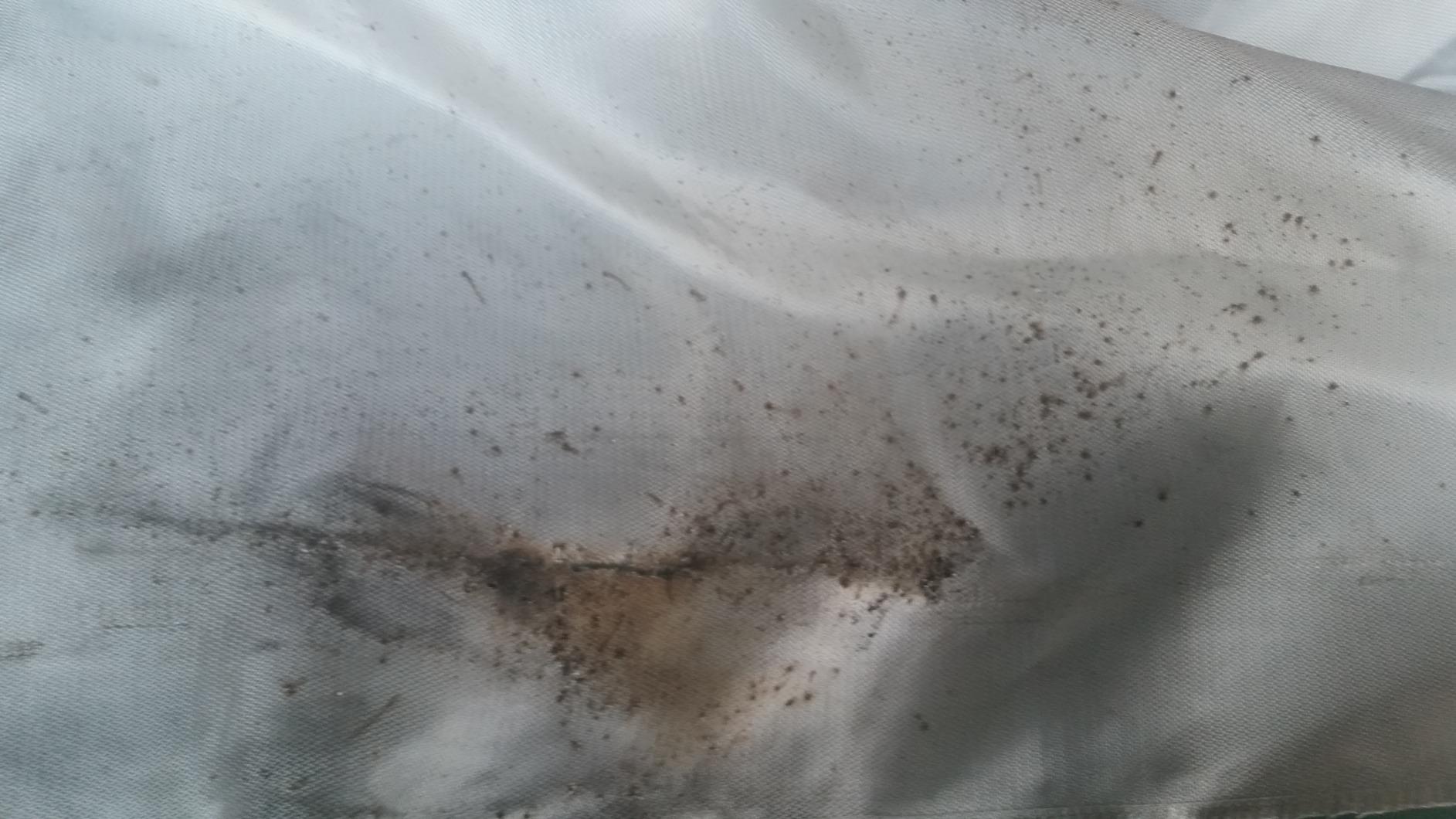
On a bare floor with nothing underneath, 0.03 inch is not enough for hot cutting or grinding. Sparks travel, land, and stay hot long enough to work through a weave this light. If your floor is sealed concrete you will be fine with ordinary welding spatter. If it is wood or painted, put something under it.
The other thing to know is the skin contact. This is untreated glass cloth, so expect fiber transfer if you grab it bare-handed with spatter on the surface. Long sleeves and gloves solve it.
Who should skip it
If you weld every week, buy something thicker and skip the replacement cycle. The recurring complaints in the reviews are thinness and fuzz, both of which get worse with heavy use, and about 5 percent of ratings are one star for exactly those reasons.
It is also a poor vertical curtain on its own. Without a reinforced hem, the edge tears where you tension it, so hanging it long-term means working around a weak point.
4. JJ CARE 850 GSM Fiberglass Welding Blanket 4×6 ft – Best for Hanging Curtains and Equipment Draping
Welding Blanket – 4ft x 6ft, 850GSM Fiberglass Welding Blanket for Smokers with Brass Grommets, Heavy Duty Fireproof Welders Mat for Industrial, Smoker, Grill and Camping
Fiberglass, 850 GSM
4x6 ft
Rated to 1,022°F
Brass grommets, reinforced hem
Pros
- Heavy 850 GSM weave resists tear-through from slag
- Reinforced hem with 1-inch brass grommets holds up when hung
- Shields against sparks
- slag
- embers and radiant heat
- Folds down compactly for transport between jobs
Cons
- 4x6 ft barely covers a full work zone when doubled over equipment
- Fiberglass weave frays and sheds fibers with repeated spatter contact
- Support is email-based and some buyers find it slow
The 850 GSM figure is the useful number here. Fabric weight this high gives the cloth real body, so it hangs straight as a curtain instead of flapping in the draft from an extractor fan, and it drapes over a machine without needing a single anchor point.
Rated to 1,022°F, it sits in the band that covers MIG, TIG, stick and flux-core work, which is the widest share of typical shop process time.
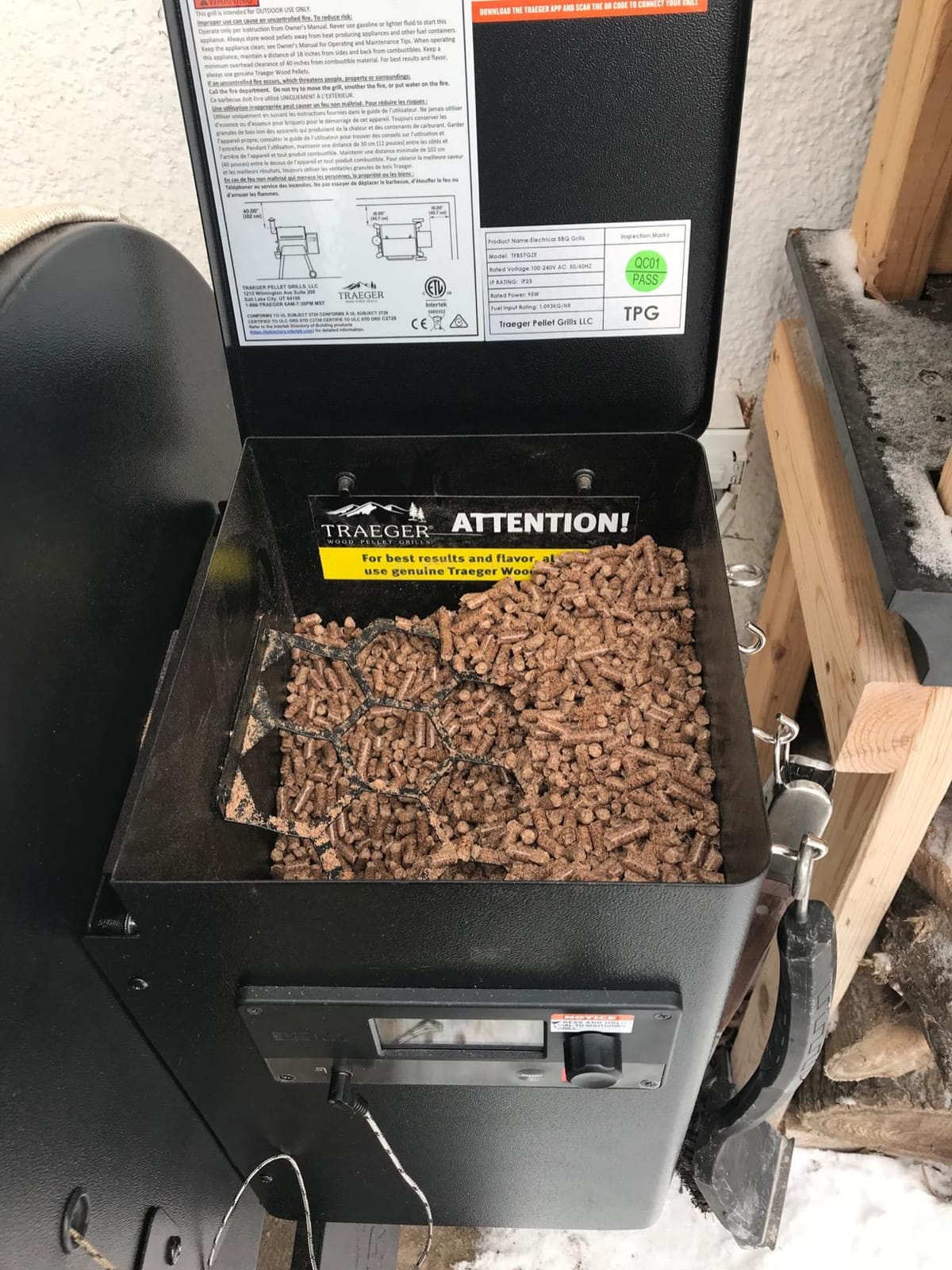
The reinforced hem with 1-inch brass grommets is the detail that separates it from cheaper cloth. Glass grommets tear out and rust; brass survives repeated hanging and take the load of a curtain rail without distorting the edge.
It has been available since 2019, and the 768 reviews reflect long use rather than a first impression. Buyers describe it doubling as cold-weather insulation on a smoker, which tells you the fabric is dense enough to hold heat on one side while staying workable.
Curtain setup versus floor setup
Used as a curtain, this is one of the strongest options in the list. Hang it from a rail, keep the bottom edge 2 to 3 inches off the ground, and it stops sparks travelling toward an adjacent bay or a walkway.
Used as a floor cover, 4×6 ft is a modest footprint. It protects one work zone well. For a full bay you are overlapping two or three, which is exactly what the reinforced hem is built to handle.
Where it falls short
Fraying at the edges is the most common long-term complaint, and it happens where spatter repeatedly contacts the hem. If you work close to one edge, expect to see it thin out sooner than the center.
At 4.09 pounds it is heavy for a hand-carry blanket. It is a shop blanket rather than a portable one, and buyers wanting something that lives in a car trunk should look at the lighter glass cloth instead.
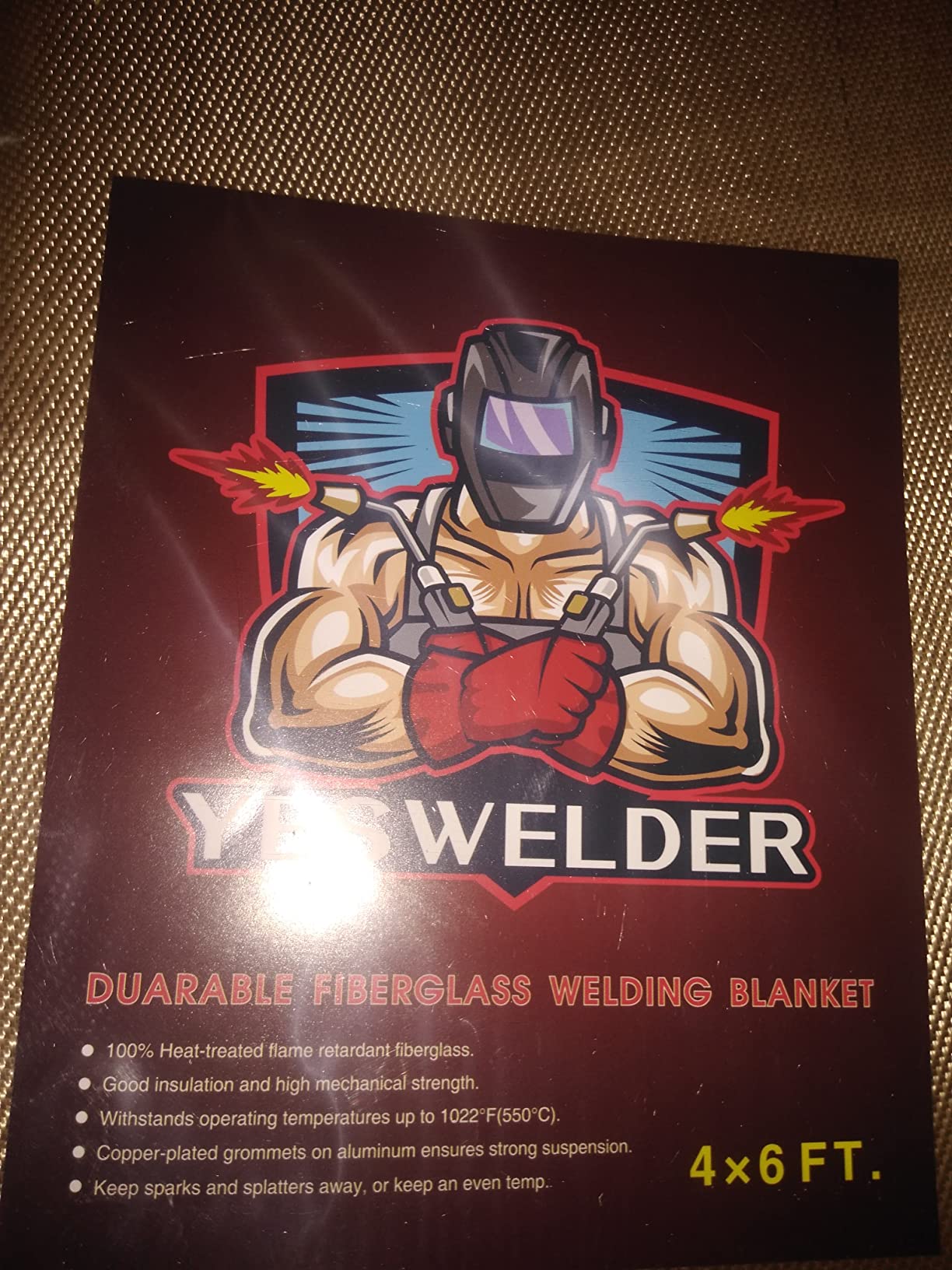
5. YESWELDER Fiberglass Welding Blanket 4×6 ft, 1/3 inch 8mm 2-Pack – Best Thick 4×6 Coverage
YESWELDER Fiberglass Welding Blanket 4 x 6ft Insulation Blanket 1/3″ 8mm
24.7 oz per sq yd fiberglass
4x6 ft, 0.33 inch
2-pack
Rated to 1,022°F
Pros
- Dense 24.7 oz per square yard weave with tight stitching
- Heavy enough to stay flat without being anchored
- Brass grommets every 11 inch make a stable hanging screen
- Two blankets give enough coverage for a full work zone
Cons
- Sheds small fiberglass shards once spatter lands and they itch
- SKU is a 2-pack so single-blanket buyers may be surprised
- One buyer reported the included storage pouch failing
At 0.33 inch, this is the thickest fiberglass cloth in the group, and thickness is the single most useful number for floor protection. Heavier cloth stops sparks; thinner cloth passes heat through while you watch.
The 24.7 oz per square yard fabric weight is high for a blanket sold in this category, and the tight stitching along the seams is what keeps that weight from just sagging into a puddle.
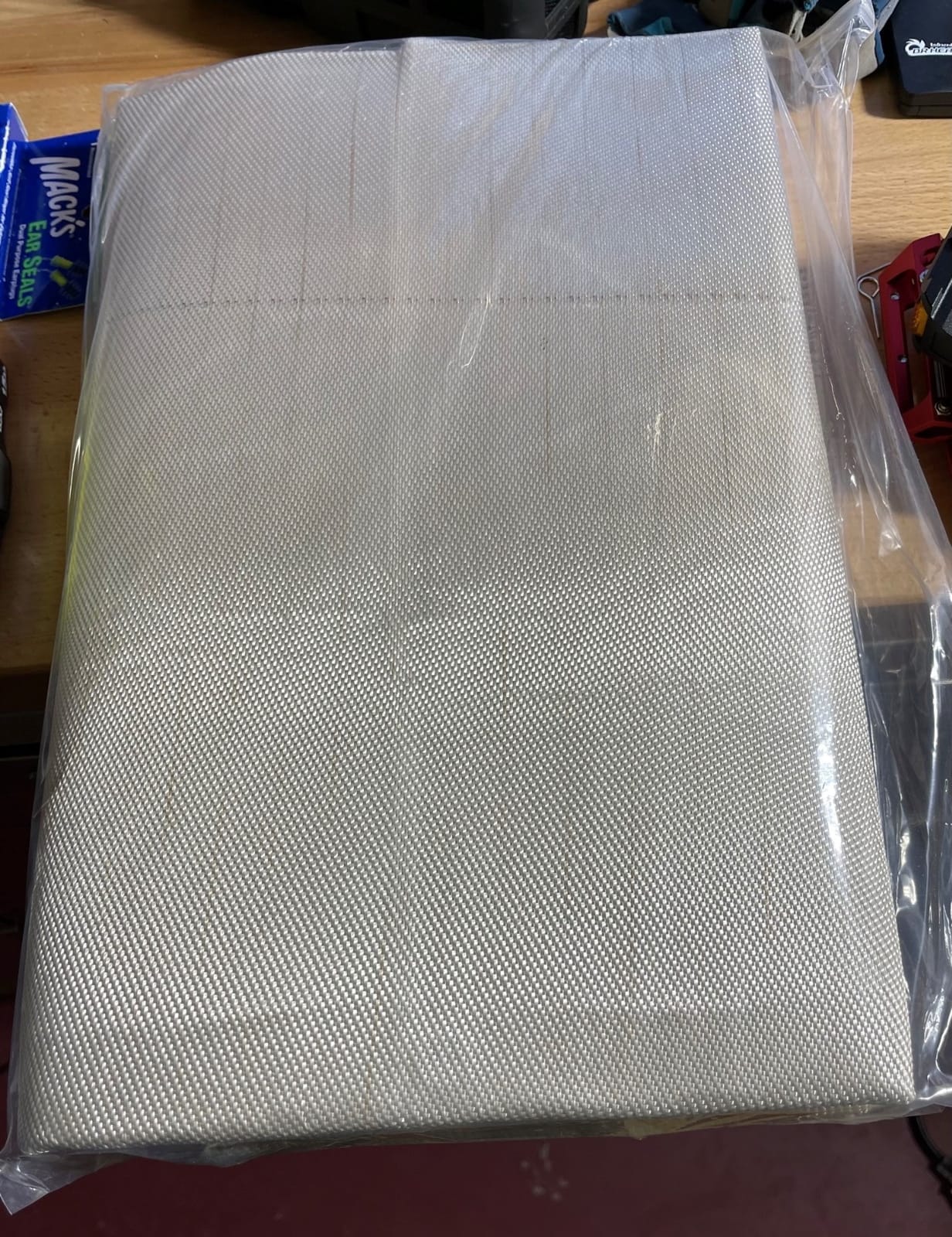
Two 4×6 sheets give 48 square feet of coverage between them, which covers most single-bay floor protection without an overlap. That is the practical reason to buy the pack rather than a single, and it is also the reason the pack is priced the way it is.
Brass grommets appear every 11 inch along the edge, tight enough that a curtain folded from this cloth has no unsupported span. Reviewers use them for welding, grinding, cutting and as a grill or smoker blanket.
Why thickness beats a temperature rating here
A 1,022°F rating tells you what the fabric survives. Thickness tells you how quickly that heat reaches the concrete below. For floor work, the second number decides whether your floor is actually protected.
This blanket is heavy enough to stay where it is laid, which removes the single most common complaint we heard about lighter glass cloth: the blanket creeping mid-job while you are trying to hold a bead.
Where it falls short
Fiberglass splintering is the recurring complaint, and it appears more here because more spatter lands on a heavier weave and burns in. Gloves and long sleeves are not optional with this one.
Check the pack quantity carefully. This specific SKU is a 2-pack, and buyers expecting a single blanket have reported being caught out by that. The included pouch also has an isolated durability complaint, so treat it as a bonus rather than a feature.
6. kanhiro Carbon Felt Welding Blanket 20 x 36 inch 2-Pack – Best Small High-Temp Floor Pad
kanhiro Carbon Felt Welding Blanket Fireproof – 2 Packs 20″ x 36″ Heat Resistant Fabric 1800°F High Temp Insulation Pad, Flame Retardant Protective Mat for Soldering Welding Brazing Plumbing
Carbon felt
20 x 36 inch, 3.5mm thick
2-pack
Rated to 1,800°F
Pros
- Rated to 1800°F
- the highest temperature figure in the group
- Thermal conductivity of 0.13 W per m-K gives strong heat isolation
- Soft and non-irritating so it can be handled without gloves
- Trims easily to fit tight work areas
Cons
- 20 x 36 inch is far smaller than full-size floor protection
- Thinnest carbon felt option here at 3.5mm
- Some experienced welders say it does not feel like true welding blanket cloth
This is not a floor-covering blanket. It is a pad, and it earns its place as the small high-heat zone you drop under a specific hot task: a torch, a heat gun, a brazing joint, or the foot of a piece you are welding on.
At 1,800°F it carries the highest rating of any product here, which makes it the right pad for work that would discolor an ordinary glass blanket.
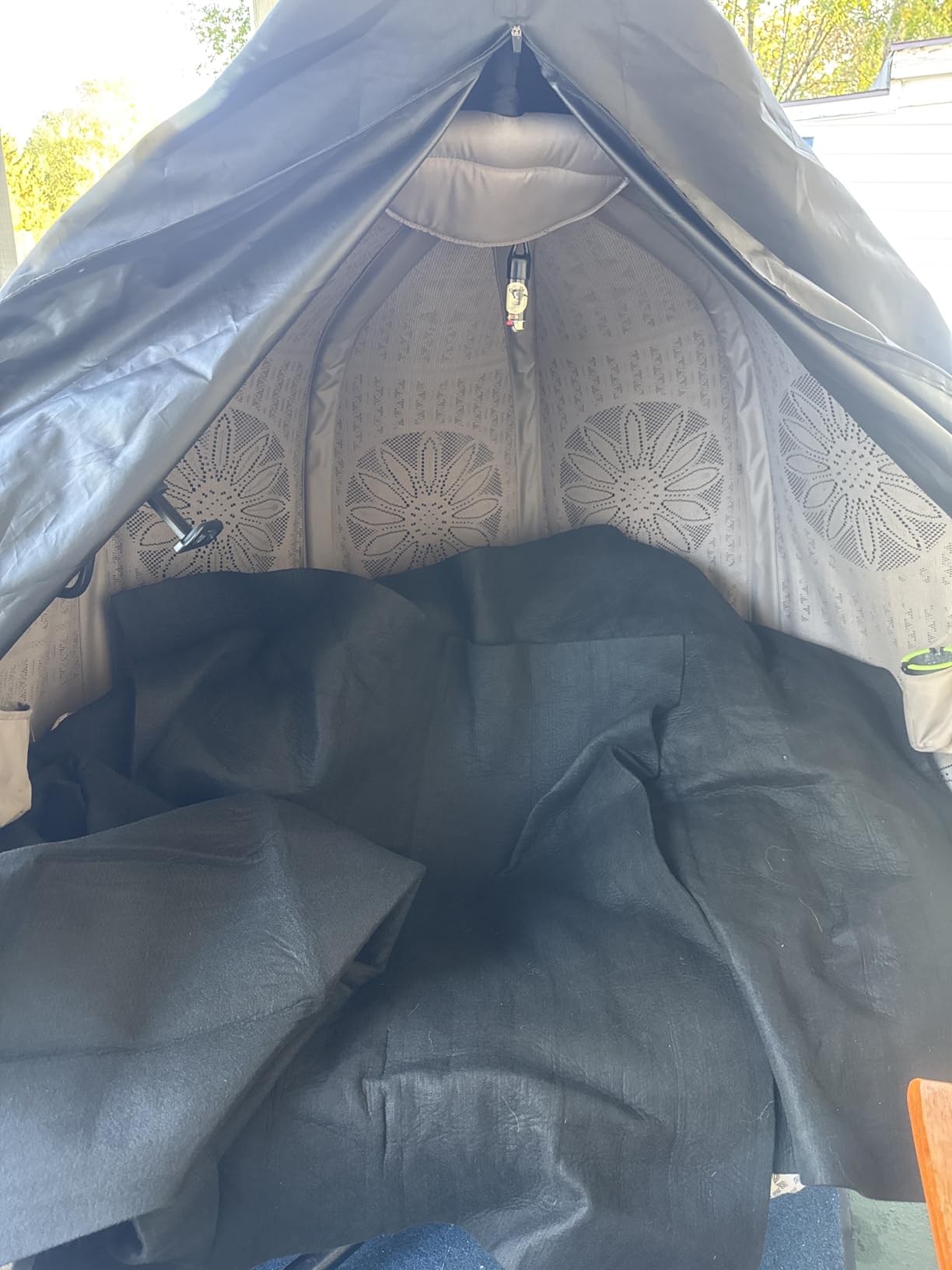
The 0.13 W per m-K thermal conductivity figure is the reason it works. That is low enough to meaningfully interrupt heat flow, so the surface you place your hand near stays workable while the far side takes the load.
Buyers report heat guns, torches and hot exhaust headers leaving no burn-through, and they like that the surface stays soft and clean to the touch. Two pads in the pack means one can be in use while the other handles the next hot part.
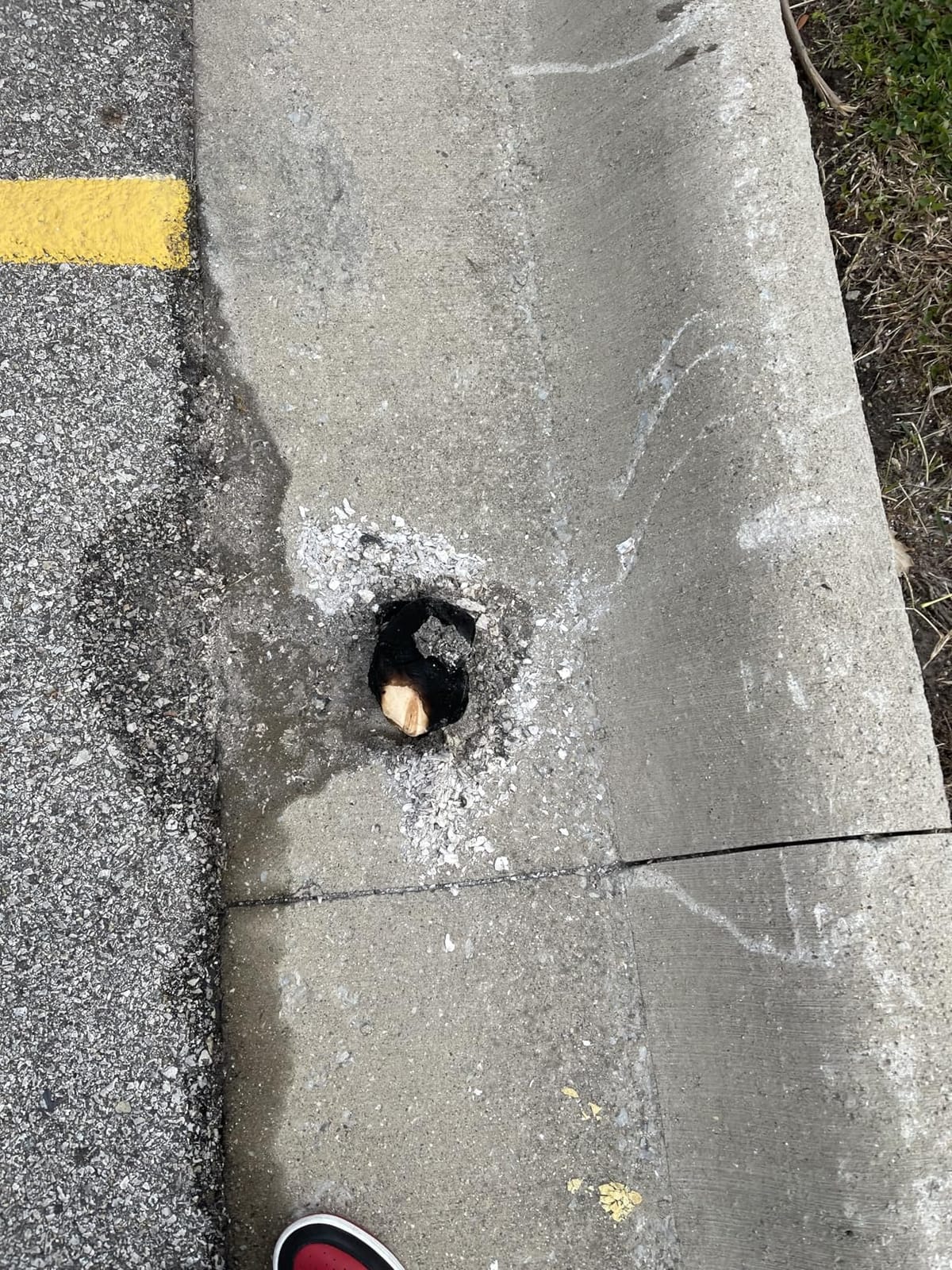
Where a small pad beats a big blanket
On a bench top, a pad is easier to position, cheaper to replace and lighter to carry than a 4×6 sheet. Cut it down to the exact footprint you need and it stops hanging off the edge of the work surface.
Because carbon felt releases no fibers, you can lay it over a painted panel or a finished part without worrying about transferring glass residue onto a surface that matters.
Where it falls short
Size is the honest limitation. 20 x 36 inches will not protect a work zone where someone is stepping, and on a floor where spatter travels more than a couple of feet it simply is not big enough.
A minority of experienced welders also feel the 3.5mm thickness is too soft to count as welding blanket cloth. It works as a heat pad, and we would treat it as one rather than as floor armor.
7. FIREWESS Silicone Coated Fiberglass Welding Blanket 4×6 ft 2-Pack – Best Non-Stick Floor Surface
2 Pack Welding Blanket 4 x 6 FT, Silicone Coated Fiberglass Blankets, Welding Blanket Fireproof, Heavy Duty 1022°F Heat Shield and Spark Protection Mat for Welding, Camping, Grill and Smoker
Silicone coated fiberglass
4x6 ft, 2-pack
Rated to 1,022°F
8 brass grommets
Pros
- Silicone coating removes the itch of exposed fiberglass
- Withstands cut-off wheels and flapper discs where plain glass burned through
- Weight helps it hang as curtains without sagging
- Two 4x6 blankets give wide floor coverage
Cons
- Large spatter can still melt through and leave burn holes
- Most expensive of the fiberglass options listed here
- Grommet spacing is tighter than some buyers want for folding curtains
The silicone coating is the entire argument for this blanket, and it is a strong one. A coated surface does not bond to molten metal, so beads roll off instead of welding themselves into the weave. On a bare floor that difference decides whether you can reuse the blanket next week.
It also handles cutting and grinding better than any plain fiberglass in this list. Professional fabricators using this blanket single out the coating as the reason they switched away from uncoated cloth.
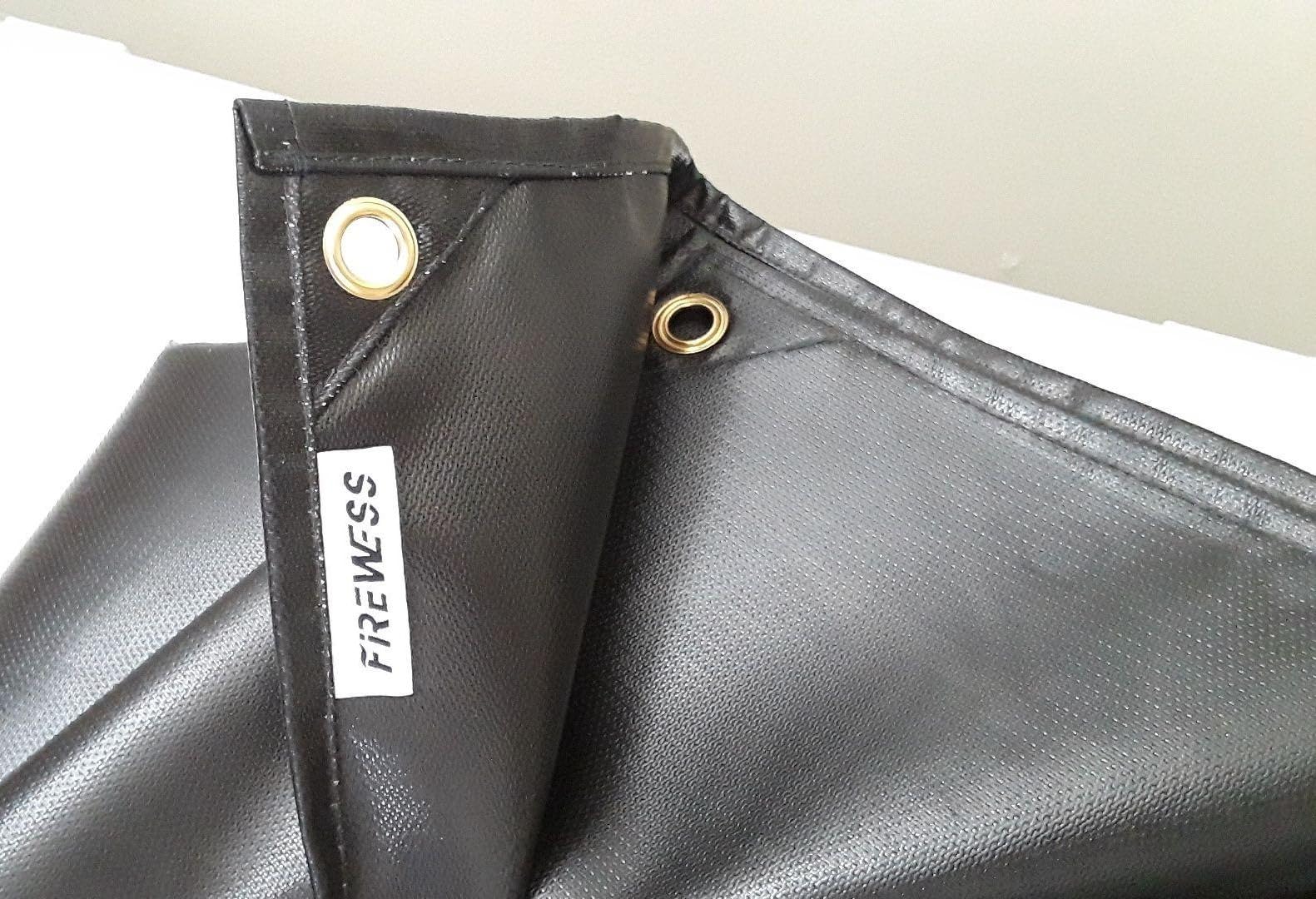
The second benefit is skin safety. Nothing itches, because there are no exposed glass fibers. If you work barefoot-adjacent, kneeling, or handling the blanket constantly, a coated surface removes an entire category of complaint from your shop.
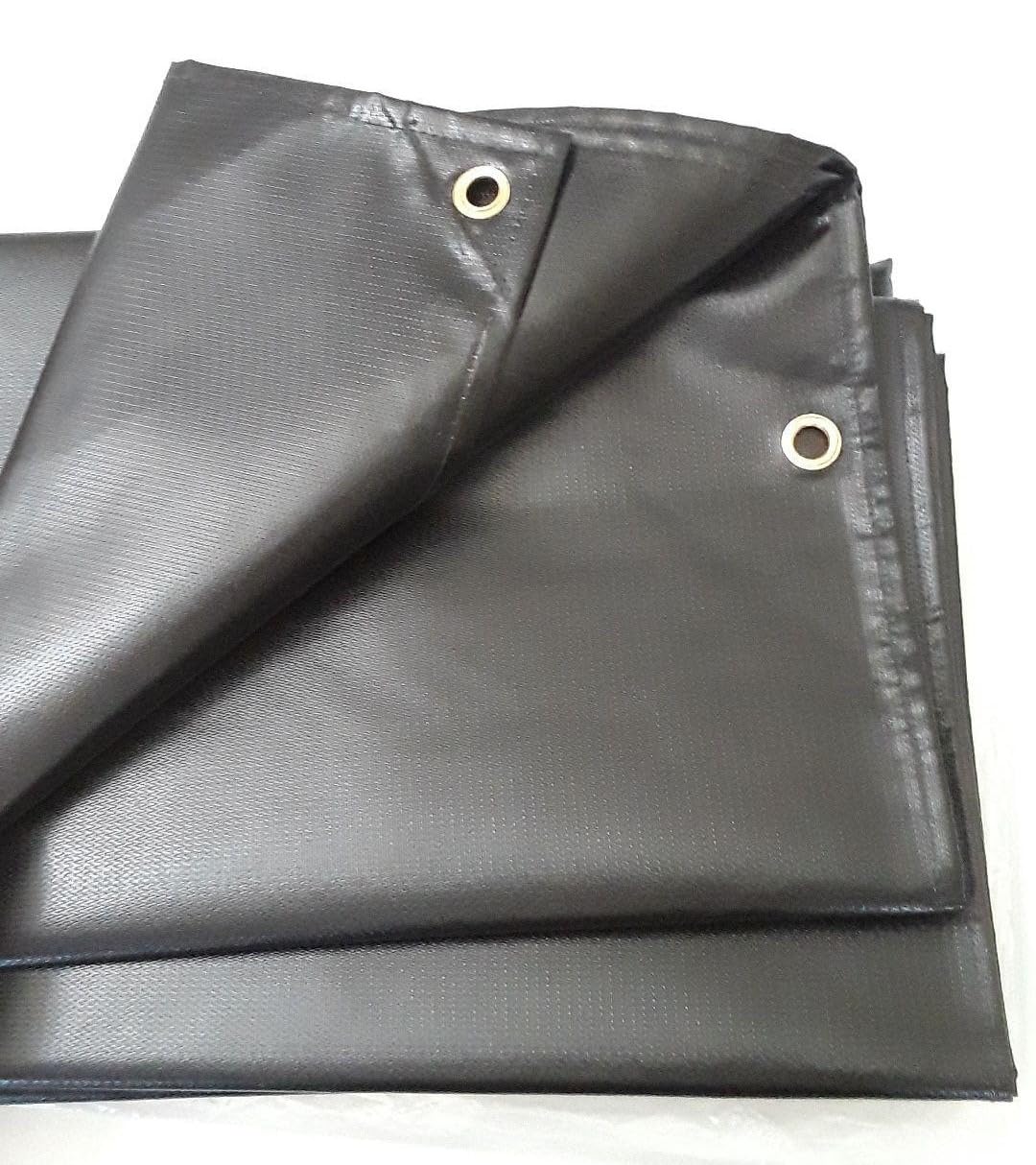
At 6.6 pounds for the pair the blankets have enough weight to hang as curtains without sagging, and eight brass grommets per blanket give you usable attachment points for a rail.
Where coated fabric changes the floor equation
Because molten metal releases instead of embedding, spatter cleanup becomes a matter of knocking the blanket out and brushing it down rather than picking solidified beads out of the weave one at a time. That is the strongest argument for coating on a working floor.
It also survives being dragged across concrete and steel, which uncoated cloth does not. If you are covering equipment as well as floor, the coated surface tolerates the abrasion.
Where it falls short
Coating is not invulnerability. Users doing very heavy spatter work report that large molten pieces eventually burn through and leave holes. Coating delays that outcome; it does not remove it.
It is also the priciest of the fiberglass options here, and a buyer who only ever does occasional mild MIG work is paying for capability they may not use. Tighter grommet spacing is a minor issue, but it matters if you fold the blanket into an accordion curtain.
8. FIREWESS Heavy Duty Fiberglass Welding Blanket 4×6 ft 2-Pack – Best Rated Heavy Floor Protection
Heavy Duty Fiberglass Welding Blanket, Heat Resistant Blanket with Brass Grommets, Multi-Purpose Welding Mat for Grill, Smoker, Camping, Industrial Use (4×6 ft – 2 Pack)
Fiberglass
4x6 ft, 2-pack
8.82 pounds per pack
Brass grommets
Pros
- Highest rated in the roundup at 4.7 with 83 percent five-star feedback
- Reviewers describe it as genuinely heavy rather than just heavy duty
- Tightly bound weave stands up to showering sparks from cutting and TIG work
- Protects coated concrete
- drywall and workshop floors effectively
Cons
- Large molten spatter can burn through and char holes
- Not intended to be welded directly on since ceramic wool is needed for that
- One buyer wanted more grommets and a larger size
This is the blanket owners describe as genuinely heavy, and that weight is why it scores highest in the group at 4.7. At nearly nine pounds for the pair, it lays down and stays down without a magnet, a clamp or a brick.
Weight matters on a floor for a reason beyond convenience. A heavy blanket does not lift and flutter when a door opens or an extractor runs, so it does not expose bare concrete underneath mid-arc.
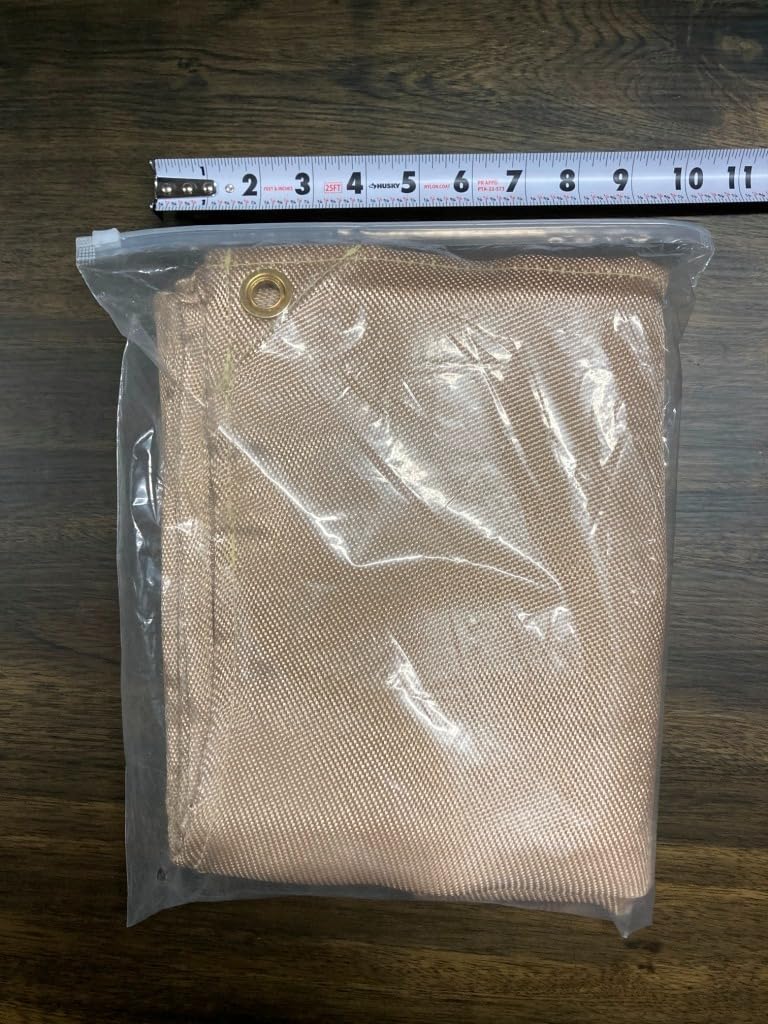
The tightly bound composite weave is what reviewers credit for withstanding showering sparks from chop saws and TIG work. Where a lighter cloth lets hot particles tunnel through, this one stops them at the surface.
Buyers use it specifically for protecting coated concrete, drywall and workshop floors, and report it doing that job well. The same model is listed in 6×8 and 8×12 sizes, which matters if your bay is larger than a single 4×6 footprint.
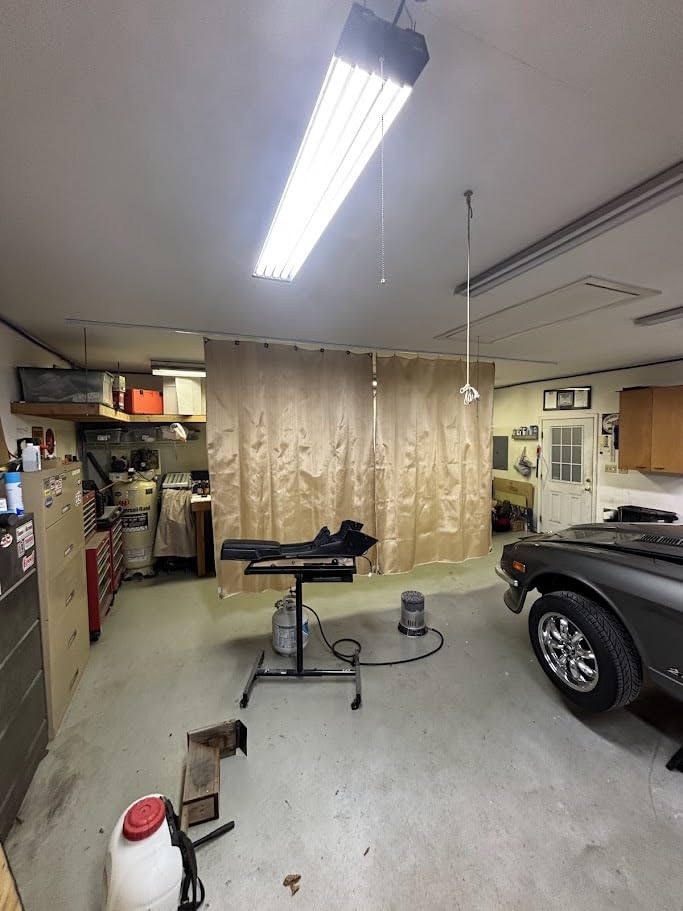
Best coverage per blanket on a concrete floor
Two 4×6 sheets cover 48 square feet, and at this weight you can overlap them without the top sheet creeping. That makes it the simplest answer for a single-bay floor where you want no exposed seam.
Because it holds heat rather than passing it, you can leave it down between jobs. The same sheet protects the floor during welding, then covers the workpiece while you clean up.
Where it falls short
Nothing blocks every molten spatter indefinitely. Users doing heavy work report burn-through and char holes from larger spatter pieces, which is a function of the job rather than a defect.
It is also not a sacrificial pad. One buyer was clear that welding directly on it needs ceramic wool, which is correct and worth stating plainly. It is a floor shield, not a welding surface.
9. FLASLD 850 GSM Fiberglass Fire Retardant Blanket 48 x 70 inch 2-Pack – Best Large Two-Pack Coverage
FLASLD 2Pack Heavy-Duty Fiberglass Fire Retardant Blanket, 48 x 70 inch Welding Fireproof Thermal Resistant Insulation
850 GSM fiberglass
48 x 70 inch, 1mm
2-pack
Rated to 1,472°F
Pros
- 850 GSM weave with Kevlar-stitched edging resists fraying
- Generous 48x70 inch size in a two-pack covers a large floor area
- Highest temperature claim among the fiberglass options at 1472°F
- Also works as a smoker or pellet grill insulation blanket
Cons
- Sheds loose fiberglass fibers onto clothing when folded or opened
- Weave still leaves residue that itches after handling
- Manufacturer advises against cutting the blanket into smaller pieces
This is the coverage play of the group. Two 48×70 inch blankets give you a combined 93 square feet, which covers a full single-car bay floor in one pass with no seams for spatter to find.
The Kevlar-stitched fine edge is a genuinely better construction detail than most competitors offer. Kevlar thread does not melt or weaken near a hot seam, so the edge stays intact after repeated spatter contact where ordinary stitching crumbles.
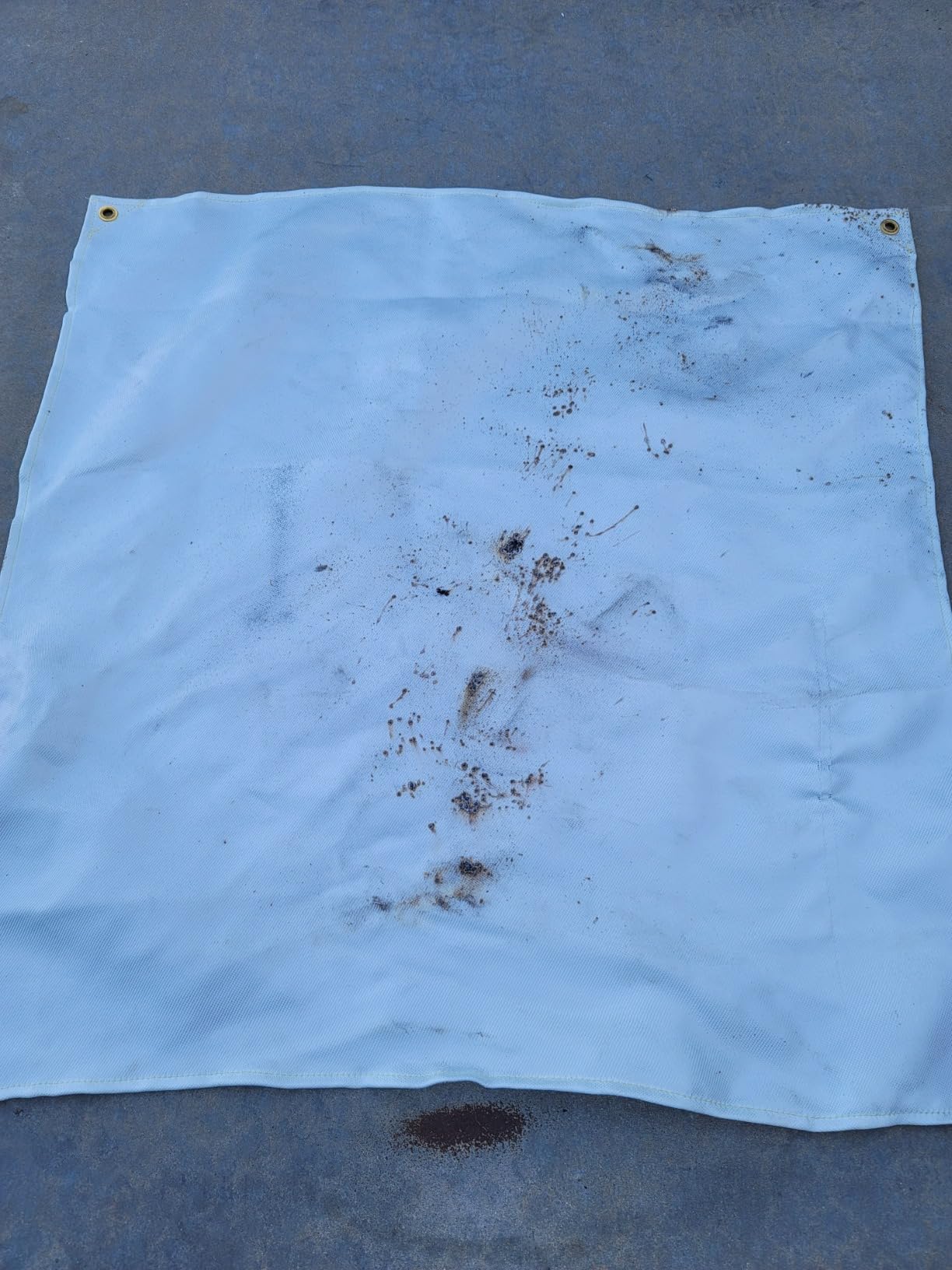
The 1,472°F rating is the highest claimed among the fiberglass options here. As always, read it as a fabric property rather than a promise that a torch will not get through; the 850 GSM weight does the real work.
Users put these to work in more ways than any other blanket in the roundup: welding mats, grill covers, fireproof tarps, canvas curtains and smoker blankets. Several also use them in front of a space heater to stop floor discoloration.
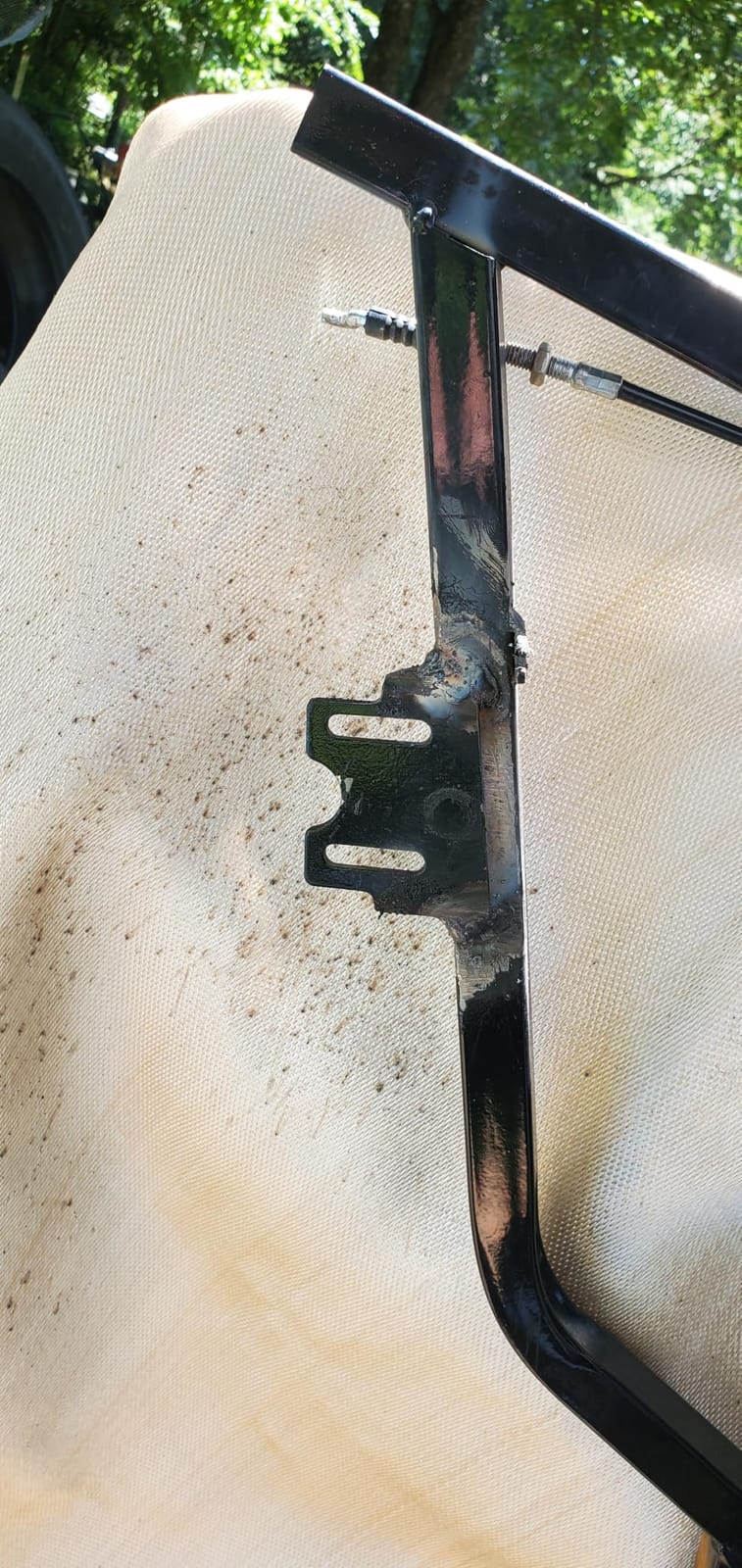
When blanket count matters more than blanket quality
If you are covering a whole bay rather than a work zone, square footage is the deciding factor. Two of these beat four smaller blankets because fewer seams means fewer places for a droplet to travel between layers.
Because it is 1mm rather than several millimetres thick, it drapes flatter than the heavier glass blankets. That makes it a better fit over a car floor pan or a low chassis where you need the profile to follow the panel.
Where it falls short
Fiber shedding is the consistent complaint, and it is worse than on heavier blankets because the fine 1mm weave releases loose strands when you fold or open it. Plan for gloves and long sleeves as standard.
The manufacturer advises against cutting these into smaller pieces, which removes an option other blankets give you. If you need a custom shape, choose a carbon felt pad instead.
10. WINTOOLS 180 oz Heat-Treated Fiberglass Safety Shield 4×6 ft – Best for Driveways and Vehicle Protection
4 Feet x 6 Feet Welding Blanket Fire Flame Retardant Fiberglass Safety Shield Grommets
Heat-treated fiberglass
4x6 ft
180 oz fabric, 0.08 inch
Grommet safety shield
Pros
- Full 4x6 ft coverage at one of the lower entry points in the group
- 180 oz heat-treated fiberglass gives real weight and drape
- Protects driveways
- truck panels and shop gear from sparks and slag
- Grommets let it hang as a vertical safety shield
Cons
- Fiberglass surface leaves residue and skin irritation after contact
- Thin 0.08 inch fabric can melt locally under heavy direct spatter
- Cannot be rolled or knelt on safely without picking up fibers
Heat treatment is what separates this cloth from the cheaper glass fabric in the group. At 180 oz it has the weight and drape to hang properly as a vertical shield, and one buyer reported it melting locally while still saving the surface underneath, which tells you it is doing real protective work.
It is a general-purpose 4×6, which makes it the most versatile option here for anyone covering a driveway, a truck bed or a vehicle panel rather than a fixed shop bay.
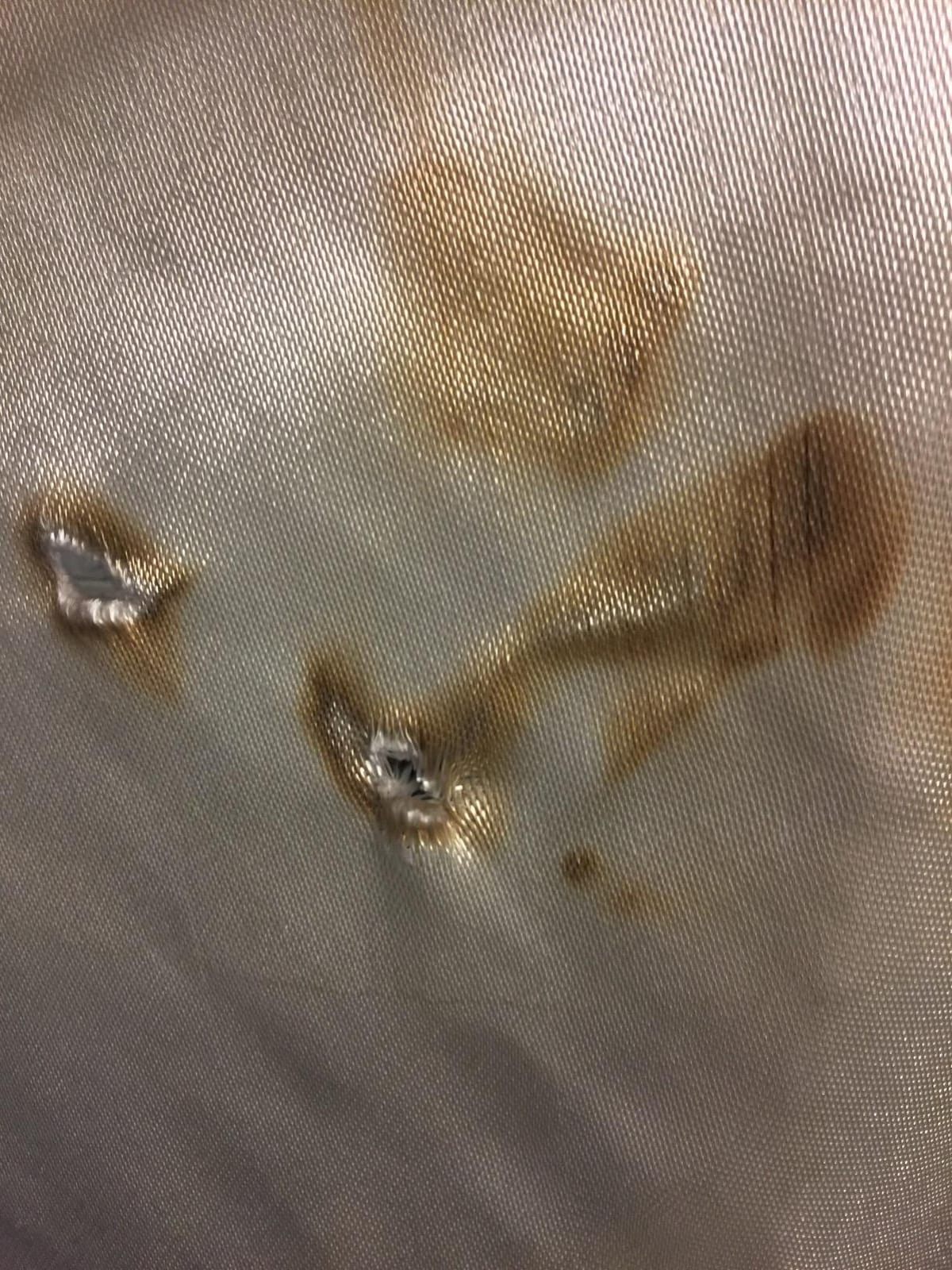
Owners report it reliably shielding driveways, vehicles and equipment. Those are outdoor and mobile surfaces that no fitted shop blanket covers, and this is the one in the roundup that gets mentioned for all three.
It has been listed since 2018, and the 322 ratings at a 4.6 average reflect that maturity. It is a staple rather than a trend, and the 4×6 size is the one most shops settle on.
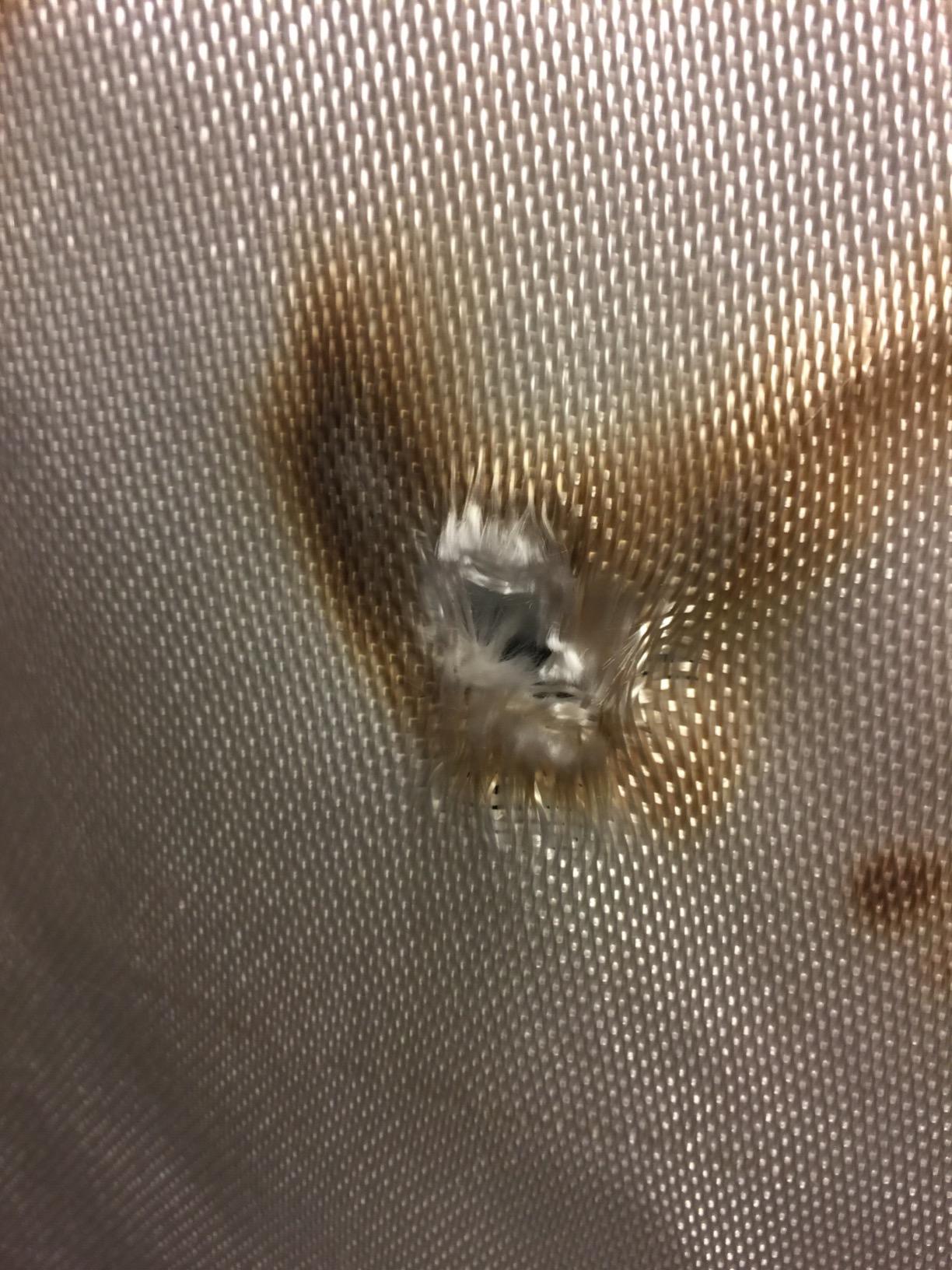
Protecting a car while you work under it
Blanketing a vehicle before welding on or near it is standard practice, and this cloth is sized and weighted for that job. Drape it over the body panels and tuck it under the sill so sparks cannot reach paint from a low angle.
For a floor beneath a car on a drive, the same weight that makes it hang well also keeps it from blowing across concrete as a gust arrives. Where a light blanket gets lifted and leaves a bare patch, this one stays down.
Where it falls short
Reviews are explicit that you should not lie or kneel on it. Fiberglass residue transfers to skin and clothing, and for floor-adjacent work where you are on the ground all day that is a real drawback.
At 0.08 inch it is thin enough to melt locally under concentrated direct spatter, so it protects by catching what lands on it rather than by absorbing sustained high heat. Keep a heavier layer beneath when the work is heavy.
How to Choose a Welding Blanket for Floor Protection
The decision comes down to three questions in order: how much heat does your process throw, do you touch the blanket while you work, and how much floor do you need to cover. Everything else is detail. Get those three right and the choice between the ten blankets above is easy.
Match the material to your process
MIG, TIG and stick welding on a concrete or plywood floor is the easy case. Any of the fiberglass blankets in this list will do the job, and heavier cloth gives you more margin. Flux-core throws heavier spatter than MIG, so move up a weight class.
Plasma cutting is the case most guides blur. It throws far more heat and faster-moving spatter than ordinary welding, and that is the situation where plain fiberglass starts to disappoint. Silicon-coated cloth is the practical answer, with a heavier layer beneath it. Angle grinding produces sparks that travel well past a work zone, which means you also need vertical coverage, not just floor coverage.
Brazing, soldering and HVAC work sit at the mild end. Almost anything works, and this is where a small carbon felt pad beats a full blanket on convenience alone.
What the temperature numbers actually mean
Two kinds of number get quoted and they are not the same thing. A continuous working rating, typically around 1,000°F to 1,022°F for glass cloth, describes the temperature the fabric can hold over time without degrading. A high figure such as 1,472°F or 1,800°F describes the material’s tolerance in a short exposure, not a continuous working condition.
So a 1,800°F number does not make a pad automatically better for floor protection. What decides floor performance is thickness and weight, because heat has to pass through the cloth before it reaches your concrete. A heavy 0.31 inch blanket at 1,000°F protects a floor better than a 3.5mm pad at 1,800°F.
Coatings explained
Silicone coating adds a non-stick surface so molten beads roll off instead of bonding into the weave, and it removes the fiberglass itch. Acrylic coating is cheaper and gives up faster under abrasion. Aluminized coating adds reflective surface protection against radiant heat. Vermiculite impregnation reduces fiber release while keeping the cloth heat-resistant, and it is the option to look at when skin irritation is the main complaint.
Our read is that silicone coating is worth paying for whenever cutting or grinding is part of the job, and mostly unnecessary for clean MIG-only work.
Size and coverage math
Multiply length by width to get the square footage each blanket covers. A 4×6 gives 24 square feet, a 6×8 gives 48, and two 4×6 sheets give the same 48 with one overlap rather than a gap. A single-car bay floor is roughly 200 square feet, so two 6×8 blankets or four 4×6 blankets cover it.
For a single work zone rather than a whole bay, one 4×6 is enough. That is the size most home shops use, and it is why it dominates this category.
How to build a layered welding blanket floor shield
Experienced welders rarely rely on a blanket alone. The technique that shows up repeatedly in shop discussion is to put a rigid layer down first and the blanket on top of it, so the blanket stops sparks and the rigid layer stops heat.
Start with the sub-floor layer. Plywood, cement board, sheet metal offcuts or 4×4 ft Masonite sheets all work, and sheet metal offcuts come up most often when sparks near a vehicle are the concern. Then lay your blanket over the top and overlap seams by several inches.
Weight the edges. Angle iron, a piece of rebar, magnets or a scrap of heavy plate along the hem keeps the blanket from creeping mid-arc. Finally, cover any vertical surface within reach. A blanket on the floor does nothing for sparks travelling sideways, and a car in the same bay needs its own draping.
What FM approval means
FM approval is a certification mark applied to products that have been tested and inspected for a defined performance standard, and it appears on blankets, curtains and other protective equipment used in commercial settings. Shop buyers treat it as a baseline: it tells them the item was evaluated by a third party rather than self-certified by the seller.
Check whether the listing names the standard it was tested against rather than simply claiming fire resistance. Some products in this category do reference a standard, as the Matace carbon felt is described as tested to ASTM D6413. Where a listing gives no standard at all, treat the temperature figure as a material claim rather than a verified rating.
Skin irritation and handling
Raw fiberglass cloth releases small fragments that itch, and repeated contact can leave residue on skin and clothing that persists. Gloves and long sleeves handle the problem. If you cannot avoid kneeling on the surface, choose carbon felt, which is a non-woven material and releases nothing.
A new fiberglass blanket will also smoke and smell on first high-heat use. That is the binder burning off, and it is expected rather than a fault.
When a welding blanket is the wrong choice
Heavy rubber weld mats reduce welder fatigue and survive repeated spatter better than cloth, and they make sense for production work where you stand on the mat all day. Cement board and sheet metal are the answer when you need something that will not burn under any circumstance, such as welding directly over a wooden floor.
Drop cloths are cheaper but offer no heat protection at all. If your concern is protecting paint or a finished surface from sparks, a coated or carbon felt blanket is the tool for the job rather than a plastic sheet.
Cleaning, storage and replacement
Let the blanket cool fully, then knock out solidified spatter and brush it down. Hand wash is the care instruction listed across these products. Do not machine wash fiberglass cloth, and do not use a coated blanket while it is still hot, because heat sets silicone permanently.
Replace when edges fray to the point of losing grommets, when burn-through holes appear, or when the surface is so pitted that spatter no longer releases. If you are pairing this with your protective gear, our best welding helmets and best welding backpacks guides cover the rest of the kit.
Frequently Asked Questions
What is the best welding blanket?
For floor protection, the best welding blanket is a heavy plain fiberglass sheet of at least 0.3 inch thickness with brass grommets, because thickness is what actually stops sparks and heat reaching the floor. Choose silicone-coated fiberglass when cutting or grinding, and carbon felt when you kneel on the blanket or need a skin-safe surface.
What are FM approved welding blankets?
FM approved welding blankets carry a third-party certification mark showing the product was tested and inspected against a defined performance standard. Shop buyers look for it because it distinguishes an independently verified product from one the seller has simply self-certified as fire resistant.
Can a welding blanket be used as a heat shield?
Yes. A welding blanket works as a passive heat shield, intercepting sparks and droplets while its low thermal conductivity slows radiant heat transfer to whatever is behind it. It is effective for radiant and spark exposure, but it is not a substitute for proper PPE or for a face shield when grinding.
What is the difference between a welding blanket and a fire blanket?
A welding blanket is built for sparks, slag and molten spatter from hot work and is typically rated around 1,000u0026deg;F. A fire blanket is a compact emergency item designed to smother a small fire, usually in a kitchen or vehicle. The welding blanket is larger, heavier and far more abrasion resistant.
How do I protect my garage floor when welding?
Put a rigid layer down first, such as plywood, cement board, sheet metal offcuts or Masonite, then lay your welding blanket over the top. Overlap seams by several inches and weight the edges with angle iron or magnets so the blanket cannot creep mid-arc. Cover any vertical surface or vehicle within spark range as well.
What size welding blanket do I need for floor protection?
One 4×6 ft blanket covers 24 square feet, which protects a single work zone. Two 6×8 blankets or four 4×6 blankets cover a roughly 200 square foot single-car bay floor. A two-pack of 4×6 blankets gives 48 square feet, enough for one bay section with an overlap rather than a gap.
Which welding blanket does not itch or irritate skin?
Carbon felt and silicone-coated fiberglass blankets do not itch, because neither releases the loose glass fibers that raw woven fiberglass cloth sheds. Carbon felt is a non-woven material with no exposed fibers at all, making it the better choice if you kneel on the blanket during long jobs.
What can I use instead of a welding blanket to protect the floor?
Rubber weld mats work for heavy spatter and reduce standing fatigue, while cement board or sheet metal are the right answer when you need something that will not burn under any circumstance, such as welding over a wooden floor. Drop cloths cost less but give no heat protection at all.
Final Verdict on the Best Welding Blankets for Floor Protection
For most home and hobby shops, the Deke Home 4×6 fiberglass blanket is the right first buy. It is thick enough to stop ordinary welding spatter, it holds itself flat on concrete, and it has more real-world reviews behind it than anything else in this roundup. Pair it with a sheet of plywood underneath if your floor is wood or painted.
Buy the Matace carbon felt instead if you spend hours kneeling on the floor. Buy the FIREWESS silicone-coated two-pack if you cut or grind as much as you weld, since the coating is what keeps spatter from bonding into the weave. Buy the FIREWESS heavy two-pack when you need a full bay covered without overlaps. Reach for the FLASLD 48×70 pair when square footage matters more than fabric weight, and for high-heat spot work on a bench, the kanhiro carbon felt pad is the one to keep within reach.
Whatever you choose, layer it over something rigid, weight the edges, and cover any vertical surface or vehicle close enough to catch sparks. That habit protects your floor more reliably than any single blanket on the market.