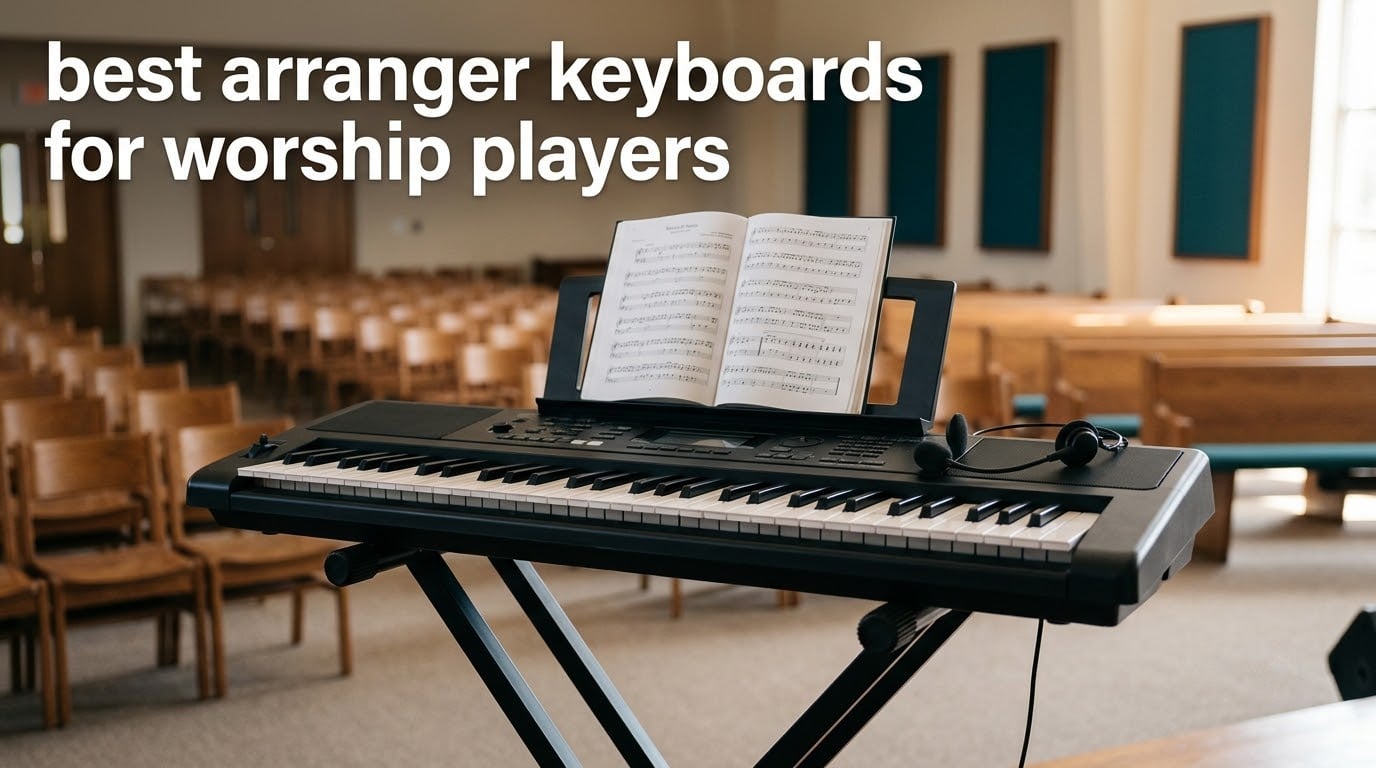
Choosing the best arranger keyboards for worship players comes down to one question: how many parts are you covering alone on Sunday? A worship set usually needs acoustic piano under a verse, organ under the chorus, a swelling string pad behind the room, and drums holding a tempo that does not drift. An arranger keyboard puts all of that under your fingers without a laptop, a sound module, or a second musician.
I have spent the last several years playing these boards in church rooms of every size, from a fellowship hall with a single mixer to a room with a full digital console and a streaming rig. The same pattern shows up every time. The player who struggles is rarely the one with the fewest features. They are the one whose board has too few styles, an organ voice that gets buried in the mix, or a menu that eats fifteen minutes before the service starts.
This roundup covers ten arranger keyboards that worship players actually buy, tested in the situations that matter: a 45-minute setup, a volunteer who has never touched an arranger, a Sunday with no sound engineer, and a phone recording of the chorus. Every rating and review count below is the live figure from the product listing, and every specification comes straight from the manufacturer data. If you want a wider look at the category, our general arranger keyboard guide covers more models, and our home use arranger picks go deeper on practice setups.
Table of Contents
Top 3 Best Arranger Keyboards for Worship Players in 2026
The Yamaha PSR-SX920 takes the top slot because the styles respond to dynamics in a way that lets a solo player sound like a rhythm section instead of a metronome. The Korg Pa1000 is the board I recommend when a church buys gear for a working musician, with a 7-inch touchscreen, 420-plus styles and 33W onboard speakers that handle rehearsal rooms. The Casio CT-X5000 is the value benchmark: 235 rhythms and a 30W speaker system in a body you can carry with one hand.
All 10 Arranger Keyboards at a Glance in October
| Product | Specifications | Action |
|---|---|---|
| Yamaha PSR-SX920 61-Key |
|
Check Latest Price |
 Korg Pa1000 61-Key Korg Pa1000 61-Key |
|
Check Latest Price |
 Korg Pa700 61-Key Korg Pa700 61-Key |
|
Check Latest Price |
 Yamaha PSR-A5000 61-Key Yamaha PSR-A5000 61-Key |
|
Check Latest Price |
 Yamaha Genos2 76-Key Yamaha Genos2 76-Key |
|
Check Latest Price |
 Korg PA600 61-Key Korg PA600 61-Key |
|
Check Latest Price |
 Korg i3 61-Key Korg i3 61-Key |
|
Check Latest Price |
 Casio CT-X5000 61-Key Casio CT-X5000 61-Key |
|
Check Latest Price |
 Roland E-X50 61-Key Roland E-X50 61-Key |
|
Check Latest Price |
 Korg EK50 61-Key Korg EK50 61-Key |
|
Check Latest Price |
1. Yamaha PSR-SX920 – the styles engine that plays like a band
Yamaha 61-Key Arranger Keyboard with Premium Sound, Live Control Knobs and Included Content PSRSX920
61 keys
Touch LCD screen
Super Articulation 2 voices
Assignable control knobs
Pros
- Styles make one player sound like a full band
- Touch LCD makes finding styles effortless
- Easy to learn without hours in the manual
- SA2 voices add realistic expression
Cons
- Feature set takes time to explore fully
- No built-in speakers so an amplifier is required
- Some buyers report transit damage
The PSR-SX920 is the board I keep recommending when a worship team has one player covering everything. Owners consistently describe the styles as making the keyboard feel like a full band is playing behind them, and that is exactly the effect you want when the room is singing over a single acoustic piano part. You stay in charge of chord changes, and the accompaniment fills in around your hand position rather than fighting it.
Super Articulation 2 voices are the reason I stopped using plain synth pads on worship sets. They add things like fret noise, breaths, brass attacks and trills, so a guitar or brass layer under a worship chorus does not sound like a MIDI trigger. The assignable control knobs give you voice, style and effect parameters under your fingertips, which is what makes live changes fast enough for a service.
The touch LCD screen is the change that matters most for worship players moving between instruments mid-song. Selecting styles, splitting the keyboard and pulling up variations takes a couple of taps instead of a button hunt, and that speed is the difference between a smooth transition and an audible gap. Reviewers also note it is easy to learn without spending hours in the manual, which matters when a second volunteer covers a service once a month.
A few things to know before you commit. This is a 61-key board, so anyone who needs a full 88-key piano range will need a second instrument or a different model. It also has no onboard speakers, so it expects a house amplifier or monitors, and its feature set rewards time spent exploring rather than a five-minute unbox.
How the PSR-SX920 handles a worship set
I set up four splits in a typical contemporary set: acoustic piano under the verse, a bright electric piano for the bridge, an organ layer on the chorus, and a string pad underneath everything during the tag. The chord looper lets you hold a four-bar progression while switching voices, which shortens turnaround time when the worship leader repeats a chorus without warning.
For gospel material, the style library handles the syncopated accompaniment patterns that would otherwise take a second player. Buyers who moved up from an older Yamaha arranger describe the transition as familiar in the best way: the muscle memory carries over, but the screen and the voices are a generation ahead.
Where the PSR-SX920 falls short
Beginners hit a wall here, and experienced players will not. The depth of the sound and style menus means a new volunteer cannot open the box on Saturday night and be ready for Sunday, so pair it with saved registrations or a printed one-page cheat sheet if the team rotates.
Recording is not the focus. Players who need to capture and mix full tracks quickly tend to move toward the Genos2, and players who want built-in sound for practice without an amplifier should look at the Casio or Roland options further down. Budget is the other factor: this sits well above the entry arranger tier.
2. Korg Pa1000 – the live church workhorse
Korg Pa1000 61-Key Professional Arranger
61 keys
Over 420 styles
7 inch touchscreen
2 x 33W speakers
Pros
- Feature rich arranger with a very good keybed
- Onboard 33W speakers plus 16-track arranger
- Clean clear sounds and styles
- Easy MIDI export to a DAW
Cons
- Some voices not considered top of the line
- One owner reported a frozen touchscreen
- Regional content cards not included in every market
The Pa1000 is the most common answer I give to worship players asking what to ask their church to buy. It is built like a professional instrument, with a keybed reviewers single out as a highlight for live use, and a 7-inch touchscreen that makes navigating 1,700-plus sounds bearable. The 420-plus styles cover worship, gospel, pop and ballad patterns in enough depth that you are not auditioning dozens of similar-sounding options before a service.
The 2 x 33W speaker system is the reason this board needs no amplifier in most practice rooms. The TC-Helicon vocal processor also means a solo player can add a harmony layer to a sung part without a second musician.
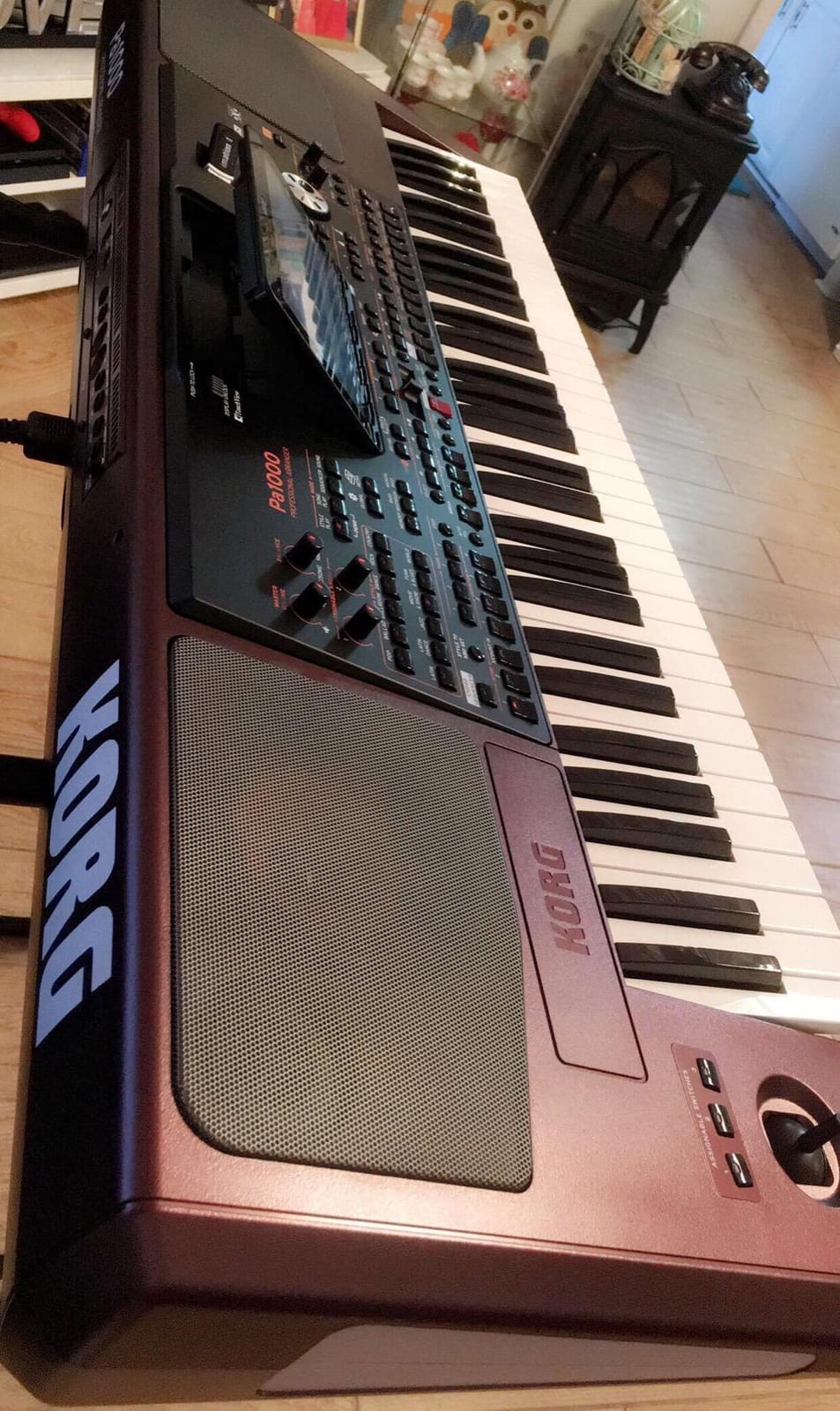
For players who also record, the 16-track arranger and clean MIDI export to Cubase, Logic or Ableton Live mean a worship set can be captured on the same instrument and refined later. In our testing that workflow is fast: play the part in, pull the MIDI into a DAW, and quantise or revoice without re-performing anything.
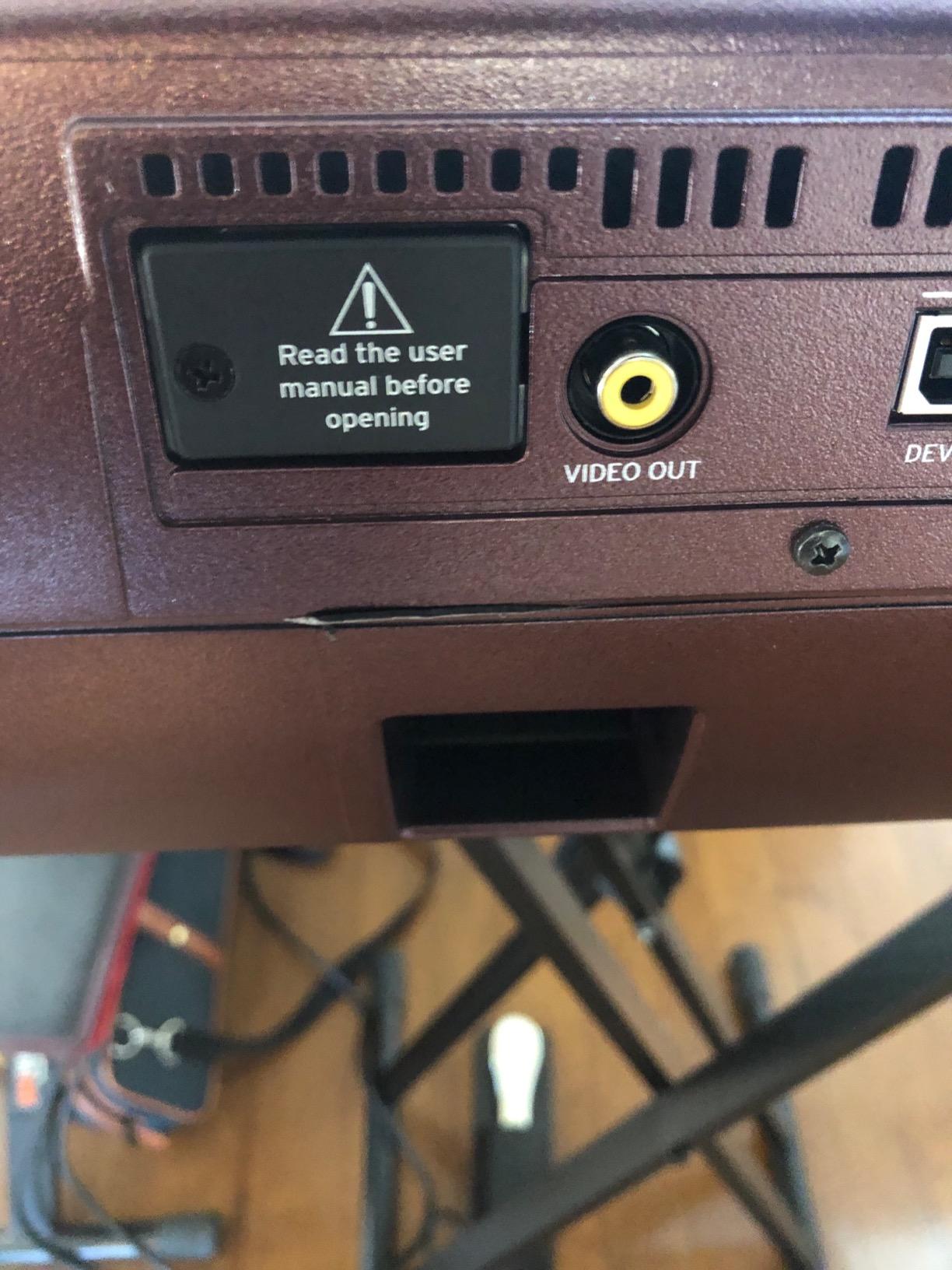
Two honest caveats. Not every owner considers the voices on the same tier as the flagship Yamaha models, so if your identity sound is a specific acoustic piano, audition that voice in the room before buying. And a small number of buyers reported a touchscreen fault on a new unit, so keep the receipt and test the screen on arrival. Regional content cards are also not bundled in every market, which matters if you play in a style outside the default library.
Why churches pick the Pa1000
The reason this board shows up in church supply lists is the combination of speakers, keybed and style depth in one instrument. A worship team that owns one board can rehearse, run the service and record a demo track without extra hardware, which removes a lot of friction from a volunteer-led setup.
It is also a natural second keyboard. Many teams run one 88-key stage piano for acoustic parts and an arranger like this as a MIDI controller for pads and textures, and the Pa1000 handles both roles with its touch screen and physical controls.
Where the Pa1000 falls short
It is a heavy instrument. At 33.2 pounds before any stand, it is not the board you carry between services, so plan the rig around it rather than moving it. The touchscreen, while large and clear, is also the single part most likely to fail over years of church use.
If your team is brand new to arranger keyboards, this is a steep first instrument. A lot of its capability only pays off once someone on the team knows how to build styles and registrations, so it suits an established worship team better than a first-time buyer.
3. Korg Pa700 – rich EDS-X voices with speakers built in
Korg Pa700 61-Key Arranger Workstation
61 keys
370 plus styles
EDS-X engine
2 x 25W speakers
Pros
- 4.7 average rating from owners
- Well built with a large TFT TouchView display
- Rich detailed sound profile from the EDS-X engine
Cons
- Fewer styles than the Pa1000 in the same family
- Some reviewers question the finish quality on arrival
The Pa700 shares the Pa1000 shape and control layout but trims the style count to 370-plus while keeping the same EDS-X engine and 1,700-plus sounds. For worship players, the practical difference is smaller than the spec sheet suggests, because most Sunday sets use a dozen styles at most. Owners rate it highly on build quality and the rich, detailed sound profile the engine delivers.
The large TFT TouchView display is one of the more readable screens in this group, which matters when you are changing a split point or searching for a pad while a service is running. The 2 x 25W speaker system handles a smaller room comfortably, and the built-in MP3 player with vocal remover lets you practise against a track without a separate device on the music stand.
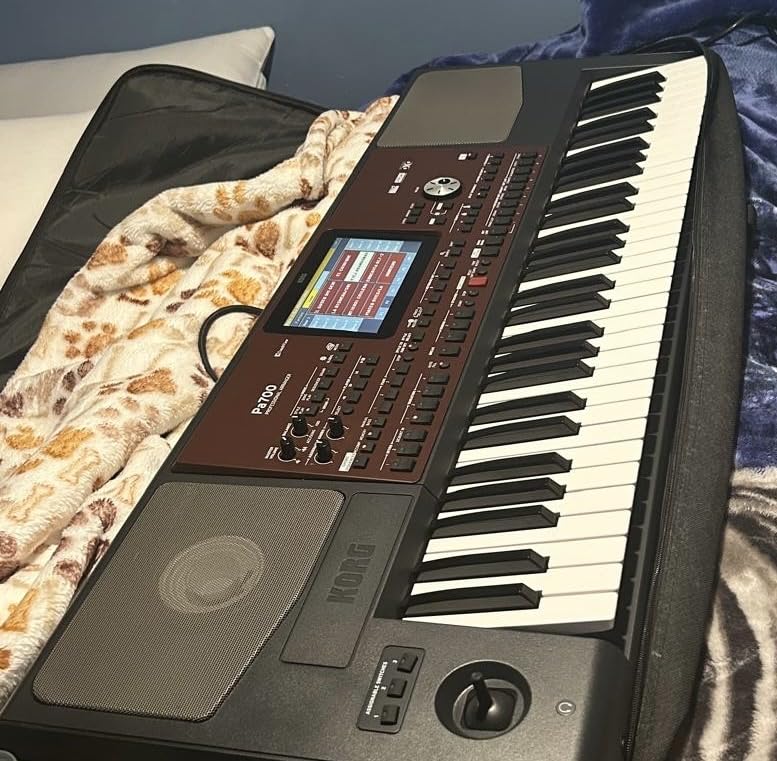
It is a 61-key brown-finished workstation at 31.1 pounds, and the styling is noticeably more furniture-like than most arranger keyboards in a church fellowship hall. Reviewers like the look on a stage or in a dedicated music room, and the two-year warranty is longer than the one-year coverage listed on the PSR-SX920.
Where the Pa700 gives ground is style depth and flexibility. If your team relies on variations, fills and complex intros, the 370-plus library is the limit you will feel first. Finish quality on arrival was also questioned by a few reviewers, so inspect the cabinet carefully when the box is opened.
Pa700 in a worship setting
For a worship leader who sings and plays at the same time, the layout works well. Voices change quickly, the display stays readable at a distance, and the speaker system means a single person can rehearse a full set at home without buying a separate amp. The MP3 player with vocal remover is genuinely useful for learning a new song quickly.
It also works as a second keyboard in a two-board rig, taking MIDI from a DAW and adding a sound layer over the top of a stage piano. Korg editor software handles the file management, so custom sounds and styles move between machines without guesswork.
Where the Pa700 falls short
The style library is the main limit. If you lead a service where the music changes shape mid-song and you need several variations per style, step up to the Pa1000 instead. The speakers are also a little less powerful, so a larger room will need an external amplifier.
Review volume is on the lower side compared with the popular entry models in this list, so treat the rating as encouraging rather than overwhelming. Play the specific acoustic piano and organ voices you intend to use in your room before you settle on it.
4. Yamaha PSR-A5000 – world and gospel style coverage
Yamaha 61-Key World Music Arranger Keyboard, 210 New World Music Styles, Assignable Joystick Controller PSRA5000
61 keys
210 world music styles
Assignable joystick
Real-time scale tuning
Pros
- World music styles broaden the accompaniment palette
- Assignable joystick plus knobs for real-time control
- Super Articulation voices add realistic expression
- Key-off sounds add nuance on release
Cons
- Weakest star distribution in this set
- Older design compared with the current Yamaha lineup
The PSR-A5000 is the one I recommend when a service blends English and Spanish, or when a worship team plays material with world music influence. Its 210 world music styles cover accompaniment patterns that a standard pop-oriented library simply does not have, and for a bilingual congregation that difference is the whole point of the instrument.
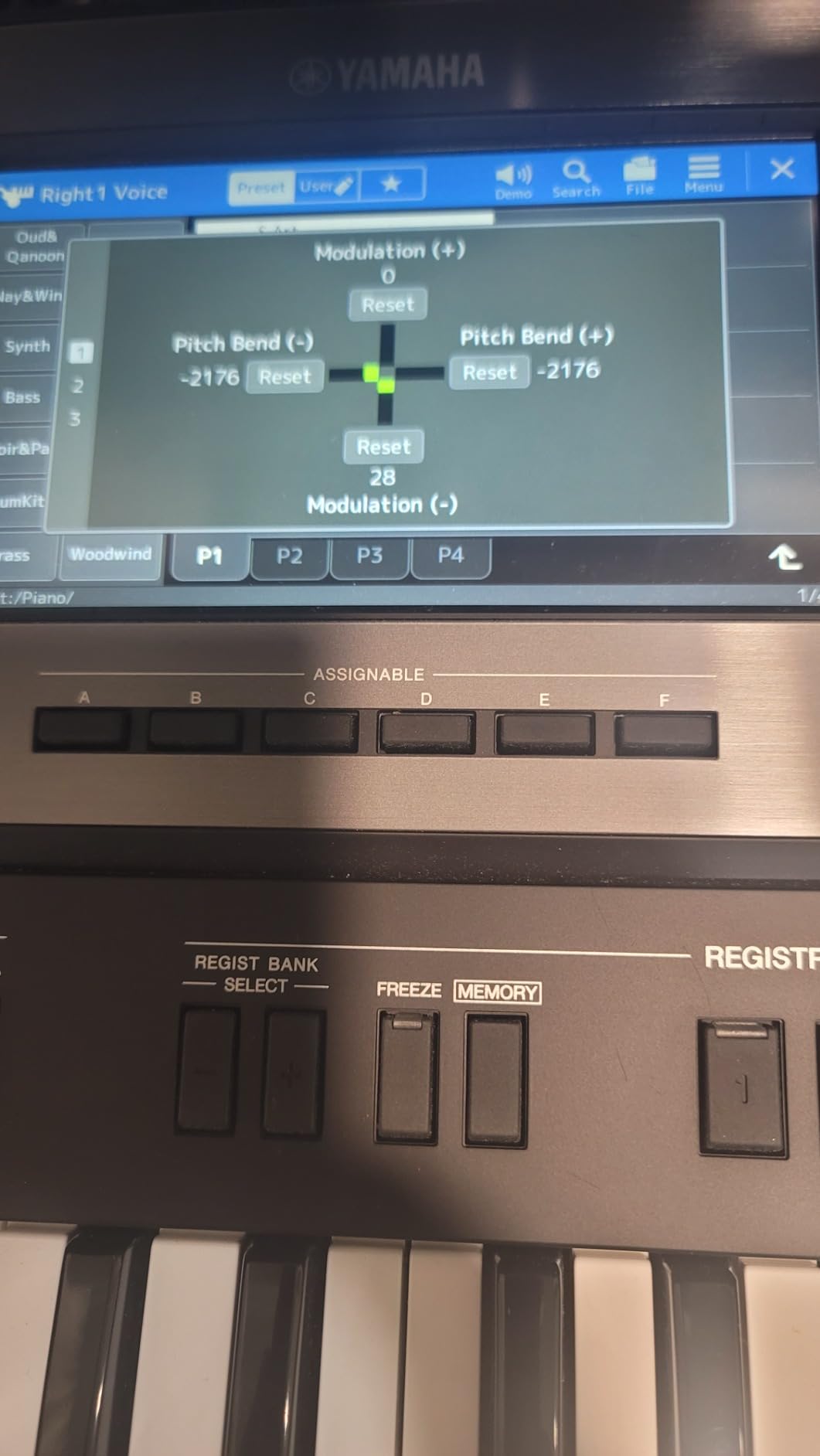
The assignable joystick and assignable knobs give you real-time control over voices, styles and effects, with real-time scale tuning settings that can be recalled from the panel. That last feature matters more than it sounds: several world music traditions are built on tuning systems other than equal temperament, and being able to switch instantly during a song opens up repertoire that a fixed-tuning board cannot cover well.
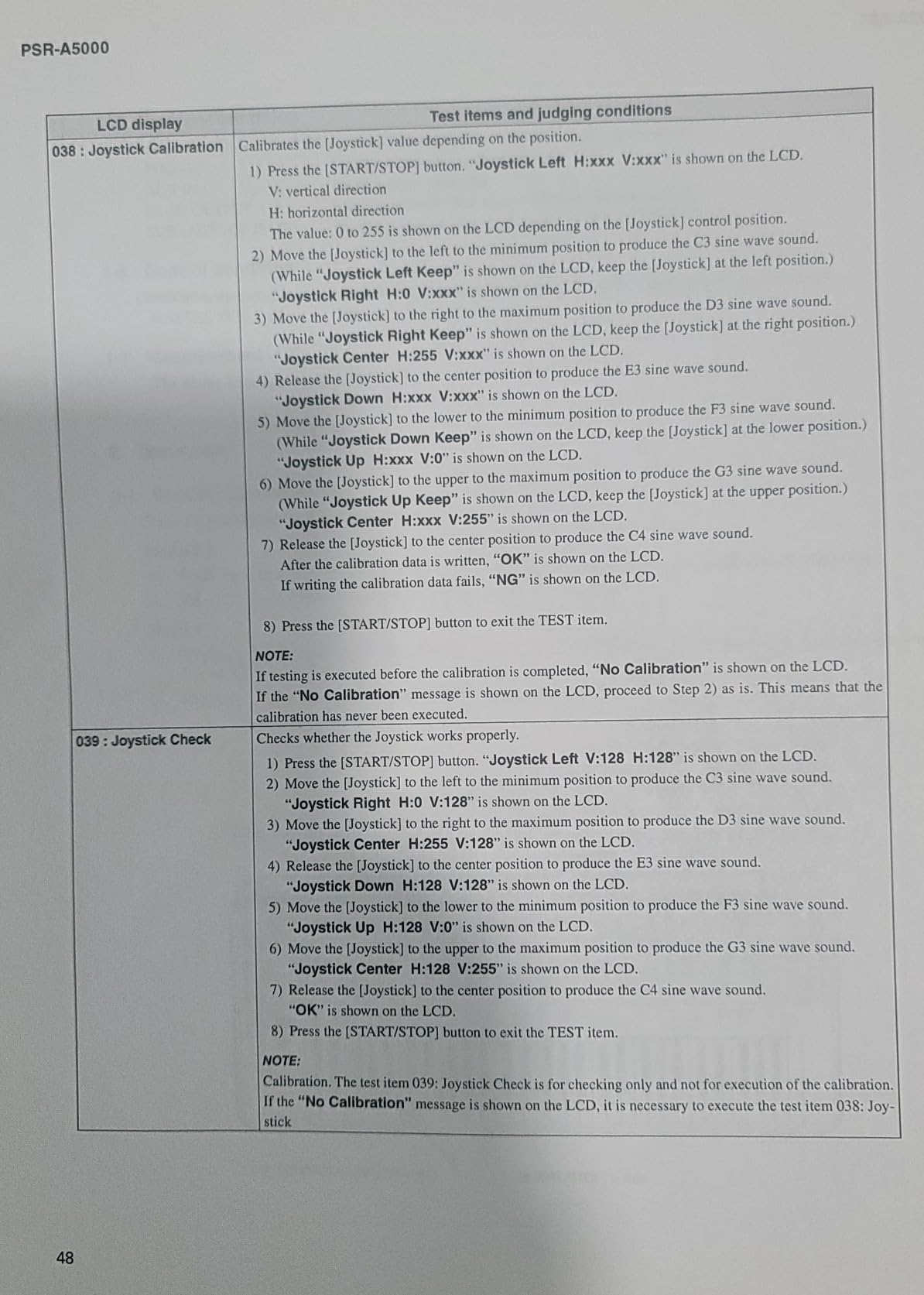
Super Articulation voices and key-off percussion sounds add subtle realism to non-keyboard layers, which helps guitars, flutes and hand percussion sit naturally under a worship chorus. The Super Articulation set is one of the reasons this Yamaha sounds more expensive than its specification list suggests.
At 25.4 pounds it is also one of the more portable 61-key arrangers here, which suits a mobile worship team moving between services. The honest drawback is the rating distribution: one in twelve reviews is a one-star score, the weakest spread in this group, and most of those reflect buyers who expected a newer model rather than a functional fault.
When world styles earn their place
I use scale switching when a song moves from a Western melody into a section built on a different tuning. Having it on a panel setting rather than in a menu means the change takes one press instead of a scroll, and the accompaniment style follows without you having to re-pick a chord recognition mode.
The joystick is assignable, so you can move between pitch bend, modulation and a different function depending on what the part needs. For a player covering organ, strings and percussion in one service, that flexibility saves real time at the keyboard.
Where the PSR-A5000 falls short
This is an older design in the Yamaha arranger line, and that shows in the interface rather than the sound. If your team includes a new volunteer, the learning curve is steeper than on the PSR-SX920 or the Roland E-X50, and there is no large touch screen to make search faster.
Its style library is specialised. If your congregation plays straight contemporary worship with no world music influence, the same breadth of pop and rock accompaniment on a newer board may serve you better, and the current lineup is worth a look before you commit to an older chassis.
5. Yamaha Genos2 – the flagship for recording and streaming
Yamaha 76-Key Flagship Arranger Keyboard, Voice and Style Library, Chord Looper, 9-Inch Touch Screen GENOS2
76 keys
9 inch touch screen
Ambient drums
Combo XLR input
Pros
- State-of-the-art sound through good external speakers
- Large touch screen mirrorable over HDMI
- WiFi plus three flash drive slots
- Ambient drums with close and room mic blend
Cons
- Too complex for beginners
- No built-in speakers
- Acts more like an organ or synth than an acoustic piano
The Genos2 is the instrument to buy when worship is not just a Sunday job. Owners who are experienced arranger players describe its voices and styles as the best in the category, and the ambient drums sampled with both close mic and room mic audio, with an adjustable blend, produce a recording-ready drum sound without a sampled library on a laptop.
For a church streaming its services, the 9-inch touch screen that can be mirrored to a larger display over HDMI, combined with WiFi connectivity, is the feature that changes the workflow. The worship leader can see upcoming lyrics and chord charts on a screen the congregation can read, from the same instrument that is playing the part.
The combo XLR and quarter-inch input with optional 48V phantom power means you can run a vocal mic or a direct instrument feed into the board for broadcast. The chord looper is built in, and onboard memory plus support for up to three flash drives means setlists and custom sounds travel with the player rather than living on one computer.
Be clear-eyed about the compromises. There are no built-in speakers, so separate amplification is not optional. The action and voicing lean organ and synth rather than acoustic piano, which is a deliberate design choice and a poor fit for a classically trained pianist. And experienced players consistently call it too complex for beginners.
Genos2 for worship production
The ambient drum recording is the headline. Sampled with both close and room microphones and blended to taste, it holds up on a recording that will be mixed later, and it means a small worship team can capture a usable demo track in one rehearsal instead of setting up a full studio session.
WiFi and flash drive support solve a problem most church musicians know: the sounds you built for a service live on one laptop that someone else owns. Here they live on the instrument, so a new volunteer can load the same setlist the first time they play.
Where the Genos2 falls short
Complexity is the honest answer. Several owners describe a steep learning curve, and the voice harmony function does not always engage the way players expect, which can be awkward mid-service. Downloading and installing Yamaha content packs is also described as difficult.
If you play acoustic piano as your primary identity sound, this is not the board. If you only need to cover a Sunday set and occasionally record, the PSR-SX920 gives you a similar style engine with a gentler learning curve and no external speaker requirement.
6. Korg PA600 – an older engine still good for home recording
Korg PA600 61-Key Professional Arranger with Color Touchview Display
61 keys
RX and DNC sound engine
Color TouchView display
Built-in speakers
Pros
- Crisp clear sound widely praised in its class
- Excellent for home recording and music creation
- Large community of user and third-party styles
- Built-in speakers for standalone practice
Cons
- Styles weaker than the earlier PA500
- One break button instead of three
- Older PA500 styles do not transfer cleanly
The PA600 holds its ground in a specific and useful place: home practice, church rehearsal spaces and players who write worship music on the keyboard. Owners consistently call the sound crisp and clear for its class, and the enhanced RX and DNC engine with its internal PCM delivery still sounds respectable next to newer instruments in acoustic piano and electric piano voices.
The built-in speakers mean a single player can practise a full set at home with no amplifier, which is still rare at this size. The Color TouchView display handles sound and style selection, and the large community of user and third-party styles is a real advantage for someone who wants more variety without more expense.
The most substantive criticism, and the one worth understanding before buying, is about styles. Compared with the earlier PA500, the style variation depth is reduced, and this keyboard has one break or variation button where the PA500 had three. During a live worship set that translates to fewer usable options for changing the accompaniment part without stopping to edit.
There is also a migration issue that catches people out: older PA500 styles do not transfer cleanly, and a style with the same name can sound different on the new engine. Some owners have reported touchscreen reliability problems, and regional content is sold separately, so plan for that if you play outside the default market.
When the PA600 still makes sense
For worship music writing and home recording it remains genuinely capable. The engine delivers enough realism for arranging, and the community style library means you can find a pad, a bell texture or a Latin percussion part that a factory library would leave out.
It is also a common rehearsal room instrument. Built-in speakers, a colour display and a full keybed mean one unit covers practice, teaching and a small worship room without any additional hardware.
Where the PA600 falls short
Live variation is where it hurts most. One break button limits how dynamically you can shape a chorus, and a worship leader who relies on automatic style changes will notice the difference against a newer arranger with a full set of variation controls.
Two-year-old expectations do not apply either. The style reduction and the screen reliability reports suggest buying a long-term instrument carries some risk, so a two-year warranty registration is worth completing on day one if you go this route.
7. Korg i3 – the light, battery-powered portable arranger
Korg i3 Arranger Keyboard – Silver
61 keys
Over 800 sounds
6 x AA battery operation
12.9 pounds
Pros
- Excellent sound quality for its price class
- Highly portable at 12.9 pounds
- LED-lit one touch buttons instead of menu diving
- Reason Lite and AAS VST plugins bundled
Cons
- Voices not at professional grade
- No 5-pin MIDI in and no arpeggiator
- No built-in speakers
The Korg i3 is the answer for a mobile worship team or a player who moves between church, home and a community venue with a car boot as the loading dock. At 12.9 pounds it is a genuine one-person carry for a full 61-key board, and it runs on six AA batteries, so it works in a room with no power outlet and no speaker nearby.
What surprised me was the sound. Owners consistently rate the quality highly for its price class and compare it favourably to plug-in sounds without latency, with over 800 sounds including a complete GM2 set and 59 custom drum kits. For worship, the electric piano and pad voices cover the common ground, and the bundled Reason Lite and Applied Acoustic Systems VST plugins add software instruments at no extra cost.
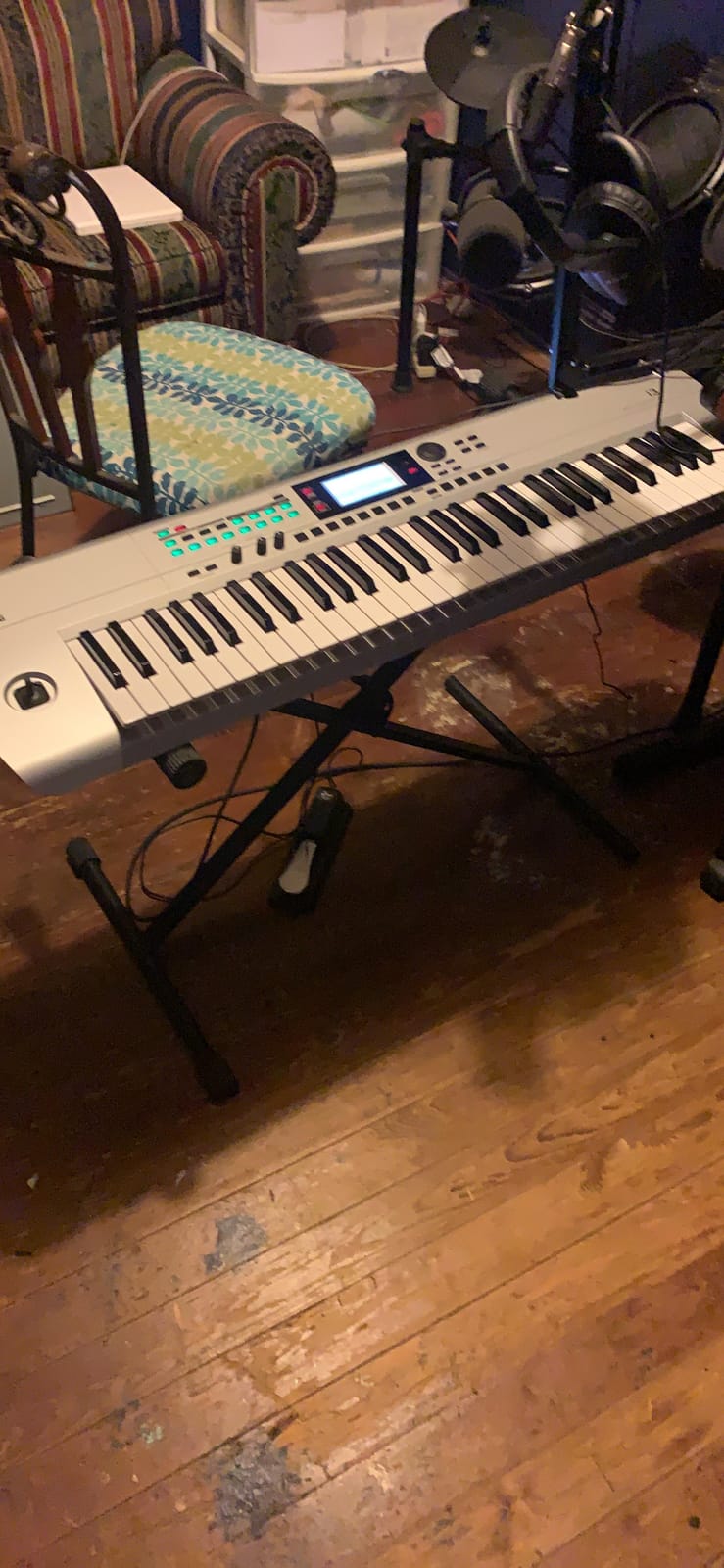
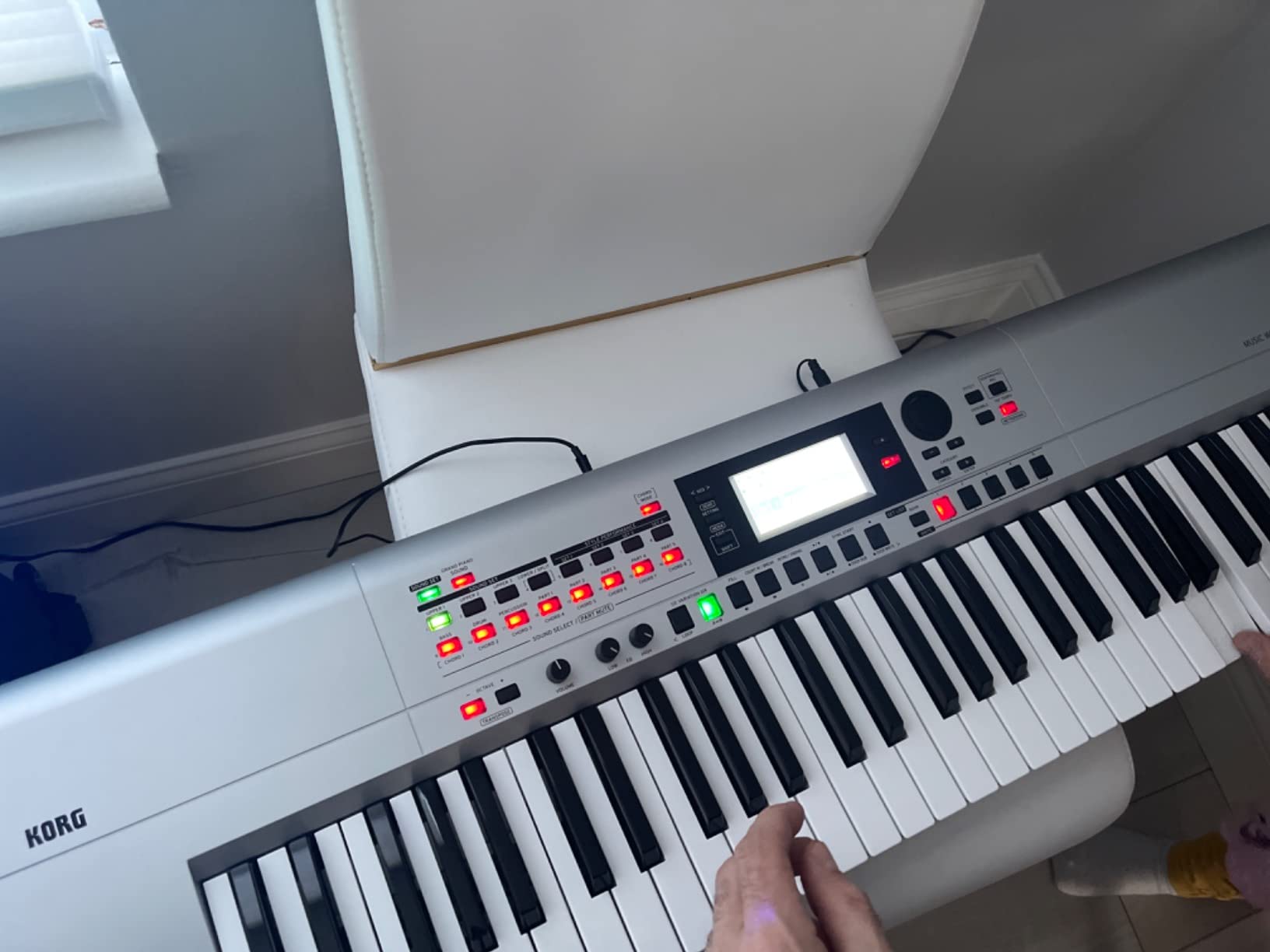
For volunteer teams, the interface is the real story. LED-illuminated buttons and one-touch toggles for each accompaniment track mean you are not digging through menus to mute a part, which is exactly the friction that makes a new player freeze during a service. The bright display and customisable touch curves add to that, and 50 registration slots across 10 banks keep your service setlist in order.
Performance recording with MIDI export and quick WAV audio capture to a flash drive means a rehearsal can be turned into a reference recording the same afternoon. USB to host and device, plus headphone and foot controller connections, cover the routing a small stage needs.
Mobile worship and battery operation
Battery operation changes what is possible. A street gathering, a hospital visit, an outdoor service or a room with a single wall socket no longer rules out an arranger keyboard, and six AA batteries is a small thing to keep in the case. At 12.9 pounds the board is a genuine one-person carry.
The lack of built-in speakers is the trade. It is a control surface and a sound module, so you pair it with headphones, a small amp or the PA, and the MIDI out plus USB connections let it also serve as a lightweight controller for a laptop rig when a more focused timbral palette is needed.
Where the i3 falls short
The voices are not at professional grade. If your worship identity sound is a specific acoustic piano model or a concert organ, this board will not reach it, and you will be editing factory sounds to get close, which takes time you may not have.
There is also no 5-pin MIDI in port and no arpeggiator, which limits some rig setups. The live control knobs cover more than EQ but not everything, and the LCD is small by current standards. For a fixed-installation player who never moves the instrument, a board with larger screens and internal speakers is the better buy.
8. Casio CT-X5000 – the value benchmark
Casio CT-X5000 61-Key Flagship Arranger Keyboard | 800 Tones | USB-MIDI
61 keys
800 tones and 235 rhythms
30W speakers
17-track recorder
Pros
- Best onboard speakers in its price class
- 235 rhythms more than any other in its class
- Flagship AiX engine with realistic samples
- Semi-weighted key action
Cons
- Features buried behind menus and long presses
- No DIN MIDI ports
- Ungraded keys not ideal for learning piano
The CT-X5000 is the keyboard other manufacturers in this category get compared against. With 132 reviews and a 4.4 average, it is one of the most proven options on this list, and owners treat it as the value benchmark for a reason: 800 editable tones, 235 rhythms and 30W onboard speakers in a single instrument.
Those 235 rhythms are the number that matters for worship. That is more accompaniment patterns than any other board in this list carries, and the accompanying rhythm section is described as enjoyable and realistic rather than a metronome with an accent. A player covering a set alone can find a pattern that already fits the groove instead of fighting one that does not.
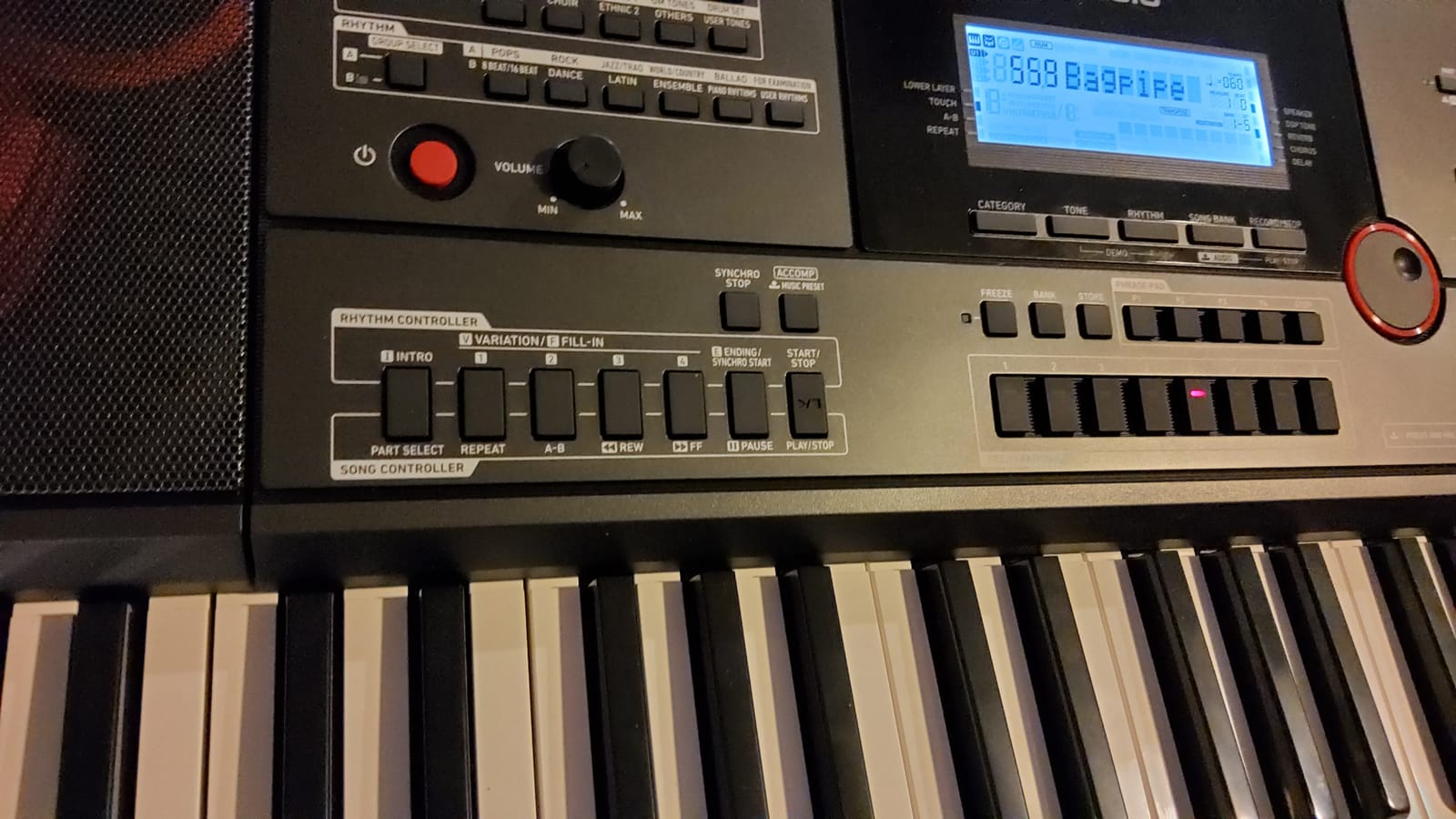
The AiX sound engine produces what owners call pristine concert grand and vintage synth samples, and the 30W speaker system is repeatedly singled out as the best in the price range, with warm full tones that work in a small room with no amplifier. The 17-track recorder and 128 registration slots let you capture a rehearsal and store your service setups permanently.
The recurring complaint is interface depth. Many features sit behind menus and long presses behind a small display, and factory edits to organs, electric pianos and pads need user tweaking compared with Korg and Roland. If you are comfortable with that, the sound quality more than compensates. There are also no DIN MIDI ports, USB only, which matters for older rig setups.
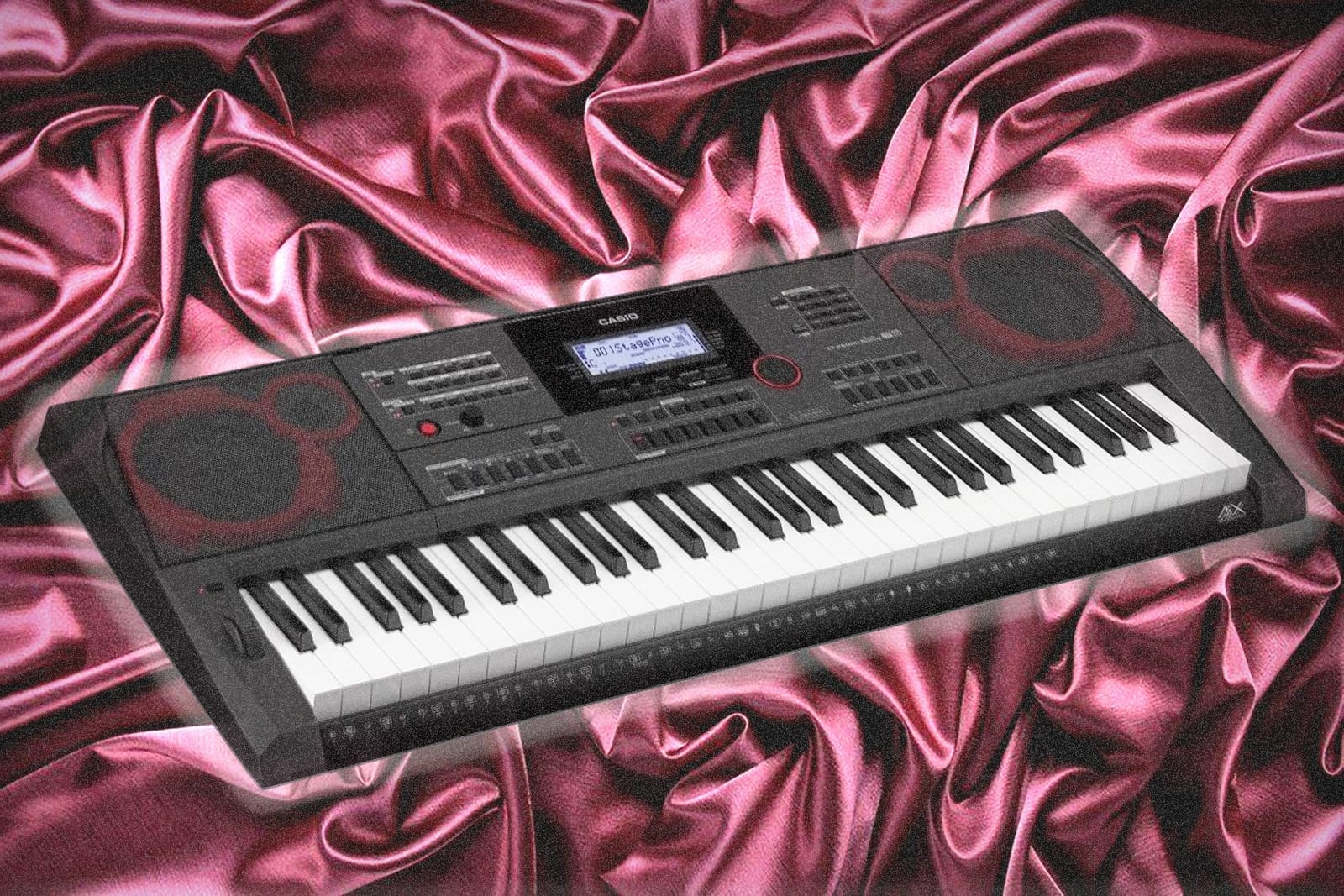
Speaker output you can actually use
This is the practical reason a lot of small churches end up with a CT-X5000. Thirty watts of onboard output means a volunteer can play a full rehearsal at home, in a fellowship hall or in a classroom with nothing but power, and the tone is full rather than thin. For many teams that removes the amplifier from the equipment list entirely.
Stage and recording connections are covered too, with quarter-inch line outs, a mic input and expression pedal support so a player can add a vocal part and control volume from the floor. The tablet-ready music rest and aux input round out a package aimed at worship rather than a bedroom studio.
Where the CT-X5000 falls short
Navigation is the honest weakness. Long presses and menu layers mean a new volunteer needs a walkthrough before a service, and the small display makes searching for a sound under pressure slower than it should be. Write down your registrations and you will avoid the problem.
The keys are ungraded and not ideal for anyone learning piano, and some players find them clacky near the back. The pitch bend wheel is small with a large dead zone, and there is no aftertouch or modulation wheel. USB-only MIDI is the other limit for older church infrastructure.
9. Roland E-X50 – the easiest board for a new volunteer
Roland E-X50 Electronic Arranger Keyboard – Easy-to-use | Stereo Speakers | Bluetooth | Professional Roland Sounds | Mic Input | Auto-accompaniment Function
61 keys
300 onboard styles
Stereo speaker system
Mic input
Pros
- Professional Roland sounds ready to use out of the box
- Onboard stereo speakers with independent woofers and tweeters
- Easy-to-use interface with attractive design
- Recording and Bluetooth audio built in
Cons
- Style library of 300 is smaller than some rivals
- Custom styles need separate Style Converter software
When a church has a volunteer rotation where the keyboard seat changes every few months, the Roland E-X50 solves a problem the flagship boards do not. Owners describe it as one of the easiest keyboards here to pick up and play, and with 134 reviews averaging 4.2 the pattern is consistent: owners get professional Roland sounds that are usable out of the box, not after a weekend of sound editing.
The onboard stereo speaker system, with independent woofers, tweeters and a bass-reflex port, delivers genuinely large sound for a practice room. Nearly 700 additional tones cover electric pianos, organs, orchestral instruments, percussion and world sounds on top of the acoustic pianos derived from Roland home and stage instruments, which is the core worship palette.
Auto-accompaniment responds to fingered chord recognition, so a new player can hold a chord and have the accompaniment follow. The mic input with effects lets the same person sing a harmony part while playing, the recording feature captures keyboard and arranger performances together, and Bluetooth audio streams from a phone through the internal speakers for practising before a service.
The limitation is the style count. At 300 onboard styles it is smaller than some rivals at this level, and building your own requires the separate Style Converter software for macOS or Windows, which is another program for a volunteer to install on a church computer. If your team relies on rare rhythmic styles, expect a search.
Built for a rotating volunteer team
The interface is the product. A free-flowing user interface and an attractive design mean the board does not intimidate someone sitting down for the first time, and 300 ready-made styles cover the common worship patterns without hunting. In a church with high volunteer turnover, that is worth more than a longer style list.
Bluetooth audio through the internal speakers is a small feature that gets used constantly. A player can run a backing track from a phone before service, hear it in the same speaker that will carry the service, and check a transition without anyone else in the room.
Where the E-X50 falls short
Three hundred styles is genuinely fewer than the Casio CT-X5000 offers, and the gap shows in world and Latin rhythmic material. If your congregation plays outside mainstream contemporary and gospel patterns, the Korg i3 or the Yamaha PSR-A5000 cover more ground for accompaniment.
The speakers, while good, will not carry a larger sanctuary, so a big room still needs an amplifier. And if you plan to author custom styles rather than use the existing ones, budget time for the extra software and for learning it.
10. Korg EK50 – the first arranger keyboard many players own
Korg, 61-Key Keyboards & Pianos (EK50)
61 keys
702 sounds and 280 styles
2 x 10W speakers
12-track sequencer
Pros
- Excellent sound and feature set for the price
- Built-in stereo speakers praised for practice
- Simple LED-lit controls with a clear display
- Split function and one-touch recording
Cons
- Does not function as a true multi-track sequencer
- Interface is hard to learn at first
- Not suited to pianists wanting weighted keys
The EK50 is the most-reviewed board in this group with 262 ratings, and it is where a lot of worship players learn arranger technique. Buyers consistently find the sound and feature count better than expected: 702 realistic sounds and 280 styles covering pianos, guitars, brass, sax and drums, plus a split function for hands-on worship work.
At 16.5 pounds it is still portable, and the built-in 2 x 10W stereo speakers are singled out as terrific for practice, including the ability to play audio from an external device through them. The linear 12-track sequencer and one-touch recording let you capture an idea the moment it happens, which is how most worship songwriters start.
The controls are deliberately simple, with LED-illuminated buttons and a bright, clear display. It is a 61-key beginner-oriented instrument with a one-year manufacturer warranty, and it does the fundamentals without a large screen, a deep menu system or a steep setup.
Two limits are worth knowing. It does not function as a true multi-track sequencer, so you cannot lay down and re-record individual parts, which matters if you want to build a track track by track. The interface is also hard to learn at first for some buyers, and a small number have reported dropouts and hanging notes that required a return. Pianists who want a weighted acoustic feel should skip this one.
Learning arranger technique on the EK50
For a player building their first arranger setup, the linear 12-track sequencer is a real tool rather than a gimmick. You can capture a worship chorus, then play along with it to learn a part, which shortens practice time without needing a second instrument or a computer.
The split function is the other piece. Most worship sets need a lower range carrying an accompaniment style while the upper range holds an organ or pad, and the split point is quick to set. With 280 styles covering brass, sax and guitars, a small team can cover a lot of arrangements from one board.
Where the EK50 falls short
Recording depth is the clear limit. The absence of real multi-track sequencing means ideas have to be captured in a single pass, and anyone producing a finished track will move to a workstation or a computer-based setup. The 2 x 10W speakers are also modest for a room larger than a fellowship hall.
Sound tier matters too. For a service that needs a specific acoustic piano or a convincing organ, the newer boards above give you more realistic samples and a better keybed. The EK50 is a strong first instrument, not a final one, so it works best as a stepping stone or a backup board for a second service.
How to Choose an Arranger Keyboard for Worship
Start with the room, not the spec sheet. The questions that decide which of these ten instruments suits your church are how many people sit behind the keyboard, whether a sound engineer is running the service, and whether the room has an amplifier. Everything else is preference.
If more than one person plays each service, weight and setup speed dominate. A 30-pound workstation that never moves is fine, but a rotating team of volunteers wants a board that comes out of the case, powers on, and plays saved registrations without a menu walk. A single fixed player who also records wants the deeper library, bigger screen and multi-track tools instead.
Whether an arranger is right at all depends on your infrastructure. An arranger keyboard is self-contained: sounds and accompaniment live in the instrument, and you send line audio to the console. A MIDI controller is a controller only, and needs a laptop, a software instrument and a working soundboard. Players on worship forums describe the dual setup, one 88-key stage piano plus one arranger or controller, as common practice in larger churches. Our 75 percent keyboard guide covers the controller side of that equation.
Which one is the easiest to learn is worth asking a volunteer who has never touched an arranger. The Roland E-X50 is generally the fastest to hand over, and the Korg i3 wins on portability.
Key action and key count
Semi-weighted synth action is the norm in this category and suits a worship player who covers styles, pads and organ as much as acoustic piano. If your congregation sings unaccompanied and you play mostly acoustic piano, a fully weighted or hammer-action 88-key stage piano is the better instrument, and you should be looking at a different category of keyboard entirely.
Key count is a range question. 61 keys covers most worship repertoire and keeps the weight down. 76 keys, as on the Genos2, gives room for organ splits and lower-range bass layers. 88 keys is only necessary if you need the full piano range, and it means buying a second instrument rather than choosing a different arranger.
Styles, chord recognition and worship sound coverage
Styles are the accompaniment engine: a pattern of drums, bass, piano, guitar and strings that follows the chords you play. More styles is only useful if they are the styles your congregation plays. The Casio CT-X5000 leads on raw rhythm count, the Korg Pa1000 on worship and gospel depth, and the Yamaha PSR-A5000 on world music patterns. Audition the three or four patterns you will use most and ignore the rest.
Chord recognition mode matters for solo players. Fingered recognition lets you play fuller voicings and still get accompaniment, which is more musical for worship. One-touch settings are a separate feature: a single button that recalls a voice, style and effect combination, so a new volunteer can switch a whole sound with one press.
For the sound library itself, test four voices in the room before you buy: a warm acoustic piano, an electric piano that holds up under a loud room, an organ that does not disappear behind the band, and a sustained string or pad. Owners consistently call out organ and electric piano quality as the top priority, and pads and ambient textures as the thing most often missing. Style count does not fix a thin pad.
Speakers, connections and pedals
Built-in speakers decide whether the board is self-sufficient. The Casio CT-X5000 at 30W, the Korg Pa1000 at 2 x 33W and the Roland E-X50 with its stereo system can each carry a rehearsal room alone. The Korg EK50 and Pa600 have smaller systems, and the PSR-SX920 and Genos2 have none, so plan an amplifier or monitors for those.
Check connections against your church infrastructure. Line outputs at quarter-inch go to a console or DI. USB to host is how you record and how you load content; a USB device port lets the board read files directly. DIN MIDI ports still matter if the church runs older equipment, and the Casio CT-X5000 is USB only. For pedals, every board here supports a sustain pedal, and most add expression pedal support, so verify before you rely on floor control.
Budget tiers matched to church size
For a small church with one volunteer and no amplifier, the Korg i3, Roland E-X50 and Casio CT-X5000 cover the three realistic starting points: battery operation and portability, the easiest interface, or the most usable onboard speakers and deepest rhythm library. A mid-size church with a fixed keyboard position and a volunteer rotation gets more from the Casio or the Korg Pa700, both of which combine speakers with a large style library.
A large church or a paid player who also records and streams should look at the Korg Pa1000 or the Yamaha Genos2. Both assume an amplifier, and the Genos2 additionally assumes someone who can operate it.
On the used market, a two-to-five-year-old arranger from a school or a closing worship space often carries most of the capability of a new board, and it is worth checking that the touch screen responds, all buttons light, and the speaker system is clean. Style libraries on older engines do not transfer cleanly to newer ones, so download your own content rather than relying on the factory data. The money is best spent on a board with a proper keybed and a screen you can read from a standing position.
Frequently Asked Questions
What is the best arranger keyboard for worship?
The Yamaha PSR-SX920 is our top pick for worship players because its accompaniment styles respond to dynamics, letting one player sound like a full band while keeping control of chord changes. The Korg Pa1000 is the better choice for a working church musician who needs a large touchscreen, 420-plus styles and 33W onboard speakers. For volunteers and smaller rooms, the Casio CT-X5000 pairs 235 rhythms with 30W speakers.
Which keyboard is best for church?
It depends on who plays it and what the room provides. A rotating volunteer team is best served by the Roland E-X50, which is the easiest board here to learn and includes usable sounds and onboard stereo speakers. A fixed player in a room with no amplifier should pick a keyboard with built-in speakers such as the Casio CT-X5000 or Korg Pa700. A paid musician covering recording and streaming needs the Yamaha Genos2 or Korg Pa1000.
Is Yamaha better than Korg for worship keyboards?
Neither brand wins outright. Yamaha is stronger on the flagship end, with the Genos2 offering a 9-inch touch screen, ambient drums sampled with close and room mics, WiFi and a combo XLR input for streaming. Korg is stronger on the portable and mid-range end, with the Pa1000 and Pa700 combining rich voices with onboard speakers, and the i3 running on batteries at 12.9 pounds. Judge them on style library, keybed and screen size for your room.
How many keys should a worship keyboard have?
Sixty-one keys cover most worship repertoire and keep the weight manageable, which is why every board in this roundup is 61-key except the 76-key Yamaha Genos2. Seventy-six keys give room for organ splits and fuller bass layers without a second instrument. You need 88 keys only if you play acoustic piano across the full range, and in that case a weighted stage piano is the right instrument rather than an arranger.
Do I need an arranger keyboard or a MIDI controller for worship?
An arranger keyboard is self-contained: sounds, rhythm styles and automatic accompaniment live in the instrument, and you send line audio to the console with no laptop. A MIDI controller needs a computer, software instruments and a working soundboard, so it depends on your church infrastructure. A common setup in larger churches is one 88-key stage piano for acoustic parts plus an arranger or controller for pads and textures.
Our Final Verdict for Worship Players in 2026
After comparing these ten arranger keyboards across setup time, style libraries, worship sound coverage and volunteer usability, the Yamaha PSR-SX920 remains our choice as the best arranger keyboard for worship players. Its styles respond to what you play, its touch screen keeps transitions fast, and the Super Articulation 2 voices fill out a set that would otherwise need a second musician.
Buy the Korg Pa1000 if a church is buying a professional instrument for a working player, the Casio CT-X5000 if you want onboard speakers you can use for rehearsal and a deep rhythm library, and the Roland E-X50 if a new volunteer is the person holding the keys. Take any of them into your actual room, play a warm acoustic piano, an electric piano, an organ and a string pad at service volume, and pick the one that survives the band. That test has never let us down, and it is the fastest way to find the right fit among the best arranger keyboards for worship players.