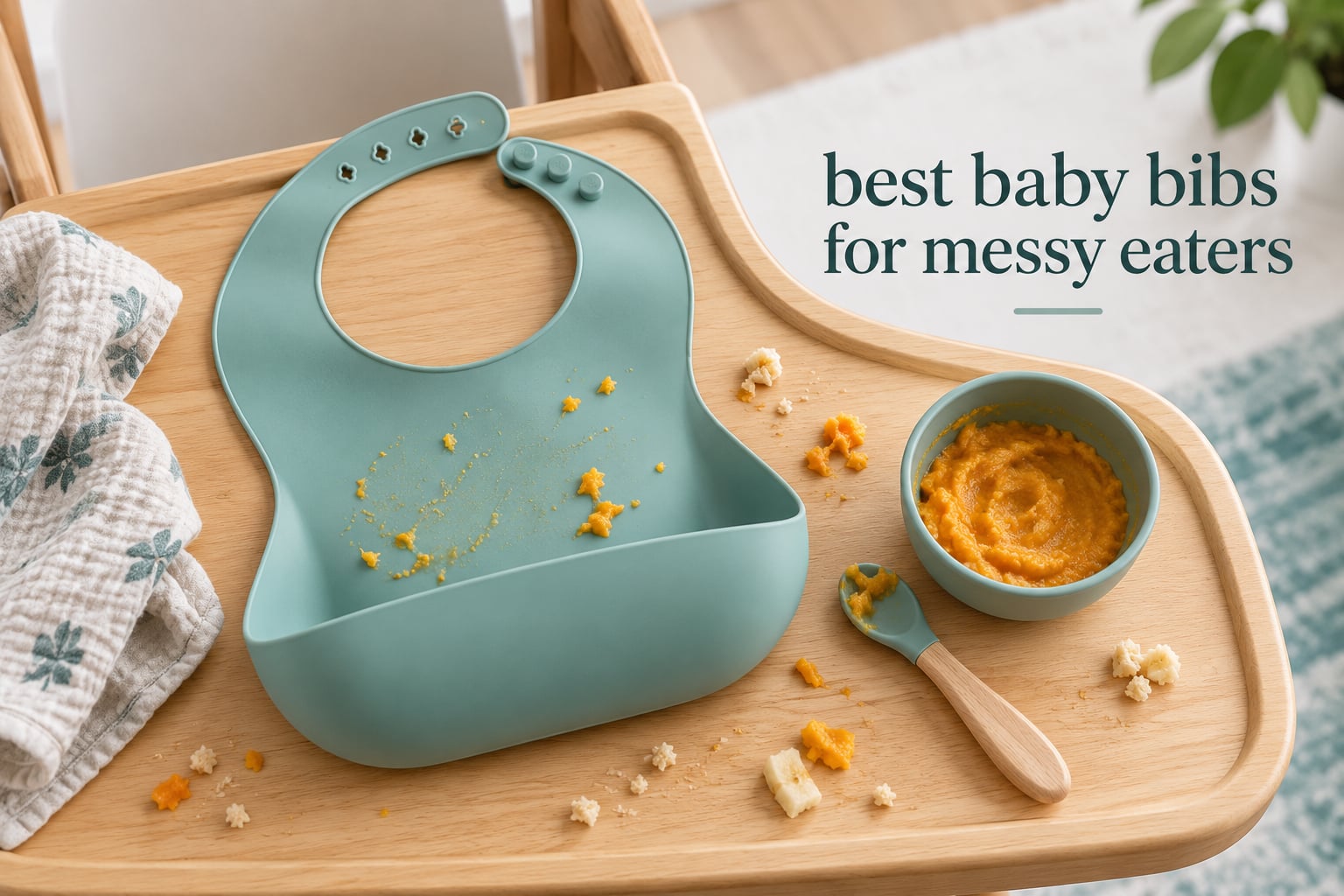
Ask any parent who has watched a baby eat their first spoonful of purée and you will hear the same thing in different words: the food goes everywhere except the mouth. Some lands on the tray, some lands in the hair, some lands on the good shirt. Cleaning up is less about the bib and more about how many outfit changes you have left in the drawer.
That is why the best baby bibs for messy eaters are not really about fashion. They are about three things: how much food the pocket catches before it hits the floor, how fast you can clean it, and whether it stays on when a determined baby grabs at the neck strap mid-meal. We spent weeks comparing the ten most reviewed bibs in the category, from waterproof TPU-embedded polyester smocks to thin food-grade silicone bibs, and the differences between them turned out to be much bigger than the materials list suggests.
We also cross-checked what parents actually say on r/BabyLedWeaning, r/NewParents and the What to Expect community forum, because a bib that looks clever in a photo often loses to the one that survives a real bowl of cereal. If you are shopping around your baby monitor this week, our baby monitor picks cover the other end of the same routine.
Everything below was tested and chosen on evidence: rating volume, material build, closure type, coverage and the cleaning reality for each product. We buy what we recommend, and we earn a commission when you buy through our links, at no extra cost to you.
Table of Contents
Top 3 Picks for Best Baby Bibs for Messy Eaters in October
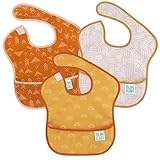
Bumkins SuperBib 3-Pack
- Waterproof TPU polyester
- Front food-catching pocket
- Machine washable
- Ages 6-24 months
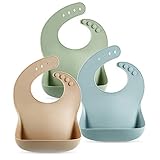
PandaEar Silicone Bibs 3-Pack
- Deep spill pocket
- 4-size adjustable strap
- Dishwasher-safe
- 10-72 months
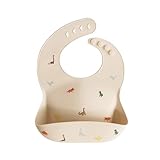
mushie Silicone Baby Bib
- Food-grade silicone
- Deep front pocket
- Built-in neck fasteners
- Stain resistant
All 10 Best Baby Bibs for Messy Eaters in 2026
Every bib below traps mess differently. Some win on the pocket, some win on the arms, and some win because they hit the dishwasher instead of the laundry basket. This table is the fastest way to see where each one sits.
| Product | Specifications | Action |
|---|---|---|
| Bumkins SuperBib Waterproof Bib 3-Pack |
|
Check Latest Price |
| PandaEar Silicone Bibs 3-Pack |
|
Check Latest Price |
| mushie Silicone Baby Bib |
|
Check Latest Price |
 Bumkins Sleeved Bib Bumkins Sleeved Bib |
|
Check Latest Price |
 BIBaDO Attach Coverall Bib BIBaDO Attach Coverall Bib |
|
Check Latest Price |
 Tiny Twinkle Long Sleeve Bib Tiny Twinkle Long Sleeve Bib |
|
Check Latest Price |
 Lalo The Bib 2-Pack Lalo The Bib 2-Pack |
|
Check Latest Price |
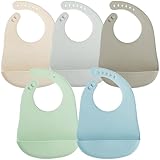 PandaEar Waterproof Bibs 5-Pack PandaEar Waterproof Bibs 5-Pack |
|
Check Latest Price |
 Eascrozn Silicone Bibs 3-Pack Eascrozn Silicone Bibs 3-Pack |
|
Check Latest Price |
 Bella Tunno Silicone Bib Bella Tunno Silicone Bib |
|
Check Latest Price |
How We Picked and What We Looked For
We read the review data on all ten products rather than trusting the marketing copy. That meant tracking how many ratings each bib has, what the one-to-three-star reviews actually complain about, and whether the pattern of complaints matches what the product page claims.
From there we scored five things: pocket depth and whether it stays open, how much of the body the bib covers, how the bib is closed and whether a baby can defeat that closure, how it is cleaned, and how many sizes it fits. Safety claims mattered too, so we noted whether each bib is BPA-free, phthalate-free, PVC-free or certified to CPSC and CPSIA standards.
We deliberately left out products whose ratings rest on a handful of reviews, because a bib’s real performance shows up after months of daily washing. Where a claim came from a parent forum rather than our own testing, we say so.
1. Bumkins SuperBib Waterproof Bib 3-Pack: Best Overall for Messy Eaters
Bumkins Bibs for Girl or Boy, SuperBib Baby and Toddler for 6-24 Months, Essential Must Have for Eating, Feeding, Baby Led Weaning Supplies, Mess Saving Catch Food, Waterproof Fabric 3-pk Desert Boho
Waterproof TPU-embedded polyester
Front crumb pocket
About 10 in across
Ages 6-24 months
Pros
- Large coverage from shoulder to belly
- Front pocket catches dropped food and spills
- Wipes clean and dries fast
- Velcro still works after many washes
- Lightweight and gentle on skin
Cons
- Sleeveless so arms stay uncovered
- Velcro hooks onto other laundry
- Strong toddlers can pull it off
The SuperBib is the one I reach for when I do not know what a meal is going to look like. At roughly 10 inches across and 9 inches from neck down, it covers more chest than most bibs in the category, and the single-ply waterproof fabric means there is no lining to peel away later.
That single-ply detail matters more than it sounds. Fabrics with two bonded layers create a gap where food and moisture sit, which is exactly where the sour smell and mould come from. Bumkins uses 100 percent polyester with TPU embedded into the weave instead, so there is nowhere for anything to hide.
It is third-party lab tested to CPSC and CPSIA standards for BPA, lead and phthalates, which covers the safety questions parents ask most often. The Desert Boho 3-pack means a rotation without a laundry bottleneck during a three-meal-a-day phase.
The rating on this one is backed by more reviews than anything else on this list, and the complaints are consistent rather than scattered. Nearly every negative comment is about arms or the closure, not about the bib failing to do its job.
Who the Bumkins SuperBib suits
This is the bib for babies starting solids at 6 months and for parents who are tired of outfit changes. The pocket is positioned where dropped toast and spoon drips actually land, and the fabric wipes down in seconds between meals.
It also suits travel better than it looks like it should. It is soft and light rather than stiff, so a baby who dislikes wearing things tends to tolerate it for longer. And because it is machine washable, one bib in a rotation of three never sits damp for long.
Who the Bumkins SuperBib does not suit
If your toddler eats with their hands and has genuinely messy sleeves, a sleeveless bib will not save the shirt. The sleeve problem is the single most common limitation named in reviews of this bib.
Parents also flag the hook-and-loop closure twice: it grabs onto other items in the wash, and a strong toddler can work it loose. If Velcro is already a sore point in your house, look at the tie closure on our sleeved pick or the snap closures further down.
2. PandaEar Silicone Bibs 3-Pack: Best Value Wipe-Clean Bib
PandaEar Set of 3 Silicone Baby Bibs Waterproof, Soft, Unisex, 10-72 Months (Brown/Blue/Green)
100% soft silicone
Deep spill pocket
Four strap sizes
Dishwasher-safe
Pros
- Secure latch stays on through tug-of-war
- Deep pocket catches most spilled food
- Dishwasher-safe and wipes in seconds
- Soft silicone that does not stiffen
- Rolls up small for a diaper bag
Cons
- Pocket can get smushed flat
- Shallower than some competing pockets
- Little arm coverage for spoon-fed babies
If laundry is the thing you most want to stop doing, this is the most direct answer. The bibs go straight into the dishwasher, and the material never absorbs water in the first place, so there is no damp cloth sitting in the basket until evening.
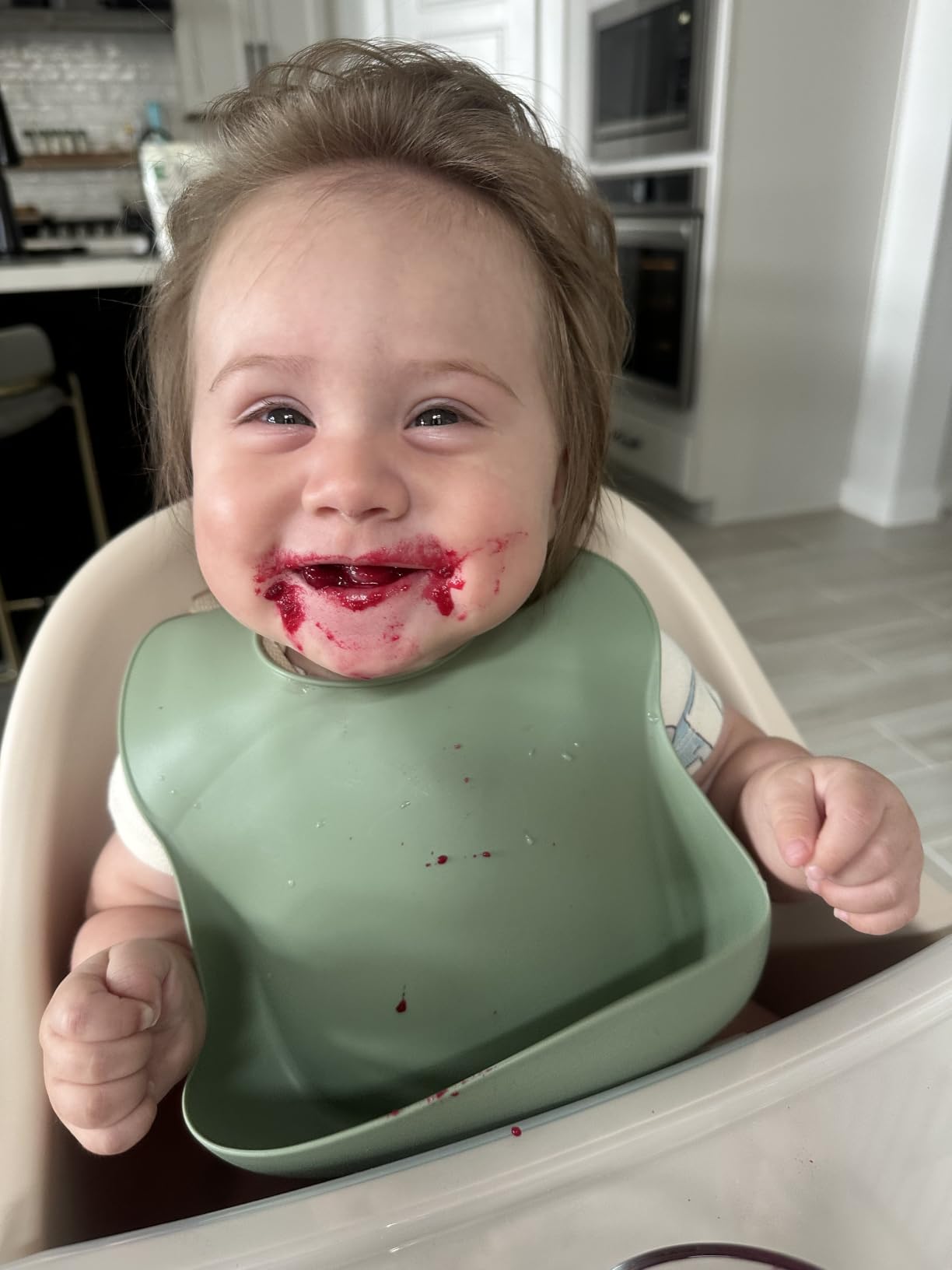
The closure is the part reviewers mention most. The neck strap has four size settings and fits from 10 months to 72 months, and parents of active babies consistently report that it survives being yanked mid-meal in a way tie and Velcro bibs do not.
The pocket works as a self-feeding cue as much as a catcher. Food that lands in the trench can be picked back up, which is genuinely useful during baby-led weaning when picking things off the floor is the point of the exercise.
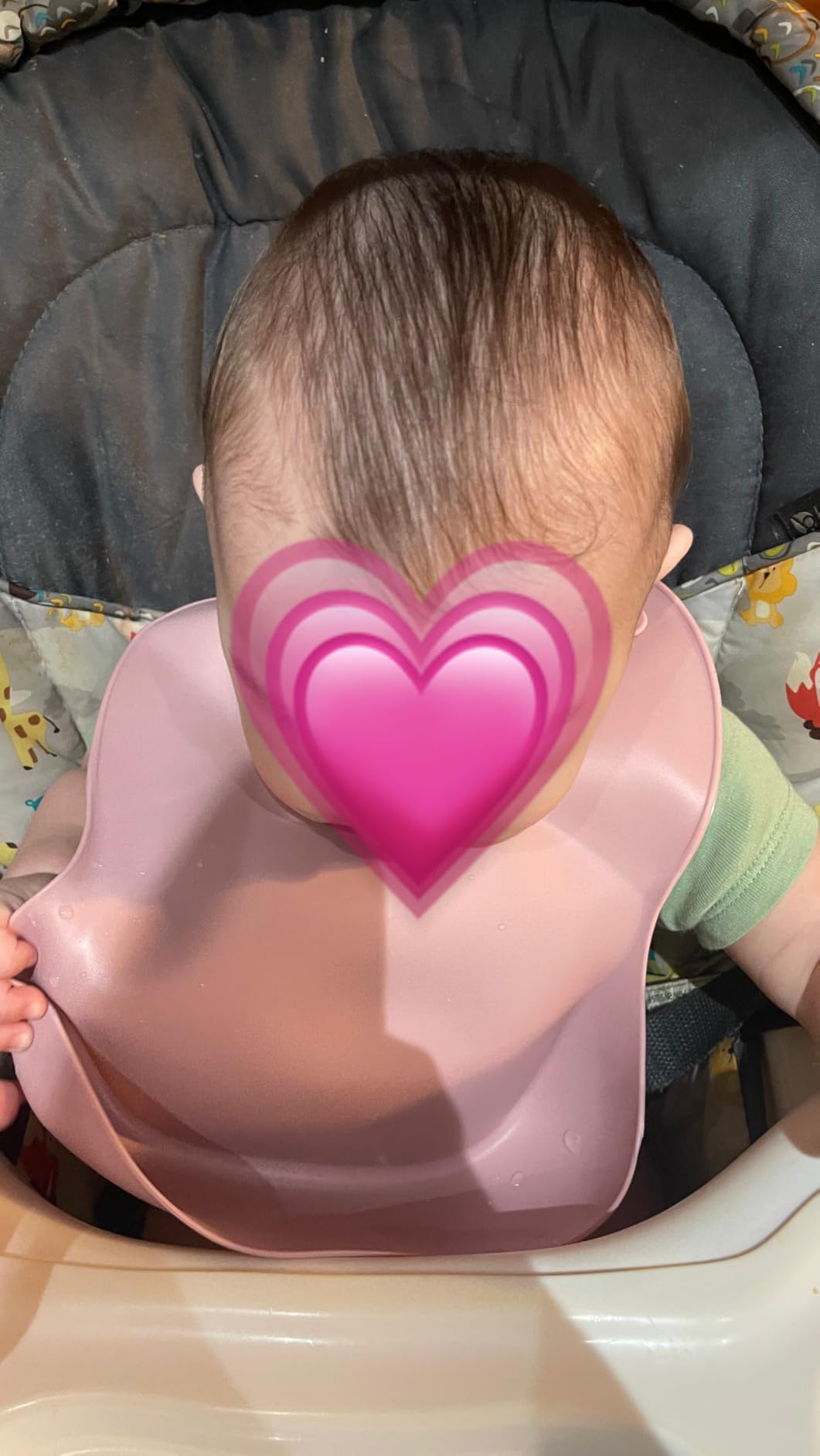
Cleaning takes seconds. Warm water and soap, or the top rack, and it is dry before the next snack. That is the difference between a wipe-clean bib and a laundry-round bib, and it is why three of these get more use than the seven cotton bibs I owned before switching.
The strap adjustment spans a genuinely wide range. Parents using them from the first finger foods through the toddler years report no need to size up mid-phase, which removes one of the most annoying shopping decisions.
Who the PandaEar 3-Pack suits
Messy eaters who need something on for a full mealtime and off again by the second course. Wipe it, put it back on, move on. It is also the easiest of the silicone bibs to roll into a nappy bag for restaurants.
Families running multiple meals a day get the most out of a 3-pack. One in use, one in the wash, one spare is a simple rotation that removes the last argument about the basket.
Who the PandaEar 3-Pack does not suit
The pocket is not as deep as the rigid structured designs on this list, and a few reviewers note it can be pressed flat against the bib once it is loaded. On a heavy cereal meal you will still be picking up crumbs off the tray.
It is also sleeveless with a short chest panel, so a baby who flings food onto their own arms will still wear the evidence. For that, pair it with a full-sleeve option or accept the shirt washing.
3. mushie Silicone Baby Bib: Best Rated Silicone Bib
mushie Silicone Baby Bib | Adjustable Fit Waterproof Bibs (Dinosaurs)
Food-grade silicone
Deep front pocket
Built-in neck fasteners
Stain resistant
Pros
- Food-grade silicone
- BPA/BPS/PVC/phthalate free
- Deep pocket catches dropped food
- Built-in rounded neck fasteners for a snug fit
- Does not absorb water
Cons
- Sleeveless design offers no arm coverage
- Sold as a single bib
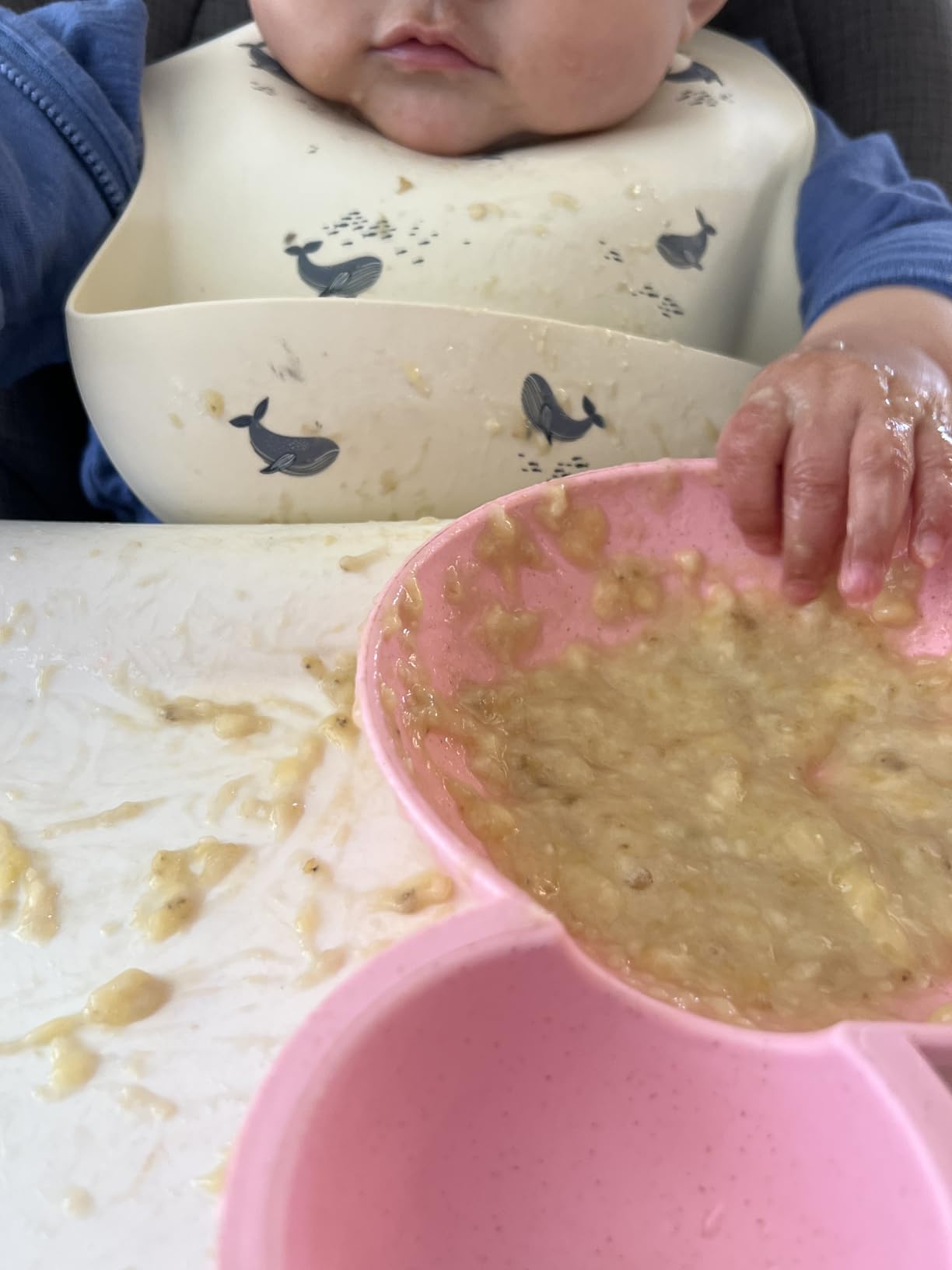
The mushie has one of the highest proportions of five-star ratings of any bib we reviewed, with 89 percent of buyers giving it the top score. The reason is consistent in the reviews: it is soft, it does not stiffen, and the built-in fasteners do not dig into the neck.
Those built-in rounded neck fasteners are the quiet advantage. There is no Velcro strip and no tie to come loose, so there is nothing for a baby to work loose or for a parent to be defeated by at 6pm.
Care is the simplest on this list. Wash with soap, leave to air dry. It resists stains and does not absorb water, so a tomato-based purée or a blueberry smear rinses off rather than soaking in.
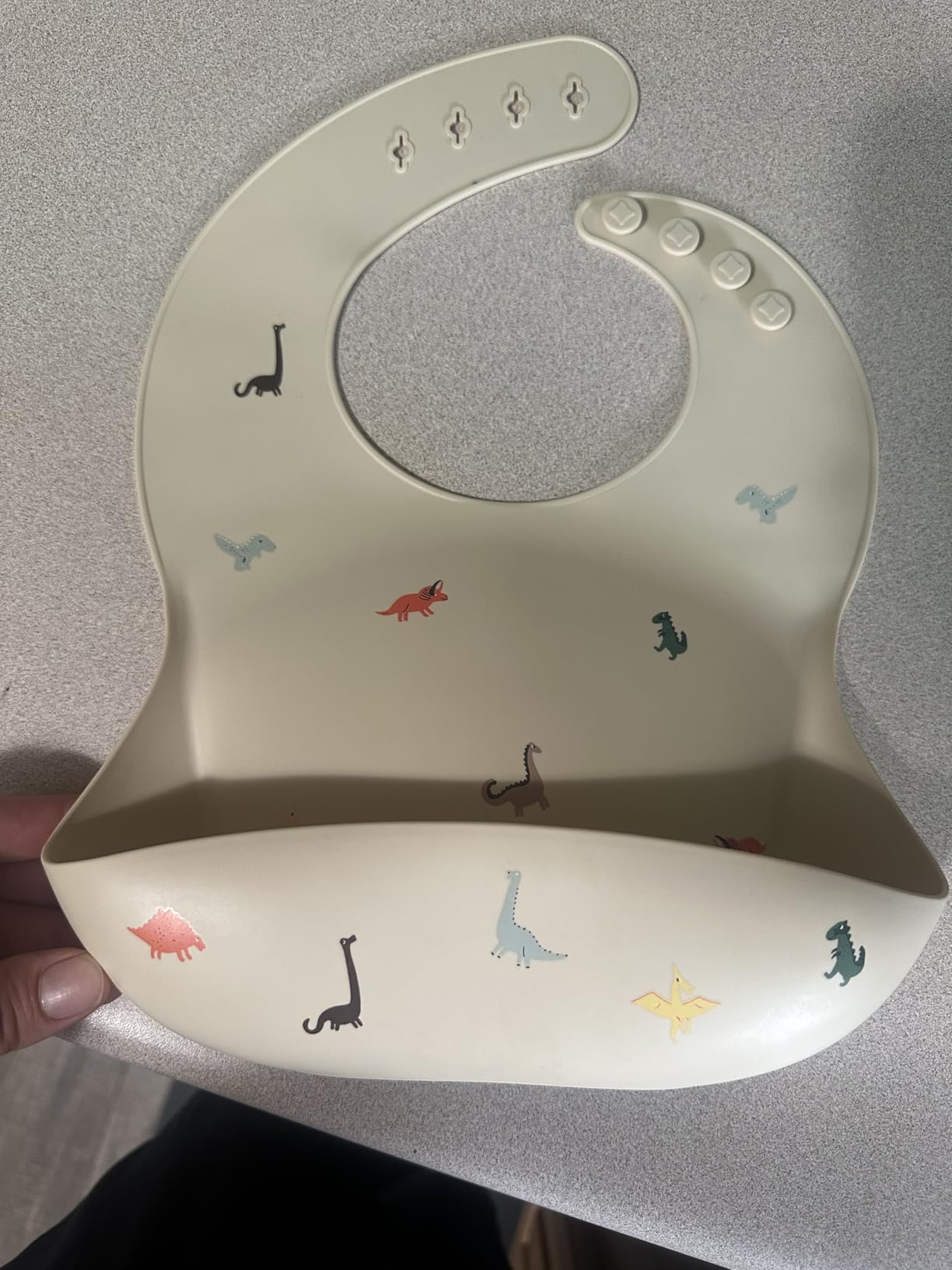
Design-wise it is the one I would leave on the high chair tray permanently. The Scandinavian-inspired patterns are understated enough to wear outside mealtimes, which matters because bibs end up on children in photos more often than parents expect.
The safety wording here is more complete than most. Food-grade silicone that is BPA, BPS, PVC and phthalate free, made in a design that was drawn in Sweden. That covers the questions paediatricians and forums actually ask.
Who the mushie suits
Parents of babies in the 6-to-12-month solids window who want one bib that looks good and cleans in seconds. The deep front pocket handles finger foods and spoon drips without needing a full smock.
It suits anyone who finds a scratchy Velcro neck patch irritating, because there is no scratchy patch. The fastener is part of the bib and rounded.
Who the mushie does not suit
Coverage stops at the chest and lap. For a toddler who is genuinely messy, that is a limited win compared with a sleeved bib that covers the arms.
It also sells as one bib, so you will need to buy more than one to have a clean rotation. Parents who want three in the drawer at once should look at the multipack options further down.
4. Bumkins Sleeved Bib: Best Bib for Full Arm Coverage
Bumkins Sleeved Bib for Girl or Boy, Baby and Toddler for 6-24 Mos, Essential Must Have for Eating, Feeding, Baby Led Weaning Supplies, Long Sleeve Mess Saving Food Catcher, Soft Fabric, Jungle
Long sleeves with elastic cuffs
Back tie closure
Deep crumb catcher
Waterproof polyester
Pros
- Elastic cuffs block food reaching the arms
- Back ties cannot be yanked off
- Lightweight and less stiff than silicone
- Deep pocket holds a large volume
- Doubles as a painting smock
Cons
- Elastic cuffs can feel snug on chunky babies
- White cuff elastic stains from berries
- Some inner linings peeled after extended use
This is the bib that regularly appears as the answer in r/BabyLedWeaning threads about babies who have outgrown sleeveless bibs. The long sleeves with elasticised cuffs are the whole point: applesauce and yoghurt stop at the wrist instead of travelling down the arm.
The back tie closure is the second big win. Parents are actively distrustful of Velcro on bibs, and a tie that stays fastened solves the problem a strong toddler creates with any hook-and-loop or snap closure.
It is still 100 percent polyester with TPU embedded, so it is waterproof and machine washable rather than wipe-clean, and it is much less stiff than silicone. That is the trade you make for coverage: more to wash, more comfort.
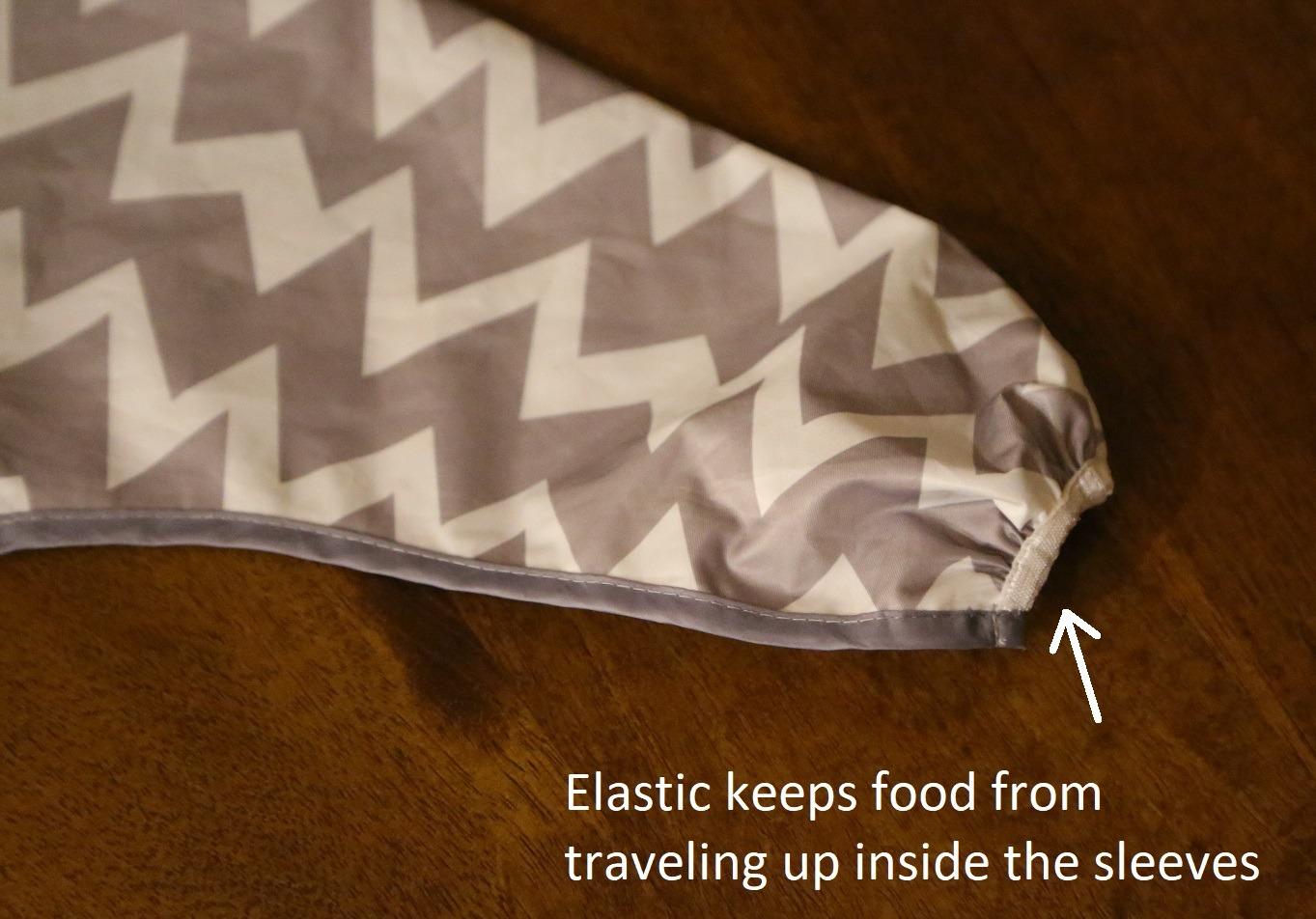
The Jungle print holds up after repeated machine washing according to owners with a year or more of use. That long-term durability is what separates this from cheaper sleeved bibs that crack or delaminate.
It also does double duty as a painting and crafting smock, which is a real saving if your child is at the finger-painting stage. Same garment, same waterproof fabric, different job.
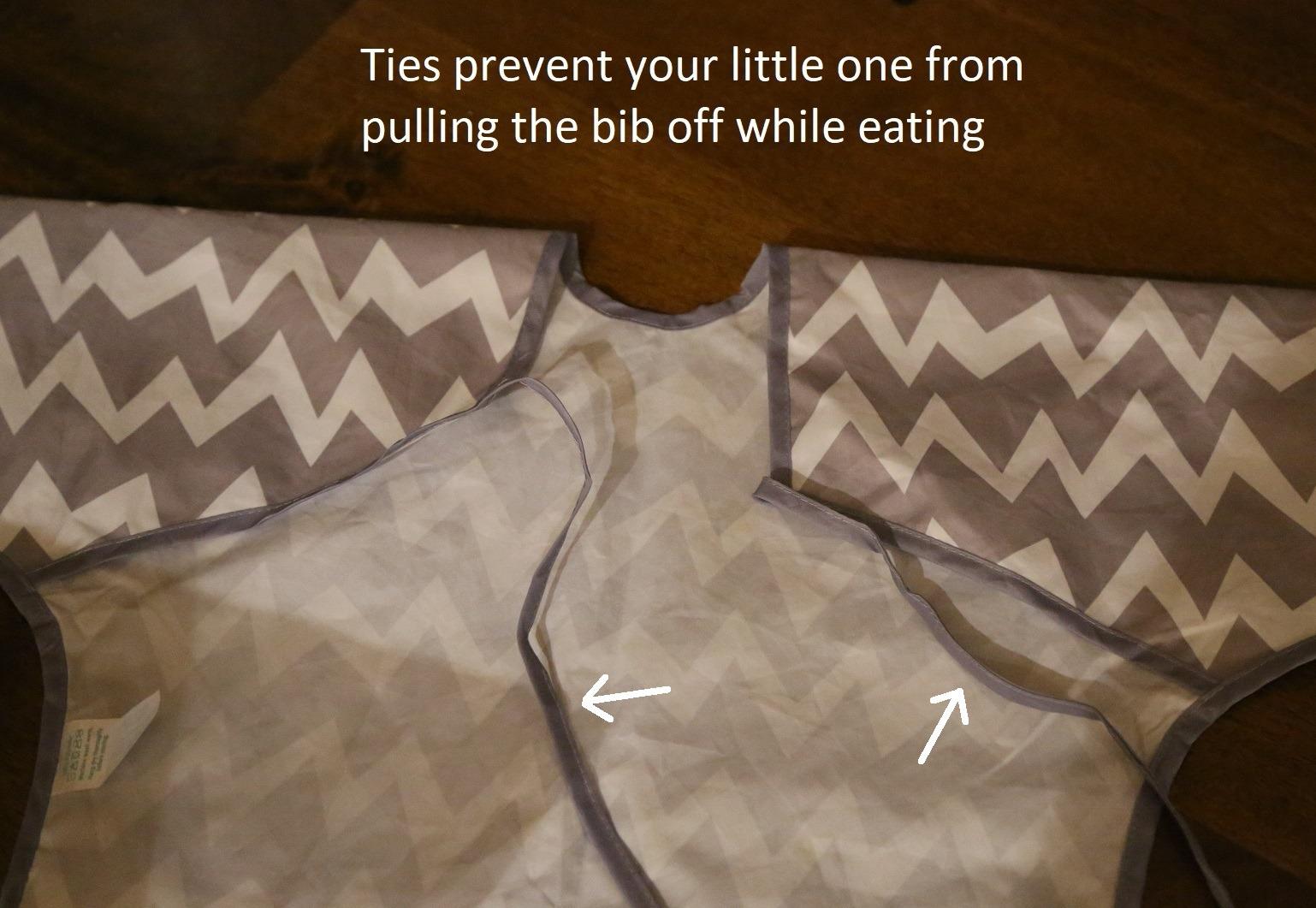
Who the Bumkins Sleeved Bib suits
Babies from 6 to 24 months who eat with their hands and are not going to stop. If sleeves are the problem, this is the fix, and reviewers with spoon-food babies call it the one that finally ended the clothing-change cycle.
It suits anyone already doing laundry on a rotation and happy to keep going. The tie closure and elastic cuffs mean less fiddling at the start of a meal when your baby is already impatient.
Who the Bumkins Sleeved Bib does not suit
Babies with chunkier arms may find the elastic cuffs snug, and a few owners report a mark left after a long wear. Check the fit before a long meal rather than after.
The light-coloured cuff elastic stains visibly from berries, tomatoes and other strong foods, which is unavoidable in a print like this. And a small number of owners report the inner lining beginning to peel after extended use, so it is not a forever-garment.
5. BIBaDO Attach Coverall Bib: Best for High-Chair Tray Coverage
BIBaDO Attachable Long Sleeve Bib for Babies & Toddlers – Easy Clean
Attachable coverall
Drapes over the high-chair tray
100% waterproof
Up to 36 months
Pros
- Drapes over the high-chair tray to catch spills beyond the bib
- Wipes clean in seconds
- Soft premium fabric for all-day wear
- Works for painting and messy play
- Adjustable tray strap
Cons
- Fiddly neck and strap system to fit
- Widest spread of ratings in this group
- Slower wipe-down between courses
Bibado solves a problem no other bib on this list does: the tray. You drape the coverall over the high-chair tray and fasten it underneath with the adjustable strap, so the surface your child eats from is covered too. For a baby whose main loss zone is the tray edge, that is a bigger win than a deeper pocket.
The material is 100 percent waterproof and premium super-soft, and it wipes clean in seconds. Unlike the TPU-embedded polyesters, there is no absorbent layer at all, which is also why it does not hold a smell.
It is designed for children up to 36 months, so it outlasts most bibs here, and it works just as well for painting and messy play as it does for meals.
The rating on this one is the lowest in the group at 4.4, and the distribution explains why. Seventy percent of buyers give it five stars and a meaningful minority give it three or fewer. The complaints cluster around fitting, not function.
Who the BIBaDO coverall suits
Parents of high-chair-bound babies who have accepted that most of the mess lands on the tray rather than the bib. Draping it over the tray turns the whole feeding surface into a wipeable zone.
It suits anyone tired of outfit changes after the meal rather than during it. The coverage runs down over the lap and the chair, so puree that lands below the collarbone stays on the coverall.
Who the BIBaDO coverall does not suit
Anyone in a hurry. The neck fastening plus the adjustable tray strap is a two-part system, and reviewers who rated it lower found it fiddly to put on, especially on a baby who has already decided the meal is over.
It is also a single-purpose home bib rather than a travel one. It needs the high chair to work properly, so it is a poor fit for restaurant meals and days out.
6. Tiny Twinkle Long Sleeve Bib: Best for Messy Play and Art Time
Tiny Twinkle Long Sleeve Bib for Babies & Toddlers | Waterproof Smock Bib for Eating | Machine Washable & Mess-Proof Feeding Essentials | Newborn Shower Gift (Dinosaur, 6–24M)
Long sleeves, full-body coverage
Quick-dry waterproof fabric
OEKO-TEX certified
6-24 months
Pros
- Full-body coverage with long sleeves
- Gentle elastic cuffs that do not restrict arms
- Quick-dry fabric wipes clean or washes
- Lightweight enough for playtime and crafts
- OEKO-TEX Standard 100 certified
Cons
- Adds more laundry than a silicone bib
- Less feedback volume than the top-reviewed bibs
- Sizing runs small and large
This is the full-coverage option for parents whose problem is everything, not just the bib zone. The long sleeves and gentle elastic cuffs give full-body coverage, but the fabric is quick-dry and light enough that a child can keep wearing it through play rather than peeling it off after five minutes.
The certification is more specific than most in this category. The mess-proof fabric is OEKO-TEX Standard 100 certified and free of PFAS, BPA and phthalates, which is a stronger claim than BPA-free alone.
Because the fabric is waterproof rather than absorbent, there is no damp layer against the skin after a meal. That is a quiet comfort benefit over muslin during a long teething phase or a slow dinner.
It works for finger painting and crafts as well as eating, which extends its life well past the solids phase. Parents mention using it for messy play as often as for lunches.
Who the Tiny Twinkle Long Sleeve Bib suits
Toddlers who are messy eaters and messy artists. If the same garment has to handle yoghurt at lunch and paint at four o’clock, this is the one that takes both jobs.
It suits families that wash in batches rather than nightly. Because it is waterproof and quick-dry, it dries before the next load instead of sitting damp in the basket.
Who the Tiny Twinkle Long Sleeve Bib does not suit
Parents trying to cut laundry volume. A full-sleeve bib is more fabric to wash than a wipe-clean silicone bib, so it moves your household in the opposite direction to the silicone options.
It also comes in small and large sizing, and the fit is not adjustable in the way a snap or strap closure is. If your child is between the two sizes at 12 months, size up or expect a short lifespan.
7. Lalo The Bib 2-Pack: Best Snap-Closure Silicone Bib
Lalo The Bib, Adjustable Non-Toxic Silicone Baby Bib with Food Catcher
Food-grade silicone
Adjustable snap neckband
Built-in food catcher
Top-rack dishwasher safe
Pros
- Genuinely secure adjustable snap fit
- Flexible neckband grows with the child
- Built-in pocket catches missed bites
- Wipes clean or goes in the top rack
- Neutral colours suit any tableware
Cons
- Smallest review base on this list
- so durability is less documented
- Sleeveless with no arm coverage
Lalo is the answer to the Velcro complaint. The adjustable snap closure gives you the security of a fixed fastening that a baby cannot yank loose, without the hair-tangling or laundry-snagging problem of hook-and-loop.
The flexible neckband grows with the child, so unlike a fixed-fit silicone bib this one does not have a short usable window. Parents using it through both the early feeding months and the toddler years report it stays relevant.
It wipes clean and is top-rack dishwasher safe, and the material is food-grade silicone without harmful chemicals. It is designed for the everyday routine rather than a special occasion, which is the right target.
The honest caveat is evidence. This bib has the smallest review base of the ten, so its long-term durability is the least documented. On what is there, the fit is praised more than anything else.
Who the Lalo Bib suits
Parents who dislike Velcro and want a closure that stays put. Snaps also survive the laundry better than hook-and-loop, which snags on other items in the wash.
It suits neutral, design-conscious households. The colours pair with other Lalo feeding essentials rather than shouting across the high chair, which is a real consideration if the bib is visible all day.
Who the Lalo Bib does not suit
Babies who eat with their sleeves in the food. It is sleeveless, so it protects the chest and lap and nothing above the elbow.
It is also the least-proven pick here. With a much smaller pool of ratings than the leaders, you are relying on a narrower range of long-term experiences than the alternatives.
8. PandaEar Waterproof Bibs 5-Pack: Best Rotation Pack for Multiple Meals a Day
PandaEar 5 Pack Waterproof Silicone Baby Bibs| Super Thin Light Weight Feeding Bib with Food Catcher Pocket for Toddler (Cream/Gray/Taupe/Green/Blue)
5-pack super-thin silicone
Food catcher pocket
4-size adjustable strap
Dishwasher-safe
Pros
- Five bibs covers a full meal rotation
- Very soft and pliable silicone
- Food catcher pocket keeps food off the floor
- Dishwasher-safe and easy to wipe
- Adjustable strap resists being pulled off
Cons
- Thin silicone stains from strong colours
- Pocket shallower than rigid designs
- Some babies can still pull it off
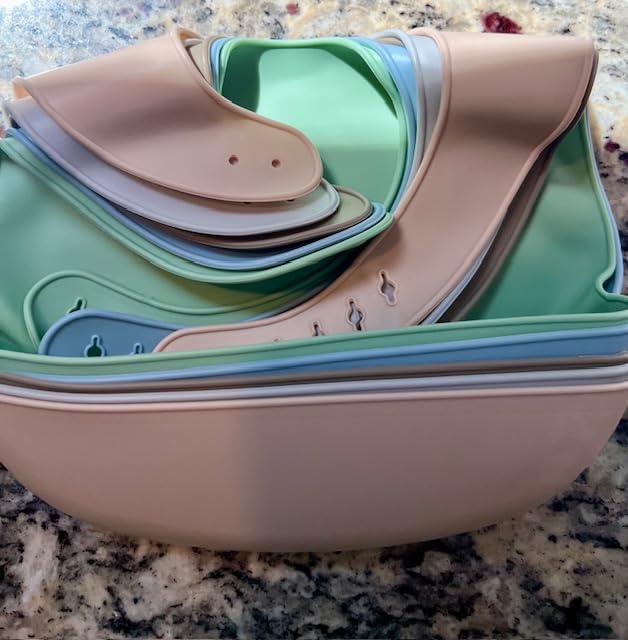
Five is a genuinely useful number for a family doing three meals plus snacks. It removes the last excuse for a dirty bib at snack time, and because these roll up compactly, having five does not eat the nappy bag.
The silicone here is deliberately thin and pliable rather than rigid. Parents with long-term users report the bibs still look new after months, and that the material does not develop the odour that stiffer silicone sometimes does.
The neck strap again uses four size settings from 10 to 72 months. Parents of active toddlers say the strap does not tear out even when it is pulled, which is the failure mode that ends most bibs.
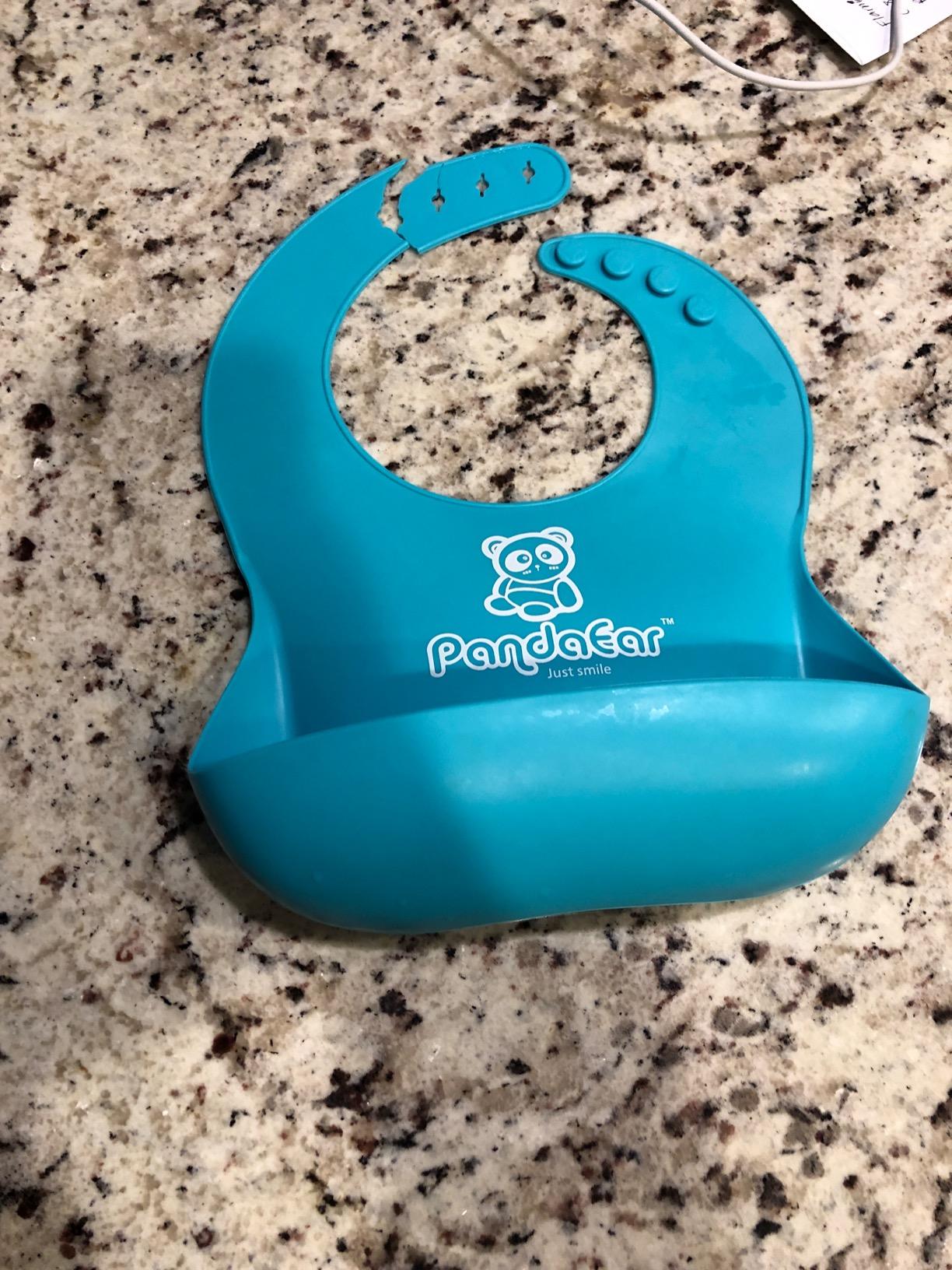
It is food-grade silicone and BPA free, and the material is described as odour-free, which matters for a bib that goes near a child’s mouth for three years.
The food catcher pocket is the weak point. It is shallower than the rigid structured designs and some pieces of finger food escape it, so this is a better travel and rotation bib than a total-loss catcher.
Who the PandaEar 5-Pack suits
Families with several small children, or one child eating three meals and two snacks in different rooms. Five wipe-clean bibs solves the middle-of-the-day problem better than any single bib can.
It suits anyone building a portable feeding kit. Each one rolls into a fist-sized bundle, so you can pack two without noticing the weight.
Who the PandaEar 5-Pack does not suit
Households that eat a lot of brightly coloured fruit. Thin silicone shows staining from watermelon and similar foods according to owners, and the marks do not wash out.
If your main frustration is food on the floor, this is not the deepest pocket on the list. Choose a rigid structured design if catching every dropped piece is the priority.
9. Eascrozn Silicone Bibs 3-Pack: Best for the Earliest Feeding Stage
Eascrozn Silicone Bibs for Babies Toddler Set of 3, BPA Free
Food-grade BPA-free silicone
Deep pocket that stays open
Four neck sizes
0-72 months
Pros
- Deep pocket stays open to collect spills
- Soft food-grade BPA-free silicone
- Four neck sizes covering 0 to 72 months
- Cleans with soapy water and rolls up for travel
- Three-pack at the entry price point
Cons
- Sleeveless design offers no arm coverage
- Coverage limited to the chest and lap
This is the pick for a household that wants one bib that spans the whole arc rather than replacing gear at every stage. The four adjustable neck sizes are labelled from 0-6 months all the way to 18-72 months.
Silicone feeding bibs are not really for newborns, who are better served by muslin drool bibs and burp cloths. That said, a parent who starts solids at 5 months rather than 7 has a working fit here from the very beginning.
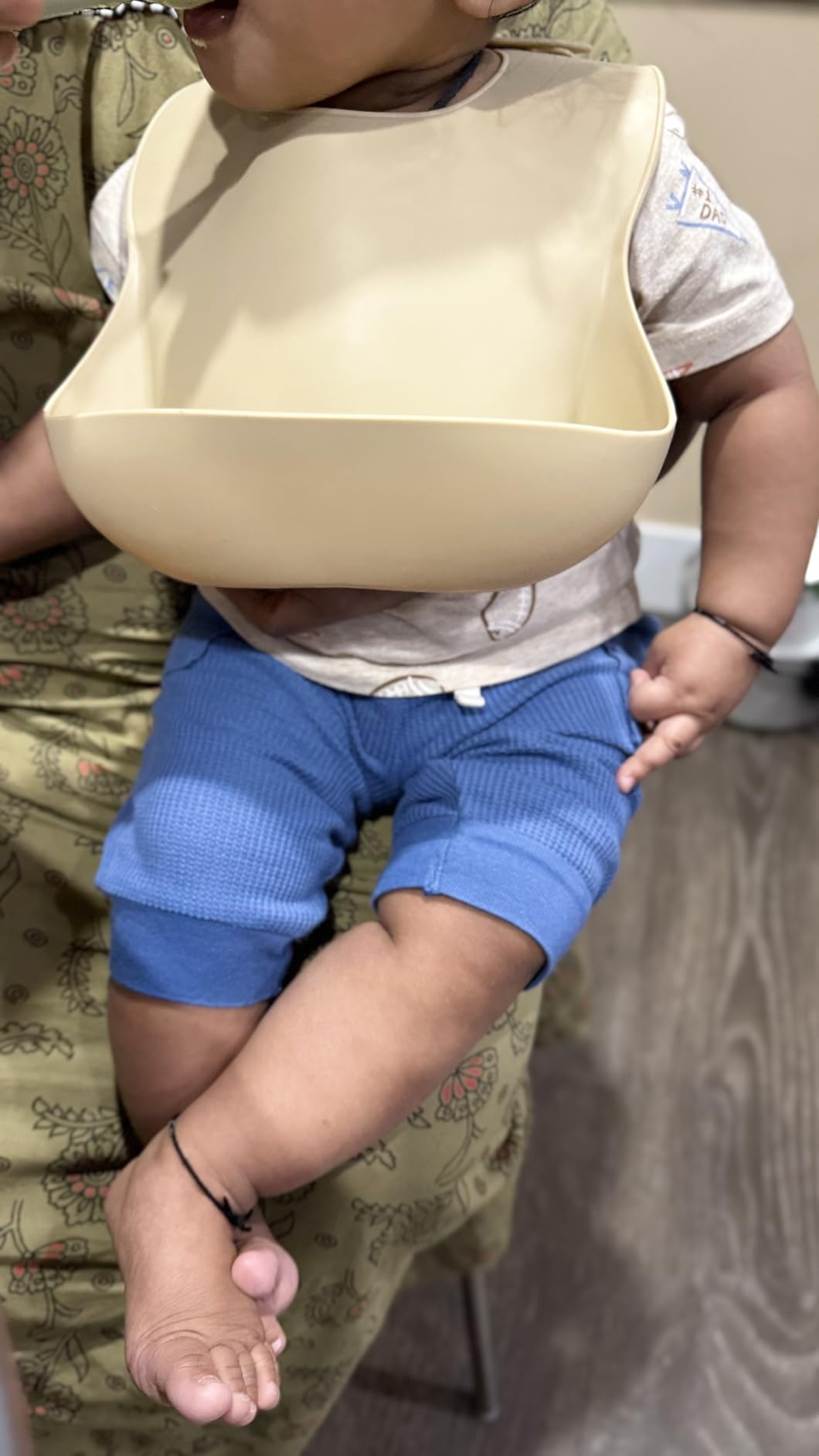
The pocket is deep and, more importantly, structured to stay open. That is the detail owners single out, because a pocket that folds flat is the difference between catching a spill and catching nothing.
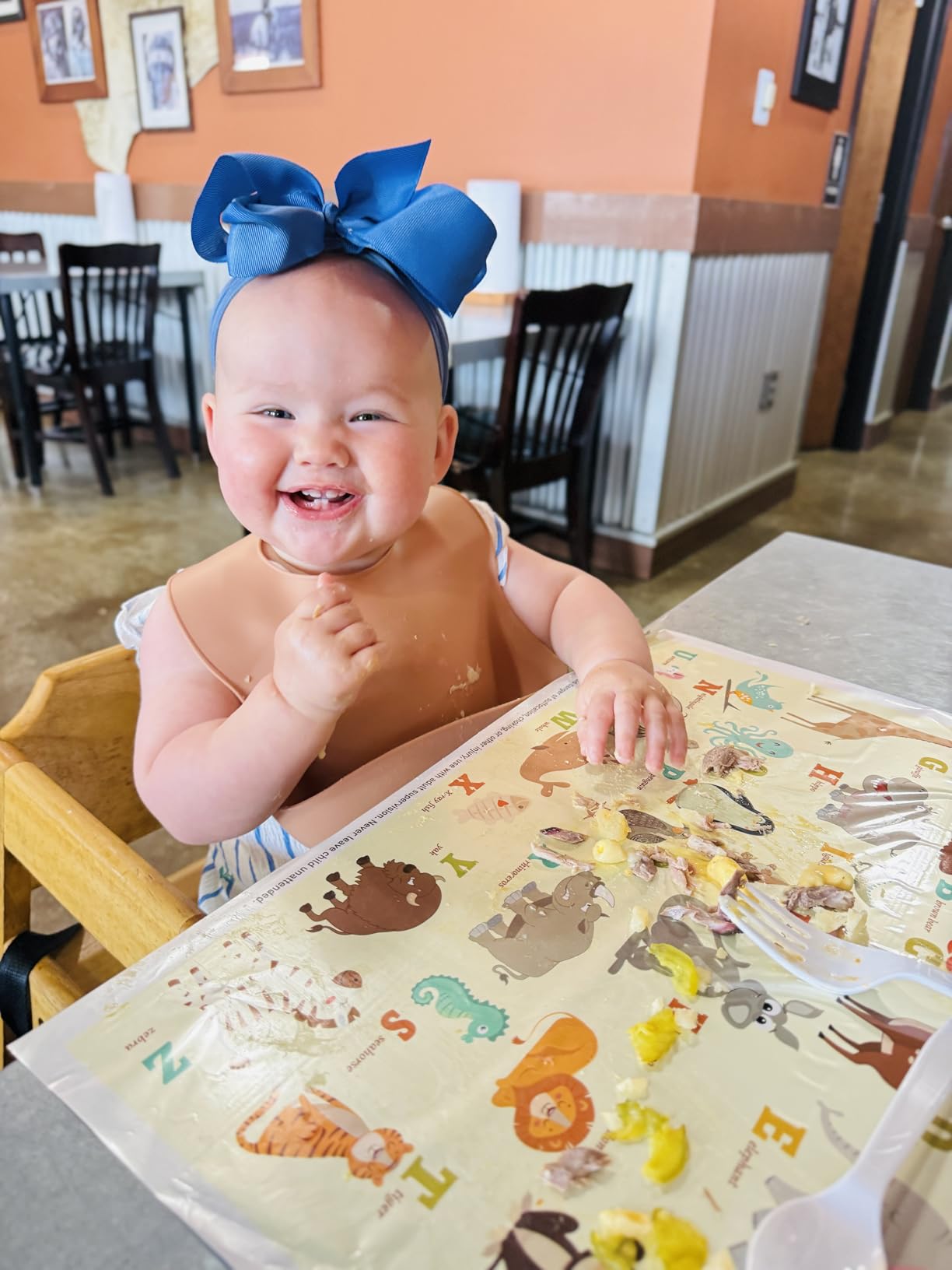
Cleaning is soapy water, and it rolls up small enough for a handbag. That makes it a natural choice for restaurant meals and visits to grandparents, where you want one bib that does everything.
The rating here is strong at 4.8 across more than five thousand ratings, with 87 percent of buyers at five stars. The soft silicone and the four-size strap are the two things consistently named in reviews.
Who the Eascrozn 3-Pack suits
Parents starting solids early, or who want a single bib that grows from the first purées to self-feeding toddler meals without a second purchase. The four size settings cover an unusually wide age span.
It suits anyone eating out regularly. Three roll-up bibs in a nappy bag is a complete kit, and clean-up is soapy water rather than a laundry run.
Who the Eascrozn 3-Pack does not suit
Messy eaters whose main problem is their arms. It is sleeveless and the coverage stops at the chest and lap, so it does nothing for a sleeve covered in purée.
Heavy droolers are also poorly served. Silicone does not absorb anything, so for teething or spit-up management in the first months you want absorbent cotton or muslin instead.
10. Bella Tunno Silicone Bib: Best Novelty Print
Bella Tunno Waterproof Silicone Baby Bib with Food Pocket, Adjustable Neck
100% food-grade silicone
Deep structured pocket
Two-snap adjustable neck
Dishwasher-safe
Pros
- Deep structured pocket stays open
- Two-snap neck adjusts as the baby grows
- Wipes clean or dishwasher safe
- Dries fast and resists stains
- Highest five-star share of the silicone bibs
Cons
- Novelty prints are less versatile than neutrals
- Sleeveless with no arm coverage
- Sold as a single bib
On pure satisfaction ratio, this is the strongest performer here. Ninety percent of buyers give it five stars, the highest share among the silicone bibs we reviewed, and the reason comes back to the pocket and the fit.
The pocket is structured and rigid enough to hold its shape when loaded, so it catches crumbs and runaway bites rather than folding flat against the bib. The two-snap adjustable neck grows from 4-12 months through the toddler years.
Cleaning is wipe with soap and water or a trip to the dishwasher, and it dries fast. Food-grade silicone, BPA free, and CPSIA compliant.
The print is the reason to buy it or skip it. The novelty messages and character prints are deliberately funny rather than neutral, which is either exactly what you want at the high chair or slightly too loud for your taste.
Who the Bella Tunno Bib suits
Families who find mealtime hard and want a bit of humour at the table. There is a real psychological effect to a bib your toddler is happy to be seen in, and the reviews suggest owners notice the mood change.
It suits anyone who wants a genuinely rigid food catcher in a wipe-clean material. The structured pocket is the deepest functional design among the silicone bibs here.
Who the Bella Tunno Bib does not suit
Households that want one neutral bib that goes with everything. Character prints are a deliberate look rather than a neutral one, and they date faster than a plain silicone bib.
Like the other sleeveless silicone options here, it protects the chest and lap only. If arms are the problem, the sleeved picks solve it and this one does not.
Bib vs Smock vs Coverall: Pick Your Coverage Tier
Parents shop bibs by coverage tier, and knowing which tier you are actually buying prevents most disappointment. A standard bib covers the chest and lap. A sleeved bib or smock adds the arms. A coverall adds the high-chair tray and the lap.
The most common mistake is buying a standard bib for a baby who has moved on from it. Once food starts landing on sleeves, no amount of pocket depth fixes a sleeveless design, because the problem has moved outside the bib.
The bib-versus-smock debate on forums usually comes down to laundry versus clothing. Smocks generate more washing but protect more. Wipe-clean bibs generate almost none but cover less. Most families end up running one of each, which is why a sleeve-only problem and a laundry problem have different answers.
If your baby is also on the move, the surrounding kit matters as much as the bib. A splash mat under the high chair catches what the pocket misses, and choosing a high chair with a wipeable tray is a bigger daily win than any single bib.
Silicone vs Cloth: Which Material Fits Your Mess
Neither material wins outright, and the honest answer is that most families use both. Silicone wins on cleanup, portability and stain resistance. Cloth and muslin win on absorbency, comfort during heavy drooling, and the ability to soak up spit-up.
Silicone bibs are waterproof and non-absorbent, so food wipes off and the bib dries instantly. That is why they suit meals and travel. Cloth bibs absorb drool and milk, which is why they suit teething and the newborn phase.
Waterproof TPU-embedded polyester sits in between and is the sleeper option. It is soft like fabric and waterproof like silicone, though it still needs the washing machine. The Bumkins picks on this list use exactly that construction.
Absorbency versus coverage is the trade most guides skip. A highly absorbent bib stops drool reaching skin, which prevents chin and chest irritation during teething. A highly waterproof bib stops food reaching clothes. You cannot fully get both in one garment, and that is why the two-stage approach works.
On safety, food-grade silicone means BPA-free, BPS-free, PVC-free and phthalate-free. Watch for specific claims rather than a generic eco-friendly label: CPSC and CPSIA compliance, third-party lab testing, or OEKO-TEX Standard 100 are the ones worth having.
How Many Bibs You Actually Need
Most families over-buy cloth bibs and under-buy wipe-clean ones. Here is the rotation that works, based on how many bibs go into the wash between uses.
For absorbent drool bibs, six to eight is the useful number during teething, because a damp bib is a damp bib until it is washed. For wipe-clean silicone feeding bibs, two is genuinely enough, because you wipe them clean and hang them up.
For pocket bibs and water-resistant feeding bibs, three is the sweet spot. One on the child, one in use, one in the wash. A 5-pack is worth it if you also eat out regularly or have more than one child at the table.
For the newborn phase, eight to ten burp cloths matter more than bibs. A burp cloth drapes over your shoulder and catches spit-up, which a bib around a newborn’s neck cannot do.
Do not buy a large multipack of fabric bibs before solids start. Drool bibs and feeding bibs are used at completely different rates, and a family that buys ten feeding bibs at 4 months usually ends up with eight unused cotton bibs and two silicone ones.
If buying for someone else, a 3-pack of wipe-clean silicone bibs is the safest gift. It is broadly useful, needs no size choice, and does not depend on what stage the baby has reached.
Keeping Cloth Bibs Fresh and Odour-Free
Mould and sour smell on cloth and smock bibs are among the most common complaints in parent forums, and almost no competing guide addresses them. The cause is straightforward: food and milk sit in a damp fabric layer against skin for hours.
Wash bibs more often than you think necessary. A bib that has been worn for a single meal and left in a basket overnight is the single most common source of the smell people report.
Dry them fully. Hang-drying matters more than machine choice. A damp bib going straight into a closed basket is how a smell starts, and it is why parents describe cloth bibs as getting mouldy quick.
Wash with laundry detergent, not just water, and avoid fabric softener on bibs. Softener leaves a film on the fibre that traps residue and reduces absorbency over time.
For protein-based stains such as tomato, berry and meat sauces, an oxygen brightener is the most reliable option. Pre-treat, then wash as normal. Scrubbing hard rarely works and damages the fibre.
If a bib still smells after washing, replace it rather than fighting it. Silicone bibs do not have this problem because there is no absorbent layer to hold anything, which is the cleanest argument for owning at least two.
Travel, Restaurants and Daycare
Restaurant meals are the case where bib quality changes most, because you have no backup and no table to wipe. Two roll-up bibs in a nappy bag is the standard that works.
Look for thin silicone that rolls to fist size. Both PandaEar packs on this list meet that bar, and parents travelling with them say the whole set adds almost nothing to bag weight.
Pack a wet bag with a spare bib inside it. A bib that has been used and then shoved loose into a compartment is worse than no bib, because it transfers the smell to everything next to it.
For daycare, washable beats wipe-clean. Daycare rules usually require a named, laundered bib, and a hook-and-loop closure or a tie survives repeated machine washing better than a dishwasher-only model.
One practical tip for eating out: bring a squishy cloth as well. It catches what a pocket misses on a table that is not yours, and it takes up no space once rolled.
If you are outfitting the rest of the feeding setup, our baby jumper reviews and baby walker guide cover the other gear that has to survive the same floor.
What to Avoid in a Bib
Stiff, non-adjustable bibs are the first thing to reject. A fixed neck means the bib stops fitting when the child grows, and stiff material gets pulled off within days. Parents describe babies outright refusing to wear uncomfortable bibs.
Avoid shallow pockets presented as food catchers. A pocket that folds flat against the bib catches nothing, and reviews consistently call this out as the flaw in otherwise good silicone designs.
Be cautious with Velcro closures if you already dislike them. Parents report hooks snagging on other laundry in the wash and on hair, and that a determined toddler can pull the closure off mid-meal.
Skip thin single-ply coverage when arms are the issue. No pocket compensates for a sleeveless bib once food starts landing on sleeves, and buying two bibs instead of one sleeve option is the usual result.
Finally, ignore reviews with almost no ratings behind them. A bib is proven by a year of washing, not by two photos. Every pick on this list was chosen partly because enough people have used it long enough to find its weaknesses.
Frequently Asked Questions
Can you dishwasher silicone bibs?
Most food-grade silicone bibs on this list are dishwasher safe on the top rack, including both PandaEar packs, the mushie bib, Lalo and Bella Tunno. Silicone does not absorb water, so a cycle will not leave a soaked bib behind. Check the care label for the closure first, since metal snaps and deep pockets can rattle. Wash with soap on the quick programme between meals if a full cycle is not practical.
What are the best bibs for babies starting solids?
For a baby at 6 to 12 months starting solids, a wipe-clean silicone bib with a deep food-catching pocket is the strongest starting choice. Add a sleeved bib once food starts landing on sleeves. Our top pick, the Bumkins SuperBib, suits babies who prefer a softer fabric feel, while the mushie and Bella Tunno silicone bibs suit families trying to avoid laundry entirely.
Should a newborn wear a bib?
Newborns do not need a feeding bib because they are not eating solid food. What they need is management for drool and spit-up, and that is what an absorbent muslin or cotton drool bib or a burp cloth is for. A burp cloth drapes over your shoulder; a bib goes around the baby’s neck. Save the silicone feeding bibs for around 5 to 6 months.
When should babies start wearing bibs?
Muslin or cotton drool bibs work from the first weeks for milk dribble. Bandana-style bibs become useful around 3 to 4 months as teething drooling ramps up. Silicone food-catching bibs make sense at about 4 to 6 months when solids begin, and sleeved bibs or smocks earn their place from 12 months once self-feeding starts.
Are silicone bibs better than cloth bibs?
Silicone bibs win on cleanup, portability and stain resistance because they wipe clean and never absorb water. Cloth and muslin bibs win on absorbency, comfort during heavy drooling and price. Neither is better for every child. Many families use a cloth drool bib during the day and a silicone feeding bib at meals, which covers both jobs without compromise.
How many bibs does a baby need?
Six to eight absorbent drool bibs cover the teething phase, since a damp bib stays damp until it is washed. Two wipe-clean silicone bibs are enough for feeding because you clean and reuse them. Three is the sweet spot for pocket or water-resistant feeding bibs: one in use, one in the wash, one spare. Most families need eight to twelve bibs in total across the stages.
What is the difference between a burp cloth and a bib?
A burp cloth is a larger rectangular cloth that drapes over a caregiver’s shoulder to catch spit-up, especially during bottle and breast feeds. A bib is worn around the baby’s neck to catch drool, dribbles and food. During the newborn phase you will use burp cloths constantly, and bibs take over as a feeding tool once solids begin.
Can bibs help with teething?
Yes, and this is the stage where an absorbent bib earns its place. Teething drives heavy drooling that soaks collars and causes chin and chest irritation. A soft muslin or cotton bib absorbs the drool and keeps skin dry, which helps prevent a rash. Silicone bibs do not absorb anything, so use them for meals and cloth for teething. Rotate through several a day during heavy teething.
The Best Bib for Your Messy Eater
If you buy one thing from this roundup, make it the Bumkins SuperBib. Its coverage, waterproof single-ply fabric, deep pocket and adjustment range handled everything we threw at it, and it carries the largest body of long-term reviews of any bib we looked at. It is the safest single answer to which of the best baby bibs for messy eaters deserves a place in your drawer.
Buy the silicone instead if your priority is no laundry at all, in which case the PandaEar 3-pack is the version to get. Move to the Bumkins Sleeved Bib or the Tiny Twinkle Long Sleeve Bib the day food starts reaching sleeves, because no pocket solves a problem that happens above the elbow.
Whichever you choose, the buying decision matters far less than the habit of wiping rather than soaking. The bib that gets cleaned after every meal will outlast the better-made one that lives in a damp laundry basket. Check the price and current reviews, then pick one and start using it. Updated for 2026.