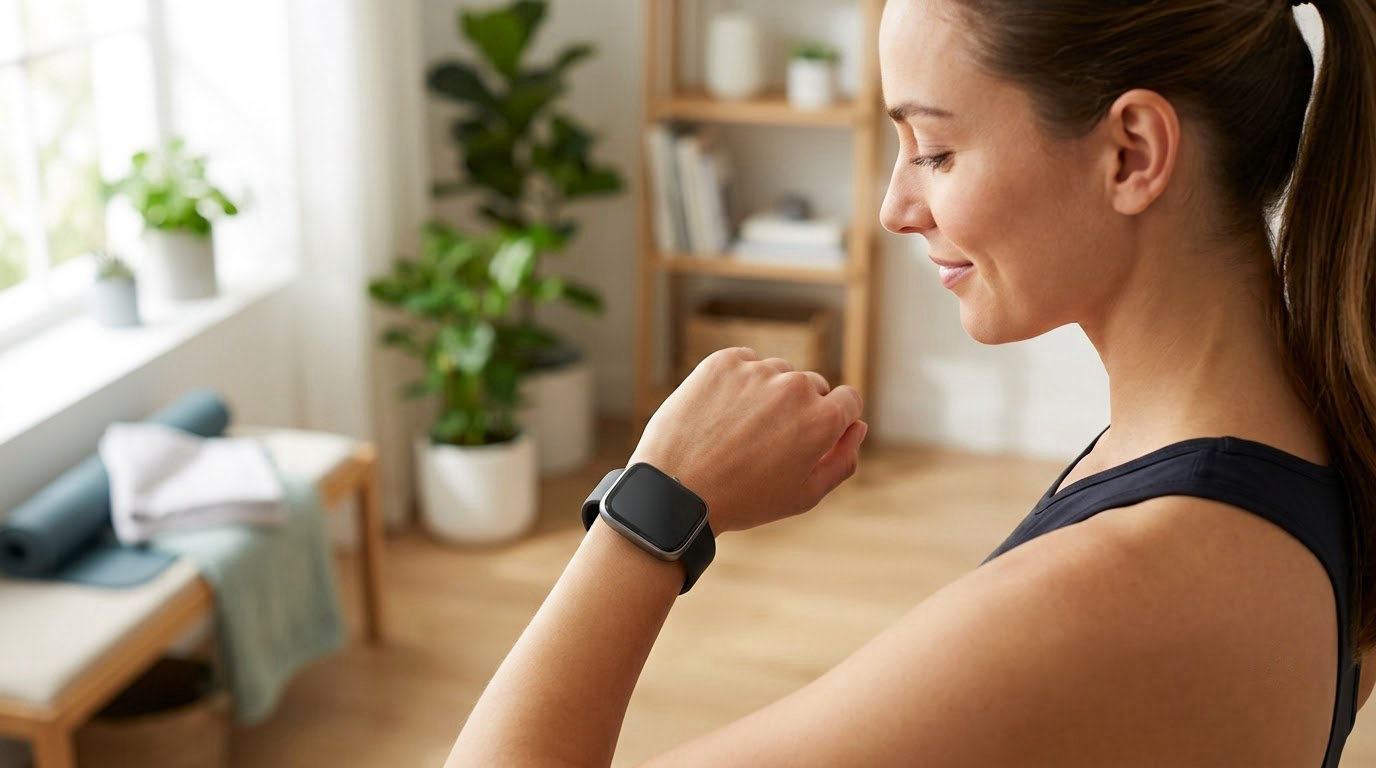
The Samsung Galaxy Watch 4 leads these smartwatch deals under $200 because it packs an ECG sensor, wrist-based body composition and built-in GPS into a 40mm round case that suits smaller wrists, and it has the deepest owner-review history on this list at more than 20k reviews. Two alternatives serve different needs: the Garmin Vivoactive 5 is the pick for anyone who cares most about sleep and recovery data, and the Tensky smartwatch is the one for people who answer calls from their wrist.
Prime Big Deal Days runs October 6-7, 2026, and most offers need a Prime membership. Deals shift through the event, so treat every pick below as worth watching rather than a confirmed markdown, and use the buttons to see the current price on the day you look.
Table of Contents
Our Top 3 Picks for Best Amazon Prime Big Deal Days Smartwatch Deals Under $200 (October 2026)

Garmin Vivoactive 5
- 11 day battery
- Body Battery energy data
- Sleep score and HRV
- Nap detection

Tensky Smart Watch
- Bluetooth calls with speaker
- Alexa built in
- 120+ sport modes
- 12 day battery
These three cover the three most common ways people buy at this budget. The Galaxy Watch 4 wins on feature depth per dollar, the Vivoactive 5 wins on battery and sleep coaching, and the Tensky wins if your phone spends most of the day in a pocket and you want two-way calls from the wrist.
Best Amazon Prime Big Deal Days Smartwatch Deals Under $200 Compared
| Product | Specifications | Action |
|---|---|---|
| Galaxy Watch 4 |
|
Check Deal Price |
| Garmin Vivoactive 5 |
|
Check Deal Price |
| Tensky Smart Watch |
|
Check Deal Price |
 Galaxy Watch 7 Galaxy Watch 7 |
|
Check Deal Price |
 Amazfit Bip 6 Amazfit Bip 6 |
|
Check Deal Price |
 aeac Smart Watch aeac Smart Watch |
|
Check Deal Price |
 Garmin Forerunner 165 Garmin Forerunner 165 |
|
Check Deal Price |
 Choiknbo Smart Watch Choiknbo Smart Watch |
|
Check Deal Price |
 Galaxy Fit 3 Galaxy Fit 3 |
|
Check Deal Price |
 Amazfit Active Max Amazfit Active Max |
|
Check Deal Price |
 Amazfit Bip 5 Unity Amazfit Bip 5 Unity |
|
Check Deal Price |
 Redmi Watch 5 Active Redmi Watch 5 Active |
|
Check Deal Price |
Two fields carry most of the weight in that table. Built-in GPS separates the Garmin and Amazfit models from the trackers that borrow your phone’s location, and battery life is where the trackers quietly win over the round Samsung cases.
How We Chose
We compared the specifications that decide this purchase: display type and brightness, rated battery life, whether GPS is built in, water resistance, health sensors and warranty. Owner ratings and review counts on Amazon shaped the ordering, and every listing was checked in early October 2026, during the event window. No pick here is chosen on price.
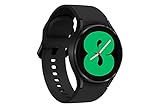
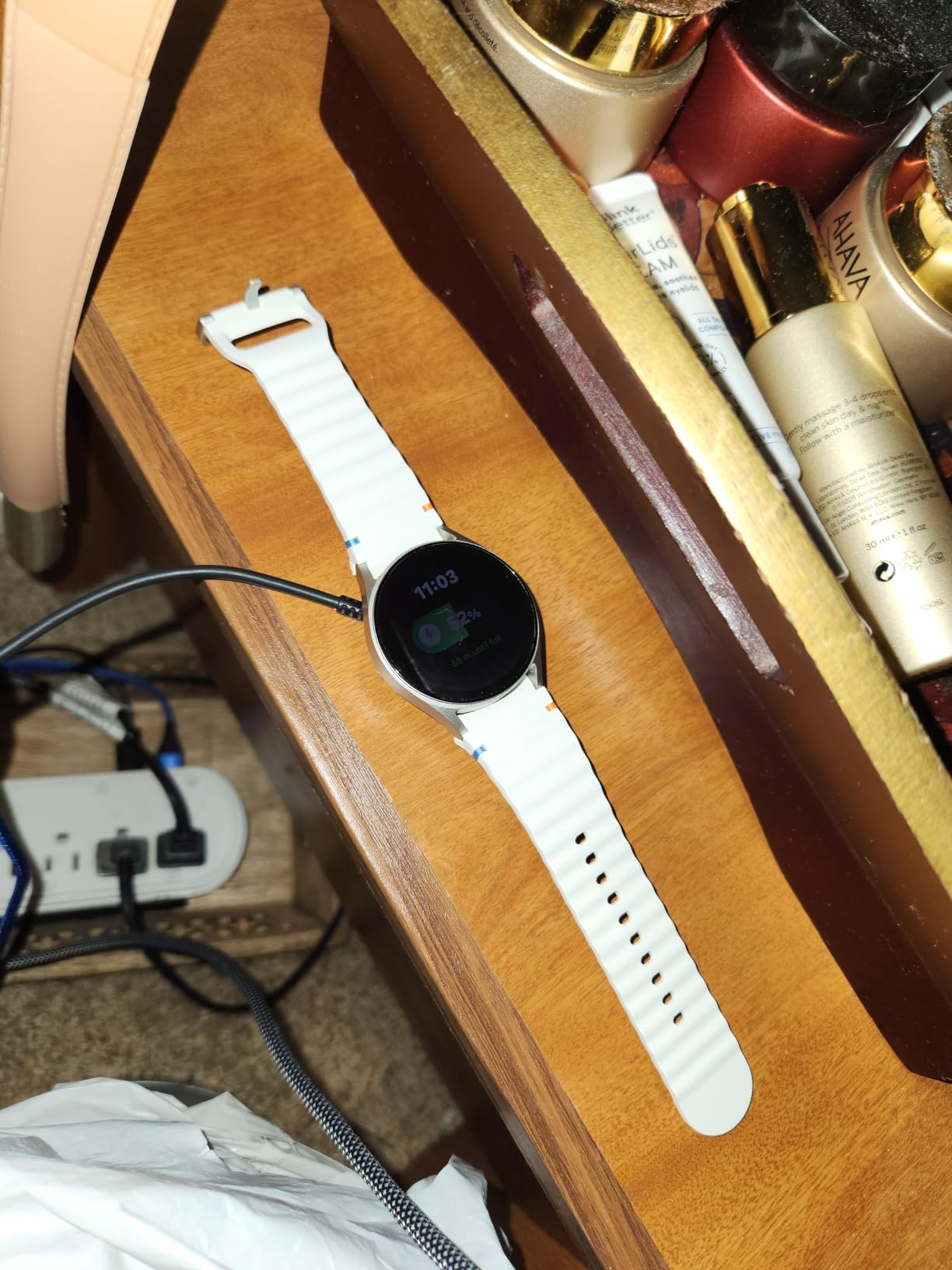
1. Samsung Galaxy Watch 4: Best Overall Health Tracking
Galaxy Watch 4
Display: 1.2 inch AMOLED
Battery: nightly charge
Water: 50m IP67
Pros
- ECG with atrial fibrillation reports
- Wrist-based body composition analysis
- Built-in GPS
- 40mm round case suits small wrists
- Automatic workout detection for 6 activities
Cons
- Needs charging every night
- SpO2 readings reported as inconsistent
- ECG needs a Samsung Galaxy phone
Best for anyone who wants a real health dashboard without flagship pricing. The ECG and body composition sensors are the reason this watch outranks everything else in the same price band, and at more than 20k owner reviews it is also the most tested model here.
Owners single out the health side of the feature set. Body composition analysis measures body fat, skeletal muscle, body water, BMR and BMI straight from the wrist, and the ECG records atrial fibrillation with shareable reports through Samsung Health Monitor. Advanced sleep tracking runs with continuous SpO2 monitoring, and VO2 Max running coaching is included rather than held back for a subscription.
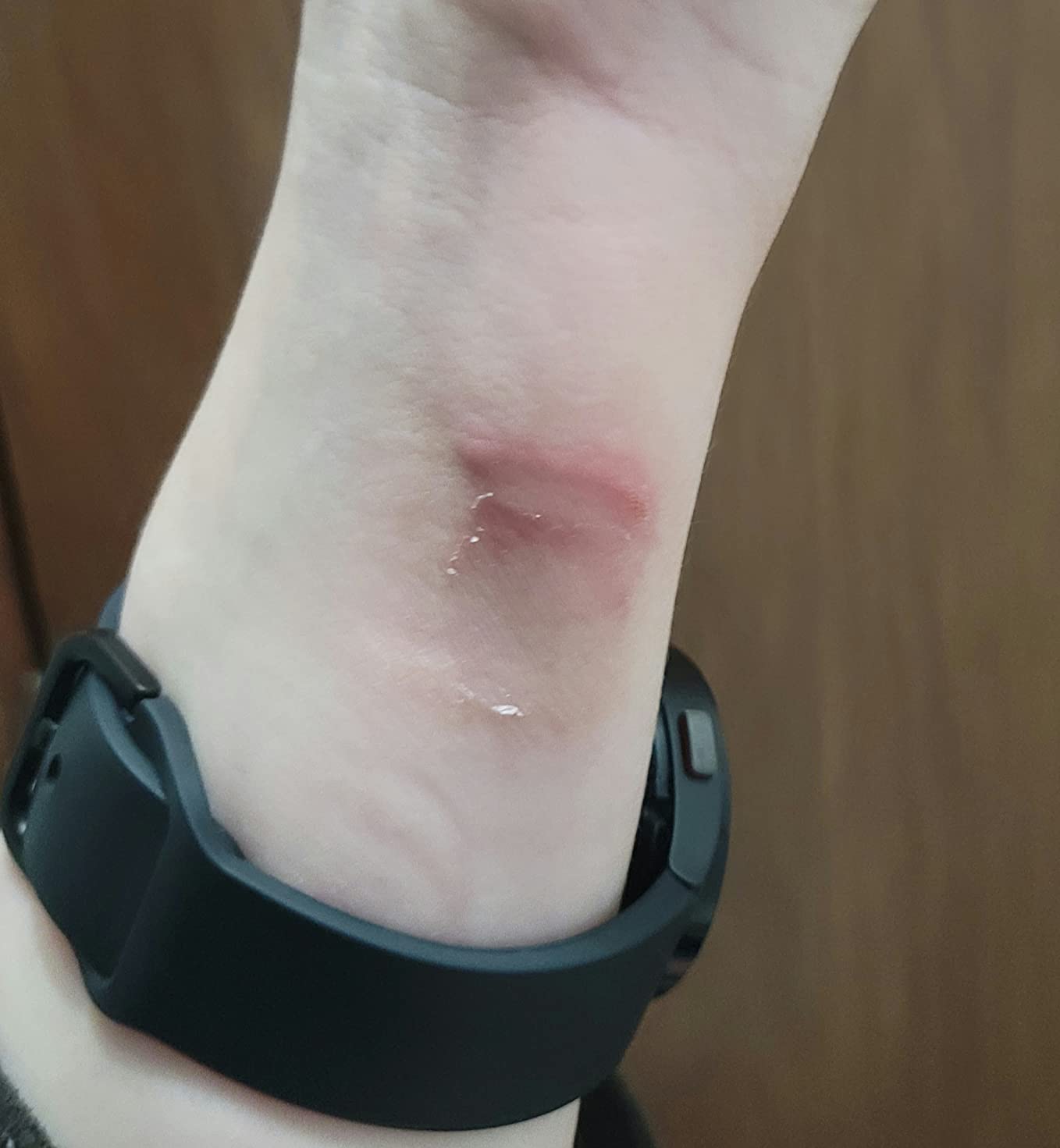
The 40mm round stainless steel case is the quiet advantage here. It wears like a normal dress watch on a slim wrist, which is where several rectangular trackers on this list struggle, and the synthetic band is easy to swap.
Skip it if charging every night bothers you. That is the single most repeated complaint, and it matters more than usual for sleep tracking because the watch has to stay on your wrist overnight to record anything. A few owners also report inconsistent SpO2 readings, and the ECG function needs a Samsung Galaxy phone, so on Android the feature set shrinks.
The Galaxy Watch 7 has the brighter panel and the AI layer but less premium build material, while the Garmin Vivoactive 5 covers nearly two weeks on a charge rather than one.
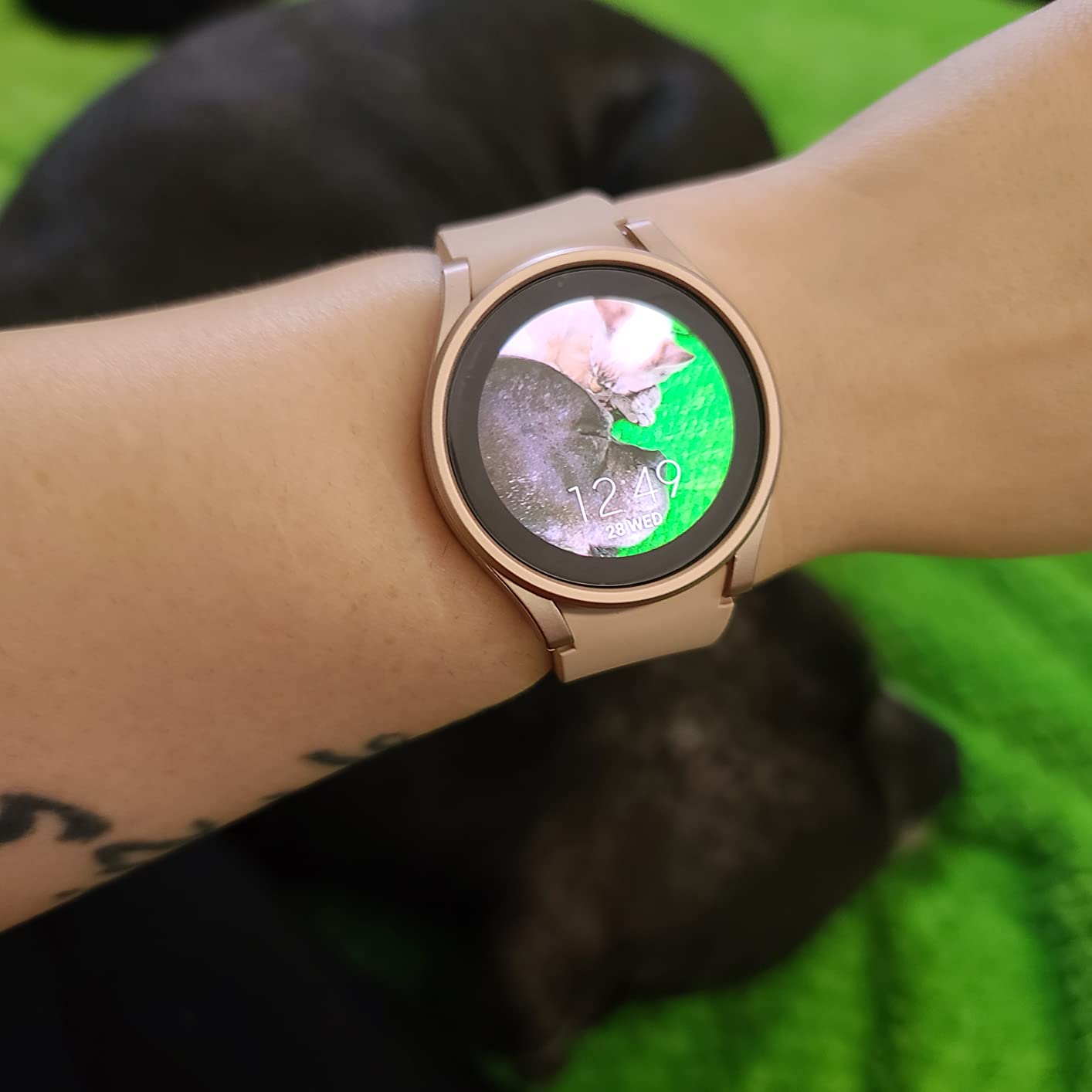
Good to know: auto-detected workouts do not record a GPS route unless you start them manually, so tap the watch when a run begins if you want a map afterwards.
2. Garmin Vivoactive 5: Best for Health and Sleep
Garmin Vivoactive 5
Display: 1.2 inch AMOLED
Battery: 11 days
Water: 50m IP68
Pros
- Up to 11 days in smartwatch mode
- Body Battery energy monitoring
- Sleep score with coaching and HRV status
- Automatic nap detection
- Offline music storage
Cons
- No cellular so the phone must be nearby
- No third-party app ecosystem
- Less training depth than higher-end Garmin
The pick for anyone whose main interest is sleep and recovery rather than apps. Garmin’s Body Battery score, sleep coaching and HRV status give a fuller picture of a night than most watches in this range, and the 11-day battery means you can leave the charger at home for most trips.
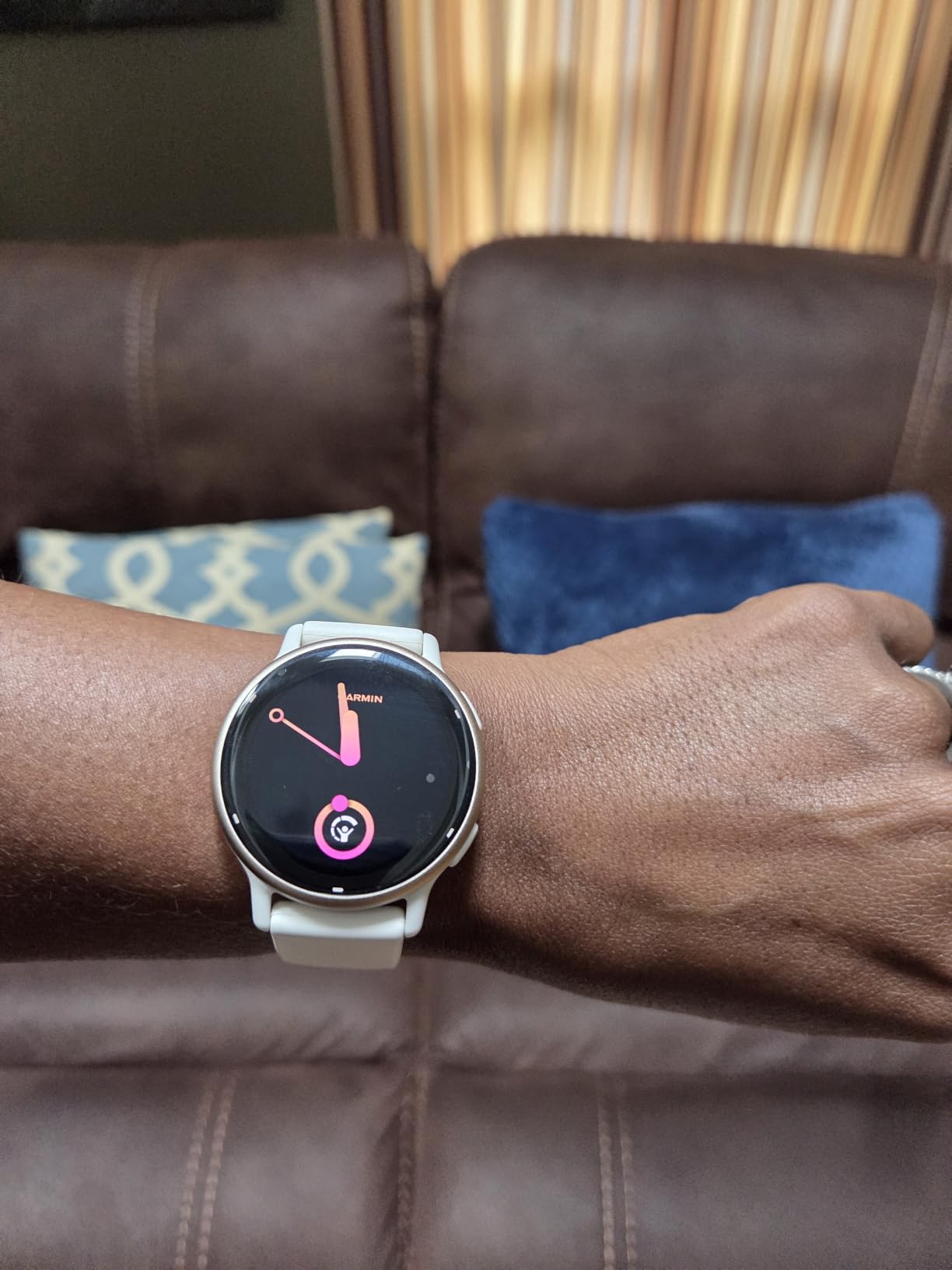
Automatic nap detection and nap logging come standard, which matters if you sleep badly and want the daytime data too. The bright AMOLED display is one of the more vivid screens here, and 30-plus built-in indoor and GPS sport apps cover everything from pool sessions to treadmill walks without hunting through a store. Offline music downloads work from Spotify, Amazon Music and Deezer, so a run can leave the phone behind.
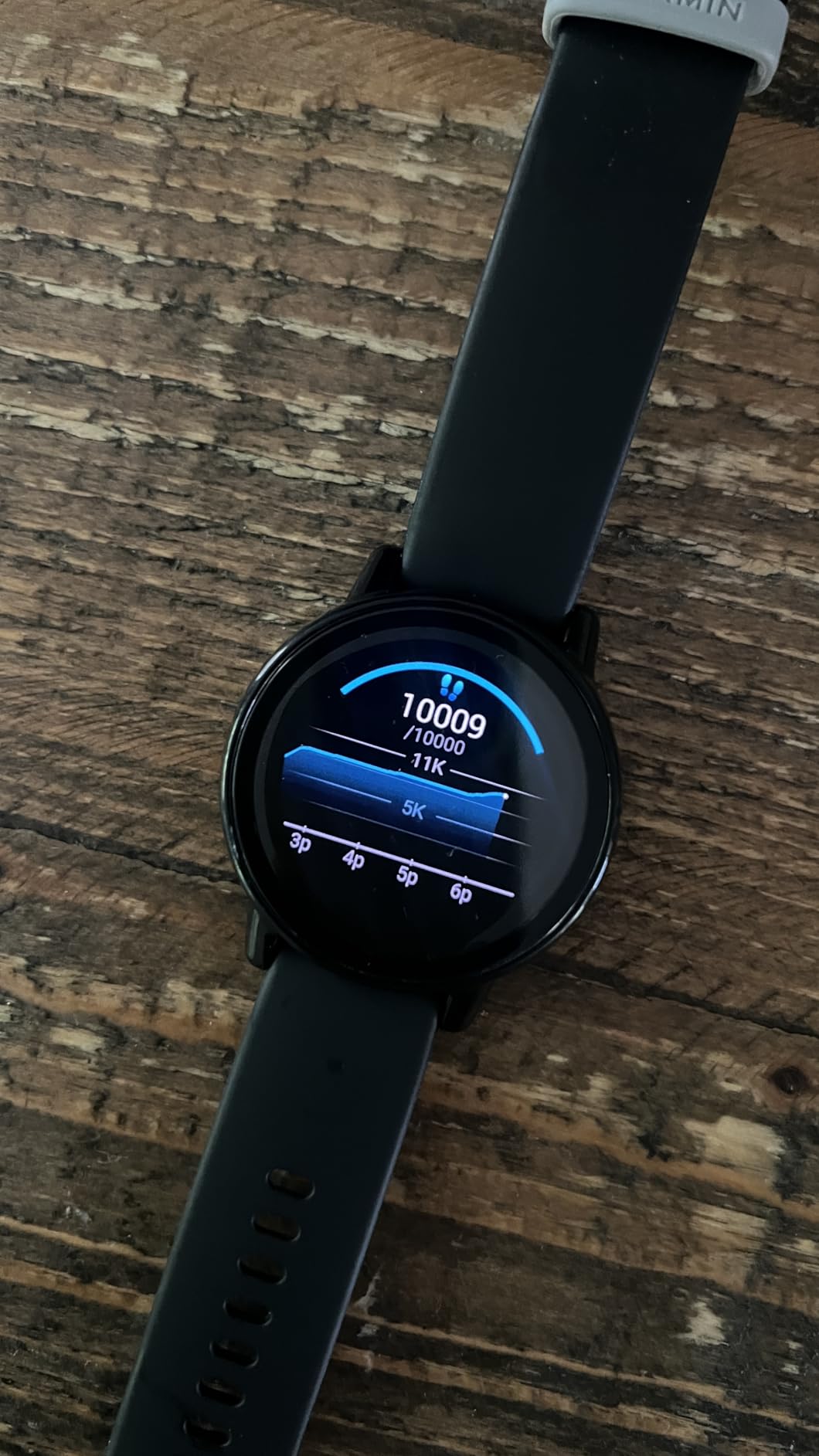
Wrist-based tracking covers heart rate, stress, fitness age and menstrual cycle data, with a 20mm band on a 42mm fibre-reinforced polymer case. The one-year limited warranty is standard for the brand, and the IP68 rating suits showering and surface swimming.
Owners report two consistent limits. There is no cellular option, so the phone must be within Bluetooth range for notifications and several features, and there is no third-party app store to speak of, which is the trade you make for the long battery. Training metrics also stop short of what pricier Garmin multisport watches offer, so serious racers will feel the ceiling.
The Galaxy Watch 4 offers ECG and an app store; this one offers three extra days between charges. The Forerunner 165 is the better training watch, the Vivoactive 5 is the better everyday health watch.
Some health metrics here are close wellness estimates rather than medical-grade readings, and reviews make that point repeatedly.
3. Tensky Smart Watch: Best for Voice Calls
Tensky Smart Watch
Display: 1.85 inch LCD
Battery: 12 days
Water: 3ATM
Pros
- Answers and makes calls over Bluetooth
- Alexa built into the watch
- Works with both iOS and Android
- 120+ sport modes
- Two year warranty with round the clock support
Cons
- Notifications are read only with no reply
- Calorie estimates run high
- Companion app still has bugs
Buy this if your phone lives in your pocket all day and you want to talk from your wrist. Very few watches in this bracket handle two-way calls properly, and this one has a speaker, a microphone and Alexa built into the case.
It works with both iOS and Android phones, which is unusual at this level and removes the ecosystem guesswork entirely. Health tracking runs 24/7 across heart rate, SpO2, stress and sleep, with menstrual tracking included, and 120-plus sport modes log steps, distance and calories. Battery life is quoted at seven days of heavy use and up to twelve in normal conditions, on a two hour charge.
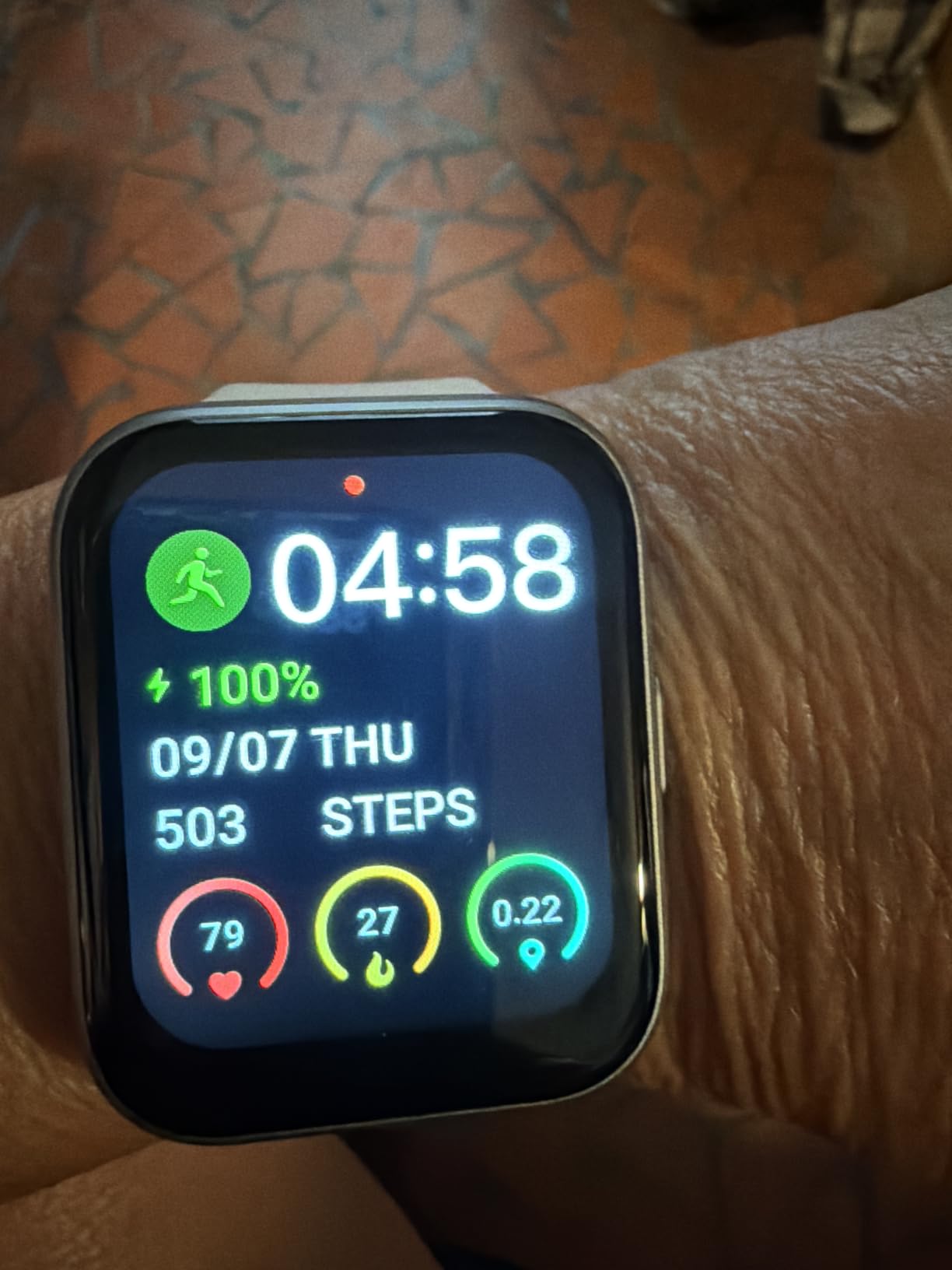
At 1.85 inches on an aluminium case, this LCD is a step down in brightness from the AMOLED screens here, and it is not built for direct sunlight. There is no built-in GPS, so location comes from the phone. Bluetooth range is also limited, and notifications drop when the phone drifts far enough away.
Owners report the message gap clearly: you can read a notification but not answer it from the wrist, which undercuts the call feature for anyone who lives in Slack. Calorie estimates also run noticeably high, step counts can be off, and the companion app still carries bugs and leans on generated content. Treat its health data as a rough trend rather than a record.
The aeac watch sits at the other end of the same bracket with a metal band and an AMOLED panel where this one has a large LCD, and the Galaxy Watch 4 is the pick when ECG matters more than voice.
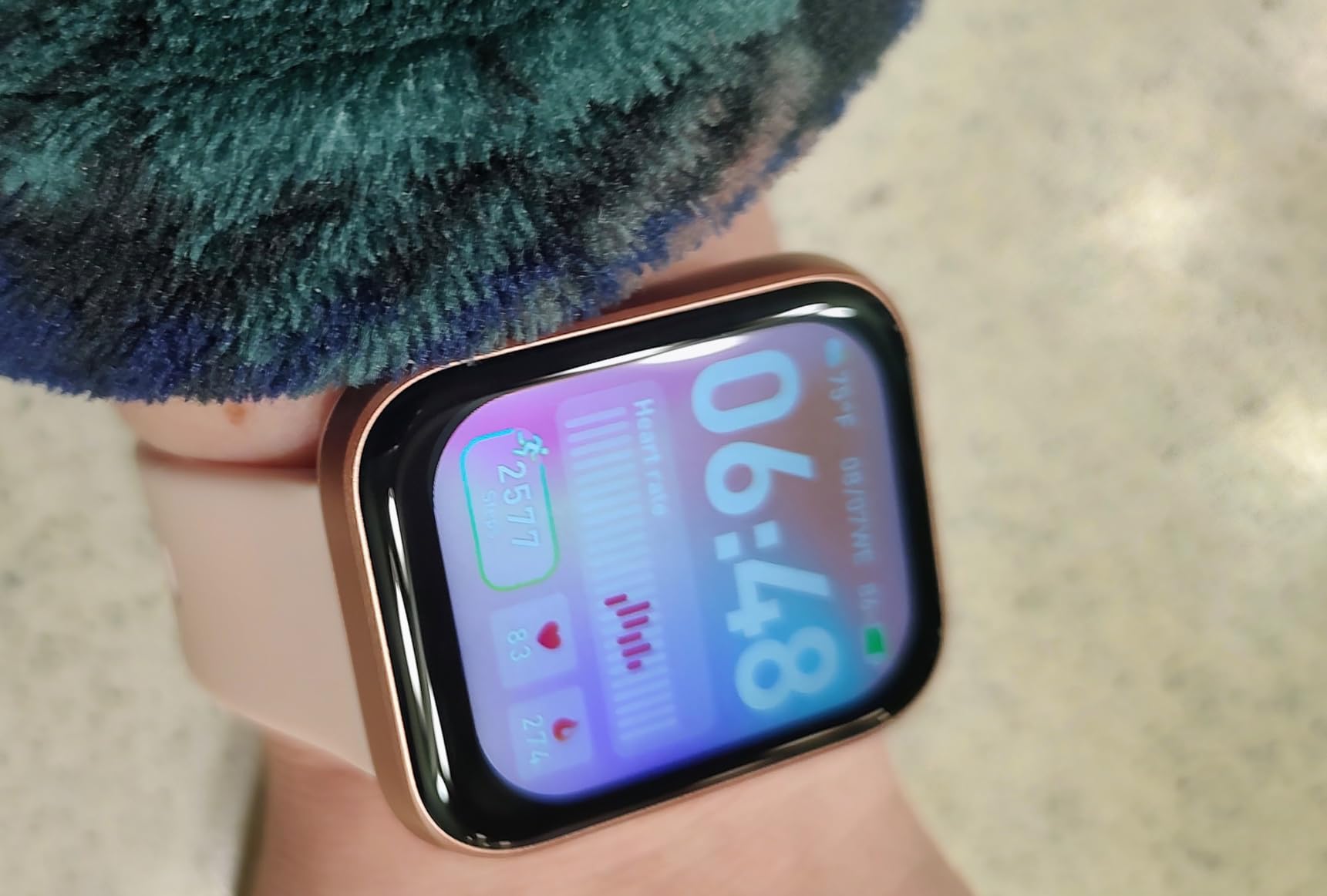
Worth knowing: remote camera control and custom photo watch faces are there, but accessory support is thin, so metal bands and screen protectors for this model are hard to find.
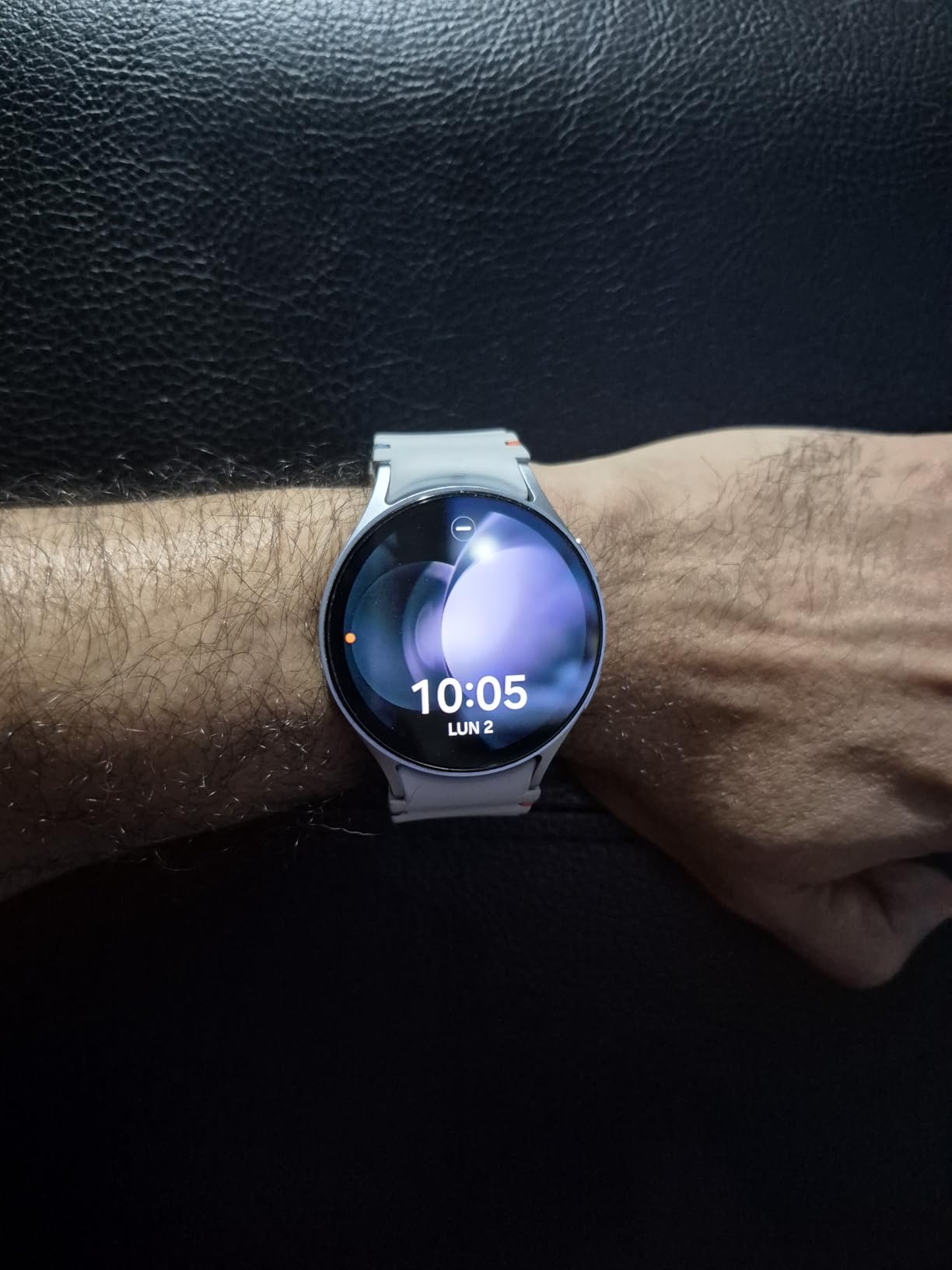
4. Samsung Galaxy Watch 7: Best for Galaxy Owners
Galaxy Watch 7
Display: AMOLED 2000 nit
Battery: 30 hours
Water: 5ATM
Pros
- Energy Score for daily readiness
- Improved heart rate tracking that filters movement
- AMOLED at 2000 nits
- Thin lightweight 40mm case
- Sleep apnea detection
Cons
- Roughly one day of heavy use
- Best AI and health features need a Samsung phone
- Screen re-locks quickly for payments
The choice for anyone already inside the Galaxy ecosystem. Pairing, notifications and the AI features are all tuned for Samsung phones, and the 2000-nit AMOLED is bright enough to read outdoors without squinting.
The Energy Score is the headline feature, a single daily readiness number built from the day’s movement and sleep, and Wellness Tips arrive as personalised prompts analysed on the phone. Heart rate tracking has been improved to filter out movement artefacts, and sleep tracking includes moderate to severe sleep apnea detection. The 40mm aluminium case keeps the profile slim, and a full wireless charge takes roughly two hours.
Owners mention a specific friction point worth knowing before you buy. If the watch’s swipe lock pattern is not set, it can lose the lock when taken off and put back on, and data may silently stop collecting, so set the pattern on day one. The screen also re-locks quickly, which is awkward when a lock is required for payments.
The honest trade is battery. The listing quotes 30 hours, and owners describe roughly a day of heavy use with daily or near-daily charging, which is the same compromise as the Galaxy Watch 4. The best AI and health features also stay tied to a Samsung phone, so this makes far less sense on iPhone.
The Galaxy Watch 4 remains the stronger build of the two Samsung options here, while the newer Watch 7 wins on the panel and the AI layer. Against the Garmin Vivoactive 5, the Samsung will not last a weekend away from a charger while the Garmin runs for nearly two weeks.
One catch: this is an older generation, so if a newer Galaxy Watch comes in cheaper during the sale, the gap rather than the features should decide it.
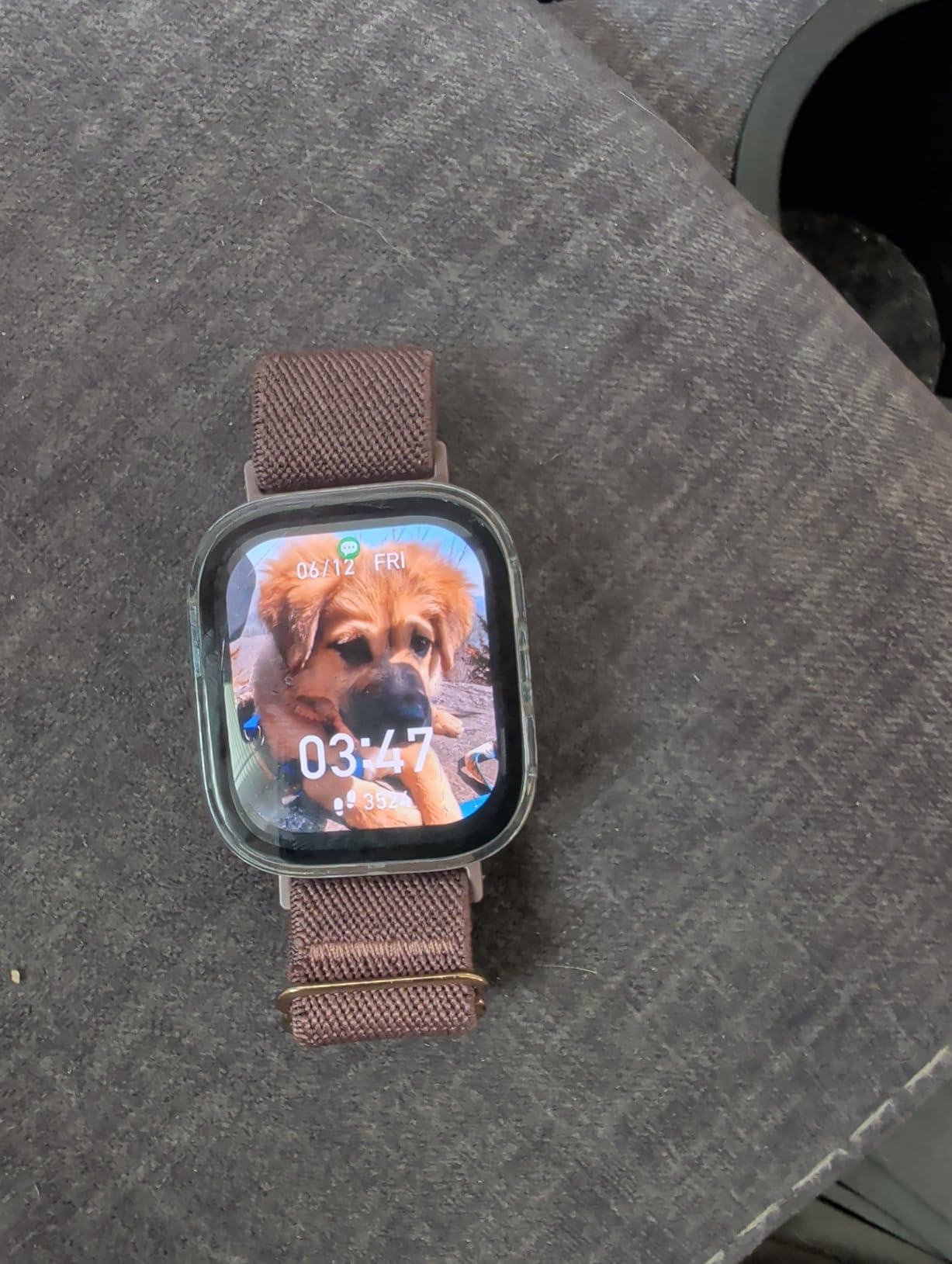
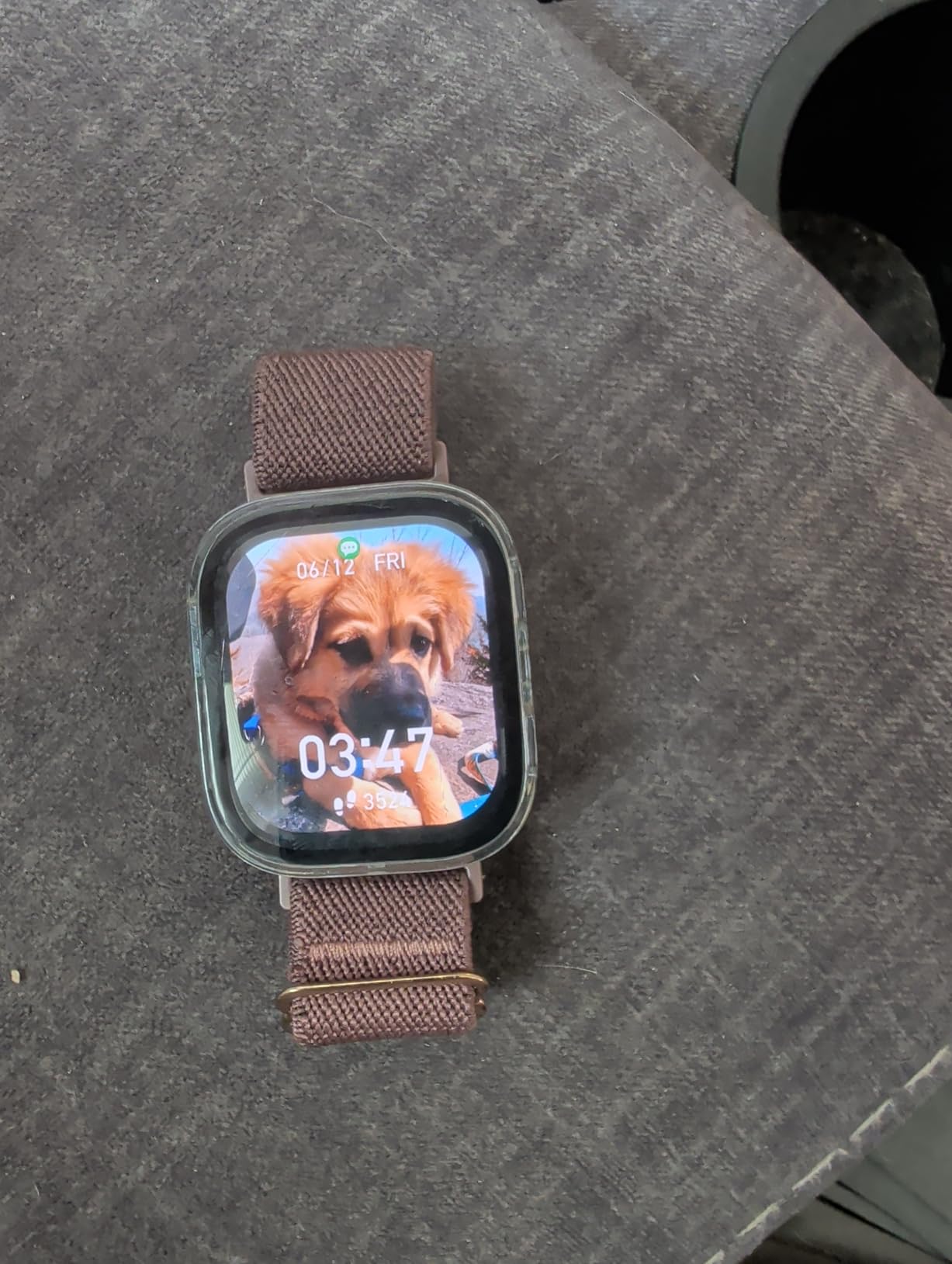
5. Amazfit Bip 6: Best for Battery Life
Amazfit Bip 6
Display: 1.97 inch AMOLED
Battery: 14 days
Weight: 1.44 oz
Pros
- Up to 14 days per charge
- Large bright 1.97 inch AMOLED screen
- Built-in GPS with offline maps and directions
- 140+ workout modes
- Lightweight aluminium body
Cons
- Thinner app ecosystem than Wear OS
- Battery falls short with heavy GPS use
- Zepp OS third-party support still limited
The value anchor of the whole list, and the watch most owners point to first. A 1.97-inch AMOLED, built-in GPS with downloadable offline maps and a two-week battery in one case is a combination that usually costs several times more.
The GPS module supports BeiDou, GLONASS, GPS and Galileo, with free turn-by-turn directions and offline maps, so navigation works away from the phone. Workout coverage runs to 140-plus modes including HYROX racing and strength work, and the large panel stays readable in daylight. Health tracking covers heart rate, sleep, blood oxygen and stress around the clock, with AI coaching on top, and the aluminium body keeps the weight down at about 1.44 ounces.
What you give up is the app store. The Zepp ecosystem is fine for notifications, fitness data and music, but it does not compete with Wear OS, and that trade is well understood by buyers rather than treated as a flaw. The other recurring note is that real battery life under heavy GPS use lands below the 14-day claim, so plan on a charge every ten days or so if you run with it constantly.
The Amazfit Active Max adds a brighter panel and 4GB of storage but has the smaller screen, while the Garmin Vivoactive 5 trades the maps for a deeper training and recovery layer.
Good to know: the band that comes in the box is on the short side, so on a very small wrist you may want a shorter strap sold separately rather than relying on the last hole.
6. aeac Smart Watch: Best for Smaller Wrists
aeac Smart Watch
Display: 1.32 inch AMOLED
Battery: 10 days
Water: 3ATM
Pros
- Slim 43mm case sized for smaller wrists
- Metal band and rose gold finish
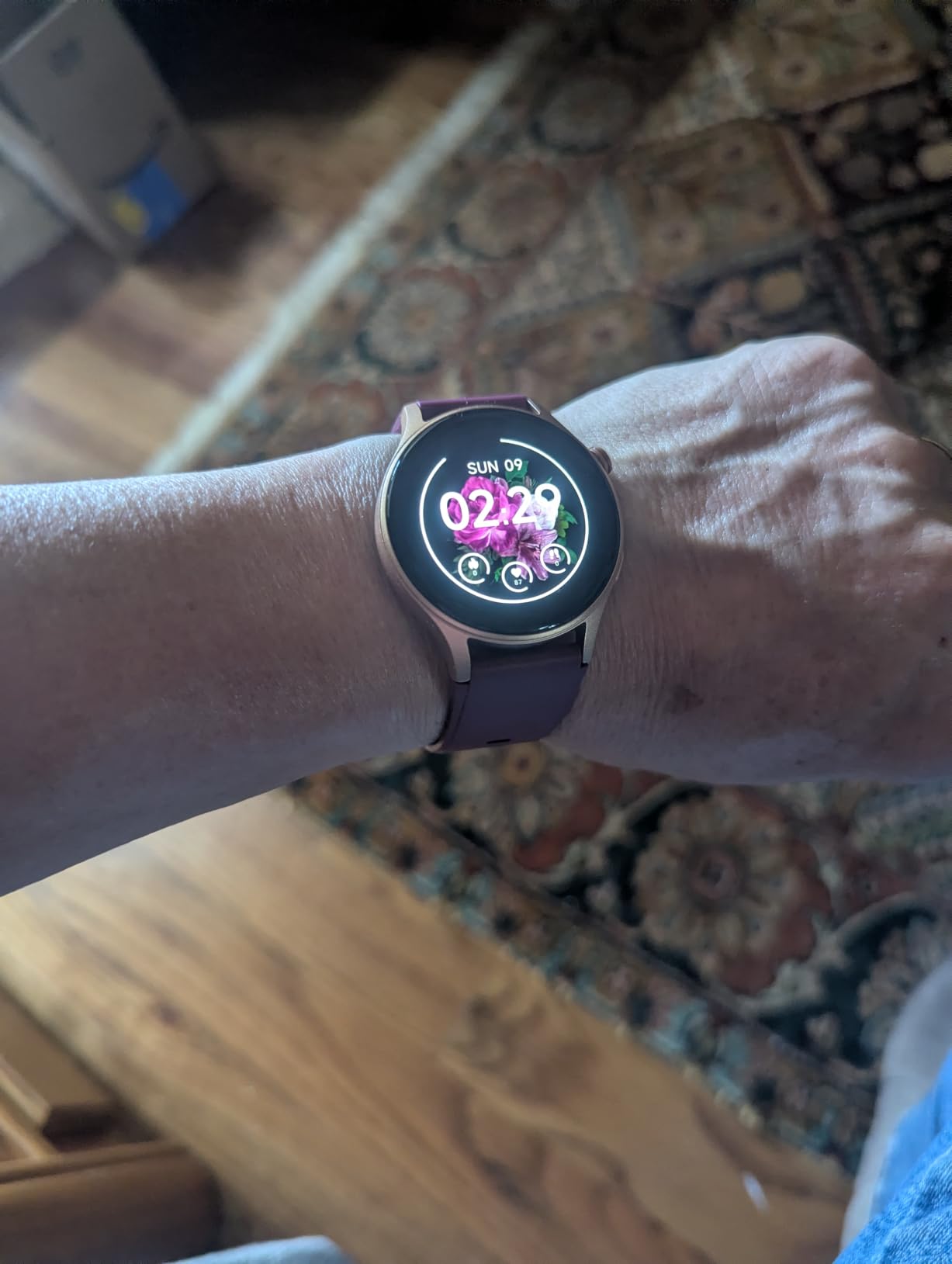
- AMOLED touchscreen with 200+ faces
- Bluetooth calling with HD speaker and mic
- Built-in AI voice assistant
Cons
- GPS relayed from the phone
- Health readings are consumer-grade approximations
- Thin long-term software support
Pick this one if a 43mm case is already the small end of your range. The slim case and metal band look more like a dress watch than gym gear, which several owners in this category specifically want.
A 1.32-inch AMOLED comes with 200-plus watch faces and a custom photo dial, and Bluetooth calling works through HD speakers and a microphone. A built-in AI assistant handles voice commands and hands-free calls, and 110-plus sport modes cover yoga and swimming alongside the usual walking and running. Ten days of use on a two hour charge is competitive, and the water rating covers hand washing and pool time.
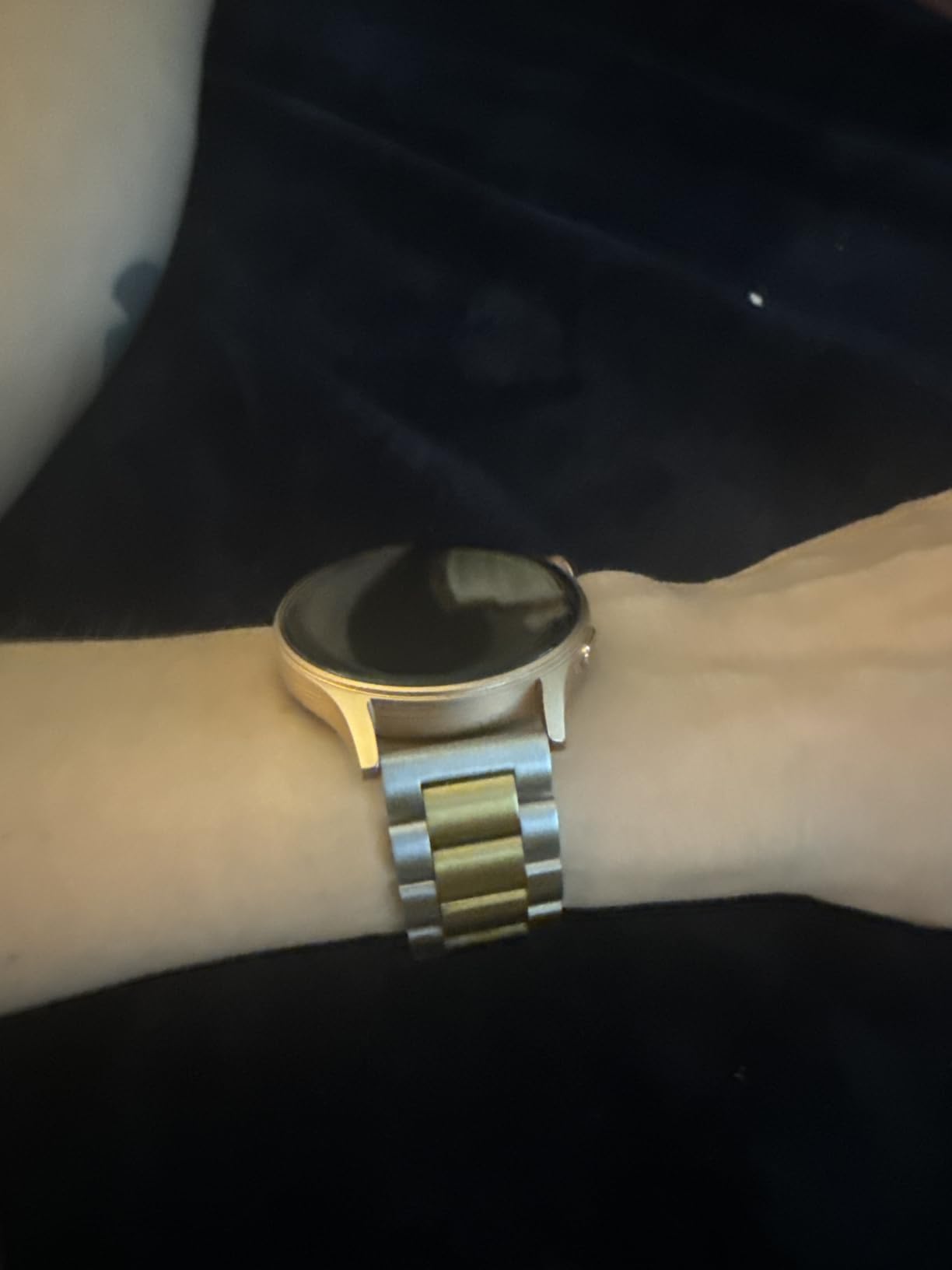
The honest caveat is the sensor tier. Owners describe the heart rate, SpO2, stress and sleep figures as consumer-grade approximations, and the GPS is relayed from the phone rather than built in, so a run without your phone has no route. Some buyers also find the metal band uncomfortable over a full day, and the brand offers a thinner long-term software roadmap than the established names.
The Amazfit Bip 6 handles the outdoors better with real GPS and offline maps, while the Galaxy Watch 4 is the only watch here that brings ECG and body composition to a slim wrist.
Skip it if: you swim regularly, since the GPS arrives through the phone and the sensor readings are approximations rather than measurements you would track closely.
7. Garmin Forerunner 165: Best for Runners
Garmin Forerunner 165
Display: 1.2 inch AMOLED
Battery: 11 days
Water: 50m IPX7
Pros
- Accurate GPS pace and route with fast lock
- 11 days in smartwatch mode and 19 hours in GPS mode
- AMOLED touchscreen kept alongside physical buttons
- Training effect and recovery time
- Garmin Pay and incident detection
Cons
- Cannot reply to text messages
- No wireless charging uses a proprietary cable
- Wrist heart rate less accurate than a chest strap
The one to buy if running is the actual reason you are buying a watch. Owners who train regularly point to GPS accuracy and lock speed as the deciding factor, and this is the model in the list where that claim holds up most often.
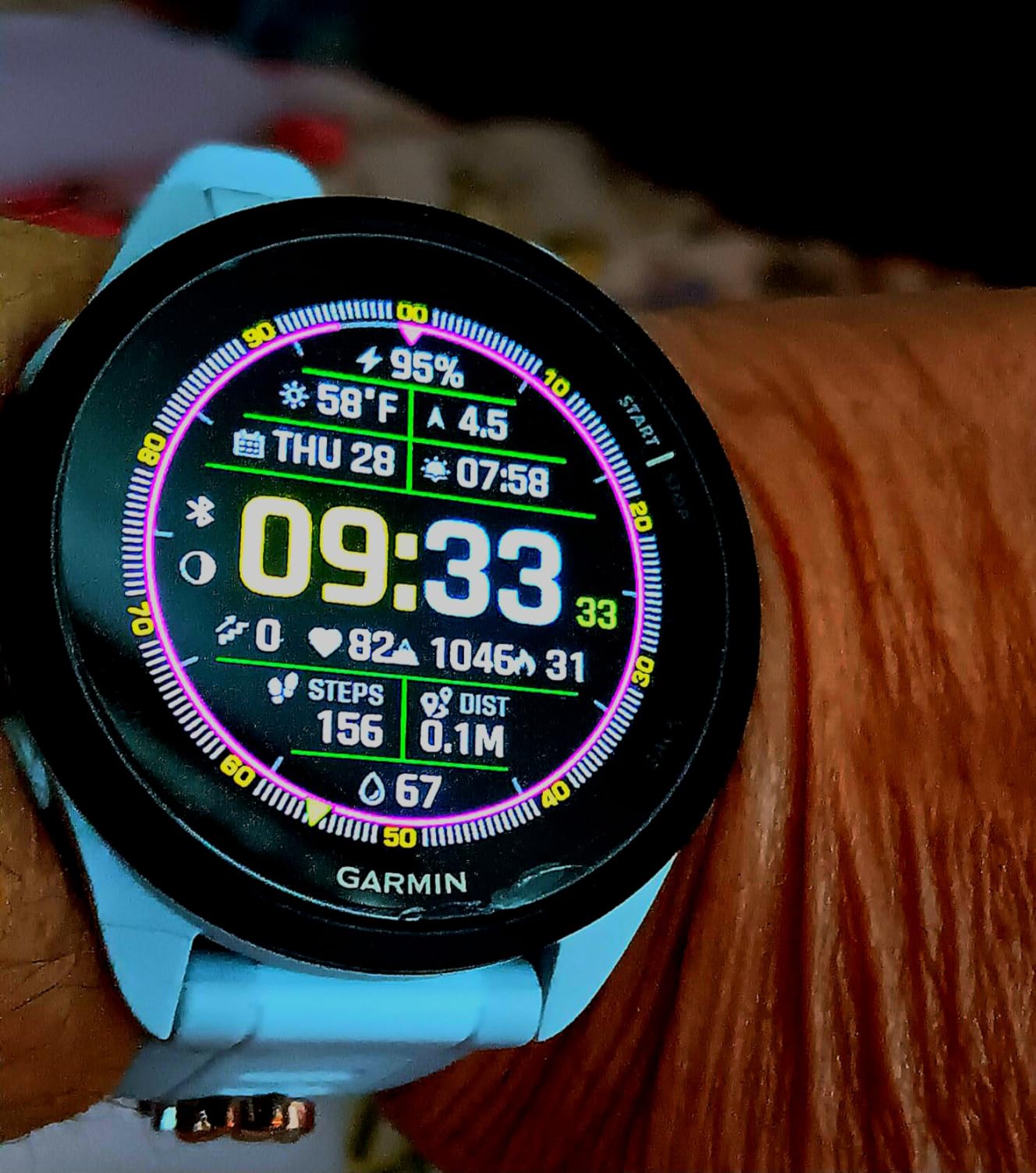
Battery life is 11 days in smartwatch mode and about 19 hours with GPS running continuously, which is the honest number for a long trail run. The AMOLED touchscreen stays readable in direct sunlight and the physical buttons are still there for use with sweaty hands, something several screen-only rivals have dropped. Training effect, recovery time, morning report and HRV status give you a usable post-run picture, and Garmin Coach supplies adaptive plans when you do not want to design your own.
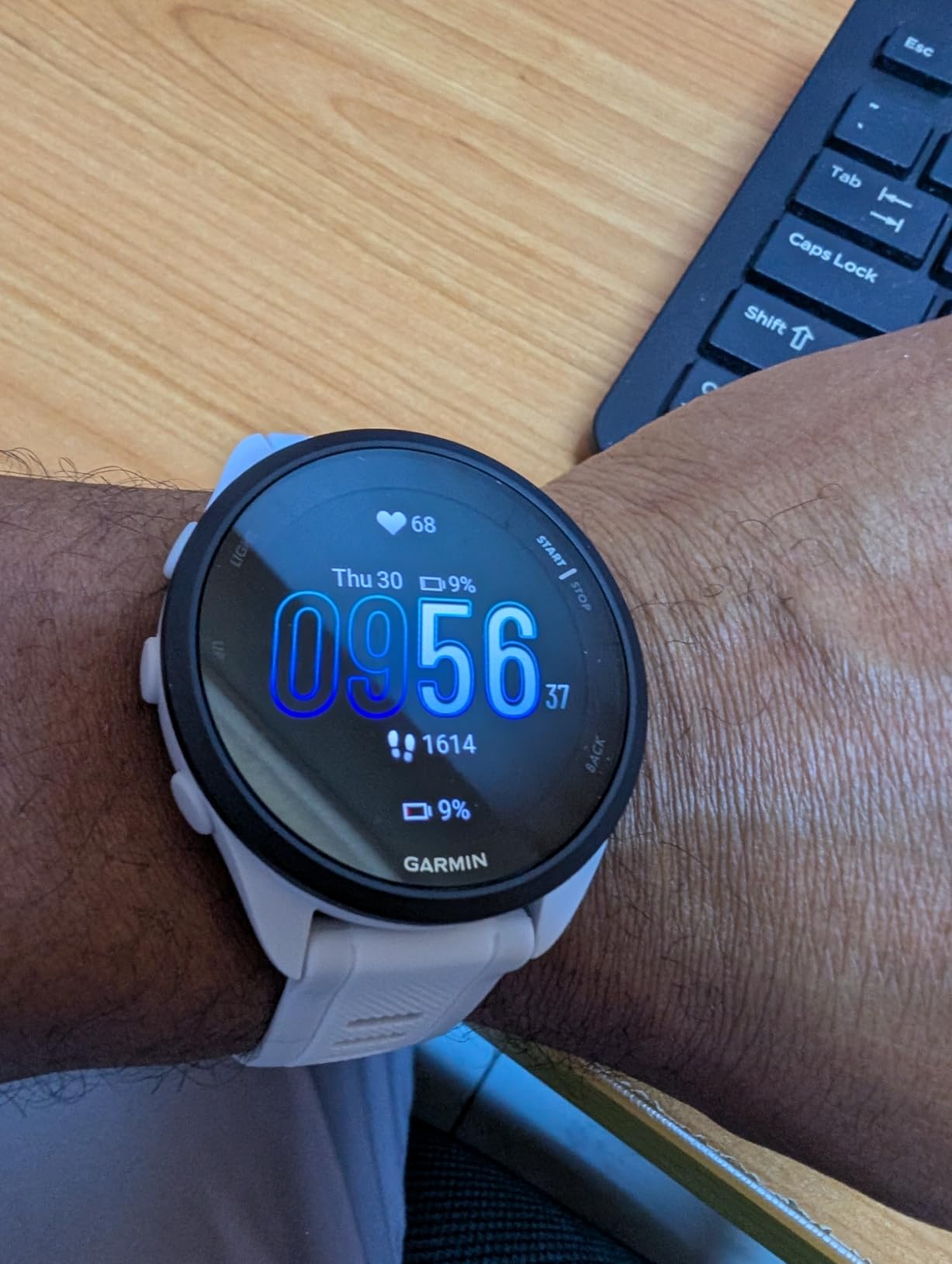
Be clear-eyed about the limits. There is no way to reply to a text from the watch, charging uses a proprietary cable with exposed contacts and no wireless pad, and training load, training status and readiness metrics live on Garmin watches above this tier. Wrist heart rate also lags a chest strap for zone training, so if you run intervals on pace targets, keep the strap.
Owners repeat the same warning, and it is worth taking seriously: a Forerunner is wasted money if running is not your motivation. If you want general health and sleep data with everyday wear, the Vivoactive 5 is the more relaxed version of the same idea. If you want apps and messages instead of training data, look at the Galaxy Watch 4.
Turning the motion-triggered screen wake off in settings solves that one, and it matters here more than on most watches since runners wear these overnight.
8. Choiknbo Smart Watch: Budget Pick
Choiknbo Smart Watch
Display: 1.83 inch LCD
Battery: 24 hours
Water: 1.5m IP68
Pros
- Lowest outlay of any watch here
- Setup is quick and straightforward
- Mirrors notifications from SMS and messaging apps
- IP68 for hand washing and pool use
- Large 1.83 inch colour display
Cons
- Battery quoted at 24 hours
- Step and calorie tracking reported as unreliable
- Health readings are on demand rather than continuous
For a first wearable, a gift, or a standby watch that mostly mirrors notifications. At the bottom of this price range it does the basic job of telling you the time and showing you who messaged.
A 1.83-inch TFT-LCD full touch screen is larger than this price usually buys, and setup takes a couple of minutes. It mirrors notifications from SMS and apps such as WhatsApp, Facebook and Messenger, controls music and the camera, and tracks steps, calories and distance alongside heart rate, blood pressure, blood oxygen and sleep figures. The IP68 rating means hand washing and pool swimming are fine.
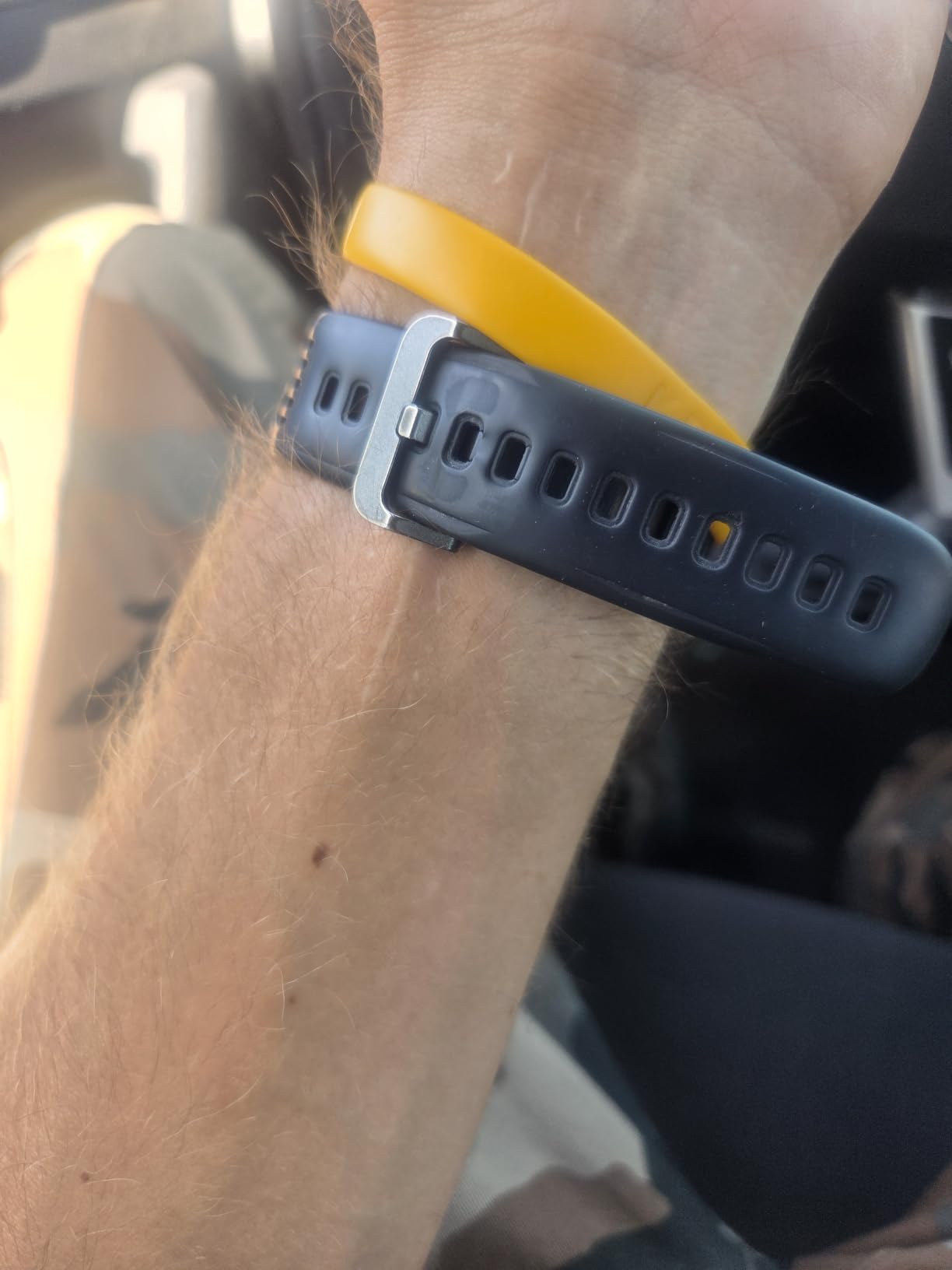
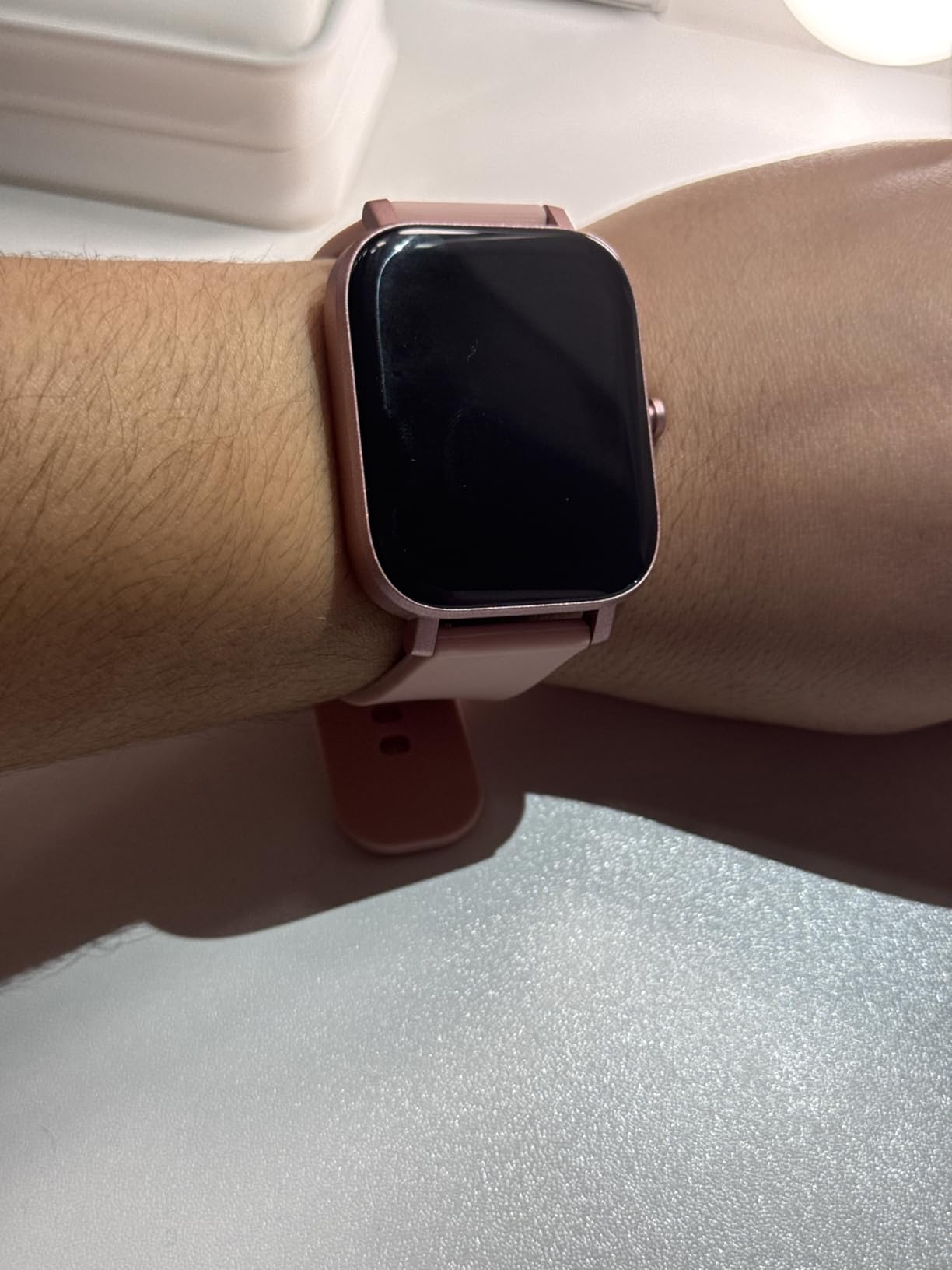
Now the part that decides it. Battery life is quoted at 24 hours, so this is a charge-every-night device, and several owners report unreliable step and calorie tracking. The health sensors do not run continuously, you request each reading manually, blood pressure figures read higher than a proper cuff, and sleep tracking is time-windowed so naps slip through. The case is also large and clunky on a slim wrist.
The Galaxy Fit 3 sits in the same spending bracket with a real AMOLED panel, better water rating and 13 claimed days of battery, and the Tensky adds calling that this watch does not have. Either one is a more capable daily tracker.
Worth knowing: the exercise menu here is small against 120-plus on most rivals, so treat it as decoration rather than variety.
9. Samsung Galaxy Fit 3: Best for Sleep Tracking
Galaxy Fit 3
Display: 1.6 inch AMOLED
Battery: 13 days claimed
Water: 5ATM IP68
Pros
- Light and comfortable enough to sleep in
- 5ATM and IP68 ratings suit swimming
- 101+ workout modes with auto detection
- Sleep coaching with SpO2 and snore detection
- Large 1.6 inch AMOLED screen
Cons
- International model with no US warranty
- Android only so no iPhone pairing
- Real battery closer to 5 days with always-on display
The pick for people who wear the watch to bed and hate doing it. At about 50 grams with a soft silicone band, this is one of the few watches here you will forget you have on.
Bright enough for a 6am glance, the 1.6-inch AMOLED is what makes overnight wear bearable, and sleep coaching, SpO2 and snore detection give the night some payoff. 101-plus workout modes run with automatic activity detection, and 5ATM plus IP68 ratings mean actual swimming rather than just a shower. Call and text notifications and find-my-phone round out an unusually complete feature list for a tracker at this level.
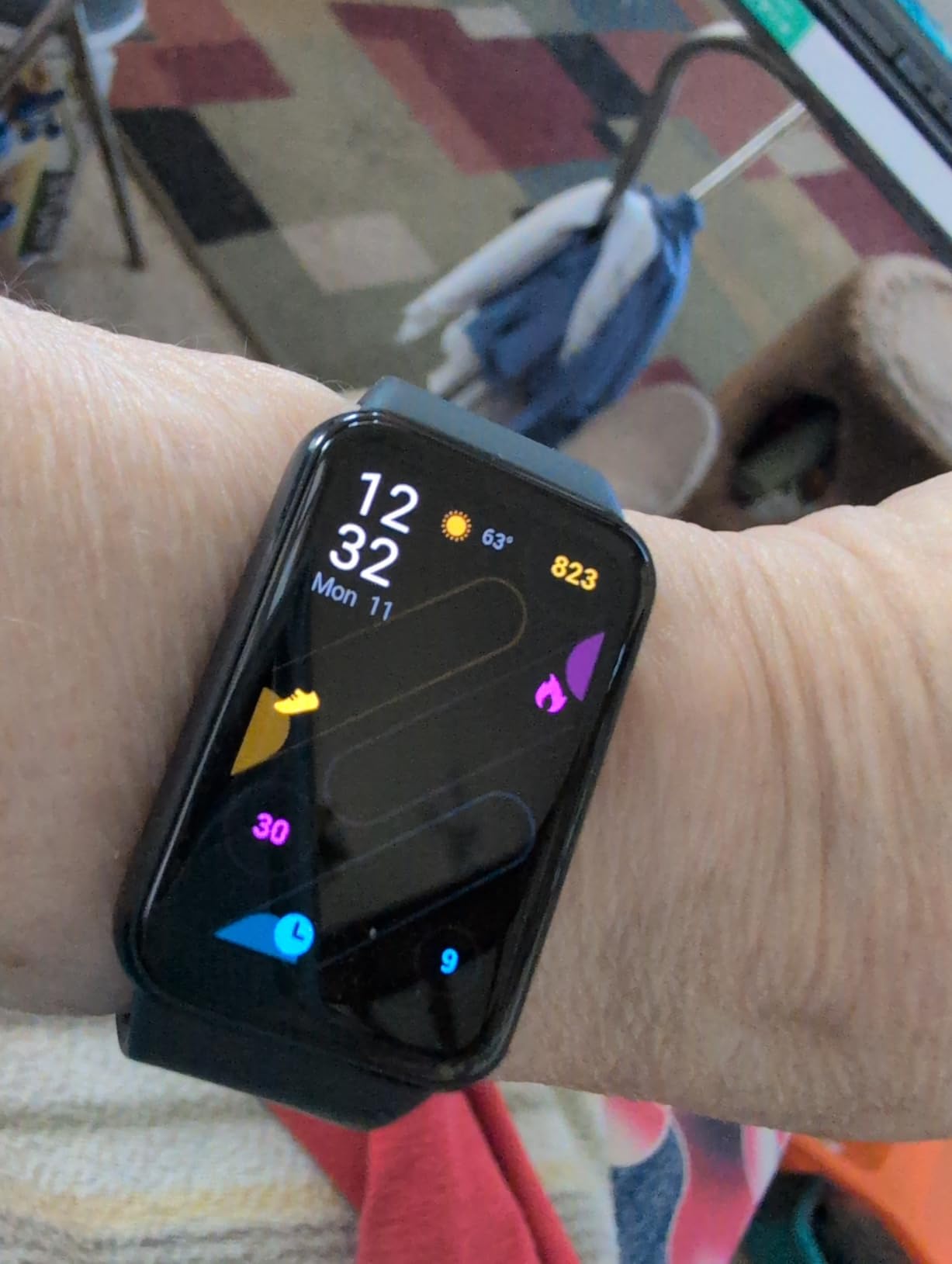
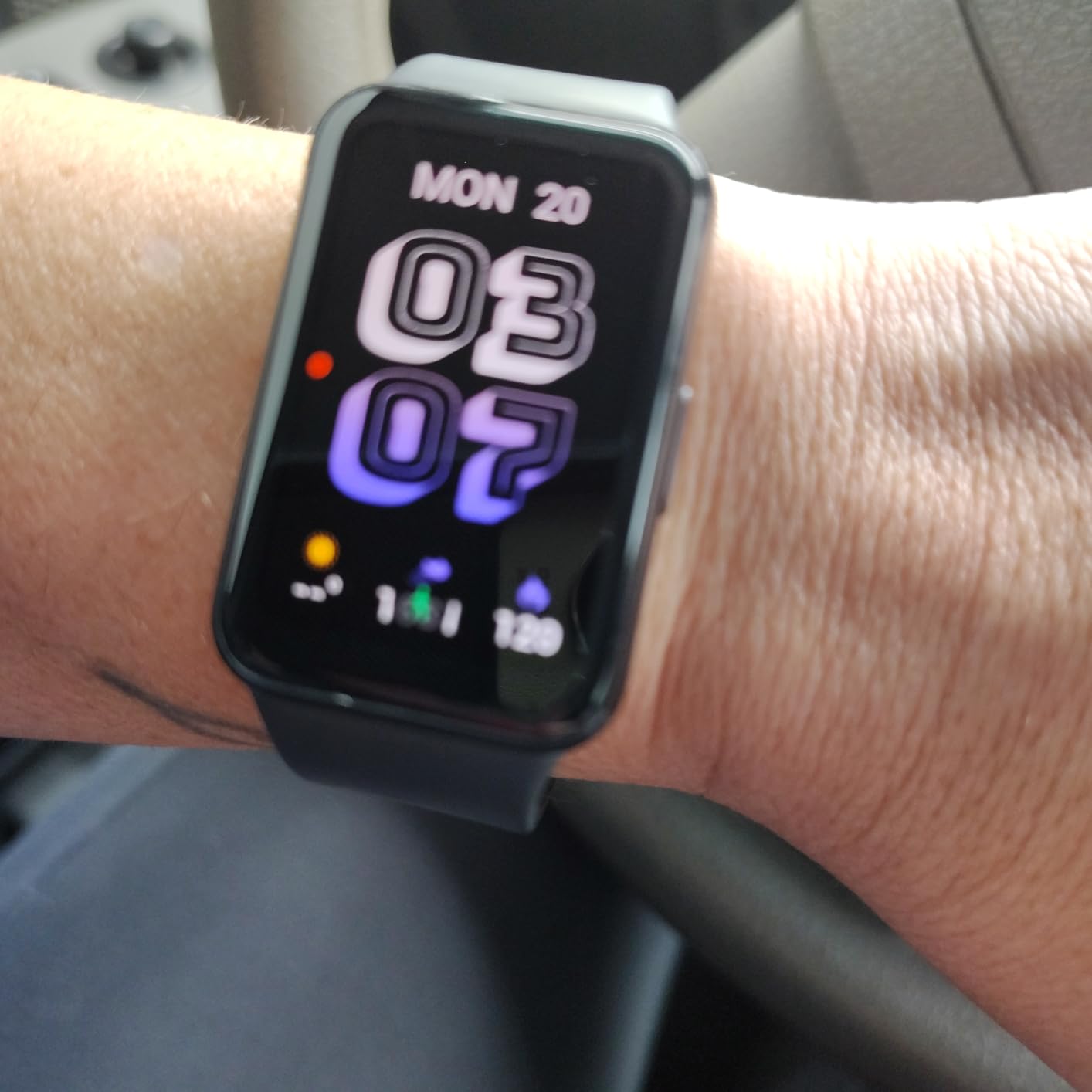
Two things to check before ordering. This is the international model, so it carries no US manufacturer warranty, and the bundled fast charger is a generic third-party unit rather than a Samsung one. It is also Android only, with no iPhone or iOS pairing at all, and Samsung Pay is not supported.
On battery, the listing quotes 13 days with a 208mAh cell, but owners with the always-on display on and a phone connection report closer to five days. That is still far better than the Galaxy Watch models, and it is the honest reason to choose this over a round Samsung case if sleep is the priority. Some users also find the stock band runs small or uncomfortable on a wide wrist.
Compared with the Amazfit Bip 5 Unity, both track sleep well but only the Amazfit adds menstrual tracking and syncs to Strava. Compared with the Galaxy Watch 4, this one wins on comfort and battery and loses the ECG, the apps and the warranty.
Good to know: there is no built-in GPS on this model, so running routes come from your phone.
10. Amazfit Active Max: Best for Long Battery with GPS
Amazfit Active Max
Display: 1.5 inch AMOLED
Battery: 24 days
Water: 50m
Pros
- 3000 nit AMOLED readable in direct sunlight
- Up to 25 days battery with 23 reported in real use
- Built-in GPS with free offline terrain and ski maps
- 4GB storage for offline music
- Zepp Coach running plans and BioCharge monitoring
Cons
- App ecosystem narrower than Garmin Connect or Wear OS
- Zepp Flow replies need an Android phone
- Step count and standing time differ from a phone
Hard to beat on the two things people actually want: a bright screen and a battery measured in weeks. The 1.5-inch AMOLED runs at 3000 nits, the brightest panel on this list, and stays clear in direct sun.
Battery life is quoted at up to 25 days, and owners report 23 days of real use, which puts it alongside the Amazfit Bip 6 as the endurance option here. Built-in GPS covers BeiDou, GLONASS, GPS and Galileo with free downloadable terrain and ski maps and turn-by-turn directions, and 4GB of storage holds offline music. 170-plus workout modes come with detailed post-workout analysis, and Zepp Coach produces running plans while BioCharge tracks daily energy.
Bluetooth calls work through the built-in speaker and microphone, though Zepp Flow hands-free message replies require an Android phone. The durable bezel resists scratches and it is comfortable enough for sleep tracking, two things some owners specifically complimented. The stock wristband caused irritation for a few people, so a different strap may be an early purchase.
The trade is the same one the Bip 6 makes, just at a higher tier: the app ecosystem is narrower than Garmin Connect or Wear OS, some advanced health metrics lose accuracy during hard intervals, and step count and standing time can differ noticeably from a phone. There is no built-in golf activity recognition either. Owners who came from watches costing several times more tend to be the most satisfied with it.
The Garmin Vivoactive 5 lasts a fortnight but carries no offline maps, and the Galaxy Watch 4 gets nightly charging in place of the three-week gap between charges.
Keep in mind: you cannot snooze a phone alarm from the watch, which is a small daily irritation reviewers mention.
11. Amazfit Bip 5 Unity: Best for Menstrual Tracking
Amazfit Bip 5 Unity
Display: 1.91 inch LCD
Battery: 11 days
Water: 1.5m IP53
Pros
- Stainless steel frame suits daily wear
- 11 days typical and 26 days in battery saver
- Menstrual and fertile period tracking
- 70+ mini apps and games on Zepp OS 3.0
- Syncs with Strava Apple Health and Google Fit
Cons
- GPS relayed from the phone
- IP53 rating limits it to rain and hand washing
- No Bluetooth calling on this model
The most complete cycle tracking in this group, wrapped in a stainless steel case. Menstrual and fertile period tracking is native, and it is the feature most buyers at this budget are not getting anywhere else.
The 1.91-inch high-resolution display has an anti-fingerprint coating and 70-plus watch faces with a custom photo background. Battery is 11 days of typical use and 26 days in battery saver, which is a wide enough range to adapt to. 120-plus sport modes handle steps, distance and calories automatically, and heart rate, blood oxygen, stress and sleep tracking includes naps.
The app story is the surprise. Zepp OS 3.0 carries 70-plus downloadable mini apps and games, and it syncs with Strava, adidas Running, Apple Health, Google Fit, Relive and komoot, so the data is not trapped in one place. The stainless steel frame weighs about 27 grams.
Water resistance is the weak point. The IP53 rating means rain and hand washing only, so this watch stays home at the pool. There is no built-in GPS, it relays location from the phone, and this model has no Bluetooth calling. Advanced health metrics are consumer-grade estimates, and the mini app ecosystem is still small next to Wear OS.
The Amazfit Bip 5 Unity adds cycle tracking and cross-platform syncing but loses the US warranty and the swim rating, while the Galaxy Watch 4 keeps the ECG and the app store and gives up the two-week battery.
Size matters here: the 22mm band is 21 cm, which fits most wrists but can feel short on larger ones.
12. Xiaomi Redmi Watch 5 Active: Best for Large Legible Displays
Redmi Watch 5 Active
Display: 2 inch LCD
Battery: 18 days
Water: 5ATM
Pros
- Largest screen here at 2 inches with over 70 percent screen-to-body
- 200+ watch faces through the Mi Fitness app
- 470mAh battery for up to 18 days
- Bluetooth calling with dual-mic noise reduction
- Flashlight and find phone built in
Cons
- No built-in GPS
- LCD is less readable outdoors than AMOLED
- Health sensors are basic
For anyone who puts reading glasses on to check the time. The 2-inch LCD with a matte frame and large numerals is the most legible display here for older eyes or bright conditions.
The 470mAh battery is quoted at up to 18 days of typical use, and 140-plus workout modes come with auto-detection for running, walking and cycling. Bluetooth calling uses dual-mic noise reduction, which is more than most budget watches attempt. A flashlight, find phone, music control and notification mirroring round it out, and 5ATM covers rain and hand washing. 200-plus watch faces are available through the Mi Fitness app.
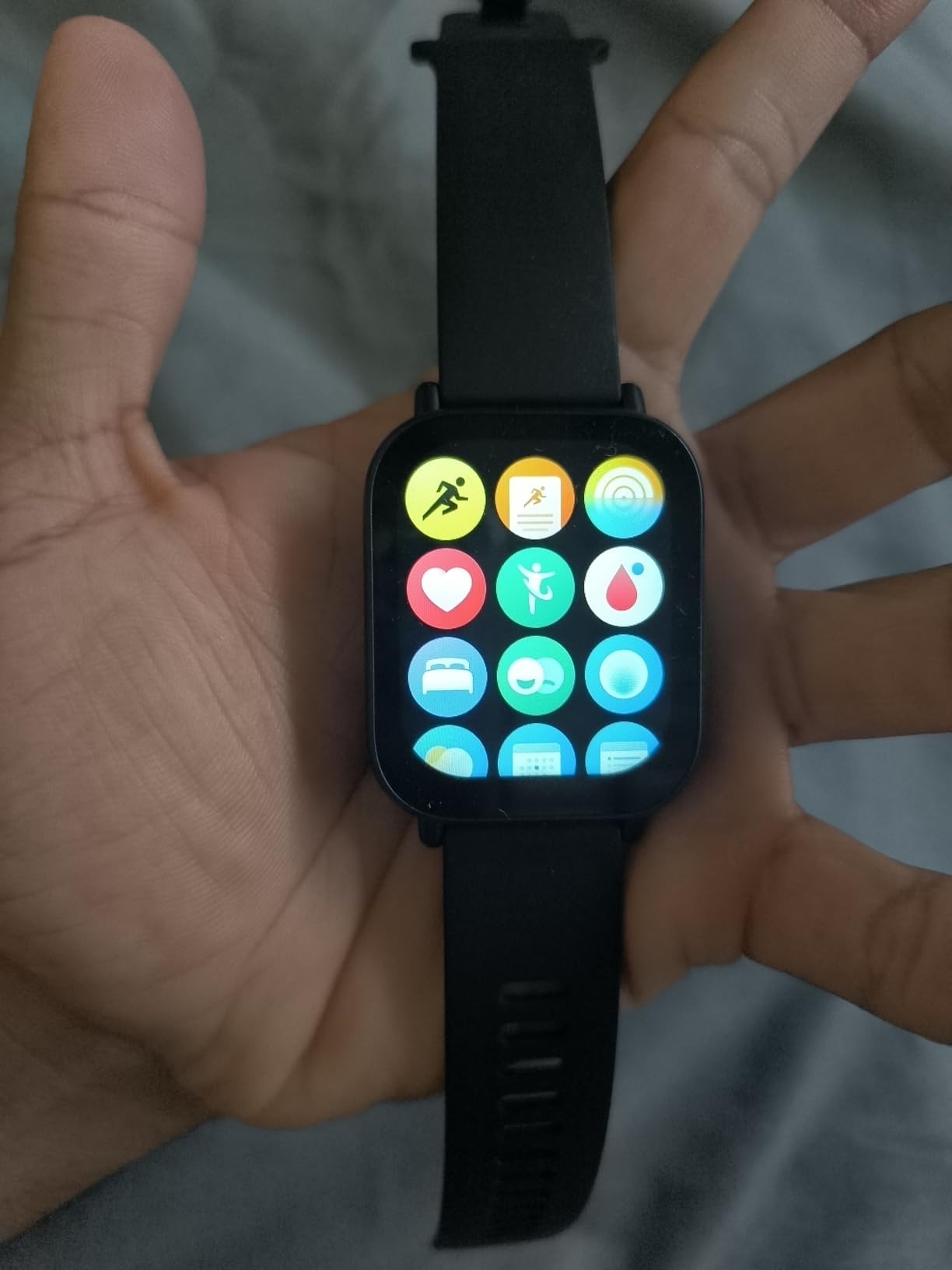
There is no built-in GPS, so route tracking depends on the phone, and an LCD loses ground to the AMOLED panels here when you are reading it in direct sun. The health sensors are basic and consumer-grade, and owners rate the Mi Fitness app as less refined than Samsung Health or Zepp. It also will not pair with tablets or desktops.
The Choiknbo lasts 24 hours where this one runs 18 days, the Tensky trades the large screen for Alexa and a wider sport list, and the Galaxy Watch 4 is the pick if you want apps and body composition rather than a big readable face.
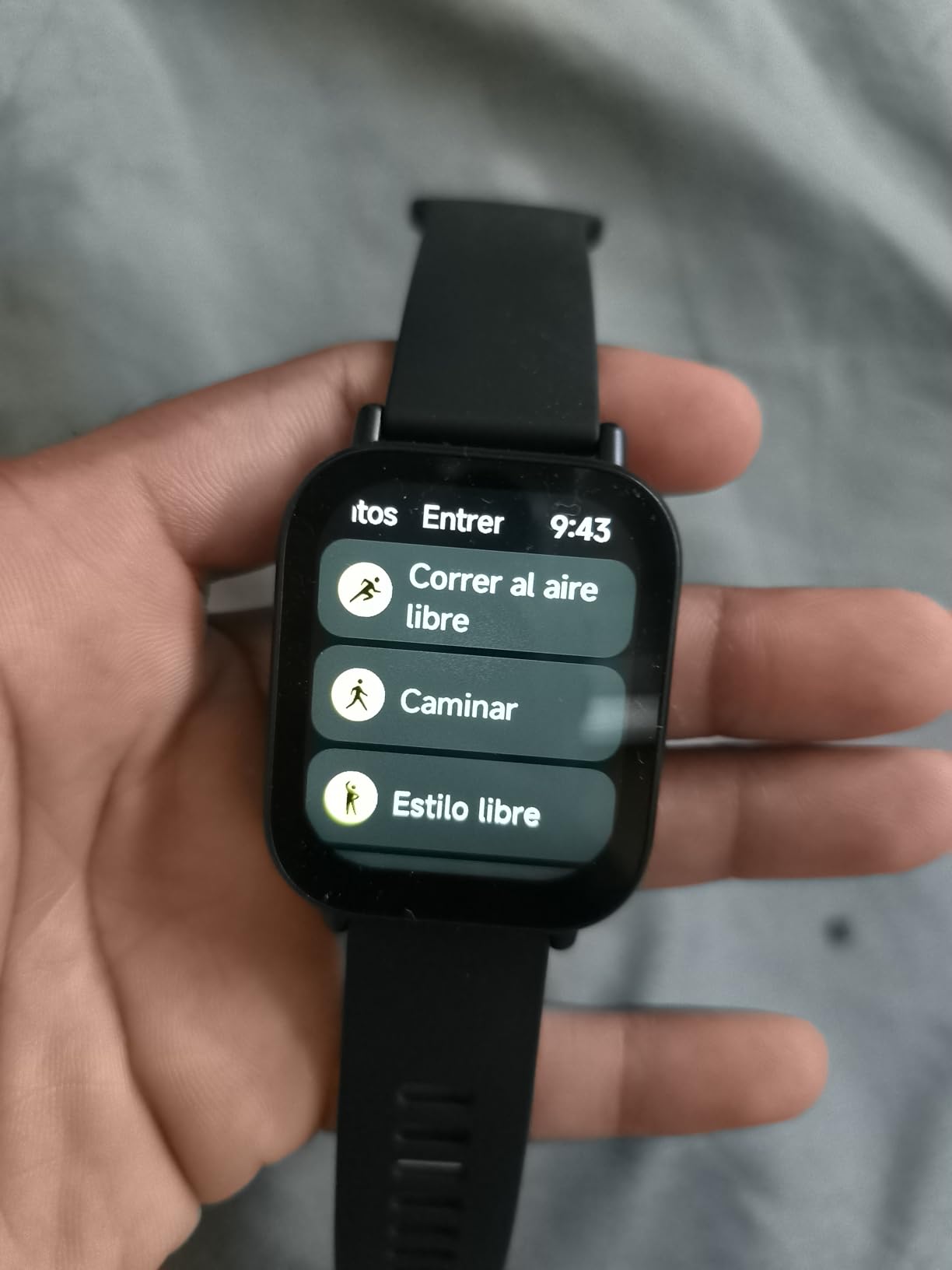
Good to know: it runs on Android 8.0 and up or iOS 12.0 and up, so an older phone may be the limit rather than the watch.
How to Choose Smartwatches During Prime Big Deal Days
Compatibility With Your Phone and Existing Apps
Decide this before screen size, because it cannot be changed later. Android-first brands vary a lot here: the Galaxy Watch 4 and Galaxy Watch 7 tie their best health and AI features to a Samsung phone, and the Galaxy Fit 3 is an international Android-only model that will not pair with an iPhone at all. Garmin and the Amazfit models work with both platforms, and so do the Tensky, aeac and Redmi watches, though the Redmi will not pair with tablets.
App ecosystem matters as much as pairing. Wear OS gives you a real store, while Zepp OS and GarminOS give you better battery life and weaker third-party apps. If you reply to messages from your wrist, weight Wear OS heavily; if you never do, the two-week Amazfits make more sense.
Battery Life and Charging Expectations
Set a threshold: if you travel or sleep in the watch, anything under three days will disappoint you. The 11-to-14-day group here covers the Garmin Vivoactive 5, the Garmin Forerunner 165, the Amazfit Bip 6, the Tensky and the Galaxy Fit 3, while the Redmi Watch 5 Active claims 18 days and the Amazfit Active Max up to 25. The two Galaxy Watch models quote one night and about 30 hours, so plan for the charger by the bedside.
Battery claims assume specific settings. Owners of the Galaxy Fit 3 report closer to five days with the always-on display on and a phone connection, and Amazfit Bip 6 users see under two weeks with constant GPS use. Treat the headline figure as a best case.
Health and Fitness Features That Matter
Separate everyday metrics from sensors that only impress on a spec sheet. Heart rate, sleep duration, stress and step count are the ones you will actually look at, and those are the most reliable on the Garmin and Amazfit models. SpO2, body composition and sleep apnea detection are useful as trends over weeks, not as readings to act on, and if blood oxygen is a specific goal, our guide to smartwatches for blood oxygen tracking goes deeper on which sensors hold up.
ECG is the rarest feature at this budget, and only the Galaxy Watch 4 in this group pairs it with shareable atrial fibrillation reports. Consumer heart rate, blood pressure and blood oxygen figures are wellness estimates, not medical measurements, and should never replace a clinical device.
Fit, Durability and Water Resistance
Case size decides whether you will wear the watch or take it off, and taking it off kills sleep tracking. The 40mm Galaxy Watch models, the aeac at 43mm and the Garmin Vivoactive 5 at 42mm suit slimmer wrists, while the 1.85-inch Tensky and 2-inch Redmi are noticeably large. A round case also looks more like a conventional watch at work than a rectangular fitness band does.
Water ratings differ more than most listings admit. IP68 on the aeac, Galaxy Fit 3 and Choiknbo handles hand washing and surface swimming, 5ATM is the same idea stated differently, and the Galaxy Watch 4 is rated IP67 to 50 meters, so it survives splashes more comfortably than a pool. The Amazfit Bip 5 Unity is IP53, which is rain and hand washing only. If you swim laps, read our picks of smartwatches for running and open-water use before you settle.
How to Shop Smartwatch Deals During the Sale
Watch the model number in the listing rather than the headline. Samsung uses SM-R and SM-L codes, Amazfit uses A-numbers such as A2435 and A2557, and international models often say so in the title, which matters because they carry no US warranty. Check the case size, the band colour and whether a charger is included, since bundles vary. Look at who sells and who ships the watch, not just the rating, and read the seller line before you commit. Most offers during Prime Big Deal Days need a Prime membership, and prices change through the two days, so recheck the listing on the day you buy.
- Confirm your phone platform before you fall for a screen size or colour
- Match the battery claim to your charging habits, not the number on the box
- Check the model code for an international variant with no US warranty
- Read who sells and ships, and whether a charger or extra band is included
- Treat every health reading as a wellness trend, not a diagnosis
- Set a reminder to check the price again on the day of purchase
Frequently Asked Questions
When do the best Amazon Prime Big Deal Days smartwatch deals under $200 start?
Prime Big Deal Days runs October 6-7, 2026, and the smartwatch deals worth watching for under $200 appear across both days rather than all at once. Most offers require a Prime membership, with a free trial counting. Prices move through the event, so check each watch on the day you plan to buy rather than trusting an early listing.
Do you need a Prime membership to get smartwatch deals during Prime Big Deal Days?
Most offers during the event need a Prime membership, though a free trial counts and can be cancelled the same day. Some listings show a price that is available to everyone, but Prime-only pricing is common for watches in this bracket. If you are not a member, start the trial before the event begins so checkout runs smoothly.
Are sub-$200 smartwatches accurate enough for everyday health tracking?
They are reliable enough for trends you compare over weeks, such as resting heart rate, sleep duration and step counts, but not for diagnosis. Accuracy varies by sensor and by brand, with Garmin and Amazfit generally considered steadier than no-name trackers. The Galaxy Watch 4 adds ECG with shareable reports, which is unusual at this budget.
How long should a smartwatch battery last under $200?
Three days is the practical minimum if you travel or sleep in the watch, and plenty of models here exceed that. The Garmin Vivoactive 5, Garmin Forerunner 165, Amazfit Bip 6, Tensky and Galaxy Fit 3 quote 11 to 14 days, while the Redmi Watch 5 Active claims 18. The Galaxy Watch models quote roughly one night and need daily charging.
Which of these smartwatches work with any phone and which need Android?
Most of them pair with any phone. The Garmin, Amazfit, Tensky, aeac and Redmi models work with both Android and iOS, and the Galaxy Watch 4, Galaxy Watch 7 and Galaxy Fit 3 are Android only, with the first two tying their strongest features to a Samsung phone. If you would rather not think about platforms at all, the Garmin Vivoactive 5 is the safest choice on this list.
How can I tell whether a smartwatch listing is an older model?
Look for the model number in the specifications rather than the title, and compare it against the brand’s current line. Listings for international models say so explicitly, which is worth knowing because they carry no US warranty. If a newer generation is on offer for more, weigh the gap against the features you would actually use. Our guide to smartwatches under 300 dollars covers when spending past this bracket actually pays off.
Final Verdict: Best Amazon Prime Big Deal Days Smartwatch Deals Under $200
Buy the Galaxy Watch 4 if you want the most complete health feature set in this bracket and can live with charging it nightly. Its ECG, body composition analysis and 40mm round case make it the pick most worth watching during the sale, and the owner-review history behind it is the deepest here.
For the lowest sensible outlay, the Choiknbo Smart Watch handles notifications and basic step tracking, with the Galaxy Fit 3 a better tracker for a similar amount if you want an AMOLED screen and a comfortable sleep fit.
The rest split by need. Take the Garmin Vivoactive 5 for sleep and recovery, the Garmin Forerunner 165 if running is the reason, the Tensky or the aeac for voice calls on a slim wrist, the Galaxy Watch 7 inside the Samsung ecosystem, the Amazfit Bip 6 or Active Max for battery life, the Amazfit Bip 5 Unity for menstrual tracking, and the Redmi Watch 5 Active for a large, readable display. Check the current price on the day you buy, and start the Prime trial first if you do not have a membership.