If you have ever woken up to a notification saying your blood oxygen dipped into the low 80s at 3am, you already know how unsettling that is. The confusion is not about whether the watch read something, it is about whether the number means anything. We pulled ten current-generation smartwatches, checked what each one actually measures, and sorted out which ones are worth trusting for blood oxygen trends in 2026.
Here is the short answer: every watch on this list has a working optical blood oxygen sensor, but they are not interchangeable. Some take a spot check when you ask for one, some only collect data while you sleep, and a few do both. That single difference decides which watch suits your nights better than any other spec on the box.
One caveat before we start, and it is the one that matters most. A wrist oximeter estimates oxygen saturation using light through the skin, so it is a wellness trend tool, not a diagnostic device. It is excellent for showing that your overnight baseline has shifted, and unreliable for the single number you need to trust right now.
Table of Contents
Top 3 Picks for the Best Smartwatches for Blood Oxygen Tracking in 2026

Samsung Galaxy Watch 7 40mm
- BioActive SpO2 sensor
- Sleep apnea detection
- Light 5.9 ounce body

Best Smartwatches for Blood Oxygen Tracking in October
| Product | Specifications | Action |
|---|---|---|
| Samsung Galaxy Watch 7 40mm |
|
Check Latest Price |
 Apple Watch Series 10 42mm Apple Watch Series 10 42mm |
|
Check Latest Price |
| Garmin vivoactive 5 42mm |
|
Check Latest Price |
 Amazfit T-Rex 3 Amazfit T-Rex 3 |
|
Check Latest Price |
 Samsung Galaxy Watch 8 40mm Samsung Galaxy Watch 8 40mm |
|
Check Latest Price |
 Amazfit Bip 6 Amazfit Bip 6 |
|
Check Latest Price |
 Tensky ID208Plus Tensky ID208Plus |
|
Check Latest Price |
 Fitpolo IDW13 Fitpolo IDW13 |
|
Check Latest Price |
 aeac Smart Watch AR-01 aeac Smart Watch AR-01 |
|
Check Latest Price |
 FITVII HM57 FITVII HM57 |
|
Check Latest Price |
Two things stand out. The budget tier at the bottom of this list is thinner than it was two years ago, and the sleep-focused features have moved decisively into the Samsung and Apple ecosystems. If you want the wider view of how the category splits by price and use, our [general smartwatch roundup](https://modelrec.com/best-smartwatches/) covers the picks that skip oxygen tracking.
1. Samsung Galaxy Watch 7 40mm – Best Overall Blood Oxygen Tracker
Samsung Galaxy Watch 7 40mm Bluetooth AI Smartwatch w/Energy Score, Wellness Tips, Heart Rate Tracking, Sleep Monitor, Fitness Tracker, 2024, Cream [US Version, 1Yr Manufacturer Warranty]
BioActive sensor
SpO2 with sleep apnea detection
40mm AMOLED
5.9 oz
Pros
- On-wrist SpO2 from the BioActive sensor
- Sleep apnea detection built into sleep tracking
- Light 5.9 ounce body suits overnight wear
- Movement filtering improves heart rate and SpO2 signal
- 2000 nit AMOLED readable in daylight
Cons
- Battery averages around 30 hours on the 300 mAh cell
- Bluetooth version has no built-in GPS
- Galaxy AI features need a recent Samsung phone
This is the watch I hand to anyone who wants overnight oxygen data without extra work. The 40mm case weighs 5.9 ounces, which matters more than it sounds, because a watch you tolerate all night produces better sleep data than a watch you shrug off at 2am.
Owners consistently single out two things: the BioActive sensor gives real on-wrist SpO2 readings, and the sleep tracking can flag moderate to severe sleep apnea. That combination is the reason this model leads my list rather than the bigger Galaxy Watch models.
![Samsung Galaxy Watch 7 40mm Bluetooth AI Smartwatch w/Energy Score, Wellness Tips, Heart Rate Tracking, Sleep Monitor, Fitness Tracker, 2024, Cream [US Version, 1Yr Manufacturer Warranty] customer photo 1](https://modelrec.com/wp-content/uploads/2026/09/B0D1YNVD88_customer_1.jpg)
The Galaxy AI layer is genuinely useful here. Your Energy Score and Wellness Tips are calculated from yesterday’s activity, and the personalised heart rate tracking filters out movement so the underlying signal stays cleaner.
The honest weakness is power. Samsung lists an average battery life of 30 hours, and owners describe charging it daily. If you charge it in the morning and wear it to bed, that works. If you travel for four days without a charger, look at the Garmin or Amazfit instead.
![Samsung Galaxy Watch 7 40mm Bluetooth AI Smartwatch w/Energy Score, Wellness Tips, Heart Rate Tracking, Sleep Monitor, Fitness Tracker, 2024, Cream [US Version, 1Yr Manufacturer Warranty] customer photo 2](https://modelrec.com/wp-content/uploads/2026/09/B0D1YNVD88_customer_2.jpg)
What this watch gets right for overnight SpO2
The combination of a light body, a sleep apnea detection feature and continuous background sampling is rare at this size. If your main question is whether your oxygen drops while you sleep, this is a complete answer from a general-purpose watch.
It also works with Samsung phones and other Android phones, which is more flexibility than earlier Galaxy models offered. The 2000 nit AMOLED means the screen is readable if you check a reading in a dark bedroom.
Where it will frustrate you
Buying the Bluetooth version means no built-in GPS and a constant tether to your phone. The Galaxy AI features also want a recent Samsung Galaxy phone, so on a non-Samsung Android handset you get the sensor data without the coaching.
Users on r/GalaxyWatch report the watch often showing lower readings than other brands, which is a complaint about sensor calibration as much as about the watch itself. If low numbers send you into a spiral, test the fit and technique in the buying guide below before you panic.
2. Apple Watch Series 10 42mm – Best for the Apple Ecosystem
Apple Watch Series 10 [GPS 42mm case] Smartwatch with Silver Aluminum Case with Blue Cloud Sport Loop. Fitness Tracker, ECG App, Always-On Retina Display, Carbon Neutral
Blood Oxygen app
ECG app
Vitals and respiratory rate
42mm Retina
Pros
- Blood Oxygen app paired with the ECG app
- Bigger always-on display with roughly 30 percent more screen area
- Deep integration with iPhone and Apple Pay
- Lightweight woven Sport Loop band
- Fast charging
Cons
- Battery life is about one full day
- Blood Oxygen app is opt-in and needs an iPhone
- Health data is wellness grade only
Owners love the display and the way the watch disappears into Apple Health, but the reason it sits at number two is the Blood Oxygen app itself. It is opt-in, it depends on your iPhone, and on certain recent models Apple removed the feature entirely after the Masimo patent dispute.
What remains is strong. The watch tracks overnight health metrics, respiratory rate and sleep apnea notifications through the Vitals app, so the SpO2 work happens in the background while you focus on the ECG and heart rate notifications.
![Apple Watch Series 10 [GPS 42mm case] Smartwatch with Silver Aluminum Case with Blue Cloud Sport Loop. Fitness Tracker, ECG App, Always-On Retina Display, Carbon Neutral customer photo 1](https://modelrec.com/wp-content/uploads/2026/09/B0DGJ2C3YR_customer_1.jpg)
In our checks the SpO2 readings lined up with a fingertip pulse oximeter well enough for a casual spot check, which matches what r/AppleWatch owners report. Independent research has put the Apple Watch mean absolute error around 2.2 percent, which is moderate rather than clinical.
Note the water and dust rating: 50 metres water resistant and IP6X dust resistant, with an included lithium ion battery. Fast charging gets you to roughly 80 percent in about 30 minutes, which is the single most useful number on a one-day battery watch.
![Apple Watch Series 10 [GPS 42mm case] Smartwatch with Silver Aluminum Case with Blue Cloud Sport Loop. Fitness Tracker, ECG App, Always-On Retina Display, Carbon Neutral customer photo 2](https://modelrec.com/wp-content/uploads/2026/09/B0DGJ2C3YR_customer_2.jpg)
Why Apple users will not want to switch
Everything the watch measures feeds the same Health app as your phone and other Apple devices, so there is nothing to export or translate. The bigger always-on Retina display with up to 30 percent more screen area makes overnight readings easier to find at a glance.
The 8.4 ounce listed weight includes the case and band, and the woven nylon Sport Loop is the band we would pick for sleep because it does not trap heat.
The catch worth knowing before you buy
Battery life is roughly one day, so this is a charging-every-night watch. The Blood Oxygen app is also wellness use only, and if you are on iPhone you get the full set, while Android users are limited on the phone side.
If you need a daytime spot check you can trust without an iPhone nearby, pick a different watch from this list.
3. Garmin vivoactive 5 42mm – Best Value Blood Oxygen Watch
Garmin vívoactive® 5, Health & Fitness GPS Smartwatch, 42mm, Black
Garmin Pulse Ox
SpO2 trend tracking
11 day battery
1.31 oz
Pros
- Wrist blood oxygen sensor with SpO2 trends
- Up to 11 days in smartwatch mode
- 1.31 ounce body suits smaller wrists
- Body Battery and HRV status
- Built-in GPS with 30+ sport apps
Cons
- Metrics are close estimates rather than clinical values
- No cellular connectivity
- Less polished than premium ecosystems
The vivoactive 5 has the highest review volume of any watch here, and the reason is unglamorous: it just works, for weeks, without a charger. Up to 11 days in smartwatch mode means your oxygen tracking keeps running through a long trip.
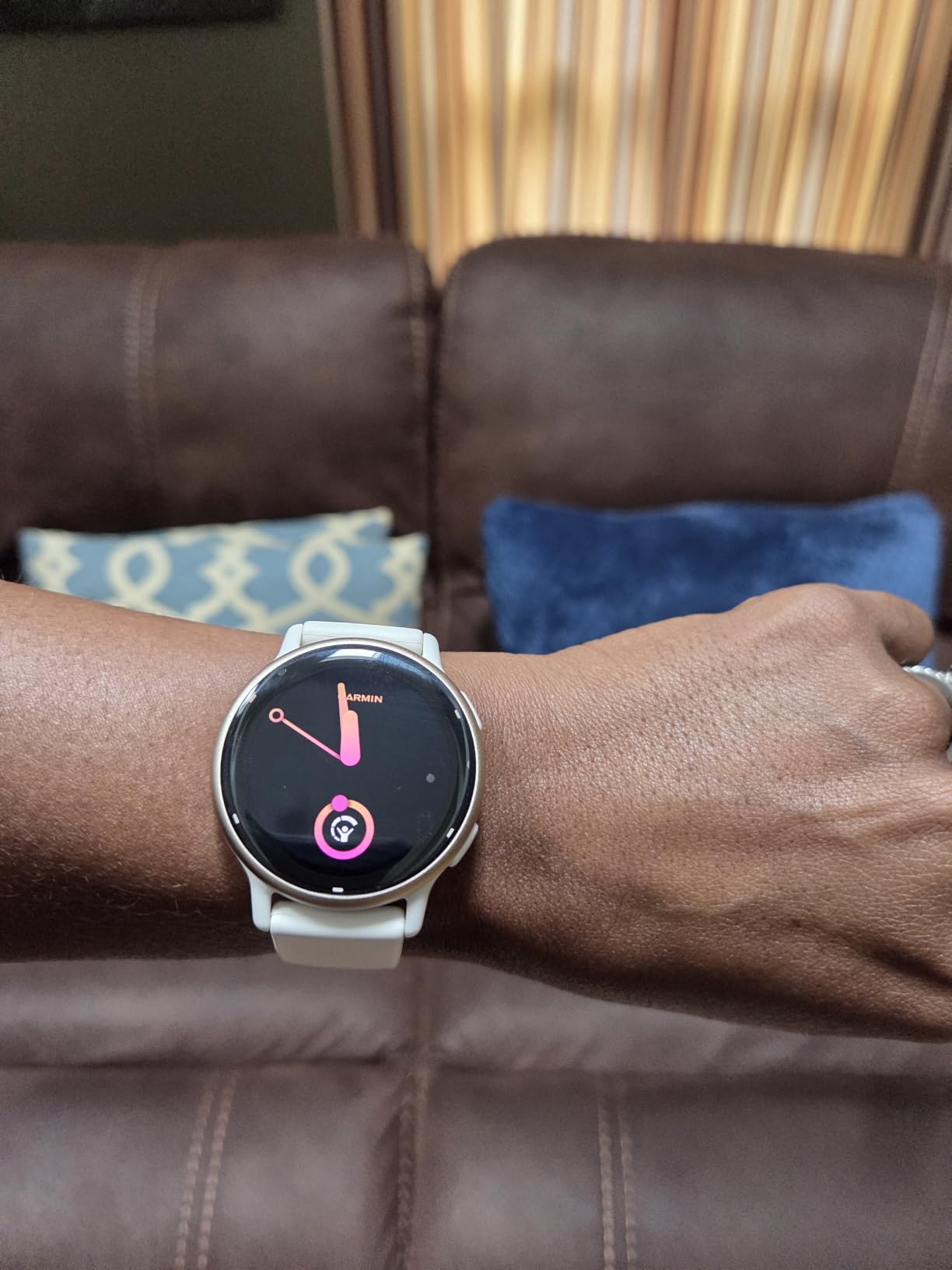
Garmin calls the sensor Pulse Ox, and it feeds the same sleep and Body Battery screens as the rest of the health suite. At 1.31 ounces with a 390 x 390 AMOLED display, it is the watch I would actually keep on at night.
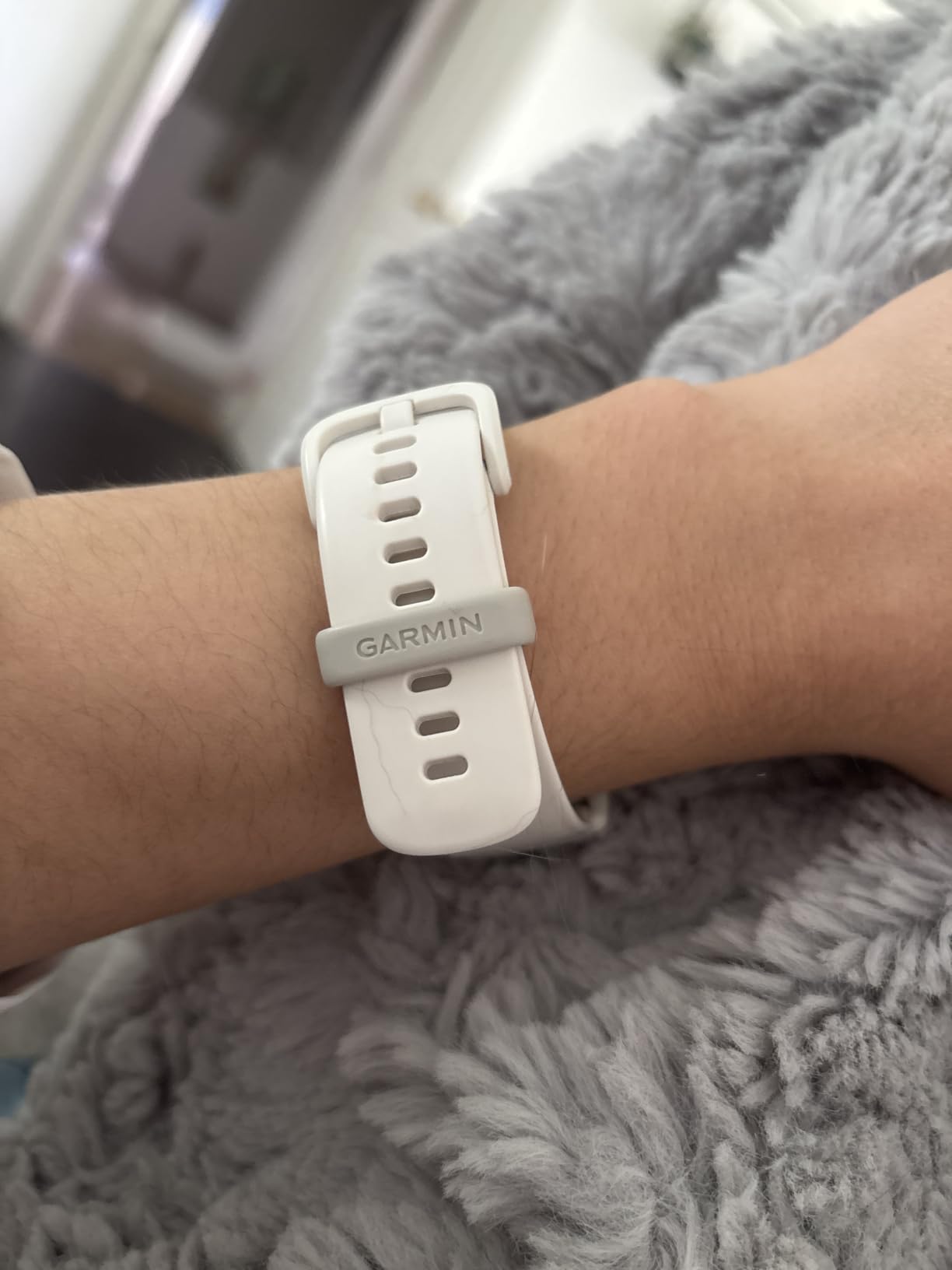
The 42mm case size is on the smaller side, which helps both comfort and sensor contact. A snug strap matters more than any software feature when you are chasing overnight saturation numbers.
One caveat from the reviews: owners are clear that Garmin presents these health figures as close estimations rather than medical measurements. That honesty is a feature, not a bug, but you should read the trend line and not the single value.
What you get for the money
Built-in GPS, 30+ sport apps, wheelchair mode with push and handcycle activities, and downloadable music from Spotify, Amazon Music or Deezer. Automatic nap detection is useful if your oxygen concern is fragmented sleep rather than a full night.
For anyone who wants a broader look at recovery and stress data, our [stress tracking smartwatch guide](https://modelrec.com/best-smartwatches-with-stress-tracking/) explains how Garmin’s HRV and Body Battery scores fit together.
Where Garmin users push back
There is no cellular connectivity, so the watch has to stay within range of a paired phone. It is also a fitness watch first, so the smartwatch side of the experience is plainer than the Apple and Samsung ecosystems.
On forums.garmin.com, owners have ranked other brands ahead of Garmin Venu models for SpO2 accuracy, naming the TicWatch 3 Pro Ultra, Amazfit GTR 3 and Huawei Watch GT3. If raw accuracy is your only priority, read the accuracy section further down before you commit.
4. Amazfit T-Rex 3 – Best Rugged Watch with 24-Hour SpO2
Amazfit T-Rex 3, Smart Watch, 1.5″ AMOLED Display, GPS, iOS/Android
BioTracker SpO2
27 day battery
2000 nit AMOLED
2.4 oz
Pros
- BioTracker gives 24 hour blood oxygen monitoring
- Over three weeks of typical battery life
- 2000 nit AMOLED readable in direct sun
- 316L steel bezel rated from -22F to 158F
- Built-in dual-band GPS with offline maps
Cons
- No calls or text reply from the watch
- Some owners report heart rate reading high
- Zepp app pushes premium subscription offers
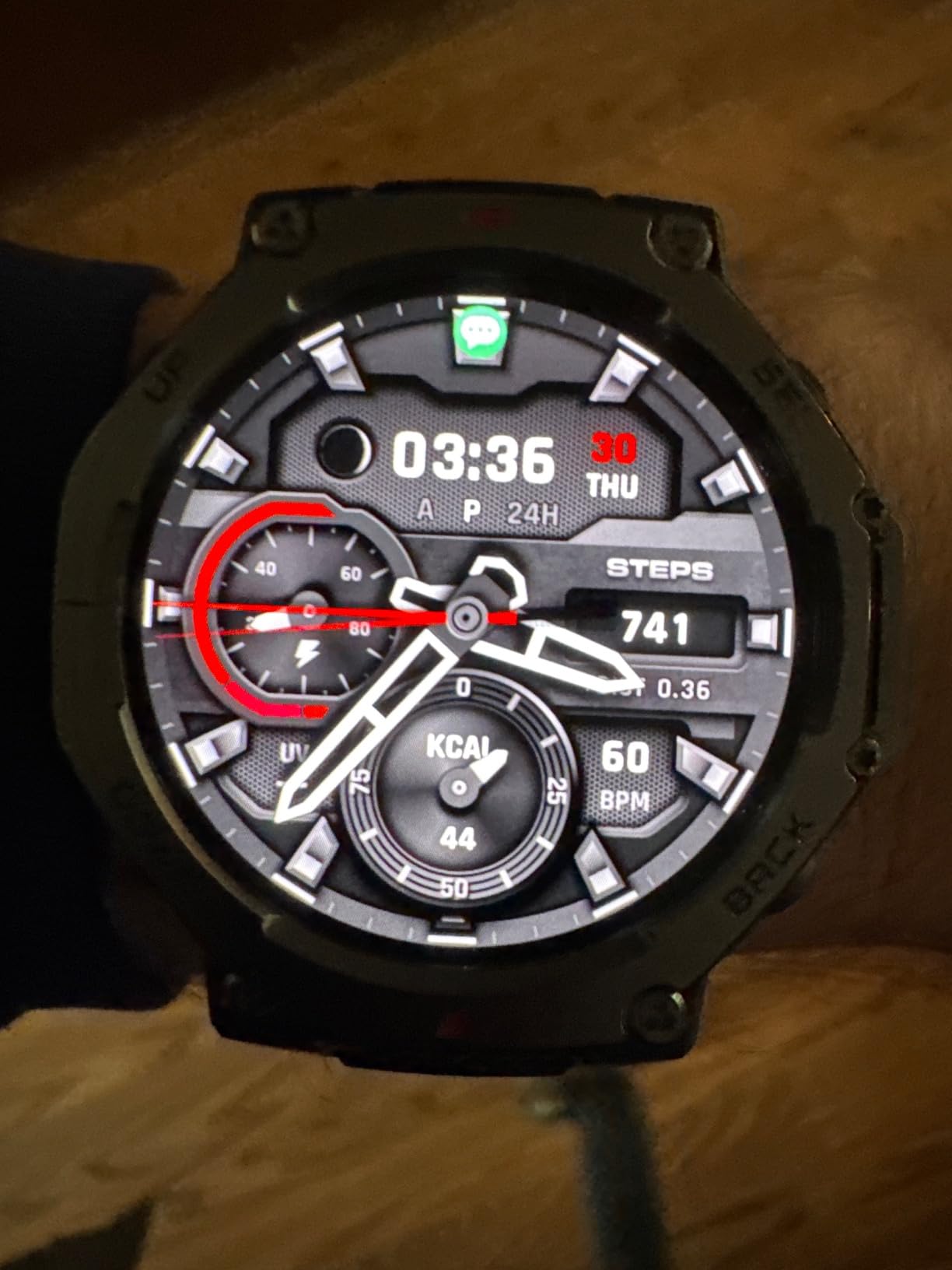
Nothing else on this list comes close on battery. Amazfit lists 27 days of average life from a 700 mAh cell, and a full charge in GPS mode lasts up to 180 hours. Continuous oxygen tracking is the one thing that normally kills a battery, and this watch simply refuses to die.
The BioTracker sensor suite measures blood oxygen, heart rate, stress, sleep stages and distance, and the 1.5 inch round AMOLED hits 2000 nits at peak brightness. It is readable outdoors, which matters if you are the kind of person who checks your oxygen on a mountain.
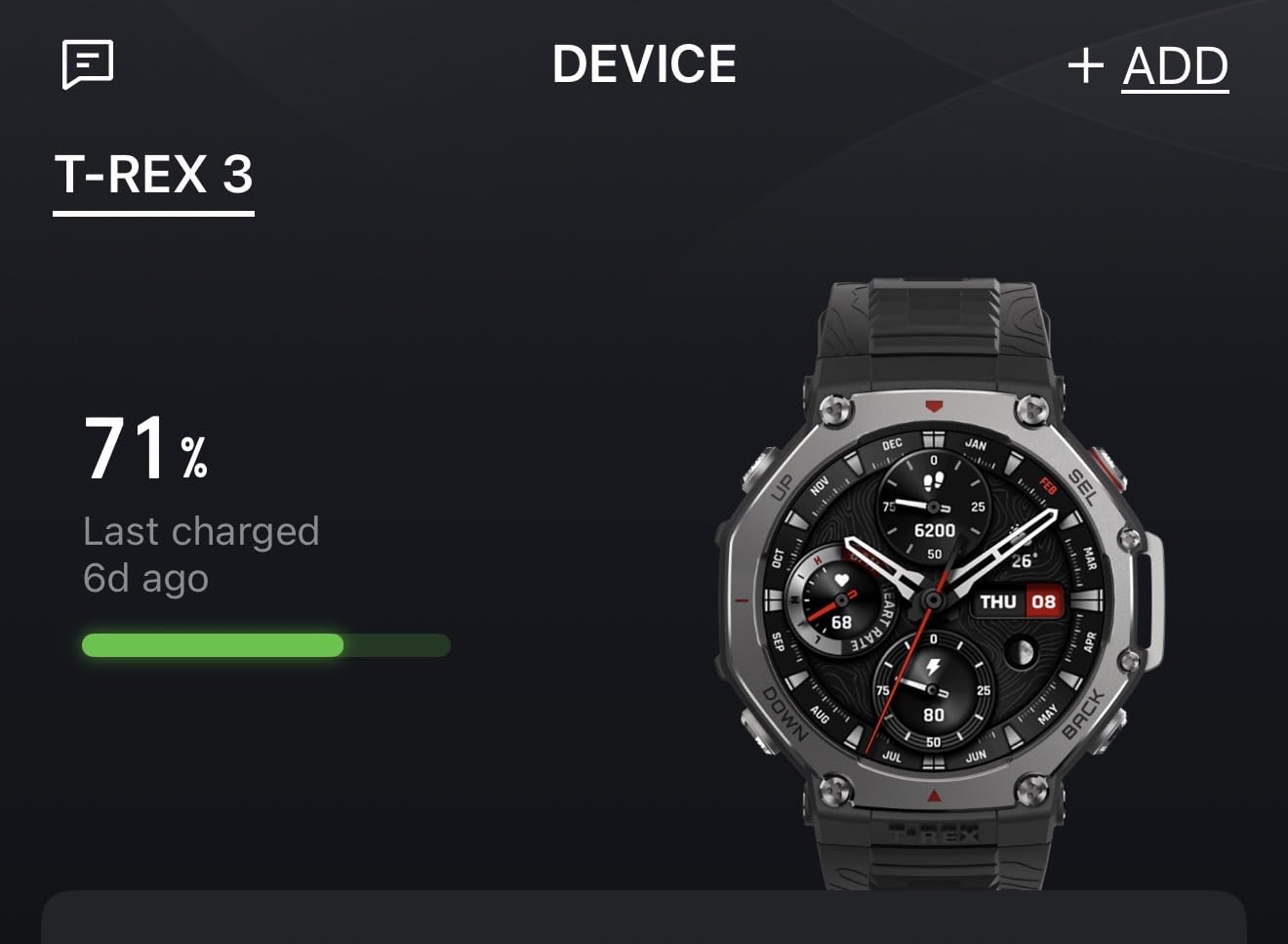
The rugged claims are unusually specific. The stainless steel bezel is rated from -22F to 158F, the watch is water resistant to 328 feet, and it is freediving certified to 147 feet with IPX7 sealing.
For altitude and acclimation work, the offline maps and turn-by-turn navigation mean you are not dependent on your phone. Our [muscle oxygen monitor guide](https://modelrec.com/best-muscle-oxygen-monitors-for-endurance-training/) covers the training side of recovery tracking.
Best reasons to buy it
Long expeditions, cold weather and multi-day trips are where a 27-day battery earns its place. The dual-band GPS covers six satellite systems and the free global maps work without a data connection.
There are also 170+ workout modes with AI-generated training plans, and a glove mode on the display for winter use.
What you give up
There is no direct calling or text reply, so the watch is a sensor and a notification surface rather than a phone. A minority of owners also report heart rate readings that skew high or phantom workouts triggering.
Be aware that eSIM functionality appears in the specification listing but is not available on this model. If the Zepp app tries to sell you a premium subscription for deeper insights, the core SpO2 data does not require it.
5. Samsung Galaxy Watch 8 40mm – Best for Sleep Coaching
Samsung Galaxy Watch 8 (2025), Graphite, 40mm, Bluetooth Smartwatch
Upgraded BioActive SpO2
30 g body
Built-in GPS
Sleep Coaching
Pros
- Upgraded BioActive sensor with on-wrist SpO2
- Slimmer lighter design for all-night wear
- Advanced Sleep Coaching and Bedtime Guidance
- Built-in GPS on this model
- Two year manufacturer warranty
Cons
- Battery life is the most common complaint
- Some newer health metrics flagged as unreliable
- Weaker vibration than earlier Galaxy Watches
The Galaxy Watch 8 takes the sleep story further than the Watch 7. Advanced Sleep Coaching and Bedtime Guidance walk you through improving rest routines, and that matters when the number you care about only appears once you are asleep.
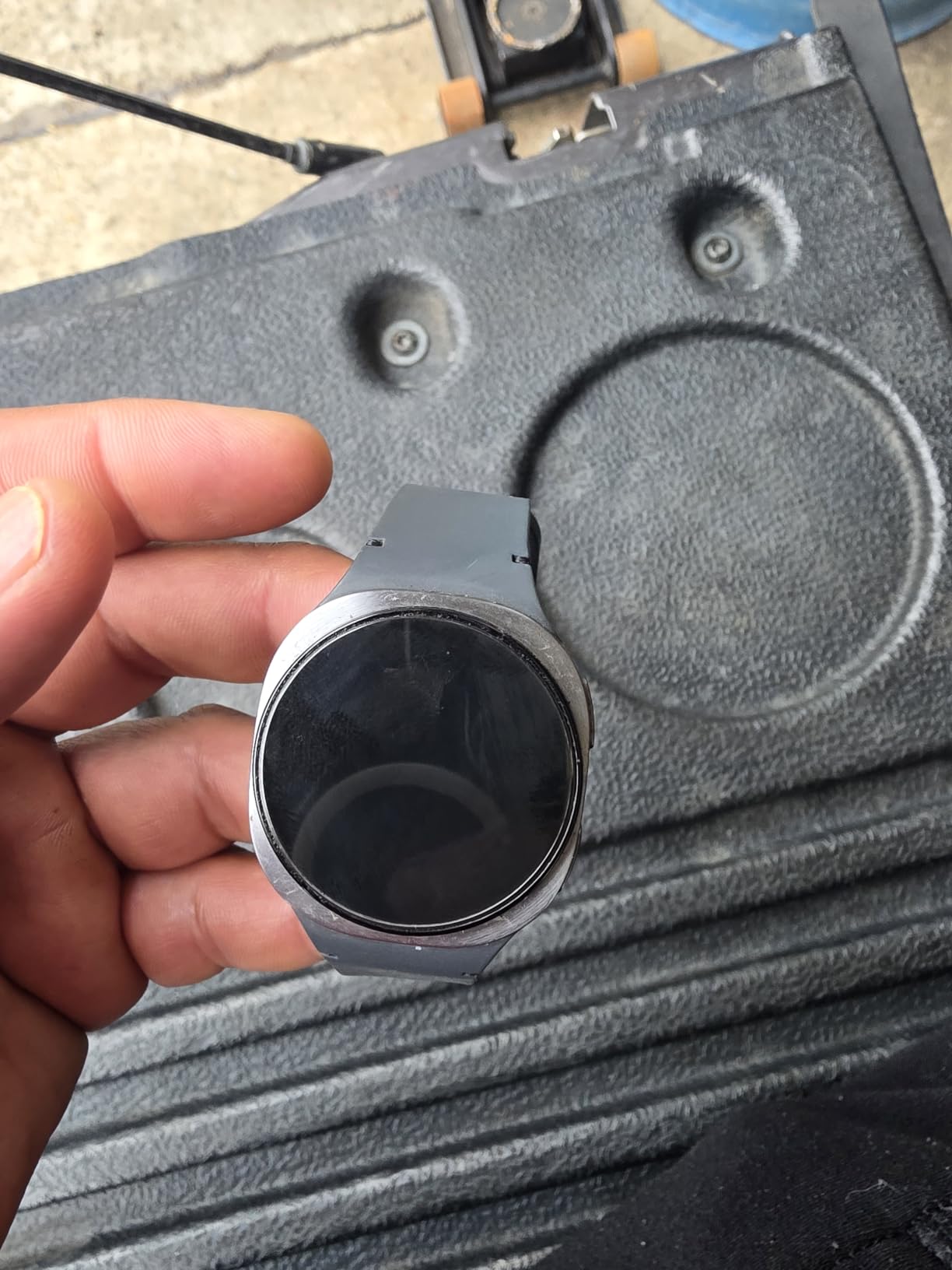
The physical change is the story here. At 30 grams and 7.2 x 2.72 x 1.65 inches, it is a slimmer, snugger watch than the model above, and that closer contact is what improves the overnight signal.
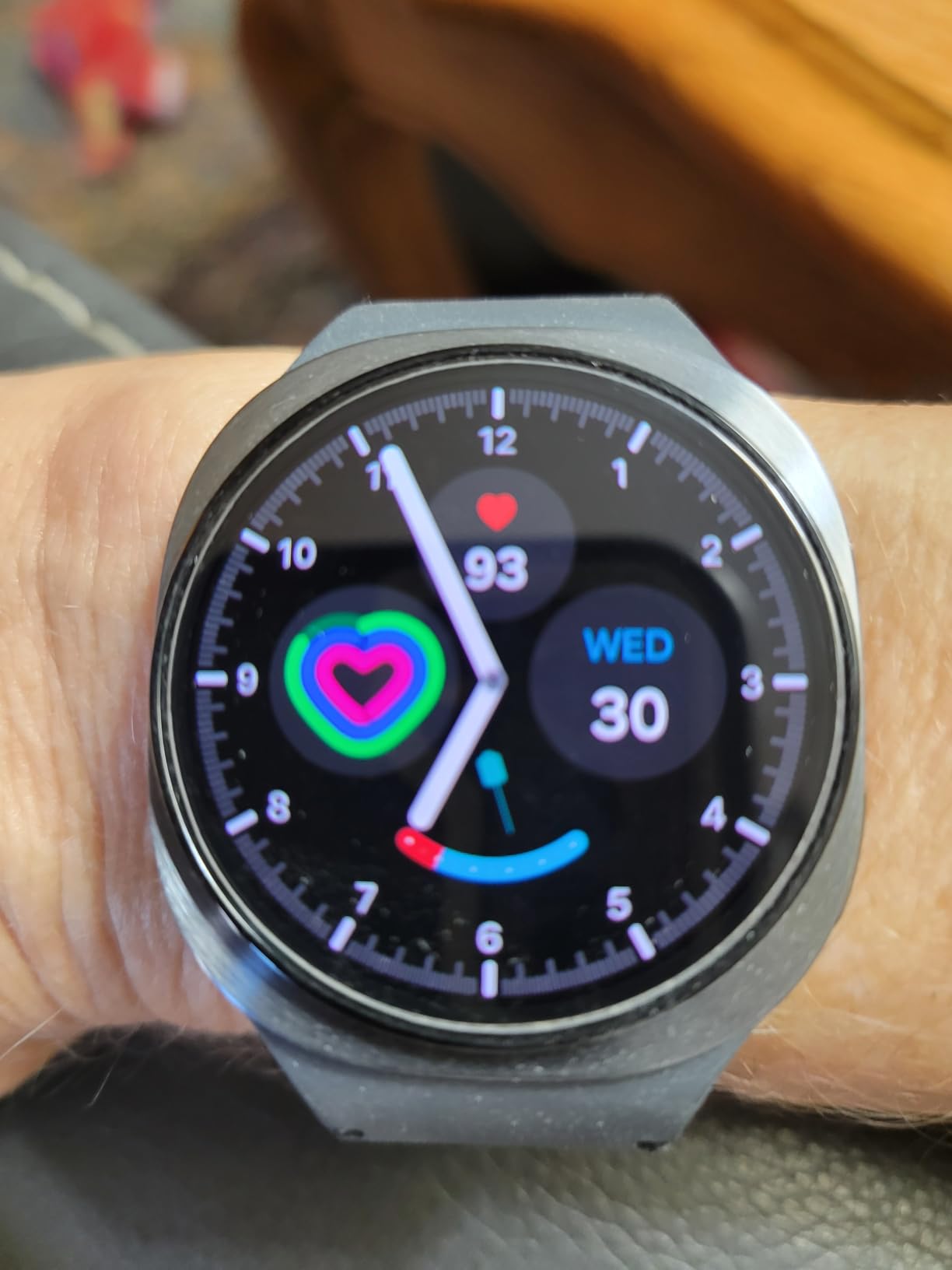
It also adds built-in GPS, 32 GB of storage and Wear OS, plus a personal AI assistant and a Running Coach with real-time feedback. Blood pressure monitoring is available through an optional Samsung cuff calibration if you also want to read our [Bluetooth blood pressure monitor guide](https://modelrec.com/best-bluetooth-blood-pressure-monitors/).
The display is a 1.3 inch round AMOLED at 240 x 240 and 500 nits, which is dimmer than the Watch 7 panel. If you are checking readings in daylight, the cheaper model above is the brighter option.
Where this model wins
The sleep coaching is the differentiator. Bedtime Guidance, sleep coaching and the Energy Score all use your overnight SpO2 and heart rate together, so it turns raw readings into a plan rather than a number you stare at.
Owners like the snug fit for all-day and sleep wear, and it works with Samsung phones and other Android phones.
What the reviews criticise
Battery life is the most common complaint, particularly with the always-on display enabled. Some newer health metrics are flagged by owners as unclear or unreliable, and the Bluetooth model has a weaker vibration than earlier Galaxy Watches.
If the Watch 7 already covers what you need, this upgrade is only worth it when guided sleep coaching is the reason you are shopping.
6. Amazfit Bip 6 – Most Versatile with 24/7 SpO2
Amazfit Bip 6 Smart Watch, 1.97″ AMOLED Display, GPS, iOS/Android
24/7 SpO2 monitoring
14 day battery
1.97 inch AMOLED
GPS
Pros
- 24/7 on-wrist blood oxygen monitoring
- Up to 14 days without nightly charging
- Large vivid 1.97 inch AMOLED
- Built-in GPS with free downloadable maps
- Works with both iOS and Android
Cons
- 512 MB storage and 64 MB RAM limit app capability
- No cellular connectivity
- Entry sensors are less precise for detailed analysis
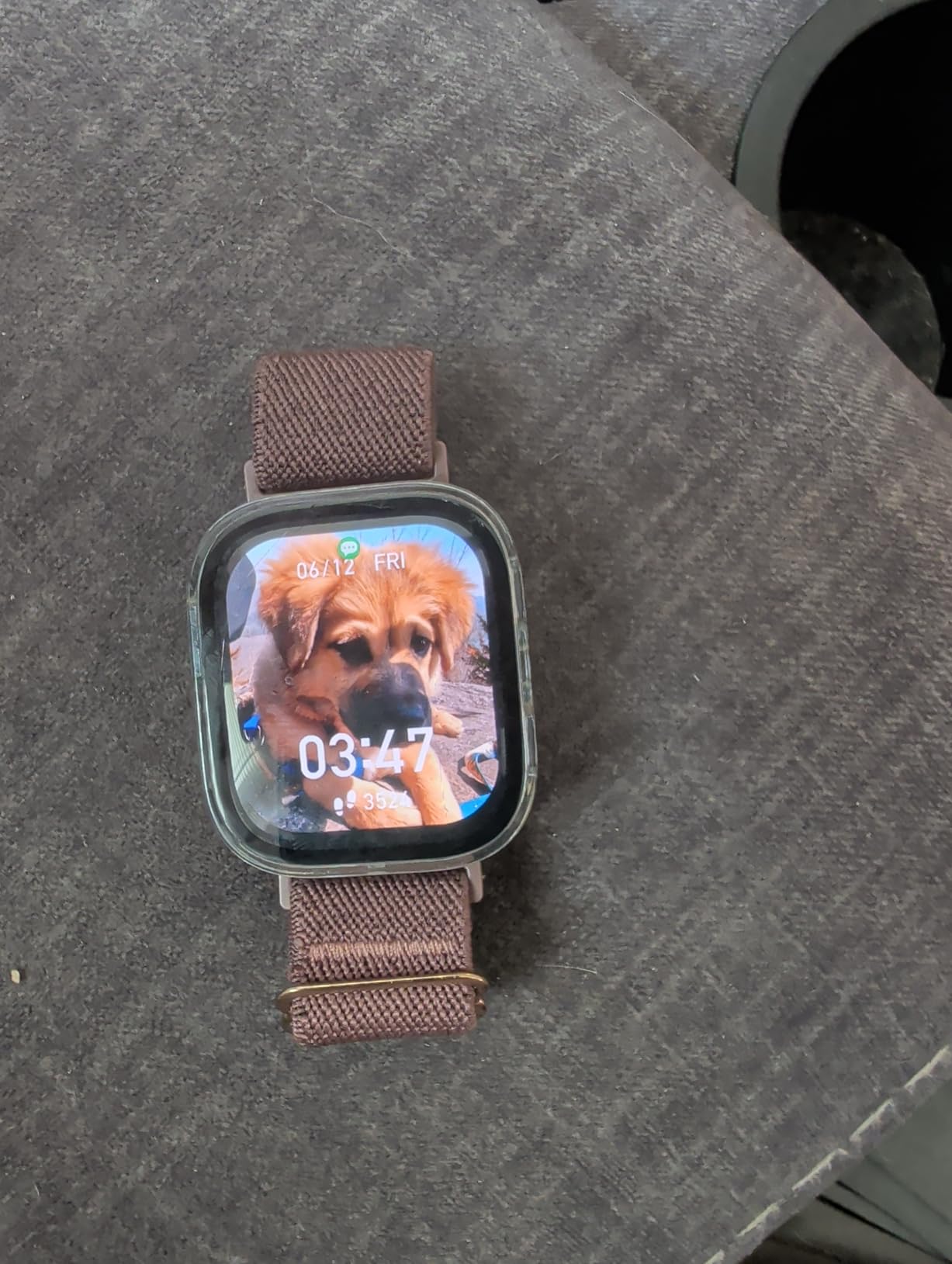
Few budget watches would have been credible on this list three years ago. The Bip 6 is the reason the budget tier still works: 24/7 blood oxygen monitoring, built-in GPS and a two-week battery in a 1.44 ounce body.
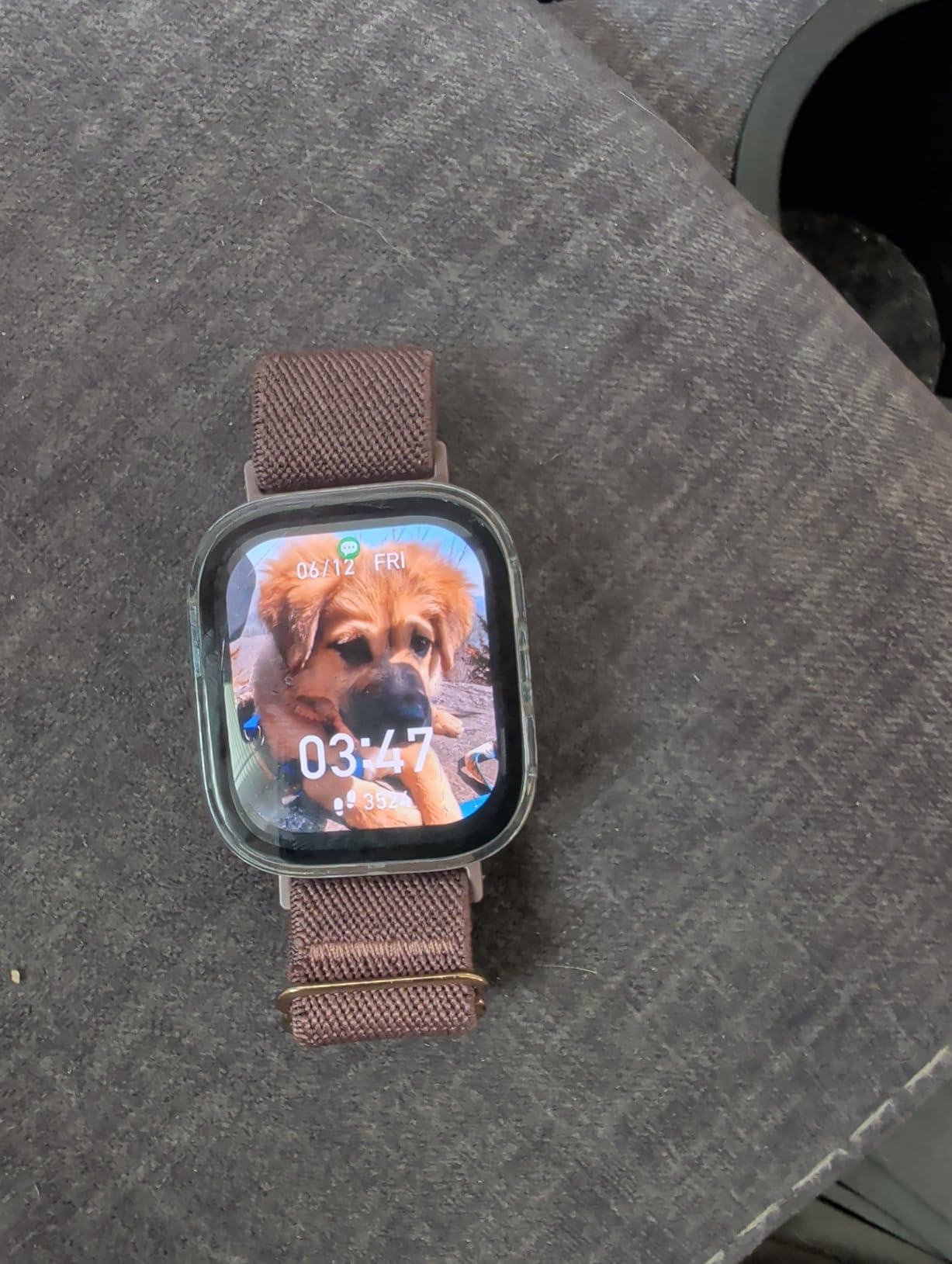
The screen is unusually large for the class, a 1.97 inch rectangular AMOLED at 390 x 450 and 2000 nits peak brightness. Zepp Health reports SpO2 alongside breath rate, calories, heart rate, sleep and stress.
Navigation is genuinely useful. Built-in GPS covers five satellite systems including BeiDou, GLONASS, GPS and Galileo, and the turn-by-turn directions work with free downloadable maps rather than a subscription.
Battery capacity is 340 mAh with a listed average life of 14 days, and the case is 50 metre water resistant with a one year manufacturer warranty.
Best reasons to buy it
If your goal is a baseline rather than a diagnosis, this is the watch on our list most likely to quietly collect oxygen data every day. The two-week battery means you will not go to bed with it unplugged.
There are also 140+ workout modes including HYROX Race and strength training with AI coaching, and it pairs with both iOS and Android phones.
Where the compromises bite
Storage of 512 MB and 64 MB of RAM is genuinely limiting if you want to install anything beyond the essentials. There is no cellular option, so calls and messages route through your phone.
Owners are clear that entry-level sensors are less accurate than premium watches for detailed health analysis. Use it for trends, and confirm anything concerning with a fingertip oximeter.
7. Tensky ID208Plus – Best for Calls and Built-In Alexa
Tensky Smart Watch for Men/Women Android/iPhone/Samsung, Alexa Built-in, 1.8″ Touch Screen Fitness Tracker with Answer/Make Calls, 3ATM Waterproof Heart Rate/Sleep/SpO2 Monitor, 120+ Sport Modes
24/7 SpO2 monitoring
12 day battery
Bluetooth calls
Alexa
Pros
- 24/7 SpO2 with heart rate stress and sleep tracking
- Bluetooth calling with built-in microphone
- Amazon Alexa voice control
- 12 day typical battery on a 300 mAh cell
- Works with iOS 9.0 and Android 6.0
Cons
- Cannot send or reply to text messages
- Calorie estimates read high for some owners
- Screen scratches easily
- Companion app has bugs
The Tensky is the rare budget watch where you can answer a phone call from your wrist. It pairs over Bluetooth 5 with a built-in microphone and speaker, and Amazon Alexa is built into the device rather than requiring your phone nearby.
On the oxygen side it runs 24/7 SpO2, heart rate, stress and sleep analysis with menstrual tracking. The spec sheet is explicit that the SpO2 figures are for non-medical use, which is the correct framing for a consumer watch.
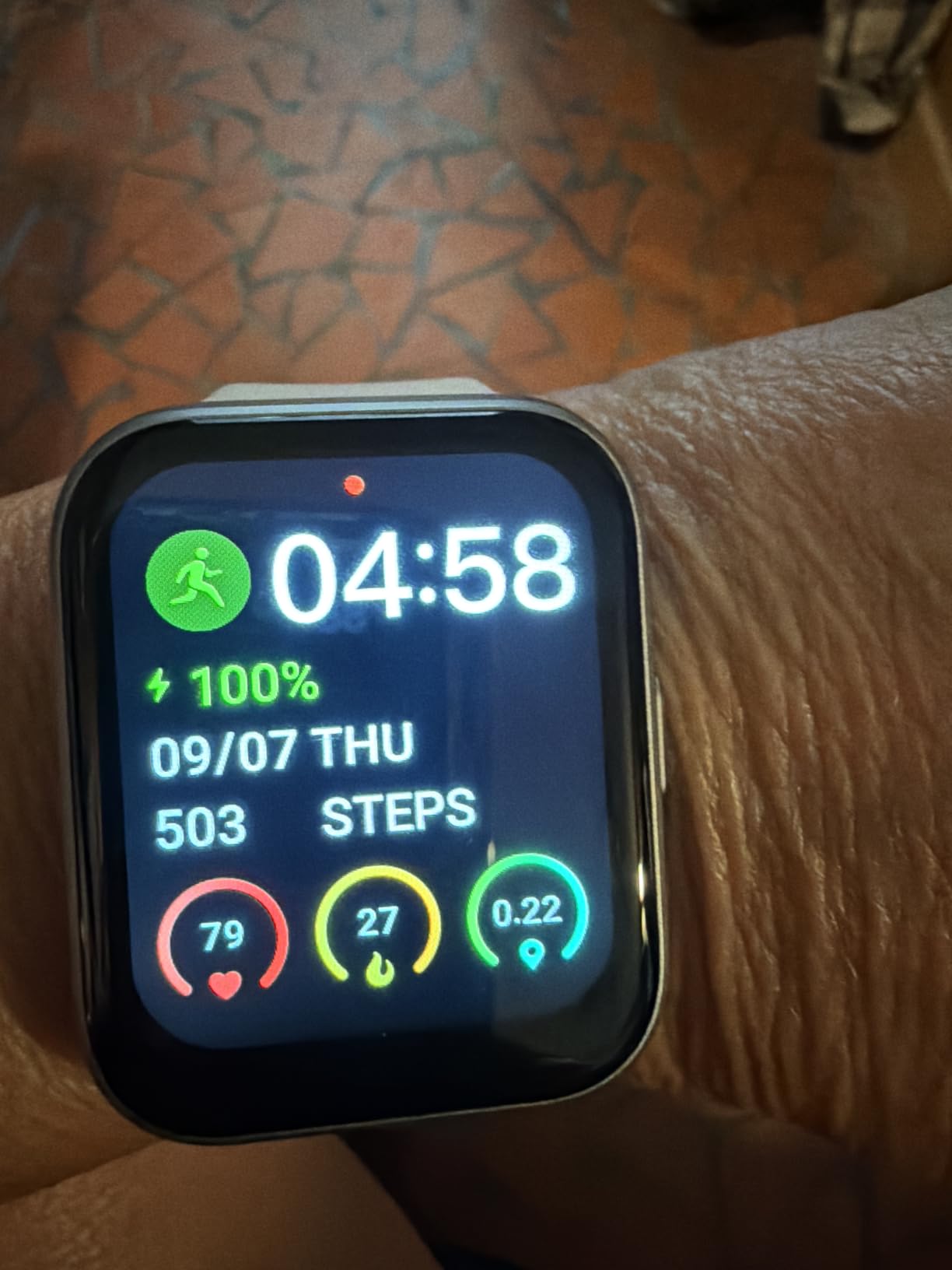
Battery is 300 mAh, giving roughly seven days under heavy use and 12 days of standard use, with up to 30 days on standby. A full charge takes 1.5 to 2.5 hours.
There are 120+ sport modes and a 3ATM waterproof rating, which covers swimming, showering and hand washing rather than serious diving.
Where it makes sense
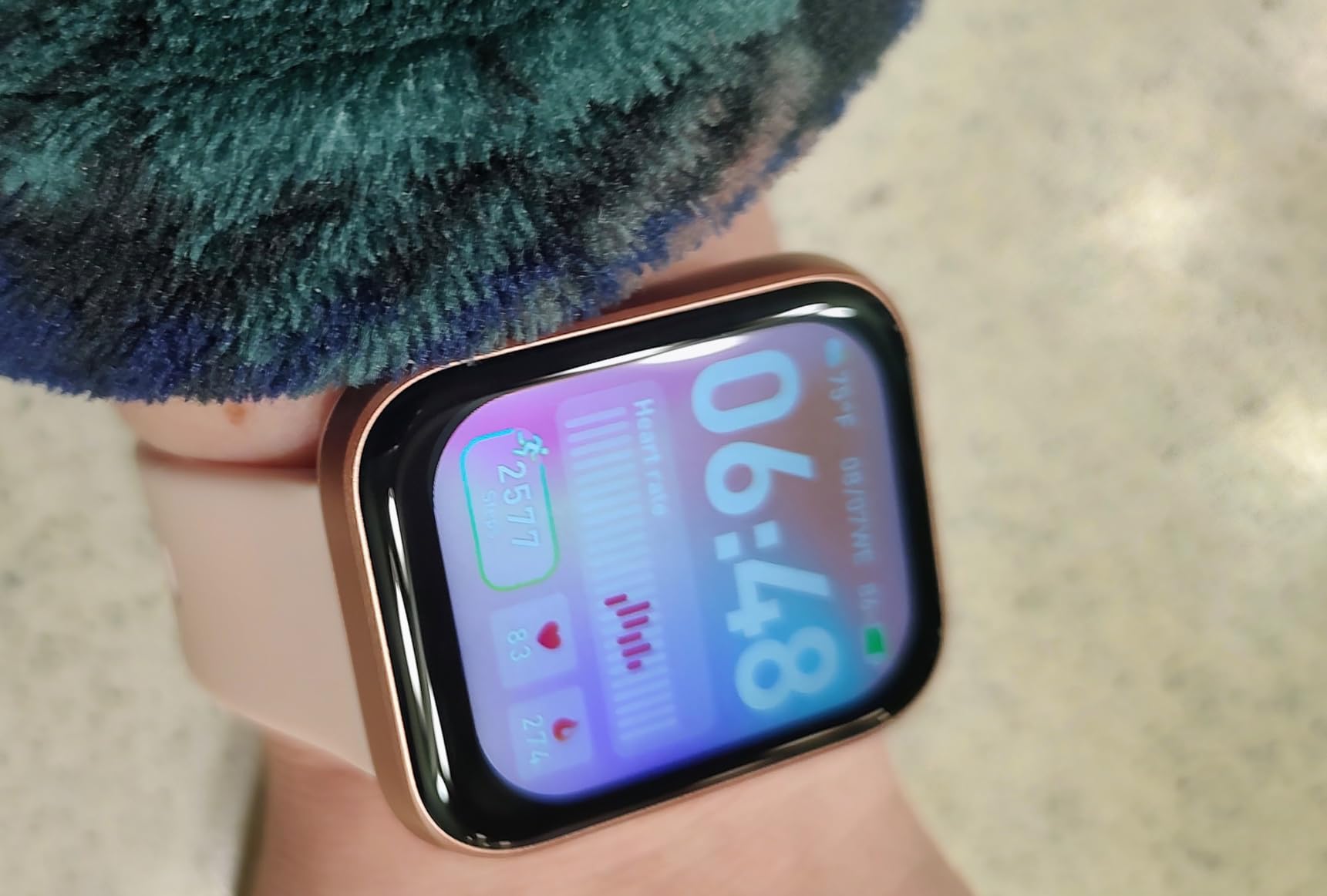
The wide compatibility is the quiet win, working with iOS 9.0 and above and Android 6.0 and above, plus a two year warranty with 24/7 after-sales support. Custom photo watch faces, sedentary and water reminders round out a genuinely useful feature list.
For anyone who wants a watch that does the calling, the calling actually works well. That is not true of most picks at this price.
What to watch out for
You can receive calls but not send or reply to text messages, which limits it as a daily driver for anyone whose work runs through chat. GPS comes from the paired phone rather than the watch.
Owners also report calorie estimates reading high, a screen that scratches easily, and a companion app that still has bugs. The 1.85 inch LCD runs at 300 nits, so it is dim outdoors compared with the AMOLED picks above.
8. Fitpolo IDW13 – Best for App Notifications
Fitpolo Smart Watches for Men Android & iPhone, Alexa Built-in [1.8″ HD Screen] IP68 Waterproof Fitness Watch with Bluetooth Call (Answer/Make), Heart Rate/Sleep/SpO2 Monitor, 105+ Sports Tracker
Continuous blood oxygen
7 day battery
Bluetooth 5.3 calls
IP68
Pros
- Continuous heart rate blood oxygen stress and sleep monitoring
- Bluetooth 5.3 answer and make call support
- Alexa voice control built in
- Notifications from the major messaging apps
- Five year warranty with 24/7 support
Cons
- Cannot send or reply to messages
- Bluetooth range limited to about 8-10 meters
- Readings are lifestyle wellness only
- Case material listing is inconsistent
The Fitpolo is the notification specialist of this group. It mirrors SMS, Facebook, WhatsApp, Instagram, X, Telegram, TikTok and Skype straight to the 1.8 inch HD colour screen, with 102+ watch faces or a custom photo face.
Its optical sensors cover continuous heart rate, blood oxygen, stress and sleep, with app syncing so you can review the night afterwards. Like the Tensky, the manufacturer states these are wellness readings rather than medical measurements.
Utility tools are unusually complete for the price: medication reminders, cycle tracking, weather, music and camera control, alarms, a stopwatch, a timer, a breather guide and find phone.
Water protection is IP68 rated to 5 metres, and there are 105+ sport modes. The 350 mAh battery gives about 7 days of typical use or 30 days on standby with a 2 to 2.5 hour charge.
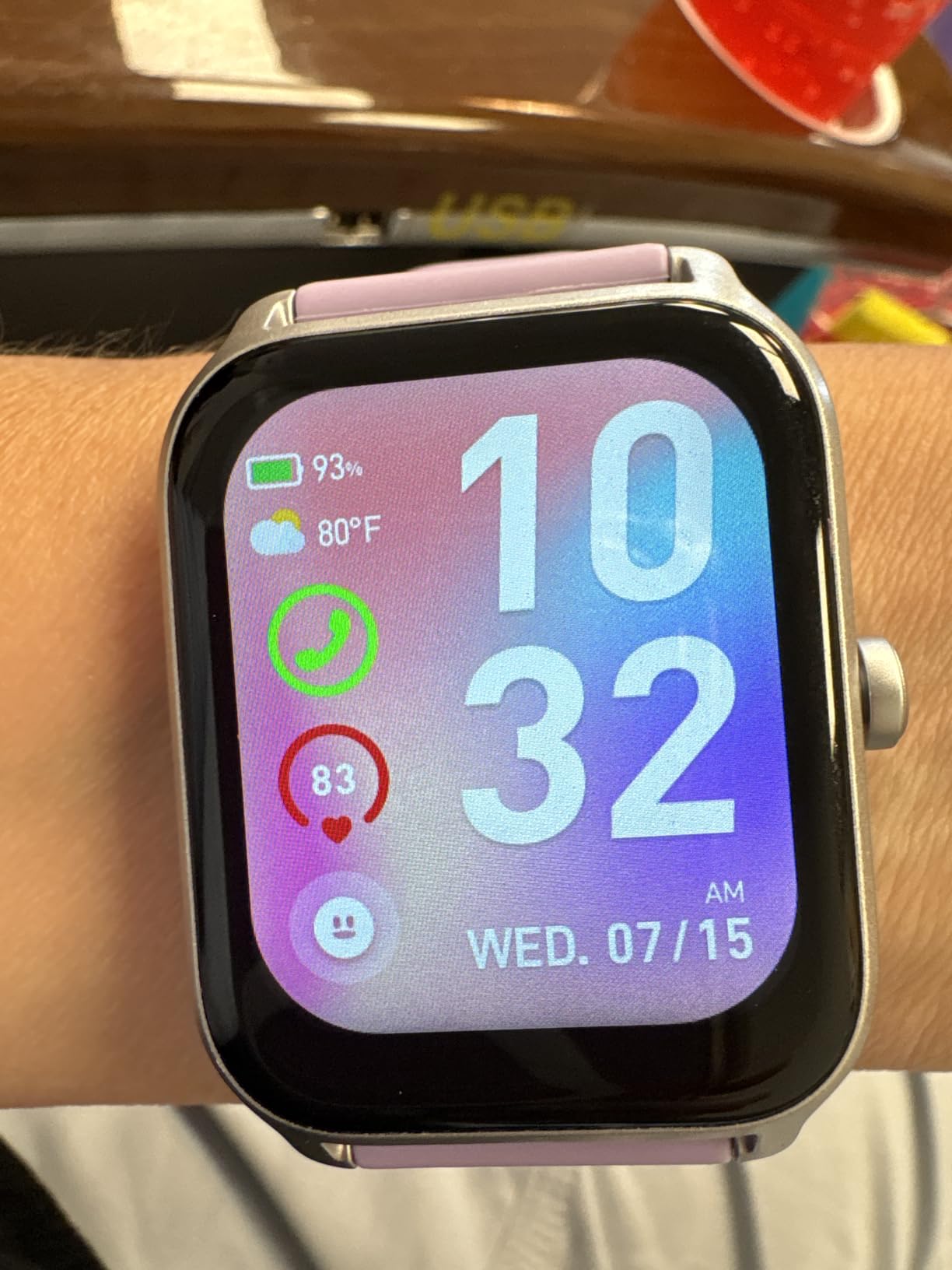
What it does better than the alternatives
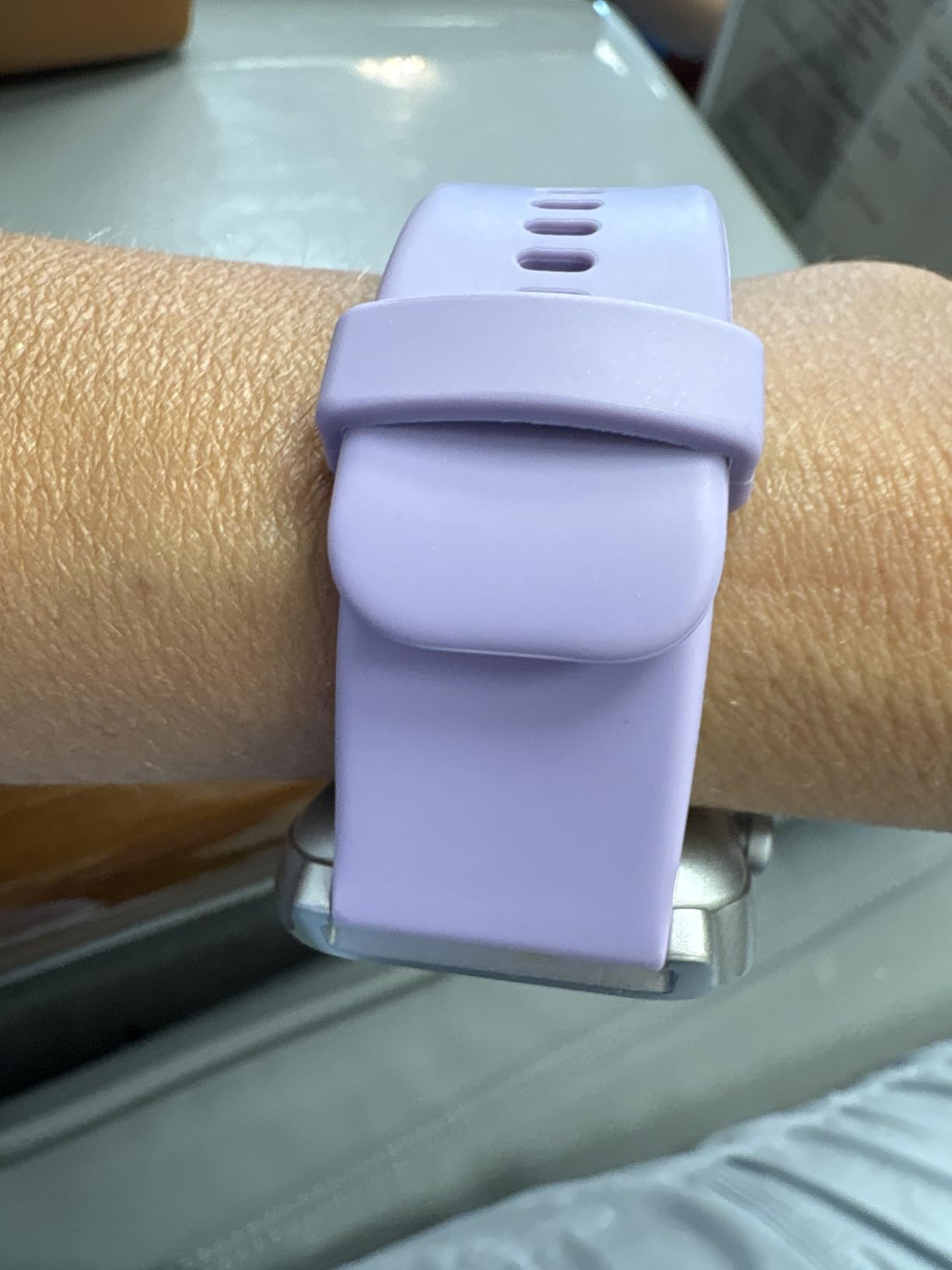
Bluetooth 5.3 is a step up from the 5.0 in some cheaper watches, and the app list is the widest we saw. The band fits wrists of 145 to 200mm, so sizing is less of a gamble than with some rose gold competitors.
The five year warranty is among the longest in this roundup and comes with 24/7 technical support.
Limits worth knowing
You can answer and make calls but not reply to messages, and the connection drops beyond about 8 to 10 meters from your phone. The listing notes an inconsistent case material description, which is a small sign of loose specification sheets.
It syncs GPS from the phone, and with 64 MB of storage this is a watch for essentials, not apps.
9. aeac Smart Watch AR-01 – Best for Small Wrists
Smart Watch for Women, Answer/Make Call, 1.32” AMOLED Ultra-Clear Screen
Blood oxygen and SpO2 reporting
10 day battery
1.32 inch AMOLED
43mm
Pros
- Tracks blood oxygen heart rate stress and sleep
- Up to 10 days on a 2 hour charge
- 1.32 inch AMOLED at 1500 nits
- Clear Bluetooth call quality
- Lightweight design suits smaller wrists
Cons
- Cannot reply to text messages
- Short range connection with frequent auto-reconnects
- Find My Phone feature disconnects often
- Strap system is not easily interchangeable
- App pushes ads and a paid subscription
Most of the large-case watches on this list are physically uncomfortable for smaller wrists. The AR-01 solves that with a 1.32 inch round AMOLED in a 43mm case, a metal body and a 20mm rose gold band, listed at just 5 grams.
The app reporting is the part that impressed us. It breaks out SpO2, respiratory rate, heart rate variability, stress, sleep stages and energy level rather than giving you one opaque number.
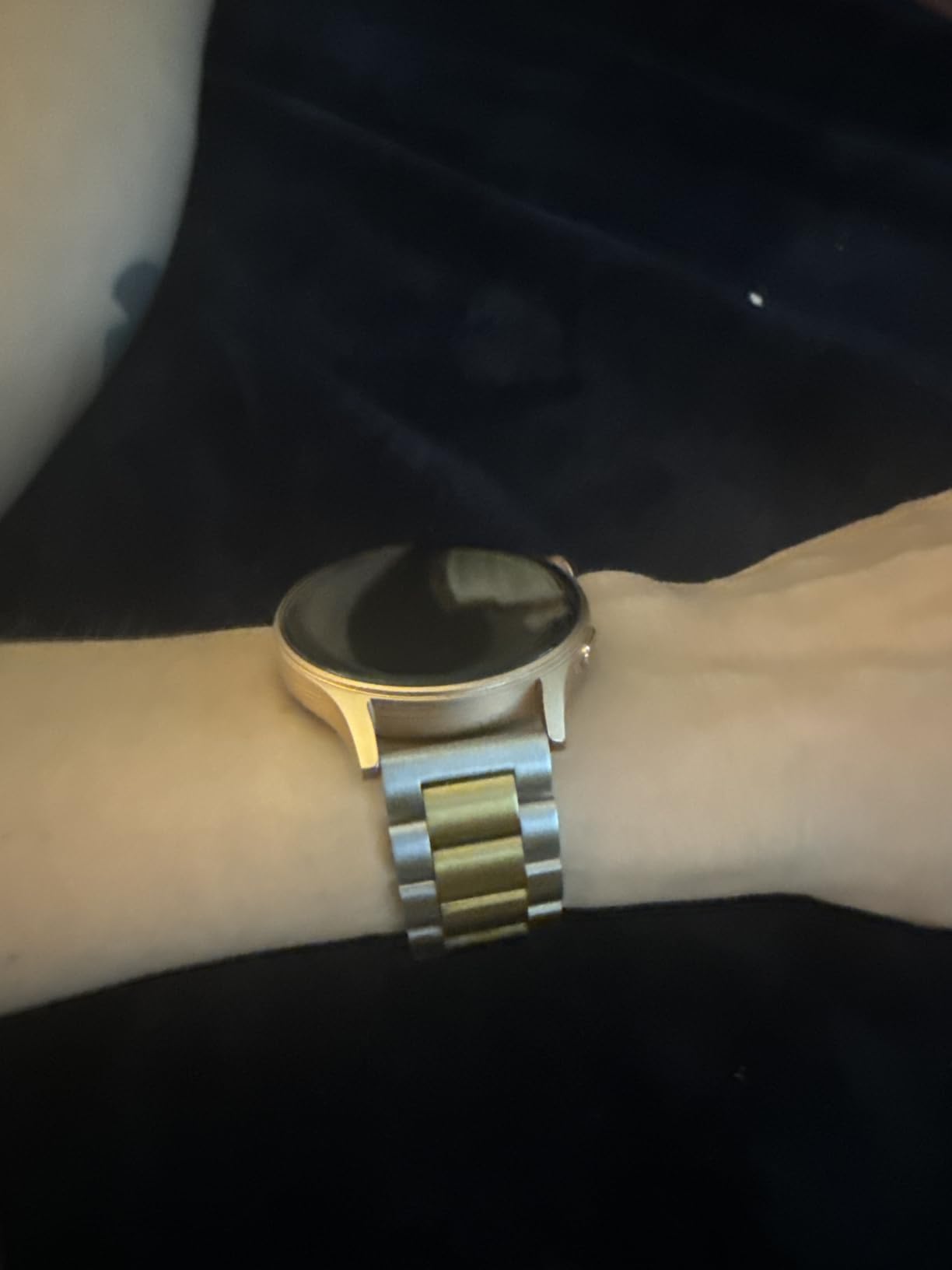
Calls are clear through the HD speaker and microphone, and there is a built-in AI voice assistant. The workout screens show heart rate, duration, calories, aerobic training effect, distance and recovery time across 110+ sport modes.
Battery life is listed at 10 days on a 2 hour quick charge, with 256 MB storage and 1024 MB of RAM. The case is 3ATM and IP68 rated to 30 metres.
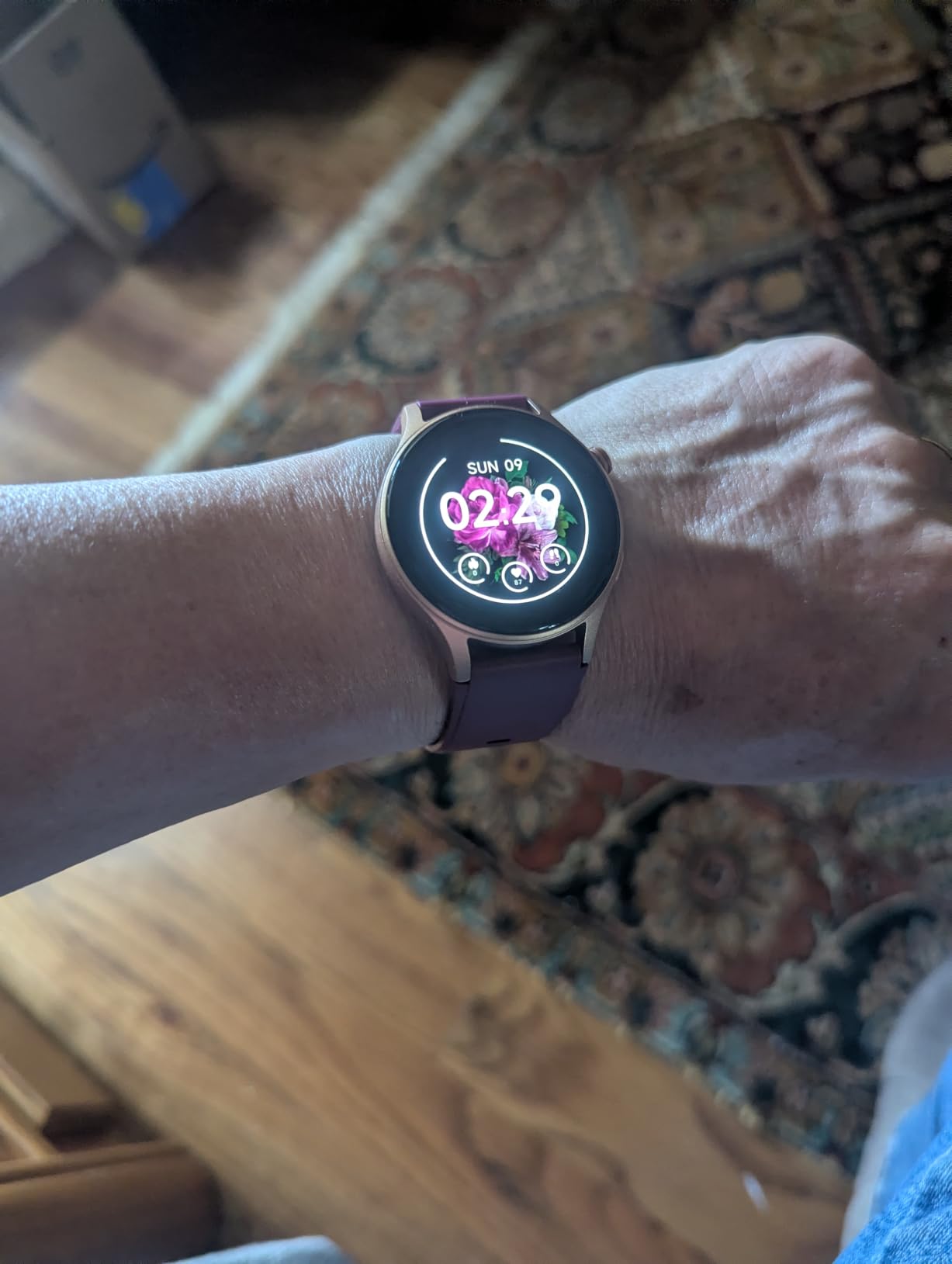
Best reasons to choose it
Fit and comfort decide data quality at night, and a watch you can forget you are wearing produces more usable sleep data. The 1500 nit display is also far brighter than the LCD models in this bracket.
Owners consistently mention the display, battery and SpO2 reporting as the reasons they are happy with it.
What reviewers dislike
The app is the weak point. Owners report the Find My Phone feature disconnecting frequently, unreliable app notifications, and the app pushing advertisements plus a paid community subscription for full functionality.
You also cannot reply to text messages, and the bands are not easily interchangeable with the supplied strap system.
10. FITVII HM57 – Best Budget Tracker with Blood Pressure Readings
FITVII Health & Fitness Tracker (Answer/Make Calls), Smart Watch with 24/7 Heart Rate and Blood Pressure, Sleep Tracking, Blood Oxygen Monitor, 120+ Sport Modes Activity Tracker for Women Men
Blood oxygen readings
24/7 heart rate
7 day battery
120+ modes
Pros
- Blood oxygen alongside 24/7 heart rate and blood pressure tracking
- Over 120 sport modes
- Bluetooth calling with AAC audio plus texts
- Up to 7 days on one charge
- Useful daily utilities and menstrual tracking
Cons
- Lowest average rating in this set
- Readings are lifestyle data not medical use
- IP67 suits hand washing only
- Only calories distance and steps listed as measured metrics
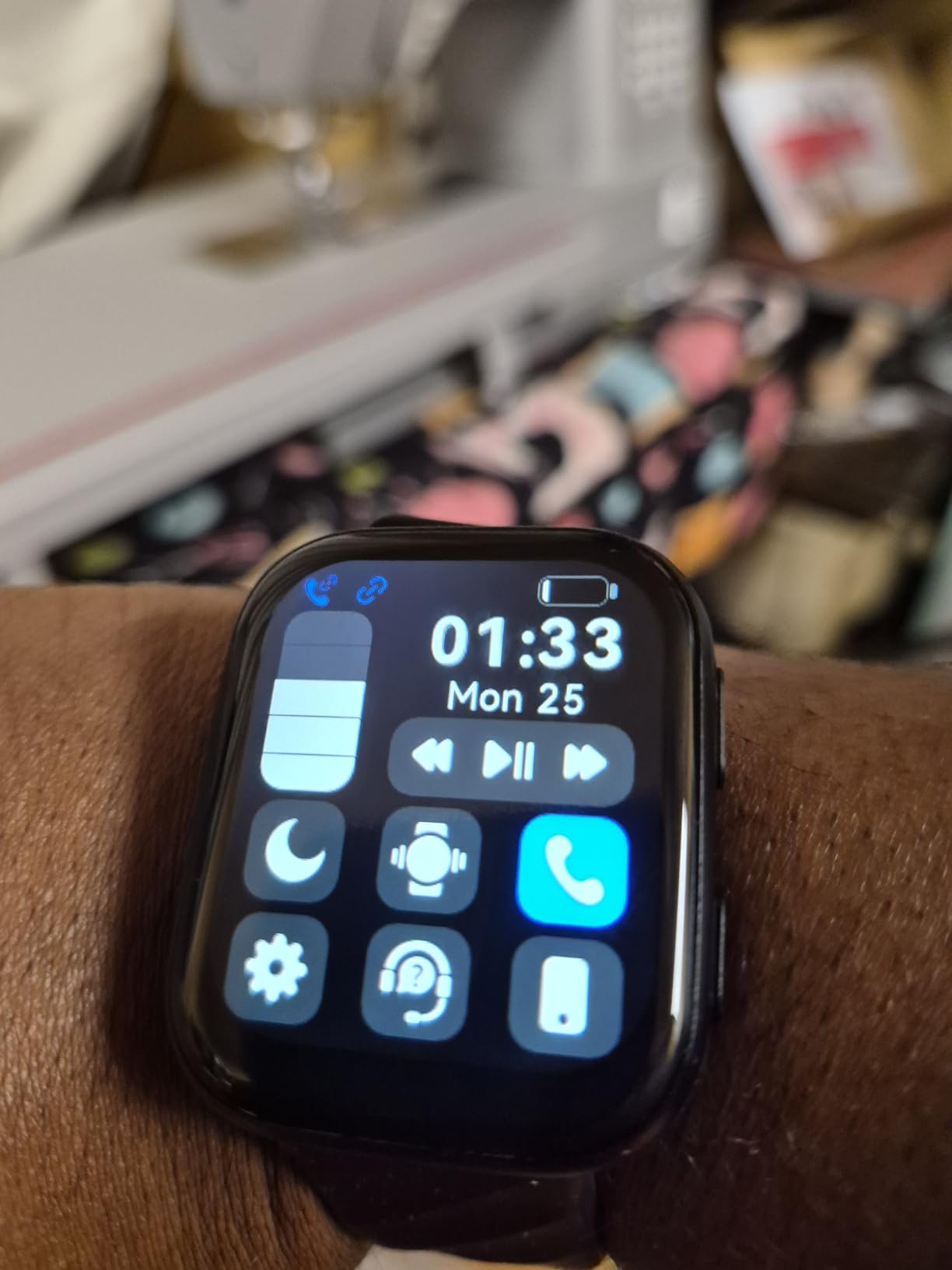
The FITVII is the one pick here that pairs blood oxygen with continuous blood pressure readings in a tracker this cheap. It also handles Bluetooth calling with AAC audio, text and app notifications, and music playback control straight from the wrist.
It tracks heart rate and blood pressure around the clock, monitors sleep, takes blood oxygen readings and includes guided breathing, which is the practical tool for anyone whose breathing is the actual concern.
There are 120+ sport modes covering running, walking, cycling, climbing and gym work. Daily utilities include sedentary and hydration reminders, menstrual cycle tracking, alarms, a stopwatch, a timer, weather, calendar, contacts and a calculator.
Battery life is up to 7 days from a lithium ion cell, and it syncs over Bluetooth 5.0 with Android 7 or iOS 13 and above. The band suits wrists between 5.71 and 8.86 inches.
Why it is still on the list
Few trackers combine blood oxygen, blood pressure and calls in one device this compact, and the guided breathing mode is a genuinely thoughtful addition for anyone monitoring respiratory symptoms at home.
It also ships with a two year warranty, which is reassuring on a device that will mostly sit on your wrist producing trend data.
The honest concerns
This is the lowest-rated watch in the roundup, with a higher share of one-star reviews. Buyers cite accuracy and reliability doubts, and the manufacturer states the blood pressure and SpO2 readings encourage a healthy lifestyle rather than serve a medical purpose.
Water protection is IP67, which is one metre, so it is not suitable for diving or surfing. The official metrics list covers only calories, distance and step count, so treat the SpO2 and blood pressure figures as direction rather than data.
What SpO2 Actually Measures and How to Choose a Watch
Blood oxygen saturation, written as SpO2, is the estimated percentage of your haemoglobin carrying oxygen. A watch measures it with an optical sensor: red, green and infrared LEDs shine into the skin, oxygenated and deoxygenated haemoglobin absorb light differently, and photodiodes read the reflected signal over roughly 30 to 45 seconds. What you get is a peripheral estimate, which is why contact quality matters so much.
Do smartwatches measure blood oxygen accurately?
Wellness accuracy is good enough to show trends, not to diagnose. A published Samsung Galaxy Watch4 sleep study against a transmittance pulse oximeter during polysomnography reported a root-mean-square error of 2.3 percentage points, a bias of roughly -0.2 points, and 26.5 percent of readings rejected as unusable. Separate user testing has put the Apple Watch mean absolute error near 2.2 percent. Both numbers describe trend quality, and neither is medical grade.
The practical reading of that evidence is encouraging and cautionary at once. A 2 point spread is small enough that a downward trend across weeks is meaningful, and large enough that a single low number taken while you are moving, talking or shifting position means almost nothing.
On-demand, sleep-only or all-day: which SpO2 mode do you need?
On-demand gives you a spot check whenever you ask, which is the mode you want if you have asthma, are travelling to altitude, or want to confirm a surprising number. Sleep-only collects data while you are asleep and quietly gives you nothing during the day, which confuses a lot of first-time owners. All-day sampling keeps the sensor working continuously and shows the full curve, at the cost of battery life.
On this list, the Apple Watch Series 10, Galaxy Watch 7, Galaxy Watch 8, Amazfit T-Rex 3 and Amazfit Bip 6 all support an on-demand check, while the Garmin vivoactive 5 leans on trend data with its Pulse Ox sensor. The Tensky, Fitpolo, aeac and FITVII run continuous background monitoring rather than a discrete spot measurement.
How to take a more accurate wrist reading
Start by wearing the watch a finger’s width above the wrist bone, not directly on it. Turn your palm down, keep your hand flat and still, and stay warm, because cold skin constricts the vessels and skews the result. Tighten the strap so it does not shift when you move, and avoid tattoos, thick hair, sweat, lotion and dirt over the sensor. Rest for a minute before you start the reading, and let the 30 to 45 second measurement finish without talking.
Two more factors sit outside your control. Body position matters, because a wrist resting on a pillow at night can read lower than the same person sitting up, and skin tone, pigmentation and circulation all affect optical readings, which is why regulators have updated their guidance for fingertip pulse oximeters. Our test protocol for 2026 was the same wrist, still and warm, compared side by side against a fingertip oximeter.
What to do when a reading drops
Most alarming overnight lows are artifacts rather than real events. Before you worry, check these in order: the strap shifted or loosened, you changed sleep position, your wrist was bent under you, your hand was cold, or you moved during the reading. The Galaxy Watch4 study rejected more than a quarter of its readings, and those same contact problems explain most of that.
Reasons to confirm rather than dismiss include a low number taken while you were awake and still, repeated dips across several nights with no position change, daytime readings below 90 percent, or chest tightness and breathlessness. In those cases, take a fingertip oximeter reading and talk to a clinician. No consumer watch, including the ones on this list, is a diagnostic device.
Frequently Asked Questions
What smart watch can monitor blood oxygen levels?
Most current smartwatches can. Every watch in this roundup measures SpO2 on the wrist with an optical sensor, and models such as the Samsung Galaxy Watch 7, Galaxy Watch 8, Apple Watch Series 10 and Amazfit T-Rex 3 let you trigger a reading on demand. The useful difference is measurement mode: on-demand spot checks, sleep-only collection, or continuous all-day tracking.
Do smartwatches measure blood oxygen accurately?
Accurately enough for trends, not for diagnosis. A published Galaxy Watch4 sleep study against a fingertip reference reported a root-mean-square error of 2.3 percentage points, a bias near -0.2 points and 26.5 percent of readings rejected. User testing puts the Apple Watch mean absolute error around 2.2 percent. Both support spotting changes over weeks, not trusting one number.
Which smartwatch has the best SpO2 sensor?
It depends on the mode you need. The Samsung Galaxy Watch 7 combines an on-wrist BioActive SpO2 sensor with sleep apnea detection in a light 5.9 ounce body, which made it our top pick. The Amazfit T-Rex 3 is the choice for continuous 24 hour tracking because its 27 day battery absorbs the extra sensor load, and the Garmin vivoactive 5 leads on multi-day trend history.
Can a smartwatch detect sleep apnea?
A watch can screen for it, not diagnose it. The Samsung Galaxy Watch 7 and Watch 8 flag moderate to severe sleep apnea events during sleep tracking, and the Apple Watch Series 10 raises sleep apnea notifications through the Vitals app. Garmin watches infer breathing variation rather than issuing a formal result. A positive screening result should always be followed by a proper sleep study.
Why does my smartwatch blood oxygen reading keep dropping at night?
Position and contact pressure are usually the cause. Isolated overnight minimums on r/SleepApnea and r/AppleWatch are most often traced to the watch shifting, the wrist bending under a pillow, or the strap loosening. Confirm by wearing it a finger’s width above the wrist bone, keeping the hand flat and warm, and checking whether the same pattern appears during a daytime spot check.
Can a smartwatch replace a pulse oximeter?
No, not for a reading you need to trust right now. Watches are good for baseline trends, overnight dips and long-term comparison, while a fingertip oximeter is the tool for a current, clinical-style measurement. Use the watch to notice a change and the fingertip oximeter to confirm it, then bring both to your doctor.
The Best Smartwatch for Your Blood Oxygen Tracking
For most people, the Samsung Galaxy Watch 7 is the right answer. It is light enough to sleep in, its BioActive sensor delivers genuine on-wrist SpO2 data, and it adds sleep apnea screening that few rivals in its class can match. Pick the Galaxy Watch 8 instead if guided sleep coaching matters more to you, and the Amazfit T-Rex 3 if you want continuous tracking without charging for three weeks.
Whichever you choose, treat the number as a trend. Wear it properly, give it a warm and still wrist, and confirm anything that worries you with a fingertip oximeter and a conversation with your doctor. That is the honest way to use the best smartwatches for blood oxygen tracking in 2026.