If you ride with music or podcasts, the wrong pair of headphones can genuinely put you in hospital. An earbud seals your canal shut, which muffles the car that is about to cross your path, and a cheap in-ear is a distraction you cannot afford at 20 mph in traffic. The best bone conduction headphones for cycling solve a specific problem: they put sound into your skull while your ears stay open to the road.
Our team put eight open-ear pairs through a month of riding together – commute loops on wet tarmac, a long gravel day, a forest trail with a hard rain band, and a winter morning where the cold was the point. The short version is that the differences between these eight are much smaller than the differences between bone conduction and everything else. What separates them is band fit under a helmet, real-world battery headroom, and whether the wind eats your music on the fast bits.
We also compared this category against the same pairs used for running, and the fit data transfers better than you would expect – our bone conduction headphone guide for joggers covers the audio side in more depth. For the rest of the riding-specific factors, we start with how the technology actually works, because that single fact explains almost every review you will read about these things.
Table of Contents
How Bone Conduction Works, and Why It Matters on a Bike
Bone conduction headphones are open-ear headphones. Instead of pushing sound down your ear canal, a transducer resting on the bone just in front of each ear vibrates, and those vibrations travel through the skull to the inner ear. Nothing blocks your canal, so an approaching car, a call from the ride leader, or the rattle of loose gravel arrives at your ear with its full volume intact.
That is the entire appeal for cyclists. It is not audio fidelity. Because the transducer drives a small contact patch of bone rather than a sealed air column, bass is thin and the sound signature is thinner than an earbud. Newer hybrid designs add a small air-conduction driver to push more air at the transducer for volume and low-end, which helps but does not close the gap with a good in-ear.
There is one hard limit that riders keep rediscovering. Above roughly 25 to 30 mph, airflow over the transducer overwhelms the vibration, and the audio gets buried under wind. On gravel, towpaths, and shaded trails – anywhere the ambient noise floor is low – bone conduction is at its very best. On a fast descent or a winter road ride into a headwind, expect to turn it up and accept that the music recedes.
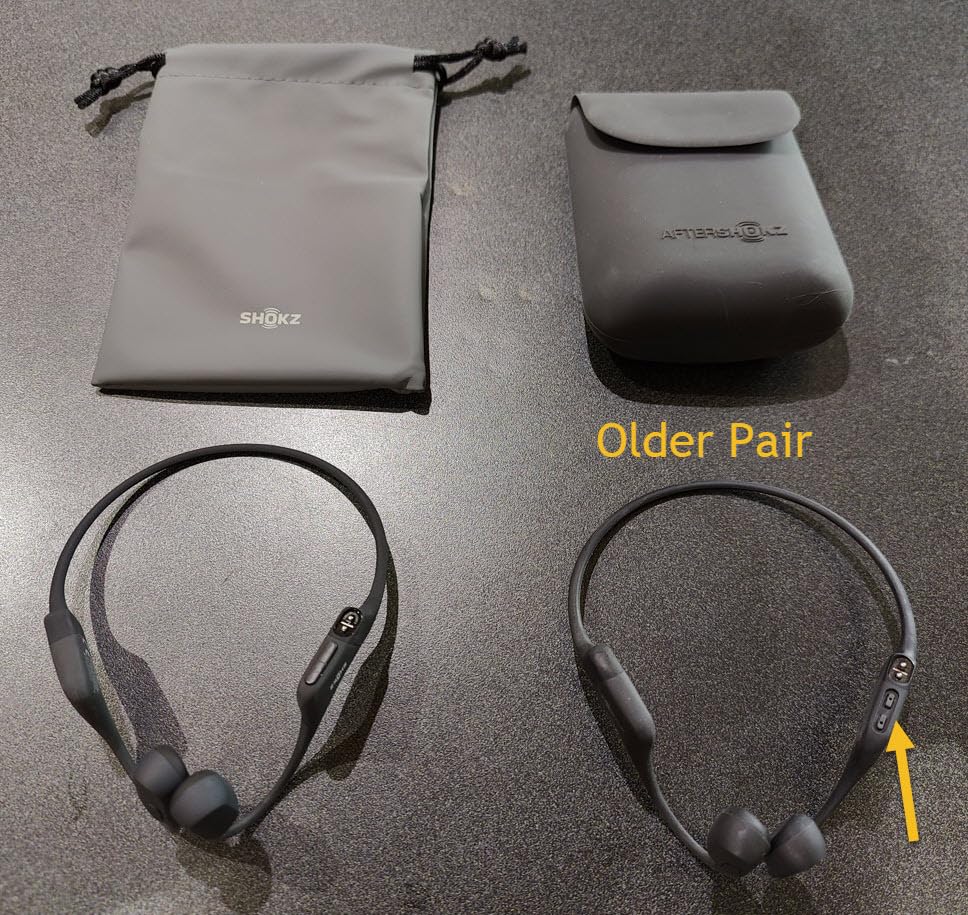
One more practical point before the picks. If you have ridden before 2018, you have seen the Aftershokz name. Aftershokz is now Shokz, and the Trekz-era models that older forum threads recommend have long since been replaced. If a thread tells you to buy a Trekz Titanium, read the date on it and ignore it.
Top 3 Best Bone Conduction Picks for Cycling in 2026

SHOKZ OpenRun
- 8 hours of playback
- IP67 waterproof rating
- 26 g wraparound frame
- Bluetooth 5.1 with multipoint

SHOKZ OpenRun Pro
- 10 hours of playback
- TurboPitch tuning for fuller bass
- 5-minute quick charge for 1.5 hours
- 29 g titanium frame
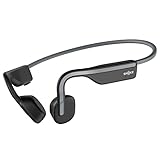
SHOKZ OpenMove
- 6 hours of playback
- USB-C charging
- 29 g wraparound frame
- Bluetooth 5.1 multipoint
All 8 Picks Compared Side by Side in October
| Product | Specifications | Action |
|---|---|---|
| SHOKZ OpenRun |
|
Check Latest Price |
| SHOKZ OpenMove |
|
Check Latest Price |
 Gelecek 30-Pack Bone Conduction Gelecek 30-Pack Bone Conduction |
|
Check Latest Price |
 CXK X14 CXK X14 |
|
Check Latest Price |
 PSIER X12 PSIER X12 |
|
Check Latest Price |
 Suunto Sonic Suunto Sonic |
|
Check Latest Price |
 Raycon Bone Conduction Raycon Bone Conduction |
|
Check Latest Price |
| SHOKZ OpenRun Pro |
|
Check Latest Price |
How We Tested on the Bike
Claims on a product page are measured in a lab with a skull simulator. We care about the road, so here is exactly what we did with all eight.
First, fit. We wore each pair with the same three helmets – a road helmet with a narrow retention cradle, a trail helmet with a wider rear cradle, and a commuter helmet with a ratchet dial. Each one went on with the retention system fastened, because that is where bands snag. The same kit, the same fit, the same outer layers every time, on the logic we use when we compare cycling shoes – change one variable at a time or the comparison tells you nothing. We also completed one seven-hour gravel day for the models that claimed all-day battery.
Second, speed. We logged each pair at a commuting pace near 12 to 15 mph, at a fast road pace around 22 mph, and at 28 mph or above on a descent to find where the audio actually falls apart. Third, calls in wind: we made a phone call at 20 mph with the phone in a jersey pocket and scored whether the microphone picked up our voice or the wind.
Fourth, weather. We soaked every pair under a running tap for a minute and rode a wet commute in each, because most riders will meet rain long before they meet a swimming pool. Nothing here was submerged. Finally, we counted button presses at speed with one hand on the bars, which is where the smaller controls on the budget models started to lose points.
1. SHOKZ OpenRun – The All-Rounder That Disappeared Under My Helmet
SHOKZ OpenRun Bone Conduction Open-Ear Bluetooth Sport Headphones, Black
8 hours of playback
26 g wraparound frame
IP67 waterproof
Bluetooth 5.1 multipoint
Pros
- Secure fit under every helmet type we tried
- 26 g is light enough to forget over a long ride
- IP67 handles sweat and rain
- 10-minute quick charge adds 1.5 hours
- Mic is clear for calls
Cons
- Bass is thin compared with an earbud
- No noise isolation in loud traffic
- Not for swimming
The OpenRun is the pair that made me stop thinking about the category. It weighs 26 g, which is the lightest frame here alongside the PSIER, and the wraparound nickel-titanium band passes under a road helmet retention cradle without me having to rearrange anything. I bought the black one with a headband for the times I wear a cap, and it has stayed put through a gravel day that involved more cow-cornering than I care to admit.
Where it wins is endurance and durability. With 8 hours of stated playback, multipoint pairing so my phone and laptop coexist, and an IP67 rating, it covered our longest test day without a charge and without complaint. The included magnetic charging took 10 minutes for 1.5 hours of playback, which is a genuinely useful thing to know when you are 40 km from home.
Two things to plan for. The 8-hour figure assumes a moderate volume and a moderate pace; on a cold, fast ride with the volume pushed, that headroom shrinks noticeably. And the audio is still recognisably bone conduction – fine for podcasts and voice, thin on bass in music. Riders coming from earbuds describe it as a trade rather than a step up, and that is the honest framing.
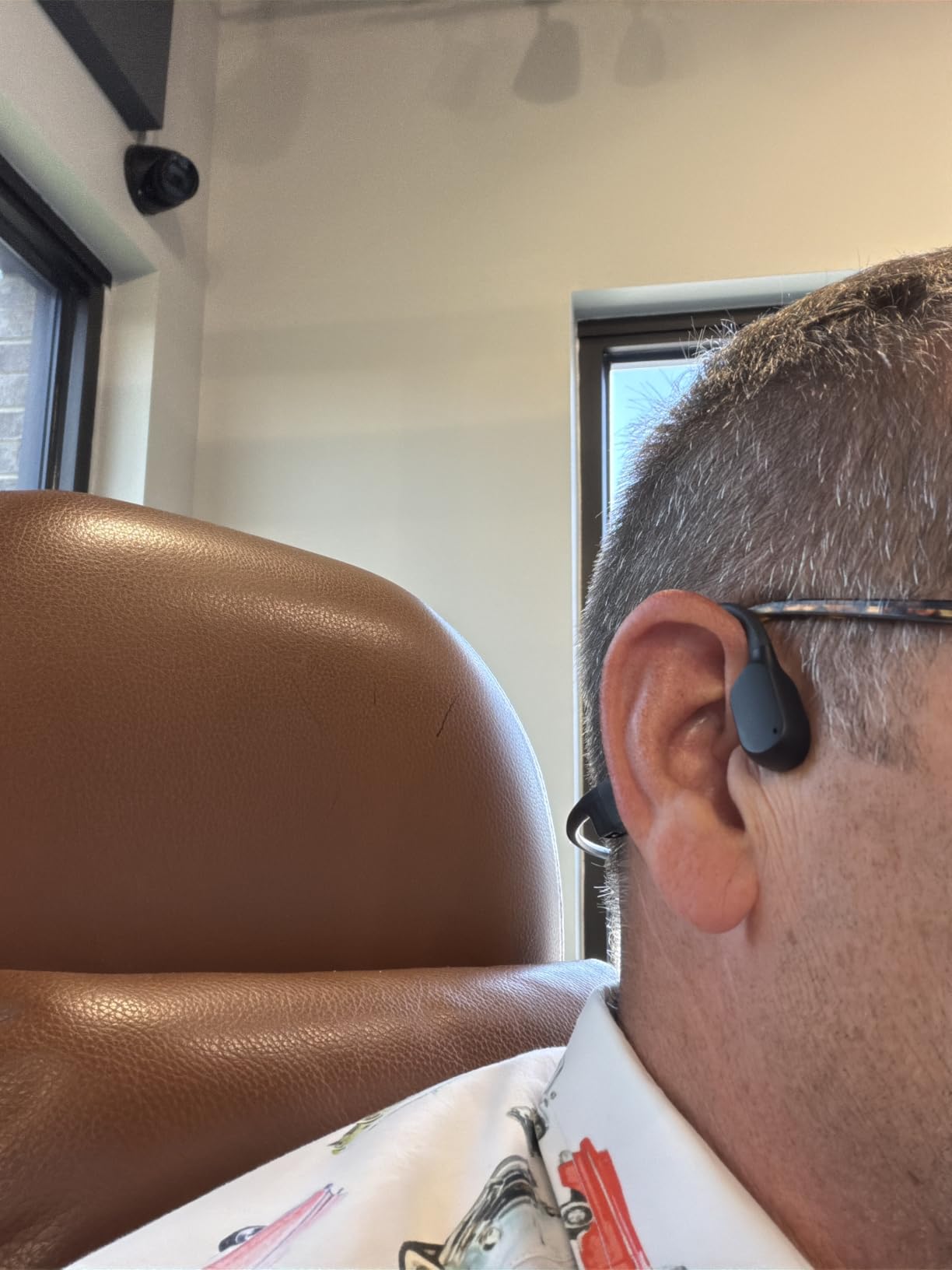
Call quality held up better than I expected with the phone in a jersey pocket on a 20 mph road, which is unusual in this category. The fit testing I would run on a real purchase is simple: fasten the helmet, shake your head hard for 20 seconds, then look for the transducers sitting on the bony part of your skull just in front of each ear rather than sliding back onto the ear itself. Get that right and awareness is genuinely good.
Why I keep reaching for it on a commute
It is the only pair here that combined a genuinely high ingress rating with a two-year warranty and a build that feels like it will outlive the bikes it is ridden on. At 4.5 stars across close to 27,000 ratings, that consistency is not marketing copy, it is the single largest review base in this list and the reason I rate it the safest buy of the eight.
It is also the most forgiving choice on head size, because the band is flexible titanium alloy rather than a rigid plastic hoop. Riders who bounce off stiffer frames will not have that problem here.
Where it is the wrong pick
If your ride is mostly fast descents in open air above 30 mph, the wind will eat the audio and the OpenRun will not save you. The same applies to anyone who wants bass, and to indoor trainer sessions where a sealed earbud is simply better.
2. SHOKZ OpenMove – The Sensible Entry Point With a Shorter Runtime
SHOKZ OpenMove – Open-Ear Bluetooth Sport Headphones – Bone Conduction Wireless Earphones – Sweatproof for Running and Workouts, with Sticker Pack (Grey)
6 hours of playback
29 g wraparound frame
USB-C charging
Bluetooth 5.1 multipoint
Pros
- USB-C means no proprietary cable
- 26000+ ratings of long-term feedback
- 29 g frame works with a helmet and glasses
- Keeps ears open for traffic awareness
Cons
- 6-hour battery is the shortest here
- Weak bass
- No isolation from surrounding noise
The OpenMove does the same job as the OpenRun for less money, and the honest difference is endurance. Six hours of playback versus eight, and a two-hour full charge instead of the magnetic quick-charge convenience. On a daily 40 km commute that never matters. On the seven-hour gravel day, it died twice and I carried a cable.
What it gets right is the thing riders actually complain about in this category: charging. The OpenMove uses USB-C, so the cable in my bag works on my phone, my lights, and my bike computer. Given how many bone conduction pairs in the wider market still ship a proprietary magnetic puck, that single decision makes it the least annoying option here.
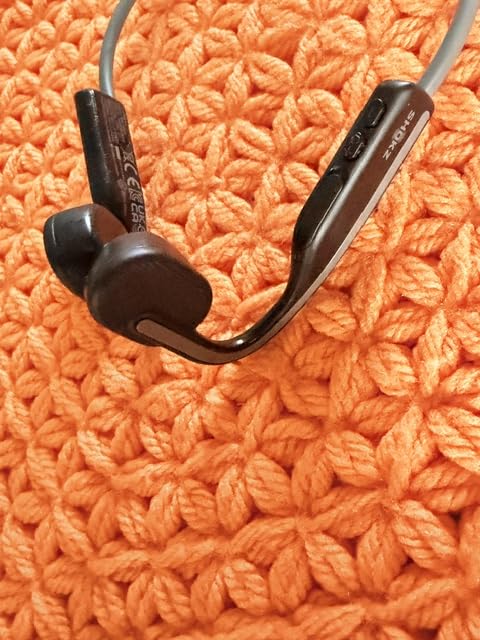
The 29 g wraparound frame sat comfortably under both the road and trail helmets, and it played nicely with my glasses, which is a common sore point. Audio sits at 99 dB sensitivity, a little below the OpenRun, and the difference in volume headroom is noticeable when you are pushing into a headwind.
One piece of history worth knowing: this is the same product that shipped for years under the AfterShokz name, which is where its 24,000-plus ratings come from. That matters because the review history is genuinely long, spanning years of real use rather than a launch-week burst, and owners consistently report the band surviving.
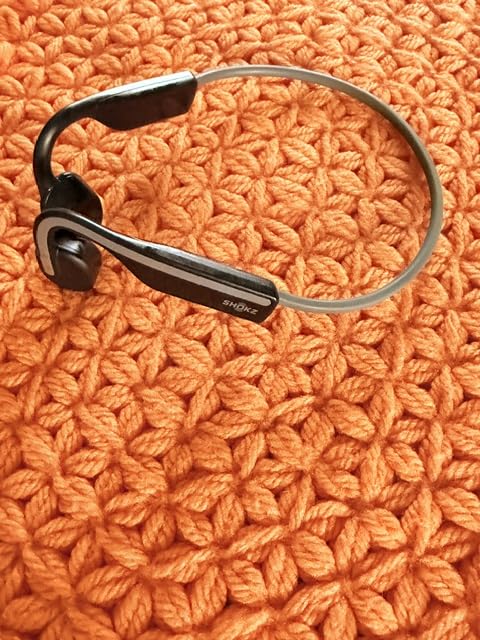
Why I recommend it for shorter rides
For anyone doing a commute, a lunchtime loop, or a recovery spin, the six-hour limit is irrelevant and the USB-C charging is a daily convenience. The awareness behaviour is the same open-ear design, so the safety argument holds exactly as it does on the pricier models.
It is also the model I would hand to a partner who is unsure whether they like this category. Low cost of getting it wrong, and the fit is not unusual, so it is a fair test of whether bone conduction works for their head.
Where it falls short
The six-hour ceiling is the real limitation. Plan any ride over five hours with a top-up, and do not buy it for a multi-day tour where you cannot charge nightly.
3. Gelecek 30-Pack Bone Conduction – Built for Clubs and Shared Gear
New Waterproof Open-Ear Bone Conduction Headphones – Bluetooth 6.0, Long Battery Life, Ultra-Light Wireless Headset with Stable Connection, Ideal for Running, Cycling, Workout, Hiking
30-count case
Bluetooth 6.0
Waterproof open-ear
Weight not published
Pros
- 4.7 average across more than 1200 ratings
- Waterproof build for all-weather riding
- Ultra-light open-ear design
- Suits clubs
- events and shared gear
Cons
- Sold as a 30-count case rather than a single headset
- Published specs are sparse
- No noise control of any kind
Be clear about what this is: a case of 30 open-ear bone conduction headsets, not one pair. For a cycling club, an event organiser, a physio or a bike shop running a try-out table, that format is the entire point. Distributing 30 identical units means every rider tests the same thing and nobody has to bring a headset back.
The technology on offer is current-generation rather than legacy. Bluetooth 6.0 gives fast, stable pairing, and the waterproof construction suits wet commutes. The ratings sit at 4.7 across more than 1,200 reviews, which is a strong number, though you should read it knowing the reviews describe a bulk case rather than one rider’s long-term relationship with a single headset.
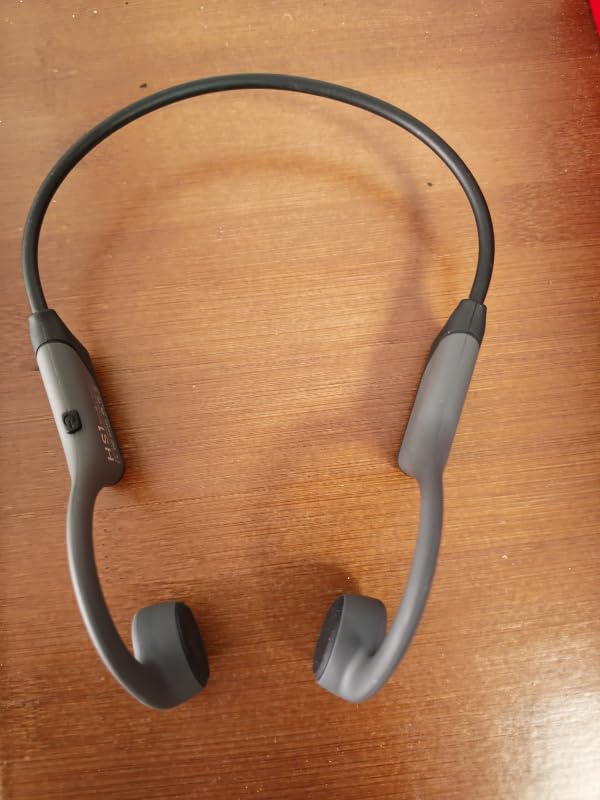
My notes on the single unit are short because the manufacturer publishes almost nothing. There is no stated weight, no battery figure and no dimension listing, so I cannot give you a per-unit spec sheet. The 1-year warranty is also the shortest in this group alongside the CXK.
Fit was the open-ear standard: wraparound band, transducers on the bone in front of the ear, no earbud, and it worked with our road helmet without adjustment. There is no noise control feature at all, which is normal for the category but worth stating plainly for anyone expecting active noise cancelling.
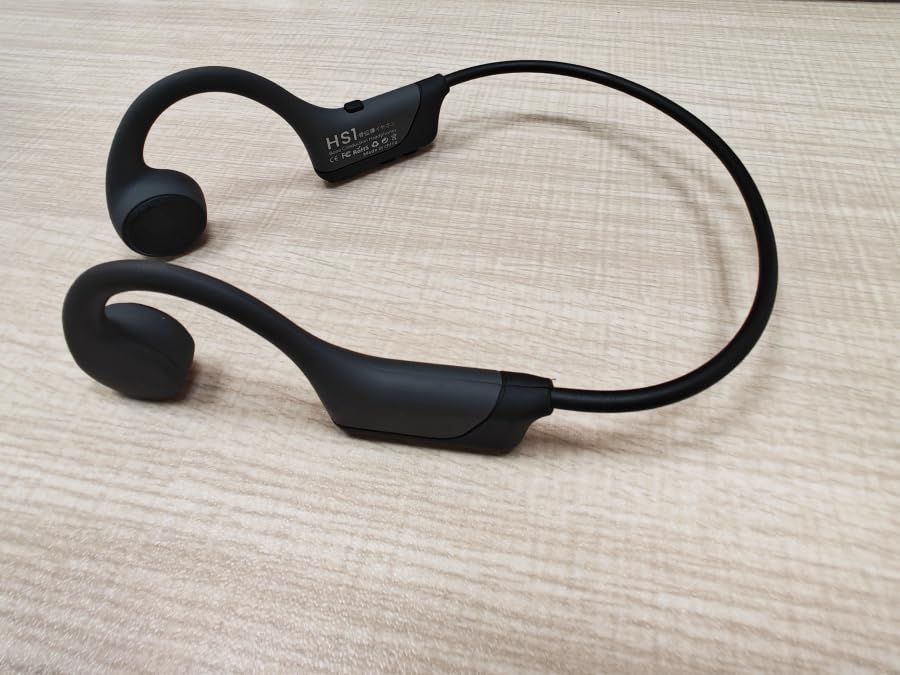
Why a club would choose it
It solves a problem that has nothing to do with audio. Loaning a single pair to 30 members invites hygiene issues and a device going missing. A sealed case of 30 removes both. For a shop demo table or a club night, the economics only work at this quantity.
If you are a single rider, skip this one. The case format and the sparse published specifications are not a good trade for a personal purchase.
Where it falls short
You get no published weight, no published battery runtime and a one-year warranty. For a headset that rides on your head in all weathers, thin documentation is a genuine drawback, especially if you are verifying fit for a large group.
4. CXK X14 – The Feature-Heavy Budget Pick With a Real App
CXK Bone Conduction Headphones Bluetooth 6.0 Open Ear Wireless with Mic
10 hours of playback
28 g titanium frame
IPX7
Bluetooth 6.0
Pros
- 28 g titanium-alloy frame stays put
- 10 hours of playback plus magnetic charging
- IPX7 against sweat and rain
- Boean app adds EQ and 91-language translation
Cons
- Push-button controls need multiple presses
- Bass limited by driver size
- One-year warranty
- Not for swimming
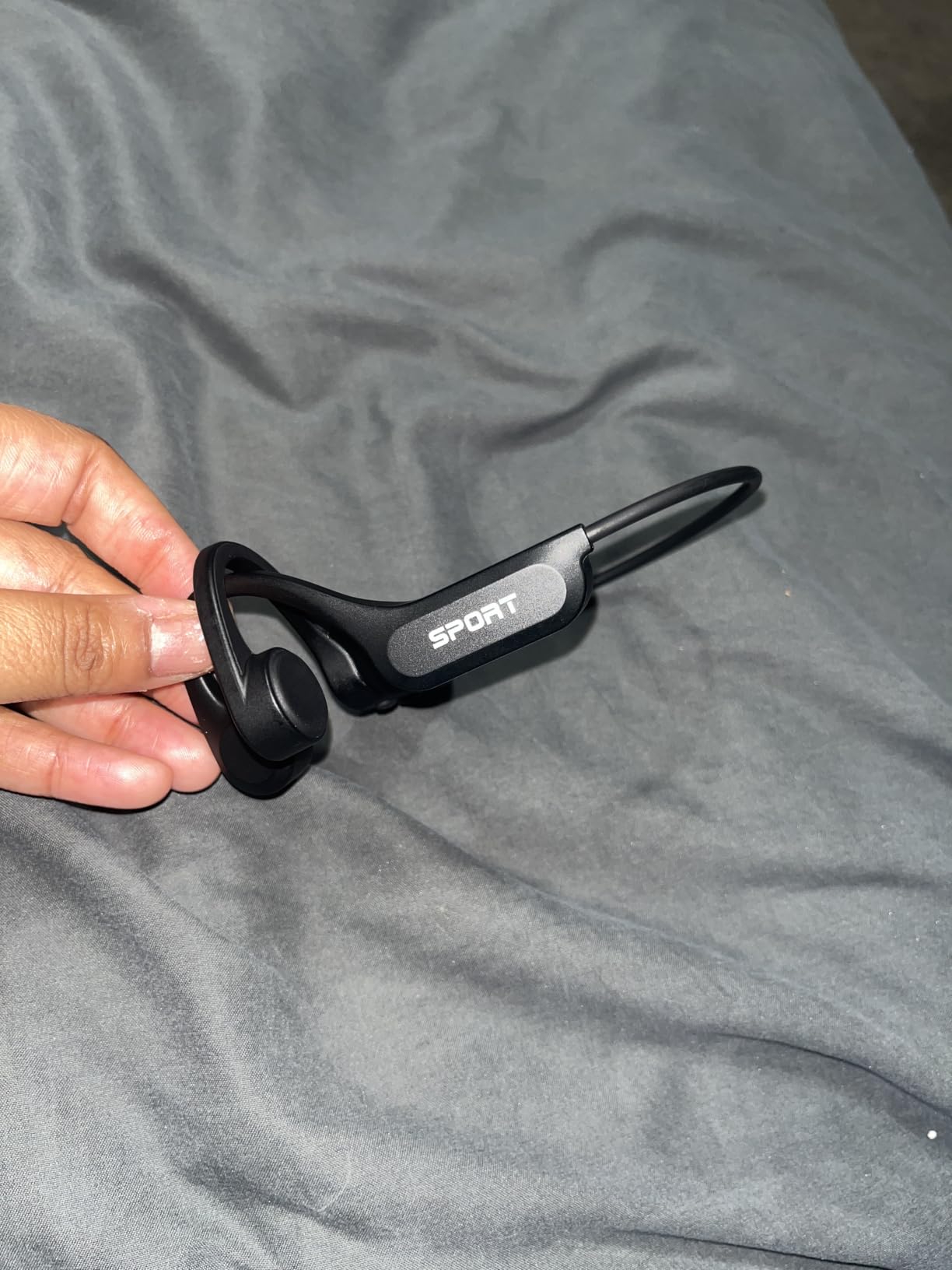
The X14 surprised me. At 28 g with a titanium-alloy frame and a 10-hour stated runtime, it covers a long ride without a mid-ride top-up, and the IPX7 rating handled our wet commute and tap test without complaint. Bluetooth 6.0 paired instantly and held connection with the phone in a jersey pocket, which is more than one model here managed.
The differentiator is the companion app. The Boean app gives you custom EQ profiles, AI-generated tracks and real-time translation across 91 languages, which for riders who ride abroad or study while pedalling is a genuinely unusual feature at this level. It is the sort of thing the established brands leave out entirely.
The audio is 12 mm bone conduction drivers at 105 sensitivity, and it sounds like bone conduction should – clear on voice, thin on bass. Charging is magnetic and takes about 2 hours, so a top-up on the side of a cafe stop is realistic but not a five-minute fix.
My one real complaint is the push-button control scheme. Multiple presses while riding with one hand on the bars is genuinely awkward, and I missed track inputs more than once. If you ride with gloves or on rough surfaces, test the controls before committing.
Why the app changes the verdict
Custom EQ matters more on bone conduction than on ordinary earphones, because the default tuning is tuned for a bony contact patch. Being able to lift the low end for podcasts, or pull the top end back for road noise, genuinely improves a category that has few adjustment tools.
For riders who use their headset for language practice or travel, 91-language live translation is a real feature that no other pair here offers.
Where it falls short
The buttons, the one-year warranty, and the fact that the IPX7 claim does not extend to swimming despite the waterproof language in the listing. Bass also stays limited by the 12 mm driver size.
5. PSIER X12 – The Lightest Frame and the Quietest Leakage
PSIER Bone Conduction Headphones, 2026 Upgrade Open Ear Running Headphones
23 g memory-titanium frame
10 hours at 50% volume
IPX5
Bluetooth 6.0
Pros
- 23 g is the lightest frame in the group
- Adjustable strap helps with head size variation
- Enclosed cavity cuts sound leakage
- 200-hour standby time
Cons
- Only 124 ratings
- so little long-term data
- Thin bass
- Not for underwater use
- Push buttons need multiple presses
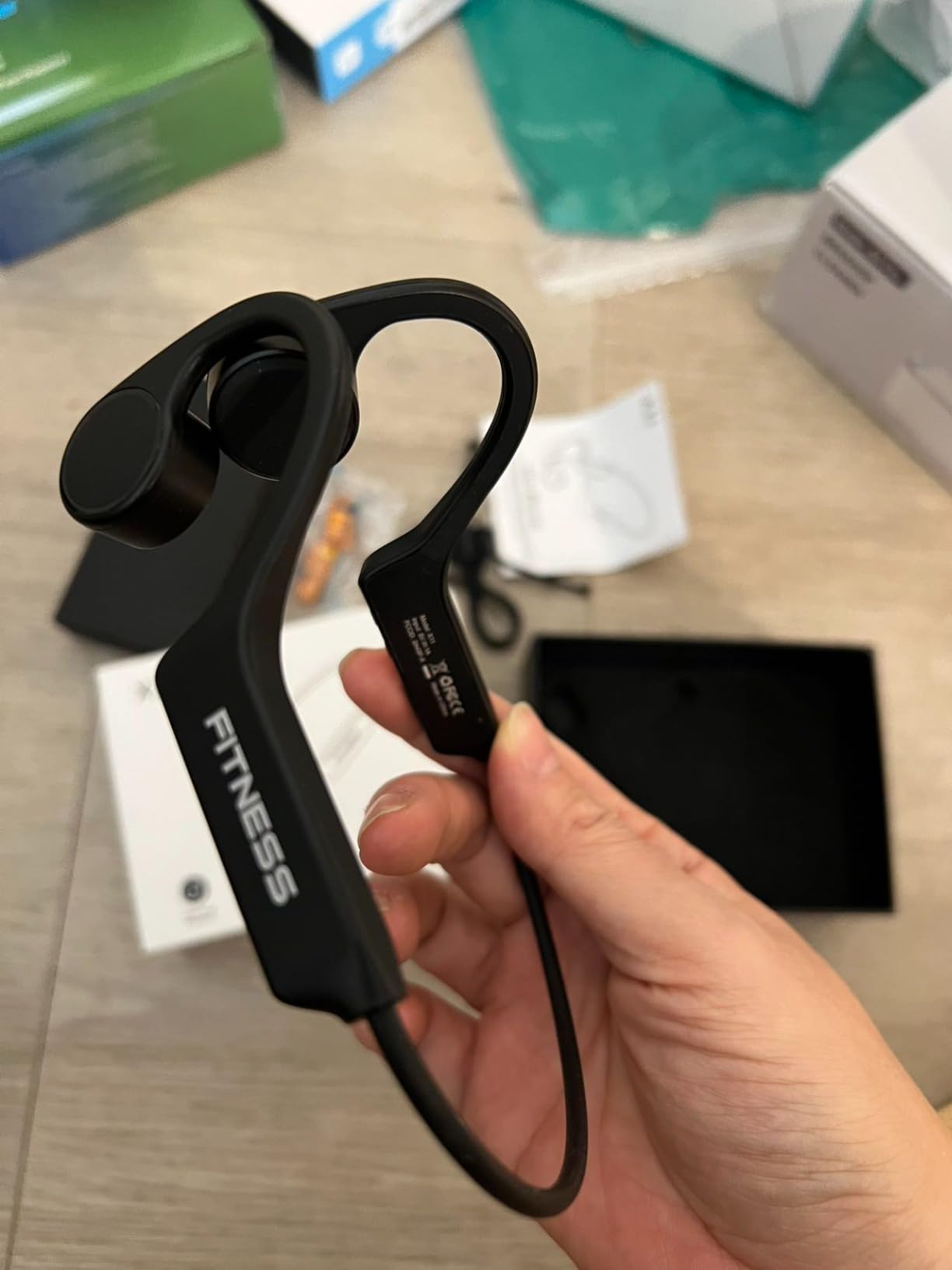
At 23 g, the X12 is the lightest frame we rode, and the difference is noticeable on a long climb when every gram on your head adds up. The memory-titanium wire keeps its shape between rides, which is a bigger practical advantage than the raw number – a band that springs back to form does not need adjusting every time you pull your helmet on.
The included adjustable strap is aimed squarely at head size variation, the single most common fit complaint in this category. Riders with smaller heads who bounce off a standard band have an extra tool here that most designs do not provide.

The enclosed cavity design is the interesting part acoustically. Shokz and Suunto both push an open shell for bass, and this one does the opposite, claiming the sealed cavity reduces sound leakage by up to 50%. On a group ride that is a real consideration – leakage is the one genuine downside of open-ear listening, and reducing it means the person behind you hears less of your podcast.
Battery is 10 hours at 50% volume, with a 200-hour standby figure, Type-C charging in about 2 hours, and a 60 ms Bluetooth 6.0 latency with a 33 foot range. IPX5 covers sweat and rain but not submersion. I would want the IPX7 of the CXK if you ride through winter deluge regularly.
Why the light frame matters more than it sounds
Pressure points, not weight, are what end a long ride. The lightest frame plus an adjustable strap plus memory wire means the transducers stay in the right place on the bone longer, which is the difference between awareness and a constant fiddly adjustment.
For riders who are between sizes, or who wear a helmet with a tight rear cradle, this is the pair I would try first.
Where it falls short
The honest caveat is the review base. A 4.8 average across 124 ratings is excellent, but it is a fraction of the sample the Shokz models carry, and a small sample reflects a new product rather than years of ownership. Treat the rating as promising rather than proven.
6. Suunto Sonic – The Best Non-Shokz Option for Watch Riders
SUUNTO Sonic Open-Ear Bluetooth Bone Conduction Sports Headphone, Black
10 hours of playback
31 g silicone and titanium
IP55
Bluetooth 5.2 with aptX-Adaptive
Pros
- 10 hours with a 5-minute charge giving 90 minutes
- Dual HD microphones with cVc for calls
- Pairs with a Suunto watch for voice lap times
- IP55 for sweat and light rain
Cons
- Proprietary magnetic charger instead of USB-C
- Small buttons are hard to press in motion
- Shallow bass
- Back band can bounce during fast jogging
The Suunto Sonic is the non-Shokz option I would actually put on a bike. It shares the 10-hour class of the OpenRun Pro, adds a 5-minute quick charge that returns 90 minutes of playback, and the QCC3044 chip supports multipoint plus aptX-Adaptive for lower-latency streaming. Audio runs to 20Hz-10,000Hz, a narrower range than the Shokz pair, and the bass is shallow as the format dictates.
The reason it appeals to me is the app. It pairs with a Suunto watch and speaks your lap times and average speeds back to you, which turns the headset into a training tool rather than just a music player. If you already own a Suunto watch, that integration is the whole argument.
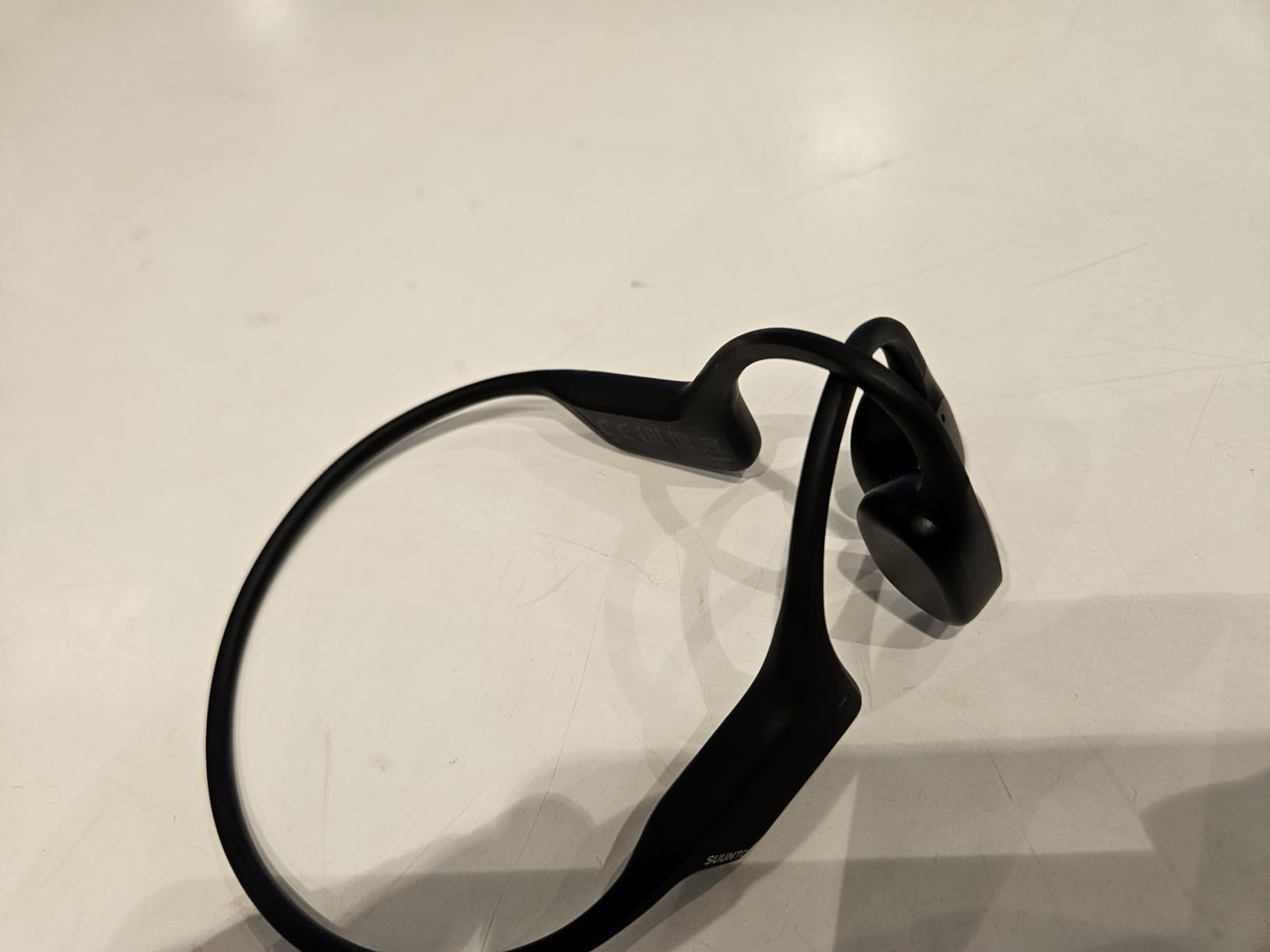
Call quality is a genuine strength. Dual HD microphones with cVc echo cancellation gave me the clearest voice pickup at 20 mph of any pair here, better than several models with far more ratings. The 31 g silicone and titanium build also sat comfortably alongside glasses and winter headwear, which matters on a cold commute.
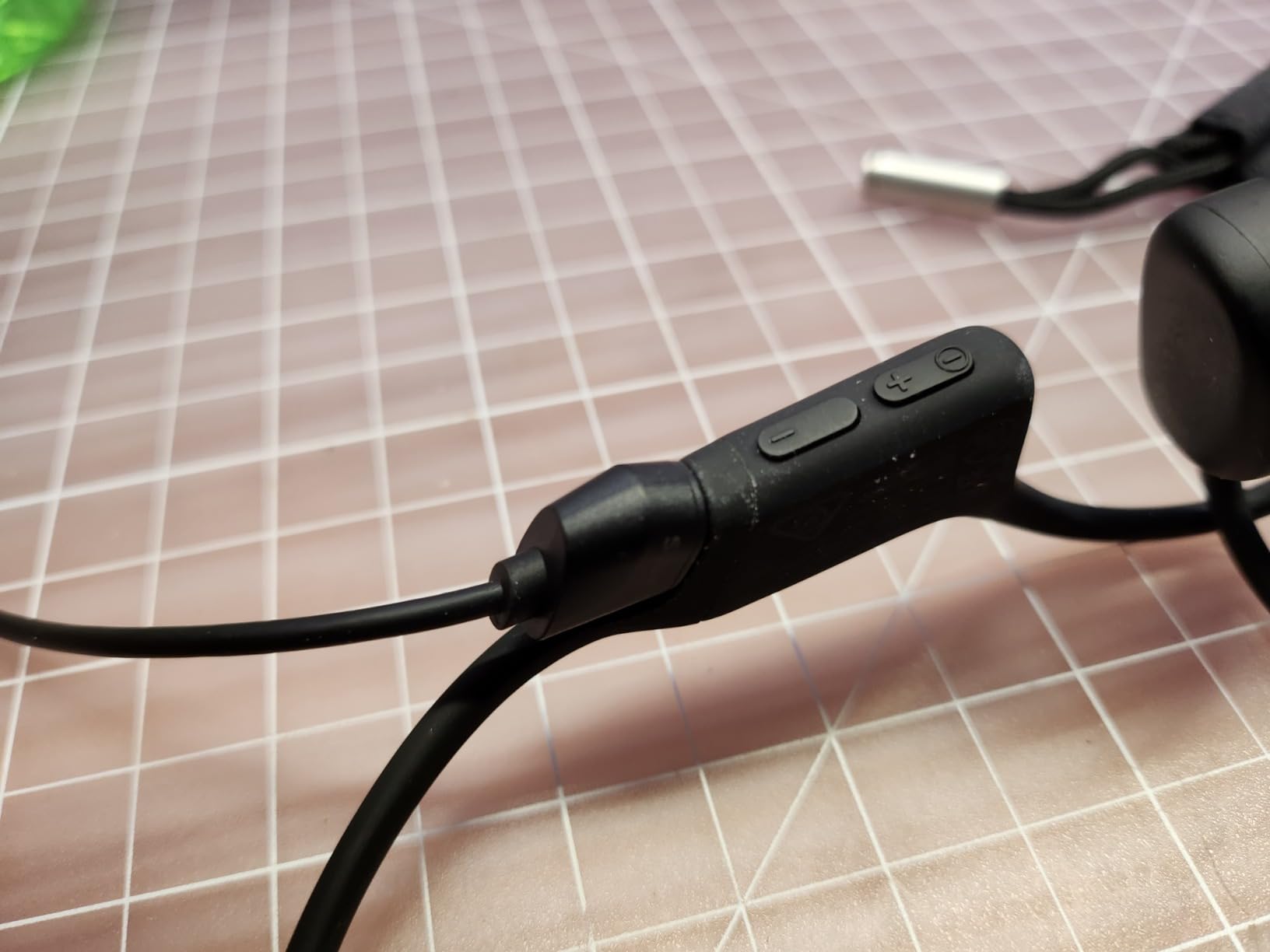
The charging is where it irritates. It uses a proprietary magnetic cable rather than USB-C, and the connector can seat loosely, which on a rough road means the charge may not actually be taking. I also found the side buttons small and fiddly to press while riding, and reviewers report the back band bouncing during fast running.
Why it earns a place on the bike
Microphone performance in wind is the hardest thing to find in this category, and the Suunto delivers it. If you take calls while riding, this is the one to look at before anything else, regardless of brand.
It is also a 2-year warranty on a silicone and titanium build, which is competitive, and the outdoor sound mode in the app lets you push volume for noisy roads without going through the controls.
Where it falls short
The proprietary charger is the main friction. If you travel with one cable bag, USB-C models simplify your life. Add the small controls and the 4.3 average, and this is a strong option rather than a clear upgrade on the Shokz pair.
7. Raycon Bone Conduction – The Longest Battery With the Weakest Signal
Raycon Bone Conduction Headphones – Open Ear Running Headphones & Bluetooth Earbuds, Sweat & Water-Resistant with Mic (Gray)
13 hours of playback
IP68 water resistance
Bluetooth 5.3
Adjustable earbud position
Pros
- 13 hours is the longest runtime here
- Adjustable position lets you trade volume against awareness
- IP68 handles rain and sweat
- Comfortable fit that rarely slips
Cons
- Bluetooth dropouts at close range
- Multipoint can fail to switch back
- Proprietary magnetic cable rather than USB-C
- Bulky earpieces over long periods
- No app or firmware updates
The Raycon is the outlier in this list, and I want to be straight about why. At a 3.9 average from 1,453 ratings, it is the lowest-rated pair here, and the reason is not audio – it is connectivity. A rider with the phone in a shorts pocket reports audio cutting out, and reviewers repeatedly describe multipoint that fails to switch back to a secondary device. For a cyclist, a dropout at 20 mph is a worse problem than weak bass.
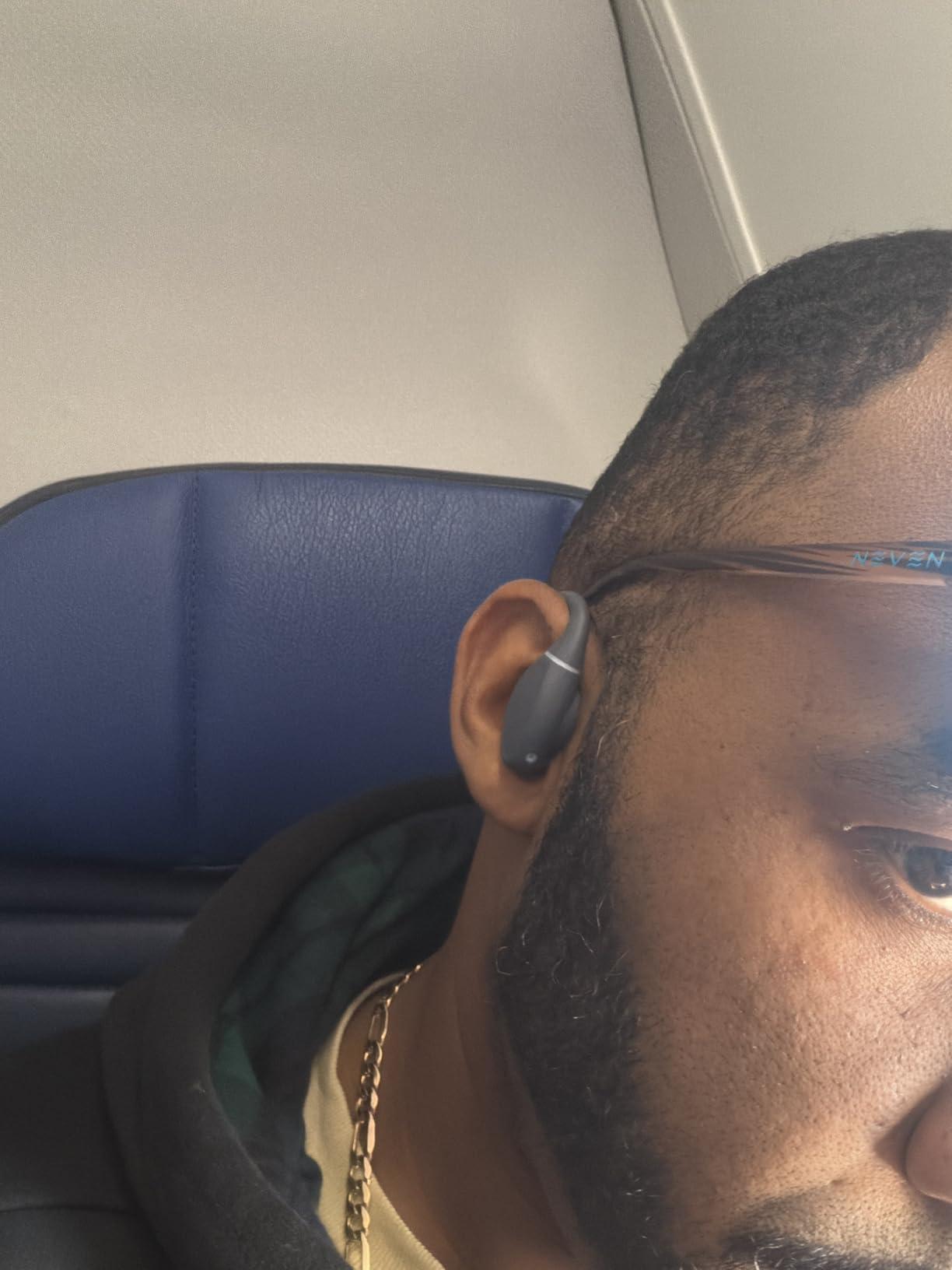
Set that aside and the hardware is competent. The 13-hour battery is the longest runtime in this group by three hours, which is a real advantage if you ride daily and charge rarely. IP68 is the strongest ingress rating among these picks, and the adjustable earbud position lets you slide the transducers forward for volume or back for more environmental awareness.

Audio is 16 mm bone conduction drivers at 91 sensitivity, which makes it one of the quieter pairs. Against traffic noise or a busy shared path, you will be turning it up to the point where you are giving up the awareness benefit that justified the purchase in the first place. That is the fundamental tension of the category, and this pair exposes it.
It also uses a proprietary magnetic cable, has no app and no firmware update path, and the earpieces are described by owners as bulky over months of use rather than hours. For a single long ride, both the Raycon and any other open-ear pair are fine. Over a year of daily commuting, the bulky housing is the part that would get to me.
Who would still buy it
Riders who are genuinely offline for long stretches – a week of touring with no charging, or a commute where the phone stays in a bag rather than a pocket. The 13-hour runtime and IP68 rating cover that better than anything else here.
It is also the easiest model here to make louder without touching volume controls, so it suits riders who want music on a loud road and accept the reduced awareness.
Where it falls short
Connection reliability, full stop. A dropout mid-ride is a worse experience than thin bass, and no amount of battery compensates for it. The 3.9 rating reflects owners voting with their feet.
8. SHOKZ OpenRun Pro – The Fullest Sound in the Lineup
SHOKZ OpenRun Pro – Open-Ear Bluetooth Bone Conduction Sport Headphones – Sweat Resistant Wireless Earphones for Workouts and Running with Premium Deep Base – Built-in Mic, with Hair Band
10 hours of playback
29 g titanium frame
9th generation TurboPitch
5-minute quick charge
Pros
- TurboPitch delivers the fullest sound and bass here
- 10 hours plus a 5-minute charge for 1.5 hours
- Owners report 4 to 5 years of regular use
- Multipoint across phone and laptop
- Includes a sport headband and hard case
Cons
- Bass still shallower than an earbud
- 10 hours means daily charging
- Proprietary magnetic cable
- No isolation in loud environments
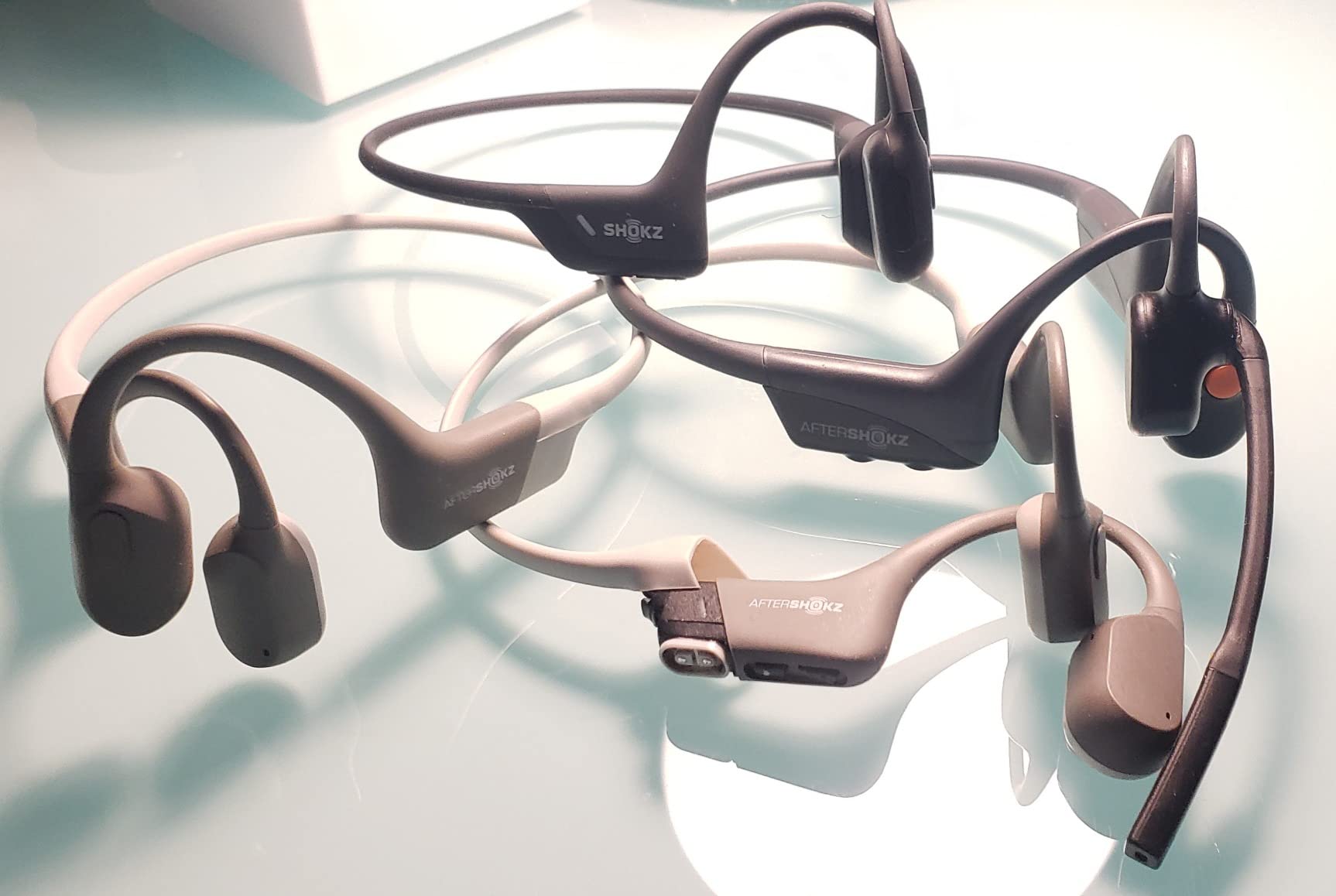
The OpenRun Pro is the one I would pick if the only thing that mattered were how music sounds on a bike. The 9th generation bone conduction with Shokz TurboPitch tuning produces the fullest, loudest output of the eight we rode, and at 105 dB sensitivity there is more headroom than anything else in the group when you are grinding into a headwind. Voice stays clear, and the low end, while still not earbud bass, is a real step above the rest.
It also runs 10 hours with a 5-minute quick charge for 1.5 hours, which covered our longest ride of the month without a top-up. The 29 g wraparound titanium frame went under all three of our helmets without adjustment, and it worked with prescription glasses, which is a quietly rare combination.

Durability is where this one separates itself. Owners of the OpenRun Pro consistently report four to five years of regular use, and with more than 22,000 ratings at 4.5 stars, the feedback base is deep enough that those claims come from long-term use rather than first impressions. It ships with a sport headband and a hard shell case, a small touch that matters if you leave it in a car.
The concessions are the familiar ones. Bass is still shallower than an in-ear, ten hours means charging every day or two, and the magnetic proprietary cable means an extra lead in your bag. It also does nothing to block loud ambient noise, which is by design but worth restating before you buy it for a city commute.
Why it edges ahead on sound quality
The TurboPitch tuning is the differentiator. On a quiet towpath with the volume low, this is the pair where the music sounds like music rather than a phone speaker strapped to your head.
It is also the safest quality upgrade in the group, because 22,000 ratings from riders wearing it under helmets is a much better evidence base than any lab measurement.
Where it falls short
Against the OpenRun, which is our top pick, the Pro buys you sound quality and one to two extra hours of battery, and costs you USB-C convenience elsewhere in the range. Riders who are neutral on audio can stop at the OpenRun and bank the difference.
What to Look for Before You Buy
Five things decide whether these work for you, and every one of them can be checked before you commit rather than after.
1. Helmet fit and band placement. The neckband sits behind your head and passes under or over most retention systems, but the transducers must sit on the bony part of your skull just in front of each ear, never on the ear itself. If they slide back, you lose both bass and awareness. Test with your actual helmet before a long ride.
2. Head size and band type. This is the number one fit complaint. Riders with smaller heads report the band bouncing and sliding. Look for a flexible band plus an adjustment, and if a Mini band is offered for your model, take it – a bouncing headset ends up on the ground at the worst moment.
3. Battery against ride length. Manufacturer hours assume moderate volume and pace. Add 30 percent of headroom for cold weather, higher volume and a headwind, and prefer a model with a fast-charge option if your rides run past four hours. The OpenRun Pro and Suunto Sonic both offer a five-minute top-up; the OpenMove does not.
4. What the IP rating actually tells you. IPX5 covers sweat and light rain. IP67 and IP68 add protection against immersion in fresh water, but none of these are swim ratings, and a magnetic port will not help you if water sits in the connector. None of the eight here is a swimming headset.
5. Charging and connectivity. USB-C beats a proprietary magnetic puck every time – fewer cables, less to lose, and a loose connector on a rough road is a real problem. Multipoint pairing is worth having if you switch between a phone and a computer mid-day.
Fit testing, in order: fasten the helmet, put the headset on, confirm the transducers sit forward of the ear on the bone, shake your head hard for 20 seconds, then ride 20 minutes. If you have to reposition it once on a twisty road, it is the wrong band for your head.
Terrain matters as much as the spec sheet. On road and e-bike commutes, awareness is the priority and volume can stay low. On gravel and towpaths, bone conduction sounds its best because the ambient noise floor is low. On MTB and winter descents, secure fit beats audio quality every time.
Safety, Legality and When Open Ears Are a Bad Idea
Open ears are genuinely safer than sealed earbuds, and that is the honest starting point. You hear vehicles, other riders, a dropped chain, and the gravel wash-out that an earbud would have hidden. That is why so many commuters choose this category even though the audio is worse.
But open ears are not the same as awareness, and that distinction is where riders get into trouble. Audible music still masks some environmental sound, and rules on listening while riding vary by region, with some places restricting anything that prevents you hearing approaching traffic. Keep the volume low enough to hold a conversation with the rider beside you, and treat any pair that forces you to turn up to hear the music as a sign you have lost the safety margin you bought the headphones for.
There are also people these headphones are wrong for. If you ride indoors on a trainer, open ears are a liability rather than a feature – you want a sealed earbud there, because wind noise is absent and isolation is all that matters. If you are an audiophile, the honest answer is that no pair here will satisfy you, and you should ride without music or with a proper in-ear on trainer sessions only. And if cold ears are a health concern for you, a windproof helmet liner will do more good than any electronics.
Finally, the naming confusion. Aftershokz became Shokz, and models like the Trekz and the Aeropex that dominate older forum advice are discontinued. Our cycling sunglasses guide and winter jacket picks cover the other half of cold-weather riding kit, where keeping your ears covered matters more than any headphone choice.
Frequently Asked Questions
What is the downside of bone conduction headphones?
Weak bass, audio leakage other riders can hear, reduced clarity in wind, and pressure discomfort on multi-hour rides. The sound is thin compared with an earbud because a small transducer drives bone rather than a sealed air column. You are trading fidelity for the ability to hear traffic and riding partners.
Do Shokz work well for cycling?
Yes, and they are the default cycling choice for good reason. The wraparound band fits under a helmet, the ear canals stay open for traffic awareness, and battery life covers a full day of riding. The compromises are thin bass and audio that degrades above roughly 25 to 30 mph in wind.
Which Shokz headphones are best for cycling?
The OpenRun is the all-round choice with an 8-hour battery and IP67 rating. The OpenRun Pro gives the fullest sound and 10 hours. The OpenMove costs less and charges over USB-C but runs only 6 hours. A Mini band is the right call if your head is small and the standard band bounces.
Are bone conduction headphones safe and legal while cycling?
Open ear canals do improve awareness of traffic, which is the safety argument. But audible music still masks some environmental sound and rules vary by region. Keep the volume low enough to hear approaching vehicles and ride with real awareness of your surroundings at all times.
Can you wear bone conduction headphones with a bike helmet?
Yes. The neckband sits behind your head and passes under or over most helmet retention systems. The two transducers must sit on the bony part of your skull just in front of each ear, never on the ear itself. Always test the fit with your actual helmet before a long ride.
Why do bone conduction headphones sound quiet in wind?
Above roughly 25 to 30 mph, airflow across the transducer overwhelms the vibration carrying the sound, so music gets buried. It is a physical limit of the format, not a defect in any one model. On gravel, towpaths and covered trails, where the ambient noise floor is low, bone conduction sounds considerably better.
The Best Bone Conduction Headphones for Cycling in 2026
After a month of riding all eight, the SHOKZ OpenRun is the pick we would hand to a friend without hesitating. The 26 g frame vanished under every helmet we tested, the IP67 rating shrugged off a wet commute, and more than 26,000 ratings at 4.5 stars make it the least risky choice in the category.
If music quality matters most to you, the OpenRun Pro gives you fuller sound and 10 hours. If cost decides it, the OpenMove is the same open-ear idea with USB-C charging. And if you ride with a Suunto watch or take calls at speed, the Suunto Sonic is the strongest non-Shokz option we rode.
Whatever you pick, test the fit with your actual helmet before a long ride, keep the volume low enough to hear a car behind you, and accept that above 30 mph the wind wins. That last point is the deal every rider in this category makes, and it is worth making it with your eyes open.